ARAB AND WORLD

Thu 25 Jan 2024 2:18 pm - Jerusalem Time

Israel kills dozens of academics, destroys every university in the Gaza Strip

Geneva - The Israeli army has killed 94 university professors, along with hundreds of teachers and thousands of students, as part of its genocidal war against Palestinians in the Gaza Strip, ongoing since 7 October 2023, Euro-Med Human Rights Monitor said in a statement issued on Saturday

According to Euro-Med Monitor, the Israeli army has targeted academic, scientific, and intellectual figures in the Strip in deliberate and specific air raids on their homes without prior notice. Those targeted have been crushed to death beneath the rubble, along with members of their families and other displaced families.

Initial data indicates that there is no justification or clear reason behind the targeting of these people, said the Geneva-based human rights organization.

Those targeted include 17 individuals who held professor degrees, 59 who held doctoral degrees, and 18 who held master’s degrees, the rights group stated. Due to challenges with documentation brought on by movement difficulties, the disruption of communications and the Internet, and the existence of thousands of unaccounted-for/missing individuals, Euro-Med Monitor estimates suggest that there are additional numbers of targeted academics, including those with advanced degrees, whose deaths have not been tallied.

The targeted academics studied and taught across a variety of academic disciplines, and many of their ideas served as cornerstones of academic research in the Gaza Strip’s universities. The rights group added that given the systematic and widespread destruction by Israeli forces of cultural buildings, including institutions of great historical significance, it is highly likely that Israel is intentionally targeting every aspect of life in Gaza.

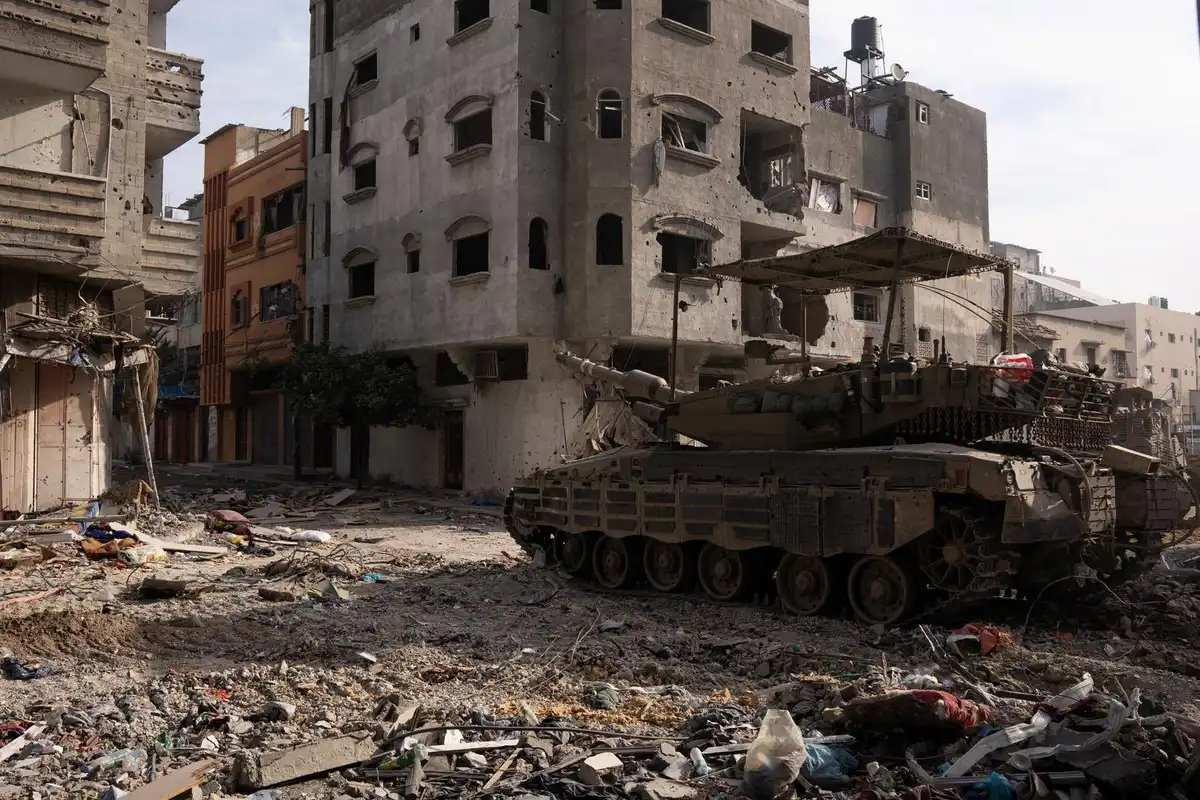
Israel systematically destroyed every university in the Gaza Strip in stages over the course of the more than 100-day attack. The first stage included the bombing of the Islamic and Al-Azhar universities. The other universities suffered similar assaults; some, like Al-Israa University in southern Gaza, were totally destroyed after initially being used as military barracks. The Israeli media released a video clip on Wednesday 17 January, capturing Al-Israa’s explosion. The explosion occurred 70 days after the Israeli military transformed the school into barracks and, later, into a temporary detention facility.

According to preliminary estimates, the ongoing Israeli attacks on the Gaza Strip have resulted in the deaths of hundreds of university students, reported Euro-Med Monitor. The rights group pointed out that destroying universities and killing academics and students will make it more difficult to resume university and academic life when the genocide ends, saying it may take years for studies to be resumed in an environment that has been completely destroyed.

According to the Palestinian Ministry of Education, 4,327 students have been killed and 7,819 others injured, while 231 teachers and administrators have been killed and 756 injured during the ongoing attacks. Meanwhile, 281 state-run schools and 65 UNRWA-run schools in the Gaza Strip have been completely or partially destroyed.

Ninety per cent of state-run schools have been subjected to direct or indirect damage, and about 29% of school buildings remain out of service as a result of their being completely demolished or severely damaged. There are 133 other schools being used as shelter centres in the Strip.

Israel’s widespread and intentional destruction of Palestinian cultural and historical properties, including universities, schools, libraries, and archives, demonstrates its apparent policy of rendering the Gaza Strip uninhabitable, Euro-Med Monitor warned. The attacks are creating an environment devoid of basic services and necessities and may eventually force the Strip’s population to emigrate.

Euro-Med Human Rights Monitor stressed that the targeting of civilian objects by armed forces, particularly those that are historical or cultural artifacts protected by special laws, is not only a serious breach of international humanitarian law and a war crime under the Rome Statute of the International Criminal Court, but falls under the purview of the crime of genocide.

ARAB AND WORLD

Thu 25 Jan 2024 2:12 pm - Jerusalem Time

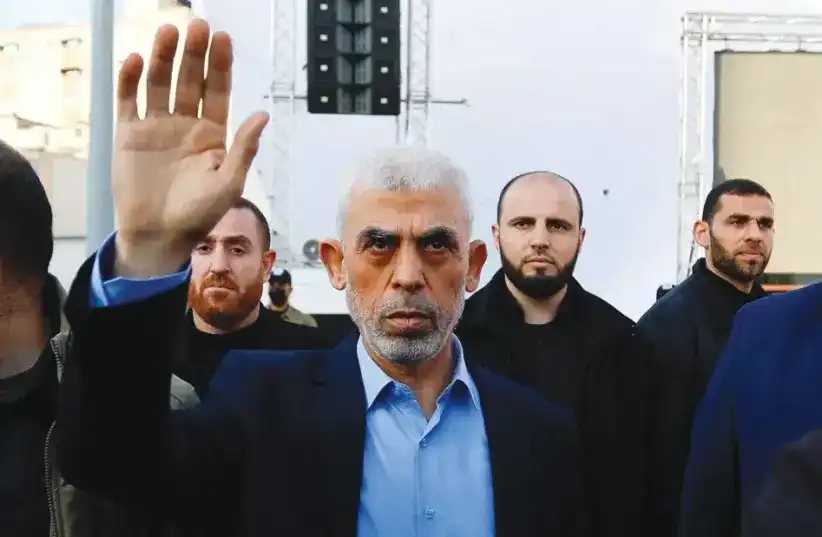
NBC: 'Sinwar knows he will die a martyr': Analysts weigh in on Hamas leader's end-game

“He’ll keep some of the hostages forever,” Jacob Nagel said. “This will be his insurance policy that no one will kill him." But Gershon Baskin expects a fight to the death.


A Wednesday NBC report echoed recent assessments that the IDF is likely closing in on Gaza leader Yahya Sinwar, but experts differed in their estimations of when Sinwar expects to meet his end and on what terms. 

The report comes after the IDF found cages deep under Khan Yunis in which hostages are believed to have been held, a possible indication of the whereabouts of the terrorist leader, who is believed to have surrounded himself with hostages as human shields.

“It is a fair assumption that Sinwar and Hamas leadership were close to where those hostages were kept— and then they all moved on,” said Jonathan Conricus, a former IDF spokesman who is now a fellow at the Foundation for Defense of Democracies thinktank. “I think being close to hostages has saved his life more than once.”


The article noted, however, that “Israeli forces… cannot rule out the possibility that [Sinwar] may have crossed into Egypt through a tunnel.”


Does Sinwar want to make it out alive? 

Different defense analysts and Israeli leaders gave different assessments of Sinwar’s end-game with respect to his own life and the lives of the hostages.

“He’ll keep some of the hostages forever,” Jacob Nagel, a former national security adviser to Prime Minister Benjamin Netanyahu, is quoted as saying. “This will be his insurance policy that no one will kill him.”

Gershon Baskin, the Israeli diplomat and former mediator between the Jewish State and Hamas, said he is more inclined to expect a fight to the death.


“This is not Yasser Arafat in 1982 escaping to Beirut with the Palestinian Liberation Organization,” Baskin said, citing Hamas’s religious fundamentalism. 


“I believe Sinwar knows he will die a martyr,” he added. “This is Hamas’s distorted version of Islam. Life on earth is short, and paradise is eternal.”

PALESTINE

Thu 25 Jan 2024 2:10 pm - Jerusalem Time

Hamas: Israel's statements against Qatar reflect its obstruction of the prisoner exchange

Today (Thursday), the Islamic Resistance Movement (Hamas) considered Israeli Prime Minister Benjamin Netanyahu’s statements against Qatar regarding its mediation in the hostage issue in the Gaza Strip “reflecting the reality of the occupation’s position, which obstructs reaching an agreement.”


Taher Al-Nono, media advisor to the head of the Hamas political bureau, said in a statement, a copy of which was received by Xinhua News Agency, "Netanyahu's recent statements reflect the reality of the occupation's position, which obstructs reaching an agreement on the prisoners."


He added, "We denounce the occupation leaders' targeting the State of Qatar due to its pan-Arab and humanitarian stances towards the aggression and massacres taking place in the Gaza Strip."


He added, "We affirm that Qatar is playing its active political role in order to stop the aggression against our people and achieve achievement in the exchange file."


Yesterday, Wednesday, Qatar strongly denounced statements attributed to Israeli Prime Minister Benjamin Netanyahu regarding its mediation in the hostage issue in the Gaza Strip, considering that if these statements are true, Netanyahu is obstructing and undermining mediation efforts for narrow political reasons.


Qatari Foreign Ministry spokesman Majid Al-Ansari said in a post on his official account on the (X) website, “We strongly denounce the statements attributed to the Israeli Prime Minister in various media reports about the Qatari mediation.”


Al-Ansari added that if the circulating statements turn out to be true, the Israeli Prime Minister will obstruct and undermine mediation efforts for narrow political reasons instead of prioritizing saving lives, including Israeli hostages.


He stressed that if the statements are proven true, they are irresponsible and obstruct efforts to save innocent lives, adding that they are "not surprising."


He stated that for months, after successful mediation last year that led to the release of more than 100 hostages, Qatar has engaged in an ongoing dialogue with all parties, including the Israeli party, in an attempt to establish a framework for a new hostage agreement and ensure the entry of the necessary humanitarian aid into the Gaza Strip.


He concluded by saying, "We hope that Netanyahu will be busy working to overcome the obstacles to reaching an agreement to release the hostages," instead of being preoccupied with Qatar's strategic relationship with the United States, as he put it.


Israeli media quoted Netanyahu in a leaked recording during his meeting with the families of prisoners detained in Gaza, saying that Qatar’s mediation between Israel and Hamas represents more problematic than the United Nations and the Red Cross, according to what was reported by the website of the Qatari Al Jazeera satellite channel. .


According to the leaks, Netanyahu stated that he was disappointed that the United States, which extended its presence at the military base in Qatar, was not putting more pressure on Doha and that Doha was not putting pressure on Hamas even though it had influence over the movement because it financed it, as he put it.


Last November, Qatar, Egypt and the United States mediated to reach a temporary truce that lasted a week between Israel and Hamas, during which dozens of detainees in Gaza and Israel were exchanged, and the entry of humanitarian aid into the besieged coastal strip was facilitated.


This January, Doha, in cooperation with France, mediated an agreement between Israel and Hamas, which includes the entry of medicines and a shipment of humanitarian aid to civilians in the Gaza Strip, in exchange for the delivery of medicines needed by Israeli detainees in the Strip.

PALESTINE

Thu 25 Jan 2024 1:36 pm - Jerusalem Time

War on Gaza: Rescuing a young man who spent 8 days under the rubble in Khan Yunis

Yesterday, Wednesday, the people of the town of Abasan Al-Kabira, east of Khan Yunis, in the south of the Gaza Strip, were able to rescue a young Palestinian man alive after he spent 8 full days under the rubble of a house bombed by Israeli occupation aircraft.


The townspeople transported the injured young man to the hospital in a civilian car, and his body showed symptoms of extreme emaciation and weakness.


With the intensification of the Israeli aggression against Khan Yunis in recent days, civil defense crews were unable to reach the homes targeted by the occupation, especially with the occupation soldiers shooting at everyone who moved and targeting ambulances.


The Israeli aggression against the besieged Gaza Strip resulted in the death of 25,700 peeople and the injury of 63,740 others, most of whom were children and women, in addition to the massive destruction and unprecedented humanitarian catastrophe caused by the occupation’s aerial and artillery bombardment.


Source: Al Jazeera

ARAB AND WORLD

Thu 25 Jan 2024 1:18 pm - Jerusalem Time

Former Shin Bet chief: We must fight for a Palestinian state, not because we love Palestinians

Ami Ayalon - a former head of the Israeli internal security service (Shin Bet) - said that the war in Gaza cannot be won, and warned of the outbreak of a new intifada in the West Bank, stressing that Israel awaits what is worse than October 7, 2023 if it rejects peace. 


With these ideas, Le Monde newspaper summarized an interview - conducted by its special correspondent Kerem Maharal in Israel, and edited by Jean-Philippe Remy - with Admiral Ami Ayalon (78 years old), author of the book “Friendly Fire... This is how Israel became its own worst enemy,” and who undertook an intellectual and political journey that led him to question... About the concept of the enemy in the Israeli-Palestinian conflict, and about the blindness of the Israeli security vision, which threatens - according to him - an endless war.


Ayalon began his speech - bypassing the journalist's question about the transformation represented by the withdrawal of part of the Israeli forces from Gaza, and does it mean the beginning of the end of the war? - saying that the problem facing all liberal democracies lies in the tension between terrorism and human rights, because any society that suffers from fear gives Priority is given to security over rights, especially if it is not his own rights, but rather the rights of others and the rights of minorities.


Ayalon: There are Palestinians who support Hamas not because they are committed to its ideology, but because they see it as the only organization fighting for their freedom and ending the Israeli occupation, and it is important to understand this in order to imagine what will happen next.


You must have a plan for the next day

This is what happens in Europe, the United States, and Israel, and the concept of victory when a democratic state confronts a terrorist group - according to Ayalon - is different from what it is in wars between countries, and is impossible to achieve, which means that reaching a political deal is better than military action, because any A "terrorist organization" will never surrender by raising the white flag.


Israel may kill members of the Islamic Resistance Movement (Hamas), as Ayalon says, but Hamas will not disappear. He explained that there are Palestinians who support Hamas not because they are committed to its ideology, but because they see it as the only organization fighting for their freedom and ending the Israeli occupation, and it is important to understand this. It's up to us to imagine what will happen next.


But the Israeli government refuses to consider a clear solution for the “day after” in Gaza, and for the political system that will prevail after the war, and focuses on dismantling Hamas’ military capabilities and eliminating the movement’s political leadership. These are two goals that the Israeli army can achieve, but it takes two years to do so. Will we have the time?


Ayalon: We must fight for the Palestinian state, not because we love the Palestinians, but for the sake of our security and to save our identity (French)

Ayalon believes that there is a need to have a plan “for the next day” because the absence of political goals makes war an end in itself rather than a means to an end. When war becomes an end, it turns into an endless war, and those who do not have political plans cannot determine what victory is.


The former head of Shin Bet said that there are only two options for any political solution: either one state for all, and this will never succeed, because Islam and Judaism do not separate religion from the entity of the state, or the existence of two states in two different regions.


The two-state solution

Ayalon advises trying the two-state solution, but only after "understanding why it has not succeeded so far, taking into account that each camp has its own reading of the events of the past 30 years."


The Israelis - according to him - believe that they were willing to give up part of the land in exchange for security, but instead the intifada, attacks, etc. broke out, while the Palestinians say that they wanted to establish their own state, but instead they saw the establishment of more settlements and more Violence, restrictions on their movements, etc., and thus both sides felt betrayed and were convinced of the necessity of fighting all the time.


When asked what makes the two-state solution more likely to succeed now? Ayalon responded by saying, “Because from now on there is no solution other than an explosion of violence. I am trying to make clear to everyone who says I am wrong that if we reject peace, what awaits us will be more violent than October 7 (2023).”


Did the Hamas attack surprise you that day? The journalist asks him, and the former Shin Bet head responds that he said two weeks before October 7 in a television interview, “We are heading towards a major wave of violence. The energy is there, we feel it and we see an increase in attacks in the West Bank. We feel it in speeches and statements. This is based on "Instead of understanding what our enemies are telling us, our politicians focus on dividing Israelis just to elect them."


Ayalon added, "I did not imagine this attack in its particularities, but I was certain that we were heading toward a major series of acts of violence."


He concluded that Israeli civil society, which protested 10 months before the war, when Prime Minister Benjamin Netanyahu tried to destroy its democracy through his judicial amendments, will return to demonstrating and “I hope that they will resume to demand the real solution, which is security, democracy, and ending the Israeli occupation of the Palestinian territories, because the three are inseparable.” We must fight for the Palestinian state, not because we love the Palestinians, but for the sake of our security and to save our identity.”


Source: Le Monde

ARAB AND WORLD

Thu 25 Jan 2024 12:56 pm - Jerusalem Time

Hebrew News Paper: Israeli politicians have empty war goals that are impossible to achieve in Gaza

Can the occupying state achieve the goals set by the government for the aggression against Gaza? Today, after 111 days of war against the Gaza Strip, it seems clear that the occupation army is unable and weaker to achieve the two main goals that it announced at the beginning: eliminating Hamas and returning all Israeli hostages, in light of continued military pressure.

In this context, the prominent intelligence analyst, Yossi Melman, saw in the Hebrew newspaper (Haaretz) that the talk is about goals that cannot be achieved in any way, adding that the goals are nothing more than empty and vague slogans launched by Israeli politicians from personal standpoints, and that it is Impossible to reach, as he put it.


He added: “Victory cannot be achieved without specific goals, and therefore the war will not stop unless several developments occur, including the withdrawal of Ministers Gadi Eisenkot and Benny Gantz from the government, and the enemy of the masses towards the entity to demonstrate in the streets, which will force decision makers to provide the date of the general elections,” explaining that “the chances of this scenario occurring are weak, and therefore the displaced from (the Gaza envelope) will not be able to return to their homes in the near term, and in return, Hezbollah will continue the bombing in the north, and thus will prevent the residents of the border settlements from returning to their homes.”


In connection with the above, writer Anshel Baber said in Haaretz, “A number of officers from various ranks in the Israeli army believe that the tunnel network in the Gaza Strip is much larger and more complex than initially estimated.” Moreover, there is increasing conviction among senior officials in the Israeli army that their forces will not destroy all, not even most of the Hamas and Islamic Jihad tunnels in the Gaza Strip.”

He added: “The tunnels existed in Gaza before the establishment of Hamas in 1987, and it is now clear that, for the most part, they will remain in place after the current war.”

He continued: “More than ten years have passed since the discovery of the first tunnel near the Erez Crossing in 2005, before the security establishment began the work of constructing the underground obstacle, and work on establishing the obstacle was completed at the end of 2021, with great promises, and the security leadership was certain “It will prevent any large-scale attack on Israeli territory.”

The writer quoted an intelligence source who has been following Hamas for many years: “The obstacle led to the decline of the issue of tunnels inside the Gaza Strip on the army’s list of priorities.” That doesn't mean we didn't care. But there was an impression in the security establishment that as long as these tunnels did not cross the border, they did not pose a threat to us.” But the obstacle did not pass the test on October 7, and the above-ground wall was abandoned, and the tunnels inside the Strip swallowed more than 150 kidnapped persons.”

The writer, whose article was reported by the Institute for Palestine Studies in Al-Arabiya, stressed that “the assumption that (operationally seizing) the land above the tunnels for several weeks will force Hamas members to leave them due to the loss of oxygen, water, and food, turned out to be a wrong assumption, as it became clear that the tunnels “Not only are well supplied with food and drink for a long stay, but it allowed the movement of troops between several areas of the city, and in the Strip.”

He pointed out, “Throughout the war, the army announced the destruction of the Hamas brigades in the northern Gaza Strip, but it found itself fighting the remnants of these brigades in other areas.” Every time there was evidence of the presence of kidnapped people in the tunnels, it turned out that they had been transferred from there to another tunnel some time ago.”

He also said: “Last week, the New York Times quoted senior officials in the security establishment as estimating that the length of the tunnel network in the Gaza Strip was estimated at 700 km, and this is in contrast to intelligence estimates that reached 400 km at the beginning of the war.”

He added: “In recent weeks, instead of seeking to destroy the entire network of tunnels under Gaza, the army set a new goal: preventing Hamas from military use of the tunnels in the future. But it is not clear how to do this, and if all the central tunnels were discovered, and even those that were discovered, there would not be time to destroy them. So far, the army has found 1,000 tunnel openings throughout the Strip. It is plausible that there are thousands more that have not been detected, and it seems that the resistance fighters can remove the fill from the openings and restore the tunnel network.”

He concluded: “The security establishment must acknowledge that destroying the tunnels was an unrealistic goal from the beginning. Perhaps the army can confront them as a military threat, but these tunnels will remain under Gaza,” as he put it.

PALESTINE

Thu 25 Jan 2024 8:48 am - Jerusalem Time

The Chinese Ambassador to Al Quds: We worked for a ceasefire and support peace efforts in the region

The Chinese Ambassador to the State of Palestine, Zeng Jixin, confirmed to Al-Quds that the People's Republic of China has worked hard over the past months and continues its efforts to achieve a possible ceasefire in the Gaza Strip, stressing that China supports peace efforts in the region and rejects the interference of foreign countries in the internal affairs of Arab countries.


Jixin said, in response to Al-Quds’ questions, during his meeting at the embassy headquarters in Ramallah yesterday, with journalists working for local media outlets, “The escalating conflict in the Gaza Strip is causing huge losses among innocent civilians, and it leads to serious humanitarian disasters and the scope of negative impacts expands rapidly”, China has always stood for fairness and justice, and worked hard to achieve a ceasefire and violence, restore peace and protect civilians.


During his speech at the beginning of the meeting and his welcome to the journalists, Jixin said: “Chinese President Xi Jinping had the vision of building a community with a shared future for humanity 11 years ago, in order to push all countries to build the planet Earth on which we live as a large, harmonious family, which received wide applause and a positive response from Middle Eastern countries and other countries of the world.


Jixin continued, “In the face of the turbulent international and regional situation, China cooperated with the countries of the Middle East in moving forward with all courage, and advancing the consolidation of the concept of a community with a shared future for humanity in the Middle East with concrete steps, the most important of which are: broad Chinese-Arab consensus on building a community with a shared future, creating a successful model for implementing the Global Security Initiative, and China's commitment to justice and fairness in the Palestinian-Israeli conflict."


Meanwhile, in response to a journalist’s question, Jixin said, “We believe that with regard to war and peace, life and death, countries with great influence must play a constructive role in the ceasefire, make every effort to limit civilian casualties, and stand to "The aspect of peace and life, and this is what China does."


According to Jixin, “The call has become widespread in the international community for an immediate ceasefire. However, the United States is using various excuses to prevent reaching a consensus on this issue in the Security Council by using its veto power. This is a blatant disdain for international justice and fairness and the authority of Security Council".


He continued, "On the one hand, the United States and Western countries are promoting the lies of the century regarding China's Xinjiang, and accusing China of practicing what is called (genocide) and (forced labor) in Xinjiang, under the pretext of being keen to protect human rights, and through which they seek to contain China and distort the facts." On the other hand, it began to ignore the horrific conditions in the Gaza Strip, which confirms its adherence to double standards in its entirety.


Jixin stressed that China worked as a large and responsible country to establish a community with a shared future for humanity, by implementing the Global Security Initiative and advancing the resolution of differences through dialogue and consultation, as happened in the “reconciliation of the century” between Saudi Arabia and Iran, supporting Syria to return to the League of Arab States, and supporting the just cause of the Palestinian people to restore its legitimate national rights, and make efforts to bring peace to Gaza.


Jixin stressed that China believes that the peoples of the Middle East are the masters of the region, and has been supporting Middle Eastern countries to resolve differences through dialogue and consultation and to maintain the security of the region through solidarity and cooperation.


On the other hand, Jixin affirmed, in a question to Al-Quds, that China remains in solidarity with the Arab and Islamic countries, and steadfastly supports the just cause of the Palestinian people and the establishment of an independent Palestinian state, which is its established historical position and will not change it, noting that in November 2023, the joint delegation of foreign ministers of Arab and Islamic countries chose China as the first stop for its international mediation tour, reflecting the good tradition of mutual understanding and support between the two sides.


Jixin noted that China participated in the draft resolutions presented by the Arab countries at the United Nations, and succeeded in pushing the UN Security Council to pass the first resolution since the outbreak of the conflict during its period as its rotating presidency of the Council.


Jixin also stressed that China has been supporting Middle Eastern countries to achieve strategic independence, opposes the interference of external forces in the internal affairs of countries in the region, and plays a constructive role in promoting peace and stability in the region.


Jixin noted that in March of last year, thanks to Chinese mediation, Saudi Arabia and Iran achieved historic reconciliation, followed by the wave of reconciliation in the Middle East that prompted Syria’s official return to the League of Arab States, which set a model for settling disputes and disagreements and achieving good neighborliness between the countries of the region through dialogue and consultation.
Jixin said: “The reconciliation between Saudi Arabia and Iran is an important victory for dialogue and peace, and came as a useful exercise in resolving hot issues by ways with Chinese characteristics. China has remained a positive, reliable mediator with sincere intentions, and has never sought to use force, pursue selfish geopolitical interests, or impose Its will over others, and it continued to support the peoples of the Middle East to explore development paths with their own independent will, and supports the countries of the Middle East to settle differences through dialogue and consultation.”
"China will continue to promote security and stability in the Middle East, conduct cooperation for development and prosperity, promote solidarity and self-strengthening, and make more contributions to achieving reconciliation, peace and harmony in the region," Jixin continued.


On the other hand, in response to journalists’ questions, Jixin said: “China is strengthening its humanitarian aid to extend a helping hand to the people of the Gaza Strip who are going through ordeals, and has provided urgent cash aid worth two million US dollars to the Palestinian National Authority and the International Relief Agency (UNRWA), in addition to urgent humanitarian supplies worth 15 million Chinese yuan, including food and medicine, to the Gaza Strip via Egypt, and China will provide two additional batches of urgent humanitarian aid to the Gaza Strip.


Jixin pointed to the efforts and cooperation between Palestine and China in several areas, including advancing negotiations on establishing a free trade area. China will also continue its humanitarian efforts and provide humanitarian aid, especially to the Gaza Strip, noting the visit of President Mahmoud Abbas last year to China and that 6 cooperation agreements were signed between the two countries in the presence of Presidents Abbas and Xi Jinping.


On the other hand, Jixin confirmed that the first Sino-Arab summit was held in 2022, and President Xi Jinping reached important consensuses with the leaders of Arab countries, which led Sino-Arab relations to the best period in history.


Jixin 
added that over the past decade, China and the Arab countries have achieved fruitful results, as the volume of trade exchange between them exceeded $430 billion in 2022. This is equivalent to two times what it was 10 years ago, and the balance of direct investments exchanged between China and the Arab countries exceeded 30 billion dollars, an increase of about two times what it was 10 years ago. The two sides have also implemented more than 200 major projects within the framework of the Belt and Road construction, and nearly two billion people have benefited from this cooperation.

PALESTINE

Thu 25 Jan 2024 8:48 am - Jerusalem Time

Ministry of Health in Gaza: 25,900 killed since the start of the Israeli aggression on the Strip

The Ministry of Health in Gaza announced on Thursday that the number of victims of the ongoing Israeli aggression on the Strip since October 7 has risen to 25,900 killed and 64,110 wounded.


The ministry said in a press conference by its spokesman Ashraf Al-Qudra, “The Israeli occupation committed 21 massacres against families in the Gaza Strip, claiming 200 killed and 370 wounded during the past 24 hours.”


The ministry added, "The Israeli occupation is committing genocide in UNRWA shelter centers and in the Al-Mawasi area, which it claims is safe."


Al Jazeera confirmed that 20 Palestinians were killed and 150 others were injured in an Israeli bombing of citizens while they were waiting for humanitarian aid at the Kuwait Square, east of the Zaytoun neighborhood in Gaza City.


It explained that the occupation tanks fired shells and direct bullets at the citizens after they surrounded the area, noting that the area where the citizens gathered is the only point from which the already very limited aid enters.


For his part, Civil Defense spokesman Mahmoud Basal said that the Civil Defense forces are unable to reach the area as a result of the occupation forces’ siege on it.

On the 111th day of the aggression against Gaza, the Israeli army focused its bombing on Khan Yunis and targeted the Nasser Medical Complex and a center for the United Nations Relief and Works Agency for Palestine Refugees (UNRWA) housing thousands of displaced people, resulting in more than 50 dead.


Medical sources said that 3 Palestinians - including two children - were killed in an Israeli bombing that targeted the Al-Satar Al-Gharbi area, north of Khan Yunis, in the southern Gaza Strip.


The Israeli occupation aircraft also continued its violent bombardment in the Al-Amal neighborhood and the vicinity of the Palestinian Red Crescent Society, west of the city of Khan Yunis.


ARAB AND WORLD

Thu 25 Jan 2024 8:48 am - Jerusalem Time

More than a third of Americans believe Israel is committing genocide

A published poll showed that more than one in three Americans believe that Israel is committing genocide against the Palestinians.


According to the Economist/YouGov poll, roughly equal numbers of adults believe that Israeli military attacks against Palestinians, which are estimated to have killed more than 25,000 people, the overwhelming majority of them civilians, since October 7, amount to genocide: 35% They say so, and 36% say it is not so. t, with 29% undecided.


The United States insists it is trying to bring aid into Gaza, and the United Nations warns millions of 'risk of famine'


Among younger Americans, and along political affiliations, the divisions are more pronounced. Nearly half of those surveyed between the ages of 18 and 29, or 49%, say Israel is committing genocide, while 24% disagree and 27% are unsure.


The numbers also look very similar for registered Democrats, with 49%-21% believing in the genocide characterization, while 30% are undecided. As for Republicans, they are more supportive of Israel's actions, as 57% of respondents said that there is no genocide, while only 18% said that there is genocide, and exactly a quarter of them are not sure.


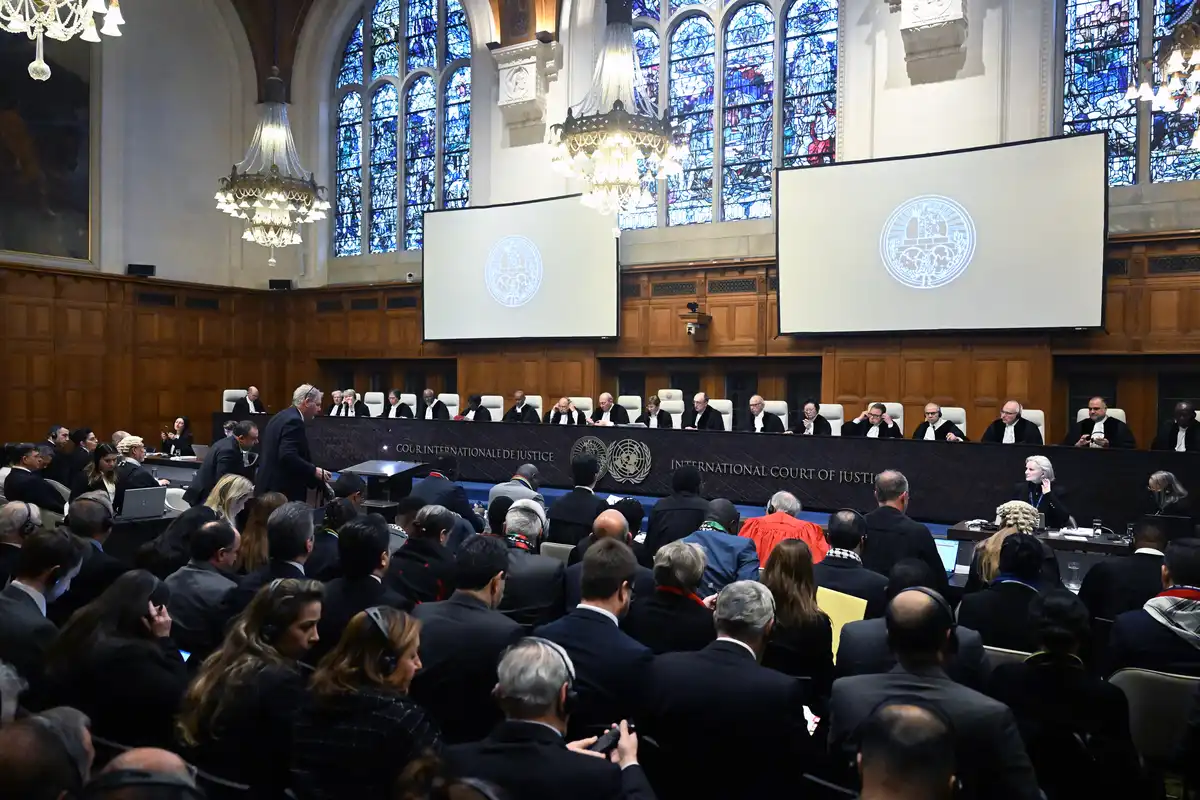
The vote, which was held between January 21 and 23, comes as the International Court of Justice in The Hague prepares to issue a provisional ruling on Friday (26/1) on the South African genocide case against Israel, and a separate lawsuit against the Joe administration. Biden on charges of genocide. It advances the “failure to prevent genocide.”


The ICJ case, which was heard over two days earlier this month, is seen as an important barometer of international sentiment towards the Israeli campaign in Gaza. South Africa claimed that more than 50 countries agreed with its assertion that Israel demonstrated a “chilling” and “indisputable” intent to commit genocide in Gaza during its military response to the October 7 Hamas attacks.


South African lawyer Adila Hashim said: “This court has the benefit of evidence obtained over the past 13 weeks that demonstrates, indisputably, a pattern of conduct and relevant intent that justifies a plausible allegation of genocide.”


Israeli Prime Minister Benjamin Netanyahu said these allegations were false. He added: “We are fighting terrorists, and we are fighting lies. “Israel is accused of committing genocide while fighting genocide.”


In a related case, a first hearing is scheduled for Friday in a federal lawsuit filed by the Center for Constitutional Rights (CCR) alleging that the Biden administration failed to enforce its duties under US and international law to prevent Israel from killing civilians in Gaza.


“The United States has the means available to have a deterrent effect on Israeli officials who are now pursuing acts of genocide against the Palestinian people in Gaza,” the complaint stated.


The United States categorically rejects the accusation that Israel is violating the United Nations Convention on the Prevention and Punishment of the Crime of Genocide.


South Africa is seeking a ruling from the judges of the International Court of Justice for an immediate ceasefire or cessation of hostilities.


The lawsuit, filed by CCR in California on behalf of several Palestinian groups, asks the court to prevent the United States from providing weapons, money and diplomatic support to Israel.

PALESTINE

Thu 25 Jan 2024 8:48 am - Jerusalem Time

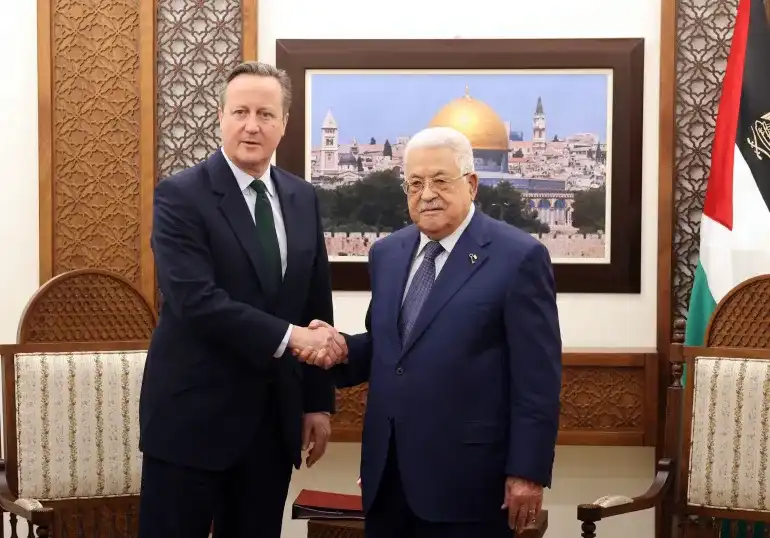
The British Foreign Minister presents a plan to move from a temporary truce to a permanent ceasefire

British Foreign Secretary David Cameron said that he presented - during his meeting with Palestinian President Mahmoud Abbas - a plan to move from a temporary truce to bring in aid and release hostages towards a permanent ceasefire.


Cameron explained - via a tweet on his account on the "X" website - that the plan aims for a long-term political solution and includes the establishment of a Palestinian state.


The President briefed the British Foreign Secretary on the latest developments in the occupied Palestinian territory, especially in the Gaza Strip, and stressed the necessity of immediately stopping the Israeli aggression against our people in Gaza, the West Bank and Jerusalem, and the necessity of accelerating the introduction of humanitarian aid into the Gaza Strip, and enabling shelter centers and hospitals to do their part to alleviate the situation. The suffering of citizens, as well as stopping the attacks of the occupation forces and terrorist settlers in the West Bank.


The President renewed the State of Palestine’s categorical rejection of displacing Palestinians from the Gaza Strip or the West Bank, including Jerusalem, stressing that there is no security or military solution for the Gaza Strip, and that Gaza is an integral part of the Palestinian state, and it is not possible to accept or deal with the plans of the occupation authorities in Separating the Gaza Strip from the West Bank, including Jerusalem, reoccupying it, or cutting off any part of it.


The President stressed the need for the Israeli occupation authorities to stop their oppressive practices, ethnic cleansing, undermining the two-state solution, the crimes of terrorist settlers, and the attacks of the occupation forces, and to stop withholding Palestinian “clearance” funds.


ARAB AND WORLD

Thu 25 Jan 2024 8:14 am - Jerusalem Time

Democrats in US Senate support the two-state solution. An overwhelming majority of them supported an amendment regarding “resolving the conflict”

An overwhelming majority of Democrats in the US Senate supported a statement that reaffirmed the United States’ support for the two-state solution to end the “Israeli-Palestinian conflict,” after statements by Netanyahu sparked global controversy, in which he declared his opposition to the two-state solution project.


49 out of a total of 51 Democratic members of the Senate supported an amendment that supports a negotiated solution to the conflict, leading to the existence of two Israeli and Palestinian states living side by side, ensuring the survival of the occupying state and meeting the “legitimate aspirations” of the Palestinians to establish their state.


Senator Brian Schatz proposed this measure as an amendment to a bill that would provide national security aid to Ukraine, Israel, and Taiwan. “What will determine the future of Israel and Palestine is whether there is hope or not,” Schatz said in a press conference. “The two-state solution must be that hope.” .

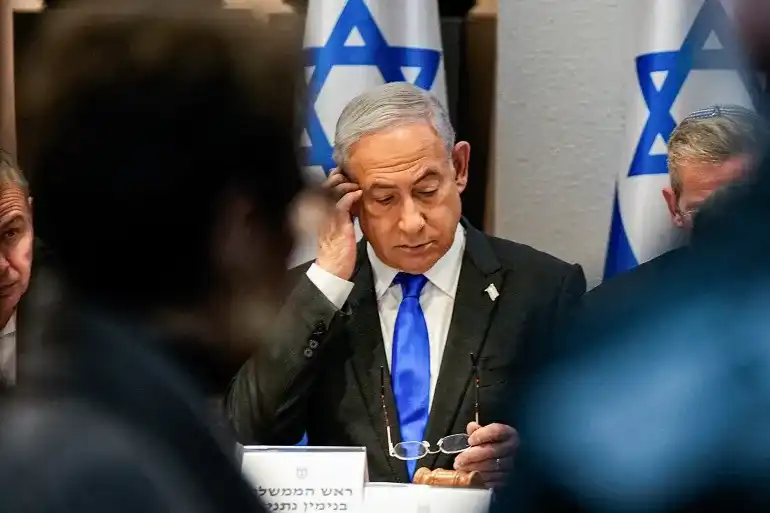
As the Israeli occupation war in Gaza raged, Israeli Prime Minister Benjamin Netanyahu said in a press conference this month that he opposes the establishment of any Palestinian state that does not guarantee Israel’s security, while his speech raised international concern, including in the United States, Israel’s largest supporter. Washington insists that the two-state solution is the only possible way to achieve lasting peace in the region.


Many members of the Democratic Party, to which President Joe Biden belongs, are pressuring the administration to do more to deal with the heavy losses inflicted on Palestinian civilians due to the Israeli occupation war against Gaza.


ARAB AND WORLD

Thu 25 Jan 2024 8:10 am - Jerusalem Time

Experts and analysts: Israel intends to displace the population of Gaza and Egypt must confront it

Israel is experiencing an internal dispute over the occupation of the Philadelphia border axis between Egypt and the Gaza Strip, a desire supported by the Israeli extreme right and opposed by the army, while Cairo rejects it in a way that is not firm enough, according to experts and analysts.


Talk about occupying the Philadelphia Axis - which is known in Palestinians as the Saladin Axis - came back again after Israeli Prime Minister Benjamin Netanyahu spoke about the necessity of keeping the axis under Israel’s control, claiming that it is an arms smuggling corridor that must be closed.


But Cairo denied these allegations through the head of the State Information Service, Diaa Rashwan, who said that Netanyahu’s speech was a prelude to reoccupying the axis, a clear violation of the Camp David Agreement signed between the two sides, and reflects the Israelis’ desire to displace the residents of the Gaza Strip.


Rashwan said that the occupation of the axis may expose relations between the two sides to a serious and serious threat, stressing that Egypt will not mortgage its borders to a group of extremist Israeli leaders who want to drag the region towards instability.


According to Hebrew media, Cairo has recently rejected Israel’s military operation in the region, and has also rejected arrangements proposed by Tel Aviv to monitor the axis technologically.


The motive is not military

Therefore, Netanyahu’s talk about occupying the axis is nothing but a reflection of his desire to completely occupy the Gaza Strip. Because he considers it an integral part of the Balfour Declaration, and therefore he tries to restore it whenever he finds a suitable circumstance, says military expert Major General Fayez Al-Duwairi.


During his participation in the program “Gaza... What Next?”, Al-Duwairi said that controlling the axis is not useful from a military standpoint, because Egypt dealt with the tunnel crisis and flooded it with water up to 30 meters, and confirmed this matter publicly.


Accordingly, talk about reoccupying this axis does not represent a military need, but rather represents a need for the extreme right, which dreams of returning to Gaza again, according to political analyst Muhannad Mustafa.


While the extremists are trying to push towards a complete occupation of the axis, the military establishment wants to launch a quick operation and then withdraw after reaching new understandings with Egypt that allow Israel to monitor the region technologically, in Mustafa’s opinion.


Mustafa attributes the absence of consensus regarding occupying the axis - which is actually on the table - to the high political and military cost that Israel will pay, “because the process is very similar to the experience of southern Lebanon, which cost it a lot and did not achieve security.”


Breach of the Camp David Accords

Despite the increasing possibility of Israel moving forward with its plans, it will clash with the Camp David Accords, of which the axis is part according to the 2005 annex, as journalist Muhammad Al-Satohi confirms.


Accordingly, Israel's occupation of the axis - in Al-Satohi's opinion - represents a complete Israeli violation of its agreement with Egypt, which will face great danger if it loses security control over this border strip.


From this standpoint, Al-Satohi believes that Egypt will not allow Israel to take unilateral steps in this region, “which explains the statements made by Rashwan, which somewhat broke the calm language that Cairo had adopted from the beginning of the crisis,” he said.


The statements of the head of the Egyptian State Information Service reflect Cairo’s feeling that Israel has a serious intention to occupy the axis in preparation for its larger goal of displacing the residents of Gaza towards Sinai, as Al-Satohi says.


Al-Duwairi agrees with the idea and quality of the Israeli intention to occupy the axis unless control is achieved through a new agreement with Egypt, but he confirms that invading the region requires crushing more than a million displaced people who are currently in the region.


Although Israel entered this region in the past and demolished tents on those in it, the situation is different this time, not only because of the presence of more than a million people, but also because of the strong resistance it will face on the ground.


Facilitating displacement

Aside from the security goals that Netanyahu talks about, the real goal of the attempt to occupy the axis is to facilitate the process of voluntarily or forcibly displacing the population, says Mustafa, who confirmed that Netanyahu had previously backed off from this step due to Egyptian-American rejection, but he returned to it again due to right-wing pressure on him. .


The same opinion was shared by Al-Satohi, who said that Egypt must use a more assertive language than its current language, and not be satisfied with private channels with Tel Aviv and Washington, because it is already facing the possibility of pushing more than a million people into its territory.


Al-Satohi believes that Israel was slow in displacing the population due to the Egyptian and American positions, but it did not back down from it and is working to implement it in every way. He added, “Israel may bomb the fence separating Sinai and Gaza and then push the population towards Egyptian territory by force, which requires a strict Egyptian position.”


He concluded that Egypt faces a major problem related to its image internally and regionally if it allows Israel to occupy this region and displace its residents, “which may push it to take a more decisive stance during the coming period, in addition to the possibility of intervention by Washington, which will not sacrifice Egyptian-Israeli relations, which represent the cornerstone of the stability of the region.” ", as he put it.


As for Al-Duwairi, he believes that “Egypt paved the way for Israel to occupy the axis when it allowed it to control everything that entered Gaza, in clear violation of the Camp David Accords.”


Therefore, Cairo is currently “using harsh language in which it explicitly declares the prevention of any attempt to occupy the border strip,” in Al-Duwairi’s opinion.


But Mustafa does not believe that there is a final political decision to occupy the axis, and says that what is happening is an attempt to pressure Egypt to accept new security arrangements in the region.


Source: Al Jazeera

ARAB AND WORLD

Thu 25 Jan 2024 8:02 am - Jerusalem Time

Former Israeli soldier: Controlling Gaza is deadly for us and for the Palestinians

An Israeli army fighter wrote down his bitter memories of the settlements in Gaza that ended in 2005 and the existing settlements in the West Bank. He also wrote his opinions about the Israelis’ ambitions to regain control of Gaza, strongly criticizing that.


Alon Sahar, who was a fighter in the Givati Infantry Brigade, said in a report in the Israeli newspaper “The Jerusalem Post” that controlling Gaza is deadly for the Israelis and Palestinians, and that the settlements did not protect Israel, as the right-wing parties claim, and that as soldiers they always protect the settlements at the expense of the Palestinians.


Below is what Sahar recorded in his own words:


I was the last to leave Gaza in 2005

On August 22, 2005, I was among the last soldiers to close the gate as we left the Netzarim settlement in the Gaza Strip, for the last time. We served there for a year and a half of what can only be described as hell.


As a soldier sent to protect the Gush Katif settlements – the main settlement bloc in the Gaza Strip that includes 21 settlements, I saw and experienced first-hand the price of clinging to isolated enclaves in the heart of a hostile environment.


I lost friends when Hamas fighters penetrated our forward military positions. I rode home with the settler mothers who raced with their children in the back seat, to avoid being shot. I thought then, on that summer day in 2005, that I was leaving all that violence behind me.


They seek to open the gates of hell

Now, the Israeli settler right and their false prophets are doing everything they can to reopen the gates of hell.


According to recent opinion polls, they have the support of at least 25% of the Israeli public. As a filmmaker and anti-occupation activist, I have spent the last decade of my career trying to address the moral sensitivities of Israelis by showing the deep injustices that Palestinians are forced to endure every day.


I hoped that by arousing compassion, our citizens would come to see that permanent occupation—leading to untold human suffering—is not the way.


Now, in the new and terrifying post-October 7 reality, it seems there is no longer room for compassion in Israeli society. In this case, now is the time to expose the other side of the coin: the terrible price we pay as Israelis for accommodating the policy of imposing our rule on others because this is not just about the Palestinians; It's about us too.


Our worst nightmares

As a former occupying soldier, my comrades and I felt the heavy cost in the Gaza Strip. We have an obligation to speak out about the calls for Gaza settlement that are escalating in Israel. Those who refuse to see the humanity of Palestinians at least owe it to us, the soldiers who protected their settlements, to listen to us talk about the sacrifice we made before we were dragged there.


The atrocities of October 7, and the realization of our worst nightmares, sent every Israeli, including me, into a state of deep sadness. Now, settler leaders are exploiting our grief and anger to promote the dysfunctional idea of resettling what they see as part of their biblical right, while they parrot the age-old defense of settlements as a security necessity.


I experienced terror in my body

This enthusiasm for the messianic salvation they so desperately desire, and the inevitable human price it will exact, will come as no surprise to those who weren't there the last time. But I experienced the horror of my body in the Gush Katif settlement in the Gaza Strip.


Right-wingers often refer to these settlements as the country's "bulletproof vest." But in reality, we soldiers were those jackets. There was nothing we didn't do for the Palestinians in the name of keeping the settlements safe: we carried out dozens of operations in the middle of their crowded neighborhoods.


We stormed their homes and turned them into military posts, clearing away their properties and orchards around the settlements to create buffer zones. If there was a choice between impacting the lives of Palestinians or the comfort of settlers, the choice to be made was quite clear.


Hamas was a force in Gaza long before Israel demolished its settlements and withdrew military forces during the 2005 disengagement. There were rockets, mortars, roadside bombs and tunnels like the one from which Hamas blew up the IDF's Orhan outpost in 2005. Rocket and shell fire was common, but it was only part of the story.


I survived several serious accidents

Not every soldier has 9 lives, but apparently, I did. I was once shot at on my way to the bathroom, moving between an armored vehicle and a military position. Another time, an RPG was fired at me while I was riding in a car during one of our operations. Fortunately, it didn't hurt me. I stood right next to an explosive device as grenades were thrown at me, but they did not explode.


I was covered in pieces of his flesh

One time, when I was about to arrest a Hamas activist, he blew himself up next to a Shin Bet (Israeli security agency) officer. I still remember being covered in pieces of his flesh, and my ears ringing from the deafening explosion. I started to question what the hell I was risking my life for.


Today, the Israeli messianic right is frank about its aspirations. We will know we have won “when a Jewish child can walk in Gaza without fearing for his life,” said MK Simcha Rothman, one of the architects of last year’s judicial reform. Finance Minister Bezalel Smotrich, a former senior Defense Ministry official, speaks frankly about prolonged Israeli control of Gaza.


They are trying to impose permanent control over Gaza

Make no mistake. It will happen. How many are aware that earlier this year, the Knesset repealed the disengagement law in the northern West Bank, effectively paving the way for settlers to return to areas from which they had previously been evacuated? The same lawmakers who proposed this bill also recently introduced legislation to repeal the Gaza Disengagement Law.


At first, they will tell us that it is “just a security zone,” and later, an outpost will appear there. It is likely named after one of the decimated kibbutz communities near the Gaza border. After a while, we find out that the military provides security for it and actually has satellite outposts around it.


The settlers' imagination is our nightmare

We cannot allow ourselves to get around the issue of what happens after the war. We have to think about our vision of a free, safe and sustainable life here for both Palestinians and Israelis.


The Israeli public has let messianic ideas corrupt this place for too long, under the pretext that the settlements are vital to security. We must not believe that.


The settlements did not protect Israel - we as soldiers protect the settlements, always at the expense of the Palestinians. The settlers’ imagination was a nightmare for us... nothing more.


Source: Jerusalem Post + Aljazeera

ARAB AND WORLD

Thu 25 Jan 2024 7:44 am - Jerusalem Time

Netanyahu’s predicament or an entity’s crisis? The “Al-Aqsa flood” that shook the Israeli project

By Zuhair Hamdani

Benjamin Netanyahu was nothing but a prominent figure in the complex crisis that Israel is experiencing. The predicament of the Israeli war on Gaza, which he and his government are led by extremists, has revealed the deep and most dangerous rifts of their kind in which Israeli society and the establishment are experiencing. These cracks strike the foundations of the fragile project that was based on the temptation of the “nation-state” with its settler-colonial, religious, and racist character.


All the arrows inside Israel and abroad are directed towards the Israeli Prime Minister as a factor that broke unity during the war, and who failed to achieve any political or military gains, while Netanyahu is merely an element that expresses the exposure of the political confusion, the societal gap, and the many rifts that caused a defeat that did not befall him personally, but rather With the project of Israel itself.


In promoting itself, Israel has always relied on the narrative of the only democratic state in an environment of tyranny (hostile to it) that is economically and technologically superior, and that has been able to fuse various components into a stable, pluralistic, liberal democratic project, and as a result, it is militarily superior. But the pillars of that narrative have become subject to many doubts.


Other than the factors of internal corrosion, this project was not subjected to an existential test. The lightning and decisive wars waged by Israel as an essential part of the security theory had reinforced all of these statements internally and externally, but the shock of the “Al-Aqsa Flood” and the collapse of the lightning war theory that concealed the factors of weakness for a long time, and the continuation of the war on Gaza for more than 3 months without achieving any goals, it revealed the weakness of all these narratives.


"Al-Aqsa Flood"... The revealing war

The "Al-Aqsa Flood" operation came at a time when the Israeli entity was in a state of extreme fragility, as the crisis deepened and the gap between its components increased. The statements of the resistance leaders in Gaza indicate that they were deeply aware and accurately knowledgeable of the Israeli internal scene and the apparent disintegration and confusion.


The Israeli aggression against Gaza represented a turning point in the future of the Israeli project itself. It proved that the Israeli military and political establishment and societal structure were no longer prepared for the lightning wars that used to strengthen the foundations of the project, and the losses since October 7 violently shook the foundations of this project at the strategic level. The issue of prisoners and detainees put severe pressure on the structure of Israeli society.


The war on Gaza, which has continued for the fourth month, has deepened the cracks in the Israeli project with the confusion and weakness that the Israeli army has shown, and the moral deviation it has shown in its operations, and the strength and determination that the resistance has shown, and the disintegration of the entire Israeli institution that has been revealed, and what it has provoked. The pessimism and doubts regarding the notion of stability on the ground based on brute military force, and the global rejection of its crimes that Israel received increased over time.

In this context, the Israeli historian Ilan Pappé points out that what is happening in Israel confirms “the beginning of the end of the Zionist project,” which he considers “a long and dangerous phase, and we will not talk about the near future, unfortunately, but rather about the distant future, but we must be prepared for that.”


The indicators of the end of this project, according to Pappe, were evident in “the Jewish civil war that we witnessed before last October 7, between the secular camp and the religious camp in the Jewish community in Israel,” indicating that this war will be repeated, considering that “the cement that unites the two camps, which is the security threat, "It doesn't seem like it's going to work anymore."


Ilan Pappé builds his theory of the end of the Zionist project primarily on the factors of internal disintegration between the secular and religious camps, which will increase and deepen with the test of power that was not in Israel’s favor this time, economic and social pressures, and the loss of certainty in the continuity of the project itself. There are clear indicators of the failure of this project, including:

The collapse of the Israeli army’s ability to protect the Jewish community in the south (Gaza) and the north (south Lebanon), the collapse of the “people’s army” theory, and the fall of the option of lightning and pre-emptive war, and the war necessarily became inside the Israeli depths, with the losses that this represents.

The war has put severe pressure on Israeli society, and a state of pessimism, fear of the future, and existential anxiety has spread. The Israeli project is no longer attractive to new immigrants, and the rates of reverse migration have increased.

The new generations of young Jews in Israel and the United States (the largest supporter of Israel) are no longer as convinced of the Zionist project as their parents. Criticism of the legitimacy of Zionism and the justifications for its continuation has increased, given that Zionism has achieved its main goal, which is the establishment of a national homeland for the Jews in Palestine.

The brutal racist nature of the Israeli entity, its transgression of international norms and laws, and the unprecedented support for the Palestinian cause in the world have been exposed, and the transition to “a new phase with the shift of pressure from societies to governments.”

On the economic level, the gap has become large in Israel between those who have and those who do not have, and there is a disparity between the rich and the poor, and without the continued American support, the Israeli economy would not have survived, according to Ilan Pappé.

Increasing American doubts about viewing Israel as a project in the region to serve its interests and the growing disagreement with Benjamin Netanyahu in his vision of war and solution.

Israeli writer Gideon Levy summarized in Haaretz newspaper the most important indicators of Israel’s failure vis-à-vis the Palestinians by saying: “We are facing the most difficult people in history, and the process of self-destruction and the Israeli cancerous disease have reached their final stages, and there is no way to cure them with iron domes, fences, or nuclear bombs.”


Transformations of a hybrid society

Israel was not formed naturally, like all countries, based on a social development based on the interaction of the population with the land. Rather, it was founded from a hybrid society of multiple races, nationalities, and cultures, contrary to the fact that it came within the framework of an imperial project to play a functional role in the region, and thus it lacks a civilizational dimension. Humanitarian, Israeli society remained heterogeneous and divided horizontally and vertically. The state continued to protect its survival by brute force in the face of the people who were robbed of their land.

The process of forming the Israeli entity was built on the idea of a replacement colonial settlement whose goal was to abolish the civilization and culture of the Palestinian people and liquidate their existence in various ways, but the Palestinian resistance remained a wedge embedded in the heart of the Israeli project.


David Ben-Gurion, the first Israeli prime minister, was not unaware of the danger of mixing this hybrid formula into a unified state, so he spoke about what he called the “melting furnace” by saying: “With the end of the battles. This great people of different colours, we must melt them again into A new crucible from which to create a new nation.”


The temptation of the project was reflected in its beginnings in mobilizing Jews from various parts of the world, and the Zionist movement and the Jewish Agency succeeded in bringing Jewish immigrants to the land of Palestine, but failed to melt them into one crucible, as Ben-Gurion wanted. The elements and components were discordant in such a way that the smelting process was not suitable for producing a solid component, and cracks gradually appeared.


In a speech considered a warning, former Israeli President Reuven Rivlin spoke since 2015 about the danger of division in Israeli society - about what he called “four clans” - secular, religious nationalist, and extremist, in addition to the Arabs, noting that “they do not live side by side, and their children do not live side by side.” "They don't go to the same schools, and they don't even read the same newspapers."


Rivlin believed that these disparate groups have different visions of what the State of Israel should be, while "mutual ignorance and the absence of a common language increase tension, fear, hostility and competition between them."


“Judicial reform” projects, strikes, demonstrations, and manifestations of racism and extremism were nothing but an expression of the state of structural disagreement that was expanding between those “four clans,” and the military and security establishment were drawn to it by the refusal of large sectors of reserve soldiers to join the service, and the refusal of Air Force officers to do so with their tasks.


Former Mossad chief Tamir Pardo expresses the seriousness of this by saying that the greatest threat to Israel is the Israelis themselves as a result of the self-destruction that has been underway in recent years, and he stressed the importance of "stopping this disastrous path before the point of no return, because Israel is self-collapsing." There are doubts about the possibility of managing and resolving these differences democratically.


Israel is the only country that has not drawn up a constitution, and this resulted mainly from the failure to resolve the existing contradictions and the inability of the different groups in Israeli society to agree on the nature of the state, its identity, its borders, and its political system. Therefore, it is a state that still cannot define itself internally and externally except as a “state.” "For the Jews."

For its part, the Center for National Security Research at Tel Aviv University (INSS) indicates that the political conflict poses a strategic threat to Israeli national security, and that there is a serious decline in social and national immunity that has reached the point of threatening social disintegration with the escalation of security threats and damage to relations with the United States. And the economic crisis.


The ethnic problem and the state of social conflict between European Jews (Ashkenazi) and Eastern Jews (Sephardic) clearly emerge, which has taken on a class and cultural character, as the Ashkenazi continue to occupy the center position in society and the state.


The Jews of the East, as well as the Jews of the Falasha and the Arabs, remain at the bottom of the social and economic ladder in terms of income, employment, and opportunities, and the level of racism among Jews increases, and what the former Mossad chief called “free hatred” that constitutes the real existential threat to the future of Israel.


Leftists, secularists, and younger generations fear the dominance of the religious right and the transformation of Israel into a state that lives on religious identity and historical myths. Religious people (or Haredim) take a radical stance against Zionism and the state, boycotting its schools, most of its institutions, the army, and its media, and they even adopt their own time.


Premonitions of ancient prophecies

Under the weight of defeat in the first days of the October 1973 War, Israeli Prime Minister Golda Meir spoke of the “destruction of the Third Temple,” which was echoed by many Israelis before and after the October 7 invasion based on an ancient prophecy, known as the decade of eighty, in which the Jewish state would end.


In his book “The Third House,” writer Aryeh Shavit points out that this “destruction” will be in the hands of the Israelis because they have become their own biggest enemy, noting that “security challenges can be addressed, but the disintegration of identity cannot be overcome.”


For his part, former Israeli Prime Minister Ehud Barak himself pointed this out, saying in an article in Yedioth Ahronoth newspaper: “Throughout Jewish history, the Jews have not had a state for more than 80 years except in two periods: the period of King David and the Hasmonean period, and both periods marked the beginning of its disintegration in the eighth decade. Lessons must be drawn from the fragmentation and division that afflicted the former Jewish kingdoms, which began to disappear on the threshold of the eighth decade.”


The emergence of these prophecies of demise was linked to the escalation of internal disputes wrapped in ethnic, religious and class dimensions, and also to the pressures of war and the shock of the invasion on October 7 and the refuge of tens of thousands of Israelis from the settlements of the south and north towards the interior, the pressures of the issue of prisoners and detainees and the failure of the Israeli army to achieve any goals.


These prophecies also appear as a psychological reaction, since the idea of stability on the land (as one of the most important pillars of the state) is considered questionable by the Israelis because they live on someone else’s land, realize that they are in the middle of a hostile environment, and know that the owner of the land is still resisting.


Countercurrent migration

In conclusion, the army no longer protects the people, there is no longer a sense of security, there is no longer economic prosperity with declining income and high unemployment rates, there is no longer political stability, there is no longer international support as before, and there is no longer complete American cover. All of this pushes the Israelis to abandon the “Israel Project”, so that the option of reverse immigration becomes strongly present, as the Israeli statistics themselves prove, and it is the most dangerous thing that the leaders of the Zionist project were warning about.


The demographic factor associated with the immigration of Jews to Israel was a major concern for David Ben-Gurion, who said: “Israel’s final victory will be achieved through massive Jewish immigration, and its survival depends only on the availability of one factor, which is widespread immigration to Israel.”


Estimates indicate a significant decline in immigration to Israel in the last two years, and it stopped after the “Al-Aqsa Flood.” Zaman Israel newspaper quoted the Israeli Population and Immigration Authority as saying that about 370,000 Israelis left the country from October 7 until the end of November, in addition to 600,000 who traveled abroad during the holidays and remained there.


According to an opinion poll conducted by the official Israeli radio station Kan last March, more than 25% of adult Jews (over 18 years of age) are seriously considering emigrating from Israel. Yedioth Ahronoth newspaper also reported last April that 47% of those who immigrated or left do not intend to return again.


In light of the imminent strategic defeat, and the collapse of Israel’s image militarily, socially, politically, and economically, many Israelis have resorted to their original nationalities and passports. It is expected that the percentage of those wishing to leave the “Israeli project” will increase, and that reverse immigration will escalate, which will lead to a demographic crisis, the erosion of Israeli society, and the outnumbering of the population. The Arab population gradually increased due to their high population increase.


Researchers liken Israel to be merely a multinational enterprise with shareholders of various stripes, including investors abroad. The beginnings of establishment and the first successes overshadowed the weaknesses and areas of disagreement, and external support postponed the bankruptcy of the project, whose failure was gradually revealed in the face of the many pressures, challenges, and mismanagement, which Netanyahu represented for nearly 16 years.


Netanyahu - who is currently running this project - is not much different from other Israeli politicians in his extremism and denial of Palestinian rights, and they do not differ from him in the brutality of what he is committing in Gaza. His problem is that he returned to power again with higher doses of extremism, and in a moment of extreme confusion for the Israeli project in which he was an active party.


He had to suffer the greatest military shock to Israel in its history, to receive blows from the Palestinian resistance that was managing the battle intelligently and competently, and to accumulate mistakes on the back of losses that undermined his personal future and created more cracks in the structure of Israeli society and the state.


Source: Al Jazeera

OPINIONS

Thu 25 Jan 2024 7:42 am - Jerusalem Time

Mr. Borrell’s Initiative

Nabil Amr

Nabil Amr

Opinion Writer

Emptiness generates a stronger echo than sounds. This principle applies to politics, especially to political settlements. Although the Palestinian struggle has been ongoing for longer than any other and has generated more conflicts, coups, and turbulence than any other, it is always subject, when it comes to solutions, to exploitative initiatives that do not achieve their objectives. This has been the case since the beginning, and it remains true to this day. Indeed, there is talk of a European initiative being prepared and will be launched once the concerned parties are consulted. Its initial draft has been published. Alongside an introduction about the motives behind it, it includes a ten-point proposal by Mr. Borrell aimed at achieving a comprehensive Palestinian-Israeli-Middle Eastern settlement.

Mr. Borrell's initiative reminds us of the “Roadmap” plan, which intended to save the Oslo Accords in stages after the latter began to gradually collapse. The Quartet at the time represented the entire world. To remind readers, it included the United States, Russia, the European Union, and the United Nations. The Palestinians and Israelis were allowed to note their reservations on particular stipulations, provided that they agreed to it first. The Roadmap withered, the Quartet faded away, and the Oslo Accords continued to die under the watchful eye of its major sponsors.

We remind our reader of this plan and its fate, as well as the fate of the international framework that gave rise to it, to put Mr. Borrell's plan in its proper context. This is not a question of the text but about its chances of success. To know if this plan could potentially lead to a settlement, we must first determine the weight of those standing behind it. Assuming it was agreed upon by Europe, this grouping of states gave birth to the Oslo Accords, which is named after one of its capitals. However, the US and Israel colluded to push it out, reducing its role to providing funds. Sometimes it was called upon to persuade the Palestinians to acquiesce to the unacceptable.

Let us assume that Mr. Joseph Borrell is encouraged by the US; that would be a point against the plan, not for it. US encouragement would mean it is not serious, or that the initiative is meant to feel room.

It would be more beneficial for the US to put an initiative forward itself, which is not on its political agenda, unless we believe the leaks that suggest it is preparing something of this sort.

Moving on from the question of the US link to Mr. Borrell's initiative, and whether it is being launched in coordination with the US or encouraged by it, what deserves careful consideration is... Israel. With Netanyahu in power alongside his more fanatical coalition partners, is Israel ready to consider this initiative or even discuss it? Netanyahu answered this question himself. He stressed that he strongly and unequivocally rejected the establishment of a Palestinian state. In fact, he argued that his remaining at the head of the Israeli government served one primary function, preventing the emergence of a Palestinian state, even if the whole world, including the US, agreed to its establishment. The treasuries and archives of the Palestinians are filled with settlement projects. Their leaders have welcomed texts and proposals drafted by world leaders promising a reasonable solution to their chronic struggle. The influential global actors of our era have encouraged, supported, and adopted them, but the Palestinians have not seen tangible results, even after everything that has been said and continues to be said about the importance of resolving the Palestinian issue for stability in the Middle East and the world at large.

The proposal that Mr. Borrell has put forward in Europe’s name should not be evaluated solely based on the text, nor should it distract us from the urgent priorities that the world has failed to address, even minimally. Indeed, it does not make sense to believe that the same people who cannot stop the genocidal war, which continues and escalates in Gaza and the West Bank, and threatens to expand into a regional war, are capable of ensuring much more significant results. 

Finally, it is essential to remember that the Arabs had put forward an initiative of their own early on. In terms of its weight and purpose, their initiative is more substantial than any other, including the one being presented by the Europeans, for example. Whether the Arab Peace Initiative can be a foundation for any serious attempts to end the conflict and solve its main issue is a question not only directed at Mr. Borrell but everyone around who wants the Middle East to become a hub for peace rather than a hub for wars.

OPINIONS

Thu 25 Jan 2024 7:31 am - Jerusalem Time

War on Gaza: A coalition against Netanyahu's forever war is growing in Israel

Middle East Eye

Middle East Eye

Opinion Writer

By Meron Rapoport in Tel Aviv, Israel

Both the prime minister and the military want to keep fighting for personal reasons. But something might tip the balance the other way

It is too early to say whether the loss of 21 Israeli soldiers in one day in central Gaza's Maghazi refugee camp will turn out to be a pivotal moment of the war in Gaza.

There are, certainly, precedents. One is the loss of 73 soldiers when two helicopters collided over Northern Galilee in 1997. That was the starting point of a protest movement which led to the withdrawal from Lebanon three years later.

But the loss at Maghazi of soldiers who were mostly reservists could certainly add to the growing war fatigue of the Israeli public, who are increasingly at a loss to understand what the war on Gaza is achieving.

While a majority continue to back the war, they are not buying the army’s claims that 17 out of Hamas’s 24 battalions have “collapsed”, that one-third of the Palestinian movement’s fighters have been killed, and that the Israeli military controls 60 percent of the territory in the Gaza Strip.

The soldiers at Magazi were mining houses for demolition in an area under army control. “Control” is becoming a relative concept, as Hamas’s hit-and-run strikes prove only too clearly.


Nor is it clear what the army is achieving in Khan Younis, more than six weeks after the army spokesman said that they have entered it. Khan Younis is not that big a place, and it’s certainly no Stalingrad.

There are two competing coalitions at play in Israel and yet neither have the decisive upper hand, for the moment.


This is Netanyahu's war

The first coalition is led by Prime Minister Benjamin Netanyahu. As the conflict drags on, it is very clear that this is his war.

It’s his war because the moment he stops it, his government crashes and Israel will turn on him for having let Israel’s guard down on 7 October.

It’s his war because he has raised the stakes so high, stressing each day that it has been his life’s mission to prevent a Palestinian state being created, and by saying Israel should have a permanent presence in Gaza - an objective that has not been approved by the war cabinet, which contains former rivals.

The army absolutely does not share that objective and is resisting Netanyahu’s wish to reoccupy the Philadelphi Corridor that runs along Gaza’s border with Egypt, without which no permanent Israeli military presence in Gaza can function.

The army’s primary war aim is to restore its lost honour and to restore the principle of deterrence on which the armed forces is built, the concept that heavy strikes deter Hamas and Hezbollah from attacking. The military and its ideology admit that peace does not exist but claim that Israel’s enemies are deterred.

This obviously did not happen on 7 October, or during the three and a half months that followed. Hamas is plainly not deterred from striking Israel at will despite the overwhelming military odds, the total destruction of Gaza and a growing famine.


The army high command is not happy with Netanyahu’s political leadership. They are not rushing to fulfil his order to take over the Egyptian border around Rafah, and they have withdrawn some of their forces from the northern part of Gaza.

The army does not have a clear position against a Palestinian state or the Palestinian Authority taking over Gaza post-war, as Netanyahu does. But it is clear about wishing to continue the campaign, because it would hate to see a situation in which war ends without a clear victory.

Once the army turns against Netanyahu, it would be very difficult for the prime minister to continue in power. But that moment has not yet come.

While neither Netanyahyu nor the army has succeeded in their basic war aims, both the army and the embattled prime minister have adopted the concept of endless war.

This coalition is uneasy, and both sides in this partnership have problems.

Netanyahu faces a hunger strike on his doorstep, demonstrations tens of thousands strong in Tel Aviv calling on him to quit, and mounting protest from the families of the 132 remaining captives, who on Monday broke into Israel’s parliament, the Knesset.

The army, on the other hand, faces what a leading expert on relations between the army and Israeli society, Professor Yagil Levy, calls a “Blue Collar rebellion”.

Levy says there is an unprecedented level of defiance among the rank and file in Gaza. Soldiers are taking pictures of themselves and Palestinian detainees in defiance of the army’s values. They are taking photographs in mosques, they talk of revenge, reoccupation - all messages that contradict the army’s basic codes.

There is also the suspicion that parts of the army were reluctant to withdraw from Gaza and that the military said the order was delayed “for technical reasons” to mask this.

Mounting doubts

On the other side there is a coalition of interests that leans towards a political outcome to the war.

Benny Gantz and Gadi Eisenkot, political opponents of Netanyahu who entered the war cabinet following the 7 October attack, do not in any way endorse the PA’s return to Gaza or a political solution that would create a Palestinian state. But neither have they said anything against it.

They appear at ease with the US push for a two-state solution and with the Saudi initiative, which predicates recognition of Israel on the creation of a Palestinian state.

Eisenkot said at a meeting held on the 100th day of the war that "we need to stop lying to ourselves, show courage and lead to a big deal that will bring the abductees home”, adding: “we are walking in like blind people.”

Defence Minister Yoav Gallant followed him and said openly that "a lack of political decision could harm the progress of the military operation". And it was reported on Channel 13 that even Chief of Staff Herzi Halevi said that because a strategy for "the day after" has not been built, "we are facing an erosion of the achievements we have achieved so far in the war".

The doubts are not just in the war cabinet. Within Israeli society the pressures are mounting. Everyone predicts the economy this year will be disastrous, with skyrocketing deficits and mass layoffs.

Closely related to this are the army’s reservists, whom Gallant warned not to plan any holidays for the summer. Cases of conscious objection to a war, as happened in the First Intifada, are rare, and if a reservist refuses the call-up, he or she may get at most a month in prison.

It’s more often the case that refusers cite personal reasons, such as childcare, the risk of business failure or a pending university examination, and usually they don’t get prosecuted for that. Refusal is kept a private matter. But the reluctance to fight an endless war will inevitably grow.

There is also the reluctance of the population of southern Israel to return to their homes and kibbutzim while a war is raging on the other side of the fence. This can work for both camps. It could easily be used as a reason to prosecute the war until the very end.

The army is telling them they can go back home, but most refuse. They are far from being anti-war, but they don’t want a war of attrition. They want a decisive defeat of Hamas. Dropping an atomic bomb on Gaza or the return of the PA is all the same for them.

In the north, the threat of rockets from Hezbollah is substantial, particularly after the group’s use of long-range anti-tank missiles, for which Israel’s Iron Dome defence is worthless. There were 200,000 Israelis displaced after the Hamas attack. The majority of these will not go back to their homes in the foreseeable future.

Most of these elements are pushing for some kind of political deal to end the war. But the real problem in Israel is that no lobby is strong enough to end the war in a political settlement.

Facing them down are Netanyahu and the extreme right wing in his government, for whom the stakes are very high. An end to the war could lead to a dramatic change in the politics of Israel and the right wing understand what is at stake and will do everything in their power to stop it.

As yet neither coalition - the coalition of endless war, or the coalition which could conceive of a negotiated end to it - are dominant. A very small shift could tilt the balance between them.

OPINIONS

Thu 25 Jan 2024 7:26 am - Jerusalem Time

Israel's case at the ICJ: An armed conflict where only one side is allowed to fight

Middle East Eye

Middle East Eye

Opinion Writer

By Craig Murray

It was quite something to be in the court to witness Israel's nonsensical claim that this is an 'armed conflict' at the same time as denying the legitimacy of any armed resistance to it

I was the only journalist inside the courtroom at the International Court of Justice for South Africa's genocide case against Israel. Thirty accredited journalists were in a press room in another wing of the building, watching what the director showed them on a screen. Rather more journalists waited outside the building.

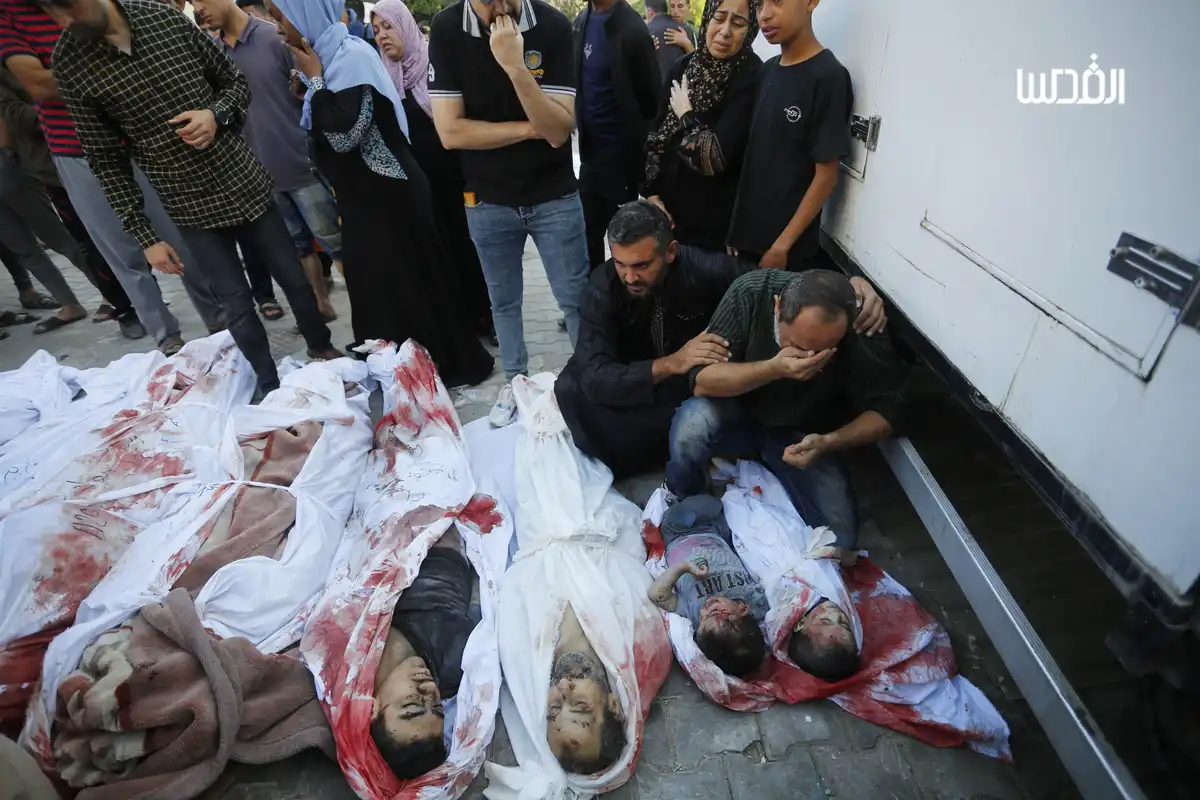
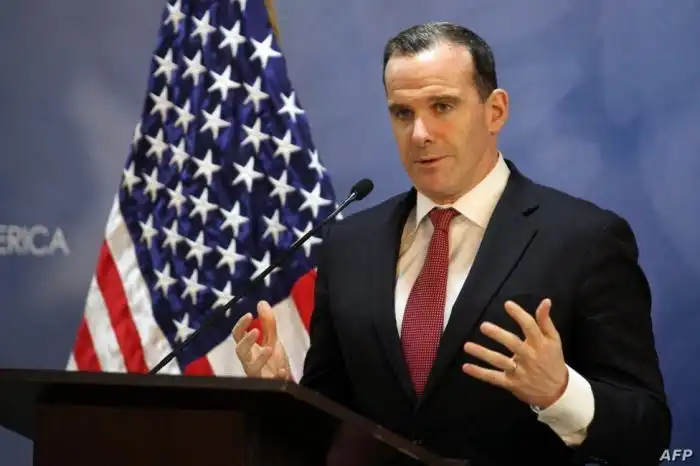
I got into the courtroom by sleeping on the pavement in the sub-zero temperatures of the Hague, in the queue for one of the 14 seats available in the public gallery. You can't beat being in the court - the interactions between the delegations, the body language and expressions of the judges in response to particular arguments. If you were not there, you are not really covering the case.

It has taken a week for my body to fully recover and about the same period for my mind to sift the drama and tension of the court from the actual arguments advanced. 

The most striking thing was, of course, the highly belligerent attitudes of the opposing sides, with South Africa talking of the Nakba and 75 years of apartheid in Israel, while the Israeli side responded by accusing South Africa of complicity in genocide themselves through support of Hamas.

The total dissonance of alleged facts was also truly remarkable. Israel simply denied responsibility for the destruction of infrastructure and housing - which they blamed on over 2,000 Hamas missile misfires and Hamas' booby-trapping of buildings. Israel claimed that more food per day now entered Gaza than before 7 October.             


Israel also stated explicitly that every single hospital in Gaza was "a military base".

Findings of fact would be established by evidence at a substantive hearing of the ICJ, probably in around two years' time. What we had now was a request for provisional measures, where argument, probability and procedure were being considered, not evidence weighed.

I want to look now at some aspects of the argument that seem to me insufficiently considered elsewhere.


'Unispute'

Israel's base argument was that this was an “armed conflict”, not a genocide. They used the term repeatedly.

In an armed conflict, there are inevitably civilian casualties. These might be “horrible”, but are always there, and are worse in urban warfare. Hamas was responsible for the civilian casualties by embedding its forces within civilian populations and structures. 

Israel stated explicitly that Hamas operations were centred in hospitals, schools, water treatment and electricity generation facilities, and United Nations facilities. Civilian casualties in such places in armed conflict were therefore both inevitable and the fault of Hamas.

The difficulty here is that Israel both claimed that what is happening is “armed conflict”, and denied the legitimacy of any armed resistance to it. 

If Israel claims it is in armed conflict, it must acknowledge the legitimacy of the arms of those it is fighting

In attempting to have the ICJ dismiss the case on procedural grounds, Malcolm Shaw KC said that South Africa had no right to bring the case as it had no dispute with Israel at the time of filing. It was not, he said, a dispute but a “unispute”.

On a similar logic, Israel's position depends on it being in “armed conflict” but denies there are two legitimate parties to the armed conflict. Israel stated in terms that it must not stop its operations because Hamas continues to fire on Israeli forces and launch rockets into Israel.

It is a strange armed conflict where one side is not allowed to fire. If Israel claims it is in armed conflict, it must acknowledge the legitimacy of the arms of those it is fighting. It cannot use “armed conflict” as an excuse for over 25,000 dead but then also claim it is not an armed conflict but some kind of limited anti-terrorism operation.

In short, if this is an armed conflict, the Palestinians have a right to fight back. Which of course they do. There is no doubt in international law that a people under occupation have the right to armed resistance. I don't think anybody disputes that, not even the British or US governments.


Legal nonsense

The key question here is: have the Palestinians no right to resist a genocidal attack because it is Hamas - designated by the West as a proscribed terrorist organisation - doing the resisting? This, in my opinion, is massive hypocrisy. The appalling consequences of branding a de facto government simply as “terrorist” are playing out in the violent killing of hundreds of children every day. 

The Hague has to pick its way through the legal nonsense of an “armed conflict” in which only one side is allowed to fight and in which the large majority of casualties are entirely innocent women and children, a distressing proportion of them infants; in which one side has every weapon of the most modern and expensive of armies and massive air power it uses to kill indiscriminately on an industrial scale, and the other side has a few light arms and improvised rockets.

In the West, we have painted ourselves into a similarly ridiculous legal position. Some protesters have now been arrested in the UK for opposing this genocide. I have personally been forced to flee the country while the police puzzle over whether supporting the Palestinian right in international law to armed resistance is “terrorism” or not.

On 20 January, Joe Biden and Benjamin Netanyahu had a conversation about Palestinian statehood, which again confirmed the US view of a Palestinian state which would be an utter sham.

In particular, it would be permitted no arms or military forces and would not have control of its own borders or foreign policy. Israel would have power over both goods and people entering this “state”, which would be territorially fragmented and powerless in every way.

This, of course, is the ultimate culmination of the apartheid Israel scheme. Time passes, and people mostly do not know how much the vaunted “two-state solution” mirrors the planned apotheosis of apartheid. I had the South Africa desk in the UK Foreign and Commonwealth Office in the mid-1980s, and I can tell you.


The Black population of South Africa was to be confined to a number of “homelands”. These were to become “independent states''. One of them, Bophuthatswana, was actually declared as independent. 


Their “sovereignty” was to be limited in exactly the ways Biden and Netanyahu think may make a puppet Palestinian state possible. Ultimately, over 80 percent of Black South Africans were planned in these “independent” states, removing the Black majority from South Africa, for which they would function as a permanent pool of cheap labour with no rights.


Colonial propaganda

Palestinians had, even before the current hostilities, been ethnically cleansed from 85 percent of their land. A “two-state solution” which cements that and leaves them under permanent Israeli military dominance will not solve this conflict, the answer to which is not the effective entrenchment of the status quo.

The desire to deny the Palestinians the right of a people to self-defence is bolstered by the endlessly recycled atrocity stories of 7 October. Now, I do not doubt that some crimes were committed by Palestinians on that day. They must be thoroughly investigated and if possible perpetrators punished - though strangely it is almost never possible to punish western military perpetrators of crimes in lands they have occupied.


I also do not doubt that Israel's version of the 7 October attacks has been amplified by the media, although the reality is far more complex and troubling. Strangely, this has been much more openly admitted and discussed in Israeli rather than western media.

The sustained hype over the 7 October atrocities portrays Palestinians as barbarians who should never have the right to defend their homes and families

But there is of course a point to the systematic and sustained hype over the 7 October atrocities. It portrays the Palestinians as barbarians who should not ever have the right to bear arms or defend their homes and families.

This is a well-recognised pattern of colonial propaganda. Sustained occupation and deprivation of an occupied people leads to occasional frenzied outbursts of resistance, and unconventional warfare due to a disparity of arms. 

Such outbreaks always contain atrocities that mirror the sustained violence to which the occupied people have been subjected. Those atrocities are then endlessly retold and amplified by the colonisers. The Black Hole of Calcutta or the stories of Mau Mau rape and murder are good examples. 

These are, always, characterised as examples of the “bestiality” of the occupied and colonised, and proof of the validity of the civilising mission, and evidence of the moral superiority of the coloniser. There then follows more repression.

It is astonishing to me that postcolonial studies is now such a well-established discipline but that almost none of its core insights have fed through into public, and particularly media, discourse. What is happening in Palestine is perfectly plain.

ARAB AND WORLD

Thu 25 Jan 2024 7:09 am - Jerusalem Time

Hebrew media: Egypt President Al Sisi refuses to receive a phone call from Netanyahu

Hebrew media reported, this evening, Wednesday, that Egyptian President Abdel Fattah El-Sisi refused to receive a phone call from Israeli Prime Minister Benjamin Netanyahu due to disagreements between the two sides in light of the continued Israeli threats to carry out a military operation in the Rafah area and the Philadelphia axis located between Egypt. And the besieged Gaza Strip.


This came according to what Israeli Channel 13 reported in its evening bulletin, and it quoted two sources it described as “informed” that the National Security Council, affiliated with the Israeli Prime Minister’s Office, approached the Egyptian side with a request to coordinate a conversation between Netanyahu and Egyptian President Sisi, “to no avail.”


The channel pointed out that the last conversation between Sisi and Netanyahu took place last June, following the operation carried out by the Egyptian Central Security Officer, Mohamed Salah Ibrahim, in the border region in the south of the country, where he crossed the border and killed three Israeli soldiers, and wounded a fourth, in an exchange of gunfire. 


The channel reported that this comes against the backdrop of escalating disagreements with the Egyptian side over Israeli plans to deal with the Philadelphia Axis.


The channel pointed to intense, continuous and ongoing talks among professionals between senior Israelis and Egyptian intelligence chief Abbas Kamel, who is considered a key figure in Egypt and close to the right of President Sisi.


According to the channel, an official in Netanyahu’s office confirmed these details, but no official comment was issued.

Sama News

PALESTINE

Wed 24 Jan 2024 10:57 pm - Jerusalem Time

War on Gaza: UNRWA educational center was targeted by Israeli raids leaving dozens of dead and injured

The toll of the ongoing Israeli war on Gaza has risen to 25,700 killed and 63,740 injuries since October 7, at a time when the occupation aircraft and artillery continue to launch raids and intense bombardment on various areas of the Strip for the 110th day in a row.


The occupation's raids and bombings during the past 24 hours left dozens of killed and hundreds of injured, while 24 massacres were committed against families in the Gaza Strip, killing 210 people and 386 injured according to the Ministry of Health.


International organizations warned that hundreds of thousands of besieged Palestinians, especially in the northern Gaza Strip, would be exposed to starvation, and called on many countries to stop the aggression against Gaza and end the suffering of the Palestinians.


This comes as reports spoke of intensive mediation efforts to reach an agreement in stages, leading to an exchange of prisoners between Hamas and Israel and a ceasefire.

ARAB AND WORLD

Wed 24 Jan 2024 9:28 pm - Jerusalem Time

Biden's advisor is in Doha for talks on a prisoner exchange deal between Israel and Hamas

White House spokesman John Kirby said on Wednesday that President Joe Biden's Middle East advisor, Brett McGurk, is in the Qatari capital, Doha, to hold discussions on the possibilities of concluding another prisoner exchange deal between Israel and Hamas.


This is McGurk's second trip to Doha this month to discuss the issue of detained prisoners, after a visit he made on January 9.


According to what the American website "Axios" reported on Sunday, McGurk is expected to meet with the Qatari Prime Minister and Foreign Minister Sheikh Mohammed bin Abdul Rahman Al Thani in Doha, during his visit.


McGurk visited Cairo yesterday, Tuesday, to hold “serious” discussions regarding the release of prisoners detained in Gaza, and reaching a humanitarian truce in Gaza, according to what Kirby announced.


In recent hours, information has increased about the possibility of reaching a new truce in the Gaza Strip, according to which more prisoners and detainees from both sides will be released. In this context, Reuters said yesterday, Tuesday, that Israel and Hamas have largely agreed, in principle, to the possibility of exchanging Israeli detainees for Palestinian prisoners during a month-long truce.


The agency quoted three sources as saying that the framework plan was delayed due to differences between the two sides regarding how to reach a permanent end to the war in Gaza.


Today, Wednesday, the Israeli occupation government ruled out a ceasefire in the Gaza Strip. A government spokeswoman denied media reports indicating the possibility of reaching a new agreement with Hamas, according to which the fighting would be halted in exchange for the release of prisoners.


Spokeswoman Ilana Stein said in a press briefing: “Commenting on news about ceasefire agreements, Israel will not abandon the destruction of Hamas and the return of all hostages, and Gaza will not pose a security threat to Israel.” She added: "There will be no ceasefire. There were truces for humanitarian purposes. Hamas violated this agreement."


The American Wall Street Journal had previously said that the United States, Egypt and Qatar are pressuring Israel and Hamas to reach a prisoner exchange deal, which would lead to a ceasefire and the withdrawal of the Israeli army from the Gaza Strip.


The new proposal, supported by Washington, Cairo and Doha, according to the newspaper, aims to reach a comprehensive ceasefire in Gaza, by agreeing on prisoner and detainee exchange deals between the two parties.


This comes as the official spokesman for the Qatari Ministry of Foreign Affairs, Majed Al-Ansari, confirmed on Tuesday that Qatari mediation regarding the Israeli war on Gaza is continuing, and that much of the information published in this regard is false.


Al-Ansari said, in a press conference, that there are serious negotiations taking place in this regard, and that the Qatari mediation is working to reach a sustainable ceasefire in Gaza, explaining that there is no “direct impact so far of the killing of Israeli soldiers in Gaza on the negotiation process.”


Source: Reuters, Al-Arabi Al-Jadeed

OPINIONS

Wed 24 Jan 2024 7:59 pm - Jerusalem Time

Decisiveness is far from being achieved for Israel

Antoine Shalhat

Antoine Shalhat

Opinion Writer

A decision is far from Israel's reach, according to what its military analysts confirm almost unanimously, for many other reasons, including: its inability to achieve significant progress in causing damage to what they describe as "weapon and ammunition manufacturing factories" in the possession of "Hamas."


The Palestinian resistance’s confrontation with the Israeli war machine in the Gaza Strip, as well as its steadfastness, despite the war approaching the end of its fourth month, requires more Israeli recognition of the impossibility of reaching a decisive point in the ongoing battles.


The culmination of these confessions, in the past few days, was represented by what was issued by two former senior military and security leaders: the first is the former Chief of Staff of the Army and Minister in the Military Ministerial Council, Gadi Eisenkot, who confirmed that anyone who talks about absolute decisiveness does not say the truth, he tells fairy tales. The second is the former head of the General Security Service (Shin Bet) and former minister, Yaakov Peri, who indicated that the Israeli army is still far from resolving the war and from achieving the goals that were set to achieve resolution.


Coinciding with the time of writing these lines, soldiers in the Israeli army and officers in the reserve formations organized a protest activity against their discharge from military service under the slogan “We were discharged without the battle being won.” Although the protest expresses anger due to the lack of intention to reach a resolution, at the same time, it reveals the inability to achieve it, and what Israel has not been able to achieve until now due to its declaration of war on Gaza.


It is noted in more than one place in the published Israeli war literature that among the direct motives for talking about decisiveness and the eagerness for it and its necessity, there is the most prominent motive for Israel to achieve what is described as a distinguished achievement that would be equivalent to the great achievement recorded by the Al-Aqsa Flood attack by the movement. Hamas on October 7. To clarify what is meant, it is sufficient to quote what the former Knesset member and former Secretary of the Israeli Government, Zvi Hauser, said: The worst portent of the Al-Aqsa flood attack, which should preoccupy Israel for a long time, is that there is a loss of any feelings of fear and dread from it, which is something that would lead to a strategic achievement. Long-term, on a level beyond the Palestinian arena, it will only be squandered by a parallel Israeli strategic achievement embodied in the dismantling of Hamas’ capabilities, which is something that no indications have yet accumulated that it is actually happening, or is about to happen. In his opinion, the measure of restoring Israeli deterrence lies in restoring this feeling of fear of the strict Israeli reaction, and this is not suggested by the developments of the war in Gaza.


We must go on to say here that what is important about these approaches, and others like them widely spread in various Israeli media outlets, is to highlight some of the failures that affect the Israeli military performance in the context of the ongoing war on Gaza. However, it may be an appeal for Israel not to feel itself more powerful than it was, and at the same time, it indicates, albeit unintentionally, the capabilities and capabilities of the Palestinian resistance.


We must also add that a solution is out of reach for Israel, according to what its military analysts almost unanimously confirm, for many other reasons, including: its inability to achieve significant progress in causing damage to what they describe as “weapon and ammunition manufacturing factories” that it possesses. agitation"; The difficulty of releasing prisoners and abductees; Its inability to harm the leaders of the military wing of the Hamas movement. In addition to what was reported by foreign media from high-level Israeli military sources regarding the war not progressing according to the pace that was expected by the Israeli military establishment at its beginning. There was an expectation that the army would have operational control over the cities of Gaza, Khan Yunis, and Rafah by the end of 2023. But while this goal was achieved in Gaza City, the battles in Khan Yunis continue, and Israeli forces have not begun any serious operations in Rafah, located in the far south of the Strip.

ARAB AND WORLD

Wed 24 Jan 2024 7:44 pm - Jerusalem Time

Officially: ICJ announces its decision on Friday regarding Israel's accusation of committing genocide in Gaza

The International Court of Justice in The Hague will announce, the day after tomorrow, Friday, its decision on accusing Israel of committing genocide in the Gaza Strip, which has been witnessing an ongoing war for 110 days.


Earlier this month, South Africa asked the International Court of Justice to order an emergency suspension of Israel's devastating war in the Gaza Strip, accusing it of carrying out state-led genocide.


Israel rejected the genocide charge as "grossly distorted" and claimed that it had the right to defend itself and that it was targeting Hamas, not Palestinian civilians.


In the initial ruling, the ICJ will not deal with the main question of whether Israel is committing genocide. The court will only consider potential emergency measures, intended as a type of restraining order while the court considers the entire case, which usually takes years.


On the 12th of this month, during the second session of the International Court of Justice regarding its accusation of committing genocide crimes in its war on Gaza, which has been ongoing for 98 days, Israel claimed that its response to the attack of last October 7 was “legitimate and respects international law.” 


It claimed that the Israeli army “did not violate the rules of war, there will be an Israeli judicial investigation, and there was no intention to carry out genocide.”


Israel's legal team called on the court to "reject South Africa's request, because it deprives Israel of defending itself and of recovering 136 hostages."


In the first session of the International Court of Justice in The Hague, South Africa accused Israel before the International Court of Justice of committing acts of genocide in the Gaza Strip, and stressed that the attack launched by Hamas cannot justify what it is committing in the Gaza Strip. It called for the immediate suspension of Israeli military operations in the Gaza Strip.


Earlier, Israeli Prime Minister Benjamin Netanyahu said that Israel will continue its war against the Gaza Strip until “overwhelming victory and the achievement of its goals,” indicating that the International Court of Justice “will not stop” the ongoing war on the Strip.


Reports indicated that the prevailing expectations in Israel are that the International Court of Justice will issue a precautionary decision against it in the framework of the South African lawsuit.


The legal expert, Professor Mordechai Kremnitzer, pointed out in the newspaper "Haaretz" that "whatever the decision in The Hague will be, it is important to realize that only a short distance separates us from the accusation of genocide or other crimes against humanity."


He added earlier this month, "This distance will remain short, and will bring us into an area of extreme danger. If Israel responded to the statements of the reckless ministers and tightened the noose around the necks of all Gazans to the point of starvation and death, many countries would stand against us in The Hague, committed to preventing the crime of genocide and punishing its perpetrators. The credit for this goes to the United States” by obliging Benjamin Netanyahu’s government to allow humanitarian aid into the Gaza Strip.

OPINIONS

Wed 24 Jan 2024 7:33 pm - Jerusalem Time

What is the American initiative and why should we adopt it?

Israeli Institute for National Security Studies

Israeli Institute for National Security Studies

Opinion Writer

By Tamir Hayman

The US Initiative for Regional Change includes the following:

  1. - Continued Israeli security responsibility with the kidnapped deal.
  2. - Normalization with Saudi Arabia.
  3. - Replacing Hamas's control with the control of a new Palestinian authority, which has characteristics different from the current authority.
  4. - An American-Saudi defense alliance against Iran and the axis of resistance.
  5. - Saudi support and money for the reconstruction of Gaza (instead of the pro-Hamas Qatari support)


Now clarifications:

This proposal exists only thanks to operational achievements and military successes in the field.

The offensive effort must not be stopped, and it is important to deepen it.

The proposal is the basis for negotiations on a ceasefire, not for stopping the fighting.

I want to clarify some of the concepts that have taken root and could cause turmoil in the relationship with the army, and with regard to the goals set by the political echelon of the army, and the concept of “the day after the war”: Is the army fighting separately, without any relationship to what the political echelon has set for the day after the war? Is it possible to maintain combat effectiveness without the guidance of the political level regarding the strategy for exiting the war?

In addition, “the army” is a very broad term, and talk about “after the war” is very vague. In order to preserve the Army's achievements and combat effectiveness, the government must determine the desired end state. The security system must work to achieve this, and the General Staff must direct the army there. At the level of tactical leadership, for a company commander, or a brigade commander, it does not change anything who will control Gaza after the war, but this does not apply to the level of the General Staff, which works according to the directives of the political level in order to transfer responsibility to the party that will replace “Hamas.” ".

Regarding the concept of “the day after the war,” we must learn a lesson from what happened in the northern Gaza Strip. The violent fighting is over, and Hamas is returning, because the chaos facilitates the return of its control.

In conclusion, it can be said that the fighting is not strong enough, and political thinking is not proactive enough. What is happening in northern Gaza applies to all other regions, without talking about the Rafah crossing and the Philadelphia axis.

PALESTINE

Wed 24 Jan 2024 7:12 pm - Jerusalem Time

With some Israeli forces withdrawing from Gaza, a long-term strategy remains elusive

In a lengthy article on Wednesday, the Washington Post reported that as the Israeli military begins to gradually withdraw from Gaza, the gains it has made against Hamas are significant but incomplete, Israeli military and security officials say, and are threatened by the lack of a postwar strategy.


“Although intense ground fighting continues in Khan Yunis and other parts of the southern Gaza Strip, the Israeli army says it is moving away from large-scale bombing and moving to a more focused campaign of targeted raids and assassinations, with the aim of eliminating Hamas’ military leadership,” according to the newspaper.


The newspaper documents how the Israeli war on Gaza destroyed most of the northern part of the Strip and killed more than 25,000 people, according to the Ministry of Health in Gaza, 70% of whom were women and children.


The Washington Post spoke with seven current and former Israeli officials and reservists about the progress of the war in Gaza and its ultimate goals. Most spoke on condition of anonymity to discuss sensitive military strategy.


“The war has damaged Hamas as a terrorist entity, but this is not a three-month mission,” a military official said.


The Israeli occupation army claims that at least 9,000 Palestinian fighters have been killed (without showing evidence), less than a third of the 30,000 Hamas fighters who are estimated to still be in control of the fighting. Hamas leader Yahya Sinwar, His senior aides are at large. The movement does not publish figures on the number of people killed in the war, but a Hamas official denied the Israeli figures.


The newspaper quotes a Hamas official (on condition that his name not be mentioned) as saying, “I think the Israelis are trying to embellish their achievements.”


The newspaper claims that Hamas's relatively long-range rocket launches from Gaza, which numbered in the thousands at the beginning of the war, have largely stopped. Israel says it destroyed thousands of weapons stockpiles, missile production sites and tunnel corridors over three months of door-to-door battles. But without a "day after" strategy, officials say, these achievements could be fleeting.


Israeli Prime Minister Benjamin Netanyahu continues to insist that the complete elimination of Hamas remains the goal of the war. “It is not just about striking Hamas, and this is not another round with Hamas – this (should be) a complete victory,” he said, but since the beginning of the war, “military commanders have been adopting a more realistic view, believing that under the current circumstances, it is possible to weaken The group (Hamas), however, cannot be destroyed. As Israel begins to reduce its operations in Gaza, this undeclared tension has begun to spread to public opinion,” according to the newspaper.


Gadi Eisenkot, the former army commander whose son was killed in Gaza last month, accused Netanyahu in a recent interview of telling “tall tales” about the war.


Eisenkot said: “No strategic achievement has been reached; we have not demolished Hamas.”


At least 21 Israeli soldiers were killed on Monday when Hamas militants fired a shell at a tank near two buildings slated for demolition, the Israeli military said, setting off the explosives — the deadliest incident for Israeli forces in Gaza. Since the start of the war, 221 soldiers have been killed.


Israeli army spokesman Daniel Hagari told reporters on Tuesday that the number of troops and the intensity of fighting in Gaza will continue to fluctuate.


“More reservists will be needed on all battlefields, so the IDF is working by freeing up forces and focusing our activities,” he said.


Israeli officials did not reveal the number of forces still in Gaza and the number of forces that had withdrawn. There are still at least three combat brigades on the ground, according to an IDF statement issued earlier this month. The Golani Brigade, a special infantry unit, withdrew from Shujaiya in Gaza City last month.


Some soldiers have been repositioned along the northern border with Lebanon, where the threat of a broader war looms; thousands more have returned home, to their jobs and families, which the government hopes will help revive Israel's war-torn economy.


On the Lebanese border, the Israelis fear a new kind of war with Hezbollah


The military official said the ground and air operation in Gaza effectively dismantled the majority of the five Hamas brigades – made up of 24 battalions, each containing up to 1,400 fighters. The official said that more than 100 leaders were killed.


Israeli officials claim that 17 of Hamas's 24 battalions, mostly in the central and northern parts of the Strip, have been disabled to the point that they more closely resemble small groups of fighters than proper military units. But officials admit there are thousands of militants.


“It changes from structure to pile, but the pile can still resist you,” the dean said. General Assaf Orion, a reserve officer who was on active duty after the Hamas attacks. He added: "This does not mean that Hamas is dead, but they certainly cannot do what they did on October 7."


The Hamas tunnel network turned out to be much more extensive than the IDF's previous estimates, extending more than 300 miles in the south alone, according to the military official. The Israeli army has discovered more than 5,600 tunnels, according to a former security official familiar with the intelligence, and many have been destroyed. But the scale of the underground network, built secretly over many years, means it is unlikely to be completely dismantled.


The former security official said the majority of Israeli assassinations in Gaza targeted low- and mid-ranking members of Hamas – part of a strategy to strip the group of a “critical mass” of fighters.


He said the Israeli army had “become rigid,” and was tasked with maintaining control over quiet areas rather than trying to gain more territory.


In northern and central Gaza, the pace of war has slowed enough to enable some Palestinians to return to their destroyed neighborhoods, although rebuilding is a distant hope. In the south, more than a million displaced people are gathering near the Egyptian border. Relief organizations warn that diseases are spreading, and that more than 90% of Gaza's population do not have enough food.


“However, small cells of Hamas fighters, hidden in tunnels and building rubble, still pose a deadly threat,” the newspaper says. “After a barrage of rockets were fired from the Strip last week towards the southern city of Netivot, Israeli forces were able to quickly surround the launch site in the center of Gaza and killed several fighters, according to a military official familiar with the operation — foreshadowing the kind of missile raids and targeted strikes that will likely characterize the next phase of the war.


But how can Israel prevent a weakened Hamas from rebuilding? This remains an open and confusing question for military leaders. The entity that ultimately rules Gaza — whether it is the Palestinian Authority, as the United States calls for, or an international force, an idea floated by some Israeli officials — will determine whether IDF forces can operate from permanent locations inside the Strip or respond only from bases across borders.


Opinion polls show that remaining inside would be tantamount to reoccupying Gaza, a goal supported by far-right politicians but strongly opposed by Washington and most Israelis. A long-term security presence, which would make Israel responsible for Palestinian civilians and expose troops to constant threats, was dismissed as a “nightmare scenario” by most of the security establishment, according to the military source.

OPINIONS

Wed 24 Jan 2024 6:55 pm - Jerusalem Time

Laura Moses-Lustiger: "Israeli suffering has blinded me to that of the Palestinians"

La Croix

La Croix

Opinion Writer

Laura Moses-Lustiger is a French-Israeli law student and novelist, great-niece of Cardinal Lustiger [who was archbishop of Paris]. In this text, she recounts her shock and anger after the October 7 attacks, and her subsequent shame for not having shown empathy toward the Palestinians under the bombs. In her opinion, the vocation of the Jewish people is to bring "their share of light to the world."

Some situations are intolerable and must be condemned. When Hamas committed its massacre on October 7, raping, killing and kidnapping civilians, women, men, children and the elderly - the number of victims rose to 1,200 dead and almost 200 hostages - my predominant feeling was horror and anger. A black anger. You have to realize that in this small country that is Israel, which has an area of about 20,000 km² (compared to France's 549,087 km², for example), everyone has lost someone. In my case, friends; in others, brothers, mothers and children.


I see this anger and collapse today in my relatives on the "other side." More than 20,000 Gazans have died since the bombing began; 2.3 million of them have been left homeless, without access to water or electricity. In practical terms, this means that an entire population has no roof, cannot be warmed or protected from the rain, cannot drink to quench its thirst, go to the bathroom or wash. These millions of people are stripped of their most basic dignity, not to mention the constant terror caused by the fighting between Israel and Hamas.


Israeli suffering, Palestinian suffering


After October 7, I spoke with a friend who very calmly explained to me that all decolonization wars were fought with violence, using Algeria as an example, rationalizing my deaths and including them in the course of history. And I am ashamed to realize that until now I have felt the same lack of empathy towards yours. The magnitude of Israel's suffering blinded me to that of its neighbors. In a fragmented, polarized world, where the majority of people access information on social networks subject to algorithms, it is up to us to open our eyes to the plurality of suffering; realize that it is possible to mourn one's own dead while taking into account those of others, and judge both as intolerable.


If the numbers tattooed on my grandfather's arm and the stories passed down by my grandmother, a girl who had to remain hidden, have taught me anything, it is that indifference can cost lives. And this contributed to the extermination of many members of my family, in France, Germany and Poland. However, this legacy has also taught me that sometimes it only takes the will of one man to save others. In my grandfather's case, that of an American soldier during a death march; in my grandmother's case, that of two nuns who ran a Catholic boarding school.


The boycott is a nonviolent protest tool that has long been used by Protestant and Catholic churches. In 2015, the Cardinal of Cologne called for a boycott of the World Cup in Qatar, an ecological and political aberration.

repair the world


An important concept in Judaism is that of "Tikun Olam", the repair of the world. And I firmly believe that the survival of the Jewish people, despite the destruction of the temples, the exile, the pogroms, the Inquisition and the Shoah, is due not only to the will to live, which is almost a fury, but to the willingness to contribute their part of light to the world. And that's what we have to do now. Except it's not the world we have to fix, but our house. The one we share with a people who have suffered alongside us since 1948, the year of our war of independence and its Nakba.


On October 20, my mother sent me this quote from philosopher Simone Weil: "Pain and suffering are a currency that passes from hand to hand, until they reach someone who receives them but does not pass them on." Like everything on the internet, I don't even know if the quote is true. What I do know is that my mother had just returned from spending the day harvesting tomatoes in a field on the outskirts of Gaza after the disappearance of the labor force, but also after several months of demonstrations against the radicalization of the government of Benyamin Netanyahu and the colonization.

I can imagine what that quote did to my mother, as she drove home at the end of the day, tired, desolate and angry, watching the sky change color, and as she got closer to the city, seeing the people leaving. He hurried back home with the purchase in hand. A feeling, in the face of the greatness and banality of everyday joys that know no borders, religion or language, that of hope in man.


With this hope I see that the Palestinian cause, whether it is Gaza or the occupation, is not only a cause of the progressive camps, nor of the Arab world, but also a Jewish cause. If the last 75 years have taught us anything, if the wars, intifadas and the thousands of deaths since 1948 have enlightened us, it is that the only solution to this tragedy lies in coexistence and peace between our two peoples.


PALESTINE

Wed 24 Jan 2024 6:52 pm - Jerusalem Time

A leading source in Hamas: Ceasefire talks are progressing in Gaza

A leading source in the Palestinian resistance said that there is “clear progress in the ceasefire talks in Gaza, but this progress is still in its infancy.”


The source continued, speaking to Al-Mayadeen TV, that “Israel” informed the mediators that it was “interested in reaching a deal in stages with the resistance, which could end with a long-term cessation of the war.”


He also pointed out that "Hamas is insisting on an agreement for a complete and comprehensive ceasefire and withdrawal from Gaza," adding that "Hamas is insisting on rapid and urgent relief for humanitarian cases, the medical situation, reconstruction, and the release of prisoners."

Yesterday, the American Associated Press reported that Egypt and Qatar are working to develop a multi-stage proposal to try to “bridge the gaps.” The proposal will include "ending the war, releasing prisoners, and presenting a vision for resolving the Israeli-Palestinian conflict."


Earlier, Russian Foreign Minister Sergei Lavrov confirmed that the Security Council had failed to play a role "to end the bloodshed because of the United States, which refuses to call for a ceasefire."


Lavrov pointed out that Russia had presented proposals and draft resolutions for a ceasefire in Gaza, “but the United States blocked them,” blaming the United States for the possibility of an extension of the conflict in the Middle East.


This comes at a time when protests are escalating by settlers and families of prisoners, for the return of Israeli prisoners from Gaza, demanding the completion of an exchange deal “immediately” with the Palestinian resistance, stressing that it is an “urgent and clear mission” and the only way that will allow the release of the prisoners.


In turn, the Palestinian resistance confirms that it will not negotiate over the Israeli prisoners until after the end of the war on Gaza, rejecting any temporary agreements.


ARAB AND WORLD

Wed 24 Jan 2024 6:47 pm - Jerusalem Time

The Times: Do the Israelis still support the war in Gaza?

  The Times newspaper published a report prepared by Anshel Beaver in which he said that pro-fire sentiment in Gaza may be increasing after the bloodiest days of the Gaza war.


He said that the Israeli army's loss of 22 of its soldiers in 24 hours would increase the internal debate about the course of the war. While three paratroopers were killed during an attack on Hamas, the killing of 21 other soldiers will increase public concern. They were killed in an area in the Gaza Strip, only hundreds of meters away from the border that is supposed to be under Israeli control. The soldiers, all reserve forces, were preparing to destroy two buildings that the Israeli army claimed were used by Hamas to carry out attacks on October 7 on Kibbutz Kissufim.


Two missiles were fired from an ambush, and one of them detonated explosives in the two buildings, before the soldiers were able to leave them. This is not the time in the war that soldiers were killed with the explosives they used to destroy tunnels and buildings that Israel claims Hamas used as military sites.


  The killing of the soldiers raises questions about the Israeli army’s plans to continue dismantling Hamas’ infrastructure. There is still a network of hundreds of kilometers of tunnels used by fighters in Gaza, but the continued destruction of the tunnels means more deaths among soldiers on the battlefield. Then there are questions about what Israel will do in the areas where it says it has dismantled Hamas combat teams, and how it will deploy forces there.


Most of the reserve soldiers who were mobilized at the beginning of the war were demobilized, but the Israeli army is still concerned about Hamas’ ability to return, and therefore it will place soldiers to guard the corridors and buffer zones at the border. This represents a recipe for more ambushes and casualties.


  While some army leaders and politicians still believe in the importance of continuing military pressure on Hamas, a large percentage of Israelis are now pressing for a long truce, or a ceasefire that would allow the liberation of 136 hostages in Azza, 29 of whom are presumed dead.


Recent days have witnessed an increase in demonstrations led by families of hostages who staged a sit-in in front of the two homes of Prime Minister Benjamin Netanyahu in Jerusalem and Caesarea. Some demonstrators poured liquid on a street leading to Netanyahu's house in Jerusalem, and accused him of having his hands stained with the blood of hostages.


  Netanyahu faces an immediate problem, which is the willingness of a faction in the war government he leads to discuss a ceasefire in exchange for hostages. Benny Gantz and Gadi Eisenkot, both members of the opposition, believe in this position and have threatened to leave the war government if a decision is not made.


At the same time, Israel's ally, the United States, along with Saudi Arabia, is pressing the need for Israel to determine post-war plans in Gaza, and to include a withdrawal from the Gaza Strip, and handing over the administration of the region to the National Authority. It seems that the two countries want to guide Israel towards a diplomatic solution that leads to two states, a solution opposed by Netanyahu, who ruled out the establishment of a Palestinian state.


On the other hand, Netanyahu's allies in the government coalition are stressing the continuation of the war, and they, who are from the extreme right-wing nationalist wing, have threatened to leave the coalition if the Prime Minister agrees to a ceasefire, either as an exchange of hostages, or to ease American pressure. Netanyahu does not want to lose his majority in the Knesset, which would expose him to new elections amid a decline in his popularity in opinion polls. With the increase in deaths among the ranks of the Israeli army, and popular pressure for a ceasefire, he will find it difficult to stay with the extremists.

Source: Sama News


PALESTINE

Wed 24 Jan 2024 5:28 pm - Jerusalem Time

Palestinian Prisoners' Institutions: About 6,255 arrests since the start of war on Gaza

Prisoners' institutions said that the Israeli forces carried out more than (6,255) arrests in West Bank cities since the start of the war on Gaza on October 7, until the end of last December.


The institutions added in a statement today, Wednesday, that Israel arrested (210) women during the aforementioned period, and this statistic includes women who were arrested from the lands of 1948, and more than (355) children, pointing out that the outcome of the arrest campaigns includes all those who were arrested from homes and through military checkpoints, and those who were forced to surrender themselves under pressure, and those who were detained.


It explained that the number of arrests among journalists reached (50), of whom (35) remained in detention, and (20) of whom were transferred to administrative detention.


It confirmed that administrative detention orders amounted to (2,990) orders, including new and renewed orders, including orders issued against children and women, stressing that these statistics do not include any information about the number of arrests from Gaza.


The institutions indicated that the ongoing arrest campaigns are accompanied by escalating crimes and violations, including: torture and severe beatings, threats against detainees and their families, widespread vandalism and destruction of citizens’ homes, and the seizure of vehicles, money, and gold jewelry, in addition to the widespread destruction operations that affected the infrastructure, specifically in Tulkarm camps, Jenin and its camp.


It stated that the aforementioned period witnessed the death of 7 detainees inside Israeli detention centers.


The prisoner institutions confirmed that the total number of detainees in the Israeli detention centers reached more than (8800) at the end of last December, including more than (3290) administrative detainees, and (661) were classified as (illegal combatants) from Gaza detainees. This number is only available as a clear indication from the prison administration.

ARAB AND WORLD

Wed 24 Jan 2024 5:24 pm - Jerusalem Time

The Israeli army is considering arming the "alert teams" in the settlements with anti-tank missiles

The Israeli army is considering arming “alert teams” (alert teams) in the occupied West Bank settlements with anti-tank missiles, under the pretext of confronting events similar to the Al-Qassam attack on the 7th of last October.


This came according to what Haaretz newspaper reported on its website, today, Wednesday. The Israeli army confirmed, according to the newspaper, that this step is “under review and research,” under the pretext of thwarting a vehicle attack targeting settlements in the West Bank.


The newspaper said, "The Israeli army held discussions about the possibility of arming alert teams in isolated settlements adjacent to Palestinian towns with anti-tank missiles, during which the leaders did not express their opposition to this step."


According to the newspaper, the implementation of this step is subject to “the final approval of the senior leadership in the army and security services.”


It added, "The proposed step aims to (provide appropriate weapons) to deal with a scenario in which saboteurs (according to her expression) raid settlements with cars, similar to what happened on October 7 in the 'Gaza envelope' area."


The newspaper stated that this step comes “against the backdrop of escalating tensions in the West Bank and pressure exerted by senior right-wing officials, as well as military security centers in the settlements, since the start of the war” on the Gaza Strip.


"Alert teams" are armed civilian groups made up of citizens that perform security functions in emergency situations and fall under the army's Home Front Command.


The newspaper reported that the army has strengthened its arming of "alert teams" in the occupied West Bank settlements, including supplying them with large quantities of weapons and ammunition. After the outbreak of the war, these teams were provided with “thousands of pistols, M16 rifles, and MAG machine guns.”


According to the proposal, the anti-tank missiles will be distributed to the commanders of the “alert teams” and they will be asked to keep them in a weapons depot or in any other way that the Israeli army may determine.


Those responsible for using anti-tank missiles will be "commanders of alert teams and military security centers in the settlements."


The newspaper quoted the Israeli army as saying, “This step aims to strengthen the defense of the settlements, so that their residents can respond quickly in the event of a mass and vehicle raid, as happened in the massacre that took place around the Gaza Strip.”


The army added that Hamas members "used cars and motorcycles (on October 7), and until the arrival of the Air Force, members of the security forces and citizens who were defending themselves found it difficult to confront these vehicles."

PALESTINE

Wed 24 Jan 2024 4:22 pm - Jerusalem Time

War on Gaza: Dozens of killed and injured in an artillery shelling in Khan Yunis

Dozens of displaced citizens were killed, and others were injured, as a result of an Israeli artillery shelling that targeted an educational building belonging to the United Nations Relief and Works Agency for Refugees (UNRWA) in Khan Yunis, south of the Gaza Strip.


The Israeli artillery targeted the UNRWA Industrial School building in Khan Yunis, which houses more than 10,000 displaced people. The bombing led to the outbreak of a huge fire in their tents, killing and wounding dozens, noting that occupation tanks have been surrounding the building for several days.


The Palestinian Red Crescent Society reported that the occupation forces surrounded its crews inside the society’s building and Al-Amal Hospital, and imposed a curfew in their vicinity.


Medical sources confirmed that Israeli army isolated the Nasser Medical Complex in Khan Yunis, which is in dire need of medical and food supplies and fuel, as it houses hundreds of injured and sick people, and maternity cases facing serious complications due to the siege.