
OPINIONS

Sat 27 Jan 2024 10:17 am - Jerusalem Time

How the ICJ ruling could finally break Israel's siege of Gaza

   David Hearst

David Hearst

Opinion Writer

If Israel continues to delay aid and target Palestinian civilians, pressure will mount on the UK and US to start air dropping food into the territory

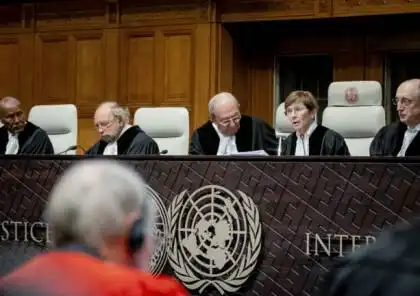
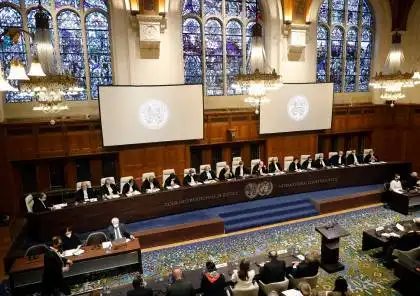
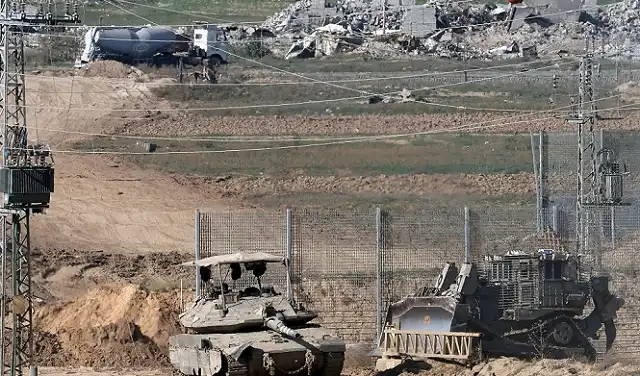
Friday’s ruling by the International Court of Justice (ICJ) drives something bigger and more powerful than a D9 bulldozer through the western position supporting Israel’s blitzkrieg on Gaza, which has continued for nearly four months.

The ruling establishes that what is going on in Gaza is not a war aimed at disabling an enemy militant group, but an operation aimed at disabling a people, and a nation. There can be no more momentous legal judgement in the history of the conflict, certainly in the current century. 

This judgement reestablishes the morality, impartiality and standing of international law, and will show the impunity that Israel has been granted by its major arms suppliers and backers for what it is: a license to kill.

There can be no bigger hole knocked through the position of a US administration that bogusly claimed “diplomacy is back”, and then went on to to defend and furnish the most murderous bombardment in the recent history of this conflict.

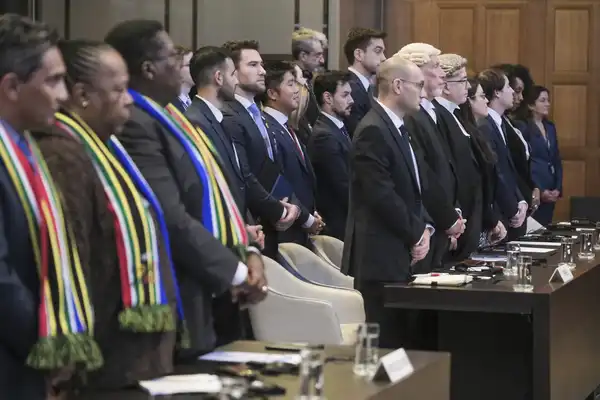
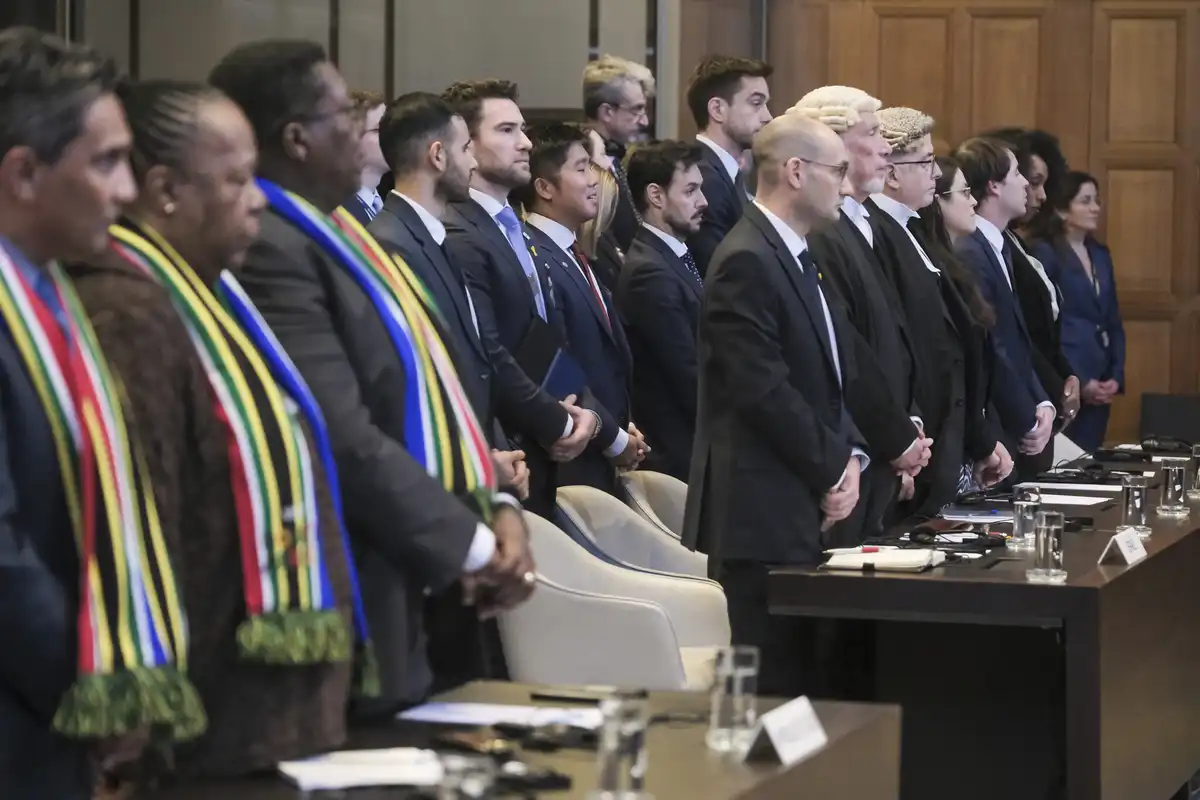
Israel is now in the dock on a charge of genocide and will be obliged to report back to the court in a month, for its accuser South Africa to review, on the measures it has taken to prevent incitement to genocide and genocide itself and to allow more aid into Gaza.

Yes, there will be disappointment that the ICJ stopped short of demanding an immediate ceasefire. The court did this on the legal grounds that only one side in this war is recognised as a state. 

Palestinians don’t need a court judgment validating their suffering. They were expecting a measure that would end this genocide, rather than putting the ball in Israel’s court to act in a way that everybody knows it will not. But Israel had already signalled its intention to ignore any ruling of the ICJ, so it is not to Israel that anyone should look to change this situation.

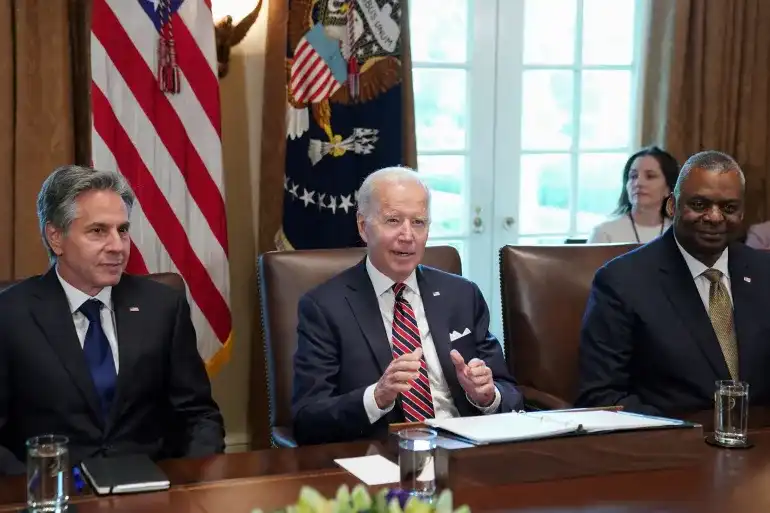
The ICJ ruling’s only power is to change western policy allowing US Secretary of State Antony Blinken to wring his hands as if Washington is impotent to stop the daily slaughter. It plainly is not. 

Clear urgency

A judgment such as this also provides much-needed force to several court actions around the world involving lesser, but equally important, charges of war crimes. If the designation of apartheid was a huge blow to Israel’s attempts to establish itself as a normal, western democracy, the genocide label surely nails the lid on the coffin.

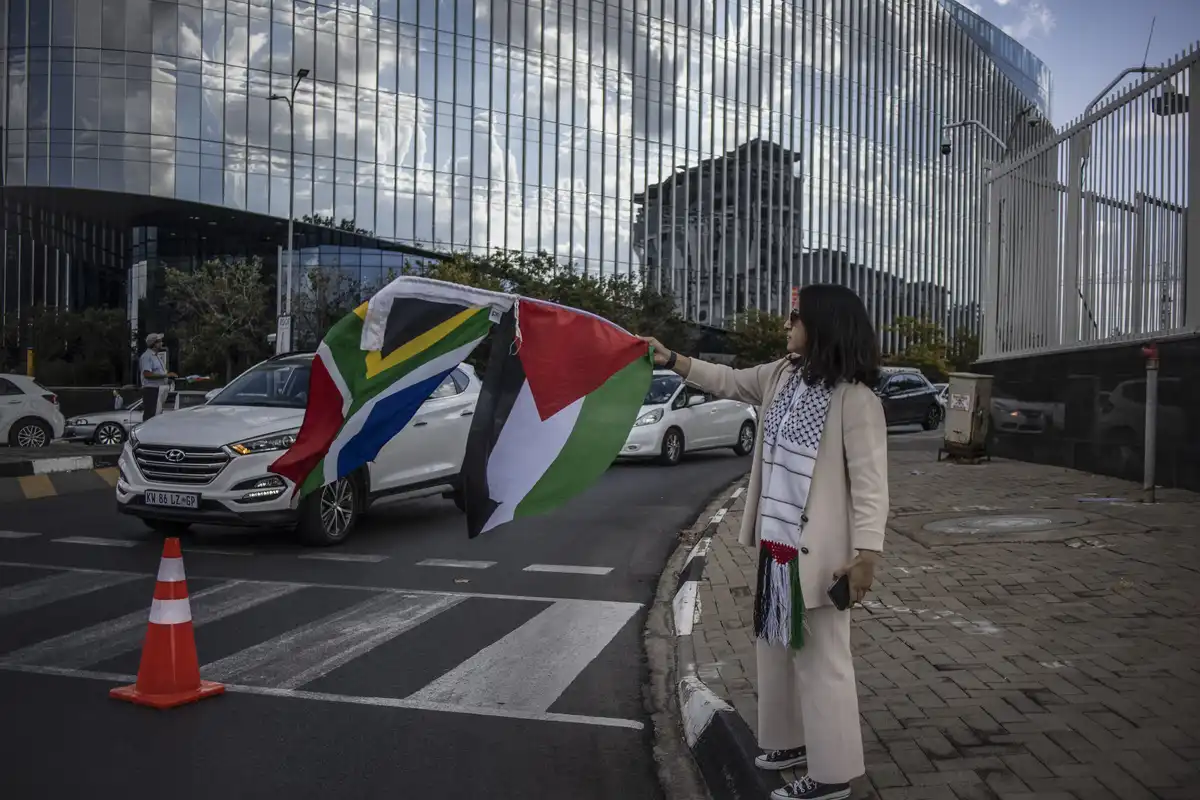
Clearly, the court did not believe Israel’s defence, and in delivering the judgement, ICJ president Joan Donoghue made ample use of South Africa’s evidence. The South African team is right to claim victory.

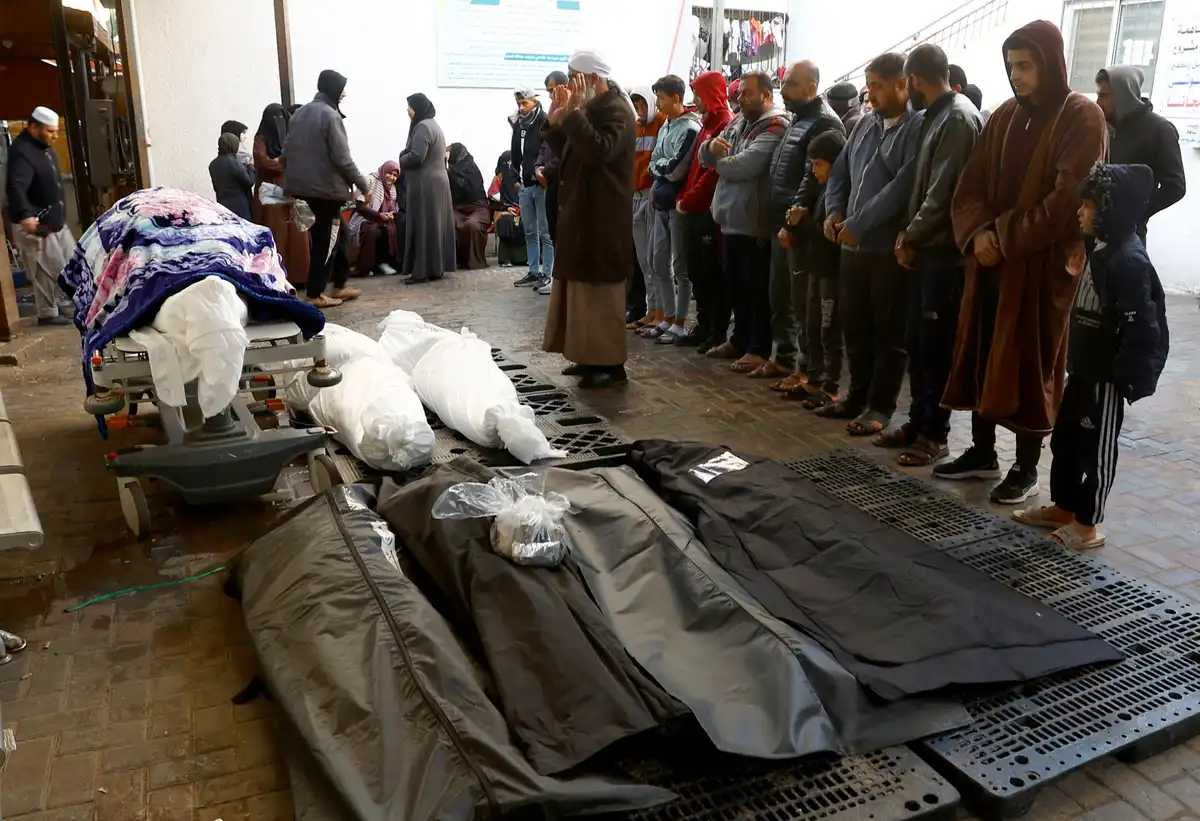
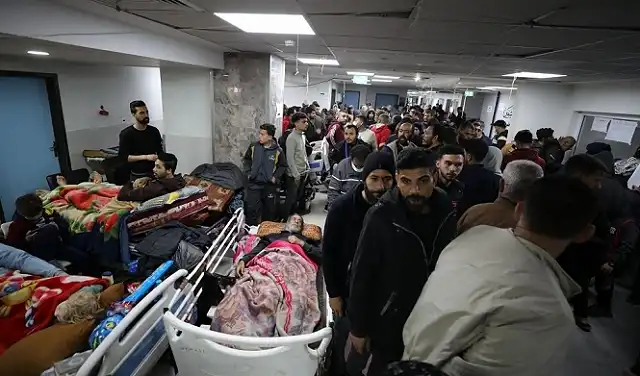
The urgency of this ruling is plain for all to see. More than 750,000 people are facing “catastrophic hunger” in Gaza, according to the United Nations. The lack of clean water is leading to a spike in waterborne diseases, such as diarrhea, which is a major child killer.

There are already 158,000 cases, and the UN has warned that many thousands of children could die of diarrhea before they starve to death.

Only 15 of 97 bakeries are functioning in Gaza after three-and-a-half months of Israeli bombardment. In central Gaza, the shortage of wheat is so acute that people are mixing bird feed and animal fodder into the dough. 

Meanwhile, army bulldozers are hard at work ploughing up Gaza’s most fertile orchards and fields. The immediate aim is to establish a security zone, but the strategic aim is to ensure that the territory will never again be able to feed itself.

While David Cameron, the British foreign secretary, films himself pushing pallets of British aid onto a plane in Doha bound for Egypt, the Israelis at the other end of the supply chain are doing everything in their power to turn the flood of aid into a trickle.


The siege, which permits Israel to regulate the degree of pain it inflicts upon every living soul in Gaza, is the most precious and diabolical weapon in its armory


There is a several-week wait for trucks to get into Gaza. Trucks can be unloaded and loaded multiple times. If forbidden items are found in the load, the lorry goes to the back of the queue and the whole process starts all over. Israel has reportedly rejected such items as feminine hygiene products, water testing kits and hand sanitisers.

Where emergency aid does get through, hungry people are targeted by tanks and snipers. There have now been so many recorded instances of this, it can no longer be seen as accidental. 

“People queue up in the area to get hold of the items since there are no teams to help with the distributions. There are large numbers of people there… so when Israeli forces attack the area there are dozens of deaths,” said a correspondent for Middle East Eye in Gaza.

Queues of civilians at Dawaar al-Kuwait near the Salah al-Din area were recently attacked by Israeli forces, killing eight and wounding dozens. On Thursday, Israeli forces killed at least 20 Palestinians and wounded 180 others who were waiting for humanitarian relief in Gaza City.


Laughing and shooting

Little of this is accidental, or the result of the fog of war. It has been calculated and thought through. It is happening by design. 

Faced with Egypt’s refusal to allow a mass exodus of Palestinians into Sinai, Israeli Prime Minister Benjamin Netanyahu tasked Ron Dermer, his minister for strategic affairs, to devise a plan to “thin out” the population of Gaza by enabling a “mass escape” of Palestinians to Europe and Africa by sea.

The plan, first revealed by Israel Hayom, was being tightly circulated due “to its obvious explosiveness”. The plan argues that if millions of Syrians, Libyans and Tunisians can take to the boats to flee civil war and poverty, why can’t the same apply to Palestinians?

Despite months of behind-the-scenes arm-twisting from US President Joe Biden, there is no indication that either Netanyahu or the army is deviating from the plan to make Gaza permanently unlivable. 

The two have different objectives. Netanyahu wants continuous war in the knowledge that as soon as it stops, his extreme right-wing coalition breaks up, and he is in big trouble, having to answer for the massive security lapse that allowed Hamas to rampage across southern Israel in October. Only a substantial exodus of Palestinians from Gaza will satisfy the extreme right.

The army's high command cares little for a permanent occupation of Gaza and is resisting orders to reoccupy the Philadelphi Corridor around the Rafah crossing with Egypt. It wants to restore lost honour and reestablish deterrence with Hamas. 

But for the moment, the two are working in tandem. There is no indication that Israel is giving up on a strategic plan to empty Gaza of a substantial part of its population. Soldiers film themselves gloating as they raze whole areas of the territory. 

That’s the mood in Israel. Soldiers have long since stopped “crying and shooting”; today, they are laughing and shooting.

The imminent prospect of tens of thousands more deaths in Gaza from famine and disease throws a harsh light on the refusal of the international community to do anything to alleviate this mass man-made suffering, which openly flouts the Geneva Conventions and all the rules of war, and amounts to genocide - whether or not the ICJ eventually rules as such.

Netanyahu is openly disregarding the US, UK and EU demands that there should be no re-occupation of Gaza, no security corridors along the existing border with Israel and no collective punishment of the civilian population, and that food and water should get through. Israel continues to face no sanctions for this behaviour.


Make-believe policy

As for Cameron, there is a distinct whiff of nostalgia about his attempt to reframe the US artillery shells and smart bombs being supplied to Israel through the RAF base at Akrotiri in Cyprus as a caring, sharing, people-loving venture.

No-one should forget his personal contribution to the disaster of military intervention in the Middle East, which was the overthrow of Muammar Gaddafi in Libya and the civil war to which it led. But even if his audience has had a sudden attack of amnesia, his policy on Gaza is make-believe.

Speaking over the sound of jet engines revving up at al-Udeid air base in Qatar, Cameron said that none of the aid destined for Gaza would work properly unless there was an “immediate pause to the fighting”.

Remind me, for how many weeks after 7 October did Britain resist calls for an immediate ceasefire on the grounds that Israel had the right to defend itself?

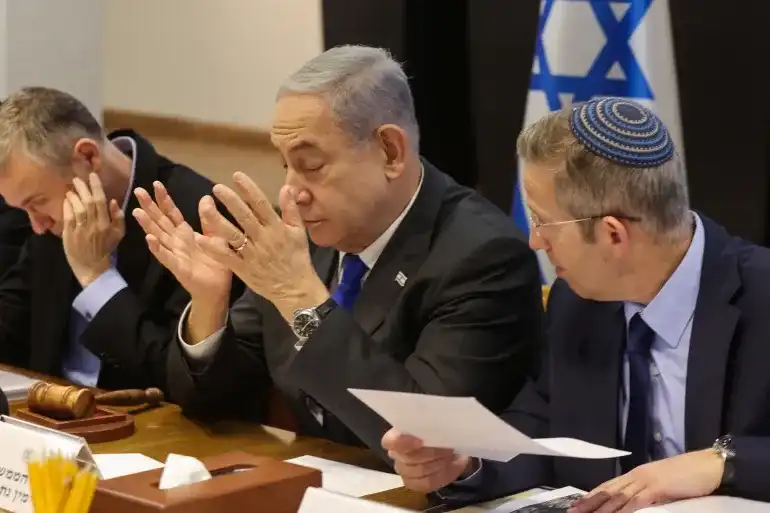
  Cameron then said that a pause in the fighting had to be turned into a sustainable permanent ceasefire. Has he been listening to what Netanyahu has been saying? “Nobody will stop us - not The Hague, not the [Iranian-led] axis of evil and not anybody else,” the prime minister’s office noted earlier this month on Twitter/X. 

Does Cameron not understand that the moment Netanyahu deviates from that line, he loses his government, and possibly also his liberty over impending court cases for corruption?

Cameron goes on to prescribe what Hamas, which is classified as a terrorist organisation in the UK, should do: “We’d have to see the Hamas leadership come out of Gaza.” It will never do this.

“We’d have to see Hamas’s mechanisms of being able to launch rockets and terrorist attacks on Israel be dismantled.” Did the Irish Republican Army decommission before or after the Good Friday Agreement was negotiated? When has an insurgency ever given up its arms before a peace agreement was hammered out?

Whatever happens, Israel will not want to lose its monopoly on enforcing the siege on Gaza that it has maintained for more than 16 years

“We’d have to see a new Palestinian Authority that is capable of providing the government and services not just in the West Bank, but in Gaza too.” The PA is currently incapable of governing Nablus and Jenin, let alone Gaza. 

“And crucially, we’d have to have a political horizon so that the Palestinian people and the Arab states in this region could see that there’s a pathway from where we are now to a Palestinian state.” This is what Netanyahu now boasts his life mission was set to prevent.

Cameron should well have said from the busy tarmac of al-Udeid that nothing less than regime change in Tel Aviv is needed for such a plan to come about. And he should come clean about his responsibility for this carnage. 

It was the serial inaction over a Palestinian state by Cameron, along with his predecessors and successors - with the government of which he is now a member still not recognising Palestine as a state - that created the political deadlock that led to the renewed insurgency we see today, not just in Gaza but all over the occupied West Bank.

The case for air drops

If Israel does not comply with the ICJ ruling and continues to delay aid at the border and target civilians queuing up for food, as I fully expect it to do, pressure will mount on the UK and US to start air drops of food into Gaza itself.

War is no barrier to this. It was done in South Sudan, the Democratic Republic of the Congo and Bosnia; why can’t it be done in Gaza? Jordan and France have led the way with limited air drops to support a Jordanian field hospital. What stops Britain and the US from doing the same?

Obviously, the answer is Israel. Let’s be clear about what is at stake here. Whatever happens, Israel will not want to lose its monopoly on enforcing the siege on Gaza that it has maintained for more than 16 years.

The siege, which permits Israel to regulate the degree of pain it inflicts upon every living soul in Gaza, is the most precious and diabolical weapon in its armoury. If it loses that, it loses the war.

This is what is at stake in the ICJ judgement - and why this is such a watershed moment.

Middle East Eye 

OPINIONS

Sat 27 Jan 2024 9:59 am - Jerusalem Time

Netanyahu's western backers let him play them for fools

They indulged the Israeli leader hoping – wrongly, as it turns out – that he would agree to the establishment of a Palestinian state


Embarrassment. Dismay. Mortification. Fury. I hope these are some of the emotions being experienced by the western leaders who have given Israel such unequivocal support in its campaign in Gaza after the horrific attacks of October 7. They could not let up, no, not one bit, from standing by “the only democracy in the Middle East” as it fights on behalf of the “free world … to save western civilisation”, as Israeli President Isaac Herzog has put it.

But Israeli Prime Minister Benjamin Netanyahu has just made crystal clear that for months he has been taking those leaders for the ride of their lives.

Forget about planning for the day after, involving the Palestinian Authority, or forging an international coalition that can help build an independent Palestine after the war ends. Mr. Netanyahu doesn’t want a two-state solution at all. Ever. And this time he has made it as plain as could be.

After speaking with US President Joe Biden last Friday, Mr. Netanyahu’s office issued a statement on Saturday: “In his conversation with President Biden, Prime Minister Netanyahu reiterated his policy that after Hamas is destroyed Israel must retain security control over Gaza to ensure that Gaza will no longer pose a threat to Israel, a requirement that contradicts the demand for Palestinian sovereignty.”

For those who needed any clarification, Mr. Netanyahu doubled down with a statement on X. “I will not compromise on full Israeli security control over all the territory west of the Jordan River – and this is irreconcilable with a Palestinian state.”

This is also contrary to the position taken by the staunchest of Mr. Netanyahu’s defenders, such as UK Labour leader Keir Starmer. The Israeli leader’s statement was “unacceptable and wrong”, Mr. Starmer said. “Palestinian statehood is not in the gift of a neighbour. It is the inalienable right of the Palestinian people.”


Shapps described Netanyahu’s opposition to a Palestinian state as 'disappointing'. The word is inadequate. When I order a steak rare and it comes medium, that is disappointing

But for all the indignation displayed by Mr. Starmer and his ilk, they shouldn’t have been surprised. Mr. Netanyahu has never hidden his opposition to a two-state solution. At a news conference in Tel Aviv last month, he said: “You and your journalist friends have been blaming me for almost 30 years for putting the brakes on the Oslo Accords and preventing the Palestinian state. That is true.

“I’m proud that I prevented the establishment of a Palestinian state because today everybody understands what that Palestine state could have been, now that we’ve seen the little Palestinian state in Gaza.”

Last September, he held up a map of “the New Middle East” at the UN General Assembly in which “Israel” included all of the West Bank and Gaza. Indeed, as far back as 1977 he was talking openly of his belief that Israel should just take the Palestinians’ land.

The historian and newspaper editor Max Hastings was writing a biography of Mr. Netanyahu’s brother Yoni, a hero of the 1976 Entebbe raid, and recorded the future premier saying: “In the next war if we do it right, we’ll have a chance to get all the Arabs out. We can clear the West Bank, sort out Jerusalem.”

But Mr. Netanyahu’s western backers chose to ignore all this, just as they ignored statements made by Israeli officials that are carefully detailed in South Africa’s case on genocide at the International Court of Justice. They repeated ad nauseam that Israel had the right to defend itself – which of course it does – but while troubled by the escalating death toll, could never quite bring themselves to call for a ceasefire.

US Secretary of State Antony Blinken said in November that “too many Palestinians have been killed”, and early this month added that “there’s been far too much loss of life” – still doing nothing to put an end to it. (I wish someone would ask him what the right amount of “loss of life” would be. What would be the “Goldilocks” figure, neither too small nor too high, that the Biden administration would approve as appropriate vengeance, never mind that the majority of the dead would be women and children?)

For underlying it all was the assumption that the Israeli leadership would come round in the end. Mr. Biden and British Prime Minister Rishi Sunak were insistent: there had to be a two-state solution.

Well, Mr. Netanyahu has just defied the US and all his supporters who laboured under that illusion. Only now is there some pushback, although the US Senate recently rejected a measure that would have made military aid to Israel conditional on it upholding human rights and international accords.

Now the man they have been supporting is unambiguously in view – a man who would like to solve the Palestinian problem by erasing Palestine. This is his aim: no two state-solution, no state of Palestine, and quite possibly no Palestinians in their historic lands either; and it is for this that the cheerleaders of Mr. Netanyahu’s government have allowed it to visit death on 25,000 in Gaza and biblical scenes of destruction on the Strip.

UK Defence Secretary Grant Shapps described Mr. Netanyahu’s implacable opposition to a Palestinian state as “disappointing”. The word is utterly inadequate. When I order a steak rare and it comes medium, that is disappointing. The adjective Mr. Shapps is reaching for is “catastrophic”.

All along, the US, UK and others have refused to step in and stop the killing on the grounds that they had to let Mr. Netanyahu and his allies do what they wanted because, ultimately, they would be amenable to a reasonable solution, namely two states. Remember when we were told, by White House officials, that it would be “repugnant” and “disgraceful” to call for a ceasefire?

And all along, they have been played for fools by a man who cannot be described as concealing his true intentions – as they have always been in plain sight, for those with eyes to see.

Source: The National News

ARAB AND WORLD

Sat 27 Jan 2024 9:03 am - Jerusalem Time

An American court is considering a lawsuit accusing Biden, Blinken, and Austin of “complicity” in the genocide in Gaza

Yesterday, Friday, a federal court in Oakland, California, held a hearing to consider a lawsuit filed by the Center for Constitutional Rights in the United States, accusing President Joe Biden and Secretary of State Anthony Blinken and Defense Secretary Lloyd Austin of “complicity” in the genocide crimes committed by Israel in the Gaza Strip.


Judge Jeffrey White described the case as the most difficult to come before the court.


During the session - which was held in the presence of lawyers representing Biden, Blinken, Austin and the Center for Constitutional Rights - the court listened to the testimonies of lawyers, activists and doctors from Gaza regarding the killing and destruction that Palestinians have been exposed to in the Strip since last October 7, when the death toll exceeded 29 thousand. The injured are 64 thousand.


Al Jazeera English correspondent Rob Reynolds - who was in court - said that the lawyers for the lawsuit point out that the current US administration is violating the 1948 Genocide Convention by supplying weapons to Israel, indicating that the defendants’ lawyers believe that the court does not have the authority to decide on this matter. The matter, and they present arguments, including the issue of separation of powers in the United States.


The Center for Constitutional Rights in the United States filed this civil lawsuit against the president and the two foreign ministers last November on behalf of Palestinian organizations, Palestinians in Gaza, and American citizens with relatives in the Strip.


Case details

The lawsuit stated that the three defendants not only failed to implement their obligations to prevent genocide in Gaza, but also created the conditions for it to occur by providing unconditional military and political support to Israel.


The indictment also stated that one of the Biden administration's responsibilities is to prevent genocide in accordance with international laws and norms.


According to the lawsuit, the president and the secretaries of state and defense repeatedly refused to use their clear and significant influence to set conditions or limits on Israeli bombing of Gaza despite mounting evidence of Israeli policies directed toward mass harm to the Palestinian population of Gaza.


The Center for Constitutional Rights in the United States - which deals with civil liberties - says that the prolonged Israeli occupation of Palestine, the siege imposed on Gaza, and the support provided by the United States created conditions conducive to genocide committed by Israel.


It is noteworthy that despite the huge numbers of civilian casualties in Gaza, the administration of US President Joe Biden still rejects a ceasefire, and it has also used its veto in the UN Security Council against draft resolutions calling for an end to the war on the Strip.


Source: Al Jazeera


ARAB AND WORLD

Sat 27 Jan 2024 8:57 am - Jerusalem Time

Widespread Arab and international welcome to the decision of ICJ

Arab, Islamic and Western countries and international and Arab organizations welcomed the decision of the International Court of Justice that Israel, the occupying power, must take all measures to prevent acts prohibited under the Genocide Convention, and take measures to ensure the immediate provision of the urgent humanitarian needs of the Gaza Strip, and that Israel must prevent incitement to genocide in the Gaza Strip, punish all who incite it, and take measures to prevent the destruction and preservation of evidence relating to the commission of genocide.


The European Union expects "immediate" implementation of the International Court of Justice's decision


The European Union stressed that it expects a "full and immediate" implementation of the International Court of Justice's decision in which it ordered Israel to take measures to prevent acts of genocide in Gaza.


A joint statement by European Union foreign policy chief Josep Borrell and the European Commission said that the decisions of the “International Court of Justice are binding on the parties and they must abide by them. The European Union expects their full, immediate and effective implementation.”


The Organization of Islamic Cooperation welcomes the interim measures ordered by the International Court of Justice


On Friday, the Organization of Islamic Cooperation welcomed the temporary measures ordered by the International Court of Justice to prevent further acts of genocide committed by Israel, the occupying power, against the Palestinian people in the Gaza Strip.


The organization called on all states parties to ensure that Israel, the occupying power, fully and immediately complies with the court’s order, stressing the need for the international community to assume its responsibilities towards achieving justice for the Palestinian people, providing them with international protection, and putting an end to the acts of genocide to which they are subjected.


Arab League Chief calls for the full and immediate implementation of the "International Justice" decision


The Secretary-General of the League of Arab States, Ahmed Aboul Gheit, welcomed the judicial order issued by the International Court of Justice regarding Israel’s commission of genocide in Gaza, stressing that “the initial ruling represents a victory for human values and a resolution of the controversy over the blatant violation of international law and international humanitarian law that the Gaza war represents.” .


The Secretary-General stressed “the necessity of implementing the decisions included in the ruling fully and immediately,” adding that “the court’s initial ruling opens the way for intense diplomatic and legal action, at the Arab and global levels, in order to stop the barbaric Israeli war on the Gaza Strip.”


Gulf Cooperation Council: The “International Justice” decision against the Israeli occupation confirms its brutal crimes in Gaza


The Secretary-General of the Gulf Cooperation Council, Jassem Al-Budaiwi, said that the decision of the International Court of Justice against the Israeli occupation confirms its brutal crimes against the Palestinian people in the Gaza Strip.


This came in a statement issued by the General Secretariat of the Gulf Cooperation Council after the decision of the International Court of Justice, which came with an overwhelming majority against Israel, the occupying power, based on the lawsuit filed by South Africa against the occupation’s violations of the provisions of the Convention on the Prevention of the Crime of Genocide in its war on the Gaza Strip.


Saudi Arabia welcomes the decision of the International Court of Justice


The Kingdom of Saudi Arabia welcomed the preliminary decision issued by the International Court of Justice, aiming to stop any practices and statements aimed at genocide against the Palestinian people in the besieged Gaza Strip, while refusing to reject the lawsuit submitted by South Africa.


The Saudi Ministry of Foreign Affairs expressed "the Kingdom's support for what was issued by the International Court of Justice," affirming its "categorical rejection of the practices of the Israeli occupation and violations of the United Nations Convention on Genocide."


The Spanish government welcomes the decision of the International Court of Justice


Spain welcomed the decision of the International Court of Justice, which ordered Israel to take measures to prevent genocide in Gaza.


Spanish Prime Minister Pedro Sanchez said in a post on the X platform, “We welcome the decision of the International Court of Justice and request the implementation of the interim measures it issued.”


He stressed that his country will continue to defend peace, work to end the war, access humanitarian aid, and establish a Palestinian state alongside Israel, where the two countries coexist in peace and security.


The South African Foreign Minister appreciates the International Justice Department's decision calling for the protection of Palestinian civilians in the Gaza Strip


South African Foreign Minister Naledi Bendor appreciated the decision of the International Court of Justice, which called on Israel to take immediate steps to protect Palestinian civilians in the Gaza Strip.


Bandour said in a press conference following the court session: “We thank the judges of the International Court of Justice for dealing with this case quickly, given the emergency situation that requires protecting innocent civilians in Palestine, ensuring that the harm caused to them stops, that people’s lives are saved, and that lives are saved.” It must be ensured that civilians are protected and that their killing and harm are prevented.”


She added: "Israel is an occupying state and manages the affairs of Palestine. It should provide the basic services that the West Bank and Gaza Strip need, and this forces UN and international bodies to take what is necessary to protect everyone."


She pointed out that "all members of the United Nations have legal tools that they can use to protect civilians, and in this case, where people's lives are threatened, South Africa should have done what was possible to protect hundreds of thousands of Palestinians and not stand by and watch, but rather should do what is possible." "Everything possible to protect hundreds and tens of thousands of Palestinians."


Jordan welcomes the "historic decision" of the International Court of Justice


The Jordanian Ministry of Foreign Affairs and Expatriate Affairs welcomed the historic decision issued by the International Court of Justice in the case brought by the Republic of South Africa against Israel on charges of committing the crime of genocide against the brotherly Palestinian people in Gaza and violating its obligations under the Convention on the Prevention and Punishment of Genocide.


The Ministry’s official spokesman, Ambassador Sufyan Al-Qudah, stressed the importance of this court’s decision considering Israel’s commission of the crime of genocide in the Gaza Strip, and approving immediate procedural measures that include stopping Israel from committing crimes of killing Palestinians, inflicting physical or moral harm on them, subjecting them to living conditions aimed at their physical destruction, and providing Human needs.


Egypt welcomes the decision of the International Court of Justice


The Arab Republic of Egypt welcomed the decision of the International Court of Justice to have primary jurisdiction to look into Israel’s commission of the crime of genocide in the Gaza Strip, and to demand the implementation of a number of immediate temporary measures aimed at providing protection for the Palestinians, the most important of which is that Israel stop committing the crimes of killing Palestinians and inflicting physical or moral harm on them. Or subject them to living conditions aimed at their physical destruction, in addition to the court demanding that Israel ensure the immediate provision of urgent humanitarian needs in the Gaza Strip.


The Egyptian Ministry of Foreign Affairs confirmed that it was looking forward to asking the International Court of Justice to demand an immediate ceasefire in Gaza, as the court ruled in similar cases, as it is the main guarantee for the implementation of the necessary and emergency measures it approved to protect Palestinian civilians in the Strip.


Qatar: The “International Justice” decision is a victory for humanity and the rule of law and international justice


The State of Qatar welcomed the temporary measures ordered by the International Court of Justice, especially Israel taking all measures to prevent the commission of all acts within the scope of Article II of the Genocide Convention in its war on the Gaza Strip, and considered it “a victory for humanity and the rule of international law and justice.”


The Qatari Ministry of Foreign Affairs affirmed that “the issuance of the court’s order by an overwhelming majority reflects the magnitude of the threat of genocide facing our Palestinian brothers in the Gaza Strip, which requires ensuring the implementation of temporary measures.”


Kuwait: The International Justice Department’s decision is an important step towards putting an end to the practices of the Israeli occupation


The Ministry of Foreign Affairs expressed the State of Kuwait's welcome of the decision of the International Court of Justice issued today, Friday, requiring the Israeli occupation to take all measures stipulated in the Convention on the Prevention of the Crime of Genocide against the Palestinian People.


The Kuwaiti Foreign Ministry confirmed that the court’s decision, although it does not meet the demand for a ceasefire and aggression within the temporary measures announced by the court, represents an important step towards putting an end to the practices of the Israeli occupation that destroyed all aspects of the lives and facilities of the Palestinian people, and stresses the importance of The occupying entity must comply with this resolution and respect all principles of international law, international humanitarian law, and international resolutions issued by the United Nations, which have called, since the beginning of the Israeli aggression on Gaza, to force the occupier to stop the aggression.


Algeria: The “International Justice” decision announces the beginning of the end of the era of impunity


Algeria confirmed that the ruling issued by the International Court of Justice announces the beginning of the end of the era of impunity, which the Israeli occupation has long exploited to unleash itself to persecute the Palestinian people and suppress all their legitimate rights.


The Algerian Ministry of Foreign Affairs said that it followed with interest the decision of the International Court of Justice regarding the lawsuit filed by the State of South Africa related to the crime of genocide in Gaza.


It requested a meeting of the Security Council with the aim of giving binding force to the court's decision.


Tunisia expresses its "satisfaction with the great and just decision" of international justice


Tunisia expressed “great satisfaction with the fair and just decision” issued by the International Court of Justice regarding the interim measures to be taken in the context of the lawsuit brought before it by the Republic of South Africa.


In a statement issued by the Ministry of Foreign Affairs, Immigration, and Tunisians Abroad, Tunisia considered this “historic decision a very important step on the path to condemning the grave crimes committed and continues to be committed by the occupying Israeli entity against the Palestinian people, and a victory for justice, lofty human values, the principles of international law and the UN Charter, and an elevation of the voice of The truth and the strength of the argument against policies of double standards.”


Oman calls on the international community to oblige Israel to stop the genocide against our people


The Sultanate of Oman welcomed the decisions of the International Court of Justice in The Hague issued today regarding the lawsuit filed by the Republic of South Africa against the Israeli occupying state regarding Israel’s clear, deliberate and widespread violation of its legal and humanitarian obligations to the Convention on the Prevention and Punishment of Genocide.


In a statement by the Omani Ministry of Foreign Affairs, it stressed adherence to these decisions and the necessity of immediately stopping all forms of Israeli aggression against the Gaza Strip and the rest of the occupied Palestinian territories and lifting the siege imposed on them in a way that guarantees safe entry for all types of humanitarian needs.


The Turkish President welcomes the decision of the International Court of Justice


Turkish President Recep Tayyip Erdogan welcomed the International Court of Justice's decision ordering Israel to take measures to prevent acts of genocide in Gaza.


Erdogan wrote on the “X” platform, “I consider the decision of the temporary injunction taken by the International Court of Justice regarding the inhumane attacks in Gaza to be a valuable decision and I welcome it.”


He added: "We hope that Israel's attacks on women, children and the elderly will end," stressing that his country will continue "to follow the (judicial) process to ensure that war crimes committed against innocent Palestinian civilians do not go unpunished."


Pakistani President: International Justice’s decision is “the best decision”

The President of the Islamic Republic of Pakistan, Arif Alvi, welcomed the decision of the International Court of Justice, considering it the best decision, and that Israel must immediately stop the genocide and bloodshed of innocent civilians in Gaza.


He continued: "The ruling revealed the inhumane and brutal acts committed by Israel, which exceeded all limits of humanity by targeting women, children, and hospitals, and did not exclude those queuing for food."


He stressed the international community and other United Nations bodies, especially the Security Council, to take steps for an immediate ceasefire in Gaza and prevent Israel from shedding more blood in Palestine.


The Iraqi Foreign Ministry welcomes the decision of international justice


The Iraqi Ministry of Foreign Affairs expressed its welcome of the decision of the International Court of Justice.


The Ministry reiterated its emphasis on the importance of stopping hostile military operations that prevent the arrival of humanitarian aid and threaten the lives of Palestinian civilians.


PALESTINE

Sat 27 Jan 2024 8:52 am - Jerusalem Time

War on Gaza: During the past 24 hours, Israel committed 18 massacres, killing 174 citizens.

Medical sources reported that the Israeli forces committed 18 massacres against families in the Gaza Strip, killing 174 citizens and 310 wounded, during the past 24 hours.


The same sources explained that the number of killed and wounded since the start of the aggression on the Gaza Strip on the seventh of last October rose to 26,257 dead and 64,797 wounded.


It pointed out that a number of victims are still under the rubble and on the roads, and ambulance and civil defense crews are unable to reach them.


OPINIONS

Sat 27 Jan 2024 8:06 am - Jerusalem Time

ICJ lands stunning blow on Israel over Gaza genocide charge

Responsible Statecraft

Responsible Statecraft

Opinion Writer

By Trita Parsi


A different Biden approach could have shaped war efforts and prevented this from happening in the first place


The International Court of Justice (ICJ) just ruled against Israel and determined that South Africa successfully argued that Israel’s conduct plausibly could constitute genocide. The Court imposes several injunctions against Israel and reminds Israel that its rulings are binding, according to international law.

A final ruling will still take more time, but this ruling will have significant political repercussions. Here are a few thoughts.

This is a devastating blow to Israel’s global standing. To put it in context, Israel has worked ferociously for the last two decades to defeat the BDS movement — Boycott, Divestment, and Sanctions — not because it will have a significant economic impact on Israel, but because of how it could delegitimize Israel internationally. However, the ruling of the ICJ that Israel is plausibly engaged in genocide is far more devastating to Israel's legitimacy than anything BDS could have achieved.

Just as much as Israel's political system has been increasingly — and publicly — associated with apartheid in the past few years, Israel will now be similarly associated with the charge of genocide. As a result, those countries that have supported Israel and its military campaign in Gaza, such as the U.S. under President Biden, will be associated with that charge, too.

The implications for the United States are significant. First because the court does not have the ability to implement its ruling. Instead, the matter will go to the United Nations Security Council, where the Biden administration will once again face the choice of protecting Israel politically by casting a veto, and by that, further isolate the United States, or allowing the Security Council to act and pay a domestic political cost for “not standing by Israel.”

So far, the Biden administration has refused to say if it will respect the ICJ's decision. Of course, in previous cases in front of the ICJ, such as Myanmar, Ukraine and Syria, the U.S. and Western states stressed that ICJ provisional measures are binding and must be fully implemented.

The double standards of U.S. foreign policy will hit a new low if, in this case, Biden not only argues against the ICJ, but actively acts to prevent and block the implementation of its ruling. It is perhaps not surprising that senior Biden administration officials have largely ceased using the term “rules-based order” since October 7.

It also raises questions about how Biden’s policy of bear-hugging Israel may have contributed to Israel’s conduct. Biden could have offered more measured support and pushed back hard against Israeli excesses — and by that, prevented Israel from engaging in actions that could potentially fall under the category of genocide. But he didn’t.

Instead, Biden offered unconditional support combined with zero public criticism of Israel's conduct and only limited push-back behind the scenes. A different American approach could have shaped Israel’s war efforts in a manner that arguably would not have been preliminarily ruled by the ICJ as plausibly meeting the standards of genocide.

This shows that America undermines its own interest as well as that of its partners when it offers them blank checks and complete and unquestionable protection. The absence of checks and balances that such protection offers fuels reckless behavior all around.

As such, Biden’s unconditional support may have undermined Israel, in the final analysis.

This ruling may also boost those arguing that all states that are party to the Genocide Convention have a positive obligation to prevent genocide. The Houthis, for instance, have justified their attacks against ships heading to Israeli ports in the Red Sea, citing this positive obligation. What legal implications will the court’s ruling have as a result on the U.S. and UK’s military action against the Houthis?

The implications for Europe will also be considerable. The U.S. is rather accustomed to and comfortable with setting aside international law and ignoring international institutions. Europe is not.

International law and institutions play a much more central role in European security thinking. The decision will continue to split Europe. But the fact that some key EU states will reject the ICJ’s ruling will profoundly contradict and undermine Europe’s broader security paradigm.

One final point: The mere existence of South Africa’s application to the ICJ appears to have moderated Israel’s war conduct. Any plans to ethnically cleanse Gaza and send its residents to third countries appear to have been somewhat paused, presumably because of how such actions would boost South Africa’s application. If so, it shows that the Court, in an era where the force of international law is increasingly questioned, has had a greater impact in terms of deterring unlawful Israeli actions than anything the Biden administration has done.

ARAB AND WORLD

Sat 27 Jan 2024 8:00 am - Jerusalem Time

Legal experts and analysts: Israel has lost immunity before international law

While they praised the decision of the International Court of Justice regarding the war on the Gaza Strip, experts in international law and political analysts believe that this decision put Israel under the microscope, supervision and monitoring, and they stressed the importance of having international political and diplomatic action to pressure to stop the war in Gaza.


On Friday, the International Court of Justice issued its decision to accept the lawsuit filed by South Africa against Israel on charges of committing genocide in the Gaza Strip, and ordered Israel to take the necessary measures to prevent direct incitement to genocide. It also stressed that its ruling imposes international legal obligations on Israel.


Lawyer and expert in international law, Dr. Saad Jabbar, described the International Court of Justice’s decision as a “real and historic gain,” because it is the first time that Israel has stood in the dock, and it is also a historic decision because there is a consensus among the judges with the exception of one judge.


He considered that not declaring a ceasefire in Gaza by the court is “a very realistic decision, because the one in charge of this matter is the UN Security Council or the major powers,” which is what happened in the case of Kosovo, where NATO intervened and put pressure on the Serbs. .


From the lawyer’s point of view, Israel will not adhere, as usual, to the demands of the International Court of Justice, but it has been placed under the microscope, supervision and monitoring, and the international community must unite its ranks politically and diplomatically in order to put pressure on the United States to put pressure on Israel in turn or stop supplying it with weapons to force it to stop the war in Gaza.


Regarding the Israeli position, Dr. Muhannad Mustafa, an expert on Israeli affairs, believed that the International Court of Justice’s decision undermined the Israeli narrative regarding the war on the Gaza Strip, which explains the intense Israeli anger at the court.


While Israel claims that it is exercising the "right of self-defense" in its war on Gaza, the International Court of Justice said that Israel has exceeded the idea of the right of self-defense.


Israel also tried to link its war on Gaza with the "Jewish catastrophe," but the International Court of Justice torpedoed this narrative, according to what the expert on Israeli affairs explained.


Source: Al Jazeera

ARAB AND WORLD

Sat 27 Jan 2024 7:48 am - Jerusalem Time

Israeli experts: The Hague Court’s decision is a blow to Tel Aviv and support for Gaza

Israeli estimates are unanimous that the International Court of Justice accepting the lawsuit submitted by South Africa regarding the war on Gaza, and rejecting Israel’s request to dismiss the lawsuit, is tantamount to an international red card in the face of Tel Aviv, and will have negative repercussions on Israel in various international forums.


The readings of Israeli analysts and specialists agree that although the court did not issue a decision obligating Israel to stop the war on Gaza, the measures and instructions issued by it put pressure on Israel and restrict it, and also put the Israeli army and its military operations under the watchful eye of international law.


The analyzes were consistent with each other regarding the court’s decisions obligating Israel to take measures to prevent genocide, prevent incitement to it, and bring humanitarian aid into the Gaza Strip. The decision was considered a setback for the Israeli narrative and support for the Gaza Strip and the Palestinian narrative, which constitutes a prelude to putting more pressure on Israel for a ceasefire.


A New stage

Although it did not issue a decision obligating Israel to stop the war, retired Israeli Supreme Court Justice Hanan Melzer said, “The Hague Court’s decision is a red card in the face of Israel, and it is a decision that will accompany it for many years, and will have many repercussions on Israel and its political and military leaders.”


Melzer explained, during an interview with him on Israeli Channel 12, that the decision means that Israel must be careful in the future in everything related to dealing with the Palestinians, pointing out that its essence means that Israel cannot do what it wants in the Gaza Strip and the West Bank or continue War and violent fighting.


The Israeli judiciary believes that the decision, although it is not binding on Israel to stop the war, puts the Israeli army before the test and microscope of international law, and establishes a serious and new phase in international dealings with Israel in everything related to the conflict with the Palestinians.


Melzer believes that the International Tribunal's quoting of statements by Israeli leaders during the course of the war on Gaza, calling for genocide and destruction and the prevention of humanitarian aid, and describing the residents of Gaza and the armed men as human animals, will make it difficult for Israel in future judicial deliberations.


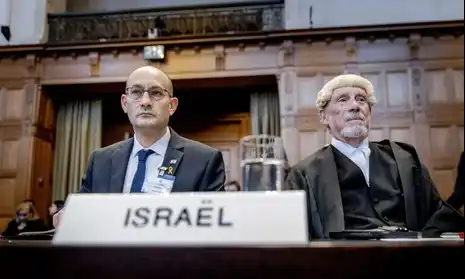
He pointed out that the position of the Israeli delegate, retired judge Aharon Barak, which is consistent with the court’s position against genocide, and which demands that Israel refrain from doing so and avoid targeting civilians, practically constituted a lifeline, protection, and prevented the issuance of more stringent decisions and measures against Israel.


Initial decision

International law expert, lawyer Ilan Baumbach, agrees with Judge Melzer’s proposal, but believes that the initial decision of the Hague Court indicates the defeat and setback of the Israeli narrative regarding the war and the acceptance and victory of the Palestinian narrative.


He pointed out that the court "did not address what Hamas did during the surprise attack on the 'Gaza envelope' on October 7, 2023, while it touched on the kidnapped Israelis in Gaza in passing, as if it were a marginal file" As he says.


The expert in international law warned that the procedures in the International Court have not ended and the decision issued is the beginning. This means that Israel is facing a different and new phase with everything related to the procedures and dealings with the Palestinians and military operations in the West Bank or in the event of continued fighting in the Gaza Strip.


Israeli loss

According to the decision and observations of the International Court of Justice, lawyer Baumbach said, speaking to Israeli Channel 12, “Israel will be required, if the fighting continues, to submit a monthly report to the court regarding the measures it has taken to prevent genocide in the Gaza Strip, avoid targeting civilians, as well as allow the entry of all humanitarian relief shipments.” If it does not comply, it is not unlikely that precautionary decisions will be issued against it.”


Baumbach stressed that Israel has lost international legal and judicial forums, so that it must prove that it is not committing any war crimes, and that its military measures in the Gaza Strip do not violate international law, and stigmatizing Israel on suspicion of genocide will accompany it for a long time, and put it before tests in light of the continuation of the war. 


The international expert pointed out that from the beginning it was clear that the International Supreme Court would not issue a decision obligating Israel to stop the war, but accepting South Africa’s lawsuit and rejecting the Israeli request to dismiss the lawsuit establishes a new phase in everything related to future legal and judicial dealings at the international level with Israel and its political and military leadership. .


Dangerous indicator

In an attempt not to provoke the International Court of Justice and not to implicate Israel in more files, cases and lawsuits, the office of Israeli Prime Minister Benjamin Netanyahu issued instructions to ministers not to respond or comment on the decision of the Hague Court.


Netanyahu's instructions come out of fear that these statements will be used in any future deliberations or procedures that the court may announce regarding everything related to the war on Gaza or the Israeli-Palestinian conflict, according to what the political affairs correspondent for the Israeli Channel 13, Moria Volberg, reported.


The correspondent does not rule out that the Hague Court’s decision will have repercussions on Israel in international forums, at various levels and fields, whether military cooperation, arms deals, academic cooperation and scientific research, and commercial and economic cooperation. She said, "Experience proves that many countries and institutions around the world refrain from dealing with any entity, even if it is accused of genocide."

She pointed out that the International Court’s adoption of quotes by Israeli leaders during the course of the war related to genocide is a dangerous indicator, and this will be documented by history and will have negative repercussions, even personally, on political and military leaders who may find themselves facing lawsuits at the International Criminal Court in the future.


Observer's Eye

On the legal side, the judicial affairs correspondent for the Walla website, Benny Ashkenazi, believes that although the court’s decision does not oblige Israel to stop the war, it does place the Israeli army under the scrutiny of the law and international forums, which will not hesitate in the future to take judicial measures against Israel in case it violates international law.


Ashkenazi explained that there are those in Israel who are trying to mitigate the severity and repercussions of the decision in the future, and he expresses “happiness” that the court did not issue an order obligating Israel to stop the war, or to make more severe decisions against the Israeli army, and this promotion may be based on personal considerations and political motives.


But regardless of this fact, the Israeli journalist says, “There is something to worry about. The court is monitoring Israel, obliging it to provide humanitarian aid to Gaza, act against incitement to genocide, punish the instigators, and submit a report to the court on all measures taken by Israel within a month from today.” ".


Source: Al Jazeera

ARAB AND WORLD

Sat 27 Jan 2024 7:41 am - Jerusalem Time

UN expert: Israel's trial opens a new era between the Global South and the Global North

The United Nations Special Rapporteur on the situation of human rights in the Palestinian territories, Francesca Albanese, said that the trial of Israel in the International Court of Justice on charges of committing a war of genocide in the Gaza Strip opens a new era in the relationship between the countries of the Global South and the Global North, and sheds light on wars of genocide that have not yet been recognized.


In a lengthy interview with the Israeli website "972+", Albanese said that the arguments presented by the South African prosecution in court were strong in their effort to prove the existence of a premeditated Israeli intention to commit genocide in Gaza, and that legal experts from South Africa and Ireland came forward to defend a people who are still being exposed to Settler colonialism and the apartheid system that previously afflicted South Africa were very influential.


Justice microscope

Albanese - an international lawyer who took over her current job in 2022 to be the first woman appointed to the position that documents violations against Palestinians - added that what shocked her was Israel’s use of the terms of international humanitarian law itself to justify its attacks on civilians, but Israel struggled - according to her - to provide a convincing explanation for its war on civilians. Civilians, in fact, seemed to be suffering while under the microscope of justice and the media.


Albanese says that the trial went beyond the issue of the genocide taking place in Gaza to the symbolism of opposition to colonialism as a whole, and she believes that the silence of European countries on the issue of genocide is natural given the European mentality that is still trapped in the residues and repercussions of the colonial period, and this makes Western countries in general take a clear side when they express their positions on the issue of genocide. But the trial shed light - according to it - on wars of extermination that are still being denied, such as those committed by Germany in Namibia a few decades before the Holocaust in Europe.


A glimmer of hope

Although any decision regarding the genocide charge itself may not be made for many years, the prosecutions against Israel in the Court of Justice would give a glimmer of hope to those living in the south whose lives are hanging on the brink of the abyss, as Albanese put it.


She pointed to several relevant examples taken by the Court in the past, for example the case between Russia and Ukraine, where the ICJ had already made it clear in its interim proceedings that Russia “must immediately cease” the military operations that began on 24 February 2022 in Ukrainian territory. . However, Russia objected to this directive, filing “preliminary objections” challenging the court’s jurisdiction and the admissibility of the request.


Gambia also filed a case with the International Court of Justice in 2019, alleging that Myanmar had failed to fulfill its obligations under the Genocide Convention with regard to the Rohingya in Rakhine State. The International Court of Justice issued an interim measures order in 2020, directing Myanmar to “take all measures within its authority” to prevent acts specified in the Genocide Convention, including ensuring that its military forces and any irregular armed units refrain from committing such acts.


In addition, the court mandated Myanmar “to take effective measures to prevent destruction and ensure the preservation of evidence” related to ICJ proceedings, and to submit regular reports detailing the measures taken to comply with the order.


It is noteworthy that the trial of Israel on charges of genocide in the International Court of Justice - one of the six United Nations bodies - is separate from another legal effort in The Hague as well, where the UN General Assembly last month asked the court to express an advisory opinion on the legality of the occupation of Palestinian territories, which is not binding opinion, unlike the temporary decisions issued by the Commission in cases of wars of extermination.


Source: Israeli press + Aljazeera

ARAB AND WORLD

Sat 27 Jan 2024 7:31 am - Jerusalem Time

ICJ decision: The Ugandan judge outperforms her Israeli colleague in voting for Tel Aviv

The International Court of Justice published the text of its decision issued today, Friday, which imposes temporary measures on Israel to “prevent genocide” in Gaza, where most of the provisions were approved with the approval of 15 members of the committee of 17 judges.


Notable was the vote of Ugandan Judge Julia Sibutende, who opposed all six temporary measures imposed by the court, including two measures that were approved by her Israeli colleague, Judge Aharon Barak.


Today, the International Court of Justice announced its acceptance of South Africa’s lawsuit accusing Israel of genocide, and ruled that conditions are available to impose temporary measures on Israel to prevent genocide against Palestinians in Gaza and provide urgent humanitarian needs immediately, but these measures did not include ordering a ceasefire. This is the main demand of Pretoria.


According to the text of the decision published by the court, Israel must adhere to six temporary measures, including refraining from killing, assaulting and destroying the residents of Gaza and ensuring the immediate provision of urgent humanitarian needs in the Strip.


Voting results

4 of these measures were approved with the approval of 15 of the 17 judges, while the Israeli judge and the Ugandan judge opposed them.


Ugandan Judge Sibutende was the only one to oppose two measures, despite the approval of the rest of the committee members, including the Israeli member. These measures were related to demanding that Israel work immediately to ensure the arrival of humanitarian aid to Gaza, prevent direct incitement to exterminate Palestinians in the Strip, and punish the instigators.


It is noteworthy that Sibutinde is the first African woman to be elected among the judges of the International Court of Justice in The Hague.


The International Court of Justice - which is the main judicial body of the United Nations - consists of 15 judges, and they are joined for the purposes of this case by two judges representing South Africa and Israel.


In its current form - headed by American Joan Donoghue - the court includes judges from Morocco, Lebanon, Somalia, Uganda, Russia, China, Japan, India, Australia, Brazil, France, Germany, Slovakia and Jamaica.


Source: Al Jazeera

ARAB AND WORLD

Sat 27 Jan 2024 7:26 am - Jerusalem Time

UN Security Council meets in emergency session following ICJ Decision, and Guterres confirms that it is binding

The UN Security Council will meet on Wednesday evening to consider the decision of the International Court of Justice, which called on Israel on Friday to prevent any possible act of “genocide” in the Gaza Strip, according to what the French presidency of the Council announced.


This meeting, which is being held at the request of Algeria, comes “in order to give binding force to the ruling of the International Court of Justice regarding the temporary measures imposed on the Israeli occupation,” according to the Algerian Foreign Ministry.


The spokesman for the Secretary-General of the United Nations, Stephane Dujarric, said yesterday, Friday, that the Secretary-General, António Guterres, will immediately refer the notification of the interim measures of the International Court of Justice to the UN Security Council.


Dujarric added in a press conference that Guterres affirms that the decisions of the International Court of Justice are binding, and he is confident that all parties will abide by them in accordance with the Charter of the United Nations and the system under which the court was established.


He also clarified that the position of the Secretary-General of the United Nations is clear regarding the independence of the International Court of Justice, and he had called for a ceasefire for humanitarian purposes and respect for international humanitarian law. He also called for the release of the hostages.


The International Court of Justice ordered Israel to take measures to prevent genocide in the Gaza Strip and direct incitement to it, and also rejected the Israeli request to dismiss the lawsuit brought by South Africa.


A large majority of members of the court's 17-judge panel voted in favor of taking urgent measures that meet most of what South Africa requested, except for directing an order to stop the war on Gaza.


Right to protection

The court said in the text read by the judges that Israel must take “all measures within its power to prevent the commission of all acts within the scope of Article II of the Genocide Convention.”


The court stated that it recognizes the right of the Palestinians in the Gaza Strip to be protected from acts of genocide, stressing that the conditions are available to impose temporary measures on Israel.


It added that Israel must commit to avoiding everything related to killing, assault and destruction against the residents of Gaza, and to ensure the immediate provision of urgent humanitarian needs in the Strip.


Also under the ruling, Israel must submit a report to the court within a month on all interim measures.


Source: Agencies

PALESTINE

Sat 27 Jan 2024 7:21 am - Jerusalem Time

A painful picture: An Israeli sniper kills two brothers in Khan Yunis

Activists shared on social media a painful picture of two Palestinian brothers who were killed by an Israeli sniper while they were trying to check the way to evacuate their family in the city of Khan Yunis, south of the Gaza Strip.


According to what the activists reported, the child Adel Barbakh (13 years old) went out to inspect the road to evacuate his family, raising a white flag, and was hit by an Israeli sniper’s bullets. When his brother Ramez (20 years old) rushed to pull him out, he was also hit by bullets, and fell dead over his brother’s body.


This photo angered many social media users, who circulated it widely, denouncing the occupation army’s execution of the two Barbakh brothers even though they raised the white flag.


The occupation army's attacks are focused on Khan Yunis, where dozens of residents are killed every day as a result of Israeli bombing, while the death toll in the Gaza Strip reached about 26,000 thousand people.

ARAB AND WORLD

Sat 27 Jan 2024 7:18 am - Jerusalem Time

Guterres refers the International Justice Resolution on Gaza to the Security Council

United Nations Secretary-General António Guterres affirmed that the interim measures decision taken by the International Court of Justice in the “genocide” case brought by South Africa against Israel is binding on all parties.


In a statement to the United Nations Information Office on Friday, Guterres referred to international justice resolutions that stipulate that “Israel must refrain from any action related to killing, attacking and destruction against the people of Gaza and take all measures to prevent genocide,” and “Israel must stop its operations.” military forces in Gaza immediately.”


The statement stated: “The Secretary-General indicates that the court’s decisions are binding on all parties in accordance with the court’s charter, and he is confident that all parties will abide by the court’s decisions.”


The statement stressed that the Secretary-General of the United Nations “is confident that all parties will duly comply with the court’s order.”


He pointed out that the Secretary-General, based on the Statute of the Court, will refer the interim measures decision issued by the International Justice Committee regarding Israel to the Security Council.


Earlier Friday, the International Court of Justice ordered Israel to take measures to prevent genocide against the Palestinians and improve the humanitarian situation in the Gaza Strip, but the decision did not include a “ceasefire” text.


On January 11 and 12, the International Court of Justice in The Hague held two public hearings, as part of the start of consideration of the lawsuit filed by South Africa against Israel on charges of committing “genocide crimes” against the Palestinians in the Gaza Strip.


ARAB AND WORLD

Sat 27 Jan 2024 7:15 am - Jerusalem Time

EU expects "immediate" implementation of the International Court of Justice's decision

The European Union confirmed on Friday that it expects a “full and immediate” implementation of the International Court of Justice’s decision in which it asked Israel to “do everything in its power to prevent any acts of genocide in the Gaza Strip.”


A joint statement by EU Foreign Policy Commissioner Josep Borrell and the European Commission said that the decisions of the "International Court of Justice are binding on the parties and they must abide by them. The European Union expects their full, immediate and effective implementation."


On Friday, the International Court of Justice called on Israel to take all measures to prevent “genocide” in Gaza.


During the session devoted to deciding on interim measures regarding the genocide lawsuit filed by South Africa against Israel, she confirmed that Israel’s request to dismiss the lawsuit filed by South Africa could not be accepted. The International Court of Justice also imposed temporary measures on Israel.


The South African government also announced its welcome of the temporary measures imposed by international justice on Israel in the framework of the lawsuit it filed in The Hague.

ARAB AND WORLD

Sat 27 Jan 2024 7:12 am - Jerusalem Time

Axios: Biden tells Netanyahu that he will not participate in the war on Gaza for a year

American officials revealed that President Joe Biden, last week, pressured Israeli Prime Minister Benjamin Netanyahu to reduce what Washington and Tel Aviv describe as the Israeli military operation in Gaza, stressing that he would not participate in it for a year of war, according to what the Axios website reported.


Biden's comments during the call, which took place last Friday, reportedly reflect growing American concern about the continuation of the war and Biden's desire to see it end long before the November elections.


A Biden adviser said the White House is deeply concerned about losing young voters, many of whom oppose the president's policy on the Gaza war.

A source close to the White House said that Biden cannot tolerate war and the rising death toll to continue to dominate the news cycle as the election approaches.


A US official revealed that at least a third of Biden's 40-minute call with Netanyahu on January 19 focused on the Israeli timetable for transitioning to low-intensity operations across the Gaza Strip and Israel's war strategy as a whole.


Netanyahu had said the previous day that the war would continue “for many more months.” Speaking with Netanyahu about the comment, Biden urged Netanyahu to move more quickly toward low-intensity operations that would reduce civilian casualties, two US officials said.

US officials said that Biden asked Netanyahu several times about his plan and strategy in Gaza, and said that he did not understand the “final status” that Netanyahu envisions for the Strip.


The officials added that Netanyahu told Biden that the transition to low-intensity fighting had occurred in northern Gaza and would occur in the south, but that Israel needed more time than it initially thought.

Netanyahu also claimed that Hamas would return if Israeli forces left Gaza now.

During the call, Biden asked Netanyahu to allow a UN mission to go to northern Gaza to assess conditions for the future return of Palestinian civilians, according to a source familiar with the conversation.


He also requested that flour be transported through the Israeli port of Ashdod (the Palestinian territories occupied in 1948) to Gaza, and that Israel help facilitate the delivery of aid from Jordan through the “Kerem Shalom” border crossing between Israel and the southern part of the Gaza Strip.


The source said that Netanyahu agreed to the three requests. But it is unclear when Israel might act on it.

A source familiar with the call said that a large part of the call between Netanyahu and Biden focused on the ongoing talks with the aim of reaching an agreement to secure the release of more than 130 hostages still being held in Gaza. .


US officials acknowledged that reaching a new agreement on the hostages may be the only way that could lead to a ceasefire in Gaza.

Brett McGurk, Biden's senior Middle East adviser, visited Egypt and Qatar this week to discuss hostage negotiations.

Biden has reportedly become increasingly frustrated with Netanyahu in recent weeks.


ARAB AND WORLD

Fri 26 Jan 2024 10:53 pm - Jerusalem Time

The White House: No “imminent developments” regarding a prisoner exchange deal

The White House announced on Friday evening that the United States is working to facilitate reaching another agreement on a prisoner exchange deal between Israel and Hamas, without suggesting that there will be any "imminent developments."


"We should not expect any imminent developments," White House National Security Council spokesman John Kirby told reporters.


In this context, the US President, Joe Biden, telephoned the Emir of Qatar, Tamim bin Hamad Al Thani, and the Egyptian President, Abdel Fattah Al-Sisi, where they discussed the latest developments in the war on Gaza and the efforts made to conclude a prisoner exchange deal and bring aid into the Strip.


A statement by the Qatari Emiri Diwan said, "Prince Tamim stressed the necessity of strengthening regional and international cooperation in order to achieve an immediate ceasefire, spare the blood of civilians in Gaza, and protect them."


He also stressed the necessity of "continuing to open the crossings for the sustainable entry of humanitarian aid into the Gaza Strip in order to enhance peace and stability in the Middle East region."


According to the Egyptian presidency, the call between Sisi and Biden discussed ways to strengthen bilateral relations and confirm the strategic partnership between the two countries. The regional situation in the Middle East, especially the war in the Gaza Strip, was also discussed.


The two presidents discussed developments in the ongoing efforts to reach a humanitarian ceasefire with the aim of protecting civilians, exchanging detainees, hostages and prisoners, and implementing humanitarian aid, in a way that pushes towards reducing tension and ending the current situation. According to what was stated by the Egyptian presidency.


It added that Sisi "was keen to review Egyptian initiatives and efforts to communicate with the parties concerned with the aim of reaching an immediate ceasefire, pointing to the extraordinary efforts Egypt has made over the past months to bring in humanitarian aid, and the challenges and difficulties that this process faces that must be overcome."


He stressed that "Egypt will continue its efforts to provide support to the people of the Gaza Strip to alleviate the burden of the ongoing humanitarian tragedy on them, and stressed the need for the international community to assume its responsibilities towards achieving these goals."


The two presidents affirmed their countries' firm position of rejecting any attempts to displace the Palestinians outside their lands, while agreeing on the two-state solution as the basis for supporting security and stability in the Middle East.

ARAB AND WORLD

Fri 26 Jan 2024 9:29 pm - Jerusalem Time

WHO denies Israel's accusations: "False allegations that may put our employees at risk"

The Director-General of the World Health Organization on Friday denied the accusations leveled against his organization by Israel the previous day of "collusion" with Hamas.


Tedros Adhanom Ghebreyesus said on the “X” platform, “Such false allegations are harmful and can endanger our employees who risk their lives to serve the vulnerable.”

"As a United Nations agency, the World Health Organization is neutral and works for the health and well-being of everyone," he added.


Speaking during a meeting of the World Health Organization’s Executive Board on Thursday, Israeli Ambassador to the United Nations in Geneva, Merav Elon Shahar, accused Hamas of “militarizing the entire civilian area in the Gaza Strip as part of a deliberate strategy... These are irrefutable facts that the World Health Organization has chosen to ignore many times. This is not incompetence, this is collusion."


Israel claims that "Hamas is exploiting the special protection for health facilities in the laws of war to use hospitals to carry out attacks and hide tunnels and weapons," which the movement denies.


The Israeli ambassador said, "The World Health Organization was aware that hostages were being held in hospitals and that 'terrorists' were active there."


She went on to say, "Even when we presented concrete evidence of what was going on underground, above ground, weapons, and public headquarters, the World Health Organization chose to look away, putting at risk the very people it was supposed to protect."


In response to a question in this regard on December 21 during a press conference, Richard Peppercorn, the representative of the Health Organization in the occupied Palestinian territories, said that the organization “is unable to verify how each hospital is used.”


He stressed, "The role of the World Health Organization is to monitor, analyze, and submit reports, and we are not an investigative organization."


During the Executive Committee meeting yesterday, Thursday, Dr. Tedros was on the verge of tears when he spoke about the situation in Gaza.

PALESTINE

Fri 26 Jan 2024 8:40 pm - Jerusalem Time

War on Gaza: 6 Palestinians killed in the bombing of a house in Deir al-Balah

At least 6 citizens were killed, and other citizens were injured, this Friday evening, in a bombing carried out by Israeli occupation aircraft on Deir al-Balah in the central Gaza Strip.


Local sources said that 6 persons were killed and other citizens were injured when the occupation aircraft bombed a house of “Abu Nusair” family in the “Hakar Al-Jami’” area in the city of Deir Al-Balah in the central Gaza Strip.


This comes at a time when the administration of the Nasser Medical Complex announced a complete outage of electricity to the complex in the city of Khan Yunis in the southern Gaza Strip, due to the exhaustion of fuel and the continuous bombing carried out by the occupation forces in the vicinity of the hospital, in addition to its besiegement.

ARAB AND WORLD

Fri 26 Jan 2024 7:15 pm - Jerusalem Time

Washington supplies Israel with dozens of warplanes amid the Gaza massacre

In the midst of Israel's carnage in Gaza, American and Israeli officials met in Washington this week to discuss progress on major arms deals that would supply Israel with dozens of fighter jets, Apache helicopters, and munitions.


One deal includes a new squadron of 25 F-35 fighter jets and is worth about $3 billion. The Israeli Ministry of Defense first announced its intention to purchase F-35 aircraft last summer and said that they would be purchased using aid provided by the United States.


Israeli media sources said that Israel also intends to purchase a squadron of 25 F-15IA fighter aircraft and a squadron of 12 Apache helicopters. It is unclear how the F-15 and Apache jets will be paid for, but the United States is looking to give Israel an additional $14 billion in military aid on top of the $3.8 billion it receives each year.


It is noteworthy that the American F-35 fighter jets are considered the best fighter in the world, and carry unique technical advantages, such as the stealth feature that cannot be detected by radar, at a cost of more than 100 million dollars per aircraft, and have not been used in the field until now except in Bombing defenseless Palestinian citizens in the besieged Gaza Strip, killing tens of thousands of civilians.


The Director General of the Israeli Ministry of Defense, Eyal Zamir, met this week in Washington with senior officials in the State Department and the Pentagon to discuss combat aircraft and helicopters. The Times of Israel reported that the next step for signing the deals is for the two governments to formally approve them, which will likely happen in the coming weeks. Delivery of combat aircraft and helicopters will take a few years.


Zamir also discussed the continued US supply of bombs and other types of munitions to support the Israeli offensive in Gaza. The United States has delivered more than 10,000 tons of weapons to Israel since October 7, demonstrating strong American support for the Israeli campaign, which has killed more than 25,000 Palestinians, including 10,000 children.

ARAB AND WORLD

Fri 26 Jan 2024 7:12 pm - Jerusalem Time

Plans for the “next day” in Gaza seem far-fetched

In a lengthy report on Friday, the New York Times says that as the war in Gaza continues, there is increasing talk of a “day after” formula for the torn Strip, but this idea is fleeting – there will be no bright line between war and peace in Gaza. Even if some sort of negotiated settlement is reached.


According to the report, “Israel has made clear that it will not concede security along its southern border to anyone else, and Israeli military officials say that their forces will enter and exit Gaza based on intelligence for a very long time to come, even after the forces finally withdraw.”


The newspaper quotes Aaron David Miller, a former American official in the midst of peace negotiations during the era of former President Bill Clinton, and an official at the Carnegie Foundation in Washington, as saying: “We must abandon the entire concept of the ‘next day’, because that is misleading and dangerous,” because There will be no clear dividing line "between the end of Israeli military operations and relative stability that allows people to focus on reconstruction."


There are a variety of vague ideas – “plans” may be too specific – of what happens in the aftermath of military actions. But there is a growing understanding that any sustainable settlement requires a regional agreement that includes countries such as Egypt, Saudi Arabia, the United Arab Emirates, Jordan and Qatar.


Such a deal would certainly have to be led by the United States, Israel's most trusted ally, and most officials and analysts assume it would require new governments in both Israel and the Palestinian Authority, which partly governs the West Bank but is considered outdated and corrupt, an indication of the long road ahead. "Waiting for us," according to the report.


It is noteworthy that the US special envoy, Brett McGurk, is touring the region, and is focusing on “the possibility of reaching another hostage deal, which will require a humanitarian truce for some time to accomplish this,” according to a White House spokesman, John Kirby, and McGurk will be joined in the coming days by CIA Director William Burns.


Sources indicate that McGurk's efforts are complicated, as he works through Qatar, which in turn delivers messages to Hamas leaders. Even if a preliminary agreement is reached between Israel and Hamas, both sides will have to negotiate a gradual exchange of hostages, women and children first, in exchange for Palestinian prisoners in Israeli prisons.


“The release of all hostages, including soldiers, would require the controversial release of thousands of Palestinian prisoners, including those convicted of killing Israelis,” the report says. Yahya Sinwar, the Hamas leader in Gaza, was just such a case, as he was He was released in a previous prisoner exchange in 2011 after 23 years in prison.


The newspaper asks: “Then there is a question about (Yahya) Sinwar and other Hamas leaders, if they are alive - will they go into exile as part of any settlement? Currently, Hamas rejects this idea; but the first hostage deal is an indispensable condition” according to experts, it is the largest regional deal for the administration.


American officials hope that this will open the way for broader negotiations, “including moderate Sunni Arab countries that have little love for Hamas and its main backer, Shiite Iran, and which are concerned about Iran’s growing power.”


While Israeli Prime Minister Benjamin Netanyahu supports efforts to reach a hostage deal, he is also campaigning for his political survival and opposing an important pillar of President Biden's larger concept.


US President Joe Biden said he would like a “revitalized Palestinian Authority” to eventually manage Gaza as a stage toward a “two-state solution” and an independent, largely demilitarized Palestine, alongside Israel and committed to lasting peace.


Netanyahu portrays himself as the only person who can prevent the Americans from imposing a Palestinian state on a shell-shocked Israel or imposing significant restrictions on Israeli settlement activity in the West Bank that is gradually absorbing Palestinian land.


“But the Americans believe they may have important influence on Israel and on Netanyahu going forward,” the report says. “Saudi Arabia, a major regional player, has indicated that it wants to continue the path toward normalization with Israel in exchange for American security guarantees against Iran, which is in itself a demand.” Controversial, but Saudi Arabia has also said that normalization, let alone any cooperation on a post-Gaza future, whether on reconstruction or security aid, depends on establishing an “irreversible” path toward a Palestinian state, which Netanyahu rejects.


According to the newspaper, Netanyahu’s vision for the future of Gaza is unclear, as he continues to insist that Hamas will be “destroyed” and that he will be able to release all the hostages, “but these goals seem more contradictory as the Israeli military operation in Gaza moves slowly and losses increase on both sides.” “This creates more local and international pressure on him.”


Netanyahu repeats that Hamas's military and political presence in Gaza is unacceptable. Giving the Palestinian Authority control over Gaza is unacceptable. Any foreign peacekeeping forces are rejected; An independent Palestinian state is also rejected. While he denied his desire to reoccupy Gaza in the long term, he insisted that Israel retain security control not only over Gaza, but also over the West Bank.


His far-right partners, Bezalel Smotrich and Itamar Ben Gvir, proposed displacing Palestinian citizens and returning Israeli settlers to Gaza, which led to a limited American rebuke.


The newspaper quotes former US ambassador to Israel, Martin Indyk, as saying that opposition members in the current Israeli security cabinet, such as Benny Gantz and Gadi Eisenkot, who are seen as popular alternatives to Netanyahu, are likely to agree to the American idea of reaching a Larger regional agreement. The same applies to Defense Minister Yoav Galant, who distanced himself from Netanyahu. Indyk said that everyone realizes that American support is indispensable to Israel.


It is noteworthy that Galant, who is from the Likud Party led by Netanyahu, developed a vague plan, through which he wants Israel to maintain its security control over Gaza, with the Israeli army being free to enter and leave as needed. It is proposed that Egypt and Israel control the southern border crossing into Gaza together. There will also be no Israeli civilian (settlement) presence in Gaza (in his vision), with a civil administration run by Palestinians under foreign supervision, but not by the Palestinian Authority.


Gallant's plan is believed to be similar to what Netanyahu secretly believes, but Gallant also partly reflects the view of the Israeli military, (said Nahum Barnea, a well-connected columnist for the popular daily Yedioth Ahronoth).


He said: "The vision (Gallant's vision) is not victory, but rather an intermittent and managed conflict without a permanent and significant Israeli presence."


The army wants to transform Gaza into something closer to the situation in the cities of the occupied northern West Bank, such as Nablus and Jenin, where it (the occupation army) goes wherever it wants. In Gaza, the plan envisions operating from a buffer zone inside Gaza, which is now being built, and penetrating deep into the area from time to time in specific operations.


No one believes there is a quick deal to be done, as “US officials estimate that training about 6,000 Palestinian security forces to monitor Gaza, even in cooperation with some multinational Arab forces, will take up to 10 months.”


In the meantime, they hope that Arab countries, and perhaps Turkey, will agree to monitor Gaza. This is a highly questionable ambition, given the political sensitivity of Muslim countries that would monitor the Palestinians in part on behalf of Israeli security.


So there's no quick path to "RPA," the Biden administration's newest shorthand for "revitalized PA." Senior US officials say this would require at a minimum the retirement of Palestinian President Mahmoud Abbas or his status as “emeritus president,” internal reforms and some form of Palestinian elections.


It is noteworthy that the last elections were held in 2006, and it is almost certain that the new elections will lead to giving Hamas an important political role. They say there should be an interim administration in Gaza made up of Palestinian notables or technocrats in the meantime.


According to Indyk, “The Palestinians themselves are not ready, there is a complete disconnect between the international community’s call for a two-state solution and the willingness of Israelis and Palestinians to consider it now as a viable means of ending their conflict.”


However, he said, Washington "must try to forge a new, more stable regime in Gaza, and this cannot be done without establishing a credible political horizon that ultimately leads to a two-state solution."


Despite the huge task facing American diplomacy, time is limited — perhaps only until September, officials say — and that could create pressure to act. Netanyahu is aware that Biden is a candidate for re-election next November, and he may want to see what will happen in the American vote.


Arab interlocutors are also fully aware that unless some kind of deal is reached by the fall, Biden may lose the election, and they are waiting for the unpredictable Donald Trump. Even senior American officials believe that the best chance of reaching an agreement is Biden's re-election, a senior Western diplomat admitted.


The newspaper attributed to Yaakov Amidror, the former general and Israeli National Security Advisor, that he believes that the year 2024 is the year of low-intensity war. Amidror, now a fellow at the Jerusalem Institute for Strategic Studies, a conservative think tank, said the next year or 18 months will be devoted to finding and destroying Hamas tunnels, infrastructure and fighters.


He added that ultimately, by mid-2025, he believes Hamas will no longer have the military and political capacity to administer Gaza. He added that the Israeli army may be in a position to operate in Gaza similar to its model in the West Bank.


The report concludes: “Therefore, even with the best intentions, there is a long road ahead toward the true ‘next day,’ and many possible ways for the best plans to fail. Perhaps most important, despite all American efforts, is if war breaks out between Israel and Hezbollah.” In southern Lebanon, which may make the devastation in Gaza seem like a mere prelude.”

PALESTINE

Fri 26 Jan 2024 6:20 pm - Jerusalem Time

West Bank: Two foreign activists were injured in a settler attack in Masafer Yatta, Hebron

Two foreign activists were injured today, Friday, as settlers attacked them in Masafer Yatta, south of Hebron.


The head of the Susiya Village Council, Jihad Al-Nawajaa, said that armed settlers attacked the landowners from the Jabour family and two foreign activists who were injured while accompanying the citizens in the “Um Nir” area near Susiya in Musafer Yatta, in order to document the settlers’ ongoing attacks against the owners of those lands. One of them was hit in the head and his injury was described as serious.

ARAB AND WORLD

Fri 26 Jan 2024 4:08 pm - Jerusalem Time

The first comment from South Africa on the procedures of the ICJ against “Israel”

The South African government announced its welcome of the temporary measures imposed by international justice on Israel in the framework of the lawsuit it filed against Israel in The Hague, according to statements by Foreign Minister Naledi Pandor.


The South African Foreign Minister said that the ruling represented a decisive victory for the rule of law and an important turning point in the search for justice for the Palestinian people.


The minister indicated that the orders of the International Court of Justice could not be implemented without a ceasefire, pointing out that "we would have liked the court to issue a ceasefire decision in Gaza."

Minister Pandor also stressed that the International Court of Justice orders cannot succeed without a ceasefire, and that we must call on Israel to abide by international law.


She said: “We stand with the Palestinian people and call on them not to lose hope.”

A short while ago, the International Court of Justice called on Israel to take all measures to prevent “genocide” in Gaza, stressing that Israel’s request to dismiss the lawsuit filed by South Africa cannot be accepted.


During the session devoted today, Friday, to deciding on interim measures regarding the genocide lawsuit, the International Court of Justice said that it was deeply concerned about the continued loss of life in Gaza.


It asserted its jurisdiction to decide South Africa's case against Israel. Taking into account international data that Gaza has turned into a place of despair and death. And UNRWA's statement about the deteriorating humanitarian conditions and the frustration of the population in the Gaza Strip.


Not to mention the statements of Israeli officials that strip the people of Gaza of their humanity. The Palestinian people are a protected group under the Genocide Convention.


The court imposed temporary measures on Israel in accordance with its obligations under the Genocide Convention to take measures to prevent all acts, including killing, causing physical harm, conditions affecting life, and material destruction.


Among the many measures also requested by South Africa is an immediate halt to the Israeli military campaign in the Gaza Strip, which it launched in response to the Hamas attack on October 7.


It should be noted that the announcement of the procedures of the International Court of Justice coincides with the commemoration of the victims of the Holocaust.

ARAB AND WORLD

Fri 26 Jan 2024 4:05 pm - Jerusalem Time

Israeli reactions to the decision of the International Court of Justice

Israel feared that the International Court of Justice in The Hague would issue a decision confirming that it was committing genocide and therefore it had to stop the war on Gaza. After the court's decision was issued on Friday, Israeli political officials said, "This is a relatively very good decision. Perhaps it is the best we can get, because South Africa failed in trying to stop the war."


Regarding the content of the court’s initial decision, Israeli officials claimed that “all the demands are matters to which Israel is already committed. There is no stopping the fighting here and something practically prevents us from doing something of what we are doing. The fighting will continue as usual.”


Israeli officials described the International Court of Justice’s decision today, Friday, as “a major judicial achievement in addition to great damage to Israel’s image,” according to what Israeli media reported about them.


An Israeli political official claimed, "The court rejected South Africa's central request to stop the fighting in Gaza, and from this perspective, this is a great success for Israel."


Yedioth Ahronoth newspaper quoted unnamed political sources on its website as saying, “This is a relatively very good decision. Perhaps it is the best we can get, because South Africa failed in trying to stop the war.”


The sources added, "All demands are matters that Israel adheres to in any case. There is no ceasefire here, and there is nothing practical that prevents us from doing anything we are doing, and the fighting will continue as usual."


Israeli Channel 12 reported that there is great relief in Israel despite the harsh criticism of the International Court of Justice, and the relief is due to the fact that the court did not order to stop the fighting or stop the transfer of residents (forced transfer), and despite the damage to Israel’s image, but what happened is a very important legal achievement. at this time.


Netanyahu: “We will continue the war, and the claim that Israel is committing genocide is outrageous.”


Israeli Prime Minister, Benjamin Netanyahu, said after the international “justice” decision, “The claim that Israel is committing genocide against the Palestinians is not only false, but it is outrageous, and the court’s willingness to discuss it at all is a stain that will not be erased over the generations.”


Netanyahu added: “We will continue the war until we defeat Hamas, return all the kidnapped ones, and ensure that Gaza no longer poses a threat to Israel.”


The office of Israeli Prime Minister Benjamin Netanyahu instructed his ministers not to conduct interviews regarding negotiations related to a possible hostage deal, and regarding the decisions of the International Court of Justice.


Ben Gvir: The International Court of Justice “does not seek justice”

The Israeli Minister of National Security, Itamar Ben Gvir, considered that “the decision of the anti-Semitic court in The Hague proved what was previously known. This court does not seek justice, but rather to persecute the Jewish people. They remained silent during the Holocaust and today they continue their hypocrisy and have risen to another stage. It is forbidden to comply with decisions that "It poses a threat to the continued existence of the State of Israel, and we must continue to strike the enemy until decisive victory."


For his part, Knesset member Danny Danon said: “The court’s decision in The Hague today is shameful and completely disconnected from any reality on the ground. It will not prevent us from achieving our goals, which are the elimination of Hamas and the return of all detainees. We will not forget the horror, shock, and deaths of October 7. We will fight until we achieve all our goals.” .


At the beginning of the decision, the court affirmed its jurisdiction to consider South Africa’s lawsuit against Israel for genocide, and rejected Israel’s request to withdraw South Africa’s lawsuit against it.

The court called on Israel to submit a report on the temporary measures that must be taken within a month from today.


The court confirmed that "15 judges on the court voted for Israel to take measures to prevent any acts related to genocide."


The justices also voted 15 to two, in favor of requiring Israel to prevent the destruction of evidence related to genocide.


Sixteen justices voted to one in favor of requiring Israel to take measures to prevent incitement to genocide.

ARAB AND WORLD

Fri 26 Jan 2024 4:02 pm - Jerusalem Time

International Justice imposes “provisional measures” on Israel in the case of genocide

The court added, during the session announcing its decision to accept the lawsuit filed by South Africa, that “Pretoria has the right to file the lawsuit and Israel’s request to dismiss it cannot be accepted.”


The court affirmed, "We will not reject the case of genocide against Israel."


It stated that its decision to accept the lawsuit took into account the statements of Israeli officials regarding dehumanizing the Palestinians, as well as the concern of independent human rights officials about Israeli hate speech.


It also added that it took into account the statement of the United Nations Relief and Works Agency for Palestine Refugees (UNRWA) about the deteriorating humanitarian conditions and the frustration of the population in Gaza.


The International Court of Justice recognized the right of Palestinians in the Gaza Strip to protection from acts of genocide, saying that some of the rights that South Africa seeks to obtain are logical.


The session of the International Court of Justice began, on Friday, in the Dutch city of The Hague, to decide on South Africa’s request to take precautionary measures in the “genocide” lawsuit filed against Israel.


The Court of Justice said that it has the authority to rule on emergency measures in the genocide case against Israel, and that the conditions are available to impose interim measures.


The court added, during the session announcing its decision to accept the lawsuit filed by South Africa, that “Pretoria has the right to file the lawsuit and Israel’s request to dismiss it cannot be accepted.”


The court affirmed, "We will not reject the case of genocide against Israel."


It stated that its decision to accept the lawsuit took into account the statements of Israeli officials regarding dehumanizing the Palestinians, as well as the concern of independent human rights officials about Israeli hate speech.


It also added that it took into account the statement of the United Nations Relief and Works Agency for Palestine Refugees (UNRWA) about the deteriorating humanitarian conditions and the frustration of the population in Gaza.


The International Court of Justice recognized the right of Palestinians in the Gaza Strip to protection from acts of genocide, saying that some of the rights that South Africa seeks to obtain are logical.

ARAB AND WORLD

Fri 26 Jan 2024 4:00 pm - Jerusalem Time

What measures did the International Court of Justice impose on Israel?

On Friday, the International Court of Justice in The Hague imposed temporary measures on Israel during the session it held today to pronounce the initial ruling in the case brought by South Africa for the crime of genocide.


The interim measures imposed by the court are the following:

1- Israel must, in accordance with its obligations and in accordance with the Genocide Convention, take measures to prevent all acts, including killing, causing physical harm, conditions affecting life, and material destruction.

2- Take measures to ensure the urgent humanitarian needs of Palestinians in Gaza are met.

3- Take immediate action to ensure that evidence of genocide is prevented from being destroyed.

4- To submit a report to the court on all measures within one month from the date of issuance of the decision.


It is worth noting that the court did not impose “the immediate suspension of Israeli military operations in Gaza,” as requested by South Africa.


The court confirmed its jurisdiction to decide South Africa's genocide lawsuit against Israel, stressing that it cannot accept Israel's request to dismiss the lawsuit in this case.

ARAB AND WORLD

Fri 26 Jan 2024 1:56 pm - Jerusalem Time

Biden to Netanyahu: I will not support a war on Gaza that will last a year

Biden's statements came during a telephone conversation with Netanyahu, last Friday, according to American officials who said that Biden wants the war on Gaza to end before the longest possible time before the US presidential elections due to the fear of losing the votes of young voters.


US President Joe Biden put pressure on Israeli Prime Minister Benjamin Netanyahu during their phone conversation last Friday. He said that the Israeli army’s operations in the Gaza Strip must be reduced, and stressed that he does not support a war on Gaza that will last a year, according to what was reported by the website. “Walla” email from American officials today, Friday.


Biden's statements indicate increasing American concern about the continuation of the war on Gaza, and his desire for the war to end as long as possible before the presidential elections, next November.


One of Biden's advisors said that the White House is increasingly fearful of losing the votes of young voters who oppose the US President's policy of strongly supporting the war on Gaza.


According to an American source close to the White House, Biden cannot allow himself to let the war on Gaza and the large number of Palestinians killed daily continue to direct the news agenda in the United States as the presidential elections approach.


A third of the duration of that 40-minute phone conversation between Biden and Netanyahu dealt with the timetable for the Israeli army’s transition to low-force combat and Israel’s strategy in the war in general, according to an American official who spoke to Walla.


Biden touched on Netanyahu's statements about the continuation of the war for many months, during a press conference held on Thursday of last week. Biden told Netanyahu that he could not support a war that would last a year, and asked him to accelerate the transition to less intense fighting in order to reduce the number of civilian casualties, two American officials said.


One American official stated that Biden told Netanyahu that he did not understand what Israel's strategy was for getting out of the war, and asked several times about Netanyahu's plan for the next day after the end of the war.


Netanyahu told Biden that the Israeli army's transition to the third phase of the war and fighting with a less intense force had occurred in the north of the Strip and would happen in its south later.


Netanyahu claimed that the transition to the third stage would take longer than Israel thought, and that if the Israeli army withdrew from the areas where it is now present, Hamas would return to control there.


The White House and Netanyahu's office declined to comment on what was stated in this report.

ARAB AND WORLD

Fri 26 Jan 2024 1:52 pm - Jerusalem Time

Israeli security fears of a third intifada in the West Bank

The Hebrew newspaper Yedioth Ahronoth said that there are fears among the security services about the outbreak of a new intifada in the occupied territories, due to the actions of the occupying state and the continuing restrictions on the Palestinians.


The newspaper, citing what it described as high-ranking security sources, indicated that the stagnation in Prime Minister Benjamin Netanyahu’s decision regarding the issue of authorizing the entry of Palestinian workers from the West Bank into Israel, and the weakening of the Palestinian Authority, is worrying the security forces, which warn that a fire in the West Bank could erupt. In a series of operations, even a real uprising arrives.


It was quoted by a high-level source as saying that “political parties are working on incitement, calling for the overthrow of the Palestinian Authority, and insisting on preventing the passage of Palestinian workers,” which could lead to a third intifada.


The newspaper continued, "Since the beginning of the war, the Israeli army has been operating in the occupied territories in an aggressive, focused and deep manner, in a manner that has not been seen since Operation Defensive Shield."


It continued, "So far, several large-scale campaigns have been conducted that lasted 40, 60, and even 70 hours in refugee camps such as Jenin, Nour Shams, Tulkarm, and others. Hundreds of Palestinians were killed, thousands of them were arrested, about 1,500 Hamas members, and air force missions were used along with military vehicles." 


It stressed that the security services fear that the achievements of the campaigns will be wasted within a few months, without a step to strengthen the Palestinian Authority.


It pointed out that the main fear in the security apparatus is the turmoil that is clearly visible in the Palestinian street - due to statements that the Authority cannot be a partner, and because of the absence of a decision on the issue of bringing in workers - which could cause an explosion.

ARAB AND WORLD

Fri 26 Jan 2024 1:51 pm - Jerusalem Time

Israeli Poll: Only 32% prefer Netanyahu as prime minister of Israel

An Israeli public opinion poll showed an increase in the popularity of War Council Minister Benny Gantz and his “National Unity” party, as it concluded that only 32 percent of Israelis believe that Benjamin Netanyahu is most suitable to head the government.


The Hebrew newspaper “Maariv” reported in the results of a poll published on Friday that “only 32 percent of Israelis believe that Netanyahu is most suitable to head the government, compared to 52 percent who said that Minister in the War Council, Benny Gantz, is most suitable for the position.”


The newspaper described the Israeli political map for this week, according to the poll, as “similar” to what it was last week, as a similar poll showed that “31 percent of Israelis believe that Netanyahu is most suitable to head the government, compared to 50 percent who preferred Gantz.”


The survey was conducted by the “Lazar” Institute (private) on a random sample of 513 Israelis, and the margin of error was 4.3 percent.


The poll revealed that if the Israeli elections were held today, the National Unity Party would obtain 40 seats in the Israeli Knesset, compared to the 12 seats it currently holds.


As for the “Likud” party, it will get 16 seats, compared to the 32 it currently has in the Knesset, while the “There is a Future” party, headed by the opposition leader, Yair Lapid, will get 13 seats, compared to the current 24 seats out of the 120 seats in the Knesset, according to the poll.


Maariv said that if the elections were held today, “the parties opposing Netanyahu’s presidency of the government would obtain 71 seats, while the parties supporting him would obtain 44 seats.”


OPINIONS

Fri 26 Jan 2024 11:04 am - Jerusalem Time

The Reality We Have to Change

Gershon Baskin

Gershon Baskin

Opinion Writer

I am writing this to the Palestinian public. I am writing as a friend of the Palestinian people and as someone who has spent the past 45 years working to end the occupation and to see a free Palestinian state established in the occupied territories with East Jerusalem as its capital.  It has always been clear to me that Israel will never have security if Palestinians do not have freedom and dignity. It is also true that Palestinians will never have freedom and dignity if Israel does not have security.  

There are seven million Israeli Jews and seven million Palestinian Arabs living between the River and the Sea. Neither side is going anywhere. Israeli Jews nor Palestinian Arabs will give up their right to self-determination. While both sides have very different narratives of their history and who did what to who, both peoples are here and the mutual denying of their rights to exist as a nation will only lead to more bloodshed and suffering.


What Hamas did on October 7 in Israel crossed the line between humanity and what is on the other side.   What Israel has been doing in Gaza since October 7 has crossed the same line. This has to end. How many more years will we accept denial, death, and destruction of each other? Too many lives have been lost. Too many innocent people are gone forever. Both sides are responsible, both sides need to take responsibility. Yes, it is true, that there is an occupier and an occupied and the occupied often feel powerless and think that violence and revenge is the only way forward. The Oslo peace process was supposed to bring an end to violence and the beginning of freedom and security for the Israeli and Palestinian people.  But we all know that Oslo was a miserable failure and the occupation became more entrenched and lot crueler. 

Israeli military and settler violence is out of control. Palestinian violence against Israeli increased to the level of the massacre done by Hamas mostly against Israeli civilians from their homes in communities along the Gaza Israel border. That assault by Hamas was celebrated by Palestinians in Gaza and the West Bank. There was almost no expression of condemnation and rejection by Palestinians of what Hamas did.  Israel has now massacred tens of thousands of Palestinians in Gaza. There are almost no voices of sorrow or condemnation from the Israeli public witnessing the destruction of Gaza. We are all very good at demonstrating our loss of humanity and empathy towards each other. But this cannot be the way forward.


I have been calling on the entire international community led by the OECD states to finally recognize the State of Palestine and to grant Palestine full membership in the United Nations. This is will not end the occupation immediately but it will remove Israel’s right of veto on Palestinian statehood. We have had enough of 30 years of talking about the two states solution while most of the OECD countries still only recognize one of the two states. In English we say “either put up or shut up!”. This also means that the Palestinian people have to take on the responsibility of being a state within the communities of nations. 

The immediate challenge will be to create Palestinian unity that is willing and able to govern responsibility in the West Bank and in Gaza. The challenge in Gaza will be to create a governing authority that eliminates the armed struggle from the Palestinian agenda and continues the just fight for freedom and dignity without violence, even if the occupation is an expression of violence. No country of the world will fund the desperately needed resources for the reconstruction of Gaza if anyone believes that the armed struggle will continue. There will be no way to prevent the full reoccupation of Gaza by Israel if there is a military threat from Gaza and that includes the shooting of rockets and the smuggling of weapons into Gaza.  The war of AlAqsa Flood must be the final and last war between Israel and the Palestinian people. 


The trauma that we are all experiencing has to end with a new resolution by both sides that there is no military solution to this conflict. Palestinians who continue to suffer the most should now accept officially and finally ending the armed struggle not as surrender. It is an act of courage and morality and the very best strategy to encourage the international community to force Israel to end the occupation.  It is also the best way to convince Israelis that Palestinians are genuinely ready to live in peace next to Israel. Israelis must be convinced that the intentions of Palestinians to make peace are genuine, just as Palestinians need to know that from Israelis.


This war has led to people all over the world, including in Israel and in Palestine, to wear the same neckless of the Land of Palestine, the Land of Israel, from the River to the Sea.   This land is the Land of Palestine and it is also the Land of Israel. We can either go on denying the existence of the other people and their rights to be here or we can begin to accept the reality and to look forward. Before this war I believed that the two states solution was dead. 

This war, Hamas’ victory, is the revival of the two states solution.   It may not be the best solution in an ideal world, but it is the solution that enables both peoples to live in security, freedom and dignity. The pain of suffering and trauma of this war it seems to be counter-intuitive to believing in a solution for resolving this conflict, but this is the choice that we must all make.


If you want Palestine to be free and you want Palestinians to live with security, freedom and dignity, it is time for new political leaders and for old and new political parties to stand up and declare that we Palestinians will continue to struggle for our freedom and to end the occupation, but we will we not use violence. Not stones, not guns, not bombs, not Molotov cocktails and not rockets. International law may grant the right to use all means to fight against occupation, but we Palestinians have paid too heavy a price for our struggle already.  Now we turn to the international community to join with us, hand-in-hand in bringing about our liberation. Our struggle will be led by the moral conviction that we are right and just and that we are not alone – the international community, including our Arab brothers and sisters will no longer tolerate the Israeli occupation. We as Palestinians will do our responsibility – we will hold free, fair and democratic elections. We will not allow political parties or people who support an armed struggle to participate in those elections. We will be responsible for ourselves and towards ourselves and Palestine will be a state that we will be proud of.


The writer has dedicated his life to peace between Israel and her neighbors. He has negotiated with Hamas for 17 years. He is a founding member of “KolEzraheiha - KolMuwanteneiha” (All of the Citizens) political party in Israel. He is now the Middle East Director for ICO - International Communities Organization, a UK based NGO.


ARAB AND WORLD

Fri 26 Jan 2024 10:53 am - Jerusalem Time

Israel began demolishing 2,850 buildings to establish a “buffer zone” in the Gaza Strip

According to the Israeli army, buildings are being demolished at a depth of 650 meters inside the Strip with the aim of “creating security conditions for the return of the residents of the south to their homes.” The 21 Israeli soldiers who were killed on Monday were booby-trapping these buildings in preparation for their demolition and bulldozing.


The Israeli army is working to establish a "buffer zone" inside the Gaza Strip, through which it is destroying thousands of buildings along the fence surrounding the Strip. The Israeli army blows up these buildings and flattens them. Last Monday, Israeli forces booby-trapped a number of these buildings in preparation for their destruction, but the forces were targeted by an anti-armor shell fired by a Hamas fighter, which led to the mines exploding, the buildings collapsing, and the killing of 21 Israeli soldiers.


Following the killing of these soldiers, Israeli army spokesman Daniel Hagari, in the first public confirmation of the establishment of a “buffer zone,” said that “the forces were removing terrorist buildings and infrastructure” about 650 meters from the border fence, claiming that establishing the zone The buffer aims to "create security conditions for the return of the residents of the south to their homes."


While the buffer zone, before October 7, extended over an area of 330 meters along the 36-mile separation fence, and Palestinians could farm in it, the Washington Post today, Thursday, quoted Israeli sources as saying that the new zone increases More than double this area.


The newspaper quoted a former spokesman for the occupation army, Jonathan Conricus, as saying that his understanding is that the area will extend a little more than 800 meters from the border, that is, more than double the size of the buffer zone before the war. He added, "In some areas it may be wider, and in some areas it may be a little less."


Israeli Channel 12 reported that there are 2,850 buildings in this area, and that the Israeli army has destroyed 1,100 of them so far.


The newspaper referred to clips published by the Israeli army and images taken by satellite, showing the destruction of dozens of homes, residential complexes, and schools and their leveling to the ground in the eastern regions of the besieged Strip from both the north and south.


Despite the United States' opposition to the "buffer zone" plan, the occupation army went ahead with it. US State Department spokesman Matthew Miller said in December, “If there is any proposed buffer zone inside Gaza, it will be a violation of the principle of preserving the territory of the Strip, which we oppose.”


US Secretary of State, Antony Blinken, also said that the United States was clear in “our opposition to the forced displacement of people,” and that “it is appropriate to take security measures so that Israelis can return to their homes in the south. But when it comes to the permanent status of Gaza, we remain clear regarding non-encroachment on its lands.


The newspaper quoted an American official, who spoke on condition of anonymity, as saying that the Israeli government informed the United States that the buffer zone being built inside Gaza is only a temporary security place to eliminate Hamas firing positions near the border.


But former Israeli spokesman Conricus told the newspaper that he expected the buffer zone to continue to be implemented as long as there were armed groups present in Gaza.


The newspaper also quoted the advocacy official at the Palestinian Center for Human Rights, Basil Sourani, as saying that the buffer zone established by Israel before the war included more than 40% of agricultural land in Gaza, which prevented farmers from reaching their fields for more than a decade. In 2006, an agreement brokered by the International Red Cross allowed them to return to their lands.


He added, "Now with this one-kilometer-deep buffer zone that they're talking about, and I'm sure it's wider than that, what are we going to do?", noting that his family's farm, which includes about 10,000 olive trees and is located about 2.4 kilometers from the border, It had already been razed, "not a single olive branch left in it."