ARAB AND WORLD

Mon 29 Jan 2024 8:15 pm - Jerusalem Time

Qatar: Talks may lead to a permanent ceasefire in the future. Hamas: Netanyahu is not serious

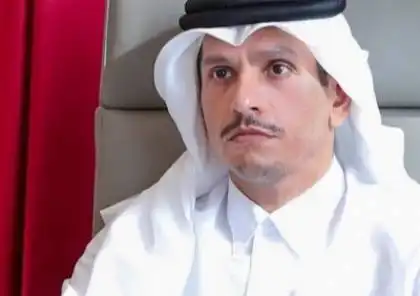
Qatari Foreign Minister and Prime Minister Sheikh Mohammed bin Abdulrahman bin Jassim Al Thani said on Monday that talks on Israeli prisoners in Gaza are improving compared to previous weeks.


The Qatari Foreign Minister added in media statements that the current stage of talks between the Israeli occupation and Hamas may lead to a permanent ceasefire in the future.


He continued: "We have moved in the talks to a place that can lead us to a ceasefire. We cannot predict Hamas' response, but we are committed to continuing our efforts."


Abdul Rahman explained that Qatar's main role is to work to reach a solution that leads to the release of prisoners and a ceasefire in Gaza.


He pointed out that the current escalation in Gaza will not lead to any progress regarding the return of the hostages, pointing out that Qatar has warned from day one of the possibility of expanding the war in the region.


The Qatari Prime Minister and Foreign Minister continued: "Putting an end to the war in Gaza is not only a demand of the people in Gaza, but also a regional demand."


Abdul Rahman said that Qatar is a mediator and not a party to the conflict, and we are trying to bridge the gap, adding: “Our role is to mediate and try to bridge the gap and bring the parties together, and we have no role more than this.”


For his part, Hamas leader Osama Hamdan said that occupation Prime Minister Benjamin Netanyahu is not serious about reaching a settlement and a ceasefire, and he does not care about killing prisoners in Gaza.


Hamdan added during a press conference: “Until this moment, we have not received anything about initiatives published through the Hebrew media, or what is issued by the enemy’s media regarding an expected deal aimed at satisfying the families of prisoners held by the resistance.”


He continued: “We presented specific initiatives and ideas regarding reaching a ceasefire agreement, but they were met with evasion from the Israeli occupation.

ARAB AND WORLD

Mon 29 Jan 2024 8:13 pm - Jerusalem Time

Experts: ICJ decision could pave the way for Netanyahu’s arrest

Some experts believe that the decisions on precautionary measures taken by the International Court of Justice in the “genocide” case brought against Tel Aviv pave the way for the trial and arrest of Prime Minister Benjamin Netanyahu and his army commanders, in accordance with internal Israeli law.


On January 26, the International Court of Justice ordered Israel to take measures to prevent genocide against the Palestinians and improve the humanitarian situation in the Gaza Strip, but the decision did not include a “ceasefire” text.


While the International Court's decision was welcomed internationally and regionally, including the Islamic Resistance Movement (Hamas), the "Islamic Jihad" movement warned against Israel exploiting the court's failure to issue an immediate ceasefire in Gaza, which would allow it to "act as it pleases."


On January 11 and 12, the International Court of Justice in The Hague held two public hearings, as part of the start of consideration of the lawsuit filed by South Africa against Israel on charges of committing “genocide crimes” against the Palestinians in the Gaza Strip.


A “first step” towards holding Israel accountable

Speaking to Anadolu, Pakistani lawyer Hassan Islam Shad stressed the importance of the International Court of Justice describing the case brought by South Africa as “reasonable” for consideration.


Shad, the first lawyer from a Muslim country at the International Criminal Court, said that this decision “represents the first step towards holding Israel accountable for some, though not all, acts of genocide.”


He explained that "this conclusion also revealed the legal basis for Israel's responsibility," noting that "major political momentum" had been formed in this context.


Shad pointed out that "there is a concept of universal jurisdiction that links all countries, and therefore they must take the necessary steps to prosecute those responsible for war crimes, crimes against humanity and genocide within their domestic laws."


He added, "It is indeed possible that in the very near future we will see news of arrest warrants being issued against Benjamin Netanyahu, or the leaders of the Israeli army and individuals participating in the military campaign, and once that happens, it will be the day when Israel regrets its actions in Gaza." According to the Pakistani lawyer.


Shad also pointed out that "pressure is increasing against Israel, which has not respected international law throughout its history," and that "after the International Court of Justice's decision, internal political pressure on Netanyahu will increase."


"Historical precedent"

For his part, the editor-in-chief of “Palestinian Facts” magazine, Ramzi Baroud, said, “Israel used the Jewish Holocaust in many ways to justify its presence and the acts of violence it committed against Arabs and Palestinians in Gaza over the years.”


Baroud explained that "Israel also used the Holocaust to accuse its critics and enemies of anti-Semitism."


He expressed his belief that "the decision of the International Court of Justice is very important and historic, and the Israeli government knows very well that it constitutes a historical precedent."


Baroud said, "This gives great legitimacy to the Palestinian resistance, because it is now fighting genocide more or less officially."


He said, "The International Court of Justice did not refer to Hamas or other Palestinian groups as terrorists, but rather referred to them as Palestinian groups."


Political bankruptcy

Baroud stressed that "Israel has begun to realize that it is losing legitimacy because of its actions as a country that does not recognize international law based on a general position."


He said, "Netanyahu's quick statement and the statements made by other Israeli officials (after the judicial decision) are only indicators that the issue (in international justice) is being taken seriously."


Baroud explained that Netanyahu's statements following the decision issued by the International Court of Justice "were full of contradictions" and lacked logic.


He added, "Netanyahu accuses the International Court of Justice of making a shameful decision, and also says that Israel will continue the war, but will respect international law. It seems that Israel no longer has a logical political discourse."


Baroud expressed his belief that "the political bankruptcy of the Netanyahu government continues after the International Court of Justice's decision, and this will certainly lead to more isolation of Israel over time, and will further strengthen the position of the Palestinians."


He pointed out that "the court that Israel respects most internationally is the International Court of Justice, because of its position on ethnic cleansing and genocide (against the Jews) and that the historical experiences of the Jews have an impact on that. Therefore, it is a historical contradiction for the Israelis to begin to look at the court itself as a An enemy,” according to Baroud.


He believed that "South Africa has played its role to the fullest in this issue, and other countries must also think about what they should do."


There is also “a need to put pressure on the countries that support Israel,” according to Baroud, “because without the support of these countries, Israel would not have been able to do these things (violations), and today Israel is accused of committing genocide crimes.”


Baroud concluded by saying, “Therefore, countries have every moral and legal reason to say that we have a legal obligation to initiate measures to boycott Israel until it ends its occupation of Palestine, or perhaps until it is proven that it did not commit genocide in Gaza.”


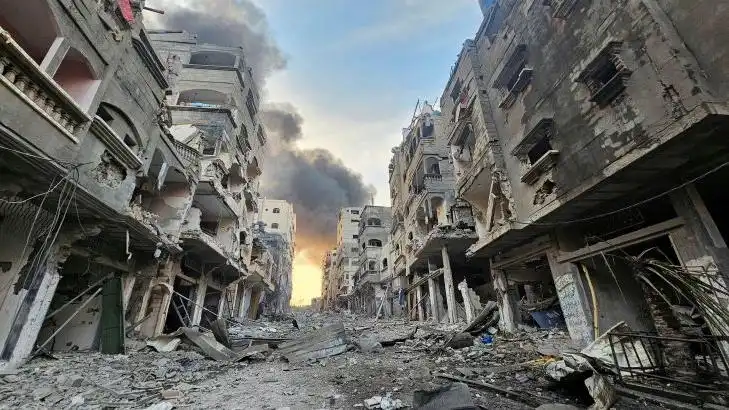
Since last October 7, the Israeli army has been waging a devastating war on Gaza, which left 26,637 killed, and the number of wounded reached 65,387, most of them children and women, according to the Palestinian authorities, and caused “massive destruction and an unprecedented humanitarian catastrophe,” according to the United Nations. .


PALESTINE

Mon 29 Jan 2024 7:30 pm - Jerusalem Time

NBC: Paris summit negotiators agree on a prisoner deal...and the draft will be presented to Hamas today

NBC News quoted a source familiar with the Paris talks regarding a prisoner deal between the Israeli occupation and the Palestinian resistance, saying that negotiators from Israel, the United States of America, Egypt and Qatar “agreed on a framework for a new deal.”


According to the source, the agreement includes “the release of the remaining American and Israeli prisoners in Gaza,” in stages, starting with women and children, and this will be accompanied by a gradual cessation of fighting and the delivery of aid to the Gaza Strip, in addition to the exchange of Palestinian prisoners.


The network reported that a draft of the agreement will be presented to Hamas on Monday, explaining that the movement insists on an immediate and permanent ceasefire first, “which could lead to the failure of the deal,” according to NBC.


For his part, the political commentator on the Israeli Channel 12, Amit Segel, said that the details of the deal include, in its first phase, a 45-day truce, in exchange for the release of 35 Israeli prisoners.


For every Israeli prisoner, between 100 and 250 Palestinian prisoners are freed, including prisoners classified by the occupation as “dangerous,” according to what Siegel added.


He explained that this means liberating 4,000 to 5,000 Palestinian prisoners, which is the highest number of prisoners to be liberated in the history of the Arab-Israeli conflict.


The deal also includes “significant humanitarian assistance,” according to the Israeli commentator.


What NBC reported came after Israeli officials spoke, on Sunday, of “making progress” regarding an agreement on the framework of the deal. In this context, the Office of the Prime Minister of the Occupation Government described the meeting as “constructive,” noting that “there are major gaps.”


PALESTINE

Mon 29 Jan 2024 7:17 pm - Jerusalem Time

Israel continues the crime of forced disappearance of Gaza detainees

The Palestinian Prisoners' Club affirmed on Monday that the issue of Gaza detainees is the greatest challenge facing the relevant institutions as a result of the occupation's continued imposition of the crime of enforced disappearance against them, stressing at the same time that the Israeli occupation continues its arrest operations against civilian citizens in Gaza, harassing them and detaining them in humiliating conditions.


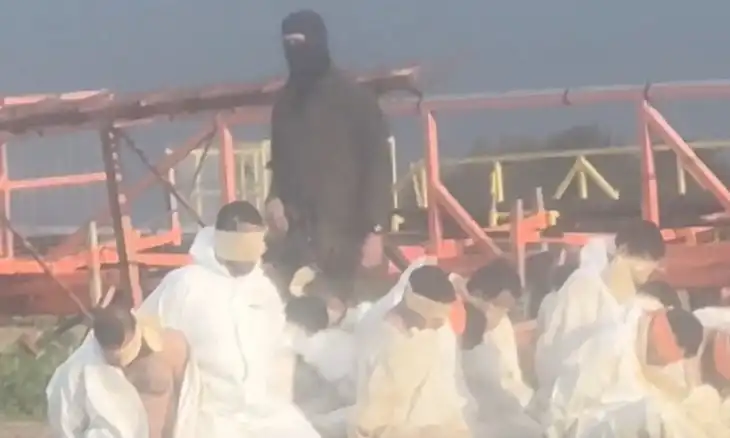
The Prisoners' Club said, in a statement issued by it, that in light of the continued arrest operations against civilians in Gaza, and their detention in harsh and humiliating conditions in the bitter cold, based on the pictures published on the media of dozens of detainees from Khan Yunis, as well as in light of testimonies reported by media outlets, Media coverage of female prisoners from Gaza who were released from occupation prisons and camps revealed a number of facts.


In a related context, a report revealed that the American CNN channel broadcast one of the episodes of the crime that Israel continues, and broadcast scenes of blindfolded men arrested by the occupation army on the Gaza border while they were suffering from severe fatigue, while they were barefoot and wearing light clothing, before they were transferred to an unknown destination.


In turn, the Palestinian Prisoners' Club emphasized that the testimonies of Gaza detainees, including women and children, reflect a high level of brutality as a result of torture, abuse, and harsh and humiliating conditions of detention, which caused them physical injuries, in addition to the psychological effects they were exposed to as a result of the torture and humiliation.


The statement continued by saying: The Israeli occupation still refuses to disclose any clear data about Gaza detainees in its prisons and camps, and is carrying out the crime of enforced disappearance against them, in light of the number of military orders and laws imposed by the occupation regarding dealing with Gaza detainees, as well as in light of the recent approval by the Israeli Knesset. The regulations prohibiting Gaza detainees from meeting with a lawyer will take effect for another four months.


The Prisoner’s Club emphasized that “the data available to the institutions until today are very small data obtained by the institutions through the detainees who were released, as the institutions face great challenges in following up on the issue of Gaza detainees, and the available data is represented by some of the names of the camps and prisons in which the detainees are held.” From Gaza, including Sde Teman camp in Beersheba, Anatot camp, Ofer prison, Damon prison, and other camps belonging to the occupation army.


It added that with regard to the issue of Gaza detainees who were martyred in the occupation prisons and camps, two Gaza detainees out of 7 detainees who were martyred in the occupation prisons after October 7th, one of them whose identity was revealed, and another whose identity the occupation did not reveal, in addition to the occupation’s confession of the execution of one of the detainees, in addition to what the occupation media revealed about the martyrdom of a group of detainees in the Sde Teman camp in Beersheba.


At the end of last December, the occupation prison administration announced the detention of 661 Gaza detainees, whom it classified as “unlawful combatants,” according to the occupation’s description of them, including female captives.


The Prisoners' Club said: According to the competent institutions and international human rights organizations, estimates of the number of detainees in Gaza reach thousands, the majority of whom are civilians.


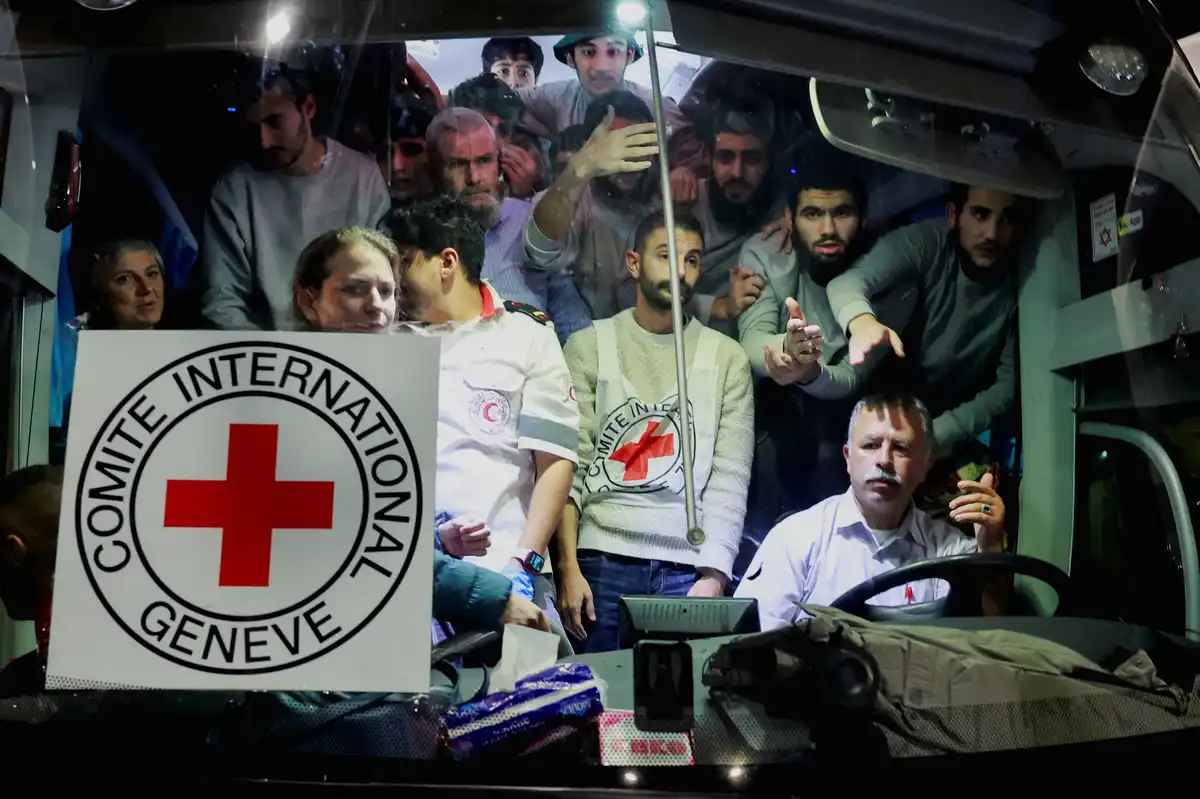
It is noteworthy that Israel released today a group of Gaza detainees from the Karem Abu Salem military crossing, including, according to available data, 19 female prisoners, some of whom are from one family.


The club concluded its statement by saying: Despite all the calls made by Palestinian institutions to human rights institutions at all levels, to reveal the fate of Gaza detainees, international human rights institutions have failed, to date, to play their necessary role towards the issue of prisoners and detainees, due to the continuation of the comprehensive aggression against our people and genocide. in Gaza.


The American CNN channel published a report showing a group of Palestinian prisoners who were arrested by Israel forces from the Gaza Strip, exhausted and in a miserable condition.


According to the channel’s report, there were more than 20 men sitting on the ground, blindfolded and barefoot, with their hands tied behind their backs. While masked Israeli soldiers stood guard.


The report said that the scene was observed last Saturday, showing exhaustion on some of the men, whose heads fell forward and swayed as they tried to remain crouched. While one of the detainees was lying on the ground before an Israeli soldier arrived to wake him up.


The men were barefoot and appeared to be wearing only white disposable aprons, despite the cold weather and temperatures reaching 10 degrees Celsius.


ARAB AND WORLD

Mon 29 Jan 2024 6:16 pm - Jerusalem Time

Israeli Knesset is considering expelling a MP who supported South Africa’s lawsuit against Tel Aviv

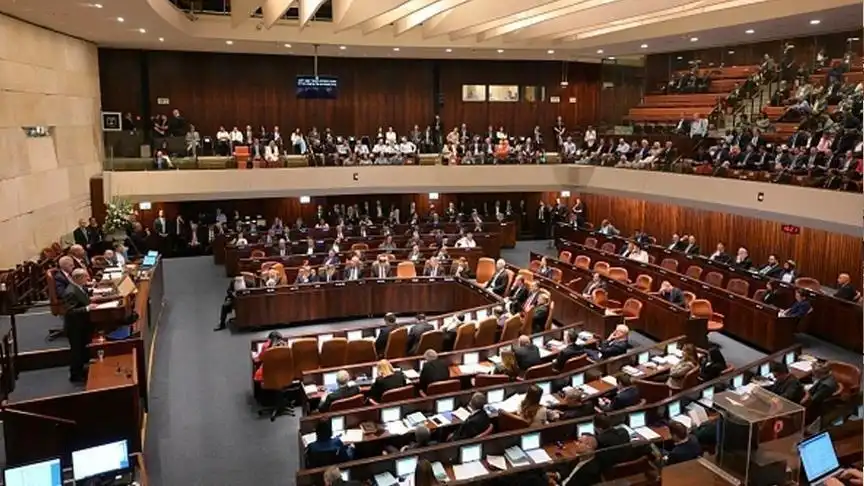
On Monday, an Israeli parliamentary committee discussed the expulsion of MP Ofer Kassif, after he supported the “genocide” lawsuit filed by South Africa against Israel in the International Court of Justice.


On December 29, South Africa filed a lawsuit before the International Court of Justice, accusing Israel of committing “genocide crimes” in the Gaza Strip.


The Knesset Parliamentary Committee heard the legal arguments regarding a proposal signed by 85 members of the Knesset, to expel Representative Cassif from the Knesset, due to his support for South Africa’s request.


Kasif is a Jewish representative in the Democratic Front for Peace and Equality, a joint Arab-Jewish party.


“I signed the petition (in support of South Africa’s lawsuit), which is supposed to be the reason behind this action, based on the same values that have confronted me throughout my political life,” Kasif said in a statement before the committee.


He added that he supported the petition "in order to prevent human suffering against hundreds of thousands of people, out of my belief that only a ceasefire will return the kidnapped people to their homes, and prevent further killing of Israelis and Palestinians."


He continued: "This is why I signed the petition and participated in the demonstrations in the past weeks to demand a ceasefire."


Kassif noted, “I have devoted all of my political and public activity to promoting human values, advancing human rights, promoting the principle of equality and achieving democratic principles and peace.”


He stressed that "freedom and security are for all, for Jews and Arabs, for Israelis and Palestinians, for religious and secular people, for women and men."


In turn, the Israeli newspaper "Haaretz" indicated, on Monday, that "the Knesset is allowed to dismiss Knesset members only in cases of incitement to racism, or support for armed struggle against Israel, and it is not clear whether any of Cassif's statements comply with this definition."


“If the committee approves the request, it will be transferred to the Knesset for a final decision, and a majority of 90 Knesset members will be needed to pass the proposal,” she said.


It continued: "Kasif will have two days from the date of issuance of the decision to appeal to the Supreme Court," without specifying the date of issuance of the decision.


The newspaper quoted the Knesset’s legal advisor, Sagit Afek, as saying: “There is an inherent irony in the request, and the decision restricts the voters who elected an elected official, and limits the scope of freedom of expression.”


However, Oded Forer, a member of the Knesset from the right-wing opposition "Israel Beytenu" party, told the committee that he submitted the request "not only because of Cassif's support for South Africa's request against Israel in The Hague, but also because of his posts on social media alleging that Israel is committing crimes." war".


On January 8, the Hebrew newspaper “Israel Today” said: “The head of the Yisrael Beytenu bloc, Member of the Knesset Oded Forer, collected 70 signatures from members of the Knesset, in order to dismiss Representative Ofer Kassif from the Israeli Knesset.”


Cassif previously said, “The only appropriate way at the present time is to stop the war on the Gaza Strip as soon as possible, conduct a prisoner exchange, withdraw from Gaza, and begin a serious peace process.”


He pointed out "the contradiction in the discourse of the Israeli authorities while they claim not to target civilians in Gaza, they also say that there are no innocents in the Strip."


Cassif became a target of criticism in his country because of his support for the “genocide” lawsuit in Gaza, which South Africa filed against Tel Aviv at the end of last December.


On March 6, 2019, the Central Elections Committee decided to exclude Kassif from running, because of his positions against the occupation, but the Supreme Court (the highest judicial body) rejected the committee’s decision and allowed him to run, and then enter the Knesset.


PALESTINE

Mon 29 Jan 2024 6:02 pm - Jerusalem Time

“Gaza Health”: The death toll from the war rose to 26,637 people

The Ministry of Health in Gaza announced, on Monday, that the death toll from the Israeli war on the Strip had risen to “26,637 killed and 65,387 injured” since last October 7.


This came in a press conference by Ministry spokesman Ashraf Al-Qudra, held in front of “Tal Al-Sultan Maternity Hospital” in the city of Rafah, south of the Gaza Strip.


Al-Qudra said, "The toll of the Israeli aggression has risen to 26,637 killed and 65,387 injured since the seventh of last October."


He explained, "During the past 24 hours, the Israeli occupation committed 14 massacres against families in the Gaza Strip, claiming 215 dead and 300 injuries."


Al-Qudra pointed out that "a number of victims are still under the rubble and on the roads," explaining that "the occupation prevents ambulance and civil defense crews from reaching them."


He said, "The Israeli occupation is still tightening its siege of Nasser Medical Complex and Al-Amal Hospital (in Khan Yunis), which paralyzes the health system's capabilities in rescuing the wounded as a result of the siege and the depletion of many anesthesia and intensive care medications, bone stabilizers, and blood units."


He added: "The Israeli occupation commits field executions of citizens in Khan Yunis and prevents the arrival of ambulances to evacuate the dead and wounded."


The spokesman for the Ministry of Health in the Gaza Strip called on international organizations to "quickly intervene to protect all hospitals, especially Khan Yunis hospitals, which are under direct targeting, to protect their staff, hundreds of wounded, and thousands of displaced people, and to provide medicine, food, and fuel."


Regarding the cessation of international support for the United Nations Relief and Works Agency for Palestine Refugees (UNRWA), Al-Qudra condemned “the systematic targeting of the United Nations and its humanitarian institutions and the cessation of its support, in line with the occupation’s displacement policy.”


He explained that "stopping support (for UNRWA) undermines its relief and health efforts and increases the catastrophic conditions" in the Strip.


On Monday, the number of countries that “temporarily” suspended their funding to the UN agency rose to 12, following Israeli allegations that 12 UNRWA employees participated in the October 7, 2023 attack on the settlements adjacent to the Gaza Strip.


The countries that suspended their funding to the agency are the United States, Canada, Australia, Italy, Britain, Finland, Germany, the Netherlands, France, Switzerland, Japan, and Austria.


On Friday, UNRWA said that it had opened an investigation into allegations of the involvement of a number of its employees (without specifying) in the October 7 attacks.


ARAB AND WORLD

Mon 29 Jan 2024 4:05 pm - Jerusalem Time

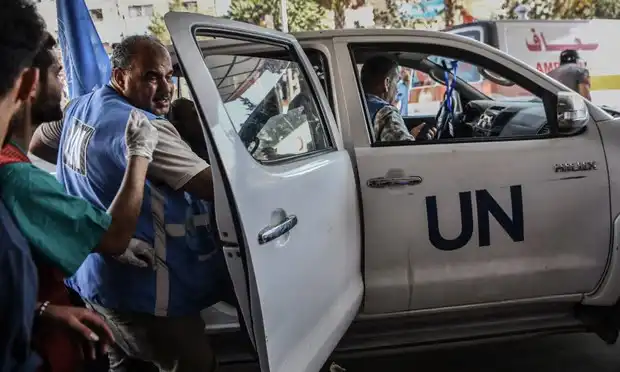
UK, US and other countries to pause funding for key UN aid agency for Palestinian refugees

Move by several countries comes after allegations that UNRWA staff took part in attacks on Israel last year

The decision by the US, UK and other western nations to freeze ­funding for the UN’s agency for Palestinian refugees will significantly worsen the humanitarian crisis in the Gaza Strip, Palestinians have warned.

Britain, Germany, Italy, the Netherlands, Switzerland and Finland joined the United States, Australia and Canada in pausing funding after UNRWA, the UN’s Relief and Works Agency for Palestine, revealed an investigation had been launched into 12 members of staff who allegedly took part in the 7 October attack led by Hamas that killed 1,140 people.

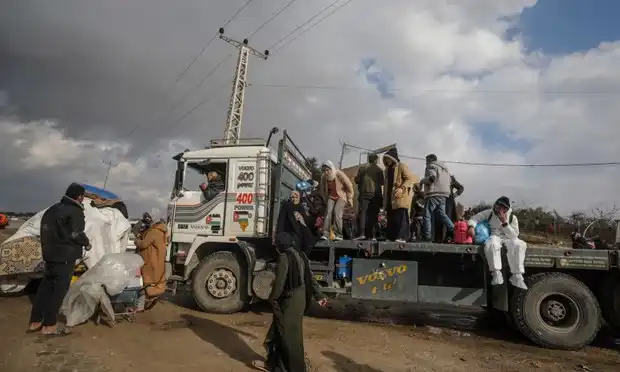
Israel’s retaliatory war has killed 26,000 people and sparked a dire humanitarian crisis, with about 85% of the strip’s population of 2.3 million displaced from their homes.

The UN secretary general, António Guterres, pleaded on Saturday for donor states to “guarantee the continuity” of the body.

“While I understand their concerns – I was myself horrified by these accusations – I strongly appeal to the governments that have suspended their contributions to, at least, guarantee the continuity of UNRWA’s operations,” Guterres said in a statement.

“The abhorrent alleged acts of these staff members must have consequences… But the tens of thousands of men and women who work for UNRWA, many in some of the most dangerous situations for humanitarian workers, should not be penalised.”

Guterres confirmed that 12 UNRWA employees were cited in the accusations, which the UN is investigating. Nine had been fired, one was dead and the “identity of the two others is being clarified”, Guterres said.

The agency’s commissioner general, Philippe Lazzarini, on Saturday called the decision to suspend funds shocking and urged the countries involved to reverse course. “These decisions threaten our ongoing humanitarian work across the region including and especially in the Gaza Strip,” he said.

On Friday, Lazzarini had said that Israel provided UNRWA with evidence that agency staff had been involved on 7 October.

Appeals from the UN officials were not enough to prevent some of the organisation’s biggest funders from pausing their support. The UK Foreign Office soon followed the US and other major allies in freezing its funding to the agency.

“The UK is appalled by allegations that UNRWA staff were involved in the 7 October attack, a heinous act of terrorism that the UK government has repeatedly condemned,” a spokesperson said. “The UK is temporarily pausing any future funding of UNRWA while we review these concerning allegations. We remain committed to getting humanitarian aid to the people in Gaza.”

Palestinians and aid workers argued that freezing funding could have catastrophic consequences.

“Sanctioning UNRWA, which is barely keeping the entire population of Gaza alive, for the alleged ­responsibility of a few employees, is tantamount to collectively punishing the Gazan population, which is living in catastrophic humanitarian ­conditions,” Johann Soufi, a lawyer and former director of the agency’s legal office in Gaza, told Agence-France Presse.

UNRWA, formed in 1949 after the creation of Israel, supports more than 5.6 million Palestinians in the occupied territories, including Jerusalem, and refugees and their descendants in Syria, Lebanon and Jordan.

It has struggled to raise funding in recent years, an issue dramatically exacerbated by Donald Trump’s 2018 decision to cut US support. That was restored by the Biden administration, which is the agency’s biggest donor, providing $340m in 2022, but the state department said Friday it had “temporarily paused additional ­funding” while it reviewed the claims. Six other western countries quickly followed suit.


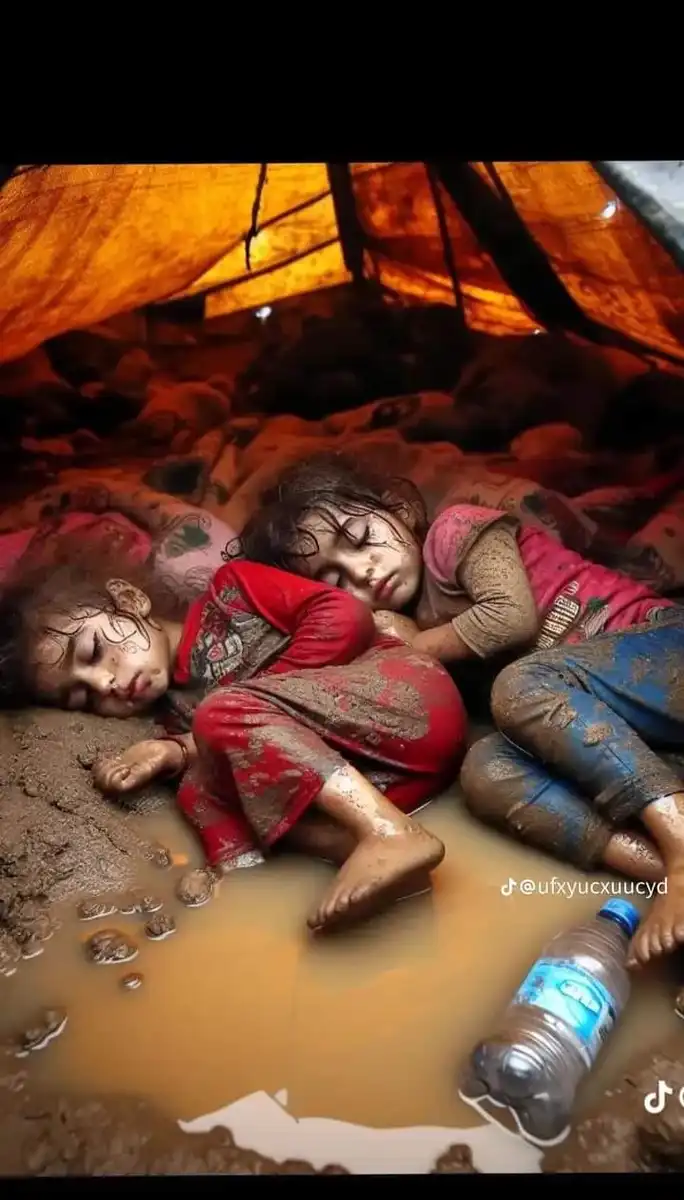
Torrential rain over the weekend in Gaza has made it clear how desperately humanitarian aid, much of which is facilitated by UNRWA, is needed. Footage from makeshift camps in the south of the strip showed flimsy cloth and tarpaulin tents collapsing in flooding and mud.

Nasser hospital in Khan Yunis – the largest hospital still functioning in the strip – was reportedly completely without power overnight. The local health ministry said that 174 people were killed and 310 injured in the past 24 hours.

Hussein al-Sheikh, the head of the Palestine Liberation Organisation, also called for donor countries to immediately reverse their decisions, which he said entail “great political and humanitarian relief risks”.

“At this particular time and in light of the continuing aggression against the Palestinian people, we need the maximum support for this international organisation and not stopping support and assistance to it,” he said.

The funding freeze also drew condemnation from Hamas. “It’s clear that UNRWA is subject to blackmail by countries that support Israeli terrorism. While Palestinians in the Gaza Strip are facing mass extermination – even according to [the international court of justice],” it said in a statement, referring to the ruling from the UN’s top court that Israel must prevent acts of genocide in Gaza.

A total of 152 UN employees have been killed in Israel’s almost four-month-old offensive, and relations between UNRWA and Israel – frosty at the best of times – have deteriorated after an attack on an UNRWA shelter in Khan Younis last week that killed 13 people.

The agency said Israeli tank fire had hit the building where 800 ­people were seeking refuge. The Israeli army said the incident was under review, and that it was possible the strike was a “result of Hamas fire”.

The crisis could also impact the UN agency’s operations in Jerusalem and the West Bank. Earlier this month, it was told by the Israel Land Authority to vacate a compound in occupied East Jerusalem, and issued a fine for missing building permits.

Israel’s foreign minister, Israel Katz, said in a rare statement yesterday, the Jewish holy day, that the country would take steps to remove UNRWA from the Gaza Strip after the war. “We have been warning for years: UNRWA perpetuates the refugee issue, obstructs peace, and serves as a civilian arm of Hamas in Gaza,” he said.

Mairav Zonszein, a senior analyst at the International Crisis Group thinktank, said on X, formerly Twitter: “Israel has been building a case against UNRWA for a long time. It said weeks ago it wants it phased out of Gaza.

“Regardless of the veracity of the charge, the decision to go with this news last night seems like an attempt to distract from the ICJ ruling on ­genocide in Gaza.”

OPINIONS

Mon 29 Jan 2024 3:55 pm - Jerusalem Time

ICJ’s vague demands for Israel to comply with the law are unlikely to result in palpable change

The Guardian

The Guardian

Opinion Writer

By Yuval Shany

The case brought by South Africa was weak, but the judgment may encourage Israel’s allies to push for a change of tactics


The decision by the international court of justice (ICJ) to issue provisional measures in the case brought by South Africa against Israel on the basis of the genocide convention came as no shock to most longtime observers of the court. Although most of the evidence presented by South Africa in support of its claims that Israel is violating the convention was merely circumstantial in nature (relying heavily on inferences drawn from the high death toll in Gaza, the dire humanitarian situation on the ground and statements by Israeli officials which could be read as eliminationist in nature), most judges were not willing to determine, at this early stage of the proceedings, that the case was implausible.


In fact, only two judges (Julia Sebutinde from Uganda and Aharon Barak from Israel) were ready to accept Israel’s position: that Hamas’s extensive use of human shields, the harm mitigation efforts by the Israel Defense Forces (IDF) and the causal disconnect between the aggressive statements uttered by Israeli politicians and the actual cabinet directives provided to the IDF, rendered the South African genocide case implausible.


Indeed, as an institution that serves as the “principal judicial organ of the United Nations”, it would have been very surprising had the ICJ declined to intervene in this high-stakes case, which has attracted huge international attention, and which relates to a most urgent and serious humanitarian catastrophe about which multiple UN agencies have voiced extreme concern. This is especially so given the fact that the court was quick to intervene less than two years ago in the Russia-Ukraine war.


Still, you can hardly read the decision as a strong endorsement of the South African legal characterisation of Israel’s conduct. The standard of “plausibility of claims” applied by the court when considering whether or not to issue provisional measures is already a very low and ambiguous standard of proof for factual allegations, and the court muddied it even further by holding that “at least some of the rights claimed by South Africa” are plausible, without indicating which claims are more plausible than others.


Indeed, one of the judges, Georg Nolte from Germany, has indicated that, for him, it is implausible that the IDF military campaign is being conducted with genocidal intent. He voted with the majority, he said, because “dehumanising and discriminate language” used by Israeli officials causes a risk of future violations of the genocide convention.


It is also notable that the most consequential provisional measures requested by South Africa – cessation of the war, non-aggravation of the crisis, repeal of specific measures (such as those instructing north Gaza residents to evacuate to the south) and providing access to fact finders – were rejected by the court. The court did not call for a ceasefire – though talks aimed at negotiating a temporary pause in fighting to allow further hostage releases are reported to have progressed in recent days.


Ultimately, almost all the measures indicated by the court can be regarded as general demands on Israel not to violate various provisions of the genocide convention. Since Israel maintains that its operations are already consistent with international law (including the criminal investigation of acts of incitement, which it has started to undertake), it seems unlikely that the ICJ’s provisional measures will result in an actual and palpable change in Israeli policies relating to the war.


There are two significant contexts, however, in which the court’s order may complicate things significantly for Israel, potentially leading to a reconsideration of its approach to the conflict. First, the very holding by the court concerning the plausibility of some of the South African claims – weak and vague as it may be – is still likely to generate more political pressure on Israel from its allies. Some of these allies may even be concerned that the order could generate for them a new legal risk – albeit remote – of complicity in violations of the convention should they continue to support Israel’s war effort in its current configuration. As a result, expectations are likely to increase for Israel to do more on the humanitarian front, to apply a greater level of care in its military operations and to move as quickly as possible towards winding down the war.


Second, the court’s order to Israel to report to it within a month “on all measures taken to give effect to its order” creates a potential opening for ongoing monitoring of Israel’s conduct in the war by the court. (A similar strategy was adopted by the ICJ in a case between Armenia and Azerbaijan, where it has reconsidered its provisional measures five times within two years.) Complicating any such ongoing monitoring are new allegations by Israel that 12 members of the staff of UNRWA, the UN’s Relief and Works Agency for Palestine – on whose reports the court relied when issuing provisional measures – took part in Hamas’s 7 October attack.


The upshot of the ICJ judgment is that international legal scrutiny of Israel’s activity is here to stay – notwithstanding Israel’s deep reservations about international institutions, including international courts. With the ICJ scheduled to hear pleadings next month regarding the legal consequences of Israel’s prolonged occupation of Palestinian territories, and with the international criminal court (ICC) actively investigating allegations of crimes committed by both parties to the Israel-Hamas war, legal and political pressures on Israel are only expected to further increase in the foreseeable future, potentially narrowing its military and policy options.


Yuval Shany is the Hersch Lauterpacht chair in public international law at the Hebrew University of Jerusalem and a senior fellow at the Israel Democracy Institute

ARAB AND WORLD

Mon 29 Jan 2024 3:49 pm - Jerusalem Time

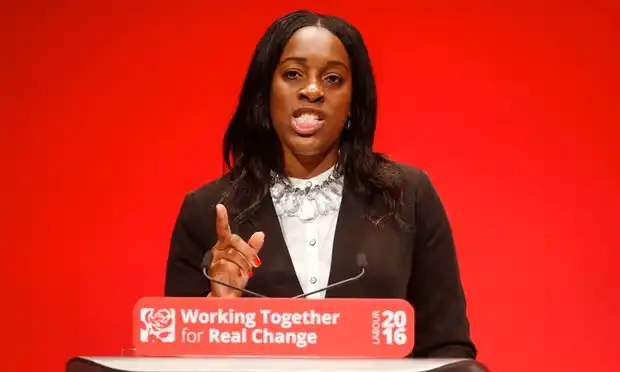
UK Labour suspends Kate Osamor over Gaza comments in Holocaust message

By Rowena Mason 

Party investigating MP for Edmonton after she said Gaza should be remembered as genocide on memorial day

The Labour MP Kate Osamor has had the whip suspended while she is investigated for saying Gaza should be remembered as a genocide on Holocaust Memorial Day.

The MP for Edmonton in north London is due to meet party whips on Monday after issuing an apology over the message she sent on the eve of the day marking the murder of 6 million Jews during the second world war.

Osamor had distributed the message to her party members, saying Holocaust Memorial Day should be observed, but other genocides should also be remembered – listing Gaza as one of them.

The former shadow development secretary, who served in Jeremy Corbyn’s top team, shared a photograph of herself signing the Westminster remembrance book of the Holocaust Educational Trust.


She also wrote that there was an ‘“international duty” to remember the victims of the Holocaust, as well as “more recent genocides in Cambodia, Rwanda, Bosnia and now Gaza”.

Osamor later tweeted: “Holocaust Memorial Day is a day to remember the 6 million Jews killed in the Holocaust and the genocides that have occurred since. I apologise for any offence caused by my reference to the ongoing humanitarian disaster in Gaza as part of that period of remembrance.”

Jonathan Reynolds, the shadow business secretary, told Sky News that Osamor had met the chief whip to discuss her comments and was due to meet officials again this week.

“What is happening in Gaza is clearly a humanitarian catastrophe that is recognised,” he said. “But there are specific reasons why the Holocaust is considered as it is. It’s important on Holocaust Remembrance Day to remember that.

“And I understand Kate has apologised. There’s been a conversation with the chief whip. There’ll be further conversations next week, but of course we take anything in this space extremely seriously.”

Asked if Osamor was likely to be disciplined, Reynolds added: “There will be those conversations, and I can tell you that they have already been scheduled for the week ahead. Of course, whenever we have a situation like this, we take it extremely seriously.”

Starmer has supported Israel’s “right to defend itself” in Gaza against Hamas, but more recently called for a sustainable ceasefire and hit out at the “intolerable” casualties.

His position has caused tensions within Labour. Many in the party have pressed him to be more critical of Israel’s military action, which has caused an estimated 24,000 deaths.


Momentum, the pressure group on the left of Labour, said it was an “outrageous decision [that] further damages Labour’s reputation for anti-racism under Keir Starmer, and should be immediately reversed”.


ARAB AND WORLD

Mon 29 Jan 2024 3:43 pm - Jerusalem Time

What is UNRWA and how dependent on western funding is its work in Gaza?

By Rafqa Touma

The UN agency that provides aid for Palestinian refugees has become embroiled in allegations some staff were involved in the Hamas attacks on Israel


UN officials and aid groups are urging countries to reconsider their decision to pause funding for the UN refugee agency for Palestinians, a vital source of aid in Gaza.

Eleven countries have paused funding following allegations from Israel that a dozen of UNRWA’s staff were involved in the 7 October Hamas attacks on Israel.


What is UNRWA?

Mandated by the UN general assembly, the United Nations Relief and Works Agency is the UN agency for Palestinian refugees.


Formed in 1949 after the creation of Israel, it supports more than 5.6 million Palestinians in the occupied territories, including Jerusalem, and refugees and their descendants in Syria, Lebanon and Jordan. UNRWA describes itself as “unique in terms of its longstanding commitment to one group of refugees”.

It has a dual role that encompasses humanitarian and developmental responsibilities – in effect delivering governance-like services across dozens of refugee camps in the West Bank and Gaza, as well as Lebanon, Syria and Jordan.


UNRWA has 13,000 staff in Gaza, of whom 125 health staff work in rotating shifts at health centres.


How dependent is Gaza on international aid?

Israel’s air, land and sea blockade of Gaza since 2007, and Egypt’s restrictions on access, has limited food, fuel, medical supplies and people from passing into Gaza. This has isolated the territory, making it heavily dependent on international aid organisations for basic necessities.

The UN presence in Gaza dates back decades. Since 1993, the Palestinian territories have received more than $50bn in international development and humanitarian aid – one of the largest international interventions since the second world war.

UNRWA has struggled to raise funding in recent years, an issue dramatically exacerbated by Donald Trump’s 2018 decision to cut US support. That was restored by the Biden administration, which is the agency’s biggest donor.

Various other UN organisations also operate in the occupied territories, including the Office for Works and the Office for the Coordination of Humanitarian Affairs.


What has UNRWA been doing since war erupted?

UNRWA’s focus has been converting the schools it runs in the territory into shelters, where medical workers can provide health care and counsellors and social workers provide psychological help and other services. Mobile toilets and showers have been deployed as needed and bread and canned foods have been distributed.

It says 152 of its staff members had been killed since 7 October, when Hamas launched its attack into Israel, prompting Israel to pummel Gaza with airstrikes. More than 140 UNRWA installations have been damaged since the violence began.

Even before funding to the agency was paused, the amount of aid entering Gaza was well below the daily average of about 500 trucks before the war. Additionally, in the past week, family members of hostages held by Hamas in Gaza have blocked aid trucks from entering at the Kerem Shalom crossing.

The military later declared the area around the crossing a closed military zone, which would prohibit protests there.


Who has paused funding to UNRWA?

Britain, France, Germany, Italy, the Netherlands, Switzerland, Japan and Finland joined the United States, Australia and Canada in pausing funding after UNRWA revealed an investigation had been launched into 12 members of staff who allegedly took part in the 7 October attack led by Hamas that killed about 1,200 people, mostly civilians.

The US is UNRWA’s biggest donor, providing $340m in 2022. The state department has said this funding will be paused while the US reviews the claims, originally aired by Israel.

Together, the countries that have paused funding provided about 60% of UNRWA’s budget in 2022.

How has UNRWA responded to the allegations?

Of the 12 employees who have been accused by Israel of taking part in the attacks, nine were immediately sacked, one was confirmed dead and two were still being identified, according to UN secretary general, António Guterres. He said they would be held accountable, including through criminal prosecution.


“The abhorrent alleged acts of these staff members must have consequences,” Guterres said. “But the tens of thousands of men and women who work for UNRWA, many in some of the most dangerous situations for humanitarian workers, should not be penalised. The dire needs of the desperate populations they serve must be met.”


Spokesperson Juliette Touma warned that the pause in funding meant the agency would be forced to stop its support for more than 2 million Palestinians in Gaza by the end of February, while UNRWA commissioner general Philippe Lazzarini said the lifeline to Gaza could “collapse any time now”.

ARAB AND WORLD

Mon 29 Jan 2024 3:35 pm - Jerusalem Time

Saudi-Egypt-Jordan security officials hold 'secret' meeting in Riyadh on post-war Gaza: report

Senior officials from Saudi Arabia, Jordan, Egypt, and the Palestinian Authority have reportedly met in Riyadh to discuss post-war Gaza.

A confidential meeting between Arab security officials was recently held in Riyadh to discuss possible post-war Gaza scenarios, Axios reported on Monday.


Security chiefs from Saudi Arabia, Jordan, Egypt, and representatives from the Palestinian Authority focused on coordinating plans for Gaza when Israel ends its war on Gaza - which has killed more than 26,000 people - and discussed ways to involve Ramallah in the process.

Saudi National Security Advisor Musaed bin Mohammed Al-Aiban hosted his Egyptian and Jordanian counterparts who stressed to the Director of Palestinian General Intelligence, Majed Faraj, the need for the Palestinian Authority to implement serious reforms to reclaim its political leadership, according to the report.

A proposal to form a new Palestinian government was discussed with the prime minister taking on some of the powers currently held by Palestinian President Mahmoud Abbas.

The Saudi National Security Advisor reportedly also indicated that Riyadh could still normalise relations with Israel if concrete steps toward the creation of an independent Palestinian state were made.

The four countries involved in the talks have not commented on the meeting.

Israeli Prime Minister Netanyahu has consistently refused to cede security control over Gaza and again opposed the establishment of a Palestinian state.

The UAE, Morocco, Bahrain and Sudan normalised relations with Israel in 2020, as part of the Abraham Accords.

Jordan and Egypt had already signed peace agreements with Israel and exchanged ambassadors, although normalisation remains deeply unpopular with citizens in both countries.

Israel's war on Gaza has killed at least 26,422 people and wounded 65,086 others since 7 October, the vast majority civilians, flattening entire neighbourhoods and civilian infrastructure


OPINIONS

Mon 29 Jan 2024 3:13 pm - Jerusalem Time

‘Israelism’: The promised land needs a new narrative

Aljazeera

Aljazeera

Opinion Writer

By Myriam Francois

Israelism, a controversial new film on the relationship between Israel and Jewish identity, tells a story which we all need to hear.


“If you want to change the world, you need to change your story”, so says Michael Margolis, CEO and founder of Storied, a strategic consultancy that specialises in storytelling for disruption.

As a filmmaker, the quote makes perfect sense to me. Stories provide us with an emotional sustenance which can galvanise, hearten and sustain humanity through its most complex and arduous challenges. But stories, unlike mere ideas, or arguments, speak to the heart, a space beyond hardened misconceptions which can impede our ability to relate and connect to our shared humanity.

In a new, controversial documentary film called Israelism, two young American Jews raised to unconditionally love Israel, experience a profound and life-changing awakening as they bear witness to the brutality of the Israeli occupation of Palestine. As they join a growing movement of young American Jews battling the old guard to redefine Judaism’s relationship with Israel, the protagonists take us into the battle over the very soul of modern Jewish identity.

The film has been touring US campuses, where its release during the ongoing genocidal assault on Gaza has led to numerous calls for censorship and cancellations of scheduled screenings by campus authorities. In the midst of a highly censored public debate around the Israeli occupation, the efforts to censor the film is a reflection of the times – even the Jewish voices for peace being targeted by the machine which has for so long sought to silence Palestinian calls for liberation.

Israelism tells a story which we all need to hear, not least because today the United States is the only force that can rein in Israeli extremism. It offers a small window into how powerful special interest groups in the US groom young Jews into blindly supporting Israel, and how some, like its protagonists, manage to escape it.

But to a non-Jew like myself, the most compelling element of the film was its candid depiction of the emotional bond most Jews have been made to develop with Israel, and the difficulties they experience when they attempt to step outside of the powerful, unifying narrative that sustains this bond.

While its many critics, including myself, view Israel as an ethno-nationalist, racially supremacist rogue state, at odds with international law and operating an apartheid system, Jews are taught from a young age that the modern state of Israel is the embodiment of Jewish self-actualisation and freedom.

That’s no small narrative to dismantle because, in part, it is true. After years of persecution and exile, Jews do finally have a home. Except it is not their home. It’s that of the Palestinians. The displacement of Palestinians from their land to actualise the Zionist myth of a “land without people for a people with a land” is no less objectionable than the persecution and exile imposed on the Jews historically.

While the main characters in Israelism come to see that their dream of Israel has been built on a lie, what was missing from the film was an alternative story.

Academic Barnett R Rubin poetically describes the Jewish narrative about modern Israel in his article titled “False Messiahs”: “Repeated in every era, this grand narrative – slavery to freedom, exile to redemption – was the constant, if sometimes barely audible, background music of the Jewish people’s understanding of their encounter with history.”

Rubin paints a poignant picture of Jewish history, replete with the horrors of anti-Semitic European persecution through the centuries, exile, and a deep longing and hope for a place of safety and security. Political Zionism does not emerge out of a vacuum, he explains, but from the inability of European states to guarantee the safety and security of the Jewish people. With the pogroms and eventually, the culmination of European racialised violence in the form of the Holocaust in the mid-20th century, the toxic intersection of colonialism and Zionism sets the stage for our current crisis.

“Israeli Jews are settler colonialists with a historical memory of indigenous origin,” writes Rubbin. “They developed an ideology and a political rather than purely religious movement of ‘return’. But their historical memory was not shared by the land’s inhabitants. The historical memory of the Jewish people did not create the right or capacity to confiscate or occupy a single dunam of land against the will of its possessors. The historical memory of one people, however tenacious, creates no right to rule over another.”

That narrative of dispossession, persecution and triumph is what is buttressing support for the current state of Israel. While a growing movement of critics is dismantling this, the next generation of haunted residents of this contested land, desperately need a new story of hope to replace it.

Today, as the Israeli founder and executive director of Idealist.org, Ami Dar, writes, “If everyone, everywhere, truly accepted that seven million Jews and seven million Palestinians are not going anywhere, and that any possible future has to include and encompass both, the whole energy around this conflict would shift.”

For that shift to happen, we need new stories. Stories which recognise and honour claims to the land which, whilst presented as competing, are not inherently so. After all, Indigenous philosophies might push us to consider that land belongs to no one and that in fact, the Abrahamic stewards of the land have a common mission to preserve and protect its sacred nature and honour all its inhabitants.

Rubbin seems to suggest that a “decolonised” Zionism, one divorced from the corrupting supremacy of colonialism, and therefore more of a cultural longing for a place, than a political or territorial claim to it, should be distinguished from the violent settler ideology currently unleashed: “The Palestine they [the Jews] longed for was the embodiment of their hopes, rather than a few provinces of the Ottoman empire with Arab Muslim and Christian populations.” And so it may be from within those hopes, married to the longing of the Palestinians for a return to their land, for autonomy over their lives, and for peace, that the next story might be weaved. And while it is arguably those same elemental dreams which render the current power struggle so apocalyptic, they also render a story which honours them profoundly compelling.

While the focus of Israelism is on the need for Jews to dismantle the Frankenstein that is Israel’s violent occupation, what is missing is a narrative of hope.

A growing number of Jews are joining the ranks of anti-Zionism and the mass protests of Jewish Voices for Peace and Jewish elders have proven powerful counters to the otherwise assumed consensus around support for the current Israeli state. But counter-narratives require more than simple opposition to last.

The story being sold to young Jews around the world is profound, moving and utterly compelling. And this means that any struggle to free Jews from this mischaracterisation of the state of Israel as a redemptive embodiment of Jewish self-actualisation will necessarily require an equally, if not more compelling, counter-narrative. One which honours legitimate Jewish fears of history repeating itself, provides the community and communion of a shared dream, of cosmic dimension, but also promises to liberate the Palestinians.

As Rubin also points out: “What is objectionable about colonialism is not the immigration or settlement of a population of a different ethnic or national origin, or of people that are in some sense non-indigenous, but the domination of one group over another. It is impossible to rewind and rerun history. But it is possible, indeed necessary, to assure a future where Palestinians and Israelis have equal rights.”

As Israelis become increasingly disillusioned with Netanyahu, Jewish voices within and outside of Israel need to confront the impact of militaristic ideology on their culture, politics and identity. The Israel Democracy Institute survey, a monthly gauge of Israeli sentiment on current events, found diminishing levels of optimism for the country’s future security and democratic character. If the nihilistic TikTok videos mocking maimed Palestinian children weren’t a wake-up call, the telegram groups in which thousands revel over snuff movies of Palestinian civilians being tortured and killed should be. Any denigration of the humanity of another necessarily diminishes our own. This loop of dehumanising violence should not be varnished by propaganda tales any longer.

While honouring legacies of suffering and exile, opposition to the apartheid state must also make way for the promise of a new dream. Nelson Mandela’s freedom movement wasn’t led merely by opposition to white supremacy – it was guided by a dream of coexistence, equality and justice for all. Contrary to narratives of Palestinian contrariety, Palestinian leadership has consistently and generously made space for the Jewish presence on their land. It is now up to the new generation of Jews to reimagine their history in a way which honours all God’s children equally – and in that new story lies the true promised land.


Myriam Francois

Award winning Franco-Irish documentary filmmaker, journalist and writer


ARAB AND WORLD

Mon 29 Jan 2024 3:04 pm - Jerusalem Time

Liberation: Weakening UNRWA today is ridiculous and dangerous

Liberation newspaper said that several Western countries took the initiative to suspend their donations to the United Nations Relief and Works Agency for Palestine Refugees (UNRWA) immediately after Israel accused employees of the agency of participating in the attack on October 7, 2023, a decision that the political expert specializing in Middle East affairs, Jean-Paul Chaneloud, believes “has Severe consequences.” 


The newspaper explained - in an interview summarized by Maria Malagardes - that more than 10 Western countries, including the United States, Germany and the United Kingdom, have suspended vital funding for this organization that has been responsible since 1949 for the fate of Palestinian refugees, and which is the only source of humanitarian aid for the residents of the Gaza Strip who are being subjected to army bombing. Israelis 3.5 months ago, at a time when starvation threatens 40% of them.


UNRWA immediately terminated the contracts of 9 suspected employees, another died, and the rest were not identified. It also opened an investigation to determine the precise responsibilities of dozens of targeted employees, but that did not seem sufficient, as the speed of the donor countries’ reaction coincided with the issuance of the International Court of Justice’s order to “accept” the occurrence of genocide in Gaza, and its call to ensure the provision of humanitarian aid to the Palestinians stranded in the Gaza Strip.


The Middle East affairs expert spoke about the indispensable role of UNRWA in the lives of 6 million Palestinian refugees, two million of whom are in Gaza, noting that the Israeli right has always been hostile to this agency, and former US President Donald Trump withdrew financial support for it, but he was succeeded by an atmosphere Biden brought it back.


But behind the financial aspect - as the expert says - there is always the political question: How do we make the issue of Palestinian refugees disappear? Because this is the logic that prevailed before October 7, when Israel was preparing to normalize its relations with Arab countries, before the ongoing war revived the idea of eliminating UNRWA.


Two contradictory positions

Although we do not know what the charge is against UNRWA employees, and that the agency’s immediate reaction after Israel revealed the involvement of some was honest and transparent, the speed with which the United States and some European countries stopped funding it raises questions, because weakening UNRWA today is ridiculous and dangerous, and it is also supporting Implicit in the position of the Israeli government and the violent attack it is leading in the Gaza Strip.

The Middle East affairs expert pointed out that the Europeans took a fairly clear position supporting the implementation of the order issued by the International Court of Justice, but we have the impression that some countries such as Germany immediately wanted to “rebalance” this position by suspending funding for UNRWA in the wake of the Israeli accusations.


Shanyolod: Western alignment with Israeli positions towards UNRWA is a sign of our contradictions and weakness in defending the law


The two positions appear - to the expert - to be contradictory, as it is not possible to support the urgent need for more humanitarian measures on the one hand, and to cut off funds from UNRWA, which provides this aid on the spot, on the other hand, and because striking this agency contradicts what the Court of Justice requested.


At a time when the world has completely abandoned the Palestinian population, the presence of UNRWA on the spot hinders the Israeli strategy that wants to “destroy everything,” as the Israeli Defense Minister clearly said, especially since Israel today - as the expert believes - wants to liquidate the Palestinian issue and expel the Palestinians from the Gaza Strip, UNRWA is a collateral victim of this strategy.


The Middle East affairs expert expressed his fear that the decision to cut funding for UNRWA would strengthen the idea of expelling Palestinians from Gaza, concluding that Western alignment with Israeli positions toward UNRWA is “a sign of our contradictions and weakness in defending the law.”


Source: Liberation + Aljazeera

ARAB AND WORLD

Mon 29 Jan 2024 2:57 pm - Jerusalem Time

American writer: As long as the laws are not applied to Israel, the world is in trouble

An article in the New York Times criticized the West's selectivity in applying the standards of the international system based on laws and regulations, and its reluctance to impose them specifically on the State of Israel.


Columnist Lydia Polgreen stated in her article in the American newspaper that last year the world witnessed an “astonishing and high-stakes” international drama taking place in the Dutch city of The Hague, the seat of the International Court of Justice.


There, a group of poorer and less powerful countries - the so-called Global South, led by South Africa - managed to drag the Israeli government, along with its allies, rich and powerful countries, into the “highest judicial body” of the Western rules-based system, accusing Israel of waging a brutal war in the Gaza Strip. Gaza has a "genocidal" character.


The article described the responses of the leading countries in this global system to the lawsuit filed against Israel as being quick and clear, rejecting the accusations directed against Tel Aviv. British Prime Minister Rishi Sunak considered it a “completely unjustified and wrong” step, while US National Security Council spokesman John Kirby described it as “worthless, counterproductive, and completely baseless.” As for the German government spokesman, he said: His country opposed the "political exploitation" of the genocide law.


The International Court of Justice issued a temporary ruling, on Friday, requiring Israel to take “measures to prevent acts of genocide, including preventing irreparable harm to the people of Gaza, including easing the almost complete blockade of humanitarian aid,” but the decision did not call for a complete cessation of military operations. Israeli in the Strip.


According to Bulgarin, the court's decision was characterized by sobriety and accuracy, and entailed a rebuke of countries that reject the charges against Israel.


The writer pointed out that accusing Israel is a necessary step, as it is the state that was established in the wake of the Holocaust, which the Jews were subjected to at the hands of Nazi Germany during World War II, after which - ironically - the term genocide was coined.


Whatever the final outcome of this case, it ignites - in the opinion of the author of the article - an epic battle over the meaning and values of the so-called rules-based global order. If these rules are not applied when powerful countries do not want them to be applied, are they in this case considered rules? Polgreen wonders.


Mavura: The kind of evasion that we see happening regarding Gaza, the downplaying of the humanitarian crisis, and the cowardice in criticizing the Israeli government for its actions, has diminished the moral authority of the United States in the eyes of many people around the world.

The writer quoted Thuli Madonsela - a jurist and lawyer well-versed in South Africa, who contributed to drafting the post-apartheid constitution in her country - saying: “As long as those who set the rules impose them on others while they believe that they and their allies are above those rules, the international governance system is in danger.” dilemma".


The lawyer added: “We say that the laws are the laws, whether when Russia invades Ukraine, or when the Rohingya (the Muslim minority) are killed in Myanmar, but if Israel is now slaughtering the Palestinians, depriving them of food, and working to displace them en masse, then the rules do not apply to it.” “Anyone who tries to enforce them is anti-Semitic, and that puts those rules in jeopardy.”


While Polgreen acknowledges, in her article, that investigating the charges against Israel will take years, she describes Israel’s war in Gaza as “the most heinous crime” that a state can commit, “and it has a special resonance,” noting that the one who coined the term “genocide” is the legal researcher. Raphael Lemkin, a Polish Jew, was used during the Holocaust to give a legal definition to the massacre and ensure that it would not happen again.


Although the International Court of Justice lacks mechanisms to implement its decisions, this case - in Bulgreen’s view - is of great importance because it is directly related to the challenges facing the rules-based global order led by the United States, which has persisted since World War II, despite some obstacles that Get in his way.


According to the New York Times article, the wealthy Western countries that set the terms of that system are retreating on several fronts as China’s global ambitions rise. While Russia under its President Vladimir Putin threatens Europe, and liberal democracy is declining in many parts of the world; While emerging powers of strategic importance - such as Türkiye and India - tend towards authoritarianism.


All the caveats warn that the world risks rushing “recklessly” into a new era of realpolitik whose slogan is “might makes right,” where everything is permissible, and international laws and norms are disdained.


The writer said that all warnings warn that the world risks rushing “recklessly” into a new era of realpolitik whose slogan is “might makes right,” where everything is permissible, and international laws and norms are disdained.

What does a rules-based system mean, if rules are applied selectively, and if trying to apply them to specific countries is seen as clearly prejudiced?


According to Polgreen, it is short-sighted in these times that President Biden's administration has chosen to overlook the carefully documented case prepared by South Africa.


In her assessment, one of the biggest threats to the rules-based international order is the growing consensus in the poor world that the rich world applies those rules selectively as it sees fit and when it suits the powerful states that make up the Global North, as happened when Russia invaded Ukraine.


The writer quotes the legal researcher in South Africa, Dan Mavora, saying that this kind of evasion that we see happening regarding Gaza, the underestimation of the scale of the humanitarian crisis, and the cowardice in criticizing the Israeli government for its actions, all of this has undermined the moral authority of the United States in the eyes of many. From the people of the world.


She concludes by saying that the only way out of this “tragedy” is to include the Palestinian people in the family of self-governing states that live, imperfectly, under the rules that have maintained an unstable but continuous peace for many generations, as she puts it.


Source: New York Times + Aljazeera

ARAB AND WORLD

Mon 29 Jan 2024 1:57 pm - Jerusalem Time

Global thinkers and figures in a global declaration: Gaza’s atrocities are a moral challenge to the world

A global declaration signed by figures from around the world warned that the ongoing “atrocities” in the Gaza Strip represent a moral challenge to the entire world, while at the same time rejecting the policy of “turning a blind eye to heinous crimes against humanity” against the Palestinian people in Gaza.


The list of the first signatories to the statement included more than 100 figures from around the world, including leaders of countries and governments, former ministers, winners of prominent international awards, Muslim scholars, church leaders, thinkers, writers, writers, and artists from several countries.


The declaration said, "We witness, with sorrow and anger, terrible atrocities targeting more than two million Palestinians in the Gaza Strip, most of whom are children and women. This represents a moral challenge to the entire world that calls for urgent humanitarian vigilance and a strict initial review."


The public figures who signed the declaration issued in eight languages affirmed their refusal to “turn a blind eye to the heinous crimes against humanity taking place against the Palestinian people in the Gaza Strip, which take the character of genocide and ethnic cleansing.”


It denounced in the strongest terms the continued military, political and propaganda support it received from international powers.


Serious imbalances

The declaration indicated that these developments revealed that the world is suffering from grave imbalances, a worsening moral crisis, an intractable value dilemma, and misleading propaganda practices, warning of the consequences that result from the absence of charters and laws and the overthrow of international law and international humanitarian law on world peace and the interests of peoples.


It stressed that "supporting military occupation, policies of oppression and persecution, campaigns of genocide, ethnic cleansing, and war crimes with narratives that invoke morals, principles, and humanity is a misleading packaging that uses the moral, principled, and humanitarian slogan as a tool for killing, oppression, and persecution."


The signatories of the declaration pointed out that “the ongoing terrible aggression against the Palestinian people in the Gaza Strip has caused people and masses around the world to lose whatever confidence they have in the ethics of the international system, in the work of international criminal justice, and in the effectiveness of values, principles, charters, and slogans in reality.”


The figures said, "It is a source of horror that international, political, and media platforms celebrate speeches devoted to justifying aggression, glorifying its perpetrators, blaming its victims, and holding them responsible for their horrific fate of killing, crushing, thirst, starvation, and displacement."


The signatories believed that “what is happening in Palestine brings to mind horrific chapters from the memory of the colonial era. This confirms the importance of opening the files of colonialism, prosecuting it morally and in principle, and drawing necessary lessons from it for the present and the future.”

Monopoly on truth

The signatories to the Universal Declaration warned against the approach of monopolizing the truth, confiscating values and principles, operating them selectively according to the interests of international powers, and imposing a unilateral narrative on the world based on bias, arrogance, neglect, and justification.


The Universal Declaration warned that “succumbing to rhetoric justifying genocide, ethnic cleansing, and war crimes heard from international, cultural, and media platforms represents a threat to all of humanity, not to the Palestinian people alone.”


The figures warned that "our world lacks a moral accountability authority that stands in the face of arrogance, power, violation of charters and laws, policies of genocide, ethnic cleansing, war crimes, and persecution."


The Universal Declaration urged pioneers of philosophy, thought, culture, literature, and art, and leaders of religious and civil societies to fulfill their principled and moral role in achieving rights, justice, freedom, and human dignity in Palestine and everywhere, and in confronting injustice, oppression, persecution, genocide, ethnic cleansing, and racist policies.


The Universal Declaration concluded that “a world that determines its position on atrocities and violations according to the identity of the perpetrator and the identity of the victim is a world in which there is no safety, no rights, and no justice, and its countries and armies will not hesitate to kill some people, to enable some policies that put their interests ahead of their declared commitments,” as stated in it. .


Source: Al Jazeera

ARAB AND WORLD

Mon 29 Jan 2024 1:45 pm - Jerusalem Time

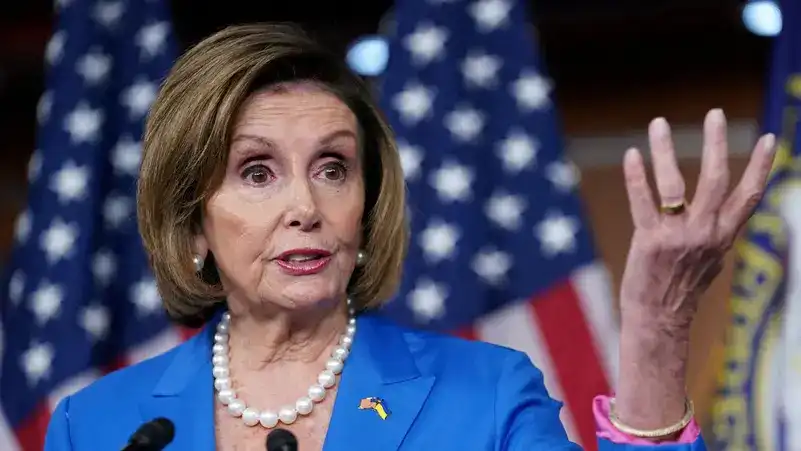
Pelosi raises a storm.. Gaza protests in America are related to Putin

During the past hours, former Speaker of the US House of Representatives, Nancy Pelosi, caused an uproar among Americans on social media, especially after she indicated that some of the protests taking place in the United States to demand a ceasefire in Gaza may be linked to Russia, demanding that the FBI That is, an investigation into the financing of these demonstrations.


Pelosi said, yesterday evening, Sunday, in an interview on CNN: “We must try to stop the suffering in Gaza, but the calls for a ceasefire by some demonstrations are a message from Putin,” referring to Russian President Vladimir Putin. She added: “Do not be fooled, this is directly related to his ambitions.”


"Linked to Russia"

She also added, "I think that some of these protesters are spontaneous and sincere, but some of them have a connection to Russia, so some aspects of the financing must be investigated, and I want to ask the FBI to investigate that."


These are the first statements in which a prominent American politician publicly accuses Putin of supporting American demonstrators demanding a ceasefire in the Gaza Strip. Pelosi, who was first elected Speaker of the House in 2007, and again in 2019, led Democrats in the House of Representatives for 20 years before she is stepping aside in favor of Rep. Hakeem Jeffries of New York, the minority leader. However, she still has significant influence among Democrats in Congress, the New York Times reported.


In a later statement, a Pelosi spokesperson pointed to a social media post by Ian Bremmer, a political scientist and professor at Columbia University, who wrote that “Putin is profiting from the ongoing war in Gaza and the expanding chaos in the Middle East.”


The spokesman said Pelosi would continue to focus on "stopping the suffering in Gaza" and demanding the release of all hostages.


"Interference by foreign adversaries"

He also noted that the Speaker of the House of Representatives has always supported and defended the right of all Americans to express their opinions through peaceful protest, but at the same time she is aware of how foreign adversaries interfere in American politics to sow division and influence our elections, and she wants to see further investigation before Elections in 2024.


The United States has recently witnessed the organization of protests to demand a ceasefire in Gaza, some of which were organized near airports and bridges in New York City and Los Angeles, in addition to protests outside the White House and marches in Washington.


Democrats are deeply divided over policy toward Israel since Hamas killed about 1,200 people and kidnapped 240 others during its attack on October 7. The Israeli military response led to the deaths of more than 26,000 people, according to the Gaza Ministry of Health.


Division poses a challenge

A New York Times poll conducted in collaboration with Siena College showed that voters broadly disapprove of Biden's handling of the conflict, with almost as many Americans saying they want the Israeli military campaign to stop as those who say it should continue.


It is noteworthy that this division posed a severe challenge to Biden as he seeks re-election and tries to form a Democratic coalition that will elect him to the White House in 2020.


Many countries have called for a ceasefire, with 153 countries in the UN General Assembly voting in favor of an immediate ceasefire in December. The International Court of Justice on Friday called on Israel to take action to prevent genocide in Gaza.

ARAB AND WORLD

Mon 29 Jan 2024 1:42 pm - Jerusalem Time

Israel sets 3 conditions to agree to a UN delegation’s visit to northern Gaza

The Israeli Cabinet approved the United States' request to send a United Nations delegation to visit the northern Gaza Strip to examine the situation there and determine the needs to allow residents to return to the north.


The Ynet website said that this approval is linked to three conditions, the first of which was set by Defense Minister Yoav Galant, which requires that the delegation visit the settlements surrounding the Strip before entering the northern Gaza Strip.


The second condition is an Israeli clarification that approval of the tour does not aim to return residents to the northern Gaza Strip, and the third condition is that an American official participate in the UN delegation’s tour.


According to the Israeli website, the visit of the United Nations delegation to the northern Gaza Strip is supposed to be coordinated by the envoy of the United Nations Secretary-General to the Middle East, Tor Vansland, indicating that there is still an unresolved issue: which force will secure the United Nations delegation, will the Israeli army or the United Nations security forces.


It added: "There is no doubt that the visit will require very sensitive coordination with the IDF to ensure that members of the delegation are not harmed."

ARAB AND WORLD

Mon 29 Jan 2024 1:39 pm - Jerusalem Time

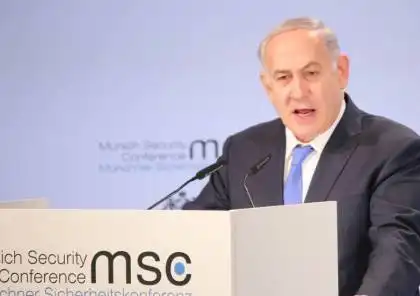
Exclusion of Israel from the Munich Security Conference due to the war with Gaza

The Munich Security Conference made the decision to exclude Israel from the main stage of the event due to the ongoing war, according to an interview conducted by Israel's Channel 12 with the event's organizers.


The Jerusalem Post newspaper said that this decision came as a surprise because the conference is considered one of the most prestigious conferences in the field of national security, and Israel has historically been a major contributor to this event, noting that until last year, the conference gave Israeli representatives an important place in the conference, as it granted Prime Minister Benjamin Netanyahu and Defense Ministers Benny Gantz, Yoav Gallant and Moshe Ya'alon have central seats at the conference.


But before the conference, which is expected to be held in two weeks, the conference administration decided to reject all applications submitted by Israel to participate.


A request from the office of Defense Minister Yoav Gallant to speak at the conference was denied, as he has done in the past. Instead, he was offered to participate as a panelist.


The families of the hostages are also subjected to pressure from the conference administration. Their request to hold a ceremony to honor the hostages still in captivity was rejected. The alternative offered to families was to hold a "side event", which meant fewer participants would participate in the conference, and international media interest would also be limited.


The interview also mentioned that the organizer of the Munich conference is former German National Security Advisor Christoph Heusgen, who is said to have a problematic record regarding Israel.

ARAB AND WORLD

Mon 29 Jan 2024 1:31 pm - Jerusalem Time

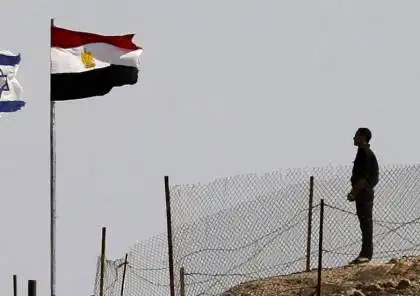
Hebrew media monitors Egyptian threats to Israel due to a “secret” plan

Israeli media said that Egypt threatened Israel with a complete boycott if it tried to displace Palestinians from the Gaza Strip to its lands.

The Israeli i24NEWS channel explained that relations between Israel and Egypt have recently witnessed their lowest levels since the war in Gaza, as officials from both sides exchange accusations and are approaching the point during which it will be difficult to heal this rift.

The Hebrew channel said that the Egyptian intelligence service did not find any evidence of a plan to expel the Palestinians from Gaza, but these statements, according to these officials, convinced the Egyptian government that there appeared to be a “secret Israeli plan,” and no response was received from Israel on this issue.


The Hebrew channel added that Egyptian anger against Israel has doubled in the last two weeks after the statements of the defense team at the International Criminal Court in The Hague and the categorical accusation and imposition of responsibility on Egypt for not bringing sufficient humanitarian aid into the Gaza Strip. In the days after the court, Arab media outlets repeatedly quoted statements by a lawyer on the Israeli defense team, Christopher Stecker, as saying at the time that “entry into the Gaza Strip from Egypt is subject to Egyptian control, and Israel has no obligation under international law to allow entry into Gaza from its territory.” 


Israeli officials said that in the third phase of the war - that is, the current phase - Israeli forces will be moved towards the Palestinian city of Rafah, adjacent to the Egyptian border, to cleanse it of Palestinian resistance.


Israeli Channel 13 reported that Tel Aviv conveyed a message to Egypt through a number of channels in recent days, while Cairo expressed real “concern” about such a step.


Israeli television explained that the main reason behind Egyptian concern about this step is because it may lead to a mass migration to Sinai, while Israel responded to Egypt in order to reassure it that the talk is about a temporary step, and that Israel will not continue its presence in the region after the operation - which has not yet been finally approved.


While sources told the Israeli channel i24NEWS that due to the differences between the two countries, it was approved to establish joint work crews between Israel and Egypt.


A senior Israeli official said that relations between the two countries had been "very tense" in recent weeks.


It should be noted that relations between the two countries have witnessed great tension, reaching their lowest levels in decades, according to statements by Egyptian officials recently reported by the Wall Street Journal.


Despite discussions in Egypt about returning the ambassador from Israel, these events come in light of Israel's accusations that Cairo is responsible for the failure to provide humanitarian aid to Gaza through the Rafah crossing.

The disputes between the two countries began when Egypt refused to condemn the Palestinian resistance operation on October 7, and the disputes continued after an incident in which an Israeli bomb targeted targets in Rafah, which led to the injury of a number of Egyptian soldiers. For its part, Israel accused Egypt of allowing Hamas to smuggle weapons across its borders, but Egypt denied these accusations.

In addition, the war caused damage to economic relations between the two countries, as Israeli tourism in Sinai stopped after the war, and Egypt’s revenues from operating the Suez Canal declined due to Houthi operations in the Red Sea, according to the Hebrew channel.


According to American reports, this year Egypt lost about 40% of its income from crossing the Suez Canal compared to last year, which threatens to incur huge financial losses if the crisis in the Red Sea continues.


Earlier last week, it was reported that Israeli Prime Minister Benjamin Netanyahu tried to initiate a phone call with Egyptian President Abdel Fattah El-Sisi, but his request was rejected, and the Egyptian authorities did not respond to the request of the Israeli National Security Council, which initiated the matter.


Netanyahu continues to put pressure on Egypt to bring in refugees from Gaza in large numbers, while President Sisi and Egyptian army officials expressed concerns about the Israeli rhetoric about voluntary displacement, as it, among other things, raised the question of transferring a portion of Gaza’s population to Egypt.


Meanwhile, Mohamed Anwar Sadat, a former member of the Egyptian Parliament and nephew of the late Egyptian President Anwar Sadat, told the American newspaper that since the war began in Gaza, there has been a lack of trust between the two sides.


Source: Israeli i24NEWS channel + Sama News

PALESTINE

Mon 29 Jan 2024 12:54 pm - Jerusalem Time

West Bank: Since morning 5 Palestinians killed by Israeli forces

A young Palestinian was killed, Monday afternoon, by Israeli forces, during confrontations in the town of Silwad, east of Ramallah.


According to local sources, the young man, Obaida Hassan Abdel Rahman Hamed (18 years old), died as a result of being shot in the chest by live bullets.


With the death of the young man Hamed, the number of killed in the West Bank since this morning has risen to five, and since the start of the aggression on the seventh of last October to 378.

PALESTINE

Mon 29 Jan 2024 11:36 am - Jerusalem Time

West Bank: Israeli forces executed a teenager in Tuqu', southeast of Bethlehem

Today, Monday, Israeli forces executed a boy in the town of Tuqu, southeast of Bethlehem.


According to local sources, the young teen Rani Yasser Khalaf Al-Shaer (16 years old) died as a result of being hit by live bullets during the confrontations that broke out in the Khirbet Al-Deir area, without Israeli forces allowing ambulance crews to reach him.


It indicated that dozens of citizens suffocated as a result of inhaling toxic tear gas during the confrontations.


Israeli forces closed all entrances to Tuqu', and drove their vehicles through the neighborhoods and streets of the town.

PALESTINE

Mon 29 Jan 2024 11:23 am - Jerusalem Time

West Bank: Israeli forces arrest 40 Palestinians

From yesterday evening until Monday morning, Israeli forces launched a massive arrest campaign that targeted at least 40 citizens from the West Bank, including former prisoners.


The arrests were concentrated in the Jenin and Hebron governorates, while the rest of the arrests were distributed in the governorates of: Tulkarm, Nablus, Ramallah, Jericho, Tubas, and Jerusalem.


The occupation forces continue to carry out widespread raids and harassment in governorates, towns, and camps during arrest campaigns, accompanied by severe beatings, threats against detainees and their families, widespread sabotage and destruction of citizens’ homes, and direct shooting to kill, in addition to confiscating vehicles, phones, and money. .


Thus, the total number of arrests after October 7 rose to about (6,370), and this total includes those who were arrested from homes, through military checkpoints, those who were forced to surrender themselves under pressure, and those who were held hostage.


It is noteworthy that the arrest campaigns do not only reflect the escalation in the number of detainees, but also the level of crimes, abuse and torture to which citizens were subjected, within the framework of the comprehensive escalation processes taking place in the governorates of the West Bank.


OPINIONS

Mon 29 Jan 2024 11:02 am - Jerusalem Time

Is there a peace camp in Israel?

YAANI

YAANI

Opinion Writer

By Thomas Vescovi

As the Israeli army increases crimes in the Palestinian Territories, few voices in Israel are ready to call for a ceasefire. Added to the obvious trauma of October 7, 2023 are the contradictions that already crossed the Israeli peace camp during the “Oslo years” and which have not disappeared. A part of the left still prefers to exonerate itself from any responsibility in the current situation.

Every Saturday evening, anger intersects in the streets of Tel Aviv, as evidenced by the program of mobilizations for more than a month: gathering against the war in the early evening, then demonstration against the government and in favor of new elections, to finally end on the Place des Otages alongside the families of the captives. The latter are mobilizing to demand the reopening of negotiations in order to obtain the return of their loved ones still detained in the Gaza Strip, the number of whom is believed to be 136. They have multiplied symbolic actions, such as the November 18 march starting from Tel Aviv to arrive in Jerusalem, or more recently the irruption in the middle of a Knesset session.

At the same time as this movement, the protest against Netanyahu and his government has resumed, with demonstrations numbering several tens of thousands of people. However, as exciting as the multiplication of citizen actions blocking the path to fascist power may be, seeing a peace camp in reformation seems very risky. On Thursday, January 18, the largest demonstration to demand a ceasefire brought together two thousand people, at most. The fact remains that if the number seems insignificant, the dynamic has the merit of existing.

Who to call for a “ceasefire”?

At the origin of the January 18 march, the feminist and pacifist organization Women Wage Peace, as well as the organization Standing Together. Alongside them, around thirty civil society organizations united under the same slogan: “Only peace can bring security”. Initially scheduled for January 11, the demonstration was banned by the Ministry of National Security. A few days earlier, Haaretz highlighted Alon-Lee Green and Rula Daood, the co-directors of Standing Together, presenting them as the figures of a potential new Israeli peace camp. Founded on an Arab-Jewish partnership in Israel, Omdim Beyahad – Naqif Ma'an (names in Hebrew and Arabic) advocates for an egalitarian society, based on social justice, but also the convergence of Israeli and Palestinian interests around of a peace agreement. Since its creation in 2015, the organization had not experienced growth equivalent to the last three months with a doubling of its members – from 2,500 to 5,000, and its branches in Israeli universities.

After October 7, Standing Together set out to increase calls and actions to preserve the link between Palestinian Arabs and Jews in Israel. At his initiative, several evenings took place where a few hundred Israeli citizens, Palestinian Arabs and Jews alike, came to express their resentments: some about their loved ones affected by the Hamas attack, others to talk about the loss of relatives. in the bombings on the Gaza Strip. However, Standing Together faces criticism from part of the radical left, for example for not having, for several weeks, called for a ceasefire.

Itamar Avneri, one of the co-founders of the organization, demonstrates the constant concern to be heard by Israelis. If since October 7 he has expressed, without ambiguity, the need to oppose the war in Gaza, he wants to take into account the trauma of his fellow citizens. Firstly, the fact that a call for a ceasefire, according to him, would not resolve the problem of Hamas and the insecurity that the Islamist organization poses for Israelis living near the strip. Gaza: “It is not a crime in itself to want to fight Hamas,” he explains, “but you need a vision to achieve it, but the government has only proposed one thing: revenge and murder. » He wants to “convince people” to adopt a “lexicon they can hear” and to work to “change reality, not just condemn it”.

A complex strategy such as the military campaign, whose objective is allegedly to dismantle Hamas and its capacity for action, remains widely supported within Israeli society. Palestinian civilians constitute, in the Israeli media, only collateral damage in an “existential war” and used as “human shields” by Hamas. How can we envisage the emergence of a peace camp when the leading figure of the opposition to Netanyahu, Benny Gantz, sits in the war cabinet? The protest movement against the government does not call into question the practices of the army, but rather the continued power of a maligned and reviled Prime Minister.

Furthermore, if calls to relaunch colonization in the Gaza Strip or organize the forced displacement of Palestinians from Gaza come from far-right ministers, these slogans constitute the aspirations of a significant part of the Israeli political field. Thus, on November 13, MP Ram Ben-Barak, from the opposition party Yesh Atid (centrist), led by Yaïr Lapid, co-signed an op-ed in the Wall Street Journal with Likud MP Danny Danon to call on Western states to welcome the population of Gaza. A proposal supported by nearly 83% of Israeli Jews, according to a survey relayed by the Channel 14 television channel. Presented as a “secularist” and an opponent of religious people in Israel, Lapid nevertheless does not hesitate to affirm, on November 5 2023 on LCI, that there are no settlements in the West Bank, since the Jews live on their “biblical land”.

It is obvious that the shock of October 7 facilitated the diffusion and acceptance of radical ideas within Israeli society, at the expense of a vocabulary respectful of human rights and peaceful. Some left-wing activists say they have been shaken in their convictions. A phenomenon which manifests itself through the use of expressions like hitpak'khout (become aware) or hitorerut (wake up, enlighten), in the sense of a brutal awakening after an alleged naivety which they would have demonstrated towards the Palestinians. Yaïr Golan, one of the rising forces of the Zionist left, particularly acclaimed after having distinguished himself on October 7 by his commitment to the rescue of civilians, did not hesitate to plead for starving the Palestinians of Gaza as well as the hostages would not be released. However, he still sat in the Knesset in 2022 in the ranks of Meretz, a party of the Zionist left which was the main political emanation of the peace camp.

A few weeks later, Golan was more nuanced in Haaretz, supporting obtaining an agreement to free the hostages and resolve the humanitarian crisis in Gaza, but without ever mentioning a ceasefire or peace with the Palestinians. It proposes a military campaign inspired by Operation Rampart launched in 2002 by Ariel Sharon to liquidate the Second Intifada - at the cost of several thousand Palestinian victims. He expresses no compassion for the civilians killed and asserts that Israel gave the inhabitants of Gaza the opportunity to "live in peace" after the 2005 disengagement, ignoring the blockade and the three military campaigns in ten years carried out in the area. 'enclave. In other words, the Palestinians would be responsible for their own fate.

Colonialist and pacifist?

The postulate of the victims' responsibility for their tragedy is fully in line with the Israeli colonial mentality, tirelessly seeking to refute all accusations against them or culpability in the fate of the Palestinians. From its appearance in the mid-1970s, the peace camp had schematically two tendencies, which the activist Uri Avnery characterized by a so-called “sentimental” wing and another “political”. The first, largely in the majority and coming from the Zionist left, was committed, according to Avnery, to moral questions and to preserving the image given to Israel. The Palestinians served as “objects of display” and not as equal partners. The political wing, in line with the anti-occupation left, started from taking into account the aspirations and hopes of the Palestinians to lead towards “mutual understanding”, the only “basis for coexistence”.

Such a duality still seems prevalent within the Israeli left and in circles that could lead to the renewal of a peace camp. Empathy cannot be shared, suffering is one-way: listening to the feelings, the feelings of the Palestinians, is not on the agenda. Haaretz journalist Gideon Levy explained in an interview on December 30 the extent to which Palestinians have been dehumanized in Israel to normalize the occupation and apartheid. A dehumanization symbolized by these countless videos of Israeli soldiers, broadcast on social networks, looting homes, humiliating civilians or raving about the scale of the destruction in Gaza, without this leading to disapproval by their society.

After the Hamas attack, it was not until October 28 that the first rally appeared in Tel Aviv demanding a ceasefire, bringing together only a few dozen people. Originally, Hagush Hadirakali (the radical bloc), a coalition of heterogeneous groups from the radical and non-Zionist left, but most of which are found in the anti-occupation movement, such as Mistaklim LaKiboush BaEynayim (Let's Look occupation in their eyes)… They were already present, and in greater numbers, every Saturday during the protest against the judicial reform of the Netanyahu government within the Gush Neged HaKibush (anti-occupation bloc) whose ambition was to recall to the demonstrators that democracy is not linked to a regime of apartheid, occupation and colonization.

If the radical bloc now has around a hundred demonstrators, its influence on social networks has increased since its members decided to adopt the term “genocide” in their militant practice to characterize the war waged by Israel in the Gaza Strip. , suffering sometimes violent repression by the police supposed to supervise them: signs torn down, banners banned... A strategy that is the opposite of that of Standing Together, namely that for them it is not a question of using vocabulary that can please their fellow citizens, but to use the terms used by the Palestinians, even if it means shocking the morals of an Israeli society which cannot imagine itself being genocidal, any more than being part of an apartheid regime. Nevertheless, the militant dialectic of the radical bloc risks forcing it to remain a small group force.

How can we bring together all these angers that seem separate to revive a peace camp that is up to the challenges of the future? This is the ambition of Shirakat Al Salam / Shutfut HaShalom (Partnership for Peace), which brings together around forty political organizations, including Hadash, NGOs and local associations. On January 21, this coalition brought together several hundred demonstrators in Haifa on a political basis established in five points: immediate ceasefire; negotiation for the release of Israeli hostages and Palestinian prisoners; political solution to end the conflict; stopping the racist persecution carried out by the Netanyahu government against Palestinians with Israeli citizenship; egalitarian society.

All these initiatives should not be seen as a division of an already very limited pacifist camp, but more as militant circles looking for the best way to pool forces. The boundaries between each of these groups remain porous: Standing Together was present in large numbers on January 21 in Haifa, without being at the origin of the call. In the same way, certain activists from the radical bloc or Hadash actively participate in Standing Together's actions. Moreover, more broadly, this non-Zionist field also involves the protest against Netanyahu or the movement of the families of the hostages. Standing Together leader Alon-Lee Green, like Hadash, calls on their activists to mobilize at every action, assuming that they are both against the government and for an agreement to free the hostages.

In 2001, in the middle of the Second Intifada, the Israeli intellectual Yitzhak Laor wrote in a text entitled "The Tears of Zion" that the dividing line in Israel is not between the left and the right, between those who call themselves pacifists and those who advocate war, but between those capable of opposing the war that has been going on since day one, and those who can express their distress at the tragedy, but end up sounding the trumpet to signal their support. In other words, the status of “pacifist” is not based on declarations, but on political actions and principles. Namely, for this new generation that is emerging, the vital need to bring together Arab and Jewish, Israeli and Palestinian interests.

Analyzes

ARAB AND WORLD

Mon 29 Jan 2024 10:58 am - Jerusalem Time

Israel sends forces to the Egyptian border... and the Hebrew media warns
Israeli media said that Israel informed Egypt of its intention to send forces to the Philadelphia axis area adjacent to the Egyptian border with Gaza, despite Egypt’s strong opposition.


The Israeli newspaper Maariv explained that Egypt rejected the request, warning that relations between Cairo and Tel Aviv were in danger.

In response to a question about the crisis with Qatar and Egypt, Prime Minister Netanyahu said last Saturday evening: “Relations with Egypt are ongoing and normal between the two governments all the time. Each of us has interests. Egypt must say certain things. They care about their interests and we care about ours.”


Diaa Rashwan, director of the government media office in Egypt, confirmed last week that any Israeli move to occupy the Philadelphia axis on the border between Egypt and Gaza would lead to a serious and serious threat to relations between Israel and Egypt.


Meanwhile, the former Israeli army spokesman hinted. Avi Benyahu wrote on his account on the X website that the Israeli army must reach Rafah, which borders Egypt.


In recent days, the Israeli army has called on the soldiers of the Egyptian side to stay away from the axis, in preparation for attacking the place.


Source: Maariv

PALESTINE

Mon 29 Jan 2024 8:42 am - Jerusalem Time

West Bank: A Palestinian shot dead by Israeli forces west of Jenin

A young man was shot dead by Israeli forces, at dawn on Monday, in the town of Al-Yamoun, west of Jenin.


Medical sources reported that the young man, Thaer Naeem Hamo (21 years old), died as a result of being shot in the abdomen by bullets from Israeli forces, after persistent attempts to treat him at Al-Hadaf Medical Center.


Local sources said that Israeli forces raided several homes, searched them, and assaulted their residents, amid the outbreak of confrontations.

In the village of Deir Abu Daif, tIsraeli forces arrested the two young men, Ahmed Fawzi Aliyat and Ahmed Mamoun Yassin, after raiding their homes.


PALESTINE

Mon 29 Jan 2024 8:39 am - Jerusalem Time

Gaza is on the verge of total famine

The Gaza Strip is currently facing the threat of total famine, as the end of the fourth month of the war approaches. Several indicators have emerged of a major disaster, and international warnings and reports have been issued diagnosing the situation and calling for redress.

Since the start of the war, the Gaza Strip has been suffering from a shortage of raw materials, due to Israel preventing the entry of humanitarian aid, which it was receiving at a rate of 600 trucks per day, and a very small portion, at a rate of 3 percent, was not allowed to pass until about two weeks later, according to figures from the Palestinian Ministry of Health.


In its report on the situation of the population of Gaza before last October 7, the United Nations Conference on Trade and Development (UNCTAD) stated that “80 percent of the population of Gaza depends on international aid.”


It noted that living in Gaza in 2022 would mean confinement in one of the most densely populated places in the world. The issue of the continued flow of international aid remained the subject of international bargaining with the Israeli government, which refused to provide tangible facilities and did not even respond to US pressure, and large quantities of food and medicine remained piled up at the Egyptian Al-Arish airport.


Israeli censorship prevents the delivery of medicines

Israel imposed strict control on the quantity and quality of materials entering the Gaza Strip daily, and insisted on inspecting them in the Al-Awja corridor and then returning what it allows to enter the Rafah crossing from the Egyptian side, as Israel does not have any sovereign rights, borders, or agreements with Egypt that would allow it to do so.


The Israeli measures led to the banning of the majority of medicines and the rationing of food, which caused a major shortage, and reflected an explicit Israeli position that the policy of preventing food, medicine and water is part of a comprehensive war within the framework of collective revenge against the Gaza Strip.


International pressure partially succeeded in increasing aid to 4 percent after a month of war on Gaza, and in numbers, the per capita share in the Strip, which is inhabited by 2.3 million people, became the equivalent of 70 grams of food and 17 milliliters of water per day.


This is at a time when the United Nations estimates that more than 1.7 million people in Gaza have become displaced, and about a million of them reside in more than 150 UNRWA shelter centers throughout the Strip. Israel began implementing punitive measures from the beginning of the war on Gaza. In parallel with the military operations, it cut off electricity, water, communications, and the Internet from the Strip. It linked all steps to developments in the war, and began bargaining over them as negotiating cards.


These measures included the systematic destruction of hospitals, schools, infrastructure, residential facilities, and homes, with the aim of making the Gaza Strip an unlivable area. This led to more than two-thirds of the residential buildings being taken out of service, and they became either completely destroyed, or uninhabitable.


The sector held out for a while thanks to some stocks that were not destroyed, and signs of running out began to appear last week, with some residents consuming animal feed, as stated in reports carried by media outlets and international organizations.


The manifestations of famine began when the canned goods, which the people of the Gaza Strip had relied on for their food since the beginning of the war, began to disappear from the markets, followed by wheat flour, which was empty in the markets, so the Palestinians turned to grinding corn and barley grains intended for making animal feed.


The owner of a grain mill in Jabalia camp spoke of the market running out of white flour completely, and pointed out that what is in the market now is only corn flour. He said that they used to grind rice, but because of its high prices, they stopped that and started making flour from corn and barley grains intended for animal feed.


According to Palestinian sources, this option has begun to gain popularity despite medical warnings about its effects, including that the nutritional value of animal feed lacks essential elements to nourish the human body. The taste of bread is difficult, and humans do not eat it easily.


When the Israeli army withdrew from northern Gaza, this contributed to achieving a breakthrough. Citizens reached animal food warehouses and were able to solve the hunger crisis within a few days, as they worked to grind bad wheat, barley, corn, lentils, and even bird and cat food, to obtain something similar to Flour, but this breakthrough quickly dissipated due to the hunger that struck the Gaza Strip.


The threat of mass famine in Gaza

The World Food Program has warned of the threat of mass famine since the beginning of last month. He said that hunger is widespread throughout the Gaza Strip, and that people feel increasingly desperate in trying to find food to feed their families. He reported that cases of drought and malnutrition are rapidly increasing in the Strip.


Monitoring conducted by the program by phone on December 5 showed that between 83 and 97 percent of families do not consume enough food, and in some areas, up to 90 percent of families do not eat any food for an entire day and night. . As evidence of the rapid spread of famine, 18 percent of these households experienced these conditions on more than 10 days during the month preceding the survey.


On January 22, the warning was raised to its highest level by the World Food Programme, which reported that very small amounts of food aid had reached the south of the Gaza Strip to its north since the beginning of the war, stressing the danger of pockets of famine forming in areas of the Strip.


A day later, the United Nations Relief and Works Agency for Palestine Refugees (UNRWA) announced that 750,000 people in the Gaza Strip were facing catastrophic hunger. The reasons behind the announcement were identified as the lack of aid on the one hand, and on the other hand, the violent fighting, the refusal to receive aid, and the interruption of communications, which hinders its ability to provide aid safely and effectively.


The matter is not limited to Israeli measures only, as UNRWA poses another problem, which is the inability of the United Nations to receive aid shipments recently, due to several factors, including the small number of trucks inside Gaza, with the inability of some of them to move from the central areas that were isolated from the South.


Other factors include the disruption of communications, and the increase in the number of employees unable to go to the Rafah crossing due to hostilities. The Deputy Executive Director of the World Food Programme, Karl Skau, said in a statement, after a visit to the sector, that "with the collapse of law and order, any meaningful humanitarian operation has become impossible." He added: "We have food on the trucks, but we need more than one crossing. Once the trucks are in, we need a free and safe passage to reach the Palestinians wherever they are."


United Nations employees are trying to summarize the issue in terms of technical difficulties, but it has been clear since the beginning of the war that Israel knows what it wants by turning food into a weapon of war with the aim of displacement, putting pressure on the social incubator, and directing resentment against the Palestinian factions.


International organizations such as Doctors Without Borders began to warn of the disastrous and horrific consequences of Israel's policies, which are affecting children due to a lack of milk, and leading to diseases that may be difficult to recover from at a later stage. Displacement is a red line, and at the same level of danger must be placed famine. So far, it has appeared that appeals and statements issued by international organizations alone are insufficient, and in order for them to be heard, they need a directed international media campaign, especially in light of the crisis that UNRWA is going through today.


PALESTINE

Mon 29 Jan 2024 8:30 am - Jerusalem Time

War on Gaza: Dozens killed and Israeli forces continue to siege two hospitals in Khan Yunis

Medical sources reported that 10 Palestinians were killed in an Israeli bombing that targeted, at dawn on Monday, a school belonging to the United Nations Relief and Works Agency (UNRWA) housing displaced persons in the Al-Rimal neighborhood, west of Gaza.


The Israeli army continues to besiege Al-Amal Hospital and Nasser Medical Complex in Khan Yunis for the sixth day in a row.


Local sources confirmed that two Palestinians were killed and others were injured in an Israeli bombing that targeted a house in the Al-Sabra neighborhood in Gaza City.


Dozens of citizens were killed and injured, at dawn on Monday, the majority of them children and women, as a result of the continued bombing by Israeli aircraft and artillery on citizens’ homes in various areas of the Gaza Strip, on the 115th day of the aggression.


Medical sources in the Gaza Strip reported that journalist Issam Al-Lulu, his wife and two sons were killed in an Israeli bombing on the town of Al-Zawaida in the middle of the Gaza Strip, which raised the number of journalist killed since the start of the aggression on the Gaza Strip to 121.


The Al-Zaytoun neighborhood, south of Gaza City, and the Tal Al-Hawa area, west of the city, witnessed Israeli artillery shelling and violent clashes, which led to the death and injury of many citizens.


Earlier last night, 23 citizens were killed after an Israeli bombing targeted a house belonging to the Al-Mutwi family, west of Al-Nuseirat in the central Gaza Strip.


About 14 citizens were alsokilled as a result of the targeting of a house west of Al-Zawaida in the central region.


Medical sources said that Israel committed 38 massacres in the Gaza Strip during the past 48 hours, claiming the lives of 350 persons, including at least 24 in the bombing of Khan Yunis.


In an infinite toll, the number of killed and wounded since the start of the aggression on the Gaza Strip on the seventh of last October has risen to 26,422 killed and 65,087 wounded, in addition to thousands missing under the rubble.


OPINIONS

Mon 29 Jan 2024 8:06 am - Jerusalem Time

Iran and Operation Al-Aqsa Flood: Sacrificing the Pawn to Save the King

Carnegie Endowment

Carnegie Endowment

Opinion Writer

By IBRAHIM BA MATRAF and ASSEM ALKHADHAMI


Despite Iran’s persistent denial of any involvement in the Hamas attacks on October 7, many international observers remain skeptical.

Aclose examination of the map of the Middle East shows how Iran has projected its power across the region through militia groups and armed factions, united in their animosity toward Israel and the United States. These groups converge not only ideologically but also financially, with Iran as their primary backer. Official statements from Iran, Yemen, Syria, Iraq, Lebanon, and Gaza affirm the existence of a so-called Axis of Resistance, and Hamas' military wing commander, Muhammad al-Deif, has explicitly urged his fellow Iran-backed groups to join the conflict in Gaza.

Whether or not Iran had prior knowledge of the October 7 attacks, it is evident that Hamas anticipated support from its allies in the region. As affirmed by Abu Marzouq, a Hamas leader,  the group was "expecting a lot from Hezbollah and from our brothers in the West Bank…[and was] surprised by the shameful attitude of our brothers in power." Others in Hamas believed that Iran and of the Axis of Resistance would intervene in the event of Israeli ground invasion of Gaza. In October, Ali Baraka, head of Hamas' National Relations Abroad, was confident that “the allies of the resistance will not leave Gaza up for grabs by the Zionist entity and the American administration."

The American narrative continues to strongly associate Iran with Hamas, insisting that without Iranian support, Hamas would not have been able to carry out these attacks. But today, more than three months into the war and despite the large number of causalities, Iran does not seem willing to intervene directly in the war. In November, Reuters reported that Khamenei told Hamas that Iran would not enter the war on their behalf. Although Hamas denied the veracity of this report, it still seems very plausible for several reasons: 

  1. The strong reaction from the United States: The deployment of aircraft carriers and the explicit threats to any parties contemplating involvement in the conflict have served as forceful deterrents.
  2.  Iran’s lack of prior knowledge about the attack: despite conflicting reports and varied accounts maintaining that Iran was privy to the attacks, we believe that Tehran did not possess information about the timing of the operation—either because Hamas wanted to maintain secrecy to capitalize on the element of surprise, or because Iran had no involvement in planning the attacks.
  3. Domestic problems and divisions: in addition to Iran’s economic woes, there is an apparent schism between moderates, who advocate non-intervention, and hardliners, who push for active engagement. Former Iranian minister Mohammad Javad Zarif, for instance, has suggested that adopting a more extreme stance on Gaza might spark a deadly conflict with the United States—a scenario which Israel would welcome. 
  4. Risks of regional escalation: Tehran is aware that any intervention on behalf of Hamas may greatly harm its interests, especially in the absence of favorable international conditions, and could trigger a major regional conflict that would be difficult to control. In the context of current global geopolitics, with China busy trying to reclaim Taiwan and Russia still mired in Ukraine, Iran understands that it might find itself confronting the United States without the support of key allies.

These realities suggest that the Islamic Republic is more deliberate and moderate than what appears in the media—and what it projects through its own messaging. It is no exaggeration to say that Iranian propaganda is simply a means to convince Muslim nations of their ability to attack Israel and “liberate Jerusalem.” But unless directly attacked by Israel, all indications show that Iran’s entrance into a regional war is highly unlikely. Although this might result in a significant decline in its popularity, particularly among citizens of Axis of Resistance countries, it is still a safer alternative to entering a war that could jeopardize the stability of the ruling Iranian regime.


OPINIONS

Mon 29 Jan 2024 7:58 am - Jerusalem Time

Why the United States Can’t Ignore the ICJ Case Against Israel

Carnegie Endowment

Carnegie Endowment

Opinion Writer

By ZAHA HASSAN

Summary:  Too much is at stake: too many Palestinian and Israeli lives, too much U.S. credibility, and too high the risk of regional conflagration.

Related Media and Tools

Last week, South Africa presented a well-argued case before the International Court of Justice (ICJ), the UN’s judicial arm, alleging Israel is committing genocide in Gaza. Israel denies the charges and claims its actions in Gaza are self-defense. A state-to-state complaint about “the crime of crimes” should be a big deal to the administration of U.S. President Joe Biden, particularly when it involves a close ally receiving around $4 billion per year in U.S. security assistance (and fast-tracked for more). Yet the response of U.S. officials has been milquetoast, dismissing the case as meritless and without any factual basis. At the same time, the White House has also asserted that it has made no legal assessment about Israel’s conduct in Gaza or how U.S. weapons may have been misused.


How can both things be true? Either the United States has information about whether Israel is acting within the constraints of international law, including the 1948 Genocide Convention, or it is completely in the dark. The United States cannot have it both ways. Too much is at stake: too many Palestinian and Israeli lives, too much U.S. credibility, and too high the risk of regional conflagration.

Of course, the Biden administration knows what is taking place inside Gaza. It knows because it has had surveillance drones flying above Gaza since October 7. It knows because U.S. intelligence analysts are likely following journalists who are risking their lives to report and the Palestinians in Gaza who are live-streaming via TikTok, Instagram, and Telegram. It knows which types of munitions Israel has been dropping, firing, and shooting into Gaza’s densely populated cities and refugee camps because it is Israel’s principal supplier, and it knows what kind of damage these munitions do when used in such areas.

Numerous reports and accounts from UN special rapporteurs, the United Nations Children’s Fund, the World Food Programme, Human Rights Watch, Save the Children, the Norwegian Refugee Council, and others explain the impacts of Israel’s war inside Gaza. Their reports are all public, as are the statements of their representatives. These organizations also report that civilians and civilian infrastructure are being targeted, that the vast majority of those killed are women and children, that the bombing is indiscriminate and not in proportion to the threat posed, and that hundreds of thousands of the 2.3 million Palestinians in Gaza are being forcibly displaced, starved, and deprived of water and medical treatment. They say that Palestinians are being killed in their homes and shelters, they are being killed when they try to flee, and they are being killed in the so-called safe zones that Israel has designated. They say 100,000 more Palestinians could die in the days and weeks to come if the bombing does not stop and a massive amount of humanitarian aid is not allowed in.

But knowing the facts on the ground is not the same as assessing them. And an assessment is needed in order to get to a legal conclusion that would require the United States to act to put in place a ceasefire. As a party to the Genocide Convention, the United States is required to “undertake to prevent and punish” the crime of genocide. That commitment becomes meaningless if the United States can simply look away when the party accused of international crimes is an ally or if the outcome of an assessment is inconvenient. As Biden has stated, preventing genocide is both a “moral duty and a matter of national and global importance.” That is why the White House has an atrocity prevention and response strategy and why the Elie Wiesel Genocide and Atrocities Prevention Act requires the State Department to monitor for such events around the world and prepare annual reports on what it is doing to prevent them. The act also requires foreign service officers to be trained to spot the early warning signs for such grave human rights violations and an all-of-government approach to prevent genocide from happening. 

The United States may want to maintain its certainty that Israel is not committing any grave human rights violations in Gaza by avoiding an assessment, but the ICJ case—which is supported by at least fifty countries, the Arab League, and the Organization of Islamic Cooperation—may force its hand, even if a decision on the case’s merits takes years. South Africa’s request for provisional relief, which includes a call for an immediate ceasefire and entry of humanitarian aid, may be only days away. The burden of proof required for provisional relief —“plausibility” that a violation of the Genocide Convention has occurred—is less than what is required for a final ruling.

The ICJ will likely rule that the provisional relief burden has been met, because the Israeli acts in Gaza are so well-documented, as is the apparent genocidal intent of Israeli officials leading the war. The most egregious of these statements includes directives to military personnel about starving Gaza, expressions of support for “voluntary immigration” of Palestinians, and the use of biblical analogies in speeches to soldiers about the permissibility of killing all innocents in war.

For Palestinians, the “Day After” Starts With a Plan for Ending Israel’s Occupation

Time is running out for Palestinians in Gaza. But it is also running out for the Biden administration. South Africa is reportedly preparing to file a complaint against the United States for complicity in the commission of genocide. Attempts to quietly coax and cajole Israel into opening up one more crossing for humanitarian aid or to allow one more truckload of supplies in from Egypt will not make for a convincing argument at the ICJ.

The United States must make an assessment about Israel’s actions in Gaza and act accordingly. The Biden administration must lead a renewed effort at the UN Security Council for a resolution calling for an immediate ceasefire, and it must be willing to back up the resolution with the full measure of its resolve, including suspending military assistance to Israel. U.S. inaction would continue to jeopardize Palestinians’ lives, risk an outbreak of regional war, and carry the permanent stain associated with a possible ICJ finding that the United States was complicit in or failed to prevent genocide. The U.S. response to the ICJ cannot be that it never made an assessment.


OPINIONS

Mon 29 Jan 2024 7:52 am - Jerusalem Time

The War on Gaza in its Broader Arab and International Contexts

Hazem Saghieh

Hazem Saghieh

Opinion Writer

The critics who found fault in some liberals rushing to mourn nationalism and pronouncing it dead were not mistaken. If we were to borrow from Plato’s allegory, with some alterations, life in the nineties looked more like shadows and blurred lines of real things, not real things themselves.

Nonetheless, there is a big difference between nationalism as the Arabs and the rest of the “Third World” knew it during the Cold War, and the nationalism of today. The former concealed and suppressed smaller identities, calling for a new national identity that united a transnational “Arab people.” As for the latter, it affirms existing identities, which tempts us to conclude that these identities are its ultimate end and final destination. Thus, it is ethno-nationalism in the narrowest sense of the word, so much so that terms like “nationalism” or “nation” are used only rarely and metaphorically, and, instead of promising a unified state larger than those that already exist, its demand, or dream, is a smaller autonomous state. The two nationalisms also have a different “enemy” - and nationalism cannot survive without enemies. “Colonialism,” the first formulation’s enemy, was tied to the “West” and by extension to “imperialism,” and their shadows converged over Israel. As for the second formulation, it appointed its closest neighbor as its enemy; it could ally with “colonialism” to defeat this enemy, while it is only hostile to “colonialism” if it is allied with that enemy.

While it is true that the first nationalism sparked civil wars in several Arab countries, culminating in the Yemeni Civil War of the 1960s, these wars were presented as side effects that had to be endured on the nationalist journey. Moreover, these conflicts were given labels that, to varying degrees, obscured and concealed reality, presenting them as, for example, contradictions between "progress and reactionary,unionism and isolationism," or "socialism and a capitalism tainted with feudalism." Today, however, communal groups wage their wars purely as communal groups that alone carry the familiar saturated dose of victimhood.

Culturally, the first nationalism boasted a broad and written culture rooted in Arab and Islamic history, leaving the second to take pride in a culture in which the spoken word and local folklore occupy broad swaths of the landscape.

Thus, the nationalism we have today is, to a large extent, antithetical to the forms of nationalism we are familiar with, inheriting nothing but absolute loyalty to a group of people, a large one in the predecessor and a smaller one in the successor. It could be correct to say that the defeat of the first form of nationalism, with Syria’s separation from Egypt in 1961 and then the defeat of June 1967, was among the causes for the rise of the second form, especially since the other doors, not just that of traditional nationalism, have been closed to our peoples. Indeed, the revolutions demanding freedom and democracy were also defeated, leaving military dictatorships and civil wars behind them. Before that, socialism, in its extremely bureaucratic and statist manifestation, had impoverished peoples and dried out societies.

Overall, it can now be said that the rise of the current form of nationalism rings the death bell of the old one, as well as almost every other promise. This undeniable rise is evident in the explicit civil wars that are underway, simultaneously, in Syria, Yemen, Libya, and Sudan, as well as the latent, or delayed, civil wars in Lebanon, Iraq, Algeria, and possibly other countries. Obviously, all of that is inconsistent with the notion that “the Ummah” {nation} is waging a fateful battle in Palestine.

Looking at the current war, we notice that this transformation is reflected in a way that silences what used to be a prevalent discourse about the "Arabism of the battle." And so, wars tied to Palestine were portrayed, truthfully or falsely, as wars that concerned all Arabs. For instance, the Arab Summit was established in 1964 as an institution with the aim of preventing Israel from diverting the course of the Jordan River, and the 1967 defeat led to intra-Yemeni and Egyptian–Saudi reconciliation, while every Arab state was categorized as either a "frontline state" or a "supporting state." Today, on the other hand, the axis directly involved in the war is notably led by a non-Arab state, Iran. That suggests that the forces who have accepted Iran's leadership are less than states and smaller in size, and it would be difficult to argue that those forces are the traditional torch-bearer of Arab nationalism. Something similar can be seen in international alliances: During the Cold War, the Soviet Union, the side facing the West and the United States, was presented as an ally of the Arabs. In contrast, it would be difficult to make the same claim today about China, which is considered the peer of the West and the United States. It is no longer a secret that the Chinese have voiced frustrations over their commercial interests being undermined by the actions of Houthis in the Red Sea. Similarly, the countries of the “South” replacing those of the “East” as the supporters of Gaza in the war being waged against it seems more a reflection of the Guevara-Fanon tradition than that of the Soviets or even the Chinese. The same applies to the make-up of the mass demonstrations in support of Palestine across the globe, especially in the West. In both cases, we are seeing a merger between "pre" statehood and nationalism and "post" statehood and nationalism. And as we have come to understand, that is among the hallmarks of globalization and our times.

Source: Alsharq Alawsat