ARAB AND WORLD

Sat 10 Feb 2024 7:10 am - Jerusalem Time

Gaza war: The Israeli attack on Rafah seems imminent...

An American official revealed to Sky News Arabia on Friday that the Israeli government informed the White House that “the army is about to launch a major military operation in the city of Rafah” in the southern Gaza Strip, hinting at the presence of “pressure on Egypt” to open the borders to the Palestinians.

The official, who requested to remain anonymous, added that Israel notified the US administration in the past hours, specifically the Pentagon, of the details of the military operation in Rafah, which requires “evacuating it of residents and carrying out the attack in a way that guarantees the security of the border with Egypt.”


The official explained that "many parties in Washington, most notably a large majority in Congress in both its Senate and House of Representatives, support the Israeli control plan for Rafah, because of its guarantees to eliminate the Hamas movement and control the network of tunnels connected to the Egyptian interior," as he put it.

He admitted that “despite President Joe Biden’s statement that he does not support such an operation, American military and security leaders in the Pentagon and the Central Intelligence Agency (CIA) do not object to it in their unannounced conversations,” because “it would accelerate the war in Gaza and bring it closer to its end before the elections.” The US presidential election is scheduled for next November, and this is something that Biden personally desires.

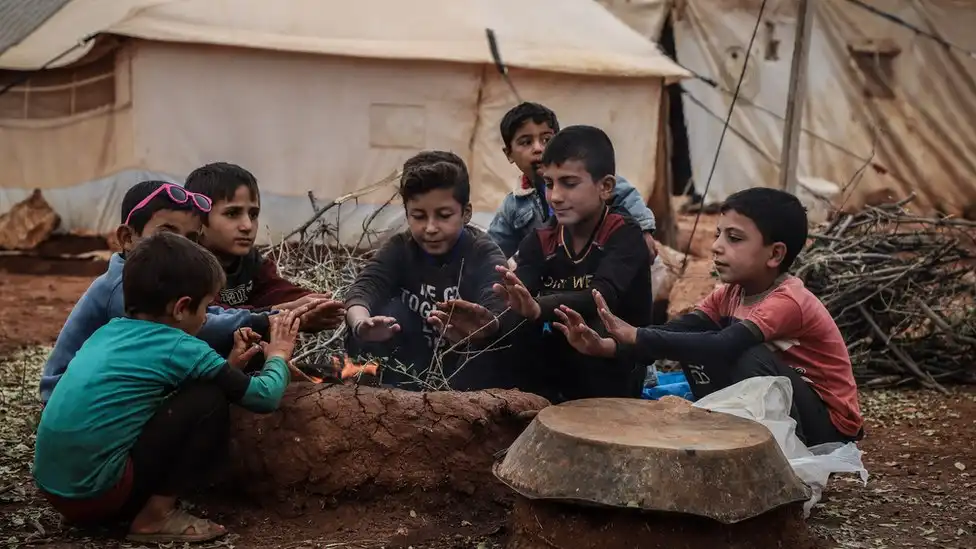
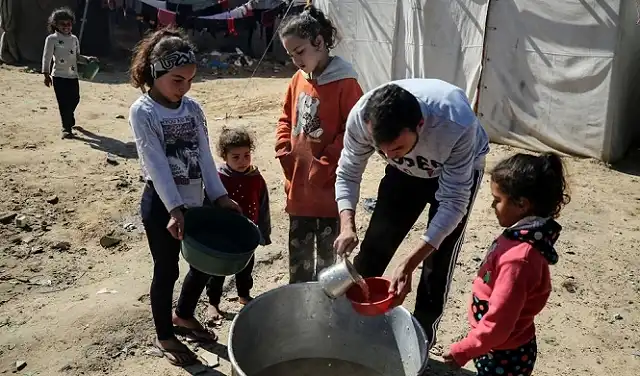
In response to a question from "Sky News Arabia" about the risks of a humanitarian catastrophe for more than a million people living in temporary tents in Rafah, the official considered that "the current situation will change. The Israelis are keen to limit civilian casualties."

As for Egypt’s refusal to open the borders to the Palestinians, the American official said, “There is pressure on Cairo to change its position, as everyone in the region has an interest in getting rid of Hamas,” according to his opinion.

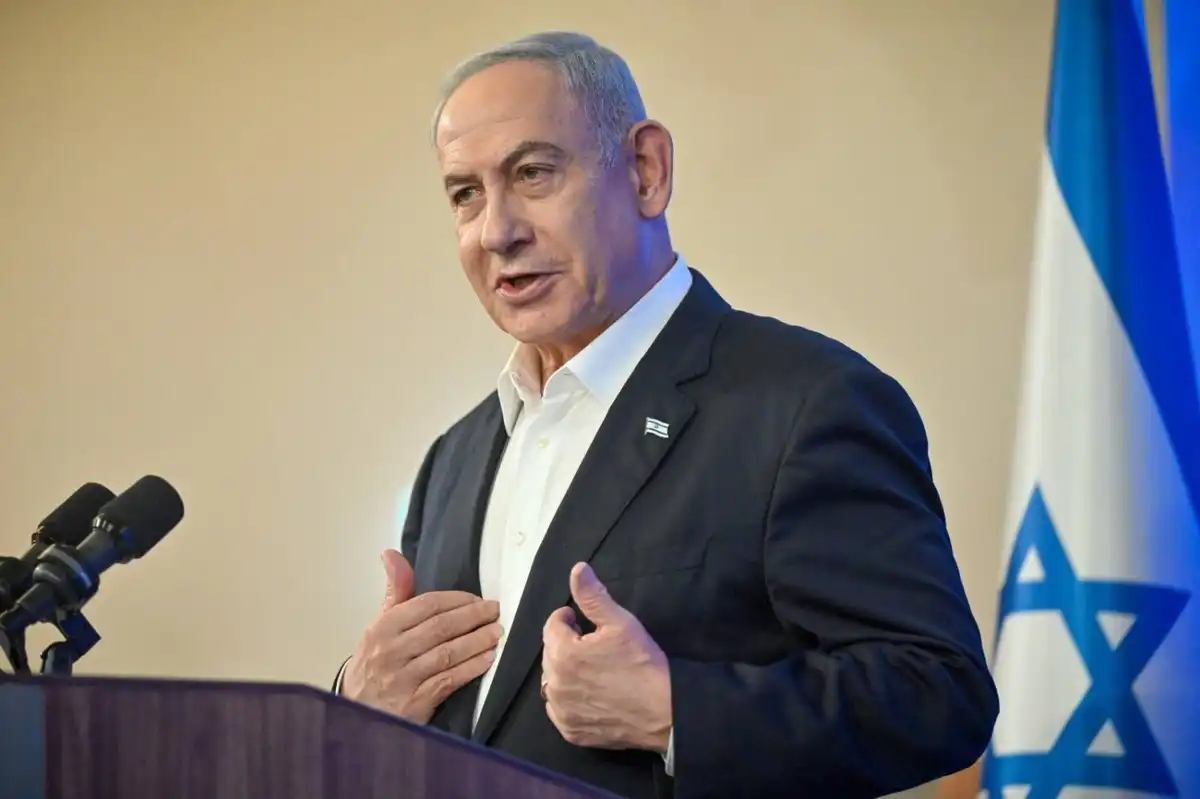
Earlier Friday, Israeli Prime Minister Benjamin Netanyahu asked the army to develop a plan to evacuate civilians from Rafah, where half of the Gaza Strip's population is currently concentrated.

Netanyahu’s office said in a statement: “It is impossible to achieve the goal of the war without eliminating Hamas and leaving 4 Hamas battalions in Rafah. On the contrary, it is clear that any intense military activity in Rafah requires that civilians evacuate the combat zones.”

The statement added: “In this context, the Prime Minister ordered the Israeli forces and security officials to present a complex plan to evacuate the population and eliminate the Hamas brigades in the city, which represents the last refuge for displaced persons fleeing the war in the Gaza Strip.

Yesterday, Thursday, Washington warned of a “disaster” in Rafah, claiming that it does not support an operation “without serious planning” carried out by Israel to protect civilians.

It is noteworthy that after the Israeli army focused its operations in Gaza City (north) and then in Khan Yunis (south), Netanyahu ordered his forces, on Wednesday, to prepare for an attack on Rafah in the far south of the devastated Strip.

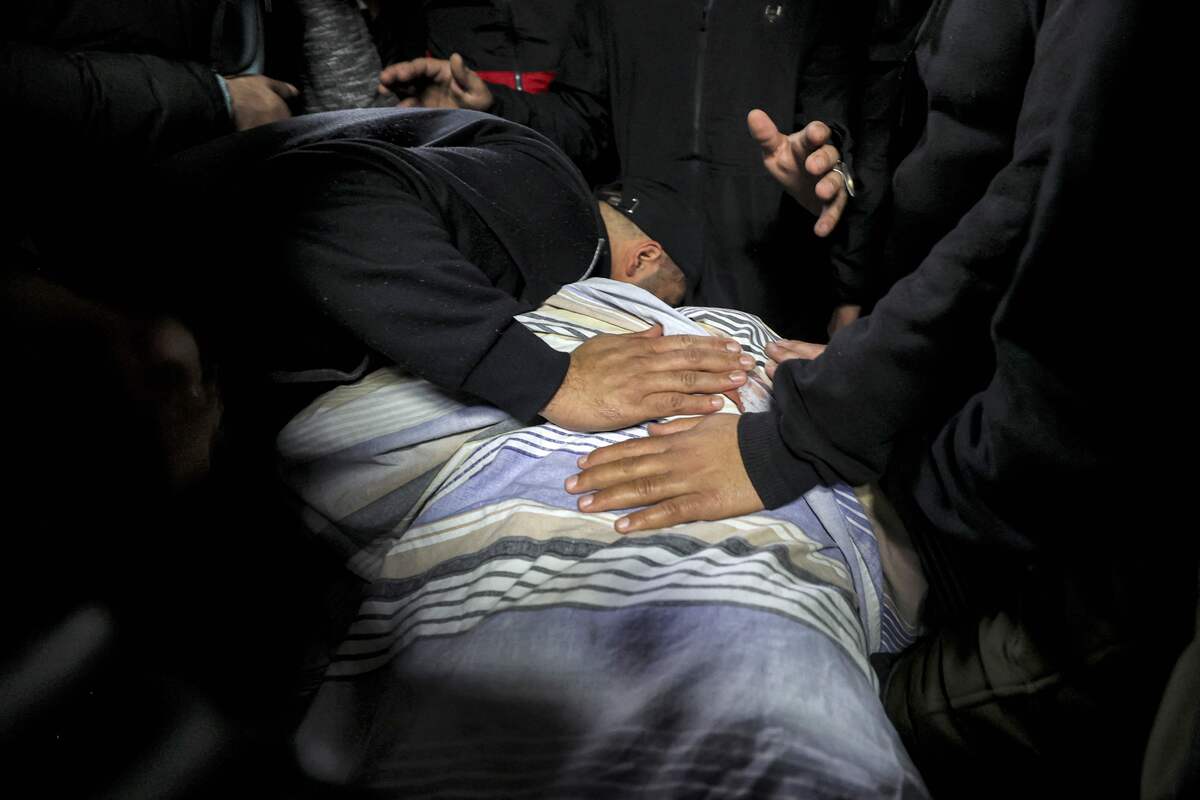
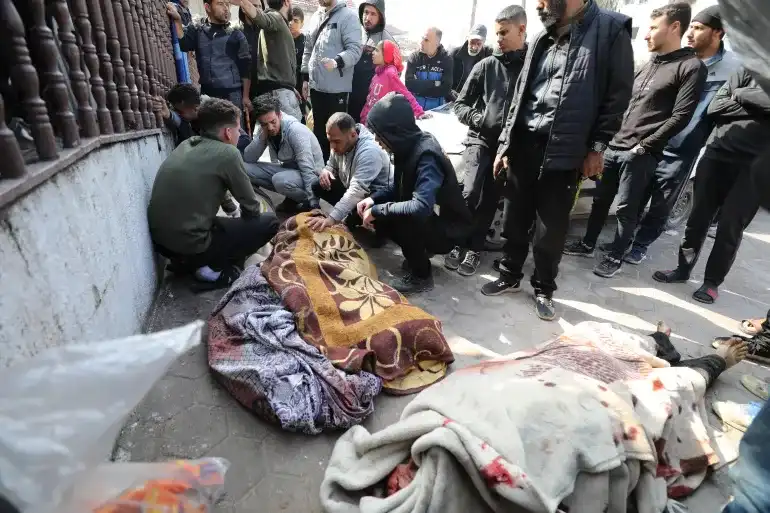
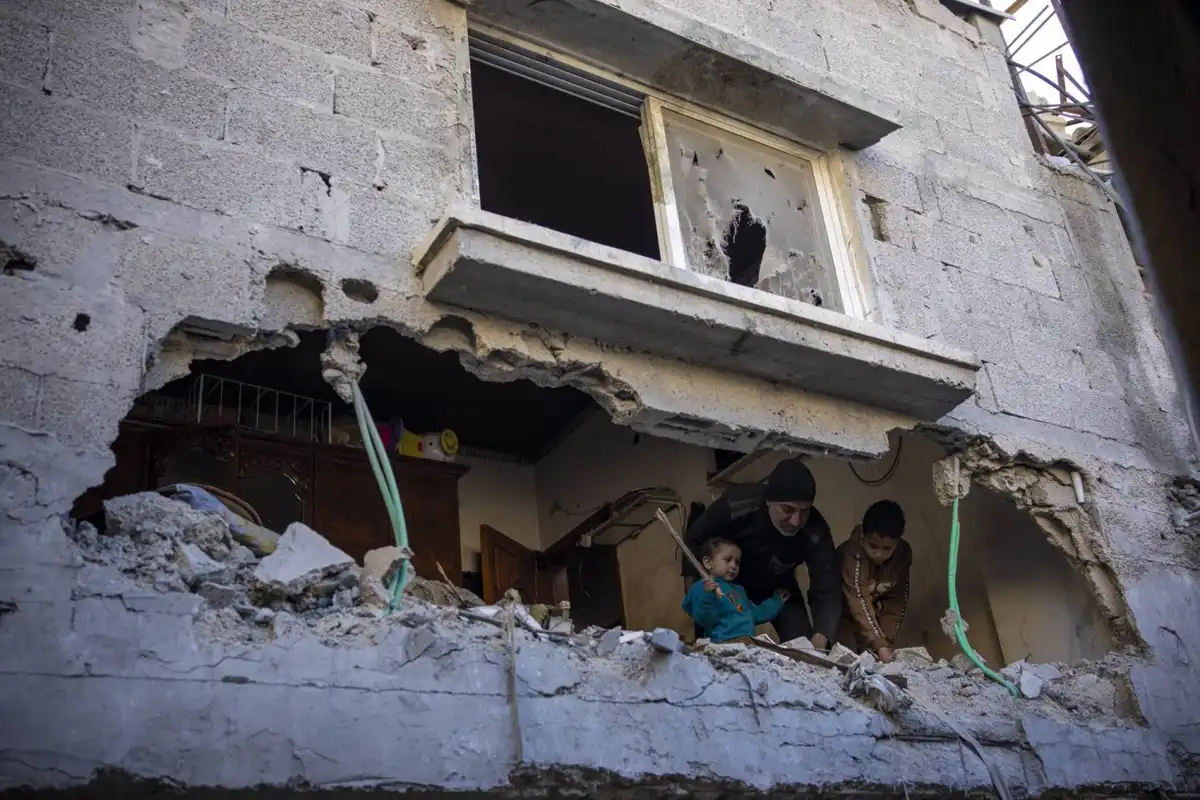
So far, about 28,000 Palestinians, the majority of them children and women, have been killed in Gaza, according to the latest toll from the Ministry of Health in the Strip.

PALESTINE

Sat 10 Feb 2024 7:08 am - Jerusalem Time

Israeli Checkpoints ‘Paralyze’ West Bank Life as Gaza War Rages

To arrive at work in Jerusalem on time, Murad Khalid must be at the Israeli checkpoint by 3:00 am, despite living nearby in the occupied West Bank -- a constant challenge made worse by the Gaza war.

The 27-year-old said he and other residents of Kafr Aqab neighborhood in Israeli-annexed east Jerusalem -- located on the West Bank side of the barrier -- are subjected to a "security check that may take an hour for each car" at Qalandia crossing.

Israeli movement restrictions have long made life difficult for the three million Palestinians living in the West Bank.

But since the outbreak of the Israel-Hamas war, traffic has become "paralyzed", said Palestinian Authority official Abdullah Abu Rahmah.

The number of checkpoints and barriers in the Palestinian territory has greatly increased since October 7, adding hours to already lengthy commutes and forcing residents to either wait at the checkpoints or take long detours.

Largely unaffected are the 490,000 Israelis living across the West Bank in settlements -- considered illegal under international law -- who can bypass Palestinian communities on roads built especially for them.

'Exhausting'

It used to take accountant Amer al-Salameen just half an hour to drive from his home in the city of Ramallah to his parent's village Al-Samou.

But with the new restrictions, the journey has turned into an "exhausting, tiring, and uncomfortable" four hours, said the 47-year-old.

"I used to visit my family every weekend with my wife and children. But today, I fear that something might happen on the road."

Israel, which has occupied the West Bank since 1967, has stepped up raids into Palestinian communities since Hamas's October 7 attack, which resulted in the deaths of more than 1,160 people in Israel, mostly civilians, according to an AFP tally based on official figures.

Israel vowed to eliminate Hamas and launched a relentless military offensive that has killed at least 27,947 people in Gaza, most of them women and children, according to the Hamas-run territory's health ministry.

In the West Bank, more than 380 Palestinians have been killed by Israeli troops and settlers over the same period, according to the Ramallah-based Palestinian health ministry.

Scores more have been arrested.

'Security for all'

The Israeli army told AFP the additional barriers are "in accordance with the assessment of the situation in order to provide security to all residents of the sector".

Recently, an AFP team leaving Jerusalem at 8:00 am for the northern West Bank city of Tulkarem -- normally a trip of just two hours -- arrived there at 1:30 pm, following dirt roads through villages to get around the barriers.

The journey from Jerusalem to Jenin, also in the north, now similarly takes five hours instead of two.

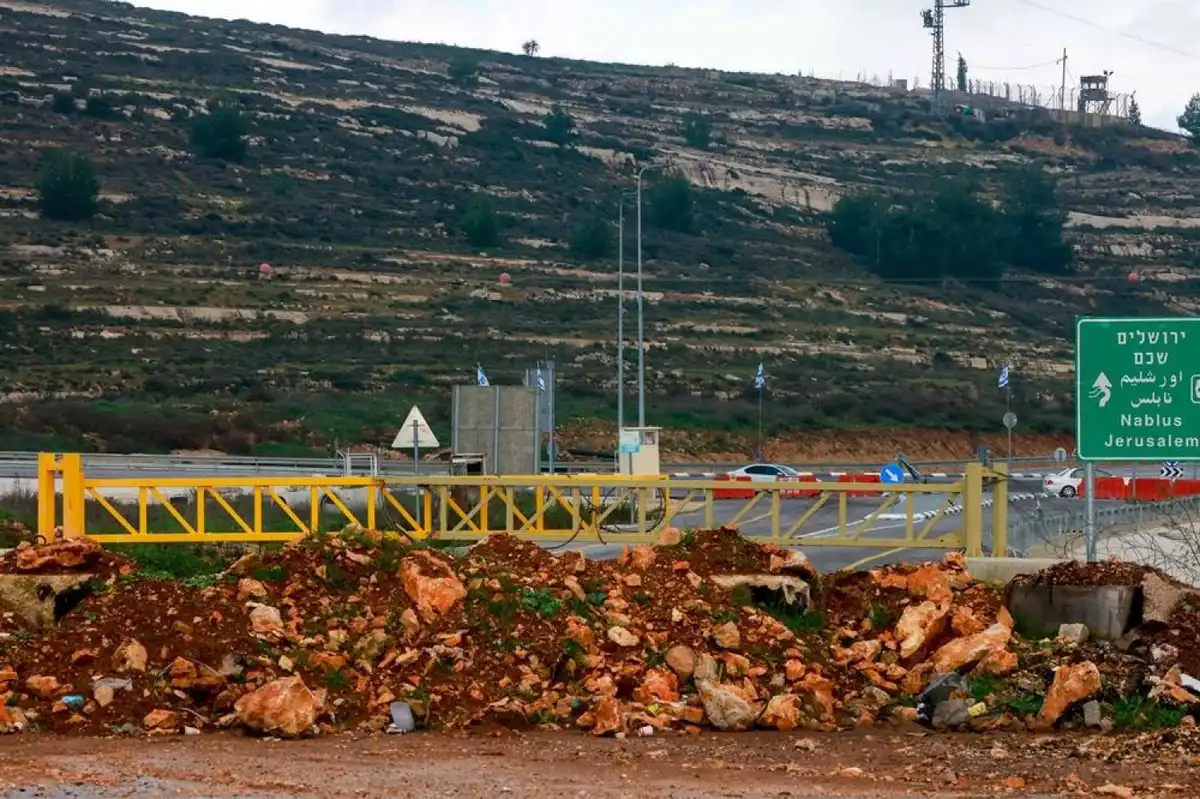
Immediately after the October 7 attack, the Israeli army shut the road between the town of Huwara and Nablus, a major northern Palestinian city.

According to an AFP photographer, the army has also closed off the main entrances to most villages around Hebron in the southern West Bank, forcing residents to take dirt roads through other villages to access cities.

Student Lynn Ahmed says her usual one-hour drive from Tulkarem to Birzeit University, north of Ramallah, now takes more than three "due to closures and the destruction of some roads."

Given such difficulties, Birzeit and other Palestinian universities in the West Bank have returned to remote learning.

Israel first erected military checkpoints in the West Bank following the first Palestinian uprising or intifada in 1987, but the number increased after the start of the second intifada in 2000.

Since then, earthen barriers, gates, or cement block around 700 roads across the West Bank, according to the Palestinian Authority's Abu Rahmah, who heads a team monitoring settler activity.


ARAB AND WORLD

Sat 10 Feb 2024 6:54 am - Jerusalem Time

Egyptian security reinforcements coincide with Israel's approval of the Rafah attack

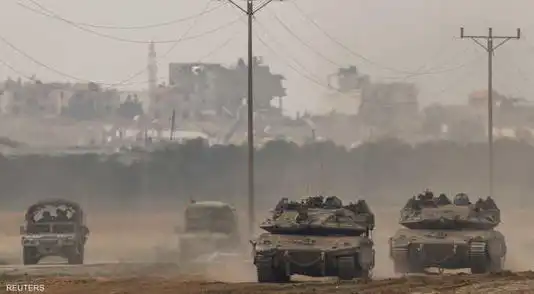
Two Egyptian security sources said that Cairo sent about 40 tanks and armored personnel carriers to northeastern Sinai in the past two weeks, while the Israeli press reported that the Israeli army had approved a military operation in Rafah.


Egyptian forces were deployed before Israel expanded its military operations to include the city of Rafah (south of Gaza), to which most of the Gaza Strip's residents were displaced in search of a safe haven, which exacerbated Egypt's fears of the possibility of forcing the Palestinians to leave the Gaza en masse.


The Egyptian military moves come within the framework of a series of measures to enhance security on its borders with the Gaza Strip.


In developments, Yedioth Ahronoth newspaper reported that the Israeli army approved a military operation in Rafah. The newspaper said that preparations for the operation in Rafah began weeks ago, and the army has already approved a plan that includes the necessity of evacuating the displaced.


For its part, the official Israeli Broadcasting Corporation said that the military operation in Rafah will begin after the completion of a "large-scale evacuation" of civilians from the city and its suburbs.


Israeli Prime Minister Benjamin Netanyahu previously stated that he ordered the army to develop a dual plan to evacuate civilians from Rafah and crush the remaining brigades of the Islamic Resistance Movement (Hamas).


Netanyahu added that it is not possible to achieve the goals of the war in Gaza and maintain 4 Hamas brigades in Rafah.


International concern

International concern is increasing over the fate of hundreds of thousands of displaced Gazans who have taken refuge in Rafah since Israel threatened a ground invasion of the city located on the border with Egypt.


Washington said - yesterday, Thursday - that it would not support any Israeli military operation in Rafah without giving due consideration to the plight of civilians, and US President Joe Biden described Israel's response to Hamas attacks on October 7 as "exaggerated."


Since the outbreak of the Israeli aggression on the Gaza Strip, Egypt has erected a concrete border wall, the foundations of which extend into the ground 6 meters and are topped with barbed wire. The two security sources said that Egypt has also erected sand barriers and enhanced surveillance at border posts.


For its part, the Egyptian State Information Service reported - last month - details of some of the measures taken by Egypt on its borders in response to Israeli insinuations that the Hamas movement had obtained weapons smuggled from Egypt.

The authority added that 3 rows of barriers make it impossible to smuggle anything from above or below the ground.


Satellite images - taken last December and January - showed some new construction along the 13-kilometre border near Rafah and the extension of the wall to the edge of the sea on the northern end of the border.


Source: Al Jazeera + agencies

ARAB AND WORLD

Sat 10 Feb 2024 6:50 am - Jerusalem Time

Israeli Knesset Speaker cancels a meeting with Guterres and demands that he not cross his “red lines”

The Speaker of the Israeli Knesset, Amir Ohana, announced that he decided to cancel a meeting that he was supposed to hold, today, Friday, in New York City, with the Secretary-General of the United Nations, Antonio Guterres, due to the latter’s accusations that Israel violated international law in its war against the Gaza Strip.


Ohana added: "Cancelling the meeting does not come out of nowhere. I intended to try to convince Guterres, but yesterday he once again called on the State of Israel to stop fighting, and criticized it even if it used Hamas as human shields," according to the Times of Israel newspaper.

Knesset Speaker Amir Ohana described António Guterres as a "lost cause" and stressed that he must maintain his "red lines."


The Secretary-General of the United Nations, António Guterres, said yesterday, Thursday, that Israel is still obligated under international law not to harm civilians, even if Hamas uses them as human shields.

ARAB AND WORLD

Fri 09 Feb 2024 7:53 pm - Jerusalem Time

Walla website: Tel Aviv handed Qatar and Egypt its response to Hamas’ proposal

According to the report, Tel Aviv's response, which was delivered to the mediators, "indicates that despite the harsh public response of the Prime Minister, (Benjamin) Netanyahu, Israel is not closing the door to continuing negotiations on a possible hostage deal."


An Israeli report stated that Tel Aviv delivered to both Cairo and Doha last night its answer to Hamas’ response, and rejected “a large part” of its demands.


This came according to what the Walla website reported this evening, which quoted a senior Israeli official, whom he did not name, that Israel rejected a large part of Hamas’ demands, but expressed its willingness to enter into negotiations on the basis of the proposal that was drawn up in Paris.


According to the report, Tel Aviv's response, which was delivered to the mediators, "indicates that despite the harsh public response of the Prime Minister, (Benjamin) Netanyahu, Israel is not closing the door to continuing negotiations on a possible hostage deal."


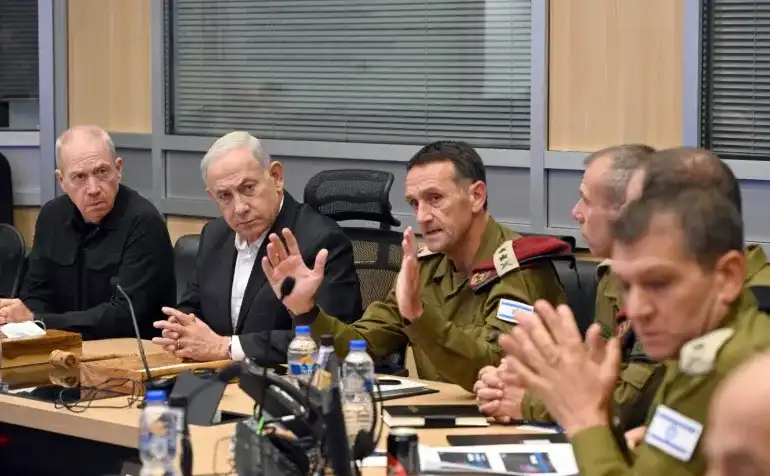
The report pointed out that members of the Israeli negotiating team presented, during the “War Cabinet” meeting yesterday, the message they wanted to convey to the mediators regarding Hamas’ response, and the ministers in the “War Cabinet” agreed to it.


According to a high-level Israeli official described in the report, Israel made clear to the mediators that, contrary to Hamas’s demand, it would not agree to the withdrawal of Israeli army forces from the “corridor” south of Gaza City, which divides the Gaza Strip into two parts.


Israel will not agree to the return of residents to the northern Gaza Strip, according to the report, which indicated that despite this; Tel Aviv expressed its readiness to study the withdrawal of Israeli army forces from "city centers" in the Gaza Strip.


Walla website, according to an Israeli official:


- Tel Aviv handed Qatar and Egypt its response to Hamas’ proposal and rejected a large part of the movement’s demands.

- Israel expressed its readiness to negotiate on the basis of the Paris meeting proposal.

- Israel informed the mediators of its refusal to commit to ending the war after completing the implementation of the deal.

- Israel rejected the army's withdrawal from the corridor that divides the Gaza Strip early in the first phase.

- Israel informed the mediators that it would not agree to the return of residents to the northern Gaza Strip.

- Israel expressed its readiness to study the army's withdrawal from city centers in the Gaza Strip.

- Israel made clear to the mediators that it is not ready to discuss lifting the siege on Gaza.

- Israel is working with Egypt and Qatar to reduce the gap, enabling serious negotiations to take place.

ARAB AND WORLD

Fri 09 Feb 2024 7:49 pm - Jerusalem Time

Hebrew media monitors the movements of the Egyptian army on the border

Israeli security services have been monitoring Egyptian military movements on the border between Egypt and the Gaza Strip in recent days, according to what was published by several Israeli news sites.


The Israeli newspaper "Maariv" said that the Egyptian army had set up concentration points near the Rafah crossing, to prepare for the possibility of the Israeli army entering the Rafah area, and thus preventing the flow of residents of the Gaza Strip into Sinai.

Meanwhile, the Israeli news website JDN said that the Egyptians are preparing for the Israeli army’s ground entry into Rafah, and have placed helicopters at the border crossing.

He added that in order to prevent the mass influx of Gaza residents into Egypt, the Egyptian army placed military points and stationing units along the Rafah crossing, in preparation for a clear Israeli ground entry into the large city in the south of the Gaza Strip, which has not yet been dealt with on the ground, as it was attacked by military aircraft. 


The site explained that the rumors that circulated in Gaza about the closure of the Rafah crossing with the wall built by the Egyptians caused great panic among the residents of the Strip, because a large amount of humanitarian aid comes through the crossing, and in addition to that, the residents of Gaza still dream and hope that they will be able to go to Egypt and escaping from the war in the Gaza Strip.


The Hebrew media explained that despite the denial of the Palestinian news channels that no wall had been erected at the crossing in preparation for its closure, the Lebanese Al-Mayadeen channel announced yesterday evening, Thursday, that the Egyptian army had placed barriers near the Rafah crossing, but had not closed it tightly.


Israeli media had revealed that Israeli demonstrators were trying to breach the border fence with Egypt.


The Israeli journalist and journalist for the Israeli newspaper Maariv, Ben Caspit, published a tweet today, Thursday, on his account on the X platform (formerly Twitter), a surprising story related to the unusual behavior of the protesters at the Kerem Shalom crossing - where they are trying to penetrate the border fence with Egypt and climb over it.

ARAB AND WORLD

Fri 09 Feb 2024 7:46 pm - Jerusalem Time

Russia: Israel's criticism of contacts with Hamas is unacceptable

The Russian Ambassador to Israel, Anatoly Viktorov, said today, Friday, that his country considers Tel Aviv’s criticism of contacts with the Hamas movement unacceptable, pointing out that Moscow is committed to resolving humanitarian issues in the conflict zone in a way that meets the interests of all parties.


Viktorov told the Russian “Sputnik” agency: “The attempt to blame us, because of our contacts with representatives of the political wing of the Hamas movement and other forces in the region and to accuse us of almost supporting terrorism, is unacceptable, and such baseless slanders cannot cast doubt on our work.” Aiming to resolve humanitarian issues that meet the interests of citizens of Russia, Israel and other countries.”


Viktorov pointed out that since October last year, the Russian Foreign and Defense Ministries, and diplomats of Russian embassies in the Middle East, have been in close contact with the Israeli, Palestinian, Qatari, Egyptian and other parties regarding the issue of releasing detainees in the Gaza Strip.


Viktorov stressed, “This work has not stopped for a single day, and we will continue it. Russian diplomacy will do everything in its power to facilitate the release of all hostages, and that our Israeli colleagues are aware of all the efforts we are making.”


#Russia

PALESTINE

Fri 09 Feb 2024 7:45 pm - Jerusalem Time

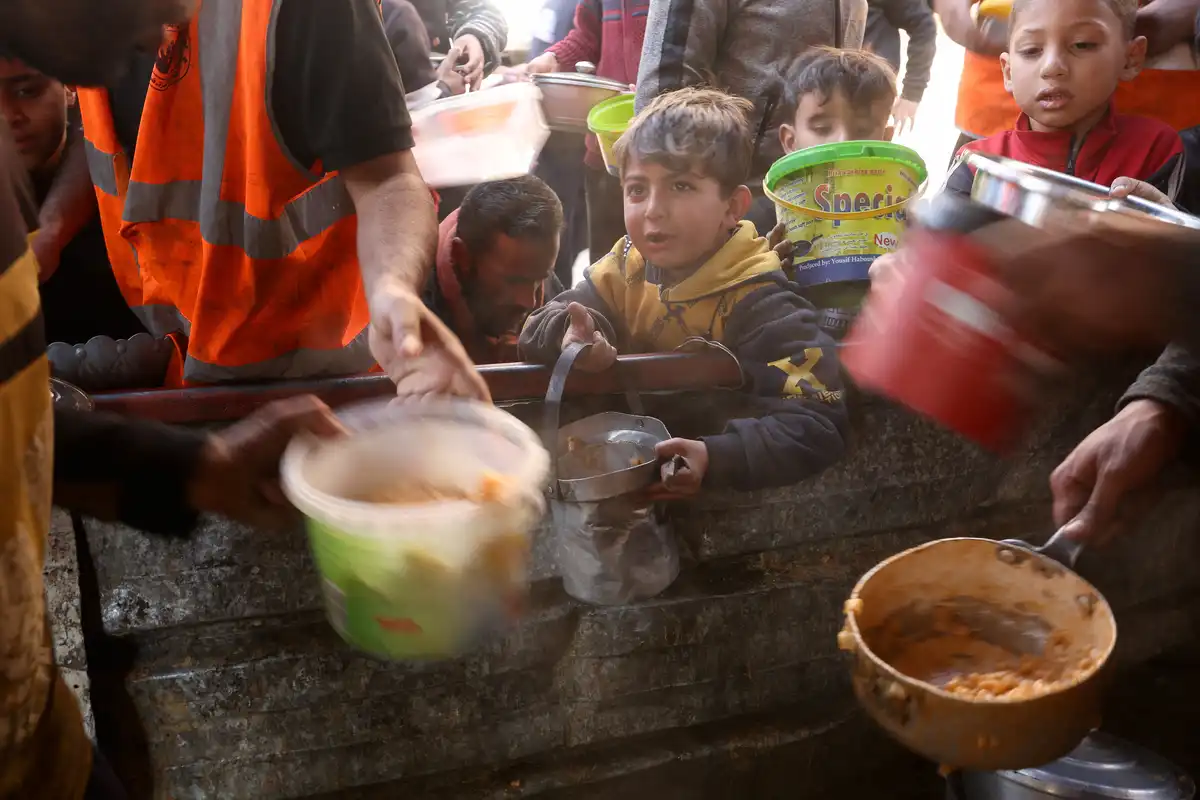
United Nations: 10% of Gaza’s children under five suffer from acute malnutrition

One out of every ten children in Gaza under the age of five suffers from acute malnutrition, due to the ongoing Israeli aggression on the Strip since October 7, according to preliminary data from the United Nations through arm measurements that show levels of wasting among children.


The food supplies that Gaza depends on have diminished from their level before the aggression, and relief workers reported clear signs of famine, especially in the northern and central areas of the Strip, which were most affected by the aggression.


According to a memorandum issued by the United Nations Office for the Coordination of Humanitarian Affairs, measurements of the arm circumferences of thousands of young children and infants showed that 9.6 percent of them suffer from acute malnutrition, which represents an increase of about 12 times from pre-aggression levels.


In northern Gaza, the rate was 16.2 percent, or one in six children.


Relief workers reported the difficulty of delivering food aid to hospitals, in light of the continuing Israeli bombing and the Israeli occupation forces’ invasion of various parts of the Gaza Strip.


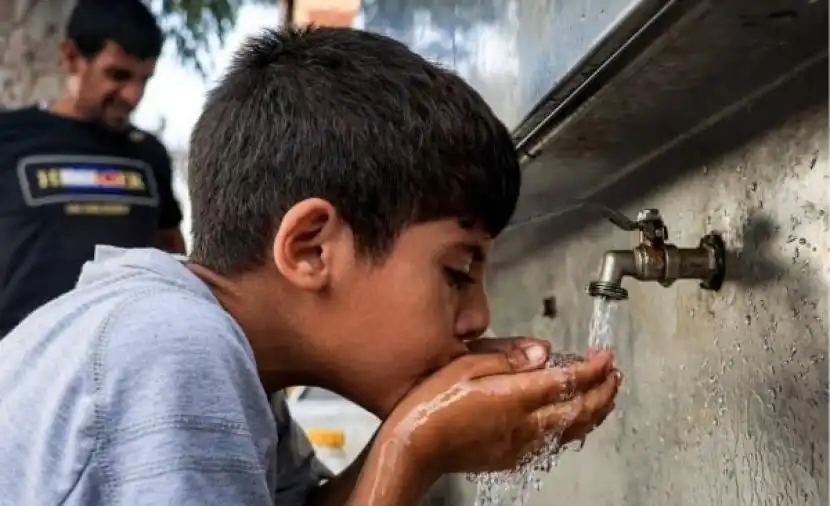
The ActionAid charity said some people are resorting to eating grass. She added, "Everyone in Gaza is now suffering from hunger, and people only receive one and a half or two liters of non-drinking water daily to meet all their needs."


The Islamic Relief Organization quoted one of its employees in Gaza as saying, "My children and I have not eaten fruit or vegetables for months, and people are being killed when they try to meet aid trucks coming from the United Nations."


He added, "We try to make bread from the dried corn that we previously used as animal feed, as it has become rare to find flour... We are relatively lucky compared to most people, who do not have anything at all."


Project Hope, a non-profit organization for relief and development, said that about 15 percent of the pregnant women whose condition was evaluated at its clinic in Deir al-Balah in the central Gaza Strip last week were suffering from malnutrition.


It has also reported an increase in cases of anemia or iron deficiency, which can increase the incidence of premature birth and postpartum hemorrhage.


Dr. Santosh Kumar, the organization's medical director, who returned from Gaza last week, said that he and his team reduced their consumption to one meal a day in solidarity with the citizens in the Gaza Strip.


ARAB AND WORLD

Fri 09 Feb 2024 7:36 pm - Jerusalem Time

Netanyahu orders the army to prepare a plan to evacuate residents from Rafah

Israeli Prime Minister Benjamin Netanyahu instructed the army to prepare a plan to evacuate residents from Rafah and begin an operation there.


This came according to a statement issued by his office, this Friday evening, following statements made by US President Joe Biden, in which he said that the military behavior in Gaza had “exceeded the limit” and had become an “exaggerated” response, and added that he was working to reach a sustainable truce. In the sector.


Netanyahu said, "It is not possible to achieve the war goal of eliminating Hamas and keeping four Hamas battalions in Rafah."


He added, "On the other hand, it is clear that a large-scale operation in Rafah requires the evacuation of the civilian population from combat areas."


The statement continued: “For this reason, the Prime Minister instructed the army and security services to prepare a double plan in the cabinet to evacuate the population (from Rafah) and dismantle the Hamas brigades there.”


Israeli Channel 13 reported, citing an Israeli official, that Netanyahu’s statement was a response to Biden’s statements, adding that “every step will be coordinated with Egypt.”


Biden said in response to a question about the situation in Gaza, “I think, as you know, the response in Gaza, in the Gaza Strip, was excessive,” and added, “We are pushing hard regarding the truce agreement between Hamas and Israel.”


He added: "I was in contact with the Qataris to bring humanitarian aid into Gaza," and pointed out that "I have no evidence that Hamas wanted to disrupt normalization between Saudi Arabia and Israel with the October 7 attack."


During the past few days, American officials have directed their harshest criticism yet regarding the civilian casualties in Gaza as a result of the attacks of the Israeli occupation army, which has now shifted the focus of its attack to Rafah, but there are no indications that Washington’s talk is being listened to in Tel Aviv.


On his fifth tour to the region since the surprise attack launched by Hamas on October 7, US Secretary of State Anthony Blinken last Wednesday criticized Israeli military operations in Gaza and said that the number of civilian deaths is still very high despite Repeated warnings, and suggested specific steps that Israel should follow.


Blinken said, in a press conference, that any “military operation carried out by Israel must take into account civilians in the first place... and this applies to the case of Rafah” due to the presence of more than a million displaced people.


When asked whether the United States would “stand by and watch” while Israeli forces target Rafah, Blinken reiterated the American position that the Israeli military operation must primarily consider civilians. For months, American diplomats have been urging Israel to change its tactics in Gaza, with little indication of success.


Washington has not tried taking steps that would exert greater pressure, such as placing restrictions on its $3.8 billion annual military aid to Israel, or changing its support for its ally in the United Nations. Critics say this provides Israel with a sense of impunity.

OPINIONS

Fri 09 Feb 2024 7:30 pm - Jerusalem Time

How Gaza Reunited the Middle East

Foreign Affairs

Foreign Affairs

Opinion Writer


A New Pan-Islamic Front May Be America’s Biggest Challenge

By Toby Matthiesen

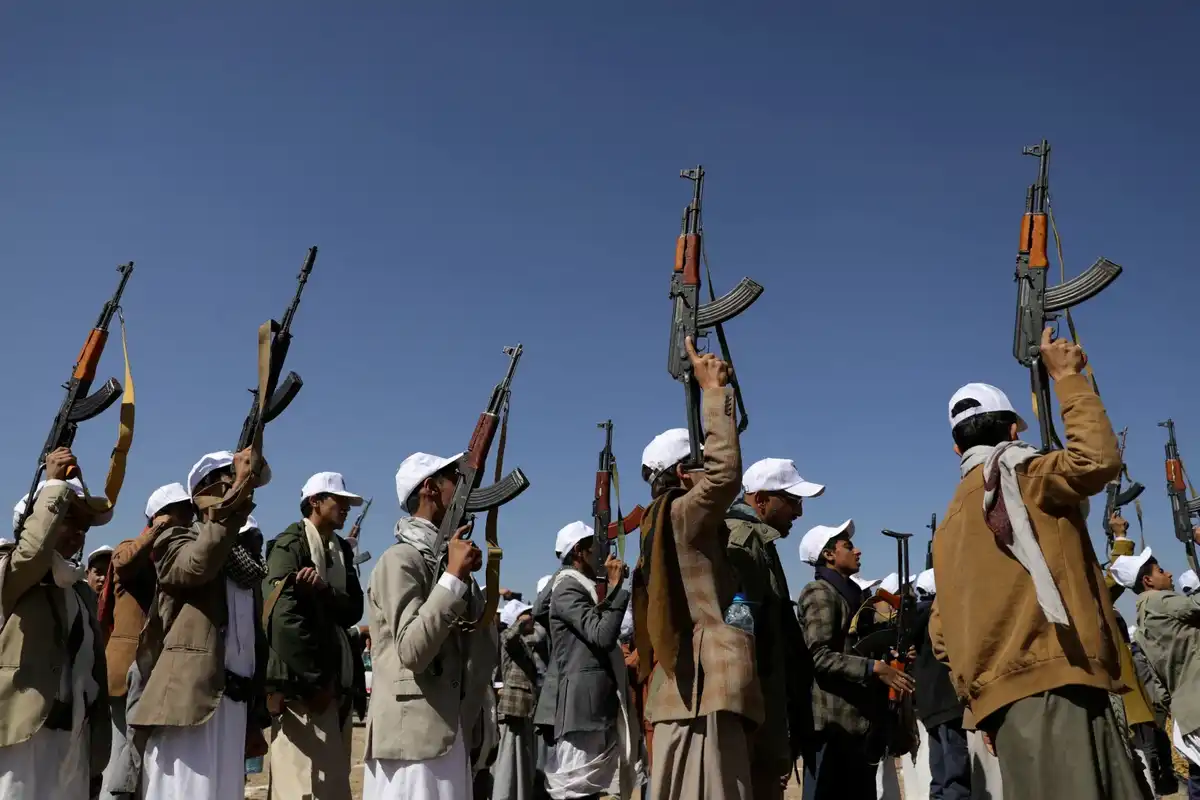
The war in the Gaza Strip is clearly no longer limited to Israel and Hamas. On December 25, an Israeli airstrike killed a senior Iranian Revolutionary Guard official, Sayyed Razi Mousavi, in the Shiite-controlled Sayyida Zaynab neighborhood of Damascus. On January 2, Saleh al-Arouri, the deputy head of Hamas and a founder of its military wing, was assassinated in an Israeli drone attack in south Beirut, a stronghold of the militant Shiite group Hezbollah. Hezbollah and Israel have exchanged fire almost daily since October 7, and Israel has assassinated several senior Hezbollah figures. In the Red Sea, the Houthis, who are adherents of a variant of Shiism, have relentlessly attacked commercial shipping, provoking the United States and the United Kingdom to strike Houthi targets in Yemen. And after a drone strike by a new and shadowy Shiite umbrella group called the Islamic Resistance in Iraq killed three American service personnel at a military outpost in Jordan in late January, the United States responded with a series of strikes on dozens of targets in Iraq and Syria. There is a real danger that this back-and-forth could lead to a direct U.S. military conflict with Iran.

As many have observed, these flash points show the growing reach of the so-called axis of resistance, the loose group of Iranian-backed militias that is attacking Israeli and U.S. interests across the Middle East. Less noted, however, has been the extent to which this broader conflict has blurred the sectarian divisions that have often shaped the region. After all, the vicious civil wars in Iraq, Syria, and Yemen have all had a Shiite-Sunni component; for years, Iran and Saudi Arabia have invoked sectarian loyalties in their long-running contest for regional dominance. Yet the war in Gaza has defied this tension: Palestinians are overwhelmingly Sunni Muslims, and Hamas emerged out of the Muslim Brotherhood, the most important Sunni Islamist movement, with roots in Egypt. How is it that Hamas has found some of its strongest allies in Shiite-led groups and regimes in Iran, Iraq, Lebanon, Syria, and Yemen?

Beyond the axis of resistance, the explanation lies in the special place that Palestinian liberation has long held among ordinary Sunnis and Shiites and how the war has turned that sentiment into a powerful unifying force. Indeed, even when sectarian tensions have flared elsewhere, the plight of the Palestinians has long provided a common rallying point across the Muslim world. And over the past few years, as Sunni Arab leaders have pursued “normalization” deals with Israel and increasingly ignored the Palestinian issue, the Iranian government and its Shiite allies have become the primary backers of Palestinian armed resistance. In turn, regional shifts, including the March 2023 rapprochement between Iran and Saudi Arabia, the ongoing Houthi-Saudi and intra-Yemeni peace talks, and the changing dynamics in Iraq and Lebanon, have made the sectarian divide much less salient.

Now, after nearly four months of catastrophic war, Israel’s assault on Gaza has awakened a pan-Islamic front encompassing Sunni Arab publics, who overwhelmingly oppose Arab normalization, and the militant Shiite groups that constitute the core of Iran’s resistance forces. For the United States and its partners, this development poses a strategic challenge that goes far beyond countering Iraqi militias and the Houthis with targeted strikes. By bringing together a long-divided region, the war in Gaza threatens to further undermine U.S. influence and, in the long run, could make numerous U.S. military missions untenable. This new unity also raises significant obstacles to any U.S.-led efforts to impose a top-down peace deal that excludes Palestinian Islamists.

COLONIAL CONSTRUCTS

Although sectarian divisions have long played a prominent part in Middle Eastern conflicts, the drivers are often misunderstood. Doctrinally, the Shiite-Sunni split concerns succession to the Prophet Muhammad, with Sunnis asserting that his successors, known as caliphs, were to be chosen from among the community of his closest early followers and Shiites setting down instead that his successors, whom they call imams, must descend directly from the Prophet Muhammad. Gradually, Sunnism and Shiism developed into Islam’s two main branches, with the majority of Muslims around the world adhering to the former. By contrast, Shiism was centered in Iran, following the Safavid dynasty’s conversion of Iranians to Twelver Shiism in the sixteenth century, and in Iraq, where Shiites constituted a majority; there were also significant Shiite communities in Lebanon, Yemen, the Gulf States, and South Asia. For centuries, however, the Palestinians were mostly unaffected by this split: as subjects of the Sunni Ottoman Empire and as Arabic-speaking Sunnis and Christians, they had little exposure to Shiism or the Shiite-Sunni divide.

It was only after World War I, as Western colonial powers sought to organize former Ottoman lands along ethnosectarian lines, that religious identities became more politically relevant and intertwined with the nation-state. In Lebanon and Syria, the French turned sectarian identity into the very basis of politics and law. (In Lebanon, the state was ruled largely by Christians and Sunnis, with Shiites given little authority.) In its own mandates in Iraq, Palestine, and Transjordan, the British government also established Sunni-led administrations even where there were sizable numbers of Shiites; in Iraq, the British continued Ottoman policies and largely sidelined Shiite communities and Shiite clergy, whom they saw as too autonomous and resentful of British domination. The United Kingdom’s support for Jewish immigration to Palestine and its policy of ruling Arabs and Jews differently further strengthened ethnoreligious categories in the region, including among the Palestinians themselves. In other words, ethnosectarian divisions were fueled as much by colonial politics and the rise of modern nation-states as by deeper doctrinal or religious debates.

But the politics of nation building could push in multiple directions. After 1948, Israel’s repeated expulsions of Palestinians led to new connections and alliances. In Lebanon, an influx of Palestinian refugees in 1948 and 1967 coincided with the political awakening of the country’s marginalized Shiite community, which was seeking its own liberation. Over the following decades, in addition to building ties with Lebanese Shiites, the Palestinians also mixed with some of the Iranian activists who later led the 1979 Iranian Revolution, which overthrew Shah Mohammad Reza Pahlavi, a close ally of Israel and the United States. After his triumphal return to Iran in February 1979, the revolutionary leader Ayatollah Khomeini almost immediately welcomed the Palestine Liberation Organization to the holy city of Qom, where the PLO leader Yasser Arafat praised the revolution as a “major victory for Muslims as well as a day of victory for Palestine.” Two days later, the Israeli embassy in Tehran was handed over to the PLO. A Muslim Brotherhood delegation likewise visited, highlighting how in its early days the revolution was seen more in pan-Islamic than Shiite terms by Sunni audiences and political movements.

Still, most leaders in the Arab Middle East regarded the Islamic Republic of Iran and its support for revolutionary movements across the region as a major threat. These Sunni-led states feared that the Iranian Revolution would empower Shiite communities and Islamist movements in their own countries, challenge their central position in the Arab and Islamic world, and complicate their relations with the United States. And when Iraq’s Baathist regime invaded Iran in 1980, the PLO and other Palestinian groups sided with Baghdad, concluding that relations with Iraq and the Gulf states took precedence over Tehran.

DIVIDING, NOT CONQUERING

After the 9/11 attacks, misguided U.S. interventions greatly intensified sectarian conflict across the Middle East, helping embolden many of the armed groups that the Biden administration is contending with today. The U.S.-led invasion of Iraq brought to power the Shiite Islamist parties that had mostly been in exile in Iran and Syria since the Iranian Revolution. It also gave new fuel to Sunni extremists, such as al Qaeda, in Iraq, setting off the bloody Iraqi civil war that ultimately gave rise to both the Islamic State, also known as ISIS, and the Iranian-backed Shiite militias that are today targeting U.S. forces in Iraq, Jordan, and Syria.

After two decades of violence between the Sunnis and the Shiites and the brutal efforts of ISIS to establish a caliphate, many in the West expected that a Sunni Islamist movement such as Hamas would command limited popular support in the greater Middle East. In countries such as Egypt, Saudi Arabia, and the United Arab Emirates (UAE), so the thinking went, the Muslim Brotherhood was now shunned as a matter of policy, and a new generation of Gulf Arab leaders seemed to care less about the Palestinian issue than about the advanced surveillance technology and business ties that Israel had to offer. And in countries such as Iran and Iraq, the populations were predominantly Shiite and presumably unlikely to be mobilized by the Israeli-Palestinian conflict. These misguided assumptions helped drive U.S. efforts to push the Gulf monarchies and other Arab states to normalize relations with Israel, even in the absence of any viable plan for addressing the grievances of millions of Palestinians living under indefinite Israeli control and occupation, and as refugees around the region.

In fact, for nearly a century, support for the Palestinians has been something on which Sunni and Shiite Muslims around the world have largely agreed. In 1931, at a congress in Jerusalem to highlight Muslim solidarity against Zionism, Sunni participants suggested that a famous Iraqi Shiite cleric lead the Friday prayer in the al Aqsa mosque in Jerusalem. Seventy-five years later, when Hezbollah managed to survive its 2006 war with Israel (and indeed, already in 2000, when it was instrumental in pushing the Israeli army out of southern Lebanon), the group was praised by Sunnis and Shiites alike. Since the war in Gaza began, Hamas has drawn similar levels of cross-sectarian support.

This popular dynamic has brought growing pressure on Arab autocrats and given new clout in the Sunni world to Shiite groups that have actively supported Hamas. Alienated by their regimes’ support for the West and ties to Israel, many Sunni Arabs have watched in awe as militant Iran-allied movements from Beirut and Baghdad to the Red Sea have become the most visible channels of resistance to Israel’s war in Gaza. These are the groups that make up the axis of resistance, which under Iran’s leadership has now become a coordinated force across the greater region.

AXIS AND ALLIES

The growing strength of the resistance forces should not be understood merely or even primarily as an expression of religious fundamentalism or sectarian identification. It owes to several factors, including sustained levels of funding, a committed and disciplined organizational structure, a coherent ideology, and significant social backing for the groups in their respective communities. But it is also rooted in the unintended consequences of Western and Israeli military interventions and the policies of pro-Western Arab regimes. And crucially, it relates to the gradual coming together of Hamas, as the most powerful Palestinian Islamist movement, with Iran’s Shiite allies.

The axis of resistance took shape in the years after the 9/11 attacks. Regional media outlets coined the name as a pun on U.S. President George W. Bush’s “axis of evil,” which he invoked in his 2002 State of the Union address to link the unlikely trio of Iran, Iraq, and North Korea. A few months later, Bush’s Undersecretary of State John Bolton added Cuba, Libya, and Syria to the list. For the United States to throw regional archenemies Iran and Iraq into one basket was confounding to the Iranians, who had just started a reset of relations with Washington and had even provided some assistance to the U.S. campaign against the Taliban in Afghanistan. To add Syria, another of Iraq’s chief adversaries, to the mix and threaten them all with punishment for 9/11—a terrorist attack perpetrated by Saudi, Emirati, Lebanese, and Egyptian members of al Qaeda, the Sunni extremist group—was even more of an affront. Fearing they might be the next target of U.S.-led regime change, Iran and Syria strengthened their alliances and ties with armed groups in Lebanon, Iraq, and the Palestinian territories to deter American and Israeli hegemony. As the region descended into sectarian violence, Iran’s growing support for Palestinian Islamist movements also allowed it to retain some pan-Islamic legitimacy.

Still, Iran’s alliance with Hamas took years to build and was not always smooth. During the Syrian civil war, which pitted largely Sunni Islamist rebels against the Syrian regime, Hamas’s political leadership, which was based in Damascus at the time, had a significant falling out with Syria and Iran. After Palestinian refugee camps in Syria were caught up in the fighting and many Palestinians killed, Hamas’s leaders decamped to Qatar and Turkey—the states that were the chief backers of the Sunni rebel groups that were seeking to overthrow the regime of Bashar al-Assad. As a result, Iran significantly scaled back its support for Hamas, although that created a public relations problem since Hamas had become Tehran’s best counter to claims that it was building a sectarian front and that it was exclusively supporting Shiite movements.

It was only in the late 2010s that Hamas fully returned to the Iranian fold. By that point, Iran was the only power in the region willing and able to supply arms to Hamas in a sustained manner and to fully back armed confrontations with Israel. (Qatar continued to provide political cover to Hamas and funding to Gaza, although much of it was through Israeli channels and with Israeli knowledge.) Iranian support proved especially important to the political leadership of Hamas inside Gaza and its military wing, the Qassam Brigades. Yahya Sinwar, who became Hamas’s leader in Gaza in 2017, tried to steer clear of the pitfalls of the rivalries among regional powers and was soon building direct connections with Iran. And in 2022, Hamas also finally reconciled with the Assad regime, thus cementing the group’s position within the axis of resistance and underscoring Iran’s—and Syria’s—crucial role in Palestinian armed struggle.

Despite this alliance, Hamas has remained somewhat peripheral to the axis’s core Shiite members, whose shared ideology leans heavily on the Shiite liberation theology associated with the Islamic Republic of Iran and a concept of martyrdom that likewise has strong Shiite connotations. Thus, Hezbollah’s ties to Iran are much more far-reaching than Hamas’s: although Hassan Nasrallah is Hezbollah’s longtime secretary-general and the group has a local decision-making body largely made up of Lebanese clerics, Iran’s Supreme Leader Ayatollah Khamenei remains Hezbollah’s ultimate religious guide and features heavily in the movement’s propaganda. This is not the case with Hamas.

In 2022, Hamas reconciled with the Assad regime, cementing the group’s position within the axis of resistance.

This raises the question of just how far Iran’s coordination of the axis goes. For one thing, despite the newfound unity among these various groups, neither Nasrallah nor Khamenei—nor even Hamas’s own external political leaders—appears to have had foreknowledge of the details of Hamas’s October 7 attack, although they praised it. But there also is the matter of how far the other axis members are prepared to go in joining Hamas’s conflict with Israel. In recent years, axis leaders have started to emphasize a military doctrine they referred to as the “unity of arenas,” meaning that if one member was attacked, all the other “arenas”—including, Iran, Iraq, Lebanon, Syria, Yemen, and the Palestinian territories—would join in its defense. Although there has been some military activity in each of these arenas since October 7, however, it is worth noting that Iran has not directly intervened and that Hezbollah has limited itself to regular rocket fire toward Israel from the Lebanese border rather than a ground invasion or a more massive missile assault.

As a result, close observers of the axis remain divided about whether the arenas doctrine is being carried out as envisioned and the war is still at an early stage in a possible wider escalation or if instead the core Shiite members of the axis, especially Iran and Hezbollah, are trying to show support for Hamas without getting dragged into an all-out war. Numerous speeches by Nasrallah point in the latter direction, as do signals from Iran—including since Washington’s early February strikes on Iranian-backed militias in Iraq—that it does not seek further escalation. There are also indications that Hamas’s leaders in Gaza were expecting a stronger response from the axis, especially from Hezbollah, given its long line of contact with Israel and its formidable arsenal of rockets.

The academic consensus has generally been that although the axis features an Iranian core and Iranian coordination, its members do not necessarily take orders from Iran. Those groups that have more distance from Iran geographically, ideologically, and doctrinally, such as Hamas and the Houthis, enjoy greater independence. By contrast, some of the Twelver Shiite militias, including Hezbollah and the Shiite militias in Iraq, are directly tied to the Iranian state and its leadership not only on a political and military basis but also doctrinally. But those groups, too, have their own domestic interests and sources of funding, and many of the attacks on U.S. bases have been claimed by the relatively new Islamic Resistance in Iraq, likely an umbrella group that comprises older Shiite militias, leading to further ambiguity about the level of coordination with Tehran.

A GAME IRAN CAN WIN

Although some in the Middle East have criticized Iran’s axis militias for widening the war, both opinion surveys and Arab social media show considerable Arab support for Hamas and its doctrine of armed resistance. The same surveys also show a dramatic falloff in support for the United States and the regimes closely associated with it, including Saudi Arabia and the UAE, which normalized relations with Israel in 2020. In Saudi Arabia, polls now show that an overwhelming portion of the population, more than 90 percent, are against establishing ties with Israel. And in the January Arab Opinion Index, a Doha-based survey of 16 Arab countries, more than three-quarters of respondents agreed that their views of the United States had become more negative since the war began.

It is not difficult to understand how these perceptions have been shaped. While pro-Western Arab governments have very little to show for their efforts to stop the war, Iran and its axis forces have been able to portray themselves as regional leaders and the Palestinians’ primary supporters. Take the Houthis. Formerly a little-known rebel militia in northern Yemen, the group has been able to shut down commercial shipping through the Bab el Mandeb Strait, even in the face of sustained U.S. and British bombardment. The Houthis’ scrappy war has gained notoriety among Arab populations who have not previously supported them or the wider policies of the axis. In this sense, the war in Gaza has brought greater unity across the Islamic world than perhaps any other conflict in recent decades.

Paradoxically, the greatest opponents of the axis at this point appear to be Sunni extremist groups such as ISIS, the group to which some Israeli and American officials have likened Hamas itself. (Such comparisons have been provoked by the brutality of the October 7 attacks, although ISIS has repeatedly condemned Hamas for being too nationalist and not globalist enough.) Notably, in early January, ISIS claimed responsibility for a large-scale terrorist bombing of a memorial service in Iran in honor of Qasem Soleimani, the Iranian general and lead architect of the axis of resistance, in which 94 people were killed and 284 injured. ISIS argued that visitors to Soleimani’s tomb deserved to die because they were Shiites and that the bombing was a symbolic attack on Soleimani and what he stood for. In doing so, the Salafi jihadi group appeared to be making a desperate bid to regain regional relevance and rekindle Shiite-Sunni sectarian violence at a moment when the Sunnis and the Shiites are largely united.

Opinion surveys and Arab social media show considerable Arab support for Hamas and its doctrine of armed resistance.

Soleimani was assassinated by the Trump administration in 2020 for orchestrating attacks on U.S. interests in the region. The uncomfortable truth, however, is that between 2015 and 2017, Soleimani helped coordinate the largely Shiite Iraqi militias in the fight against ISIS alongside the U.S.-led coalition. Following Soleimani’s assassination, Iran suggested it would respond by stepping up its efforts to expel U.S. troops from the region. Paradoxically, current American actions in the war in Gaza, including unconditional U.S. support for Israel and military and diplomatic actions intended to buy Israel more time, may hasten that goal, since now there is growing regionwide support for resisting the West and Israel. Meanwhile, the many domestic critics of the axis forces stand no chance of gaining ground as long as this network—whether the Iranian and Syrian regimes, the Houthis, Hezbollah, or the various Shiite militias in Iraq—can portray themselves as the true supporters of the Palestinians at a moment of great hardship.

Simply by their support for Hamas and their willingness to mount armed resistance where Arab governments have largely remained bystanders, the members of the axis have thus gained much influence across the Middle East. Whatever happens next, Iran and its allies seem likely to enjoy even greater influence and leverage, not least as a result of past and present mistakes made by their adversaries in Israel and the West. As for the pro-Western Arab states, they will have to seek to close the yawning gap between their policies and the sympathies of their own citizens. After years of neglect, they will need to push urgently for a just solution to the Palestinian question, lest they find themselves confronted with a new wave of Arab uprisings.

For the United States, asserting its military power by launching precision strikes on militia targets may be a satisfying option. But it is increasingly clear that it will be impossible for Washington to stop the regional escalation unless it can secure a cease-fire in Gaza, end the occupation, and finally establish a viable Palestinian state. In the absence of such credible and concrete steps, regional powers will continue to use the Palestinian question for their own gain. Yet it is hard to imagine a Palestinian state being established, let alone succeeding, if it is not backed by the support of all Palestinian factions and all major regional powers, including Saudi Arabia and the other Arab states, but also Turkey, Iran, and the axis forces. Otherwise, the list of spoilers is potentially endless. The obstacles to such an approach are tremendous, especially given the Israeli government’s own stated position on the matter. But without such a broad-based and just solution to the Palestinian question, the Middle East will never achieve a durable peace or the kind of political and economic cooperation that many have long dreamed of. The alternative is a never-ending cycle of violence, a decline of Western influence and legitimacy, and the danger not only of wider war but also of a region that is integrating in a quite different way—one that is fundamentally hostile to the West itself.


PALESTINE

Fri 09 Feb 2024 6:39 pm - Jerusalem Time

West Bank: A Palestinian teenager killed by Israeli soldiers in Beita, south of Nablus

The Ministry of Health announced, this Friday evening, the death of a teenager Moaz Ashraf Faleh Bani Shamsa (17 years old) in the town of Beita, south of Nablus.


The Ministry said that Bani Shamsa, died from a bullet wound to the chest during confrontations in the town of Beita, south of Nablus Governorate, after the Israeli forces stormed the town.


Two citizens were injured by live bullets, one of them seriously in the back, and a third as a result of a beating and dozens of suffocation injuries, during confrontations that broke out with the Israeli occupation forces in the town of Beita, south of Nablus. Two young men were also arrested.


The Red Crescent Society reported that its crews dealt with three injuries, including two with live bullets, and the third after a beating by the occupation army.


Local sources said that the Israeli forces stormed the town, which led to the outbreak of confrontations, during which the Israeli soldiers fired live bullets, stun grenades and poisonous tear gas. A number of citizens suffered from suffocation and were treated in the field.


The sources added that the Israeli forces arrested two young men during the confrontations.


PALESTINE

Fri 09 Feb 2024 3:19 pm - Jerusalem Time

"Children's Rights" at the United Nations: Israel seriously violates the rights of children in Gaza

The head of the United Nations Committee on the Rights of the Child, Anne Skelton, said that Israel is seriously violating the rights of children in the Gaza Strip, at a rare level the likes of which have not been seen in modern history.


Skelton added, during the committee’s statement that she presented at a press conference, regarding the situation of children in Gaza, that there is no child in Gaza free from fear, pain and hunger, and some of them are lucky if they are able to survive, in light of this war, noting that the children in the sector lost their childhood, suffered psychological trauma, and will live forever with its impact on their mental health.


She pointed out, "It is estimated that more than 7,000 people were buried under the rubble, including a large number of children, which brings the total number of victims to more than 100,000 people, in addition to the children who lost their limbs, their families, and their friends," calling for "the necessity of providing psychological support." and significant social and social services for children and families, to mitigate the painful and long-term effects of war.”


She continued: “More than 10 children on average have lost one or both of their legs every day in Gaza since the beginning of the war, according to Save the Children. Estimates of the United Nations Children’s Fund (UNICEF) also indicate that at least 17,000 children have become separated from their parents.” All 1.2 million children now need mental health assistance, psychosocial support, and the attention and action of the international community.”


The Chairperson of the Committee expressed her deep concern about the situation of children living in the West Bank, including East Jerusalem, who face arbitrary arrests, killings and violence committed by the occupation forces and colonialists.


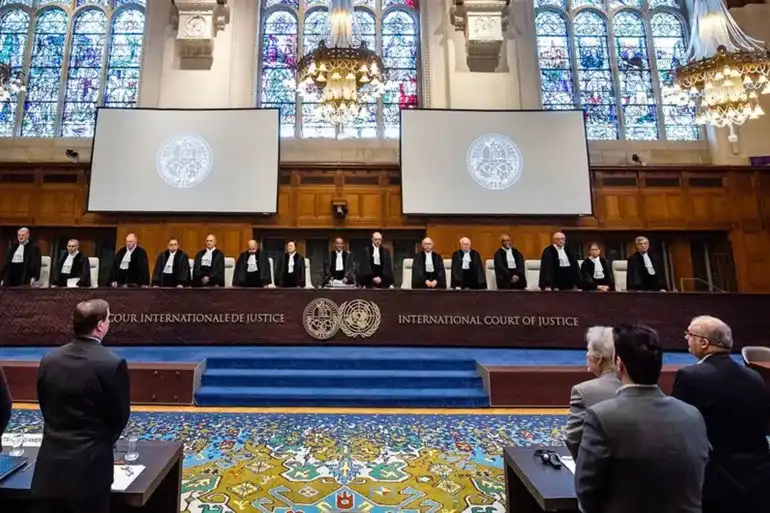
He touched on the ruling of the International Court of Justice last January 26, in the case brought by South Africa regarding Israel committing genocide in Gaza, in which the court ordered Israel to “take all measures to prevent the commission of all crimes and acts that fall within the scope of Article Two of the Convention including the killing of group members, preventing and punishing direct and public incitement to commit genocide, and enabling the provision of humanitarian assistance."


The head of the committee called on Israel to immediately comply with the court’s decision, and to call on all countries to take the necessary measures to end this war, by reaching an immediate ceasefire, delivering urgent humanitarian aid, resuming peace negotiations, and restoring funding to UNRWA without delay.


He also urged donor countries that suspended their funding to UNRWA to reconsider their decision and provide sufficient funds to ensure that all urgent aid can be provided to everyone, and to every child.

OPINIONS

Fri 09 Feb 2024 2:56 pm - Jerusalem Time

Israel’s legacy of media deception stumbles

Aljazeera

Aljazeera

Opinion Writer

By Rami G Khouri

Israel’s deception campaign against UNRWA does not seem to be working as expected. Why?

In the last two weeks, the Israeli government put on a masterclass on how to use the Western media to spread fake news and propaganda and to justify anti-Palestinian actions taken by the United States and its allies. It worked – but only in part.

On January 26, in a landmark preliminary ruling on South Africa’s genocide charge against Israel, the International Court of Justice (ICJ) found it “plausible” that Israel is committing acts that violate the Genocide Convention; and demanded that it take “immediate and effective measures to enable the provision of urgently needed basic services and humanitarian assistance to address the adverse conditions of life faced by Palestinians in the Gaza Strip.”

Israel ignored this, and within hours, launched a deception campaign to weaken UNRWA, the UN’s main humanitarian agency for Palestinian refugees, to inflict further suffering and death on nearly two million displaced, injured, sick and starving Palestinians in the Strip.

Israel passed on to Western media a “dossier” alleging that about a dozen UNRWA staff in Gaza have been working for Hamas and even participated in the group’s October 7 attack on Israel.

After the compliant media immediately relayed these unsubstantiated allegations to the world without bothering to do any independent verification, the US and other countries suspended vital funding to UNRWA. Meanwhile, prominent politicians started calling for it to be “shut down” as Israel has long sought in its efforts to reverse the recognition of Palestinians it displaced as “refugees”, and invalidate their right of return to the lands in Israel stolen from them.

None of this was new or extraordinary.

Mainstream media organisations in the West, from the New York Times and the Wall Street Journal to CNN and NBC, have long helped Israel spread its propaganda and achieve its political aims.

For the past century, these  organisations and their counterparts in Europe routinely disseminated Israeli narratives without questioning their veracity, while ignoring, downplaying or misrepresenting Palestinian perspectives. Their efforts helped Israel win the war on narratives and continue its settler-colonial assault on Palestinians with near total impunity.

Well, until recently – because the ugly tradition of Israel successfully laundering its lies and propaganda through Western legacy media is now being exposed and challenged, and appears to be starting to dissipate in the information era dominated by new media.

Indeed, since October 7, a flurry of independent investigations into events in Israel-Palestine and Western media reports about them exposed how Israel has been using legacy media organisations in the West to deceive the world, silence Palestinians and their allies, undermine international law, obscure its systemic human rights violations and further its settler-colonial agenda.

The initial Western media coverage of the terror allegations against UNWRA was perhaps the best example of this phenomenon.

Israel suddenly came up with an “explosive” dossier on alleged links between Hamas and UNRWA staff because it wanted to divert attention from the ICJ ruling on its own genocidal acts, and instead raise doubts about the crucial UN agency’s credibility.

Thanks in large part to the Western media’s uncritical reporting, Israel’s plan succeeded, at least partially, as it triggered significant funding cuts and a congressional hearing in the US on “ UNRWA Exposed: Examining the Agency’s Mission and Failures”.

Members of Congress accused UNRWA of having “longstanding connections to terrorism and promotion of antisemitism” seemingly based on nothing other than Israeli claims circulated in the media. They also introduced a bill titled the “UNRWA Elimination Act” calling for the complete disbanding of the humanitarian agency and transfer of all its responsibilities to the UN High Commissioner for Refugees (UNHCR).

But independent reports and investigations quickly revealed major holes in the Israeli narrative that mainstream media had eagerly adopted and disseminated.

As Western journalists outside the mainstream, Global South media like Al Jazeera, activists and scholars started to ask questions about the claims against UNRWA, Israel’s  story started to unravel.

Unable to provide any hard evidence on UNRWA staff involvement in the October 7 attacks, the intelligence agency that distributed the “dossier” said its information came from “interrogations of Palestinian prisoners”. The revelation further raised suspicions among journalists and scholars who follow the conflict, as Israel is known to use torture to extract false confessions from Palestinian prisoners. Realising the global community is questioning their story, Israel’s intelligence agents simply changed it and started to say they obtained the information through surveillance.

As numerous countries stood up for UNRWA, and Israel faced scrutiny about its allegations against the US agency, and shared its shaky “intelligence documents” with even more journalists.

An analysis of the dossier by Britain’s Sky News revealed that these documents claim only six, not 12 as initially suggested, UNRWA staff entered Israel on October 7. It noted that “the Israeli intelligence documents make several claims that Sky News has not seen proof of and many of the claims, even if true, do not directly implicate UNRWA”.

After also analysing the documents, Britain’s Channel 4 reached a similar conclusion and said the six-page-long dossier “provides no evidence to support the explosive claim that UN staff were involved in terror attacks on Israel”.

The terror accusations against UNRWA were perhaps the most striking example of exposing major Western media for uncritically circulating Israeli fabrications and propaganda since October 7. But it was hardly the only one.

The Israeli claims about “terror tunnels” and “Hamas command centres” under Gaza hospitals, which were repeated by most Western media without any scrutiny or attempt at verification were also proved to be baseless by several open source investigations, in-depth reporting by local journalists on the ground and extensive video evidence.

In February, Al Araby TV filmed what Israel claimed was a “Hamas tunnel” it discovered under Sheikh Hamad Hospital in northern Gaza, which proved to be nothing but a water well.

Earlier, in December, an explosive New York Times report on  Hamas’s weaponisation of sexual violence during the October 7 attack was criticised for its weak sources and sloppy reporting. The paper of record eventually had to pull a podcast episode it had prepared on the subject.

Speaking of the Times’ sexual violence report and podcast, The Intercept investigative site said,“the critics have highlighted major discrepancies in the accounts presented in the Times, subsequent public comments from the family of a major subject of the article denouncing it, and comments from a key witness seeming to contradict a claim attributed to him in the article.”

The Electronic Intifada published several articles and podcasts with more details of the New York Times’ investigation of its mass rape story, mostly confirming the lack of credible evidence or eye-witnesses in the stories that Israeli institutions, including the armed forces, shared with the global media.

The progressive investigative website Mondoweiss explained in a report, entitled “We deserve the truth about what happened on October 7”, that “researchers cross-referencing claims against the list of terror victims maintained by Israel’s own Social Security Administration have shown that several horrifying stories first responders and [Israeli military] members initially told reporters do not reflect actual people or deaths”.

 Britain’s Guardian published an extensive report on how “CNN is facing a backlash from its own staff over editorial policies they say have led to a regurgitation of Israeli propaganda and the censoring of Palestinian perspectives in the network’s coverage of the war in Gaza”.

 The Oct7factcheck project – an exhaustive collection of claims, where they originated, who propagated them, and whether the evidence confirms or refutes them put together by the Tech for Palestine initiative – has also published the results of independent investigations into a dozen or so of the most dramatic Israeli accusations and reports about the Hamas attack, which were uncritically repeated by most of Western media, debunking most of them as untrue and lacking evidence.

They show, for example, that some of the evidence Israel submitted to the ICJ hearing – evidence republished by mainstream Western media without question – was false.

“Over the last four months, claims about October 7 have influenced the public narrative,” they noted. “Stories of atrocity, sometimes cobbled together from unreliable eyewitnesses, sometimes fabricated entirely, have made their way to heads of state and been used to justify Israel’s military violence.”

As new evidence reveals that stories that Israel offers the media about Palestinians and Hamas are fabricated, unsubstantiated, or exaggerated,  international journalists tend to spend more time checking the veracity of Israel’s propaganda offerings — and more time doing their job of reporting the facts and the truth.

PALESTINE

Fri 09 Feb 2024 2:56 pm - Jerusalem Time

West Bank: A sheep shepherd and his son were injured after settlers attacked them east of Ramallah

A sheep shepherd and his son were injured and bruised today, Friday, after settlers beat them, in the village of Burqa, east of Ramallah.


Local sources reported that a number of settlers assaulted the shepherd, Youssef Habas, and his son, Jareh, while they were grazing sheep in the “Al-Mazik” area, causing them to suffer bruises and wounds, in addition to assaulting their sheep.


The sources pointed out that the Israeli forces stormed the area to provide protection for the settlers, as the soldiers fired live bullets, tear gas bombs, and sound bombs at the young men and families present in the area, but no injuries were reported.

ARAB AND WORLD

Fri 09 Feb 2024 2:48 pm - Jerusalem Time

American officials: Netanyahu seeks a confrontation with America, and the war did not eliminate Hamas

Yedioth Ahronoth newspaper reported, citing American officials, that US Secretary of State Anthony Blinken believes that Israeli Prime Minister Benjamin Netanyahu is seeking confrontation with the United States over the Palestinian issue, while US intelligence sources confirmed that Israel has been able to weaken the Islamic Resistance Movement (Hamas). But it didn't kill it.


The newspaper said that the US Secretary of State was shocked by the Israeli Prime Minister's involvement in the hostage issue, noting that Blinken is more committed to recovering Israeli detainees in the Gaza Strip than Netanyahu.


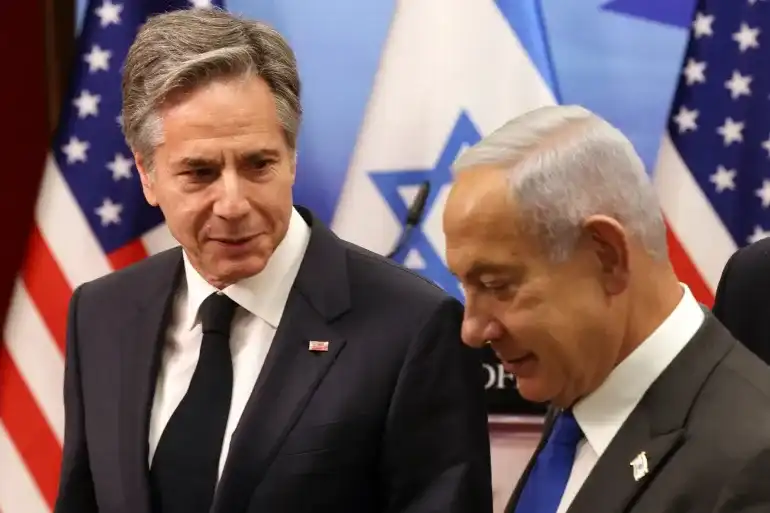
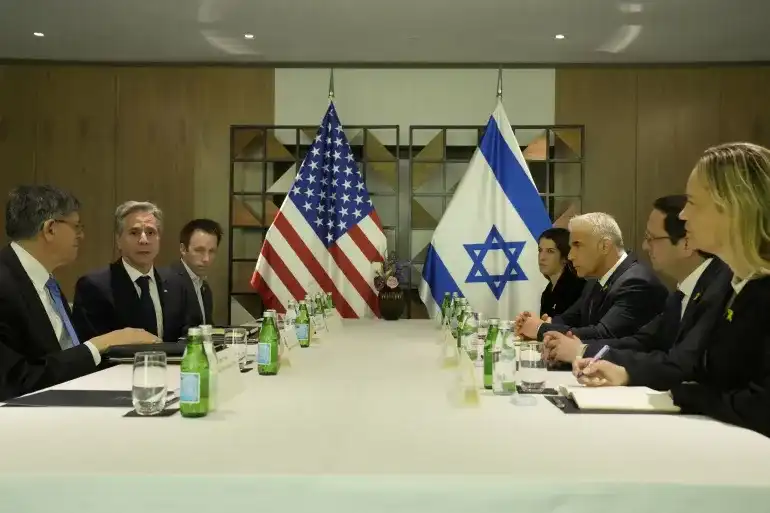
Blinken met with Netanyahu and officials in the Israeli war government during a visit he made to Tel Aviv yesterday, Thursday, to discuss ways to secure the release of detainees in Gaza the day after Netanyahu’s statements rejecting some of Hamas’ demands.


Blinken said at the beginning of a meeting with Israeli war cabinet ministers that the talks will focus on “the hostages and the strong desire of each of us to see them returned to their families, and on the work that is being done to achieve this goal.”


Yesterday, Thursday, Netanyahu rejected Hamas's demands for a ceasefire as part of a truce agreement, and pledged to expand military operations to include Rafah (south), where more than a million Palestinians were displaced.


The position on the aggression against Rafah

The White House announced - yesterday, Thursday - that the US administration will not support any Israeli plans to carry out major military operations in Rafah, and that negotiations are continuing regarding the release of detainees and reaching a truce agreement in Gaza.


Kirby stressed that "any major military operation in Rafah at this time - and under these circumstances, and with the presence of more than a million and perhaps more than 1.5 million Palestinians seeking asylum and seeking shelter in Rafah without due regard for their safety - would be a disaster and we will not support it."


He said that Blinken made clear the United States' concerns about such operations.


US President Joe Biden described the Israeli response in the Gaza Strip as exceeding the limit, in unprecedented statements criticizing the Israeli war on the Strip, and stressed that his administration is working to reach a permanent cessation of fighting.


Biden said in a surprise speech at the White House on Wednesday evening that he had put strong pressure on Netanyahu to deliver humanitarian aid to Gaza, where “there are many innocent people, women and children, who are starving and in dire need of it,” as he put it.


Estimates

Despite Netanyahu’s insistence on continuing the war until the elimination of Hamas, it does not seem that the Israeli aggression that has been ongoing for 4 months on the Gaza Strip will enable him to achieve the goal that he announced since the outbreak of the first spark of the war. The American newspaper “The New York Times” quoted American officials as saying that intelligence officials The Americans confirmed that Israel weakened Hamas, but did not come close to eliminating it.


The newspaper said that officials refrained from providing specific estimates regarding the number of “Hamas militants killed,” under the pretext that these estimates are inaccurate and meaningless, as they put it.


It also quoted American officials as saying that the United States has learned through wars that counting the deaths of members of rebel movements or during counter-terrorism operations is stupid, and that there are doubts that the goal of destroying Hamas is realistic, and that weakening the movement’s fighting power may be a more achievable goal.


Source: Al Jazeera + websites

ARAB AND WORLD

Fri 09 Feb 2024 2:46 pm - Jerusalem Time

Nicaragua requests to join South Africa in genocide lawsuit against Israel

Nicaragua has formally requested to join the genocide case filed by South Africa against Israel, the International Court of Justice announced Thursday.


A statement issued by the court said that Nicaragua stated in its application for permission to intervene that it had “interests of a legal nature that flow from the rights and obligations imposed by the Genocide Convention on all States Parties.”


The court added that Managua said its decision stemmed from “the universal nature of the condemnation of genocide and the cooperation required to liberate humanity from such a hateful scourge.”


The Central American country announced last month that it intends to join Pretoria in the lawsuit that accuses Israel of violating the 1948 United Nations Convention on the Prevention of Genocide due to its war on the Gaza Strip, which it has been waging since October 7, 2023.


Two weeks ago, the court's judges issued a decision to impose emergency measures on Israel, saying it must prevent acts of genocide in its war on the Gaza Strip, but they stopped short of calling for an end to the fighting.


In its request, Nicaragua called on the judges to rule that Israel “has violated and continues to violate its obligations under the Genocide Convention,” and to “stop actions or actions that would kill or continue to kill Palestinians.”


Throughout history, the Court has only in rare cases agreed to such intervention requested by Nicaragua.


Several other countries have indicated that they may wish to intervene in the Gaza genocide case, but none have done so formally except Nicaragua.


Israel is waging a devastating war on the Gaza Strip, leaving tens of thousands of civilian victims, most of them children and women, in addition to an unprecedented humanitarian catastrophe and massive infrastructure destruction, which led to Tel Aviv appearing before the International Court of Justice to be tried on charges of “genocide” for the first time in its history.


Determining whether Israel is indeed violating the Genocide Convention with its military campaign will likely take months, if not years.


Source: Agencies

ARAB AND WORLD

Fri 09 Feb 2024 2:40 pm - Jerusalem Time

Human Rights Watch: This is how we end American hypocrisy in Gaza

Sarah Yager, director of Human Rights Watch in Washington, described the US handling of the Israeli war on Gaza as “hypocrisy,” and the Biden administration must evaluate Israel’s behavior and hold it accountable for that.

Yager commented in an article published by Foreign Affairs magazine that the staggering numbers of Palestinian casualties and injuries as a result of the war launched by Israel on Gaza in response to the attack by the Islamic Resistance Movement (Hamas) on October 7 is impossible to consider without considering whether Israel has violated the law. International humanitarian aid during its war.


She added that a large amount of available information indicates that Israel did in fact do this, as human rights organizations and the media published reports of illegal collective punishment of the Palestinian population, the use of starvation as a weapon of war, air and artillery strikes, and the demolition of buildings that had no targets, but it resulted in heavy civilian casualties and the destruction of property.


She pointed out that there was enough smoke to suspect a fire, which put American officials in a dilemma, because American law requires the State Department to ensure that American security aid does not go to security forces that constantly commit gross human rights violations.


Current US policy also requires the department to evaluate whether recipients of US military assistance are “more likely” to use US weapons to violate international law, and prohibit transfers to any country that meets these criteria.


Impromptu warning

Yager questioned whether the State Department had conducted these assessments yet, despite the fact that its Secretary, Tony Blinken, and Defense Secretary, Lloyd Austin, repeated on more than one occasion the phrase that the number of civilian casualties was “very high.”


However, despite President Joe Biden's offhanded warning last December about the risk to Israel's reputation by carrying out "indiscriminate bombing," US officials have avoided clearly stating that any specific Israeli actions in Gaza are unacceptable, taking Administration spokesmen walk back Biden's comment.


The director of Human Rights Watch referred to the direct questions directed to White House spokesmen regarding Israel's behavior in Gaza and their twisted responses on more than one occasion.


She commented that these official statements and many others were noticeably absent of any positive declaration that Israel is in fact adhering to international law.


She said if American officials believed that Israel was doing this - or at least taking all possible measures to avoid harming civilians under difficult circumstances - they would say so with passion, but they did not do so even though the Biden administration was not shy about criticizing the behavior of the warring parties in Other conflicts.


The reason is that drawing more attention to what is happening in Gaza could almost certainly force a policy change that Biden does not want to make, could confront his administration with a series of difficult choices that it would rather avoid, and could also further complicate the already complex dynamics of the US-Israel relationship. And it may create political weakness for Biden in the election year.


Double standard and hypocritical

She added that as long as the administration avoids the reality of Israeli violations in Gaza and selectively applies the rules for military assistance, the moral authority claimed by the United States will diminish more and more, and the Biden administration’s apparent unwillingness to apply the legal aspect to the available information will be exacerbated by its clear failure to adhere to policies that She put it herself as an expression of Biden's supposed commitment to human rights.


Yager believes that the worst consequence of the administration's refusal to comply with the letter and spirit of American law is that Washington may make it possible for massive and perhaps criminal loss of civilian lives in Gaza.


She added that there is another victim of this approach, which is the credibility of the United States, which has been damaged by what can be considered at best inconsistency and at worst hypocrisy.


For example, in 2016, President Barack Obama condemned Syrian President Bashar al-Assad’s deprivation of food and water to civilians in Aleppo, and it can be said that Israel did the same thing with the civilian population in Gaza for more than 3 months without facing any criticism for this method from the Biden administration. Biden Netanyahu called for opening a corridor to Gaza to deliver more aid, but he did not directly criticize the blockade.


She added that to begin to rein in Israel and stop the bleeding of American credibility, the Biden administration needs to assign its lawyers to evaluate all available information - confidential and non-confidential - regarding the Israeli military campaign in Gaza and determine the time and place of Israeli forces violating the laws of war, and the results should be published and evidence submitted to Congress.


She concluded that the political costs resulting from looking directly at the evidence and correcting the course of American policy as necessary will not be comfortable for the president and lawmakers during the election campaign.


But these costs are less than the cost of US authorities acting as if the extreme suffering of the Palestinian people in Gaza does not deserve the same scrutiny as the suffering of civilians in other conflicts, a position that gives an argument to those who claim that when it comes to applying basic American principles and protecting inherent human rights, Washington applies A clearly hypocritical double standard.


Source: Foreign Affairs

ARAB AND WORLD

Fri 09 Feb 2024 2:29 pm - Jerusalem Time

How did Hamas' response deepen the divisions in Israel?

The Islamic Resistance Movement (Hamas) embarrassed the Israeli government with the initial positive response to the framework agreement issued by the “Paris Summit.” Prime Minister Benjamin Netanyahu bet on its rejection of the agreement to continue evasion in the negotiations for the exchange deal and ceasefire.


Hamas' response confused the various Israeli security and military institutions and the political arena, represented by the ruling coalition, which relied on a negative response from the movement to evade responsibility to the international community, and to maneuver in front of the families of Israeli detainees.


The results of an opinion poll prepared by the "Israeli Democracy Institute" showed the validity of the claim that the two goals of the declared war, which are to eliminate Hamas and liberate the detainees, are contradictory.


Contrast and division

According to the poll, which included a sample of 619 people, a majority believes it is necessary to re-arrange the priorities and objectives of the war, as 51% of those surveyed believe that the return of detainees should be the main goal, while nearly a third, 36% of whom are from the extreme right, said that the priority is It must be the defeat of Hamas, while 13% responded that they did not know.


Amid these changes in Israeli society, the far-right parties, represented by the “Religious Zionism” coalition headed by Minister Bezalel Smotrits, and the “Jewish Greatness” party headed by Minister Itamar Ben Gvir, a partner in the government coalition, are placing obstacles to the emergency government and the war council and to any attempt to penetrate its position of rejecting any deal. Reciprocate and stop aggression.


On the other hand, the opposition camp led by the head of the “There is a Future” party, Yair Lapid, reiterated that the priority must be to liberate the detainees, even if the price was painful and in exchange for a ceasefire, and called for the overthrow of the Netanyahu government due to its failure to manage the detainees’ file and liberate them.


The positive response of the Hamas movement to the “Framework Agreement,” as political analyst Akiva Eldar says, reveals the extent of the differences in the various Israeli systems regarding the release of detainees held by the resistance in Gaza. This brought back to the forefront the state of polarization and rift in Israeli society that prevailed before the “Al-Aqsa Flood” on October 7, 2023.


Eldar explained to Al Jazeera Net that the repercussions of the division and divergence of the positions of the Israeli political camps were reflected in the military establishment, which does not oppose the completion of a comprehensive exchange deal, and in the security and intelligence system, which is considered a main axis in the negotiations with the mediators in Egypt, Qatar, and America.


He pointed out that the military and security leaders were criticized by ministers in Netanyahu's government and right-wing members of the Knesset, as they were asked to bear responsibility for the failure to prevent the sudden Hamas attack and to resign.


The political analyst believes that all opinion polls, which favor the votes demanding the return of detainees regardless of the price that Israel will pay, reflect the reality of the challenges facing Netanyahu even within the emergency government, and the dilemma he faces in the general political scene, as a comprehensive exchange deal means that there is no justification. To continue the war.


Dilemmas and challenges

For his part, spokesman for the "Peace Now" bloc, Adam Clare, believes that Netanyahu, who had a consensus in Israeli society regarding the management of the war and the hostage issue, and relied on opinion polls that saw the continuation of the war as a priority over any deal, is now facing internal dilemmas and challenges.


However, Clare says, “As the war enters its fifth month without achieving its goals of liberating the hostages and eliminating Hamas, popular pressure is mounting calling for concluding an exchange deal, even if the price is a ceasefire, as the issue of the kidnapped has become a basic demand of the Israeli public.”


Speaking to Al Jazeera Net, he pointed out that Netanyahu's government will face a lot of international pressure and may clash with the administration of US President Joe Biden, who is preoccupied with the presidential elections and is seeking an exchange and truce deal that will lead to a political path with the Palestinians.


The spokesman for the "Peace Now" bloc believes that Netanyahu's government, represented by far-right parties, will not abandon the ruling coalition and will seek to maintain it because it represents a struggle for survival for Netanyahu in the Israeli political scene, and it also constitutes a cornerstone of Smotrich and Ben Gvir's agenda and ideology of incursion and control of the reins of government in Israel.


He believes that Netanyahu's government, which relies on the confidence of 64 members of the Knesset, and is floundering over options between war, the exchange deal, and responsibility for failure, will not fall or disintegrate through parliamentary opposition, but rather through external international pressure, internal movement, and Israeli public pressure.


Failure and embarrassment

Under the title “Netanyahu’s plan to sacrifice the kidnapped,” journalist Uri Misgav, an activist in the movement against the far-right government, wrote, saying, “Israel failed for 4 months in trying to liberate the kidnapped militarily, and it became clear that military operations killed some of them.”


Misgav adds: “Hamas formulated a serious response and presented a reasonable plan in light of the current bleak circumstances as a basis for negotiations, of course. This is a deal that a rational and responsible government must accept, but Hamas’s response embarrassed the Netanyahu government, which will apparently continue to sacrifice the kidnapped.”


The Israeli writer explained that another deal to return the detainees, or some of them, is conditional on stopping the fighting in the Gaza Strip for a limited period or permanently. He said that stopping military operations for a limited period would lead to a rebellion in the priestly settlement base, a partner in Netanyahu’s coalition, on which his fate and the future of his political career depend.


He pointed out that the decision to sacrifice detainees led to changing the declared goals of the war and that Netanyahu stopped repeating the phrase “the defeat of Hamas and the return of the kidnapped,” and moved to “chatter about complete victory,” adding that this goal was formulated vaguely and is not achievable on the ground to prevent Reaching an agreement and prolonging the fighting is for Netanyahu's own interests.


Source: Al Jazeera

ARAB AND WORLD

Fri 09 Feb 2024 2:20 pm - Jerusalem Time

Hebrew News Paper: A "political tsunami", Israel fears possible American recognition of a Palestinian state

The Israeli newspaper Maariv reported on Friday that Israel fears American recognition of a Palestinian state in the West Bank and Gaza Strip, amid increasing American criticism of Israel and the way its Prime Minister Benjamin Netanyahu is dealing with the detainees file and the possibility of achieving the goal of eliminating the Islamic Resistance Movement (Hamas), in addition to the continued large numbers of civilian casualties.


The newspaper quoted Israeli political sources concerned about the intense activity of the US administration to promote the idea of establishing a Palestinian state in the West Bank and Gaza Strip under a unified government based on what is known as a renewed Palestinian authority.


The newspaper said that the US State Department is considering recognizing a Palestinian state as part of a comprehensive political initiative related to what it called “the day after Hamas rule” in the Gaza Strip, according to what it quoted from American sources.


The newspaper confirmed that the issue of recognizing the Palestinian state was raised during the talks held by Secretary of State Anthony Blinken with Israeli officials during his visit to Israel in the past two days.

The newspaper described this step, if it takes place, as a "political tsunami" for the Israeli authority.


Palestinian reform

An Israeli official told the newspaper that the Americans continue to promote the idea of a renewed Palestinian Authority, noting that the current authority in Ramallah is in the process of working to introduce reforms, and this is consistent with the United States’ demand to prove that it has already become a body that meets the definition of a “renewable authority.”


The official added that the Palestinian reforms include changes within the government, changing the nature of the management of the security services, and there is talk of a new professional technocratic government.


American and European agenda

The newspaper also quoted Israeli sources as saying that the issue of a Palestinian state has recently occupied a place in the political agenda for the Middle East promoted by the Americans and Europeans, and they said that the idea is gaining momentum.

They pointed out that it is not a coincidence that a series of Western leaders have recently announced their support for the establishment of a Palestinian state, and this includes leaders who were considered right-wing and most supportive of Israel, such as Italian Prime Minister Giorgia Meloni.


The newspaper reported that Blinken recently ordered his office staff to prepare organized work for the possibility of American or international recognition of a Palestinian state unilaterally and not through negotiations with Israel or with Israeli approval.


It is noteworthy that successive American administrations refused to recognize a Palestinian state, and linked this to the Palestinians and Israelis reaching an agreement regarding the state.


Washington also opposed Palestine obtaining full membership in the United Nations by thwarting Palestinian requests for membership through the UN Security Council, most recently in 2011.


But US State Department spokesman Matthew Miller said at the end of last January that his country seeks to establish an independent Palestinian state with security guarantees for Israel, stressing that US President Joe Biden believes this is the best way to ensure peace and security for Israel, the Palestinians, and the region as a whole.


American-Israeli disputes

In this regard, the British newspaper "Financial Times" indicated that the deep divisions between Washington and Tel Aviv appeared more evident during Blinken's recent visit.


The newspaper added that the separate press conferences of Netanyahu and Blinken revealed their disagreement, explaining that the disagreements include issues of the next phase of the war and ways to secure the release of detainees held by the Hamas movement.


Source: British press + Anadolu Agency

ARAB AND WORLD

Fri 09 Feb 2024 2:17 pm - Jerusalem Time

Human Rights Council adopts a resolution demanding the update of the list of companies operating in Israeli settlements

The Human Rights Council adopted a resolution calling on the Secretary-General of the United Nations to provide financial, human and technical resources to strengthen the Office of the High Commissioner, to update the list of companies operating in the settlements, to delete the names of companies whose activities have been frozen, and to add the names of companies that have undertaken activities in the settlements.


The Human Rights Council decided, during the vote it held at its fifty-third session today, Friday, to keep this issue under consideration.


The text of the resolution stated: Guided by the principles of the Charter of the United Nations, the Human Rights Council reaffirms that all States have the obligation to promote and protect human rights and fundamental freedoms, as stipulated in the Charter and as set forth in the Universal Declaration of Human Rights and the International Covenants on Human Rights. And other applicable instruments.


  Reaffirming also that the mandates of the Human Rights Council should be implemented and adequately funded without interference of any kind, and recalling Human Rights Council resolution 31/36 of 24 March 2016, in which the Council requested the United Nations High Commissioner for Human Rights to prepare a database of all businesses involved in the activities detailed in paragraph 96 of the Independent International Truth Report - a mission to investigate the effects of Israeli settlements on the civil, political, economic, social and cultural rights of the Palestinian people throughout the Occupied Palestinian Territory, including East Jerusalem:.


1- Requests the Secretary-General to allocate the financial and human resources and expertise necessary to strengthen the capacity of the Office of the United Nations High Commissioner for Human Rights to ensure that the mandate granted by the Human Rights Council in its resolution 31/36 is fully implemented, and requests the United Nations High Commissioner for Human Rights to ensure that Annual updates to the database include adding and deleting companies, and submitting the database on an annual basis to the Council starting at its fifty-seventh session.


2- Decides to keep the matter under consideration.


ARAB AND WORLD

Fri 09 Feb 2024 2:06 pm - Jerusalem Time

Poll: Netanyahu's party continues to decline in favor of Gantz

An opinion poll showed that the popularity of the right-wing "Likud" party headed by Benjamin Netanyahu continues to decline among Israelis, while the centrist "National Unity" party headed by Benny Gantz continues to advance.


The Israeli newspaper "Maariv" said on Friday that the poll also indicated the continued progress of the far-right "Jewish Power" party headed by Itamar Ben Gvir.


The poll was conducted by the "Lazar" Institute for Study (private) for the "Maariv" newspaper and included a random sample of 514 Israelis, and the margin of error was 4.3 percent.


Pollsters expected that the Likud Party, if elections were held today, would obtain 17 seats in the Knesset, which is approximately half of its current seats of 32 seats out of the 120 seats in the Knesset.


The results of the poll showed that the National Unity Party would win 32 seats if elections were held today, compared to its current number of 12 seats.


Participants in the poll suggested that the “There is a Future” party, headed by opposition leader Yair Lapid, would decline to obtain 12 seats compared to its current number of seats, which is 24.


On the other hand, the results of the poll showed an increase in supporters for the right-wing “Israel Our Home” party, headed by Avigdor Lieberman, and the “Jewish Power” party, led by Itamar Ben Gvir.


If elections are held today, the “Israel Beta” party will obtain 10 seats compared to its current number of seats, which is 6, as well as 10 seats for the “Jewish Power” party, compared to its current number of seats, which is 6.


The newspaper "Maariv" said: "The Jewish Power Party continues its strong progress by winning 10 seats, which is the highest number of seats it has obtained in the polls."


The newspaper indicated that in total, the camp that rejects Netanyahu’s presidency of the government will obtain 67 seats, compared to 48 for the camp that supports him, if elections are held today.


While the coalition of the Democratic Front for Peace and the Arab List for Change gets 5 seats, knowing that it does not support either camp.


Based on the results, only 32 percent still believe that Netanyahu is most suitable to head the government, compared to 48 percent who believe that Gantz is most suitable for this position, while 20 percent do not have a specific answer.


Although there are many calls to hold elections, Netanyahu refuses to hold them simultaneously with the war

ARAB AND WORLD

Fri 09 Feb 2024 2:04 pm - Jerusalem Time

Israeli media: The Israeli army transported about 350 dead bodies from Gaza to Israel

Israeli media reported that the army transferred about 350 bodies of Palestinians from the Gaza Strip “as part of its search for the bodies of detained Israelis.”

The Israeli Broadcasting Corporation "Kan" reported that more than 350 bodies had been transferred from Gaza to Israel since the beginning of the war, for examination by the Forensic Medicine Institute in Abu Kabir, fearing that these bodies belonged to Israeli hostages who were held by the Hamas movement on October 7.


About a month ago, following IDF activity in a cemetery in southern Khan Yunis, the IDF spokesman issued a statement admitting that the army had already sent bodies for examination in Israel.


He said, “The Israeli army is carrying out search and rescue operations, including the bodies of the kidnapped in cemeteries in the Gaza Strip, and the army is obligated to complete the mission of rescuing the kidnapped, finding their bodies detained in Gaza and returning them,” noting that “the army is carrying out search and rescue operations after obtaining "Specific intelligence information  about the possibility of finding bodies in those locations."


Source: "Israel Broadcasting Authority"

PALESTINE

Fri 09 Feb 2024 1:00 pm - Jerusalem Time

War on Gaza: Israeli army committed 13 massacres, killing 107 Palestinians.

The Israeli forces committed 13 massacres against families in the Gaza Strip, leading to the death of 107 citizens and the injury of 142 others during the past 24 hours.


According to the Ministry of Health, a number of killed and injured are still under the rubble and on the roads, as the Israeli army prevents ambulance and civil defense crews from reaching them, in light of the scarcity of capabilities to extract them.


It confirmed that the Israeli army deliberately killed 340 health personnel, arrested 99 others, and destroyed 123 ambulances during its aggression against the Gaza Strip, which continued for the 126th day in a row.


In this context, a young man was killed by Israeli sniper bullets near the Nasser Medical Complex in the city of Khan Yunis, while military aircraft launched a raid around the complex in conjunction with artillery shelling.


Israeli snipers occupied citizens' homes in the vicinity of Al Awda Schools, east of Khan Yunis, and bulldozed the neighboring house of Rami Abu Daqqa, while artillery targeted the western areas of Gaza City.

PALESTINE

Fri 09 Feb 2024 10:59 am - Jerusalem Time

Hebrew News Paper: Execution of fighters and widespread sabotage and looting of property carried out by Israeli forces in Gaza

In addition to the widespread killing of Palestinian civilians and the terrible destruction carried out by the Israeli army in the Gaza Strip in the last four months of the war, the phenomenon of destroying buildings from within and looting their contents is widespread among its forces. Nahum Barnea, a political analyst at Yedioth Ahronoth newspaper, confirmed today, Friday, that the phenomenon of looting is not new, but rather an “ancient heritage” among the soldiers.


Barnea quoted a doctor in one of the reserve brigades in the paratroopers, who was in the Gaza Strip for two months and recently ended his service, as his testimony about the practices of the Israeli army forces during the ground invasion, which did not stop at looting operations only, but also included cold-blooded field executions.


The doctor wrote to Barnea, “I will start with an area that they did not discuss much, which is values during the fighting, or, in my view, the values of Israeli society are being tested.


I noted to my regret that feelings of anger and the desire for revenge for the horrific events of October 7 led to unrest in several areas.


The military doctor added, “The looting operations are almost institutionalized. This begins with the widespread looting of mattresses, gas stoves and gas balloons from occupied homes, and continues with small souvenir items, such as rosaries and small dolls for children. This is all explained, of course, by operational needs, such as a plasma screen in the command room of the brigade commander, which was confiscated from a Palestinian house.”


He continued, "On the day, company soldiers went to watch a match on a screen that was confiscated from a neighboring house. Other soldiers looted phones, vacuum cleaners, bicycles and motorcycles. In my view, it is very legitimate from a moral standpoint to target homes that would pose a threat during an attack; and it is also legitimate." Leveling buildings and demolishing homes that threaten military roads. I realize that part of the deterrence equation is targeting many buildings.”


According to him, “I accept this, provided that it is described as a military mission and not an expression of anger. The phenomenon of writing on the walls, breaking and demolishing inside homes indicates abandonment of obedience. There are forces that start burning homes, and the battalion commander says that there is nothing wrong with this.”

The accumulated feeling is that there is approval that what they did in Huwwara in the West Bank will be implemented here in Gaza.


He pointed out that "political messages are released without any obstacles, and are always right-wing and often extremist. The officers turn a blind eye."


The military doctor added, "During the fighting, we captured five elite terrorists (in Hamas) after they surrendered, and one of them had a broken ankle. I treated him, but the soldiers looked at me in surprise and asked harsh questions, not because they were angry, but because they did not understand why I was treating him."


The doctor stated in his written testimony that “200 meters away from us, the leader of these saboteurs was arrested. He had many fractures in his limbs. After a very short time of being interrogated by a prisoner of war investigator, a reserve soldier came and executed the prisoner. The general took care of the problem.” "Quickly, the commander of the military division and the commander of the brigade moved between the forces and spoke about the seriousness of this event. In practice, I would be very surprised if the man were to remain in prison for four months."


He continued, "I am not against war. I fully support the use of excessive force when necessary. However, many people feel that wearing the Israeli army uniform and crossing the border allows them to cross moral boundaries."


Following the execution of the prisoner, the Israeli army spokesman said, “This event is subject to a military police investigation. The soldier’s claim is being considered, according to which he felt there was a real danger and therefore carried out the shooting in self-defense. Upon the end of the investigation, its results will be transferred to the Military Public Prosecution.”


Barnea pointed out, “I heard about the phenomenon of sabotage and looting from other officers in the reserve. There is a long heritage in this field, and it extends back to the Palmach period (during the 1948 Nakba). He (the thief soldier) says that these items (looted from Gaza) are not for me, but for colleagues.” "I am not a thief, but I complete the equipment."


Barnea pointed out that this phenomenon is not limited to the behavior of Israeli soldiers in the Gaza Strip. “Members of kibbutzim in the Gaza Strip narrated that soldiers deployed inside the kibbutz destroyed property, and here and there looted everything they could get their hands on.


I heard about similar manifestations in the (Israeli) towns whose residents were evacuated on the Lebanese border as well.”


Barnea published the text of a military order issued by the head of the Halal Food Department under Jewish law, Rabbi Avishai Peretz, legitimizing soldiers’ theft of food supplies from Gazans. It stated, “This document addresses the reality in which force is not present within Israel’s borders and is concerned with the use of plunder.”


Peretz concluded his "document" with a biblical verse that says: "You shall eat all peoples," the continuation of which was stated: "Do not let your eyes pity them, nor worship their gods, for that is a polytheism to you."

PALESTINE

Fri 09 Feb 2024 9:34 am - Jerusalem Time

300 thousand people are at risk due to food shortages in northern and central Gaza

The United Nations Relief and Works Agency for Palestine Refugees (UNRWA) warned that the lives of hundreds of thousands of people are at risk in the northern and central Gaza Strip due to food shortages.

UNRWA Commissioner-General Philippe Lazzarini said that the last time the agency was allowed to deliver supplies to the region was more than two weeks ago on January 23.

Other agencies providing humanitarian aid also reported preventing aid from reaching Gaza, which has been subjected to continuous Israeli aggression since October 7.

“Since the beginning of the year, half of our missions’ requests to send aid to the north have been rejected,” Lazzarini wrote on the X website on Thursday.

He said: “The United Nations has identified deep pockets of famine and hunger in northern Gaza,” adding, “At least 300,000 people living in the area depend on our aid for their survival.”

Large numbers of citizens were forcibly displaced from the north and center of the Gaza Strip to the south, searching for a safer place to protect them from the continuing Israeli bombing. More than half of Gaza’s population, estimated at about 2.4 million people, now lives in the city of Rafah in the south. But many of them are still in the Gaza Valley, in the center and north.

Georgios Petropoulos, head of the United Nations Office for the Coordination of Humanitarian Affairs (OCHA) in Gaza, said that the area had turned "into a wasteland of hunger and despair."

He told Agence France-Presse that relief agencies are being prevented from working, while the few trucks that succeed in crossing are being intercepted by local residents who are in northern Gaza "on the brink of famine."

He continued, "They sometimes gather in their thousands around trucks and other vehicles loaded with goods and unload them in minutes."

The World Central Kitchen organization, which provides food aid, also reported that it was only able to reach northern Gaza “a limited number of times each week.”

She said in a statement that there are two trucks on their way now, one of them transporting meals to hospitals, and the other to deliver food to crowds on the road.

US Secretary of State Anthony Blinken, who toured the region this week, made a new appeal to provide more aid to Gaza.

“Blocking access prevents life-saving humanitarian aid,” Lazzarini wrote, adding, “With the necessary political will, this can easily be reversed.”

In an infinite toll, the number of martyrs in the Gaza Strip since the start of the aggression has risen to 27,840 martyrs and more than 67,300 wounded, and thousands of victims are still under the rubble and on the roads, as the occupation prevents ambulance and rescue crews from reaching them.

ARAB AND WORLD

Fri 09 Feb 2024 9:23 am - Jerusalem Time

Middle East Eye speaks to young Jewish Americans who reject the union between Judaism and Zionism, often at the cost of marginalization within their communities

By Zainab Iqbal

There is one image that is forever engraved in Hanna Stolzer’s brain. It is a photograph that was posted on social media, dated 10 October. It showed a surgical board in a hospital in Gaza where doctors would keep track of surgeries


On it was a simple message, written in capital letters and in blue ink: “WHOEVER STAYS UNTIL THE END, WILL TELL THE STORY. WE DID WHAT WE COULD. REMEMBER US."

Those powerful words gave Stolzer pause. “How can you look at that and not be moved to action?” she said. 

On 10 January, that photograph was used as evidence at the International Court of Justice where South Africa accused Israel of violating the Genocide Convention in its unrelenting bombardment and siege of Gaza since 7 October when the war broke out after Hamas attacked southern Israel. 

Right after the surgical board image was shown, another one followed, and that image showed the surgical board had been destroyed, with the words in blue ink, just barely hanging on. 

“I see now just how dire the circumstances are for Palestinians and how much that is at the direct hands of Israel, and also how much that is at the direct hands of the United States who is backing Israel,” Stolzer told Middle East Eye.

Stolzer is a 24-year-old Jewish American who proudly supports a free Palestine. She is one of the thousands of Jewish people who believe Israel is engaging in genocide against the Palestinian people. But for many like her, it wasn’t always like this.

Stolzer grew up never being taught the history of Israel and Palestine. She attended Hebrew school and was taught from a young age that Israel is the holy land for Jewish people only. She remembers being in school and learning about the Holocaust and wondering: “Why didn’t anyone do anything? Why didn’t anyone speak up?”

She remembers standing up on the bima, a synagogue platform, on her bat mitzvah and echoing the values of the Torah, "Honour thy neighbour".

Israel Palestine

A surgical board in a hospital in Gaza where doctors would keep track of surgeries, on 10 October 2023 (social media)“Today, right now, to me, being a Jewish American means standing up against the Israeli government and practising the values that have been instilled in us since Hebrew school. To be Jewish is to expand the compassion and empathy and humanity, for everyone, whether they are in DC or New York or Gaza,” she said.

In December 2019, Stolzer went on a "birthright" trip to Israel. 

Birthright Israel, often referred to simply as Birthright, offers a free ten-day journey to Israel, with stops in Jerusalem and the occupied Golan Heights, among other places. Young adults with Jewish heritage, aged between 18 and 26, are eligible for the trip which is paid for by the state of Israel and by donors.

She said she was embarrassed to admit it, but she went on the trip partly because it was free. And who was she to turn down a free international trip to a historical place?

“There was a lot of propaganda,” she said. She explained that while they met with Palestinians on the trip, the Palestinians advocated for peace and a two-state solution. She said it was obvious now that those on the trip were not exposed to people from Palestine who were telling them the true realities of what Israel was doing. 

“It was the most sanitised version of ‘both sides’,” she said. 

Stolzer took her time to learn about the history of Palestine and the sheer intensity of the occupation taking place. She learned about the hundreds of thousands of Palestinians who had been forcibly displaced during the 1948 Nakba, or what is known as "the catastrophe" in English. She learned of the children who were left without their parents, and the parents who were left without their babies. She read articles from journalists straight from Gaza, years before 7 October. She immersed herself in books upon books. 

“I think before I would have been proud and loud about saying, ‘We need a two-state solution'. But it’s not like that. My understanding has changed. I have so much more information than I did before,” she said.

“I see an immense amount of humanity and I see they have been completely ignored and intentionally obscured from the media that had consumed me.”

Like many others, Stolzer has received tons of pushback from her community. Sometimes, she responds and tries her best to educate them. But other times, she feels there is no point.

Stolzer explained that she is aware of what Jewish students learn about Gaza both inside and outside Israel. She says she is aware of what they have been told their entire life. “I also know I am sitting in DC in my comfortable apartment with a war so far away from my own home.”

pro palestine protest

A pro-Palestine protest in Bay Ridge, Brooklyn, New York, on 21 October 2023 (Zainab Iqbal/MEE)She has been told by members of her Jewish community that she “turned a blind eye" to her religion - something she disagrees with entirely.

“I faced animosity from the Jewish community and it just makes me feel like I've almost been gaslighted about what my religion is,” she explained.

This is why Stolzer says she refuses to stay silent. As a Jewish person in America, she feels it’s important to speak up.

“Those war crimes are being committed in the name of my security, and my safety, and my religion. And that really offends me because it’s antithetical to everything I have ever known Judaism to be,” she said.

“If safety comes at the expense of the annihilation of another population, then that safety was not deserved and it is not worth the price.”

What bothers Stolzer the most, she said, is that in the Jewish community, people are invoking the fear of genocide of the Jewish people. She said they mention antisemitism and how there are people who want to kill Jews, and while she knows that there is truth in that, she said it is not the entire truth.

“They are using a hypothetical genocide to justify an actual genocide taking place,” she said. 

“Israel does not equal Judaism. Antisemitism does not equal pro-Palestine. People are supporting Palestine not because they are excited to oust Jews. They are supporting Palestine because it deserves to be free.”

Learning the history of Palestine

Carly Shooster is a 28-year-old Jewish woman from Florida. She regularly attends protests in Gainesville, Florida, led by her Palestinian colleague, on Sundays at the corner of the main intersection in her college town.

Cars driving by often honk in support or drivers raise their fists and their flags. However, they have also been screamed at and harassed for being Jewish. Once someone screamed that they’d like to kill all Jews. But still, every Sunday, Shooster makes her way to that corner and chants for a free Palestine.

Like Stolzer, Shooster attended Hebrew school and a birthright trip to Israel when she was in college. The majority of her education about her heritage centred around the Holocaust. 

Her journey into what she calls the “cold, hard facts of Israel’s occupation of Palestine” began many years ago with the book, Mornings in Jenin, by Susan Abulhawa, which paints a harrowing portrait of Palestinian reality told through fiction.

She also recently finished reading Ilan Pappe’s, The Ethnic Cleansing of Palestine, and recommends it to anyone and everyone. 

Since 2014, many Jewish people in her community, including those in her family, have accused her of being a self-hating Jew. She has been told she was uneducated; that Israel gives Gaza electricity and water; and that there are a “million other Arab states. Why don’t the Palestinians just go to one of those?”

pro palestine protest

Carly Shooster (left) at a pro-Palestine protest in Florida, on 10 December 2023 (Supplied/MEE)The further Shooster reads into the history of the Middle East, the more she says she's convinced that Zionism and Israel are military strategies to ensure a western stronghold in the Middle East. “The violence this has wrought on the indigenous inhabitants of the land is inexcusable and should be condemned,” she explained.

For Shooster, being a Jewish American today means being actively anti-Zionist. It means divesting from Israel in any way she can. It means practising Judaism with friends and family. It means loving her family despite their inability to see through their own Zionism, she said.

“I am deeply committed to being the best daughter, friend, dog mom, employee, artist, and teacher I can - and that commitment is inextricably linked to my Jewish background. My humour is linked to my Jewish background. The way I eat, talk, laugh, fight, all of these aspects of myself are so Jewish, so Ashkenazi,” she said.

“I don't want to be any other way, so I will continue to be committed to anti-Zionism and continue to practice the holidays, traditions, and family connection through this link.”

Israel and Jewish-American identity 

According to Jewish Voice for Peace (JVP) - which describes itself as the largest progressive Jewish anti-Zionist organisation in the world - more Jewish Americans, both young and old, "are anti-Zionist (more) than ever before". 

"Jewish Voice for Peace is an anti-Zionist organisation (and has been since 2019) and we're very public about that,"  Sonya Meyerson-Knox, the communications director at JVP, told Middle East Eye.

Knox explained that across the board since 7 October, JVP has doubled or more in terms of membership, supporters, followers, and people simply signing up to take action.

"We're seeing more interest in what Zionism is and what it means to be anti-Zionist than ever before."

In a 2022 poll of American Jews, when Zionism was defined as "the belief in privileging Jewish rights over non-Jewish rights in Israel," 69 percent of American Jews said they were probably or definitely not Zionist. 

Rachel Liberty, a spokesperson for IfNotNow (INN) NYC - an American Jewish group that opposes Israel's occupation of Palestine - believes that the tide is turning, as more Jews refuse to accept giving Israel unconditional military support and financial aid.

"For years INN has worked to bring Jews of all ages into the fight to end the occupation and system of apartheid in Palestine," Liberty told MEE.

She explained that in the last few months, INN has seen a wave of support amongst young Jews in the US for a permanent ceasefire and liberation of Palestine.

"In the last few months, more people have been waking up to the injustices committed by the Israeli government," Liberty said. "In New York specifically, young Jews have shown up en masse to raise their voices alongside Palestinians and say no more to the institutional support of the Israeli government."

pro palestine protest

An Orthodox Jewish rabbi attends a rally in support of Palestinians outside Barclays Center in Brooklyn, New York, on 7 November 2023 (Kena Betancur/AFP)According to the Brookings Institution, even before 7 October, there were distinct generational differences in Americans’ attitudes towards Israel, mirrored by divergences between older and younger Jewish Americans.

In March of 2023, Gallup found that Democratic sympathies in the Middle East now lie more with the Palestinians than the Israelis, 49 percent versus 38 percent.

Older Americans have more favourable attitudes towards Israel than younger ones. In those polled by Brookings, 61 percent of those aged 18 to 29 held a positive view of the Palestinian people. When asked if they were favourable towards the Israeli people, 56 percent said yes.

Among 30 to 49-year-olds, when asked if they felt favourable towards the Israeli people, 65 percent said yes. When asked if they felt favourable towards the Palestinians, 55 percent said yes.

Geoffrey Levin, an assistant professor of Middle Eastern and Jewish Studies at Emory University and the author of, Our Palestine Question: Israel and American Jewish Dissent, 1948-1978, challenges conventional wisdom on the generational divide.

He explained that people wrongly claim that the "dissent" of the younger generation comes from their “distance” from Israel and a lack of knowledge of it.

But he believes that this generation of American Jews has far greater exposure and less distance to what is happening in Israel and Palestine, than any that's come before it. 

levin

Geoffrey Levin is an assistant professor of Middle Eastern and Jewish Studies at Emory University (Supplied/MEE)This knowledge comes from travelling to the region, relying on new media sources, cultural interactions, educational resources, and conversations with Palestinians and Israelis both at home and abroad.

“My sense is that such exposure can both humanise Palestinians and familiarise left-leaning American Jews with Israel’s far right, which they unsurprisingly want to distance themselves from through statements and protest action,” he said.

He explained that since the 1940s, Israel has played a central role in American Jewish identity and for many non-Orthodox Jews, Zionism is as important to their Jewishness as most religious practices.

"Does our status as a minority and historically oppressed people carry a universalistic message that applies to the Palestinians - or does it mean we must prioritise advocating for Jews abroad including Israelis because otherwise no one else will?” Levin asks.

“I would guess most American Jews would say both of those are important, but there is a big debate over how to balance them.”

Over the last three months, in over 80 protests and through deep coalitions across the country, JVP has shut down businesses in big cities, small towns, and university campuses.

The organisation has held scores of protests across the district offices of elected officials in over 40 states, returning every day to call for a ceasefire. 

"We are united in the belief that when we say 'never again,' it must include Palestinians. We know that our beloved Jewish tradition calls upon us to stand up for justice wherever we live," Knox said.

"From our ancestors who endured pogroms and genocide, we have learned to persist, and we will persist until Palestine is free."

‘I put the blame on Hamas’

Activism, though, does not come without intense criticism. For some, it comes from within their community.

Tova Chatzinoff-Rosenfeld is a 30-year-old Jewish woman in New York who describes herself as a Zionist. For her, Zionism is defined as the belief that Israel has a right to exist as a state. It means that she has a homeland to go to and a connection in that place where she “belongs”. 

She believes her Jewish identity influences her views on the war in Gaza and her full support for Israel. The reason she cares is because she is Jewish, she explained. “Those people are really my people.”

israel protest

Demonstrators gather during a "#Metoo unless you are a Jew" protest outside of United Nations headquarters in New York City, on 4 December 2023 (Charly Triballeau/AFP)She grew up reading stories in the Torah about Jewish people trying to get to Israel. And that has shaped a lot of her political views, she said.

“My whole identity is my Jewishness. My heart hurts for my brethren who are living in danger, who have been killed, who are held hostage,” she said.

“My heart also hurts for all innocent people on both sides. But of course, any person is going to feel an affinity for their people. And I am a Jew. Israelis are Jewish.”

In October, when over a thousand protestors, mostly Jewish, filled the Grand Central Terminal in Manhattan, calling for a ceasefire, Rosenfeld found it to be upsetting.

“I don’t claim to speak for all Jews and it makes me angry when people try to pretend they are speaking for all Jews. When in the end, they are just speaking on behalf of themselves and a few of their friends or colleagues.”

pro palestine protest

People demonstrate while calling for a ceasefire at Grand Central Station in New York, on 27 October 2023 (Kena Betancur/ AFP)“I don't know how someone can as a Jew say things that they know will either lead to or allow for the death of another Jew to happen,” she said. 

Over the last several months, JVP has been subject to threats and intimidation for their unequivocal support of the Palestinian people. Multiple members of the organisation have been subject to instances of doxxing and some even received violent threats. Others have had strangers contact their employers, attempting to have them fired for their anti-Zionist views.

"It has been incredibly painful to hear questions of our very Jewishness or witness endeavours to excommunicate us from Judaism itself - including an article in the Jerusalem Post claiming that members of Jewish Voice for Peace aren’t Jews," Knox said.

She said that supporters of the Israeli government seem to believe that there is only one way to be Jewish: unequivocal support for the state of Israel. She added that both legacy Jewish institutions and individuals have attempted to erase the rich Jewish tradition of debate in favour of "narrow-minded support for ethnic cleansing, apartheid, and genocide".

Knox says that as long as Zionism has existed, there have been Jews who oppose it.

"Our tradition tells us that 'pikuach nefesh,' the saving of a life, is the most sacred obligation in Judaism. We are protesting to stop the bloodshed, to save as many lives as possible, and are calling for a resounding and lasting peace grounded in justice for all."

israel protest

Tova Chatzinoff-Rosenfeld attends a pro-Israel protest in Washington DC, on 14 November 2023 (Supplied/MEE)While Rosenfeld said she feels pain when she sees a video of dead Palestinian babies, she says one must accept the truth.

Rosenfeld explained that 7 October had a tremendous impact on her and all Jewish people. It brought on trauma she never thought she would experience in her lifetime.

“I put the blame where it belongs, which is on Hamas, the terrorists who started this war with an attack on 7 October,” she said. 

ICJ hearings in The Hague

Jonas Nelson is a 21-year-old fourth-year student attending Oberlin College in Ohio. He spent his Thursday and Friday catching up on the International Court of Justice hearings. Watching the clips was everything that he had ever hoped for.

Nelson is a white Jewish man living in the US. His family is from South Africa and spent most of their money to get out of the country during the apartheid era.

He explained that for his family, it’s been very powerful to see a nation that they view with “extreme pride for having broken from apartheid, supporting Palestine and many different places which have been subjected to genocide, forms of apartheid, and ethnic cleansing,” he said.

Nelson was not raised in the Jewish tradition. He would celebrate all of the major Jewish holidays, but being Jewish was never central in his family. In high school, Nelson took a Middle Eastern history course that focused on “both sides” and an overview of Israel and Palestine.

As high school went on, he remembers meeting more people, learning more about the history, and getting into arguments with Zionists. It was then that he realised the uniqueness of Israel and Palestine in American politics. 

“I would run into many people and talk about Black Lives Matter and we would agree the entire time. But when it would come to Israel, they put out all sorts of defences about technological prowess and how we need to defend Israel no matter what,” he recalled. 

icj

South Africa's Minister of Justice Ronald Lamola (R) delivers remarks to journalists outside the International Court of Justice, on 11 January (Remko de Waal/AFP)On his campus, Nelson has been helping lead protests and other forms of activism as part of a newly formed organisation called Jews 4 Palestine - which is not chartered by the school. 

For Nelson, being a Jewish American means carrying the obligation to understand that America is a nation of immigrants. “And we are part of a religion that is migratory and diasporic,” he said. 

“Being a Jewish American is to understand that many of us came here facing oppression and came here facing ethnic cleansing,” he said. “It is to understand the role of oppressed people can take in one day becoming the oppressors.”

He explained that is it important to acknowledge that Judaism will never be Israel and Israel will never be Judaism.

Something Stolzer and Shooster endorse.

“They will always be intertwined in this impossibly complex way, but they will never be the same thing," Nelson said.

"It's important that as American Jews, even if you support Israel, you make that distinction and make sure that your identity isn't being used to side with an oppressor and it's rather used to side with the oppressed.”


 

ARAB AND WORLD

Fri 09 Feb 2024 9:07 am - Jerusalem Time

How did Netanyahu evade the kidnapped pressure and the hardline fires?

Netanyahu announced his rejection of a deal with Hamas... but he continued to negotiate with it.

In the wake of statements by Israeli Prime Minister Benjamin Netanyahu that his government will not surrender to Hamas and will continue the war until victory is achieved and crushing it, and statements by Defense Minister Yoav Galant that his forces are approaching Yahya Sinwar (Hamas’ leader in Gaza), a number of The families of the Israeli hostages are crying out to citizens to take to the streets to force the government to accept a prisoner exchange deal. They accused Netanyahu of “issuing the death sentence” on their children.

In an editorial for the Haaretz newspaper on Thursday, editor Uri Misgav said that Netanyahu presented a plan to sacrifice the hostages, and he saw that Hamas had formulated a serious response to the mediators’ plan, “and a rational and responsible government must approve it.” He added: “But Netanyahu and his supporters will reject this in order to continue fighting, and their hands will be stained with the blood of the kidnapped forever.”

The article also stated that “Israel is required to pay high prices; Whether regarding the continuation of the fighting, or the issue of liberating (Palestinian) prisoners. But the prices demanded by Hamas express the high value that Israel has for the lives of its citizens and soldiers, and therefore Israel must focus on the return it receives. (Hamas) detains dozens of kidnapped Israelis of all ages; Civilians and soldiers, 4 months ago, there is no value in bringing them home.”


The newspaper considered Netanyahu’s statements “a planting of illusions,” and said: “The Israeli public is prohibited from deluding itself, or allowing the political leadership to blind its eyes: Every day that passes; Every moment that passes puts the lives of the kidnapped in danger. The Wall Street Journal has published an estimate that only about 85 of the 136 kidnapped persons held by Hamas are still alive. In the Israeli media, it was reported that there is a fear that the real number of deaths is much higher. Postponing the deal means a death sentence for at least some of the kidnapped people, if not all of them. This is prohibited. There are the government, its president, and the extremist wing, which is ready to sacrifice the kidnapped in order to continue the war without truces and without the release of security prisoners.


Netanyahu had caused drama with his statements, on the night of Wednesday - Thursday, when he held a solo press conference after his “lengthy and in-depth” meeting, as he said, with US Secretary of State, Anthony Blinken, when he announced a veiled rejection of Hamas’ conditions and said that he had given his instructions to the army to prepare to invade Rafah.


He said: “The Israeli army is advancing systematically to achieve all the combat goals that we have set. From the beginning, I was determined that comprehensive victory was our goal, and we would not settle for anything less than that.”


Netanyahu said: “We will replace the United Nations Relief and Works Agency for Palestinian Refugees (UNRWA), and I have instructed to start on this path, and I have informed Blinken of this.” He added: “In the same regard, we are facing a historical turning point, where the Middle East is heading towards light, or towards darkness. Absolute victory in Gaza is a necessary condition for achieving this.”


He continued: “We have instructed the Israeli army to operate in Rafah as well... the last stronghold of Hamas.” He added, addressing the families of the Israeli hostages held in Gaza: “Your loved ones are always before our eyes. My heart is torn, and we do not stop working for their release for a moment,” he said, adding that “continued military pressure is a necessary condition for their release.”


Netanyahu's statements appeared to be an expression of disagreements with the American administration, which suggests that it is concerned with stopping the war in order to stop the security deterioration it is leading to in the entire Middle East. The disagreement was confirmed by Blinken's statements that he drew the attention of Israeli leaders to the large number of Palestinian civilian deaths, and that he does not agree with to invade Rafah without coordination with Egypt, and that they must give priority to the issue of hostages.


As for the families of the hostages, who had relied a lot on Blinken to succeed in convincing Netanyahu to move towards a deal, they were frustrated and disappointed, and their concern for the fate of the hostages was renewed.


However, Israeli media indicated, on Thursday, that although Netanyahu described the Hamas movement’s proposal for a prisoner exchange deal that includes a ceasefire as “delusional,” “crazy,” and “does not allow for progress,” he did not “close the door” and he did not clearly say that Israel completely rejects the proposal and will stop negotiations on a prisoner exchange.


According to the Haaretz newspaper, Netanyahu “did not announce the cessation of talks or that Israel was giving up on them, nor did he explicitly announce that he would oppose the liberation of Palestinian killers, except for saying that Israel had not pledged to do so.”


The “Walla” website pointed out that “despite the hard line, Netanyahu’s statements would appear to be a prelude to the beginning of negotiations, not stopping them.”


Israeli political sources estimated that Netanyahu’s statements against the Hamas proposal would “legitimize” the continuation of negotiations in the coming days and weeks. One of the sources said, “It is clear that the document drawn up by (Hamas) is a document that Israel cannot accept, but it indicates that the movement is ready to conduct negotiations, and perhaps serious negotiations as well, later.”


Another source considered that Netanyahu’s statements against the Hamas proposal and the number of prisoners that the movement is demanding to be liberated, and in particular Netanyahu’s statements about the expected entry of the Israeli army into Rafah and two other refugee camps, would escalate the pressure on Hamas, “in the hope of softening its positions.”


According to Walla, the US administration intends to continue to exert pressure on Israel, Egypt and Qatar in order to move towards a prisoner exchange agreement, and that the administration realizes that this is the only way to reach a specific ceasefire in Gaza. Because the longer the war continues, Biden’s difficulties in his election campaign increase. In the White House, they also realize that without a ceasefire, there is no possibility of achieving Biden’s plan for “the next day” in the Gaza Strip after the war. Therefore, at this stage, they prefer not to enter into clashes and work to advance the negotiations, so that each party confronts its internal opposition without Washington’s interference or involvement.

OPINIONS

Fri 09 Feb 2024 9:06 am - Jerusalem Time

The Middle East: Un-ask Your Question

Amir Taheri

Amir Taheri

Opinion Writer


As the Gaza war seethes through its fourth month policymakers and think-tankers in the West form a chorus demanding what shall we do about the Middle East?

The best short answer may be "mu" Japanese word that means "unask your question".

The word is used when the question is defective and whatever answer that is given could plunge the whole discussion into a deeper misunderstanding.

The question is defective for several reasons.

First it reduces a broader geopolitical, economic, cultural and human reality to an ill-defined geographic term, the Middle which has several other variants: the Near East, Levant, the Greater Middle East Area, the Crescent of Crisis etc.

Next, it turns the estimated 600 million people who live in more than 20 countries into mere objects in their own story; it is up to outsiders to decide what to do about them.

Worse still the assumption is that all the nations encompassed by the term live in the same historic sociopolitical timeframe. The one-size fits all approach sees no difference between Yemen, for example at one end of the spectrum, and Morocco at the other.

The "what-shall-we-do about them?" approach is a relic of the colonial era when the European empires could regard subject nations as mere pawns in a global game of chess. The approach continued to be in vogue in the early phases of postcolonial development right into the Cold War. It continued to appear useful because most of the nations concerned were governed by fairly narrow elites that owed a good part of their legitimacy and power to patronage by former colonial masters or newcomers

to the global power game such as the United States and the USSR.

The massive changes that the region has experienced in the past few decades have radically altered the situation in all nations concerned. Some have surged forward at a speed that even the most seasoned observers never imagined. Others have been forced into zigzags leading into decline and desolation.

In almost all countries of the region a new actor has entered the scene: the people power which, setbacks notwithstanding, manifested its potential, both constructive and destructive during the sudden storm dubbed as The Arab Spring. The genie may have been pushed back into the bottle, in some cases for good reasons, but thanks to the global information, revolution retains the potential to splash back into center stage.

In some nations a new and younger generation of governing elites has taken over with an ambitious reform program that could lead to transformations that, while welcome, could leave the bulk of the populations behind in terms of both hopes for and fear of change.

The Middle East today represents a far more complex reality and could no longer be reduced to oil, the Israel-Palestine conflict, the Shiite-Sunni rivalry, terrorism and the clash of half-baked nationalisms.

More importantly, perhaps, we must realize that a region that created the first empires as the best model for organizing human societies has at long last adopted the Westphalian model of nation-states as the best means of redefining itself.

Thus those who say "what should we do about the Middle East" should realize that they are not dealing with a monolith but a geopolitical and cultural entity that consists of more than 20 nation-states with different, at times contradictory ambitions and interests.

In other words, what may work in Oman won't necessarily work in Algeria and how do deal with Iran can't be the same as dealing with Islamic Republics in Pakistan or Mauritania.

Dealing with the Middle East today isn't as easy as it was even a decade ago let alone a century ago when sending a gunboat and greasing a few moustaches could do the trick. Today, soft power is more effective than hard power especially when those who have it in bucketfuls lack the courage to use more than a teaspoonful of it at any given time, while those who have a little of it are suicidal enough to use all of it.

To "deal" with the Middle East one needs to unlearn the old lessons, talk less and listen more, steer clear of fiats, make concessions and seek compromises first with more than 20 nations and finally in overarching multilateral accords.

No, it isn't as easy as it was in the good old days.


PALESTINE

Fri 09 Feb 2024 8:52 am - Jerusalem Time

The war on Gaza on its 126th day: Israel committed 15 massacres, claiming 130 lives

During the past hours, Israel committed 15 massacres, claiming the lives of 130 Palestinians, in its ongoing war on the Gaza Strip since October 7, 2023.


Israel continued the war on the Gaza Strip for the 126th day in a row, and during the past hours Israel committed 15 massacres, claiming the lives of 130 citizens.


Eight Palestinians, including at least three children, were killed, and others were injured, at dawn on Friday, in raids launched by Israeli aircraft on Rafah, south of the Gaza Strip.


Palestinian sources reported that five citizens from the Al-Sayyid family and three citizens from the Al-Nahhal family were killed as a result of Israeli bombing of homes and apartments in Rafah on the heads of their residents.


Medical sources announced that at least four citizens were killed and others were injured in an Israeli raid on a kindergarten housing displaced people in the town of Al-Zawaida, in the center of the Gaza Strip, and they were transferred to Al-Aqsa Martyrs Hospital in Deir Al-Balah.


A citizen was killed and others were injured as a result of the continuing Israeli bombing of Deir al-Balah.


In field developments, Israeli army withdrew a division, 3 brigades, and a battalion from the battles in the Gaza Strip, and another battalion from Khan Yunis.


In an infinite toll, the number of killed in the Gaza Strip since the start of the Israeli aggression on the Strip on October 7, 2023 has risen to 27,840 persons and more than 67,300 wounded, and thousands of victims are still under the rubble and on the roads, as Israeli army prevents the arrival of ambulance and rescue crews. 


In parallel, Washington announced that it would not support any major Israeli military operation in Rafah, and for the first time, US President Joe Biden acknowledged that the Israeli response in Gaza had exceeded the ceiling.

ARAB AND WORLD

Fri 09 Feb 2024 8:49 am - Jerusalem Time

Israel challenges the world and targets Rafah

Israeli forces intensified their bombing of the city of Rafah on the border with Egypt in the southern Gaza Strip, to which more than half of the Strip's population was displaced.


This came a day after Israeli Prime Minister Benjamin Netanyahu rejected a proposal to end the war in the Strip, defying the world that expressed its concern as the war expanded south.


The United Nations Special Coordinator for the Middle East Peace Process, Tor Wensland, warned of the “catastrophic” consequences of any Israeli attack on Rafah, which is crowded with civilians. He pointed to intense discussions taking place between Israel and Egypt about what could be done along the Philadelphia axis. It is a demilitarized buffer zone on the Gaza border with Egypt, under the 1979 Israeli-Egyptian peace agreement.


Wensland revealed, in a rare press conference inside the United Nations headquarters in New York, before heading to Washington to hold a series of meetings with officials in the administration of President Joe Biden, that this issue was the subject of discussion by US Secretary of State, Anthony Blinken, with both Cairo and Israel. He added that he does not see a way out of this conflict except for the two parties to sit down and talk about the issue.