
OPINIONS

Fri 16 Feb 2024 1:01 pm - Jerusalem Time

In Rafah, the final – and most deadly – stage of this genocide is upon us

Ghada Ageel

Ghada Ageel

Opinion Writer

I fear what an Israeli invasion would mean for more than a million displaced, hungry, desperate Palestinians sheltering in the city.

For many years, every time I travelled to Gaza to visit my family, I passed through the Rafah crossing, the border between the besieged Gaza Strip and Egypt. And every time I took a breath in the border city of Rafah, I was reminded of my sister Taghreed’s words:  “I am inhaling the scent of the history of my land.” Her eyes would glow with pride every time she talked of Rafah, and I share the sentiment.

The history of this corridor spans thousands of years, a testament to the rich history of Palestine and its people. For millennia, Rafah has been a resting place and a trade hub for caravans from across Palestine travelling towards the Sinai Peninsula and onwards to Egypt and Africa.

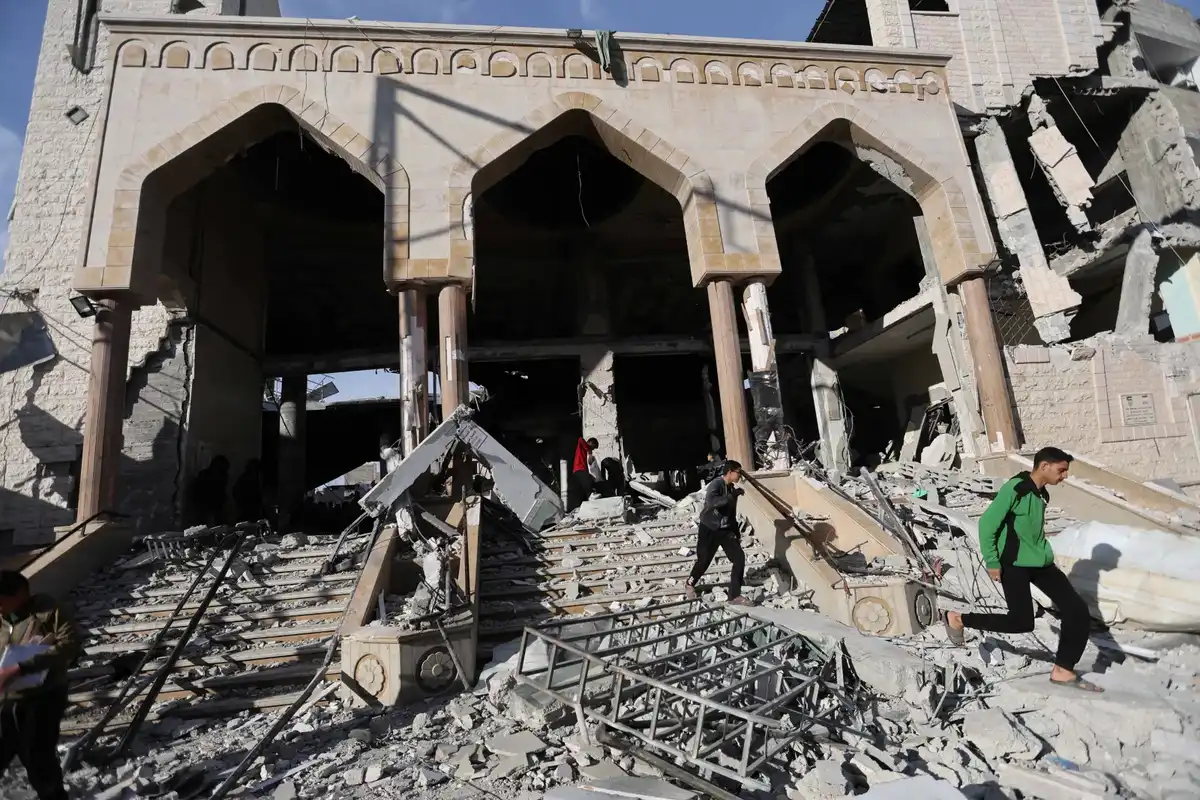
Today, a genocide is unfolding in this ancient, precious city. As I witness this genocide from afar and fear what the threatened Israeli invasion would mean for the hundreds of thousands of displaced Palestinians forced to take shelter there, I feel like I am one of those powerless souls who recognised what was happening in Srebrenia or the Warsaw Ghetto, tried to raise the alarm but couldn’t do anything to avert the tragedy as the world had already decided to turn a blind eye to the impending massacre of innocents.

Since the beginning of this latest war on Gaza, every new phase in the Israeli onslaught has inflicted more suffering, pain and death on the civilian population. Displaced many times over, those who are now in Rafah have nowhere else to go. The invasion of Rafah would thus be the last, and the most deadly phase of this genocide – the first genocide in human history that has been broadcast live to the world.

Sadly, this is not the first time beautiful Rafah has become the background to crimes against humanity. The border city’s recent history is a wound kept open by constant violence. The majority of Rafah’s residents, like most cities in Gaza, are the descendants of those displaced during the 1948 Nakba while others are the survivors of a 1956 massacre and the many other Israeli aggressions that came after.

My 89-year-old aunt Rayya, a refugee from Barqa village, which was destroyed by Israel in 1948, has been witness to decades of massacres, violence and oppression in this city.

In 1956, during the tripartite aggression involving Britain, France and Israel, also known as the Suez Crisis, Israel occupied the Gaza Strip for about four months, perpetrating horrifying massacres in both Khan Younis and Rafah.

On November 2, when the Israeli military occupied Khan Younis and ordered males aged 16 and older to come out and present themselves at points across the city, my aunt was there visiting family. Then a 22-year-old newlywed, she witnessed the Israeli military line those men and boys up against walls and massacre them over the course of two days.

My aunt eventually decided to leave the family home with her sister’s family in search of safety. They walked to the beach in Khan Younis and sought refuge under the trees. They ate anything they could find and dug holes in the ground to sleep, find clean water and use as a toilet. Despite the surrounding danger and the continuous sound of bombardment, Rayya, fearing for the safety of her husband, made the difficult decision to continue her journey on to Rafah.

Upon her arrival, Rayya realised that there had been yet more executions across Rafah. She could not find her husband anywhere. For days, she grappled with the harrowing uncertainty of his fate. Fortunately, her husband had survived that particular wave of violence. He later died during the occupation of Gaza in 1967, killed by the Israeli army while travelling along the beach from Khan Younis to Rafah.

After her husband’s murder, Rayya found herself alone, a single mother, tasked with raising five children in the hardship and destitution of the Rafah refugee camp.

In the 1970s, she was forced to seek employment in Israel’s agriculture sector, labouring in the fields collecting tomatoes to provide for her family.

During the first Intifada in 1987, Rayya lost an eye while trying to rescue her youngest son from the hands of Israeli soldiers. She was struck in the eye by the butt of a rifle while trying to prevent soldiers from taking her child.

At the beginning of the second Intifada in 2000, one of her grandchildren, 13-year-old Karam, was shot in the back of the head as he was running away from an Israeli army post after throwing stones at soldiers. The unconscious child was rushed to al-Shifa Hospital in Gaza City, but doctors said he had no possibility of survival beyond a few hours.

Rayya and her daughter in law, Karam’s mother, were presented with an agonising choice: Stay at the hospital and accompany Karam in his final hours of life, or return to Rafah before checkpoints were closed to mourn his death at home with their loved ones. Uncertain whether they would be allowed to move between cities in the coming days, they eventually decided to go home without Karam’s body.

In 2004, Rafah was subjected to what Israel called Operation Rainbow, a cruelly ironic title for what was considered – at the time – the worst episode of violence the city had witnessed. The operation resulted in the destruction of hundreds of homes throughout Rafah. Rayya’s home was also partially demolished during this spate of violence. Then, during the 2014 war on Gaza, Rayya lost another grandson – a bright engineering student, recently engaged.

Today, 10 years later, Rayya is once again trying to survive military aggression in Rafah. I have not been able to contact her recently, but I fear she is once again displaced, hungry, cold and terrified, digging holes in the ground to find water or go to the toilet at the age of 89.

The story of my aunt Rayya – a story of suffering and perseverance – is the story of Rafah. Her story echoes the tragic stories of more than a million displaced Palestinians who have been forced to seek safety in the border city. But Rafah’s story is also one of international solidarity. Rachel Corrie, Tom Hurndall and James Miller all lost their lives at the hands of the Israeli military in Rafah while bravely taking a stand against Israel’s brutal occupation.

Rafah is now the last refuge for Palestinians in Gaza amid a still unfolding genocide, and it is the place where the international community could and should take action to prevent another Warsaw or Srebrenica.

This is the moment for every member of the global civil society, everyone who believes in human rights, justice and freedom for all, to speak up against the deafening silence of their political leaders and take a stance for the long suffering Palestinian people.

As the threat of a catastrophic Israeli invasion looms on the horizon in Rafah, we cannot continue to ignore the plight of Palestinian refugees, displaced many times over, sick, hungry and forced to resist a blatant ethnic cleansing campaign with nothing but their fragile bodies.

No one can claim ignorance about what’s happening today in Rafah, in Gaza, across Palestine. The truth is evident in the testimonies of the children living through the genocide, in the work of brave journalists on the ground documenting their own slaughter, in the carefully researched and sourced reports of experts, academics, human rights defenders and international institutions. Rafah is the final opportunity for the international community to come together for peace and dignity in Palestine. It’s time for Rafah to finally be truly safe and prosper. It is time for lifelong refugees like my aunt Rayya to find permanent safety and security. It is time for a ceasefire, and a free Palestine.

Aljazeera
ARAB AND WORLD

Fri 16 Feb 2024 12:56 pm - Jerusalem Time

The Governor of Sinai denies... Reuters: Egypt is preparing a safe area on the Gaza border to house refugees from Rafah.

Four sources said that Egypt has begun paving the way for an area on the border with the Gaza Strip that could be used to house Palestinian refugees if an Israeli attack on the city of Rafah in the south of the Strip leads to a mass exodus across the border. 

The sources described this measure as an emergency move by Cairo. Egypt, which denied making any such preparations, has repeatedly sounded the alarm about the possibility that the devastating Israeli attack on Gaza could lead to the exodus of Palestinians to Sinai, something Cairo says is completely unacceptable, repeating warnings issued by Arab countries such as Jordan. 

The United States has also repeatedly said that it will oppose any displacement of Palestinians from Gaza. One of the sources said that Egypt is optimistic that talks aimed at reaching a ceasefire could lead to avoiding such a scenario, but it is working to establish the zone on the border as a temporary and precautionary measure. 

Three security sources said that Egypt has begun paving a desert area and establishing some simple facilities that may be used to house Palestinian refugees, stressing that this is an emergency step.


The sources that Reuters spoke to for this report refused to reveal their identities due to the sensitivity of the matter.


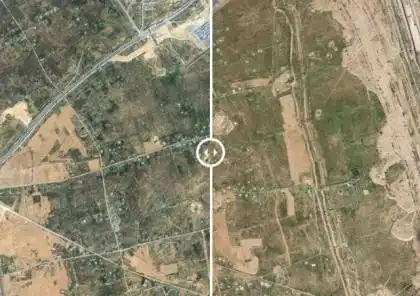
Western press reports revealed that Egypt is building a buffer zone on an area of 20 square kilometers, near its border with the Gaza Strip.


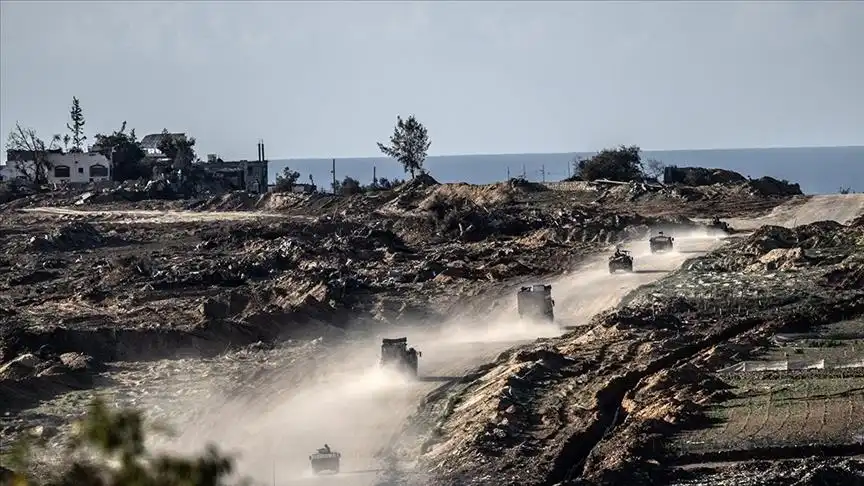
Images taken by Maxar Technologies in the past five days show that a large portion of Egyptian land between the road and the Gaza border has been bulldozed.


If the buffer zone - which extends from the end of the Gaza border to the Mediterranean Sea - is completed, it will completely swallow the Rafah border crossing complex between Egypt and Rafah.


Egyptian officials said that the area being built can accommodate more than 100,000 people and is surrounded by concrete walls, according to the American Wall Street Journal.


The officials added that the construction of this area comes amid fears that the Israeli military incursion into Rafah will lead to an influx of refugees from Gaza.


Additional satellite images show that bulldozers arrived at the site on February 3, and initial excavations in the buffer zone began on February 6. There has been a significant increase in excavations in the past five days.


CNN contacted the Egyptian government to comment on the buffer zone and the construction of the wall.


Sinai Governor explains

North Sinai Governor Muhammad Abdel Fadil Shusha said in statements to reporters on Thursday, “The Egyptian position is clear and frank and was announced by the political leadership immediately after the Israeli war on Gaza, which is not to allow the forced displacement of the residents of Gaza to Egypt permanently.”


He also stressed that his country is prepared for all scenarios in the event that Israel carries out military operations in the Palestinian border governorate.


The governor denied what some media reported about the Egyptian authorities building a security buffer zone surrounded by walls in the Egyptian city of Rafah to receive Palestinians from Gaza, in anticipation of their displacement.


He explained, "What is happening in the regions of East Sinai, specifically in Rafah, is that committees from the governorate inventory the homes that were demolished during the war on terrorism, with the aim of providing appropriate compensation to the owners of these homes."

He also stressed that this operation is not aimed at establishing camps to receive displaced Palestinians, and has nothing to do with what is happening in the Gaza Strip.

PALESTINE

Fri 16 Feb 2024 11:22 am - Jerusalem Time

Energy sources: another Israeli occupation in the Gaza Strip

International licenses for prospecting, exploration and extraction granted by Israel to foreign companies off the coast of the Mediterranean Sea in areas under Palestinian control, which constitute another occupation of the Gaza Strip in addition to the land occupation.


Israel, which has killed tens of thousands of civilians and children in its illegal occupation of Gaza and its war there, also occupies the region's resources through natural gas exploration licenses it grants to international companies.


On October 29, 2023, Israel announced the results of the tender it launched in December 2022 regarding gas exploration in Palestinian waters.


On that date, Israel intensified its attacks on the sector against which it was waging a devastating war, and this was interpreted as an attempt to divert attention from an illegal reality.


Within the scope of the tender, the Israeli government granted licenses to six local and international companies to explore for natural gas in Palestinian marine areas in accordance with international law.


The Legal Center for the Protection of the Rights of the Arab Minority in Israel, “Adalah,” sent a letter to the Israeli Ministry of Energy on February 5, demanding the cancellation of natural gas exploration licenses granted in the area located within the maritime borders of Palestine.


Following Adalah's letter, licensed companies received warnings from Al-Mizan, Al-Haq, and the Palestinian Center for Human Rights not to engage in any activity in these areas.


Adalah's statement said: "Israel is an occupying regime in the Gaza Strip, and therefore it has complete control over the Palestinian maritime areas. Issuing the tender and granting subsequent exploration licenses in this area constitutes a violation of international humanitarian law and international norms."


It added: “Under recognized international law, Israel is prohibited from exploiting the limited non-renewable resources in the occupied territories for commercial gain and for the benefit of the occupying state, in accordance with the rules of usufruct, as referred to in Article 55 of the Hague Regulations, and accordingly, Israel is prohibited from depleting natural resources.” ".


The Palestinian Center for Human Rights said in a statement that the tender covered a very large area, but areas G, E, and H shown on the map were controversial.


SOCAR, Neomed Energy and BP won the exploration tender for the first field, which is located in the undisputed Area I.


The statement said, "62 percent of Area G lies within the maritime borders declared by the State of Palestine in 2019, in accordance with the provisions of the 1982 United Nations Convention on the Law of the Sea, to which Palestine is a signatory."


In addition to the licenses already granted in Area G, “Israel also issued tenders for Areas H and E, where 73 percent of Area H is located within the declared maritime borders of Palestine, along with 5 percent of Area E.”


Director of the Law, Land Rights and Planning Unit at Adalah, lawyer Suhad Bishara, told Anadolu Agency that the Israeli tender in the sea adjacent to Gaza is illegal according to international law, and that Israel has taken illegal steps.


She added: “Basically, Israel decided to suspend all international legal frameworks that it must abide by and implement its national law instead, and these measures, including the licenses it issued, are all illegal.”


She stated that "Adalah Center submitted a request to the Israeli Ministry of Energy, which is responsible for these licenses, and we asked them to cancel their licenses and refrain from issuing new licenses in the areas that Palestine declared its exclusive economic zone."


Head of the Turkish Center for Maritime and Global Strategies, a faculty member at Topkapi University, Cihat Yaycı, said, “Israel signed the maritime border demarcation agreement with Greek Cyprus in 2010, and the area that should fall within Palestine’s control in accordance with international law was not mentioned in the agreement.”


He stated in an interview with Anatolia that Palestine should have a much larger area than it declared to the United Nations in 2019, and he said: “This is important in terms of showing how a lack of knowledge leads to a loss of rights.”


He added: "We see, by looking at the small triangle, that Israel not only effectively occupied 85 percent of Palestine in 1947, but also occupied 80 percent of the sea."


Yayji explained that Israel does not allow any means of transportation from the Gaza coast, noting that "the most interesting thing is that it has been understood that one of the most important goals of the Israeli blockade and not allowing exploration for oil, gas, and fishing there, is to occupy Gaza and use the wealth."


He stressed: “There is no conflict here, there is a violation of the rights of Palestine, but for example, Turkey does not allow exploration in its declared areas in the eastern Mediterranean, and it carries out military operations and takes measures and prevents that, and they cannot issue licenses in those areas, and in Palestine they do not.” "These things are because of their vulnerable status."


After Palestine declared its maritime borders within the scope of the United Nations Convention on the Law of the Sea on September 24, 2019, Egypt’s notification to the United Nations on December 31, 2019 stated that “the Egyptian government rejects and does not recognize the points that define the external boundaries of the maritime areas specified in the declaration.” issued by Palestine, and these borders conflict with Egypt’s eastern maritime borders in the Mediterranean Sea.”


On January 14, 2020, Israel also objected to the United Nations, saying that it does not recognize the borders declared by Palestine, and in the notification that Palestine submitted to the United Nations on April 12 and 27, 2022, a memorandum was sent regarding unauthorized maritime activities in Marine areas of the country.

PALESTINE

Fri 16 Feb 2024 10:09 am - Jerusalem Time

Developments in the war on Gaza: More than 28 thousand dead in the Gaza Strip

The Ministry of Health said on Friday, “The Israeli army committed 10 massacres against families in the Gaza Strip, claiming 112 killed and 157 injuries during the past 24 hours.”

The Ministry confirmed in a statement that there are still a number of victims under rubble and on the roads, and Israeli forces prevent ambulance and civil defense crews from reaching them.

It indicated that the number of killed has risen to 28,775 Palestinians and 68,552 injuries since the seventh of last October.


The Israeli aggression against the Gaza Strip has entered its 133rd day, with the continued massacres committed by the occupation forces against our people, and the continued displacement of citizens from one place to another within the besieged Strip, in an attempt to escape from missile bombardment, artillery shells and sniper bullets.


At dawn today, Friday, a number of citizens were killed, and others were injured, in an Israeli missile and artillery bombardment that targeted various areas of the Gaza Strip.


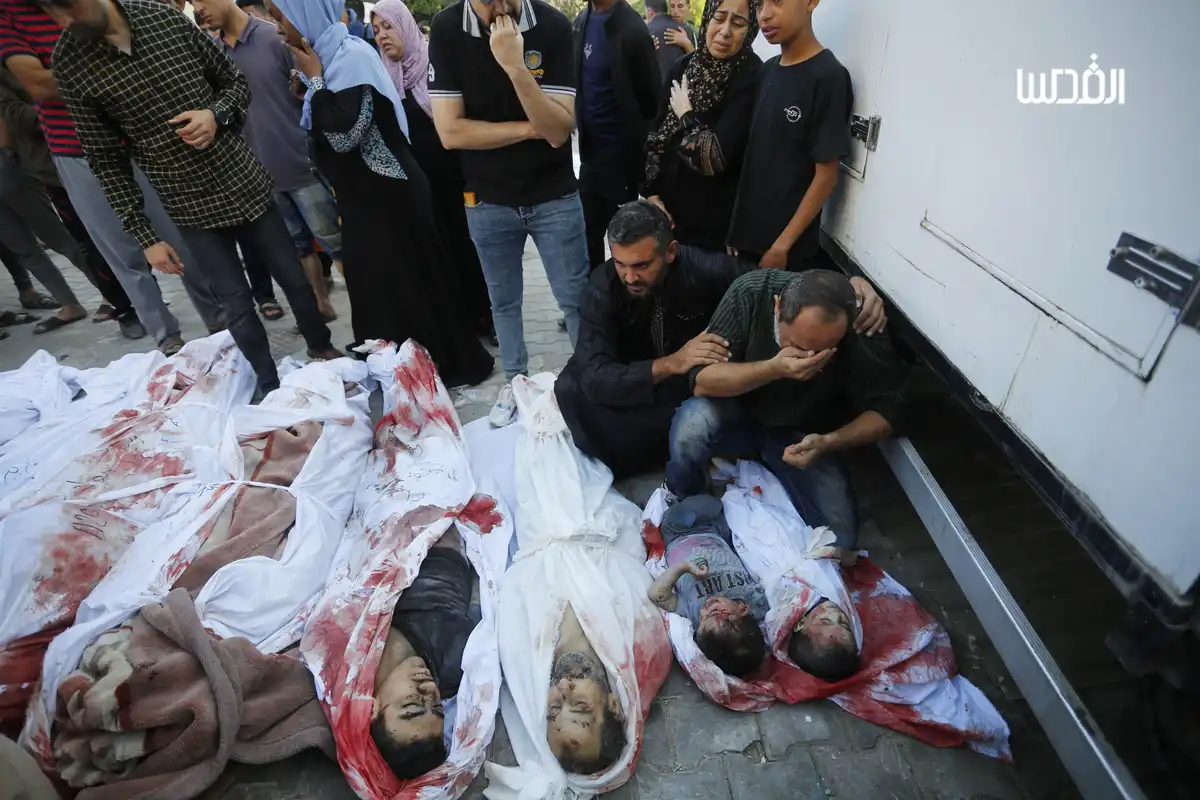
In Rafah, south of the Gaza Strip, 11 citizens were killed and others were injured, in raids launched by Israeli aircraft on two homes belonging to the Judeh and Zarub families in the center and north of the city.


The Israeli forces continue their siege of the Nasser Medical Complex in Khan Yunis, south of the Gaza Strip, and the Israeli snipers target anyone who moves in the complex and its surroundings.


According to the Ministry of Health, three patients died this morning in the intensive care room as a result of the cessation of oxygen due to the power outage in the complex.


The Ministry also announced that two women gave birth “in dire and inhumane conditions, without electricity, without water, without food, and without heating, in the Nasser Medical Complex.”


The Israeli aircraft launched raids southeast of Khan Yunis, and the occupation artillery bombed east of Beit Hanoun in the northern Gaza Strip.


A number of citizens were also killed, including a woman and her fetus, and others were wounded, in raids launched by Israeli occupation aircraft on two homes for the Sabbah and Afana families on Al-Sika Street, east of Jabalia, in the northern Gaza Strip.


A number of children were killed in Kamal Adwan Hospital in Beit Lahia, north of the Gaza Strip, due to drought and malnutrition, in light of the lack of food and the spread of diseases and epidemics.


The Israeli aircraft bombed the Tal al-Zaatar area in the north of the Gaza Strip, simultaneously with the occupation artillery shelling the al-Mughraqa area in the north of the Central Governorate, and the vicinity of the university college south of the al-Sabra neighborhood in Gaza City.


On Thursday evening, at least three citizens were killed, and others were injured, a number of them seriously, as a result of the Israeli occupation bombing a vehicle and a group of citizens in Gaza City.


The Israeli army also launched air strikes on the Al-Sabra and Al-Zaytoun neighborhoods south of the city, and its artillery fired several shells towards the Sheikh Ajlin area to the west.


OPINIONS

Fri 16 Feb 2024 9:53 am - Jerusalem Time

THE SEALS AND THE DHOW, What really happened in the Gulf of Aden

Seymour Hersh

Seymour Hersh

Opinion Writer


This is a painful story for the families of three Navy SEALs. Two of the SEALs were lost at sea and a third was critically injured on a mission on January 11 in the Gulf of Aden between Yemen and Somalia. It was a mission that never should have been ordered, and when everything went wrong, it was covered up with a series of lies. 

Why report a story about two deaths and an injury when there is a president who has put America indirectly into wars in Ukraine, Israel, Yemen, and elsewhere in the Middle East? I have learned in six decades of chasing down hidden stories that it is delving into the little lies that reveals much about the bigger lies. So it has been in the past month with the story of the dead and injured SEALs.Upgrade to 

Their target was a wooden smuggling vessel, operated by Somalis, that was suspected of delivering modern ballistic missiles or missile parts to America’s new enemy: the Houthis of Yemen. Somalis have been smuggling goods through the Red Sea and Indian Ocean in their wooden sailing vessels, known as dhows, since biblical times. Few have motors or any means of electronic communication, and the larger dhows, like the one targeted by the SEALs, often serve as living quarters for the smugglers’ families.

The SEALs were assigned to a ship named the Lewis B. Puller, after a fabled combat general, the most decorated marine of all time, who fought in World War II against the Japanese, as well as in Haiti, in Central America, and in the Korean War. The ship, modeled on an oil tanker, is what the Navy calls an Expeditionary Mobile Base, which means that it is capable, with its landing decks, of supporting a vast number of air and sea military activities from all the services, including those of the Navy SEALs. The Puller was commissioned in 2017 in a port in Bahrain and was not much in the news until it became known that the failed SEAL mission took place.

On January 13, the New York Times, citing two current and two former Pentagon officials, published the first account of the two deaths, which were said to have taken place while the SEALs were attempting to board a dhow at night. 

The sea was rough, and one SEAL slipped off the boarding ladder. The initial report claimed that a second SEAL jumped into the water in an effort to save his colleague and both drowned. It was not clear whether he was also on the ladder or jumped from the inflatable speedboat known as a RHIB, for rigid hulled inflatable boat, that the SEALs used to approach the ship. A January 22 Times article about the incident, by Dave Philipps, known for his excellent sources in the special operations community, revealed that a third SEAL attempted to climb the ladder to board the dhow. He fell during the attempted boarding and struck the speedboat. He was rescued and today remains in critical condition. 

Philipps quoted a former SEAL senior chief explaining that he and his retired colleagues were convinced the story, as told by administration officials, “doesn’t make sense. Something else must have gone wrong.” 

There were questions at the time about President’s Biden decision in early January to expand the American war portfolio. He has taken on the Houthis, who had survived a seven-year war with the Saudi air force, supported by American bombs and targeting intelligence. That war ended with what amounted to a Saudi surrender. The American attacks, still being supported by British air power, are in their second month, and the world’s major shipping companies are still choosing not to chance a ten-day shortcut by sailing from Europe via the Suez Canal into the Red Sea. The Houthi threat is still there, pending an Israeli decision to cease its onslaught in the Gaza Strip. Ironically, or tragically, Biden is now said to be telling the Israelis that a ceasefire is needed. The world is coming to its own judgment about Biden, who is now seeking a second term.

The Somali dhow offered the White House a chance to justify its new offensive. It had been tracked by American intelligence since leaving Somalia because it was believed to be carrying ballistic missile parts needed by the Houthis in their ongoing campaign against Western shipping; The basis for that intelligence, which proved to be wrong, has not been made known.

Back to the Lewis B. Puller. The more than a dozen senior officers from all services assigned to the ship’s command center were gung-ho to send the hot-shot SEAL team to intercept the dhow, compel the boat to stand to, and board it to find ballistic missiles or parts of weapons that were coming to the Houthis from Iran, known to American intelligence as a longtime supporter and supplier of weaponry to Yemen. But there was a serious problem. The issue is what is known in the Navy as the Sea State Code, which is based on terminology used in oceanography to describe the general conditions of the ocean’s surface, as determined by three key factors: wind, waves, and swell.

There are ten categories of sea state, and SEALs can operate with ease and safety up to sea state 3. One experienced retired senior American Navy officer told me that even four- and five-foot waves can sometimes create difficulties for a Navy tanker attempting to refuel an aircraft carrier, but it can be done with skilled maneuvering. No ship loaded with high-octane fighter fuel wants to crash into the side of a carrier.

When the seas get higher, to level 4 or 5, the waves and stronger current make boarding a targeted vessel, even a wooden dhow, an extremely dangerous prospect, in part because of the difficulty in handling steel ladders, known as caving ladders, that are standard SEAL boarding gear. The steps are lightweight aluminum tubes linked by equally lightweight steel cables.

What is hard to do at sea state 3 is deadly dangerous at sea state 4 or 5, a retired Navy officer, with years of experience in special operations, told me. “The waves are going up and down eight feet and more and you do not board a ship in heavy sea,” he said. He added that Navy captains of combat ships finishing a long deployment understand that crews due for shore leave are not permitted to leave the ship in such churning waters.

The retired officer said that when the officer on the Puller who was in charge of all special operation missions, an Army colonel, told “the SEAL team leader to ‘saddle up,’ the team leader told him to look outside the window.” His message was that “it was dark, and the sea was too rough. And it was beyond the capabilities of his team.” The retired officer added: “It was an argument between the on the scene commander and a guy in charge of the SEALs.”

The SEAL team leader said no. But he was ordered to carry out the mission, despite the obvious weather issues, and he did so. 

The questions that were not asked, the retired officer said, were these: “Do we know if the dhow is carrying a ballistic missile or a box full of missile parts?” No. “Can you get a key to a launch site?” No. “Or a map of all the Houthi launch sites?” No. “Do Somali smugglers know the difference between a case of Johnny Walker Red and one of Johnny Walter Black?” Yes. 

The decision to ignore the concerns of the SEAL commander has been seen by the angered SEAL community in America as “beyond rational planning” and “a disaster waiting to happen.” I learned that one high-ranking member of the community, now retired, wrote a private letter to Secretary of Defense Lloyd Austin, asking that the officer who overruled the SEAL commander be court-martialed for dereliction of duty as the buck-stops-here boss of the operation. “It will never happen,” the former officer told me. “Dead SEALs will go down in Navy annals as heroes, not victims.” His point was that the Navy would never acknowledge that the SEAL team had no business being sent on a search-and-destroy mission in such weather.

As many as nine SEALs may have been aboard the SEALs’ inflatable speedboat—there was a second boat with no SEALs aboard as backup—as it dashed to the dhow that, as ordered, came to a stop and acknowledged that it was to be boarded. Three SEALs began the treacherous climb aboard the vessel. It is not known just what happened—did one fall off the special ladder, made up of steel tubes and chain links? Or did the ladder, swaying to and from in the heavy sea with two SEALs making the climb and a third waiting to do so, suddenly get rocked by a huge wave that flung the men against the side of the dhow, leaving both unconscious or worse, with only to drop into the sea? The badly injured third SEAL survived only because he fell into one of the speedboats. 

The SEALs who made the climb into the dhow “did find the treasure,” the retired officer sardonically told me. “There were some obsolete rocket motors, all Iran-made, and some pieces of Styx missiles from the 1950s and ’60s, but no significant missile components among the cargo, other than ancient engines and some random tubes that had been used in missile attacks. There was the usual cargo of liquor, cigarettes, random knock-off clothing, porn cassettes.”

The Somali smugglers were taken prisoner and placed on Navy vessels that came to the scene, and the dhow sent to the bottom.

The two deaths were reported, but over the next few days, the retired officer said, all involved “were playing the game,” keeping as many details as possible under wraps. The Lewis B. Puller was locked down in extreme secrecy. The names of the dead were made public, but not that of the survivor, if he does survive. His is a story that no one in the Navy wants told. I learned that the commanding officer of the Lewis B. Puller, who graduated from the Naval Academy in 2000 and spent his career in Navy aviation—not as a pilot but as a backseat radar intercept officer—may be quietly retired, if the system works as it usually does.

There is a Navy history for such arrogance and deception that dates to the end of the Second World War. The chief of Naval Operations was crusty Admiral Ernest King, a brilliant officer who played a key role in advising President Franklin Delano Roosevelt on military matters. When asked at one point by an aide what to tell the press about the progress of the war against the Japanese fleet, King famously said: “Don’t tell them anything. When it’s over, tell them who won.

ARAB AND WORLD

Fri 16 Feb 2024 9:40 am - Jerusalem Time

Netanyahu: Israel will not yield to any pressure to accept a Palestinian state

The Times of Israel newspaper said today (Friday) that Prime Minister Benjamin Netanyahu confirmed, after a phone call between him and US President Joe Biden last night, that Israel “will not yield to pressure to accept a Palestinian state.”


Israeli media reported yesterday that Biden and Netanyahu spoke by phone for the second time within a week, amid tensions between the two sides regarding Gaza and a pending deal with Hamas regarding prisoners and detainees.


The Jerusalem Post newspaper said that the conversation lasted 40 minutes, and came in the wake of talks that took place earlier in Israel between Netanyahu and CIA Director William Burns.


Netanyahu said through his account on the “X” platform: “My positions can be summarized in the following two sentences: Israel categorically rejects international trends regarding a permanent settlement with the Palestinians. We will not reach such an agreement except through direct negotiations between the two parties and without any preconditions.”


He added: “Israel will continue to oppose any unilateral recognition of a Palestinian state, considering that such recognition in the wake of the October 7 attack would provide a reward for what he described as unprecedented “terrorism.”


The Times of Israel newspaper had quoted an official in Netanyahu's office as saying that during the call, they discussed the issue of detainees, the situation in Rafah, and the next stage in the fight against Hamas. They also discussed the humanitarian situation in the Gaza Strip.


Biden had stressed to the Israeli Prime Minister in a call on Sunday the necessity of having a credible and “executable” plan to ensure the security of the displaced in Rafah in the southern Gaza Strip before carrying out a military operation there.


The White House added in a statement that Biden and Netanyahu called for urgent steps to increase the volume of humanitarian aid to Palestinian civilians.


Biden also called for the need to build on the progress achieved in the detainee exchange negotiations in Gaza.


ARAB AND WORLD

Fri 16 Feb 2024 9:35 am - Jerusalem Time

Israeli Haaretz: Israelis prefer those who lie to them rather than those who confront them with the painful truth

The Israeli government is against everyone. It is against the Islamic Resistance Movement (Hamas), against the Lebanese Hezbollah, against the Israeli army, and against the people. If it says that Hamas does not care about what happens to the people of Gaza, does it care about what happens in Israel? What happens is plundering, passing money to friends, helping ultra-Orthodox Jews, and ignoring those on the battle front.


With this introduction, writer Yossi Klein opened an article in Haaretz newspaper, in which he said that the fighters in the Israeli army are neither absent from reality nor stupid, and they realize that the government is fighting on their backs and that they are its cannon fodder.


He added that these fighters see where the money is going, they see the extension of reserve service, the inefficiency in dealing with displaced Israelis, and the indifference towards the detainees, and on top of that they see the goal of the war changing every week, from “overthrowing Hamas” in the past to “absolute victory” now.


What is this “absolute victory” for which they sacrifice their lives? -The writer wonders- Laird that the media knows, and the journalists who can analyze every second in the mind of Hamas leader Yahya Sinwar, know what is happening in the mind of Prime Minister Benjamin Netanyahu, and they know that “absolute victory” means preserving Netanyahu’s rule, not “the next day” neither overthrowing Hamas nor releasing detainees.


Journalists know this - according to the writer - but they do not convey what the public should know, but rather what the public wants. As for what the public does not want to know, it is that their children are fighting for Netanyahu. The evidence is that the most reliable Channel 1 - according to an opinion poll - is the least watched. Because the public would rather lie to him than to torture him with the bitter truth.


The commentators - as the writer says - do not tell the painful truth in front of the cameras, such as the fact that the detainees are under the barrel of a gun, but rather they present a false scene of reserve soldiers ready to serve for two or three years if that will achieve the goal, and at the same time they cover up the fact that the goal is deliberately ambiguous.


The writer concluded - sarcastically - that the brilliant minds who do not even know how to care for 100,000 Israeli refugees will “know” how to “transfer” 1.4 million refugees from Gaza, and they have continued to bombard them with leaflets asking them to transfer themselves, and whoever remains “may God have mercy on them.” .


At the conclusion of his article, Yossi Klein suggested to the pollster to check the extent of the public’s support for an action in Rafah during which 5,000 elderly people, women and children were killed, guessing that the public would support it, on the condition that they did not see it.


Source: Haaretz

OPINIONS

Fri 16 Feb 2024 9:31 am - Jerusalem Time

Gaza and the End of the Rules-Based Order

Foreign Affairs

Foreign Affairs

Opinion Writer

By Agnès Callamard

What the Israel-Hamas War Means for the Future of Human Rights and International Law


After more than four months of conflict, Israel’s campaign of retaliation against Hamas has been characterized by a pattern of war crimes and violations of international law. Israel’s stated justification for its war in Gaza is the elimination of Hamas, which is responsible for the horrific crimes committed during its October 7 attack on Israel: 1,139 people, mostly Israeli civilians, killed; thousands more wounded; a yet unknown number of women and girls subjected to sexual violence; and 240 people taken hostage, many of whom are still held by Hamas.

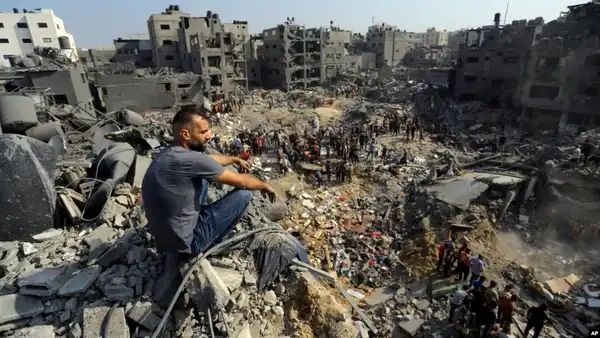
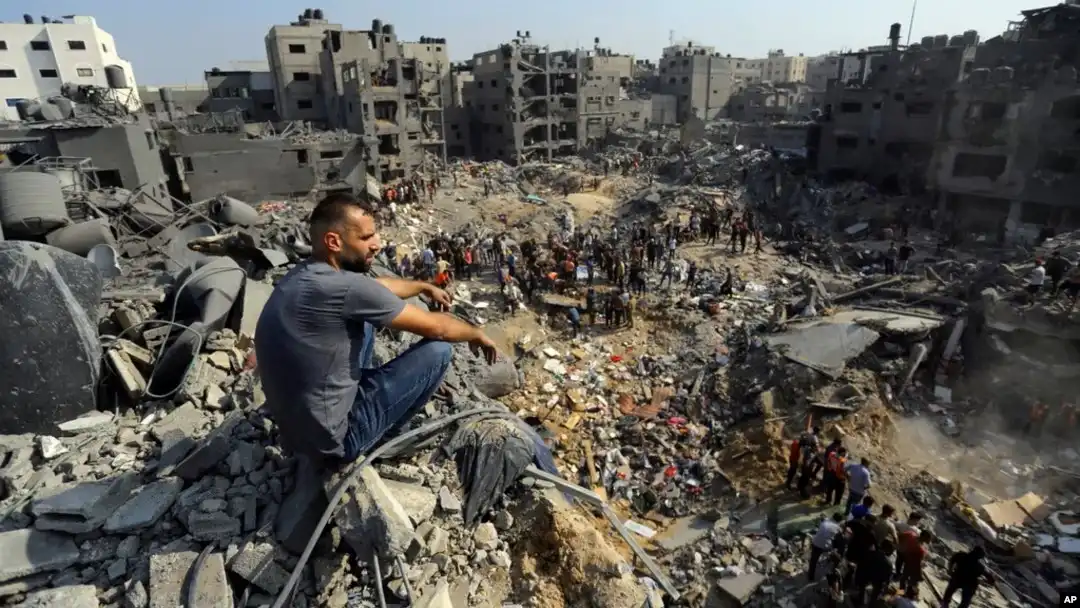
In response, Israel forcibly displaced Palestinians, imposing conditions that have left hundreds of thousands without basic human necessities. It has carried out indiscriminate, disproportionate, and direct attacks on civilians and “civilian objects,” such as schools and hospitals. Some 28,000 Palestinians have been killed, the majority of them women and children. Vast sections of Gaza have been pulverized; a fifth of its infrastructure and most of its homes are now damaged or destroyed, leaving the region largely uninhabitable. Israel imposed a prolonged blockade, denying Palestinians adequate food, potable water, fuel, Internet access, shelter, and medical care: action amounting to collective punishment. It is detaining Gazans in inhumane and degrading conditions, and Israel admits that some of those detained have already died. Meanwhile, in the West Bank, violence against Palestinians by Israeli forces and settlers has increased markedly.

The United States and many Western countries have supported Israel, providing military assistance, opposing calls for a cease-fire at the United Nations, stopping funding of the UN Relief and Works Agency serving Palestinian refugees, and rejecting South Africa’s genocide case against Israel at the International Court of Justice (ICJ), even as the carnage continued to unfold.

Today’s diplomatic complicity in the catastrophic human rights and humanitarian crisis in Gaza is the culmination of years of erosion of the international rule of law and global human rights system. Such disintegration began in earnest after 9/11, when the United States embarked on its “war on terror,” a campaign that normalized the idea that everything is permissible in the pursuit of “terrorists.” To prosecute its war in Gaza, Israel borrows ethos, strategy, and tactics from that framework, doing so with the support of the United States.

It is as if the grave moral lessons of the Holocaust, of World War II, have been all but forgotten, and with them, the very core of the decades-old “Never Again” principle: its absolute universality, the notion that it protects us all or none of us. This disintegration, so apparent in the destruction of Gaza and the West’s response to it, signals the end of the rules-based order and the start of a new era.

THE AGE OF UNIVERSALITY

Universality, the principle that all of us, without exception, are endowed with human rights equally, no matter who we are or where we live, lies at the heart of the international human rights system. It was the foundation of the Genocide Convention and Universal Declaration of Human Rights, both adopted in 1948, and it continued to inform new means of accountability over the years, including the International Criminal Court, established in 2002. For decades, that legal infrastructure has helped ensure that states uphold their human rights obligations. It has defined human rights movements globally and underpinned the twentieth century’s greatest human rights achievements.

A critic of this system might argue that states have only ever paid lip service to universality. The twentieth century abounds with examples of failures to uphold the equal dignity of all: the violence used against those advocating for decolonization, the Vietnam War, the genocides in Cambodia and Rwanda, the wars that followed the breakup of Yugoslavia, and many more. These events all testify to an international system rooted more in systemic inequality and discrimination than in universality. With good reason, one could contend that universality was never applied to Palestinians, who, as the Palestinian American scholar Edward Said expressed it, have been, instead, since 1948, “the victims of the victims, the refugees of the refugees.”

Yet the fate of universality resides not in the hands of those who betray it. Rather, as a perennial ambitious project for humankind, its power rests, first and foremost, in its continual proclamation and in its persistent defense. Throughout the twentieth century, the principle of universality had countless setbacks, but the overarching direction was toward proclaiming, affirming, and defending it. That shifted, however, in the early years of the twenty-first century, with the unleashing of the “war on terror” following the tragic events of 9/11.

TAKING THE GLOVES OFF

For the last 20 years, the doctrine and methods of the “war on terror” have been adopted or mimicked by governments the world over. They have been deployed to expand the reach and range of state “self-defense” measures and to hunt down, with the barest of restraints, any people or authorities deemed to warrant the loosely defined but widely applied designation of “terrorist threat.”

The extraordinary toll of civilian killings in Gaza committed in the name of both self-defense and countering terrorism is a logical consequence of that framework, which has perverted and almost dismantled international law and, along with it, the principle of universality.

American airstrikes in Afghanistan, Iraq, Pakistan, Somalia, and Syria resulted in mass civilian casualties. Invariably, the U.S. military would claim that it had taken the necessary steps to protect civilians. But it gave little explanation as to exactly how it distinguished civilians from combatants and why, if distinguished properly, so many civilians had been killed.

It is as if the grave moral lessons of the Holocaust, of World War II, have been all but forgotten.

Over the last 20 years, governments around the world have adopted similar methods. In Syria, Russia’s relentless bombings of civilian infrastructure led to thousands of civilian deaths. Yet in cases documented by Amnesty International, Russian authorities claimed their armed forces were striking “terrorist” targets, even when they were destroying hospitals, schools, and markets. Russia’s 2022 invasion of Ukraine was also justified with spurious references to self-defense and exceptions to the prohibition of the use of force. Its indiscriminate attacks have led to thousands of civilian casualties, amid mounting evidence of crimes under international law, such as torture, deportation and forcible transfer, sexual violence, and unlawful killings. China, too, has invoked “the fight against terrorism” to justify its widespread crackdown on Uyghurs, Kazakhs, and other predominantly Muslim ethnic minorities in Xinjiang, which resulted in crimes against humanity.

Israel’s massive bombardment of Gaza has roots that go deeper in history than the long running “war on terror,” including the 1948 expulsion of roughly 750,000 Palestinians from their homes, which came to be known as the nakba, or catastrophe. But it is also a thoroughly twenty-first-century manifestation of the erosion of international law in which little to none of the restraints set by the post–World War II system have been respected: not those in the UN Charter, in international human rights law, or even under the Genocide Convention, as argued by South Africa.

WHERE IS THE OUTCRY?

Immediately after October 7, Western governments condemned Hamas’s crimes and expressed unconditional support for Israel, an understandable and predictable response to the horror inflicted on the population of a close ally. But they should have shifted their rhetoric once it became clear, as it quickly did, that Israel’s bombing of Gaza was killing thousands of civilians. All governments, especially those with influence over Israel, should have unequivocally and publicly denounced Israel’s unlawful actions and called for a cease-fire, for the return of all hostages, and for accountability for war crimes and other violations on both sides.

It did not happen. For the first two months of the war, the Biden administration largely downplayed the loss of lives in Gaza. It failed to denounce Israel’s relentless bombings and devastating siege. It did not acknowledge the context of the Israeli-Palestinian conflict, including 56 years of Israeli military occupation, and instead bought into Israel’s counterterrorism framing.

And as the war continued, the Biden administration defended Israel’s tactics. It parroted certain of Israel’s unverified and later repudiated claims about Hamas atrocities. Although the United States eventually became more vocal about the protection of Palestinian civilians, it has refused to publicly support key steps that would help save their lives. Instead, at the UN, the United States vetoed Security Council resolutions calling for humanitarian pauses to the war. Only on December 22 did it permit, through its abstention, the Security Council to adopt a compromise resolution calling for “urgent steps to immediately allow safe and unhindered and expanded humanitarian access” to Gaza and “the conditions for a sustainable cessation of hostilities.” It has never publicly entertained stopping its arms transfers to Israel.

Within days of the ICJ ruling and its calls for provisional measures to prevent genocide in Gaza, the United States and a number of other Western governments canceled funding to the UN Relief and Works Agency, which provides a lifeline to people in Gaza. That decision does not just ignore the evident risks of genocide; it serves to amplify and accelerate them. The United States’ superpower status and its influence over Israel means Washington is uniquely positioned to change the reality on the ground in Gaza. More than any other country, the United States can prevent its close ally from continuing to commit atrocities. But thus far, it has chosen not to.

This pattern of conduct comes at a huge cost. As one G-7 diplomat has put it, “We have definitely lost the battle in the Global South. All the work we have done with the Global South (over Ukraine) has been lost. ... Forget about rules, forget about world order. They won’t ever listen to us again.”

A CHANGE OF ERAS

Although there were rehearsals for events in Gaza that showed extreme disregard of international law, the war there may well signal a curtain call. The risk of genocide, the gravity of the violations being committed, and the flimsy justifications by elected officials in Western democracies warn of a change of eras. The rules-based order that has governed international affairs since the end of World War II is on its way out, and there may be no turning back.

The consequences of this abandonment are all too apparent: more instability, more aggression, more conflict, and more suffering. The only check on violence will be more violence. The end of the rules-based order will also bring spreading and palpable anger across all layers of society, in all corners of the earth, except among those positioned to reap whatever sullied rewards can be extracted from the breaking international system.

But steps can be taken to avert this worst-case scenario. They start with the immediate cessation of all military operations by both Israel and Hamas, with the immediate release of all remaining civilian hostages detained by Hamas and of all Palestinians unlawfully detained by Israel, and with the lifting of the siege of Gaza. The ICJ’s provisional measures to prevent genocide in Gaza must be fully implemented.

Israel and its biggest supporter, the United States, must accept that the stated military objective of destroying Hamas has wrought an overwhelming cost to civilian lives and infrastructure, which likely cannot be justified under international law. It is now more important than ever that the prosecutor for the International Criminal Court act decisively to deliver indictments for crimes committed by all parties to the conflict.

Neither historical grievances nor long-term prospects for peace in the Middle East, and arguably beyond, can be addressed without an international and inclusive process that specifies a dismantling of Israel’s system of apartheid and allows for the security and rights of all populations to be protected.

The painful memories of wrongs, both recent and from long ago, can help save lives today, as well as in the future, in Israel, in the Palestinian territories, and beyond. That process must begin immediately, however, as time is running out. If history indeed repeats itself, as we are told it often does, then we should consider ourselves well warned. With the universal application of international law likely in its death throes and nothing yet to take its place save brutalist national interests and sheer greed, widespread anger can be, and will be, exploited by the many ready to foster even broader instability on an even greater global scale.


PALESTINE

Fri 16 Feb 2024 9:30 am - Jerusalem Time

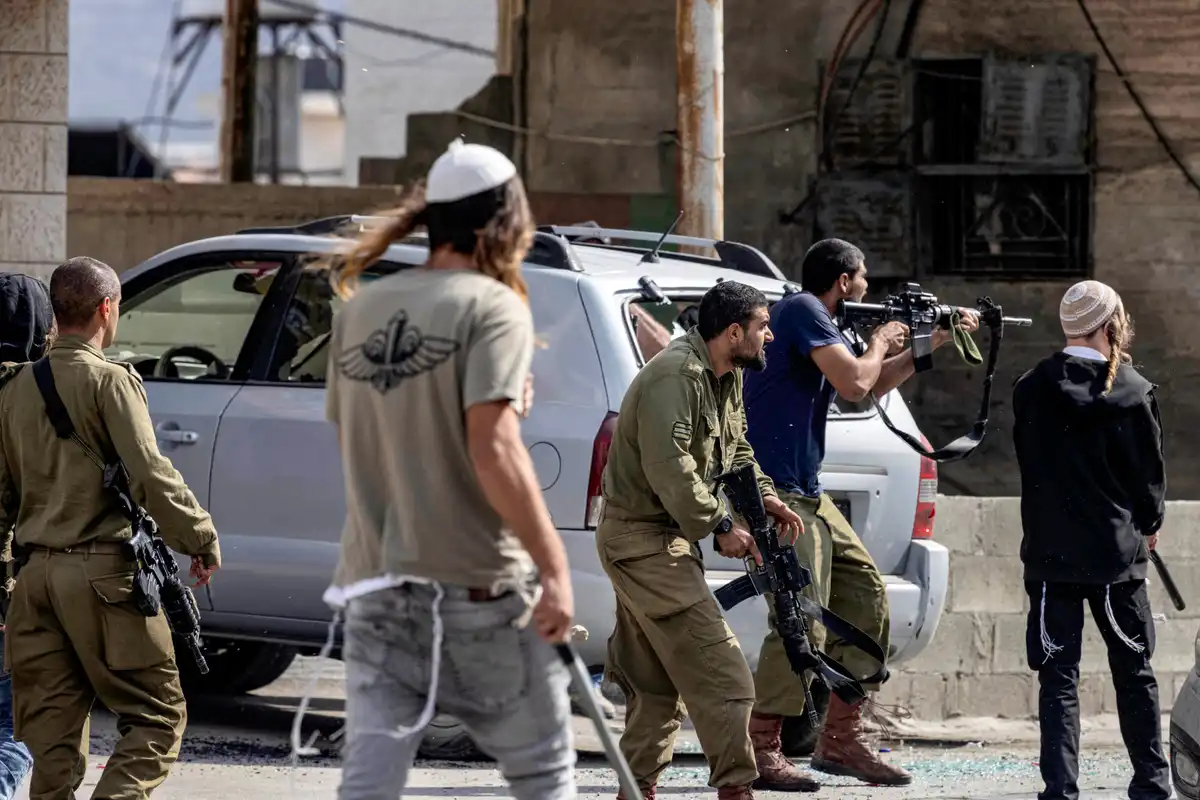
West Bank: Israeli settlers burn a house and facilities east of Bethlehem

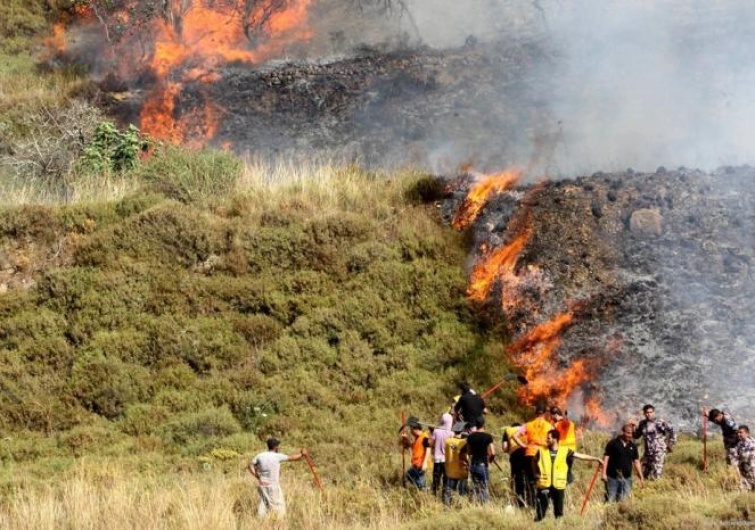
Today, Friday, settlers burned a house, a vehicle, and a livestock barracks in the Kaisan Wilderness, east of Bethlehem.


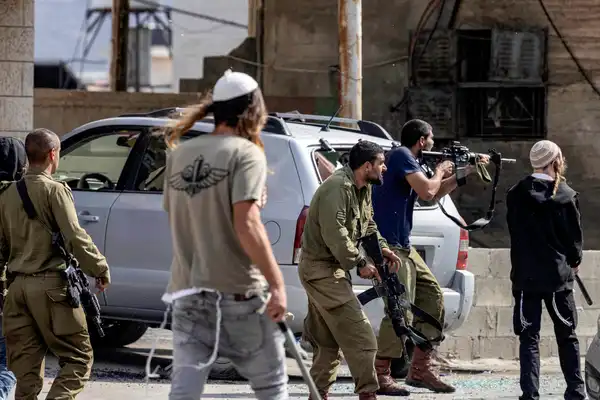
According to local sources, a group of “Maale Amos” settlers, squatting on citizens’ lands, attacked the village and burned a house, a vehicle, and a barracks for raising livestock and storing their supplies, belonging to the citizen Ibrahim Aweida Sawarka.


It is noteworthy that the settlers escalated their colonial attack in the Kisan wilderness, including attacks on citizens, their homes, and their property.

ARAB AND WORLD

Fri 16 Feb 2024 9:28 am - Jerusalem Time

In a 40-minute call, Biden holds Netanyahu responsible for bringing the region into “chaos” because of his refusal to cease fire in Gaza.

The Axios website reported from the office of Israeli Prime Minister Benjamin Netanyahu on Thursday that US President Joe Biden made a phone call with Netanyahu.

The website added that the conversation lasted about 40 minutes. He did not provide further details.

For its part, sources in the White House revealed that Biden made a call to Netanyahu, and he was “very nervous.”

The sources added that during the call, Biden held Netanyahu responsible for bringing the region into “chaos,” as he put it.


According to the sources, the dispute between the two parties was over the temporary ceasefire and Netanyahu’s position on facilitating the hostage exchange deal.


On Thursday, US Secretary of State Anthony Blinken commented on the possibility of reaching an agreement regarding the release of hostages held by the Hamas movement.


Blinken said that reaching an agreement regarding the release of hostages held by Hamas is still possible, but there are “very difficult” issues that still need to be resolved.

In response to a question about whether it was possible to reach an agreement to establish a truce before the start of the month of Ramadan on approximately March 10, Blinken said that Hamas’s previous response to a possible agreement included some “clearly unenforceable matters,” but he indicated the possibility of working to reach an agreement.

Blinken added in a press conference during a visit to Albania, “We are now working with our counterparts from Qatar, Egypt and Israel on the matter and we are working very intensively on it with the aim of trying to reach an agreement, and I believe that this is possible.”

Blinken went on to say, “There are some very, very difficult issues that must be resolved.” But we are committed to doing everything we can to move forward and explore whether we can reach an agreement.”

ARAB AND WORLD

Fri 16 Feb 2024 9:26 am - Jerusalem Time

Reuters: Egypt is preparing a safe area on the Gaza border to house refugees in the event of an Israeli army attack on Rafah.

Four sources said that Egypt has begun paving the way for an area on the border with the Gaza Strip that could be used to house Palestinian refugees if an Israeli attack on the city of Rafah in the south of the Strip leads to a mass exodus across the border. The sources described this measure as an emergency move by Cairo.

Egypt, which denied making any such preparations, has repeatedly sounded the alarm about the possibility that the devastating Israeli attack on Gaza could lead to the exodus of Palestinians to Sinai, something Cairo says is completely unacceptable, repeating warnings issued by Arab countries such as Jordan.

The United States has also repeatedly said that it will oppose any displacement of Palestinians from Gaza.

One of the sources said that Egypt is optimistic that talks aimed at reaching a ceasefire could lead to avoiding such a scenario, but it is working to establish the zone on the border as a temporary and precautionary measure.

Three security sources said that Egypt has begun paving a desert area and establishing some simple facilities that may be used to house Palestinian refugees, stressing that this is an emergency step.


The sources that Reuters spoke to for this report refused to reveal their identities due to the sensitivity of the matter.

PALESTINE

Fri 16 Feb 2024 9:00 am - Jerusalem Time

Rapid movements regarding the prisoner exchange deal between Hamas and Israel

The American website Axios quoted an Israeli official as saying that Israeli Prime Minister Benjamin Netanyahu and US President Joe Biden held a telephone conversation that focused on prisoner negotiations and the possible military operation in Rafah, while US Secretary of State Anthony Blinken said that the response of the Islamic Resistance Movement (Hamas) had been received. There are some very difficult issues to be resolved.


The Israeli Broadcasting Corporation said that Netanyahu left the Israeli Cabinet meeting to hold the phone conversation with Biden, which lasted 40 minutes.


The White House said in a statement that Biden repeated his position during the conversation that Israel launching an operation in the city of Rafah should not be carried out without a reliable and implementable plan that guarantees the security of civilians.


Biden also affirmed his commitment to make every effort to support the release of all hostages as soon as possible.


Israeli media said that the Israeli Cabinet meeting, which considered the prisoner exchange deal proposal, had ended. The proposal was also discussed at a war council meeting.


This comes at a time when Blinken said that work is continuing with Qatar, Egypt and Israel to reach a final agreement on the prisoners, and that this is now possible.


The American minister added that a proposal reached by the United States, Qatar, Egypt, and Israel was presented to Hamas, and we received a response from it a week ago. This response includes proposals that have no chance of success, but at the same time provides the possibility of working toward an agreement.


He stressed that work is underway on this with Egypt, Qatar and Israel with the aim of reaching a final agreement, stressing that this is possible, but there are still very difficult issues that we must solve.


Netanyahu and Burns meeting

For its part, Israeli Channel 13 said that Netanyahu held a narrow meeting with CIA Director William Burns, in which the director of Israeli Intelligence (Mossad) David Barnea participated.


According to Israeli Channel 12, Burns - who arrived in Tel Aviv on a previously unannounced visit - informed Netanyahu that Qatar is requesting the entry of more aid into Gaza to push the prisoner deal forward.


The channel added that Netanyahu refused to discuss the request until Israel obtained proof that the medicines had reached the prisoners.

The Israeli Broadcasting Corporation reported that during his meeting with Burns, Netanyahu demanded to know whether the medicines had reached the prisoners, as part of the agreement guaranteed by Qatar and the United States.


The commission quoted Netanyahu as telling Burns that Hamas should abandon what he described as its unrealistic demands, otherwise it is impossible to move forward, as he put it.


Last Tuesday, Burns participated in the quadrilateral meeting in Cairo, with the participation of the head of the Mossad, the head of Egyptian intelligence, Major General Abbas Kamel, and the Qatari Prime Minister and Foreign Minister Mohammed bin Abdul Rahman Al Thani.


In a related development, the American CNN network quoted an informed source as saying that Qatar is still waiting for Hamas’ response to Israel’s position that it presented earlier this week, after the Cairo meeting regarding the prisoner exchange deal.


The network said that the main point of disagreement regarding the exchange proposal is the withdrawal of Israeli forces from Gaza, and Israel had rejected a proposal submitted by Hamas to release a large number of Palestinian prisoners.


For his part, the head of the Hamas political bureau, Ismail Haniyeh, stressed that any agreement must guarantee a ceasefire, the withdrawal of the Israeli army from Gaza, and the completion of a serious exchange deal.


Israeli resentment

Axios also quoted two Israeli officials as saying that Netanyahu, in his meeting with Blinken last week, expressed his dissatisfaction with Washington’s consideration of the option of recognizing the State of Palestine.


The two Israeli officials told the website that Netanyahu made it clear to Blinken that Washington's step to recognize a Palestinian state would harm any effort by the Biden administration regarding peace and normalization, adding that this step would mean "offering a reward" to those who carried out the attack on October 7th.


Tension within the war council

This comes at a time when the Israeli Broadcasting Corporation reported from sources that tension within the War Council had reached its peak between Netanyahu and Council member Benny Gantz, and that they rarely exchanged words, indicating that Netanyahu had doubts regarding Gantz’s communication with American officials.


War Council member Gadi Eisenkot criticized Netanyahu's decisions regarding the negotiating delegation in the prisoner deal. The Israeli Broadcasting Authority also quoted sources as saying that Eisenkot refuses for Netanyahu to make decisions on his own, and this is considered a violation of the war council agreement.


For its part, Israeli Channel 12 said that Netanyahu raised during the government session the issue of opposition to the establishment of a Palestinian state, at the request of extremist Finance Minister Bezalel Smotrich.


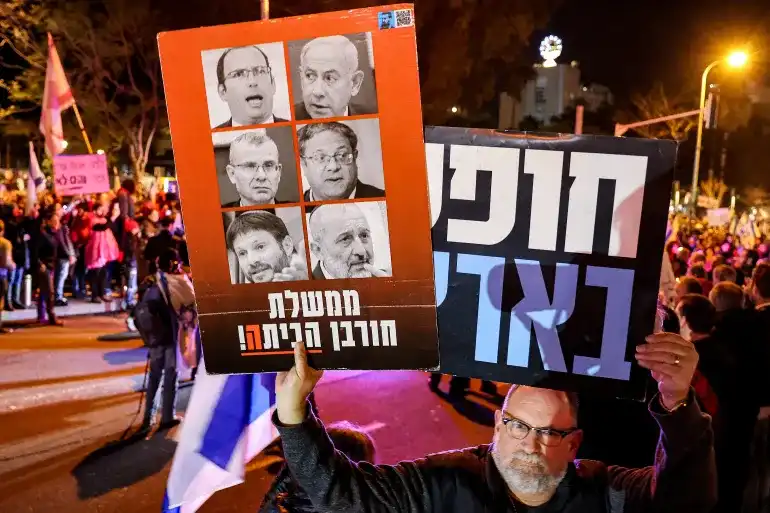
In this context, dozens of Israelis closed the street leading to the Israeli Ministry of Defense in Tel Aviv in protest against Netanyahu's decision to freeze negotiations with Hamas.


The demonstrators demanded an immediate deal to return the Israeli prisoners being held in Gaza alive.


In a press conference, the Association of Families of Israeli Prisoners demanded an immediate meeting with members of the War Council, and that the families of the prisoners be informed of the latest developments regarding the course of the talks.


A truce previously prevailed between Hamas and Israel for a week from November 24, until December 1, during which a ceasefire took place, prisoners were exchanged, and very limited humanitarian aid was brought into Gaza, with Qatari-Egyptian-American mediation.

PALESTINE

Fri 16 Feb 2024 8:40 am - Jerusalem Time

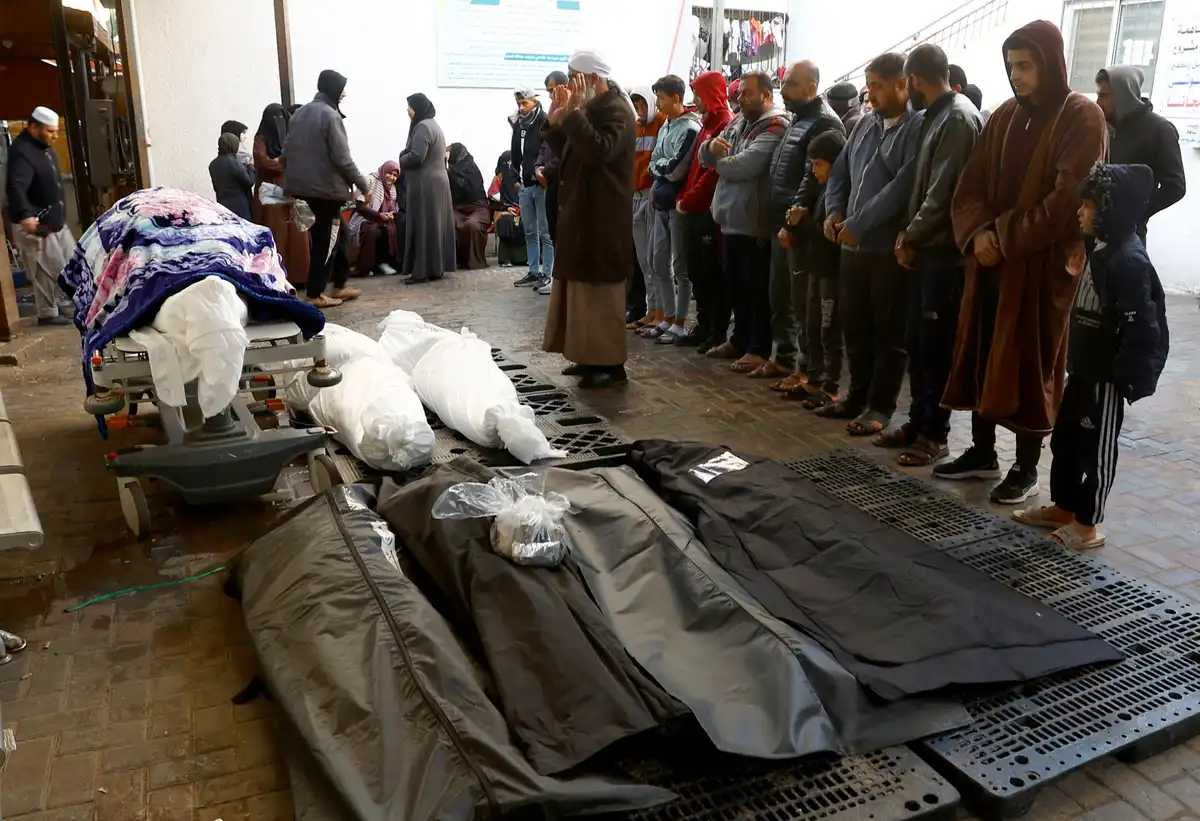
War on Gaza: 3 Palestinian patients died at Nasser Medical Complex in Khan Yunis

Three patients died on Friday morning at the Nasser Medical Complex in Khan Yunis, south of the Gaza Strip.


Medical sources in the complex reported that three patients died in the intensive care room as a result of the cessation of oxygen due to the power outage.


The sources also announced that two women gave birth “in dire and inhumane conditions, without electricity, without water, without food, and without heating, in the Nasser Medical Complex.”


The sources said that the near exhaustion of fuel and the Israeli blockade threaten the lives of patients and premature babies in the complex, holding the Israeli occupation responsible for the lives of patients and medical teams, and calling on all international institutions to quickly intervene to save the patients and medical teams in the complex.


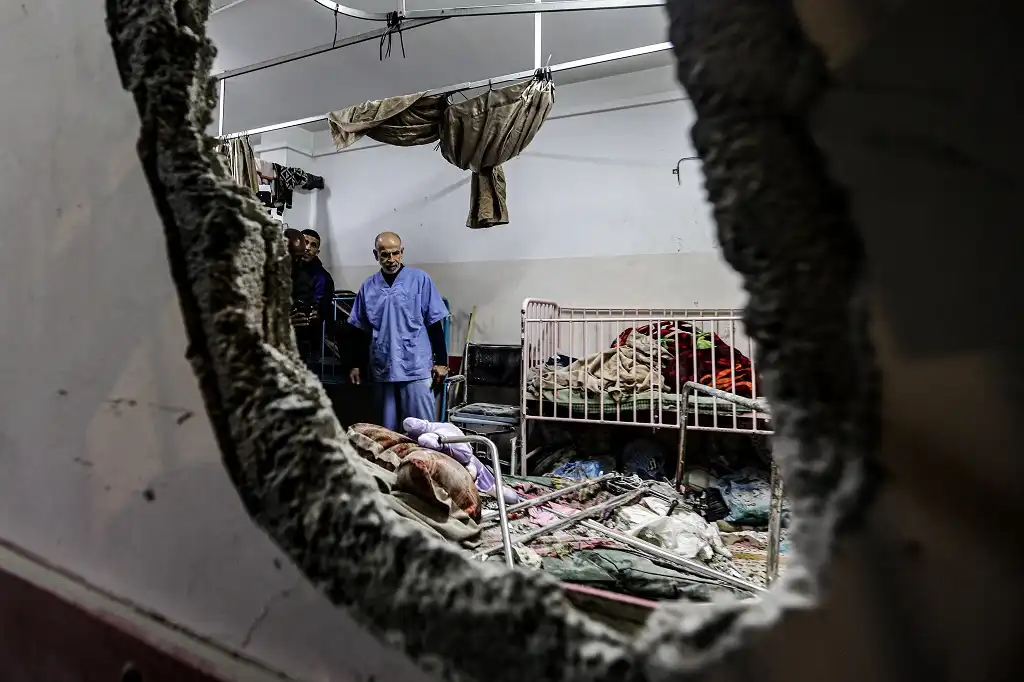
The Israeli forces had forced the administration of the Nasser Medical Complex to place 95 health personnel, 11 of their families, 191 patients, and 165 companions and displaced people in the old Nasser building, in harsh and frightening conditions, without food, without baby formula, and an acute water shortage.

ARAB AND WORLD

Thu 15 Feb 2024 7:12 pm - Jerusalem Time

Blinken: We received Hamas’ response and there are some very difficult issues

US Secretary of State, Anthony Blinken, announced that Washington had received Hamas’ response, noting that there are some very difficult issues that must be resolved.


Blinken said in his statements on Thursday that the United States is working with Qatar, Egypt, and Tel Aviv to reach a final agreement regarding the detainees, considering that this is possible now.


He added that Washington believes that a deal regarding the prisoners is possible, even if it is surrounded by difficulties.


Blinken stressed that the priority is to recover all detainees from Gaza, and we believe that a deal is possible, even if it is difficult.


Earlier, Hebrew media said that the Prime Minister of the occupation government, Benjamin Netanyahu, insists that Tel Aviv will not submit to the imaginary demands of Hamas, according to his claims.


For its part, Maariv newspaper reported that Netanyahu did not authorize an Israeli delegation to go to follow up on the talks, claiming that there was no point in further dialogue until Hamas agreed to change its position on the issue.


Netanyahu indicated that there is no new proposal from Hamas in Cairo regarding the exchange agreement, and that only a change in its position will allow progress to occur.

OPINIONS

Thu 15 Feb 2024 4:35 pm - Jerusalem Time

Israeli News Paper: The return of the kidnapped or all-out war? A horror scenario could come true

Maariv

Maariv

Opinion Writer

By Danny Citrinowicz

There is a direct relationship to the dangerous escalation that has prevailed on the northern border in recent days with Hassan Nasrallah’s speech. The party’s refusal to abandon its equation, which states that as long as the Israeli army is fighting Hamas in Gaza, the party will fight Israel on the northern border, leads to the fact that so far there is no political solution on the horizon that guarantees the return of residents to their homes, and a ceasefire on the part of the party.

Although the conflict between Israel and Hezbollah is taking place on the Lebanese border, the party’s position practically links the future of the war in the north to reaching a possible consensus between Hamas and Israel regarding a ceasefire in the Gaza Strip, and while there are no signs of achieving this ceasefire. On the horizon, it is expected that the clash in the north will continue, and even escalate. No negotiations can begin on any kind of settlement in the north as long as the war in Gaza is raging.

Despite the painful blows that the party has received since October 8, and the heavy price it pays (which exceeds 200 party members killed), to the detriment of it (evidence of this is Nasrallah’s statements in his speech yesterday regarding the need to maintain information security (In order to reduce Israel's capabilities to strike the organization), it seems that it is still committed to standing alongside the axis of resistance, and will continue to work to disperse the Israeli army forces so that they are not able to direct all their war efforts against the Hamas movement in Gaza. This reality leads to the assumption that the party will not stop its war in the north, no matter what Israel does, and that, according to Nasrallah’s statements yesterday, it is fully prepared to expand the scope of the confrontation if Israel so desires.

When ceasefire options are absent from the horizon, in light of the fierce and daily confrontations that Hezbollah is waging against the army, and in parallel with the internal Israeli pressure on the government to ensure the return of the residents of the northern settlements to their homes, the potential for the situation to deteriorate becomes higher, and appears through escalation in the statements of both parties. The fact that Hezbollah operates among the civilian population, and does not hesitate to strike civilian towns in northern Israel, represents a guaranteed recipe for a “slippage” that leads to civilian casualties, and as a result, the turmoil of mutual responses between the two parties escalates.

Thus, in the absence of a political mechanism that can guarantee an end to the fighting, and with both sides literally playing with fire, it seems that deterioration has become almost inevitable, and this is happening specifically now, because the possibilities of reaching an agreement between Israel Hamas has become very low. What appears now, after more than 100 days of confrontation in the north, is that the ability to control the “escalation of the flames” is eroding.

In conclusion, the reality in the north “attracts” the two parties to a confrontation, even though they apparently have no interest in it. It is true that Hezbollah faces strong internal opposition in Lebanon, an opposition that should not be underestimated, and many parties in the state greatly fear that the clash will turn into a very destructive war, into which the party will lead the Lebanese state. However, Hezbollah’s steps indicate that it is disturbed by leaving Hamas is more afraid of entering the war alone in the battle against Israel. Thus, in light of the lack of prospects for reaching a deal that guarantees a ceasefire in Gaza, and in light of the ongoing escalation in military activities in the north during the past days, and despite the desire of both parties to maintain the existing “equations,” it seems that it will be difficult to prevent the next stage of escalation between the two parties.

OPINIONS

Thu 15 Feb 2024 4:30 pm - Jerusalem Time

Israeli News Paper: The international community sets boundaries between Israel and the illegal settlement project

Haaretz

Haaretz

Opinion Writer

The French decision to impose sanctions on 28 settlers involved in incidents of violence against Palestinians in the West Bank is a step in the right direction on the part of the international community. According to the French Ministry of Foreign Affairs, these steps came in response to the increase in settler violence since the outbreak of the war, and it is Israel's duty "to end this situation and prosecute those behind this violence."

France is not the first country to move in this direction, which also includes preventing the entry of extremist settlers involved in acts of violence against Palestinians into its territory. This month, US President Joe Biden issued an order allowing the imposition of sanctions on settlers involved in violence against Palestinians in the West Bank. In the first stage, sanctions were imposed on 4 settlers, one of whom, according to the US administration, was the one who led the riots in Huwwara.

Britain also announced the imposition of economic sanctions on 4 settlers involved in violence against Palestinians, and prevented them from entering its territory. Foreign Secretary David Cameron said: “We must be clear about what is happening here. Extremist settlers are threatening Palestinians, sometimes with weapons, and expelling them from their land, which is legally theirs.” In his opinion, Israel is not making enough efforts to put an end to the violence.

The wave of sanctions on settlers will not stop with France. The European Union is expected to decide soon whether to impose sanctions on extremist settlers who attacked Palestinians. Of course, this decision requires consensus by the Union’s foreign ministers, and it is not clear whether all countries will support it. The European Union's official in charge of foreign relations, Joseph Borrell, announced at the beginning of December that Brussels would propose to the EU member states to impose sanctions on activists from the Israeli extreme right involved in acts of violence against Palestinians in the West Bank. He said: "It is time to move from words to actions, and start taking steps regarding violence against the Palestinian population in the West Bank."

Canada is also considering taking a similar step; The Canadian Foreign Minister said this month that the Ottawa government intends to impose sanctions on extremist settlers, as well as on Hamas leaders.

The international community made a correct decision when it decided to set clear boundaries between the legitimate State of Israel and the illegal settlement project that undermines Israel's legitimacy. Not distinguishing between sovereign Israel and the occupied territories serves those dreaming of annexing the West Bank and imposing apartheid. For anyone who wants to live in a state that does not control another people, steps like these, along with international recognition of a Palestinian state, will advance the future realization of a two-state solution for two peoples.

ARAB AND WORLD

Thu 15 Feb 2024 1:59 pm - Jerusalem Time

South Lebanon: The death toll from the Israeli raid in Nabatieh, rose to 8 persons from one family

The death toll from the Israeli raid that targeted a residential apartment in the city of Nabatieh in southern Lebanon on Wednesday night rose to eight people from one family, according to Lebanese security and medical sources.


An Israeli drone with two air-to-surface missiles at nine o'clock yesterday evening, local time, targeted an apartment in a four-story building in the center of the city of Nabatieh, as part of a "wide wave" of raids inside Lebanon after a missile bombardment on the city of Safed, northern Israel, that left one dead and seven wounded.


Lebanese security sources told Xinhua News Agency today (Thursday): “The raid led to the complete destruction of the apartment and caused serious damage to the four-storey building, which is now on the verge of collapse due to large cracks in it.”


The sources added, "Nearby residential apartments, a gas station, ten cars, and 12 commercial stores were damaged" as a result of the attack.
Following the raid, several teams equipped with bulldozers and cranes worked throughout the night to remove the rubble of the apartment and neighboring buildings, according to sources in the Lebanese Civil Defense and the Islamic Health Authority.


PALESTINE

Thu 15 Feb 2024 1:24 pm - Jerusalem Time

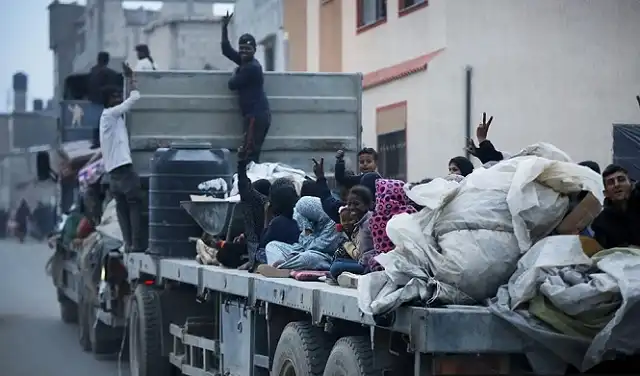
Reverse exodus from Rafah to central Gaza for fear of an Israeli attack

Two days ago, the city of Rafah, in the far south of the Gaza Strip, witnessed a reverse displacement movement towards the center of the Strip, after a series of intense Israeli raids targeted the city, and a continuing threat from Tel Aviv to carry out a massive ground invasion there.


Thousands of residents of the Central Governorate began to return to their homes, fearing an imminent military operation in Rafah, according to what the Anatolia News Agency reported.


They had previously been displaced to Rafah, after being displaced from their residential areas, which were targeted by the Israeli army at the time.


During the past two days, other numbers of displaced people from the northern regions of the Gaza Strip began heading to the Central Governorate, which includes the city of Deir al-Balah and the Bureij, al-Maghazi, and al-Nuseirat camps.


According to eyewitnesses, all of these displaced people leave Rafah in vehicles and carts pulled by animals, heading to the new shelter only via the coastal “Al-Rashid” Street, which connects the sector from north to south.


Omar Zain al-Din (33 years old), a displaced person from Gaza City, says that he decided to go with his family members to Deir al-Balah for fear of the escalation of the situation in Rafah and the transfer of the ground military operation there.


Zain al-Din was living in a tent near the Egyptian border with the Gaza Strip. Before leaving for Deir al-Balah with his wife and five children, he dismantled his tent and gathered all the clothes and firewood he could carry on a horse-drawn cart to take him to the new place of displacement.


He added: "This is the fifth displacement trip since the beginning of the Israeli aggression on the Gaza Strip. At first we left Gaza City to the Al-Zawaida area, then we headed to Deir Al-Balah and from there to the city of Khan Yunis, before moving to the border with Egypt in Rafah, and now we will return to Deir Al-Balah," according to him خب what was reported by “Anatolia”.


Naeem Al-Safadi also decided to leave Rafah, but will return to his home in the Nuseirat camp, from which he was displaced about a month ago to the border city of Rafah.


Al-Safadi says: “My house in Nuseirat is destroyed. I will return there and pitch my tent on its rubble. The Israeli forces will soon arrive in Rafah, and I fear that a massacre will occur here.”


Al-Safadi was lucky on his return trip to Nuseirat. He found a small truck whose owner managed to operate it using cooking oil instead of the diesel lost in the markets. This will make the trip quick but expensive.


The displaced Palestinian says: “I will pay Abu Mazen (the owner of the truck) 1,500 shekels (about 450 dollars) to transport me with my family and my luggage to Nuseirat. This amount is equivalent to 25 times the original price before the war, but there is nothing I can do. My wife is sick and I cannot transport her on a horse-drawn cart.” ".


On board that truck, Al-Safadi carried his dismantled tent, his family’s clothes, bedding, blankets, and modest kitchen utensils that barely met part of their needs.


Al-Safadi expresses his fears about the lack of food and goods in the Nuseirat camp and the rest of the central areas of the Gaza Strip. The aid entering the Gaza Strip is very limited, and only small amounts reach the central region due to the large population concentration in Rafah.


If all the displaced people in Rafah decide to head to the central regions, its small area will not be enough to accommodate these large numbers, especially since most of its area is narrow refugee camps, in addition to the fact that Deir al-Balah, the only city in it, is crowded with displaced people and its residents who were unable to leave it during the last period.


Thus, the reverse displacement movement will impose great pressure on the central region, as it will not be able to provide any services to the huge numbers of displaced people, in addition to its narrow area.


Last Monday, the city of Rafah witnessed a bloody night that resulted in the death and injury of hundreds, most of them women and children, in a series of violent raids launched by the Israeli army on different areas of the city.


The International Committee of the Red Cross warned on Wednesday that "the imminent Israeli military attack on the city of Rafah may have a serious impact," calling for respect for "the basic principle of humanity."


The committee said in a statement, “Israel, as the occupying power, bears the responsibility under international law to ensure that the basic needs of the civilian population are met.”


The organization stressed that "forced displacement" is expressly prohibited under international humanitarian law, as are the use of human shields and indiscriminate attacks that cause the death and injury of disproportionate numbers of civilians.


It pointed out that "evacuations must ensure the safe arrival of civilians, must provide satisfactory conditions in terms of hygiene, health, safety and nutrition, and not separate family members," noting that "they must also be able to return to their homes when hostilities stop." .


It stressed that those responsible for evacuations must "take into account the large numbers of people moving along roads damaged by bombs, through the rubble of destroyed buildings, and through areas contaminated with unexploded weapons."


Rafah turned into a huge camp for displaced people, and it is the only large city in the Strip that the occupation army has not yet invaded by land.


On Sunday, the Israeli Public Broadcasting Authority (“Kan 11”) reported that the Israeli army had approved an operational plan to launch a ground operation in Rafah, which is the last refuge for the displaced in the stricken sector.


The Israeli announcement was met with international warnings and calls not to undertake the operation, as it would have “catastrophic” consequences for about 1,400,000 Palestinians, most of whom were displaced from other areas in the Gaza Strip, for whom Rafah represented their last refuge.


ARAB AND WORLD

Thu 15 Feb 2024 1:19 pm - Jerusalem Time

A UN official warns of the possibility of an influx of Palestinians from Gaza to Egypt

United Nations Aid Coordinator Martin Griffiths warned on Thursday of the possibility of an influx of Palestinians crowded into Rafah into Egypt if Israel launches a military operation on the border city.


Griffiths said in a speech at the United Nations in Geneva that the idea of individuals in Gaza moving to a safe place is a pure “illusion.”

ARAB AND WORLD

Thu 15 Feb 2024 1:17 pm - Jerusalem Time

Irish Foreign Minister: Israel launched a false and misleading campaign against UNRWA

Irish Deputy Prime Minister and Foreign Minister Michael Martin said that Israel launched a false and misleading campaign against the United Nations Relief and Works Agency for Refugees (UNRWA), and criticized the United States and called on it to rethink its decision to suspend support for UNRWA.


Martin spoke in a press conference on Thursday with UNRWA Commissioner-General Philippe Lazzarini about a systematic attack targeting the agency, and stressed that without UNRWA there would be no basic services for the Palestinians in Gaza.


He stressed that "any attack on UNRWA would undermine the two-state solution," noting that "the entity that will administer Gaza after the war will not be able to carry out its tasks without UNRWA."


For his part, Lazzarini welcomed the announcement by Ireland and other European countries to maintain their financial support for the agency, and said that this constitutes a message to other countries.


He renewed his keenness to continue the agency's basic services in the region, and considered that dismantling the agency and suspending its funding "would be a disappointment to the Palestinians from the international community and would affect their lives, and would have serious repercussions and negative effects."


He warned that the absence of new contributions would cause a major shortage in the agency’s funding starting next April.


The Commissioner-General of UNRWA called on the Israeli government to cooperate with the agency in the accusations against its employees and to send all the facts, as he put it.


Since January 26, 18 countries and the European Union have suspended their funding to UNRWA, against the backdrop of Israeli allegations that employees of the agency participated in the attack carried out by the Palestinian resistance on October 7.


UN officials had warned of the catastrophic consequences of the steps taken by these countries towards the UN agency, stressing the impossibility of finding an alternative to the agency.


Source: Al Jazeera

ARAB AND WORLD

Thu 15 Feb 2024 1:14 pm - Jerusalem Time

Israel's responses: Agreeing to a truce for 42 days without complete withdrawal

The latest Israeli response to the prisoner exchange agreement does not include, according to a Hamas source, a commitment to stop fighting and withdraw from all parts of the Gaza Strip.


According to what the Hebrew Channel 12 quoted the source as saying, Israel offered to release three prisoners for every Israeli kidnapped in the first round, in addition to a number of Palestinian prisoners with high sentences.


According to the Israeli response, the first truce will last 42 days, and the second truce will last 30 days. As for the third truce, the Israeli answer is not accurate during the cessation of fighting.


Israel proposed that the IDF withdraw only from densely populated areas, and also allow hospitals to be prepared for operation – but not to rebuild them. Israel also agreed to bring 500 trucks of supplies daily at the request of Hamas, as well as to bring caravans and tents into the Strip.


The Israeli response also says, according to the Hamas source, that it will be possible to evacuate 50 wounded per day from the Strip, as well as those aged 50 and over. The Israeli response stated that for the second phase, negotiations would be held regarding the number of those released - and promised that Israel would reconsider the possibility of allowing the displaced to return to their homes, but without committing to a complete withdrawal.


The channel said that negotiations will continue today in Cairo regarding the exchange deal. Prime Minister Netanyahu did not allow the negotiating teams to travel to Cairo to continue the talks. Those around Netanyahu made it clear that, according to his style, Hamas’ response to the Israeli terms of reference must be accepted, and the extent of their willingness to be flexible must be tested, and only then must they move forward.


The officials present at the talks gave their impressions and explained that there is room for progress. They asked Netanyahu to allow them to “exhaust the step,” but he refused. Sources involved in the process say that they “understand the political difficulty Netanyahu faces, but there is an opportunity that should not be missed.”


PALESTINE

Thu 15 Feb 2024 12:59 pm - Jerusalem Time

War on Gaza: Israel committed 9 massacres in the Gaza Strip, killing 87 civilians

The Israeli army committed 9 massacres against families in the Gaza Strip, killing 87 civilians and injuring 104 during the past 24 hours.

According to the Ministry of Health, a number of victims are still under rubble and on the roads, noting that the Israeli forces are preventing ambulance and civil defense crews from reaching them.

The Ministry indicated that the toll of the Israeli aggression rose to 28,663 killed and 68,395 injured since the seventh of last October.

PALESTINE

Thu 15 Feb 2024 11:48 am - Jerusalem Time

West Bank: Israeli forces arrests a Palestinian teenager from Jericho

Today, Thursday, the Israeli forces arrested a child from Jericho, after summoning him.


According to local sources, these forces arrested the child Mahdi Muhammad Hussein Abu Zaid (17 years old), a resident of Ain al-Sultan camp in Jericho, after summoning him.


It is noteworthy that the occupation forces raided his family’s home earlier today, and did not arrest him at the time

PALESTINE

Thu 15 Feb 2024 11:33 am - Jerusalem Time

War on Gaza: Dozens of Palestinians killed and wounded in the ongoing Israeli bombing

Today, Thursday, dozens of citizens were killed, and others were injured, in an Israeli missile and artillery bombardment that targeted various areas of the Gaza Strip.


Our correspondent reported that 10 citizens were martyred and others were injured, following a missile attack on a number of citizens’ homes in the Al-Zaytoun and Al-Sabra neighborhoods in Gaza City. They were transferred to Al-Baptist Hospital in the city.


Six citizens were killed in an Israeli air strike and artillery shelling on the Tal al-Zaatar area in Jabalia, north of the Gaza Strip. They were transferred to Kamal Adwan Hospital in Jabalia and the Indonesian Hospital in the neighboring town of Beit Lahia.


The Israeli warplanes also bombed with a number of missiles the Tal al-Hawa neighborhood and the Sheikh Ajlin area southwest of Gaza City, which led to the number of killed and wounded among the citizens, without ambulances being able to reach the targeted places, as a result of the shooting from the Israeli drones on everyone who moved.


The Israeli artillery bombed homes in the Al-Bureij and Al-Maghazi camps in the central Gaza Strip, killing a number of citizens and wounding others, who were transferred to Al-Aqsa Martyrs Hospital in the neighboring city of Deir Al-Balah.


In the city of Khan Yunis, the central and western neighborhoods of the city were subjected to Israeli missile and artillery bombardment, which led to dozens of killed and wounded, the majority of whom were children, women and the elderly. Meanwhile, Israeli drones fired bullets at Nasser Hospital, killing and wounding the sick and displaced inside it.


As for Rafah, Israeli warplanes launched a series of raids on the western area of the city and the border area south of the city, causing injuries among displaced citizens who were transferred to city hospitals.


The Israeli army continues its aggression against Gaza for the fifth month in a row, claiming the lives of civilians and destroying homes, buildings, apartments, property, and infrastructure in the Strip.

ARAB AND WORLD

Thu 15 Feb 2024 11:30 am - Jerusalem Time

An American solution in one package: a Palestinian state within weeks

Washington is crystallizing a plan with the participation of some Arab countries that stipulates a permanent peace between Israel and the Palestinians and the declaration of a Palestinian state within weeks, according to a report published by the American newspaper The Washington Post.


This morning, the Washington Post reported on a plan that the Biden administration is formulating with a small group of Arab countries, which includes “the completion of a detailed and comprehensive plan for long-term peace between Israel and the Palestinians, including a solid timetable for peace and the establishment of a Palestinian state.” The American newspaper reported that according to the plan, the state that will be created is expected to be announced “in the coming weeks.”


Efforts to complete the plan are linked to the proposed truce and the release of the abductees, provided that a six-week ceasefire allows the declaration of the state openly, mobilizing support and taking additional steps to implement this declaration, including the formation of an interim Palestinian government.


An American source said that reaching an agreement to release the hostages is the key to the plan, but while Washington and the Arab countries are working to promote it, there are fears that an Israeli attack in Rafah will abort efforts to release the hostages and future efforts for peace.


The American newspaper also wrote that the obstacle in such a plan is Israel, and the question of whether the government will agree to a large part of the matters it is discussing, which include, among other things, withdrawal from settlements in the West Bank, the establishment of a Palestinian capital in East Jerusalem, and the reconstruction of Gaza and integrated security arrangements for the administration of the West Bank and Gaza Strip.


These countries hope that Israel will also receive in-kind security guarantees and normalization with Saudi Arabia and other Arab countries, which Israel will find difficult to refuse.


After the report was published, Finance Minister Bezalel Smotrich said: “We will not agree in any way to this plan, which in fact says that the Palestinians deserve a reward for the terrible massacre they committed against us: a Palestinian state with Jerusalem as its capital. I will demand today at the Ministerial Council meeting “The security policy has decided to take a clear and unambiguous decision stating that Israel opposes the establishment of a Palestinian state and to impose sanctions on more than half a million settlers.”

PALESTINE

Thu 15 Feb 2024 11:10 am - Jerusalem Time

War on Gaz: Israeli army storms the Nasser Medical Complex in Khan Yunis and turns it into a military barracks

Today, Thursday, Israeli forces stormed the Nasser Medical Complex, turning it into a military barracks, after demolishing the southern wall and entering it amid heavy gunfire.


According to local sources, the Israeli targeted the ambulance headquarters and the tents of the displaced, and bulldozed the mass graves inside the complex, which has been witnessing a strict siege for 25 days.


The Israeli forces forced the remaining displaced persons and families of medical teams to forcibly move from Nasser Medical Complex at dawn today under bombardment and threats.


The Israeli army asked the Nasser Medical Complex administration to transfer all patients, including intensive care and nursery patients, to the old Nasser building, including 6 patients under artificial respiration.


The Israeli army destroyed the oxygen tube, and the oxygen leaked, which led to a decrease in oxygen pressure in the Nasser Medical Complex, especially in the intensive care department, exposing patients to danger, as a result of the Israeli targeting of the complex.


The Ministry of Health warned of an imminent humanitarian catastrophe, as a result of the Israeli authorities forcing citizens to evacuate the Nasser Medical Complex in the city of Khan Yunis, where they had been forcibly displaced.


Doctors Without Borders expressed its concern over the situation in Nasser Hospital, which was besieged by the Israeli army in the city of Khan Yunis, south of the Gaza Strip.


For 15 days, the Israeli army has launched a series of intense air and artillery raids on Khan Yunis, and in the vicinity of the hospitals located there, amid ground advances by its vehicles in the southern and western areas of the city, which prompted thousands of Palestinians to flee.

PALESTINE

Thu 15 Feb 2024 11:08 am - Jerusalem Time

WFP warns about the high rate of hunger in the West Bank

The United Nations World Food Program has warned that escalating Israeli arrests and movement restrictions in the West Bank are increasing the rate of hunger among Palestinians.


According to the United Nations news website, Palestine’s gross domestic product decreased by 22% in the last three months of 2023.


The report attributed this decline to various factors, including closures in the West Bank and the layoff of large numbers of Palestinian workers in Israel. The unemployment rate also rose to 29% in this period, compared to only 13% in the previous three months.


The UN program said that hundreds of thousands of Palestinians have lost their work permits in Israel and are unable to leave the West Bank, while commercial activity within the occupied Palestinian territory is limited, putting the economy and humanitarian situation at risk of further deterioration.


It pointed out that since October 7, the situation in the West Bank has been witnessing a political and economic deterioration, the imposition of Israeli restrictions on movement, and the establishment of additional military checkpoints, which has greatly limited freedom of movement.


According to the World Food Program, a large number of workers have lost their jobs, companies have been forced to close or downsize, while the Palestinian Authority faces a severe funding shortfall, affecting the salaries of civil servants.


Food insecurity

Deputy Country Director of the World Food Program in Palestine, Marika Guderian, said that the needs were already high before this current crisis, and have now worsened significantly, adding that there is an urgent need to obtain more funding to help these needy people who are suffering due to the impact of the Gaza war on the West Bank. Western.


According to preliminary assessments conducted by food security sector partners, food insecurity in the West Bank has risen from 350,000 people - about 10% of the population - to an estimated 600,000 people since the outbreak of the current war.


According to the program, this number is expected to increase in the coming months, as the program reported that the largest number of people facing food insecurity reside in Nablus and Hebron.


The World Food Program explained that increasing Israeli restrictions on movement have led to farmers in towns being unable to sell their products, buyers unable to access markets, and food prices have risen significantly in the West Bank, while unemployment and poverty rates are also rising.


The West Bank is witnessing a wave of tension and field confrontations between Palestinians and the Israeli army, including raids and arrests of Palestinians, coinciding with a devastating war on the Gaza Strip that left tens of thousands of civilian victims, most of them children and women.

ARAB AND WORLD

Thu 15 Feb 2024 11:02 am - Jerusalem Time

Washington is looking forward to a temporary truce and protests in Israel over the freeze in prisoner negotiations

US National Security Advisor Jake Sullivan said that his country is seeking to reach a temporary truce in Gaza as part of a possible prisoner exchange deal, while Israel witnessed protests against Prime Minister Benjamin Netanyahu's decision to freeze talks on detainees.


Sullivan added in statements he made yesterday, Wednesday, that the goal is to begin with a temporary truce and build on it in order to reach a more sustainable situation.


For his part, Strategic Policy Coordinator at the US National Security Council, John Kirby, said that Washington believes that the Cairo negotiations on Gaza were constructive.


He added in an interview with CNN that Washington is still involved and holds out hope that the talks will lead to a positive outcome.


In this context, the US Department of Defense (Pentagon) said that Minister Lloyd Austin discussed yesterday, in contact with his Israeli counterpart Yoav Galant, negotiations to secure the release of what he described as the remaining hostages of the Hamas movement.


In an interview with Al Jazeera, the US ambassador to Qatar, Timmy Davis, said that his country views the ongoing negotiations in Egypt regarding reaching a humanitarian truce and ceasefire in Gaza with cautious optimism.


Davis added that US efforts are currently focused on reaching a peaceful solution to the conflict and developing a plan that could lead to the establishment of a Palestinian state.


Yesterday, Tuesday, Cairo witnessed a new round of negotiations with Israeli and American participation, and reports stated that the talks did not make progress in light of Tel Aviv’s rejection of a number of demands that Hamas had previously presented to the mediators.

Disagreements and demonstrations

Yesterday, Israeli Prime Minister Benjamin Netanyahu said that Hamas must give up its conditions, adding that then negotiations can advance.


Netanyahu added that the key to releasing the rest of the "kidnapped" is to continue military pressure on Hamas, which demands that any agreement lead to an end to the ongoing aggression against Gaza for more than 4 months.


Israeli media said that the Prime Minister ordered the Israeli delegation, which was supposed to travel today, Thursday, to resume prisoner exchange negotiations in Cairo, not to go there.


In this context, the Israeli Broadcasting Corporation reported that Netanyahu made the decision without the knowledge of the two ministers in the war council, Benny Gantz and Gadi Eisenkot, indicating that they will demand full participation in decision-making in the war council today, Thursday.


As for the Israeli Channel 13, it quoted an unnamed Israeli official that a dispute broke out between the political and security elite in Israel regarding the delegation’s participation in the Cairo talks.


According to Tel Aviv estimates, there are still about 130 Israelis detained in Gaza, and 30 of them are likely killed.


Meanwhile, Israeli media reported that the families of the Israeli prisoners demonstrated last night in front of the homes of Netanyahu, Defense Minister Yoav Gallant, and War Council member Benny Gantz after the negotiation delegation’s travel to Cairo was cancelled, demanding the immediate conclusion of an exchange deal.


The families of the Israeli prisoners threatened to stage a sit-in in front of the Ministry of Defense headquarters in Tel Aviv if Netanyahu continued to ignore them.


Also last night, dozens of demonstrators from the "Change Direction" movement stormed the headquarters of the Israeli Likud Party in Tel Aviv to protest the continued war on Gaza.


The protesters demanded a no-confidence vote in Benjamin Netanyahu's government and a date for immediate elections, considering it an extremist government that sacrifices citizens for its political survival.


The movement also called on members of the Likud Party to remove what it described as the extremist movement from the government.


Source: Al Jazeera + agencies

ARAB AND WORLD

Thu 15 Feb 2024 10:57 am - Jerusalem Time

British researcher: The Palestinian state must be based on these three foundations

An article in the British newspaper "The Guardian" warned that what US President Joe Biden is promoting regarding a Palestinian state does not contain any mention of Resolution 242, but rather may be limited to a statelet similar to the Bantustans in South Africa during the apartheid regime, stressing that 3 things must be the basis for the prospective state.


The newspaper - in an article written by H. A. Hellyer, who is an associate fellow at the Royal United Services Institute and the Carnegie Endowment for International Peace - drew attention to British Foreign Secretary David Cameron’s surprise announcement of the possibility of the United Kingdom recognizing a Palestinian state before the end of the peace process with Israel, and the United States also saying that it would It could recognize the Palestinian state after the war in Gaza.

As for the path to progress, it is based on three indispensable pillars, according to Heller, the first of which is that Resolution “242 in 2024” remain the cornerstone, not only for addressing the Palestinian issue, but also for preserving the principle of rejecting force as a means of seizing land, because the international community He watches what the West is doing in Israel and Palestine, and compares it to what Russia and Ukraine are doing, and we cannot allow contradiction to be the prevailing norm today.


The second pillar is to undertake real reform of the Palestinian National Council, the legislative body of the Palestine Liberation Organization, to make it accountable, more democratic and more representative.


Finally, the Israeli extreme right represented in the current government must be rejected, “to ensure that our behavior reflects our values, and therefore the West must work to marginalize and isolate the Israeli political forces that work to undermine the safety of the people of Israel, as well as global interests in the region.”


Source: Guardian+ Aljazeera
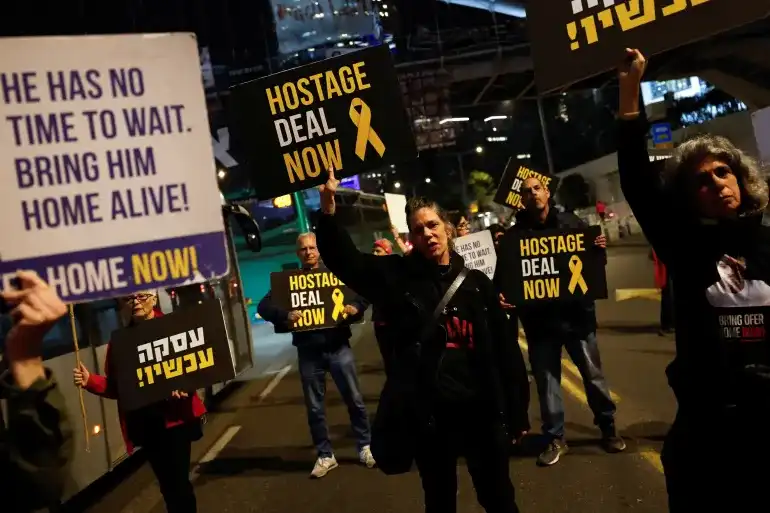
ARAB AND WORLD

Thu 15 Feb 2024 10:55 am - Jerusalem Time

The Biden administration is rapidly advancing a plan to establish a Palestinian state

The United States, with a number of Arab partners, has prepared a plan to reach a peace agreement, which includes a fixed timetable for the establishment of a Palestinian state.


The Washington Post, in a report citing American and Arab officials, said that the key to the plan and its announcement will be reaching an initial ceasefire that is expected to last at least six weeks.


The report indicated that the announcement of a Palestinian state may come in the next few weeks.

The proposed plan includes steps that Israel had previously rejected, including evacuating many West Bank settlements, establishing a Palestinian capital in East Jerusalem, and providing security and joint governments for the West Bank and Gaza.


The report pointed out that it is not clear whether Israel would agree to such a step, pointing out that the Americans and Arab partners hope to convince it with security guarantees and normalization with Arab countries such as Saudi Arabia.


Netanyahu had informed the United States that he opposes the establishment of a Palestinian state as part of any post-war scenario.