ARAB AND WORLD

Sun 18 Feb 2024 10:49 am - Jerusalem Time

Israeli writer: The world must impose peace on Israel

Israeli writer Gideon Levy called on the world to firmly and clearly present an unequivocal option to reach peace between the Palestinians and Israel, indicating that the world must ask Tel Aviv to choose between sanctions or ending the occupation, between settlements or international support, lands or weapons, and a democratic state, or a Jewish state, apartheid, or ending Zionism.


Levy said in an article in the Israeli newspaper "Haaretz" that now is the appropriate time for the United States and the international community to decide whether they want to continue the endless cycle of violence between Israel and the Palestinians, or put an end to it?


He wondered whether America would continue to arm Israel and then regret the excessive use of these weapons, or was it finally ready to take real steps, for the first time in its history, to change reality? Above all, will Israel's most brutal attacks on Gaza become the most senseless of all attacks? Or was the opportunity that came in its wake not to be missed, for a change?


There is no point in appealing to Israel

The writer stressed that there is no point in appealing to Israel, adding that the current government, and the government that is likely to replace it, do not have and will never have the intention, courage, or ability to bring about change.


He explained that the government expected to succeed Netanyahu's current government may be led by Benny Gantz, Gadi Eisenkot, or Yair Lapid, saying that it is painfully futile, as none of them believes in the existence of a Palestinian state equal in its sovereign status and rights vis-à-vis Israel.


He mocked Israeli Prime Minister Benjamin Netanyahu, who spoke of his rejection of what he called "coercive moves" on the American talks on establishing a Palestinian state, saying that he was the man who did everything in his power to thwart the negotiations, and used coercion as a policy towards the Palestinians.


Netanyahu demanded Dayton-like agreements

He added that Netanyahu called for a "non-coercive" solution similar to the Dayton Accords. The writer responded that Dayton was a coercive, incomplete agreement reached in Bosnia and Herzegovina that put an end to one of the cruelest wars and, contrary to all expectations, lasted for 29 years.


Levy continued to say that the world should not let the opportunity pass; Because he is the one who will have to rebuild the ruins of the Gaza Strip with his money, and he is the one whose stability is being undermined by the Israeli occupation.


Israel's current weakness must be exploited

He pointed out that the world agrees that the occupation is bad for it, but it has never raised a finger to end it, and now, an opportunity has arisen to do so. “Israel’s weakness and dependence on others after this war must be exploited for Israel’s benefit as well.”


Levy criticized the rounds of talks that he described as useless, conducted by US Secretary of State Anthony Blinken, and the statements of US President Joe Biden, which he described as thorny, stressing that the two lead nowhere, and called on Biden to take action.


He praised the statements of European Union foreign policy official Josep Borrell, describing his words as easy and true from which people could learn something, and conveying what Borrell said to Biden that if he believes that many people are being killed, “you should provide less weapons to Israel.”


Source: Haaretz

PALESTINE

Sun 18 Feb 2024 10:43 am - Jerusalem Time

War on Gaza: More than 50 Palestinians killed in Gaza and growing fears of famine

More than 50 Palestinians were killed in an Israeli bombing targeting the Gaza Strip, and this coincided with the deterioration of living conditions in the northern Strip, and the World Health Organization confirmed that the Nasser Medical Complex had been out of service after being besieged for days by the occupation forces.


Al Jazeera's correspondent reported that dozens of people had been killed since yesterday evening in an Israeli bombing that targeted 10 homes in various areas in the central Gaza Strip.


He explained that one of the targeted houses belonged to the Hamad family in the Al-Zawaida area, where at least 13 people were killed, while dozens are still under the rubble.


The reporter confirmed the death of a woman and the injury of civilians, most of them children, when the Israeli occupation forces bombed the home of the Al-Tawashi family in Deir Al-Balah, noting that the condition of some of the injured is serious in light of the lack of personnel and the scarcity of medical supplies.


He pointed out that two Palestinians were killed and injured in a raid that hit a house in the Musalaba area, south of the Zaytoun neighborhood in the central Gaza Strip.


Rafah and Netanyahu's threats

In Rafah in the south, Al Jazeera's correspondent said that Israeli gunboats bombed the city's coast.

The correspondent explained earlier that 7 Palestinians were killed and others, including children, were injured in an Israeli bombing that targeted agricultural land housing displaced people north of Rafah.


This coincided with statements by Israeli Prime Minister Benjamin Netanyahu in which he renewed his insistence on launching a ground operation in Rafah. He said, "Everyone who wants to prevent us from carrying out an operation in Rafah is basically telling us, 'Lose the war. I will not surrender to that.'"


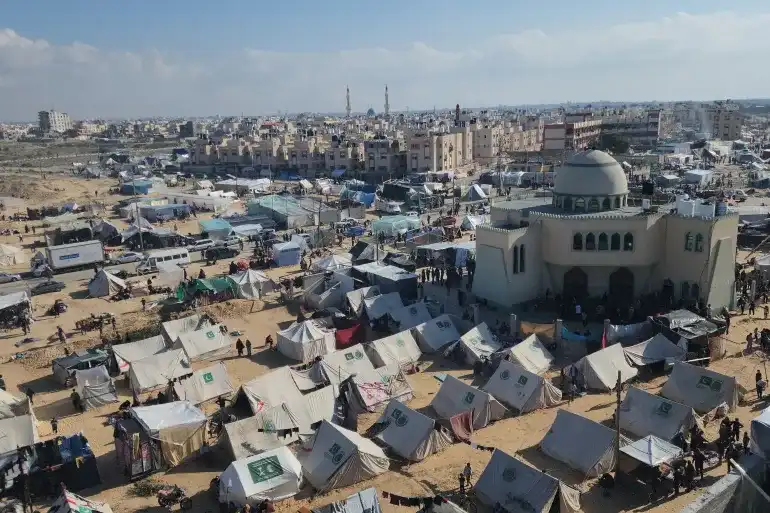
Netanyahu's statement came in response to a torrent of international calls, including from the United States, Israel's main ally, not to proceed with a military operation in Rafah, where about 1.4 million Palestinians are gathered, most of whom are displaced.


Fears in the north

Meanwhile, fears are increasing of the possibility of famine in the Gaza Strip, especially in the northern regions, due to the severe food shortage, due to the continued Israeli siege and the occupation forces preventing the entry of aid.


In Jabalia camp in the northern Gaza Strip, Muhammad Nassar (50 years old) told Agence France-Presse, “We will not die from bombs, but from hunger.”


On the other hand, Director-General of the World Health Organization, Tedros Adhanom Ghebreyesus, said that the Nasser Medical Complex in Gaza was out of service after a week-long siege followed by continuous raids.


Ghebreyesus explained that the World Health Organization team was not allowed - yesterday, Saturday and the day before yesterday, Friday - to enter the hospital to assess the patients’ conditions and urgent medical needs, even though the team arrived there to deliver fuel in cooperation with partners.


He pointed out that about 200 patients are still inside the hospital, at least 20 of whom need to be transferred urgently to other hospitals to receive health care. He warned that the cost of delaying their transfer would be the cost of their lives, calling for facilitating access to patients and admission to the hospital.


This hospital is one of 11 hospitals still in service out of 36 medical facilities in the Gaza Strip before the war.


Source: Al Jazeera + agencies

ARAB AND WORLD

Sun 18 Feb 2024 10:35 am - Jerusalem Time

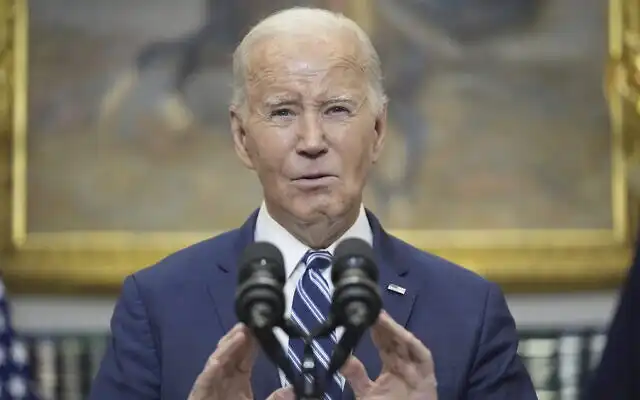
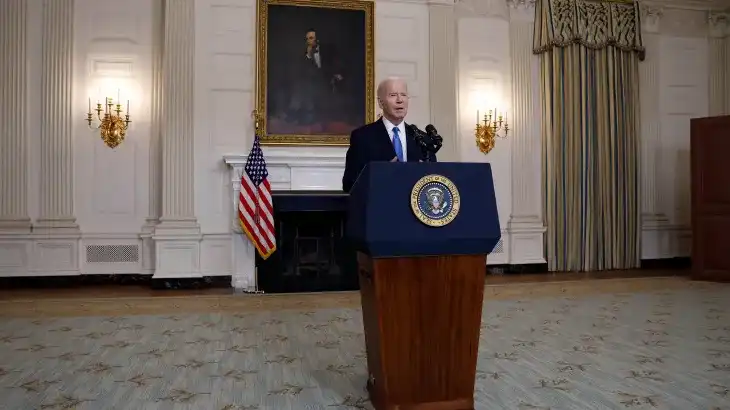
Biden says doesn’t expect Israel to launch Rafah operation as hostage talks continue

US President Joe Biden on Friday appeared to caution Israel against launching an operation in Rafah while hostage negotiations were ongoing, in his administration’s latest warning over an Israeli offensive in the southern Gaza city.

Asked at the White House whether Israel has presented the US with a plan for how it will protect civilians in the IDF’s planned operation for Rafah, as he again urged on Thursday during a call with Prime Minister Benjamin Netanyahu, Biden responded, “I’ve made the case, and I feel very strongly about it, that there has to be a temporary ceasefire to get the hostages out, and that is underway. I’m still hopeful that can be done.”

“In the meantime, I don’t anticipate, I’m hoping that the Israelis will not make any massive land invasion,” Biden said. “It is my expectation that’s not going to happen.”“We’re in a situation where there are American hostages… It’s not just Israelis,” he added, referring to dual nationals with US citizenship.

“My hope and expectation is that we’ll get this hostage deal, we’ll bring the Americans home. The deal is being negotiated now, and we’re going to see where it takes us.”

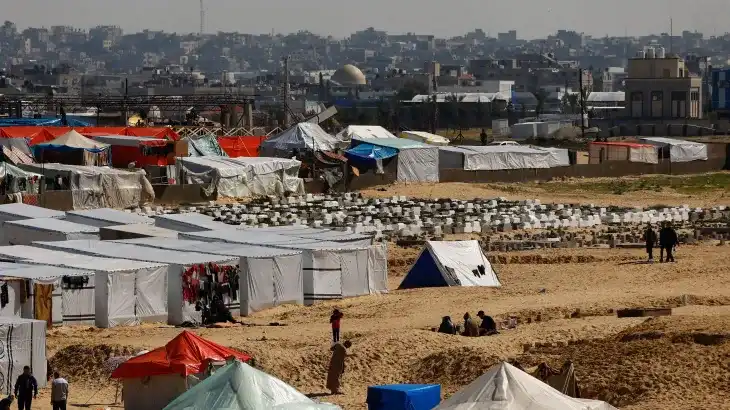
Biden’s remarks came amid increasing international pressure on Israel not to move ahead with an operation in Rafah, the last major Hamas redoubt in the Gaza Strip, where 1.4 million displaced Palestinians have fled to seek shelter from fighting elsewhere.

Israel, which has said it will draw up a plan for civilians to evacuate before it enter, believes it cannot effectively weaken Hamas without taking Rafah, which sits on Gaza’s border with Egypt. At least some of the 134 hostages remaining in Gaza are thought to be in the city.

The US warnings on Rafah also came as Biden pushes to advance a hostage release agreement that would be accompanied by a halt in the fighting, with CIA Director William Burns visiting Israel on Thursday to discuss the ongoing negotiations with Israeli leaders.

Both topics were featured during a meeting Friday between US Vice President Kamala Harris and President Isaac Harris on the sidelines of the Munich Security Conference.

“The vice president reiterated her steadfast support for Israel and its right to defend itself in the face of threats from Hamas, and she again condemned Hamas as a barbaric terrorist organization that perpetrated a horrific massacre on October 7,” said a White House readout on the meeting.

“The vice president and president discussed ongoing efforts to secure the release of all hostages held by Hamas and achieve a prolonged pause in fighting.”

“The vice president also emphasized the importance of protecting civilians, increasing humanitarian assistance and ensuring proper deconfliction mechanisms to ensure that aid can reach those in need inside Gaza,” the statement added.

“The vice president reaffirmed the Biden-Harris Administration’s position that a military operation in Rafah should not proceed without a credible and executable plan for ensuring the safety of and support for the more than one million people sheltering there.”

“The leaders also discussed ongoing planning for post-conflict Gaza and progress made on that front, and the vice president reiterated US positions, including that Israel must be secure, there must be no forced displacement of Palestinians from Gaza, and the Palestinians must enjoy their right to freedom, dignity, security, and self-determination,” the readout concluded.


PALESTINE

Sun 18 Feb 2024 10:12 am - Jerusalem Time

The Munich Security Conference concludes its work with a discussion of the Gaza war

The war in the Gaza Strip is at the forefront of discussions on the last day of the 60th Munich Security Conference on Sunday. Palestinian Prime Minister Muhammad Shtayyeh is scheduled to participate in a panel discussion today on the future of Palestinian-Israeli relations, in the presence of former Israeli Foreign Minister Tzipi Livni and Jordanian Foreign Minister Ayman Safadi.


The ongoing devastating war in the Gaza Strip had a slight impact on the conference.

Speakers at the conference, including German Chancellor Olaf Scholz and US Secretary of State Antony Blinken, touched on the topic during their speeches, and again spoke in favor of a two-state solution. This provides for the establishment of an independent Palestinian state living in peace side by side with Israel.


In addition, the conference - today, Sunday - is scheduled to once again focus on European capabilities regarding the war in Ukraine. Speakers include: President of Georgia Salome Zurabishvili, Deputy Prime Minister of Ukraine Olha Stefanyshina, and Lithuanian Foreign Minister Gabrielius Landsbergis.


In another event, the High Representative of the European Union for Foreign and Security Policy Josep Borrell, the Prime Minister of Latvia Ivica Selina, the German politician Marie-Agnes Strack-Zimmermann, who chairs the Defense Committee in the German Parliament “Bundestag”, intend to discuss the geopolitical agenda of the European Union.

PALESTINE

Sun 18 Feb 2024 8:26 am - Jerusalem Time

War on Gaza: Israel intensifies the bombing of Gaza, and Washington threatens to veto a draft resolution to end the war

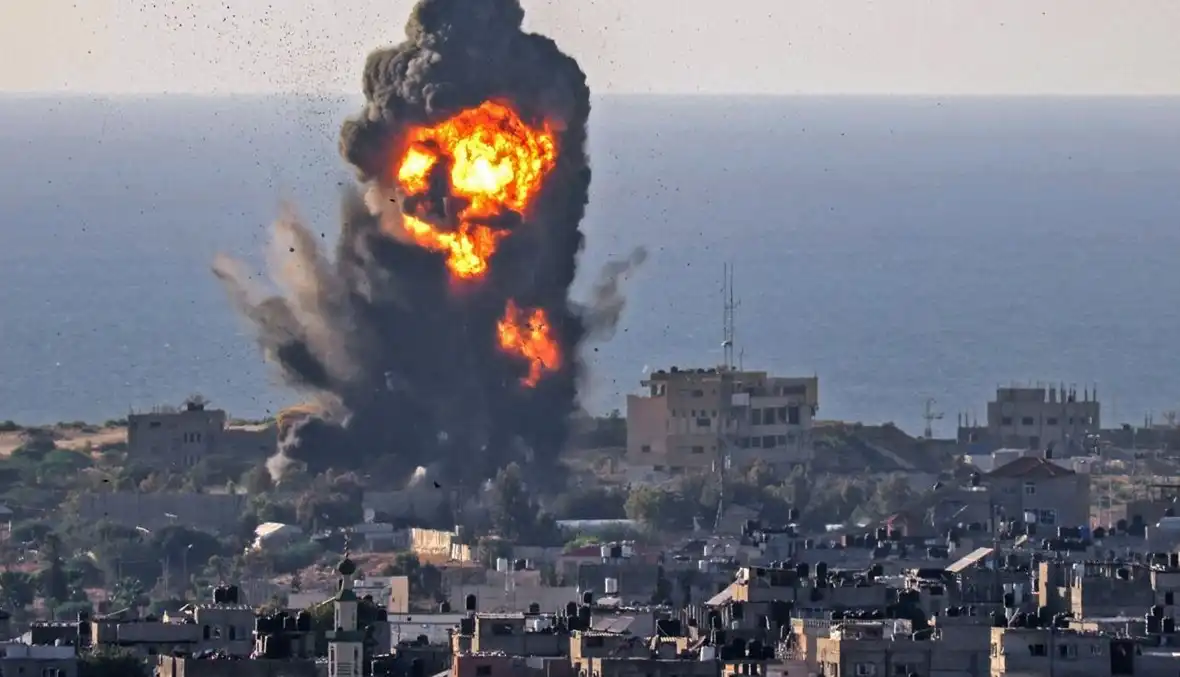
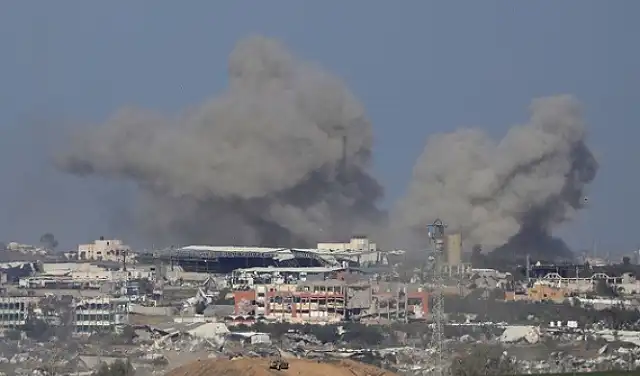
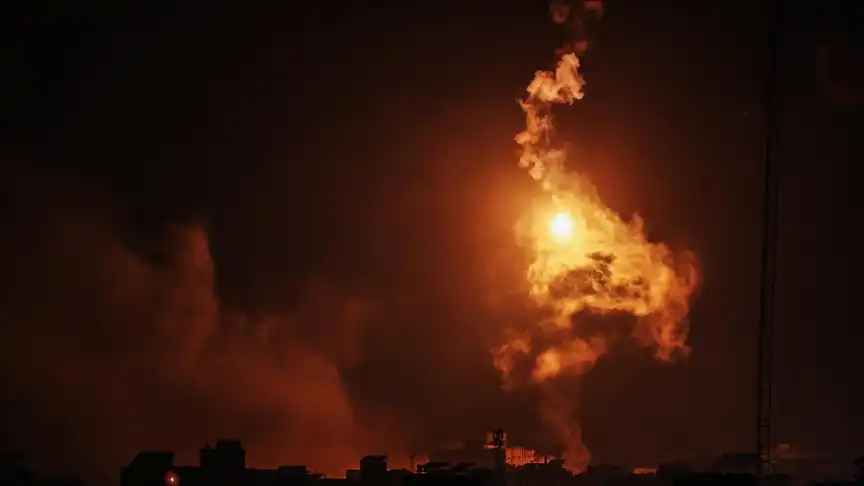
On the 135th day of the Israeli war on Gaza, the Israeli forces continued to bomb many areas in the Gaza Strip, led by Rafah and Khan Yunis in the south of the Gaza Strip, Deir al-Balah and the Nuseirat camp in its centre, while arrest campaigns and storming of cities continue in various governorates of the West Bank.


The United States also threatened to destroy a new draft resolution in the UN Security Council, calling for an immediate ceasefire for humanitarian reasons in the Gaza Strip, after Algeria requested a vote on it next Tuesday.


Regarding prisoner exchange negotiations, the Islamic Resistance Movement (Hamas) waved its suspension until aid and relief are brought into the northern Gaza Strip, amid reports expecting an Israeli delegation to leave for Qatar next week to discuss a new exchange deal.

ARAB AND WORLD

Sun 18 Feb 2024 8:19 am - Jerusalem Time

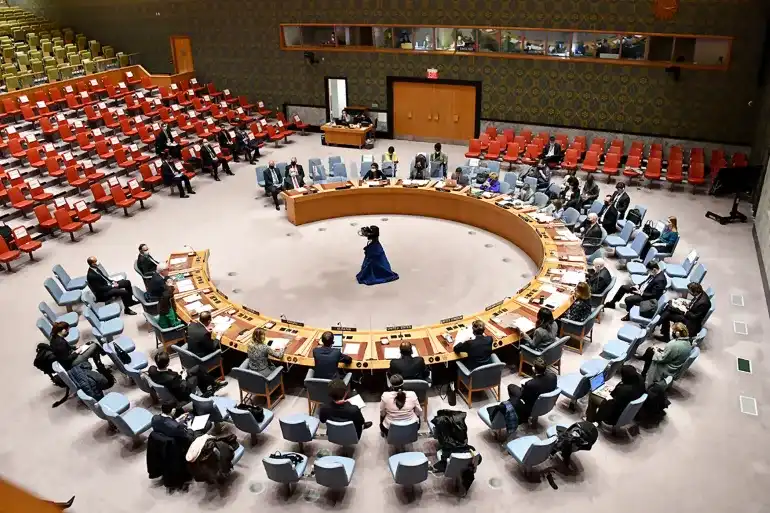
Washington: We will not pass the draft ceasefire resolution in Gaza

According to the latest version of the Algerian draft resolution, the Security Council calls for “an immediate ceasefire on humanitarian grounds, respected by all parties.”


The United States threatened to kill a new draft resolution in the UN Security Council calling for an “immediate ceasefire for humanitarian reasons” in the Gaza Strip, after Algeria requested a vote on it next Tuesday.


Following the decision issued by the International Court of Justice at the end of last January, in which it called on Israel to prevent any possible act of “genocide” in Gaza, Algeria launched consultations in the Security Council on a new draft resolution calling for the establishment of a truce in the Palestinian Strip.


According to the latest version of the Algerian draft resolution seen by Agence France-Presse, the Security Council calls for “an immediate ceasefire for humanitarian reasons, respected by all parties.”


According to diplomatic sources at the United Nations, Algeria requested that the Security Council vote, on Tuesday, on the text in its current form.


The draft resolution rejects the "forced displacement of the Palestinian civilian population" and calls for an end to this "violation of international law." The text also calls for the release of all hostages.


However, like all previous texts that were criticized by Israel and its ally the United States, the draft resolution does not condemn the attack launched by Hamas on October 7 on the “Gaza envelope” settlements, which sparked this war.


The US Ambassador to the United Nations, Linda Thomas-Greenfield, issued a statement denouncing Algeria's decision to refer the text to a vote.


In her statement, the American delegate considered that the Algerian move threatens to undermine the ongoing negotiations between Israel and Hamas, mediated by America, Egypt and Qatar, to establish a new truce that includes the release of hostages held in Gaza and Palestinian prisoners imprisoned in Israel.


The American statement added, "For this reason, the United States does not support" voting on this text.


In a clear threat to resort to a veto to destroy the text, Thomas-Greenfield said in her statement that “if we reach a vote on the current draft, it will not be approved.”


A few days ago, the Palestinian Ambassador to the United Nations, Riyad Mansour, said, “We believe that the time has come for the Security Council to adopt a resolution on a ceasefire for humanitarian reasons.”


In mid-October and then at the beginning of December, Washington ignored all the pressure exerted by the international community and used its veto power to thwart draft resolutions calling for a ceasefire and the Israeli war on Gaza.


ARAB AND WORLD

Sun 18 Feb 2024 8:11 am - Jerusalem Time

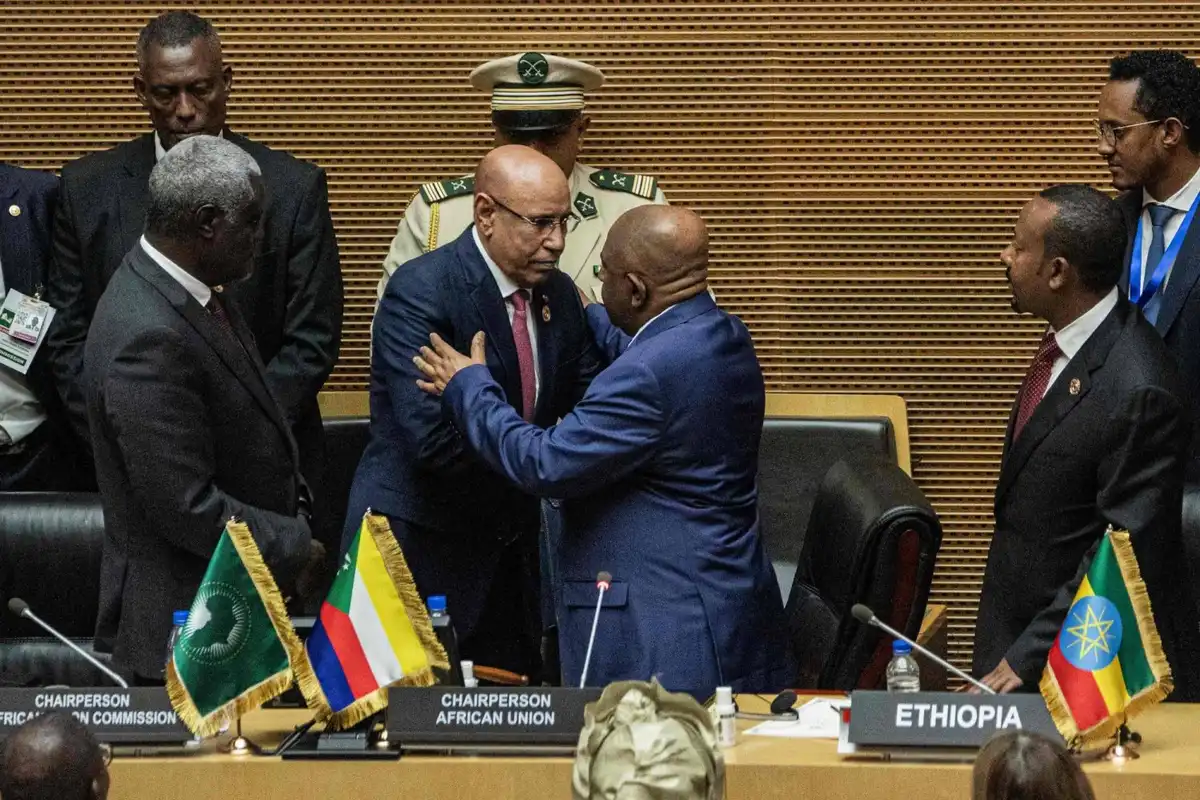
African Leaders Condemn Israel's Offensive in Gaza

Leaders at an African Union summit in the Ethiopian capital Addis Ababa on Saturday condemned Israel’s offensive in Gaza and called for its immediate end. Moussa Faki, the chair of the African Union Commission, said Israel’s offensive was the “most flagrant” violation of international humanitarian law and accused Israel of having “exterminated” Gaza’s inhabitants. Faki spoke alongside Palestinian Prime Minister Mohammad Shtayyeh, who also addressed the summit. “Rest assured we strongly condemn these attacks that are unprecedented in the history of mankind,” Faki said to applause from delegates. “We want to reassure you of our solidarity with the people of Palestine.”


Azali Assoumani, president of the Comoros and the outgoing chairperson of the African Union, praised the case brought by South Africa against Israel at the International Court of Justice while condemning “the genocide Israel is committing in Palestine under our nose.” “The international community cannot close its eyes to the atrocities that are committed, that have not only created chaos in Palestine but also have disastrous consequences in the rest of the world,” The Associated Press quoted Assoumani as saying.


ARAB AND WORLD

Sun 18 Feb 2024 8:08 am - Jerusalem Time

National Interest: Ending the war is very difficult, even if Netanyahu leaves tomorrow

An American academic confirmed that if the administration of US President Joe Biden wants to involve the Israelis in its diplomatic initiatives, it must reduce its diplomatic ambitions and focus its efforts on reaching an agreement to end the Israeli war on Gaza only instead of the two-state solution and the urgent departure of Israeli Prime Minister Benjamin Netanyahu.


Dr. Leon Hadar, contributing editor at the National Interest website and senior researcher at the Foreign Policy Research Institute in Philadelphia, explained that reaching an agreement to end the war on Gaza is very difficult, and that Israeli-Palestinian peace will not be achieved even if Netanyahu leaves office tomorrow.


He said that Netanyahu stepping down from power is not difficult, and there is a long list of reasons that make him resign from his position and retire from political life, starting with the 2019 indictment on charges of breach of trust, bribery and fraud, but his absence from the scene will not herald peace.


He explained that some in Israel and “many” in Washington see Netanyahu as the main obstacle to a diplomatic solution and ending the war in Gaza, which, according to Biden and his aides, must be based on the so-called “two-state solution” and include the establishment of an independent Palestinian state.


Turn the Israelis to the right

Hadar expressed his belief that the shock of the Hamas attack shifted Israeli positions toward rejecting the idea of an independent Palestinian state, and brought the majority closer to the right and largely to Netanyahu regarding continued Israeli military control over Gaza and the rest of the occupied Arab territories.


He said that those who currently support the establishment of a Palestinian state among Israelis do not exceed 25%, and those who agree to its establishment agree to a form of state that the Palestinians cannot accept.


Renewing the call for a two-state solution

Hadar commented by saying that most Israelis, with the exception of right-wing extremists and left-leaning peace supporters, today agree with Netanyahu’s vision for a Palestinian state, as does Benny Gantz, who is seen as the main successor to Netanyahu. He opposes the annexation of the West Bank and Gaza, but he also opposes any solution. Under which no Palestinian entity is completely demilitarized and stands with a united Jerusalem as the capital of Israel.


The writer quoted the "Times of Israel" as saying that Gantz, as well as Israeli President Isaac Herzog, and even opposition leader Yair Lapid, expressed their annoyance at the renewed rhetoric of the administration of US President Joe Biden regarding the need for a two-state solution since the outbreak of the war, and specifically urged it to refrain from speaking out. We publicly announced the two-state solution after the attack of last October 7.


Source: National Interest

ARAB AND WORLD

Sun 18 Feb 2024 8:02 am - Jerusalem Time

Israeli newspaper: Netanyahu is the worst official in the history of Israel

The Israeli newspaper Haaretz confirmed that Prime Minister Benjamin Netanyahu's talk of "total victory" coincides with a propaganda campaign he is leading against the families of prisoners, describing him as the worst official in Israel's history.


The newspaper added in an analytical article by writer Yossi Verter that while officials are working “seriously” on the issue of the prisoner release deal, the Prime Minister is undermining the process to please his extreme right-wing base, to the point that when you ask those close to Netanyahu what he wants from the negotiations, they answer, “We do not know what.”


The article described Benjamin Netanyahu as the "worst leader" in the history of Israel and one of the worst leaders in the history of all nations, highlighting that the issue of negotiations to release prisoners highlighted his experience in directing the positions of supporters.


No idea

The writer mentioned that this week he asked some people involved in communications regarding the prisoner deal what Netanyahu wanted, and their answer was all, “We have no idea.”


He also asked them: Is the strict image in which the Prime Minister appears and presents his positions intended to help move forward towards an agreement or to ensure that an agreement is not reached? They repeated the same answer, “We have no idea.”


The writer explained that if this deception had been practiced against the Islamic Resistance Movement “Hamas,” it would have been “reasonable,” but it is clear that Netanyahu is hiding his intention from his senior partners, including the two ministers in the war council, Benny Gantz and Gadi Eisenkot, who saved him by allying with him, and now he is... Working behind their backs.


He added that those close to Gantz and Eisenkot - in private meetings - strongly criticize Netanyahu, and one of them was quoted as saying that instead of maintaining secrecy regarding the talks to release Israeli prisoners, he opens up about it during press conferences, and even the Egyptians, who play an important role in the talks. They are subjected to insults from Smotrich, an ally of Netanyahu.


Election campaign

Yossi said that the prime minister "acts like a politician conducting election campaigns, and not like a statesman seeking the public good." What matters to him is preserving his 64-seat bloc, while hundreds of soldiers risk their lives in order to release a hostage or two, he said. 


He revealed that he asked a member of the National Unity Party about the reason for Gantz staying with Netanyahu, and he replied that leaving now means letting him drive the ship however he wanted, noting that major issues have not yet been resolved, including the prisoner deal and the issue of Rafah and the northern Gaza Strip.


Gantz and Eisenkot confirmed that they will leave the government if Netanyahu rejects - for political reasons - the prisoner deal that prominent security leaders advise accepting if it agrees with the broad lines they recommended.


Yossi Verter quoted a source familiar with the talks as saying, “Things are going well,” and added that Netanyahu is so afraid of his partners that he has not issued a statement on the progress made in the talks.


Source: Haaretz

ARAB AND WORLD

Sun 18 Feb 2024 8:00 am - Jerusalem Time

Washington: Israel did not provide evidence that Hamas stole aid

The US envoy for humanitarian issues in the Middle East, David Satterfield, said that Israel "has not provided specific evidence that the Islamic Resistance Movement (Hamas) has stolen United Nations aid entering the Gaza Strip."


This came in a rare public criticism of Israel, according to what the Associated Press reported on Saturday.


The American agency quoted Satterfield as saying, “We are working with the Israeli government and the Israeli army to find out what solutions can be found here (in Gaza), because everyone wants to see continued assistance.”


In statements to the Carnegie Endowment for International Peace on Friday, the American envoy indicated that with the killing of Palestinian police officers, who were guarding a UN aid convoy in the city of Rafah, following the Israeli strikes earlier this month, criminal gangs began increasingly targeting the convoys.


He explained that the Israeli assassinations of Gaza police commanders, who guarded aid truck convoys, made it practically impossible to distribute goods safely.


Satterfield stressed that chaos and regular Israeli protests at crossing points by those who oppose the entry of aid into Gaza have also disrupted the delivery and distribution process.


Earlier, a leading source in the Hamas movement said, "Negotiations cannot be held while hunger is devouring the Palestinian people."


The source added that Hamas intends to suspend negotiations with Israel until aid and relief enter the northern Gaza Strip.


Since October 7, 2023, Israel has been waging a devastating war on the Gaza Strip, leaving tens of thousands of civilian victims, most of them children and women, in addition to an unprecedented humanitarian catastrophe and massive destruction of infrastructure, which led to Tel Aviv being brought before the International Court of Justice on charges of genocide. .


Source: Al Jazeera + agencies

ARAB AND WORLD

Sun 18 Feb 2024 7:55 am - Jerusalem Time

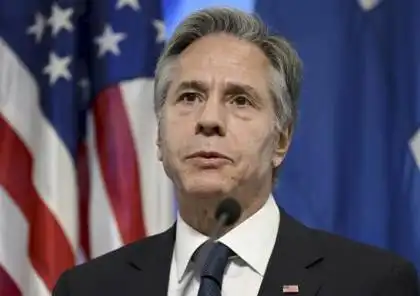
Blinken: We will not support a military operation in Rafah without security guarantees for the displaced

US Secretary of State Anthony Blinken assured Israeli President Isaac Herzog that the United States will not support any ground military operation in Rafah without a plan that guarantees the safety of more than a million displaced people there.


The US State Department said in a statement on Saturday, “Secretary of State Anthony Blinken met with Israeli President Isaac Herzog in Munich on the sidelines of the Munich Security Conference.


Secretary Blinken reiterated that the United States cannot support a ground military operation in Rafah without a credible and implementable plan to ensure the safety of more than a million people taking refuge there.”


It added, "Secretary Blinken discussed with President Herzog the ongoing efforts to secure the release of the hostages and achieve a humanitarian truce that would help increase the flow of humanitarian aid to Palestinian civilians in Gaza."


An American official said on Friday that the Biden administration believes that the Israeli military operation in Rafah is a disaster that is best avoided, according to Politico newspaper. White House envoy David Satterfield said that President Joe Biden believes that preventing Hamas from emerging victorious is important for Israel, the region, and the United States.


In a related context, the International Court of Justice ruled on Friday that Israel’s plans to attack Rafah do not require additional temporary measures against Israel that South Africa had previously requested.


Pretoria called on the International Court of Justice to exercise its authority "to prevent further imminent violations of the rights of Palestinians in Gaza and to verify whether the operation does not violate the court's decision issued in late January."


South Africa's request indicated that more than a million people were displaced to Rafah, many of them "under the orders of the Israeli army to evacuate homes and areas that were completely destroyed by Israel," and that these people are now directly threatened.


The request added that the unprecedented military operation against Rafah, as Israel announced, had already led to wider killing, damage and destruction, and would continue to do so “in serious and irreparable violation” of the Genocide Convention and the ruling of the International Court of Justice issued last January.


ARAB AND WORLD

Sun 18 Feb 2024 7:52 am - Jerusalem Time

Israeli News Paper: Washington stipulated a settlement freeze in exchange for the supply of ammunition

The Hebrew newspaper Maariv said that the American administration stipulated a settlement freeze in exchange for agreeing to supply a huge arms shipment to the occupation.


The newspaper quoted officials as saying that settlement construction operations had been frozen, and plans had not been approved for the past six months in the E1 area, which was previously promoted by the Netanyahu government.


They pointed out that Netanyahu and other officials believed that, due to their preoccupation with the war, they could pass the plans developed under the radar, at a later period, but the Americans did not agree to that, and they stipulated that the ammunition be supplied after freezing settlement construction.


The newspaper pointed out that the requested shipment is valued at tens of millions of dollars, and includes approximately a thousand MK-82 bombs and KMU-572 direct-attack ammunition, which gives the bombs the ability to accurately guide them. And bomb fuses.


They pointed out that the ammunition supply process is still under internal review in Washington, and details may change before final approval by congressional committees.


The newspaper said that the American decision highlights the level of tensions between Tel Aviv and Washington, and the latter’s desire to end the war.


On Friday, the Wall Street Journal reported, citing current and former American officials, that the administration of US President Joe Biden is preparing to send bombs and other weapons to the occupying state. With the aim of strengthening its military arsenal.


This comes despite US efforts to reach a ceasefire in the Gaza Strip.


The newspaper reported that the proposed shipment includes MK-82 bombs and KMU-572 joint direct attack munitions, which provide precise guidance for bombs, in addition to fuses for FMU-139 bombs.


It noted that the value of the shipment is estimated at "tens of millions of dollars."


According to the report, an American official indicated that the US administration is still studying the proposed shipment, indicating that the details of the proposal may change before it is presented to congressional leaders for approval.


This comes in the context of escalating criticism facing the Biden administration due to the continued supply of weapons to the occupying state, as the accusation increases that American weapons are being used in strikes that result in the death and injury of civilians.

ARAB AND WORLD

Sat 17 Feb 2024 10:23 pm - Jerusalem Time

Thousands of Israelis are demanding that Netanyahu's government step down and the release of prisoners in Gaza

Thousands of Israelis demonstrated, on Saturday, in several cities to demand the resignation of Benjamin Netanyahu's government, the holding of early elections, and the release of prisoners detained in Gaza, while police arrested 4 demonstrators in front of Netanyahu's house in the city of Caesarea (north), according to Hebrew media.


The Israeli Broadcasting Corporation said, "Thousands of Israelis across the country came out to demand the government step down, hold early elections immediately, and conclude a deal that would lead to the release of prisoners detained in Gaza."


According to the Commission, thousands of Israelis demonstrated in Kaplan Square in central Tel Aviv, and closed the surrounding street.


The police threatened to use force and arrest protesters in Tel Aviv if the streets remained closed.


The families of the prisoners detained in the Gaza Strip also closed the street opposite the headquarters of the Israeli Ministry of Defense in the “Kiryah” area, in central Tel Aviv, according to the commission.


In the city of Caesarea, Israeli police arrested 4 people during a demonstration in front of Netanyahu's house in which hundreds participated, according to the Yedioth Ahronoth newspaper.


Israelis demonstrate daily to demand that Netanyahu's government step down and the release of prisoners, but central demonstrations are organized every Saturday evening throughout the country.


Israeli officials estimate that there are about “134 hostages still being held in the Gaza Strip” since Hamas launched an attack on Israeli military points and settlements around the Strip on October 7.


ARAB AND WORLD

Sat 17 Feb 2024 8:21 pm - Jerusalem Time

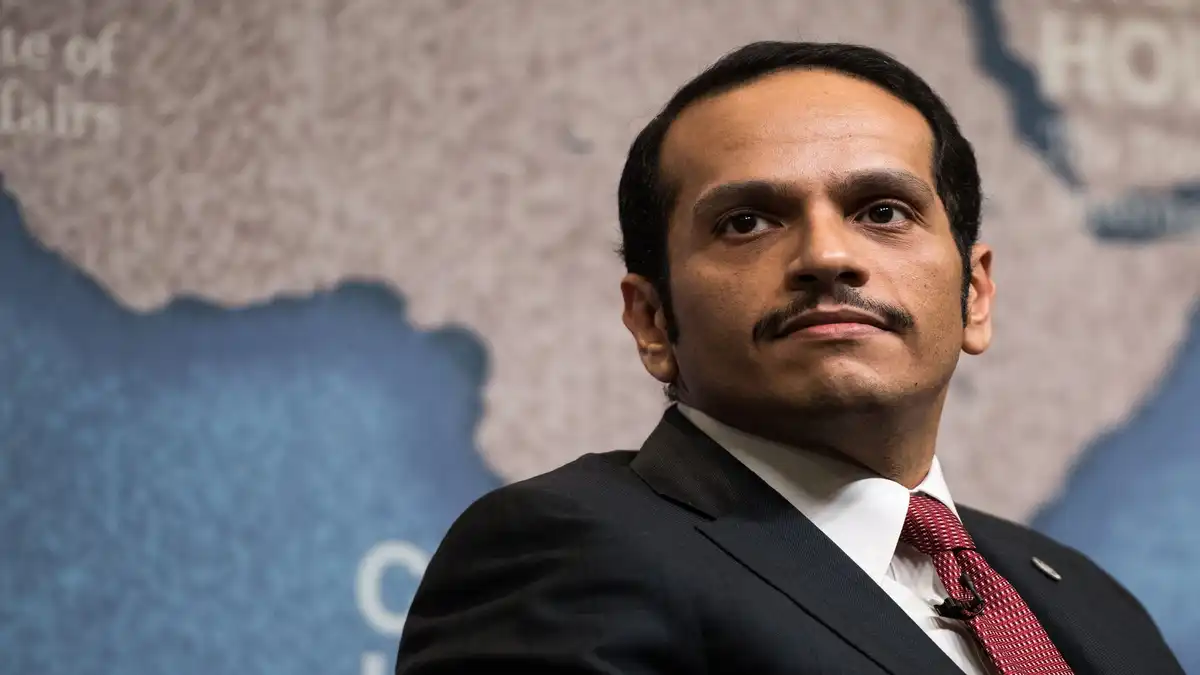
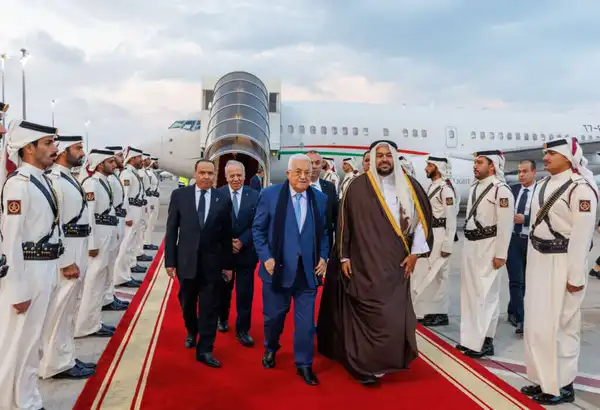
Qatari Prime Minister: We expect an exchange deal soon in Gaza between Hamas and Israel

Qatari Prime Minister and Foreign Minister Mohammed bin Abdul Rahman Al Thani confirmed today, Saturday, that he expects an exchange deal soon in the Gaza Strip between Hamas and Israel, saying: “We are doing everything in our power to reach it.”


He added, at the Munich Security Conference: “I cannot go into the details of the negotiations, but I believe that if we are able to address the humanitarian package within the agreement, we will be able to overcome the obstacles,” stressing that “there are still some difficulties in the humanitarian part of the negotiations regarding the Gaza agreement.” He said: “We believe that stopping the war is what will lead to the return of the prisoners.”


The Qatari Prime Minister indicated that the pattern that prevailed in the past few days was not very promising in the negotiations, pointing out that progress had been achieved in the past three weeks, but “we faced disagreements in recent days.”


In response to a question about the role of the Hamas movement in any future solution, Al Thani said: “The Palestinians are the ones who decide who represents them,” adding: “We would like to see a unified Palestinian government in the West Bank and Gaza, and all Palestinians will be under the umbrella of the Authority.”


He continued: "We have always seen that there is no progress in talking about a two-state solution, and we hope that after what happened on October 7, there will be a wake-up call, and to meet and consider a better future for the peoples of the region."


The moves to try to reach a truce in the Gaza Strip come at a time when the Israeli occupation army is preparing to launch a ground operation in the city of Rafah, south of the Gaza Strip, which prompted Hamas to warn that any Israeli attack on the city means “torpedoing the negotiations.”


PALESTINE

Sat 17 Feb 2024 8:05 pm - Jerusalem Time

Israeli forces continue its siege of Al-Amal Hospital for the 26th day and prevents supplies

The Red Crescent Society said that the Israeli occupation continues to besiege and target Al-Amal Hospital in Khan Yunis for the 26th day in a row, and for two weeks the occupation tanks have been stationed in front of the hospital building.


She added in a press statement, on Saturday evening, that the occupation prevented the arrival of food, medical and fuel supplies to Al Amal Hospital, which threatens a humanitarian catastrophe and the cessation of work inside the hospital, coinciding with the continued shooting towards the hospital building around the clock, which limits the movement of staff inside the hospital. It puts the lives of patients and staff at extreme risk.


She stressed that the lives of dialysis patients and seriously injured people are in danger as a result of the occupation’s continued refusal to provide a safe humanitarian corridor to transfer them to continue treatment in other hospitals.


The association indicated that the occupation continues to arrest 7 of its staff for the eighth day in a row, who were arrested during the storming of Al-Amal Hospital, while two doctors were released yesterday who reported that they were beaten, tortured, abused and humiliated.


She pointed out that various landline and cellular communications and Internet services continued to be interrupted for the 33rd day in a row in Khan Yunis Governorate, which led to the interruption of communication between the association’s various crews.

PALESTINE

Sat 17 Feb 2024 8:01 pm - Jerusalem Time

War on Gaza: 44 Palestinian citizens were killed in an Israeli bombing of the central governorate

The Government Information Office in the Gaza Strip announced on Saturday that 44 Palestinians were killed and 80 others were injured as a result of an Israeli bombing that targeted several homes in the Central Governorate of the Strip.


The Director General of the Government Information Office in the Gaza Strip, Ismail Al-Thawabta, said: “The Israeli army committed massacres in the central governorate of the Gaza Strip, targeting 9 inhabited homes, which led to the death of 44 citizens and the injury of 80 others.”


He added: "The Israeli army targeted homes in the Nuseirat camp, the city of Deir al-Balah, and the Zawaida area in the central Gaza Strip."


Al-Thawabta held Israel, the American administration, and the international community “fully responsible as a result of these ongoing massacres since the beginning of the genocidal war committed by the Israeli army against our Palestinian people.”


He also called for an immediate and urgent halt to this war, to save the blood of civilians, children and women.


According to medical sources, medical teams and citizens transported dozens of dead and wounded as a result of Israeli bombing of citizens’ homes in the city of Deir al-Balah, the Nuseirat camp, and the Zawaida area in the central Gaza Strip.


According to local sources, Israeli warplanes bombed many inhabited homes in different areas in the central governorate of the Gaza Strip.


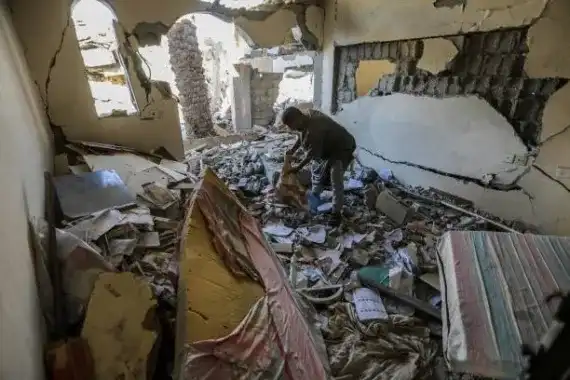
They stated that the Israeli bombing caused a number of killed and wounded, and led to widespread destruction in the targeted areas and the complete destruction of homes.


The sources explained that these homes include hundreds of Palestinian families, including displaced people from the governorates of the northern Gaza Strip and Gaza City.

OPINIONS

Sat 17 Feb 2024 7:57 pm - Jerusalem Time

A reformed PLO that includes Hamas is the only hope

Mondoweiss

Mondoweiss

Opinion Writer

BY MITCHELL PLITNICK

A reformed PLO that includes Hamas and other Palestinian factions will revive for many Palestinians the idea that the PLO still supports the right to resist. While this outcome remains a long shot, it is the only way forward with a positive future.

Recent reports suggest that Hamas and Fatah are working with mediation from several Arab states on a deal that would allow for a technocratic “government” for Palestine, that Hamas would accept the principle of a Palestinian state along the 1967 borders, and that it would join a “revitalized” Palestine Liberation Organization (PLO). 

This is an old refrain, one that has been heard many times before. And, just as with all of those other times, there are serious obstacles that would need to be overcome for such an arrangement to materialize. Immense skepticism is warranted. Indeed, even more than that, these plans are wrapped up in a wider effort by the United States, along with Egypt, Jordan, Qatar, Saudi Arabia, the United Arab Emirates, and the Palestinian Authority (PA), to formulate Biden’s unachievable pipe dream of ending the Gaza conflict, freeing all the hostages, creating a Palestinian state and reaching a comprehensive agreement that includes normalization between Saudi Arabia and Israel. 

That is just another of Biden’s delusions. The idea that such a monumental agreement could be forged without Israel’s acquiescence or even its involvement is absurd. More than that, Israel could easily destroy the entire arrangement simply by moving forward, as it has already begun to, with its plan to bring down its military might on Rafah. Israeli Prime Minister Benjamin Netanyahu has made it abundantly clear that he has no intention — indeed, no incentive — to veer from that murderous course. 


But the talks could still matter. Different aspects of the negotiations are being dealt with along different tracks, and one of those is the effort by Saudi Arabia and Qatar to forge a deal between Hamas and Fatah for a revamped Palestine Liberation Organization and a technocratic Palestinian Authority, which would pave the way for a government of all parties. 

This is, of course, a familiar and worn-out refrain, as repeated efforts at unity governments have failed completely. But at this moment, with the massive devastation Israel is bringing to Gaza and its crackdown in the West Bank, there is every reason for these two major Palestinian factions to find a way to finally come together. 

That Qatar and Saudi Arabia are said to be mediating the process holds some promise. The Saudis are likely to hew to a U.S.-Israeli line on any “day after” agreement for Gaza that forbids the involvement of Hamas. But the fact that they’re working with Qatar on this implies that they recognize the reality that any plan that attempts to freeze out Hamas, the Palestinian Islamic Jihad, and other armed factions — as the U.S. and Israel are certain to insist — is going to fail before it ever gets started. 

If that kind of pragmatism exists on the Saudis’ part, there could be hope for this mediation. 

The key factor for Hamas and Fatah is their helplessness on their own. 

“No one can govern Gaza without Hamas, and Hamas can’t govern without the legitimate Palestinian government,” one Fatah official told Palestinian journalist Daoud Kuttab. “Therefore, this is a badly needed marriage that neither side can reject.”

Put another way, on the so-called “day after,” Hamas will still be embedded in Gazan society, and its network, built over nearly two decades of administering the Strip, will be key to reassembling Gazan society. While the Fatah official’s choice of terms — the “legitimate” Palestinian government — reflects their own political view, Hamas will need Fatah and its relationships with major Arab states and its cache with the West to rebuild. Qatar won’t be able to support Gaza’s administration by itself as it had before October 7.

The Israeli-American hurdle

This doesn’t represent as huge a departure for Hamas as it might seem. Seven years ago, Hamas formally accepted the idea of a Palestinian state along the 1967 borders. The agreement was never recognized or in any way addressed by Israel or the United States. 

The argument against that new Hamas charter was that the same charter still laid claim to all of historic Palestine and still called for the right of return to all of the places from which Palestinians had been expelled in 1947-49. Of course, those same people didn’t seem to mind that David Ben-Gurion had the exact same attitude regarding a nascent Jewish state being a first step to securing all of Greater Israel, eventually, accommodating a mass influx of Jews from all over the world. 

More recently, the original Likud charter from 1977 plainly states, “between the Sea and the Jordan there will only be Israeli sovereignty.” While the charter has been revised to give Likud political leaders a bit more wiggle room, that principle was never revoked. In January, Likud leader and Israeli Prime Minister Benjamin Netanyahu explicitly stated that he would tolerate no Palestinian control of Gaza, and has been equally explicit about all of the area of historic Palestine, saying that his “insistence is what has prevented — over the years — the establishment of a Palestinian state that would have constituted an existential danger to Israel.” 

“As long as I am prime minister,” Netanyahu said, “I will continue to strongly insist on this.”

None of this has ever prompted an objection from any United States president. The double standard between Israel and the Palestinians is as familiar as a sunrise. Yet, if Arab states are serious, they will accept a formulation where Hamas and other, more militant, groups maintain their own individual ideologies just as political parties do all over the world without that necessarily being the government’s stance. 

The recent failure of CIA Chief Bill Burns’ mission to Cairo showed that Israel has no interest in ending its genocide campaign in Gaza. Despite the fact that Israeli operations in Gaza have probably led to the deaths of dozens of their hostages and the fact that negotiations have freed well over 100 of them, Netanyahu has made it clear that he will only settle for the kind of operation — a dangerous rescue mission carried out under the cover of yet another massacre — that he pulled off last Sunday.

That attitude is sure to extend to an outright refusal to deal with any Palestinian government that includes any element of Hamas. 

It’s an open question whether the Qatari-Saudi work with the Palestinian factions can succeed when the broader American plan fails, as it certainly will. But if it does bear fruit, we must then see if the Saudis will be willing to stand by a Palestinian unity government in the face of American rejectionism. Much will depend on the calculus at the time for the Saudis. If they feel acquiescing to the Americans will get them the defense pact and nuclear support they want from Washington, they will drop the Palestinians like a hot potato. 

If, on the other hand, they believe that, by standing by the Palestinians, they can wrangle some kind of long-term Palestinian independence or at least enough of it to allow them to take credit for a major victory, and still be able to exchange normalization with Israel for the goodies they want from the U.S., they will be all in. 

That’s actually quite possible because if a resolution acceptable to the Palestinian people is arrived at, despite the kicking and screaming from the U.S. and Israel, an American president, from either party, will still have the same political incentives to broker normalization between Saudi Arabia and Israel. And Israel, if Palestinian freedom is a fait accompli, will have every reason to normalize relations with Saudi Arabia.

What makes this attempt at Palestinian unity different?

The exiled former prominent Fatah leader, Muhammad Dahlan, detailed a good deal of this in an interview with the New York Times. Dahlan remains well-connected to people in Hamas and to many within the Fatah party, including those who support Abbas and those who oppose him. 

Dahlan echoed the sentiment that the Arab states are trying to find a way for the end of the Gaza slaughter to begin an inexorable path to ending the constant confrontation between Israel and the Palestinians, which they define as a two-state solution. Crucially, and in stark contrast to the Biden administration’s approach, the Saudi-Qatari effort, as he described it, has focused on brokering agreements among Palestinian factions rather than dictating to them what the outcome should be. 

Dahlan also dismissed Israeli objections, a strong indication that these discussions are taking place within a framework of understanding that Israel and the U.S. will reject what will come out of them. That consciousness bodes well because any success in bringing the factions back together will depend on defying the United States and Israel.  

A chance at unity

The immediate imperative for Fatah and especially for Hamas is to stop the slaughter in Gaza, and the fact is, this “day after” plan, even if it is successful, is not going to do that. On the contrary, it will only deepen Israel’s sense that all Palestinians are an implacable enemy, a view which we can rest assured the Biden White House will echo like a faithful choir.

But it would dramatically shift the political landscape for the Palestinians. The initial new PA would be a technocratic government. A revamped PLO that includes all the major Palestinian factions will be welcomed, even if only quietly, by much of Europe, the entire Arab and Muslim world, and the United Nations. 

Pragmatically, a PLO with Hamas in it is exactly what is needed. It will revive for many Palestinians the idea that the PLO, even if it mainly pursues diplomatic resolutions, still supports the right to resist, a stance many see as empty rhetoric on the rare occasions that Abbas and his allies mention it at all. That will give it a lot more legitimacy. And it will mean the Palestinian polity more broadly can begin to move away from a hopeless choice between a feckless and corrupt Fatah and an authoritarian and Islamist Hamas. Those parties will continue to be a significant part of Palestinian politics, but there will be room for more options, both from within Fatah and Hamas and from outside them.  

The fact that this realignment and reform of the PLO won’t help stop Israel’s onslaught only changes things if you believe that anything can stop that onslaught, short of massive, impactful external pressure, which does not appear to be forthcoming, although there have been a few hopeful signs. There is no evidence to suggest that Israel is going to stop until Netanyahu is either forced from office or believes he has secured his position by completing his genocidal program. The only alternative to those possibilities is Americans making enough trouble for Biden and the Democrats for them to at least temporarily shut off the flow of arms. 

But Israel’s barbaric behavior has already angered millions around the world, many of whom either used to support Israel or had not paid much attention to it. That makes this moment particularly opportune for a unified Palestinian leadership to finally coalesce and start to channel the considerable popular support it has all around the world, including even in the United States. 

Some may argue that the two-state format this unity plan features remains a fantasy. I would agree. But moving toward something more realistic will require a major paradigm shift, and that, in turn, will require a Palestinian leadership that includes all aspects of Palestinian society. This plan can provide that. It is, again, not likely to succeed because of the serious obstacles in its path, not the least of which is the enmity between Fatah and Hamas. If one were betting on the outcome, a positive one would carry very long odds. But in this moment of hopelessness, long shots coming through are what is required. And it never hurts to hope.


ARAB AND WORLD

Sat 17 Feb 2024 7:57 pm - Jerusalem Time

A prominent Israeli analyst: Our army committed unjustified acts of looting and demolition in Gaza

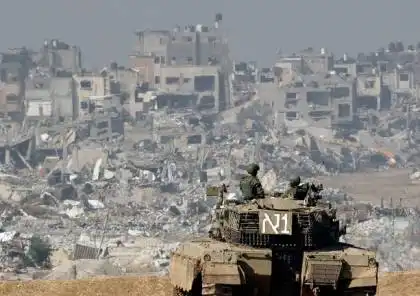
Nahum Barnea, chief analyst for the Israeli newspaper Yedioth Ahronoth, said that the Israeli army committed unjustified acts of looting and demolition that affected Palestinian homes in Gaza.


He said that these practices cause enormous harm to Israel and are being used against it before the International Court of Justice.


He wrote in an article for the newspaper, “In one case, an order was issued to demolish one house in a neighborhood in the northern Gaza Strip. A senior commander ordered the destruction of all the houses not because he had to, but because he could issue the demolition order.”


He added: "The decision to bomb the Legislative Council building in Gaza (the interim parliament) did not please the Israeli army staff. It was issued by a field commander, and had no practical justification, and the damage was great."


He pointed out that Israeli Army Chief of Staff Herzi Halevy acknowledged that looting had occurred.


The analyst said: “The Chief of Staff makes sure, in every visit to the field, to remind the commanders and soldiers of what is not permissible, and he talks about looting, breaking discipline, and unnecessary writing on the walls.”


He added, "Some leaders did not like this conversation and told him that it might harm morale."


Barnea also pointed out that “Israeli soldiers captured video clips,” which document Israeli atrocities and could be evidence condemning Tel Aviv’s practices.


He said: “An investigator in Unit 504 took a photo while standing over a naked detainee,” adding: “An officer was filmed shouting ‘Listen to Israel’ (which is an Israeli prayer) as he blew up a mosque.”


Barnea warned that the harm being caused to Israel is enormous, pointing to the use of some of these videos in the lawsuit filed by South Africa against Israel in the International Court of Justice.


He said: "The damage is enormous. Israel is waging its war from a storefront, facing a suspicious, hostile and exposed world as never before." He also warned that these practices would affect Israel itself.


He pointed out that "what begins with the looting of abandoned property leads to the theft of enemy military equipment and then to the theft of military equipment for our forces."


Israel is being tried before the International Court of Justice, the highest judicial body in the United Nations, on charges of committing genocide against the Palestinians in the Gaza Strip.


The war in the Gaza Strip has entered its 133rd day, as Israeli forces continue to bomb the Strip, and clashes continue on more than one axis, while the specter of a humanitarian catastrophe looms over Rafah, which awaits an Israeli military operation, coinciding with the negotiations in Egypt regarding a truce and the release of prisoners and hostages.

PALESTINE

Sat 17 Feb 2024 7:30 pm - Jerusalem Time

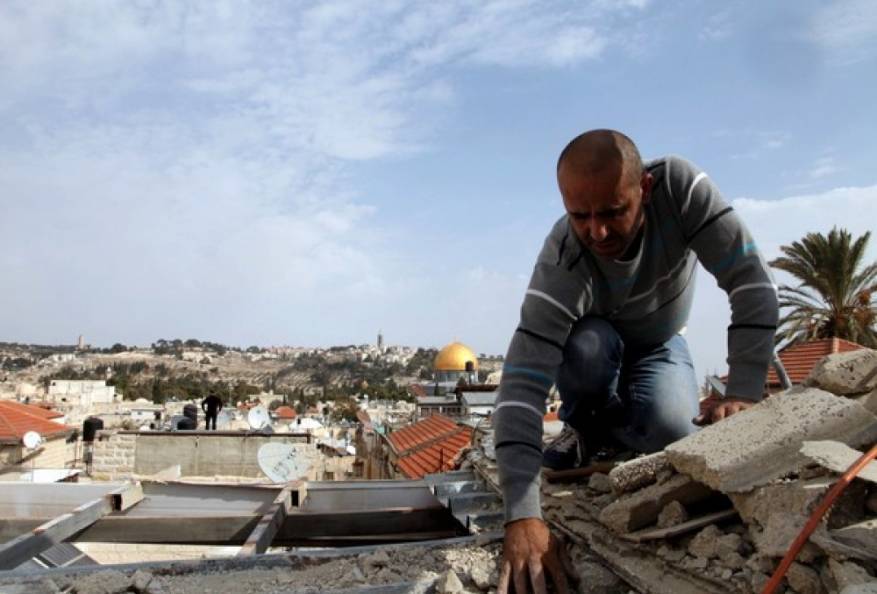
Occupied Jerusalem: Israeli authorities force a Palestinian to self-demolish his house in Silwan

The Israeli forces forced Al-Maqdisi Ali Odeh to demolish his house, in the Bir Ayoub neighborhood in the town of Silwan, south of the blessed Al-Aqsa Mosque in occupied Jerusalem, under the pretext of building without a permit.


The Israeli authorities force Palestinian citizens, especially in the occupied city of Jerusalem, to self-demolish their homes under the pretext of not having a permit. If anyone refuses this procedure, the Israeli bulldozers demolish the house, imposing heavy costs on the owner.


Since the beginning of this February, the Israeli authorities have demolished three facilities in occupied Jerusalem, one commercial and two residential.


The Israeli forces have issued dozens of demolition decisions in Jerusalem since the beginning of this month, including a decision to demolish the Wadi Hilweh Media Information Center, and the demolition of the house of Jerusalemite Hosni Shweiki in Wadi Yasoul in the town of Silwan.


Silwan is the oldest and closest to the Jerusalem Wall after the Old City, as the town has been and still is a station for the Israeli ambitions since the occupation of occupied East Jerusalem in 1967, and Israel seeks to erase the Palestinian presence there and turn it into a purely Jewish city.


The town faces the threat of settlement projects, perhaps the most recent of which is the cable car project, one of whose stations will be installed near Bab al-Maghariba at the beginning of Wadi Hilweh.


The city receives thousands of settlers and tourists daily, to wander inside and around the tunnels under Al-Aqsa Mosque, and promotes the rebuilding of the alleged temple and the rebuilding of a Jewish city in Silwan.


At the end of 2022, Israel confiscated the most important lands of Silwan at the end of Wadi Hilweh, after it was leaked by the Greek Orthodox Patriarchate. The area of the land exceeds 5 dunams, and it is 300 meters away from the western Jerusalem wall.


ARAB AND WORLD

Sat 17 Feb 2024 6:11 pm - Jerusalem Time

Netanyahu will present to the government the plan to attack Rafah next week

Hebrew Channel 12 reported on Saturday that Israeli Prime Minister Benjamin Netanyahu will present the army's attack plan on the city of Rafah, south of the Gaza Strip, to the government next week.


The channel reported that the plan was to transfer the Palestinians in Rafah to the central and southern areas of the Gaza Strip, and that the Israeli army would not allow the Palestinians to move to the northern areas of the Gaza Strip.


In its news bulletin, the channel sympathized with the statements of Minister in the Military Council, Benny Gantz, on Friday, who called for continuing the war on Gaza even in the holy month of Ramadan, and expanding it to Rafah, if the Israeli detainees did not return from the Strip.


Israel is currently announcing its intention to invade Rafah in the southern region, which is crowded with displaced people, after it forcefully removed the residents of the north and directed them to the south, claiming that it is a “safe area.”

PALESTINE

Sat 17 Feb 2024 5:40 pm - Jerusalem Time

West Bank: Israeli settlers injured two Palestinian children south of Hebron

Two Palestinian children were injured after settlers beat them, this Saturday evening, in the village of Al-Mufaqara in Masafer Yatta, south of Hebron.


According to local sources, heavily armed settlers attacked farmers and livestock herders in the village of Al-Mufaqara and beat them, causing the child Ahmed Fadel Al-Hamamda to be injured in the foot after being thrown with stones. His brother Adham also suffered bruises after being beaten by the settlers, and several heads of livestock were injured.

ARAB AND WORLD

Sat 17 Feb 2024 5:04 pm - Jerusalem Time

International newspapers: The attack on Rafah will spark an unprecedented humanitarian crisis

International newspapers and news websites highlighted the disastrous repercussions of the potential Israeli attack on Rafah in the southern Gaza Strip and the increasing pressure on Israel in this regard.


Analysts who spoke to the Washington Post said that Israel will not be able to completely eliminate the Islamic Resistance Movement (Hamas), and that the attack on Rafah “will cause untold harm to civilians and will spark an unprecedented humanitarian crisis in terms of its scope and speed.”


Patrick Wintour wrote in the Guardian newspaper that pressure is increasing from all directions on Israel regarding Rafah, while the Munich Security Conference is being held. He said, “All officials concerned with the discussions are present, and there is also the specter of a return to the International Court of Justice and another draft resolution in the UN Security Council demanding Israel to an immediate ceasefire.


A report published by the New York Times highlighted the challenges faced by what it called the peace lobby in Washington to push for a ceasefire in Gaza, and stated that there are other pressing forces in support of Israel that are more powerful and well-funded.


The report also explains how these groups lead campaigns against legislators who oppose their agenda through various means, reaching the point of pumping a lot of money to support their competitors.


As for the Financial Times, it said in an article that achieving both peace and justice is an unattainable goal, and wrote, “It is difficult to achieve justice for the crimes committed in Gaza even after the end of the conflict.”


Source: Al Jazeera

PALESTINE

Sat 17 Feb 2024 4:53 pm - Jerusalem Time

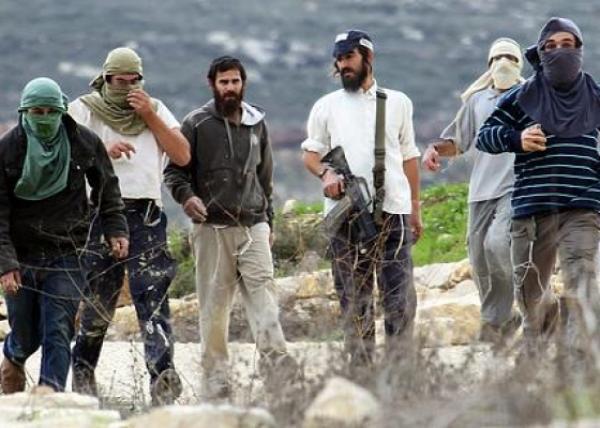
West Bank: Israeli settlers set up a checkpoint and assaulted three young Palestinians south of Nablus

Today, Saturday, settlers attacked three young men from the village of Asira Al-Qibliya, south of Nablus.


According to local sources, the Yitzhar settlement guard, accompanied by a group of settlers, set up a checkpoint at the entrance to the village, and took three young men out of their vehicle, beat them, and threatened to burn their vehicle if they returned to the checkpoint.


He pointed out that the settlers set up the checkpoint while wearing their religious garb, and that this is not the first time they have set up checkpoints at the entrance to the village, as the people have become accustomed to those checkpoints in which the settlers deliberately humiliate the citizens since the aggression on the Gaza Strip.

ARAB AND WORLD

Sat 17 Feb 2024 4:01 pm - Jerusalem Time

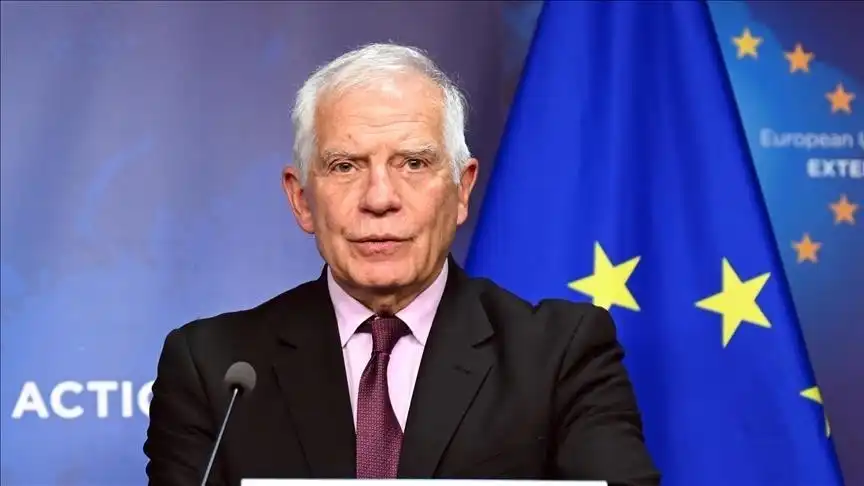
The European Union renews its call on Israel not to attack Rafah

On Saturday, the European Union renewed its call on Israel not to launch a military attack on the Palestinians in the city of Rafah in the far south of the Gaza Strip.


This was stated by the High Representative for Foreign and Security Policy of the European Union, Josep Borrell, in a post on his account on the X platform.


Borrell stressed the need to protect all civilians in Gaza in line with international humanitarian law.


He also called on Israel to respect the decisions of the International Court of Justice issued on January 26, in the case brought by South Africa within the framework of the 1948 Genocide Convention, and ordered Israel to take measures to prevent acts of genocide against the Palestinians, and to improve the humanitarian situation in the Gaza Strip. Gaza.


The European official called on Israel not to carry out military action in Rafah that would lead to "exacerbating the already catastrophic humanitarian situation."


Borrell concluded his speech by saying: “We call on Hamas once again to immediately and unconditionally release all hostages.”


Israel, which killed tens of thousands of Palestinians in its devastating war on the Gaza Strip, forced about 1,300,000 Palestinians in the northern and central Gaza Strip to flee to the city of Rafah, bordering Egypt.


Israel is currently announcing its intention to invade Rafah in the southern region, which is crowded with displaced people, after it forcefully removed the residents of the north and directed them to the south, claiming that it is a “safe area.”

ARAB AND WORLD

Sat 17 Feb 2024 2:57 pm - Jerusalem Time

TRT World: Can Israel launch a massive ground attack in Rafah?

Turkish writer Hamza Rifaat says that Israel cannot launch a ground attack on Rafah because such an action would lead to increased pressure on it from the International Court of Justice, threaten to undermine the Camp David Accords, undermine the search for detainees, and weaken the possibility of regional normalization.


Rifaat mentioned in his article on the “TRT World” website that the attacks launched by Israel on Rafah this week prompted South Africa - which had previously submitted a petition to the International Court of Justice regarding the acts of genocide committed by Israel in Gaza - to request intervention again.


He pointed out that despite international pressure and the ruling issued by the court, the administration of Israeli Prime Minister Benjamin Netanyahu challenges this and continues its quest to achieve “complete victory,” commenting that this is a kind of fantasy, and that Netanyahu and his war cabinet and advisors are ignoring many variables that make “ Victory is impossible.


Variables on the ground

Rifaat explained that these changes include the swelling of the population in Rafah from a few hundred thousand people to 1.4 million Palestinians, and that carrying out the ground attack will result in large human losses among civilians in order to kill a few Hamas activists.


He added that even if we take the matter seriously, Israel will operate in an area where it is difficult to determine the locations of the four brigades of the Islamic Resistance Movement (Hamas) that it claimed were present there, with heavy losses expected for the Israeli forces. More Israeli military deaths would contribute to Netanyahu's popularity at home, and could thwart the attack halfway to the city.


Detainees held by the resistance

The writer continued to mention the reasons why carrying out a ground attack was unlikely, and addressed the issue of releasing Israeli detainees held by the Palestinian resistance, saying that any attack would jeopardize the efforts undertaken by Egypt, Qatar, and the United States, and leave the fate of these detainees in limbo.


Threat of the Camp David Accords

He added that the recent attack on Rafah led Egypt to mobilize its forces along its border with Israel with the deployment of 40 tanks, including rapid fortifications on the Sinai side, along with the threat to suspend the Camp David Accords.


He referred to Egypt's warning to suspend the agreements if Israel occupied the Philadelphia Corridor or the narrow strip of land that passes through its borders with the Gaza Strip. Another unacceptable outcome for Egypt is that the border with Israel will be breached and this will cause an influx of Palestinians into the country, which constitutes a test for regional peace and threatens to upend the Camp David Accords, as these agreements depend on their assurance that Egyptian national security will not be threatened.


Finally, the writer emphasized that the ground attack on Rafah jeopardizes Israel's efforts for regional normalization, noting that Jordan and Saudi Arabia warned Israel against launching an attack on Rafah.


Source: Turkish press+ Aljazeera

ARAB AND WORLD

Sat 17 Feb 2024 2:53 pm - Jerusalem Time

Democratic representatives urge Washington to immediately address the humanitarian catastrophe in Gaza

The Washington Post published a letter to five Senate Democrats urging the United States to immediately launch what they called the “Gaza relief operation.” They said that given the lack of a meaningful response to the Biden administration's appeals to the Netanyahu government for humanitarian aid, the responsibility for leadership falls on Washington as the largest provider of military aid to Israel, which it used in its campaign on the Gaza Strip.


They added that the matter falls on the United States because of its enormous maritime transportation power to deliver aid, and it may be the only country that Israel will allow to coordinate the provision of direct aid to Gaza.


The five representatives - Jeff Merkley, Dick Durbin, Elizabeth Warren, Chris Van Hollen, and Peter Welch - commented that the war strategy chosen by the government of Israeli Prime Minister Benjamin Netanyahu had a tremendous and unacceptable impact on Palestinian civilians.


The Israeli air bombing campaign led to the death of more than 28,000 Palestinians, according to the Ministry of Health in Gaza, more than 70% of whom were women and children, and many were seriously injured. Severe shortages of medicine, food, water and shelter, in addition to power and communications outages, have led to a cascading humanitarian catastrophe.


Moreover, the MPs added, “Our values demand providing life-saving humanitarian support in Gaza. In conflict after conflict around the world, we highlight humanitarian tragedies and blame responsible governments. We stand against bombing campaigns that result in mass casualties among civilians. We are coordinating aid to help those who are suffering. Because of our close partnership with Israel, it is imperative that we act in Gaza."


The representatives continued that the administration has so far emphasized two strategies in this regard: urging Israel to significantly expand the circle of aid, and following a diplomatic strategy to formulate a truce in the fighting that will stop the bombing and provide an opportunity to pump aid.


Major needs

Although these two strategies reduce the conflict with the Netanyahu government and avoid the complexity and responsibility of coordinating direct assistance, they have failed. The Palestinians cannot wait any longer, and our country must act now.


The representatives summarized the role that the United States should play in the “Gaza Relief Operation” into 4 main needs or roles:


First, providing urgently needed medicines and medical equipment because the 11 partially functioning hospitals remaining in Gaza cannot provide the care needed by thousands of Palestinians suffering from life-threatening injuries.

Second, the impending famine must be stopped by immediate food deliveries and fuel to restart bakeries and cooking stoves.


Third, addressing the acute water shortage, and addressing the water crisis in general, especially with regard to polluted water, which actually leads to the spread of diseases on a large scale and ensuring that desalination plants on the coast have the fuel required to operate them.


Fourth, providing safe shelter. The Netanyahu government has repeatedly directed the Palestinians to locations that were later subjected to military attack. The Gaza relief operation must facilitate the provision of assistance to relief organizations to deliver and establish emergency shelters in areas that are coordinated with Israel and the United Nations to ensure that they are safe areas.


The American representatives' message concluded that to improve humanitarian conditions in Gaza, Washington should continue to press for a ceasefire in addition to the release of the hostages. But given the difficult circumstances, these efforts alone are not sufficient, so the Gaza relief operation is necessary, and our American values require rapid action.


Source: Washington Post + Aljazeera

ARAB AND WORLD

Sat 17 Feb 2024 2:49 pm - Jerusalem Time

With his support for the Gaza war... Biden's talk about a Palestinian state is between seriousness and farce

Talk has increased in the corridors of Washington about “American recognition of a Palestinian state” following signals from President Joe Biden and his Secretary of State, Anthony Blinken, pointing in this direction in recent days.


Biden has not completely changed his position in support of the Israeli aggression on the Gaza Strip yet, and has not called for a ceasefire.


Also, decades of Washington's failed attempts to push towards a two-state solution have made some analysts question the seriousness of the Biden administration's commitment to this proposal, especially in the year of difficult presidential elections.


On the contrary, others believe that Biden may take this step in an effort to secure the votes of Muslim and Arab voters, young people and minorities, who were shocked by his stance in support of the Israeli aggression on the Gaza Strip.


"I think we'll be able to work on something... I think there are ways this could work," Biden said, referring to a possible post-war agreement that could establish a demilitarized Palestinian state.


Reports indicate that Biden has already assigned the State Department to consider what a demilitarized Palestine would look like, “based on other models from around the world.”


At the same time, the talk of American recognition of a Palestinian state is linked to a broader framework that includes Biden’s endeavor to sponsor Saudi-Israeli normalization, preceded by the conclusion of a US-Saudi defense agreement, with all parties agreeing to formulate irreversible steps towards establishing a Palestinian state.


The American newspaper, The Washington Post, said on Thursday that American and Arab officials are working on developing a comprehensive plan to establish lasting peace between the Palestinians and the Israelis, at a time when the Israeli government headed by Benjamin Netanyahu renews its rejection of any talk about the establishment of a Palestinian state.


Possible unilateral recognition

Michael Doran, director of the Center for Middle East Peace and Security at the Hudson Institute, who previously worked in the White House, the State Department, and the Pentagon under several Republican administrations, expected that Biden would recognize a Palestinian state this summer.


Duran wrote on the institute’s website that “recognition of a Palestinian state will be an electoral ploy, as much as it is a foreign policy strategy, which the Biden team will seek to announce by early summer, just in time for the start of the presidential election campaign based on its historic achievement.”


Doran referred to the confirmation of State Department spokesman Matthew Miller, who said, on January 31, “We support the establishment of an independent Palestinian state, and we are doing a lot of work within the government to think about how to achieve this.”


According to Duran, this has led to the dismay of Israeli officials because “the Biden administration has fallen in love with the idea of establishing a Palestinian state, and unilateral recognition is a means of putting pressure on Israel.”


Jonathan Schachter, a researcher at the Hudson Institute and former advisor to Israeli Prime Minister Benjamin Netanyahu, and an expert in US-Israeli relations, agreed that the Biden administration is seriously considering recognizing a Palestinian state.


Schachter noted, "The Biden administration's apology tour in Michigan confirms that local political considerations will increasingly influence Washington's policy toward Israel."


Schachter highlighted what he considered to be “Biden’s remarkable commitment to American supporters of Hamas, even when they called for the mass murder of Jews, tore down the American flag, and attempted to climb the White House fence. And now, with American Arab and Muslim leaders threatening not to support Biden in the November elections.” Next, the White House shifted from silence to trying to exploit the situation.”


Normalization is the goal

In an interview with Al Jazeera Net, Ambassador David Mack, former Assistant Secretary of State for Middle East Affairs and currently an expert at the Atlantic Institute in Washington, said that talk about the Biden administration studying some options for making changes in US policy regarding recognition of a Palestinian state is “completely reasonable.” 


Ambassador Mack noted, "It is worth noting that this talk comes on the heels of a statement issued by the UK Foreign Secretary supporting the same idea. Most importantly, the Netanyahu government has not been very helpful by refusing to negotiate the establishment of a Palestinian state with the Palestinian Authority."


He added, "I also believe that the American administration is encouraged by reports that Mahmoud Abbas is holding serious discussions with Egypt, Jordan, and Saudi Arabia about reforming his administration by playing a more symbolic role and bringing in a younger executive president to the Palestinian state."


He believes that President Abbas could play a role similar to Israeli President Isaac Herzog, leaving the real rule to someone who enjoys the trust of the major Arab countries, the United Nations, and the United States. He added, "The Prime Minister of the Palestinian Authority can attract more political and financial support, to meet the needs of Palestinians in both the West Bank and Gaza."


At the same time, a number of commentators believe that the White House's efforts are primarily focused on seeking to achieve normalization between Israel and Saudi Arabia.


They consider that the efforts made by Brett McGurk, President Biden's National Security Council advisor for Middle East affairs, to pass the proposal to rebuild the Palestinian Authority, by focusing on a deal between Israel and Saudi Arabia, will fail.

At the same time, Akbar Ahmed, a writer for HuffPost, said in a blog post on the “X” website, “I heard from an American official who was asked earlier this week to explore making Palestine a member of international institutions as a state.” He said that they realize that this effort is “comical fake steps,” and stressed that “it is impossible, given Biden’s history, for him to take these steps seriously.”


Khaled Al-Jundi, director of the Palestine and Palestinian-Israeli Affairs Program at the Middle East Institute in Washington, agrees with the previous proposal, and said in a blog post on the “X” website, “Just talking about the state is a distraction... This is meaningless talk, unless they talk about ending the occupation.” "The Israeli, all that doesn't matter."


Source: Al Jazeera

ARAB AND WORLD

Sat 17 Feb 2024 2:43 pm - Jerusalem Time

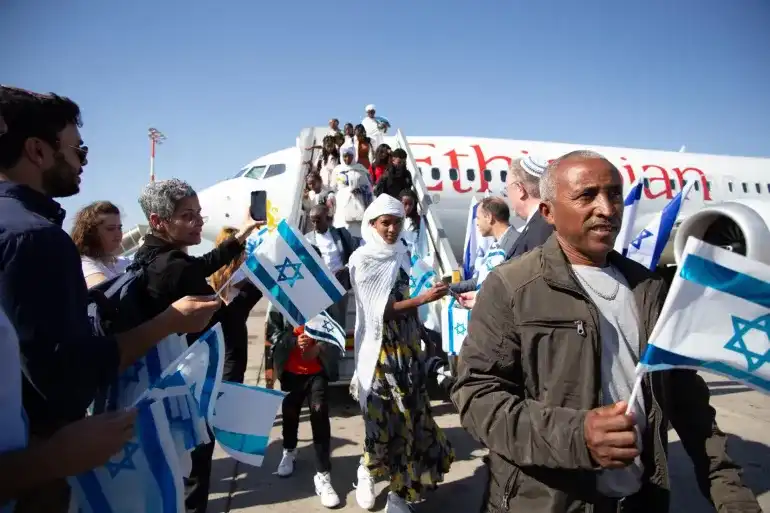
Details of an Israeli plan to bring Jews and settle them in the Gaza Strip and the West Bank

The Israeli Minister of Immigration and Absorption, Ofir Sofer, and the Minister of Finance, Bezalel Smotrich, announced a special plan to encourage the import of Jews from around the world and their settlement in the border areas of the Upper Galilee, the “Gaza envelope,” and the occupied West Bank, by granting special privileges and financial rewards to the immigrants.


This plan comes in an attempt to attract Jews in light of the noticeable decline in their immigration rates to historical Palestine during the year 2023, as more than 45,000 immigrants arrived in Israel, which is a 40% decrease compared to 2022, when more than 76,000 immigrants were brought.


The Jewish Agency responsible for immigration expresses its fears that the number of immigrants to Israel will continue to decline during the year 2024, despite the increase in files and requests since the outbreak of the “Al-Aqsa Flood” battle on October 7, 2023, which was opened to holders of “right of return certificates” in European countries, America, and those interested in immigrating to Israel, claiming a sharp increase in “anti-Semitic” incidents.


According to data from the Ministry of Diaspora, the World Zionist Organization, and the Jewish Agency, from October 7 until the end of last January, nearly 7,000 new immigrants were brought to Israel, a large percentage of whom were young men who enlisted in the Israeli army and participated in the war on Gaza or the fathers and families of soldiers who were killed during the battles in the Strip.


To confront the decline in Jewish immigration rates due to the war, a special plan to bring Jews to Israel during the year 2024 was announced. In the pictures are the Minister of “Immigration and Absorption”, Ofir Sofer, the Israeli Minister of Finance, Bezalel Smotrich, and the Chairman of the Jewish Zionist Agency, Doron Almog. (All photos were taken by the government press office and circulated by the Ministry of Immigration and Absorption for free use)


Immigration applications

According to the data provided by Sofer and Smotrich, since October 7, the number of open immigration files and applications in France has quadrupled, the number of applications has doubled in the United States, and an increase in the number of files has been recorded in Britain, Canada and Europe, according to what Yedioth Ahronoth newspaper reported. 


However, immigration data for 2023 shows, according to the newspaper, that even in the last months of the year, after the outbreak of the war in Gaza, and in light of the continuing escalation on the northern border with Hezbollah, most applications were not implemented, due to the fear of those registered for immigration of the escalation of security tension. The lack of security and personal safety in Israel.


In response to these concerns, the Israeli government developed a special plan called the “Refugee Ship,” for which it allocated an initial budget of 170 million shekels ($46 million). The plan aims to stimulate the actual implementation of immigration requests and encourage large immigration campaigns for Jews from around the world to Israel.


As part of the plan, new immigrants will be allocated monthly financial rewards and various privileges, and solutions will be provided to immigrants and their families in the areas of education, academics, job opportunities, and rental assistance, with priority given to those immigrants who agree to settle in the West Bank, the Negev, and the Upper Galilee.


Evacuation cost

This plan comes at a time when the Israeli government has failed to restore personal security to Israelis, especially in the border areas and fighting fronts. According to the Israeli “National Emergency Authority,” about 125,000 Israelis have so far been evacuated from the southern towns in the “Gaza Envelope” and the northern towns in the Upper Galilee. They were transferred to hotels and guest rooms, funded by the relevant government ministries.

According to data from the Israeli Ministry of Security, since the beginning of the war with Hezbollah, 61,000 residents have been evacuated from the north and Upper Galilee. According to the Ministry of Finance, the cost of evacuating residents in the north and south until the end of this February will be 5.6 billion shekels ($1.5 billion), including 2.3 billion to evacuate the residents of the north.


Meanwhile, the scope of destruction is expanding in the north and the Upper Galilee, as a report by the newspaper “De Macer” showed that 427 homes in the north were hit by Hezbollah fire, of which 80 were directly hit, and there are many settlements that are subjected to intense bombardment by anti-aircraft fire, and are suffering great destruction. And severe damage.


According to the newspaper, public services in the areas affected by the war on the northern front are completely suspended, and the newspaper quoted residents of kibbutzim and towns in the Upper Galilee who were not evacuated that “they cannot remain in their homes, because all services such as health, education, commerce, banks and shopping are present in Kiryat Shmona, which has been repeatedly bombed and was evacuated in October.


Ghost area

The return of Israelis to the border towns with Lebanon and the Upper Galilee seems far-fetched if the security escalation between the Israeli army and Hezbollah continues, and if the Israeli government does not impose a new reality that guarantees the personal security of families, according to a report by the Haaretz newspaper.


The newspaper's military analyst, Amos Harel, says, "On Black Saturday, the preemptive evacuation of residents of settlements near the border with Lebanon began, and in the following days, tens of thousands of residents were evacuated, under the direction of the government, from a strip up to 5 kilometers deep inside Israeli territory."


The military analyst continues, “Through gunfire and rocket barrages, Hezbollah was able to impose a kind of security fence inside Israeli territory in the Upper Galilee, an area that many consider the most beautiful in the country, and in its most beautiful and greenest seasons, but under the shadow of the security escalation it has turned into a ghost zone.” 


Absence of government

The head of the Upper Galilee Council, Giora Zaltz, told the Haaretz newspaper, “The government is not with us in this war.” He added, "Our educational institutions are not protected. We have converted hundreds of shelters into kindergartens and schools. Until this moment, the Israeli government has not intervened in the event. There is no party that talks to us that has the authority to make decisions about budgets."

The head of the Supreme Council of Galilee continued, "If they now ask the residents to return to the settlements, they will not return. The entire army is in the settlements. How exactly will that happen? In Kiryat Shmona, the main city in the region, there are no banking services, no health clinics, no trade, and no shopping." .


He concluded by saying, "No one is able, not even the government, to return the population to living a normal life. Even companies and official institutions have left the region, and we do not know which of them will return when the fighting ends."


Source: Al Jazeera

ARAB AND WORLD

Sat 17 Feb 2024 2:25 pm - Jerusalem Time

Israeli media: Biden administration is considering several options to recognize a Palestinian state

In their daily discussions of the war in the Gaza Strip, Israeli media channels discussed the pressures exerted by the American administration on Israel regarding concluding an exchange deal with the Palestinian resistance, and the plan proposed by this administration to recognize a Palestinian state.


Israeli Channel 13 revealed that Prime Minister Benjamin Netanyahu met with CIA Director William Burns to discuss contacts aimed at concluding an exchange deal with the Islamic Resistance Movement (Hamas).


The channel's correspondent for political affairs, Moria Asref Wallberg, said that Burns arrived in Tel Aviv after Netanyahu refused to send an additional delegation to Cairo, and that one of the main demands he presented during his meeting with Netanyahu and the head of the Israeli Foreign Intelligence Service (Mossad) David Barnea was for Israel to allow sending an additional delegation. He will represent Cairo in the coming days.


According to a Channel 13 correspondent, a senior political official told Israeli journalists that the “maximum pressure policy” followed by Netanyahu, that is, “intense military pressure and strong pressure in negotiations are the only way to push Hamas to give up its ridiculous demands, and this will lead to the release of the kidnapped.”


On the other hand, the Israeli channel Kan 11 confirmed that the administration of US President Joe Biden is “studying several options to recognize a Palestinian state,” and the channel’s political affairs correspondent, Amichai Stein, spoke about “an additional option that the US administration is studying, which is granting state status in the United Nations,” and said this requires the Americans not to use their veto power if this idea reaches the UN Security Council.


He pointed out that it is the American veto that has so far prevented the possibility of the Palestinians obtaining the status of a member state in the United Nations.


For its part, Channel 14 discussed the American initiative and described it as ambitious, anticipating its launch “in the coming weeks during a temporary cessation of fighting between Hamas and Israel that will be reached within the framework of the exchange deal.”


On Israeli Channel 13, Moshe Raz, a former member of the Knesset from the left-wing Meretz party, praised the American initiative, arguing that it confirms the American administration’s support for Israel more than its support for the Netanyahu government, and commented, “There is no other way, and that is what was proven last October 7.” “It is that whoever relies solely on military force may be subjected to a severe blow.”


He added, "If we continue to rely on military force, the next massacre is a matter of time," stressing, "The Netanyahu government is leading us to the next massacre."


Source: Al Jazeera

OPINIONS

Sat 17 Feb 2024 2:17 pm - Jerusalem Time

On Israel, the vitriolic premonitions of Raymond Aron

ORIENT XXI

ORIENT XXI

Opinion Writer

PIERRE PRIER

It was easier a few decades ago to criticize Tel Aviv's policy in France than it is today. The analyzes of Raymond Aron, columnist for L'Express and Le Figaro, incisive and devoid of any sentimentality regarding his Jewishness, contrast with the current pro-Israeli tropism of the dominant media.


Raymond Aron is in fashion. The liberal thinker, the academic coupled with an influential editorialist through his editorials in Le Figaro then in L'Express, from the 1950s to the 1980s, was summoned on the occasion of the fortieth anniversary of his disappearance by right-wing media. the search for intellectual references that they lack in current production: “a master for understanding today’s challenges”, “an intellectual horizon”, “an atypical liberal”.


Curiously, the most incisive positions of his journalistic work, namely those devoted to Israel and Palestine, are absent from the injunctions to “reread Raymond Aron”. They nonetheless remain burning news.


We understand this discomfort if we reread them, indeed. Some of these ideas, expressed in a right-wing press by a right-wing man of Jewish origin, would cause him to be classified in 2024 as “anti-Zionist” (or worse) by the media and TV “philosophers” who are content to paraphrase the Israeli narrative.


It was a real reflection that began on November 27, 1967, following General de Gaulle's famous press conference denouncing, after Israel's lightning victory and the occupation of the Palestinian territories: "the Jews (...) who had remained what they had always been, that is to say an elite people, sure of themselves and dominating. Every word of this “aberrant” statement shocks Raymond Aron. By accusing the eternal “Jews” and not the State of Israel, de Gaulle rehabilitates, he writes, a very French anti-Semitism: “This style, these adjectives, we all know them, they belong to Drumont, to Maurras, not not to Hitler and his people.”


QUESTIONS ABOUT THE CONCEPT OF “JEWISH PEOPLE”

But Aron, like a true philosopher, could not stop there: “And now, since we have to discuss, let’s discuss,” he wrote in Le Figaro. He then embarked on a socio-historical study, backed by a worried self-analysis which has not aged. What relationship does its origins have with the State of Israel? Do they require unconditional support? And what does it mean to be Jewish? These questions, sometimes without definitive answers, are found in a work which brings together his articles from Le Figaro1 then, later, in his Mémoires2 published the year of his death, in 1983, and finally in a recently published book which includes, all his editorials from L'Express3. The quotes in this article are taken from these three books.

And first of all, what are these Jewish “people”, as the President of the Republic says, begins by asking Raymond Aron. It does not exist as common sense understands, he replies, since “those we call Jews are not biologically, for the most part, the descendants of the Semitic tribes” of the Bible. “I do not think that we can affirm the objective existence of the “Jewish people” like that of the French people. The Jewish people exist by and for those who want them to exist, some for metahistorical reasons, others for political reasons. On a more personal level, Aron comes closer, without completely adhering to it, to the famous theory of his comrade from the École Normale Supérieure, Jean-Paul Sartre, who believed that we were only Jewish in the eyes of others. Identity is not a thing in itself, he believes, with a touch of provocation:


A sociologist, I obviously do not reject the distinctions inscribed by centuries of history in the consciousness of men and groups. I feel less distant from an anti-Semitic Frenchman than from a Moroccan Jew who speaks no language other than Arabic...


But it is to immediately add: “From the day a sovereign decrees that the dispersed Jews form a “confident and dominating” people, I have no choice.” This hollow identity certainly does not oblige him to support a policy. Aron denounces “the supporters of French Algeria or those nostalgic for the Suez expedition who continue their war against the Arabs through Israel”. He also said he was bothered by the pro-Israeli demonstrations which took place in France in June 1967: "I liked neither the bands of young people who marched up the Champs-Élysées shouting: 'Israel will win', nor the crowds in front of the "Israeli Embassy". In his Memoirs, he goes further by reaffirming his opposition to dual allegiance:


Today's Jews cannot avoid their problem: defining themselves as Israeli or French; Jews and French, yes. French and Israelis, no – which does not prevent them from having a particular predilection for Israel.


He feels this “dilection” emotionally. He who in 1948 considered the creation of the State of Israel as an “episode of the British withdrawal” which “did not arouse in him the slightest emotion”, he who “never was a Zionist, first and foremost above all because I do not consider myself Jewish", would feel "hurt to the depths of the soul" by the destruction of Israel. However, he confesses: “In this sense, a Jew will never achieve perfect objectivity when it comes to Israel.” Basically, he continues to question himself. His introspection does not deprive him of a harsh criticism of Israeli policy, since Aron feels no affinity with Israeli governments: “I do not agree today any more than yesterday to unconditionally support the policies of a few men” .


THE REFUSAL OF “UNCONDITIONAL” SUPPORT

This policy goes so far as to repel him. He recounts how he lost his temper, during a seminar, against a participant who claimed: “The reason of the strongest is always the best”. The worthy professor explodes: “Against my habit, I preached morality with passion, with anger. This formula… a Jew should be ashamed to take it as his own.” But in general, the philosopher-journalist remains attached to a cold analysis of the realities of the moment. Raymond Aron does not forget that Israel is also a pawn in the geopolitics of the Cold War: “If there is an “imperialist camp” [facing the USSR], how can we deny that Israel is part of it? » Then: “In the poker of world diplomacy, how can we deny it? Israel, willy-nilly, is an American card.”


He pushes the principle of intellectual “ethics” far. If he judges that in 1967, Israel was forced to attack, it may be good, for the good of regional peace, for it to lose a few battles: “I judged the Syrian-Egyptian attack of 1973 to be normal” , he wrote, even adding: “I am delighted with the successes achieved by the Egyptians during the first days”, because they would allow President Anour El-Sadat to make peace.


But Aron still remains skeptical of the 1978 agreement between Menachem Begin and Sadat at Camp David, a simple “procedure” that he “supports without illusion” because it misses the main thing: it does not take into account the problem of “the settlements established in the West Bank. In 1967 (joining, this time, the premonitions of General de Gaulle, in the same conference), he described the alternative facing Israel: "Either evacuate the conquered territories... or else become what their enemies have been for years accuse them of being, the last colonizers, the last wave of Western imperialism.” The impasse is total, according to him: “Both terms seem almost equally unacceptable” for Tel Aviv.


This fundamental pessimism is expressed in his articles written for L'Express in the last years of his life. In 1982, he praised the “symbolic” scope and “precise diplomacy” of François Mitterrand, who asked the Israeli parliament for a state for the Palestinians, in exchange for their recognition of Israel. While remaining lucid: “Mitterrand will not convince Begin, neither will Reagan.” According to him, he still wrote in 1982, Israel will never agree to recognize the Palestine Liberation Organization (PLO) as the sole representative of the Palestinians. Ten years later, the Oslo Accords will finally experience the failure that we know, and Israel will facilitate the rise of Hamas, with the aim of weakening the PLO.

The invasion of Lebanon by Israel in 1982, the departure of Yasser Arafat and his fighters protected by the French army still gave Raymond Aron the opportunity to play the prophet: even if the PLO became "exclusively civilian (...) , other groups will take up the weapon of terrorism (…). The idea of a Palestinian state will not disappear, whatever the fate of the PLO.”


In September, he commented on the massacres in the Palestinian camps of Sabra and Chatila by Lebanese Phalangists, protected by the Israeli army:


Israel cannot reject its responsibility for the massacres of Palestinians (…). During the thirty-three hours of the killing, IDF officers could not ignore what was happening in the camps.


And Aron's predictions, in December of the same year, resonate singularly today. At the time, the term apartheid was still reserved for South Africa. The philosopher evokes another word and another era:


By the end of the century, there will be as many Arabs as Jews within the country's military borders. The Jews will bear arms, not the Arabs. The Greek cities knew this duality of citizens and metics. Should we believe in the success of the reconstitution of a city of this type in the 20th century?


Yes, you need to reread Raymond Aron.