ARAB AND WORLD

Tue 27 Feb 2024 9:04 am - Jerusalem Time

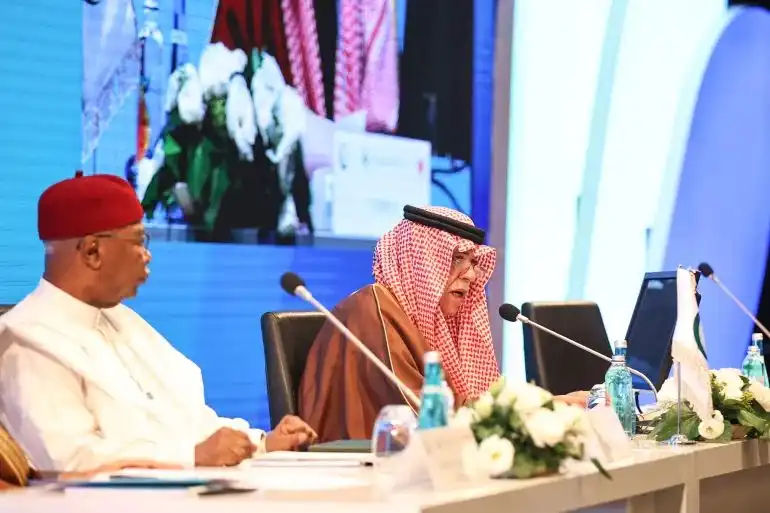
Riyadh denies holding a meeting between the Saudi Minister of Commerce and an Israeli official

On Monday evening, Riyadh denied “allegations circulating on social media platforms that a meeting was held between Saudi Trade Minister Majid Al-Qasabi and an Israeli official.”


This came according to what was reported by the Saudi News Agency (SPA) from an unnamed official source.


The Saudi comment came in response to a video clip circulating on social media platforms about the Minister of Commerce, Majid bin Abdullah Al-Qasabi, meeting with an Israeli official, according to SPA.


The source explained that the video was while Al-Qasabi was standing with the Nigerian Minister of Commerce prior to the opening of the 13th Ministerial Conference of the World Trade Organization in the Emirati capital, Abu Dhabi.


He added, "A person approached the Saudi minister and then introduced himself as the Minister of Economy in the Israeli government without prior knowledge of the person's identity."


The source affirmed "the Kingdom's firm position on the Palestinian issue, and its support for the steadfastness of the Palestinian people against the Israeli aggression."


PALESTINE

Tue 27 Feb 2024 8:37 am - Jerusalem Time

Biden: A ceasefire in the Gaza Strip next Monday

US President Joe Biden said Monday that he hopes there will be a ceasefire in the conflict between Israel and Hamas by “next Monday (March 4).”


“Well, hopefully by the beginning of the weekend, I mean the end of the weekend,” Biden said after being asked when the ceasefire might begin during an appearance Monday at an ice cream shop in New York City with comedian Seth Meyers.


Biden explained: “The National Security Advisor (Jake Sullivan) told me that we are close. We are close. It is not complete yet, but I hope that we will reach a ceasefire by next Monday.”


Earlier Monday, CNN reported that Hamas backed away from some key demands in negotiations on a hostage deal and a cessation of fighting in Gaza after Israeli accusations that its position was “delusional,” bringing the negotiating parties closer to a preliminary agreement that could stop the fighting. . The fighting and the release of a group of Israeli hostages, according to two sources familiar with the discussions.


A senior Biden administration official told CNN (according to what the network broadcast), following a meeting on Friday in Paris between the heads of American, Egyptian, and Israeli intelligence and a senior Biden administration official: “The main obstacles have been resolved regarding Hamas’ insistence on the complete withdrawal of Israeli forces and an end to the war.” ".


The official added, "Hamas's requirements regarding the numbers of Palestinians [prisoners] who must be released have declined."


A diplomatic source familiar with the talks confirmed that Hamas had softened its position before agreeing on the first phase of the deal. Although it is expected that more difficult obstacles will arise later when complex issues such as Hamas's release of male hostages in the Israeli army and ending the war are discussed.


Participants in the discussions said the agreement would likely be implemented in multiple stages, and once an initial agreement is reached, it could lead to a truce lasting up to six weeks with the release of a group of Israeli hostages including women, children and the elderly. and patients in exchange for a smaller number of Palestinian prisoners than Hamas initially demanded.


According to Israeli officials (according to Axios), Israeli Prime Minister Benjamin Netanyahu asked his negotiators not to accept the request to release some prisoners, including Hamas members who were convicted of killing Israelis and are serving long sentences.


On the other hand, Qatari mediators informed Israel that senior Hamas officials were “disappointed” with the updated framework for the hostage deal, and stressed that there was still a large gap between the proposal and their demands, two Israeli officials and an informed source told Axios.


"There is no room for much optimism," a senior Israeli official said.


He added, "The progress achieved by Israel with the mediators did not close the gaps with Hamas, and it is difficult to imagine at this stage an agreement before Ramadan."


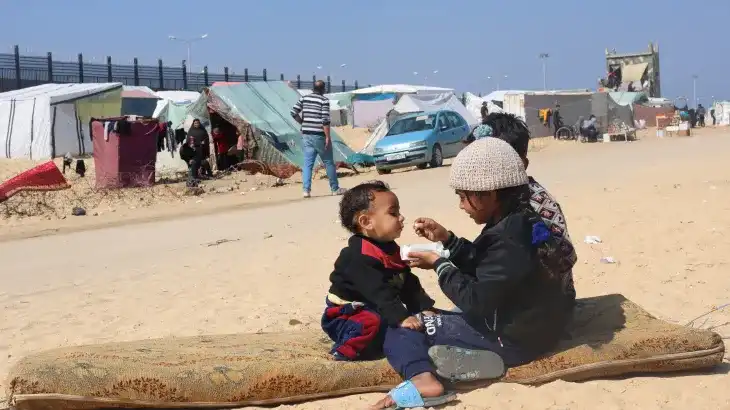
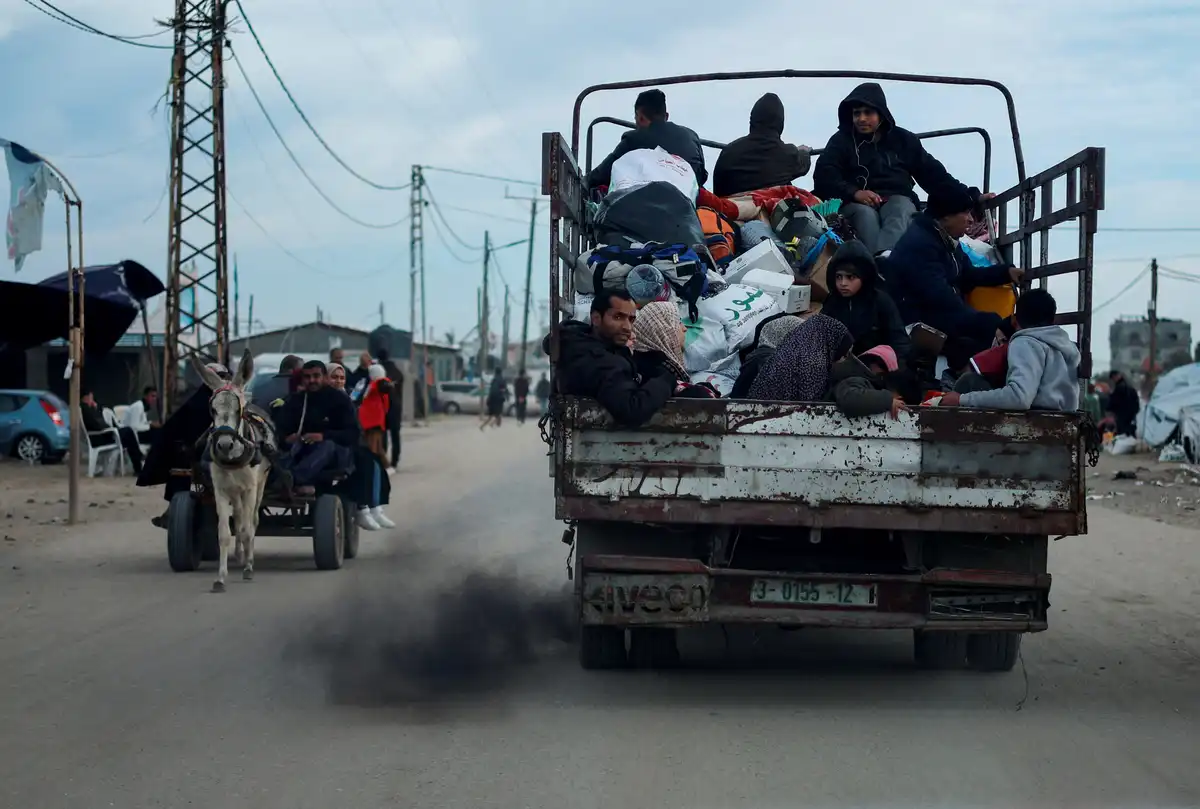
More than four months after the start of the war launched by Israel against the besieged Gaza Strip, several countries, especially the United States, Israel’s main ally (which supported its fierce war on Gaza), are seeking to dissuade Netanyahu from launching an attack on Rafah, where about 1.5 million people are gathered. Millions of Palestinians, the majority of whom are displaced, according to the United Nations.


Although talks continue to reach a new truce, Netanyahu is committed to carrying out a ground operation against what he says is the "last stronghold" of the Hamas movement.


Israel launched its war on October 7, after Hamas carried out an unprecedented attack on southern Israel, killing more than 1,160 people, including 315 soldiers, according to official Israeli statements. About 250 people were also detained during the attack, and Israel says that 130 of them are still detained in the Gaza Strip. Gaza, and 31 of them are believed to have died.


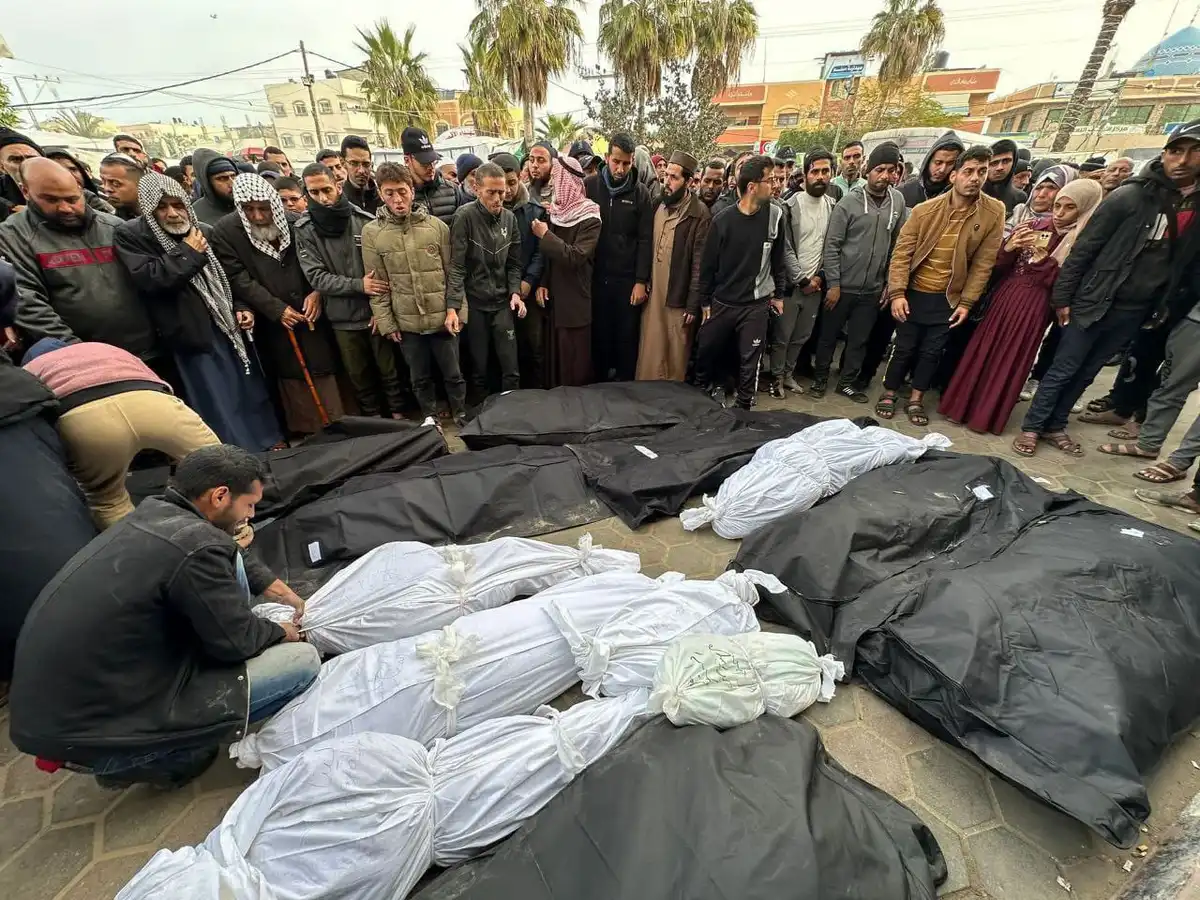
Israel's rabid war on Gaza led to the deaths of 29,782 Palestinians, the majority of whom were women and children, according to the latest tally of the Ministry of Health in Gaza.


During the truce, negotiations will revolve around more sensitive topics such as the release of Israeli soldiers held hostage, Palestinian prisoners serving longer sentences, the withdrawal of Israeli occupation army forces and a permanent end to the war along with so-called “day after” issues. .


Israeli leaders have made clear that they intend to launch a military attack on Rafah, while Hamas said in a previous proposal that it wants to use a second phase to discuss “the necessary requirements for continuing the mutual cessation of military operations.”


Teams of countries that met on Friday in Paris were meeting on Monday in Doha to discuss the finer points of the broad issues discussed on Friday, a sign of progress.


State Department spokesman Matt Miller, responding to a question from a Jerusalem correspondent on Monday, said: “We made progress in these talks over the weekend and the past few days” to try to reach an agreement to free the hostages and secure a temporary ceasefire.


Miller said in a press conference at the ministry: “We still believe that reaching an agreement is possible and we will continue to strive to achieve it.”


Miller added that if Hamas "truly cares about the Palestinian people, it should agree to the deal on the table because it will significantly alleviate the suffering of this Palestinian people."


US National Security Advisor Jake Sullivan on Sunday declined to provide details about the conditions discussed, but said that Friday's meeting in Paris led to "an understanding between the four on the basic form of a hostage agreement for a temporary ceasefire."


Sullivan told American media networks that there must be indirect discussions between Qatar and Egypt with Hamas, because in the end they will have to agree on the release of the hostages, and that “this work is underway, and we hope that in the coming days we will be able to reach a point where it will actually be possible.” "A firm and final agreement on this issue. But we will have to wait and see."


Israel confirmed on Monday that it would send a team to Doha after Israeli Prime Minister Benjamin Netanyahu on Sunday was less dismissive of the status of the talks than he had been in the past few weeks.


“They have to come down to reality,” Netanyahu said of Hamas on Fox News. “And I think if that were the case, we would have been able to reach an agreement that we certainly wanted, and I wanted that.


Netanyahu is facing enormous pressure from the Israeli public to release more than 130 hostages still in Gaza, including the bodies of many who are believed to be no longer alive.


The embattled prime minister also reiterated that he intends to order the Israeli army to enter Rafah, something the United States has warned it opposes without a firm plan that takes into account the safety of some 1.5 million Palestinians stationed there, many of whom have fled fighting in the far north. .

PALESTINE

Tue 27 Feb 2024 8:31 am - Jerusalem Time

West Bank: Three Palestinians were killed by Israeli forces in Tubas

Three citizens were killed, Tuesday morning, by Israeli forces during their storming of the city of Tubas.


According to the Ministry of Health, the killed are: Ahmed Jamal Daraghmeh (26 years old), Muhammad Samih Bayadsa (32 years old), Osama Jabr Zalat (31 years old).


The Israeli forces were reinforced with dozens of vehicles and 3 bulldozers, which carried out digging and destroying infrastructure, roads and homes, amid violent armed clashes and numerous explosions, before they withdrew from them.


PALESTINE

Tue 27 Feb 2024 8:28 am - Jerusalem Time

War on Gaza: Israeli lethal raids on Rafah and the disclosure of the terms of an initial agreement approved by Israel

With the beginning of the 144th day of the Israeli aggression on Gaza, sources revealed to Al Jazeera the terms of the initial framework of an agreement recently approved by Israel in Paris, which includes the release of 400 Palestinian prisoners, including a number of those with high sentences, and the gradual return of the displaced to the northern Gaza Strip, with the exception of those of military service age.


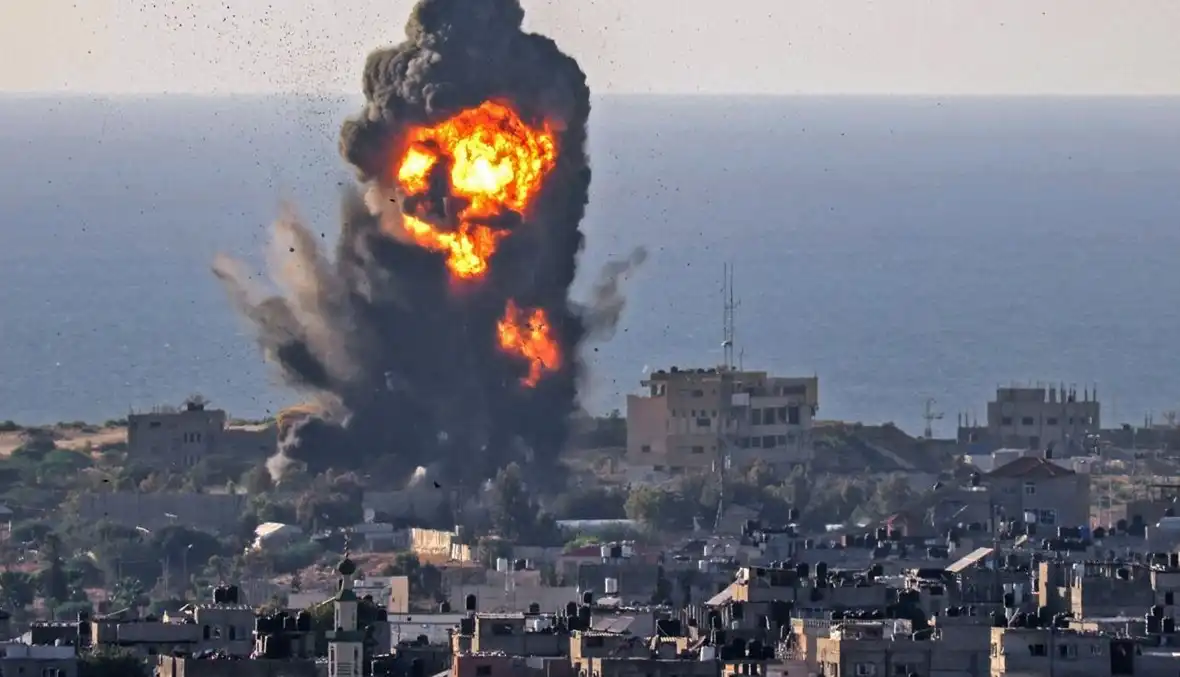
This comes after a day in which about 90 Palestinians were killed, most of them in Rafah and Khan Yunis in the south of the Gaza Strip, and Deir al-Balah in the centre, while the Al-Quds Brigades - the military wing of the Islamic Jihad movement - announced that it had bombed “a gathering of enemy soldiers and vehicles south of the Zaytoun neighborhood in Gaza City.”

ARAB AND WORLD

Mon 26 Feb 2024 4:57 pm - Jerusalem Time

Danish pension funds divest from Israeli banks and companies

By Nasser al-Sahli

Financial institutions across Denmark are facing increasing pressure from the Danish public to withdraw their investments from Israel, as demonstrations continue for the fourth month running in protest at the continuing assault on Gaza and the stance of the Danish government regarding the war.

In different cities across Denmark, people have been asking their pension funds whether their savings are helping to finance illegal settlements in the occupied West Bank.

While it is true that these questions from Danish retirees are not new – and nor have they reached the level seen in Norway, where Norwegian pension funds were pressured to adopt similar steps years ago - they have started to seriously affect the positions of pension fund bodies in Copenhagen.

"Financial institutions across Denmark are facing increasing pressure from the Danish public to withdraw their investments from Israel"


Major pension funds divest from Israel

One of the most important of these is Velliv ("The Good Life"), a pension fund with 420,000 members, which announced that it was withdrawing investments from 11 banks in Israel. 

Although the influence of the pro-Israel lobby in the small Scandinavian country (population 5.6 million) is widespread, in its decision to divest from the Israeli banks Velliv has cited policies and directives from Europe and the UN relating to not investing where there are grounds to suspect violations of human rights.

Velliv pension fund's press director, Mikkel Bro Peterson, stated that "clients (retired pension fund holders) are generally aware of the conflicts across the world". In statements to local newspapers, he stated that "since the outbreak of the Gaza war a number of them have been asking about investments in Israel".

Subsequently, after reviewing its investment portfolio, Velliv decided to withdraw from Israeli banks, building on what he called conclusions about standards around responsible investment.

"The risks when it comes to the [Israeli] banks are either to do with their financing the expansion of the settlements or funding infrastructure in the settlements (in the occupied West Bank)," according to Bro Peterson. He stressed that "these are occupied territories, and these actions don't comply with the UN guiding principles we rely on".

Accordingly, Velliv, which represents the interests of the 420,000 retired members, withdrew over 7,000 shares from investments in Israeli banks.


Move towards responsible investments

Business Administration professor at Aalborg University, Per Nikolaj Bukh, commented on the decision to divest, telling the Danish Broadcasting Corporation (DR) in early February that the move showed "concern with the war in Gaza, and that members of the pension fund had become more concerned with the [recent] events, and that it was a step, in the context of a wave in which companies and pension funds were heading towards investments with a greater conscience, and broader [sense of] social responsibility".

Years ago, the EU issued directives relating to implementing "sustainable investment" policies. These required investing companies and pension funds to submit reports on their adherence to some of the standards for this sustainability, which are tied directly to climate and human rights policies.

The corporate and business umbrella Dansk Industri (Danish Industries, or DI), requires all companies and institutions that are part of it to submit annual reports on their compliance with Danish and European standards, as well as those issued by the UN, in the area of refraining from investment where suspicions of violations arise - including violations of human rights.


"The Danish fund pointed out that the official policy of the UN, the EU, and the Danish government was that establishing a two-state solution was necessary, and that the Israeli settlements in this respect were 'illegal and highly problematic'"


In this context, Pension Denmark, one of the biggest pension funds in Denmark (with 800,000 members), has withdrawn its investments from Israeli banks based on these suspicions and after some members highlighted their fears that some of these investments in Israeli banks could be assisting settler activities in the occupied West Bank.  

However, Pension Denmark's stance was crystallising months before the war in Gaza. The fund confirmed that "a long time before the outbreak of the war on Gaza, we were focusing on the issue of suspicions that Israeli banks were giving loans to illegal settlements in the occupied West Bank," according to one of the fund directors' statements on local TV.

In fact, the pension fund began selling its stocks and shares which had been invested in Israeli banks at the start of the year. These amounted to 75 million Krone in value (nearly ten million euros).

In another similar case, according to reports published by the Danish news site Zetland, in recent weeks, the pension fund P+ (which contains 110,000 members), withdrew its investments from Israel, specifically, from several banks, a cement company and others which produce surveillance equipment which is used in the West Bank.

Prior to this, Børsen (a Danish newspaper focused on business news), reported that Industriens Pension, a labour market pension fund for industrial workers, had excluded seven Israeli banks from its investments and that the PKA pension fund had nominated four Israeli banks to what it called its "exclusion list".


Growing boycott demands at Danish universities

The movement to divest from Israel, which pension funds have initiated, is being met on the academic level with demands at the University of Copenhagen to impose an academic boycott. The association 'Students against the Occupation' at Copenhagen University submitted a petition signed by around 2,100 students and employees, demanding that millions of dollars' worth of investments be dropped from companies on the UN list of businesses which could be complicit in the violation of human rights in the West Bank.

Copenhagen University's administration promised to study the demands after consulting with its asset managers. That comes alongside a step taken by AkademikerPension (a pension fund owned by Academics in Denmark) on 15 January to exclude and divest from 13 Israeli companies including banks which violated AkademikerPension's own investment policy.

This included six banks, four construction companies, and three telecommunications companies. As the reason for its decision, AkademikerPension stated that all of these "were linked to Israeli settlements in the occupied West Bank, and that has systematic negative impacts on the human rights of Palestinians".

On its official website, AkademikerPension has stated that it doesn't intend to "entirely exclude Israel", after criticism from pro-Israel supporters escalated in Denmark. Despite that, the fund confirmed that it was withdrawing investments from the following: Bank Hapoalim, Bank Leumi, Bank of Jerusalem, First International, Mizrahi Tefahot Bank, The Shlomo Group, Bezeq Telecommunications company, Secom, Electra, and others.

The Danish fund pointed out on its website that the official policy of the UN, the EU and the Danish government was that establishing a two-state solution was necessary and that the Israeli settlements in this respect were "illegal and highly problematic".

Analysts say that public opinion in Danish society concerning Israel's war on Gaza has been slowly moving away from official government policy, which was one of strong support for Israel immediately after 7 October.

Now, large elements of Danish society are applying increasing pressure on its unions and political parties to follow a policy consistent with the state's official stance on the issue of investments regulation. This includes the need to be in line with values and principles that have been adopted in Europe and internationally.  


ARAB AND WORLD

Mon 26 Feb 2024 4:48 pm - Jerusalem Time

Bernie Sanders says Israel has committed mass murder in Gaza

In an Interview with the UK's Channel 4, former US presidential candidate Bernie Sanders spoke of the mass slaughter of women and children in Gaza and said that it "has got to end”.

The Democrat added that he was leading the effort in Congress to make sure that Israeli Prime Minister Benjamin Netanyahu doesn't get the US funds that he needs to continue his war against the Palestinian people.


PALESTINE

Mon 26 Feb 2024 4:31 pm - Jerusalem Time

Israel’s war on Gaza: List of key events, day 143

As it continues with its offensive, Israel is expected to submit a report to the ICJ regarding its actions in Gaza.


Fighting and humanitarian crisis

  • The Israeli military shelled and fired on crowds of Palestinians waiting for food aid trucks to arrive in Gaza City, killing 10 people, the Wafa news agency reported.
  • At least 15 people were injured in the attack, which occurred on the coastal road in northern Gaza City on Sunday evening. They have been transferred to the nearby al-Shifa Hospital.
  • “Reports that a two-month-old baby died of hunger in Gaza are horrific,” said UNRWA, the UN agency for Palestinian refugees, in a post on social media.
  • Photos and testimonies have documented the Israeli army targeting two Palestinian sisters, killing one of them, as they searched for food on farmland in Beit Lahiya in the northern Gaza Strip.
  • The Israeli war cabinet has approved a military plan for “providing humanitarian assistance” in the Gaza Strip.
  • Meanwhile, an Israeli military offensive in Gaza’s southernmost city of Rafah could be “delayed somewhat” if a deal is reached for a weeks-long truce between Israel and Hamas, Prime Minister Benjamin Netanyahu said on Sunday.


Regional tensions and diplomacy

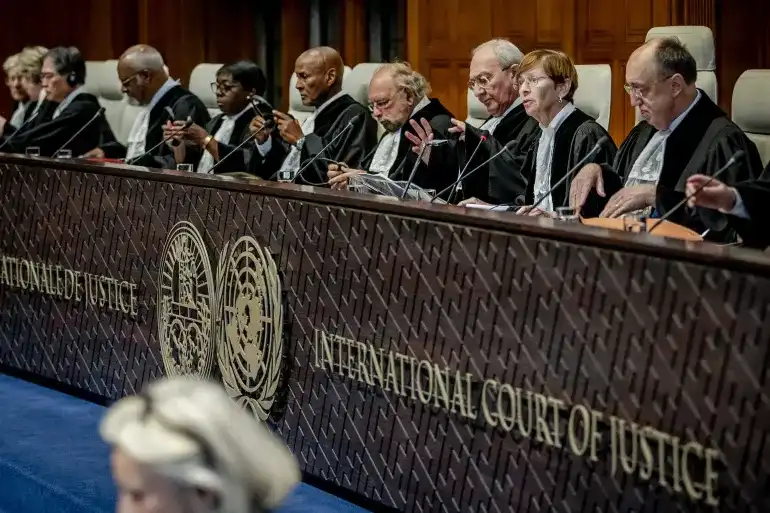
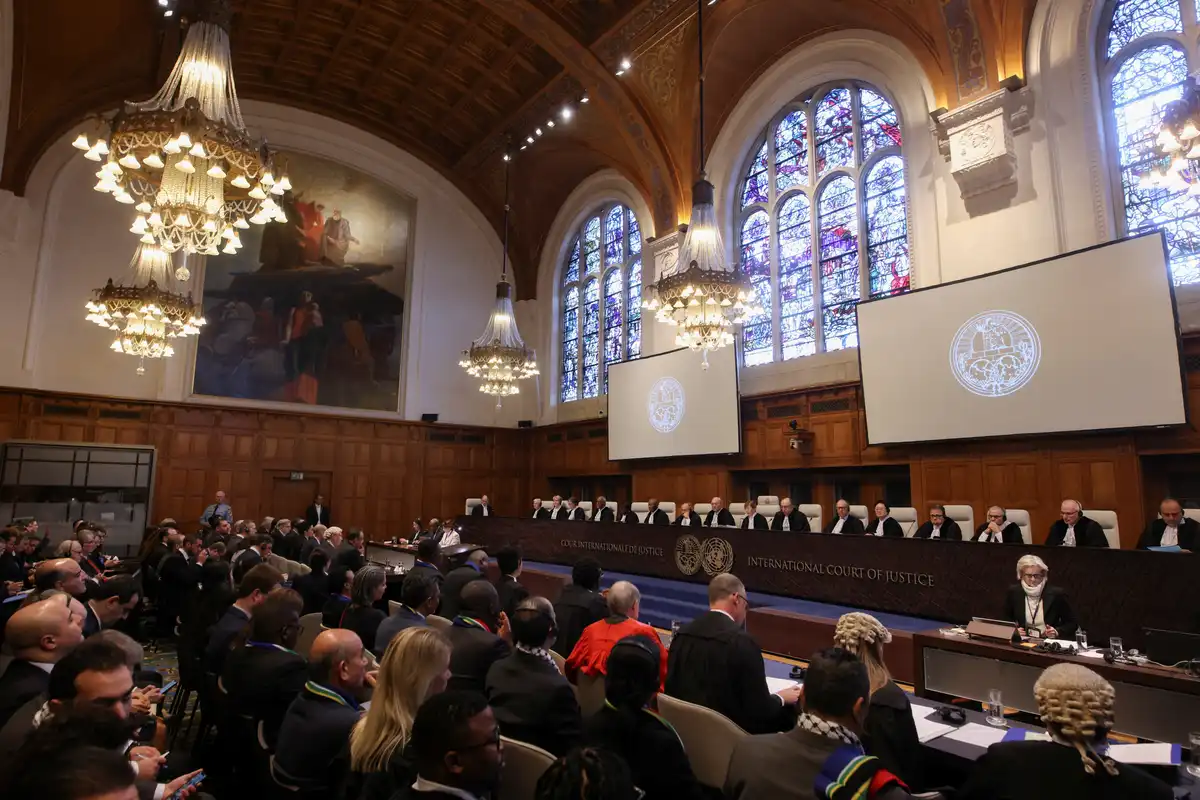
  • On January 26, the International Court of Justice (ICJ) gave Israel one month to “submit a report to the Court on all measures taken to give effect” to its order in the genocide case brought by South Africa. Israel is expected to submit that report today, Monday, February 26.
  • Meanwhile, the final day of public hearings has begun in a separate ICJ case on Israel’s occupation of the Palestinian territories since 1967.
  • In the United States, an active US military service member set himself on fire, in an apparent act of protest against the war in Gaza, outside the Israeli embassy in Washington, authorities said. US media reports said Aaron Bushnell, 25, livestreamed himself on Twitch, wearing fatigues and declaring he would “not be complicit in genocide” before dousing himself in liquid. He then lit himself on fire while yelling “Free Palestine!” until he fell to the ground.


Violence in the occupied West Bank

  • Israeli forces have erected a tower and placed surveillance cameras on it at the western wall of Al-Aqsa Mosque in occupied East Jerusalem, the Wafa news agency reports.
  • The report comes as the Israeli government is expected to place restrictions on worshippers trying to pray at Islam’s third-holiest site during the Muslim holy month of Ramadan, which will likely start on March 10.
  • Israel plans to build more than 3,300 new homes in settlements in the Israeli-occupied West Bank in response to a fatal Palestinian shooting attack, a senior cabinet minister said. The decision drew an angry response from the US at a time of growing tensions over the course of Israel’s war on Hamas in the Gaza Strip.

SOURCE: AL JAZEERA AND NEWS AGENCIES

ARAB AND WORLD

Mon 26 Feb 2024 4:28 pm - Jerusalem Time

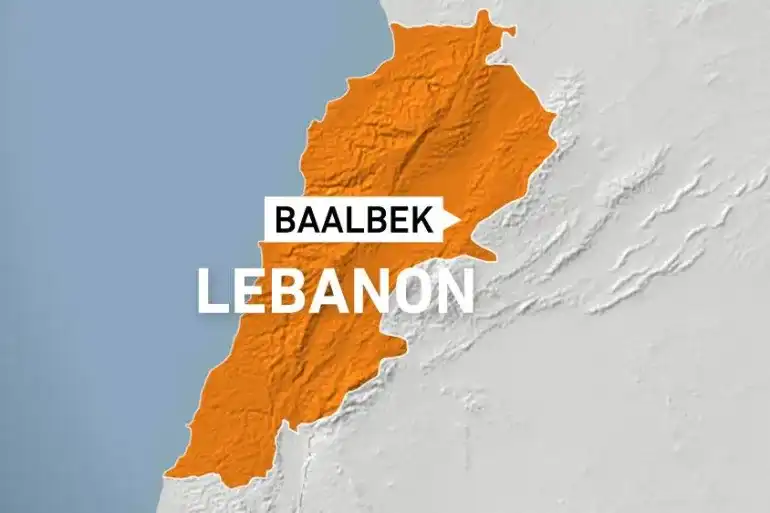
Israeli jets bomb eastern Lebanon for the first time since Gaza war began


Hezbollah says at least two killed in attack near Baalbek, its stronghold some 100km from the border with Israel.

Lebanese security officials say Israel has targeted eastern Lebanon for the first time since the war on Gaza began in October last year.

At least two people were killed on Monday after Israeli military planes carried out three air strikes on the outskirts of Buday village near Baalbek, a Hezbollah stronghold in the Bekaa Valley about 100km (62 miles) from the Israel-Lebanon border.

The attacks targeted a convoy of trucks, with the Israeli military saying it struck “Hezbollah terror targets deep inside Lebanon”.

Confirming the strikes, Israel’s army said its jets targeted sites used by Hezbollah for its aerial defence system, adding that they came “in response to the launch of a surface-to-air missile” that downed an Israeli drone earlier on Monday in southern Lebanon, where most Israeli attacks had happened so far.

A Hezbollah official told the Reuters news agency the Israeli strikes hit a warehouse, killing two people. The warehouse is part of Hezbollah’s Sajjad Project that sells food products to people in its stronghold at prices lower than the market.

A video posted by Lebanese media outlets showed a plume of smoke rising from the vicinity of the Aadous plain in Buday, west of the city of Baalbek.

Two separate videos showed a destroyed area with a burned-out and overturned truck and a damaged SUV lying next to a road, as well as a huge pile of rubble from what seems to be a building.

The air strikes came hours after Hezbollah said its fighters shot down an Israeli drone over its stronghold in a province in southern Lebanon. Another missile fired by Hezbollah towards the drone was intercepted by Israel and landed near a synagogue in a town close to Nazareth in northern Israel. There were no injuries or damage.

The strike on Baalbek, because of its location deep inside Lebanon, is the most significant since the strike in early January on Beirut that killed top Hamas official Saleh al-Arouri.

Hezbollah and Israeli forces have been trading fire nearly daily along the border since the war in Gaza started on October 7, killing at least 47 civilians.

The Iran-backed Shia group, with deep ties with Hamas, says it will stop its attacks on Israel after a ceasefire is reached in Gaza. But Israeli Defence Minister Yoav Gallant on Sunday said anyone who thinks a temporary truce for Gaza will also apply to its northern front is “mistaken”.

Israel has killed nearly 30,000 Palestinians and displaced 80 percent of Gaza’s 2.3 million population after Hamas launched an unprecedented attack into southern Israel on October 7, killing more than 1,100 people and taking about 240 captive.

SOURCE: AL JAZEERA AND NEWS AGENCIES

OPINIONS

Mon 26 Feb 2024 4:21 pm - Jerusalem Time

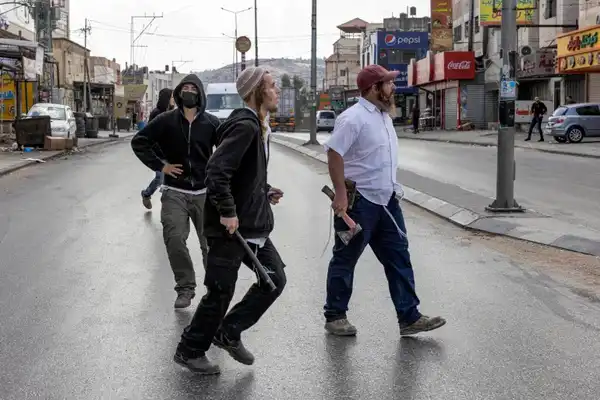
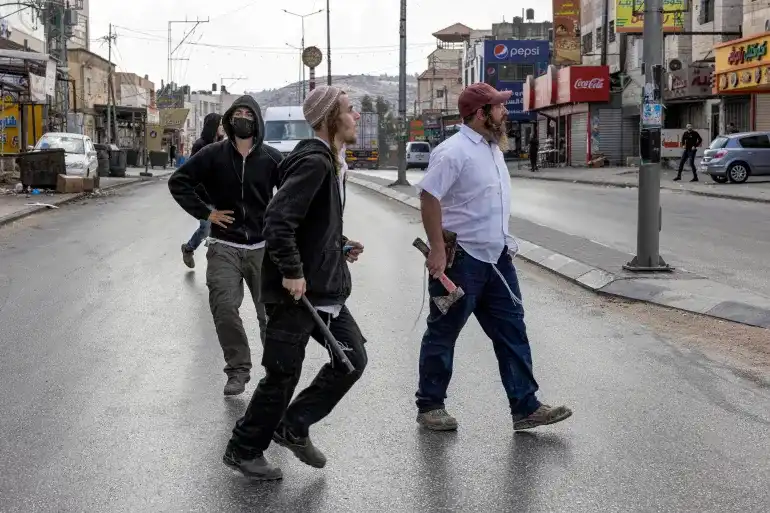
Settler violence: Israel’s ethnic cleansing plan for the West Bank

Aljazeera

Aljazeera

Opinion Writer

By Alice Panepinto and Triestino Mariniello

The Israeli state is actively encouraging settler violence against the Palestinians as part of its long-standing policy of displacement.


On February 8, Israeli settlers attacked Palestinian shepherds who were out grazing their herds in the Sadet a-Tha’leh community, near Hebron in the occupied West Bank. They expelled the Palestinians from the pasture and used drones to scare their livestock. As a result, the shepherds suffered severe losses as many of their terrified animals had miscarriages and stillbirths in the middle of lambing season.

The incident is not unique and it is part of what human rights defenders are describing as “economic warfare by settlers which leads to displacement”.

What happened at Sadet a-Tha’leh is one of 561 incidents of Israeli settler attacks against the Palestinians, which the UN Office for the Coordination of Humanitarian Affairs (OCHA) has recorded between October 7 and February 20. As of January 17, settlers have killed at least eight Palestinians and injured 111, per OCHA’s database. Repeated waves of violence by settlers, often backed by the army, have led to the displacement of 1,208 Palestinians, including 586 children, across 198 households.

While humanitarian and human rights organisations tend to register these violent acts as separate incidents, they constitute systematic brutality unleashed by extremist settlers onto the Palestinian population of the occupied West Bank in parallel to the plausibly genocidal acts carried out by the Israeli army in Gaza.

Supported by the Israeli security forces and aided and abetted by the government, settler violence is a central part of the Israeli state’s policy and plan to ethnically cleanse the occupied Palestinian territory in order to establish full sovereignty over it and enable settlement expansion – despite settlements being illegal under international law.

The settlement enterprise: Unlawful in its entirety

Settlements are a range of state-sponsored (or largely state-tolerated, in the case of more informal outposts and “farms”) urban colonies built for Israelis in the occupied West Bank and Golan Heights.

All Israeli settlements are illegal under international law, as they violate Article 49 of the Fourth Geneva Convention, which Israel has ratified. Furthermore, settlement expansion plans are often used as a way to consolidate Israel’s de facto annexation of occupied territory, in contravention of the prohibition of territorial conquest through force set out in Article 2(4) of the UN Charter.

Despite the clarity of international law on the matter, supported by the 2016 UN Security Council resolution not vetoed by the United States, Israel has provided the political conditions and economic incentives, as well as infrastructural support, for the growth of 279 settlements in the West Bank in which some 700,000 settlers reside.

The imprint of settlements extends beyond walled urban areas into the surrounding countryside, where vulnerable Palestinian families live in constant fear of attacks against their homes, the herds they depend on to make a living, and their lives in general.

In some of the 16 Palestinian communities forcibly transferred since October 7, such as Khirbet Zanuta in the South Hebron Hills, settlers have already fenced off land, effectively controlling it for their own use, and preventing the Palestinian communities from returning.

Settler violence as state violence

The political positions of extremist settlers, at the heart of which is the desire to rid the occupied West Bank of Palestinians, have entered Israeli mainstream politics.

After high-profile incidents of settler violence, government officials have embraced and expressed support for such acts. Government ministers have openly incited settlers to commit violent acts against Palestinians. Last year, for example, Finance Minister Bezalel Smotrich called for the Palestinian town of Huwara to be wiped out.

Settlers enjoy not only political backing but also military support. In the past two decades, the deployment of Israeli security forces to the West Bank to help “secure” the illegal Israeli settlements has expanded. In addition, so-called “territorial defence units” comprised of settlers have been created, trained and armed by the Israeli military.

For years, armed settlers have attacked Palestinians under the protection and with the participation of Israeli security forces.

Since October 7, many army units have been deployed to the Gaza front, which has given the settler territorial defence units an even more prominent role in establishing control over occupied land. The line between the security forces and armed settlers has been increasingly blurred, especially under the leadership of Israel’s minister of national security, Itamar Ben-Gvir. In recent months, he has ordered the distribution of thousands of firearms and other combat equipment to settlers.

Although perpetrated by private citizens, settler violence in occupied Palestine can only be understood as state violence. The applicable international law, including the Articles on the Responsibility of States for Internationally Wrongful Acts, confirms that a range of conducts committed by non-state actors, such as Israeli armed settlers, may be attributed to the state.

Prominent human rights organisation B’Tselem has described settler violence as a form of state violence, through which Israel can “have it both ways”. It can claim that this is violence carried out by private individuals – a few “bad apples” among the settlers – and deny the role of its own security forces, all while benefiting from its consequences – the expulsion of Palestinians from their land.

Abandoning the duty to protect

Under international law, Israel as the occupying power has the obligation to protect the Palestinian population. Nonetheless, settler violence takes place openly and in total disregard of the laws of war and human rights.

The fact that Israeli security forces have accompanied and protected settlers on their violent rampages clearly indicates they actively ignore legal responsibilities towards the occupied population.

The lack of accountability for settler violence in Israeli courts – military or civilian – demonstrates that the Israeli authorities are unwilling to put an end to impunity. Already in 2013, a UN fact-finding mission reported that “the identities of settlers who are responsible for violence and intimidation are known to the Israeli authorities, yet these acts continue with impunity”.

A more recent survey by a human rights NGO found that between 2005 and 2023 the Israeli police closed 93.7 percent of investigation files concerning Israelis who harmed Palestinians and their property in the occupied West Bank. Since the current government took office in December 2022, 57.5 percent of Palestinian victims of Israeli crime chose not to file a complaint given a lack of trust in the system.

Settler violence has been adopted by the Israeli state as a tool to accelerate the pace of Palestinian displacement. Once key portions of occupied Palestine are cleansed of the Indigenous Palestinian communities, then the settlement enterprise can proceed unabated and unopposed and annexation can also take place.

Given settlement activities are a recognised violation of international law, the international community cannot acquiesce to settler violence that drives Palestinians from their land to facilitate settlement expansion.

There are pending investigations about the situation in Palestine at the International Criminal Court (ICC). ICC Prosecutor Karim Khan has confirmed that his office is accelerating investigations in relation to settler violence, stressing that “Israel has a fundamental responsibility as an occupying power” to investigate and prosecute these crimes and prevent their reoccurrence and ensure justice.

In our view, ICC’s investigations might have deterrent effects only if they covered the role of the Israeli authorities in enabling this violence, but also the illegality of settlements. The “transfer of civilians” by the occupying power is indeed one of the most documented alleged war crimes in Israel.

We also find the recent sanctions against individual violent settlers imposed by the US, the UK, France and other states short-sighted. By targeting individuals, but not the state, Western powers continue to give Israel a free pass when it comes to violating the rights of Palestinian civilians living under Israeli occupation.

Instead, the international community must clearly and without hesitation ascribe settler violence to the Israeli state, and hold its officials to account in the appropriate international forums for not taking decisive action to prevent it, stop it, and reverse its effects.

OPINIONS

Mon 26 Feb 2024 4:13 pm - Jerusalem Time

Hebrew Newspaper: We are on the road to "Ben Gvir State"

Yedioth Ahronoth

Yedioth Ahronoth

Opinion Writer

By Sima Kadmon

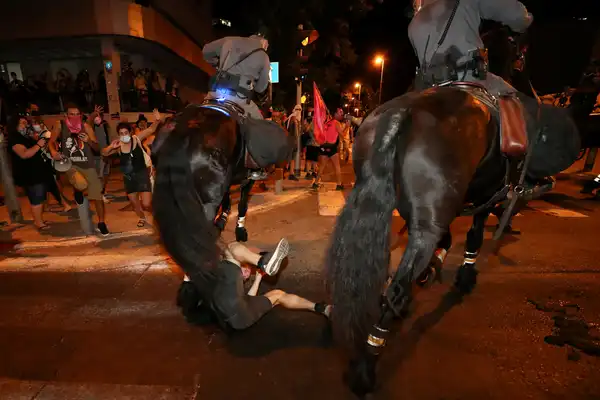
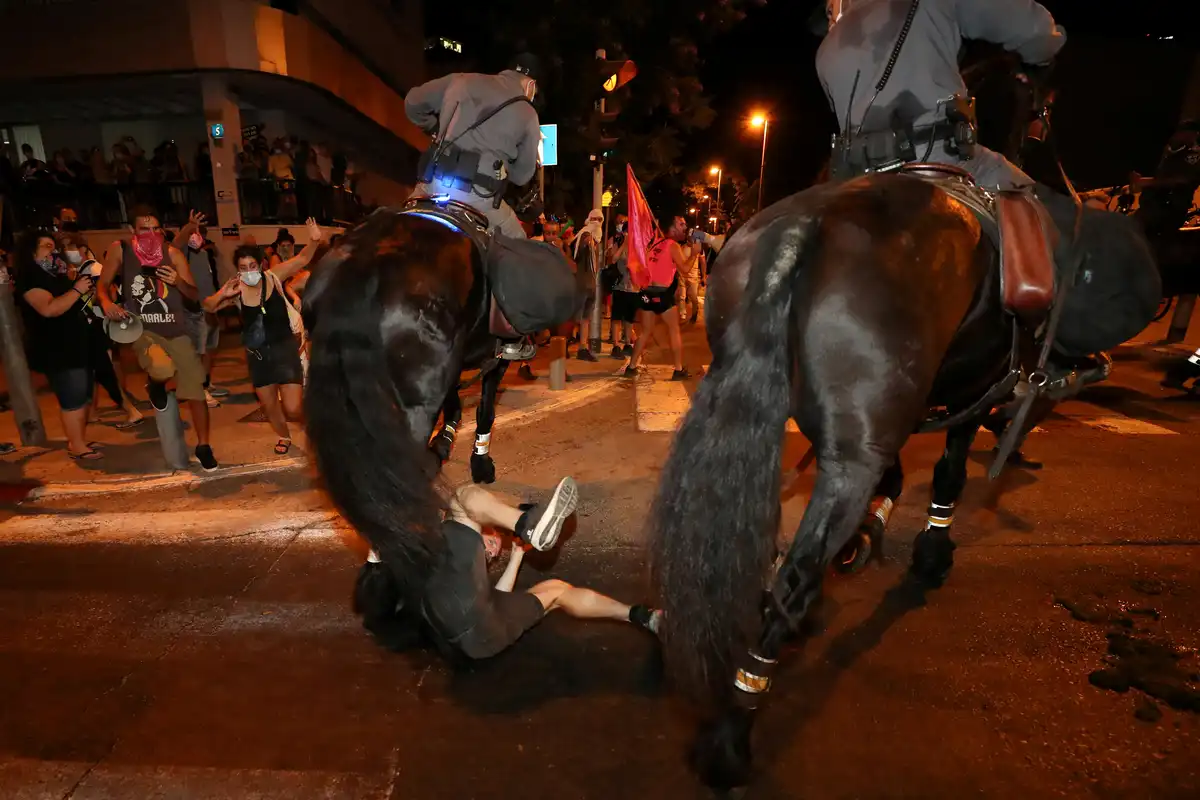
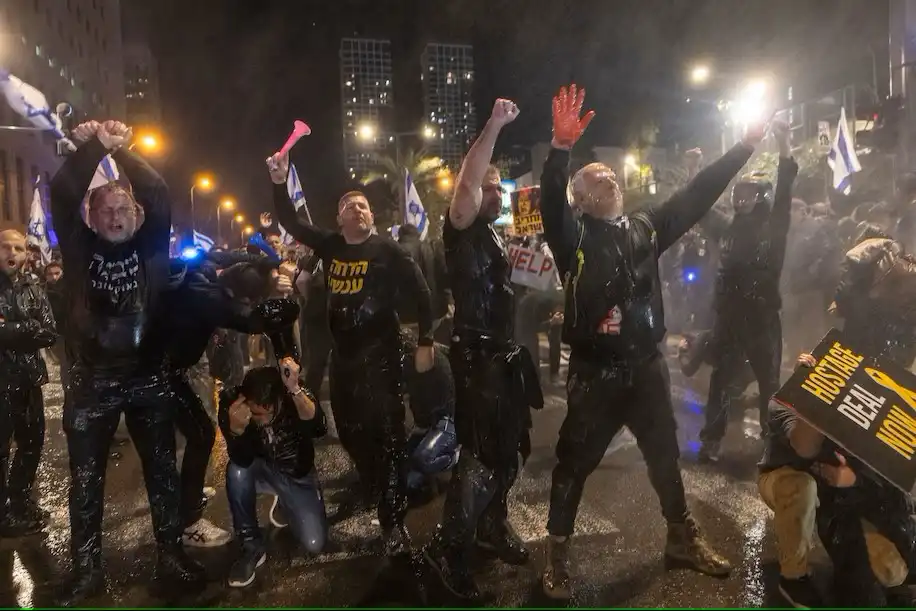
What we saw on Saturday evening in the streets of Tel Aviv is only the beginning. Over time, it will look more natural. Like everything else that is difficult in the country, we will manage to get used to it, and this will also happen to police violence.

The police have been acting violently for a long time. For many years, this violence is mainly directed at vulnerable groups in society, such as Arabs, Haredim, and even Jews of Ethiopian origin, and sometimes, at people with special needs in wheelchairs. Does anyone appoint violent people to the police? Otherwise, how can we explain what was done by the policeman who, from the back of his horse, aimed a blow with the reins at the head of an elderly person, or how can we explain the injury of a woman because of the horse, while she was blocking the road, or the injury of many people because they only demonstrated and were taken to hospitals, after they were hit in the eyes with water cannons.

Even family members of the hostages who arrived at Kaplan Square, raising torches, were hit by water cannons. According to a demonstrator in Kaplan, things looked “like the dark regimes we see in the movies, and we are afraid that there are police who act like this.” She added, "The horses swerve from the road to scare elderly women who do not threaten anyone. 20 policemen surrounded 5 people, including an elderly former military man, and blocked the road. Everything that happened was violent and offensive. Women fell on the edge of the road, for fear of being trampled by the horses. In an instant, I felt like I had gone from being an ordinary citizen to being in a position where I had to submit to the system. It was an unjustified display of force and violence."

Police violence seems to be widespread throughout the world. The "Black Lives Matter" movement in America has reflected this matter remarkably, and in other countries, we can see the police's tendency to practice violence and sadism. But only in Israel, and especially during the Ben Gvir period, the police are not punished, and sometimes an investigation is not even opened. On the contrary, they are promised a promotion. Or as Ben Gvir said: “If they write about you in Haaretz, come and let us talk about a promotion for you.”

It must be clearly stated that the police were violent before Ben Gvir was appointed to the position. This position changed, from the position of Minister of Police to Minister of Homeland Security, all the way to Minister of National Security, but he is still Minister of Police. The agency, which calls itself the “Police Investigations Department,” is composed mainly of police personnel, and considers its primary function to be to cover up police work that borders on criminal violations. The Public Prosecution Office, which has been suffering since handling the Netanyahu case, is far from addressing the problem.

Since the formation of the current government, and under the auspices of the active minister, the rate of violence has increased, and the groups targeted by this violence have expanded. Opponents of the regime have become a legitimate target for violence that knows no bounds. Anti-government demonstrators - from senior officers in the Army Reserve, to the elderly and young women, to high school students, parents of Hamas hostages, bereaved families, and anyone passing by on the road by chance - are all legitimate targets of the police. Even someone who publishes a post against the regime on social media is summoned for investigation at the nearest police station.

Currently, the majority of detainees who are easily arrested and brought to court are released without restrictions. But it is a matter of time until the Minister of Justice succeeds in including judges in the circle of evil. This will also be the beginning.

In the coming weeks, protests will escalate. The reserve soldiers will return to their homes and take to the roads. The hesitation of the protest leaders about going out to the streets, and if the time has come - will be resolved. The continuation of the war, and the current authority’s refusal to agree on the date of the elections - will increase anger. As the roads fill with demonstrators and demand elections - the demands of the Minister of Police for increased force and increased violence will increase.

Groups of armed thugs, wearing clothes that say “alert lines,” are spreading in some towns. So far, they mainly annoy the Arabs, but it is only a matter of time before they start confronting anyone who seems left-wing to them.

All of this is happening while the war in Gaza continues, the escalation in the north continues, the West Bank is on fire, and in the center of the country, the police are attacking demonstrators. Is there a more accurate description of a country we didn't want to look like?

We expected to hear from the Prime Minister criticism of what the police are doing. For example, to rebuke those who have lost control of themselves, clearly. But did we really expect that? How can we have expectations from someone who refrained from directing any criticism of the extremist parties in his government, verbally or practically, due to fear of losing his coalition, which consists of 64 seats? How can we have expectations from a person, everything he does is political, and he is motivated only by personal interest in survival. Among those who gave up his seat, once to Yariv Levin, and once to Itamar Ben Gvir. Let the state burn.

And really, this is just the beginning. After a while, they will start knocking on the doors of everyone who put a “like” on any post on Facebook or Twitter, enter his house, and arrest him after searching his closet.

Soon, they will arrest journalists who oppose them and invite them to investigate the basements.

Soon, too, they will close museums and theaters that are not in line with Ben Gvir's state. Does anyone doubt that this is what we are, or that we will become Ben Gvir's state? Or at least, are we on our way there?

For anyone who seems surprised, the answer is yes. We're on the way there.

ARAB AND WORLD

Mon 26 Feb 2024 3:53 pm - Jerusalem Time

UN experts call on countries to immediately halt arms exports to Israel


Experts say any weapons that would be used by Israel in Gaza is likely a violation of international humanitarian law

A group of UN experts said on Friday that any arms exports to Israel that would be used in Gaza are likely a violation of international law and must stop immediately.

The statement is one of the most sharply defined calls for international actors to cease weapons shipments to Israel amid its ongoing war in Gaza, where Israeli forces have killed more than 29,000 Palestinians.

The experts said weapons exports to Israel could be used in Gaza, where there is a "clear risk" that they would be used to commit serious violations of international humanitarian law.

“All States must ‘ensure respect’ for international humanitarian law by parties to an armed conflict, as required by 1949 Geneva Conventions and customary international law,” the experts said.

“States must accordingly refrain from transferring any weapon or ammunition – or parts for them – if it is expected, given the facts or past patterns of behaviour, that they would be used to violate international law."


The experts added that the transfers of weapons are still "prohibited even if the exporting State does not intend the arms to be used in violation of the law – or does not know with certainty that they would be used in such a way".

The statement also lauded the decision made by a Dutch appeals court on 12 February, in which it ordered the Netherlands to halt the export of F-35 fighter jet parts to Israel.


The court found that there was a “clear risk” that the parts would be used to commit violations of international humanitarian law, as “there are many indications that Israel has violated the humanitarian law of war in a not insignificant number of cases”.

Several other countries also announced they would be suspending arms to Israel, including Belgium, Italy, and Spain. The European Union has also discouraged arms sales to Israel.

Still, the main weapons supplier of Israel continues to be the US, which shows no signs of halting or even decreasing its weapons shipments to the country.

The amount of arms Washington gives to Israel even led to criticism from Josep Borrell, the foreign policy chief for the EU.

After US President Joe Biden called Israel's conduct in Gaza "over the top", Borrell suggested that the American leader do something about it.

“Well, if you believe that too many people are being killed, maybe you should provide less arms in order to prevent so many people being killed,” Borrell told reporters earlier this month.

ARAB AND WORLD

Mon 26 Feb 2024 3:48 pm - Jerusalem Time

Israeli media: The situation in Gaza after the war will be like the West Bank

The Israeli media was busy discussing the post-war phase in the Gaza Strip, as Israel seeks to maintain complete security control over the Strip, which was stressed by Israeli Foreign Minister Israel Katz during his participation in a television dialogue. Discussions also focused on the occupation’s decision to restrict the entry of Muslims into Al-Aqsa Mosque. During the next month of Ramadan.


In an interview with Channel 14, Katz claimed that from a security standpoint, the Israeli army will be in the Gaza Strip after the end of the war, as is the situation in the West Bank. He said, “In the West Bank, after Operation Defensive Shield (2002), the Israeli army returned to (Areas A and Areas B) and others, and this will be the case in Gaza from a security standpoint.”


He added that the humanitarian issue has become for Israel “a tool and lever of pressure to get rid of the United Nations Relief and Works Agency for Palestine Refugees (UNRWA), first, and transfer its mission to other organizations, and second, to determine to whom humanitarian aid will be delivered other than the Islamic Resistance Movement (Hamas) and the Palestinian National Liberation Movement.” (to open)".


The Israeli minister said, "This tool, which is controlled by the Israeli army, allows Israel to work to provide local tribes and forces as an alternative to Hamas on the civilian side, and to prevent Palestinian Authority President Mahmoud Abbas from returning to Gaza."


Attack on Rafah

Regarding the ground military operation that the occupation army intends to carry out in Rafah, south of the Gaza Strip, Katz stressed that this operation will be carried out despite the American rejection, and commented, saying, “There is no one capable of preventing us from entering Rafah, but we will try to do so after we obtain an international understanding to prevent “Issuing decisions that may prevent us.”


He revealed that there were possibilities for an American decision to be issued to prevent entry into Rafah, so he and Prime Minister Benjamin Netanyahu worked to prevent its issuance.


On the other hand, Israeli politicians and academics warned of the danger of the occupation’s decision to restrict the entry of Muslims into Al-Aqsa Mosque during the upcoming month of Ramadan.


In this context, Avigdor Leberman, head of the Yisrael Beytenu party (opposition), told the Israeli Kan 11 channel, “It is forbidden to deal with this very sensitive issue - Al-Aqsa Mosque and the month of Ramadan - based on political orientations,” stressing that the only consideration that moves Netanyahu is that. His political survival and how he maintains the survival of his government coalition.


Israeli media discussions also touched on the escalating dispute between the leaders of the War Council due to the mandate granted to the negotiating delegation regarding the prisoner exchange deal to be concluded with the Palestinian resistance.


Source: Al Jazeera

ARAB AND WORLD

Mon 26 Feb 2024 3:44 pm - Jerusalem Time

Human Rights Watch accuses Israel of violating ICJ order by blocking aid to Palestinians in Gaza

Human Rights Watch said the Israeli government had not complied with at least one measure in the legally binding order issued by the International Court of Justice.


The organization added that the court ordered Israel to take immediate and effective measures to provide basic services and humanitarian aid in Gaza.


The organization explained that even after a month, Israel continues to obstruct the provision of basic services and the entry and distribution of fuel and life-saving aid inside Gaza.


The organization confirmed that what is happening in Gaza are acts of collective punishment that amount to war crimes, and include the use of starvation of civilians as a weapon of war.


Rights Watch called on other countries to use all forms of influence, including sanctions and embargoes, to pressure the Israeli government to comply with binding court orders in the genocide case.

The human rights organization urged other countries to use all forms of pressure, including sanctions and embargoes, to pressure the Israeli government to comply with binding court orders in the genocide case.

“The Israeli government is starving 2.2 million Palestinians in Gaza, putting them at greater risk than they were before the international court’s binding decision,” said Omar Shaker, Israel and Palestine director at Human Rights Watch.


Rights Watch continued, "The Israeli government has simply ignored the court's ruling and, in some respects, has even intensified its repression, including obstructing life-saving aid."


Today, Monday, Israel is preparing to submit an official report to the International Court of Justice in The Hague, to review its commitment to the court’s decisions in which it obligated Tel Aviv to take the necessary measures to prevent genocide in the Gaza Strip.


It is expected that Israel will officially inform the court that it is implementing the orders related to allowing the entry of humanitarian aid to the residents of Gaza, and that it has taken steps to prevent genocide against the Palestinians in the Gaza Strip, although this comes in conjunction with the continuation of its increasingly attacks and violations that have aroused the anger of humanitarian organizations and international bodies. .


On January 11, South Africa filed a lawsuit before the International Court of Justice, ruling Israel’s actions in Gaza as genocide, and issuing an order forcing it to withdraw its forces. Israel rejected the accusations against it in a court session - the next day. .


In a temporary ruling issued on January 26, the Court of Justice asked Israel to take measures to prevent genocide in Gaza and direct incitement to it, and to improve the humanitarian situation in the Strip. It also rejected the Israeli request by rejecting the case. But in return, it rejected South Africa's request to order a ceasefire.


International Justice gave Israel one month to submit a detailed report on the measures it has taken in this regard, which Israel is expected to implement today, Monday.


Today, Monday, is the sixth and final day of hearings held by the Court of Justice regarding the legal consequences of Israel’s practices in the occupied Palestinian territories, at the request of the United Nations General Assembly.


Source: Al Jazeera + Human Rights Watch

ARAB AND WORLD

Mon 26 Feb 2024 3:41 pm - Jerusalem Time

The death of an American soldier who set his body on fire in front of the Israeli embassy in support of Palestine

US Air Force soldier Aaron Bushnell died from his burns after setting himself on fire in front of the Israeli embassy in Washington.


Bushnell, 25, documented the incident in a video clip, in which he called for the “liberation of Palestine” and said: “I will no longer be complicit in this genocide,” referring to what has been happening in the Gaza Strip since last October 7.


The soldier set himself on fire yesterday afternoon, Sunday, and repeatedly called out, “Free Palestine.” He was taken to the hospital to receive treatment, and he is in critical condition. The video clip showed how police forces immediately rushed to the scene. One of them tried to extinguish the burning body while one of the security personnel was pointing his gun at Private Bushnell while he was lying on the ground.


CBS News reported that the video clip of the incident was broadcast live on Twitch, and the man identified himself and said that he was an active member of the US Air Force.


For its part, the Israeli Ministry of Foreign Affairs said on Sunday evening, "A person set his body on fire in front of the Tel Aviv Embassy in Washington." It reported that "there are no injuries among the employees of the Israeli embassy."

PALESTINE

Mon 26 Feb 2024 2:59 pm - Jerusalem Time

Washington warns Israel that blocking aid will “turn Gaza into Mogadishu”

The White House has asked the Israeli government to end attacks on police in Gaza, which are trying to guard aid deliveries in the Strip, as targeting civilian police forces is causing more chaos in the Strip and making aid distribution almost impossible. American officials believe that Israeli measures to prevent aid from reaching Gaza are creating a humanitarian crisis similar to the situation that existed in Mogadishu.


Axios reported that it spoke with American and Israeli officials who said that Washington had asked Tel Aviv to stop targeting police forces in Gaza. The police are working with international relief organizations to distribute aid in the Strip.


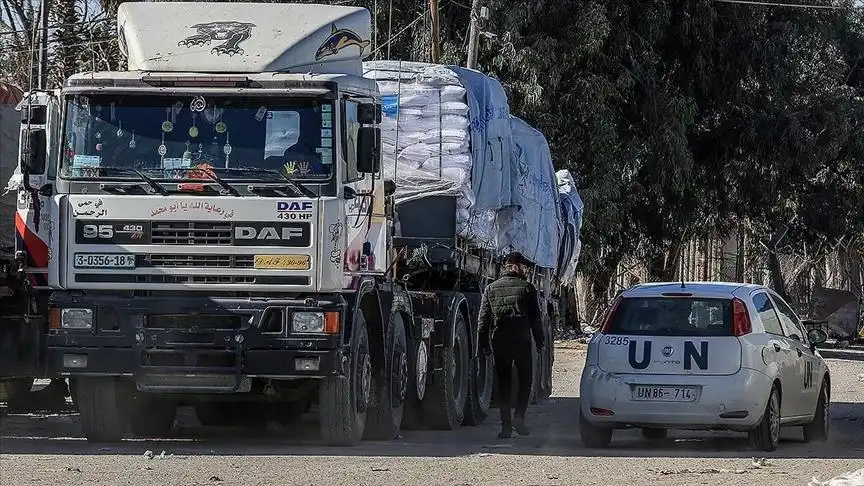
As all 2.3 million Palestinians in Gaza struggle to find food to eat, aid convoys have been mobilized and prevented from reaching their destination. The police forces stopped the escort after the Israeli forces began targeting the police.


Tel Aviv took several other steps to restrict aid access to Gaza. The Israeli Minister of Finance prevents the distribution of American-funded food shipments to the Gaza Strip. The Israeli government has also imposed a burdensome inspection regime on all aid entering Gaza. Inspections remove life-saving medications from shipments and create bottlenecks that slow the delivery process.


In addition, Israeli security forces allow Israeli civilian protesters to block aid at border crossings, further delaying shipments. Even if aid enters the Strip, Israeli forces attack the trucks.


It is noteworthy that 500 aid trucks arrived in the Gaza Strip daily before the start of the Israeli war on Gaza in October, to help support the besieged population. Since the beginning of the war, the Israeli authorities have been preventing commercial shipments and limiting aid to only a small fraction of pre-war levels.


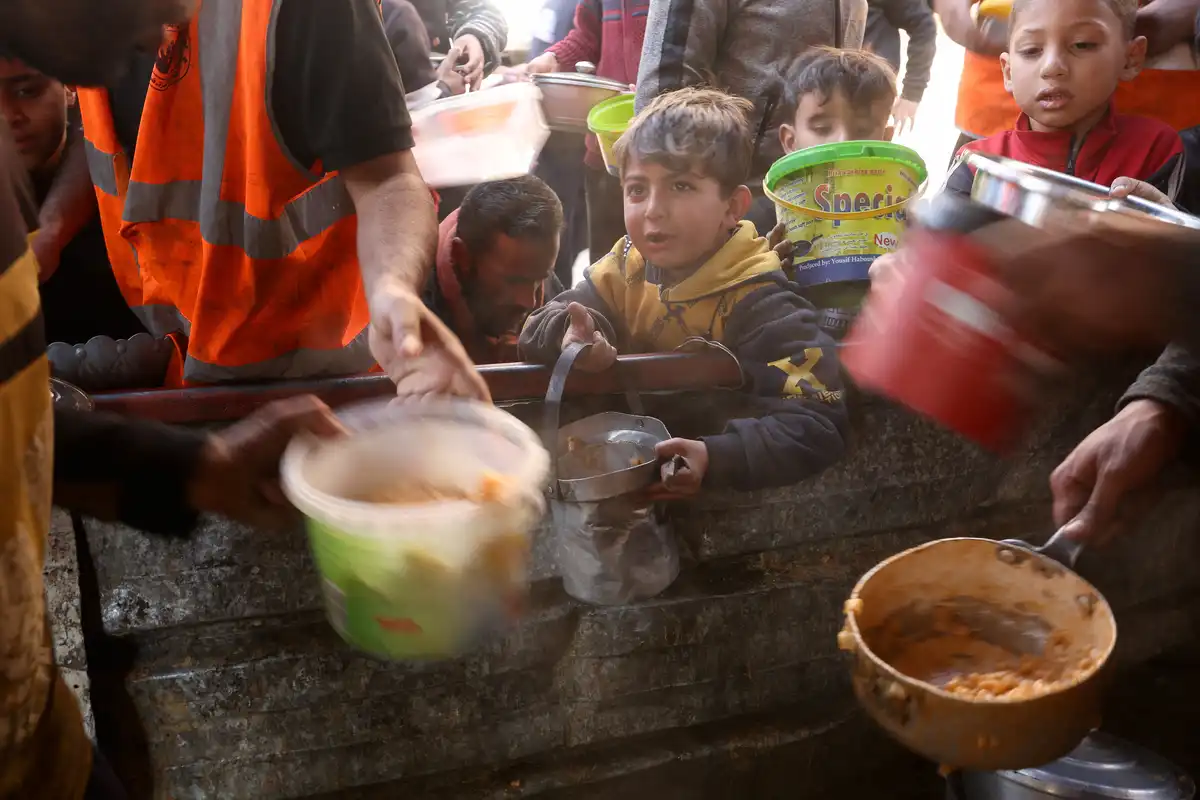
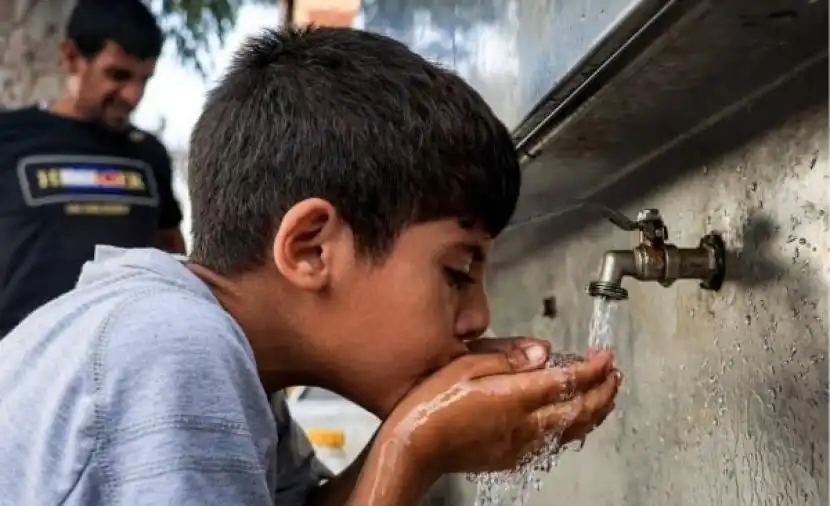
The number of Palestinians relying on aid to survive has increased significantly during that period. Tens of thousands of civilians were seriously injured in Israeli attacks. Almost all Palestinians living in Gaza are internally displaced. Almost all medical facilities have been destroyed. It is estimated that one in six Palestinian children in northern Gaza is on the brink of starvation. Many Palestinians resort to eating grass, rotting food, or animal feed.


A two-month-old Palestinian child starved to death on Friday in the central Gaza Strip.

PALESTINE

Mon 26 Feb 2024 2:53 pm - Jerusalem Time

With the expiration of ICJ deadline, Israel claims to bring aid into the Gaza Strip

The Hebrew Broadcasting Corporation claimed that Israel began, on Monday, an initial experiment in transporting humanitarian aid from Israel directly to Gaza City.


In addition, local Palestinian sources in the Gaza Strip reported that there was no change in the amount of aid reaching the city, while no aid reached the northern governorate of the Gaza Strip.


The authority stated, “Today, Monday, Israeli security officials began a preliminary experiment to transfer humanitarian aid from Israel directly to the northern Gaza Strip,” referring to the areas north of the Gaza Valley (Gaza City and the North Governorate).


It continued: "This is the first time that aid has arrived through the northern Gaza Strip, and this step came after American pressure against the backdrop of the difficult conditions in the northern Gaza Strip, including a major shortage of food, water, and medicine."


Very limited amounts of aid have been arriving at separate intervals for about a month to Gaza City only via Al-Rashid Street on the seashore. The number does not exceed 10 trucks, according to local Palestinian sources and eyewitnesses who spoke to Anadolu.


The distribution of this aid is limited to some areas of Gaza City, and none of it reaches the northern governorate of the Strip due to its limited quantities, according to the same source.


The Israeli Broadcasting Authority indicated, “According to the planned program, trucks loaded with humanitarian aid will undergo a security check at the Kerem Shalom or Nitzana crossings (south of the Gaza Strip) and will depart through Israel to enter northern Gaza (referring to Gaza City and the North Governorate).”


According to the broadcasting authority, “Those who will transport humanitarian aid to displacement sites, especially in the Al-Zaytoun neighborhood area (east of Gaza City), according to the plan, will be local agencies.”


It said: “In recent days, the Coordinator of Government Operations in the Palestinian Territories contacted local officials in the northern Gaza Strip, who expressed their agreement to assume responsibility for distributing humanitarian aid in the region, as an alternative to members of the Hamas movement, and to deliver supplies to the residents of the Strip in the northern regions,” without further information. 


No members of the Hamas movement or its government in Gaza are responsible for distributing aid to the Palestinians in the Strip. This task is carried out by international and international organizations and Arab relief institutions such as the Emirates Red Crescent, the Qatari Red Crescent, the United Nations Relief and Works Agency for Palestine Refugees (UNRWA), and the Food Program,  and the Palestinian Red Crescent, according to local Palestinian sources.


According to the same sources, “no civilian party in the Gaza Strip has accepted” to deal with the Israeli army in managing civil affairs in some areas of Gaza City or supervising the distribution of aid, which enters in very limited quantities and does not cover any of the needs of the 700,000 Palestinians currently residing in Gaza City and the governorate. North of the sector.


In this context, the Broadcasting Corporation stated, “The American administration appealed to Israel to stop attacking Hamas policemen in the southern Gaza Strip, claiming that they are the only option for escorting humanitarian aid convoys.”


But it quoted an unnamed security source: “Israel will continue to attack every member of Hamas, even Hamas police officers who secure the trucks.”


It also quoted an unnamed American source as saying that the US administration and Secretary of State Anthony Blinken, during his recent visit, made it clear to Israel that additional access points for humanitarian aid must be opened, including to the northern Gaza Strip.


Aid was arriving in the southern Gaza Strip, with difficulty transporting it to the northern Gaza Strip due to Israeli checkpoints.


Hamas did not immediately comment on this report.

The new Israeli decision coincides with the expiration of the month-long deadline granted by the International Court of Justice to Israel to take measures to prevent acts of genocide against the Palestinians and improve the humanitarian situation in the Gaza Strip, within the “genocide” case filed against it by South Africa.


On January 26, the International Court of Justice - the highest judicial body in the United Nations - ordered Tel Aviv to take measures to prevent genocide against Palestinians and improve the humanitarian situation in the Gaza Strip, which has been besieged by Israel for 17 years.


The court - based in The Hague, Netherlands - also ordered Israel to submit a report within a month of the issuance of the initial decision in the case regarding the extent of its application of temporary measures.


Orders issued by the court that decides disputes between states are legally binding, but it has no means of enforcing its rulings.


On February 16, the United Nations Office for the Coordination of Humanitarian Affairs (OCHA) announced that between January 1 and February 12, the Israeli authorities denied access to 51 percent of the missions planned by humanitarian partner organizations to deliver aid and conduct assessments to... Areas north of Wadi Gaza.


According to the United Nations, reports indicate increasing catastrophic levels of acute food insecurity throughout the Gaza Strip, as the number of reports of families struggling to feed their children increases, and the risk of deaths from hunger increases in the northern Strip.


The OCHA office explained that more than half of the aid shipments to northern Gaza were prevented from arriving last month, and that there is increasing interference from the Israeli army in how and where aid is delivered.


On November 17, UNRWA announced that the population in the northern Gaza Strip was “on the brink of famine and has no place to go” in light of the ongoing war.


Since last October 7, Israel has been waging a devastating war on the Gaza Strip, leaving tens of thousands of civilian victims, most of them children and women, in addition to an unprecedented humanitarian catastrophe and massive destruction of infrastructure, which led to Tel Aviv appearing before the International Court of Justice on charges of “genocide.” 

ARAB AND WORLD

Mon 26 Feb 2024 2:38 pm - Jerusalem Time

An American officer sets himself on fire outside the Israeli Embassy in Washington

A US Air Force officer set himself on fire Sunday afternoon outside the Israeli Embassy in Washington, according to the Metropolitan Police Department. US Air Force spokeswoman Anne Stefanik confirmed on Sunday evening that the man was an active-duty pilot.


Vito Maggiolo, spokesman for the city's fire department (Washington), said that US Secret Service officers extinguished the fire outside the embassy, in northwest Washington, around one o'clock in the afternoon. The man was taken to a nearby hospital with life-threatening injuries and remains in critical condition.


No embassy employees were injured, and everyone has been identified, according to an Israeli embassy spokeswoman.


The man filmed the protest and broadcast it live on the social media platform Twitch at a time when police said they responded to the incident. American media could not confirm who was behind the account that posted the video, but the video showed a man walking toward the Israeli embassy in Washington.


“I will no longer be complicit in genocide,” a man said in the video, echoing language used by opponents of Israeli military action in Gaza to describe the campaign. “I am about to participate in an intense protest action.”


Standing outside the embassy gates, he put his phone down to film himself dousing himself with a clear liquid from a metal bottle. Then he set himself on fire while shouting, "Free Palestine!" Until he fell to the ground.


The video showed law enforcement officers approaching him shortly before the fire broke out. One of them can be heard off camera saying: "Can I help you, sir?" Officers then raced for more than a minute to put out the flames.


The video was removed Sunday afternoon and replaced with a message stating that the channel violated Twitch's guidelines. This was the only video posted on the account that had the Palestinian flag as its main image.


In the video, the man was wearing a military uniform, and the name he used matched a LinkedIn profile of an active-duty Air Force officer based in Texas.


Police also investigated a nearby suspicious vehicle for explosives, but Sean Hickman, a police spokesman, said the scene had been cleared by 4 p.m. Secret Service officers and the Bureau of Alcohol, Tobacco, Firearms and Explosives worked with the Explosive Ordnance Disposal Unit in Washington to investigate the incident.


Protests against Israel have become an almost daily occurrence across the country since Israel began its devastating war on the besieged Gaza Strip following attacks by Hamas militants last October 7.


International calls for a ceasefire for humanitarian reasons have increased in recent months as the humanitarian crisis has worsened. The embassy has been the site of ongoing protests against the war on Gaza as the civilian death toll in the devastated Strip continues to rise, with more than 29,000 people killed, most of them women and children, according to local officials in the Gaza Ministry of Health.


Protests sometimes led to arrests, but rarely violence. Last December, a demonstrator burned himself in front of the Israeli consulate in Atlanta, in what police said was “most likely an act of extremist political protest.”

ARAB AND WORLD

Mon 26 Feb 2024 12:40 pm - Jerusalem Time

The New York Times is investigating its Israeli correspondent who made allegations of sexual assaults in Gaza

A Hebrew media website said that the management of the American newspaper “The New York Times” is investigating an Israeli correspondent who liked a post calling for turning Gaza into a “slaughterhouse” and “executing Palestinian security prisoners,” in light of a devastating and ongoing Israeli war on the Strip, since October 7. 


The Israeli news website Ynet said on Monday, “The New York Times is investigating an Israeli journalist who wrote reports for the newspaper. After I liked a series of pro-Israel posts on social media, one of which calls for turning Gaza into a “slaughterhouse” if (Israeli) hostages held by Hamas are harmed.”


The website added, “Journalist Anat Schwartz (45 years old) expressed her admiration for a post written by Walla (Israeli) website journalist David Mizrahi Wertheim on October 7, which, according to the newspaper, constitutes a violation of its policy.”


“If all the hostages are not returned immediately, turn the Strip into a slaughterhouse,” Wertheim’s post said. If a hair falls from their heads, execute the (Palestinian) security prisoners. Break any rule on the way to victory.”


Activists on social media had previously criticized a series of reports in the New York Times, which Schwartz contributed to writing, which included allegations of sexual assaults during the attacks launched by “Hamas” on settlements adjacent to Gaza, on October 7, “in response to” the Israeli attacks against the Palestinian people and their sanctities, especially Al-Aqsa Mosque,” according to the movement.


Activists at the Time questioned Schwartz’s professionalism, especially after they noticed that she liked posts on the “X” platform that were supportive of Israel and called for the killing of Palestinians.


The Ynet website quoted the New York Times as saying: “We are aware that a journalist in Israel who worked with us has liked many social media posts. This represents an unacceptable violation, and we are currently reviewing the matter.”


It noted that “The New York Times’s policy regarding the behavior of its employees on social media warns that a post, or a like, must not express partisan opinions, promote political views, support candidates, make offensive comments, or do anything else.” “It undermines the newspaper’s reputation.”


According to Ynet, “after Schwartz’s online history became public, she temporarily suspended her accounts and then deleted much of the content in question.”


The Hebrew website added that “pro-Palestinian journalists and activists contacted the New York Times and demanded that Schwartz be suspended from work.”


The New York Times did not issue an immediate comment on what was reported by the Hebrew website.


Since October 7, 2023, Israel has been waging a devastating war on the Gaza Strip, leaving tens of thousands of victims, most of them children and women, according to Palestinian and UN data, which led to Israel appearing before the International Court of Justice on charges of committing “genocide.”


OPINIONS

Mon 26 Feb 2024 12:32 pm - Jerusalem Time

The position of the ICJ on the Israeli-Palestinian conflict

yaani.fr

yaani.fr

Opinion Writer

By Insaf Rezagui


In this new article in the series “Palestine, tomb of international law?”, we return to the role of the International Court of Justice (ICJ) in the resolution of the Israeli-Palestinian conflict.


The International Court of Justice, which has its seat in The Hague in the Netherlands, is the principal judicial organ of the United Nations. Its role is to resolve legal disputes submitted to it by States (contentious function whose judgments rendered are obligatory and binding) and to render advisory opinions following legal questions posed by organs or specialized agencies of the United Nations. (advisory function whose opinions are not binding) under Article 96 of the Charter of the United Nations. The United Nations General Assembly (UNGA) is the UN body that has questioned the Court the most since its creation. In the Israeli-Palestinian conflict, the two requests for opinions (the Wall Case in 2004 and the Continued Israeli Occupation Case in 2023-2024) were addressed to the Court by the UNGA.


The mobilization of the International Court of Justice is part of the strategy of recourse to international organizations and international law carried out by the Palestinian Authority (PA) for twenty years. The objective of the PA is to place the Palestinian question at the heart of the international agenda, to highlight the persistent violations of international law by the Israeli occupying power and, above all, to achieve the establishment and recognition of a State of Palestine. With this strategy, Palestine has already joined around twenty international organizations (UNESCO, Interpol, ICC, etc.), has ratified around a hundred multilateral treaties (including the Statute of the International Criminal Court) and is deploying a real process of legalization, with recourse to international courts. Among these jurisdictions, the International Court of Justice constitutes the heart of this process.


The objective of the referral to international courts by the Palestinian Authority and its allies is then to highlight the legal framework inherent to this conflict, to legally affirm the right of the Palestinian people to self-determination and to highlight the all violations of international law by Israel in order to engage its international responsibility.


It is in this sense that numerous cases relating to the Palestinian question have been handled or are currently being handled by the Court. Among these cases, two are central to this strategy: the Wall affair in 2004 which allowed the Palestinian Authority to become aware of the role that international law could have in this conflict and the current case relating to the consequences of the persistence of the Israeli military occupation of the Palestinian territory on the right to self-determination of the Palestinian people. These two cases are essential for understanding the legal framework applicable to this conflict and the relevant rules that should apply.

The first affair - that of the Wall - marks the beginnings of the process of legalization of the Palestinian Authority. For the first time, an international court precisely establishes the legal framework inherent to this international armed conflict, rules on the right to self-defense invoked by Israel, highlights the right of the Palestinian people to self-determination, recalls the relevant principles, including international humanitarian law and international human rights law, and establishes the legal obligations incumbent upon the parties and international society as a whole. Although this opinion therefore has no binding legal force, it nonetheless remains foundational to the establishment of the Israeli occupation regime in Palestine. We will develop here some fundamental points of this opinion.


Establishing the jurisdiction of the Court to rule on this conflict


Before ruling on the merits, the Court recalls that it is competent to answer the General Assembly's question whether the construction of a wall by Israel, which largely encroaches on Palestinian territory, was lawful. . Two arguments are invoked by the Court to justify its jurisdiction.


First, the ICJ affirms that - contrary to what Israel and the United States assert - the General Assembly has the right to question the Court on the Israeli-Palestinian conflict and that it has therefore not exceeded its competence within the meaning of Article 12 of the Charter which states: "As long as the Security Council fulfills, with regard to any dispute or situation, the functions assigned to it by the present Charter, the "The General Assembly should not make any recommendation on this dispute or situation unless requested to do so by the Security Council." Furthermore, Article 24 of the Charter recalls that the Security Council has primary (but not exclusive) responsibility for maintaining international peace and security. However, the ICJ notes that, in the Israeli-Palestinian conflict, the UNSC does not fulfill its mandate due to numerous American vetoes. Furthermore, UN practice allows the UNGA to adopt resolutions “in any case where there appears to be a threat to the peace, a breach of the peace (...) and or, because unanimity is not has not been able to be achieved among its permanent members, the Security Council is failing to fulfill its primary responsibility” (resolution 377, known as the Acheson resolution). Furthermore, already in 2004, the Court noted the inaction of the Security Council.


Second, the Court clarifies that the Israeli-Palestinian conflict is not a purely political dispute, which does not raise any legal questions. The request of the General Assembly which is posed to the jurisdiction of The Hague “targets the legal consequences of a given factual situation, taking into account the rules and principles of international law (...)”. Therefore, the question asked is “likely to receive a legally founded answer”.


Even today, in the case pending before it, the position of the Court should be the same: the Security Council is not fulfilling its mandate of maintaining peace, due to American vetoes, the most recent having intervened on February 20, 2024 in a draft resolution that called for a ceasefire in the Gaza Strip. In addition, the question raised raises numerous legal problems (right to self-determination, right to self-defense, occupation, annexation, sovereignty, discriminatory measures against a people, etc.).


2. The question of self-defense


On the merits, the Court first responds to Israel which justified the construction of a separation wall on the basis of its right to defend itself against attacks by Palestinian armed groups (article 51 of the UN Charter) . Even today, Israel asserts that its military operations in Gaza and the West Bank aim to respond to armed aggression from Palestinian armed groups, including Hamas, including the deadly attacks of October 7. Armed aggression is “the use of armed force by a State against the sovereignty, territorial integrity or political independence of another State” (UNGA, resolution 3314, December 14, 1974). However, at no time does Israel claim that it is responding to violence from another state, as it does not recognize the existence of a State of Palestine.

If the practice of recent years calls for an evolution of the regime of self-defense in order to integrate the right of a State to defend itself against armed attacks by non-State entities, the Court notes "that Israel exercises its control on the occupied Palestinian territory and that, as Israel itself indicates, the threat it invokes to justify the construction of the wall finds its origins inside this territory (...). Consequently, the Court concludes that section 51 of the Charter is irrelevant to the particular case.” In short, an occupying power cannot invoke the regime of self-defense in its relations with the territory it occupies.


  3. Legal rules applicable to the Israeli occupation


Then, the Court highlights the rules applicable to this international armed conflict:


International humanitarian law: as an occupying power, Israel must respect IHL by protecting the populations placed under its control. This means that the Jewish State must respect the rules provided for in the Fourth Geneva Convention relating to the Protection of Civilian Persons in Time of War of 1949.


International human rights law (IHRL): contrary to what Israel claims, IHRL applies even in times of armed conflict except in the case of derogation clauses. Therefore, Israel must respect the International Covenant on Civil and Political Rights and the Covenant on Economic, Social and Cultural Rights of 1966 which it has ratified. Article 1 common to these two pacts stipulates: “All peoples have the right to self-determination. By virtue of this right, they freely determine their political status and freely ensure their economic, social and cultural development.”


On the basis of these rules, the Court concludes that Israel has violated a certain number of its international obligations, preventing the Palestinian people from self-determination.


4. Israel’s violations of international law


Israel's violations of international law stem in particular from the adoption of a set of Israeli legislative and regulatory acts. These are part of colonization and occupation policies put in place and assumed by the Israeli authorities, which directly finance the colonies, infrastructure and roads allowing settlers to establish themselves and move around in the West Bank, etc. . These policies are in violation of United Nations Security Council resolutions such as Resolution 2334 of December 23, 2016, which calls on Israel to “immediately and completely stop all its settlement activities in the Occupied Palestinian Territory.”


In addition, Israel can engage its international responsibility and must repair the damage caused to Palestinian victims of occupation and colonization. The Court specifies that these reparations must “as far as possible, erase all the consequences of the unlawful act and restore the state which would likely have existed if the said act had not been committed”. This involves Israeli withdrawal from the West Bank, East Jerusalem and the Gaza Strip, restitution to the Palestinians of their lands and other seized property and/or compensation if restitution is not possible, and satisfaction procedures (conduct investigations, prosecute people who have violated these obligations, etc.).


5. Obligations enforceable against all States


Among the obligations violated by Israel, some are erga omnes obligations, that is to say they are enforceable against all States. Among these obligations, the right to self-determination of peoples and certain principles of international humanitarian law. Therefore, no State should recognize the situation resulting from these violations, namely the construction of the Wall and the Israeli occupation and colonization. Finally, States have the obligation “not to provide aid or assistance in maintaining the situation” and must “ensure Israel respects international humanitarian law”.


One of the consequences should logically be the recognition by all States of the State of Palestine. Indeed, the right of peoples to self-determination covers a political dimension: the people concerned must be able to freely determine their political status. In the Palestinian case, it is the creation and recognition of a State of Palestine. The right to self-determination being an erga omnes obligation, States should therefore respect and implement it by recognizing the State of Palestine.


Also, the advisory opinion of the International Court of Justice rendered on July 9, 2004 makes it possible to highlight the legal framework inherent to this conflict and the legal consequences resulting from it. Twenty years later, the legal issues remain the same, with the difference that Israeli occupation and colonization are accelerating. Between 2000 and 2022, the colonization of Palestine increased by 222%. More than 700,000 settlers are established in the West Bank and East Jerusalem. Israel intends to continue its colonial policies and practices and now assumes that it wants to annex the entirety of Palestine, in order to exercise its sovereignty from the Mediterranean Sea to the Jordan River. The new challenge of the upcoming advisory opinion is therefore to determine the legal consequences of the permanence of the Israeli occupation.



ARAB AND WORLD

Mon 26 Feb 2024 12:01 pm - Jerusalem Time

Hebrew Newspaper: This is the European country the most hostile to Israel

Yedioth Ahronoth newspaper said that Ireland was, for a long time, the most hostile country to Israel in Europe, but Norway overtook it, and it is currently facing a severe diplomatic crisis with Israel, at the heart of which is Norwegian Foreign Minister Espen Barth Ede.


The newspaper explained - in a report written by Itamar Eichner - that Espen Barth Eide made a series of harsh statements against Israel, and was the only Western foreign minister who condemned Israel and did not call for the release of detainees in Gaza, and compared Israel to Russia on 3 occasions, and said that Europe was losing its credibility. When you don't condemn Israel for the same things you condemned Russia.


When hearings began in the case brought by South Africa against Israel at the International Court of Justice in The Hague, Norway expressed its support for the lawsuit, and Eide told an opposition member that Israel may not have committed genocide in Gaza, but it was committing war crimes and crimes against humanity.


For some reason

Eddy bragged - according to the newspaper - that Norway does not sell weapons to Israel, and called on countries that export weapons to Israel to stop doing so, because they may be indirectly involved in possible genocide.


The newspaper was surprised by Eddy’s statement in an interview with a popular newspaper that there was a deterioration in relations between Israel and the United States, saying, “I hear from all channels that America’s patience with Prime Minister Benjamin Netanyahu has dropped to less than 1%. It is a very bad atmosphere.”


Despite the problematic behavior of the Norwegian Foreign Minister, Israel chose - for some reason - for Norway to be the one to keep hundreds of millions of shekels in frozen tax revenues that Israel deducts from Palestinian imports to Gaza as part of an agreement between Israel and the United States after Tel Aviv refused to transfer the money to Gaza. For fear of it falling into the hands of the Islamic Resistance Movement (Hamas).


Norwegian Prime Minister Jonas Järr Sture said that Norway is ready to talk with Hamas to reach a quick solution to end the war. The Israeli newspaper did not see the matter as a surprise, because Norway is one of the European countries that does not classify Hamas as a “terrorist organization.”


Problematic behavior

The newspaper pointed out what it considered another aspect of Norway's problematic behavior towards Israel, by preventing Prime Minister Harald V from sending official condolences to Israel after the events of October 7, "in light of the political nature of the conflict."


At the same time, Eddy accompanied the wife of the Norwegian Crown Prince to the book fair in Cairo, and introduced her to the relief organizations working in Gaza, and she heard from her heartbreaking stories about what is happening in the Strip. The Foreign Minister said in the same meeting that what is happening there is “hell on earth,” and he stood. In front of the cameras with the wife of the heir to the throne, shedding tears, expressing her sympathy for the Palestinians.


The newspaper alerted Norway's position in support of the United Nations Relief and Works Agency for Palestine Refugees (UNRWA), and its refusal to cut off funding for it. One of the senior representatives of the ruling Norwegian party even recommended that it be nominated for the Nobel Peace Prize, despite Israel accusing its employees of participating in the events of October 7.


The newspaper commented that “the false narrative that Israel was the one that started the war on Hamas” had appeared in the media in Norway, and accused it of always seeking to demonize Israel, noting that the street is no different from the media in Norway, where a Norwegian peace activist was photographed while He spits on pictures of detainees near the entrance to the Israeli embassy in Oslo.


The Israeli ambassador to Norway, Nir Feldklein, said that after the war, Israel will have to decide who its partners are, and it is not certain that Norway will be among them because the Norwegian government does not understand the situation and relations between the two countries are in crisis.

PALESTINE

Mon 26 Feb 2024 11:15 am - Jerusalem Time

"International Justice" resumes hearings on the legal consequences arising from Israeli occupation

Today, Monday, the International Court of Justice in The Hague will resume its final public hearings on the legal consequences arising from Israel’s policies and practices in the occupied Palestinian territory, including East Jerusalem.


The hearings come in the context of the United Nations General Assembly’s request to obtain an advisory opinion from International Justice on the effects of the Israeli occupation that has continued for more than 57 years.


The public sessions continued for six days between February 19 and 26, to listen to briefings from 52 countries, in addition to the African Union, the Organization of Islamic Cooperation, and the League of Arab States.


Today, the court will hold the last hearings for the briefings of: Turkey, Zambia, the League of Arab States, the Organization of Islamic Cooperation, the African Union, Spain, Fiji, the Maldives, and the Comoros.


On the first day of the public sessions, the court heard the plea of the State of Palestine, presented by the Minister of Foreign Affairs and Expatriates, Riyad Al-Maliki, and the legal team of the State of Palestine, which included: Professor Andre Zimmerman, Faul Rackler, Professor Philip Sander, international law expert Ambassador Namira Negm, and a representative. Permanent Palestine at the United Nations, Riyad Mansour, and Alain Pellet.


On the second day, the court heard briefings from: South Africa, Algeria, the Kingdom of Saudi Arabia, the Netherlands, Bangladesh, Belize, Bolivia, Brazil, and Chile.


On the third day, the court heard the briefing of: Colombia, Cuba, the Arab Republic of Egypt, the United Arab Emirates, the United States of America, the Russian Federation, France, Gambia, Guyana, and Hungary.


On the fourth day, I listened to briefings presented by: China, Iran, Iraq, Ireland, Japan, the Hashemite Kingdom of Jordan, Kuwait, Lebanon, Libya, Luxembourg, Malaysia, and Mauritius.


On the fifth day, Namibia, Norway, Oman, Pakistan, Indonesia, Qatar, the United Kingdom, Slovenia, Sudan, Switzerland, Syria and Tunisia submitted briefs to the Court.


On November 11, 2022, the Fourth Committee of the United Nations General Assembly, the Special Committee on Political Issues and Decolonization, adopted a draft resolution submitted by the State of Palestine to request a legal advisory opinion and advisory opinion from the International Court of Justice on the nature of the existence of the Israeli colonial occupation. In the territory of the State of Palestine, including Jerusalem.

PALESTINE

Mon 26 Feb 2024 10:42 am - Jerusalem Time

War on Gaza: Israel committed 10 massacres in the Gaza Strip, killing 90 people

The Israeli army committed 10 massacres against families in the Gaza Strip, claiming 90 killed and 164 injured during the past 24 hours.


According to the Ministry of Health, there are still a number of victims under the rubble and on the roads, and the occupation prevents ambulance and civil defense crews from reaching them.


The toll of the Israeli aggression rose to 29,782 dead and 70,043 injured since the seventh of last October.

ARAB AND WORLD

Mon 26 Feb 2024 10:27 am - Jerusalem Time

Israel is considering returning women and children to the northern Gaza Strip

Israel is preparing to implement the US plan to allow only children up to the age of 14 and women to be returned to the northern Gaza Strip as part of the deal.


Within the framework of the deal known as the “American plan,” as reported by Israeli radio, only children up to the age of 14 and women will be able to return to the northern Gaza Strip, and at the same time crossing points will be established where every person will be examined before passing.


One of the main sticking points in the negotiations with Hamas is Hamas's demand to return residents to their homes in the northern Gaza Strip, which the Israeli army does not currently allow.


According to the report, sources in the military apparatus say that the Israeli army will not allow the return of “wanted persons” to the northern Gaza Strip, even if it allows the return of residents to the north.


According to what was stated in the report, as part of the deal, the establishment of tent cities in the Middle Camp and Khan Yunis area for residents of the Gaza Strip who lost their homes is being considered, and in Israel they are thinking positively about including this issue in the prisoner exchange release deal that is taking shape.

ARAB AND WORLD

Mon 26 Feb 2024 10:24 am - Jerusalem Time

An American pilot sets himself on fire: “I will not participate in genocide... Palestine is free.”

A member of the US military set himself on fire in front of the Israeli embassy in Washington in an apparent act of protest against the war in Gaza, authorities said.


The man was transported to a hospital in the area after members of the US Secret Service were able to put out the fire. A Metropolitan Police Department spokesman said the man was in critical condition. An Air Force spokesman confirmed that the incident involved an active-duty pilot.


“I will no longer be complicit in genocide,” the man wearing military uniform said in a video broadcast live over the Internet, according to the New York Times.


The newspaper reported that he then poured a clear liquid on himself and set his body on fire while shouting, “Free Palestine.”


Local police and the Secret Service are investigating the incident.


The Israeli embassy has been the target of ongoing protests against the war in Gaza.


The war in Gaza led to the outbreak of pro-Palestinian and pro-Israel protests in the United States.


The protests began after October 7, when the Islamic Resistance Movement (Hamas), which rules the Gaza Strip, carried out the Al-Aqsa Flood operation.
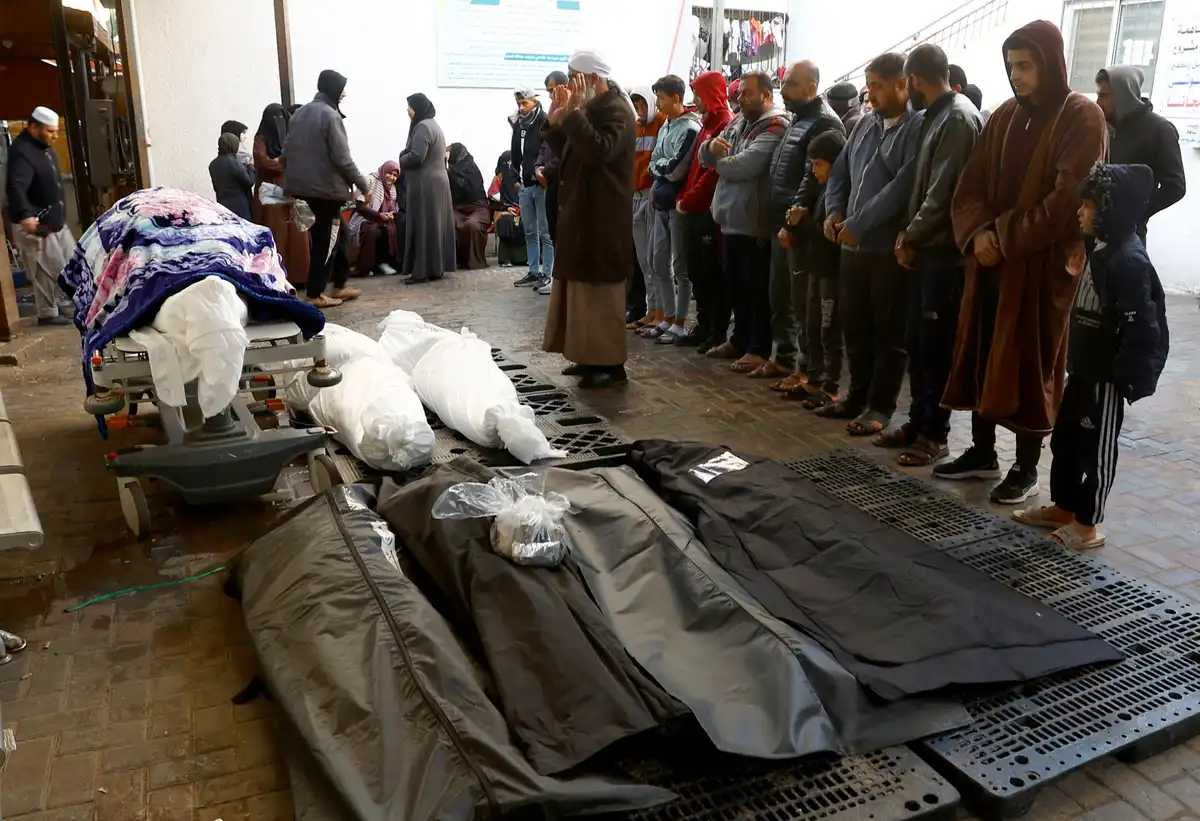
PALESTINE

Mon 26 Feb 2024 9:14 am - Jerusalem Time

An Israeli plan to “evacuate” Palestinian civilians from combat zones in Gaza

The office of Israeli Prime Minister Benjamin Netanyahu announced that the army had presented a plan to “evacuate” civilians from “combat zones” in Gaza, while Israel had threatened - yesterday, Sunday - to invade the crowded Rafah (south of the Gaza Strip), even if a truce agreement was reached with the Islamic Resistance Movement (Hamas). 


In a brief statement, Netanyahu's office said that the army "presented to the war council a plan to evacuate residents from combat zones in the Gaza Strip, as well as a plan for future operations," without going into details.


This comes at a time when Netanyahu told the American CBS channel yesterday that reaching a truce agreement would only lead to “delaying” the attack on the city of Rafah, where nearly 1.5 million civilians are gathered on the closed border with Egypt, according to United Nations figures.


The Israeli Prime Minister stated, “If we reach an agreement, (the operation) will be delayed to some extent, but it will be completed,” adding, “If there is no agreement, we will do it anyway. It must be completed, because complete victory is our goal, and complete victory is within reach.” “Not after months, but after weeks, once we start the process.”


Netanyahu announced on Saturday that he would gather the Council of Ministers at the beginning of the week “to approve operational plans in Rafah, including the evacuation of the civilian population” from Hamas’ “last stronghold,” he said.


Concern is growing about the fate of Rafah, where about 1.5 million people are crowded, most of them displaced, due to the ground operation that the occupation army is preparing for, which does not stop bombing the city, while the battles also continue in the center and north of the Strip.


The entry of aid into Gaza is subject to Israeli approval, and scarce humanitarian support reaches the besieged Strip, mainly through the Rafah crossing with Egypt, but transporting it to the north is difficult due to the destruction and battles.


The Commissioner-General of the United Nations Relief and Works Agency for Palestine Refugees (UNRWA), Philippe Lazzarini, said yesterday that it is still possible to "avoid" famine in Gaza if Israel allows humanitarian agencies to bring in more aid, adding that the situation in Gaza is a "man-made disaster."


The food shortage has forced hundreds of people to leave the north of the Strip, where there are 300,000 people, towards the centre, according to what an Agence France-Presse correspondent reported yesterday.


PALESTINE

Mon 26 Feb 2024 8:53 am - Jerusalem Time

War on Gaza: Continuing massacres as a result of the Israeli bombing of Gaza and discrepancies regarding the exchange deal

On the 143rd day of the Israeli aggression on Gaza, the Israeli army continued to commit massacres that left dozens of dead. While the Palestinian resistance is waging fierce battles with it in the north and south of the Gaza Strip.


Meanwhile, the people of the Gaza Strip continue to suffer with the continued lack of aid entering, as the United Nations Relief and Works Agency for Palestine Refugees (UNRWA) announced that the last time it was able to deliver food aid to the northern Gaza Strip was a month ago.


Politically, a leading source in the Hamas movement told Al Jazeera that the atmosphere of optimism about the nearness of reaching an agreement on the exchange deal does not reflect the truth, stressing that killing the Palestinian people by starvation in the northern Gaza Strip is a crime of genocide that threatens the entire course of the negotiations.


For his part, Israeli Prime Minister Benjamin Netanyahu confirmed his intention to postpone the Rafah process if a prisoner exchange deal was reached, while Washington confirmed that the mediators had reached an understanding regarding the basic features of this deal.

OPINIONS

Mon 26 Feb 2024 8:44 am - Jerusalem Time

Israel and Hamas are inching toward a cease-fire deal

The Washington Post

The Washington Post

Opinion Writer

By David Ignatius


The Biden administration is pressing Israel and Hamas hard to agree to a new hostage-release deal that would bring an extended pause in fighting before the Muslim holy month of Ramadan begins in slightly more than two weeks.

The intense bargaining over the hostage deal reflects the Biden administration’s sense that the Gaza war might be reaching another inflection point as it nears its fifth month of brutal combat. U.S. officials believe that if they can get a pause of roughly six weeks, they can begin a broader process in de-escalation in the Middle East. Otherwise, the fuse is lit for another explosion when Ramadan starts, on about March 10.

CIA Director William J. Burns presented an American “bridging” proposal on Friday in Paris to representatives of Israel and of Qatar and Egypt, which are acting as mediators with Hamas, according to Israeli sources who are familiar with the negotiations. Behind the new U.S. push is a fear that the humanitarian situation in Gaza is deteriorating sharply.

The U.S. plan calls for release of 40 Israeli hostages, mostly women and elderly men. That would be accompanied by a pause in fighting of at least 40 days to allow significant new flows of humanitarian aid into Gaza. Negotiators will travel to Qatar on Monday for another round of bargaining, when Qatari and Egyptian officials can present the details to Hamas representatives who are based in Doha.


The sticking point is a sharp disagreement between Israel and Hamas over the number of Palestinian prisoners who would be released at the same time as the Israeli hostages. Israel is ready to accept a 3-for-1 ratio, which would free more than 100 Palestinians. Hamas initially made what Israeli officials call a “ridiculously large” demand for thousands of prisoners — virtually every Palestinian in captivity, including many Israel regards as terrorist murderers.

The prisoner issue has been the main impasse in the hostage talks for weeks. Hamas might be willing to settle for many hundreds of prisoners, rather than thousands, the Israeli sources believe. But closing this gap won’t be easy.

Burns’s proposal has three main elements, according to the knowledgeable Israeli sources. Complicated details remain on each item, but the basics are clear.

The first step would be a major increase in humanitarian assistance during the pause in fighting. That would include more aid trucks, more shelter for displaced Gazans, reopening of bakeries and other commercial sources of food, and work to rebuild shattered infrastructure. Providing security for the aid convoys and relief workers would remain a huge challenge because armed gangs are attacking trucks entering Gaza and blocking them from delivering supplies. But Israeli officials hope this thievery would decrease once supplies are more plentiful. The second part of Burns’s formula is a plan for limited and gradual return of Palestinians to their homes during the truce. Israelis fear that the areas in the north remain too dangerous for easy passage, so negotiators will assess the terrain carefully before agreeing on details.

The third element is the prisoner release formula, which is symbolically important for both sides. One interesting question is whether the release docket would include Marwan Barghouti, who led the first and second intifadas more than two decades ago and is widely seen as the person who could best unify Palestinians postwar.


A hostage-release plan would turn down the heat, but it wouldn’t end the war. Israel remains determined to continue the conflict, with timeouts along the way, until Hamas is defeated, if not destroyed altogether. Israeli plans for “the day after” remain fuzzy and, in the view of Biden administration officials, highly unrealistic.

One detail in the hostage-release negotiations illustrates how far this conflict is from an endgame. Hamas has demanded that during the truce, Israeli forces withdraw to the Gaza boundary. Israelis fear that if they did so, Hamas would take control of the territory again. Israel isn’t likely to budge on that demand.

The deal Burns is trying to broker wouldn’t resolve any of the big questions about Israel and the Palestinians. But it would at least prevent a terrible situation in Gaza from getting even worse. And a pause in fighting would open the way for other, bolder proposals from the United States and its allies that might create a pathway toward a real solution.
 

PALESTINE

Sun 25 Feb 2024 10:30 pm - Jerusalem Time

Sources to "Al-Quds": Shtayyeh will submit his government's resignation tomorrow morning

Prime Minister Muhammad Shtayyeh is scheduled to announce the resignation of his government tomorrow morning.


According to informed sources who spoke to Al-Quds, Shtayyeh will place the decision to resign his government at the disposal of President Mahmoud Abbas.


This development came after President Abbas's visit to Jordan and his meeting with King Abdullah II.


In the morning, sources denied forming a new government, but they did not indicate Shtayyeh’s intentions to resign.
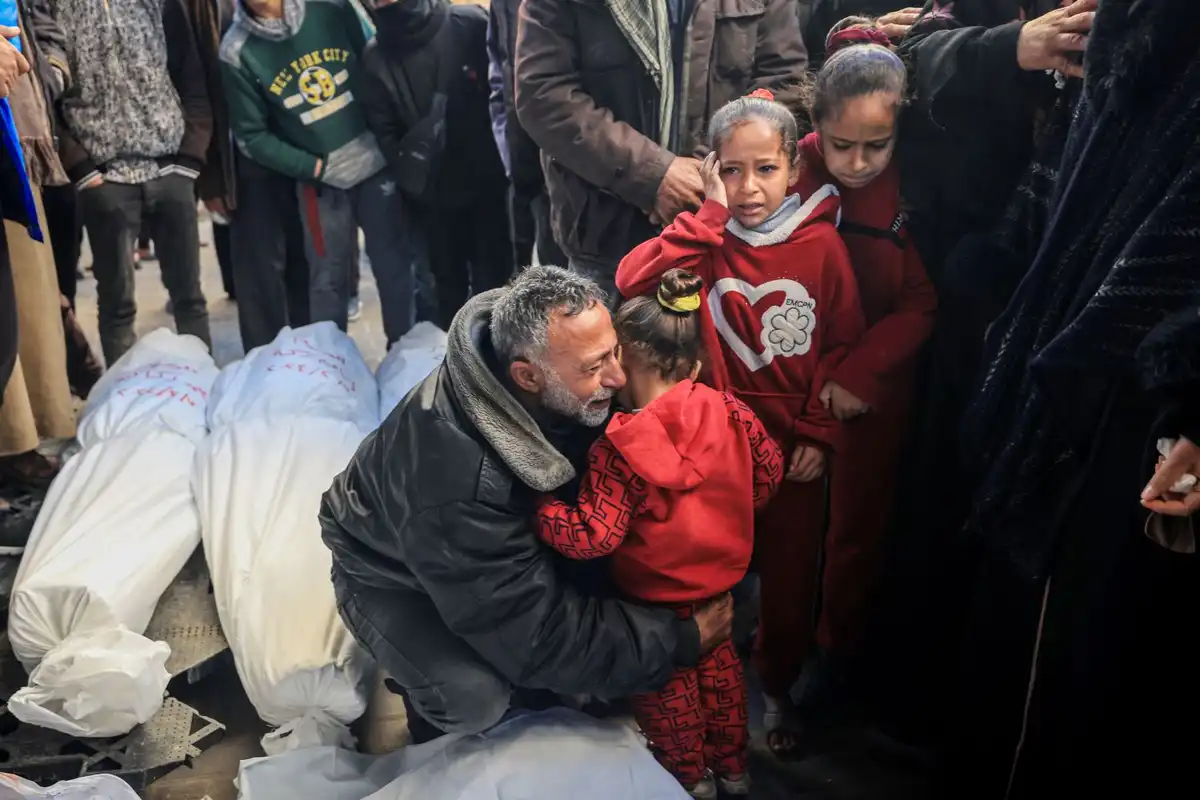
PALESTINE

Sun 25 Feb 2024 7:52 pm - Jerusalem Time

War on Gaza: 15 Palestinians killed in Israeli bombing of a house in the Al-Zaytoun neighborhood

At least 15 citizens werekilled, and dozens were injured, including children and women, in an Israeli raid that targeted a house in the Al-Zaytoun neighborhood, southeast of Gaza City.


The Israeli warplanes bombed a three-story house belonging to the Al-Zard family, in the Al-Zaytoun neighborhood, killing at least 15 citizens and wounding dozens.


The warplanes fired at least one missile towards the house and flattened it without warning, where all the family members were sheltering, resulting in a large number of dead and wounded.


Ambulances were unable to reach all the martyrs and wounded, due to the Israeli artillery shelling of that area, in addition to the Israeli drones’ shooting at every citizen moving in the area.

The Israeli warplanes also bombed several homes in the neighborhood, which led to the death and injury of a number of citizens, and it was not possible for ambulances to reach them, or even to be transported by the citizens.


The Israeli forces have continued their aggression against the Gaza Strip by land, sea and air since the 7th of last October, resulting in the death of 29,692 citizens and the injury of 69,879 others, most of them children and women, in addition to thousands of people missing under the rubble.

ARAB AND WORLD

Sun 25 Feb 2024 6:43 pm - Jerusalem Time

UN warnings regarding Gaza: water scarcity, the spread of diseases, and a malnutrition crisis

The United Nations Relief and Works Agency for Palestine Refugees (UNRWA) warned on Sunday of the scarcity of clean water, the accumulation of solid waste, the spread of diseases, and unsustainable health conditions in the Gaza Strip.


This came in a statement by the United Nations through its account on the “X” platform.

The UN agency indicated that it will continue “working to provide vital aid amid the catastrophic situation in the Gaza Strip.”


It stressed that "health conditions are not sustainable in the Strip."


Describing the catastrophic situation in Gaza, she said, "Shelters are severely overcrowded, clean water is scarce, solid waste is accumulating, and the spread of diseases is on the rise."


The World Food Organization warns of the growing malnutrition crisis

The World Food Program warned on Sunday of the growing malnutrition crisis in the Gaza Strip.

This came in a post by the United Nations World Food Programme, on its account on the “X” platform.


The UN program said, "The malnutrition crisis is increasing in the Gaza Strip in light of the state of emergency related to the threat of hunger."


WFP stressed that "recent data shows a rapid increase in the causes of acute malnutrition in the sector."


The United Nations organization noted that “data received from the northern Gaza Strip show that malnutrition among children has risen in just 4 months to emergency levels.”


Since October 7, 2023, Israel has been waging a devastating war on the Gaza Strip, leaving tens of thousands of victims, most of them children and women, according to Palestinian and UN data, which led to Israel appearing before the International Court of Justice on charges of committing “genocide.”