OPINIONS

Thu 16 Jan 2025 9:29 am - Jerusalem Time

The will triumphed over genocide

op-ed - Al-Quds dot com

op-ed - Al-Quds dot com

Opinion Writer


Our great Palestinian people have the right to rejoice with the imminent implementation of the ceasefire agreement and the cessation of aggression on the Gaza Strip starting next Sunday, which is the date the agreement will enter into force.


After 15 months of killing and destruction of all the necessities of life in Gaza, and amidst the convoys of martyrs who rose in the battle to defend Jerusalem and Al-Aqsa Mosque, our great people have the right to receive all expressions of pride, honor and praise for their legendary steadfastness and the heads of their loyal sons that have remained high and proud, reaching the sky, so that our people may reap the fruits of their great sacrifices with this agreement that will gradually stop the war, in the hope of completing the stages of the agreement until the aggression is completely ended.


The agreement announced yesterday by Qatari Prime Minister and Foreign Minister Mohammed bin Abdulrahman Al Thani, after marathon and complex negotiations under the supervision of Qatar, Egypt and the United States, constitutes an achievement for our people, our nation, our valiant resistance and all the free people of the world, who demonstrated and held sit-ins in all parts of the world, and denounced, condemned and denounced this most ferocious aggression in history, to be recorded as a landmark and a turning point in the Palestinian-Israeli conflict, on the path to our people’s freedom and return.


If the agreement is adhered to, it will put an end to the Palestinian bloodshed that has been shed abundantly on the homeland as a result of the massacres and war of extermination that our people have been subjected to. A word of thanks must be given to everyone who stood and showed solidarity with our people, from those with honorable positions, whether official or popular institutions that contributed to exposing the occupation and its aggressive policies.


Gaza has succeeded in foiling all the plans and conspiracies, most notably the plan of deportation, displacement, and settlement, the annexation of parts of Gaza, the plan to eliminate and finish off the resistance, and the plan to shatter the steely will of the Gazans, to establish itself at the peaks of pride and dignity, despite the pain, suffering, and loss of loved ones in the unprecedented Israeli massacre. It deserves peace because it is the promise of the coming peace, when its people return to their tents that were torn apart by the Israeli bombardment cannons, even if its people sleep on the rubble.


The coming days and hours will be difficult and charged with tension, anticipation and anxiety for the citizens who will return to their homes or tents, and the families of the prisoners who will be released, but they are nothing compared to the long months and days in which the citizens lived in hell and terrifying nightmares. It is time for this war to stop so that we can perform our duty of honoring the martyrs, recovering the bodies from under the rubble, treating the injured and disabled, and beginning the new journey of life with the reconstruction of the Gaza Strip.

Gaza won the war of extermination, and the poet's words were true:


If the people one day want life

Fate must respond

The night must end

The chains must be broken

OPINIONS

Thu 16 Jan 2025 9:27 am - Jerusalem Time

The West Bank between the hammer of the Israeli army and the anvil of the settlers

The West Bank between the hammer of the Israeli army and the anvil of the settlers

Dr. Aql Salah*

In this article, we start from a rule that has governed the history of the Palestinian people. Its title came to emphasize the ongoing suffering and tragedy of the Palestinian people due to the continuation of the occupation that has shed Palestinian blood to the point of genocide. In returning to the rule that stipulates the use of a year instead of a year in all dates that have occurred since the Balfour Declaration was announced in 1917, this is because a year is used for what is good (rain, rain, ease, and prosperity), and a year for what is evil (hardship, fatigue, and injustice). This was clear in the Quranic usage, where years were mentioned for evil, drought, and famine, and years for good. Examples include Surat Yusuf: {You shall sow for seven years in succession}, {Then there will come a year in which people will be given relief}. Based on this rule, the Palestinian people’s entire life is years - oppression, injustice, siege, war, displacement, destruction, killing, burning, demolition, arrest, and genocide - all of which are the result of the Balfour Declaration and the ongoing brutal practices of the occupation. The Palestinian people have not lived a single year in their lives.

Last year ended, leaving behind the biggest crime in history against Gaza, as this criminal war claimed the lives of about 10% of the people of the Strip, between martyrs, wounded, and missing under the rubble and in Israeli prisons from the prisoners of the Strip who were executed while alive and bound, and the geographical, architectural, and infrastructure of the Strip was destroyed. This bloody war raised a number of questions related to the war of extermination and starvation and the failure to hold Israel accountable and punish it. International legal movements and activities did not provide satisfactory answers to these questions, and to everything that Palestine has gone through and is going through over the course of 77 years of occupation, and to the global role in stopping the war, and to how to preserve the rights of peoples seeking liberation from the occupation.

These questions and others that are on the mind of every Palestinian are what prompted us to review the history of the occupation of Palestine; seeking a deeper understanding of the nature of the stage and these complex questions, even if we have not decided to reveal the answers to them, over the course of more than fifteen months of the ongoing war on the Strip, and resistance that has extended for more than seven decades, reflecting an aspect of our Palestinian national culture and history that began with disobedience, passing through the revolution and uprisings, and arriving at the Al-Aqsa Flood.

Posing the question may be one of the most prominent cognitive techniques that the Palestinian citizen often resorts to in order to shed light on the role of the Israeli government and settlers in targeting the Palestinian presence in the West Bank in particular and in Palestine in general, as if one of the aspects of targeting that Gaza is experiencing is the ongoing war of extermination of the Palestinian people and the geographic war on the West Bank to besiege the Palestinian presence and end this presence in Area B, which is 20% of the area, and Area C, which is 60% of the area, according to the classifications of the Oslo Accords in 1993, and to confine this presence to Area A, which is equal to 20% of the area of the West Bank, which will be more densely populated, leading to the oppression of the Palestinians there to the point of immigration due to the lack of possibilities for development and decent living. The starting points, statements, plans, and practices of the Israeli army and settlers express the current reality in the West Bank, and even before the Al-Aqsa flood, the war on the citizen and Palestinian geography was and still is raising a fundamental question: "Has the West Bank become subject to the settlers' state?"

All of this leads us to address the Israeli targeting of Palestine from two sides, each of which complements the role of the other. The first side is embodied by the hammer of the Israeli army, which is skilled at manufacturing killing, genocide, and decisions aimed at annexing the West Bank. The second side is represented by the anvil of the settlers who seek to establish their own settlement state in the West Bank, which is only committed to the law of the Torah, which stipulates that the West Bank is part of their state. This leads us to shed light on these ongoing occupation practices.

The brutal practices of the occupation for more than seven decades against the Palestinian people express the rampant stupidity of the occupation that treats the result and not the cause. The occupation persecutes the resistance and the Palestinian people and seeks bloody solutions in order not to recognize Palestinian rights. It has not even adhered to the agreements it signed, although they do not meet the minimum Palestinian national rights. These treatments throughout the life of the occupation have not succeeded in ending the resistance of the Palestinian people and their demands for freedom, independence, and the ambition to build a Palestinian state.

Even the ministers of the far-right government are part of the alliance with the settlers in the criminal targeting of the Palestinian people. On January 6, 2025, Bezalel Smotrich, Minister of Finance and Minister of Civil Administration in the Ministry of War, demanded that the cities of Qalqilya, Nablus, and Jenin be transformed as well as Jabalia. He had previously demanded that the town of Hawara be burned, which is what happened. In addition, he continues to pirate and withhold the clearance revenues, which in recent months amounted to about 70% of the monthly clearance value. He devotes most of his efforts to supporting and legalizing settlements and outposts. As for Itamar Ben-Gvir, Minister of National Security, who is working to eliminate the Palestinian presence in the West Bank, and give the settlers a free hand to attack the Palestinian people and give them the power and most of the support to kill Palestinians and burn their property, by arming more than 200,000 settlers with the best types of machine guns, and giving them the freedom to seize the property of Palestinian citizens by force and other decisions that serve to protect the settlers in order to displace the Palestinian people through control at the stage The first is on Area C, which was decided upon, and then Area B, where decisions were made to confine the Palestinian presence and withdraw the powers of the Palestinian Authority from it and transfer it to Area C. All of this is in line with the plan to annex the West Bank. In the end, all of the government’s decisions, starting with the checkpoints and gates at the entrances to cities and villages, the raids, the destruction of infrastructure, field executions, the restriction of movement and freedom of movement, the denial of the right to housing and forced displacement, the violations against educational, media and health institutions, the targeting of religious sites and freedom of worship, the violations against Palestinian prisoners, hundreds of whom have been killed since 1967, the decisions to confiscate lands, build settlements and systematic demolitions, which have reached the outskirts of cities classified as “A”, as happened in the northern mountain, New Nablus and the suburb. These areas are considered to be in the heart of the city of Nablus, and the daily arrests in the West Bank, are in line with the biblical understanding that the West Bank is part of the greater state of Israel.

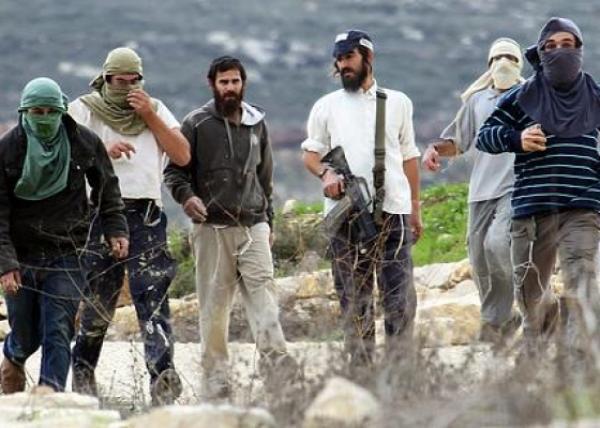
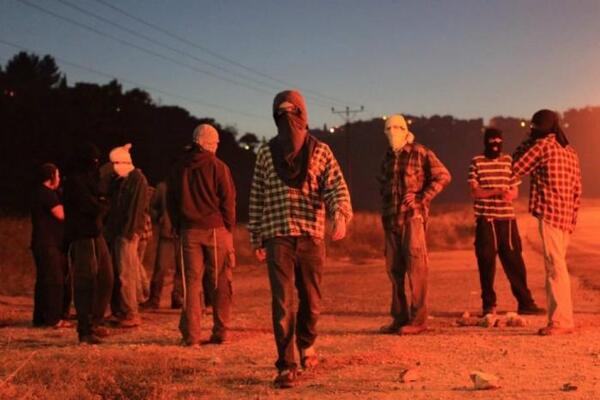
As for the settlers' practices, they have been given complete freedom to brutally attack the Palestinian people and land. One settler can control a vast area of land and then establish a settlement on it. This explains the increase in the number of settlement outposts to about 180, including in Area B. In addition to canceling the disengagement in 2005, which stipulated the withdrawal from four settlements in the northern West Bank, and the return of the first settlement, Homesh, Channel 14 reported on January 9, 2025, that the first step to cancel the disengagement law is through the security components in the Homesh settlement: by installing surveillance cameras, lighting poles, and security components in Homesh. We are talking about steps that have a major impact in providing security and protecting settlers in the settlement and in the religious school in the northern West Bank.

Israel is working day and night to end the resistance in the northern West Bank for the return of the remaining settlements, namely Sanur, Ganim and Kadim. In addition to this, there is the pastoral settlement that surrounds every governorate and has come to control what remains of Areas B and C, all with the protection and blessing of the government. In this regard, we can highlight the statement of the Al-Baidar organization that the Israeli army and settlers carried out 2,977 attacks on Bedouin communities in the West Bank during the year 2024, which resulted in the displacement of 67 Bedouin communities and 340 families. In the same vein, the United Nations Office for the Coordination of Humanitarian Affairs (OCHA) announced on January 4, 2025, that 2024 represents the worst year for settler violence in the West Bank, with 1,400 settler violence incidents. This is confirmed by the slogan "No Future in Palestine" written on banners placed by settlers on the Nablus-Ramallah road in the Shilo settlement.

All of the above, from the practices of the army and the settlers, were expressed on January 6, 2025, through the official accounts of the settlers on social media, through a map of the “Kingdoms of Judah and Israel,” dating back to the year 928 BC, which shows an imaginary control over Palestinian, Jordanian, Egyptian, Lebanese and Syrian lands. All of this expresses the criminal mentality that governs Israel under a false biblical cover.

*Palestinian writer and researcher specializing in ideological movements.

OPINIONS

Thu 16 Jan 2025 9:20 am - Jerusalem Time

The truce deal

Hamada Faraana

Hamada Faraana

Opinion Writer

We are heading towards a "calm" deal after a journey of suffering, pain, killing and destruction by the colony against the Palestinian people in the Gaza Strip. A difficult and harsh outcome, and an unprecedented bitter experience that the Palestinians were subjected to until the days of the Nakba and displacement in 1948. Its outcome is that the Palestinians stood firm, and they had no other choice, and so did the "resistance", after it paid the heavy price.


The Palestinians have held out, but they have not won, unless some boast and exaggerate, and describe survival and steadfastness as a victory, and it is so, if we understand the plan of the coalition leading the government of the colony, which is composed of: 1- the extreme right-wing political parties, and 2- the extremist Jewish religious parties, and their goal is to displace, expel and emigrate as many Palestinians as possible outside their homeland: 1- the people of Gaza to Sinai, and 2- the people of Jerusalem and the West Bank to Jordan.


The survival and steadfastness of the Palestinian people is a victory, and it is a frustration for the entire Israeli colonial expansionist project based on two terms: 1- land, 2- people. They were able to occupy the entire map of Palestine, but they failed strategically to expel all the Palestinian people, as more than seven million Palestinian Arabs remained on the entire map of Palestine, and this is the result of a transformation and preventing the establishment of a “Jewish state” in and on Palestine.


The Palestinians held out but did not win in the real, tangible, material, realistic sense, while the Israelis failed. They failed in:

1- Discovering the locations of the Israeli prisoners in the Gaza Strip despite their occupation of the entire map of the Strip, and thus they were unable to release them without an exchange operation.


2- They failed to end and eradicate the resistance despite the painful blows that the resistance leaders were subjected to, as Netanyahu, his coalition team, his army and his apparatuses worked and sought.


3- The indirect negotiations with Hamas continued until now, towards reaching the required calm deal, with Hamas and not with anyone else.


4- Palestinian prisoners who have “blood on their hands” will be released, despite the lack of Israeli consensus on this decision and approach.


The outcome of the confrontation, the results of October 7, 2023, and what followed throughout the past months, is that the Palestinians have held out but have not yet won, and that the Israelis have failed but have not yet been defeated.


The battle is a debate that will not stop strategically, but it is a stage of confrontation between the two contradictory projects: the Palestinian national democratic project in the face of the Israeli expansionist colonial project.


Netanyahu did not want to cease fire and end his war on the Gaza Strip, because he did not achieve his entire program, but Trump forced him to do so, because he wants to reach the White House with the table clear of troubles and wars. He is a businessman, a merchant, who wants calm, stability and open markets. Netanyahu’s response and ambition later included Trump’s support for the program to annex the Palestinian West Bank, or at least the settlements and the Palestinian countryside, after he recognized Jerusalem as the unified capital of the colony, as well as the Golan Heights, and moved the embassy from Tel Aviv to Jerusalem, and attempts to liquidate UNRWA and end the refugee issue.


Hamas has an interest in a ceasefire, in an effort to protect what remains of its leadership, cadres and bases, so that it may win by maintaining its sole authority over the Gaza Strip.

The political conflict after the truce deal, the ceasefire and the expected results will be no less bad than the bloody, savage war against the Palestinians. What is worse is that the Palestinians will fight their political battle divided, and in doing so they will continue to provide their free service to their lurking, merciless enemy.

ARAB AND WORLD

Thu 16 Jan 2025 9:11 am - Jerusalem Time

Macron calls for political solution after Gaza ceasefire declared

French President Emmanuel Macron called on Wednesday for a political solution to the conflict between Israel and Hamas after a ceasefire agreement was announced in the Gaza Strip.


Macron stressed the importance of ensuring respect for the ceasefire, affirming that it represents a great relief for the people of Gaza and hope for the hostages and their families after 15 months of what he described as an “unjustified ordeal.”


A statement issued by the French Foreign Ministry said that the ceasefire must be implemented and maintained, and lead to the release of all hostages.


The ministry also called for urgent measures to address the humanitarian crisis in Gaza and to begin reconstruction efforts immediately.


France also called on supporters of both Israel and Palestine to use the ceasefire as an opportunity to work towards a two-state solution, ensuring security for both the Israeli and Palestinian peoples. France stressed that this is the only way to achieve a just and lasting peace.

Israel and Hamas have reached a ceasefire agreement in the Gaza Strip and a prisoner exchange, announced yesterday after arduous negotiations mediated by Egypt, Qatar and the United States, and is set to go into effect next Sunday.


The agreement, which is to be implemented in stages, includes a schedule for an initial six-week ceasefire period. This period is scheduled to witness a gradual withdrawal of Israeli forces from Gaza and the release of hostages held by Hamas in exchange for the release of Palestinians from Israeli prisons.

ARAB AND WORLD

Thu 16 Jan 2025 9:06 am - Jerusalem Time

British PM welcomes Gaza ceasefire, stresses two-state solution

British Prime Minister Keir Starmer welcomed the announcement of a ceasefire in the Gaza Strip on Wednesday evening, stressing the need to implement the "two-state solution."


"This is the long-awaited news that both Israelis and Palestinians have been eagerly awaiting, as they have borne the brunt of this conflict," Starmer said in a statement.


"The hostages (Israeli detainees in Gaza) can now finally return to their families, and as for the innocent Palestinians whose homes were turned overnight into a war zone (due to the Israeli genocide), this ceasefire must allow for a massive increase in humanitarian aid reaching them," he explained.


Starmer stressed the "need to secure a better, lasting future for the Israeli and Palestinian peoples based on a two-state solution that would ensure security and stability for Israel, alongside a sovereign and viable Palestinian state."


He stressed that "the United Kingdom and its allies (he did not name them) will make great efforts to achieve long-term peace in the Middle East."


Officially, the Prime Minister and Minister of Foreign Affairs of Qatar, Mohammed bin Abdulrahman, announced on Wednesday evening the success of the mediators (Egypt, Qatar and the United States) in reaching an agreement to exchange prisoners and return to sustainable calm, leading to a permanent ceasefire in Gaza and an Israeli withdrawal from the Gaza Strip, noting that the agreement will begin to be implemented next Sunday.

PALESTINE

Thu 16 Jan 2025 9:05 am - Jerusalem Time

Escalation in settler crimes in the West Bank.. Settlement belts to besiege Bedouin communities


Professor Jamal Harfoush: A systematic Israeli plan to evacuate Palestinian land of its owners and implement forced displacement in stages

Thaer Hanani: Settlers’ attacks and violations reached their peak in targeting agricultural lands and pastoral areas

Fakhri Abu Diab: The occupation seeks to empty the Bedouin communities that are the eastern gateway to Jerusalem and to strengthen the settlements

Bassam Bahr: Targeting Bedouin communities by establishing “settlement belts” aims to prevent any future Palestinian expansion

Abu Imad Al-Jahalin: After rebuilding what the occupation destroyed, it resorted to the policy of pastoral settlement since the beginning of the aggression on Gaza

Aseel Malihat: Settler attacks on Bedouin communities and villages are not random, but part of a plan for forced displacement


Armed settler militias continue their attacks in the West Bank, which have culminated in targeting agricultural lands and Bedouin communities, with the protection and support of the occupation forces, and under the direct supervision of the two extremist Israeli ministers, Bezalel Smotrich and Itamar Ben-Gvir, as part of a systematic plan to evacuate Palestinian land of its owners and implement forced displacement in stages.


Writers and analysts, speaking to Al-Monitor, believe that these crimes amount to the crime of “ethnic cleansing,” and are part of the ongoing gradual annexation of the occupied West Bank and attempts to empty it of its residents and original owners, while at the same time strengthening settlements and controlling more of the natural resources of the State of Palestine, thus undermining any possibility of embodying the Palestinian state on the ground with East Jerusalem as its capital.


They stressed the need to follow up on these complex crimes that are punishable by international law, pointing out that all decisions or sanctions issued by the international community or countries regarding colonial settlement and the colonists who commit crimes against citizens, their lands and their properties do not rise to the level of the crime of "ethnic cleansing", calling for deterrent international sanctions on the colonial settlers and their armed militias, as well as on the ministers and officials in the occupation government who provide them with protection, support, funding and backing.


Crimes falling within the framework of "ethnic cleansing"


Professor Jamal Harfoush, Professor of Scientific Research Methods and Political Studies at the Academic Research Center University, confirmed that “the increasing attacks by settlers in various areas, and at an accelerating pace, represent part of a systematic plan that aims to evacuate the Palestinian land of its legitimate inhabitants, especially in the villages and Bedouin communities that are considered the first line of defense for the land.”


He stressed that "this policy embodies the occupation's intention to implement forced displacement in stages, which is a flagrant violation of international humanitarian law, specifically Article 49 of the Fourth Geneva Convention, which prohibits the forced transfer of populations under any pretext."


Harfoush pointed out that what we are witnessing are nothing but attempts to tighten control over the lands through various tools, such as: establishing settlement outposts, destroying the livelihoods of the population, and imposing oppressive living conditions that force them to leave.


He said, "These crimes fall within the framework of 'ethnic cleansing', which is considered a crime against humanity according to the Rome Statute of the International Criminal Court."


Regarding confronting the scenario of settler attacks in villages and Bedouin communities, Harfoush stressed that “confronting this scenario requires an integrated strategy on the popular, legal, and media levels, as follows:

At the grassroots level: Strengthening the resilience of Bedouin communities through national initiatives that provide direct support, such as improving infrastructure, providing basic services, and securing livelihoods. There must be grassroots campaigns urging people to hold on to their land no matter the circumstances.


On the legal level: Documenting every violation committed against Bedouin communities in a professional and accurate manner, including photos, testimonies and reports. These documents are legal weapons used to file complaints before international courts and the United Nations Human Rights Council.


Calling on the international community, through diplomatic channels, to take practical steps to pressure Israel to stop these practices that violate international law.


At the media level: exposing the crimes of the occupation and settlers in local and international media, with a focus on telling human stories that highlight the suffering of affected families.


Launching global awareness campaigns explaining the seriousness of the violations committed against Bedouin communities and their impact on the Palestinian fabric.


Cooperation with international organizations: Leverage the support of NGOs and UN organizations such as the Office for the Coordination of Humanitarian Affairs (OCHA) to provide immediate protection to the population.


Urging the International Criminal Court to open an urgent investigation into these violations as war crimes.


Harfoush stressed at the end of his talk to “I” that “adherence to land and rights is not limited to the people of the Bedouin communities only, but rather it is a national and international responsibility that requires unity of the Palestinian ranks and comprehensive support from all the living forces in the world.”


Continuous violations and harassment


Thaer Muhammad Hamid Hanani, coordinator of the popular campaign to defend Khirbet Tana and member of the factional coordination committee in Beit Furik in the Nablus Governorate, believes that settler attacks have reached their peak in targeting agricultural lands and pastoral areas.


For example, he said, the occupation planted a pastoral settler nicknamed "Kobi" on the lands of Khirbet Tana in 2014, and this settler began harassing the residents of the khirbet located east of Beit Furik, where he worked to confine and reduce the grazing areas, and steal and poison the sheep.

He added: This led to a decrease in the number of residents of the village from forty families who depended on livestock and grazing in 2014, to thirty families in 2017, and then to only twenty families by 2020.


Hanani confirmed that after October 7, 2023, the pastoral settler escalated his attacks, demolishing caves and tents, severely beating residents, and firing live bullets at them, forcing them to flee.


He continued, saying: However, thanks to the activities of the Popular Committee for the Defense of Khirbet Tana and the mobilization of the masses, thousands of citizens gathered and performed prayers at the trench dug by the settler "Kobi", which separates Beit Furik from Khirbet Tana.


He stressed that these pressures forced the occupation government to open the road leading to the ruin, which enabled ten families to return to it.


However, he pointed out that these families faced continuous provocations and harassment, as the settler "Kobi" took control of the water sources, which prevented the residents from watering their livestock. He also continued his attacks on the school and mosque in the area, as he stole solar panels, a refrigerator, and a water tank designated for ablution, in addition to completely destroying the school.


Hanani stated that in a dangerous escalation, “Kobi” attacked the remaining residents by firing bullets and tear gas bombs, which led to their complete expulsion from the village on 1-5-2025.


He pointed out that Khirbet Tana constitutes half of the area of Beit Furik, which is 36 thousand dunams, and was considered the food basket for Beit Furik and the Nablus Governorate.


He said that in 2020, in light of the dangers facing Khirbet Tana, the Popular Committee for the Defense of the Khirbet was formed. The committee held prayers in the mosque of the khirbet and planted trees in memory of the souls of the martyrs, where dozens of large trees were planted bearing the names of the town’s martyrs. The committee also worked to support the residents and confront settler attacks, including sometimes clashing with them.


Hanani stressed that the efforts of the Popular Committee contributed to delaying settlement projects, which highlights the importance of popular action in confronting settlement.


But he added that these activities require broad political support from the Palestinian government, and making every possible effort, no matter how great the sacrifices, with the aim of stopping the settlement project that targets pastures and agricultural lands.


Hanani stressed that the loss of these lands is pushing the population to voluntarily migrate to neighboring Arab countries, which requires serious action to preserve the steadfastness of the Palestinian people on their land.


Increase in settler attacks


Palestinian affairs researcher Fakhri Abu Diab confirmed that the pace of settler attacks has increased, especially in areas classified as (C), and specifically in Bedouin communities.


He pointed out that these gatherings constitute the eastern gate to the city of Jerusalem, noting that the occupation is working to expand the city of Jerusalem into what is called "Greater Jerusalem", which according to its plans will include 10% of the area of the West Bank.


He stressed that the occupation seeks to strengthen the settlements in that area to create geographical continuity between them, which blocks the way to any future possibility of establishing a Palestinian state.

He explained that the occupation is focusing on separating the northern part of the West Bank from the southern part by establishing a belt or wall of settlements in the area between Jerusalem to the east, the Jordan Valley and the Jericho area.


Abu Diab said: The occupation aims to change the demographic composition of those areas in favor of the settlers and to remove the Bedouin communities that are present in the areas richest in water and animal resources.


He added: This is part of the occupation's policy to strangle and weaken the Palestinian economy.


He explained that among the current occupation plans, which are managed by the so-called "Civil Administration" and the settlement entities, is the expulsion and evacuation of Bedouin communities in order to seize Palestinian lands and fragment the Palestinian regions, noting that the occupation's goal is to eliminate any future possibility of establishing an independent Palestinian state.


Perform covert annexations


Abu Diab revealed that the occupation is currently carrying out covert annexation operations by controlling lands and displacing residents, as it considers the existence of these Bedouin communities an obstacle to its expansionist projects, including the expansion of settlements such as "Ma'ale Adumim" and "Kedar."


He pointed to the occupation's growing appetite with the approach of a new US administration headed by Trump, who is expected to support the annexation and expansion plans. He said: Despite the opposition of the international community, it may remain helpless without the intervention of the United States, which will either support the Israeli plans or at least turn a blind eye to them, especially with regard to the activities of the settlers.


Abu Diab believed that to confront this scenario, we must focus on strengthening the resilience of the people by empowering them economically and socially, supporting them to remain on their lands, and investing in Bedouin communities by establishing development projects that contribute to their stability, limit forced migration, and develop strategic plans to empower them and enhance their resilience on their land.


The occupation seeks to force the Palestinians to displace


Lawyer Bassam Bahr, who specializes in settlement affairs, believes that in the recent period, and especially during the past year with the outbreak of the war in Gaza, the West Bank has witnessed a daily escalation in settler attacks, which have become noticeably accelerating.


He pointed out that these attacks aim to expand control and impose a fait accompli on the ground, through the establishment of caravans, excavations, cultivation of land, and construction of facilities, to empty the Palestinian lands and ensure that they are not included in any future negotiations.


He explained that the settlers are targeting Bedouin communities and residential areas in the West Bank by establishing "settlement belts."


He said that these settlements hinder the urban expansion of Palestinian villages and cities, whether in East Jerusalem, Ramallah, Bethlehem, Hebron, or elsewhere.


Bahr stressed that the occupation does not leave a hill or area in the West Bank without setting up a tent or caravan on it, with the aim of preventing any future Palestinian expansion.

He stated that this targeting extends to attacking farmers, schools, and homes, and burning agricultural lands and crops, as part of a systematic and deliberate policy to force Palestinians into forced or voluntary displacement.


Distribution of roles between the army and the settlers


Lawyer Bahar added that the settlers receive full support and armament from the Israeli occupation, especially in the West Bank, to confront and threaten the Palestinian population.


He explained that these practices are implemented in an organized manner, where roles are distributed between the settlers and the Israeli army, to ensure control over the lands and implement actual annexation plans on the ground.


Strengthening unity and developing strategies to confront the occupation’s plans


At the end of his speech, lawyer Bassam Bahr stressed that confronting this reality requires a unified Palestinian mass movement on the ground, in addition to activating peaceful popular resistance.

He also called for strengthening national unity and developing national strategies to confront the occupation's plans, which aim to eliminate any chance of establishing a future Palestinian state.


Bedouin communities in Jerusalem governorate are steadfast


For his part, Abu Imad al-Jahalin, head of the Abu al-Nuwar Bedouin Communities Committee, said that after the occupation’s demolition of Bedouin communities in the West Bank and Jerusalem Governorate in particular, and the residents of the communities’ continued efforts to thwart these operations by rebuilding everything that was demolished by the occupation, the latter has resorted since the beginning of the aggression on the Gaza Strip to a policy of pastoral settlement.


He added: Dozens of settlement outposts have spread, especially in the eastern areas of Ramallah and Nablus, which has led to the displacement of dozens of communities in the northern region.

Al-Jahalin added: Today, in the Jerusalem Governorate, specifically in the eastern slopes of the city, there are many settlement outposts, such as “Boaz” in the Sawahreh desert in the Al-Mintar area, and “Boaz” near Khan Al-Ahmar.


He continued: A new settlement point was also established above the Khan al-Ahmar settlement, only 20 metres away from the Khan al-Ahmar school, and another point in the al-Shamis area, about 50 metres away from the Wadi Sa'b settlement.


Al-Jahalin stressed that these outposts aim to displace Bedouin communities by unleashing settler herds to attack citizens and displace them by force.


But he pointed out that thanks to the will and steadfastness of the citizens in these communities, a new catastrophe was not passed on to the Jahalin Arabs and the Bedouin communities.


He said that these communities are still confronting the settlers, and are resisting them, and they are steadfast in the Jerusalem Governorate. For example, in the Bir al-Maskoub community, we were able to regain control of it after the settlers took over it on May 7, 2024, and stayed there for three days. We obtained decisions from the occupation courts to evict them.


Abu Imad Al-Jahalin concluded his talk to “Y” by saying: “Today it is full of its people, as we succeeded in returning the families and rehabilitating the houses, and the residents are still there.”


An existential threat to marginalized communities


For her part, Aseel Malihat, media officer at Al-Baidar Organization for the Defense of Bedouin Rights and Targeted Villages, believes that the escalation of settler attacks against Bedouin communities and targeted Palestinian villages poses an existential threat to these communities, which are already suffering from marginalization and deprivation of their basic rights.


She said: These attacks are not random, but rather part of a systematic plan that seeks to forcibly displace residents and force them to leave their lands through continuous restrictions, whether through direct violence or occupation policies that deprive them of the most basic necessities of life, stressing that the clear goal of these practices is to strengthen settlement control over Palestinian lands, especially in areas classified as (C), which is a primary goal in the gradual annexation project.


Malihat stressed that what is happening today is not just a series of attacks, but rather an extension of the policy of Judaizing the land that the occupation is escalating.


She pointed out that the Bedouin communities, which are among the most vulnerable Palestinian communities, are exposed to multiple pressures, starting with the prevention of construction and the destruction of homes and vital facilities, through the confiscation of lands and properties, and ending with the organized attacks carried out by settlers under the protection of the Israeli army.


She considered that these policies are nothing but tools to weaken the steadfastness of these communities and push them towards forced displacement, which constitutes a flagrant violation of all international laws and conventions.


A catastrophic scenario requires comprehensive action at all levels.


Malihat believed that confronting this catastrophic scenario requires comprehensive action at all levels. First, all violations must be documented accurately and systematically, including daily attacks, demolitions, land confiscation, and physical and psychological attacks to which residents are exposed.


She said: Documentation supported by evidence, whether visual or written, contributes to exposing the occupation’s practices at the local and international levels, and gives those affected a strong voice before human rights institutions and international forums.

Malihat believed that the role of the media is of great importance in conveying the true picture of what is happening in these areas.


She said that the media is a basic means of shedding light on the daily suffering of the population, and revealing the true face of the racist occupation policies, stressing the importance of investing in all media outlets, whether traditional or digital, to reach the widest possible segment of the public, and mobilize international solidarity with these threatened communities.


She stressed that, in addition to the media, legal support is one of the most important tools in confronting these policies.


She said: Legal efforts must be strengthened to defend the rights of the population, whether by going to Israeli courts or resorting to international institutions such as the International Criminal Court.


She stressed that Al-Baidar Organization is working hard to provide legal support to the affected population, with the aim of ensuring their right to remain on their lands, and confronting any attempts to displace them.


She said: Strengthening the resilience of the population in the Bedouin communities also requires providing them with direct support on the living and economic levels, and improving their living conditions by providing basic services, such as water, electricity, education and health care. This is a crucial step in strengthening their ability to withstand increasing pressures. The occupation is betting on weakening these communities from within, but providing the necessary support can turn the equation in favor of the population.


Malihat stressed that these policies cannot be confronted without mobilizing international support for the Palestinian cause in general, and the issue of Bedouin communities in particular, noting that international campaigns directed at international institutions, human rights organizations, and world public opinion play a fundamental role in exposing these practices and gaining support for the Palestinian cause.


She said: The international community bears a great responsibility to pressure the occupation to stop its ongoing violations, and to ensure the protection of the rights of the population in accordance with international law.


She pointed out that the steadfastness of the Bedouin communities is the key to confronting these occupation policies, and remaining on the land is the strongest option in the face of attempts at forced displacement. She said: We at Al-Baidar Organization are committed to standing by these communities and providing everything necessary to enhance their steadfastness, whether through legal support, media documentation, or international pressure.

She pointed out that the issue is not just a battle on the ground, but rather a battle of existence, identity and rights, and the Palestinian people have proven time and again that they are able to withstand no matter how difficult the circumstances are. She said: The occupation may possess military power, but it does not possess the legitimacy of its existence on this land, and it cannot break the will of the people who are defending their land and rights.


Malihat concluded by saying: “We will continue to work in the Al-Baidar Organization with all our energy, relying on our belief in the justice of the cause, and the support of everyone who believes in the right of the Palestinian people to life and freedom.”


PALESTINE

Thu 16 Jan 2025 8:56 am - Jerusalem Time

Raids on families in camps... Will Israel inflict on the West Bank what it inflicted on Gaza?

  Dr. Ahmed Rafiq Awad: The bombing of Jenin camp has deep political, security and strategic dimensions that aim to complicate the Palestinian scene

Akram Atallah: The raids on Jenin camp may be part of a plan to impose complete control and annex the West Bank

Dr. Raed Abu Badawiyya: The West Bank faces a difficult future in light of the developments and will pay a heavy price on the security and political levels

Fayez Abbas: Targeting Jenin camp with shelling is a cheap attempt to confuse the cards, increase tension, and incite against the Palestinian Authority

Dr. Suhail Diab: Netanyahu aims to turn the West Bank into an electoral card that will help him regain his popularity that was damaged during the war


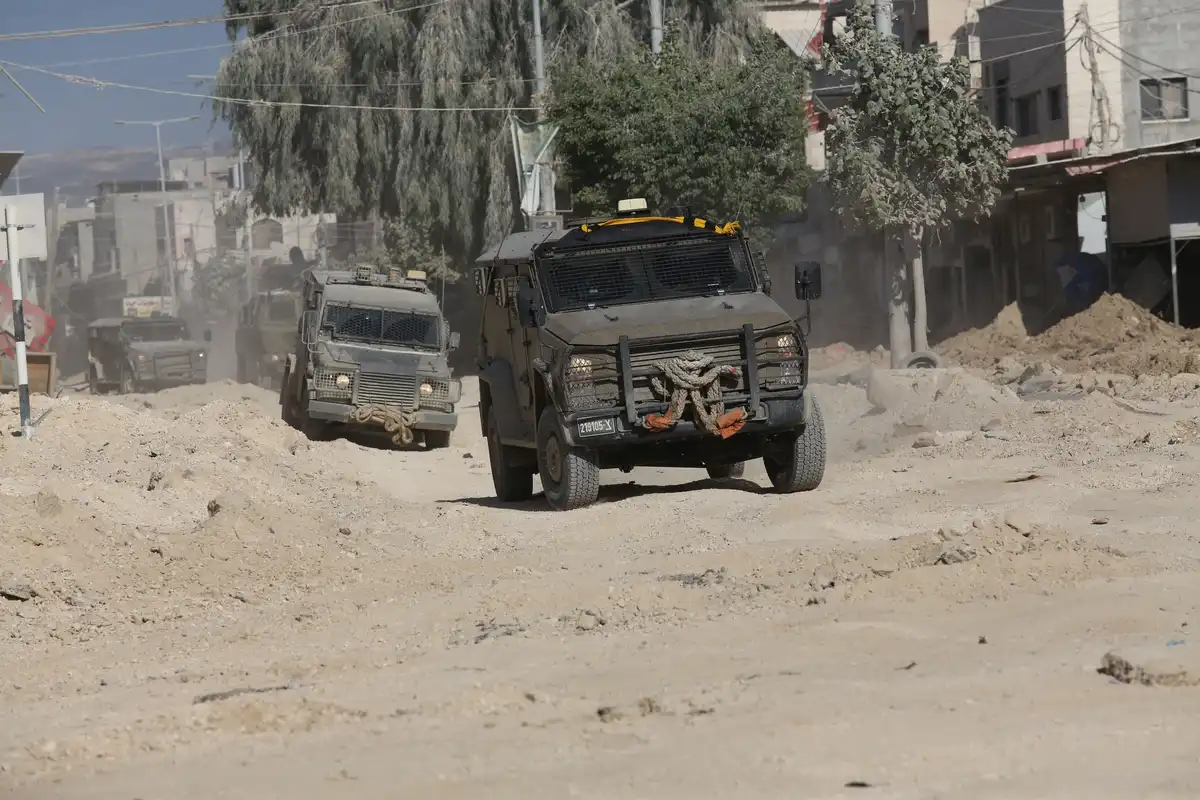
The two recent Israeli airstrikes on Jenin camp in the past two days, which resulted in the martyrdom of 11 citizens and the injury of others, raise fears that the West Bank will turn into a new front after the end of the war on Gaza, in light of the signing of the deal and the implementation of the truce, which places the West Bank in a circle of tension with the escalation of Israeli military operations aimed at consolidating annexation and control.


In separate interviews with “I”, writers, political analysts, specialists and university professors believe that this escalation in Jenin camp comes within the context of a systematic policy aimed at reshaping the Palestinian reality and weakening the resistance, which reflects broader political and security dimensions, and attempts to impose new facts by controlling the West Bank.


Writers, analysts, specialists and university professors believe that targeting the Jenin camp indicates an Israeli strategy that goes beyond targeting resistance fighters, as Israel seeks to deepen the Palestinian division and undermine trust between the people and their leadership, while these operations coincide with plans to annex large parts of the West Bank, which makes the bombing an additional pressure tool to reshuffle the cards in light of the changing reality after the ceasefire in Gaza.


They point out that the next phase will witness a greater escalation in the West Bank, as it turns into a central arena for the Palestinian-Israeli conflict, as airstrikes and the use of drones reflect a shift in the occupation’s methods of controlling the land and implementing its expansionist plans.


An old, renewed approach aims to deepen the Palestinian crisis


Writer and political analyst Dr. Ahmed Rafiq Awad asserts that the two recent Israeli raids on Jenin camp are not an exceptional event, but rather a continuation of an old, renewed Israeli approach that aims to deepen the Palestinian crisis.


Awad believes that the occupation government, since its formation, has adopted aggressive policies that include settlement expansion, land confiscation, forced expulsion, killings, and the destruction of camps, especially in the northern West Bank, and increasing pressure on Palestinians to force them to emigrate.


Awad explains that the bombing of the camp comes in the context of an Israeli attempt to add more ambiguity and complexity to the Palestinian scene, as the goal is not only to target the resistance, but also to strengthen the division and undermine trust between the Palestinian people and the National Authority.


Awad says: “The two raids on Jenin camp that left martyrs and wounded are not just a military operation; rather, they carry deep political, security and strategic dimensions that aim to sabotage the Palestinian scene and plunge it into a sea of chaos and tension.”
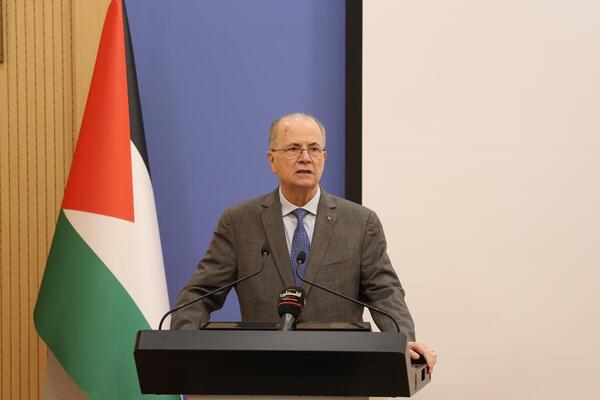

Awad points out that Israel seeks through this to weaken the Palestinian Authority and push it into a state of loss of control, which allows the occupation to interfere more in the details of Palestinian life.

Awad explains that the Israeli far right, represented by figures such as Bezalel Smotrich and Itamar Ben-Gvir, seeks to implement a comprehensive plan to annex the West Bank, either completely or partially.


He points out that these ambitions are manifested through Israeli policies on the ground, such as building settlements, enacting new laws that strengthen the presence of settlers, increasing their numbers, and transforming settlement into a diverse project that includes pastoral, religious, tourist, security, and industrial dimensions.


Awad says: “Although Netanyahu seems more rational in dealing with the annexation file, fearing its negative impact on Israel’s relations with the United States and the normalizing Arab countries, he may make concessions to the extremists in his government to ensure their continued support.”
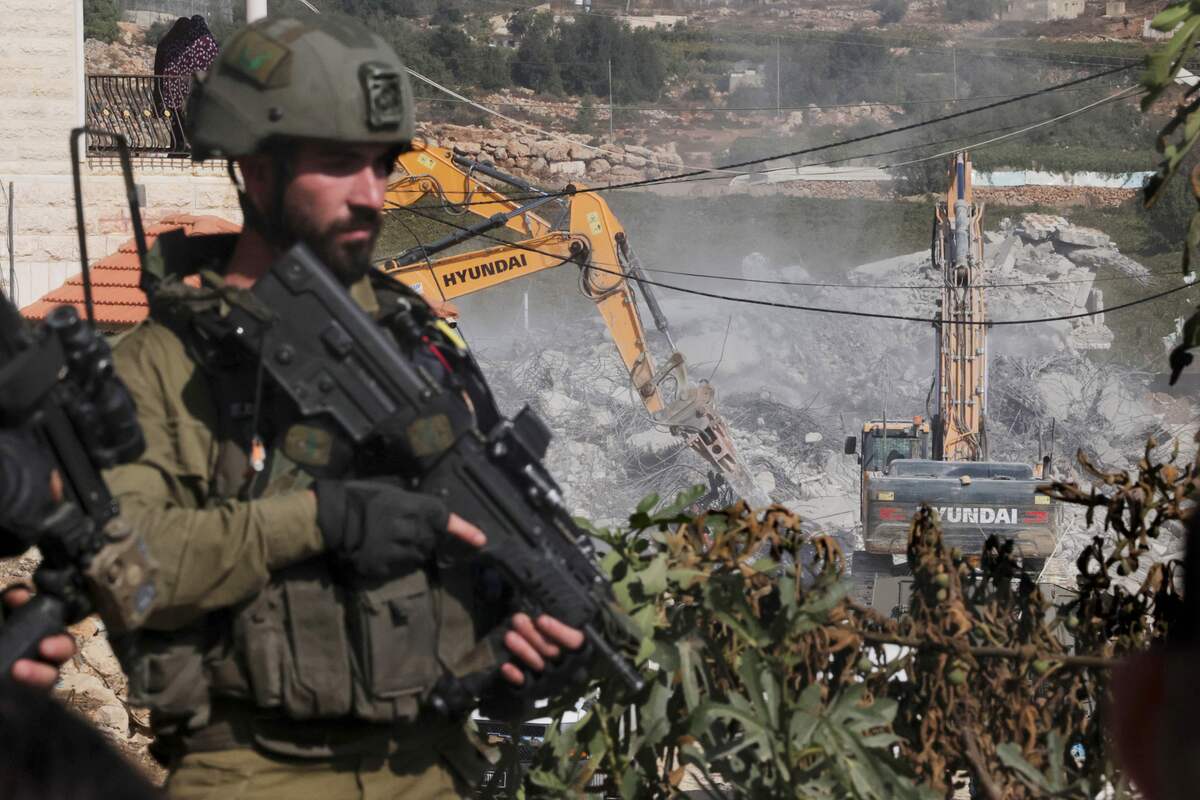

Awad asserts that “the bombing of Jenin camp is closely linked to the annexation plan, as it is used as a tool to promote this project. The killings and targeting of resistance fighters in Jenin are part of a broader strategy aimed at eliminating any form of Palestinian resistance, and thus facilitating the Israeli annexation project.”


Awad believes that Netanyahu is seeking to calm Smotrich and Ben-Gvir after the Gaza deal, as they are demanding to accelerate the pace of annexation, by offering political and financial incentives that include pumping money into settlements and legalizing illegal settlement outposts.


Awad points out that the annexation process is already taking place on the ground through multiple Israeli measures, including expanding settlements in Area C, increasing the number of settlers, and changing the nature of settlements to make them more comprehensive.


Awad asserts that these policies reflect clear Israeli intentions to impose a new reality that makes the West Bank an area completely under Israeli control.


Awad believes that these policies aim to liquidate the Palestinian cause and turn it into a humanitarian and administrative issue, rather than a political and national issue.


Awad points out that the occupation relies on multiple strategies, including forced displacement, economic pressure, and escalating military operations, to push the Palestinians to give up their historical rights.


Awad points out that Netanyahu finds himself forced to strike a delicate balance between implementing the far-right agenda and maintaining the stability of his government. Netanyahu also realizes that any withdrawal of Smotrich or Ben-Gvir from the government would mean its collapse, which prompts him to make major concessions to ensure their survival, including carrying out military operations such as raids on the Jenin camp to support their political agenda.


Awad believes that the Israeli raids on Jenin camp are not just targeting the resistance fighters, but are part of a broader strategy aimed at reshaping the Palestinian landscape to serve the interests of the occupation. With the escalation of annexation and settlement, the Palestinians are facing an existential challenge that requires a comprehensive political and national response to confront these expansionist policies.


Shuffling the cards in Palestine, internally and externally


Writer and political analyst Akram Atallah asserts that the two recent raids on Jenin camp are part of an Israeli strategy aimed at shuffling the cards in Palestine, both internally and externally, within the framework of a renewed settlement project targeting the West Bank. They may be part of a broader strategic plan that seeks to create a new reality on the ground, as Israel is trying to impose its complete control over the West Bank, including areas witnessing Palestinian resistance, with the aim of paving the way for the implementation of the full annexation plan, which successive Israeli governments have long sought.


Atallah stresses that the Israeli settlement and annexation project is not limited to security and military control, but extends to include targeting the entire Palestinian presence in the West Bank.


Atallah warns that the Palestinians are facing an unprecedented challenge in light of the escalation of repressive Israeli policies, which now aim to end any possibility of resistance to the Israeli settlement project.


According to Atallah, the Israeli raids on Jenin indicate a shift in the occupation’s tools towards a new security and military escalation, within the framework of a strategic vision that seeks to impose comprehensive control over the West Bank and achieve the goals of the larger Israeli settlement project.


Atallah explains that this project is in line with the vision of Smotrich, who previously announced his three options for the Palestinians: immigration, life under Israeli rule without any rights, or death.


Atallah believes that Israel seeks, through these operations, to eliminate any form of Palestinian opposition, paving the way for the implementation of the program to annex the entire West Bank.


Atallah points out that this project is not new, as Israel has been seeking to achieve it since the occupation of the West Bank in 1967, but it has intensified significantly recently with the rise of the influence of the extreme right within the Israeli government.


Atallah points out that the most striking development in the implementation of this settlement project is the use of Israeli aircraft in attacks on Jenin camp.


"This shift indicates a new Israeli policy aimed at imposing complete control over the West Bank, and is a clear indication of the occupation's intentions to escalate military operations as part of a larger settlement project," Atallah said.


Atallah explains that Prime Minister Benjamin Netanyahu faces an internal challenge in maintaining the support of Smotrich and Itamar Ben-Gvir, who represent the hardline wing of the government.


Atallah points out that any withdrawal by these two ministers means Netanyahu losing his parliamentary majority in the Knesset, which threatens the survival of his government.


Atallah points out that Netanyahu seeks to compensate for the support of Smotrich and Ben Gvir by adopting security policies that are in line with their vision, but the Israeli project is bigger than just satisfying the extreme right.


Atallah asserts that the ultimate goal of this project is to intensify settlement and gain complete control over the West Bank, within the framework of a general Israeli vision aimed at consolidating settlement hegemony and imposing a new political reality.


Military escalation to appease the Israeli far-right


Dr. Raed Abu Badawiyya, Professor of International Law and International Relations at the Arab American University, confirms that the West Bank faces a difficult future in light of regional and international political and security developments.


Abu Badawiya explains that the Palestinians in the West Bank will pay a heavy price on two levels: security and political, as a result of the ceasefire in the Gaza Strip, as well as with the return of Donald Trump to the US presidency, who has tendencies that support expansionist Israeli policies.


In the short term, Abu Badawiya expects the West Bank to witness intensive military operations against the Palestinian resistance, noting that this escalation aims to appease the hardline Israeli right, led by figures such as Bezalel Smotrich and Itamar Ben-Gvir, especially in the wake of recent resistance operations, such as the recent hotel operation.


Abu Badawiya points out that right-wing voices within the Israeli government, and even from members of the Likud Party, are calling for a military escalation targeting cities and camps such as Jenin, Nablus, and Tulkarm, to neutralize the resistance in the northern West Bank.


In the medium and long term, Abu Badawiya believes that the West Bank will face serious political challenges, as the Israeli government led by Benjamin Netanyahu seeks to gradually implement annexation plans, especially in areas classified as “C.”


Abu Badawiya points out that these plans also include significantly reducing the powers of the Palestinian Authority, so that it becomes a purely civil administration, providing services to the Palestinian population such as education and health without any manifestations of sovereignty.


Abu Badawiya explains that Israel seeks through these policies to achieve multiple gains, including complete control over the land, and reducing the role of the Palestinian Authority, while placing the latter in charge of managing the affairs of the civilian population.


Abu Badawiya points out that this comes with Israeli calls to revoke the residencies of West Bank residents who hold other nationalities, including Jordanian citizenship, in a move aimed at reducing the number of Palestinian residents able to demand political or sovereign rights.


Abu Badawiya points out that Trump's return to the US presidency may push the situation in the West Bank towards further deterioration, as Trump is expected to support Israeli annexation plans and provide additional facilities for expanding settlements.


He points out that this American support is accompanied by American and international pressure on the Palestinian Authority, which will find itself in a difficult situation, as it will be forced to reduce its role to a civil administration, while losing any manifestations of sovereignty in Areas A and B.


Abu Badawiya explains that Israel may resort to additional measures such as annexing all of Area C, while tightening the noose on the Palestinian Authority in other areas.


Increase pressure on the camp and fuel tension


Israeli affairs expert Fayez Abbas confirms that the two recent raids on Jenin camp are not a new development, as the camp was previously bombed before October 7, 2023, but they aim to stir up tension, confuse the cards, and increase pressure on the camp, especially in light of the security operation being carried out by the Palestinian security services in its vicinity.


Abbas believes that Israel is cheaply trying to shuffle the cards and exploit the Palestinian security services' operation to accuse the Palestinian National Authority of besieging the camp, while Israel is bombing it from the air.


Abbas points out that Israeli incitement against the Palestinian Authority and refugee camps in the northern West Bank is increasing systematically, with the Israeli government and pro-settlement media playing a major role in fueling these tensions.


Abbas did not rule out that Israel would escalate its military operations to the level of the intensive bombing witnessed in areas such as Jabalia and Beit Hanoun in the Gaza Strip, citing the control of the fascist right in the Israeli government and the indifference of Israeli society to the consequences of these operations, especially with regard to the killing of children and the destruction of infrastructure.


Abbas explains that the Israeli media is working to distort reality by completely ignoring the crimes committed in the Gaza Strip, as no pictures or reports are published documenting the destruction and genocide against the children of the Strip, which creates internal media collusion that gives the government cover to continue these policies.


Abbas points out that Israeli Prime Minister Benjamin Netanyahu is trying hard to convince Smotrich not to withdraw from the government, especially after the recent prisoner exchange deal.


Abbas hints that Netanyahu may have promised Smotrich strategic concessions, including allowing the incoming US administration led by Donald Trump to annex areas of the West Bank, strengthen settlements, and lift sanctions imposed by the Biden administration on settlers.


According to Abbas, Smotrich is pressuring Netanyahu to implement a more stringent policy toward the West Bank, demanding that areas such as Nablus and Jenin be turned into "closed military zones" similar to what is happening in the Gaza Strip.


Abbas points out that these statements reflect the extremist tendencies of the Israeli government, which seeks to achieve political gains at the expense of security and stability in the Palestinian territories.


The pivotal arena for determining the future of the Palestinian cause and conflict


Dr. Suhail Diab, a professor of political science and expert on Israeli affairs, believes that the West Bank is the pivotal arena for determining the future of the Palestinian cause and the conflict with Israel.


Diab stresses that the geographical and demographic importance of the West Bank makes it the primary factor that will determine the outcome of the conflict, not Gaza, nor the interior in the year (48), nor the diaspora.


Diab points out that the West Bank occupies a strategic geopolitical position for both the Palestinian and Israeli sides. For the Palestinian people, the West Bank represents the basic pillar for achieving the two-state solution project that includes the West Bank, Gaza and East Jerusalem. As for Israel, it sees it as an opportunity to end the Palestinian issue once and for all by imposing its geographical and demographic control over it.


Diab explains that the current transitional phase, which comes after the ceasefire in Gaza, will witness a major Israeli escalation in the West Bank, as Israel is trying to weaken the Palestinian resistance there, and ensure the continuation of the state of war and tension that serves the interests of Benjamin Netanyahu's government.


Diab explains that the Israeli plan in the West Bank includes adopting different security escalation strategies than what was usual, as the next stage will witness the intensive use of drones and remote-controlled missiles, in addition to raids and traditional military operations.


Diab explains that this escalation aims to maintain the state of war, which helps Netanyahu maintain the cohesion of his far-right government, and to calm the hardline electoral base, which demands more repressive measures against the Palestinians.


Diab points out that decision-makers in Israel have come to see the need to resolve the conflict with the Palestinians instead of managing it as was the case in previous decades.


Diab asserts that the West Bank will become the most volatile arena after Gaza, as Israel will work to undermine any form of Palestinian resistance through what it calls “demographic treatment,” which includes forced displacement, oppression of the population, and reducing the administrative powers of the Palestinian Authority.


According to Diab, Benjamin Netanyahu is relying on multiple strategies to maintain his power amid internal and external challenges. On the domestic front, Netanyahu is trying to prevent the collapse of his government by appeasing the extreme right led by Smotrich and Ben Gvir, by adopting escalatory policies in the West Bank.


Diab points out that Netanyahu realizes that the withdrawal of these two ministers from the government means losing his parliamentary majority in the Knesset, and thus the collapse of his government.


On the external front, Diab explains that Netanyahu is using the escalation in the West Bank as a bargaining chip with the incoming US administration headed by Donald Trump, as he hopes to trade the West Bank in exchange for other strategic gains, such as dealing with the Iranian nuclear file or securing broader US recognition of Israel’s policies in the region.


Diab explains that Netanyahu is seeking to divert attention from his government's failures in Gaza by focusing more on the West Bank, and that Israel sees the West Bank as a more dangerous front in the near future.


Diab points out that Netanyahu used this report to justify the escalation of military operations in the West Bank, and to show that the war with the Palestinians is not over yet, as Netanyahu wants through this escalation to divert attention from his political and military failures in Gaza, and prevent the formation of any official investigation committees into his performance in the last war.


Diab asserts that Netanyahu aims to turn the West Bank into an electoral card that will help him regain his popularity, which was damaged as a result of the widespread criticism he was subjected to during the war on Gaza.


He explains that escalation in the West Bank, whether in the form of air strikes or intensive military operations, will allow Netanyahu to portray himself to Israeli society as a strong leader capable of dealing with security challenges.


Diab believes that Netanyahu is also seeking to prevent the Israeli home front from slipping into division, as many expect Israel to witness a wide-ranging internal reckoning after the war ends.


Diab points out that the Israeli media and military authorities are waiting for the right moment to open the files of failures related to Netanyahu and his government’s performance during the war.


Diab points out that Israel may exploit this situation to pass plans to annex Area C in the West Bank, while focusing on weakening the Palestinian Authority in Areas A and B, which will further complicate the political scene in the West Bank.


Diab believes that Netanyahu is seeking to exploit this stage to strengthen his stay in power, whether by satisfying the extreme right or by achieving political gains on the international scene, but he faces internal and external challenges that may undermine his political future.

PALESTINE

Thu 16 Jan 2025 8:55 am - Jerusalem Time

Nablus: Settlers attack Qusra and Burin villages and burn a vehicle

Last night, settlers attacked the villages of Qusra and Burin, south of Nablus, under the protection of the Israeli occupation army.


Local sources reported that a number of citizens suffered from suffocation while confronting the settlers' attack on homes on the outskirts of the two villages.


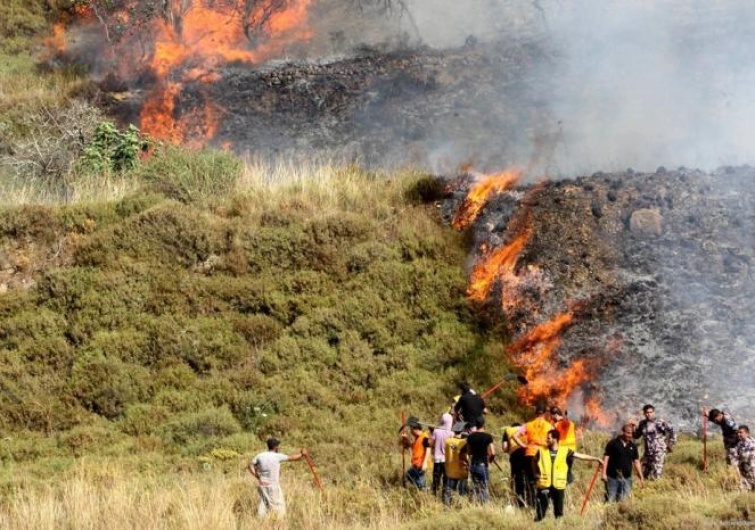
She pointed out that the settlers burned a vehicle in Burin belonging to citizen Adnan Izzat Al-Zaben, and the occupation forces prevented the civil defense crews from extinguishing it.

PALESTINE

Thu 16 Jan 2025 8:53 am - Jerusalem Time

Dead and wounded in the Gaza Strip

A number of citizens have been killed and injured since dawn on Thursday, in the ongoing occupation aggression on the Gaza Strip.


Local sources reported, citing medical sources, that four citizens were killed and others were injured in the occupation's bombing of a residential apartment near the Al-Sha'biya intersection in the Al-Daraj neighborhood in the center of Gaza City.


The same sources announced the death of two girls as a result of the occupation bombing two houses in the Shuja'iyya neighborhood east of Gaza City, and the vicinity of the Friends of the Patient Hospital in the center of the city.


Rescue teams pulled out 5 dead and more than 10 injured people from under the rubble of a house belonging to the Khalifa family that was bombed by the occupation in the Al-Rimal area, west of Gaza City.


It pointed out that two citizens were killed and others were injured as a result of the occupation bombing a house in the Nuseirat camp in the central Gaza Strip.


Two citizens were injured when the occupation targeted the Khirbet Al-Adas area, north of Rafah city.

The occupation forces have continued their aggression on the Gaza Strip, by land, sea and air, since October 7, 2023, which has resulted in the death of 46,707 citizens and the injury of 110,265 others, while thousands of victims are still under the rubble and on the roads, and ambulance and rescue crews are unable to reach them.

PALESTINE

Thu 16 Jan 2025 8:43 am - Jerusalem Time

..and I thought there wont be releif!

What had not been achieved for more than fifteen months, happened in a matter of hours. The announcement by the Prime Minister and Foreign Minister of Qatar and the US President of reaching a ceasefire agreement last night, after a long wait, constitutes the beginning of stopping the bloodshed, and an opportunity for the tortured in hell to catch their breath, heal their wounds and reassure their anxious souls, who have lived with terror and pain that has accompanied them throughout their lives.


Hamas negotiators did a good job in their insistence on obtaining guarantees from the sponsors to prevent Israel from returning to war after the end of the second phase, as it has always reneged on its commitments and broken its promises, which it considered unholy.


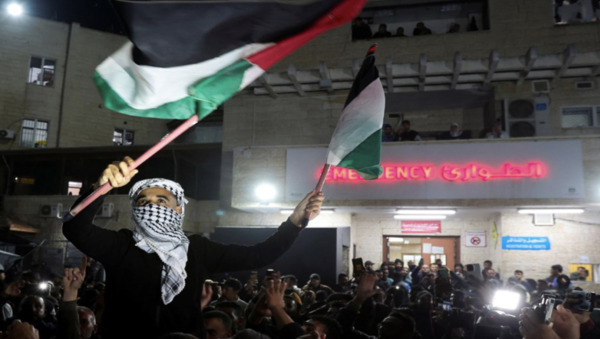
The survivors of the hell of genocide have the right to go out in marches of wounded joy to stop the killing and destruction, and the bereaved families, the injured, the displaced, the hungry, the tortured, and those suffering the bitter cold in the displacement tents have the right to breathe a sigh of relief and catch their breath, to exercise their right to cry over those who lost their children and their property.

What was announced yesterday is a “peace agreement” between the victim and the killer, after the victim paid the price of her children’s blood and the fruits of her hearts, in a scene that history has never witnessed before.


While the deal agreement is being achieved, the "wolf" is aiming at the West Bank to inflict on it what he inflicted on Gaza. This was evident last night when his warplanes bombed two homes belonging to the Al-Araarawi and Al-Ghoul families in the middle of the Jenin camp, killing six martyrs, in addition to six others the day before yesterday. This requires responding to the call of the institutions and activities in the city to overcome differences, stop the name-calling, withdraw pretexts, close the gaps, and emphasize the need for the ceasefire to include all the occupied territories.


It has become so tight that its rings have become tight, and now it is being released. Perhaps the lesson that must rise today from under the ashes of the incense burner is that national unity among all colors of the national spectrum is the only thing capable of opening up blocked horizons and achieving the desired hopes.

PALESTINE

Thu 16 Jan 2025 8:38 am - Jerusalem Time

Israeli forces launch arrest campaign in the West Bank

This morning, Thursday, the Israeli occupation forces launched an arrest campaign in the West Bank.


In Bethlehem, the occupation forces arrested the young man, Muhammad Imad Hamoud (29 years old), after raiding and searching his family’s home in the town of Fajjar.


In Ramallah, the occupation forces arrested Hadi Iyad Khasib and Nour Abdul Rahman Al-Arouri, after storming their homes and tampering with their contents in the village of Aroura.


In Hebron, the occupation forces arrested six citizens from the town of Beit Awa, southwest of Hebron, namely: Municipal Council member Ahmed Ibrahim Abdullah Masalma, Yousef Hassan Masalma, Bajis Muhammad Sweiti, Abdul Aziz Sweiti, Ismail Muhammad Sweiti, and Karam Muhammad Masalma, after searching their homes and tampering with their contents.


The occupation forces also arrested: Ibrahim Akwain and his brother Naim after destroying the contents of his house in the town of Surif, northwest of Hebron, Abdul Aziz Abu Sheikha from the village of Karma to the south, Basil Ayed Wazoz from the city of Hebron, and Subhi Muhammad Salama Shalash (60 years old) from the town of Dura to the south.


In Tulkarm, the occupation forces arrested Muhammad Imad Jarad from Ezbet al-Jarad, Mahmoud Rasim Jaber, Nour Mar’i, and Saher al-Basha from the Dhnaba suburb east of the city.


The occupation forces detained citizen Fadi Al-Sarsak from Dhnaba for several hours before releasing him.


PALESTINE

Wed 15 Jan 2025 10:52 pm - Jerusalem Time

Israeli Ministers and politicians welcome prisoner exchange agreement with Hamas

Israeli ministers and politicians expressed their blessing on Wednesday for the prisoner exchange agreement with Hamas, which will go into effect next Sunday.


"I will vote with my friends tomorrow (Thursday) in the cabinet session on the deal that Netanyahu led with President (elect Donald) Trump, to release our brothers and sisters in Hamas captivity," said Israeli Culture and Sports Minister Miki Zohar, from Prime Minister Benjamin Netanyahu's Likud party.


Zohar added, in a post on the X platform: "After Israel guaranteed the security conditions of the IDF soldiers and Israeli citizens, it became the duty of every government minister to vote in favor of the deal."


For his part, Construction and Housing Minister Yitzhak Goldknopf said: “Our sons and daughters who are dying in Hamas tunnels are crying out to us and begging for their lives.”


The head of the ultra-Orthodox United Torah Judaism party continued in a post on the same platform: “Tomorrow I will be able to fulfill the will to free the prisoners, and support the deal led by the prime minister responsibly, while preserving Israel’s security interests.”


Goldknopf called on all government ministers to vote in favor of the deal.


The security cabinet and the government are scheduled to meet on Thursday morning to ratify the ceasefire and prisoner exchange deal with Hamas, according to Israeli Army Radio.


*Lapid thanks mediators


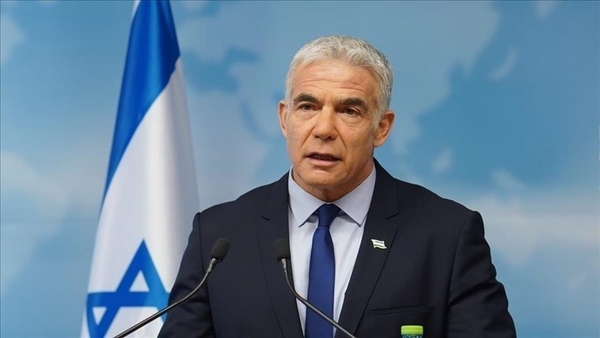
In the context, Israeli opposition leader Yair Lapid said: “I want to send a big thank you card on behalf of an entire country to President Trump and his team, to President (Joe) Biden, and to the Qataris and Egyptians (the mediators), because thanks to them this is happening, and without them it would not have happened.”


"We cannot stop now, the agreement cannot be ended in its first stage, and I promise you (Netanyahu), as I promised before, a safety net until the last moment," Lapid, the leader of the Yesh Atid party, added via the X platform.


For his part, the head of the opposition "State Camp" party, Benny Gantz, said: "My heart and the heart of the people of Israel are with all the families of the kidnapped (detainees) at this moment. I welcome reaching a deal to return the kidnapped."


Gantz added, in a post on the same platform: "As I said, the state camp will support this move at the popular level, and if necessary at the political level as well."


In another post written in English, Gantz said: “Securing the release of the kidnapped soldiers from the hands of Hamas is a moral and strategic imperative. It is simply the only way forward.”


In turn, Israeli President Isaac Herzog said in a speech broadcast on his Facebook account: “I support the Prime Minister in his efforts to complete the deal. It is a correct, important and necessary step, and there is no greater moral duty than it.”


"The deal will bring with it very difficult moments and challenges, and I am aware of all the concerns about it," Herzog added, without elaborating.


*Smotrich criticizes the deal


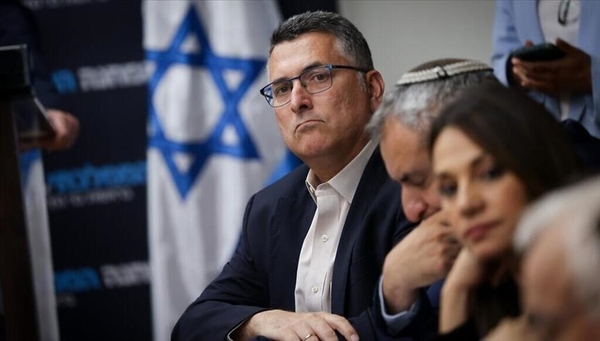
Contrary to previous positions, Israeli Finance Minister Bezalel Smotrich said in a post on the X platform: “The deal is bad and dangerous for the national security of the State of Israel, and besides the great joy of the return of all the kidnapped, the deal destroys all the achievements of the war (the genocide in Gaza).”


The head of the Religious Zionism Party continued: "We strongly oppose this deal, and the clear condition for our remaining in the government is the absolute certainty of returning to the war with great force in full and with a new formation until achieving absolute victory with all its components."


The extremist finance minister concluded by saying: “Over the past two days, there have been heated discussions between me and the prime minister on this issue. He knows what the detailed demands of religious Zionism are, and the ball is in his hands.”


Over the past months, Smotrich has repeatedly expressed his opposition to the deal, calling for the displacement of Palestinians from the Gaza Strip and its reoccupation.


Officially, the Prime Minister and Minister of Foreign Affairs of Qatar, Mohammed bin Abdulrahman, announced on Wednesday evening that the mediators had succeeded in reaching an agreement to exchange prisoners and return to sustainable calm, leading to a permanent ceasefire in Gaza and an Israeli withdrawal from the Gaza Strip, noting that the agreement would begin to be implemented next Sunday.


ARAB AND WORLD

Wed 15 Jan 2025 10:01 pm - Jerusalem Time

Biden reveals how Gaza deal was reached

US President Joe Biden said on Wednesday that reaching a ceasefire agreement in Gaza was the result of several factors.


Biden, who leaves the White House on January 20, said that this agreement is not only the result of the intense pressure on Hamas, the changing regional equation after the ceasefire in Lebanon, and the weakening of Iran, but also the result of persistent and painstaking American diplomatic efforts.


Biden said in a speech from the White House that an agreement had been reached within the "exact parameters" of a plan he had laid out since late May.


"My diplomatic efforts to get this done have never stopped," he added.


In a separate statement, the White House quoted Biden as saying: “Today, after months of intensive diplomacy by the United States, along with Egypt and Qatar, Israel and Hamas have reached a ceasefire agreement (..).”


"This agreement will stop the fighting in Gaza, increase much-needed humanitarian aid to Palestinian civilians, and reunite the hostages with their families after more than 15 months in captivity," he continued.


On Wednesday, Israel and Hamas reached a ceasefire agreement in Gaza, under which Israel will release Palestinian prisoners, while Hamas will release Israeli hostages it is holding in the Strip.


Several sources reported that the agreement was reached after meetings that continued in the Qatari capital, Doha, today.


US President-elect Donald Trump also referred on Wednesday to his role in reaching the ceasefire agreement.


Trump considered that this "epic" agreement would not have happened except "as a result of our historic victory in November," referring to his victory in the presidential elections and his expected return to the White House in a few days.


He also indicated that he would work to build on and expand the scope of the Abraham Accords.


He noted that he was "excited that the American and Israeli hostages would return to their homeland to be reunited with their families and loved ones."


He continued that his national security team, through the efforts of Special Envoy to the Middle East, Steve Witkoff, will continue to work closely with Israel and allies to ensure that Gaza never again becomes a safe haven for terrorists.


"This is just the beginning of great things to happen for America and the world," Trump said.

PALESTINE

Wed 15 Jan 2025 9:24 pm - Jerusalem Time

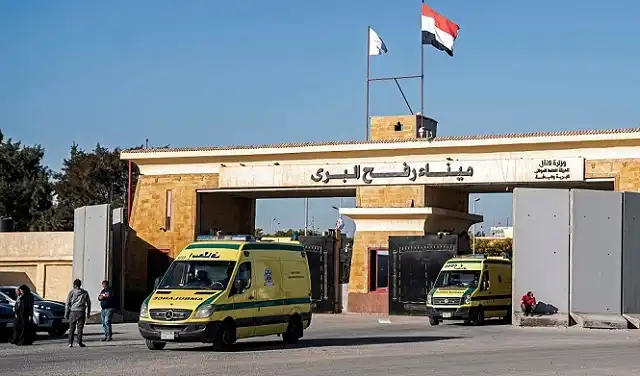
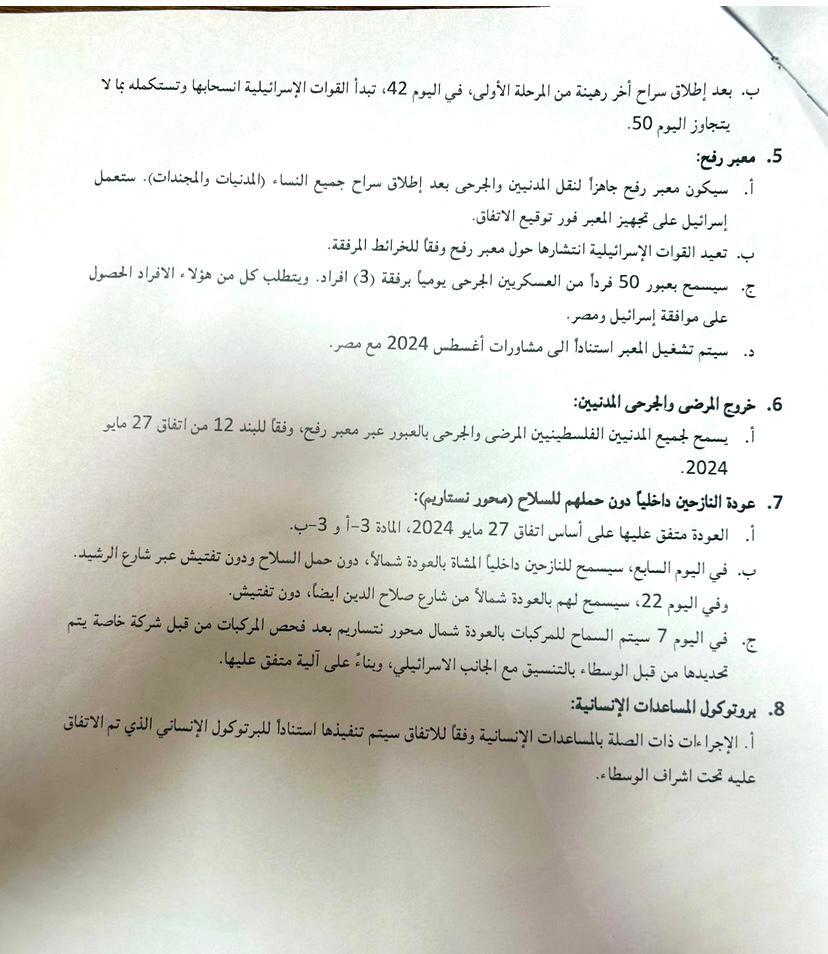
Egypt coordinates to open Rafah crossing and implement agreement aimed at improving conditions in Gaza

Egyptian security sources confirmed that coordination is underway to open the Rafah crossing to allow international aid to support the people of the Gaza Strip and improve their living conditions. High-level sources also indicated Egypt's readiness to bring in as much humanitarian aid as possible into the Strip.


According to informed sources, the first phase of the agreement extends to 42 days, and includes the return of the displaced to their homes without hindrance, especially in the areas of northern Gaza. On the seventh day of the first phase, freedom of movement will be allowed for residents in all areas of the Strip, and humanitarian aid will enter via Rashid Street starting from the first day.


The terms of the agreement also stipulate the withdrawal of the occupation forces from several areas, with the withdrawal taking place gradually from the center of the Gaza Strip, including the Netzarim axis and the Kuwait Roundabout axis east of Salah al-Din Road, on the twenty-second day of the first phase.


On the seventh day, Israeli military sites and installations in the Rashid Street area will be dismantled, with forces withdrawing completely from the street east of Salah al-Din.


These efforts come within the framework of working to alleviate the suffering of the residents of the Strip and support the restoration of stability in Gaza.


ARAB AND WORLD

Wed 15 Jan 2025 8:58 pm - Jerusalem Time

Trump Celebrates Gaza Deal: Beginning of Great Things to Come

US President-elect Donald Trump announced today, Wednesday, via his platform "Truth Social", that an agreement had been reached to release hostages in the Middle East.


While there has been no official announcement from the Biden administration regarding the Gaza ceasefire, Trump celebrated on his social media platform Truth Social: “We have a deal on the hostages in the Middle East and they will be released soon... Thank you.”


“This epic ceasefire agreement was only possible as a result of our historic victory in November, which signaled to the entire world that my Administration would pursue peace and negotiate deals to ensure the safety of all Americans and our allies,” Trump wrote. “I am very pleased that the American and Israeli hostages will be returning home to be reunited with their families and loved ones.”


“With this agreement in place, my National Security Team, through the efforts of Special Envoy for the Middle East Steve Witkoff, will continue to work closely with Israel and our allies to ensure that Gaza never again becomes a safe haven for terrorists. We will continue to advance peace through strength throughout the region, while building on the momentum of this ceasefire to extend the historic Abraham Accords. This is just the beginning of great things to come for America, and indeed the world!”


The US President-elect noted, "We have accomplished so much even without being in the White House. Just imagine all the wonderful things that will happen when I return to the White House."


An informed official told Reuters today that Israel and Hamas have agreed to a ceasefire in Gaza and an exchange of Israeli hostages and Palestinian prisoners, paving the way for a possible end to the 15-month war that has turned the Middle East upside down.


The official revealed that Qatar, Egypt and the US are guaranteeing the implementation of the agreement, noting that all living hostages will be released first, followed by the remains of the dead hostages. He added: "Hamas will release the hostages over a period of six weeks, three hostages each week and the rest before the end of the period."


During months of on-again, off-again talks to broker a truce in the devastating 15-month war, both sides have said they were close to a ceasefire only to run into last-minute snags. The outlines of the current deal have been in place since mid-2024.

PALESTINE

Wed 15 Jan 2025 8:08 pm - Jerusalem Time

Reuters publishes parts of the ceasefire agreement in Gaza

Reuters quoted an informed official as providing new details about the release of Palestinian prisoners and detainees, while Al-Araby Al-Jadeed learned this evening, Wednesday, from informed sources that the handover of Israeli prisoners will begin 3 days after the start of the implementation of the ceasefire.


Below are parts of the agreement as published by Reuters:

The agreement between Israel and Hamas includes a six-week ceasefire that will see a gradual withdrawal of Israeli forces from central Gaza and the return of displaced Palestinians to the north of the Strip.

Hamas will release 33 Israeli hostages, including all women (female soldiers and civilians), children and men over the age of 50.


Hamas will release female hostages and youth under 19 first, then men over 50.


All living Israeli detainees will be released first, followed by the remains of the slain detainees.


Israel will release all Palestinian women and children under the age of 19 detained since October 7, 2023 by the end of the first phase.


The third phase is expected to include the return of all remaining bodies and the start of the reconstruction of Gaza under the supervision of Egypt, Qatar and the United Nations.


Sources told Al-Araby Al-Jadeed that the handover of Israeli prisoners will begin 3 days after the ceasefire begins.


Meanwhile, Hebrew media outlets, including the Hebrew Walla website and Channel 12, reported, citing American sources, on Wednesday evening, that a deal had been reached between Hamas and the Israeli occupation state to cease fire in Gaza. The Walla website quoted an unnamed senior American official as saying that "a deal had been reached to release the abductees (Israeli detainees) and a ceasefire in Gaza." The Hebrew Channel 12 website quoted a senior American source as saying that "a deal had been reached." The same channel, in addition to other Israeli media outlets, reported that unnamed senior Israeli officials confirmed that Hamas had agreed to the agreement.


An Israeli source told Haaretz that “the crisis with Hamas has been resolved,” after a senior political source claimed earlier today that the movement had “at the last minute” presented new demands regarding the Salah al-Din (Philadelphi) corridor, contrary to the maps approved by the Israeli Security Cabinet and American mediators, and that “Israel strongly opposes any change in these maps.”


Meanwhile, the Prime Minister of the occupation government, Benjamin Netanyahu, is expected to hold a cabinet session tomorrow morning, Thursday, to ratify the deal, and then a government session to approve it as well. This will be followed by publishing a list of the names of the Palestinian prisoners included in the deal to the public, and allowing it to be appealed against in the Supreme Court, in a procedural step.


PALESTINE

Wed 15 Jan 2025 8:03 pm - Jerusalem Time

Gazans celebrate news of ceasefire, prisoner swap

Thousands of Palestinians in the Gaza Strip celebrated on Wednesday the news of a ceasefire and prisoner exchange agreement that is supposed to end the Israeli war that has been ongoing for more than 15 months on the besieged Strip.


Thousands of Palestinians took to the streets in several areas of the Gaza Strip, chanting "God is Great, Truce, Truce," while cars honked their horns.

PALESTINE

Wed 15 Jan 2025 7:54 pm - Jerusalem Time

5 Palestinians killed in Israeli occupation's bombing of two houses in Jenin camp

Five citizens were killed when the occupation forces bombed two houses in Jenin on Wednesday evening.


The Shin Bet and the occupation army announced in a statement that they had carried out a raid on Jenin camp.


According to local sources, the occupation army bombed two houses in the Damj neighborhood in Jenin camp.


The Ministry of Health announced that the number of dead in the bombing of the two houses had risen to 5, after the Red Crescent crews had announced that their crews had dealt with 3 martyrs and 2 critical injuries.

ARAB AND WORLD

Wed 15 Jan 2025 7:17 pm - Jerusalem Time

Egyptian source announces reaching an agreement that "ends the suffering of the Palestinians in Gaza"

An Egyptian source reported on Wednesday evening that the mediators, Egypt, Qatar and the United States, had reached an agreement in the Gaza Strip that "ends the suffering of the Palestinian people."


This came according to what was reported by the Cairo News Channel, which is close to the Egyptian authorities, from a source described as "informed."


The same source said: "An agreement was reached to end the suffering of the Palestinian people in Gaza through the efforts of the mediators after hours of hard work," without further details.


He pointed out that a joint statement will be issued "soon" regarding the ceasefire agreement in Gaza.


In the same vein, Hebrew media quoted a senior American official, without naming him, as saying that "a deal has been reached to release the kidnapped (Israeli prisoners) and cease fire in Gaza."


On Tuesday, Egyptian President Abdel Fattah el-Sisi and his American counterpart Joe Biden stressed, during a phone call, “the importance of the concerned parties’ commitment to overcoming obstacles and showing the necessary flexibility to reach an agreement (on a ceasefire in the Gaza Strip),” according to a statement from the Egyptian presidency.


On Monday, the Qatari Emiri Diwan reported in a statement that the Emir of Qatar, Tamim bin Hamad Al Thani, received a phone call from the US President, during which they "discussed joint mediation efforts to end the war on the Strip, in addition to regional and international developments of common interest."


Doha is currently hosting mediation negotiations between Israel and Hamas, while Qatar, Egypt and the United States have been seeking for about a year to conclude a truce deal in the Strip amid repeated Israeli obstacles.


On Tuesday, Qatari Foreign Ministry spokesman Majed Al-Ansari announced in a press conference that the ceasefire negotiations in the Gaza Strip are in the "final details," stressing that they are at the closest point to announcing an agreement.


Over the past weeks, mediators have intensified their efforts to hold indirect meetings between Hamas and Israel, which has led to "significant progress in the negotiations," with the details of the deal now 90 percent complete, according to Hebrew media.

PALESTINE

Wed 15 Jan 2025 7:07 pm - Jerusalem Time

Israeli FM cuts short Hungary visit to vote on Gaza deal

Israeli Foreign Minister Gideon Sa'ar cut short a visit to Hungary on Wednesday to take part in a government vote on an upcoming Gaza ceasefire and prisoner exchange deal, Hebrew media reported.


Channel 12, a private Hebrew channel, said: "In light of the progress of negotiations regarding the agreement to release the kidnapped (Israeli prisoners), Foreign Minister Sa'ar cut short his diplomatic visit to Hungary, which was scheduled to continue on Thursday."


She added: "Sa'ar is scheduled to return to Israel tonight (Wednesday) to participate in the discussions and expected vote in the government and the cabinet (the security and political cabinet)."


This comes amid anticipation of the announcement of an agreement on Gaza that would end the Israeli war of extermination on the Strip, which has entered its 16th consecutive month.


Hamas said in a brief statement on Wednesday evening that it had delivered its response to the ceasefire agreement proposal to the mediators, stressing that it had dealt "with all responsibility and positivity, based on its responsibility towards our steadfast and patient people in the Strip."


For many months, Netanyahu has obstructed the achievement of this agreement, by proposing new conditions or reneging on previous understandings, at a time when Israel continues its war of genocide on Gaza without respite.


The current negotiations on the agreement have witnessed significant progress following intense pressure exerted by Steve Witkoff, US President-elect Donald Trump's envoy to the Middle East, on Netanyahu during a meeting described as "tense" between them last Saturday, according to what was reported by the private Hebrew website "The Times of Israel".


Tel Aviv is holding more than 10,300 Palestinians in its prisons, while it estimates that there are 98 Israeli prisoners in the Gaza Strip, while Hamas announced the killing of dozens of its prisoners in random Israeli raids.


PALESTINE

Wed 15 Jan 2025 6:53 pm - Jerusalem Time

Hamas officially responds to Gaza ceasefire proposal

The Islamic Resistance Movement, Hamas, announced today, Wednesday, that it had submitted an official response to the proposed ceasefire agreement with Israel in Gaza.


The movement said in a statement: “The Hamas leadership has just handed over to the mediating brothers (Egypt and Qatar) its response to the ceasefire agreement proposal.”


He added: "The movement's political bureau held an emergency meeting (without specifying the day of the meeting) to discuss the proposal submitted by the mediators."


Hamas continued: “The movement dealt with all responsibility and positivity, based on its responsibility towards our steadfast and patient people in the honorable Gaza Strip, by stopping the Zionist aggression against them, and putting an end to the massacres and war of extermination to which they are being subjected.”

PALESTINE

Wed 15 Jan 2025 6:32 pm - Jerusalem Time

Israeli media: Instructions to the army to prepare to implement the expected Gaza agreement

The Hebrew news website Walla reported on Wednesday that the political level in Israel issued instructions to the Ministry of Defense and the army to "prepare to implement the agreement" expected to cease fire in the Gaza Strip and exchange prisoners with the Palestinian factions.


The website explained that the preparations include arrangements regarding the position of army forces in Gaza, on the borders and inside the country, in addition to organizing medical crews and the Israeli Air Force.


In this context, Israeli government secretary Yossi Fuchs claimed, via the "X" platform, that the agreement includes "the continued presence of Israeli army forces on the Philadelphi corridor" on the border between the Gaza Strip and Egypt.


Fox also claimed that "the agreement allows for the resumption of combat operations after the end of the first phase, in the event that no agreement is reached regarding the second and third phases of the deal."


PALESTINE

Wed 15 Jan 2025 4:58 pm - Jerusalem Time

Settlers set fire south of Nablus

Settlers set fire to lands in the village of Madama, south of Nablus, on Wednesday evening.


According to local sources, a group of settlers attacked citizens' lands south of the village of Madama, south of Nablus, and set them on fire.


It is noteworthy that settler attacks have escalated recently, including setting fire to citizens’ lands in the villages of Nablus Governorate and attacking their property.

PALESTINE

Wed 15 Jan 2025 4:29 pm - Jerusalem Time

Hebrew Channel: The expected deal begins on Sunday with the release of 3 Israeli detainees

Channel 12 reported on Wednesday that the implementation of the expected prisoner exchange agreement and ceasefire in Gaza will begin next Sunday, with the release of 3 Israeli prisoners.


The channel explained that the release of 33 Israeli prisoners will take place in 7 batches during the first phase, which will last 42 days.


On the 7th day of the agreement, 4 others will be released, on the 14th day, 3 of them will be released, and on the 21st day, 3 will be released, according to the channel.


On the 28th day, 3 will be released, while on the 35th day, 3 will be released, and in the last week, 14 Israeli prisoners will be released.


The release of the Israeli prisoners coincides with the start of a ceasefire in Gaza under the agreement published by the official Israeli Broadcasting Corporation last week.


The Hebrew channel explained that in return, 1,000 Palestinian prisoners will be released from Israeli prisons during the first phase.


She pointed out that "the Israeli army will withdraw in the first phase from the Netzarim axis (central Gaza Strip), and most of the Israeli army forces will withdraw from the Philadelphi axis (south), and humanitarian aid will be increased to 600 trucks per day, and the residents of the northern Gaza Strip will be able to return to their homes."


The channel did not provide further details about the remaining stages.


On Tuesday, Hamas said in a statement that the expected ceasefire agreement in Gaza had reached its "final stages," noting that a "positive" atmosphere prevailed in the indirect negotiations with Israel in Doha.


Palestinian, Qatari and Israeli statements are escalating about an imminent agreement to exchange prisoners and end the ongoing Israeli genocidal war in the Gaza Strip for the 16th month.


Tel Aviv holds 10,400 Palestinian prisoners in its prisons, and estimates that there are 99 Israeli prisoners in Gaza, dozens of whom Hamas announced were killed in random Israeli raids.

PALESTINE

Wed 15 Jan 2025 2:41 pm - Jerusalem Time

Mustafa: Gaza needs a government capable of healing the wounds of our people and reuniting it

Prime Minister Mohamed Mustafa said that “the international coalition to support the two-state solution must identify and implement concrete and irreversible tools collectively or individually on Israel, and such steps begin with a comprehensive ceasefire, lifting the blockade on the Gaza Strip, implementing UN resolutions including resolution 2334 (2016), resolution 2735 (2024) and accountability, thus paving the way to ending the illegal occupation and achieving the two-state solution.”


He added: "While we await the ceasefire, it is important to stress that it will not be acceptable for any entity to govern the Gaza Strip other than the legitimate Palestinian leadership and the government of the State of Palestine, and that any attempt to consolidate the separation between the West Bank and the Gaza Strip or create transitional entities will be rejected."


This came during his participation in the third meeting of the international coalition that aims to support the two-state solution and the embodiment of the Palestinian state, today, Wednesday, in the Norwegian capital, Oslo, with the participation of more than 80 countries and international organizations, to discuss ways to enhance humanitarian support for the Palestinians, especially in light of the tragic circumstances in Gaza, in addition to possible ways to revive the negotiation process, and enhance support for UNRWA, which plays a pivotal role in providing basic services to Palestinian refugees.


Mustafa continued: “After all this pain, Gaza needs a responsible government capable of healing the wounds of the Palestinian people, and reuniting Gaza with the rest of Palestine under one state, one government, one law and one system. We should not leave Gaza to a vacuum, but rather we must move quickly towards relief, early recovery, reconstruction and peace.”


He added: "We, as the government of the State of Palestine, are ready to assume our responsibilities in the Gaza Strip as we have done before, and we assure everyone that we are ready to implement UN Security Council Resolution 2735 and reunify the West Bank, including Jerusalem, and the Gaza Strip under one government. Accordingly, the ministries and government institutions in the State of Palestine will resume their full responsibility for providing public services to citizens and preparing for reconstruction and revitalizing the economy."


Mustafa said that your recognition of the State of Palestine is a step that leads us towards achieving a just and lasting peace, and clarifies the importance of the two-state solution on internationally recognized borders and respect for security. Recognition confirms the importance of moving towards justice, peace and rights that must be supported.


He expressed his appreciation for the efforts of all parties to establish the two-state solution, saying: “We are in complete darkness. The Palestinian reality under occupation is difficult due to the severity and harshness of the situation, and the international community has failed to secure the basic rights that must be preserved.”


He continued: The Palestinian people have been under aggression for decades, and for more than a year and a half, Gaza has been under genocide. Since the signing of the Oslo Accords, Israeli governments have been undermining the two-state solution, building settlements, turning their backs on international laws, and restricting the work of international institutions, especially UNRWA.


He called for rejecting all Israeli laws against UNRWA, because they undermine the rights of Palestinians and the principle of the two-state solution and eliminate any hope for achieving peace.


He added, there must be decisive and serious action and solidarity at the international level to achieve tangible progress to establish the two-state solution to confront the violations of the Israeli occupation, implement accountability, pave the way for the two-state solution and end the illegal Israeli occupation.


Mustafa pointed out that the international coalition to implement the two-state solution, the conference of the high contracting parties, and the international peace conference scheduled to be held next June, are interconnected pillars that can together dismantle obstacles to peace, impose accountability, and create the necessary conditions for a real political path.

PALESTINE

Wed 15 Jan 2025 12:22 pm - Jerusalem Time

62 dead in 24 hours, and the death toll from the aggression rises to more than 46 thousand

The Israeli occupation committed 6 massacres against families in the Gaza Strip, resulting in 62 dead and 253 injuries arriving at hospitals during the past 24 hours.


The Ministry of Health in Gaza reported that the death toll from the Israeli aggression has risen to 46,707 dead and 110,265 injuries since October 7, 2023.


It pointed out that there are still a number of victims under the rubble and on the roads, and ambulance and civil defense crews cannot reach them.


PALESTINE

Wed 15 Jan 2025 12:18 pm - Jerusalem Time

Palestinian Prime Minister: No authority other than the Palestinian Authority should rule the Gaza Strip

The Palestinian Prime Minister said on Wednesday that "no authority other than the Palestinian Authority should rule the Gaza Strip."


This came during his participation in the Norwegian capital, Oslo, in the third meeting of the international coalition that aims to support the two-state solution.


He added: "We must work immediately to stop the fire in the Gaza Strip and facilitate the entry of humanitarian aid."


The conference is witnessing a wide international presence, as participating alongside the Prime Minister are Norwegian Prime Minister Jonas Gahr Støre, the United Nations Special Coordinator for the Middle East Peace Process Tor Wennesland, the Commissioner-General of the United Nations Relief and Works Agency for Palestine Refugees (UNRWA) Philippe Lazzarini, and representatives of more than 80 countries and international organizations.


The conference is expected to discuss ways to enhance humanitarian support for the Palestinians, especially in light of the tragic circumstances in Gaza, in addition to possible ways to revive the negotiation process between the two parties. Attendees will also discuss enhancing support for UNRWA, which plays a pivotal role in providing basic services to Palestinian refugees.


This is the third meeting of the “Global Alliance for the Implementation of the Two-State Solution,” which was announced last September on the sidelines of the United Nations General Assembly meetings in New York.


Mustafa said that your recognition of the State of Palestine is a step that leads us towards achieving a just and lasting peace and clarifies the importance of the two-state solution on internationally recognized borders and respect for security. Recognition confirms the importance of moving towards justice, peace and rights that must be supported.


He appreciated the efforts of all parties to establish the two-state solution, saying: "We are in complete darkness. The Palestinian reality under occupation is difficult due to the severity and harshness of the situation, and the failure of the international community to secure the basic rights that must be preserved."


He continued: The Palestinian people have been under aggression for decades, and for more than a year and a half Gaza has been under genocide, and since the signing of the Oslo Accords, the Israeli governments have been undermining the two-state solution, building settlements, turning their backs on international laws, and restricting the work of international institutions, especially UNRWA.


The Prime Minister called for rejecting all Israeli laws against UNRWA, because they undermine Palestinian rights, the principle of the two-state solution, and destroy any hope for peace.


He added, there must be decisive and serious action and solidarity at the international level to achieve tangible progress to establish the two-state solution to confront the violations of the Israeli occupation, implement accountability, pave the way for the two-state solution and end the illegal Israeli occupation.


In turn, Lazzarini said: Within two weeks, two laws recently issued by the Israeli Knesset will be implemented, stopping the work of the United Nations Relief and Works Agency for Palestine Refugees (UNRWA) in the Palestinian territories and East Jerusalem, in clear violation of international law and the resolutions of the UN Security Council and the UN General Assembly.


He continued: Such a policy will certainly affect the safe movement of our crews in the Gaza Strip, and deny the right to work in the rest of the occupied Palestinian territory, stressing the importance of focusing on the seriousness of what Israel is doing to distort the image of UNRWA, and add a terrorist character to it.


He said: Such a matter threatens the UNRWA staff, and more than that, it leads to harassment in all forms of work. There must be respect for the United Nations, and an end to undermining UNRWA’s efficiency and work.


Lazzarini stressed that the collapse of UNRWA will certainly lead to doubling the suffering in the Gaza Strip, and thus the collapse of UNRWA means the collapse of the social situation, and its collapse in the West Bank will lead to a state of instability and destruction in the Palestinian territories, and what this represents in terms of harm to the lives of the Palestinian people, and also undermines confidence in the international community and international law.


He said: The UN mandate for UNRWA is temporary, and since the establishment of UNRWA there has been clarification that it will work until this mandate is handed over to the Palestinian state, and UNRWA has formed a fundamental pillar to enable the Palestinian people to go on with their lives, and has provided a lot in the fields of education, health, and education, and therefore we cannot imagine what the lives of Palestinian refugees would be like without these services, especially in the Gaza Strip.


“We know how valuable education is to Palestinians, and we must continue to provide this service. If we fail to do so, we will be sacrificing future generations of Palestinians, and this will have major consequences for the future and the Palestinian state. We must ensure that we work in cooperation with the Palestinian Ministry of Education to ensure the right of every child to education in the West Bank and Gaza Strip,” he added.

PALESTINE

Wed 15 Jan 2025 12:11 pm - Jerusalem Time

Israeli forces demolish agricultural room and seize construction equipment in the West Bank

Today, Wednesday, the Israeli occupation forces demolished an agricultural room and seized construction equipment in Bethlehem and Salfit.


Local sources reported that an occupation army force stormed the town of Shawawra, east of Bethlehem, and began demolishing an agricultural room belonging to the citizen Saleh Rayan Shawawra.


According to statistics from the Wall and Settlement Resistance Commission, the occupation demolished 903 facilities last year, and notified 939 other facilities of demolition. The demolition operations were concentrated in the Jerusalem governorates with 190 demolition operations, then the Hebron governorate with 172 demolition operations, and the Bethlehem governorate with 68 demolition operations.


In Salfit, the occupation forces seized the mixer and concrete pump belonging to the Jama'in Concrete Company, while they were working on the road to the village of Qira.

OPINIONS

Wed 15 Jan 2025 11:20 am - Jerusalem Time

After the ceasefire: the psychological battle does not end

Ramallah - “Al-Quds” dot com

Ramallah - “Al-Quds” dot com

Opinion Writer


Written by: Dr. Samah Gabr, Psychiatric Consultant


When the sounds of shelling stop and the guns fall silent in Gaza, some people think that the suffering is over. But the painful truth is that the end of the aggression does not mean the end of the pain. Rather, the survivors begin a new phase of confrontation, confronting the psychological wounds that accumulated during the days of the aggression, but were not given the opportunity to appear amidst the preoccupation with survival and survival.


Psychological suffering under bombardment


During war, the focus is on resilience. Children running to shelters with unanswered questions in their eyes, women protecting their children with words and prayers and trying hard to hide their fear. Men, for their part, struggle to provide for themselves and whatever safety they can in circumstances beyond their means.


In these difficult moments, doctors and psychologists try to provide support amidst the bombardment, but the challenges are enormous. There are not enough safe spaces, resources are limited, and sometimes reaching victims can be life-threatening for the therapists themselves. The support provided is temporary, more like a quick bandage to stop the bleeding of pain than to treat it.


When the real pain begins after the war


As the aggression ends, survivors find themselves confronted with a new reality. Children who have lived in fear become more prone to nightmares and insomnia, women who have borne the burden of war begin to suffer from a delayed psychological breakdown. Men feel the burden of loss or helplessness in rebuilding what was destroyed.


Psychological symptoms gradually begin to appear: sleep disturbances, loss of appetite, social isolation, and excessive anxiety. The entire society lives in a state of collective trauma, where the effects of psychological warfare become part of daily life.


Impact on the social fabric


We know that wars do not only affect individuals, but also strike at the very fabric of society. Repeated aggression can erode social bonds that once formed a society’s first bulwark against crises. Loss of loved ones and forced displacement weakens family relationships and creates psychological gaps between survivors. Feelings of helplessness and despair can push some to isolate themselves or resort to negative behaviors that affect social cohesion, such as domestic violence or addiction.


The intense psychological pressures can also exacerbate divisions within society, with some feeling let down by the world and the political or social system, creating a sense of mutual mistrust. These effects are not limited to wartime, but extend over many years, requiring intensive efforts to rebuild social relationships and restore a sense of belonging and solidarity. Addressing these societal wounds is an essential part of the comprehensive psychological recovery journey in Gaza.


Lessons from history


History is full of examples of how the psychological impact of war does not end when the fighting ends. In Europe after World War II, people took years to process the trauma of the destruction. In Bosnia, the psychological effects of war continued for decades after the conflict ended. In Gaza itself, studies after the 2014 Israeli aggression showed that children who had lost their homes or loved ones were the most affected by long-term psychological disorders.


What's next?


After a ceasefire, providing comprehensive and sustainable psychological support programmes becomes a top priority. This support cannot be limited to individual assistance, but must include the entire community. Community centres can be a safe haven for children to play and express themselves, and for women and men to receive group support that helps them regain their psychological balance.


Training local cadres of doctors and psychotherapists is an essential step in building long-term capacity within the community. Arts and theatre can also be effective tools for expressing trauma, something Palestinians have proven capable of using to strengthen their collective resilience.


The challenges we face


Of course, the road is not easy. Scarce resources, the ongoing occupation, and political divisions make psychological work a great challenge. But the biggest challenge lies in changing social perceptions about mental health, and conveying the message that psychotherapy is not a luxury but an absolute necessity for regaining life.


The pulse of life from the ruins


Psychotherapy after a ceasefire is not just a tool to relieve pain, but a window to rebuild the spirit and revive hope in souls. In Gaza, steadfastness is not only in the face of destruction, but in the ability of the Palestinian person to stand up again, no matter how deep the wound. When psychological wounds heal, life pulsates in the veins, and souls become stronger than all attempts at obliteration and oppression.


Healing the soul is the beginning of healing the nation, and the nation that heals the wounds of its soul will never be defeated.

PALESTINE

Wed 15 Jan 2025 10:04 am - Jerusalem Time

Gaza ceasefire appears close as US, Egyptian leaders put focus on ‘coming hours’

Negotiators were trying to hammer out the final details of a ceasefire in Gaza on Wednesday after marathon talks in Qatar, and US and Egyptian leaders promised to stay in close contact about a deal over the coming hours.More than eight hours of talks in Doha had fueled optimism.Officials from mediators Qatar, Egypt and the US as well as Israel and Hamas said an agreement for a truce in the besieged enclave and release of hostages was closer than ever.But a senior Hamas official told Reuters late on Tuesday that the Palestinian group had not delivered its response yet because it was still waiting for Israel to submit maps showing how its forces would withdraw from Gaza.For the latest updates on the Israel-Palestine conflict, visit our dedicated page.Qatar’s foreign ministry spokesperson Majed Al-Ansari earlier told a news conference that both sides were presented with a text and talks on the last details were under way.US President Joe Biden, whose administration has been taking part alongside an envoy of President-elect Donald Trump, said a deal was close after the war decimated Gaza, killed tens of thousands of people and triggered conflicts in the region.Biden and Egyptian President Abdel Fattah al-Sisi talked about progress in the negotiations on Tuesday.“Both leaders committed to remain in close coordination directly and through their teams over the coming hours,” the White House said in a statement after the leaders’ telephone call.The two presidents “emphasized the urgent need for a deal to be implemented.”


‘Critical phase’


Hamas said the talks had reached the final steps and it hoped this round of negotiations would lead to a deal.An Israeli official said talks had reached a critical phase although some details needed to be worked out: “We are close, we are not there yet.”White House National Security adviser Jake Sullivan said hopefully a Gaza hostage deal will be reached this week.


Visiting Rome, Israeli Foreign Minister Gideon Saar said on Tuesday he believed a majority of Israel’s coalition government would support a Gaza deal if one is finally agreed, despite vocal opposition from hardline nationalist parties in the coalition.

Militant group Islamic Jihad, which is separate from Hamas and also holds hostages in Gaza, said it was sending a senior delegation that would arrive in Doha on Tuesday night to take part in final arrangements for a ceasefire deal. If successful, the phased ceasefire - capping over a year of start-and-stop talks - could halt fighting that decimated Gaza, killed tens of thousands of Palestinians, made most of the enclave’s population homeless and is still killing dozens a day. That in turn could ease tensions across the wider Middle East, where the war has fueled conflict in the West Bank, Lebanon, Syria, Yemen and Iraq, and raised fears of all-out war between Israel and Iran.

Israel would recover around 100 remaining hostages and bodies from among those captured in the Oct. 7, 2023 attacks by Hamas that precipitated the war. In return it would free Palestinian detainees.US Secretary of State Antony Blinken, who gave a speech in Washington outlining a vision for governing the Palestinian territories after the war, said it was up to Hamas to accept a deal that was already set for implementation.

Children, women hostages would be released first

“The deal ... would free the hostages, halt the fighting, provide security to Israel and allow us to significantly surge humanitarian assistance to the Palestinians who suffered terribly in this war that Hamas started,” Biden said on Monday. Despite the efforts to reach a ceasefire, the Israeli military, the Shin Bet internal intelligence agency and the air force attacked about 50 “terrorist” targets throughout Gaza over the last 24 hours, according to a statement issued by Shin Bet and the military. Meanwhile, the United Nations said it was busy preparing to expand humanitarian assistance to Gaza under a potential ceasefire but uncertainty around border access and security remained obstacles. Families of hostages in Israel were caught between hope and despair. “We can’t miss this moment. This is the last moment; we can save them,” said Hadas Calderon, whose husband Ofer and children Sahar and Erez were abducted. An Israeli official said the deal’s first stage would see the release of 33 hostages, including children, women including some female soldiers, men above 50, and the wounded and sick. Israel would gradually and partially withdraw some forces .A Palestinian source said Israel would free 1,000 Palestinian prisoners in the first phase over 60 days. Israel launched its assault in Gaza after Hamas-led fighters stormed across its borders on Oct. 7, 2023, killing 1,200 people and taking more than 250 hostages, according to Israeli tallies. Since then, Israeli forces have killed more than 46,000 Palestinians in Gaza, according to Palestinian health officials. Both sides have been committed in principle for months to the prospect of a ceasefire accompanied by a swap of remaining hostages for detainees. But Hamas rejected any deal that stopped short of bringing a permanent end to the war, while Israel said it would not end the war until Hamas is dismantled.


Trump’s Jan. 20 inauguration is now widely seen as a de facto deadline for a ceasefire agreement.