PALESTINE

Sun 19 Jan 2025 11:39 am - Jerusalem Time

Israeli occupation stops its war on Gaza: more than 157 thousand dead and wounded, 11 thousand missing, and massive destruction

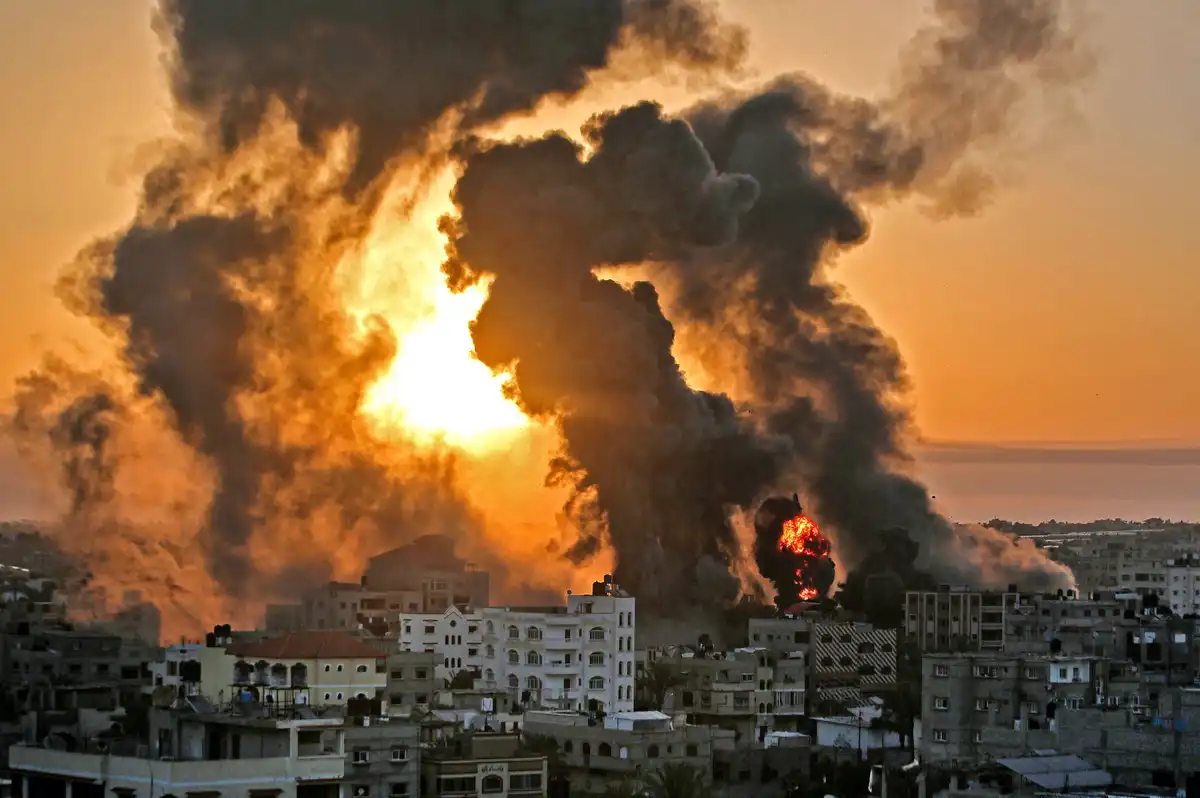
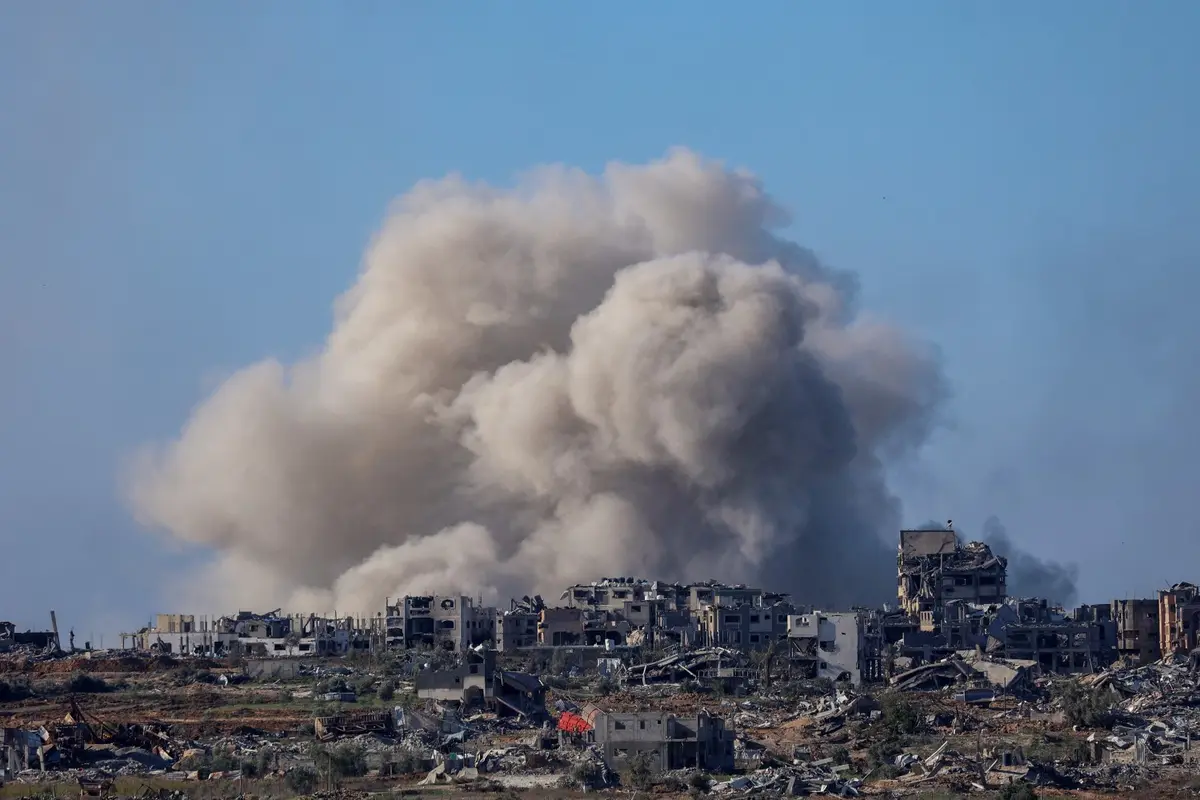
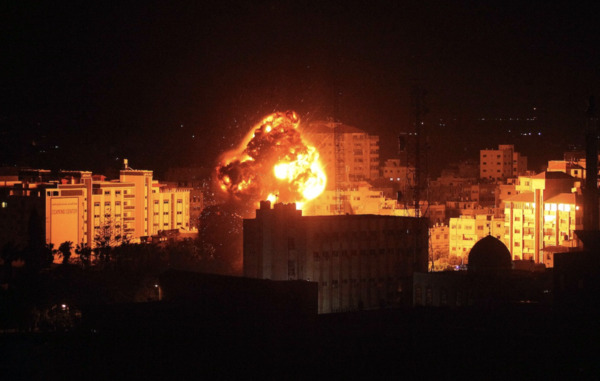
After procrastination by the Israeli occupation, the "ceasefire" agreement in the Gaza Strip came into effect, after 15 months of the Israeli war of extermination that left more than 157 thousand dead and wounded, most of them children and women, and more than 11 thousand missing, amidst massive destruction and famine that killed dozens of children and elderly people, in one of the worst humanitarian disasters in the world.


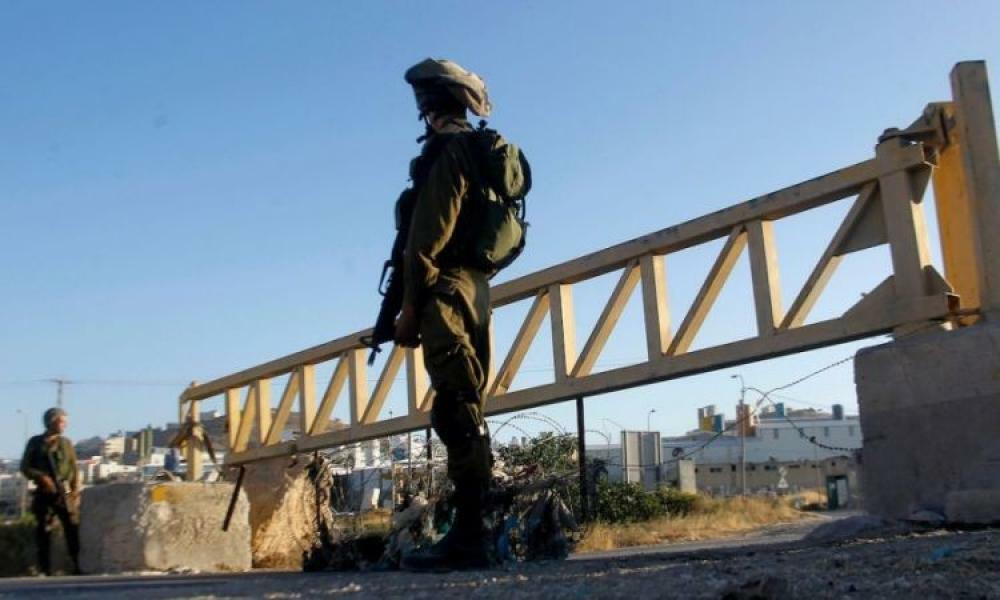
In parallel with the genocide in Gaza, the Israeli occupation forces and settlers escalated their attacks in the West Bank, including occupied Jerusalem, resulting in the martyrdom of 835 citizens and the injury of thousands of others, thousands of arrests, an increase in the demolition of homes and facilities, and military checkpoints that cut off the connections of cities, towns and villages, in addition to the racist laws enacted by the Israeli "Knesset" to oppress the Palestinians and the work of the United Nations Relief and Works Agency for Palestine Refugees (UNRWA).


The Israeli aggression had repercussions on the Palestinian national economy, as the financial crisis of the Palestinian government deepened with the occupation government piracy of more Palestinian clearance funds, and the unemployment rate rose with the unemployment of thousands of workers who were working inside the 1948 territories, and the decline of economic activities in the West Bank.

Gaza Strip:


Since October 7, 2023, the Israeli occupation forces have launched an aggression on the Gaza Strip, which has resulted in the death of at least 46,899 citizens, including 17,581 children and about 12,048 women, and the injury of more than 110,725 others, while about 11,000 are still missing under the rubble and on the roads, which has led to a 6% decrease in the population of the Strip by the end of 2024.


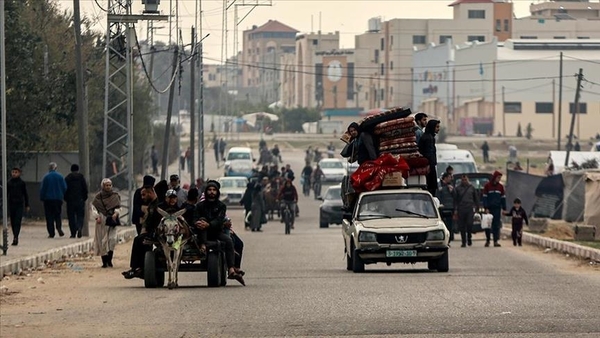
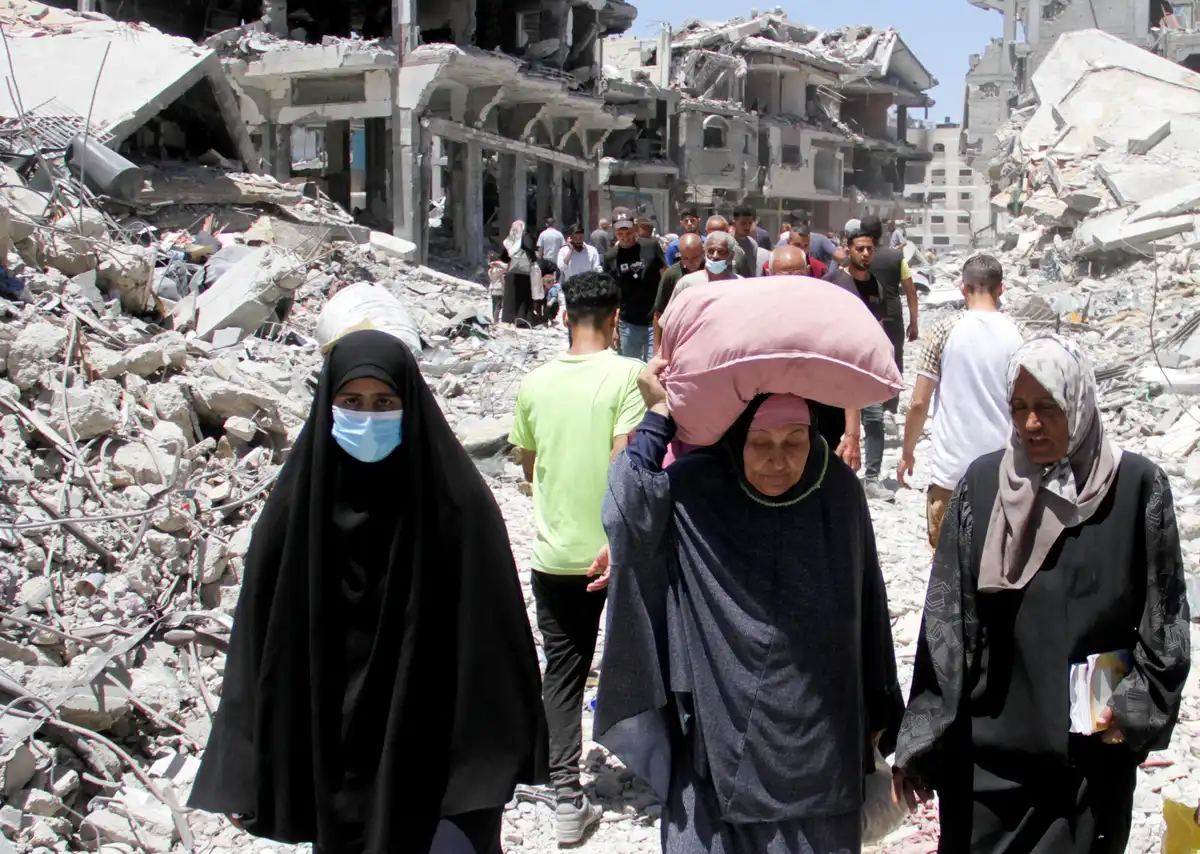
The Israeli occupation aggression has caused the displacement of more than 85% of the citizens of the Gaza Strip, i.e. more than 1.93 million citizens out of 2.2 million, from their homes after their destruction. In addition, about 100 thousand citizens have left the Strip since the beginning of the aggression.


About 1.6 million citizens of the Gaza Strip currently live in shelters and tents that lack the minimum requirements for human life, amidst massive and unprecedented destruction of infrastructure and citizens’ property. Estimates indicate that more than 80% of the Gaza Strip is destroyed.


The closure of all crossings in the Gaza Strip and the imposition of a tight blockade since the beginning of the aggression, caused a severe shortage of food, water, medicine and fuel supplies, which led to a famine that killed dozens of children and the elderly, in one of the worst humanitarian disasters in the world.


Now, 96% of the population of the Gaza Strip (2.2 million people) are facing high levels of acute food insecurity until September 2024, including more than 49,000 pregnant women. More than 495,000 citizens (22% of the population) are facing catastrophic levels of acute food insecurity (Phase 5), including 11,000 pregnant women, and about 3,500 children are at risk of death due to malnutrition and food shortages.


The aggression prevented 788,000 students in the Gaza Strip from attending their schools and universities for the second year in a row, including more than 58,000 who were supposed to join the first grade in the 2024-2025 academic year, in addition to 39,000 who did not take the high school exam.


Since the beginning of the aggression until the end of September 2024, more than 77 government schools were completely destroyed, while 191 schools were bombed and vandalized, including 126 government schools and 65 schools affiliated with the United Nations Relief and Works Agency for Palestine Refugees (UNRWA). More than 51 university buildings were completely destroyed, 57 buildings were partially destroyed, and more than 20 universities were severely damaged.


Only 14 hospitals out of 36 are operating in the Gaza Strip, partially, amid a severe shortage of equipment, medical staff and medical supplies, which has caused the spread of diseases and prevented citizens from accessing emergency medical services.


During its aggression, the Israeli occupation completely destroyed 815 mosques, partially destroyed 151 mosques, and completely destroyed 19 cemeteries. It violated their sanctity by attacking them, digging up their graves, and removing the bodies. It also targeted and destroyed 3 churches in Gaza City.


Palestinian culture lost 44 writers, artists and activists in the field of culture who were martyred during the first four months of the aggression, and 32 institutions, centers and theaters were either partially or completely destroyed as a result of the bombing, in addition to damage to 12 museums, 9 public libraries, and 8 publishing houses and printing presses.


The occupation forces demolished about 195 historical buildings, most of which are located in Gaza City, partially or completely. Nine heritage sites and 10 historical mosques and churches that form part of the memory of the Strip were damaged. The occupation forces deliberately destroyed public squares and demolished monuments and artworks in them, in addition to destroying 27 artistic murals in public places and along the beach of Gaza City.


All economic activities in the Gaza Strip witnessed a complete collapse from the beginning of the aggression until the end of 2024, which led to a sharp and unprecedented contraction in the gross domestic product in the Gaza Strip by more than 82%, accompanied by an increase in the unemployment rate to 80%.


West Bank including Jerusalem:

In the West Bank, during the aggression on the Gaza Strip, from October 7, 2023 until the end of 2024, about 835 citizens were killed, including 173 children, and 6,450 others were injured, as a result of attacks by the Israeli occupation forces and settlers.


After October 7 and until the end of 2024, the occupation and its settlers carried out 19,700 attacks against citizens and their property, including 3,630 attacks carried out by settlers, which resulted in the martyrdom of 22 citizens and led to the uprooting, destruction, damage and poisoning of 19,000 trees.


During the same period, the occupation forces seized 53 thousand dunams according to various declarations, including “state lands,” “seizure orders,” and “nature reserves,” and established 13 “buffer zones” around the settlements.


Since the beginning of the aggression until the end of 2024, the process of studying (approving and depositing) 23 thousand new colonial units in the West Bank settlements, including Jerusalem, was carried out, while the settlers established 57 new colonial outposts, and the occupation authorities began settling the status (legalizing) of 13 other colonial outposts.


The same period witnessed a noticeable increase in the demolition of citizens’ homes, as the occupation forces demolished 1,022 residential and agricultural facilities during the same period, and delivered 1,167 demolition and construction cessation notices.


Detainees:


Since October 7, 2023, the occupation prison administration has escalated its measures against male and female detainees and doubled the repressive measures of severe beatings and insults that degrade their dignity, and seized their achievements that were made as a result of long years of struggle in the occupation prisons, and reduced the quantity and quality of food, and deprived them of visits, and practiced against them all kinds of torture, oppression and humiliation, which reached the point of sexual harassment and assault against some of them.


The occupation forces carried out arrest operations that included more than 25 thousand citizens, including approximately 14,300 detainees from the West Bank, including Jerusalem, and the others from the Gaza Strip.


The occupation used administrative detention as a punitive and retaliatory policy against large numbers of detainees. The number of those who were transferred or had their administrative detention renewed once or several times is estimated at about 10,000 detainees.


During the same period, 54 detainees were martyred in the occupation prisons, 35 of whom were detainees from the Gaza Strip, and the occupation is still holding their bodies.


The prisoners’ institutions documented the arrest of 450 women, girls, university students, and freed female prisoners, 89 of whom are still being held by the occupation in its prisons, in addition to the arrest of 1,065 children, nearly 700 of whom have been detained since the beginning of 2024.


The occupation government informed the "Israeli Supreme Court" that the number of Gazans detained in its prisons is 3,636, and that 529 Gazans in Israeli prisons are prevented from meeting with lawyers.


Financial crisis:

Since the beginning of the occupation's aggression on the Gaza Strip, Israel has begun to deduct the equivalent of the Palestinian government's expenses in the Gaza Strip from the clearance funds, in addition to legislating a new law in the Knesset with new deductions under the item of compensating the families of individuals killed or injured in attacks carried out by Palestinians. This is in addition to previous deductions equivalent to the government's payments to the families of martyrs, the wounded and detainees, in addition to other illegal deductions.


The illegal deductions reached 70% of the total clearing value, which deepened the financial crisis of the Palestinian National Authority and affected its ability to fulfill its obligations towards its citizens.


For the third year in a row, the government has been unable to fulfill its obligations towards public sector employees, and is paying part of their monthly salaries.


The education sector has also witnessed disturbances in the past two academic years, as a result of which students did not attend their school seats regularly, due to the government’s inability to fulfill its obligations towards the employees of the Ministry of Education and Higher Education, while the health sector is on the verge of collapse, due to the severe shortage of medicines and medical supplies, as there are 120 types of medicines that are not available in the ministry, including 20 oncology medicines, and 420 types of medical supplies that have zero stock in the ministry, including 170 specialized types, which affected the provision of services to citizens, through the long waiting list for operations in government hospitals, while the ministry transfers emergency operations to private or civil hospitals.


Palestine is facing an economic, social, humanitarian, environmental, health, educational and food catastrophe that has led to the shrinkage of the productive base and the distortion of the economic structure of Palestine. By the end of 2024, estimates indicate that the unprecedented sharp contraction in the GDP in the Gaza Strip will continue by more than 82%, accompanied by an increase in the unemployment rate to 80%.


This decline extended to the West Bank economy by more than 19%, with the unemployment rate rising to 35%. In sum, this led to a decline in the Palestinian economy by 28%, accompanied by an increase in the unemployment rate to reach 51%.


Racist laws:

During the aggression period, the occupation authorities enacted dozens of laws supporting the occupation, settlement, racial discrimination, and restrictions on freedom of expression, public freedoms, and political activity, which had a major impact on our people, whether in the West Bank, including Jerusalem, the Gaza Strip, or the territories of 1948.


Among the most prominent of these racist laws: On October 28, 2024, the Knesset General Assembly approved, by a majority of votes from the coalition and the Zionist opposition blocs, two draft laws that prohibit the work of the United Nations Relief and Works Agency for Palestine Refugees (UNRWA) in areas under so-called “Israeli sovereignty,” meaning specifically occupied East Jerusalem and the towns and camps that the Israeli occupation has annexed to its areas of influence, such as the Shuafat and Qalandia refugee camps. According to the law, the agency’s office in East Jerusalem will be closed, and the diplomatic status granted to workers in United Nations organizations will be revoked.


The law extending the validity of the temporary law preventing Palestinian family reunification for an additional year, which was passed by the Knesset on March 5, 2024, a decision unilaterally rejecting recognition of a Palestinian state, which was passed by the Knesset on February 22, 2024, and a law allowing the definition of a person who is not a citizen or resident as a “terrorist activist” subject to the provisions of the “Anti-Terrorism Law,” which was passed by the Knesset on January 17, 2024.


On July 17, 2024, the Knesset General Assembly adopted a political decision that “categorically” rejected the establishment of a Palestinian state anywhere in historical Palestine, or according to the text of the decision, “in the Land of Israel” and “west of the Jordan River.”


On May 22, 2024, the Knesset General Assembly approved, by a majority vote, in a preliminary reading, a draft law that stipulates the annexation of settlements built on citizens’ lands south of the city of Hebron to the so-called “Negev Development Authority,” which is one of the “annexation laws” projects.


On October 29, 2024, the Knesset General Assembly approved, by a majority of votes from the Zionist coalition and opposition, in the final reading, a government law prohibiting the opening of diplomatic missions in occupied East Jerusalem, aimed at serving the Palestinians, and without the approval of the Israeli government.


Palestinians of 1948

Since the beginning of the occupation's aggression on the Gaza Strip on October 7, 2023, the pace of its restrictions on the Palestinians of 1948 has increased by all means, including suppression of freedoms, incitement, threats, persecution, investigation, arrest, and abuse.


In the first weeks of the start of its aggression, the Israeli government declared a state of general emergency, which included the approval of many laws and amendments to the arrest instructions and the prevention of demonstrations, in order to terrorize the Palestinians inside the 1948 territories and tighten the grip on them.


The Israeli Public Prosecution has cancelled the requirement for the approval of the Attorney General or one of his deputies to carry out an arrest on charges of incitement, as was the practice before the war. The emergency regulations allow for strict measures to be taken against detainees, including extending the detention of detainees for long periods, and preventing them from meeting their lawyers for a period that may reach 90 days. In addition, the Israeli police announced instructions stipulating that approval for the organisation of demonstrations in Palestinian cities and towns within the 1948 territories is prohibited.


A report prepared by Adalah, in cooperation with the Arab Emergency Committee, documented 251 cases of arrest and investigation, or “warning conversations,” during the first five weeks of the aggression, most of which were within the framework of freedom of expression, and 76 indictments were filed in connection with the events.


A report published by the Joint Authority of Student Blocs, which operates under the umbrella of the Arab Emergency Committee, stated that more than 100 male and female students in academic institutions were transferred to “obedience committees,” in addition to hundreds of publications inciting against students and attacks on their residences.


The occupation has developed a strict “legal” and executive system to impose control over the Internet, which has led to blatant violations of digital rights and created a “digital terror” that has prompted users to reduce their expression of opinions, in addition to the increase in digital attacks, especially those with a political and national background after the war on Gaza, such as “identity impersonation,” “phishing,” and “harassment and abuse.” This reflects a state of self-censorship and abstention from digital activity that has reached 70% of young people in the 1948 territories, which reduces the use of the Internet as a tool for public activity.


The occupation targeted leaders inside the 1948 territories, as the Israeli authorities arrested on November 9 the head of the Higher Follow-up Committee for Arab Citizens in the 1948 territories, Muhammad Baraka, and former Knesset members from the National Democratic Assembly party.


Since the beginning of the war, the studios of Israeli television channels have turned into an open and frenzied incitement front calling for more killing, destruction and revenge on a daily basis. These media outlets have marginalized any voice calling for an end to the war, having any humanitarian position or calling for a political solution rather than a military solution.


Leadership moves in international forums to stop the aggression

Since the first day of the aggression, the Palestinian leadership has made diplomatic and legal efforts in all international and Arab forums to stop the genocide to which our people are being subjected in the Gaza Strip and the West Bank, including Jerusalem.


The State of Palestine's mission to the United Nations worked to crystallize three goals through which it united the Arab and Islamic groups, the Non-Aligned Movement, and other groups: a ceasefire, the entry of aid to all parts of the Gaza Strip, and the cessation of forced displacement within the Gaza Strip and the evacuation of the Strip of Palestinian citizens.


Following the extraordinary joint Arab and Islamic summit held in the Saudi capital, Riyadh, on November 11, 2023, the Arab-Islamic Ministerial Committee was formed and tasked with initiating immediate international action on behalf of all member states of the Organization of Islamic Cooperation and the League of Arab States, to formulate an international position to stop the war on Gaza, and to pressure for the launch of a serious and real political process to achieve permanent and comprehensive peace in accordance with the approved international references.


Since its assignment, the Committee has made numerous visits to the capitals of the permanent members of the Security Council and European capitals, and held meetings with heads of state and government and foreign ministers, to mobilize an international position to stop the war on Gaza, protect civilians, maintain the delivery of sufficient and sustainable humanitarian aid to all parts of the Strip, and take effective steps to implement the two-state solution.


The Security Council was repeatedly approached to issue a resolution to stop the aggression, and the veto was used on several resolutions, while 4 resolutions were adopted, the last of which was Resolution 2735, which was adopted in July 2024, but it was not implemented due to the intransigence of the occupation government and its insistence on continuing the genocide it is committing in the Strip.


On the level of the State of Palestine’s movement at the level of the International Court of Justice and the International Criminal Court, the latter issued arrest warrants on November 21, 2024 against the Prime Minister of the occupation, Benjamin Netanyahu, and his former Minister of Defense, Yoav Galant, after the court’s judges found “reasonable grounds to believe that they are responsible for committing war crimes and crimes against humanity.”


On July 19, 2024, the International Court of Justice issued an advisory opinion on the judicial repercussions of Israeli practices and their impact on the occupied territories, which confirmed that Israel must stop the occupation and end its illegal presence in the occupied Palestinian territories.


Following the advisory opinion, the UN General Assembly adopted in September 2024, by a majority vote, a resolution demanding that Israel end its “illegal presence in the occupied Palestinian territory” within 12 months.


From Washington to New York, London, Paris, Rome, Berlin, Madrid, Brussels, Stockholm, Oslo, and dozens of capitals and cities around the world, thousands of demonstrations, sit-ins, and events were organized in the main streets and squares, in universities and schools, to denounce the war of extermination that the Israeli occupation has been waging against our people since October 7, and to support Palestine and its just cause. In parallel with the unprecedented popular movement that has been escalating day after day, in response to the massacres committed by the occupation against our people, international solidarity has emerged in filing lawsuits against the occupation and its officials in the International Court of Justice and the International Criminal Court, severing diplomatic relations with the occupation regime, and leading to a series of recognitions of the State of Palestine.


On 29 December 2023, South Africa filed a lawsuit at the International Court of Justice, in coordination with the State of Palestine, regarding Israel’s commission of genocide in Palestine. South Africa submitted to the court an 84-page dossier, in which it collected evidence of Israel’s killing of thousands of citizens in the Gaza Strip, and the creation of conditions “conducive to their physical destruction,” which constitutes the crime of “genocide” against them.


The Court issued a number of emergency orders requiring Israel to take all measures to prevent acts prohibited by the Genocide Convention, and to take steps to ensure that the urgent humanitarian needs of the Gaza Strip are met immediately.


Regarding the efforts to obtain full membership for the State of Palestine in the United Nations, 14 members of the UN Security Council voted to accept full membership for the State of Palestine, but the United States obstructed these efforts by using its veto power.


On May 10, the General Assembly adopted a resolution by 143 votes to 9, stating that the State of Palestine is eligible for full membership in the United Nations, in accordance with Article 4 of the UN Charter, which states that it “should therefore be admitted as a Member” of the organization.


The resolution recommends that the Security Council reconsider this issue positively, and under the resolution the State of Palestine was given a set of powers that bring it closer to full membership, including the seat of the State of Palestine in the Assembly according to the alphabetical order with the full member states and the submission of draft resolutions and points of order.


In terms of gaining more recognition of the State of Palestine, Norway, Ireland and Spain simultaneously recognized the State of Palestine, and the decision entered into force on May 28, 2024. They were followed by Slovenia and Armenia, which recognized the State of Palestine in June 2024, bringing the number of countries recognizing the State of Palestine to 149 countries out of 193 member states of the United Nations General Assembly.


ARAB AND WORLD

Sun 19 Jan 2025 11:31 am - Jerusalem Time

Due to the "surrender agreement", Ben Gvir resigns from Netanyahu's government

Members of the Jewish Power party resigned from the Israeli government on Sunday, led by extremist National Security Minister Itamar Ben-Gvir, due to their objection to the ceasefire agreement in the Gaza Strip, which was reached with the Palestinian Hamas movement.


The party published a statement, in which it referred to the resignations of Ben Gvir, Heritage Minister Amichai Eliyahu, and Negev and Galilee Minister Yitzhak Wasserlauf, from the Israeli government, due to what they described as a "surrender agreement" with Hamas.


The party considered that the agreement "includes the release of hundreds of Palestinian detainees and prisoners, including those convicted of killing Israelis, while allowing some of them to return to Jerusalem and the West Bank."

The party's statement said that the agreement represents "a concession of the Israeli army's achievements in the war, a withdrawal of army forces from the Gaza Strip, and a cessation of fighting," considering that this constitutes "surrender to Hamas."

Ben Gvir had threatened to resign and that of his party's ministers from the government in protest of the agreement, considering it a "shameful deal full of loopholes."

He also criticised the Israeli army's withdrawal from the Philadelphi corridor on the border between Gaza and Egypt, considering it a "dangerous concession".

The minister noted that he had tried to persuade Finance Minister Bezalel Smotrich to join him in rejecting the agreement, but had not succeeded.


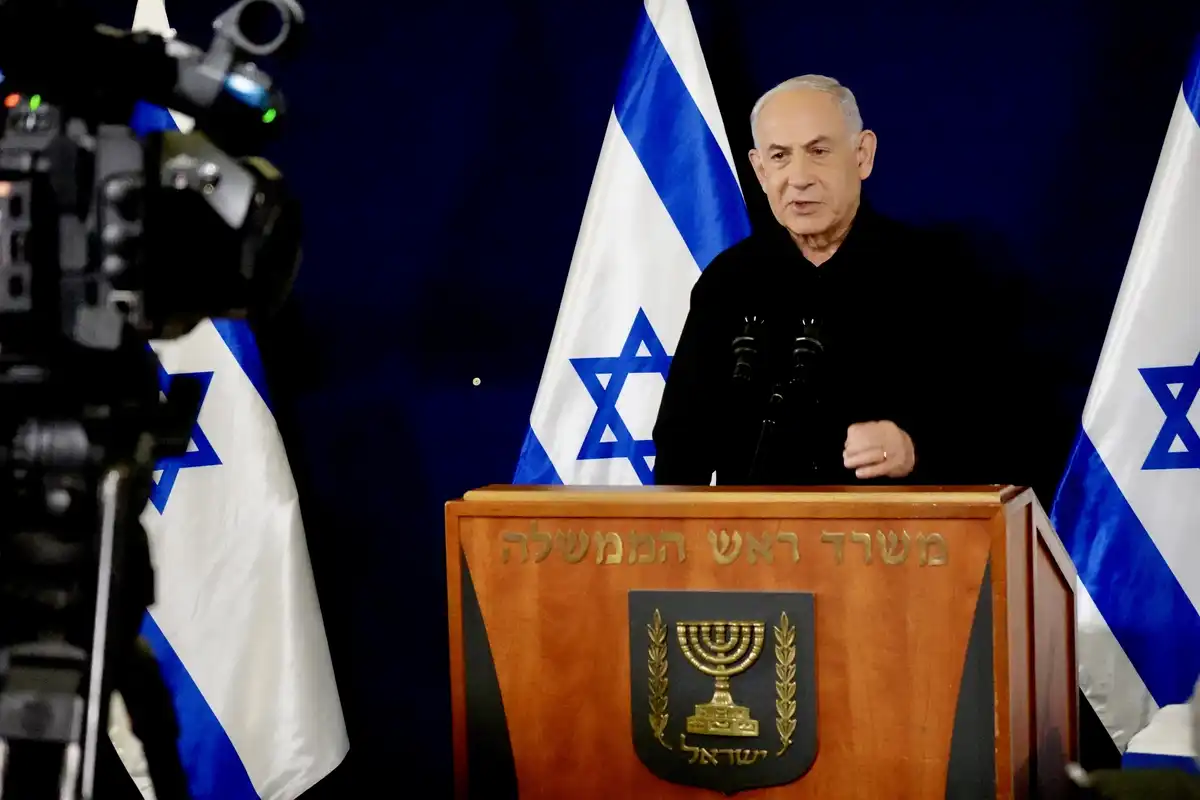
Prime Minister Benjamin Netanyahu also called for contact with US President-elect Donald Trump to find "better alternatives" to the agreement.

Ben-Gvir warned that the release of Palestinian detainees and prisoners represents a "major security risk," saying that the current agreement sends a message to Hamas that "kidnapping and killing lead to gains," adding that "Israel may be about to release the new Sinwar."

The ceasefire agreement in Gaza will go into effect on Sunday, although it was officially delayed from 8:30 local time (6:30 GMT) due to Hamas not sending a list of the three kidnapped women who are scheduled to be released on Sunday afternoon.

The movement, which is classified as a terrorist organization in the United States and other countries, announced the names of the kidnapped women: "Romy Gonen (24 years old), Emily Damari (28 years old), and Doron Shtanbar Khair (31 years old)."


PALESTINE

Sun 19 Jan 2025 10:27 am - Jerusalem Time

Al-Qassam announces the names of the Israeli prisoners to be released today

The Al-Qassam Brigades, the military wing of Hamas, announced today, Sunday, the names of the three Israeli prisoners who are scheduled to be released today as part of the Al-Aqsa Flood prisoner exchange deal.


The spokesman for the Qassam Brigades, Abu Obeida, confirmed that the three prisoners are: 1- Romi Gonen (24 years old), 2- Emily Damari (28 years old), 3- Doron Shtanbar Khair (31 years old).

PALESTINE

Sun 19 Jan 2025 10:04 am - Jerusalem Time

Israeli occupation begins paving a colonial road in Bethlehem

Today, Sunday, the Israeli occupation authorities began paving a colonial road in the lands of Al-Jaba’a village, southeast of Bethlehem.


The head of the Jaba'a village council, Diab Masha'leh, reported that the occupation bulldozers had begun, since the morning, to pave a colonial road from the western side of the village, reaching the village of Wadi Fukin, and ending in the village of Husan, according to the occupation plan, along a length of 5 km.


Mashaal added that this arbitrary measure will lead to the devouring of hundreds of acres of agricultural land, and depriving farmers of access to their lands located west of the colonial road that has begun to be paved.

PALESTINE

Sun 19 Jan 2025 9:57 am - Jerusalem Time

Israeli occupation forces launch arrest campaign in the West Bank

This morning, Sunday, the Israeli occupation forces launched a large-scale arrest campaign in the West Bank.


In Bethlehem, the occupation forces stopped a vehicle while it was passing through the village of Al-Manshiya, and arrested those inside, three young men whose identities were not known until the news was prepared, and seized the vehicle.


In Ramallah, the occupation army arrested Yousef Ashraf Sharaka, Hussein Hassan Nakhleh, and Muhannad Al-Alam, after storming their homes in Jalazone camp and tampering with their contents.


In Qalqilya, the occupation forces arrested citizen Nidal Abdul Ghani, in his forties, after raiding and searching his home in the village of Al-Hatab.


In Tulkarm, the occupation forces arrested the brothers Abdul Karim and Abdul Hadi Malouh, and Jabr Damiri after raiding their homes in the suburb, while they detained the citizen Saji Wael Sarouji for a period of time, before releasing him later.


In Hebron, the occupation forces stormed several neighborhoods in the city of Hebron, including Namira and Harat al-Sheikh, and arrested citizens Haitham Riyad al-Jaabari and Ayman al-Jaabari. They also detained a number of young men, including Hussein al-Sharbaty, Malek Azghair, Hisham al-Sharbaty and others, before releasing them.


The occupation forces also stormed the town of Idhna, west of Hebron, and arrested citizen Musa Muhammad al-Masry (52 years old), and raided several homes, searched them, and vandalized their contents.

PALESTINE

Sun 19 Jan 2025 9:56 am - Jerusalem Time

Updated: Israeli occupation continues to bomb the Gaza Strip, raising the death toll to 13

Since this morning, the Israeli occupation has continued its intensive bombardment of various parts of the Gaza Strip, raising the death toll to 13 dead and dozens of injuries.


Medical sources announced the martyrdom of 11 citizens in the occupation's bombing of Beit Lahia, Gaza City, and Al-Bureij, and the injury of dozens.


Beit Hanoun and the north are currently witnessing heavy shelling.


According to the Red Crescent Society, paramedic Maha Wafi was injured in the hand, and an ambulance belonging to the society was damaged while its crews were on their way to transport the wounded in central Khan Yunis.


The vicinity of Al-Quds Hospital is currently being targeted by the occupation forces.


Despite the agreement that the "ceasefire" would go into effect at 8:30 in the morning, the occupation authorities announced that it would not be activated until the list of female prisoners scheduled for release was delivered.

PALESTINE

Sun 19 Jan 2025 9:41 am - Jerusalem Time

Despite the entry into force of the "ceasefire", Israel: It will not be activated before the list of prisoners is handed over

The Israeli occupation authorities announced that the ceasefire in the Gaza Strip, which was scheduled to go into effect at 8:30 a.m. on Sunday, will not be implemented until the list of female prisoners scheduled for release is delivered.


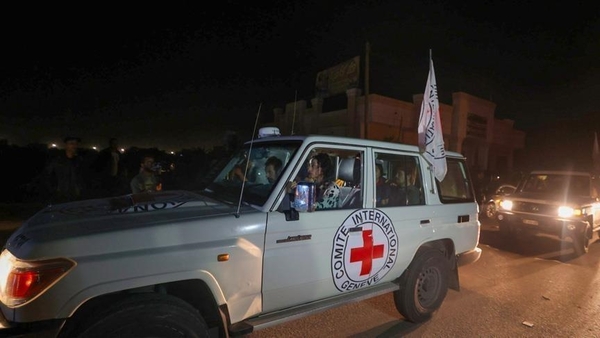
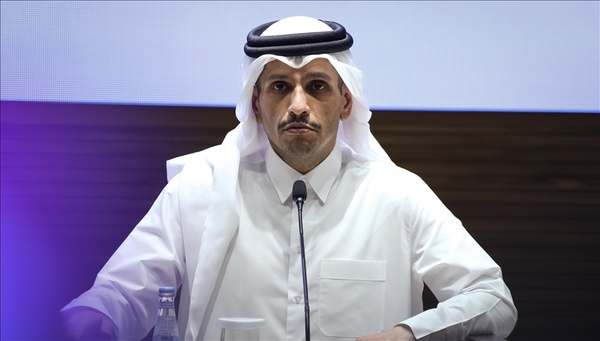
According to the agreement, which was announced by the Prime Minister and Minister of Foreign Affairs of Qatar, Sheikh Mohammed bin Abdulrahman Al Thani, last Wednesday, and ratified by the occupation government yesterday, Saturday, the ceasefire will go into effect at 8:30 this morning.


Since the announcement of the ceasefire agreement on Wednesday, the fifteenth of this month, until this morning, more than 200 citizens have been martyred in the Gaza Strip, most of them women and children.


The death toll from the Israeli occupation's aggression on the Gaza Strip has risen to 46,899 martyrs and 110,725 wounded, since October 7, 2023.

PALESTINE

Sun 19 Jan 2025 9:00 am - Jerusalem Time

Sources to Al-Quds: Five leaders, including Marwan Barghouti, to be released during the second phase

Ramallah - Al-Quds - Al-Quds learned from sources close to the exchange negotiations that took place in Doha that five leaders with life sentences, including Marwan Barghouti, Ahmed Saadat, Abdullah Barghouti, Ibrahim Hamed, and Hassan Salameh, will be released in the second phase of the deal.


These sources reported that 95 female and minor prisoners in the occupation prisons will be released this morning in exchange for the release of 3 female soldiers.


After that, over a period of 42 days, 30 Israeli detainees will be released weekly, while Israel will release 1,737 prisoners, including 290 who are serving life sentences.


According to the sources, the agreement will include the release of a thousand prisoners who were arrested after the flood on October 7, in addition to 47 prisoners who were released in the “Shalit” deal and were re-arrested afterwards, totaling 47 prisoners, including Nael Barghouti.


These sources indicated that the agreement stipulates emptying the prisons of female and child prisoners.

PALESTINE

Sun 19 Jan 2025 8:47 am - Jerusalem Time

Ceasefire in Gaza Strip comes into effect

The ceasefire agreement in the Gaza Strip entered into force today, Sunday, at exactly 8:30 in the morning.


There were huge celebrations among the citizens, as the bloodshed stopped and the displaced returned to their homes.


PALESTINE

Sun 19 Jan 2025 7:13 am - Jerusalem Time

Trump envoy plans to visit Gaza to monitor ceasefire

Steve Witkoff, US President-elect Donald Trump's envoy to the Gaza Strip, plans to visit to support the implementation of the ceasefire agreement between Israel and Hamas, NBC News reported Sunday, citing an official familiar with the matter.


The source added that Trump's envoy to the Middle East plans to be present "almost permanently" in the region in the coming weeks and months to resolve any problems that may arise, which in his opinion could lead to the disruption of the ceasefire agreement and the release of the hostages.


Witkoff’s visit aims to strengthen the existing agreement between the two sides, as Witkoff believes that any military escalation could threaten the fragile stability. Witkoff is expected to maintain a semi-permanent presence in the area in the coming weeks and months, to ensure the continued implementation of the ceasefire agreement.


The source stressed that the visit to Gaza would be an opportunity for the US envoy to closely follow the situation and monitor developments on the ground, saying that "it is necessary for us to be at the scene immediately to solve any problem that may arise," according to his expression.


The channel reported that the Trump administration still faces major challenges related to the reconstruction of Gaza under the current conditions, in addition to issues related to the resettlement of about two million Palestinians at this stage.


It is noteworthy that the prisoner exchange agreement and ceasefire in the Gaza Strip will enter into force this morning, Sunday, at 8:30 a.m., after 471 days of the Israeli war on the Gaza Strip, which resulted in 46,899 martyrs, 110,725 injuries, and widespread destruction in the Strip since October 7, 2023.

OPINIONS

Sun 19 Jan 2025 7:11 am - Jerusalem Time

The measure of victory and defeat in unequal battles.. The Al-Aqsa Flood as an example

Mohammed Alnobani

Mohammed Alnobani

Opinion Writer

Even before the war in the Gaza Strip ended, people in our country were divided between those who believe that Gaza had won and forced its enemies to accept not only a ceasefire, but also a long-awaited deal to exchange Israeli prisoners held in Gaza since October 7, 2023, for thousands of Palestinian prisoners, including prisoners with long sentences and life sentences, and prominent leaders of the national movement such as Marwan Barghouti and Ahmed Saadat, and those who believe that what happened was not a victory as much as it was a crazy adventure that led to the martyrdom and injury of more than 150,000 Palestinians and the destruction of the Gaza Strip’s economy, making it an unlivable place.


But before we see which of the two points of view is correct, we must point out an important fact, which is that anyone who reviews the experiences of peoples realizes without difficulty that the wars in which progressive countries and national liberation movements triumphed over the forces of aggression, hegemony and expansion, the results of which were not measured by the amount of human and material losses and the extent of the destruction that occurred in the aggression, but rather by the political results. Did that military battle bring us closer to achieving our goals of freedom, self-determination and establishing a state, or did it distance us from those goals?


For example, the brotherly Algerian people launched many revolutions against the French colonialism of their country over the course of 130 years, during which they lost millions of martyrs, but in the end they liberated their land and were victorious, just as the former Soviet Union lost more than 20 million citizens and fighters in its Great Patriotic War against Nazi Germany, and the Vietnamese lost millions of people in their war against the French and then American invasion of their country.


What happened in the Battle of the Flood of Al-Aqsa, which took place since October 7, 2023, between the Palestinian resistance in the Gaza Strip and the Israeli army, supported by America, NATO and the Arabs, is no exception to this rule, but rather reinforces it and gives it more credibility.


The Battle of the Flood of Al-Aqsa, according to the Palestinian name and the second knowledge of independence, as Israel considered it, was an unequal or asymmetrical battle according to the language of the military. However, the strong party was unable to achieve victory over the weak party, which is the Palestinian resistance besieged by air, sea and land, because it prepared itself well for war on the one hand, and possessed the weapon of belief on the other hand, and possessed the weapon of will on the third hand.


In other words, Gaza won because, first, it held out in a legendary way. Second, because the goals that the Israeli political echelon had set for the military were neither clear nor achievable. Third, because the human losses suffered by the Israeli army, especially in the battles in northern Gaza, were no longer tolerable for Israel, which prompted the Trump administration in particular to intervene in order to stop the war, so that its continuation would not lead to the disintegration of the entire state.


Promises to begin with, Israel lost because it failed to achieve the most important undeclared goal of its war on the Gaza Strip, which is to deport its residents to Egypt and settle them in Sinai.


In order to achieve this goal, the Gaza Strip was systematically destroyed, including schools, universities, infrastructure, and places of worship, with the aim of making it a place uninhabitable for human life. However, this goal failed because the Palestinians, despite all the human losses that occurred, remained attached to their land and refused to leave it.


In the collective memory of the Palestinians, especially in the Gaza Strip, there is a long history of exposing settlement projects since the early 1950s, when they resisted Johnston’s project to settle them in Sinai and offered martyrs on the altar of the struggle to thwart it, and they succeeded in doing so.


Incidentally, when the moment of truth comes, the Israelis will ask Netanyahu after the war ends: Where is the absolute victory that you promised us? Why didn’t you eliminate Hamas as you promised? Why didn’t you remove it from ruling the Strip? Why didn’t you build new settlements? Why didn’t you free the “kidnapped” by force?


Some might volunteer to offer Netanyahu a lifeline by saying that Netanyahu has not backed down an inch from the goals of the war, and that he has simply complied with an order from US President-elect Donald Trump to stop the war on Gaza, because the latter wants to see calm in the Middle East before his return to the White House on January 20, so that he can devote himself to his economic war with China, settle the conflict between Russia and Ukraine, annex Canada, resolve the immigration issue from Mexico, etc.


But is this the real reason Netanyahu is willing to risk the dissolution of the most right-wing government in Israel's history?

In my opinion, it was not Trump who imposed this agreement for two reasons: First, because the actual ruler of America is not its president sitting in the White House, but rather the deep state that supports Israel absolutely and without reservation. Second, because Trump had threatened the people of Gaza with wiping them off the face of the earth if the kidnapped Israelis were not released before his return to the White House on the twentieth of this month.


So, what forced Netanyahu to change his position 180 degrees, negotiate with Hamas, conclude a prisoner exchange deal with it, and abandon the war objectives he had set himself were the heavy human losses his army suffered in that war, specifically in the northern Gaza Strip.


This is what the Israeli writer Yair Assulin expressed when he wrote in Haaretz four days ago, word for word: “Even if we occupy the entire Middle East, and even if everyone surrenders to us, we will not win in Gaza.”


The prominent Israeli General, Israel Zeev, the former commander of the infantry and paratroopers corps, went so far as to compare what happened to the Israeli army in the Gaza Strip in an article published on the 7th of this month to what happened to the American army in Vietnam, which left Vietnam defeated in 1975, with 60,000 dead after it thought that the use of brute force and the policy of protected territory would provide it with victory, but it led to a resounding defeat.


In short, and without exaggeration, it was a global war waged on Gaza, and Gaza was victorious not only over Israel but also over an American, Western and international coalition that stood by it and supported it with intelligence information, and even with actual participation in the battles.

In conclusion, I can say: What happened is a resounding strategic victory that will have serious existential repercussions on the Israeli entity and the Zionist project as a whole, and on all the Arab countries that conspired against Gaza and let it down.

OPINIONS

Sun 19 Jan 2025 7:10 am - Jerusalem Time

After the truce.. the genocide criminals must be held accountable

Majdi Al-Shomali

Majdi Al-Shomali

Opinion Writer

As the truce begins, Benjamin Netanyahu will stand before the world bragging about what he considers his government’s “achievements”: the execution of 50,000 Palestinians, the destruction of 90% of the buildings in the Gaza Strip, the starvation of the population for 15 months, the arrest and torture of tens of thousands from the Strip and the West Bank, the tightening of the siege and checkpoints, the assassination of Palestinian leaders, the withholding of the Authority’s funds, and the unprecedented expansion of settlements.


Netanyahu believes that these mass crimes against civilians will make Israelis forget the repercussions of the military operation on October 7 and its aftermath, and even sees them as a deterrent message to anyone who thinks of repeating this experience.


In the context of these crimes, Netanyahu and his former defense minister, who are wanted by international justice, seek to exploit American support to escape punishment, whether by canceling international arrest warrants or undermining the powers of the International Court of Justice and the International Criminal Court.


But these attempts, no matter how supported, must not go unchallenged. It is our responsibility as free people in the world to pursue war criminals, especially since these crimes are not subject to a statute of limitations.


The PLO and the Palestinian Authority have a direct and ongoing responsibility to hold the occupation accountable. The differences between Gaza and the West Bank cannot be a justification for failure to perform this national task. The scandal of abandoning the investigation into the occupation’s crimes must not be repeated, as happened with the Goldstone Report in the 2008-2009 aggression.

What South Africa and a number of other countries have recently achieved by issuing arrest warrants for Netanyahu and his defense minister is a serious and inspiring step that must be built upon to bring the criminals to justice and compensate the victims.


The ongoing global demonstrations and marches since October 7 reflect broad solidarity with the Palestinian people, and must now turn to explicit demands for the prosecution of war criminals. Raising the slogan “prosecute the perpetrators of genocide” on a daily basis could be the main driver of justice, and determine whether Netanyahu will be able to get away with his crimes or whether the free world will stand up for Gaza and Palestine.


The PLO and the Palestinian Authority must work daily in cooperation with supporting countries such as South Africa to highlight the documented crimes, testimonies, and narratives that will come out of Gaza to strengthen the Palestinian cause in international courts.


The issue of "holding genocide criminals accountable" should be the main concern of everyone: in demonstrations, seminars, visits by delegations, embassies, communities, communications and universities. This issue must become an issue of international public opinion, and an issue of freedom in the world.


Justice is not a temporary demand, but rather a path that we must continue to take without stopping, so that the rights of victims are not lost under the dust of international politics.

OPINIONS

Sun 19 Jan 2025 7:08 am - Jerusalem Time

Hamas achievement

Hamada Faraana

Hamada Faraana

Opinion Writer

Far from political bias towards Hamas, or taking a pre-emptive stance against it, against the backdrop of what the October 7 initiative caused, the unprecedented courageous operation, with its results and cruelty, on the Palestinian people who paid a heavy price because of the operation, Hamas nevertheless achieved a state of presence for itself, represented by several titles:

First: The October 7 operation was an unexpected surprise and a moral military shock to the colony, its army and its apparatuses, and it is credited with planning, cunning and secrecy.


Second: Despite the assassinations and the loss of many of its leaders, it has stood firm in the face of the occupation forces for the entire fifteen months since October 2023.


Third: It imposed itself as a deciding party, as indirect negotiations were conducted by the colony and the United States with the movement, and the agreement was signed with it, and not with any other Palestinian party. The one who fought and stood firm on the ground and in the field is the one who sat at the table as a negotiating counterpart.


Therefore, what Hamas has achieved for itself will open the gates to all possibilities:


First: Forming an administration in the Gaza Strip independent of the Fatah and Hamas movements, which is an unlikely and weak option.

Second: That the authority in Ramallah return to the Gaza Strip, as it was before Hamas’s decision to take sole control through a “military decision” in 2007. This option requires agreement and understanding between the two parties of the authority, Fatah and Hamas, and both of them have failed to reach the implementation of all the unification initiatives: Algeria, Moscow, Beijing.

Third: Hamas’s authority and continuity in the Gaza Strip are acknowledged and recognized, and its preliminaries are clear, through the ongoing negotiations that took place with it, leading to the “calm deal,” and it may be an introduction and a basis for what comes after it.


The Gaza battle is a qualitative shift in the political and field paths, and it will enhance the hidden Israeli planning and programming that targets the two-state solution: 1- The colonial state on the entire map of Palestine, including the Palestinian West Bank and Jerusalem, 2- The State of Palestine in the Gaza Strip.


The Israelis failed to achieve their goals in the Gaza Strip, although they were able to kill tens of thousands of Palestinian civilians and destroy about two-thirds of the Strip’s buildings, institutions, facilities and homes. However, they failed to know the locations of the Israeli prisoners, and failed to release them without an exchange, just as they failed to end the Palestinian resistance, and were forced to reach a ceasefire agreement with it based on: 1- prisoner exchange, 2- the return of sustainable calm to achieve a permanent ceasefire, 3- a partial or complete qualitative withdrawal from the Gaza Strip.


The Gaza battle is a qualitative shift, yes, but if it does not achieve national unity and coalition between the various factions within the framework of the PLO and its institutions, including the Authority, and the unity of the West Bank with the Gaza Strip geographically and politically, Hamas will have continued the option of the ongoing sin of exclusivity and unilateral monopolization, and thus it will swallow the Israeli bait and programming based on continuing the Palestinian division and feeding it.

OPINIONS

Sun 19 Jan 2025 7:06 am - Jerusalem Time

Post-aggression moment

Azzam Abdul Karim Rushdi Al Shawa

Azzam Abdul Karim Rushdi Al Shawa

Opinion Writer

First, he who does not thank people does not thank God, and so here we must thank all the countries that contributed and adopted stopping the brutal aggression against our people: Egypt, Qatar, Saudi Arabia, Jordan, some European countries, and the Trump administration.


Since the announcement of the cessation of the brutal Israeli aggression on Gaza, the world has been confused about what to call the moment after the cessation of aggression there, what to call the next day, and many other names.


This is the term we have heard a lot since the beginning and during the aggression. The talk was about who will manage and how Gaza will be managed, and many people rushed to develop plans for that as if Gaza were an orphan, without addresses or not an essential part of the components of the Palestinian state.


Gaza and its people have suffered greatly from the consequences of the division of the homeland and the separation of Gaza from the modern Palestinian geographical map.


A short while ago, a group of Gazans who have representative status in various councils elected from the popular base of private sector institutions and civil society institutions took the initiative to demand the return of Gaza to Palestinian legitimacy, and that those who should govern it are representatives of the Palestine Liberation Organization, which is the most comprehensive Palestinian Arab body for Palestinian representation with all its sects, colors and forms. Now, not tomorrow, all forces outside this broad framework must merge with the body of the organization, and Palestinian representation with all forces, parties and factions must return to its senses. Enough of the political disputes and complications that do not benefit us and will not benefit any citizen anymore, especially in the next stage, the stage of relief, reconstruction and building a real future. Let us be serious with ourselves first, and then we demand that the Arab, Islamic, European and Western worlds stand with us and extend a helping hand with various expertise and provide the necessary money to achieve this.


Let us look at the neighboring Arab countries, Syria and Lebanon, and apply their experience in transforming into countries that saw change coming to them, inevitably, and whose political frameworks were involved in drawing a new image for them, which gradually forced the world to pledge allegiance to them and make pilgrimages to them, one country after another, to recognize them as makers of change.


We as Palestinians lack nothing, neither minds, nor thinkers, nor management experts in all health, engineering, and other fields, nor relief or reconstruction.


What we lack is human and personal will, and we have had enough of the quarrels and differences, especially over the future of Palestine and Gaza in particular.


The men of Gaza and Palestine and their many Arab, Muslim and foreign friends carry in their quiver all the types necessary to achieve this with excellence and in a qualitative manner.


All that is required is the true Palestinian will, and that we present the people of ability and experience to us all to achieve our realistic dream of restoring the people and the place.


What has been destroyed since October 7, 2023 until now requires all the capabilities, expertise and capacities to achieve that, and we know that this requires decades, but we must start with the first step, which is for us all to stand behind one man and one heart and turn the page on the past without return.


Let us look to the future with a keen eye, far from the selfish partisan view, because what we have reached here is partisan and factional differences, not differences of opinion, and everyone has forgotten that most of the people and the broad segment are not framed, and say to everyone that God is sufficient for them.


Here I stand and call and appeal to His Excellency the President, from his position as Chairman of the Palestine Liberation Organization, to take the real initiative. If the major factions still have differences, they must be resolved away from Gaza, and also away from Palestine. God has truly sufficed.

Gaza has been completely destroyed in every sense of the word.

Gaza of fathers and grandfathers.

Gaza, history, present and future.

Gaza appeals to the Palestinian people first, the Arab world and the international world, and once again God has sufficed.

OPINIONS

Sun 19 Jan 2025 7:02 am - Jerusalem Time

The last hope for the security prisoners of the 1948 Palestinians

 Ibrahim Abdullah Sarsour

Ibrahim Abdullah Sarsour

Opinion Writer

I do not doubt for a moment the Palestinian negotiator's keenness to release all security prisoners from Israeli prisons, especially the prisoners inside Palestine/Israel and the prisoners of occupied Jerusalem, within the framework of any deal that may crystallize one day through the ongoing negotiations sponsored by Qatar and Egypt.


However, I see it as a matter of honesty to remind the Palestinian negotiator, at this critical stage in the life of the prisoner movement, of the constants that must be adhered to, which are considered, for the prisoners at this dangerous juncture, a matter of life or death, no less!


I share to the fullest extent the concerns of the families of the prisoners inside the country / Palestinians of 1948, and the families of the prisoners of occupied Jerusalem, regarding the chances of releasing their prisoners in general, and their old prisoners (pre-Oslo prisoners in particular), in light of the dense fog surrounding the issue of the prisoner exchange deal that is being negotiated at this time, as part of a deal that includes: 1.


1. An immediate end to the war of extermination that Israel has been waging on the Gaza Strip for 14 months, 2. A complete withdrawal of the occupation army from all parts of the Strip, 3. A prisoner exchange deal on the basis of all for all, 4. Ending the siege that has been ongoing since 2007, 5. Reconstructing what was destroyed by the war.


Drawing lessons from previous experiences in negotiations with Israel regarding prisoners in general, and Palestinian prisoners from within the country and occupied Jerusalem in particular (the 2014 negotiations as a model), is very necessary so that the Palestinian negotiator and the prisoners together do not fall victim to the Israeli negotiator’s evasions and tricks.


Before the first round of negotiations began in Washington in 2013/2014, and despite our emphasis on the Palestinian side, by all available means, on the necessity of standing firmly on its right to release all political prisoners from before and after Oslo, before the start of negotiations, on the basis that the release of prisoners should be a condition for negotiations and not a result of them, the statement of the Undersecretary of the Ministry of Prisoners and Freed Prisoners Affairs at the time came that (the Israeli side informed its Palestinian counterpart of the release of the first batch of prisoners from before the signing of the Oslo Agreement 1993, numbering 25 prisoners during the month of August 2013), which condemned our prisoners to remain in prisons without a glimmer of hope for their release one day.


At that time, we raised a set of questions that we hoped the Palestinian side would take into consideration. First, does this statement by the Undersecretary of the Ministry mean that Israel will determine the names of the prisoners released in each batch? Second, will the first list include any prisoners from inside? Third, will the batches of released prisoners be equal, or will they be larger in the second and third batches? Fourth, will the last batch (the fourth, it seems) be postponed until the end of the negotiations period (nine months), and who are these prisoners whose release will be postponed until the end? Fifth, can the Palestinian side reassure the families of our prisoners inside the country about the detailed status of the release process and its timetable, away from general statements?


The lack of clarity at the time increased the concern of the families of our prisoners inside, especially since we are talking about prisoners who have been spending periods of injustice ranging between 30 and 40 years, after all the political releases since Oslo 1993 (including the body of the martyred prisoner Walid Daqqa who died months before the end of his 39-year sentence, which Israel still refuses to release), as well as prisoner exchange deals between the resistance factions and Israel since 1985 until now, and even the Wafa al-Ahrar deal in 2011 only released five of them, despite what we considered at the time to be a great achievement, because the deal forced Israel to change its approach of refusing “in principle” to include prisoners inside in any deal with the Palestinian people under the pretext that they are an “internal Israeli affair” that the Palestinian negotiator has nothing to do with. The release of five of them as part of the (Shalit deal) was a break from this Israeli approach that must be exploited to the end this time with the aim of releasing once and for all all internal security prisoners without exception. Now that negotiations between Palestine and Israel have begun with Qatari-Egyptian-American mediation, regardless of the obstacles that the Netanyahu-Smotrich-Ben Gvir government places in their path, all that remains is for the families of our prisoners to receive accurate information about the fate of their prisoners as part of these negotiations so that they do not remain prey to rumors that further deteriorate the families’ psychological state.


The duty of the Palestinian negotiator at this critical stage is to be careful and not give the Israeli side the opportunity to manipulate this dangerous file, which requires a developed Palestinian position that calls, in response to this Israeli behavior, for the release of the prisoners of the interior (the 1948 Palestinians) and the prisoners of occupied Jerusalem first, and not to leave them at the mercy of the Israeli negotiator, if he wants he will give and if he wants he will refuse, which - based on past experiences - is closer to rejection than to approval.


We are fully confident that the firm Palestinian position and insistence on releasing all old prisoners without division is what will force the Israeli government to submit to this just demand.


Through my communication with the families of the Palestinian prisoners inside the country, I sense a heavy concern that never leaves them, especially since leaked news says that the principle that the Palestinian negotiator spoke about from the beginning, which is (all for all), is no longer on the table, and that a concession has been made in this regard, and that new equations have entered the negotiations line that may give Israel the authority to determine (who) will be released in this deal, and within the framework of what conditions! Through my close and precise follow-up of the statements from both sides and through the statements of the mediators, I did not find anything that confirms or denies what the media is promoting, and from here the anxiety grows in the hearts of the families of the prisoners who see in this deal the last hope to rescue their prisoners from the jaws of death that has been attacking them inside the Israeli "Bastilles" for decades.


Any acceptance by the Palestinian negotiator, within the framework of any expected agreement, of Israeli dictates to release prisoners in batches that specify the names of those to be released in each batch, and not in a single batch in which the Palestinian side specifies the names of those to be released, is a return to the square of Israeli maneuvers that are no longer hidden from anyone, let alone the Palestinian negotiator who has gone through bitter experiences with the Israeli side and at more than one turning point, nothing worked for him except insistence on the immediate release of all security prisoners inside prisons without exception, and wresting the right of veto from the Israeli hand once and for all and without hesitation, no matter the pressures. Any concessions in this regard mean that the fate of security prisoners from inside Palestine and occupied Jerusalem will remain unknown due to the bitter experiences that the Palestinians have gone through in all previous stages of negotiations, and the pages of treachery and deception that Israel has recorded throughout its long history with the Palestinians, especially on the issue of prisoners.


At this particular stage - after the war of extermination that Israel is waging up to this hour on the Gaza Strip - nothing less than the release of all security prisoners without exception, especially the prisoners inside Palestine and occupied Jerusalem. This is what befits the size of the sacrifices that the Palestinian people have made in this war, and continue to make, patiently and with reward.


The Palestinian negotiator must stipulate two basic conditions if he goes for gradual release. The first is that the Palestinian negotiator retains the absolute right to determine the names of those included in the batches, the number of batches, and the number of those released in each batch. The second is to ensure that the prisoners of the interior and occupied Jerusalem are included in the first batch, because the Arab masses do not trust the Israeli government, and because this is the last available opportunity for their release, and the families of the prisoners will never be satisfied with wasting it.


I will never forget the open letter sent by the dean of prisoners, Karim Younis, at the time (he was released on 5-1-2023 after completing his full sentence of forty years, during which he lost his father and mother), in which he hit the nail on the head, published by many media outlets on 11-8-2014, where he said verbatim: (After the smile of pride and the dignity of belonging returned to us, and the blood of renewed hope was pumped into our hearts, we find ourselves returning to the beginning and drowning once again in the labyrinths of loss, fragmentation, stages, and security and geographical divisions, as if the experience of 20 years of negotiations was not enough to get to know our enemy and Netanyahu in particular..)


I have no doubt that the words spoken by the released prisoner (Karim Younis) many years ago, express in a true manner the feelings of every security prisoner who is still waiting impatiently for his release! Yes, "the smile of pride and the pride of belonging returned, and the blood of renewed hope was pumped into the hearts of the prisoners", as they follow the rounds of negotiations between the resistance and Israel, driven by hope and confidence that they are heading towards the embrace of freedom this time, and the Palestinian negotiator will not abandon them and will not leave them to "drown once again in the labyrinths of loss, fragmentation, stages, and security and geographical divisions, as if the experience of more than 30 years of negotiations was not enough to get to know our enemy and Netanyahu in particular..). A major challenge that we are confident that the Palestinian negotiator fully comprehends.


What prompted me to raise this issue was my personal interest in the prisoners’ file through my previous parliamentary work, and my following up on its details directly with the political prisoners themselves, in all Israeli prisons, and with all the official and popular bodies related to the prisoners’ issue, and I am still interested in this file to this day.


I was also driven to do this by what I witnessed personally of the limitless suffering, not only of the prisoners inside the prisons, whose souls yearned for freedom after long decades spent in prisons, but also because of the suffering of the families, including mothers, wives, sons and daughters, whose souls also yearned to meet their loved ones and embrace them after long years of separation spent in constant travel, sometimes hundreds of kilometers (depending on the location of the prison), in order to meet their sons and husbands inside the prisons for forty-five minutes, in which they could relieve some of the pain of separation and long absence.


I have witnessed the prisoners’ double suffering due to the persecution they face inside the prisons because of the unjust policies of the jailer on the one hand, and because of the suffering of the families, which has increased their concerns and doubled their sorrows on the other hand, and the failure of their nation, both officially and popularly, to follow up on their case and do what is necessary to liberate them, especially since they only entered the prisons to defend their cause and protect the dignity of their people and nation on the third hand.


We are confident that the file of the prisoners of freedom, especially the prisoners of the interior and occupied Jerusalem, will be closed one day in the near future, and we will hold celebrations on this occasion sooner or later. I am also confident that the Israeli occupation will inevitably disappear from the Palestinian land, including the Holy Jerusalem and the blessed Al-Aqsa Mosque, as our Lord Almighty has promised.

PALESTINE

Sun 19 Jan 2025 6:52 am - Jerusalem Time

On the eve of the ceasefire agreement... dead and wounded in the Gaza Strip

Israel continues to target the Gaza Strip with air strikes, helicopter and drone strikes, resulting in more deaths and injuries, after 470 days of devastating war that has continued since October 7, 2023.


This comes on the eve of the prisoner exchange deal and ceasefire agreement in Gaza, which will go into effect in the first phase on Sunday with the release of 3 Israeli prisoners from the Strip in exchange for the release of 95 Palestinian prisoners, male and female, from Israeli prisons.


Politically, the Israeli government approved, after midnight on Friday-Saturday, a prisoner exchange deal with Hamas and a cessation of the war on the Gaza Strip. On Friday, the Israeli Ministry of Justice published a list of the names of 95 male and female prisoners who are scheduled to be released in the first batch of the expected prisoner exchange deal.


In a related development, Israeli military sources said on Saturday that its forces stationed inside Gaza are “preparing to implement the ceasefire agreement,” including “a gradual withdrawal from certain sites and roads inside the Gaza Strip,” noting at the same time that “Palestinian residents will not be allowed to return to areas where Israeli forces are stationed or near the border.”

PALESTINE

Sun 19 Jan 2025 6:44 am - Jerusalem Time

Ben Gvir's resignation...the first stone in the right's wall falls

Shadi Al-Shorafa: The deal represents a major blow to the slogans raised by Israel at the beginning of the war, which included promises to destroy the resistance.

Dr. Mansour Abu Karim: The agreement paves the way for major transformations in both the Palestinian and Israeli political scenes

Adnan Al-Afandy: Ben Gvir's resignation will not affect or hinder the agreement, and American pressure will remain the decisive factor in its completion

Nevin Abu Rahmon: The prisoner deal may be Netanyahu's last achievement.. and his government faces fateful issues and multiple threats

Ali Al-Awar: We are facing a great national achievement and the world is now dealing with the Palestinian people as a people with political rights

Imad Abu Awad: The military leap that occurred on October 7th requires a parallel political leap to achieve political gains


The consensus that Benjamin Netanyahu's government has enjoyed from the far-right parties, led by the parties of Itamar Ben-Gvir and Bezalel Smotrich, may continue for a long time if Ben-Gvir carries out his threats to resign as soon as the prisoner exchange deal between Israel and the Palestinian resistance goes into effect as of Sunday morning - as scheduled - but it is unlikely to lead to its collapse, or cause the deal to be disrupted, in light of the pledge made by Israeli opposition leader Lapid to provide the government with a safety net if Ben-Gvir or Smotrich or both decide to resign.


Meanwhile, many questions arise about the day after the war, whether on the Palestinian issue or inside Israel, especially with Netanyahu’s submission to American desires as well as to the movements of the Israeli street demanding the return of the “kidnapped” in Gaza through an exchange deal, a ceasefire, and a gradual withdrawal from the Strip, even before eliminating Hamas and the rest of the resistance factions and other entitlements that Netanyahu has always declared his rejection of.


Writers and analysts who spoke to "Y" considered that the deal represents a major blow to the slogans raised by Israel at the beginning of the war, and that the agreement paves the way for major transformations in the Palestinian and Israeli political scene alike, stressing that Ben Gvir's resignation will not affect or hinder the agreement, and that American pressure will remain the decisive factor in its completion.


Ben-Gvir's resignation deepens rift within Israeli right


Shadi Al-Shorafa, an expert in Israeli affairs, said that the deal and Israeli submission to the dictates imposed by the Palestinian resistance, including withdrawal and the return of the displaced, leading to the end of the war, constitute crucial stages if the deal is implemented.


Al-Shorfa added: “This deal represents a major blow to the slogans raised by Israel at the beginning of the war, which included promises to destroy the Palestinian resistance, led by Hamas, control the Gaza Strip and establish a security belt, not withdraw from the Strip, and refuse to release prisoners.”


He stressed that all these goals collapsed in the face of the legendary steadfastness of the Palestinian resistance, which is considered great gains achieved by the Palestinian people.


Al-Shorfa pointed out that Itamar Ben-Gvir's resignation, if the deal goes into effect, could put the Israeli government in a state of instability, as any other party in the government coalition could threaten its stability.


He added: "This resignation increases the rift and gap within the Israeli right, which is suffering from increasing cracks, especially in light of the conflicts within religious Zionism, in addition to the decline in the Israeli street's confidence in the government and the army, due to what they consider submission to the dictates imposed by the Palestinian resistance.


Fear of a military and bloody escalation in the West Bank


Al-Shorfa explained that this internal rift in Israel, in addition to the collapse of the major slogans raised during the war on the Gaza Strip, may push the Israeli government to try to cover up its internal crisis through a military and bloody escalation in the West Bank and Jerusalem, with the aim of diverting the attention of the Israeli street.


Al-Shorfa explained that the recent Israeli decisions, which included considering the West Bank a war front and intensifying the military presence there, indicate that Israel is preparing for a major military project.


He cited the seven-hour Israeli government meeting, where Israeli media leaks showed that the discussion centered on the West Bank and the military measures taken to appease Bezalel Smotrich and prevent him from withdrawing from the government.


A new qualitative stage in the history of the Palestinian struggle


Al-Shorfa considered the conclusion of the deal and Ben Gvir's resignation to be evidence of the steadfastness of the Palestinian resistance and the choices of the Palestinian people. He said: "We are facing a new qualitative phase in the history of the Palestinian national struggle, within one of the largest deals witnessed by Palestinian history, which includes important names, symbols and prominent figures."


He stressed the need to strengthen national unity and put the Palestinian house in order to face the upcoming challenges, emphasizing the importance of investing in the qualitative leap achieved by the resistance through the deal.


Al-Shorfa added: “This stage requires formulating new national strategies, including strengthening national unity, reorganizing the Palestine Liberation Organization and the Palestinian National Authority, and working to hold elections that ensure true representation of the Palestinian people.


"Birth from the Loins" Agreement


For his part, Dr. Mansour Abu Karim, a researcher in political affairs and international relations, said that the recent agreement between Israel and Hamas is a temporary agreement of a security nature, and is not directly linked to large-scale political or security changes in the Palestinian territories or the Gaza Strip.


Abu Karim explained that the current agreement represents the first stage of a comprehensive exchange deal that includes the release of Israeli hostages in exchange for a number of Palestinian prisoners, in addition to the entry of humanitarian aid into the Strip.


Abu Karim described the agreement as "birth from the waist," noting that it came after arduous and lengthy negotiations.


He added: "The agreement is considered a response to international political transformations, especially with the return of former US President Donald Trump to the political scene, and the subsequent pressures to restore calm and stability to the Middle East.


On the Israeli side, Abu Karim pointed out that the agreement casts a shadow over the government coalition led by Benjamin Netanyahu, as the latter faces threats from right-wing ministers, most notably Itamar Ben-Gvir and Bezalel Smotrich, who have announced their readiness to withdraw from the government.


Abu Karim explained that any split in the coalition could lead to the disintegration of the Israeli government and possibly early elections.


"The agreement raised internal questions about the feasibility of the human and economic costs incurred by Israel during the war, compared to what could be achieved through negotiations," he said.


The repercussions of the agreement are still limited at the present stage.


On the Palestinian level, Abu Karim noted that the repercussions of the agreement are still limited at the current stage. However, there could be significant political implications if the deal moves to the next stages, which could include new security and political arrangements in the Gaza Strip, including the possibility of the Palestinian Authority returning to the Strip, managing the crossings, and forming a national consensus government.


Abu Karim stressed that the agreement paves the way for major transformations in the Palestinian and Israeli political scene alike.


He explained that the success of the upcoming stages will determine the nature of the relationship between the two parties and the form of government in Gaza, which makes the current agreement a turning point that may lead to a rearrangement of political cards in the region.


Abu Karim concluded his statement to Al-Quds by stressing that the current agreement reflects a complex and intertwined reality, in which regional and international interests overlap with the internal calculations of both parties.


He added: "The coming days will be decisive in determining the course of this deal and its repercussions on the Palestinian-Israeli conflict."


Dramatic developments in Israel due to the exchange deal


In turn, Adnan Al-Afandy, an expert in Israeli affairs, considered that the political arena in the occupying state is witnessing dramatic repercussions and developments these days, in light of Itamar Ben Gvir’s announcement of his intention to resign from the government if the exchange deal with the resistance is approved.


He said: This step announced by Ben Gvir caused a great uproar within the government coalition headed by Benjamin Netanyahu, and led to many questions about the future of the government coalition, and whether there are possible repercussions on the agreement concluded in Qatar between the resistance and the occupying state.


Al-Afandy added: “Ben Gvir indicated that this deal threatens what he described as the ‘achievements of the war on Gaza’, and that if he resigns from the government, he will continue to support it from the outside, but he will not be part of it.”


He believes that Ben Gvir's announcement of his intention to resign is not only because of the agreement, but also to show himself as the most extremist figure in the occupying state, with the aim of enhancing his popularity and increasing his power in the upcoming elections.


He explained that this step also aims to maintain his electoral program and emphasize his hardline positions, indicating the possibility that Ben Gvir had threatened to resign in order to blackmail Netanyahu and obtain additional powers related to the West Bank and settlements.


Lapid promised to provide a safety net for the agreement


Al-Afandy expressed his belief that Ben Gvir's resignation will not affect or hinder the agreement, especially since the opposition leader, Yair Lapid, confirmed that he will provide a safety net for the agreement and for completing the deal.


He stressed that American pressure will remain the decisive factor in completing this agreement, which will force Netanyahu to abide by it in order to obtain the promises made by former US President Donald Trump to support the occupying state, including military support and the return of the war against Gaza. He pointed out that Netanyahu enjoys a majority in the cabinet and the government coalition, which makes him able to pass the agreement.


Al-Afandy pointed out that Ben Gvir's resignation will not have positive political repercussions on the Palestinian cause, because the current Israeli government includes the most extremist parties against the Palestinian people.


No political gains for the Palestinian cause the day after the war


He added: The government's positions will remain as extreme as they are, and will reject any political negotiations with the Palestinian Authority, especially since the electoral program of Religious Zionism and the Likud Party refuse to recognize any Palestinian entity or political rights for the Palestinians.


He also referred to Smotrich's program, which calls for annexing the West Bank and expanding settlements, in addition to Netanyahu's previous promises to tighten occupation measures and prevent the return of Hamas rule in Gaza.


Al-Afandy concluded his statement to Al-Quds newspaper by stressing that there would be no political gains for the Palestinian cause the day after the war. He called for the necessity of achieving true national unity among all segments of the Palestinian people, and developing a unified national program to confront the extremist Zionist policy and confront this extremist government.


Israel was forced to enter the settlement and negotiation process to recover its prisoners


For her part, Nevin Abu Rahmon, an expert in political and Israeli affairs, said that Israel was ultimately forced to resort to the path of settlement and negotiation in order to recover its prisoners.


She pointed out that the threats and possible resignation of Israeli National Security Minister Itamar Ben-Gvir, in addition to four members of his bloc, will not decisively affect the ability of Benjamin Netanyahu's government to pass the prisoner exchange deal, as the government still maintains a weak parliamentary majority of 62 members even without Ben-Gvir, thanks to the support of Almog Cohen, who rebels against Ben-Gvir. Thus, the opposition is only 57 members compared to 63 for the government.


Abu Rahmon touched on the expected scenarios after the deal: First, the possibility of the collapse of Netanyahu’s government. She said that the Israeli government faces fateful issues and multiple threats on its political front, most notably:


The conscription law, the selection of the Supreme Court chief justice, controversial judicial laws, and the approval of the general budget, the failure to pass which by March will automatically dissolve the Knesset.


Netanyahu may resort to calling early elections


She pointed out that Netanyahu may resort to calling for early elections to invest in the achievements of the war and the prisoner deal before he loses them due to the escalation of internal crises and conflicts within his government coalition.


The second scenario is internal repercussions and coalition conflicts. Abu Rahmon said in this regard that the government coalition suffers from great fragility due to the lack of consensus on major issues that could lead to a rapid dismantling.


She added: Although the prisoner deal with Hamas is a political achievement for Netanyahu, it further complicates the situation within the coalition due to the strong opposition from parties such as Smotrich and Ben Gvir.


Abu Rahmon stressed that Ben Gvir's resignation may show the government's weakness, but it will not bring it down immediately. However, the accumulation of crises and sensitive files such as the budget and the conscription law make the collapse of the government a matter of time, adding: The prisoner deal may be the last achievement that Netanyahu seeks to achieve.


The importance of arranging the Palestinian internal house


Regarding the third day of the war, Abu Rahmon believes that Netanyahu failed to achieve his declared goals from the war, including eliminating the resistance or the Palestinian cause or implementing efforts for settlement activity.


She stressed that the Israeli war of extermination did not achieve its strategic political ambitions, as Gaza and the resistance remained steadfast.


Abu Rahmon pointed out the importance of putting the Palestinian internal house in order in the face of the occupation and its successive policies, stressing that the responsibility now lies with the Palestinians to unify their efforts in confronting the upcoming challenges.


The only victor, apart from the numbers, is the Palestinian cause.


Ali Al-Awar, a specialist in resolving regional and international conflicts, said that the security and political cabinet in Israel approved the prisoner exchange deal and approved the agreement between Hamas and Israel.


He pointed out that there are more than 80% of Israeli forces that support this deal, whether within the security establishment or the political establishment, especially within the Likud Party.


He stressed that the opposition expressed by Ben-Gvir and Smotrich did not affect this deal. However, Ben-Gvir was promoting his resignation, but he did not resign, will not resign, and will not dare to do so.


"For Ben Gvir, the ministry was a dream he never dreamed of, and his only dream was to become a minister in the Israeli government," Al-Awar said.


He added: As for Smotrich, the Religious Zionism Party considers the Ministry of Finance and the Ministry of Defense to be major political gains, and therefore, Smotrich will not resign and will not submit his resignation, pointing out that the Religious Zionism Party has programs and plans aimed at strengthening settlement and annexing areas in the West Bank.


Resistance has become a difficult number in the Middle East equation


Al-Awar believes that the only victor, regardless of the numbers, is the Palestinian cause. He pointed out that the Palestinian people and Gaza have won, and the resistance has become a difficult number in the Middle East equation and an essential part of the Palestinian political system.


Regarding the political gains for the Palestinian cause the next day, Al-Awar said it was a new political initiative by US President Donald Trump based on the two-state solution and recognition of the political rights of the Palestinian people.


He stressed that no one can ignore the complete destruction of Gaza, the killing of more than fifty thousand citizens, and the wounding of one hundred thousand. This war cannot pass without recognizing the political rights of the Palestinian people.


He said that US President Donald Trump will present a political initiative in the coming period, the title of which is recognition of an independent Palestinian state, adding that the Palestinian issue has reached the entire world, and the Al-Aqsa flood has brought it back to the forefront again.


He added: We are facing very important political gains that can be summed up by the end of the war on Gaza, which provided a victory for the Palestinian people and the Palestinian cause.


Political gains to enhance the end of the Israeli occupation of the Gaza Strip


He believes that the world now deals with the Palestinian people as a people with political rights, and that the day after the war, there will be political gains, such as the withdrawal of the Israeli army from Netzarim and northern Gaza, and the return of the displaced. These are political gains that will strengthen the end of the Israeli occupation of the Gaza Strip.


At the level of regional and international relations, Al-Awar stressed that the Palestinian cause and the State of Palestine will be present at the negotiating table. He added: "The whole world is moving towards the future of this cause after more than a hundred years of the international community's failure to resolve the Palestinian-Israeli conflict. Today, there are new rules and an equation drawn up by the Palestinian resistance based on recognizing the political rights of the Palestinian people, foremost of which is an independent Palestinian state with East Jerusalem as its capital.


Al-Awar concluded by saying: We are facing a great national achievement. This political achievement after the war can be summed up in one sentence: the world’s recognition of the Palestinian cause and the Palestinian national identity, and the recognition of an independent Palestinian state.


He stressed that this political initiative, which will be presented by US President-elect Donald Trump, is based on the two-state solution, based on international legitimacy resolutions and Security Council resolutions related to the Palestinian issue.


The war restored the Palestinian cause's presence in the world


In turn, the expert in Israeli affairs, Imad Abu Awad, considered that talking about the repercussions and political gains of the Palestinian cause on the day following the war requires attention to the fact that this war restored the Palestinian cause’s presence and prestige before various societies, whether at the regional or international level.


He stressed that the war proved, despite the pain, wounds, destruction and enormous losses suffered by the Gaza Strip, which can be described as a "second catastrophe" on the human level, that there is a political basis for the Palestinian cause.


Abu Awad explained that the world now agrees on the necessity of not repeating the events of October 7, and that the only guarantee for this is providing a political basis that grants the Palestinian people part of their rights.


But he pointed out that the problem lies in the internal Palestinian reality, which hinders the ability to achieve political gains due to the ongoing division and the Palestinian Authority’s retreat behind the old alphabets represented by commitment to international legitimacy and relations with the United States of America, in addition to adherence to agreements that Israel has turned its back on.


He added: The major event of October 7, regardless of agreement or disagreement about it, requires a political leap that matches the size of this event and overturns previous concepts that have proven to be a failure.


Abu Awad believed that a strong and firm Palestinian position, despite attempts at tampering and pressure from various parties, might bear fruit.


He stressed that the military leap that took place on October 7th requires a parallel political leap to achieve tangible political gains that serve the Palestinian cause.

PALESTINE

Sun 19 Jan 2025 6:42 am - Jerusalem Time

470 days in hell!

.. On the four hundred and seventieth day, at exactly half past eight in the morning of Sunday, January 19, 2025, corresponding to Rajab 19, 1446 AH, the war ended, and people said: What is wrong with it? After they had endured its horrors, tasted its bitterness, suffered its hell, and lived its pains, until there was not a house of theirs, nor a tent of their tents, nor a kindergarten, nor a school, nor a university, nor a hospital, except that it had a sword strike, or a spear thrust, or an arrow shot, just as mosques and churches were destroyed, which those fleeing from hell believed were safe from destruction, before they perished under its rubble while they supplicated and implored the Almighty to have mercy on their situation.


The land became narrow, the water dried up, the food became scarce, hearts reached throats, there was no safe place left in the sector, aid stopped, the movement of trucks was paralyzed, and even the planes that used to drop aid no longer appeared in the sky, which was crowded with swarms of drones like insects, distributing deadly death in the streets and roads, and dropping bombs on balconies.


In hell, Gaza’s children wrote their names on their bodies, so they could be identified after their limbs were scattered. People were so hungry that they ate grass, leaves, and animal feed. Children died of cold, hunger, and disease. They drank seawater. Generators were destroyed, and the tents of the displaced were drowned by torrential floods and violent sea waves. The number of victims of the Israeli war machine reached 46,899 martyrs and 110,725 wounded, according to the latest statistics from the Ministry of Health (as of the date the newspaper went to press).


The war is over, but the suffering of the tortured in hell has not ended. Its chapters will begin with people going to search for their loved ones who perished in the abyss of genocide, and they will stand on the ruins of their homes, under whose rubble the voices of those who miraculously survived life were silenced, according to what the Palestinian poet Mahmoud Darwish once said.

PALESTINE

Sun 19 Jan 2025 6:35 am - Jerusalem Time

Biden Administration Threats Allowed Israel to Commit Crimes in Gaza

In his final press conference as US Secretary of State, on Thursday, January 16, Antony Blinken was given an open platform to answer journalists’ questions about the motives and reasons behind the US administration, his administration and his ministry issuing so many red lines to Israel, and then steadily backing down after these lines were crossed by Israel.


Blinken was asked at his press conference (on Thursday, during which two journalists were forcefully removed from the State Department briefing room for their loud questions about his “crimes”) about many things regarding US involvement and participation in the Israeli genocide that Israel has been and is practicing in Gaza, and instead of answering, he dodged and hid behind boring rhetorical phrases.


It is noteworthy that on October 13, 2024, Secretary of State Blinken, in partnership with Secretary of Defense Lloyd Austin, (and the administration) presented Israel with their clearest ultimatum to date, demanding that the Israeli military allow hundreds of trucks loaded with food and medicine into Gaza each day, or the United States would embargo the supply of weapons to Israel since the law prohibits arms sales to countries that restrict humanitarian aid. Israel had 30 days to comply, which was November 12, 2024.


In the month that followed, the Israeli military was accused of defying the United States, Israel's patron and its military, as the Israeli military tightened its grip, continuing to restrict badly needed aid trucks, and displacing 100,000 Palestinians from northern Gaza, humanitarian groups found, worsening a crisis that was already "the worst point since the war began."


In early November, a small group of the United States’ top human rights diplomats met with a senior State Department official to deliver a final, crucial plea that the United States must keep its word. Several of those at the meeting, who help lead the State Department’s efforts to promote racial equality, religious freedom, and other noble principles of democracy, said that the United States’ international credibility had been severely damaged by Biden’s unstinting support for Israel.


“If there was ever a time to hold Israel accountable, it is now,” one of the ambassadors at the meeting told Tom Sullivan (brother of Biden’s national security adviser, Jake Sullivan), a State Department adviser and senior policy adviser to Blinken, ProPublica reported at the time, but the decision had apparently already been made. Sullivan said the deadline (November 12, 2024) was likely to pass without action and that Biden would continue to send the bombs uninterrupted, according to two people who attended the meeting.


It is noteworthy that shortly after, when the deadline passed after 30 days (12/11), Blinken officially announced that the Israelis had begun implementing most of the steps he laid out in his letter - all thanks to pressure from the United States.


This position was immediately called into question. On November 14, a UN panel said that Israel’s methods in Gaza, including its use of starvation as a weapon, were “consistent with genocide.” Amnesty International went further, concluding that genocide was underway (5/12/24). The International Criminal Court has issued arrest warrants for Israeli Prime Minister Benjamin Netanyahu and his former defense minister, Yoav Gallant, (21/11/2024) for the war crime of deliberately starving civilians, among other allegations. (The US and Israeli governments have rejected the designation of Israel’s killing of Palestinians in Gaza as genocide, as well as the arrest warrants.)


It is noteworthy that the red line of October 13, 2024, was the last one set by Biden, but it was not the first. His administration issued multiple threats, warnings and rebukes to Israel over its behavior after October 7, 2023, when Hamas launched Operation Flood of Al-Aqsa, in which 1,200 Israelis were killed, including 311 soldiers on active duty, according to Israeli statements.


According to experts, Biden's record of empty threats gave the Israelis a sense of impunity.


It is noteworthy that President-elect Donald Trump, who has chosen a group to be his ministers who are the fiercest supporters of Israel and the most bitter enemies of the Palestinian cause, has made it clear that he wants to end the war in Gaza before he takes office, otherwise “hell will break out” in Gaza if Hamas does not release its hostages by then, which was considered a “red line” and a clear threat to the Palestinian movement.


On Wednesday, January 15, 2025, after months of negotiations, Hamas and Israel reached a ceasefire agreement. While it will become clear in the coming days and months exactly what the outlines of the agreement are, why it happened now, and who deserves the most credit, it is plausible that Trump’s impending ascension to the White House was some sort of red line for Israel as well. Early reports indicate that the deal appears similar to what has been on the table for months, raising the possibility that an agreement could have been reached earlier, and thousands of lives saved, had the Biden administration followed through on its tough words.


Experts in Washington believe Netanyahu's conclusion is that Biden doesn't have enough power to make him pay a price, so he was willing to ignore him, and that Netanyahu learned that there is no cost to saying "no" to the current president.


It is noteworthy that the so-called red lines have long been a prominent foreign policy tool of the United States, the most powerful country in human history. These threats (and red lines) were communicated publicly in statements by senior officials and privately by envoys who repeatedly warned that it was possible to go this far but not beyond that.


Surrendering to Israel as it wages a brutal war on defenseless civilians in Gaza is likely to be seen as one of the most consequential foreign policy decisions of Biden’s presidency, officials inside and outside the government say, one that will haunt him for days and years to come. It undermines America’s ability to influence events in the Middle East while “destroying the entire edifice of international law that was put in place after World War II,” Omer Bartov, a prominent Israeli-American genocide scholar, told ProPublica.


Biden’s warnings (with red lines) over the past year have also been explicit. Last spring, President Biden pledged to stop supplying Israel with offensive bombs if it launched a major invasion of the southern city of Rafah. He also told Netanyahu that the United States would reconsider support for the war unless he took new steps to protect civilians and aid workers after the Israeli military bombed a World Central Kitchen convoy. And Blinken has indicated that he would blacklist a notorious IDF unit over the killing of a Palestinian-American in the West Bank if the soldiers involved were not brought to justice.


Time and again, Israel has crossed the Biden administration’s red lines without changing course in any meaningful way, according to multiple press interviews with government officials and outside experts. Each time, the United States has capitulated and continued to send lethal weapons to the Israeli military, approving more than $22 billion in military aid since late 2023 (according to Brown University), and the State Department told Congress this month about another proposed $8 billion sale of ammunition and artillery shells to Israel.


“It’s hard to avoid the conclusion that the red lines were just a smokescreen,” Stephen Walt, a professor of international affairs at the Harvard Kennedy School and one of the leading experts on U.S. policy in the region, told reporters. “The Biden administration decided to be fully involved and just pretend to try to do something about it.”


In an interview this week with the New York Times, Blinken disagreed with Netanyahu, saying Netanyahu had listened to him by toning down Israel’s most aggressive tactics, including in Rafah. He also claimed there was a cost to even publicly questioning the IDF. “Every time there was public daylight between the United States and Israel and the perception that pressure was mounting on Israel, Hamas backed away from agreeing to a ceasefire and releasing the hostages,” Blinken said, citing his involvement in the genocidal war. He acknowledged that humanitarian aid had not reached enough civilians and said the Israelis initially resisted the idea of allowing any food or medicine into Gaza — which would be a war crime — but Netanyahu relented in response to American pressure behind the scenes. Blinken later backtracked in the interview, suggesting that withholding aid was not Israeli policy.


Over the past 15 months, which have been a source of controversy inside the State Department, senior officials have repeatedly ignored what their experts were saying. They have cracked down on leaks by threatening criminal investigations and labeling material critical of Israel as “breach of duty,” Jerusalem has learned. Some of the White House’s top diplomats in the Middle East have privately complained that they are being sidelined by Biden’s National Security Council. The council has also distributed a list of forbidden phrases, including any version of “State of Palestine” that does not include the word “future” first. Two human rights officials told ProPublica they have been blocked from pursuing evidence of abuses in Gaza and the West Bank.


Secretary of State Blinken was not available for selective press interviews, but State Department spokesman Matthew Miller said in a statement that Blinken welcomes internal dissent and incorporates it into policymaking. “The department continues to encourage individuals to speak out through appropriate channels,” he added. Miller denied that the department classified material for any reason other than national security.


Over the past year, the Jerusalem correspondent has raised documented reports of physical and sexual abuse in Israeli prisons, the use of Palestinians as human shields and the demolition of residential buildings and hospitals.


Early in the war, UNICEF said that an average of more than a dozen children needed limbs amputated each day. Israeli soldiers filmed themselves burning food supplies and looting homes. One IDF group reportedly said, “Our job is to destroy Gaza.” Israel’s defenders, including those on the U.S. National Security Council, acknowledge the devastating human toll but argue that U.S. weapons have helped Israel advance Western interests in the region and protect itself from other enemies.


Indeed, Netanyahu has succeeded in significantly reducing the influence of Hamas in Gaza and Hezbollah in Lebanon, with Israel killing several of the groups’ leaders. Then, the Iranian “axis of resistance” suffered its most significant blow late last year when rebel groups (which were and remain on the U.S. terror list) ousted Assad from Syria.


But Israel has also been dealt a severe blow. US Ambassador to Israel Jack Lew told The Times of Israel that he worries that a generation of young Americans will harbor anti-Israel sentiment in the future. “The media that presents a pro-Hamas viewpoint immediately comes out and tells a story,” said Lew, a Likud member and right-wing Zionist. “They tell a story that has been proven over time to be completely inaccurate.” “Thirty-five children killed…well, it wasn’t 35 children. It was much less,” he said. “The children who were killed turned out to be the children of Hamas fighters.”


The repercussions on the United States and the region are expected to continue for years to come. Protests have erupted outside U.S. embassies in Muslim-majority countries such as Indonesia, the world’s third-largest democracy, while polls show that Arab Americans have become more hostile to their government in the United States and more influential in American elections.


Next week, Trump will inherit a demoralized State Department, part of the federal bureaucracy from which he has vowed to kill disloyal employees. Amid the near-daily images of carnage in Gaza, many officials across the U.S. government have grown disillusioned with the noble ideas they once thought it represented.


“These are the human rights atrocities that Israel is committing in our time,” a senior American diplomat told ProPublica. “I work in the department that is responsible for this policy. I signed off on this policy… and I don’t deserve sympathy for it.”


Immediately after the ICJ’s order on the Rafah invasion, officials in the State Department’s Middle East and communications divisions drafted a list of proposed public statements acknowledging the court’s importance and expressing concern for civilians in the city. But State Department spokesman Matthew Miller rejected nearly all of them. In a May 24 email, he told officials that members of the White House National Security Council “would not agree” to any acknowledgment of the ruling or criticism of Israel.


This was an early sign that the State Department was taking a back seat in shaping war policy. Instead, the National Security Council—led by Jake Sullivan, Brett McGurk, and Amos Hochstein—was taking on a larger role. While the NSC grew dramatically in size and influence over the decades, the State Department was marginalized.

PALESTINE

Sat 18 Jan 2025 10:21 pm - Jerusalem Time

Israeli occupation continues to install iron gates at the entrances to towns and villages in the West Bank

Today, Saturday, the Israeli occupation forces continued to install iron gates at the entrances to towns and villages in the West Bank, as part of a policy of tightening the siege on the West Bank, cutting it off and turning it into "isolated areas", restricting the movement of citizens and imposing collective punishment on them.


In this context, the occupation forces installed an iron gate and placed cement blocks at the entrance to the village of Kafr Malik, east of Ramallah, from the direction of the neighboring village of Deir Jarir. They also installed an iron gate at the main entrance to the town of Deir Istiya, northwest of Salfit, noting that it has been closed with earthen barriers for ten days.


In Bethlehem Governorate, the occupation forces installed an iron gate on the sides of the eastern entrance to the town of Al-Khader, south of the governorate. They also placed a gate at the western entrance to the town, under the bridge near the Aqabat Hasna area, the main entrance leading to the western countryside. Meanwhile, an iron gate was installed near the Jaba military checkpoint, northeast of occupied Jerusalem, to block the paths of citizens trying to take the dirt roads, which are in addition to another one installed a year ago at the military checkpoint.


The occupation soldiers control the opening and closing of the gates according to their moods, and the gate may remain closed for several days or even months, which severely restricts the movement of citizens and forces them to use alternative and rugged dirt roads to reach their destinations.


It is noteworthy that the Israeli occupation has significantly escalated its policy of besieging and isolating cities and towns in the West Bank, including occupied Jerusalem, since the beginning of the aggression against our people on October 7, 2023, as it wages a war on the main and secondary roads and entrances to cities, towns, villages and population centers, by placing iron gates, cement blocks and earthen barriers, as part of a policy of collective punishment and oppression of citizens.

ARAB AND WORLD

Sat 18 Jan 2025 9:34 pm - Jerusalem Time

Smotrich stays.. Ben Gvir and ministers in his party intend to resign from the government tomorrow

Hebrew media reported on Saturday evening that Israeli National Security Minister Itamar Ben-Gvir will announce his resignation on Sunday along with his party's ministers, noting that Finance Minister Bezalel Smotrich decided to stay despite his opposition to the agreement with Hamas.


The Hebrew newspaper Yedioth Ahronoth reported that the Otzma Yehudit party announced that after what it called the "kidnapping deal" that will go into effect tomorrow, Sunday, "it will submit letters of resignation from the government and the coalition tomorrow morning."


The newspaper indicated that accordingly, "National Security Minister Itamar Ben-Gvir, Negev and Galilee Minister Yitzhak Wasserlauf, Heritage Minister Amichai Eliyahu, in addition to the heads of the committees, MK Limor Son Har-Malik and MK Zvika Fogel, will leave the government."


The newspaper reported that Israeli Finance Minister Bezalel Smotrich declared that he "strongly opposes the hostage deal," adding that Prime Minister Benjamin Netanyahu "gave the green light to a disastrous deal that poses a threat to Israeli national security and hinders many of the achievements of the war."


Smotrich added: "We demanded and received a commitment to completely change the method of war in order to reach a complete decision through gradual control over the entire Gaza Strip. We did everything in our power to prevent the deal."


However, according to the newspaper, Smotrich "did not announce his resignation from the government after the deal."


In the same context, the Hebrew Channel 12 confirmed that Smotrich "decided to remain in the government" after reaching a ceasefire agreement in Gaza.


The channel reported that Smotrich made his decision after "an agreement with Prime Minister Benjamin Netanyahu to implement all the war's goals, including destroying Hamas' capabilities."


It is noteworthy that during the session in which the Israeli security cabinet voted on Friday morning in favor of the agreement, Netanyahu said, also in an apparent attempt to appease Smotrich: “We received unequivocal guarantees from both presidents - Biden and Trump - that if the second stage of the deal fails and Hamas does not accept our security demands, we will return to intensive fighting with the support of the United States.”


"Netanyahu agreed to Smotrich's conditions regarding the return of the Israeli army to combat and control of humanitarian aid," the Israeli Broadcasting Authority reported on Friday, adding that "significant progress has been made in the talks between the two sides."


Earlier, Smotrich described the ceasefire agreement as a "dangerous deal" for Israel's security, stressing that their continuation in the government depends on assurances that the war will continue with greater force.


Early Saturday morning, the Israeli Prime Minister's Office announced that the Cabinet had approved an agreement with Hamas to cease fire and release hostages in Gaza, a day before the agreement was due to go into effect.


Israeli National Security Minister Itamar Ben-Gvir held a press conference in Tel Aviv on Thursday evening amid mounting speculation that he intends to resign from the current government.


During the conference, Ben-Gvir expressed his strong opposition to the ceasefire agreement negotiated to end military operations in Gaza, describing the agreement as a "bad deal" that represented a "surrender" to the Palestinian factions.


Ben Gvir said: "I will announce my resignation from the government if the Gaza agreement is reached."


Israel and Hamas, mediated by Qatar, Egypt and the United States, agreed to a 42-day ceasefire starting tomorrow, Sunday, January 19.


The agreement will come into effect tomorrow, Sunday, at 08:30 local time in Gaza.


The agreement includes 3 stages, with the first stage expected to last six weeks, during which 33 Israeli prisoners, including women, children, the elderly and the sick, will be exchanged for a number of Palestinian prisoners.


The agreement also stipulated a gradual withdrawal of Israeli forces from the Gaza Strip.

PALESTINE

Sat 18 Jan 2025 9:11 pm - Jerusalem Time

Red Cross prepares for 'delicate operation' including prisoner exchange, Gaza relief

The International Committee of the Red Cross announced on Saturday that it is preparing to implement a "precise operation" that includes facilitating the exchange of prisoners and detainees between Palestinian factions and Israel, in addition to intensifying humanitarian relief efforts in the Gaza Strip.


This comes on the eve of the first phase of implementing the ceasefire agreement in Gaza and the prisoner exchange, on Sunday morning, which the mediators (Qatar, Egypt and the United States) announced had been reached last Wednesday.


In its statement, the committee said that it "is making preparations based on what was agreed upon by the parties (Hamas and Israel) to begin implementing a precise operation that includes releasing hostages (Israeli prisoners in Gaza) and detainees (Palestinians in Israel) and facilitating their transfer, and intensifying the humanitarian response in the Strip."


She added that these preparations are taking place "in an atmosphere charged with emotions for many."


The committee stressed that its primary focus is "on completing the implementation of the first phase of the agreement as safely and efficiently as possible, so that we can see families reunited and critical humanitarian support reaching civilians in Gaza."

PALESTINE

Sat 18 Jan 2025 8:47 pm - Jerusalem Time

4 children injured by live bullets during the occupation's raid north of Hebron

Four children were injured by live bullets, Saturday evening, during the Israeli occupation forces' storming of the town of Beit Ummar, north of Hebron.


According to local sources, the occupation forces stormed the town, which led to the outbreak of clashes during which soldiers fired live and rubber-coated metal bullets, sound bombs, and toxic gas at the citizens, which resulted in three children being injured by live bullets in the lower limbs, and a fourth being injured by live bullet shrapnel in his hand, in addition to dozens of citizens being suffocated.


The sources added that the four children were transferred by Red Crescent ambulances to hospitals in Hebron.

PALESTINE

Sat 18 Jan 2025 8:34 pm - Jerusalem Time

A young man was injured by Israeli forces’ bullets in the city of Al-Bireh

A young man was shot by Israeli occupation forces, Saturday evening, in the city of Al-Bireh.


According to local sources, the occupation forces stationed at the entrance to the "Psagot" settlement, built on citizens' lands in Al-Bireh, fired live bullets at a young man while he was in the Jabal al-Tawil neighborhood, which resulted in his injury in the foot, and he was transferred to the hospital as a result.

PALESTINE

Sat 18 Jan 2025 8:04 pm - Jerusalem Time

The Israeli occupation army warns the residents of Gaza against moving between the north and south of the Strip

The Israeli occupation army warned the residents of Gaza on Saturday against moving between the north and south of the Strip or approaching areas of its military presence, on the eve of the prisoner exchange deal and ceasefire with the Palestinian factions entering into force on Sunday morning.


The army said in a statement that its forces "will remain deployed in specific areas within the Gaza Strip."


He added, "Based on the agreement, IDF forces remain deployed in specific areas in the Gaza Strip. IDF forces in the area must not be approached until further notice."


The statement continued: "Approaching the forces exposes you to danger."


He also stressed what he described as "the danger of moving between the north and south of the Strip, or approaching the Rafah crossing, the Philadelphi Corridor (south), and the Netzarim Corridor (center)."


The Israeli army warned the residents of the Strip against "fishing, swimming or entering the marine area."


The army claimed that it "will issue a statement when residents are allowed to move between the north and south of the Gaza Strip."


Earlier on Saturday, the "Palestinian government in Gaza" announced the completion of preparing a "comprehensive plan" to deal with the ceasefire decision between the Palestinian factions and Israel, which will go into effect on Sunday morning, through international and regional mediation.


It stressed, according to a statement issued by the government media office, "the readiness of its institutions to implement these measures, as specialized field teams from various ministries will follow up on the implementation of the plan to ensure that life returns to normal as soon as possible."


On Wednesday evening, Qatar announced the success of the mediators (Doha, Cairo and Washington) in reaching an agreement to exchange prisoners and return to sustainable calm, leading to a permanent ceasefire in Gaza and an Israeli withdrawal from the Strip, noting that the agreement will begin to be implemented on Sunday.


ARAB AND WORLD

Sat 18 Jan 2025 7:46 pm - Jerusalem Time

Israeli media: Ben Gvir announces his resignation from Netanyahu's government

Israeli newspaper Haaretz reported on Saturday that National Security Minister Itamar Ben-Gvir announced his resignation from Prime Minister Benjamin Netanyahu's government, in protest against the ceasefire agreement in Gaza.


At the same time, the newspaper said that Israeli Finance Minister Bezalel Smotrich confirmed Netanyahu's commitment to gradually controlling the Gaza Strip, while keeping it "uninhabitable," as he put it.


Ben-Gvir, who is also the leader of the far-right Otzma Yehudit party, said yesterday that he and his party would resign from the Knesset if the agreement was ratified, noting that this agreement would eliminate the achievements made in the war on the Strip.


Ben-Gvir called for a "complete halt" to the entry of humanitarian aid into Gaza in order to pressure for the "release of the hostages" held in the Strip.


Egypt, Qatar and the United States announced in a joint statement last Wednesday that they had reached an agreement to cease fire in Gaza and exchange prisoners between Israel and Hamas, which is scheduled to go into effect at 8:30 a.m. (6:30 GMT) on Sunday.


The agreement ends more than 15 months of fighting between the two warring parties. The agreement includes 3 stages, where in the first stage, which lasts for 42 days, 33 Israeli hostages will be released in exchange for the release of hundreds of Palestinian prisoners.


Since October 7, 2023, Israel has been waging a large-scale war against Hamas, which has killed more than 46,000 Palestinians in Gaza and destroyed the infrastructure on an unprecedented scale.


This war came in response to a surprise attack launched by Hamas on towns and military sites in southern Israel, which led to the killing of 1,200 Israelis and the taking of hostages.

PALESTINE

Sat 18 Jan 2025 7:22 pm - Jerusalem Time

Netanyahu: We will not tolerate any violations of the agreement in the Gaza Strip

Israeli Prime Minister Benjamin Netanyahu said on Saturday evening that the Gaza agreement will not be implemented unless Israel receives a list of hostages released in the first stage.


A statement from Netanyahu's office said: "We will not move forward in implementing the plan until we receive a list of the hostages who will be released. Israel will not tolerate any violation of the agreement. The full responsibility lies with Hamas."


The ceasefire is scheduled to begin tomorrow at 8:30 am, with the hostage release process set to begin at 4:00 pm. However, the delay in receiving the names is increasing tensions over the implementation of the deal.


Egypt, which is mediating the truce between Israel and Hamas, announced on Saturday that Israel will release more than 1,890 Palestinian prisoners in exchange for the release of 33 Israeli hostages in the first phase of the Gaza truce.


The Egyptian Foreign Ministry said the detainees would be released during the first phase of the 42-day ceasefire, which is set to go into effect on Sunday at 8:30 local time (6:30 GMT).

PALESTINE

Sat 18 Jan 2025 5:36 pm - Jerusalem Time

How October 7th Changed the Middle East

As a ceasefire between Hamas and Israel began, The New York Times on Saturday published an assessment of the dramatic changes brought about by the “Al-Aqsa Flood” attack on October 7, 2023, the shock waves of which have reshaped the region in unexpected ways.


When Hamas fighters launched their unprecedented assault on the Gaza envelope, Israel launched a devastating war on the Gaza Strip that is still ongoing, destroying Gaza, killing tens of thousands of civilians, most of them women and children, and sending shock waves that have reshaped the Middle East in unexpected ways.


The newspaper believes that powerful alliances have been overturned. Established “red lines” have been crossed, and “a decades-old dictatorship in the heart of the region has collapsed.”


The newspaper assesses that after fifteen months since the flood attacks, and with the start of the ceasefire agreement between Israel and Hamas on Sunday, the flood resulted in the following:


Israel: The newspaper claims that Israel has reasserted its military dominance but now faces high diplomatic and domestic costs.


Israel’s leaders treated Hamas-led attacks as an existential threat and were determined to defeat Hamas and weaken its main backer, Iran. But was that the case? Not only did Israel succeed in weakening Hamas in Gaza, it also defeated the Lebanese Shiite group Hezbollah and dealt a major blow to Iran’s network of allies in the Middle East.


In the region, and in the world of international public opinion, Israel’s successes have been more ambiguous. While its war on Gaza has weakened Hamas, it has not destroyed it, as the government has vowed. On the contrary, the movement has recruited as many as it has lost, US Secretary of State Antony Blinken said at the Atlantic Council on Wednesday.


Israel’s economy has also been hit hard by the war, and Israel’s polarized politics, briefly overlooked when the war began, appear to be back in full swing. Indeed, the country’s international standing is in tatters, threatening its diplomatic goals, such as normalizing relations with Saudi Arabia.


Those dynamics could change again with the inauguration on Monday of President-elect Donald Trump, who in his first term pushed for normalization of relations between Arab states and Israel and may seek to revive those efforts.


In the longer term, it is difficult to predict the threats Israel might face from a generation of young Lebanese and Palestinians traumatized by the death and destruction that Israeli bombing has wrought on their families and homes.


Hamas: The newspaper claims that Hamas and its leader Yahya Sinwar at the time, aimed through the flood attacks to ignite a wider regional war between Israel and Hamas’s allies. But Hamas failed to bring its allies to its side with momentum and effectiveness, and failed to assess how the war might end.


For Palestinian civilians, the future looks bleaker than ever. Israeli bombing and invasion have forced nearly all of Gaza’s population from their homes and killed more than 45,000 people, according to Gaza health authorities, most of them women and children, while Israel has reduced vast swaths of the territory to rubble.


Yahya Sinwar was killed in battle with Israeli soldiers, Israel assassinated Hamas’s top military and political leaders, and “the group’s popularity among Gazans has evaporated,” though U.S. officials estimate that Hamas has recruited nearly as many fighters as it has lost over more than 15 months of fighting.


However, its remaining leaders may claim that its survival is a victory.


Israel insists that Hamas cannot rule the Strip after the war, but has resisted calls for a post-war plan for Gaza. Gulf states such as Saudi Arabia now say they will not normalize relations with Israel unless it commits to a path toward Palestinian statehood.


Lebanon: Once the crown jewel of Iran’s axis of resistance, the shattered Hezbollah has loosened its grip on Lebanon. But Israel’s invasion and bombardment have left Lebanon facing billions of dollars in reconstruction costs amid an economic crisis that preceded the war.


Hezbollah, once Lebanon’s dominant political and military force, has suffered a dramatic decline in its fortunes since the 2023 attacks. Israel has killed most of its top leaders, including Hassan Nasrallah. Its patron, Iran, has been weakened. Its supply lines through Syria are at risk. And more broadly, the group’s core promise to Lebanon—that it alone can protect the country from Israel—has been undermined.


Years of political deadlock, largely blamed on the militant group, eased enough this month for Lebanon’s parliament to elect a new president and appoint a prime minister backed by the United States and Saudi Arabia. Despite the strikes, Hezbollah still has thousands of fighters and enjoys support from Lebanon’s large Shiite community. It may find a way to rebuild within Lebanon’s fractured political system.


Syria: The overthrow of Bashar al-Assad last month—one of the most dramatic and unexpected consequences of the events of October 7—has dismantled an authoritarian regime. But the inevitable turmoil that has followed has created the conditions for new power struggles.


For nearly 13 years, Assad has largely contained a rebellion against his family's five-decade grip on power — with help from Russia, Hezbollah and Iran.


But with Moscow focused on its war in Ukraine, and Iran and Hezbollah reeling from Israeli attacks, rebels led by Turkey-backed Islamists from Hayat Tahrir al-Sham sensed an opportunity. They surged across Syria, toppling the government in a matter of days.


With Iran and Russia on the back foot, Turkey is now in an excellent position to play a pivotal role in Syria. Moscow hopes to retain some of its naval and air bases, but the fate of its negotiations with HTS is uncertain.


Meanwhile, the United States has maintained a small military presence in Syria to fight the Islamic State terrorist group, and has allied itself with Kurdish-led forces that Turkey considers an enemy. Israel has also seized Syrian territory near the Golan Heights as a buffer zone, and has carried out extensive airstrikes on what it says are Syrian military targets and weapons.


Syria's neighbors and European countries - which host millions of Syrian refugees - are watching closely to see whether the country can achieve stability or descend back into violent chaos.


Iran: According to the newspaper, Iran's powerful network of regional alliances has collapsed, leaving the country vulnerable - and perhaps spurring it to build a nuclear weapon.


Long seen as one of the most influential powers in the Middle East, Iran has emerged from the realignment of the past 15 months greatly weakened. It has effectively lost much of its powerful “axis of resistance,” the network of allies it used to counter the influence of the United States and Israel.


Its closest partner, Hezbollah, is now too weak to pose a serious threat to Israel, and with Assad’s ouster from Syria, Iran has lost its influence over the country that provided a vital supply line for weapons and militants.


Previous red lines that kept the region from all-out war have been erased: Ever since Israel assassinated Hamas political leader Ismail Haniyeh while he was a guest in Tehran, Iran and Israel have carried out direct airstrikes against each other.


It’s unclear exactly where that leaves Tehran. An increasingly vulnerable Iranian government may be forced to weaponize its decades-old nuclear program. U.S. officials have warned that Iran could need just a few weeks to enrich uranium to levels suitable for a bomb.

PALESTINE

Sat 18 Jan 2025 5:16 pm - Jerusalem Time

A dead and others were injured by the occupation forces' bullets east of Khan Yunis

A young man was killed and several others were injured this evening, Saturday, by Israeli occupation forces’ bullets, in the Abu Taima area, east of Al-Fakhari town, east of Khan Yunis, south of the Gaza Strip.


A number of citizens were also injured by the occupation forces' bullets in the Al-Shakoush area, northwest of Rafah, in the southern Gaza Strip.


The death toll from the Israeli occupation's aggression on the Gaza Strip has risen to 46,899 dead and 110,725 wounded, since October 7, 2023.


Since the announcement of the ceasefire agreement last Wednesday, more than 120 citizens have been killed and dozens injured in the occupation's bombing of various areas of the Gaza Strip.

ARAB AND WORLD

Sat 18 Jan 2025 4:40 pm - Jerusalem Time

Qatar, Britain discuss ensuring full implementation of Gaza ceasefire agreement

Qatar and Britain discussed, on Saturday, ensuring the full implementation of the ceasefire agreement in the Gaza Strip and the prisoner exchange agreement, which will come into effect tomorrow morning, Sunday.


This came during a phone call made by Qatari Prime Minister and Minister of Foreign Affairs Sheikh Mohammed bin Abdulrahman Al Thani with British Foreign Secretary David Lammy, according to the Qatar News Agency (QNA).


According to the agency, the two sides discussed "ways to ensure the full implementation of the ceasefire agreement in the Gaza Strip and the exchange of detainees and prisoners."


The Qatari Foreign Minister expressed his country's hope that "both parties would commit to implementing the ceasefire agreement and exchanging detainees and prisoners."


In addition, the agency said that the two sides discussed the latest developments in Syria, and reviewed cooperation relations between the two countries and ways to develop them.


The ceasefire agreement in the Gaza Strip is scheduled to go into effect at 8:30 local Palestinian time on Sunday morning, according to what was announced by the Qatari Foreign Ministry spokesman, Majed Al-Ansari, on the X platform.


The Israeli government approved the ceasefire agreement in Gaza and the prisoner exchange, at dawn on Saturday, according to the official Israeli Broadcasting Corporation, hours after the Security Cabinet approved it.


On Friday evening, the private Cairo News Channel reported, quoting an informed source whose identity was not revealed, that an international meeting hosted by Cairo had ended with an agreement to form an operations room that includes Egypt, Palestine, Qatar, the United States, and Israel to follow up on the implementation of the ceasefire agreement in Gaza.


Last Wednesday, Qatari Prime Minister and Foreign Minister Mohammed bin Abdulrahman announced the success of the efforts of mediators (Doha, Cairo and Washington) in reaching an agreement to cease fire in Gaza and exchange prisoners, with implementation to begin tomorrow, Sunday.