PALESTINE

Mon 20 Jan 2025 1:46 pm - Jerusalem Time

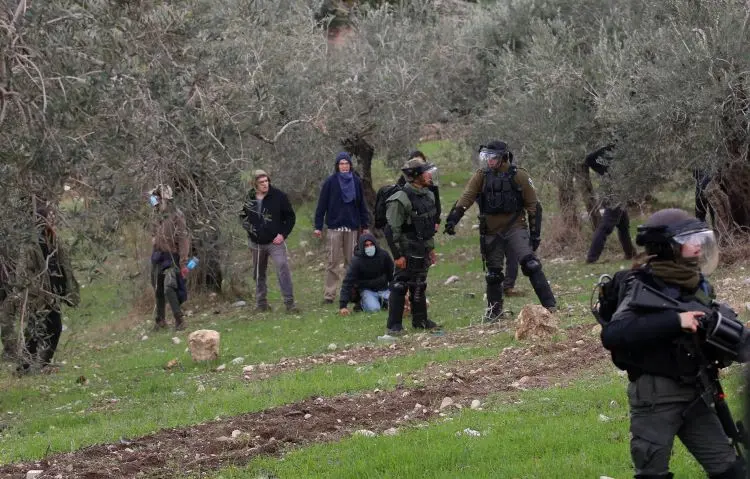
Israeli settlers continue to cut down trees west of Bethlehem

Today, Monday, settlers continued to cut down trees in the lands of the town of Nahalin, west of Bethlehem.


Local sources said that settlers cut down 50 old and fruitful olive trees in the Ein Fares area, west of the town, belonging to citizen Ali Abu Ghayyatha.


In previous days, the settlers had cut down 200 olive seedlings and 50 old olive trees in the same area.

PALESTINE

Mon 20 Jan 2025 1:05 pm - Jerusalem Time

4 citizens injured by occupation bullets and 3 by the explosion of an object from its remnants in Rafah

Today, Monday, four citizens were injured by Israeli occupation forces' bullets in the city of Rafah, south of the Gaza Strip.


Local sources said that the occupation forces opened fire on citizens in the center and south of Rafah city in the southern Gaza Strip, which led to the injury of 4 citizens, including children, one of whom sustained serious injuries.

Three children were also injured when a suspicious object left behind by the Israeli occupation exploded in Rafah.


Three citizens were injured when an Israeli Quadcopter drone dropped a bomb on citizens in Rafah, south of the Gaza Strip.


The ceasefire in the Gaza Strip went into effect yesterday, Sunday, at exactly 11:15 am.

ARAB AND WORLD

Mon 20 Jan 2025 12:12 pm - Jerusalem Time

Prominent Russian MP: US has agreed to appoint a new ambassador to Moscow

A senior Russian lawmaker told state television on Monday that the United States has informed Moscow of its approval of the appointment of a new Russian ambassador to Washington.


Grigory Karasin, chairman of the International Affairs Committee of the Federation Council, the upper house of Russia's parliament, said the new ambassador could be formally appointed in the coming weeks.


But Maria Zakharova, a spokeswoman for the Foreign Ministry, told the state news agency TASS that "approval has not yet been received."


Neither Karasin nor Zakharova named the new ambassador. The last Russian ambassador to the United States was Anatoly Antonov, who left his post in October.


Kommersant reported in November that Russia would appoint Alexander Darchev, who currently heads the Foreign Ministry's North America department, as its new ambassador to Washington.


In a related context, US President-elect Donald Trump has instructed his aides to prepare for a phone call with Russian President Vladimir Putin, days after his inauguration, scheduled for today, Monday, according to what was reported by the American CNN network.


CNN quoted informed sources as saying that the conversation will focus on holding a personal meeting between the two leaders in the coming months with the aim of trying to end the war in Ukraine.


She added that it is still unclear whether a date has been set for the conversation or not.


Last Tuesday, the US president-elect said he would meet the Russian president "very quickly" after his inauguration.


No date has been set for the meeting, which will be the first between the two countries' presidents since the start of Russia's war with Ukraine in February 2022.

OPINIONS

Mon 20 Jan 2025 11:59 am - Jerusalem Time

19-1-2025 A day for history

op-ed "AlQuds" dot com

op-ed "AlQuds" dot com

Opinion Writer


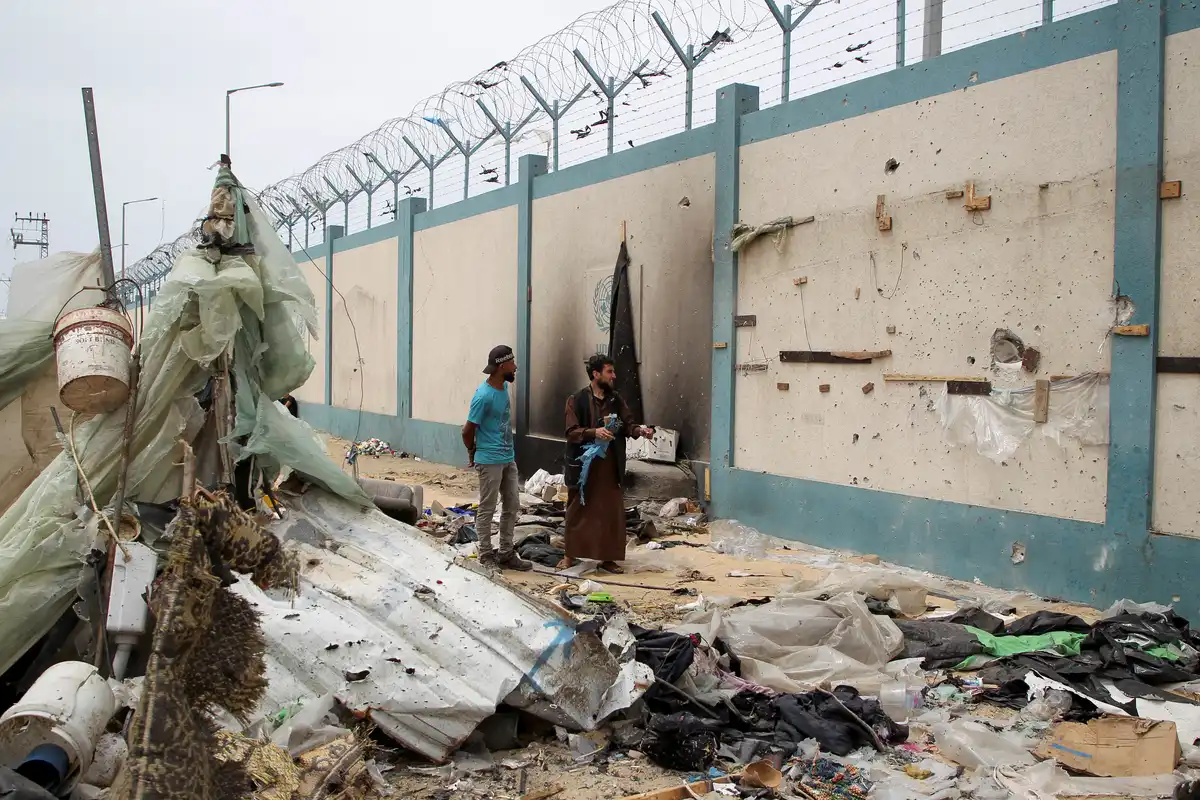
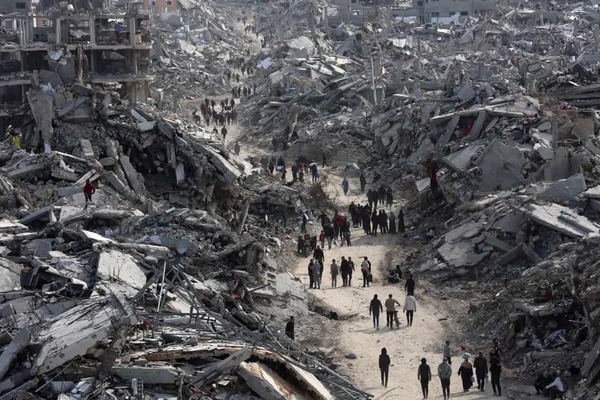
With the break of dawn, the people of the Gaza Strip hastened to return to their homes, villages and camps, where the occupation had destroyed all the necessities of life, livelihood and housing. The extent of the destruction was catastrophic and beyond description. The streets were filled with rubble, and the bodies of the martyrs were scattered everywhere, decomposing and rotting, and nothing remained the same.


Despite all of this, what happened yesterday will be recorded in the records as a special Palestinian day in the history of our people’s cause, based on the insistence on loving life, living with dignity, and quickly returning to rebuilding what the occupation destroyed. The will of the Gazans is beyond description in this regard, including the rapid deployment of Hamas security and police forces in all governorates in order to maintain calm and order and provide protection to citizens, out of concern for their safety.


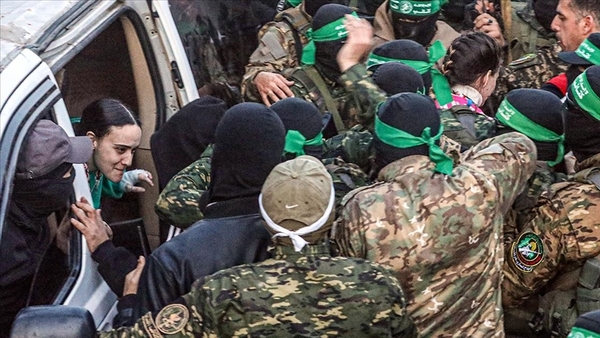
The decisive moment began in the heart of the Gaza Brigades, where the handover of the three Israeli detainees took place amidst a large military parade by the resistance men who presented a resounding surprise by appearing on the scene and their military ability to control the reins of affairs. Israeli military and political analysts expressed their shock at the large number of fighters whom Israel believed its army had assassinated. However, the truth that no one disputes is that Hamas has succeeded greatly in defeating Israel and its global coalition, to the point that some journalists have gone so far as to say that all of Gaza is an elite, and it seems that Israel has not fought a war that lasted more than 15 months. In one of the most prominent comments in the Israeli media, Arab affairs commentator Zvi Yehezkeli said:


- There are already joyful celebrations in Gaza, the hardest thing for me this morning is seeing these scenes, the elite returning in the vehicles, those vehicles that slaughtered us, those people who slaughtered us.


- 15 months of fighting and we have not succeeded in changing the equations of war in Gaza.


- Actually I ask myself: What have we done here in a year and three months? We destroyed many homes, and offered our best sons, and in the end the result is the same formulas. Hamas is happy, aid enters, and the elite returns.


Senior Shin Bet official Micha Kobi said: This is not a deal, but the blackmail of the century. They have regained control of the Gaza Strip.

As for the analyst Yanon Yitzhak, he said in a sarcastic comment: The last job that Itamar Ben Gvir, who submitted his resignation from the occupation government, is to supervise the release of Palestinian prisoners whose release was delayed for long hours, until after midnight, due to Israeli practices and retaliatory measures, while the Qassam Brigades presented certificates and gifts to the Israeli detainees, representing a picture of the Strip, a map of Palestine, and pictures of memories of detention, so official media analysts rushed to attack Hamas, and consider this part of a psychological war, while the Israeli media was a mouthpiece for incitement against citizens and police who were deployed with their weapons since the morning hours of yesterday, so Israel fabricated the pretext of Hamas’s delay in handing over the names of the detainees to commit new massacres that claimed the lives of more than 19 martyrs.


After a difficult day in the morning hours, the ceasefire agreement went into effect before noon, and Gaza lived the rest of the day and even the night in peace. The sounds of guns died down, the whizzing of bullets, the flying of planes, and the shelling of cannons and warships stopped, so that it could live in the hope of regaining its health as soon as possible, with the start of aid trucks entering, and the insistence on extracting light from the darkness of the prisons, and paving dreams over the rubble.


This is Gaza, which wrote a new birth certificate stamped with the blood of the martyrs and the sacrifices of its great people who chanted the Eid takbeers, on a day that will remain preserved in the eternal records.

OPINIONS

Mon 20 Jan 2025 11:55 am - Jerusalem Time

Facts we do not disagree on in this war

Ahmed Rafiq Awad

Ahmed Rafiq Awad

Opinion Writer


The first of these facts is that October 7th itself could be repeated in a completely different way, unless an honorable settlement is reached for the Palestinian-Israeli conflict, as the continuation of the occupation and the violation of everything Palestinian will inevitably lead to repeated attempts to end it, whether peacefully or by war. The second of these facts is that Israel does not respect us, our blood, our feelings, or our right to life, and therefore treats us as human beings with unequal rights or dreams. What is truly frightening about this matter is that there are Israelis who believe that we do not enjoy the same degree of love for life or desire for it or the feeling of pain and pleasure. There is someone who said on an Israeli TV that we are just flies who do not care about death. This is more than frightening talk, and reveals a shocking level of lack of respect, appreciation, or recognition of the Palestinian, as a being who enjoys the same degree of humanity.


The third of these facts is that Israel cannot continue the war or win it without an international alliance or a broader one. This war revealed that Israel is in constant and dire need of weapons with multiple capabilities, and it also needs to recruit other segments of the public at all times. Israel’s need for this international alliance reveals that Israel is fragile and weak, not only because of geography, but also because of its total dependence on the colonial Western alliance that insists on saving it, despite the effort and embarrassment that this entails. This exposes the falsehood of Israel protecting the interests of the colonial West. Rather, it is this West that uses Israel – in the full sense of the word – in our region, and for this reason it receives protection and support in return for this use, which casts a great burden on the future of Israel itself. These are real fears expressed by many Israelis.


The fourth of these facts is that there are limits to Israeli power, as Israel's amazing military power was unable to impose a solution or an end, and was unable to achieve what it wanted, and did not implement everything it promised, and was unable to transform amazing power into satisfactory results. This means that Israel, instead of searching for political alternatives in which it "concedes" some of what it has usurped, accepts to use force and more force; in order to achieve impossible goals. This indicates arrogance, haughtiness, disregard for life, and total dependence on the colonial West.


Over the course of 76 years, Israel has not been able to achieve by force what it achieves by political alternatives. This leads us to the fifth fact: it is impossible to bypass the Palestinian people, ignore their rights or overcome them. The past hundred years have proven that the Palestinian people, who have tried resistance and negotiation time and time again, have not achieved their goals so far, but they have proven their tremendous ability to survive, endure and continue. This means that days are cycles, as the Holy Quran indicated. Colonialism, such as the one we live in, does not necessarily have to be defeated or retreat in one, two or three rounds. What is important in all of this is that the Palestinian people have not been defeated from within, and have not been broken despite all the massacres, persecutions, denial and attempts to erase them. The sixth of these facts is that Israel has taught us to choose the most difficult and costly path. Israel does not really want to see our moderation or our desire for a settlement. It always wants to drag us into the square of conflict. Thirty years of desire for a settlement and stability have been transformed by Israel into more settlement and killing, and the weakening, impoverishment and embarrassment of the Palestinian National Authority. It is as if Israel is telling us: "Choose a path other than moderation." As if moderation exposes Israel's nakedness and aggression.

The seventh of these facts is that our Arab region is empty, fragile and weak, that it is susceptible to all possibilities and that it has largely lost the ability to influence regional and international politics, and that this region will receive material, security and political support from abroad, such that its existential crisis has deepened, trust between it and its people has grown distant, and its regimes have turned into poor and isolated regimes that seek protection, legitimacy and survival. Therefore, the Palestinian people have paid the price of this absence, weakness and fragility every time they clashed with the occupier. What has happened and is happening in the Gaza Strip so far leads us to the final fact, which is that a new page in the history of the conflict has begun between us and the occupation, and it is a stage that may lead to profound changes for each party. Wars have profound conclusions and lessons. This war is not like any other war, as it may lead to a settlement if the occupier is rational, and it may quickly lead to another war if the occupier believes that it owns all destinies.

PALESTINE

Mon 20 Jan 2025 11:29 am - Jerusalem Time

Bodies of 39 dead recovered, 3 citizens injured in Rafah

Medical sources said that rescue teams and citizens were able to retrieve 39 bodies of citizens who were killed during the Israeli aggression on the Gaza Strip.


Local sources, quoting a source in the European Hospital in Khan Yunis, stated that it received unidentified skeletons and bones of 39 dead who were recovered from Rafah after the ceasefire went into effect.


Local sources reported, quoting a medical source, that 3 injuries arrived at the European Hospital in Khan Yunis as a result of a bomb explosion thrown by a "Quadcopter" while citizens were inspecting their homes near the buffer zones in the city of Rafah in the southern Gaza Strip.


The ceasefire in the Gaza Strip went into effect yesterday, Sunday, at exactly 11:15 am.


Since October 7, 2023, the occupation forces have launched an aggression on the Gaza Strip, which has resulted in the death of at least 46,913 citizens, including 17,581 children and about 12,048 women, and the injury of more than 110,750 others, while about 11,000 are still missing under the rubble and on the roads.

PALESTINE

Mon 20 Jan 2025 9:14 am - Jerusalem Time

UN: 92% of Gaza homes destroyed or damaged by aggression

The United Nations Office for the Coordination of Humanitarian Affairs (OCHA) said on Monday that 92% of homes in the Gaza Strip, or about 436,000 homes, were destroyed or damaged as a result of the Israeli aggression, while 90% of citizens were displaced from their homes.


“The ceasefire announcement is a source of hope, but the challenge ahead is staggering,” said Dr. Rick Peeperkorn, WHO Representative in Palestine.


Addressing the massive needs and restoring the health system will be a complex and challenging task, given the scale and complexity of the operations and the constraints involved, he added.


The ceasefire in the Gaza Strip went into effect yesterday, Sunday, at exactly 11:15 am, after being delayed for more than two and a half hours, due to the occupation authorities announcing that it would not be implemented before receiving the list of female prisoners scheduled to be released.


Since October 7, 2023, the occupation forces have launched an aggression on the Gaza Strip, which has resulted in the martyrdom of at least 46,913 citizens, including 17,581 children and about 12,048 women, and the injury of more than 110,750 others, while about 11,000 are still missing under the rubble and on the roads.

PALESTINE

Mon 20 Jan 2025 9:01 am - Jerusalem Time

West Bank: Confrontations, arrests, and the occupation tightens its measures at checkpoints

The Israeli occupation forces launched a campaign of raids and searches in the occupied West Bank at dawn and on Monday morning, which included confrontations in some areas that resulted in injuries among Palestinians, while the occupation forces arrested a number of Palestinians, while continuing to set up military checkpoints and impose strict security measures in various areas of the West Bank.


This morning, Monday, the occupation forces arrested 4 Palestinians after storming their homes in the town of Al-Shuyukh, east of the city of Hebron.

The occupation forces stormed the town, raided a number of homes, and arrested the brothers Qusay and Muhammad Issa Halayqa, Muhammad Adnan Tafesh Halayqa, and Muhammad Ibrahim Halayqa.


The occupation forces detained dozens of Palestinians during an ongoing raid on the town of Azzun, east of the city of Qalqilya.


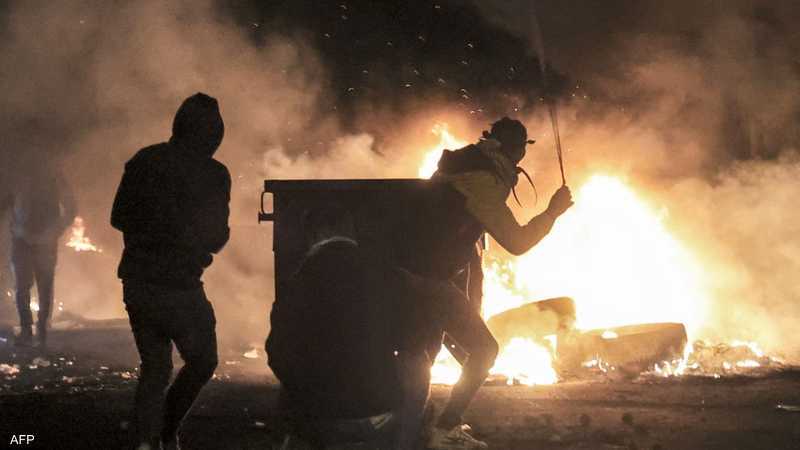
Local residents said that the occupation forces raided the town of Azzun, coinciding with the outbreak of "violent" confrontations that included throwing Molotov cocktails at settlers' vehicles and stones at the occupation's military vehicles.


Residents reported that the occupation forces, with several vehicles, stormed the town of Azzun from the northern entrance to the town, and drove their vehicles through the middle of the town in the “Muthallath and Safaha” area, raided shops, and detained dozens of young men.


The occupation forces fired live bullets, sound bombs and gas bombs randomly at Palestinians and their homes, which led to the outbreak of clashes.


Two Palestinians were injured by the occupation forces' bullets at dawn on Monday, while receiving the prisoners, both male and female, released in the exchange deal in Beitunia, west of Ramallah.


The Red Crescent said that its crews dealt with two injuries caused by the occupation forces' bullets in Beitunia.


The occupation forces fired live bullets and tear gas canisters at the Palestinians and the families of the prisoners who gathered waiting for their sons who were released in the exchange deal.


The West Bank witnessed widespread attacks by the occupation forces and its settlers in the hours preceding the arrival of the released prisoners, in an attempt to thwart the manifestations of joy at their reception.


A Palestinian child was killed and 8 Palestinians, including two children and an elderly man, were injured on Sunday evening by bullets and attacks by the occupation forces and settlers in several areas of the occupied West Bank.


The occupation tightens its measures at the West Bank checkpoints

Last night and at dawn today, Monday, the occupation authorities imposed strict measures on the checkpoints in the West Bank, and closed them to Palestinian movement.


The occupation's repressive measures at the West Bank checkpoints prevented a large number of prisoners, male and female, who were released in the exchange deal from reaching their homes after their release late last night.


Institutions concerned with prisoners' affairs said that a large number of prisoners and their families were forced to spend the night in the city of Ramallah, due to their inability to reach their cities and towns in the West Bank after the closure of the checkpoints, in addition to the attacks carried out by settlers on the roads and in the towns of the West Bank, which resulted in the martyrdom of a child and the injury of about 10 others.


The occupation forces closed the checkpoints surrounding the cities of Ramallah, Nablus and Jericho, and tightened their measures at all checkpoints spread throughout the West Bank, which caused citizens to be detained for long hours, including released prisoners and their families.

The occupation forces continued to close the checkpoints surrounding the city of Jericho since Sunday evening, noting that hundreds spent the night stuck in their vehicles.

PALESTINE

Mon 20 Jan 2025 8:24 am - Jerusalem Time

Spain: UNRWA is indispensable and the two-state solution is the best guarantee for peace in the region

Spain said that the efforts of the United Nations Relief and Works Agency for Palestine Refugees (UNRWA), of which Spain is a part, are indispensable and indispensable with regard to the future of the Gaza Strip.


This came in a statement by the Spanish Foreign Ministry tonight, commenting on the recent developments in the Gaza Strip.


The statement said, "Strengthening the ceasefire and allowing large amounts of humanitarian aid to enter is of utmost importance."


He stressed that "Spain will support efforts to achieve stability in Gaza, and these efforts will not be possible unless the Palestinian Authority assumes its governmental responsibilities in all territories, re-establishes security and basic services, and prepares to rebuild Gaza."


The statement stressed that the Spanish government "will continue to work with regional partners and allies to promote the implementation of the two-state solution, which is the best guarantee for peace and stability in the region."

PALESTINE

Mon 20 Jan 2025 8:12 am - Jerusalem Time

Ceasefire in Gaza.. Will Israel return to its unholy appointments?

Sawsan Sarour: The more days of the first phase of the deal progress, the more difficult it will be for the Israeli government to breach and blow it up.

Jawdat Manaa: The agreement must be submitted to the UN Security Council and a decision must be taken regarding it under Article 7 to oblige Israel to implement it

Ismail Muslimani: There is a widespread feeling in Israel that the deal cost a high price and was considered a disaster on all levels.

Tawfiq Taama: The second stage will be more difficult for Netanyahu, especially in light of international and domestic pressures

Kaid Ghayatha: Israel may resort to repeated violations and Hamas will face pressure to refrain from responding due to the difficult humanitarian conditions in Gaza

Osama Al-Sharif: The start of implementing the agreement will open the doors to international investigations that will reveal the crimes of genocide and ethnic cleansing committed by the occupation


The Israeli occupation state violated the ceasefire agreement in the Gaza Strip from the first moment it came into effect, by targeting citizens returning to their destroyed homes, and eager to regain the simplest basics of life and security, and caused a number of martyrs and wounded, under the pretext of Hamas’s delay in handing over the names of the Israeli female prisoners who are scheduled to be released on the first day of the first phase of the deal.


Such a breach gives an indication of how Israel will deal with the new reality in the Gaza Strip. It also raises the question of the ability of the mediators and guarantors to force it to abide by the agreement, so that the scenario of the agreement signed with Lebanon, which the occupying state violated hundreds of times, is not repeated, by violating the southern villages and towns by bombing and destroying homes in a collective and systematic manner, without the mediators and guarantors moving a finger to prevent these violations.


Writers and analysts who spoke to “I” expected that Israel would resort to repeated violations, especially since there is a widespread feeling in Israel that the deal came at a high price and was considered a disaster on all levels, while Hamas will face pressure to refrain from responding due to the difficult humanitarian conditions in Gaza. Therefore, some called for submitting the agreement to the UN Security Council to take a decision on it under Article Seven to oblige Israel to implement it.

The first Israeli violation of the agreement in the first hours of its implementation

"The Israeli government did not abide by the date set in the ceasefire agreement, at 8:30 a.m. yesterday, Sunday, claiming that it had not yet received a list of the names of the three female detainees who would be released on the same day. The Israeli army continued its aggression and bombardment of several neighborhoods in the Gaza Strip, which led to the deaths of martyrs and dozens of wounded," said Sawsan Surour, who follows the political scene in Israel.


“These few hours, from 8:30 to 11:15 (less than three hours), are the first breach of the agreement, and were an implementation of the threat (a show of force) launched by Israeli Prime Minister Benjamin Netanyahu on Saturday evening (just a day ago), in his first appearance since the deal was announced on Wednesday evening by the Prime Minister and Minister of Foreign Affairs of Qatar, Sheikh Mohammed bin Abdulrahman bin Jassim Al Thani, a deal that has shaken the pillars of the government coalition in a striking way since the government was formed at the end of 2022,” she added.


Sarour confirmed that Netanyahu promised in his speech to return to the war on Gaza to appease the leader of "Religious Zionism", Finance Minister Bezalel Smotrich, in particular, who threatened to resign from the government if the war on Gaza was not resumed. This is what he presented to him in these few hours to show his "good intentions", although he is fully aware that he is deceiving himself before others, as the tricks he played in the past will not continue in the coming days.


She considered that what Netanyahu did since the beginning of the war on Gaza, until a few days before the deal, of tricks, cunning and evasion of ending the war, for political and personal motives in favor of remaining in power, made him reject every proposal or deal to stop the war, but external pressures this time, mostly, tipped the balance in favor of concluding the deal.

Heavy losses in the ranks of the Israeli army

She said: "Yes, there are the heavy military losses that the Israeli army suffered, especially in its last operation in northern Gaza, which lasted more than a hundred days, reaching 55 dead, including 16 in Beit Hanoun alone. These losses deepened the failure to implement the generals' plan to empty Gaza."


She continued, "In addition to the demonstrations by the families of the kidnapped, which continued intensively, demanding the conclusion of the deal, all of this did not tip the balance in their favor, had it not been for the intervention and direct threat from the US President-elect Trump, who pushed Netanyahu and forced him to accept the deal reluctantly."


Surur pointed out that what has happened and will happen since the start of the ceasefire is a striking scene on the political map in Israel, and will serve as the compass and main guide for Netanyahu's government throughout the days of the first phase of the deal, in particular.

She stressed that the leader of the "Jewish Power" party, Minister of National Security Ben-Gvir, officially submitted his resignation from the government, and the leader of "Religious Zionism" will join him if the war on Gaza does not resume by the end of the first stage of the deal, i.e. on the 43rd day.


She saw that Netanyahu had no escape and had fallen into the trap, the trap of the difficult reality on the ground and the trap of the extreme right-wing parties in his government. On the one hand, either reaching the sixteenth day of the agreement, which stipulates the start of negotiations on the second phase of the deal, and thus succumbing to American pressure and street pressure that will increase the closer we get to this decisive day, and that means continuing with the deal on the one hand, and on the other hand, the withdrawal of Smotrich’s party and its joining Ben-Gvir’s party in the opposition position, which means shaking the foundations of the right-wing government, which could lead to dramatic changes in the government’s formation and could lead to both party members (13 Knesset members) voting against the government and even bringing it down.

Early election scenario

She said: "If this scenario happens, it means going to early elections in the middle of this year.


She added: “To avoid this scene, Netanyahu will try to obstruct the course of the deal, and what we saw hours before the ceasefire, he may try to repeat in the coming days, but Netanyahu fears Trump, as Trump is not like Biden, as

Netanyahu has been able to manipulate and evade him for more than a year, while Trump’s personality is very different. Despite being an unpredictable and volatile personality, he has repeatedly declared that he does not want wars in the region, and aspires to establish security in order to implement his “peaceful” plan in the region.


She continued: Not to mention that it is a guarantor of the agreement in partnership with Egypt and Qatar, which means implementing all three stages of the agreement in full, and working together to ensure that the parties implement their obligations in the agreement and the full continuation of the three stages.


"The more the days of the first phase of the deal advance, the more difficult it will be for the Israeli government to breach and blow it up. There will be many obstacles from the Israeli government, but it will not stop the stages of the deal, not because it does not want to, but because it cannot. Its soldiers are exhausted, the families of the detainees are pressuring, the economic situation is deteriorating, and most importantly, Trump is on the lookout," Surur concluded.

  1. Lack of international guarantees threatens implementation and stability
  2.  

For his part, political analyst Jawdat Manna said that the credibility of the far-right Israeli government cannot be trusted.


He pointed out that there are previous experiences in agreements between Lebanon, Syria and the Palestinian Authority on the one hand, and Israel on the other hand. Even the Camp David Accords were violated during the Israeli war of extermination in Palestine, especially in the Gaza Strip.


He added: "Give me one example of an agreement that Israel has committed to implementing, including the recent agreement signed with Lebanon."


He stressed that the failure to document the ceasefire agreement between Israel and Hamas with international guarantees, and not only from regional countries or the United States - which was a partner in the war through direct and indirect military support for Israel - makes the agreement vulnerable to violation. The outgoing President, Joe Biden, has acknowledged this support in more than one press statement.


Manaa suggested submitting the agreement document to the UN Security Council and taking a decision on it under Article 7 to oblige Israel to implement it, considering that this is the only option to ensure the implementation of the ceasefire agreement, especially in light of the escalation of international conflicts, such as the conflict in Ukraine, which has reached the brink of a nuclear confrontation, according to experts’ warnings, in addition to other areas witnessing tensions that could explode at any moment.

Fearing that Israel will return to war after recovering its prisoners

He explained that fears are increasing that Israel will achieve its goal of returning the Israeli prisoners to their families and then resume the war, noting that this will not cost it anything from the perspective of redeploying its forces on the outskirts of the Gaza Strip and inside the Strip within a kilometer along the border, including the Philadelphi Corridor.


He stressed that this military situation is not reassuring, which requires extreme caution, with the necessity of avoiding any manifestations that may provide justifications or information that the occupation army can benefit from in any sudden developments.


Among the other concerns that Manna spoke about is the map of forming the right-wing government in Israel. It is no secret to anyone that there are supposed resignations linked to conditions, such as the continuation of the war. If the war resumes, some ministers will remain in the government, but if it does not resume, they will submit their resignations.


He added: "If the resignations occur, Netanyahu's government will not survive. And then, who will guarantee that the ceasefire will continue?"


He pointed to another point related to the behavior of US President-elect Donald Trump, who is scheduled to be inaugurated on Monday. He said: "We do not know how he will act regarding the war on Palestine after assuming his official duties. It is true that he has some reservations about Netanyahu's credibility, but he is trying to curb these reservations in his statements. However, we know about Trump's absolute support for Israel, and the decisions he made in his first term hijacked efforts to resolve the Palestinian issue beyond expectations."


In light of this chaos and conflicting currents that the Middle East region is exposed to, Manaa stressed the need for the Palestinian forces to re-evaluate their internal and external relations, in order to be able to confront the dangerous possibilities that may appear after the ceasefire.


At the end of his speech, Manaa pointed out that these possibilities include the reconstruction of the Gaza Strip and the entry of humanitarian aid under Israeli supervision, which Israel may obstruct, which may return the situation to what it was before the signing of the ceasefire agreement.

Israel's coalition government nearly collapsed

In turn, the analyst specializing in Israeli affairs, Ismail Muslimani, said: “The process of implementing the deal began yesterday after a delay of hours from the start of the ceasefire, as the Israeli media showed that there is a widespread feeling that this deal represented a high price, and was considered a disaster on the security, political, media and governmental levels, to the point where the coalition government almost collapsed.”


“As is the case with every prisoner exchange agreement, there are always obstacles and difficulties, but it seems that previous experiences, such as the Ahmed Jibril deal in 1985, the Shalit deal in 2011, and finally the deal that was implemented in November 2023, proved that there are precise implementation mechanisms that prevented any significant violations. However, Israel continued its military operations after the end of those deals,” Muslimmani added.


He explained that "the current obstacles include concerns among the families of Palestinian prisoners, as well as the families of the Israeli abductees. However, after a delay of several hours, a list of the names of the abductees was delivered, in preparation for the handover of three Israeli abductees.


"The question that worried the Israelis yesterday was: Are these kidnapped girls alive or dead? This possibility was a major dilemma and concern for Israel, especially for Prime Minister Benjamin Netanyahu, who tried hard to ensure that the first batch of kidnapped girls would be alive," Musalmani added.


Muslimani stressed that "Hamas used this as a strong pressure card in the negotiations, as it did not announce the condition of the kidnapped, which increased Israeli concern and turned the scene upside down. However, there are Arab guarantees, Qatari and Egyptian, in addition to guarantees from the United States, regarding the smooth running of the deal."

Fears of Netanyahu's government disintegrating if Ben Gvir withdraws

“Netanyahu has managed to keep his government going for two years in a row, but there are concerns that the withdrawal of one of the partners, such as Itamar Ben-Gvir, could lead to the disintegration of the government. On the other hand, if the first stage of the deal goes smoothly without any violations, things are likely to go towards shortening the implementation period of the rest of the deal,” he continued.


“There is great pressure being exerted to ensure the commitment of both parties, as the Palestinians are usually known for their commitment to such agreements, while there may be violations on the Israeli side,” Musalmani noted. “Netanyahu stated in his security speech that he had received assurances from Presidents Biden and Trump that any violation by Hamas would be met with a resumption of military operations.”


"Ultimately, the biggest concern is that the number of dead abductees is much higher than the number of living ones, which will be a strong blow to Netanyahu on two levels: the first is before the investigation committee, and the second is due to the pressures that may increase as a result of military losses," Musalmani concluded.

The Trump administration played a crucial role in achieving the agreement.


For his part, Tawfiq Taama, a specialist in international and regional relations, said: “There is an agreement reached between all parties, including Hamas and the Israeli side, with the support of parties guarantor of this agreement.

He added: "The agreement includes clear provisions, and Israeli Prime Minister Benjamin Netanyahu must commit to implementing them.


He pointed out that the United States of America, especially the incoming Trump administration, played a decisive role in achieving this agreement, as it pressured Netanyahu through its envoy Stephen Woodcoffe, who visited the region and met with Netanyahu using firm and unconventional language to end the war.


"Trump, who is known as a man of deals and interests, seeks to end the war in Gaza not out of sympathy for the Palestinians or to alleviate their suffering, but to achieve his own agenda in the Middle East and the world," he added. He pointed out that among Trump's priorities is focusing on the normalization files and the Abraham Accords, in addition to other issues such as China, Russia and Iran, as well as internal American files that require his attention.


“The first phase of the agreement is expected to be implemented smoothly without any significant violations, and if violations occur, they are likely to be from the Israeli side,” Taama explained. “Netanyahu recently spoke via recording, not in a press conference, and indicated that he might return to fighting in the second phase, but this threat seems unlikely because the success of the first phase is linked to progress towards the second phase. Even US President Joe Biden indicated the need to continue negotiations during the implementation of the first phase, even if not all issues are resolved.”

70% of Israelis want to stop the war completely

He pointed out that "the agreement includes Israel's complete withdrawal from the Gaza Strip and the continuation of negotiations to achieve final solutions without returning to fighting. However, the Israeli side cannot be trusted, as it has a long history of violating agreements and creating justifications for launching aggression against the Palestinians. This behavior is part of Netanyahu's policies, who always seeks to maintain his political grip."


Taama stressed that "the second stage will be more difficult for Netanyahu, especially in light of international and local pressures.


He pointed out that opinion polls inside Israel show that 70% of Israelis want a complete end to the war, not just a ceasefire. The international community is also pressuring to end the war once and for all. He added: "The pressure on Netanyahu is increasing because there are more than sixty Israeli prisoners, most of them officers and soldiers, which puts him in front of the dilemma of releasing them."


He explained that the biggest challenge facing Netanyahu now is to balance the demands of the Israeli far-right, represented by Smotrich, who is threatening to withdraw from the government if the war is not resumed, and international and American pressure not to return to fighting. The collapse of the government is a scenario that Netanyahu does not want, so it seems that he is forced to abide by the agreement.


“The second phase may be the most difficult, as Netanyahu seeks to satisfy his hardline allies on the one hand, and maintain his relationship with the international community and the United States on the other,” Taama concluded. “But international pressure, especially from the Biden administration, will remain the decisive factor in preventing the resumption of fighting. It seems that the war is over, and we hope it will not return again.”

Trump administration forced Netanyahu to accept deal


For his part, political analyst Kaid Ghayatha confirmed that the circumstances of the war in the Gaza Strip, in addition to the American intervention led by President-elect Donald Trump, were key factors in pushing Israel towards accepting a ceasefire.


Ghayatha explained that the Trump administration used strong pressure cards on Israeli Prime Minister Benjamin Netanyahu to force him to accept the agreement, pointing to potential threats from the US administration regarding sensitive issues such as protection from international prosecution and military aid.


Ghayatha pointed out that the outgoing administration of President Joe Biden was less able to impose a ceasefire than the Trump administration, describing the Biden administration as “more inclined to support Israel,” with pro-Israel figures within the administration.


He added: "Trump, despite his declared reservations about Netanyahu, has shown a clear desire to end the war by employing international pressure and possible sanctions.


Regarding the implementation of the agreement, Ghayatha expected that Israel would abide by the agreement as long as there were prisoners being held and it sought to release them. However, he indicated that Israel might resort to repeated violations under the pretext of "self-defense," likening the current situation to previous ceasefire agreements with southern Lebanon, which witnessed hundreds of violations.


He added: There are fears that these violations will lead to a new escalation, especially if Israel feels that the agreement did not achieve its security goals.

The second phase of the agreement will require complex negotiations.


Ghayatha stressed that Hamas will face great pressure to refrain from responding to these violations, given the difficult humanitarian conditions in Gaza and the impact of this on the movement's popular base.


Ghayatha believed that the second phase of the agreement would require complex negotiations, expecting that Israel would resort to procrastination in order to maintain the status quo. He explained that Israeli control over the crossings would remain a major obstacle to any long-term stability, noting that Israel might refuse to involve international or regional parties in managing the crossings.


Ghayatha concluded his speech by warning that the current ceasefire does not mean a permanent solution, but rather may be a temporary truce that could collapse at any moment if Israel continues its escalation policies.


He stressed that the continuation of the Israeli siege and restrictions on crossings will remain a major factor in fueling tensions in the region.

Victory for Palestinian steadfastness and a loss for Netanyahu

Jordanian political analyst Osama Al-Sharif believes that the ceasefire coming into effect on Sunday morning represents a turning point after 470 days of Israeli aggression that left unprecedented destruction and tragedies in the Gaza Strip.


He pointed out that this agreement reflects a mixture of contradictory feelings, between sadness over the destruction and human losses caused by the war, and pride in the Palestinian steadfastness that embodied a deep belief in the justice of the cause and adherence to the land despite the challenges.


Al-Sharif explained that Israeli Prime Minister Benjamin Netanyahu did not achieve any of his declared goals during the war, but was subjected to internal and international pressures that ended with the imposition of a deal that included the withdrawal of the Israeli army from Gaza, the return of the displaced to the northern part of the Strip, the entry of humanitarian aid without obstacles, the start of reconstruction, and the release of Palestinian prisoners from Israeli prisons.


He added that Israel did not emerge victorious from this war, noting that the start of implementing the agreement would open the door to international investigations that would reveal the crimes committed by the occupation, including genocide and ethnic cleansing.


Al-Sharif expected that calls to hold Israel accountable for these crimes would escalate in the coming period.

Human suffering in Gaza will not end soon

Al-Sharif stressed that the humanitarian suffering in Gaza will not end soon, noting that the Strip will need many years to rebuild and restore normal life.


But at the same time, he pointed out that Gaza may witness a radical change in its political and economic conditions thanks to the expected Arab and international support.


Regarding the American role, Al-Sharif pointed out that US President-elect Donald Trump distanced himself from supporting Netanyahu after the latter lost his credibility before the international community.


He explained that Trump is currently focusing on completing the normalization process between Arab countries and Israel, and imposing a final solution to the Palestinian issue. However, he warned that the West Bank may pay a heavy price for this path.


Al-Sharif concluded his speech by stressing that Netanyahu may try to obstruct the implementation of the agreement after the end of its first phase, but he pointed out that regional and international circumstances will not allow Israel to turn back the clock.

PALESTINE

Mon 20 Jan 2025 8:02 am - Jerusalem Time

On the first day of the genocide, life was no longer as it should be!

Areeb Al-Rantawi: The military battle has ended with the ceasefire coming into effect, but the battle to negotiate the future of Gaza will erupt soon

Majed Hadeeb: The Gazans are between happiness for their survival and sadness for those who were swallowed by the Holocaust, and they look forward to the future despite the great challenges

Mohamed Gouda: Stopping the genocide is not the end of the road, but rather the beginning of a new phase that requires efforts to save what remains and restore hope to citizens.

Talal Okal: Internal consensus is the key to resolving the problem of managing the Gaza Strip in a way that ensures its stability and enables it to recover

Dr. Saeed Shaheen: Gaza's legendary steadfastness broke the occupier's back and thwarted its hopes of achieving any victory, but the road to recovery is long and arduous

Nizar Nazzal: The terrifying images and scenes that will emerge from the Gaza Strip will shock the world and reveal the extent of the disaster

After more than 15 months of devastating war of extermination that ravaged the Gaza Strip and claimed the lives of tens of thousands, life is gradually returning to the Strip with the ceasefire coming into effect.


In separate interviews with “I”, writers, political analysts and university professors explain that this war, which began in October 2023, left behind massive destruction and severe human and material losses, as thousands lost their homes and loved ones, and large parts of the Strip were turned into rubble. But today, with the war stopping, the people of Gaza are experiencing moments mixed between joy at the end of the holocaust and sadness over what they have lost, while they search for hope that will restore to them some of the stability and security that they have long lacked.


They believe that despite the legendary steadfastness of the people of Gaza, which broke the back of the occupation and thwarted its hopes of achieving a decisive victory, the road to recovery seems long and arduous. The Strip needs more than just rebuilding buildings; it needs to rebuild hope, secure the basic necessities of life such as water, food and medicine, and rehabilitate the destroyed infrastructure, including hospitals and schools destroyed by the war. The psychological challenges suffered by the population, especially children and women, also require great efforts to overcome the trauma left by months of bombing and destruction.


They stress that this critical stage highlights the need for an internal Palestinian consensus that ensures effective management of the Gaza Strip and allows for fair and organized distribution of international aid. They also stress that the cessation of the war is not the end of the road, but rather the beginning of a new phase of the struggle for life and dignity.

The Palestinian people are still steadfast despite the massive destruction


Oraib Al-Rantawi, director of the Jerusalem Center for Political Studies, confirms that the images broadcast by news agencies and television stations from Gaza after 471 days of war indicate that the Palestinian people are still steadfast despite the massive destruction that has befallen the Strip.


Al-Rantawi points out that the Palestinians, despite the horrific pain of loss they have suffered, have begun to shake off the ashes and rubble, and rebuild their lives on top of the ruins of their homes, affirming their determination to stand firm on their land and move forward in their struggle for Jerusalem and Palestine.


He explains that the state of chaos to return home was the general characteristic that distinguished the reactions of hundreds of thousands of Palestinians, as they began to dismantle the tents and return to their cities, villages and camps, even if some were forced to set up tents on top of the rubble of their destroyed homes.


Al-Rantawi stresses that the idea of asylum and displacement, for which the Palestinians have paid a high price throughout their long history, is now rejected, no matter how great the sacrifices.


But Rantawi warns that the challenges facing Gaza are not easy, as the needs are enormous and require tremendous efforts to address them.


He points out that the first of these needs is urgent relief, sheltering the displaced, and reconstruction, stressing that the people of Gaza deserve all the attention and focus from their Arab brothers and the international community to lift the siege, open the crossings, and bring in sufficient quantities of humanitarian aid, calling for the provision of shelter tools, such as prefabricated houses and tents, and the rehabilitation of the destroyed health and civil infrastructure.


Al-Rantawi stresses that the reconstruction file must remain away from politics and politicization, and must not turn into a tool of blackmail.


He stresses that the military battle has ended with the ceasefire coming into effect, but another battle no less fierce and dangerous will erupt soon, and its arena will be the negotiating tables and negotiation rooms regarding the future of Gaza after the war.


Al-Rantawi wonders whether Gaza will be subject to new Arab and international arrangements, or whether arranging the Palestinian house will be a purely Palestinian affair, as the resistance factions promised during the past months.

Al-Rantawi expressed his dissatisfaction with the internal Palestinian failure to reach a consensus formula to manage the Gaza and West Bank file as one unit, warning against attempts to tailor the “day after the war” according to American, European and Israeli measurements, calling for blocking the path to these suspicious paths, stressing that Israel usually obtains in negotiations what it did not achieve in war, which should be a red line that does not allow the Palestinians to fall into its trap.


Regarding the management of Gaza, Rantawi points out that the current scene indicates that Hamas has begun to organize the affairs of the Gaza Strip, as its security and police forces have taken to the streets to restore order and prevent the violations and thefts that spread during the war. He explains that this scene has raised concerns in Israel, as Hamas has sent a clear message that the project to destroy it has failed, and that it still has the upper hand in Gaza.

Rantawi stresses that Hamas is part of the Palestinian fabric and the Palestinian national movement, and that it is not a marginal force that can be jumped over, calling on the international community to deal with it as an existing reality, pointing out that political hypocrisy and Israeli interests are what prevent reaching reasonable formulas for managing the entire Palestinian scene.

Catching Breath After 15 Months of War

Writer and political analyst Majed Hadeeb confirms that from the first moment of the ceasefire in the Gaza Strip, and even before that, with the news of a possible prisoner exchange agreement, the citizen in Gaza began to catch his breath after 15 months of war that left behind massive destruction. This war began on October 7, 2023, and left nothing intact; many lost their homes, properties, and even their loved ones. Today, with the cessation of fighting, the Gazans are searching for a lifeline, for hope that will restore some of the stability and security they have long lacked.


Hadib points out that during the war, the citizen in Gaza was living in a state of constant movement between fear and insecurity, as many lost the basic necessities of life, from housing and money, and even personal security.


Hadib confirms that, however, during the first moments of the truce, the people of Gaza lived between feelings of joy and happiness for their escape from the holocaust and feelings of sadness for those who were swallowed by the fires of that holocaust.


According to Hadib, hope remains present among the Gazans, who see the ceasefire as the beginning of a new life, despite everything they have been through.

Hadeeb stresses that the Palestinians in Gaza are now looking to the future, even though the challenges are great: total destruction, huge human and material losses, and the loss of their children’s future due to the collapse of the educational and health systems.


Hadib points out that the issue is not limited to financial losses; many parents complain about their children’s inability to receive appropriate treatment due to the lack of medicines and the collapse of the health infrastructure.


He points out that hospitals, which were already suffering from a lack of resources before the war, are now unable to accommodate the huge numbers of wounded and sick people.


Hadib believes that what the citizen in Gaza needs now goes beyond mere reconstruction; he needs to secure the basic necessities of life, starting with food and livelihood security, and reaching political security.


Hadib points out that Gaza, even before the war, was suffering from a near-absence of the elements of a decent life, as the citizens were living under a stifling siege and a depleted economy, and then the war came to complete what remained of a near-non-existent life.


Hadeeb stresses that citizens are now in dire need of water, food, treatment, and education, but most important of all is achieving political security, meaning living in areas subject to the law and understandings between all factions of the Palestinian people. Achieving this goal requires national consensus between the factions, which seems out of reach in light of the sharp divisions.


According to Hadeeb, since before the war, the Hamas government, as a de facto government, had been ignoring its duties towards the citizens, as it focused on strengthening its control and collecting tax money to finance its employees at the expense of the people. During the war, its absence was more evident, as it only appeared in attempts to silence voices and maintain its prestige, and to send messages to the people and the region that it still controls the joints of life in Gaza.


Hadib stresses that managing the situation in Gaza today requires rebuilding institutions capable of providing services, which cannot be achieved without true national unity, stressing that national unity is not just a slogan, but rather a necessity to save what remains of the Palestinian cause.


He believes that the Palestinian people cannot achieve any progress without national unity. This unity must be based on clear strategies that were previously agreed upon in the rounds of reconciliation sponsored by Arab countries. What the Palestinians need today is the implementation of these agreements, not renegotiation and dialogue about them.


Hadeeb stresses that the PLO, as the legitimate representative of the Palestinian people, must return to the forefront of the political and security scene in Gaza, and that Hamas, for its part, must abide by previous agreements and submit to the leadership of the PLO, including commitment to international political agreements.


According to Hadeeb, the ultimate goal must be to achieve an independent Palestinian state on the borders of June 4, 1967, with Jerusalem as its capital, and this goal will not be achieved except through true national unity and the commitment of all factions to a unified political program.

Priority for relief and meeting urgent humanitarian needs

Writer and political analyst Mohammed Joda confirms that after 470 days of the massacre that took place in the Gaza Strip, it seems that stopping the genocide will be the beginning of a new phase that aims to stop the flow of blood, end the suffering of the Palestinian people, and begin the process of construction and recovery.


Joudah explains that at this stage, relief and meeting urgent humanitarian needs will be the top priority, as the sector needs to provide food, clean water, and medicine to the affected areas, in addition to re-operating hospitals and health centers to provide urgent medical care to the wounded and injured.


Joda stresses that providing temporary housing for displaced people who have lost their homes is an urgent and vital matter, especially in light of the widespread destruction of residential infrastructure. The importance of psychological rehabilitation cannot be overlooked, as children and women who have suffered the horrors of war need intensive psychological support to help them overcome the trauma they have been exposed to.


Joda stressed that rebuilding basic infrastructure will also be a priority, including repairing electricity, water and sewage networks, in addition to restarting and rehabilitating schools to ensure that the educational process is not interrupted for a long period. These steps will be necessary to save an entire generation of children from the risk of being deprived of education.

Joda believes that organizing aid and services in the Gaza Strip will require joint coordination between several international and local parties, most notably the United Nations and its specialized organizations, such as the World Food Program (WFP), UNRWA, and the World Health Organization (WHO). International non-governmental organizations, such as the International Red Cross and humanitarian relief organizations, will also play a pivotal role in providing field assistance.


Joudeh explains that the Palestinian Authority will be the official body responsible for coordination with the international community, while the de facto government in Gaza (under Hamas administration) will deal with field operations on the ground. Supporting countries, such as Egypt and Qatar, will play important roles in reconstruction and coordination, along with local civil society institutions that will be a key partner in implementing relief projects.


Joudah believes that to ensure the efficiency and transparency of aid distribution, it is necessary to establish an international mechanism under the supervision of the United Nations, to avoid chaos or misdistribution that may hinder the delivery of aid to those in need.


Joda believes that Hamas, which has effective control over the ground in Gaza, will play a major role in managing services and aid on the ground, and will seek to assert its influence locally and internationally by improving the humanitarian response and demonstrating its effectiveness on the ground.


According to Joda, the Palestinian Authority will seek to appear as a legitimate front to receive international support, especially since the international community deals with it as an official body. However, reality requires that the Authority manage the Gaza Strip as an integral part of the homeland, without any party or organisational body having the right to impose its control over the stricken Strip.


"At this critical stage, I believe that our people need someone to restore their hope for a better tomorrow, as it is no longer possible after this war of extermination and all the wars that preceded it, for the situation in the Gaza Strip to continue as it was. The Palestinian people have the right to live in freedom, security and peace, under the umbrella of one authority and one legitimate weapon, within the framework of the Palestine Liberation Organization, which represents all Palestinians," Joda said.


Jodeh stresses that this requires a review by all parties of the situation in the Palestinian arena after the black division, which must be ended irreversibly, as national interests must overcome political differences, to ensure the interests of the Palestinian people at this critical stage of their history.


Joudeh believes that the countries of the region should strengthen the presence of the Palestinian Authority in the Gaza Strip, and the international community should support and pressure in this direction, in the interest of the Palestinian people and the entire region.


Joda believes that stopping the genocide in Gaza is not the end of the road, but rather the beginning of a new phase that requires tremendous efforts to save what remains of the Strip and restore hope to a people who have suffered greatly.

Restoring some semblance of normal life

Despite the heavy price paid by the people of Gaza, the general scene remains largely festive, as people look forward to regaining some semblance of normal life after 15 months of killing and destruction caused by the Israeli occupation, writer and political analyst Talal Okal asserts.


According to Awkal, humanitarian needs in the Gaza Strip are at the top of the priorities, as the population needs everything from food and medical supplies to removing the wounded from under the rubble. These immediate needs are the top priority, while tents and other supplies such as water and energy will be provided later, in addition to equipment for removing rubble, retrieving bodies and opening roads.


Awkal explains that the ceasefire agreement in the Gaza Strip includes provisions aimed at regulating the internal situation, including allowing Hamas police to deploy in the streets to maintain security and help organize the process of distributing humanitarian aid, and prevent any chaos that may arise due to competition to obtain basic materials, as this deployment comes within the framework of an attempt to restore order to the Strip, especially in light of the difficult circumstances that the residents are living in.


In terms of distributing aid, Awkal points out that the UN institutions, with the exception of UNRWA, will undertake this task in cooperation with community leaders and reformers. This step is intended to ensure that aid reaches those in need in an organized and fair manner, while avoiding any exploitation or corruption that might hinder the process. The Rafah crossing, which is the main lifeline for Gaza, will also be under the management of the Palestinian Authority, reflecting an attempt to reorganize the administrative situation in the Strip.


Regarding the issue of managing the Gaza Strip in general, and that it is a matter that has not yet been resolved, Awkal stresses that internal Palestinian consensus is the key to resolving this problem, expressing his hope that a quick agreement will be reached that will guarantee the stability of the Strip and enable it to recover from the effects of the war.


Awkal stresses that at the present time, the priority remains saving lives and providing basic needs, while working to resolve internal differences to ensure a more stable future for the people of Gaza.

Gaza Strip tries to heal its deep wounds and overcome its pain

Professor of Political Media at Hebron University, Dr. Saeed Shaheen, confirms that the Gaza Strip, after 15 months of bloody war of extermination, is trying to heal its deep wounds and overcome the pain caused by the war, which resulted in huge losses in lives and property.


Shaheen confirms that the feelings of the people of Gaza on the first day of the cessation of the war of extermination were a mixture of joy and pain; joy at the cessation of the war and escape from the holocaust, and pain at the loss of loved ones, family, and the city that had been turned into rubble.


Shaheen believes that Gaza's legendary steadfastness has broken the occupier's back and thwarted its hopes of achieving any moral or material victory. However, the road to recovery is long and arduous, as Gaza needs everything: from security and peace to urgent relief and reconstruction, bread, water and medicine, and the rebuilding of hospitals and destroyed infrastructure.

Shaheen points out that the priority now is to consolidate the ceasefire agreement and not allow the return of war, especially in light of the repeated threats by Israeli Prime Minister Benjamin Netanyahu.


Shaheen stresses that the management of the Gaza Strip must be in the hands of the Palestinians, supported by their Arab brothers and international friends who have realized the injustice of the Palestinian people and the brutality of the occupation.


He proposes forming a national committee or a technocratic government that brings together all Palestinian factions under the supervision of the Palestine Liberation Organization and the resistance forces.


Shaheen stresses that this government will be responsible for managing the reconstruction process and restoring life to the Gaza Strip, a task that requires broad international support.


Shaheen believes that the Palestinian National Authority, as an internationally recognized body, can carry out this task in cooperation with Hamas and other factions, stressing that no individual party will be able to achieve success without unifying efforts under one Palestinian roof.

If the two sides of the Palestinian division fail to reach an agreement, Dr. Shaheen proposes forming an Arab committee to temporarily manage Gaza until a comprehensive national agreement is reached.


Shaheen stresses that Gaza today needs more than just rebuilding buildings; it needs to rebuild hope and faith in a better future, which requires joint efforts from Palestinians, Arabs and the entire world.

People will see with their own eyes what they have been hearing for the past months.

Nizar Nazzal, a researcher specializing in Israeli affairs and conflict issues, confirms that with the start of the ceasefire in the Gaza Strip, the picture inside the Strip is a mixture of feelings of joy and pain, where there is joy for the end of the massacre that lasted for fifteen months, and pain for the massive destruction and heavy human and material losses it left behind. Shocking scenes will appear, broadcast by satellite channels and the media, as the first days will reveal the extent of the disaster that the Strip has experienced: large numbers of missing persons, thousands of martyrs, and wounded people in need of urgent care.


Nazzal points out that the horrific images that will emerge from Gaza will shock the world, as people will see with their own eyes what they have only been hearing about in the past months.


Nazzal points out that, in return, there will be freedom of movement available to citizens that will allow them to reach the areas from which they were displaced, which will reveal the extent of the destruction that has affected homes and infrastructure.


Nazzal stresses that the first priorities for citizens are to find temporary shelter, arrange tents and caravans, check on relatives and loved ones, and provide food and shelter for the displaced. There will be an urgent need to rehabilitate the destroyed areas and provide temporary housing for families who lost their homes. In addition, health care will be a priority, as the wounded and injured need urgent treatment in light of the destruction of many hospitals and health centers.

Regarding the management of the Gaza Strip, Nazzal believes that the situation will not be different from what it was before October 7, and that Hamas will continue to manage the Strip, with its government and some international organizations that will provide support.


Nazzal does not expect any radical changes in the administration of the Gaza Strip, as Hamas will remain the main actor on the ground.


On the other hand, Nazzal believes that the role of the Palestinian Authority will be limited in the foreseeable future, although the Authority may try to play a role in coordination with the international community, but its influence on the ground will not be great, as Hamas will not oppose the presence of the Authority’s role in Gaza, but it will not allow it to take full control of the administration of the Strip.


Nazzal points out that Gaza will witness a large influx of international aid in the coming days, as thousands of trucks loaded with food, medicine and medical supplies will arrive, and this aid will reflect the world's sympathy with the suffering of the Palestinian people.


He points out that Hamas will seek to show that the Palestinian resistance has not been broken, and that Israel has failed to achieve its strategic goals, and Hamas will use this scene to confirm its influence locally and internationally, especially in light of the flow of aid and reconstruction.


Nazzal believes that the reality in Gaza will be different from what it was in the past months. The shocking images and terrifying scenes will reveal the extent of the disaster, but they will also be the beginning of a new phase of recovery and reconstruction.


PALESTINE

Mon 20 Jan 2025 7:59 am - Jerusalem Time

Into effect!

Yesterday, the ceasefire agreement in Gaza came into effect, after a hesitation with the taste of evasion, before the pretexts that cost martyrs and wounded, and the destruction of buildings and facilities were withdrawn, doubling the bill of suffering for those who were waiting for the cessation of the genocide with the utmost eagerness than a blazing brazier.


The resignation of the first firebrand, who said that he was principled and not looking for a seat, has come into effect. As soon as he sat on it, he rushed to fan the flames of crises, to implement the dreams and plans in his head.


The strangest thing I have read about Ben Gvir’s biography is that he took his partner on the first day of his bachelorhood to visit the grave of his inspiration, Goldstein. This is a biography that summarises his career and reveals what shapes his thinking and behaviour.


In forty-two days, Smotrich's resignation will come into effect, and then the second stone in the three hearths will collapse, because he made his stay conditional on a promise not to withdraw from the Philadelphi axis, a promise that the "fox" will not be able to fulfill when the time comes, even if he gives him a "bad check" today, in order to prevent the early collapse of the coalition of Torah fundamentalism.


After that, the fall of the third hearth will not be long when the snow melts and the meadow appears, and the “fox” will be brought to account for his crimes, and his use of ideology to serve his interests, and the extension of his political life, which will be shortened by the final stage of the deal, and he and his partners will exit political life, so that broad horizons and major transformations will open up before the Palestinian people, as one of the consequences of the earthquake of October 7.

PALESTINE

Sun 19 Jan 2025 10:49 pm - Jerusalem Time

First batch of Palestinians released from occupation prisons under ceasefire agreement

Palestinian reports said that the first batch of Palestinians were released from Israeli prisons as part of the ceasefire agreement between Israel and Hamas.


The Palestinian Authority's press office said on Sunday that a number of those released from Israeli prisons arrived with their families in East Jerusalem. There was no official confirmation from the Israeli authorities at first.


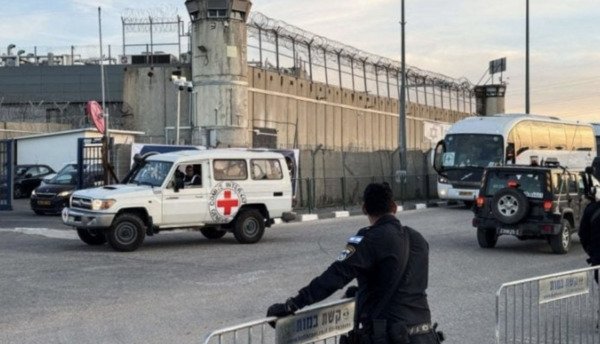
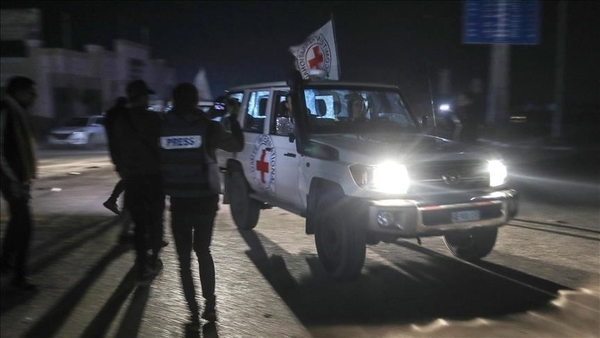
Buses from the International Committee of the Red Cross arrived on Sunday evening at Ofer Israeli prison, west of Ramallah, in the central occupied West Bank.


Buses bearing the emblem of the International Committee of the Red Cross entered the prison, after coming from Jerusalem.


In the vicinity of the prison, on the Beitunia side (a Palestinian town located between Jerusalem and Ramallah), the Israeli occupation army declared the area near the prison a closed military zone and prevented the gathering of prisoners’ families.


Dozens of relatives of prisoners expected to be released are scattered throughout the area from which Red Cross buses are scheduled to depart for Ramallah.


About 90 prisoners are expected to be released on Sunday, hours after Hamas released three Israeli women who had been held in the Gaza Strip since the October 7, 2023 attacks.


In the first phase of the agreement, 33 detainees are scheduled to be exchanged for 1,904 Palestinian prisoners.

PALESTINE

Sun 19 Jan 2025 10:40 pm - Jerusalem Time

Israeli Broadcasting Authority: Hamas presented souvenirs to Israeli female prisoners

The official Israeli Broadcasting Authority said that Hamas presented souvenirs to the three Israeli female prisoners who were released on Sunday, as part of the first phase of the ceasefire agreement in the Gaza Strip.


The Authority added that "the three female prisoners were carrying souvenirs presented to them by Hamas before their arrival in Israel."


She pointed out that the souvenirs included a map of the Gaza Strip, pictures of the female prisoners during their captivity, and a certificate of appreciation.


Earlier on Sunday, the Israeli occupation army announced in a statement that it had received 3 female prisoners from the International Red Cross, who were released by Hamas from the Gaza Strip, as part of the first phase of the exchange deal between the two parties.


During the handover process, the Israeli female prisoners appeared in good condition, unlike Palestinian prisoners previously released by Israel, who showed signs of torture, abuse and starvation, while some of them left in a psychologically deteriorated state.


This is not the first time that the movement has shown good treatment of Israeli prisoners. In November 2023, it released a group of them as part of the first truce that lasted for a week until early December 2023, which raised great interest at the time regarding the movement’s good treatment of the prisoners during their detention period.


According to media reports and testimonies of some Israeli prisoners who were released at the time, Hamas was keen to provide the prisoners with their basic needs, such as food, health care, and good treatment.


On Sunday morning, a ceasefire agreement between Hamas and Israel came into effect. The first phase will last for 42 days, during which negotiations will take place to begin a second and then a third phase.


Israel is scheduled to release 90 male and female prisoners, including 21 children, on Sunday, after Hamas released the three female prisoners.

PALESTINE

Sun 19 Jan 2025 10:01 pm - Jerusalem Time

Ben Gvir: We expect the return of more detainees by force

Resigned National Security Minister Itamar Ben-Gvir said on Sunday that "we are expecting more detainees to be returned by force."


"Fuel and aid must be stopped, not surrendered," he added.


In turn, the Minister of Finance in the occupation government, Bezalel Smotrich, confirmed his opposition to the ceasefire deal and the prisoner exchange, saying, "With all my heart, I oppose this deal and I believe that it puts Tel Aviv in danger."


The ceasefire agreement in Gaza came into effect today, Sunday, after 471 days of Israeli occupation massacres in the Strip, which left more than 155,000 Palestinian martyrs and wounded, and more than 11,000 missing.


The "Jewish Power" party, led by the occupation's National Security Minister Itamar Ben-Gvir, announced its resignation from Netanyahu's government on Sunday.


The Israeli Ministry of Justice announced yesterday, Saturday, that 735 Palestinian prisoners will be released, in exchange for the release of the first batch of Israeli detainees, as part of the first phase of the prisoner exchange and ceasefire agreement between the occupation and Hamas in the Gaza Strip.

ARAB AND WORLD

Sun 19 Jan 2025 9:23 pm - Jerusalem Time

Qatari-American talks on implementing the Gaza agreement and developments in Syria

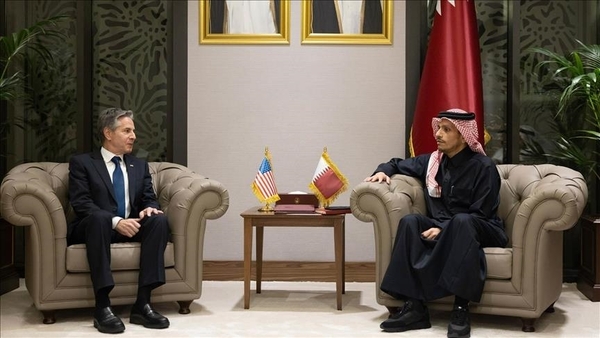
On Sunday, Qatari Foreign Minister Mohammed bin Abdulrahman discussed with his US counterpart, Anthony Blinken, ways to implement the ceasefire agreement in the Gaza Strip, in addition to developments in Syria.


This came during a phone call received by Bin Abdul Rahman from Blinken, according to a statement by the Qatari Foreign Ministry, while Doha and Washington, along with Cairo, mediated the conclusion of a ceasefire agreement in Gaza.


The Qatari Foreign Ministry said that the two sides discussed "the close strategic relations between the two countries and ways to support and enhance them."


They discussed "ways to ensure the full implementation of the ceasefire agreement in the Gaza Strip, and the exchange of (Israeli) detainees and (Palestinian) prisoners."


Bin Abdul Rahman expressed his country's hope "that both parties would commit to implementing the agreement," while Blinken expressed his country's appreciation for "Qatar's role and its continuous efforts that contributed to reaching the agreement," according to the same source.


On Sunday morning, the ceasefire and prisoner exchange agreement in Gaza came into effect, to be implemented in 3 stages, each lasting 42 days.


On the evening of the same day, the Israeli army announced that it had received 3 female prisoners from the International Red Cross, who had been released by Hamas from the Gaza Strip, as part of the first phase of the exchange deal between the two parties.


PALESTINE

Sun 19 Jan 2025 8:48 pm - Jerusalem Time

A child was killed during the occupation forces’ storming of the town of Sebastia

The child Ahmed Rashid Sholi (15 years old) was killed this evening, Sunday, after being shot by the occupation forces during the storming of Sebastia, northwest of Nablus.


The Red Crescent Society announced that its crews in Nablus dealt with the injury of the child Sholi with live bullets to the chest during the storming of the town, and it was later announced that he had died of his injuries.


According to local sources, the occupation army fired live bullets, sound bombs and toxic gas at citizens and their homes during the confrontations, which led to suffocation injuries.

PALESTINE

Sun 19 Jan 2025 8:37 pm - Jerusalem Time

Settlers burn and destroy a number of citizens' vehicles and close roads in the West Bank

Settlers burned and destroyed a number of citizens' vehicles and closed several main roads and intersections, Sunday evening, in the West Bank, under the protection of the Israeli occupation forces.


According to local sources, dozens of settlers gathered on the main street near the town of Turmus Ayya, north of Ramallah and Al-Bireh Governorate, attacked citizens' vehicles and closed the road, forcing them to take alternative routes.


The same sources reported that settlers attacked citizens' vehicles with stones and Molotov cocktails near the Ein Siniya military checkpoint, which was built on citizens' lands north of Ramallah, which led to the burning of 4 vehicles and material damage to two vehicles. They also burned a room at the entrance to a house in the town of Ein Siniya, which belongs to the citizen Theeb Sharakah.


It added that a group of settlers attacked the town of Sinjil, north of Ramallah, and burned two vehicles, one of which was loaded with cooking gas cylinders.


A number of settlers also gathered near the Atara military checkpoint and in the Ayoun al-Haramiya area north of Ramallah, and attacked citizens' vehicles with stones, causing material damage to a number of them.


A group of settlers also attacked citizens' vehicles with stones at the Ein Ayoub junction near the village of Kharbatha Bani Harith, west of Ramallah, causing material damage to a number of them, and they closed the junction to the neighboring villages.


In the Jerusalem Governorate, armed settlers, under the protection of the occupation forces, attacked citizens' vehicles near the village of Jaba', northeast of occupied Jerusalem, on the road between the village of Jaba' and the town of Hizma, without any injuries or damage to the vehicles being reported.


In Qalqilya Governorate, settlers attacked citizens' properties with stones, including shops and "carts", located on the main road "Qalqilya-Nablus", near the village of Jinsafut, east of the governorate, without any injuries being reported.


In Nablus, settlers carried out acts of violence near the entrance to the town of Hawara and the Za'tara military checkpoint, south of Nablus.


Other local sources reported that settlers gathered near Salman al-Farsi roundabout east of Huwara, and at the Za'tara military checkpoint, and carried out acts of violence, under the protection of the occupation forces, which tightened their military measures and prevented citizens from moving and reaching the city of Nablus.

ARAB AND WORLD

Sun 19 Jan 2025 8:31 pm - Jerusalem Time

Biden justifies war of extermination, says Middle East has changed radically


US President Joe Biden said Sunday he had received confirmation that the first Israeli hostages freed under a Gaza ceasefire had been released, saying he "welcomes the ceasefire" and that the region had "fundamentally changed."


"I got a call that three hostages have been released from Hamas and they may now have crossed the border from Gaza into Israel," Biden said at a news conference on the sidelines of an event he attended at the Royal Missionary Baptist Church in North Charleston, South Carolina.


He confirmed that among the hostages to be released from Gaza are American citizens, saying, "The ceasefire agreement in Gaza that is being implemented today is the same proposal that I put forward last May."


The US President revealed that about 700 aid trucks will enter the Gaza Strip today.


Biden confirmed that the agreement was finally reached "thanks to US-backed Israeli military pressure on Hamas and other Iranian proxies," without giving any details.

In his first comments since the first three hostage releases under the deal were carried out, the president, who has less than a day left in office, addressed what he said was criticism of his diplomatic approach from those who believed it would lead to a wider regional war.

Biden said he listened to his critics but ultimately concluded that abandoning the course he was taking — which saw broad support for the Israeli government — would not lead to a ceasefire, but would also lead to the regional war he says his critics feared.

On Wednesday, the day the ceasefire agreement was announced in Gaza, the US President considered that it “came as a result of several factors,” saying that it was “not only a result of the intense pressures that Hamas was subjected to, the changing regional equation after the ceasefire in Lebanon, and the weakening of Iran, but also a result of the persistent and strenuous American diplomatic efforts.”


He spoke briefly about the current situation in Lebanon and Syria, saying, "Lebanon is now without Hezbollah's leadership, Iran is now at its weakest in decades, and Syria is now without Assad."

PALESTINE

Sun 19 Jan 2025 8:03 pm - Jerusalem Time

A young man was injured by live bullets and others suffocated during clashes with the occupation forces west of Hebron

A young man was shot with live ammunition and others suffocated, Sunday evening, during clashes with the Israeli occupation forces in the town of Idhna, west of Hebron.


The head of the Red Crescent Society in the town of Idhna, Muammar Tamizi, said that a young man was shot in the hand with a live bullet and was taken to the hospital, and a number of citizens suffered from suffocation and were treated in the field, during the clashes that erupted after the occupation forces stormed the town of Idhna.


The occupation forces continue their daily raids on the town of Idhna, in addition to detaining citizens for hours, interrogating them in the field, and threatening them, in addition to the continued closure of the town’s main entrance for about six months.

ARAB AND WORLD

Sun 19 Jan 2025 7:05 pm - Jerusalem Time

Jordanian and US foreign ministers stress need to implement Gaza agreement

Jordanian Foreign Minister Ayman Safadi and US Foreign Minister Anthony Blinken stressed on Sunday the importance of the ceasefire agreement in the Gaza Strip and the necessity of implementing it.


This came during a phone call that Safadi received from Blinken, according to a statement by the Jordanian Foreign Ministry, a copy of which was received by Anadolu Agency.


The statement indicated that the two ministers stressed "the importance of the ceasefire agreement in Gaza and the necessity of implementing it, as well as the necessity of bringing sufficient and immediate humanitarian aid into the Strip."


The Jordanian minister stressed his country's keenness to "strengthen cooperation with the United States, especially in efforts to reach a just and comprehensive peace based on the two-state solution (Palestinian and Israeli)."


He referred to "the efforts made by Blinken during his service as Secretary of State to strengthen Jordanian-American relations," as the new US administration led by Donald Trump is expected to assume its duties tomorrow, Monday.


Blinken appreciated "Jordan's role and efforts led by King Abdullah II to achieve security, stability and peace in the region."


On Sunday morning, the ceasefire agreement in Gaza went into effect based on the time set by the mediators at 6:30 (GMT), but Israeli Prime Minister Benjamin Netanyahu confirmed in a statement from his office that the ceasefire would not begin until the list of the three female prisoners was received, as Hamas said at the time that its delay in delivering the list was due to “technical field” reasons.


Later, Hamas handed over the list of names to the mediators, while the Qassam Brigades published the names of the three female prisoners, and Netanyahu's office announced that the ceasefire in the first phase in the Gaza Strip had entered into effect at 11:15 Palestine time (09:15 GMT).

PALESTINE

Sun 19 Jan 2025 6:53 pm - Jerusalem Time

The Israeli occupation army announces the receipt of 3 female prisoners as part of the exchange deal with Hamas

The Israeli occupation army announced, on Sunday, that it had received 3 female prisoners from the International Red Cross, who were released by Hamas from the Gaza Strip, as part of the first phase of the exchange deal between the two parties.


"A special unit of the IDF and a force from the Shin Bet (internal security) are escorting the three returning kidnapped (prisoners) on their way to Israeli territory," the Israeli army said in a statement.


The statement continued: "There they will undergo an initial medical evaluation."


Prime Minister Benjamin Netanyahu's office confirmed that the released female prisoners had arrived in Israel.


The private Yedioth Ahronoth newspaper and other Hebrew media outlets said that Red Cross crews confirmed to the army during the handover of the female prisoners that they were in good health.

PALESTINE

Sun 19 Jan 2025 5:44 pm - Jerusalem Time

Hebrew media: The process of transferring Israeli female prisoners to the Red Cross in Gaza has begun

Hebrew media reported that the Hamas movement in the Gaza Strip began handing over the three Israeli female prisoners scheduled to be released on Sunday to the International Committee of the Red Cross in preparation for their transfer to Israel, hours after the ceasefire went into effect.


The private Hebrew Channel (12) said: "The Red Cross has begun the process of receiving the kidnapped women (Israeli female prisoners)."


There was no immediate official confirmation from the International Committee of the Red Cross, Hamas, or the Israeli side about the handover of the Israeli female prisoners.


On Saturday evening, the International Committee of the Red Cross said it was preparing to carry out a "delicate operation" that would include facilitating the exchange of prisoners and detainees between Palestinian factions and Israel, in addition to intensifying humanitarian relief efforts in the Gaza Strip.


In a statement, the committee said it was "making preparations based on what was agreed upon by the parties (Hamas and Israel) to begin implementing a precise operation that includes releasing hostages (Israeli prisoners in Gaza) and detainees (Palestinians in Israel) and facilitating their transfer, and intensifying the humanitarian response in the Strip."


In a related context, Israeli Defense Minister Yisrael Katz arrived at the reception point for the three female prisoners in the "Ra'im" settlement adjacent to the Gaza Strip.


From there, Katz said: "I came to ensure that the IDF is prepared to defend towns and soldiers against any possibility of attack and attempts to carry out terrorist attacks and kidnappings by Hamas, even during a ceasefire," according to what was reported by the Hebrew newspaper Yedioth Ahronoth.


He added: "We will not stop the war before all the kidnapped (prisoners) return to their homes."


Katz vowed to "respond forcefully to any violation or threat," stressing that they would "preserve the buffer zones."


Earlier on Sunday, the Israeli Prison Service began transferring 90 Palestinian prisoners to Ofer prison in preparation for their release later on Sunday.


The private Hebrew newspaper Haaretz said: "The Israeli Prison Service has begun transferring Palestinian prisoners to Ofer Prison for their release."


Channel (12) reported that "90 Palestinian prisoners will be released today (Sunday), but only after the kidnapped people arrive in Israel."


78 Palestinian prisoners will be released to the West Bank and 12 to occupied East Jerusalem, according to the same source.


The channel pointed out that 1,500 members of the Israeli Prison Service are participating in the operation.
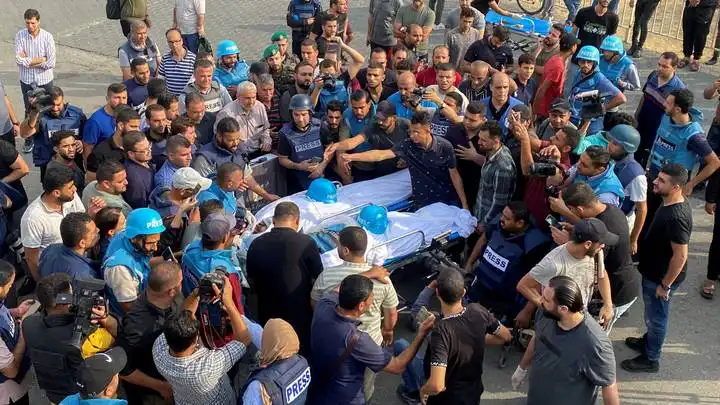

On Saturday, the Hebrew website Walla said: “Contrary to the November 2023 agreement, they will be transported in prison service buses, not Red Cross buses, with tinted windows. With the aim of ‘preventing public expressions of joy.’”


The Palestinian prisoners will not be released until confirmation is obtained that the Israeli prisoners have been handed over to the Red Cross, according to the same source.


On Sunday, the Hamas Prisoners' Media Office said: "The occupation is expected to hand over a list containing 90 names of female and child prisoners who are expected to be released on the first day of the ceasefire agreement."


The office explained in a statement that the agreement stipulates the release of 30 Palestinian prisoners in exchange for a female civilian prisoner from the occupation.
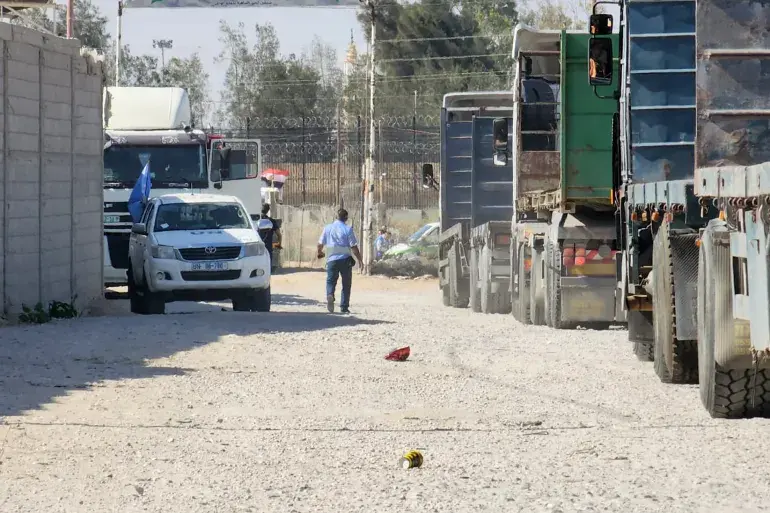

There is a discrepancy regarding the number of Palestinian prisoners to be released, and this is apparently due to the ambiguity surrounding the status of Israeli prisoners held in Gaza, in terms of the number of living and dead among them, which directly affects the determination of the number of Palestinian prisoners to be released.


While the Egyptian Foreign Ministry stated that more than 1,890 Palestinian prisoners will be released, the head of the Palestinian Prisoners Club, Abdullah al-Zaghari, spoke to Anadolu Agency about 1,904 prisoners, and the head of the Palestinian Prisoners and Freed Prisoners Affairs Authority, Qadura Fares, in press statements, about 1,737 prisoners, and the private Hebrew news website "Ynet" about 1,977 prisoners.


The Gaza ceasefire and prisoner exchange agreement consists of 3 stages, each lasting 42 days.


The first stage includes a temporary cessation of mutual military operations, the withdrawal of Israeli forces from populated areas in Gaza, including the Netzarim axis, to areas along the border, in addition to other provisions.


The second phase of the agreement concerns the return of complete and sustainable calm, the exchange of additional numbers of prisoners and detainees, and the complete withdrawal of Israeli forces from Gaza.


The third phase focuses on starting a plan to rebuild Gaza over a period of 3 to 5 years, exchanging the bodies and remains of the dead held by both parties, opening all crossings, and allowing the free movement of people and goods.

PALESTINE

Sun 19 Jan 2025 5:00 pm - Jerusalem Time

Sa'ar: Trump did not force Israel to sign ceasefire agreement in Gaza

Israeli Foreign Minister Gideon Sa'ar said on Sunday that Israel had failed to achieve its goal of defeating Hamas, as the movement was still "in power in Gaza."


Sa'ar denied that US President-elect Donald Trump forced Israel to conclude a ceasefire agreement and release detainees in Gaza, saying: "Trump did not force Israel to do anything in the Gaza agreement."


But the Israeli foreign minister did not deny that the participation of Trump's representative Steve Witkoff in the ceasefire negotiations was "very influential."


He added that the release of Palestinian security prisoners from Israeli prisons is painful and risky.


The ceasefire agreement between Israel and Hamas, which was announced last week after Egyptian, Qatari and American mediation, went into effect early this morning.


Hamas said earlier today that Israel is expected to hand over a list of 90 names of Palestinian prisoners expected to be released on the first day of the agreement. The agreement stipulates the release of 30 Palestinian prisoners for each hostage held by Hamas.

PALESTINE

Sun 19 Jan 2025 4:41 pm - Jerusalem Time

The death of prisoner Muhammad Yassin Jabr in the occupation prisons

This evening, Sunday, the General Authority of Civil Affairs informed the Authority of Prisoners' Affairs and the Palestinian Prisoners' Club of the death of prisoner Muhammad Yassin Khalil Jabr (22 years old) in the occupation prisons.

PALESTINE

Sun 19 Jan 2025 4:19 pm - Jerusalem Time

Hamas and the Israeli occupation begin prisoner exchange procedures on the first day of the truce

Israeli media reported on Sunday that the process of transferring the three Israeli detainees held by Hamas to the Red Cross has already begun.


An official involved in the operation carried out by the International Committee of the Red Cross in Gaza told Reuters on Sunday that a team from the organization was on its way to receive Israeli hostages from Hamas.


Hamas will release three Israeli female prisoners it had captured on October 7, 2023, during its attack on southern Israel on the first day of the ceasefire agreement.


Hamas also said that the Palestinian detainees who will be released as part of the exchange deal have arrived at Ofer prison in preparation for their release.


The movement said earlier today that Israel is expected to hand over a list of 90 names of Palestinian prisoners expected to be released on the first day of the agreement. The agreement stipulates the release of 30 Palestinian prisoners for each hostage held by Hamas.

ARAB AND WORLD

Sun 19 Jan 2025 4:04 pm - Jerusalem Time

Smotrich: Netanyahu gave green light to 'bad, disastrous' deal

Israeli Finance Minister Bezalel Smotrich said on Sunday that Prime Minister Benjamin Netanyahu had given the green light to a "bad and disastrous" deal in the Gaza Strip, threatening to resign from the government if the war of extermination was not resumed.


In a post on the X platform, Smotrich wrote: “Unfortunately, the prime minister decided to give the green light to a bad and disastrous deal, as it poses a great danger to Israeli national security, and sets back many of the achievements made in the war,” he said.


He continued: "We strongly oppose the deal, and we have done everything in our power to prevent a bad deal that would endanger Israel."


He claimed, "Unfortunately, we were unable to prevent this dangerous deal, but we were able to ensure that the war would not end without fully achieving its goals, most notably the complete destruction of Hamas in Gaza."


Smotrich, who is the head of the Religious Zionism party, added: “We demanded and received a commitment to change the method of war in order to reach a complete resolution through gradual control over the entire Gaza Strip, reaching full control over the Strip, so that humanitarian aid does not reach Hamas.”


He said: "Exciting and difficult days await us. We will be happy and joyful when some of our kidnapped (detainees) return to their homeland, but we will remember that a difficult mission awaits us immediately after that, which is to return and fight until victory. My mission now is to achieve complete victory over Hamas, militarily and civilly, and the return of all the kidnapped to their homes."


Smotrich continued: "I confirm that we will not accept any excuse in this matter, and we will not sit in a government that, God forbid, stops the war and does not continue until complete victory over Hamas."


Taking pleasure in the destruction of Gaza, he continued, saying: “Look at Gaza, destroyed, disintegrated and uninhabitable, and it will remain so.”


Regarding the joy of the Gazans at stopping the Israeli genocide, Smotrich said: “Do not be surprised by the joy of our enemy, for this is a society that sanctifies death and dances on the ruins of its life. Very quickly, we will erase their smiles again and replace them with the cries of defeat and the groans of those who have nothing left.”


On Sunday morning, the ceasefire agreement in Gaza went into effect based on the time set by the mediators at 6:30 (GMT), but Israeli Prime Minister Benjamin Netanyahu confirmed in a statement from his office that the ceasefire would not begin until the list of the three female prisoners who were supposed to be released today was received, as Hamas said at the time that its delay in delivering the list was due to “technical field” reasons.


Later, Hamas handed over the list of names to the mediators, while the Qassam Brigades published the names of the three female prisoners, and Netanyahu's office announced that the ceasefire in the first phase in the Gaza Strip had entered into effect at 11:15 Palestine time (09:15 GMT).


PALESTINE

Sun 19 Jan 2025 3:11 pm - Jerusalem Time

198 journalists were killed since October 7, 2023 until today

The Journalists Syndicate said that 198 journalists have been killed since the beginning of the aggression against our people on October 7, 2023, until today, Sunday, including a journalist from Tulkarm Governorate in the West Bank.


The head of the Journalists Syndicate, Nasser Abu Bakr, said during the annual freedoms conference, held today, Sunday, at the Syndicate’s headquarters in the city of Ramallah, under the title (A wounded voice and a clearer image), that 91 journalists, including 23 female journalists, were killed in the Gaza Strip during the past year, stressing that journalists moved international public opinion despite the killing, slaughter, destruction and their own killing, but they remained steadfast and conveyed the truth to the world with all professionalism.


He added that the Journalists Syndicate was present among journalists and did not stop, and will remain loyal to their message and their souls and will submit the third complaint to the International Criminal Court regarding the massacres committed against Palestinian journalists.


The head of the Freedoms Committee of the Palestinian Journalists Syndicate, Muhammad Al-Lahham, reviewed the most important points in the committee’s annual report, calling for humanizing the massacres taking place against journalists.


He added that the families of journalists are being targeted, and that there are 86 injuries to journalists from direct bullets and missile shrapnel, meaning that the number of martyrs is greater than the number of injured journalists, which is evidence that all the injured were potential martyrs.


He noted that there were 64 cases of arrest in the Gaza Strip and the West Bank among journalists, and 54 institutions were completely or partially destroyed, or subjected to seizure and destruction, while about 28 decisions were issued to close and extend the closure of media institutions and centers.


He pointed out that the year 2024 witnessed a huge increase in the level of shooting around journalists, under the pretext of terrorizing them in order to prevent coverage, as 148 incidents were recorded that led to injuries among journalists, compared to 85 incidents of injuries due to inhaling toxic tear gas and sound bombs.


He said: About 164 relatives of journalists were killed when their homes were bombed during the past year, as some lost most of their family members, and husbands, fathers, mothers and children paid the price for their children’s profession, and the families of journalists lost about 53 homes that were bombed and destroyed.


He added that journalists are prevented from working, detained, threatened, kidnapped, and the reality of journalistic work is harmed by attacking communications networks, and targeting and hacking Palestinian content on social media sites.

PALESTINE

Sun 19 Jan 2025 1:08 pm - Jerusalem Time

UNRWA: 4,000 aid trucks ready to enter Gaza Strip

The Commissioner-General of the United Nations Relief and Works Agency for Palestine Refugees (UNRWA), Philippe Lazzarini, announced that the agency has 4,000 trucks loaded with aid, half of which carry food and flour, ready to enter the Gaza Strip.


The agency said on its X platform: "UNRWA has 4,000 trucks loaded with aid ready to enter the Gaza Strip, half of which carry food and flour."


She explained that the agency's commissioner, Philippe Lazzarini, said that "attacks on aid convoys in the Gaza Strip may decrease with the entry of humanitarian relief following the ceasefire."


He added that the agency is determined to continue working in Gaza and the occupied West Bank, after an Israeli ban on its operations came into effect on January 30, stressing that UNRWA is the only body capable of providing basic health care and education in Gaza.


For his part, the representative of the World Health Organization in the occupied Palestinian territories, Rick Peeperkorn, said that the organization plans to introduce an unspecified number of hospitals ready to support the destroyed health sector in Gaza over the next two months.

PALESTINE

Sun 19 Jan 2025 11:50 am - Jerusalem Time

The government holds a meeting today to coordinate the plans of ministries and official bodies operating in Gaza

The government is holding a special meeting this evening, Sunday, to raise the level of coordination between the various ministries and official bodies operating in the Gaza Strip, headed by the Ministry of Social Development and Relief, Public Works, Local Government, Health, the Water and Energy Authorities, and the Red Crescent Society, to coordinate the work of the government field teams in the Strip and the various civil and international institutions operating on the ground.


Director of the Government Communication Office, Mohammed Abu al-Rub, said in a phone call with WAFA that there is high coordination between the government and international relief organizations concerned with relief efforts and emergency response in the Gaza Strip, most notably coordination between the Ministry of Public Works and the United Nations Development Program (UNDP), to begin the first phase of implementing the plan to remove rubble in vital areas in the Gaza Strip in coordination with local government bodies, in addition to coordination between the Ministry of Health and international organizations working in the health sector to raise the capacity of health institutions to respond to emergencies to provide treatment to tens of thousands of wounded.


Abu al-Rab pointed to the coordination between the Ministry of Social Development and the Red Crescent Society, as it is one of the most prominent bodies responsible for bringing aid into the Gaza Strip. It is expected that the Ministry of Development will receive several batches of aid shipments from the Red Crescent to distribute them to the deserving categories based on the Ministry’s national registry, which includes needy families.


He pointed out the government's directives to the Energy and Water Authorities to expand work on repairing the main water connections and to bring in as many fuel trucks as possible to operate drinking water pumping stations and pump wastewater away from residential areas.


The Director of the Government Communications Office pointed out that the government is expected to issue a detailed statement immediately after the end of the session.