OPINIONS

Wed 22 Jan 2025 8:47 am - Jerusalem Time

Jenin, the first chapter of the Israeli massacre in the West Bank

op-ed - Al-Quds dot com

op-ed - Al-Quds dot com

Opinion Writer

Last Saturday, in the Jerusalem Talk, we referred to the coming massacre in the West Bank, after the blatant incitement by Israeli government ministers, considering that the decision of the security and political cabinet to amend the objectives of the war to include the West Bank is a direct and official statement to launch a large-scale war on citizens and civilians, in addition to the statements of the head of the Shin Bet at the time that the release of Palestinian prisoners will increase the motivation to carry out new attacks in the West Bank, and the statements of Defense Minister Katz, who considered the decision to cancel administrative detention orders against settlers a message to support and strengthen settlement, and in another place he called for shooting at Palestinians to prevent them from showing any signs of welcoming the released prisoners.


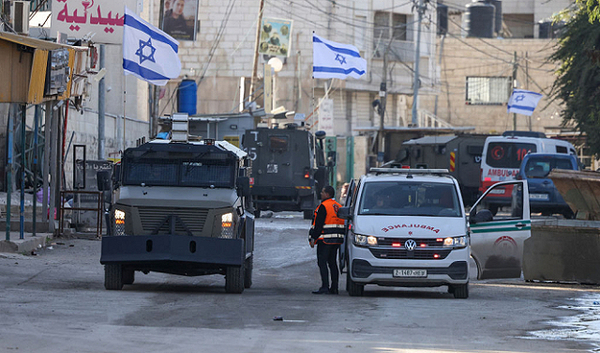
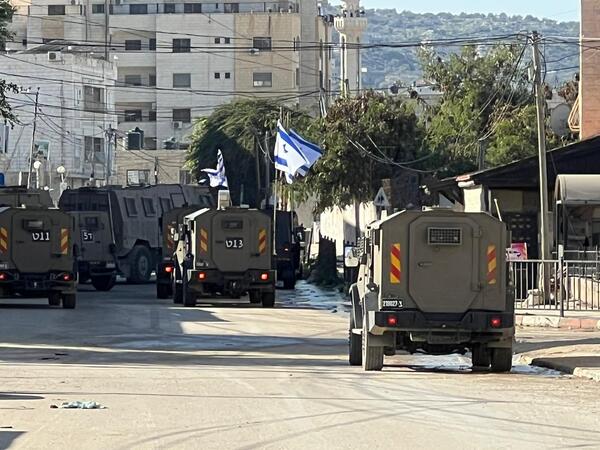
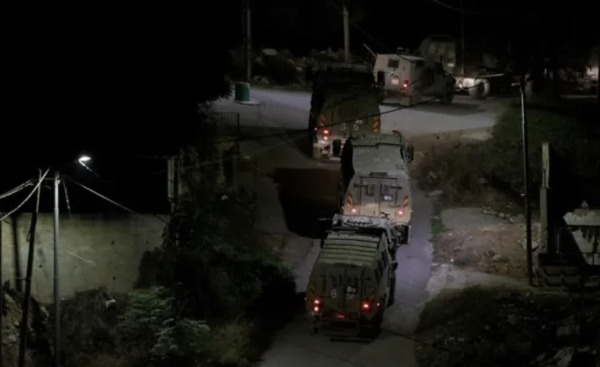
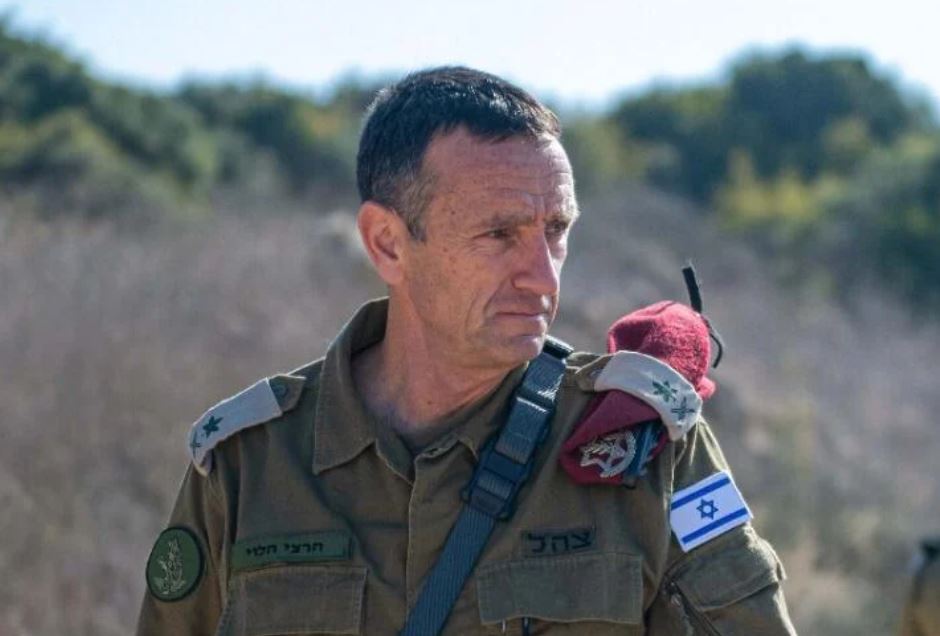
This is how the story began with a war of statements and threats, the most important of which was the statement of the resigned Chief of Staff who gave orders to prepare to launch qualitative military campaigns in the West Bank, with Jenin being placed as the first target in a new Israeli massacre, the chapters of which began yesterday with a deadly invasion, which resulted in the martyrdom of ten citizens and the injury of more than 50 citizens, some of whom were doctors working in Jenin’s hospitals and health centers.


Israel chose the date of its military campaign and aggression just after the inauguration of US President Donald Trump, fearing that a Security Council resolution would be vetoed by the Biden administration. The new aggression is also a gift from the latter to the extremist parties in Netanyahu’s government, especially to the extremist minister Bezalel Smotrich, who set the goal of the West Bank incursions, along with the resumption of the aggression on Gaza, as conditions for not resigning from the Israeli government.


Israel received another gift from President-elect Trump, who cancelled the emergency law that allows the United States to impose sanctions on settlers, and the Israeli government exploited this to give settlers free rein to carry out heinous attacks on citizens, while Jenin was the first chapter of the new massacre, on a day when the roads and checkpoints of the West Bank were almost completely closed, amid blatant incitement from the Israeli media.


The storming and invasion of Jenin and the northern West Bank, which is scheduled on the upcoming targets’ calendar, is an unmistakable declaration of war, through which the occupying state seeks to empty the West Bank’s camps and villages and displace and expel its people, by continuing the war for several additional days, as an Israeli military official claimed, saying that the war on Jenin will continue for a long time.


As usual, Israel shows its true face, which is based only on killing, destruction and raids. Who will intervene to protect the people of Jenin, and who will stop the machine of killing, destruction and slaughter that has never had its fill of the blood of Palestinians in the Gaza Strip?

OPINIONS

Wed 22 Jan 2025 8:46 am - Jerusalem Time

The Israeli occupation and the scenario of imposing a voluntary entity in Gaza

Fadi Abu Bakr

Fadi Abu Bakr

Opinion Writer

Since the beginning of the war on the Gaza Strip, the Prime Minister of the occupation government, Benjamin Netanyahu, declared that the goal was to eliminate the Hamas movement. However, Netanyahu and the Israeli occupation are fully aware that eliminating Hamas as an entity or as an idea is impossible. Rather, his main goal is to prolong the war as much as possible, while weakening the movement enough to reduce its influence on the ground, within the framework of a broader strategic plan.


The Israeli project is not limited to weakening Hamas, but extends to attempts to establish a voluntary entity in Gaza by imposing an administration that guarantees security and economic control under its direct supervision, and preventing the Palestinian Authority from regaining responsibility. This entity may be embodied through strict security arrangements, including monitoring the borders and tunnels, and imposing economic and humanitarian conditions aimed at creating a new reality that pushes the population to accept Israeli control. The project may also include the involvement of countries and international organizations to ensure the stability of the region under Israeli supervision, while allowing the presence of international or regional security forces on a temporary basis, with the aim of reducing international pressure on the occupation and strengthening its hegemony over Gaza, while marginalizing any local resistance or Palestinian political path that may threaten its interests.


This scenario is based on American and Israeli statements, including what was announced by US National Security Advisor Mike Waltz, who confirmed that Hamas will not regain control of Gaza in the future, and that there are broad outlines based on replacing the current structure with security or political structures supported by regional and international powers. It can be said that these plans are in line with the Israeli strategy aimed at maintaining security control in Gaza, and are consistent with Netanyahu’s “no’s” that reject both Hamas and the Palestinian Authority in his plan for the future of the Strip.


In this context, Israel seeks to ensure that the Palestinian Authority does not regain its role in Gaza, as this would enable the Palestinians to build a united front that could threaten its interests. If the Palestinian Authority were to succeed in returning to Gaza, this would lead to the unification of the West Bank and the Gaza Strip under a single political framework, which Israel considers a direct threat to its existence. Therefore, the continuation of the Palestinian division between the West Bank and Gaza is a vital strategic tool for Israel, which seeks to strengthen this separation by weakening both Hamas and the Palestinian Authority.


In addition, the return of the Palestinian Authority to Gaza will eliminate any justification for the Israeli occupation to continue refusing to engage in a political process with the Palestinians, as the Palestinian leadership will become unified and capable of making strong political decisions. In this way, Israel will lose the pretext for not negotiating with the Palestinians, who will appear before the international community as a unified political party capable of representing their interests and rights.


In this context, Israel's decision to ban UNRWA and propose alternatives to this agency (most likely American) comes as part of Israel's broader strategy to influence the humanitarian and economic situation in Gaza. Israel will be able to control and dominate the Palestinian reality without having to face unified political or military resistance. This trend also reflects the United States' desire to reposition itself in the region, including UNRWA's locations in Jordan, Lebanon, Syria and Palestine, in the context of confronting Chinese and Russian influence in the region, and strengthening the Israeli occupation as the region's policeman in a manner that serves Israeli and American interests.


In light of these major challenges that will affect the Palestinian people and the entire Palestinian geography, there remains hope that the Palestinian forces will be able to unite under the banner of the Palestine Liberation Organization, the sole legitimate representative of the Palestinian people, as national unity is an inevitable national necessity to thwart and extinguish the proposals promoted by authoritarian policies and agendas of control here and there. National unity remains the pivotal force in confronting the Israeli occupation, and it is the real guarantee for the future of the Palestinian cause and the Palestinian national project.

OPINIONS

Wed 22 Jan 2025 8:44 am - Jerusalem Time

Anne Frank and Hind Rajab are symbols of two different tragedies and common lessons

Omar Faris

Omar Faris

Opinion Writer

Human history is full of stories of children who were victims of wars and conflicts. Among them are Anne Frank, the Jewish girl who was murdered in the Nazi Holocaust, and Hind Rajab, the Palestinian girl who was killed as a result of the Israeli bombing (the Israeli Holocaust) of the Gaza Strip. Despite the difference in time and context, the two girls have become symbols of innocent human suffering in the face of brutality.


Anne Frank - Holocaust Icon


Anne Frank was born in 1929 in Germany to a Jewish family. With the rise of Adolf Hitler to power, the family fled to the Netherlands to escape persecution. During the German occupation of the Netherlands, the family hid for two years in a secret bunker. During this period, Anne wrote her diary, which later became a moving testimony to life under Nazi persecution.

The shelter was discovered in 1944, and the family was arrested and transported to concentration camps. Anne Frank and her sister Margot died of illness in Bergen-Belsen in 1945, just weeks before the camp was liberated. Anne Frank's diary has become a symbol of the pain Jews experienced in the Holocaust and a call to reflect on the consequences of hatred and discrimination.


Hind Rajab - Symbol of the Israeli Holocaust in Gaza


Born on May 13, 2018, Hind Rajab, a little girl from the Gaza Strip, was killed in an Israeli airstrike during one of the repeated attacks on the Strip. Her family was trying to escape by car when they were targeted by Israeli missiles. All of the family members were killed instantly, except Hind, who was trapped in the destroyed car for days without food or water.

Eventually, the car caught fire, and Hind was burned to death. Her story has become a symbol of Palestinian suffering and what some call the “Israeli Holocaust”—Israel’s campaign of systematic killing and destruction against the Palestinian people.


The victim becomes the executioner


The painful irony of history is that the descendants of Holocaust victims, who themselves suffered persecution, are today carrying out military actions that cause similar suffering to another people. Israel, which was founded as a haven for Holocaust victims, is now accused of committing crimes against the Palestinians.

Hind Rajab's story highlights this moral contradiction, as victims become executioners, and the pattern of suffering is repeated at the hands of those who previously suffered the same injustice.


Global double standards


The world regularly commemorates the Holocaust and honors its victims like Anne Frank, but remains silent about contemporary tragedies like that of Hind Rajab. Despite the shocking images of the devastation in Gaza and the suffering of Palestinian children, international responses are limited to political statements without real action.

This global silence raises questions about double standards: Why is the suffering of one party remembered, while that of another is ignored? Are political interests and geopolitical alliances more important than human rights and the lives of innocent children?


Anna and Hind.. Two stories, one lesson


Anne Frank and Hind Rajab are symbols of different eras and conflicts, but their stories remind us of one truth: war always targets the innocent and the weak. Anna has become a symbol for contemplating the tragedies of the past, and Hind reminds us that the lessons of history have not yet been learned.

As Anne Frank is memorialized in museums and books, Hind Rajab’s story must become a similar symbol, a cry for justice, peace and an end to the suffering in Gaza.

Both girls highlight the fact that every human life is precious. Let their stories be a warning against indifference and evidence that history must not be repeated. Anne Frank is a symbol of the past, and Hind Rajab is a symbol of the present, to which the world must not remain silent.

——

This global silence raises questions about double standards: Why is the suffering of one party remembered, while that of another is ignored? Are political interests and geopolitical alliances more important than human rights and the lives of innocent children?


OPINIONS

Wed 22 Jan 2025 8:43 am - Jerusalem Time

Trump's Upcoming Battles

Hamada Faraana

Hamada Faraana

Opinion Writer

Former and current US President Trump seeks to return to the White House and sit at the decision-making table, free of troubles, headaches and wars, and not allow any party to sit on its edges and extensions.


Trump seeks to be the decision maker and remain so, and for the United States to remain the decision maker and the sole authority in managing international politics, as a result of the Cold War in 1990, and the defeat of communism, socialism, and the Soviet Union.


He wants the market to be free for him, for his management, to maintain US hegemony over international decision-making sources, and for the market to be open to him, and for the profits, gains, results and fruits to remain for the Americans and for him personally.


Its real competitor on the international level is China, the commercial competitor, which does not resort to wars and bloody confrontations, and has achieved results that make it the second economic power in the world after the United States, surpassing Europe, and with it Russia, which seeks to restore its position and role on the global level with China in the face of the United States and Europe.


Reflecting this interest, Trump said he had a new discussion on Friday, January 17, 2025, with Chinese leader Xi Jinping on a number of issues, including trade, fentanyl and the TikTok app.


“The call was very good for both China and the United States. I expect we will solve many problems together and start immediately,” Trump wrote in a post on his social media platform Truth Social. “We discussed trade balance, fentanyl, TikTok, and many other topics.”


"President Xi and I will do everything we can to make the world more peaceful and secure," he added.


Trump's aspirations are unusual for an American president, and it is clear that he seeks to change many titles and issues, whether towards Panama, Canada or Denmark, and at the same time he holds visions towards our Arab region, and towards Palestine, after he provided four services to the colony: 1- He recognized unified Jerusalem as the capital of the colony, 2- He moved the American embassy from Tel Aviv to Jerusalem, 3- He recognized that the Golan is part of the map of the colony, 4- He stopped support for UNRWA with the aim of eliminating the refugee issue, so what will be his position towards the Palestinian West Bank.


A state of anxiety prevails in Palestine, due to speculation about Trump's upcoming policies.

Do the leaders of the Palestinian divided authorities realize the seriousness of what they will face from Trump and his team, which is most biased towards the colony and its expansionist projects?

OPINIONS

Wed 22 Jan 2025 8:41 am - Jerusalem Time

International Aid: Between Resilience and Flexibility!

Amin Al-Hajj

Amin Al-Hajj

Opinion Writer

The concept of international aid in Palestine has always been associated with flexibility, in the context of development approaches. When analyzing these concepts, it becomes clear that they are not as neutral as they may seem at first glance. This is an attempt to criticize both the concept of international aid and its mechanisms on the one hand, and the concept of flexibility within the framework of development on the other hand, with a focus on the Palestinian context as an analytical perspective.


International aid emerged after World War II, particularly with the launch of the Marshall Plan, as part of a global system that supported the economic and political dominance of donor countries. In the current context, “aid” to countries in the South often comes under the guise of “development,” but it reflects a long history of colonialism and resource depletion. For decades, countries in the North have plundered the resources of countries in the South, creating a huge economic gap. What is provided today represents only a small fraction of what was plundered. Most of it is conditional on the implementation of economic policies that reinforce political and economic dependency, such as privatizing vital sectors and opening markets to transnational corporations. International lending institutions also weaken the sovereignty of recipient countries by imposing “economic reform” programs.


In the Palestinian context, in many cases, aid becomes a tool for achieving political goals. We have seen how aid has been used to pressure Palestinians to adhere to political agendas that do not achieve justice in essence, even if they appear different on the surface. Instead of confronting the occupation as the main cause of Palestinian suffering, it focuses on alleviating its symptoms, such as unemployment, poverty, and control over resources, which leads to “beautifying” the current situation and making it “acceptable” or tolerable. Steadfastness and resilience are portrayed as two sides of the same coin, to the point that the latter has invaded official discourse, and today we can observe its widespread use in official literature, as is the case in national and international strategies and plans.


When talking about the agricultural sector as one of the most important economic sectors, and the most affected by the occupation and its policies, when talking about the projects presented to farmers in areas classified as “C”, for example, there is a difference between presenting these projects from the perspective of steadfastness or flexibility.


From a steadfastness perspective, these projects mean that they have a resistant character; they support farmers with resources and tools that enable them to cultivate their lands, even under the constant threat of demolition or confiscation, or to rehabilitate the destroyed lands, in addition to digging wells to bypass the occupation’s restrictions on water resources, and to keep the land in use and cultivated, which prevents it from being declared “abandoned lands,” which is used as a justification for confiscating them in many cases. Thus, the developmental act becomes a national, resistant dimension, and a means to preserve the Palestinian presence and affirm the connection to the land as a source of identity and belonging.


When viewed from a flexibility perspective, this means adapting to the reality of the occupation and its policies, and mitigating its impact on the farmer, without directly confronting it. It seeks to find “practical” solutions to adapt to a new reality, such as providing modern or “smart” irrigation systems that consume less water, instead of pressuring to collect water rights, or increasing productivity from the remaining or “limited” resources, to reduce dependence on resources that the occupation prevents access to, or “helping” the farmer to develop his business within the remaining areas of land without seeking to expand the agricultural area. Similarly, in other sectors, “improving” the conditions of the residents of these areas, to avoid direct confrontation with the occupation, which “exempts” donors from their historical and current responsibility, which should be directed towards addressing the roots of the problem, the occupation, and works to consolidate the status quo instead of changing it, which makes the “developmental” action excessively focused on individuals instead of groups, and pushes them to “adapt” to crises as an alternative to changing the “new” reality.


If we want to redefine aid, it must be viewed as part of a historical responsibility resulting from a long colonial era, accompanied by the plunder of resources, not as a charitable act, and as part of the process of compensating countries and peoples that were weakened and crushed, which requires restructuring this system in a way that opens the door for these countries and societies to catch up with the development bandwagon. The same applies to the concept of resilience, which must include the ability to resist the root causes of crises, and enhance collective action and solidarity as a means of building liberating resilience, combining the concept of liberation from political, economic and social restrictions, and enhancing the ability of societies to challenge and overcome these conditions, and thus, moving beyond the idea of survival to liberation from the oppressive structures that create these challenges, and making it qualified to be a synonym for steadfastness in its broader and comprehensive dimension.


OPINIONS

Wed 22 Jan 2025 8:39 am - Jerusalem Time

Who will rule Gaza after this genocide?!

Mohamed Gouda

Mohamed Gouda

Opinion Writer

What Israel has done in the Gaza Strip leaves no room for any Palestinian party or organization to control the Strip, assume power in it, and play alone after this massacre and the war of extermination that Israel waged for 471 days on the Strip, during which it destroyed people, trees, and stones, and claimed the lives of about a quarter of a million Palestinians, between martyrs, wounded, missing, and prisoners, and wiped out 88% of the Strip’s buildings, institutions, and infrastructure.


This prompts me to say, with complete impartiality, that neither Hamas nor Fatah can assume power in the Gaza Strip after this war has ended, through a humanitarian truce, not a political one, of course, and an agreement on a rolling deal for a ceasefire, not a cessation of war, distributed over three stages during which the Israeli hostages in Gaza will be exchanged for the release of approximately 1,650 Palestinian prisoners from the occupation’s prisons, with a gradual and conditional withdrawal of Israeli army forces from the Strip, the flow of relief aid, and reconstruction in the final stage of Gaza.


Therefore, in my opinion, any Palestinian party that claims alone that it is able to do everything that the Gaza Strip needs and requires with the announcement of a ceasefire, is either out of touch with reality, or it still believes that the time of Tom Cruise is here to stay and that it is possible to impose its arrogance, policy and approach of domination, exclusion, rule by force, and military and security grip on our afflicted people in the Strip.


I believe that whoever wants to take over the government in the Gaza Strip, without national consensus and away from political partnership, and seeking to try to reproduce the era of rule before October 7, and not taking into account the circumstances and reality of our people who are living a tragedy, suffering and a real catastrophe after the worst war known to humanity in modern history, and the resulting moral and material consequences and psychological, social and health effects that will cast their shadows on the Palestinian citizen in the Strip, and the consequences of that on the Palestinian national situation as a whole, is like someone who is punishing those residents of Gaza who were able to stay alive and survive until this moment after this hell.


The complex and bitter reality, the accumulation of crises, problems and many issues that have plagued the Gazan reality throughout the fifteen months of this massacre and genocide, have formed new concepts and visions in the collective mind of the Gazans. In my opinion, this requires a Palestinian national leadership from the womb of suffering and the shadows of the tent, which believes in the project of the Palestine Liberation Organization, and is well aware and realizes that what this war has left behind on the political and national situation on the one hand, and on the humanitarian, social, psychological and economic reality of the Gazans in the Strip on the other hand, is much greater than the idea of hegemony, control and acquisition by this party or that.

PALESTINE

Wed 22 Jan 2025 8:27 am - Jerusalem Time

Hamas leader: We seek to form a technocratic government to run Gaza

Hamas leader Bassem Naim revealed on Tuesday that the movement is seeking to form a "technocratic government" agreed upon by Palestinian factions to administer the Gaza Strip.


Naim said - in an interview with Al-Aqsa TV - that "there are efforts to end the division and intensify efforts to form a national unity government," according to the channel's website on Telegram.


He added, "We seek to form a government of technocrats agreed upon by the Palestinian factions in order to manage the scene in the Gaza Strip."


Since the collapse of the Palestinian national unity government in the summer of 2007, a political division has continued between the Fatah and Hamas movements, and a geographical division between the Gaza Strip and the West Bank. Regional and international mediations and numerous agreements have failed to end it.


Hamas and the rest of the Palestinian factions have repeatedly stressed their rejection of what is included in media reports, especially Israeli and American, about plans to administer Gaza by non-Palestinian parties.


It is noteworthy that a ceasefire and prisoner exchange agreement in Gaza was reached through Qatari, Egyptian and American mediation and officially went into effect last Sunday morning. Its first phase will last 42 days during which negotiations will take place to begin a second and then a third phase.


On Sunday, Israel released 90 Palestinian prisoners, after Hamas released three Israeli civilian female prisoners.

ARAB AND WORLD

Wed 22 Jan 2025 8:25 am - Jerusalem Time

US Foreign Policy Directions in Marco Rubio's Cabinet

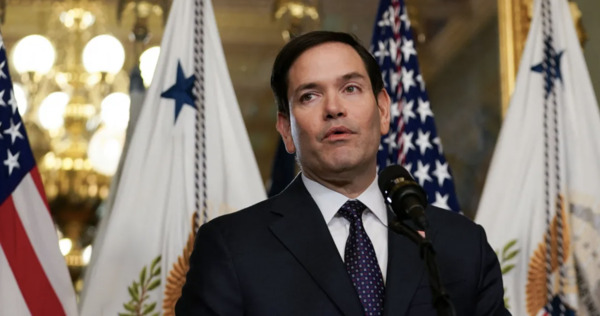
New US Secretary of State Marco Rubio said the Trump administration's foreign policy will be "based on America's interests first."


In a speech following his inauguration on Tuesday, he told ministry employees that US foreign policy would be practical and realistic, saying, "If our interests intersect with the interests of others, we will work with them."


While he stressed that the United States would seek to "prevent and avoid conflicts," he stressed that this would "not be at the expense of our national security, our national interests, or our values."


Rubio took office after the US Senate unanimously approved his appointment.


For Marco Rubio, the easy part may be over. The Senate confirmed him as secretary of state with unanimous support, and Democrats joined Republicans in praising his acumen and wisdom.


Now comes the task that will make or break his presidency: retaining the full support of his new boss, Donald Trump.


Rubio, 53, comes to the job with more experience than Trump’s previous secretaries of state, having spent the past 14 years in the Senate and is intimately familiar with U.S. foreign policy from the Indo-Pacific to the Middle East and Latin America. But that traditional expertise, combined with Rubio’s long-held, hard-right views on Russia, his support for America’s role in NATO, and his fervent proselytizing of Israel and Netanyahu, is what some fear will ultimately make him a target for Trump’s wrath.


On that point, Thomas Shannon, a former U.S. diplomat who worked extensively with Rubio during the Obama and first Trump administrations, said on ABC: “Is Rubio going to face some challenges as he and the president try to come to an agreement on the purpose of American power?” Still, the scene was cordial Tuesday as Rubio took the oath of office. Vice President J.D. Vance, who served alongside him in the Senate, called him a friend and a “bipartisan solution-finder” as he took the oath.


Rubio echoed Trump's comments in his brief remarks, insisting that whatever the administration and the State Department do must make the country stronger, safer and more prosperous.


"If you don't do one of those three things, we won't do it," Rubio said.


He repeated that sentiment more than once when he first appeared at the State Department, telling staff that his job, and theirs, would be to defend and implement Trump’s “America First” policies.


Rubio’s support in Washington has an institutional feel, with many hoping he will prove a steadying figure at a time of global turmoil. In interviews with more than a dozen people, including Republican and Democratic lawmakers, as well as former diplomats and colleagues, he was repeatedly described as the “responsible” choice to represent the United States abroad, a sentiment that is well-known both at home and on the world stage, according to the network.


“I think he’s going to be able to deliver that message, country by country, continent by continent, that’s not negotiable, but also comfortable,” said Sen. Kevin Cramer, a Republican and longtime right-winger from the deeply conservative state of North Dakota. “Not that I’m looking for every other country to be comfortable with us, but in a way that I don’t think is alarming.”


Rubio’s worldview, experts say, has been largely shaped by his own history: He is the son of Cuban immigrants who arrived in Miami in 1956, three years before the Cuban revolution and Fidel Castro’s rise to power that ended U.S. dominance, “with nothing but the dream of a better life,” he testified before the Senate Foreign Relations Committee last week. His father was a waiter and his mother a hotel maid.


“Thanks to them, I had the privilege of being born a citizen of the greatest country in the history of the world,” he said. “And to grow up in a safe and stable home, by parents who made the future of their children the true purpose of their lives.”


The “Only in America” story is one that helped get him elected to public office in Florida, where he worked his way up from city commissioner to the Florida House of Representatives, eventually becoming the first Cuban-American speaker of the state House of Representatives in the history of the legislature.


Rubio is a right-wing hawk, an advocate of American hegemony in the Middle East and a counterweight to China in the region. He is committed to containing Iran, as he told Congress during a hearing on the 15th of this month, that a nuclear-armed Iran with the resources and military capabilities to continue sponsoring terrorism to destabilize the region cannot be tolerated under any circumstances.


These conditions are likely to be part of any future U.S.-Iran deal, to which the secretary of state remains open. However, Rubio’s tough stance on Iran could also face obstacles with some of the more moderate Gulf states, which view Iran differently than they did during Trump’s first term and have taken a more conciliatory tone toward Tehran in recent years.


Rubio’s record of supporting Israel, oppressor or oppressed, including settlements, is impressive and loyal. However, Rubio sees Gulf allies as essential to containing Iran and “key partners in addressing terrorist threats,” as he puts it. He will likely seek to build on the close ties Trump established during his first term with Saudi Arabia and the United Arab Emirates, and to strike a deal between Israel and Saudi Arabia with a Palestinian state as part of a larger regional deal. The senator has championed the deal with Israel as having many security benefits for Saudi Arabia.


Some believe there is room to break with Trump, perhaps early, especially on Ukraine and NATO. For example, during Trump’s 2017-2021 term, Rubio co-sponsored legislation that would have made it harder for Trump to withdraw from NATO, by requiring a two-thirds majority in the Senate to ratify the withdrawal.


Trump has for years criticized NATO member states that have failed to meet agreed military spending targets and warned during the campaign that he would not only refuse to defend countries that are “behind” in funding, but would also encourage Russia to “do whatever they want” with them.


Rubio is a leading China hawk in the Senate, and Beijing imposed sanctions on him in 2020 over his stance on Hong Kong in the wake of democracy protests, provoking China and creating tensions with it.


As for Cuba, Rubio has as much hostility as he has toward the communist government in his home country.

PALESTINE

Wed 22 Jan 2025 8:21 am - Jerusalem Time

Israeli occupation launches an arrest campaign in the West Bank

This morning, Wednesday, the Israeli occupation forces launched a large-scale arrest campaign in the West Bank.


In Ramallah, the occupation army arrested the two young men, Adam Al-Roum and Iyad Al-Froukh, after raiding and searching their parents’ homes in Ramallah Al-Tahta in the center of the city, while it detained a number of others during a raid on the village of Al-Mazra’a Al-Gharbiya.


These forces also turned a house in the village into a military barracks and a center for field investigations with young men. They also raided several houses in the village of Burqa, east of Ramallah, and the Jalazone camp.


In Bethlehem, the occupation forces arrested: Mahdi Omar Badawneh (27 years old), Ayham Ali Hammad (24 years old), Alaa Al-Din Muhammad Abu Surur (34 years old), Muhammad Atallah Al-Mashaikh (30 years old), Malik Allan (29 years old), Izz Al-Din Muwaffaq Badawneh (25 years old), Omar Ahmed Izzieh (27 years old), Daniel Rashid Abu Surur (28 years old), Ali Mustafa Abu Surur (27 years old), Yassin Muwaffaq Badawneh (24 years old), Anas Asaad Abu Surur (36 years old), from Aida camp north of Bethlehem.

The same sources added that the occupation forces arrested from the town of Tuqu', southeast of Bethlehem: Muhammad Khaled Al-Amur (20 years old), Riyad Talal Al-Amur (21 years old), and Qassam Nidal Al-Amur (19 years old).


The occupation forces also arrested Yousef Nour Abu Surur (29 years old) and Muhammad Imad Radi (27 years old) from the Khalayel Al-Loz area, southeast of Bethlehem.


From the city of Bethlehem, the occupation forces arrested Khalil Mustafa Kanaan (27 years old) and Khalil Khader Kanaan (35 years old).


In Salfit, the occupation forces arrested the two young men, Hisham Zuhair Rayyan and Ahmed Muhammad Mar’i, after raiding and searching their homes in the town of Qarawet Bani Hassan.


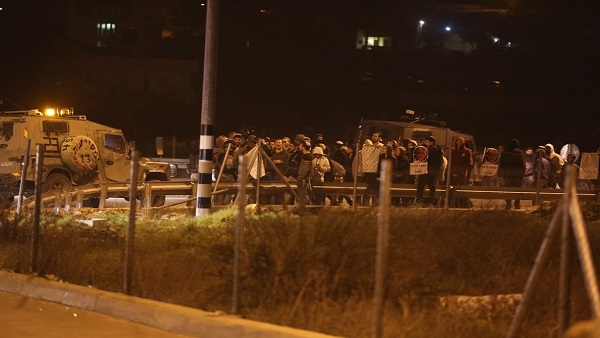
In another context, the occupation forces continue to close all entrances to towns and villages in Salfit Governorate with iron gates and heavy military checkpoints, and prevent the movement of citizens.


In Jenin, the occupation forces stormed the village of Masiliya and arrested the two brothers, Baha and Baraa Abu al-Rab.


In Tulkarm, the occupation forces arrested Mustafa Al-Jallad after raiding his home in the Ezbet Al-Jarad suburb, south of Tulkarm, and Anas Al-Jiyusi from his home in the city.

PALESTINE

Wed 22 Jan 2025 8:11 am - Jerusalem Time

10 dead and dozens injured during the ongoing Israeli aggression on Jenin

Ten people were killed and more than 40 others were injured, including at least one doctor and one nurse, as a result of the Israeli occupation army’s aggression on Jenin on Tuesday, where it announced the start of a military operation there, which it called “Iron Wall,” in reference to the invasion of the West Bank in 2002, and which it called “Defensive Wall.”


The Palestinian Ministry of Health announced the martyrdom of Mahmoud Ibrahim Jaradat (29 years old) in the town of Ta’nek, Jenin District, while the other nine martyrs are: Khalil Tariq al-Sa’di (35 years old), Khalaf Ahmed Jamhawi (26 years old), Hussein Abdel Moneim Abu al-Haija (38 years old), Yousef Khalil Abu Awad (42 years old), Moataz Imad Abu Tabikh (16 years old), Ahmed Nimer al-Shaib (43 years old), Amin Salah al-Asmar (57 years old), Raed Hussein Abu al-Saba’ (53 years old), and Abdel Wahhab Ahmed al-Sa’di (53 years old).


The occupation's Apache fighter planes flew over the city and the camp, in addition to drones that fired at the residents and their homes, while the Israeli army brought armored vehicles towards Jenin.


At first, the Palestinian Ministry of Health reported that "a dead arrived at Jenin Governmental Hospital, following the occupation's bombing of Jenin"; later confirming that the number of victims of the aggression had risen to 10 martyrs and more than 40 wounded.


This comes as terrorist settlers burned homes, vehicles and shops in an attack they launched on Monday evening on the towns of Al-Funduq and Jinsafut, east of Qalqilya in the occupied West Bank, which resulted in 21 people being injured with varying degrees of severity, while two injuries were recorded among the occupation forces during the terrorist attack on the hotel.


Israeli Prime Minister Benjamin Netanyahu said, "Under the direction of the cabinet, the Israeli army, the General Security Service (Shabak), and the Israel Police today launched a large-scale and important military operation to eliminate terrorism in Jenin," as he described it, considering that "this is another step towards achieving the goal we set, which is to strengthen security in the West Bank."


Netanyahu continued, "We are moving systematically and decisively against the Iranian axis, wherever it sends its weapons: in Gaza, Lebanon, Syria, Yemen and the West Bank."


In contrast, Israeli Security Minister Yisrael Katz announced during a meeting of the Knesset Foreign Affairs and Security Committee that the military operation in Jenin aims to protect the settlements and settlers, and he considered that "the threat to the settlements, settlements and settlers in Judea and Samaria and on the contact line is becoming increasingly dangerous."


Local sources reported that "Israeli special forces stormed the Jenin camp in the northern West Bank"; noting that the Israeli army brought "military reinforcements from the Jalameh checkpoint towards Jenin, coinciding with the storming of the camp by special forces."

PALESTINE

Wed 22 Jan 2025 8:06 am - Jerusalem Time

Days after the truce in Gaza...declaring war on the West Bank

Major General Muhammad Ali Al-Samadi: The occupation continues its annexation and Judaization policies... and the aggression on Jenin camp may be part of the preparations

Nehru audience: Religious Zionism seeks to resolve the conflict on the basis of expelling the Palestinian people and establishing a new Nakba

Aziz Al-Assa: A political decision to humiliate the Palestinians coincides with settler attacks as a test of the possibility of annexation

Adel Shadid: Doubling the gates and barriers that strangle the West Bank and turn it into disconnected islands, and this is how the Israeli project is implemented

Dr. Amjad Shehab: Israeli attempts to prepare the West Bank to annex large parts of it as part of the implementation of the “Gaza for the West Bank” plan

Lawyer Bassam Bahr: The coming days may witness a tightening of the siege on the West Bank and a dangerous escalation in the attacks of settler militias


The past few days have witnessed an escalation in settler attacks in a number of villages and towns in the West Bank, while the occupation forces continue their aggression and tighten their siege on all governorates of the West Bank, which indicates that the far-right Israeli government is continuing its policies aimed at annexation and Judaization.


Writers, analysts and observers warn in separate interviews with Al-Masdar Online that the occupation forces’ imposition of gates to close the entrances to Palestinian villages and towns and restricting the movement of citizens aims to obstruct the movement of citizens and abuse them, and turn the West Bank into small, scattered islands that are not connected to each other, as part of an Israeli political decision to work to humiliate the Palestinians, in conjunction with settlers’ attacks, in order to prepare the West Bank for the annexation of large parts of it.


They pointed out that the invasion of Jenin and its camp yesterday may be part of the Israeli preparations to carry out more acts of destruction and bulldozing, and to dry up sources of income in the camp areas, with the aim of making Palestinian citizens despair and pushing them towards forced displacement.


Israeli plans to control the West Bank


Major General Mohammad Ali Al-Samadi, the Jordanian military and strategic expert, confirmed that the temporary ceasefire in the Gaza Strip could erupt again at any time, referring to the statements of the American President the day before yesterday, which confirmed the difficulty of maintaining this situation.


Al-Samadi added that the Israeli far-right government continues to pursue its policies based on annexation and Judaization, with the aim of liquidating the Palestinian cause.


He explained that the settlers carry out organized attacks, and can be described as organized militias working jointly with the occupation army forces, as the latter surround Palestinian villages and close roads using cement blocks and iron gates, paving the way for settler attacks.


He continued: The settlers are launching raids on Palestinian villages in several governorates, such as Nablus, Qalqilya and northern Ramallah, where citizens are severely beaten and homes and cars are burned.


He stressed that the occupation army prevents citizens from helping each other, and is shooting and throwing tear gas bombs at them.


Al-Samadi pointed out that these attacks are not confined to a specific area, but rather are widespread. He cited examples of this: the villages of Al-Funduq and Jinsafut in Qalqilya, Beit Furik in Nablus, and the town of Idhna in Hebron. He also spoke about the special forces storming an area east of Qalqilya yesterday.


The aggression on Jenin camp may be part of the preparations


He pointed out that the invasion of Jenin and its camp yesterday may be part of these preparations, which aim to control the pockets of resistance, in addition to carrying out more acts of destruction and bulldozing, and drying up sources of income in the camp areas, with the aim of making the Palestinian citizen despair.


The Jordanian military expert confirmed that these actions are proceeding according to a joint plan between the occupation army and the settlers.

He added that the Israeli Knesset's approval of the decision to reject the establishment of a Palestinian state, in addition to the Security Cabinet's decision regarding the expansion of settlements and the legalization of new settlements, encourages the settlers to escalate their attacks.


Al-Samadi pointed out that the plans led by the extremist Israeli Finance Minister Bezalel Smotrich aim to control the West Bank, considering that these plans may be the most dangerous since 1948.


Seizing thousands of dunams for settlement


He explained that there is the seizure of thousands of dunams of Palestinian land to build thousands of new settlement units, in addition to decisions to demolish homes and prevent construction in areas classified as "B".


He also pointed out that the Israeli police have been closing investigation files related to settler attacks against Palestinians since 2005 until now, which reinforces the state of impunity.


A clear plan to force the Palestinians to leave


Al-Samadi stressed that there is a clear plan to make the Palestinians despair and push them to displacement, as the far-right government seeks to implement what he described as “population displacement,” with the aim of emptying the outskirts of the camps and cities of their residents, considering that this step may be preemptive for future goals.


He pointed out that the far-right government is now betting on the new administration in the United States, and there may be a trend to legitimize the annexation of lands in the West Bank and the Jordan Valley. This government and the occupation army claim that they are carrying out these military operations as preemptive measures under the pretext of the existence of resistance, but resistance is a legitimate right of the owners of the land and the Palestinian people, not the occupation.


Jordanian military expert Al-Samadi added that these military operations may be a prelude to large-scale operations in the West Bank.


The power and influence of religious Zionism


Israeli affairs expert Nehru Jamhour said that what happened the night before last reveals the power and influence of religious Zionism, which has a settlement agenda based on the idea of resolving the conflict on the basis of expelling the Palestinian people and establishing a new Nakba.


He explained that Israeli Finance Minister Smotrich is the true representation of this ideology that leads the battle to impose new facts and establish them in a way that makes it impossible to change them in the future.


He said that these moves represent a message of defiance and a show of force before the entity's traditional institutions, as well as an explicit message that this settlement project will not accept any concession or retreat from achieving its goals, and that continuing with any deal or solution means burning all Palestinian territories.


The audience pointed out that this trend, despite the small number of its followers, has a great influence on the Israeli scene and within the army, which faces the risk of division in light of this trend’s efforts to religiousize it and transform it from the “People’s Army” into the “Lord’s Army.”


Settler terrorism is a method of action, not an emergency or anomalous situation


In light of this scene, he said: What happened in the villages of Al-Funduq, Jinsafut, and other villages will not be an emergency or anomalous situation, but will constitute a working method for these gangs that have organized themselves for a long time and were waiting for the opportunity to lead a new catastrophe.


He stressed that the Israeli government and the ruling coalition provide full cover for these movements, as they represent the other side of the coin in the scene of terrorism and violence.


He pointed out that the occupation army minister released the settler terrorists, while President Trump canceled the decision to classify them as terrorists and the sanctions imposed on them during the Biden era.


Al-Jumhour added that the deteriorating Palestinian situation, whether officially or popularly, constitutes an additional factor that weakens the Palestinian position, which gives the settlement project more strength and boldness to complete the catastrophe that it seeks to achieve.


Unleashing the settlers and legitimizing their terrorism


Aziz Al-Assa, a researcher and writer interested in Jerusalem affairs, said: “What is happening to our people in terms of harassment and travel bans between cities and villages came as a political decision from the occupation government, ordering those in charge of security, in all its branches and specializations, to humiliate the Palestinians, violate their dignity, frustrate them, and destroy their economy on the one hand, and on the other hand, pave the way for the settlers to escape their control and practice their rampage against the neighboring Arab villages, and legitimize everything they do, without any deterrent or punishment in the future.”


He stressed that all of this comes as a process of testing the waters of the possibility of annexing the West Bank, if this plan succeeds, to move to other more painful steps such as raids on camps, cities and villages, and the arrests that accompany that, and what it includes of humiliating the detainees and violating their human dignity, and killing and destroying the infrastructure, buildings and homes, in a smaller form - to some extent - of what happened in the Gaza Strip. And what may follow that of declaring vast areas and spaces to become within the Green Line.


On the other hand, Al-Assa stated that it was leaked through various media outlets that these closures aim to thwart operations by Palestinian youth, especially after the operation takes place; as the closures and the crowding of the streets with cars will hinder the movement of the perpetrator of the operation and his withdrawal from the site, which makes it easier for the security forces to pursue and control him.


This is a security hypothesis in which the occupation imagines that there is a potential wave of operations coming, which means that this situation will continue for the longest possible period of time.


He added: "All of this, and other things we cannot expect, resulted in the multiplication of cement, iron and earthen gates and flying barriers, all of which are suffocating barriers that impede movement and travel."


Al-Assa concluded by saying: “This tragic situation that our people are experiencing requires official diplomatic action, and a popular movement that complements and harmonizes with it, and working as one man to curb the attacks on our camps, cities and villages, resulting from the occupation authorities’ unbridled control of the settlers, and to protect the borders of the Palestinian state that enjoys clear and explicit recognition from many countries in the world, especially the countries of the European Union, and from the United Nations with all its organizations and arms.”


Closing the gates of areas "A" and "B".. cages and camps


The analyst specializing in Israeli affairs, Adel Shadid, pointed out the doubling of gates and barriers that strangle cities, villages, camps and towns in the West Bank, turning them into small, scattered islands that are not connected to each other, in the middle of a large sea of security, military and settlement control, and thus the Israeli project is implemented in the West Bank.


He explained that the Israeli tightening at this time is due to a number of reasons, the most important of which are: the ceasefire in Gaza and the release of hundreds of prisoners with long sentences, i.e. life sentences, who are described in Israel as “those with hands stained with Jewish blood.”


He said: Israel believes that releasing these prisoners, especially in the West Bank, means spreading the culture of resistance again and forming an important and strong lever for it, because these prisoners can only be freed by force and by capturing soldiers.


He added: This strengthens the ideology, culture and environment of resistance. From the Israeli point of view, this would send a message to tens of thousands of young people who intend to carry out operations, that these older prisoners, who are a model and example for them, are being released.


Shadid said: In light of this miserable and desperate atmosphere from the Israeli side, and joyful from the Palestinian side, Israel fears that the region will head towards a major escalation.


He pointed out that the ceasefire and the great steadfastness experienced by the Gaza Strip and the Palestinian people there, in addition to the sacrifices made, led, on the one hand, to fueling the state of tension and anger in the West Bank, and on the other hand, the steadfastness, struggle and operations that took place there constituted a lever and an example for the Palestinians in the West Bank.


Shadid believed that Israel believes that a ceasefire, in light of its failure to achieve its goals and its recognition that the resistance and Hamas will not be broken, and that its prisoners will not be restored by force or security will be achieved, but rather the war will end while Hamas’s operations continue, will lead to an increase in the pace of operations in the West Bank.


He explained that this matter is accompanied by the major closure that the West Bank is experiencing and the difficult economic reality that has increased the complexity of the scene, and has strengthened the state of congestion, anger, and opportunities for response and revenge.


As for the other and most important reason, Shadid believes that it is related to the issue of annexation, displacement, and the remaining Palestinians in Area C.


“Closing the gates of Areas A and B is a prelude to convincing the Palestinians in the West Bank that their borders begin and end inside these cages and camps, and therefore they must adapt to a new reality in which they will not be able to leave these yellow gates, and they must adapt to a reality that prevents them from entering Area C, or even entering areas within the Green Line,” Shadid said.


Changing the reality and imposing a system of apartheid and racial discrimination


For his part, political analyst Dr. Amjad Shehab confirmed that the goal of doubling the number of gates and barriers, which number in the hundreds, is to prepare the West Bank for the official annexation of large parts of the West Bank within the implementation of the (Gaza Strip versus the West Bank) plan project.


He pointed out that iron gates were placed at the entrances to cities and towns and at the entrances to shared roads (bypass roads) that are shared roads with the Israelis and Palestinians in the West Bank.


He said: These iron gates and military barriers are used to close off Palestinian cities and towns, and to impose a policy of punishment and closure in preparation for a large-scale military operation in the West Bank in the coming days, as well as to impose preemptive collective punishment on Palestinian citizens while they are moving between their cities and towns to facilitate the large-scale military operation in the northern West Bank as a first stage.


Shehab stressed that these gates and barriers also aim to change the reality and impose a system of racial segregation and discrimination that turns the occupied West Bank into cantons to facilitate greater control over the cities and camps, and push the villagers to migrate to the cities because of the availability of better services to continue living, despite the transformation of these cities into cantons.


Dr. Shehab believes that the most dangerous thing that the occupation will impose is opening these gates only at specific hours, with the presence of a military checkpoint that impedes the movement of citizens and turns their lives into a real hell.


He said: The construction of the gates also aims to divide the time of the work of the barriers and to divide the spatial settlement expansion to devour more lands in the West Bank, and to enable the settlers to control vast areas of the West Bank in order to deepen and expand the settlement.


Shehab added: This control will expose the lives of the landowners to serious risks and force them to follow rough roads that are not suitable for their vehicles and will take up most of their day, while the settlers use the main streets that the Palestinians are deprived of.


Tightening the siege and strengthening settlements


For his part, lawyer Bassam Bahr, who specializes in settlement affairs, confirmed that the Israeli measures in the West Bank come within the framework of the occupation’s strengthening of settlement and control over all cities and villages in the West Bank, especially in areas “B” and “C.”


He explained that the occupation seeks to gain complete control over these areas by establishing gates and imposing a comprehensive siege, while cancelling the so-called "Civil Administration" and declaring Israeli control over all areas of the West Bank.


Bahr pointed out that the current situation in the West Bank is like a "closed prison," where every city and village suffers from very limited outlets, and often there is only one outlet for residents to exit, which leads to the isolation of Palestinians in their areas.


He added: "The occupation seeks to prevent Palestinians from leaving their areas or cities, by tightening measures at military checkpoints."


Lawyer Bahar explained that these gates come within the Israeli policy aimed at complete control over the cities of the West Bank, by imposing Israeli law on these areas, according to a plan announced by the occupation government.


He added that this policy aims to displace the Palestinian population from the West Bank, and comes as part of a plan similar to what happened in the Gaza Strip, but in a different manner.


He said: The occupation uses various means to pressure citizens and push them to leave their lands, including preventing farmers from working on their lands, and tightening restrictions on the movement of Palestinians between cities due to strict Israeli measures, such as setting up gates, the spread of settlers on external roads, and their continuous attacks on citizens, as happened in Qalqilya and other areas.


Bahr stressed that the settlers' attacks are planned and supported by the occupation government, which is working to arm the settlers in the West Bank.


He said: These attacks come at the same time as the new US administration lifted sanctions on extremist settlers, which Bahar considers a clear message to encourage settlers to continue their attacks on Palestinians.


Bahr expected that the coming days would witness a dangerous escalation in settler attacks, which would make the lives of citizens in the West Bank more difficult, stressing that this escalation is reflected on the ground on a daily basis.


PALESTINE

Wed 22 Jan 2025 8:00 am - Jerusalem Time

We cry for Jenin!

While the tears have not dried in the eyes, and the wounds have not yet stopped bleeding from the tragedy that befell Gaza, the wound of Jenin is being opened by an operation with an iron wall, its tanks and armored vehicles storming the narrow streets and neighborhoods of a camp whose area does not exceed one kilometer.


Snipers are perched on the camp’s tall buildings, and helicopters and drones are scattered in its sky, sowing death in the houses, streets and alleys, killing and wounding dozens of people, all of them children, young men and elderly people who were roaming the markets, and among them were infants who were injured while in their mothers’ arms.


This blood bill, and the open bills that will follow it, come as a political bribe from Netanyahu to his partner in genocide, Smotrich, for whom the attack on Jenin and the deployment of barriers around the necks of cities and villages in the West Bank were a payment on the account and a down payment to appease him and buy his remaining in his coalition before its collapse.


The Chief of Staff "resigned," but did not resign, as his dismissal was one of Smotrich's conditions, who threatened to dismantle the government if Netanyahu did not comply with his demands.


Perhaps the most tearful thing about the Jenin scene is what analysts say on satellite channels when describing the “battle axes” and its ferocity, in neighborhoods that do not exceed tens of meters in size, inhabited by young men who have the will, but are victims of the inflated capabilities and potential, which justifies the killers using the latest technologies to pursue and kill them.


Netanyahu does not see a future for himself beyond the edge of the sword, and inside the tank, as he said in his speeches, and the ideal image he wants for us is for us to remain in war clothes, carrying rifles on our shoulders, and helmets on our heads, and he is happier if he hears Iranian chants, and sees ISIS flags, which come to him eagerly, to justify renewing the license for extermination in the West Bank, as he did in Gaza, as he targets the popular incubator, more than he targets the resistance, according to the theory of the fourth generation of wars, which comes amidst Palestinian division, Arab and Islamic silence, and international collusion.. So who do we cry for after Gaza and Jenin?


This is not a call to stop legitimate resistance in the face of the usurping occupier, as much as it is a call to agree on the formulas of struggle, and to possess a keen insight that sees with blue eyes of the dove, and reads rationally, far from emotion and throaty speeches, the transformations, biases and universal alignments, in a way that prevents the popular uprising from being involved in bearing costs that it cannot bear.


Listen to what the martyred leader Abu Ali Mustafa - may God have mercy on him - said about the necessity of reviews in times of crises, turning points, and reversals of international equations, and the importance of conducting assessments of capabilities, balances, and environments, and adhering to national unity, for he has the wise opinion!

PALESTINE

Tue 21 Jan 2025 10:30 pm - Jerusalem Time

4 Israelis injured in stabbing attack in Tel Aviv, perpetrator killed

Four Israelis were injured, two of them seriously, on Tuesday evening in a stabbing attack in Tel Aviv before the perpetrator was shot.


The Israeli Broadcasting Authority reported that 4 people were seriously injured in a stabbing attack in Tel Aviv, and were taken to the hospital.


It pointed out that one of the Israelis shot the perpetrator of the stabbing operation, and he was neutralized on the spot, before his martyrdom was announced.


Israeli media reported that there is suspicion that there was an additional person who helped the perpetrator of the stabbing attack in Tel Aviv.


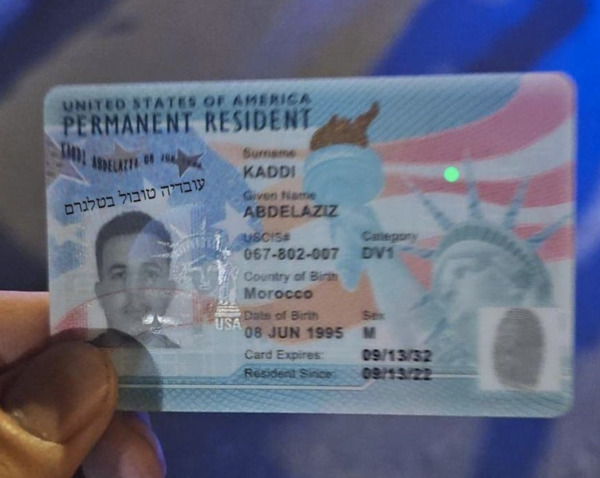
She pointed out that the perpetrator of the stabbing operation in Tel Aviv is Qadi Abdel Aziz, an American tourist of Moroccan origin, who arrived in the occupied territories several days ago.


PALESTINE

Tue 21 Jan 2025 9:27 pm - Jerusalem Time

Power outage in a number of neighborhoods in Jenin city and its camp

Electricity was cut off on Tuesday evening in a number of neighborhoods in the city of Jenin and its camp, as a result of the ongoing Israeli aggression.


Local sources reported that electricity was cut off in a number of neighborhoods in the city and the camp after a large explosion was heard in the camp.


The occupation warplanes continue to fly intensively in the city's sky, amid a siege on the entrances to Jenin camp and the dispatch of large military reinforcements to the city.


The ongoing Israeli aggression on Jenin and its camp has so far resulted in the death of nine citizens, including a child, and the injury of 40 others, while a young man from Jenin camp was martyred by the occupation forces’ bullets in the village of Ta’nek, west of the governorate.

PALESTINE

Tue 21 Jan 2025 9:15 pm - Jerusalem Time

A young man was killed by Israeli occupation forces' bullets west of Jenin

The Ministry of Health announced, on Tuesday evening, the death of the young man Mahmoud Ibrahim Jaradat (29 years old) by the bullets of the Israeli occupation forces in the village of Ta'nek, west of Jenin.


The Ministry of Health stated, in a brief statement, that the General Authority of Civil Affairs informed it of the martyrdom of the young man Jaradat, and that the occupation had detained his body.


Earlier this evening, the occupation forces stormed the village of Ta'nek, surrounded a house there, opened fire at it, and arrested the young man Jaradat after he was injured. He is from the Jenin camp, and his death was announced due to his wounds.


With the death of the young man Jaradat, the number of killed in Jenin Governorate today rises to 10, as nine citizens were martyred, including a child, and 40 were injured, during the ongoing Israeli aggression on Jenin and its camp.

ARAB AND WORLD

Tue 21 Jan 2025 9:02 pm - Jerusalem Time

New US Secretary of State: My mission will not be easy

On his first day on the job, new US Secretary of State Marco Rubio said on Tuesday that his mission "will not be easy."


Marco Rubio said, during a speech he gave to his ministry employees: "The world has changed a lot in the past period, and we must know what will happen in the future."


He added: "My mission will not be easy. There will be challenges and difficult times, and we will seek to avoid conflicts, but not at the expense of our values."


He continued: "Our foreign policy is based on our interests first... and if our interests intersect with the interests of others, we will work with them."


The new US Secretary of State stressed: "Our mission is to promote peace around the world and we will be defenders of our values."


The US Senate unanimously confirmed Marco Rubio as Secretary of State on Monday evening, making him the first member of President Donald Trump's cabinet.


Rubio, the Republican senator from Florida, is among Trump's least controversial candidates, and the vote in his favor was decisive, 99 to none.


Rubio, a member of the Senate since 2011, is described as a "traditional hawk on foreign policy," according to the American newspaper, The Washington Post.

PALESTINE

Tue 21 Jan 2025 8:27 pm - Jerusalem Time

A Palestinian citizen was injured in a settler attack on the Ramallah-Nablus road

A citizen was injured, Tuesday evening, in a settler attack on the Ramallah-Nablus road.


Security and local sources reported that a citizen was injured in the head after terrorist settlers attacked citizens' vehicles with stones near the entrance to the "Shilo" settlement, which was built on citizens' lands northeast of Ramallah. He was subsequently transferred to Rafidia Hospital in the city of Nablus.


The same sources added that the attack also resulted in damage to a number of vehicles.


In the same context, settlers gathered on the main street near the town of Sinjil, northeast of Ramallah, and tried to obstruct the movement of citizens.

PALESTINE

Tue 21 Jan 2025 8:04 pm - Jerusalem Time

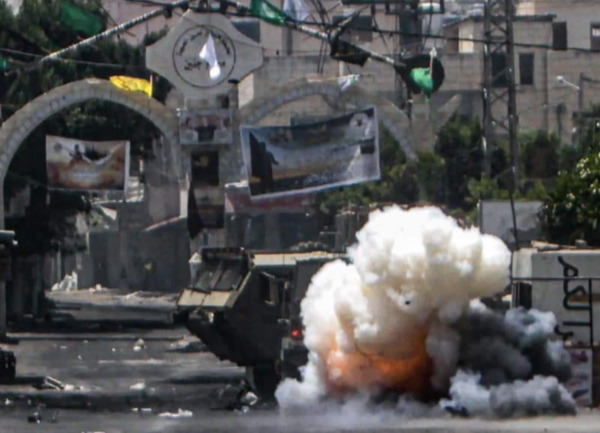
A number of Israeli soldiers were injured when an explosive device exploded near Jenin camp

A number of Israeli occupation soldiers were injured, on Tuesday evening, when a heavy explosive device exploded near Jenin camp.

According to local sources, clashes took place between the occupation soldiers and the resistance at Talat al-Ghabz, around the camp.

PALESTINE

Tue 21 Jan 2025 7:15 pm - Jerusalem Time

UN official: No time to waste to meet Gaza shelter needs

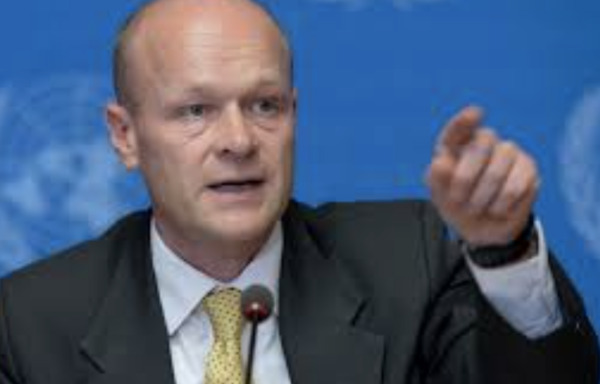
There is no time to waste to meet the shelter needs of Gaza's population, said Jens Laerke, spokesman for the United Nations Office for the Coordination of Humanitarian Affairs (OCHA).


This came at a press conference, today, Tuesday, in the Swiss city of Geneva, in which Laerke pointed out that the ceasefire agreement in Gaza entered into force on January 19.


He stressed the need for the ceasefire to continue, saying: "Now is the time for great hope, but of course, no one should underestimate the complexities ahead, and clearing debris and disposing of explosive ordnance left behind by the war are some of these things."


He stressed the need to deliver aid at maximum capacity, saying: "Hunger is widespread, people are homeless, and illness and injury are common. There is a cloud of deep psychological trauma hanging over Gaza."


"Our priorities include providing food aid, opening bakeries, providing health care, reactivating hospitals, and providing supplies to repair water networks and shelters," he added.


Regarding the massive destruction in Gaza, Laerke said: “People are building their own shelters. So part of the mission here is to find shelter. The sooner it is found, the better. There is no time to waste.”


According to the United Nations, 160,000 homes in Gaza have been destroyed and 276,000 homes have been severely or partially damaged by the Israeli aggression. This means that 92% of the housing in Gaza has been either destroyed or damaged.

OPINIONS

Tue 21 Jan 2025 6:25 pm - Jerusalem Time

Translations: A Hegemonic Israeli Regime in the Middle East

Translation for "Al-Quds" dot com

Translation for "Al-Quds" dot com

Opinion Writer

By Amos Yadlin, retired Major General in the Israeli Air Force, formerly served as head of Defense Intelligence (2006-2010), and currently serves as Chairman of MIND Israel. Avner Golov, Deputy Chairman of the organization, served as Director of the Israeli National Security Council between 2018 and 2023


This extensive article provides an in-depth analysis of the geopolitical shifts in the Middle East since the October 7 attack, examining the changing power dynamics between Israel and Hamas, the rise and decline of Iran and Hezbollah, and the United States’ attempts to reshape its regional presence. The article focuses on the Israeli strategy of investing its military successes in building a new regional alliance that goes beyond military dimensions to include a political and economic vision aimed at confronting Iranian threats and reducing the influence of political Islamist forces. The article also addresses the complexities surrounding providing a political horizon for the Palestinians in light of regional and international challenges, stressing the importance of coordination with Arab partners and the United States to achieve long-term stability in the region. Below is a summary translation of the article:


Today, the Middle East is witnessing a struggle over the formation of a new regional order, and since the October 7 attack, three competing visions have emerged: Hamas sought to ignite a multi-front war to destroy Israel, while Iran, in cooperation with Hezbollah, sought to wage a war of attrition that would lead to Israel’s collapse and distance the United States from the region. On the other hand, the United States supported a vision of regional stability based on normalizing relations between Israel and Saudi Arabia, enhancing political opportunities for Israelis and Palestinians, and establishing a defense agreement with Saudi Arabia.


All three visions failed due to miscalculations by the parties involved. Hamas, Iran, and Hezbollah misjudged the strength of the Israeli military and Israeli society and the solidity of the US-Israeli alliance. The United States overestimated its ability to direct Israel’s policies toward Gaza and did not adequately take into account the Iranian threat. In recent months, Israel has begun to exploit this gap to present its own vision; It has launched decisive military operations, destroyed Hamas’s military capabilities, forced Hezbollah to accept a ceasefire on Israeli terms, and carried out advanced strikes inside Iran. These moves have undermined Iranian influence in the region, as Iran has lost the land corridor extending from its border to Israel, which represents a major setback for its regional strategy.


Israel now needs to leverage its battlefield successes to bolster its political position, as it must push for a new political framework that supports security and stability in the region. An Arab-Israeli alliance supported by the United States can confront the threats from Shiite and Sunni extremists, provide a realistic political horizon for the Palestinians, and prevent any future attack on Israel. Israel cannot impose its vision alone, and it must seek the support of key countries such as Saudi Arabia, Jordan, Egypt, and the United Arab Emirates, as well as Western allies such as the United States, Germany, and the United Kingdom. Under the current circumstances, Israel has a rare opportunity to reshape the region in a way that serves its interests and those of its allies, but it needs a coherent strategy that combines military success with political direction to achieve this.


Ambitious Plans and Fateful Failures


The Middle East has witnessed an escalation of conflicts over regional influence following Hamas’s attack on Israel on October 7. The late Hamas leader Yahya Sinwar ordered the attack in order to ignite a new Palestinian uprising at home and launch coordinated attacks by Iranian-backed armed groups. Sinwar expected this escalation to lead to Israel’s military collapse. His plan relied on the support of Hezbollah and the Iranian “axis of resistance.” However, he miscalculated the regional reactions. Hezbollah began shelling Israel, but its activity remained limited. Shiite militias from Iraq and Syria fired missiles and drones, and did not pose a significant threat to Israeli defense systems. The Houthis joined the attacks by targeting ships in the Red Sea and firing rockets at Israeli cities. However, the Syrian regime led by Bashar al-Assad refrained from directly attacking Israel or engaging the Syrian army, limiting the effectiveness of the Iranian axis.

Israel met these threats forcefully, killing thousands of Hamas fighters, including Sinwar, and waging a war of attrition that weakened the enemy organizations. The war initially encouraged Iran and Hezbollah, who saw it as an opportunity to increase pressure on Israel and reduce US influence in the region. The Iranians expected that Washington would gradually withdraw from the Middle East, distracted by strategic challenges with China and the war in Ukraine. The US continued to support Israel and sought to foster new alliances within the framework of the Abraham Accords. Washington pressured Saudi Arabia to normalize relations with Israel, but failed to address regional concerns about the ongoing war in Gaza. Saudi Arabia refused to proceed with normalization because of Israel’s intransigence on the two-state solution. For his part, Israeli Prime Minister Benjamin Netanyahu postponed ending the war, betting on a Republican victory in the US presidential election to ease US pressure on Israel.


Regional concerns about the failure of various strategies have been reinforced: Sinwar’s vision has failed to achieve its goals, Iran and Hezbollah have failed to impose their regional hegemony, and the US plan has faced major obstacles. Nevertheless, the Middle East remains in a state of constant reshaping, with various parties pursuing their interests in a volatile environment.


Empty Throne


The Middle East has witnessed major transformations with the escalation of tensions on Israel’s northern front. The events began with a Hezbollah missile attack in July on a stadium in the Golan Heights, which prompted Israel to carry out qualitative military operations that resulted in the assassination of Hezbollah leaders, including Hassan Nasrallah, and the destruction of thousands of missiles. Iran responded by launching 181 ballistic missiles in October, but failed to achieve significant results. Israel responded with precise airstrikes targeting vital sites in Iran, which exposed the weakness of the Iranian military structure and stopped the direct escalation.


In November, Israel and Lebanon, with the approval of Iran and Hezbollah, signed a ceasefire agreement, coinciding with a military operation by Turkish-backed Syrian rebels that toppled the Assad regime in Damascus within two weeks. These developments have weakened the regional influence of Iran and Hezbollah. These events have created a leadership vacuum in the region, where Israel now has a unique opportunity to forge a new alliance that will reorder the Middle East’s priorities toward peace, stability, and prosperity. Israel seeks to consolidate its military victories by building a moderate regional alliance of Sunni Arab states led by Saudi Arabia. Israel aims to confront major security threats, most notably Iran, and to counter attempts by Turkey and Qatar to bolster the influence of the Muslim Brotherhood. The plan seeks to provide a political future for the Palestinians while ensuring Israel’s protection from terrorist attacks. Israel needs U.S. support to lead this effort, and an Arab partnership that will give the alliance regional legitimacy. The effort is set to begin with a summit that includes the United States, Saudi Arabia, the United Arab Emirates, Egypt, Jordan, Bahrain, and other countries such as Oman, as well as Palestinian representatives, with the goal of promoting normalization, establishing a new security framework, and deradicalizing Gaza. The plan also seeks to reduce the influence of Iran and the Muslim Brotherhood in Syria and increase the involvement of the Gulf states there.


The summit also aims to present a new Palestinian vision based on effective governance and demilitarization in Gaza before reconstruction. The United States will oversee a deliberate transition led by a Palestinian-Arab committee that recognizes Israel, eliminates terrorism, and stops its funding, while securing the border with Egypt to prevent Hamas from rearming. The summit also aims to accelerate the establishment of a permanent regional defense architecture to confront terrorism, secure maritime navigation, and enhance intelligence sharing. Israel and the United States will also coordinate their efforts to prevent Iran from obtaining nuclear weapons, while strengthening regional deterrence to counter any potential escalation.


Conclusion


Achieving regional security for Israel and its partners requires the Trump administration to commit to supporting the Middle East and using force to deter common threats. This vision faces challenges from within the US administration, which calls for a reduced international role. Despite the decline in the position of Iran and Russia, the US withdrawal from Syria remains a strategic concern. The Hamas attack in October demonstrated that Israel does not fully control the course of regional events. Nevertheless, the war in Gaza over the past months has restored some leverage for Israel, but sustaining this momentum will require courageous leadership. The aspirations of the extremists in the Netanyahu government, such as annexation and military rule in Gaza, are hindering this progress and increasing the likelihood of a broader regional conflict that serves Iran’s interests. Israel needs to adopt a coherent vision that addresses the Iranian threat, promotes regional integration, and provides a political horizon for the Palestinians. This vision should be based on a coordinated plan supported by the United States, Saudi Arabia, and the UAE. Only through these steps can Israel capitalize on its military successes to create a more stable and prosperous Middle East and take advantage of the opportunities emerging from the war.

foreign Affaira

OPINIONS

Tue 21 Jan 2025 6:22 pm - Jerusalem Time

Translations: Gaza - Israel: Donald Trump's puzzling bet

Translation for "Al-Quds" dot com

Translation for "Al-Quds" dot com

Opinion Writer

By Sylvain Cypel


This article examines the complexities of the political scene in the Middle East in light of the war on Gaza, and the increasing American pressure led by Donald Trump to sign a ceasefire agreement between Israel and Hamas. The article focuses on the regional implications of these moves, including the impact of Israeli policies on the Gaza Strip and the West Bank, and the challenges facing the implementation of the agreement. The article also discusses the new American priorities in the region, especially in light of the international competition with China, and analyzes Israeli plans to expand its regional influence with the support of the Trump administration. Below is a summary translation of the article:


The war on Gaza has witnessed major changes with the escalation of American pressure led by Donald Trump to sign a ceasefire agreement between Israel and Hamas, which included the release of Israeli hostages. Despite Netanyahu's resistance to these demands under threats from the extreme right, it seems that he has finally responded to pressure from Washington. This coincided with Israel’s retreat from previous plans, such as the “Generals’ Plan” project, which aimed to destroy the infrastructure in northern Gaza, impose forced displacement and organized famine, raising questions about Israel’s ultimate goals in the Strip.


Questions remain about Israel’s intentions after the ceasefire, especially with the ongoing project to divide the Gaza Strip into separate areas tightly controlled by the Israeli army. Although the agreement includes the return of residents to the northern Gaza Strip, ambiguity surrounds the areas that Israel will insist on maintaining control over, amid doubts about its commitment to a full withdrawal from the Strip.


Between Joy and Implementation Challenges


The expressions of joy expressed by Palestinians after the announcement of the ceasefire agreement can easily be understood, as they chanted victory songs amid the rubble of Gaza after 468 days of massacres and horrific destruction. In contrast, the reactions of the families of the Israeli hostages seem more reserved, given their concerns about Benjamin Netanyahu’s actions. The terms of the prisoner release remain vague and unstable, as the agreement requires slow and complex implementation over three phases lasting at least three months, with the time frame for the final phase, which involves the exchange of bodies of those killed by both sides, unclear. The agreement also did not specify the number of people to be released in the second phase. Implementing the agreement faces multiple difficulties related to the pace of Israeli troop withdrawal, the entry of humanitarian aid into Gaza, and the construction of temporary housing for displaced Palestinians. The question remains as to whether Israel will allow the return of UNRWA to Gaza, the only entity with the logistical capabilities necessary to deal with the humanitarian catastrophe. However, the agreement does not seem to mention this point, especially since Israel passed a law prohibiting any activity by the agency. On the other hand, reports indicate that Netanyahu, who agreed to the agreement under pressure, may allow the war to resume after the first phase. In contrast, the real Israeli focus seems to be on the West Bank, where Trump promised Israel to facilitate its annexation in exchange for abandoning its ambitions in Gaza. The agreement included controversial points, such as allowing the ceasefire to be terminated when necessary, US approval for settlement expansion, lifting sanctions on settlers, and blocking international efforts against Israeli leaders accused of war crimes.


Palestinians’ greatest fear


Israel continues to implement destructive repressive policies in the West Bank, where the army and settlers work hand in hand in violence and displacement. Bezalel Smotrich, the minister responsible for the Civil Administration, called for a broad military operation aimed at “destroying the refugee camps” in cities such as Nablus, Jenin, and Tulkarm, referring to a plan to turn these areas into rubble, similar to the completely destroyed city of Jabalia in the Gaza Strip. Palestinian research centers predict scenarios that include the forced displacement of hundreds of thousands of Palestinians across the Jordan River. At the same time, Israel is working to delegitimize UNRWA to weaken the refugee issue, while normalization with Arab countries, such as Saudi Arabia, deepens the Palestinians’ isolation from the international community.


These moves reflect broad support from the Israeli right, which calls for a new Nakba in the West Bank. With the Trump administration’s support for Israel, Tel Aviv is being given the green light to implement its expansionist policies, including the destruction of Palestinian infrastructure and the drying up of food and energy sources, as Israeli parliamentarians recently called for. Israel is also seeking to exploit the opportunity to reshape the geographic and demographic reality in the West Bank, with the aim of strengthening its control and annexing Palestinian lands. This international support and escalating Israeli policies threaten to turn the West Bank into an arena of mass destruction, while the Palestinians remain internationally isolated amid a decline in the UN’s role in protecting their rights.


US Priorities in the Near East


Donald Trump’s return to power comes amid unprecedented complexity of the Palestinian issue since 1948. Netanyahu has managed to radically reshape the regional landscape after destroying Gaza and weakening Iran and Hezbollah, leading to major repercussions, most notably the fall of Bashar al-Assad’s regime in Syria and the control of the “Hayat Tahrir al-Sham” group. These transformations pose new challenges to the Trump administration, which is facing pressure to rearrange regional alliances, especially in light of the growing competition with China, which may push Washington to enhance its influence through major deals such as reviving the Abraham Accords or signing new security agreements.


Trump’s policies towards the region face expectations of greater chaos and an unconventional approach. According to some analysts, Trump is seeking to conclude a new nuclear deal with Iran, which may put him in confrontation with Israel, which has domestic support for launching a comprehensive attack on Iran. However, projects such as the tripartite agreement between the United States, Israel, and Saudi Arabia face fundamental obstacles, especially due to Israel’s hardline stance on the Palestinian issue. This complexity may push towards alternative solutions, such as a bilateral security agreement between Saudi Arabia and America, but it lacks the symbolism that Washington aspires to.


In conclusion, the American elites are focused on imposing an “American peace” in the Middle East without addressing the core of the Palestinian issue. Analyses show a tendency to ignore the idea of establishing a Palestinian state or ending the decades-long Israeli occupation, while American policies continue to support Israeli hegemony and ignore the humanitarian and political repercussions. In the absence of real American pressure on Israel, such as halting military support, a solution remains elusive. Trump’s future policies show signs of continued escalation and the absence of real solutions, which deepens the Palestinian wound and further complicates the regional scene.

PALESTINE

Tue 21 Jan 2025 5:41 pm - Jerusalem Time

Qatari PM: We hope Palestinian Authority will return to Gaza

Qatari Prime Minister and Foreign Minister Sheikh Mohammed bin Abdulrahman Al Thani said on Tuesday that Doha hopes for the return of the Palestinian Authority to the Gaza Strip, which is run by the Hamas movement.


He made his comments, reported by Reuters, during the annual meeting of the World Economic Forum in Switzerland, two days after a ceasefire agreement came into effect in the 15-month-old war between Hamas and Israel.


The Qatari prime minister said lasting peace in Gaza depends on Israel and Hamas showing "good faith," days after a truce in Gaza that Qatar helped broker.


"If they proceed in good faith, this will continue, and hopefully lead to phase two, and lead to a permanent ceasefire," he added.

PALESTINE

Tue 21 Jan 2025 5:34 pm - Jerusalem Time

Smotrich: We will resume the war on Gaza immediately after replacing the military leadership

Israeli Finance Minister Bezalel Smotrich said that the coming period will witness the replacement of the senior military leadership in preparation for the resumption of the war on the Gaza Strip.


The extremist Smotrich's statements came after the Chief of Staff of the Israeli Occupation Army, Herzi Halevi, announced his resignation from his position, according to what was circulated in the media.


Halevi said that his responsibility for the terrible failure of October 7, 2023 accompanies him day by day and hour by hour.


He added: "The army fought a war for many months on 7 fronts and achieved accomplishments that changed the face of the Middle East."


He stressed that he had suffered "huge losses in lives and the war left wounds and scars on many of our soldiers and their families."


In the same context, the Hebrew media indicated that Yaron Finkelman, commander of the Southern Command in the occupation army, announced his resignation.


This resignation comes after the ongoing investigations into the October 7 attack on the occupying state.

PALESTINE

Tue 21 Jan 2025 5:19 pm - Jerusalem Time

The death toll in the Gaza Strip has risen to 47,107 and the number of injuries to 111,147 since the beginning of the aggression

Medical sources announced today, Tuesday, that the death toll in the Gaza Strip has risen to 47,107 dead, the majority of whom are children and women, since the start of the Israeli occupation aggression on October 7, 2023.


The sources added that the number of injuries has risen to 111,147 since the beginning of the aggression, while thousands of victims are still under the rubble.


It pointed out that 72 dead arrived at hospitals in the Gaza Strip, 68 of whom had their bodies recovered, and a citizen died of his injuries, while 56 injuries arrived at hospitals, as a result of the Israeli aggression on the Gaza Strip during the past 24 hours.


The sources explained that a number of victims are under the rubble and on the roads, and the ambulance and civil defense crews are still unable to reach them.

ARAB AND WORLD

Tue 21 Jan 2025 5:12 pm - Jerusalem Time

The Israeli occupation army penetrates the banks of the Litani River in southern Lebanon before the withdrawal date

On Tuesday morning, the Israeli occupation forces penetrated towards the banks of the Litani River in southern Lebanon, in a new incursion into the Lebanese interior about a week before the end of the sixty-day deadline for withdrawal from Lebanon, while they carried out an explosion of a house in the town of Burj al-Muluk, which is inhabited by a Christian majority, which is one of the rare times that houses are blown up in Christian villages.


The official Lebanese National News Agency reported that the Israeli army "burned a two-story house in Burj al-Muluk, and also burned machinery and equipment belonging to the Ward Company, which is responsible for the Litani Project, Project 800."


Burj al-Muluk is located on a hill to the west of the border town of Kfar Kila, and enjoys a strategic location as it separates the border villages from the Litani River. Israeli forces advanced into it for the first time two weeks before the ceasefire agreement came into effect, after taking control of Kfar Kila.


The Israeli incursion continued southward, as Israeli forces entered at dawn from the town of Bani Hayyan towards Wadi al-Saluqi, and carried out massive bombing operations in Wadi al-Saluqi towards the town of Taloussa in Marjeyoun District. An Israeli mechanized force penetrated from the town of al-Taybeh towards the town of Adshit al-Qusayr, located on the banks of the Litani River from the direction of Wadi al-Hujayr.


It is known that Wadi al-Hujayr is of strategic importance to both Hezbollah and Israel, given its location in the central sector of southern Lebanon, which includes the villages of Taybeh, Adshit al-Qusayr, Deir Siryan and Qantara on the eastern side of the valley. It is connected to the west by the villages of Frun and al-Ghandouriya, and is bordered to the north by the Litani River at a distance of 2 kilometers, while Adaisseh and Rab Talatin are located on its southern border with the Galilee.


These villages are called in military terms "the single axis of advance", so whoever controls Wadi al-Hujayr must hold these villages and their hills together. Wadi al-Hujayr is located on the borders of the Litani River, and is the second closest region to the border with Israel, and there are several strategic heights in the surrounding area.


Withdrawal from Bint Jbeil

Despite field information indicating that Israeli forces had begun withdrawing from the southeastern outskirts of Bint Jbeil towards the town of Maroun al-Ras, after 4 hours of incursion and assault on citizens’ property, the Israeli side carried out a massive bombing operation in the town of Bani Hayyan, the echoes of which were heard in many southern areas, according to the National News Agency.


In Bint Jbeil district, the Israeli army blew up a number of houses in the town of Yaroun in Bint Jbeil district. Lebanese media reported seeing smoke billowing from the center of the town, while explosions were heard throughout the villages of the district. Drones and reconnaissance aircraft were also present in the skies of the western and central sectors.


New Israeli Sites

On the other hand, the newspaper "Israel Today" reported that along the border with Lebanon, preparations are continuing to deploy new sites where Israeli army forces will be stationed, and construction teams are still preparing new sites. According to the Northern Command plan, most of the sites will be established between the settlements and the border fence.


The ceasefire went into effect on November 27, 2024, after a confrontation between Israel and Hezbollah. The agreement, brokered by the United States, stipulates that the Israeli army will withdraw from the areas it has entered within a 60-day period ending on January 26, while the Lebanese army and the United Nations peacekeeping force (UNIFIL) will reinforce their deployment in place of the Israeli forces and Hezbollah.


Under the agreement, the party must withdraw its forces to the north of the Litani River, about 30 kilometers from the border with Israel, and dismantle any military infrastructure there.


Under the agreement, a five-member committee, including the United States, France, Lebanon, Israel, and UNIFIL, will monitor compliance with its provisions and deal with violations reported by any of the conflicting parties.

PALESTINE

Tue 21 Jan 2025 4:49 pm - Jerusalem Time

Israeli occupation bombed a site next to a number of ambulance volunteers inside Jenin camp

Israeli occupation drones bombed, on Tuesday evening, a site near Red Crescent volunteers inside Jenin camp.


A paramedic said that an occupation drone bombed a site near a group of volunteer paramedics inside Jenin camp with two missiles, without causing any injuries among them.

ARAB AND WORLD

Tue 21 Jan 2025 4:22 pm - Jerusalem Time

Grossi urges Iran to reach understanding with Trump

The head of the International Atomic Energy Agency urged Iran to reach an understanding over its nuclear activities with the administration of US President Donald Trump, in order to avoid being drawn into another military conflict in the Middle East.


Rafael Grossi said in Davos on Tuesday that Iran had increased the pace of producing large quantities of highly enriched uranium to 60 percent, close to the 90 percent needed to produce nuclear weapons.


“There was an agreement before President Trump decided that this was not the path he wanted,” Grossi said, referring to Trump’s decision to freeze his country’s membership in the Iran nuclear deal six and a half years ago. “Now we need to come to an understanding on how to deal with this, excluding war of course. We don’t want any more wars.”


Grossi confirmed that the UN agency's inspectors verified last December that Iran had increased uranium production by 60 percent.


Tehran increased production capacity by about seven times, to about 34 kilograms per month, in response to its condemnation at the IAEA Board of Governors meeting last November.


The IAEA said last November that Iran had 182.3 kilograms of uranium enriched to 60 percent, an increase of 17.6 kilograms compared to August. Iran’s stockpile of uranium enriched to 20 percent was about 840 kilograms.


Iran's stockpile of 20 percent enriched uranium increased by 18 kilograms in the last quarter of last year.


According to the International Atomic Energy Agency's standards, about 42 kilograms of uranium enriched to 60 percent is theoretically enough to produce one nuclear weapon if it is enriched to 90 percent.


According to the International Atomic Energy Agency, Iran is the only country in the world that enriches uranium to 60 percent, without possessing a nuclear weapon.


While Iran denies seeking nuclear weapons, Western countries say there is no justification for enriching uranium to such a high level as part of any credible civilian program.


The UN Security Council received a message from France, Germany and Britain stating that the three European powers are ready to activate the “snapback” mechanism to restore UN sanctions if Tehran does not immediately stop its nuclear escalation.


Iran fears that Donald Trump will return to the maximum pressure strategy, as well as the activation of the “snapback” mechanism before its expiration with the expiration of Resolution 2231 next October. It also fears that Trump will return to the “maximum pressure” strategy.


Press sources reported on Friday that Iranian officials informed their European counterparts last week in Geneva that the Iranian response to the activation of the “snapback” mechanism would not be limited to withdrawing from the Nuclear Non-Proliferation Treaty, but would go beyond that to changing the nuclear doctrine, in an implicit reference to the possibility of producing a nuclear weapon.


Last month, Majid Takht-e Ravanchi, Iran’s deputy foreign minister for political affairs, told members of the parliament’s national security committee: “We told the Europeans that if the snapback mechanism is activated, one of our options will be to withdraw from the NPT.”


“This is an issue that needs to be put back on track,” Grossi said, adding that he hopes to meet with the Trump administration “as soon as possible.”


Before Trump's inauguration, Bloomberg reported that new administration officials were preparing new plans to pressure Iran.


She noted that there is a general consensus among key advisers to return to a full-fledged maximum pressure strategy, starting with a major sanctions package targeting key players in the oil industry, which could begin in February.


Trump's national security adviser, Mike Waltz, said in an interview on Sunday that the administration will make important decisions regarding Iran next month, noting that the Israeli strikes on Hamas and Hezbollah and the fall of the Assad regime have created the conditions for making strategic decisions soon.

PALESTINE

Tue 21 Jan 2025 4:03 pm - Jerusalem Time

Israeli occupation closes the northern Al-Bireh checkpoint in both directions

Today, Tuesday, the Israeli occupation forces closed the "Court" checkpoint at the northern entrance to the city of Al-Bireh.


Local sources reported that the occupation closed the checkpoint and returned hundreds of vehicles that tried to cross it, amid heavy military reinforcements around the cities of Ramallah and Al-Bireh.

PALESTINE

Tue 21 Jan 2025 3:22 pm - Jerusalem Time

Israeli Chief of Staff Resigns

The Chief of Staff of the Israeli army, Herzi Halevi, announced in a statement his resignation from his position, and that he informed the Minister of Defense, Yisrael Katz, today, Tuesday, that he requests to end his term by March 6.


Halevy justified his resignation by saying that it came "out of recognition of the failure of the Israeli army on October 7, at the point in time when the Israeli army had achieved great accomplishments and was in the process of implementing the agreement to free the kidnapped soldiers."


Halevy added, "In the remaining period, I will complete the investigations (into the army's failures) and I will strengthen the IDF's readiness to confront security challenges. I will transfer the leadership of the IDF in a qualitative and radical manner to my successor."


The letter (of resignation) was conveyed to the Minister of Security and the Prime Minister.

PALESTINE

Tue 21 Jan 2025 3:06 pm - Jerusalem Time

Palestine PM: We reject any attempts by any party to seize any part of our land.

Prime Minister Mohammad Mustafa confirmed what President Mahmoud Abbas announced, that Gaza was not and will not be separate from the State of Palestine, but rather it is a precious and dear part of our land, and we will not tire of emphasizing the full sovereignty of the State of Palestine in Gaza and all Palestinian territories, and the unity of our national institutions, and we reject any attempts by any party to cut off any part of our land or displace our people.


Mustafa said: "All our embassies and international missions have been instructed, and representatives of various countries have been addressed to take urgent action and pressure to stop the settlers' attacks and the illegal occupation measures."


At the beginning of the weekly cabinet session, today, Tuesday, Mustafa condemned the aggressive Israeli measures, the latest of which was the occupation's aggression on the city of Jenin and its camp, and the installation of new iron gates to isolate Palestinian villages and cities from each other.


He called for a complete cessation of aggression and ceasefire in the Gaza Strip, where it has suffered and continues to suffer the most heinous human crimes, stressing that the occupation's complete withdrawal from the Strip is a political, legal and humanitarian demand that cannot be tolerated.


Mustafa explained that from the first moment of this brutal aggression, President Mahmoud Abbas began intensive diplomatic efforts, during which he communicated with regional and international parties, and knocked on the doors of the Security Council and the General Assembly of the United Nations. These efforts resulted in important resolutions, most notably Resolution No. 2735, which calls for an immediate ceasefire, the entry of urgent humanitarian aid, and the withdrawal of the occupation from the Strip, while affirming that the State of Palestine assumes its full responsibilities therein.


He also stressed that the government is fully prepared and has the ability to bear this responsibility, and is ready to cooperate with various partners to restore life in the Gaza Strip. It is also capable, through its administrative structures and national and relief teams, of rebuilding and providing basic services such as water and electricity, securing the return of the displaced to their homes, and managing and securing the crossings completely.


Mustafa reiterated the President's call for the necessity of implementing a comprehensive political solution that would put an end to this decades-long conflict, noting that our vision is always realistic, based on international legitimacy resolutions and the Arab Peace Initiative, with a call to hold an international conference that would recognize our fully sovereign, unified Palestinian state, grant us full membership in the United Nations, and achieve the establishment of our independent state with East Jerusalem as its capital on the borders of June 4, 1967.


He stressed that our cause is just, our will is strong, and our right will not be lost, calling for continuing our struggle and raising our voices loudly, until we see our homeland free and independent, and our people living in dignity and security in their independent state.


Within the permanent item on the Cabinet’s agenda for the southern governorates, the Council reviewed the existing interventions and issued the necessary assignments and directives to the government operations room for the Gaza Strip, especially in the areas of relief, and efforts to work on launching the wheel of production in the Strip and restoring the delivery of basic services.


In addition, the Ministry of Agriculture, within its urgent relief plan in the sector, is working to provide and distribute agricultural production requirements, including seeds, fertilizers, irrigation networks, fodder, vaccines, and other requirements, to support farmers, and to ensure the reactivation of the plant and animal production cycle.


For its part, the Ministry of Labor, through its executive arm, the Palestinian Employment Fund, is preparing to launch a temporary employment program in the Gaza Strip, to begin providing job opportunities for our people in the Strip.


The Ministry of Transport and Communications is working with partners to prepare for opening and managing the crossings, and to pave the main roads, specifically Rashid and Salah al-Din Streets, to enable our people in the Strip to move from the south of the Strip to its north, and to open as many side streets as possible that serve hospitals and aid distribution centers.


The Council also tasked the Ministerial Committee for Emergency Actions with strengthening its interventions in the areas targeted by the occupation army and settlers to take the necessary measures to enhance the steadfastness of our people.


The Council approved increasing the quantities of some types of medicines in a tender to purchase and supply medicines for the Ministry of Health to meet the needs of our people.


The Council approved extending the work on health insurance for workers working within the 1948 territories until the end of next June or their return to their workplaces.


The Council approved instructions regarding the standards for managing digital assets for the public sector, as part of the government’s plan and the Ministry of Communications and Digital Economy to develop the government’s digital infrastructure in a way that enhances the quality of services for our people.


The Council also approved the formation of a special committee to coordinate gender units in government departments, activate them, and govern their work in a way that serves this large group of employees.


The Council of Ministers also approved the recommendations of the special committee to study the issue of offsetting between compensation for (loss/damage), compensation for financing expenses for delayed disbursement of financial payments to contractors, and the mechanism for calculating them.