OPINIONS

Thu 23 Jan 2025 8:33 am - Jerusalem Time

Palestinian Doha Meeting

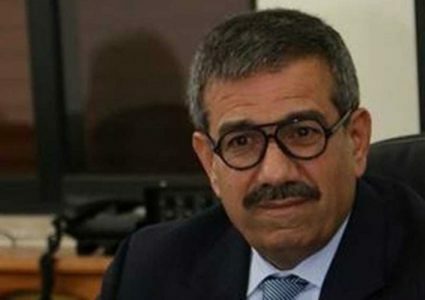
Hamada Faraana

Hamada Faraana

Opinion Writer

It may be good, expressing goodwill with the aim of soothing the atmosphere, improving it, searching for common denominators, perhaps useful, and a step forward, that initiative called by the Hamas movement, for the Palestinian resistance factions to meet and meet in Doha on Saturday, January 18, 2025, and the following responded to the invitation: the Popular Front for the Liberation of Palestine headed by Deputy Secretary-General Jamil Mazhar, the Democratic Front headed by Deputy Secretary-General Majida Al-Masry, the National Initiative headed by Secretary-General Mustafa Barghouti, the Palestinian People's Party headed by its Political Bureau member Shamekh Abu Sakhr, and Qadura Fares, Head of the Prisoners and Freed Prisoners Affairs Authority, and necessarily the Islamic Jihad Movement headed by Secretary-General Ziad Al-Nakhalah, and the Popular Front - General Command headed by its Political Bureau member Ramez Mustafa responded to the invitation.


The call may be malicious and cunning, reflecting the political cunning of Hamas, and its attempt to benefit from and employ the distinctive practical steps it has achieved, which are recorded for it, starting with: 1- The surprise operation of October 7, 2023, which was a shock to the Israelis, 2- Its steadfastness throughout the battle of the attack on the Gaza Strip, despite the heavy losses it paid for, 3- Imposing itself as an indirect negotiating party for the Israelis, 4- And finally, it imposed itself as a deciding party and partner with the Israelis in the truce agreement and the ceasefire deal.


This is why several factions did not respond to Hamas’s call, namely: 1- The Palestinian Liberation Front, 2- The Arab Liberation Front, 3- The Popular Struggle Front, 4- The Arab Palestinian Front, due to their awareness and appreciation that Hamas wants to impose itself as a Palestinian party that decides on the Gaza Strip, and this leads to the consolidation of the division, since the coup in June 2007, and its unilateral and individual administration of the Gaza Strip until October 2023, and that limiting the Israelis’ negotiations with Hamas aims to feed the division and its continuation, and to reduce and weaken the position of the legitimate authority in Ramallah, and this is done in a systematic manner and through official decisions and orientations by the extreme right-wing coalition government led by Netanyahu, since the decisions approved by his government on


6-1-2023, which are:

1- Deducting about 139 million shekels from the Authority’s funds for the benefit of the families of settlers (the families of those killed in the operations).

2- Immediately begin withdrawing the equivalent of the Authority’s payments to Palestinian prisoners and their families, and freeze Palestinian construction plans in Area C and elsewhere.


3- Cancel the granting of privileges to important figures who lead the political process against the Israeli colony.

4- Taking action against organizations in the West Bank that promote “terrorist activity” or any hostile activity, including legal political activity against the colony, under the guise of humanitarian activity.


5- Freezing Palestinian construction plans in Area C, after illegal occupation attempts by the Palestinian Authority, in violation of international agreements.


This came against the backdrop of the Palestinian Authority’s intentions to file a legal case against the colony before the International Court of Justice, reflecting the decisions of the United Nations General Assembly, which voted in December 2022 in favor of going to the International Court of Justice to obtain an advisory opinion regarding the colony’s occupation of the Palestinian territories in 1967: the West Bank, Jerusalem, and the Gaza Strip.

PALESTINE

Thu 23 Jan 2025 8:20 am - Jerusalem Time

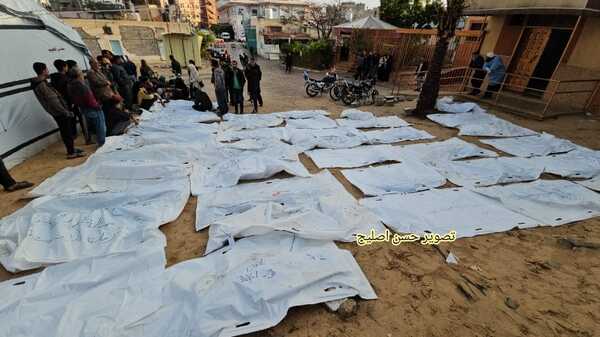
Bodies of more than 50 dead recovered in Rafah and Khan Yunis

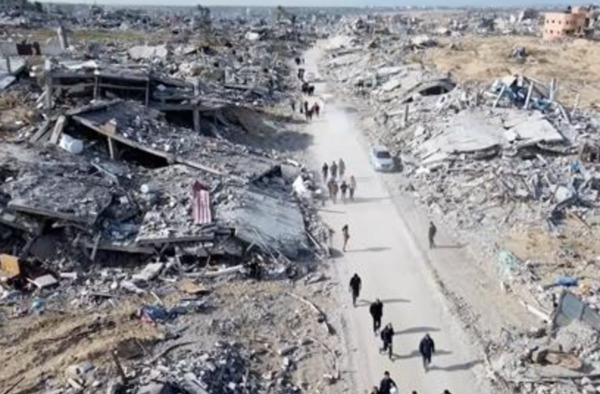
Today, Thursday, medical teams recovered the bodies of more than 50 dead in the cities of Rafah and Khan Yunis in the southern Gaza Strip.


The dead were killed during the Israeli war on the Gaza Strip.


PALESTINE

Thu 23 Jan 2025 8:10 am - Jerusalem Time

Rubio congratulates Netanyahu, Trump envoy heads to Israel soon

US Secretary of State Marco Rubio spoke by phone with Israeli Prime Minister Benjamin Netanyahu to reassure him that maintaining the United States' unwavering support for Israel is a top priority for President Donald Trump, State Department spokeswoman Tammy Bruce's office said in a statement issued Wednesday evening.


According to the statement, a copy of which was received by Al-Quds, "Minister Rubio congratulated the Israeli Prime Minister on Israel's successes against Hamas and Hezbollah and pledged to work tirelessly to help free all remaining hostages in the Gaza Strip."


"Secretary Rubio also stressed that he looks forward to addressing the threats posed by Iran and pursuing opportunities for peace in the region," he noted. "The Secretary also expressed his aspiration to address the threats posed by Iran and explore opportunities for peace."


It is noteworthy that Israel and Hamas began implementing a ceasefire on Sunday, which includes the exchange of Israeli detainees for Palestinian prisoners, after reaching an agreement to stop the ongoing aggression on the Gaza Strip for 15 months.


Former US President Joe Biden had pushed for months for a deal to end the war on Gaza, and Trump sent an envoy to help achieve this before taking office, although the Republican president has since expressed his lack of confidence in the agreement’s holding.


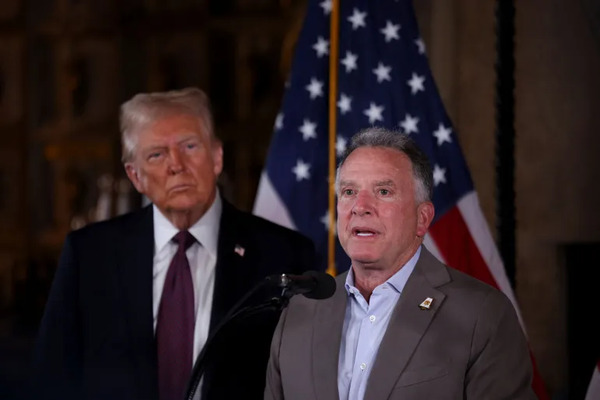
For his part, Steve Witkoff, Trump's envoy to the Middle East, said in an interview with Fox News on Wednesday that he is committed to implementing the ceasefire in Gaza and taking it to the second phase.


The envoy indicated that he plans to travel to Israel, where he will join an inspection team that will go to the Netzarim and Philadelphi corridors in Gaza, both of which are areas under the control of the Israeli occupation army.


"I will indeed go to Israel. I will be part of an inspection team at the Netzarim Corridor and also at the Philadelphi Corridor," Witkoff said, adding that the inspectors will be there to ensure that there is security at the corridors and that no one enters those areas armed.


The trip will be Witkoff’s first official visit to the Middle East and comes as the first phase of a ceasefire between Hamas and Israel continues. Witkoff and his team joined the negotiations in Qatar that led to the deal in the final days of the previous Biden administration and are widely credited with pushing the deal forward.


In a sign of the fragility of the ceasefire that went into effect Sunday, Witkoff also plans to be in the region on a near-permanent basis over the coming weeks and months, the network quoted a Trump administration official as saying.


Witkov will work to resolve problems that may erupt on the ground, which he believes could lead to the collapse of the agreement and the halting of the release of the hostages held by Hamas at any moment, according to the official.


"You have to be on top of it, and ready to put out any problem if it arises," the official told the network.


It is noteworthy that US President Donald Trump said on Monday, after taking office, that he was not confident that the ceasefire would reach its second phase.

PALESTINE

Thu 23 Jan 2025 8:06 am - Jerusalem Time

UNRWA defends itself with its unique performance

Dr. Ahmed Abu Holi: We reject any discussion about alternatives to UNRWA because that means eliminating the political and legal issues of the refugee issue

Nidal Al-Azza: UNRWA is the backbone of humanitarian assistance programs for refugees in general and the lifeline for refugees and displaced persons in the Gaza Strip

Sami Mshasha: The first day of the ceasefire in Gaza and the entry of about 550 trucks showed the pivotal role of UNRWA in receiving and distributing aid

Adnan Abu Hasna: UNRWA’s history and long experience make it the most capable entity to deal with major humanitarian disasters

Dr. Mukhaimer Abu Saada: Delegating the World Food Program to perform the role of UNRWA will not be sufficient to cover the services provided by the UN agency

Ziad Al-Hamouri: UNRWA still plays a major role in providing humanitarian aid in Gaza with the support of some Arab and European countries


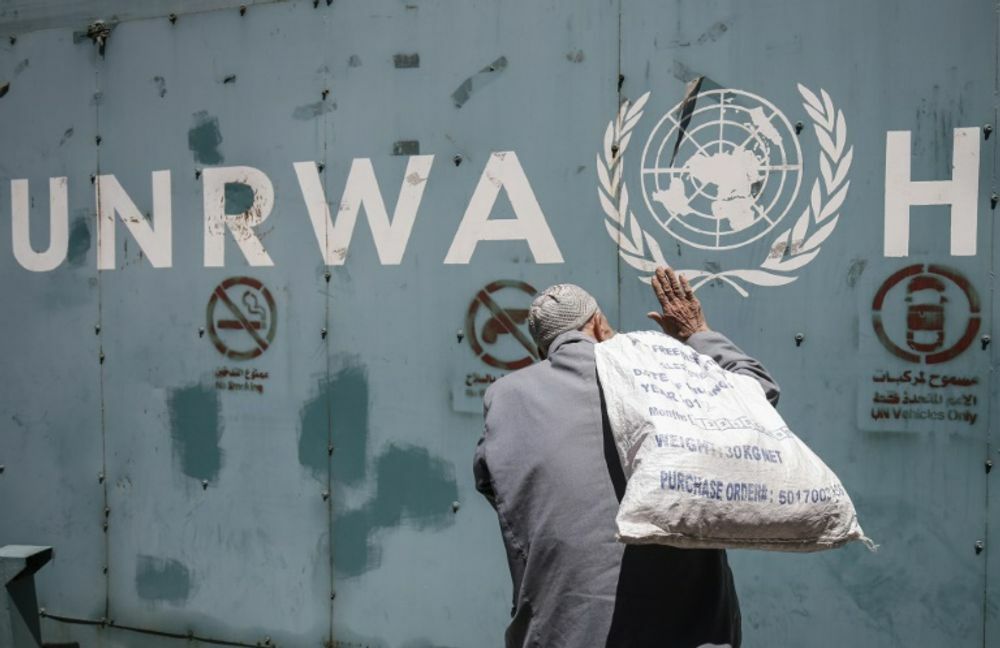
It was no secret to anyone that the attack that the United Nations Relief and Works Agency for Palestine Refugees (UNRWA) was recently subjected to by the Israeli occupation state has political and strategic dimensions, linked to the issue of Palestinian refugees and Israel’s attempts to close this file unilaterally, with the help of international parties, by eliminating the most prominent witness to it, which is the Relief Agency, and replacing it with other international bodies to carry out its tasks.


Politicians, writers and analysts who spoke to “I” said that any discussion about alternatives to UNRWA means eliminating the political and legal issue of the refugee issue, stressing that UNRWA constitutes the backbone of humanitarian assistance programs for refugees in general, and the lifeline for refugees and displaced persons in the Gaza Strip, and that authorizing the World Food Program to carry out the role of UNRWA will not be sufficient to cover the services it provides.


UNRWA is an irreplaceable international institution.


Dr. Ahmed Abu Holi, member of the Executive Committee of the Palestine Liberation Organization and head of the Department of Refugee Affairs, said that the experience has proven that UNRWA, over more than seven decades, is the best friend of the Palestinian people by providing its health, educational and relief services, in addition to many other services that cannot be replaced.


Abu Holi stressed that UNRWA is an irreplaceable international institution, pointing out that the 17 international organizations confirmed that they are unable to fill the void that may result from the absence of UNRWA, especially with the size of its budget, which amounts to 1.4 billion dollars, and its spread across five regions.


He added: "Even talk about replacing UNRWA with international organizations or transferring its responsibilities to host countries does not find any practical solutions."


He pointed out that Norway is currently leading an international movement based on the UN General Assembly resolution, in which 137 countries voted in favor of transferring the UNRWA case to the International Court of Justice.


Abu Holi stressed that UNRWA operates in accordance with a UN resolution issued in 1949 (Resolution 302), and that Israel is deliberately violating international law decisions and undermining UNRWA’s role through its recent legislation.


Abu Holi explained that Israel is clearly targeting UNRWA institutions and schools in Jerusalem, such as the Indian Corner Clinic at the entrance to Bab al-Sahira, UNRWA’s main headquarters in Sheikh Jarrah, and boys’ and girls’ schools in Jerusalem, Sur Baher, and the Shuafat and Qalandia camps.


Israel seeks to seize headquarters in Sheikh Jarrah


He stressed that Israel seeks to seize the main headquarters in Sheikh Jarrah to establish 1,440 new settlement units, noting that American and international pressures have not yet succeeded in stopping these plans.


He added: "Targeting UNRWA will lead to a huge vacuum in the provision of services to Palestinian refugees, which will lead to their starvation, the closure of their schools, their ignorance, and the closure of the health centers on which they depend.


Regarding the party that will fill the void if UNRWA is prevented from performing its duties, Abu Holi said: “The issue is clear. We, in the Palestine Liberation Organization, say: There is no alternative to UNRWA except UNRWA. We reject any discussion about alternatives to it, because talking about alternatives means deleting the political and legal issue. Therefore, there are no alternatives, and let the occupation bear responsibility for the new war on the Palestinian people, which is embodied in starving the refugee community, closing their schools, and making them ignorant, in addition to closing UNRWA clinics and centers.


He stressed that UNRWA is a factor of stability in the region. It has been and remains a fundamental pillar of stability and a prelude to a comprehensive political solution.


Abu Holi concluded his statement to Al-Quds by saying: “UNRWA’s work is linked to a comprehensive and just political solution to the refugee issue, in accordance with UN Resolution 194.”


Guterres rejects Israeli legislation targeting UNRWA


For his part, Nidal Al-Azzeh, Director of the Badil Resource Center for Palestinian Citizenship and Refugee Rights, said that UN agencies have repeatedly confirmed, as has the Commissioner-General of UNRWA, that UNRWA constitutes the backbone of humanitarian assistance programs for Palestinian refugees in general, and a lifeline for refugees and displaced persons in the Gaza Strip.


Al-Azza added: “The Secretary-General of the United Nations, Mr. Antonio Guterres, has repeatedly announced his rejection of the Israeli legislation targeting UNRWA, and his rejection of replacing it, considering this position to be extremely important.


He explained that Israel realizes that ending UNRWA will not be a knockout blow, but it is working to dismantle it gradually, while searching for parties to assume its responsibilities, even if temporarily.


Al-Azzeh pointed out that Israel knew from the beginning that the abolition of UNRWA through the United Nations General Assembly, which is the body that established the agency and has legal jurisdiction over it, was impossible.


He added: "Israel refuses to assume its responsibilities as an occupying power for strategic reasons related to the future of the territories occupied in 1967, and also because it realizes that providing the services performed by UNRWA will cost it a lot, which it does not want.


Liquidating UNRWA and drying up its funding sources


Al-Azza explained that the campaign to liquidate UNRWA was not limited to accusing it of inefficiency and corruption, but also included seeking to dry up its sources of funding, accusing it of embracing “terrorism,” and even canceling the agreements regulating the relationship with it, and proposing a project to replace UNRWA.


He added that the UNRWA replacement project has become more clear after the recent laws targeting it were passed. He explained that Israel aims through these laws to shift the burden to other parties, as it has done in the past, by imposing a fait accompli that forces other parties to intervene to fill the gaps in the international protection required.


Al-Azzeh stressed that Israel, throughout the stages of enacting these laws, kept the door open to the possibility of other parties taking over UNRWA’s tasks. He explained that these parties include UN agencies, international donor institutions, and host countries.


Al-Azza pointed out that the UN Secretary-General's rejection of the UNRWA replacement project prompted Israel to seek help from its allies, especially donor countries, to impose a new fait accompli.


US pressure to seize UNRWA's missions


He added that the United States is exerting intense pressure to persuade the Secretary-General to transfer the management of UNRWA operations to other UN agencies, such as the United Nations Development Programme (UNDP), with a promise to pay the same amounts that were being provided to UNRWA.


Al-Azzeh continued: The Biden administration has instructed the US aid agency to activate its work in Gaza and refugee camps in the West Bank. He pointed out that some donor countries have decided to either stop or reduce their funding to UNRWA, such as Sweden, which has transferred its aid to other UN agencies, Japan, which has reduced its funding to UNRWA and increased its support for projects implemented by JICA, and the Netherlands, which has restricted its funding to include emergency aid only.


He explained that other European donor countries have decided to increase their funding to non-governmental organizations that are willing to assume some of UNRWA’s tasks. He saw this policy as a strategy to dry up UNRWA’s budget and replace it with international organizations that do not have an official mandate.


Al-Azza warned that these institutions, although they are able to provide temporary support, are not mandated by an international decision, which means they may withdraw at any time.


Trump's son-in-law Jared Kushner's plan


He pointed out that the plan to liquidate UNRWA was a major focus of Jared Kushner's plan during the Trump administration, as it aimed to transfer responsibility from the United Nations to the countries hosting Palestinian refugees and Arab and Islamic countries.

He explained that the plan included financial incentives for host countries, such as Jordan and the Palestinian Authority, to take over UNRWA's tasks.


Al-Azza concluded his speech by warning of the dangers of the return of this plan with the new Trump administration, noting that accepting to fill the void under the pretext of meeting urgent needs poses a great danger to the rights of refugees.


Al-Azza called on the host countries, the Palestinian Authority, and international and local institutions to reject any project that replaces UNRWA, and not to deal with any program that falls within the agency’s responsibilities, regardless of the temptations, stressing that this would be considered the implementation of an Israeli-American plan that aims to end UNRWA by imposing a fait accompli and drying up its sources of funding.


UNRWA has been an integral part of the fabric of Gaza for decades.


In turn, Sami Mshasha, an expert on international organizations and media affairs, said that the first day of the ceasefire in Gaza, which witnessed the entry of more than 550 trucks loaded with humanitarian aid, confirmed the pivotal role of UNRWA and its enormous capabilities.


He explained that thousands of UNRWA employees, with their accumulated experience, were able to receive aid and begin distributing it despite the harsh conditions they experienced, as did all the people of Gaza.


He added: "UNRWA's trained and experienced crews succeeded in activating its warehouses, trucks and database, based on their previous experiences in responding to emergencies during previous wars on Gaza.


He pointed out that UNRWA programmes, including education, are working diligently to ensure that hundreds of thousands of students in the schools of the Strip do not lose the school year, in addition to the efforts of the departments of health, social services, mental health and others.


Mshasha stressed that UNRWA has been an integral part of the fabric of Gaza for decades, noting that attempts to end the agency’s existence or replace it with local alternatives or other international organizations have failed so far, due to the awareness of the people of Gaza of the danger of these attempts, more than they are the result of the existence of clear policies or plans by UN and UNRWA officials.


However, Mshasha warned that these achievements are at risk due to ongoing efforts to weaken the agency politically, procedurally and financially.


200 UNRWA facilities destroyed, 263 staff killed


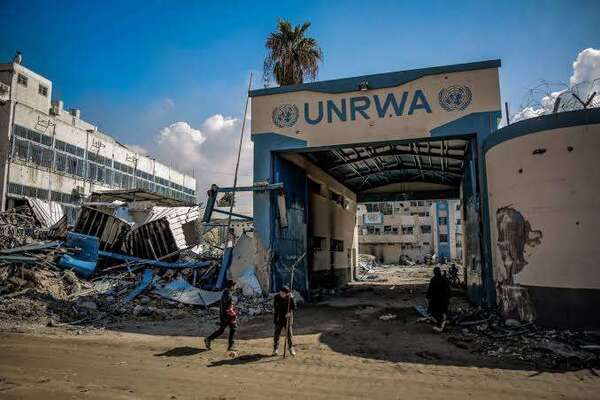
He pointed to the enormous challenges facing UNRWA, especially in light of the destruction of more than 200 of its facilities in Gaza, most of which are schools, and the killing of 263 of its employees, which makes the task of restoring its health extremely difficult.


He added: "UNRWA in Jerusalem faces an existential threat represented by the evacuation of its headquarters in Sheikh Jarrah by the end of the month, in addition to the closure of the Zawiya clinic within the walls of the Old City.


He explained that this situation reflects international and Palestinian surrender to Israeli policies, which puts more than 100,000 Jerusalemites registered in UNRWA records at risk, with serious repercussions on refugee services in Jerusalem.


Mshasha expected that UNRWA would continue to operate during 2025, but with great difficulty due to the increasing financial deficit, especially after the decline in American and Swedish financial support, the deterioration of Arab support, and the impossible conditions imposed by donor countries.


He warned that the continuation of these challenges would lead to a significant deterioration in UNRWA services in the West Bank and Gaza, noting that rebuilding the destroyed facilities in Gaza alone would require billions of dollars, a huge challenge for an agency suffering from severe financial distress.


Mish'sha concluded his statement to Al-Quds by warning of the existential dangers that threaten the right of return and UNRWA's role as a protector of this right, pointing to the clear weakness in the international and Palestinian positions to confront these challenges.


He said: "It is very difficult to stand by and watch attempts to eliminate your right as a refugee, your right as a human being, and your right as a Palestinian."


The agency continues its vital logistical work to support refugees in the Gaza Strip.


Adnan Abu Hasna, the official spokesman for UNRWA, said that the agency is continuing its vital logistical work to support Palestinian refugees in the Gaza Strip, noting that the volume of work will expand in the coming period to deal with the increasing humanitarian challenges after the destruction witnessed in the region.


Abu Hasna explained that UNRWA has a huge logistical force that includes thousands of employees, institutions and warehouses, which qualifies it to play its vital role in distributing food and humanitarian aid.


He added: "Since the ceasefire, food distribution operations in Gaza have been expanded, and we continue to enhance this role to serve the affected population."


He stressed that UNRWA will not close its operations under any circumstances, despite the uncertainty about the decisions that the Israeli government may take in the coming weeks.


13,000 permanent employees and 10,000 in temporary programs


He stressed, "No one can replace UNRWA except UNRWA itself. Other organizations, despite our respect for them, depend on others to carry out tasks and do not carry them out directly as UNRWA does."


Abu Hasna pointed out that UNRWA employs about 13,000 permanent employees in Gaza, in addition to 10,000 others in temporary programs.


He continued: "UNRWA's operations will expand significantly, especially in light of the massive destruction caused by the recent aggression on the Strip. UNRWA's history of more than 76 years and its long experience make it the body most capable of dealing with major humanitarian disasters."


Abu Hasna stressed that UNRWA remains the backbone of humanitarian services in Gaza, explaining that expanding the scope of current operations reflects the agency's commitment to alleviating the suffering of Palestinian refugees and providing the necessary support to rebuild what was destroyed by the aggression.


Israel's decision to ban UNRWA is 'punitive'


For his part, Dr. Mukhaimer Abu Saada, Professor of Political Science at Al-Azhar University in Gaza, described Israel’s decision to ban the work of the United Nations Relief and Works Agency for Palestine Refugees (UNRWA) in Israel and the occupied Palestinian territories as “punitive” and directly targeting the Palestinian people and refugees, warning of serious repercussions on their humanitarian conditions.


Abu Saada pointed out that the agency, which was established in 1949, is the primary source for providing education, health care, and employment services to Palestinian refugees.


He explained that there are more than 320,000 Palestinian students in the Gaza Strip who depend on the agency's schools, in addition to thousands who receive primary health care services.


He stressed that the proposed alternatives, such as authorizing the World Food Programme to assume UNRWA's role, would not be sufficient to cover all the services provided by the agency.


He added: "Even if the World Food Programme is tasked, it will not be able to meet all the basic needs that a large segment of Palestinian refugees depend on."


Abu Saada expressed his concern that many countries have stopped funding the agency, which further complicates the humanitarian crisis.


The continuation of UNRWA's work is linked to the absence of a political solution to the issue.


He stressed the need for the United Nations and the international community to insist on Israel retracting its decision, stressing that the continuation of UNRWA's work is linked to the absence of a political solution to the Palestinian issue.


Abu Saada explained that if a comprehensive political solution is reached and an independent Palestinian state is established, the Palestinian state can supervise the services provided by UNRWA.


But he stressed that in light of the continued Israeli occupation, the agency remains the only entity capable of supervising education, health and employment issues in accordance with the mandate granted to it since 1949.


Abu Saada said at the end of his statements to Al-Quds that Israel, with this decision, has placed the world in a new humanitarian crisis and has further complicated the living conditions of Palestinian refugees, which calls for urgent international action to protect the rights of refugees and prevent their conditions from deteriorating further.


Continuous attempts to conspire against UNRWA to close it


For his part, the Director of the Jerusalem Center for Social and Economic Rights, Ziad Hamouri, stressed the historical importance of the United Nations Relief and Works Agency for Palestine Refugees (UNRWA) in the lives of Palestinian refugees, and its pivotal role in preserving the refugee issue.


He pointed to the ongoing attempts to conspire against the agency's role by some funding countries, recalling the accusations against some of its employees last year, and the attempts to close its institutions, especially in the city of Jerusalem.


Al-Hamouri explained that there are clear examples of the restrictions, such as the closure of the “Indian Corner Clinic” in Jerusalem, which provided important health services to Palestinian refugees in Jerusalem.


He stated that this clinic had previously been closed under the pretext of auditing, but it had resumed operations for a period, only to be closed again recently, causing great harm to these refugees.


Al-Hamouri also pointed out the danger of closing the UNRWA headquarters in Jerusalem, stressing that the land on which it is being built is Jordanian land granted to the agency by the Jordanian government.


UNRWA headquarters in Jerusalem and Jordanian sovereignty


He explained that this headquarters is supposed to remain under the sovereignty of the Jordanian government, but it is being subjected to attempts to weaken its role.


Al-Hamouri added that what is happening in Gaza shows the importance of the agency's continued role, contrary to what the Israelis and Americans wished for, as they sought to close it.


He stressed that UNRWA continues to play a major role in providing humanitarian aid in Gaza, with the support of some Arab and European countries that continued to fund it.


Al-Hamouri stressed that there is currently no possibility of creating an alternative to UNRWA, given its ability to manage statistics and data related to Palestinian refugees, and its precise knowledge of the places and facilities in which it provides its services.


PALESTINE

Thu 23 Jan 2025 7:54 am - Jerusalem Time

The aggression on Jenin camp... displacement to erase the last witness to the right of return

Dr. Raed Abu Badawiyya: The occupation government’s decision to consider the West Bank a “battlefront” comes within the framework of appeasing the right and promoting the settlement and annexation agenda

Mohammad Hawash: The aggression on Jenin camp is an Israeli message that the security approach is the only way to deal with the Palestinians in the West Bank

Hani Abu Al-Sabaa: The occupation army sees the West Bank as the most difficult arena with plans to increase the number of settlers to one million... and the resignations of generals to preserve their political future

Dr. Suhail Diab: Four main political reasons for escalating the aggression on Jenin camp.. and the resigned Halevi may play a future role in the opposition

Muhammad Abu Allan Draghmeh: “The Iron Wall” is a political operation with military tools that was implemented to achieve goals related to Smotrich’s remaining in the government coalition

Imad Musa: The aggression on Jenin camp is part of an Israeli strategy to annex the West Bank and destroy the camps to destroy the idea of the right of return


The West Bank, especially Jenin camp, is witnessing an unprecedented Israeli military escalation, amid fears that the aggression is part of a broader Israeli strategy aimed at annexing the West Bank and ending the refugee issue.


In separate interviews with “I,” writers, political analysts, specialists, and university professors believe that this military campaign, which the Israeli occupation has named “The Iron Wall,” is not merely a purely security operation, but rather carries deep political dimensions, as the Israeli government headed by Benjamin Netanyahu seeks to compensate for its failures in the Gaza war, satisfy the extreme right, and attempt to impose a new fait accompli in the West Bank.


They point out that the aggression on Jenin camp aims to weaken the Palestinian resistance and empty the camps of their struggle content, in addition to strengthening the settlement and annexation agenda.


On the other hand, writers, analysts, specialists and university professors believe that the recent resignations of senior Israeli military leaders, including the Chief of Staff, confirm the existence of deep differences between the military establishment and the political level in Israel. These resignations, which come in the wake of the major security failure represented by the events of October 7, 2023, reflect an attempt by these generals to preserve their political future, as they may form a new opposition that agrees with the US administration, which seeks complete control over the management of Israel.

With early elections expected in Israel by June 2025, some writers and analysts see what is happening in the West Bank as part of an attempt to garner more electoral votes.


Harmony with the right-wing vision to strengthen control over the West Bank


Dr. Raed Abu Badawi, Professor of International Law and International Relations at the Arab American University, explains that the Israeli government’s decision to consider the West Bank a “battlefront” while approving an agreement in Gaza comes within the framework of appeasing the Israeli right and promoting the settlement and annexation agenda.


Abu Badawiya asserts that the intensive Israeli military campaign on the Jenin camp and the northern West Bank is in line with the right-wing vision that seeks to strengthen Israeli control over the West Bank, especially in light of the Trump administration’s support for Israeli ambitions in the West Bank.


Abu Badawiya explains that Trump's orientations, which are evident in his support for the Deal of the Century and the transfer of the embassy to Jerusalem, have whetted the appetite of the Israeli right to take practical steps towards annexing parts of the West Bank.


He stresses that the West Bank will be a political and security "price tag" for the Palestinians in light of the agreement between the Trump administration and the Israeli government.


On the other hand, Abu Badawiya believes that the political dimensions behind the resignations of senior Israeli military leaders, including the Chief of Staff, which come amid clear tensions between the military establishment and the Israeli government, are not merely a reaction to the Israeli security failure that characterized the events of October 7, but rather carry multiple political goals, including preserving a possible political future for the resigning generals and officers.


Abu Badawiya points out that the differences between the political and military levels in Israel have become clear in recent months, especially with regard to the different visions regarding the military solution to the Gaza Strip, as the Israeli government headed by Benjamin Netanyahu lacks a clear strategy for the post-aggression on Gaza, which has confused the military establishment and deepened the gap between the two parties.


Abu Badawiya confirms that this difference led to a lack of harmony between the military establishment and the government, which prompted some military leaders to submit their resignations.


Abu Badawiya explains that the resignation of the Chief of Staff also comes within the framework of political pressure from the Israeli right, including incitement by Finance Minister Bezalel Smotrich and resigned National Security Minister Itamar Ben-Gvir against the military leadership.


Abu Badawi notes that Netanyahu had to pay a “political price” to appease the right, prompting the chief of staff to preemptively resign to avoid dismissal.


Abu Badawiya asserts that the timing of the resignation, which coincides with its entry into force next March, aims to avoid participation in any future military operations in Gaza in the event that the deal with Hamas fails.


Abu Badawiya points out that these resignations will have a major impact on the Israeli military establishment, especially with the successive resignations in the leadership ranks.


Abu Badawiya believes that Netanyahu may take advantage of the opportunity to appoint hardline leaders to the General Staff who are in harmony with his political vision, whether in Gaza or the West Bank.


Working to annex as much of the West Bank as possible


Writer and political analyst Muhammad Hawash asserts that the Israeli aggression on Jenin camp did not target real military targets, but rather was part of a continuous message from successive Israeli governments, confirming that the security approach is the only way Israel deals with the Palestinians in the West Bank.


Hawash points out that the current Israeli government is working to annex and control the largest possible area of the West Bank, while relinquishing any responsibility for the future of the region and the future of the conflict with the Palestinians.


Hawash explains that this Israeli government lacks any political approaches, and relies entirely on repeated military operations to force the Palestinians to surrender. However, according to Hawash, this strategy has failed so far, and will not succeed in the future, because the Palestinian people’s issue is much deeper than can be resolved through military force. The Palestinian issue is not just a security problem, but rather an existential issue related to the rights of the Palestinian people to their land and freedom.


Hawash stresses that Israeli governments, including the moderate right, ignore the rights of the Palestinian people, and treat the issue as a security problem that can be solved by subjugating the Palestinians and forcing them to accept “crumbs” of solutions offered by Israel.


However, according to Hawash, these solutions essentially aim to maintain Israeli control and the colonial control system over the daily lives of the Palestinian people, and to prevent any real political solution that guarantees the end of the occupation and the establishment of a Palestinian state. However, the Palestinians will not give up their rights to their land, and will continue the struggle to end the occupation and establish their independent state.


Hawash points out that what encourages Israel to continue this policy is the American position that ignores the rights of the Palestinian people, and allows Israel to talk about the "right of the Jewish people to the land" without recognizing the rights of the Palestinians, stressing that the only solution to the conflict is to reach a peaceful settlement acceptable to both parties, which guarantees the end of the occupation and the establishment of the Palestinian state.


On the other hand, Hawash confirms that the resignations of Israeli generals confirm the existence of deep differences within the Israeli government between the security and political levels, pointing out that these differences are clearly evident in the management of the war of extermination in the Gaza Strip, and the evasion of responsibility for the failure and failure in the events of October 7, 2023.


Hawash points out that Netanyahu and some right-wing parties are seeking to weaken the status of the army and the security system in Israeli political life, in favor of strengthening the role of the political level, with the aim of transferring the powers of the army to the political level, with the aim of holding the army responsible for military failures, instead of holding the political level responsible.


Violating the West Bank... an agreement between Netanyahu and Smotrich


The writer and political analyst specializing in Israeli affairs, Hani Abu Al-Sabaa, explains that the intensive Israeli military campaign in the northern West Bank, especially the Jenin camp, which comes under the name of the “Iron Wall,” comes in light of the estimates of the Israeli military establishment and the Shin Bet (internal security) that the phenomenon of explosive devices used by the resistance in the northern West Bank constitutes a qualitative and dangerous development, especially with its direct threat to settlers’ vehicles and buses.


Abu Al-Sabaa points out that the occupation estimates that the resistance in the northern West Bank has benefited morally from the recent events in the Gaza Strip, especially since the proximity of the distance between Jenin and the Green Line (the 1948 borders) makes the presence of active resistance in the region a strategic threat to Israel, noting that the West Bank, with its large areas, provides the resistance with opportunities to maneuver in more than one location.


Abu Al-Sabaa believes that the main goal of the Israeli military campaign is to eliminate the Jenin Battalion and the wanted men in the northern West Bank, and to send a strong message to the rest of the regions that any resistance action will have a heavy price. The intensive attack on Jenin also aims to put pressure on the popular incubator that supports the resistance.


Abu Al-Sabaa believes that the aggression on Jenin comes within the framework of an agreement between Israeli Prime Minister Benjamin Netanyahu and Smotrich, where it was agreed that Smotrich would not withdraw from the government in exchange for allowing the Israeli army to operate freely in the West Bank and build more settlements, in addition to trying to reduce the Palestinian presence in Area C.


Abu Al-Sabaa confirms that the Israeli army has begun to rely on new methods to confront the resistance, including the use of intensive intelligence and aviation to reduce losses among its soldiers.


Abu Al-Sabaa points out that the occupation army sees the West Bank as the most difficult arena, especially with the presence of about 750,000 settlers, and there are plans to increase their number to one million, which makes any security threat in the region a strategic danger.


As for the resignation of the Israeli generals after the end of the war on the Gaza Strip, Abu Al-Sabaa believes that it was expected, especially after the war in Gaza stopped, as those generals did not want to record withdrawals while the military operations were ongoing.


Abu Al-Sabaa believes that these resignations will continue as part of the recognition of the major intelligence and security failure represented by the events of October 7, 2023, in addition to the failure to intercept the resistance missiles during the war.


Abu Al-Sabaa believes that the resignations of the Israeli generals and officers come within the framework of an attempt by them to preserve their political future, as some of them may return to the political arena in the future. Their withdrawal and admission of the security and intelligence failure in the events of October 7, 2023 is recorded for them as a step aimed at improving their public image, which may open the doors for them to return to political life later.


Abu Al-Sabaa points out that these resignations also come in response to the demands of the Israeli opposition, which is demanding the resignation of everyone responsible for the failure that led to the events of October 7, 2023, as admitting the failure and withdrawing at the present time may leave a glimmer of hope for these officers to return to the political forefront in the future.


Satisfying the far right and compensating for the failures of the Gaza war


Dr. Suhail Diab, a professor of political science and expert on Israeli affairs, believes that there are four main political reasons behind the current Israeli escalation in the Jenin camp, stressing that what is happening is not purely security in nature, but is primarily political.


Diab explains that these reasons include compensating Israeli society for the failures of the Gaza war, satisfying the extreme right, imposing a fait accompli in the West Bank, and trying to weaken the rapprochement between Palestinian factions.


Diab points out that the first reason is Israel's attempt to compensate Israeli society for the failures it faced in the Gaza Strip, especially after signing the prisoner exchange deal that did not achieve any military victories. This step aims to shift the public debate from holding the political leadership, especially Prime Minister Benjamin Netanyahu, accountable for its failures over the past 15 months, to focusing on the security "achievements" in the West Bank. This escalation in the West Bank aims to protect Netanyahu from the conclusions of Israeli society that could lead to his downfall before the upcoming elections.


The second reason for the escalation in the West Bank, starting with the Jenin camp, according to Diab, is to please Smotrich, who threatened to bring down the government. Netanyahu took several measures to appease him, including announcing a general amnesty for settlers accused of committing terrorist acts against Palestinians, and a decision in the security cabinet to open a new fighting front in the West Bank. These steps aim to ensure Smotrich remains in the government coalition, especially in light of the threats he made regarding the second stage of the prisoner exchange deal that he would withdraw from the Israeli government.


Diab asserts that the third reason is Israel’s attempt to weaken the rapprochement between Palestinian factions in the West Bank, especially between the security services and factions and groups such as Hamas, Islamic Jihad, and the Jenin Battalion, noting that Israel is concerned about any Palestinian-Palestinian rapprochement, as it prefers that the factions remain in a state of permanent tension to ensure its control over the situation. In addition, choosing the Jenin camp as the main target of this campaign reflects Israel’s concern about any future Palestinian understandings.


The fourth reason, according to Diab, is Israel's attempt to impose a new fait accompli in the West Bank that can be used as bargaining chips with the administration of US President Donald Trump, noting that Netanyahu wants to enter into understandings with Trump with bargaining chips, such as expanding settlements and imposing greater security control over the West Bank, to be used in future political bargaining.


Regarding the resignation of the Israeli Chief of Staff, Herzi Halevi, and the possibility of other generals resigning, Diab asserts that this resignation is purely political, as it came at a time that reflects Halevi’s desire to send a strong message that the war in Gaza has ended, and that any attempt to reignite it will be the responsibility of the political leadership.


Diab explains that the resignation also indicates that Halevi will not withdraw from the political scene, but may play a future role in the Israeli opposition, especially in light of expectations of other resignations among the military and security leadership.


Strengthening the balance within Netanyahu's coalition government


The writer and expert on Israeli affairs, Muhammad Abu Allan Daraghmeh, believes that the “Iron Wall Operation,” launched by the Israeli occupation army in the city and camp of Jenin, is nothing more than part of an internal Israeli political game, aiming to strengthen the balances within the coalition government headed by Benjamin Netanyahu, rather than being a purely military operation.


According to Draghmeh, the recent operation in Jenin can be described as a “political operation with military tools,” as it was carried out primarily to achieve internal goals related to Smotrich’s remaining in the coalition government.


Draghmeh explains that after Smotrich rejected the prisoner exchange deal and the ceasefire in Gaza, he asked Netanyahu to carry out extensive military operations in the northern West Bank, especially in Jenin, under the pretext of “strengthening security.” Netanyahu agreed to this request in exchange for ensuring that Smotrich would remain in the government coalition, which means that the operation was essentially “Operation Smotrich” and not “Iron Wall.”


Draghmeh points out that such military operations, despite their cruelty, destruction of infrastructure, and targeting of civilians, will not be able to eliminate the Palestinian resistance. These operations may strike here or there, and may weaken the resistance for a limited period of time, but Israel will not eliminate it, and the Israeli occupation is well aware of this.


Draghmeh expects that we will witness other military operations in wider areas, but in the end they will still have internal political objectives more than military ones.


Draghmeh points out that the Israeli occupation has been carrying out military operations in the West Bank since 2022, starting with Operation “Breaking the Waves,” passing through Operation “House and Garden” in Jenin camp, then Operation “Summer Camps,” and finally Operation “Iron Wall.” Between these major operations, there were smaller operations that did not bear specific names, but targeted areas such as Tubas, Al-Far’a camp, Tulkarm camps, and Nour Shams. Each time, the occupation uses the same pretext, which is “enhancing security,” but the real goal is to destroy the infrastructure and kill civilians, within the framework of a lesser degree of genocide.


Draghmeh explains that the resignations of the Israeli generals at this stage were not surprising, as the Israeli military level announced its responsibility for the events of October 7, 2023 immediately after they occurred.


He points out that the delay in the resignations of the generals may have been due to the war continuing for a long time, and now the ceasefire has come for 42 days, which gave them enough time to resign and be replaced by new leaders, as these resignations came as an indirect response to the request of the Israeli political level, which seeks to reshape the military leadership in line with its current policy in Gaza and the West Bank.


The coming period is expected to witness other resignations among the Israeli military and security leadership, including the head of the Shin Bet, who is said to intend to submit his resignation soon.


According to Draghmeh, these resignations will be a gift to the Israeli political level, especially to Netanyahu, who is trying to place full responsibility for the events of October 7, 2023 on the army and the military establishment, rather than the political level.


Jenin camp is only the beginning


Writer and political analyst Imad Musa believes that the Israeli aggression on Jenin camp comes within the context of an Israeli strategy aimed at permanently annexing the West Bank to the State of Israel, as well as ending the refugee issue.


Musa explains that this strategy differs in part from that followed in demolishing and destroying the Gaza Strip, where Israel relies in the West Bank on systematically destroying the camps, with the aim of destroying the idea of the right of return and ending any link between the Palestinians and their historical land.


Musa points out that the presence of the authority in the West Bank, which enjoys international recognition, makes Israel follow a policy of gradually destroying the camps, instead of comprehensive demolition as happened in Gaza.


Musa believes that this strategy also includes targeting the United Nations Relief and Works Agency for Palestine Refugees (UNRWA), with the aim of undermining any hope of refugees returning to their homes.


Musa points out that targeting the Palestinian camps is due to the fact that they constitute an incubator for the Palestinian resistance and revolution and the end of any hope for self-determination for the Palestinian people.


Musa points out that the Jenin camp is only the beginning, expecting that after its completion, Israel will move on to target other camps in the West Bank, with the aim of emptying them of their struggle content and making them uninhabitable areas.


Musa stresses that the ultimate goal is to end the refugee file in the West Bank and achieve a Jewish state free of any effective Palestinian presence.


Regarding the recent resignations of Israeli generals, Musa explains that this step comes within the framework of these military personnel’s attempt to lead the political scene in Israel in the future, noting that they may form a new opposition that agrees with the US administration, which seeks to take complete control of Israel’s administration after the United States almost lost Israel’s administration during the era of former President Joe Biden.


Musa expects the new US administration, headed by Donald Trump, to push for early elections in Israel by June 2025 at the latest.


Musa points out that what is happening in the camps, including Jenin camp, is part of an attempt to garner more electoral votes before these elections.

PALESTINE

Thu 23 Jan 2025 7:51 am - Jerusalem Time

The victory and the praise of peace and sovereignty over the rubble!

In the extreme enemy, the arrogant and brute force owners admit their failure to prevent the occurrence of October 7, and the commander of the extermination army announces his resignation, and forms a committee to investigate the causes of the serious shortcomings and failure.


In the lower enemy, the banners of victory are fluttering, and the victors compete over who will have sovereignty over the rubble, a victory that mitigates the crime of genocide, for which a court was convened that issued arrest warrants for the criminal killers, just as it suffocates the breath of anyone who dares to criticize gambling.


Arabs have a habit of turning facts upside down, describing the blind as “Abu Basir,” the one-eyed as “Karim al-Ain,” and the sick as “al-Mu’afi.” We called the June defeat a “setback,” which are deceptive descriptions that contradict painful facts.


Arabs decorate ugliness and praise delay by saying: “Every delay has a good thing in it,” which is an attempt to save those who are late, and legislate the disgrace of delay, and transform it into praise. There is no blame on the latecomer even if his delay causes the destruction of the country, just as Egyptian writers excelled in criticizing mistakes; as a small employee says in an attempt to flatter his boss if he makes a big mistake: “Your mistakes are moving the country forward, sir!”


Criticism does not detract from the uniqueness and boldness of the October spectacle, which the resigned Chief of Staff Herzi Halevi said would “accompany him throughout his life.” But the uniqueness of the spectacle does not grant it immunity or sanctity, nor the right to practice dictatorship in the manner of “I only show you what I see.”


The lesson is in the endings and outcomes. Life has been wiped out from Gaza, the dreams of the Gazans have been shattered, their sorrows have deepened with the enormity of the loss of their loved ones, and their lives have returned to the era of the tribe and the tent, while the speech of victory is raised in their faces on the tips of spears, to suspend the virtue of criticism, review and evaluation in order to avoid adventures and the repetition of going to the nihilism of options.


What applies to the owners of the “flood” applies to the owners of the “peace of the brave”, as each one is infatuated with his achievement and exalts its status. The thirsty man thought it was water before he saw it as a savage settlement in the West Bank and a barren, desolate land in Gaza, while the owners of the “flood” did not offer an alternative to peace, otherwise what is the need to turn against it, if something better than it is not offered.


Victory is not called victory unless the great sacrifices are turned into political gains that make what comes after the flood better than what came before it. Otherwise, we ask God Almighty that the flood be the last of our sorrows and the conclusion of our victories!


PALESTINE

Thu 23 Jan 2025 7:44 am - Jerusalem Time

Injuries, arrests and checkpoints in the West Bank and Jerusalem

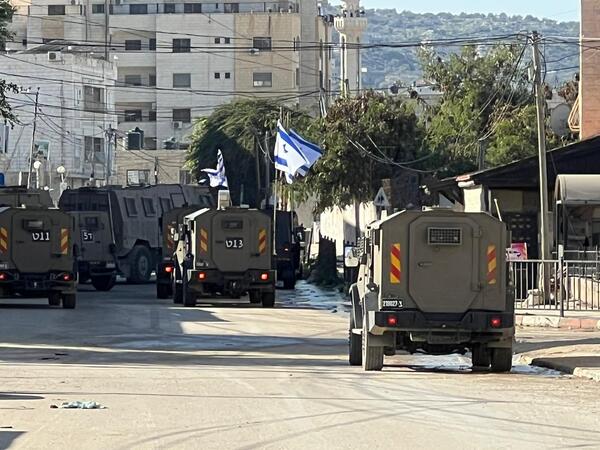
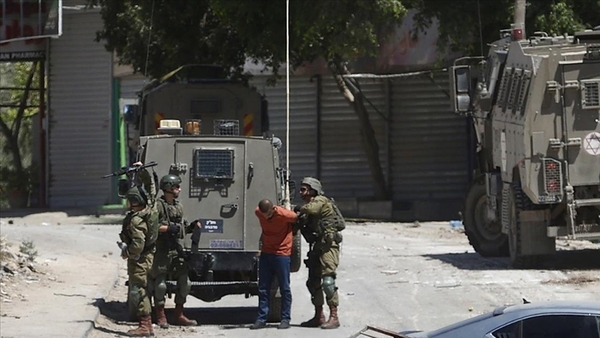
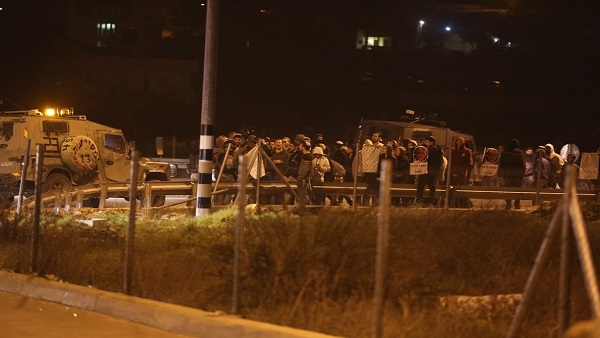
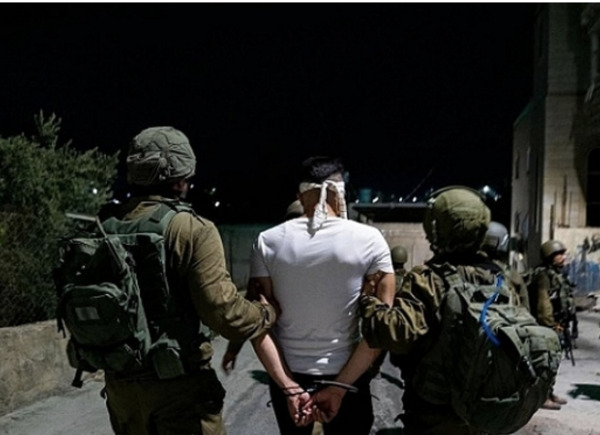
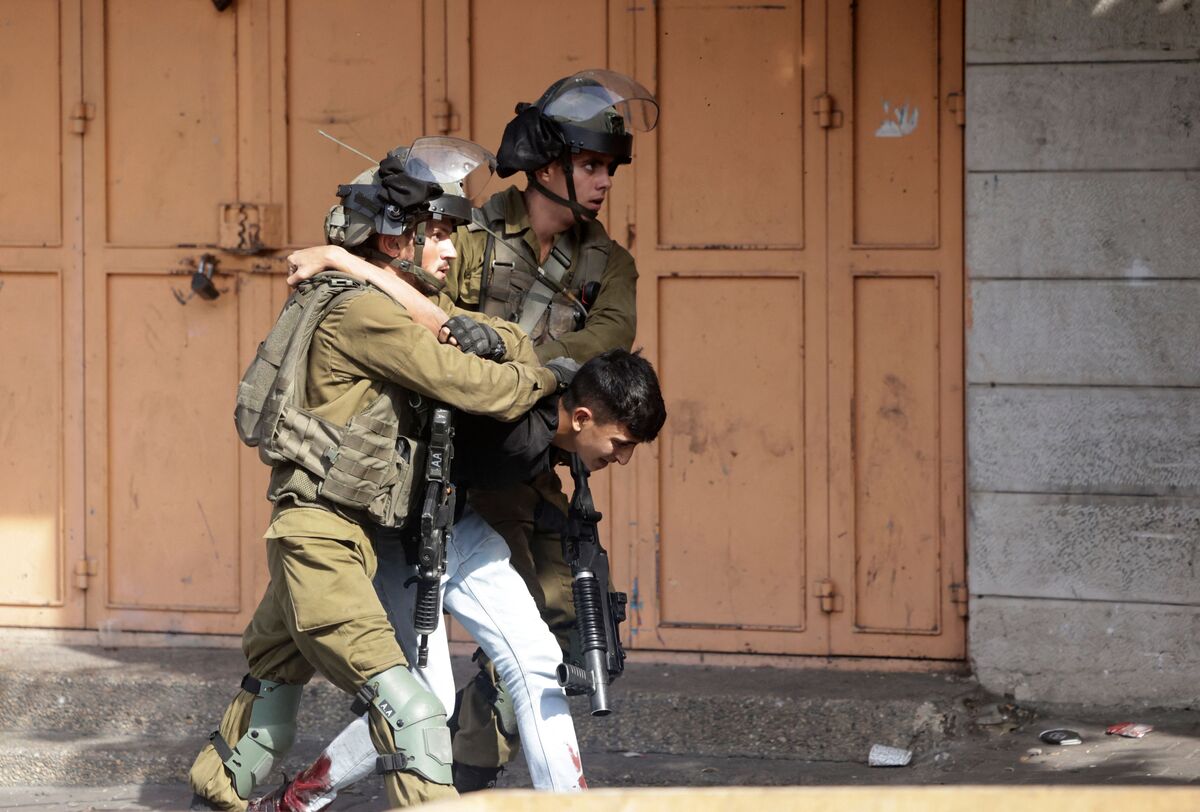
Today, Thursday, the Israeli occupation forces injured three citizens and arrested others, while continuing to set up checkpoints in various areas of the West Bank and occupied Jerusalem.


In Nablus, the occupation forces stormed several neighborhoods of the city, the vicinity of Al-Ain camp, and the Martyrs' Roundabout, raided several homes, searched them, and ransacked their contents, and arrested: Saadi Tabanja from the northern mountain, Abdul Ghafour Abu Hashiya from Ibn Rushd Street, and Khaled Kiwan from the popular housing area.


In the same context, the occupation forces stormed the town of Beita, south of Nablus, and raided a number of homes there, wreaking havoc, but no arrests were reported.


In Jericho, 3 citizens were injured and bruised at dawn on Thursday while trying to leave the city.


Local sources reported that 3 young men were transferred to Jericho Governmental Hospital after they sustained injuries and bruises as a result of the occupation soldiers assaulting them while they were trying to leave the city of Jericho via one of the "dirt" bypass roads.


In the same context, the occupation forces stationed at their military checkpoints surrounding the main and secondary entrances to the city of Jericho continued to prevent citizens from leaving it.


In Ramallah, the occupation forces arrested two young men, Abdul Ghani Faris from Silwad, and Hatem Shokha from Ramoun, after raiding their homes and tampering with their contents. They are both students at Birzeit University. They also arrested the citizen, Ali Wahid Al-Barghouthi, after raiding his home in Kobar, northwest of Ramallah.


Meanwhile, the occupation soldiers set up a checkpoint at the entrance to Rawabi, obstructing the movement of citizens heading to the city of Ramallah, while the Ein Siniya checkpoint witnessed a stifling crisis and thorough inspection of those leaving the city of Ramallah.


In occupied Jerusalem, the Israeli occupation forces closed the Jaba military checkpoint in both directions and stormed the town of Hizma.


Local sources reported that the occupation forces continued to tighten their measures at the Jaba military checkpoint linking the Ramallah, Jerusalem, Jericho, and southern West Bank governorates, for the third consecutive day, and closed the gate at dawn and completely prevented passage.


She added that the occupation forces stormed the town of Hizma, northeast of Jerusalem, and drove their military vehicles through several neighborhoods and streets.


In Hebron, the occupation forces stormed several neighborhoods of the town and arrested: Saif Naim Abu Maria, Hamouda Jamal Abu Maria, Khalil Jamal Abu Maria, and Omar Arafat Zaaqiq, after raiding their homes and deliberately damaging their property.


It also arrested citizens Yousef Ahmed Awad and Qassam Khaled Abu Rabie from Yatta and Al-Fawar camp.


The Israeli occupation forces also tightened their punitive measures against the residents of the Hebron Governorate and closed the checkpoints set up at the entrances to the towns and villages of the governorate and hindered the movement of citizens, which forced a large number of them to spend the night at those checkpoints waiting to be allowed to pass.

PALESTINE

Wed 22 Jan 2025 9:54 pm - Jerusalem Time

Israeli occupation bombed a house west of Jenin

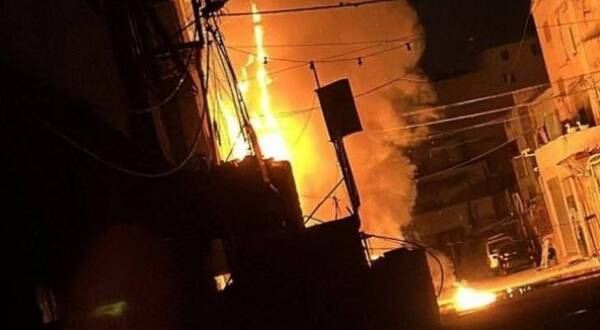
This evening, Wednesday, the Israeli occupation forces bombed a house in the town of Burqin, west of Jenin, after imposing a tight siege on it.


The town witnessed armed clashes between Palestinian resistance fighters and the occupation forces, which sent more military reinforcements and heavy machinery to the Jenin camp, according to Palestinian sources.


For its part, the Al-Quds Brigades - Al-Yamoun Battalion announced that its fighters are trying to lift the siege on the besieged house, confirming their success in targeting an infantry force of the occupation army with a tight ambush, which led to confirmed casualties among the occupation forces.
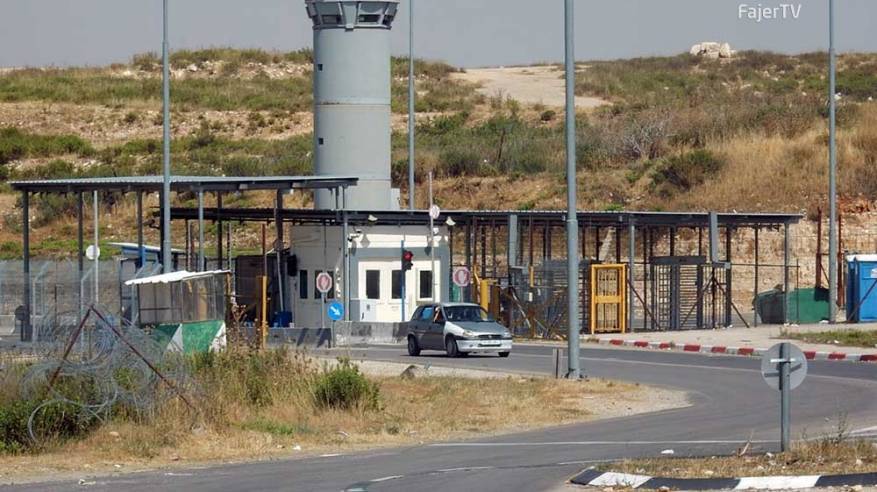

At the same time, Hebrew media claimed that those trapped inside the targeted house in Burqin were the perpetrators of the hotel attack in Qalqilya, which took place weeks ago.


PALESTINE

Wed 22 Jan 2025 9:42 pm - Jerusalem Time

UN: 13,000 people work for UNRWA in Gaza

The United Nations Humanitarian Coordinator for the occupied Palestinian territory, Muhannad Hadi, said on Wednesday that “UNRWA has about 13,000 people working in the Gaza Strip. The relationship between the Palestinian people in Gaza and UNRWA will be strengthened, and we will stay with them to restore their lives in a better way.”


Hadi added in a post on the “X” platform, “When I entered Gaza this morning, I felt great hope to see people returning to their places of residence in the Strip.”


“For the first time in months, I saw people on the streets, starting to clean up the roads and trying to rebuild their lives,” he explained.


Hadi pointed out that many residents of the Strip want to “return to work and rebuild instead of relying on aid.”


He stressed that “the needs of the women and children he spoke to were summarized in education, blankets for the winter, and basic clothing after months of deprivation.”


Last Sunday, the ceasefire in the Gaza Strip came into effect, and its first phase will last for 42 days, during which negotiations will begin to begin a second and then a third phase, mediated by Egypt, Qatar, and the United States.
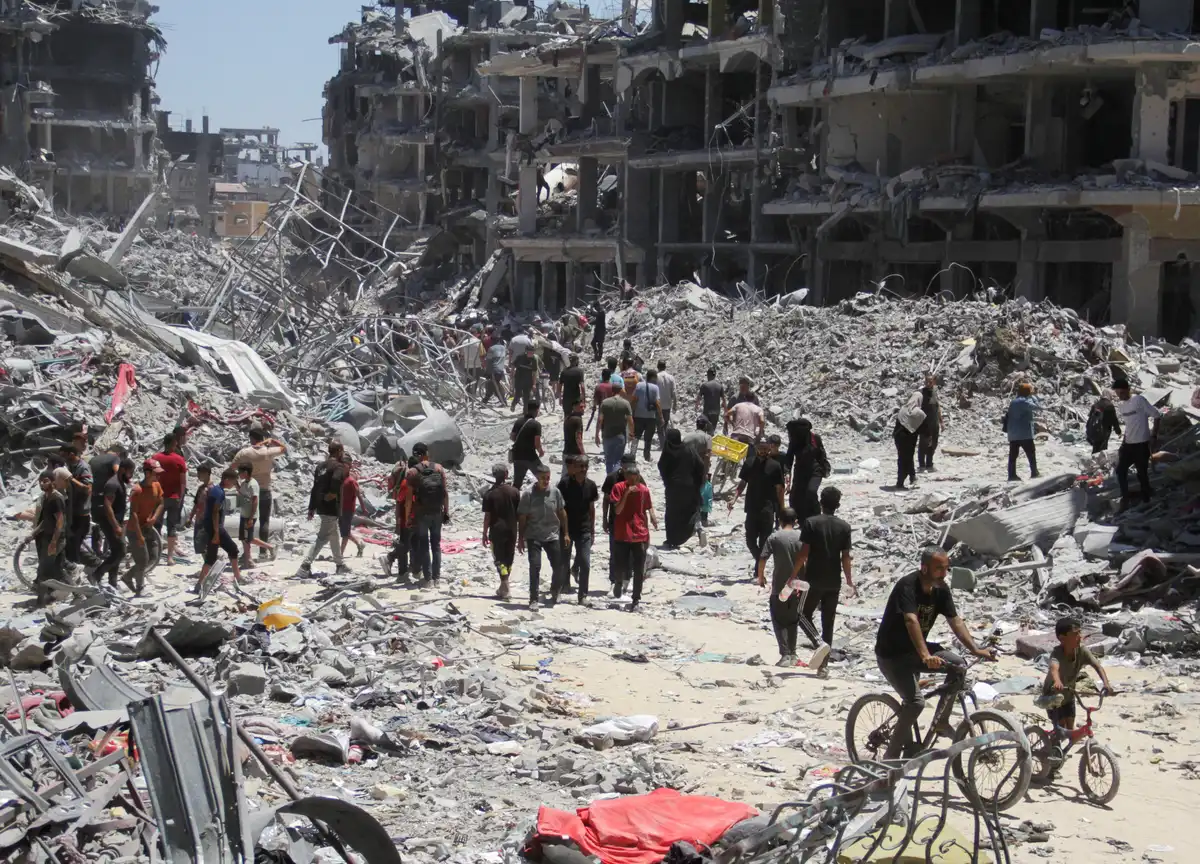

Between October 7, 2023 and January 19, the Israeli occupation aggression left more than 158,000 Palestinian martyrs and wounded, most of them children and women, and more than 11,000 missing, in one of the worst humanitarian disasters in the world.


PALESTINE

Wed 22 Jan 2025 9:12 pm - Jerusalem Time

Settlers attack citizens' vehicles south of Nablus

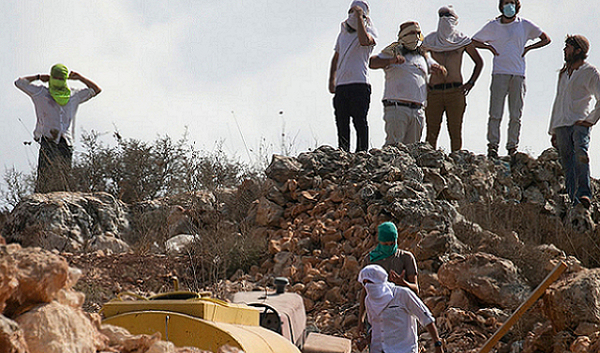
Settlers attacked citizens' vehicles north of Madama village, south of Nablus, on Wednesday evening.


According to local sources, a group of settlers stormed the area above the bridge north of Madama village, closed the bypass road there, and attacked citizens' vehicles. No injuries were reported.

PALESTINE

Wed 22 Jan 2025 7:46 pm - Jerusalem Time

Gaza Education announces completion of plans to open new school year

The Ministry of Education and Higher Education in the Gaza Strip announced that it has completed preparing emergency plans for the opening of the new academic year 2024/2025.


The Ministry of Education called, in a statement issued today, Wednesday, a copy of which was received by the Palestinian Media Center, on educational and school administrations, educational staff, local authorities, emergency committees, and parents’ councils to form protection networks for the remaining educational capabilities; and to preserve them, to invest in them and benefit from them when the educational process resumes.


The Ministry called on all relevant bodies, supporting entities and partner institutions to provide urgent and necessary support to relieve the education sector; remove rubble from school buildings; and dangerous objects; restore damaged buildings; establish temporary classrooms; and restore basic services to school buildings; in preparation for the resumption of studies.


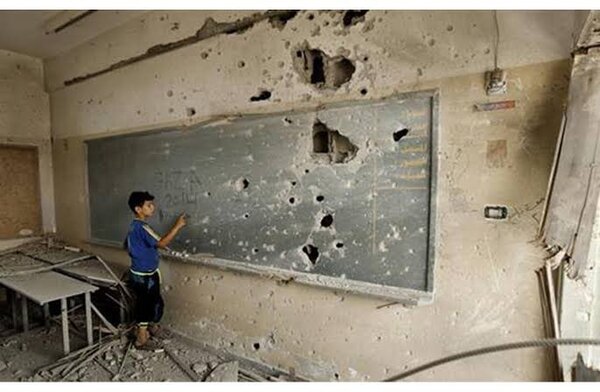
According to the Ministry of Education, there are preliminary statistics on the martyrs and missing persons, revealing the deaths of more than 15,000 school-age children and more than 800 workers in the public education sector, in more than 30 schools.


These statistics indicate that the Israeli aggression has resulted in the injury of more than 50,000 male and female students, and the death of more than 150 scientists, academics, and workers in higher education institutions.


It showed that (95%) of school and educational buildings were damaged, in addition to (85%) of them being out of service as a result of their total or partial destruction, and the destruction of more than 140 administrative and academic facilities, including their devices, equipment, laboratories, clinics and libraries.


The Ministry called on all media agencies, institutions, and institutions concerned with childhood and human rights to document and expose the occupation’s crimes against children and deprive them of their right to education, and to prosecute this criminal occupier before the competent international bodies and courts.


ARAB AND WORLD

Wed 22 Jan 2025 6:45 pm - Jerusalem Time

Broadcasting Authority: Israel will not withdraw from Lebanon within the specified deadline

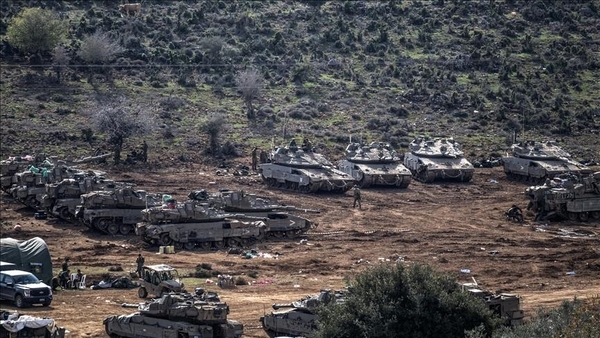
The Israeli Broadcasting Corporation revealed, on Wednesday evening, statements from the Israeli army confirming that it will not complete its withdrawal from southern Lebanon within the deadline specified in the ceasefire agreement, which ends in 72 hours.


The official body reported that representatives of the army recently held a closed meeting with members of the Foreign Affairs and Defense Committee in the Knesset (Israeli parliament), during which they confirmed that the army "will not be able to withdraw from all of southern Lebanon" within the deadline specified in the agreement.


The authority added that the commander of the northern region in the army, Major General Uri Gordin, presented during the meeting, the date of which was not mentioned, "a very bleak picture" of the situation on the border with Lebanon.


Despite hundreds of violations of the agreement by the Israeli army, Gordin claimed that "Hezbollah is violating the ceasefire and the Lebanese army is helping it," according to the commission.

PALESTINE

Wed 22 Jan 2025 6:21 pm - Jerusalem Time

Water Authority: The damage to the seawater desalination plant in Gaza exceeded 90%

The Water Authority said that the massive damage to the seawater desalination plant in Gaza, which has a production capacity of 10,000 cubic meters per day, exceeded 90%.


The Water Authority explained in a statement issued on Wednesday evening that the occupation army used the station as a military base during its aggression on the Gaza Strip, which led to the destruction of most of its main components.


She pointed out that in cooperation with the Coastal Municipalities Water Authority crews, she monitored the damage resulting from the bombing and destruction, indicating that rehabilitating the station and operating it again will require approximately 5 million dollars, in addition to a period of time estimated at a full year to complete the necessary repairs.

ARAB AND WORLD

Wed 22 Jan 2025 5:22 pm - Jerusalem Time

Elise Stefanik: Trump's UN pick sees support for Israel as sufficient qualification for post

Rep. Elise Stefanik, the New York Republican whom President Trump has chosen to be U.S. ambassador to the United Nations, pledged Tuesday to combat anti-Semitism, confront Chinese influence and, if necessary, leverage American contributions to force change.


“I share President Trump’s vision for a United Nations that must be reformed, America first, and peace through strength,” Rep. Elise Stefanik, D-N.Y., the president’s new pick to be his U.N. ambassador, told senators during her confirmation hearing Tuesday before the Senate Foreign Relations Committee. “Our tax dollars should not be complicit in supporting entities that are anti-American, anti-Semitic, or engaged in fraud, corruption, or terrorism.”


Republicans welcomed the selection of Stefanik, who began her career in Congress as a moderate but evolved into one of Mr. Trump’s strongest supporters in the House during his first term, which appealed to President Trump’s temperament.


She is also expected to gain the support of a number of Democrats, many of whom disagree with her views but have praised her for engaging with them.


Stefanik criticized UNRWA, the International Criminal Court and Iran in her Senate confirmation hearing while emphasizing the views of right-wing Israeli ministers that Israel has a “biblical right to the entire West Bank.”


Stefanik, who was confirmed as U.N. ambassador Tuesday, told her confirmation hearing that she would prioritize combating the "anti-Semitic rot" within the U.N. while reiterating her opposition to funding the U.N. agency for Palestinian refugees.


“Combating anti-Semitism is something I am deeply committed to in this role, and it’s one of the reasons I was interested in this position during my conversations with President Trump,” Stefanik said during the hearing.


Stefanik has praised her role as a leader in "fighting the anti-Semitic scum" while in Congress, specifically her role in the college presidents hearing, as one of her qualifications to be a UN ambassador.


“The United States is by far the largest contributor to the United Nations,” she said in her opening statement. “Our tax dollars should not be complicit in supporting entities that are anti-American, anti-Semitic, or engage in fraud, corruption, or terrorism.”


“As the world faces crisis after crisis, with hostages including Americans still held captive by Hamas, to national security challenges ranging from China and Russia to North Korea and Iran, it has never been more important for the United States to lead with strength and moral clarity,” she continued.


“If you look at the anti-Semitic rot within the UN, there are more resolutions targeting Israel than any other country and other crises combined,” she added during questioning, singling out UN Women in particular as a problematic entity.


The right-wing, pro-Israel lawmaker claimed that UN Women had failed to condemn the terror attack by Hamas and its regime against innocent civilian women, using rape, specifically targeting women and holding them hostage. She added that she was “very happy that these three young women were taken home, and we need to commit to ensuring that every hostage is returned home,” allegations that have been proven false.


Regarding UNRWA, she noted that it is “a program that does not fulfill the mandate of the United Nations. We need to roll up our sleeves, implement reforms and make sure that our money goes to programs within the United Nations that work and have a basis in the rule of law, transparency, accountability and strengthening our national security.”


“We should never tolerate any American taxpayer money going to terrorism,” she said. “I was one of the members who voted to defund UNRWA,” she said. “We can look at organizations within the UN that have proven themselves, like UNHCR, the World Food Programme — which still need reform and modernization — but do not have the terrorist connections that UNRWA had and that were exposed on October 7, 2023.”


Stefanik noted that 2025 will mark the 50th anniversary of the “shameful ‘Zionism is racism’ resolution at the United Nations.” “Our U.S. ambassador at the time, Daniel Patrick Moynihan, spoke out forcefully against that shameful resolution,” she said. “That’s the kind of leadership I hope to bring.”


Stefanik declined to endorse a two-state solution or Palestinian rights to self-determination, saying instead: “I think they deserve much more than the failures they have suffered from the terrorist leadership.”


She then confirmed the views of Finance Minister Bezalel Smotrich and former National Security Minister Itamar Ben-Gvir that Israel has a biblical right to the entire West Bank.


Stefanik also sparred with Democratic Sen. Chris Murphy over Elon Musk's alleged fascist salute at a Trump rally, and has vigorously defended the billionaire against allegations of anti-Semitism.


“What concerns me is that these are the questions that you think are the most important to ask the UN ambassador,” Stefanik continued. “He has a very strong record when it comes to combating anti-Semitism. We just had a historic election where President Trump received historic support from American voters because of his strong leadership in combating anti-Semitism, which has been a blight across the country since October 7.”


“I intend to bring moral clarity to this position and continue to be a voice and a beacon of light condemning anti-Semitism at the United Nations, which is President Trump’s record and his campaign promises,” she added. She also denounced the UN entity responsible for overseeing the ceasefire between Israel and Lebanon, saying: “We need to ensure that UNIFIL is a peacekeeping mission that we need to evaluate. It has failed in its mission, and we need a strategy to move forward.”


On Iran, she called it “the most significant threat to world peace, especially in the region,” saying that reimposing sanctions “would be an important tool to consider in [Trump’s] toolbox as he pressures Iran.” On the ICC, Stefanik added, “I have a significant record of resistance to the ICC and its shameful anti-Semitism.”

PALESTINE

Wed 22 Jan 2025 5:02 pm - Jerusalem Time

Israeli occupation forces arrest a number of citizens, including two women, in Jenin camp

This evening, Wednesday, the Israeli occupation forces launched a large-scale arrest campaign in Jenin camp.


Eyewitnesses said that the occupation forces arrested a number of citizens from several neighborhoods in Jenin camp, including two women: the mother of the martyr Mahmoud Al-Saadi, and Ferial Al-Saadi, the mother of the martyr Ashraf Al-Saadi, and the two young men Naseem Salah and Alaa Tawalbeh.


Yesterday, the occupation forces stormed the city of Jenin and its camp in an unprecedented aggression, accompanied by military bulldozers, coinciding with the flying of the occupation's drones and warplanes in the airspace, as the death toll from the aggression on its first day reached 10 martyrs, and nearly 40 injuries.


Yesterday, the occupation army announced an attack on the city of Jenin and its camp, amid threats from ministers in the occupation government to escalate the situation in the West Bank.

ARAB AND WORLD

Wed 22 Jan 2025 4:48 pm - Jerusalem Time

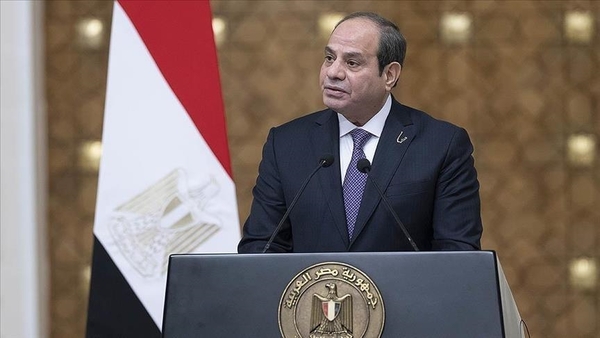
Sisi: We will push with all our might to ensure the full implementation of the ceasefire in Gaza

Egyptian President Abdel Fattah el-Sisi stressed on Wednesday that his country "will push with all its might" to ensure the full implementation of the ceasefire agreement in the Gaza Strip.


This came during a speech he delivered at a celebration in the capital, Cairo, on the occasion of the 73rd anniversary of Egyptian Police Day, in the presence of a number of senior officials and security leaders.


On January 19, a ceasefire between Hamas and Israel began to take effect in a first phase lasting 42 days, during which a second and third phase will be negotiated, through negotiations mediated by Egypt, Qatar and the United States.


In his speech, Al-Sisi considered the "ceasefire agreement in Gaza a living witness to the tireless efforts and continuous endeavors made by Egypt alongside its partners in this regard."


He added, stressing: "We will push with all our might to implement this agreement in full, in an effort to stop the bloodshed of our Palestinian brothers, restore services to the Strip so that it becomes viable, and prevent any attempts to displace its residents due to these difficult circumstances."


He stressed that Egypt categorically rejects the displacement of citizens from the Gaza Strip, in order to preserve the existence of the Palestinian cause itself.


January 25 is considered a holiday for the Egyptian police, whose members refused on that day in 1952 to evacuate the Ismailia Governorate building (northeast) and hand over their weapons to the British occupation, which led to clashes that resulted in killing and wounding of dozens of its men.

PALESTINE

Wed 22 Jan 2025 3:15 pm - Jerusalem Time

5 citizens injured in settler attack south of Hebron

Five citizens were injured today, Wednesday, and others fainted as a result of an attack by settlers on residents in Masafer Yatta, south of Hebron.


Local sources reported that dozens of settlers attacked residents of Khirbet Aqwawis in Masafer Yatta, beating them and spraying tear gas in their faces, which resulted in the injury of the elderly Jibril Musa al-Na'amin, Nour Abdul Aziz al-Na'amin, Ja'far Yousef al-Na'amin, and Adel and Saber Talib al-Na'amin, with head wounds, fractures and bruises. They were transferred by ambulance crews to a hospital to receive treatment.


A number of other residents fainted after the settlers sprayed them with toxic pepper gas, and they were treated in the field.

PALESTINE

Wed 22 Jan 2025 3:06 pm - Jerusalem Time

One dead and 4 injuries in Rafah, and the death toll from the aggression rises to 47,161

A citizen was killed and four others were injured today, Wednesday, by Israeli occupation forces’ bullets in the city of Rafah, south of the Gaza Strip.


The Ministry of Health in Gaza reported that the death toll from the aggression has risen to 47,161 martyrs and 111,166 injuries since October 7, 2023.


It said: "54 dead (53 of whom were recovered and one of whom succumbed to his injuries) and 19 injuries arrived at Gaza Strip hospitals during the past 24 hours."

PALESTINE

Wed 22 Jan 2025 2:37 pm - Jerusalem Time

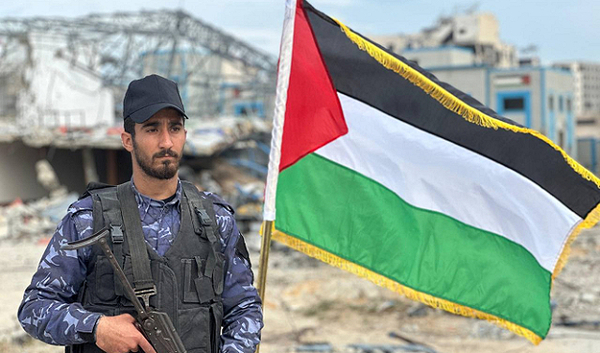
Gaza Police: More than 1,400 dead and 1,950 injuries among our members during the war

The Israeli army killed more than 1,400 commanders, officers and members of the force, wounded more than 1,950 others and arrested about 211 over the course of more than 15 months of genocide before the ceasefire agreement went into effect on Sunday morning, police in the Gaza Strip said Tuesday.


This came during a press conference held by the Director of the Media Office of the apparatus, Muhammad Al-Zarqa, on the ruins of Arafat Police City in Gaza.


Al-Zarqa added, "We mourn to our Palestinian people more than 1,400 dead from leaders, officers and members of the police force, foremost among them the Director General of Police in the Gaza Strip, the martyr Major General Mahmoud Salah, who ascended while on duty, carrying the burden of their homeland, and providing service to their people, and the systematic targeting did not deter them from performing their duty."


He added, "In addition to more than 1,950 wounded, and 211 prisoners held by the Israeli occupation."


He explained that all police headquarters and centers in the sector were destroyed, in addition to the burning and destruction of hundreds of vehicles and capabilities belonging to the apparatus, according to Al-Zarqa.


According to Al-Zarqa, the Israeli targeting of members and capabilities of the police force aims to "confuse the internal arena, spread chaos and anarchy, and starve our people by bombing the elements securing the entry of aid," saying that Israel "failed to do so in the face of the steadfastness and awareness of the people."


In the same context, Al-Zarqa said that the coming days will witness more measures in the sector to ensure the security and stability of citizens after the apparatus implemented a deployment plan in all governorates since the first moments of the ceasefire coming into effect on Sunday morning.


He explained that this comes to "establish security and public order, support citizens, protect their property, and restore aspects of life in the sector," calling on citizens to "fully deal with the competent authorities and abide by their instructions, in order to ensure their safety and the public interest."


During the conference, he also issued a warning about the "great dangers threatening the lives of citizens as a result of the spread of the occupation's war remnants and suspicious objects among the rubble and debris of destroyed buildings and homes throughout the governorates of the Gaza Strip."


He added that "explosive engineering teams are working with the relevant and partner authorities to inspect the places that still contain unexploded ordnance and suspicious objects in all governorates."


He called on citizens "not to tamper with any objects or shells, and to inform the competent authorities so that they can carry out their duty in removing and neutralizing them."


He also called for "providing the police force in Gaza with the necessary equipment to deal with this huge amount of occupation remnants, including unexploded bombs."


At the end of the conference, he called on the international community to "pressure the occupation to stop its policy of destroying and targeting the police force, as it is a civil protection force that provides a humanitarian service to Palestinian civilians in the Gaza Strip."


On Sunday, the ceasefire between Hamas and Israel went into effect, and its first phase will last for 42 days, during which negotiations will begin to begin a second and then a third phase, mediated by Egypt, Qatar, and the United States.

PALESTINE

Wed 22 Jan 2025 2:21 pm - Jerusalem Time

Dozens of settlers storm the town of Sebastia, northwest of Nablus

Today, Wednesday, settlers stormed the town of Sebastia, northwest of Nablus.


Local sources reported that more than 50 settlers stormed the archaeological area in the town, under heavy protection from the occupation army.


She pointed out that the occupation forces closed all entrances to the archaeological area, and prevented entry and exit from it.

It is noteworthy that the town of Sebastia is constantly exposed to attacks by settlers and raids by the occupation army.

PALESTINE

Wed 22 Jan 2025 1:56 pm - Jerusalem Time

Israeli forces detain workers southeast of Bethlehem

Today, Wednesday, the occupation forces detained a number of workers in the town of Tuqu, southeast of Bethlehem.


Local sources reported that the occupation forces detained approximately 30 workers who were working on paving a road in the "Khirbet al-Deir" area, linking Taqou' and Jannata, without any reason.


She added that the occupation forces subjected the workers to harsh interrogation and forced them to sit on the ground.

OPINIONS

Wed 22 Jan 2025 1:16 pm - Jerusalem Time

Features of Trump's new foreign policies

Christine Hanna Nasr

Christine Hanna Nasr

Opinion Writer


The observer of political affairs notes that after US President Trump won the US presidential elections, signs of a radical change in US policies have emerged since the end of former President Biden’s term. From my point of view and observation of the situation, they have become different from previous US policies, as what can be described as coordination between them appeared in the period before Trump’s inauguration ceremony, meaning that Trump began to highlight some lines of his foreign policy, especially from the standpoint of implementing his promises to the Lebanese community that peace would prevail in Lebanon. In this context, signs of calm and peace began to appear in the region that was witnessing raging confrontations.

In Lebanon, stability and calm began before Trump’s inauguration, which was linked to the reduction of Hezbollah’s power and the end of the fighting on the northern front between Israel and southern Lebanon. There was also success in electing a new president for Lebanon (Joseph Aoun). As for Syria, there was success in toppling the ruling Baathist Assad regime in Syria, and most importantly, there were features of what could be called a smooth transition of power there, in addition to controlling the security situation there until an agreement was reached that would guarantee the building of a pluralistic, democratic Syria. On another level, it is noted that Iraq, after reducing Iranian influence in the Arab East region, will have a direct result in strengthening Iraq’s sovereignty.

Here we find that it has gradually become clear since the recent past, that is, since Trump actually took office, that the war in the region, which has been raging for more than a year, has stopped, just as Trump promised the Arabs in his election campaign. Here we are entering a new phase, the phase after peace or stability. So what does President Trump intend to do regarding foreign policy, especially in the Arab region as well as Iran? It seems that Trump realizes that Iran can be said to be bankrupt politically and economically, as it is unable to support the activity of its agents in the region, whether in Lebanon, Syria, or Hamas in Gaza. It is worth noting that Trump said in this regard that he is not confident in the possibility of continuing the ceasefire agreement that has been in place for days between Israel and Hamas, explaining that the destruction was enormous as a result of the war in Gaza, and that efforts must be made to rebuild and rebuild in a different way than in the past. This statement is undoubtedly interesting, and it raises several possibilities, some of which may be related to Trump’s background in economics and contracting, so he is interested in the economic aspect related to the reconstruction of Gaza, in addition to hinting at the possibility of normalization of relations between several parties in the region, such as Saudi Arabia and Israel, and thus reviving previously proposed agreements such as The Abraham Accords.

Regarding Iran, President Trump's first statement in this regard is that his country's and administration's policy towards Iran has proven successful in pressuring the Iranian regime, stressing that Iran is now bankrupt after a package of measures against it, including the sanctions imposed on it, which puts Iran in a state where it cannot expand its oil sales as it did before, and it also cannot support anyone it used to support before, as Iran's agents are also bankrupt, including Hezbollah, Hamas and all its agents in the region, stressing also that wars in the world must stop, including for example the war between Ukraine and Russia, as this war from Trump's point of view should not have broken out in the first place, and the same opinion regarding the events of October 7, as Israel should not have been exposed to this attack, and the resulting devastating war between Israel and Hamas.

Trump's promises during the election campaign undoubtedly clarify the features of his foreign policy, as is the case with his statement immediately after his inauguration and arrival at the White House, which he arrived at after a four-year hiatus. Now he is preparing to manage several files, including the Middle East file and the raging war in it, which he succeeded in pressuring to stop before his inauguration. Now his foreign policy seeks to conclude peace agreements between Israel and the Arab countries in the region, such as Saudi Arabia and other countries. At the same time, as I indicated earlier, the status or role of Iran in the region cannot be ignored. It is an important player that cannot be overlooked, despite the severe blows that the Iranian regime received, especially in the last year 2024 AD, including specifically the sanctions imposed during Trump's first term (2017-2021), as that period witnessed Trump's cancellation of the previous nuclear agreement with Iran. Therefore, Trump believes that Iran must lower its hostile ceiling if it does not want the US to continue its policy of pressure on it.

Regarding the US policy with Russia, and the position on the war with Ukraine, which is witnessing a noticeable shift during the Trump era, the most important thing is that he did not show interest or support for Kiev in the war, as we cannot forget or ignore Trump's close relations with President Putin, commenting on many occasions that if he was at the head of the White House administration, the war would not have broken out between them in the first place, and I believe that in his foreign policy regarding this file, he will inevitably direct pressure on Kiev to accept a settlement for this file, even if it is an agreement that does not meet its political mood and ambitions.

As for the NATO file and the relationship and partnership between America and the members of the alliance, it seems that Trump sees them as a burden on America, especially since he insists and stresses on them the need to settle and pay their dues, so that America can continue to defend them. As for the China file and managing the American relationship with it, specifically what can be called the economic war, Trump threatens a trade war between them that includes imposing high customs tariffs on Chinese goods, which will play a role in limiting China's exports, especially in industries related to artificial intelligence, but after appointing (Elon Musk) to his new administration, especially since Musk enjoys good relations with the Chinese leadership, it can be said that this may be useful in reaching certain settlements related to the China file.

Therefore, we may notice significant changes in Trump's policies in his second term. This period of his rule will witness, in terms of the main files, a bold and strict imprint from Trump. He does what he says and applies what he wants, and this was clear in his political positions. Immediately after coming to power, Trump declared a national emergency on the border with Mexico, with the aim of confronting illegal immigration, which America has been suffering from. In addition, Trump announced, in terms of economic policy, that he gave his administration the order to work to reduce inflation, lower energy prices, and strive to improve the high standard of living globally. He also confirmed that he would immediately withdraw from the Paris Climate Agreement, which was announced in 2015. He confirmed all of this policy direction in the presidential inauguration speech. In addition, he confirmed his intention to control the Panama Canal instead of China's intention to control it, knowing that 6% of the world's trade passes through it. At the same time, the President of Panama announced that the canal belongs to Panama and will remain under its sovereignty.

Regarding the Gaza file, Trump stated that he will punish every country that supports and backs Hamas, and will also work to support Israel’s annexation of the West Bank, without sending any American soldier to war in the Middle East, but he will give Israel everything it needs to fight what he called “terrorism.” This step does not mean ignoring the rights of citizens in the West Bank after the annexation process, stressing the need to solve the problem of the Philadelphi crossing, as Egypt will have a prominent importance in solving this problem, considering the crossing is important to Egypt.

Finally, I want to conclude my article by focusing and paying attention to what is related to the Syrian file specifically, since Syria and its political future will inevitably have a political impact on neighboring countries, especially with regard to democracy and the new constitution that will determine the future of the new Syrian state. It is supposed to have a constitution that is different from the past, undeveloped constitutions, with the exception of the constitution of the era of King Faisal I bin Hussein in Syria in 1920, which consisted of 12 chapters, including the third chapter related to the freedom and rights of individuals and groups. It was a developed constitution at that time compared to what was known in Syria from constitutions such as the Baath Party constitution, which included the rule of a single party with sole authority. It is expected that President Trump will resolve the noise and congestion existing in Syria today, especially with regard to the dispute between the three parties, which is the presence of Turkey in Syria and the current administration represented by Ahmed al-Sharaa and their relationship with the Democratic Syria. Trump will pressure the three parties to obtain a solution in Syria as soon as possible. He certainly does not want instability for Syria, and we Arabs also want nothing but security for Syria. I believe that the Syrian people have suffered a lot and the time has come for them to live in a state. A safe democracy for all the different components of Syrian society, and I believe that Trump’s move towards a normalization agreement with Saudi Arabia, which is intended to be concluded, will push him to move in the same direction with regard to Iraq and Syria in moving towards peace agreements as well, and he will insist and emphasize that Syria be a state free of weapons and militants outside the authority of the new Syrian state and its national army, and America will remain a supporter of the issue of a democratic Syria and an ally with it for this purpose, since ISIS is still present in Syrian territory until now, in addition to the exposure of the cities of Manbij and the Tishreen Dam area to the Turkish military attack, and American policy will follow this trend until the situation is resolved and the idea of establishing a new democratic, pluralistic Syrian state crystallizes.

President Trump, as is evident from the features of his policies, seeks peace and reconciliation between the parties, and certainly this can achieve a necessary goal, which is building nations and, more importantly, building people’s souls and their belief in the idea of peace, stability and justice. Love, peaceful coexistence and true citizenship, not fake citizenship, between all components of society, its spectrums, ethnicities and religious beliefs are all important issues in our world today.

PALESTINE

Wed 22 Jan 2025 12:25 pm - Jerusalem Time

Israeli occupation notifies the demolition of seven houses west of Hebron

Today, Wednesday, the Israeli occupation forces notified the demolition of seven houses in the town of Idhna, west of Hebron.


Local sources reported that the occupation forces stormed the town and notified the demolition of seven houses in the western region, specifically in Al-Ras and Wadi Al-Bir, belonging to the Al-Jiyawi and Al-Batran families, one of which belongs to the relatives of the detainee Moatasem Jibril Al-Jiyawi. They were given seven days to evacuate it, after notifying them two months ago of the decision to demolish it.


In the same context, the occupation forces stormed Ras al-Joura, north of Hebron, and raided a number of shops, without any arrests being reported.

PALESTINE

Wed 22 Jan 2025 12:21 pm - Jerusalem Time

Netanyahu's office clarifies on Rafah crossing management

The office of the Prime Minister of the occupation, Benjamin Netanyahu, clarified today, Wednesday, regarding the management of the Rafah land crossing.


The office said in a statement, "Palestinian parties other than Hamas will manage the Rafah crossing under the supervision of the European Union."


Netanyahu's office confirmed that the only role of the Palestinian Authority at the Rafah crossing is to stamp passports.


He pointed out that anyone who travels through the Rafah crossing must obtain prior approval from the army and the Shin Bet.

PALESTINE

Wed 22 Jan 2025 12:10 pm - Jerusalem Time

A citizen was injured by Israeli occupation forces’ bullets in Jenin

A citizen was injured today, Wednesday, by Israeli occupation bullets in Jenin.


According to a medical source for Al-Quds.com, a young man was shot in the head, noting that Red Crescent crews transferred him to Al-Razi Hospital.


PALESTINE

Wed 22 Jan 2025 11:59 am - Jerusalem Time

Israeli occupation forces citizens to move from neighborhoods in Jenin camp to Wadi Burqin

Today, Wednesday, the Israeli occupation forces forced a number of citizens in neighborhoods inside Jenin camp to leave their homes to Wadi Burqin.


Jenin Mayor Mohammed Jarrar said in a phone call with the official news agency "Wafa" that the occupation forces forced residents to evacuate from neighborhoods in Mahyoub Street, Jabal Abu Dhahir and other areas, after calling on them via loudspeakers to evacuate.


He added that the occupation opened one passage to force the residents to take it, which is towards the return roundabout in the camp, and then to Wadi Burqin.


Jarar said that the municipality contacted the municipalities of Burqin, Kafr Dan and Arabeh to send vehicles to transport the evacuated families and secure them in these towns.


He pointed out that the occupation prevents the movement of municipal crews in the field, as they face difficulty in transporting citizens. He also contacted several international institutions to secure the emergency needs of those who were evacuated.


Jarar said that the continued aggression of the occupation on the camp means it is difficult to count the number of families forced to flee.


He added that 600 citizens have been trapped inside Jenin Governmental Hospital since the beginning of the aggression yesterday, Tuesday, and the occupation prevented them from leaving, which led to the hospital being exhausted and food running out completely, but this morning they were allowed to leave after the hospital entrances were closed with dirt barriers.


It is noteworthy that the occupation forces pushed two bulldozers to the entrances of Jenin camp, while evacuation calls continued for residents in several neighborhoods.


Yesterday, the occupation forces stormed the city of Jenin and its camp in an unprecedented aggression, accompanied by military bulldozers, coinciding with the flying of the occupation's drones and warplanes in the airspace, as the death toll from the aggression on its first day reached 10 martyrs, and nearly 40 injuries.


Yesterday, the occupation army announced an attack on the city of Jenin and its camp, amid threats from ministers in the occupation government to escalate the situation in the West Bank.

ARAB AND WORLD

Wed 22 Jan 2025 11:50 am - Jerusalem Time

America builds its largest embassy in Beirut at a cost of one billion dollars

This massive new US embassy complex is causing controversy because of its sheer size and luxury in a country where nearly 80% of the population lives below the poverty line.


The new U.S. Embassy compound in Lebanon is located 13 kilometers (about 8 miles) from downtown Beirut, and looks like a city of its own. The complex spans 43 acres, and is located in the Beirut suburb of Awkar, which is nearly two and a half times the land area on which the White House sits and more than 21 football fields.


Many Lebanese on Twitter wondered why the United States needed such a large embassy in their capital. Lebanon is smaller than the state of Connecticut, with a population of just six million. Few American tourists visit the country, which the State Department has placed at the third-highest level on its travel advisory list, but it has a large Lebanese-American population.

“Is the US moving to Lebanon??” tweeted social media activist Sandy, while Abdul Ayoub, executive director of the American-Arab Anti-Discrimination Committee, responded to the grandeur of the new complex: “Maybe you will have enough space to work on all your pending visa applications.”


Computer-generated images released by the embassy show an ultra-modern complex of multi-storey buildings with high glass windows, recreational areas and a swimming pool, surrounded by green spaces and views of the Lebanese capital. The complex includes housing, community facilities and associated support facilities, according to the project's website.


From the coronavirus pandemic to the 2020 Beirut bombing, Lebanon has been hit by a number of crises, and is reportedly set to cost $1 billion and is being overseen by the Office of Overseas Buildings Operations (OBO), which has overseen the construction of a number of other U.S. embassies around the world.


The US Ambassador to Lebanon, Elizabeth Richard, laid the foundation stone for the new US embassy complex in Beirut, launching a huge urban project that the embassy had talked about two years ago.


According to the embassy website, the complex will provide a safe, sustainable, modern and supportive platform for embassy staff in representing the US government in Lebanon and in the daily conduct of diplomacy.


She noted that "laying the foundation stone for the new embassy complex is a strong message to the Lebanese people that we are with you for the long term. We intend to continue the spirit of cooperation and partnership that has prevailed in our journey together for nearly two hundred years."


“The new project, which overlooks a vibrant capital and the breathtaking Mediterranean, fills me with optimism about the future,” she added. “I hope we share this optimism that drives the next generation to continue working...to build a safe, stable and prosperous Lebanon.”

“The new U.S. Embassy facilities in Beirut represent the best of American culture in engineering, technology, sustainability, art and construction execution,” the embassy said on its website.

She noted that the engineering firm working on the project is Morphosis Architects of Culver City, California, and the construction contractor is BL Harbert International of Birmingham, Alabama.

In 2015, former US Ambassador to Lebanon David Hale announced plans to build the new complex, stressing that this investment, worth nearly $1 billion, confirms the “long-standing commitment to partnership” between the United States and Lebanon.

He revealed that “the embassy’s spaces that are widely visited by the public, namely the consular section and the public diplomacy section, are designed to create an enjoyable experience for our visitors, as American and Lebanese art will be installed in these spaces.”

Local reactions

The embassy has sparked controversy in Lebanon, with some questioning the need for such a large size in a small country. Some Lebanese see the embassy as a reflection of the gap between the comforts of the embassy and the difficult economic reality faced by most of the population.

Security dimensions

The embassy serves as a hub for U.S. security in the region, reflecting the security challenges the United States faces in the Middle East.

The presence of the embassy enhances the ability of the United States to monitor regional activities and interact with security issues. Despite the controversy over its size, the embassy represents a focal point for American policy in the region, and plays an important role in supporting stability and development in Lebanon. According to the American non-neutral vision.

PALESTINE

Wed 22 Jan 2025 11:34 am - Jerusalem Time

900 checkpoints and military gates besiege Palestinians in the West Bank

The Israeli occupation authorities have escalated the occupation's measures and closures in the West Bank, coinciding with the escalation of terrorist attacks by settler gangs on Palestinians and their property, while the occupation continues to set up military checkpoints and iron gates, and close more roads with earth mounds.


The Director General of Publication and Documentation at the Wall and Settlement Resistance Commission, Amir Daoud, said that the occupation had installed more than 146 iron gates throughout the West Bank after October 7, 2023, including 17 since the beginning of 2025.


The Palestinian official explained that the total number of barriers today is 898, distributed between gates and barriers of all types, permanent or temporary, or dirt barriers, cubes, and others.


For the third consecutive day, the occupation forces tightened their military measures at most of the entrances and exits of the governorates in the West Bank.


Local sources reported that the occupation has tightened its military measures at the Atara and Ein Siniya checkpoints in the vicinity of Ramallah and Al-Bireh.


She stated that the Atara and Ein Siniya checkpoints, north of Ramallah, are witnessing, for the third consecutive day, a stifling crisis for those leaving, as the occupation soldiers search vehicles and check citizens’ ID cards, and hundreds of vehicles are lined up in long lines, waiting to be allowed to leave.


The occupation forces closed the entrances to the villages of Nabi Elias and Kafr Laqif with an iron gate, and prevented the movement of citizens. They also set up military checkpoints at the entrances to the villages of Al-Funduq, Jit, and Hajja, east of Qalqilya, which hindered the movement of citizens along the main Qalqilya-Nablus road, which connects those villages.


The occupation forces also closed the Tayasir military checkpoint east of Tubas with iron gates, and prevented citizens from crossing, especially those heading towards the Jordan Valley.


The occupation forces tightened their military measures at the Hamra military checkpoint, and hindered the movement of Palestinians, causing a severe traffic crisis.


For a year and a half, the two checkpoints have been witnessing military reinforcements and repeated closures to citizens’ movements, which have intensified over the past three days.


Hundreds of Palestinians spent the night at the checkpoints, waiting to cross and reach their workplaces.


The occupation separates the cities of the West Bank from the Jordan Valley through these two barriers, and the Palestinians’ access to the Jordan Valley has become dependent on the flexibility of the barriers.


The occupation forces tightened their measures at the Qalandia and Jaba military checkpoints north of Jerusalem, which hindered the movement of Palestinians and caused a severe traffic crisis.

PALESTINE

Wed 22 Jan 2025 9:22 am - Jerusalem Time

Public Works: Israel destroyed 80% of northern Gaza

The Undersecretary of the Ministry of Public Works and Housing in the Gaza Strip, Naji Sarhan, said that the Israeli war of extermination - and the ethnic cleansing that accompanied it - destroyed 80% of the northern Gaza Strip governorate.


Sarhan added - in a statement to Anadolu Agency - that areas such as Jabalia camp, Beit Hanoun and Beit Lahia were subjected to comprehensive Israeli destruction, in addition to the eastern and western parts of Jabalia city, where the Israeli occupation destroyed 80% of northern Gaza.


He explained that the comprehensive Israeli destruction affected everything, from homes, streets and infrastructure, which made the northern Gaza Strip a lifeless area.


He pointed out that there are currently more than 300,000 homeless Palestinians, "and the major disaster is that we expect the return of the displaced people of Gaza City and the north from the center and south of the Strip during the coming week (under the ceasefire agreement), which increases the humanitarian burdens."


Sarhan confirmed that every open area has actually been transformed into a camp to shelter the displaced, in light of the great and massive destruction in the northern Gaza Strip.


He considered that the biggest challenge now is to provide tents and their supplies, such as solar energy, generators and fuel to operate them, in addition to blankets, mattresses and basic relief materials.


In light of this tragic reality, the Palestinian official called on international and regional institutions to take urgent action to meet the needs of the displaced, because the reconstruction of the northern Gaza Strip will require tremendous efforts and international support.


Despite the Israeli genocide and lack of capabilities, Sarhan said: We are determined to rebuild northern Gaza to become better than it was, as this is a collective responsibility that requires the world to stand with us.


North Gaza is afflicted

In the same context, the Coordinating Committee of Municipalities of North Gaza announced, in a statement read by the Mayor of Beit Hanoun, Imad Badwan, during a press conference in Jabalia yesterday, Tuesday, that the North Gaza Governorate is a disaster area.


Badwan added that Jabalia camp and Beit Hanoun city were completely destroyed by Israel, along with large parts of Jabalia and Beit Lahia.


What happened was considered an unprecedented Israeli genocide, as roads, water and sewage networks, electricity and communications lines, and water wells were destroyed, in addition to targeting hospitals, schools, and facilities of the United Nations Relief and Works Agency for Palestine Refugees (UNRWA) that were used as shelters.


Badwan explained that the Israeli aggression on northern Gaza for about 100 days has resulted in the killing and disappearance of more than 5,000 people, and the injury of about 13,000 others, while the number of displaced people has exceeded 200,000 people.


He added that Israel's destruction of the infrastructure makes the return of displaced Palestinians extremely difficult, and is pushing towards an unprecedented humanitarian crisis.


He called on UNRWA, the World Food Programme and the United Nations Office for the Coordination of Humanitarian Affairs (OCHA) to provide relief to the displaced, provide necessary assistance in the form of shelter, food and clothing, in addition to establishing camps to receive them.


Badwan stressed the need to support municipalities and provide fuel to operate their facilities, repair water and sewage networks, open roads and remove rubble, and provide them with spare parts and supplies to operate water wells and sewage facilities.


The Palestinian official stressed the need to pay the salaries of municipal employees who have not received their salaries since the beginning of the Israeli genocide, to facilitate work and mitigate the effects of the disaster.


He stressed that the municipalities, despite the massive destruction, will continue to work with all their might in cooperation with international and local institutions, to alleviate the suffering of the Palestinians, until the stage of recovery and restoration of normal life is reached.


Last Sunday morning, the ceasefire between Israel and the Islamic Resistance Movement (Hamas) went into effect. Its first phase will last for 42 days, during which a second and third phase will be negotiated, mediated by Egypt, Qatar, and the United States.


With American support, Israel committed a “genocide” in the Gaza Strip between October 7, 2023 and January 19, 2023, leaving more than 157,000 Palestinians dead and wounded, most of them children and women, and more than 11,000 missing, in one of the worst humanitarian disasters in the world.

PALESTINE

Wed 22 Jan 2025 8:49 am - Jerusalem Time

A Palestinian woman succumbed to her wounds northeast of Hebron

The Ministry of Health announced the death of citizen Iman Muhammad Eid (Jaradat), 45 years old, at the Beit Einun checkpoint, northeast of Hebron, yesterday evening.


The Ministry of Health confirmed that the occupation army prevented her from being transferred to the hospital, as she was suffering from symptoms of a heart attack.