PALESTINE

Fri 24 Jan 2025 9:34 am - Jerusalem Time

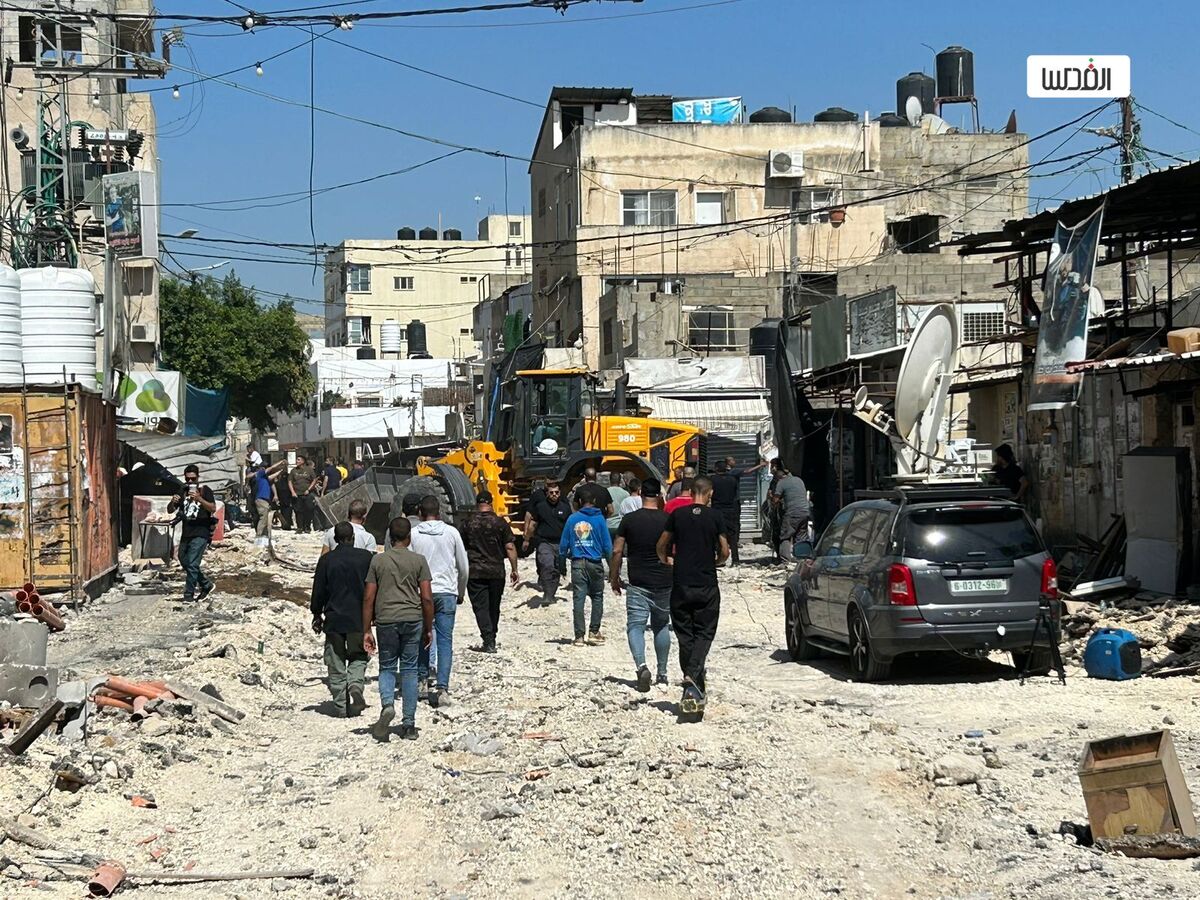
Updated: Israeli occupation forces storm Qabatiya and bulldoze the entrance to the towns of Silat al-Harithiya and al-Yamoun

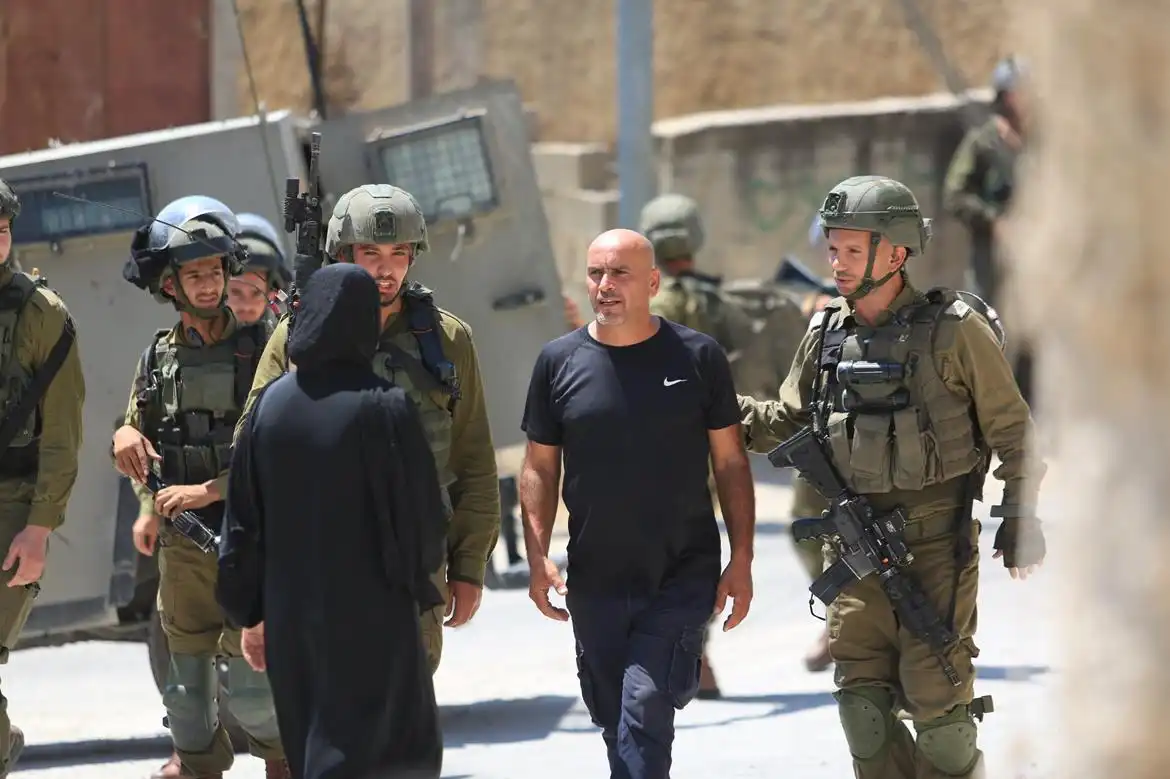
This morning, Friday, the Israeli occupation forces stormed the town of Qabatiya, south of Jenin.


According to Al-Quds correspondent in Jenin, the occupation forces bombed the house with Energa shells.


He pointed out that the occupation sent military reinforcements to Qabatiya, while a helicopter was flying in the sky of the town.


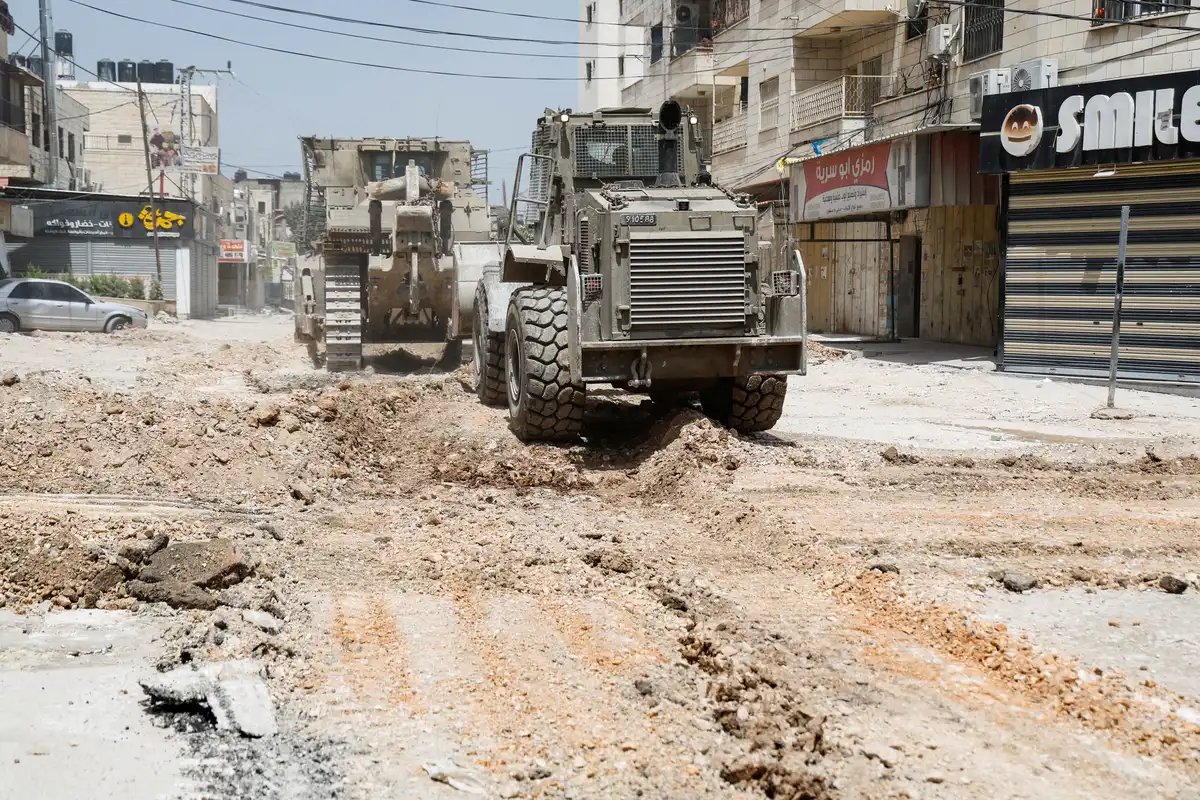
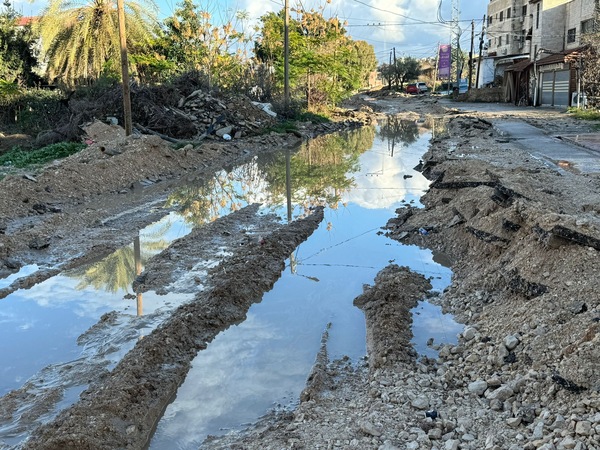
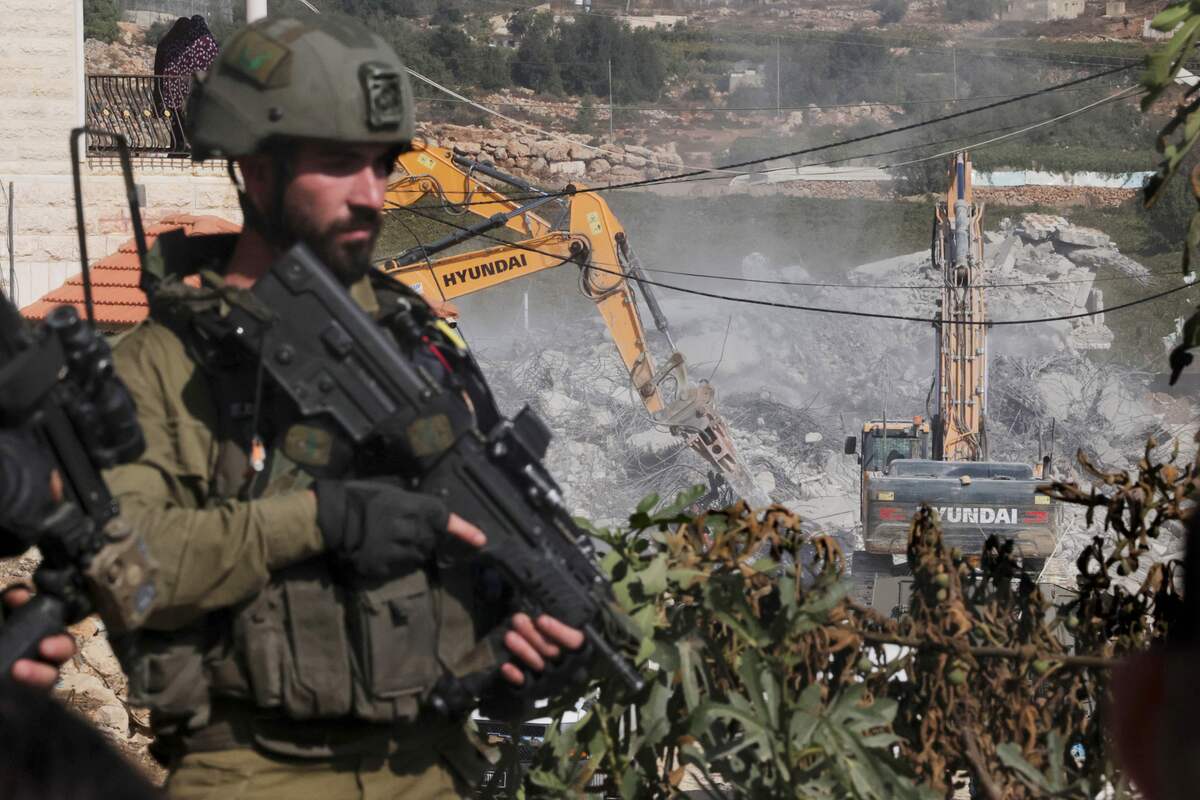
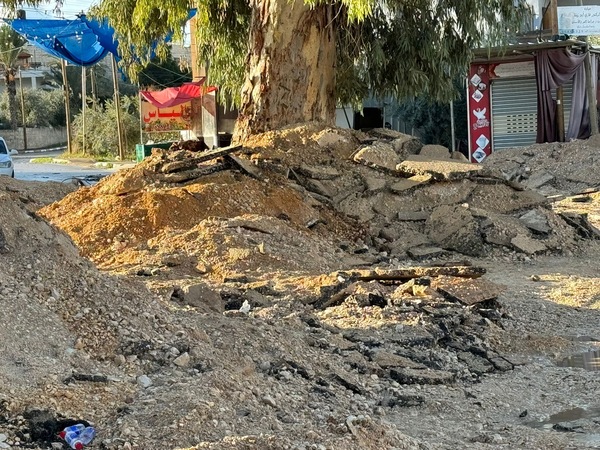
In the same context, the occupation bulldozers began to level and destroy the entrance to the towns of Silat al-Harithiya and al-Yamoun and the vicinity of al-Khamaisah roundabout.


The occupation bulldozers stationed on Haifa Street, which connects the villages of western Jenin to the city, had begun to bulldoze the street to cut off the roads between the western villages and Jenin. The occupation also continued to bulldoze the entrance to Jenin camp near the horse roundabout.


The occupation soldiers also launched a reconnaissance plane in the skies of the camp, to announce the imposition of a curfew on the citizens.

OPINIONS

Fri 24 Jan 2025 8:47 am - Jerusalem Time

Black Thursday

op-ed - Al-Quds dot com

op-ed - Al-Quds dot com

Opinion Writer

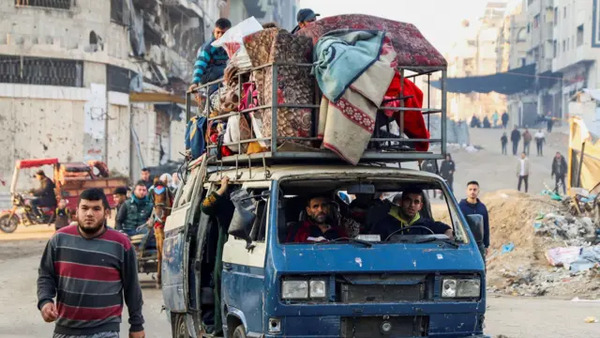
The people of Jenin have called the harshest day of their lives Black Thursday, as dozens of families were expelled from their homes in Jenin camp and the Israeli army forces expelled and removed them from their cherished places of residence.


Neither young children, nor women, nor the elderly were spared from the expulsion process, as the occupation gave them a specific opportunity to leave the camp amid military measures that turned the camp into a closed barracks, surrounded by the army from all sides, and brought in very heavy machinery to demolish the camp and destroy its infrastructure, in addition to the assassinations of civilian citizens, the besieging of doctors and nurses, preventing ambulance crews and paramedics from reaching the injured, and endangering the lives of journalists and media professionals, to dissuade them from conveying the facts.


Another catastrophe is being experienced by Jenin camp, just as it is in Gaza, where the Israeli army command responded to the calls of extremist ministers who demanded that the village of Al-Funduq, which witnessed a shooting operation two weeks ago, and Jenin and Nablus become like Jabalia, which the occupation wiped off the list of existence by destroying its landmarks, but it will remain firmly rooted in the minds and conscience and will certainly be rebuilt.


Unfortunately, Jenin is living a reality similar to Gaza. The Israeli military operation there is different from previous operations. The intention this time is to destroy and kill all the elements of life. This has been proven on the ground through the rampant violence among some who have turned their threats regarding Jenin into a difficult and bitter reality.


It seems that the aggression on Jenin will last longer this time for flimsy reasons and justifications, which were discussed by the resigned Chief of Staff of the Occupation Army, Herzi Halevi, who claimed that the Jenin camp has become a place where those who wish to carry out operations, or those who have already carried out operations, head, demanding that the army continue the operation, which is considered to be in its early stages, pointing to other areas in the northern West Bank that the aggression may target, which is what the head of the Shin Bet, Ronen Bar, indicated when he described the battle as having multiple fronts, and that it will move from one place to another.


Black Thursday, as the people of Jenin said, is just one of the black days that remind us of the raids on Jenin and previous battles, and the catastrophes of Gaza that the occupation decided to transfer to the West Bank, which has become the primary target of the war at this stage.


The invasion of the rest of the West Bank is a matter of time for the occupation forces, who have decided to continue their aggression against our people and tighten the noose around them in all aspects and components of their lives. The measures of punishment and revenge against citizens at the checkpoints of anger are only the beginning of a critical and sensitive phase that our struggling people will experience, and they will inevitably be stronger than all the occupation measures, and will defeat them forever.

OPINIONS

Fri 24 Jan 2025 8:42 am - Jerusalem Time

In the meaning of the ceasefire agreement

Antoine Shalhat

Antoine Shalhat

Opinion Writer

In parallel with the Israeli government’s approval of the ceasefire agreement in the Gaza Strip and the prisoner exchange deal, and the expectations that this agreement brought about regarding the possibility of ending the war that broke out on October 7 (2023), it was noted that there was what was described as “gnashing of teeth” from this government, and not only from its most extreme Messianic wing, and there are also confirmations that it came in response to pressure exerted by the administration of the elected US President, Donald Trump, not to mention that it is almost the same agreement that was reached in May 2024, and was presented by the outgoing US President, Joe Biden, but Prime Minister Netanyahu obstructed it by insisting on rejecting its provisions, then he returned and approved it under the pressure of the new administration in Washington.


When following the Israeli analyses and comments that have been written, it can be said that the agreement has created a mixed mix of feelings among Israelis, not to mention raising questions that contain a degree of evaluation that contains implications. The first of these questions is whether it was possible to implement the completed deal months ago? Although most of those who raised this question, which is of the type “what if?”, evaded trying to answer it, under the pretext of the need to leave it to the judgment of history, or the judgment of an independent investigation committee if it was formed at all, a few of them tried to provide an answer, from which it is possible to infer the following:


First, the meaning of the agreement is clear: Israel did not eliminate Hamas militarily, even though it dealt it a strong blow, nor did it eliminate it politically. The agreement does not contain anything that guarantees that the movement will not regain its strength, and the Israeli government did not put forward a political plan for what is described as the “day after” the war, and remained determined to use force and more force for political reasons and for Netanyahu’s personal survival.


Secondly, in addition to all of this, the Israeli army was exhausted with missions that had no impact on the terms of ending the war, and also weakened Israel's international standing.


The general climate in Israel indicates that Netanyahu’s most important political interest is to remain in power, which determines the direction of events more than any other public interest. Ending the war in Gaza would jeopardize his continued rule, for several reasons, most notably: As long as the war continues, it will be difficult to demand new elections or to establish an official commission of inquiry that could hold him accountable for the failure of “October 7.” His partners in the government coalition from the extreme right wing are committed to continuing the war, and are threatening to topple the government if the prisoner exchange deal commits to stopping the war. For this reason, Netanyahu is hinting that he will do everything in his power to prevent this war from ending. These partners see the war as an opportunity to return to settlement in Gaza, by expanding the scope of the Israeli army’s control over areas of the Gaza Strip, and then turning them into settlements, given that the “Al-Aqsa Flood” attack created strong security justifications for changing the border with Gaza.


With Trump back in the White House, Netanyahu’s partners are toying with the dream of restoring settlements in Gaza. As some recall, Trump hinted in his 2020 “deal of the century” that he was ready to think differently about everything related to the Middle East, when he recognized the annexation of the Syrian Golan Heights to Israel and discussed the possibility of allowing Israel to impose sovereignty over Jewish settlements in the West Bank.


Outgoing US President Joe Biden, on the cusp of ending his term, silently approved Israeli military control of areas in southern Syria in order to “establish defensible borders.” Now Trump has an opportunity to do just that in northern Gaza.

ARAB AND WORLD

Fri 24 Jan 2025 8:36 am - Jerusalem Time

Russia urges Trump administration to correct Biden's mistakes on Ukraine

Russia called on the administration of US President Donald Trump to correct the mistakes made by former President Joe Biden regarding Ukraine.


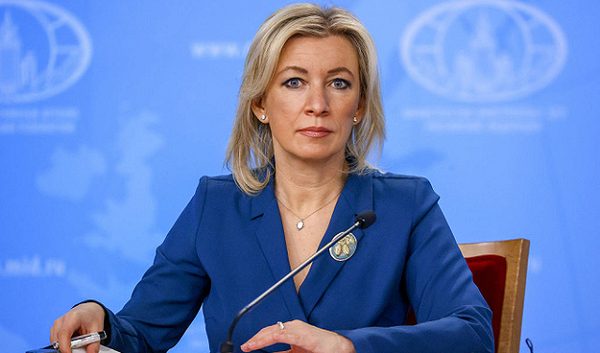
This came at a press conference held by Russian Foreign Ministry spokeswoman Maria Zakharova, yesterday evening, Thursday, in the capital, Moscow.


Zakharova said, "The administration of US President Donald Trump must correct the mistakes made by former President Joe Biden regarding Ukraine."


Evaluating Trump's statement that "the Biden administration made mistakes regarding Ukraine," Zakharova noted that the former US president made these mistakes on behalf of the United States.


She stressed the need to correct the mistakes made in the name of the United States.


“If the Trump administration admits to making mistakes and argues that the situation in Ukraine was the result of mistakes made by the previous US administration, then these mistakes need to be corrected,” Zakharova explained.


Assessing the US withdrawal from the WHO, Zakharova described it as "sad."


Since February 24, 2022, Russia has been launching a military attack on its neighbor Ukraine, and is making it a condition for ending it if Kiev “renounces” joining Western military entities, which the latter considers interference in its affairs.

ARAB AND WORLD

Fri 24 Jan 2025 8:34 am - Jerusalem Time

The Abraham Accords Fallacy: Why Normalization Without the Palestinians Won’t Bring Stability to the Middle East

The American magazine "Foreign Affairs" published a detailed analysis by researcher Khaled Elgendy, a professor of political science at Georgetown University in the American capital, on Thursday, in which he says that US President Donald Trump's efforts to strengthen his legacy in the Middle East were well underway even before he regained the White House, citing what Jason Greenblatt, Trump's former envoy to the Middle East, told thousands of international delegates at the Doha Forum in Qatar last December about President Trump's focus on expanding the Abraham Accords, a series of normalization agreements signed by Israel, Bahrain, Morocco, and the United Arab Emirates in 2020, which is considered a distinctive achievement for Trump in foreign policy since his first term, and was praised by his allies and his most vocal political opponents - including former President Joe Biden.


Biden not only wholeheartedly embraced the Abraham Accords, but sought to build on them by securing a historic deal with Saudi Arabia, the most powerful and influential Arab state, notes Elgindy, who advised the Palestinian Authority on peace negotiations in the 1990s. Biden’s pitch was that in exchange for Israeli-Saudi normalization, the Saudis would receive a major upgrade in their strategic partnership with the United States, on par with a NATO ally. An Israeli-Saudi agreement would be the biggest breakthrough in Arab-Israeli diplomacy since Egypt broke away from the Arab world and became the first Arab state to sign a peace treaty with Israel in 1979—and would pave the way for other Arab and Muslim states to follow suit.


However, Al-Jundi says: “This approach to Arab-Israeli peacemaking is conditional on ignoring the Palestinian issue. Until 2020, the consensus among Arab states was that normalization with Israel would only come after the establishment of an independent Palestinian state. Thus, the decision by Bahrain, Morocco, and the UAE to defect effectively deprived the Palestinians of an important source of leverage against Israel. Since then, Hamas’s October 7, 2023, attack on Israel and Israel’s devastating war on Gaza have derailed the Israeli-Saudi track, in a stark reminder that the Palestinian issue cannot be ignored or subordinated to Arab-Israeli normalization.”


Despite these obstacles, Trump is keen to finish the job he started in his first term, and which Biden has continued, by striking a grand deal between the United States, Israel, and Saudi Arabia in a return to the original vision of the Abraham Accords, which entailed upgrading Israel and downgrading the Palestinians. All indications are that Trump still believes that Israel’s integration into the region is more important to Arab leaders than the cause of freedom for the Palestinians. According to Greenblatt, it is a mistake “to think that the Israeli-Palestinian conflict is the be-all and end-all, and that if everything is resolved between Israel and the Palestinians, everything will be great in the Middle East.”


But critics of the Abraham Accords never claimed that resolving the Israeli-Palestinian conflict would end all other conflicts in the region. They claimed the opposite: that regional peace and security are not possible without resolving the Palestinian issue. Indeed, the central premise of the Abraham Accords—that regional peace and stability can be achieved while marginalizing the Palestinians—has been upended by Hamas’s October 7 attack on Israel, and everything that has happened since. The ceasefire agreement that went into effect this week underscores the centrality of the Palestinians to regional security and stability, but it also creates potential diplomatic space for renewed Israeli-Saudi engagement under Trump. The Abraham Accords represent a revealing point of continuity between Trump and Biden. Their reasons and tactics may differ, but both presidents have peddled a dangerous illusion—that peace, stability, and prosperity in the broader Middle East can coexist with war, chaos, and displacement in the occupied Palestinian territories.


Peace on paper


The researcher points out that while the Abraham Accords were hailed as a diplomatic triumph, they were based on a number of false assumptions. Indeed, much of the excitement surrounding the normalization deals in 2020 had less to do with their intrinsic value than with the almost automatic need, especially in Washington and other Western capitals, to rally around something that was clearly in Israel’s interest, regardless of its actual alignment with U.S. policy goals, such as a two-state solution or regional stability. This tendency to conflate “good for Israel” with “good for peace” is in fact a standard feature of U.S.-led diplomacy and a major reason for its failure over the past several decades.


While many have tried to fit the square peg of normalization into the round hole of the two-state solution, the fact remains that the Abraham Accords were originally designed as a means of bypassing the Palestinian issue and suppressing the Palestinian factor in the hope that the Palestinians would have no choice but to accept whatever long-term arrangement the United States, Israel, and the region imposed on them. Indeed, the Abraham Accords were themselves one of many trends working against the two-state solution—a sign that some Arab states have moved on and are no longer willing to subordinate their bilateral or geopolitical interests vis-à-vis Israel to the unicorn of an independent Palestinian state, the researcher said.


Moreover, the Abraham Accords removed one of the few sources of leverage the Palestinians had in their already unequal conflict with Israel: pressure from neighboring Arab states whose publics remain largely sympathetic to the Palestinian cause. In doing so, they also removed some of the last remaining incentives Israel had to end its occupation of Palestinian territories or recognize Palestinian rights.


The lack of restraint on Israel has left Palestinians more vulnerable to the whims of an increasingly violent and radical Israeli occupation, which has seen unprecedented settlement expansion, settler violence, and Israeli military repression of Palestinians in the West Bank and East Jerusalem, as well as more routine wars in Gaza in 2021 and 2022. These issues have been exacerbated under Prime Minister Benjamin Netanyahu, whose return in late 2022 marked the arrival of the most right-wing government in Israel’s history.


Meanwhile, claims that Arab states could leverage their budding ties with Israel to advance the Palestinian cause or the two-state solution have never materialized. Bahrain, Morocco, and the UAE have not sought to intervene with Israel to prevent home demolitions or evictions of Palestinians in East Jerusalem, or to address the record-breaking settlement expansion and settler violence throughout the West Bank. Nor have they used their supposed influence to intervene with regard to Israel’s assault on Gaza—an assault that has already killed more than 46,000 Palestinians and destroyed much of its civilian infrastructure.


On the other hand, Emirati officials have shown little qualms about engaging with Israeli settlers or investing in occupation infrastructure such as Israeli checkpoints. While Biden and congressional Democrats have gone to great lengths to ignore these contradictions, Trump and his fellow Republicans, most of whom have already abandoned even the pretense of supporting a two-state solution, can simply ignore them entirely.


But even with the slight opening the truce has provided, “engaging the Saudis in the Abraham Accords will remain an uphill battle for the Trump administration. If the prospects for an Israeli-Saudi deal seemed remote before October 7, the environment today is far less hospitable. The horrific scenes of death, destruction, and famine that have emerged from Gaza over the past 15 months have inflamed public opinion across the Arab and Muslim worlds and shredded the credibility of Israel and the United States across the global south. (Some traditional Western allies in the global north, such as Ireland, Norway, and Spain, have also begun to distance themselves from Israel.) Even the United Arab Emirates, once a symbol of Arab-Israeli normalization, has been forced to downplay its ties to Israel: Emirati businesses no longer boast about their connections to Israel, and the warm relationship that Emirati leaders once had with Netanyahu has cooled.”


In other words, the Gaza war may not have torn up the Abraham Accords—but it has effectively put them on ice. For the Saudis, the price of normalization with Israel has risen sharply since October 7 and the ensuing assault on Gaza. “Whereas the country’s de facto leader, Crown Prince Mohammed bin Salman, previously sought only a rhetorical commitment from Israel toward Palestinian statehood, Riyadh is now demanding concrete steps toward statehood. Having given up on American mediation, the Saudis have teamed up with France to launch a new initiative aimed at salvaging what remains of a two-state solution.”


“In any case, it will be difficult for the crown prince, who is not known for his outspoken sympathy for the Palestinians, to normalize relations with a country that he and his government have accused of committing “genocide” and “ethnic cleansing,” the soldier says.


The International Criminal Court’s indictments of Netanyahu and former Israeli Defense Minister Yoav Galant for war crimes and crimes against humanity are another obstacle for Riyadh. The current Saudi position is perhaps best reflected in the statement adopted by the Arab-Islamic summit held in Riyadh last month, which not only repeated the charge of genocide but also called for Israel’s expulsion from the United Nations—the exact opposite of normalization.


Israeli-Saudi normalization will remain an uphill battle for the Trump administration.


The one thing the Saudis and other Gulf leaders value above all else, the soldier says, is stability. But the past 15 months—which have seen Israel annihilate Gaza, wage a full-scale war with and occupy Lebanon, exchanges of fire with Iran, and invade and seize large swaths of Syrian territory after the fall of Bashar al-Assad’s regime—have been anything but stable. If the promise of the Abraham Accords was peace and stability, the reality of Netanyahu’s so-called New Middle East has been endless bloodshed and instability. What is being offered today is not a vision of Israel’s peaceful integration into the region, but one of Israel’s violent domination of it.


Al-Jundi concludes his analysis by noting that the Abraham Accords not only failed to bring peace and security to the Middle East, but actually helped produce the opposite by encouraging Israeli victory, entrenching Israeli extremism, and ensuring Israeli impunity. The belief that Arab-Israeli normalization could take place without Palestinian approval or at their expense at best was misguided and dangerous at worst, as recent events clearly demonstrate. It took nearly three years and the bloodiest violence in the history of the Israeli-Palestinian conflict for the Biden administration to finally accept this reality; the Trump administration would do well to learn the same lesson.

PALESTINE

Fri 24 Jan 2025 8:21 am - Jerusalem Time

Hamas expected to hand over list of prisoners, aid to Gaza

On the sixth day of the ceasefire agreement in Gaza, Israel's Channel 14 said that the Islamic Resistance Movement (Hamas) is expected to hand over today the list of prisoners who may be released tomorrow.


Israel is expected to release 180 Palestinians tomorrow, Saturday, including 30 serving life sentences, as part of the resumption of the exchange of detainees and prisoners according to the first phase of the ceasefire agreement in the Gaza Strip.


Humanitarianally, the United Nations announced yesterday, Thursday, the entry of more than 3,250 aid trucks, while Haaretz newspaper said that Israel has drawn up plans to build a series of settlement outposts in East Jerusalem.

PALESTINE

Fri 24 Jan 2025 8:10 am - Jerusalem Time

Israeli forces launch arrest campaign in the West Bank and Jerusalem

Today, Friday, the Israeli occupation forces launched an arrest campaign in the West Bank and occupied Jerusalem.


In Tulkarm, the occupation forces arrested the young man Rami Al-Askari after raiding his house in the eastern neighborhood of the city.


In Jenin, the occupation forces arrested the young man, Obada Fawaz Al-Sammar, after raiding his home, searching it and tampering with its contents in the town of Al-Yamoun.


In occupied Jerusalem, the occupation forces stormed the town of Anata and arrested nine citizens after raiding and searching their homes.


The detainees are: Mohammed Ghazi Salama, Moamen Salama, Youssef Halwa, Mohammed Zakaria Sheha, Mohammed Qadri Sheha, Jaber Ayman Jaber Hamdan, Mohammed Mahmoud Abu Haniya, Mohammed Faeq Al-Rifai, and Zaid Zakaria.


In Nablus, the occupation forces stormed the Khallet Al-Iman area and Mu'tah Street in the northern mountain area, raided a number of homes, searched them, ransacked their contents, and arrested four citizens: Hani Khuwaira and his father, Muhammad Khuwaira, and Ibrahim Khuwaira.


Meanwhile, the citizen Khalil Saif was arrested after raiding and searching his house in the village of Burqa, northwest of Nablus.

ARAB AND WORLD

Fri 24 Jan 2025 7:57 am - Jerusalem Time

Trump's second term in the White House... is it an improved version of the first experience?

Dr. Hussein Al-Deek: There is a big difference in Trump’s handling of the Palestinian issue after he was freed from the pressures of Zionist lobbies, pressure groups, and the Christian right

Khalil Shaheen: Trump focuses on strengthening economic relations between Israel and Arab countries as a means of forcing Palestinians to accept unfair solutions

Dr. Dalal Erekat: There is an opportunity for the Palestinians after Trump’s return, but it requires strategic preparation and an initiative with a pragmatic position that guarantees political rights

Nabhan Khreisha: Trump is likely to push for temporary solutions such as establishing expanded self-rule as part of his efforts to conclude normalization agreements with major Arab countries


With Donald Trump's return to the White House, questions are renewed about his ability to end wars and achieve peace in conflict zones around the world, especially in the Middle East.


In separate interviews with “I,” writers, political analysts, university professors, and specialists indicate that during his inauguration speech, Trump announced that he would work to end the wars in Ukraine and the Middle East, but he did not provide specific details on how to achieve these goals.


They point out that Trump, in his new term, seems to be focusing largely on domestic affairs, based on the slogan “America First.” He criticized the policies of his predecessor, Joe Biden, and stressed the need to address security and immigration issues, and increase customs duties on imports. Indeed, Trump signed an executive order to increase customs duties by 25% on imports from Canada and Mexico, in addition to addressing the inflation crisis and rising energy prices, and strengthening American industry.


They stress that Trump’s policies towards the Palestinian issue remain largely ambiguous. On the one hand, he played a role in pressuring Israel to cease fire in Gaza and conduct a prisoner exchange deal, but on the other hand, he showed a different view of the Strip. These statements raise questions about the extent of Trump’s commitment to a just solution to the Palestinian issue, especially in light of his focus on promoting normalization between Israel and Arab countries, which may be at the expense of Palestinian rights.


Normalization and reintegration of Israel into the region


The writer and political analyst specializing in American affairs, Dr. Hussein Al-Deek, confirms that US President Donald Trump, who assumed office on Monday, has proven since the beginning of his first presidential term that he is an unconventional president, who has a future political vision and great willpower and determination.


Al-Deek points out that Trump was able, despite the challenges and problems he faced, to achieve major victories, starting with winning the nomination from the Republican Party and eliminating his competitors, all the way to reuniting the party and successfully running in the presidential elections, and returning the Republican Party to its normal position by winning the congressional elections in the Senate and the House of Representatives.


Al-Deek explains that Trump is very popular in American society, as he received more than 75 million votes in the last elections, and won the popular vote and the electoral college.


Al-Deek points out that Trump's first political experience from 2016 to 2021 strengthened the American citizen's support for him, noting that the executive orders signed by Trump after his inauguration confirm his seriousness and credibility in implementing his promises, and his focus on protecting American interests and rebuilding America under the slogan "America First."


Regarding the Palestinian issue, Al-Deek points out that Trump has a clear political vision that was represented from the beginning by a ceasefire in the Gaza Strip and restoring things to normal, which he succeeded in doing.


Al-Deek explains that Trump is adopting a political project that focuses on achieving stability in the Middle East, reintegrating Israel into the region, and establishing diplomatic relations between Israel and a number of Arab countries, most notably the Kingdom of Saudi Arabia.


He stresses that Trump's priority for the Palestinian issue stems from the priority of political and economic projects in the Middle East, especially with regard to oil and gas in the Arabian Gulf region, American investments, and economic relations between the United States, the Kingdom of Saudi Arabia, and the Gulf states.


Al-Deek points out that Trump aims to achieve stability in the region, which cannot be achieved without resolving the Palestinian issue or presenting a political vision for it.


Al-Deek points out that former President Joe Biden did not present any political initiative to resolve the Palestinian issue, while Trump seeks to end wars, achieve economic stability, and establish economic relations between Israel and a number of Arab countries, and this requires presenting a final solution to the Palestinian issue.


Al-Deek believes that Trump can reduce the conflict and achieve a state of relative calm, security and stability in the occupied Palestinian territories, but the final solution is still unlikely at this time due to the factors operating on the ground, including the Israeli occupation, settlements, the Israeli right, and local and regional circumstances.


Al-Deek points out that Trump aims to end wars and conflicts that drain the US treasury, and instead focus on the economy.


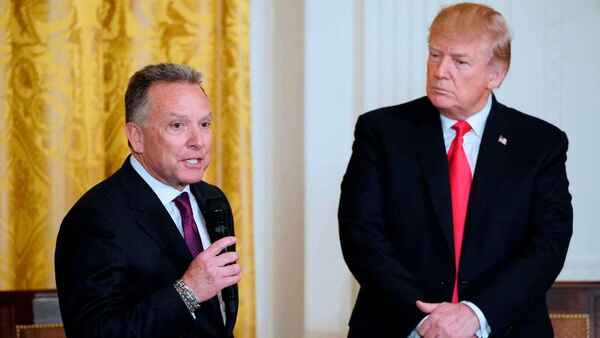
Al-Deek explains that Trump succeeded in imposing a truce in the Gaza Strip by sending his envoy, Steve Witkoff, to Israeli Prime Minister Benjamin Netanyahu, and threatening him with the president’s wrath if he refused to sign the agreement, which led to the signing of the truce within a week.


Al-Deek confirms that Trump is also seeking to achieve a peace agreement between Russia and Ukraine, stressing that the US President is serious about ending global wars and conflicts, and is focusing on strengthening the US economy, as Trump, as an economist, realizes the importance of achieving peace and stability to enhance economic growth.


Al-Deek asserts that there is a big difference between Trump’s handling of the Palestinian issue in his first and second presidential terms, pointing out that Trump was freed from the pressures of Zionist lobbies, pressure groups, and the Christian right after the end of his second term, which allows him to focus on his economic project and political vision towards a new phase of peace and stability in the US and the world.


Trump believes in imposing "peace" by force


Writer and political analyst Khalil Shaheen believes that US President Donald Trump's talk about peace and ending wars does not necessarily mean a definitive readiness to completely stop wars.


Shaheen explains that Trump believes in imposing “peace” by force, whether this force is economic through sanctions and trade measures, or military in some cases.


“Trump relies on economic power as a primary tool to achieve his goals, and this is evident in his expected policies against China, and to a lesser extent against Canada, Mexico and European countries,” Shaheen says. “He also does not rule out the use of military force, especially when he talks about regaining control of the Panama Canal, as he previously indicated that he might resort to the military option if economic pressures fail to achieve his goals.”


Regarding the application of the concept of imposing peace by force in the Middle East, Shaheen says: “Trump is re-presenting his ideas from his first term, especially what was known as the Deal of the Century, which focuses on achieving peace through economic prosperity. Recently, he sent his envoy to the region to speak about this matter clearly, stressing that the priority is to achieve peace and prosperity as a way to resolve conflicts, including the Palestinian-Israeli conflict.”


Shaheen points out that Trump relies on the idea of "facts on the ground" as the basis for any solution, which means marginalizing Palestinian rights according to the Arab vision and UN resolutions.


"Trump is focusing on strengthening economic relations between Israel and Arab countries as a means of forcing the Palestinians to accept unjust solutions, and this policy is close to the concept of using economic power to impose peace," Shaheen says.


Regarding the Gaza Strip, Shaheen says: “Trump talks about the need for a ceasefire and the release of prisoners, but he did not rule out returning to the use of force to achieve Israel’s goals. He rejects Hamas’s control over the Strip, whether militarily or administratively, and believes that Hamas bears responsibility for the deterioration of the situation in Gaza.”


Shaheen points out that Trump is re-proposing the ideas of the Deal of the Century, which stipulates the disarmament of Hamas, Islamic Jihad and other Palestinian factions, and making the Gaza Strip and the West Bank demilitarized zones. He also talks about establishing a Palestinian entity without sovereignty, based on self-administration without security or external control.


Regarding the possibility of amending the Deal of the Century in Trump’s second term, Shaheen says: “Trump may make some minor amendments to the Deal of the Century, taking into account new developments in the region, especially Israeli settlement expansion, but the essence will remain the same: annexing major settlements, maintaining security control over the Palestinian territories, and establishing Palestinian entities with diminished sovereignty.”


Shaheen explains that Trump believes that Israel has made sufficient concessions by accepting the presence of Palestinians on parts of what he considers “historical land of Israel,” noting that Trump adopts the Zionist biblical narrative of Israel’s right to exist.


Shaheen stresses that Trump's priority in the region will be to promote normalization between Israel and Arab countries, especially Saudi Arabia.


Shaheen says: “Trump believes that economic and security normalization between Israel and the Arab countries is the key to achieving stability in the region and weakening Iran’s influence. This normalization will be at the expense of Palestinian rights, as the Palestinians will be forced to accept unjust solutions.”


According to Shaheen, "Trump believes that normalization with Saudi Arabia will be a gateway to broader normalization with other Arab and Islamic countries, which will strengthen the new regional alliance led by the United States."


Shaheen points out that Trump is considering major economic projects, such as the Indian land and sea corridor, which aims to strengthen American economic dominance in the face of China. This project may include the establishment of trade corridors linking the Arabian Gulf and the port of Haifa, and may extend to North Sinai and the Gaza Strip.


He points out that the comprehensive destruction that affected the northern Gaza Strip may be part of a plan to create a trade corridor linking Gaza to the port of Haifa, which would serve Israeli and American economic interests.


Regarding Palestinian bets on the new Trump administration, Shaheen says: “Palestinian bets on changing Trump’s policies may be disappointing, as the contacts that took place between Palestinian officials and Trump’s advisors did not result in promises of a radical change in his policies. What Trump can promise is to improve economic relations with the Palestinian Authority, provided that the Authority does not boycott his administration.”


"The Palestinian Authority is trying to prove its worth through security campaigns in the West Bank, but these efforts will be undermined by Israel carrying out extensive military operations in the northern West Bank," Shaheen added.


Shaheen warns that the situation may remain the same, especially with regard to the reconstruction of Gaza, which may be used as a tool to pressure the Palestinians.


"The bet on the new Trump administration may be a losing one if firm positions are not taken to protect Palestinian rights," Shaheen says.


A pragmatic character that lacks compatibility with political reality and international law.


Dr. Dalal Erakat, Professor of Diplomacy and Conflict Resolution at the Arab American University, confirms that US President Donald Trump’s speech after his inauguration reflects his seriousness in achieving his personal goals, including his ambition to win the Nobel Peace Prize.


However, Erekat points out that this seriousness is characterized by a pragmatic nature that lacks compatibility with political reality, international law, and human rights.


Erekat points out that Trump's vision is based on American interests, with a focus on commercial, tourism and security aspects, without addressing the roots of the conflict in the Middle East, most notably the Israeli occupation of Palestinian territories.


Erekat explains that Trump's speech can be considered a potential opportunity, but she stresses the need for the Palestinians, in cooperation with Saudi Arabia, to remind Trump of the importance of drawing lessons from his previous experience in normalizing relations with some Arab countries.


Erekat stresses that if Trump is serious about achieving sustainable security and peace, he must integrate the Palestinians as a fundamental party in any strategic equation, while guaranteeing their political rights, including the right to self-determination, statehood, sovereignty, freedom, and defining the borders of the State of Israel.


Erekat points out that Trump placed the Palestinian issue among the priorities of his first presidential term through the “Deal of the Century,” which focused on an economic approach to resolving the Palestinian-Israeli conflict. However, this deal sparked great controversy because it ignored the political rights of the Palestinian people, such as the right to self-determination and Jerusalem as the capital of Palestine.


Erekat believes that what Trump presented was closer to imposing a unilateral vision that serves Israeli interests at the expense of the Palestinians, without taking into account the opinion of the Palestinian leadership or addressing the roots of the conflict.


Erekat stresses that there is an opportunity for the Palestinians after Trump's return, but it requires strategic preparation and an initiative with a pragmatic position that guarantees political rights.


Erekat points out that Trump's first term witnessed significant transformations, but they were mostly negative for the Palestinian cause. The most prominent of these transformations were the transfer of the US embassy to Jerusalem, which represents a clear bias towards Israel and a violation of international resolutions, the reduction of support for UNRWA, which directly affected Palestinian refugees, and the normalization of relations between Israel and some Arab countries, which affected the unity of the Arab ranks towards the Palestinian cause.


Erekat believes that American moves during the Trump era strengthened Israel without providing just solutions to the Palestinian issue, making the solution seem more distant.


Erekat points out that the difference and what is expected now is the conclusion of an agreement with Saudi Arabia, considering that this is the “last card” that the Palestinians can rely on in this international pragmatic game.


Erekat points out that Trump, in his first action after his inauguration, lifted the sanctions imposed by the Biden administration on West Bank settlers, reflecting the continuation of his pro-Israel policies.


Erekat stresses that any real peace initiative must deal with the Palestinian issue as an essential part, rather than bypassing or marginalizing it, while guaranteeing the political and economic rights of the Palestinian people within a comprehensive and just framework.


The United States will not enter into new armed conflicts.


Journalist Nabhan Khreisha explains that US President Donald Trump's policies were clear during his inauguration speech that the United States will not enter into new armed conflicts, and that he will work to end the wars in Ukraine and the Middle East.


But Khreisha stresses that Trump did not provide specific details on how to achieve these goals, which raises questions about the seriousness of these statements.


Khreisha explains that Trump's agenda in his new term focuses largely on domestic affairs, which can be inferred from his campaign slogan, "America First."


“In his inauguration speech, Trump criticized the policies of his predecessor, Joe Biden, stressing that his administration would move toward addressing security and immigration issues, and increasing customs duties on imports,” Khreisha says.


Khreisha points out that Trump has already signed an executive order to increase customs duties by 25% on imports from Canada and Mexico, in addition to addressing the inflation crisis and rising energy prices, and strengthening American industry.


“As a businessman, Trump expects the US to increase its income through these policies, but this trend is causing concern in many countries, including China, the European Union, Canada and Japan,” Khreisha said.


Regarding Trump’s promises to end wars, Khreisha says: “Despite his statements, these promises seem to contradict traditional American hegemonic policies. American forces are deployed in many areas around the world, whether by sea or land, which makes it difficult to believe that Trump will abandon this strategy.”


Khreisha explains that Trump indicated in his inauguration speech his intention to reoccupy the Panama Canal and annex Greenland, which is part of Denmark and has vast natural resources such as zinc, lead, gold, iron, oil and copper. These statements reflect an expansionist tendency that contradicts his promises to end wars.


Regarding the Palestinian issue, Khreisha explains that Trump’s policies remain unclear so far, as his statements regarding the Israeli war on Gaza were contradictory, although he played a major role before assuming the presidency in pressuring Israeli Prime Minister Benjamin Netanyahu to reach a ceasefire and conduct a prisoner exchange deal between Hamas and Israel.


But Khreisha pointed out that Trump showed a different view of the Gaza Strip after his inauguration, as Trump likened Gaza to a huge demolition site that could be rebuilt in a different way, and that Gaza enjoys an exceptional location on the sea and good weather conditions that allow for “beautiful things to happen.” Trump also suggested moving the residents of Gaza to Indonesia until the Gaza Strip is rebuilt, a statement that sparked widespread disapproval.


These ideas, Khreisha explains, are consistent with statements by Trump’s son-in-law, Jared Kushner, who said last February during a lecture at Harvard University that properties on the Gaza waterfront could be of great value, and called for efforts to move residents from the area and “clean up” the Strip.


Regarding the possibility of Trump offering radical solutions to the Palestinian issue, Khreisha says: “Trump’s position on the Gaza Strip may be an indicator of his general position on the Palestinian issue. As a businessman, his thinking seems to be dominated by commercial and political considerations, which reduces the possibility of him offering radical solutions that meet the aspirations of the Palestinian people to establish an independent state.”


Khreisha believes that Trump will likely pressure Israel to provide temporary solutions, such as establishing expanded self-rule for the Palestinians, but such solutions will be part of his efforts to conclude normalization agreements between Israel and major Arab countries such as Saudi Arabia.


“Such a move may give Trump a chance to win the Nobel Peace Prize, but it will not achieve a just and lasting solution to the Palestinian issue,” Khreisha says. “Ultimately, it seems that Trump’s policies will continue to serve American interests first, without sufficient consideration for the aspirations of other peoples, including the Palestinian people.”


PALESTINE

Fri 24 Jan 2025 7:48 am - Jerusalem Time

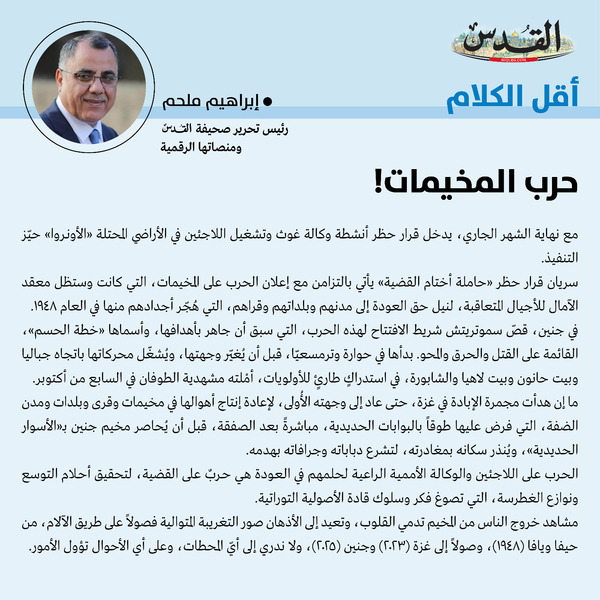
Camps war!

At the end of this month, the decision to ban the activities of the United Nations Relief and Works Agency for Palestine Refugees in the Near East (UNRWA) in the occupied territories will come into effect.


The implementation of the decision to ban the “Cause Seal Bearer” coincides with the declaration of war on the camps, which were and will remain the complex of hopes for successive generations, to obtain the right to return to their cities, towns and villages, from which their ancestors were displaced in 1948.


In Jenin, Smotrich cut the ribbon for this war, the goals of which he had previously declared, calling it the “decisive plan,” based on killing, burning, and obliteration. He began it in Hawara and Turmusaya, before changing its direction and igniting its engines towards Jabalia, Beit Hanoun, Beit Lahia, and Shabura, in an urgent adjustment of priorities, dictated by the scene of the flood on October 7.


As soon as the genocide in Gaza subsided, he returned to his original destination, to reproduce its horrors in the camps, villages, towns and cities of the West Bank, which he imposed a cordon of iron gates on, immediately after the deal, before besieging Jenin camp with “iron fences” and warning its residents to leave, so that his tanks and bulldozers could begin demolishing it.


The war on refugees and the UN agency sponsoring their dream of return is a war on the cause, to achieve dreams of expansion and tendencies of arrogance, which shape the thinking and behavior of the leaders of biblical fundamentalism.


The scenes of people leaving the camp are heartbreaking, and bring to mind images of the successive exiles, chapters on the Via Dolorosa, from Haifa and Jaffa (1948), all the way to Gaza (2023) and Jenin (2025), and we do not know which stations, and in what circumstances, things will end.

PALESTINE

Fri 24 Jan 2025 7:16 am - Jerusalem Time

Israeli occupation continues its aggression on Jenin: injuries, burning of homes, and destruction of infrastructure

Five citizens were injured, Thursday evening, as the Israeli occupation's aggression on the city of Jenin and its camp continued for the third consecutive day.

The Palestinian Red Crescent Society reported that its crews transferred three injuries from the Jalameh military checkpoint as a result of the occupation forces assaulting them with beatings, while it dealt with two injuries from live bullet shrapnel in one of the shelters for the displaced from Jenin camp, and they were transferred to the hospital.

The occupation forces detained a number of citizens in the Al-Kharouba neighborhood, after raiding the house of the Al-Qat family, and subjected them to field interrogation.

In Jenin camp, local sources reported that the occupation forces burned homes belonging to the Masharqa family, and prevented civil defense crews from reaching the site to extinguish the fire.

The sources added that the family was displaced from their homes yesterday, while an elderly citizen living on the ground floor of the home of citizen Walid Masharqa was unable to leave due to her health condition and her inability to walk long distances, as the family appealed for the necessity of evacuating her immediately.

The occupation forces also forced the family of citizen Ahmed Abu Al-Haija to evacuate their home on Mahyoub Street in the camp, and turned it into a military barracks.

The occupation imposed a curfew on the citizens inside the camp after forcing hundreds of families to leave their homes under threat of arms and by force, and opened a single passage through which citizens were forced to pass through cameras to check their eye and face prints, until they reached the Return Roundabout west of the camp, and imposed a tight siege on it and closed its entrances, amid threats to demolish and bulldoze a number of homes.

The occupation forces cut off electricity to Jenin camp and large parts of its surroundings, which led to a power outage in Jenin Governmental Hospital and Ibn Sina Hospital. They also prevented the electricity company crews from working to repair the network.

The occupation's aggression on the city of Jenin, its camp, and the town of Burqin, west of the city, resulted in the death of 12 citizens and the injury of dozens of others, and caused massive destruction to the infrastructure.

PALESTINE

Thu 23 Jan 2025 9:48 pm - Jerusalem Time

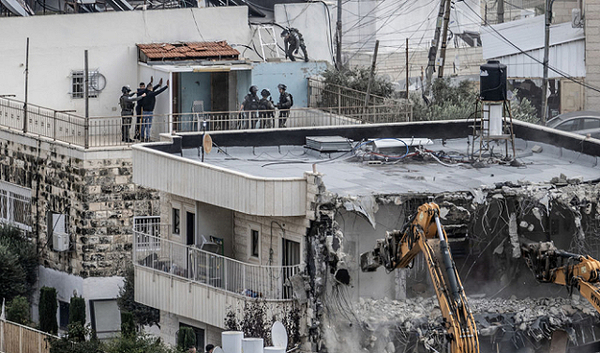
Israeli occupation demolishes 6 commercial facilities in the town of Al-Jib, northwest of Jerusalem

The Israeli occupation forces demolished six commercial facilities in the Khalayleh neighborhood in the town of Al-Jib, northwest of occupied Jerusalem, under the pretext of building without a permit.

The Jerusalem Governorate stated in a statement on Thursday that the ownership of the facilities belongs to the brothers Mahmoud and Musa Mustafa Alqam, as these facilities constitute a source of livelihood for about 30 Jerusalemite families, and have been in existence since 2004.

She pointed out that the occupation forces stormed the neighborhood accompanied by demolition vehicles last Tuesday, where they completely surrounded the area and prevented citizens from approaching, before carrying out the demolition operation that targeted a butcher shop, a restaurant, a supermarket, a glass shop, and a stone-making workshop.


PALESTINE

Thu 23 Jan 2025 9:44 pm - Jerusalem Time

Israeli decisions to forcibly displace 26 Jerusalemite families in Batn al-Hawa in Jerusalem

The Jerusalem Governorate reported that the Israeli occupation court in occupied Jerusalem recently issued decisions forcing hundreds of Jerusalemites to evacuate their homes in the Batn al-Hawa neighborhood in the town of Silwan, south of Al-Aqsa Mosque, as part of a forced displacement campaign targeting the neighborhood.

The governorate stated in a statement on Thursday evening that the "Ateret Cohanim" colonial association obtained, during the past two weeks, court rulings from the occupation court in occupied Jerusalem, ordering the eviction of 26 Palestinian families, including 154 individuals, from their homes in the Batn al-Hawa neighborhood, on the pretext that they are built on lands that were owned by Jews before 1948.

The rulings, issued in five cases, stated that the evacuation of the homes must be carried out within the next six months. The court also ordered Palestinian families to pay trial costs of 50,000 shekels for each case.

ARAB AND WORLD

Thu 23 Jan 2025 9:44 pm - Jerusalem Time

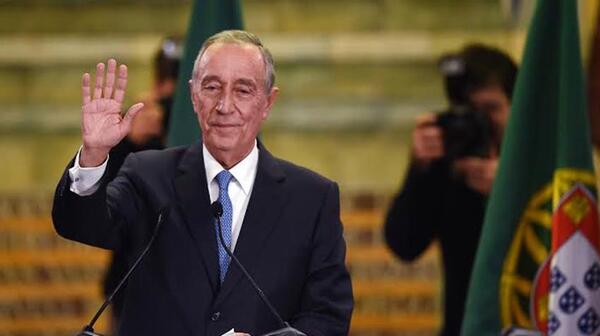
Portuguese President affirms his support for peace in the Middle East

Portuguese President Marcelo Rebelo de Sousa stressed the importance of achieving peace in the Middle East, expressing his hope for the continuation of the ceasefire and the reaching of a permanent peace agreement.


In his speech at the annual dinner of the diplomatic corps accredited to the Portuguese Republic at the Ajuda National Palace, President de Sousa stressed the need to respect peoples, international law and UN resolutions, especially those related to the creation of two states. He said, "Peace in the Middle East is our hope, and the ceasefire must be a step towards a sustainable, just peace that respects human rights and international laws."


He also called for a real peace that is not just a convenient facade, but one that is sustainable and just, respects human rights and humanitarian law, and encourages dialogue, tolerance and pluralism. He added: “Peace must promote freedom and participation and give a voice to the largest number of people, not be concentrated in the hands of the few who have the means to bypass the law and control countries without oversight or legitimacy.”

The Portuguese President invited the Ambassador of the State of Palestine to Portugal, Rawan Suleiman, to convey his greetings to President Mahmoud Abbas, wishing him well and peace in the New Year. He also conveyed his support and sincere wishes to the people of Palestine, stressing the need to continue efforts to achieve comprehensive and sustainable peace in the region.

PALESTINE

Thu 23 Jan 2025 7:34 pm - Jerusalem Time

Israeli forces arrest two young men and demolish a house on the western edge of Jenin camp

This evening, Thursday, the Israeli occupation forces arrested two young men from their vehicle at Asfour roundabout in the city of Jenin in the occupied West Bank.


Local sources told the Palestinian News Agency, WAFA, that the occupation forces stopped the two young men while they were passing through Asfour roundabout on Nablus Street in the city of Jenin and arrested them.


The occupation bulldozers also demolished a house on the western side of Jenin camp.


The occupation forces surrounded a house in the German neighborhood east of the city of Jenin in the West Bank.

PALESTINE

Thu 23 Jan 2025 7:32 pm - Jerusalem Time

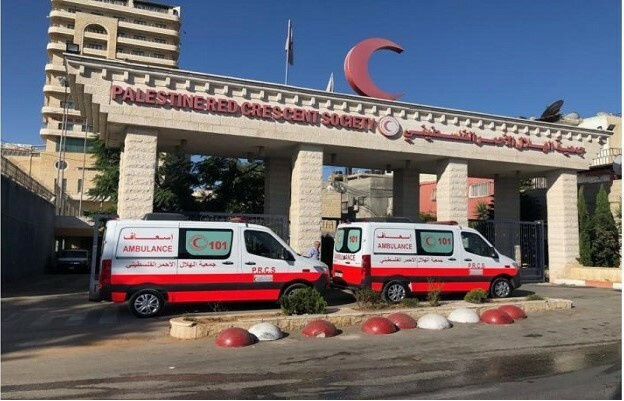
Palestine Red Crescent denies rumors of replacing UNRWA in East Jerusalem

The Palestine Red Crescent Society denies false rumors published in the Hebrew media regarding the Society winning a tender conducted by the Israeli Ministry of Health to replace the United Nations Relief and Works Agency for Palestine Refugees (UNRWA) in East Jerusalem.

The association affirms its firm position of absolute refusal to be an alternative to UNRWA, despite the fact that several parties have contacted the association to carry out some of the agency’s tasks or receive funds that were allocated to it. The most recent of these was the Israeli Ministry of Health’s attempt to hand over the association’s branch in Jerusalem, the Bab al-Zawiya clinic, which is affiliated with UNRWA, in exchange for financial support, which the association categorically rejected.

PALESTINE

Thu 23 Jan 2025 5:58 pm - Jerusalem Time

Two dead in Israeli aggression in southern Gaza Strip

Two citizens were killed today, Thursday, as a result of an Israeli occupation army aggression in the southern Gaza Strip.


Local sources said that the occupation army targeted citizens in the Tel al-Sultan neighborhood, west of Rafah, which led to the martyrdom of two of them.


In the same context, rescue teams were able to extract the remains of 4 dead from the Shurab family home near Palestine Stadium, west of Gaza City.

The ceasefire agreement in the Gaza Strip entered into force last Sunday, January 19.


The Israeli aggression has resulted in the death of 47,283 citizens and the injury of 111,472, most of whom are children and women, since October 7, 2023, while thousands of victims are still under the rubble, and rescue teams are working to retrieve them.

OPINIONS

Thu 23 Jan 2025 5:23 pm - Jerusalem Time

Hamas and America: Have the rules of the game changed?

Ramallah - “Alquds ” dot com

Ramallah - “Alquds ” dot com

Opinion Writer


Dr. Amjad Abu Al-Ezz, Lecturer Specializing in International Relations at the Arab American University

In an unusual development, the statements exchanged between Hamas and the US administration have raised questions about the possibility of opening channels of dialogue between the two parties. The beginning came with the statement of Hamas leader Moussa Abu Marzouk, in a telephone interview with the New York Times, about the movement’s readiness to dialogue with the United States, and even its readiness to receive an envoy from the administration of US President Donald Trump in the Gaza Strip, providing him with protection if necessary. Abu Marzouk considered that such a dialogue could help Washington understand the feelings and aspirations of the Palestinians, which could lead to adopting a more balanced position that reflects the interests of all parties. From the American side, President Donald Trump’s special envoy to the Middle East, Steve Witkoff, welcomed these statements cautiously, saying: “I think it’s a good thing if it’s accurate,” referring to the possibility of exploring this step without a clear commitment. These statements come at a time when the region is witnessing intensive efforts to calm the situation in the Gaza Strip after the ceasefire agreement went into effect. Press reports have confirmed that the Trump administration has begun working on the second phase of the agreement, which includes a ceasefire and an exchange of hostages between Israel and Hamas. These developments raise questions about whether this rapprochement reflects part of a broader strategy for US policy in the Middle East, especially in light of the Trump administration’s focus on unconventional transformations such as normalizing relations between Israel and a number of Arab countries. Trump’s desire to build a legacy as a “peacemaker” may also be an additional incentive to explore new channels of communication even with parties such as Hamas, which Washington has classified as a terrorist organization since 1997. In the same context, Steve Witkoff announced that he will visit the region soon to participate in an international team working to monitor compliance with the ceasefire agreement in the Gaza Strip. In an interview with the American Fox News channel, Witkoff revealed that the inspection team will focus on sensitive points, including the “Netzarim” corridor that separates the north of the Strip from the south, and the Salah al-Din (Philadelphi) border axis between Gaza and Egypt. He stressed that these areas will witness the presence of international supervisors to ensure that no weapons or individuals with hostile intentions infiltrate, which represents the first public acknowledgment of US participation in the field in monitoring the agreement. The US envoy, who was present on the ground in the Gaza Strip, praised Qatar's pivotal role in mediation, and specifically mentioned the skills of Qatari Prime Minister Sheikh Mohammed bin Abdulrahman Al Thani in communicating with Hamas, describing his efforts as "indispensable" in the success of the agreement. He considered that there is a "new sense of leadership in the region." He considered Qatar a model for countries that can play a greater role in enhancing regional stability. Here, the most prominent questions are: Will Qatar's entry into the normalization process be followed by the provision of a path to contain Hamas in the regional deals that are being prepared now? Will Qatar stipulate recognition of the Palestinian state as a condition for Qatari-Israeli normalization? Will Hamas agree to join the new club? What will Hamas offer in return? What concessions will it make? What about the PLO? Why did Hamas resort to dialogue with the United States before dialogue with the PLO, which is the organization I mean the legitimate representative of the Palestinians?

Despite this initial openness, any potential dialogue between the two sides faces significant obstacles. The US designation of Hamas as a terrorist organization constitutes a legal and political barrier to any official communication, in addition to regional sensitivities that may see this rapprochement as a threat to their interests or policies towards the Palestinian cause. In addition, the position of Israel, the main US ally in the region, may oppose any dialogue between Washington and Hamas. For its part, Hamas may seek to improve its international image by demonstrating openness to dialogue, in an attempt to ease regional and international pressure on it. The involvement of regional parties, such as Turkey, may also contribute to playing the role of mediator to push this initiative forward. The main question remains whether these statements represent an actual beginning to open direct or indirect channels of communication between Hamas and Washington, or are they merely tactical maneuvers by both sides? At present, it seems that US interest is limited to achieving interim progress regarding a ceasefire and ensuring stability, without a clear commitment to broader steps. What is happening may reflect a limited shift or a political maneuver with interim goals. However, achieving tangible progress requires overcoming political and legal obstacles, and providing international support and regional guarantees in which Turkey or other parties may play an important role. In the same context, US President Donald Trump’s statements about the opportunities for rebuilding the Gaza Strip, and his emphasis that Gaza has great potential, beautiful weather, and promising investment opportunities, raise many questions about the nature of the expected US role in the Strip. These statements seem to present an economic vision rather than a political one, which opens the door to questions about whether the Trump administration is dealing with the Palestinian issue, including the conflict in Gaza, from a purely real estate investment perspective, far from the political and humanitarian dimensions. Trump’s approach in talking about Gaza as an investment area reflects his personal style that distinguished him as a businessman and real estate developer before entering the world of politics. This vision may reflect a desire to use economic stimulus as a tool to achieve stability and calm the situation in the Strip, and is part of a broader approach adopted during the “Deal of the Century” plan, which focused on improving economic conditions as an alternative to traditional political solutions.

However, this “economic” view of the conflict may face significant obstacles. The conflict in Gaza is not simply a development or investment issue, but a complex political conflict linked to the Israeli occupation, the blockade of the Strip, and Palestinian rights. Ignoring the political and root dimensions of the crisis and focusing only on reconstruction and investment projects may lead to superficial solutions that do not address the essence of the issue. On the other hand, Trump’s statements may be an attempt to present a new approach to dealing with Gaza, inspired by his business experience. However, this approach may face resistance from regional and international parties that see the Palestinian issue as an issue with political and historical dimensions that cannot be reduced to a mere economic opportunity.

If this approach reflects Trump’s vision of the conflict, it could be seen as an attempt to change the rules of the game by focusing on economic interests rather than seeking just political solutions. The challenges facing any American investment role in Gaza will be significant, especially in light of the ongoing Israeli blockade and internal Palestinian division.

It remains that these statements, despite their economic nature, may indicate an American strategy that seeks to normalize or “commodify” the conflict, by presenting Gaza as an investment opportunity rather than a political issue. However, it remains unclear whether this vision is capable of achieving tangible results on the ground, or whether it is just another reflection of Trump’s approach that mixes politics and the business world. In my opinion, without a unified Palestinian vision and plan now, we will become part of the plans of others that will be imposed on us.

The next four years are full of surprises for Trump and his team, so tighten your belt.


ARAB AND WORLD

Thu 23 Jan 2025 4:52 pm - Jerusalem Time

Steve Witkoff: It's "good" that Hamas is open to talks with the United States.


In an interview with Fox News, US President's envoy to the Middle East, Steve Witkoff, described what Mousa Abu Marzouk, a Hamas official residing in Qatar, said according to the New York Times about the movement's readiness to communicate with the United States as a good thing.


It is noteworthy that Abu Marzouk told the New York Times, "We are ready to dialogue with America and reach understandings on everything."


In response, Witkoff said, “Well, I think it’s good to be precise. I think we’ve been able to prove that President Trump’s policies, peace through strength, work; everyone is listening.”


It is believed that Witkoff's pressure on Israeli Prime Minister Benjamin Netanyahu was the main factor in getting Israel to agree to the ceasefire agreement over the hostages, but it is unclear whether the agreement will hold as Israeli officials threaten to resume military operations after the first phase.


President Trump said Monday he was “not confident” the ceasefire would hold. Asked about those comments, Witkoff acknowledged that “implementing” the agreement would be more difficult than “enforcing it.” Witkoff said he would travel to the region, including areas of Gaza controlled by the Israeli military, to monitor the ceasefire. “I will actually be going to Israel,” he said. “I will be part of an inspection team at the Netzarim Corridor and also at the Philadelphi Corridor.”


Witkoff, a New York real estate investor, said normalization agreements between Israel and Arab countries are key to peace in the region, even though similar deals have done nothing to resolve the Israeli occupation of Palestinian territories.

ARAB AND WORLD

Thu 23 Jan 2025 1:36 pm - Jerusalem Time

Israel asks Washington to postpone its withdrawal from southern Lebanon

Israeli Channel 13 revealed today, Thursday, that the Israeli government has asked the United States to postpone the date of the Israeli army’s withdrawal from southern Lebanon for an additional month, a few days before the scheduled date of withdrawal on January 26.


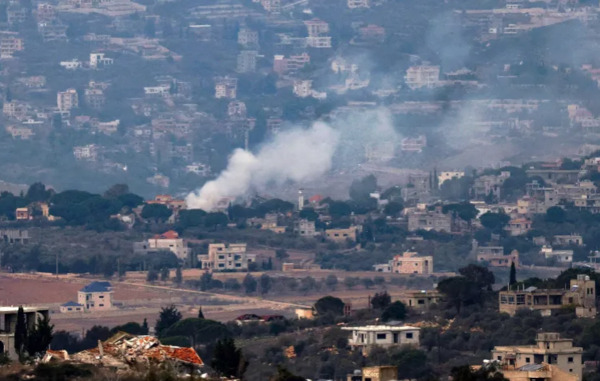
This request came against the backdrop of escalating tensions in the region, as southern Lebanon has witnessed a wave of Israeli violence in recent days, represented by the bombing of villages such as Aita al-Shaab and Houla.


The channel quoted Israeli army officials as saying that most of the field operations are "nearing completion" and that they are awaiting the decision of the political level.


In turn, the Israeli Broadcasting Authority confirmed that the Security Cabinet will hold a meeting this evening to discuss the issue of keeping part of the Israeli forces in southern Lebanon after the end of the 60-day period stipulated in the ceasefire agreement between Israel and Hezbollah.


The Broadcasting Authority said that Israel had asked Washington to postpone the withdrawal for an additional 30 days "to complete security activities," despite intense American pressure in recent weeks to implement the withdrawal on schedule.


The report also noted that senior Israeli security officials claim that “time is not sacred,” and even criticize the pace of the Lebanese army’s deployment south of the Litani River.


US position

It is not yet clear whether the United States will agree to Israel's extension request. There has been no official comment from Lebanon on the matter so far.


In this regard, Israel's ambassador to the United States, Michael Herzog, said during an interview with Israeli Army Radio that Tel Aviv and Washington are holding talks on the withdrawal, expressing his belief that Israel "will reach an understanding" with the administration of President Donald Trump.


For his part, Israeli Foreign Minister Gideon Sa'ar confirmed in a statement that Israel is committed to implementing the ceasefire agreement, but "will not compromise on its security."


Sa'ar said he met with the UN Special Coordinator for Lebanon, Jeanine Hennis-Plasschaert, and discussed with her Israel's commitment to the agreement.


This development comes in the wake of the fragile ceasefire agreement reached on November 27, 2024. Under the agreement, the Israeli army must withdraw from southern Lebanon, so that the Lebanese army becomes the only entity allowed to deploy and carry weapons in the south.

PALESTINE

Thu 23 Jan 2025 1:02 pm - Jerusalem Time

Ministry of Education in the Gaza Strip: 15,000 school-age children killed or missing

The Ministry of Education in the Gaza Strip said that the recent Israeli aggression on the Gaza Strip led to the death and loss of more than 15,000 Palestinian school-age children, and the targeting of 95% of school and educational buildings, in addition to the exposure of children to "shocking experiences and unprecedented psychological pressures."


The ministry indicated - in a statement - that initial statistics indicate that more than 800 education sector workers have been killed or missing, and 50,000 male and female students have been injured.


It added, "The huge number of martyrs is equivalent to a genocide of human elements, students and workers in more than 30 schools, and reflects the extent of the crimes committed against children and educational staff."


It explained that the genocide committed by Israel over a period of more than 15 months led to the killing of 1,200 male and female students enrolled in higher education institutions, more than 150 scientists, academics and workers in those institutions, and hundreds of others were injured and disabled.


The ministry confirmed that 95% of school and educational buildings were directly damaged, while 85% of them were completely or partially out of service due to their destruction.


It pointed out that the Israeli army destroyed more than 140 administrative and academic facilities, including equipment, laboratories, clinics and libraries.


The ministry estimated the losses of the education sector at more than 3 billion dollars.


It explained that thousands of children were exposed to shocking experiences and unprecedented psychological pressures, which led to the emergence of psychological symptoms and trauma that require specialized interventions.


The Ministry announced the completion of emergency response plans for the next phase, which includes completing the 2023-2024 academic year and opening the 2024-2025 academic year.


The ministry called on media outlets and human rights institutions to document the "Israeli crimes" against children and deprive them of their right to education, and to prosecute Tel Aviv before international bodies and courts.

PALESTINE

Thu 23 Jan 2025 12:48 pm - Jerusalem Time

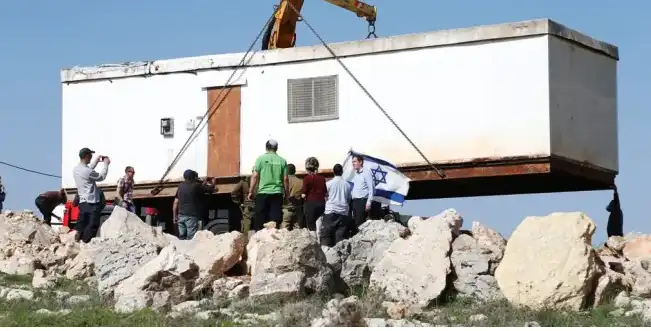
Settlers install caravans and pergolas in the northern Jordan Valley

Today, Thursday, settlers placed caravans and arbors on citizens’ lands west of the village of Bardala in the northern Jordan Valley.


Local sources reported that a number of settlers bulldozed land west of the village of Bardala, and placed caravans and pergolas there during the past two days, amid fears among citizens that it could be the nucleus of a new colonial outpost.


The sources added that the caravans were placed hundreds of metres away from a pastoral colonial outpost that the settlers had established about a month ago.

The area is witnessing a continuous presence of settlers under the protection of the occupation, and during the past few days, there have been clashes between the settlers and the citizens who tried to prevent them from attacking their property and stealing their livestock.

PALESTINE

Thu 23 Jan 2025 12:46 pm - Jerusalem Time

Israeli forces arrest a citizen after assaulting him in Hebron

Today, Thursday, the Israeli occupation forces arrested two citizens after they were beaten in Masafer Yatta, south of Hebron.


Local sources reported that the occupation forces arrested the two young men, Mahmoud Khalil Abu Aram and Suhaib Ismail Abu Aram, after assaulting them.

ARAB AND WORLD

Thu 23 Jan 2025 11:46 am - Jerusalem Time

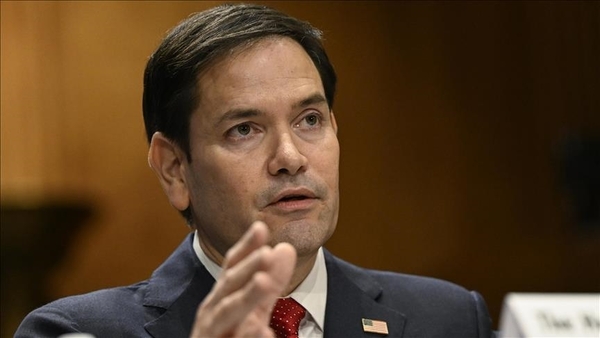
US Secretary of State Affirms 'Unwavering' Support for Israel

New US Secretary of State Marco Rubio affirmed the United States' "unwavering" support for Israel during a phone call with Israeli Prime Minister Benjamin Netanyahu.


This came according to a statement by US State Department spokeswoman Tammy Bruce on Wednesday.


According to the statement, Rubio stressed that Washington's support for Tel Aviv is the "top priority" of US President Donald Trump.


Rubio congratulated Netanyahu on "Israel's successes against Hamas and Hezbollah" and pledged to continue working to release all prisoners in Gaza.


On Sunday/Monday night, Israel released 90 Palestinian prisoners, all from the occupied West Bank, including Jerusalem, in exchange for Hamas releasing 3 Israeli civilian female prisoners.


This exchange came as part of the first phase of a ceasefire agreement with Hamas that began on Sunday, mediated by Qatar, Egypt and the United States, and is to last for 42 days, during which negotiations will take place to begin a second and then a third phase.


According to the US statement, the two sides discussed "threats" from Iran and said they would continue to work together on the issue.

PALESTINE

Thu 23 Jan 2025 11:30 am - Jerusalem Time

Israeli occupation expels the residents of Jenin camp and journalists and prevents them from covering the events

Today, Thursday, the Israeli occupation forces forced a number of citizens of Jenin camp to leave it under the threat of weapons and shelling, for the second day in a row.


Al-Quds.com correspondent said, "The occupation forces forced the residents of Jenin camp to leave it, and paved a road for them to take."


He pointed out that the occupation forces expelled journalists and prevented them from covering the event.

PALESTINE

Thu 23 Jan 2025 10:54 am - Jerusalem Time

Settlement plans in occupied Jerusalem target Sheikh Jarrah, Qalandia Airport and Sharafat

The Israeli authorities are seeking to implement three major plans to build a settlement biblical institute and more than 10,100 new settlement units in occupied Jerusalem, targeting the areas of Sheikh Jarrah, the abandoned Jerusalem (Qalandia) Airport, and the Palestinian village of Sharafat.


This came according to what was reported by the newspaper "Haaretz" today, Thursday, and it pointed out that the plans include establishing a religious school for the Haredim in Sheikh Jarrah, 9,000 new settlement units in northeastern Jerusalem, and 1,100 new settlement units west of Beit Safafa.


According to the report, the three plans for settlement expansion were placed on the agenda of the Planning and Building Committee in the Jerusalem area. This coincides with the inauguration of US President Donald Trump for a second term, who is known for his policies supporting settlement expansion on Palestinian lands.


In the Sheikh Jarrah neighborhood, the plan includes building an eight-story Haredi religious institute for the Or Samiah Association on Palestinian land that was previously used as a parking lot and was confiscated under the pretext of “public use” before being allocated to the settlement association.


The plot of land allocated to the Haredi institute is the largest of its kind in the neighborhood and is designated for public buildings. It was confiscated under the pretext of serving the “needs of the residents,” but it was allocated to the Haredi association to build the Torah institute, despite the hardship suffered by the residents of the Palestinian neighborhood.


Haaretz newspaper pointed out that there are reports issued by the Jerusalem Municipality confirming the lack of public land in the neighborhood, as a study showed that Palestinian residents are forced to leave the neighborhood to meet their educational and service needs.


The deputy mayor of the occupation city of Jerusalem described the approval of the plan as "a blatant lack of rationality and a grave injustice." He pointed out that the municipality "is confiscating land from residents and giving it to a Haredi association, even though the land should be used entirely for the benefit of the neighborhood's residents."


The deputy head of the "Jerusalem Union" list condemned the allocation of the plot of land "to the benefit of an external party," stressing that this step is "unreasonable and unfair," warning that it could lead to "escalation of friction" between Palestinians and settlers in Jerusalem.

A huge settlement on the ruins of the abandoned airport


The Israeli occupation plans to build a huge settlement neighborhood comprising about 9,000 housing units on the ruins of the abandoned Qalandia Airport northeast of Jerusalem, near the separation wall and the Palestinian town of Kafr Aqab, which is inhabited by about ten thousand people.

Work on the airport stopped with the outbreak of the Second Intifada, and the area has been deserted ever since. Despite previous international pressure to freeze the project, the occupation authorities continue to push it forward, ignoring environmental and health warnings about the pollution of the area due to nearby industrial facilities.


During the committee meeting, the Health Ministry representative noted that environmental conditions make housing in the area untenable, while the plan’s environmental consultant claimed that the pollution could be treated. The committee also discussed security issues related to the planned neighborhood’s proximity to the separation wall and the town of Kafr Aqab.

The committee is scheduled to resume discussion of the project next month.


In southern Jerusalem, the occupation authorities are seeking to establish the “Givat Shaked” settlement on Beit Safafa lands, at the expense of the Palestinian village of Sharafat, located west of Beit Safafa and north of Beit Jala, by adding 400 settlement units to the 700 units that were previously approved.


The occupation authorities had approved the establishment of 700 settlement units on an area of 50 dunams that was allocated for the expansion of the village of Beit Safafa, according to the structural map of the occupation municipality in Jerusalem, which was approved in 1992.


"The plans being discussed by the Jerusalem Planning and Building Committee show how the planning process is distorted by political and demographic considerations against the residents of East Jerusalem," said researcher Aviv Tatarsky of the Ir Amim Association.


He added that "the construction of huge settlement neighborhoods in Palestinian urban areas, especially the establishment of a religious institute in Sheikh Jarrah, comes at the expense of the basic rights of Palestinians to housing and education."


Eviction in Silwan: New Forced Displacement

Meanwhile, the settlement association Ateret Cohanim has obtained court rulings from the Jerusalem Magistrate's Court over the past two weeks, ordering the eviction of hundreds of Palestinians from their homes in the Batn al-Hawa neighborhood in the town of Silwan, as part of a forced displacement campaign targeting the neighborhood.


These rulings are based on claims that the lands in the area belonged to Jews before 1948.


Judge Mariam Kaslasi ruled in favor of the association in five separate cases, meaning 26 Palestinian families, comprising 154 individuals, will be evicted over the next six months. The court also ordered the Palestinian families to pay court costs of NIS 50,000 per case.

PALESTINE

Thu 23 Jan 2025 9:23 am - Jerusalem Time

Hamas clarifies mechanism for return of displaced persons to northern Gaza

Hamas movement clarified today, Thursday, regarding the mechanism for the return of the displaced from the central and southern Gaza Strip to its north.


Hamas said in a statement, "The displaced will return on the seventh day of the agreement (January 25, 2025), after the prisoner exchange process ends that day, and the occupation completes its withdrawal from the Rashid Street "Al-Bahr" axis."


She explained that internally displaced pedestrians will be allowed to return north without carrying weapons and without inspection via Rashid Street, with freedom of movement between the south and north of the Gaza Strip.


She confirmed that vehicles (of all types) will be allowed to return north of the Netzarim axis after the vehicles are inspected.


Hamas indicated that on the 22nd day of the agreement, internally displaced pedestrians would be allowed to return north from Salah al-Din Street without inspection.

ARAB AND WORLD

Thu 23 Jan 2025 9:20 am - Jerusalem Time

Mohammed bin Salman and Trump discuss expanding partnership between their countries

Saudi Crown Prince Mohammed bin Salman has confirmed to US President Donald Trump the Kingdom's desire to expand investment partnership with the United States. They also discussed enhancing cooperation to achieve peace, security and stability in the Middle East, and bilateral efforts to combat terrorism.


The Saudi Crown Prince made a phone call to the US President this evening, the day after his return to the White House. He conveyed to him the personal congratulations of the Custodian of the Two Holy Mosques, King Salman bin Abdulaziz, expressing “the Saudi leadership’s wishes for the American people for further progress and prosperity” under his leadership.


The two sides also discussed strengthening bilateral relations in various fields, and the Saudi Crown Prince expressed his confidence in the Trump administration's ability to achieve unprecedented economic reforms in the United States.


Prince Mohammed bin Salman indicated that Saudi Arabia looks forward to benefiting from these reforms by expanding its investment and trade partnerships with the United States, stressing that Saudi Arabia plans investments amounting to $600 billion over the next four years, with the possibility of increasing them if additional opportunities become available.


For his part, the US President expressed his thanks and appreciation to the Custodian of the Two Holy Mosques and the Crown Prince for the congratulations, stressing his keenness to enhance cooperation and work with Saudi Arabia to serve the common interests of the two countries.


A Saudi source noted that “this call comes just two days after President Trump’s inauguration, reflecting the strength of Saudi-American relations, which are characterized by a strategic alliance spanning more than eight decades, based on mutual respect and common interests.” He added that the call “affirms the will of the two leaderships to strengthen this strategic relationship and push it towards new horizons in a way that achieves the interests of both countries.”


He pointed out that the Saudi Crown Prince's announcement during the call of his country's desire to expand its investments with the United States to reach $600 billion over the next four years, "reflects Saudi Arabia's belief in the ability of the new American administration to achieve unprecedented economic prosperity."


He explained that “these investments are an extension of the economic partnerships that began during President Trump’s first term, and included investment opportunities in promising sectors, which enhances the transfer and localization of technology and the creation of new job opportunities, within the framework of the development renaissance witnessed by the Kingdom as the fastest growing economy among the G20 countries.”


The source added that these partnerships “are expected to generate billions of dollars in investments, contributing to the development goals of both sides,” noting that they coincide with the SoftBank Fund, in which Saudi Arabia owns large shares, aiming to allocate $500 billion in investments related to artificial intelligence, “which enhances the role of technology in the economic partnership between the two countries, in addition to vital areas including military industries, space exploration, nuclear energy, and the development of artificial intelligence uses.”

ARAB AND WORLD

Thu 23 Jan 2025 9:12 am - Jerusalem Time

Rights groups warn Trump executive order could reinstate Muslim travel ban

US rights groups have warned that an executive order signed by US President Donald Trump on Monday would reimpose a ban on travelers from Muslim-majority or Arab countries, Reuters reported.


The American-Arab Anti-Discrimination Committee said the new order relies on the same legal authority used to justify Trump’s 2017 travel ban and allows “broader scope to use ideological exclusion to deny visa applications and exclude individuals” who have already arrived in the United States. The committee announced a new 24-hour hotline to help those affected.


The National Iranian American Council said Trump’s order “to protect the United States from foreign terrorists and other threats to national security and public safety” would separate American families from their loved ones and reduce college enrollment in the United States. The council has set up a new website on the issue.


The executive order Trump signed Monday, amid a series of other measures, sets a 60-day deadline for senior State Department and Justice Department officials and intelligence and Homeland Security officials to identify countries whose vetting and screening processes are “so deficient that entry by nationals of those countries should be suspended in part or in full.”


The order is broader than Trump’s 2017 ban on travelers from seven Muslim-majority countries, adding language that bars people from obtaining visas or being allowed to enter the United States if they “harbor hostile attitudes toward its people, culture, government, or founding principles,” and establishing a process that could disqualify visa holders granted since 2021.


The White House did not respond to inquiries raised in this regard.


The new order would give the government “a great deal of unfettered authority” to deny a range of visas for students, workers and educational exchange participants, Joseph Burton, a former State Department official who worked in visa administration, said during a teleconference organized by the National Iranian American Council.


The committee’s executive director, Abed Ayoub, told the agency that the committee would decide in the coming days whether to challenge the order in court. He added that it sets a “very dangerous precedent” that could be used against right-wing groups if a Democratic administration takes office in the future.


“This will allow people to be excluded from the United States based on what they say, what they express, or their positions,” he added. “If they attend a protest that the administration might deem hostile, their visas will be revoked and deportation proceedings will begin.”


Trump has repeatedly said he would apply the travel ban to people from certain countries or with certain ideologies, expanding a policy upheld by the Supreme Court in 2018.


During his election campaign, he said he would reimpose a travel ban on people from the Gaza Strip, Libya, Somalia, Syria, Yemen and "anywhere else that threatens our security."


He made it clear that he would also seek to prevent communists, Marxists, and socialists from entering the United States.

PALESTINE

Thu 23 Jan 2025 8:41 am - Jerusalem Time

Two Palestinians killed by Israeli occupation forces west of Jenin

Two young men were killed yesterday evening, Wednesday, by Israeli occupation forces in the town of Burqin, west of Jenin.


According to the General Authority of Civil Affairs, the two young men are Qutaiba Walid Ahmed Shalabi (30 years old) and Muhammad Asad Mahmoud Nazal (25 years old).


The Commission indicated that the occupation forces had detained their bodies.

OPINIONS

Thu 23 Jan 2025 8:35 am - Jerusalem Time

The story of an unforgettable people

op-ed - Al-Quds dot com

op-ed - Al-Quds dot com

Opinion Writer

The long struggle of the Palestinian people in the face of the arrogance of the occupation and its arbitrary measures cannot be described, because the dictionary of definition will not be able to provide a description that is worthy of this struggle and fight against the brutal and unjust Israel, which occupied the land and expelled its true owners, established settlements and colonies on it, and Judaized most of the historical and heritage landmarks of the homeland.


In the book of laughter and forgetting by the Czech novelist Milan Kundera, there is an eloquent phrase: “The struggle of man against brutal power is a struggle of memory against forgetting.” This is the best description of the issue of the Palestinian people as they face the most brutal and ferocious occupation, where tyranny and force are accompanied by acts of arrogance, and the imposition of repressive measures under Israeli conditions that have turned the lives of the Palestinians into hell.


Our people waited a long time for the Gaza war to stop, along with the massacres, genocide and aggression that it brought with it, unprecedented in human history. However, they soon faced new attacks on the West Bank, especially the city of Jenin and its camp, where the occupation is carrying out a campaign of ethnic cleansing and evacuating the camp of its residents, while the machine of oppression has shown no mercy to humans.


Our people are accustomed to suffering and confronting the occupation, from resistance with weapons, one uprising after another, one uprising after another, even the diplomatic path in which Palestine opened its hand and shook hands with everyone, based on its right to obtain international recognition to establish an independent Palestinian state with Jerusalem as its capital. However, this did not please the occupier, who increased the pace of his escalation, imposing one catastrophe after another on our people. What happened in Gaza in the form of a war of execution is the declaration of a new catastrophe, indeed catastrophes that are unprecedented in history, in addition to the West Bank that Israel threatens, and it is not much different, as the tools of the occupation are known, and it withdrew them from Gaza to poison the West Bank through a large-scale invasion of Jenin, accompanied by Israeli threats to expand the scope of the invasion to include most of the camps of the West Bank and some cities, towns and villages.


Hence, we were not surprised to see this huge number of iron, electronic, earthen barriers, or those erected with cement cubes, closing the roads of the homeland and dividing the West Bank into cantons, all in order to provide so-called protection for the settlers who participate with the army in sinful attacks on our people.


To please Minister Smotrich, Israel is waging war on the West Bank, in an Israeli attempt to undermine the ceasefire agreement in Gaza, in order to launch a new aggression against it, and to fulfill the desire of Minister Ben Gvir, here are the army and police authorities and the so-called "Border Guard" strangling the lives of Palestinians and restricting their freedom of movement in the streets of the West Bank by deploying more than 898 checkpoints, as stated yesterday in the report of the Wall Resistance Authority, because the priority, according to Ben Gvir's opinion, is the lives of the settlers.


The turns and challenges of the Palestinian cause these days are dangerous, and they are equivalent to the Nakba and the Naksa and what happened in the first and second Intifadas, but what is important in all these stages of struggle is that our people will not forget, and their struggle will continue towards a memory against oblivion, for this is the story of a people that we will tell to future generations, as it was told to us by those who came before us, so that generations will preserve this cause, and Israel’s plans and the conspiracies of the United States and the West against it will be foiled, because our people have decided not to forget.