ARAB AND WORLD

Tue 04 Feb 2025 9:14 am - Jerusalem Time

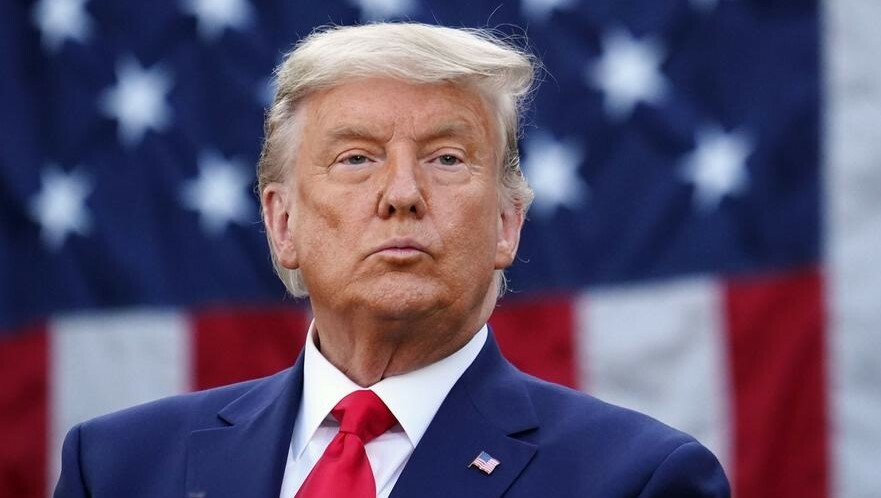
Trump's Trends in the Region and the World... Politicians Diagnose Trump's Condition

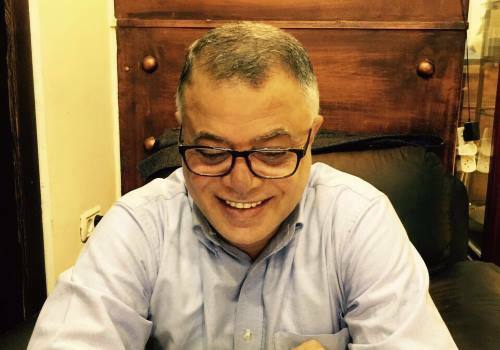
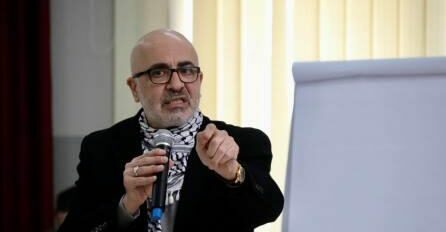
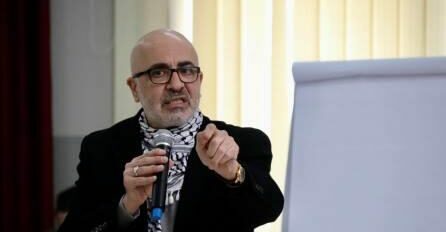
Dr. Muhammad Abu Koush: Trump's policies will not be implemented easily because he has four years, which is not enough to make radical changes on a global level

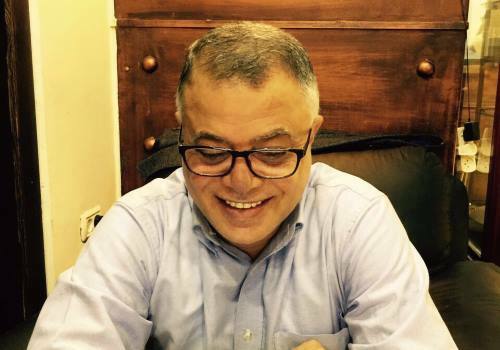
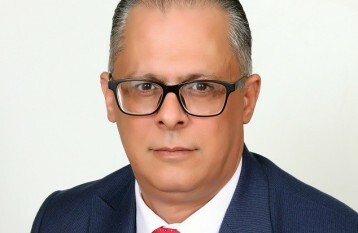
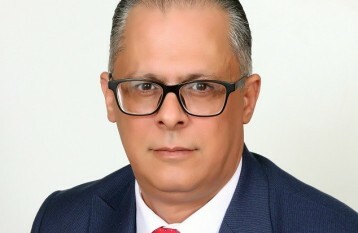
Professor John Dabit: Trump does not rule according to clear political strategies, but rather according to his whims and personal interests, and he cannot be trusted.

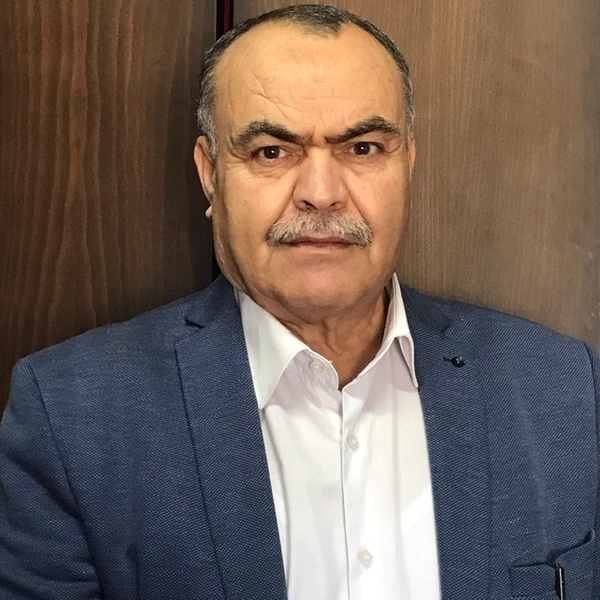
Dr. Kholoud Al-Abidi: Trump's policies harm the interests of many people in America and abroad, so we must understand his policies away from media propaganda

Dr. Rifat Sayed Ahmed: The deep state in America is the real power that controls foreign policy directions, not the president

Dr. Muhammad Najib Bou Taleb: America is witnessing a political and moral decline, and democracy has become a slogan that hides tendencies towards arrogance, individualism, and vanity.

Osama Al-Sharif: Trump is a narcissist, a xenophobe, and a believer in white supremacy, in addition to his tendency to rule in an authoritarian manner.


The newcomer to the White House, Donald Trump, has not been slow to amaze the world with all the plans, directions and threats he issues, which do not spare an ally, enemy or follower. He wants Canada, the neighbor and one of the founding countries of NATO, to be the fiftieth state of the United States. He wants to buy Greenland by force from Denmark, seize the Panama Canal, impose customs duties on the countries of Europe and China, build a wall on the Mexican border, displace Palestinians from the Gaza Strip to Jordan and Egypt, and “scrape” a trillion dollars from the Kingdom of Saudi Arabia under the name of investing in his country.


Diplomats, writers and analysts who spoke to “I” said that Trump does not rule according to clear political strategies, but rather according to his whims and personal interests, and that he cannot be trusted. They said that the United States is witnessing a political and moral decline, and that democracy has become a slogan that hides tendencies towards arrogance, individualism and vanity. Some considered that Trump’s policies will not be implemented easily because he has four years, which is not enough to bring about radical changes on a global level.


Trump acts like he's the "master of the world"


Dr. Mohammed Abu Koush, the former Palestinian ambassador to the United Nations in Geneva, warned that US President Donald Trump’s policies in his second term are a repetition of his approach in the first term, but he has begun to act as if he were the “master of the world,” imposing his decisions on other countries in a condescending and hasty manner.


Abu Koush explained that Trump is making unwise decisions, citing his statements about annexing Canada as a US state, which is an unrealistic matter that was met with Canadian rejection.


He also referred to his attempt to seize the Danish island of Greenland, without realizing that the standard of living there exceeds what the United States offers in the areas of health, education and retirement, in addition to the European Union standing by Denmark in the face of these attempts.


He added: "Trump seeks to impose taxes on the European Union and prevent the import of German cars in favor of American products, which fuels tensions with his allied countries."


He considered that these policies will not be implemented easily, especially since the US President has only four years, which is not enough to make radical changes on a global level.


Gaza Strip population displacement plan


Abu Koush touched on Trump's attempts to implement a plan to displace the residents of the Gaza Strip, in line with the Israeli government's extremist desire to control the Strip's gas and oil wealth.


He stressed that Trump seeks to have American companies replace British companies in exploration operations, to achieve major economic gains.


Abu Koush stressed that the forced displacement of the people of Gaza is illogical and contradicts Trump's own anti-immigrant positions within the United States.


He explained that the Palestinians are attached to their land, and they experienced asylum in 1948 and 1967 and are aware of its suffering, which makes them more determined to reject any attempt to empty the Strip of its inhabitants.


The people of Gaza are ready to sacrifice their lives in defense of their land


He pointed out that the Arab countries and the international community realize the impossibility of implementing this plan, and that the Palestinians in Gaza are prepared to sacrifice their lives in defense of their land, which makes the idea of displacement impractical.


In a related context, Abu Koush stressed that armed resistance to the occupation is a legitimate right according to the First Additional Protocol to the Geneva Conventions, and that the war of extermination launched by Netanyahu failed to eliminate the Palestinian resistance or displace the residents of Gaza.


He pointed out that Trump, who does not support open wars, forced Netanyahu to accept the ceasefire agreement and prisoner exchange, but he seeks to achieve the goal of displacement in another way that serves Israel without resorting to military action.


Abu Koush concluded by stressing that the steadfastness of the Palestinians and their adherence to their land has thwarted and will thwart any plan targeting their presence in their homeland.


Trump's new appointments in his administration reflect his extremist tendencies


For his part, Professor John Dabit, a member of the Democratic Party Central Committee in the US state of Iowa, said: “January 20 was an exceptional day in the United States, as it witnessed the inauguration of President Donald Trump for a new term, coinciding with the commemoration of Martin Luther King, amidst an atmosphere of sadness over the passing of former President Jimmy Carter.”


Dabit explained that Trump's speech during the inauguration ceremony was nothing more than an attempt to justify his previous policies during his first term (2016-2020), which carried controversial tendencies.


He pointed out that the first days of his second term witnessed a series of legal cases filed against him, most notably the American Civil Liberties Union's lawsuit against his decision to abolish birthright citizenship for the children of illegal immigrants, a decision that contradicts the Fourteenth Amendment to the US Constitution.


Dabit added that Trump's new appointments in his administration reflect his extremist tendencies, referring to the statements of former National Security Advisor John Bolton, who described these appointments as "the worst in history."


He pointed out that some of the new officials in the Trump administration have a history full of accusations related to sexual harassment and racism, in addition to their hostile positions towards the Palestinian cause.


He cited examples of new Secretary of State Marco Rubio, US Ambassador to Israel Mike Huckabee, who has publicly stated that “there is no such thing as a Palestinian people,” and US Ambassador to the United Nations Alice Stefanik, known for her extreme positions on Palestinian rights.


Trump began his second term with a vengeful spirit against those who opposed him.


Dabit pointed out that Trump began his second term with a vengeful spirit, as he dismissed many officials who had previously opposed him, including employees in the Department of Justice and the Federal Bureau of Investigation (FBI).


He added: Trump does not rule according to clear political strategies, but rather according to his whims and personal interests, which poses a threat to internal stability and the American global role.


Dabit warned that Trump views crises from a purely commercial perspective, citing the plan to displace more than one and a half million Palestinians from the Gaza Strip to Egypt and Jordan, as part of a project to transform the Strip into a tourist area.


He stressed that this plan serves the economic interests of Trump and his allies, but it will not be achieved due to the steadfastness of the Palestinian people and their adherence to their land despite 75 years of occupation.


Dabit stressed that Trump proved during his first term his complete bias towards the Israeli occupation, as he broke the red lines in American policy by recognizing Jerusalem as the capital of Israel and moving the American embassy to it.


He stressed that previous experience has proven that Trump cannot be trusted, as his interests are in harmony with the interests of the occupation, not with Palestinian rights.


At the end of his statement, Dabit stressed the need to deal with caution with the Trump administration, emphasizing the importance of not building illusions about the possibility of it being fair to the Palestinian cause, despite the importance of continuous political communication to ensure that policies that affect Palestinian rights are not passed.


Understanding Trump Through His Books and Foreign Policies


For her part, Dr. Kholoud Al-Obaidi, a political science and international law specialist from Iraq, said: “We must be wary of the media that is hostile to US President Donald Trump, which describes him as moody and unpredictable.”


She explained that President Trump has many enemies, as his policies harm the interests of many parties inside and outside the United States. Therefore, we must understand President Trump's policy away from media propaganda.


She pointed out that there is more than one way to understand Trump's policy: first, understanding the trends and mechanisms of American foreign policy, and second, reading Trump's books, in which he has stated his foreign policies since the 1990s.


Al-Obaidi explained that American foreign policy has been characterized, since the founding of the United States, by following different trends. At first, President George Washington called for staying away from Europe’s problems, which was known as the policy of isolation. However, Treasury Secretary Alexander Hamilton disagreed with him, as he admired the British model, which had a strong naval fleet that controlled the world.


She added: “Hamilton’s policy has continued to this day, and it was represented by the liberal policy that prevailed since World War II, as the United States was preoccupied with intervening in wars and globalization policies, which led to the deterioration of its position. The United States is a colonial state, but whenever it withdraws externally, it returns to isolationist policies again.


The US President has a major role in his country's foreign policies.


She explained that the US President plays a major role in determining his country's foreign policies, so these policies are often attributed to the names of their presidents. For example, in 1969, President Richard Nixon announced the "Nixon Doctrine," which focused on shifting from direct military intervention to choosing allies supported economically and militarily by the US to be its agents in the world. In the Arab region, the US chose Iran and the Zionist entity to be the guardians of its interests, but both countries are currently causing it trouble.


Al-Obaidi stressed that President Trump's policy aims to restore the United States' status, as he calls for building a military force for deterrence, not for waging wars that drain his army in vain. At the same time, he seeks for the United States to remain the most powerful country economically and technologically to achieve its sovereignty over the world. It is an isolationist trend in terms of its distance from wars, but it is populist, as it puts the interests of the United States first.


The political scientist believes that Trump considers himself a successful businessman, and uses the "deal" method in managing the Arab-Israeli conflict, as he explained in his books. Accordingly, he sees protecting Arab countries as a "service" that these countries must pay for.


She pointed out that Trump is also seeking to support the Zionist entity to regain its strength, after suffering repeated defeats, despite being a costly ally.


Reconstructing the Gaza Strip is an important economic project for the United States


Al-Obaidi believed that the reconstruction of the Gaza Strip is an economic project that the United States should benefit from first, as Trump seeks to be the dominant and primary decision-maker in this project. Therefore, if Arab politics succeeds in affirming its solidarity and rejection of the project to displace Palestinians in Gaza, this step will constitute another defeat for the Zionist project. However, if Egypt and Jordan submit to Trump’s demands, there will be no guarantee of their protection.


She added: "Many people believe that Trump will not abandon the Zionist entity, but I see that it is possible."


She stressed that there are reasons for optimism, including that the US President will be less responsive to the pressures of Zionist lobbies and pressure groups during his second term.


She also explained that Trump is not in agreement with the Prime Minister of the Zionist entity, Benjamin Netanyahu, noting that the entity suffers from many problems internally, and that regionally it is no longer able to claim absolute superiority.


Al-Obaidi concluded her speech by stressing that Trump realizes that achieving his dream of US global supremacy requires the support of Arab countries, especially Saudi Arabia, Egypt, and Turkey.


Carrot and stick strategy to achieve political and economic gains


For his part, Dr. Rifaat Sayed Ahmed, strategic expert and director of the Jaffa Center for Strategic Studies in Cairo, stressed that US President Donald Trump does not decide US foreign policy completely, but rather has only a limited margin of influence not exceeding 20%, while the US deep state remains the real power that controls foreign policy directions, especially in key areas of influence such as Europe, the Americas, and the Middle East.


Sayed Ahmed explained that the deep state, represented by its intelligence agencies and major lobbies, is the one that determines American strategies, while Trump is distinguished by his clarity and noise, but in the end he implements the agenda dictated to him by this system.


He added: "The deep state does not see Trump's impulses as a solution to its problems, but rather relies on the carrot and stick strategy to achieve political and economic gains."


He pointed out that American interests in the region are summarized in supporting Israel, as an advanced American aircraft carrier, in addition to controlling oil and Arab markets, and promoting normalization between Israel and Arab countries.


He pointed out that Trump's policies may be impulsive, but they do not go beyond the limits set for them by the deep state.


Regarding the Palestinian issue, Sayed Ahmed ruled out the success of plans to deport the people of Gaza to Egypt or Jordan, considering that the Palestinian people, despite the pressures and sacrifices, are clinging to their land and will not accept any alternative to their homeland.


The United States is run by moodiness and political dementia.


The writer and political sociology analyst, Dr. Muhammad Najib Bou Taleb from Tunisia, believes that the United States is witnessing a state of political and moral decline, where democracy has become a mere slogan that hides tendencies towards arrogance, individualism, and vanity.


He said: “The greatness that is based on arrogance, boasting and boasting about power, with the collapse of morals, is destined for lies, reneging on commitments and the prevalence of excessive selfishness.”


He added: "This is the state of the United States today, where democracy has become a mere slogan for the facade, hiding behind it many tendencies of arrogance, individualism and vanity."


“The decline in Washington is due to the psychological turmoil of figures who are fighting for fame and seeking financial and media influence,” Bou Taleb added, noting that US President Donald Trump reflects this reality through his contradictory decisions and provocative statements, which are not based on national or civilized principles, but are driven by vengeful motives against domestic and foreign opponents, in addition to his efforts to please his surroundings and supporters during his election campaigns.


Adopting direct threats and intimidation as a diplomatic method


He pointed out that the great state is now being managed in a manner based on moodiness and political dementia, which leads to contradictory positions and the crossing of red lines, through the adoption of direct threats and intimidation as a diplomatic method, which contradicts the traditions of great leaders and the ethics of international politics.


He said: It is a culture that we have not known among senior leaders. We are facing an arrogant type that does not believe in the ethics of politics or the controls of diplomacy.


At the end of his talk to “I”, Bou Taleb stressed that this reality is an inevitable result of the decline in the role of international, regional and humanitarian organizations and bodies in the world today, considering that confronting this arrogant tendency requires unifying the efforts of free and honorable people around the world, and establishing new structures and forces that seek to restore human values and impose the ethics of honest international cooperation.


A populist, isolationist figure seeking personal gain.


In turn, Jordanian political analyst Osama Al-Sharif said: “US President Donald Trump is not an ordinary president, as his last election campaign and first term showed, describing him as a populist, isolationist, demagogic, Machiavellian figure who uses people to serve his personal interests.”


Al-Sharif explained that Trump suffers from persecution complexes and megalomania, which pushes him to make hasty decisions without carefully calculating their consequences, noting that he is narcissistic and hates others, especially minorities, and believes in the superiority of the white man, in addition to his tendency to rule in an authoritarian manner.


He added: "The American electoral system relies on 'dark money', referring to the generous donations made by the wealthy to achieve political, economic or ideological goals, which is what drives Trump to approach businessmen and technology moguls such as Elon Musk to gain their support.


Regarding his relationship with Israel, Al-Sharif stressed that Trump is exploiting his influence to appease major donors, such as the Zionist Miriam Adelson, who provided him with financial support exceeding one hundred million dollars in exchange for pledges to facilitate Israel’s annexation of parts of the West Bank.


Al-Sharif concluded his statement to “I” by saying: President Trump believes that he is a successful businessman and that everything is a commodity that can be bought and sold. He is not concerned with politics as much as money, stressing that his policies are based on the immediate material gains they achieve regardless of their political harm.
PALESTINE

Tue 04 Feb 2025 9:10 am - Jerusalem Time

Raids and arrests campaign in the West Bank

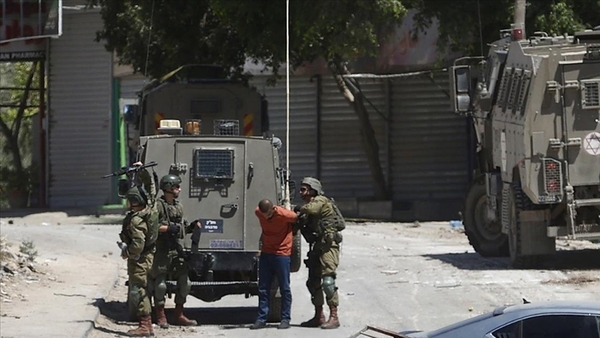
The Israeli occupation forces launched a campaign of raids and arrests in the West Bank at dawn and this morning, Tuesday.


In Bethlehem, the occupation forces stormed the Deheishe refugee camp, raided several homes, detained more than 20 citizens and conducted field investigations with them before releasing them.


In Ramallah, the occupation forces raided several homes in the town of Beitunia, west of Ramallah, and arrested three children: Mahmoud Sufyan Nakhleh (15 years old), and the brothers Karim and Ibrahim Jbeil (15 years old).


The child Nour Zuhair al-Najjar (15 years old), his father Zuhair al-Najjar (37 years old), the child Nabil Abu Hamad (15 years old), and the two brothers Fayez and Salah al-Tirawi (15 years old) were also arrested from Jalazone camp, north of Ramallah.


In the same context, the occupation forces stormed the village of Ras Karkar, northwest of Ramallah, the village of Aboud to the north, and the town of Ni'lin to the west.


In Nablus, the occupation forces stormed Balata camp, raided a number of homes, and arrested the young man, Muhammad Musa Darwish, after raiding and searching his home.

PALESTINE

Tue 04 Feb 2025 9:07 am - Jerusalem Time

Israeli occupation forces demolish a house and an agricultural room in Salfit

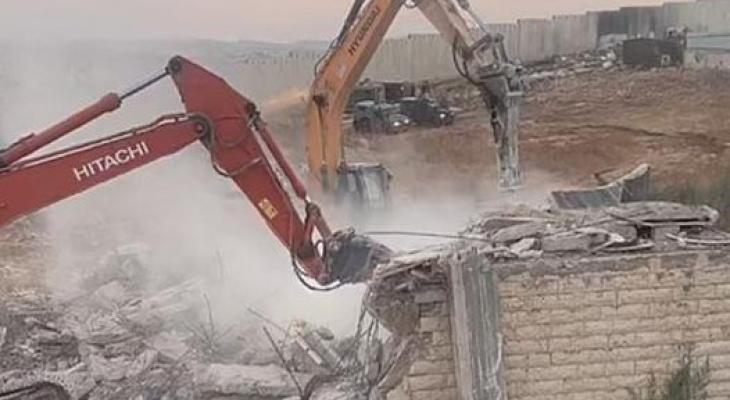
This morning, Tuesday, the Israeli occupation forces stormed the town of Kafr ad-Dik, accompanied by military bulldozers, and demolished a house and an agricultural room.


Local sources reported that the occupation forces stormed the town from the western entrance, and stationed themselves near the house of citizen Bassam Ahmed Abdel Aziz Al-Deek, in the Al-Dawar area in the middle of the town, before proceeding to demolish it.


The occupation forces also demolished an agricultural room in the "Al-Takweera" area, owned by citizen Atba Abdul Razzaq Ahmed.

Our correspondent said that the occupation forces are besieging the house of citizen Sharif Ali Ahmed, in preparation for its demolition.

Tue 04 Feb 2025 8:09 am - Jerusalem Time

The Path to a Transformed Middle East How to Keep the Peace in Gaza While Countering Iran

By Dennis Ross and David Makovsky

Donald Trump begins his presidency with ambitions of being a peacemaker. He laid out this vision in his inaugural address, declaring that his administration “will measure our success not only by the battles we win but also by the wars we end, and perhaps most importantly, by the wars we never get into.” Later that day, he basked in the success of the hostage cease-fire deal in Gaza, including by bringing the families of Israeli hostages to the inaugural parade. “We’re getting a lot of people out in a short period of time,” he proclaimed.

There is no doubt that Trump helped secure the cease-fire deal. But to be a peacemaker who transforms the Middle East, he has more work to do. The main issues he confronts are Gaza and Iran. In Gaza, Israel and Hamas have different views of what is required to achieve the second phase of the deal, which would save the remaining hostages and produce a permanent cease-fire. Iran, meanwhile, is accelerating its nuclear program—with its “foot on the gas pedal” according to Rafael Grossi, the head of the International Atomic Energy Agency. Tehran thus continues to existentially threaten Israel. Both issues are likely to dominate upcoming talks between Trump and Israeli Prime Minister Benjamin Netanyahu at the White House.

Trump can—and may have to—address each problem separately. Both are serious in their own right, and Iran’s nuclear program is one of the biggest threats to global security. Should Iran go nuclear, Saudi Arabia will likely pursue a bomb, as well, adding even more danger to what is already one of the world’s most volatile regions. But the easiest way to handle Gaza and Iran might just be to address them together. Netanyahu is hesitant to move toward a permanent cease-fire, in part because he fears it will cause his government to collapse and trigger early elections. But for the prime minister, there is no issue more important than stopping Iran from going nuclear. It has been the central purpose of his long political career. In Knesset remarks years ago, for example, Netanyahu declared that halting the Iranian nuclear program was the reason he gets up in the morning. The more Trump can show he is prepared to work with Israel on Iran, the easier it will be for Netanyahu to make difficult decisions on Gaza.

That hardly means Trump has to rush into using military force. He has indicated that he is willing to make a deal with Tehran, and he repeatedly promised on the campaign trail that he would pursue a maximum-pressure campaign to halt the Iranian nuclear program. He will likely try to use economic leverage to achieve an agreement. But it does mean that he should make it clear to Netanyahu and Tehran that he will support Israeli attacks on Iran’s nuclear infrastructure should diplomacy fail. By agreeing to support Israeli strikes, Trump will increase the odds that U.S. diplomacy with Iran will work, as Iranian leaders will understand the harsh consequence of failure. For Netanyahu, meanwhile, having a jointly agreed-on U.S. approach for dealing with what he sees as Israel’s most important—even existential—threat will mean it is far easier for him to make the hard political decision to fully implement the hostage deal and push forward with the cease-fire. If successful, then, this approach will allow the Trump administration to bring a lasting end to the war, open up new opportunities for Israel’s relations with Arab countries, and, most important, address the threat posed by Iran, the United States’ and Israel’s most dangerous Middle Eastern foe.

Top of Form

Bottom of Form

WHO BLINKS FIRST?

The framework of the Hamas-Israeli cease-fire deal changed little from the version negotiated by the Biden administration in May 2024. But Trump’s insistence that the agreement be done before he was inaugurated is what secured it. Netanyahu did not want to say no to Steve Witkoff, Trump’s newly appointed Middle East envoy, believing that doing so would damage his relationship with Trump. Egypt and Qatar, meanwhile, saw delivering the agreement as an early opportunity to curry favor with the administration. They likely told Hamas that it was in the group’s interest to get the deal done, as they would never get a better deal under Trump, who posted on Truth Social on December 2 that there would be “hell to pay” if hostages were not released by the time he took office.

But concluding a deal is one thing; implementing it is another. The agreement has three phases, and the first, even though it is proceeding, has already been plagued by disputes. Hamas seems to be testing the limits of the deal. It delayed providing names of the hostages it planned to release and did not initially free Arbel Yehud, one of the hostages on its list. Israel responded by preventing the return of Palestinians to the north of Gaza. Though those issues were overcome and the agreement has continued to hold, Hamas may balk at Israel’s refusal to release some of the most prominent prisoners on its list, including Marwan Barghouti and Ahmad Saadat. The biggest question that remains is whether phase two of the agreement can be negotiated. If Hamas decides that the Israelis are not serious and vice versa, they may be unable to do so. With phase two negotiation scheduled to begin on February 3, their differences could yet complicate the completion of the first phase.

Netanyahu has told his coalition partners that he has not committed to ending the war in part because of threats by Finance Minister Bezalel Smotrich to bring down the government if phase two proceeds. Netanyahu has also touted commitments from Trump and former U.S. President Joe Biden that Israel would be allowed to resume the war if Hamas did not negotiate seriously or violated the deal. Mike Waltz, Trump’s national security adviser, confirmed this promise, guaranteeing U.S. backing.

Concluding a cease-fire deal is one thing; implementing it is another.

In other words, Hamas, by violating the deal, would allow Netanyahu to avoid the difficult choice of putting his government and his political career at risk to save the remaining hostages and permanently end the war. And it may just do that. After all, the Hamas lead negotiator, Khalil al-Hayya, made a militant speech the day the cease-fire was announced in which he extolled October 7 and its mass killings as a “source of pride,” implying it needed to be repeated.

But although no one should count on Hamas’s rational calculations to overwhelm its ideological instincts, it is possible that Hamas will see it has an interest in a permanent cease-fire—if only to give it a lengthier respite from fighting and thus a chance to recoup. No Israeli government (or the international community) can or should be willing to accept Hamas’ continued rule in postwar Gaza. Indeed, to ensure this never happens, and to make sure no vacuum is left behind, the Trump administration will need to work with Egypt, the United Arab Emirates, and other Arab countries to create an interim alternative administration. The gradual return of a reforming Palestinian Authority to Gaza could support this temporary government. Yet Hamas may well agree to step aside—at least for now. The group may give low priority to the needs of Gazans, but recent events show that they are at least somewhat attuned to their public perception. After Palestinians grew palpably angry about not being able to return to the north, the group began to honor its side of the cease-fire agreement. Hamas also knows that, should it insist on staying in power at this time, clashes with Israel are guaranteed, and that Trump will likely back the Israelis. Hamas leaders might even welcome the chance for a regional and international administration for Gaza—with the real promise of relief and reconstruction. (In any case, Hamas may believe it can find ways to reconstitute in postwar Gaza.)

Netanyahu, for his part, should recognize that if Israel violates the agreement and Hamas doesn’t, there could be a price to pay, not only with the Israeli public, which broadly favors the deal because it would see the release of the remaining hostages, but also with Trump. The president has already claimed victory and will not want the deal’s failure to tarnish his image as a peacemaker. Resuming the war in Gaza would also make it nearly impossible for Trump to broker Israeli-Saudi normalization, as the Saudis have refused to move toward a peace agreement with Israel as long as it remains in Gaza.

PRESSURE POINTS

Netanyahu, of course, cares more about staying prime minister than he does about pleasing Trump. But there is one issue on which Netanyahu may be willing to risk his government and face an election: Iran and its nuclear program. Even more than normalization with Saudi Arabia, which has been a recent focus of his, preventing Iran from existentially threatening Israel has defined Netanyahu. His concerns about the country’s nuclear pursuit go back to his first term in the late 1990s, and he has called it his “Winston Churchill” issue.

An agreement with Trump that would see the United States aim to decisively set back the Iranian nuclear program would be worth a great deal to Netanyahu. Netanyahu may not risk his government over ending the war in Gaza. But he may be swayed if he feels that he has a strategic understanding with Trump that, one way or another, the United States will help ensure that Iran will not develop nuclear weapons.

In practical terms, Trump is likely to apply much greater economic pressure while also using the threat of Israeli force, backed by Washington, to convey a clear message to the Iranians: there can be a diplomatic solution, but Iran must seize it to avoid military strikes that would destroy the nuclear infrastructure that it has built up over the last 30 years. Such a message will certainly not reduce the Iranian incentive to talk. Indeed, Iranian President Masoud Pezeshkian and Vice President Mohammad Javad Zarif have indicated that Iran is prepared to speak with the Trump administration after refusing to deal directly with Biden, suggesting that Tehran is feeling the heat.

They have good reason to be nervous: the Islamic Republic has been dramatically weakened in the past year. Hezbollah, the crown jewel of its so-called axis of resistance, has been decapitated by Israel. With the fall of the Assad regime, Iran’s land bridge through Syria to Lebanon is largely gone—along with its major investments there. Iran’s strikes against Israel in April and October 2024 were largely blunted, and Israel’s retaliation in October destroyed Iran’s strategic and air missile defenses, along with 90 percent of its ballistic missile producing capability. The country has never been so vulnerable, from without and from within. The country is suffering from significant electricity shortages, and its currency is extremely weak. Morteza Afqah, an Iranian economist, has said that “without the lifting of sanctions, the country appears incapable of managing the economy sustainably.”

Iran still may not be prepared to agree to roll back its nuclear program and reduce its ballistic missile stockpile to the degree that Trump or Netanyahu require. After all, Trump walked away from the original Iran nuclear deal in 2018 because it only deferred the Iranian weapons option. But Iran needs to know that the threat of force is not an Israeli bluff. In our recent conversations with members of the Israeli security establishment who had previously not favored attacking Iranian nuclear sites, we were struck by how their views had changed. They had changed in part because of the trauma of October 7 but also because of Israel’s military successes in Lebanon and Iran. There is even an emerging belief that Iran’s regime is fragile and that the loss of its expensive nuclear infrastructure could trigger regime change.

THE ART OF THE DEAL

Still, Israeli officials who favor striking Iran’s program admit that an attack should not be done by Israel alone. Instead, they want U.S. material and diplomatic support, if not direct participation. This Israeli desire can certainly be raised by Trump in discussions with Netanyahu about how to handle the future of the cease-fire agreement, as well as a Saudi normalization deal.

It is possible that Trump, with his peacemaking aspirations, might be hesitant to tell the Israelis he will support them in a war. But given his advocacy for maximum pressure against Iran, he is likely to see the value of combining increased economic pressure with a credible Israeli military threat as the best way to secure a negotiated outcome. Netanyahu, for his part, would agree to hold off on military action while Washington figures out if Tehran is, indeed, ready to give up its nuclear weapons option. To keep the Israeli threat credible and preserve its leverage in any talks with Iran, the United States would provide Israel with the capabilities necessary to take out the Fordow fuel enrichment plant—the one site that Israel cannot destroy with its current weapons. Washington would need a firm prior commitment that Israel would not strike as long as Trump’s efforts at diplomacy still have a chance of succeeding. But if diplomacy fails and Israel does attack, U.S. forces would need to play a supportive role, with the United States once again helping to defend Israel against Iranian missile attacks, even as it refrains from any offensive combat missions inside Iran.

The lapse of the snapback mechanism—a provision of the 2015 nuclear deal that enables the United States to restore UN Security Council sanctions on Iran—in October 2025 could provide a deadline for U.S.-Iranian negotiations. Such a deadline would give Washington further leverage and prevent Iran from simply stalling while it stockpiles more uranium and diverts some to secret sites.

Trump now is well positioned to help end the war in Gaza, return the hostages, and blunt Iran’s nuclear ambitions. He could even normalize relations between Israel and Saudi Arabia and create a pathway to Palestinian statehood, provided Palestinians meet a number of tangible benchmarks. He may be able to do it all without firing any shots. If he is serious about his peacemaking posture, he should propose this approach to Netanyahu. His efforts could ultimately fail, but the odds of success today are better than they have been in the past. It is rare that interests converge so neatly in foreign policy, so Trump has an opportunity to do something his predecessors could only dream of.

ARAB AND WORLD

Mon 03 Feb 2025 9:41 pm - Jerusalem Time

Trump: I have no guarantees that the truce between Israel and Hamas will hold


US President Donald Trump said on Monday, "I have no guarantees that the ceasefire in Gaza will hold," while his Middle East envoy said a prisoner swap deal between Israel and Hamas was holding for now.


Trump and US Special Envoy to the Middle East Witkoff made the comments to reporters at the White House.


It is noteworthy that Trump said the same thing on January 20, after taking office in the White House, when he said: “I am not confident that the ceasefire in Gaza will continue. It is their war, not our war,” without specifying whether he meant a specific party or both parties to the conflict.


Perhaps the most explicit statement in this regard was made by Israeli Finance Minister Bezalel Smotrich, who said on January 18 that he had “received assurances” from Prime Minister Benjamin Netanyahu about resuming the fight against Hamas again, “in order to eliminate the movement” classified as a terrorist organization in the United States and other countries.


The president said on Sunday that talks with Israel and other countries on the Middle East were "progressing."


"Discussions on the Middle East with Israel and various other countries are progressing; (Israeli Prime Minister Benjamin) Netanyahu is coming in on Tuesday, and I think we have some big meetings scheduled," Trump told reporters.


Israeli Prime Minister Netanyahu has arrived in Washington, D.C., ahead of his meeting with Trump on Tuesday.

OPINIONS

Mon 03 Feb 2025 9:04 pm - Jerusalem Time

China: Spring Festival becomes an intangible cultural heritage of humanity

Ramallah - “Al-Quds” dot com

Ramallah - “Al-Quds” dot com

Opinion Writer

By Ye Fan

Beijing-based international affairs commentator


Museums across China have posted animated videos on Weibo showing cultural relics singing and dancing to celebrate the recent decision by the United Nations Educational, Scientific and Cultural Organization (UNESCO) to list the Spring Festival as an intangible cultural heritage of humanity. The Spring Festival dates back centuries and is the most important festival in Chinese culture. It is a time when families gather to celebrate the arrival of the lunar New Year, and has become a symbol of unity and renewal. Traditions such as hanging spring poetry and giving red envelopes to children reflect the Chinese people’s simple hope for a better or more optimistic life.

For Chinese people around the world, these cultural practices bring back memories of childhood or ancestors. For others in the global village, they offer a glimpse into the magic of an ancient Eastern culture. The festival has inspired similar celebrations in many other Asian cultures, and is a product and expression of cultural exchange between peoples.

The inclusion of the Spring Festival as an intangible cultural heritage of humanity has important cultural significance in many ways. It not only celebrates the rich traditional Chinese culture, but also promotes understanding between people of different cultural backgrounds.

In the world's cultural mosaic, the Spring Festival provides an opportunity for people to understand each other and appreciate other cultures. As Chinese communities around the world celebrate the Spring Festival, the cultural diversity of the host countries increases. People begin to see the commonalities between Chinese culture and their own cultures. Understanding is the first step to acceptance, and only through acceptance can peace and prosperity be achieved.


Supporting cultural equality


The inclusion of the Spring Festival on the World Heritage List is a vote for inclusiveness and mutual learning between cultures. It reminds us that cultures, despite their differences, can learn from each other and coexist as equals.

The Global Civilization Initiative calls for respecting the diversity of civilizations and promoting exchanges among them. This is all the more important at a time when some still promote the superiority of some civilizations or the clash of civilizations. Such claims ignore the unique value of each culture. The belief in superiority paves the way for cultural exclusion and, worse if not worse, confrontation.

Today, the world faces multiple threats such as climate change and pandemics that respect no borders and cannot be addressed by any country alone. China’s vision of building a community with a shared future for mankind emphasizes the need for mutual cooperation to address these global challenges. The inclusion of the Spring Festival on the list of cultural heritage highlights the essential role of harmony among different cultures in realizing this vision.

The bonds between people formed through the celebration of traditional festivals across different cultures provide moral support for a shared future. With values of family, hope and unity, China's Spring Festival shares many other traditional celebrations in the world and is truly a common heritage of humanity.

Today, Spring Festival events are held in nearly 200 countries and regions around the world. This helps us see that what unites us is greater than what divides us. In a time full of challenges and hopes, may the Spring Festival give us the strength to unite for a shared future for mankind.

PALESTINE

Mon 03 Feb 2025 7:17 pm - Jerusalem Time

Poll: 78% of Palestinians in Gaza consider ceasefire agreement acceptable, majority optimistic about future

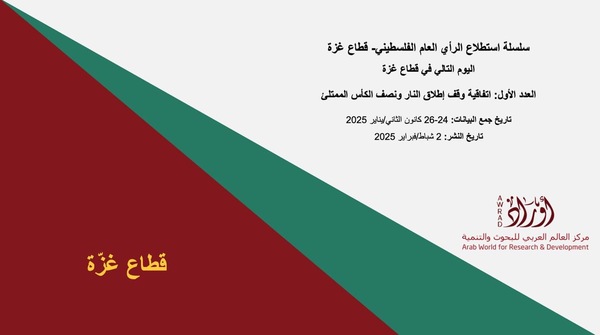
  1. A poll conducted by the Arab World Center for Research and Development (AWRAD) in the Gaza Strip showed that the majority of Palestinians view the ceasefire agreement reached between Hamas and Israel on January 15, 2025 positively, with 78% of respondents considering it acceptable (strongly or somewhat), while 22% viewed it as unacceptable. This poll is part of the center’s new research series, “The Day After in the Gaza Strip,” which aims to provide an in-depth reading of the Palestinian reality in light of the transformations that followed the ceasefire.

Key findings and trends

Optimism about the futureThe survey revealed that (60%) of Gaza residents are optimistic about the future, while (56%) indicated their belief that Palestinian society is moving in the right direction. According to the center, this optimism reflects the state of hope associated with the ceasefire agreement and the possibilities of its implementation.

Positive view of the ceasefire agreement: (78%) of the participants said that the agreement is acceptable, while the percentage of those who did not support it was only (22%). Women were more supportive of the agreement at (84%) compared to (72%) among men.

- Regarding the implementation of the agreement, (69%) expressed optimism that it would be fully implemented, while (32%) expressed pessimism.

- Regarding confidence in the parties’ commitment, (75%) said they do not trust Israel’s commitment to the terms of the agreement, compared to only (25%) who trust the extent of its commitment. On the other hand, (67%) expressed confidence that Hamas will fulfill its commitments.

War goals and Israel’s role: (62%) of respondents believed that Israel did not achieve its declared goals from the war, compared to (37%) who believe that it achieved those goals.

Qatar’s role in reaching the agreement: (91%) of respondents rated Qatar’s role in reaching the ceasefire agreement as positive (to a large extent or to some extent), while only (6%) described it as negative.

Regional and international parties

- Egypt: (72%) considered its role positive in reaching a ceasefire agreement.

- The United States: (65%) gave a positive evaluation of Washington’s role, while (63%) indicated that the election and inauguration of President Donald Trump contributed significantly to reaching the agreement, and (33%) believed that it contributed to some extent.

Roles in supporting Palestinians during the war

Qatar recorded the highest positive evaluation rate in supporting Gaza during the aggression, at (82%), followed by the UAE at (74%), Jordan at (70%), then the United Nations at (66%), and finally Egypt at (61%).

- Regarding the Palestinian Authority, (40%) of the population believe that its role was positive during the war.

About the survey methodology

The survey was conducted between 24 and 26 January 2025, and included 600 Palestinians (males and females) from the Gaza Strip. The field research team targeted different locations of shelters, tent camps and residential buildings, coinciding with the preparation of these displaced persons to return to their original homes.

Sample Design: The Center relied on a consistent stratified cluster sample design in selecting the sample, based on data from the United Nations Office for the Coordination of Humanitarian Affairs (OCHA) and satellite images from UNOSAT, in addition to independent population figures through the “Gaza NowPop” project at Oxford University. The North Gaza Governorate was excluded due to the large displacement of its population, as the number of those present there at that time decreased to less than 5% of the total population of the Strip.

- Selection of respondents: The random path methodology was applied to select participants, and the “Kish table” was used, taking into account achieving gender balance.

- Sample weight: To ensure accurate representation, the final sample was weighted based on updated Palestinian Central Bureau of Statistics data until December 2023, according to (age group, gender, and educational level).

- Response rate: reached (94%), while the margin of error reached (±4%) at a confidence level of (95%).

Testimony from the field

A field researcher at the Awrad Center explained that the fieldwork coincided with the residents of the Strip preparing to return to their homes, describing mixed scenes of joy and hope on the one hand and frustration and anxiety on the other, especially after the implementation of the decision to allow return was delayed on the first day. She considered this case to be a realistic example of the “half-full glass,” referring to the cautious optimism among Palestinians in Gaza.

"The Next Day in Gaza" series

This survey is the first issue in a new series published by Awrad Center under the title “The Next Day in the Gaza Strip.” The series aims to analyze major issues in the Palestinian arena, and upcoming issues include the following topics:

- Humanitarian conditions, response to urgent needs, and sources of information.

Gaza between government and administration.

- Elections as a preferred path out of the crisis.

Awrad management stresses the importance of this series in supporting decision-making through accurate analysis based on recent field data, and monitoring the changes in Palestinian public opinion following the Israeli aggression on the Gaza Strip.

For more details

• The full survey results can be viewed on the Awrad Center website: www.awrad.org

• Or contact us via email: [email protected]

PALESTINE

Mon 03 Feb 2025 6:09 pm - Jerusalem Time

Settlers storm UNRWA building in Sheikh Jarrah

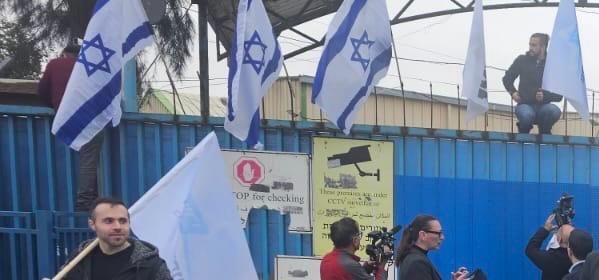
Today, Monday, settlers stormed the headquarters of the United Nations Relief and Works Agency for Palestine Refugees (UNRWA), located in the Sheikh Jarrah neighborhood in occupied Jerusalem.

Local sources reported that a group of settlers stormed the UNRWA headquarters and raised Israeli flags and provocative banners.

Last Thursday, two Israeli Knesset laws targeting the work of the United Nations Relief and Works Agency for Palestine Refugees (UNRWA) in the Palestinian territories came into effect, meaning that tens of thousands of refugees will be deprived of services including education and health care.

The first law prohibits UNRWA activity within “areas under Israeli sovereignty,” including the operation of representative offices and the provision of services, while the other law prohibits any contact with the agency.

For the occupation government, the term “Israeli sovereign areas” in the first law relates to occupied East Jerusalem, where the temporary headquarters of UNRWA is located, specifically in the Sheikh Jarrah neighborhood, which has been subject in recent months to a wave of terrorist acts and exclusionary decisions.

In May 2024, the agency's management was forced to close the headquarters under the pressure of attacks by settlers, which reached the point of setting fire to its buildings twice within one week.

On October 10, 2024, the Israel Land Authority announced the seizure of the land on which the UNRWA headquarters was located in the Sheikh Jarrah neighborhood, and the transformation of the site into a settlement outpost containing 1,440 housing units.

The occupation also targeted the Qalandia Training College, with the “Israel Land Authority” issuing a decision on January 14, 2024, demanding that “UNRWA” evacuate it and pay its occupancy fees retroactively in the amount of 17 million shekels, under the pretext of constructing and using buildings without a permit.

UNRWA provides services to more than 110,000 refugees in Jerusalem. The UN agency has two refugee camps: Shuafat Camp and Qalandia Camp. It runs institutions there such as the Indian Corner Clinic at the entrance to Bab al-Sahira, and schools for boys and girls in Jerusalem, Sur Baher, and the two aforementioned camps.

ARAB AND WORLD

Mon 03 Feb 2025 5:43 pm - Jerusalem Time

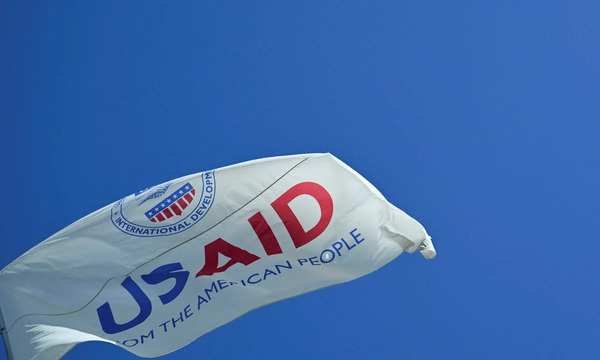
Musk: Trump agreed to close USAID

Billionaire US government efficiency minister Elon Musk said President Donald Trump agreed with him on the need to close the US Agency for International Development (USAID).

Musk added in a statement during a conversation via the "X" platform today, Monday, that Trump expressed his support for this decision after detailed discussions between them, "I reviewed the matter in detail with (the president) and he agreed that we should close it."

When asked about the agency, Trump described USAID in press statements yesterday, Sunday, as being run by "a group of radical lunatics," stressing that they are currently being eliminated, and that a decision will be made about the agency's future at a later time.

Musk’s comments come after senior agency employees were suspended on Saturday after refusing to allow members of the Department of Government Efficiency (DOGE) to access agency systems, even after they threatened to contact authorities. About 60 other senior agency employees were suspended last week on charges of trying to circumvent an executive order from Trump freezing foreign aid for 90 days.

This escalation comes at a sensitive time, amid many questions about the future of USAID, which remains one of the United States’ primary tools for providing international support.

During his first term (2017-2021), President Trump took a hardline stance on foreign aid, which was reflected in USAID, the primary arm of the US government in providing humanitarian and development assistance around the world.

In 2018, Trump cut the agency’s funding for projects supporting Palestinian refugees and development programs in the West Bank and Gaza.

The United States Agency for International Development (USAID) is an agency of the United States federal government, primarily responsible for administering civilian foreign aid. Founded in 1961, it is one of the largest development assistance agencies in the world.

The Agency provides a variety of support to the Palestinians in the form of projects, most notably support for economic development, improving infrastructure, promoting trade and investment, and supporting the health and education sectors.

PALESTINE

Mon 03 Feb 2025 5:25 pm - Jerusalem Time

Martin Oehler calls for support for Trump's displacement plan.. "The people of Gaza do not deserve mercy"

A Trump-appointed member of the U.S. Holocaust Memorial Board has called for collective punishment of all Palestinians in Gaza, saying they are “collectively guilty” and deserve no mercy.


In an article in the Jerusalem Post, Martin Oehler praised President Trump's proposal to "cleanse" Palestinians from Gaza and send them to Egypt and Jordan, which amounts to ethnic cleansing.


Olner said in the article, which was reported in a number of American media outlets, that Trump's comments should be welcomed by those "who claim to care about Gaza" because Gaza has been completely destroyed. He said: "And those like me who do not believe that the people of Gaza deserve any mercy should welcome them as well."


About half of Gaza’s population is estimated to be children, but Olner said all Palestinians in the Strip were responsible for Hamas’s October 7, 2023, attack on the Gaza envelope area in southern Israel. “Let’s not exaggerate here,” he said. “The people of Gaza are collectively guilty of Israel’s invasion.”


The people of Gaza are "fundamentally evil and must pay for their actions," Olner said.


He called on the countries of the world to receive the Palestinians from Gaza. He said: "In addition to Egypt and Jordan, other Islamic countries such as Indonesia and Saudi Arabia should receive them. Canada, Australia, Mexico and every country in South America and Europe can take their share."


Olner, the son of Holocaust survivors, was appointed to the U.S. Holocaust Memorial Council by President Trump in 2020. He is also co-chair of the Religious Zionists of America and vice chair of the American Zionist Movement.

ARAB AND WORLD

Mon 03 Feb 2025 3:43 pm - Jerusalem Time

Israel wreaks havoc before withdrawing from the city of peace in Syria's Quneitra

Before withdrawing from it, the Israeli occupation army wreaked havoc in the city of Salam (formerly Al-Baath) in the Syrian province of Quneitra, which it penetrated after the collapse of Bashar al-Assad’s regime.


Anadolu Agency correspondent reported that the Israeli army withdrew on Sunday from the governorate headquarters, the court building in the city of Salam, and other areas of the governorate.


The photos show that the Israeli army destroyed the governorate building, the court and its equipment, and burned the papers.


He also burned cars, wrote Hebrew graffiti on the walls of buildings, and bulldozed the area surrounding the courthouse and the governorate headquarters before withdrawing.


In a statement to Anadolu Agency, Jad Allah Hamoud, a resident of Khan Arnabeh town in Quneitra, said, "The Israeli occupation forces used the governorate headquarters and the court building as a strategic point."


Hamoud explained that the allegations about the presence of Iranian forces and Hezbollah elements in the region are baseless.


He said that the court contained official documents of the people of the region in addition to documents of old cases.


He pointed out that the level of vandalism in the court building was great, and said that official documents were scattered in the streets.


He added: "This is systematic destruction by the occupation. It is no wonder that those who killed children in Gaza practice such terrorism and occupation in the court and the governorate headquarters."


Coinciding with the collapse of the Baath regime on December 8, after ruling the country for 61 years, the Israeli army intensified its attacks in Syria.


The Israeli army began destroying the infrastructure and military sites of the collapsed regime, and expanded its occupation of the occupied Golan Heights.


As it advanced into the buffer zone surrounding the Golan, the Israeli army deepened its occupation of Quneitra to within 25 kilometers of the capital, Damascus.

PALESTINE

Mon 03 Feb 2025 3:25 pm - Jerusalem Time

Suffocation injuries during the storming of Qusra, south of Nablus

Today, Monday, a number of citizens suffered from suffocation as a result of the occupation forces storming the town of Qusra, south of Nablus.


According to local sources, the occupation forces stormed the town of Qasra amid heavy gunfire and tear gas canisters, which led to clashes in the area and the suffocation of a number of citizens.

ARAB AND WORLD

Mon 03 Feb 2025 3:23 pm - Jerusalem Time

Reuters: Trump-Putin summit may be held in Saudi Arabia or the UAE

Reuters quoted two Russian sources as saying that Saudi Arabia and the United Arab Emirates are possible venues for hosting a summit between US President Donald Trump and Russian President Vladimir Putin, while several energy sites in Russia caught fire after a Ukrainian attack last night.


Trump says he intends to end the war in Ukraine as soon as possible, and that he is ready to meet with Putin.


Putin congratulated US President Trump on his election and said he was ready to meet him for discussions on Ukraine and energy.


Russian officials have repeatedly denied any direct contact with the United States about preparing for a phone call between Trump and Putin that would precede a possible meeting later this year.


However, senior Russian officials have visited both Saudi Arabia and the United Arab Emirates in recent weeks, according to two Russian sources described by Reuters as knowledgeable and speaking on condition of anonymity.


Trump said on Sunday that his administration has "meetings and conversations scheduled with various parties, including Ukraine and Russia."


Asked about the remarks, Kremlin spokesman Dmitry Peskov said the contacts were "clearly planned."


balanced relationships

In addition to their close ties with the United States, both Saudi Arabia and the UAE have maintained relations with Russia, choosing neutrality throughout the war on Ukraine, and refraining from joining the West in criticizing and punishing Russia.


The two countries also maintained regular contact with Ukrainian President Volodymyr Zelensky.


advertisement

Neither country is a member of the International Criminal Court, which has issued an arrest warrant for Putin that prevents him from visiting a number of countries.


While Russian sources have ruled out Turkey, which hosted failed peace talks between Russia and Ukraine in March 2022, as a possible venue for Putin and Trump to meet, Russian analyst Fyodor Lukyanov, scientific director of the Valdai Discussion Club, whose members regularly meet the Russian president, said Trump and Putin have few options.


"Almost the entire West is involved on the side of Ukraine, so all the traditional places where such things used to be held, such as Helsinki, Geneva and Vienna, are inappropriate," Lukyanov was quoted as saying by the state news agency TASS.


Battle developments

On the ground, several energy sites in Russia caught fire after dozens of Ukrainian drones attacked overnight, according to authorities and local media.


The Russian Defense Ministry said in a statement that 70 Ukrainian drones were intercepted and destroyed over six Russian regions, including Rostov and Volgograd in the southwest of the country.


Russia's air transport agency Rosaviatsia said it had suspended flights from Astrakhan and four other airports: Kazan, Nizhnekamsk, Saratov and Ulyanovsk to ensure safety.


The agency later reported that most airports had resumed flights.


Kyiv has intensified its air strikes on Russian energy and military installations in recent months, in a campaign described as a response to Russia's continued bombing of Ukrainian cities and energy facilities.

PALESTINE

Mon 03 Feb 2025 2:24 pm - Jerusalem Time

Israeli Settlers continue their attacks in the West Bank

The settlers continue their attacks on citizens and their property in the West Bank.


In Jericho, settlers raided the Arab Al-Malihat community in Al-Mu'arrajat, west of Jericho, on Monday evening, and grazed their sheep on the community's lands.


According to local sources, these settlers deliberately emptied the water tanks completely and destroyed the fodder allocated for the community’s livestock, in an attempt to increase the suffering of the residents who depend on livestock as a primary source of livelihood.


In Nablus, settlers attacked farmers in the Masoudiya archaeological area, northwest of Nablus, on Monday afternoon.


Local sources reported that a number of settlers, under the protection of occupation soldiers, forced farmers to leave their lands in the Masoudiya Plain, with the aim of controlling the “Badis” hill, which is located west of the Masoudiya area and contains housing projects and a reservoir for the Nablus Municipality.

PALESTINE

Mon 03 Feb 2025 2:11 pm - Jerusalem Time

Israeli occupation forces 75% of the population of Tulkarm camp to be forcibly displaced

Tulkarm Governor Abdullah Kamil stated that "the occupation forces forced more than 75% of the Tulkarm camp's residents to be forcibly displaced, due to the ongoing aggression for the eighth consecutive day."


Governor Kamil said in a press statement issued on Monday, "Nearly 9,000 citizens of all ages were displaced from the camp, as the occupation forces forced them to leave the camp in this unprecedented aggression against the governorate."


Regarding the distribution and sheltering of our displaced people in the camp at the governorate level, he said: Distributing 3,000 individuals in the Dhnaba suburb and Rashid neighborhood, and sheltering 2,000 individuals in the Iktaba suburb, Abu Yassin estate, and Abu Bilal estate, in addition to sheltering 200 individuals in the Shuwaika suburb, and 50 individuals in the Artah suburb, in addition to hosting 1,500 individuals in the suburbs of the estates, and hosting 1,500 individuals in the city of Tulkarm and its neighborhoods, and 200 individuals in the villages and towns of Al-Shaarawiya, and 100 individuals in the town of Anabta, in addition to hosting 150 individuals in other population centers, and some families went to their relatives.


Kamil continued: “We have prepared the shelters through the Dignity and Relief Committee by equipping and preparing them from the relevant authorities, and in close cooperation with all the institutions and activities of Tulkarm Governorate, to whom we extend our appreciation and praise for these tremendous efforts.”


He noted that some of the residents went to their relatives, and the committee is providing them with the necessary needs of mattresses, blankets, food, medicines, and other needs.

PALESTINE

Mon 03 Feb 2025 2:04 pm - Jerusalem Time

Gaza Health: 20 dead and 20 injuries in the past 24 hours

The Ministry of Health in Gaza announced today, Monday, that 20 dead and 20 injuries arrived at the hospitals of the Strip during the past 24 hours.


The ministry explained in a statement that among the dead, 18 were recovered, one dead  succumbed to his injuries, and one new martyr.


It pointed out that the death toll from the Israeli aggression has risen to 47,518 dead and 111,162 injuries since October 7, 2023.

PALESTINE

Mon 03 Feb 2025 1:57 pm - Jerusalem Time

Endless testimonies about torture and humiliation crimes against Gaza detainees

The Commission of Prisoners' Affairs and the Palestinian Prisoners' Club said in a report issued today, Monday, that endless testimonies reflect the level of ongoing torture crimes against Gaza detainees in Israeli occupation camps and prisons, based on a group of visits recently conducted to 11 detainees from Gaza in the camps (Sde Teiman, Naftali, and Anatot) and the Negev prison.

The detainees recounted the torture, humiliation and abuse they were subjected to during their arrest from Gaza, and the harsh interrogation periods.


In addition, the legal teams conveyed details of the visit conditions, which reflect the level of humiliation to which the detainees are subjected, especially their continued shackling at the limbs, and their basic needs being turned into tools of torture and abuse, in addition to their exposure to a type of investigation known as the “disco” investigation.


Disco investigation is a form of systematic torture against Gaza detainees

According to the testimony of the lawyer who visited one of the detainees, “the detainee (Y.F.) was brought to the visit, where the soldier deliberately pulled him in a humiliating manner by his jacket, which seemed much larger than his size. The lawyer was not able to see his face until after removing the blindfold from his eyes, as the prisoner seemed surprised by the light.”


The detainee said that he was subjected to a "disco" investigation at the Sde Teiman camp, where loud music was played continuously for two days. After 30 days, he was given a five-minute trial session, without being able to understand the details of the session or the reason for his arrest.


The detainee (Y.F.) confirmed that the detention conditions in the Anatot camp are harsh, as the detainees remain blindfolded and handcuffed all the time, and they are forbidden from speaking with any other detainee.


Using the need to go to the bathroom as a tool of abuse

As for the detainee (M.Y.), he did not know where he was being held until his lawyer informed him, because he was blindfolded and handcuffed the entire time. He reported that the Anatot camp is very cold, and detainees are prevented from speaking, and are forced to sit in only two positions: either on their knees or on their buttocks during all hours of the day. The need to relieve oneself is also used as a means of humiliation, as detainees who ask to go to the bathroom are punished by being forced to sit on their knees for a long time without a mattress, with their pants pulled up to the knees to touch the ground, and their hands tied behind their heads.


As for food, it is very little and limited to a few bites, and they are allowed to shower once a week, while their clothes are changed once a month. Detainees are also deprived of praying or performing ablution, and anyone caught praying while sitting is subject to punishment.


For every 55 prisoners, only three pieces of tissues.

During a visit to one of the detainees in the Sde Teiman camp, the detainee (M.M.) reported that he was severely beaten during his arrest, which caused him to have broken ribs. Three months after his arrest, he still suffers from chest pains, and he has not yet been brought to trial. He explained that every 55 detainees share only three pieces of tissue, confirming that some of the detainees who were recently brought to the camp were beaten.


Negev Prison: Hunger, Humiliation and the Spread of Disease


In the Negev prison, prisoners’ testimonies focused on the crime of starvation and continuous humiliation, in addition to the spread of scabies. One detainee reported that they remain in a state of constant hunger because the prison administration manipulates the times of providing the already meager food. Some detainees also indicated that they have not been provided with nail clippers for two months, nor have they been provided with razors.


Shocking facts about the Gaza detainees case

The Prisoners’ Affairs Authority and the Prisoners’ Club recalled the most important facts about the issue of the Gaza detainees:


To this day, there is no accurate estimate of the number of detainees from Gaza in the occupation’s prisons and camps, but the only available data is what the occupation’s prison administration announced last January, when it classified (1,886) detainees as “illegal combatants,” including three female prisoners held in (Damon) prison, and dozens of children in (Megiddo) prison and (Ofer) camp.


Human rights organizations are still unable to determine the number of arrests from Gaza due to the crime of enforced disappearance imposed by the occupation on detainees since the beginning of the war, and their number is estimated in the thousands.


The occupation has created special camps to detain Gaza detainees, in addition to the central prisons, including the (Sde Teiman) camp, the (Anatot) camp, and a camp inside the (Ofer) prison, in addition to the (Naftali) camp, and there may be other unannounced camps.


The detainees’ testimonies represented a significant shift in revealing the level of brutality of the occupation, as they documented crimes of torture, abuse, and starvation, in addition to systematic medical attacks, sexual violations, and the use of prisoners as human shields.


The Sde Teiman camp was a prominent site for systematic torture crimes, including sexual assaults, according to testimonies of released detainees.


These crimes led to the martyrdom of dozens of detainees, in addition to field executions. The relevant institutions announced the martyrdom of (37) detainees from Gaza, out of (58) prisoners who were martyred since the beginning of the war, while the occupation continues to conceal the rest of the names of the martyrs.


The occupation authorities continue to prevent the International Committee of the Red Cross from visiting detainees, and they also prevent any other visits to all prisoners and detainees.


The occupation carried out extensive arrest campaigns in northern Gaza, which included dozens of medical personnel. Information about their fate is still unavailable, as it is believed that they are being forcibly disappeared.


Call to end the immunity granted to the occupying state


The Prisoners Club and the Prisoners Affairs Authority stressed the need to end the exceptional immunity granted by the old colonial powers to the Israeli occupation state, which made it above accountability and responsibility.

PALESTINE

Mon 03 Feb 2025 1:23 pm - Jerusalem Time

Israeli occupation begins to bulldoze the market street in Al-Far'a camp

This Monday afternoon, Israeli occupation bulldozers began to demolish the main market street in Al-Far'a camp, south of Tubas.


Local sources reported that the occupation forces stormed the camp market with a bulldozer, and began bulldozing and destroying the streets and infrastructure, while the street located in the center of the camp witnessed an intensive deployment of occupation soldiers, who fired bullets intensively.


The occupation forces had closed all entrances to the camp with earth mounds since yesterday, and imposed a tight siege on it. They also forced several families living in the camp's vicinity to evacuate, and their homes were turned into military barracks.


For the second day in a row, the occupation forces continue their aggression on the town of Tamoun and the Far'a camp south of Tubas, amidst a tight siege and the closure of all entrances, while the occupation forces continue their raids on many citizens' homes in Tamoun and the arrest of citizens from them.

PALESTINE

Mon 03 Feb 2025 1:11 pm - Jerusalem Time

Health: 70 dead in the West Bank since the beginning of the year

The Ministry of Health announced today, Monday, that 70 citizens have been milled in the West Bank governorates since the beginning of this year, most of them from Jenin Governorate.


The ministry explained, in a statement, that among the dead were: 10 children, a female and two elderly .

PALESTINE

Mon 03 Feb 2025 12:08 pm - Jerusalem Time

Palestinian Presidency warns against expanding the war in the West Bank to displace citizens

The official spokesman for the Palestinian presidency, Nabil Abu Rudeineh, condemned the occupation authorities’ expansion of their comprehensive war on our Palestinian people in the West Bank to implement their plans aimed at displacing citizens and ethnic cleansing, warning of the danger of these plans to the future of the entire region.


Abu Rudeina added that these aggressive policies implemented by the occupation forces in the West Bank have led to the martyrdom of 29 citizens, hundreds of wounded and arrested, in addition to the demolition of entire residential blocks in the Jenin and Tulkarm camps, the displacement of thousands of citizens, and massive destruction of the infrastructure.


He continued: We demand the intervention of the US administration before it is too late, to stop the ongoing Israeli aggression against our people and our land, which will lead to the situation exploding in an uncontrollable manner, and everyone will pay the price.


The official spokesman for the presidency stressed that the Palestinian people will not accept any plans, whether for displacement or an alternative homeland, and threatening our people will not benefit anyone, but will lead to widespread destruction here or in the region, whether today or tomorrow.

ARAB AND WORLD

Mon 03 Feb 2025 11:31 am - Jerusalem Time

Two British spy planes flew near Gaza during prisoner exchange

A British news website revealed that two British Air Force reconnaissance planes flew over the eastern Mediterranean during the prisoner exchange process in the Gaza Strip between the Palestinian factions and Israel.


The British website "Declassified" said on Sunday that "the British Royal Air Force sent two reconnaissance planes towards Gaza since the start of the ceasefire between Israel and Hamas."


The website, which conducts research on the work of military and intelligence institutions, added: "The two trips occurred during a prisoner exchange."


He continued: "The first spy flight took off from the British Akrotiri Air Base in Cyprus (Romania) at 15:32 (13:32 GMT), and returned at 20:59 local time (18:59 GMT) on January 19, the day the ceasefire came into effect."


"The plane turned off its transponders over the eastern Mediterranean, raising questions about what exactly it was doing in the air while Hamas was releasing the last remaining British captive, Emily Damary," he added.


He pointed out that "the second flight departed from Akrotiri base on January 25 at 11:26 local time (09:26 GMT) and returned to base at 17:44 (15:44 GMT), and again turned off the transponders over the eastern Mediterranean during the second prisoner exchange."


The website quoted the British Ministry of Defense as saying, "The aircraft did not enter Gaza airspace and operated at all times in accordance with the ceasefire and prisoner release agreement between Israel and Hamas."


However, Declassified notes that “this denial will not prevent the RAF’s Shadow R1 spy plane from collecting surveillance footage of prisoner movements from Israeli airspace or conducting further intelligence gathering to support Israel elsewhere.”


He added: "The British Ministry of Defense did not respond to our questions about whether the spy planes collected intelligence about Gaza from Israeli airspace."


The British Foreign Office said that the surveillance planes are "unarmed" and "their mission is only to locate the hostages," according to the same British website.


He considered that this response "raises serious questions about why spy planes continue to be sent to the region while prisoners are being released."


“For months, the government has said that RAF flights over Gaza are only used to locate prisoners, so why are these flights still continuing now that hostilities have stopped?” Zaki Sarraf, legal officer at the UK-based International Centre for Justice for Palestinians, was quoted as saying.


The news site notes that "the spy flights have been shrouded in secrecy since they were first sent to Gaza in December 2023, and activists are now calling for an investigation into intelligence sharing between Britain and Israel."


“The Shadow R1 drones used are specialized for target identification, and it is unclear why they were used in the first place, but their continued use – despite the prisoner exchange already underway – raises more serious concerns about their true purpose,” Sarraf added.


“The British people deserve clarity. There is an urgent need for a comprehensive and public inquiry into the UK’s complicity in Israel’s genocide against Palestinians, including these flights,” he continued. “Accountability is simply not negotiable. The stakes are too high.”


The British website stated that "the text of the ceasefire agreement between Israel and Hamas indicates that in the first stage: all flight operations (military and reconnaissance) in the Gaza Strip must stop for 10 hours a day, and 12 hours on the days when prisoners are exchanged."


“This condition was designed not only to give the Palestinians a break from Israeli bombardment, but also to reassure Hamas that Israel would not collect intelligence on the prisoners’ movements and locations,” he said.


He added: "Since the United Kingdom is not a signatory to the ceasefire agreement, Hamas believes that the spy flights made Britain complicit with the Zionist occupation when they were launched in December 2023."


"Therefore, the decision to send spy flights to the region during the prisoner exchange may raise suspicions that Britain violated the spirit, if not the letter, of the ceasefire," he continued.


He added: "These spy flights also raise the possibility that Israeli forces will use surveillance footage provided by the UK to conduct future military operations in Gaza."


The British website also revealed that the Shadow R1 drones can collect information in order to "identify targets."


On January 19, a ceasefire and prisoner exchange agreement went into effect in three stages, each lasting 42 days. During the first, negotiations were held to start the second and third, with the mediation of Qatar and Egypt and the support of the United States.

ARAB AND WORLD

Mon 03 Feb 2025 11:24 am - Jerusalem Time

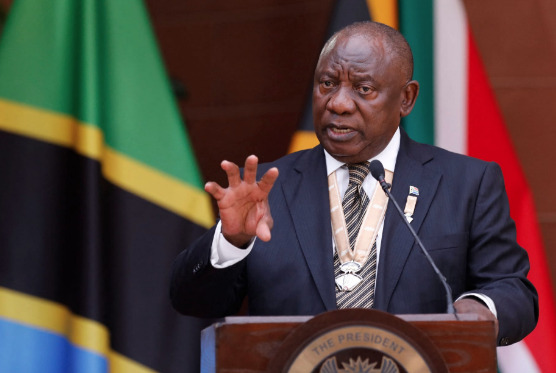
South African President Responds to Trump's Accusations

South African President Cyril Ramaphosa on Monday responded to US President Donald Trump's accusations of land "seizure" and "abuse of certain groups," he said.


Ramaphosa said his country had not expropriated any land, adding that the expropriation law was constitutionally enshrined.


He stressed in his remarks that the United States remains a major strategic political and trade partner of South Africa.


Pretoria maintains that the law does not allow the government to arbitrarily seize property, and that it must first seek an agreement with the owner.


Ramaphosa added that his government looks forward to engaging with the Trump administration on land reform policy and issues of mutual interest.


For its part, the South African Ministry of Foreign Affairs said, "We are confident that Trump's advisors will use the investigation period to reach a comprehensive understanding of South Africa's policies within the framework of constitutional democracy."


"It may turn out that the confiscation law is not exceptional, as a large number of countries have similar legislation," the Foreign Ministry added.


Trump accused South Africa on Sunday of "expropriating" land and "treating certain groups of people very badly," announcing the suspension of any future funding to the country, pending an investigation.


South Africa's currency fell in early trading on Monday after Trump's comments about cutting funding.


Last January, the South African president issued a law that allows the government, under certain circumstances, to confiscate land for the public interest without providing any compensation at all.


The land issue in South Africa is divisive, with efforts to address inequality inherited from apartheid drawing criticism from conservatives, particularly Elon Musk, the South African-born billionaire who is one of President Trump’s closest advisers.


It is noteworthy that the white minority in South Africa - which constitutes 9% of the country's population since the colonial period - owns 75% of the arable land.

PALESTINE

Mon 03 Feb 2025 11:05 am - Jerusalem Time

EU condemns Israel's ban on UNRWA activities

The European Union condemned the Israeli occupation government's ban on the activities of the United Nations Relief and Works Agency for Palestine Refugees in the Near East (UNRWA) in the region.


The EU High Representative for Foreign Affairs and Security Policy, Kaya Kallas, said in a statement last night that the Israeli legislation raises concerns because of its comprehensive consequences for UNRWA operations in the West Bank (including East Jerusalem) and Gaza.


The statement indicated that the European Union condemns any attempts to cancel the 1967 agreement between Israel and UNRWA, or to obstruct the UN agency's ability to perform its mandate, stressing that providing basic services to Palestinian refugees has become more important in light of the need to implement the ceasefire agreement quickly in particular.


He also stressed that the European Union is determined to continue its support to enable UNRWA to fulfil its mandate.


He stated that the European Union awaits the full implementation of the recommendations contained in the Independent Review Group report, following the accusations against some UNRWA employees, calling on the United Nations to take more decisive steps to ensure neutrality and accountability, and to enhance oversight to prevent such incidents.


On October 28, 2024, the Knesset finally approved, by a large majority, two laws that prevent UNRWA from carrying out any activities inside Israel, withdraw privileges and facilities from it, and prevent any official contact with it.

The Israeli government's decision to ban UNRWA from operating in Israel and occupied East Jerusalem came into effect last Thursday.

___

PALESTINE

Mon 03 Feb 2025 10:46 am - Jerusalem Time

2161 attacks carried out by Israeli occupation forces and settlers last month

The Wall and Settlement Resistance Commission documented 2,161 attacks carried out by the occupation forces and terrorist settlers during the month of January 2025.


The head of the commission, Minister Mu'ayyad Shaaban, said in the monthly report on "occupation violations and colonial expansion measures" that the occupation forces carried out 1,786 attacks, while the settlers carried out 375 attacks, most of which were concentrated in the governorates of Hebron with 358 attacks, Ramallah with 342, and Nablus with 328.


He pointed out that the attacks ranged from armed attacks on Palestinian towns and villages to imposing facts on the ground, field executions, vandalism, bulldozing of land, uprooting of trees, seizure of property, closures and military checkpoints that sever the ties of Palestinian geography.


A wave of terrorism targeting citizens’ properties and homes:


He pointed out that the settlers' attacks were concentrated in Nablus Governorate, with 108 attacks, Ramallah Governorate with 105 attacks, Nablus with 76 attacks, Hebron with 55, and Qalqilya with 31 attacks.

He added that the settlers carried out 318 acts of vandalism and theft of citizens' property, which affected large areas of land, and resulted in the uprooting of 969 trees, including 960 olive trees, 350 of which were in the Hebron Governorate, 328 in Bethlehem, 160 in Salfit, 100 in Nablus and 31 in Ramallah.


126 facilities demolished and 131 others notified of demolition

The Commission's report indicated that the occupation authorities carried out 76 demolition operations last month, affecting 126 facilities, including 74 inhabited homes, 4 uninhabited ones, and 29 agricultural and other facilities. They were concentrated in the Jenin governorates, with the demolition of 47 facilities, then the Jerusalem governorate with 14 facilities, Qalqilya with 11, and Bethlehem and Nablus with 10 facilities each.

The occupation authorities also notified 131 facilities to demolish, concentrated in the Hebron Governorate with 66 notifications, then the Bethlehem Governorate with 45 notifications, and Ramallah with 10 notifications.


Attempt to establish 10 new colonial outposts

He pointed out that the settlers have tried to establish 10 new colonial outposts since the beginning of last January, which were predominantly agricultural and pastoral in nature, and were distributed as follows: 4 new colonial outposts on the lands of Tubas Governorate, 3 outposts in Nablus Governorate, and 3 others in Qalqilya, Ramallah, and Bethlehem.


Shaaban stressed that the decision to establish the colonial outposts comes under directives from within the occupation's "cabinet", which sponsors the colonial settlement project and provides facilities to terrorist colonists in order to implement plans to control the land and forcibly displace them.


Seizing 262 dunums:

The occupation authorities seized a total of 262 dunums of citizens’ lands through two expropriation orders for the purpose of expanding a colonial road north of Jerusalem. The first order targeted a total of 258 dunums of citizens’ lands in the villages of Jaba’, Kafr Aqab, Al-Ram, Mikhmas and Qalandia, north of the Jerusalem Governorate, through an expropriation order aimed at expanding Road No. 45, which connects Road 60 near the Binyamin Industrial Zone and the two colonial Kokhav Yaakov roads, all the way to the Qalandia military checkpoint. The second order stipulated the right to dispose of 4.5 dunums of the area’s lands for the purpose of expanding a colonial road.


Adjusting the boundaries of a colony and studying 31 structural plans for the colonies

The report indicated that the occupation authorities studied last January a total of 31 master plans (deposit and approval) for the purpose of expanding the settlements of the West Bank and Jerusalem. The plans aimed to build a total of 943 colonial units on an area estimated at 9,881 dunams of citizens’ land, and were mainly characterised by changing the use of land within the settlements from agricultural areas to “colonial” residential areas, which reveals the occupation’s intention to carry out large and intensive expansion operations in the coming period, in addition to allocating 3 plans, including them, for the purpose of expanding two industrial areas within the settlements, while plans within the borders of the city of Jerusalem aimed to build 3,512 colonial units on an area estimated at 441 dunams of citizens’ land.


He pointed out that the occupation authorities announced their intention to settle the status (legalize) of the "Mitzpe Kramim" colonial outpost by annexing it to the area of influence of the "Kochav Hashahar" colony, within the so-called "Mate Binyamin" colonial regional council, which is built on citizens' lands northeast of the Ramallah governorate, specifically the lands of the village of Deir Jarir, which allows for the start of planning to organize the colonial outpost.


The "Mitzpe Kramim" colonial outpost, which was established in 1999 on private Palestinian land to the east of the "Kochav Hashahar" settlement, is located. The citizens fought a legal battle with the occupation in order to remove the outpost, and in 2022 the occupation court decided to "settle" the status of the outpost on the pretext that it was established in good faith by the colonists!

912 military barriers and "gates" to reshape the geography and make it repellent to citizens


Shaaban stressed that the escalating crimes of the terrorist colonists have gone beyond the level of attacks to the principle of terrorism sponsored by the official Israeli establishment, and cannot be viewed as isolated from the colonial context, but rather has become organized and protected by the occupying state with a racist legislative environment that provides it with support, care and immunity.


He added that the occupying state has become adept at inventing reasons to oppress the Palestinians and turn their lives into a living hell and constant torment, which would not have happened except because the world has completely stopped being a guardian of human rights and a deterrent to the criminal behaviors pursued by the last occupying entity on earth and in history.


Shaaban said that the methodology of comprehensive closure of Palestinian geography, through checkpoints, military gates, and the separation wall and racist expansion, was not only aimed at controlling the movement of Palestinians on the streets, but also, through more than 912 checkpoints, military gates, and a separation wall that is more than 700 km long, it wanted to reshape geography according to the sick whims of the occupier, and transform the West Bank, including Jerusalem, into narrow enclaves and cantons, repelling living and housing, and subject to the most severe system of control and control over the lives of those under occupation, completely eliminating the possibility of communication not only between two neighboring governorates, but also extending to eliminating communication between a village and the village next to it.

OPINIONS

Mon 03 Feb 2025 9:19 am - Jerusalem Time

Genipalia.. The tragedy of the century

op-ed - Al-Quds dot com

op-ed - Al-Quds dot com

Opinion Writer

It was not an absurd or spontaneous statement made by the extremist Israeli Finance Minister Bezalel Smotrich last January, when he called for genocide and ethnic cleansing of the Palestinians in the cities of Nablus and Jenin in the northern West Bank, as Tel Aviv is doing in Jabalia in the northern Gaza Strip.


This came in Smotrich's comment on the killing of three Israeli settlers and the wounding of seven others in a shooting attack near the settlement of Kedumim, the settlement where he lives, east of Qalqilya in the northern West Bank.


"Al-Funduq (a village in Qalqilya), Nablus and Jenin must be like Jabalia, so that Kfar Saba does not become like the infidels of Gaza," Smotrich said in a statement.


This call coincided with several demands by the settlers, in which they called on the Israeli Minister of Defense, Yisrael Katz, to transfer the Gaza model to the West Bank, to burn all its properties, blow up its buildings, kill its citizens, and turn it into rubble, and not to limit the war of extermination to Gaza.


The Israeli army immediately responded to these calls, launching a large-scale aggression two weeks ago on the city of Jenin and its camp, the city of Tulkarm and the Tulkarm and Nur Shams camps, then expanding the scope of the aggression to include the Tubas governorate, where the Far’a and Tamoun camps are located, leaving about 50 martyrs through continuous bloody bombardment, a tight siege that prevents the entry of food, water and medicine, and forcing the citizens in the camps to flee.


Yesterday, the aggression escalated and imposed on Jenin camp a catastrophic tragedy unprecedented in the history of the West Bank, when about 23 homes were blown up at once in a terrifying scene that shook the walls, doors and windows of homes for several kilometers, for the occupation to impose on the people of the camp the bitterness of a new displacement suffering, as they have lost more than 100 homes that were demolished, burned or blown up by the occupation.


Netanyahu's government met Smotrich's demands, and at that time held an urgent session of the Security Cabinet, which was devoted to discussing the situation in the West Bank. Netanyahu made decisions to undermine the dream and project of a Palestinian state, by continuing to terrorize citizens. He himself threatened to find the killers and hold them and all those who helped them accountable, "without letting anyone escape punishment." Meanwhile, Defense Minister Yisrael Katz tweeted on the X platform that "Israel will not allow the reality in the (West Bank) to be the same as it was in the Gaza Strip," and that "whoever follows Hamas's path in Gaza and sponsors the killing and harming of Jews will pay a heavy price," according to his expression.


Israel has exploited the Al-Funduq shooting incident to vent its anger on the northern West Bank. It needs no justification. Its plans have been in place for many years, and its actions on the ground prove that it is waging a long-term war. For many years now, the West Bank has been the scene of army incursions and a target for settler attacks.


The besieged and oppressed Jenin was and still is a strategic target for the occupation, and there is no doubt that the pictures and scenes of the massive destruction there make it resemble Jabalia, and what can we say except (Jenin) the tragedy of the century, in a brief reference to Jenin, Jabalia and all the cities and camps of the homeland.

OPINIONS

Mon 03 Feb 2025 9:17 am - Jerusalem Time

Netanyahu-Trump meeting and the fate of the ethnic cleansing and genocide stop proposal

Ahmed Issa

Ahmed Issa

Opinion Writer

Netanyahu is scheduled to meet with US President Trump tomorrow, Tuesday, February 4, 2025, at the latter’s invitation, to be the first foreign official to visit Washington and meet with the president who has been inaugurated less than two weeks ago. This shows the extent of America’s interest in Israel’s position in the Middle East, where tension and instability have reached their peak, especially after the Al-Aqsa Flood operation carried out by the Palestinian resistance forces in the Gaza Strip on October 7, 2023, which Israel considered an existential threat to the state, and subsequently launched a war of genocide against the Palestinians in the Gaza Strip that continued until the signing of the Doha Agreement, which entered into force on Sunday, January 19, 2025, 24 hours before the inauguration ceremony of the president-elect.


The Middle East was President Trump’s first foreign stop in his first term, starting in Riyadh on May 20, 2017, where the first Arab-Islamic-American summit was held. Trump had called for the formation of an Israeli-Arab-Islamic-American military alliance to confront Iran as a threat to the security and stability of the region.


After this visit and during his first term, the American embassy was moved to Jerusalem, and the so-called “Deal of the Century” was published, which was rejected by the Palestinians, and some Arab countries normalized their relations with Israel away from the condition of declaring the establishment of the Palestinian state as stipulated in the Arab Peace Initiative in 2002, matters that appeared to be goals of an American-Israeli plan to liquidate the Palestinian cause and end Israel’s existence as a normal state in the region.


While Trump has achieved some of the goals of the Israeli Jewish right and the American Christian (Evangelical) supporter of Israel and its goals, he realizes, as his predecessor Biden did, that the Israeli intelligence services and the army have failed miserably, first in anticipating the threat, and second in defeating the Palestinians, which makes Israel’s need for America much greater than the capabilities of Smotrich, Ben-Gvir, and even Netanyahu himself.


In fact, the Israeli failure to anticipate the threat, and then the failure to achieve the war’s goals, is a failure of the American state and the rest of the countries that are partners with Israel and have the largest share in its manufacturing project in the region, which makes trying to fix this failure or some of it the main topic of the meeting between Netanyahu and Trump, which will find its manifestations in the statements that will be issued from this meeting, and the policies that will follow from both Washington and Tel Aviv towards the region, especially with regard to consolidating the ceasefire, as well as Biden’s proposal for ethnic cleansing.


The sense of failure in both Israel and America is most clearly evident in the discussions that have begun to surface, especially among intellectuals and opinion writers in both countries, which mostly revolve around the fact that the Al-Aqsa flood and the subsequent war of extermination have forced Israel and its partners to confront questions that they have always sought to evade providing answers to, such as: Can Israel’s military power guarantee a solution? Will extermination lead to the end of existence? Or will extermination deepen the abyss? Will Israel, supported by America, continue its project of extermination and ethnic cleansing, or will it choose a different path? And will the exhausted Israeli society agree to live in the shadow of an eternal war imposed on it by its current right-wing government?


It is clear that these questions and others will dominate tomorrow’s meeting, as they will find their manifestations in the topics that will impose themselves on the agenda of Tuesday’s meeting. I argue here that there are three topics that will dominate the meeting’s agenda: the first relates to the Kingdom of Saudi Arabia, the second relates to Iran, and the third relates to the Palestinian issue and the independent Palestinian state. Netanyahu’s position on the third topic will determine the fate of the second and third stages of the Doha ceasefire agreement and the future of Trump’s plan for ethnic cleansing.


While Israel is trying to downplay the importance of the third issue, and present its media as was clearly seen in Haaretz newspaper on Sunday morning, 2-2-2025, the truth is completely different, as the Palestinian issue cannot be ignored, especially with regard to the ceasefire agreement and the implementation of its three stages, due to the relationship of the Palestinian issue to the first two issues related to Saudi Arabia and Iran.


The first indications of this came in Netanyahu’s appointment of a Minister of Strategic Affairs and a close confidant of his (Ron Dermer) before he traveled to Washington to meet with the president, and in his prevention of the Israeli delegation from traveling to Doha and starting negotiations on the second phase of the agreement, which was scheduled to begin today, Monday, according to the text of the agreement, and in considering Netanyahu’s meeting with President Trump’s special envoy to the Middle East (James Witkoff) tomorrow as the beginning of this round of negotiations.

This article will not address the Iranian issue in tomorrow’s meeting, as a separate article will be devoted to it. Instead, it will focus on the Saudi issue. Regarding Saudi Arabia, there are two issues: the first relates to a defense treaty with America, and the second relates to Saudi Arabia obtaining civilian nuclear capabilities. This issue is solvable, according to what Meir Ben-Shabbat, the former Israeli National Security Advisor and close associate of Netanyahu, who heads the Misgav Institute for National Security and Zionist Strategy, wrote in an article published on the website on January 30, 2025.


The second issue revolves around the normalization of Saudi-Israeli relations, as Saudi Arabia stipulates in this issue the establishment of an independent Palestinian state on the 1967 borders, as stated in the Arab Peace Initiative, or Israel’s approval to open a political path leading to the establishment of a Palestinian state.

Regarding the Palestinian state, Netanyahu will make it clear that talk of a Palestinian state after October 7 will be a reward for Hamas and the Palestinian Authority, which supports terrorism. Netanyahu is expected to add two more demands to America’s insistence on removing Hamas from power. The first focuses on clearing Gaza of weapons, and the second revolves around Washington’s non-support for any model of government that allows Hamas to operate behind the scenes.


It is worth noting here that President Trump expressed his optimism after the Doha agreement, considering that the agreement could be the beginning of a broader peace project in the Middle East, while expressing his doubts about the continuation of the ceasefire between Israel and Hamas. He added that "this is not our war, it is their war," which indicates that President Trump does not adopt the military approach, or rather the genocidal approach adopted by Israel with the full participation of former President Biden. In this regard, Ben-Shabbat wrote in his previously mentioned article: "Trump seems determined to achieve regional peace."


Since it is difficult to bet on Trump’s statements, as it is difficult to predict his positions and policies, which appeared in his proposal to deport Palestinians from Gaza to Egypt and Jordan, his success in imposing the Doha Agreement and his statements about the opportunities provided by the agreement to achieve regional peace, and America’s conviction as a state that Israel has failed to anticipate the threat and achieve absolute victory in the war of extermination that it has been waging against the Palestinians for more than fifteen months, is enough to conclude that the approach to regional peace from the gateway of the Kingdom of Saudi Arabia is the best approach for Israel than the military approach, according to Trump’s vision.


The above reinforces the conclusion that Israel is unable to fail to implement the remaining stages of the Doha Agreement, in addition to reinforcing the lack of seriousness of Trump’s proposal for displacement and ethnic cleansing. However, it does not reduce the possibility of further forms of Israeli genocide in the West Bank, and most importantly, it highlights the importance of the role of the Kingdom of Saudi Arabia in achieving its vision for peace in the region, which requires the Palestinians to improve their political positioning at this stage in time.


OPINIONS

Mon 03 Feb 2025 9:15 am - Jerusalem Time

"Ugly American" and the colonization of Mars

Dr. Ahmed Rafiq Awad

Dr. Ahmed Rafiq Awad

Opinion Writer

Sixty-seven years have passed since the novel "The Ugly American" was written by William Julius Leder and Eugenie Burdick at the height of the Cold War and the McCarthyite wave that gagged and spread terror within the United States of America. The novel is political par excellence, as its authors were preoccupied with politics and diplomatic work. In this novel, which was exceptional at the time and still is, the authors accuse American politicians, including ambassadors in particular, of arrogance, ignorance, and contempt for peoples, and of not understanding or sympathizing with them, and that American policy in general presents a distorted image of the good and humble American people - according to the novel, of course. Moreover, the authors attribute the people's revolutions against America and their hatred of it to the greed, avarice, and stupidity that American politicians show towards them. This talk was published in 1958, but to this day it is still true to a large extent, if not deepened and increased and appeared in a more ugly and hideous form.


We have seen the former US Ambassador carrying an axe to demolish a wall under Al-Aqsa Mosque, we have seen US ministers implementing Israeli policies, distorting facts and setting fires, we have seen support, coverage and funding with ammunition, positions and media narratives, we have heard public threats to the International Criminal Court and blind support for closing UNRWA to starve and impoverish millions of Palestinians. We have known the meaning and taste of US policy on our skins, in our fields and on the walls of our homes that have been demolished and razed to the ground.


President Trump is the pinnacle of all this, as he has opened fire on almost all sides. He wants the Gulf states to invest more than $600 billion in his country, a request that is like an order or a threat. He is asking Iran to stop its nuclear program, otherwise Israel is ready, and has been provided with bombs of more than 200 pounds, enough to blow up every underground tunnel. Trump is not satisfied with that, but rather threatens the BRICS countries not to think or take the initiative to issue a new currency for dealing, otherwise he will exhaust the group’s economy with taxes of up to 25 percent. He also wants to seize Greenland, the Panama Canal, and Canada. He also wants to cleanse his enemies inside the United States by overthrowing the bureaucratic apparatus, which forms a parallel government in the shadows that has a great influence on American decision-making. He also wants to invest in future industrial cartels, ignoring the middle and working classes, as if he were a president for the rich whites only. Not only that, but he has also signed decisions that will remove America from important international agreements such as climate and others. In other words, Trump, who wants to withdraw inward for the sake of prosperity and prosperity, can only do so by antagonizing others, imposing taxes on them, and forcing them to give their money for free. Trump's policy is actually based on the Monroe Doctrine, a colonial principle that allows America to do whatever it wants for its interests and influence in every region of the world, especially the Americas. But Trump is not satisfied with this principle, but rather expands it so that his influence reaches Mars, yes, to Mars, because the space program he is preparing for exceeds what former President Reagan proposed. The current program aims, as Trump said, to reduce the Russian and Chinese threat, and therefore this program may reach the colonization of Mars in search of power, influence, and perhaps wealth. No one knows. This is the madness of grandeur and arrogance we have seen before, because every ruler who talks about the stars has reached an advanced stage of complete detachment from reality. Empires that aspire to reach the stars usually fall into deep, bottomless pits.


As for us, the Palestinian people, the weak and forgotten people, who are antagonized by the world’s powerful politicians, industrialists, media figures, and legal experts, Trump strongly believes that he can solve the conflict with Israel by displacing us, replacing our state with economic privileges, aborting our dreams of freedom, dignity, and independence, and turning us into mere unknown subjects under every planet. Trump’s proposals seem extremely naive, and to the extent that this naivety makes us laugh, it also makes us cry, as this superficiality reflects a complete surrender to the Israeli colonial vision that sees displacement as a real solution to the conflict that has been going on for more than a hundred years.


The ugliness, hideousness and superficiality of American policy reaches its peak in talking about the Palestinians as a group of nomads, consumers or tenants who can move from one market to another simply because the market has declined or the service at the hotel has changed. We are not “consumers” according to American culture, nor are we just tenants of a dilapidated building. Rather, we are the Palestinians. We love this land. We love it without proof. We love it as we love our mother without documents or papers.


Finally, if Trump believes that he can force the region to accept his ugly offer, this will sooner or later lead to the demolition and termination of the relationship with Israel. Simply put: displacement will blow up normalization. In this sense, Jordan and Egypt, which constitute the broad current of Arab moderation and historical settlements, may find themselves facing two options, both of which are bitter, but one of which guarantees dignity, independence, and equality.

OPINIONS

Mon 03 Feb 2025 9:13 am - Jerusalem Time

Trump and the malicious displacement!

Bakr Abu Bakr

Bakr Abu Bakr

Opinion Writer

The idea, proposal, or plan of the confused, capricious, and conspiring American President Trump, who is conspiring with Netanyahu, to displace the Palestinians from the residents of Gaza (and steal the Palestinian West Bank, as was the case with the slap of the century), is a clearly malicious idea that clearly aims to kill the Arab Palestinian people, end the cause, and bring the Arab nation to its knees.


It is a malicious and poisonous idea that aims to kill the Palestinian state that exists by natural, legal and political right (and is under occupation), and which the world recognizes, except for him and his ilk of blunderers, reckless people and war criminals.


Hence, let us say at the outset that we are fully confident in the downfall of his project, which contradicts all the laws of the world and represents a crime against humanity, as is the case with the lowly, subservient “Abrahamic” project of the nation under the feet of Zionism and Israeli dominance.

The same man had given the Syrian Golan Heights as a gift to Netanyahu! He also moved the US embassy to Jerusalem, and he himself, with his confused mind, weak awareness and culture, had also made a reckless statement before his last statement, demanding what he called "Israel's right" to expand due to the small size of its land compared to the density of its population!


Therefore, as the writer Jumaa Bouklaib said, his statement about displacing the Palestinians from the Gaza Strip to two neighboring Arab countries (Egypt and Jordan) can be placed in the same context, as strange statements that will not hold up, adding: In the West Bank, this is being done through several plans (scenarios) that may be ready, “beginning with settling more Israeli settlers, through continuing the process of usurping land and building settlements, with the aim of creating a de facto situation on the ground that makes the establishment of a Palestinian state impossible.”


A number of commentators said to the evil American President: Wouldn’t it have been better for you to move the foreign settlers to one of the fifty American states! Or better yet, return to their original countries, and the issue would be solved! And as for Gaza, wouldn’t it have been better for you to build the Gaza Strip with the strong, skilled Palestinians of the country, rather than imported labor!? It is the biblical, evangelical Zionist mind combined with the whims of money and power.


“President Trump’s proposal contains numerous blatant violations of international law, including violations of international humanitarian law, human rights, international criminal law, and customary international law, in addition to UN resolutions relevant to the Palestinian issue,” says friend and lawyer Ali Abu Habla.


While all of Palestine, with its authority, organization, factions and people, rejected Trump’s proposals, Egyptian President Abdel Fattah el-Sisi confirmed his “rejection of the displacement proposal,” saying: “The displacement of the Palestinian people is an injustice that Egypt, which has a firm and historical position on this issue, will not participate in.” Jordanian Foreign Minister Ayman Safadi also said: “Jordan is for Jordanians and Palestine is for Palestinians, and our rejection of displacement is firm and unchanging.” There were also Western and European statements widely rejecting the proposal.


Let us say: “No matter how much Trump thinks about rearranging the world with the arrogance of his power and authority, from the strange and wonderful statements he made that toured the world (Panama, Greenland, Canada, Mexico, Palestine, the theft of Saudi Arabia, the World Health Organization...etc.), they demonstrate the mentality of this man who comes from among piles of money and scandals, deals and whims, in addition to the myths of Christian-Zionism, thinking with all certainty that his dreams, desires and deals in the world, including the theft of the Arab region and Palestine and its re-engineering, will be dictated to all Arab peoples and leaders, then that is something that will never happen, for this is the region of Arab-Islamic civilization with its distinguished Eastern Christianity that has rejected all invaders and their dreams throughout history and turned them into nightmares.


Let us conclude with a word from a report by Al-Quds newspaper, in which Firas Yaghi says, “All previous attempts to liquidate the Palestinian cause have failed, and Trump will go as others have gone, but the Palestinian people will remain and the Palestinian cause will remain alive, because immigration is not included in the Palestinian dictionary. Whoever dreams of returning and works for the return cannot immigrate, neither voluntarily nor by force.”


Let us affirm, without a doubt, that the Palestinian Arab people, rooted in their homeland Palestine, since the beginning of the Natufian and Kabarian civilizations (20 thousand years ago), here in their Arab region, are still pulsating with life despite the destruction, and they have been standing, attacking, and roaming since the creation existed, and they will remain so while strangers go “to wherever Umm Qusha’am threw her baggage.”

OPINIONS

Mon 03 Feb 2025 9:11 am - Jerusalem Time

Turning the West Bank into ghettos

Bahaa Rahal

Bahaa Rahal

Opinion Writer

The occupation continues its escalation in the West Bank, according to a systematic aggressive vision, by implementing a policy of assassinations by aircraft bombing, invasion, great destruction, deliberate killing and arrests, and is working to cut off cities from each other and from villages and camps, with iron gates, military checkpoints, towers and surveillance cameras, according to a policy of strangulation and racial segregation that has made movement impossible for Palestinians, such that it has become difficult and long hours of travel and suffering, and the military checkpoints have become points for humiliating and abusing Palestinians through reckless practices by soldiers, while the occupation has invaded all cities, villages and camps with a daily invasion day and night, and it is working to tighten the economic noose and freedom of movement and travel, and it continues the process of stealing land for the benefit of settlements, through plans for nibbling, annexation and Judaization that are not limited to the cities of the West Bank, but rather primarily target Jerusalem, with all its sanctities and Palestinian human and emotional heritage, and all its deep cultural legacy.


The occupation government intentionally installed hundreds of iron gates at the entrances to cities and villages, closed most of the time, and opened for a few hours each day, according to the apartheid system based on isolating Palestinians in small, narrow communities, poor in conditions and weak in their components and capabilities of life, in light of the continuation of daily demolition and sabotage operations, and targeting all aspects of life, in order to drown the West Bank in a state of economic paralysis and general poverty. All of this comes within the framework of what the occupation government seeks and plans, according to a declared policy based on pushing Palestinians to think about voluntary immigration, and for this they work to create a desperate and miserable reality besieged from all sides, in which all forms of life are absent and the means of livelihood are lost.


Cities isolated from each other, from their villages and camps, violated at all times by the hand of systematic destruction and devastation, and the mentality of apartheid and ethnic cleansing, and they are surrounded by gates, soldiers, military checkpoints, the separation wall and settlements. This is the reality imposed by the occupation, and it seeks to establish it through a set of laws that achieve absolute dominance, which it wants and seeks to achieve in all forms and means, and with new and renewed methods.


In the face of all this, the Palestinian bet remains on the patience and steadfastness of the people, but the bet alone is not enough, rather the people need the elements of support and assistance to survive and endure, and this requires Palestinian and Arab solidarity, and more serious international positions in dealing with the arrogance of the occupation, which will not stop, as long as it does not find anyone to stop it and stand in its way, as it continues with its policy of sabotage, killing and destruction, and it is based on the mentality of ethnic cleansing, racism and terrorism.


Isolated ghettos, with no communication between them except by orders of the occupation, and people without the most basic rights to freedom of movement, travel and travel, and this is what the reality has become in the West Bank and Jerusalem, and this is what the people are experiencing from continuous and ongoing oppression, persecution and suffocation, and from assassinations, arrests and daily invasions, and the clear targeting of Palestine, the land, the cause and the people.


OPINIONS

Mon 03 Feb 2025 9:09 am - Jerusalem Time

Where did they get the theory of "the weak are victorious if they are not defeated"?

Dr. Ramzi Awda

Dr. Ramzi Awda

Opinion Writer

The Iranian Foreign Minister recently declared that Hamas had won the last aggression/war! Hamas’s mouthpieces and theorists also come out with a new theory in political science that I have never heard before, which points to the same conclusion, which is “If the strong does not win, then it is defeated, and if the weak does not lose, then it is victorious”!


This theory is very strange to the theories of political science, and is closer to the famous Arab saying, "Explain water after effort with water." The reason for the distortion and invalidity of this theory is that it does not explain the meaning of victory or the meaning of defeat. Therefore, the reader must make a great effort to understand this theory, which is contradictory in its logic, and necessarily submit to the result that its proponents want to promote, which is that Hamas won the last war. As a result, its alleged victory gives it legitimacy to restore its rule over the Gaza Strip, even if the Strip is completely destroyed, and more than a quarter of the population is martyred and wounded!


First, I would like to say that even if Israel did not achieve all of its goals in the last war, and this is relatively true, this premise does not necessarily lead to the assumption that Hamas has won, as Israel could fail to achieve all of its goals at a time when Hamas has lost this battle, as there is no contradiction between the two statements, as the damage that befell Hamas is much greater than the damage and cost that befell Israel.


In fact, political literature measures the meaning of victory and defeat by two basic standards: The first standard is the results. That is, which side do the results favor? The second standard is the costs. That is, are the costs proportional to the benefit obtained by each side in the results of the war? If we apply these two rules to the results of the October 7 aggression, we find the following:


First, the basis of the results of the aggression: In this context, the fragile armistice agreement reflects the results of the aggression, which we see as largely in favor of the occupying state. Even in light of our lack of knowledge of all the provisions of the secret annexes in the agreement, some of which were announced by the Hebrew media, we find the following observations that clearly indicate that the results of the agreement were, overall, in favor of Israel. Among these observations on the agreement:


1- The agreement cut off 16% of the Gaza Strip’s area as a buffer zone.


2- The agreement stipulated the safe exit of more than 18,000 Hamas military leaders under the category of wounded fighters.

3- The agreement did not mention any political provisions regarding the day following the aggression, and it also avoided referring to any political formula that talks about the Palestinian state, the right of return, stopping the escalation in the West Bank, or other legal issues for the Palestinian people.


4- The agreement stipulates a joint Israeli-Arab-international administration of the Gaza Strip. For example, Israel and the United States control who enters and exits the Strip through their security offices in the Strip. American security companies also control the inspection of displaced persons returning from the south to the north. These companies also control reconstruction and the distribution of aid. It may be revealed in the coming days that these companies have settlement programs in northern Gaza.


5- The agreement does not guarantee a permanent ceasefire, and there are no mechanisms to monitor the ceasefire.


Second, the cost base: Although the agreement is expected to succeed in releasing about 1,750 Palestinian prisoners, including hundreds of life sentences, and the agreement succeeded in a temporary ceasefire, we find that these benefits do not equal the size of the great sacrifices paid by the Palestinian people in the war of genocide, where more than 70% of the buildings in the Strip were destroyed, the infrastructure was destroyed, and more than a million Palestinians were displaced from their homes, in addition, of course, to the martyrdom, injury, and loss of more than 200,000 Palestinians. These exorbitant costs take us back to the memory of the Palestinian Nakba in 1948, and these great sacrifices were not matched by benefits of their size, as the agreement did not stipulate a Palestinian state, nor a halt to settlements, or a halt to settler attacks, or the emptying of prisons, or the right of return, all of which are political issues that express the rights of the Palestinian people and their national constants. On the other hand, the agreement does not guarantee a permanent ceasefire. On the contrary, Israeli statements indicate that the occupation is preparing today before tomorrow to resume its aggression on Gaza. Regarding the issue of prisoner exchange, Israel has arrested more than 6,000 Palestinian prisoners after October 7, excluding the prisoners from Gaza. The expected number to be released in the agreement does not equal 15% of them. The agreement excluded discussing the senior leadership prisoners such as Ahmed Saadat, Marwan Barghouti, Hassan Salameh, and others. The agreement also stipulated the deportation of prisoners serving life sentences outside Palestine. This deportation constitutes a dangerous precedent, whereby Hamas recognizes Israel’s right to deport Palestinians, and deprives the captive movement from returning to their homes, children, and homeland.


In the previous context, we find that Hamas absolutely lost its war with Israel, and that its military parade in the ceremony of handing over the Israeli prisoners does not indicate that it has won, as the handover engineers wanted to show the public that they are still there and able to rule Gaza. If the criterion for victory was the survival of the political authority in power after the wars, we would have considered that we have won all our wars with Israel because our Arab and Palestinian regimes continued to rule after 1948, 1967, the Second Intifada, and other wars in which the regimes continued to rule after the heavy losses inflicted on their people.


What prompted me to write about this topic is not my insistence on criticizing Hamas or completely refuting its alleged narrative of victory, as it did in its five previous wars with Israel, but what prompted me to do so is, first, the scientific and combative responsibility that falls on researchers, which forces them to tell the truth before the people, and second, the necessity of stating that we cannot defeat Israel without acknowledging the reality of defeat and loss, as we must acknowledge to ourselves first and to our people second, the reality of the second catastrophe that befell us, so that our mistakes are not repeated and we bear our responsibilities before our people, as a result of engaging in ill-considered military battles and adventures. This is important, and more important than that is that this acknowledgment helps us evaluate our ability to determine the available alternatives that guarantee us reaching national interests at the lowest possible cost.