PALESTINE

Wed 05 Feb 2025 8:14 am - Jerusalem Time

Updated: Israeli occupation continues its aggression on the West Bank governorates

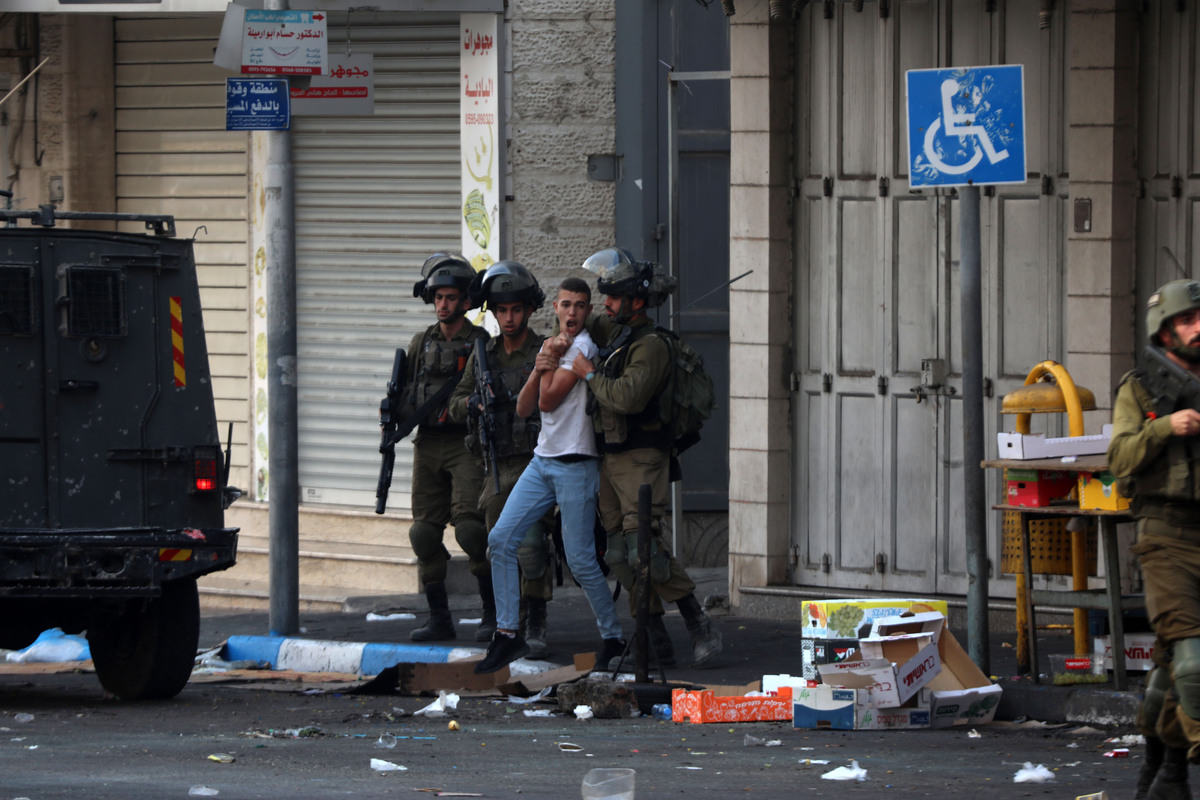
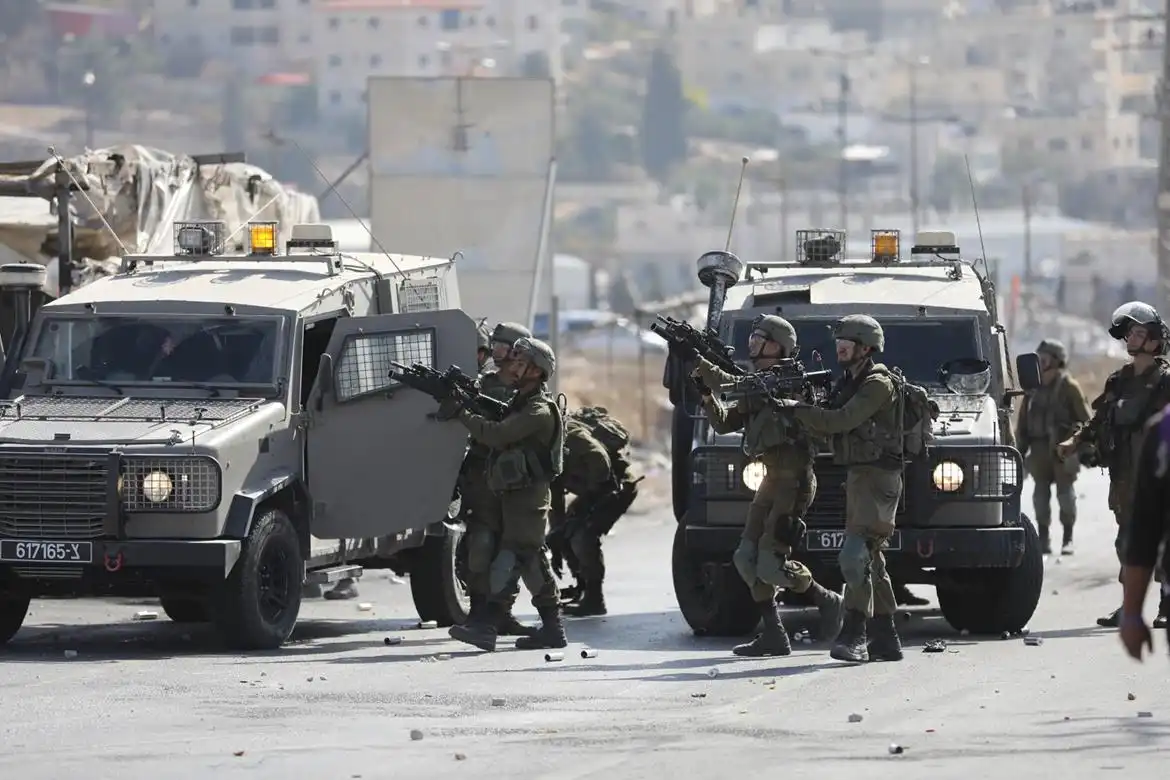
Today, Wednesday, the Israeli occupation forces continue their aggression on the West Bank governorates of Tubas, Tulkarm and Jenin.


**Tulkarm**
The Israeli occupation forces continue their ongoing aggression on the city of Tulkarm and its camp for the tenth consecutive day, amid military reinforcements and the forced displacement of hundreds of families from the camp under threat.


Tulkarm camp is going through difficult times with the continued siege imposed by the occupation, and the complete destruction of the infrastructure and public and private properties since the first day of the aggression, which were subjected to bulldozing, bombing and burning, and the accompanying raids on homes and the expulsion of their residents at gunpoint, and the seizure of them and their conversion into military barracks.


According to local sources, the occupation forces sent more of their vehicles to the camp, and deployed infantry patrols in all its neighborhoods and surroundings, while seizing more homes and commercial buildings adjacent to it, specifically in the eastern neighborhood of the city, and Nablus Street adjacent to its northern entrance, and towards the Martyr Thabet Thabet Governmental Hospital.


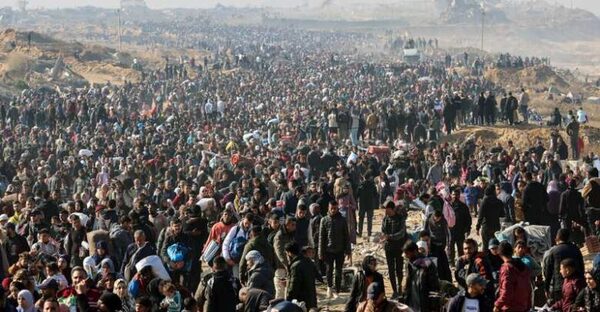
The forced displacement of entire families from inside the camp towards the city continued under threat of arms, amid the efforts of the Palestinian Red Crescent Society crews who work daily to evacuate the elderly and the sick and transport them to shelters spread throughout the city and its suburbs and a number of villages and towns in the governorate.


According to eyewitnesses, the camp has become empty of its residents, and only a few families remain, living without the minimum necessities of life, with a severe shortage of food, water, medicine and baby milk, in light of the interruption of water, electricity and communications.


Eyewitnesses added that the occupation forces are spreading terror among the residents to force them to leave, by blowing up homes and shops, which is what happened yesterday when they blew up three homes and ripped out the doors in a barbaric manner. It was one of the most difficult days that passed throughout the aggression.


In Tulkarm city, the occupation forces arrested at dawn today the young man Abdullah Iyad Muhammad Abdullah after raiding a house in the eastern neighborhood. He is a resident of Nour Shams camp, and the citizens Munther Akbariya and his sons Hammam and Asem Akbariya from their homes in the Shuwaika suburb north of the city.


The occupation forces raided houses in the eastern neighborhood of the city, searched them, destroyed their contents, checked the identities of their residents, subjected them to field investigation, and seized the upper ones and turned them into military barracks after expelling their owners from them.


Other houses were raided in the Aktaba suburb east of the city, belonging to the Al-Khawli, Al-Hawji and Sheikh Mazhar families, and their owners were investigated and detained for some time before being released, without any arrests being reported.


The occupation forces continue their siege of the Martyr Thabet Thabet Governmental Hospital, deploying infantry at its entrances, and seizing the adjacent Al-Adawiya Commercial Building since the first day of the aggression, turning it into a military barracks, while the occupation vehicles are stationed at its entrance near the hospital and preventing anyone from approaching the place.


The occupation forces are obstructing the work of ambulances and their medical crews around the hospital. Last night, they detained a Palestinian Red Crescent ambulance while it was transporting a patient to the hospital. They checked the identities of the patient, his companion, and the ambulance officer and detained them for more than half an hour before releasing them.


**Tubas**


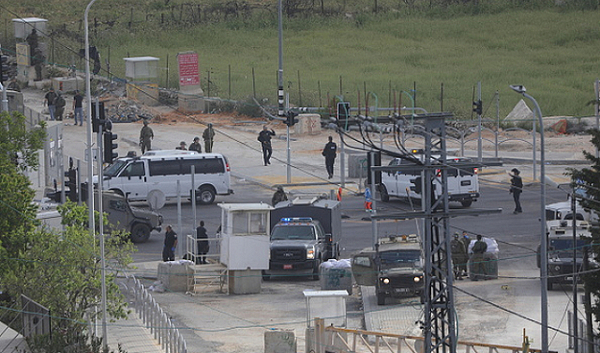
The Israeli occupation forces continue to storm and besiege the town of Tamoun and the Far'a camp, south of Tubas, for the fourth consecutive day.


In the town of Tamoun, the occupation forces continue to support and search dozens of homes and arrest their owners.


The director of the Prisoners Club in Tubas, Kamal Bani Odeh, reported that the occupation forces arrested 14 citizens from the town of Tamoun yesterday, Tuesday, during a raid on their homes, including two women, while the total number of detainees in the town since the beginning of the siege until now has reached 28 detainees, while the detention operations and field investigations of dozens of citizens continue.


As the storming and siege of the town continued, these forces have forced 25 families so far to flee their homes, especially on the outskirts, where they have turned them into military barracks. Yesterday, they carried out 8 bombing operations via drones on different areas, without resulting in any casualties.


In Al-Far'a camp, the occupation forces continue to raid citizens' homes, vandalize their contents, and seize some of them and turn them into military barracks or places to deploy snipers.


The humanitarian situation in the town of Tamoun and the Far'a camp is also getting worse, especially after the water supply lines were cut off and the water in the houses' tanks ran out, which threatens a humanitarian disaster, in addition to the citizens' need for basic food supplies, medicines for the sick and baby milk, as the occupation forces are still imposing a siege, preventing the citizens in Tamoun and the Far'a camp from leaving their homes to obtain their needs, and are also preventing the entry of any aid at all.


The town of Tamoun, which relies mainly on agriculture, is now facing huge losses in the agricultural sector.


**fetal**

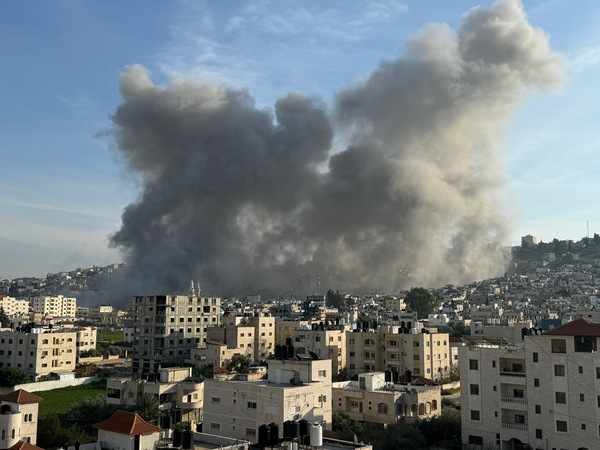
The Israeli occupation forces continue their aggression on the city of Jenin and its camp for the sixteenth consecutive day, leaving 25 martyrs, dozens of injuries, arrests, the bombing of homes, a siege, forced displacement, and widespread destruction of infrastructure.


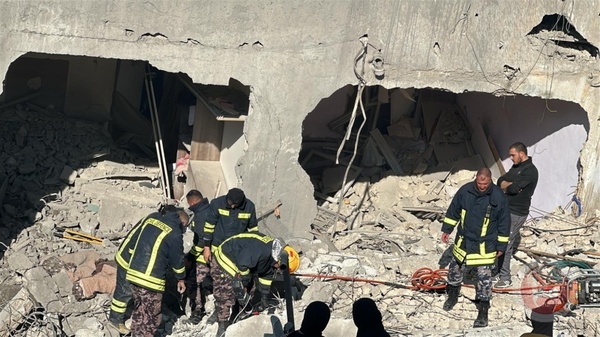
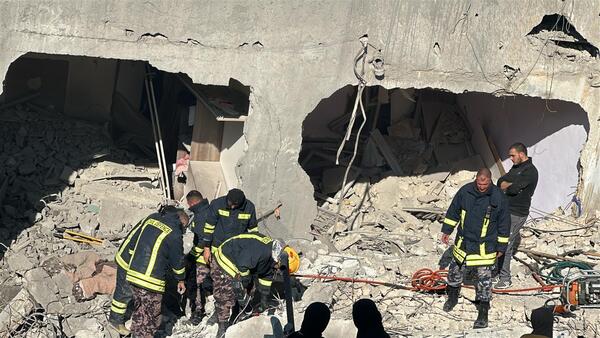
This evening, Tuesday, the rescue teams of the Jenin Civil Defense were able to evacuate an injured young man in the demolished building in the Al-Damj neighborhood in Jenin camp, despite the difficulty they endured due to the large amount of destruction in the camp’s streets, roads, and entrances.


The occupation forces arrested the young man Mahdi Tawalbeh from his home in Sabah Al-Khair housing in the city of Jenin, while they detained a young man in the vicinity of Al-Amal Hospital in the Al-Mahta neighborhood in the city of Jenin, assaulted him, and blindfolded him.


The occupation forces continue to besiege Jenin Governmental Hospital, after bulldozing its entrance and the main street leading to it.


According to the director of Jenin Governmental Hospital, Wissam Bakr, the hospital is now almost empty, except for some emergency cases that are able to reach it, due to the occupation’s procedures and harassment of patients entering or leaving it, as it used to serve 40,000 citizens in the Jenin Governorate.


Bakr confirmed that the hospital was able, after about a week from the beginning of the aggression on Jenin, to resume receiving cancer patients and provide them with the necessary treatments, for those who were able to reach them, while the outpatient clinic department remains closed 16 days after the aggression.

ARAB AND WORLD

Wed 05 Feb 2025 8:12 am - Jerusalem Time

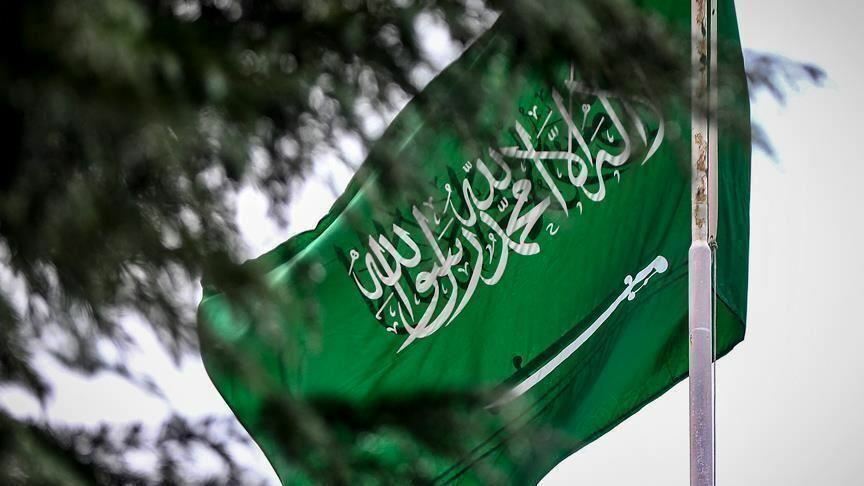
Saudi Arabia: We will not establish diplomatic relations with Israel without the establishment of a Palestinian state

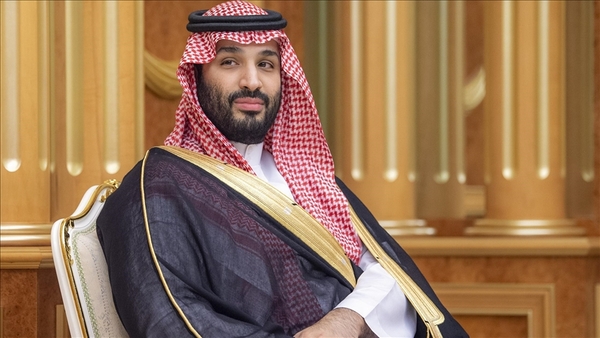
The Saudi Ministry of Foreign Affairs confirmed that the Kingdom's position on the establishment of a Palestinian state is firm, steadfast and unwavering, and that this position is not subject to negotiation or outbidding.


The Saudi Ministry of Foreign Affairs said in a press statement: The Ministry of Foreign Affairs affirms that the position of the Kingdom of Saudi Arabia on the establishment of the Palestinian state is a firm, steadfast and unwavering position. The Crown Prince, Chairman of the Council of Ministers, Prince Mohammed bin Salman bin Abdulaziz Al Saud, confirmed this position clearly and explicitly, which does not allow for any interpretation under any circumstances, during the speech he delivered at the opening of the first year of the ninth session of the Shura Council on 15 Rabi` al-Awwal 1446 AH corresponding to September 18, 2024 AD, where he stressed that the Kingdom will not stop its tireless work towards the establishment of an independent Palestinian state with East Jerusalem as its capital, and that the Kingdom will not establish diplomatic relations with Israel without that.


She pointed out that the Crown Prince expressed this firm position during the extraordinary Arab-Islamic summit held in Riyadh on 9 Jumada Al-Awwal 1446 AH corresponding to November 11, 2024 AD, where he stressed the continuation of efforts to establish a Palestinian state on the 1967 borders with East Jerusalem as its capital, and the demand to end the Israeli occupation of the Palestinian territories, and urged more peace-loving countries to recognize the State of Palestine and the importance of mobilizing the international community to support the rights of the Palestinian people, which were expressed in the resolutions of the United Nations General Assembly considering Palestine eligible for full membership in the United Nations.


The Kingdom of Saudi Arabia stressed its previous declaration of its absolute rejection of any infringement on the legitimate rights of the Palestinian people, whether through Israeli settlement policies, annexation of Palestinian lands, or attempts to displace the Palestinian people from their land. The duty of the international community today is to work to alleviate the harsh human suffering that the Palestinian people are suffering from, as they will remain committed to their land and will not budge from it.


She stressed that this firm position is not subject to negotiation or outbidding, and that a lasting and just peace cannot be achieved without the Palestinian people obtaining their legitimate rights in accordance with international legitimacy resolutions, and this was previously explained to the previous and current US administrations.

PALESTINE

Tue 04 Feb 2025 10:06 pm - Jerusalem Time

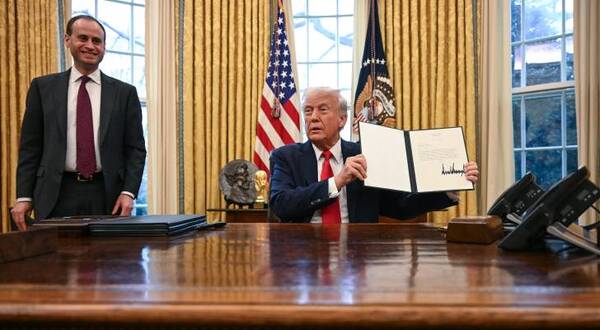
Reuters: Trump signs executive order to withdraw US from UN Human Rights Council and UNRWA

Reuters reported on Tuesday evening that US President Donald Trump signed an executive order ordering the United States to withdraw from the United Nations Human Rights Council and UNRWA.


A White House official revealed that US President Donald Trump is preparing to issue an executive order tomorrow, Tuesday, ordering the withdrawal of the United States from the United Nations Human Rights Council, in addition to banning funding for the United Nations Relief and Works Agency for Palestine Refugees (UNRWA), according to news agencies.


This decision comes within a series of previous withdrawals taken by Trump since taking office on January 20, as he previously ordered the United States to withdraw from the World Health Organization and the Paris Climate Agreement.

PALESTINE

Tue 04 Feb 2025 9:37 pm - Jerusalem Time

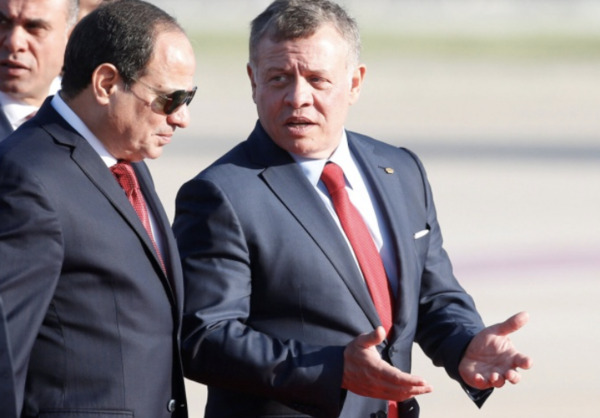
Egyptian President, Jordanian King stress need to implement ceasefire agreement, Gaza reconstruction must be accelerated

Egyptian President Abdel Fattah El-Sisi and Jordan's King Abdullah II stressed on Tuesday the importance of reaching permanent peace in the region based on the two-state solution and establishing an independent Palestinian state on the lines of June 4, 1967, with East Jerusalem as its capital, as the only guarantee for achieving peace and stability in the Middle East.


The Egyptian presidential spokesman, Ambassador Mohamed El-Shenawy, pointed out that the call received by the Egyptian president from the King of Jordan addressed developments in the regional situation, especially with regard to implementing the ceasefire agreement in the Gaza Strip, including the exchange of detainees and prisoners, and the access of humanitarian aid to the people of the Strip, adding that the two leaders stressed in this regard the necessity of full implementation of the agreement, and the inevitability of the rapid reconstruction of the Gaza Strip.


He added that the Egyptian President and the King of Jordan stressed the need to adopt a unified Arab position calling for achieving permanent peace in the Middle East region, in order to achieve the desired stability and economic prosperity.


PALESTINE

Tue 04 Feb 2025 8:02 pm - Jerusalem Time

Bodies of 19 dead recovered west of Gaza City

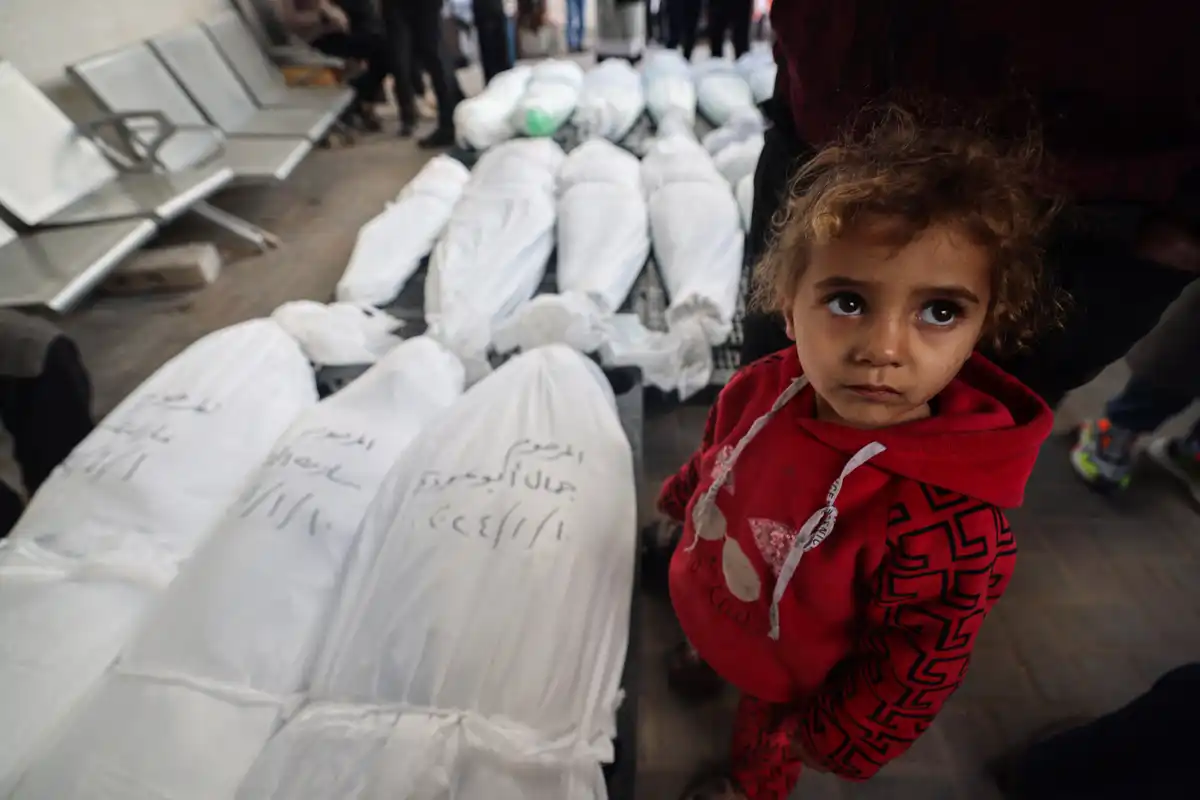
Rescue crews announced today, Tuesday, the recovery of the bodies of 19 dead from a random grave in Al-Thawra Street, west of Gaza City.


Between October 7, 2023 and January 19, 2025, the Israeli occupation forces launched an aggression on the Gaza Strip, which resulted in the death and injury of more than 158,000 people, most of whom were children and women, and more than 14,000 missing.

PALESTINE

Tue 04 Feb 2025 7:34 pm - Jerusalem Time

Civil Defense evacuates a trapped person from the demolished building in Jenin camp

Rescue teams from Jenin Civil Defense were able to evacuate an injured young man from the demolished building in the Damj neighborhood in Jenin camp, on Tuesday evening.


The Civil Defense explained in a statement that the young man was evacuated by digging a tunnel to reach those trapped in the demolished house, due to the lack of necessary equipment due to the large amount of destruction in the camp’s streets, roads, and entrances.


The site officer reported that the young man was handed over to the medical crews in a state of fear and panic, and the search and evacuation process continued for 4 continuous hours.


Earlier, the Civil Defense teams in Jenin conducted search and rescue operations for a family under the rubble of their home in Jenin camp.


The Israeli occupation continues its aggression on the city of Jenin and its camp for the 15th consecutive day, which resulted in the martyrdom of more than 20 citizens, and the destruction and bombing of many homes and residential blocks in the Jenin camp.

ARAB AND WORLD

Tue 04 Feb 2025 6:39 pm - Jerusalem Time

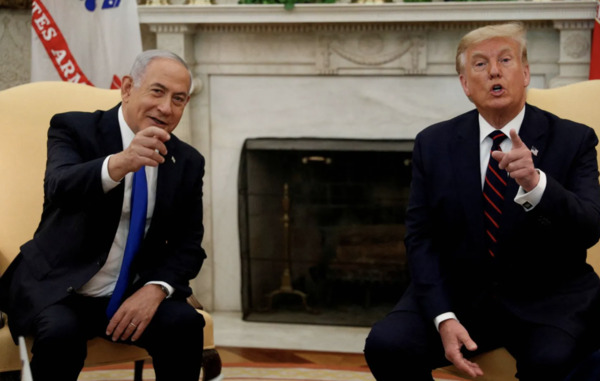
Amnesty International: Trump doubles down on Netanyahu’s welcome by not arresting or interrogating him

Amnesty International revealed on Tuesday that US President Donald Trump is doubling down on his welcome of Israeli Prime Minister Benjamin Netanyahu, as the first foreign leader to visit the White House since his inauguration, by not arresting him or subjecting him to investigation.


"By welcoming the Israeli prime minister, who is wanted by the International Criminal Court on charges of war crimes and crimes against humanity, the US is demonstrating its contempt for international justice," Amnesty International added in a statement.


She continued: "The United States is obligated, under the Geneva Conventions, to search for and prosecute or extradite persons accused of committing war crimes, or ordering the commission of war crimes."


Amnesty International stressed that there should be no “safe haven” for individuals alleged to have committed war crimes and crimes against humanity.


“Compliance with the ICC arrest warrants is crucial to bringing those responsible for Israel’s genocide in Gaza to justice,” she said.


Last November, the International Criminal Court issued two arrest warrants against Netanyahu and then-Israeli Defense Minister Yoav Galant for their involvement in crimes against humanity and war crimes in Israel's military campaign on the Gaza Strip, which resulted in the deaths of more than 47,000 Palestinians.

ARAB AND WORLD

Tue 04 Feb 2025 6:09 pm - Jerusalem Time

Saudi Arabia confirms its support for consolidating the ceasefire in Gaza

Saudi Arabia confirmed, on Tuesday, its support for efforts to consolidate the ceasefire agreement in the Gaza Strip and to bring in humanitarian aid.


This came during a cabinet session in the capital, Riyadh, chaired by Crown Prince Mohammed bin Salman, according to the official Saudi Press Agency (SPA).


The agency said that the Saudi Cabinet discussed regional and global developments and international efforts made in this regard.


He stressed "what was included in the statement issued by the consultative meeting of the Arab Six on Palestine, which was held with the participation of the Kingdom (Saturday in Cairo), of affirmations of support for the efforts made to sustain the ceasefire agreement (in Gaza), and to ensure the arrival of more humanitarian and relief aid, and the safe return of displaced civilians to their lands in the Gaza Strip."


On Saturday, Cairo witnessed the convening of an Arab ministerial meeting, with the participation of the foreign ministers of Egypt Badr Abdel Aati, Saudi Arabia Faisal bin Farhan, the UAE Abdullah bin Zayed, Qatar Mohammed bin Abdul Rahman, and Jordan Ayman Safadi, in addition to the Secretary-General of the League of Arab States Ahmed Aboul Gheit, and the Secretary-General of the Executive Committee of the Palestine Liberation Organization Hussein Al-Sheikh, according to a statement by the Egyptian Ministry of Foreign Affairs.


The parties participating in the meeting agreed to "look forward to working with the administration of US President Donald Trump to achieve a just and comprehensive peace in the Middle East, in accordance with the two-state solution," according to the same source.


They also agreed to "reject any infringement of the inalienable rights of the Palestinians, whether through settlement activities, expulsion and demolition of homes, annexation of land, or by evacuating that land of its owners through displacement or encouraging the transfer or uprooting of Palestinians from their land in any way or under any circumstances or justifications."


Since January 25, Trump has suggested more than once to transfer the Palestinians of the Gaza Strip to neighboring countries such as Egypt and Jordan, citing the “lack of habitable places in the Gaza Strip,” which Israel has been destroying for more than 15 months, amid repeated Egyptian and Jordanian rejection.


On January 19, a ceasefire between Hamas and Israel came into effect. Its first phase will last for 42 days, during which negotiations will begin to begin a second and then a third phase, mediated by Egypt, Qatar, and the United States.


With American support, between October 7, 2023 and January 19, 2025, Israel committed genocide in Gaza, leaving more than 159,000 Palestinian martyrs and wounded, most of them children and women, and more than 14,000 missing.

PALESTINE

Tue 04 Feb 2025 5:37 pm - Jerusalem Time

UNRWA: The situation in Jenin camp is catastrophic and all its residents have been displaced

The United Nations Relief and Works Agency for Palestine Refugees (UNRWA) said on Tuesday that the situation in Jenin camp in the northern West Bank is "heading towards a catastrophic direction and all of its residents have left."


This came in statements by the Director of Communications and Media at UNRWA, Juliette Touma, during the bi-weekly press conference of the United Nations agencies in Geneva, according to the "United Nations News" website.


"The situation in Jenin camp in the West Bank is heading in a catastrophic direction," Touma said, noting that according to UNRWA reports, "all camp residents had left by this morning."


She pointed out that "the agency's services were cut off inside the camp for several consecutive months, and then stopped completely in early December" last year, explaining that "the series of explosions in the camp by Israeli forces last Sunday led to the destruction or severe damage to 100 homes."

PALESTINE

Tue 04 Feb 2025 5:27 pm - Jerusalem Time

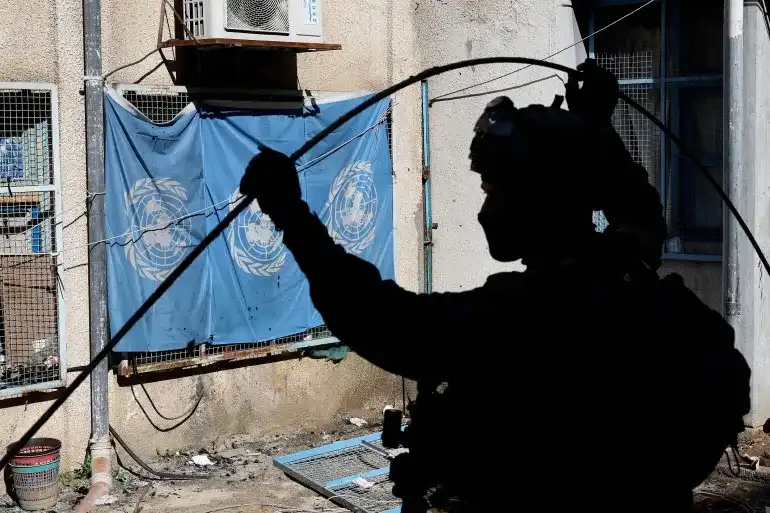
Israeli occupation raids homes and turns them into military barracks in Tulkarm city and camp

Today, Tuesday, the occupation forces raided citizens' homes and residential buildings in various neighborhoods of the city and its camp, coinciding with the continuation of the Israeli aggression on the city and its camp for the ninth consecutive day.


In the Aktaba suburb, east of the city, local sources said that the occupation forces surrounded the house of the Al-Huji family, and forced those inside via loudspeakers to leave, and subjected them to field interrogation, without reporting any arrests. The occupation soldiers also raided the houses surrounding the Al-Huji family house, which belong to the Al-Khawli and Sheikh Mazhar families, and set up snipers inside them.


The occupation forces also sent more infantry units into the city’s neighborhoods, specifically the eastern neighborhood, and raided and seized homes and residential buildings after forcing their residents to leave, and turned them into military barracks. They also seized more commercial and residential buildings around Tulkarm camp, especially along Nablus Street adjacent to the northern entrance to the camp, and turned them into military barracks and deployed sniper teams in them.


The occupation continues the process of emptying the camp of its residents by forcing them to leave their homes at gunpoint and seizing them, while the sounds of explosions were heard from time to time inside the camp, resulting, according to eyewitnesses, from the occupation blowing up a number of citizens’ homes.


The appeals of the remaining citizens inside the camp continue, to provide their basic needs of food, water, medicine and baby milk, in light of the difficult humanitarian situation left by the ongoing aggression against it, including a complete siege and the interruption of electricity, water, communications and the Internet after the occupation bulldozers destroyed the infrastructure.


In the same context, the occupation forces caused destruction and damage to the houses that they had seized in the western neighborhood of Tulkarm eight days ago, which they evacuated today, in addition to stealing belongings and sums of money.


The occupation continues its siege of the Martyr Thabet Thabet Governmental Hospital, obstructing the work of ambulances and medical crews, and subjecting them to search and interrogation.

PALESTINE

Tue 04 Feb 2025 4:25 pm - Jerusalem Time

Israeli Occupation forces storm Al-Bireh city

This evening, Tuesday, the Israeli occupation forces stormed the city of Al-Bireh and closed a number of streets.


Eyewitnesses said that the occupation forces stormed a number of shops and seized camera recordings in the old Al-Bireh area and the "coffee shops area", without any arrests being reported.

PALESTINE

Tue 04 Feb 2025 3:54 pm - Jerusalem Time

UNRWA: The situation in Jenin camp is taking a catastrophic turn

The United Nations Relief and Works Agency for Palestine Refugees (UNRWA) said on Tuesday that the Jenin refugee camp in the northern occupied West Bank is taking a "catastrophic turn" due to the destruction of many homes and buildings there as a result of the ongoing Israeli military operation.


"The situation in the camp is taking a catastrophic turn," UNRWA spokeswoman Juliette Touma told reporters in Geneva, adding that large parts of it were "completely destroyed in a series of bombings carried out by Israeli forces."


The Palestinian Ministry of Health said that Israeli forces have killed 70 people in the area since the beginning of the year.


During the military operation, Israeli forces demolished and blew up buildings in the Jenin refugee camp, adjacent to the city of Jenin.


"It is estimated that 100 homes were destroyed or severely damaged," said Touma, speaking from Amman, as a result of the Israeli operation.


"The people of this camp in particular have endured conditions that are beyond tolerance," she added. "The bombings occurred on Sunday when children were supposed to be back in school."


"As far as UNRWA is concerned, 13 schools in the camp and surrounding areas remain closed. This has affected 5,000 children in that area," she said.


Touma added that UNRWA services inside Jenin camp were cut off for several months and then stopped completely in early December.

UNRWA said it had not received any prior warning about the bombing of the buildings, after communication between its staff and the Israeli authorities was cut off.

PALESTINE

Tue 04 Feb 2025 3:36 pm - Jerusalem Time

Civil Defense: We are working to rescue a woman and her children from under the rubble of a house in Jenin camp

Today, Tuesday, the Civil Defense teams in Jenin conducted search and rescue operations for a family under the rubble of their home in Jenin camp.


The Director of Civil Defense in Jenin, Brigadier General Abdul Latif Abu Amsha, told the official news agency "Wafa" that the Civil Defense crews received a signal from citizens about the presence of sounds and screams under the rubble of a house in the Al-Damj neighborhood in Jenin camp. The defense teams immediately headed to the place and began trying to remove the rubble. It was found that there was a woman and three children under the rubble of the house.


He confirmed that the woman was spoken to and it was confirmed that she was with three children, and that they were all alive, and that work must be done as quickly as possible to save their lives.


Abu Amsha pointed out that it is impossible for any digging and rubble-removal machinery to enter the vicinity of the house, even small ones, due to the large amount of destruction in the camp’s streets, roads, and entrances, noting that work is underway to remove the rubble using hands and simple tools.


He explained that all the details will be published as soon as they are rescued from under the rubble.

PALESTINE

Tue 04 Feb 2025 2:39 pm - Jerusalem Time

Israeli occupation forces arrest two women and a young man and obstruct the work of medical crews in Tammun

Today, Tuesday, the Israeli occupation forces arrested two women and a young man from the town of Tamoun, south of Tubas.


The director of the Prisoners Club in Tubas, Kamal Bani Odeh, reported that the occupation forces arrested Mrs. Kawthar Ali Sadiq Abdul Rahim Basharat to pressure her husband to surrender himself, and Mrs. Raneen Suleiman Bani Odeh, and the young man Muhammad Abdul Rahman Basharat to pressure his brother to surrender himself.


The Israeli occupation forces also obstructed the work of medical crews in the town of Tamoun, south of Tubas.


Local sources reported that the occupation forces detained a Red Crescent vehicle while it was working in the town of Tamoun, south of Tubas.

For three days, the occupation has been obstructing the work of medical teams in Al-Far’a camp and the town of Tamoun, while the Israeli aggression on the two areas continues.

PALESTINE

Tue 04 Feb 2025 2:21 pm - Jerusalem Time

22 dead and 6 injuries in the past 24 hours in Gaza

The Ministry of Health in Gaza announced today, Tuesday, that 22 dead (20 of whom were recovered, two of whom succumbed to their injuries) and 6 injuries arrived at Gaza Strip hospitals during the past 24 hours.


She pointed out that the death toll from the Israeli aggression has risen to 47,540 dead and 111,618 injuries since October 7, 2023.

ARAB AND WORLD

Tue 04 Feb 2025 2:04 pm - Jerusalem Time

Hinting at his sympathy for Israel's plans to annex the West Bank... Trump: Israel is a small country

A day before his meeting with Prime Minister Benjamin Netanyahu at the White House, US President Donald Trump referred to Israel as a “small country” when asked if he would support Israeli annexation of the West Bank.


"I'm not going to talk about that," Trump said when asked by a reporter about the issue. "It's certainly a small country, it's a small country in terms of area."


“See that pen?” he continued, holding up the pen he used to sign executive orders in his Oval Office to compare the size of Israel to the rest of the Middle East. “This beautiful pen on my desk is the Middle East, and the tip of that pen is Israel.”


Israeli Prime Minister Benjamin Netanyahu held talks with US President Donald Trump's Middle East envoy Steve Witkoff in Washington on Monday about the second phase of the ceasefire negotiations, before deciding to send a negotiating delegation to begin talks with mediators.


The agreement stipulates that talks on the second phase will begin on the 16th day of the first phase, which fell on Monday.


Netanyahu will meet with US President Donald Trump on Tuesday to discuss the Gaza files, the Iranian nuclear issue, the possibility of expanding settlements and perhaps annexing the West Bank, and expanding the circle of relations between Israel and Arab countries.


Prime Minister Netanyahu is expected to meet with US Defense Secretary Pete Hegsett on Wednesday.


The Israeli newspaper Haaretz reported, quoting a source accompanying Netanyahu on his trip to Washington, that the latter seeks, through his meeting with Trump, to "obtain full American support to continue eliminating Hamas," without specifying what he means by that.


The newspaper pointed out that Israel "may not commit in the second stage to a complete withdrawal from Gaza and the Philadelphi corridor, without achieving this goal" which it was unable to achieve over more than 15 months of a devastating Israeli war considered one of the most ferocious, criminal, and genocidal against the Palestinians.


She added that Israeli officials "aim for the negotiations in the second phase to lead to expanding the normalization process between Israel and countries in the region."

ARAB AND WORLD

Tue 04 Feb 2025 1:59 pm - Jerusalem Time

Five Arab Foreign Ministers Oppose Trump's Position on Displacement

Five Arab foreign ministers and a senior Palestinian official sent a joint letter to US Secretary of State Marco Rubio opposing plans to displace Palestinians from Gaza, as proposed by President Donald Trump in late December.


The letter was sent on Monday and was signed by the foreign ministers of Jordan, Egypt, Saudi Arabia, Qatar and the United Arab Emirates, as well as the Palestinian president's adviser, Hussein al-Sheikh.


The message was originally reported by Axios, which said the top diplomats met in Cairo over the weekend.


Trump first floated the proposal by Jordan and Egypt to accept Palestinians from Gaza on January 25. When asked if he was proposing it as a long-term or short-term solution, the president said: “It could be either.”
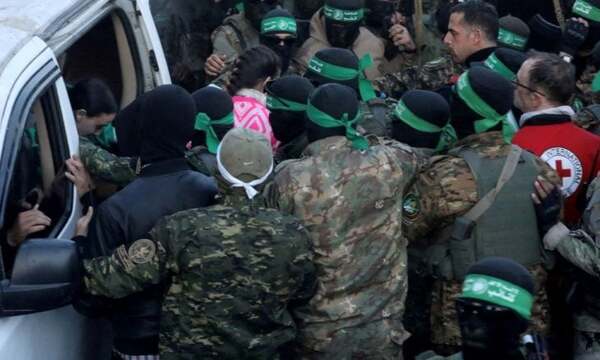

The US president's comments echoed long-standing Palestinian fears of being permanently expelled from their homes and were described by critics as a proposal for ethnic cleansing. Jordan, Egypt and other Arab states opposed the proposal.


“Reconstruction in Gaza must take place through direct engagement with the people of Gaza,” the letter said. “Palestinians will live on their land and help rebuild it, and they should not be stripped of their agency during reconstruction. They must take responsibility for the process with the support of the international community.”


The Israeli military assault on Gaza has killed more than 47,000 Palestinians, according to the Gaza health ministry, and has led to accusations of genocide and war crimes against Israel. The fighting has now stopped amid a ceasefire that has held since January 19, with four prisoner exchanges between Hamas and Israel completed.


Israel claims that Hamas's attack in Operation Flood of Al-Aqsa on October 7, 2024, killed 1,200 people, including 311 soldiers on active duty, and led to Hamas detaining 250 Israelis who were taken to Gaza.

PALESTINE

Tue 04 Feb 2025 1:37 pm - Jerusalem Time

380 arrests in the West Bank since the ceasefire agreement in Gaza

The Prisoners Club said that the Israeli occupation authorities continue to escalate arrests and field investigations in the West Bank governorates, specifically in the governorates of Jenin and its camp and Tubas.


The Prisoners Club stated in a statement issued on Tuesday that the number of arrests in the West Bank since the ceasefire agreement in Gaza came into effect has reached no less than 380 arrests. This figure includes those who were arrested and kept in detention by the occupation, and those who were later released. It included all categories, specifically young people.


He explained that this escalation is an extension of the systematic policy of arrests, which has escalated - in an unprecedented manner - in its level after the war of extermination, and the escalation of systematic crimes and atrocities against detainees inside prisons.


He pointed out that the number of detainees and those who were detained in Jenin and its camp over the course of 15 days of aggression amounted to no less than 110, in addition to dozens who were subjected to field investigation.


In Tubas Governorate, the number of arrests reached 28, 11 of whom were released, and 17 remained detained. It is worth noting that some of those who were released from Tamoun at the military checkpoint called the (Hamra) checkpoint were unable to return to the town of Tamoun due to its siege.


As for the number of arrests in Tulkarm, which has been witnessing a noticeable increase - within days - it has reached at least 20 cases, including an injured person who was arrested from an ambulance. The majority of the detainees were subjected to severe beatings and systematic abuse, in addition to the threats that constitute organized terrorism against citizens, specifically in the mentioned areas.


He continued: The occupation has adopted a set of policies in various areas where the aggression has escalated, especially in Jenin and its camp, as well as Tubas, specifically the town of Tamoun and the Far'a camp, where it continues to besiege the town for the third consecutive day.


The most prominent of these policies are: field executions, assassinations, and systematic field investigations that have affected dozens of families, in addition to detaining citizens as hostages, and turning homes into military barracks, after forcing their owners to leave and move to other areas, as happened primarily in Jenin camp. The targeting of homes was not only by turning them into military barracks, but also by demolishing, blowing up and burning some homes in Jenin camp, and there are threats from the occupation army to implement this policy in Tubas, in addition to the deliberate destruction of infrastructure.


Field investigations are the most prominent policy implemented by the occupation in the various governorates of the West Bank, without exception, specifically in towns and camps. The latest of these was this morning in Al-Fawar camp, which witnessed dozens of raids after the war, with the aim of field investigation, as well as the Deheishe and Balata camps, the city of Dura, and other towns and camps. It is worth noting that after the war of extermination, the occupation carried out extensive military operations in Jenin, Tulkarm, and Tubas, where it targeted thousands through the field investigation policy, in addition to organized arrest operations.


According to information documented by the Prisoners Club, when the occupation army storms homes for the purpose of field investigation, it forces families to leave them, and carries out acts of terrorism against them, and acts of sabotage and destruction inside the homes, before the arrest or detention process later, as a form of the policy of revenge (price tag) practiced by the settler gangs.


The Prisoners Club renewed its call for the international human rights system to move forward in taking effective decisions to hold the occupation leaders accountable for the war crimes they continue to commit against our people, and to impose sanctions on the occupation that would place it in a state of clear international isolation, and to restore to the human rights system its fundamental role for which it was created, and to put an end to the terrifying state of helplessness that has befallen it in light of the war of extermination and the ongoing aggression on the West Bank, and to end the state of exceptional immunity that the old colonial states granted to the occupying state of Israel, considering it above accountability, accountability and punishment.

PALESTINE

Tue 04 Feb 2025 1:10 pm - Jerusalem Time

Palestinian Council of Ministers decides to form a working committee to manage the affairs of the Gaza Strip

Mustafa: The government operations room for emergency interventions in the southern governorates is working in coordination with various partners to provide all possible basic services to our people in the sector.

Our diplomatic missions have intensified their movements and communications with various countries of the world to expose the crimes of the occupation and document its violations.

Mustafa: We sent a number of relief shipments to our people in Jenin and Tulkarm, and we are working on preparing more emergency interventions.


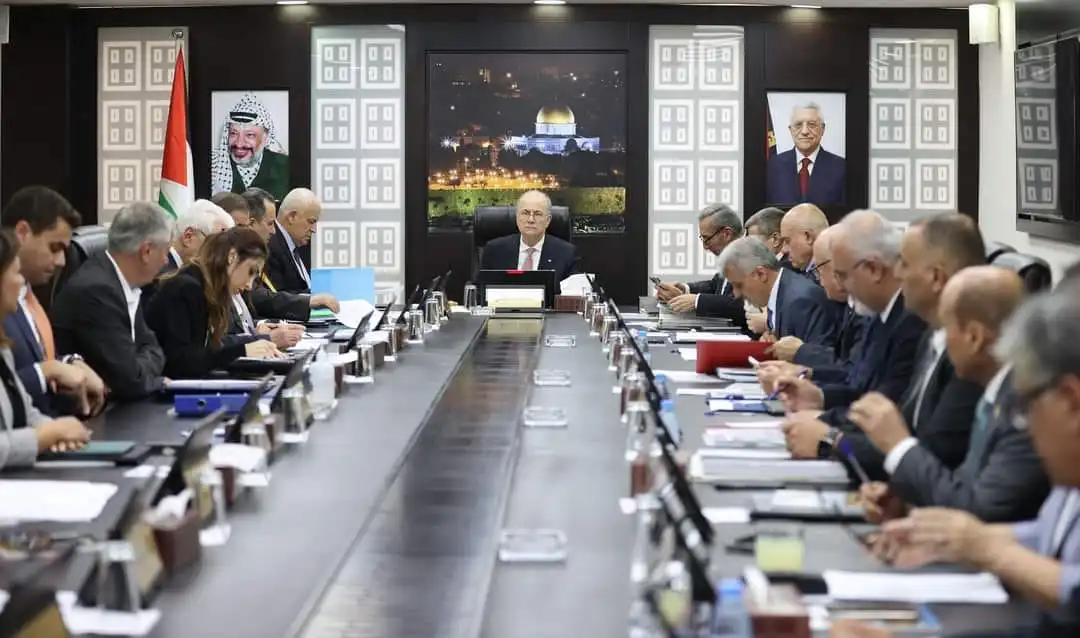
"In confirmation of the unity of the Palestinian state's territories, and in order to strengthen national unity, the Palestinian government, which is under the leadership of President Mahmoud Abbas, has decided to form a working committee to manage the affairs of the Gaza Strip," said President Mohammed Mustafa during his speech at the opening of the weekly cabinet session today, Tuesday.


Mustafa stressed that: "The government, as part of its ongoing efforts in coordination with its brothers, especially the Republic of Egypt and the concerned parties, and with direct instructions from Mr. President, is working to accelerate the arrival of humanitarian aid, open roads, remove rubble, and provide suitable gatherings to shelter those whose homes were destroyed, in preparation for comprehensive reconstruction."


The Prime Minister pointed out that last October, the National Reconstruction Preparation Team was established, which works in coordination with various UN and international partner institutions, to prepare for the reconstruction process, adding: “On the ground, the government is working through the “Government Operations Room for Emergency Interventions in the Southern Governorates” in coordination with various partners, to provide as many basic services as possible to our people in the Strip, including water, electricity, health and education, based on our national responsibility towards our people who have suffered the ravages of war throughout the past fifteen months.”


On the West Bank level, Mustafa said: “In light of the escalation of the occupation’s crimes in the Jenin and Tulkarm camps, and recently in the Far’a and Tamoun camps, and the forcing of thousands of our people, including children, elderly people and women, to leave their homes by force, which is accompanied by the systematic destruction and sabotage of homes, infrastructure and citizens’ property, Mr. President has directed that an urgent request be submitted to hold an emergency session of the UN Security Council, to hold the international community accountable for these serious violations, and it has already been decided that the Council will convene this evening.”


The Prime Minister added: "Our diplomatic missions have intensified their movements and contacts with various countries of the world, to expose the crimes of the occupation and document its violations, mobilize international support for the rights of our people, and pressure to stop these hostile and destructive acts that target the extension of Palestinian geography. Accordingly, the permanent investigation committee, approved by the Human Rights Council, will convene tomorrow in Geneva to follow up on the crimes and violations to which our people are exposed, especially in the northern West Bank."


Mustafa pointed out that the emergency committees in the northern West Bank governorates and the Ministerial Committee for Emergency Actions were directed to follow up on the needs of our displaced people in the northern West Bank and to secure urgent shelter for them immediately.


The Prime Minister stated that the Ministry of Social Development has sent 8 shipments of relief supplies and baby milk to Jenin and Tulkarm, and is working on preparing more. It has also launched a broad campaign to provide relief to our people in the northern West Bank, in coordination with the chambers of commerce, national institutions and partners, saying: “Despite the unjust financial siege imposed by the occupation by deducting more than half of the clearance funds, we continue to work on recruiting the necessary resources to repair what the occupation has destroyed, and to stand up to our responsibilities towards strengthening the steadfastness of our people.”


Mustafa stressed that we will not surrender or despair in the face of the international community’s inability to stop the Israeli war machine. These crimes against our people must stop, and we will continue our legitimate struggle for all our rights, because we are certain that the right will not be lost as long as there are those behind it who demand it.


In addition, the Council of Ministers discussed a report on the efforts of the government operations room for emergency interventions in the southern governorates, and the joint coordination between various governmental and international relief institutions to serve our people in the sector.


The Council of Ministers thanked all brotherly and friendly countries, their institutions and organizations for their relief efforts, especially the Egyptian Red Crescent and the Jordanian Hashemite Commission for their tireless work to provide relief to our people in the Strip, and the joint coordination with the ministries of the Palestinian government and the Red Crescent to enhance joint relief efforts.


In addition, the Cabinet approved the plan of the General Administration for Consumer Protection to regulate the market during the holy month of Ramadan, in order to monitor the availability of basic commodities, control indicative prices, and intensify field work with partners to prevent the entry of spoiled or non-compliant materials.


The Council of Ministers also took a decision to oblige all responsibility centers to implement the registration of commitment (financial commitment), and the necessity of full compliance with any information issued by the Ministry of Finance in this regard.


The Council approved the cooperation agreement in the field of education between the Government of the Republic of Vietnam and the Government of the State of Palestine for the period 2023-2025. The Council also ratified the Memorandum of Understanding with the National Committee for International Humanitarian Law at the Ministry of Justice in the State of Qatar, in addition to ratifying the Memorandum of Understanding between the Arab International Reconstruction Authority and the United Nations Development Program, in partnership with the Ministry of Public Works and Housing.

PALESTINE

Tue 04 Feb 2025 10:24 am - Jerusalem Time

Hamas: The occupation continues to evade the implementation of the ceasefire agreement

Hamas spokesman Hazem Qassem said on Tuesday, "The Israeli occupation continues to evade the implementation of the humanitarian track in the ceasefire agreement."


Qassem stressed in a statement that the occupation is deliberately delaying and obstructing the entry of the most important and urgent requirements, especially tents, prefabricated houses, fuel and heavy equipment to remove rubble.


He pointed out that what has been implemented in these aspects is much less than the agreed minimum, which means a clear lack of commitment to the relief and humanitarian issue, according to him.


Qassem called on the mediators and guarantors of the ceasefire agreement, especially the brothers in Egypt and Qatar, to intervene and address the defect in implementing the humanitarian protocol in the agreement.

OPINIONS

Tue 04 Feb 2025 10:08 am - Jerusalem Time

When the Palestinian endures the impossible

op-ed "AlQuds" dot com

op-ed "AlQuds" dot com

Opinion Writer

Whoever claims that the war on the Palestinian people has ended should review his calculations carefully. While the Gaza Strip will remain afflicted for many years, counting the bodies of the martyrs piled up under the rubble, and while no geographical area in the Strip is suitable for human habitation, and all the consequences, effects and results of the disastrous Israeli war, Israel has completed the other front of the war with a scenario similar to what it did in Gaza, and is implementing it in the West Bank, which requires a serious stand to repel this aggression that is devouring the governorates of Jenin, Tulkarm and Tubas, and has resulted in the martyrdom of 70 citizens, the injury of hundreds, the destruction of about 200 homes, the displacement of more than 20,000 citizens from the Jenin camp, and 6,000 from the Tulkarm camp, and the beginning of the process of expelling the citizens of the Tubas governorate, especially Al-Far’a and Tamoun.


The military operation in Jenin enters its third week today, and Tulkarm began its second week yesterday, while the clock hands indicate three days since the start of the operation in Al-Far’a and Tamoun, where scenes of killing, sabotage and destruction are everywhere, as if Israel is clearly seeking to prevent the residents from living or even breathing, which may undermine the ceasefire agreement in Gaza.


Yesterday, the United Nations Relief and Works Agency for Palestine Refugees in the Near East (UNRWA) published a statement on its website, indicating the seriousness of the situation, especially the Israeli army’s destruction of neighborhoods and alleys and the bombing of residential areas, where entire neighborhoods were bombed without UNRWA being notified, which puts the lives of civilians at risk.


The Gaza Strip scenario is strongly present in the scenes of Jenin, Tulkarm and Tubas, starting with the demolition and bombing of homes, moving on to the policy of killing and assaulting Palestinians, and then displacing them from their homes, which exacerbates the suffering of displaced Palestinians and increases the humanitarian crisis in the Palestinian refugee camps.


Yesterday, Israel used armored vehicles for the first time in the West Bank as it stormed Tamoun with its army, which indicates the expansion of the scope of its military operation in the West Bank, which was indicated by the spokesman for the Secretary-General of the United Nations, who said that the extension of the Jenin and Tulkarm operation to Tubas means more killing and destruction, and raises fears of breaking the law.


The Israeli army deliberately transmits incorrect information about civilians and camp residents, and claims to have found explosive devices, ammunition and weapons, all with the aim of justifying the operations and their continuation, which burdens the Palestinians beyond their capacity, with the burdens of displacement, lack of security and safety, food, water and medicine, the lack of suitable buildings and housing, and the destruction of infrastructure, so that the Palestinians bear the impossible, which is the impossible. What will the Palestinian must have to end, with his strength, struggle and strife, the series of death and terror that Israel is waging, which has turned the northern West Bank into a ghost town? Will the operation move to Nablus, Ramallah and the camps of the two large governorates soon, within the framework of the Israeli threats that the so-called Iron Wall operation will continue for several weeks..?


Everything is possible and not unlikely for this savage entity, which is becoming more aggressive and going too far as it tries to kill the will of the Palestinian people, which knows no impossible.


OPINIONS

Tue 04 Feb 2025 10:07 am - Jerusalem Time

Current scene and national destiny

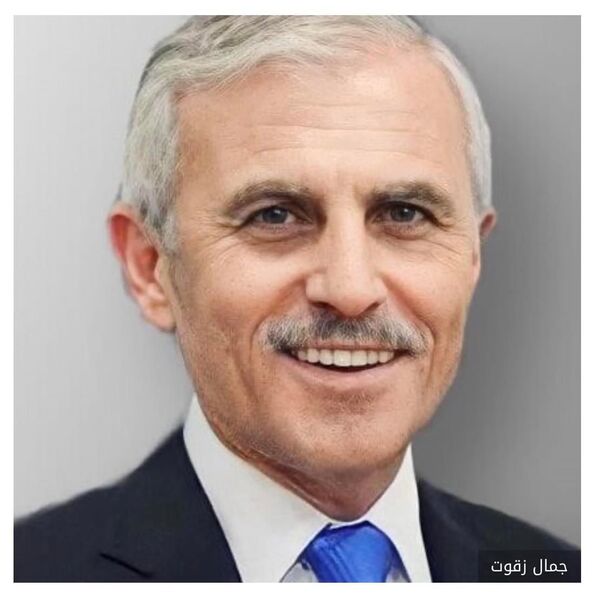
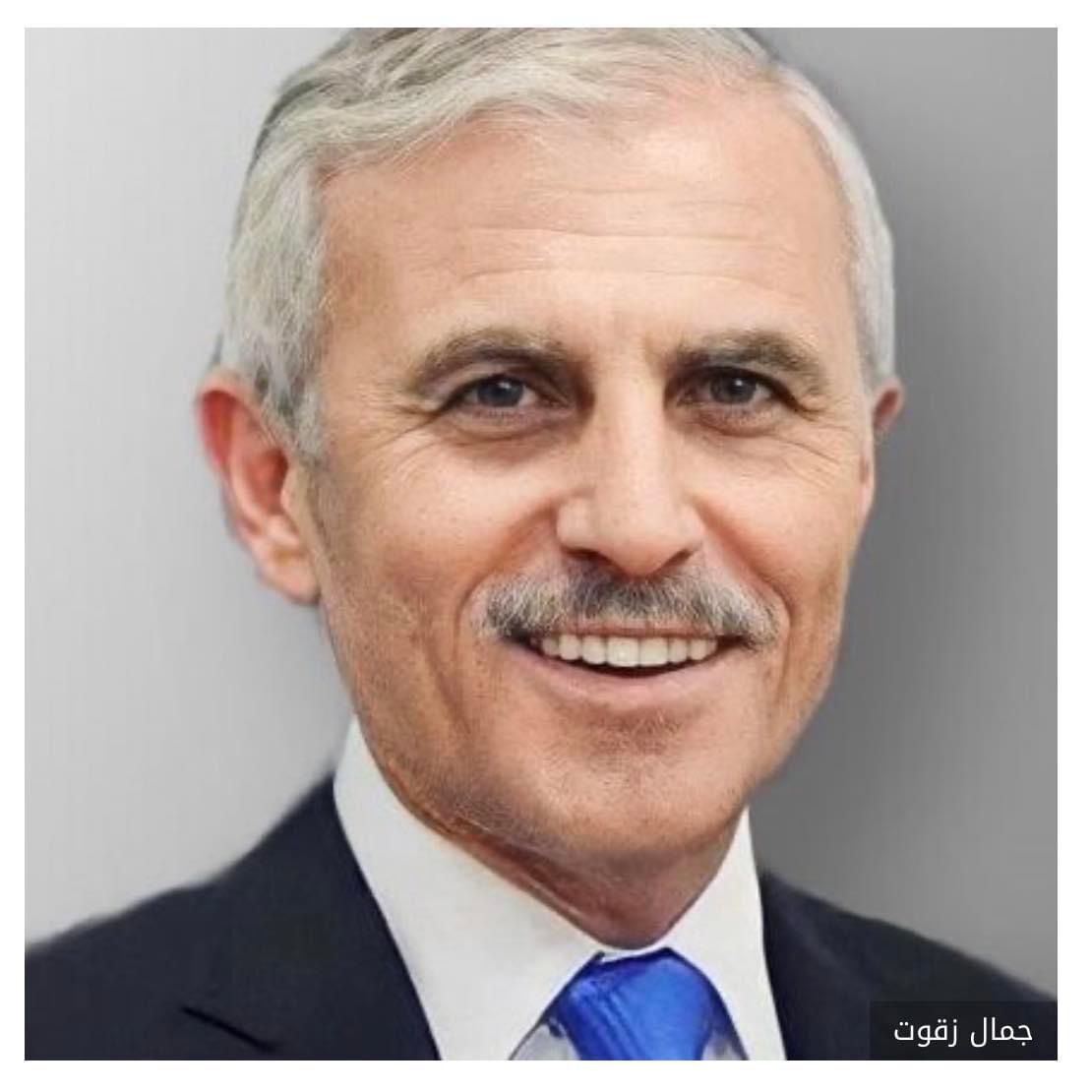
Jamal Zaqout

Jamal Zaqout

Opinion Writer

Since Trump's success in the presidential race, and before he entered the White House, major and even pivotal questions have been raised before public opinion about the future of the Palestinian cause, the Middle East, and Israel's position in the region. After Netanyahu was forced to accept the ceasefire agreement and move the wheel of implementing the first phase, questions quickly followed about the fate of this agreement and the possibility of moving towards the second phase, which was supposed to begin negotiating with the publication of this article. Within Israeli society, and compared to the goals set by Netanyahu for his war on the Strip and the slogan of absolute victory, the agreement was considered a political and military failure, while the severity of the escalation of the internal division among the Palestinians was reflected in the position on the war and its results, which contributed to diverting the national compass towards it being a brutal war of extermination, documented by international courts and international public opinion despite its horrific failure to eradicate the will to resist the occupation and the will to survive in the face of ethnic cleansing schemes.


Will the agreement hold? Yes, as long as the reasons that led to its conclusion remain, namely Trump’s insistence on it, the changes in public opinion in Israel, and Palestinian steadfastness, including the continued effectiveness of the resistance.


But will Netanyahu work to sabotage the agreement? He will certainly work to do so, or at least obtain positions from Trump that make the implementation of the agreement consistent with his declared and undeclared goals, which are eliminating Hamas and displacement.


In this context, we can read Trump's "balloon" statements about displacing the Gazans to Egypt, Jordan, and elsewhere. This also explains Netanyahu's decision to postpone the start of the second phase negotiations, including his intention to change the negotiating team, until he knows what he will get from Trump.


Trump's priority is towards Saudi Arabia, whether in terms of the economic need for its investments in the United States, or in terms of the normalization deal with Israel, including the possibility of aligning against what can be called the Chinese-Russian-Iranian axis and the priorities that this includes, in terms of containing or striking Iran. Here the question arises: What is the actual price that Saudi Arabia will seek to obtain from Washington and Tel Aviv in exchange for normalization with Israel and investment in the United States, especially after the war? This takes us to the fundamental and complex question with its various dimensions: What is the Palestinian vision that can maintain the vitality of what the war generated in terms of the Palestinian issue being a priority for international attention, whether at the level of popular public opinion or at the legal and media levels? Can this be transformed into binding political positions for the West and the international community? And how can this be achieved in light of more manifestations of the intensity of the division, instead of containing it as an existential requirement due to the war and its repercussions and political risks, not only in the Gaza Strip "displacement", but also in the West Bank, which is the strategic battle to liquidate the Palestinian issue from the point of view of the fascist right-wing extremists inside and outside the Tel Aviv government. Here the million-dollar question arises, and to the extent that a unified answer is given to it, the Palestinians can place their supreme national interests on the table of regional and international interactions. What is our responsibility to achieve this?


Contrary to what would be expected of any Palestinian party to confront the looming dangers, the powerful leadership in the Authority has been drowned in illusion, believing that this might provide a way out. Instead of examining the struggle strategies, in the context of an objective review of the political and struggle options, and the effectiveness of the option of the characteristic that prevailed in the forms of resistance, and agreeing on a comprehensive national vision, it is sliding towards security clashes that have proven to be a failure, not to mention the growing possibility of sliding into a civil war that could result from even thinking about implementing such a security policy in the Gaza Strip.


No regional or international party can take the Palestinian situation seriously unless those who control the Palestinian decision deal with it with the required seriousness on both the internal and external levels, Arab, regional and international alike.


It is quite clear that the real war has actually begun after the ceasefire, and its basic features from Netanyahu’s point of view are to keep the Palestinians drowning in their division, and even push them towards separation, to implement his plans to liquidate the Palestinian cause, whether to install a local governing body in the Strip that is in harmony with the Israeli project, in preparation for creating similar governing bodies in the West Bank cantons, or in terms of displacement, by preventing the restoration of the necessities of life for the people in Gaza, or repeating it in the West Bank camps, at least to liquidate the camps, looking forward at least to liquidating the refugee issue by liquidating UNRWA, the only international body that sponsors the interests of the refugees, according to the United Nations resolutions.


On the other hand, the resistance forces’ haste to despair over the possibility of the president accepting the implementation of the Beijing Agreement, and their haste to wash their hands of it, will certainly lead objectively to the return of the previous formula of government. This will not only disrupt reconstruction, but may also lead to Netanyahu returning to war, even if he avoids diving again into the mire of Gaza and its shifting sands, and in any case continuing his war to uproot the West Bank camps, claiming that he is forced to do so after he has led the Authority into this shameful trap.


The continued absence of a unified leadership within the framework of the comprehensive national institutions, as well as the insistence on avoiding consensus and the absence of any political kitchen, is nothing but a recipe for removing the remaining elements of power, if any of them are still in the hands of those who control the decision, and even squandering what the war has generated of some elements of this power, especially in terms of the changes in international public opinion, and continuing with the policy of appeasing the occupation and betting on Washington. On the other hand, we cannot accept the return of the equation of rule and division as it was before October 7, and we have no alternative to salvation other than what was included in the Palestinian consensus in Beijing. Here, we must focus popular pressure and do everything possible to save the national project and prevent slipping into internal strife that threatens what remains of the most just cause in history. This is the responsibility of millions of Palestinians, and anyone who risks wasting it must be prevented and brought down.

OPINIONS

Tue 04 Feb 2025 10:06 am - Jerusalem Time

Israel's next military option

Rassem Obaidat

Rassem Obaidat

Opinion Writer

Among the results of the battles and wars that Israel fought on the fronts of the Gaza Strip and Lebanon, the October 7, 2023 war, clearly stated that Israel used all its surplus military, armament and destructive power, and the unprecedented “savagery” and “aggression” that accompanied it, as it sought in Lebanon to destroy the popular incubator of the resistance, “the doctrine of the suburbs”, while in the Gaza Strip, it used the “Jabalia doctrine”, to annihilate the popular incubator. These are the two doctrines that Israel is working to implement in its aggressive war on the cities and towns of the northern West Bank and its camps.


The results of these two battles clearly stated that Israel, despite all its possession of weapons of mass destruction, advanced technology, artificial intelligence, advanced intelligence and espionage network, and American and Western European military, security, intelligence and financial support, was unable to achieve what Netanyahu called a crushing victory, nor achieve the strategic objectives of the war on the two fronts, although Israel succeeded in directing painful and major blows to Hezbollah and the Palestinian resistance in the Gaza Strip and at its heart Hamas, but the strategic objectives of the major war, which were extremist and directed at the Israeli interior, were not achieved, and the scenes transmitted from the Gaza Strip, in the prisoner exchange operations in its four batches of the first stage, caused a state of shock and confusion inside Israel, a shock that exposed Netanyahu’s government to the risk of falling from within, as Ben Gvir resigned from the government and the coalition, he and his party’s ministers, and said that what happened in the prisoner handover operations, and the scenes and pictures transmitted, clearly stated who is the victor and who is the loser, and that we did not achieve an absolute victory in Netanyahu’s language, but rather what was achieved was a major failure. It is a devastating and comprehensive failure, and it does not only pose a threat to Israel's national security, but it is a national disgrace to all citizens of the state, as well as the media, analysts, media commentators, military and security personnel. They said, "What absolute victory was achieved? What was our army doing for 15 months, in light of the appearance, presence and heavy military and civilian presence of the Palestinian resistance, with its various battalions, and in light of the highly precise and organized arrangement, organization and deployment that only a developed country can do?" Therefore, what happened is a major failure, added to the military and security failure on October 7, 2023. In the end, we were forced to accept a prisoner exchange agreement that would lead to a permanent ceasefire, a comprehensive Israeli withdrawal from the Strip, and a return to coexistence with the resistance forces on the borders of the Gaza Strip. An agreement that could have been achieved nine months ago, avoiding further losses in soldiers, officers, military equipment, the economy and morale.


The scenes and images transmitted in the prisoner exchange operations, which speak of the resistance’s victory in the image war and superiority in the moral aspect, confirm that the Hamas movement has not disappeared from the scene, neither militarily nor civilly, but rather it is present militarily, popularly, and politically, and with the recognition of Israeli military and security leaders, it is the only party capable of ruling the Gaza Strip.


On the Lebanese front, despite the heavy losses suffered by Hezbollah, which included its Secretary-General Nasrallah and his deputy Hashem Safieddine, it did not succeed in dismantling the party politically, militarily or in the field. It did not lose control over the command and control system, and its military apparatus operating in the field under its leadership dealt harsh blows to Israel, including targeting the Golani Brigade base "elite" with a suicide drone near Haifa, which resulted in dozens of dead and wounded soldiers and officers, as well as another suicide drone that targeted Netanyahu's home in the city of Caesarea, hitting the window of his bedroom.


Israel accepted a forced ceasefire in Lebanon, and was unable to impose its conditions for a ceasefire, and accepted Resolution 1701, achieving privileges in this resolution, as the committee formed and supervising the implementation of the resolution is of one political color, America, France, Israel, and the international UNIFIL, in addition to the Lebanese state, and this resolution is international, and is supposed to be presented to the UN Security Council that issued it, so that a new committee can be formed to supervise its implementation, and other countries can participate in it.


The war on both fronts struck the colonial project in two of its pillars of strength: the ability to continue the occupation and the ability to displace. This war also destroyed the hopes of extremists, Talmudists and Torahists in achieving their dream of establishing what is known as “Greater Israel” or “Greater Israel.”


Israel is now facing two strategic facts, the first of which is the inability to return to a comprehensive war, in light of the conflicts, divisions and crises that the occupying state is experiencing, which are escalating and portend the collapse of Netanyahu’s government from within, and the danger of the disintegration of the military establishment, in light of the “massacre” of resignations it is witnessing against the backdrop of the military and security failure on October 7. Therefore, we find that America is seeking to conclude a comprehensive deal, the main basis of which is normalization between Israel and Saudi Arabia, so that it can become a “legitimate” geographic component of the region’s geography, and move towards a political solution that saves Israel from itself and its crises, based on the establishment of a Palestinian state on part of the land of historical Palestine, within the borders of June 4, 1967, with Jerusalem as its capital, and the right of return for refugees according to UN Resolution 194. However, this solution will clash with the control of the right-wing and extremist forces over the government, government and political decision-making, as the occupying state, with all its secular and religious components, is becoming increasingly extremist, and there is an identification between Israeli society and the ruling establishment, and it has begun to hold the “neck” of political decision-making, from They assassinated Rabin in 1995, and Ben Gvir and Smotrich are the offshoots of that.


Therefore, in light of the blocked horizon of any political solution, and the lack of any Israeli readiness to meet this political project, and also the inability to return to a comprehensive war on the Gaza Strip and southern Lebanon fronts, and Netanyahu’s fear and obsession that stopping the war on the Gaza Strip and his comprehensive withdrawal from it may push him towards gambling with his political and personal future, in light of Ben Gvir and Smotrich’s hold on the “neck” of his political decision, and the ongoing threat to blow up his government from within, and therefore he will seek to continue his aggressive wars on the Gaza Strip and southern Lebanon, within what is known as the “battle between two wars” theory, and impose new deterrent equations, will Netanyahu succeed in achieving this, in light of American support and participation in this project?

OPINIONS

Tue 04 Feb 2025 10:06 am - Jerusalem Time

Trump in the service of the Palestinian cause!!

Dr. Ibrahim Nairat

Dr. Ibrahim Nairat

Opinion Writer

Although US President Donald Trump clearly seeks to serve Israel by escalating threats against the Palestinians, these policies may lead to unexpected results that ultimately serve the Palestinian cause rather than weaken it. Rather than pushing the Palestinians to surrender or emigrate, the threats generate new ideas for resistance, strengthen internal unity, and reveal Israel’s true face to the world, thus returning the Palestinian cause to the center of international attention.

The more threats to the Palestinian existence increase, the more Palestinians invent new ways to confront the occupation. At every critical stage, Palestinians face challenges with unconventional methods, whether at the level of popular, military, or even legal and diplomatic resistance. For example, the long siege on the Gaza Strip did not lead to the surrender of the population, but rather turned the Strip into a center for innovation in means of defense and attack, despite all the restrictions imposed on it. The return marches that began in 2018 were another model for re-imposing the issue of the right of return on the international agenda, after the Trump administration tried to undermine it by stopping support for UNRWA and moving the US embassy to Jerusalem.

The direct threat of deporting Palestinians or annexing large parts of the West Bank is reordering priorities within the Palestinian ranks, as political differences recede in the face of the existential danger that threatens everyone. In previous crises, such as the first and second intifadas, repressive Israeli policies strengthened unity among Palestinians and made resistance to the occupation the top priority. Today, as threats escalate, calls are increasing to unify the Palestinian ranks, whether among factions or among Palestinians in the West Bank, Gaza, and the occupied territories, because everyone realizes that the conflict is no longer merely political, but has become a struggle for survival.

Internationally, the Trump administration appears to be doing the Palestinians an unintended favor by exposing Israel’s true face to the world. For years, Israel has tried to present itself as a peace-seeking nation, but when the United States adopts a public discourse that talks about forcibly displacing Palestinians or annexing their lands, Israel loses the moral cover it had been hiding behind. These policies strengthen Palestinian positions in international institutions, and prompt organizations like the United Nations and the International Criminal Court to reconsider escalating pressure on Israel, as happened when the Trump administration moved the US embassy to Jerusalem, which led to a broad international consensus against the decision and politically isolated Washington.

In parallel, Trump’s policies are helping to bring the Palestinian cause back to the forefront of the world, after continuous attempts to marginalize it. In recent years, it seemed as if some Arab and Western countries were moving towards normalizing their relations with Israel, ignoring the Palestinian cause. But with the escalation of threats of displacement and annexation, governments and peoples are now faced with an undeniable reality: the Israeli threat does not only threaten the Palestinians, but may destabilize the entire region. This reality is prompting many parties to reconsider their positions and reaffirm the centrality of the Palestinian cause.

In the end, it seems that Trump, who believes he is exerting maximum pressure on the Palestinians, is inadvertently pushing them toward greater cohesion and renewed methods of confrontation. If Trump’s intention was to eliminate the Palestinian cause, his policies may achieve the exact opposite, as the Palestinians become more determined to survive and more able to impose their cause on the international stage, supported by growing internal unity and a renewed global awareness of their rights.


Trump and returning the initiative to the Palestinian people

Despite US President Donald Trump’s attempts to undermine and weaken the Palestinian entity politically and geographically, these pressures may lead to the opposite of what he seeks, as they return the initiative to the Palestinian people themselves, who have always proven their ability to adapt to different stages and respond to challenges in innovative ways. Every time the major powers tried to impose solutions that diminished Palestinian rights, the response came from the Palestinian street itself, which was able to turn the equation around and reformulate the political scene according to its priorities.

Throughout history, the Palestinian political leadership has not been the primary driver of major transformations, but rather popular action has determined the course and forced everyone to recalculate. In the 1987 Intifada, there was no central decision to ignite the confrontation, but it started from the street and imposed itself on the Palestinian leadership and the entire world, which later led to a strategic change in the form of the conflict. In the Second Intifada in 2000, the popular response came to redraw the rules of the game after it became clear that the political path had not achieved Palestinian aspirations. Today, with the escalation of American-backed Israeli threats, the Palestinians find themselves facing a similar moment, where popular action has become the primary driver of the next stage.

Israel’s attempts, with American support, to dismantle the Palestinian identity or undermine its components may push the Palestinian people to develop new forms of resistance and adapt to the new reality. Just as the Palestinians succeeded in confronting the displacement in 1948 by adhering to the right of return despite the passage of decades, and just as they were able to transform the siege imposed on Gaza into an incentive to develop their capabilities, they are capable of transforming current threats into an opportunity to enhance their political and field presence. The next stage may be the stage of “reinventing the resistance,” where mass action is combined with technological innovation and legal and diplomatic pressure, creating a new dynamic that the occupation will find difficult to confront.

As the challenges continue, the features of a new Palestinian phase are becoming clear that goes beyond the imposed political restrictions. The Palestinians have become more aware of the need to build their own tools away from regional and international calculations, which may lead to the emergence of a new Palestinian state capable of regaining the initiative. This continuous adaptation to the requirements of the different phases is what has made the Palestinian cause remain despite all attempts to end it, and it will make it impose itself again on the scene, no matter how intense the pressures and challenges are.

Netanyahu's policies and the return of the one-state option to the fore

The approach being pushed by Israeli Prime Minister Benjamin Netanyahu, which is to deepen the occupation and reject the two-state solution, may ultimately lead to results that are completely opposite to what he seeks. Instead of paving the way for the consolidation of Israeli hegemony and imposing a new reality on the Palestinians, he is bringing back to the fore dormant ideas, such as the option of a single democratic state, which may in the future become the most reasonable alternative in light of the collapse of the two-state solution.

The two-state solution has long been the basis of international efforts to resolve the Palestinian-Israeli conflict. However, Netanyahu’s policies, sometimes backed by the Trump administration, have systematically undermined this solution through settlement expansion, attempts to annex parts of the West Bank, and the treatment of Palestinians as a people who can be bypassed or even displaced. As the prospects for an independent Palestinian state erode due to settlement expansion and the dismantling of Palestinian institutions, a completely different equation emerges: Israel itself is pushing for an option it never wanted to discuss: a one-state solution between Palestinians and Israelis.

Although Israel has long rejected this option for fear of losing its Jewish character, Netanyahu’s policies are making the two-state solution impossible, thus forcing future generations to confront an existential question: If there are no two states, what is the alternative? Palestinians who find themselves trapped between occupation and settlement will sooner or later begin to adopt a different discourse, demanding full equality within a single state extending from the sea to the river, which may become more attractive to international parties that support human rights and democracy.

Instead of leading a project that ends the Palestinian issue, Netanyahu is in fact unintentionally contributing to transforming it from a national liberation issue into a civil and political rights issue within a single entity, which may be more dangerous to the Zionist project itself. If Israel continues to prevent the establishment of a Palestinian state, the Palestinians will find themselves faced with the option of demanding full citizenship rights, which threatens the demographic structure of Israel and undermines its foundations as a Jewish state.

Ultimately, the longer Israel continues to close the horizon of a two-state solution, the more likely it is that the conflict will turn into a battle for rights and equality in one state, which could impose a new reality on everyone.

OPINIONS

Tue 04 Feb 2025 10:05 am - Jerusalem Time

What to expect from Netanyahu-Trump meeting?

Hani Al Masry

Hani Al Masry

Opinion Writer

It is not surprising that President Donald Trump's first meeting with a foreign leader is with Israeli Prime Minister Benjamin Netanyahu. This reflects the depth of the relationship between the two countries and the two men, because one of them is not enough. Trump's predecessor, Joe Biden, refrained from meeting Netanyahu for a long time after assuming the presidency, indicating the tension in relations between them.


The meeting between Netanyahu and Trump will be important, pivotal and complex, as the former is bound by narrow personal and Israeli calculations related to his personal role and the survival of his government, even if that requires resuming the war on the Gaza Strip, even in new forms such as carrying out raids, arrests, assassinations and destruction, if he is unable to achieve the goals of the war, and the expected goal to focus on now is related to disarmament and ending the rule of the Hamas movement in the Strip.


Trump, on the other hand, is bound by a much greater ambition related to achieving a major deal in the region and obtaining the Nobel Peace Prize, and what this requires in terms of preparing the atmosphere for the generalization of the “Abraham Accords,” through the normalization agreement between Saudi Arabia and Israel as a major strategic step, followed by the normalization of a number of Arab and Islamic countries, and what this entails in terms of political, economic and strategic advantages for Israel and the United States of America.


It is natural for Netanyahu to submit to what Trump wants, who is convinced that stopping the war is a prelude to concluding a grand deal that Saudi Arabia wants to include a Palestinian state or a reliable political path to achieving a Palestinian state. This is something that Netanyahu, with the current composition of his government, cannot accept. Minister Bezalel Smotrich is threatening to withdraw from the government, which means its collapse, if the war is not resumed and sovereignty over the West Bank is not moved forward.


While confirming that the new Trump is no different from the old Trump, he made a major maneuver days before the meeting when he told the Jordanian king and the Egyptian president to “accept” a million and a half Gazans for a temporary or long period, until the Gaza Strip is rebuilt. Despite Cairo and Amman’s rejection of the displacement of the Palestinians, Trump repeated his call several times, and this is due to a number of reasons according to the following possibilities:


The first possibility: Trump is convinced that they will respond to his request, and this is unlikely because it poses a threat to Egyptian national security and Jordanian national and demographic security, and because displacing Palestinians under any name means passing a plan to liquidate the Palestinian cause, and what is temporary will turn into permanent according to previous experiences, and the Oslo Accords experience is the best example of this, as it was agreed that it would end in 1999, and here we are after 25 years and this promise has not been fulfilled.


The displacement in Gaza also whets the occupation's appetite for further displacement in the West Bank and the Palestinian interior, and this paves the way for the annexation of parts of the Gaza Strip and the West Bank, or at least large parts of them.


The second possibility: Trump knows that his proposal will not be accepted, but he set a high ceiling for his demands from the beginning, in order to put the Arab states and the Palestinians in front of a very narrow margin for negotiation, since achieving less than displacement, no matter how bad, will appear to be a great achievement. Or Trump wants to lower the ceiling of Netanyahu’s demands by showing that what he is demanding is impossible to achieve. It is not unlikely that Trump’s goal is to lower the ceiling of the demands of the Palestinians and the Israelis in one fell swoop, with absolute bias towards Israel, and not necessarily towards its current government.


It is not possible to be absolutely certain which of the two possibilities will happen, so the Arab and Islamic countries are required to hold a summit whose resolutions stipulate that if Israel and America displace the Palestinians, this will mean immediately withdrawing ambassadors and severing all relations between the Arab and Islamic countries and Israel. They are also required to work to issue a resolution that considers the displacement as ethnic cleansing and a war crime by the Security Council or the General Assembly if the veto is used in the Security Council.


There is another issue worth discussing, which is the document related to the issue of displacement, and it is related to the state of complete or almost complete certainty among political and media circles, especially Palestinian and Arab, that the war has stopped and has not resumed, ignoring the factors that push for the resumption of the war of extermination as it was and more harshly, or through new forms, despite the fact that the owners of certain expectations have not learned from the error of their previous false expectations since the beginning of the war of extermination since they estimated that the response to the Al-Aqsa flood would not be like the war of extermination that lasted 471 days, and that Israel cannot tolerate great losses and a long war, and that it will not fight a ground war and will not complete it if it starts it, so they were heralding the imminence of an agreement with each new round of negotiations, and the disappointments and shocks did not awaken them from the disease of false expectations.


Yes, the factors that led to stopping the war are still ongoing and the strongest are Trump’s insistence on stopping it, the shift in Israeli public opinion towards stopping the war, the position of the occupation army that the war has exhausted itself and that the goals are very high and cannot be achieved, and the ongoing war of attrition of the occupation forces, as a result of the continued resistance and the precious gifts that Trump promised and began to offer to Israel.


However, there are strong factors pushing towards resuming the war, the most important of which are firstly, the failure to achieve the war’s goals or more modest goals, and the implications of that on Israel’s role and future in the region. Secondly, Netanyahu’s personal and political future. Thirdly, the future of his government.


Perhaps the suspension of the start of negotiations on the second phase, which was supposed to begin yesterday, until Netanyahu returns from his visit to America, and the appointment of Minister of Strategic Affairs Ron Dermer as head of the Israeli negotiating delegation, and what this means in terms of focusing on political aspects rather than security, in addition to the statements of Eyal Zamir, the new Chief of Staff, that the year 2025 is a year of war; which requires not neglecting the possibility of resuming the war if an agreement is not reached on the second and third phases or after them and achieving disarmament and the overthrow of Hamas rule, if not in the old forms of war then in new forms.


What is expected from the Washington meeting is either an agreement that Washington will support the resumption of the war if disarmament and the overthrow of Hamas rule are not achieved before or after the implementation of the second and third stages. Here, reconstruction and control over the entry of humanitarian aid will be employed to achieve the goals that were not achieved in the war, or an American-Israeli dispute will occur that will increase the chances of the Israeli government falling and going to early elections in which the current coalition will not have great chances, but rather the possibility of Netanyahu losing will be greater.


In conclusion, the priority for the Palestinians and the best embodiment of steadfastness and resistance and the standard for judging positions and actions is whether they contribute to enhancing the possibility of stopping the war, withdrawing and rebuilding or not. This requires a real partnership, a realistic national program, a long-term truce and ending the division by forming a national consensus government, or at the very least, agreeing to empower the existing government after amending it to rule the Gaza Strip, where the Palestinian consensus on it is the locomotive that leads an Arab regional and global coalition that imposes itself on the United States, and then on Israel, which refuses the return of the Authority to the Gaza Strip to perpetuate the division and separation between the West Bank and the Gaza Strip and prevent the establishment of a Palestinian state. Will we learn a lesson before it is too late?

OPINIONS

Tue 04 Feb 2025 10:02 am - Jerusalem Time

Did Hamas get the message?

Hamada Faraana

Hamada Faraana

Opinion Writer

Did the results of the meeting of the foreign ministers of the five Arab countries and their message: Egypt, Jordan, the Emirates, Saudi Arabia and Qatar, with the PLO and the Arab League on Saturday, February 1, 2025, reach Hamas, when the joint statement literally stated: “Empowering the Palestinian Authority to assume its duties in the Gaza Strip, as part of the occupied Palestinian territory, along with the West Bank and East Jerusalem, and in a way that allows the international community to address the humanitarian catastrophe that the Strip has been exposed to due to the Israeli aggression?”


A clear message from sister countries that support Palestine, including Qatar, the main incubator of the Hamas movement, where its leaders reside on its land and under its protection, and including the two parties mediating the truce deal, Egypt and Qatar with the United States.

Hamas has proven its presence and position, and paid a heavy price by assassinating its first leaders militarily and politically, and has stood firm in the face of the Israeli attack and aggression for 15 months, following the October 7, 2023 operation, but the world remembers, knows and sees that it has been managing the Gaza Strip alone since the “military decision” it made in June 2007, and is leading the Gaza Strip alone, to this day.


The Fatah movement, which has led the coalition in the PLO since 1969 until today, is the one that took the initiative and accepted the results of the Legislative Council elections on 1/25/2006, the outcome of which was the success of the Hamas movement, and its assumption of the presidency of the government and the Legislative Council by decision and approval of President Mahmoud Abbas, and his acceptance of the results of the elections, before Hamas’s decision to take sole control of the Gaza Strip.


The battle against the occupation is fierce in the Gaza Strip, and now it is transferring its crimes to the West Bank, which requires cohesion, unity and national coalition among all components of the Palestinian people, especially between the two parties of the division, Fatah and Hamas. The Fatah movement is accused of negligence and withdrawal from the armed struggle, and the Hamas movement is accused of causing the Palestinian people calamities for which they paid a heavy price. Therefore, both have something to boast about and something to record against them, and both are subject to criticism and opposition. All attempts at alternatives and detractions by one party to the other have failed, and both have the presence and support that provides them with the appropriate position they deserve. The Fatah and Hamas movements have no choice but to meet, reach an understanding and bypass attempts by their two parties to monopolize what is available in terms of management, control and exclusivity.

The Israeli colony has military superiority, and there is no one to deter it except the Palestinian struggle, which requires unity, cohesion and coalition within: 1- A common political program, which is available, 2- A unified representative institution, which is the PLO and its various institutions, 3- Agreed upon tools of struggle.


The upcoming political battle for the Palestinians in the face of the Israeli-American alliance and understanding is no less fierce than the battles and confrontations in the West Bank, as it was in the Gaza Strip, throughout the past 15 months. The alliance and coalition that leads the colony is committed to: 1- Unified Jerusalem as the capital of the colony, and 2- That the West Bank is not Palestinian, not Arab and not occupied, but rather Judea and Samaria, meaning that it is part of the map of the colony. Therefore, the two-state solution is not a realistic solution available, and the one-state solution is only an illusory dream so far. There is no choice but the option of resistance and confrontation by the Palestinian people on their homeland, in confronting the occupation with the available tools and methods of struggle, the most important of which and at the forefront of which is the unarmed popular civil uprising, as it was in 1987, and it achieved the most important political accomplishment in the history of the Palestinian people with the success of the late President Yasser Arafat in transferring the title, institution and struggle from exile to the homeland through the gradual, multi-stage Oslo Agreement in 1993.


There is no alternative to a meeting between Fatah and Hamas with the rest of the factions, otherwise the division and isolation will remain, which provides a free service to the national, religious, and humanitarian enemy: the Israeli colony.

PALESTINE

Tue 04 Feb 2025 9:35 am - Jerusalem Time

Israeli delegation to Qatar to discuss second phase of Gaza agreement

The Israeli Prime Minister's Office announced on Tuesday that Israel will send a delegation to Qatar "at the end of the week" to discuss the second phase of the ceasefire agreement in the Gaza Strip.


"Israel is preparing to send a delegation to Doha at the end of the week to discuss details related to the continued implementation of the agreement," the Israeli Prime Minister's Office said in a statement following meetings between Benjamin Netanyahu and advisers to US President Donald Trump in Washington.

PALESTINE

Tue 04 Feb 2025 9:31 am - Jerusalem Time

The perpetrator was killed.. 8 Israelis were injured in a shooting operation near Tubas

A Palestinian was killed and a number of Israeli occupation soldiers were injured in a shooting attack carried out on Tuesday morning near the village of Tayasir, east of Tubas, in the northern occupied West Bank.


Israeli media confirmed that the number of occupation soldiers injured in the shooting operation near the Tayasir checkpoint had risen to 8, including at least 2 in serious condition, 2 in moderate condition, and 4 in minor condition, amid military censorship on the publication of information related to this operation.


The perpetrator reached the military checkpoint near Tayasir, stormed a military site, opened fire at the soldiers and clashed with them, according to Israeli media.


Israeli media reported that the army sent large forces to the area, which is witnessing an Israeli military operation against resistance factions.


According to Channel 13 Israel, the shooting took place at a military checkpoint where a number of Israeli soldiers were gathered. The Israeli channel added that military aircraft transported two of the wounded in critical condition to receive treatment.


This armed operation comes at a time when the West Bank, including Tubas, is witnessing a broad Israeli military campaign, which has recently focused on storming cities and villages and besieging Tulkarm and Jenin.

PALESTINE

Tue 04 Feb 2025 9:23 am - Jerusalem Time

Tuesday talk..!

If the upcoming meeting today between Trump and Netanyahu, who is intoxicated by the liquidation of maps, the opening of squares and spaces for his tank tracks, and the flying of his planes, is of any importance, then it answers the controversial question of who is the decision-maker in the great state.


The chapters of genocide have proven that the United States is the one that controls its path, its supply chains, bears the full payment of its bills, and that it holds its steering wheel, controls its gas pedal, and when it wanted to stop it, it stepped on its brakes.


Today, the "king" is begging his friend, who is out of control and proud of his second return to the White House, turning his cheek to the people and walking the earth happily, to grant him a time-out so that he can achieve his declared goals, despite the fact that he has achieved all his hidden goals based on killing, destruction and displacement, which confirms that stopping the war and resuming it is not in his hands, otherwise he would not have had to endure the hardships of travel to obtain his master's approval, on a journey in which he took detours between countries, in anticipation of his arrest, as he is a war criminal wanted by international justice.


If Netanyahu is unable to convince his master to respond to his demands, he must start packing his bags, preparing to leave his throne, after his partners have disbanded from around him, due to his inability to fulfill his promises to them... It will only be a few hours before the results of the meeting are revealed.


Contrary to what Netanyahu is spreading about a bountiful harvest from his journey, Trump, who aspires to be a Nobel laureate at the end of his second and final term, sees Netanyahu as a stumbling block to achieving his ambition, and he will not hesitate to remove him, so that he can conclude the grand deal of normalization with Saudi Arabia, which stipulates the establishment of a Palestinian state.

PALESTINE

Tue 04 Feb 2025 9:19 am - Jerusalem Time

Cloning Jabalia in Jenin... Will the arc of fire extend to wider areas?

Dr. Ahmed Rafiq Awad: Expanding the arc of fire in the West Bank may be an alternative to resuming the war in Gaza, especially in light of the American rejection

Firas Yaghi: What is happening in the camps, especially Jenin camp, is part of a new Israeli policy of complete domination over the West Bank.

Fayez Abbas: What is happening in Jenin could have been linked to the ceasefire in Gaza, which could open the door to a political deal that would stop the escalation.

Dr. Saeed Shaheen: After its disastrous failure in Gaza, Israel is trying to implement its expansionist plans in the West Bank and may resort to committing new massacres

Samer Anabtawi: Systematic plans to gradually expand military operations in the camps to turn into an attack targeting the entire West Bank

Adnan Al-Sabah: What is required is to build a front that begins with our unity and ends with the unity of the Arab and Islamic positions in confronting the American and Zionist projects.


In light of the dangerous escalation witnessed in the West Bank, especially in the Jenin camp, after dozens of homes were blown up in a scene resembling the war of extermination in the Gaza Strip, fears are being raised about the expansion of the arc of fire in the rest of the West Bank, in the context of Israeli policies that seek to pass expansionist plans.


In separate interviews with “I”, writers, political analysts, specialists and university professors believe that Israel is trying to compensate for its failure to achieve its goals during the recent war on the Gaza Strip, as it seeks to export an image of “victory” in the West Bank to satisfy the extreme right and religious Zionism. At the same time, these policies aim to restore Israel’s lost prestige in front of the Palestinians, and prevent them from confronting the annexation and Judaization plans that threaten the future of the Palestinian cause, and even implement the annexation and control plans in parallel with displacement.


They point out that Israel, with the support of the US administration, is working on drawing up phased plans aimed at liquidating the Palestinian cause by imposing unfair settlement solutions that rely on military force and political coercion.


They stress that the only way to confront these challenges is through Palestinian unity, ending the internal division, and developing a national struggle program agreed upon by all forces and factions, in addition to strengthening alliances with Arabs, Muslims, and international allies as a necessary step to confront Israeli and American attempts to impose unjust solutions, without taking into account the historical and national rights of the Palestinians.


Deeper political and strategic goals


Writer and political analyst Dr. Ahmed Rafiq Awad believes that in light of the recent Israeli escalation in the Jenin camp, which witnessed the demolition of residential blocks and widespread destruction, the possibility of the “arc of fire” expanding in the West Bank is very high.

Instead, this is due to the multiplicity and diversity of the current Israeli government’s goals, which are not limited to what it calls “fighting the terrorist infrastructure” or cutting off Iranian funding and influence, but rather extend beyond that to deeper political and strategic goals.


Awad points out that the Israeli government is seeking to achieve goals that go beyond those announced. After Israel succeeded in imposing a ban on UNRWA, it now aims to strike the Palestinian camps, empty them of their residents, and reshape their geography. This includes demolishing homes, paving roads, and expelling residents partially or completely. These steps are not random, but rather part of a broader strategy aimed at weakening the Palestinian presence in these areas.


Awad believes that Israeli Defense Minister, Yisrael Katz, is seeking to present himself as a strong and decisive Minister of Defense, which may push him to invent new goals to keep the conflict burning. These goals may not be real, but rather a means to please the Israeli right and distract the public from internal issues, such as the possible Gaza agreement.


Awad believes that expanding the arc of fire in the West Bank may be an alternative to resuming the war in the Gaza Strip, especially in light of the possible American rejection of a new escalation there. Also, any normalization process with the Arab countries requires stopping the war in Gaza, which prompts Israel to shift the focus of the conflict to the West Bank.


Awad points out that Israeli Prime Minister Benjamin Netanyahu seeks to keep the conflict burning to avoid the disintegration of his government and the postponement of trials and elections. The Israeli right also wants to establish the partial or complete annexation of the West Bank, and the current war serves this agenda.


He stresses that the goals of the Israeli war are multiple and varied, some of which are internal and some of which are external. Internally, the government seeks to please the public and the extreme right, and to offer them a political “bribe” by replacing the ceasefire in Gaza with a war in the West Bank, while externally, Israel aims to weaken the Palestinian Authority, besiege it, and bring down the two-state solution.


Awad points out that Netanyahu wants to achieve an easy victory in the West Bank, in addition to the declared goals such as “uprooting terrorism” and drying up Iranian funding, but the current war serves deeper and more complex goals.


In the face of this escalation, Awad believes that the Palestinian Authority must change its relationship with Israel, even if that requires radical steps.


Awad stresses the necessity of achieving true national unity between Fatah and Hamas, to block Israel's path, which is playing on internal Palestinian contradictions.


Awad stresses the importance of the Palestinian Authority's tireless work to besiege and expose the occupation, in addition to forming Arab and international fronts to pressure Israel to stop its aggression.


He stresses that the Arab role, especially the Saudi role, must be clear and decisive in rejecting normalization with Israel without stopping the war and settlement, and without achieving a Palestinian state on the minimum borders.


Awad believes that international pressure, especially from the United States, is the key to the solution to stop this massacre in Gaza and the West Bank, calling on Saudi Arabia, as a major regional power, to pressure Washington to achieve this goal, as normalization with Israel must be conditional on stopping the aggression and achieving a just peace for the Palestinian people.


Eliminate Palestinian camps


Writer and political analyst Firas Yaghi confirms that the systematic demolition and destruction of homes and infrastructure witnessed in the West Bank camps, especially the Jenin camp, falls within the framework of a new Israeli policy aimed at reorganizing the security situation in the West Bank, especially in the period after October 7, 2023.


Yaghi explains that this policy focuses on eliminating Palestinian camps, not only in Jenin, but throughout the West Bank, in an attempt to impose a new demographic and geographic reality that serves the interests of the occupation.


Yaghi points out that more than 100 homes in Jenin camp were completely destroyed as part of these operations, which go beyond being mere military measures to being part of a strategic plan to gradually displace the camp residents. This comes in parallel with Israeli decisions such as stopping the work of the United Nations Relief and Works Agency for Palestine Refugees (UNRWA) and legislation issued by the Israeli Knesset that seeks to undermine the legal status of Palestinian refugees, which shows a clear desire to dismantle the camps and displace their residents.


He believes that Israel is trying to reshape the geographical structure of the camps, pointing to what happened through the construction of wide roads inside and around the Jenin camp, with the aim of facilitating the storming of the camp at any time and reducing the population density inside it, which may lead to the displacement of the population voluntarily or forcibly.


According to Yagi, this trend is linked to the bidding between the military and security leadership in Israel, as Prime Minister Benjamin Netanyahu seeks to strengthen his political position by offering concessions and prominent roles to movements such as religious Zionism led by Bezalel Smotrich, who seeks to impose full Israeli sovereignty over the West Bank by 2025.


Yaghi points out that the Israeli army is trying to assert its ability to impose security and control over the West Bank independently of any partnership with the Palestinian security forces, which reflects a trend towards undermining the role of the Palestinian Authority and systematically weakening it.


Yaghi points out that Israeli military operations have expanded to include new areas such as Far’a refugee camp, Tammun, and Tulkarm, in a move aimed at imposing comprehensive control over the West Bank and establishing an irreversible occupation reality.


Yaghi asserts that Israel views the West Bank from two main perspectives: the first is security, given its geographical proximity to the heart of Israel and its intermingling with major Israeli cities, and the second is religious, given that the West Bank contains religious and historical sites that Israel considers part of the “biblical symbols.” For this reason, Israel sees the West Bank as more strategically important than the Gaza Strip.


Yaghi points out that the policy of “expanding the arc of fire” in the West Bank, which Israel is currently adopting, is not just a security plan but rather part of a long-term strategy that aims to create a wide network of barriers and iron gates - exceeding 900 barriers - to restrict the movement of Palestinians and push them towards forced migration.


He believes that this restriction is part of Israel's policy of "voluntary displacement" to empty the land of its indigenous inhabitants.


Yaghi asserts that these practices come in the context of preparing for broader political plans, which include imposing a new reality on the ground even in the event of the establishment of a future Palestinian state, as Israel seeks to ensure complete security control over this state, while undermining its actual sovereignty and depriving it of the ability to manage its internal affairs freely.


Yaghi stresses the need for the international and Arab community, especially the US administration, to take action to pressure Israel to stop these policies.


Yaghi expresses his pessimism about the effectiveness of this move in light of the positions of the US administration led by Donald Trump, which he considered a "green light" for Israel to continue its settlement and Judaization policies.


Yaghi stresses that the continuation of these policies will lead to the imposition of new facts on the ground, even if Trump’s plans are rejected by the Palestinian leadership and people, because Israel is continuing to implement its settlement agenda regardless of any international opposition.


Replicating the aggression on Gaza


Israeli affairs expert Fayez Abbas believes that the Israeli occupation forces’ destruction and demolition of homes and infrastructure and imposing a siege on hospitals in the northern West Bank, especially in the Jenin camp, is very similar to the policy they are implementing in the Gaza Strip, but the only difference is the amount of explosives that Israel drops on the heads of citizens in the West Bank compared to Gaza.


According to Abbas, for more than six months, Israel has been threatening to launch military operations in the northern West Bank, especially after the hysteria that struck the residents of the Israeli border areas adjacent to the West Bank.


Abbas points out that these threats came as a result of continuous warnings from residents of these areas, who live in constant anxiety about the possibility of a recurrence of a scenario similar to the "October 7 events" on the borders with cities such as Jenin, Qalqilya and Tulkarm.


Abbas explains that the main goal of these operations is deterrence and preventing any armed operations that might be launched from the West Bank towards the territories occupied in 1948.


Abbas points out that the publication of photos of Palestinian youth in Jenin on social media, with slogans of jihad and resistance, was one of the reasons that prompted Israel to continue its military operations after the ceasefire in Gaza.


In addition to deterrence, Abbas points to political reasons behind these operations, the most important of which is to please the extremist Israeli Finance Minister Bezalel Smotrich, who dreams of annexing the West Bank completely.


Abbas asserts that the recent decisions to close Palestinian cities and impose military checkpoints on the roads used by Palestinians, in addition to the systematic search of Palestinian cars, aim to turn the lives of Palestinians into "hell on the roads."


Abbas points out that Israel has erected road signs with clear messages, such as "There is no future for Palestinians here," in an attempt to reinforce the idea that the West Bank is Israeli land.


Abbas explains that the Palestinian National Authority tried to prevent these operations by collecting weapons and protecting the youth by arresting them and transferring them to safer places.


But these attempts, according to Abbas, did not succeed in stopping the bloodshed or preventing the destruction carried out by Israel.

He points out that the Palestinian security services, despite their efforts, have not been able to achieve any notable success in confronting this intensive military campaign.


Abbas believes that what is happening in Jenin could have been linked to the ceasefire in Gaza, which could open the door to a political deal that would stop the escalation in the West Bank, doubting the possibility of achieving this in the coming period, especially with Israel continuing to implement its expansionist and political agenda in the West Bank.


Israel seeks to achieve a "victory" image in the West Bank


Saeed Shaheen, a professor of political media at Hebron University, warns that Israel is trying to implement its expansionist plans in the West Bank under the pretext of combating what it calls “Iran’s claws,” in an attempt to compensate for its failure to achieve its goals during the recent genocidal war on the Gaza Strip.


Shaheen asserts that Israel seeks to achieve an image of "victory" in the West Bank to satisfy the extreme right and religious Zionism, restore its lost prestige and deterrent power against the Israelis, and prevent the Palestinians from confronting the annexation and expansion plans it seeks.


Shaheen points out that Israel, after its disastrous failure in Gaza, may resort to committing new massacres against the Palestinians in the West Bank, especially in light of the complete international silence and the failure of our Arab brothers.


Shaheen points out that the international community, especially the US administration, is directly involved in drawing up Israeli plans for the next stage, which aim to liquidate the Palestinian cause by imposing unfair settlement solutions that rely on the use of military force and political coercion.


Shaheen explains that Israel is systematically seeking to eradicate the Palestinian resistance in the West Bank before its capabilities are strengthened, in order to prevent a repetition of the Gaza model, which has become an existential threat to the Israeli occupation state.


Shaheen asserts that the Israeli occupation's expansion of the scope of aggressive attacks in the West Bank aims to pave the way for the implementation of the plans of the Israeli right-wing leaders, which aim to swallow up Area C and parts of Area B in the West Bank, weaken the Palestinian National Authority, and perhaps bring it down completely as a step towards undermining any hope of establishing an independent Palestinian state.


Shaheen stresses that the only way to confront these plans is through Palestinian unity, ending the internal division, and developing a national struggle program agreed upon by all Palestinian forces, factions, and political movements.


Shaheen stresses the necessity of putting the Palestinian house in order internally, and turning to Arab and Muslim brothers, in addition to international allies, to form a strong alliance capable of confronting Israeli and American attempts to impose unjust solutions on the Palestinian people.


He believes that any solutions imposed unilaterally, without taking into account the historical and national rights of the Palestinians, will be doomed to failure, calling for strengthening popular and diplomatic resistance in the face of the displacement and annexation policies pursued by Israel with the support of its international allies.


Intensive efforts to change the facts on the ground in the northern West Bank


Writer and political analyst Samer Anabtawi confirms that the Israeli occupation is making intensive efforts to change the facts on the ground in the northern West Bank, with a special focus on the Palestinian camps that Israel considers hotbeds of resistance, due to their high population density and overcrowding, which hinders the occupation’s military operations and makes confrontation there more difficult.


Anbatawi explains that these camps do not only represent a military challenge to the occupation, but are also considered a living witness to the 1948 Nakba, which the occupation seeks to erase through systematic attempts to eliminate the signs of asylum and forced displacement.


Anbatawi points out that this policy coincides with the occupation’s attempts to isolate the United Nations Relief and Works Agency for Palestine Refugees (UNRWA) and dry up the sources of international aid provided to Palestinian refugees, with the aim of liquidating the refugee issue and abolishing the right of return, within the framework of a broader project aimed at ending the Palestinian people’s issue from its roots.


Anabtawi points out that Jenin camp is considered an icon of Palestinian resistance, as it has remained a symbol of steadfastness and defiance in the face of the occupation since the battle of 2002, despite the heavy losses suffered by the occupation army there.


Anbatawi points out that the strength of the Palestinian factions and resistance fighters in Jenin camp made it a safe haven for the resistance in the West Bank, which prompted the occupation to take harsh aggressive military measures to empty it of resistance elements.


Anbatawi explains that the occupation has developed systematic plans to gradually expand its military operations against the Palestinian camps, as this war gradually turns into a large-scale attack targeting the entire West Bank.


According to Anabtawi, this escalation comes in the context of appointing a new general to the Israeli army's chief of staff, who has extensive experience in suppressing the Palestinian people, which enhances the ferocity of military operations in the West Bank.


Anbatawi points out that this escalation is accompanied by unlimited support from the settlers, and aims in essence to impose a policy of actual annexation of Palestinian lands and an attempt to forcibly or voluntarily displace Palestinians. Israel also seeks to force neighboring countries, such as Egypt and Jordan, to receive Palestinian refugees, based on statements by US President Donald Trump in which he explicitly called for the displacement of Palestinians to these countries.


He explains that Israel is racing against time to impose a new reality on the ground, considering the events that took place on October 7, 2023, a historic opportunity to tighten its control over the West Bank and the Gaza Strip, and to work to empty the Strip of its population, in preparation for imposing more pressure on neighboring countries.


Anbatawi criticizes the Arab and Islamic silence regarding these Israeli policies, warning of the absence of real international positions capable of confronting this dangerous plan.


He stresses that confronting this project requires strengthening the steadfastness of the Palestinian people, supporting their internal unity, and ending the state of Palestinian division that weakens the Palestinians’ ability to confront the occupation’s plans.


Anbatawi stresses the necessity of forming a unified Palestinian front that adopts a clear and agreed-upon national program that expresses a unified Palestinian voice capable of influencing and mobilizing support from the Arab and Islamic worlds.


Anbatawi calls on the countries surrounding Palestine to take decisive positions to protect their national security in light of what is being talked about regarding the displacement of Palestinians to them, considering that the Zionist project does not target Palestine alone, but rather threatens the stability of the entire region.


An extension of a comprehensive war that began in the Gaza Strip


Writer and political analyst Adnan Al-Sabah asserts that the Israeli aggression on the West Bank is not just a passing military operation, but rather an extension of a comprehensive war that began in the Gaza Strip and is now gradually and systematically moving to the West Bank.


Al-Sabah explains that the occupation is implementing a clear plan that aims to eliminate the Palestinian presence in the West Bank by demolishing homes, committing massacres, and dismantling the social and demographic structure of the Palestinians.


Al-Sabah points out that the Israeli occupation army has explicitly announced to the political level that there is nothing more that can be done in the Gaza Strip after the recent military escalation, which means that the main destination now is the West Bank, where the “real war” has begun on the ground, with the aim of completely controlling the West Bank and dismantling it into isolated enclaves and cantons that are closed and separate from each other.


Al-Sabah explains that this policy is evident through the laws enacted by the Israeli Knesset, such as the law on the right of ownership for settlers in the West Bank, the law preventing the establishment of a Palestinian state, and the cancellation of the Sharon Law of 2005 on disengagement from Gaza and the northern West Bank, pointing out that all of these laws are directed towards transforming the West Bank into an area completely subject to Israeli control, within a long-term Zionist settlement project that seeks to obliterate the Palestinian identity and achieve strategic political goals.


Al-Sabah explains that the ultimate goal of this plan is to implement the Zionist project based on transforming the West Bank into an integral part of “Judea and Samaria,” according to the biblical settlement vision that seeks to completely Judaize the Palestinian land.


Al-Sabah believes that the Palestinian people are the main obstacle to achieving this project, and therefore the occupation relies on multiple strategies to pressure the Palestinians, including internal displacement, economic and social oppression, and pushing them to search for individual solutions outside their homeland under the pressure of ongoing suffering.


Al-Sabah points out that the United States plays a pivotal role in supporting this project, by sponsoring Israeli policies and providing them with the necessary political and diplomatic cover.


Al-Sabah points out that the statements of the occupation leaders, such as Bezalel Smotrich, who put the Palestinians before the choices of "departure, submission, or death," clearly reflect the Israeli approach based on imposing a fait accompli by force.


Al-Sabah stresses that the only solution to confront this Israeli project lies in achieving Palestinian national unity, through building a unified national struggle program that manages the Palestinian people’s struggle with a single political leadership and a unified national consensus government.


Al-Sabah stresses that Palestinian unity is the basis for confronting Israeli and American plans, especially in light of...


Attempts to liquidate the Palestinian cause through normalization agreements and political projects that serve the occupation.

Al-Sabah calls for building a broad Palestinian front to confront the "Deal of the Century" project and displacement plans, and strengthening political alliances based on common interests with neighboring countries, while stopping the policy of treason and internal division.


Al-Sabah stressed the importance of establishing a real dialogue with Arab and Islamic countries to unify positions against the Zionist and American projects that threaten the stability of the entire region.


Al-Sabah expressed his confidence that the balance will tip in favor of the Palestinian people and the Arab world if Palestinian national unity is achieved and regional positions are unified, especially since American and Israeli interests in the region depend largely on their relations with Arab countries, pointing out that strengthening this unified front will contribute to achieving the goals of the Palestinian people and preserving their national and historical rights.


Al-Sabah says: “It must be emphasized that building a front that begins with our unity and ends with the unity of the Arab and Islamic position in confronting American and Zionist projects is the basis for confronting the plans of the Zionist movement.”