OPINIONS

Thu 06 Feb 2025 9:04 am - Jerusalem Time

Netanyahu's meeting with Trump

Hamada Faraana

Hamada Faraana

Opinion Writer


Both complement each other. Netanyahu's crimes in destroying the Gaza Strip, killing tens of thousands, and the goal is clear: 1- Making the Gaza Strip unfit for life by destroying the infrastructure, and he succeeded in achieving his goal with distinction. 2- Pushing the Palestinians towards forced or voluntary departure and immigration in search of better opportunities for life, and he failed in that and failed very clearly, and the return marches are a popular Palestinian slap in the face to all his colonial expansionist programs.

President Trump, with his humanitarian motives and his concern for the lives of the people of Gaza, who cannot live in the Gazan "hell" that his ally Netanyahu created, of course, with public American support, presented a very innocent proposal, not hasty, but rather seems well-thought-out and agreed upon, to deport the people of the Gaza Strip from the "hell" they are living in, which Netanyahu, his team and his apparatuses created for them. He prepared the ground for his ally Trump to present his humanitarian plan for the Palestinians to leave Palestine, because the rehabilitation and reconstruction of the Gaza Strip requires, according to his estimates, 10 to 15 years, and it is a shame for the people of Gaza to remain in this inhumane situation for this long and difficult period, as they deserve better. As a brave president, he has an excessive sense of humanity that seeks to solve the problem of the people of Gaza outside their homeland, and thus he catches two birds with one strike: the first is to solve the problem of the poor people of Gaza outside their homeland, and the second is to solve the problem of the "small-sized" Israeli colony surrounded by Arab countries with large areas.

On the basis of President Trump’s excessive human sense, I can humbly serve him and offer him two suggestions:

First: Considering that the colony is the first pampered ally for him and for all his selective political team that he chose, and they are fond of loving the colony, its strength and its superiority, I suggest that he demand a halt to the immigration of foreign Jews to Palestine because these enjoy influential citizenship and respectable residence in their countries, and the United States, Britain, France, Italy, Germany and the countries of Northern Europe are glaring real examples of the pampering of these Jews in their countries, and therefore it is not permissible for them to leave their citizenship and their belongings and come to live in the homes of the Palestinians, as Netanyahu is doing, where he lives in the home of a Palestinian Jerusalemite family that was expelled and whose home was looted by him and the colony’s plans. Therefore, President Trump must provide binding advice to his Zionist allies who occupy Palestine to stop bringing foreigners to live in Palestine, and in this way the problems in our Arab region will be reduced, and the colony will not need to expand.

Second: The majority of the people of the Gaza Strip are refugees who yearn to return to the cities and villages from which they were expelled and displaced in Palestine, which was subjected to occupation in 1948, especially the Negev region and the cities of southern Palestine: Beersheba, Ashkelon, Majdal and other cities, especially since their population is small and modest, and the successive governments of the colony provide incentives to new foreign colonists to live in them. Therefore, the active and creative people of Gaza can return to their looted and stolen towns and their problem will be solved forever, and the binding UN General Assembly Resolution 194 will be implemented, regarding the return of the refugees, and they will live together with those of the two peoples who wish to be in one country on the basis of equality, parity and equality, far from displacement, because the people of Palestine are the most deserving of returning to their country and regaining their homes and properties in their homeland, which is their only homeland. They are more deserving of their homeland than the foreigners who come to Palestine as extremist colonists.

OPINIONS

Thu 06 Feb 2025 9:03 am - Jerusalem Time

Who will take Trump's pen from his hand?

Bahaa Rahal

Bahaa Rahal

Opinion Writer

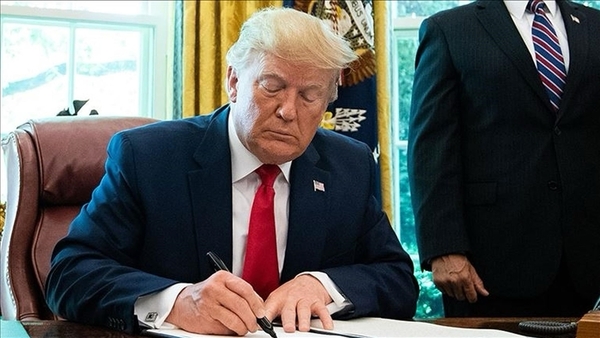
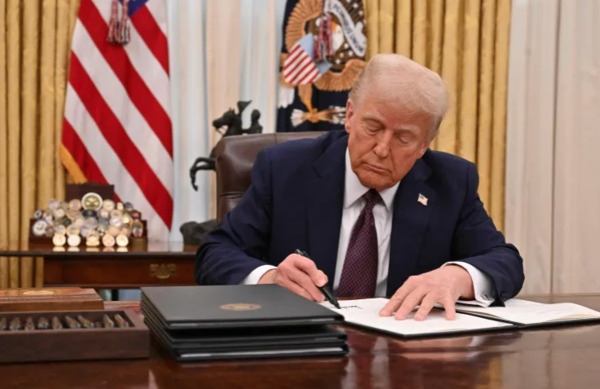
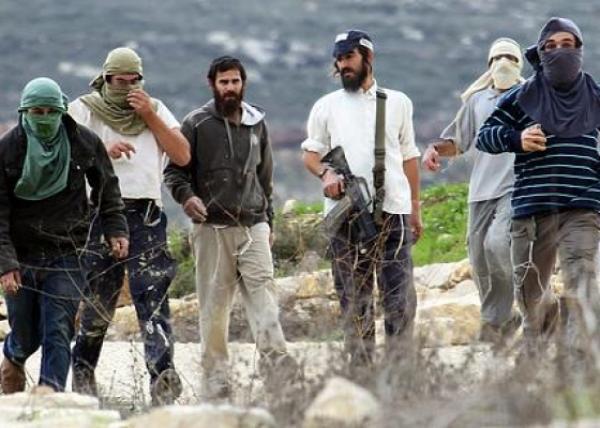
The most dangerous pen after Balfour's pen is Trump's multi-purpose pen. Sometimes he uses it to sign the granting of Jerusalem as the capital of the occupation, sometimes to file lawsuits against the settlers and acquit them of their crimes, sometimes he uses it to compare his office desk in terms of area, and his pen in attracting the world's emotions towards what he called the small area of the entity, and sometimes he threatens and warns countries to stop aid and financial grants, and every hour he comes out with a new decision that shakes the East and the West, and threatens the world with countless hellish plans.

Trump's danger to the world in all economic, political, social and international aspects, is the greatest danger threatening the planet. He is the madness of the frivolous man who, since assuming power, has not cared about his statements and plans that target the global and international system. In particular, a number of his statements targeted Palestine, its cause and its people, especially after his meeting with Netanyahu, where he openly announced his alleged plans aimed at displacing our people outside their land and homeland, and seizing the Gaza Strip not only for the benefit of the entity but also for the benefit of America. This is a form of nonsense that the senile old man of the White House is putting forward. The cause of our people cannot be written off with the stroke of a pen, no matter the status of the pen owner. Because the destiny of peoples is achieved on the ground, there is no possible migration or displacement to any place in The world, and just as larger conspiracies have fallen in the past, this conspiracy will inevitably fall, and these reckless threats are nothing but a blatant rogue form, and malicious intentions that will not be realized.

The danger of the old man of the White House to the entire world is no less than his danger to the cause of our people. He threatens and intimidates continents, neighbors, friends and enemies alike, from the perspective of a deal-maker who deals with the universe as if it were just a deal.

Trump's statements represent a great reward for the occupation government that committed genocidal war crimes in Gaza, and instead of bringing it to international justice and holding it accountable, the old man of the White House comes out to reward Netanyahu and his government, in an effort to ethnically cleanse and displace the Palestinian people, and this is the coming Trump once again, with a more racist policy and blind bias.

Netanyahu's visit to the White House reaped a series of statements, during which he obtained promises in favor of the entity. Everything Trump said was a complete approval of the projects of the extreme racist right. He has exceeded all international and UN norms and laws, and has exceeded the right of the people to self-determination. He thus supports ethnic cleansing and genocide, believing that major issues can be resolved with the stroke of a pen, like Trump's pen, which is pushing the world to become a jungle of monsters, where the strong eat the weak and expel them from their land and seize it.

Who will take Trump's pen from his hand? Before the world becomes more devastated.

OPINIONS

Thu 06 Feb 2025 9:02 am - Jerusalem Time

Trump's Ethnic Cleansing Project: Targeting Palestine, its Cause and Identity

Rassem Obaidat

Rassem Obaidat

Opinion Writer

The upcoming developments are extremely dangerous and cannot tolerate any bickering, a return to the series of incitement and counter-incitement, the achievement of narrow partisan and factional gains, or continued burying one's head in the sand. The American-Israeli project is based on expulsion and displacement, and there is no other project other than it. The Israeli right, along with the most extremists in this Israeli government, does not even recognize the existence of a Palestinian people. Through its parliament, the Knesset, it approved a decision to reject the establishment of a Palestinian state on part of the land of historic Palestine in three readings, and said that the process of canceling such a decision requires 80 votes out of 120, as well as the participation of settlers in the West Bank in voting on this decision. The Talmudic Torah Right, coupled with the American Evangelical Right, are in complete agreement on the project of expelling and displacing the Palestinian people. Trump is covering up his project with “humanitarian” aspects, but it is far from being humane. His country’s two thousand pound guided “MQ84” bombs, which detonate entire residential blocks and penetrate fortifications, and his modern aircraft of the “F-15”, “F-16”, “F-22” and “F-35” models, have burned the land and destroyed residential buildings and all aspects of life in the Strip.

Trump sees the Gaza Strip as an attractive piece of land for speculation and investment in order to achieve economic profits, and therefore this displacement project for the Palestinian people is not just a slip of the tongue, or passing talk in the air. This man, in his first presidency, moved his embassy from Tel Aviv to Jerusalem and considered it the capital of Israel, and brought what was known as the Abrahamic Peace, the series of official Arab normalization with Israel, and said: The Israeli settlements in the West Bank do not conflict with international law. Therefore, his new project to practice forced expulsion, displacement, and ethnic cleansing against our Palestinian people in the Gaza Strip and the northern West Bank, is seen by the right-wing and extremist forces in Israel, in light of the increasing religious and secular extremism in Israel, as a new Balfour Declaration. Balfour, which spoke of what was known as a national homeland for the Jews in Palestine, was implemented by the organized global Zionist movement, as well as unprecedented Western colonial support, exploiting a miserable and collapsing official Arab situation. Therefore, they see in Trump’s project something similar to the Balfour Declaration, and there are possibilities to transform it into a political and security project, and Trump in His threats to Egypt and Jordan, to accept his project and plan, and his saying three times "They will do it... they will do it", he will exert maximum pressure on them, although Egypt and Jordan have categorically rejected this on the political side, but in the context of confronting this dangerous project and plan, neither soft diplomacy nor the language of condemnation and denunciation and speeches that tickle emotions and feelings can thwart this project, as Trump is using his relations and influence over the Arab Gulf states to translate his project into an actual translation on the ground, as he may prevent the Gulf states from carrying out any reconstruction process, and not allowing humanitarian aid to enter the Gaza Strip, which lacks life, and Jordan is targeted more than Egypt, as an alternative homeland, and Trump is pressuring Jordan to cut off the American economic aid allocated to it.

The geographic and demographic engineering projects and plans in the Gaza Strip and the West Bank will not stop, and therefore there is a need for a Palestinian position before the Arab position, decisive and conclusive, in order to thwart these projects and plans, the projects of Judaization, expulsion, displacement and ethnic cleansing.

The American president has many great “feats” in his “love for goodness and justice,” and his “heart” is broken with sadness and pain over the fate of the Palestinian people. The popular saying about the hunter who grills the meat of the birds he has caught applies to him, and tears flow from his eyes because of the smoke emanating from the barbecue grill. Therefore, one should not look at the tears in his eyes, but at what his hands have done. Trump, the real estate broker, who believes that he is the genius who has magical solutions to all the world’s problems, and who appeared like a raging bull, imposes sanctions on this or that country, or customs duties on its goods, as happened with Mexico, Canada, and China. He wants to occupy the island of Greenland and control the Panama Canal, and name the Gulf of Mexico the Gulf of America, and impose the most severe economic sanctions on Iran. Because of his “great love” for the Palestinian people, he wants to expel them and displace them from their land, in a process he calls a fifteen-year convalescence, and he later abandoned that by saying “permanent convalescence,” in order to build The Palestinian people have what they call the "Riviera of the East", as this Trump, who is steeped in racism and extremism, seems "humane", and I think that our Palestinian people, especially the people of the Gaza Strip, will never forget his "exploits", where his half-ton bombs were roasting the flesh of their children and women, blowing up their homes, wiping them out of existence, burning their hospitals and shelters, and depriving them of water, food and medicine. This is the height of "humanity", so how can this Palestinian people be "ungrateful" and refuse this forced "recovery trip"? It is a trip not towards their areas and land from which they were displaced, but rather a new forced displacement trip, despite their will, that Trump wants, in order to build for them "God's paradise" on their land. This Palestinian people, who have experienced American policies and positions that have never brought them good, or supported their injustice, are well aware that what America wants for them is what the leaders of Israel continue to wish for: for Gaza to sink into the sea, or for it to be bombed with nuclear bombs, as he expressed it. A "humanitarian" minister in Netanyahu's government, Amichai Eliyahu, said that Gaza should be bombed with nuclear bombs, and there are those from Trump's Republican Party who share his opinion. The Palestinian people in the Strip, despite all the destruction, bombing, starvation and "killing" of all manifestations of humanity, did not leave or abandon their land, and they returned by the hundreds of thousands to the rubble of their homes destroyed by Trump's planes and smart one-ton bombs, which he is now lifting the ban on supplying to Israel, so that they can once again spread killing and destruction in Palestine and the region.

The people of Gaza tell you with full mouths, “Gaza is not a piece of land for commercial speculation for the sake of investment and making profits. Gaza is the issue of a people searching for a homeland and political and national rights.”

This plan was confirmed by all Palestinian forces, including the Palestinian Authority, Arab and Islamic countries, and many countries of the world, including Western European countries, and members of the Democratic and Republican parties, who rejected this plan, which violates international law and international legitimacy in an unprecedented and brazen manner.

This plan tickled the feelings and emotions of the Israeli government, which is full of extremists who agree and advocate such a destructive plan that lacks the minimum moral and humanitarian standards, and which usurps the will of peoples to determine their fate and sovereignty over their land. It was welcomed by the political level in Israel, which called for planning to implement this plan. The head of the "Jewish Power" party, member of the Knesset Itamar Ben-Gvir, announced that "the chances of his return to the government have increased" after he revealed and called on Prime Minister Netanyahu to announce the adoption of the plan and begin implementing it practically without delay.

For his part, the head of the "State Camp" Benny Gantz commented on Trump's statements, considering them additional proof of the deep alliance between the United States and Israel.

Gantz added: "President Trump has shown, and this is not the first time, that he is a true friend of Israel, and that he will continue to stand by it on important issues to strengthen its security."

He continued: "In his speech, he presented a creative, innovative and striking idea, which must be examined alongside implementing the goals of the war, and giving priority to returning all the kidnapped." US President Trump spoke about his plans for the future of the Gaza Strip.


For its part, the official political establishment in Israel welcomed the US President’s statements the night before last during his meeting with Netanyahu. Finance Minister Bezalel Smotrich said: “Then the nations will say: God has done great things with these people, God has done great things with us, and we rejoice. There is better, there is better. Thank you, President Trump.”

Knesset Speaker Amir Ohana commented, saying: “Good morning Israel, it is the dawn of a new day.”

It is true that it is a crazy plan by a president who suffers from the terminal illness of Zionism, but we must fully realize that this man brought what was known as the “Deal of the Century” in his first term and moved his country’s embassy from Tel Aviv to Jerusalem and recognized it as the capital of Israel. He said that the settlements in the West Bank do not conflict with international law, and therefore thwarting this infernal plan requires a stand of pride, dignity, and genuine and true Arabism, far from statements of condemnation and denunciation, and placing the burden on the helpless international community.

OPINIONS

Thu 06 Feb 2025 9:02 am - Jerusalem Time

The Next Israeli-American Day for Gaza and the West Bank

Nabhan Khreisha

Nabhan Khreisha

Opinion Writer

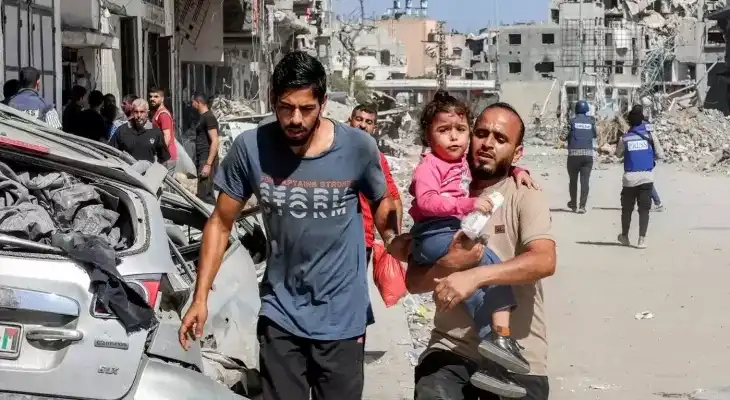
During a joint press conference with Benjamin Netanyahu at the White House, an NBC correspondent asked US President Donald Trump what authority the United States has over the Gaza Strip that allows it to displace its residents to neighboring countries. He answered her with the arrogance of a businessman, that the United States will remain responsible for Gaza in the long term, and this will lead to stability in this part of the Middle East. He continued by saying: "Many of those I spoke to liked the idea of the United States owning that piece of land (the Gaza Strip) and developing it to create thousands of jobs in it. He added: "This land is unattainable for anyone to look at today, with scenes of death, destruction, debris and collapsed buildings everywhere." Netanyahu expressed his support for this idea, describing it as an "original idea"!!

Netanyahu will not hesitate to gift the Gaza Strip to Trump after displacing its residents (if he is able to do so), and if the Trump administration’s pressure on Egypt and Jordan to receive the displaced Palestinians, to build resorts, hotels, casinos and for the white slave trade, bears fruit. But what will Netanyahu get in return? By agreeing to a ceasefire with Hamas and a prisoner exchange with it, Netanyahu replaced the slogan of “absolute victory” after his failure to achieve it with the slogan of “absolute barter.” This was clearly evident in his dismissal of the heads of Mossad and Shin Bet from leading the indirect negotiations with Hamas, and assigning them to the Minister of Strategic Affairs, Trump’s friend, Ron Dermer. This indicates Netanyahu’s vision for the next day in Gaza politically.

Netanyahu is trading Trump for Israel’s commitment to a ceasefire in Gaza, completing the second and third stages, annexing the West Bank or parts of it to Israel, displacing what Israel can displace from it, and ensuring that the United States does not support the establishment of a Palestinian state during the Trump administration’s negotiations with Saudi Arabia to normalize its relations with Israel, in addition to Israel receiving American military and political support to attack Iran to eliminate its weapons capabilities and nuclear program.

Netanyahu also feels the danger of his government disintegrating, in light of the position of his far-right ally Smotrich, who threatens to demolish the temple of the Israeli government and its people if the war on Gaza does not continue. He also feels the danger of the possibility of the end of his political future, in light of the significant decline in his popularity in opinion polls, despite his agreement to a ceasefire and a prisoner exchange deal. Therefore, Netanyahu sees Trump as a savior for him by implementing what he promised regarding Gaza and the West Bank, and in other files related to the Middle East that serve Israel's interests, which will compensate him for the image of the failure in the war on Gaza, by appearing as the one who achieved strategic gains for Israel, and this will serve him in remaining in power if the extremist minister Smotrich carries out his threat to withdraw from the government, as well as in increasing his popularity among Israeli voters, which has declined, as recent opinion polls in Israel have shown, despite his agreement to a ceasefire and the return of Israeli prisoners from Gaza.

Trump’s statements regarding declaring Israeli sovereignty over the West Bank or parts of it are contradictory. He had implicitly indicated in his statements before Netanyahu’s visit to the White House that he supported the annexation of the West Bank to Israel, saying that the area of Israel is very small compared to the areas of countries in the Middle East, comparing it to a pen he held in his hand, comparing it to the area of the desk he was sitting at. However, during the joint press conference with Netanyahu, he announced, in response to a question about whether he recognized Israeli sovereignty over the West Bank, saying, “We will discuss this with representatives of Israel, and people like this idea, but we have not taken a position yet, and we will issue an announcement on this matter in the next four weeks.” He added, “I am not saying anything about two states, or one state, or no state.”

At the same press conference, in response to a question about whether it was possible to reach a normalization agreement with Saudi Arabia without establishing a Palestinian state, Netanyahu said, "Saudi Arabia will help, it wants peace in the Middle East." He added, "I believe that peace between Israel and Saudi Arabia is not only possible, but it will happen." However, Saudi Arabia's response was not delayed regarding the uprooting of Palestinians from Gaza and the annexation of the West Bank to Israel, as the Saudi Foreign Ministry stated in a statement, "The Kingdom rejects the uprooting of Palestinians from their land, and it will not establish relations with Israel without the establishment of a Palestinian state, and this position is non-negotiable."

In response to Trump's statements about "cleansing" Gaza of Palestinians and imposing Israeli sovereignty over the West Bank, the Egyptian and Jordanian responses rejected this, for reasons related to defending the right of Palestinians to live in their homeland in an independent state, and because these plans threaten the national security of both countries. The Egyptian Foreign Ministry announced in a statement that Egypt rejects any infringement on the rights of the Palestinian people, whether through settlement, annexation of land, or by evacuating that land of its owners, through displacement, whether temporarily or long-term, while Jordanian Foreign Minister Ayman Safadi announced Jordan's rejection of any attempt to displace Palestinians, and that it will not accept any solution to the Palestinian issue at Jordan's expense.

The positions of the US administration on the Palestinian people, regarding the day after the Gaza Strip and the West Bank (even if they have not crystallized more clearly yet), these positions indicate that Israel and the United States believe that the Palestinian people are a people superfluous to humanity, and are trying to erase them, ignoring their successes in thwarting dozens of attempts to liquidate them since 1948, and their determination not to have the same fate as the Red Indians, for example. Their population today has reached 13 million people, half of them in the homeland, and the other half in exile, and they are still determined to return and establish their independent state, which confirms the impossibility of erasing their existence, and that the US and Israeli plans are nothing more than “ploughing the sea.”

PALESTINE

Thu 06 Feb 2025 8:48 am - Jerusalem Time

Updated: Israeli occupation continues its aggression on the West Bank governorates

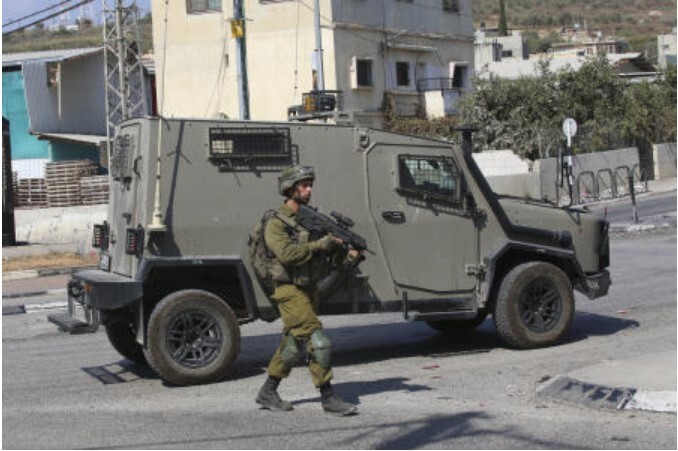
Today, Thursday, the Israeli occupation forces continue their aggression on the West Bank governorates of Tubas, Tulkarm, and Jenin.


**Tulkarm**


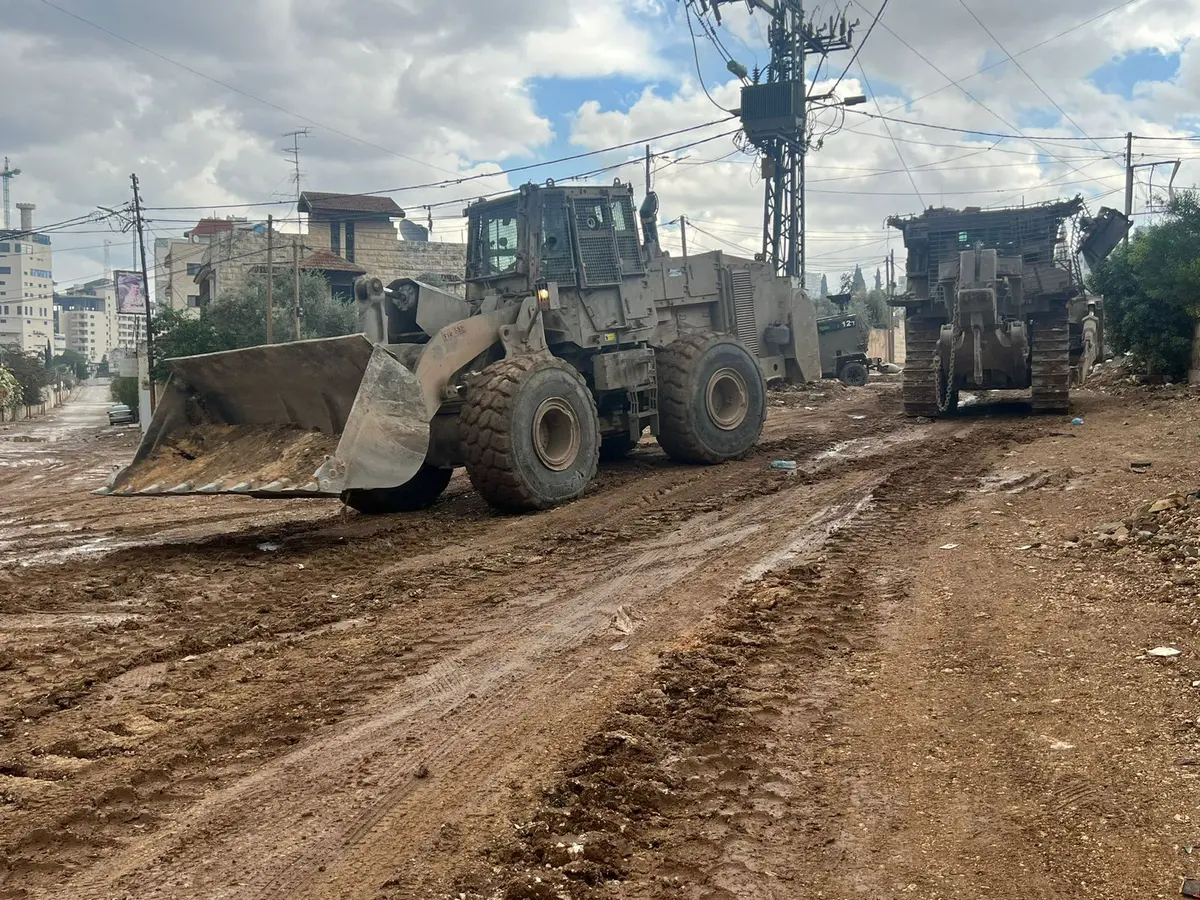
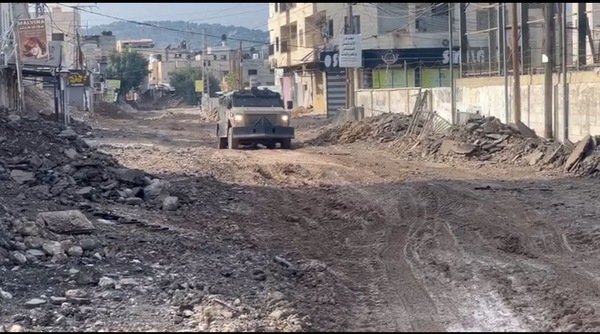
The Israeli occupation forces continued their aggression on the city of Tulkarm and its camp, for the 11th consecutive day, amidst comprehensive destruction, mass displacement, and unprecedented military reinforcements.


After the early hours of dawn, the occupation forces fired randomly and intensively at citizens' homes in Tulkarm camp and Al-Sikka Street near the Iktaba suburb, without any injuries being reported.


WAFA news agency said that the occupation forces continue to push more additional military reinforcements, especially infantry, from the direction of the "Tsnaoz" military camp west of the city, passing through its streets leading to the camp.


She added that these forces are deployed heavily in front of the main northern entrance to the camp, and in the agricultural lands opposite it, and are conducting combing and searching operations there, as they seize several residential buildings surrounding and overlooking the camp, and have turned them into military barracks.

This deployment coincides with the widespread presence of occupation soldiers inside the camp's neighborhoods and alleys, with the deployment of large numbers of sniper teams inside the houses, who lie in wait for everything moving and shoot at it.


The camp is experiencing a tragic situation with a complete siege, including widespread raids on homes by the occupation forces in a barbaric manner, vandalizing and destroying them, and expelling those present in them and threatening them with weapons, which led to the displacement of thousands of residents from all its neighborhoods, leaving only hundreds who live on the outskirts of the camp, specifically the Qaqun neighborhood.


The escalating Israeli aggression on the city and its camp has caused unprecedented and comprehensive destruction in the camp, affecting the entire infrastructure of electricity, water, communications and internet networks, in addition to the total and partial destruction of dozens of homes, shops and institutions, and their exposure to burning and bombing, which has deepened the suffering of the camp and the remaining residents.

Videos and photos captured by citizens inside the camp showed the massive destruction of homes in Al-Ghanem neighborhood, with partially destroyed homes and others completely burned, alleys filled with rubble, dilapidated infrastructure, and an area completely empty of residents, as if the place had been hit by an earthquake.

Citizens who are still in their homes in Qaqun neighborhood, trapped amidst the destruction, have appealed for urgent humanitarian aid to be sent to them, including food, water, medicines for the elderly and those with chronic diseases, and baby milk, especially with the interruption of water, electricity, and basic services as a result of this escalating aggression.

Yesterday, the occupation army prevented the Palestinian Red Crescent Society crews, who were distributing aid to the residents inside the camp, from continuing the distribution process, under the pretext that the deadline it had set for them had expired, and forced them to leave.

In the city of Tulkarm, infantry forces were deployed heavily in the eastern neighborhood of the city, and they raided homes, specifically those located at the Abu Safiya junction adjacent to and close to the camp, while smashing and vandalizing their contents, checking the identities of their residents and subjecting them to interrogation, and converting a number of them into military barracks.

Last night, the occupation forces stationed around the Martyr Thabet Thabet Governmental Hospital fired heavy bullets at the live broadcast cameras of the local "Peace" TV, while they were covering the aggression on the camp, which caused the broadcast to be completely cut off.

A force of infantry soldiers stormed the Al-Adawiya Girls' School building, which is close to the Martyr Thabet Thabet Governmental Hospital, and deployed snipers at its windows, while continuing its siege of the hospital, and using the adjacent Al-Adawiya Commercial Building as a military barracks, amidst a heavy presence of infantry soldiers at its entrances, obstructing the work of ambulances and medical crews.


**Tubas**

Today, Thursday, the Israeli occupation forces continue their storming and siege of the town of Tamoun and the Far'a camp, south of Tubas, for the fifth consecutive day.


The occupation forces continue to send military reinforcements to Al-Far'a camp and the town of Tamoun, while all entrances to the two areas remain closed and a siege is imposed on them.


Water lines are still cut off from the town of Tamoun and the Far'a camp for the fifth day after the occupation forces bulldozed and destroyed water lines and infrastructure, in addition to the power outage in parts of the two areas.


The citizens of Al-Far'a camp and the town of Tamoun are increasingly in need of basic food supplies, in addition to baby milk, due to the ongoing siege, and the occupation forces are still not allowing them to enter, which makes the humanitarian situation very bad.

In the town of Tamoun, the occupation forces continued to raid dozens of citizens’ homes and arrest them. Yesterday, they arrested 11 citizens, in addition to the detention and field investigation operations. The occupation forces also continued to raid many homes in the Far’a camp and destroy their contents.

As the storming and siege continue, dozens of citizens are still forced to flee their homes on the outskirts of the town of Tamoun and the Far'a camp, where the occupation forces have turned them into military barracks.


Over the past two days, the occupation forces have carried out several bombing operations via drones on different areas of the town of Tamoun, which did not result in any injuries. Meanwhile, yesterday, they imposed a curfew in the town of Tamoun through loudspeakers until next Sunday, noting that the citizens have basically been unable to leave their homes since the beginning of the raid.


The town of Tamoun has been facing increasing agricultural losses since the beginning of the invasion due to the farmers’ inability to reach their lands, harvest their crops and care for them. In addition, livestock and livestock breeders have not been able to reach livestock and poultry farms until now, knowing that they need monitoring, watering and feed, which threatens the death of large numbers of them and the occurrence of major losses in this area.


The infrastructure in the town of Tamoun and the Far'a camp is also witnessing major destruction by the occupation bulldozers, coinciding with the ongoing storming and siege.


The occupation's drones and helicopters continue their intensive flights in the skies of Tubas Governorate, as the aggression continues, in which dozens of patrols participate, in addition to bulldozers, heavy machinery, and hundreds of soldiers. The occupation forces also continue to send military reinforcements to Tamoun and Al-Far'a camp.

OPINIONS

Thu 06 Feb 2025 8:47 am - Jerusalem Time

The Crazy!

Ibrahim Melhem

Ibrahim Melhem

Opinion Writer


He talks nonsense, his words roll off his tongue without passing through his mind’s filters, he says whatever comes to mind but no one else does. Do you remember him when he called on Americans to drink chlorine instead of receiving the coronavirus vaccine... What would have happened to the Americans if they had obeyed his orders?

Like a raging elephant storming a pottery shop, or like a train derailing, the real estate mogul appeared in his press conference with his partner in genocide, with his noise, arrogance and infatuation with his victory over his democratic rival, striking all over the world, with orders, decrees and dictates to individuals and entities to liquidate maps, and open squares and prisons without taboos, until his colonialist soul tempted him to restore the glories of the cowboy’s heroism, to ride the highest of his horses and arrogance, to occupy Gaza after displacing its residents and establishing the “Riviera” on its ruins.

Trump's bullying and extravagance in his plans call to mind the popular saying, "A madman throws a stone into a well..."

"Crazy" is the term coined by the American political fox Henry Kissinger decades ago, during Nixon's term, with the aim of terrorizing the world and giving him a free hand in implementing his policies, so that he would not be questioned about what he was doing.

In his second term, Trump is reviving the Kissingerian recipe to produce a savage Trumpism that does not adhere to morals or laws, and is not curbed by anything to rein in its arrogance or curb its impetuosity.

It is not right to judge the noisy man who has no companion but Trump himself, without going back to his first term, during which he pulled out the “Deal of the Century” from his pocket, and awarded it to his son-in-law Kushner. This is the plan in which he threatened the Palestinian people with displacement, and he began holding conferences to mobilize positions and resources to implement it, but it soon dissipated with his humiliating exit from the White House, and became like the rest of the tattoos on the back of the hand.

If there is one single merit in the appearances and chatter of the eccentric man, it is the live ammunition test of the steadfastness of international support for the Palestinian cause at a critical existential moment. If the Authority had resorted to Hollywood and the largest American advertising companies to shed light on the Palestinian injustice, it would not have done what Trump did, who was subjected to a roaring torrent of condemnations and positions affirming the right of the Palestinian people to establish their state.

Among the courageous Arab and international positions, the Saudi position stands out, responding quickly and boldly: “No relations with Israel without the establishment of a Palestinian state.”

PALESTINE

Thu 06 Feb 2025 8:46 am - Jerusalem Time

Trump threatens to occupy Gaza...colonialism emerges again

Dr. Hussein Al-Deek: Trump’s statements about displacement and occupation of Gaza are not individual efforts, but rather part of deep secret understandings between the American and Israeli right

Dr. Dalal Erekat: Trump’s statements reflect an ideological vision that adopts the colonialist ideology in its modern, pragmatic guise to end the Palestinian cause

Nour Odeh: The real danger lies in the mentality that Trump uses in dealing with the Palestinian issue, as if the Palestinian people were a transient group of the population.

Dr. Abdul Majeed Suwailem: Conclusive evidence of the existence of an old plan to liquidate the Palestinian cause that did not begin after October 7, 2023, as some believe

Hani Abu Al-Sabaa: American efforts to play a pivotal role in the so-called “building of the new Gaza” take on a colonial and economic character at the same time


In light of the recent statements made by US President Donald Trump regarding the displacement and occupation of the Gaza Strip, questions arise about the seriousness of these statements and the possibility of implementing them, especially since they came before the start of the second phase of the prisoner exchange deal and ceasefire in the Gaza Strip.

In separate interviews with “I,” writers, political analysts, specialists, and university professors confirm that these statements, which contradict international laws, reflect deep coordination between the American right and the Israeli right, and reveal strategic plans aimed at reshaping the political geography of the Middle East in favor of the Zionist project.

They point out that these statements are in the context of Trump's support for the Zionist lobbies that helped him come to power, which raises fears that they will turn into actual policies on the ground.

They point out that these statements are not just individual opinions, but rather express a colonial ideological vision that aims to liquidate the Palestinian cause once and for all, by talking about displacing Palestinians and turning Gaza into an investment zone. This vision seeks to abolish the Palestinian national identity and impose coercive solutions that do not take into account the rights of the Palestinian people to self-determination. These statements represent a flagrant violation of international law, especially the Fourth Geneva Convention, which prohibits forced displacement.

They stress that the Palestinian people, who have a long history of resisting occupation, will not accept the imposition of a new reality that threatens their existence and rights, and that diplomatic and legal moves can constitute effective tools to expose these policies and pressure the US administration to stop them.


Trump's statements are consistent with his promises to the Zionist lobbies


The writer and political analyst specializing in American affairs, Dr. Hussein Al-Deek, confirms that the statements of US President Donald Trump regarding the displacement of the people of the Gaza Strip and its occupation did not come as a big surprise, as they are consistent with his previous promises to the Zionist lobbies in the United States during his election campaign.

Al-Deek explains that Trump had previously made several pledges to Israeli Prime Minister Benjamin Netanyahu, but those pledges did not receive wide international media coverage despite their seriousness.

Al-Deek points out that talk about American security companies and mercenaries that he plans to manage in the Gaza Strip is not new, as it was discussed in the American media several months ago. However, what is new in Trump’s statements is his public coming out with these ideas, which clearly reveal his future aspirations, which are represented in the control of American security companies or even the Marines or any other American forces over the Gaza Strip.

What is more dangerous, as Al-Deek explains, is that these statements include clear incitement to the forced displacement of two million Palestinians from Gaza, by settling them in countries such as Egypt, Jordan, and perhaps other countries.

Al-Deek believes that this proposal reflects a renewed colonial vision that completely contradicts international laws and UN agreements that prohibit such practices.

According to Hussein Al-Deek, Trump’s statements cannot be considered mere personal opinions or political proposals, but rather amount to public incitement to commit war crimes, according to international law, as they represent an explicit call to violate Article 49 of the Fourth Geneva Convention of 1949, which prohibits the individual or mass forced displacement of populations, and prohibits the transfer of citizens of the occupying state to the occupied territories.

Al-Deek believes that such statements, issued by the president of the most powerful country in the world, reveal an unprecedented level of “political foolishness and impudence,” noting that the matter requires broad Arab and international action to respond to them, as these statements are not limited to the political aspect only, but carry legal and criminal dimensions that can be relied upon to file complaints against Trump before the International Criminal Court on charges of incitement to commit war crimes.


Palestinian and Arab movement at the official and popular levels


Al-Deek calls on the Arab countries, the Arab League and the PLO to take firm political and diplomatic positions to confront these dangerous statements, but he believes that the movement should not be limited to the official level only, but should include popular and mass movements in the capitals of the world, especially in front of American embassies and consulates.

He points out that the aim of this is to send a strong and clear message to the US administration that the Palestinian people are not an easy target whose fate can be manipulated, and that they have the right to self-determination and to establish their independent state on their historical land.

Al-Deek stresses that any attempt to impose American or foreign control over the Gaza Strip, whether through military forces or private security companies, will be met with widespread Palestinian popular rejection, and will be considered an illegitimate occupying force. The Palestinians have long experience in resisting occupation and will not hesitate to confront any foreign forces seeking to dominate their lands.

Despite the seriousness of Trump's statements, Al-Deek believes that the United States is not about to occupy the Gaza Strip officially and directly, as Washington is well aware of the consequences of such a step, especially after its harsh experience in Iraq and Afghanistan, where it suffered enormous human and material losses.

The real goal, according to Al-Deek, is to serve the agenda of the extreme Israeli right led by Netanyahu, and to enhance Israel's security by implementing strategic plans that serve the interests of the Zionist project in the region.

Al-Deek believes that Trump’s statements, which came after his meeting with Benjamin Netanyahu, are not merely individual efforts, but rather part of deep secret understandings between the American right and the Israeli right. These understandings clearly appeared during the meetings between Trump and Netanyahu, and Netanyahu had previously spoken about them publicly from the United Nations platform, where he declared that he seeks to change the face of the Middle East.

Al-Deek points out that these statements reflect political and strategic coordination between the two parties, aiming to reshape the political geography of the region in a way that serves Israeli interests.

However, Al-Deek believes that these plans will remain mere wishes and will not become a reality on the ground due to the steadfastness of the Palestinian people and their adherence to their right to their land.

Al-Deek stresses that the Palestinian people will continue to resist any attempt to impose a new reality at the expense of their national rights, whether this threat comes from the United States or any other power.


Crowning of genocide crimes against the Palestinian people


Dr. Dalal Erekat, Professor of Diplomacy and Conflict Resolution at the Arab American University, believes that Trump’s statements regarding controlling Gaza and displacing its residents do not reflect a mere passing political position, but rather express a dangerous ideological vision that adopts the colonialist ideology of replacement in its modern, pragmatic guise to end the Palestinian cause.

Erekat explains that these statements are not isolated from the context of previous US policy in Trump's first term, as they reflect the same approach that Trump followed on issues such as Jerusalem and settlements, by imposing facts on the ground by force, in flagrant violation of international law and the United Nations Charter.

Erekat points out that Trump's vision, according to international law, represents the crime of forced displacement of the Palestinian people, the crime of forcible seizure of land, and the promotion of the crime of collective punishment, all of which are classified as war crimes.

Erekat believes that what is happening today in Gaza, from a stifling siege, widespread destruction and systematic killing, is completely consistent with this policy that aims to destroy the foundations of Palestinian life and force the Palestinians to accept coercive solutions that do not meet their national aspirations, stressing that Trump’s statements are nothing but the culmination of the crimes of genocide that have been committed against the Palestinian people for decades.

Erekat stresses that confronting this danger requires urgent action at all levels: political, legal and media, calling for exposing these aggressive policies to the international community and exposing their plans that aim to liquidate the Palestinian cause, noting that international silence towards these statements and policies may be interpreted as indirect complicity in the crimes committed.


A deep-rooted movement seeking to re-impose colonial hegemony


Erekat points out that although Trump's statements do not necessarily reflect the position of the current US administration, they reveal the existence of a deep-rooted political current within the United States that seeks to reimpose colonial hegemony over Palestine and the world.

She believes that this trend poses a threat not only to the Palestinians, but to the entire international system, because it promotes policies that contradict the principles of international law and human rights.

Erekat stresses that international law is clear in rejecting any claim to ownership of occupied lands or imposing illegal guardianship over them, and any attempt of this kind constitutes a flagrant violation of the Geneva Conventions and the United Nations Charter.

Erekat considers that what is happening in Gaza today in terms of siege, starvation and destruction of infrastructure is a blatant form of collective punishment that is internationally prohibited, as these methods are used as political tools to force surrender or push Palestinians towards forced displacement.

Erekat points out that these practices put the United States in a position hostile to international law, which gradually isolates it from the international system based on legitimacy and law.

Erekat links Trump's statements to his recent meeting with Israeli Prime Minister Benjamin Netanyahu, stressing that this meeting reveals a deep agreement between the American and Israeli far right on the agenda of liquidating the Palestinian cause.

Erekat explains that Trump's vision not only ignores Palestinian rights, but also deliberately ignores the fact that Palestinians are not just "residents" who can be displaced or replaced, but rather an indigenous people seeking to build their independent state and develop Gaza as a thriving economic center, not a permanent battlefield.

Erekat stresses that Trump's statements represent an existential threat to the Palestinian cause, as they aim to liquidate it and eliminate the political rights of the Palestinian people, most notably their right to self-determination.

Erekat believes that these statements are not just election rhetoric, but rather public encouragement to commit war crimes against the Palestinians, which requires a unified Palestinian response and broad international support, especially from influential countries such as Saudi Arabia and France, to lead an international coalition that exposes the danger of these policies and works to thwart them through available legal and political tools.


Statements whose risks go beyond displacement or the possibility of annexation


Writer, political analyst, and specialist in diplomatic affairs and international relations, Nour Odeh, warns of the danger of Trump's recent statements, which go beyond the idea of displacing Palestinians from the Gaza Strip or even the possibility of annexing the West Bank.

Awda believes that the real danger lies in the mentality with which Trump is dealing with the Palestinian issue, which reflects a dangerous colonial vision that treats the Palestinian people as if they were merely a transient group of people who can be transferred and resettled elsewhere without regard to their history, national identity, or political rights.

Awda asserts that the way Trump spoke about the Palestinians expresses a mentality outside the context of international law and human history, as he treats the Palestinians as if they were a people without roots, who have no affiliation or historical right to their land. This approach represents an existential threat to the Palestinian people because it denies their existence as a national entity with internationally recognized rights, and attempts to reduce their cause to a mere “population problem” that can be solved by paying money and providing job opportunities elsewhere, without recognizing their right to self-determination or to return to their land.

Awda points out that this mentality applies to the West Bank, and the possibility of dealing with the Palestinian presence there as a “population problem,” especially in light of the systematic destruction of Jenin, Tulkarm, and others.

Awda says: “We are facing a discourse that does not recognize the political rights of the Palestinians, but rather reduces their existence to economic considerations, and this is the real danger, because dealing with the Palestinians in this way means canceling their identity, history, and legitimate struggle for freedom and independence.”

Awda links Trump’s statements to a broader vision that goes beyond mere military occupation or direct displacement, as she sees the current American-Israeli project as seeking to achieve its goals through economic and investment strategies.

Awda explains that Trump does not view Gaza as a humanitarian or political issue, but rather as an economic site that can be invested in to serve the interests of those close to him, including Jared Kushner, his son-in-law and former advisor, who stated at the beginning of the aggression on Gaza that “the only solution for Gaza is to displace its residents and turn it into an investment area full of resorts and villas on the beach.”

Awda believes that this concept is not just a passing idea, but rather part of a comprehensive plan that seeks to empty Gaza of its original inhabitants and reshape it to serve the interests of investors linked to the Trump administration.

“We should not underestimate these statements because they reflect a real vision that has a direct impact on American decision-making, especially in light of the complex network of political, ideological, economic and family interests that link Trump to Israeli circles of influence,” Awda said.

Awda asserts that occupation or modern colonialism is not necessarily implemented by sending soldiers only, but can be achieved through economic acquisition, control of resources, and preventing any economic recovery process in Gaza.

She points out that talk of sending US Marines to Gaza may be unlikely for reasons related to US domestic politics, but that does not negate the danger of the project based on subjugating the Gaza Strip through an economic blockade and restricting the reconstruction process in favor of American and Israeli investors.

Awda believes that Trump is not just an ordinary American president, but rather the leader of a heterogeneous coalition that includes different parties united by one goal: achieving political and economic gains at the expense of the Palestinian cause.

Awda explains that this alliance includes a group of right-wing extremists and major funders such as Miriam Adelson, who gave more than $250 million to Trump’s election campaign in exchange for his commitment to support extremist Israeli policies, including recognizing the annexation of the West Bank.

Awda points out that Netanyahu is well aware of how to exploit this situation. He is adept at reading the American political arena and knows how to play on the strings of economic interests and ideological extremism within the Republican Party. Awda says: “Netanyahu sees the Trump era as a golden opportunity to achieve the goals of the Israeli extreme right, and he does not hesitate to exploit this opportunity to the maximum extent possible.”


Palestinians face historic challenge


Awda asserts that the Palestinians are facing a historic challenge that requires them to go beyond traditional discourse and respond immediately with practical plans on the ground.

Awda believes that political statements and diplomatic objections are no longer sufficient to confront this existential threat, calling for a re-evaluation of Palestinian strategies to confront the project of liquidating the national identity.

"We need real practical action that goes beyond mere statements," Awda says. "The issue is no longer just a defense of the Gaza Strip or the West Bank, but rather an existential battle that threatens the entire Palestinian national identity."

Awda asserts that “not dealing with these threats seriously will make the Palestinian cause a mere historical memory in nostalgia books,” calling for deep and serious thinking about how to protect the Palestinian presence politically and geographically in the face of a new colonial project that uses the economy as a cover to achieve its goals of controlling the land and reshaping it to serve specific economic and strategic interests.


An excuse for the Israeli right to move from Gaza to the West Bank


Writer and political analyst Dr. Abdul Majeed Sweilem believes that US President Donald Trump’s statements regarding controlling Gaza and displacing Palestinians from it express a dangerous essence related to the American position on the Palestinian issue, and may be the most dangerous in the history of American policy towards Palestine, pointing out that they reveal a clear agreement between the American and Israeli right to liquidate the Palestinian issue decisively and finally, regardless of the means and methods used.

Suwailem explains that what Trump said is considered conclusive evidence of the existence of an old plan to liquidate the Palestinian cause, which did not begin after October 7, 2023, as some believe.

Suwailem asserts that this plan targets the entire Palestinian cause, not just Gaza or Hamas, warning that Trump’s statements give the Israeli right a pretext to move from Gaza to the West Bank, which means a threat of mass displacement and new ethnic cleansing of the Palestinians.

Suwailem explains that the plan to liquidate the Palestinian cause is a well-thought-out American-Israeli plan whose features began to appear clearly years ago, pointing out that October 7, 2023, was only a station in the context of this plan, and not its starting point, noting that the Palestinians must sense the danger of these developments to the future of their national cause.

Suwailem points out that this plan is not directed against the Palestinians only, but rather poses a direct threat to Jordan, Egypt, and perhaps Saudi Arabia as well, which explains the decisive positions recently taken by the Kingdom of Saudi Arabia.

Suwailem believes that the Saudi reaction reflects a deep understanding of the extent of the real danger threatening the entire region, not just Palestine.

Suwailem believes that Trump's statements are an expression of political ignorance and strategic stupidity, noting that they reveal a lack of understanding of the nature of the conflict in the region and the Palestinian people's adherence to their national rights.

Suwailem believes that these statements will quickly fall, not only because they threaten the Palestinians, but because they represent a threat to the interests of major Arab countries.


Clear confusion in American policy

Suwailem expects Trump to retract his statements, noting that such confused positions will make him the subject of international ridicule, just as happened with his previous positions regarding Mexico and Canada.

Suwailem asserts that American policy, as reflected by Trump, is clearly in turmoil, noting that the United States may pay a heavy price for this reckless political approach.

Suwailem believes that what Trump said reflects a deeper crisis in the structure of the American system itself, likening this stage to the rise of fascism in Europe in the 1930s.

Suwailem points out that "Trumpism" is not just a passing political phenomenon, but rather expresses a phase of deterioration in the American capitalist system, noting that this deterioration may lead to major transformations on the international scene.

He points out that the current American crisis is not merely the result of political mistakes, but rather reflects a stage of decay in the entire Western capitalist system.

Suwailem asserts that Trump's statements redefine global alignments, as it has become clear that the world has two choices: either stand with Israel, which practices murderous and brutal policies, or with Palestine, which is struggling for its just rights.

Suwailem believes that these statements may serve the Palestinian cause indirectly, because they clearly reveal the true face of American-Israeli policies towards the Palestinian people and their legitimate rights.


Colonial and economic character


Writer, political analyst and specialist in Israeli affairs, Hani Abu Al-Sabaa, confirms that Trump’s statements about the displacement and occupation of Gaza are not merely passing political positions, but rather reflect dangerous trends that are in line with the vision of the extreme Israeli right and seek to impose a new reality in the Middle East, by pressuring the Palestinians to accept forced or voluntary displacement.

Abu Al-Sabaa points out that the United States, through these trends, does not only aim to pressure the people of Gaza, but also seeks to play a pivotal role in what is called “building the new Gaza,” which reveals American intentions that go beyond the humanitarian dimension to take on a colonial and economic character at the same time.

According to Abu Al-Sabaa, the Palestinian response to these threats is clear and evident, as the Palestinian people have expressed their adherence to their land, despite all the pressures and occupation practices.

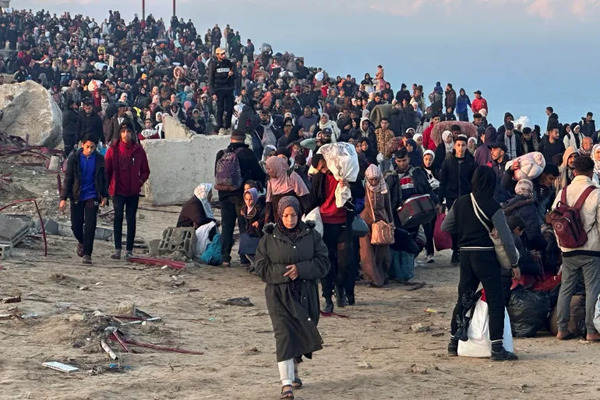
Abu Al-Sabaa points out that the return of Palestinians from southern Gaza to its north after the recent truce is a strong message to the world confirming that this people will not abandon its land, no matter the challenges.

Abu Al-Sabaa stresses the necessity of uniting the Palestinian ranks in confronting these plans, calling on the Palestinian Authority to assume its responsibilities in exposing American crimes and tendencies on the international scene.

He praised the Arab positions rejecting these policies, referring to the statements of Egyptian President Abdel Fattah el-Sisi, who clearly confirmed his rejection of the idea of displacement, in addition to the position of Jordanian King Abdullah II, who stressed that "Jordan is for Jordanians and Palestine is for Palestinians."


Features of a new American project


Abu Al-Sabaa believes that Trump's statements reflect the features of a new American project that aims to reshape the region. This project is not limited to the Gaza Strip only, but extends to include the West Bank and perhaps parts of neighboring Arab countries.

Abu Al-Sabaa asserts that the pressures exerted by the United States today are not new, but they have begun to take on a more obvious character in line with Israel’s ambitions, pointing out that Palestinian wounded and their companions leaving for treatment abroad are being asked to sign pledges not to return to the Gaza Strip, which is a dangerous indication of a real intention to impose a new demographic reality in the Strip.

However, Abu Al-Sabaa believes that these plans will ultimately fail in the face of the steadfastness of the Palestinian people and their adherence to their land and rights.

Abu Al-Sabaa asserts that the Palestinian people have enough will and patience to confront such plans, citing the popular saying among Gazans: “Whoever came to this land last, should leave first,” referring to the Israeli settlers who settled in Palestine at the expense of the indigenous population.

He points out that what Trump wants clearly intersects with the vision of the leaders of the extreme Israeli right, such as Bezalel Smotrich, who spoke openly about a new map for Israel that extends even into Jordanian territory.

Abu Al-Sabaa points out that Israel tried during the last war on Gaza to expand the scope of its settlement control, but failed to achieve this due to the fierce Palestinian resistance.

Abu Al-Sabaa believes that during the war on Gaza, the United States used covert means to impose its influence, such as the “floating port” that was announced as a means of transporting humanitarian aid, but was in fact intended to bring in special forces to liberate Israeli prisoners. However, this attempt failed, and the bridge was dismantled after the Palestinians realized its true nature.

According to Abu Al-Sabaa, Trump is not a politician as much as he is an economist who seeks to exploit political issues to achieve economic gains.

Abu Al-Sabaa believes that Trump's statements about the Gaza Strip stem from his desire to ensure a major American role in the reconstruction of the Strip, as he realizes that reconstruction projects will be very profitable, especially in light of the willingness of some Arab countries to contribute to these efforts.

Abu Al-Sabaa points out that Trump is trying, through these statements, to pressure Arab countries to accept his plans, exploiting the weakness of official positions that are still “timid” and do not rise to the level of the challenges facing the Palestinian cause.

Abu Al-Sabaa points out that Trump’s statements about the displacement of Palestinians are completely consistent with the policies he followed during his first term in office, when he took unprecedented steps to support Israel, such as moving the US embassy to Jerusalem and recognizing Israeli sovereignty over the occupied Golan Heights. Today, Trump is strengthening his support for Israel by lifting sanctions on settlers and opening weapons depots to support the Israeli army, support that was not available with the same strength during the Biden administration.

Abu Al-Sabaa believes that the next stage will be a stage of trying to impose the American-Israeli vision on the region, by pressuring the Palestinians and Arab countries to accept displacement plans and liquidate the Palestinian cause.

Abu Al-Sabaa stresses that the ultimate goal of these policies is to eliminate the dream of establishing an independent Palestinian state on the 1967 borders, calling for unifying Palestinian and Arab positions to confront these challenges.


ARAB AND WORLD

Thu 06 Feb 2025 8:45 am - Jerusalem Time

Trump administration officials somewhat back away from his Gaza takeover proposal

Senior Trump administration officials have walked back several elements of the president’s proposal to “take over” Gaza and expel the Palestinian population, insisting that he did not commit to using U.S. forces to clear the area and that any transfer of Palestinians would be temporary.


Trump's outrageous proposal to transfer up to 2 million Palestinians from Gaza and seize and redevelop it as American territory drew immediate opposition Wednesday from key U.S. allies and partners around the world, many of whom have expressed support for a Palestinian state. Experts have called the idea a violation of international law and a war crime.


Less than 24 hours after Mr. Trump rolled out the plan, senior administration officials sought to water it down, with Mr. Trump’s spokeswoman, Caroline Levitt, saying that while the president had made a “historic proposal for the United States to take control of Gaza,” he had “not committed” to sending American troops “yet.”


“It has been made very clear to the president that the United States needs to be involved in this rebuilding effort,” Levitt said Wednesday. “That does not mean putting boots on the ground in Gaza. It does not mean that American taxpayers will fund this effort.”


Levitt also added that Trump wants to see Palestinians living in Gaza "temporarily resettled" in order to rebuild the Strip.


The spokeswoman confirmed that Trump said that "the United States will not fund the reconstruction of Gaza. His administration "will work with our partners in the region to rebuild this area."


For his part, US Secretary of State Marco Rubio announced on Wednesday that President Trump wants the Palestinians to temporarily leave Gaza until the Strip is reconstructed.


Rubio told reporters during a visit to Guatemala that Trump's offer, which sparked worldwide condemnation, "was not hostile, it was, I think, a very generous move, an offer to rebuild and oversee the reconstruction."


He added that Trump offered "a willingness to intervene, to remove the rubble and clean the place of all the destruction on the ground, to clean it of all the unexploded ordnance."


"In the meantime, the residents will not be able to live there while teams enter and remove the debris," he added.


He stressed that Trump wants to support "rebuilding homes and businesses and the like, so that people can return to live there."


US Defense Secretary Pete Hegseth, National Security Advisor Michael Waltz, and House Speaker Mike Johnson, all of whom are indebted to the pro-Israel lobby AIPAC, have also enthusiastically supported Trump's proposal to expel Palestinians to places outside Palestine, insisting that the United States must do everything it can to ensure that there is no security threat to Israel from anyone.


It is noteworthy that when Trump announced his proposal for the United States to take ownership of Gaza on Tuesday, it shocked even senior members of the White House and government.


While his announcement seemed formal and thoughtful — he read the plan off a sheet of paper — his administration did not do even the basic planning to examine the feasibility of the idea, according to four people familiar with the discussions who were not authorized to speak publicly, according to The New York Times.


As President Trump pushes a new plan to take control of Gaza and evacuate the territory, home to about two million people, he is pushing the United States deeper into a region where his family has a growing array of real estate and business interests.


No part of the world is more important to the growth of the Trump family’s various business ventures than the Middle East, including Saudi Arabia, Qatar, the United Arab Emirates and Israel, when you include President Trump’s entire investment portfolio and his son-in-law, Jared Kushner. Here’s a look at the family’s interests in the region and Mr. Trump’s Gaza proposal.


Trump declared on Tuesday that the United States should take control of Gaza and permanently remove the entire Palestinian population from the devastated coastal strip.


Trump suggested that resettling the Palestinians would be more like the New York real estate projects on which he built his career. “If we could find the right piece of land, or several pieces of land, and build some really beautiful places with a lot of money in the area, that would be a sure thing,” he said. “I think that would be a lot better than going back to Gaza.”


The Middle East has become the Trump family’s most lucrative place for new international real estate deals in the past three years. Most of these are so-called branding deals, which collectively earn the Trump family tens of millions of dollars in fees for the right to use the name to help boost sales of luxury condos, golf courses or hotels.


Recent agreements have been signed with a Saudi-based real estate company called Dar Al Arkan to build high-rise luxury apartments, golf courses or hotels in Oman, Saudi Arabia and Dubai.

PALESTINE

Thu 06 Feb 2025 8:42 am - Jerusalem Time

The Minister of the Occupation Army is preparing a plan to displace the people of Gaza

Israeli Defense Minister Yisrael Katz has instructed the military to prepare a plan to allow Gaza residents to leave voluntarily.


Katz claimed that Gaza residents should be allowed to enjoy freedom of exit and immigration as is customary everywhere in the world - and the plan will include options for exit via land crossings as well as special arrangements for exit by sea and air.


Katz welcomed the bold plan put forward by US President Trump, which could allow a large number of Gaza residents to leave to different places in the world.


He added that countries such as Spain, Ireland, Norway and others, which have leveled false accusations and conspiracies against Israel because of its activities in Gaza, are legally obligated to allow every resident of Gaza to enter their territory - and their hypocrisy will be exposed if they refuse to do so.


He said there are countries like Canada, which has an organized immigration program, and which have expressed in the past their desire to absorb the population from Gaza.


He claimed that US President Trump's bold plan could create broad options for the departure of Gazans who might be interested in doing so, and also help them to be optimally absorbed in the target countries, as well as enable the progress of reconstruction plans in a demilitarized and threat-free Gaza in the post-Hamas era - which will continue for many years.

PALESTINE

Wed 05 Feb 2025 9:56 pm - Jerusalem Time

Israeli occupation sends military reinforcements to Tulkarm camp amid widespread field escalation

This evening, Wednesday, the Israeli occupation forces sent more additional military reinforcements, especially infantry, to Tulkarm camp, in light of the ongoing Israeli aggression against it and the city for 10 days.

Our correspondent said that infantry forces were deployed in large numbers in front of the main northern entrance to the camp, and were deployed in the agricultural lands opposite it, and conducted combing and searching operations there, after seizing several residential buildings surrounding and overlooking the camp and turning them into military barracks.

A short while ago, the occupation forces stormed Al-Adawiya Girls' School, which is near Al-Shaheed Thabet Hospital, and deployed snipers at its windows.

She added that this deployment coincides with the widespread presence of occupation soldiers inside the camp's alleys and neighborhoods, with the deployment of large numbers of sniper teams inside the houses, who lie in wait for everything moving and shoot at it.

The occupation forces continue to impose a tight siege on the camp, amidst extensive raids on homes in a barbaric manner, vandalizing and destroying them, and expelling those present in them and threatening them with weapons, which led to the displacement of thousands of residents from all its neighborhoods, leaving only hundreds who live on the outskirts of the camp, specifically the Qaqun neighborhood.

The escalating Israeli aggression on the city and its camp has caused unprecedented and comprehensive destruction in the camp, affecting the entire infrastructure of electricity, water, communications and the internet, in addition to the total and partial destruction of dozens of homes, shops and institutions, and their exposure to burning and bombing, which has deepened the suffering of the camp and the remaining residents.

Citizens from inside the camp were able to monitor the massive destruction that befell the homes in Al-Ghanem neighborhood. A video clip showed partially destroyed homes and others completely burned, their alleys filled with rubble, dilapidated infrastructure, and an area completely empty of residents, as if the place had been struck by an earthquake.

Citizens who are still in their homes in the Qaqun neighborhood, trapped amidst the destruction, continue to appeal for urgent humanitarian aid to be sent to them, including food, water, medicine for the elderly and chronically ill, and baby milk, especially with the interruption of water, electricity, and basic services as a result of this escalating aggression.

Eyewitnesses told WAFA that the situation inside the camp is catastrophic, and the situation is getting worse day after day, in light of the occupation’s deliberate cutting off of the camp from the outside world, preventing aid from reaching the residents, and spreading fear and terror among them by firing live ammunition at homes, putting their lives at risk.

The occupation army prevented the Palestinian Red Crescent Society crews, who were distributing aid to the residents inside the camp, from continuing the distribution process under the pretext that the deadline it had set for them had expired, and forced them to leave.

Today, the forced displacement of entire families from inside the camp towards the city continued under threat of arms, amid the efforts of the Palestinian Red Crescent Society crews who work daily to evacuate the elderly and the sick and transport them to the shelters spread throughout the city and its suburbs and a number of villages and towns in the governorate.

In the city of Tulkarm, infantry forces were deployed heavily in the eastern neighborhood of the city, and they raided homes, specifically those located at the Abu Safiya junction adjacent to and close to the camp, while smashing and vandalizing their contents, checking the identities of their residents and subjecting them to interrogation, and converting a number of them into military barracks.

In a new development, the occupation forces stationed around the Martyr Thabet Thabet Governmental Hospital fired heavy bullets at the live broadcast cameras of the local "Peace" TV, while they were covering the aggression on the camp, which caused the broadcast to be completely cut off.

The occupation forces continue their siege of the Martyr Thabet Governmental Hospital, and are using the adjacent Al-Adawiya Commercial Building as a military barracks, with a heavy presence of infantry soldiers at its entrances, obstructing the work of ambulances and medical crews.

Large crowds of our people in the suburbs of Artah and Dhnaba bid farewell to the bodies of the two martyrs, Wahid Omar Wahid Madi from Tulkarm camp, and Ayman Naji from Artah, who were among four martyrs who were killed during the Israeli aggression on the city and its camp.

ARAB AND WORLD

Wed 05 Feb 2025 7:30 pm - Jerusalem Time

New Jewish Narrative Unequivocally Denounces Trump's Gaza Plan

The New Jewish Narrative, a prominent American Jewish progressive organization, issued a statement on Wednesday denouncing US President Donald Trump's plan to seize the besieged Palestinian Gaza Strip and expel Palestinians from it.


“We are appalled and appalled by President Donald Trump’s reckless proposal that the United States participate in the forced displacement of Palestinians from Gaza – a clear endorsement of ethnic cleansing,” said a statement from the organization, which represents the young American Jewish line supporting the Palestinian cause.


“This proposal is not only morally repugnant but also a flagrant violation of international law,” the statement said, adding, “Forcible displacement of the population (of Gaza) is a war crime. Any attempt to carry out such atrocities would be an unequivocal crime against humanity, further destabilizing an already devastated region and inflicting unimaginable suffering on millions of people.”


“President Trump’s manufactured concern about the humanitarian conditions in Gaza rings hollow,” the statement said. “On the same day he made these remarks, he signed an executive order reinforcing the ban that bars the United States from funding UNRWA, the largest provider of humanitarian assistance in the Strip. This comes in the same week that his administration destroyed USAID, which provides vital support to humanitarian and peacebuilding initiatives in the region. Taken together, these actions reveal the administration’s real agenda: not peace or stability, but annexation and exploitation.”


“There is a name for the forced displacement of a civilian population. It is ethnic cleansing, and it is a war crime,” said Hadar Suskind, chairman and CEO of New Jewish Narrative. “The Gaza Strip is not an opportunity for our real estate developer to enrich himself and his friends. It is home to two million Palestinian men, women, and children. We call on Congress to make clear that the United States will not continue this illegal and immoral act.”


Experts warn that Trump’s idea, if seriously pursued, would be the broadest and most costly commitment of U.S. military forces to the Middle East since the U.S. invasion and reconstruction of Iraq more than two decades ago. It would be a stunning reversal for a president who first ran for office in 2016 denouncing nations and vowing to extricate the United States from the Middle East.

Former US negotiator Aaron Miller, now at the Carnegie Endowment for International Peace, warns that the idea of taking over Gaza would push the United States into the heart of the Israeli-Palestinian conflict in a way that presidents since Harry Truman have tried to avoid.


The United States has long supplied Israel with weapons, supported it diplomatically and financially, pushed for normalization agreements between Israel and some Arab states and tried to broker peace deals. Several hundred American troops have served as peacekeepers in the Sinai Peninsula for more than four decades, and former President Joe Biden twice ordered the U.S. Air Force and Navy to defend Israel last year against Iranian missile attacks. But American presidents have balked at deploying the large contingent of American ground troops in Israel or the Palestinian territories that would be needed to control Gaza. Even last year, when the U.S. military set up a makeshift, failed floating dock to deliver humanitarian supplies to Gaza, the Biden administration made sure American troops did not come ashore.

PALESTINE

Wed 05 Feb 2025 7:22 pm - Jerusalem Time

The Arab Parliament condemns the US President’s statements calling for the displacement of Palestinians and the imposition of US control over the Gaza Strip

His Excellency Mohammed bin Ahmed Al Yamahi, Speaker of the Arab Parliament, expressed the Arab Parliament’s categorical rejection and strong condemnation of the statements issued by US President Donald Trump, calling for US control over the Gaza Strip and the displacement of the Palestinian people from the Strip to other countries, in flagrant violation of all international laws, international legitimacy resolutions, and the legitimate rights of the Palestinian people, stressing his absolute rejection of any attempts aimed at liquidating the Palestinian cause or imposing unjust solutions, stressing that any attempts to impose forced displacement on the Palestinian people constitute a crime against humanity under international law and the Geneva Conventions.


Al Yamahi stressed that such statements do not serve the efforts to achieve a just and comprehensive peace, but rather fuel the conflict and increase tension in the region, at a time when the international community needs to support efforts aimed at achieving a just and comprehensive settlement of the Palestinian issue, based on UN resolutions and the principle of the two-state solution, noting that countries at the Arab and international levels, most notably Egypt and Jordan, categorically reject any attempt to impose a new reality aimed at displacing Palestinians or harming their historical rights in their homeland.


The Speaker of the Arab Parliament called on the international community, the Security Council and the United Nations to take a firm international stance against any calls or plans aimed at displacing Palestinians from their land, and to affirm their support for the rights of the Palestinian people, foremost of which is their right to self-determination and the establishment of their independent state with Jerusalem as its capital. He called on the United States of America to back down from any positions or statements that contradict international legitimacy and the rights of the Palestinian people, and do not contribute to achieving the two-state solution, which is the only way to establish peace and security in the region.


The Speaker of the Arab Parliament reiterated that the Palestinian issue will remain the central and first issue of the Arab world, and Arabs and Muslims will not accept any attempts to change the equation or liquidate the legitimate rights of the Palestinian people.

PALESTINE

Wed 05 Feb 2025 7:19 pm - Jerusalem Time

Chinese Foreign Ministry Spokesperson Lin Jian: We oppose the forced displacement and relocation of the population in Gaza

Anadolu Agency: U.S. President Donald Trump said the U.S. will “take over” and “own” the Gaza Strip after resettling Palestinians living there to neighboring countries, like Jordan and Egypt. What’s China’s comment?


Lin Jian: China has all along believed that “the Palestinians governing Palestine” is the fundamental principle of post-conflict governance of Gaza. We oppose the forced displacement of the people in Gaza, and hope that relevant parties will take the opportunity of the ceasefire and post-conflict governance in Gaza to bring the Palestinian question back to the right track of a political settlement based on the two-State solution, so as to realize lasting peace in the Middle East.

ARAB AND WORLD

Wed 05 Feb 2025 5:31 pm - Jerusalem Time

The Sultanate of Oman affirms its firm position in rejecting the displacement of the residents of the Gaza Strip and the right to establish a Palestinian state

The Sultanate of Oman affirmed its firm position and absolute rejection of any attempts to displace the residents of the Gaza Strip and the occupied Palestinian territories, and the necessity of respecting the legitimate rights of the brotherly Palestinian people to establish their independent state on their land.


The Sultanate of Oman warned in a statement issued by the Ministry of Foreign Affairs today that any plans aimed at transferring Palestinians from their lands constitute a flagrant violation of international law and international legitimacy resolutions, and a threat to security and stability in the region.


The Sultanate of Oman called on the international community to assume its responsibilities in protecting the rights of the Palestinian people, and the necessity of reaching a just and comprehensive solution to the Palestinian issue, based on international legitimacy resolutions and the Arab Peace Initiative, and ensuring the establishment of an independent Palestinian state on the borders of June 4, 1967, with East Jerusalem as its capital.

PALESTINE

Wed 05 Feb 2025 5:31 pm - Jerusalem Time

5 Questions Explaining Trump's Plan to Take Over Gaza

US President Donald Trump has proposed US control of the Gaza Strip, after he had previously suggested permanently displacing Palestinians in the territory. Palestinian and Arab leaders have publicly rejected Trump’s previous comments that Palestinians should be moved to Egypt and Jordan, while human rights advocates have denounced them as a proposal for ethnic cleansing. Trump has offered few details about his proposal, but he has outlined the basics of a plan that has drawn, and is expected to draw, further negative reactions. Here are some of Trump’s statements and questions he answered during a press conference early Wednesday at the White House with Israeli Prime Minister Benjamin Netanyahu: 1/ What did Trump say? “The United States will take control of the Gaza Strip, and we will do our job there as well,” Trump said at the start of the press conference. “The United States will take charge of dismantling all dangerous unexploded ordnance and other weapons on site, leveling the site, disposing of destroyed buildings and leveling them, and creating economic development that will provide unlimited jobs and housing for the people of the area.”


2/ Who will receive the Gazans?

Trump said Washington would ask other neighboring countries to take in Palestinians displaced from Gaza, though he did not say whether the Palestinians would be willing to accept such a plan.


Although Trump has repeatedly asked Egypt and Jordan to do so since January 25, those countries and other Arab states have rejected his proposal.

“Instead, we should go to other countries that are interested, and there are many that want to do this, and build different areas that will eventually house the 1.8 million Palestinians who live in Gaza, and end the death and destruction there, and the neighboring countries with great wealth can pay for this,” Trump added.

The population of Gaza before the aggression was 2.3 million people.

3/ Will America send forces to implement Trump's plan?

"We'll do what's necessary. If it's necessary, we'll do it. We'll take that piece of land. We'll develop it, we'll create thousands and thousands of jobs, and it'll be something the entire Middle East can be proud of," Trump said when asked if Washington would send U.S. troops to Gaza under his proposal.

4/ Does Trump support the two-state solution?

For decades, the United States has supported a two-state solution between Palestinians and Israelis that would create a state for Palestinians in the occupied West Bank and Gaza alongside Israel.

Asked if Washington under his watch no longer supported that, Trump said, without directly answering the question, “It doesn’t mean anything about two states or one state or any other state. It means we want to give people a chance to live… because Gaza was a hell hole for the people who lived there.”


5/ Who will live in Gaza under Trump's plan?

"I envision people of the world living there, people of the world," Trump said when asked who he envisioned living in Gaza.

"The Palestinians too, the Palestinians will live there, a lot of people will live there," he added, without going into details.

On January 19, the ceasefire and prisoner exchange agreement between Hamas and Israel entered into force in its first phase, which lasts for 6 weeks.

The agreement, which was reached through Qatari, Egyptian and American mediation, stipulates the start of indirect negotiations regarding the second phase no later than the 16th day, with the agreement to be completed before the end of the fifth week of the first phase.


Source: Al Jazeera + Reuters

PALESTINE

Wed 05 Feb 2025 1:49 pm - Jerusalem Time

Israeli occupation announces the imposition of a curfew in southern Tubas

The Israeli occupation forces announced, today, Wednesday, the imposition of a curfew in the town of Tamoun, south of Tubas.


Local sources said that the occupation forces announced via loudspeakers that movement in the town would be prohibited until next Friday.


The occupation continues its aggression for the fourth day on the town of Tamoun and the Far'a camp south of Tubas, which included the arrest of dozens of citizens, field investigations with dozens, and the bulldozing and destruction of infrastructure.

PALESTINE

Wed 05 Feb 2025 1:46 pm - Jerusalem Time

Israeli occupation escalates its attacks and aggression against the village of Al-Funduq, east of Qalqilya

For three weeks, the Israeli occupation forces have continued their attacks on the village of Al-Funduq, east of Qalqilya, by carrying out demolitions and distributing notices to stop construction and demolition, in addition to setting up military checkpoints and obstructing the movement of citizens.


The official in charge of the wall and settlement file in Qalqilya Governorate, Munif Nazzal, told the official news agency "Wafa" that the occupation has recently escalated its attacks on the village of Al-Funduq in an unprecedented manner. Since mid-January of this year, it has demolished seven "commercial, residential and agricultural" facilities, and handed nine citizens orders to stop construction in their homes, and 13 notices to commercial complexes to remove what it called "encroachments" on the public road.


He pointed out that yesterday, the occupation attacked the secondary entrances to the village, including the entrance road to the villages of Hajja and Baqa al-Hatab, and installed traffic lights that reversed the traffic directions, as these entrances became one-way, where entry is permitted and exit is prohibited. It is worth noting that the occupation has been closing these entrances with earth mounds since the escalation of the attacks, and has set up permanent military checkpoints at the main eastern and western entrances to the village, impeding the movement of citizens.


In turn, the Director of the Ministry of National Economy in Qalqilya Governorate, Hussam Al-Shaer, said that half of the village’s residents depend on trade for their livelihood, through their shops located along the main street, whose owners recently received notices to remove them under the pretext of “encroachment” on the public street.


He stressed that the occupation's measures contributed to weakening the commercial movement in the village, as the main street was used by approximately 10,000 citizens from all the population centers surrounding the governorate, but today, due to the ongoing occupation measures, the commercial movement in the village has weakened.


Al-Shaer pointed out that the notices received by citizens under the pretext of "removing encroachments" are located on the public street, most of which are commercial establishments, and threaten approximately 60 commercial stores, which provide a livelihood for approximately 150 individuals. This matter requires immediate action to stop the implementation of these procedures, noting that the notices do not contain a final date for objection or implementation of the decisions.


According to the head of the village council, Louay Taym, the hotel has a population of 1,400 people living on an area of 1,400 dunams, 1,320 of which are located within the so-called “C” areas, most of which are along the colonial road that connects the cities of Qalqilya and Nablus.


Tim explains that the village is surrounded by settlements. To the south is the settlement of "Emmanuel", to the north is the settlement of "Kedumim", and to the west is the settlement of "Karnei Shomron". The danger lies in the fact that the settlers of these settlements, in addition to the settlers of the settlement outposts "Yitzhar and Gilad", pass through the middle colonial street of the village, which exposes the citizens to danger at any time.


He pointed out that the occupation is trying in every way to protect its settlers at the expense of citizens’ lands and facilities, as there is hardly a day without new punitive measures, as the occupation has begun to put up signs stating that vehicles and citizens are prohibited from parking along the main street, and threatening that the occupation police will impose heavy fines.

Tim added that the village's vital location makes it a target for the occupation, which is trying to seize it through its strict measures and force the citizens to leave their lands.

ARAB AND WORLD

Wed 05 Feb 2025 1:01 pm - Jerusalem Time

Iranian Foreign Minister: We do not seek nuclear weapons and Trump's policy will fail

Iranian Foreign Minister Abbas Araghchi confirmed on Wednesday that US President Donald Trump's re-imposition of a "maximum pressure" policy against Iran will end in "failure" as happened during his first term.


"I believe that maximum pressure is a failed experiment and trying to exercise it again will lead to another failure," Araghchi told reporters after a cabinet meeting, adding that Tehran was not seeking nuclear weapons.


The Iranian Foreign Minister stressed that his country's position on nuclear weapons is clear, as a member of the Nuclear Non-Proliferation Treaty, saying: "If Iran's acquisition of a nuclear weapon is an obstacle for the United States, this problem can be solved, and Tehran's commitment to the nuclear non-proliferation regime is clear to everyone."


He considered that Trump's concerns about Tehran obtaining nuclear weapons are baseless, stressing that his country is committed to the Nuclear Non-Proliferation Treaty.


The remarks came after Iranian government spokeswoman Fatemeh Mohajerani said earlier today that her country's foreign policy was driven by principles of self-interest.


US President Trump said on Tuesday during a joint press conference with Israeli Prime Minister Benjamin Netanyahu that he wants to make a deal with Tehran.


"I want to make a deal with you if you want to move on with your life and take care of your people, because there are wonderful people in Tehran, I have wonderful friends in Iran and Iranian-Americans," he added.


Meanwhile, Trump signed a presidential memorandum on Tuesday to reimpose tough sanctions on Tehran, similar to what happened during his first term. He made it clear that he intends to resume the policy of "maximum pressure" over allegations that Iran is trying to develop nuclear weapons.


Iranian President Masoud Pezeshkian warned in a television interview, before Trump's inauguration, of the danger of a war breaking out against the Islamic Republic, stressing that Tehran is not seeking to obtain nuclear weapons.

"I hope that Trump will lead to regional and global peace, and will not, on the contrary, contribute to a bloodbath or war," he said.

PALESTINE

Wed 05 Feb 2025 12:02 pm - Jerusalem Time

Israeli occupation forces fill two water wells south of Hebron

Today, Wednesday, the Israeli occupation forces filled in two water collection wells in the village of Karma, south of Hebron, in the southern West Bank.


According to local sources, the occupation forces raided the village with their heavy machinery, and filled in a water collection well owned by citizen Tawfiq Khalil Awawdeh, and filled in another one owned by citizen Abdul Rahman Abdul Fattah Awawdeh.

PALESTINE

Wed 05 Feb 2025 11:09 am - Jerusalem Time

President Abbas and Palestinian leadership reject calls to seize Gaza Strip

President Mahmoud Abbas and the Palestinian leadership expressed their strong rejection of calls to seize the Gaza Strip and displace Palestinians outside their homeland.


The President said, in response to the American calls for displacement: “We will not allow the rights of our people, for which we have struggled for decades and made great sacrifices to achieve, to be infringed upon. These calls represent a serious violation of international law, and peace and stability will not be achieved in the region without the establishment of the Palestinian state with Jerusalem as its capital on the borders of June 4, 1967, based on the two-state solution.”


The President added that the Palestinian people will not give up their land, rights and holy sites, and that the Gaza Strip is an integral part of the State of Palestine, along with the West Bank and East Jerusalem, occupied since 1967.


He stressed that the legitimate Palestinian rights are not negotiable, and the Palestine Liberation Organization is the sole legitimate representative of the Palestinian people, entrusted with their constants, and the owner of the independent Palestinian decision, and no one has the right to make decisions regarding the future of the Palestinian people on its behalf.


He renewed his appreciation for the firm and steadfast Arab positions against displacement and annexation, and the adherence to the establishment of the Palestinian state as a basic requirement for achieving peace in the region in accordance with international legitimacy resolutions and the Arab Peace Initiative, appreciating in this context the positions of the brothers in Egypt and Jordan rejecting displacement and infringement of legitimate Palestinian rights.


He also appreciated the position of the brothers in the Kingdom of Saudi Arabia, which rejects settlement, annexation and displacement and adheres to the establishment of an independent Palestinian state with Jerusalem as its capital.


The President called on the Secretary-General of the United Nations and the Security Council to assume their responsibilities and take urgent action to protect the unanimously agreed upon resolutions of international legitimacy, protect the Palestinian people and preserve their inalienable rights, their right to self-determination and to remain on their homeland, and to end the Israeli occupation of the land of the State of Palestine with East Jerusalem as its capital.


President Mahmoud Abbas stressed that the Palestinian people and their leadership are committed to international legitimacy and the Arab Peace Initiative, which affirm the embodiment of an independent and sovereign Palestinian state on the land of the Gaza Strip, the West Bank and East Jerusalem as its eternal capital.

PALESTINE

Wed 05 Feb 2025 10:21 am - Jerusalem Time

Israeli Settlers expand colonial outpost north of Jericho

Today, Wednesday, settlers continued to expand a colonial outpost near the village of Al-Jiftlik, north of the city of Jericho.


Local sources reported that settlers brought vehicles and equipment to the colonial outpost established four months ago in Al-Jiftlik, and expanded it by setting up caravans, planting palm trees in the surrounding land, plowing the land for cultivation, and seizing the remaining dunams of its surroundings.


The colonial expansion in the Jordan Valley threatens the occupation's ambitions to seize wealth and resources, as it adopts a policy of destruction and sabotage to make life there impossible and force citizens to be forcibly displaced.

ARAB AND WORLD

Wed 05 Feb 2025 9:15 am - Jerusalem Time

Trump signs decree to withdraw from UN Human Rights Council

US President Donald Trump signed a presidential decree ordering the United States to withdraw from the United Nations Human Rights Council.


Anadolu Agency correspondent reported that Trump signed a presidential decree at the White House to withdraw the United States from the United Nations Human Rights Council.


The decree also stipulates the continued suspension of funding for the United Nations Relief and Works Agency for Palestine Refugees (UNRWA).


The signing comes shortly before an expected White House meeting between Trump and Israeli Prime Minister Benjamin Netanyahu.

OPINIONS

Wed 05 Feb 2025 9:08 am - Jerusalem Time

Trump's economic war

Hamada Faraana

Hamada Faraana

Opinion Writer

Against the friends, allies and those closest to the bilateral relations of the United States, the American President launched a confrontational campaign with economic objectives, against certain countries, even if its motives are economic, but its results are political, bearing the standards of confrontation, and departing from the common denominators that linked Washington with countries that were closest to it politically, economically and even geographically, and even strategically closest to its interests.


First, President Trump decided to impose tariffs on goods imported from Canada, Mexico and China. He was responded to by Justin Trudeau, the Prime Minister of Canada, that he would treat American goods imported to his country in the same way that the American administration treats Canadian goods. This was accompanied by a review of Canadian-American relations based on neighborliness, partnership and common interests, which President Trump touched and turned into a state of negative collision and conflict.


As for Mexican President Claudia Sheinbaum, she said: We will treat American goods as they treat Mexican goods, and we have an alternative to them and we can do without them.


Beijing has announced that it will take similar measures as the US administration has imposed or will impose on Chinese goods.


Danish Prime Minister Mette Frederiksen responded to the US President that Greenland is not for sale or rent, and ridiculed his proposal and intentions.


Saudi Arabia leaked its position that it will not be able to reduce oil prices, as Trump demands, and that reducing oil prices to $45 per barrel will make it difficult for Saudi Arabia to cover the financing of services and needs for local projects, and the salaries of employees in government institutions. It announced that it categorically rejects any normalization operations with the Israeli colony, and rejects the displacement of Palestinians from Gaza and the West Bank, and supports the decisions of Jordan and Egypt and their declared positions against displacement. It confirmed that ending the conflict begins with the establishment of the State of Palestine with Jerusalem as its capital, and confirmed that it informed the Trump administration of this. It has become known that the Cairo ministerial meeting of the six Arab countries: Egypt, Saudi Arabia, Qatar, the United Arab Emirates, Jordan and Palestine with the Arab League, resulted in sending a letter to US Secretary of State Marco Rubio, which included the announced statement of that meeting.


As for Europe, which he threatened, as he did with Canadian and Mexican products, with customs duties of up to 25 percent, and on Chinese products 10 percent, and that Europe's turn would come later with increasing customs duties on European goods and merchandise, Brussels responded that its response would be firm if its products were targeted by unfair American duties.


The outcome of Trump's economic policies will be paid for by the American citizen through increased customs duties on imported goods, while other countries will reduce their imports of American goods when customs duties are raised in line with what Washington is doing. This will create economic crises that will lead to tension and contradict the policy of open markets and global trade, which Washington has worked with European industrial countries to generalize.

OPINIONS

Wed 05 Feb 2025 9:06 am - Jerusalem Time

The world is in the hands of the "president"

Iyad Al-Barghouthi

Iyad Al-Barghouthi

Opinion Writer

With Trump as President of the United States, the world (including America) should be more concerned. We are facing a special kind of president, to whom the Russian proverb applies, which describes the ignorant driving a car as “like a monkey carrying a bomb, not knowing where or when he will throw it.” We, the world, especially the Arabs and especially the Palestinians, are facing a state of uncertainty, resulting from the fact that the first “driver” of this world (the American President) has “exceptional” and contradictory qualities, and wants to create a world in his image.


This president is a megalomaniac, he sees himself as an "emperor" or more, of a country that he wants to be the greatest in the world and forever, but at the same time he wants to be greater than it. He is greater than the country and the institution, he imagines America as a country unlike any other country, and he imagines himself as a president unlike any other president, and he builds on that belief that what is true for any country in the world is not true for America and what is not permissible for any person in the world is permissible for him.


While this feeling of "exceptionality" requires the utmost level of behavioral "aristocracy", cultural elitism, intellectual tact, and serious responsibility, you find him, on the contrary, corrupt par excellence, who has no problem using political money and no embarrassment in employing relatives. He is a populist who is a professional at "bullying", adopts it as a way of life, and considers it an effective means to achieve his goals. Regardless of how intelligent he is, and I believe he is, he is "careful" not to appear wise but rather reckless and "invests" that in "combing" the space between him and his "prey", and begins to bully his "victim", terrorizing her and terrorizing others with her, and bringing her down - most likely - without the need to engage in a real battle.


In his bullying of others, including his predecessors, former US presidents, we find no "chivalry" in him, and his bullying increases the weaker the other party is. There is no place for human feelings in his dictionary, and he insults his "friends" before his opponents, and those close to him before those far from him, and expects everyone to obey his will, and believes that he is too great to be denied a request, and threatens those who do so with "woe, damnation, and great matters."


He is a merchant (contractor) in the literal sense of the word as well as in the figurative sense (with all due respect to respectable merchants). His only goal is profit. He considers deception to be cleverness and cheating to be efficiency. He competes with his allies as well as others, and deceives those close to him before those far away. If you show him that you are ignorant of the matter, he will continue to exploit you. As a merchant, he is pragmatic par excellence. He wants to appear strong inside and outside America, but if he feels that he is facing a stubborn opponent, he retreats without hesitation. However, he does not forget or despair, and he tries again if he finds a more appropriate circumstance. This is what he did in his confrontation with the American deep state during his first presidential term.


On these qualities, devoid of values and intertwined to the point of contradiction, Trump built his strategy and goals. His main slogan is "Make America Great Again," but he is keen to take the lead. He is interested in a great America, but he is more interested in his own greatness. He sees it as a great country because he is its president, more than he sees his greatness as coming from being the president of that "great" country.


Here comes Trump's problem with the America we knew, his relationship with the deep state (the establishment), his clash with it, and his insistence on changing it and changing the president's position within it. The deep state in the United States is made up in its entirety of the military complex represented by the army and intelligence, the traditional oligarchy with financial capital linked to the American Federal Reserve, and the state bureaucracy headed by the judiciary.


The deep state, which is made up of these three parties, is dominated by religious ideology, which is mainly represented by Christian Zionism. If we add to this religious ideological dimension the financial weight that Zionist capital constitutes in the traditional American oligarchy, we realize the “rightness” of what we said in a previous article, that the American deep state is nothing but Zionism itself, a little more or a little less.


Trump's problem with this traditional structure of the deep state in America is not at all its Christian Zionist ideology that he himself believes in, but with the status of the "elected" president versus unelected bureaucrats, in addition to the fact that he sees himself as a representative of a new oligarchy that has surpassed financial capital, linked primarily to real production, whether in the field of technology or actual and direct production. This is what made us see him surrounded by Elon Musk and "his ilk" at the inauguration ceremony, and not by the owners of the big banks as is the custom.


Trump believes that the traditional American oligarchy, based on financial capital (of which the Zionists and their allies constitute the largest part), is what has distanced the American economy from actual production and left the field for the Chinese economy to excel in most sectors of production. In this matter, we find him in a state of "friction" with the "Zionist" capital inside America, while he is ideologically completely in harmony with it. In order not to "mistake" his position on this form of traditional oligarchy, and so that it is not interpreted as a position against Zionism itself, he went further in his support for Israel, and appointed its most ardent supporters in the White House and in senior positions in the American administration. He thus believes that his potential "confrontation" with "some" Zionism in America as part of the deep state does not mean, and should not mean, a negative position towards Zionism itself, as evidenced by his more biased position towards Zionism in Israel. This may explain his "wavering" position towards Netanyahu, who represents not only Israeli Zionism but also, to a large extent, Zionism in America.


Trump realizes that this “confrontation” that he began with the American “deep state” in his first term, in an effort to create a “deep state” in harmony with the president (with him), in which he has more real powers and is not just a front for those forces, is not easy at all, but he believes that with this new type of relationship between the deep state and the president, the United States will be more able to confront its “adversaries” represented primarily by China.

Trump lost that confrontation in his first term, and a fierce campaign was launched against him, and dozens of cases were "arranged" for him before the American judiciary (which he also targeted), and it reached the point of an assassination attempt against him, and it may be that in his mind the issue of his assassination, whether morally or physically, is still ongoing. Perhaps this explains, or at least it may help explain, his decision to sign the disclosure of documents related to the assassination of President John F. Kennedy (and others), in which the "deep state" is accused, as if this disclosure expresses his fear of meeting the same fate as Kennedy, and may also constitute a kind of protection for him.

Trump and Israel

Since the first hours of his presidency, Trump has shown his complete support for Israel, and even for the most right-wing and extremist parties in it. In addition to appointing extremist Zionists to senior positions in his administration, he issued an order to lift the ban on some settlers that his predecessor had imposed regarding their entry into the United States. He threatened all Americans who are anti-Semitic and “sympathetic” to Hamas in response to the positive position of American youth and students on Palestine. He stopped American “aid” for others, excluding Israel and Egypt from this, each for their own considerations, of course.

Trump and Israel are very similar. I think for the first time in history we are faced with a person who is not like another person but like a "state", and a state who is not like another state but like a person. They are unique in their extreme racism, sense of superiority, greed, contempt for others, chronic bullying and indifference to the world, and based on these qualities they are willing to go "with a clear conscience" to commit anything against anyone.


This similarity between Trump and Israel may be the secret behind the special "flavor" of the relationship between them, but the ideological (religious) factor remains the basis behind that relationship and the primary determinant of Trump's position on Israel, followed by the strategic factor. If we add to that what we talked about regarding his desire to rely on Israeli "Zionism" in his internal confrontation with the deep state, we understand his steps towards Israel since his first presidency when he moved the embassy to Jerusalem, recognized the annexation of the Syrian Golan, and his readiness now to identify with Netanyahu and the most extremist Zionists in "expanding" the area of Israel, canceling the Palestinian cause, "holding" international courts accountable, and justifying Israel's crimes.

Trump and others

Trump has reclassified others for himself and for America. He puts Israel first for the considerations we mentioned, then the Anglo-Saxons and then the others.


For these others, the logic of the company prevails over the logic of the state, so the concept of alliance and friendship disappears and the role of the partner emerges. In the company there are no friends or allies, but rather partners and employees, and this is how countries are for Trump, either a partner who is useful to him financially or an employee who carries out his “instructions.”


In this context, Trump has revisited his view on matters that for years seemed to be fundamentals of American policy, such as NATO, which was established on the basis of America protecting its allies because they are such. But Trump now wants a profitable alliance in which allies become profitable or at least inexpensive partners, and the party that does not want to “contribute” financially in the way Trump sees it does not need to remain in the alliance.


Trump did not stop at classifying others according to their "material" benefit to the United States, but he began to "sell" that importance to those interested in "buying it." The best example of this is his request for five hundred billion dollars from Saudi Arabia in exchange for making it the first country he visits. We can consider this the beginning of an "auction" in which those interested pay a price to be second and third... in his visits to them, and this auction may develop to make it in the opposite direction as well. After Netanyahu won first place in his "free" visit to the United States for the reasons we mentioned, he may open the door to paid visits for those who want to.

The world....unknown fate

With the arrival of Trump, with these qualities that he carries as President of the United States, and with these qualities that the country itself carries, we are now in a world order devoid of conscience, in which the last remaining human values have vanished. We are faced with the greatest official in the world who has no sense of responsibility. All he knows is that he is the strongest, and as long as he is so, he has the right to anything. The problem is that he is indeed the strongest, but he is the most reckless. What fate can be imagined for the world under this leadership?!


This form of world order has every justification for its demise. In addition to being devoid of values and its leadership lacking in reason, it is a candidate for a deep state of instability, as its leader wages a “war” on everyone. But at the same time, it is resistant to change due to the tyranny of its leadership and the weakness of the tools likely to change it.


We are facing a deep state of intractability that requires the “human” powers in the world to work to overcome it as quickly as possible, as humanity is no longer only facing the question of the fate of the global system, but the fate of the world itself, which is now in the hands of a “president.”

OPINIONS

Wed 05 Feb 2025 9:02 am - Jerusalem Time

The PLO and the legitimacy of national representation in the Palestinian balance!!

Mohamed Gouda

Mohamed Gouda

Opinion Writer

Since 1964, the Palestine Liberation Organization and its program have gone through several political turns and changes during the stages of the Palestinian struggle, starting from adopting armed struggle as a means of struggle to the stage of political solutions, negotiations and popular resistance, and from the liberation of historical Palestine to a Palestinian state within the borders of June 4, 1967.


Today, this organization, which was a symbol for all Palestinians, has become cracked and almost disintegrated and has become like an old man who is aging and physically exhausted, especially since there are large and influential factions in the establishment of this organization that have gone beyond the general framework of the political program’s determinants and variables, which were approved after the Oslo Accords in 1993 and what preceded it in the Declaration of Independence Conference in 1988.


For example, we find that the second largest political organization in this organization (the Popular Front for the Liberation of Palestine) has become disengaged from the organization’s program, and is operating independently and independently of any commitment to the organization’s general framework and its limitations.


It is true that the PLO during the time of great leaders such as the late martyr Yasser Arafat, George Habash, Nayef Hawatmeh, Suleiman Najjab and Samir Ghosheh is not what it is today, and today’s leaders are not the leaders of yesterday, and they were not able to change the course of Palestinian history or record any breakthrough on the level of the national project, or achieve any accomplishment on the Palestinian level, as in the time of Yasser Arafat.


In my opinion, the PLO failed to revive and develop itself, and created a major weakness in the political system. In my opinion, President Mahmoud Abbas and the Fatah movement bear responsibility. It is true that during President Abbas’s era, the crisis in the authority worsened, especially with the rise of the extreme right in Israel to power and their evasion of the peace process, the increase in settlement and Judaization operations, and the emergence of signs of apathy and dissatisfaction with the performance of the authority in confronting Israel and in dealing with internal challenges. However, there were undoubtedly demands from within the Fatah movement and the organization, and even decisions were issued by the organization’s central and national councils, calling for correcting the course, reforming the political system, and holding elections, but to no avail. The result was a further widening of the gap between the leadership and the people, the departure or expulsion of influential figures from the Fatah movement, and the rebellion of some factions of the PLO against the leadership of the organization and its alliance with the Hamas movement.
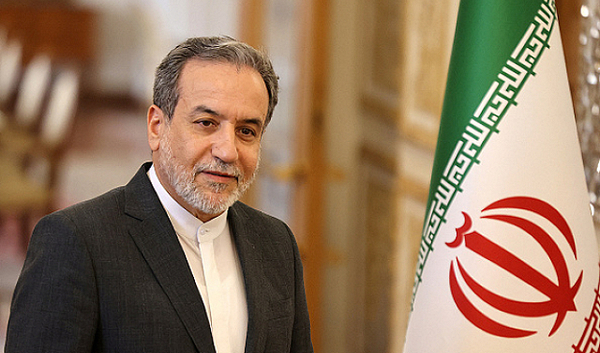

So is it reasonable for the organization to continue, with this weakness and fragmentation, as a title for the Palestinians without making any change to it, a change that could achieve a fundamental and real breakthrough on the national and Palestinian level?!


I believe that it is time to activate the role of the Palestine Liberation Organization and renew its institutions, through a set of necessary steps and reforms that must be implemented, to ensure the restoration of its role as a legitimate and true representative of the Palestinian people, and an effective force in the political and diplomatic struggle. In my estimation, these reforms include:

First: Reforming the organizational structure of the organization


1. Reactivating the Palestinian National Council, by holding democratic elections for members of the Palestinian National Council inside and outside the country, to ensure representation of all Palestinians, and updating the composition of the Council to include all active forces.


2. Reform of the Executive Committee of the Organization

In my opinion, a new leadership must be chosen through free and fair elections, on the one hand, and there must be real representation of all political forces, not just the traditional factions, on the other hand, and the role of the Executive Committee must be activated so that it becomes the political reference, instead of the Palestinian Authority, on the third hand.


3. Restructuring the organization’s departments


The organization's various departments (such as media, foreign relations, refugees, social affairs) must be activated so that they can play their actual role and leaders who failed to manage these departments must be replaced with more efficient and experienced leaders.

Second: Unifying the national ranks and ending the division


1. Merging the Hamas and Islamic Jihad movements within the organization, and conducting a comprehensive national dialogue to agree on a joint political program that guarantees the participation of all Palestinian forces.
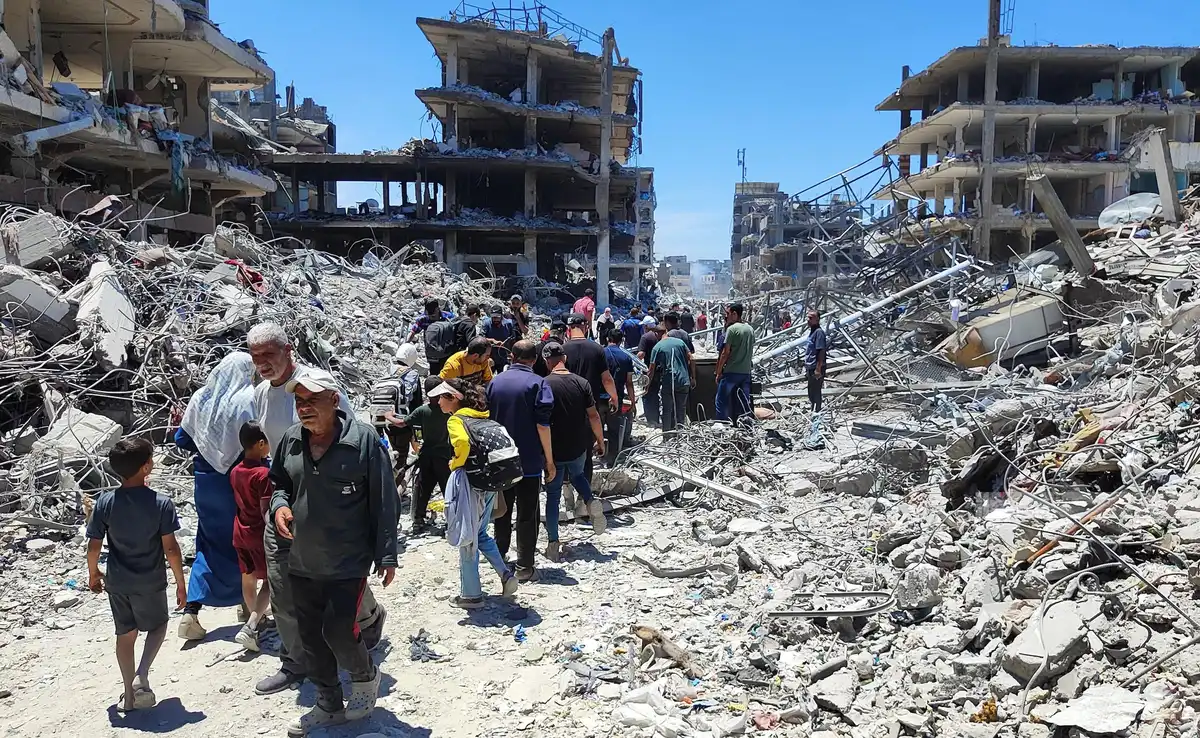

2. Rebuilding trust between the factions, by forming a national unity government to oversee the transitional phase until the organization’s situation is reorganized, stopping mutual media campaigns between the factions, and starting a new page of joint national work.


Third: Reforming the organization’s political program

1. Updating the political strategy, by defining a clear vision for the future of the conflict with the occupation, whether through popular resistance, diplomacy, or other tools.


And reviewing the Oslo Accords, and taking a unified position on the relationship with Israel in light of the continued occupation and settlement.


In addition, it will enhance international action to obtain broader recognition of the Palestinian state and confront Israeli pressure.


2. Strengthening popular resistance and supporting peaceful popular movement against the occupation as an effective means of struggle, and providing logistical and field support to areas facing settlement and Judaization.


Fourth: Restoring the Arab and international role

1. Rebuilding relations with Arab countries and restoring Arab support by unifying the Palestinian position and not entering into conflicting regional axes.


The necessity of activating the role of Palestinian communities abroad to support the cause at the international level.


2. Strengthening diplomatic activity at the United Nations, activating the role of the PLO missions abroad, and not being satisfied with the Palestinian Authority as a diplomatic representative.


In addition to presenting new political initiatives that embarrass Israel at the international level.


Fifth: Combating corruption and enhancing transparency


1. Monitoring the work of the organization’s financial and administrative institutions, and forming an independent oversight committee to follow up on financial spending within the organization.


Also holding accountable those responsible for corruption and mismanagement within the organization.


2. Enhancing popular participation in decisions, and involving unions and popular federations in the organization’s decisions.


And to ensure continuous communication with the Palestinians in the diaspora and to hear their demands.


Finally, it must be emphasized that the current stage requires an urgent need to activate the PLO in a serious, effective and real manner, in order to save it. This requires carrying out radical and fundamental reforms that include restructuring its institutions, unifying the factions, updating its political program, restoring its diplomatic role, and fighting corruption.


In my opinion, the success of these reforms will restore the organization's leadership role in the Palestinian cause and ensure true representation of the Palestinian people at home and abroad.


PALESTINE

Wed 05 Feb 2025 8:55 am - Jerusalem Time

One Palestinian killed by the occupation forces east of Rafah

A young man was killed this Wednesday morning by Israeli occupation forces in the Al-Shawka area, east of Rafah city, in the southern Gaza Strip.


According to local sources, the victim Adi Adel Al-Dabari, arrived at the European Hospital after being shot by the occupation forces stationed in the eastern regions.


PALESTINE

Wed 05 Feb 2025 8:50 am - Jerusalem Time

Arrests, raids and closure of checkpoints in the West Bank and Jerusalem

Today, Wednesday, the Israeli occupation forces launched a campaign of arrests and raids in the West Bank and occupied Jerusalem.


In Ramallah, the occupation forces arrested, during their raid on the village of Kafr Ein, the citizen Basil Samih Daghra (53) years old, and the boy Moaz Shaher Abu Arqoub (17) years old, after raiding their homes and tampering with their contents.


The occupation forces also arrested citizen Ahmed Al-Sheikh Qassem, after storming his house in Al-Masyoun neighborhood.


In Qalqilya, the occupation forces stormed the town of Azzun and arrested the two young men, Nasser Mahmoud Hussein and Hassan Radwan, after raiding and searching their homes.


In the northern Jordan Valley, the occupation continues to close the Tayasir checkpoint east of Tubas for the second day in a row, as the checkpoint witnesses a disruption in the movement of citizens.


In a related context, the occupation forces tightened their military measures at the Hamra checkpoint, and hindered the movement of citizens through the checkpoint.


In occupied Jerusalem, the occupation forces stormed the town of Hizma and the Wadi Qaddum neighborhood in the town of Silwan to the south, and set up a checkpoint in the town of Issawiya, northeast of occupied Jerusalem.

PALESTINE

Wed 05 Feb 2025 8:46 am - Jerusalem Time

It must.. and it is possible!

Frankly and without ambiguity, the state of fluidity that the national situation is suffering from feeds the tendencies of arrogance and the dreams of expansion and nibbling among the leaders of biblical fundamentalism, who pull their plans out of the drawers and declare their ambitions in a moment of euphoria, benefiting from an international license that can be extended to continue the genocide, uprooting and displacement from Rafah to Jenin, with motives of “humanitarianism until reconstruction”!


What the northern camps and the villages and towns of the Jordan Valley are being subjected to, in terms of reproducing the genocide of people and stones, and demolishing homes over the heads of their inhabitants, reveals the dangerous extent of the plan for uprooting and displacement, after the seals were withdrawn from the party that raised hopes for the return of refugees to their cities, towns and villages, from which they were displaced in 1948.


History will not forgive us if we do not overcome our differences, and listen humbly to the hearts of tens of thousands of bereaved and orphaned children, as a result of miscalculations and burning bets, and hasten to connect what was cut off from our dialogues, and fix what happened between us.


Perhaps the Lebanese experience can shorten the distance, to get out of the state of anticipation, confusion and depression that surrounds the national scene at a moment of international madness, in which the American real estate mogul places us in front of an existential threat, the dangers of which no one should underestimate, in the midst of an exhausted popular incubator that is unable to secure tents to set up on the ruins of demolished homes.


We must...and can succeed in the exam, far from calculations, quotas, scoring points, exchanging accusations, and being infatuated with victories.


For the authority to assume full responsibility from now on at a critical existential moment, it alone has the legitimacy to take political action in the international arena, to transform sacrifices into gains, and pain into hopes.

PALESTINE

Wed 05 Feb 2025 8:20 am - Jerusalem Time

The truce agreement... a permanent truce or a break between two rounds?

Nizar Nazzal: The calm will continue in the short term, and Netanyahu will return to war, relying on “vertical conflict based on accurate intelligence information.”

Nabhan Khreisha: Trump’s statement that he will not guarantee the continuation of the ceasefire is part of political blackmail aimed at achieving Israeli goals at the expense of Palestinian rights

Daoud Kuttab: The current truce agreement is fraught with risks, and what is required now is not only to ensure that the war does not resume, but to find long-term solutions that guarantee stability in Gaza.

Nihad Abu Ghosh: Netanyahu's government reluctantly agreed to the truce agreement... and the second phase is full of complex details, which makes Israel's commitment to it unlikely

Majed Hadeeb: The truce in Gaza comes within the framework of an American strategy to cool the hot fronts in the region and will end with a ceasefire with a conditional Israeli withdrawal

Sari Samour: The future of the truce is still unclear and Israel will continue to put obstacles in the way of any agreement, but it will not necessarily seek to completely thwart it

The recent ceasefire agreements in the Gaza Strip have raised widespread controversy over the possibility of their continuation to end with a ceasefire in the Gaza Strip and an Israeli withdrawal from the Strip, or a return to resuming the war, despite the likelihood that it will not break out, or at least that it will not be with the same momentum.


In separate interviews with “I”, writers, political analysts and specialists believe that the United States of America is playing a pivotal role in managing the threads of the crisis, as the truce file is being used as a pressure tool to achieve political gains that go beyond the borders of Gaza.


They point out that US President Donald Trump's ambiguous statements about the lack of guarantees for the continuation of the ceasefire open the door to multiple scenarios, ranging from consolidating the calm or resuming the escalation in a different way.


They point out that Israel may return to military operations in the Gaza Strip, but with new methods that rely on precise intelligence tactics instead of a comprehensive confrontation.

The prisoners' issue is the main concern for Israel.

Nizar Nazzal, a researcher specializing in Israeli affairs and conflict issues, believes that the current calm in the Gaza Strip will continue in the foreseeable future, noting that the issue of prisoners will remain the main focus of interest for Israel, which is seeking to achieve gains in this file without entering into a comprehensive confrontation.


Nazzal says: “If we look at the Israeli political statements, we find a state of ambiguity and conflict regarding the second phase of the ceasefire agreements. There are vague terms that are being used deliberately, which reflects a state of lack of clarity regarding the Israeli intentions regarding the future of military operations in Gaza and their form.”


Nazzal points out that things are moving towards continuing the prisoner exchange file as a priority, but there are serious concerns about the repercussions of this path on the political situation inside Israel.


"There is a fear that extremist Finance Minister Bezalel Smotrich will withdraw from the government if the prisoner exchange deal continues without resuming the fighting," Nazzal said.


Nazzal believes that the war on the Gaza Strip will not resume in the way it happened, as Prime Minister Benjamin Netanyahu will return to activate military operations, but through different tactics than before, and may adopt a military model similar to Israel’s experience in southern Lebanon, relying on “vertical conflict based on accurate intelligence information,” without officially announcing the start of a new war.


Nazzal says: “Netanyahu will use this tactic to give Smotrich and his allies a clear message that the war is still raging, whether in Gaza or the West Bank, where the occupation is expected to escalate its military operations in various areas of the West Bank.”


Nazzal expects that the next phase will witness a military escalation in Gaza, saying: “In my estimation, during the month of March, we will witness repeated air strikes and intensive use of artillery, perhaps at a rate of almost daily or even daily or more than once a day, and the aim of that is to send a clear message to allies at home and abroad that Israel has resumed fighting, even if it has not officially announced that.”


Nazzal touches on the American role in managing the conflict, noting that US President Donald Trump is particularly focused on the issue of the seven American citizens held in Gaza, in addition to the file of prisoners held by the Palestinian resistance.


“This is what Trump really cares about,” Nazzal says. “We noticed this when his envoy, Steve Witkoff, visited the Salah al-Din axis a few days ago, where he indicated that implementing the agreement is more difficult than reaching it. When asked about the ceasefire, Trump said that Witkoff had the information.”


“It seems that Trump is hinting at the possibility of giving the green light to resume fighting again, driven by a strong pressure movement by the Zionist lobby in the United States, and this lobby is working to push Republicans to support Netanyahu in resuming the conflict, which is in line with Netanyahu’s desire to maintain the cohesion of his far-right government, which will face the risk of collapse if military operations are not resumed,” Nazzal said.


Nazzal points out that there is an undeclared understanding between Netanyahu and Trump about the nature of the fighting in the next stage, noting that the current Israeli focus is only on the prisoners’ file.


He says: “The war is not a realistic or unrealistic issue as much as it is subject to Israeli security needs and Netanyahu’s requirements to protect his government from falling, without any consideration for Palestinian blood or the Palestinian cause, which no longer enjoys the same international interest.”


Regarding the possibility of launching a large-scale ground operation in Gaza, Nazzal rules out this scenario, saying: “It is unlikely that Israel will deploy large brigades and units inside the Strip. Experience over the past 15 months has shown that such operations are very costly for it, especially since it has lost many of its soldiers. I believe that Israel will rely on copying its experience in southern Lebanon, with air strikes and targeting specific sites based on intelligence information, and perhaps carrying out limited invasions, but without returning to a large-scale war.”

The possibility of a return to war is weak.

Journalist Nabhan Khreisha believes that the possibility of Israel returning to war on Gaza after completing the first phase of the ceasefire agreement with Hamas is weak, and even highly unlikely.


Khreisha points out that Israeli Prime Minister Benjamin Netanyahu, before heading to the United States, excluded the heads of Mossad and Shin Bet from leading the indirect negotiations with Hamas, and assigned this task to Ron Dermer, the Israeli Minister of Strategic Affairs, who is very close to US President Donald Trump. This change in the leadership of the negotiations reflects a shift in Netanyahu’s vision, as the negotiations have become purely political in nature, rather than military or security-related.


Khreisha explains that Netanyahu seeks to trade Israel's commitment to a ceasefire in Gaza for major political gains, the most important of which is annexing parts of the West Bank to Israel. Netanyahu also wants a guarantee from Trump to implement plans to displace Palestinians from Gaza and the West Bank to Jordan and Egypt.


In addition, according to Khreisha, Netanyahu seeks to harmonize the Israeli-American positions regarding the “day after” the war in Gaza, and to object to any American position that might support the establishment of a Palestinian entity in the West Bank and Gaza, especially within the framework of the American-Saudi talks on normalization with Israel.


He points out that Netanyahu also wants to obtain American military and political support to confront Iran, with the aim of eliminating its weapons capabilities and nuclear program.


Khreisha believes that these demands are part of Netanyahu's strategy to compensate for his failure to achieve what he called "absolute victory" in the Gaza war, as he has now turned to the theory of "absolute compensation", which depends on achieving political and economic gains at the expense of the Palestinian people.


Khreisha confirms that Netanyahu feels major internal threats, especially with the position of his far-right ally, Bezalel Smotrich, who threatens to bring down the Israeli government if the war on Gaza does not continue.


Khreisha points out that Netanyahu is facing a significant decline in his popularity according to opinion polls, despite his success in recovering the Israeli prisoners held in Gaza. Therefore, Netanyahu is relying on the “absolute compensation” strategy to save his political future, by obtaining Trump’s support for annexing Palestinian lands and displacing Palestinians.


Khreisha points out that Trump's recent statements, in which he declared that there are no guarantees that the ceasefire will continue, are part of a multi-faceted pressure strategy. Trump is not only putting pressure on Hamas, but also on Egypt, Jordan and other regional countries, with the aim of forcing them to accept plans to displace the Palestinians.


He explains that Trump is using the threat of returning to war as a blackmail tool, as the continuation of the war on Gaza and its expansion to the West Bank could lead to significant human losses, which could threaten the stability of Arab regimes due to popular anger.


Khreisha points to another statement by Trump, in which he implicitly referred to annexing parts of the West Bank to Israel, saying that the area of Israel is very small compared to the areas of the countries of the Middle East.


Khreisha believes that this statement by Trump, along with his statement that he will not guarantee the continuation of the ceasefire, is part of a political blackmail process aimed at achieving Israeli goals at the expense of Palestinian rights.

Netanyahu hopes for 'consolation prizes'

Writer and political analyst Daoud Kuttab believes that the US administration and most political circles in Israel prefer to continue the calm in the Gaza Strip, noting that Israeli Prime Minister Benjamin Netanyahu hopes to obtain additional "consolation prizes" before agreeing to end the war, even though this decision may constitute the end of his political career.


Writers explain that the current armistice agreement is fraught with many risks, the most important of which is that it has not been transformed into a binding resolution issued by the UN Security Council, nor has it been supported by an official American guarantee paper directed to the Arab side, which weakens its steadfastness and sustainability.


However, writers believe that the United States is seeking a comprehensive regional solution that inherently requires a complete cessation of the war on Gaza as a fundamental step towards achieving stability in the region.


The book indicates that the possibility of returning to a comprehensive war or the Israeli reoccupation of Gaza seems difficult at this stage, but that does not rule out the possibility of carrying out limited military operations or assassinations after the completion of the process of releasing the Israeli detainees held by the Palestinian resistance.


He stressed that what is required now is not only ensuring that the war does not resume, but also finding long-term solutions that guarantee stability in Gaza.


The writers stress that this goal cannot be achieved without a comprehensive national agreement between the Fatah and Hamas movements, saying: “There is no solution for Gaza that can succeed if it is limited to Hamas alone, nor can it be overcome without a role for Hamas. Therefore, participation between the two parties has become an inevitable necessity.”


Writers point out that the Palestinian Authority may play a more public role in the coming period, especially with regard to reconstruction efforts, given the desire of the international community and Israel to have an official body with which to deal.


However, writers stress that any agreement on the “day after” Israel’s withdrawal from Gaza will not see the light of day without the tacit approval of Hamas, making internal Palestinian consensus a crucial element in any future arrangements.

The agreement did not achieve the goals of the Netanyahu government

Writer and political analyst Nihad Abu Ghosh believes that Israel, and specifically Benjamin Netanyahu's government, reluctantly agreed to the ceasefire agreement with the Gaza Strip, as this agreement did not achieve the goals set by the government before the war began.


Abu Ghosh explains that Israel has failed to achieve its declared goals, such as eliminating the resistance, recovering Israeli prisoners, and even undeclared goals such as displacing the Palestinian population, or cutting off parts of Gaza and perhaps re-settling.


According to Abu Ghosh, Netanyahu was hoping to continue the war, but international pressure, especially from the administration of US President Donald Trump, forced him to accept the agreement. Trump played a pivotal role by setting a deadline for concluding the agreement to coincide with his inauguration as US President, which put great pressure on Netanyahu’s government. In addition, internal pressure from the families of soldiers and prisoners, as well as the deteriorating economic conditions, played an important role in pushing Israel towards signing the agreement.


Abu Ghosh points out that the first phase of the agreement helped absorb popular anger inside Israel and gave Netanyahu more time, but the second phase of the negotiations is full of complex details, which makes Israel’s commitment to it unlikely. Israel has shown violations even during the implementation of the four batches of the first phase of prisoner releases, and it is expected that these violations will worsen in the second phase on more sensitive issues such as the entry of reconstruction materials and humanitarian aid, and the return of residents to their areas.


Netanyahu's visit to the United States and his meeting with Trump are seen as reflecting Israel's desire to use American support to achieve long-term strategic goals, such as annexing large parts of the West Bank, promoting normalization with Saudi Arabia, and confronting Iran.


Abu Ghosh explains that Trump's statements on the Palestinian issue seem ambiguous and have multiple interpretations, as they may be aimed at pressuring the Palestinians or even Netanyahu.


Regarding the possibility of resuming the war on Gaza, Abu Ghosh explains that this demand has the support of the right within the Israeli government, not only from figures such as Itamar Ben-Gvir and Bezalel Smotrich, but also within the Likud party and the military institutions. However, there are factors that pressure to prevent the resumption of the war, such as the Israeli army’s need for a period of rest to rebuild its capabilities after the gaps revealed by the last war.


Abu Ghosh points out that Israel's international standing and its ambitions to normalize relations with Arab countries, in addition to internal pressure to demand early elections and replace the current leadership, may push towards establishing a permanent ceasefire.


Abu Ghosh confirms that Israel is in a phase of conflict between forces pushing for the resumption of the war to ensure Netanyahu's continued rule, and others seeking to stop it in preparation for reorganizing the internal Israeli scene politically and institutionally.

Trump's plan is moving towards cooling the hot fronts

Writer and political analyst Majed Hadeeb believes that the calm in the Gaza Strip will continue and will end with a ceasefire with a conditional Israeli withdrawal from the Strip, for many reasons related to regional and international politics, in addition to internal developments in Israel and Palestine.


Hadib points out that this calm comes within the framework of an American strategy to cool the hot fronts in the region, especially after the recent tensions witnessed on the Gaza war front.


Hadib believes that US President Donald Trump's plan is aimed at cooling the hot fronts in the Middle East, in order to achieve economic and political gains for the United States.


Hadib explains that Washington seeks to reap the benefits of the tensions witnessed in the region, especially after the recent war on Gaza, which sparked a wave of international and regional anger.


Hadib points out that the economic agreements that were prepared in the wake of these tensions will be one of the main reasons for the continuation of the calm.


On the other hand, Hadeeb believes that Israeli Prime Minister Benjamin Netanyahu has achieved most of the goals of the war on Gaza, and is now focusing on implementing the annexation plans that came within the framework of the "Deal of the Century."


Hadeeb explains that Netanyahu is working to annex some areas of the West Bank to Israel, according to the vision presented by Trump in his peace plan.


Hadeeb points out that these plans include annexing major settlements and the lands surrounding them, while giving up other areas that are less important from the Israeli point of view.


Hadeeb asserts that the truce will continue despite the threats facing Netanyahu's government from far-right ministers in Israel, such as Itamar Ben-Gvir and Bezalel Smotrich, who threaten to bring down the government if more stringent policies are not implemented.


Hadeeb explains that these threats from Smotrich and Ben-Gvir are no longer effective in light of the Israeli opposition’s readiness to give Netanyahu a “safety net” if he continues to seek a prisoner exchange deal and a ceasefire.


Hadeeb points out that Hamas will eventually succumb to Arab pressure, especially from influential countries such as Qatar, which is considered the movement’s main decision-maker, regarding giving up the administration of Gaza and convincing Hamas to accept a ceasefire and a conditional Israeli withdrawal from Gaza, especially with the absence of serious conditions from Netanyahu regarding a complete withdrawal from the Strip.


Regarding Trump's recent statements in which he indicated that there are no guarantees for the continuation of the truce, Hadeeb believes that these statements are not the first of their kind, and will not be the last.


Hadib explains that Trump had previously stated that Israel and Hamas were “free” to reach an agreement or not, which means that he would not put much pressure on the parties to achieve calm.


However, Hadeeb believes that Trump's recent statements were primarily directed at Netanyahu, as a message that the United States will not allow him to blackmail it again for additional promises or guarantees.


He points out that Netanyahu will gain some benefits from his meeting with Trump, especially with regard to the Palestinian issue, including obtaining American support at the United Nations for the annexation steps he intends to implement in the West Bank, especially in the areas surrounding Jerusalem and the northern West Bank. Israel is also expected to obtain American support in banning the activities of some international institutions, such as the United Nations Relief and Works Agency for Palestine Refugees (UNRWA), which Israel considers hostile to it.


Hadeeb explains that Israel is also seeking to redraw some Palestinian areas and population centers, especially in the camps, in preparation for dropping the right of return and compensation for Palestinian refugees.


Hadib points out that this step will be part of the Israeli efforts to end all aspects of Palestinian asylum, which will find support from the US administration.

Trump's Contradictory Statements... Ambiguity about the Next Phase

Writer and political analyst Sari Samour believes that the future of the ceasefire in the Gaza Strip is still unclear, as the chances of the ceasefire continuing or the resumption of military operations are equal to 50% for each at the present time, although they could change in the future.


Samour points out that the contradictory statements issued by US President Donald Trump reflect a state of ambiguity and uncertainty about the next stage.


Samour believes that Trump's statements raise questions about his true intentions, whether he intended to frighten the Israelis or pressure the Arab parties that rejected the displacement plans.


"Trump's positions cannot be predicted," Samour says. "He makes vague statements whose precise intentions no one knows, which further complicates the regional scene."


But Samour points out that there is real American pressure being exerted on Israel to stop military operations in Gaza or at least reduce their pace compared to what they were previously.


Samour points out that although the continuation of the war is causing widespread destruction to the Palestinian people, the Israeli army has also suffered great losses on both the human and material levels, which makes the decision to return to war more complicated than before.


Samour stresses that Israel will continue to put obstacles in the way of any ceasefire agreement, but will not necessarily seek to completely thwart it, as it realizes that the continuation of tension without reaching political solutions or prisoner exchange agreements may negatively affect its internal stability.


Samour points out that the war waged by Israel on Gaza did not fully achieve its goals, and that talk of resuming the fighting is not realistic at present, but it remains a possible possibility in light of the continued Western and American support for Israel.


Samour believes that Israel is currently focusing on the West Bank and seeking to reshape it in line with its interests, but it will not completely ignore Gaza, as it may resort to political escalation or use files such as reconstruction and control of the Rafah crossing as a pressure card on the Palestinians and blackmail them.


Samour explains that Israel is seriously seeking to complete the prisoner exchange deal and recover all its prisoners, including those held in the second phase of the agreement, pointing out that there are Qatari and Egyptian statements confirming that they have obtained American guarantees that the war will not resume.


Samour asserts that the consequences of the war on Gaza will appear clearly in Israeli society in the coming period, as the Israeli government will face a “series of political and social earthquakes” as a result of the military failure and the losses it has incurred, especially since the Palestinian resistance has demonstrated its ability to continue to direct painful blows to the occupation, despite the massive destruction that the Strip has been subjected to.

PALESTINE

Wed 05 Feb 2025 8:17 am - Jerusalem Time

Trump: The United States will control the Gaza Strip and become its owner

US President Donald Trump said in his joint press conference with Israeli Prime Minister Benjamin Netanyahu that the United States will take control of the Gaza Strip and become its owner, adding that "the same people" should not be responsible for rebuilding and settling in the Strip.


Trump renewed his support for the plan to forcibly displace Palestinians from the Gaza Strip "permanently" to Egypt, Jordan and other countries.


He added that he and his team are discussing the possibility of resettlement with Jordan, Egypt and other countries in the region. He said he would like to see an agreement "to resettle people permanently in nice homes where they can be happy and not be shot or killed."


Trump's remarks came during a press conference he held with Israeli Prime Minister Benjamin Netanyahu at the White House, after he finished the bilateral meeting between them at the White House.


"I don't think people should go back. You can't live in Gaza right now. I think we need another location. I think it should be a location that makes people happy," Trump said in remarks that were incoherent and seemingly scattered.


Trump said that the people of Gaza have historically been unlucky, suffering from destruction, killing and war, and that it is time to leave this damned place forever.


"When you look at the past decades, all you see in Gaza is death. This has been happening for years," he added.


He continued, promoting his plan: “What if we could find a beautiful area to resettle people permanently, in good homes, where they can be happy, and not be shot or killed like they are in Gaza.”


Trump noted that Egypt and Jordan had informed Washington that they were not prepared to accept residents from Gaza, but claimed that other countries had expressed their willingness to accept them. Later, in his joint press conference with Netanyahu, Trump said that the areas that would receive Gaza residents could reach 12.


In this context, he said: "Many leaders of countries have contacted us and expressed their desire to shelter people from Gaza."


Trump said he envisions a redevelopment of the Gaza Strip, home to people of all nations, including Palestinians. He said the current situation, with both Israel and the Palestinians seeking to live in the area, was unsustainable — as evidenced by the fighting over the past year. Asked if that meant he did not support a two-state solution, Trump said: “It doesn’t mean two states or one state or any other state. It means we want to give people a chance to live because Gaza has been hell.”


Earlier, Trump said on Tuesday that the Palestinians had no alternative but to leave the Gaza Strip.


He added that he would like Egypt and Jordan to receive Palestinian refugees from Gaza.


Trump claimed that the Palestinians would "very much" leave the besieged Gaza Strip to live elsewhere if given the chance, adding, "I think they would be very happy" to do so.


"I don't know how they want to survive. It's a ruined site," he said, more than 15 months after US ally Israel launched a devastating war in the territory.


The US President had previously spoken of a plan to “clean up” Gaza, calling for the transfer of Palestinians to Egypt and Jordan.


The two countries categorically rejected this, and their leaders confirmed on Tuesday "adopting the unified Arab position calling for achieving permanent peace in the Middle East region," according to the Egyptian presidency.


"Well, they may have said that, but a lot of people have said things to me," Trump told reporters at the White House on Tuesday.


"If we can find the right piece of land, or several pieces of land, and build some nice housing on it, there is definitely a lot of money in the area, and I think that would be much better than going back to Gaza, which has seen nothing but decades of death," he said.


When asked by a reporter about possible locations for such housing, Trump repeated that it could be in Jordan, Egypt or "other places. There could be more than two."


"People could have lived in a very nice, safe, nice place. But Gaza has been a disaster for decades," he continued.


Asked further whether the United States would pay for such a move, he said there were "a lot of people in the region who would do it, and they have a lot of money," and cited Saudi Arabia as an example.


"They have no alternative now," he added when asked by a reporter whether such a move would lead to the forced displacement of Palestinians.


"They're there because they don't have any alternative. What do they have? It's a huge pile of rubble now... I think they'll be very happy to do that," Trump added.


"I think they would very much like to leave Gaza," Trump told reporters in his office before meeting Netanyahu, asking, "What is Gaza?"


He said he "does not necessarily support" Israelis settling in the Strip instead of Palestinians.


"I'm all for cleaning it up and turning it into something. But that's failed over many decades. And someone will be sitting here 10 or 20 years from now and they'll be facing the same thing," he added.


The Palestinians reject Trump's idea of displacing them from the Gaza Strip or the West Bank, stressing that they will remain on their land even if the reconstruction of the Gaza Strip, which was destroyed by the war, is delayed.


As soon as the ceasefire agreement went into effect in Gaza, hundreds of thousands of displaced people from the southern and central areas of the Strip began returning to their destroyed areas.


According to government media in the Strip, those returning to their homes in the northern Gaza Strip need 135,000 tents and caravans, which Israel had not allowed to enter until Monday.


Hamas says that the humanitarian protocol in the ceasefire agreement stipulates the entry of 200,000 tents and 60,000 caravans into the Strip during the first phase, which lasts for six weeks.


Upon his return to the White House, Trump proposed "cleaning up" Gaza and moving the Palestinians to "safer" places such as Egypt or Jordan, sparking international protests.


Trump announced on Monday that there were "no guarantees" that the ceasefire in effect in the Gaza Strip would remain in place.


In a related case, US President Donald Trump signed an executive order withdrawing the United States from the UN Human Rights Council and UNRWA.


This decision comes within a series of previous withdrawals taken by Trump since taking office on January 20, as he previously ordered the United States to withdraw from the World Health Organization and the Paris Climate Agreement.