OPINIONS

Sun 09 Feb 2025 9:54 am - Jerusalem Time

Redrawing Palestinian National Ideologies: Historical Necessity or Political Luxury?

Dr. Ibrahim Nairat

Dr. Ibrahim Nairat

Opinion Writer

In light of the major transformations taking place in the Palestinian scene, it has become necessary to reconsider the ideologies governing the national factions, so that they reflect the true aspirations of the Palestinian people, rather than being merely an extension of past conflicts or subject to regional power balances. It is time to redraw the Palestinian political discourse to be more realistic and in touch with the needs of the people, far from ideological stagnation and intellectual isolation.


From factional loyalty to loyalty to the national project

Over the decades, Palestinian factions have transformed from national liberation movements into organizational entities seeking to maintain their presence in the political arena, even if it is at the expense of the collective national interest. Therefore, any process of reshaping ideologies must begin by prioritizing loyalty to the Palestinian national project over factional loyalty, so that the goal becomes the realization of the Palestinian people’s aspirations for freedom and independence, and not merely strengthening the influence of this or that faction.


Democratization of Palestinian Political Thought

The factions were born in diverse intellectual environments, between nationalism, leftism and Islamism, which led to deep ideological divisions that were reflected in Palestinian political life. However, in light of the current changes, it is no longer possible to continue the totalitarian ideology that relies on exclusion and domination. Rather, there must be a comprehensive ideology that opens the way for political pluralism and promotes the logic of true partnership instead of continuous internal conflict.


Between Resistance and Development: Towards an Integrated Vision

Resistance was, and still is, an essential part of Palestinian national identity, but it must be redefined to include all forms of struggle, including economic, cultural and political resistance. National liberation cannot be achieved without economic revival and financial independence, and political power is not acquired solely from weapons, but from the ability to build a strong and sustainable development model.


Breaking the duality of "resistance" and "settlement"

For many years, Palestinian political discourse has been confined to two main currents: the first calls for armed resistance as the only option, and the second relies on negotiations without any cards of strength. However, today’s reality dictates going beyond this deadly duality and searching for a smarter strategy that integrates the various tools of struggle according to a unified national vision, so that military action is not a burden without a horizon, and diplomacy is not an option empty of power.


Redefining Alliances and International Relations

In a changing multipolar world, it is illogical for Palestinian factions to continue building their alliances based on traditional ideological considerations. What is required today is a flexible Palestinian foreign policy, based on achieving national interests away from regional alignments that have proven their failure to truly support the Palestinian cause.

Redrawing national ideologies is not just a political luxury, but an existential necessity to ensure the continuation of the Palestinian struggle in more effective forms. The question that arises today is: Will the Palestinian factions be able to develop their political discourse in a way that is consistent with the aspirations of the Palestinian street? Or will the alternative be the emergence of new forces outside the traditional frameworks?

Palestinian factions between monopolizing decision-making and marginalizing the popular role

The Palestinian people have always been the most prominent element in the steadfastness and struggle against the occupation, but recent decades have witnessed a noticeable decline in their role in favor of the armed forces that monopolized national decision-making and confiscated the space that was allocated for popular mass action. This transformation was not limited to the military aspect, but extended to politics, the economy and society, which led to the weakening of popular initiatives that were historically the basis of the Palestinians’ strength.

From the First Intifada to the Militarization of the Scene

During the first Intifada (1987-1993), popular resistance proved capable of achieving tangible accomplishments, as it succeeded in confusing the occupation through strikes, civil disobedience, and mass demonstrations, without the armed factions being at the forefront. However, over the years, and after the signing of the Oslo Accords, the armed factions began to strengthen their influence, and Palestinian political discourse became more linked to military action, which led to a decline in popular action in favor of armed confrontation as the main option.

Although the Second Intifada (2000-2005) demonstrated the ability of armed struggle to impose new equations, excessive militarization harmed the popular role, as factions began to control the scene, and resistance transformed from being a large-scale popular action to limited military operations within narrow factional calculations.


How was popular action marginalized?

Factional monopoly of national decision

  1. The factions have turned into closed political entities, issuing their decisions in isolation from the Palestinian street, which has led to a loss of popular confidence in the political and military leadership.
  2. The factions became preoccupied with internal conflicts, and organizational interests took precedence over greater national goals.

Weakening of public initiatives

  1. There is no longer serious support for peaceful resistance movements, such as boycotting Israeli products or general strikes, although they have proven effective in previous periods.
  2. The popular momentum in the West Bank and Jerusalem in recent years has not been invested in a sustainable national project. Rather, popular movements have remained seasonal and a reaction to emergency events.

Turning weapons into a tool for internal conflict

  1. Rather than being a tool to complement popular action, military action has sometimes become a means of imposing internal control between factions.
  2. The absence of a unified resistance strategy made military performance intermittent, and sometimes unrelated to clear political goals.

How can the popular role be restored?

Launching a comprehensive national project that integrates factions with the people

  1. Forming independent popular councils representing various Palestinian groups, so that they serve as a parallel popular parliament that ensures the participation of everyone in the national decision.
  2. Rebuilding the Palestine Liberation Organization on democratic foundations, so that it is the true representative of the popular will, and not just an organizational framework governed by factional quotas.

Adopting a sustainable popular resistance strategy

  1. Reviving tools of civil disobedience, such as mass strikes and organized peaceful protests, as part of an ongoing struggle strategy.
  2. Strengthening the resistance economy by supporting local production and boycotting the Israeli economy, which gives the Palestinians financial independence that contributes to strengthening their steadfastness.

Redistribution of roles between factions and the people

  1. The factions must become tools of support and organization, rather than guardians of Palestinian decision-making.
  2. Encouraging trade union, student, women’s and labour work to play an active role in leading the national movement.

Towards a new equation for resistance

What is required today is not to abandon armed action, but to integrate it into an integrated national strategy led by the Palestinian people in all their categories. Experience has proven that any resistance that is not based on a broad popular base remains limited in its impact. The real strength of the Palestinians has never been in weapons alone, but in their ability to organize themselves, activate their popular forces, and keep their cause alive in all arenas.


Towards a Palestinian vision that addresses moderate forces in Israel

In the midst of the ongoing conflict between Palestinians and Israelis, it is easy to drift towards a one-sided vision that focuses only on the confrontation, without looking at the internal dynamics of the other side. But the reality requires that Palestinians realize that they are not alone in the scene, and that there are moderate Israeli forces that believe in the need to end the occupation and defend the rights of both peoples to live in peace. These forces, despite their current weak influence in the face of the rise of the extreme right, are still part of the equation, and efforts must be made to strengthen their positions within a clear Palestinian strategy.


Why should we address the moderate current in Israel?

Breaking the far-right's monopoly on the political scene

  1. The Israeli right, represented by successive governments, promotes a narrative that the Palestinians reject any settlement, which justifies the continuation of the occupation and settlement.
  2. By engaging with moderate forces, this narrative can be undermined and it can be demonstrated that Palestinians are not against coexistence, but against the occupation and its policies.

Creating an impact within Israeli society

  1. It cannot be ignored that political change in Israel comes from within, and Israeli society is influenced by public discourse.
  2. Strengthening voices supporting Palestinian rights within Israel can create pressure on the government, especially during times of political crisis.

Presenting a compelling Palestinian vision to the world

  1. The international community usually views the conflict from a binary perspective, portraying it as a conflict between two extremist parties.
  2. By building alliances with moderate voices in Israel, the Palestinian narrative can be presented as a just rights issue, not just a political or religious dispute.

How can moderate forces in Israel be strengthened?

Adopting a Palestinian discourse that intelligently addresses Israeli society

  1. Instead of merely addressing the international and Arab community, there must be a Palestinian discourse directed at the Israelis themselves, making clear that the occupation is not only a Palestinian problem, but also poses a threat to the future of the Israelis.
  2. Focus on points of convergence, such as rejecting settlements as a threat to the two-state solution, and promoting the discourse of equal rights for all.

Opening channels of dialogue with anti-occupation forces

  1. There are Israeli organizations such as B'Tselem, Peace Now, and Breaking the Silence that work to expose the practices of the occupation, and these voices need indirect Palestinian support to strengthen their position.
  2. Informal dialogues can be created between independent Palestinian figures and these forces, with the aim of exchanging visions and working to neutralize extremist voices on both sides.

Encouraging joint action on human rights issues

  1. Cooperation with Israeli organizations that defend Palestinian rights in the courts or in the media can enhance the international legitimacy of the Palestinian struggle.
  2. Supporting joint initiatives such as protests against home demolitions, or campaigns to boycott products from settlements, may help build an internal pressure base against the occupation’s policies.

What is required is not to bet on moderate currents in Israel as an alternative to the Palestinian struggle, but rather to integrate them within the framework of a smart resistance strategy that invests all possible tools to achieve Palestinian rights. In the end, the stronger these voices become inside Israel, the less the extreme right will be able to impose its agenda, which opens the way for more just solutions for both peoples.


ARAB AND WORLD

Sun 09 Feb 2025 9:44 am - Jerusalem Time

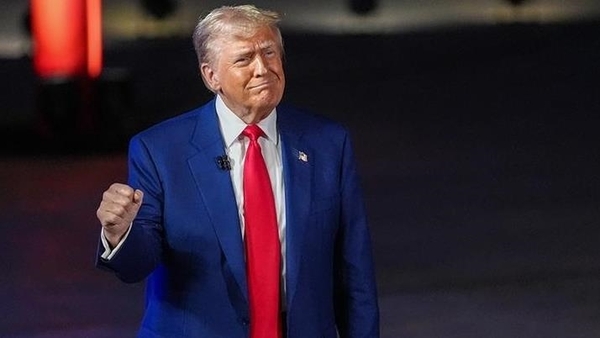
Trump's Loyalty Test: A Basic "Requirement" for Appointment to Sensitive Positions

Candidates for key positions in U.S. intelligence and security agencies are being asked whether they believe President Donald Trump's claims about his 2020 election victory and what they think the consequences will be, The Washington Post reported.


The newspaper added in a report published on Saturday, citing unnamed sources, that questions were directed to many current and former officials about the results of the 2020 presidential election, as well as about the storming of the Capitol building on January 6, 2021, two matters that Trump considers opinions about as indicators of loyalty.


The newspaper report stated that two former officials who were candidates for positions in intelligence agencies were asked about the riots and whether they occurred with “complicity from a responsible party,” and whether the 2020 elections were “stolen.”

Neither of them was selected for the position they were nominated for, but it was not clear if there were other reasons for their rejection.


PALESTINE

Sun 09 Feb 2025 9:27 am - Jerusalem Time

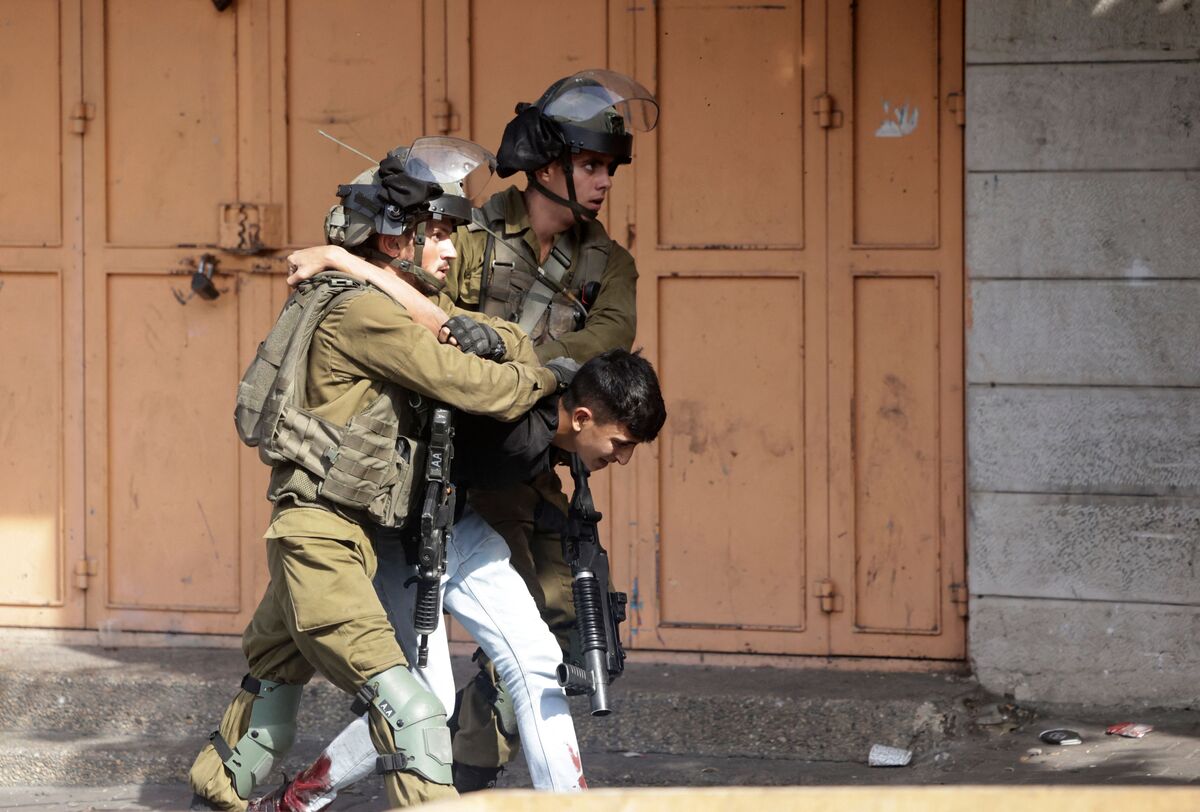
Israeli occupation forces arrest a child in Jericho

Today, Sunday, the Israeli occupation forces arrested a child from Ein Sultan camp, in the city of Jericho.


According to local sources, these forces stormed the Ain al-Sultan camp and arrested the child Hassan Jihad Ibrahim Abu Sharar (15 years old), after raiding and searching his family’s home.

ARAB AND WORLD

Sun 09 Feb 2025 8:54 am - Jerusalem Time

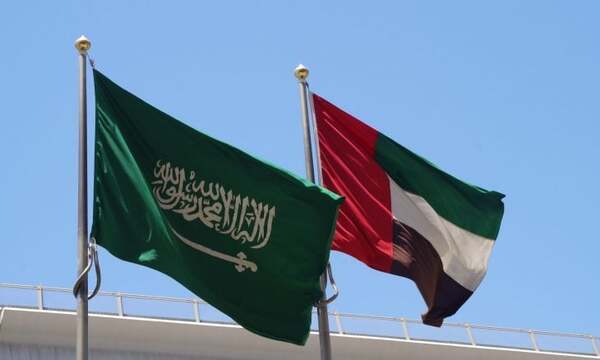
UAE condemns provocative Israeli statements against Saudi Arabia

The United Arab Emirates expressed, on Saturday, its strong condemnation and denunciation of the unacceptable and provocative statements made by Israeli Prime Minister Benjamin Netanyahu regarding the establishment of a Palestinian state in the Kingdom of Saudi Arabia.


The UAE Ministry of Foreign Affairs confirmed in a statement its categorical rejection of these statements, which are considered a blatant violation of the rules of international law and the United Nations Charter.

Khalifa Shaheen Al Marar, UAE Minister of State, expressed his country's full solidarity with Saudi Arabia and standing with it in one line against any threat to its security, stability and sovereignty. He stressed that Saudi sovereignty is a red line, and that the UAE does not allow any country to cross or encroach on it.


Khalifa Shaheen Al Marar also stressed the UAE's categorical rejection of any infringement on the inalienable rights of the Palestinian people or attempts to displace them.

The UAE Minister called for the need to stop settlement activities that threaten regional stability and undermine opportunities for peace and coexistence, and urged the international community, the United Nations and the Security Council to assume their responsibilities and put an end to illegal practices that contravene international law.

Khalifa Shaheen reiterated the UAE's firm historical position towards preserving the rights of the Palestinian people, and the necessity of finding a serious political horizon that leads to resolving the conflict and establishing an independent, sovereign Palestinian state.

He stressed that there is no stability in the region except through a two-state solution.

American plan

On Thursday, Israeli Channel 14 published an interview with the head of the occupation government, Benjamin Netanyahu, during which he claimed that a Palestinian state could be established in Saudi Arabia after implementing a plan to displace the residents of the Gaza Strip after US President Donald Trump announced his plan to control Gaza and deport the residents.

Saudi Arabia expressed its disappointment with the US president's plan to evacuate Gaza residents from the Strip, and criticized Israeli Prime Minister Benjamin Netanyahu because of it, according to the Israeli Broadcasting Corporation (Kan).

A source quoted by the newspaper said that there is criticism directed at Netanyahu because he does not want peace and creates problems.

The Saudi Foreign Ministry stressed that the Kingdom's position on the establishment of a Palestinian state is a firm, unwavering position, and the Crown Prince, Prince Mohammed bin Salman, has confirmed this position in a clear and explicit manner that does not allow for any interpretation under any circumstances.


OPINIONS

Sun 09 Feb 2025 8:53 am - Jerusalem Time

The Gaza 'war' was a lie, as is the ceasefire. Trump just told you

JONATHAN COOK

JONATHAN COOK

Opinion Writer

During Netanyahu’s visit, Trump dropped Washington’s sugar coating of Israel’s 15-month genocidal destruction of Gaza. This was always about ethnic cleansing

Israeli Prime Minister Benjamin Netanyahu’s visit to the White House this week tore the mask off 16 months of gaslighting by western leaders and by the entirety of the western establishment media.

United States President Donald Trump finally dropped Washington’s sugar coating of Israel’s genocidal destruction of Gaza.

This was always, he told us, a slaughter made in the US. In his words, Washington will now "take over" Gaza and be the one to develop it.

And the goal of the slaughter was always ethnic cleansing.

Palestinians, he said, would be "settled" in a place where they would not have to be "worried about dying every day" – that is, being murdered by Israel using US-supplied bombs.

Gaza, meanwhile, would become the "Riviera of the Middle East", with the "world’s people" – he meant rich white people like himself – living in luxury beachfront properties in their stead.

If the US "owns" Gaza, as Trump insists, it will also own Gaza’s territorial waters, where there just happen to be fabulous quantities of untapped gas to enrich the enclave’s new "owner". Palestinians have, of course, never been allowed to develop their gas fields.

Trump may even have let slip inadvertently the true death toll inflicted by Israel’s rampage. He referred to "all of them – there’s 1.7 million or maybe 1.8 million people" being forced out of Gaza.

The population count before 7 October 2023 was between 2.2 and 2.3 million. Where are the other half a million Palestinians? Under the rubble? In unmarked graves? Eaten by feral dogs? Vaporised by 2,000lb US bombs?

Wrecking spree

Trump presented his ethnic cleansing plan as if he had the best interests of the Palestinians at heart. As if he was saving them from a disaster-prone earthquake zone, not from a genocidal neighbour he counts as Washington’s closest ally.

His comments were greeted with shock and horror in western and Arab capitals. Everyone is distancing themselves from his blatant backing for the ethnic cleansing of Gaza’s population.

But these are the same leaders who kept silent through 15 months of Israel’s levelling of Gaza’s homes, hospitals, schools, universities, libraries, government buildings, mosques, churches and bakeries.

Then, they spoke of Israel’s right to "defend itself" even as Israel caused so much damage the United Nations warned it would take up to 80 years to rebuild the territory – that is, four generations.

What did they think would happen at the end of the wrecking spree they armed and fully supported? Did they imagine the people of Gaza could survive for years without homes, or hospitals, or schools, or water systems, or electricity?

They knew this was the outcome: destitute Palestinians would either risk death in the ruins or be forced to move out.

And western politicians not only let it happen, they told us it was "proportionate", it was necessary. They smeared anyone who dissented, anyone who called for a ceasefire, anyone who went on a protest march as an antisemite and a Jew hater.

In the US and elsewhere, students – many of them Jewish – staged mass protests on their campuses. In response, university administrations sent in the riot police, beating them. Afterwards, the universities expelled the student organisers and denied them their degrees.

And yet western politicians and media outlets think now is the time to express shock at Trump’s statements?

Still dying

Trump’s appalling, savage honesty simply highlights the depths of mendacity over the preceding 16 months. After all, who did not understand that the three-phase Gaza ceasefire, which came into effect on 19 January, was a lie too.

It was a lie even before the ink dried on the page.

It was a lie because the ceasefire was officially intended not just to create a pause in the bloodshed. It was also supposed to allow for the mitigation of harm to the civilian population, bring the hostilities to an end, and lead to the reconstruction of Gaza.

None of that will happen – at least not for the Palestinians, as Trump has made clear.

Despite its claims, Israel has clearly not ceased firing munitions into Gaza. It has continued killing and maiming Palestinians, including children, even if the carpet bombing has ended for the time being.

In media coverage, these deaths and injuries are never referred to as what they are: violations of the ceasefire.

Israeli snipers may no longer be shooting Palestinian children in the head, as happened routinely for 15 months. But the young are still dying.

Without homes, without access to properly functioning hospitals and with only limited access to food and water, Gaza’s children are perishing – mostly out of view, mostly uncounted – from the cold, from disease, from starvation.

Even Steve Witkoff, Trump’s envoy to the Middle East, says it will likely take 10-15 years to rebuild Gaza.

But the people of Gaza don’t have that much time.

This month Israel instituted a ban on the activities of the United Nation’s aid agency, Unrwa, in all of the Palestinian territories it occupies illegally.

Unrwa is the only agency capable of alleviating the worst excesses of the hellscape Israel has created in Gaza. Without it, the recovery process will be further hampered – and more of Gaza’s people will die waiting for help.

A blind eye

But in truth, Netanyahu has no intention of maintaining the "ceasefire" beyond the first stage, the exchange of hostages. Afterwards, he has all but promised to restart the slaughter.

When Israel decides to "go back in", there will be no price to pay from the Trump administration, any more than there was a price to pay from the previous Biden administration.

Even now, as Israel breaks the ceasefire, shooting at civilian vehicles because the inhabitants are unaware of the tripwire restrictions on their movements imposed by Israel, western politicians and media turn a blind eye.

And when Israel finally tears up the agreement, as it will, the West will echo Israel in blaming Hamas for being the one to violate it.

The ceasefire is a lie too because, having made Gaza uninhabitable, a death camp, Israel has switched its primary genocidal focus to the Occupied West Bank, where it is gradually introducing the same tactics employed for 15 months in the tiny coastal enclave.

At the weekend it blew up large parts of the refugee camp of Jenin, turning it into rubble, just as it has already done to most of Gaza and swaths of south Lebanon.

Note that Israel is now targeting the West Bank even though it is run not by Hamas but by Mahmoud Abbas, the Palestinian leader who refers to his security forces’ collaboration with Israel in repressing all resistance to its illegal occupation as "sacred".

Note too that the West Bank had nothing to do with the Hamas attack on 7 October 2023. But none of this should surprise us. These were only ever pretexts for the slaughter in Gaza.

In turn, the ceasefire lie sits atop a mountain of past lies: from Hamas beheading babies to its waging a campaign of systematic rape, for which there is precisely zero evidence.

And it breathes life into a new round of lies such as Biden’s suggestion last month that the ceasefire would allow the people of Gaza to "return to their neighbourhoods". Except those neighbourhoods are gone. They don’t exist because the Biden administration sent billions of dollars worth of munitions to level Gaza.

Why, one might wonder, is the Trump administration seeking to send an additional $1bn worth of munitions to Israel, if not so it can continue the destruction and slaughter?

Blushes spared

The ceasefire is a lie because everything about the past 16 months has been a lie. It is the latest lie in a chain of lies, each meant to support the other lies to create a mendacious overarching narrative: the giant lie.

The giant lie tells of a decades-old "conflict" with the Palestinians, of Israel’s "war of survival" in the region. The giant lie obscures what is really at stake: the West’s last settler-colonial project to eradicate a native people, in this case in the strategically important oil-rich Middle East.

According to that giant lie, Hamas "started a war" on 7 October 2023 when it broke out of the concentration camp Palestinians in Gaza had been living in for at least 16 years, deprived of the essentials of life by their Israeli oppressors.

According to that giant lie, Hamas are the terrorists – not Israel, which has been illegally occupying, settling and besieging the Palestinians’ homeland for three-quarters of a century.

According to that giant lie, Israel’s slaughter of many tens of thousands of men, women and children and its maiming of many times that figure were necessary to "eliminate Hamas" rather than evidence of Israel’s genocidal intent, as every major human rights organisation has concluded.

Even Antony Blinken, Biden’s secretary of state, admitted – only, of course, as he was stepping down – that Israel’s extended killing spree had been entirely self-sabotaging. "We assess that Hamas has recruited almost as many new militants as it has lost," he said. "That is a recipe for an enduring insurgency and perpetual war."

This week officials in Gaza used the lull in Israeli attacks to reassess the death toll. They have revised it to nearly 62,000 after adding the names of those missing, presumed dead under the oceans of rubble. Many more deaths have doubtless still not been identified.

In the giant lie, the International Court of Justice’s ruling more than a year ago that there were "plausible" grounds for believing Israel was carrying out a genocide were airbrushed out of the picture by western politicians and media.

Not only that, but the West hurried to supply Israel with the bombs needed to carry out the very massacres that has led the World Court to put Israel on trial for genocide.

In that giant lie, Britain’s now-prime minister Keir Starmer presented Israel’s starvation of Gaza’s population as lawful – as "self-defence".

Meanwhile, journalists and other politicians collude in avoiding mention of Starmer’s comments to spare his blushes, even after the International Criminal Court (ICC) charged Netanyahu and his defence minister, Yoav Gallant, with crimes against humanity for that very same starvation policy.

Supine media

According to the giant lie, Hamas is holding hostages, while the many thousands of Palestinians abducted by Israel to be used as bargaining chips in the current swaps – including hundreds of doctors, aid workers and children – are "prisoners", legitimately "arrested" as terror suspects.

According to the same giant lie, Israel’s government had to destroy Gaza to bring home the hostages, even as it spent the last days before the ceasefire went into effect intensifying its bombardment of the enclave, clearly indifferent as to whether it killed the hostages in the process.

In the giant lie, Israel’s levelling of Gaza, the aid blockade and starvation of 2.3 million people were somehow justified and "proportionate" rather than intended to make the enclave uninhabitable, with the goal of forcing Palestinians out and into the neighbouring Egyptian territory of Sinai or other parts of the Arab world.

The "ceasefire" lie is perfectly of a piece with this giant lie.

The giant lie that claimed Biden had "worked tirelessly" for a ceasefire that he could have got days after 7 October 2023 with one call to Netanyahu. The "hard won" ceasefire that was available in exactly the same format last May, but had to be delayed because Israel needed longer to carry out its genocide.

The giant lie that hailed Biden and Trump for pulling off a diplomatic coup with the ceasefire when for more than a year millions of protesters in the West have been smeared, beaten by police and arrested as Jew haters for demanding precisely the same.

The giant lie that for decades has presented Washington as an "honest broker" when it is Israel’s biggest arms dealer, its most vociferous apologist, its most terrifying enforcer.

The grand lie that required physically hauling two reporters out of Blinken’s farewell press conference last month. Each tried to remind us that Emperor Biden had been naked all along.


For anyone wondering why the media have been so supine through the past 15 months – failing in the case of Gaza to summon up any of the passion and indignation they so readily evoked over Russia’s invasion of Ukraine – here was the answer.

The other journalists kept their heads down or looked away sheepishly, fearful that they might lose their access should they be tainted by any association with these rule-breakers. Decorum had to be maintained inside the royal court, even in the midst of a genocide.

The giant lie needed to be protected at all costs.

Snake-oil salesman

Whatever western politicians and the media claim, the ceasefire has brought nothing to an end. It offers only brief respite to the Palestinian people from their most immediate pain and misery.

We must not allow it to bolster the narrative of the giant lie. Which is exactly what Keir Starmer, Britain’s prime minister and the oiliest of snake-oil salesmen, sought to do.

In a statement on the prospect of the ceasefire last month, Starmer suggested that it would allow the people of Gaza what he called "a better future", including the creation of "a sovereign and viable Palestinian state".

Really?

No one wants to think through what the very best-case scenario for Gaza would mean – Starmer’s claim is based on the entirely fanciful notion that Israel actually wants a permanent ceasefire .

The reality is that it would take us back to 6 October 2023, when Israel was blockading Gaza, holding its 2.3 million people hostage. It was denying them the import of essential items while keeping them on a privation diet.

It was refusing the sick an exit to life-saving treatments they could only receive abroad. It was crushing the economy by denying businesses an export market. It was allowing the people of Gaza only a few hours of power a day, and surveilling them 24/7 through an army of airborne drones.

On the very best-case scenario, Gaza would return to this – plus all the devastation wrought by Israel since: no homes, schools, universities, hospitals, bakeries, mosques, churches; oceans of rubble to traverse; wrecked water and sewage systems; and vast swaths of the population needing medical treatment for serious injuries and disease; and nearly 40,000 orphans to care for.

Is that the "better future" Starmer was referring to?

What are the chances that Gaza will receive even this best-case scenario from hell when Israel is losing no time extending its genocidal policies to the West Bank?

The ceasefire is a lie because everything else we have been told is a lie: that Israel is a normal western liberal democracy, that Israel wants peace with its neighbours, that Israel’s army is the most moral in the world.

Israel is not just a standard-issue settler-colonial state – the kind that seeks to eradicate the native population whose lands it covets. Israel is the most lavishly armed, the most indulged settler-colonial state in history, and one addicted to its scorched-earth approach to the region it inhabits.

The truth is everything we have been told about Israel is a lie. Nothing can be repaired, nothing can heal, until the lies stop.


PALESTINE

Sun 09 Feb 2025 8:53 am - Jerusalem Time

A Palestinian woman killed and her husband injured in Nour Shams camp

The Palestinian Red Crescent announced, this Sunday morning, the death of a woman and the injury of her husband in Nour Shams camp in Tulkarm.


According to the Red Crescent, the husband was seriously injured.

OPINIONS

Sun 09 Feb 2025 8:45 am - Jerusalem Time

It's time to respect our feelings.

op-ed "AlQuds" dot com

op-ed "AlQuds" dot com

Opinion Writer

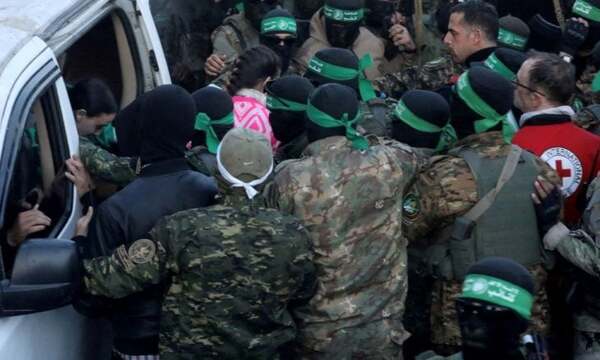
Israel has raised hell, and its threatening tone has reached its highest level, demanding that the world see three of its detainees held by the resistance, when they were released yesterday, in a state of very clear emaciation and physical weakness, due to the conditions of detention. The families of the Israeli prisoners shouted in a statement that the difficult images taken during the release of Ohad, Eli and Or are further blatant evidence that leaves no room for doubt: the prisoners do not have time, and the Israelis must get everyone out of there, even the last prisoner, now!


Yesterday, the father of an Israeli captive in the Gaza Strip asked: What does Netanyahu intend to do? How will he threaten Hamas? If he cares about the captives, he should accelerate the second stage now, so that everyone will be back within two weeks. Seeing them on the screen was horrifying. Netanyahu has brought us to a situation where Israelis are coming out of captivity as if they had come out of a holocaust.


The mother of an Israeli prisoner in Gaza called on Israelis to take to the streets after the situation in which the three hostages appeared, and said: Netanyahu is spending his vacation in Washington and is trying to abort the second stage of the deal, and the hostages are in a holocaust. She concluded that the situation of the hostages is a result of Netanyahu aborting the exchange deal in the past.


A senior Israeli health ministry official said the three prisoners suffered from severe malnutrition, reflecting the extent of what they had been through.


This official knows very well that the suffering of the Israeli detainees from malnutrition is due to the prevention of the entry of aid to the Palestinians, as Minister Itamar Ben-Gvir demanded and Benjamin Netanyahu agreed to. The Forum of Families of Israeli Prisoners and Detainees knows that Netanyahu is the one who foiled deal after deal in order to eliminate Hamas, and that Netanyahu, as the father of one of the Israeli prisoners admitted, is the one who brought things to a situation in which the prisoners are released from captivity as if they had been released from the Holocaust. And as the mother of one of the prisoners admitted, the hostage situation is the result of Netanyahu’s aborting of the exchange deal in the past.


For another important clarification, we review what the opposition leader, Yair Lapid, stated while attacking Netanyahu and asking: Have you discovered now that the prisoners’ condition is difficult? Didn’t you know that before? Because it was written in the intelligence documents that were placed on your desk in recent months.. You saw these reports exactly as I saw them.. What is the benefit now of you “ordering action”? And if there were actions, why didn’t you order them before?


Certainly, the narration of the facts from within the Israeli street is clear proof and evidence of the responsibility of Netanyahu and his extremist ministers for the situation in which they placed the Israeli detainees and brought them to this situation, at a time when the resistance sought and repeatedly declared that it was keen to protect the detainees from the Israeli bombing that in some cases caused the death of Israeli prisoners.


If we are talking about feelings regardless of gender, religion and belief, don’t we have the right to address the Israeli street and ask it to stop for a moment and reflect on the condition of our Palestinian prisoners, and what Netanyahu, Ben Gvir and the prison administration did to them? Doesn’t the Israeli Detainees’ Families Forum know that all the Palestinian prisoners who have been released since the start of the exchange deal suffer from health problems, and hundreds of them have had to be transferred to hospitals due to the organized crimes against them, which were revealed by the relevant institutions, most notably the crimes of torture, denial of treatment and medicine, starvation, abuse, humiliation, deprivation of sleep and prayer, and the severe beatings practiced by the repression units on a daily basis and even in the last moments before release?


Doesn’t the Israeli Prisoners’ Families Forum know that more than 70 Palestinian prisoners have been killed in cold blood by the prison administration since October 7, 2023, simply to take revenge on the Palestinian prisoners and their cause, and that about 13,000 Palestinian prisoners are living in a holocaust, unprecedented in its cruelty in human history, and that the families of Palestinian prisoners are deprived by Israeli political and military decisions from receiving their imprisoned sons and expressing their feelings?


The Israeli street, which has become more extremist than ever before, is required to stand up for the cause of its prisoners and confront those responsible for the deterioration of their conditions. It must also raise its voice with all courage to stand up to those responsible for the deterioration of the conditions of the Palestinian prisoners, who are suffering from catastrophic conditions that are much more difficult, and there are hundreds and thousands of cases. Addressing the Israeli street forcefully: It is time for you to respect the feelings of the thirteen thousand Palestinian prisoners in Israeli prisons and their families, if you want the world to respect and appreciate the feelings of a handful of Israeli hostages.

PALESTINE

Sun 09 Feb 2025 8:40 am - Jerusalem Time

Trump Storm: Will the Real Estate Developer Back Down in the Face of Global Rejection of His Proposals?

Maher Abdel Qader: The "whirlwind" that Trump stirred up has begun to subside due to international, Arab, Palestinian, and even some moderate opposition in America

Ali Al-Marabi: Trump's statement is dangerous, unprecedented, and violates the law, and falls within the framework of racial discrimination and war crimes.

Vera Baboun: The forced displacement of an entire people has nothing to do with peace, but rather is a flagrant violation of international law, humanitarian principles and justice.

Mansour Abu Karim: Confronting displacement can be achieved by strengthening Palestinian unity, ending division, and unifying institutions between Gaza and the West Bank.

Sami Mshasha: Implementing this plan requires American military intervention, which is out of the question due to its financial cost and legal repercussions.

Tawfiq Taama: Trump's statements are not just "trial balloons" but a real threat that coincides with Israeli ambitions


US President Donald Trump's statements regarding the displacement of the residents of the Gaza Strip and turning it into the "Riviera of the East" continue to resonate, despite the widespread and negative reactions to such statements, even from within the United States and many of its European allies, China, Russia, Arab countries, the Palestinian Authority, and Latin American countries. There are those who see the implementation of such American plans by force as unlikely, and therefore voices have emerged suggesting providing incentives to the residents of the Strip to encourage them to emigrate voluntarily.


Writers, analysts and diplomats who spoke to “I” said that the “storm” stirred up by Trump has begun to subside due to international, Arab and Palestinian opposition, and even from some moderates in America, stressing that the forced displacement of an entire people has nothing to do with peace, but rather is a flagrant violation of international law, humanitarian principles and justice, and that confronting displacement is done by strengthening Palestinian unity, ending the division and unifying the institutions between Gaza and the West Bank.


They stressed that the world must categorically reject any proposal that seeks to impose solutions by force, and that countries that have not yet expressed their position on Trump's calls for displacement must be urged to take the initiative to declare their rejection of displacement and annexation, in accordance with international law and international legitimacy resolutions.


Trump's statements about displacing Gazans are an extension of the "Deal of the Century"


Maher Abdel Qader, an expert in international relations, said that US President Donald Trump’s statements regarding the displacement of Palestinians from Gaza and the construction of a “Riviera” in its place are an extension of the “Deal of the Century” plan that he launched during his first presidential term under the slogan of peace, but its real goal was to strengthen Israel’s interests and enable its control over all of Palestine and the Golan Heights, in addition to other lands, in exchange for providing humanitarian and economic services to the Palestinians without fulfilling their legitimate political rights.


He pointed out that this proposal was widely rejected in the past, and remains rejected until now.


Abdul Qader explained that the Palestinian people have been subjected to forced displacement campaigns since the beginning of the immigration of European Zionists to Palestine, and the declaration of the establishment of the State of Israel in 1948, during which period hundreds of thousands of Palestinians were displaced, and then the displacement operations were repeated in 1967. History has also witnessed repeated attempts to settle the Palestinians outside their homeland, most notably the 1955 campaign led by the Israelis, Americans and British, but it failed, as did similar attempts in the sixties and seventies of the last century.


Abdel Qader added: Israel and its allies also sought to push UNRWA to develop an incentive and compensation program to encourage Palestinians to emigrate, but this project failed due to political complications and Palestinian and Arab popular resistance.


War crime and crime against humanity


He pointed out that Trump's recent statements regarding the displacement of Palestinians from Gaza, which is considered a war crime and a crime against humanity under international law, aim to boost his popularity among the pro-Israel base, especially the Zionist lobby and Zionist evangelical Christians, who donated hundreds of millions of dollars to his election campaign.


He said: "These statements also aim to exert pressure on Egypt, Jordan and other countries to bear additional responsibilities towards Palestinian refugees, with the aim of uprooting the Palestinians from their land, eliminating their cause, easing the political, economic and security burdens on Israel, and turning it into an 'extremist religious state protected', as it has always been by the United States."


Abdul Qader saw that Trump began to backtrack on his plan hours after announcing it, as his Secretary of State, Marco Rubio, stated that Trump’s goal in transferring the population was to enable the United States to remove the rubble and destruction in Gaza, pointing out that there were 35,000 tons of weapons that Israel dropped on the Strip and did not explode.


Palestinians who experienced displacement in 1948 will not leave their land


Abdul Qader considered this statement a political blackmail method, because the Palestinians who were displaced since 1948 realize that immigration is a one-way street with no right of return, and therefore this trick will not fool them. The US Secretary of Defense also confirmed at the time that there is no plan to deploy the US army in Gaza.


Abdul Qader added: The "storm" that Trump stirred up has begun to subside due to international, Arab and Palestinian opposition, and even some moderates in the United States, although these statements were welcomed by extremist settlers, who now consider them an idea that must be established, especially after they were publicly adopted by an American president and members of his administration and Congress, without hesitation or shame.


Abdul Qader stressed that the Palestinian people's continued presence on their land, strengthening their struggle, and adhering to their right to self-determination and the establishment of their independent state with Jerusalem as its capital, while not abandoning the demand for the right of return, requires a supportive Arab consensus, especially from Saudi Arabia, which the United States is demanding normalization without compensation, in addition to the position of Egypt and Jordan, which rejects any solution that diminishes Palestinian rights.


He also stressed that international solidarity, which showed an explicit rejection of displacement, and the re-proposal of the two-state solution, along with unifying the Palestinian ranks, is the way to thwart the Trump project and the plans of the extreme right in Israel.


Abdul Qader considered that the real battle now is the battle to rebuild Gaza, warning that keeping aid scarce and not starting reconstruction will push the Palestinians in the Strip to live in a deadly hell among the rubble and tents that will not withstand the changing weather conditions for long.


Strange positions that have nothing to do with international and humanitarian relations


For his part, Ali Al-Marabi, Secretary-General of the Union of Arab Journalists and Writers in Europe, said that since he came to power last January, US President Donald Trump has been taking strange positions that have no connection to international and humanitarian relations.


He pointed out that among these positions was what he announced a few days ago about the necessity of displacing the Palestinian people from Gaza to Egypt and Jordan, and later to other countries.


Al-Marabi described this statement as dangerous, unprecedented, and contrary to international law and human rights, and falls within the framework of racial discrimination and war crimes against the Palestinian people.


He said: So, in light of these decisions that Donald Trump is taking in a strange way that has no connection to international norms and international law, which requires respecting the rights of peoples subject to occupation, there are international laws that protect people who are under foreign occupation, and this applies to a large extent to the Palestinian people who have been suffering from the Zionist occupation since 1948.


The position of the Arab countries is clear and rejects the displacement of the Gazans


Al-Marabi believes that the Arab countries’ position was clear, and we hope that they will always confirm their position opposing the displacement of our Palestinian brothers from their land in the Gaza Strip.


He added: We also hope that the international community will move urgently to prevent the commission of these crimes that aim to evacuate the Gaza Strip of its people and residents.


He stressed that the world was surprised by the decisions taken by President Trump against the International Criminal Court, which included imposing sanctions on members of the International Criminal Court, seizing their assets, and preventing them from entering the United States.


He said: The matter was not limited to members of the court only, but also included everyone who cooperates with it or provides any evidence to it.


Continued instability in the Arab Levant


Al-Marabi explained that these fierce aggressive policies adopted by Donald Trump ultimately lead to strengthening the Zionist occupation on Arab Palestinian land, and prevent, in one way or another, the establishment of a Palestinian state in accordance with international resolutions on the West Bank and Gaza Strip. This will lead in the future to the continuation of the crisis and the continuation of the state of instability in the Arab Levant and Palestine.


Al-Marabi stressed the need for the Arab countries to confirm to the American leadership their rejection of these wrong political decisions and orientations, and to continue their support for the Palestinian people to obtain their legitimate and legal rights, including the establishment of an independent Palestinian state with Jerusalem as its capital, at least according to the Arab initiative that was approved at the Arab Summit in 2002 in Beirut, which bore the title “Land for Peace.”


Al-Marabi concluded his statement by saying: “We reaffirm our support for the Palestinian people in their national choices, and we support their struggle to establish their independent state with full sovereignty.”


Trump's proposal ignores basic principles of international law


“In an unprecedented and deeply disturbing statement, US President Donald Trump has presented his signature solution for peace, calling for the forced displacement of more than two million Palestinians from Gaza and the formal annexation of part of the occupied Palestinian territories in the West Bank, to facilitate the expansion of Israeli settlements,” said Vera Papon, Ambassador of the State of Palestine to Chile.


Baboun noted that Trump's proposal ignores the basic principles of international law and human rights, while recalling colonial-era policies that prioritize territorial expansion over the rights and existence of the Palestinian people.


She considered that these statements regarding the forced displacement of Palestinians from Gaza stirred official and public opinion in Chile, as the Chilean Ministry of Foreign Affairs confirmed in a post on the XN platform, "Chile, as a responsible country that values peace and respect for human rights and international law, affirms that there is no other way to resolve the regional conflict and ensure peace other than the two-state solution."


Chilean President: Palestine for Palestinians without colonies


She added: “This statement was exchanged between Prime Minister Alberto Van Klaveren and the President of the Republic himself, Gabriel Boric, who in turn confirmed in his post on the same platform that “Palestine is for the Palestinians, without external invasions, colonies or displaced persons. Two integrated and sovereign states, with internationally recognized borders.”


Ambassador Babon added, "In a statement published by the Palestinian community in Chile, it stressed that "it is unacceptable that the insistence on expelling Palestinians from their land and imposing foreign rule on the Gaza Strip continues, after a year of terror, genocide and war crimes against the Palestinian people. This is nothing less than the entrenchment of the occupation and the denial of the inalienable right of the Palestinian people to self-determination."


The community stressed that “in the face of this new attack on the rights of the Palestinian people, the international community can no longer limit itself to rhetorical statements. We need to take concrete action to prevent the imposition of illegal measures that lead to the entrenchment of colonialism, forced displacement and systematic violence. In this context, we welcome our government’s statement and call on other countries to clearly condemn these statements and to actively promote diplomatic measures in international forums that demand compliance with international law and the protection of the Palestinian people.”


Pabon noted that former Chilean diplomat José Rodríguez Elizondo published a letter in response to Chilean President Boric’s post in El Mercurio: “We are too marginal a country to take the initiative against the Trump administration in the event of a possible displacement of the Gaza population. It seems to me that this is an ideological show that puts us in the direct spotlight. First of all, goodbye to the visa exemption. My doubt is whether we realize that in this way we are ‘intensifying contradictions’, as they say in the Leninist lexicon.”


Chile's condemnation of Trump's remarks was neither exceptional nor isolated.


In a letter published in the same newspaper, Senators Francisco Chahuan, Iván Moreira and José Ansulsa, members of the Foreign Policy Committee of the Parliament, responded that “his call to modify this position based on current calculations is nothing more than a call to abandon the leadership of our country and the doctrine of the Chilean State that has transcended governments in power, based on adherence to international law. Moreover, his argument suffers from dialectical weakness. Since Chile is a small country exposed to the interests of foreign powers, the most important interest of our country is to defend international law. Adopting accommodating positions, as Rodríguez Elizondo suggested, would only weaken our standing in the world and undermine the credibility of our foreign policy. Finally, it is necessary to assume that Chile’s condemnation was not exceptional or isolated, but rather was similar to the position of the vast majority of countries in the world, including the United Kingdom, France and Germany, which rejected President Trump’s illegal proposal that entails the forced displacement of Palestinians from their lands.”

She stressed that the forced displacement of an entire people has nothing to do with peace, but is a clear and flagrant violation of international law, humanitarian principles and justice.


Baboun believed that the world must categorically reject any proposal that seeks to impose solutions by force, and we urge countries that have not yet expressed their position on these calls to take the initiative to declare their rejection of displacement and annexation, in accordance with international law and international legitimacy resolutions.


The vision of the populist right in the United States


Writer and researcher Mansour Abu Karim stressed that US President Donald Trump’s insistence and statement regarding the displacement of the people of the Gaza Strip reflects the vision of the populist right in the United States.


Abu Karim pointed out that this trend, represented by Trump, deals with international politics and rights with the logic of commercial deals, as it sees things from the perspective of ownership, buying and selling.


He explained that this logic is not consistent with international relations or international law, and reflects ignorance of the nature of the conflict and the historical rights of the Palestinian people, considering Trump's statements to be nothing more than a "soap bubble" that will not have a significant impact on the Palestinian-Israeli political reality, as happened with the so-called Deal of the Century.


Abu Karim added: "The issuance of this position by the president of the largest country in the world is considered a disregard for international law and the historical rights of the Palestinian people, in addition to being in contradiction with the system of international legitimacy resolutions."


The researcher pointed out that this trend reinforces the logic of commercial deals in international relations, and paves the way for a new phase based on expelling Palestinians from their lands and displacing them in favor of economic projects and the vision of the ruling religious right in Israel.


Israel sees Trump's statements as an opportunity to finally get rid of the Gaza crisis


Regarding the Israeli Defense Minister, Yisrael Katz’s, order to prepare plans for displacement, Abu Karim explained that Israel is exploiting this opportunity, and finds in Trump’s vision an opportunity to liquidate what remains of the Palestinian issue through displacement or implementing what is known as the “conflict resolution” project, which is based on the principle of expulsion (transfer).


He added: "The ruling right in Israel considers Trump's statements an opportunity to finally get rid of the Gaza crisis and the population density in the Strip, especially since Gaza has been, throughout the history of the struggle, a dagger in Israel's southern flank."


Regarding the possibility of absorbing the people of Gaza in other countries, he stressed that there is no country in the Arab or Islamic world, or even at the international level, that is prepared to receive more than two million Palestinian citizens, considering that this would represent the largest displacement operation in history, and would be considered a crime according to international law and international norms.


Abu Karim stressed that there is no readiness on the part of Egypt, Jordan, or any Arab country to receive the Palestinians whom Trump seeks to displace from the Gaza Strip.


Fear of returning to war to implement the forced displacement project


He pointed out that confronting displacement can be done by strengthening Palestinian national unity, ending the division, unifying the institutions between Gaza and the West Bank, allowing the Palestinian Authority to return to assume full responsibility for the Gaza Strip as the administrative and political entity recognized by the world, upholding the supreme interests of the Palestinian people, and removing the pretexts from the hands of the Israeli occupation to return to war again.


He warned that returning to war would enable Netanyahu and Trump to implement the displacement project through military force, adding: “Trump’s project can be confronted through a unified Arab and Islamic position by rejecting the idea in its entirety and calling for an Arab and Islamic summit in Riyadh to come up with a unified position towards this dangerous project.”


Internationally, Abu Karim believes that it is possible to resort to the International Court of Justice through a decision by the Assembly, and to escalate the clash with the Trump administration and the Netanyahu government in international forums, to thwart this plan, just as the Deal of the Century was thwarted.


A proposal that conflicts with American political and economic interests.


In turn, Sami Mshasha, a writer specializing in international institutions, revealed that US President Donald Trump’s proposal to “seize Gaza and expel its residents” is not just a passing statement, but rather comes within a complex political context that serves Israel’s interests, even though it is not feasible.


"Trump, a man of real estate deals and commercial exchanges, realizes that this proposal conflicts with the political and economic interests of the United States in the region, especially in light of the Chinese economic competition and the Russian political and military competition," Mish'ash explained.


He pointed out that implementing such a plan would require American military intervention, which is unlikely given its financial cost and legal repercussions, in addition to the Palestinians' categorical rejection of such a scenario, which would mean a new Nakba.


Mish'sha'a believes that the proposal is not a ready-made plan, but rather a "moving proposal" that gives Israeli Prime Minister Benjamin Netanyahu a chance to consolidate his government coalition and the possibility of forming a unity government to avoid internal crises that threaten the entity's survival. It also gives the occupation room to reformulate the second phase of the ceasefire agreement in a way that ensures the achievement of its strategic goals.


Mshasha pointed out that the main goal of raising Trump’s proposal is to attract broad Arab rejection of it, so that “thwarting the displacement” becomes an achievement in itself, which paves the way for proposing an alternative plan represented by rebuilding Gaza under regional supervision, while offering economic incentives to encourage the voluntary migration of the Strip’s residents, especially the youth, which he described as “the real danger.”


Intensifying settlement and uprooting plans in the West Bank


He added: In return, Israel is exploiting this situation to continue settlement expansion in the West Bank, legalize settlement outposts, annex the Jordan Valley, and internally displace Palestinians, with a focus on dismantling the camps in the northern West Bank. It is also working to strengthen its control over Jerusalem legally and practically, by ending the work of the United Nations Relief and Works Agency for Palestine Refugees (UNRWA), revoking the refugee status of more than 110,000 Jerusalemites, and eliminating any presence of camps within the city’s borders.


Mish'sha' stressed that the US administration is seeking, in parallel with these steps, to impose normalization with the largest possible number of Arab and Islamic countries, but this normalization is conditional on achieving Israeli goals first, most notably annexation, establishing Jerusalem as the "eternal capital" of Israel, eliminating any Palestinian resistance, eliminating the right of return, and ending UNRWA.


Mish'sha concluded his speech by emphasizing that the real challenge for the Palestinians does not lie in the positions of the Arab countries, which are governed by calculations of interests and survival, but rather in their ability to unify their ranks and end the internal division, considering that the continuation of the division is the loophole that allows the plans of Trump, Netanyahu and their allies to pass.


Mish'sha' concluded his statement to "I" by emphasizing that "without true Palestinian unity, the resistance trade will be a losing one, and the deals to liquidate the Palestinian cause will succeed."


An extension of old plans aimed at emptying the Gaza Strip


For his part, political analyst Tawfiq Taama said: The statements of former US President Donald Trump about displacing Palestinians from the Gaza Strip are an extension of old plans aimed at emptying the Strip of its residents, pointing out that the Israeli occupation has sought to achieve this goal over decades through repeated wars on Gaza.

Taama explained that the recent Israeli aggression, which continued for more than a year, revealed the occupation's intentions to impose forced displacement on the residents of the Strip.


He added: "The occupation's failure to achieve its goals through military force prompted Trump to try to achieve them through political and economic pressure and blackmail, under the pretext of reconstruction."


Taama stressed that Trump's statements are not just "trial balloons", but rather represent a real threat, especially since he promised Israel during his election campaign to annex the West Bank, which reflects a trend towards imposing American or Israeli control over the Gaza Strip as well.


Achieving true Palestinian national unity is required.


He pointed out that thwarting these plans requires the steadfastness of the Palestinian people in Gaza, strengthening the resistance, and achieving true Palestinian national unity.


He criticised the continuation of the Palestinian division, stressing that Israel exploited this division to implement its aggressive policies in the West Bank and Gaza Strip.


Political analyst Taama called for a Palestinian and Arab move to confront the American-Israeli plan, by mobilizing international positions, and holding emergency sessions at the United Nations, the Arab League, and the Organization of Islamic Cooperation to denounce these statements.


Taama considered the Arab popular movement an important element in confronting these plans, pointing out that the Arab street protests may put pressure on the American administration, which takes into consideration the impact of popular positions on the stability of its allied regimes in the region.


Taama concluded by saying: The battle is not only in Gaza, but also includes the West Bank, where Israel seeks to impose the annexation plan, which requires a unified Palestinian movement to confront these dangers.


OPINIONS

Sun 09 Feb 2025 8:38 am - Jerusalem Time

The Martyr of Palestine

Hamada Faraana

Hamada Faraana

Opinion Writer

The Secretariat of the Arab National Conference, in its meeting held in Beirut on Thursday 6-2-202, headed by Secretary-General Hamdeen Sabahi - Egypt, and with the participation of former Secretaries-General: Maan Bashour - Lebanon, Khaled Al-Sufyani - Morocco, Ziad Hafez Lebanon - America, called for the broadest global Arab-Islamic solidarity campaign to confront the statements of US President Trump supporting the plans of the Israeli colony, expose them, and confront them by working for the right of return, the right of Palestinian refugees to return to the cities and villages in their homeland from which they were previously expelled in 1948, and their return in fulfillment and implementation of UN Resolution 194, as it is the political response to the plans to uproot the Palestinians from their land and displace them.


The Arab National Congress is considered the largest Arab institution that includes parties, figures and institutions independent of Arab regimes, and has a wide margin of freedom of opinion and choice in its national positions and orientations. Its credibility lies in its choices, statements and positions, which are independent, through its pluralism, including those with credibility and independence, and national, nationalist, leftist and Islamic parties, which cross borders in their presence and interests.


In its statement issued after its meeting, it affirmed its support for the Egyptian and Jordanian positions rejecting the displacement project, and valued the official and popular positions of Cairo and Amman, and called for the broadest Arab support, including holding an Arab-Islamic summit in defense of the rights of the Palestinian Arab people, and in absolute rejection of the Trump project, and in support of the official and popular positions of Egypt and Jordan on it.


I believe that this is a gain and an honor for all Jordanians for their country’s stances, and that the appreciation by the Arab National Congress is the result of this nationally appreciated stance by the figures, parties, and national institutions that transcend borders.

The conference called on the political and societal movement in the Arab world to participate effectively in the funeral of the martyr Hassan Nasrallah, Secretary-General of Hezbollah, who was assassinated by the Israeli colony, along with his successor, the martyr Hashem Safieddine, and many of the party’s political and military leaders. The martyr Hassan Nasrallah and his comrades, the martyrs of Palestine, confirmed the continuous participation of the Lebanese people in being partners in blood since 1948 until now, with the Palestinian people in confronting the colony’s policies, programs, and plans against Lebanon, as well as against the Arab countries neighboring Palestine, and against the Arab nation and its right to independence and progress, far from the policies of American hegemony, blackmail, tyranny, and support for the Israeli colony so that the balance of material, military, and intelligence powers remains in its favor.

The Arab National Conference's bias in support of the Palestinian cause as the central cause of the nation, in order to strengthen the rejection of the normalization policies that the United States of America is trying and seeking to impose, market and spread, in a manner that contradicts the national and Arab interests. And here is Europe, an ally of the United States, which previously established and supported the Israeli colony, standing with the Arab position and with the cause of the Palestinian people, and disagreeing with the policies of the United States that support the colony.
OPINIONS

Sun 09 Feb 2025 8:35 am - Jerusalem Time

Trump will go and Gaza will remain

Bahaa Rahal

Bahaa Rahal

Opinion Writer

America is suffering from a moral crisis that no other great empire has ever suffered before. This crisis is not new, but rather it is expanding with the arrival of Trump, the man of casinos and deals, taking on premeditated indifference. It is thus the first empire in history that was founded on the ethnic cleansing of the Red Indians, and it continues in the same manner against other peoples, instead of atonement for its sin. This did not happen in the era of all the empires that preceded the rise of America and its dominance and preceded the time of the white man.


Certainly, the Gaza war was not the beginning of this discovery, but it revealed an undeniable fact, that America has fallen morally in all international forums, and not the first of them is its positions in the Security Council, its positions on the International Court of Justice and the International Criminal Court in The Hague, its decisions to stop funding UNRWA, the idea of displacement and ethnic cleansing to neighboring countries, cutting off aid as a tool of pressure and blackmail, and waving military force at the expense of the system of human values, international laws, and at the expense of heavenly and earthly laws. This fall appears openly without ambiguity, and it declares this in all forums, preventing decisions and obstructing others with its “veto” and economic and military means of pressure.


The state of the world, which submits to a fallen empire plagued by auras of injustice, symptoms of blackmail and perversion, raises suspicion and fear about the future of life on this planet.


America wants to own the Gaza Strip and displace its residents who are suffering the horrors of the war of extermination and ethnic cleansing, and are living without shelter in the open and displaced and on the rubble of their homes that were destroyed by the war machine. This is America that has deployed its military and war arsenal since the first day to crush Gaza, and it is the one that supported its siege and provided political protection and offered billions of dollars to the occupation and came with its naval and air fleet. This would not have happened without this support and backing. It is true that what happened and is happening is at the hands of the occupation and its soldiers, but it would not have happened without the implicit American support and approval. What Trump announced is ridiculous, because the Palestinian has no homeland other than Palestine, and his right to it will not be revoked, and the power of injustice will not be able to dissolve or melt him, because he is not subject to that because he possesses the civilization, culture, knowledge, awareness, science and values that formed his national identity and his right to exist on his land, so he escaped all the operations of erasure and extermination, just as he will escape the operations of ethnic cleansing despite the injustice he is experiencing. Gaza, Mr. Trump, is not for sale for you to announce your intentions to own it. It will remain and you will leave, because the fateful issues of peoples are not a deal or a contract, but a right that will prevail, whether it takes a long time or a short time.

OPINIONS

Sun 09 Feb 2025 8:34 am - Jerusalem Time

Palestine from Balfour to Trump

Dr. Aql Salah

Dr. Aql Salah

Opinion Writer

This article aims to make a historical comparison between the two Nakba, the first Nakba was founded by the Balfour Declaration announced on November 2, 1917, which worked to displace Jews to Palestine, creating the Nakba in 1948 that led to the establishment of the occupying state, and the displacement of the Palestinian people, followed by the Naksa in 1967, which led to the occupation of all of historical Palestine. In contrast, we discuss the second Nakba, which is headed this time by US President Donald Trump, represented by the Deal of the Century in his first term and the plan to displace part of the Palestinian people at the beginning of his second term. What is important for us in this article is to shed light on the fact that the first Nakba displaced Jews from all over the world to Palestine, while the second Nakba aims to displace the Palestinian people from their land to some Arab countries, and prevent the establishment of a Palestinian state.


This leads us to the fact that the West's ambitions in Palestine are old; because of its geographical location's strategic economic, military and religious importance. Britain was at the forefront of the colonial countries that coveted control over the region in the past, and today America aims to achieve the same British policy and goals, and the promise crystallized as a result of the interests of the Western countries that wanted to get rid of the Jews in Europe. The Balfour Declaration is not only the major turning point in the Zionist project, but it also changed the future of the Arab homeland, by planting the State of Israel instead of the State of Palestine. The idea and project of establishing the Zionist entity in Palestine is a Western colonial idea that Britain implemented from A to Z. More than a century after the Balfour Declaration by Britain, a new promise was announced that can be called the second promise, but this time the promise came from America - Trump's promise - which grants Jerusalem to Israel by recognizing Jerusalem as the capital of the occupying state - Israel - and transferring the American embassy to Jerusalem. The scene of Balfour "who gave from those who do not own to those who do not deserve" has been repeated.


108 years after the Balfour Declaration, Trump is preparing a new promise: the promise to displace the Palestinian people. On August 16, 2024, Israel's Channel 12 reported that Trump said that "Israel looks small on the map and I have always thought about how it can be expanded." This statement came shortly before his election as president. After his election, he proposed a plan to displace the residents of Gaza to Egypt and Jordan. On January 26, 2025, Trump stated that he had discussed the plan with the Jordanian monarch and the Egyptian president, indicating that the transfer of the population could be temporary or long-term. Trump proposed a plan to "cleanse" Gaza, saying that he wanted Egypt and Jordan to receive Palestinians from the Strip in order to bring peace to the Middle East.


Before and during the 1948 war, about a million Palestinians were displaced and expelled from their homes, known as the Nakba. In the 1967 war, when Israel captured the West Bank and Gaza Strip, another half a million Palestinians were displaced and expelled to Arab countries. Many Palestinians see the recent war in Gaza, which destroyed entire neighborhoods and forced 90 percent of the Strip’s 2.3 million people from their homes, as a new Nakba. They fear that if so many Palestinians leave Gaza, they will never return.


Egyptian President Abdel Fattah el-Sisi has warned of the security implications of moving large numbers of Palestinians into Egypt’s Sinai Peninsula, which borders the Gaza Strip. That could complicate efforts to broker a historic deal between Saudi Arabia and Israel to normalize relations, something Trump tried to do during his previous term and is expected to complete in his current term.


Trump's call to "cleanse" Gaza and deport its residents to Jordan and Egypt was met with Israeli praise and welcome, and Palestinian and Arab rejection. For his part, the far-right Israeli Finance Minister Bezalel Smotrich considered US President Trump's proposal to transfer the residents of the Gaza Strip to Jordan and Egypt a "wonderful idea," and Smotrich told Netanyahu: We must strengthen our grip and sovereignty over the West Bank. The outgoing Israeli Minister of National Security, Itamar Ben-Gvir, praised Trump's initiative, and wrote on the "X" platform: "I congratulate President Trump on his initiative to transfer the residents of Gaza to Jordan and Egypt. One of our demands from Israeli Prime Minister Benjamin Netanyahu is to encourage the voluntary migration of Palestinians from the Gaza Strip to Jordan and Egypt."


It is worth noting that most of the residents of Gaza are Palestinian refugees or descendants of refugees, and for the Palestinians, any attempt to transfer them from Gaza would be similar to the Palestinian Nakba that they were subjected to in 1948. In Jordan, there are 2.3 million registered Palestinian refugees, according to the United Nations.


The response to President Trump's plan came from the Palestinian people and the Palestinian resistance in Gaza in the scenes of return from the south to the north, which express the extent of the Palestinian's adherence to their land despite their return to their destroyed homes that were wiped out by the occupation's bombing with huge American missiles and bombs. The war of extermination, starvation and millions of tons of bombs did not push the people to emigrate from their land.


The Arab Quintet meeting, held in Cairo on February 1, 2025, stressed the categorical rejection of any attempts to displace Palestinians or strip them of their rights, whether through settlement activities, home demolitions or land annexation, considering that these measures threaten stability and undermine the chances of peace in the region. Iranian Foreign Minister Abbas Araghchi also responded to Trump’s repeated calls to transfer Gazans to Egypt and Jordan by sending Israelis to Greenland instead.


Despite all this, the disastrous results and effects of the Balfour Declaration are still ongoing and escalating. The occupying state was established on the majority of historical Palestine, in addition to the occupation continuing with settlement expansion, Judaization of Jerusalem, demolition, killing, arrest, and displacement of millions of Palestinians to the diaspora. It did not stop at displacing them, but rather pursued them in the diaspora camps, targeting them and displacing them to Western countries, relying on the ISIS contractor, and before that on the South Lebanon Army - agents of Israel - who carried out the Sabra and Shatila massacre. Today, history is repeating itself against the camps in terms of the targeting that the camps in the northern West Bank are exposed to through systematic destruction after the destruction of the Gaza camps in order to obliterate the right of return and settle the refugees in the countries in which they are located.


We conclude with a basic rule that governed the situation during the issuance of the Balfour Declaration and the Trump Declaration, that the Palestinian people in the first declaration were unable to defend the Palestinian cause and there was no Palestinian resistance to stand in the face of the malicious plans, while the Palestinian people responded to it when the Trump plan was announced by returning from the south to the north in the Gaza Strip, and the people today are relying on a resistance that forces the occupation to withdraw and allow the return and release of hundreds of prisoners serving life sentences, which can be described as a historical miracle.


Accordingly, Egypt and Jordan are required to open a wide space for popular movement rejecting the plan to target and strike the national security of their countries through the Trump plan that aims to displace the Palestinian people. They must move at the regional and international levels to defend their sovereignty and reject these projects that conflict with international laws, the sovereignty of states, and the rights of occupied peoples to get rid of the occupation. Jordan and Egypt have a strong pressure card as they have peace relations with Israel by initiating escalatory steps to the point of severing relations and canceling peace agreements with Israel and also with America if Trump and Netanyahu implement their malicious plan to displace the Palestinian people. These are the practical steps that the Palestinian Authority must also take by withdrawing recognition of the State of Israel, stopping security coordination, and holding the occupation responsible for its occupation of the West Bank and Gaza Strip by freezing the work of the Palestinian Authority, holding the occupation responsible at all levels, and working to unify the Palestinian arena and include the Hamas and Islamic Jihad movements in the PLO, completing Palestinian reconciliation, developing plans and programs that support the steadfastness of the Palestinian people, returning the Palestinian issue to the international table again, and going to all international and legal organizations to hold Israel and President Trump accountable and punish Israel.


In the end, the Palestinian is the one who fought, endured and was patient for about a year and a half, and with the agreement, the scenes of the return of the residents of the Gaza Strip to the north astonished the world, as the scenes of the return confirmed that this is a mighty people who have not and will not give up their land and will not accept displacement and deportation despite their return to destroyed areas with no life. In contrast, the settlers in the Gaza Strip and the north refuse to return to the settlements despite the ceasefire agreements and the temptations offered to them by the Israeli government. This comparison sends a message to Trump about who are the owners of the right and the land, who clings to their land and who has no affiliation to this land. If Trump wants a solution to the Jewish problem, he must carry them on ships and return them to where Britain brought them, or he can establish a new state for them in America by increasing the number of states to 51 states.


OPINIONS

Sun 09 Feb 2025 8:32 am - Jerusalem Time

The broker president..!

Dr. Walid Al-Omari

Dr. Walid Al-Omari

Opinion Writer

In his book, The Art of the Deal, American real estate broker and trader Donald Trump gives us advice on taking advantage of opportunities, emphasizing the “importance of exploiting difficult times,” such as economic recessions, to seize distressed assets and revive them and make a profit from them later. Trump believes that “an unstable market presents unique opportunities.”

So for the broker President Trump, the massacre and destruction of Gaza is an opportunity that may not be repeated. And if it is seized according to his art, profits will be reaped from it. He does not know that Gaza is a homeland before it is a property or a commodity in the slave market.


Thus, the broker Trump refuted what President Trump announced that he wanted to end the wars that broke out during the era of his flabby predecessor, Joe Biden. But he forgot to say that the wars that bring huge profits and money to his holster after the sword is taken away from him will not stop, regardless of the lives they reap and the destruction they sow.


This is how President Trump fell into the evil thoughts of the broker Trump.


Trump's idea was born in Israel and is being promoted by Trump the broker. According to the parliamentary political editor of the Israeli radio, Ze'ev Kam, in the morning bulletin of February 6, 2025, it has been discussed in the cabinet for months and ministers Ben Gvir, Katz and Dermer were tasked with developing it and pushing for a plan to implement it. Israeli political history books tell us that it is an old Zionist dream whose roots go back to the term of the second Israeli prime minister, Levi Eshkol, before the June 1967 war. It came against the backdrop of the activity of Palestinian guerrillas in Gaza after the Nakba, specifically after the tripartite aggression against Egypt in 1956. Shimon Peres, the Minister of Post in the June 1967 war, was one of the most enthusiastic supporters of it and of settlement in the Egyptian Sinai and the Gaza Strip. He is the one who established the "Ariel" settlement in the heart of the West Bank. Golda Meir, the third prime minister of Israel, dreamed of it in 1970 when the war broke out between 1968-1970 between the resistance in Gaza and the occupation forces led by Ariel Sharon, the commander of the southern brigade in the Israeli army at the time. A government plan drawn up by the Ministry of Intelligence Affairs led by Gila Gamliel at the beginning of this war came back to haunt her, and it suffered a disastrous failure like its predecessors, thanks to the patience and steadfastness of the people of Gaza and their resistance, and a strict Egyptian decision to close the border with the Strip.


Now comes the broker Trump to revive the bones from the dust, so why will Trump succeed where all his teachers from the leaders of the Zionist movement and its pillars failed? It is true that launching the idea of displacing the people of Gaza made him the "HaMashiach" the Messiah in the eyes of the Kahanists/Kahaneists led by Smotrich and Ben Gvir and behind them Netanyahu and all his gang, but he must benefit from the political path of those who preceded him in it, specifically Shimon Peres, who became one of the most ardent advocates of peace and seekers of it with the Palestinians. It is no wonder then that Smotrich rushed to comment on Trump's idea of displacing the people of Gaza by saying: "We have buried the idea of a Palestinian state forever," and Ben Gvir's trumpet returns to "water" in order to return to the ministerial chair and implement the project of his master Rabbi Kahane regarding the transfer of the Palestinians. He reveals that the plan is ready and awaiting implementation and declares publicly that "Netanyahu no longer has an excuse to evade."


So Trump, like any real estate broker and not like the leader of a superpower aspiring to lead the world, is nothing more than a promoter of an old-new right-wing Zionist dream. And so he turned his cheek and his soul up and walked around swaggering, belittling his position and returning to his old advice in his book “The Art of the Deal.”


President Trump, like any broker, depends on the client’s compliance in marketing his new deal, and whether he is a “shy” who buys and loses, so that Trump seizes the opportunity and gains his share of it for the benefit of the Israeli contractor, whose leader Netanyahu said the day after Trump’s call to displace the people of Gaza in an interview with Fox News that it is “an excellent idea and must be developed and ensured to be implemented.” True, in his view, it strengthens the survival of his extremist combination and keeps him as Prime Minister of Israel, and implementing it, if it is done, will bring him “absolute victory” and achieve a strategic goal that his predecessors failed to achieve, ignoring that he is doomed to fail in order to catch up with his predecessors.


Thus, between the broker Trump and the contractor Netanyahu, they are trying to hide the bloody crime that ravaged the Gaza Strip and its people with the crime of displacing those who remained alive. In doing so, Trump also revealed, whether he knew it or not, the hidden goal behind this war, including what preceded it and the dangerous repercussions that may follow it on the Palestinian cause, which they want to liquidate rather than reach a just solution that ends the conflict. However, they must learn from the political career of Shimon Peres, who was one of its most enthusiastic and promoters, until he ended up realizing the reality and that the solution is political before it is through bullying and force. Perhaps Trump, the "two-deal", and like any real estate broker this time, hopes that the Palestinians and Arabs will accept Trump's deal of the century from his first term, in which he authorized Israel to annex parts of the West Bank, on the basis that it is considered by his Arab followers to be less harmful compared to his second term deal, which is to start displacing the people of Gaza. In any case, Trump put forward a hellish idea, but he did not put forward a plan. It is the fantasy of a broker who does not understand reality, who has no value for the homeland, and whose calculations are all financial. In his eyes, everything is a commodity that can be bought and sold.


Just as the dreams of those who came before him were shattered, his illusions this time will be “on the ground,” for it is above all a crime against humanity, and a violation of all international laws, regulations, and legislation. If he is aware of that, then this is a crime, and if he is not aware, and he is the president of the most powerful country in the world, then the crime is greater.


So let President Trump get off his mule, for his merchandise is old and rusty, and let him think, as the president of a great country and a world leader, about what benefits people and humanity and achieves justice, instead of entrenching injustice and plunging the world into bloody, hateful labyrinths that prolong the life of the conflict so that blood continues to be washed with blood.

PALESTINE

Sun 09 Feb 2025 8:29 am - Jerusalem Time

Israeli delegation discusses second phase of deal in Doha

The Israeli delegation arrived in the Qatari capital, Doha, at dawn on Sunday, to hold talks on the ceasefire agreement in Gaza and the second phase of the prisoner exchange deal, as the negotiations are taking place within the framework of the talks being held by mediators between Hamas and Israel.


The Israeli delegation includes the coordinator of prisoners and missing persons affairs, reserve brigadier general Gal Hirsch, and the former deputy head of the Shin Bet security service, whose name was not revealed, according to Israeli media reports.


Regarding the powers of the Israeli delegation that arrived in Doha, it is not authorized to discuss the second phase of the deal, according to what the official Israeli radio reported.


She explained that the mandate given to the delegation by the Israeli political level, represented by Prime Minister Benjamin Netanyahu, so far is only a mandate to discuss the continuation of the first phase of the deal.


Netanyahu is deliberately procrastinating and wants to extend the first phase of the deal for as long as possible, noting that it has entered its fourth week, with a duration of 42 days.


Haaretz newspaper reported, quoting a senior official who accompanied the prime minister on his tour to Washington, that Netanyahu will not commit to implementing the second phase of the agreement without eliminating Hamas.


It is noteworthy that negotiations on the mechanism for implementing the second phase of the agreement were scheduled to begin last Monday, i.e. on the 16th day of the ceasefire.


These developments come after US President Donald Trump revealed, during a press conference with Netanyahu at the White House, his intention to seize the Gaza Strip and displace Palestinians from it, which sparked widespread regional and international rejection.


Following that, Trump said that he was "in no hurry" to implement his controversial plan to seize the Gaza Strip and displace Palestinians from it.


This came as angry international reactions continue regarding the proposal to displace and seize Gaza, which Trump put forward a few days ago.


On January 19, a ceasefire and prisoner exchange agreement went into effect in three stages, each lasting 42 days. During the first, negotiations were held to start the second and third, with the mediation of Qatar and Egypt and the support of the United States.


With American support, between October 7, 2023 and January 19, 2025, Israel committed genocide in Gaza, leaving more than 159,000 Palestinian martyrs and wounded, most of them children and women, and more than 14,000 missing.

ARAB AND WORLD

Sun 09 Feb 2025 8:28 am - Jerusalem Time

Saudi Arabia confirms its categorical rejection of Netanyahu's statements regarding the displacement of the Palestinian people from their land

The Kingdom of Saudi Arabia appreciated the condemnation, denunciation and complete rejection announced by sister countries regarding Benjamin Netanyahu’s statement regarding the displacement of the Palestinian people from their land. It also appreciated the positions that affirm the centrality of the Palestinian cause to Arab and Islamic countries.


Saudi Arabia affirmed in a statement issued by the Ministry of Foreign Affairs today, Sunday, its absolute rejection of such statements that aim to divert attention from the successive crimes committed by the Israeli occupation against the Palestinians in Gaza, including the ethnic cleansing they are being subjected to.


The Kingdom said that this extremist occupying mentality does not understand what the Palestinian land means to the Palestinian people and their emotional, historical and legal connection to this land, and does not consider that the Palestinian people deserve life in the first place; it has completely destroyed the Gaza Strip, and killed and injured more than (160) thousand, most of whom were children and women, without the slightest human feeling or moral responsibility.


Saudi Arabia stressed that the Palestinian people have a right to their land, and are not intruders or immigrants who can be expelled whenever the brutal Israeli occupation wants.


She pointed out that the owners of these extremist ideas are the ones who prevented Israel from accepting peace, by rejecting peaceful coexistence, rejecting peace initiatives adopted by Arab countries, and practicing systematic injustice towards the Palestinian people for more than (75) years, disregarding the right, justice, law and values established in the United Nations Charter, including the right of man to live in dignity on his land.


The Kingdom stressed that the rights of the Palestinian people will remain steadfast, and no one will be able to take them away from them no matter how long it takes, and that lasting peace will only be achieved by returning to the logic of reason and accepting the principle of peaceful coexistence through the two-state solution.

PALESTINE

Sun 09 Feb 2025 8:24 am - Jerusalem Time

Israeli occupation expands its aggression on Tulkarm and its camp to include Nour Shams

The Israeli occupation's aggression on the city of Tulkarm and its camp entered its 14th day, as the occupation forces expanded the scope of their aggression to include the Nour Shams camp east of the city, in a dangerous escalation that resulted in widespread destruction of the infrastructure and forced residents to leave their homes.


Local sources reported that the occupation forces sent large military reinforcements, including heavy machinery and bulldozers, to Nour Shams camp at dawn on Sunday, and launched raids and incursions that targeted dozens of homes in its vicinity, amid heavy live ammunition fire and the sounds of huge explosions, with reconnaissance aircraft flying at low altitude.


She added that the occupation forces imposed a complete siege on the camp from all sides, after seizing residential buildings in the Dhnaba suburb, the employee housing neighborhood in the Iktaba suburb, and the adjacent Al-Salam neighborhood, expelling their residents, seizing their vehicle keys, and forcing them to head out of the city on foot, in the bitter cold and dangerous atmosphere, and turning them into military barracks and sniper locations.


Eyewitnesses reported that the occupation forces raided homes in the Jabal al-Nasr and Jabal al-Salihin neighborhoods in the camp, forced their residents to leave at gunpoint towards the town of Kafr al-Labad, turned them into military barracks, and imposed a curfew.


The occupation bulldozers began to level Nablus Street adjacent to the entrances to the camp, starting from the Martyr Saif Abu Labda roundabout, and the Slaughterhouse neighborhood street, destroying the infrastructure destroyed by previous incursions, and deliberately disrupted the internet networks in the area.


The Red Crescent Society in Tulkarm said that the occupation prevented its crews from entering the camp after receiving a report of injuries.


The occupation forces arrested a number of citizens in the Aktaba suburb after raiding the homes of citizens, including: Muhammad Salit, Muhammad and Abdullah Kamal Qarawi.


In Tulkarm camp, the occupation forces are still deploying large numbers of infantry in all its neighborhoods and alleys, raiding homes, most of which have become empty and destroyed after their residents were expelled from them, and continuing to seize tall buildings and turn them into sniper platforms and fire live ammunition randomly.


Infantry forces were deployed along Nablus Street adjacent to the entrances to Tulkarm camp, amid combing and searching operations in agricultural lands and between homes and facilities, while seizing a residential building in the area and turning it into a military barracks and sniper locations.


In Tulkarm, the occupation forces tightened their measures in the eastern neighborhood of the city, raiding dozens of citizens’ homes, specifically in the Diab neighborhood, the slaughterhouse neighborhood, and the Muqata’a neighborhood. They searched them, destroyed their contents, checked the identities of their residents, and seized the records of their surveillance cameras.


It also continues its siege of the Martyr Thabet Thabet Governmental Hospital, where soldiers are stationed at the hospital’s two gates, obstructing the work of ambulances and medical staff, while it continues to seize the surrounding commercial buildings.


In addition, late last night, the occupation forces closed the Jabara Bridge checkpoint at the southern entrance to Tulkarm city, and prevented vehicles from entering or exiting.

-

ARAB AND WORLD

Sun 09 Feb 2025 8:15 am - Jerusalem Time

Trump's Attack on International Justice... The Perpetrator Is Trying to Overthrow the "Criminal" to Escape Punishment

Dr. Raed Abu Badawi: Trump is pushing for amendments to the Rome Statute to prevent the prosecution of individuals who do not hold the nationality of member states

Khalil Shaheen: 79 countries signing a statement opposing Trump’s actions reflects international concern about undermining international accountability mechanisms and weakening the court

Dr. Tamara Haddad: Trump's sanctions will not succeed because most countries in the world are concerned with enforcing international law and ensuring that perpetrators of crimes do not escape punishment

Noman Abed: Trump's "America First" slogan reflects his desire to impose American law as a global standard instead of international law

Dr. Saad Nimr: Trump’s decision aims to cast doubt on the credibility and impartiality of the court and fears that it will become a legal weapon against Israel and its allies

Sulaiman Basharat: The response to the US sanctions is not to accept them as a fait accompli, but rather to continue to strengthen the role of the court and support it


In a new escalation that reflects the US administration’s approach to confronting international institutions, US President Donald Trump imposed sanctions on the International Criminal Court, in a clear attempt to undermine its role and limit its authority to prosecute those responsible for war crimes.


In separate interviews with “I,” writers, political analysts, specialists, and university professors believe that this step by Trump comes within the framework of a broader strategy pursued by Washington to protect its soldiers and military officials from international prosecution, in addition to providing unlimited support to its allies, most notably Israel, which faces arrest warrants issued against Israeli Prime Minister Benjamin Netanyahu and former Defense Minister Yoav Galant.


Writers, analysts, specialists, and university professors confirm that American pressure on the International Criminal Court is not limited to imposing sanctions, but extends to attempts to amend the Rome Statute, ensuring that American and Israeli officials are excluded from the jurisdiction of the court.


They point out that these moves come as a response to ongoing investigations into war crimes committed by the Israeli army, in addition to fears of opening other files related to American military interventions in countries such as Afghanistan. These pressures also coincide with a broader American approach to targeting international institutions, such as the Human Rights Council and UNRWA, in an effort to undermine any international mechanism that might impose restrictions on the influence of the United States and its allies.


Despite mounting US pressure, writers, analysts, experts and academics say the ICC has broad support from the international community, with 79 countries signing a statement opposing the Trump administration’s sanctions, a move that reflects growing concern about attempts to undermine international justice.


Trump administration adopts comprehensive escalation approach


Dr. Raed Abu Badawiyya, Professor of International Law and International Relations at the Arab American University, confirms that the sanctions imposed by US President Donald Trump on the International Criminal Court come in the context of a comprehensive escalation approach adopted by his administration since taking office, noting that Trump has opened battles on all fronts, including traditional allies of the United States.


Abu Badawiya explains that this strategy was not limited to trade confrontations with Canada, the European Union and China, but extended to threatening policies in the Middle East, including the Gaza Strip, where he is trying to impose American control over the situation there.


Abu Badawiya confirms that Trump did not hesitate to attack international institutions, such as the United Nations Human Rights Council, the United Nations Relief and Works Agency for Palestine Refugees (UNRWA), the World Health Organization, and even the International Criminal Court, which has become the core of American targeting.


According to Abu Badawiya, there are several basic motives behind Trump’s hostility to the International Criminal Court, the most prominent of which is: protecting American soldiers from international prosecution, as the United States fears the possibility of prosecuting its soldiers and military officials for crimes they committed during military operations outside American territory, such as Afghanistan.


Among the reasons, according to Abu Badawiya, is the protection of Israeli officials, especially after arrest warrants were issued against Israeli Prime Minister Benjamin Netanyahu and former Defense Minister Yoav Galant, which angered Washington and Tel Aviv.


Likewise, pressure is being exerted on the court to amend the Rome Statute, as Washington, led by Trump, seeks to change the court’s jurisdiction mechanism, so that it cannot try individuals who do not hold the citizenship of member states of the court, even if they committed war crimes or crimes against humanity on the territory of a member state.


Abu Badawi notes that Trump has resorted to more stringent executive measures, such as imposing direct sanctions on the court, its judges, and the countries that support it, which increases pressure on the court and weakens its ability to hold Israeli leaders and American soldiers accountable.


He believes that the sanctions imposed by Trump on the court aim to force the founding states of the court, especially the members of the Rome Statute, to make concessions, which may amount to amending the court’s statute to ensure that the United States and its allies are removed from the court’s jurisdiction.


Abu Badawiya asserts that American pressure will increase on the European Union, which is one of the most prominent supporters of the court, with the aim of changing the laws that allow the court to try non-members.


Despite increasing US pressure, Abu Badawi stresses that continued EU support for the ICC will be crucial to protecting its independence.


He explains that Europeans played a major role in establishing the court, and that its headquarters in The Hague enhances the European Union's ability to provide political and legal protection for it.


Abu Badawiya asserts that the European Union has the ability to thwart US sanctions within its territory, which allows the court to continue its work despite US threats.


However, Abu Badawiya did not rule out that American political pressures could lead in the long term to amendments to the court's system, such that it loses the ability to try Americans, Israelis, and other non-members.


Abu Badawiya calls on the international community, especially European countries, to take a decisive stance to support the International Criminal Court, through legal and political measures, most notably: issuing clear official statements confirming support for the court and rejecting American pressure, and activating national laws in member states to enhance the prosecution of war criminals.


Abu Badawiya asserts that the sanctions imposed by Trump on the court will not be able to completely disrupt its work, but will impose political challenges that may affect its independence, explaining that the European position will be decisive in protecting the court and preventing Washington from imposing fundamental amendments to its statute.


A colonial mentality controls Trump's political approach


Writer and political analyst Khalil Shaheen believes that US President Donald Trump's policies towards the International Criminal Court reflect a colonial mentality that controls his political approach, noting that this mentality has been clear since he assumed the presidency, and perhaps even during his election campaigns.


Shaheen explains that Trump seeks to reproduce the colonial model in international relations, as the world has witnessed his positions that reflect a desire to annex Canada and Mexico, in addition to seizing the Panama Canal and Greenland, pointing out that the latest thing he proposed was seizing the Gaza Strip and dealing with it as a real estate and investment deal, with the displacement of its residents, which brings to mind the era of colonialism in the nineteenth and twentieth centuries, when colonial powers practiced wars and crimes without supervision or accountability.


He points out that Trump's attempts to undermine the ICC are part of broader efforts to reshape the international order, ensuring that Americans and Israelis enjoy greater impunity for crimes, while denying justice to victims.


Shaheen explains that Trump's policies support Israel in its aggression, noting that allowing arms and ammunition deals worth $7.4 billion is a new crime because it supports Israeli warlords.


Shaheen points out that Trump's reception of Israeli Prime Minister Benjamin Netanyahu in Washington, despite the issuance of an arrest warrant against him by the International Criminal Court, is an additional crime, and reveals Trump's attempts to thwart any international prosecution of him or his allies.


Shaheen explains that these policies are not limited to the International Criminal Court, but could later extend to the International Court of Justice, which is currently considering the case filed by South Africa against Israel regarding genocide in the Gaza Strip.


He believes that undermining the international justice system means returning to the colonial period, when major powers exploited peoples and resources without accountability.


Shaheen stresses that the basic step to confront these policies lies in confronting them legally, and adhering to international law as a weapon to hold accountable those responsible for crimes.


He stresses the importance of supporting the International Criminal Court by providing protection for its staff, including judges, officials and data collectors who work in the field to collect evidence of crimes committed, warning that the pressures exerted by Trump could lead to the weakening of the court or even the closure of some of its offices and the reduction of its staff.


Shaheen points out that 79 countries signed a statement opposing Trump's actions against the International Criminal Court, stressing that this opposition reflects international concern about undermining accountability mechanisms for crimes and weakening the court itself.


Shaheen calls for strengthening Palestinian coordination with the countries of the world, especially with the countries that met in South Africa and formed what is known as the “Hague Group” to support the International Criminal Court.


Shaheen stresses the importance of expanding this support to include the International Criminal Court and the International Court of Justice, to ensure that investigations into crimes committed against the Palestinians continue, and that legal prosecution is not limited to Netanyahu and former War Minister Yoav Galant, but rather expanded to include all those involved.


He stressed that a unified and firm regional and international stance could force Trump to back down from his policies, noting that previous experience in his first term showed that he might be forced to back down if he faced strong opposition.


Shaheen calls for confronting Trump's attempts to reshape the legal rules of the international system to suit his colonial and authoritarian agenda, stressing that strengthening the position of countries that reject his approach could create real obstacles to his attempts to return the world to an era of impunity and colonial hegemony.


A clear attempt to abort international accountability


Writer and political researcher Dr. Tamara Haddad believes that US President Donald Trump’s decision to impose sanctions on the International Criminal Court represents a clear attempt to abort international accountability and weaken global justice, stressing that this approach serves Israel primarily by protecting its Prime Minister Benjamin Netanyahu and its former Minister of War Yoav Galant from any accountability for their crimes.


Haddad stresses that this American decision constitutes a flagrant violation of international law, not only in its targeting of the Criminal Court, but also in its undermining of efforts to achieve international justice, which leads to weakening the authority of international law and encouraging war crimes.


She believes that imposing sanctions on the International Criminal Court reflects several essential meanings, most notably: the United States’ awareness of the court’s power to prosecute and its independence, Trump’s efforts to reduce the court’s role and weaken its influence, Trump’s fear of future arrest warrants against him or against American officials, and to prevent the international isolation of the United States and Israel.


Haddad stresses that it has become clear that the court has real influence, after it was able to issue arrest warrants against prominent Israeli leaders, and this indicates the possibility of prosecuting American officials, including presidents, defense ministers, or officers in the American army, especially since Washington provides Israel with military, political, and logistical support in its operations, so Trump’s decision came in an attempt to prevent prosecution.


Haddad points out that the court may in the future issue legal decisions holding Trump responsible for his unlimited support for Israel, which continuously violates human rights in the Gaza Strip and the West Bank, and this concern prompted him to take preemptive measures to weaken the court and obstruct its work.


Haddad believes that there are several legal, political and media strategies to confront the US sanctions on the International Criminal Court, the most prominent of which are: legal engagement with the US decision, media escalation to strengthen the role of the court, political and diplomatic engagement, mobilizing the global street against the decision, and encouraging the court to continue its work and document international crimes.


Haddad believes that the 124 member states of the court should issue a unified official statement confirming their rejection of the sanctions, calling for the protection of the court, providing it with economic and logistical support, and ensuring the safety of its employees. The case can also be brought before the International Court of Justice or the UN Security Council, given that the Criminal Court is protected under international law.


She stresses that Trump wants to appear as if he is able to impose his dominance over the International Criminal Court, but in reality he faces widespread opposition from the international community.


Haddad expects the court to continue its work despite the sanctions, and may even receive greater support from many countries, which see these sanctions as an American attempt to prevent international justice.


Haddad stresses that these sanctions will not succeed in curbing the court, because most countries in the world are concerned with enforcing international law and ensuring that perpetrators of crimes do not escape punishment, which means that the court will continue its work despite American pressure.


Seeking to impose American hegemony over the world


Writer and political analyst specializing in international relations, Noman Abed, asserts that the policies of US President Donald Trump reflect the approach of American hegemony that seeks to impose control over the world, pointing out that this approach is not new, but rather represents an extension of the traditional American policy based on arrogance, bullying, and brutality.

Abed explains that these policies are embodied in the sanctions imposed by Trump on the International Criminal Court and its judges, in addition to the punitive measures against countries cooperating with the court.


Abed believes that this escalation against the International Criminal Court comes as an extension of the “Hague Raid” law that was approved by the US Congress, which previously imposed restrictions on the court and gave Washington the right to attack the court to hold American or Israeli officials accountable.


Abed points out that the real goal of these measures is to destroy the foundations of international institutions such as the International Criminal Court and the United Nations institutions, or to control them and direct them to serve American interests, so that they become tools that work in favor of American policy on the political, economic, and military levels.


Abed asserts that Trump’s “America First” slogan reflects his desire to impose American law as a global standard as an alternative to international law, so that American law becomes the prevailing and applicable law throughout the world, thus surpassing international law and the system based on international institutions.


Abed warns that such policies lead to global chaos and return the world to the law of the jungle, in which the logic of force prevails instead of international justice.


Abed explains that the American attack on the International Criminal Court intersects with the ongoing Israeli attack on international institutions, as the world witnessed during the war on Gaza an Israeli escalation against the United Nations and its various organizations.


Abed stresses that these brutal policies will not pass without a strong global reaction, expecting that they will lead to an international uprising against American policies that seek to undermine the international order.


Abed points out that the US-Israeli escalation against international institutions puts the world at a dangerous crossroads, where countries will have to choose between adhering to international law and protecting international institutions, or allowing the United States to impose its own law.


Abed stresses that the continuation of this approach will lead to weakening the sovereignty of states and turning global political decision-making into a tool in the hands of the US administration.


Abed calls for the mobilization of the wise and the deep state within the United States to confront these policies, warning that Trump’s continuation of this approach will lead to pushing the United States towards the abyss, instead of being a superpower that protects international law and enhances global stability.


Protecting Israel and America from international legal prosecution


Dr. Saad Nimr, a professor of political science at Birzeit University, believes that the sanctions imposed by US President Donald Trump were not only to protect Israel, but also to protect the United States from international legal prosecution.


Nimr explains that these sanctions included freezing the assets and accounts of the court’s judges, and preventing them from entering the United States, in an attempt to deter the court from investigating war crimes committed by Israel, and to send a clear message to other countries not to take steps similar to South Africa’s position in the International Court of Justice.


Nimr points out that the United States provided direct military support to Israel during the aggression on the Gaza Strip, including supplying it with heavy bombs, military equipment, and direct funding, in addition to diplomatic protection at the United Nations through the use of the veto to prevent any resolutions calling for a halt to the war.


He believes that Washington is a partner in the crimes committed against the Palestinians, which makes it vulnerable to international prosecution if the political will is there to do so.


Nimr believes that Trump's decision to impose sanctions on the court aims to cast doubt on its credibility and impartiality, and prevent it from prosecuting Israeli military leaders who participated in war crimes, for fear that this court will become a legal weapon against Israel and its allies.


He stresses that any future measures the court may take against Israeli army generals will reinforce their international isolation and make them wanted by justice in several countries around the world.


Nimr points out that Washington shows clear duplicity in its dealings with the International Criminal Court, as it welcomed the court’s decision to issue an arrest warrant for Russian President Vladimir Putin, but strongly opposed the arrest warrants issued for Netanyahu and Galant, and went so far as to impose sanctions on the court, as this behavior reflects “political hypocrisy” and undermines the principle of international justice.


He points out that 79 countries around the world have issued a statement condemning the US sanctions on the court, stressing that this step hinders the achievement of international justice, but the Arab position remains largely silent.


Nimr calls for intensifying diplomatic efforts to support the International Criminal Court, especially by Arab and Islamic countries that have not issued clear positions against the US sanctions, stressing that these countries must exploit the court’s decisions against Israeli leaders to support international justice, and not remain in a state of political stagnation.


Nimr suggests that a broad diplomatic campaign be launched, starting from Palestine and extending to the rest of the Arab and Islamic countries, to support the position of the International Criminal Court and increase international pressure on the United States, so that the number of countries rejecting the sanctions exceeds 79 countries.


Nimr points out that this could lead to the creation of a new legal and political environment that would besiege US policies that support Israel, and restore consideration to the role of the International Criminal Court as a tool for accountability and international justice.


Reshaping the international legal system according to the “law of the strong”


Writer and political analyst Suleiman Basharat asserts that the sanctions imposed by Trump on the International Criminal Court carry dangerous implications, the most important of which is the attempt to reshape the international legal system according to the principle of “the law of the strong,” far from the principles of justice and international law.


Basharat points out that these sanctions confirm the United States' bias towards Israel, as this bias is no longer limited to military and political support, but has extended to obstructing any political or legal path that could grant the Palestinians their rights.


According to Basharat, the United States seeks to transform the international legal system into a tool that serves the political interests of the major powers, without regard to international humanitarian law or human rights, which leads to emptying these institutions of their content and turning them into tools that serve the policies of America and its allies.


Basharat asserts that these American sanctions open the door to a new and dangerous model of international violations, as any country will find in the American position a justification for escaping punishment, which threatens the international legal system and renders it worthless, as well as “legitimizing” all the violations practiced by the Israeli occupation against the Palestinians.


He believes that the response to the US sanctions should be not to accept these sanctions as a fait accompli, but rather to continue to strengthen the role of the International Criminal Court, support it, and highlight its importance as an international legal system that cannot be allowed to be emptied of its content.


Basharat stresses the importance of exposing the American role in protecting the Israeli occupation and obstructing international justice, through media and diplomatic campaigns that reveal American double standards.


Basharat stresses that despite the impact of the sanctions on the International Criminal Court, the pursuit of Israeli war criminals must not stop, but rather the scope of legal claims before various international and national courts must be expanded, whether at the individual or official level, to ensure continued legal pressure on the occupation.


Basharat calls for the formation of a human rights and humanitarian lobby at the Arab, Islamic and international levels, which works to confront the United States’ attempts to undermine international justice, and ensures the continued operation of legal institutions despite political and financial pressures.


Basharat stresses that this moment represents a real test for the international community and for the parties that believe in justice and human rights.

PALESTINE

Sun 09 Feb 2025 8:13 am - Jerusalem Time

The river of freedom must not run dry!

Despite all the painful scenes, complicit positions, and hungry statements that are happening around us to devour Gaza, as if it were an easy morsel, a hamburger meal that the real estate developer has fallen in love with, to the point of becoming addicted to it, ignoring doctors’ advice to stop eating it, the scenes of freedom for the prisoners emerging from behind the curtains of darkness renew certainty and inspire hope in the inevitability of the victory of truth over falsehood, of the homeland over occupation, and of freedom over the chains.


The testimonies of those leaving the cemeteries of the living shake the soul to its core, and call for urgent intervention to protect those who are suffering torture in the investigation cells, without the most basic humane conditions being available to them.


The prisoners appeared to have lost weight, their ribs were broken, and their faces were pale, from the gloom of the scene and the bad situation they found themselves in, with starvation, terror, lack of treatment, and the brutality of the jailer, with systematic abuse and torture throughout the hours of the day and night.


Some of them have passed away, and some are waiting their turn in the queue for slow death, which is practiced as a policy that depends on slowly dissolving bodies from the effects of diseases and ulcers that find no one to heal them or alleviate their pains that have been deeply engraved in the souls of the victims before their exhausted bodies.


The river of freedom will never dry up, no matter how high the columns of smoke rise, or how dark the prison and the injustice of the jailer become.

ARAB AND WORLD

Sun 09 Feb 2025 8:03 am - Jerusalem Time

Trump Administration Moves to Send $8 Billion in Weapons to Israel

The U.S. State Department has formally notified Congress that it plans to move forward with more than $8 billion in arms sales to Israel, bypassing an informal review process that was still underway in a House committee.


The move came just two days after US President Trump met with Israeli Prime Minister Benjamin Netanyahu and said the US would “take over” the devastated Gaza Strip and turn it into the “Riviera of the Middle East.”


According to US media, the State Department officially notified Congress of its intention on Thursday. On the same day, the Pentagon issued two press releases, one saying it was selling Israel 3,000 Hellfire air-to-ground missiles worth $660 million, and the other saying it was sending bombs and guidance kits worth $6.75 billion.


The administration of former President Joe Biden gave Israel more than $20 billion in weapons between October 7, 2023, and mid-November 2024, according to the prestigious Brown University.


The Pentagon did not issue a press release for the artillery shell sale, which as a direct commercial sale did not require the department to issue a detailed statement. In total, the sales are worth more than $8 billion.


The Biden administration announced the $8 billion sale in early January, just before the end of his presidency, and then sent the entire package to the House Foreign Affairs Committee and the Senate Foreign Relations Committee for informal review. During that process, lawmakers can ask the State Department detailed questions about the sales before deciding whether to approve them. The two top Republicans on the committees gave their approval, and eventually the top Democratic senator did, too, but Rep. Gregory W. Meeks of New York, the committee’s top Democrat, decided to use the review process to ask more questions.


The State Department moved forward with the package after sitting in informal review for more than 20 days, the typical amount of time given to senior lawmakers to consider such cases.


The sales will almost certainly go ahead unimpeded, as Congress would need to muster a two-thirds vote in both houses to stop the orders.


Following the announcement that the sales would go ahead despite his suspension, Meeks sharply criticized what he described as an erosion of longstanding precedent, accusing the Trump administration of sidelining Congress in its decision to move forward with the arms transfer. “I continue to support Israel’s critical military needs in the face of a range of regional threats,” Meeks said in a statement. But his support, he made clear, was not unconditional. He engaged in what he called “close consultation” with administration officials on the sales, raising a number of concerns — only to find his inquiries met with silence. He said the administration had failed to provide meaningful documentation or justification for its decision.


The administration’s move to carry out the sales was legal, but Mr. Meeks said it showed “a blatant disregard for longstanding congressional privilege.” More than just a bureaucratic affront, he said, it was a fundamental challenge to the balance of power between the equal branches of government.


It is noteworthy that in 2019, during his first administration, Mr. Trump declared an “emergency” regarding Iran, allowing Mike Pompeo, then the secretary of state, to proceed with sending weapons to the United Arab Emirates and Saudi Arabia despite the fact that Congress was still raising questions about the weapons in the initial review process. Mr. Pompeo’s move led to an investigation by the State Department’s inspector general.


The notice was sent Thursday without declaring an emergency. In 2023, the Biden administration used a similar mechanism to circumvent congressional oversight of arms sales to Israel by invoking the same emergency provision.


Aside from the $8 billion package, Congress is reviewing Israel’s request for a license to buy 5,000 assault rifles from American gunmakers. The State Department could soon submit more assault rifle license applications to Congress for informal review. During the Biden administration, the State Department halted a license that would have allowed Israel to buy 24,000 American-made assault rifles that were known to be destined for settlers.

PALESTINE

Sun 09 Feb 2025 7:56 am - Jerusalem Time

Ceasefire in Gaza.. Israeli army withdraws from Netzarim

The Israeli army began withdrawing from the Netzarim axis on Sunday, as part of the understandings of the first phase of the ceasefire agreement in Gaza, which entered its 22nd day, while talks on the second phase of the deal were renewed in the Qatari capital, Doha.


The Israeli army's withdrawal from Netzarim comes within the framework of the current round of the hostage deal, as Israel pledged to withdraw from the place after one year and three months since the "36th Division" penetrated the Netzarim axis towards the sea during the ground maneuver in Gaza, and the withdrawal is to be completed completely within the day.


The Israeli withdrawal from Netzarim came after the implementation of the fifth batch of prisoner exchange, as the Qassam Brigades - the military wing of Hamas - released 3 Israeli prisoners from the central Gaza Strip on Saturday, while Israel released 183 Palestinian prisoners.


Meanwhile, an Israeli negotiating delegation arrived in Doha, and Israeli officials said that the delegation had not received authorization to enter into the second phase of the agreement, while the families of the Israeli hostages in Gaza appealed to US President Donald Trump to intervene to complete the deal and prevent Prime Minister Benjamin Netanyahu from thwarting it.


In addition, a senior Hamas official said that Israel's "failure to implement" all the terms of the truce agreement puts the ceasefire in Gaza at risk of collapse.


Hamas political bureau member Bassem Naim warned that the agreement was in danger, but said the movement did not want to return to war.


Naim pointed out that "what we see of procrastination and lack of commitment in implementing the first phase and trying to create a political and international, diplomatic and media environment to pressure the Palestinian negotiators when entering the second phase, certainly puts this agreement at risk and thus may stop and collapse."

ARAB AND WORLD

Sat 08 Feb 2025 10:10 pm - Jerusalem Time

Continuous breach of the ceasefire.. 6 killed in an Israeli raid in eastern Lebanon

On Saturday, the Israeli occupation army continued its violations of the ceasefire agreement in Lebanon, as an air strike on the "Shaara" area in the Baalbek district in the east of the country resulted in the killing of 6 people and the injury of two.


While it continued to bomb and burn houses, launch raids with warplanes and drones, and drop a sound bomb in southern Lebanon, committing 6 violations today.


This brings the total number of violations of the agreement since it came into effect 75 days ago to 872, according to statistics prepared by Anadolu Agency based on announcements by the Lebanese News Agency.


The agency said, "Six people were killed and two others were injured in an Israeli air strike that targeted the Al-Sha'ra area adjacent to the town of Janta."


In the Marjeyoun district of the Nabatieh Governorate in the south of the country, Israeli forces carried out two waves of bombings and burning of houses in the town of Adaisseh, which led to dense columns of smoke rising that covered the area.


In the Tyre district of the same governorate, an Israeli drone dropped a sound bomb on a group of young men who were inside a café in the town of Aita al-Shaab, without recording any injuries.


The skies of Jezzine district also witnessed intensive flights of Israeli drones, especially over the Jabal al-Rayhan area.


While Israeli warplanes continued to fly at medium altitude in the southern skies.

PALESTINE

Sat 08 Feb 2025 10:08 pm - Jerusalem Time

A young Palestinian was injured by a bullet fragment during Israeli army's raid south of Nablus

A young man was injured, Saturday evening, during the Israeli occupation forces' storming of the village of Tal, southwest of Nablus.


According to local sources, the occupation forces stormed the village of Tal, amidst live bullets and toxic gas bombs, which resulted in a young man being injured by a live bullet fragment in his leg, and a number of citizens suffering from suffocation.

PALESTINE

Sat 08 Feb 2025 9:11 pm - Jerusalem Time

Netanyahu vows to eliminate Hamas, recover hostages

Israeli Prime Minister Benjamin Netanyahu vowed to eliminate Hamas in the Gaza Strip and recover all Israeli hostages still being held there, in a video message broadcast by his office on Saturday evening.


"We will destroy Hamas and get our hostages back," Netanyahu said in the message, which was presented after a new exchange involving three Israeli hostages and more than 180 Palestinian prisoners. "That's what we will do."


Before that, Netanyahu announced sending a delegation to Doha to conduct negotiations on the next stage of the truce between the Hebrew state and Hamas in Gaza, and its implementation began on January 19.


A statement from Netanyahu's office said that after a new exchange on Saturday of Israeli hostages in Gaza for Palestinians held by Israel, "Netanyahu ordered a delegation to be sent to Qatar, and intends to hold a security cabinet meeting on the subject upon his return from the United States on Sunday."


Hamas released today three Israeli hostages who had been held in the Gaza Strip for 16 months, while Israel released 183 Palestinian prisoners in the fifth exchange since the ceasefire agreement went into effect.


The three hostages, Or Levy, 34, Eli Sharabi, 52, and German-Israeli Ohad Ben-Ami, 56, were loaded onto trucks and carried onto a platform by Hamas fighters during a ceremony organised by the movement in Deir al-Balah in the central Gaza Strip.


They were then handed over to the International Red Cross, which in turn handed them over to the Israeli authorities.


In exchange for the release of the three hostages, Israel released 183 Palestinians, the Israeli Prison Service announced.

ARAB AND WORLD

Sat 08 Feb 2025 8:50 pm - Jerusalem Time

Arab League: Contacts underway to hold a summit to discuss the Palestinian issue

The Arab League revealed, on Saturday evening, that contacts are currently underway to hold an Arab summit to discuss the Palestinian issue.


This came according to what was stated by the Assistant Secretary-General of the League of Arab States, Ambassador Hossam Zaki, during a telephone interview on the Egyptian "Cairo News" channel, the day after Bahrain announced its support for the proposal to hold an emergency Arab summit in Cairo in rejection of the displacement of Palestinians.


Zaki explained that "there are current contacts to hold an Arab summit to discuss the Palestinian issue, but the date has not been set yet."


He pointed out that the Arab League's moves aim to "confront Israel's allegations and affirm the principle of the two-state solution."


He stressed that "the Arab position is cohesive and everyone stands behind the Palestinians, Egypt and Jordan in rejecting the issue of displacement."


On Friday, Bahraini Foreign Minister Abdullatif Al Zayani told his country's official news agency that Manama supports a proposal to hold an emergency Arab summit in the Egyptian capital, Cairo, days after US President Donald Trump revealed a plan to seize the Gaza Strip and displace Palestinians from it.


As the current chair of the Arab Summit after hosting it in May 2024, Bahrain has the right to call for other emergency summits in agreement with the rest of the member states of the Arab League, according to the Anadolu Agency correspondent.


Last Tuesday, Trump revealed in a press conference with Israeli Prime Minister Benjamin Netanyahu at the White House that his country intends to seize Gaza after displacing Palestinians from the Strip to other countries, before announcing on Friday that he was “in no hurry” regarding the plan amid a flood of angry international reactions.


Since January 25, Trump has been promoting a plan to transfer the Palestinians of Gaza to neighboring countries such as Egypt and Jordan, which was rejected by both countries, and was joined by other Arab countries and regional and international organizations.


In line with Trump's plan, Israeli Defense Minister Yisrael Katz ordered his country's army to prepare a plan to displace Palestinians from the Gaza Strip.


On January 19, a ceasefire agreement in the Gaza Strip and a prisoner exchange between Hamas and Israel came into effect. It includes three stages, each lasting 42 days. During the first, negotiations will be held to start the second and third, with the mediation of Egypt and Qatar and the support of the United States.

PALESTINE

Sat 08 Feb 2025 8:05 pm - Jerusalem Time

Hebrew media: Estimates that Hamas wants to release all prisoners serving life sentences in the second phase

Israeli Prime Minister Benjamin Netanyahu announced sending a delegation to the Qatari capital, Doha, to conduct negotiations on the second phase of the ceasefire deal.


The Hebrew website "Walla" reported that the Israeli occupation has estimates indicating Hamas' desire to release 3,500 Palestinian prisoners in the next stage.


The Hebrew newspaper said that estimates indicate that Hamas wants to release all prisoners serving life sentences in the occupation's prisons, as part of the second phase.


She considered that the possibility that Hamas would agree to evacuate its leaders from Gaza was "slim."

PALESTINE

Sat 08 Feb 2025 7:44 pm - Jerusalem Time

Israeli occupation continues its aggression on the city of Tulkarm and its camp and sends more military reinforcements

The Israeli occupation forces continued their repressive practices in the city of Tulkarm and its camp, targeting citizens and their property, during their ongoing aggression for the 13th consecutive day.


According to local sources, the occupation forces sent more military reinforcements, especially infantry soldiers, towards the city and Tulkarm camp, and deployed in the streets and neighborhoods, amidst the restrictions on citizens and obstructing their movement, in a scene that has been repeated daily since the beginning of the aggression.


The occupation forces pursued citizens in the city center, forced a number of shops to close their doors, deployed their vehicles in the streets and obstructed the movement of vehicles. They also raided a number of homes in the eastern neighborhood of the city, specifically in the Diab and Al-Maslakh neighborhoods, searched them and destroyed their contents, checked the identities of their residents, and seized surveillance camera recordings.


The occupation soldiers deployed on foot along Nablus Street adjacent to the entrances to Tulkarm camp, amid searches in agricultural lands and between homes and facilities, while they seized a residential building in the area and turned it into a military barracks and sniper positions.


The occupation forces continued their siege of the Martyr Thabet Thabet Governmental Hospital, as occupation soldiers are stationed at the hospital’s entrances, obstructing the work of ambulances and medical crews, while they continue to seize the surrounding commercial buildings.


In Tulkarm camp, the occupation forces are still deployed in large numbers in all its neighborhoods and alleys. They have also continued to raid homes, most of which have become empty and destroyed after their residents were displaced from them. They have also seized tall buildings and turned them into military barracks and places for sniping and firing live ammunition randomly.


The occupation forces continued to displace the remaining citizens from their homes, especially on the outskirts of the camp, and forced them to leave for the city, while reconnaissance planes flew over Tulkarm and its camps at a low altitude.


The situation of citizens who are still in their homes, including the elderly, the sick, women and children, has worsened due to the severe shortage of food, medical supplies, drinking water and baby milk.


Today, the Civil Defense, Police, and Palestinian Red Crescent Society teams were able to enter the camp and provide aid as part of a campaign to support and assist the steadfast families in the camps, and to secure the necessary needs of the affected families, including food, medicine, and drinking water.


Tulkarm camp is experiencing extremely difficult humanitarian conditions, after the occupation completely and partially destroyed homes and shops, blew up a number of them and burned others, coinciding with the complete destruction of the infrastructure, which led to the interruption of water, electricity, communications and the Internet, and it has become difficult for specialized crews from the municipality and others to reach it to repair it, because the occupation forces prevented them.


ARAB AND WORLD

Sat 08 Feb 2025 7:37 pm - Jerusalem Time

Turkish Parliament Speaker: Palestinian Lands Are Not for Sale to Trump and His Companies

Turkish Parliament Speaker Numan Kurtulmuş said that the lands of Palestinian Muslims and Christians are not lands for sale to US President Donald Trump and his companies, but rather they are the property and homeland of the Palestinian people.


This came in a speech he delivered during an educational forum in the southern Turkish province of Antalya on Saturday, commenting on Trump's plan to seize the Gaza Strip and forcibly displace Palestinians from their lands.


Kurtulmuş stressed that the Gaza Strip belongs to its Palestinian residents and will remain so until the Day of Judgment.


He stressed that "the lands of Palestinian Muslims, and the lands of Palestinian Christians, are not plots of land for sale to Trump and his companies. They belong to the Palestinian people, and they are the homeland of the Palestinian people."


He pointed out that the Israeli army, which possesses the most deadly weapons and machines in the world, failed to implement its plan to occupy Gaza in the face of the resistance that has been ongoing for a year and a half, after it had believed that it would be able to do so in a few days.


He stated that there are attempts to save Israeli Prime Minister Benjamin Netanyahu and his aides after he became embarrassed before world public opinion after a year and a half, especially with regard to the issue of prisoner exchange.


Kurtulmuş also criticized Trump's pressure on the International Criminal Court over its decisions against Netanyahu and Israeli military leaders.


On Thursday, Trump signed an executive order imposing sanctions on International Criminal Court officials in response to the latter’s issuance in November 2024 of arrest warrants for Israeli Prime Minister Benjamin Netanyahu and his former Defense Minister Yoav Galant for committing war crimes and crimes against humanity against Palestinians in the Gaza Strip.


Trump claimed that the ICC "baselessly and unlawfully targets the United States and its close allies like Israel."


Last Tuesday evening, Trump revealed in a press conference with Netanyahu at the White House that his country intends to seize Gaza after displacing Palestinians from the Strip to other countries, before announcing on Friday that he was “in no hurry” regarding the plan amid a flood of angry international reactions.


Since January 25, Trump has been promoting a plan to transfer the Palestinians of Gaza to neighboring countries such as Egypt and Jordan, which was rejected by both countries, and was joined by other Arab countries and regional and international organizations.

PALESTINE

Sat 08 Feb 2025 7:26 pm - Jerusalem Time

Prisoners Club: Conditions of released prisoners reflect the extent of the occupation’s atrocities against them

The Palestinian Prisoners Club said that the conditions of those released from Israeli prisons on Saturday reflect the level of "atrocities" to which they were subjected, noting that most of those released after the war of extermination suffer from health problems.


The club added: "Today, after 183 prisoners were released (...), the prisoners' bodies, their health conditions, and the need for some of them to be transferred to the hospital, reflect the level of atrocities that the prisoners were subjected to over the past period in the occupation's prisons."


He stated in a statement that "the majority of the prisoners who were released as part of the deal, as well as the majority of those released after the war of extermination, suffer from health problems, and many of them had to be transferred to hospitals."


On January 19, a ceasefire agreement in the Gaza Strip and a prisoner exchange between Hamas and Israel came into effect. It includes three stages, each lasting 42 days. During the first, negotiations will be held to start the second and third stages, with the mediation of Egypt and Qatar and the support of the United States.


The Prisoners Club referred to "crimes revealed by the relevant institutions and the testimonies and statements of released prisoners, most notably the crimes of torture, medical crimes, and the crime of starvation."


He continued: "In addition to the systematic torture and humiliation, including severe beatings carried out by the repression units, which aim to kill the prisoners, or cause them injuries and health problems that are difficult to treat later."


He pointed out that there are "more than ten thousand Palestinian prisoners in the occupation's prisons," not including "all the detainees in Gaza, as hundreds of them face the crime of enforced disappearance."


The Prisoners Club stressed that "the time factor is the main factor affecting the fate of prisoners in prisons. The more time passes in their continued detention, the more the level of risks to their fate increases."


He revealed that the occupation "was not satisfied with the crimes it committed against the prisoners, but also practiced organized terrorism against their families, through threats that reached the level of arrest and killing, and storming homes and carrying out acts of sabotage and destruction inside them."


Earlier on Saturday, the Israeli authorities released 42 Palestinian prisoners from the West Bank, via a bus belonging to the International Red Cross, as part of the fifth batch of the exchange deal within the framework of the first phase of the ceasefire agreement.


The deal included the release of 183 prisoners, 42 of whom were from the West Bank, three from Jerusalem, and 138 from Gaza, including 111 who were arrested after October 7, 2023.


The "Free Flood" deal, in its first phase, includes the release of 1,737 Palestinian prisoners, with this phase extending over a period of six weeks, in weekly batches.

PALESTINE

Sat 08 Feb 2025 7:02 pm - Jerusalem Time

Tubas Governor: 400 Palestinians displaced due to Israeli aggression on Far'a camp in the West Bank

A Palestinian official confirmed on Saturday that about 400 Palestinians were displaced from the Far'a refugee camp south of the city of Tubas in the northern West Bank, on the seventh day of the Israeli aggression on the camp.


Tubas and Northern Jordan Valley Governor Ahmad Al-Asaad said, "About 400 Palestinians from the Far'a camp have been displaced so far" amid the ongoing Israeli military operation.


He added: "The occupation forces have allocated what they call a safe passage, set up a military checkpoint at the entrance to the camp, and summoned citizens in groups."


Al-Asaad added: “Each group consists of five people, and they search them, check their identities, and arrest some of them. Today, they even shot at them and injured a displaced person with bullets.”


The Palestinian official continued: "Hundreds of citizens have been crowding in the corridor since the morning, waiting to be checked."


He pointed out that there are "circumstances that force residents to leave, including bulldozing homes, storming them, shooting in them, and spreading terror among residents."


Al-Asaad pointed out that "water has been cut off for the seventh consecutive day for the camp's residents, estimated at about 8,000 people."


As for the fate of the displaced from the camp, Al-Asaad confirmed that “schools have been opened in the city of Tubas and apartments have been rented for the displaced, while some are seeking refuge with relatives outside the camp.”


He stated that the Israeli occupation army "continues its aggression on the Far'a camp, causing great destruction to the infrastructure and electricity and water networks."


According to the United Nations Relief and Works Agency for Palestine Refugees (UNRWA), the number of registered residents of the Far’a camp is about 11,000, who come “from 30 villages in the northeastern areas of Jaffa,” whose inhabitants were displaced with the establishment of Israel in 1948.


Earlier on Saturday, the Israeli army withdrew all its forces from the town of Tamoun, south of Tubas Governorate, after 7 days of storming it and imposing a ban on movement and travel there.


On January 21, the Israeli army launched a military aggression on the northern West Bank, starting with the city of Jenin, its camp, and surrounding towns, which led to the killing of 25 Palestinians, according to the Palestinian Ministry of Health.


Then the Israeli army expanded its aggression to the city of Tulkarm on January 27, where 5 Palestinians were martyred, while on February 2, it began another operation in the town of Tamoun and the Far’a camp in the Tubas governorate.


ECONOMY

Sat 08 Feb 2025 6:24 pm - Jerusalem Time

APIC and SOS Commemorate a Decade of Strategic Partnership with the Renewal of Their Three-Year Agreement

Ramallah 05 February 2025 – The Arab Palestinian Investment Company (APIC) and SOS Children's Villages Palestine have renewed their strategic partnership through the signing of a new three-year agreement, marking ten years of collaboration dedicated to supporting children who lost family care and those who are vulnerable. A meeting was held to commemorate this milestone, highlighting APIC’s long-standing commitment as one of the first private sector companies to support SOS Children’s Villages in Palestine.

APIC was also briefed on the organization’s interventions in the Gaza Strip and its ongoing efforts to support families and children in its care, as well as the possibility of providing support by APIC in other aspects.

More than just financial support for family houses within and outside the SOS Children's Village, sponsoring 24 children until the age of independence and graduation over the past ten years; APIC’s partnership with SOS has evolved into a holistic collaboration that aligns with APIC’s strategic approach to support its communities. In addition to funding, APIC provides in kind donations such as the installation of the solar panel system in the Children’s Village in Bethlehem reducing the operating cost of the village, internship opportunities for SOS beneficiaries and graduates – where two female beneficiaries interned at the Medical Supplies and Services Company in 2024, benefiting from training opportunities and ongoing engagement to equip young people with the skills and experience needed for a successful future.

Mr. Tarek Aggad, CEO and Chairman of APIC, emphasized the importance of this partnership: "APIC maintains its support of the communities where it operates using a proactive approach, this has been reflected in the partnership with SOS Children’s Villages, not only through financial contributions but also by providing opportunities that empower young people to build better futures. Our collaboration reflects our core values of social responsibility and sustainable impact, and we are proud to renew this agreement for another three years."

Mr. Mohammad Hamdan, Director of Fund Development and Communications at SOS Children’s Villages expressed gratitude for APIC’s continued support, stating: "APIC has been a pioneer in the private sector’s involvement with SOS, going beyond traditional sponsorship to create real opportunities for our youth. This partnership sets a strong example of how businesses can play a vital role in social development. We look forward to continuing this journey together to provide children and young adults with the care, education, and skills they need to thrive."

As APIC and SOS embark on the next phase of their collaboration, both organizations reaffirm their shared commitment to empowering the most vulnerable children and young people, ensuring they have the support and resources necessary for a bright and secure future.

PALESTINE

Sat 08 Feb 2025 5:34 pm - Jerusalem Time

Hamas confirms its unwillingness to return to war with Israel

A senior Hamas official confirmed on Saturday that the movement does not want to "return to war" with Israel, which began following the attack it launched on October 7, 2023.


Bassem Naim, a member of the Hamas political bureau, told Agence France-Presse, “Returning to war is definitely not our wish, nor our decision.”


He warned that Israel's "non-commitment" to the ceasefire in Gaza put it in danger of collapse.


He said: “What we see of procrastination and lack of commitment in implementing the first phase (...) certainly puts this agreement at risk, and thus it may stop and collapse.”


Hamas confirmed that it is "still ready" to participate in the second phase of the ceasefire negotiations. Bassem Naim said: "We are still ready to go (to the negotiations). But the occupation is delaying the start of these negotiations."


The ceasefire agreement went into effect on January 19, more than 15 months after the outbreak of the devastating war.


It stipulates the release of hostages held in the Gaza Strip in exchange for Palestinian detainees in Israeli prisons, coinciding with the cessation of hostilities.