





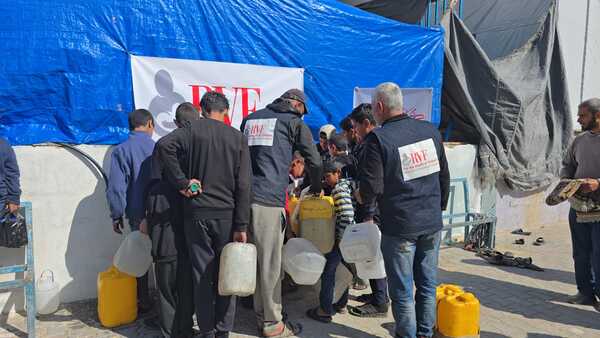
The Rostropovich Vishnevskaya Foundation (RVF) has successfully installed and activated the first solar-powered desalination unit in North Gaza at the Al-Shati Refugee Camp, where thousands of returning children and their families suffer from a lack of safe drinking water caused by a heavily damaged infrastructure. This strategic installation is a first step in providing a reliable source of potable water free of charge to desperate families in North Gaza.
In order to ensure an uninterrupted supply of water, RVF has installed a solar-powered system to operate the desalination unit. The system produces 1,000 liters of potable water per hour and will serve about 6,000 individuals.
The project is part of RVF’s broader commitment to help alleviate Gaza’s humanitarian crisis. Thanks to support from the UAE and working in partnership with the Kuwaiti Specialty Hospital in Khan Younis, RVF has provided safe drinking water to nearly 200,000 individuals in southern Gaza, equating to 10% of the total population.
The water desalination unit at the Al-Shati Refugee Camp serves as a model for a broader deployment in North Gaza. RVF plans to install multiple units across vulnerable community hubs, fostering long-term water security for returning residents.
Dr. Fakhr Abu Awwad, Head of RVF’s Gaza Office, underscored the organization’s unwavering commitment: "Navigating operational challenges in North Gaza demands adaptable, sustainable solutions. Our reliance on solar energy enables us to maintain water supply stability in such a volatile environment. Our intention is that this unit will be the first of many, each playing a crucial role in mitigating the region’s acute drinking water crisis."
The installation has already made tangible improvements to daily life within the camp.
Raja Al-Aswad, a displaced mother of four, shared: "Before, we had water only once every two or three days, forcing us into a constant search. With RVF’s unit now operating, we have clean water every day, it has transformed our lives."
Saeed Ahmed, a local resident, emphasized: "Families were struggling, often going days without a drop of water. This unit provides a reliable and stable water source, significantly improving living conditions for all of us."

PALESTINE
Sat 15 Feb 2025 6:50 pm - Jerusalem Time
RVF Deploys Solar-Powered Desalination Unit in Al-Shati Refugee Camp in North Gaza
ARAB AND WORLD
Sat 15 Feb 2025 5:43 pm - Jerusalem Time
25 people arrested after attack on UNIFIL convoy in Beirut
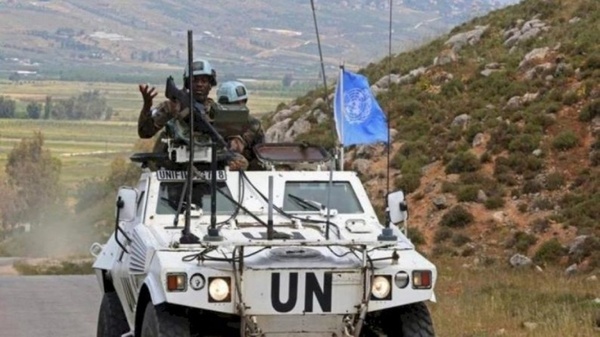
Lebanese authorities announced on Saturday the arrest of 25 people after the attack on the convoy of the Deputy Commander of the United Nations Interim Force in Lebanon (UNIFIL) as it passed through the Rafik Hariri International Airport road in the capital Beirut.
This came according to statements made by Interior Minister Ahmed Al-Hajjar, following an emergency meeting of the Central Security Council in his office at the ministry in Beirut.
Al-Hajjar said: “We discussed what happened in the past two days, including road closures, attacks on public and private property, and a completely unacceptable attack on UNIFIL forces, which is a crime punishable by law.”
He explained that "so far, there are more than 25 detainees at the Lebanese Army Intelligence and the Information Branch of the Internal Security Forces, who are being investigated."
Al-Hajjar pointed out that the arrest "does not mean that the detainees committed the attack on UNIFIL, but rather the investigations will reveal who is responsible, who participated, and who committed other attacks."
He added: "We will follow up these investigations seriously."
In turn, the Lebanese army said in a statement: "Following the attack by protesters on a UNIFIL convoy and army personnel, causing injuries, the army carried out a series of security operations and security missions in the context of pursuing those involved in these attacks."
The statement added that "a number of those involved have been arrested, and they are being investigated under the supervision of the competent judiciary."
The army warned "citizens against committing acts of rioting and attacking public and private property," stressing that it "will not tolerate any breach of security or violation of civil peace."
For his part, the acting army commander, Major General Hassan Odeh, praised today the "fundamental role of UNIFIL in southern Lebanon."
In a statement via the "X" platform, Awda stressed the "army leadership's rejection of any attack on its members," and stressed the work to arrest the attackers and bring them to justice.
On Friday, the UNIFIL command announced in a statement that a convoy carrying its forces to Beirut airport “was subjected to a violent attack, where one of the vehicles was set on fire, resulting in the injury of the outgoing deputy commander of UNIFIL who was returning home after completing his mission,” without mentioning his name.
The attack on the UNIFIL convoy was carried out by angry citizens who were demonstrating on the road to Beirut airport, protesting the airport authorities’ refusal to grant permission for an Iranian passenger plane to land on Thursday.
The Lebanese Civil Aviation Directorate justified not granting permission to the Iranian plane by saying that it was “keen to ensure the safety and security of the airport, Lebanese airspace, and the safety of all passengers and aircraft,” without providing further explanations.
PALESTINE
Sat 15 Feb 2025 5:35 pm - Jerusalem Time
Clashes erupt with Israeli occupation south of Bethlehem
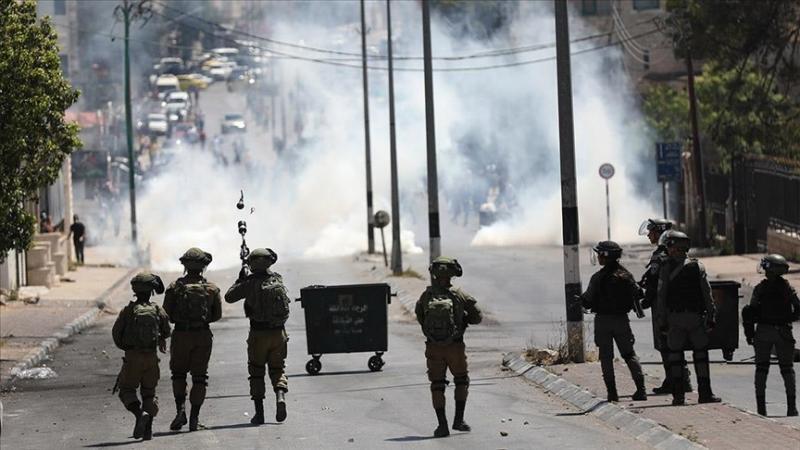
Clashes erupted with the Israeli occupation forces, today, Saturday, in the Deheishe refugee camp and the town of Al-Khader, south of Bethlehem.
According to local sources, the occupation forces stormed the Deheishe camp and took up positions on the main road (Jerusalem-Hebron), which led to the outbreak of clashes during which the soldiers fired sound bombs and toxic gas, without any injuries being reported.
In the town of Al-Khader, the occupation forces were stationed around the gate, and fired tear gas and sound bombs, without any injuries being reported.
PALESTINE
Sat 15 Feb 2025 5:04 pm - Jerusalem Time
Trump: US will support Israel's decision on deadline to release all hostages
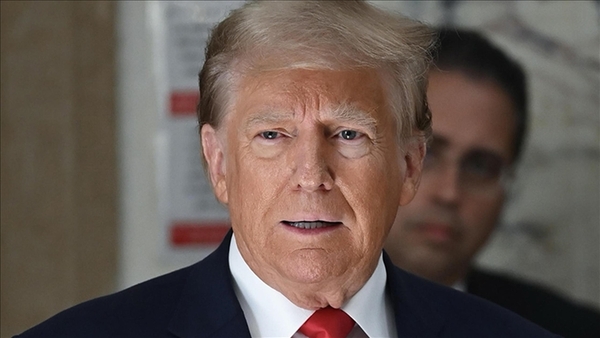
US President Donald Trump said on Saturday that Hamas had just released three hostages from Gaza, including an American citizen, clarifying that this differed from its statement last week that it would not release any hostages.
Trump added: "Israel must now decide what it will do by 12 noon today, the deadline for the release of all hostages, and America will support its decision."
For his part, the Chief of Staff of the Israeli occupation army, General Herzi Halevi, announced on Saturday that the army is preparing "plans for the attack" while the process of releasing the hostages held in Gaza under the truce with the Hamas movement continues.
"In conjunction with the great enthusiasm that accompanies the return of each hostage, we in the (army) remind ourselves of our duty to bring them all back. We are making tremendous efforts for this, and at the same time we are preparing plans for the attack," Halevi said in a military statement, without giving further details.
Earlier today, Hamas released the Israeli hostages Yair Horn, Sagi Dekel Han, and Sasha Alexander Tropanov in Gaza, while the Israeli occupation entity began releasing about 369 Palestinian prisoners and detainees in return.
Later, Hazem Qassem, spokesman for the Hamas movement, confirmed that the movement hopes to begin talks on the second phase of the ceasefire agreement in the Gaza Strip within days.
He added that US President Donald Trump's statements about releasing prisoners "contradict" the agreement concluded under the auspices of mediators and the United States, stressing that the movement "has what to do to deal with Israel if it reneges on its obligations" under the agreement.
He added, "America must oblige Israel to abide by the agreement if it is concerned about the lives of the prisoners."
Trump called yesterday for a "tough stance" on Gaza, and on Monday he described Hamas's threat to delay the release of Israeli hostages as "horrific," threatening the Palestinian movement with "real hell" if "all (hostages) are not returned by Saturday afternoon."
In a meeting with reporters at the White House, Trump suggested that Israel “cancel” the ceasefire in place in the Gaza Strip since January 19 if Hamas did not release all the hostages by noon next Saturday. He said he would leave “that to Israel to decide” what should happen to the fragile truce between it and Hamas.
"But as far as I'm concerned, if all the hostages are not returned by 12 noon on Saturday - I think that's a reasonable deadline - then I call for it to be cancelled and for all hell to break loose," he added.
PALESTINE
Sat 15 Feb 2025 4:51 pm - Jerusalem Time
Settlers attack Jalud village south of Nablus
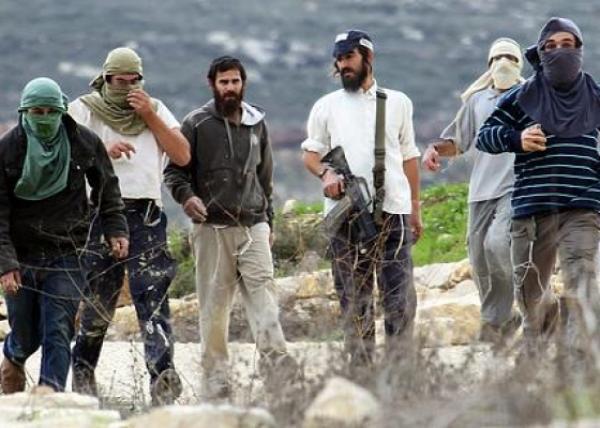
Terrorist settlers attacked the village of Jalud, south of Nablus, today, Saturday.
Anti-settlement activist Bashar Al-Qaryouti reported that settlers, under the protection of the occupation army, attacked citizens’ homes in Jalud, amid heavy gunfire, which led to the outbreak of clashes.
PALESTINE
Sat 15 Feb 2025 4:30 pm - Jerusalem Time
A Palestinian child was injured by Israeli forces’ storming of the village of Tal in Nablus

A child was injured by live bullet shrapnel, today, Saturday, during the Israeli occupation forces’ storming of the village of Tal, southwest of Nablus.
The Red Crescent Society in Nablus reported that a child (14 years old) was injured by live bullet shrapnel in the neck during the storming of the village of Tal, and he was provided with field treatment.
The occupation forces stormed the village of Tal, firing live ammunition and tear gas, which led to clashes.
PALESTINE
Sat 15 Feb 2025 3:38 pm - Jerusalem Time
Israeli occupation releases the sixth batch of detainees within the ceasefire agreement
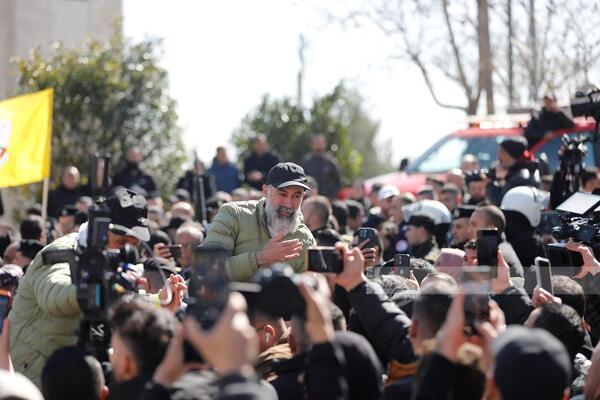
The Israeli occupation authorities announced, today, Saturday, the sixth batch of detainees within the ceasefire agreement.
According to the Prisoners and Freed Prisoners Affairs Authority and the Prisoners Club, the sixth batch includes 36 detainees sentenced to life imprisonment, and 333 detainees from the Gaza Strip, who were arrested by the Israeli occupation forces during their aggression on the Strip after October 7, 2023.
According to the list of names, 29 of the released prisoners are from the West Bank, 7 from occupied Jerusalem and its suburbs, while 24 prisoners were deported outside the country.
The occupation forces turned the area near Ofer prison into a closed military zone, prevented the gathering of detainees' families, and fired live ammunition and tear gas canisters at them.
Hundreds of citizens and relatives of detainees gathered since the early morning hours in front of the Ramallah Cultural Palace and the Mahmoud Darwish Museum Square in the city of Ramallah, to welcome the prisoners who were released from Ofer Prison, raising the Palestinian flag.
Citizen Maryam Awis, the mother of the detainees Abdul Karim and Hassan Rateb Younis Awis from Jenin camp, expressed her mixed feelings about the release of her two sons, as the occupation released Hassan (47 years old) to the West Bank, while Abdul Karim (54 years old) was deported abroad.
She stated that the occupation forces arrested her son Abdul Karim on March 29, 2002, and sentenced him to life imprisonment 6 times, and arrested her son Hassan on April 8, 2002, and sentenced him to life imprisonment.
She told WAFA that she had been waiting impatiently for her sons to be released after 23 years of detention, during which the family had suffered, as one of her sons and one of her grandchildren were martyred, and the occupation had demolished the family home twice.
She added: "I wish they would be released and return to their home in Jenin camp, instead of one of them being deported abroad, as her son Hassan will not be allowed to travel to meet his brother Abdul Karim, while she will try to travel to meet him."
After his release, Hassan said it was a moment mixed with pain, as he wished that his brother Abdul Karim would be released to the West Bank and not deported.
The suffering of the two brothers, Awis, represented by the release of one of them and the deportation of the other, is similar to the suffering of the brothers Musa, Ibrahim, and Khalil Ahmed Salem Sarahneh from the town of Silwan in occupied Jerusalem, and residents of the Deheishe refugee camp in Bethlehem.
The occupation released Musa (63 years old), who had been detained since June 28, 2002 and sentenced to life imprisonment, and Ibrahim (55 years old), who had been detained since May 23, 2002 and sentenced to life imprisonment, to their home in the Deheishe camp, while their brother Khalil (45 years old), who had been detained since July 10, 2002, was deported.
After his release, Musa said that he was arrested when he was 41 years old and was released when he was 63 years old, noting that his feeling of freedom was indescribable despite the bitterness of the years he spent in the occupation’s prisons.
He pointed out that he and his brother Ibrahim were released, but he still does not know the fate of his brother Khalil.
PALESTINE
Sat 15 Feb 2025 10:55 am - Jerusalem Time
The sixth exchange operation begins: 3 Israeli hostages in exchange for 369 Palestinian prisoners
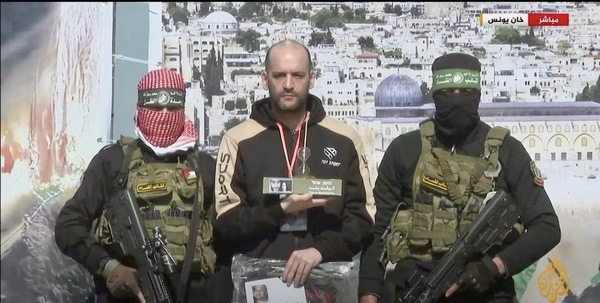
Hamas handed over three Israelis, one of whom is an American, to the International Committee of the Red Cross today, Saturday, in the city of Khan Yunis, south of the Gaza Strip.
The Israeli army confirmed that the Red Cross received 3 detainees and they are on their way to an army and Shin Bet force inside the Gaza Strip.
Today, the movement and the Israeli occupation entity are carrying out the sixth exchange of Israeli hostages for Palestinian prisoners under the ceasefire agreement in Gaza, which was on the verge of collapse this week, according to the French Press Agency.
Pictures published by Reuters showed Hamas members deployed in Khan Yunis in the Gaza Strip in preparation for the hostage release operation today.
The movement released three Israelis, all of whom hold dual citizenship, who had been held in the Gaza Strip for 16 months, in exchange for the expected release of 369 Palestinian detainees, at a time when US Secretary of State Marco Rubio is arriving in Israel this evening for talks scheduled for Sunday.
The three hostages released on Saturday are Israeli-Russian Sasha Tropanov, 29, Israeli-American Sagi Dekel Chen, 36, and Israeli-Argentine Yair Horn, 46.
On Friday evening, the armed wing of the Islamic Jihad movement published a video showing Tropanov on the Gaza beach holding a fishing rod.
PALESTINE
Sat 15 Feb 2025 9:39 am - Jerusalem Time
No peace without a two-state solution...the Saudi position is a strong wall of resistance
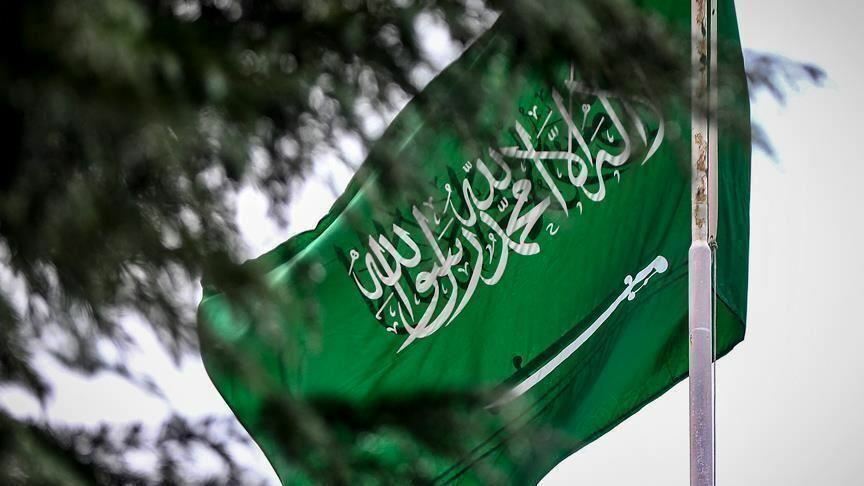
Dr. Mahmoud Al-Habbash: The Saudi position rejecting normalization with Israel without establishing a Palestinian state is a cornerstone in strengthening the Palestinian position
Dr. Ahmed Jamil Azm: The Saudi position will have an important impact, especially if it crystallizes within an Arab position, and the upcoming Arab summit will be a pivotal station.
Hani Al-Masry: Saudi Arabia is a pivotal regional power with economic, political and religious weight, which makes its positions have great international influence.
Dr. Omar Awadallah: Saudi Arabia has proven once again that it is a regional power that leads Arab and Islamic positions and establishes the principle of defending Palestine as a central issue
Palestinian leaders, political analysts, and academics have stressed that reorganizing the Palestinian house is the key factor in bringing about a real shift in the map of the conflict, and not just the Saudi or Arab position. Restoring the role of the Palestine Liberation Organization, unifying the Palestinian ranks within a collective leadership, and adopting a clear national strategy to confront the occupation are the key to any strategic change, as the absence of Palestinian action will lead to the consolidation of the Israeli fait accompli.
At the same time, Saudi Arabia stands out as an effective regional power with great influence in supporting the Palestinian cause politically and diplomatically, as its firm position in rejecting normalization without establishing a Palestinian state, and rejecting displacement plans, strengthens the Arab and international position, making it a major player in confronting Israeli plans. However, the success of any Arab or international effort depends on effective internal Palestinian action, to ensure that Saudi and Arab support is invested in achieving tangible results on the ground.
Strategic support for the Palestinian cause
Dr. Mahmoud Al-Habbash, advisor to Palestinian President Mahmoud Abbas, said in an exclusive interview with Al-Quds that the Saudi position rejecting normalization with Israel without establishing an independent Palestinian state represents a cornerstone in strengthening the Arab position and strengthening the Palestinian position in the face of attempts to liquidate the Palestinian cause. He explained that Saudi Arabia is not a marginal state, but rather a "pivotal state in the Arab, Islamic, regional and international system," which makes its position have a profound impact on determining the course of the Palestinian cause at the Arab and international levels.
Al-Habash added that the steadfastness and clarity of the Saudi position constitutes a source of strength for the Palestinians, especially under the leadership of the Custodian of the Two Holy Mosques and Crown Prince Mohammed bin Salman, as he stressed that the Kingdom "rejects any form of relationship with Israel unless it is through a just political solution in accordance with international legitimacy resolutions, which guarantees the end of the occupation and the establishment of an independent Palestinian state with Jerusalem as its capital, a connected and viable state, free of occupation and settlement."
Confronting displacement attempts and strengthening Palestinian steadfastness
Regarding the extremist Israeli calls aimed at displacing the Palestinians, Al-Habash stressed the importance of taking practical steps on the Palestinian level to confront these challenges, noting that the first of these steps is “the return of the Palestinian National Authority to the Gaza Strip, which sends a clear message that the Palestinian land is one, under one political leadership, within one state and a unified political region.”
He explained that "strengthening the steadfastness of the citizens in the Gaza Strip and the West Bank is the key to confronting any attempts to displace the Palestinians from their land," stressing that this steadfastness must be supported by the basic necessities of life, such as food, drink and shelter, to ensure that the Palestinians feel that they can remain in their land with clear Arab support.
He pointed out that the unified Arab position is one of the most important factors in thwarting the displacement plan, as he stressed that "the positions expressed by His Majesty King Abdullah II, President Abdel Fattah el-Sisi, and the official Saudi position all came with a categorical rejection of any attempt to deport the Palestinians or liquidate their cause," stressing that this Arab cohesion, which is in complete harmony with the Palestinian steadfastness, constitutes a strong wall in the face of these plans, and he added, "We are certain that we can thwart this plan, and we will thwart it as we thwarted other attempts to liquidate the Palestinian cause."
Investing Saudi support in international movement
Regarding the investment of the Saudi position at the international level, Al-Habash stressed that “the international position is essentially based on the Arab position, which makes the unified Arab position a driving force in international forums to support the rights of the Palestinians.” He explained that Palestinian movements in international organizations depend on Arab support, saying: “We are moving in a purely Palestinian manner, but we are also moving within the framework of a collective Palestinian-Arab movement, because the firm Arab position is a pillar of the international position, and we certainly benefit from it in mobilizing international support for our cause and our vision based on international legitimacy.”
At the end of his speech, Al-Habash stressed that "the Saudi position represents a strategic opportunity that must be built upon by Palestinians and Arabs to confront current challenges," stressing that Palestinian unity and Arab cohesion are the only way to thwart attempts to impose coercive solutions that ignore legitimate Palestinian rights.
Putting the Palestinian House in Order is the Key to Real Transformation in the Conflict
For his part, Professor of Political Science Dr. Ahmed Jamil Azm said that the real shift in the map of the conflict will not result from a Saudi or Arab position as much as it is dependent on the internal Palestinian action and the reorganization of the Palestinian house.
Azm stressed that "the basic variable that may redraw the equation of the conflict is the rearrangement of the Palestinian house, the restoration of the Palestine Liberation Organization to its basic role, and the return of the Palestinian national movement to its natural role."
He stressed that "the absence of collective leadership and the freezing of the Palestinian people's energies will not lead to any change, but will keep the Palestinians between two states: either stagnation and wasting opportunities, or surrendering to a deteriorating Israeli reality."
He added: "The Israeli reality does not wait for anyone. If the Palestinians do not resist, and there is no organized national action, the Israeli side will not stop imposing new facts on the ground," stressing that "sufficing with the role of maintaining security and adapting to Israeli policies without a clear national plan to confront the occupation will be destructive."
The Saudi position: its roots and dimensions after October 7
Regarding the reasons for the Saudi position rejecting normalization without a just solution to the Palestinian issue, Azm pointed out that this position is not new, but rather dates back to before the events of October 7, when there were efforts to reach a set of regional understandings that were not essentially Saudi-Israeli, but rather revolved around a joint defense agreement between Saudi Arabia and the United States.
Azm explained, “Before October 7, there was no talk of a Saudi-Israeli normalization agreement, but rather of reorganizing US-Saudi relations. There was talk of signing charters and agreements between the two countries, and passing them in Congress required the approval of the Israeli lobby. Therefore, normalization was not a goal in itself, but rather a means to facilitate this process. However, the Saudi side was stipulating a solution that would satisfy the Palestinians before proceeding with any understandings.”
“But the events of October 7 halted these efforts and rearranged priorities, and Trump’s arrival brought about another shift in the scene. While Biden was seeking to present a new vision to rearrange Saudi-American relations, through initiatives such as the “Green Corridor” that was supposed to link India to Europe via the Gulf and Israel, Trump “does not have a comprehensive strategic vision for the region, but rather prefers to deal with each country individually.”
Saudi position and its potential impact in confronting Trump's plan
Regarding the impact of the Saudi position in confronting the American and Israeli trends, Azm believes that “the Saudi position will have an important impact, especially if it crystallizes within a unified Arab position that includes Egypt, Jordan, Qatar and the Emirates,” noting that the upcoming Arab summit on the 27th of this month will be a pivotal station, adding that “if the Arab summit comes out with a unified position that categorically rejects Trump’s plan, this will be a major step towards stopping the deterioration in the Palestinian issue.”
He also pointed out that Saudi Arabia played an important role, alongside Jordan and other countries, in pushing some European countries, such as Spain and Norway, to recognize the Palestinian state, which reflects the role it can play at the diplomatic level and international relations in pressuring in favor of Palestinian rights.
But despite the importance of this role, Azm stresses that “the basic dilemma still lies in the situation on the ground within the Gaza Strip, the West Bank, and the rest of Palestine. Without serious internal Palestinian action, any Arab or international position will remain insufficient to achieve real change.”
He added: "The Saudi and Arab position can help stop the deterioration, but the radical solution begins from within Palestine. What is required today is to put the Palestinian house in order, unify the ranks, and adopt a clear national strategy to confront the occupation. Without that, the Palestinians will remain in a position of reaction instead of being an active party in shaping their political future."
The top priority is to put the Palestinian house in order.
At the end of his interview with Al-Quds, Azm stressed that any changes on the regional and international scene, no matter how influential, will not be sufficient without a genuine Palestinian initiative to reorganize the internal house, reunify the Palestinian leadership within the PLO, and activate the role of the factions within a comprehensive national framework.
Azm believes that “real change will not come from outside, but from within Palestine. If the Palestinians do not unite and adopt a comprehensive national vision, the Israeli occupation will continue to impose its facts, and Arab and international efforts will remain within the framework of limiting damage, not bringing about strategic change in favor of the Palestinians.”
The Saudi position changes the balance of the conflict and gives the Arabs a strategic opportunity
The Director General of the Palestinian Center for Policy Research and Strategic Studies (Masarat), Hani Al-Masri, spoke to Al-Quds about the Saudi position rejecting normalization with Israel without establishing an independent Palestinian state, and its opposition to displacement and annexation plans, noting that this position constitutes a “decisive turning point in regional and international equations.”
Al-Masry explained that "Riyadh has become more capable of political maneuvering and less dependent on the United States, which has given it a wider space to make decisions that reflect its independence and regional position."
Al-Masry stressed that international and regional transformations played a fundamental role in Saudi Arabia taking this firm stance, explaining that “Saudi Arabia is not just an ordinary country, but a pivotal regional power that enjoys economic, political and religious weight, which makes its positions have a great impact on the international level.
He added: “What is being proposed by the US and Israel today affects Saudi Arabia’s sovereignty and independence, which is beyond the realm of possibility. The international environment has changed, and the US is no longer the absolute dominant party in the international system. It is true that it is still the world’s number one country, but the distance between it and China is rapidly shrinking, especially in some areas where Beijing has outperformed Washington. This change has given Saudi Arabia, and Arab countries in general, more room to maneuver and take more independent positions.”
Al-Masry pointed out that Saudi Arabia “is no longer in the same political position it was in during Trump’s first term,” explaining that Prince Mohammed bin Salman, at that time, was seeking “to establish his political legitimacy amidst great pressures, most notably the assassination of journalist Jamal Khashoggi, which made him more open to cooperating with Washington at the time. Today, the situation is completely different, as Riyadh has strengthened its relations with China with investments exceeding $120 billion, consolidated its cooperation with Russia, and improved its relations with Iran after the agreement that was sponsored by China in Beijing, which reduced its need for American and Israeli support.”
Saudi Arabia refuses to undermine its role and prestige
Al-Masry stressed that recent regional events, "such as the Israeli war on Gaza and Lebanon, and the subsequent calls to displace Palestinians and annex the West Bank, posed a direct threat to Saudi Arabia's role and regional prestige." He explained that what happened in Gaza and what could happen after it in terms of displacing Palestinians or annexing the West Bank is a direct attack on Saudi Arabia's role, which it cannot accept. In addition, the improvement of relations with Iran and the decline of American influence are all factors that have contributed to reducing Saudi Arabia's need for American and Israeli protection, allowing it to take a more balanced and independent position.
The Saudi position and its impact on international alliances
Regarding the impact of this position on the global balance of power, Al-Masry believes that “Saudi Arabia’s rejection of displacement and annexation plans, and its enormous economic influence, may push the US administration to reconsider its policies,” noting that Trump, who is considered “a man of deals and not an ideologue,” may back down if he feels that his decisions will affect his deals.
“If Saudi Arabia decides to use its power cards, such as its massive investments ranging from $600 billion to $1 trillion, as a means of pressure against attempts to displace Palestinians or annex the West Bank, this will put the US administration in a real predicament,” he added, stressing that these are “not just theoretical bets, but a political reality based on clear economic calculations.”
But Al-Masry stressed that the success of this pressure "depends on the ability of Arab countries to invest in the Saudi position and not just denounce and condemn as happened in the past," explaining that "if Arab countries adopt effective policies based on economic and political interests, and not just statements of rejection, they may be able to pressure the US administration to change its position on the Palestinian issue. But if it continues with the same traditional approach, Trump will go his way without hesitation."
A real test of Arab unity
Regarding the upcoming Arab summit at the end of this month, Al-Masry pointed out that it “represents a real test of the Arab position, as it could be a turning point towards ‘opening a new page in the Arab role, or remaining within the framework of decisions that remain mere ink on paper’,” stressing that there is “a real opportunity to adopt a unified and influential Arab position, provided that the summit is preceded by internal Palestinian consensus.”
He pointed out that "the summit can unite the Palestinians, but the Palestinians themselves must take a step towards unity before it is held to ensure positive results. The upcoming Arab summit can unite them if it wants, and Saudi Arabia and the Arab countries can even impose Palestinian unity as a strategic necessity. Hamas is fully aware that the absence of Palestinian and Arab legitimacy makes its situation more complicated."
A historic opportunity that must be invested
In conclusion, Al-Masry stressed that “the Saudi position represents a decisive turning point in the map of conflict in the Middle East, and provides Arab countries with an opportunity to enhance their role in protecting the rights of Palestinians,” stressing that “what we are witnessing today is a critical moment. Either the Arab countries will invest in this position and redraw the equation of the conflict, or miss the opportunity as happened in previous stages. The options are still open, but what is certain is that the regional and international scene is no longer as it was, and that the Saudi position has become a factor that cannot be ignored in any future political equation.”
Saudi Arabia is a leading diplomatic force in rejecting displacement and normalization
In turn, Assistant Minister of Foreign Affairs and Expatriates for United Nations Affairs and Specialized Organizations, Dr. Omar Awadallah, said in an interview with Al-Quds that the Kingdom of Saudi Arabia plays a pivotal role in defending the Palestinian cause, whether at the Arab, Islamic or international levels, pointing out that its position rejecting normalization without establishing an independent Palestinian state, and its categorical opposition to forced displacement plans, strengthens the Palestinian, Arab and international position in confronting Israeli policies.
Awadallah explained that Saudi Arabia is not only a sister country to Palestine, but it is also the head of the Arab and Islamic summit, an active member of the Arab League and the Organization of Islamic Cooperation, in addition to its major role as a major player in the Gulf region and the international scene.
He added: Her role in defending the Palestinian cause extends to various international forums, as she chaired the ministerial committee that toured the world's capitals to mobilize support for the Palestinian cause, especially in light of the ongoing war of extermination against the Palestinian people in the Gaza Strip for more than 15 months.
He pointed out that the Saudi position "contributed to empowering the Arab position, which strengthened international positions rejecting displacement and liquidation, stressing that the political path and stability in the Middle East region are closely linked to the existence of an internationally recognized Palestinian state."
Rejecting forced displacement and strengthening Palestinian unity
Regarding the Palestinian measures to confront displacement, Awadallah stressed that “the strong link between the Palestinian position and the Arab and Islamic positions strengthens the solidity of the Palestinian rejection since the beginning of the Israeli aggression, as the Palestinian leadership was clear from the first day that the Israeli intentions aim to exterminate the Palestinian people and impose forced displacement.”
He added: "The upcoming Arab summit on the 27th of this month represents an important opportunity to take a clear and direct Arab position, not only to reject displacement plans, but also to develop real alternatives based on the rights of the Palestinian people, and based on international law, and Arab and Islamic constants."
Awadallah explained that this movement will extend from the Arab Summit to the emergency ministerial meeting of the Organization of Islamic Cooperation, and then to the United Nations, whether in the General Assembly or the Security Council, coinciding with the Human Rights Council session that will begin on the 24th of this month, noting that these efforts will work to strengthen the international position rejecting displacement and ethnic cleansing, and intensify accountability and holding Israel accountable for its crimes, based on international laws and the International Criminal Court.
crucial diplomatic and political support
Regarding the exploitation of the Saudi position in international pressure against attempts at normalization and displacement, Awadallah stressed that Saudi Arabia had said its word clearly, and it is the same word that expresses the position of the Arab and Islamic nation that the forced displacement of Palestinians constitutes a direct threat to Arab national security, and it is something that is rejected in its entirety.
He said: "This firm Saudi position strengthens the international position, and makes any Israeli move towards implementing displacement plans a real threat to international legitimacy, which pushes towards holding Israel accountable if it commits these crimes."
The Assistant Foreign Minister stressed that Saudi Arabia has once again proven that it is a regional power leading Arab and Islamic positions, and establishing the principle of defending Palestine as a central issue. He pointed out that "the Saudi position was swift and decisive. As soon as the press conference in which Israel announced its plans ended, the official Saudi statement was publicly available on all media platforms, reflecting the Kingdom's commitment to its historical role."
He added: Saudi Arabia is not only a partner in supporting the Palestinian cause, but it is also the leader of the global coalition to implement the two-state solution, and it is preparing to chair the international conference that will be held next June in cooperation with France, with the aim of pushing efforts towards a just political settlement based on implementing the United Nations resolutions and achieving the two-state solution.
He continued: “When Saudi Arabia speaks, it speaks as a global power that influences international decision-making. Therefore, its clear and decisive position in supporting Palestine and rejecting displacement and normalization without establishing a Palestinian state, strengthens Palestinian diplomatic efforts and places Israel before a historical responsibility that cannot be ignored.”
A firm Saudi position reflects a real commitment to the Palestinian cause
At the end of his speech, Awadallah stressed that the Kingdom of Saudi Arabia proves day after day that it is a fundamental partner in defending Palestinian rights, and that it is leading diplomatic efforts to find a just and comprehensive solution to the Palestinian issue.
He said: “Saudi Arabia is not just a political supporter, but rather a diplomatic force leading real efforts at the Arab and international levels, and taking upon itself the responsibility of defending Palestine, not only in words, but in action and rapid action. This is what makes its position not merely a political position, but rather part of an Arab and international defense system that protects the rights of the Palestinians and confronts the threats targeting their existence.”
PALESTINE
Sat 15 Feb 2025 9:38 am - Jerusalem Time
Tom Fletcher to Al-Quds: The extent of destruction and suffering in the Gaza Strip exceeded my worst fears
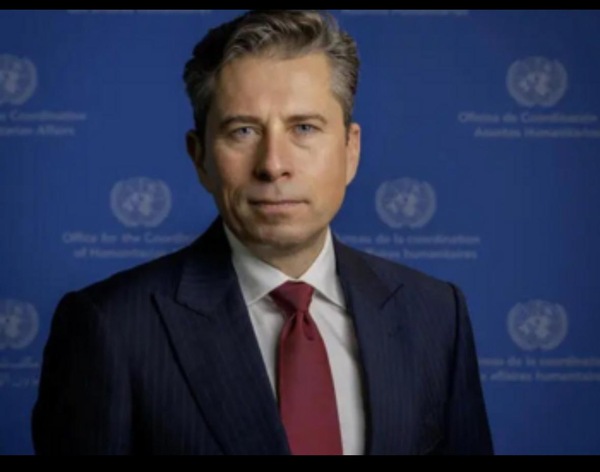
Humanitarian workers risked their lives and about 380 of them were killed.
There must be full accountability for atrocities committed under international humanitarian law.
The West Bank is witnessing operations involving lethal war-like tactics that go beyond law enforcement standards.
UNRWA is the backbone of humanitarian work in Gaza and no other agency has the capacity to take its place.
We need more than $4 billion to help 3 million people in Gaza and the West Bank, of which we have received less than 4 percent.
The UN Under-Secretary-General for Humanitarian Affairs and Emergency Relief Coordinator, Tom Fletcher, described the situation in the Gaza Strip as “catastrophic,” with most of the population displaced to areas lacking basic needs.
Fletcher, who visited the West Bank and Gaza Strip and saw the extent of the destruction and suffering, told Al-Quds: “Humanitarian workers are risking their lives, as about 380 people have been killed while performing their duty.”
Fletcher stressed the need for the parties to the conflict to abide by international humanitarian law, expressing his concern about the continued escalation in the West Bank, particularly evictions and demolitions. He stressed that the population is in dire need of protection.
He also stressed the pivotal role of UNRWA in providing basic services to Palestinian refugees, warning of the repercussions of any attempts to undermine its work.
He called on the international community to increase financial support for the humanitarian response, as only a small portion of the funding required for 2025 has been secured.
In this interview with Al-Quds, Fletcher presents his vision on how to support humanitarian efforts in Palestine, stressing that the solution does not lie only in meeting immediate humanitarian needs, but in finding long-term solutions that enhance stability and peace in the region.
The following is the text of the interview:
* How would you describe the humanitarian situation in Gaza after you have completed your visit to the region, especially in light of the ongoing siege and looming famine?
- The situation in Gaza is catastrophic. Almost the entire population has been displaced, often multiple times, to areas that lack the basic necessities for survival. While in Gaza, I visited two hospitals where I met with patients, staff and management. One of them, Al Awda Hospital, is the only hospital currently operating in the North Gaza Governorate.
The extensive destruction of Gaza’s infrastructure, roads and services is visible everywhere. The scale of the destruction and suffering exceeds my worst fears. As I navigated the rubble in northern Gaza, it was impossible to recognize what used to be a home, a hospital or a school.
Survivors and returnees are trying to rebuild their lives. I am inspired by their determination as I hear their stories. The United Nations is seizing every opportunity presented by the ceasefire to deliver as much life-saving assistance as possible to more than two million people in Gaza.
Gaza is the 'most dangerous' place for humanitarian workers
* You mentioned in your previous statements that Gaza has become the “most dangerous” place for humanitarian workers. What are the biggest challenges facing humanitarian efforts there?
- The UN’s humanitarian priority is to alleviate the immense suffering caused by the conflict. This includes coordinating the entry of daily supplies into Gaza, such as water, food, medical supplies, blankets, clothing and fuel needed to run essential services amidst power cuts. Humanitarian partners have scaled up their operations to repair critical infrastructure such as roads and water facilities, and to restore bakeries. These scale-ups were planned before the ceasefire, meaning we were ready to ramp up our services minutes after the ceasefire went into effect.
Throughout the hostilities, humanitarian workers have risked their lives to reach people in need. Some 380 of them have been killed in Gaza, including in the line of duty. The ceasefire has made it safer to deliver essential supplies. We and our partners are expanding our life-saving humanitarian operations as more humanitarian supplies reach Gaza.
* How do you assess the extent to which the parties to the conflict are adhering to international humanitarian law with regard to the protection of civilians and vital infrastructure?
_ During any war, parties must abide by their obligations under international humanitarian law, and Gaza is no exception. Throughout this conflict, civilians have suffered immensely as shelters have been bombed, hospitals attacked, and vital infrastructure destroyed. Member States, particularly those on the Security Council, must use their collective voice and influence to ensure that the ceasefire is upheld, civilians are protected, and international law is respected. There must be full accountability for atrocities committed, in accordance with international humanitarian law.
Escalation of violence by the occupation and its settlers in the West Bank
* The West Bank is currently witnessing an escalation in violence, including demolitions, settlements, and settler attacks. How does this affect humanitarian operations there?
_ The escalation in the West Bank continues to increase humanitarian needs. During my visit, I met some of the many families facing eviction, and Palestinians whose homes were demolished, along with their lifelong memories. The population is in dire need of protection. We continue to witness operations in the West Bank involving lethal war-like tactics that go beyond law enforcement standards.
Palestinians across the West Bank face significant challenges in accessing healthcare, receiving essential services, and earning a living due to the hundreds of barriers in place in the area. These barriers exacerbate the humanitarian situation, underscoring the urgent need for humanitarian workers to be able to provide critical support. However, policies that restrict movement and access hamper our efforts. When the people we aim to help are placed under curfew, we are unable to reach them, denying us the unfettered access we need to deliver assistance. At the same time, some of the vital supplies we provide, such as shelter for people displaced by home demolitions, can be confiscated.
UNRWA is the backbone of humanitarian work in Gaza
* Regarding UNRWA, how can the continued provision of basic services to Palestinian refugees be ensured in light of efforts to limit its role?
- UNRWA is the backbone of humanitarian action in Gaza. No other UN agency has the capacity to replace UNRWA’s essential services. UNRWA runs schools, health facilities, warehouses and offices, and employs more staff than any other organization. The Agency operates under a mandate from the UN General Assembly. Despite all the uncertain circumstances, UNRWA continues to carry out its vital work. In Gaza, the Agency distributes life-saving assistance to a population that needs it more than ever. In the West Bank, UNRWA runs schools, provides health services, collects solid waste and other vital assistance.
* How can the international community support humanitarian efforts in Palestine in a more effective and sustainable way?
- The humanitarian response requires a collective effort that is not limited to the humanitarian community alone. Aid stocks must be replenished regularly, including by Member States. The private sector also plays a crucial role in response and recovery efforts. Sufficient commercial supplies must be allowed into Gaza.
With the support and generosity of the international community, the United Nations and its partners will be able to continue their life-saving humanitarian and development work. With the right conditions and resources, we can continue to deliver assistance to those who need it. It is urgent that the world increase its funding for the humanitarian response in the occupied Palestinian territory. This year, we need more than US$4 billion to assist 3 million Palestinians in Gaza and the West Bank, but less than 4 per cent of this funding has been received so far.
* Do you have any recommendations for the international community on how to address the worsening humanitarian crisis?
The humanitarian community will continue to provide urgent, life-saving support to the people of Gaza and the West Bank, providing water, food, health care, shelter and basic services to those most in need.
But we must also focus on long-term solutions to address this crisis. Our goal is not just to meet immediate humanitarian needs, but to reduce these needs over time.
That is why the United Nations is steadfast in its commitment to support all efforts that promote peace and stability for the peoples of Palestine and Israel, and throughout the region.
OPINIONS
Sat 15 Feb 2025 9:36 am - Jerusalem Time
Without displacement!
Dr. Ibrahim Melhim
Opinion Writer
For days now, the "title phrase" has become a "trend" of this time, and it is making its way on every tongue, in a loud challenge to the eccentric man, who belongs to the ancient ages, when people were ruled by thuggery, and the "cowboy" storming of remote villages and towns, to bargain with their residents over their property and the hardship of their lives, and imposing protection money on them, under threat of death.
"Without displacement" is the weapon of the steadfast free people, and the steadfastness of the original owners of the land, who are not harmed by those who oppose them, nor by the hardships that befall them. They are that group of the patient, who remain apparent on the truth, and are victorious over their enemy.
"Without displacement" is repeated daily by senior officials, Arabs and non-Arabs, Easterners and Westerners, who speak sarcastically about Trump's threat to the Gazans of displacement and hell, as stated in "CNN", which the man of surprises is hostile to, just as he is hostile to the American "Associated Press", because the editor-in-chief refused to go along with him in calling the "Gulf of America" the "Gulf of Mexico".
“Without displacement” is a voice that resounds in the four corners of the earth, and its echoes are heard on the Egyptian side of the Rafah crossing, where hundreds of trucks loaded with caravans, bulldozers and huge cranes line up to retrieve bodies from under the rubble, when they enter the Strip within hours, sweeping away on their way from Rafah to Beit Hanoun Trump’s hallucinations, the tendencies of arrogance and dreams of expansion that possess the Talmudic trio “Netanyahu, Smotrich and Ben Gvir.”
The builders of the pyramids can rebuild the sector “without displacement” within a few years. Anyone who has seen the size, precision, magnificence, and speed of the work being done in the new administrative capital in the desert knows that Egypt is capable of completing the task in record time.
PALESTINE
Sat 15 Feb 2025 9:34 am - Jerusalem Time
Preparations in Gaza to hand over 3 Israeli prisoners
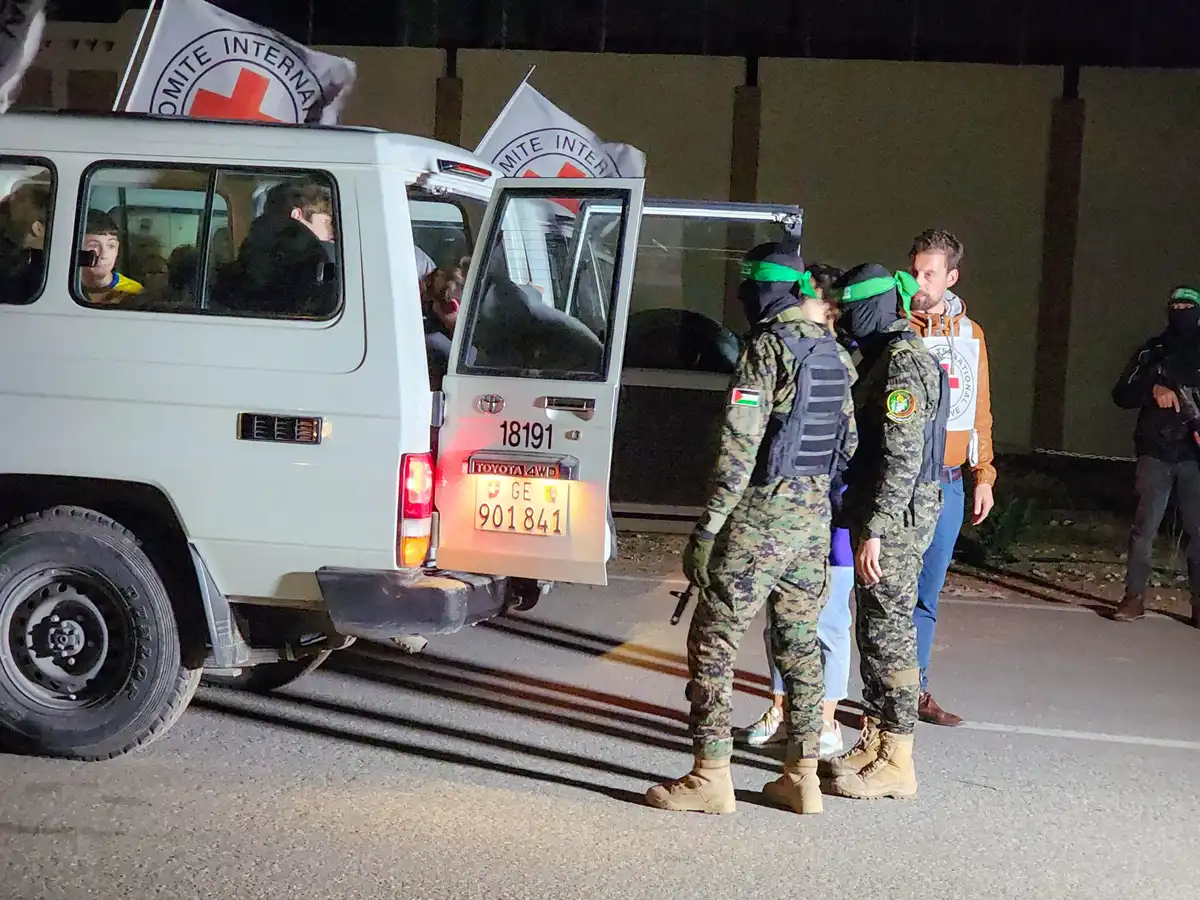
This morning, the resistance in Khan Yunis is preparing to hand over 3 Israeli prisoners as part of the sixth batch of the first phase of the Gaza agreement.
Al-Arabiya TV reported, citing sources, that the resistance in Gaza will send a shield with an hourglass on it to the mother of one of the detainees as a message that time is running out.
Prisoner Yair Horn will deliver a speech in Hebrew on behalf of those detained with him and messages to their families during today's prisoner exchange in Gaza, according to what the Al Arabiya correspondent reported from sources.
ARAB AND WORLD
Sat 15 Feb 2025 9:33 am - Jerusalem Time
Trump indirectly urges Israel to resume war on Gaza

US President Donald Trump called on Friday for a "tough stance" against the Gaza Strip, as noon on Saturday is set for the exchange of Palestinian prisoners for Israeli detainees under a ceasefire agreement that began on January 19 with Egyptian, Qatari and American mediation.
Hamas announced last week that it had suspended the prisoner exchange because of Israel's violation of the terms of the ceasefire agreement by not fulfilling its obligations to bring in mobile homes and humanitarian aid, and threatened not to release more detainees, which sparked American and Israeli threats to resume the war by Israel, which called up reserve forces and put its forces on high alert.
Trump declared this week that Hamas must release all Israeli hostages in Gaza by noon Saturday or "let all hell break loose."
"I don't know what's going to happen tomorrow (Saturday) at 12 noon; if it were up to me, I would take a very tough position but I can't tell you what Israel is going to do," Trump told reporters on Friday, in what experts interpreted as an invitation for Israel to continue the war.
Hamas announced that it would implement its part of the deal, after Israel brought in aid that had been held at the crossings, and announced the names of the Israeli detainees who will be released according to the agreement, namely Yair Horn, Sagi Dekel Han and Sasha Alexander Trubnov from Gaza on Saturday after Egyptian and Qatari mediators helped avert a crisis that threatened to collapse the fragile ceasefire that has halted the fighting for 26 days so far.
The movement said the three would be released in exchange for 369 Palestinian prisoners, reducing fears that the deal could collapse before the end of the first phase of a 42-day ceasefire.
Trump has announced more than once that he wants to control the Gaza Strip and remove Palestinian citizens from it, where they will be resettled (according to Trump’s plan) in Egypt and Jordan, so that he can rebuild it and make it the Riviera of the Middle East, according to him, which has caused American and international condemnations, as uprooting a people from their land and forcing them to leave is considered ethnic cleansing and a war crime condemned internationally.
PALESTINE
Fri 14 Feb 2025 9:08 pm - Jerusalem Time
Washington awaits an Arab alternative to Trump's plan on Gaza

US Secretary of State Marco Rubio said on Thursday that President Donald Trump’s plan to displace Gaza residents “is the only proposal currently under consideration.” However, he expressed openness to a “better plan” from Arab states after they meet in Saudi Arabia in the coming days.
“If anybody has a better plan, and we certainly hope they have a better plan, if the Arab countries have a better plan, that’s great,” Rubio said during an interview on the “Clay Travis Show” podcast, noting that Washington would carefully study the details of any such proposal.
Rubio warned that "any plan that allows Hamas to remain in the Gaza Strip will be problematic because Israel will not tolerate it, which effectively takes the situation back to square one."
He stressed that Washington "will provide an opportunity" for Arab countries "to develop a plan," noting that its efforts are being made "in good faith." He stressed the need to resolve the issue of "Hamas" and its weapons, stressing that "American soldiers will not deal with this matter," which would ultimately "force Israel to act."
Rubio said that an Arab summit would be hosted in two weeks, after which "they will present us with a plan." He stressed that Washington "will give them time" to formulate this proposal.
“This is a major reason for my upcoming trip to the Middle East,” Rubio said. “I will be visiting Saudi Arabia, the United Arab Emirates, and Israel. I also met with my counterparts from Egypt and Jordan this week. We are eager to hear from our Arab partners and hope that they can develop and present a truly effective plan to President Trump.”
Rubio acknowledged that “the Trump plan is the only one being discussed right now, even though it doesn’t have a lot of support,” concluding, “so if there is a better plan, now is the time to present it, and we are eager to review it.”
Rubio’s remarks come after a meeting between Trump and Jordan’s King Abdullah II at the White House on Tuesday, where Trump reiterated his desire to take control of the Gaza Strip and transfer its population to Egypt and Jordan, despite strong opposition from both countries and the Palestinians themselves. King Abdullah suggested further discussion was needed and suggested waiting for Egypt to come up with alternative ideas. He announced that an “Arab plan” would be unveiled soon, noting that “we should consider that there is a plan from Egypt.”
For its part, the Egyptian Foreign Ministry stated that Egypt intends to present a "comprehensive vision" for the reconstruction of Gaza without displacement, stressing that "any proposed solution to the Palestinian issue must avoid jeopardizing the peace achievements in the region."
Amid the ongoing discussions, a planned visit by Egyptian President Abdel Fattah el-Sisi to Washington, D.C., scheduled for February 18, has been postponed indefinitely, official sources said.
Egyptian sources indicate that the postponement stems from Cairo's opposition to the American proposal, adopted by President Donald Trump, to transfer Palestinians from the Gaza Strip to Egypt and Jordan.
"Jordan's firm position is against the displacement of Palestinians," King Abdullah said. Jordan, a key US ally in the Middle East, is home to millions of Palestinians and has rejected the proposal.
In a further affirmation of Egypt’s commitment to the region and a solution that avoids displacement, the Egyptian Engineers Syndicate launched an initiative to contribute to the reconstruction of Gaza. The Syndicate’s “Gaza Reconstruction” Committee, headed by former Minister of Local Development Ahmed Zaki Abdeen, held its inaugural meeting to develop effective and scientific reconstruction plans.
Tarek El-Nabrawy, head of the Egyptian Engineers Syndicate, stressed Egypt's firm rejection of any attempts to displace Palestinians, considering such measures a threat to Egyptian and regional national security. He stressed the Egyptian state's vision for rebuilding Gaza and ensuring the survival of the Palestinian people on their land, in accordance with their rights.
PALESTINE
Fri 14 Feb 2025 2:33 pm - Jerusalem Time
Civil Defense in Gaza: We retrieve the bodies of martyrs with manual equipment and without protection

The Civil Defense Authority in the Gaza Strip said on Friday that its crews continue to recover the bodies of the people killed by Israel during the war over the course of more than 15 months, using manual equipment and without personal protection.
The spokesman for the agency, Raed Al-Dahshan, added that the lack of equipment necessary to retrieve the bodies of the residents from under the rubble of destroyed homes is hindering the retrieval operations.
He stated that the civil defense crews are trying to penetrate the concrete roofs piled on top of each other to reach the bodies of the residents buried underneath them with "hand hammers," according to what was reported by the "Anatolia" news agency.
Since the ceasefire went into effect on January 19, civil defense and ambulance crews and families have recovered hundreds of bodies of dead who were killed during the Israeli war, some of which were in the streets and others under the rubble of homes, but at close distances from the roofs.
The lack of equipment and machinery needed to lift tons of rubble and retrieve bodies drains much of the Civil Defense’s efforts, as it is often unable to reach them.
He continued, "On Thursday, we had a bitter experience in this regard, as we went to retrieve the bodies of martyrs from under the rubble of a bombed house. We tried repeatedly to reach them with manual equipment, but we did not succeed."
He said that the crews are recovering the decomposed bodies of the residents, without clothes or personal protective equipment to protect them from diseases or direct injuries.
He called for the necessity of bringing in heavy equipment, machinery and personal protection means, which would help in the quicker recovery of the bodies of the martyrs from under the rubble of destroyed homes, to bury them and honor them.
PALESTINE
Fri 14 Feb 2025 2:14 pm - Jerusalem Time
Al-Qassam announces the names of the three prisoners to be released tomorrow, and Israel approves them
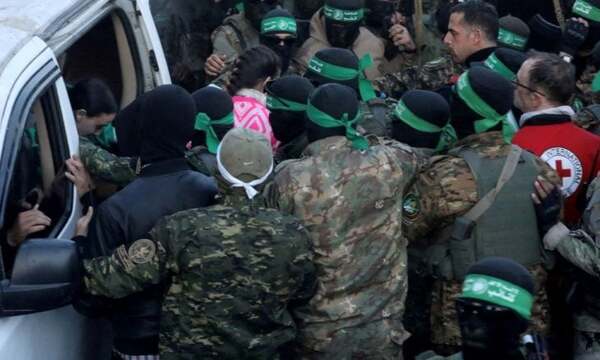
Al-Qassam Brigades spokesman Abu Obeida announced today, Friday, the names of three Israeli prisoners, indicating Hamas' commitment to maintaining the ceasefire agreement.
According to Abu Obeida's statement, the three Israeli prisoners are: Sasha Alexander Trubnov, Sagi Dekel Han, and Yair Horn.
In turn, the office of Israeli Prime Minister Benjamin Netanyahu confirmed that Israel had received a list of the names of three prisoners held in Gaza, noting that it was "acceptable to Israel."
In the same context, the Prisoners' Media Office reported that after the Palestinian resistance handed over the names of the Zionist prisoners, 36 prisoners sentenced to life imprisonment, and 333 prisoners from the Gaza Strip who were arrested after October 7, will be released tomorrow, Saturday.
This indicates that a new exchange of Israeli hostages held in the Gaza Strip and prisoners in occupation prisons will take place on Saturday, as was scheduled in the agreement.
This came as Egyptian reports indicated that Egypt and Qatar succeeded in "overcoming the obstacles that were facing the completion of the implementation of the ceasefire and the commitment of both parties to complete the implementation of the truce" that stopped a devastating war between Israel and Hamas that lasted for about 15 months in the Gaza Strip.
These announcements come after the agreement was threatened on Tuesday, after US President Donald Trump threatened the Palestinian movement with "opening the gates of hell" unless it released "all Israeli hostages" in the Gaza Strip by Saturday.
PALESTINE
Fri 14 Feb 2025 2:09 pm - Jerusalem Time
Fishermen injured as Israeli occupation forces target boat off Gaza port

Two fishermen were injured after being targeted by the Israeli occupation army, today, Friday, in the Gaza Strip.
According to local sources, Israeli occupation boats targeted a boat off the Gaza port with two shells, wounding two fishermen.
PALESTINE
Fri 14 Feb 2025 1:23 pm - Jerusalem Time
The occupation forces arrest a Palestinian child from Jenin
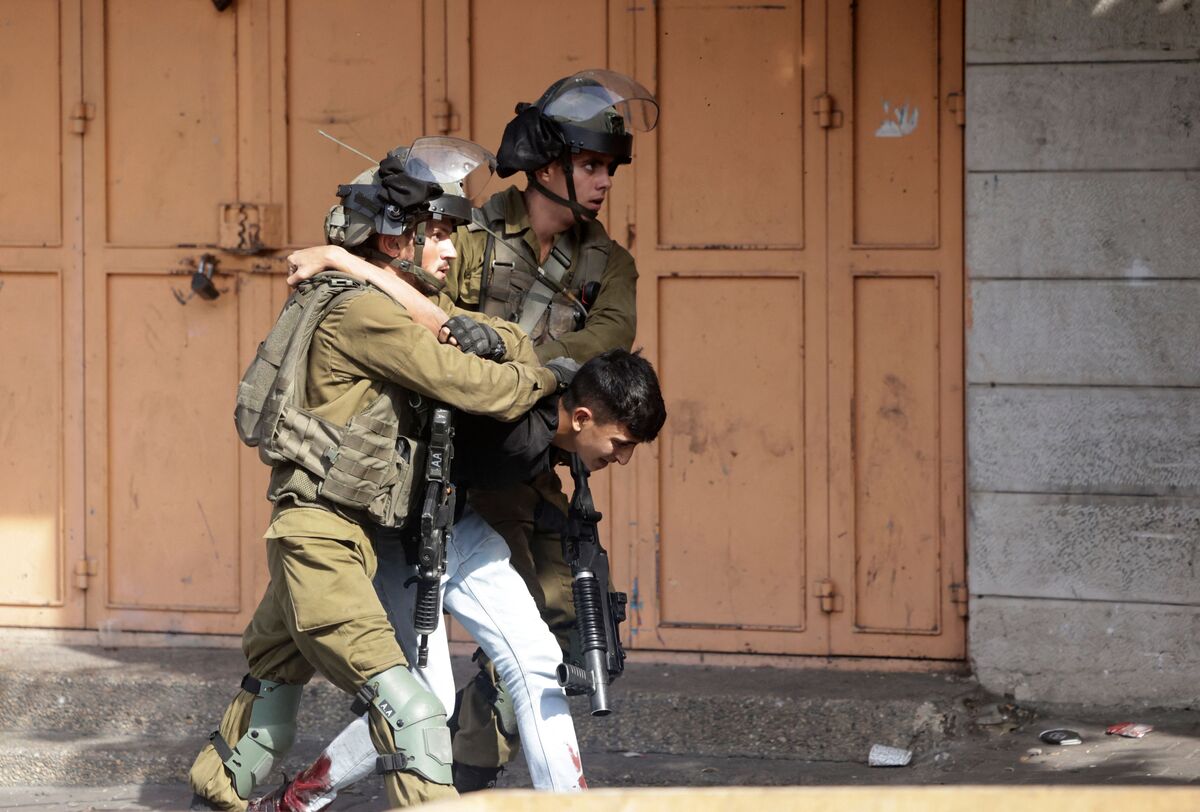
Today, Friday, the Israeli occupation forces arrested a child from the eastern neighborhood of Jenin.
Local sources said that the occupation forces arrested the child Abdullah Manasra, after raiding his house in the eastern neighborhood of Jenin.
The Prisoners Club said on Thursday that the occupation forces had arrested nearly 380 citizens from the governorates of Jenin, Tulkarm and Tubas, since the beginning of the ongoing Israeli aggression there.
ARAB AND WORLD
Fri 14 Feb 2025 12:17 pm - Jerusalem Time
Trump, Netanyahu discuss attack on Iran, US support for it
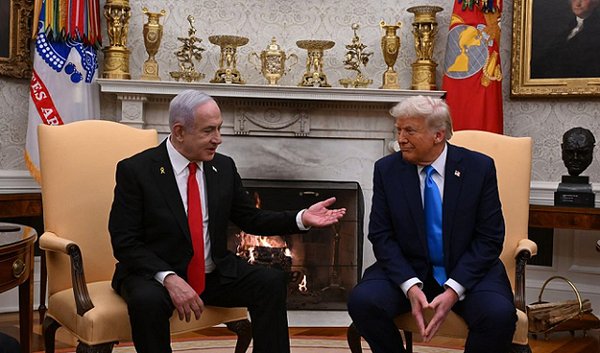
US President Donald Trump and Israeli Prime Minister Benjamin Netanyahu discussed an attack on Iran and several possible levels of US support during the latter’s visit to Washington last week, ranging from active military support, such as providing intelligence or mid-air refueling, to more limited political support, The Washington Post reported Friday.
According to the newspaper, Trump, who has pledged to stop wars around the world and does not want another conflict in the Middle East, is under pressure from Israel, which considers Tehran to be in a period of maximum weakness after the war on Gaza and Lebanon and the fall of Bashar al-Assad's regime in Syria.
The newspaper quoted American and Israeli officials as saying that Israel wants to seize the opportunity, and if Iran does not agree to give up its nuclear facilities, similar to what happened in Libya, Israel is prepared to bomb those facilities, with or without US support.
They added that the Biden administration was considering in its final days whether to support this Israeli threat or not, but decided not to do so. Now this threat has become one of the top issues facing Trump, according to the newspaper.
She continued that the United States had supplied Israel with bunker-busting munitions that would severely damage Iranian centrifuges and other uranium enrichment equipment buried in a mountain fort at Fordo, near Qom.
In a recent interview with Fox News, Trump said of the possibility of attacking Iran, “Everybody thinks that Israel, with our help or our approval, is going to come in and bomb them. I would rather not have that happen. I would rather see a deal with Iran where we can make a deal, oversee it, verify it, inspect it and then blow it up or make sure there are no more nuclear facilities.”
"There are two ways to stop them: with bombs or with a piece of paper. I would much rather reach an agreement," he added.
"I think Iran is very nervous. I think they're scared. I think Iran would love to make a deal, and I would love to make a deal with them without bombing them," Trump continued during the interview, considering that after the Israeli attack on Iran last October, "their air defenses were pretty much gone."
Last month, US military intelligence analysts predicted that Israel would attack Iranian nuclear facilities within the first six months of this year, in the absence of an agreement, the newspaper reported the day before yesterday.
National Security Council spokesman Brian Hughes was quoted as describing Trump's position as "while he prefers to negotiate a solution... peacefully, he will not wait indefinitely if Iran is not willing to engage, and soon."
The newspaper reported that the Biden and Trump administrations discussed how long an Israeli strike might delay Iran’s nuclear program. It quoted one American official as saying that “it could take six months at best.” But Israeli officials believe, according to the newspaper, that the effects could last a year or more.
Israel claims that Iran may be secretly advancing toward the 90% enrichment level needed to make bombs.
However, the newspaper considered that "Trump's tough approach to dealing with negotiations, through obstruction and then reaching an agreement, is the main feature of these first weeks of his second term. But threatening an attack on Iran is a failed attempt, even for Trump. It is clear that he does not want war. But the final decision-maker in this regard may be Netanyahu, not Trump."
PALESTINE
Fri 14 Feb 2025 11:27 am - Jerusalem Time
Hebron: Settlers plant trees on citizens' lands in Masafer Yatta
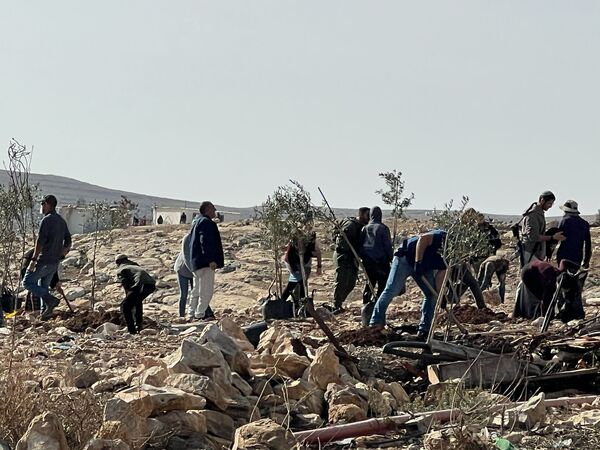
Dozens of settlers planted trees on citizens' lands in Masafer Yatta, south of Hebron, on Friday.
Local sources reported that dozens of settlers, under the protection of the Israeli occupation forces, planted trees near the homes of citizens in Khirbet Umm al-Khair in Masafer Yatta. This was preceded by their excavation work in the area two weeks ago, and they raised the flags of the occupying state, in preparation for seizing these lands.
She added that the settlers also planted trees on citizens' lands in the Birin area, east of Hebron.
It is noteworthy that the settlers have intensified their attacks on citizens and their property in Masafer Yatta, preventing them from reaching fields and pastures, and releasing their herds of cattle into citizens’ fields and destroying large areas of wheat and barley crops. They are also chasing farmers and shepherds with the aim of restricting them and displacing them from their lands to facilitate their seizure, for the benefit of colonial expansion.
The Wall and Settlement Resistance Commission documented in a report that settlers carried out 318 acts of vandalism and theft of citizens’ property last month, which affected large areas of land and resulted in the uprooting of 969 trees, including 960 olive trees, 350 of which were in the Hebron Governorate, 328 in Bethlehem, 160 in Salfit, 100 in Nablus and 31 in Ramallah.
PALESTINE
Fri 14 Feb 2025 11:14 am - Jerusalem Time
Jerusalem: Israeli occupation forces storm Hizma and seize 20 vehicles

Today, Friday, the Israeli occupation forces stormed the town of Hizma, northeast of Jerusalem, and seized a number of vehicles.
Local sources reported that the occupation army raided the town from its western entrance and seized about 20 vehicles.
PALESTINE
Fri 14 Feb 2025 11:07 am - Jerusalem Time
UNRWA: Displaced people continue to suffer as they return to their destroyed homes in Gaza
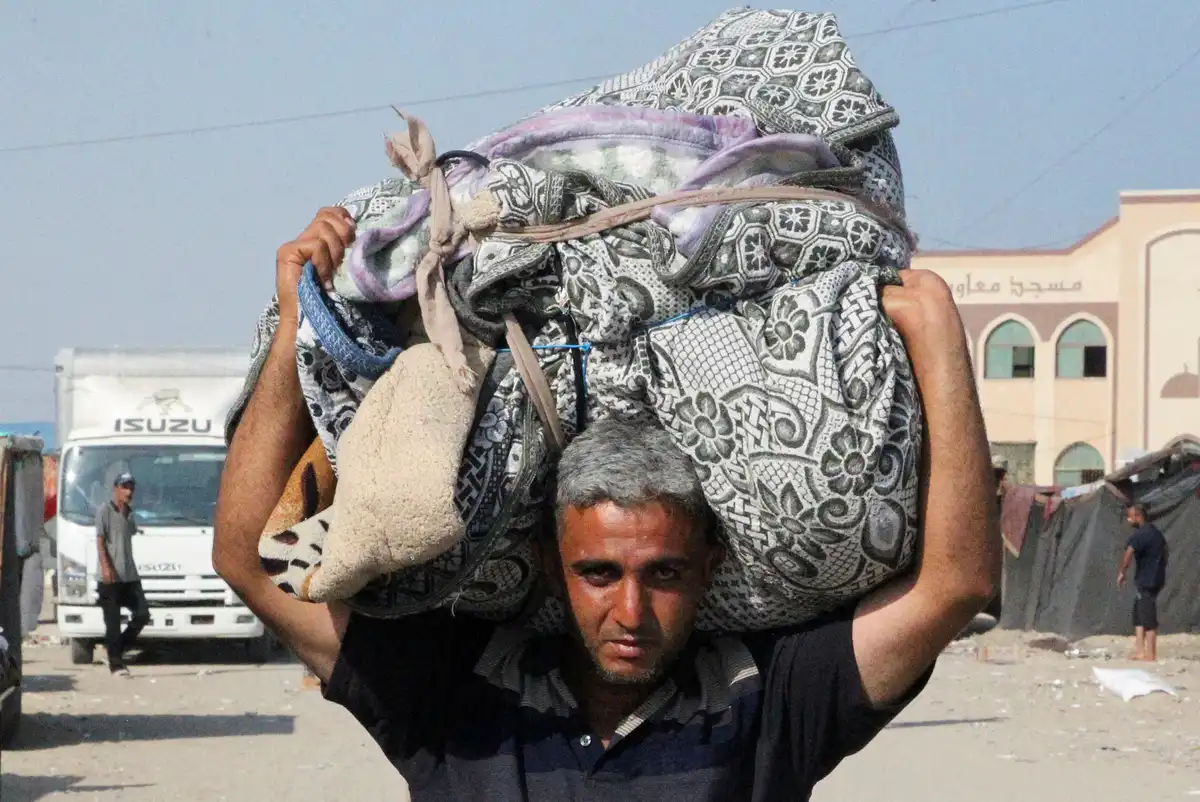
The United Nations Relief and Works Agency for Palestine Refugees (UNRWA) said that despite ongoing efforts to deliver basic humanitarian aid to the Gaza Strip, the suffering of displaced families continues as they return to their destroyed homes.
In a post on the X platform, today, Friday, she explained that the harsh winter conditions, heavy rains, and overcrowding in shelters leave many at risk and without adequate protection.
She called for the necessity of allowing the expansion of humanitarian aid to meet the enormous needs.
UNRWA had previously indicated that since the ceasefire began on the 19th of last month, it had distributed food aid to more than 1.5 million citizens in the Gaza Strip.
She added that it runs 120 shelters across the Strip, hosting about 120,000 displaced people, while 37 emergency shelters have been opened since the ceasefire, including 7 in Gaza City and 30 in northern Gaza.
UNRWA had warned that heavy rains and strong winds in the Gaza Strip exposed hundreds of thousands of Palestinian citizens to the risk of cold, after the Israeli occupation destroyed their homes during the genocide that lasted more than 15 months.
She added, "Many Palestinian families are still living in temporary shelters due to the widespread destruction in the Strip."
OPINIONS
Fri 14 Feb 2025 9:11 am - Jerusalem Time
Agreement with suspension!

op-ed "AlQuds" dot com
Opinion Writer

With Hamas confirming its commitment to implementing the ceasefire agreement and exchanging hostages and prisoners, according to the specified and agreed upon timetable, after negotiations and discussions with Qatari and Egyptian officials in Doha and Cairo, all eyes are supposed to be on the sixth batch of the exchange deal tomorrow, Saturday. However, Israel, as usual, always throws a wrench in the wheels, and Netanyahu’s office appears and denies the reports broadcast by Hamas about resolving the crisis, claiming that they are false news and have no basis in truth.
The Israeli denial comes despite the existence of an official agreement, so that Netanyahu can avoid embarrassment in front of the extremist ministers, most notably Smotrich and Ben-Gvir, both of whom admitted that Israel had yielded to Hamas’ demands. Some Israeli analysts also said that Hamas’ pressure succeeded, that it threatened and got what it wanted, and that the caravans will enter Gaza.
It is clear from Ben Gvir’s statements that Israel did not exploit Trump’s statements to subjugate Hamas, but on the contrary, continued to submit to them, which indicates that Israel agreed to implement the relief protocol, especially the humanitarian one, but Netanyahu is still procrastinating and practicing his usual policy of delay, in order to achieve a balance in his policy based on the need to please his hardline ministers.
Israel is still delaying the entry of heavy equipment and mobile homes into the Strip, even though they are crowded in front of the Rafah crossing, awaiting an Israeli decision to allow them to enter, as part of the threat by some ministers to prevent the reconstruction of Gaza until after the elimination of Hamas.
It is clear that Israel's policy is a propaganda show, as the Israeli Channel 12 says, with the aim of paving the way for Israeli public opinion, that Hamas is the one who backed down from the conditions it set to continue the exchange process. In fact, there is a clear and explicit agreement between Israel and Hamas, and each party made certain concessions on its part to ensure the implementation of the agreement. However, Israel is always trying to delay the implementation of any agreement. Among the propaganda shows it is carrying out is yesterday's meeting to assess the situation at the headquarters of the southern command of the army, in the presence of Netanyahu, the Minister of Defense, and senior army and Shin Bet leaders, in order to implement the agreement, but in a evasive and maneuvering manner until Friday, which is the date on which Hamas is scheduled to announce the names of the three detainees who will be released tomorrow, Saturday.
Israeli estimates do not stop at the Saturday payment barrier, but rather go beyond that to the possibility of releasing this week, including Saturday, six of the detainees, due to Hamas’s decision to maintain what was agreed upon. From here, Netanyahu must end his yellow war, because his plans and tricks are no longer exposed only to the Palestinian street.
And for the Israelis, and even for the whole world, and from here the introduction of heavy equipment and caravans within the relief protocol are matters that were previously agreed upon and the necessary guarantees were provided regarding them through the mediators, who must oblige Israel to implement its part according to the agreement and not leave it without implementation, because Hamas may return to set new conditions if Israel does not commit to implementing all the details of the agreement.
OPINIONS
Fri 14 Feb 2025 9:10 am - Jerusalem Time
Trump's plan is a second catastrophe
Salah Aqel
Opinion Writer

US President Donald Trump deliberately repeated his talk about his plans and program to displace the Palestinian people by pressuring Egypt and Jordan to receive hundreds of thousands from the Gaza Strip and the West Bank. This in itself is a prelude to implementing a second Nakba against the Palestinian people, which requires all Palestinians and Arabs to develop strategic plans to thwart a new Nakba through several steps, the first of which is to bet on the Palestinian people and their ability to confront these plans. The people who have endured despite the scale of the disaster and genocide in the Strip are capable of thwarting President Trump's project. In return, the Palestinian Authority, the factions and the Palestine Liberation Organization must unite and meet immediately with the participation of Hamas and Islamic Jihad movements and announce a national program inside and outside the country to support the steadfastness of the Palestinian people, and move on the Arab, regional and international levels. The Authority must request an immediate Arab and Islamic summit meeting and make decisions supporting the Palestinian cause, the Palestinian people and their steadfastness.
It is also necessary to address international organizations, bodies and institutions concerned with human rights and consider Trump's plan a violation and inconsistency with international laws, state sovereignty and the right of peoples to self-determination and liberation from occupation, and to condemn and reject this plan and demand a just solution to the Palestinian issue. The Palestinian Authority, Jordan and Egypt are required to form a supreme committee to coordinate efforts, positions and movements in order for the position to be clear and unified, and to ask Arab countries to move and provide absolute support in rejecting this trend, and to take serious and effective steps, which must reach the point of severing relations with the United States of America and Israel and participating with the Kingdom of Saudi Arabia in the plans and agreeing with it not to proceed with normalization with Israel before finding a just solution to the Palestinian issue.
The Palestinian people today are not the same as the people of 1948. Today, they are capable of steadfastness, confrontation and challenge, and the Trump and Benjamin Netanyahu project will fail, just as it failed the Deal of the Century and failed to achieve Israel’s goals in its war on Gaza. It is worth noting that Netanyahu called for the establishment of a Palestinian state for the Palestinians in Saudi Arabia, and this is primarily an attack on the Palestinian people and their national rights, and then an attack on the sovereignty and security of Saudi Arabia.
Despite the amount of pressure and blackmail that both Egypt and Jordan are exposed to, the position of both sides rejects the pressures and Trump's project, but this requires mobilizing the Jordanian and Egyptian popular arena and holding demonstrations and crowds supporting the position rejecting Trump's project and opening the way for the people to take serious action. The two countries must take direct international action and ask international organizations to take decisions supporting the sovereignty of their countries and not endangering their national security and condemning the plans and statements of Trump and Netanyahu. The two countries must take decisions regarding America and Israel since they have peace relations with Israel, and warn that if this is initiated, they will sever relations, withdraw ambassadors, and end peace agreements. Here the fundamental question arises: Are the leaders of these countries capable of all of the above? I believe that the coming days will answer it through practical future steps, not through statements of condemnation and denunciation. Here it must be said that Egypt and Jordan will reject, but their position is weak without a unified Arab-Palestinian-international position.
Basically, it requires the Palestinians at the popular level to be aware, steadfast, steadfast and confront, and to rely on the Palestinian people in the West Bank to thwart this project, just as the popular capacity in Gaza thwarted it through the scenes of return from the south to the north, which confirm that the Palestinian people cannot be uprooted from their land despite the disasters, the scale of the genocide, the war of starvation and the destruction of Gaza architecturally and geographically, as the Palestinian people cannot repeat the Nakba a second time, as the bet on immigration was thwarted by the people in the Strip.
In contrast, all Israeli parties and parliamentary blocs welcomed Trump’s plans. Ben-Gvir and Finance Minister Bezalel Smotrich welcomed Trump’s plans to displace the Palestinians and take control of Gaza. Smotrich stated, “Now we will work to bury the dangerous idea of a Palestinian state once and for all.” Netanyahu described Trump’s idea as “wonderful” and said it should be “studied and implemented.” Netanyahu left Washington after receiving Trump’s support for the demands of the extreme right in his government, which call for the mass displacement of Palestinians from Gaza.
Amnesty International stated that Trump's proposals regarding the Gaza Strip are absurd, immoral and illegal, and it rejects the inhumanity of Trump's proposal, the seizure of land and his mockery of the right of peoples to self-determination. In the same vein, the Arab League confirmed that Trump's proposal to displace Palestinians from Gaza is a recipe for instability and does not contribute to achieving the two-state solution. Trump's proposal promotes a scenario of displacing Palestinians that is rejected by Arabs and internationally and violates international law. In the same context, Palestinian President Mahmoud Abbas responded to Trump's statements regarding the displacement of Palestinians in Gaza, stating, "We reject calls to seize the Gaza Strip, and we reject the displacement of the sons of the Palestinian people and the land of Palestine to the Palestinians, and the Palestinian people will not give up their land, homeland and rights."
UN Secretary-General Antonio Guterres stressed the need to avoid "any form of ethnic cleansing, recalling the right of Palestinians to live simply as human beings on their land." French President Emmanuel Macron and Egyptian President Abdel Fattah el-Sisi warned that any forced displacement of the Palestinian people in Gaza or the West Bank would be unacceptable. Jordan, the UAE, Saudi Arabia and the Arab League rejected the US plan, as did the European Union. For its part, Iran considered the proposal to forcefully displace the residents of Gaza shocking, and the Indonesian Foreign Ministry stated, "We strongly reject any attempt to forcibly displace Palestinians or change the demographic composition of the occupied Palestinian territories." Hezbollah condemned Trump's plan, stressing that the Israeli occupation "will not take in peace what it did not take in war, under malicious and foolish slogans that want to fool the peoples of the world."
At the official Palestinian level, it requires taking serious steps, the first of which is completing national unity and developing programs that support the steadfastness of the Palestinian people and their adherence to their land, stopping security coordination and severing ties with the American administration participating in the war on the Palestinian people and land, and taking immediate action with Jordan, Egypt and the Arab countries at all levels, specifically internationally, and requesting an immediate meeting of the emergency Arab summit and turning to international organizations and taking collective decisions to expose this destructive project that violates all international laws and norms; because God forbid if these countries submit and this project is implemented, these countries will be finished on a popular, political and sovereign level, and history will record that they participated in liquidating the Palestinian cause.
It is necessary to reject all the temptations offered by Trump to both Egypt and Jordan to absorb the displaced Palestinians in exchange for paying hundreds of billions to revive the economies of these countries and force them to settle the displaced and homeless Palestinians in them. Channel 14 quoted former US intelligence officer Michael Milstein as saying that Trump, with his proposals, may be trying to pressure Arab countries to promote normalization between Israel and Saudi Arabia.
Moreover, the formation of the “Hague Group” consisting of nine countries was announced, in support of Palestine and to hold Israel accountable, and this undoubtedly represents a glimmer of hope, as it is the first bloc of its kind in the world to be formed for this purpose. On the other hand, the shocking news is that there is no Arab country among them, and the group includes South Africa, Malaysia, Colombia, Bolivia, Cuba, Honduras, Namibia, Senegal, and Belize. The group’s goals are based on international law, including working towards self-determination and the establishment of a Palestinian state, committing to ending the occupation and the illegitimacy of settlements, supporting the implementation of the International Court of Justice’s orders against Israel (which South Africa filed), supporting the arrest warrant issued by the International Criminal Court against Netanyahu, preventing the transfer of weapons, ammunition, and military equipment to Israel, which it may use to commit violations of international humanitarian law and the Universal Declaration of Human Rights, prohibiting genocide, and preventing ships used to transport weapons and military fuel to Israel from docking in any of its ports, and it called on other countries to join it.
Returning to the ancient Palestinian past in 1799, Napoleon Bonaparte’s dreams were shattered on the walls of Acre, and Acre and Palestine remained, and Napoleon, who said at the time, “Our dreams were shattered on your walls, O Acre,” departed. Today, time is repeating itself through Trump, who will depart just as Napoleon departed, as did the former Prime Minister of the occupation, Yitzhak Rabin, who said in 1992, “I hope one day to wake up from my sleep and find Gaza swallowed by the sea.” These were the wishes of Yitzhak Shamir, Shimon Peres, Ariel Sharon, Shaul Mofaz, Ehud Barak, and others, but it was Gaza that swallowed the Israeli army, and recorded the historic miracle on October 7, 2023. Gaza will remain the pride, and Gaza today, despite the destruction and the great crime, is not the Gaza of 1799 and 1992, but the Gaza that stood firm for a year and a half and forced the occupation to release the prisoners sentenced to life imprisonment and agree to the conditions of the resistance. It is the Gaza that triumphed throughout History, which was a graveyard for invaders, will leave and Trump will be defeated, and Gaza will become more solid and strong, and his projects will be shattered on the shores of Gaza, whose gas and location he and Netanyahu covet.
PALESTINE
Fri 14 Feb 2025 8:54 am - Jerusalem Time
Trump.. Shut up
The Jordanian monarch, King Abdullah II, does not need anyone to defend him. His biography, career, and nationalist positions are responsible for the task of repelling the slanderous talk, which was quickly revealed to be false, in light of the literal text of the statements that expressed a national stance, leaning on a national wall, in rejecting what appeared to be the excesses of the real estate developer, who does not value systems, laws, traditions, customs, or even morals, which was exposed by his reckless responses and bullying language to journalists’ questions.
With what authority will you buy Gaza? And from whom will you buy it?! The answer was revealing of the great hidden plans that he is implementing with executive orders, as if it were one of his states.
Although the heir to the strict royal traditions and high morals avoided entering into a debate with the president who was free from all restrictions or limits, and who set an ambush for him by bringing journalists into the meeting, without this being included in the meeting protocol, the king said in a wise language, and with clarity that does not accept interpretation, that he rejects the displacement plans and projects that are being carried out by the real estate tycoon and project developer, whose desires have opened up, and he began to operate the engines, to evacuate the owners of the land without return, to establish his kingdom on the remains of the children and women, who perished in the holocaust, which was ignited under exclusive American sponsorship.
The Egyptian support, which came hours after the Jordanian monarch spoke about presenting a plan to rebuild the Gaza Strip without displacement, carries an unmistakable message to countries in the debate with ideas, not with the eccentric person, just as Canada and Denmark responded that their lands are not for sale, which made him change his orientations and alter his impossible-to-reach paths.
Trump's policies and emotions undermine the prestige of the superpower, sometimes by backing down from impossible ideas he launches without thinking, and sometimes by his inability to carry out his threat of hell for those who are still burning in the embers that his country ignited.
The best advice that can be given to a man who is fascinated by his victory is to keep quiet, so that he may regain some of his lost prestige through excessive chatter.
ARAB AND WORLD
Fri 14 Feb 2025 8:42 am - Jerusalem Time
Two-thirds of Congressional Democrats urge Trump to reverse Gaza takeover
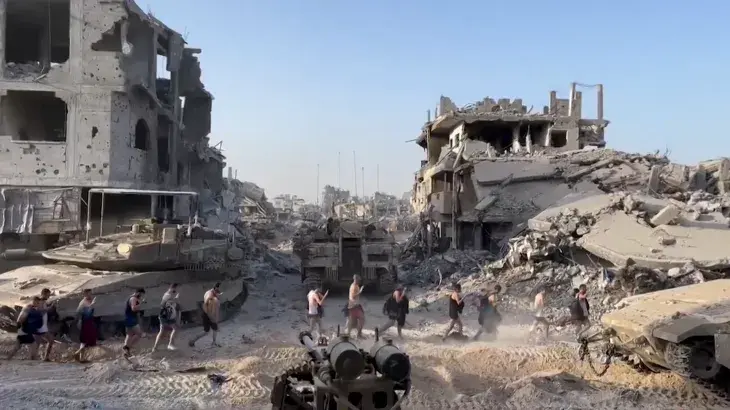
The American website Axios revealed that more than two-thirds of the Democrats in the House of Representatives signed a letter to US President Donald Trump urging him to retract his "dangerous" comments in which he suggested that the United States "take over" the Gaza Strip.
Trump's comments drew criticism from lawmakers in both parties, with even some Republicans complaining that they were unworkable and inconsistent with Trump's non-interventionist foreign policy.
Trump said at a joint news conference with Israeli Prime Minister Benjamin Netanyahu last week that the United States would “take over Gaza,” “own it” and turn it into the “Riviera of the Middle East.”
Trump doubled down on his insistence on “taking Gaza” this week by saying the Palestinians would not have the right to return to Gaza, saying of the territory: “I will own it.”
“We are disturbed that an American president would call for the forced removal and permanent displacement of two million people,” the Democrats said in the letter obtained by Axios.
The letter was signed by 145 of the 215 House Democrats, led by Reps. Sean Casten (D-Ill.) and Brad Sherman (D-Calif.).
Such a move, the lawmakers said, would not only be “morally indefensible,” but would damage America’s global standing, put American troops at risk, and lead to increased terrorism.
They said Trump's comments "threaten to jeopardize the United States' opportunity to work with our Arab partners" to rebuild Gaza and find a peaceful end to the conflict with Israel.
On a related note, 10 Senators—Tim Kaine (D-VA), Richard Blumenthal (D-CT), Dick Durbin (D-IL), Jon Ossoff (D-GA), Bernie Sanders (I-VT), Chris Van Hollen (D-MD), Rev. Raphael Warnock (D-GA), Peter Welch (D-VT), and Ron Wyden (D-OR)—recently introduced a resolution condemning the potential U.S. takeover of Gaza and blocking its implementation.
More than 350 rabbis and Jewish activists have also signed a declaration attacking US President Donald Trump's plan for Gaza.
The ad was published in the New York Times under the title “No to Ethnic Cleansing in Gaza.” The Guardian reported that the signatories of the ad denounced Trump’s plan to cleanse Gaza of its population.
“Trump has called for the removal of all Palestinians from Gaza, and the Jewish people say no to ethnic cleansing!” reads the statement, which was signed by rabbis, as well as Jewish creatives and activists.
The announcement comes after Trump proposed taking control of Gaza and forcing two million Palestinians who survived the brutal Israeli attack that left more than 48,000 dead, most of them women and children, more than 100,000 wounded, most of them also women and children, and more than 14,000 missing, to flee the Strip and to the Sinai Desert and Jordan.
Trump has asked Jordan, Egypt and other Arab countries to accept the Palestinians. The plan has been widely criticized by Arab countries and other allies as ethnic cleansing of the Palestinians.
“It is absolutely appalling to see the degree to which people who are so legitimate and respected in our society are willing to support something that is considered one of the greatest crimes of the 21st century,” said Peter Beinart, president of Jewish Currents magazine, who also signed the declaration.
“Trump seems to believe he is God and has the authority to rule, own and dominate our country and the world,” said Rabbi Yossi Berman, director of the New Synagogue Project in Washington, D.C. “Jewish teaching is clear: Trump is not God and cannot rob Palestinians of their inherent dignity or steal their land for a real estate deal. Trump’s desire to ethnically cleanse Gaza of Palestinians is morally repugnant. Jewish leaders reject Trump’s attempts to profit from displacement and suffering and must act to stop this heinous crime.”
Trump told Fox News’ Bret Baier over the weekend that he would “own” Gaza and that it would be “a real estate development for the future.” Asked if the Palestinians would have a right to return, Trump said, “No, they won’t.” “In the meantime, I’m going to own that land,” Trump, a former real estate developer, added. “Think of it as a real estate development for the future. It’s going to be a beautiful piece of land. It’s not going to be a lot of money.”
PALESTINE
Fri 14 Feb 2025 8:39 am - Jerusalem Time
Anticipation for the release of 3 Israeli prisoners and Palestinian prisoners
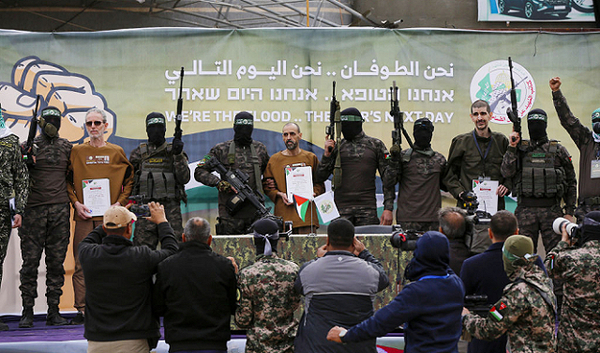
Today, Friday, the Israeli authorities are waiting for Hamas to inform them of the names of the three hostages it intends to release tomorrow, Saturday, in exchange for Palestinian prisoners, after an exchange of threats between the two sides raised fears of renewed fighting.
Hamas's position indicates that a new exchange will take place on Saturday for Israeli hostages held in the Gaza Strip and Palestinians held in Israeli prisons.
This came as Extra News, a news channel linked to Egyptian intelligence, reported that Egypt and Qatar had succeeded in "overcoming the obstacles that were facing the completion of the implementation of the ceasefire and the commitment of both parties to complete the implementation of the truce" that stopped a devastating war between Israel and Hamas that lasted for about 15 months in the Gaza Strip.
The agreement was put to the test on Tuesday after US President Donald Trump threatened the Palestinian movement with "opening the gates of hell" unless it released by Saturday "all Israeli hostages" still being held in the Gaza Strip.
Israel has reiterated those threats, with government spokesman David Mincer saying Thursday that "the ceasefire understandings make it clear that Hamas must release the three hostages alive on Saturday." He added, "If these three are not released, and Hamas does not return our hostages to us by noon on Saturday, the ceasefire agreement will end."
Israeli Prime Minister Benjamin Netanyahu announced on Tuesday that "heavy fighting" would resume in Gaza, while his Foreign Minister Yisrael Katz said on Wednesday that "the gates of hell will open... as the US president promised" if Hamas did not release the hostages by Saturday.
According to the ceasefire agreement that went into effect on January 19 and whose first phase lasts for 42 days, the sixth exchange of hostages and prisoners was supposed to take place tomorrow, Saturday, but Hamas announced its postponement, accusing Israel of “obstructing” the implementation of the agreement, especially obstructing the entry of humanitarian aid into the devastated Strip.
Palestinian sources explained that the mediators "held intensive discussions and obtained an initial Israeli pledge to implement the provisions of the humanitarian protocol starting from Thursday morning," which will allow the entry of "caravans, tents, fuel, heavy equipment, medicines, and hospital restoration materials" into the Strip.
PALESTINE
Fri 14 Feb 2025 8:35 am - Jerusalem Time
Updated: Israeli occupation continues its aggression on Tulkarm and Jenin
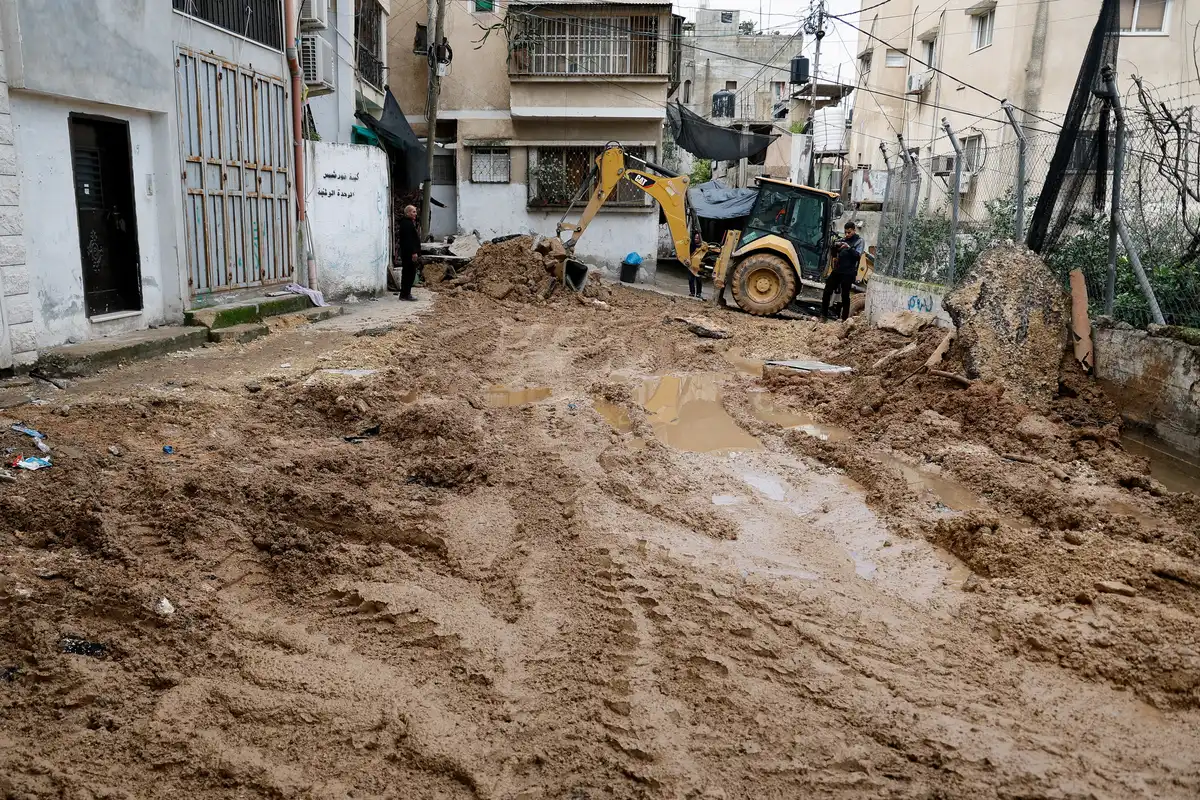
The Israeli occupation army continues its aggression on Tulkarm and Jenin, causing widespread destruction to infrastructure and property.
**Tulkarm**
The Israeli aggression on the city of Tulkarm and its camp entered its 19th day, and the sixth day on the Nour Shams camp, amidst a siege, house raids, and forced displacement accompanied by arrests.
According to local sources, the occupation forces last night sent military reinforcements towards the city and its camps, amidst intensive reconnaissance flights, and raided a number of homes in the western and eastern neighborhoods, and the vicinity of Faroun’s garage and the old mosque, accompanied by the destruction of their contents and the checking of the residents’ identities and subjecting them to field investigation.
She added that the occupation forces arrested the young man, Raafat Abu Limon, from his home, while an Israeli special force that infiltrated a civilian vehicle arrested the young man, Kayed, in a neighborhood in the western part of the city.
The occupation forces continue to seize residential buildings in the eastern neighborhood and turn them into military barracks, especially those close to Tulkarm camp, amidst a tight siege and preventing its residents from leaving and moving to obtain their basic needs.
After midnight, the occupation soldiers spread out intensively in the city streets, specifically in the middle of the market and in Al-Alimi roundabout street, amid extensive search and combing operations.
The occupation forces also stormed the Dhnaba suburb east of Tulkarm, and roamed its streets and neighborhoods. The occupation forces raided and searched a number of homes and subjected citizens to field investigations.
The occupation forces continued their siege of Tulkarm and Nour Shams camps, turning them into military zones, accompanied by the seizure of homes and residential buildings and turning them into military barracks after forcing citizens to evacuate them, in the midst of the bitter cold.
This unprecedented aggression caused widespread destruction to infrastructure and property, as the occupation bulldozers demolished a large number of homes in the Al-Manshiya neighborhood in Nour Shams camp amid massive explosions that coincided with the occupation soldiers firing live bullets at everything moving.
The camp is still witnessing a large wave of displacement of families, who headed to different areas in the city, its suburbs and various towns.
In the same context, the occupation forces pursued citizens from Tulkarm and Nour Shams camps, while they were trying to return to their homes in the camps, and fired bullets and sound bombs to intimidate them, and detained a number of them.
**fetal**
The Israeli occupation continues its aggression on the city of Jenin and its camp for the twenty-fifth consecutive day, leaving 25 martyrs, dozens of injuries, and widespread destruction of infrastructure and property.
Local sources said that the ongoing aggression on Jenin camp for 24 days has forced 20,000 citizens to flee, amid widespread destruction and a stifling humanitarian crisis that threatens the lives of citizens.
The sources added that 470 facilities and homes were completely or partially destroyed as a result of the ongoing bombing and destruction. The residents of the camp and the city of Jenin are also suffering from a complete cut-off of water and electricity, and a severe shortage of food and basic needs, especially for children. Schools and health services have also completely stopped.
She pointed out that the occupation forces are preventing water from reaching 4 main hospitals, which deprives 35% of the residents of Jenin city of water, increases the suffering of the residents and exposes them to a health disaster.
The sources pointed out that the occupation forces arrested 120 citizens from Jenin and its camp, and subjected dozens to field investigations, while carrying out 153 house raids and 14 aerial bombardments, which led to severe damage to the infrastructure and residential neighborhoods.
On Thursday, two citizens were injured after being beaten by the occupation forces at the Jalameh military checkpoint, north of Jenin. The occupation forces also bombed a vehicle in the eastern neighborhood of Jenin, without any injuries being reported.
The occupation forces notified the family of the two martyrs, Hammam and Al-Harith Hashash, that their house would be demolished within 72 hours. The occupation forces had demolished parts of the house and burned it after besieging the two martyrs and assassinating them inside it, in July of last year.
The Prisoners Club reported that the occupation forces have arrested at least 380 citizens from the governorates of Jenin, Tulkarm, and Tubas since the beginning of the current aggression.
As the Israeli aggression on Jenin camp continues, the massive destruction is revealed day after day in the homes, properties and shops of citizens in the neighborhoods and streets of the camp, while the occupation continues to send military reinforcements accompanied by bulldozers to the entrances and surroundings of the camp, the latest of which was the arrival of fuel tankers that reached the surroundings of the Rayyan building near the camp, while aircraft continue to fly in the skies of Jenin city and camp, and for two days the camp has witnessed the dropping of bombs from drones in the early hours of dawn in the Al-Saha area and other neighborhoods inside it.
PALESTINE
Thu 13 Feb 2025 10:09 pm - Jerusalem Time
UN official: Fuel is the only way to operate hospitals, schools, bakeries and homes in Gaza
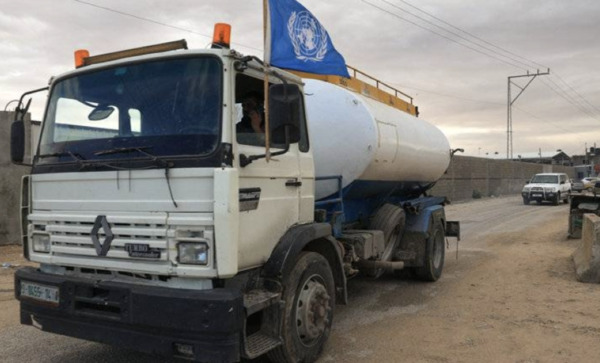
The Executive Director of the United Nations Office for Project Services, Jorge Moreira da Silva, confirmed today, Thursday, that fuel is the only way to operate hospitals, schools, bakeries and homes in Gaza.
Da Silva said in a press statement that the United Nations Office for Project Services, with the ceasefire, has undergone a new process in purchasing and distribution, noting that 1.3 million liters are being brought in and distributed daily, which is essential for all sectors, especially in the health sector.
He added that the office not only brings in and distributes fuel, but also monitors the fuel to ensure its proper use.
While at the European Hospital in Gaza, Da Silva said that the hospital is one of the most important hospitals in the Strip, noting that before the Israeli aggression on Gaza, the office provided and installed solar panels outside the hospital to generate electricity, but “those panels disappeared because people had no other option to have electricity in their homes. Even some internally displaced people had to live under the panels because there was no other place to live because they lost their homes.”
He pointed out that the hospital currently relies on traditional fuel to generate electricity from generators, "but some generators are broken, and spare parts are not allowed to enter Gaza to repair those generators, which is a very difficult situation for the hospital," noting the shortage of equipment, medical supplies, antibiotics, surgery and medicines that the hospital is facing, in addition to the shortage of water and electricity.
The UN official stressed that this situation requires working quickly to bring in more humanitarian aid and prepare for early recovery.
PALESTINE
Thu 13 Feb 2025 9:45 pm - Jerusalem Time
Settlers led by Ben Gvir attack citizens' lands east of Bethlehem
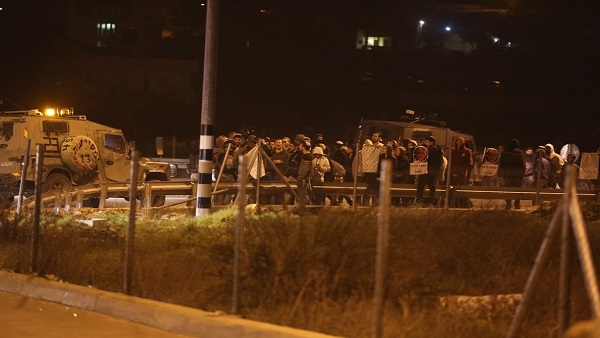
Settlers, led by the extremist minister who resigned from the occupation government, Itamar Ben Gvir, attacked citizens' lands in the village of Al-Minya, east of Bethlehem, today, Thursday.
According to local sources, a large group of settlers led by extremist Ben Gvir attacked citizens' lands and began planting olive seedlings in the Al-Minya desert, specifically in the areas of "Al-Hajjar", "Wadi Al-Abyad", "Al-Tina" and "Fateh Sadra", noting that the area of the lands is estimated at hundreds of dunams, and it is a nature reserve in the area classified as "B".
Kawazbeh added that "the settlers have escalated their attacks on the village of Al-Minya, by seizing wheat and barley crops and attacking farmers and shepherds," in an attempt to displace citizens from their lands and seize them for settlement expansion.
Kawazbeh pointed out that the settlers who established a settlement outpost in the Al-Minya desert sent him death threats over the phone.