ARAB AND WORLD

Sun 16 Feb 2025 4:05 pm - Jerusalem Time

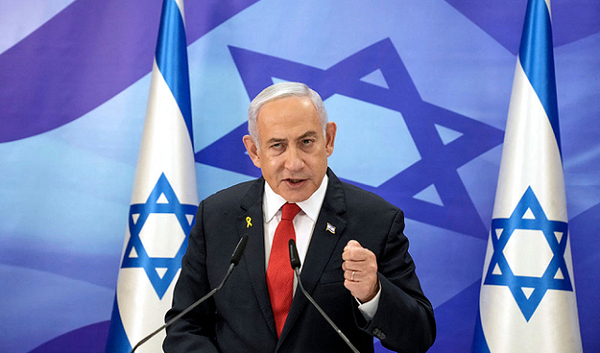
Netanyahu calls for complete disarmament of Lebanese Hezbollah

Israeli Prime Minister Benjamin Netanyahu called on Sunday for the "complete disarmament" of Lebanon's Hezbollah.


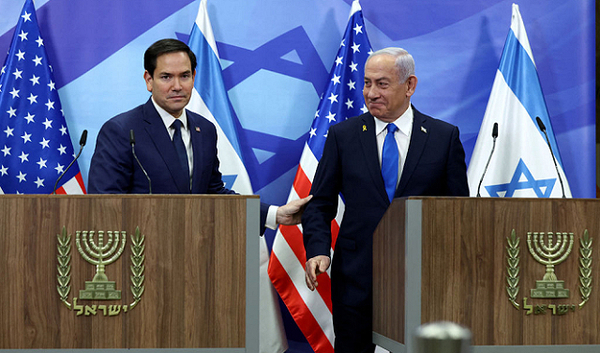
In a press conference with US Secretary of State Marco Rubio, who arrived in Tel Aviv on Sunday, Netanyahu said that "Hezbollah must be completely disarmed."


He added that he discussed with Rubio "the Iranian file and the necessity for Tehran not to possess a nuclear weapon."


In another matter, Netanyahu claimed that the International Criminal Court had issued arrest warrants "based on lies" against him and former Israeli Defense Minister Yoav Galant.


He believed that "Iran will not possess nuclear weapons, and with the help of the United States we can complete the mission," referring to taking the necessary measures to prevent that, stressing that the steadfast American support for Israel "will continue."


Netanyahu also stressed the need to ensure that Gaza does not pose a threat to Israel, and that his country is committed to returning all Israeli detainees held by Hamas in the Gaza Strip.


Despite hundreds of violations, he claimed that "Israel is committed to the ceasefire in Lebanon, and expects the Lebanese government to do the same."


The Israeli army was supposed to complete its withdrawal from the areas it occupied in southern Lebanon by dawn on January 26, according to the deadline set in the ceasefire agreement between Beirut and Tel Aviv, which is 60 days starting from its entry into force on November 27, 2024.


However, Tel Aviv did not adhere to the deadline, before Washington later announced an extension of the deadline by an Israeli-Lebanese agreement until February 18.


However, the Israeli army returned to evade the agreement again, announcing in a statement on Wednesday, "extending the period of implementation of the agreement."


Since the agreement came into effect 80 days ago, Israel has committed 934 violations in Lebanon, leaving 73 dead and 265 wounded, according to a statistic by Anadolu Agency based on official Lebanese data.


For his part, the Israeli Army Radio quoted Rubio on Sunday as saying that it is necessary for Iran not to possess a nuclear weapon.


During the joint press conference, Rubio said, "Iran is a source of threat in the region, and the Iranian people are victims of the regime there."


While the Hebrew newspaper "Israel Hayom" quoted Rubio as saying, "Hamas cannot remain in Gaza, and the detainees (Israelis in the Strip) must return. This is not an option. We will work together to achieve it."


Rubio did not stop there, but Channel 12 quoted him as saying: “Hamas must not control the Gaza Strip and must not continue as a political and military force, but must be annihilated and eliminated,” he said.


Rubio added to the same channel that "all detainees from Gaza must be released," and stressed the strength of Tel Aviv's relations with US President Donald Trump, saying: "I do not think there is a better ally for Israel than Trump."


This is the US Secretary of State's first visit to Israel and the Middle East since assuming office on January 21.


Rubio's visit comes as negotiations for the second phase of the agreement were supposed to begin 13 days ago (February 3), but the Israeli government is still stalling, prompting the prisoners' families to escalate their pressure and demand that the agreement be completed before any new military decisions in Gaza.


The first phase of the ceasefire and prisoner exchange agreement began on January 19, and is divided into three phases, each lasting 42 days, with the condition that the next phase be negotiated before the current phase is completed.


Egypt and Qatar are conducting intensive mediation to save the agreement, in light of the continued Israeli violations and logistical gaps that have prevented the full implementation of the provisions of the first phase.

ARAB AND WORLD

Sun 16 Feb 2025 3:08 pm - Jerusalem Time

Netanyahu: Trump's vision for Gaza is becoming a reality, and the most important thing is that Iran does not have a nuclear weapon

Israeli Prime Minister Benjamin Netanyahu met with US Secretary of State Marco Rubio on Sunday and discussed several issues, including US President Donald Trump's plan to displace residents of the Gaza Strip and the second phase of the ceasefire and prisoner exchange agreement.


Netanyahu said during a joint press conference with Rubio that "we have made it clear that Iran must not have a nuclear weapon, and there is nothing more important than this now."


Netanyahu said he was working with Trump "in full coordination, we have a common strategy, and it is not possible to reveal everything, including when the gates of hell will open if the kidnapped soldiers are not released."


He added, "Israel is determined to achieve all its goals after the horrific Hamas attack. We will make sure that Hamas will not pose a threat to Israel."


He added, "We talked about Trump's vision for Gaza, which is becoming a reality."


Netanyahu threatened Syria and Lebanon, saying that "Israel will work to prevent any threat from Syria," and claimed that "we are committed to the ceasefire agreement in Lebanon. We expect the Lebanese government to be equally committed."


In turn, Rubio said that "Trump clearly stated what his vision is for Gaza. Hamas cannot continue as an authority there," and that "the kidnapped must be returned to their homes, and we must eliminate Hamas in Gaza," considering that "freeing the kidnapped is not an option, but it must be done."

PALESTINE

Sun 16 Feb 2025 2:13 pm - Jerusalem Time

12 Palestinian citizens injured by Israeli occupation bullets in Nablus

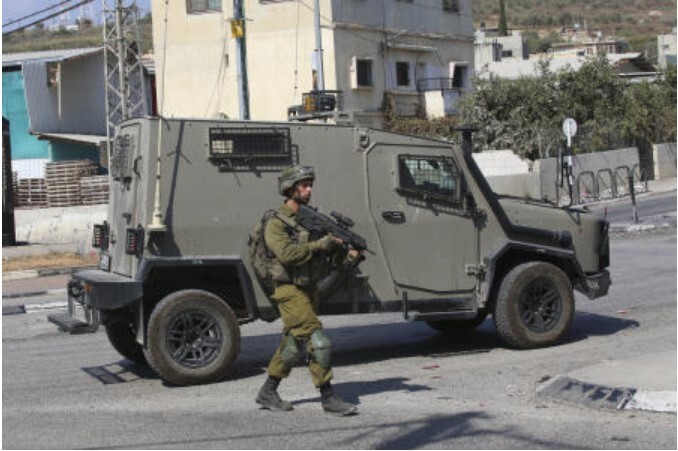
12 citizens were injured by the occupation forces' bullets, today, Sunday, during the clashes that erupted after special forces "undercover" stormed the old town of Nablus.


Local sources reported that 12 citizens, including an elderly man and children, were injured by the occupation forces' bullets during the storming of the old town of Nablus.


She said that 8 injuries were in the lower limbs, 2 injuries in the hand, in addition to an injury in the pelvic area, and a child with shrapnel in the hand and face, while a young man was transferred after being run over by an occupation military vehicle, in addition to dozens of injuries from suffocation from toxic gas.


She pointed out that the occupation forces prevented ambulance crews from entering the Zafer Al-Masry School in the vicinity of the Old City.

The occupation forces also arrested a young man from the Old City whose identity is not yet known.

This morning, special forces of the occupation army stormed the old town and surrounded a house in the Habas al-Dam neighborhood, amidst explosions and heavy gunfire.

PALESTINE

Sun 16 Feb 2025 1:45 pm - Jerusalem Time

The death toll in the Gaza Strip rises to 48,271

The Ministry of Health in Gaza announced today, Sunday, that the death toll in the Gaza Strip has risen to 48,271 dead, the majority of whom are children and women, since the beginning of the Israeli occupation aggression on October 7.


It added that the number of injuries has risen to 111,693 since the beginning of the aggression, while a number of victims are still under the rubble, and ambulance and civil defense crews cannot reach them.


It pointed out that 7 dead (6 of whom had their bodies recovered, and one new martyr) and 5 injuries arrived at Gaza Strip hospitals during the past 24 hours.


It is noteworthy that the ceasefire in the Gaza Strip entered into force on January 19, and since its entry into force, a number of citizens have been killed and injured in various parts of the Strip.

PALESTINE

Sun 16 Feb 2025 1:43 pm - Jerusalem Time

Tubas Education: Israeli occupation prevents teachers from passing through the Hamra checkpoint to the Jordan Valley schools

The Directorate of Education in Tubas and the Northern Jordan Valley said that the Israeli occupation forces prevented teachers from passing to the schools of the Northern Jordan Valley today, Sunday, through the Hamra military checkpoint.


The Director of Education in the governorate, Azmi Balawneh, reported that the occupation forces prevented about 100 members of the teaching staff in the northern Jordan Valley from reaching their schools.


He added that the teaching staff were riding three buses and were unable to reach the schools, and that the students of the Bedouin camps were unable to reach their schools in the Jordan Valley after the Ministry of Education bus carrying them was obstructed from passing.


The educational process in the schools of the northern Jordan Valley is witnessing a major disruption and decline, due to the occupation’s tightening of measures at the checkpoints leading to the Jordan Valley, and the frequent obstruction of the passage of teaching staff.


The Ministry of Education and Higher Education is facing difficulties and challenges in the Jenin, Tulkarm and Tubas directorates in light of the ongoing Israeli aggression on the northern West Bank governorates, and as a result of the occupation’s military checkpoints that cut off the cities and towns in the West Bank, which forced it to convert a number of schools to e-learning, or even lose school days due to the occupation’s violations.


Since the "ceasefire" in the Gaza Strip came into effect on January 19, the Israeli occupation has tightened its military measures in the West Bank, by installing barriers and iron gates at the entrances to Palestinian villages and cities.


The number of military checkpoints and iron gates installed by the occupation in the West Bank reached 898 checkpoints and gates, including 18 iron gates installed by the occupation since the beginning of this year 2025, and (146) iron gates installed by the occupation after October 7, 2023, according to the Wall and Settlement Resistance Commission.

PALESTINE

Sun 16 Feb 2025 1:05 pm - Jerusalem Time

Israeli occupation demolishes houses in Nour Shams camp

Today, Sunday, the Israeli occupation forces demolished a number of citizens' homes in Nour Shams camp, east of Tulkarm city, in light of the ongoing aggression against it for the eighth consecutive day.


Local sources reported that the occupation forces demolished a number of houses in the Al-Manshiya neighborhood on the main street of the camp, including the houses of the martyrs Muhammad Jaber and Imad al-Din Shahada.


Eyewitnesses said that the situation in Nour Shams camp is witnessing a dangerous escalation, as the occupation bulldozers continue to demolish homes, causing significant damage to infrastructure and property.


They added that the occupation forces continue their search and destruction operations in the homes of Al-Manshiya neighborhood, while the citizens are inside their homes, which increases their suffering and the seriousness of the humanitarian situation.


The occupation forces impose a tight siege on the camp and its outskirts, and have turned it into a military barracks, while forcing its residents to leave it by threats and intimidation.


At the same time, the occupation forces sent military reinforcements of heavy machinery and bulldozers to the city and its two camps, amidst a heavy deployment on Nablus Street, which connects the camp to Tulkarm camp, coinciding with their seizure of a house on the aforementioned street, and its conversion into a military barracks.


The occupation soldiers stopped vehicles passing through Nablus Street, searched them, checked the identities of their passengers, and subjected them to interrogation, without any arrests being reported.

ECONOMY

Sun 16 Feb 2025 12:20 pm - Jerusalem Time

Arab Palestinian Investment Company achieved USD 9 million in net profits attributed to its shareholders in 2024


  • February 13, 2025 - Ramallah, Palestine: Arab Palestinian Investment Company announced its consolidated preliminary (unaudited) financial results for 2024. In his statement, Chairman and CEO of the company Tarek Aggad announced that the company's total revenues in 2024 reached  USD 1.12 billion, a decline of 6% when compared with 2023. EBITDA amounted to USD 68.4 million, a decline of 6%. The group’s net profits amounted to USD 8 million, a decline of 57%, while net profits attributed to the company’s shareholders amounted to USD 9 million, a decline of 49%. Earnings per share amounted to USD 0.073, a decline of 49% year on year. 
  • Total assets in 2024 amounted to USD 842 million, an increase of 5.5% over the previous year, while net equity attributed to the company’s shareholders amounted to USD 189 million, an increase of 2.4%.
  • Aggad stated that 2024 was an extremely difficult year filled with challenges. However, the company managed to achieve acceptable profits for its shareholders. He outlined the reasons behind the decline in the company’s profits in 2024 compared to 2023, with the most significant being the repercussions of the war on Gaza and the sharp decline in commercial activity due to restrictions imposed by the occupation. These included city closures in the West Bank and limitations on the movement of people and goods to and from Palestine. Additionally, there were significant delays in clearing equipment and goods, leading to increased clearance and storage costs. Furthermore, the economic situation is dire, worsened by the occupation's withholding of funds from the Palestinian Authority (PNA), which has crippled the Palestinian government’s ability to pay its employees in full and fulfill its financial obligations, particularly to the private sector.
  • He added that the Palestinian Authority’s direct and indirect debt to subsidiaries of the group reached around USD 107 million by the end of 2024, a significant portion of this debt is owed to Medical Supplies and Services Company (MSS). He went on to add that the delays in government tenders, particularly within the medical sector, severely impacted the revenue of MSS, especially in fulfilling tenders intended for Gaza. Moreover, the construction sector witnessed a steep decline, with a reduction rate of 60% in 2024, which severely affected the results of National Aluminum and Profiles Company (NAPCO).  The demand on vehicles in Palestine also saw a dramatic decrease of around 60% in 2024, significantly impacting the sales of the Palestine Automobile Company. The purchasing power of Palestinian consumers has also plummeted, with many turning to cheaper alternatives due to the sharp drop in income. The demand on imported goods in Palestine and Jordan has declined due to the boycott of numerous of foreign goods, which affected the sales of Unipal General Trading Company. The widespread economic downturn also led to a substantial reduction in spending on promotional campaigns, advertising, and public relations by most Palestinian companies, which in turn severely affected the revenues of Sky Advertising and Promotion Company and its subsidiary, Oyoun Media. Furthermore, there was a major shortage of essential supplies faced by some subsidiaries due to logistical problems with some global suppliers, in addition to the continuous rise in the cost of the global supply chain, especially the increase in the cost of raw materials, shipping, storage, energy, and insurance. Therefore, these factors have all negatively impacted the operational performance of subsidiaries. 
  • Aggad added that the group witnessed an increase in the financing costs of around USD 4 million in 2024, due to the continued global rise in interest rates. Also, there was an accounting impact related to the application of International Accounting Standard No. 29 on the results of Siniora's Turkish subsidiary Polonez of around USD 5 million in 2024, since Turkey is classified as a hyperinflationary country. All these reasons combined led to lower profits in 2024 versus 2023.
  • Aggad emphasized that the company remains committed to its pioneering role in the communities within which it operates. In 2024, it allocated around USD 1.6 million to social responsibility, supporting numerous associations and institutions dedicated to orphans, individuals with special needs, mental health, healthcare, education, and youth, among others.
  • APIC is a public shareholding investment company listed on the Palestine Exchange (PEX: APIC). It holds diversified investments across the manufacturing, trade, distribution and service sectors in Palestine, Jordan, Saudi Arabia, the United Arab Emirates, Iraq and Turkey through its group of subsidiaries: Siniora Food Industries Company; Unipal General Trading Company; Palestine Automobile Company; Medical Supplies and Services Company; National Aluminum and Profiles Company (NAPCO); Reema Hygienic Paper Company; Sky Advertising and  Promotion Company; Arab Leasing Company and Arab Palestinian Storage and Cooling Company, employing over 3200 staff through its group of subsidiaries. For more information, visit https://apic.ps/


PALESTINE

Sun 16 Feb 2025 11:36 am - Jerusalem Time

Israeli occupation sentences the Palestinian child prisoner from Jerusalem, Muhammad Zalbani, to 18 years in prison

Today, Sunday, the Central Occupation Court in occupied Jerusalem issued its ruling to imprison the child prisoner Muhammad Basil Zalbani (15 years old) from Shuafat Camp/Jerusalem for 18 years, and imposed on him to pay financial compensation in the amount of 300 thousand shekels, on the grounds of his resistance to the occupation.


It is noteworthy that the child, Zalbani, has been detained since February 13, 2023, and the occupation had later demolished his family’s home.

PALESTINE

Sun 16 Feb 2025 11:35 am - Jerusalem Time

New escalation steps against 13 Palestinian female prisoners in Al-Damon prison

The Prisoners and Freed Prisoners Affairs Authority said that the administration of Al-Damon prison is taking new escalatory steps against 13 female prisoners.


The Commission explained, in a statement issued today, Sunday, that the female prisoners were distributed into three rooms, so that there would be a new transfer of rooms, and suddenly every week, with the aim of disturbing the female prisoners all the time, and creating instability in their lives inside the prison.


She pointed out that what the female prisoners are suffering from most now is the severe, unbearable cold. The rooms are very cold, and the windows remain open all the time, amid a great shortage of clothes and blankets, with the cold of winter.


She added: The break is at seven in the morning every day for an hour, and the female prisoners have requested more than once to change the time of the break, so that it is at noon and not early, to benefit from the sun and avoid the cold weather in the morning, but the occupation officers insist on taking them out at seven in the morning as a kind of provocation.


She said: The treatment of the prison guards is very bad, especially when the female prisoners go out to visit their lawyers or to the clinic, where they tie their hands behind their backs, blindfold them, and forcefully push the female prisoner forward, or drag her painfully.


She continued: Recently, one of the prison guards entered the female prisoners' rooms while they were sleeping at night without permission, which greatly disturbed the female prisoners, especially since they sleep without headscarves, so for a few days they have been sleeping with headscarves, in anticipation of any sudden entry by them.


She noted that there is a provocative procedure that is repeated every Friday, where the occupation officer summons three or four female prisoners and puts them in a very cold cell for an hour or two, and then returns them to the section in which they are being held.


For days now, the prison guards have been bringing meals to the section, putting them aside for about two hours, and then distributing them to the rooms. They are cold, and the food is flavorless and in small quantities.

PALESTINE

Sun 16 Feb 2025 11:17 am - Jerusalem Time

The Israeli army demolished 280 thousand housing units in the Gaza Strip

The Israeli army destroyed 280,000 housing units, completely or partially, during the genocidal war on the Gaza Strip, the Ministry of Public Works and Housing reported on Sunday.


The ministry said in a statement that the cases that have been identified in the field so far are about 250,000 housing units, including 170,000 housing units that have been completely demolished, and 80,000 housing units that are uninhabitable.


Work is underway for various government offices in Gaza to complete linking the first census database to the geographic information system, in coordination with the municipalities.


The Ministry of Housing stated in the statement that this data is periodically shared with the Ministry of Social Development and partner institutions, as a basis for providing shelter interventions.


The Palestinian Authority confirmed that it is in the process of creating an inquiry link for the completely or partially demolished units, “uninhabitable,” which were identified in the field by the working crews.


According to the Ministry, the electronic link will provide the opportunity to register cases that have not been counted, as field teams will visit those cases and include those who meet the initial count criteria in its database.


The Ministry of Works stated that according to the work plan, the initial inventory will be completed within two weeks from its date, after which preparations will be made to begin the detailed inventory in coordination with international bodies and institutions working in the field of construction.


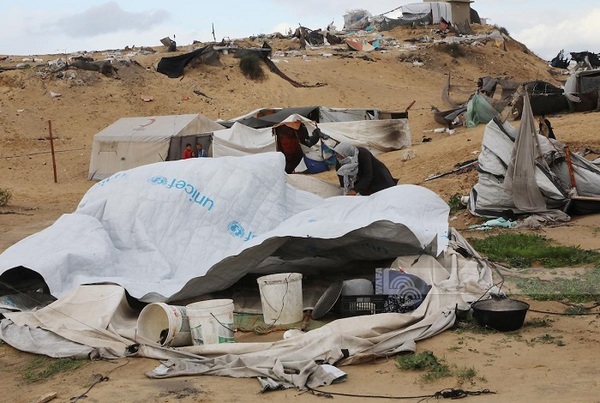
As a result, the Israeli occupation authorities are still delaying the implementation of the humanitarian protocol, and preventing the entry of mobile homes and caravans into the Gaza Strip.


According to government sources, the humanitarian protocol stipulates the entry of 60,000 caravans and 200,000 temporary tents to accommodate displaced Palestinians whose homes were destroyed as a result of the Israeli aggression.


It also includes the entry of 600 trucks daily loaded with aid, including 50 fuel and gas trucks, in addition to 4,200 trucks within one week.


It includes the entry of equipment to provide humanitarian and medical services, in addition to removing rubble, maintaining infrastructure, operating the power plant, and other requirements necessary to rehabilitate humanitarian services in the sector.

PALESTINE

Sun 16 Feb 2025 10:41 am - Jerusalem Time

Israeli special forces storm the old city of Nablus

Israeli special forces, "Musta'ribeen", stormed the old city of Nablus today, Sunday.


Local sources reported that special forces of the occupation army stormed the old town and surrounded a house in the Habas al-Dam neighborhood, amidst hearing explosions and heavy gunfire.


She added that the occupation forces sent military reinforcements to the area.

ARAB AND WORLD

Sun 16 Feb 2025 9:59 am - Jerusalem Time

Arab League launches aid convoy to support Gazans

The Arab League launched an aid convoy to support and assist the Palestinian people in the Gaza Strip, in implementation of the decisions of the Arab Summit and the Councils of Arab Ministers of Health and Social Development.


The launch of the convoy was attended by the Egyptian Deputy Prime Minister and Minister of Health Khaled Abdel Ghaffar, the Egyptian Minister of Social Solidarity Maya Morsi, the Assistant Secretary-General of the Arab League Ambassador Hossam Zaki, a number of assistant secretaries, the Representative of the State of Palestine to the Arab League Ambassador Muhannad Al-Aklouk, and a number of directors of departments of the General Secretariat of the Arab League.


During its visit to the city of Arish and the Rafah land crossing, the delegation accompanied an aid convoy estimated at 20 trucks loaded with more than 200 tons of food, medical and humanitarian aid, in addition to a number of medically equipped ambulances.


The delegation inspected the customs warehouse of the Egyptian Red Crescent, in addition to the heavy equipment and prefabricated houses (caravans) lined up on the Egyptian side of the Rafah crossing in preparation for their entry into the Gaza Strip. The delegation met a number of the wounded in Al-Arish Hospital as a result of the Israeli aggression on the Gaza Strip.


The delegation was keen to talk to the injured as they left the Strip through the crossing, and they listened to a number of children and women about the suffering experienced by the Palestinian people as a result of the ongoing Israeli aggression on the Strip, where they were distributed to Egyptian hospitals to receive the necessary health care.


For his part, Ambassador Zaki stressed that the Arab League has never been late in supporting the Palestinian people, pointing to the efforts of Egypt and the Egyptian Red Crescent in coordinating and delivering Egyptian, Arab and international aid to our people in the Gaza Strip, and receiving cases of patients and the injured who need rapid, long-term or advanced care.


He said that everyone saw the huge number of aid trucks in front of the Rafah crossing, equipped to the highest level to enter the Strip, but the Israeli occupation prevents and obstructs their entry and makes their entry a difficult matter.

In turn, Ambassador Al-Aklouk stressed that the consolidation of the Palestinian people on their land requires breaking the deadly Israeli siege imposed on them for 16 continuous months of war of extermination, and concerted efforts to implement the Palestinian government’s plan for relief, recovery, reconstruction and development, including the rapid entry of aid, temporary shelter and heavy equipment to remove the rubble.


The Palestinian delegate appreciated the efforts of the Arab League and the Arab Republic of Egypt, including the Ministries of Health and Social Solidarity and the Egyptian Red Crescent, for their supportive efforts and backing of our people, their standing by the Palestinian people, and their work to save the lives of the wounded and sick in the sector and open the doors of Egyptian hospitals.


For his part, the official spokesman for the Egyptian Ministry of Health, Hossam Abdel Ghaffar, confirmed that the hospitals of North Sinai Governorate are working around the clock to receive the injured in the sector and all preparations and readiness are in place at the level of preparing and training medical staff, and at the level of detention places in hospitals, whether in the internal departments or care and nurseries and kidney dialysis units.


For her part, the Executive Director of the Egyptian Red Crescent, Amal Imam, said that the entry of caravans will begin today, Sunday, in cooperation with the Egyptian authorities, as a ready-made means of shelter for the affected families in the sector.


She added that the past period witnessed the entry of a large number of tents as part of relief efforts, but the volume of needs inside Gaza is still very large.


For his part, the spokesman for the Egyptian Ministry of Social Solidarity, Mamdouh Shaheen, said that the visit is within the framework of the Egyptian government and the Arab League's keenness to provide full support to the Palestinian people in light of the current circumstances and to provide all necessary medical and humanitarian needs for them.

ARAB AND WORLD

Sun 16 Feb 2025 9:55 am - Jerusalem Time

After being suspended during Biden's era... a shipment of heavy American bombs arrives in Israel

The Israeli Ministry of Defense announced, this Sunday morning, the arrival of a shipment of MK-84 heavy bombs to Israel, following US President Donald Trump's decision to release them, following their suspension by the Joe Biden administration about a year ago.


The shipment’s arrival coincided with US Secretary of State Marco Rubio’s visit to Israel on his first tour of the Middle East. According to Israel’s Army Radio, the shipment includes 1,800 bombs, the same quantity that the Biden administration had previously suspended.


The Biden administration had suspended the delivery of these bombs, each weighing one ton, coinciding with the occupation forces’ invasion of Rafah in the southern Gaza Strip in May 2024, against the backdrop of their use in bombing operations that caused large numbers of civilian casualties.


According to a statement by the Israeli Ministry of Defense, the shipment arrived on the night of Saturday-Sunday, as part of a joint transfer operation led by the Israeli procurement mission in the United States, in cooperation with the IDF's Planning Division and the International Shipping Unit.


The ship carrying the ammunition arrived at the port of Ashdod, where it was unloaded and loaded onto dozens of military trucks belonging to the Israeli army's transportation units, before being transported to air bases. These bombs are among the heavy aerial ammunition allocated to the Israeli Air Force.


Israeli Defense Minister Yisrael Katz described the shipment as “an important strategic addition to the Israeli Air Force and the IDF,” thanking US President Donald Trump and his administration for “standing firmly by Israel’s side.”


The statement indicated that the Ministry of Defense and the Israeli army continue to intensively enhance the purchase and transfer of ammunition, explaining that Israel has so far received more than 76 thousand tons of military equipment, which was transported via 678 flights and 129 sea shipments.


The ministry described it as "the largest military air and sea bridge in Israel's history," without indicating the time period that these operations took; noting that Washington had suspended this shipment due to concerns about the impact it might have in Gaza during the war.


A study published in the journal PLOS Global Public Health last October revealed that the Israeli army dropped this type of bomb on areas very close to all of Gaza’s hospitals during the first weeks of the war it launched on the Strip.


The study revealed that between October 7 and November 17, 2023, Israel dropped 2,000-pound (1-ton) bombs within the lethal geographic range of up to 25% of all hospitals in Gaza.

PALESTINE

Sun 16 Feb 2025 9:40 am - Jerusalem Time

Netanyahu refuses to allow caravans into Gaza Strip, Trump wants to change the agreement

The ceasefire agreement in Gaza entered its 29th day on Sunday, while international pressures and mediators' efforts continue to begin negotiations for the second phase of the agreement between Hamas and Israel.


A source familiar with the negotiations said that the mediators hope to begin talks on the second phase next week in Doha. The third and final phase of the agreement will be devoted to the reconstruction of Gaza, a massive project that the United Nations estimates has cost more than $53 billion.


This comes at a time when Israeli Prime Minister Benjamin Netanyahu has refused to allow caravans, mobile homes and heavy equipment into the Gaza Strip, while US President Donald Trump is seeking to change the ceasefire agreement in Gaza, so that all detainees are released before the date set for the second phase.


The government media office in Gaza said that the Israeli occupation has not yet committed to bringing in basic equipment to the Strip. It confirmed, "No caravans or heavy equipment have entered the Strip so far." It added, "Israel's failure to abide by the terms of the agreement puts the mediators in an awkward position."


Meanwhile, US Secretary of State Marco Rubio arrived in Israel on a visit that comes amid mounting international pressure to resume negotiations on the second phase of the prisoner exchange deal and a ceasefire in Gaza.


The Israeli Broadcasting Corporation said that Rubio arrived in Tel Aviv on Saturday evening, where he was received by Israeli Foreign Minister Gideon Sa'ar. This is the US Secretary of State's first visit to Israel and the region since assuming office on January 21.


The US Secretary of State will meet with Prime Minister Netanyahu, the day after the sixth exchange of Palestinian hostages and prisoners between Israel and Hamas within the framework of the truce agreement in the Gaza Strip.


During his first visit to the Middle East since his appointment, Rubio is discussing President Donald Trump's proposal for the United States to take control of the Gaza Strip and displace its residents to Egypt and Jordan, which have opposed this.


Netanyahu expressed his appreciation for Trump's "absolute support" for upcoming Israeli decisions regarding the Gaza Strip.


For his part, Trump wrote on his Truth Social website after the completion of the new exchange process, "Israel must now decide what it will do about the deadline set for the release of all hostages," stressing, "The United States will support the decision it makes."

PALESTINE

Sun 16 Feb 2025 9:36 am - Jerusalem Time

Three Palestinians killed and another injured as a result of the occupation's bombing east of Rafah

Three citizens were killed and others were injured on Sunday when an Israeli drone bombed a group of Palestinian policemen east of Rafah city in the southern Gaza Strip.


The Ministry of Interior in Gaza announced in a statement that two police officers were killed and a third was seriously injured as a result of Israeli shelling that targeted them while they were deployed to secure aid in the Al-Shawka area east of Rafah this morning.


The Ministry condemned this crime, calling on mediators and the international community to pressure the occupation to stop targeting the police force, as it is a civilian body that provides services to maintain the security of citizens and organize their daily affairs.


Israel continues to violate the ceasefire agreement, which has entered its 29th day.

OPINIONS

Sun 16 Feb 2025 9:34 am - Jerusalem Time

Netanyahu and falsifying facts

op-ed "AlQuds" dot com

op-ed "AlQuds" dot com

Opinion Writer

While the resistance has provided a model of how to apply moral and ethical commitment and transform it into facts on the ground, and lessons from which the world can learn, in its nobility and ethics, Israeli Prime Minister Benjamin Netanyahu continues his games and false propaganda through which he seeks to change and falsify the facts.


After the resistance agreed with the mediators to oblige Israel to implement the relief protocol, including the entry of heavy equipment and machinery into the Strip to begin the process of removing the rubble, and increasing the rate of aid entry to reach the agreed-upon limit, and the necessity of Israel’s commitment not to violate the agreement and to proceed with its stages and the exchange deal, we find that Israel has not committed to anything so far, and instead of fulfilling its promises to the mediators, Netanyahu appears, after implementing the sixth batch of the exchange deal in its first stage, claiming that the reinforcement of the Israeli army forces around the Gaza Strip, and the firm position of US President Trump, led to the release of three hostages yesterday, despite Hamas’ previous refusal to release them.


If we knock on the door of truth, the mediators actually agreed with Hamas to achieve the Palestinian demands and conditions, so Hamas agreed to reactivate the exchange program, which resulted in a smooth and quick release yesterday, and Israeli circles admitted that Hamas ultimately imposed conditions obligating Israel to what was agreed upon, but Netanyahu is clearly trying to preserve his arrogance and pride by not declaring the agreement, and therefore he insists on favoring his extremist ministers in an effort to maintain his presence at the head of the government, and he is also deliberately stirring up problems and sedition, and he is not seeking at all to head to the second phase negotiations to hold Hamas responsible, knowing that the Israeli street is well aware that Netanyahu is the one who does not want the exchange deal.


Netanyahu continues to seek the help of the United States, and through it he is pressuring for an additional exchange in the coming days, with the aim of releasing the six living prisoners included in the first phase, and he announces his approval for the entry of mobile homes into Gaza if the aforementioned release process is carried out, noting that the mobile homes were supposed to enter Gaza with the start of the implementation of the agreement, and all of these steps and others are being made by Netanyahu to impede the smooth arrival to the second phase, which he cannot move to except by the resignation of his government.


The Palestinian Pride Festival continues despite everything, and freedom embraces the liberated prisoners in scenes that inspire pride and honor in their achievements and sacrifices, despite the failed attempts of the prison administration to restrict their freedom and prevent them from life, and yesterday providing them with clothes bearing the phrases (We will not forget.. We will not forgive) a step that a large number of Israeli analysts described as stupid, and it was aimed at undermining the determination of our brave prisoners who responded to these provocations in an appropriate manner.


OPINIONS

Sun 16 Feb 2025 9:31 am - Jerusalem Time

The Egyptian proposal is a national plan and a necessary step

Bahaa Rahal

Bahaa Rahal

Opinion Writer

In response to the crimes of the occupation and Donald Trump's plan, the Arab Republic of Egypt presented a practical proposal that is internationally and Arab accepted. This proposal is based on reconstruction and building, and not displacing people from Gaza. The Egyptian plan, which was prepared by a group of specialized experts, accompanied the huge machinery to remove the rubble and destruction, and stopped it on the border with Gaza awaiting approval to enter it, to begin the reconstruction and building operations, in a serious step that carries clear messages in confronting the plans for displacement and liquidation of the Palestinian cause. It proves Trump's false claim that carried within it some intrigues about the intentions of reconstruction, but without the presence of the people of Gaza, while Egypt says that reconstruction is succeeding while the Gazans are on their land.


In these difficult days, amidst all the conspiracies and plans being promoted that are in line with the occupation and supported by America, the Egyptian position is in harmony with the steadfast and patient Palestinian will in the face of its misfortunes, with honest practical ideas far from vague slogans. This is what is necessary at the present time, as the reality is difficult and the conspiracy is expanding from many parties. To confront this, the reconstruction plan is the sure deterrent force to thwart the plans for displacement and ethnic cleansing.

The seriousness of the Egyptian position is clear, and it is being carried out with high professionalism and a nationalist feeling linked to the Arab depth, and complete solidarity with Palestine in its ordeal. This plan came out of urgent necessity to repel the displacement plans and take possession of the Gaza Strip as Trump wants. He has stated in more than one position his intentions to extend America’s influence over Gaza, as if Gaza is available to him and to the colonial powers, and he has not seen the real steadfastness that the people of Gaza are writing, despite their loss of all means of life.


The urgent need these days requires the upcoming Arab summit to support the Egyptian plan with all means of political and financial support, and to immediately begin reconstruction operations to block the path of Trump’s plan, and to strengthen the steadfastness and survival of the people in Gaza, where the extent of the devastation and destruction weighs down their lives. To ensure the success of the reconstruction plan, what is also required is a Palestinian move towards national unity with serious and urgent steps, as there is no time to wait, which will strengthen the rejection of Trump’s plans and confront them with a unified Palestinian and Arab position that is capable of nipping them in the bud.


An important Egyptian plan that requires rallying around it, and it requires Palestinian, Arab and international support, and working on it immediately and urgently, as there is no time to wait any longer, amidst all the dangers and threats, as it is the appropriate response to Trump’s plans, and it is the ideal way to enhance the steadfastness and survival of the people in their land

OPINIONS

Sun 16 Feb 2025 9:29 am - Jerusalem Time

Palestinian legitimacy is represented by the PLO

Fawzi Ali Al-Samhouri

Fawzi Ali Al-Samhouri

Opinion Writer

For years, the Israeli colonial entity, its master, and those who orbit around it have sought to target Palestinian legitimacy represented by the Palestine Liberation Organization as the sole legitimate representative of the Palestinian people, which it acquired through the struggle and sacrifices of the Palestinian people led by the PLO and its factions, led by its backbone, the Fatah movement, on the path to freedom, independence, self-determination, and the establishment of an independent state with Jerusalem as its capital, and enabling Palestinian refugees to return to their cities and villages from which they were forcibly expelled in 1948.

Why is the targeting escalating?

First: To confiscate the independent Palestinian decision.

Second: Removing the obstacle to liquidating the Palestinian cause with its pillars, establishing the state and the return of Palestinian refugees in implementation of international resolutions.

Third: Undermining the expansion of international recognition of the Palestinian state, which means aborting the racist Zionist Israeli narrative by denying the existence of the Palestinian people and their fundamental and historical right to their homeland, historical Palestine. Fourth: Excluding and marginalizing the representative of the Palestinian people from their legal, political and human rights responsibilities by pursuing the terrorist Israeli colonial entity in international forums, courts, institutions and bodies, as is currently happening in the General Assembly, the Human Rights Council, the International Criminal Court and the International Court of Justice, to mobilize broad international opinion aimed at supporting the rights of the Palestinian people to freedom and independence and isolating the Israeli entity internationally, as punishment for its crimes and violations of the Universal Declaration of Human Rights and international covenants, charters and agreements, and its failure to abide by the United Nations Charter and its refusal to implement any of its resolutions.

Fifth: Undermining the establishment of an independent Palestinian state recognized internationally by virtue of General Assembly Resolutions No. 181 and 19/67/2012, as this means aborting the Israeli-American plan to enable the artificial Israeli colonial entity to continue its aggressive expansionist policy at the expense of the security, unity and stability of the Arab states.

Sixth: Abolishing the national dimension of the Palestinian people’s struggle for freedom and independence and returning the Palestinian cause to a humanitarian and living dimension, i.e. to the situation that prevailed before the outbreak of the Palestinian revolution on January 1, 1965.

Seventh: Facilitating the use of the Palestinian cause as a card in the hands of regimes as a credential to gain the satisfaction of the Israeli enemy, and consequently the United States of America, especially with the second term of President Trump, which he began by announcing his intention, after what happened to the Palestinian people in the Gaza Strip as a result of the war of extermination, ethnic cleansing and destruction committed by the Israeli occupation authorities with American support and enablement, to forcibly displace the sons of the Palestinian people from the Gaza Strip, and prevent them from returning in preparation for repeating the same scenario in the West Bank, the signs of which began weeks ago.

The targeting also aims, through a campaign of systematic doubt and accusations, to undermine the unity of the Palestinian people inside and outside the occupied territories, and to undermine their will to continue their struggle by all internationally guaranteed means until their national goals are achieved, which requires working to put the Palestinian house in order, in a way that enhances its strength and resilience through:

* Freezing any internal differences between the Palestinian forces regarding the national strategy of struggle, and unifying within the framework of the Palestine Liberation Organization and its strategy approved by the National Council and the Central Council, which means that most Palestinian factions agree on it. As long as there is consensus on establishing an independent Palestinian state on the borders of June 4 with Jerusalem as its capital, there is no longer a contradiction between programs and goals.

* Palestinian legitimacy is exclusively represented by the PLO, not the Palestinian Authority, which was established by a decision of the Palestinian Central Council to manage the affairs of citizens within the occupied territories throughout the transitional period that was scheduled, according to the Oslo transitional phase agreement, to end with the end of the Israeli occupation in May 1999, and thus the establishment of the independent Palestinian state.

* The elections of the Legislative Council, which was born according to the Oslo Agreement, did not and will not acquire the legitimacy of national political representation of the Palestinian people before the establishment of the independent Palestinian state with Jerusalem as its capital, and the implementation of General Assembly Resolution No. 194 enabling Palestinian refugees to return to their cities and villages by virtue of its duties and membership, and by virtue of its non-representation of the Palestinian people abroad and in exile, and by virtue of the automatic membership of the members of the elected Legislative Council in the Palestinian National Council, and what indicates the political role is entrusted only to the Palestine Liberation Organization and its institutions.

* The necessity of immediately ending the political and geographical division between the Gaza Strip and the West Bank, which resulted from what Hamas did, according to its name, the military decision.

* Giving priority to the supreme Palestinian interest over all other considerations. This requires a final exit from the box of dependency and external influence and strengthening the independent Palestinian decision, which in no way means neglecting the importance and necessity of coordination with Arab, Islamic, African and friendly countries to form a broad international front to confront the Israeli colonial plan, by perpetuating its occupation of the occupied and internationally recognized Palestinian state lands, and to prevent it from being able to escape implementing international resolutions calling for ending its occupation, and to enable the Palestinian people to establish their independent state with Jerusalem as its capital, and to prevent it, as a result of American support and bias, from escaping accountability and punishment stipulated in the United Nations Charter for its crimes and violations that are internationally punishable against the Palestinian people.

Putting the Palestinian house in order means unifying the Palestinian ranks behind the national goal of liberation from the yoke of the Israeli colonial occupation of the occupied Palestinian state lands, which is internationally recognized and supported by Arab and Islamic countries in particular, and the world that believes in upholding the supremacy of justice, human rights, and the right of peoples to freedom and self-determination in general, the only way to abort the Israeli-American plan for forced displacement, annexation, and subjugation of Palestinian lands, whether to the Israeli colonial occupation authorities or to the American authority.

The attempt to bypass the Palestine Liberation Organization will fail, and it has been proven on the ground that the rejection of the Palestine Liberation Organization, with Jordanian support and support from sister and friendly countries, thwarted the Deal of the Century during Trump’s first term in office, and thus his conspiracy to liquidate the Palestinian cause directly, or through his tools during his current term, will be aborted by bypassing the Palestine Liberation Organization as the representative of the Palestinian people.

The Palestine Liberation Organization is the symbol of legitimacy. It was and will remain so. All the plans of the criminal Israeli entity, the United States of America and its axis to target its legitimacy will fail. It is the difficult number. No matter how great the pressures are, the will of the Palestinian people will prevail, God willing.

PALESTINE

Sun 16 Feb 2025 9:10 am - Jerusalem Time

Occupation forces arrest Palestinian citizens in the West Bank

This morning, Sunday, the Israeli occupation forces arrested two citizens in the West Bank.


In Bethlehem, the occupation forces stormed the village of Husan and arrested Ahmed Fayez Muhammad Sabatin (40 years old) after raiding and searching his home.


In Hebron, the occupation forces stormed Yatta and arrested Baha’ al-Din al-Najjar, Muhammad Jamal al-Najjar, Muhammad Azmi al-Najjar, Bakr Mahmoud al-Najjar, and Amjad Fayez al-Najjar. From the town of Halhul to the north, they arrested Muqdad Bilal al-Rayyan and Shadi Safwan Abu Yusuf, after raiding their homes and tampering with their contents.


The occupation forces also stormed the town of As-Samu, south of Hebron, and several neighborhoods in the city of Hebron.


In the same context, the occupation forces continued to close the main entrances to the towns, camps and city of Hebron, and tightened their military measures in the neighborhoods of the Old City and the military and electronic checkpoints.


PALESTINE

Sun 16 Feb 2025 9:06 am - Jerusalem Time

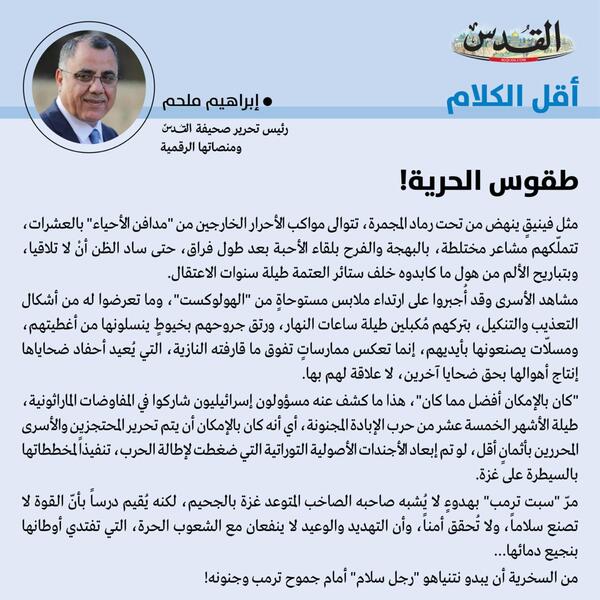
Rituals of freedom!

Like a phoenix rising from the ashes of the incense burner, hundreds of free people emerge from the “cemeteries of the living,” filled with mixed feelings of joy and happiness at meeting their loved ones after a long separation, to the point that it was thought they would never meet again, and with the agony of pain from the horror of what they endured behind the curtains of darkness throughout the years of detention.


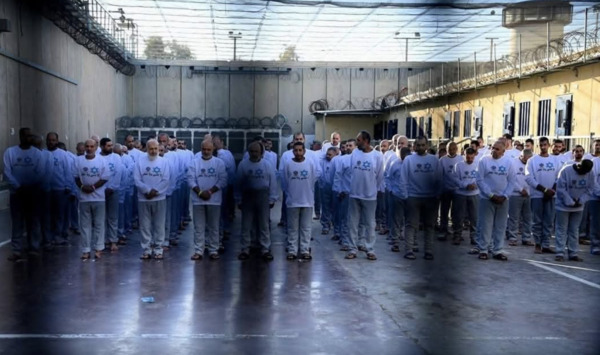
Scenes of prisoners forced to wear Holocaust-inspired clothing, and the forms of torture and abuse they were subjected to, such as being left shackled all day long, and their wounds patched with threads pulled from their blankets and hand-made obelisks, reflect practices that go beyond what Nazism committed, whose victims’ descendants reproduce its horrors against other victims who had nothing to do with it.


“It could have been better than it was,” revealed Israeli officials who participated in the marathon negotiations throughout the fifteen months of the insane war of extermination. That is, the detainees and prisoners could have been released at a lower price if the fundamentalist biblical agendas that pressured to prolong the war, in order to implement their plans to control Gaza, had been removed.


Trump's Saturday passed quietly, unlike its loud owner who threatened Gaza with hell, but it teaches a lesson that force does not make peace, nor achieve security, and that threats and intimidation do not work with free peoples who redeem their homelands with their blood...


It is ironic that Netanyahu appears to be a "man of peace" in the face of Trump's wildness and madness!

PALESTINE

Sun 16 Feb 2025 9:00 am - Jerusalem Time

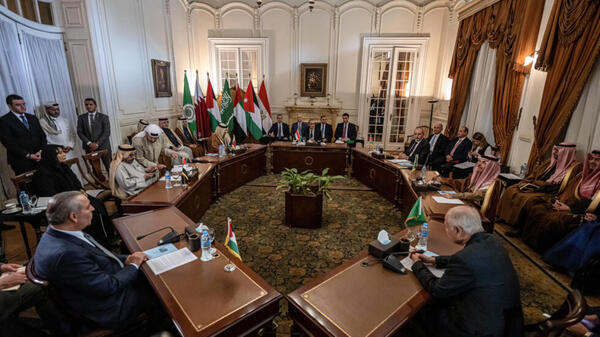
The Five-Party Summit in Riyadh... The Key to Success for the Summit of Challenges That Are Blowing the Nation

Dr. Jamal Harfoush: The success of the Riyadh Summit will depend on its ability to unify the Arab ranks in a practical position that rises to the level of challenges

Khalil Shaheen: Holding the five-party summit reflects an Egyptian and Jordanian trend to form an Arab consensus that paves the way for the success of the emergency Arab summit

Dr. Saad Nimr: The five-party summit aims to agree on a common vision to be presented to the leaders at the Arab Summit in Cairo

Adnan Al-Sabah: What is required from the five-party summit is a clear position that rejects any attempts to turn the Palestinian issue into an internal file

Dr. Abdul Majeed Suwailem: An important introduction to the Arab Summit and paving the way for building an Arab-Islamic-international front to confront American and Israeli plans

Noman Abed: A clear and comprehensive plan is required to confront Trump’s displacement projects or draw a political map for the Palestinian issue

All eyes are on the upcoming five-party summit in Riyadh, which comes at a sensitive political moment amid Israeli and American ambitions and the fateful challenges facing the Palestinian cause.


In separate interviews with “I”, writers, political analysts, specialists and university professors believe that this summit stands out as a crucial opportunity for the Arabs to transcend narrow calculations and unite their ranks in the face of the dangers threatening Palestinian rights, with anticipation of decisions that go beyond formal condemnation towards practical measures that reflect a real political will, and that the five-party summit will pave the way for decisive decisions at the upcoming Arab summit in Cairo on the 27th of this month.


The writers, analysts, specialists and university professors explain that the five-party summit has strategic dimensions, as it is expected to discuss crucial files, most notably the rejection of forced displacement in Gaza, and stopping the Israeli aggression, in addition to supporting reconstruction through Arab mechanisms that guarantee the return of life to the Strip. The summit is also expected to address ways to confront settlement and Judaization in Jerusalem, while taking steps to strengthen the steadfastness of the Palestinians and confront the plans targeting Islamic and Christian holy sites.


They stress that the results of this summit are of particular importance, as they are linked to the upcoming emergency Arab summit in Cairo, as its outcomes will constitute a test of Arab unity and the ability to formulate a unified position that supports Palestinian rights in international forums. Eyes remain fixed on the expected decisions, amid hopes that they will go beyond slogans to concrete steps that will restore the Palestinian cause to its Arab and international momentum.

A pivotal political station amid regional developments

Professor Dr. Jamal Harfoush, Professor of Scientific Research Methods and Political Studies at the University of the Academic Research Center in Brazil, confirms that the convening of the five-party summit in Riyadh with the participation of Palestine represents a pivotal political station amid regional developments and the fateful challenges facing the Palestinian cause.


Harfoush stresses that this summit may constitute a qualitative shift in the Arab position if it goes beyond the stage of traditional condemnation and moves to taking effective and binding measures that reflect the true Arab political will.


He points out that the current stage, in light of the Israeli escalation and international pressures, requires fateful decisions from Arab leaders that go beyond formal statements, considering that continued Arab inaction or issuing non-binding decisions will only lead to weakening the Palestinian position and opening the way for further Israeli encroachment on Palestinian land.


Harfoush stresses that the success of this summit will depend on the ability of the participating countries to overcome narrow political calculations and internal differences, and to unify the Arab ranks in a practical position that rises to the level of the challenges, especially in light of the Israeli military escalation that aims to impose solutions that do not serve the legitimate rights of the Palestinian people.


The five-party summit is expected to focus on a number of crucial issues that reflect the depth of the challenges facing the Palestinian cause.


Harfoush explains that the most prominent expected issues are: rejecting forced displacement and imposing a new reality in Gaza, while calling on the international community to take urgent action to prevent the occupation from implementing policies of genocide and mass displacement against the Palestinians, stopping the Israeli aggression and lifting the siege on the Gaza Strip, while emphasizing the necessity of reconstruction with an Arab guarantee that ensures the return of normal life to the Strip.


Harfoush points out that the summit will emphasize confronting settlement and Judaization in the West Bank and Jerusalem, through direct financial support mechanisms to enhance the steadfastness of the Palestinians and reject any attempts to divide the Al-Aqsa Mosque in terms of time and space, in addition to taking Arab measures to protect Islamic and Christian holy sites from Judaization and violations.


Among the outcomes, according to Harfoush, are unified Arab moves in international forums to support the Palestinian leadership in its efforts to obtain full membership in the United Nations, with an escalation of the legal battle against the occupation before the International Criminal Court and the International Court of Justice, which will enhance international pressure on Israel and expose its ongoing violations.


Also, according to Harfoush, reviewing Arab relations with Israel, by reconsidering the normalization agreements that did not lead to any Israeli commitment to resolving the Palestinian issue, but were rather used to perpetuate the occupation and expand settlements, which requires imposing deterrent economic and diplomatic measures, including freezing security or economic cooperation.


Regarding the relationship between the upcoming five-party summit in Riyadh and the expanded Arab summit in Cairo, Harfoush explains that the five-party summit will be a real test of the unified Arab position, as its results will determine the course of the Cairo summit and its ability to come up with solid decisions.


Harfoush explains that the impact of the five-party summit on the Cairo summit will be tangible through three main axes: crystallizing consensus on clear and binding decisions in preparation for the Cairo summit to come out with more solid decisions. However, if it fails to achieve harmony in positions, this will lead to the weakening of the Cairo summit and make it unable to take decisive decisions.


The second matter, according to Harfoush, is raising the ceiling of decisions at the Cairo Summit. If the five-party summit includes bold positions, such as imposing economic sanctions or international legal steps against the occupation, this will put pressure on the Cairo Summit to adopt similar positions, which will increase the weight of the Arab position in international forums. However, if the results of the five-party summit are weak, this may lead to frustration among the Arab and Palestinian streets.


Harfoush points out that the third matter is to give momentum to international diplomatic movements by establishing a unified Arab diplomatic campaign to support the Palestinian position in international forums, which may give the Cairo Summit additional strength to adopt decisions that support the Palestinian cause strongly and clearly.


Harfoush stresses that the success of the five-party summit in Riyadh will constitute a decisive introduction to the success of the Cairo summit, as the unity of the Arab decision will strengthen the Palestinian position at the international level, while any retreat or complacency in positions will only lead to the continuation of the Israeli aggression without deterrence.


Harfoush stresses that the next stage requires political courage and a strong Arab will, because the Palestinian cause can no longer tolerate more formal statements or non-binding diplomatic declarations.

The coming days will witness important political entitlements

Writer and political analyst Khalil Shaheen confirms that the coming days will witness important political entitlements related to the Gaza Strip file, starting with the five-party summit in Riyadh, which will be held with Palestinian attendance, then the emergency Arab summit in Cairo, followed by a meeting of the foreign ministers of Islamic countries.


Shaheen points out that these political stations fall within the framework of examining mechanisms to confront US President Donald Trump's plan to displace the people of the Gaza Strip.


Shaheen explains that the holding of the five-party summit reflects an Egyptian and Jordanian trend to form an Arab consensus that paves the way for the success of the emergency Arab summit in Cairo, stressing the existence of a clear Arab and Palestinian consensus on rejecting the principle of displacement, despite the continuing disagreements over other files, most notably the reconstruction of Gaza and the conditions for its financing.


Shaheen discusses the details of the Egyptian plan to rebuild the Gaza Strip, explaining that it is being carried out in coordination with the Palestinian side and with the participation of European parties.


Shaheen points out that the plan includes stages that begin with bringing in rubble removal equipment and securing safe areas for the displaced, then moving on to leveling the lands and gradually rebuilding according to specific areas.


It is believed that the dispute over the plan revolves mainly around the financial aspect, as some Arab countries, such as Saudi Arabia and the Emirates, stipulate that Hamas relinquish management of the Strip as a condition for participating in financing the reconstruction.


Shaheen points out that other Arab parties are linking their support to implementing reforms within the Palestinian Authority, including restructuring or amending the government.


Shaheen refers to a previous Egyptian proposal to form a “community support committee” as a transitional mechanism to manage Gaza outside the framework of Hamas, but it was rejected by President Mahmoud Abbas and the Fatah movement.


Shaheen explains that the Arab position is divided into two main trends: the first supports strengthening the role of the Palestinian Authority on condition that reforms are implemented, whether by forming a new government headed by another figure or by making a limited ministerial amendment while Dr. Muhammad Mustafa remains Prime Minister. The second trend, represented by Egypt, calls for the formation of an administrative committee affiliated with the Palestinian Authority during a transitional period, as a compromise solution that ensures Hamas’s gradual exit from the scene.


Shaheen stresses that the five-party summit represents a decisive station in the Palestinian reconciliation file, as it may witness an Arab consensus on a mechanism for managing the Gaza Strip, which will put pressure on the two parties to the Palestinian division, the Fatah and Hamas movements, to reach an agreement on restructuring the government or forming a transitional committee to manage the Strip.


Shaheen stresses that the absence of internal Palestinian consensus may push Arab countries to impose a ready-made formula as a condition for obtaining Arab support for reconstruction.


He stressed that the emergency Arab summit, which will follow the five-party summit, as well as the Islamic summit, are expected to support the Egyptian proposal for reconstruction, which is being presented as an alternative to the American displacement plan.


Shaheen points out that this plan, if it receives Arab support, will create a new political dynamic and constitute an alternative to the American proposal in international circles.


Regarding reconstruction funding, Shaheen stressed that the success of the Egyptian plan requires broad Arab support, especially from influential countries such as Saudi Arabia, Qatar and the UAE, in addition to mobilizing international support from the European Union, Russia and China, which usually support the collective Arab position, stressing that Arab consensus on the plan will contribute to facilitating the mobilization of international funding.


Shaheen stresses that the most complex challenge is determining which Palestinian party will supervise the reconstruction process.


Shaheen believes that this file may be resolved either through internal Palestinian consensus or through Arab pressure that imposes a transitional formula, warning of the scenario of a "political vacuum" that may lead to the disruption of the implementation of the reconstruction plan despite the availability of Arab and international support.


Shaheen stresses the necessity for the Palestinians themselves to take the initiative to manage a serious internal dialogue between Fatah and Hamas, with the aim of presenting a consensus formula to the Arab side, to avoid the scenario of imposing ready-made solutions from the outside that do not serve Palestinian interests in the long term.

Preparing for the upcoming Arab Summit in Cairo

Dr. Saad Nimr, Professor of Political Science at Birzeit University, believes that the five-party summit scheduled to be held in Riyadh comes within the framework of preparing for the upcoming Arab summit, with the aim of agreeing on a common vision to be presented to Arab leaders.


Nimr points out that there are leaks talking about an Egyptian plan that may be presented during the five-party summit before the Arab summit is held in Cairo at the end of this month.


Nimr explains that these leaks point to a proposal that gives Egypt the responsibility of military supervision over the Gaza Strip, while another Arab party takes over civil administration and Egypt takes over reconstruction, without involving the Palestinian Authority, which is consistent with Israeli and American proposals that aim to exclude both the Palestinian Authority and Hamas from the political scene.


Nimr expressed his concern that this proposal would lead to the formation of an Arab administration for the Gaza Strip, under Egyptian sponsorship, similar to the situation that existed before 1967.


Nimr points out that this data raises serious questions about Egypt's ability to deal with the security and military challenges in the Gaza Strip.


Nimr stresses that these proposals do not represent a political victory for the Palestinians and do not provide a just solution to the Palestinian issue, as they ignore the right of the Palestinian people to self-determination and exclude the main Palestinian parties from any future arrangements.


Nimr links this proposal to previous statements by US President Donald Trump about the possibility of displacing the residents of Gaza, a proposal that caused widespread confusion in Arab positions.


Nimr stresses that the forced displacement of the residents of Gaza is practically impossible, given the absolute Palestinian popular rejection, in addition to the official refusal of Egypt and Jordan to receive any displaced persons from the Strip.


Nimr believes that the upcoming Arab summit will adopt positions rejecting annexation and displacement, but it may remain within the framework of statements without moving to concrete practical steps, as was the custom in previous Arab summits.


Nimr stresses that if the Arabs want their summit to be different this time, they must face the challenges with decisive positions and measures instead of being satisfied with verbal statements.

A pivotal moment in the history of the Arab position

Writer and political analyst Adnan Al-Sabah asserts that the five-party summit in Riyadh represents a pivotal moment in the history of the Arab position towards the Palestinian issue, stressing that what is required from the Arab side is easier than the leaders imagine, but it requires real political will and fateful decisions.


Al-Sabah points out that the essence of the issue is that the Israeli occupation, supported by the United States of America, seeks to hold the Arabs responsible for the consequences of their crime against the Palestinian cause.


Al-Sabah explains that the United States and the occupying state do not want the Palestinians to be displaced to Jordan or Egypt, because that would represent a direct threat to their national security, or would open new fronts that could threaten the stability of the entire region.

Al-Sabah believes that the real responsibility for responding to Trump's displacement plans is a collective Palestinian responsibility, not an Arab responsibility.


Al-Sabah stresses that this approach represents a strategic danger, because the real goal is to push the Palestinians to accept options that do not meet the minimum of their national rights, or to push them into forced migration, while Trump seeks to hold the Arabs responsible for his crisis.


Al-Sabah says: “If what is required is to expel the Palestinian people, then whoever wants that should be asked to bear responsibility, not to evade it and place it on the Arabs alone.”


Regarding the American role in this scenario, Al-Sabah indicates that the administration of US President Donald Trump aims to use the Gaza Strip as a key to expanding its influence in the region.


Al-Sabah points out that the United States is seeking to find an entry point to enter the Gaza Strip under the pretext of achieving stability or reconstruction, while the real goal is to transform Gaza into an American military base from which to manage the region’s conflicts, including pressuring Egypt and controlling the gas fields in the eastern Mediterranean, including Egyptian gas.


It is believed that the American plan does not stop at Palestine, but extends to imposing hegemony over the entire region, and even confronting European interests in the region.


Sabah refers to the dangerous statement made by Trump in his presidential inauguration speech when he said: “The war you win is the war you don’t fight.”


Al-Sabah explains that this phrase reflects the doctrine of American hegemony based on control through political and economic pressures rather than direct wars, stressing that Washington seeks to ignite proxy wars to achieve its goals without direct involvement in long-term conflicts.


Al-Sabah warns that the Arabs' response to American pressure will only bring more chaos and wars in the region, pointing out that the American goal is to dominate the region's wealth and turn it into an arena of permanent conflicts that serve American interests alone, as America seeks to transform itself into an empire that controls the world, and this will only happen through fueling wars and bloodshed.


Al-Sabah stresses that what is required of the Arab leaders at the Riyadh Summit is not a miracle, but rather a clear position that restores the Palestinian cause to its position as a central global issue, especially after the massacre in the Gaza Strip.


Al-Sabah says: “If the Arabs wanted to, the decision would be easier than they imagine, because the presence of the Palestinians on their land is not an Arab problem. It is their own problem, and the problem is with those who force them to emigrate.”

A historic opportunity to redraw the Arab position towards the Palestinian issue

Writer and political analyst Dr. Abdul Majeed Suwailem asserts that the upcoming five-party summit in Riyadh represents a pivotal moment in Arab dealing with the challenges facing the Palestinian cause, warning that the continuation of Arab laxity is no longer acceptable in light of the worsening danger threatening the entire region.


Suwailem stresses that the current stage no longer tolerates the policy of "agreeing to disagree", which characterized Arab positions in the past.


The danger of the situation does not lie only in the practical ability to implement the “Trump fabrication” regarding Gaza, according to Suwailem, who believes that the practical capabilities of such a plan are weak, but it clearly reflects that the danger has become imminent, as Israel or the United States will not hesitate to exploit any favorable opportunity to implement their plans.


Suwailem stresses that this imminent danger forces Arab countries to change their traditional way of dealing with the Palestinian issue, because the threat is now on the doorstep of the Arab world, and it is no longer possible to continue with policies of evasion or to be satisfied with symbolic positions.


Suwailem believes that the Arabs missed an important opportunity after October 7, 2023, when the war broke out on Gaza, as they could have contained the escalating danger if they had taken a firm stance to support the Palestinian people in confronting the Israeli aggression, which was fully supported by the United States. He stressed that what was required at that time was not to enter into a direct war, but rather to adopt a strong and effective political stance that would confront the aggression and highlight to the world the unity of the Arab position.


Suwailem stresses that the failure of the Arab countries to take actual action at that time was a major political loss, as they lost the opportunity to build political credit with their people, and weakened their regional and international position, at a time when the battle was extending beyond the borders of Gaza to a comprehensive threat to Arab national security.


As for the upcoming five-party summit in Riyadh, Suwailem indicates that he does not expect formal decisions to be issued, or decisions limited to the usual condemnation and denunciation, but rather he expects them to result in more advanced steps, even if they are less than the level of the challenges imposed.


Suwailem asserts that the current Arab regimes lack the ability to confront American hegemony or challenge Israeli arrogance in a manner commensurate with the magnitude of the risks, but they are forced to make qualitative decisions that restore some of the lost confidence to their people.


Suwailem explains that the decisions of the five-party summit are expected to include a complete rejection of displacement plans, and an emphasis on the unity of the Palestinian territories, including that the Gaza Strip is an integral part of the Palestinian state, in addition to emphasizing that any future peace process must be conditional on prior recognition of the establishment of the Palestinian state on the borders of June 4, 1967.


Suwailem points out that the five-party summit may also stress that the continuation of Arab relations with Israel or the United States is contingent on their commitment to a real political path that leads to a two-state solution, noting that the existing agreements between some Arab countries and Israel will not hold if the occupation continues to ignore Palestinian rights.


Suwailem asserts that the five-party summit could represent an important introduction to the upcoming Arab summit, with a primary goal of paving the way for building a broad Arab-Islamic-international front to confront American and Israeli plans.


Suwailem stresses that this front must include the countries of the Global South and the European Union, considering that unifying efforts at the regional and international levels can form an impregnable barrier against American-Israeli arrogance.


Suwailem believes that the success of the five-party summit in achieving this goal requires that its outcomes go beyond stereotypical decisions, and that they carry a clear message that defending Palestine is essentially defending Arab national security, pointing out that this fact has become more evident after the escalation of Israeli aggression and the expansion of the scope of its threats.


Suwailem stressed that the five-party summit represents a historic opportunity to redraw the Arab position on the Palestinian issue, calling for it to be transformed into a founding platform for a broader global front that includes Arab and Islamic countries, along with the powers of the global South and the countries of the European Union.


Suwailem stresses that the success of these efforts will be a great victory not only for Palestine, but for truth and justice, as the political realism that the summit must adopt is not one that surrenders to the status quo, but one that faces challenges wisely and effectively, and defends the supreme interests of Palestine and Arab national security.

The results of the "quintet" will be reflected in the outcomes of the Arab Summit

The writer and political analyst specializing in international relations, Naaman Abed, confirms that the American and Israeli vision has become clear regarding the Palestinian issue, as the Israeli occupation state, with the support of the United States of America, seeks to liquidate the Palestinian issue, whether through settlement policies in the West Bank or through plans to displace the residents of the Gaza Strip.


Abed points out that these plans aim to end the conflict in Israel's favor, and to hold the countries of the region responsible for the Palestinian people, ignoring their political, national, and historical rights.


Abed explains that US President Donald Trump's plan, which included the displacement of Palestinians from the Gaza Strip, was accompanied by escalating Israeli measures, most notably the reoccupation of areas in the Strip, the escalation of settlement activity, and the Judaization of East Jerusalem in the West Bank.


Abed asserts that these steps reveal a comprehensive American-Israeli plan aimed at liquidating the Palestinian cause and removing it from the international agenda, in exchange for placing the burden of its repercussions on Arab and regional countries, especially with regard to the responsibility for Palestinian refugees.


Abed points out that the Egyptian and Jordanian response to the displacement plan was decisive, as the two countries declared their categorical rejection of any proposals related to the displacement of the Palestinian people, stressing that this clear position constituted an obstacle to the passage of projects aimed at liquidating Palestinian national rights.


Abed points to the features of a new Egyptian plan that aims to establish the Palestinian people on their land, especially in the Gaza Strip, through gradual reconstruction with the participation of Palestinian hands and expertise, but with Arab and international support.


Abed explains that this plan stems from a deep awareness of the dangers posed by American and Israeli policies, and emphasizes the necessity of finding solutions that are in harmony with the Palestinian reality and its national rights, foremost among which is the establishment of an independent Palestinian state.


Abed stressed that the five-party summit to be held in Riyadh is of great importance, as its results will directly reflect on the outcomes of the upcoming Arab summit in Cairo at the end of this month.


Abed stresses the need for the five-party summit to come up with a clear and comprehensive plan that the Palestinian Authority will review, to confront the Trump administration’s projects, whether in relation to displacement or redrawing the political map of the Palestinian issue according to the Israeli vision.


Abed points out that the plan expected from the five-party summit must be based on three main axes: First, stabilizing the Palestinian people on their land, stopping the Israeli aggression, and starting the reconstruction of the Gaza Strip; Second, drawing a clear political path that leads to ending the occupation and establishing an independent Palestinian state; and Third, strengthening the joint Arab diplomatic movement, including conveying the Arab position in a unified manner to the next Arab summit and the Organization of Islamic Cooperation.


Abed warns of the danger of any divisions in Arab and Islamic positions, pointing out that any difference in visions will allow the American administration and Israel to exploit these differences to impose their vision, which revolves around ending the conflict in accordance with American and Israeli interests, and holding the Arab countries responsible for the Palestinian refugees, which would consolidate Israeli expansion projects under the umbrella of what is called “Greater Israel.”


Abed stresses that the success of the Arab plan in confronting the American and Israeli plans requires a unified Palestinian position, based on presenting a comprehensive vision for what is known as the “day after” in the Gaza Strip.


Abed explains that the unified Palestinian position gives additional strength to the Arab position, and supports the decisions of the Arab Summit in the face of American and Israeli pressures that seek to exploit the Palestinian and Arab division to impose solutions that are consistent with the occupation’s ambitions.


Abed stresses that what is required today is to unify the Arab and Islamic position, enhance joint coordination, and develop a comprehensive plan that goes beyond the humanitarian aspect and reconstruction to enter into the heart of the Palestinian cause, through adherence to ending the occupation and establishing an independent Palestinian state with the support of the Arab countries, while stressing that the unity of the Palestinian and Arab ranks is the basic key to the success of these efforts in confronting the American and Israeli plans.


ARAB AND WORLD

Sun 16 Feb 2025 8:57 am - Jerusalem Time

What do the people of Gaza want?!

In a lengthy survey by Foreign Affairs, the magazine notes that in the weeks since Israel’s fragile ceasefire on January 19 and a prisoner exchange agreement with Hamas, the question of what should happen to the Gaza Strip and its 2.1 million residents has become increasingly clear. The war has reduced much of Gaza to rubble, its schools, hospitals, civilian infrastructure, and environment largely destroyed, and much of its population lacking adequate shelter.


The constant threat of the ceasefire collapsing has fueled daily fears of further destruction. Even as US President Donald Trump has floated fanciful ideas about the US eventually “taking over” Gaza and permanently transferring its population, outside powers have made little progress in formulating a governance and security strategy for the region now, and Gazans themselves are largely absent from this discussion. It is reasonable to assume that more than 15 months of devastating conflict have changed the perceptions of ordinary civilians in the region about what they want for their future, how they see their land, who they think should rule them, and what they see as the most likely paths to peace. Given the high price they paid for the October 7, 2023, “Al-Aqsa Intifada,” Gazans might have been expected to reject Hamas and favor a different leadership. Likewise, international observers might have expected that after so much hardship, Gazans would be more willing to compromise on greater political aspirations in favor of more pressing humanitarian needs.


“In fact, a survey we conducted in Gaza in early January 2025, shortly before the ceasefire went into effect, tells a more complex story,” the pollsters say.


The representative survey was developed by the research group Artis International and the Centre for Changing the Character of War at Oxford University and conducted by the Palestinian Center for Policy and Survey Research (PSR). Using census data and samples of people in shelters based on their original home locations to ensure geographic diversity, the survey included 500 face-to-face interviews with Gazans—248 women and 252 men—aged between 18 and 83. The margin of error was plus or minus four percentage points. The survey found that despite Hamas’s decline in popularity since the first months of the war, the movement’s current alternatives attract much less support than the movement, opening the way for Hamas to once again consolidate its influence over Gaza.


The war has also strengthened rather than weakened Gazans’ commitment to maximalist political goals, while eroding support for a two-state solution. Perhaps most strikingly, the survey shows that Gazans still hold strong core values related to their Palestinian and religious identity and connection to the land, values they intend to uphold even if doing so requires great personal sacrifice. As the United States and its regional and international partners confront the reality of postwar Gaza, the survey results may challenge the assumption that any move toward peace with Israel cannot satisfy—or at least symbolically recognize—some of these core values.


One of the survey’s key questions asked respondents which of the possible solutions to the Israeli-Palestinian conflict they considered acceptable and realistic. Before the war in Gaza began, research showed that a clear majority of Palestinians in Gaza supported a two-state solution, while only 20 percent supported a military solution that would lead to the destruction of the State of Israel. In the January survey, less than half, or 48 percent, favored a two-state solution, while nearly the same proportion, 47 percent, favored dismantling the Jewish state. Only five percent saw the third alternative, a binational democratic state with equal rights for Arabs and Jews, as acceptable and realistic.


Moreover, although partition was acceptable and realistic to 48%, only 20% supported a two-state solution consistent with UN resolutions based on the 1967 borders. The remaining supporters of partition preferred a two-state solution that included either a “right of return” for descendants of Palestinian refugees to their homes in Israel (17%) or a return to the 1947 UN partition plan (11%). Among the 47% who favored dismantling Israel, a clear majority chose a single state under Islamic law that would tolerate Jewish presence and allow Jews full rights (27%), followed by a smaller group that sought to transfer Jewish immigrants and their descendants—but not Jews whose ancestors lived in the area before Zionism—from Israel itself and the Palestinian territories (20%). The poll also showed how Gazans’ views on Hamas have changed. Prior to October 7, 2023, when the Gaza Strip was still intact, polls showed that popular support for Hamas had been declining for some time. The decline was the result of a variety of factors, including stagnant living conditions and a lack of movement on Hamas’s promise of armed resistance against Israel and toward the establishment of a Palestinian state. As Khalil Shikaki, director of the Palestinian Center for Research and Policy Studies, has argued, the October 7 attack could be seen as an attempt by Hamas to break out of a politically unacceptable status quo.


During the first months of the war, Gazans’ attitudes toward Hamas improved. In March 2024, a poll conducted by the Palestinian Center for Public Policy and Survey Research found that support for Hamas’s control of the Strip had risen to more than 50 percent, a 14-point increase from the period before the October 7, 2023 attack. At that time, most Gazans believed that Hamas would continue to control the Strip and was winning the war against Israel. But by January 2025, with the elimination of the group’s top leadership and further destruction of Gaza, that support had eroded again, the poll found.


The January 2025 poll found that Hamas retains the support of only a fifth of Gazans—a sharp decline from the March 2024 poll. Support for other political factions, including the PLO, was even lower, however. In fact, when Gazans were asked to choose between the current options for Palestinian leadership, the most common answer was that none of them truly represents the people. In fact, Gazans believe that the Israeli leadership does a much better job of representing Israelis than the Palestinian leadership does of representing Palestinians.


In short, the survey reveals a Palestinian leadership vacuum that Hamas, despite its decline, is rapidly filling. As some analysts have noted, the organization’s reassertion of authority has been aided by the absence of a viable alternative plan to Palestinian rule from Israel or the United States, and by the Trump administration’s talk of a proposal long championed by the Israeli far right: a population “transfer.” According to Khalil Shikaki, most Gazans do not believe Hamas won the war. “Yet they do not seem to see a better alternative,” he adds.


While the lack of strong support for Hamas may obscure a larger truth about the group’s role in Gaza, as the survey results suggest, despite Gazans’ perceptions of a crisis in Palestinian political leadership, a majority of the population remains committed to Hamas’s political principles, such as sharia as the law of the land, the right of Palestinian refugees and their descendants to return to homes they lost when Israel was created in 1948, and the pursuit of Palestinian national sovereignty.


As the January 2025 survey found, Gazans show a high degree of group identification as Palestinians, and many express a willingness to make costly personal sacrifices to achieve specific goals such as Islamic law as the law of the land, the right of refugees and their descendants to return to the homes they lost when Israel was created in 1948, and the pursuit of Palestinian national sovereignty. For each of these core values, the more costly sacrifices respondents were willing to make, the less willing they were to make peace with Israel. Respondents viewed Palestinians as much stronger spiritually than they were physically. This was the opposite of how they viewed Israel and the United States.


Gazans also show a clear tendency to view the conflict with Israel in religious rather than political terms, as a struggle to liberate Muslims from Jewish oppression. But Palestinian religious belief does not necessarily mean intolerance of other groups.


The survey found that for Gazans more broadly, the willingness to sacrifice themselves for shared goals so far in a brutal war strongly suggests that they are unlikely to abandon their struggle simply for personal and family security. This raises questions about the various international “day after” plans for Gaza, which seem to assume that providing personal safety and livelihoods—a cessation of hostilities coupled with the delivery of aid, tents and basic necessities—can stabilize the region even without Palestinian self-determination.


According to the poll, about half of respondents said they expected peace, 44% expected a long-term truce, and 7% expected more war. But among the roughly half of respondents who expected peace, two groups emerged roughly equal in size: those who expected peace as a negotiated outcome (24%) and those who expected peace to arise from the dissolution of Israel (25%). Respondents who expected a temporary truce or war believe that Israelis and Palestinians will not reach a lasting peace either because the required concessions are rejected by the opposing side or because they are too painful for one or both sides to contemplate.


The continued commitment of Gazans to the Palestinian cause may point to forms of compromise that have been ignored until now. For example, it is no secret that Hamas is committed to a sovereign Palestinian state, the right of return, and Islamic law—all of which would be achieved by eliminating Israel as a state. However, Hamas leaders have suggested in the past that they do not view a sovereign Palestine “from the river to the sea” and the dismantling of Israel as non-negotiable values. Studies conducted by the Foreign Affairs polling team between 2006 and 2013 suggested that the right of return, though considered sacred, could be reframed so that it remains non-negotiable in principle but negotiable in practice.


Such an understanding might require, for example, meaningful symbolic gestures from the other side, such as a sincere Israeli apology for the expulsion of Palestinians from their homes and lands, Israel’s acceptance of the return of a limited number of refugees and their descendants, and some form of blood money, or financial compensation, to victims or heirs of victims of the Nakba, the mass displacement of Palestinians during the founding of Israel in 1948, as a form of historical reparations.


The poll concludes that after waging a 15-month “all-out war” on the Gaza Strip, Israel may be further away than ever from pacifying Gaza. This is not just because Israel has failed to offer anything resembling a political strategy or a plausible plan for the future of the Palestinians while radicalizing them in a quest for revenge for their killed relatives and lost homes. The poll shows that Gazans, by a large majority, believe their identity and place in the world are more at risk than ever, a sentiment that keeps them resilient and fighting.

PALESTINE

Sun 16 Feb 2025 8:54 am - Jerusalem Time

A Palestinian citizen was injured in an attack by settlers east of Bethlehem

A citizen was injured last night when settlers attacked his vehicle in the village of Al-Minya, east of Bethlehem.


Local sources reported that citizen Issa Abu Ahour was injured in his eyes by flying glass fragments after settlers attacked his vehicle near the Minya roundabout.


In another context, the occupation forces stormed the Al-Ain area in the western village of Husan, without any arrests being reported.

PALESTINE

Sun 16 Feb 2025 8:45 am - Jerusalem Time

Israeli occupation continues its aggression on Tulkarm and Jenin

The Israeli occupation forces continue their aggression on the city of Tulkarm and its camp for the 21st consecutive day, and for the eighth day on the Nour Shams camp, amidst a military escalation accompanied by military reinforcements and a comprehensive siege.


According to local sources, the occupation forces continued during the past night hours to push their soldiers and vehicles into the city from the "Tsna'oz" military checkpoint to the west, where they roamed the city's streets and neighborhoods, especially the northern and eastern ones, coinciding with the flight of reconnaissance aircraft at a low altitude.


She added that the occupation forces were stationed on Al-Alimi Street and Nablus Street, which connects the Tulkarm and Nour Shams camps, and stopped vehicles, searched them, checked the identities of their passengers, and subjected them to interrogation.


The occupation forces are still seizing a number of houses in the eastern and northern neighborhoods of the city, especially those close to and adjacent to Tulkarm camp, and turning them into military barracks after evacuating their residents.


These forces arrested two young men from the Dhnaba suburb east of Tulkarm, after raiding their homes: Ahmed Abd Rabbo and Abd al-Basit Malouh, while they raided the home of the al-Anbas family, searched it, and vandalized its contents.


Tulkarm and Nour Shams camps witnessed large crowds of infantry forces, where they raided citizens' homes, searched them and destroyed their contents, specifically in the neighborhoods of Al-Manshiya, Al-Jami', Al-Joura, Al-Shuhada and Al-Madaris in Nour Shams camp, amidst a complete siege and ongoing aggression, which exacerbated the difficult conditions with the forced displacement of thousands of residents, whose number exceeded 15 thousand displaced persons from the two camps.


Eyewitnesses told WAFA that the occupation forces are blowing up the doors of houses and smashing them in Nour Shams camp when they raid them, and they are destroying their contents, including doors, windows and furniture. They also used citizens as human shields when raiding houses and bringing in filming drones, which spreads a state of fear and confusion among the residents.


Eyewitnesses added that the occupation forces caused destruction and vandalism in the houses they seized and turned into military barracks in the Jabal al-Nasr neighborhood in the camp, and tore up the Holy Quran and threw it on the ground, which is what happened in the house of citizen Hussein Damiri.


In a later development, the occupation forces fired flares in the skies of Tulkarm camp, concentrated in the airport neighborhood, accompanied by live ammunition, and search and combing operations in the area.


Meanwhile, the occupation bulldozers continued to destroy and demolish what remained of the infrastructure in the two camps, which affected the water, electricity, sewage and communications networks, amidst the sound of live bullets and huge explosions.


In this context, schools and kindergartens in the city, its camps and suburbs remain closed since the beginning of the Israeli aggression, as the educational process has been converted to an electronic system, in order to preserve the safety of students and teaching staff in light of the continued deployment of occupation forces and their vehicles throughout the city and its suburbs, with the siege imposed on the Tulkarm and Nour Shams camps.


At the same time, the occupation forces continue to close the gate of the Jabara checkpoint at the southern entrance to the city of Tulkarm for the ninth consecutive day, isolating the city from the villages and towns of Al-Kafriyat and the rest of the West Bank governorates.


**fetal**

The Israeli occupation continues its aggression on the city of Jenin and its camp for the 27th consecutive day, leaving 25 martyrs, dozens of injuries, and widespread destruction of property and infrastructure.


Warplanes and drones are deployed intensively in the skies of Jenin city, and the occupation is turning citizens' homes into military barracks. It has also deployed infantry divisions near the prisoner's mosque in Jenin camp, and continues to push large forces from its army deep into Jenin camp.


This morning, the occupation forces were stationed near the Al-Nimr gas station in the city of Jenin, and fired live ammunition intensively in its vicinity.


As the occupation's aggression against Jenin camp continues, the massive destruction is revealed day after day in the homes, properties and shops of citizens in the neighborhoods and streets of the camp, while military reinforcements continue, accompanied by bulldozers and fuel tankers, to the entrances and surroundings of the camp, amidst demolition and bulldozing operations in the Mahyoub Street area in Jenin camp.


The occupation also destroyed the home of the martyr Amjad Al-Fayed, and the homes of his uncles, the martyrs Amjad, Issam and Muhammad Al-Fayed, in Jenin camp.


The occupation forces stormed the town of Araba, south of Jenin, and arrested a young man. They also stormed the town of Yamoun at dawn, raided homes, and destroyed their contents.

PALESTINE

Sat 15 Feb 2025 9:19 pm - Jerusalem Time

Israeli occupation sends military reinforcements to the city of Tulkarm and its two camps

The Israeli occupation forces sent additional military reinforcements to the city of Tulkarm and its two camps: Tulkarm and Nour Shams, as its aggression continues for the 20th consecutive day.


According to local sources, the occupation forces continued throughout the day to push their soldiers and vehicles into the city, from the "Tsna'oz" military checkpoint to the west, where they roamed the city's streets and neighborhoods, especially the northern and eastern ones, and obstructed the movement of vehicles and citizens.


She added that the occupation forces were stationed on Nablus Street, which connects the Tulkarm and Nour Shams camps, and stopped and searched vehicles, checked the identities of their passengers, and subjected them to interrogation, while they assaulted a young man and caused him bruises all over his body.


The Palestinian Red Crescent Society reported that a citizen was injured after being beaten by the occupation forces in Tulkarm and was transferred to the Martyr Thabet Thabet Governmental Hospital.


The occupation forces continued to seize a number of houses in the eastern and northern neighborhoods of the city, especially those close to and adjacent to Tulkarm camp, and turn them into military barracks after forcibly evacuating their residents.


Tulkarm and Nour Shams camps witnessed large crowds of infantry forces, where they raided citizens' homes, searched them and destroyed their contents, specifically in the neighborhoods of Al-Manshiya, Al-Jami', Al-Joura, Al-Shuhada and Al-Madaris in Nour Shams camp, amidst a tight siege and ongoing aggression, which exacerbated the difficult conditions with the forced displacement of thousands of residents, whose number exceeded 15 thousand displaced persons from the two camps.


Meanwhile, the occupation bulldozers continued to destroy and demolish what remained of the infrastructure in the two camps, which affected the water, electricity, sewage and communications networks, amidst the sound of live bullets and huge explosions.

ARAB AND WORLD

Sat 15 Feb 2025 8:52 pm - Jerusalem Time

African Summit Discusses Colonial Compensation, Permanent Membership of One of Its Members in the Security Council

Military escalation in eastern Democratic Republic of Congo and a humanitarian crisis “unprecedented in Africa” are dominating the African Union summit in the Ethiopian capital.


UN Secretary-General Antonio Guterres has urged dialogue between warring parties in eastern Democratic Republic of Congo. It comes hours after the Rwandan-backed M23 rebel group entered the northern outskirts of the eastern city of Bukavu. “There is no military solution. The crisis must end, and dialogue must begin,” he said, amid fears the fighting could escalate into a wider regional conflict. He called for an end to the flow of weapons into Sudan to protect civilians, referring to “an unprecedented humanitarian crisis on the African continent.”


He also stressed that peace in the Middle East is possible, noting that this begins with a two-state solution. Guterres added, before a summit in the Ethiopian capital, Addis Ababa, that the Palestinian people “have suffered more than necessary.” The UN Secretary-General stressed the need to “avoid a resumption of fighting in Gaza at all costs.”


Angolan President João Lorenzo took over the presidency of the African Union from his predecessor, Mauritanian President Mohamed Ould Ghazouani, as part of the two-day summit. A new chairman of the African Union Commission is expected to be elected to replace Chadian Moussa Faki, as part of an institutional reform process expected to take place at the 38th summit.


Three candidates from the East African bloc are competing for the position: former Kenyan President Raila Odinga, Djibouti Foreign Minister Mahmoud Ali Youssouf, and former Madagascar Foreign Minister Richard Andrea Mandrato. The winner of the position must obtain the votes of two-thirds of the members, which none of the candidates have so far.


The summit agenda also includes approving the reports of the Peace and Security Council, institutional reform of the Union, and developing the African Free Trade Area project, as well as the pivotal issue of “compensation for the colonial period and slavery.”


The summit sessions, which are held under the theme “Justice for Africans and People of African Descent through Reparations,” are expected to discuss. The African Union said in its press release that its leaders will discuss establishing a “common, united front” that brings together Africans and the African diaspora to achieve justice and reparations for historical crimes and mass atrocities committed against them, including colonialism, apartheid, genocide and slavery. The leaders are calling for historical recognition of the injustices inflicted on Africans, the return of lands, the preservation of cultural heritage and international responsibility, and reaching common positions on reparations and appeasement.


The summit began with a speech by the outgoing Chairperson of the African Union Commission, Moussa Faki, and a speech by the UN Secretary-General, Antonio Guterres. The rest of the African leaders are expected to deliver their speeches later.


In his speech, Moussa Faki called for solidarity and action to confront the continent’s political, economic and diplomatic challenges, and to combat health disasters such as “Covid-19”, Ebola and “smallpox”, in addition to what he called progress in the institutional reform of the Union, and expanding partnerships that enhance the credibility of the continent.


Faki also criticized US President Donald Trump's proposal to deport Palestinians from the Gaza Strip to Jordan and Egypt, and denounced the silence of major powers on the ongoing Israeli war on the Gaza Strip. Faki referred to the violent conflicts sweeping the continent, in Sudan and the Democratic Republic of the Congo, as tragedies that concern the continent, and the concerns that may result from them regarding peace, security, governance and political structures.


UN Secretary-General Antonio Guterres pledged to work for Africa to obtain a permanent seat on the Security Council, saying, according to the official Ethiopian News Agency: “Africa does not yet have permanent representation on the Security Council, despite its international importance, and the United Nations will work with the African Union and member states to obtain this seat.” Guterres stressed that the current summit is an opportunity to send a message to the world that Africa needs to ease the burdens resulting from historical colonialism.


In turn, Ethiopian Prime Minister Abiy Ahmed said in his opening speech that the summit’s title makes the process of healing the wounds of historical injustice an important task to overcome the suffering that has affected the development of the continent’s peoples, put an end to poverty, discrimination and exploitation of resources, and establish the values of transformation and change to overcome the imbalances of the past and address grievances.


He called for transcending the historical differences resulting from the borders drawn by colonialism, by developing solidarity among all the peoples and nations of the continent, and building a common destiny to benefit from the enormous energies available in Africa.


Armed conflicts in Sudan and the Democratic Republic of the Congo are expected to occupy a large space in the summit discussions, especially the major escalation of fighting in the two countries in recent days.


On the sidelines of the summit, technical meetings were held yesterday, Friday, to address the Sudanese crisis and the humanitarian situation in the country, and renewed what it described as “the worst humanitarian crisis in the world,” and called on the parties to stop fighting and enter into negotiations between the two warring parties.


The Chairman of the African Union High-Level Committee on Sudan, Mohamed Ibn Chambas, said that the insistence of the two warring parties on military solutions and ignoring a negotiated settlement are the biggest obstacles to resolving the conflict.


In January 2024, the African Union announced a high-level committee of three prominent African figures: the committee’s chair, Mohamed Ibn Chambas, and the membership of former Ugandan Vice President Speciosa Wandira Kazbwe, and former Special Representative of the Chairperson of the African Union Commission in Somalia, Francisco Madeira. The committee’s mission is to bring together Sudanese “stakeholders” from civilian forces, warring military parties, and regional and international actors to restore the democratic civilian transition, achieve peace and stability, and establish a constitutional system in the country. However, the committee’s work has been hampered by the Sudanese government’s refusal in Port Sudan to return to negotiations and its suspension of its membership in the Intergovernmental Authority on Development (IGAD).

PALESTINE

Sat 15 Feb 2025 8:24 pm - Jerusalem Time

Prisoners Club: Israeli occupation has used every tool to torture and humiliate prisoners

The Palestinian Prisoners Club said that the occupation forces have used every tool to torture and humiliate prisoners, the latest of which is forcing prisoners to wear jackets with threatening phrases written on them and bracelets with threatening phrases.


The club explained in a statement on Saturday evening that within the framework of the organized terrorism practiced by the occupation against the released prisoners and their families, the occupation system did not leave any tool of humiliation, abuse and torture without using it against the prisoners and their families, as the prison system forced the prisoners before their release today to wear jackets on which threatening phrases were written, and it had previously forced them to wear bracelets with phrases on them that also fall within the framework of threats.


He stressed that the Israeli prison system continues to torture prisoners, and that all occupation agencies continue to threaten prisoners and their families. This is an extension of a policy that has been used for many years, but it has clearly escalated during the recent liberation operations.


He pointed out that the occupation did not stop at its crimes against the prisoners, but also practiced organized terrorism against their families, through threats that reached the level of arrest and killing, and storming homes and carrying out acts of sabotage and destruction inside them.


He pointed out that the majority of the prisoners who were released in the deal, as well as the majority of those released after the war of extermination, suffer from health problems, and many of them were transferred to hospitals, as a number of them were transferred to the hospital today, due to the crimes they are exposed to, most notably the crimes of torture and medical crimes, and the crime of starvation, in addition to the systematic abuse and humiliation, including severe beatings carried out by the repression units, which aim to kill the prisoners, or cause them injuries and health problems that are difficult to treat later, and as many prisoners reported, the prison system deliberately uses severe beatings before releasing them.


The Prisoners Club said: Today, after 36 prisoners were released from life sentences, and 333 prisoners from Gaza who were arrested after October 7, as part of the sixth batch of the first phase, the prisoners’ bodies specifically reflected their health conditions, and the need for some of them to be transferred to the hospital, the level of atrocities that the prisoners were exposed to over the past period in the occupation’s prisons.


He pointed out that among the prisoners who were released today are sick prisoners who suffered years of medical crimes, most notably prisoner Mansour Muqaddah and prisoner Iyad Haribat.


The Prisoners Club warned that there are still more than ten thousand prisoners in the occupation prisons, and this number does not include all the detainees in Gaza, as hundreds of them face the crime of enforced disappearance, stressing that the time factor is the main factor affecting the fate of prisoners in prisons, as the more time passes in their continued detention, the more the level of risks to their fate increases.


The Prisoners Club stressed that the goal of all these crimes and threats is not only an attempt to kill and rob the joy of freedom, but also to undermine the status of the Palestinian prisoner in the Palestinian collective consciousness.


PALESTINE

Sat 15 Feb 2025 8:14 pm - Jerusalem Time

Families of Israeli prisoners: We will not allow Netanyahu to obstruct the agreement with Hamas

The families of the Israeli prisoners held in the Gaza Strip confirmed on Saturday that they will not allow Prime Minister Benjamin Netanyahu to obstruct the implementation of the second phase of the prisoner exchange deal with Hamas.


She stressed that any disruption of this stage would be due to Netanyahu's political and personal interests.


These statements came during a press conference organized by the prisoners' families in front of the Israeli Defense Ministry headquarters in Tel Aviv.


During the conference, a relative of the Israeli prisoners in Gaza said: “We will not allow Netanyahu to obstruct the completion of the second stage of the deal (the ceasefire agreement in Gaza and the prisoner exchange with Hamas) because of his political and personal calculations. The lives of the prisoners must not be held hostage to the interests of the government.”


He added: "We demand that the government immediately send the negotiating delegation and grant it all the necessary powers to complete the second phase of the deal without procrastination or delay."


He stressed that "returning to war in Gaza is not justified, and cannot be used as an excuse to thwart the deal," referring to the escalation demanded by some hardline ministers in the Israeli government.


For his part, another relative of one of the Israeli prisoners in Gaza said: “The extremist ministers in the government are trying to obstruct the implementation of the agreement, headed by Finance Minister Bezalel Smotrich,” referring to the latter’s position, which opposes the completion of the deal and calls for the resumption of military operations in Gaza.


During the conference, the families called on all Israelis to "participate in demonstrations supporting the implementation of all stages of the exchange deal, to pressure the government to prevent any attempt to freeze or thwart the agreement."


Amid the escalating controversy over the future of the agreement, Netanyahu will hold a security meeting on Saturday evening, after the expiration of the deadline proposed by US President Donald Trump last week, which called for the resumption of the ceasefire in Gaza if all Israeli prisoners held by Palestinian factions were not released.


Earlier on Saturday, Trump announced that his administration would abide by any decision taken by Tel Aviv regarding the ceasefire agreement in Gaza, after Hamas released three Israeli prisoners, including an American citizen.


"Israel will now have to decide what to do about the 12:00 PM deadline today to release all prisoners," Trump said in a post on Truth Social.


On Monday, Trump said: “The ceasefire must be cancelled if all prisoners in Gaza are not released by 12:00 noon on Saturday, and if that is not done, all hell will break loose.”


As part of implementing the first phase of the agreement, the Al-Qassam Brigades and the Al-Quds Brigades, the military wings of Hamas and Islamic Jihad, handed over three Israeli prisoners to the International Committee of the Red Cross on Saturday, including two who hold American and Russian citizenship.


It is worth noting that the ceasefire and prisoner exchange agreement entered into force on January 19, and it is an agreement that includes three stages, each lasting 42 days. According to the terms of the agreement, each stage is negotiated separately before moving to the next stage, with the mediation of Egypt and Qatar, and with the support of the United States.

PALESTINE

Sat 15 Feb 2025 7:37 pm - Jerusalem Time

The awaited Arab summit: Will the nation respond to existential risks?

All eyes are on the emergency Arab summit that will be held on the 27th of this month in the Egyptian capital, Cairo, and it is seen as a turning point in the history of Arab positions on the Palestinian issue.


In separate interviews with "I" dot com, writers, political analysts, specialists and university professors confirm that in light of the escalating challenges facing the Palestinian cause and even the surrounding Arab countries, the summit emerges as a crucial opportunity to reject American and Israeli policies that aim to liquidate the Palestinian cause and impose unilateral solutions that do not suit the aspirations of the Arab peoples, between supporting settlements and Israeli expansion.


They point out that the Arab countries find themselves, in light of these serious challenges, facing a real test of their unified position, as American statements have increased regarding the displacement of Palestinians to other countries in the region, which constitutes a direct threat to Arab national security.


Writers, analysts, specialists and university professors believe that this summit may carry a glimmer of hope if the verbal escalation is translated into practical steps, as the summit is an opportunity to demonstrate the strength of the Arabs in the face of American pressures. They stress that if the summit succeeds in unifying the Arab ranks around firm positions, it may constitute a shift in the regional role of the Arab countries, which contributes to redrawing the map of political and economic alliances, while affirming the Palestinian right to self-determination and the establishment of an independent state.


An Arab message in the face of the Trump administration's challenge


Dr. Saeed Shaheen, Professor of Political Media at Hebron University, stresses the importance of the upcoming emergency Arab summit, despite what he described as a lack of confidence in the outcomes of previous successive Arab summits and the inability of regimes to implement their decisions.


Despite these reservations, Shaheen believes that this summit carries a glimmer of hope, and is considered a message from the Arab countries to the Trump administration, which is defying their will, rejecting displacement and settlement projects that aim to liquidate the Palestinian cause at the expense of other Arab countries.


Shaheen explains that these projects, which the fanatical American administrations tried to impose over decades in favor of the occupying state due to its absolute bias, were categorically rejected and thwarted by the Arab system.


Shaheen says: “This summit is an opportunity to show a unified, firm and strict Arab position in the face of Trump and Netanyahu, who seek to fulfill biblical prophecies about Greater Israel, and to satisfy Zionist fascism by adopting its positions, which are supported by the right-wing Israeli society led by Netanyahu, Ben-Gvir, and Bezalel Smotrich.”


Shaheen stresses the necessity for the outcomes of the Arab Summit to include a threat to reject the continued presence of American bases in the Arab region, and to threaten its vital interests in the Arab region if it continues to support Israeli policies, present ideas that contradict the principle of the two-state solution and the Arab Peace Initiative, and deny the inalienable rights of the Palestinian people.


Shaheen points out that what is required from this summit is more than diplomatic action. Rather, it requires refusing to visit Washington and threatening to sever relations with the American administration if it continues to adopt the language of threats and intimidation towards the Arab countries, in addition to strengthening relations with countries such as China, Brazil, Russia and India, which are countries that reject American arrogance and support the Palestinian right.


Regarding the Palestinian position, Shaheen stressed that the issue of ending the division and achieving national reconciliation between the Fatah and Hamas movements must be a priority, stressing the importance of responding to the outcomes of the reconciliation dialogues, the latest of which was the Beijing Statement.


Shaheen says: “It is necessary to achieve national unity and develop a consensual struggle program that includes all Palestinian forces, in addition to reforming the PLO to be inclusive of all Palestinian political spectrums.”


Shaheen calls for activating popular resistance, and for the Palestinian community to address its brothers and friends in the world to confront Israeli plans by respecting international law and the resolutions of the Security Council and the General Assembly of the United Nations.


Translating data and attitudes into practical actions

Writer and political analyst Muhammad Hawash asserts that the Arab summit, which will be held in Cairo at the end of this month, comes at a very important time, in light of the increasing Israeli escalation and statements by US President Donald Trump that raise concerns about projects aimed at displacing Palestinians under the slogan of “solving the Palestinian issue.”


Hawash warns that the summit must be more than just political statements or traditional positions, but must be translated into practical actions that pressure the Israeli occupation and thwart the US president’s plans.
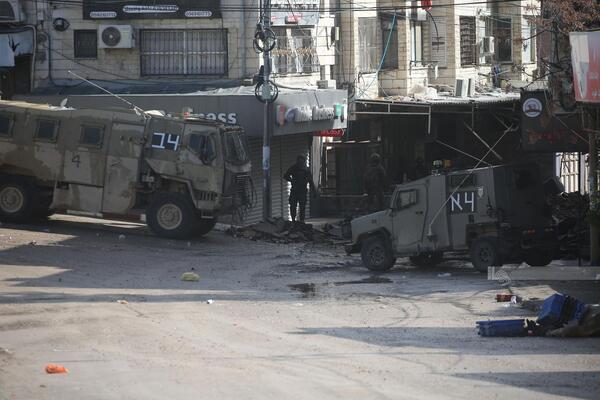

Hawash explains that Netanyahu's recent statements, in which he called on Saudi Arabia to provide lands for the Palestinians to establish their state, constitute a serious violation of the rights of the Palestinian people and an infringement of international law.


Hawash says: “The current Israeli policy, which is strengthened by Trump’s positions, even goes beyond the Palestinians’ right to self-determination and the establishment of their state on their lands. Rather, it seeks to solve the Palestinian problem at the expense of the Arabs and by asking them to help transfer the Palestinians to lands other than their lands.”


Hawash warns that the continued unlimited American support for Israel means that Arab countries face a major challenge in dealing with these policies, as the American administration, led by Trump, seeks to impose a new reality on the Palestinian land that reflects Israel’s interests, which threatens not only the Palestinians, but also Arab national security.


Hawash says: “The Arab summit must clearly reject the American and Israeli statements and measures that seek to liquidate the Palestinian cause, and reject the settlement and displacement projects that pose a serious threat to the Palestinian existence.”


Hawash believes that the Arab summit should not be limited to rejection only, but should witness practical action represented by imposing sanctions on the Israeli occupation, working to strengthen the internal Palestinian front, in addition to taking tangible steps to support the Palestinian economy and activate popular resistance.


Hawash asserts that the Arab countries possess many strengths that can be used to confront the Israeli project supported by America, such as the ability to control oil and gas prices, which are part of the components of the prices of all manufactured goods, the strategic geographical location, as well as the large Arab market that exceeds 400 million people.


Hawash believes that using these cards could contribute to confronting Western support for Israel, and constitute an element of pressure on Western countries to reconsider their policies towards the Israeli occupation.


Hawash asserts that the Arabs today possess great economic and strategic power through which they can confront American pressures, especially since the Arab countries are considered the main player in the international trade corridors between the East and the West, which gives them the ability to impose their positions on the international scene.


"If Israel and the United States are betting on changing the reality through threats and pressures, the Arabs must unite and show strength in practical positions," Hawash says.


Hawash points out that the upcoming Arab summit is a decisive test for the Arab world in protecting the rights of the Palestinian people, stopping Israeli expansion, and confronting American hegemony.


"The summit will not be just talk," Hawash says. "This time, the summit must be the one that translates practical steps into diplomatic positions and economic measures that require Israel and the United States to respond to them seriously."


He stressed that the emergency Arab summit will be decisive in determining the political future of the Palestinian issue and the Arab role in confronting the Israeli threats supported by Trump.


Hawash asserts that the real power of Arab countries lies in their ability to organize, plan, and implement decisions that place Palestinian rights at the heart of their priorities, not just statements that do not bring about real change on the ground.


Hawash stresses the importance of Arab countries being serious about rebuilding the Gaza Strip away from international pressures, affirming that Arab countries are capable of making this decision without the need for the approval of Israel or the United States.


"If Western countries, especially the United States, are trying to obstruct the reconstruction of Gaza, the Arabs must take practical steps that will enable them to rebuild the Strip with their own hands, and declare explicitly that there is no place in the future for Western hegemony in the Palestinian issue," Hawash says.


Regarding the internal Palestinian situation, Hawash points out the necessity for the Arab summit to push towards achieving Palestinian reconciliation and forming a strong national unity among all Palestinian factions, while emphasizing the role of the PLO as an incubator for the national project.


Hawash stresses the necessity for the Arab Summit to impose a direction that leads to Hamas relinquishing power in Gaza, and for it to integrate as a basic component into the PLO to remove pretexts for relief and reconstruction operations.


Hawash says: “The unity of the Palestinian position is the first step towards confronting the Israeli plans, and there must be a unified Palestinian movement, especially in light of the increasing international support for the Palestinian cause.”


sensitive and complex stage


Writer and political analyst Mohamed Gouda explains that the upcoming Arab summit, which will be held in Cairo at the end of this month, comes at a sensitive and complex stage, in light of the ongoing developments in the Gaza Strip and the West Bank, and the subsequent statements at the recent Trump-Netanyahu summit in the White House, and the new reality that the occupation is trying to impose on the ground.


Joda expects that the political discourse at the upcoming summit will be escalatory, but the most important question is: “Will this escalation be translated into practical action, or will the language remain confined to the traditional framework?”


Joda points out that current data indicates attempts to introduce new language that reflects the deteriorating reality, with the possibility of escalating statements, but he stresses that the actual outcomes will remain subject to the balance of Arab interests.


"Today, it is not enough to issue statements of condemnation or to affirm the constants. What is required is practical decisions that are translated into actual steps that support Palestinian steadfastness and impose a cost on the occupation for its aggressive policies," Joda said.


Joda points out that Israel seeks to impose a fait accompli policy, by displacing Palestinians and changing the demographic character of the Palestinian territories, including Gaza, the West Bank and Jerusalem, especially in the wake of US President Donald Trump’s statements about displacement and possession of Gaza.


Jodeh stresses that confronting these ambitions requires work on several levels, Palestinian, Arab and international.


Joudeh stresses the need to strengthen Palestinian national unity to confront the occupation’s plans, and to activate popular resistance in all its forms, in addition to strengthening economic and social steadfastness, and for the Palestine Liberation Organization and its government to assume full responsibility for the Gaza Strip as an integral part of the Palestinian state.


Joudeh calls on Arab countries to move from the circle of condemnation to taking practical steps, such as imposing economic sanctions on the occupation, activating political and diplomatic pressure tools, as well as supporting the Palestinians financially and logistically, and pressuring for the reconstruction of the Gaza Strip.


Joda points out the importance of investing in the growing international support for the Palestinian cause, working to legally pursue the occupation in international courts, and strengthening international alliances with countries that reject Israeli policies.


Joudeh stresses that confronting Zionist-American ambitions requires a shift in action and not just in statements, as the occupation exploits the absence of decisive responses to pass its aggressive plans.
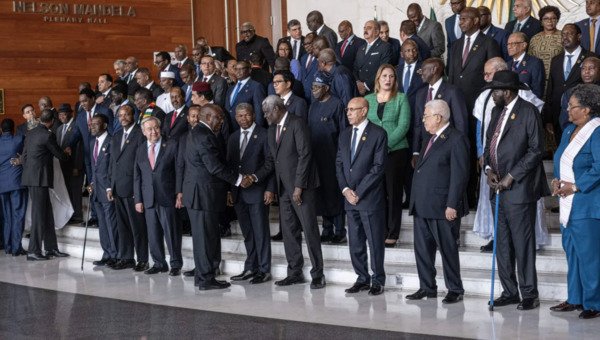

A fundamental shift in the positions of Arab countries


Political science professor Dr. Suhail Diab believes that the emergency meeting called for by the Arab League on the 27th of this month reflects a unified Arab position in the face of American-Israeli plans to redraw the map of the Middle East in a way that serves Israeli interests alone.


Diab explains that this step represents a fundamental shift in the positions of Arab countries, especially the Saudi-Egyptian-Jordanian axis, which seeks to strengthen its role in the regional balance of power and reject any attempts aimed at displacing the Palestinian people or imposing unilateral solutions.


Diab believes that this critical stage must express an Arab consensus on rejecting any plan to displace Palestinians or impose an “alternative homeland” in any of the Arab countries, as this is considered a direct threat to the national security of each country individually, and to Arab national security in general.


Diab points out that the statements of US President Donald Trump and Israeli Prime Minister Benjamin Netanyahu on this issue constitute an existential threat to the region, given their repercussions on Arab national societies and the stability of existing political systems.


Diab points out that this development represents the beginning of the disintegration of the traditional strategic alliance between some Arab countries and the United States, as Arab countries have begun to realize the importance of adopting a more independent foreign policy, by diversifying their international alliances and opening up to other powers such as China, Russia, and Iran, in addition to strengthening cooperation with European countries to confront extremist American policies.


This shift is expected to lead to the emergence of new understandings between the Arab axis and two major axes in the region, namely Turkey and Iran, with the aim of confronting the common existential threats imposed by American and Israeli policies.


At the international level, Diab points out that Trump's policies were not limited to the Middle East, but extended to include crises with many countries in the world, as these policies seek to destabilize the global economy, security and military, and even undermine international institutions such as the United Nations, UNESCO and the International Criminal Court.


Diab explains that Trump and Netanyahu are working to form a new world order based on far-right rule, which seeks to impose a specific political and economic model on all countries.


Diab believes that the Arab position rejecting these plans intersects with the interests of many affected countries, which may open the door to new international alliances to confront these trends.


Diab stresses the importance of taking basic steps to confront the plan to displace the Palestinians, to take immediate action to block these plans before it is too late.


He points out that the priority should be to reunite the Palestinian ranks by forming an interim technocratic government that includes all Palestinian factions, including the Palestinian Authority, the PLO, Hamas, and Islamic Jihad.

Diab stresses the need to rebuild the Gaza Strip jointly, to ensure stability of the internal situation and prevent any attempts to impose external solutions.


It calls for the development of a broader Arab and perhaps Islamic political project that aims to support the Palestinian cause at the international level, by pressuring international institutions and international legitimacy to recognize the rights of the Palestinians and affirm the two-state solution.


Diab points to the need to work on building a broad international alliance that includes Arab countries, the Islamic world, the European Union, Latin America, in addition to countries affected by Trump's policies, such as Canada and Mexico.


Diab stresses that international institutions, such as the United Nations and human rights organizations, can play a crucial role in this alliance to stop the American-Israeli plans and restore balance to the international system.


Diab stresses that this moment represents a historic opportunity for the Arab world to rebuild its alliances and prove its role as a major player in international politics, rather than being content with the role of a recipient of decisions.


Diab stresses that these developments may lead to a radical change in the global balance of power, which calls for new Arab strategies to confront future challenges.


A summit different from its predecessors


Writer and political analyst Awni Al-Mashni believes that the Arab summit at the end of this month will be different from previous summits, explaining that the current threats facing Arab countries are not limited to the Palestinian people only, but rather clearly and explicitly include the national interests of Arab countries, especially Jordan, Egypt and Saudi Arabia.


Al-Mashni explains that Israeli ambitions have become more apparent, as Israeli officials and the Israeli right talk about their ambitions in Jordanian, Syrian, Lebanese, Iraqi and Egyptian lands, which reflects their intentions not only in terms of ambitions, but in their serious pursuit of achieving them.


Al-Mashni stresses that the displacement of Palestinians, promoted by Israel, poses a direct threat to many Arab national interests, including Egyptian and Jordanian interests.


Al-Mashni says: “The upcoming Arab summit will be held in light of this great threat, and it will be at the level of this danger. The summit will also focus on protecting the national interests of these countries, and not just solidarity with the Palestinian people,” noting that the summit will present new positions related to these interests.


Al-Mashni points out that Saudi Arabia is facing a difficult situation after US President Donald Trump sought to pressure Saudi Arabia to finance plans to displace Palestinians.
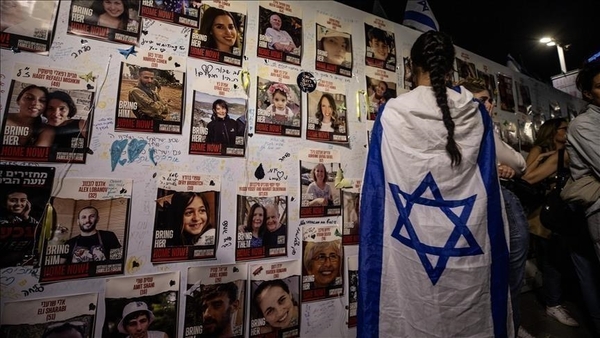

Al-Mashni says: “Saudi Arabia is today in a position where it cannot accept continuing normalization in light of these American and Israeli policies.”


Al-Mashni believes that "the upcoming Arab summit will send a message that the Arab countries will not submit to American pressure, and that the Arab climate is now ready to accommodate these positions."


Al-Mashni explains that the Arab regimes, despite their historical relations with the United States, will not be able to remain subject to American pressure.


Al-Mashni says: “The language of the upcoming summit will be different from previous summits; it will be clearer and less ambiguous, and will reflect more practical positions, which will contribute to achieving the minimum demands of the Palestinian people.”


As for confronting Zionist ambitions in Arab lands, Al-Mashni stresses that what is required of the Arab countries is a unified and clear position.


Al-Mashni says: “Despite the weakness and fragmentation of the Arab situation, the Arab world possesses many capabilities that can stop these ambitions, such as oil, geographical location, international relations, and popular will.”


Al-Mashni confirms that the Palestinian people have stood firm for 15 months in the face of the Israeli occupation, and this reflects the ability of the Arab nation to confront if it unites and its positions are unified.


Al-Mashni stresses that what is required is a unified Arab position that does not allow the Israeli occupation to infiltrate the Arab region without achieving a just peace.


Al-Mashni says: “The Palestinians must be granted their basic rights, most importantly the establishment of their independent state with Jerusalem as its capital in the entire West Bank and Gaza Strip.”


Al-Mashni stressed that the upcoming Arab summit should be a lever for the Arab position in the face of Zionist ambitions, pointing out that the Arab countries and Arab peoples possess many capabilities to support the Palestinian cause and to stop Israeli expansion in the region.


If the Arabs do not reject Trump's plan, there will be no stability


Writer and political analyst Imad Moussa believes that the upcoming Arab summit carries within it an American agenda aimed at granting legitimacy to the new Syrian authority, a step that is in line with what he described as the “renewed authorities” that work in favor of American interests in the region.


Musa believes that there are American attempts to control Syrian gas and oil by controlling its marketing and prices, a step that seeks to exclude Russian gas and strangle the Chinese economy, in addition to forcing Iran to give up its nuclear program and its support for the “Axis of Resistance.”


Musa believes that the Arab Summit is working according to this American agenda, especially after the Syrian government recently took measures indicating that it is moving in this direction.


Musa points out that this is part of plans aimed at strengthening American hegemony in the region.


Moussa believes that the summit will also address US President Donald Trump's decision to displace the people of Gaza to Jordan and Egypt, which is a decisive decision aimed at controlling the gas and oil resources in the region, creating great tensions in both Jordan and Egypt.


Musa explains that the biggest challenge facing the official Arab regime and the Arab peoples is to stand united against this dangerous American decision regarding the displacement of the people of Gaza, which threatens Palestinian rights and means the displacement of part of the Palestinian people from their historical land.


Musa warns that the Arab division over this issue will lead to destabilization in the region, saying: “If there is no unified Arab rejection of Trump’s deportation decision, there will be no security or stability in the region.”


Moussa calls for the summit to be a turning point in Arab positions towards the major challenges facing the Palestinian cause, warning of the consequences of continued Arab laxity in confronting American projects that threaten regional security.

PALESTINE

Sat 15 Feb 2025 6:51 pm - Jerusalem Time

Spanish Prime Minister: We will not allow the implementation of Trump's plan to displace Palestinians from Gaza

Spanish Prime Minister Pedro Sanchez confirmed that his country opposes US President Donald Trump's proposal to displace Palestinians from the Gaza Strip, and that it will not allow it to be implemented.


This came in a speech he gave on Saturday, during an event for his Socialist Workers Party, in the city of San Sebastian, northern Spain.


Sanchez called for "respect for international law in Gaza, as is the case around the world."


He stressed the need for Palestinians in Palestine and Israelis in Israel to live "in an atmosphere of peace, harmony and security."


He continued: "No real estate transaction will be able to cover up this evil, shame and crimes against humanity that Gaza has witnessed in recent years."


He stressed the need for the world not to allow the implementation of Trump's plan to displace the Palestinians of Gaza, adding: "Spain will not allow this."


Since January 25, Trump has been promoting a plan to displace the Palestinians of Gaza to neighboring countries such as Egypt and Jordan, which was rejected by both countries, and was joined by other Arab countries and regional and international organizations.
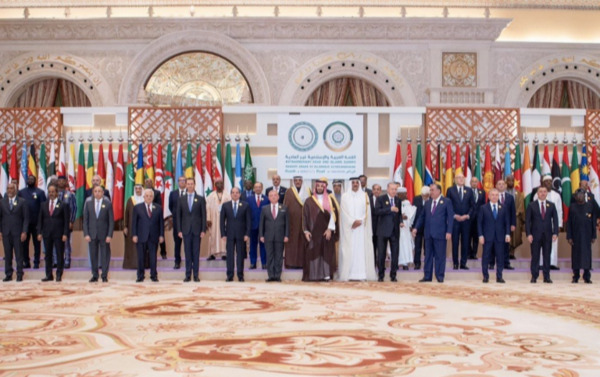

On February 4, 2025, Trump revealed, during a press conference with Netanyahu at the White House, his intention to seize Gaza and displace the Palestinians from it, which sparked widespread regional and international rejection.


Trump did not rule out the possibility of deploying US forces to support the reconstruction of Gaza, expecting the United States to have "long-term ownership" in the Palestinian sector.


Netanyahu welcomed Trump's plan, calling it "the first new idea in years."


On January 19, a ceasefire and prisoner exchange agreement went into effect, which included three phases, each lasting 42 days, with negotiations taking place in the first phase to begin the second, with the mediation of Egypt and Qatar and the support of the United States.


With American support, between October 7, 2023 and January 19, 2025, Israel committed genocide in Gaza, leaving about 160,000 Palestinians dead and wounded, most of them children and women, and more than 14,000 missing.