OPINIONS

Thu 20 Feb 2025 12:56 pm - Jerusalem Time

"Gaza and Jenin are beautiful only with their people"

op-ed "AlQuds" dot com

op-ed "AlQuds" dot com

Opinion Writer

Has fate imposed on our Palestinian people that every generation of them should experience displacement and migration, due to the Israeli measures that are still ongoing in the northern West Bank, and the planning to displace Palestinians from the Gaza Strip?

Yesterday, the dream of the refugees in Jenin almost came true, when they returned to the door of their camp after news spread quickly via electronic engines, but the occupation, by an unjust decision, deprived them of their return. The question that arises here is: Do the refugees aspire to return to their camps from which the occupation expelled them only, or is it a dream of an eternal and everlasting return to their cities and villages from which the occupation forced them to emigrate, and demolished them in the Nakba of 1948?


The people of every camp, especially Jenin camp, say: We will definitely return, and we will rebuild the camp, and Tulkarm, Nur Shams and Al-Far’a camps will return, which were the victims of an Israeli terrorist operation last night that resulted in a major crime against three Palestinians who were assassinated by undercover forces from the “Border Guards”. The excuse is always, as the spokesmen for the army, police and Shin Bet justify, that they are wanted, and this time they were described as being involved in trading in combat equipment for the purpose of carrying out terrorist operations.


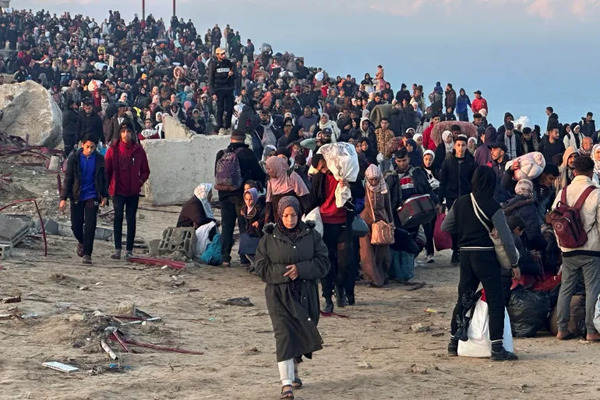
A big and deep wound in the Gaza Strip. Despite the destruction, rubble, and lack of homes or even tents, the message of response to the plan of the obsessed American President Trump, which Israel seeks to exploit and implement, came from the people of Gaza themselves, who expressed their absolute rejection of their displacement and expulsion.


Yesterday it was reported that the Israeli army had actually begun to develop a plan to displace the citizens of the Gaza Strip and to form a (Directorate for Voluntary Migration) at the behest of Defense Minister Yisrael Katz, and to choose wartime to implement it, not during a ceasefire. That is, if it succeeds, it will be a forced migration accompanied by a new aggression against our people.


Israel is planning to implement this plan after obtaining legitimacy from the American president, who appears to have lost legitimacy and competence. Despite Israel’s failure to implement such plans since the 1948 Nakba, this time the plan is broader, and includes a major conspiracy targeting the entire Palestinian cause, and is based on an attempt at voluntary displacement, beginning with convincing a number of countries to receive them and encouraging the citizens themselves through claims of creating better life opportunities.


The practical response to these steps and plans comes through the insistence of the Gazans on living with pride, even above the rubble and destruction, and despite the pain and calamities, as they consider Gaza to be the most beautiful country in the world, and even the entire world, according to a citizen who was exhausted by the return journey from the south to the north, as he says: “There is nothing better than the soil of Gaza,” and he confirms on behalf of the Gazans that whatever the reasons, and no matter how great the sacrifices, we will not leave or emigrate from it.


Another lady says that even if Gaza is destroyed, it is better than all other countries, explaining that enduring the suffering and pain during this period forces us not to leave it.


It is true that the people of Gaza complain about the lack of life and its components after Israel destroyed the infrastructure, water and sewage networks, energy and electricity sources, and the lack of places to shelter, but in their eyes Gaza remains more beautiful, and (Trump's) Gaza will not be beautiful, but rather very ugly without its people, and Gaza with all its camps, Jenin and the West Bank camps will remain attached and longing to memories of sadness, as they constitute a lifelong journey, and the destroyed houses will embrace all the evenings, which will be full of stories of pain and a sad voice in the symphony of farewell to the martyrs in a land riddled with wounds, to say to Trump and Israel: "Gaza and Jenin are beautiful only with their people."

OPINIONS

Thu 20 Feb 2025 12:52 pm - Jerusalem Time

Gaza reconstruction priority: removing rubble, working on infrastructure, and rehabilitating the community psychologically and economically

Eng. Mohammed Al-Halabi, former director of World Vision Foundation

Eng. Mohammed Al-Halabi, former director of World Vision Foundation

Opinion Writer

Since October 7, Palestinian prisoners in Israeli jails have been completely isolated from the outside world, with their cell phones and radios confiscated, leaving us completely unaware of the developments of the war until the night before my release. That night, we met an officer from the Israeli intelligence service (Shabak), behind whom were posters showing the extent of the destruction in the Gaza Strip, a message to us that this is what awaits us in Gaza.

When I arrived in the Gaza Strip as part of the exchange deal, a chapter of suffering and deprivation ended and a new chapter of painful scenes began. On my way from

From the Kerem Shalom crossing to my home, I saw the massive destruction of homes, factories and infrastructure, as if a violent earthquake had struck the area, leaving nothing but an endless sea of rubble. Piles of solid waste piled up at intersections, while sewage flowed in the streets after the sewage networks were destroyed, a scene that reflected the scale of the humanitarian disaster that befell the Strip as a result of the war.

When I met my family and friends, my feelings of joy at my return were mixed with sadness and fear of the unknown. Everyone began to talk about what had happened and the bitter reality of Gaza after the war, to ease the shock of what I would see. There were no homes, schools, or hospitals left, water and electricity were unavailable, diseases and epidemics were spreading, and the smell of death wafted from the rubble under which victims were still buried who no one had been able to retrieve. In the north of Gaza, famine had set in, and people were forced to eat animals and tree leaves, while aid was being stolen in the south by thieves protected by the border fence with Israel. Even relief trucks were diverted to the black market, where the price of a 25-kilo bag of flour rose from $10 to more than $700, and the price of a kilo of sugar ranged between $30 and $35, leaving the displaced living between the risk of bombing, hunger, and looting. Even after the truce, the prices of basic commodities continued to rise sharply, while fuel and food supplies remained extremely limited. The price of a kilo of cooking gas has increased from $1.5 to $15, and the price of gasoline and diesel has increased tenfold. The prices of fruits and vegetables have also increased fivefold.

With more than 50 million tons of rubble, thousands of tons of solid waste, and sewage flowing into the streets, the health situation has become extremely dangerous, threatening the outbreak of new epidemics that will increase the suffering of citizens. Therefore, I believe that the top priority at the current stage is to rehabilitate the infrastructure, by removing mountains of rubble, and cleaning the streets of sewage to prevent a greater environmental and health disaster. This can be achieved through the efforts of municipalities, after providing the necessary materials and equipment, in conjunction with rebuilding and operating hospitals and schools, and preparing safe spaces for children to support them psychologically after this devastating war, in parallel with rehabilitating the destroyed agricultural sector to restore food security.

As for reconstruction, the practical solution for removing rubble in the camps is to use prefabricated housing units based on the Turkish model used after the recent earthquake that struck Turkey. The houses there are low-rise, while the task of removing rubble outside the camps should be handed over to specialized international companies, so that the rubble can be recycled for use in building roads and producing building materials. Reconstruction efforts must also be invested in expanding the Gaza port, rehabilitating agricultural lands and greenhouses, and repairing water wells, which will improve food security and gradually reduce prices. After the 2014 war, we succeeded in rehabilitating thousands of dunams of agricultural land in one year, and despite the massive destruction of the agricultural infrastructure this time, the agricultural sector can be restored within two years if the necessary budgets and materials are available. As for the fishing sector, it can be restarted in just three months, by providing basic equipment to fishermen.

On the human level, all residents of the Gaza Strip have been psychologically traumatized by the war that targeted every home. However, the most affected group are children, which portends the emergence of a more cruel generation if the children of Gaza are not psychologically and socially rehabilitated. History shows that children who lived through the 2008 war joined the confrontations in 2011 out of revenge, and those who were not rehabilitated after the 2011 war were more ferocious in 2014, leading up to the October 7 attack, which was the most violent ever. The continuation of the economic blockade and the loss of hope push young people to search for any party that provides them with a better life, which makes it easy for them to be recruited by parties seeking to achieve their interests in the region by exploiting their feelings that are inflamed as a result of the destruction they witnessed.

After the 2014 war, World Vision created safe spaces for children, where thousands of them received psychosocial support and flew kites carrying messages of peace to the world. The organization also supported their families through food security programs, which helped guide them towards building a positive future. However, after the organization’s activities were stopped in 2016, signs of a new generation’s deviation emerged, as children used kites to set fires in the Gaza envelope settlements, a clear indication that the blockade and war only bring more violence and losses to everyone.

The policy of starvation and strangulation has proven to increase radicalism and hostility, and the Israeli approach to Gaza has failed miserably, as was clearly demonstrated after the October 7 attack. Even in prison, the abuse and starvation of Palestinian prisoners after the attack led some of them to take revenge and target Israeli civilians immediately upon their release. Israel and the world must realize that the iron fist is counterproductive in Gaza, and that continuing the blockade will only lead to further escalation.

In conclusion, rebuilding Gaza requires not only engineering efforts, but also a comprehensive vision that focuses on rehabilitating the community psychologically and economically, to ensure a more stable and hopeful future for future generations.

OPINIONS

Thu 20 Feb 2025 12:47 pm - Jerusalem Time

America and Israel are unprecedentedly aggressive

Rassem Obaidat

Rassem Obaidat

Opinion Writer

It is clear that there is a complete identification between the forces of the Zionist Talmudic Torah right and the forces of the extreme Evangelical right in America, and that America thinks with an Israeli mind and sees things only through Israeli eyes. This is what Trump’s statements, plans, threats and intimidation reveal, according to what is known as his plan to expel and displace the residents of Gaza, control its land and establish what is known as the “Riviera of the East”, as well as seeking to annex large parts of the West Bank, within the project of “geographical and demographic engineering” of the West Bank. To strengthen these projects and plans, great American pressure is being exerted on its Arab allies from what is known as the “moderate” camp, Egypt, Saudi Arabia and Jordan, in order to force them to bear the consequences of the occupation and bear the burdens of rebuilding the Gaza Strip.

American support for Israel goes beyond all military and political dimensions, to providing Israel with the latest advanced weapons, including guided bombs weighing two thousand pounds, strategic Hellfire missiles, and even the “Mother of All Bombs” bomb, which weighs 11 tons.

This identification between these extremist forces aims to restore Israeli hegemony, which was subjected to major shocks after October 7, 2023, and absolute support for all policies of the extreme right and the religious Talmudic Torah right, including support and endorsement of the annexation of the West Bank, changing its name to the state of "Judea and Samaria", and legislating this through a law in the "Knesset", where the Ministerial Committee for Foreign Affairs and Security approved this decision in the preliminary reading, and there is also a draft resolution presented to the US Congress to change the name of the West Bank to "Judea and Samaria", in line with the Israeli decision.

This American-Israeli encroachment and brutality, which we are witnessing on the ground, through the dissolution of the agreements in which America was a guarantor on the Lebanese front, and a guarantor and mediator on the Gaza Strip front, all indications are that it is on its way to collapse. On the Lebanese front, there was an American-Israeli agreement on the continuation of Israel’s occupation of five strategic Lebanese hills: Tal al-Labouneh, Tal al-Awida, Tal al-Hamamis, Tal al-Aziziya, and Tal Jabal Balata. In the Gaza Strip, the agreement is faltering, the aggression is ongoing and continuous, there is no commitment to the terms of the agreement, no humanitarian protocol has been implemented, no heavy equipment has entered, no mobile homes or tents, no regularity in the exit of the wounded and sick, and no trucks carrying humanitarian aid are entering in the required number, not to mention the non-stop violations in the form of destruction, shelling, overflights, and multiple attacks.

We said that America under Trump is completely identical with Israel, America is Israel and Israel is America, and Trump, as his partner and ally Netanyahu described him, is America’s best friend in the White House throughout all American governments, and not as former US President Biden said about himself, it is not a condition to be Jewish in order to be a Zionist, as this Trump says that I am more Zionist than the Zionists themselves, and more loyal to the generation of Zionist founders, Jabotinsky and Ben-Gurion.

American pressures will continue to weaken the axis of resistance and thwart any efforts to reach a just political solution, which will place the region in an explosive scene dominated by power calculations and the interests of international alliances, especially the United States of America and Israel.

Netanyahu, after meeting with US Secretary of State Marco Rubio, said that Israel is on the verge of victories that we have never dreamed of before with Trump’s support. He added: We will change the face of the entire Middle East in coordination with the Trump administration and “we are on the cusp of a historic change to ensure the future of the State of Israel.”

Israel is becoming more brutal and aggressive, with full American coverage of everything it does. It is rampaging in Syria, occupying new Syrian lands, and establishing more than twenty observation points inside its lands, paving roads, blowing up and destroying, and continuing to bomb and destroy, without anyone to hold it accountable or supervise it. It is doing the same thing in southern Lebanon, despite the truce that prevents it from any attacks and destruction operations, but it did not pay attention to the truce, nor to Resolution 1701 and its executive mechanisms. America extended its stay until the eighteenth of this month, and it continued its aggression, military actions and violations that exceeded 1500 violations, in which more than 60 martyrs and dozens of wounded fell, and to announce that it will not withdraw from five strategic Lebanese hills, in joint coordination with America.

What applies to the Lebanese front applies to the Gaza Strip front. It is clear that there is an American-Israeli agreement to recover the largest number of prisoners and to transform the first phase into a long transitional phase to recover the largest number of Israeli prisoners and to prolong the term of Netanyahu’s government and prevent it from collapsing from within. Netanyahu has begun to make contradictory statements. Sometimes he sees Trump’s plan to expel and deport the residents of the Gaza Strip as the ideal solution, and he tasks his Minister of War with forming a committee to “voluntarily” deport the residents of the Gaza Strip, with the participation of multiple ministries in that plan, and to be carried out by land, air and sea. On the other hand, he announces that he intends to go and implement the second phase of the prisoner exchange deal, that phase whose fate and the possibility of its implementation are shrouded in mystery, as Netanyahu is shackling it with impossible conditions: disarming Hamas and the resistance, and Hamas not remaining militarily and politically the day after the cessation of aggression, and deporting its military leaders and senior prisoners who are being released and deported to the Strip to multiple countries. These impossible conditions are a recipe for returning to Fighting, and perhaps America and Israel agree on this direction, but returning to fighting is not an easy option, and it cannot achieve goals that Israel failed to achieve in 471 days, in which it used all its surplus power and tried all types of advanced American weapons. This option would also threaten the lives of the rest of the Israeli prisoners. Perhaps Netanyahu’s change of the negotiating team in the second phase, by excluding the heads of the Mossad, David Barnea, and the Shin Bet, Gonen Bar, and making this team led by his close friend, Minister of Strategic Affairs Ron Dermer, reflects Netanyahu’s desire to control the security and military institutions, in a way that serves his political and personal interests, after he worked to dismiss his former Minister of War, Yoav Galant, and after him, Chief of Staff Herzi Halevi.

It seems that the region will be pregnant with developments, especially since Netanyahu's options in this direction are limited, and he is walking in a minefield, and facing great and contradictory pressures. Trump is pressuring him to go with the plan to expel and displace the residents of the Gaza Strip, and he says that he will change the face of the Middle East in partnership with him, and the region will face a historic change that guarantees the future and existence of Israel, and pressures from within the government, exerted on him by Smotrich to return to fighting again, after recovering the largest number of prisoners, as well as pressures from outside the government, Ben Gvir who resigned from the government and the coalition, and pressures from the political opposition and the families of the prisoners, in order for him to continue with the prisoner exchange deal in its three stages. It seems that Netanyahu's decision is no longer in his hands, and perhaps the decision is now in the hands of his partner Trump, and the coming days will answer all these developments and the nature of the options

OPINIONS

Thu 20 Feb 2025 12:45 pm - Jerusalem Time

Israel and the threat of the Arab Summit

Antoine Shalhat

Antoine Shalhat

Opinion Writer

The first thing that can be inferred from the flood of Israeli reports and analyses of the Arab summit expected to be held soon is that it is a very important milestone in the history of the Arab world’s positions on the Palestinian issue.

According to one report, the assessment of the political and security establishments in Israel of this summit will be determined by their position in the face of the policy proposed by the United States and Israel following the change in the US administration and the return of President Donald Trump, Israel’s strongest ally, to the White House, whose main goal can be defined as eliminating the Palestinian issue and imposing unilateral solutions that do not meet the aspirations of the Palestinian people and the Arab peoples, including supporting annexation in the West Bank and institutionalizing the apartheid system.

Israeli politicians are waiting to see what the Arab leaders’ decisions will be, and whether they will agree on a unanimous position in the face of the challenges posed by this US and Israeli policy, especially in light of the push forward of Trump’s plan to deport Palestinians from the Gaza Strip, which is recognized as a threat to the national security of some countries, specifically Egypt and Jordan.

In the same context, it is also noted that Arab summits can leave an imprint on developments related to the Palestinian issue, and this was the case at least twice: the first time when the Arab summit in Rabat in 1974 recognized the Palestine Liberation Organization as the sole legitimate representative of the Palestinian people, and the second time when the Arab summit in Beirut in 2002 adopted the Arab Peace Initiative, which Israel has been trying to circumvent since that time through normalization relations and its declared agreements.

Israel has repeatedly stated that its conclusion from the normalization agreements, known as the “Abraham Accords,” is essentially that the Arab leaders have completely forgotten this initiative, and no longer commit themselves to it. They may even have accepted that it has become impossible to revive or even restore. They have also accepted that Israel has succeeded in aborting it, although it did not accept it completely or reject it outright. This conclusion may not be justified, but it cannot be ignored that it governs Israeli behavior at its core.

There is an Israeli emphasis that the Arab countries cannot only declare their complete rejection of the transfer idea proposed by Trump, but must also present a plan for the future of the Gaza Strip after the war, which must include a reconstruction and rehabilitation program, and the establishment of an authority to manage it civilly.

According to the articles of Prime Minister Benjamin Netanyahu’s mouthpieces, Israel is sending two messages to the Arab summit: The first is the need to exclude Hamas from any administration that will be formed to take over the civil administration of the Gaza Strip. There is a near-firm belief in Israel that even if Trump abandons the transfer plan, he will not abandon the demand to exclude Hamas, and will perhaps push for a plan of action “aimed at combating the continued military capabilities of this movement in the Strip,” which means destroying Hamas as a military force in the Strip. The second message is a threat that if the summit does not reach such a result, Israel will have no choice but to resume the war on Gaza to impose this by force, despite the failure of the war, which has entered its 500th day, to achieve this.

Even if we assume that the war will actually end, the Palestinian issue will remain. At the same time, it must be noted that as a result of the war, there is a decline in the willingness of the Israeli Jewish public to agree to the establishment of a Palestinian state, despite the fact that more than 70% of the Jewish public supports ending the war, returning the kidnapped soldiers, and wants normalization with Saudi Arabia, along with a “separation path” from the Palestinians, and the establishment of a regional security alliance against Iran, according to a public opinion poll in Israel last month (January).

OPINIONS

Thu 20 Feb 2025 12:43 pm - Jerusalem Time

The Palestinian division dilemma

Hamada Faraana

Hamada Faraana

Opinion Writer

A narrow, self-inflicted pathological condition prevails among the Palestinian people inside Palestine, in both parts of their homeland in the 1948 areas, as well as in the 1967 areas.

A pathological condition, almost incurable, when we examine the size, comfort and number of initiatives that were presented and did not succeed, did not succeed, did not achieve their purposes and goals, whether in ending the division between the West Bank and the Gaza Strip, and the necessity of ending the state of monopoly prevailing among both the Fatah and Hamas movements, Fatah in the institutions of the Palestine Liberation Organization and the Authority in Ramallah, and Hamas’ monopoly in managing the Gaza Strip.

The colony’s steps, programs, plans, tools and actions are open on all fronts, and the central goal it seeks to achieve is:

1- Maintaining the strength of the colony, its expansion and the expansion of its influence over the entire map of Palestine first, especially in Jerusalem and the Palestinian West Bank, and what is available to it outside the borders of Palestine in Syria and Lebanon, exploiting the factors of weakness among others, and the factors of strength and superiority available to it in America.

2- Reducing the human presence of the Palestinian people inside Palestine: 1- The Gaza Strip by killing and destruction and making the Strip unfit for life and livelihood, and pushing towards voluntary departure 2- From Jerusalem by oppression, exorbitant taxes, and deportation, 3- In the West Bank, especially in the camps of Jenin, Tulkarm, and Nablus, to end the character of the camp, and the refugee element, to eliminate the refugee issue and the right of return, with the elimination of UNRWA and its impoverishment, while reducing its role and function, towards the camps and refugees, and later as it did in the Strip, it will do in the West Bank.

The battle of October 7, 2023, its repercussions, and the Palestinian and Israeli factors it produced, made the battle of confrontation for the colony a battle of existence on the land of Palestine between the Palestinian and Israeli peoples, especially since the demographic presence of the two parties has become equal, about 7 million people for each of them, and between the two projects: the Palestinian national democratic project in the face of the Israeli expansionist colonial project.

The repercussions of the successive battle that continues in its fourth stage for the Palestinian people through the path of the Palestinian national movement, after October 7, have become a necessity for the unity of the tools of the Palestinian struggle, between the various factions, parties and civil society institutions, to unite in confronting the superior enemy, which has lost all taboos in its dealings with the Palestinian people, in light of the existence of an extremist, fascist, racist, occupying, and substitutionary right-wing government.

The national coalition unity between the components and forces of Palestinian action is considered the most important tool for confrontation against the single national, religious, and humanitarian enemy: the Israeli colony.

Netanyahu's policy and that of his extremist coalition team are against Hamas as they are against Fatah, against Hamas's authority in the Gaza Strip, and against Fatah's authority in the West Bank. The colony's policies, positions, and aggressive liquidationist approach are open and unequivocal. So why the hesitation?! Why the deliberation?! Why did all the friendly Palestinian, Arab, and international initiatives that sought to end the division fail?


OPINIONS

Thu 20 Feb 2025 12:41 pm - Jerusalem Time

Operation "Iron Wall": They are doing here what they did in Gaza

Maher Al Sharif

Maher Al Sharif

Opinion Writer

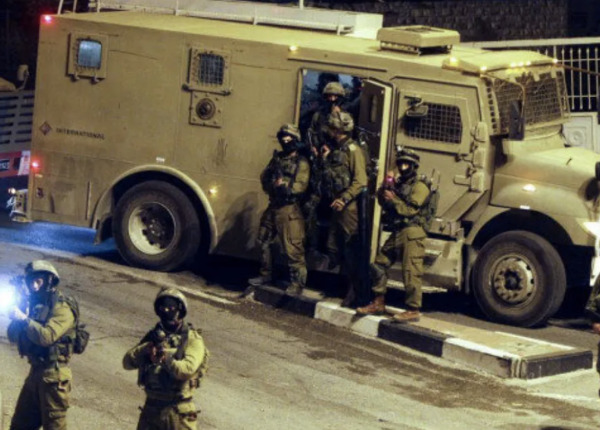
Since January 21, 2025, the Israeli occupation army has launched a large-scale military campaign, supported by armored vehicles, bulldozers and drones, called “Iron Wall,” targeting Palestinian refugee camps in the northern occupied West Bank, namely Jenin, Tulkarm, Nur Shams and Far’a. According to some estimates, 42 Palestinians, including 12 children, have been killed during this operation so far, while at least 45,000 refugees have been forcibly displaced from their homes.

Why the "iron wall"?

It has become clear that the Israeli war government led by Benjamin Netanyahu wants to subjugate the Palestinians by force, and make them feel like a "defeated people", in order to deter them from continuing their resistance to the occupation, and to eliminate the foundations of their lives in order to force them to emigrate if possible. It has also become known that the names given by the Israeli occupation army to its military operations, which target the Palestinian people, or other Arab peoples, always contain certain political connotations. “The Iron Wall” is the title of an article published in 1923 by Ze’ev Vladimir Jabotinsky, the spiritual mentor of Benjamin Netanyahu, in which he mocked those Zionists who were betting on reaching an agreement with the Arab inhabitants of Palestine that would allow the Zionist settlement project in Palestine to be implemented, stressing that this project should not remain dependent on the acceptance of the Arab inhabitants, but should develop in spite of them “behind an iron wall that these inhabitants cannot remove,” and estimating that “the only way that can lead us to an agreement [with the Arabs] is the way of the iron wall, that is, the presence of a force in Palestine that is not subject in any way to Arab influence; in other words: the only way to reach a future agreement is to abandon the attempt to reach an agreement today.”

Regarding the “morality” of this iron wall, Jabotinsky stressed that when the Arabs seek to prevent “the victory of a just cause,” the Jews will have to “use public force and means of self-defense to thwart their attempts,” especially after “the entire civilized world has recognized the right of the Jews to return to Palestine” from which they were “expelled.” He added: “It is said that there are between 15 and 16 million Jews, half of whom live a miserable life, and are persecuted without a homeland in the strict sense of the word, while the number of Arabs is about 38 million, and they occupy Morocco, Algeria, Tunisia, Tripoli, Barqa, Egypt, Syria, Mesopotamia, and the Arabian Peninsula, an area equivalent, if we exclude the desert, to half the area of Europe.” He concluded that “the expropriation of land from a people who own large areas of land, in order to establish a homeland for a people who are wandering around, is an act of justice; and if the owner objects (which is quite natural), he must be forced to accept, for a sacred truth requires…” The use of force to establish it remains a sacred truth; and on this is based our only position in confronting the Arab opposition.”

UNRWA confirms Jenin camp emptied of its residents

In the spring of 2002, during the events of the second intifada, the occupation forces occupied the Jenin camp after ten days of heroic Palestinian resistance, destroyed more than 400 homes, caused severe damage to hundreds of others, and displaced more than a quarter of the camp's population. At that time, UNRWA was responsible for the reconstruction operations. In recent years, the occupation army has been launching regular military operations on the camp under the pretext of eliminating the resistance there.

On February 4, UNRWA confirmed that the Jenin refugee camp had been emptied of its 30,000 residents following Israeli military operations since January 21, estimating that the camp was heading “towards catastrophe” as “large parts of it were completely destroyed by a series of Israeli bombings.” “According to our information, all camp residents have left the camp this morning,” said Juliette Touma, UNRWA’s director of public information. She added that the new escalation occurred on the day “children were supposed to return to school in the camp,” leaving “13 schools in and around the camp closed, affecting 5,000 children in the area.” One resident described the “tragic situation” in the camp: “On Tuesday evening, 4 February, a drone bombed our house, and a neighbor who wanted to go back to his house to check on his condition was killed by an Israeli army sniper.” He added: “The drones, which no one hears but can see, are constantly flying in the sky; “There are planes that bomb, others that monitor, and finally there are planes that send messages to the population,” he said. “A few days ago, I received a message via a drone telling me that I had a few hours to leave my house, and that if I stayed, it would be at my own risk.”

Palestinian families flee attack on Nour Shams camp

“They are doing here what they did in Gaza,” Ahmed Ezzat told AFP after fleeing the Nour Shams refugee camp on Monday, February 10, with dozens of Palestinian families as bulldozers began to demolish homes and infrastructure. Ahmed Abu Zahra, another resident of the camp who was forced to leave his home, said: “The army came and forced us to leave after they started to destroy our homes.” According to Murad Alian, a member of the camp’s popular committee, “more than half of the camp’s 13,000 residents fled in fear for their lives.” Tubas Governor Ahmed al-Asaad described what the camp’s residents are experiencing as “unprecedented,” stressing that “the Israeli operations today did not target fighters but civilians, women and children, and blew up homes to force residents to leave.” Abdullah Kamil, governor of Tulkarm, said that “the goal of the Israeli operations is political, not security-related… they are destroying everything and seeking to change the demographic composition of the area.”

“Before we had to leave our home with my husband and children, we spent two days without water because the occupation forces had cut off water to all parts of the camp,” Nihaya al-Jundi, a resident of Nour Shams refugee camp and director of the Nour Shams Association for the Rehabilitation of the Disabled, told Mendawys. “The occupation forces were moving from house to house forcing people out, while my family and I had been waiting for our turn for two days.” “They searched and interrogated us, then made us move in a specific direction,” she recalled. “We walked through the destroyed streets, between puddles of rainwater. Some stumbled and fell, men and women, children and elderly people, and some were crying. It was very humiliating and painful.” Nihaya al-Jundi recounts what happened to her neighbor, Sondos Shalabi, who was eight months pregnant. She says that her neighbor, “decided with her husband to go out on Sunday for fear of giving birth during the siege of the camp. While her husband was driving his car on the road leading to the town of Bal’a outside the refugee camp, the occupation soldiers opened fire on the car. He was injured and lost control of it, which led to the car overturning and killing Sondos and her fetus. Her husband is still in intensive care at Tulkarm Hospital.”

Palestinians return to their camp destroyed by the occupation army

“Piles of shattered asphalt and twisted metal, left behind by Israeli army bulldozers, line what remains of a street in the Fara’a refugee camp in the occupied West Bank, where residents were able to return this week.” “Above the rubble, excavators have torn away the facades of some buildings,” one Fara’a resident described the situation in his camp after the Israeli army attacked it.

“When we returned, we found the whole house turned upside down,” Ahmed Abu Sreis, 86, who returned home on Wednesday, February 12, told AFP. The elderly man, who “walks with a cane, had left the camp for four days with his children to escape Israeli raids,” and soldiers “looted his house while he was away.” Forced to leave, he recalled painful memories. “He was nine years old when his family was expelled from Haifa,” he said. “This is our third Nakba; the first was when I was a child, the second when I was a young man [in 1967], and now, as an old man, I am living it all over again.” “I don’t even feel safe in my house; if I stay, Israeli soldiers can come and attack me and arrest me.” Ahmed Abdullah, in his thirties, and his wife decided to stay at home despite the Israeli attack on the camp. “There was no water or electricity, and we were afraid to venture out to look for food,” he said. His home was “raided by occupation soldiers three times and they vandalized it.” He “cannot remember an Israeli operation of this magnitude against the camp.” Standing in front of some of the rubble that had been removed, he said: “It was the hardest attack,” and “it will go down in the history of the camp.”

“When the soldiers stormed the camp, they cut off water and electricity to parts of it with the help of armored bulldozers,” said Ahmad al-Asaad, the governor of Tubas, where the Far’a camp is located. “We were unable to evacuate patients with kidney problems or deliver them medicine.” The camp’s popular committee building was also severely damaged during the attack, and “in one of the offices, a large picture of the Dome of the Rock overlooking the courtyard of the Al-Aqsa Mosque in Jerusalem was torn up with a knife for no reason.”

What is happening in the West Bank is similar to what happened in Gaza

Many observers see the very existence of Palestinians in the occupied territories as “threatened” following the Israeli campaign against refugee camps in the north, where “Israeli tanks and bulldozers are destroying homes and infrastructure,” and Israeli settlers are “escalating their attacks on Palestinian communities throughout Area C of the West Bank, in parallel with the military operations.” According to Diana Al-Zeer, Vice President of the International Federation for Human Rights and representative of the Palestinian organization Al-Haq, “What we are witnessing in the West Bank is the worst situation since the Second Intifada, and some aspects of the military campaign are even worse; the methods used are similar to those we witnessed during Israel’s genocidal campaign in Gaza,” adding: “The Israeli occupation forces have been extremely brutal in their methods of emptying refugee camps, searching Palestinian homes, destroying infrastructure and housing, using airstrikes to kill Palestinians, and obstructing medical care in population centers.”

“Despite the fact that this situation is outrageous and completely contrary to international law,” “no one is reacting, as if this violence is approved by the international community,” and “the European Union is once again avoiding taking a stand in favor of Palestinian rights.” The Palestinian human rights activist concludes that “at a time when Israel is already threatening the United Nations Relief and Works Agency for Palestine Refugees in the Near East (UNRWA), the prospect of ending the Palestinians’ right to return and their right to self-determination is looming,” calling on the international community “in line with the advisory opinion of the International Court of Justice in July, to work together to end Israel’s illegal occupation and colonization,” considering that it is time “for the international community to uphold international law and put an end to impunity, starting with Israel.”

UNRWA confirms its determination to continue its humanitarian work

The Israeli occupation army's "Iron Wall" operation coincided with the entry into force of the decision taken by the Israeli Knesset to ban the activities of the UNRWA and force it to evacuate its headquarters in the Sheikh Jarrah neighborhood in occupied East Jerusalem, where it has now become an "undesirable persona."

Commenting on this arbitrary measure, UNRWA confirmed on Wednesday, January 29, its determination to continue providing essential assistance to the residents of the occupied West Bank and Gaza Strip, in accordance with the mandate granted to it by the United Nations. Its spokesman, Jonathan Fowler, said in an interview with the United Nations Information website: “We have to continue working,” adding that the agency’s international staff had been temporarily transferred to Jordan, while most of UNRWA’s local staff remained on site. Addressing the consequences for Palestinians in the occupied West Bank, the agency’s spokesman estimated that the cessation of UNRWA’s activities would affect tens of thousands of patients and students who “benefit from the health care and education services provided by the agency.”

For his part, the spokesman for the Secretary-General of the United Nations, Stephane Dujarric, confirmed at the daily UN press briefing in New York on Thursday, January 30, that the agency "will continue its activities on the ground", and that its employees are still in their work sites, continuing "to provide assistance and services to the communities they serve", adding that "UNRWA clinics throughout the occupied West Bank, including East Jerusalem, remain open". However, he stopped at the second law passed by the Knesset, which prohibits Israeli officials from dealing with UNRWA and its employees, and asked: "What does this mean for the work of our school system in the West Bank? And for our health system? And in the areas where we provide street sweeping and garbage collection and all these public health services; will our employees be able to move? Will we be able to resupply our clinics with medicines?" He expected that this second law would complicate the agency's activities in the Gaza Strip, "where Israel controls all humanitarian aid deliveries to the Strip."

UNRWA spokesman Jonathan Fowler concluded that "no other agency has a mandate from the UN General Assembly to assist Palestinian refugees," calling for "every effort to be made to persuade the Israeli authorities to freeze the implementation of the two laws that have come into effect, or even to cancel them completely."

conclusion

The United Nations Special Rapporteur on human rights in the occupied Palestinian territories, Francesca Albanese, described the Israeli practices in the West Bank as "criminal practices", warning that "the intent of genocide is clear in the way Israel targets the Palestinians". On Sunday, February 2, she called on the international community, via her account on the "X" platform, to intervene and stop the destruction that "extended to all the occupied territories, not just Gaza".

As for the Palestinian people, they have no choice but to continue their resistance and steadfastness on their homeland, to prove to their occupiers that they are a people who will not feel defeated, no matter how severe their suffering is and no matter how great their disasters are.

PALESTINE

Thu 20 Feb 2025 12:33 pm - Jerusalem Time

Hamas hands over the bodies of 4 Israelis in exchange for the release of 50 Palestinians

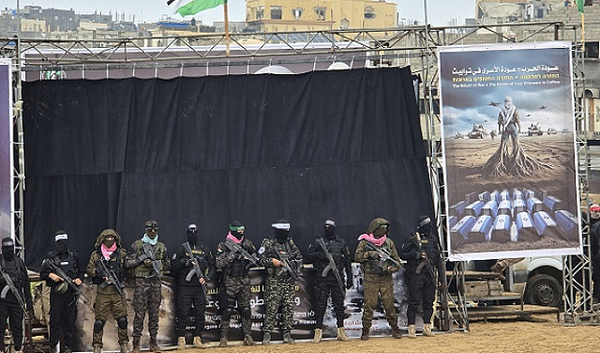
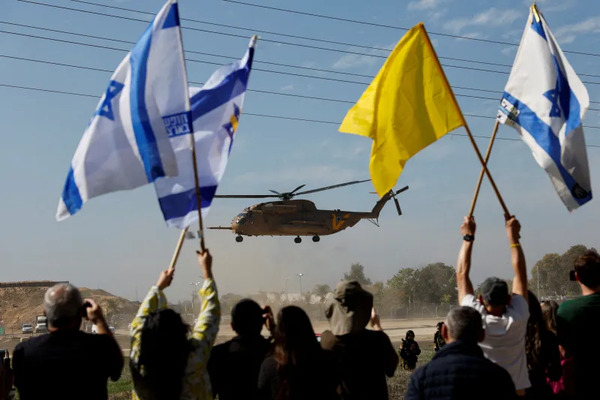
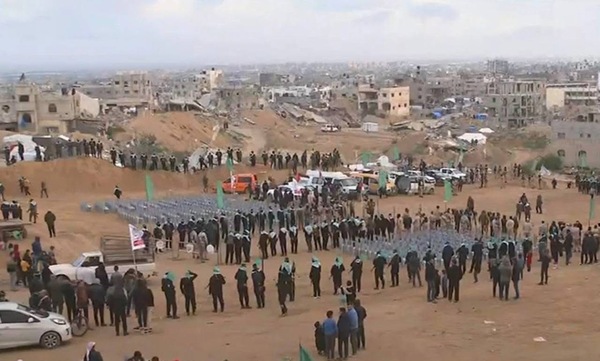
On Thursday, the Palestinian resistance factions handed over to Israel the bodies of four Israeli detainees, including the bodies of the Bibas family and the body of prisoner Oded Lifshitz, in exchange for the release of about 50 Palestinian prisoners. Palestinian resistance elements were deployed in the town of Bani Suhaila, east of Khan Yunis, during the handover of the bodies of the detainees.


A banner was erected on the delivery platform, with the words “The war criminal Netanyahu killed them with warplane missiles,” and another, “We would not forgive if we forgot, and the flood was our appointment,” in Arabic, Hebrew, and English.


This handover is the first to include dead hostages, and was carried out, as was the case with living hostages, by the International Committee of the Red Cross.


The procedures for handing over the bodies of the Israeli prisoners came as the ceasefire agreement in Gaza entered its 33rd day, while the Palestinian resistance will release six living detainees on Saturday.


The Al-Quds Brigades, the military wing of the Islamic Jihad movement, said that it would hand over the remains of the Israeli hostage Oded Lifshitz, and the spokesman for the Mujahideen Brigades, Abu Bilal, also announced that the bodies of the Bibas family would be handed over, as part of the first phase of the exchange deal agreement.


Commenting on the resistance handing over the bodies of four Israeli prisoners, Hamas stressed that prisoner exchange is the only way to return the Israeli detainees to their families alive, and that any attempt to retrieve them by military force or return to war will only result in more losses among the prisoners.


Hamas said it was prepared to release all hostages still being held in the Gaza Strip "all at once," not in successive batches, during the second phase of the truce agreement, which is supposed to begin on March 2.


This second phase of the ceasefire agreement is supposed to completely end the war in Gaza, but negotiations on it have not yet begun, as Hamas and Israel exchange accusations of violating the first phase.


The third and final phase of the agreement revolves around the reconstruction of the destroyed Gaza Strip.


On the Israeli side, the Israeli Hostage Families Forum announced that it had been informed of the death of four hostages while being held in Gaza, and Prime Minister Benjamin Netanyahu said: "This will be a very difficult day for the State of Israel, a painful day, a day of mourning. We will bring home four of our beloved hostages who died."


In November 2023, Hamas announced the killing of Sheri Bibas and her two children in an Israeli bombardment of the Gaza Strip. On February 1, Hamas released the children’s father, Yarden Bibas (35 years old).


Today, there are still 70 hostages being held in Gaza, including at least 35 who have been killed, according to the Israeli military.


Since the ceasefire reached through the mediation of three countries: Qatar, Egypt and the United States, 19 Israeli hostages have been released from Gaza in exchange for more than 1,100 Palestinian prisoners freed from Israeli occupation prisons, at a rate of one exchange every week.

PALESTINE

Thu 20 Feb 2025 12:01 pm - Jerusalem Time

Three Palestinians killed by Israeli occupation forces in Al-Far'a camp

The General Authority of Civil Affairs announced today, Thursday, the death of three young men yesterday evening, Wednesday, by Israeli occupation bullets in Al-Far’a camp, south of Tubas.


The Authority informed the Ministry of Health of the martyrdom of the three young men: Youssef Ibrahim Abdullah Asmar (35 years old), Muhammad Ahmed Mustafa Khalil (19 years old), and Youssef Hassan Mahmoud Tayeh (36 years old).

PALESTINE

Thu 20 Feb 2025 11:53 am - Jerusalem Time

Israeli forces launch arrest campaign in the West Bank

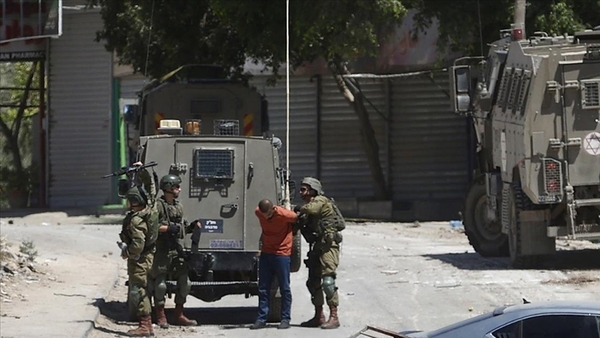
Today, Thursday, the Israeli occupation forces launched an arrest campaign in the West Bank.


In Tubas, the occupation forces arrested the two brothers, Muhammad and Qais Kamal Sawalma, after raiding their family’s home in Wadi al-Far’a.


In Ramallah, the occupation army stormed the town of Beit Liqya, west of Ramallah, and arrested two young men: Najib Mufarja and Hamza Dar Musa, and seized two vehicles, while it arrested the student at Birzeit University, Ali Mashhour, from the town of Turmus Ayya, north of Ramallah.


In Bethlehem, the occupation forces arrested the brothers Darar Muhammad Imran Salah (43 years old), Abdul Munim (41 years old), Ziad Abdullah Issa (37 years old), Hussam al-Din Muhammad Shahada Salah (19 years old), Ali Issa Abu Ghalioun (60 years old) and his son Qusay (33 years old), after raiding their homes, searching them and tampering with all their contents.


The occupation forces also stormed the Deheishe refugee camp in the south, and raided the homes of the Secretary of the Fatah Movement in the Bethlehem region, Muhammad al-Masri, and the families of the martyr Musa Daraghmeh and Munir al-Jaafari, where they ransacked their contents.


In Nablus, the occupation forces stormed the eastern part of the city of Nablus, raided a house in the new Askar camp, searched it, wreaked havoc in it, and arrested the citizen Saloum Joda.


The occupation also raided the town of Beit Iba and Beit Wazan, west of the city, and raided a number of homes, and arrested: Abdul Qader Muhammad Abdullah Abu Kishk, Salah Juwaid Nasser Atiwi, and Ghassan Riyad Ishtiwi, from Beit Iba, and the citizens Bader Abu Namous and Khabab Marwan Hamad from Beit Wazan.


In Hebron, the occupation forces stormed several neighborhoods in the city of Hebron, and arrested the freed prisoner Suhaib Qafisha from the Umm al-Daliya neighborhood, and Musa Abu Turki from Jabal Karbaj south of the city. They also stormed the town of Sa'ir east of Hebron and arrested Muhammad Mazen Khalil Jaradat, the freed prisoner Hisham Naim Khalil Jaradat, and Jamil Abu Hashhash from al-Fawar camp in the south. They searched the homes of the detainees and ransacked their contents.


The occupation forces also stormed the town of Adh Dhahiriya, south of Hebron, and arrested citizens Dalida Sami Al-Wa’i and Saif Ziad Al-Wardat. From the town of Dura, they arrested Ayoub Basem Ghanem, Rashid Muhammad Al-Khawatra, and Ibrahim Yousef Islimiya from the town of Idhna, south of Hebron.


In the same context, the occupation forces continued to close the entrances to the towns and camps of Hebron with iron gates, and tightened their military and repressive measures in the neighborhoods of the Old City and at the military checkpoints and iron gates.


PALESTINE

Thu 20 Feb 2025 11:48 am - Jerusalem Time

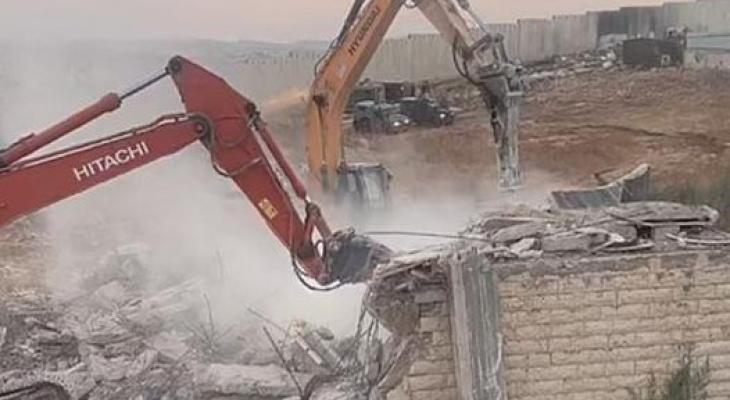
Israelu occupation forces demolish a house and displace its residents south of Nablus

Today, Thursday, the Israeli occupation forces demolished a house in the village of Majdal Bani Fadel, south of Nablus.


Local sources reported that these forces stormed the "Al-Jubail" area west of the village, forced citizen Muhammad Ibrahim Abu Zayed and his family to evacuate the house, and began demolishing it.


She stated that the occupation forces had notified the demolition of the house, which is estimated to be 160 square meters, months ago, under the pretext of building in areas classified as (C).

ARAB AND WORLD

Thu 20 Feb 2025 10:14 am - Jerusalem Time

Former Biden administration adviser blames Netanyahu for obstructing US ceasefire efforts

Israeli Prime Minister Benjamin Netanyahu’s conduct during months-long negotiations to reach a ceasefire in Gaza and swap Israeli captives for Palestinian prisoners is “deeply problematic,” Ilan Goldenberg, a senior adviser to former US Vice President (and Democratic presidential candidate in the November 2024 elections) Kamala Harris, said in an article published by the former official on the Substack website on Wednesday, February 19, 2025.


The article by Goldenberg, who later served as the Harris presidential campaign’s “emissary to American Jewry,” represents the first real-world account from a senior official in former President Joe Biden’s administration of what the previous administration could have done differently to secure a cease-fire, though other officials insisted they responded as appropriately as possible given the situation they faced.


“I want to stress at the outset that making decisions in the middle of a war with incomplete information is extremely difficult,” Goldenberg began his article. “I saw many honest people who were trying to do the right thing and were acting in good faith even though I was certain that we made many mistakes.”


At first glance, Goldenberg’s testimony is strikingly similar to that of Biden’s top Middle East adviser, Brett McGurk, who in a recent op-ed in the Washington Post placed the greatest blame on Hamas for the collapse of repeated ceasefire negotiations (over 12 months of war), despite well-founded claims from diplomats, hostage families, and media reports.


“Much of the focus so far has been on the consequences of President Biden’s May 2024 proposal and whether if Biden had put more pressure on Netanyahu, we could have gotten the deal much sooner,” Goldenberg says.


“I think getting a deal in May was not possible; Hamas was taking a hard line and sticking to its vision of a wider regional war, but also, Netanyahu’s behavior was very problematic as evidenced by accounts from other members of the war cabinet; leaks from Israeli negotiators; his refusal to engage seriously on the day-after plan; and his bad faith engagement with President Biden,” he adds.


“It was the major setbacks to Iran and Hezbollah in the fall of 2024 that caused Hamas to reduce its negotiating position, and it was Gideon Sa’ar’s entry into the government in September that gave Netanyahu the flexibility to maintain his coalition despite the loss of Ben-Gvir that set the terms for the hostage deal,” Goldenberg believes. “But there is a lot of reality in the fact that Netanyahu was more concerned with preserving his government than with releasing the hostages, since he could have won the support of a large part of the Israeli opposition to reach an agreement at any time.”


Goldenberg wonders what would have happened if Biden had proposed a vision for ending the Gaza war in December 2023, or January 2024, when Biden was still very popular in Israel and had leverage over Netanyahu — who was as unpopular domestically as he was before.


“Had Biden chosen at that moment to have a real public disagreement with Netanyahu and done so with the support of [opposition MK Benny] Gantz, he would have had enormous leverage to influence Israeli decision-making,” the former official says. Goldenberg suggests that Biden’s speech could have forced Netanyahu to pursue a more centrist strategy—(and possibly) strike a deal with Gantz and Gadi Eisenkot, abandon extremist coalition partners like Bezalel Smotrich and Itamar Ben-Gvir, and perhaps lead to an agreement on elections by the end of 2024.


“What if Biden had given a speech and offered the Israeli public and the world two paths,” Goldenberg explains, “behind the first door was a ceasefire and a hostage deal that would end the war. The international community, including the Gulf states, would have worked with Israel to rebuild Gaza. There would have been an Arab-led international force that would eventually be replaced by Palestinian security forces that would take control of Gaza. The Israelis wouldn’t have had to fight forever. The deal could have included a ceasefire in the north as well. The United States would have supported this plan 100 percent, and it would have been the first step toward normalizing relations with Saudi Arabia and the entire Arab world. For Israel to accept this, it would have had to accept the role of the Palestinian Authority in Gaza, but there would also have been major demands made of the Palestinians, including reforming their government, ending the system of paying salaries to prisoners, and reforming UNRWA.”


Instead, Goldenberg concludes, “We will never know how things would have turned out; what we do know is where we ended up. The war dragged on for a year, with great suffering in Gaza and continued hostage deaths. The differences between Netanyahu and Biden played out in fragmented and incoherent ways, with Netanyahu exploiting every opportunity to create distance between himself and Biden, weakening Biden’s standing with the Israeli public and ultimately eroding his influence. We ended up in the spring of 2024 with a convoluted policy of some cooperation and some confrontation that didn’t really work. In late May, President Biden called for a ceasefire, an agreement on the hostages, and a better course for our policy, but by then his influence with Netanyahu had disappeared.”

PALESTINE

Thu 20 Feb 2025 10:13 am - Jerusalem Time

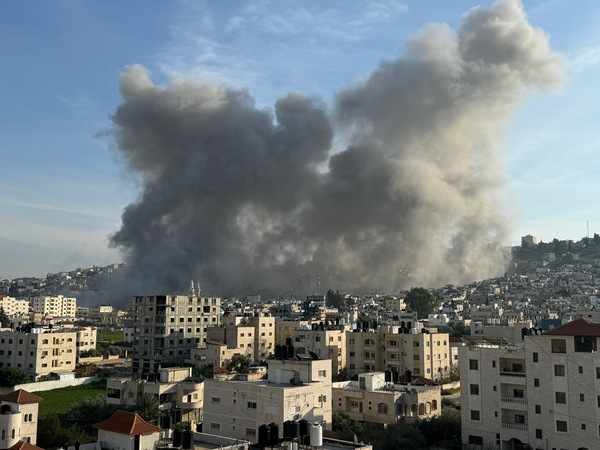
Israeli occupation continues its aggression on the city of Jenin and its camp for the 31st day

The Israeli occupation continues its aggression on the city of Jenin and its camp, for the 31st consecutive day, leaving 26 martyrs, dozens of injuries and arrests, widespread destruction of property and infrastructure, and the forced displacement of thousands of citizens.

Yesterday, a woman was shot by the occupation forces in the chest and abdomen at the Return Roundabout near the entrance to Jenin, while a child and a young man were arrested while they were trying, along with a number of citizens, to enter the camp to check on their homes.

While the occupation continues to send military reinforcements accompanied by bulldozers and fuel tankers to the entrances to the camp and its surroundings, yesterday it brought in water tanks, in addition to small rooms used for internal communications, amidst widespread destruction of homes, property and infrastructure, drones continue to fly at low altitudes in the skies of the camp.

The city's hospitals are suffering from a severe water shortage, after the occupation targeted and destroyed water lines, as nearly 35% of the city's residents suffer from a lack of water.

The occupation forces completely demolished more than 120 homes in Jenin camp, amid widespread destruction of infrastructure.


PALESTINE

Thu 20 Feb 2025 10:11 am - Jerusalem Time

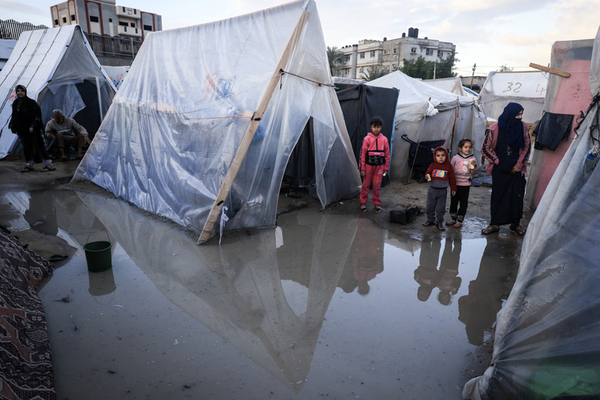
Gaza displaced people face new harsh weather with dilapidated tents

Due to the destruction caused by the occupation's aggression on the Gaza Strip over the course of about 16 months, the citizens of the Strip are facing humanitarian suffering that is exacerbated by the arrival of a new low pressure system that threatens more than 1.5 million homeless people.

In these circumstances, the polar depression, the consequences of which the Meteorological Department has warned, appears to be a new threat, as thousands of children, women and the elderly find themselves in direct confrontation with rain and cold without cover to protect them, or food to satisfy their hunger, as happened during past depressions.

Families will find themselves unable to secure any means of heating as temperatures drop at night, as the depression will continue for more than five days.

Some are trying to take shelter with plastic pieces or worn-out blankets, while patients are suffering from a lack of medicine and heating, which further exacerbates health conditions, especially among children and the elderly.

During the past weeks, the Gaza Strip witnessed severe winter depressions, which caused the uprooting of many tents and the drowning of others, which increased the suffering of the citizens, who were already suffering from the repercussions of the war of extermination.

Citizens are increasingly concerned about the possibility of these temporary shelters collapsing under the force of strong winds and heavy rains, which exacerbates their suffering in light of the deteriorating humanitarian conditions, as citizens whose homes were destroyed live in primitive tents, and work during the day to secure them with stones and wood in an attempt to protect them from collapse.

Nearly 1.5 million people have been left homeless after their homes were destroyed, while all 2.4 million residents of the Strip suffer from a lack of the most basic life services and infrastructure.

Between October 7, 2023 and January 19, 2025, the occupation forces launched an aggression on the Gaza Strip, which resulted in the death and injury of more than 158,000 people, most of whom were children and women, and more than 14,000 missing.

PALESTINE

Thu 20 Feb 2025 10:09 am - Jerusalem Time

The exchange deal...will war return and the stages falter?

Dr. Suhail Diab: Netanyahu's failure to return to war on Gaza does not mean that he is reluctant to create pretexts to turn the tables, and his eyes will be on Iran

Akram Atallah: The option of resuming the war is still strongly on the table, especially if the mediators do not succeed in pressuring Hamas to accept the Israeli conditions

Fayez Abbas: Implementing the first phase of the deal is a strong indication that the agreement will continue despite Netanyahu's attempts to obstruct the second phase

Majed Hadeeb: Netanyahu's insistence on prolonging the first phase and Hamas' hesitation in announcing its final position on the "next day" will lead to maintaining the status quo

Talal Okal: Hamas' handing over of Israeli detainees, dead and alive, is a "tactical" move aimed at avoiding disrupting the start of the second phase negotiations

Yasser Manna: In the event of moving to the second stage, Israel may set impossible conditions, most notably disarming the resistance and removing Hamas from power.


Everyone is anticipating what the next few weeks will witness in a crucial phase in the course of the current agreement between Israel and Hamas, as this period is considered one of the most sensitive and dangerous periods in the ongoing negotiations regarding the second phase of the exchange deal and the ceasefire in the Gaza Strip.

In separate interviews with “I,” writers, political analysts, specialists, and political science professors believe that Israel has reached two main conclusions: the first is to abandon the project of forced displacement of the residents of the Gaza Strip, after realizing that this project will not find a way to be implemented practically in light of the strong Arab rejection, especially from Egypt and Jordan, which are supported by Saudi Arabia. The second conclusion is that Israel has realized that there is no military way to recover the remaining Israeli detainees in Gaza, which prompted it not to rush back to war, at least for the time being.

They point out that this does not mean that Israel will stop manipulating the situation, as it retains the means to “turn the tables” at any time it deems appropriate, and Israel may resort to military escalation in the West Bank or even threaten to confront Iran as part of its strategy to achieve its political and security goals.

They believe that Hamas continues to show flexibility in the negotiations, as it announced its readiness to accelerate the process of releasing Israeli detainees, including the bodies, as a tactical step to avoid disrupting the start of the second phase negotiations.


Israel has reached two main conclusions.


Political science professor and Israeli affairs expert Dr. Suhail Diab believes that the next few weeks are among the most sensitive and dangerous periods in the course of the current agreement on the truce in the Gaza Strip.

Diab points out that Israel reached two main conclusions during this period, especially after the warnings issued by Hamas prior to the sixth prisoner exchange. The first is to abandon the project of forced displacement of the residents of the Gaza Strip, after the United States of America surrendered to the idea that this project would not find a way to practical implementation.

Diab points out that this abandonment is due to several reasons, the most important of which is the lack of an Arab partner that clearly supports this trend, especially in light of the Egyptian-Jordanian position supported by Saudi Arabia, which opposes any attempts to displace the residents of Gaza.

Diab stresses that the absence of an Arab partner means that Israel will not be able to implement the displacement project, especially in light of the strong Arab rejection of any step of this kind.

Diab points out that this conclusion reflects a shift in the Israeli position, as Tel Aviv has come to realize that the displacement project will not be possible in the foreseeable future.

Diab explains that Israel's second conclusion is its realization that there is no military way to recover the remaining Israeli prisoners in the Gaza Strip.

Diab asserts that this conclusion prompted Israel not to rush back to war, especially in light of the presence of Israeli prisoners still being held by Hamas.

Diab points out that this does not mean that Israel will stop manipulating the situation, as it retains the means to "turn the tables" at any time it deems appropriate.

Diab explains that Israeli Prime Minister Benjamin Netanyahu may resort to turning the tables if he feels that his political future is in danger, or if he reaches the conclusion that the next stages of the agreement may lead to putting the Palestinian issue on the table again, including the possibility of a two-state solution.

Diab explains that Netanyahu has many ways to turn the tables, including options other than returning to war in Gaza.

Diab points out that the first scenario is escalation with Iran, as the Israeli cabinet has placed Iran at the top of the list of existing threats, even bypassing the issue of recovering prisoners and eliminating the Hamas movement.

Diab believes that Netanyahu's failure to return to war in Gaza does not mean that Netanyahu is reluctant to create pretexts to turn the tables, and his eyes will be on Iran.

According to Diab, the second scenario to turn the tables is to expand military operations in the West Bank, especially in areas that Israel sees as the most dangerous, such as Tulkarm, Qalqilya, Jenin, Nablus and Tubas.

He points out that this step may be a way to please the right-wing parties in the Israeli government, such as Finance Minister Bezalel Smotrich, in addition to the fact that it may open the door to the forced displacement of residents of some areas in the West Bank.

He stressed that the speech of the head of the Hamas movement in the Gaza Strip, Khalil Al-Hayya, carries important indications about the future of the agreement.

Diab points out that Al-Hayya stressed in his speech that implementing the humanitarian protocol is not a purely humanitarian issue, but rather a political issue on which future policies for the Palestinian cause in general, and for the future of the Gaza Strip in particular, depend.

Diab explains that Al-Hayya's speech indicates that the next stage will witness a focus on rebuilding the Gaza Strip and keeping the Palestinian population on their land, awaiting a comprehensive proposal from the Arab group to be discussed at the upcoming Arab Summit.

Diab points out that this trend worries Netanyahu, especially in light of the possibility that these steps could lead to the introduction of comprehensive political solutions to the Palestinian issue, including the West Bank, the Gaza Strip, and East Jerusalem.


The expected payment from the deal does not mean the success of the subsequent stages.


Writer and political analyst Akram Atallah believes that the expected new batch of the exchange deal, which will see the delivery of four bodies on Thursday, and six living Israeli detainees on Saturday, does not necessarily mean the success of the subsequent stages of the agreement.

According to Atallah, although there are hopes among mediators and Palestinians that the deal will continue to be implemented, the Israeli position indicates the opposite, which raises doubts about Tel Aviv's intentions and its political and military behavior during the coming period.

According to Atallah, the nature of the current Israeli government, led by Benjamin Netanyahu, and its declared goals for this war make it more inclined to impose impossible conditions rather than make concessions that guarantee the continuation of the deal.

Atallah explains that Israel has been able to achieve progress on most military fronts, which gives it the ability to impose its political and security vision, without feeling the need for serious negotiations to end the war or provide facilities to make the second phase of the deal a success.

He points out that Israel is talking about a second phase of the agreement, but this phase, according to its terms, means ending the rule of the Hamas movement in Gaza and handing over its weapons completely.

Atallah believes that these conditions are not just a negotiating framework, but may be a prelude to continuing military operations, especially since they impose demands that are difficult for Hamas to implement, which may lead to the collapse of the deal instead of its continuation.

Atallah explains that Israel enjoys absolute American support, as US President Donald Trump confirmed that Tel Aviv has “complete freedom” to make any decision it deems appropriate, while stressing his support for any choice made by Netanyahu’s government.

Atallah believes that this unconditional support strengthens Israel's position in imposing its conditions, without worrying about international pressure to end the war or enter into comprehensive political settlements.

Atallah believes that the option of resuming the war on Gaza is still strongly on the table, especially if the mediators do not succeed in pressuring Hamas to accept the Israeli conditions without military escalation.

He points out that Israel does not care about the means by which it achieves its goals, whether through negotiations or war, what is most important to it is achieving its strategic goals.

Atallah explains that the Israeli condition of handing over weapons may be a pretext for resuming the war, as Israel may exploit any refusal or procrastination by Hamas to justify a new round of fighting, which is a very likely scenario in light of the current circumstances. If the negotiations fail, Tel Aviv may resort to resuming the fighting to impose its vision by force, based on its advanced military position and continued American support.


A strong indication that the agreement will continue.


The writer and expert on Israeli affairs, Fayez Abbas, explains that the Hamas movement’s decision to release six of the living detainees is a step that differs from the previous stage, which witnessed the release of only three detainees, as this step comes in response to Hamas’ desire to accelerate the process of releasing 48 Palestinian prisoners who were sentenced to long terms and who were returned to prison after being previously released in the exchange deal for the Israeli soldier Gilad Shalit in 2011.

Abbas points out that the implementation of the first phase of the deal is a strong indication that the agreement will continue despite attempts by Israeli Prime Minister Benjamin Netanyahu to obstruct the second phase.

Abbas stresses that implementing the second phase means an Israeli withdrawal from the Gaza Strip without achieving the goals that Israel sought, most notably eliminating the civil and military authority of Hamas in the Strip, which is considered a setback for the Israeli strategy.

Abbas believes that decisions regarding negotiations and taking the next steps are no longer in Israel's hands alone, but have become completely subject to American will.

He points out that Netanyahu is carrying out the instructions of the US envoy to the Middle East, Steve Witkoff, who announced that the United States and its President Donald Trump insist on completing the deal, no matter the cost.

Abbas asserts that Netanyahu will not dare to confront or oppose Trump on this matter, especially in light of the close relationship between the two leaders and the escalating American pressure.

Abbas points out that these developments come in the context of escalating international pressure to end the crisis, and show that Hamas is seeking to strengthen its negotiating position by showing flexibility in releasing detainees, while Israel faces internal and external pressure to end the conflict without achieving its full military goals.

According to Abbas, the new second phase of the deal appears to be a shift in the dynamics of the conflict, with the actual decision-making centered in the hands of the US administration.


Three possible scenarios for the future of the sector


Writer and political analyst Majed Hadeeb believes that there are three possible scenarios for the future of the Gaza Strip in the coming period: either the resumption of fighting, and the failure to complete the remaining stages of the truce, which could lead to Israel reoccupying the Gaza Strip completely with the aim of overthrowing the rule of the Hamas movement.

Hadib believes that this scenario will not be easy, as reoccupation will have great consequences for Israel, which will find itself forced to bear the responsibility of managing the Gaza Strip and meeting the demands of the Palestinian people.

Hadeeb points out that this scenario will put Israel in a difficult position on the international level, as it will face international isolation and an Arab boycott, in addition to threats to sever agreements and treaties, especially those related to normalization with Arab countries.

Hadib points out that this situation will not be acceptable to the US administration, which makes this scenario unlikely in the short term.

The second scenario, according to Hadib, is represented by the Egyptian initiative that seeks to launch an independent Palestinian administration subject to temporary international guardianship.

Hadib explains that the second scenario is related to the reconstruction of the sector and the consolidation of the institutions of the Palestinian state, in a way that guarantees temporary stability that paves the way for a comprehensive political solution in accordance with the Egyptian initiative, which receives Arab support and readiness to adopt it, in addition to the international support it will find, as it works to meet what all parties interested in the Palestinian issue see.

Hadeeb points out that Hamas may oppose this scenario, especially in light of recent statements by some of the movement’s leaders, such as Osama Hamdan, who rejected any concession of Hamas’ control over the Strip.

Regarding the third scenario, Hadib considers it the most likely under the current circumstances, which is to maintain the status quo without any fundamental change.

Hadib explains that this scenario would give Israel freedom of movement in the Gaza Strip by redeploying its forces without a complete withdrawal, while maintaining Hamas' control over the Strip.

He points out that Hamas may welcome this scenario, as it ensures its continued hold on power, even if it comes at the expense of the continued siege and humanitarian suffering of the Palestinian people in Gaza.

Hadeeb points out that this scenario could exacerbate the humanitarian crisis, with more Palestinians being pushed towards voluntary or forced migration, threatening to displace large parts of the Strip’s population.

Hadeeb believes that the current deal will not last long, especially in light of Israeli Prime Minister Benjamin Netanyahu’s insistence on prolonging the first phase of the truce in order to release the largest possible number of living Israeli prisoners, while Hamas is hesitant to announce its final position the next day, which will lead to the situation remaining as it is now in Gaza.

Hadib points out that this insistence may lead to the third scenario, which is maintaining the status quo, which reflects the complexities of the political situation and the lack of quick solutions.

Meanwhile, Hadeeb asserts that Hamas, through its insistence on remaining in power and its refusal to give up its weapons, is contributing to the complexity of the situation, especially in light of the contradictory statements and wavering positions of the movement’s leaders.

Hadib explains that this insistence may push the Palestinian cause into the unknown, with the continuation of human suffering and the failure to achieve any progress in the reconstruction process.

He points out that Egypt, through President Abdel Fattah El-Sisi, is trying to launch initiatives to get out of the current impasse, while trying to satisfy all parties.

Hadib stresses that these initiatives face major challenges, especially in light of Hamas’s rejection of any concessions and Israel’s unwillingness to make major political concessions.

Hadib believes that the Arab countries, led by Egypt, must work to thwart the third scenario, which he considers the most dangerous for the future of the Palestinian cause.

Hadeeb points out that any real solution must include ending the Israeli occupation and rebuilding the Strip, while ensuring the participation of the Palestinian Authority in managing Gaza with the approval and request of the Hamas movement, which must be absent from the political and security scenes to facilitate the transition of the Palestinian people and their cause to the safest square in the direction of achieving their right to establish their independent state without dependency or guardianship.


Israeli attempts to extend the first phase are still ongoing.


Writer and political analyst Talal Okal confirms that Israeli attempts to extend the first phase of negotiations with Hamas are still ongoing, as part of its efforts to release the largest possible number of hostages.

Awkal explains that the Israeli goal behind this step is to limit Hamas's negotiating ability and reduce the price the movement insists on receiving in exchange for releasing the hostages.

Awkal points out that Israel seeks through this strategy to undermine Hamas's negotiating position, which gives it an advantage in determining the terms of the deal.

Okal believes that Hamas's handing over of the bodies of detainees on Thursday, and of living detainees on Saturday, is a "tactical" move aimed at avoiding disrupting the start of the second phase negotiations, which were delayed according to the agreement concluded between the two parties.

Awkal stresses that this step does not necessarily mean that Israel is committed to implementing the three agreed-upon stages, but rather that it may be merely a maneuver to complete the release of the hostages without committing to the rest of the terms.

Awkal explains that Israeli Prime Minister Benjamin Netanyahu is constantly trying to evade this negotiating path, but he finds himself forced to return to the negotiating table under increasing internal pressure and strong American support for the release of the hostages.

Okal believes that Netanyahu prefers to deal with each stage separately, without a clear commitment to implement the subsequent stages.

Awkal warns that the upcoming negotiations will be very difficult and complex, especially if Hamas insists on its conditions.

Okal points out that Netanyahu may try to disrupt the negotiations if he feels that Hamas's conditions conflict with Israel's strategic interests.

Awkal stresses that the great difference in positions and goals between Hamas and Israel makes it difficult to predict the course of the negotiations, especially in light of the internal and external pressures that both parties are exposed to.


A positive indicator of the continued implementation of the current agreement.


Writer and expert on Israeli affairs Yasser Manna confirms that the expected batch of releases is a positive indicator of the continued implementation of the current agreement between the concerned parties.

However, Manaa points out that this step does not necessarily mean ensuring the implementation of all stages of the agreement, especially in light of Israeli attempts to extend the first stage for as long as possible through side exchange deals, thus avoiding entering the second stage, which requires difficult political entitlements.

Manaa explains that Israel is trying to avoid the second phase of the agreement, which includes major political entitlements such as ending the war and withdrawing from disputed areas.

Manna points out that Israel does not currently appear prepared to face these political challenges, which makes it seek to extend the first phase through partial exchange deals outside the framework of the second phase.

Regarding the possibility of a return to war, Manaa points out that any stumbling block in the negotiations or collapse of the agreement could lead to a military escalation.

Manaa believes that this escalation will be in the form of a limited round of fighting and not a comprehensive war like the one that the region witnessed on October 7 and what followed.

Manaa explains that this scenario reflects Israel's attempt to avoid engaging in a long-term war, while keeping military pressure as a negotiating card.

Manaa believes that the second phase negotiations have already begun, but they face major complications, pointing out that Israel is trying to evade these negotiations because of the major political obligations they require, such as ending the war and withdrawing, which is not consistent with its current strategy. Therefore, Israel seeks to extend the first phase as much as possible through partial exchange deals outside the framework of the second phase.

In the event of moving to the second stage, Manaa expects that Israel will set impossible conditions, most notably disarming the resistance in Gaza and removing Hamas from power completely.

Manna points out that the concept of “deportation” itself is unclear, wondering whether Israel seeks to remove Hamas from the administration of Gaza only, or whether it wants to exclude it from the political scene entirely, including local roles such as managing municipalities and civil services, stressing that this point will be a fundamental axis in any future negotiations.

Manaa explains that Israel has divided the negotiations into two main tracks: the first with Hamas, which is related to the exchange of prisoners and detainees, and the second is an attempt to bypass Hamas and the Palestinians regarding the management of Gaza in the next stage.

He points to the existence of a clear Arab determination for the Palestinian Authority to have a role in the future of Gaza, expecting that a consensus Palestinian technocratic administration will be formed to manage Gaza, ensuring reconstruction and supervising services, which may constitute a major point of contention between the parties concerned.

Manaa stresses that the continued implementation of the deal depends on the parties’ ability to overcome these complications, and if that fails, we may witness a new round of escalation, but it will be limited compared to the comprehensive war that broke out in October 2023.

PALESTINE

Thu 20 Feb 2025 10:07 am - Jerusalem Time

Smotrich's threats to escalate demolitions: Empty the demographics to control the geography

Major General Mohammad Al-Samadi: Smotrich described 2025 as the “year of annexation,” which reflects the occupation’s intentions to intensify settlement and confiscate more land

Dr. Adnan Al-Afandy: A government plan to expand settlements and an agreement between the heads of the ruling coalition parties to demolish any new building built in Area C

Nevin Abu Rahmoun: The occupation is pursuing a policy of forced displacement by destroying homes and infrastructure and polluting water, which has caused the largest wave of displacement in the West Bank since 1967

Shadi Al-Sharafa: The occupation policies have entered a new phase that aims to impose complete control over Areas C and B in preparation for imposing absolute sovereignty over the West Bank

Imad Abu Awad: The coming period will witness an escalation of pressure on the Palestinians through land confiscation and demolition, with attempts to obscure the political dimension of the Palestinian cause

Suhail Khalil: Smotrich's statements regarding the escalation of aggression and the demolition of homes reflect the orientations of this extremist government with the support and encouragement of Trump


Observers and political analysts have warned of a dangerous Israeli escalation in the West Bank this year, following recent threats by Israeli Finance Minister Bezalel Smotrich that in 2025 Israel will demolish more buildings in the occupied West Bank than are being built, for the first time since 1967. He also indicated that the Israeli government will continue to increase demolition operations and prevent Palestinian construction in areas under Israeli control, stressing that the 2025 budget will include a significant increase in resources allocated for this, by strengthening the workforce, purchasing new equipment, and developing modern technologies to monitor Palestinian construction. He explained that the matter is not only related to pursuing what he described as “illegal” construction, but also includes “a complete ban on Palestinian construction and the return of Israeli control over the land.”

In separate interviews with "Y", they indicated that the Israeli far-right government is moving towards imposing absolute control over the West Bank, as Smotrich described 2025 as the "year of annexation", noting that the daily raids on cities, villages and camps in the West Bank have escalated, reaching the level of the extensive military campaigns carried out by the occupation army in the northern West Bank, especially in Jenin and Tulkarm and their camps, which reflects the extremist tendencies of the occupation government.

They warned that the occupation policies in the West Bank have entered a new phase since Smotrich assumed the position of the second minister in the Israeli Ministry of War, in addition to his management of the so-called "Civil Administration", explaining that these policies aim to impose full Israeli control, not only over areas classified as (C), but also extend to areas classified as (B), in a clear step towards imposing absolute Israeli sovereignty over Palestinian land, while they pointed out that Smotrich's recent statements confirm that the essence of the conflict is control over the land and the geographical space of the Palestinian population, noting at the same time that the 2025 budget includes a significant increase allocated for demolitions, in addition to developing new surveillance technologies targeting Palestinians and construction in the West Bank.


Warning of a dangerous Israeli escalation in the West Bank


Jordanian military and strategic expert, Major General Muhammad Ali Al-Samadi, warned of a dangerous Israeli escalation in the occupied West Bank during the year 2025, as Israeli Finance Minister Bezalel Smotrich threatened to carry out demolitions of Palestinian homes that exceed what is being built.

Al-Samadi stressed that the Israeli occupation government, led by the extreme right, is moving towards imposing absolute control over the West Bank, noting that Smotrich described the year 2025 as the "year of annexation," which reflects the occupation's intentions to intensify settlement and confiscate more Palestinian lands.

“Smotrich says, ‘Whoever controls the land determines its future,’ and this is true if we are to be realistic. They control it in the absence of an effective Arab position against their ambitions and greed. When we say that in 2025 more Palestinian buildings will be demolished in the West Bank than are built, this means that it will be the first time since 1967 that such crimes will be committed with such intensity,” he said.

He pointed out that "the available information indicates that the demolitions will not be limited to what Israel calls illegal or unlawful construction, but will include an absolute ban on Palestinian construction and the restoration of full control over these lands."

Al-Samadi added: We are now talking about the absolute control of this usurping entity led by the far-right government, in light of the existence of security coordination and the absence of an Arab position capable of deterring Zionist ambitions.

He pointed out that "it is expected that the extremist Israeli government, with its expansionist policies, will prevent Palestinians from building or reclaiming land, especially in Area C in the West Bank, as any construction or reclamation process requires permits from the occupation, and now it seems that it will be impossible to obtain any permit."

Al-Samadi explained that the second Oslo Accord in 1995 classified Area C, which represents 61% of the West Bank, under full Israeli control, and now there are attempts to annex this area to Israel, in addition to the Jordan Valley.

He pointed out that the number of settlers has increased significantly in the West Bank, and that there are expanding settlement, agricultural and pastoral outposts, in addition to the confiscation of more Palestinian lands.

Al-Samadi revealed worrying Israeli military movements, as a new military division was formed on the Jordanian border, in addition to military maneuvers that recently took place in the Golan and on the western side of the Jordanian border, reaching the western areas of the Dead Sea.

Al-Samadi stressed that these movements come within the framework of preparing for an operational deployment process and testing military plans for the future annexation process.

Al-Samadi warned that the absence of a unified and strong Arab position, in addition to security coordination operations between the Palestinian Authority and the Israeli occupation towards these Israeli policies, encourages the occupation to continue implementing its plans, which enhances the occupation’s chances of imposing a new settlement reality on the ground.

Al-Samadi concluded his speech by stressing that the next stage will be decisive, as the West Bank will witness an unprecedented settlement escalation, unless there is a unified, joint and strong Arab position to confront these plans.


Escalation of aggression and extremist tendencies of the occupation government


Dr. Adnan Al-Afandy, an expert in Israeli affairs, said that since Benjamin Netanyahu took over as head of the far-right Israeli government, this government has drawn up a plan to expand settlements in the occupied West Bank.

He pointed out that there is an internal agreement between the heads of the ruling coalition parties to demolish any new building erected in Area C in the West Bank within a short time, with the aim of granting Minister Bezalel Smotrich, who holds the position of Minister in the Israeli Ministry of War, more powers in managing civil affairs related to the West Bank.

Al-Afandy added: The daily raids on Palestinian cities, villages and camps in the West Bank have escalated and reached the level of the extensive military campaigns carried out by the occupation army in the northern West Bank, especially in Jenin, Tulkarm and their camps, which reflects the extremist tendencies of the occupation government.


Smotrich threatens to demolish the largest number of buildings in the West Bank


Al-Afandy pointed out that Smotrich vowed to escalate this policy during the year 2025, stressing that the occupation will demolish a greater number of Palestinian buildings in the occupied West Bank than at any time since its occupation in 1967.

He added that Smotrich embodies, through these practices, his famous saying: “Control of the land is the essence of the conflict, and whoever controls the land determines its future.” With this saying, he summarizes the extremist religious Zionist theory of the conflict with the entity state.

He pointed out that the occupying state has intensified settlement operations in the West Bank since 1967, but they have escalated in an unprecedented manner since the start of the aggression on the Gaza Strip on October 7.


categorical rejection of the establishment of an independent Palestinian state


Dr. Al-Afandy explained that the statements issued by the pillars of the extreme right-wing Israeli government reflect a categorical rejection of the establishment of an independent Palestinian state, which indicates an upcoming escalation against the Palestinians, especially in settlements and house demolitions with the aim of emptying areas for the benefit of settlement expansion.

He added that the Hebrew media leaks confirm that the intensive raids in the northern West Bank will gradually expand to include the Palestinian camps throughout the West Bank.

Al-Afandy stressed that the storming and demolition of Palestinian homes carried out by the occupation forces constitute a flagrant violation of the rights of the Palestinian people and clearly contravene international law, pointing out that the United Nations has confirmed the illegality of Israeli settlements in the occupied West Bank through statements by its officials, including the Secretary-General of the United Nations.

He stressed that the current stage requires all Palestinian people, regardless of their political orientations, to unite in confronting these racist and extremist policies.

At the end of his speech, Al-Afandy pointed out that these settlement and expansionist steps enjoy clear support from the United States of America, noting that the statements of US President Donald Trump and his decisions regarding military support for Israel confirm this complete bias towards the occupying state.


Escalation aims to change the political and demographic landscape


Israeli affairs expert Nevin Abu Rahmon confirmed that the West Bank is witnessing the largest wave of Palestinian displacement since 1967, with the number of displaced persons exceeding 4,000 people as a result of the ongoing Israeli aggression.

She explained that the Israeli occupation is pursuing a policy of forced displacement by demolishing homes, polluting water, and destroying infrastructure, especially in the camps, in an attempt to re-engineer them to serve its interests.

Abu Rahmon pointed out that what is happening represents a dangerous escalation that aims to change the political and demographic scenes in the West Bank, as Israel seeks to empty the West Bank of its struggle and combative content, within the framework of the plan of settlement, annexation and expansion.

She stressed that the occupation is imposing a new reality through the excessive use of military force to achieve its goals.

She stressed that the current stage carries great danger from the Israeli government on the one hand and the settlers on the other, especially in light of the increase in their attacks that reflect a new policy represented in strengthening pastoral settlement, as the settlers work to control lands, farms and natural resources, especially in Area C, which constitutes the economic and strategic nerve of the West Bank.

She added: Expanding the powers of the settlements and their leaders has made them almost isolated and independent in their decisions across Palestinian geography, which reflects the occupation's quest to impose unprecedented control.


Israel considers this stage a golden opportunity to expand its influence.


She also stressed that Israel, which was established on colonialism, considers this stage a golden opportunity to expand its influence, taking advantage of the resistance's preoccupation in Gaza to complete its plans in the West Bank.

Abu Rahmon explained that the person currently leading the Israeli political system adopts the doctrine of religious Zionist settlement and possesses a deep ideology to implement the “Greater Israel” project.

She explained that the current annexation plan cannot be separated from the Nation-State Law enacted by Israel, as this law paved the way for extending Israeli control over the so-called "Land of Israel", based on biblical interpretations.

Abu Rahmon concluded her speech by stressing the necessity of confronting this creeping settlement plan through a unified Palestinian popular movement, capable of establishing the historical right of the Palestinians to their land, and confronting the occupation’s attempts to impose a new reality by force.


control of land and geographic space


Shadi Al-Sharafa, an expert in Israeli affairs, confirmed that the occupation’s policies in the West Bank have entered a new phase since Bezalel Smotrich assumed the position of second minister in the Israeli Ministry of War, in addition to his management of the so-called “Civil Administration.”

He explained that these policies aim to impose complete Israeli control, not only over areas classified as (C), but also extend to areas classified as (B), in a clear step towards imposing absolute Israeli sovereignty over Palestinian land.

Al-Shurafa pointed out that Smotrich's recent statements confirm that the essence of the conflict is control over the land and geographical space of the Palestinian population.

He revealed that the 2025 budget includes a significant increase in demolition operations, in addition to developing new monitoring technologies targeting Palestinians and construction in the West Bank.

He added that the occupation is no longer satisfied with demolishing what Israel classifies as "illegal" construction, but is now seeking to completely prevent Palestinian construction in Area C, with a future intention to expand this policy to Area B, which means re-imposing Israeli control over the land in a systematic manner.


Stop issuing building permits in Area C


He stressed that since October 7, Smotrich has expanded the policy of demolishing Palestinian homes and facilities, as he completely stopped issuing building permits in Area C, and the occupation forces demolished more than 1,400 Palestinian facilities, displacing about 1,200 Palestinians, according to UN reports. The policy of "pastoral settlement" has also been strengthened, as 138 new settlement outposts have been established, reflecting the acceleration of settlement expansion in the West Bank.

Al-Shorfa explained that the occupation is focusing in particular on Area C, which constitutes about 60% of the West Bank, with the aim of forcing Palestinians to migrate to Area A, and transforming these areas into isolated “cantons,” similar to the system that prevailed in South Africa during the apartheid era.

He pointed out that the increasing settler attacks are forcibly pushing Palestinians to leave their lands, an approach rooted in Zionist thought, which Smotrich is gradually implementing to make life in the West Bank unsustainable.

Al-Shurafa pointed out that the occupation has moved from the "carrot and stick" policy to a policy of direct repression without providing any economic incentives as it was in the past.

He added that Smotrich himself was behind the imposition of more than 900 military checkpoints in the West Bank after October 8, which led to the dismemberment of Palestinian cities and towns, and dealt a severe blow to the Palestinian economy.


Deliberate steps to destroy the Palestinian entity


He also pointed out that the occupation continues to confiscate Palestinian clearance funds on a monthly basis, which exacerbates the economic crisis and weakens the financial position of the Palestinian Authority, within the framework of a systematic policy aimed at undermining any possibility of the survival of a Palestinian political entity.

Al-Shorfa concluded his speech by warning of the danger of these policies, pointing out that the occupation is taking deliberate steps to destroy the Palestinian entity, whether on the political, economic or geographical level. He expressed his regret for the absence of a clear Palestinian national strategy to confront these challenges, in light of the failure to form a national rescue front to confront the dangers that threaten the future of the Palestinian cause.


Settler associations specializing in monitoring Palestinian activity in Area C


The expert in Israeli affairs, Imad Abu Awad, believes that the religious Zionist project is an old-new project, based on seizing the largest possible area of the West Bank lands, while reducing the Palestinian presence there to the minimum possible.

Abu Awad pointed out that there are settlement associations specialized in monitoring Palestinian activity in areas classified as (C), where they work to continuously demand the demolition of homes, tighten the noose, and expel Palestinians from these areas.

He explained that Israeli Minister Bezalel Smotrich, who holds the positions of Minister of Finance and Minister in the Ministry of Defense, is leading a fierce military campaign in the northern West Bank, which includes demolishing Palestinian homes and expelling them from the Jordan Valley and other population centers, which led to the displacement of some Palestinians from rural areas and the outskirts of cities to their centers.

Abu Awad stressed that this policy aims to expand demolition operations in the West Bank under various pretexts, a project that is being overlooked internationally, in light of the deterioration of the internal Palestinian situation, as the Palestinian Authority has become a mere administrative body, whether officially or unofficially.

He added that the Palestinian issue is now being managed regionally under the slogan of confronting the "Trump plan," which he sees as a mere political illusion, the aim of which is to impose more Palestinian concessions.

Abu Awad warned that the coming period will witness an escalation in pressures on the Palestinians, through land confiscation and home demolitions, with attempts to obscure the political dimension of the Palestinian issue, under the pretext of preserving the status quo and not escalating, for fear that this will lead to a more violent Israeli reaction.


Escalation coincides with the absence of a decisive international position


In turn, the analyst and specialist in settlement affairs, Suhail Khalil, confirmed that the statements of the Israeli Finance Minister, Bezalel Smotrich, regarding the occupation government’s intention to demolish Palestinian buildings in the West Bank during the year 2025 at a rate exceeding what is being built, clearly reflects the extremist tendencies of this government.

He explained that this escalation comes in the context of support and encouragement from US President Donald Trump, who expressed his absolute support for Israeli measures against the Palestinians.

Khaliliya pointed out that this policy coincides with the absence of a decisive international position capable of confronting these Israeli threats, despite the fact that they amount to war crimes, as they constitute a flagrant violation of the Fourth Geneva Convention.

He explained that Smotrich's announcement targeting all forms of Palestinian construction in areas classified as (C), and not just what the occupation considers "illegal", represents a clear violation of the Palestinians' housing rights, which were approved by the United Nations.

Khaliliya added that the continued international support for the occupation government is evident in the financial and military aid it receives, in addition to the refusal of many countries to adopt effective boycott policies against Israel.

He pointed out that Smotrich's plans, which include increasing the 2025 budget to enhance demolition and monitoring operations, include purchasing modern technologies such as aerial photography, and allocating field crews to closely monitor Palestinian construction.

He stressed that these measures confirm that what is happening in the West Bank is not just an expansionist settlement policy, but an organized war crime that the international community must take urgent action to stop.

OPINIONS

Thu 20 Feb 2025 9:53 am - Jerusalem Time

America Has a Historic Opportunity in the Middle East . Trump Has Leverage, but He Must Use It Wisely

Foreign Affairs

Foreign Affairs

Opinion Writer

By Philip H. Gordon


For decades, the Middle East has been the region where diplomatic aspirations go to die. At least since U.S. President George H. W. Bush left office on the heels of the Gulf War, successive U.S. presidents have, often after fleeting periods of hope, ended up leaving the region in a more perilous state than they found it.Bill Clinton had high hopes for a historic Israeli-Palestinian peace agreement; he got the parties close at Camp David in 2000, only to see his presidency end with the collapse of talks and the beginning of the deadly second intifada. After the 9/11 attacks on the United States, George W. Bush successfully toppled Saddam Hussein’s regime in Iraq in the name of “transforming” the region, only to see that project become a quagmire that killed thousands of Americans and empowered Iran. Barack Obama sought to seize the opportunity of the Arab Spring, in 2011; although he negotiated a nuclear deal with Iran, his aspirations for democratization and regional cooperation were undermined by a bloody coup in Egypt, the rise of the Islamic State in Iraq, and the outbreak of a devastating civil war in Syria. In his first term, Donald Trump hoped that pulling out of Obama’s nuclear deal and killing Iran’s terrorist leader Qasem Soleimani would reduce the Iranian threat, but when he left office, in 2017, Iran was expanding its nuclear program and using proxies to attack U.S. troops, as well as its own neighbors. And most recently, Joe Biden, with past failures in mind, eschewed grand aspirations and focused on delivering stability to the region, only to see his final year in office consumed with the aftermath of the October 7, 2023, terrorist attacks on Israel and the horrors of the war in Gaza that followed.With such a history, it might seem foolish to imagine that the Middle East today could prove to be anything other than a source of trouble for a new U.S. president. If anything, the past 30 years have proved that the Middle East is impossible to ignore, never fails to surprise, and that however bad the situation seems, it can always get worse. Yet for all the region’s real troubles and risks, Trump is in fact inheriting a series of opportunities. And in some ways, he may be well situated to take advantage of them—something I acknowledge even as a harsh Trump critic and former national security adviser to U.S. Vice President Kamala Harris. Along with the new strategic landscape he inherited, Trump’s unpredictable nature could give him leverage with Iran, Israel, and the Gulf states, among others. And he could potentially sell policies to Congress—such as a nuclear deal with Iran—that a Democratic president never could.Trump is, of course, also uniquely capable of exacerbating the region’s problems, and he has already done so by deciding to cut vital U.S. assistance to the region and by calling for the United States to depopulate and take over Gaza. The fate of the Middle East over the next four years will depend in large part on whether Trump manages to take advantage of these strategic opportunities or instead squanders them with his reckless impulses.


A NEW DEAL

The first opportunity Trump has inherited is with Iran, which has for decades been at the heart of the Middle East’s problems. Today, Tehran is weaker, and likely more susceptible to leverage, than it has been since the Iranian Revolution, in 1979. Two of the country’s main terrorist proxies—Hezbollah in Lebanon and Hamas in Gaza—have been decimated militarily. Its ballistic missile fleet, long a second line of deterrence alongside those proxies, has proved ineffective against Israeli air defenses that are backed by U.S. and other regional forces. Syria, Iran’s main regional partner, is now run not by Iranian ally Bashar al-Assad but by an anti-Iranian coalition that has deprived Tehran of its land bridge to Lebanon. Iran’s own air defenses proved so inefficient against Israeli airstrikes in the fall of 2024 that Iran felt too vulnerable to even try to respond. And the Iranian economy, wrecked by years of mismanagement, U.S. and international sanctions, and a period of low oil prices, is under tremendous strain—hardly the basis for addressing new gaps in its deterrence and defense capabilities.Under these new circumstances, it is not surprising that Iranian leaders have begun to signal openness to a new nuclear deal, because the alternatives to such a deal for Iran are worse than ever. President Masoud Pezeshkian was elected in 2024 on a platform of improving the economy, and the only conceivable way of achieving that objective is striking a diplomatic deal with the United States and gaining sanctions relief. Although Supreme Leader Ali Khamenei, a hard-liner and longtime skeptic of talks, remains the final decision-maker, even he knows that Iran’s ability to deter military strikes on its nuclear program or energy infrastructure—which relies on proxies, ballistic missile strikes against Israel, and domestic air defense—has been dramatically reduced. The leaders also know that the willingness of the United States and Israel to undertake offensive strikes has increased under an emboldened Israeli Prime Minister Benjamin Netanyahu and an unpredictable Trump.Trump has signaled his own interest in a deal, and the new strategic landscape could lead Iran to put far more on the table than previously imagined. Concessions that were never realistic in the past but might be today include strict caps on levels of nuclear enrichment, conditions without expiration dates, limits on ballistic missiles, and even limits on Iranian regional interference (since Iran’s proxies have been so weakened anyway). A new deal could even prevent a domestic Iranian uranium-enrichment program by allowing Iran to access an international fuel bank; such a setup would allow Tehran to claim to have preserved its right to benefit from civil nuclear-energy production and also permit Trump and the Israeli government to say that they denied Iran control over enrichment.Even amid the new strategic circumstances, there will be limits on Iran’s concessions, and Trump could easily overreach—or even pursue regime change in Tehran. But the attraction of a deal that verifiably prevents Iran from developing a nuclear weapon and limits its regional influence should be obvious, and the combination of Iran’s vulnerability and the United States’ increasingly credible threat of the use of force makes it more realistic than ever before. If Trump managed to negotiate such an agreement, he could gloat about getting a “better deal” than Obama and sell that deal to Congress.


WAR AND PEACE

Trump’s second opportunity in the region is to end the war in Gaza—the greatest setback to peace and stability in the region since the Iraq war—and to start the long process of stabilizing the “day after.” Since Hamas’s horrific attack on Israel on October 7, 2023, and Israel’s subsequent response, the situation in Gaza has been an unfathomable tragedy. But the cease-fire and hostage deal reached between Hamas and Israel on January 15, after many months of failed efforts and with assistance from the incoming Trump team, provides a potential path to finally end the war. After 15 months of unprecedented devastation and suffering, Israel suspended major military operations, Hamas began to release hostages, and Gazans began to return to their neighborhoods.The first phase of the cease-fire is limited in time and scope, and it is far from guaranteed that it will last. Getting to a second phase will require even more difficult decisions on hostage releases (including Israeli soldiers), Israeli prisoner releases (including more terrorists), and ultimately on the fate of Hamas. At the same time, the images of the emaciated Israeli hostages released on February 8 were a stark reminder to Israel of the urgency of an agreement on the second phase, before more hostages die. Hamas must likewise realize that the end of the agreement would not end well for the organization. Trump has threatened Hamas with “hell” if it rejects a deal, and the group knows that its “cavalry,” Hezbollah and Iran, will not arrive—a main reason it agreed to the cease-fire and hostage deal in the first place.If Trump can help extend the deal between Hamas and Israel, or even prevent renewed fighting, he will have an opportunity to begin putting in place the building blocks for at least a modicum of stability in Gaza and the West Bank and, in the long run, for his long-coveted “normalization” agreement between Israel and Saudi Arabia, the extension of the Abraham Accords that he negotiated in his first term. That historic vision would require not just an end to the war in Gaza but also an Israeli commitment to a pathway to a Palestinian state. Such a commitment is certainly hard to imagine under the current Israeli government, but it is perhaps not inconceivable under pressure from Trump, who would be uniquely well placed to influence Israel, especially if he saw doing so as a path to a Nobel Peace Prize.There are also more realistic, limited goals that Trump should be well placed to advance if he is willing: demanding genuine reform of the Palestinian Authority as the 89-year-old President Mahmoud Abbas leaves the scene; persuading Israel to accept a role for the PA in Gaza’s postwar governance, which the remnants of Hamas might tolerate as an alternative to further decimation; and persuading Arab Gulf states, which are keen to stay on good terms with the administration, to provide political support, reconstruction funds, and potentially security forces to support a peace agreement. The problems and challenges would remain enormous even with such progress, but they would pale in comparison with the destruction, divisions, and suffering that preceded the cease-fire deal. And Trump would get, and deserve, credit.


LOOKING TO LEBANON

Trump has also inherited opportunities in Lebanon, whose prospects seemed grim even before the Israel-Hamas war but got manifestly worse when Israel turned its forces on Hezbollah, leading to thousands of casualties and tens of thousands of displaced civilians. Lebanon has for decades suffered under the grip of Hezbollah and, since 2011, has been flooded with over a million refugees from the war in Syria. But with Hezbollah’s weakening, the country finally has a chance to free itself from Iran’s grip and to establish a more functional and sovereign state.That chance stems from the tremendous losses Hezbollah has suffered since it made the mistake of going to war with Israel following the October 7 attacks. Although some in Israel advocated launching a major military operation against Hezbollah from the start, Netanyahu initially held off, in part because of pressure from the Biden administration to avoid regional escalation. But as continued Hezbollah attacks in northern Israel prevented tens of thousands of Israeli evacuees from returning to their homes, Israel lost patience. In the last months of 2024, escalating Israeli military strikes on Hezbollah—including pager attacks that disabled thousands of fighters; assassinations of Hezbollah’s officials, including its top leader, Hassan Nasrallah; and relentless airstrikes against Hezbollah military infrastructure—gradually decimated the organization politically and militarily. By November 2024, fearing further losses and seeing that Iran was in no position to come to its defense, Hezbollah agreed to a cease-fire with Israel that omitted its previous precondition to end the war in Gaza, required the group to withdraw its forces to north of the Litani River, and allowed thousands of Lebanese armed forces to deploy to a buffer zone in the south. The deal also paved the way for a breakthrough in Lebanese politics, with the selection of a new president, the former army commander Joseph Aoun, and prime minister, the respected jurist Nawaf Salam, both of whom are committed to improving governance and ensuring the independence of the Lebanese state.Hezbollah will still exert significant influence over Lebanese politics, but its influence has been greatly reduced. The Lebanese people are fed up with the results of Hezbollah’s leadership. Iran’s ability to resupply Hezbollah has been severely set back by its loss of Syria, and the new Lebanese government could win the international political, economic, and military support it needs to succeed—including from the United States. If Trump can overcome his instincts against foreign assistance, he has an opportunity to help provide the Lebanese government and military with the means and confidence to further sideline Hezbollah and reduce the influence of Iran.


A NEW SYRIA

Finally, and most stunningly, comes an opportunity in Syria, which has been perhaps the most destabilized and destabilizing region of the Middle East for the past 15 years. After years of trying to isolate and even oust Syrian dictator Bashar al-Assad, by 2020 the United States and many of its Arab and European allies had mostly moved on, accepting the grim reality of Assad’s enduring rule. But with the world’s attention rightly focused on the situation in Gaza, and with Iran and Russia weakened by their respective conflicts with Israel and Ukraine, Assad’s opposition, led by the rebel group Hayat Tahrir al-Sham, seized the opportunity to act. It was not a coincidence that HTS and its allies launched their military offensive immediately after Hezbollah’s cease-fire agreement with Israel, which ensured the Lebanese group would not come to Assad’s rescue as it did in 2011, when he had last been on the ropes.Perhaps equally surprisingly, HTS, which is still designated as a terrorist organization by the United States, professed and even began to act on a commitment to ensure human rights and respect for minorities and to distance itself from its terrorist past. Suddenly, the Syrian regime that had been Iran’s main ally in the Middle East, a conduit for arms to Hezbollah, the host to Russian military forces and naval bases, a major exporter of narcotics, and a supporter of Islamist terrorism was gone, and an opportunity to shape new Syria took its place. The new president, Ahmed al-Shara, will still have to prove his commitment to that better Syria, but as recently as three months ago, the idea that Trump would inherit the opportunity to support such a Syria would have sounded like nothing but a dream.U.S. policy will not be the main variable that determines success or failure in Syria, but Washington can make a difference. Trump could, for example, lift U.S. terrorist designations in exchange for good governance and cooperation on counterterrorism objectives, including a negotiated U.S. military presence in the northeast to help prevent an Islamic State resurgence. He could also lift broader sanctions and provide economic assistance if Syria agreed to deny Russian access to naval bases, and he could help the country find supplies of grain and oil to replace lost Russian and Iranian sources. Trump could also use U.S. leverage with Turkey and with Washington’s Syrian-Kurdish partners to ultimately broker a political agreement among them and the new regime in Damascus. These are opportunities that the United States has not had in decades, and Trump should seize them.


SEIZING THE MOMENT

No one should underestimate the challenges and risks that continue to loom throughout the Middle East. Weak and ineffective governments; deep religious, ethnic, and interstate rivalries; and a multiplicity of bad actors—on top of the consequences of a terrible war in Gaza that may well not be over yet—will continue to conspire against progress toward peace and stability. At the same time, it would be a tragic mistake to ignore the historic opportunities the new strategic landscape presents, all of which would have seemed far-fetched only a year or even a few months ago.Trump would no doubt like nothing more than to succeed where so many of his predecessors have failed. Anyone who cares about the region should hope that he does.

OPINIONS

Thu 20 Feb 2025 9:45 am - Jerusalem Time

The Road to Prosperity

Radosław Sikorski

Radosław Sikorski

Opinion Writer

Browsing social media[1] I have recently come across a map showing all the countries with GDP per capita[2] higher than Poland’s back in 1990 and in 2018. The difference was striking. While 35 years ago there were quite a few such countries not only in Europe but also in South America, Asia and Africa, in time their number has significantly decreased. In 2018 there were no longer any South American or African states highlighted on the map.


By 2025, the group has shrunk even further. According to IMF’s data Poland’s GDP in 1990 was a mere $6,690 in current dollars. By 2024 it grew almost 8-fold to $51,630[3]. All that in just three decades - one generation. And it goes on. According to the European Commission’s forecast, in the years 2024-2025 Polish economy will be the fastest growing large economy in the European Union[4]. 


How did it happen? Apart from the hard work of our citizens, two major factors – or, to be more precise, two institutions – contributed to the economic success: NATO and the European Union. 


The first, which Poland joined in 1999, provided security guarantees and helped overcome decades-old division between Eastern and Western Europe. The second, which we joined five years later, took the process of easing long-standing disparities one step further. It granted new member states access to so-called “cohesion funds” but most importantly to the common European market. 


Sources of success


After the fall of communism in Poland in 1989 and the return of messy democratic politics, despite all day-to-day political squabbles one thing remained constant no matter who was in power – Poland’s determination to join the two aforementioned organizations. Why? 


We are a great nation but a medium-size country. We cherish our long history - this year marks a millennium since the coronation of our first king - but our population is much smaller than that of merely Beijing and Shanghai combined. Poland needs allies to boost its potential on the international stage. 


What’s been true for Poland - in 1990 a poor country coming out of four decades of Russian domination and economic mismanagement – might well be true for many of the so-called “middle powers” in Asia, Africa and South America looking for room to grow. 


These countries often need what Poland desperately needed 35 years ago and still profits from: good governance, foreign investments with no strings attached, but above all political stability, rule of law, and predictable international environment with neighbors eager not to wage wars but work together for mutual benefit. In fact, these factors can benefit every country, no matter the level of their GDP.


Today the international order is being challenged on multiple fronts. Sometimes for good reasons. Decades-old institutions - including the UN and its Security Council - are unrepresentative of the global community and incapable of dealing with the challenges we face. What they need, however is to be thoroughly reformed, not entirely rejected.


Imperialist illusions


To those desperate for change force might look appealing. It would be a mistake. Abandoning forums for international dialogue and resorting to violence will not get us far.


Take Russia’s unprovoked aggression against Ukraine. According to Kremlin’s propaganda it is a justified reaction to western imperialism allegedly threatening Russia’s security. In fact, it is a modern-day colonial war against Ukrainian people who – just like us Poles 30 years ago – want a better life and realize they can never achieve this goal by going back to subjugation to Russia. That is what they are being punished for – an effort to free themselves from the control of a former metropolis. Kremlin’s aggression is a desperate struggle of a failing empire to restore its sphere of influence. 

 Russian victory - may it never come - would not create a more just global order. It wouldn’t benefit countries dissatisfied with where things stand now. It wouldn’t even bring about a more just and prosperous Russia. Suffice to say there are now more political prisoners in Russia than there were in the 1980’s when the Soviet Union invaded Afghanistan. There are many more casualties as well. War is hardly ever a shortcut to prosperity. Over the last millennium Poland experienced its share of invasions and uprisings against occupying forces. What finally brought us prosperity were three decades of peace, predictability, international cooperation and political stability.  That is why on assuming the presidency of the Council of the European Union Poland made its priority clear – security in its many dimensions, from military, through economic to digital. Europe safe, prosperous and open for business can benefit not only Europeans but a greater global community. Just as it benefited Poland over the last three decades. It may sound dull but it worked. Just look at the numbers.  


Radosław Sikorski is Poland’s foreign minister.     


[1] https://www.facebook.com/onlmaps/photos/countries-with-higher-gdp-per-capita-than-poland-1990-vs-2018/1025963969571204/?_rdr[2] in Purchasing Power Parity[3] GDP per capita, current prices, purchasing power parity; international dollars per capita [Source: https://www.imf.org/external/datamapper/PPPPC@WEO/POL?zoom=POL&highlight=POL][4] https://www.gov.pl/web/finanse/jesienne-prognozy-gospodarcze-komisji-europejskiej

PALESTINE

Thu 20 Feb 2025 8:57 am - Jerusalem Time

Palestinian resistance is preparing to hand over the bodies of 4 detainees to the occupation

As the ceasefire in Gaza enters its 33rd day, Palestinian resistance factions are preparing to release the bodies of four Israeli prisoners in Gaza today, Thursday, and will also release six living detainees next Saturday. The Al-Quds Brigades, the military wing of the Palestinian Islamic Jihad movement, said yesterday, Wednesday, that it will hand over the remains of Israeli hostage Oded Lifshitz today, Thursday. Abu Bilal, spokesman for the Mujahideen Brigades, also announced that the bodies of the Bibas family will be handed over today, Thursday, as part of the first phase of the prisoner exchange agreement with the resistance.


On the ground, Palestinians were killed and others were injured when an occupation drone targeted a group of Palestinians in the Abu Halawa area, east of Rafah, in a new violation added to Israel's ceasefire violations, after it had demolished six homes belonging to the Qishta family, near the eastern garage, in the center of Rafah city. This is happening amidst the sounds of Israeli reconnaissance planes being heard almost constantly in the vicinity of the Gaza Strip.


In addition, the national and Islamic action factions and official institutions in the Gaza Strip stressed, yesterday, Wednesday, the necessity of national unity to confront the plans of US President Donald Trump to displace the Palestinian people and control the Strip. The national and Islamic factions and forces called, in a national conference held in Al-Saraya Square, in the center of Gaza City, for the importance of putting the internal Palestinian house in order and agreeing on a national program to bring down the displacement conspiracy and rebuild.

PALESTINE

Wed 19 Feb 2025 11:08 pm - Jerusalem Time

The clearing crisis is a permanent means of blackmail to impoverish people and weaken the government

In light of the worsening financial crisis facing the Palestinian Authority, warnings are escalating about the serious repercussions of the Israeli policies of deducting from the clearance funds, which are a major source of financing the Authority’s expenses.


The last deduction was on Monday, by decision of the Israeli Finance Minister, Bezalel Smotrich, to deduct 320 million shekels from the monthly clearance revenues, within the framework of a law passed by the Israeli Knesset on March 11, 2024.


In separate interviews with “I”, economic experts and university professors attribute the worsening financial crisis of the Authority to the almost total reliance on local revenues and clearance funds, which has led to restricting spending paths and accumulating debts, which exacerbates the financial deficit and threatens the ability to pay salaries and basic operating expenses.


They point out that the current crisis is having an impact on the Palestinian economy as a whole, with rising unemployment rates and a declining role for the private sector, which threatens further economic contraction in light of the continuation of systematic Israeli policies, such as settlements and withholding of clearance funds, amid warnings that what the current occupation government is doing in deducting clearance funds may be part of the economic strangulation of the Palestinians in order to push them to voluntarily emigrate from the West Bank.


In the face of these challenges, economic experts and university professors call for a review of the financial and economic policies followed, and a focus on enhancing local revenues by supporting national production and reducing dependence on imports, as well as international action to pressure Israel to release clearance funds, in addition to adopting economic policies based on transparency and investment in Palestinian human capital to achieve sustainable economic development.


The crisis is no longer limited to the financial situation of the authority


Economist Professor Dr. Tariq Al-Hajj warns of the repercussions of the deepening Palestinian financial crisis, stressing that the Palestinian Authority’s almost total reliance on only two main resources – clearance funds and local revenues – has restricted thinking to a single spending path, which is paying salaries, thus ignoring other large operating expenses and development expenses necessary to achieve economic development.


Al-Hajj points out that the crisis is no longer limited to the financial situation of the Authority, but has extended to negatively affect the Palestinian economy as a whole, including the problem of unemployment and providing income, in addition to the decline in the role of the private sector in contributing to financing the Authority.


Al-Hajj explains that relying on suppliers only has made the Palestinian Authority unable to fulfill its financial obligations, including the rights of suppliers who provide ministries with goods and services, as debts have accumulated on the Authority without being paid.


Al-Hajj believes that this reality has prompted the authority to resort to borrowing from local banks, which has led to the accumulation of debts and their reaching their peak, reflecting the extent of the financial crisis it is suffering from.


Al-Hajj stresses that the problem is not in the Israeli deductions from the clearance funds, which are not new, but in the mental framework imposed on the Palestinian citizen and decision-maker, where the main issue has become “Will the clearance funds be released to pay salaries or not?”, thus ignoring the bigger and more dangerous issues, such as settlement, forced displacement, destruction of infrastructure, imposition of settlement barriers and bypass roads, in addition to the annexation measures that Israel is systematically practicing.


Al-Hajj points out that the currently proposed solutions are not sufficient to confront these challenges, stressing that the first step must be to objectively evaluate previous mistakes and experiences.


Al-Hajj stresses that collective thinking, not individual thinking, is the key to reformulating dealing with reality, in addition to mobilizing Western peoples to support the Palestinian cause, stopping the waste of public money, and ensuring the transparency of the detailed budget.


Al-Hajj stresses the importance of investing in the Palestinian human mind, benefiting from Palestinian competencies, especially the youth, and building on previous experiences.


Al-Hajj stresses that the existence of an effective legislative council that relies on pluralism and competencies, and not on affiliation with one party, is necessary, in addition to reformulating Palestinian national education and confronting current challenges.


Regarding confronting Israeli deductions from clearance funds, Al-Hajj calls for communicating with active and influential countries in the world to pressure Israel to prevent these measures.


Al-Hajj stresses that we must go to civil society organizations in countries around the world through Palestinian embassies, and show that this money is used to manage the daily peaceful life of the Palestinians.


Al-Hajj calls for the dissolution of some agreements concluded with the Israeli side as a form of protest, even if that does not deter Israel, stressing that surrendering to the status quo is not an option.


Al-Hajj points out that Israel uses a policy of escalating pressure on the Palestinians, imposing greater pressure to push them to accept less pressure, which over time becomes palatable within the mental framework of the Palestinian human mind.


Al-Hajj confirms that the economic contraction under these circumstances may rise to more than 35%, which will have serious economic consequences in the short and long term.


Al-Hajj points out that confronting this crisis requires reconsidering current policies and adopting new strategies based on transparency, efficiency, and investment in the Palestinian people, in addition to strengthening international solidarity to support the Palestinian cause in the face of systematic Israeli policies.


Serious repercussions of the continued policy of deductions from the clearing


Birzeit University economics professor Yousef Daoud warns of the serious repercussions of the continued Israeli policy of deductions from Palestinian clearance funds, stressing that these measures threaten the Palestinian Authority’s ability to fulfill its financial obligations, especially with regard to paying salaries and wages to employees and retirees.


Dawoud explains that Israeli deductions amount to about 320 million shekels from the clearance funds monthly, which is equivalent to about a third of the clearance revenues.


According to Daoud, since the clearance revenues constitute two-thirds of the Palestinian Authority’s revenues, these deductions directly affect the Authority’s ability to finance its operating expenses, especially in light of its almost total dependence on these funds to cover salaries and wages, the value of which exceeds one billion shekels per month.


Dawoud points out that this crisis is not new, but rather it is recurring and occurs continuously, which puts the Authority in a major financial predicament, especially since the Israeli deductions reduce the Authority’s ability to pay about a third of monthly salaries and wages, which is a large number that reflects the size of the financial challenges facing the Authority.


Regarding the alternatives available to the Authority to confront this crisis, Daoud points out that the options are limited. On the one hand, the Authority can resort to borrowing, but that will increase the size of the public debt, and may negatively affect the Authority’s ability to borrow again or adhere to the financial safety standards of banks.


Daoud explains that the Authority can rely on foreign aid, but this aid is gradually drying up, especially in light of the long-term nature of the Palestinian crisis, which makes it difficult for the international community to continue providing financial support for long periods.


Dawoud asserts that the policy of “tightening the belts” that the Authority may resort to in order to reduce the wage bill and the number of workers in the public sector will not be an effective solution, but rather may exacerbate the economic crisis on the local level, especially since these employees are the ones who run the wheel of the Palestinian economy, and the interruption of job opportunities in Israel reduces the chances of Palestinian economic growth, which increases the complexity of the crisis.


Regarding radical solutions to the crisis, Daoud points out that changing the policy of the current Israeli government is necessary to find a political horizon or a political solution, which is not in the hands of the Palestinian Authority, but rather depends on international political activity and international negotiations.


Dawoud expressed his pessimism about the impact of US President Donald Trump's arrival to the White House, noting that his administration's policies do not encourage progress in the Palestinian issue, which puts the Palestinians in a major political and economic predicament.


Tightening the financial noose on the authority


The journalist specializing in economic affairs, Ayham Abu Ghosh, confirms that the continued Israeli occupation of deducting and withholding Palestinian clearance funds constitutes increasing economic pressure, and indicates that the Palestinian Authority is entering a stifling financial crisis that may make it unable, in the coming months, to pay employees’ salaries even at the rates it has been accustomed to during the past year.


Abu Ghosh explains that the recent confiscation of 320 million shekels of clearance funds is a clear indication that the Israeli occupation has begun to gradually stop the flow of any kind of clearance funds to the Palestinian Authority, which means more economic pressure and financial strangulation on the Palestinian Authority.


Abu Ghosh points out that the Palestinian Authority was recently forced to resort to a loan obtained by the Jerusalem Electricity Company, which enabled it to pay 70% of employees’ salaries, but the failure to transfer the clearance funds for January 2025 suggests that the occupation may have withheld the remainder of these funds.


Abu Ghosh explains that since October 2023, the Israeli occupation has been deducting the salaries allocated to the Gaza Strip, in addition to the salaries of martyrs and prisoners, and then transferring the remaining funds, which amounted to about 350-400 million shekels per month, in addition to local taxes and European aid.


According to Abu Ghosh, this money enabled the Authority to pay 70% of salaries during the past year, but current indicators indicate that the occupation has not yet transferred the monthly payment of the clearance funds, which increases the severity of the crisis.


Abu Ghosh explains that the accumulated funds withheld by the occupation amount to about 7.5 billion shekels, noting that the Israeli courts frequently make decisions to withhold these funds under various pretexts, the most prominent of which is accusing the Palestinian Authority of financing terrorism.


It is believed that these measures indicate two main trends: the first is that the occupation does not intend to transfer the monthly clearance funds or what remains of them, and the second is its attempt to plunder the funds withheld under alleged legal pretexts.

Abu Ghosh points out that the Palestinian Authority is facing a stifling financial crisis that may make it unable, in the coming months, to pay even the percentage it used to pay last year (70% of salaries), unless the withheld clearance funds are clearly released, and if international aid does not flow in sufficient amounts.


Abu Ghosh points out that there are European promises to resume aid, but these promises have not yet been completed, and will not be visible before next April or May, when Europe is expected to provide a grant and loan worth $2.6 billion over two years.


Abu Ghosh confirms that the current financial horizon for the Palestinian Authority seems closed or gradually narrowing, with a big question mark over the Authority’s ability to pay salaries in the coming months.


Abu Ghosh explains that this situation will increase the economic pressure on the West Bank in particular, especially in light of the continued suspension of Palestinian employment inside Israel, the dismemberment of Palestinian cities, the destruction of infrastructure, and the creation of barriers that prevent Palestinians from reaching different areas in the West Bank.


Abu Ghosh points out that these Israeli measures come within the framework of a systematic policy aimed at creating an economic environment that repels the Palestinian population and pushes them towards voluntary migration.


It is believed that the increasing economic pressure on the Palestinian government, in addition to the destruction of infrastructure and the cessation of employment, are all factors contributing to the exacerbation of the economic crisis, which witnessed the largest contraction since the establishment of the Palestinian Authority.


Abu Ghosh points out that the Israeli occupation is practicing a systematic policy on the ground to create a repulsive environment, by cutting off clearance funds, stopping employment, and destroying infrastructure, which increases economic pressures on the Palestinians and pushes them toward emigration, as part of a long-term policy aimed at emptying the land of its original inhabitants.


Serious repercussions on the financial crisis of the Authority


Financial and economic expert, Professor of Accounting Sciences at An-Najah National University, Dr. Sameh Al-Atout, warns of serious repercussions on the financial crisis facing the Palestinian Authority as a result of the Israeli occupation confiscating 320 million shekels from the clearance funds.


Al-Atout explains that this step greatly deepens the crisis, as its impact was clearly reflected in the delay in disbursing employees’ salaries for this month, which were disbursed before the middle of this month, as a result of the withholding of clearing funds, which are a major source for covering the salary bill.


Al-Atout points out that the clearance funds used to cover between 80% and 90% of the salary bill, which amounts to about one billion shekels per month, as it used to provide the treasury with an amount ranging between 800 and 900 million shekels. However, the recent deductions from the clearance funds led to a significant decline in these revenues, which exacerbated the financial crisis and directly affected the Authority’s ability to meet its financial obligations.


Al-Atout proposes fundamental solutions to alleviate the severity of the financial crisis, most notably reducing reliance on imports to enhance local tax collection.


Al-Atout explains that reducing imports would reduce the clearance bill and increase local revenues, which would contribute to addressing the financial and economic crises of the Palestinian treasury.


Al-Atout stressed that relying on local products will stimulate the production and manufacturing sectors, which will contribute to creating new job opportunities and reducing unemployment rates. It will also enhance Palestinian exports, which will have a positive impact on the national economy and reduce the financial burdens on the treasury.


Al-Atout stresses the need to develop a new economic model that is compatible with the current circumstances, as well as taking into consideration the importance of building a financial and economic policy based on local production to reduce dependence on imports, which enhances financial and economic stability in the face of the fluctuations imposed by Israeli policy.


Israeli strategy to control and empty the West Bank


Researcher and economic expert Dr. Mu'ayyad Afana confirms that the decision of Israeli Finance Minister Bezalel Smotrich to deduct 320 million shekels from the monthly clearance revenues comes within the framework of a racist law passed by the Israeli Knesset on March 11, 2024.


According to Afana, this law stipulates the allocation of 10 million shekels for every Israeli killed and 5 million shekels for every Israeli injured as a result of Palestinian operations, with these amounts being deducted from the Palestinian clearing revenues.


Afana explains that Smotrich's decision is not the first of its kind, and will not be the last, especially after the law was activated three months after its approval, i.e. in June 2024.


Afana points out that this repeated deduction has exacerbated the financial crisis experienced by the Palestinian Authority, which has been suffering since 2019 from monthly deductions amounting to 53 million shekels allocated to prisoners and martyrs. In November 2023, an additional amount of 275 million shekels was deducted, bringing the total monthly deductions to about 328 million shekels.


Afana confirms that these deductions have cumulatively reached about 7 billion shekels so far, which has led to a decrease in monthly clearance revenues to only 30%, due to Israel withholding 70% of the monthly clearance revenues.


Afana points out that these Israeli measures have put the Palestinian Authority in a complex structural financial crisis, as it is no longer able to meet its obligations towards employees, suppliers and various debts. Although this has prompted the Palestinian government to resort to bank facilities to cover employees’ salaries for this month, the problem has not been resolved and has been postponed.


Afana explains that the Israeli Ministry of Finance, even after Smotrich’s deductions, has not yet transferred the remaining share of the clearance revenues to the Palestinian Authority, which amounts to about 350 million shekels per month after the deductions. Although Israel has not officially announced the withholding of these funds, the reality indicates that they have not been transferred.


He points out that the current financial crisis is very complex and difficult, as the Palestinian Authority bears large financial obligations, including salaries of employees and suppliers, public debts, banks, pension funds and pensions. The expiration of the European financial package worth 400 million euros, which covered the period from July to December 2024, has further complicated the crisis, as a new financial package from the European Union is currently awaited, which is scheduled to be discussed and approved next April.


The authority takes legal action at the international level.


Afana calls on the Palestinian Authority to take legal measures at the international level to confront these deductions, stressing that the clearance is not a grant from Israel, but rather money owed to the Palestinian people under the Paris Economic Protocol that was signed in 1994.


Afana points out that Israel deducts 3% of the clearance revenues under the pretext of managing them, although the World Bank confirms that this percentage does not exceed 0.5%.


Afana stresses the importance of recruiting Arab and international support to confront this crisis, pointing out that the Palestinian Authority currently receives about 200 million shekels from local revenues and 10 million dollars from the Saudi grant, in addition to the remaining clearing revenues.


Afana points out that stimulating the national product can reduce dependence on clearing revenues, as these revenues constitute 68% of the Authority’s tax revenues.


Afana believes that the Israeli goal behind these measures is to economically strangle the West Bank, as the West Bank suffers from about 900 gates and barriers that cut it off, creating a difficult living reality that repels investments.


Afana asserts that the policy of deducting clearance funds is part of an Israeli strategy aimed at controlling the West Bank and emptying it of its residents, by strangling it economically and socially.


Financial collapse imminent if radical solutions are not found


The writer and economic analyst, Dr. Thabet Abu Al-Rus, warns of the danger of the continued worsening of the financial crisis that is strangling the Palestinian National Authority as a result of the continuous deductions from the clearance funds by the Israeli government, as this crisis has become a threat to an imminent financial collapse if radical solutions are not found to guarantee the collection of Palestinian financial rights.


Abu Al-Rus explains that the signing of a decision by Israeli Finance Minister Smotrich to confiscate 320 million shekels of clearance funds, in addition to the continued successive deductions practiced by the Israeli government under new Israeli laws targeting the revenues of the Palestinian Authority, deepens the financial crisis of the Authority.


Abu Al-Rus points out that the crisis worsened after a new lawsuit was filed last Thursday, demanding compensation of up to 1 billion and 234 million shekels from the Palestinian Authority for 245 people under the name of “victims of terrorism,” based on the “Compensation for Victims of Terrorism” law passed by the Israeli Knesset in 2024, which increases the amount of deductions from Palestinian clearing funds.


Abu Al-Russ asserts that the continuation of these Israeli measures will lead to a continuous financial drain on the Palestinian Authority, stressing that the clearance funds constitute approximately 65% of the Palestinian Authority’s revenues, warning that the continuation of the deductions may lead to a decline in the clearance revenues to zero in a short period.


Abu Al-Rus talks about the roots of the crisis, pointing out that the clearance funds are a Palestinian entitlement stipulated in international agreements signed since 1993 under American and international sponsorship, which regulate the financial relationship between the Palestinian and Israeli sides. However, the situation has changed since Smotrich took over the Israeli Ministry of Finance, as he began imposing new Israeli systems and laws that allow him to deduct funds from the clearance funds under various pretexts.

Regarding the proposed solutions, Abu Al-Rus suggests that the only radical solution to the crisis is to collect the Palestinian right to the clearance funds, because all the alternatives that the Palestinian governments had previously resorted to were temporary solutions, such as borrowing from banks, which had reached its maximum ceiling, or postponing the payment of private sector dues, or resorting to international courts, specifically the European Union, or trying to obtain monthly financial support from the Kingdom of Saudi Arabia in the amount of $10 million, but he stresses that all of these solutions are partial and do not address the essence of the basic crisis.


Abu Al-Rus points out that the Palestinian dues withheld by Israel at the end of 2024 amounted to about 2 billion dollars, equivalent to 7 billion and 200 million shekels, which is a huge amount that exacerbates the financial crisis facing the Palestinian Authority.


As for the idea of a third party or an intermediary country to collect the clearance funds for the Authority, Abu Al-Rus rules out the success of this option, citing the experience of Norway, which previously tried to play this role, but Israel was able to circumvent this mechanism and control it, which made it lose its usefulness.


Abu Al-Rus stresses that the real solution lies in working hard to force Israel to cancel the Israeli compensation law, which is used as a pretext to deduct the Authority’s funds, in addition to the necessity of having a strong guarantor state capable of fortifying itself against Israeli pressure.


Abu Al-Rus stresses that any real economic breakthrough is dependent on a political breakthrough between the Palestinian and Israeli sides, and that the continuation of the political crisis will keep the Palestinian economic situation in a state of suffocation, with only partial and temporary solutions possible, without addressing the fundamental problem of collecting Palestinian financial rights.


PALESTINE

Wed 19 Feb 2025 10:42 pm - Jerusalem Time

Two young Palestinians injured after the occupation forces attacked them east of Nablus

Two young men were injured with bruises and wounds, on Wednesday evening, after the Israeli occupation forces attacked them during the raid on Beit Furik, east of Nablus.


The director of the Red Crescent Emergency and Ambulance Center in Nablus, Amid Ahmed, said that the ambulance crews transported two young men (24, 22 years old) after the occupation forces attacked them during the storming of the town of Beit Furik.

PALESTINE

Wed 19 Feb 2025 10:19 pm - Jerusalem Time

232 organizations call for halting all supplies of weapons and spare parts to Israel

232 non-governmental organizations active in countries participating in the US F-35 aircraft manufacturing program called for a halt to all supplies of weapons and spare parts to Israel.


These organizations issued a joint statement on Wednesday, confirming Israel's violation of international law and human rights in the Gaza Strip and the West Bank.


He called for an immediate halt to all arms and spare parts sales to Israel, noting that Israel, by using F-35 aircraft, had caused loss of life in Gaza and the West Bank.


Civil society organizations stressed that States Parties to the Arms Trade Treaty should not, directly or indirectly, supply military materials that may be used to violate international human rights law.


She stressed that the countries included in the F-35 manufacturing program were unable to effectively implement the arms supply rules, either because they did not want to implement them or preferred to implement them "selectively."


The countries participating in the F-35 aircraft manufacturing program are Australia, Canada, Denmark, Italy, the Netherlands, Norway, the United States and Britain.

PALESTINE

Wed 19 Feb 2025 9:30 pm - Jerusalem Time

A Palestinian child was injured by live bullets during clashes with the occupation forces south of Nablus

A child was shot with live ammunition, and others suffocated, on Wednesday evening, during clashes that erupted with the Israeli occupation forces in the town of Beita, south of Nablus.


The Red Crescent reported that its crews dealt with a 15-year-old child who was shot in the thigh with live ammunition during clashes in the town of Beita.


Local sources reported that the occupation forces stormed the town and raided several neighborhoods, which led to the outbreak of clashes during which the occupation forces fired live bullets and tear gas canisters, which led to the injury of a child with live bullets, and others suffocating from the toxic gas.

PALESTINE

Wed 19 Feb 2025 9:24 pm - Jerusalem Time

Abbas rejects calls for displacement: Palestine is not for sale

President Mahmoud Abbas said on Wednesday that his country is "not for sale," renewing his rejection of calls to displace the Palestinian people.


This came in a speech at the beginning of a meeting in the city of Ramallah, in the central West Bank, held by the Central Committee of the Fatah movement.


Speaking about his participation in the African Summit in Addis Ababa, which concluded on Saturday, and his delivery of the State of Palestine’s speech, Abbas said that he stressed “the firm Palestinian position of rejecting any calls aimed at displacing the Palestinian people.”


He explained that "Palestine is not for sale, and no inch of the land of the State of Palestine will be relinquished, whether in the Gaza Strip, the West Bank or Jerusalem."


Abbas renewed his "adherence to international legitimacy and the Arab Peace Initiative as the basis for any political solution to the Palestinian issue."


The Arab Summit in Beirut in 2002 adopted the “Arab Peace Initiative,” which stipulated the establishment of an internationally recognized Palestinian state on the 1967 borders, with East Jerusalem as its capital, in exchange for Arab countries recognizing Israel and normalizing relations with it.


Abbas also welcomed the statements of the UAE President Mohammed bin Zayed, during his reception earlier on Wednesday of US Secretary of State Marco Rubio, "in which he stressed the UAE's firm rejection of any attempts aimed at displacing the Palestinian people, and the necessity for the Gaza reconstruction process to be linked to a path leading to comprehensive peace," according to the same source.


In turn, the Central Committee stressed its "complete rejection of calls to displace the Palestinian people from the Gaza Strip or any part of our occupied Palestinian land."


She stated that "these calls are doomed to failure in the face of the clear Arab and international positions that have declared their rejection of these calls as they are in violation of international legitimacy decisions and international law."


The Committee praised the positions of Jordan, Egypt, Saudi Arabia and the Arab positions that rejected calls for displacement and infringement of the legitimate rights of the Palestinian people.


Since January 25, US President Donald Trump has been promoting a plan to displace Palestinians from Gaza to neighboring countries such as Egypt and Jordan, which was rejected by both countries, and was joined by other Arab countries and regional and international organizations.


PALESTINE

Wed 19 Feb 2025 9:06 pm - Jerusalem Time

Tubas: 3 Palestinians killed in Al-Far’a camp and the occupation is holding their bodies

Three citizens, whose identities have not yet been determined, were killed on Wednesday evening after the Israeli occupation army surrounded a house in Al-Far'a camp, south of Tubas.


According to local sources, three citizens were killed after the occupation army targeted the besieged house with bullets and shells, and kidnapped their bodies.


Other local sources reported that ambulance crews entered the house after the occupation forces withdrew from it, and found body parts and traces of blood inside.


The occupation forces surrounded a house in Al-Far'a camp after special forces infiltrated it, and sent military reinforcements from the Al-Hamra military checkpoint towards the camp, and also targeted the house with Energa shells.

PALESTINE

Wed 19 Feb 2025 8:26 pm - Jerusalem Time

Red Cross renews call for 'secret' Hamas-Israel prisoner swap

The International Committee of the Red Cross has renewed its call for a prisoner exchange deal between Hamas and Israel to be conducted "secretly."


The International Committee of the Red Cross is preparing to release the next batch of prisoners, it said in a statement on Wednesday.


The committee called again for "all releases to be conducted confidentially."


She stressed that she will continue to carry out the role assigned to her by the parties.


“This work is a basic humanitarian mission, and we must be clear: any degrading treatment during releases is unacceptable,” she continued.


She noted that she had repeatedly called on officials and release commissioners to conduct these operations with confidentiality, respect and care, adding: “This must also be done in future releases.”


On February 8, the International Committee of the Red Cross had called for a secret prisoner exchange between Hamas and Israel.


Tel Aviv estimates that there are 73 Israeli prisoners in Gaza, and it detains thousands of Palestinians in its prisons, subjecting them to torture, starvation, and medical neglect, which has led to the deaths of many of them, according to Palestinian and Israeli media and human rights reports.
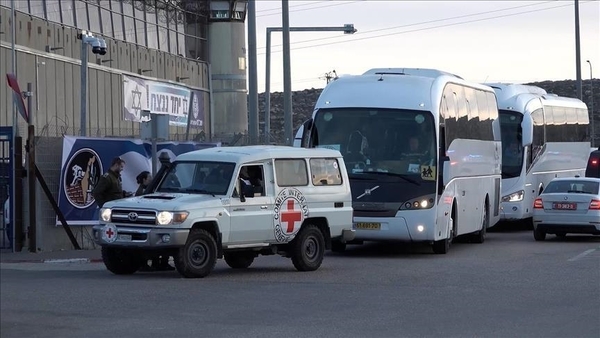

With the mediation of Egypt and Qatar and the support of the United States, the agreement went into effect on January 19, and includes 3 stages, each lasting 42 days. However, Israel is still delaying the start of negotiations for the second stage.

PALESTINE

Wed 19 Feb 2025 8:12 pm - Jerusalem Time

Families of Israeli detainees worried about change in negotiating team

As the Israeli government and Hamas prepare to implement several rapid steps to exchange prisoners, with bodies to be handed over on Thursday and prisoners to be exchanged on Saturday, amid the United States’ efforts to hold second-stage negotiations, the families of the Israeli detainees expressed their deep concern over Prime Minister Benjamin Netanyahu’s decision to dismiss Mossad chief David Barnea from leading the negotiating team and appoint Strategic Affairs Minister Ron Dermer in his place.


Dron Streiber, a recently released captive, said that what is needed now is increased efforts to release the kidnapped. Dermer is loyal to the state and to the kidnapped, but he is even more loyal to Prime Minister Netanyahu. If interests clash, he will side with Netanyahu against everyone else. Therefore, the change in the composition of the negotiating delegation raises suspicions about the real intentions.


On the other hand, an Israeli political official warned that Netanyahu’s decision to dismiss Mossad chief Barnea and Shin Bet chief Ronen Bar from the negotiating delegation with Hamas over a ceasefire and prisoner exchange agreement, and to appoint Minister of Strategic Affairs Ron Dermer as head of the delegation, is “politicizing the negotiations,” meaning serving Netanyahu’s domestic political interests, and that this could “obstruct the release of the kidnapped soldiers.”


"Dermer is a politician who enjoys Netanyahu's trust and carries out his instructions," the political official said, according to Haaretz on Wednesday. "Netanyahu repeatedly thwarted contacts over the deal last year and declared in an interview that he was not interested in a second stage. If he wanted to thwart the deal now, Dermer would be the one to do it without leaks to the media."


Netanyahu rejected this accusation, saying that he chose Dermer “because he wants a real negotiator who gives and takes, not gives and sneezes”... which is considered a dangerous incitement against the head of the Mossad.


Netanyahu added that Dermer will head the negotiating delegation on the second stage, and he will be accompanied by other representatives from the Mossad and the Shin Bet, including the former deputy head of the Shin Bet who has begun participating in the contacts on the second stage.


A person close to Netanyahu said that the decision to appoint Dermer, who is “the person responsible for the Trump file,” was made following “the US administration’s decision to withdraw the reins of managing the negotiations from Qatar and from CIA Director William Burns, and to appoint US President Donald Trump’s envoy to the Middle East, Steve Witkoff, in his place. There is no offense here to the security chiefs.”


Israeli media considered Netanyahu's decision to exclude Barnea from heading the delegation as evidence of the tension in relations between them, which was expressed through criticisms directed by the Prime Minister during closed discussions about the performance of the negotiating team in recent months.


Netanyahu has also been hinting for some time that he intends to dismiss Bar from his position as head of the Shin Bet and exclude him from the circle of decision-makers regarding the ceasefire agreement and prisoner exchange.


The first phase of implementing the agreement is expected to end next week, but the fate of starting negotiations on the second phase, its results and its implementation remains unknown, due to major differences between the positions of Israel and Hamas and the conflicting interests of the two sides.


As Haaretz reported, Netanyahu fears the collapse of his government because of the cessation of the war, so it is in his interest to resume it. He is looking for a way to accuse Hamas of being responsible for the failure of the negotiations.


Hence the impossible Israeli demands, as it stipulates not only that Hamas not remain in power in the Gaza Strip and that it disarm, but also that its leadership go into exile, and even in this case it refuses to give guarantees that it will not assassinate them abroad.


As is well known, Hamas rejects this and demands that the second stage lead to a permanent ceasefire and a complete end to the war, the withdrawal of the Israeli army from the entire Strip, and the granting of guarantees to stop the assassinations.


A senior Israeli official announced on Wednesday that Israel will begin negotiations in the coming days on the second phase of negotiations on exchanging prisoners and ending the war on the Gaza Strip. He said that Tel Aviv agreed to bring in a “small quantity” of caravans and heavy equipment to Gaza, as part of the new exchange understandings in the first phase. He added that Israel will destroy these caravans if fighting resumes.


He stressed that "this will not in any way affect the implementation of Trump's plan for voluntary migration and the establishment of a different Gaza, a plan to which Netanyahu is fully committed."


The official said in statements made during a press briefing that Israeli Prime Minister Netanyahu “achieved an important accomplishment” in the prisoners’ issue and “succeeded once again in reducing the time frame for implementing the first phase of the agreement.” He said: “If the agreement is fully implemented, Israel will have completed the first phase of the agreement and ensured the return of all the hostages at this stage, an accomplishment that many did not expect.”


He added that Israel "will begin negotiations in the coming days on the second phase, which will be a political phase that will address the conditions for ending the war," noting that "Israel will present its security demands during these negotiations, which are based on the goals of the war that were determined by the Ministerial Council for Security and Political Affairs (the Cabinet)," referring to "returning the hostages and eliminating Hamas."


He warned that Israel "will return to fighting in Gaza in a more violent and deadly manner if Hamas continues to refuse to implement the agreement."


He added, "If Israel is forced to return to combat, it will do so with the full support of the Trump administration, with a renewed stockpile of weapons, prepared forces, and a completely different approach to combat."

PALESTINE

Wed 19 Feb 2025 8:05 pm - Jerusalem Time

Suffocation injuries during the occupation's storming of Qusra, south of Nablus

This evening, Wednesday, a number of citizens suffered from suffocation, after the Israeli occupation forces stormed the town of Qusra, south of Nablus.


Local sources reported that the occupation forces stormed the town from the north, amid heavy firing of gas and sound bombs, which led to a number of citizens suffering from suffocation.


The village witnesses daily repeated raids by the occupation forces, during which they fire bullets, tear gas and sound bombs.

PALESTINE

Wed 19 Feb 2025 7:49 pm - Jerusalem Time

Abu Obeida: The bodies of the Bibas and Livshts families will be delivered tomorrow

The military spokesman for the Al-Qassam Brigades, Abu Obeida, announced that tomorrow, Thursday, the bodies of the Bibas family will be handed over, in addition to the body of the "Israeli" detainee Oded Lifshitz, as part of the current phase of the "Al-Aqsa Flood" prisoner exchange deal.


Abu Obeida confirmed that the detainees whose bodies will be handed over were all alive before the Israeli occupation aircraft targeted them with direct bombing, accusing Israel of deliberately bombing the places where prisoners are being held during the recent air strikes.


This step comes as part of the ongoing efforts to implement the terms of the prisoner exchange agreement between the Palestinian resistance and the occupation, amid ongoing negotiations on the next stages of the deal.


PALESTINE

Wed 19 Feb 2025 7:21 pm - Jerusalem Time

Palestine Monetary Authority and Ministry of Communications Sign Memorandum of Understanding to Facilitate Citizens’ Registration Procedures on “My Government” Platform

His Excellency the Governor of the Palestine Monetary Authority, Mr. Yahya Shunnar, and His Excellency the Minister of Communications and Digital Economy, Dr. Abdel Razek Natsheh, signed a memorandum of understanding to facilitate the procedures for registering citizens on the electronic government services platform “My Government”.


The memorandum of understanding was signed today at the headquarters of the Palestine Monetary Authority in the presence of Deputy Governor Mohammad Manasra, Undersecretary of the Ministry of Communications, Ms. Huda Al-Wahidi, and a number of department directors from both parties.


The memorandum aims to enable citizens to complete the registration procedures on the “My Government” application electronically in a safe and smooth manner, without the need to go to any of the relevant offices.


The Governor of the Monetary Authority stressed that this step comes within the Monetary Authority's strategy to enhance digital transformation and facilitate citizens' access to electronic services, pointing out the importance of integration between government, financial and banking institutions in developing the digital infrastructure and improving the quality of services provided to citizens.


For his part, the Minister of Communications explained that this cooperation falls within the national efforts to support digital transformation and facilitate financial and administrative transactions for citizens electronically, in line with the government’s strategic directions in developing the technology sector and enhancing digitization.


ARAB AND WORLD

Wed 19 Feb 2025 6:37 pm - Jerusalem Time

France calls on Israel to withdraw completely from southern Lebanon

The French Foreign Ministry announced that Paris "took note" on Tuesday evening of the withdrawal of Israeli forces from villages in southern Lebanon, recalling the "necessity" of a complete withdrawal "as soon as possible," amid Lebanese diplomatic pressure on influential countries to push Israel toward a complete withdrawal from Lebanese territory.


The French Foreign Ministry confirmed in a statement that "France has taken note that the Israeli Defense Forces are still present in five locations on Lebanese territory." The statement added that France "recalls the need for the complete withdrawal of the Israeli army from Lebanese territory, as soon as possible, in accordance with the terms of the ceasefire agreement" in effect between the pro-Iranian Hezbollah and the Hebrew state, which was concluded at the end of November 2024.


Lebanon announced on Tuesday that it will continue its diplomatic contacts with France and the United States in order to pressure Israel to complete its withdrawal from the south of the country, considering that keeping its forces in five strategic points is an “occupation.”


With the deadline for implementing the withdrawal expiring, the Israeli army announced its intention to remain temporarily in five “strategic” points extending along the southern border of Lebanon, which allow it to supervise the border towns in southern Lebanon and the areas opposite on the Israeli side to ensure “that there is no immediate threat.”


US National Security Advisor


Lebanese President Joseph Aoun told US National Security Advisor Mike Walt that it is necessary to end the Israeli occupation of the remaining points in Lebanon and complete the implementation of the ceasefire agreement concluded with Israel under US mediation. The Lebanese presidency’s account on the “X” platform quoted Aoun as saying: “It is necessary to end the Israeli occupation of the remaining points and complete the implementation of the November 27, 2024 agreement to ensure strengthening stability in the south and implementing Resolution 1701.”


The presidency added in a statement on the "X" platform that the US National Security Advisor "assured President Aoun that the US administration is following up on developments in the south, after the partial withdrawal of Israeli forces and their continued occupation of a number of border points."


The American official praised the role played by the Lebanese army in deploying in the locations from which the Israeli forces withdrew, and stressed the importance of the Lebanese-American partnership and the need to strengthen it in all areas.


In the same context, Lebanese Minister of Foreign Affairs and Emigrants Youssef Raji requested, on Wednesday, the support of the European Union to complete the full Israeli withdrawal from Lebanese territory, in implementation of the Cessation of Hostilities Agreement and UN Security Council Resolution No. 1701, during his reception of the European Union Ambassador to Lebanon, Sandra de Waal.