PALESTINE

Tue 25 Feb 2025 6:46 pm - Jerusalem Time

A young Palestinian was killed and several others were injured during clashes with the occupation in Nablus and Tubas

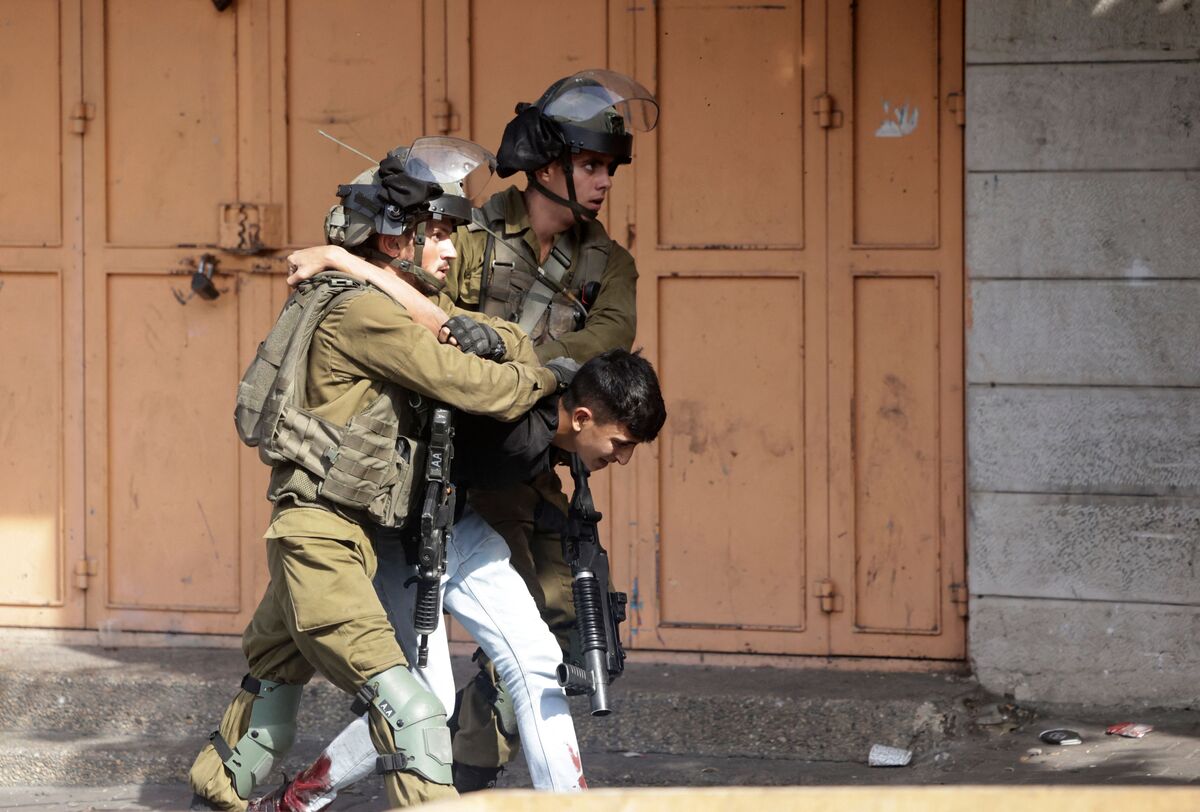
A young Palestinian man was killed and 6 others were injured with live bullets, during the Israeli occupation forces’ storming of the western cemetery area in Nablus, where the injuries varied between minor and moderate, in addition to recording a serious injury with live bullets in the same area.


The occupation forces launched a campaign of raids on several residential apartments in a building near the western cemetery, which led to the outbreak of violent clashes in the area.


In the Al-Masakin area east of Nablus, clashes erupted between Palestinian youths and the occupation forces, resulting in the injury of a young man with live bullets. Two new injuries were also recorded in the vicinity of the western cemetery in central Nablus.


Infant gas injury

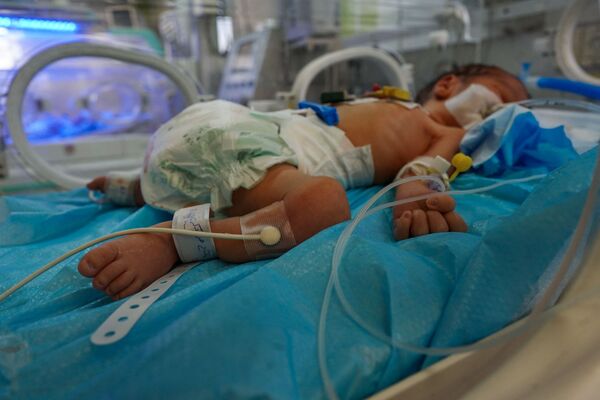
In a serious development, a 7-month-old baby was injured after inhaling tear gas during the clashes. She was transferred to the hospital for treatment, and her entire family was evacuated from the damaged house.


In Tubas, Palestinian Red Crescent crews confirmed that they received a 20-year-old man with special needs, after he was stabbed in the abdomen by settlers in the Baziq area, and he was transferred to the hospital to receive treatment.

ARAB AND WORLD

Tue 25 Feb 2025 5:01 pm - Jerusalem Time

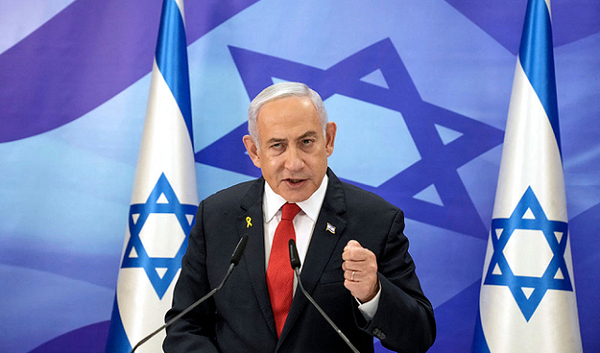
Netanyahu: We will give Gazans the option to emigrate, we will remain in the cities of the West Bank and Syria, and we thank Trump

Israeli Prime Minister Benjamin Netanyahu confirmed that the occupation forces are seeking to give the residents of Gaza the option to leave the Strip, stressing his support for US President Donald Trump's plan that allows freedom of choice to leave and create a "new Gaza."


Netanyahu added in statements on Tuesday: "We will remain in the West Bank camps as long as necessary, and in southern Syria for the foreseeable future."


Netanyahu pointed out that the occupation forces have dealt strong blows to Iran, stressing that "our main goal is to prevent it from possessing a nuclear weapon."


He pointed out that "victory is now within our reach, and we will achieve all our goals," adding: "A year ago I said that we would change the face of the Middle East, and this is what we are doing now."


Netanyahu expressed his appreciation for President Trump's support, saying: "I thank him for his help in freeing the detainees and his direction to send us essential weapons," and he also praised the role of the American Israel Public Affairs Committee (AIPAC) in achieving the occupation's goals.

ARAB AND WORLD

Tue 25 Feb 2025 4:51 pm - Jerusalem Time

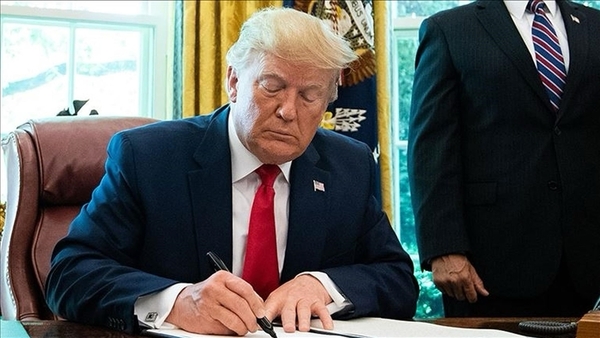
Trump cancels Biden memo to Israel to be cautious about how US weapons are used

Reuters reported on Monday, citing US officials and a source familiar with the decision, that the Trump administration had canceled an order issued under former President Joe Biden directed at Israel that required the Israeli government to report potential violations of international law related to weapons provided by the United States to allies.


National Security Memorandum 20 (NSM-20), signed by Biden last year, required all countries receiving weapons from the United States to commit in writing that they would not use them to target civilians or restrict humanitarian aid.


States were already obligated to commit to using weapons in accordance with international law, but the concept of a written commitment was new as was the memorandum's directive for the State Department to report to Congress on the matter.


Biden agreed to sign the memorandum amid pressure from progressive Democrats who were specifically looking to limit US military aid to Israel, because it is used to harm civilians in Gaza.


A State Department report issued several months after the memo avoided reaching a conclusion that Israel was actually misusing U.S. security assistance, angering the progressive lawmakers behind NSM-20.


The report, issued in May 2024, said that "Israel may have violated international humanitarian law, but US officials were unable to identify specific instances of violations that harmed civilians due to the chaos of war."


The Trump administration was supposed to submit a report to Congress in the coming months on its own assessment of Israel's behavior.


The Washington Post cited a February 21 order from White House National Security Adviser Michael Waltz to cancel the NSM-20.


The State Department referred questions to the White House, which did not immediately respond to a request for comment.


U.S. Sen. Chris Van Hollen (D-Md.), a leading advocate of congressional oversight of U.S. arms sales, said the decision to rescind the memo was “shameful.”


“It is an affront to our national security, universal human rights, and our standing around the world,” Van Hollen said in a statement.


“This move also undermines the right of American taxpayers to ensure that their dollars are used in accordance with our laws and national interests,” he added. “It is yet another clear example of Trump’s blatant disregard for American values. This is not America first — it is America in decline.”


President Trump signed an executive order calling for a review of all national security memoranda issued under Biden upon his entry into the White House on January 20, 2025. He also reversed Biden’s previous decision to freeze a shipment of 2,000-pound bombs to Israel, which had been in effect since last spring due to concerns that the Israeli occupation army would use them in densely populated areas and cause unnecessary civilian harm.

PALESTINE

Tue 25 Feb 2025 4:18 pm - Jerusalem Time

WHO: Damages to the health sector in Gaza and the West Bank exceed $7 billion since October 2023

The World Health Organization announced that the damage to the health sector in Gaza and the West Bank since the start of the Israeli occupation aggression in October 2023 exceeded $7 billion, distributed between reconstruction costs and requirements for providing health services.


In a media briefing via video link from Geneva, the WHO Representative in the occupied Palestinian territory, Rick Peeperkorn, said that 772 health facilities were completely or partially destroyed, which constitutes:


95% of hospitals


91% of private health facilities


88% of public health centers


In addition to the damage to many pharmacies and clinics.


He pointed out that the losses from the destruction of the health infrastructure amounted to 1.3 billion dollars, including 809 million dollars due to the destruction of hospitals, with the Gaza Strip bearing the largest share of these losses at 682 million dollars, followed by North Gaza ($112 million) and Khan Yunis ($132 million).


Human losses and a crisis in health services

According to the report, the total losses in the health sector in the Gaza Strip amounted to $6.3 billion due to the interruption of services and the shortage of medical personnel, as the sector lost 1,700 health workers, which led to production losses estimated at $2.7 billion.


The increased health burden from injuries, infectious diseases, malnutrition and psychological problems caused an additional $3.2 billion in losses, of which $2.5 billion was directly related to injuries and deaths.


Continuing financial losses

In addition to the material and human damage, the report indicated that health facilities lost $8.6 million annually as a result of the cessation of direct payments from patients, which increases the challenges facing the health system in providing services to those in need.


The organization stressed that rebuilding the health system in Gaza and the West Bank requires urgent international support, in light of the continued deterioration of the humanitarian and medical situation.

PALESTINE

Tue 25 Feb 2025 3:58 pm - Jerusalem Time

Popular National Conference for Jerusalem: Demolitions in the Holy City Aim to Forcefully Displace Citizens

The General Secretariat of the Popular National Conference for Jerusalem denounced the fierce Israeli attack on buildings and facilities in Jerusalem, considering it a systematic occupation policy aimed at forcibly displacing people from the city.


The General Secretariat condemned, in an important statement issued today, Tuesday, the Israeli occupation authorities’ demolition of two mobile homes in the Al-Bustan neighborhood in Silwan, belonging to citizens from the Ayed and Al-Ruwaidi families, as well as the demolition of a house and several agricultural facilities in the town of Al-Issawiya, bulldozing lands and walls, and uprooting trees, under the pretext of building without a permit.


The General Secretariat said that when Israel uproots trees, it wants to uproot the Palestinian person as a memory and identity from the place where he lives, and that the excuse of not having a permit is a weak excuse because the occupation municipality does not originally issue building permits to Jerusalemites and imposes impossible conditions on them to obtain them.


The General Secretariat confirmed that this policy is taking place amidst Palestinian, Arab and international attention being directed towards what is happening in the West Bank in terms of a comprehensive war on the camps, the aim of which is to liquidate the refugee issue, as well as the repercussions of the Israeli war on our people in the Gaza Strip, who are suffering from a lack of food, medicine and shelter after the Gaza Strip became a thing of the past following a war that lasted for about 15 consecutive months.


The Secretariat of the Popular National Conference for Jerusalem called on the international community and local and foreign human rights organizations to pay attention to the silent war taking place in Jerusalem, targeting the Palestinian people and all their property with the aim of forcing them to leave and transforming the holy city into a Jewish majority population.


In its statement, it noted that the sons of our Palestinian people in the holy city will remain steadfast and steadfast in their city and villages despite all the Israeli arbitrariness and direct aggression against people, stones, trees, and Islamic and Christian sanctities, stressing that this steadfastness is a characteristic of the Jerusalemite who considers himself a defender and protector of Jerusalem on behalf of the entire Arab and Islamic nations. The General Secretariat stressed that strengthening the steadfastness of the people of Jerusalem requires a serious and sincere Arab and Islamic stand with our people in the capital, Jerusalem, and in all parts of the homeland, as Palestine is witnessing the most dangerous fateful stages for the homeland and the cause.

ARAB AND WORLD

Tue 25 Feb 2025 3:02 pm - Jerusalem Time

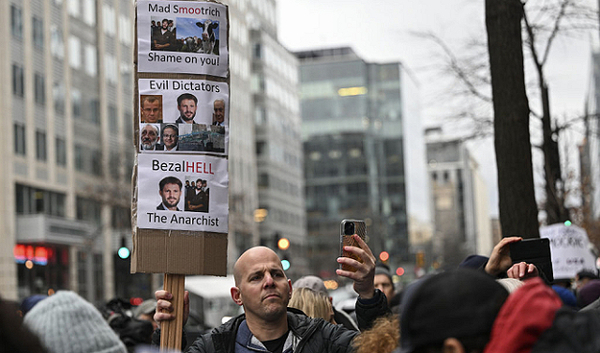
After being boycotted by the Biden administration: Smotrich visits Washington at the invitation of his American counterpart

The leader of the fascist Religious Zionism party and Israeli Finance Minister Bezalel Smotrich will visit the United States next week at the invitation of US Treasury Secretary Scott Bessent, for the first time since his appointment to the position and after the Biden administration boycotted him in previous years.


Israeli Foreign Minister Gideon Sa'ar will also visit Washington next week, meeting with his US counterpart, Marco Rubio.


Upon beginning his term, Besant spoke by phone with Smotrich, during which the latter spoke of the “deep and strategic friendship between Israel and the United States, and the mutual commitment of the two countries to advance shared values in order to strengthen the economy.”


Smotrich added that he "expects to work in close cooperation with the US Treasury Secretary with the aim of deepening and expanding economic cooperation between the two sides to their benefit," and invited Bessent to visit Israel.


Sa'ar will visit Washington, where he will meet with Rubio, on Wednesday of next week, as well as meet with other American officials, and will also visit New York.


Smotrich visited the United States in March 2023, while the Biden administration announced at the time that its representatives would not meet with him, due to his fascist statements, including that “Huwara should be wiped out,” where settlers carried out terrorist attacks.

PALESTINE

Tue 25 Feb 2025 1:53 pm - Jerusalem Time

Military reinforcements sent to Tulkarm and citizens forced to evacuate their homes in Nour Shams

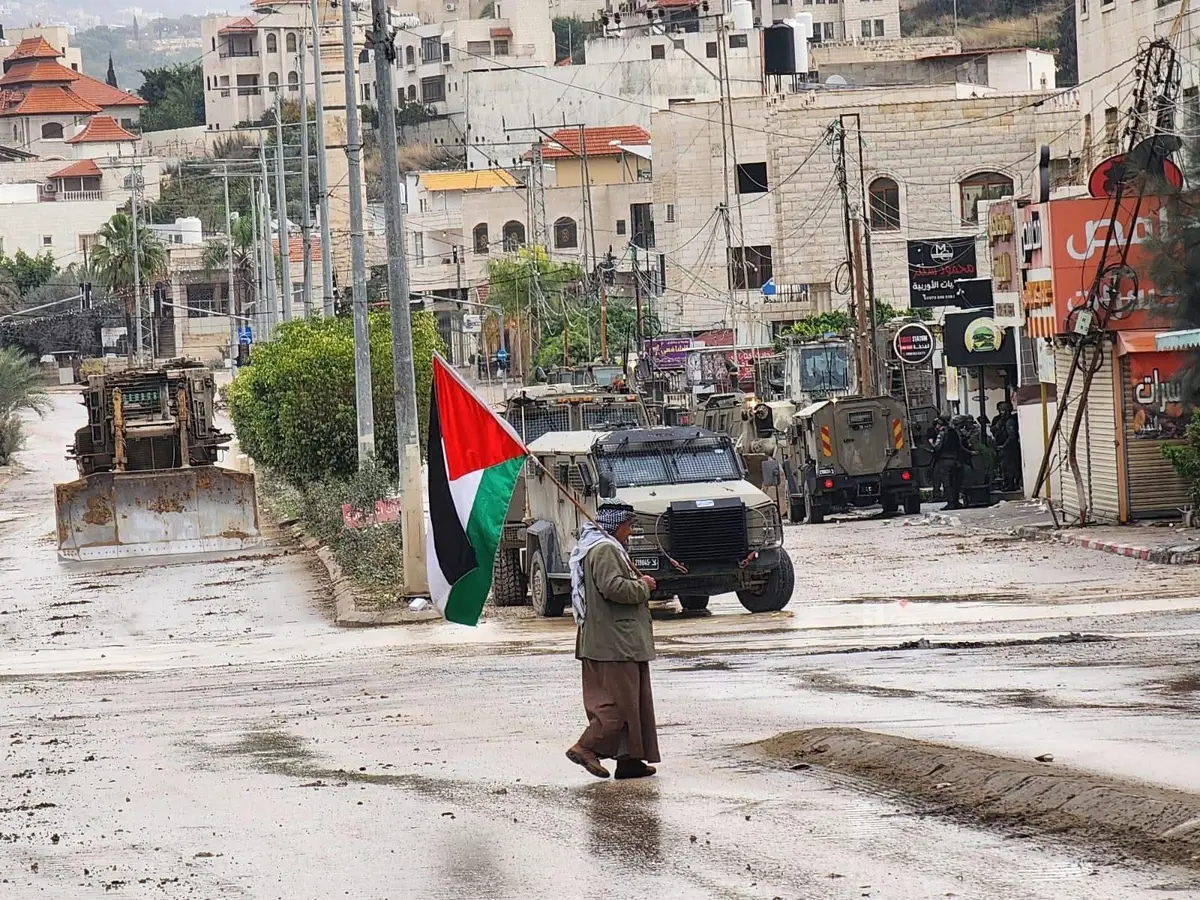
Today, Tuesday, the Israeli occupation forces sent military reinforcements to the city of Tulkarm and its two camps, amidst reconnaissance aircraft flying overhead, as the thirtieth day of the aggression against it entered.


Local sources reported that the occupation forces' vehicles roamed the city's streets and were stationed at several intersections, obstructing the movement of vehicles, especially in the vegetable market, while raiding the Al-Adawiya commercial building on the street of the Martyr Thabet Thabet Governmental Hospital, and searching it, noting that they had seized it since the beginning of the aggression and turned it into a military barracks for more than two weeks.


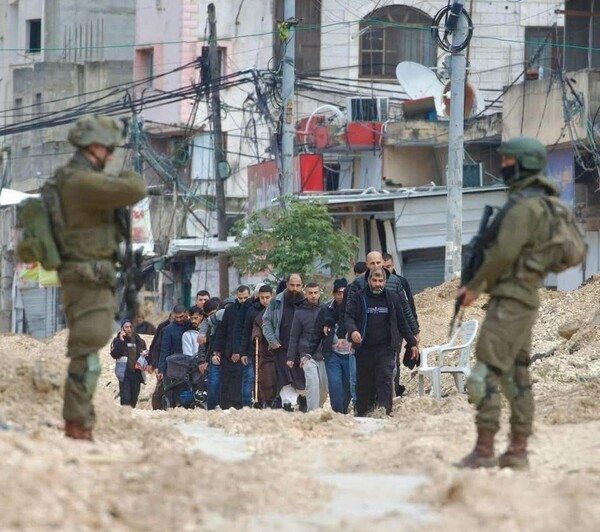
In the same context, the occupation forces raided a number of homes in the Nour Shams camp, which has been under siege for 17 days, specifically in the Jabal al-Salihin neighborhood, after blowing up their doors, amid live bullets, and forced the citizens to leave them under threat of arms.


Eyewitnesses said that the occupation soldiers raided the house of the Masharqa family in Jabal Al-Salihin, and forced its residents to leave at gunpoint, under the pretext that the street where the house is located and other houses next to it would be a passage for tanks to pass through.


The occupation forces caused complete destruction to the infrastructure in Nour Shams camp, including electricity, water, sewage and communications networks, in addition to the complete and partial destruction of property, including homes and shops, especially in the Al-Manshiya neighborhood located on Nablus Street at the entrance to the camp.


The occupation's aggression forced more than 5,000 citizens to be forcibly displaced from their homes in Nour Shams camp alone.

PALESTINE

Tue 25 Feb 2025 1:49 pm - Jerusalem Time

20 families in Silwan and Batn al-Hawa neighborhoods are threatened with forced displacement

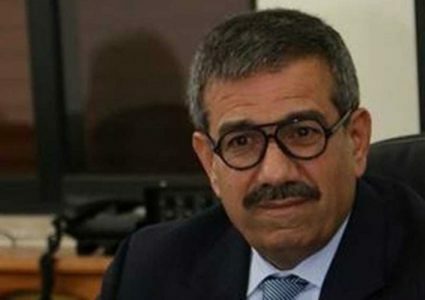
Jerusalem Governorate Legal Advisor Medhat Diba said that twenty families in the Silwan and Batn al-Hawa neighborhoods in occupied Jerusalem are threatened with forced displacement.


In an interview with Voice of Palestine Radio, Diba pointed out that the "Israeli judiciary" practices "legal terrorism" and implements political agendas; in an attempt to circumvent the laws to control the holy city, in addition to issuing many rulings in absentia - without the knowledge of their owners - and implementing them by force, as happened with the Ghaith family.


He pointed out the involvement of the colonial Ateret Cohanim association in this crime against families in the occupied neighborhoods of Jerusalem.

PALESTINE

Tue 25 Feb 2025 1:45 pm - Jerusalem Time

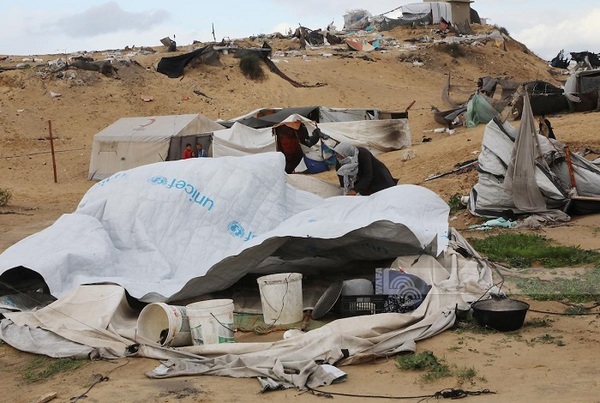
35,000 families in Gaza suffer from severe shortage of basic supplies

Director of Medical Relief in Gaza, Mohammed Abu Afash, said that the suffering of citizens in the Gaza Strip is worsening with the severity of cold waves, heavy rains, and the severe shortage of basic supplies, such as blankets, tents, and heating devices, which has caused the death of children due to the cold.


Abu Afash pointed out, in an interview with Voice of Palestine Radio, that there are 35 thousand families in the Gaza Strip who are still suffering as a result of the severe shortage in providing basic necessities.


He added that the Gaza Strip needs 60,000 caravans and 200,000 tents to provide relief to citizens, and he appealed to international institutions to pressure the occupation to allow the entry of aid.

PALESTINE

Tue 25 Feb 2025 11:17 am - Jerusalem Time

Israeli occupation demolished 40 buildings and destroyed 300 shops in Tulkarm camp

The head of the Popular Committee for Services in Tulkarm Camp, Faisal Salama, said that the occupation forces are still occupying and besieging Tulkarm Camp for the thirtieth consecutive day, displacing its residents under threat of arms, and wreaking havoc in homes, streets, alleys, and all its facilities.


He added in a press statement today, Tuesday, that the occupation, during its ongoing aggression, completely destroyed no less than 40 residential buildings, including 100 residential apartments, burned no less than 10 homes, destroyed no less than 300 shops, and hundreds of homes partially, and vandalized the belongings of hundreds of others inside the camp.


Salama explained that the occupation forces, in a dangerous precedent, paved a road that penetrated the depth of four neighborhoods in Tulkarm camp (starting from the Balawneh neighborhood, passing through the Al-Hamam and Al-Sawalma neighborhoods, and reaching the services neighborhood on Dhnaba Street), which led to the demolition of 26 buildings and completely leveling them to the ground, and causing severe damage to all the surrounding buildings and facilities.


He stated that the occupation had forced more than 12,000 residents of Tulkarm camp to forcibly move, by threats and intimidation, to the city, suburbs and neighboring villages, while the educational process remained suspended. Consequently, 2,000 male and female students studying in the four UNRWA schools in the camp were deprived of education for more than a month, in addition to the suspension of health services for the camp’s residents.


The ongoing aggression on Tulkarm camp has also led to the complete and unprecedented destruction of the infrastructure, including electricity, water, sewage, communications, and internet networks.


He pointed out that the occupation seeks - as is clear - to achieve political and media goals, far from the security and military goals that it claims, and the most important thing it aims for is to strike the refugee issue and erase it, by killing the symbolism of the camp by re-engineering the architectural and demographic nature of the camp, and emptying it of its residents, or reducing their number to a minimum, by destroying and burning the largest number of homes, and eliminating basic services, which makes life inside the camp impossible.

PALESTINE

Tue 25 Feb 2025 10:54 am - Jerusalem Time

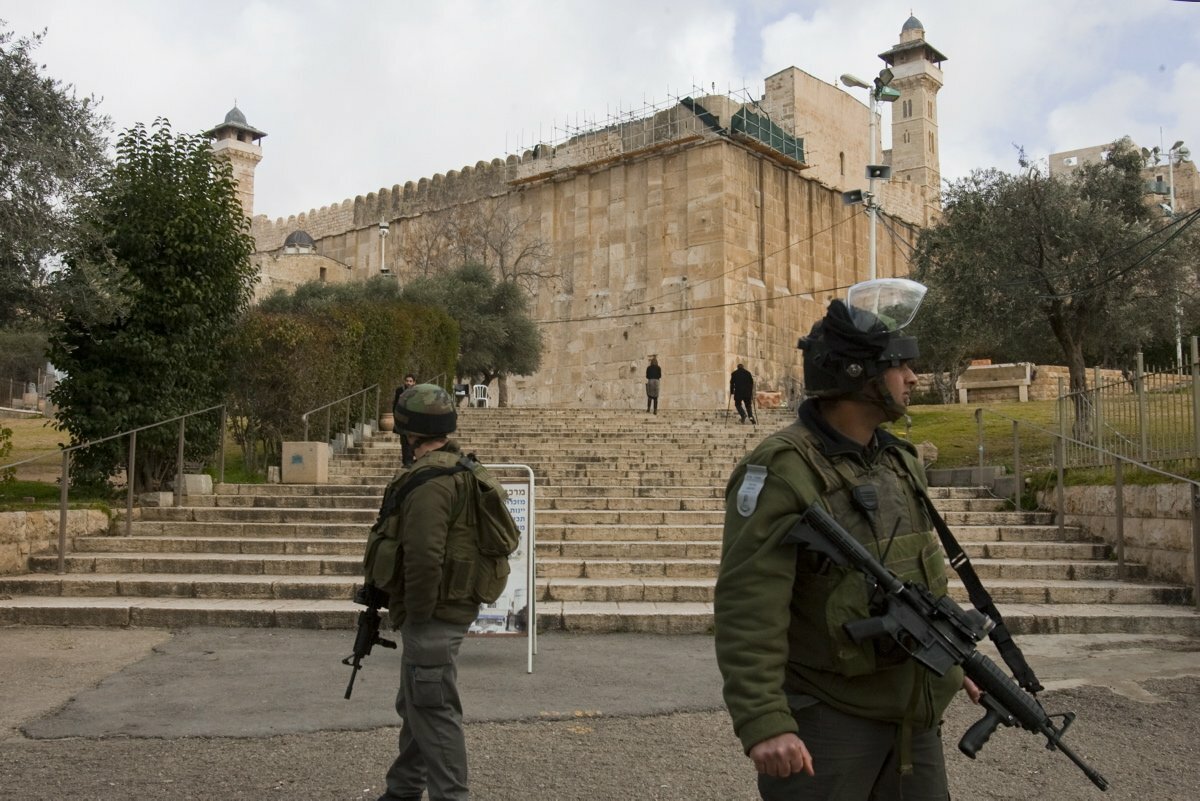
Awqaf: The Ibrahimi Mosque is still subjected to serious violations

The Ministry of Endowments and Religious Affairs said that the Ibrahimi Mosque is still being subjected to serious and increasing violations by the Israeli occupation forces and settlers.


It added in a statement issued today, Tuesday, on the occasion of the 31st anniversary of the Ibrahimi Mosque massacre, that it is a Waqf property for Muslims alone and no decision, whatever it may be, will change this status, and that the Waqf is the one with the authority, control, and sovereignty over the mosque from the religious, administrative, and legal perspectives, which is what UNESCO confirmed in its decision to add the Ibrahimi Mosque to the World Heritage List.


The Awqaf pointed out that the Ibrahimi Mosque was subjected to 197 violations last year by the occupation and its settlers, including the occupation preventing the call to prayer from its minarets 674 times, and closing it to worshippers for 10 full days, while dozens of violations and attacks were carried out in it in various forms, such as excavation and inspection work, preventing reconstruction committees from carrying out their duties, and other attacks that indicate the extent of the fierce occupation attack on our holy sites.


She continued: The number of worshipers in the Ibrahimi Mosque during the year 2024 was only 236,530 worshipers. This number is considered less than expected due to the strict measures imposed by the occupation, including the closure of the entrances to the mosque since October 7, 2023. The occupation has intensified the checkpoints around it, and closed all its entrances, leaving only the market door, which has increased the difficulty of Palestinians reaching it. As a result of these measures, the occupation has created a state of fear among worshipers, especially with the continuation of the incursions and threats. This has obstructed the arrival of large numbers of worshipers.


She added that in a provocative move to Muslims’ feelings, and in a blatant violation of the sanctity of the religious site, 3,381 soldiers from the occupation army stormed the Ibrahimi Mosque during the past year. While the mosque received only 12,663 tourists during 2024. This limited number is partly due to restrictions on movement and the continued closure of the entrances to the mosque.


The Awqaf called on international and legal institutions to hold the occupation accountable for its crimes against mosques and places of worship and to expose these crimes in the media and internationally to deter it from all its crimes.


She also called on citizens to be constantly present at the Ibrahimi Mosque, to activate the guard there, and to develop a program for religious, cultural and social activities that would lead to the presence of Muslim worshippers there around the clock.

PALESTINE

Tue 25 Feb 2025 10:19 am - Jerusalem Time

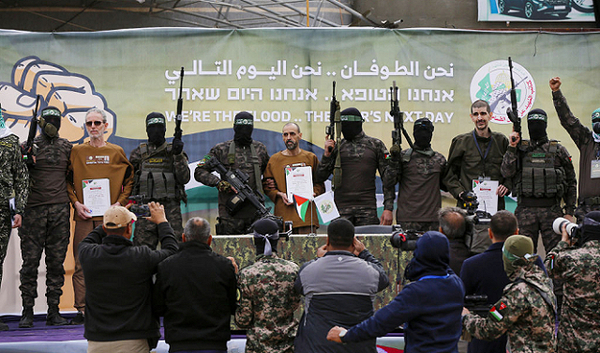
Netanyahu seeks to extend the agreement and efforts to release the seventh batch of prisoners

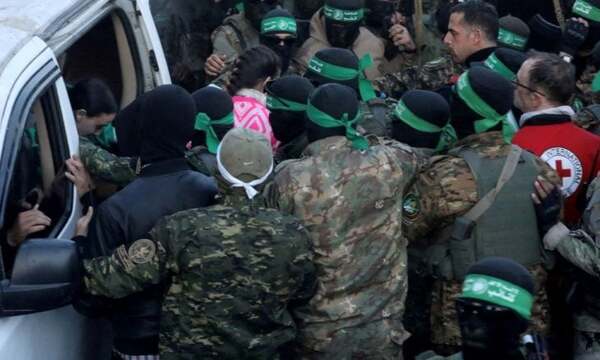
On the 38th day of the ceasefire agreement in Gaza, efforts continue to release the seventh batch of Palestinian prisoners whom Israel refused to free in exchange for Hamas releasing 6 Israeli hostages, while Prime Minister Benjamin Netanyahu seeks to extend the first phase of the agreement.


Netanyahu wants to extend the first phase of the agreement for an additional 42 days, and is demanding that America pressure Hamas to bring forward the date for the release of the bodies of 4 kidnapped Israelis before Thursday.


The Israeli Prime Minister has obstructed mediators' initiatives to resolve the deal crisis following Israel's decision to freeze the release of more than 600 Palestinian prisoners.


US President Donald Trump's Middle East envoy Steve Witkoff announced that he will visit the region this week to negotiate a ceasefire agreement and a prisoner exchange deal.


In an interview with CNN, Witkoff stressed the need to extend the first phase, saying he would head to the region this week to negotiate this.

PALESTINE

Tue 25 Feb 2025 9:54 am - Jerusalem Time

A month of Israeli occupation aggression on Tulkarm and 36 days on Jenin

The Israeli aggression on the city of Tulkarm and its camp has entered its first month, and on the Nour Shams camp its 17th day, in light of an unprecedented military escalation and a tight siege that has caused complete destruction to the infrastructure and property, and resulted in the death of 12 citizens, both male and female, in addition to the injury and arrest of dozens.


Since the beginning of the aggression, the occupation forces have imposed a complete siege on the Tulkarm and Nour Shams camps, coinciding with extensive raids on the city and a siege on its hospitals, during which homes were raided and searched and turned into military barracks, in addition to bombing, burning and demolishing dozens of them, and expelling their residents at gunpoint, which led to a large wave of displacement among the residents of the two camps, exceeding 15,000 displaced persons, who were distributed in shelters and the homes of their relatives in the city, its suburbs and its villages.


The aggression also caused extensive destruction of infrastructure, including electricity, water, sewage and communications networks, which greatly affected the lives of the residents who remained in some neighborhoods of Tulkarm and Nour Shams camps, and exacerbated their suffering due to the severe shortage of food, water, medicine and baby milk.


The aggression resulted in the martyrdom of 12 citizens, including a seven-year-old child, two female citizens, one of whom was eight months pregnant, and the last of whom was a citizen who died last Friday from his serious injuries after a military vehicle hit his vehicle on Nablus Street in the city.


More than 20 citizens, both men and women, were injured, some as a result of live bullets and shrapnel, and others as a result of being hit by military vehicles.


During the ongoing aggression, the occupation forces arrested at least 165 citizens, in addition to dozens who were subjected to field investigation, according to what the Palestinian Prisoners Club reported.


**Jenin**

The Israeli occupation continues its aggression on the city of Jenin and its camp for the thirty-sixth consecutive day, leaving 27 dead, dozens of injuries, and arrests, amidst widespread destruction of property and infrastructure.


The occupation forces withdrew this morning, Tuesday, from the town of Qabatiya after a 48-hour raid, which left two injuries, one of them serious, the arrest of a number of citizens, massive destruction of citizens’ property and shops, the destruction of water and electricity networks, the bulldozing of infrastructure, and the destruction of the town’s main vehicle garage.


The occupation also destroyed a bus belonging to the Orphan Care Society in the town, and the raid led to the closure of the vegetable market and its being put out of service, while the occupation raided dozens of homes and turned some of them into military barracks.


Yesterday, Monday, the occupation forces arrested three citizens from their home in Jenin camp, and burned the homes of citizens near the camp club.


The number of displaced people from the camp reached 20,000, and about 430 homes were completely or partially destroyed, 2,000 students were prevented from attending their schools, and about 178 citizens from the city and the camp were arrested since the beginning of the aggression.


This morning, the occupation forces arrested the freed prisoner Bilal Al-Sharqawi from the town of Zababdeh after raiding his home in the town.


The extensive and massive destruction left by the occupation bulldozers inside the camp’s neighborhoods is revealed, as the occupation destroyed citizens’ homes and properties, and greatly changed the camp’s landmarks and geography, and opened roads and streets in some neighborhoods, and expanded streets in other neighborhoods.


For the 36th day, the occupation continues to seize a number of citizens’ homes and turn them into military barracks, especially in buildings close to and overlooking Jenin camp, while residents of the homes and buildings close to them face difficulties in entering, exiting and moving due to the constant presence of snipers, which puts their lives at risk. According to sources in the Jenin Municipality and the Jenin Camp Services Center, the occupation has completely demolished about 120 homes, in addition to partially demolishing dozens of homes and properties inside the camp.


According to the Palestinian Prisoners Club, nearly 200 cases of arrest and detention of citizens have occurred in the city of Jenin since the beginning of the aggression 36 days ago.


Yesterday, the occupation stormed the town of Burqin, west of Jenin, and destroyed the infrastructure surrounding the Al-Abara area, while the occupation continues to expand its aggression and storm towns and villages in the Jenin Governorate on an almost daily basis, launching arrest campaigns and destroying the infrastructure there.

OPINIONS

Tue 25 Feb 2025 9:18 am - Jerusalem Time

Targeting Al-Aqsa Mosque...an attack on an entire nation

op-ed "AlQuds" dot com

op-ed "AlQuds" dot com

Opinion Writer

The chapters of the Israeli conspiracy reach their peak when it is thought of tightening the noose on the worshipers coming to the blessed Al-Aqsa Mosque in the month of Ramadan, the month of worship and recitation, the month of forgiveness and contentment, but the Netanyahu government and the Israeli security services have another opinion.


Yesterday, the Israeli media reported a recommendation made by the police, the Shin Bet and other security agencies to allow only ten thousand worshippers to perform Friday prayers inside the holy courtyards of Al-Aqsa Mosque, and that the Israeli government would make the final decision in the near future.


In the details of the recommendation, the police say that only men over 55, women over 50, and children under 12 will be allowed to enter Al-Aqsa to perform prayers, meaning that more than two-thirds of citizens wishing to perform the rituals and rites of the holy month will be deprived.


Where is the freedom of worship in such a decision, if it is actually implemented by the Israeli government, and its police, which always announces in its statements before and during religious occasions, that it is keen to provide comfort and calm and maintain public order for the security and safety of worshippers, whether they are Muslims, Christians or Jews, and that it guarantees freedom of worship, or is this propaganda for media consumption only, and for a purpose in Jacob’s soul?


The blessed Al-Aqsa Mosque was built on purely Arab Islamic Waqf land, and Israel and its settlers have nothing to do with it, neither directly nor indirectly. It is not permissible for any party, government, party, faction, or minister to attack the mosque of Muslims, their Qiblah, and their historical destination. The Israeli government must avoid making decisions based on political grounds, in revenge against the Palestinians and as punishment for them in light of the ongoing war against our people everywhere. It must know very well that our people are aware of the nature of the plans and conspiracies being hatched against Al-Aqsa Mosque, which is considered a red line, crossing which means declaring war, not only against our Palestinian people, but against the entire Islamic nation.


Isn't it enough that Al-Aqsa Mosque suffers from unjust Israeli measures, led by settlers' raids and Talmudic rituals, their violation of the sanctity and holiness of the mosque, the actions of police officers against worshippers, and the campaign of arrests and deportations of worshippers, sheikhs and imams, most notably Dr. Sheikh Ikrima Sabri, Secretary of the Pulpit? We are now faced with chapters of a new conspiracy targeting one of the holiest and purest places on earth, during the greatest month, for flimsy reasons, arguments and justifications.


Palestinians are determined to perform prayers and worship rituals throughout the holy month from the early hours of dawn until the end of the Tarawih prayers. This is an acquired right guaranteed by religious and heavenly laws. Israel and its government must respect privacy in this sensitive aspect, instead of violating the sanctity of religion and Muslims.


Confronting such a decision comes by staying at the blessed Al-Aqsa Mosque and making the pilgrimage to it, to thwart the opportunity for the Israelis and their ambitions, while emphasizing the necessity of taking appropriate decisions by the Hashemite Kingdom of Jordan, as the guardian of the Christian and Islamic religious sanctities in the city of Jerusalem, in order to preserve the firm Jordanian position that stems from the fact that the city is an occupied land, and the responsibility to protect it and its sanctities is an international responsibility in accordance with international law and resolutions.

OPINIONS

Tue 25 Feb 2025 9:16 am - Jerusalem Time

Trump 2025.. Features of the Second Presidency

James Zogby

James Zogby

Opinion Writer

There is one difference between Donald Trump’s first term and his return to the White House in 2025: This time, he appears more in control and prepared. Despite the radical measures he has taken in his first weeks in office, his opposition seems more muted and less focused.


In 2016, Trump, despite his victory, was not yet the master of the Republican Party, finding the party’s “old guard” insufficiently conservative, a personal embarrassment, and too volatile to lead the venerable party. The Make America Great Again movement had not yet been able to mobilize its followers to pressure members of Congress to fully embrace Trump and his agenda.


But that has clearly changed. Trump’s control over the Republican Party, its apparatus, and its members in Congress is now complete. His opponents have been silenced or disappeared from the scene.


In 2017, to shore up confidence in his administration, he appointed some senior and respected figures to key positions, some of whom have sometimes served as a buffer against his tendency toward unpredictable behavior.


The White House team and cabinet in 2025 are more volatile and less qualified for their positions than were the 2017 appointments. The first and foremost qualification now is long-term loyalty to Trump—or sufficient apologies and groveling for any past opposition.


The most important difference between Trump 2017 and Trump 2025 is a clearer agenda and a greater willingness to enforce it.


When Ronald Reagan won in 1980, he arrived in Washington with a well-crafted plan, designed by the Heritage Foundation, to reshape the federal government along conservative lines. In 2017, Trump entered the White House with a host of ideas and complaints, but no clear plan for implementation.


In 2025, there will be many of the same ideas, complaints, and actions as there were in 2017, but now they will be bolder, more thoughtful, and backed by broad implementation plans prepared by the same Reagan-era Heritage Foundation.


Just as Heritage helped recruit hundreds of conservatives for the Reagan administration, this year it boasts tens of thousands of vetted individuals waiting to serve in the new Trump administration.


Trump and his “missions man,” Elon Musk, are moving to radically change the institutions and workforce of the federal government. Entire agencies have been shuttered, and tens of thousands of employees have been fired or furloughed, paving the way for a Trump takeover in 2025 that he failed to achieve in 2017.


Another difference is that Trump’s election in 2016 was met with a massive wave of mass protests—from advocates for women’s rights and immigrants, to supporters of stricter gun laws, to those demanding an end to police violence. The protests after last November’s election lacked the numbers and emotional intensity of Trump’s first term.


The threat to democracy posed by Trump 2025 and the Trump/Musk “reform” approach is clear. But far less attention has been paid to the public’s reaction to these developments. A recent Washington Post poll suggests that American voters remain as divided as ever—45 percent approve of Trump’s performance, while 53 percent disapprove. Significantly, more people “strongly disapprove” than “strongly approve.”


So why the lack of a public backlash? Trump and Musk’s “shock and awe” attacks on so many targets in just a few days have left the opposition confused and demoralized. Add to that the lack of Democratic leadership. One Democratic Party elected leader explained that his party’s approach is simply to propose amendments to Trump’s budget bills to show that the GOP wants to cut taxes for the rich while imposing greater burdens on the working class. This, he said, would lead to Trump’s unpopularity, which would enable Democrats to retake Congress in 2026.


Ultimately, polls show that while Trump’s supporters like his bold actions, they want lower prices and a curb on inflation, as Trump promised during his campaign. But his use of tariffs and mass deportations of immigrants will inevitably lead to higher prices. And if the daily lives of his supporters don’t improve, the results of a second Trump presidency could be worse than the first.

OPINIONS

Tue 25 Feb 2025 9:12 am - Jerusalem Time

However, Netanyahu will acquiesce.

Hamada Faraana

Hamada Faraana

Opinion Writer

Netanyahu, his army and his apparatuses, with all their superiority, and despite their painful strikes against the people of the Gaza Strip and its resistance, failed, despite their occupation by armed force of the entire Gaza Strip, to know the locations of the Israeli prisoners, and they failed to release them without an exchange, even though one of the motives for their occupation and invasion was the release of the Israeli prisoners.


Netanyahu was forced, helpless and submissive, to accept the conditions of the resistance and accept the gradual, cumulative exchange process in several stages. The release of 30 Israeli prisoners was achieved in seven batches, and the release of the last batch of Palestinian prisoners was delayed due to the investment, exploitation and use of the exchange process in favor of the Palestinian civilized and humane narrative.


Netanyahu will submit to continuing the exchange process and will release the Palestinian prisoners according to the agreement, not out of generosity, nor out of good morals, nor sympathy for the Palestinian prisoners, nor solidarity with their families, but because the Palestinian resistance still holds 63 Israeli prisoners, and he will not be able to release them except by continuing the exchange process, whether those like it or not, in remembrance of the statement of the late President Yasser Arafat.


The Israeli Supreme Court gave him until May to form a committee of inquiry into the "negligence" case, and this decision will give him enough opportunity to stay and continue his presidency of the government.

The leaders of the parliamentary opposition parties, heads of the four blocs:

1- Yair Lapid, head of the Yesh Atid bloc.

2- Benny Gantz, head of the official camp bloc.

3- Avigdor Lieberman, head of the Yisrael Beiteinu bloc.

4- Yair Golan, head of the Democratic Bloc, Labor Party alliance with Meretz movement.


They called on him, through a unified position and a joint statement, to work and reach a complete unified agreement with the Palestinian resistance to release the remaining 63 Israeli prisoners, whether alive or dead, and they will stand with him, supporting and backing him, in response to the demonstrations of the Israelis demanding the continuation of the ceasefire and the continued implementation of the steps of the mutual agreement deal.


No matter how much Netanyahu tries, with his arrogance, opportunism and rampant aggression, as a racist who hates everything Palestinian, Arab, Muslim and Christian, to put obstacles in an attempt to gather his scattered situations as a result of the failure and failure to achieve his three goals in the Gaza Strip: 1- The release of Israeli prisoners, 2- Ending the resistance, 3- Expelling and displacing the Palestinians of the Gaza Strip outside their homeland, for this reason he will submit to the will of the Palestinian resistance and its smart dual tactics: 1- Solid in its content, 2- Flexible in its procedures.


The battle of the West Bank will not be less severe than the battle of the Gaza Strip, and the Israeli goal is worse on the political level. They do not want the Gaza Strip, no matter what they say and declare, but they are targeting Jerusalem and the West Bank. Therefore, the battle of the West Bank requires a calm and balanced Palestinian action that differs from what happened in the Strip, and its preliminaries are in the deportation of about 50 thousand Palestinians, by wiping out the camps geographically and demographically, and eliminating their residents as refugees living temporarily in the camps on the path to implementing their right to return according to Resolution 194, to the cities and villages from which they were expelled in 1948, with the cancellation of UNRWA and preventing its work and activity in Jerusalem and the West Bank, targeting the refugee issue.


The battle of the Palestinian-Israeli conflict is open on all fronts, and they summed it up as being a battle of existence, meaning life or death, and not a battle of borders and the establishment of a Palestinian state on part of the land and soil of Palestine.

OPINIONS

Tue 25 Feb 2025 9:07 am - Jerusalem Time

The way to end the occupation and establish the state

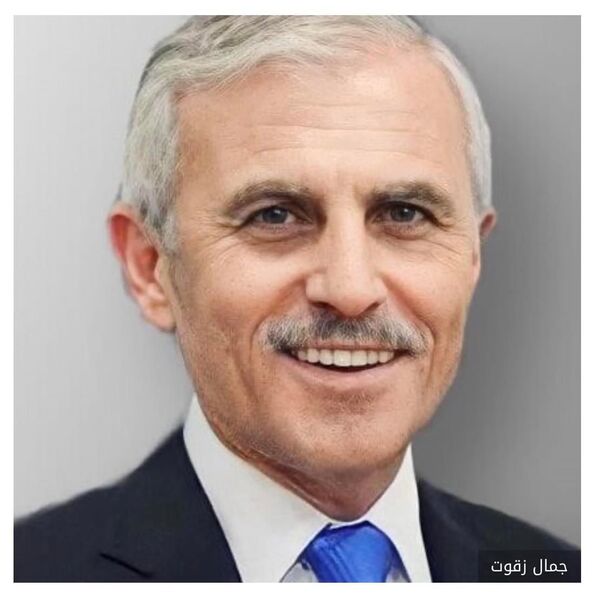
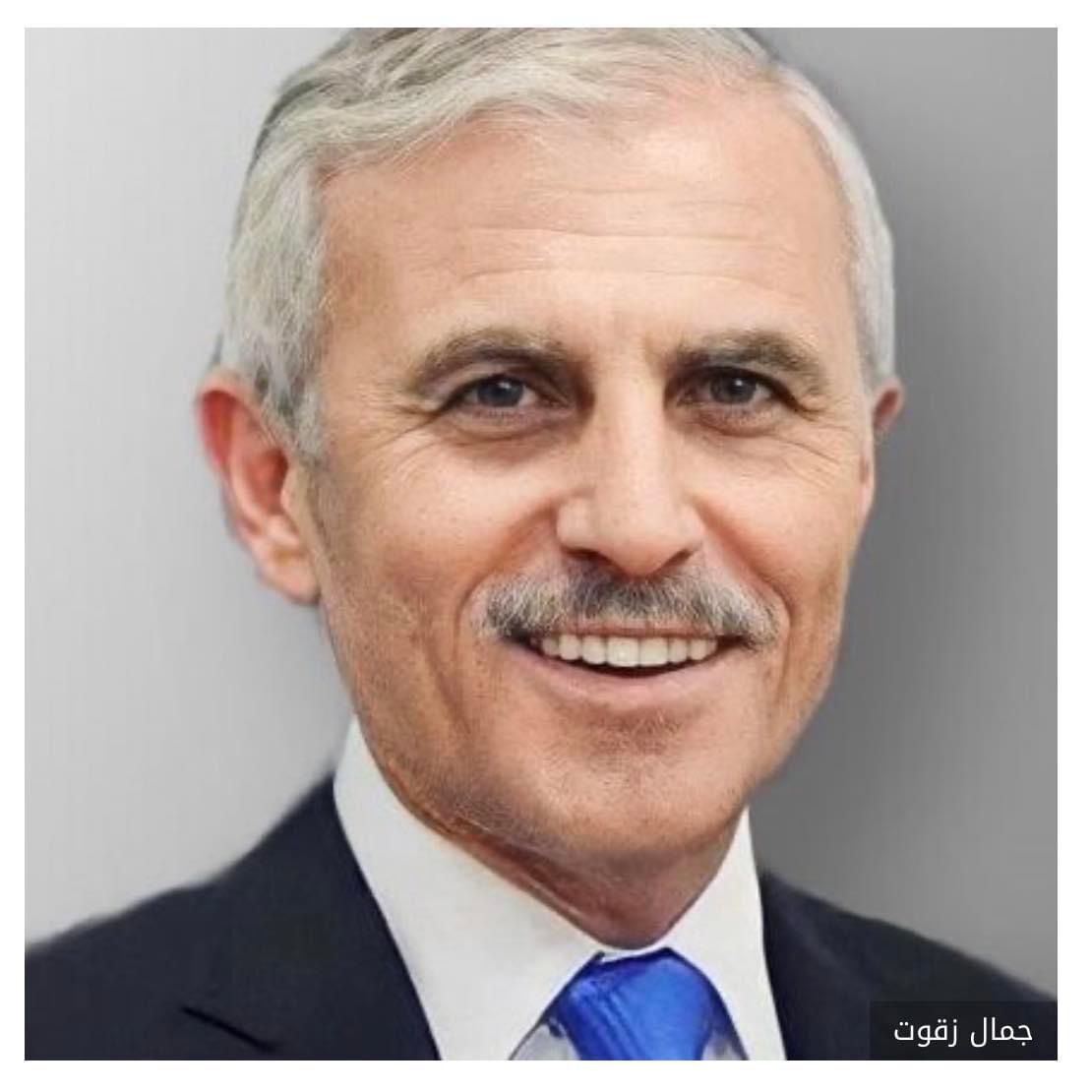
Jamal Zaqout

Jamal Zaqout

Opinion Writer

It seems that the war of extermination in Gaza has not yet ended. It is clear that the occupation government is still creating an environment that will enable it to resume this brutal war, while expanding its scope in the occupied West Bank, in the context of a direct and declared goal to liquidate the Palestinian cause, starting with an attempt to uproot the refugee camps there, after it completely destroyed Gaza and its camps.


It is clear that the ceasefire agreement in Gaza, according to Netanyahu's vision, is nothing more than a maneuver to recover the largest possible number of his prisoners held by the resistance in the Gaza Strip, in exchange for the release of a number of Palestinian prisoners in the occupation's prisons, some of whom are being deported outside Palestine, in preparation for investing in a new environment that enables Israel to resume the war, in Netanyahu's belief that Trump himself may agree with him on this, and in a way that enables him to, not only remove Hamas from ruling Gaza or participating in it, but also, in an effort to remove the movement, if not completely eliminate it and disarm it. These are the same positions that Netanyahu has repeated on every occasion since his return from Washington and his meeting with Trump, in light of Arab efforts to hold a summit meeting to respond to Trump's position on displacement, but after the latter softened his tone somewhat, and Netanyahu's liquidationist logic returned to the forefront of the scene, which naturally includes eliminating Hamas and the Palestinian resistance in all its forms in general.


The new thing is that Trump's envoy, and the engineer of pressuring Netanyahu to accept the deal in its three stages, has joined Netanyahu's tune about extending the first stage, i.e. recovering the largest possible number of Israeli detainees, removing Hamas from the Strip and not just from its rule, and not paying the other dues of the agreement, the essence of which must be implemented in its second stage. The ceasefire agreement is not limited to the exchange of prisoners, but rather includes relief and shelter, in preparation for reconstruction, as well as a comprehensive withdrawal from the Strip, and opening the crossings, especially the Rafah crossing to ensure freedom of movement for individuals, and the free passage of relief and shelter materials, goods and reconstruction materials, and ends with a permanent ceasefire, i.e. the cessation of the war.


So, the Israeli plan has become clear: to recover the detainees without reaching the core of the agreement to stop the war. In this context, Netanyahu is trying to achieve the goals of his war without continuing it, otherwise he is accumulating motives to return to it, perhaps with greater ferocity. The unprecedented support from the White House, including shipments of advanced bombs, which were previously suspended by the Biden administration, and the absence of Palestinian and Arab will to confront Netanyahu with a unified position regarding the so-called day after, are encouraging him to proceed with this scenario, which is coming to the forefront, as they avoid approaching the implementation of the basic pillar of the Beijing Agreement of forming a non-factional consensus government that addresses the world with a unified realistic vision and strategy, in accordance with national interests and UN resolutions related to the Palestinian issue and the principles of international law, including its responsibility for reconstruction and the mechanisms for achieving it as an essential component of building a free and new Palestine, and as a transitional non-factional consensus government that enjoys the powers stipulated in the Palestinian Basic Law, with a specific national reference in the Palestine Liberation Organization, and most importantly, the popular confidence derived from its support from all Palestinians, committed to preparing for and holding comprehensive general elections within an agreed-upon time frame, to build a Palestinian political system that leads to the establishment of a fully sovereign Palestinian state with occupied Jerusalem as its capital on the borders of June 4, 1967.


This is the only possible path that does not waste the enormous sacrifices made by Gaza, and opens the way towards freedom and self-determination, in which the reconstruction of Gaza will be the cornerstone of a comprehensive Palestinian-Arab plan to end the occupation and build a fully sovereign, independent Palestinian state... a modern state, not only with its development and infrastructure, but also with a democratic, pluralistic and competitive political system, beyond Israel’s false claims that it is the only oasis of democracy in the region.


Continuing on this path is our responsibility first and foremost, and requires Arab support based on the Arab Peace Initiative, the Saudi position, and strengthening the Kingdom’s efforts to establish an international coalition for a two-state solution, which constitutes an effective cornerstone in terms of adhering to the establishment of a Palestinian state on all Palestinian territories occupied since 1967 with East Jerusalem as its capital. However, achieving such a scenario to its desired effect, according to Trump’s need for Saudi Arabia economically in the US and regionally in the matter of relations with Israel, requires starting with practical steps to unify the Palestinian political system by consensus in accordance with the Beijing Declaration to ensure the unity of the Palestinian entity and representation, and not to exclude this unified representation, which gives negative signals that do not serve this path. It also requires, as a subsequent step, expanding the scope of the ceasefire to include the West Bank, including Jerusalem, in terms of stopping the annexation war, the war to uproot the camps, and the terrorist settlers’ rampage, in addition to stopping all settlement activities in the lands of the future State of Palestine.


As for the issue of the form of resistance and the fate of its weapons, obligating Israel to a comprehensive and permanent halt to the war of extermination against the Gaza Strip and its ongoing bloody aggression in the West Bank, including stopping settler attacks, withdrawing their weapons, and dismantling their terrorist organizations, will enable Palestinian consensus to deal with the issue of armed action and agree on popular forms of resistance to the occupation, which will make the fate of the resistance weapon an internal Palestinian affair, and no party has the right to use it alone under any pretext, except for the legitimate right to self-defense by a collective national decision by the PLO, which must include everyone to ensure that this is achieved.

ARAB AND WORLD

Tue 25 Feb 2025 9:01 am - Jerusalem Time

Israeli army fires missiles to intercept drone in occupied Golan

On Tuesday morning, the Israeli army fired missiles to intercept a drone that flew over the occupied Syrian Golan Heights.


The Israeli army spokesman announced in a brief statement that the sirens were activated after an enemy drone infiltrated the settlement of "Yontan" in the southern Golan.


Initial reports from Israeli media indicated that a drone had infiltrated the Golan Heights, and the Israeli Air Force fired three interceptor missiles to shoot down the drone.

PALESTINE

Tue 25 Feb 2025 8:37 am - Jerusalem Time

Raids and arrests in the West Bank

Today, Tuesday, the Israeli occupation forces launched a campaign of raids and arrests in the West Bank.


In Nablus, an occupation army force stormed the village of Yatma and arrested citizen Saleh Younis Sanobar, after raiding and searching his house.


In the city of Nablus, the occupation forces stormed Al-Mamoun Street and the vicinity of the Western Cemetery, raided Imam Ali Mosque and University Street, and destroyed surveillance cameras in a commercial store. No arrests were reported.


In Jenin, the occupation forces stormed the town of Zababdeh and raided a house after blowing up its doors and arrested the young man Bilal Sharqawi before withdrawing.


It is noteworthy that the occupation forces have been launching a wide-scale arrest campaign in the towns and villages of Jenin since the beginning of the unprecedented aggression on the city and its camp, which has continued for the 36th consecutive day.

PALESTINE

Tue 25 Feb 2025 8:33 am - Jerusalem Time

Three Palestinian children die due to severe cold in Gaza

Three children died due to the severe cold in the Gaza Strip, while the condition of others was described as critical, according to what was confirmed by health sources in Gaza last night.


The people of the Gaza Strip suffer from a lack of shelter and treatment due to the occupation's aggression on the Strip, and the lack of heating methods due to the scarcity of fuel, in light of a very cold polar wave.

ARAB AND WORLD

Tue 25 Feb 2025 8:31 am - Jerusalem Time

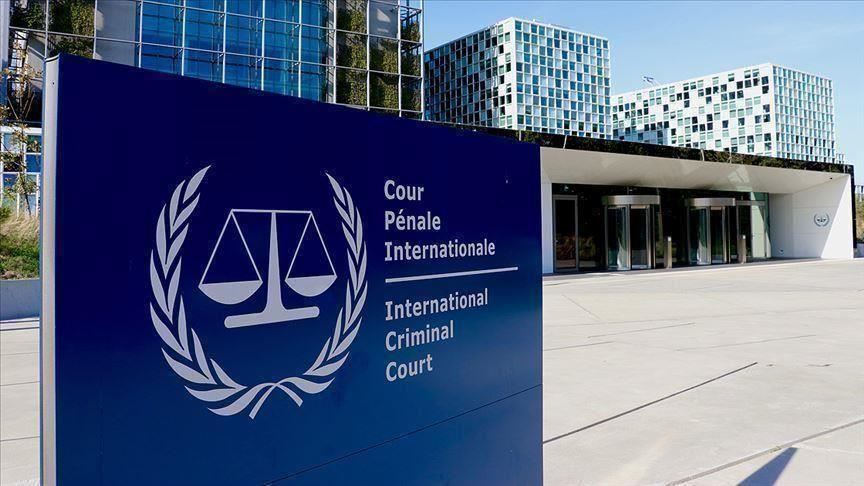
ICC asks to investigate Biden, Blinken over war crimes allegations

For the first time ever, a US-based organization has formally asked the International Criminal Court to investigate a former US president for possible complicity in war crimes and crimes against humanity, according to a website.


The 172-page filing by Democracy for the Arab World Now (DAWN) alleges that several figures — including former President Biden, former Secretary of State Antony Blinken, and former Defense Secretary Lloyd Austin — aided and abetted Israeli war crimes in Gaza.


“This case may face political backlash, but that doesn’t change the message it sends: impunity is not a given,” Reed Brody, a war crimes prosecutor and DAWN board member, told Zeteo. “If the rule of law is to mean anything, it must apply across the board—not just to our enemies, but to our friends, and yes, to ourselves.”


"We are at a turning point," he added. "The question is whether the ICC and international law will bury more victims under the rubble of Gaza."


"Heinous crimes that were ignored"


The DAWN files, known as the Article 15 Communication, show how US officials provided sustained military and diplomatic support to Israel despite knowing that its aid was being used to commit the type of alleged war crimes for which the International Criminal Court has issued warrants against Israeli leaders, including Prime Minister Benjamin Netanyahu and former Defense Minister Yoav Gallant. As such, DAWN alleges, US officials meet the legal standard of “aiding and abetting” such crimes.


This U.S. support included at least $17.9 billion in arms transfers, intelligence sharing, and targeting assistance—and U.S. abstentions from several U.N. resolutions calling for a ceasefire, hostage agreement, or increased humanitarian aid over a 15-month period. It also included repeatedly sending weapons to Israel without congressional review, including weapons used in alleged war crimes such as the killing of Hind Rajab.


“By providing continued and unconditional political and military support to Israel while fully aware of the specific crimes committed by Netanyahu, Galant, and their subordinates, President Biden, Secretary Blinken, and Secretary Austin knowingly contributed to the commission of those crimes while at least knowing the group’s intent to commit Israeli crimes, if not with the intent to further such criminal activity,” the dossier states.


“Not only have Biden, Blinken, and Defense Secretary Lloyd Austin ignored overwhelming evidence of Israel’s heinous and deliberate crimes, they have overruled their own staff’s recommendations to halt arms transfers to Israel, and they have doubled down by providing Israel with unconditional military and political support to ensure it can carry out its atrocities,” Sarah Leah Whitson, DAWN’s executive director, said in a statement from London.


The Biden administration has repeatedly defended its policy, and when pressed, has often retreated from its position that “Israel has the right to defend itself.” The administration has claimed that any civilian loss is unacceptable and that the US administration is “pressuring” its “partners in Israel” to improve their behavior. But it has taken almost no concrete steps to increase pressure on Israel.


For example, in May, Biden’s State Department acknowledged that Israel “likely” had used U.S. weapons in violation of international law—but it did not announce any policy change. Instead, it asserted that a state’s “general commitment” to international law “is not necessarily negated by individual violations, so long as that state takes appropriate steps to investigate and, where appropriate, establish accountability.”


The DAWN dossier also named other Biden administration officials, including former National Security Advisor Jake Sullivan and former Commerce Secretary Gina Raimondo, as individuals who should be investigated for potential responsibility for Israeli war crimes.


DAWN filed the request last month, the same day the ceasefire came into effect, but it was first announced on Monday. It has been supported by ICC-registered lawyers and war crimes experts.


The United States, like Israel, is not a member of the ICC, but DAWN claims the court has jurisdiction, citing the ICC's ongoing investigation into possible violations of the Rome Statute in Palestine.


Mounting evidence


The DAWN filing adds to a series of legal actions taken in response to the US-backed Israeli genocide in Gaza. In January 2024, Palestinians and Palestinian-Americans filed a federal lawsuit against Blinken, accusing him and his then-administration of failing to enforce the Leahy Law, which prohibits the US from sending military assistance to foreign security forces that commit gross human rights abuses.


Several countries, including Spain, Ireland and Belgium, have joined the South African-led International Court of Justice case accusing Israel of genocide. The ICJ had already ordered Israel to prevent acts of genocide (which Israel has continued to ignore since) while the case was ongoing.


Last year, a group of human rights organizations, Gaza residents, and American citizens whose families were affected by Israel’s military offensive sued Biden, Blinken, and Austin for failing to “prevent the unfolding genocide.” While a federal judge ruled that the court had no jurisdiction, he criticized the Biden administration, saying it was “plausible” that Israel’s conduct amounted to genocide, and urging the White House to “examine the consequences of their continued support for the military blockade against Palestinians in Gaza.”


In its petition, Democracy Now for All also called attention to the ongoing risks in a statement, pointing to President Donald Trump’s executive order imposing sanctions on ICC officials and his proposed plan to forcibly displace all Palestinians from Gaza. DAWN for All says these moves would also make Trump liable for “obstruction of justice” as well as “war crimes and the crime of aggression,” and merit an ICC investigation.


“This case is a message to our fellow Americans: Our government has been complicit in genocide, and we all have a responsibility to confront that reality and hold our leaders accountable,” Raed Jarrar, advocacy director at Democracy Now for All, told Zeto. “This is not just about Palestine; it’s about whether we, as Americans, accept a system where our leaders can facilitate mass atrocities without consequences.”

PALESTINE

Tue 25 Feb 2025 8:28 am - Jerusalem Time

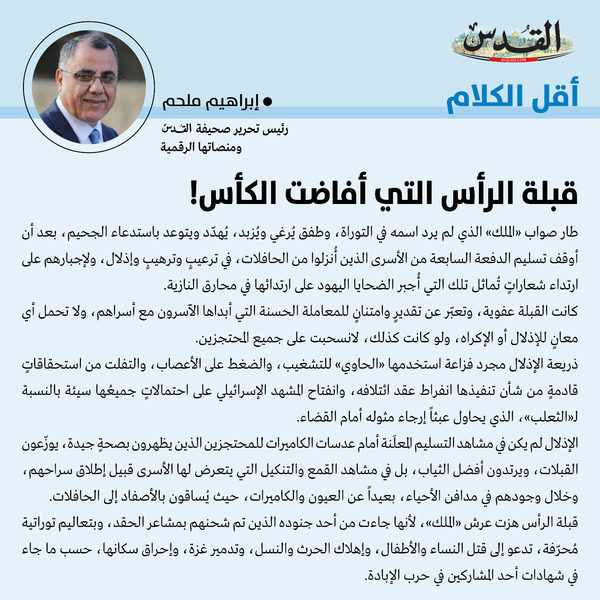
The kiss on the head that made the cup overflow!


The "king" whose name is not mentioned in the Torah lost his mind and began to foam and rage, threatening and vowing to summon hell, after he stopped the delivery of the seventh batch of prisoners who were taken off the buses, in a manner of terrorizing, intimidating and humiliating them, and to force them to wear slogans similar to those that the Jewish victims were forced to wear in the Nazi crematoriums.


The kiss was spontaneous, expressing appreciation and gratitude for the good treatment the captors had shown their prisoners, and did not carry any meanings of humiliation or coercion. If it had been, it would have extended to all the detainees.


The pretext of humiliation is just a scarecrow used by the "magician" to create trouble, put pressure on nerves, and evade upcoming obligations, the implementation of which would lead to the disintegration of his coalition and the opening of the Israeli scene to possibilities that are all bad for the "fox", who is trying in vain to postpone his appearance before the judiciary.


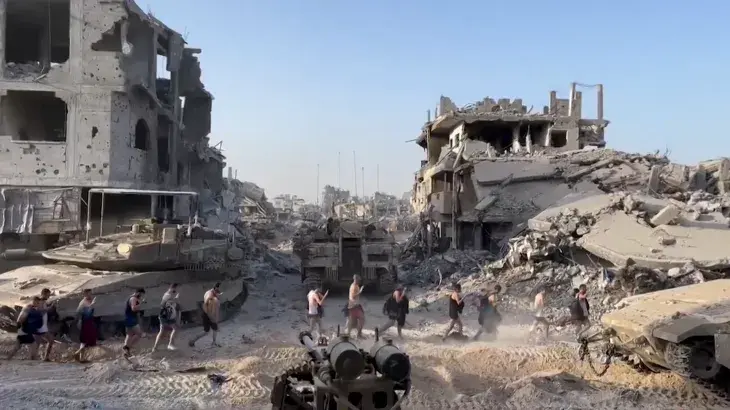
The humiliation was not in the scenes of the announced handover in front of the cameras of the detainees who appear in good health, distributing kisses, and wearing the best clothes, but in the scenes of oppression and abuse to which the prisoners are subjected before their release, and during their presence in the neighborhood cemeteries, away from eyes and cameras, where they are led in handcuffs to the buses.


The kiss on the head shook the throne of the "king", because it came from one of his soldiers who were filled with feelings of hatred, and with distorted biblical teachings, calling for the killing of women and children, the destruction of crops and offspring, the destruction of Gaza, and the burning of its inhabitants, according to the testimonies of one of the participants in the war of extermination.

PALESTINE

Tue 25 Feb 2025 8:15 am - Jerusalem Time

Tanks in the camp... uprooting and displacement after the exclusion of "UNRWA"

Dr. Jamal Harfoush: These operations are part of a broader policy aimed at reshaping the landscape in the West Bank through the gradual displacement of the population.

Khalil Shaheen: What is happening is part of a long-term political plan aimed at annexation and imposing Israeli sovereignty over large parts of the West Bank

Dr. Raed Al-Dabai: The current escalation is not a response to a real security threat, but rather a political decision that serves the agenda of the right-wing government in Israel

Muhammad Hawash: Israel sends a message to the Arab Summit through its military operations that it is the only party that decides the fate of the Palestinians

Dr. Tamara Haddad: The occupation deploys tanks to use the security cover as a tool to implement its project that sees the West Bank as an integral part of the “Israeli biblical state”

Sari Samour: Deploying tanks in a refugee camp carries a strategic dimension linked to a broader plan targeting the Palestinian refugee issue


Jenin camp is witnessing a new escalation with its storming by Israeli tanks, in a move that carries dimensions that go beyond the security dimension to broader political and strategic calculations, warning of the escalation rolling to the rest of the West Bank.


In separate interviews with “I”, writers, political analysts and university professors believe that this new Israeli escalation reflects a shift in the nature of Israeli military operations in the West Bank, where Tel Aviv is using military force to reshape the field scene, in an attempt to terrorize the population and undermine any potential resistance. It reflects Israel’s efforts to strengthen its influence and reduce the powers of the Palestinian Authority, with fears of waves of forced displacement rising.


The book and university professors explain that these moves come at a sensitive time domestically, as the Israeli government led by Benjamin Netanyahu seeks to achieve political gains by showing off its strength and winning the support of right-wing circles.


A strategic shift in the nature of Israeli military operations


Professor Dr. Jamal Harfoush, Professor of Scientific Research Methods and Political Studies at the University of the Academic Research Center in Brazil, believes that this Israeli tank invasion of the Jenin camp represents a “strategic shift in the nature of Israeli military operations,” as it seeks to achieve several goals by bringing tanks into the camp, which go beyond the military dimension to include political, security, and psychological aspects.


According to Harfoush, Israel is trying to impose a new reality on the ground, publicly displaying its power to intimidate the population, which could increase pressure on the resistance and undermine its popular support.


On the political level, Harfoush confirms that this escalation puts the Palestinian Authority in a critical position, as it appears unable to protect the Jenin camp, which may provoke a wave of popular anger and prompt demands to reconsider relations with the occupation.


On the other hand, Harfoush confirms that the military escalation serves the Israeli government internally, as Israeli Prime Minister Benjamin Netanyahu seeks to unify the ranks of the ruling coalition and gain popular support by escalating confrontations with the Palestinians.


Harfoush points out that the psychological and social aspect plays a major role in this attack, as Israel seeks to spread terror among the people of Jenin camp and push them not to return to the camp and stop their support for the resistance.


"These operations are not just military confrontations, but rather part of a broader policy aimed at reshaping the landscape in the West Bank through the gradual displacement of the population," Harfoush says.


Harfoush believes that this tank incursion into the Jenin camp is a test of Arab and international reactions, explaining that "if there is no firm reaction from the international community, we may witness the extension of this policy to other areas, which opens the door to a broad escalation in the West Bank."


Harfoush believes that the occupation's continued use of tanks and armored vehicles will lead to large-scale invasion campaigns that may target other camps such as Tulkarm and Nablus, as well as an increase in field assassinations. This may lead to a further explosion of the field situation and consequently an increase in resistance activities and their expansion to other areas in the West Bank, which may lead to a new popular uprising.


Harfoush believes that the occupation may resort to imposing collective punishments such as cutting off electricity and water and besieging areas as an additional tool of pressure on the population. It may also try to "ignite internal strife among the Palestinian factions to prevent them from uniting in confronting the occupation."


Harfoush stresses that the decisive factor now is the ability of the Palestinian people and their factions to confront these policies and impose new equations that force the occupation to reconsider its calculations.


Direct and indirect goals


Writer and political analyst Khalil Shaheen asserts that the ongoing Israeli military operations in the northern West Bank for more than a month, and the long closures through the deployment of more than 900 checkpoints, have direct and indirect goals that go beyond mere military confrontations, as they aim to displace the Palestinian population and dismantle the camps, as part of a broader plan to control the region.


One of the direct goals of the Israeli military campaign, according to Shaheen, is internal forced displacement, which is taking place in the camps of the northern West Bank, especially in Jenin, where estimates indicate that more than 40,000 Palestinians have been displaced.


Shaheen points out that the continued prevention of displaced persons from returning to their homes leads to their forced distribution in the centers of neighboring cities and villages, which contributes to the fragmentation of the social fabric and the weakening of family and tribal ties that have long distinguished these communities.


Shaheen believes that one of the main goals of these operations is to eliminate the spatial space of the camps, which represent a symbol of the Palestinian refugee issue, as the camps are linked to the reality of displacement since the Nakba of 1948, and to the idea of return guaranteed by United Nations resolutions.


Shaheen points out that this trend coincides with increasing Israeli attempts, with American support, to end UNRWA, which threatens to strip refugees of basic services and weaken the political dimension of the issue.


Estimates confirm, according to Shaheen, that the occupation forces completely destroyed about 120 homes in the Jenin camp, in addition to the partial damage of dozens of homes and facilities, as part of a strategy aimed at destroying the infrastructure of the camps and paving new roads, amid talk of a plan to create a corridor similar to the “Netzarim Corridor” in Gaza, cutting through the camps and separating them from each other, which confirms Israel’s efforts to destroy the idea of the spatial space for refugees.

Shaheen points out that despite the camps being free of any major armed confrontation, Israel has sent tanks into Palestinian cities and camps as a measure that carries political dimensions more than a military necessity. On the one hand, the occupation seeks to satisfy extremist circles and settlers, and on the other hand, it aims to create a state of deterrence, in addition to enabling the army to establish permanent centers within Area A, which is supposed to be under the control of the Palestinian Authority, which further reduces its powers and weakens it in terms of security.


long term political plan


Shaheen points out that what is happening now is not just military operations, but rather part of a long-term political plan that aims to annex and impose Israeli sovereignty over large parts of the West Bank, especially its northwest.


Shaheen explains that the statements of Israeli Energy Minister Eli Cohen regarding the annexation of the West Bank, and reports indicating intentions to gradually annex areas, reflect a strategic direction by the Israeli government, especially in light of the possible support of the administration of US President Donald Trump for these steps.


Shaheen confirms that the Israeli plan is moving towards expanding settlements and legalizing random outposts that have been established since October 7, 2023, in addition to displacing Bedouin and pastoral communities, especially in the Jordan Valley and areas south of Hebron.


Shaheen believes that this approach seeks to dismember the West Bank and transform the Palestinian Authority from a political entity into mere weak local administrations, which practically eliminates any chance of establishing an independent Palestinian state.


In the face of these challenges, Shaheen believes that the Palestinians must adopt new strategies based on strengthening steadfastness and struggling to preserve Palestinian powers in every inch of the land, instead of betting on understandings with the occupation.


Shaheen calls for ending the Palestinian division and forming a unified national leadership, especially in the villages and towns, that is capable of confronting Israeli plans, in light of the serious existential threats facing the Palestinian cause.


Actual return to direct military occupation of the entire West Bank


The head of the Political Science Department at An-Najah National University, Dr. Raed Al-Dabai, believes that the Israeli tanks’ storming of the Jenin camp goes beyond being a security operation or limited aggression, but rather represents an actual return to direct military occupation of the entire West Bank.


Al-Dabai explains that what is happening brings to mind the situation before the signing of the Oslo Accords in 1993, after Israel no longer adhered to any previous security arrangements, and began to deal with the West Bank as areas not subject to any international agreements, which means an actual undermining of the role of the Palestinian Authority in managing areas classified as (A).


Al-Dabai points out that targeting refugee camps, especially Jenin camp, is part of a systematic policy aimed at creating an unlivable environment within these camps, which pushes their residents to forced or voluntary migration.


Al-Dabai explains that Israel is working to remove the symbolism of the Palestinian camps linked to the right of return and the implementation of UN Resolution 194, which is consistent with previous statements by former Israeli Prime Minister Naftali Bennett in 2014, when he said: “We must make the lives of the Palestinians unbearable until they leave voluntarily.”


Al-Dabai explains that Israel relies in its current operations on the "southern suburb doctrine," which it previously used in the war on Lebanon in 2006, when it destroyed Hezbollah's infrastructure in the southern suburb of Beirut with the aim of preventing life from returning to normal.


Al-Dabai points out that this doctrine is now being applied in the West Bank by destroying the infrastructure of Palestinian camps and cities, including homes, streets, water and electricity networks, and targeting the local economy, with the aim of preventing any economic stability for the Palestinians, which constitutes additional pressure to push them towards emigration.


Al-Dabai stresses that the current Israeli military escalation is not a response to a real security threat, but rather an internal political decision that serves the agenda of the far-right government led by Benjamin Netanyahu, which seeks to escalate the situation militarily to strengthen its extremist settlement and religious policies.


Al-Dabai explains that figures such as Finance Minister Bezalel Smotrich, whom he described as the de facto ruler of the West Bank, are pushing for systematic escalation to impose a new reality represented by expanding settlements, demolishing villages and camps, and achieving the project of complete annexation of the West Bank under the slogan “more land for Jews and less Arabs.”


Al-Dabai warns that the continuation of these policies will lead to a comprehensive invasion of the West Bank, with a focus on direct military control over Palestinian cities and imposing a severe siege on the camps, which are considered symbolic centers for the right of return.


Al-Dabai asserts that Israel may consider what is happening in Jenin a model for expanding its operations in other cities, all the way to the political decision-making center in Ramallah.


The goal is to achieve a "silent mass displacement."


Al-Dabai explains that these policies seek to achieve “silent mass displacement” through economic and military pressures, allowing settlers to commit crimes without accountability, and using excessive force to create an unlivable environment that pushes Palestinians to voluntarily emigrate.


Al-Dabai stresses that these practices may lead to an explosion of the situation, pointing out that the increase in the number of martyrs, arrests, and systematic destruction may ignite a new Palestinian uprising, and things may reach the point of escalating anger internally in 1948, leading to widespread protests and internal unrest inside Israel.


He believes that the most likely scenario is the extension of Israeli military operations to other Palestinian cities, as Israel no longer needs security pretexts to justify its aggression, but rather is making political decisions that are wrapped in security justifications, within the framework of a clear plan to end the Palestinian presence in the West Bank.


Undermining the legal foundations of the refugee issue


Writer and political analyst Muhammad Hawash confirms that the entry of Israeli tanks into the northern West Bank, specifically Jenin, does not carry any new military objectives, as Israel is not facing an armed army there, but rather Palestinian citizens who cling to their land and rights.


Hawash explains that these military moves aim to impose Israeli hegemony over the West Bank and to send a political message that “the language of force is the only one” that Israel uses to achieve its strategic goals in the region.


Hawash points out that Israel seeks, through its military operations, to undermine the legal foundations of the Palestinian refugee issue, which is based on UN resolutions regarding the right of return and the rights of refugees to their properties within the territories occupied in 1948.


Hawash explains that one of the methods that Israel follows in this context is targeting the Palestinian camps, considering them symbols of the refugee issue, as it promotes the existence of armed resistance within them to justify the destruction operations, which is considered part of the attempts to gradually liquidate the issue.


Hawash points out that Israel is taking legal measures to prevent the work of the United Nations Relief and Works Agency for Palestine Refugees (UNRWA), in a move that reinforces efforts to cancel international recognition of the status of Palestinian refugees.


Hawash believes that the political assessments that Israel is adopting in its current military campaign in the northern West Bank are not accurate, as it may be able to temporarily control some areas, but it will not be able to prevent the Palestinians from returning and rebuilding their camps. What is happening is a “battle of wills,” as Israel seeks to impose a new reality in the West Bank, while the Palestinians reject these plans and cling to their land.


Hawash points out that what is happening aims to send multiple messages, including terrorizing the Palestinians and emphasizing that the future of the West Bank is determined by Israel alone, not the Palestinians, nor even the international community or Arab summits.


Hawash believes that the Israeli military movements may be a message directed to the upcoming Arab summit, which will discuss a political initiative that adheres to the two-state solution and ending the occupation, and that Israel seeks through its field operations to confirm that it is the only party that decides the fate of the Palestinians, and not any international initiatives or decisions.


Attempting to impose a new reality in the West Bank


Hawash stresses that the current Israeli government is trying to impose a new reality in the West Bank through a military escalation that has political dimensions, including satisfying the extreme Israeli right, which calls for complete control over the West Bank and the dispossession of Palestinians from their lands.


Hawash warns that Israel is making a strategic mistake when it believes it can displace Palestinians or force them to leave their lands, stressing that the number of Palestinians today exceeds seven million in historical Palestine, which makes any attempts to deport them impossible to achieve.


Permanent military deployment to strengthen security grip on the West Bank


Writer and political researcher Dr. Tamara Haddad explains that the presence of Israeli tanks in Jenin since 2000 reflects a permanent military positioning aimed at strengthening the heavy security grip on the West Bank.


Haddad points out that the occupation is deploying tanks to use the security cover and security justifications as a tool to implement its political project, considering that this presence is not merely a security measure but rather part of a biblical project that sees the West Bank as an integral part of the “biblical Israeli state.”


Haddad asserts that the continued presence of tanks in Jenin indicates that the occupation is dealing with the West Bank as a main front, not just the Gaza Strip, despite the absence of an actual war or resistance operations that would require such an intensive military deployment.


Haddad explains that the main goal is not only to eliminate what the occupation calls “terrorism” or Islamic movements, but to use this security justification as a cover to impose a new political reality on the ground, and to transform the West Bank into an arena for sustainable confrontation.


Haddad believes that the "Iron Wall" operation in the northern West Bank will not stop at Jenin, but will gradually expand to the rest of the West Bank.


Ending the symbolism of camps as refugee centers


Haddad points out that the occupation aims to end the symbolism of the Palestinian camps as refugee centers and restructure them geographically, so that they become neighborhoods within cities, which contributes to ending the components of life in them and forcing their residents to be forcibly displaced to other areas.


Haddad draws attention to the statements of Israeli Defense Minister Yisrael Katz, who confirmed that the occupation will not allow the return of displaced camp residents, and that the Israeli army will remain in the West Bank until 2026, which reflects the occupation’s intention to deal with the West Bank as a central front in its military strategy.


Haddad stresses that the occupation seeks to impose forced coexistence between Palestinians and settlers, not only in areas classified as “C” or “B,” but even in areas “A” controlled by the Palestinian Authority, which means that the Israeli army will be stationed inside major Palestinian cities, and the sight of tanks will become a normal part of the daily lives of Palestinians.


Haddad asserts that these measures reflect the occupation's intention to end the Oslo Accords and all agreements sponsored by the United States, with the aim of eliminating any political solution, whether the two-state solution or any other formula that leads to the establishment of a Palestinian state.

Haddad points out that Israel seeks to accelerate the implementation of its plan on the ground to prevent any future possibility of a political settlement.


Haddad warns that these policies will escalate until 2026, as the occupation works to impose new facts on the ground, by changing the geography and demographics of the West Bank, with the aim of eliminating the possibility of establishing an independent Palestinian state.


Haddad points out that the occupation seeks to implement the "decisive plan", which aims to make the Palestinians live without resistance or rejection of the new reality, so that they have two options: either accept the occupation as a fait accompli, or face forced and voluntary displacement.


The next stage may witness an expansion in the entry of tanks into the West Bank


Haddad expects that the next phase will witness an expansion in the entry of Israeli tanks into various areas of the West Bank, with their positioning inside the cities, with the aim of imposing a new reality and isolating the Palestinian cities from the villages and camps, which will lead to dividing the West Bank into isolated “cantons”, making geographical and demographic communication between the Palestinian communities difficult.


Haddad explains that achieving the occupation's goals depends on the absence of serious Arab and international action to confront it, as well as the absence of a unified Palestinian program linking the West Bank to the Gaza Strip, which will enable Israel to implement its plan aimed at liquidating the Palestinian cause, weakening the Palestinian Authority in preparation for eliminating it as a political entity, and preventing any possibility of establishing an independent Palestinian state.


A show of force intended to intimidate and spread fear.

Writer and political analyst Sari Samour asserts that the Israeli tanks’ storming of the Jenin camp is a show of force, aimed at intimidation and spreading fear, in addition to sending internal messages to Israeli society that the occupation army is working and controlling the situation in the West Bank, despite the absence of a real confrontation or a “second front” as the occupation is trying to portray it.


Samour explains that this military move and the deployment of tanks in a refugee camp, although it is tactical on the surface, carries within it a strategic dimension linked to a broader plan targeting the Palestinian refugee issue.


Systematically work to eliminate any appearance that reminds us of the right of return.


Samour points out that Israel, after receiving American support to ban the United Nations Relief and Works Agency for Palestine Refugees (UNRWA), is systematically working to eliminate any appearance that reminds one of the right of return, as it has not only stopped funding the agency or besieged it, but is also seeking to eliminate it completely.


Samour believes that the Palestinian camps, being residential communities that carry the symbolism of refugees, constitute one of the most prominent obstacles to this plan, and therefore, Israel is waging the “UNRWA battle” with the aim of obliterating this symbolism and removing any mention of the refugee issue.


Samour explains that what is happening in Jenin camp can be considered a "rehearsal" for a broader plan that may include the rest of the camps, as Israel has not yet expanded to all of them, but it may be in the preparatory stage for that.


The upcoming scenarios will be bleak and difficult.


Samour expects that the upcoming scenarios will be bleak and difficult, as the occupation’s success in emptying the Jenin camp, along with the Nur Shams and Tulkarm camps, of their residents, and the continued presence of the Israeli army in these areas, may pave the way for carrying out similar operations in all the camps of the West Bank.


Samour points out that the occupation seeks to destroy as many homes as possible inside the camps, making them uninhabitable, and preventing their residents from returning to them or rebuilding them, which leads to the forced displacement and dispersion of the residents, and thus undermines the symbolism of the camp as a place that represents asylum and the right of return.

Despite these challenges, Samour asserts that the refugee issue cannot be completely eliminated, because it is not just residential areas that can be demolished, but rather it is part of the Palestinian conscience.


Samour stresses that any Israeli attempts to obscure this issue will not succeed, because the Palestinian refugee will continue to adhere to his right to return wherever he lives, no matter how much the occupation tries to impose new facts on the ground.

PALESTINE

Tue 25 Feb 2025 8:09 am - Jerusalem Time

Violation of the agreement...an attempt to evade the second phase’s entitlements

Dr. Saeed Shaheen: Netanyahu uses political blackmail to extract concessions from the resistance after failing to achieve the war’s goals through force

Muhammad Joda: The Israeli position currently seems more like a "negotiating maneuver" than a final decision to blow up the exchange deal

Hani Abu Al-Sabaa: The current delay will not last long and it is expected that the mediators will succeed in overcoming it, like many obstacles in the past.

Dr. Aql Salah: Netanyahu is trying to obstruct the second phase of the deal or freeze it until new facts are created that serve his political narrative

Samah Khalifa: Netanyahu is unable to obstruct the deal for a long time because that will ignite the anger of the Israeli street, especially the families of the detainees

Firas Yaghi: Netanyahu is not necessarily seeking to completely thwart the deal, but he is trying to avoid the second stage except by achieving the war’s goals


Israeli Prime Minister Benjamin Netanyahu continues to procrastinate in implementing the terms of the first phase of the exchange deal, the latest of which was postponing the release of Palestinian prisoners in the seventh batch of the deal, amid accusations that he is using political blackmail to evade the agreement’s requirements, and thus show its failure.


In separate interviews with “I,” writers, analysts, specialists, and university professors believe that the delay in implementing the deal reflects Netanyahu’s attempts to impose new conditions that serve his political interests, especially after his failure to achieve military goals in the Gaza Strip. The Israeli government, led by Netanyahu, seeks to exploit the time factor to rearrange its cards, while focusing on the media impact on Israeli society of scenes of the release of Israeli prisoners in the Gaza Strip.


Writers, analysts, specialists and university professors confirm that the role played by international mediators remains crucial in breaking the current deadlock, amid warnings that continued procrastination by the occupation could lead to the collapse of the deal.


They point out that with the increase in international pressure, it seems that the second phase of the deal may witness a fierce political battle, in light of Israel's efforts to redraw the rules of negotiations in its favor.


Netanyahu government backtracks on commitments


Dr. Saeed Shaheen, Professor of Political Media at Hebron University, believes that the Israeli Prime Minister Benjamin Netanyahu is using a policy of political blackmail to extract the greatest possible concessions from the Palestinian resistance, after he failed to achieve the goals of the war on the Gaza Strip through military force.


Shaheen explains that Benjamin Netanyahu's government is backtracking on its commitments, especially with regard to the humanitarian protocol, noting that Israel is deliberately using Palestinian civilians as a means of pressure on Hamas, which has fulfilled all of its commitments in the current agreements.


Shaheen believes that the delay in handing over the seventh batch of Palestinian prisoners reflects Netanyahu and the extreme right’s annoyance with the scene presented by the resistance during the prisoner exchange operations. The appearance of resistance members in their organized military uniforms and with full equipment, in addition to the good treatment that the Israeli prisoners receive, refutes the Israeli narrative that describes the resistance as terrorism, and reinforces the resistance’s narrative before the world.


A scene that threatens the Israeli discourse


Shaheen explains that this scene threatens the Israeli discourse, which prompts the right-wing political level in Israel to try to disrupt the prisoner exchange process and delay the implementation of the agreement.


With growing skepticism about the continuation of the ceasefire, and repeated threats from the Israeli side to resume the war and turn Gaza into “hell,” a term used by the Israeli right, inspired by statements by US President Donald Trump, Shaheen believes that there are no real indications that the fighting could resume with the same intensity as it was before the truce.


He points to statements by US Special Envoy to the Middle East Steve Witkoff, who confirmed that the second phase of the deal could lead to a permanent ceasefire.


Shaheen points to the change in Trump's position on the issue of displacing the population of Gaza, which reflects increasing international pressure on Israel to find alternative political solutions.


Imposing new facts on the ground


Shaheen explains that these developments come within the framework of Israel's attempt to pressure the resistance to force it to make concessions in the post-war phase, especially with regard to managing the Gaza Strip and rebuilding it without involving Hamas.


He stresses that Israel's procrastination in implementing the agreements aims to impose new facts on the ground that serve its political interests, at a time when international and regional pressure is mounting on Netanyahu's government to abide by the terms of the concluded agreements.


Intertwined political and security dimensions


Writer and political analyst Muhammad Joda believes that Israeli Prime Minister Benjamin Netanyahu’s delay in releasing the seventh batch of Palestinian prisoners at the last minute is not a final decision to destroy the deal, but rather carries intertwined political and security dimensions that reflect the complexities of the Israeli domestic scene, especially in light of the pressures he is facing from various parties.


Jodeh explains that there are several reasons that may have prompted Netanyahu to take this step, most notably an attempt to pressure Hamas and blackmail it politically to obtain additional concessions, whether with regard to the list of prisoners to be released or the terms of a future truce.


Netanyahu faces intense pressure from far-right


Jodeh points out that Netanyahu is facing great pressure from the extreme Israeli right and the families of the captive soldiers, who oppose making “free concessions” to Hamas, which may push him to maneuver to strengthen his position before them, and prove that he does not easily submit to agreements that may be interpreted as a victory for the Palestinian movement.


Jodeh points out that the delay may be linked to Israel's attempt to improve the terms of the deal in the second phase, especially with regard to the release of Israeli soldiers held captive by the resistance, or amending the deal's criteria in its favor by imposing more stringent terms.


Among other possibilities raised by Jodeh is that Netanyahu may be seeking to buy time to complete military operations on the ground, or to rearrange his political cards internally and externally, especially with the tensions within his government and the pressures exerted by the Israeli opposition.


Jodeh points out that Netanyahu may also be testing the reactions of Hamas and international mediators, to see how willing they are to make new concessions, in light of the increasing pressure from the international community to end the war and complete the deal.


Negotiating maneuver and pressure card


Joudeh believes that the Israeli position currently appears to be more of a “negotiating maneuver” than a final decision to blow up the deal, as Netanyahu is threatening to freeze the release of prisoners as a pressure card, but in the end he may be forced to abide by the agreement under the pressure of the Americans, Qataris and Egyptians.


Joudeh warns that Netanyahu may seek to obstruct the transition to the second phase of the deal, especially if it includes the release of Palestinian prisoners with long sentences or a final cessation of the war and a complete withdrawal from the Gaza Strip, which is opposed by some army leaders who believe that continuing the fighting serves Israeli interests more than completing the deal.


Joudeh did not rule out that Netanyahu would succumb to pressure from the extreme right in his government, which could lead to obstructing the full implementation of the deal and resuming military operations against the Gaza Strip, a scenario that could lead to a new escalation that would prolong the war and exacerbate the security situation in the region.


Continued manipulation may push Hamas to reconsider the deal


Joudeh expects international pressure on Netanyahu to release the seventh batch and resume implementation of the agreement to continue, especially with the intervention of mediators to try to break the deadlock. However, at the same time, he did not rule out that continued Israeli procrastination could lead to an escalating response by the Palestinian resistance, whether in Gaza or the West Bank.


Joda points out that continued Israeli manipulation may push Hamas to reconsider the deal or threaten to halt its implementation, warning that the most dangerous scenario is the complete collapse of the agreement, which means the return of fighting at a more violent pace, and perhaps the opening of new fronts in the Middle East.


Hebrew media incitement


The writer and political analyst specializing in Israeli affairs, Hani Abu Al-Sabaa, explains that the Hebrew media has escalated its protests since Saturday morning against what it described as “manifestations of surrender” in the Gaza Strip, in reference to scenes of the release of Israeli prisoners. The Hebrew media considered these displays to represent “an insult and humiliation to the prisoners,” and that they also constitute, from their point of view, “playing with the feelings of their families,” which prompted it to incite against these manifestations and demand that they be stopped immediately.


Abu Al-Sabaa points out that this media incitement put additional pressure on the Israeli government headed by Benjamin Netanyahu, which prompted it to delay the release of Palestinian prisoners as part of the seventh batch of the first phase of the exchange deal.


Abu Al-Sabaa believes that this decision reflects the extent to which the Israeli government is affected by internal reactions and its attempt to identify with the voices calling for stopping any scene that might be interpreted as a “victory for the Palestinian resistance.”


Reasons that prompted the occupation government to procrastinate


Abu Al-Sabaa points out that many observers had previously expected that the Israeli government would resort to procrastination and delay, for several reasons, including the official protest against what Israel considers to be “forcing” the released prisoners to behave in certain ways in front of the crowds, in reference to scenes of them leaving Gaza.


But the most important reason, according to Abu al-Saba’, which the Israeli government has not explicitly announced, is that the last batch of Palestinian prisoners scheduled to be released includes a number of those sentenced to long terms, such as life imprisonment, which makes them, from the occupation’s point of view, “symbols of resistance” whose release could contribute to strengthening the morale and organisation within the ranks of the resistance, in addition to their influence on future generations.


Regarding the future of the deal, Abu Al-Sabaa believes that the current delay will not last long, as it is expected that the mediators will succeed in overcoming it, just as many obstacles were overcome in the previous stages.


Negotiations in the next stage will be more complicated.


But Abu Al-Sabaa warns that the negotiations in the next stage will be more complicated and difficult, especially with the escalation of pressure on the Israeli government from the extreme right, which is demanding the continuation of the war and the elimination of the resistance in Gaza, especially after the emergence of field commanders who the Israeli army had previously announced their assassination.


He points out that there are factors preventing Israel from returning to war completely, including the position of the US administration, which seeks to end the war, according to what US President Donald Trump announced, in addition to proposing alternative options to resolve the conflict, such as forced displacement, whether voluntary or under military pressure, or imposing a new Palestinian government that is “acceptable” to the United States and Israel.


Abu Al-Sabaa points out that the second phase of the deal will witness attempts by each party to force the other to respect the agreements, after the violations that occurred during the first phase.


The resistance is capable of forcing Israel to return to negotiations


Abu Al-Sabaa believes that the resistance, with its pressure cards, is capable of forcing Israel to return to the negotiating table, as it still has about 60 Israeli prisoners, most of them military, including prominent officers, most notably Major General Asaf, commander of the Gaza Brigade, who is estimated to still be alive.


Abu Al-Sabaa believes that the internal Israeli situation is putting great pressure on Netanyahu's government to accelerate its engagement in the second phase negotiations, but he stresses the need for caution because "Israel has been known for its treachery throughout history, and has not changed its nature until now."


The occupation seeks to achieve several goals through its procrastination


Writer and political researcher Dr. Aql Salah believes that Israeli Prime Minister Benjamin Netanyahu is seeking, by delaying the release of the seventh batch of Palestinian prisoners, to achieve several political and security goals, most notably pressuring mediators to force Hamas to limit the emotional scenes during the process of handing over Israeli prisoners, which caused widespread controversy within Israel.


Salah explains that Netanyahu is trying to divert attention from his government’s failure to manage the war on Gaza, especially after the spread of pictures of coffins carrying the bodies of Israeli soldiers, trying to appear as a strong leader who controls the process of releasing the hostages, and to establish the idea that military pressure is the solution, not negotiations.


Netanyahu, according to Salah, also seeks to present himself as a “national hero” who will save Israel and its hostages, and clear himself of accusations of mismanagement of the war and failure to protect Israeli settlements adjacent to the Gaza Strip.


Salah explains that Netanyahu is also trying to obstruct or freeze the second phase of the deal, until new facts are created that serve his political narrative and cover up the scenes of the release of the Israeli hostages, which hold him responsible for their remaining in Gaza for such a long time.


Netanyahu seeks to lay new foundations for future prisoner exchange


Salah points out that Netanyahu seeks to establish new foundations for prisoner exchange in the future, so that it does not affect Israeli society, nor enhance the Palestinians’ sense of victory, especially with regard to the release of prisoners sentenced to life and long sentences.


Salah points out that Netanyahu faces an internal challenge in the need to satisfy his far-right government, especially Finance Minister Bezalel Smotrich and the Religious Zionism Party, in order to maintain the cohesion of his government coalition, which has become threatened with the escalation of internal disputes over the management of the war and the deal.


Salah explains that Netanyahu seeks to reduce his government's losses by reducing the number of Palestinian prisoners being released, in an attempt to break the rules imposed by Hamas in the deal, and to reduce the amount of criticism he faces from the Israeli opposition.


  1. Accustoming mediators and Hamas to future violations


Salah points out that Netanyahu is trying to accustom the mediators and Hamas to future violations, so that these violations become normal in the future, which gives him more room to maneuver in any upcoming rounds of negotiations.


Salah confirms that Netanyahu is trying to delay the implementation of the second phase of the deal in order to extend the first phase, because moving to the second phase means making greater concessions, which could threaten the stability of his government.


It is likely that the mediators will pressure Netanyahu in the coming hours to complete the implementation of the agreement, but he did not rule out that Hamas will respond to Netanyahu's procrastination by delaying the delivery of the bodies of the Israeli soldiers next Thursday, in a protest move against the deliberate Israeli obstruction.


Salah asserts that Netanyahu faces a major dilemma, as he no longer has a choice but to continue implementing the deal, especially in light of the increasing Israeli protests demanding the return of the hostages, in addition to polls that showed broad support for continuing the deal, even if Hamas remains in power. In addition, the increasing American pressure on Israel to conclude the deal may force Netanyahu to move forward with implementing it, despite his attempts to obstruct it.


Israel operates on the principle of "action and counteraction."


Writer and political analyst Samah Khalifa asserts that Israel operates according to the principle of “action and counteraction,” as it always seeks to thwart any Palestinian gains, even in the most humanitarian moments.


Khalifa explains that while Hamas showed good treatment of Israeli prisoners, the occupation did not hesitate to do the exact opposite by torturing Palestinian prisoners until the last moment of their release, in addition to its attempts to disrupt the exchange deal and delay the release of Palestinian prisoners, with the aim of depriving their families of the joy of welcoming them.


Khalifa points out that the Israeli occupation, from 1948 until Saturday, February 22, has not stopped using all possible means to subjugate the Palestinians, whether through killing, displacement, demolishing homes, or distorting the facts. However, what happened during the current deal has proven once again the failure of these policies, especially after Hamas succeeded in managing the prisoners’ file in a way that exposed the falsehood of Israeli propaganda.


The Israeli media tried to promote a distorted image of the resistance.


Khalifa points out that the Israeli media, which dominates global media platforms, has tried over the past months to promote a distorted image of the Palestinian resistance, claiming that Hamas practices torture and killing against Israeli prisoners. However, the great irony occurred when the photos and video clips showed one of the released Israeli prisoners expressing his gratitude to Hamas by kissing the heads of two of its leaders, in a moment that seemed shocking to the Israeli media, which was unable to distort or manipulate it.


Khalifa explains that this moment was the “straw that broke the camel’s back,” as it showed the Israeli prisoner in a state of overwhelming joy and appreciation for the good treatment he had been treated during his detention, which undermined the occupation’s claims that Israeli prisoners were suffering from torture.


Khalifa points out that the occupation army took punitive steps against the Palestinian prisoners, including an attempt to impose a counter-propaganda protocol by forcing the Palestinian prisoners to wear clothes that read “We will not forget and we will not forgive” upon their release, in addition to broadcasting threatening messages by lighting up the houses surrounding Ofer Prison with phrases such as “Our eyes are on you,” in an attempt to keep up with the statements of one of the Hamas leaders who said that “Our eyes are on Al-Aqsa, and the coming flood will come from the heart of Al-Aqsa.”


Khalifa points out that what increased the Israeli embarrassment were the scenes broadcast by Hamas media of one of the Israeli prisoners confessing in front of the cameras, saying: “The age of the olive tree is older than the age of my state,” a statement that carries an implicit admission of the illegitimacy of the Israeli occupation, and that they are “a people who have intruded on this land,” as he described it.


According to Khalifa, these scenes and their implications prompted Israel to postpone the handover of Palestinian prisoners, in an attempt to bargain with Hamas to stop this media coverage that exposed the falsity of its claims.


Khalifa believes that Israeli Prime Minister Benjamin Netanyahu is unable to cancel the deal or even delay it for a long time, given that any attempt on his part to obstruct the release of Israeli prisoners will ignite the anger of the Israeli street, especially the families of the prisoners who are eager to see their sons out of captivity.


"A political blow"


Khalifa points out that Hamas was well aware that Netanyahu might try to manipulate the deal, and so it resorted to a strong pressure card, as it broadcast video clips of two other Israeli prisoners who had not yet been released, appearing as they appealed to the Israeli people to take to the streets and pressure Netanyahu's government to complete the deal.


She notes that the move was a “political blow,” because seeing Israelis with their children in captivity begging for release while the Israeli government blocks the deal could prompt them to escalate protests against Netanyahu.


Khalifa believes that Hamas will not back down from showing these scenes that show its humanitarian nature and expose the falsehood of the Israeli media. Moreover, the prisoner handover ceremony will remain part of the battle of awareness, which the occupation seems to be losing in the face of the reality imposed by the resistance.


Unprecedented Israeli internal pressures


Writer and political analyst Firas Yaghi confirms that Israeli Prime Minister Benjamin Netanyahu is facing unprecedented internal pressures that have prompted him to postpone the implementation of the seventh batch of the prisoner exchange deal with Hamas.


Yaghi explains that the reasons for the postponement are due to Netanyahu's fears of the collapse of his government, especially in light of the internal tensions and deep divisions in the ruling coalition.


Yaghi points out that Netanyahu was greatly humiliated inside Israel after his failure to achieve a clear victory in the Gaza Strip, which prompted him to try to restore his prestige by delaying the release of Palestinian prisoners. His decision is also in line with the principle of “reciprocity,” referring to the 20-hour delay in handing over Bibas’ body, which prompted Netanyahu to use a similar tactic by delaying the release of Palestinian prisoners.


Disagreements within the occupation government


Yaghi points out that the differences within the Israeli government were clearly evident during the recent security and political meetings. While the heads of the Shin Bet and Mossad recommended moving forward with implementing the deal, another meeting that included hardline political figures such as Smotrich, Katz and Sa’ar postponed the decision, stipulating that no reception ceremonies would be held for the Palestinian prisoners released later.


According to Yaghi, Netanyahu is not necessarily seeking to thwart the deal entirely, but he is trying to avoid the second phase of it unless he achieves the war’s goals, as this phase requires taking decisive decisions regarding stopping the war and withdrawing from the Gaza Strip, which threatens the stability of his government. There is also pressure from the Israeli right, as Smotrich threatened to withdraw from the government if Netanyahu decides to withdraw from the Philadelphi corridor, which is a condition of the deal.


Yaghi explains that Netanyahu is discussing with mediators the possibility of bringing forward the date for handing over the bodies of four Israelis to the middle of this week instead of next Thursday. He is also looking into extending the first phase of the deal by releasing additional batches of Palestinian prisoners in exchange for more Israeli detainees, in order to avoid moving to the second phase, which may require a broader agreement that includes political and security arrangements related to the Gaza Strip.


Netanyahu has three options


Yaghi believes that Netanyahu has three main options: thwarting the deal and resuming the fighting, which is a weak scenario because that would endanger the lives of the remaining Israeli prisoners held by Hamas, and the release of previous batches of prisoners created internal pressure on Netanyahu to continue with the deal.


According to Yaghi, the second option is that the first phase of the deal may be extended by continuing the exchange operations without moving to the second phase, an option that faces obstacles because Hamas prefers to implement the deal as agreed upon.


The third option, according to Yaghi, is to move forward towards a comprehensive deal, which is the most likely scenario, but it depends on American intervention and international pressure, in addition to formulating an Arab plan to be announced during the upcoming Arab summit, which includes the future of governance in Gaza, the reconstruction process, and security arrangements.


A pivotal American role in pressuring Netanyahu


Yaghi points out that the United States is playing a pivotal role in pressuring Netanyahu to agree to the Arab plan, especially since US President Donald Trump is seeking to achieve diplomatic progress in the region, while Netanyahu is trying to exploit the situation to obtain political gains in the West Bank to satisfy his government coalition, which was evident in the statements of Israel Katz, who spoke about the Israeli army remaining in the West Bank camps for a whole year.


Yaghi stresses that the future of the deal remains dependent on direct American intervention, as the absence of this pressure could lead to the collapse of the negotiations and the re-ignition of fighting in Gaza, which would further complicate the political and military situation in the region.


PALESTINE

Mon 24 Feb 2025 7:08 pm - Jerusalem Time

Red Cross expresses 'grave concern' over deteriorating humanitarian conditions in northern West Bank

The International Committee of the Red Cross expressed its deep concern on Monday about the increasing impact of the ongoing Israeli army operations for more than a month on civilians in the northern occupied West Bank.


The committee explained in a statement that the ongoing operations directly affect the residents of Jenin, Tulkarm, Tubas and other areas, which increases the suffering of civilians in securing basic needs such as clean water, food, medical care and shelter.


The statement indicated that displaced civilians face additional difficulties, including searching for their missing or arrested family members, which further complicates the humanitarian situation in the region.
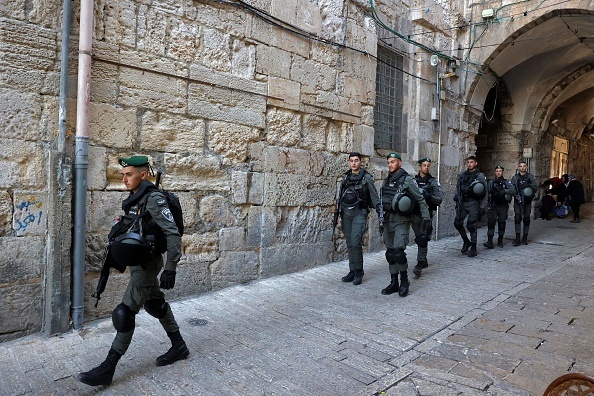

This warning comes amid continuing security tensions in the West Bank, where many areas are witnessing repeated raids and arrests, which exacerbates the humanitarian crisis suffered by Palestinian families.

PALESTINE

Mon 24 Feb 2025 6:33 pm - Jerusalem Time

A Palestinian teenager was injured by Israeli occupation forces’ bullets in Qabatiya, south of Jenin

A child was shot by Israeli occupation forces, Monday evening, in the town of Qabatiya, south of Jenin.


The Red Crescent Society reported that a 17-year-old child was shot in the stomach with live ammunition and was taken to the hospital.


It is noteworthy that the occupation's aggression on the town of Qabatiya continues for the second day in a row, as the occupation soldiers raided a number of homes and turned them into military barracks, while snipers spread out on the roofs and fired live bullets at the citizens.


The occupation soldiers also launched a wide-scale arrest campaign, amidst bulldozing and destruction of infrastructure.

OPINIONS

Mon 24 Feb 2025 5:32 pm - Jerusalem Time

At the Crossroads

Gershon Baskin

Gershon Baskin

Opinion Writer

We stand at a very dangerous and crucial crossing point at this moment. Do we move to Phase 2 of the ceasefire deal or does Israel renew the war and essentially sacrifice the remaining 63 hostages? The main difficulty for Israel is that Phase 2 includes the end of the war and the withdrawal of all Israeli forces from Gaza. But the war will not end if there are hostages remaining in Gaza.  The war will not end if Hamas is left in control of Gaza. There are still those in Israel’s political leadership who continue to hold onto the fantasy that Hamas can be eliminated through military means. There are those in the right-wing who understand that Hamas won’t be eliminated through the military and that Hamas is here to stay, so, according to them, Israel needs to create a military government to control all of Gaza, remain in Gaza perhaps forever. Alongside this camp there are the real estaters inspired by Trump’s Gaza Riviera with dreams of beachside Israeli settlements (without Palestinian neighbors) and the much more delirious messianics inspired by the likes of Betzalel Smootrich who believe that they are the real estate agent of God on earth.


In a much wider view of our situation, the crossroads are actually a lot bigger and offers more opportunities, if we had any leaders with the wisdom to examine what is essentially right in front of us. The Gaza war has created a regional strategic environment that enables the first real opportunity for moving towards the resolution of the Israeli-Palestinian conflict since the last round of negotiations between Prime Minister Olmert and President Abbas. The chances of real change are much better today than at the time that Olmert tried to negotiate an end of the conflict. The basis for believing that there are higher chances of success now emanate from the weakening of the Iranian axis including the removal of the Assad regime in Syria, the weakening of the Hezbollah stranglehold over Lebanon and the weakening of Hamas in Gaza. Along with the changes within the Iranian Axis, we also have what is beginning to look like a much more unified Arab position, accelerated by the Trump danger of the ethnic cleansing of Gaza and the threat that is posed directly to the regimes of Jordan and Egypt from that. The firming up of the position of Saudi Arabia regarding the creation of a Palestinian state in the territories occupied by Israel in 1967 is now an Iron Wall standing between Israel’s burning desire for full normalization with Saudi Arabia and Mohammed ben Salman’s commitment for a Palestinian state that he has made very public to the whole world.


Of all of the issues on the agenda, the most urgent is to end the war in Gaza. That is the precondition for returning all of the hostage.  It is also the only way that reconstruction of Gaza can begin which will require an enormous international effort and about 90 billion dollars. The two million homeless people of Gaza are the vivid reason why reconstruction cannot wait, even one day. But no real money or genuine planning for reconstruction will happen in Gaza without Israel withdrawing from Gaza and as long as Hamas remains in power – both in government and with their armed militia. Most of the Hamas leadership outside of Gaza seems to recognize this new reality, but the youngsters with the new uniforms, shiny guns and new vehicles that were untouched by all of the Israeli bombing are in the mood of “look at us – we’re in charge now!” and they may be becoming uncontrollable by the Hamas leaders sitting in their comfortable villas in Istanbul, Cairo and Doha. They are definitely a challenge, but in reality, if there are no more Israeli forces in Gaza, they lose their targets and there is very little that they can do – because without the money and the support, they cannot really control Gaza. This is a challenge that a new, legitimate Palestinian non-Hamas government in Gaza can tackle.


The main obstacles before us are the current triangle of leaders: Netanyahu – Abbas – Hamas, all who need to be sent packing if we want to see real positive change here. The weakest point of the triangle is Abbas. Abbas is 90 years old; he is in the 20th year of a four-year term of office and has almost no legitimacy amongst his own people.  A large majority of Palestinians view him and his Palestinian Authority as corrupt and dictatorial. Abbas removed the legislative branch of government; he makes legislation by Presidential Decrees. He has appointed most of the judges.  He controls the security forces and he controls the money.  Civil society has been disempowered by means of control on registration and reporting together with a hyper-active security force. While Abbas continues the security coordination with Israel, which is viewed positively within Israel’s national security establishment, for the Palestinian people it makes the Abbas regime appear to be collaborators with the Israeli occupation and sometimes as employees of the Israeli settlers. Abbas’s disdain of Hamas has kept him in power for a long time with the support of Israel and some of the Arab leaders. It now seems that, at least many of the Arab leaders believe that Abbas needs to step aside and allow someone with credibility and abilities to take over the functions of government from him. But that person must be committed to the two states solution, to the unification of Palestinian government and territory, to the end of the armed struggle, to fighting corruption and to democracy. That is a hard list of demands for a new Palestinian leader who must continue to confront a hostile Israeli occupation and an Israeli government which seems intent on dismantling the Palestinian Authority. There are a couple of Palestinian candidates who could meet the demands of office that could lead the Palestinians to freedom and it is for the Palestinian people to decide who that leader is and to understand that they no longer really have an alternative Palestinian strategy that will lead to their freedom.


A new Palestinian leader who would have the courage to stand up and say to the Palestinian people that we as Palestinians have only one real choice if we want to survive as a nation – that is to recognize that Israel exists, that the Jewish people have a legitimate connection to the land between the River and the Sea, but that they must understand that they were never here alone. There have always been others in the land, and we Palestinians are the others. And we are equal in size to them.  Our right, as Palestinians, is to have a nation-state of our own which is non-negotiable.  We can negotiate borders, economics, water, security, and even on the future of Jerusalem, but our right for self-determination in a state of our own is not negotiable. If Palestinians were bold enough to also state that they are undertaking a full review of their educational system to reform it in a way which recognizes Israel as a neighbor that the Palestinian people desire to live in peace with, I believe we would see a rapid change of Israeli public opinion that would not only rejoin the belief in the two-states solution, the public would also bring down the Netanyahu regime. The essential ingredient that keeps the Netanyahu regime in power is the deep belief in Israel that the Palestinian people will never agree to live in peace in a Palestinian state next to Israel, instead of in place of Israel.  Of course, Palestinians have the same image of Israelis and if the world was fair, the stronger party would take the first step – but that is unlikely to happen. It seems that Israel is able to cope with the continuation of the conflict for many more years, which to me seems much longer than what the Palestinian people can allow themselves to do because they pay a much higher price in suffering than the Israeli people do. The urgency for change seems to be at a much higher degree for the Palestinians than for the Israelis. It is simply a matter of the asymmetric reality of this conflict.


Back to Gaza – an Israel agreement to end the war and to withdraw from Gaza will only come if President Trump insists on it. The importance of the unified Arab position on both the future of Gaza without Hamas and a Palestinian government committed to the two states solution should be the fuel needed to steer Trump into the direction of knowing that at the end of the road is the Noble Peace Prize and a place for Trump in history as the peacemaker of the Middle East. There are a lot of moving pieces here and the movement is already happening. The first steps are in motion with the generation of the united Arab position. We in Israel have our work together in organizing a political movement that will be ready to begin our march forward on the day that the Netanyahu government falls. We don’t have a clear leader in Israel today who can fill the role of the leader that understands that the peace of no choice is now the order of the day to replace the war of no choice. There is a whole new generation of young inspiring Israeli leaders who are emerging from the protest movements, from civil society, from academia, from the arts, and from the world of hi-tech. These young talents need to be coalesced into a political force that will enable the next Israeli government to grasp that the movement from deep trauma to normalcy is through preserving the values of the society of mutual aid and social solidarity and the determination to end the conflict with the Palestinian people. This is not a naïve fantasy but a hard cold strategic view of Israel’s reality and the fundamental understanding that there is no military solution to this conflict.  It is now upon us to choose the path of basing our future on knowing that there will never be a solution until everyone living between the River and the Sea has the same right to the same rights.
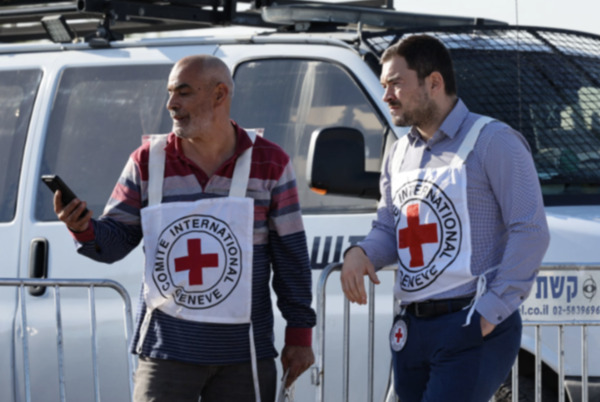
 

The writer is a political and social entrepreneur who has dedicated his life to peace between Israel and her neighbors. He is a founding member and Co-Director of the Two States Alliance and the Middle East Director of the UK based  International Communities Organization.

PALESTINE

Mon 24 Feb 2025 5:26 pm - Jerusalem Time

Israel sets four new conditions for moving to the second phase of the truce in Gaza

The Minister of Energy in the occupation government, Eli Cohen, announced that the occupation authorities have set four impossible conditions for moving to the second stage of the ceasefire agreement with Hamas, in a move that has raised fears of the collapse of the ongoing diplomatic efforts.


These conditions, according to Cohen, include the release of all detainees held by the resistance, the expulsion of Hamas from the Gaza Strip, the disarmament of the Strip, and the imposition of complete security control by the occupation over it.


In statements to the Israeli public radio, Cohen, a member of the security cabinet, confirmed that the occupation will not release the Palestinian prisoners unless Hamas stops holding the handover ceremony for the detainees, stressing the need to return the bodies of four additional dead, and to release the detainees Guy Dalal and Eviatar David, who were forced to watch the release of their colleagues last Saturday.


The occupation authorities announced on Saturday evening the postponement of the release of the seventh batch of prisoners in the first phase of the exchange deal, claiming that Hamas was conducting “humiliating ceremonies” during the handover of the detainees.


The office of the Prime Minister of the occupation, Benjamin Netanyahu, stated, the day after a security meeting, that this decision aims to pressure the movement to speed up the release of the detainees.


In contrast, Channel 12 revealed a sharp division within the occupation security services regarding this decision.

She explained that the situation was assessed in two stages: the first witnessed a discussion with senior security officials who agreed on the necessity of releasing Palestinian prisoners, warning that the postponement could have “major repercussions” that would threaten the entire agreement.
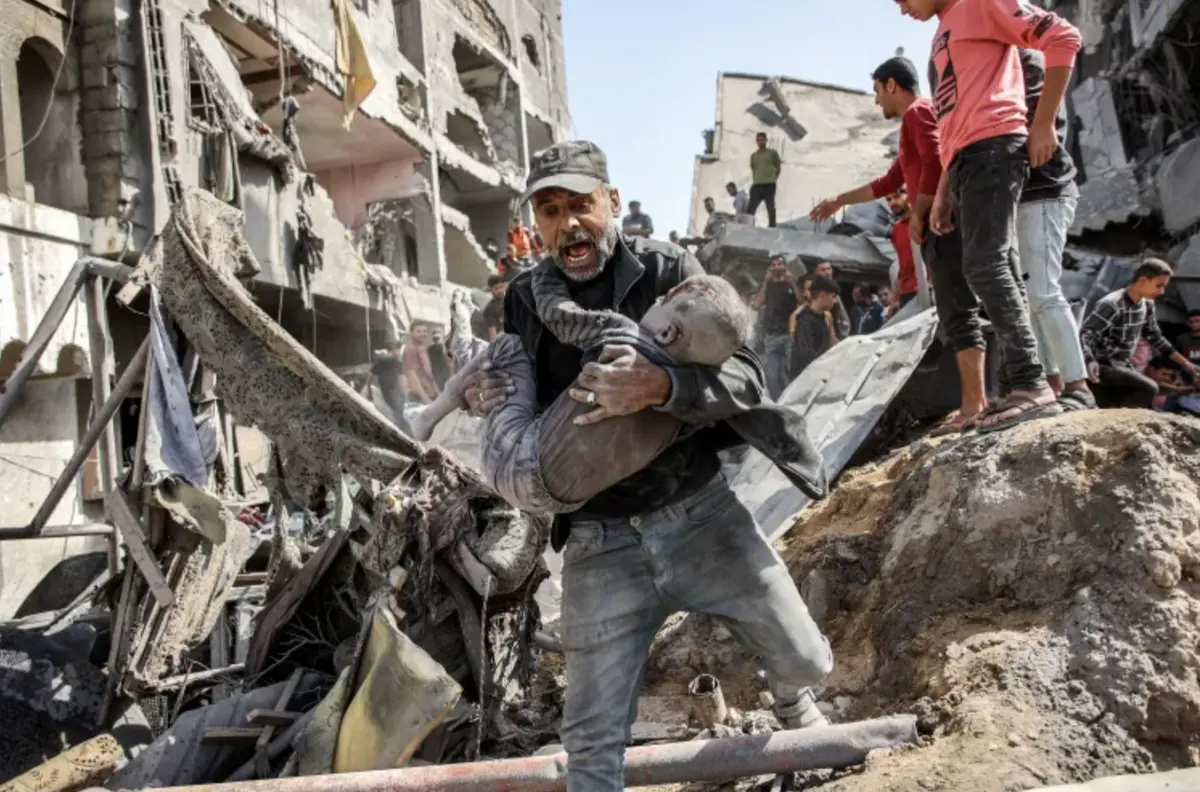

But in the second stage, Netanyahu continued to consult with his ministers only, and decided to ignore the recommendations of the security services and insist on the postponement, in a move that was described as potentially leading to “the collapse of the agreement and the failure to release the detainees.”


The occupation was supposed to release 620 Palestinian prisoners immediately after the Qassam Brigades, the military wing of Hamas, handed over six detainees on Saturday morning.


The agreement stipulates in its first phase the release of 33 detainees held by the resistance, including 8 bodies, in exchange for 1,900 Palestinian prisoners from the occupation’s prisons, but Netanyahu’s intransigence threatens to pose serious risks to the continuation of the calm.

PALESTINE

Mon 24 Feb 2025 5:16 pm - Jerusalem Time

UN official: Forced expulsion of Palestinians from their lands is absolutely unacceptable

The United Nations High Commissioner for Human Rights, Volker Türk, confirmed his rejection of US President Donald Trump's proposal to seize the Gaza Strip, stating that the proposal to forcibly expel Palestinians from their lands is "absolutely unacceptable."


He added in a speech on Monday, during the opening of the 58th session of the United Nations Human Rights Council in the Swiss city of Geneva, that "the suffering of the Palestinians has become unbearable."


He renewed his call for an independent investigation into the serious violations of international law committed by Israel during its recent war on Gaza.


The High Commissioner also stressed that “any sustainable solution must be based on accountability, justice and self-determination, while ensuring the human rights and dignity of both Israelis and Palestinians.”


Regarding Trump's proposal to "seize" Gaza and forcibly displace Palestinians, Turk stressed that "the proposal to forcibly expel people from their lands is absolutely unacceptable."


Since January 25, Trump has been promoting a plan to displace Palestinians from Gaza to neighboring countries such as Egypt and Jordan, which was rejected by both countries, and was joined by other Arab countries and regional and international organizations.


PALESTINE

Mon 24 Feb 2025 4:24 pm - Jerusalem Time

Israeli Knesset Member Calls for Killing Palestinians in Gaza... Hamas Responds

Hamas issued a press release condemning the statements of Israeli Knesset member Nissim Vaturi, in which he called for the killing of adult Palestinians in Gaza, considering these statements to be a public incitement to ethnic cleansing, and reflecting the genocidal approach followed by the occupation leaders against the Palestinian people over the past fifteen months.


The movement stressed that such criminal statements are issued by the occupation leaders without any regard for international laws, and with absolute protection from the US administration, which calls for urgent international action to condemn them.


Hamas called on the international community, the United Nations, and international judicial institutions, most notably the International Criminal Court, to hold accountable those responsible for these racist calls and bring them to international justice, in affirmation of the principles of humanity and the protection of the rights of the Palestinian people in their land.