PALESTINE

Fri 28 Feb 2025 5:07 pm - Jerusalem Time

Suffocation injuries after Israeli storming Dura village north of Ramallah

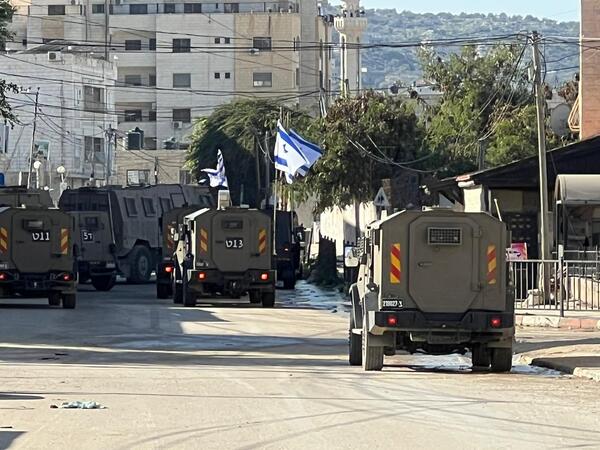
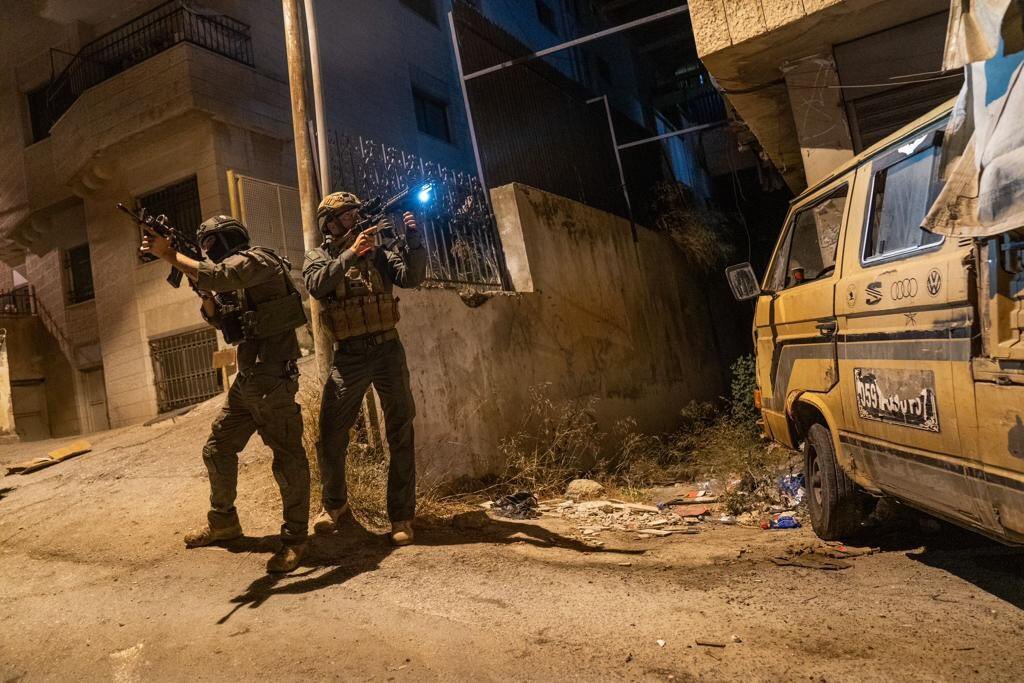
A number of citizens suffered from suffocation after the Israeli occupation forces stormed the village of Dura al-Qar', north of Ramallah, today, Friday.


Local sources reported that clashes erupted after the raid, during which the occupation forces fired tear gas canisters, a number of which fell in the vicinity of citizens' homes, causing suffocation injuries among them.

PALESTINE

Fri 28 Feb 2025 4:27 pm - Jerusalem Time

Israeli occupation forces arrest a young Palestinian from Tubas

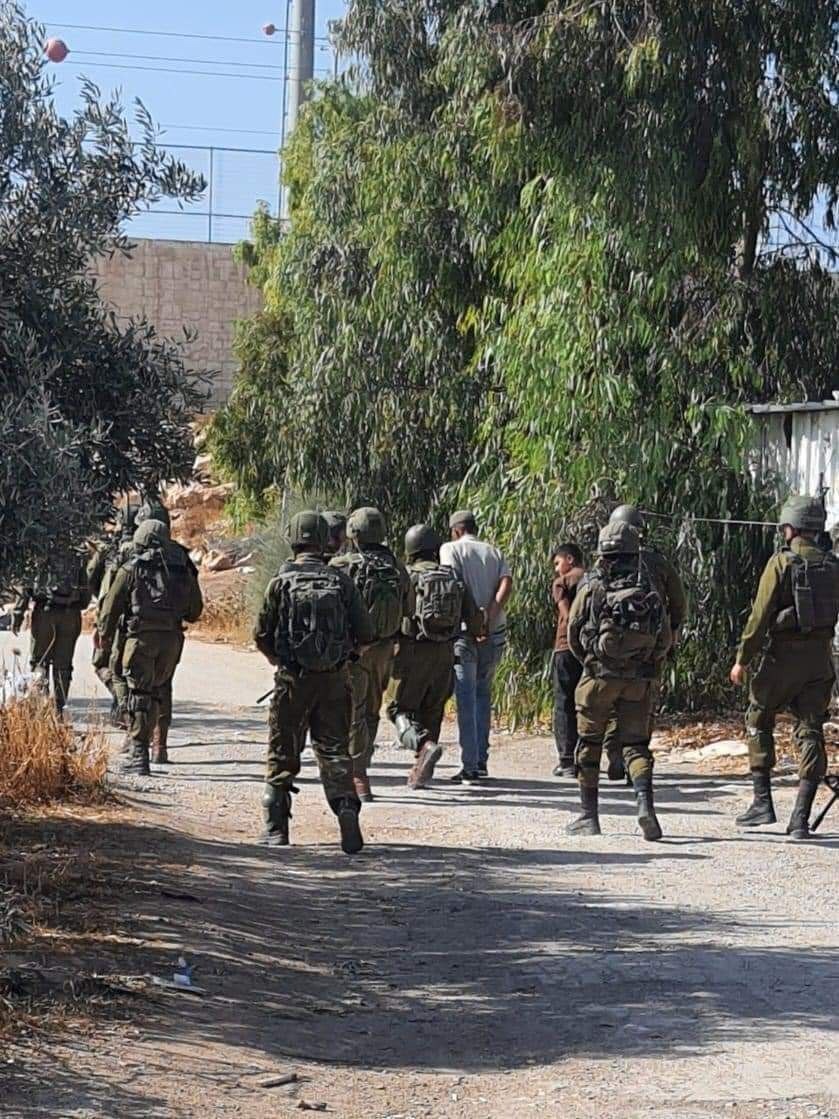
Today, Friday, the Israeli occupation forces arrested a young man from the city of Tubas.


The director of the Prisoners Club in Tubas, Kamal Bani Odeh, reported that the occupation forces arrested the young man Mustafa Muslimani from Tubas, while he was in Khirbet Yarza, east of the city.


The Israeli occupation forces detained a number of citizens in Khirbet Yarza, east of the village, for hours, before arresting Muslimani and releasing the rest.

In a related context, local sources said that the occupation forces seized a private vehicle belonging to one of the citizens there.

ARAB AND WORLD

Fri 28 Feb 2025 4:09 pm - Jerusalem Time

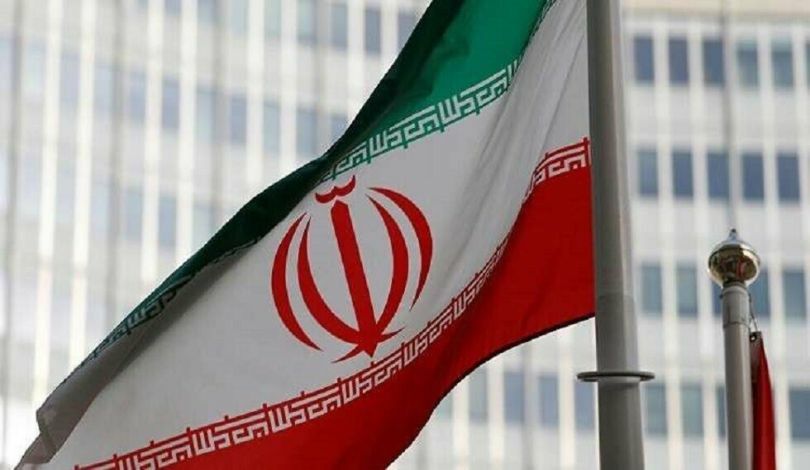
Hysteria after IAEA releases report on uranium enrichment in Iran


The International Atomic Energy Agency (IAEA) released its quarterly report on Iran's civil nuclear program on Wednesday (26/2), and the media responded as usual with hysterical speculation about Iranian nuclear weapons, even though this report is not fundamentally different from recent quarterly reports.

The last report in November put Iran’s stockpile at 182.3 kg of 60% enriched uranium, while the new report puts it at 274.8 kg. The increase in the figure is not surprising, experts say, because Iran does not use 60% enriched uranium for anything and because Iran added to its uranium enrichment centrifuges in November after the United States and the United Kingdom voted to condemn Iran by the International Atomic Energy Agency.

The initial nuclear deal with Iran (July 2015) was intended to prevent these stockpiles from growing by having Iran export enriched uranium for further processing into fuel for civilian reactors, but the United States withdrew from the Joint Comprehensive Plan of Action (JCPOA) in 2018, during President Trump’s first term.

Uranium enriched to 60% is still far below weapons-grade uranium, which is considered 90%-95%. Although the media insists that further enrichment is a “technical” matter, it is worth noting that Iran has never attempted to enrich beyond 60%, and in November promised that it would keep all enrichment at 60% or below.

Iran has been enriching to 60% since April 2021, in line with Israeli calls to attack Iran over its enrichment capabilities since then. Israeli Prime Minister Benjamin Netanyahu has called for attacks on Iran over its nuclear program since his first term in office in the 1990s, so if the 60% stockpile excuse isn’t there, something else likely is.

The CIA reported in January that there was no evidence that Iran had even decided to try to build a nuclear weapon. Moreover, just a few weeks ago, President Trump dismissed the idea of attacking Iran, saying he did not believe Iran wanted a nuclear weapon. Indeed, the vast majority of media coverage of the new IAEA report says nothing of this, and merely speculates about what Iran might do.

As expected, Fox News went further than other media outlets on this issue, quoting an Iranian general calling for “Operation True Promise 3” that would destroy Tel Aviv, with the intent of implying that this was an Iranian threat to strike Israel with a nuclear weapon.

In fact, Operation True Promise 2 was the name given to a conventional rocket attack on Israel in October in response to previous Israeli attacks, which caused minimal damage. There is no indication that these new comments were anything other than a threat of more conventional rocket strikes.

Since Iran's Supreme Leader Ayatollah Ali Khamenei issued a religious edict in 2003 forbidding the production of nuclear weapons, it is inconceivable that an Iranian official would threaten an attack using a weapon they do not have and are clearly not even trying to acquire.

ARAB AND WORLD

Fri 28 Feb 2025 4:03 pm - Jerusalem Time

Malta's Foreign Minister: Gaza is Palestinian land and belongs to the Palestinians

Maltese Deputy Prime Minister, Minister of Foreign Affairs and Tourism Ian Borg stressed that Gaza is Palestinian land, and the Palestinians must have the right to determine its future.


This came in a statement, in response to a video clip created by US President Donald Trump, using artificial intelligence techniques, in which he shows Gaza as a tourist destination that includes skyscrapers and luxury beach resorts, in addition to a golden statue of Trump himself.


"Gaza belongs to the Palestinians," Borg stressed, adding that foreign policy should be discussed through official channels and not through public statements. He added that Gaza should belong to the Palestinians, and that they should decide to implement the proposed projects, stressing the importance of the two-state solution to achieve peace.


It is noteworthy that Malta adopts a clear position on the Middle East, supporting the two-state solution and stressing the importance of achieving peace and security in the region.

PALESTINE

Fri 28 Feb 2025 3:23 pm - Jerusalem Time

Israeli Occupation forces detain a number of farmers in Al-Khader, south of Bethlehem

Today, Friday, the Israeli occupation forces detained a number of farmers in the town of Al-Khader, south of Bethlehem.


The head of the agricultural committee in Al-Khader, Mahmoud Abdullah, reported that the occupation forces detained a number of farmers while they were pruning grapevines in the Wadi Al-Abyar area. They are: Ali Naim Al-Zayah, Rizq Nael Subaih, Abdullah Salem Salah, Ahmed Yousef Al-Kober, and Muhammad Rizq Abu Salem.

PALESTINE

Fri 28 Feb 2025 2:26 pm - Jerusalem Time

Talks in Cairo on Gaza agreement.. Trump speaks of positivity

Cairo is witnessing intensive talks on implementing the next stages of the ceasefire agreement in Gaza, amid "continuous efforts to ensure the implementation of the agreed upon understandings."

This comes at a time when US President Donald Trump confirmed that "talks are going very well" regarding Gaza.

Yesterday, Thursday, Israeli Prime Minister Benjamin Netanyahu ordered the negotiating delegation to head to Cairo to continue the ceasefire and prisoner exchange talks.

While negotiations for the second phase of the ceasefire agreement were supposed to begin on February 3, Netanyahu obstructed the matter as he wanted to extend the first phase with the aim of contributing to the release of the largest number of his country's prisoners in Gaza.


The Egyptian State Information Service reported that "two delegations from Israel and Qatar arrived in Cairo to complete negotiations related to a ceasefire in the Gaza Strip, with the participation of representatives from the American side."


The official body explained in a statement that "the concerned parties have begun intensive discussions to discuss the next stages of the ceasefire agreement, amid ongoing efforts to ensure the implementation of the agreed-upon understandings."

She added: "The mediators are discussing ways to enhance the delivery of humanitarian aid to the Gaza Strip, as part of efforts to alleviate the suffering of the population and support stability in the region."

In turn, Trump confirmed that the talks on Gaza are "going very well," without going into details.

Asked whether the second phase of the ceasefire agreement would yield results, Trump said at a joint press conference with British Prime Minister Keir Starmer: “We’ll see what happens. Nobody really knows, but we’ll see what happens. We have some very good conversations going on.”

For his part, Starmer renewed his support for the two-state solution, considering that it "is ultimately the only way to achieve lasting peace in the region."


The first phase of the ceasefire agreement ends on Saturday evening, but Israel seeks to extend it to recover more than 60 prisoners still in the Gaza Strip. In contrast, Hamas stresses that the continuation of the agreement is contingent on ending the aggression on the Strip and the complete withdrawal of the occupation forces, including from the Salah al-Din axis in the southern Gaza Strip.

The official Israeli Broadcasting Corporation said: "The United States and Israel are holding talks to discuss the possibility of extending the first phase of the exchange deal for several additional weeks."


She pointed out that efforts are currently focused on extending the ceasefire to allow for additional rounds of prisoner exchange, suggesting that new negotiations will begin in Doha next week.

For its part, the newspaper "Israel Today" reported that with the end of the first phase of the agreement, "Israel submitted a request to the mediators to increase the number of hostages released in each phase as a condition for extending the first phase, according to which Israel will release Palestinian prisoners, the continuation of the ceasefire, and the entry of supplies into Gaza, including mobile homes."


PALESTINE

Fri 28 Feb 2025 2:22 pm - Jerusalem Time

Israeli occupation forces arrest a citizen from Nablus

Today, Friday, the Israeli occupation forces arrested a citizen from the city of Nablus.


Local sources reported that the occupation forces stormed the city from the Beit Furik military checkpoint, towards the popular housing area to the east, raided a house, searched it, tampered with its contents, and arrested the young man Nihad Al-Aghbar.

PALESTINE

Fri 28 Feb 2025 11:11 am - Jerusalem Time

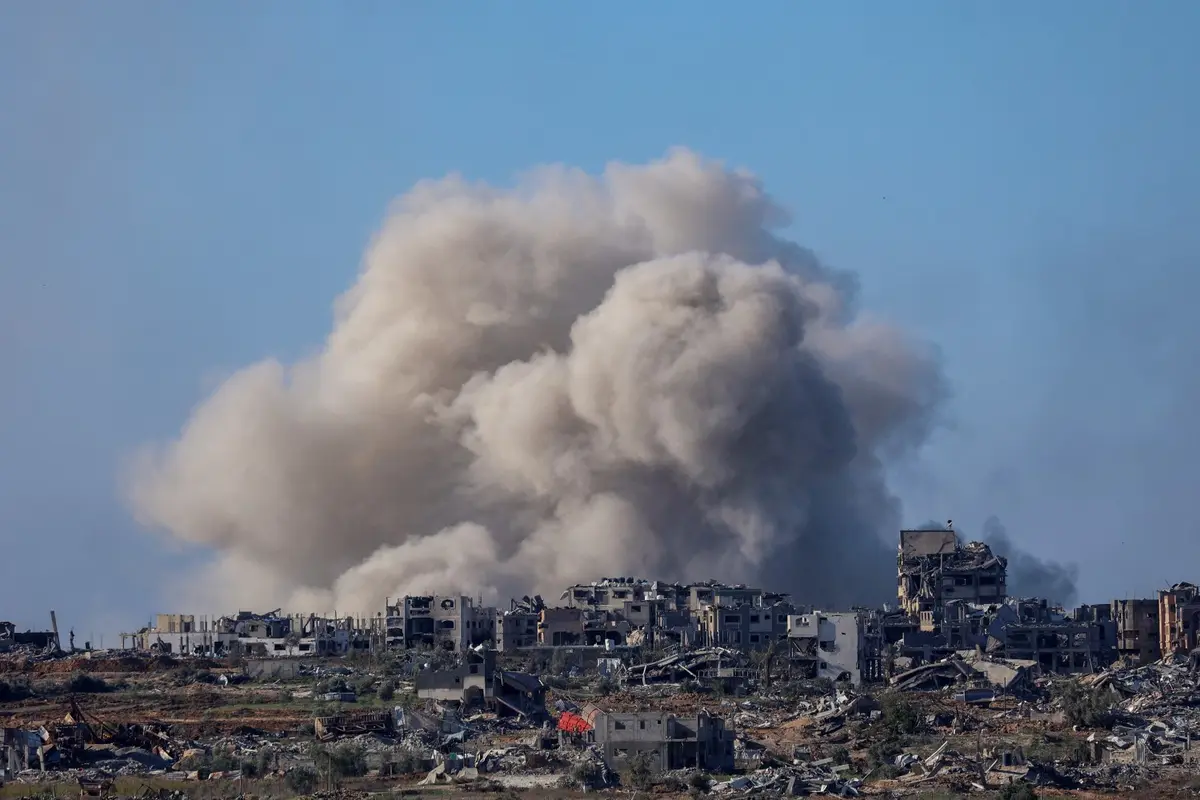
One Palestinian killed and two injured in the occupation's bombing and bullets in Rafah and Gaza

A citizen was killed today, Friday, in an Israeli occupation drone strike in the center of Rafah city, south of the Gaza Strip.

WAFA news agency said that the young man, Raad Nidal Al-Amwasi (18 years old), was killed as a result of the bombing of an occupation drone in the center of Rafah city.


It added that two fishermen were injured after the occupation's gunboats opened fire on them in the sea of Gaza City.

PALESTINE

Fri 28 Feb 2025 11:10 am - Jerusalem Time

Katz: We are accelerating the establishment of an office for the displacement of Gaza and we will not leave the Jenin camp before a year

The Minister of the Occupation Army, Yisrael Katz, confirmed that the army is working to accelerate the establishment of an office for "voluntary immigration" from the Gaza Strip, in statements he made during a conference of heads of local councils, on Thursday.

"We are working to accelerate the establishment of an office for voluntary emigration, and we will open the way for those wishing to leave Gaza via the Ashdod port or Ramon Airport," Katz said. This comes 10 days after Katz instructed the establishment of the department, which will include representatives from ministries other than the Defense Ministry, and security establishment bodies.

The “voluntary migration” that the Israelis are talking about is providing assistance to those who want to leave the Gaza Strip, while Israel has destroyed the infrastructure, educational and health institutions, and UNRWA facilities over the course of 15 months of the war on Gaza, and continues to refuse reconstruction and prevents the entry of mobile homes and tents, with the aim of pushing Palestinians to leave the Gaza Strip.

Katz stressed that “Hamas will not be allowed to continue to control Gaza, either on the civilian or military level,” indicating that he asked the leaders of the military apparatuses, including the commander of Unit 8200 and the commander of the Southern Command in the army, about their most important conclusions after October 7, and they supported that “we cannot allow the presence of armed organizations of this type near Israel’s borders, whether in Gaza or the north (south Lebanon) and Syria, and even around the settlements in the West Bank.”

Regarding the situation in the West Bank, Katz said: “The settlements in the West Bank are the first line of defense for the residents of Israel, and we must ensure their protection. We have found that Hamas planned to carry out attacks before October 7, not only in the West Bank settlements, but also around the seam line, and we have detected several cases that prove this, and we are working to deal with them according to new policies.”

Katz added that the "basic infrastructure" of the resistance in the West Bank is concentrated in the refugee camps, "where Iran supports these factions with weapons, funding and guidance," he claimed, indicating that he ordered the army to continue operations in Jenin and Tulkarm "with the aim of dismantling this infrastructure and eliminating the ongoing threats."

He pointed out that "Jenin camp has become almost empty of residents," while the Israeli army continues to deploy in the camp, and will not leave it "before at least a year has passed, which gives the forces freedom of movement without the need to repeat operations intermittently," he said.

Katz touched on the situation in southern Syria, saying: “We made clear decisions to prevent Iran from strengthening its military influence there, and we sent clear messages to all relevant parties that any attempt to strengthen armed militias will be met with a decisive military response.”

Katz claimed that there were "attempts to take control of strategic sites there, but we will not allow that to happen," noting that the Israeli Air Force carried out strikes targeting these attempts, "and our policy is clear: Violation of the buffer zone in southern Syria will not be allowed."

Katz reiterated Netanyahu's statements that "Israel seeks to maintain contact with them, and is examining the possibility of allowing those in close proximity to operate in the Golan Heights on a daily basis, while providing support through the appropriate channels."

Katz also stressed that Israel's presence in the buffer zone in Lebanon is not linked to a period of time, but rather to the security situation, "and we have received US support in this regard," he said.


Source: Ultra Palestine

OPINIONS

Fri 28 Feb 2025 8:45 am - Jerusalem Time

No to prison and to jailer

op-ed "AlQuds" dot com

op-ed "AlQuds" dot com

Opinion Writer


This is the title of the stage, given that the prisoners languishing in Israeli prisons are being subjected to the most heinous campaign of abuse in history, based on the statements made by the prisoners who were released during the first batches of the exchange deal, where they appealed to all humanitarian institutions, bodies and human rights organizations to intervene urgently and urgently to save what can be saved, before it is too late, because the conditions, according to their description, are like hell, to the point that some of them resorted to comparing the Israeli prisons to the deadly prisons of Guantanamo, and they also demand the continuation of negotiations to release more prisoners.

“We came out of the grave,” some of them declared to the media, their bodies exhausted, their faces pale, some of them no longer able to balance between what was happening outside and inside, due to the long and unjust years of imprisonment, and some of them drank a cup of tea or coffee for the first time since the beginning of the war more than a year and a half ago.

The torture and oppression of prisoners inside prisons, detention centers, investigation and detention centers, and all the accompanying abuses cannot be overlooked. They deserve to be documented, photographed, and presented with evidence, photos, and all the attached testimonies, including the killings and martyrdoms since the beginning of the war, before world public opinion, so that it may know the truth about Israel, which is carrying out barbaric operations against Palestinian prisoners, under the direct direction of extremist Minister Itamar Ben Gvir, and the immediate implementation of the Prison Administration and its repression units, including raids and constant searches of prisoners’ rooms and cells, and carrying out isolation, ghosting, restricting, shackling, starving, beating, assaulting, and attacking detainees with savage police dogs, and preventing water, electricity, and medicine, in addition to the measures taken immediately after the war to prevent visits from lawyers, International Red Cross crews, and visits from families, so that they live in complete isolation, to the point that some of them did not know that there was a ceasefire agreement and a prisoner exchange deal, and the long series of punitive measures cannot be listed. And its abbreviation in one place.

With the martyrdom of prisoner Raafat Adnan Abdel Aziz Fanouneh, who has been detained from Gaza since October 7, 2017, the number of martyrs among the ranks of the prisoner movement since the beginning of the war has risen to 60 martyrs, including 39 from Gaza whose information has been received. This number is the highest in history, as this stage is considered the bloodiest in the history of the prisoner movement, according to a statement by the Prisoners and Freed Prisoners Affairs Authority, which confirms that the prison administration is manipulating the responses it provides to answer about the detention locations of some detainees and the cases of some of them being martyred in order to evade any international accountability. The Prisoners Authority and the Prisoners Club describe what is happening as another aspect of the war of extermination that aims to further take revenge on the prisoners by executing them.

The Israeli occupation bears responsibility for these escalating organized crimes against prisoners. They must be raised, discussed, and effective decisions must be taken regarding them to hold Israel accountable, within the framework of the ongoing negotiations to complete the remaining exchange deals for Israeli detainees and their Palestinian counterparts, to save them from the danger of death that threatens them under the slogan (No to prison and jailer).

OPINIONS

Fri 28 Feb 2025 8:44 am - Jerusalem Time

Situation assessment...what is required from Hamas to restore the balance of the Palestinian people and reduce the burdens

Jihad Harb

Jihad Harb

Opinion Writer

Jihad war

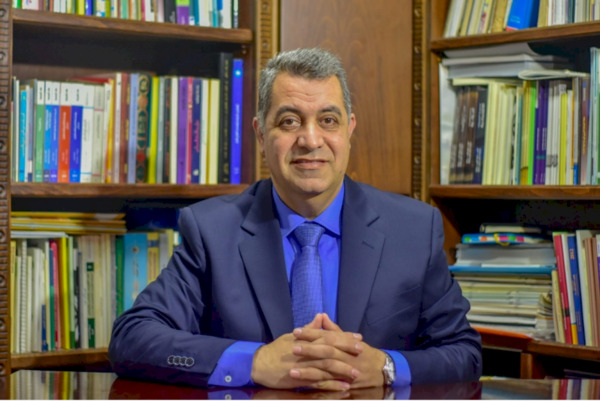
Thabat Center for Research and Opinion Polls issued Situation Assessment No. 1 for the year 2025 on “What is required of Hamas to restore the balance of the Palestinian people and reduce the burdens” as part of the series of policy papers and situation assessments issued by the center for the year 2025. These papers address internal and external policy issues of interest to Palestinian society and decision-makers.

introduction

The statement of Musa Abu Marzouk, a member of the Hamas political bureau, to the New York Times on February 24, 2025, that “knowing these consequences would have made it impossible to support such an attack. If we had known what was happening would have happened, there would have been no October 7,” has once again sparked debate about the political assessment of the “Al-Aqsa Flood,” and the various aspects of what happened before and during the operation, its paths and outcomes, or the achievement of its goals from multiple aspects that are taken into account during its planning, and not limited to the military aspect.

The evaluation process is usually done in order to consider the successes and failures and the similarity of the operational aspects compared to the political aspects; especially in the case of national liberation, and the prices included, expected or paid in the context of an integrated process of extracting lessons, understanding the lessons and absorbing the beginning and the end.

This paper, “Situation Assessment,” aims to present proposals that contribute to reducing the burdens resulting from the war that accompanied October 7, 2023, and ensure the interests of Palestinian citizens and the future of the Palestinian cause. It also focuses on the necessity of an internal review of the Hamas movement regarding what is required of it after this long war that the Palestinian people waged following the movement’s decision to carry out the large-scale military operation represented by “Al-Aqsa Flood.”

The paper reviews the planning rules necessary for the success of the military operation and understanding the political risks, looks at the objectives of Operation “Noah’s Flood”, then presents the prejudices that Palestinians and Israelis have about each other, and then the gains and losses of “Noah’s Flood”, and finally a number of proposals are put forward that Hamas is required to review to help restore the balance of the Palestinian people and reduce the burdens.

(1) The military operation and the conditions for success

Civil and military planning and military and political decision-making require reliance on a number of rules necessary to ensure success and achieve objectives, namely: First: The rule of due diligence, i.e. taking precautions against anything that could spoil the mission, distort it, or weaken performance during its implementation, i.e., more precisely, working to ensure the success of the operation or mission. Second: The rule of taking care to achieve results, i.e. ensuring the achievement of the intended results. Third: The rule of due risk management in calculating potential or existing risks, in order to take precautions and prepare for the Israeli and international reactions to this operation.

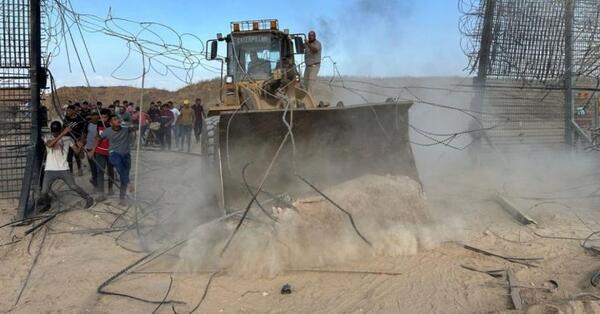
Despite the unexpected great success of the military operation on the morning of October 7, in breaching the border and reaching the military bases and Israeli towns in the Gaza envelope area, Hamas’ documents related to the Al-Aqsa Flood, whether the statement of Muhammad Deif, Chief of Staff of the Qassam Brigades, launching the operation, or the 100-day document it issued under the title “This is our vision… Why the Al-Aqsa Flood,” indicate that the first rule, i.e. taking due care, was not taken seriously enough to ensure that the operation was carried out in a “clean operation” without errors that could threaten the success of the operation or affect its effectiveness in the future.

The document “This is our vision… Why the Al-Aqsa Flood” clearly indicated that due diligence was breached when precautions were not taken to prevent citizens from entering Israeli towns randomly (some glitches may have occurred during the implementation of Operation Al-Aqsa Flood, due to the complete and rapid collapse of the Israeli security and military system, and some chaos resulting from the extensive breaches in the fence and the buffer zone between the Gaza Strip and our areas of operations). Muhammad Deif’s statement also showed that the goal of the operation was broad, “Today, yes today, our people are reclaiming their revolution, correcting their path, and returning to the project of liberation, return, and establishing the state, with blood and martyrdom,” and that it exceeded the capabilities of the Hamas movement in the Gaza Strip; especially since this operation was not coordinated with the national and Islamic forces or even with the allies or even its military wing in the West Bank; liberation requires gathering all forces in at least one crucible.

As for the management of risks that are important in understanding the expected or potential reactions and calculating the costs resulting from this process; especially since the expected victims are the citizens, their property, their lives and the lives of their families compared to what can be achieved, such as the release of prisoners, which is a fundamental issue for the Palestinians and the mission of all Palestinians to ensure their freedom and stop their suffering, in the event that the cost of preventing the danger is greater than the cost of the danger itself, decision-makers refrain from confronting the danger.

In this regard, assessing the situation requires a political reading that is higher than the task of preparing for the military operation, on the one hand, and requires expanding consultations from outside the single framework and listening attentively to critics and opponents for what it achieves in terms of reconsideration with broader eyes that are more capable of examining the risks, on the other hand.

The lack of due diligence and care to achieve results in line with available capabilities, the absence of consultations, and the failure to take into account risk management procedures led to crossing the lines acceptable to the international community, especially with regard to attacking Israeli towns and capturing a number of civilians, including the elderly and children, which at that moment caused the Palestinians to lose international solidarity, the essential element to ensure the legitimacy of the large-scale military operation “Al-Aqsa Flood” and support for the Palestinian struggle against the occupation.

(2) The objectives of Operation “Noah’s Flood”

The statement of the launch of Operation “Noah’s Flood” delivered by Mohammed Deif on the morning of October 7, 2023, raises controversy over the objectives of the operation itself; is it a war to liberate all the Palestinian territories occupied since 1948 “to implement the promise of the afterlife” or to liberate the territories occupied in 1967, or is it an operation to advance the Palestinian cause and change the balance of power? On the one hand, the statement describes in its introduction the establishment of the State of Israel at the expense of the Palestinians, but in the second paragraph it quickly moves to say that the Israeli occupation did not respect international law and international resolutions (some of these resolutions are what established the State of Israel in this region) “We previously warned the leaders of the occupation of the continuation of their crimes, and we called on the leaders of the world to take action to put an end to the crimes of the occupation against our holy sites, our people, our prisoners, and our land, and to force the occupation to abide by international law and international resolutions. The leaders of the occupation did not respond, and the leaders of the world did not take action, but rather the crimes of the occupation increased and exceeded all limits.”

The statement listed the reasons behind Operation “Noah’s Flood” as follows: (1) The dangers surrounding Al-Aqsa Mosque and the ongoing attacks by the occupation and settlers, and the fear of its demolition and the construction of the alleged temple. (2) The continued detention of Palestinian prisoners and their suffering in Israeli occupation prisons. (3) The occupation forces’ raids on Palestinian cities and villages in the West Bank. (4) The continued seizure of Palestinian lands in order to increase settlements and exacerbate settler attacks on citizens. (5) Imposing a criminal siege on the Gaza Strip.

All of these motives listed in the statement are related to the occupation’s practices in the territories occupied in 1967, and this belief is supported by what was stated in the call that the guest addressed in the statement to the Palestinians in the territories occupied in 1948: “Oh our people in the occupied interior, in the Negev, Galilee and the Triangle, in Jaffa, Haifa, Acre, Lod and Ramla, set the land ablaze under the feet of the usurping occupiers, killing, burning, destroying and closing roads, and make this cowardly occupier understand that the flood of Al-Aqsa is greater than he thinks and believes,” compared to the call addressed to the citizens in the West Bank that called on them to sweep away the occupation: “Today is your day to sweep away this occupier and its settlements from all our land in the West Bank.” The statement then followed that the Al-Aqsa Flood operation came "in light of these ongoing crimes against our people, in light of the occupation's rampage and its denial of international laws and resolutions, and in light of American and Western support and international silence, we have decided to put an end to all of that with God's help, so that the enemy understands that the time has come for it to rampage without being held accountable."

In contrast, Hamas’s document, which it published on the 100th day of the Al-Aqsa Flood, added, “This is our vision... Why the Al-Aqsa Flood and what it does to fulfill the hope of 7 million Palestinians to return to their homes after 75 years of exile and diaspora.” The document added, “The Al-Aqsa Flood operation on October 7, 2023, was a necessary step and a natural response to confront the Israeli plots that aim to liquidate the Palestinian cause, control and Judaize the land, establish sovereignty over Al-Aqsa Mosque and the holy sites, end the unjust siege on the Gaza Strip, and a natural step within the framework of getting rid of the occupation, restoring national rights, achieving independence and freedom like the rest of the peoples of the world, the right to self-determination, and establishing an independent Palestinian state with Jerusalem as its capital.”

Adopting these goals and orientations and calling on the Palestinians in the various arenas and the allies in the various multilateral fronts requires two main issues; the first: preparation and readiness in the various arenas, which were not taken into account and perhaps the preparation cell "the limited military council" considered it a foregone conclusion or dealing with the parties always following the center regardless of the necessary preparation to activate the arenas. The second: coordination with the fronts "Iran, Hezbollah and their allies" to be ready for effective participation, but it seems that this was not completed and needed more time according to what was revealed in the leaked documents about the meetings of the limited military council that prepared the "big project."

(3) Misrepresentations of Palestinians and Israelis about each other

The representations of Palestinians and Israelis have been shown to be wrong, misguided, or inaccurate, and are part of the fantasies that have existed about each other in recent years. Palestinians believed that Israeli society cannot sustain a long war, that it relies on quick wars and prefers them to not be on its soil, based on the wars that Israel has fought over the past years, and that Israelis/Israeli governments are very sensitive to the lives of Israelis in preventing their capture or prolonged captivity.

In reality, the matter is different, as Shalit stayed for about five years, and the prisoners or bodies of his soldiers in the 2014 war were nine years old before the war on Gaza began on October 7, 2023. The Palestinians also think that the Israelis are running to leave Israel abroad in large numbers if war breaks out, and that the Israeli economy cannot bear the damage of war or that the Israelis cannot bear the losses.

It seems that those who successfully planned the military operation on October 7th had forgotten the profound transformations in Israeli society. On the one hand, there was a shift towards the right and the fascist right, the influence of religious Zionism in its various forms, and the settlers’ control over the reins of government in Israel. On the other hand, most Israelis today were born in Israel or in the settlements in Jerusalem and the West Bank, and are not immigrants, meaning they have no connection to this land. On the third hand, the idea of a Jewish state is rooted in all Israelis, regardless of their origins, backgrounds, and intellectual and political currents, regardless of the conflict in Israeli society over the form and nature of the ruling institution, not over the state itself. The opposition is at odds with the government from within the political system, in order to achieve the policies and aspirations of specific social groups and their interests, with the existence of institutions that guarantee respect for the public interest, such as the threshold guards, the courts, and others.

In contrast, the Israelis believed that the Palestinians were subject to the horror of Israeli brutality or to more pressure based on destroying their lives; such as destroying the infrastructure that the Palestinians had built over more than thirty years, and the hardship of their lives building their families, homes, businesses and properties, and to the hardship of living and continuous displacement. The Israelis also believed that the continuous abuse of the Palestinians could make them surrender to the occupation based on the idea of the iron wall, of the Revisionist Zionism to which most members of the cabinet belong, which is based on military force to impose Israel’s control. The Israeli Prime Minister believes that prolonging the war enables him to overcome the moral losses he suffered on October 7 and guarantees him more time to increase the suffering of the Palestinians and strike the popular incubator of the resistance factions.

The great success of the military operation on the morning of October 7, by penetrating the border and reaching the military bases and Israeli towns in the Gaza Envelope area, and the continuation of the resistance for more than fifteen months, has refuted the preconceptions and assumptions of the Israeli occupation based on colonial thought and that it was unable to understand the nature of Palestinian society or imagine its ability to withstand and confront, and its ability to analyze the liberation to understand the nature of the conflict and the main contradiction represented by the occupation and its priorities and the secondary contradiction based on the conflicting interests of the forces of the people and the Palestinian factions and their priorities. At the same time, it seems that the one responsible for Operation Flood of Al-Aqsa did not realize the significance of the transformations in the cultural and social structures of Israeli society in the past twenty years at least.

(4) Profits and losses of “Al-Aqsa Flood”

On the Israeli side, October 7, 2023, caused a massive earthquake in the theory of deterrence or the aura of Israeli deterrence in the region as a whole, and the military superiority based on boasting of technical capabilities or the high-tech military industry, and shook the status of the Israeli army, the "sacred cow" in Israeli society, which seemed unable to protect the state's borders or its citizens, and exposed the shortcomings of the intelligence capabilities of the Israeli security services. Not to mention the inability of the Israeli government and its institutions to predict or estimate the extent of threats or the behavior of "hostile" parties, as situation assessment reports indicated that Hamas is deterred and unwilling to confront and wants to maintain its rule in the Gaza Strip.

On the other hand, the "Al-Aqsa Flood" on that day (i.e. the military operation) was a dazzling success for the Palestinians, something they had never seen before in terms of size, capability, numbers of fighters participating in the operation, tools, capabilities and means. It restored the Palestinians' confidence in themselves and their ability to confront the occupation forces and "outperform" their military and technical capabilities. This operation put the Palestinian issue back on the agenda of the international community, which had been absent for years, or rather was no longer a necessity in order to achieve security and peace in the Middle East.

In contrast, the Israeli government considered revenge or war an opportunity to return to the biblical dreams and ideological ideas adopted by Prime Minister Benjamin Netanyahu to restore colonial ambitions to establish the Kingdom of Israel from the sea to the river, according to what Netanyahu recorded in his book “A Place Among the Nations,” using the brute force that Israel possesses and the international support it received at the beginning of the war, and relying on the “Iron Wall” theory, which requires the use of excessive force to force the Palestinians to surrender or displace them from their lands.

The Israeli government has pursued a systematic policy of total and comprehensive destruction in the Gaza Strip to prevent the possibility of living there, to target Palestinian citizens on a broad scale, and to destroy the infrastructure, including the health care system with all its components, as well as education and the existing environmental systems in the Strip. These are strategic losses for all Palestinians that will affect and will affect the nature of their lives and the cultural and social structures for decades to come.

In contrast, the Palestinians succeeded in restoring their cause to the international community's agenda, increasing international solidarity at the level of peoples in general, granting the State of Palestine exceptional privileges in the United Nations that are very similar to the privileges of member states, and changing the positions of some countries, the most obvious of which was the recognition of the Palestinian state by European countries, for example, and the emergence of signs of a boycott of Israel by some European countries in specific cases, and activating the prosecution of Israel before international courts; such as the International Court of Justice in the case filed by South Africa regarding its violation of the United Nations Convention on the Prevention and Punishment of the Crime of Genocide, or the International Criminal Court, which issued arrest warrants for the Israeli Prime Minister and his Minister of Defense as war criminals. Not to mention the decision of the United Nations General Assembly that ratified the advisory opinion of the Court of Justice regarding the illegality of the Israeli occupation and the continued prevention of the Palestinian people from exercising the right to self-determination as one of the most important purposes of the Charter of the United Nations and the purposes of its establishment. These successes at the level of international institutions in particular were not the result of the "Al-Aqsa Flood military operation" as much as they were solidarity with the Palestinian people in the Gaza Strip following the disaster that befell them and the result of continuous political efforts for several years.

(5) What is required to reduce the burdens, alleviate the suffering of the Palestinian people and restore their balance.

There is no doubt that the Palestinian people, especially in the Gaza Strip, have been exposed to a humanitarian catastrophe through the most heinous ethnic cleansing over the course of more than fifteen months at the hands of the Israeli occupation, which has systematically destroyed the components of life in the Gaza Strip and the dignity of its citizens.

This critical stage in the life of the Palestinian people requires a national approach with the aim of rebuilding the national ruins; this is done by restoring Palestinian unity in a way that strengthens national immunity on the one hand, achieves national and societal integration on the other hand, mitigates the consequences and effects of this war on the third hand, and ensures the ability to deal with the international community to begin restoring life in the Gaza Strip and to take international action without Israeli prosecution and its supporters, and to transform the international solidarity that the Palestinian people have enjoyed; because of the war crimes and crimes against humanity committed by the Israeli occupation against the Palestinian people in the Gaza Strip, into creating tools for organized pressure on Western governments towards isolating Israel on the fourth hand.

Achieving this requires the active Palestinian parties to make courageous decisions based on their awareness of the public interest of Palestinian citizens, to preserve the dignity of citizens, and to ensure national partnership in a way that allows the opportunity to reduce “losses,” to preserve what remains of the Palestinian people’s capabilities, and to strengthen the internal front. This means that every Palestinian faction, especially Fatah and Hamas, must make and adopt responsible decisions on its own initiative to uphold the public interest of the Palestinian people regardless of factional interests. This can be done by implementing the following proposals:

- Adopting the discourse of the victim; the victim of the crime of genocide committed by the Israeli government, by all factions and Palestinians around the world and consecrating it, and moving away from the discourse of victories under the pretext of maintaining the morale of the Palestinian people, as the most important thing is to gain the solidarity of the international community and condemn the occupation government and punish it for this crime.

- Hamas forming a new political party to overcome the crisis of being labeled as a terrorist by influential countries in the international community, such as the European Union and the United States, and being pursued in these countries, with guarantees for positive dealing with this transformation by them.

- Announcing that the Hamas resistance movement is not limited to armed action in the Palestinian-Israeli conflict and that other methods of resistance are to be identified in accordance with the United Nations Charter.

- Handing over power in the Gaza Strip to a national salvation government agreed upon through national dialogue, with guarantees that weapons will not be used in internal disputes, government work will not be disrupted, or the rule of law will not be violated.

- Agreement on the entry of the Palestine Liberation Organization and political governing institutions after holding general elections, provided that an agreement is reached on the date of holding the elections within a maximum period of two years from the cessation of war.

- The Fatah movement and the factions of the Palestine Liberation Organization provide guarantees to the Hamas movement to hold the general elections (legislative and presidential) on the agreed date, and to strive from the moment of signing the ceasefire agreement to overcome the obstacles and challenges facing the holding of the general elections through consultation and national agreement.


PALESTINE

Fri 28 Feb 2025 8:39 am - Jerusalem Time

Israeli occupation army admits its failure on October 7

The Israeli occupation army admitted its failure on October 7, announcing that Hamas had managed to subdue the Gaza Division within hours of the attack, which it described as a surprise and organized one.

The occupation army explained in a statement that all of what it called "achievements" made during the war could not hide the failure of that day, which revealed major security and intelligence gaps.

He pointed out that despite dealing a severe blow to Hamas, which included a series of assassinations of its leaders and whose effects extended to Hezbollah through the assassination of a number of its leaders, this did not compensate for the failure that occurred at the beginning.

The occupation army admitted the collapse of a set of security doctrines that "Israel" relied on, including the belief that Gaza represents a marginal threat, and that Hamas can be deterred, in addition to excessive confidence in the capabilities of the security wall on the Gaza border.

He pointed out that the attack on October 7 revealed a major development in the resistance doctrine, specifically Hamas, regarding the multi-front war, which Israel was not prepared for.

The occupation army explained that the army at all levels failed on the night of October 7, pointing out that there is a large gap between intelligence estimates and the actual reality on the ground.

He stressed that the army's estimates indicate that about 5,000 Palestinians participated in the attack in three successive waves, and that during that night conflicting signals were received between what indicated exceptional conditions in Gaza and other reports indicating a normal situation, which led to confusion in decision-making.

He added that Hamas' attack on the Gaza Division headquarters and its collapse made it very difficult to build a clear picture of the situation on the ground, which directly affected the decisions of the army officers and the Israeli General Staff.

The occupation army confirmed that this confusion had a negative impact on the course of military operations in the first hours of the attack.

He pointed out that ongoing investigations in the intelligence field revealed a huge gap between the army's estimates and reality, which necessitated internal reviews of security doctrines and methods of collecting and analyzing information.

He stressed: Before October 7, we were convinced that Hamas could be tamed, but it turned out that this conviction was a big mistake.

Hebrew reports said that on October 7, Hamas carried out one of the most sophisticated deception operations ever, which will be studied deeply in intelligence agencies around the world. "Israel" thought one thing about Gaza, while Gaza was preparing for something else entirely.

She pointed out that "Israel" was convinced that Hamas had become pragmatic due to its responsibility for managing the population in Gaza, while in contrast, Hamas had been working for a long time on a surprise attack aimed at resolving the confrontation with "Israel."

While the occupation army admitted that it was convinced before October 7 that Hamas could be tamed, this turned out to be wrong.

PALESTINE

Fri 28 Feb 2025 8:37 am - Jerusalem Time

For the 33rd day: Israeli occupation continues its aggression on the city of Tulkarm and its two camps

The occupation forces continue their aggression on the city of Tulkarm and its camp for the 33rd consecutive day, and on the Nour Shams camp for the 20th day, amid military reinforcements, raids, and burning of homes.

Wafa Agency reported that the occupation forces sent military reinforcements to the city last night and towards the Tulkarm and Nour Shams camps, and patrolled the streets and alleys and positioned themselves along the Nablus Street linking the two camps, while they are still seizing residential buildings on the aforementioned street and turning them into military barracks and deploying snipers inside them.

The occupation continues to impose a tight siege on the Tulkarm and Nour Shams camps, preventing entry or exit from them, and deploying infantry squads inside the neighborhoods and alleys, while raiding homes, vandalizing them and destroying their contents, coinciding with its snipers firing live ammunition intensively in the Jabal al-Nasr and al-Salihin areas in Nour Shams camp, and burning the home of citizen Ahmed al-Abd al-Bata in Jabal al-Salihin, causing extensive damage to it.

During the ongoing aggression on the city and its two camps, the occupation forces caused great and complete destruction to the infrastructure of electricity, water, sewage and communications networks, which led to the interruption of basic services to the entire Tulkarm and Nour Shams camps, and exacerbated the suffering of the citizens who were still in their homes.

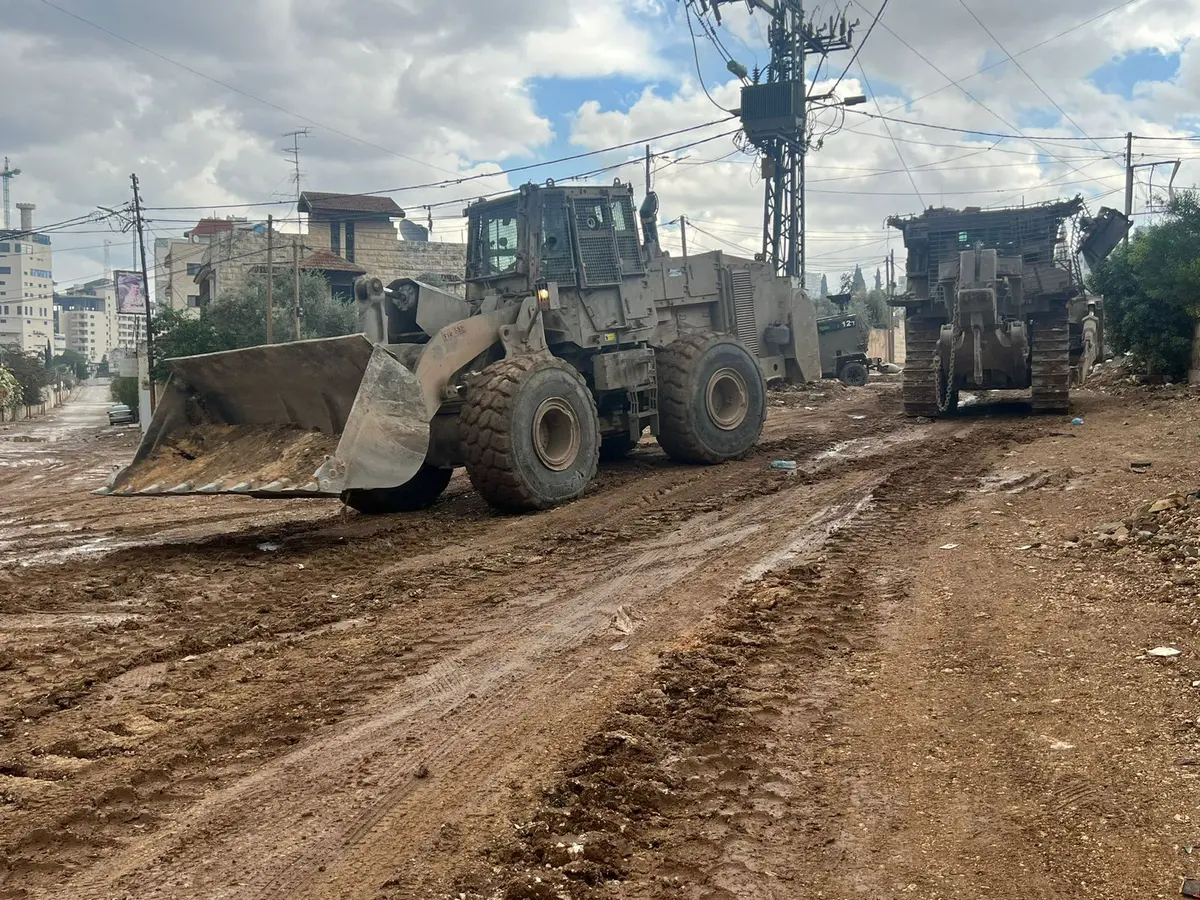
Military bulldozers also left behind unprecedented destruction in roads and residential neighborhoods, in addition to the complete and partial destruction of properties, including homes and shops. The latest was the complete demolition of 26 buildings in Tulkarm camp, causing severe damage to the surrounding buildings and facilities, and the occupation notifying of its intention to demolish 11 homes in Nour Shams camp in the coming days, under the pretext of paving roads that cut through several neighborhoods.

The ongoing aggression has also led to the displacement of approximately 12,000 citizens from Tulkarm camp and more than 5,000 citizens from Nour Shams camp, whom the occupation forces have forced and are still forcing others to leave their homes by force and under threat of arms, while 13 citizens were martyred, including a child and two women, one of whom is eight months pregnant.

Amidst the continued tight siege on the camps, the appeals of the citizens who are still in their homes and living in difficult and harsh conditions continue, to secure the arrival of their basic needs of food, water, medicine and baby milk, and to work on repairing the water and electricity networks, at a time when the occupation is obstructing and preventing the work of relief crews while they are trying to deliver the basic necessary materials to them.

In the same context, the occupation forces continue to close the gate of the Jabara checkpoint at the southern entrance to the city of Tulkarm for the 21st consecutive day, isolating the city from the villages and towns of Al-Kafriyat and the rest of the West Bank governorates.

OPINIONS

Fri 28 Feb 2025 8:36 am - Jerusalem Time

Attempt (1) .. In search of a way out of the bottleneck

Dr. Ghassan Abdullah

Dr. Ghassan Abdullah

Opinion Writer


The Palestinian people, with all their social classes and strata, and their political organizations, as well as their just national cause, are witnessing an extremely difficult phase, which can be described as very critical, “either we are or we are not,” after the forces of evil have conspired against us from every direction.

It is not an exaggeration to say that the reality of the situation is ominous, as we are close to reaching the bottom of the well. However, because we must be what we want, a human society with sovereign decision-making power over its historical land.

We can say that the majority of the factions of the Palestine Liberation Organization were born out of differences and intellectual visions, some of which were recorded in history as having participated actively, and some of which were not fortunate enough to be as they had promised at the beginning.

I do not want to delve further into the subject, as I am not a politician, and I will suffice with addressing this important subject from a purely psychological perspective.

By nature, as an optimist about our current situation and future destiny, I still see that there is room for hope, provided that this hope is accompanied by serious work characterized by good intentions and sincerity, to get out of the bottleneck.

The first step is to start with oneself and purify oneself from all the characteristics of selfishness and factionalism, and move towards self-initiative, just as we do in congregational prayer when the imam asks the worshippers to straighten the rows and close the gaps, and you see hundreds and even tens of thousands have done that in less than a second, and this is what is required today from everyone, based on the principle that whoever has good thoughts about God and others, God will not disappoint his thoughts and guide his path.

The second step is to rally completely and comprehensively around the Palestine Liberation Organization, which our people have paid a heavy price to establish as the sole legitimate representative of our people, so that the opportunity is opened for all Palestinians to engage with it and work according to its political program (which makes this possible, the relatively new position of the Islamic Resistance, which is completely compatible with the supreme goal of the Palestine Liberation Organization, which is the establishment of a free, independent Palestinian state with full national sovereignty).

The third step is the need to move towards a collective behavior pattern as an alternative to the constant adoption of the individual, factional behavior approach based on the principle of "my interest and the interest of my tribe and faction first." This will not be achieved by believing that the group is just a group of people who met together in a spatial area, but rather it is preceded by intensive efforts to prepare and build the collective self, which requires openness, listening to the other, respecting his opinion and preserving his dignity (even if you disagree with him) and promoting the values of difference and pluralism. We have previously coined a term for this: (4Ds - democracy, dignity, dialogue & diversity), which is always accompanied by the assumption of good faith that the other has a positive goal/set of goals. Therefore, we must work together to build bridges of dialogue in order to bring all these points of view closer together. Here, we guarantee the arrival of the expected child safe and sound. In this way, we arrive at adopting the approach of working with collective responsibility, after we have rejected the approach of exclusion, marginalization, dependency and emotional reactions resulting from constant clinging to With individual interests, as a result of intellectual closure, as the proverb says, "A goat is worth a thousand times even if it flies."

We see that if we internalize the general national goal and ensure effective and clear channels of communication, without arrogance or haughtiness, with the Palestinian other, then we can move the masses towards planned and studied collective action and ensure gaining the trust of the people in all its spectrums.

Another issue is the necessity of staying away from rumors and fake news, most of which are prepared and manufactured, either in the kitchen of the other who is lying in wait for us, or by instructing his agents to manufacture and spread them as widely as possible, as a source of fake new information, and likewise those delusional analyses, planned in advance, and aimed at directing the compass towards its incorrect direction, with the aim of inflaming local and political differences and violence, as a clear and decisive alternative to that, so that we may rely on real visions whose primary source lies in the results of work on the ground, and the visions of the people, instead of constantly selling illusions and raising resonant, bombastic slogans. Thus, we will have paved the way towards finding the societal and political leadership that gains the trust of all Palestinians, and we have established the foundations for social justice and a stable national economy, and we have eliminated the cases of constant doubt and suspicion.

A comprehensive understanding of the psychological motivations of all sectors and categories of society, including the marginalized ones, is the first way to formulate directions and guidelines that lead to agreement on work mechanisms after we have agreed on all the desired goals.

We believe in this, we can survive and get out of the bottleneck that we have unfortunately been living in for a long time, and if we do not learn from it, and do not correct our work approach, we will be exactly like the losers in our work, after our efforts have gone astray, because we thought that we were doing good, and in the best of cases we will be like those whose work is like a mirage in the desert, all this because we did not accept, did not make concessions, and did not listen to the people’s demands or the minimum of them.

In conclusion, we say to everyone: Atone for your sins, and replace your approach with a return to the people and their logical and just demands.

OPINIONS

Fri 28 Feb 2025 8:28 am - Jerusalem Time

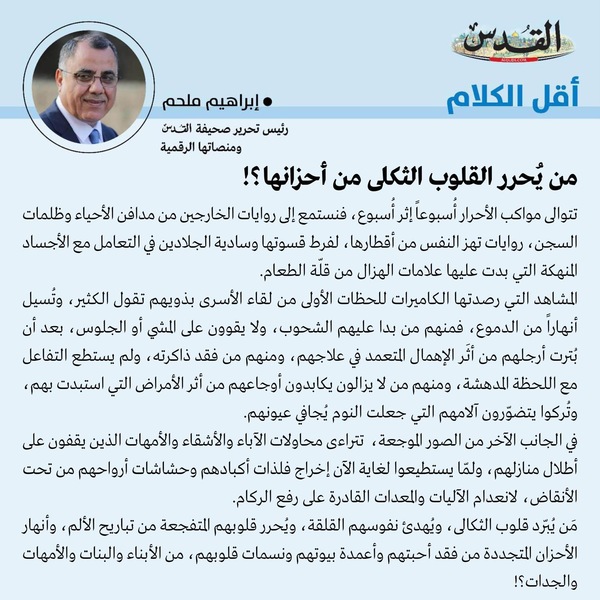
Who will free the bereaved hearts from their sorrows?!

Ibrahim Melhem

Ibrahim Melhem

Opinion Writer


The processions of the free continue week after week, and we listen to the stories of those emerging from the cemeteries of the neighborhoods and the darkness of the prison, stories that shake the soul to its core, due to their extreme cruelty and the sadism of the executioners in dealing with the exhausted bodies that showed signs of emaciation from lack of food.

The scenes captured by the cameras of the first moments of the prisoners meeting their families say a lot and bring rivers of tears. Some of them looked pale and were unable to walk or sit after their legs were amputated due to the deliberate neglect in their treatment. Some of them lost their memory and were unable to interact with the amazing moment. Some of them are still suffering from the pain of the diseases that have overwhelmed them and were left to suffer from their pain, which has prevented them from sleeping.

On the other side of the painful images, we can see the attempts of fathers, siblings and mothers standing on the ruins of their homes, unable to extract their children and the apples of their eyes from under the rubble, due to the lack of machinery and equipment capable of lifting the rubble.

Who will cool the hearts of the bereaved, calm their anxious souls, and free their grieving hearts from the pangs of pain and the rivers of renewed sorrows from the loss of their loved ones, the pillars of their homes, and the breezes of their hearts, from sons, daughters, mothers, and grandmothers?

PALESTINE

Thu 27 Feb 2025 10:49 pm - Jerusalem Time

ICC: We will continue to investigate the Gaza war urgently

The International Criminal Court will continue its investigations into crimes committed in the Palestinian territories or by Palestinians, the office of the prosecutor of the International Criminal Court, Karim Khan, said on Thursday, despite the withdrawal of an arrest warrant for a leader of the Hamas movement.


The International Criminal Court said on Wednesday that judges had withdrawn an arrest warrant for Mohamed Diab Ibrahim al-Masri, known as Mohamed Deif, after credible reports of his death, according to Reuters.


The guest was wanted in connection with crimes committed during Hamas' October 2023 attack on southern Israel, which sparked the war in Gaza.


The prosecution in court charged Al-Dhaif with mass murder, rape and hostage-taking.


Al-Daif was killed in an Israeli airstrike last year, but Hamas did not confirm his death until late January.


The prosecutor's office said Thursday that the investigation was ongoing and that it would not hesitate to seek arrest warrants for other suspects "if it considers that there is a reasonable prospect of conviction."


“The Office is actively investigating, treating the situation as an urgent priority, and will integrate multiple additional and interconnected lines of investigation,” the Office of the Attorney General said in an email.


In November, ICC judges also issued arrest warrants for Israeli Prime Minister Benjamin Netanyahu and former Israeli Defense Minister Yoav Gallant, on charges of “war crimes and crimes against humanity in the Gaza war.”


Netanyahu rejected the resolution, calling it "anti-Semitic" and saying the accusations were ridiculous and false.


The withdrawal of the arrest warrant issued against Al-Dhaif means that there are no longer any public arrest warrants issued by the ICC against any Palestinian militants in connection with the October 7, 2023 attack.


Attorney Yael Vias-Gversman, who represents Israelis attacked by Hamas before the ICC, said the decision to drop the case against Deif showed that more work was needed “to end impunity for the atrocities that continue to be committed by perpetrators from fundamentalist groups.”

ARAB AND WORLD

Thu 27 Feb 2025 9:22 pm - Jerusalem Time

High Israeli ceiling in the "Philadelphi" crisis raises tension with Egypt

While Egypt has avoided officially commenting on the Israeli threat not to withdraw from the Philadelphi Corridor on the Gaza Strip, an informed source told Asharq Al-Awsat that “there is a clause in the ceasefire agreement between Israel and Hamas that stipulates that the occupation forces will complete their withdrawal from the corridor on the fiftieth day of the truce, and until then, each incident will be discussed.”


Media reports quoted an Israeli official as saying on Thursday that his country will not withdraw from the strategic Philadelphi Corridor on the border between the Gaza Strip and Egypt, as stipulated in the ceasefire agreement.

The official said Israeli forces needed to remain in the Philadelphi Corridor, on the Gaza side of the border with Egypt, to prevent weapons smuggling, which Israel alleges but Cairo strongly denies, insisting the Egyptian border is secure.


Israeli Defense Minister Yisrael Katz also confirmed on Thursday, during a conference of regional council leaders in Israel, that his forces will remain in the "Philadelphi Corridor" at the current stage, without specifying a date for their withdrawal.


This coincided with statements by Israeli Energy Minister Eli Cohen, in which he said that Israel would not withdraw from the Philadelphi Corridor except under certain conditions.


During a radio interview, Cohen explained that the Israeli army will not withdraw from the axis until the kidnapped soldiers are returned, Hamas is overthrown, Gaza is emptied of weapons, and Israeli security control over the Strip is restored.


Israel was supposed to begin withdrawing from the Philadelphi Corridor next Saturday, the last day of the first phase of the agreement, and to complete the withdrawal within 8 days.


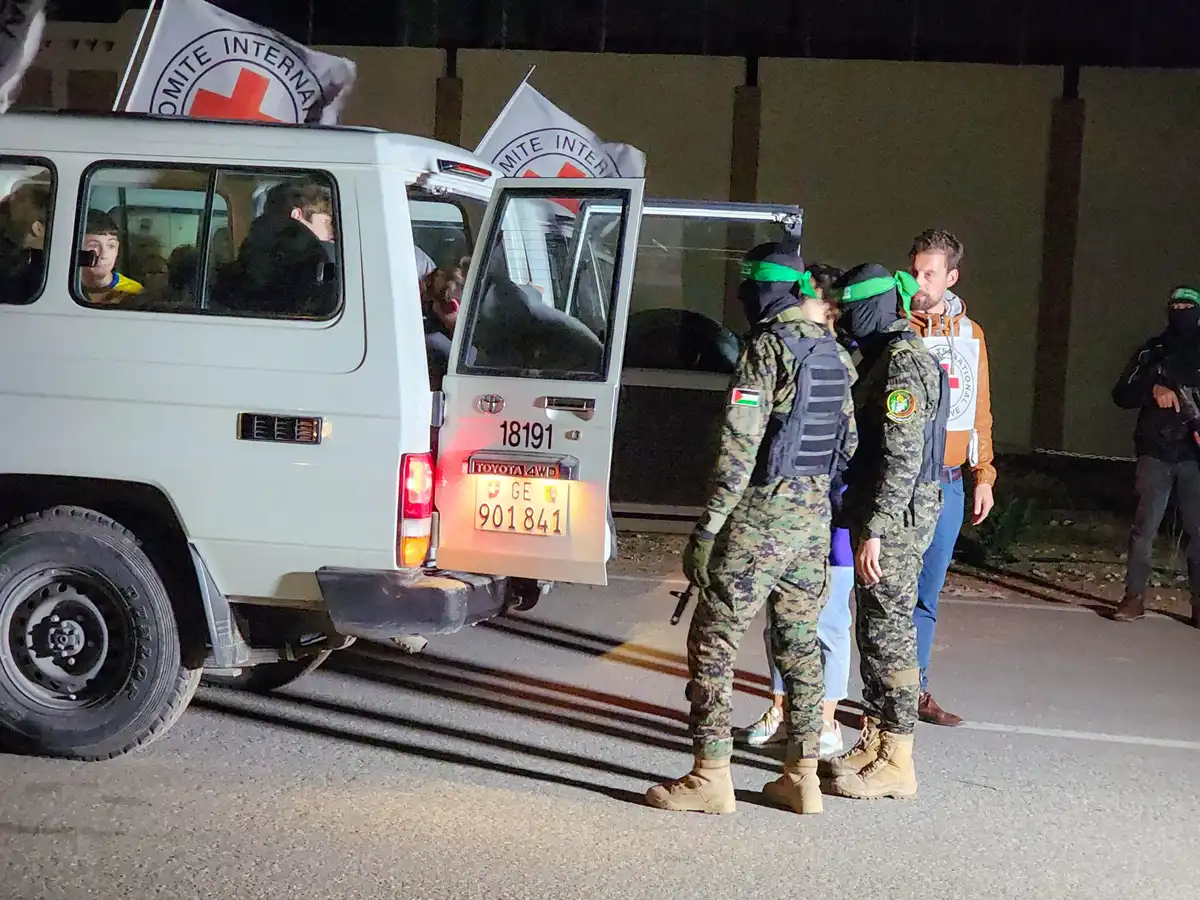
The Israeli officials' statements came hours after Hamas returned the remains of four hostages to Israel in exchange for the release of more than 600 Palestinian prisoners, the last exchange scheduled for the first phase of the ceasefire agreement.
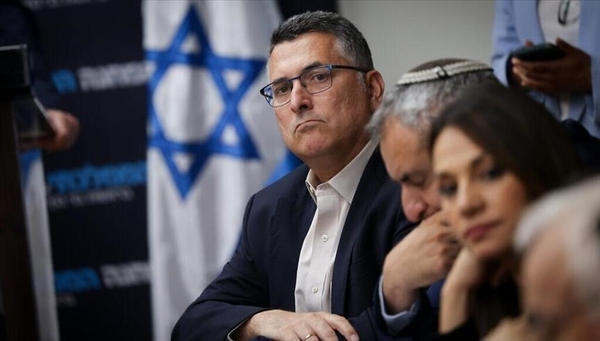

Talks on the second, more difficult phase of the ceasefire agreement have not yet begun.


Israel’s refusal to withdraw from the corridor could spark a crisis with Hamas and the main mediator, Egypt, at a sensitive moment for the ceasefire, especially since this Israeli threat comes two days after a proposal by Israeli opposition leader Yair Lapid, made in Washington, that “Egypt would take over the administration of the Gaza Strip for a period of time in exchange for cancelling its foreign debts,” a proposal that angered Cairo, which announced its strong rejection of it.


An Egyptian source in the Cairo operations room monitoring the implementation of the ceasefire told Asharq Al-Awsat, “The Israeli statements have a political purpose, and perhaps they contain a degree of evasion by which Israel is trying to pressure Egypt during the negotiations to move to the second phase of the ceasefire agreement, but Egypt has its options and calculations to deal with that. Despite the Israeli evasions, Egypt has completed the file of the detained prisoners in the last few hours in a very professional manner.”


The same source estimates that “Israel will withdraw from the Philadelphi Corridor at the specified times, one way or another, and it is only maneuvering tactically to achieve the greatest possible gains during the negotiation process.”


He stressed that "Egypt distinguishes between statements issued officially by the Israeli government in statements, and statements made to the media in order to create momentum that Israel wants to serve it in the negotiation process."


Israeli forces took control of the entire Gaza-Egypt border, including the Philadelphi Corridor, as well as the Rafah crossing, in May 2024, and accused Egypt of not doing enough to prevent weapons from reaching the Gaza Strip through tunnels on its border, a charge Cairo denied.


Israel says that Israeli forces have uncovered many tunnels in the area, while Egypt denies that there are tunnels connecting the two sides, considering that the Israeli statements aim to keep the forces on the axis and spoil the ceasefire agreement and exchange of detainees.


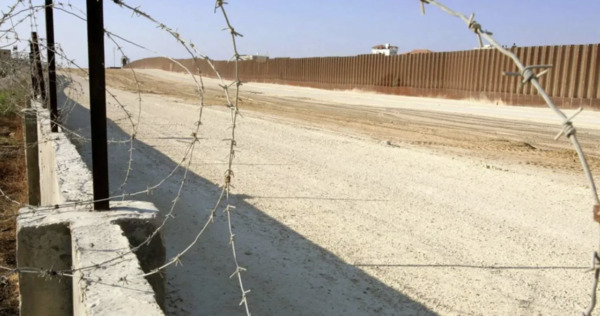
The Philadelphi Corridor is a buffer zone with security specificity, and represents a three-way corridor between Egypt, Israel and the Gaza Strip, extending over a distance of 14 kilometres. Geographically, this border strip extends from the Mediterranean Sea in the north to the Kerem Shalom crossing in the south.


The Egyptian strategic expert, Samir Ragheb, believes that “Israel’s continuation in the axis will not affect, in the slightest, the peace agreement between Egypt and Israel. According to the annex to the Egyptian-Israeli peace treaty, the axis is a buffer zone that was under Israeli control and guard before the latter withdrew from the Gaza Strip in 2005 in what was known as the ‘disengagement’ plan.”


Ragheb noted in statements to Asharq Al-Awsat that “Israel’s failure to withdraw will lead to tension that will hinder the implementation of the ceasefire, but it will not put pressure on Egypt. Israel is using a tactic to make Egypt a party instead of a mediator, while Egypt is dealing calmly, because it is not a party and wants to end the conflict completely, and therefore it will not respond to these provocations.”


He stressed that Egypt "is sponsoring the Palestinian request for Israel to withdraw from the Philadelphi Corridor and all Palestinian territory, and is working on this all the time and is achieving tangible progress towards completing the implementation of the ceasefire."


It is worth noting that as part of the withdrawal from the Gaza Strip in 2005, Israel signed an agreement with Egypt allowing the presence of an Egyptian border guard force of 750 personnel to combat smuggling and militants in the border area.


As for control of the Palestinian side of the axis, it was handed over at that time to the Palestinian Authority, until the Hamas movement took over the administration of the Strip in 2007.


The head of the Egyptian Center for Thought and Strategic Studies, Brigadier General Khaled Okasha, agrees that “Israel is maneuvering with the story of the Philadelphi Corridor in order to obstruct the transition to the second phase of the ceasefire agreement.”


Okasha told Asharq Al-Awsat that these Israeli maneuvers come amid conflicting American positions. While US President Donald Trump says that moving to the second phase of the agreement is an Israeli will, Trump’s Middle East envoy Steve Witkoff is pushing for moving to the second phase.


Okasha concluded that the problems of the second phase of the ceasefire agreement are great, but the mediators, led by Egypt, are capable of dismantling those problems as they did before, and Israel will withdraw, not only from Philadelphia, but from the entire Gaza Strip, according to what the agreement stipulates.

PALESTINE

Thu 27 Feb 2025 8:51 pm - Jerusalem Time

Israeli occupation forces injure a young man and raid homes north of Ramallah

A young man was injured by Israeli occupation forces' bullets, Thursday evening, during clashes that took place in the town of Beit Rima, north of Ramallah.


According to local sources, the occupation forces shot a young man in the foot with a live bullet, and detained him for some time before allowing an ambulance to evacuate him and take him to receive treatment.


He added that the confrontations followed the occupation forces' storming of Beit Rima and raiding the homes of the released detainees: Tamer Salim al-Rimawi, William Sameh al-Rimawi, and Omar Samir al-Rimawi, who were released by the occupation authorities at dawn today and deported to Egypt, as part of the seventh batch of the ceasefire agreement on the Gaza Strip.


He pointed out that the occupation soldiers forced the owners of shops in the center of the town to close their doors.

ARAB AND WORLD

Thu 27 Feb 2025 7:44 pm - Jerusalem Time

Russia calls for maintaining ceasefire, delivering aid to Gaza

Russia called on Thursday for the need to intensify international efforts to maintain the ceasefire agreement in the Gaza Strip, and to increase the flow of food and health aid to the residents of the Strip.


The Russian Foreign Ministry called in a statement for the need to intensify international efforts to ensure the implementation of the interim agreement on the ceasefire in the Gaza Strip, and to increase the volume of humanitarian food and health aid to the residents of the Strip.

ARAB AND WORLD

Thu 27 Feb 2025 7:12 pm - Jerusalem Time

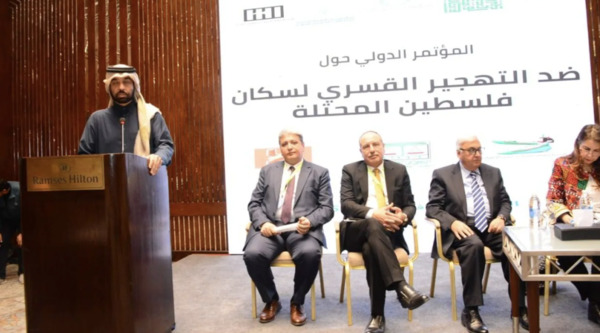
International human rights conference in Cairo supports Arab rejection of the displacement of Palestinians

International human rights activists, during a conference in the Egyptian capital, Cairo, on Thursday, condemned calls for the “forced displacement” of Palestinians, stressing that attempts to transfer the residents of the Gaza Strip constitute a “flagrant violation of international law,” especially the Fourth Geneva Convention and the Rome Statute of the International Criminal Court.


At the initiative of the National Council for Human Rights in Egypt, Cairo hosted a human rights conference, with the participation of Arab and international human rights organizations, including the Arab Network for National Institutions, the Independent Commission for Human Rights in Palestine, the Palestinian Al Mezan Center, and the Afro-Asian Solidarity Organization, in addition to the United Nations Special Rapporteur on the situation of human rights in the Palestinian territories, Francesca Albanese.


The conference affirmed “support for Arab positions that reject forced displacement plans, especially the positions of Egypt, Jordan, Saudi Arabia, Qatar and the Emirates,” and stressed, according to the closing statement, the need to “confront attempts to displace Palestinians by supporting their rights and holding accountable those who commit crimes against them,” in addition to “supporting their right to independence.”


Arab countries have announced their rejection of calls by US President Donald Trump and Israeli officials to “displace” Palestinians from the Gaza Strip.


The conference aimed to discuss the challenges and dangers of the plans to “displace” Palestinians to neighboring Arab countries, in addition to “mobilizing international and regional efforts to combat the crimes of forced displacement and Israeli violations against the Palestinian people,” according to the Egyptian National Council for Human Rights.


According to the final statement, international human rights activists condemned “Israeli policies aimed at continuing aggression, settlement and forced displacement,” and stressed “the need to hold accountable those who committed crimes against the Palestinian people, and to provide protection for civilians,” and “held Israel responsible for the necessary compensation for the Palestinians.”


The conference recommendations stressed support for reconstruction plans in Gaza, and Egyptian and Arab efforts to restore life in the Strip, and also stressed “the necessity of supporting the United Nations Relief and Works Agency for Palestine Refugees (UNRWA).”


Egypt intends to "present a comprehensive vision for the reconstruction of Gaza in a way that guarantees the Palestinians' continued presence on their land," and has called for an emergency Arab summit to discuss the "new and dangerous" developments in the Palestinian issue.


The participants pledged to submit the conference outcomes to international and regional organizations, especially the United Nations, the International Court of Justice, the European Union, the African Union, and the Organization of Islamic Cooperation, as part of efforts to mobilize international efforts to confront displacement plans.


The Secretary-General of the Arab Network of National Human Rights Institutions, Sultan bin Hassan Al-Jamali, considered that confronting calls for displacement “comes by supporting the steadfastness of the Palestinian people, empowering them to their land, and supporting their right to independence.” In his speech at the conference, he pointed out “the importance of mobilizing human rights efforts to oppose attempts to suppress the rights and freedoms of the Palestinians.”


Meanwhile, the head of the Arab Organization for Human Rights, Alaa Shalabi, referred to “documenting the crimes of the Israeli occupation against the Palestinians, based on the testimonies of the injured Gazans, during their treatment in Egyptian hospitals,” adding that “the conference aims to unify the efforts of human rights activists, in supporting the rights of the Palestinian people.”


The Secretary-General of the National Council for Human Rights in Egypt, Fahmy Fayed, called for the necessity of “the Israeli occupation to bear the responsibility of compensating the Palestinian people for the crimes committed against them, and the destruction of hospitals, schools and infrastructure in Gaza.”


The conference reflected a legal alignment to oppose calls to displace Palestinians, according to lawyer and member of the National Council for Human Rights in Egypt, Abdel Gawad Ahmed, who told Asharq Al-Awsat that one of the conference’s gains was “issuing a unified legal position supporting the Arab political position rejecting the issue of transferring the residents of Gaza,” before the emergency Arab summit is held on March 4.


Ahmed stresses the importance of supporting the reconstruction process in Gaza, as a way to confront calls for displacement. He said: “The success of the reconstruction plans depends on a sustainable ceasefire in the Strip, which is what international efforts must be mobilized to achieve.”

PALESTINE

Thu 27 Feb 2025 6:06 pm - Jerusalem Time

The occupation wants to extend the ceasefire in Gaza in exchange for the release of prisoners

Israeli Foreign Minister Gideon Sa'ar announced on Thursday that his country is ready to extend the ceasefire in the Gaza Strip in exchange for the release of more prisoners.


On January 19, a ceasefire agreement in Gaza went into effect, comprising three phases, each lasting 42 days.


While negotiations for the second phase of the agreement were supposed to begin on the 16th day of the first phase of the agreement (February 3), Israeli Prime Minister Benjamin Netanyahu obstructed this, as he wants to extend the first phase with the aim of contributing to the release of the largest number of his country’s prisoners in Gaza.


Netanyahu also fears entering the second phase of the agreement, which stipulates ending the war of extermination and the complete withdrawal of the Israeli army from Gaza, for fear of the collapse of his government coalition, which includes ministers from the extreme right who reject this step.


The first phase of the agreement is expected to be completed by next Saturday.


Regarding this, Sa'ar said, in a press conference in West Jerusalem with his Czech counterpart, Jan Lipavsky: "We are prepared to extend the time frame (for the first stage of the agreement) in exchange for the return of more kidnapped (Israeli prisoners)," according to what was reported by the private Hebrew Channel 12.


He considered that "it is better to discuss this matter in more detail after the return of the Israeli negotiating delegation," referring to the delegation that is leaving for Cairo today, Thursday.


Sa'ar explained that the Israeli negotiating delegation will discuss in Cairo the possibility of finding "common ground" to extend the first phase of the agreement "in exchange for the release of more kidnapped soldiers."


For its part, the official Israeli Broadcasting Corporation reported, quoting an unnamed Israeli official, that the negotiating delegation that will leave for Cairo today has a main goal, which is "achieving the release of living hostages next Saturday."


The first phase of the Gaza ceasefire agreement stipulated the release of 33 Israeli prisoners, living and dead, which the Palestinian factions actually fulfilled, releasing 25 living prisoners and 8 bodies in 8 batches.


According to Israeli data, there are still 59 Israeli prisoners in Gaza, at least half of whom are believed to be alive.


The Israeli negotiating delegation is headed by the Coordinator for Prisoners and Missing Persons Affairs, Gal Hirsch, in addition to a senior security figure from the General Security Service (Shabak).


The first phase of the ceasefire agreement was supposed to include Israel's complete withdrawal from the Philadelphi Corridor on the Gaza-Egypt border.


However, the Israeli Broadcasting Corporation quoted an Israeli official (unnamed) as confirming that Israel "will not withdraw from the Philadelphi corridor."


In a related context, the Authority said that the United States and Israel are holding talks to discuss the possibility of extending the first phase of the exchange deal for several additional weeks.


In turn, the private Hebrew newspaper "Israel Today" reported that "Israel submitted a request to the mediators to increase the number of hostages released in each stage as a condition for extending the first stage, in addition to continuing the ceasefire and bringing aid into Gaza, including mobile homes."


Hebrew media outlets are reporting that Netanyahu promised the Religious Zionism party, headed by Finance Minister Bezalel Smotrich, not to move to the second stage of the ceasefire agreement in Gaza in order to convince him to remain in the government coalition, and thus prevent its collapse.

PALESTINE

Thu 27 Feb 2025 5:14 pm - Jerusalem Time

A young Palestinian was injured by the occupation forces' bullets and arrested south of Nablus

A young man was shot by the Israeli occupation forces before being arrested in the town of Qusra, south of Nablus.


According to local sources, the occupation forces stormed the town and surrounded a house, while gunfire was heard in the area and military reinforcements arrived.


He explained that the occupation forces shot a young man in the besieged house, before arresting him, without knowing his health condition.

PALESTINE

Thu 27 Feb 2025 4:49 pm - Jerusalem Time

Injuries in a run-over attack south of Haifa

The Israeli occupation ambulance announced that 10 people were injured, including two seriously, in a run-over attack that took place near the city of Hadera in occupied Palestine.


Channel 14 reported, quoting the occupation ambulance, that 10 people were injured in the run-over operation, two of whom were in critical condition.


The Israeli occupation police announced the arrest of the suspect in carrying out the attack at the Karkur Junction, located near the city of Haifa, after a chase at the site of the operation.


The occupation army radio reported that initial investigations indicate that it may have been an attack, while Channel 13 reported that the perpetrator ran over a group of people, then hit a police vehicle, before getting out of his vehicle and stabbing two policemen.


The occupation authorities are still investigating the circumstances of the operation, amid security reinforcements in the area.


PALESTINE

Thu 27 Feb 2025 4:09 pm - Jerusalem Time

Gaza: The extent of destruction due to the war reached 55 million tons of rubble

The Union of Municipalities of the Gaza Strip announced on Thursday that the extent of the destruction resulting from the Israeli war that lasted for 15 months amounted to about 55 million tons of rubble in all governorates of the Strip.


The Union of Municipalities said, at the conclusion of an emergency meeting held in Gaza, in a statement published on its website today: “With the continuation of the humanitarian catastrophe experienced by the residents of the Gaza Strip as a result of the Israeli war of extermination that has lasted for 15 months, the Union of Municipalities of the Gaza Strip confirms that the municipalities are facing an inability to respond effectively due to the lack of basic equipment and capabilities, in light of the massive destruction that has affected the infrastructure and the service, environmental and health sectors.”


He added: "This requires an urgent response to provide the basic needs of municipalities so that they can play their role in serving citizens and alleviating the growing suffering."


The union called for providing the necessary heavy machinery and equipment to deal with about 55 million tons of rubble spread throughout all governorates of the Gaza Strip, which constitutes a serious obstacle to restoring life to the city and rehabilitating public facilities and closed streets.


He called for providing building materials to enable municipalities to repair the infrastructure and rebuild as many service facilities as possible, revealing the need to provide spare parts for municipal machinery, vehicles and equipment, in addition to providing various oils to revive the remaining municipal machinery and equipment that are dilapidated and in need of periodic maintenance that is burdensome for the municipalities.


He urgently requested more than 500 computers, in addition to electronic parts and servers, due to the destruction of the municipalities’ digital networks and work systems.


He stressed the need for solar energy systems, electric generators and batteries to overcome the power outage crisis and the destruction of the electrical grid, which had a catastrophic impact on the operation of water and sewage stations.


He pointed out the necessity of providing basic maintenance materials, most notably water and sewage pipes of different diameters, especially 4, 6, 8 and 10 inches, to rehabilitate damaged networks, prevent water leakage into the streets, and address the problems of water not reaching different areas due to the destruction of the networks.


The union pointed out that "the Gaza Strip is facing unprecedented health and environmental crises due to the widespread destruction of the infrastructure, caused by the overflow of sewage in low-lying areas, and its leakage into the streets and homes, which threatens the lives of citizens due to the spread of diseases and epidemics, in addition to the accumulation of 360 thousand tons of waste as a result of the cessation of the work of waste collection and transportation mechanisms, due to the Israeli occupation's destruction of municipal mechanisms, the lack of fuel, and the prevention of access to the waste dump."


He stressed that "the municipalities of the Gaza Strip are working with almost no capabilities in light of this disaster, and are making great efforts despite the risks and difficulties, which requires urgent international action to bring in equipment and basic needs for the municipalities so that they can restore part of the necessary services, and prevent the situation from deteriorating to more dangerous levels."


He called on all international and relief agencies, humanitarian organizations and countries sponsoring the ceasefire agreement in the Gaza Strip to intervene immediately to save more than two million Palestinians facing unprecedented humanitarian, environmental and health disasters that may not be contained.

PALESTINE

Thu 27 Feb 2025 4:02 pm - Jerusalem Time

44 child and female prisoners released in the seventh exchange batch arrive in the Gaza Strip

Hamas's media director for prisoners, Nahed Al-Fakhoury, confirmed on Thursday that the seventh batch of the prisoner exchange deal will be completed today with the release of 46 Palestinian prisoners from the Gaza Strip by the Israeli occupation.


Al-Fakhouri explained that the occupation released 596 Palestinian prisoners at dawn on Thursday, as part of the seventh and final batch of the first phase of the ceasefire agreement.


A bus carrying a number of released female and child prisoners arrived in Khan Yunis, south of the Gaza Strip, as part of the seventh batch of the exchange deal.


Sources reported that 44 female and child prisoners were released as part of the deal, and were transferred to the Gaza Strip amidst a popular and official reception.


Al-Fakhouri pointed out that the total number of prisoners included in the seventh batch amounted to 642 prisoners, including 151 sentenced to life imprisonment and high sentences, and 445 detainees from Gaza after October 7, 2023, in addition to 46 female and child prisoners who will be released today.

PALESTINE

Thu 27 Feb 2025 2:32 pm - Jerusalem Time

Israeli special forces storm downtown Jericho

Israeli occupation army special forces stormed the city of Jericho today, Thursday.


Local sources reported that special units of the occupation, followed by military reinforcements, raided the "Sabiha" and "Al-Khidawi" neighborhoods in the center of Jericho. Clashes also erupted with young men, during which the occupation forces fired live ammunition, sound bombs, and gas.

PALESTINE

Thu 27 Feb 2025 1:42 pm - Jerusalem Time

The Al-Butum people's gathering in Masafer Yatta faces the risk of forced displacement

Amnesty International said that the Al-Butam community in Masafer Yatta is facing imminent forced displacement as a result of increasing attacks by settlers supported by the Israeli occupation state.


In a statement on Thursday, it referred to the house demolitions, harassment and restrictions on access to land, and the illegal colonial expansion carried out by the occupation authorities.


According to the statement, this pastoral community, which includes about 300 residents, is one of 12 communities that together make up the Masafer Yatta area south of Hebron, which has suffered for decades from state-backed settler attacks and repressive measures by the Israeli authorities.


“The plight of the Al-Butum community is a microcosm of what Palestinians, particularly herding and Bedouin communities, face across much of the occupied West Bank, where settlers invade their land, destroy and steal their property, and harass and physically assault them, with complete impunity,” said Erika Guevara-Rosas, Amnesty International’s Research, Advocacy and Policy Director.

ARAB AND WORLD

Thu 27 Feb 2025 1:30 pm - Jerusalem Time

New York Governor Orders Removal of Palestinian Studies Job Ad at CUNY

New York Governor Kathy Hochul has ordered the City University of New York (CUNY) to immediately remove a job advertisement for a professor of Palestinian studies at the state university system’s Hunter College.


In an announcement for the position, Hunter College, Keoni’s alma mater, wrote that the institution is looking for “a historical scholar who takes a critical perspective on issues related to Palestine including but not limited to: settler colonialism, genocide, human rights, apartheid, migration, climate and infrastructure destruction, health, race, and gender.”


The announcement added that Hunter College is open to "diverse theoretical and methodological approaches" to teaching the class.


“Governor Hochul has ordered NYU to immediately remove this job posting and conduct a comprehensive review of the position to ensure that anti-Semitic theories are not being promoted in the classroom,” a Hochul spokesperson told the New York Post, owned by pro-Israel Rupert Murdoch.


NYU Chancellor Felix Matos Rodriguez and William Thompson Jr., chairman of the Board of Trustees, issued a joint statement regarding the removal of the job advertisement, saying, “We find this language divisive, polarizing, and inappropriate and strongly agree with Governor Hochul’s directive to remove this advertisement, which we have confirmed Hunter College has since done.”


The job advertisement, which also said it was part of a "group hiring" for Palestine Studies for two positions, has been removed from NYU's website.


The NYU Faculty and Staff Union condemned the move in a letter to Hochul and Rodriguez. “We strongly oppose the removal of the Palestine Studies faculty position as an infringement on academic freedom at Hunter College,” the union wrote. “We oppose anti-Semitism and all forms of hate, but this move is counterproductive. It is an overreach of power to exclude an entire area from academic study.”


Palestine studies grew as an academic discipline in response to the university protests that rocked the United States after the October 7 attacks and the subsequent brutal Israeli bombardment of Gaza.


But the CUNY listing sparked immediate backlash from Jewish groups and pro-Israel activists. Many critics, including watchdog groups, alleged that the language describing the position “promotes anti-Semitism.”


StopAntisemitism, a pro-Israel group, called the list part of a “bloody anti-Semitic slur” at CUNY in a post on its X website.


CUNY was a focal point for pro-Palestinian protests that rocked campus last year during Israel’s genocide in Gaza, leading to dozens of arrests and prompting the university and state government to adopt a heavy-handed response. The liberal magazine The Nation reported earlier this month that CUNY is investigating members of its student government for participating in the protests and promoting a boycott of Israel.


In September of last year, Jonathan Lippman, a former state judge and a prominent supporter of the Israel lobby group AIPAC, submitted a report to Governor Hochul “pointing to a disturbing number of unacceptable anti-Semitic incidents targeting members of the CUNY community” and calling for a comprehensive overhaul of how the university handles allegations of anti-Semitism.


The CUNY controversy plays into broader debates about when anti-Zionism crosses over into anti-Semitism. “The Lippman report is a serious attack on the movement for Palestinian rights,” one NYU doctoral student wrote when the report was released. “Throughout this year, Jews, including organizations like Jewish Voice for Peace, have played a central role in pointing out that anti-Zionism is not anti-Semitism and speaking out against genocide. Yet this report repeats that false equivalence.”

PALESTINE

Thu 27 Feb 2025 1:17 pm - Jerusalem Time

A Palestinian doctor and a girl were injured by the occupation forces’ bullets in Jenin

A doctor and a girl were injured today, Thursday, by Israeli occupation bullets in the city of Jenin and its camp.


The Palestinian Red Crescent reported that its crews dealt with two injuries from live bullets, one of which was a doctor who was shot in the foot in the Al-Zahraa neighborhood in Jenin, and the other was a girl (23 years old) in the Jenin camp.


The occupation continues its unprecedented aggression on the city and its camp for the 38th consecutive day, leaving 27 martyrs and dozens of injuries.

PALESTINE

Thu 27 Feb 2025 1:15 pm - Jerusalem Time

The death toll in the Gaza Strip rises to 48,365

The Ministry of Health in Gaza announced today, Thursday, that the death toll in the Gaza Strip has risen to 48,365 dead, since the start of the Israeli aggression on October 7, 2023.


It added that the number of injuries has risen to 111,780 since the beginning of the aggression, while a number of victims are still under the rubble and on the roads, and ambulance and rescue crews cannot reach them.


It pointed out that 17 bodies were recovered from different parts of the Gaza Strip during the past 48 hours.