PALESTINE

Sat 01 Mar 2025 9:25 pm - Jerusalem Time

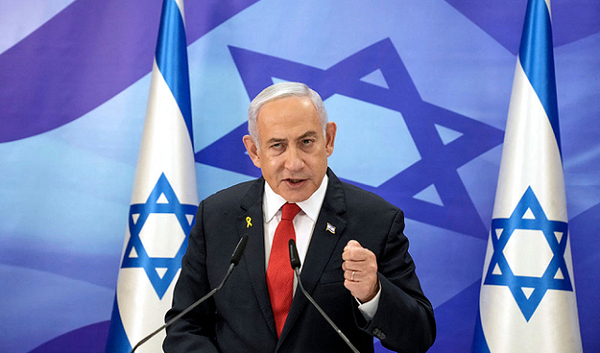
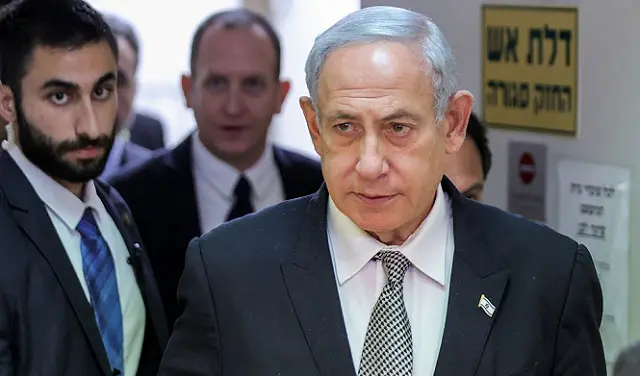
Netanyahu to hold talks tonight on Gaza... and discuss option of resuming war

The Hebrew website Walla quoted an Israeli source as saying that the Prime Minister of the occupation government, Benjamin Netanyahu, will discuss tonight the response to the Palestinian resistance movement (Hamas)’s refusal to extend the first phase of the ceasefire agreement in the Gaza Strip, stressing that the discussions will address a wide range of options, starting with reducing humanitarian aid and may even extend to renewing the war completely. The official, who refused to reveal his name, confirmed that he hopes that “tonight’s decisions will not lead to the collapse of the deal.”


The official confirmed that "the Israeli negotiating team's talks in Cairo with Egyptian and Qatari mediators did not achieve any progress," adding that "Hamas made it clear to Egypt and Qatar, and through them to the United States, that it must ensure Israel's implementation of the agreement." He stressed that "officials in Israel and the mediating countries believe that the administration of US President Donald Trump alone can lead the negotiations out of the dead end they are facing."


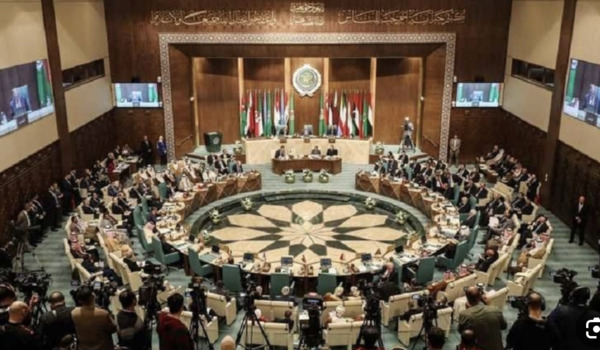
Despite the Israeli allegations, Hamas was flexible regarding the negotiations, and also sent a message to the Arab Summit in which it confirmed its readiness to cooperate with any initiative that would confront attempts to displace Palestinians from the Gaza Strip and rebuild it without prejudice to Palestinian rights, especially the Palestinian people’s “firm right to resist the occupation, achieve a just solution to our Palestinian cause that guarantees the right to self-determination, establish an independent Palestinian state with full sovereignty and Jerusalem as its capital, and return refugees to their cities and villages from which they were displaced since the Nakba.”


Witkoff heads to Israel next weekend to resume talks

Today, Saturday, the Hebrew Broadcasting Corporation said that the US envoy to the Middle East, Steve Witkoff, is expected to visit Israel by the end of next week. The Hebrew Corporation (official) stated that Witkoff's visit, expected by the end of next week, will be after the "State of the Union" address that the US President will deliver next Tuesday.


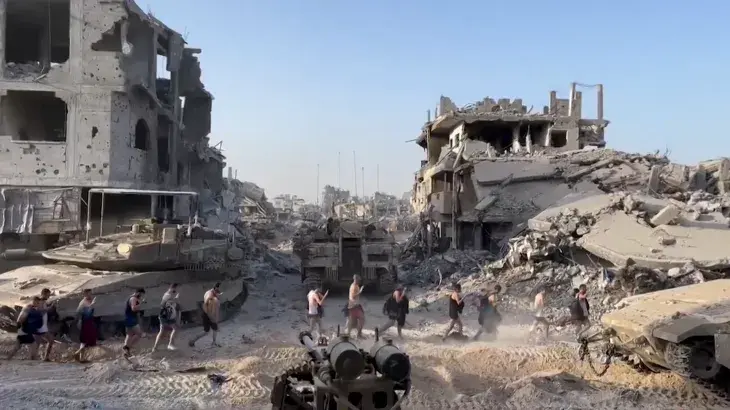
On January 19, the first phase of the ceasefire and prisoner exchange agreement began, which includes three stages, each lasting 42 days, with the condition that the next stage be negotiated before the current stage is completed. While Netanyahu continues to procrastinate in starting the negotiations for the second stage, which were supposed to start on February 3, during the first stage, 33 prisoners were released, including eight bodies, in exchange for 1,755 Palestinian prisoners.

PALESTINE

Sat 01 Mar 2025 9:02 pm - Jerusalem Time

Hebrew media: Tel Aviv decided not to renew the aggression on Gaza in the coming days and to allow room for negotiations

Channel 13 reported, citing sources, that Tel Aviv has decided not to renew the aggression on the Gaza Strip in the coming days.


It explained that the aim of this measure is to allow room for negotiations related to a ceasefire in the Strip.


PALESTINE

Sat 01 Mar 2025 8:01 pm - Jerusalem Time

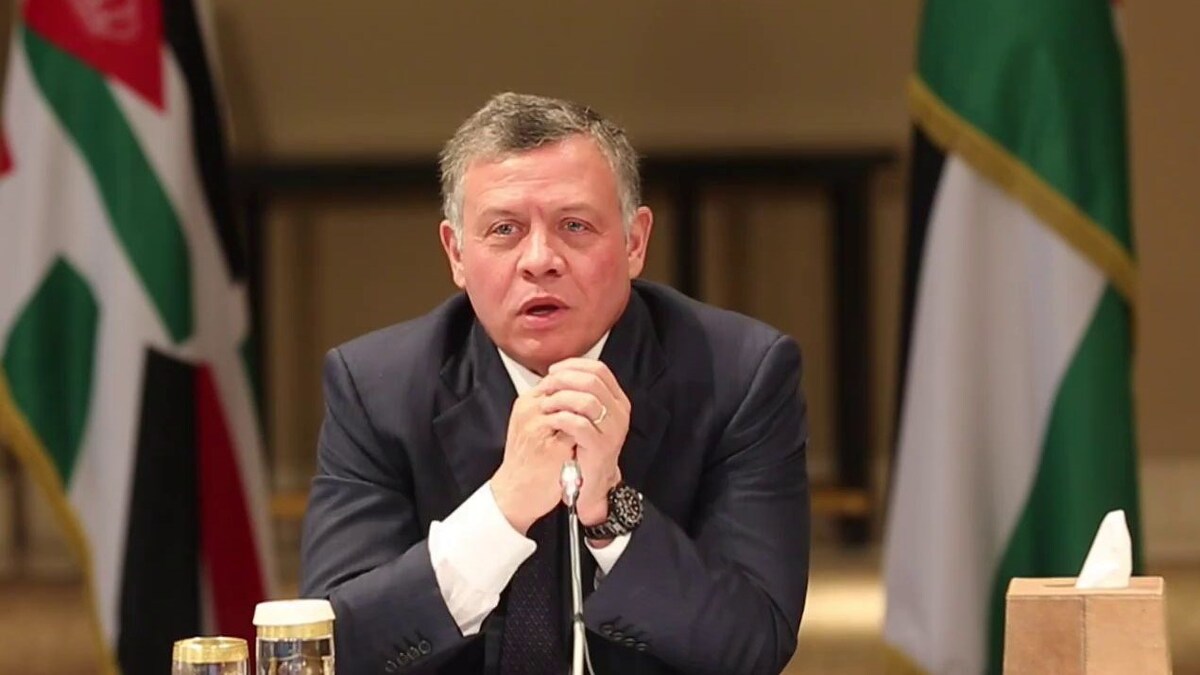
King Abdullah stresses the necessity of rebuilding the Gaza Strip and establishing a ceasefire there

Jordan's King Abdullah II stressed, on Saturday, the necessity of rebuilding the Gaza Strip and consolidating the ceasefire agreement there.


This came during a phone call he received from Canadian Prime Minister Justin Trudeau, according to a statement by the Jordanian Royal Court.


According to the statement, the two parties discussed ways to enhance friendly relations between the two countries and mechanisms for expanding cooperation in various fields.


The phone call between King Abdullah and Trudeau also addressed the most important developments in the region.


The Jordanian monarch also stressed "the necessity of rebuilding the Gaza Strip without displacing its residents, consolidating the ceasefire in Gaza, and intensifying international efforts for humanitarian response."


Cairo is scheduled to host an emergency Arab summit next Tuesday, with the aim of "formulating a strong Arab position on the Palestinian issue in general, and presenting a general Arab proposal that counters the American proposal to displace the Palestinians of Gaza."


Since January 25, US President Donald Trump has been promoting a plan to displace Palestinians from the Gaza Strip to neighboring countries such as Egypt and Jordan, which was rejected by both countries, and was joined by other Arab countries and regional and international organizations.


In return, Egypt is working to formulate and propose a comprehensive Arab plan to rebuild Gaza without displacing Palestinians from it, for fear of liquidating the Palestinian cause.


Trump said a few days ago that he would not impose his plan regarding the future of Gaza and would present it as a recommendation, without yet determining a position on the Cairo plan.


With American support, Israel committed genocide in Gaza between October 7, 2023 and January 19, 2025, leaving more than 160,000 Palestinians dead and wounded, most of them children and women, and more than 14,000 missing.


Amidst a state of anticipation, the first phase of the ceasefire agreement in the Gaza Strip ends on Saturday evening without entering into negotiations for the second phase, which were supposed to begin on February 3, according to what was stipulated in the agreement that entered into force on January 19, 2025.


During the call with Trudeau, King Abdullah reiterated the "need to stop the dangerous escalation in the West Bank."


He stressed "the importance of serious and effective work to find a political horizon to achieve a just and comprehensive peace, and appreciated Canada's position in support of the two-state solution (Palestinian and Israeli)."


For 40 days, the Israeli occupation army has continued its aggression on the northern West Bank, targeting the city of Jenin and its camp, and the city of Tulkarm and its camp for the 34th day, while it continues to storm the Nour Shams camp for the 21st day.


The expansion of military operations in the northern West Bank comes after the Israeli army and settlers escalated their attacks in the West Bank, including East Jerusalem, since the start of the genocide in the Gaza Strip on October 7, 2023, which resulted in the martyrdom of at least 927 Palestinians, including 187 children, the injury of about 7,000 people, and the arrest of 14,500 others, according to official Palestinian data.

PALESTINE

Sat 01 Mar 2025 6:55 pm - Jerusalem Time

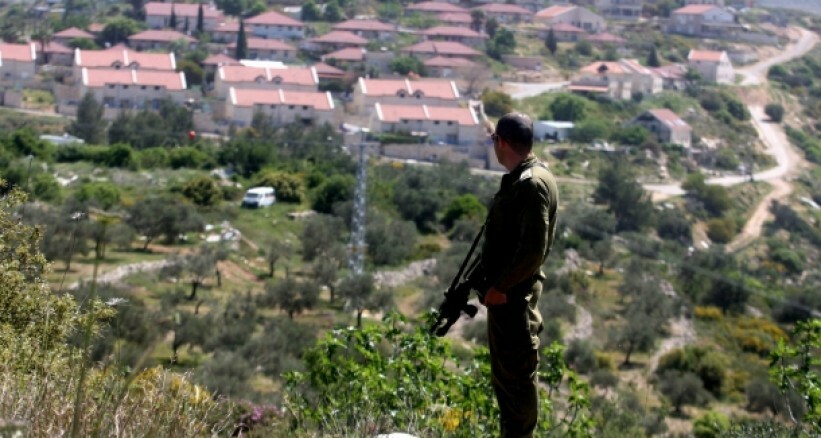
Settlers, under the protection of the occupation, attack citizens’ homes in the Jordan Valley

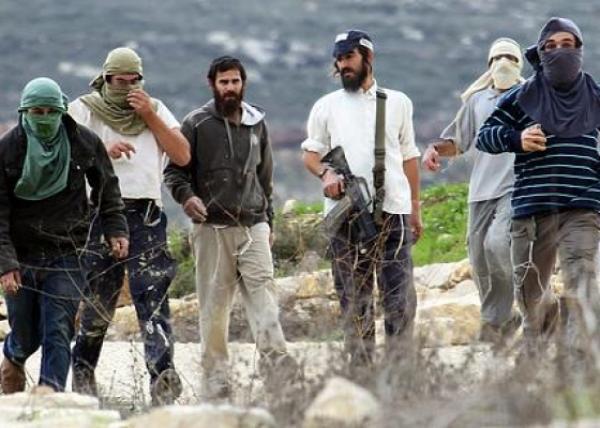
Today, Saturday, settlers, under the protection of the Israeli occupation army, attacked residential tents, destroyed their contents, and damaged the tires of an agricultural tractor in Al-Nasariyah in the central Jordan Valley.


According to local sources, settlers, under the protection of the occupation, attacked the tents of a number of Palestinian families in Al-Nasariyah, damaged the tires of one of the agricultural tractors, destroyed some of the contents, and damaged surveillance cameras installed in the area.


In a related context, settlers stormed the Khallet Makhoul community in the northern Jordan Valley, and threatened and terrorized citizens.


Yesterday, Friday, settlers destroyed the remains of citizens' tents in Khallet Khader in the northern Jordan Valley.

PALESTINE

Sat 01 Mar 2025 6:37 pm - Jerusalem Time

Israeli plan to manage Gaza raises doubts about military withdrawal

The British newspaper, The Guardian, revealed a plan submitted by the Israeli occupation army to the United Nations and relief organizations to manage the Gaza Strip, which includes imposing stricter Israeli military control than it was before the war, according to humanitarian officials.


The newspaper confirmed that the Israeli plan raises doubts about whether Benjamin Netanyahu's government has any intention of implementing a military withdrawal, noting that in meetings with UN representatives and officials in other agencies, the Israeli authorities outlined a plan to distribute supplies through Israeli logistics centers.


She explained that "the scheme is a version of a scheme that was tried more than a year ago in Gaza, known as humanitarian bubbles, which involves distributing aid from small areas under tight control of the Israeli army, which would expand over time."


She continued: "The experiment was abandoned after a few experiments in northern Gaza," indicating that "the experiment was revived by the Israeli government's Coordination of Government Activities in the Territories unit, coinciding with the possible negotiations for the second stage of the ceasefire agreement, which is supposed to include the complete withdrawal of the Israeli army from the Gaza Strip."


"The Coordinator of Government Activities in the Territories' plan instead includes tightening Israel's grip on daily life in the Palestinian territories," she said, noting that "the humanitarian centers themselves can be secured by private security companies, but they will be located in areas under the full control of the Israeli army."


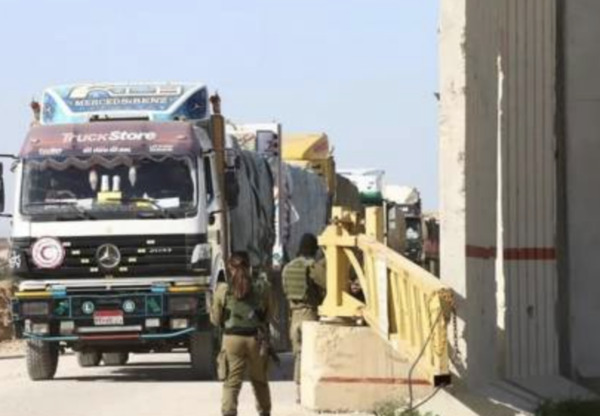
She pointed out that "the only entrance to Gaza through which aid is allowed to enter under the plan is the Kerem Shalom crossing, which is controlled by Israel, and the Rafah crossing between Egypt and Gaza will be permanently closed."


She continued: "NGOs allowed to operate in Gaza must be registered inside Israel, and all employees working for them or for UN agencies must be vetted."


“Since aid will only be allowed in through an Israeli crossing, this would make it almost impossible for UNRWA, the largest aid organization in Gaza, to operate in Gaza, which Israel has blocked,” she added.


The newspaper quoted officials familiar with the Israeli plan as saying: “It was presented to us as an established fact, and Israeli officials say that it has the full support of the United States, and therefore it will be difficult for the United Nations to resist it.”

ARAB AND WORLD

Sat 01 Mar 2025 6:18 pm - Jerusalem Time

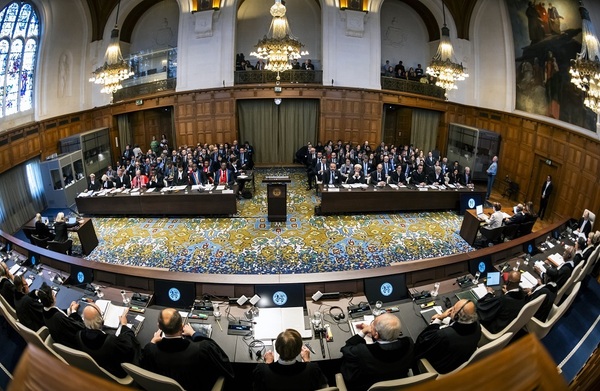
OIC Submits Written Pleading to International Court of Justice

The General Secretariat of the Organization of Islamic Cooperation has submitted written statements to the International Court of Justice regarding the Advisory Opinion on Israel’s Obligations with Respect to the Presence and Activities of the United Nations, Other International Organizations and Third States in the Occupied Palestinian Territory.


The organization stressed in a statement, today, Saturday, the importance of these legal efforts to confront the measures of Israel, the occupying power, and its invalid laws that prevent UNRWA from carrying out its activities in the occupied Palestinian territory as of January 30, 2025, renewing its steadfast support for this international agency that was established by a decision of the United Nations General Assembly to serve Palestinian refugees until a just and permanent solution is found to their cause.

PALESTINE

Sat 01 Mar 2025 5:36 pm - Jerusalem Time

Three Palestinian children injured by occupation bullets east of Nablus

Three children were injured by Israeli occupation forces' bullets, today, Saturday, during their storming of the town of Beit Furik, east of Nablus.

The director of the emergency and ambulance center at the Palestinian Red Crescent Society in Nablus, Amid Ahmed, told WAFA that the ambulance crews dealt with three children injured by live bullets from the occupation forces in the foot area, during the storming of the town of Beit Furik.


According to local sources, the occupation forces stormed the town of Beit Furik amid heavy gunfire and tear gas canisters, which led to the outbreak of clashes.

ARAB AND WORLD

Sat 01 Mar 2025 5:22 pm - Jerusalem Time

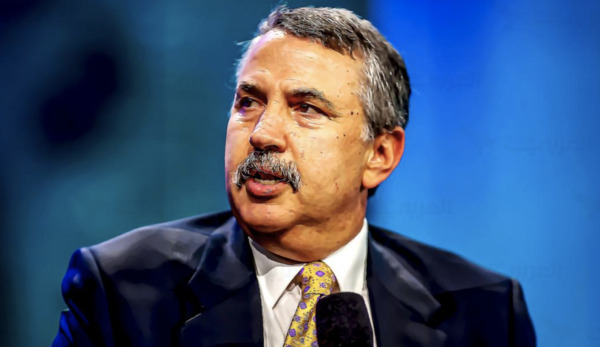
Thomas Friedman: Trump is not a Russian agent, but he is playing the role of a Russian agent

Thomas Friedman, a prominent New York Times columnist, described in an article on Saturday what happened in President Donald Trump’s Oval Office on Friday as “a clearly planned ambush of Ukrainian President Volodymyr Zelensky by President Trump and Vice President J.D. Vance” and that it was something that had never happened in the nearly 250-year history of the United States, stressing that in a major war in Europe, “our president clearly sided with the aggressor, the dictator and the invader against the democrat, the freedom fighter and the invader.”


“You want an analogy? Imagine if when Israeli Prime Minister Benjamin Netanyahu came to the White House on February 4, Trump and Vance told him that the war with Hamas had gone on too long, too many lives had been lost and it had cost America too much money, so it was time for Bibi and the Israeli people to make a deal with the aggressor Hamas,” Friedman says.


“Russia did to Ukraine on February 24, 2022, what Hamas did to Israel on October 7, 2023 — a surprise invasion, followed by murder and sexual violence to wreak havoc on another country and its society,” Friedman says. “Trump stood 110 percent with Bibi against Hamas, and now he stands 110 percent with Putin against Zelensky and Ukraine.”


“It is difficult to express the extent of the collapse of American foreign policy,” Friedman continues. “We have stood for freedom and those who fight for it around the world. There have been times when isolationist forces among our citizens have held us back and we have had to be persuaded. There have been times when, in support of the larger cause of freedom, against dangerous enemies like Nazi Germany and the Soviet Union, we have had to temporarily ally ourselves with dictators. But I cannot recall a single time when an American president has declared that the democratically elected leader of a freedom-preserving country was a ‘dictator’ who started a war with his neighbor—when it was the evil dictator next door who actually started the war.”


“If you listen to Trump, everything we’ve done for Ukraine is pure beauty; it’s like we have no real stake in its fate or the triumph of freedom there,” says Friedman, who has consistently defended the need to continue the war in Ukraine and the Israeli aggression against the Palestinians. “We have no real stake in the fact that Ukraine protects the European Union — a giant, pro-American alliance of free markets and free people.”


“Trump doesn’t care at all what happens to the EU or Ukraine,” Friedman concludes his piece, expressing his frustration. “All that matters is that Zelensky says ‘thank you’ louder and louder, and signs us into his war of survival on a generation’s worth of Ukraine’s mineral wealth.” “This is a complete misrepresentation of American foreign policy that every president since World War I has pursued. Dear Americans, we are in completely uncharted waters, led by a president who—well, I don’t believe he’s a Russian agent, but he certainly plays a Russian agent on TV.”

PALESTINE

Sat 01 Mar 2025 3:31 pm - Jerusalem Time

Palestinian PM discusses with his Egyptian counterpart the features of the early recovery and reconstruction plan for Gaza

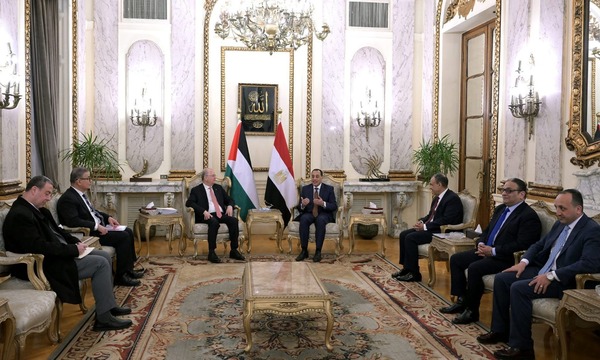
Prime Minister and Minister of Foreign Affairs Mohamed Moustafa met today, Saturday, in the Egyptian capital, Cairo, with Egyptian Prime Minister Mostafa Madbouly, at the Cabinet headquarters, to discuss and review the features of the early recovery and reconstruction plan for Gaza, which will be presented at the Arab Summit.

Mustafa stressed that the joint plan with Egypt to rebuild Gaza ensures that the population in Gaza will not be displaced, and that it is ready and implementable.

He stressed that what is happening in the northern West Bank is no less dangerous than what is happening in Gaza, stressing the need to end the occupation and establish the Palestinian state.

Mustafa expressed his appreciation for the Egyptian efforts in supporting the Palestinian people, praising the efforts of the Egyptian President in supporting the legitimate Palestinian rights, the efforts to rebuild the Gaza Strip, as well as the efforts made by all Egyptian state institutions.

For his part, the Egyptian Prime Minister affirmed Egypt's support for our people and our legitimate rights, especially the right to self-determination and the independence of the Palestinian state on the lines of June 4, 1967, with East Jerusalem as its capital.

Madbouly stressed that the Egyptian state is doing its utmost to support the Palestinian cause and the brotherly Palestinian people, whether through continuing efforts to implement the ceasefire agreement in all its stages, or reconstruction in the Gaza Strip.

The meeting was attended from the Palestinian side by Minister of Planning and International Cooperation Wael Zaqout, Ambassador of the State of Palestine to the Arab Republic of Egypt Diab Al-Louh, and from the Egyptian side by Minister of Foreign Affairs, Immigration and Egyptian Expatriates Affairs Badr Abdel-Ati.

PALESTINE

Sat 01 Mar 2025 2:55 pm - Jerusalem Time

WFP stresses need to maintain ceasefire in Gaza

The World Food Programme said, "The ceasefire in the Gaza Strip must continue and cannot be reversed."

The UN program added, in a post on its account on the X platform, today, Saturday, that "after 6 weeks of the ceasefire in Gaza, our teams were able to reach one million people across the Strip, by restoring supply distribution points, reopening bakeries, and expanding cash assistance," noting that the path to safe and sustainable humanitarian access is clear.

The World Food Programme stressed the need to continue the ceasefire in Gaza, saying: "It cannot be reversed."

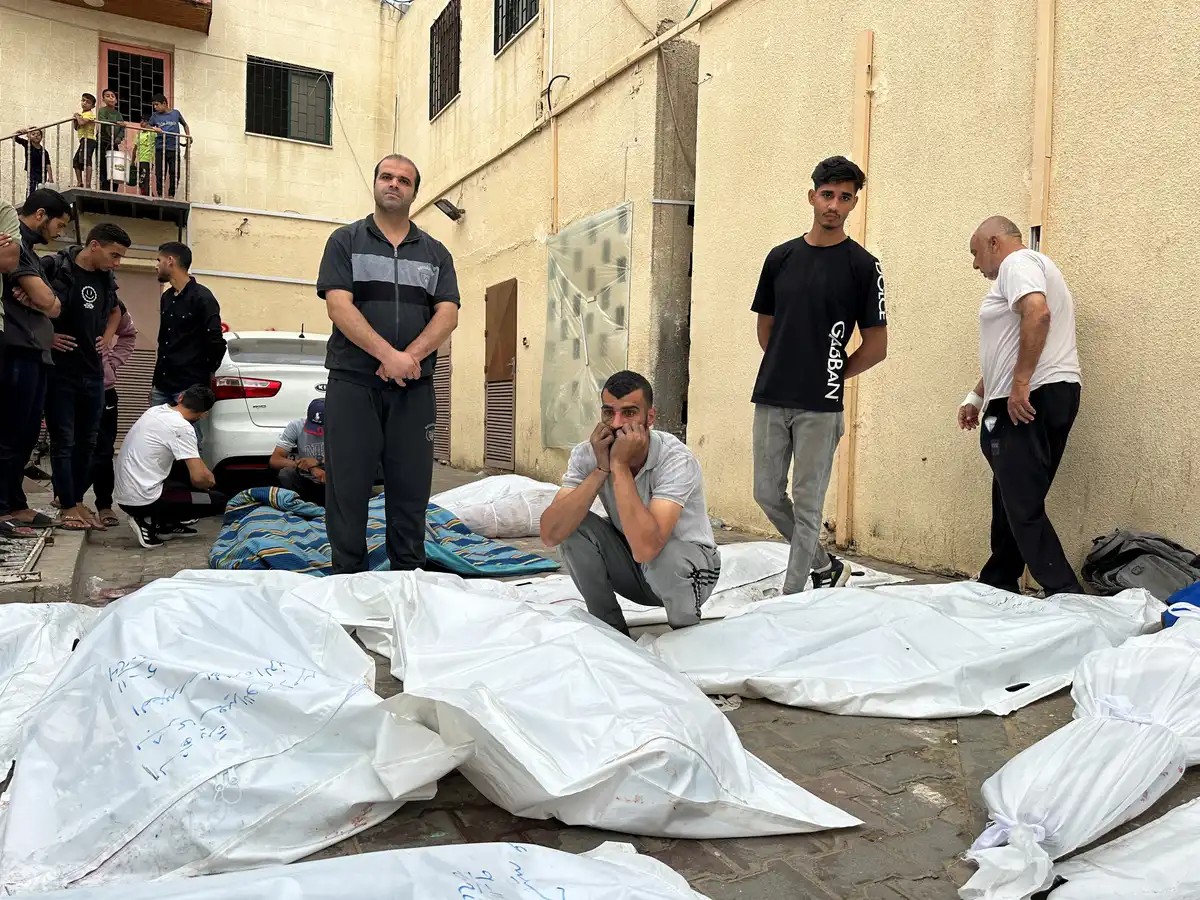
About 1.5 million citizens in the Gaza Strip are facing tragic conditions and circumstances, in light of the continued forced displacement as a result of the war of extermination and the widespread destruction inflicted by the Israeli occupation forces on their homes over the course of more than 15 months of the aggression.

With the beginning of the holy month of Ramadan, the humanitarian crisis in Gaza is intensifying, and citizens are facing great difficulties in securing food and water, which exacerbates their suffering.

PALESTINE

Sat 01 Mar 2025 2:51 pm - Jerusalem Time

The death toll in the Gaza Strip has risen to 48,388

Medical sources announced today, Saturday, that the death toll in the Gaza Strip has risen to 48,388 dead, since the start of the Israeli aggression on October 7, 2023.


The same sources added that the number of injuries has risen to 111,803 since the beginning of the aggression, while a number of victims are still under the rubble and on the roads, and ambulance and rescue crews cannot reach them.


It pointed out that 23 dead (21 dead recovered, and two new dead) and 23 injuries arrived at Gaza Strip hospitals during the past 48 hours.

PALESTINE

Sat 01 Mar 2025 11:40 am - Jerusalem Time

Israeli Analysis: Military Investigations into October 7 Failures “Tell a False Narrative”

Israeli newspapers published today, Friday, criticized the results of the investigations into the army’s failures on October 7, 2023, which were published by the Israeli army yesterday. A senior officer in the reserve forces in the Southern Command described these investigations as “tainted by the actions of an agent, by the Chief of the General Staff and a section of the General Staff officers.”

"The investigations deliberately investigated certain issues in advance, and deliberately ignored other issues. Even when they investigated certain issues, it was clear that the investigators ignored facts and covered up results," the officer was quoted as saying by the Israel Hayom newspaper.

According to him, "the investigations did not address the central issues required and were presented as a story and not as an investigation whose goal was to reach a real study, that is, to extract the required lessons and a moral commitment towards the public and all soldiers in the Israeli army."

Reserve Brigadier General Hezi Nehama said, "Senior officers in the Gaza Division believe that the Chief of Staff (Herzi Halevi) threw them under the train. According to them, the investigations paint a false narrative according to which the lower echelons of the army failed, the division did not convey the situation, and therefore the General Staff did not know how to operate. According to the investigations that were presented, when the General Staff understood the true situation, they operated well." He added that "it is impossible to accept the claim that the General Staff did not receive the situation until noon."

Nechama continued that the army command, the air force and the General Staff did not provide a response to the attack by Hamas' elite forces on October 7, "and the response at the level of the General Staff did not fit the picture of the situation, neither by starting the battle nor by mobilizing the battalions." He considered that "there is no escape from forming new investigation teams appointed by the new Chief of General Staff (Eyal Zamir), and managing all the investigations again without contamination. There are investigations that have not yet been published, and they will shake the army and the state."

Haaretz military analyst Amos Harel pointed out that one of the problems with military investigations relates to the selection of those who conducted the investigations. After Halevi appointed an investigation team headed by former IDF Chief of Staff Shaul Mofaz, Prime Minister Benjamin Netanyahu forced him to cancel the decision, because the team members are political figures. "The result was that a large portion of the investigators appointed are reserve officers, who belong to the branches or commands they investigated, and they hold low ranks."

He added that in conclusion, "intellectual stagnation prevailed in the army. The intelligence services, the Israeli army and the Shin Bet in particular, were not convinced that Hamas was capable of carrying out a coordinated attack by thousands of terrorists, in more than a hundred points of penetration, and of succeeding in defeating the Gaza military division and controlling a large part of the area under its responsibility."

Harel continued, "The Israeli officers convinced themselves that if a change occurred, the Israeli intelligence, which is capable of everything, would uncover it and provide early warning, allowing them adequate time to prepare."

According to him, "the investigations document lengthy conversations and inquiries about the accumulated indications that something is not right. But Halevi, who conducted these conversations in their final part in close coordination with the Shin Bet headed by Ronen Bar, also heard that there was a complete consensus according to which a large-scale attack is not planned, and most of the indications are that Hamas is operating in a normal state, and there is no immediate warning at all."

“There is no explanation in the investigation for one of the most surprising failures,” Harel noted, “which is the fact that no agent (of Israeli intelligence) warned his Israeli handlers of what was to come. Shortly after the telephone consultations headed by Halevi ended, at 4:50 a.m. before dawn, preparations for the attack began in the Strip. Thousands of Hamas operatives said goodbye to their families, left their homes, and gathered at an assembly point. How did any Israeli intelligence gathering system, of the kind that the Military Intelligence Directorate boasted about, not detect an accumulation of unusual activity?”

Veteran Yedioth Ahronoth military analyst Ron Ben-Yishai wrote, “This week I became much more worried about our future here than I have been in the entire past year. The results of the military investigation into the failures of October 7, 2023, shocked me once again with what happened in the past.”

He added, "The initial similarity between the results of the current investigations and the results of the Agranat Commission, which investigated the failures at the beginning of the Yom Kippur War (October War 1973), made me realize that what happened to us 51 years ago and 17 months ago, could happen to us again, and in a more serious way, after 10 or 20 years."

Ben-Yishai believed that “the results of the military investigation prove that the security-political establishment in the 21st century simply ignored the lessons of the Yom Kippur fiasco, whether because the lessons were forgotten in a deep drawer and no one bothered to read them, or because these lessons were eroded over time. And so in October 2023 we got a much worse version of the 1973 surprise.”

"This time, this did not happen more than 120 kilometers from the Israeli border, and while the depth of the Sinai Peninsula separates us from the enemy; this time, this happened to us at home, and only thanks to the initiative, quick thinking, and courage of a small number of citizens, officers, and soldiers, Hamas did not reach the Tel Nof base (southern Israel), Kiryat Gat, and Ashkelon," he continued.

He stressed that "there are quite a few flaws in the investigations, especially from the point of view of ordinary citizens and politicians for whom security issues are not their primary concern, and it is doubtful whether they understand the vague and unclear language of the Israeli army used in the investigations."

Ben-Yishai noted that “another flaw in the investigations is the excessive caution and twisted formulations in which the most serious failures were described, and of course the IDF condensed the lines and did not point to the central officials responsible for these failures. The strategy imposed by Halevi is that we do not prosecute individuals, at all military ranks, but only draw professional lessons in the field of intelligence and the exercise of force so that we do not fail in such a serious failure the next time.”

He added that "if you delve into the Israeli army's investigations, you will find clear evidence of direct responsibility of the political echelon, i.e. the prime minister and the security ministers of the past ten years, for what happened in the massacre of the holiday of Shavuot Torah (October 7, 2023). There were not only army chiefs of staff and army officers with the rank of brigadier general, but also politicians."

According to him, "the military investigation is very detailed and loaded with technical details and descriptions of events in a way that makes it difficult to draw clear conclusions and lessons. These extra details are dangerous, because no one in the Israeli army will bother to read the thick investigation books."

PALESTINE

Sat 01 Mar 2025 11:40 am - Jerusalem Time

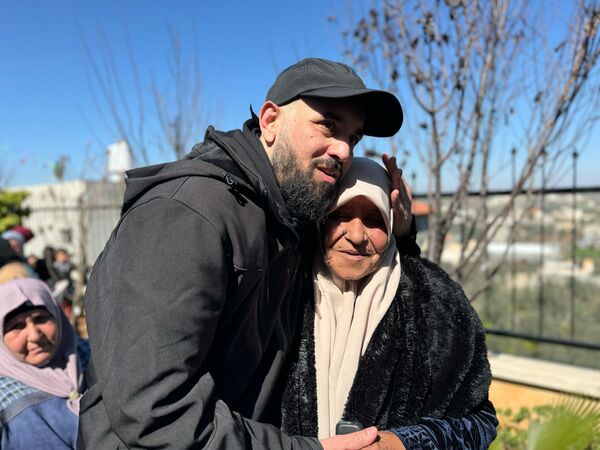
Prisoner Islam Washahi to Al-Quds: Prisons have turned into slaughterhouses, and symbols and leaders of our people are being assassinated.

As soon as he breathed freedom after 23 years spent in the occupation prisons, the steps of prisoner Islam Washahi led him to the grave of his father who died ten years ago after he was denied the right to visit him in prison, and the son was prevented from taking a last farewell look at his father with whom he had a close relationship.

The prisoner, Islam Yasser Muhammad Washahi, was unable to go to his family’s house, who were waiting for him with his relatives and loved ones in the village of Al-Basha, south of Jenin, before he stood near his father’s grave, tears streaming down his eyes.

In his first press interview after his freedom, he told “Y”: “This is the most difficult moment in my life after years of patience, the loss and absence of my father who waited for me and wished for me to return to his arms. Before his death, the jailer deprived me of seeing him and prevented me from receiving visits.”

He added, "My only consolation and what eases my pain is that God will unite us with him in the gardens of bliss, God willing. What is painful is that due to his illness he was not able to visit me for four years, and I expected his death before my freedom because his health condition was difficult."

The occupation forces arrested Islam Washahi in a special operation from the town of Barta’a on 22-22-2002. He served his 19-year sentence, but the occupation added 10 more years to his sentence, on charges of stabbing an Israeli prison guard in the Negev prison.

Washahi said, "We have always been waiting and expecting freedom, and God willing, freedom will soon be available to all prisoners."

He added: "I was released from Gilboa Prison, and I learned that my name was included in the list of those released about a month ago. The administration informed me and they transferred me to Ofer Prison."

He continued, "These moments are the happiest day of my life. Freedom Day is unparalleled, but our joy will not be complete until everyone is free."

During his detention, Islam was subjected to many punishments, including prolonged isolation, being denied visits and being banned from the canteen.

During his speech, he stressed the seriousness of the current conditions in the prisons, and said: "The conditions of the prisoners are difficult, and every day we expect a martyr from the prisoners, especially from the targeted symbols of the Palestinian people, and the occupation is trying every day to assassinate them slowly, and the prisons have turned into slaughterhouses in every sense of the word."

He added, "Due to the policies and repression of the occupation, the symbols of the Palestinian people are being humiliated and slowly assassinated inside the occupation's prisons."

With ululations, Palestinian chants and flowers, the freed prisoner Islam Washahi was welcomed when he arrived at his home, which was decorated with Palestinian flags and his pictures. He said, “After all these years, I say thank you to our brothers who sacrificed and gave a lot to liberate us. Praise be to God for the blessing of freedom and relief, and then thanks and greetings to our brothers in Gaza who gave their blood in sacrifice for our freedom and dignity. May God reward them on our behalf and on behalf of the nation with the best reward.”

The mother of the prisoner Islam, who hugged him and his sisters for a long time, said: “I have waited for this Eid for 23 years. We did not lose hope despite all the suffering, and our joy was completed with his safe and sound return to our arms. We thank Gaza for this heroism and gift, and we await the great victory for our people with the freedom of Gaza, Jerusalem, and all of Palestine.”

PALESTINE

Sat 01 Mar 2025 11:37 am - Jerusalem Time

An American convicted of killing Palestinian child and wounding his mother

An American court in Illinois issued a verdict on Friday convicting Joseph Chuba (73 years old) of first-degree murder, attempted murder, aggravated assault, and committing hate crimes, in the context of the killing of the Palestinian-American child, Wadie Al-Fayoumi (6 years old) in October 2023, and stabbing his mother, Hanan Shahin, multiple times in an attack that the Public Prosecution said was motivated by hatred against Muslims.


The jury announced the verdict after deliberations that lasted more than an hour, in a case that caused widespread shock inside and outside the United States, according to the American network NBC.


Crime details

The crime took place on October 14, 2023, inside the home of Chuba and his ex-wife in Plainfield Township, a suburb of Chicago. Hanan Shahin had rented two rooms from Chuba and his wife for two years, without any significant problems between them before. But with the outbreak of the Israeli war on the Gaza Strip after October 7, 2023, things changed.


In her court testimony, Hanan Shahin said that in the days leading up to the incident, Chuba began to express open hatred toward Muslims and Palestinians, telling her that her people were “killing Jews and children in Israel,” and demanding that she leave the house despite her compliance with the terms of the lease. Shahin said she responded by praying for peace, but the tensions continued.


On the day of the crime, Chuba broke into Shaheen’s room and repeatedly stabbed her with a knife while her son, Wadie, watched in horror. Shaheen said she managed to grab the knife for a while and stab him, but he snatched it back. After she took cover in the bathroom to try to call 911, Chuba went to Wadie and stabbed him 26 times with a 7-inch knife, which was found embedded in the child’s body when police and paramedics arrived.

Shaheen testified that she heard her son screaming, “No, please stop!” before he took his last breath. She was taken to the hospital with severe injuries, requiring 19 stitches to her face and staples to her head.


The killing of the child, Wadie, and the stabbing of his mother caused widespread shock among the Muslim and Palestinian communities in the United States, and many expressed their fears of increasing hatred against them. Human rights organizations and some public figures criticized the media and political discourse, which they described as promoting Islamophobia and incitement against Arabs and Muslims.

PALESTINE

Sat 01 Mar 2025 11:02 am - Jerusalem Time

For the 34th day... Israeli occupation's aggression on Tulkarm and its camps continues

The Israeli occupation forces continue their aggression on the city of Tulkarm and its camp for the 34th consecutive day, and on the Nour Shams camp for the 21st day, coinciding with the beginning of the holy month of Ramadan, and have escalated the forced displacement of citizens after forcing them to leave their homes under threat of arms.


WAFA reported that the occupation forces forced citizens last night to evacuate their homes in Jabal al-Nasr neighborhood in Nour Shams camp east of Tulkarm, in light of the tight siege imposed on it, while raiding homes, vandalizing their contents, and converting some of them into military barracks, using them as sniper and surveillance sites.


A number of citizens, men, women and children, were seen carrying some of their belongings as they left the camp on foot, in the bitter cold weather, while the occupation soldiers fired live bullets intensively to terrorize them.


The occupation forces also burned houses in Al-Manshiya neighborhood, which led to fires breaking out inside them, amidst great and complete destruction of the infrastructure, and the destruction of roads and public and private property.


Since the first day of the Israeli aggression, the camp has witnessed a large displacement movement among its residents, including women, children, the elderly and the sick, concentrated in the neighborhoods of Al-Manshiya, Al-Maslakh, Jabal Al-Nasr and Jabal Al-Salihin, where their number exceeded 5,500 displaced persons, who headed to shelters and the homes of their relatives in the city, its suburbs and its countryside.


A few days ago, the occupation forces notified the demolition of 11 houses in Nour Shams camp in the coming days, under the pretext of paving a road starting from the camp square towards Al-Manshiya neighborhood.


In this context, the occupation forces sent military reinforcements to the city and towards the Tulkarm and Nour Shams camps, and patrolled the streets and alleys, and were stationed along the Nablus Street linking the two camps, while they are still seizing residential buildings on the aforementioned street, turning them into military barracks, and deploying snipers inside them.


The occupation continues to impose a tight siege on the two camps, preventing entry or exit from them, and deploying infantry units around them and inside the neighborhoods and alleys, while raiding and vandalizing homes, destroying their contents, and subjecting citizens inside them to interrogation.


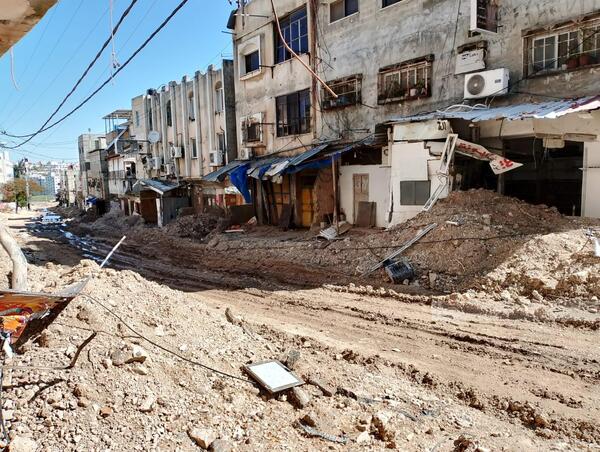
During the ongoing aggression on the city and its two camps, the occupation forces caused great and complete destruction to the infrastructure of electricity, water, sewage and communications networks, which led to the interruption of basic services to the entire camps, and exacerbated the suffering of the citizens who were still in their homes.


The military bulldozers also left behind unprecedented destruction in roads and residential neighborhoods, in addition to the complete and partial destruction of property, including homes and shops. The latest was the complete demolition of 26 buildings in Tulkarm camp, while 13 citizens were martyred, including a child and two women, one of whom was eight months pregnant.


Amidst the continued tight siege on the camps, the appeals of the citizens who are still in their homes and living in difficult and harsh conditions continue, to secure the arrival of their basic needs of food, water, medicine and baby milk, and to work on repairing the water and electricity networks, at a time when the occupation is obstructing and preventing the work of relief crews while they are trying to deliver the basic necessary materials to them.

This morning, the occupation forces arrested the two young men, Tayseer Mahmoud Al-Hajjar, after raiding his home in the eastern neighborhood of Tulkarm and vandalizing its contents, and Ahmed Al-Qarout from his home in the western neighborhood of the city.


The occupation forces continue to close the gate of the Jabara checkpoint at the southern entrance to the city of Tulkarm for the 22nd consecutive day, isolating the city from the villages and towns of Al-Kafriyat and the rest of the West Bank governorates.

PALESTINE

Sat 01 Mar 2025 9:26 am - Jerusalem Time

Where is Israel heading?


- The year 2024 witnessed the militarization of Israeli society, such that a “Jewish Sparta in the Eastern Mediterranean” emerged.

- The majority of Israelis believe that peace with the Palestinians is not possible and that war is the only solution to ensure security.

The Palestinians are entering a phase of strategic self-defense that requires them to preserve their strategic assets.


Since July 10, 2018, the French journalist and historian Dominique Vidal published an article entitled: “In Israel: The Three Dimensions of Fascist Deviation,” in which he noted that “the authoritarian and fascist excesses of the State of Israel are largely downplayed by the European media and political leaders, but they are real and pose risks for the entire Middle East,” identifying three dimensions of this deviation.

The first dimension is represented by the “colonial project in Palestine,” which is witnessing a “historical turning point” in light of the expansion and acceleration of settlements, the legitimization of settlement outposts, the escalation of calls to annex the occupied West Bank or large areas of it, and the pursuit of adopting a law: “the nation-state of the Jewish people.” The second dimension is the growing hostility shown by far-right leaders towards the Palestinians. “During the last Gaza war [in 2014], Justice Minister Ayelet Shaked posted on her Facebook page a text describing ‘the entire Palestinian people as an enemy of Israel’, justifying ‘their destruction, including their elderly, their women, their cities and their villages’, while Naftali Bennett called for killing all arrested ‘terrorists’ rather than putting them in prison, explaining: ‘I have killed many Arabs, and that is okay’, while Avigdor Lieberman asserted that ‘Israeli Arabs have no place here’. The third dimension is Benjamin Netanyahu’s alliance with European far-right leaders, especially in Hungary and Poland, who do not hide their anti-Semitism and anti-Islamism. Dominique Vidal concludes: ‘Netanyahu and his allies know that their reckless impulse will only exacerbate the international isolation of the Israeli government in the long run.’”


The Future of Israel According to the Far Right

Under this title, researchers Nimrod Flashenberg and Alma Yitzhaki published an article on December 16, 2024, in which they highlighted how the events of October 7, 2023 deepened the fascist deviation whose three dimensions were presented by Dominique Vidal. These events, which highlighted “the latent tendencies in the State of Israel, especially its reliance on the army and its ethnic character,” created “a sense of insecurity and a pessimistic vision of the future,” and provoked “revengeful anger against the Palestinians,” estimating that the war waged by Benjamin Netanyahu’s government would have “many devastating consequences for Israeli society.” In addressing the manifestations of the deepening fascist deviation in Israel, the researchers focused on the phenomenon of the escalation of repression against Palestinian citizens in Israel, the widespread proliferation of individual weapons among civilians, the expansion of colonial rule in the occupied Palestinian territories, the dehumanization of Palestinians, and the growing trend toward militarization of the state.

In the first few weeks following October 7, the Israeli government launched a wave of investigations, arrests and indictments against Palestinian citizens accused of “incitement to violence” and “support for terrorism.” Many of them were arrested for “posts on social media, particularly expressions of sympathy and grief for the suffering of the people of Gaza.” Palestinians were “threatened at work, in schools and in public places, creating an atmosphere of intimidation and censorship, with harassment particularly prevalent at universities.”

In the weeks following the Hamas attack, National Security Minister Itamar Ben-Gvir decided to expand the possibility of obtaining firearms permits to as many people as possible in order to “save lives” and “enhance the possibility of self-defense,” which led to a 64% increase in the number of civilian gun owners, to about 100,000. Ben-Gvir also made it easier for Israeli women to obtain firearms, with “42,000 women applying for permits, and 18,000 applications approved, according to the ministry,” which was strongly criticized by the Gun-Free Kitchen Tables organization, which was founded in 2010 by feminist activists fighting the proliferation of weapons in homes and includes 18 organizations, warning that “the proliferation of weapons in civilian areas leads to an increase in violence and murder, especially against women,” and stressing that “it is time for the state to understand that the safety of the people is its responsibility.”

In terms of expanding colonial rule, Finance Minister and Civil Administration official in the occupied territories, Bezalel Smotrich, has accelerated settlement in the West Bank, such that “2024 broke new records in the rate of approval of plans for new buildings, and attempts to retroactively legalize illegal homes and outposts, including on privately owned Palestinian land,” and “twenty-four new outposts have been built since the beginning of the war and dozens of new roads have been paved.”

On the other hand, settler violence against Palestinians has reached “an all-time high, often with the protection, if not the active participation, of the police and army,” with “nearly 1,000 violent attacks reported this year,” activists report, “the conscription of many settlers into the reserve forces makes it impossible to distinguish between settlers and soldiers, and attackers enjoy near-total impunity,” and “nineteen shepherd communities in the Jordan Valley have been expelled and their land confiscated.”

This has been accompanied by an unprecedented dehumanization of Palestinians in Gaza, with “public responses to the killing, starvation and terror inflicted on the population of Gaza ranging from shrugs to calls for murder.” While Israeli leaders have made “hundreds of genocidal statements, as documented by the International Court of Justice and a recent Amnesty International report,” Israel’s dominant media “systematically suppresses reports of civilian suffering in Gaza, most of which are reported by no source other than the Israeli military itself,” and Israelis are not shown “the horrific images and reports available to the world.”

While only a small minority opposes war, “the overwhelming majority accepts the narrative that only military intervention can restore security.” In this context, 2024 has seen “the endless militarization of a society already largely ruled by the armed forces,” with the emergence of “a Jewish Sparta in the eastern Mediterranean, led by God in a perpetual crusade against the Arabs, and this vision of Israel, promoted by the religious right, is now welcomed with open arms.”

This permanent expansion of the armed forces in a relatively small country has significant social implications: “This militarization requires an extension of military service for men,” “increased investment in the army (in weapons systems, training, personnel, etc.) will come at the expense of social services,” and the growing importance of military service “will have a direct impact on the country’s productivity, since soldiers do not produce any economic value.” Faced with this bleak picture, many Israelis “who have the opportunity and the means—professional experience and a foreign passport—are leaving the country, whether they support the war or not, they do not want to live in a military state,” and this trend is particularly evident “in sectors that Israel needs to maintain its economy if it is to be sustainable: high-tech, universities, and medicine.”


War will not be a means to ensure security and eliminate the national aspirations of the Palestinians.


The majority of Israelis believe that peace with the Palestinians is not possible, and that the only solution to ensure Israeli security is war. But there are a few far-sighted people who do not see war as a means to ensure Israeli security or to destroy Palestinian national aspirations, such as Aluf Benn, editor-in-chief of Haaretz, and Avraham Burg, former speaker of the Knesset for the Labor Party.

In an article titled “Why Israel is Headed for Self-Destruction,” published about a year ago, on February 15, 2024, Aluf Benn noted that October 7 “was the worst disaster in Israel’s history, and a national and personal turning point for everyone living in or connected to the country.” Although the Israeli army responded to the attack “with overwhelming force, killing thousands of Palestinians and destroying entire neighborhoods in Gaza,” the Israeli government “did not take into account the hatred behind the attack, or the policies that could prevent another attack.” He estimated that in order for Israel to enjoy peace, “it will finally have to come to terms with the Palestinians, something Netanyahu has opposed throughout his career. He devoted his term as prime minister, the longest in Israel’s history, to undermining and marginalizing the Palestinian national movement, and promised his people that they could thrive without peace.” He promoted the idea that Israel “can continue to occupy the Palestinian territories forever, without much cost to it, either nationally or internationally, and even today, after October 7, it has not… Change this message".

But Israel, as the editor-in-chief of Haaretz continued, “can no longer be so blind. The October 7 attacks proved that Netanyahu’s promise was hollow, and that the Palestinians, despite the faltering peace process and the loss of interest from other countries, kept their cause alive.” The shock of October 7 forced Israelis once again “to realize that the conflict with the Palestinians is central to their national identity and a threat to their well-being, and cannot be ignored or evaded. Continuing the occupation, expanding Israeli settlements in the West Bank, the blockade of Gaza, and the refusal to make any territorial compromise (or even to recognize Palestinian rights) will not bring the country lasting security.”

On October 6, 2024, Abraham Burg published an article entitled “One Year After October 7: Drowning in Hatred, Violence, and Despair,” in which he noted that the century-old Israeli-Palestinian conflict “has begun to change in nature, as Israel has come to believe that it is possible to manage the conflict without ever resolving it,” relying on “maintaining a delicate balance of power through a combination of military control, security measures, and limited economic aid to the Palestinians.” He asserted that the Hamas attack caused the collapse of this strategy and “shattered the illusion that the status quo could be maintained indefinitely.” He explained that “the belief that technological superiority and military deterrence can guarantee the country’s security is a false belief, so that October 7 was a shocking wake-up call,” and demonstrated the error of “the assumption that military force is capable of containing the Palestinians’ desire for independence and freedom by preventing any peaceful agreement with them.”

The former Knesset speaker continued that October 7 showed that “reliance on military force alone does indeed have its limits,” as “the multiple operations carried out in Gaza failed to establish peace or lasting security,” and “the war raised crucial moral and political questions,” creating an ideological and political vacuum in which “extremist ideas are gaining ground, with radical voices calling for the reoccupation of Gaza and the mass expulsion of Palestinians from the West Bank; these ideas, which were once marginal, are becoming more and more important, driven by growing despair.”


How can this reality be changed?

Researchers Nimrod Fleischenberg and Alma Yitzhaki assert that change “cannot come from within the Israeli political system,” since “the shocking rupture of October 7 and the successive waves of repression dealt a fatal blow to the left and the peace advocates, who retreated to the margins.” In this context, the option of war can only be abandoned “with decisive international intervention, starting with an arms embargo,” and resorting to international pressure “to bring about change in Israeli society.” Only then will “an alternative force emerge in Israel, capable of saying no to the extreme right, no to the militarization of society, no to the ethnic cleansing of Palestine and the ignition of the region.”


Aluf Benn, however, is pessimistic about the beginning of a “dark era,” considering that “it will be extremely difficult to recover from this war and change course, not only because Netanyahu does not want to resolve the Palestinian conflict, but also because the war struck Israel at the most divided period in its history. In the years preceding the attack, the country was torn apart by Netanyahu’s efforts to undermine its democratic institutions and transform it into a theocratic nationalist authoritarian state.” He estimates that “Israel is unlikely to hold a serious discussion about reaching an agreement with the Palestinians,” after “Israeli public opinion as a whole has shifted to the right” and “there will be little will or incentive to resume a meaningful peace process in the near future.”

While Abraham Burg believes that “a bilateral solution with the Palestinians is not enough, the conflict requires a regional approach that would place it within a broader framework of economic and security interests” and could “help balance Iran’s growing influence in the Middle East.” But Israeli society and its leaders, he continues, “are not yet ready to embrace a comprehensive diplomatic initiative, and popular support for the Palestinian cause in the Arab world creates internal pressure on governments seeking to normalize relations with Israel.” However, he expresses his conviction that “a year after the important events of October 2023, the Israeli-Palestinian conflict finds itself at a critical turning point; instead of relying on endless military confrontations, the region needs a new model, rooted in cooperation, in which the Palestinians are part of a broader agreement with the Arab states; this vision, despite its ambition, is the only way to avoid further deterioration, because if a solution is not reached, the October 2023 war could be just the beginning of a much more serious conflict.”


Conclusion:


In light of this theocratic and authoritarian nationalist trend that Israel is witnessing, as Aluf Benn sees it, and which will receive the support of the Donald Trump administration, the Palestinians are entering a phase of strategic self-defense, which requires them, in my opinion, to strive to preserve the strategic assets they possess, the first of which is steadfastness on the homeland and providing its components, which is a complex task that includes political, economic and social dimensions, and to reconsider the means of struggle followed and resort to those most compatible with the reality of the occupied Palestinian territories, and to agree on an appropriate struggle strategy not to confront Israel’s abandonment of its obligations in the agreements it signed with the PLO but also to confront its efforts to reoccupy the West Bank and return it to what it was before the “Oslo Accords”, but without bearing the cost of occupying it, and to make the “day after” in the Gaza Strip a unified Palestinian day by forming a national consensus government to manage it, and finally to continue to internationalize the Palestinian issue and impose more international isolation on Israel, and to choose appropriate means to influence Israeli society and contribute to changing the trends of public opinion therein.

These are big challenges, but the seriousness of the situation requires that we confront them.


* Researcher and Historian - Institute for Palestine Studies - Beirut.

———

The option of war cannot be abandoned “except through decisive international intervention, starting with an arms embargo,” and resorting to international pressure “to bring about change in Israeli society.” Only then will “an alternative force emerge in Israel, capable of saying no to the extreme right, no to the militarization of society, no to the ethnic cleansing of Palestine and the ignition of the region.”

PALESTINE

Sat 01 Mar 2025 9:23 am - Jerusalem Time

Israeli Poll: 58% support the formation of an official investigation committee into the failures of October 7

A majority of the Israeli public, 58%, supported the formation of an official commission of inquiry into the political and security failures that led to the October 7, 2023 attack, and not to be satisfied with the investigations conducted by the Israeli army and published yesterday, according to a poll by the Maariv newspaper yesterday, Friday.


23% considered the formation of a “political investigation committee” reasonable, while 6% said that military investigations could suffice.

Thirty-five percent believe the prisoner exchange agreement will be completed, up from 22 percent in the newspaper’s poll last week. Thirty-nine percent said the agreement would not be completed, and 26 percent said they did not know what the outcome of the agreement would be.


Regarding the trial of Israeli Prime Minister Benjamin Netanyahu, 40% believed that Netanyahu should be declared unable to carry out his duties, while 50% believed that the trial should be cancelled or postponed until after the end of the war.


If general elections for the Knesset were held now, the results would be as follows: Likud 23 seats, National Camp 16, Yisrael Beiteinu 16, Democratic Party 14, Yesh Atid 12, Shas 9, Otzma Yehudit 9, United Torah Judaism 7, Hadash-Ta'al 5, Ra'am 5, Religious Zionism 4.


With these results, the coalition parties will be represented by 52 seats, the Zionist parties in the opposition will have 58 seats, and the Arab parties will have 10 seats.


If a new party headed by Naftali Bennett ran in the elections, this party would win 25 seats: Likud 20, Yisrael Beiteinu 10, the Democratic Party 10, Yesh Atid 9, National Camp 9, Shas 9, Otzma Yehudit 8, United Torah Judaism 7, Hadash-Ta'al 5, United Leader 4, Religious Zionism 4.

In this case, the Zionist parties in the opposition with Bennett's party will be represented by 63 seats, the coalition parties by 48 seats, and the Arab parties by 9 seats.

PALESTINE

Sat 01 Mar 2025 9:14 am - Jerusalem Time

Israel's near-depletion of gas reserves reveals its ambitions for Gaza gas

The Israeli government is racing against time to strengthen the influence of the gas and energy sector and grant permits to international and local companies with the aim of expanding drilling and exploration operations in gas fields located in the economic waters off the coasts that it controls, amid expanding its ambitions for gas and oil in the eastern Mediterranean and seizing control of the “Gaza Marine” gas field off Gaza.


The government's frantic and hidden race to expand Israel's influence in the gas and energy sector comes after the "Al-Aqsa Flood" battle on October 7, 2023, froze projects and plans to expand Israeli gas fields that were targeted during the war on the Gaza and Lebanon fronts, according to a report by Al Jazeera.


Amid the suspension of plans to expand exploration and drilling in the gas fields, namely the Leviathan field, the Tamar field, and the Karish field, and even the irregularity of extracting and pumping gas from the fields and platforms due to their targeting during the war on Gaza, the government committee for the gas sector, headed by the Director General of the Israeli Ministry of Energy, Yossi Dayan, intensified its deliberations regarding the policy of the Israeli gas sector.


During the deliberations of the Joint Ministerial Committee, it was revealed that the gas reserves in the fields off the Israeli economic waters will be depleted within two decades, and on this basis, it recommended in the document that it will submit to the government to give the green light to the companies supervising the “Leviathan” field to develop it and expand exploration within it.


Leviathan field first

The development of the Leviathan field is supervised by: the Israeli company NewMed Energy, which is active in the field of oil and gas exploration and owns about 45% of the field, and the Chevron Corporation, which is an American multinational energy company operating in more than 180 countries around the world and owns about 40% of the rights to the Leviathan field.


Also, the Israeli company "Ratio Yahash" owns 15% of the "Leviathan" field, and has additional rights offshore and onshore, including permits to explore for gas and oil inside Israel.


The partners in the Leviathan field recently submitted an updated plan to the Israeli Ministry of Energy aimed at increasing gas production from the field by an additional two billion cubic meters per year, raising it from a development plan of 21 billion cubic meters to 23 billion cubic meters per year.

This represents another 10% addition to the original plan of the field partners (NewMed Energy, Ratio and Chevron), with the investment cost expected to be around $2.4 billion.


In order to make the final investment decision in the Leviathan field, the company hopes to obtain the necessary permits from the Israeli government to expand exports and sign contracts for more than 100 billion cubic meters additional, as the partnership is expected to soon complete another expansion project that will increase the quantity to 14 billion cubic meters by 2026, bringing the annual production capacity to 37 billion cubic meters.


Israel has three gas fields, the largest of which is the Leviathan field, located in the eastern Mediterranean, about 130 kilometers off the port of Haifa, and operated by Chevron and jointly owned by New Med Energy and Ratio Yahesh. The field began operating at the end of 2019, and produces 12 billion cubic meters of gas annually. The field currently exports about 90% of its gas to Egypt and Jordan, and 10% is sold to Israel.


The second largest field is the Tamar field, which was discovered in 2009 and is operated by Chevron, which is jointly owned by Isramco, Tamar Petroleum and Mubadala Petroleum. The field is located in the eastern Mediterranean Sea off the coast of Ashdod and Ashkelon.


The third is the Karish gas field, which was developed in 2019. It is a natural gas reservoir located in the eastern Mediterranean Sea near the Leviathan and Tamar fields. The proven gas reserves in the field are estimated at 1.3 trillion cubic feet.


Gaza Marine

Last month, as the Gaza ceasefire went into effect, Idan Benjamin, energy correspondent for The Marker, reports that the joint ministerial committee for Israeli gas policy “held its final session on expanding Israel’s gas and energy sector, expanding drilling in existing fields and granting permits to local and international companies to explore for gas, with the aim of determining Israel’s energy future.”

He explained that the government committee, during the multi-front war, intensified discussions on the gas economy policy in the Eastern Mediterranean, in order to determine the future of energy in Israel, as well as to allow continued gas exports to Jordan and Egypt. The reason for this is that about 70% of electricity in Israel is produced using gas, a rate that is expected to increase in the coming years due to the cessation of the use of coal.

Benjamin pointed out that the draft report of the Gas Sector Policy Study Committee showed that Israel's gas reserves are expected to run out within two decades, which means that Israel's position "as an energy state in the Middle East is fragile and unstable and does not give it any superiority over the energy exporting countries in the region. On this basis, the green light comes to global and local companies to expand and develop gas fields, the first of which is the Leviathan field."

It is likely that Prime Minister Benjamin Netanyahu is seeking to convince the administration of US President Donald Trump to develop "Gaza Marine", which is located within Palestinian territorial waters off Gaza City, as well as the "Marine 2" field, which is located within the maritime border area between the Gaza Strip and Israel.

In light of these developments, transformations and estimates regarding Israel’s gas reserves, Israel’s consumption of natural gas in 2023 rose to 24.7 billion cubic meters, divided into 13.1 billion cubic meters for the local economy and 11.6 for exports, indicating that Israel must be ready to import gas after more than two decades if it does not discover additional fields or expand the discovered fields to meet the increase in needs and consumption.

The year 2024 will witness a 3.5% increase in domestic consumption and about 21% in exports, as the war on Gaza and Lebanon disrupted the third pipeline project to expand the gas sector infrastructure in Israel, according to the economic newspaper Globes.

In 2024, 11.1 billion cubic meters were produced from Leviathan, compared to 9.1 billion cubic meters from Tamar and 4.6 billion cubic meters from Karish. Leviathan was the source of 78% of Israel’s gas exports, with the rest coming from Tamar, since all of the gas from Karish is directed to the local economy.

However, due to the war, the American company Chevron decided to suspend work on laying the marine pipeline at the Leviathan gas field site, as well as postpone the completion of the third pipeline project. The delay in the pipeline project is not expected to lead to a shortage of gas in the local Israeli market, but rather to a decrease in gas allocated for export to Egypt and Jordan.

Israel's gas exports

With the Israeli domestic gas market slowing dramatically and the ongoing need for revenue, and the global countdown to the phase-out of fossil fuels beginning, energy and environmental researcher Dr. Daniel Muder says, “Israel and its energy companies are making huge efforts and budgets to increase gas exports from Israel before gas becomes irrelevant.”

Madar presented a research study on Israel's aspiration, in cooperation with American companies, to expand the gas sector in Israel and acquire more gas fields and exploration sites in the eastern Mediterranean, noting that Israel is looking to double its gas exports to the world.

The energy and environment researcher pointed out in the research study that reviewed what was included in the Yedioth Ahronoth newspaper that Israel, in order to increase its gas exports, is expanding and developing the gas and energy infrastructure network along 100 kilometers on land, linking the gas platforms to the ports, and also linking them to the network lines that reach Egypt and Jordan.

He pointed out that the partners in the Leviathan field, which is the largest off the Israeli coast, are seeking to expand exports further, at a time when the Joint Ministerial Committee is postponing the publication of the document that includes its recommendations to the government regarding the gas sector policy, as the publication of the document was delayed due to the war, and it is estimated that the current amount of gas in the fields in Israeli economic waters will not last more than 20 years.

The committee estimates that the Israeli economy will need an additional 515 billion cubic meters by 2048, but the expected gas supply to the Israeli economy is only 440 billion cubic meters. Accordingly, the committee is pushing to encourage investments in the energy and gas sector in Israel, develop the fields, and increase gas production to the maximum.

The companies that own Israel’s gas fields estimate the reserves at 1,027 billion cubic meters, while the Israeli Energy Ministry estimates the reserves at only 850 billion cubic meters. That’s a gap of 177 billion cubic meters, equivalent to 13 years of Israeli domestic consumption, the draft report said.

ARAB AND WORLD

Sat 01 Mar 2025 9:10 am - Jerusalem Time

Trump rebukes Zelensky ... left without signing precious metals deal

US President Donald Trump attacked his guest and Ukrainian counterpart Volodymyr Zelensky, describing his statements as disrespectful, and warned him against refusing a ceasefire with Russia.


Speaking to reporters at the White House, Trump gave Zelensky a choice between signing a deal on minerals or Washington withdrawing support for Kiev.


After the tense meeting, Trump said Zelensky could return to the White House again when he was ready for peace.

Trump said it was disrespectful for Zelensky to come to the White House and argue in front of the American media.

He asked him to show gratitude to the United States and thank it for standing up to Russia over the past years, according to Al Jazeera.

Gambler and loser

Trump addressed his guest, saying, "You are not in a good position, and you are gambling with starting World War III. You have to make a deal or we will withdraw."

Trump continued to rebuke and scold his guest, saying, "Your country is in trouble and you are not winning the war. What you are doing shows a lack of respect for the United States."

The US president said that the Ukrainian president is suffering from a decrease in his soldiers in the battle and at the same time "you tell us that you do not want a ceasefire."

Trump reminded Zelensky that he is not in a position to dictate to the United States and "you have no cards to play without our support."

Security guarantees

For his part, Zelensky responded by saying that security guarantees should be provided to Ukraine and stressed that it was not possible to talk about a ceasefire alone.

"I hope the metals deal will be a step toward providing security guarantees to Ukraine," he said, adding that he was counting on Trump's strong stance to stop Russian President Vladimir Putin.

Zelensky later said: “Thank you to the United States for its support, thank you for this visit, thank you to Trump, Congress and the American people.”

Zelensky reportedly left the White House early after a verbal altercation with Trump in the Oval Office. Al Jazeera's correspondent said the press conference between the two presidents was cancelled.

CNN quoted an informed source as saying that Trump and Zelensky did not sign the metals deal after the verbal altercation between them in the White House.

Fox News quoted White House officials as saying, "Zelensky did not leave the White House because he wanted to, but because Trump fired him." Fox News quoted White House officials as saying that the US administration informed the Ukrainians that Zelensky had to leave the White House.

CNN quoted a White House official as saying that Trump had ordered the Ukrainians to leave.

"It makes us look weak on the world stage and we won't get anywhere with this behavior," said Republican Senator Mark Kelly. "What happened in the White House was chaos and a gift to Putin."

But Republican Representative Victoria Spartz said Zelensky was doing the Ukrainians a very disservice by insulting Trump to please the Europeans, as she put it.

"Thank you President Trump for putting America first," the US Secretary of State said.

OPINIONS

Sat 01 Mar 2025 9:04 am - Jerusalem Time

The fight of the century!

Ibrahim Melhem

Ibrahim Melhem

Opinion Writer

Last night, the world watched in amazement and shock as the heated argument unfolded in front of photographers and under a barrage of questions from journalists.

As if it were a dispute between neighbors in a neighborhood, this interview seemed out of the ordinary, lacking in diplomatic decorum, and it showed the superpower as one of the third world countries that lacks wisdom.

What the body language between the two leaders expressed was more than the scattered fragments of words that seemed like punches exchanged by two unequal parties, neither in terms of overwhelming force nor in terms of the number of players on the field, while Zelensky appeared alone in confronting the president and his deputy.

With courage and steadfastness, Zelensky faced the tsunami of attacks, and the real estate tycoon’s attempts to drag his guest on air, by forcing him to sign the precious metals deal that Trump wants to obtain, with the logic of a colonial state.

Zelensky's responses, saying to Trump: "Why are you raising your voice?", and his response to his deputy that he did not come to Ukraine and does not know what is going on there, express the image of a brave man who defends the interests of his people and the future of his country.

The real estate mogul, who is fascinated by reality TV and western cowboy movies, did not stop trying to embarrass his guest, who seemed composed, despite the violent attacks he was subjected to by the president and his vice president, by raising his index finger in his face, threateningly and intimidatingly, before he was expelled from the White House.

Such debates used to take place behind closed doors between leaders, and their details were revealed after they were declassified, decades after they occurred. But Trump, who was fascinated by his second comeback and was greedy for Ukraine’s wealth, opened the meeting on air, to embarrass his guest and remove him from the scene if he did not comply with his demand to sign the deal. It can be said that Zelensky achieved a victory and scored a goal from a counter-punch, but the desires for revenge will not leave the man in peace!

PALESTINE

Fri 28 Feb 2025 10:43 pm - Jerusalem Time

UN: Gaza ceasefire must hold

UN Secretary-General Antonio Guterres said Friday that the ceasefire and prisoner release agreement in Gaza "must hold," as the first phase of the deal ends and talks on the second phase of the agreement resume in Cairo.


"The ceasefire and hostage release agreement must hold," Guterres said, stressing that "the two parties must spare no effort to avoid the collapse of this agreement."


His remarks came after Hamas on Friday called on the international community to pressure Israel to extend the fragile ceasefire in the Gaza Strip.


The first phase of the truce, which came into effect on January 19, is supposed to end in principle on Saturday, while the terms of the second phase, which stipulates an end to the war, have not yet been agreed upon.


After weeks of deadlock, Israel sent its negotiators to Cairo on Thursday, where “intensive talks began to discuss the next stages of the truce agreement.” Officials from Qatar and Egypt are leading the talks, with the participation of American representatives, according to Cairo.


The Israeli negotiating team returned from Cairo on Friday night - Saturday, and following that, it was announced that the Israeli Prime Minister, Benjamin Netanyahu, would hold consultations with ministers, security leaders, and the negotiating team to discuss the latest developments in the negotiations, at a time when Tel Aviv is seeking to extend the first phase and not move to the second phase.

Hamas stressed in a statement on Friday its "full commitment to implementing all the terms of the agreement in all its stages and details," calling on the international community to pressure Israel to "fully commit" to its role in the agreement and "immediately enter the second stage without any hesitation or evasion."


"One thing we can expect is that phase two will not start on Saturday, but I think the ceasefire will probably not collapse either," Max Rodenbeck, an analyst at the International Crisis Group, told AFP on Friday.


The remaining prisoners are supposed to be returned during the second phase of the ceasefire, which stipulates a complete withdrawal of the Israeli army from the Gaza Strip.


The third phase is supposed to be allocated to the reconstruction of Gaza, a huge project estimated by the United Nations to be worth more than $53 billion.

PALESTINE

Fri 28 Feb 2025 10:11 pm - Jerusalem Time

Israeli occupation forces citizens to leave their homes in Nour Shams camp

  1. This evening, Friday, the Israeli occupation forces expelled citizens from their homes in the Nour Shams camp, east of Tulkarm, in light of the tight siege imposed on it for 20 consecutive days.

Eyewitnesses told local sources that the occupation continued its forced displacement operations against the camp’s residents, specifically the Jabal al-Nasr neighborhood, and forced dozens of them to leave their homes immediately, under threat of arms, amid heavy gunfire as the citizens left to terrorize and intimidate them.


They added that the occupation forces raided the houses in the camp's neighborhoods, and destroyed their contents, before converting some of them into military barracks and using them as sniper and surveillance sites.


The occupation forces burned some houses in Al-Manshiya neighborhood, amidst great and complete destruction of the infrastructure, and the destruction of roads and public and private property.


Since the first day of the Israeli aggression, the camp has witnessed a large displacement movement among its residents, including women, children, the elderly and the sick, concentrated in the neighborhoods of Al-Manshiya, Al-Maslakh, Jabal Al-Nasr and Jabal Al-Salihin, where their number exceeded 5,500 displaced persons who headed to shelters and the homes of their relatives in the city, its suburbs and its countryside.


A few days ago, the occupation forces notified the demolition of 11 houses in Nour Shams camp in the coming days, under the pretext of paving a road starting from the camp square towards Al-Manshiya neighborhood.


This escalation comes within the framework of the ongoing aggression on the city and its two camps, Tulkarm and Nour Shams, for the 33rd consecutive day, amidst large military reinforcements of vehicles, bulldozers and infantry squads, which are imposing a siege on the two camps, and are stationed on Nablus Street, while seizing a number of residential buildings and turning them into military barracks.

PALESTINE

Fri 28 Feb 2025 9:24 pm - Jerusalem Time

Israeli occupation closes the entrances to Salfit, Qaraweh Bani Hassan and Deir Ballut

The Israeli occupation forces closed the northern entrance to the city of Salfit on Friday evening.


Local sources reported that the occupation closed the northern entrance to Salfit, the iron gate erected near the entrance to the town of Qarawet Bani Hassan, and the entrance to the town of Deir Ballut, west of Salfit.


Since the "ceasefire" in the Gaza Strip came into effect on January 19, the Israeli occupation has tightened its military measures in the West Bank, by installing barriers and iron gates at the entrances to Palestinian villages and cities.


The number of military checkpoints and iron gates installed by the occupation in the West Bank reached 898 checkpoints and gates, including 18 iron gates installed by the occupation since the beginning of this year 2025, and (146) iron gates installed by the occupation after October 7, 2023, according to the Wall and Settlement Resistance Commission.

PALESTINE

Fri 28 Feb 2025 8:52 pm - Jerusalem Time

Al-Quds congratulates you on the advent of the holy month of Ramadan

Al-Quds newspaper and its website, Al-Quds.com, extend their warmest congratulations to our Palestinian people and to our Arab and Islamic nation on the advent of the holy month of Ramadan.


  1. The Grand Mufti announced this evening that the crescent moon of the holy month of Ramadan will be sighted tomorrow, Saturday.

ARAB AND WORLD

Fri 28 Feb 2025 8:50 pm - Jerusalem Time

Trump-Zelensky spat blows up meeting, leaves White House

US President Donald Trump and his Ukrainian counterpart Volodymyr Zelensky clashed in the White House on Friday over the need to reach a settlement in the war with Russia.


Trump scolded Zelensky as they sat in the Oval Office, asking him to be more "grateful," saying, "You are not in a position to tell us how to feel."


He also addressed his Ukrainian counterpart, saying, “Your people are very brave, but either you make a deal or we will withdraw, and if we withdraw, you will fight to the end.”


"I don't think it will be pretty," he added. "You will fight to the end, but you have no bargaining chips."


US Vice President J.D. Vance, sitting next to them, also attacked Zelensky, saying he had "disrespected" Americans.


Zelensky appeared to try to respond, but was interrupted.

The extraordinary confrontation came after Trump said Ukraine would have to make "concessions" to end its war with Russia, which launched a large-scale invasion of its neighbor three years ago.


"There is no deal without compromise," the US president said. "So there will certainly be compromises, but I hope they will not be as big as some people think."


But Zelensky, who showed Trump pictures of war atrocities, said there was "no compromise with a killer on our territory," referring to President Vladimir Putin.


He added that "crazy Russians" had deported Ukrainian children and committed war crimes during their three-year invasion of his country.


Trump fumed, saying, "You don't act like you're grateful at all. That's not nice."


"You are risking the lives of millions of people, you are risking World War III, and what you are doing is deeply disrespectful to the country, to this country," he added.


The confrontation came after a friendly start to the meeting between the two presidents.


"I think President Trump is on our side," Zelensky said.


He added that he would speak with the US president about the "vital" need for what he called a US "safety net" for any peacekeeping force to ensure a potential truce.


Trump alarmed Kiev and European allies with his sudden shift in US policy, backing away from the idea of supporting Ukraine until Russian forces were driven out of its territory, and presenting himself as a mediator between Putin and Zelensky.


The US president revealed in the Oval Office that he had "spoken several times" with Putin recently, while he had previously only revealed the long call between them earlier in February.


Trump told Zelensky that the truce was "relatively close."

PALESTINE

Fri 28 Feb 2025 7:41 pm - Jerusalem Time

Israeli Occupation notifies families to evacuate their homes in Ramallah

Israeli occupation soldiers verbally notified five families living in the vicinity of the village of Rantis, northwest of Ramallah, to evacuate their homes and farms, in favor of colonial expansion in the area.


Local sources said that these families are subjected to continuous threats from the Israeli occupation and settlers to evacuate their homes and farms, noting that these families have been living in the vicinity of the village for years, and are still steadfast despite the threats.


The Israeli newspaper Haaretz said on Friday that a number of occupation soldiers stormed the area on Thursday and tried to forcibly displace Palestinian families, while the occupation army claimed that this was a "piracy operation" and that "the soldiers who carried it out are not authorized to expel Palestinian families."


She said, "Last week, soldiers raided the area and gave Palestinian families a week to leave. After that, soldiers came several times and demanded that the families leave their homes and lands. Yesterday morning, soldiers came again and gave Palestinian families four hours to leave their homes, and some of the families left the area."


Citizen Bilal Mahariq said: “We do not know where to go, and we want to stay, but we are afraid that the occupation soldiers will attack us.”


He added that the belief among the citizens is that the attempt to displace them is linked to the random colonial outpost "Havat Avihai" that was established in the area about two years ago.


Haaretz pointed out that the occupation army classifies this area as "Live Ammunition Training Area 203," meaning that the army has seized it, and no such training has been conducted there for some time, but the aforementioned colonial outpost was established in this area.


It quoted Dror Etkes, a settlement researcher from the human rights organization Kerem Nevot, as confirming that “no demolition notices were issued for any of the Palestinian buildings in this area, and aerial photographs show that Palestinian families have been present in this area since at least 2007.”


Abdullah Darwish, 57, from the village of Al-Lubban Al-Gharbi, who owns a farm in the area, said that occupation soldiers raided his farm on Thursday of last week, insulted him, and pushed his wife. They hit him with a rifle on the side of his chest. They did not allow him to speak, and one of the soldiers told him: “You will not stay here, and if you stay here until Thursday I will burn you and the place,” and threw a sound bomb between him and his wife. He said: “Be careful, be careful, I will be back.”


Darwish added that the occupation soldiers returned last Monday, while he was with his wife and three children on his farm. They asked him why he remained there and fired into the air. When his son tried to take pictures, the soldiers broke his mobile phone, then hit one of his sons with a rifle in the stomach. When his son tried to push the soldier away, the latter threatened to arrest him.


Researcher Atkes confirmed that Darwish's farm is not located within the area classified by the occupation army as a "firing zone."


“It is clear that this is not a spontaneous initiative by an officer who decided on his own to expel Palestinian farmers who have been living there for many years,” he said, adding that “the attempt to displace the Palestinians is linked to the illegal settlement outpost, and this is another blatant example of the disintegration of the army and the transformation of parts of it into militias that operate according to an independent agenda in the service of the most violent and extremist settlers.”


During the past year 2024, the occupation’s measures led to the forced displacement of 7 Palestinian communities consisting of 34 families with 215 individuals from their places of residence, in addition to 22 Palestinian Bedouin communities consisting of 277 families with 1,707 individuals, who were forcibly displaced after October 7, 2023, according to a report by the Wall and Settlement Resistance Commission.

PALESTINE

Fri 28 Feb 2025 7:36 pm - Jerusalem Time

Netanyahu holds consultations tonight as negotiating team returns from Cairo

Israeli Prime Minister Benjamin Netanyahu will hold telephone consultations late Friday night - Saturday regarding developments in the Gaza ceasefire agreement and the prisoner exchange deal, as the negotiating team returns from the Egyptian capital, Cairo.


Foreign Minister Gideon Sa'ar, Defense Minister Yisrael Katz, Finance Minister Bezalel Smotrich, and MK Aryeh Deri, in addition to the heads of the security services and the negotiating team, are participating in the consultations.


A senior Israeli official announced on Friday evening that the negotiating team would return from Cairo tonight, and that negotiations would continue in Cairo on Saturday.


Two Israeli officials familiar with the negotiations in Cairo said, "The talks were not good and there was no progress. The mediators asked us for time to resolve the crisis in the coming days," according to Israel's Channel 13.


According to an Israeli security official, Netanyahu will discuss military options during the consultations in the event that the ceasefire agreement ends at the beginning of the week.


Channel 12 quoted an Israeli official as saying, "The reason for the negotiating team's return from Cairo is Hamas's refusal to extend the first phase of the agreement according to the current proposal," which stipulates a prisoner exchange between the two sides.


He pointed out that "the mediators continue their attempts to reach an agreement until the end of the week."


In the same context, Reuters quoted two Egyptian security sources earlier on Friday as saying that "the Israeli delegation in Cairo is trying to reach an agreement to extend the first phase of the ceasefire in Gaza for an additional 42 days."


For its part, Hamas stressed in an official statement issued on Friday its commitment to implementing all the terms of the ceasefire agreement in Gaza and the prisoner exchange with the end of the first phase of it on Saturday evening, and called on the mediators to pressure Israel to immediately enter the second phase of it.

PALESTINE

Fri 28 Feb 2025 7:09 pm - Jerusalem Time

Israeli Ministerial Committee Moves to Approve Bill to Annex Settlements Around Jerusalem

An Israeli ministerial committee is set to approve a bill next Sunday to annex settlements around occupied Jerusalem.


The Israeli newspaper Haaretz said on Friday: "The Ministerial Committee for Legislative Affairs is expected to approve, on Sunday, a draft law that would legalize the annexation of settlements in the Jerusalem area."


She added: "According to the bill submitted by MK Dan Iluz of the Likud Party, a 'Greater Jerusalem City' will be established, which will include settlements in the vicinity of Jerusalem, such as Ma'ale Adumim, Beitar Illit, Givat Ze'ev, Efrat, Ma'ale Mikhmas, and others."


If the bill is approved, it will be referred to the Israeli Knesset for a preliminary vote, and if it is accepted, it will be subject to a vote in three readings before it becomes a law.


The Israeli occupation government and even a number of its opponents have a majority in support of such a law.


The settlements stipulated in the bill are located north, east and south of East Jerusalem within areas classified as the West Bank.


If the bill passes, it could pave the way for further annexation in the West Bank amid growing calls for annexation on the Israeli far right.


Haaretz quoted the left-wing Israeli association Ir Amim, which specializes in Jerusalem affairs, as saying that "the bill seeks to promote illegal annexation under international law, and constitutes a continuation of Israel's flagrant violation of international law."


She added that "annexing the West Bank settlements under the bill leads to the dismantling of the West Bank, and increases the isolation of East Jerusalem and its residents from the rest of the Palestinian territories."


She added, "Such annexation will constitute another decisive obstacle to a future political solution."


She pointed out that the bill "seeks to further weaken and displace the Palestinian population in Jerusalem, by imposing an artificial Jewish demographic majority at the expense of the city's organic fabric and the rights of all its residents."


The Israeli newspaper also quoted Knesset member Iluz, who initiated the bill, as saying that "the Greater Jerusalem Law is the correct law in all respects," he claimed.


He added: "This law is an important step towards achieving full sovereignty (i.e. annexation of the West Bank). When I initiated the UNRWA closure law, we were threatened with international pressure, and I stood firm, and the law was passed without real consequences. They were just empty threats."


"The same thing will happen with the application of sovereignty," Iluz added. "When Israel sticks to its position, it emerges stronger. It is time to apply sovereignty over all of Judea and Samaria (the West Bank)."

ARAB AND WORLD

Fri 28 Feb 2025 6:52 pm - Jerusalem Time

Palestine submits its pleading to the International Justice regarding Israel’s obligations regarding the existence and activities of the United Nations and international organizations

Today, Friday, the State of Palestine submitted its written pleadings to the International Court of Justice as part of its procedures to issue a legal advisory opinion on “Israel’s obligations regarding the existence and activities of the United Nations, other international organizations and third states,” in implementation of United Nations General Assembly Resolution 79/232 issued on 19 December 2024.


The State of Palestine affirmed the responsibility of Israel, the illegal occupying power, to respect the basic inalienable rights of the Palestinian people, including their right to self-determination and return, and the basic human rights guaranteed by international charters and laws, including the United Nations Charter, the Geneva Conventions and their annexed protocols.


The State of Palestine also affirmed that the illegal occupation authority is obligated not to obstruct the work of the United Nations, international and UN organizations, and third countries in the occupied Palestinian territory, to provide basic services, humanitarian and development assistance to the Palestinian people and enable them to exercise their right to self-determination.


Palestine indicated in its pleadings that Israel’s systematic and widespread violations of the rights of the Palestinian people, and its obstruction of the efforts and tasks of the United Nations and its specialized agencies in the occupied Palestinian territory, violate its obligations as an occupying power under international humanitarian law and international human rights law, as well as its obligations as a member state of the United Nations in accordance with the Charter of the United Nations and the conditions for its membership in the organization, including the commitment to implement UN resolutions 181 and 194.


The written pleading highlighted the importance of the United Nations Relief and Works Agency for Palestine Refugees in the Near East (UNRWA) to the Palestinian people, and the ongoing Israeli attacks on the Agency and its staff, the latest of which was the illegal Israeli law that prohibits its work in the occupied Palestinian territory and prevents it from providing basic services to Palestinian refugees, in violation of its obligations under the provisions of international law and the terms of its membership, as a natural result of the policy of impunity.


In its pleading, the State of Palestine demanded an end to the illegal occupation of the occupied Palestinian territory, the implementation by the illegal occupation authority of its legal obligations towards the Palestinian people, and the enabling of the United Nations, international and humanitarian organizations, and third countries to carry out their relief and development activities in the occupied Palestinian territory.


In the same context, the State of Palestine affirmed that it will continue to defend the inalienable rights of the Palestinian people, including their right to self-determination, return and independence, and to seek to hold Israel, the illegal occupying power, accountable for its crimes against the Palestinian people.


The State of Palestine stressed the important role played by the International Court of Justice and other international legal institutions in preserving the international order, especially during this time of unprecedented aggression against multilateral international institutions, and that it will continue to work with other like-minded states to protect and strengthen the role of international legal institutions during this time of unprecedented global threats to the international order based on the rule of law.


A large number of countries, including Arab and Islamic countries, and international groups, including the League of Arab States, the Organization of Islamic Cooperation and the African Union, submitted their written pleadings to the Court within the specified deadline, noting that the Court will begin the oral pleadings procedures on 28 April 2025.

PALESTINE

Fri 28 Feb 2025 5:53 pm - Jerusalem Time

Palestinian Mufti: Tomorrow, Saturday, is the first day of the holy month of Ramadan

The Grand Mufti of Jerusalem and the Palestinian Territories, Chairman of the Supreme Fatwa Council, Muhammad Hussein, announced this evening, Friday, that tomorrow, Saturday, is the first day of the holy month of Ramadan.