PALESTINE

Mon 03 Mar 2025 5:00 pm - Jerusalem Time

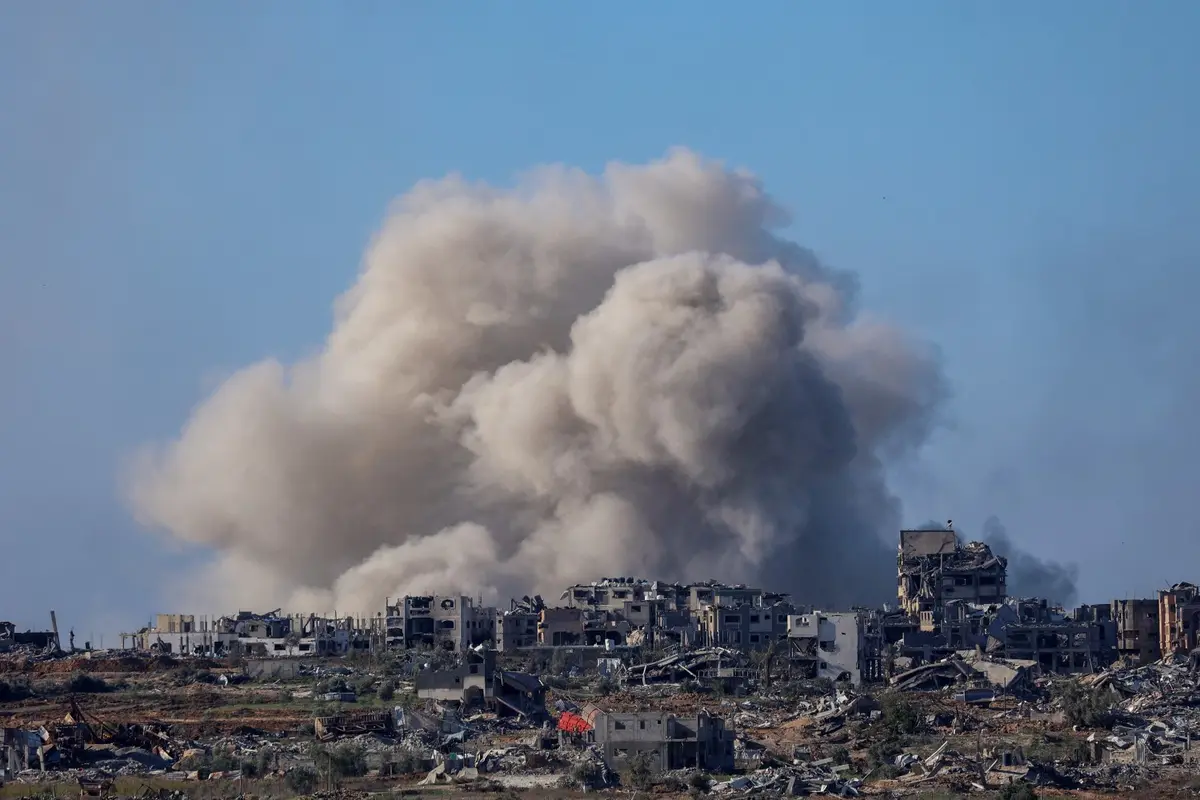
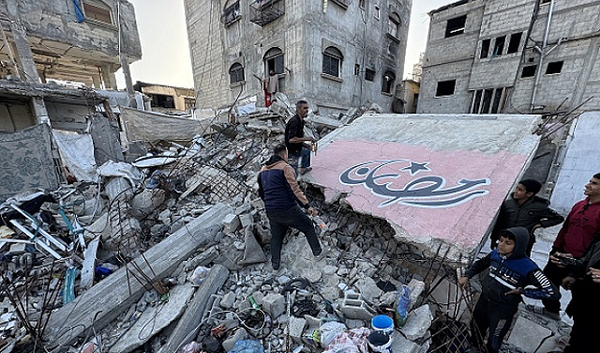
Two Palestinians injured by Israeli occupation bullets in Rafah and Al-Qarara in the Gaza Strip

Two citizens were injured, Monday evening, by Israeli occupation army bullets in the Gaza Strip.


According to local sources, a citizen was injured by Israeli occupation army bullets in the Tel al-Sultan neighborhood, west of Rafah city, south of the Gaza Strip, and a child was also injured by Israeli occupation forces bullets east of al-Qarara town, south of the Gaza Strip.


Two citizens were martyred this Monday morning by Israeli occupation forces' bullets in the center of Rafah city, south of the Gaza Strip.


Since the ceasefire was declared in the Gaza Strip, 116 martyrs, most of them exhumed bodies, have arrived at the Strip’s hospitals, in addition to 490 injuries.

PALESTINE

Mon 03 Mar 2025 4:44 pm - Jerusalem Time

Suffocation injuries north of Hebron by Israeli forces

A number of citizens suffered from suffocation on Monday after the Israeli occupation forces fired sound bombs and toxic gas at them in the town of Beit Ummar, north of Hebron.


According to local sources, the occupation forces fired tear gas and sound bombs at citizens and the Beit Ummar Secondary School playground, causing a number of citizens and students to suffer from suffocation.


The occupation forces and police stormed the town and carried out a provocative tour in its streets.

ARAB AND WORLD

Mon 03 Mar 2025 4:09 pm - Jerusalem Time

China's annual trade in services exceeds 1 trillion USD, boasting significant potential

BEIJING -- China's annual trade in services exceeded 1 trillion U.S. dollars for the first time last year, demonstrating significant potential for further growth.

China's services import and export value amounted to a record-high of 7.5 trillion yuan (about 1.05 trillion U.S. dollars) in 2024, expanding 14.4 percent year on year, according to the latest data from the Ministry of Commerce (MOC).

Exports grew 18.2 percent year on year and imports grew 11.8 percent, according to the MOC.

Driven by the global trends of digitization, smart technology advancement and green development, China's trade in services grew in scale, its structure was optimized further and its international competitiveness was enhanced in 2024, said Li Jun, a researcher at the Chinese Academy of International Trade and Economic Cooperation under the MOC.

He noted that the comprehensive relaxation and optimization of China's visa-free transit policy has played a role in boosting inbound tourism over the last year.

The broadly welcomed new policy has sparked the rise of "China Travel," a popular hashtag on social media where many travelers share their experiences in China, with increasing numbers of international tourists being drawn by the country's cultural landmarks, nature and city walks.

"'China Travel' is booming rapidly, and this growth is expected to boost the country's services trade further, while helping to drive the global travel industry toward continued recovery and prosperity," Li said.

China's digital cultural platforms and content have been gaining significant traction overseas, Li said, noting the popularity of Chinese video game "Black Myth: Wukong," the distribution of high-quality Chinese films and TV dramas on overseas streaming platforms such as Netflix and YouTube, and the fact that Chinese internet literature is influencing an increasing number of international readers.

The Chinese government released a guideline on promoting the high-quality development of trade in services through high-standard opening-up in August last year.

The document offered robust policy support for the development of China's services trade, Li said, calling for more efforts to advance opening-up, innovation and international cooperation in the sector.

Noting that China established a nationwide negative list management system for cross-border trade in services last year, Li suggested that the level of institutional opening-up should be improved continuously, that the negative list should be shortened gradually as appropriate, and that high-standard international economic and trade rules should be aligned with actively.

He urged launching the construction of national demonstration zones for the innovative development of trade in services as soon as possible.

To facilitate innovation, Li called for the potential of industrial digitization and digital transformation to be unlocked, for support for the professional organizations offering services in finance, consulting, design and certification to enhance their ability to provide international services, and for the accelerated development of green services.

Bilateral, multilateral and regional collaboration in digital trade and trade in services should be expanded, Li said, suggesting that the role of major exhibition platforms should continue to be leveraged, and that international services trade cooperation parks should be developed.

PALESTINE

Mon 03 Mar 2025 4:06 pm - Jerusalem Time

Palestinian President arrives in Cairo to participate in the emergency Arab Summit

Palestinian President Mahmoud Abbas arrived in the Egyptian capital, Cairo, on Monday evening, to participate in the emergency Arab summit.


President Abbas was received at the presidential lounge at Cairo International Airport by Minister of Labor Mohammad Jubran, Palestinian Ambassador to Egypt Diab Al-Louh, and advisors to the Palestinian Embassy and Delegation to the Arab League.


President Abbas will deliver a speech at the emergency summit tomorrow, Tuesday, on the developments in Palestine. He will also meet with a number of Arab leaders on the sidelines of the summit.


This summit comes at the request of the State of Palestine, in order to coordinate positions and unify visions regarding the challenges and serious developments facing the Palestinian cause, especially the Arab consensus on the reconstruction plan in the Gaza Strip without displacing our people, consolidating the ceasefire and the State of Palestine assuming its responsibilities in the Gaza Strip and stopping Israeli practices and plans in the West Bank and Jerusalem, and working to implement the two-state solution, leading to ending the occupation and embodying the Palestinian state on the 1967 lines, with East Jerusalem as its capital, and then achieving just, comprehensive and lasting peace in the region.


The President is accompanied by the Secretary of the Executive Committee of the Palestine Liberation Organization, Hussein Al-Sheikh, the Prime Minister and Minister of Foreign Affairs, Mohammed Mustafa, the President’s Advisor for Diplomatic Affairs, Majdi Al-Khalidi, and the Ambassador of the State of Palestine to Cairo, Diab Al-Louh.


PALESTINE

Mon 03 Mar 2025 3:32 pm - Jerusalem Time

"The Wall and Settlements": 1,705 attacks carried out by the army and settlers last month

Minister Mu'ayyad Shaaban, head of the Wall and Settlement Resistance Commission, said that the Israeli occupation forces and settlers carried out 1,705 attacks during the month of February, in continuation of the ongoing series of terrorism by the occupation state against the Palestinian people, their lands and their properties.

Shaaban explained in the commission's monthly report, "Occupation Violations and Colonial Expansion Procedures," issued today, Monday, that the entity represented by the occupation army carried out 1,475 attacks, while the settlers carried out 230 attacks, and the total attacks were concentrated in the governorates of Nablus with 300 attacks, Hebron with 267 attacks, and Ramallah with 263 attacks.

He pointed out that the attacks ranged from armed attacks on Palestinian villages to imposing facts on the ground, field executions, vandalism, bulldozing of land, uprooting of trees, seizure of property, closures and barriers that sever the ties of Palestinian geography.

A wave of terrorism targeting citizens' properties and homes

Shaaban explained that the settlers' attacks were concentrated in the governorates of Nablus and Hebron, with 43 attacks each, Ramallah with 38 attacks, and Jerusalem with 25 settler attacks.

He added that the settlers carried out 68 acts of vandalism and theft of Palestinian property, which affected vast areas of land, and the settlers' attacks also resulted in the uprooting of 642 trees, including 610 olive trees, in the governorates of Hebron with 292 trees, Jenin with 250 trees, and Jerusalem with 100 trees.

He explained that last February, the settlers systematically targeted the Arab Al-Malihat community northwest of Jericho, by paving a colonial road surrounding the community, targeting the community’s mosque with burning, and carrying out attacks that did not stop, targeting citizens’ property and livestock with systematic assault and theft, in an attempt to displace the community in order to empty the area and hand it over to the colonial project.

He pointed out that the assault on citizens' livestock by stealing, killing, slaughtering and burning has become one of the tools of the settlers in assaulting Palestinian villages and Bedouin communities with great and direct intent in order to cause the greatest damage to living standards and lifestyle and to terrorize the safe people in these areas.

He pointed out that what happened in the village of Deir Dibwan, east of Ramallah, through the theft of more than 900 heads of cattle by armed settlers falls within the framework of criminal behavior observed by the official institution in the occupying state, which overlooks and sponsors the terrorism of the settlers and deprives the Palestinians of their right to follow up on these cases in order to restore their rights and hold the perpetrators of the crimes accountable, stressing that the Commission, despite the complexities and restrictions imposed by the occupation, will continue its efforts to support the steadfastness of citizens and follow up on their cases legally at all levels in order to protect them and restore their rights.

Attempt to establish 8 new colonial outposts

He pointed out that the settlers have tried to establish 8 new colonial outposts since the beginning of last month, which were predominantly agricultural and pastoral in nature. These outposts were distributed by trying to establish two colonial outposts on the lands of Tubas Governorate, and an outpost in each of Jericho, Hebron, Bethlehem, Ramallah, Tulkarm and Nablus.

Shaaban stressed that the escalation of attempts to establish colonial outposts in the last stage falls within the framework of tearing apart Palestinian geography and imposing facts of control over Palestinian land, as the colonists undertake the task of making a change on the ground, and then the official level undertakes to transform this change into a reality by legislating it, establishing it, and transforming it into a colonial site that enjoys all services.

Seizing 6 dunums and allocating 16 thousand dunums for settlers’ grazing

Shaaban said: Last month, the occupation authorities seized a total of 6 dunams of citizens’ lands through three seizure orders for military purposes aimed at paving sections of roads connecting established settlements and main streets in order to facilitate the movement of settlers and restrict Palestinian citizens. These orders targeted the Nablus governorates with two seizure orders on an area of one dunam, while the third order targeted the village of Tamoun in the Tubas governorate with five dunams.

He added that these orders are aimed at preventing shepherds from accessing these lands and granting settlers full authority to use them, noting that the first military order targeted the lands of the Salfit and Ramallah governorates, specifically the villages of Deir Ballut and Al-Lubban Al-Gharbi, by allocating a total of 2,600 dunums for the grazing of settler colonists, which are areas that were previously declared state lands, while the second, third and fourth orders targeted the Ramallah governorate, specifically the village of Kafr Malik, by allocating an area of 1,505 dunums, and the lands of Deir Jarir with two orders targeting a total of 4,900 dunums for the same purpose, and the fifth order targeted the lands of Ghor Al-Far’a in the Jericho governorate by targeting a total of 426 dunums, while the sixth order targeted a total of 8,700 dunums of lands in the city of Tubas.

Shaaban explained that this step, and the risks it entails, comes within the framework of what has been repeatedly announced about the occupation government’s intention to work on settling the status of “legalizing” 70 agricultural and pastoral colonial outposts, within the coalition agreements between the parties that make up the occupation government, and that the step of allocating lands for pasture will lead to the consolidation of these outposts by granting them vast areas, to become a center and starting point for carrying out more terrorist attacks against Palestinian citizens and their property.

156 facilities demolished and 93 others notified of demolition

He pointed out that the occupation authorities carried out 79 demolition operations last February, affecting 156 facilities, including 109 inhabited homes, 5 uninhabited ones, and 34 agricultural and other facilities.

Demolitions were concentrated in the Hebron governorate, with 55 facilities demolished, followed by Jenin governorate, with 26 facilities demolished, Jerusalem with 19 facilities, and Salfit with 15 facilities.

Shaaban explained that the occupation authorities distributed 93 notices to demolish Palestinian facilities in continuation of the series of restrictions on Palestinian construction and the natural growth of villages and towns, which is translated these days by a large density of demolition operations, and was concentrated in the Nablus Governorate with 25 notices, then the Tulkarm Governorate with 24 notices, Hebron with 13, and Tubas with 8 notices.

31 master plans for the colonies and tenders for the construction of 974 colonial units

Shaaban explained that the planning authorities in the occupying state studied 27 structural plans in February for the benefit of the West Bank settlements and within the borders of the Jerusalem Municipality, including 22 plans for the West Bank settlements and 5 plans within the borders of the Jerusalem Municipality.

It also approved 14 plans, 11 of which are in the West Bank, while it deposited 13 plans, 11 of which are also in the West Bank. The February plans targeted a total of 3,245 dunums of citizens’ lands, with the aim of building 2,684 new settlement units, including 1,278 units for settlements in the West Bank and 1,406 for settlements within the borders of the Jerusalem Municipality.

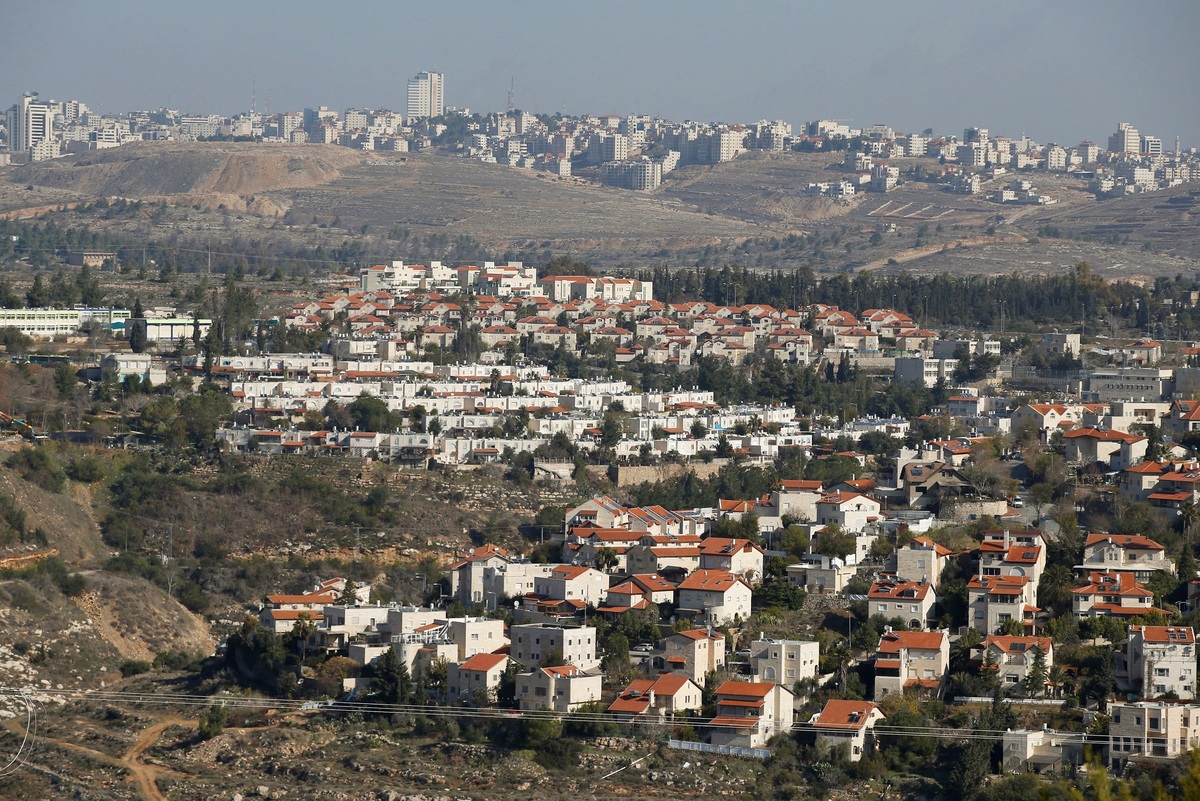
He added that the analysis of the maps attached to the master plans indicated the occupation state's intention to make a major expansion of the Telem settlement, which is built on the lands of citizens in Tarqumiya in the Hebron Governorate, through its intention to establish a new colonial neighborhood by building 196 new colonial units on an area of 144 dunams.

Shaaban pointed out that last February, the occupation offered a construction tender to add a total of 974 new colonial units to the Efrat settlement, which is built on the lands of citizens in the towns of Al-Khader, Artas, and Wadi Rahhal in the Bethlehem Governorate.

PALESTINE

Mon 03 Mar 2025 2:56 pm - Jerusalem Time

Including cutting off water and electricity... Israel plans to put more pressure on the resistance in Gaza

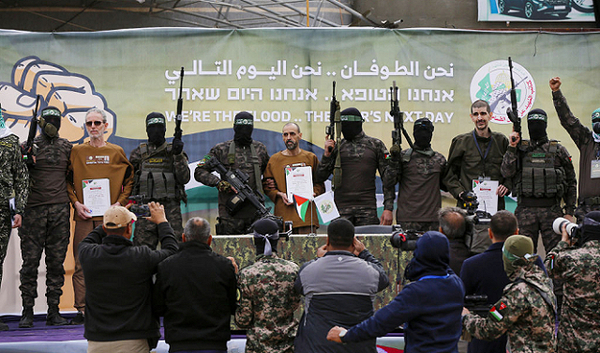
Israeli media confirmed on Sunday evening that preventing the entry of aid into the Gaza Strip is the first step in a series of steps that Israel intends to implement to pressure Hamas to accept extending the first phase of the ceasefire, without an Israeli commitment to ending the war.


Benjamin Netanyahu issued a statement in English, saying that Israel had adopted the Witkoff plan, which calls for extending the ceasefire for 50 days, and releasing half of the prisoners in the Gaza Strip on the first day, and the other half on the last day, adding that Hamas had opposed the proposal, and set completely unacceptable conditions.

Netanyahu stressed that Israel would take additional steps "against Hamas" if it continued to hold the prisoners.

The Israeli Broadcasting Corporation "Kan 11" quoted informed sources as saying that Netanyahu does not believe that implementing the second phase of the ceasefire agreement is possible, and is even considering the possibility of stopping the supply of water to the Gaza Strip.

"Kan 11" explained that Netanyahu prefers to maintain the ceasefire until the arrival of Trump's Middle East envoy, Steve Witkoff, who is expected to arrive in the region before the end of the week. He will then see what Witkoff will be able to achieve with the mediators, before making a decision on resuming the war.

She added that Netanyahu believes that it is possible to return to fighting for a short period in order to pressure Hamas, and that he also believes that it is possible to bring about a change in the nature of the fighting after the new Chief of Staff, Eyal Zamir, assumes his duties during the current week.

According to Channel 14, Energy Minister Eli Cohen also intends to submit a proposal to the next cabinet within days to also cut off electricity to the Gaza Strip.

While the newspaper "Israel Hayom" quoted sources as saying that Israel actually intends to cut off water and electricity if Hamas does not release more prisoners, indicating that the Israeli pressure cards include returning to carrying out specific military operations.

The sources confirmed that the Israeli army does not intend to withdraw from the Salah al-Din/Philadelphi axis, which it was scheduled to withdraw from yesterday, Saturday, according to the ceasefire agreement.

The sources claimed that Netanyahu is prepared to continue the ceasefire and pay a heavy price to recover the hostages, but he is not prepared to agree to end the war, because that means Hamas will remain in power.

According to Yedioth Ahronoth, the mediators asked to wait a few more days before resuming the fighting, believing that they could push Hamas to a certain settlement, but estimates in Israel indicate that the possibility of Hamas agreeing is very weak.

The newspaper added that estimates in Israel indicate that the army will not resume fighting during the current week at least, as the political leadership in Israel is considering the upcoming visit of Witkov, perhaps it will contribute to achieving progress.

In contrast, Hamas continued to stress its refusal to return to negotiations according to Israeli conditions, which constitute a complete reversal of the agreement that was previously reached.

Hamas leader Mahmoud Mardawi said that the movement will not accept extending the first phase, and will insist on implementing the agreement in its stages as it was signed, stressing, in a press interview, that the occupation "will not obtain its prisoners except through an exchange deal."

Commenting on the halt in aid delivery, Mardawi said: “Netanyahu is delusional if he thinks that he will achieve through the starvation war what he failed to achieve on the ground.”

He added: "There is no room for renegotiation, and what is required of the mediators is to oblige the occupation to implement the terms of the agreement as it was signed."

For his part, Hamas spokesman Hazem Qassem confirmed that contacts are ongoing with mediators to ensure the implementation of the remaining stages of the ceasefire agreement, expressing his hope that the mediators' ongoing efforts will result in a breakthrough in the situation and oblige the occupation to implement all stages of the ceasefire.

PALESTINE

Mon 03 Mar 2025 1:54 pm - Jerusalem Time

Prisoners Authority: Megiddo Prison Detainees Face Disease and Hunger

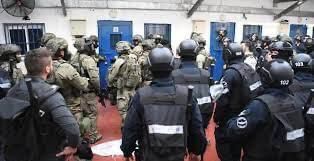
The lawyer of the Prisoners' Affairs Authority and the Freed Prisoners reported that all the detainees she visited in Megiddo Prison were brought to the visit with their hands and feet shackled, and that the prison guards did not leave them for a moment. Rather, they deliberately pressured the lawyer to end her meeting quickly, and they only gave her 15 minutes for each detainee, which prevented her from speaking with them in privacy and freedom, and prevented her from knowing all the details related to their conditions inside the prison.


The Commission said in a statement on Monday that the lawyer met with the detainee Kamal Ibrahim Zarifa (68 years old) from Nablus, who suffers from many diseases including diabetes, high blood pressure, prostate, and hemorrhoids. He also suffers from scabies, and complains of severe itching that prevents him from sleeping. He has lost 30 kilograms of his weight since his arrest due to malnutrition.


The prisoner says: “I am almost seventy years old, and I suffer from several diseases, the most difficult of which is hemorrhoids. My stomach is hardened and I suffer from severe constipation because of the poor quality of the food, which is nothing but starches. There are no vegetables, fruits or soups. Our food consists of nothing but rice and chickpeas. I ask for stomach laxatives, but no one answers. Most of the detainees suffer from constipation.”


The Commission indicated that Tarifa was arrested on 08/13/2024, and was sentenced to 6 months of administrative imprisonment, which was renewed for another 6 months.


As for the detainee Walid Raafat Adili (24 years old) from Nablus, he underwent surgery and a corneal transplant before his arrest. There are 20 stitches in his eye that must be removed as soon as possible, otherwise it will lead to the failure of the operation and damage to the cornea, but the prison administration prevents him from meeting the doctor and strongly refuses to do so.


Adili lost more than 55 kilograms of his weight, due to the poor quantity and quality of food inside the prison. It is noteworthy that he was arrested on 03/23/2024, and was sentenced to 6 months of administrative imprisonment, which was renewed again.


Regarding the detained young boy Ahmed Khader Al-Hasanat (16 years old) from the city of Bethlehem, he suffers from scabies disease that has spread widely throughout his body. The prison administration confined him with 10 other young boys in one room, without providing them with any kind of treatment. He was arrested on 10/7/2024, and an administrative prison sentence was issued against him for 5 months, which was renewed for another 4 months.

PALESTINE

Mon 03 Mar 2025 1:01 pm - Jerusalem Time

The death of the Palestinian detainee Khaled Abdullah from Jenin camp in "Megiddo" prison

Detainee Khaled Mahmoud Qasim Abdullah (41 years old) from Jenin camp was martyred in Megiddo prison.

The Commission of Prisoners' Affairs and the Palestinian Prisoners' Club reported the martyrdom of administrative detainee Abdullah (41 years old) on 2/23/2025 in Megiddo Prison. He had been detained administratively since 11/9/2023, adding him to the list of martyrs who have risen as a result of the systematic crimes practiced by the prison system in an unprecedented manner since the history of the war of extermination.

The Authority and the Club said that the martyr Khaled Abdullah was married and had four children, and had two brothers who were administratively detained, Shadi and Iyad Abdullah. According to his family, he did not suffer from any health problems before his arrest.

She pointed out that he is the third detainee whose martyrdom has been announced within a week, bringing the number of martyrs among the detainees in the occupation prisons since the beginning of the war of extermination to (61), and they are the only ones whose identities are known, including at least (40) from Gaza, and this number is the highest historically, so that this stage is the bloodiest in the history of the prisoner movement since 1967, and thus the number of martyrs of the prisoner movement whose identities are known since 1967 rises to (298), noting that there are dozens of martyrs from Gaza detainees who are subject to enforced disappearance, and the number of martyr prisoners whose bodies are being held rises to (70), including (59) since the beginning of the war.

The Authority and the Club added that the case of the martyrdom of the detainee Khaled Abdullah constitutes a new crime in the record of the Israeli brutal system, which has reached its peak since the beginning of the war of extermination.

She added that the occupation does not stop at killing the detainees, but rather deliberately does not reveal their fate after a period of time has passed since their martyrdom, as happened with many detainees in Gaza, as well as what happened with the detainee Khaled Abdullah.

The Commission and the Club also confirm that what is happening to the detainees is nothing but another aspect of the war of extermination, and its goal is to carry out more executions and assassinations against them.

She stressed that the rate of increasing numbers of martyrs among the detainees will take a more dangerous turn as more time passes for the detention of thousands of them in the occupation prisons, and their continued exposure to systematic crimes, most notably torture, starvation, assaults in all their forms, medical crimes, sexual assaults, and the deliberate imposition of conditions that lead to their contracting serious and contagious diseases, in addition to the policies of theft and deprivation - unprecedented in their level.

The Commission and the Club held the occupation fully responsible for the martyrdom of the detainee Khaled Abdullah, and renewed their demand for the international human rights system to move forward in taking effective decisions to hold the occupation leaders accountable for the war crimes they continue to commit against our people, and to impose sanctions on the occupation that would place it in a state of clear international isolation, and restore to the human rights system its fundamental role for which it was created, and put an end to the terrifying state of helplessness that it suffered during the war of extermination, and end the state of exceptional immunity that the old colonial states granted to the occupying state of Israel as it is above accountability, accountability and punishment.

PALESTINE

Mon 03 Mar 2025 12:31 pm - Jerusalem Time

Israeli occupation notifies the demolition of a school in Masafer Yatta, south of Hebron

Today, Monday, the Israeli occupation forces notified the demolition of a school in Masafer Yatta, south of Hebron.


WAFA reported that the occupation forces notified the demolition of the Palestine Mixed Elementary School in Masafer Yatta.

In the latest statistics documented by the Ministry of Education and Higher Education on the occupation’s violations against education in the Gaza Strip and the West Bank, from 10/7/2023 to 2/11/2025, they were as follows:

In Gaza, more than 12,467 students were martyred, and 20,311 others were injured, while in the West Bank, 91 students were martyred, 563 were injured, and 313 were arrested.

569 educational cadres were killed and 2,703 were injured in the Gaza Strip, while 3 were killed, 18 were injured, and more than 157 were arrested in the West Bank.

111 schools were completely destroyed, 241 were severely damaged, 85 were bombed and vandalized, all of them governmental, in addition to 89 UNRWA schools that were vandalized in the Gaza Strip, while 117 schools in the West Bank were vandalized during the same period.

Regarding universities, 20 higher education institutions were severely damaged, 51 university buildings were completely destroyed, and 57 buildings were partially destroyed in the Gaza Strip, while 7 universities and colleges were repeatedly raided and vandalized in the West Bank during the same period.

PALESTINE

Mon 03 Mar 2025 11:33 am - Jerusalem Time

Israeli occupation continues to close the Tayasir military checkpoint for the 27th day

The Israeli occupation forces continue to close the Tayasir military checkpoint east of Tubas for the twenty-seventh day, disrupting daily movement in all its areas in the northern Jordan Valley.


Local sources reported that the closure has disrupted educational, economic and social life in the northern Jordan Valley, as citizens are forced to wait for long hours at the Hamra military checkpoint, the second outlet to the northern Jordan Valley, to be able to reach their workplaces and schools.


The Tayasir military checkpoint connects the West Bank governorates to the Palestinian Jordan Valley. The occupation established it in conjunction with the Al-Aqsa Intifada at the beginning of the current millennium.

PALESTINE

Mon 03 Mar 2025 11:06 am - Jerusalem Time

Palestine is present at the Oscars.. “No Other Land” wins the OSCAR for Best Documentary Feature

The Palestinian film "No Other Land" won the Oscar for Best Documentary Feature.

The award was received at the Dolby Theatre in Hollywood by Palestinian director Basil Adra and anti-occupation Israeli journalist Yuval Abraham.


The film shows Adra resisting the forced displacement of Palestinians by the Israeli occupation army in the Masafer Yatta area of the occupied West Bank.

Adra said that the film "reflects the harsh reality that we have been suffering from for decades and that we are still resisting, and we call on the world to take serious measures to stop the injustice and stop the ethnic cleansing of the Palestinian people."


In turn, Abraham said that they made the film because their voices together are stronger, adding: “When I look at Basil, I see my brother, but we are not equal. We live in a ruling system where I am free under civil law and Basil is subject to military law, which destroys his life and he cannot control it.”

"There is a different way. A political solution without ethnic supremacy, with the guarantee of the national rights of both our peoples. And I must say while I am here that the foreign policy of this country is contributing to blocking that way," he added.

5 Awards for the movie "Anora"

The tragic film "Anora" topped the list of Oscar winners, winning five awards, including in the main categories of Best Picture, Best Director and Best Actress.

“A truly independent film, with a budget of less than six million dollars, tell the stories that move you, and I promise you will never regret it,” said Anora director Sean Baker.

The film also won awards for Best Actress for Mikey Madison, Best Screenplay, Best Editing, and Best Director.

Most notable awards

After winning four Golden Globes, the film "Emilia Perez", which had the most nominations, was left with only two awards after its chances had recently declined due to controversy surrounding it.

Adrien Brody also won Best Actor for his role in "The Brutalist," in which he plays an architect who survived the Holocaust and immigrated to the United States; Kieran Culkin won Best Supporting Actor for "A Real Pain"; and Zoe Saldanha won Best Supporting Actress for her role in "Emilia Perez."


Brazilian film "I'm Still Here" won Best International Film, and "Flo" won Best Animated Film, thanks to the moving adventures of a lost cat who faces the flooding of her planet.


The award for Best Adapted Screenplay went to Peter Straughan's "Conclave," a mystery-filled story about the election of a new pope in the Vatican.


The film "The Subsistence" by French director Coralie Varga won the Oscar for Best Makeup and Hairstyling, for the amazing physical transformation of Demi Moore, who played the role of a woman addicted to a rejuvenation serum that has devastating effects.


The evening was largely free of controversy, compared to the 2017 Oscars shortly after Donald Trump was elected to his first term, which included political references at the time.


PALESTINE

Mon 03 Mar 2025 10:57 am - Jerusalem Time

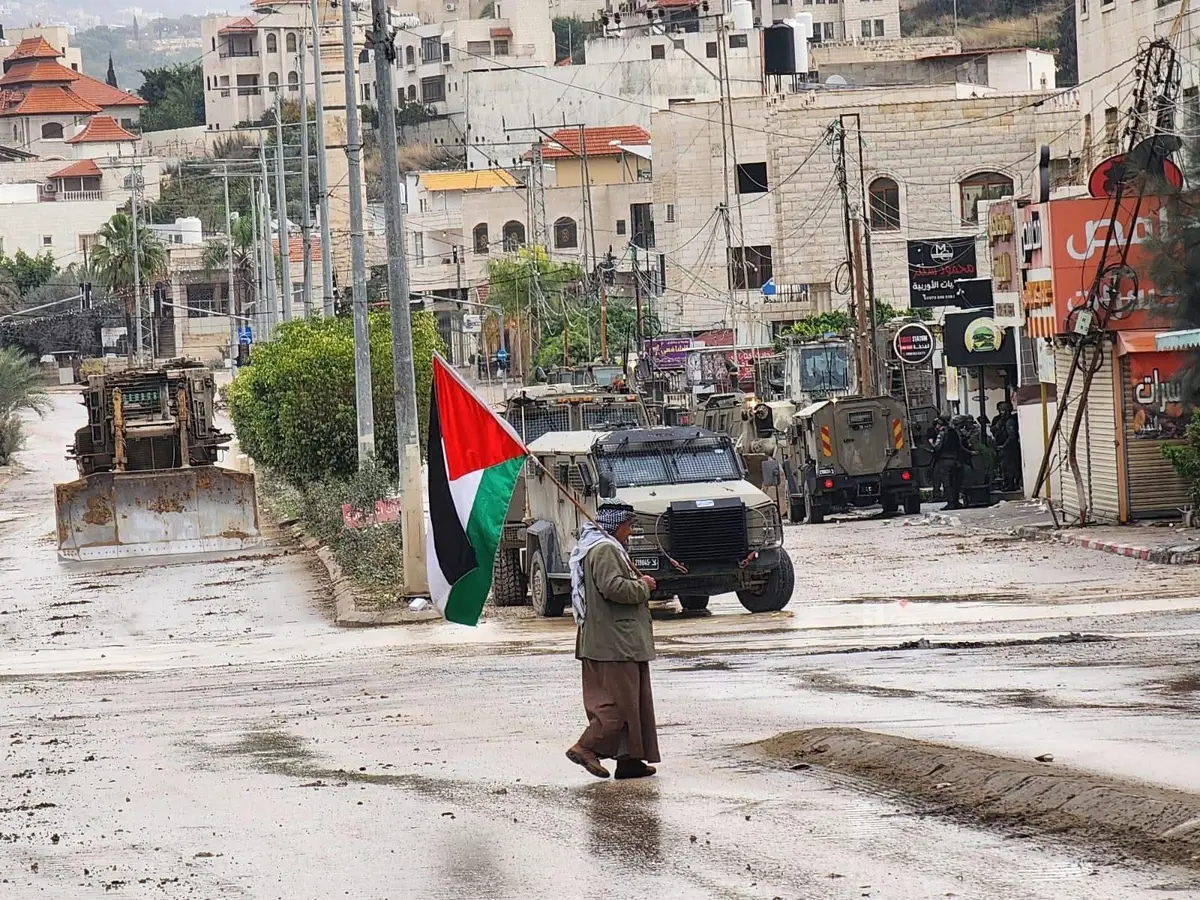
Israeli occupation continues its aggression on the city of Tulkarm and its two camps for the 36th day

The Israeli occupation continues its extensive aggression on the city of Tulkarm and its camp for the 36th consecutive day, and on the Nour Shams camp for the 23rd day, amid military reinforcements accompanied by forced displacement and the demolition of homes.


Local sources reported that after midnight last night, the occupation forces sent military reinforcements to the city and its two camps, Tulkarm and Nour Shams, and patrolled the streets and neighborhoods amid heavy live ammunition fire and the sound of explosions in the Jabal al-Nasr area in Nour Shams camp.


She added that the occupation forces are still stationed along the Nablus Street linking the two camps, and are seizing residential buildings on the aforementioned street, especially the side opposite Tulkarm camp, and turning them into military barracks, deploying their machinery and bulldozers in their vicinity, obstructing the movement of vehicles and subjecting their passengers to search, abuse and detention.


The occupation continues its tight siege on the Tulkarm and Nur Shams camps, preventing entry into or exit from them, and deploying infantry squads around them and inside the neighborhoods and alleys, while raiding homes, vandalizing them and destroying their contents, subjecting the residents inside to interrogation, and forcing them to leave, amidst the firing of live bullets and sound bombs to terrorize them.


Eyewitnesses reported that the occupation forces informed several families tonight to evacuate their homes until the morning, specifically in the area behind the schools neighborhood in Nour Shams camp.


The occupation bulldozers continued to demolish homes in Nour Shams camp, in implementation of the occupation’s demolition notice of 11 homes, under the pretext of paving a road starting from the camp square towards Al-Manshiya neighborhood, and belonging to the families of Yousef, Jabali, Mar’i, Abu Shalbaya, Irani, Shihab, Younis, and Ghanem.


During the past few days, Nour Shams camp witnessed an escalation in the demolition and burning of homes and shops carried out by the occupation in the neighborhoods of Al-Manshiya and Jabal Al-Nasr and Al-Salihin, in addition to the complete destruction it caused to the infrastructure, including electricity, water, sewage and communications networks.


According to the Popular Committee of Nour Shams Camp, the number of displaced persons who were forced by the occupation to leave their homes by force has risen to nearly 9,000, out of a population of 13,500, from most of the camp’s neighborhoods that have become empty of their residents, namely Al-Manshiyya, Jabal Al-Nasr, Al-Salihin, Al-Maslakh, Wadi Qalansawe and the center of the camp. They headed to shelters and the homes of their relatives in the city, its suburbs and its villages.


In Tulkarm camp, eyewitnesses reported that the occupation forces deployed infantry squads in the streets of the camp, and moved between the neighborhoods, especially Abu al-Foul and the airport, while firing live ammunition intensively and broadcasting provocative sounds accompanied by explosions, to terrorize the citizens who were still inside their homes on the outskirts of the camp.


Amidst the continued tight siege on the camps, the residents who are still in their homes and living in difficult and harsh conditions continue to appeal daily to secure the arrival of their basic needs of food, water, medicine and baby milk, while the occupation obstructs the work of relief crews while they are trying to deliver the necessary basic materials to them.


In the same context, the occupation forces stormed the Shuwaika suburb north of Tulkarm at dawn today, raided a number of homes, and arrested three citizens: Fahd Freij and his son Osayed, and Musab Adnan Amer.


The young man, Amr Odeh, was injured after an Israeli military vehicle deliberately hit his vehicle while it was driving near the Al-Murabitoun Mosque, west of the city, which led to him sustaining bruises and wounds, and causing severe damage to the vehicle. He was transferred to the hospital.

PALESTINE

Mon 03 Mar 2025 10:32 am - Jerusalem Time

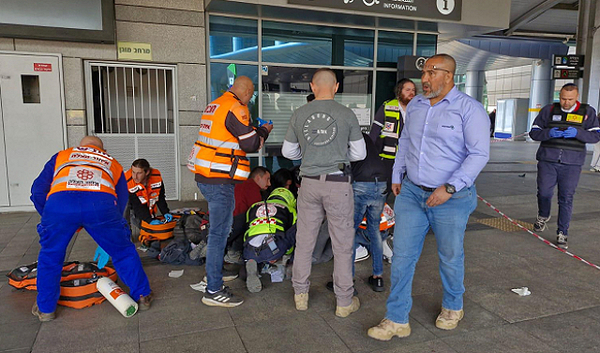
An Israeli was killed and 4 others were injured in a stabbing operation in Haifa

An Israeli was killed and four others were injured, with varying degrees of severity, on Monday morning, in a stabbing attack in the city of Haifa, in the lands of 1948.


The occupation media reported that an Israeli was killed and four others were injured, including two in critical condition, as a result of a stabbing operation at the central bus station in Haifa, while the Israeli police killed the perpetrator.


ARAB AND WORLD

Mon 03 Mar 2025 10:26 am - Jerusalem Time

Washington Post: Body language reveals what happened in the Trump-Zelensky meeting

In a report by its correspondent Victoria Crowe, The Washington Post investigated the opinions of body language experts to analyze the stormy meeting that brought together US President Donald Trump and his Vice President J.D. Vance on the one hand, and Ukrainian President Volodymyr Zelensky on the other hand.

In the Oval Office meeting on Friday, Trump and Vance accused the Ukrainian president of not being sufficiently grateful for the support the United States provides his country.


The newspaper quoted body language experts as saying that the decision not to use an interpreter, the imbalance of power between the two sides, and Zelensky's "warrior energy" after three years of war, were all factors that contributed to the Washington meeting spiraling out of control.

What was missing from the meeting was the "polite, carefully planned" formal behavior that viewers are used to seeing, said Caroline Goyder, who coaches politicians and business leaders to speak with confidence and knowledge.

Trump is usually polite to leaders, but his relationship with Zelensky, “which has never been warm,” has been strained. Trump has falsely claimed that Zelensky is a dictator and that Ukraine started the war, “which is consistent with the Kremlin’s view.” The Ukrainian president has said that his American counterpart is living in a “web of disinformation.”


Goyder described the exchange during the interview - which took place in front of television cameras and was broadcast live - as being like a play in which Trump and Zelensky were performing two different scenes.

She said Trump appeared to be acting out a scene in a courtroom and was “in a safe place, oceans away (from Ukraine), where he can quickly reposition himself. He’s in a stable place.”

In contrast, Zelensky looked as if he were performing a scene on a battlefield, dressed in military fatigues and carrying with him into the meeting room the weight of his country’s conflict, and he had to get things done, according to Goyder, who described him as a man of energy and speed.

According to Darren Stanton, a body language expert, Zelensky appeared at the meeting "very angry" and "seemed to be absorbed in his own ego."

As Vance spoke, Zelensky leaned back with his arms crossed after leaning forward, indicating, Stanton read, “a dramatic change in his inner feelings.”

Stanton said the Ukrainian president “felt he wasn’t being vocal or allowed to express his views,” adding that Trump typically “squeezes the handshake tightly, pats the body hard, pushes the chin up, and sits with his feet flat on the floor and fingers pressed together to show power and influence.”


The newspaper pointed out that the leaders who recently visited the United States did their best to satisfy Trump's vanity, imitate his body language, and mimic his speeches during difficult negotiations and trade deals.

During British Prime Minister Keir Starmer's visit to Washington on Thursday, Trump asked him if Britain was capable of defending itself against Russia, and he responded with a "yellow smile."

French President Emmanuel Macron broke ranks this week when he put his hand on Trump’s forearm to correct his false claim about Europe’s money for Ukraine.

PALESTINE

Mon 03 Mar 2025 9:25 am - Jerusalem Time

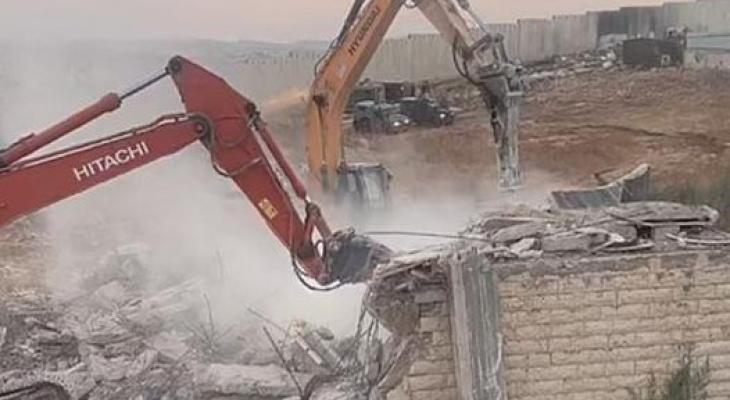
Israeli Occupation forces demolish a farm in occupied Jerusalem

Israeli occupation bulldozers demolished a farm in the town of Issawiya, northeast of Jerusalem, this Monday morning.


Local sources reported that the occupation bulldozers demolished a 4-dunum farm, which contained a residence and a livestock barn, owned by citizen Ziad Mustafa.

OPINIONS

Mon 03 Mar 2025 9:20 am - Jerusalem Time

The Arab Summit is an expression of the transformations of the new Arab system

Mohamed El Masry

Mohamed El Masry

Opinion Writer


The Arab world is really changing

Thanks to all the Arab brothers who rejected displacement, bypassing the two-state solution, and separating the geography and demographics of the Palestinian people despite the overt and covert threats. Thanks to the brothers in Saudi Arabia, Jordan, Egypt, and the Emirates who are related to the Palestinian-Israeli conflict by virtue of geography, interest, and harm. They have also changed. If the occupying Israeli is talking about a new Middle East, these countries have also changed. They have changed in their positions, procedures, and orientations. Saudi Arabia in particular occupies an international position that it seized against everyone’s will, by virtue of the decision, flexibility of movement, and opening doors to everyone. Saudi Arabia has become a decision-maker, locally and internationally. Thanks to our sister Egypt, which also rejected the temptation of money, distortion of positions, and attempts at intimidation. It said no to displacement with a loud voice, and said no to giving up the two-state solution. Thanks to our sister Jordan for its strong positions despite the harshness of life, the weakness of the economy, and the many surrounding dangers. Thanks to the Emirates, which provided as much as it could through “The Noble Knight 3” and as much as is hoped to do in reconstruction and mediation. The Arab system is no longer as it was. It has changed because of… The nature of the transformations, it has become more capable and bolder, it has become more powerful in expressing its interests, and we have seen and touched this change in the weaving of new relationships and multiple political measures and confident and wise decisions of the nature of the fronts and global alliances, the Arab system is now going through a real process of change, and it is a real process that may result in a completely new reality.

The upcoming Arab summit is an exceptional summit par excellence, because for the first time, it will not try to hide behind the idea of mediation, moderation, containment, neutrality, waiting, procrastination, or throwing problems into the lap of the international community. This time, the Arab League cannot postpone its problems forward, ignore them, or hide behind general, vague, and diplomatic words. It cannot call on other powers to save it from its crises, nor can it evade the obligations of this difficult historical moment. I say this because this time, what is required is the head of Arab moderation, and what is meant by targeting and threatening is Arab national security and all national interests without exception. This time, the threat affects everyone, and it is a threat that affects the political structure, demographic composition, wealth, and corridors, and even the future itself. What is now presented to the Arab League, according to the American and Israeli demand together, is a new Middle East, an East in which Israel is sovereign, controlling, commanding, and capable of determining policies and decisions and forming borders or redrawing them again.

The new Middle East that is being talked about by Israel is a submissive and submissive Middle East that not only accepts Israel, but also serves it, rewards it, and relieves it of its responsibilities as an occupying party. Not only that, but the Arab regime also punishes the victim, blames it, besieges it, disarms it, and does not recognize its national ambitions. It also accepts the elimination of the Palestinian state and the Palestinian people through disarmament, separation of geographical blocs, and annexation and displacement operations. There is nothing more insulting than this to everything: national dignity, history, and culture.

These aggressive Israeli ambitions and aspirations came at the wrong time, as the Arab leaderships and their peoples have become closer, and even united in one line, in order to defend the interests of the nation. We also now have an Arab leadership that we can count on - not only to protect Arab national security - but it has the ability, capabilities and wealth that enables it to be a force that creates events and international stability and peace. What happened in Riyadh and the meeting between the United States and the Russian Federation is an important indicator of the ability of our leaderships to participate effectively in shaping a new world.

Therefore, the Arab summit will be able to defend its moderation, its interests, its image, its peoples, its borders and its wealth before defending the Palestinian people and their state. This time, the official Arab regime will not use the same old methods that it adopted before October 7, 2023, while the Israeli right has declared its goals in a blatant and unprecedentedly impudent manner, with clear and direct American support. This means that the official Arab regime has become the target and is required to achieve and satisfy the desires of the Israeli right and American colonial tendencies. This will not happen after the absence of some forces that were considered part of the axis of resistance. The Arab regime has become the target and is the one that must pay the bill for this absence or this defeat. It seems that this feeling of threat and targeting constituted a real shock to the Arab regimes and peoples alike. As Henry Kissinger said, it is wrong to be an enemy of the United States, but it is very dangerous to be a friend of it, as the United States of America eats its friends, destroys its allies and abandons them very simply. We have seen this in many cases, the most recent of which was the scandalous television scene in the White House between Trump And Zelensky.

Therefore, the Arab Summit is invited, and it is able to respond and confront, far from the policies of understanding, waiting, or containment. The Arab Summit is strongly invited to rely on the positions of its members, and to exploit the strengths, potential for influence, and capabilities that the official Arab system possesses. Human, economic, and geopolitical capabilities. Our nation possesses the capabilities that make it one of the effective international powers.

There are many of them before reconsidering the nature of relations with the occupying state, so that the relationship with the occupation does not constitute a tool of pressure on the Palestinians, or give the occupation the opportunity to evade implementing the agreements it signed, and exploit the rare popular consensus and its rallying around the positions of the official Arab regime, and we are all confident in our Arab leadership to support the PLO in extending its legal jurisdiction over the lands of the Palestinian region.

Defending the Palestinian people, their existence and their state, is an integral part of all Arab security, because the Israeli occupation has not and will not be satisfied with occupying Palestine alone. Today, it occupies parts of countries, threatens other parts, and asks third parts to establish relations with it for free. Defending the Palestinian cause now is defending all Arab capitals and Arab wealth as well. That is why defending Palestine and the Palestinians is an integral part of comprehensive Arab security, and the Arab summit being held in the land of Egypt is the best evidence of that.

I believe that the Arab system has failed to defend the Palestinian people, and we see the opposite of this. In fact, there is a clear and courageous official position in this difficult and harsh phase, on the one hand, and on the other hand, closely linked to it, the firm and bold positions that we believe the summit will take are the Palestinian position itself, as the Palestinian people, their leadership and factions appreciate these Arab positions, which make the Palestinians more hopeful for the future. Here, I would like to emphasize that the Palestinian leadership, on which our Palestinian people depend, headed by our brother Abu Mazen, looks with respect and appreciation at all the reforms requested by the Arab brothers who support Palestinian legitimacy in the authority, positively, because these are also the demands of the Palestinian people and a Palestinian national interest.

The success of the Arab Summit in Cairo on 04-03-2025 will protect the idea of the Palestinian state, protect the Palestine Liberation Organization from being erased, preserve the head of Palestinian legitimacy, and protect our people from displacement. The Palestinian people now realize the necessity of the Arab umbrella for survival and passing through the bottleneck that the Israeli occupation has pushed us into. It must be acknowledged that we have not yet been able to confront the occupation, break it, or prevent it from achieving its military, security, and political goals. Therefore, the unified Palestinian position, harmony with the Arab position, and the legitimate Palestinian leadership’s participation in its vision with the Arab brothers will constitute sufficient protection for the Palestinian present and future.

It is now necessary for there to be a Palestinian position that supports and helps the new Arab movement with new perceptions and new motives for this regime. We are all targeted, we are all threatened, and for this reason, there must be harmony in positions and no conflict or contradiction. We need a broad Arab umbrella that does not compromise on the constants, does not compromise on the red lines, and does not give up on the principles of Arab national security and national and patriotic interests in a way that guarantees the existence of the Palestinian people and guarantees their rights as well. This requires the brothers in Hamas in particular to read the reality well and realize the nature of the challenges and dangers, and to cooperate with President Abu Mazen, who offers a dignified way out and a realistic solution to those interests. The brothers in the Hamas movement must also not create a breach in the Arab wall - which has begun to form in the face of displacement projects, because history is unforgiving and our people have shown what they have in terms of steadfastness and patience, and Hamas must not deprive this great people of the opportunity for a warrior’s rest.

The danger now is greater than the bickering and greater than the immediate gains, and the homeland, as is known, is greater than all the parties. If we present to our Arab brothers a unified Palestinian position, this will help them formulate a political, security and economic position that is capable of convincing, possible to implement and difficult to bypass. The Arab position that will be expressed at the summit that will be held in two days is more than a political position, it is an existential position. Either we exist as a nation or we do not exist. We must acknowledge that this summit is being held while the Arab leaderships are more aware, and they are qualified to be part of creating the new world, and this hope is achievable, so we see that this summit is a true expression of transformations in the Arab system and the summit will succeed.

OPINIONS

Mon 03 Mar 2025 9:17 am - Jerusalem Time

Adapting to US policies will not protect anyone from their future repercussions.

Marwan Emil Toubasi

Marwan Emil Toubasi

Opinion Writer


With the escalation of Israeli crimes against our Palestinian people, the cessation of the entry of humanitarian aid into Gaza, the threat of returning to the genocidal aggression with American approval, the clarity of the plans aimed at beginning the annexation of settlement areas, imposing new forced displacement, and the continued destruction of camps and displacement of residents. Arab leaders find themselves facing a historic test at the upcoming Arab Summit in Cairo. This summit comes at a time when Washington and Tel Aviv are trying to redraw the features of the region according to the "New Middle East" project, where there is a push towards political, economic and security arrangements that are in line with Israeli and American interests at the expense of the forces of national independence. Do Arab leaders realize the seriousness of this stage? Or will the summit turn into just another station for issuing statements that repeat themselves?

The Israeli-American plans go beyond the idea of military control to an attempt to impose radical changes on the political and demographic geography of the region. What is happening today in Gaza and the West Bank is nothing but a prelude to reproducing a new Nakba, by pressuring our Palestinian people and turning neighboring countries, especially Jordan and Lebanon, into arenas for liquidating the Palestinian cause through settlement and displacement projects.

In Lebanon, as a model, Israel seeks to liquidate the Palestinian camps there, and transform the refugees either into Lebanese citizens or displace them to other countries, in an attempt to end the right of return and liquidate the Palestinian presence in the diaspora, as refugees who have the right to return, and to resolve their issue according to UN Resolution 194.

As for Jordan, which is currently in the eye of the storm, the Kingdom is facing enormous pressure to accept the role of the “alternative homeland,” as the push is being made towards the final resettlement of Palestinian refugees, in the context of an American-Israeli project that seeks to dismantle the Palestinian issue and turn it into an internal Jordanian issue.

In Syria, where the de facto regime has accepted to be blackmailed after its invasion, despite the continuing instability, Damascus faces new challenges as the United States works to impose political and security arrangements in coordination with Turkey, which may include an attempt to impose official recognition of Israel after the continued violation of its territory.

Arab leaders realize that the Palestinian issue is not just a political issue, but rather the core of the conflict in the region. However, the major problem lies in the lack of political will to translate this awareness into practical positions. Some Arab countries see normalization as a strategic interest, while others are moving within the calculations of the balance of power with the United States, without realizing that adapting to these policies will not protect anyone from their future repercussions.

Under these circumstances, the upcoming Arab summit becomes a crucial moment. Either it adopts a clear position in the face of displacement and liquidation plans, or it continues to issue repetitive statements that offer nothing but justification for the Arab inability to reach a common position characterized by will and independence.

The main bet remains on the ability to confront American policies. Over the past decades, it has been proven that the ability to thwart Israeli and American projects is possible in the region. However, Washington and Tel Aviv realize that military confrontation alone will not be enough to weaken the rejection and confrontation of their policies, so they have worked to besiege the forces opposing them and try to end them in the region, by imposing war on them and trying to isolate them regionally and internationally under the pretext of terrorism, and creating a hostile internal environment for them in the countries that host them.

But will these plans succeed? History has proven that every colonial project, no matter how powerful, is destined to fail in the face of the will of the people. What we need today is a coherent political strategy that strengthens our internal unity and rebuilds the Palestine Liberation Organization as the sole legitimate representative and holder of political and legal jurisdiction on the basis of the independence of national decision-making and the political will for national liberation and ending the occupation, far from any regional or international interference.

If Arab leaders continue to adopt an approach of appeasement, Zionist plans will advance, and the Arabs will find themselves facing a new reality, in which regional settlements will be imposed that will end the Palestinian cause as a national liberation issue and threaten the national security stability of sister countries. But there is still an opportunity to correct the course, by taking clear decisions that reject settlement and displacement, and restore consideration to the Palestinian cause as a central Arab issue, not just a diplomatic file discussed in final statements without effect, nor as an internal issue for some Arab countries.

The Arab Summit alone will not decide the fate of Gaza, but it will be an important station in crystallizing the official Arab approach towards the Palestinian National Authority and its role in the Gaza Strip. The summit is likely to witness an agreement to return the Authority to Gaza, but implementation will depend on the ability of the Arab countries to impose internal Palestinian understandings to end the division file, according to common denominators of vision and national responsibility to protect our people.

The region is going through a phase of forced restructuring, but what will determine the fate of this project is not only the strength of those seeking to impose it, but the ability of the Arab and Palestinian forces to confront it. The Arab summit may be the beginning of a political awakening that redirects the compass towards the Palestinian cause, or it may turn into another station in a series of Arab setbacks. The choice is in the hands of the Arab leaders, but the people realize that history is not written by conference decisions alone, but by resisting the imposed challenges and remaining steadfast and resilient.

Let the decisions of the leaders of South Africa, Malaysia and Colombia be an example of this, at the very least.

The effects of the current transformations and relations point to the beginning of a multipolar international system, where the United States, Russia, and China will all be influential powers in the Middle East, with the increasing role of the European Union today in challenging American positions and disagreements with it, which will lead to international relations without a monopoly role for the United States. The Middle East will witness a multiplicity of options and strategic transformations that may lead to a reshaping of alliances and regional balances of power. While the United States will remain a pivotal power within the framework of these transformations and multipolarity, it will not be able to shape the region alone according to its interests and those of Israel alone. This may allow all players in the region to negotiate and expand their alliances with other international powers to preserve their interests in this new system, and change the rules of the game by stopping appeasing the United States without results due to the nature of the strategic partnership relationship with Israel, which will not be similar to what happened with Ukraine for various reasons, the most important of which are ideological.

OPINIONS

Mon 03 Mar 2025 9:10 am - Jerusalem Time

The US administration is on the right of the Israeli government

Ahmed Rafeeq Awad

Ahmed Rafeeq Awad

Opinion Writer

There are those who claim that the United States of America is not a political system as much as it is a company, a great company run by merchants seeking profit regardless of laws and ethics. They add that the company, in order to ensure continuity, success and persuasion, practices the game of calculated, elitist and guaranteed democracy, and allows freedom of expression framed in the service of the company's system and image. For this reason, it drowns the public in few options, moves them in narrow margins, and blinds their eyes with appearances and false competition. They add that this company runs the country as it runs a bank, and deals with the public and the world as a bank deals with its customers. Therefore, the United States - in this description and in this manner - is full of pressure groups and interest groups, and therefore it is ready to change its positions from one extreme to the other without the slightest pretext or even apology. And because the goal of profit owes nothing but profit, the United States seeks to possess all sources of power and all sources of wealth, and wants to frighten, eliminate, contain or benefit from competitors. I add that it is very difficult to search for a pure American identity, as the alleged American identity is a gathering of many ethnicities and races living under strict law. This means that the company referred to, in order to continue and convince, has created effective institutions to melt ethnicities if it can, and to ensure peace in the first place. In short, the United States of America is a strong company with strong institutions and strict law to control tendencies, identities and behavior through separation, revolution or both, and one of the secrets of Trump's success for the second time may be that he is trying to awaken a faded image of an extremist American Christian Evangelical identity that has found nothing but isolation, violence and extremism as means to define this identity.

I say this against the backdrop of the decisions and statements made by Trump and his administration in the past few weeks since he entered the White House. He is trying to restore the power of the company we mentioned, trying to impose customs duties even on his allies, trying to sell his security services, and wants to recover what was spent on previous American adventures and decisions. More than that, he wants to occupy new lands rich in wealth and minerals, and wants to confiscate what belongs to others as well. He wants to stop wars that do not concern him, but he wants to ignite other wars that concern him completely. He wants to isolate America by cutting spending in a move that is the most stupid, as not spending means America’s withdrawal and abandonment of its soft power and far-reaching cultural influence. But all of that is on one side, and what concerns us as Palestinians is on the other side. Since he entered the White House for the second time, Trump has done the following in a very short period of time:

The most prominent and hardened settlers in the occupied West Bank were invited to the presidential inauguration ceremony.

- His first decision ever was to repeal the law punishing settlers who practice violence in the West Bank.

- Hasten to implement all special requests for Israel for weapons and ammunition, which impose special legal conditions for their permission.

- Approval of the decision to give Israel bombs for blowing up ground fortifications, in a clear threat to Iran.

- Giving Israel a free hand to deal with the Gaza Strip, whether peacefully or by war, as it is closer to war.

- Not referring to or condemning what is happening in the West Bank at all.

- Naming the West Bank “Judea and Samaria” in reference to support for the brutal political and military war taking place there.

- Giving Israel a free hand in its declared policies against Syria, whether by occupation or intervention.

- Inviting Minister Smotrich to visit the United States, in an American signal of support for the far right.

- Last but not least, the statements that exceeded all imaginations regarding the expulsion of the residents of Gaza or renting the Strip and turning it into a luxury tourist area.

These statements were received by the Israeli government, which quickly established a unit in the Israeli army to facilitate the voluntary migration of Palestinians, a euphemism for actual expulsion.

It is clear that the new American administration is obsessed with supporting Israel with everything it has and giving it - especially the extreme religious right - everything it can give. The recent positions of the American administration on the Palestinian-Israeli conflict do not aim to reach a settlement or peace with the Arab and Islamic world, but rather are positions that undermine everything, and it wants to achieve peace, calm, stability, profit and investment by force, which cannot be achieved no matter the cost, not because America is not capable, but because the peoples of the region do not master dealing with corporate logic either. If the American administration is subject to financial and ideological pressure groups and implements what they want, then the Arab and Islamic region - sooner or later - certainly has answers.

OPINIONS

Mon 03 Mar 2025 9:08 am - Jerusalem Time

Palestine's steadfastness with Arab support

Hamada Faraana

Hamada Faraana

Opinion Writer


The criminal act of the colony forces in the West Bank is similar to what they did in the Gaza Strip, for the same programmed essential goals, and its central goal is to return to the origin of the problem, which is the conflict between two programs and two projects: 1- The program of the expansionist Israeli colony project based on occupying the entire land of Palestine and thwarting any solution that grants the Palestinian people their rights in their homeland. 2- The program of the Palestinian national democratic project based on the right of the Palestinians to regain their rights embodied in the United Nations resolutions: Partition Resolution 181, and Right of Return Resolution 194.


The colony project works to cancel all the agreements reached between the two conflicting sides, foremost among which is the gradual, multi-stage Oslo Agreement, which began with the withdrawal from Gaza and Jericho first, and continued with a series of withdrawals from the rest of the Palestinian cities, which Sharon worked to cancel, and reoccupied in March 2002, and was forced to leave the Gaza Strip in 2009, after dismantling the settlements and removing the occupation army bases, due to the events, facts and sacrifices of the Second Intifada in 2000.


The far-right coalition government led by Netanyahu is working to achieve two goals: the first is that a united Jerusalem is the capital of the Israeli colony, and the second is to make the Palestinian West Bank part of the colony’s lands and map as “Judea and Samaria,” not Palestinian, Arab, and occupied, but rather part of the colony’s map that was previously liberated in 1967.


What the colony is doing in terms of destruction, devastation and killing, starting with the camps of the Palestinian West Bank, aims to achieve two goals: the first is to erase and cancel the camp as a title and the refugee as a human and humanitarian content that carries the right to return to the cities and villages from which they were previously expelled in 1948, and the second is to gradually make the Palestinian West Bank a place that expels its people, through destruction, killing and devastation, similar to what the colony did in the Gaza Strip.


The failure of the colony's program and goals in the Gaza Strip: 1- Releasing the Israeli prisoners without an exchange, 2- Liquidating and ending the Palestinian resistance, 3- Expelling the people of the Gaza Strip and displacing them towards the Egyptian Sinai. Instead of achieving this through his criminality of killing fifty thousand Palestinians, injuring one hundred thousand, and destroying two-thirds of the homes and buildings of the Gaza Strip, he was forced to carry out a prisoner exchange and release about two thousand Palestinian fighters in exchange for the release of 34 Israeli prisoners. Instead of eradicating the Palestinian resistance, he was forced to negotiate with it through a tripartite Egyptian-Qatari-American mediation, and he was even forced to reach a truce agreement with it, and he clearly failed to expel the people of the Gaza Strip outside Palestine.


His failure and setbacks in the Gaza Strip prompted him to practice a similar criminal act in the West Bank, and to transfer his battle from Gaza to the West Bank. This explains the severity of the attack on the people of the West Bank. What increased his anger was what the people of the Gaza Strip did in the initiative to remove the rubble, and the return of the residents to their destroyed homes and their building of tents on their ruins, and the collective Suhoor party on the first day of Ramadan in Khan Yunis, and the subsequent collective Iftars that indicated the expression of the type of solidarity, partnership and positive interaction between the people, municipalities and factions, Hamas, Fatah and Jihad, under the slogan "Gaza in Ramadan is better", and within the campaigns of the Noble Knight 3.


The Palestinian people will not submit, as they are cohesive, united, valiant and brave in confronting their national, religious and humanitarian enemy, and the Arab political and financial levers are available from the Emirates, Qatar, Saudi Arabia, Egypt and Jordan, in supporting and backing them, and their results and actions will appear at the Cairo Summit on Tuesday 4-3-2025, and the preludes to the five-party summit held in Riyadh on 21-2-2025, with the participation of Egypt, Jordan, the Emirates, Qatar and Saudi Arabia.

PALESTINE

Mon 03 Mar 2025 8:46 am - Jerusalem Time

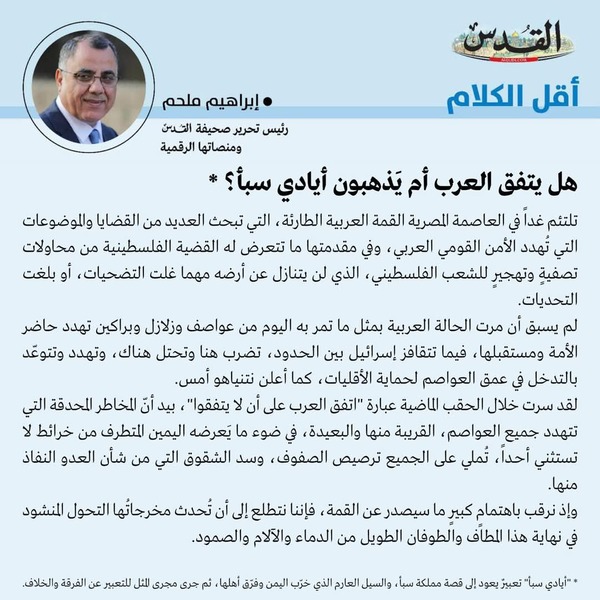
Will the Arabs agree or will they go " Hands of Sheba"?


The emergency Arab summit will be held tomorrow in the Egyptian capital, to discuss many issues and topics that threaten Arab national security, most notably the attempts to liquidate and displace the Palestinian people, who will not give up their land no matter how great the sacrifices or the challenges.


The Arab situation has never experienced anything like the storms, earthquakes and volcanoes it is experiencing today, threatening the present and future of the nation, while Israel is leaping between borders, striking here and occupying there, and threatening and vowing to intervene deep inside capitals to protect minorities, as Netanyahu announced yesterday.


The phrase “Arabs agreed not to agree” has been used in the past eras. However, the imminent dangers that threaten all capitals, near and far, in light of the maps presented by the extreme right that exclude no one, dictate that everyone close ranks and close the cracks through which the enemy could penetrate.

As we watch with great interest what will come out of the summit, we look forward to its outcomes bringing about the desired transformation at the end of this long journey and flood of blood, pain and steadfastness.


* “Hands of Sheba” is an expression that goes back to the story of the Kingdom of Sheba and the torrential flood that destroyed Yemen and scattered its people. It then became a proverb to express division and disagreement.

PALESTINE

Mon 03 Mar 2025 8:40 am - Jerusalem Time

"Demonizing" Ramadan... flimsy pretexts to justify aggression

Oraib Al-Rantawi: The month of Ramadan, in the occupation’s narrative, is an occasion to accuse the Palestinians of terrorism to justify its aggression against them

Majed Hadeeb: There is a need to reconsider religious discourse to avoid exploiting it to justify Israeli aggression

Suleiman Basharat: The occupation seeks to obliterate the human dimension of the religious life of the Palestinians to impose a new reality that serves its interests

Adnan Al-Sabah: Israel seeks to exploit Islamophobia in the West to legitimize its oppressive policies

Samer Anabtawi: Israel will not stop using Ramadan and other religious and national occasions as a pretext to continue its aggression

Religious occasions, especially the holy month of Ramadan, witness an escalation in Israeli repressive policies towards Palestinians, as these occasions are used as a pretext to justify violent measures that restrict freedom of worship.


In separate interviews with “I,” writers and political analysts confirm that the Israeli narrative seeks to distort the image of the Palestinians and legitimize aggressive practices that aim to restrict the freedom of Palestinians to practice their religious rituals and daily lives.


Writers and analysts confirm that the month of Ramadan, which is considered one of the most important religious occasions for Muslims, is transformed in the Israeli narrative into a period in which Palestinian operations are alleged to increase, which is used as a cover to impose strict security measures, impose restrictions on the movement of worshipers, close Al-Aqsa Mosque, and launch wide-scale arrest campaigns in the West Bank.


They point out that these measures are not only aimed at achieving security, but also seek to break the will of the Palestinians and humiliate them, reflecting a systematic policy to strip them of their human and national rights.


They believe that the international community is called upon to assume its responsibility in confronting these violations, and to expose the Israeli narrative that seeks to transform the conflict from a national liberation issue into a religious conflict, even though the essence of the Palestinian issue is occupation and colonialism, and that resistance is a natural reaction to that.

Tel Aviv is trying to strip the Palestinians of their international and humanitarian legitimacy

Director of the Jerusalem Center for Political Studies, Oraib al-Rantawi, confirms that Israel does not miss any opportunity to demonize the Palestinians, whether they are individuals, organizations, resistance, or even civilians, considering that this policy is a fixed approach used by Tel Aviv in its attempt to strip the Palestinians of their international and humanitarian legitimacy.


Al-Rantawi explains that the most hideous form of this demonization is to describe the Palestinians’ resistance to the occupation as “terrorism,” while the occupation, according to all international laws and regulations, calls for resistance, which is a legitimate right on both the heavenly and earthly levels. However, Israel refuses to recognize itself as an occupying force, and seeks to impose an equation in which every form of resistance is considered unjustified terrorism.


Al-Rantawi explains that Israel believes that the most dangerous types of resistance are those that are linked to a religious and ideological dimension, as it classifies what it calls “Islamic terrorism” as the most severe type of “threat,” and uses this term widely, both in the media and on the tongues of Israeli officials.


He points out that the holy month of Ramadan, which Muslims consider the most important religious occasion, is transformed in the Israeli narrative into an occasion to accuse the Palestinians of terrorism, to justify its suppression of them. This policy is not new, as Israel has been using it annually, but this year it has become more ferocious and dangerous, in light of what he described as a state of “complete Israeli chaos,” where Israeli fascism has begun to implement extremist policies without restrictions or reviews.


Al-Rantawi explains that, through this approach, Israel seeks to justify its aggressive operations in advance, by claiming that Ramadan is the month in which Palestinian operations increase, in order to give it a pretext to take excessively violent preemptive measures.


"We saw how direct orders were given to open fire and kill Palestinians in the streets without having to consult military authorities, which led to many casualties, including women and children, especially in the northern West Bank," Rantawi said.

The international community is required to take action to put an end to Israeli policies.

Al-Rantawi points out that the Israeli measures that aim to restrict the movement of worshipers and restrict prayers and seclusion in Al-Aqsa Mosque come within a clear Israeli attempt to suppress the escalating resistance in the West Bank, considering that these measures are a prelude to a broader targeting, with the aim of preventing any Palestinian movements during the month of Ramadan, whether popular resistance or otherwise.


Rantawi stresses that these policies will not deter Palestinians from exercising their right to resistance, stressing that “occupation generates resistance,” whether in Ramadan or at any other time.


Al-Rantawi believes that the international community is required to take action to put an end to these Israeli policies, which exploit religious holidays and occasions to justify the killing and abuse of Palestinians, warning that the continuation of this approach will lead to further escalation and tension in the region.

"Demonizing Islam" is an old Israeli-American strategy

Writer and political analyst Majed Hadeeb stresses that religious discourse should be a tool for unification and guidance, not a means of incitement and provoking conflicts. He stresses the need to stay away from any religious discourse that might give Israel additional justifications to justify its oppressive policies towards the Palestinians, under the pretext of “defending its security and existence.”


Hadib explains that demonizing Islam is not a new phenomenon, but rather an old strategy used systematically by Israel and the United States of America, which has previously called on Arab countries, led by Saudi Arabia, to review their educational curricula and religious courses, on the pretext that they promote concepts that could fuel conflict.


Hadeeb points out that Israel has always focused on the fact that some school curricula, especially those dealing with the Arab-Israeli conflict, promote the idea of jihad, especially during the month of Ramadan, which, according to its narrative, gives it a “justification” for practicing oppression and violence against the Palestinians.


“Unfortunately, we ourselves are giving our enemies swords that are being held over our necks through some provocative speeches, without offering anything real to confront them,” Hadeeb says. “Therefore, we must be more aware of how to manage our religious discourse, so that we focus on instilling the correct Islamic values that call for tolerance, without giving the occupation the opportunity to exploit this discourse against us.”


Hadeeb points out that Israel exploits the religious discourse of some Islamic groups and organizations in the region to justify its oppressive policies, as it works to convince the world that it is surrounded by an “extremist Islamic world” that seeks to annihilate it, citing speeches calling for the killing of Jews or the spread of Islam by force.


Hadeeb believes that Israel has succeeded in demonizing some Islamic factions, not only the Palestinian factions, but even Islamic groups in the Arab world, by highlighting their discourses that adopt the concept of religious conflict, which gave Israel an opportunity to justify the use of excessive force against the Palestinians, on the pretext that they “do not seek peace, but rather work to implement extremist religious agendas.”


Hadeeb asserts that Israel has succeeded in demonizing the Palestinian factions that adopt the Islamic vision, most notably Hamas and Islamic Jihad, as it has been able to present them to the world as extremist movements that do not seek to achieve a Palestinian state, but rather to establish an “Islamic state” through jihad.


Hadib explains that as long as these factions themselves have not been able to unite on a single vision and a unified strategy for liberation and state-building, it is illogical to expect the Islamic world to support them, especially in light of the deep divisions between the various Islamic states and factions.


“How can we expect the Islamic world to support the theories of jihad and the establishment of an Islamic state, while Muslims themselves are divided and conflicting? There are conflicting theories; some factions call for killing Jews without any real preparation for building a state, while others call for jihad as a first step, then declaring an Islamic state, and then waging a final battle to end Israel. This divergent approach gives Israel a golden opportunity to enhance its military and political superiority, taking advantage of the divisions in the Arab and Islamic worlds,” Hadeeb says.


Hadeeb stresses that the Palestinians' success in establishing their state will not be possible as long as the theory that the conflict with Israel is a religious conflict continues to be adopted, pointing out that this theory proved its failure during the war on Gaza.

Hadib asserts that the experience of the last war confirmed that adopting religious conflict did not succeed in pushing the Islamic world towards supporting the Palestinian resistance, as neither Hamas nor Islamic Jihad was able to garner sufficient support to achieve their goals, which reinforces the validity of the Fatah movement’s vision, which believes that the conflict with Israel is not an existential conflict, but rather must be a border conflict.


Hadib points out that continuing to talk about the conflict from a religious perspective contributes to diverting the compass of the Palestinian struggle from its primary goal, which is achieving national liberation and establishing the Palestinian state.


Hadeeb asserts that Israel did not only exploit the Palestinian religious discourse, but also worked to present itself as a “victim” before the world, claiming that it was facing an “extremist Islamic enemy seeking to annihilate it,” which enabled it to gain the support of the West and strengthen its position as a power that must remain dominant in the region.


Hadeeb explains that Israel has greatly benefited from the state of division within the Arab and Islamic world, as it has exploited theories of religious conflict to justify the continuation of its aggressive policies, which makes it necessary to reconsider the Palestinian discourse and work to unify efforts towards a clear national strategy based on the legitimate rights of the Palestinians, far from the ideologies that have weakened the Palestinian cause over the past years.

Promoting that the Palestinian does not accept living in peace

Writer and political analyst Suleiman Basharat asserts that the Israeli occupation is working systematically to demonize religious occasions among Palestinians, trying to transform them from stations of comfort and reassurance into occasions that are portrayed as confrontations and clashes, within the framework of a strategy aimed at distorting the image of Palestinians and Muslims before the world.


Basharat explains that Israel is trying to promote a narrative that the Palestinian does not accept living in peace, does not seek coexistence, but rather seeks confrontation and trouble, with the aim of presenting him to world public opinion as an inhuman figure who rejects life, which makes it easier for the occupation to justify its oppressive practices of killing, destruction and displacement.


Basharat asserts that the occupation seeks to obliterate the human dimension of the religious life of the Palestinians and to tighten control over it, in an attempt to exploit religious occasions, especially Islamic ones, to impose a new reality that serves its interests.


Basharat points out that the Israeli measures in the city of Jerusalem, especially in Al-Aqsa Mosque, are an example of this exploitation, as strict restrictions are imposed on the entry of worshipers, the gates of the mosque are closed, and Palestinians are prevented from reaching places of worship under flimsy security pretexts.


Basharat points out that the occupation uses the "security pretext" to justify its repressive measures, claiming that it is preventing chaos and maintaining security, but the real goal is to subjugate the Palestinians and force them to accept the facts it imposes on the ground.


Basharat believes that this policy is part of attempts to “re-engineer the Palestinian mentality” so that it accepts the occupation’s measures as a fait accompli that cannot be changed.


Basharat points out that the Israeli occupation seeks to divert attention from its escalating crimes against the Palestinians, especially in the Gaza Strip and the West Bank.


Basharat explains that Israel exploits issues such as its measures during the month of Ramadan and the restrictions on worshippers to divert attention from the destruction and killing it is carrying out, whether in the Gaza Strip, where areas there are witnessing systematic genocide, or in the West Bank, where Palestinians are subjected to abuse, displacement and home demolitions, especially in the camps in the northern West Bank.


He points out that the occupation is trying to present these issues as a priority and of utmost importance to the world, with the aim of exporting a new agenda that is in line with its narrative, and distracting the media and international public opinion from the massacres and gross violations it is committing against the Palestinians.

In contrast, Basharat stresses that the Palestinian always proves that he is a person who loves life, seeks to live in peace, and invests the month of Ramadan and other religious occasions as stations for worship and drawing closer to God.


He stresses that the images that emerged in recent years from Al-Aqsa Mosque, which showed hundreds of thousands of Palestinians performing their prayers in a spiritual atmosphere before they were restricted by the occupation, are clear evidence that the Palestinian seeks to practice his religious rituals freely, without any intention of clashing or confrontation.


Basharat believes that the Israeli occupation is the only party that is disturbing this atmosphere, through arbitrary measures aimed at imposing a new reality that serves its interests, pointing out that the Palestinians, despite all the restrictions, continue to affirm their right to practice their religious rituals freely, and their adherence to their lives and legitimate rights.

Israel tries to portray the conflict as religious

Writer and political analyst Adnan Al-Sabah asserts that Israel always tries to portray the Palestinian-Israeli conflict as a religious conflict between Islam and Judaism, while the truth is that the conflict is between a people suffering under occupation and an occupying state that practices oppression and settlement.


Al-Sabah explains that there is a recurring Israeli narrative that claims that the month of Ramadan is a month of escalation of resistance work, but he stresses that resistance has never been linked to a religious occasion or a specific time period, but rather is a natural result of the existence of the occupation and its continued oppression of the Palestinians.


Al-Sabah says: “The Palestinian issue is not a purely religious issue, but rather a national issue for a people struggling for freedom and independence. It is true that religious feelings stimulate the national conscience, but they are not the basis of the conflict. The occupation is the core of the problem.”


Al-Sabah points out that Israel seeks to exploit Islamophobia in the West by portraying Islam as an aggressive and extremist religion, and to use this to rally world public opinion against the Palestinians, and to legitimize its oppressive policies.

Al-Sabah confirms that "Israel is not satisfied with this in Palestine only, but is trying to export this narrative to other countries in the region whenever it feels there is a threat to its interests or wants to achieve expansionist ambitions."


Al-Sabah points out that Israel uses all means to perpetuate this image, including promoting terms such as “Islamic terrorism” and linking the Palestinian resistance to terrorism, with the aim of distorting the legitimate Palestinian struggle before the world.


Al-Sabah stresses that the real terrorism is what Israel practices by imposing restrictions on worshippers in Al-Aqsa Mosque, preventing Palestinians from practicing their religious rituals freely, in addition to the policies of killing, settlement, and displacement.


He says: "Israel is trying to exploit everything related to Islam to distort it and show it as an extremist religion that is hostile to Judaism, while the truth is completely the opposite. Islam is a religion of tolerance and respect for other heavenly religions."


Al-Sabah explains that the Zionist movement has been seeking for decades to portray the conflict in the region as a religious conflict, with the aim of gaining the support of forces hostile to Islam, and diverting attention from the essence of the Palestinian issue, which is occupation and settler colonialism.


Al-Sabah stresses the need to confront misleading Israeli propaganda and adhere to the fact that the Palestinian issue is a national liberation issue, not a religious conflict.


Al-Sabah asserts that Islam has never been an aggressive religion, and has never waged wars against other religions, but has always been a religion that respects pluralism and coexistence, calling for exposing the Israeli narrative that attempts to demonize Islam and exploit Western fears of terrorism to achieve political and military gains.

  1. Weak security pretexts to impose more restrictions and collective punishments

Writer and political analyst Samer Anabtawi confirms that the Israeli occupation is exploiting the holy month of Ramadan to intensify its repressive measures against the Palestinians, using flimsy security pretexts to impose more restrictions and collective punishments. He points out that these policies are not new, but rather extend back decades, as the occupation has been making life miserable for Palestinians during religious and national occasions since the first Intifada, preventing them from celebrating and being happy, which even affected children.


Anbatawi explains that Israel is escalating its military operations and raids in the West Bank during the month of Ramadan, especially in cities such as Jenin, Tulkarm and Nablus, in an attempt to terrorize Palestinians and prevent them from living their normal lives. It also deliberately imposes strict restrictions on the movement of Palestinians by setting up military checkpoints, tightening security measures, and preventing worshipers from reaching the blessed Al-Aqsa Mosque.


Anbatawi points out that the month of Ramadan has a special sanctity for Muslims, as it represents a month of worship and drawing closer to God, in addition to its economic importance that benefits the Palestinians through increased commercial and economic activity. However, the occupation exploits this month in order to justify its oppressive policies in advance.


Anbatawi says: “Israel always promotes claims that the month of Ramadan witnesses an increase in Palestinian operations against it, but in reality it uses these claims as a cover to practice collective punishment against the Palestinians and impose retaliatory measures that have nothing to do with security.”


Anbatawi confirms that the occupation constantly resorts to the policy of collective punishment to punish the Palestinians collectively for any resistance incident that occurs in the West Bank, where a tight siege is imposed on villages and camps, roads are closed, and wide-scale arrest campaigns are launched, which makes the Palestinians suffer from severe restrictions instead of easing their suffering during the holy month.


Anbatawi asserts that the occupation does not only aim to achieve security as it claims, but rather seeks to humiliate the Palestinians, break their will, and erase their national identity through these oppressive measures, explaining that Israel wants to see a submissive and surrendered Palestinian people, subject to its tyranny without resistance.


Regarding the occupation’s claims that the month of Ramadan is witnessing an escalation in Palestinian operations, Anabtawi stresses that these claims are not based on facts, but rather aim to create new pretexts to tighten the noose on the Palestinians, saying: “These claims are nothing but an attempt to legitimize the increasing Israeli violations. The Palestinian resistance is not linked to a month or a religious occasion, but rather is a natural reaction to the continued occupation and its repression.”


Anbatawi stresses that Israel will not stop using the month of Ramadan and other religious and national occasions as a pretext to continue oppressing the Palestinians, which is why the Israeli narrative that promotes the Palestinians as a source of constant threat must be exposed, while the occupation is the party that practices the real terrorism through killing, settlement, and systematic oppression.


PALESTINE

Mon 03 Mar 2025 8:29 am - Jerusalem Time

Looking for excuses to return to war... Netanyahu gambles with the lives of detainees

Hatim Karim Al-Falahi: The United States is pushing towards moving to the second phase because it has a project in the region that requires calm

Dr. Jamal Al-Shalabi: The threat of returning to war comes in the context of attempts to destabilize the other party to push it to make concessions

Johnny Mansour: The new Chief of Staff is known for his hatred of the Palestinians and his bloodiness since his participation in the Lebanon War and the Sabra and Shatila massacres

Dr. Ibrahim Abu Jaber: Netanyahu will try to find a justification to return to war as a lifeline for him on the Israeli level

Amir Makhoul: Israel will resort to war only if it gets an American green light for displacement, which seems unlikely now

Ismat Mansour: Not returning to war has become in itself a price that Israel pays in exchange for releasing more prisoners

Israeli Prime Minister Benjamin Netanyahu has repeatedly used the language of threats and warnings to return to war, during the first phase of the truce agreement or the exchange deal, whenever he felt that the resistance in Gaza had scored some points against him, during the operations of handing over Israeli prisoners, or whenever voices rose within Israeli society protesting his failure to eliminate the resistance in Gaza for fifteen months, or whenever he wanted to achieve some gains that he was unable to achieve on the ground.


The latest chapters of threats and intimidation were launched by Netanyahu in an attempt to avoid entering into negotiations for the second phase of the exchange deal and ceasefire, which completes the prisoner exchange operations and the withdrawal of the occupation army from all areas of the Gaza Strip until the declaration of a ceasefire, as well as to cover up his failure to abide by the terms of the agreement, especially the entry of humanitarian aid and mobile housing and the withdrawal from the Philadelphi corridor.


As for the war that Netanyahu threatens to return to, it is the bombing, killing and genocide operations targeting civilians in the Gaza Strip who have returned to their destroyed homes, affirming their adherence to their land and the rubble of their homes and their refusal to be displaced outside their homeland, whether by intimidation or by enticement.


Writers and analysts who spoke to "Y" considered that Netanyahu's threat to return to war comes in the context of attempts to destabilize the other party to push it to make concessions. They said that Israel will resort to war only if it receives an American green light for displacement, which seems unlikely now, and that the United States is pushing to move to the second stage because it has a project in the region that requires calm.

Netanyahu's government now has two options

Military and strategic expert, Colonel Hatem Karim Al-Falahi, said that sending the negotiating delegation to Egypt aims to determine whether Hamas will agree to extend the first phase or reject it.

He explained that the delegation's trip to Egypt came after the Israeli delegation was certain that Hamas did not want to extend the first phase, but rather wanted to move to the second phase of the agreement after Israel implemented what was agreed upon in the first phase, in which Israel reneged by not implementing many of its provisions.


He added: "Netanyahu's government now has two options: either maintain the current government coalition, or move to implement the second stage, which represents a direct threat to Netanyahu's government."

He pointed out that the United States of America is pushing towards moving to the second stage, because it has a project in the region that requires calm, and regarding this it has put pressure on Netanyahu through the Trump administration to accept a cessation of fighting and move to the first stage.


He pointed out that the Arab position, whether Jordanian or Egyptian, has become more stringent in rejecting the issue of the displacement of Palestinians, which makes the Palestinian issue, especially the Gaza issue, of utmost importance to Egypt and Jordan, unlike in past periods.


He stressed that any deal related to displacement would pose a threat to the national security of both countries, which requires taking strict and firm positions in dealing with Israel, especially since the continuation of the occupation in the Philadelphi corridor represents a coup against the Camp David Accords of 1979, the Oslo Accords of 1995, in addition to the disengagement agreement of 2005.

Returning to combat would harm American interests.

Al-Falahi considered that these measures threaten Egyptian national security, pointing out that Netanyahu's government is facing great internal pressures that push it towards moving to the second stage, even if this leads to Hamas remaining in power or stopping the war completely.

He explained that Netanyahu is seeking to exert political and military pressure by threatening to use force again with American support, and the war may return to pressure Hamas to make concessions that include disarmament and the removal of leaders.


Al-Falahi pointed out that the nature of the second phase will depend on the concessions that the two parties can make to reach a solution that satisfies all parties, but Netanyahu's insistence on Hamas' surrender according to Israeli conditions is met with a categorical rejection from Hamas, which did not lose the war.


Al-Falahi stressed that returning to fighting would harm American interests, normalization efforts with Saudi Arabia, as well as the interests of Egypt and Jordan, adding, "War is not just about human and material power, but also about moral power and popular anger in Israel due to the continued detention of prisoners."


Al-Falahi expected that Israel would use force for a limited period to pressure Hamas to make concessions, while Israel would make some concessions to reach a solution that satisfies all parties.

Stumbling is tactical, not strategic.

For his part, Dr. Jamal Al-Shalabi, a professor of political science at Hashemite University in Amman, said that this stumbling block is tactical and not strategic, meaning that the Arab mediation, represented by Egypt and Qatar, and supported by the United States of America, took into account all the differences and expected assessments between the parties to the conflict, whether Israel or Hamas.


He pointed out that these differences in viewpoints can be overcome, especially in light of the ongoing violations by the Israeli side with the aim of obtaining new gains not included in the agreement, which is a common approach for Israel.


Al-Shalabi stressed that the threat of returning to war comes in the context of attempts to destabilize the other party, i.e. Hamas and the resistance forces in Gaza, to push them to make more concessions, especially with the transition to the second stage, which will discuss issues that go beyond the bodies and prisoners to the question of who will rule Gaza in the future.


He questioned the extent to which the United States and Israel would accept Hamas’ continued rule of Gaza, or whether there was a possible role for the Palestinian Authority, an option rejected by the active parties. He also raised the possibility of sending Arab forces, such as Egyptian, Jordanian or Turkish, to control the situation in Gaza, an option that might be acceptable to the United States and Israel, but is unpopular.

Scenarios for the "day after"

He pointed out that these questions and scenarios related to the "next day" constitute the current problem, explaining that the threat of war in the media and political speeches, whether American or Israeli, aims to pressure Hamas.


Al-Shalabi believes that the solution may lie in recognizing that Hamas resisted and did not surrender, even though it did not achieve a clear victory. However, the problem lies in its non-acceptance by Israel, America, and even most Arab countries, with the exception of Qatar and perhaps Oman.


He pointed out that the Gulf countries, such as Saudi Arabia and the Emirates, do not want to pay huge sums of money to rebuild Gaza and then have Israel destroy it again.


He explained that the conflict in positions between Qatar, which supports Hamas and is leading the mediation, and the axis of Saudi Arabia, the Emirates, Egypt and Jordan, complicates the scene.


He stressed that the possibility of resuming the war remains, despite his personal exclusion of it, noting that Israel does not respect values or commitments.

Global Geopolitical Shifts

Al-Shalabi touched on global geopolitical transformations, such as Russian-American relations, Gulf-Iranian rapprochement, and the Kurds’ readiness to enter into a political process with Turkey, considering that entering into a war against the Palestinian people under these circumstances would be a humanitarian farce and a tragedy.


He suggested that the US administration is not enthusiastic about returning to war, because it has become a politically and morally suicidal option, even though America does not pay much attention to humanitarian values.


Al-Shalabi concluded by saying: “The political solution has become the most likely option, although it will be within a framework that serves Israeli and American interests, which are in line with the supporting Arab interests.”


Al-Shalabi called on Hamas to negotiate intelligently, exploiting its strengths and avoiding its weaknesses, while adapting a little to the strong winds that seek to end it completely.

Breach of agreements: Netanyahu's usual behavior

In his turn, historian and researcher in Middle East affairs Johnny Mansour said: “It is known to us through years of experience in following Netanyahu’s behavior that he does not respect any agreement at all. He always seeks to violate agreements and adhere to positions that he considers to be in the interest of Israel’s security and the future of its existence in the region.”


He stressed that anyone who examines his refusal and rejection to follow up on the implementation of the ceasefire agreement and the prisoner and detainee exchange deal from both sides will clearly notice that he is following his usual path of buying time, firstly, to keep his government in power for the longest period during the current session, and secondly, to ensure that the extreme right-wing parties remain with him in the government coalition. In addition, he wants to appear as the person who is subjected to pressure, opposition and opposition from the extreme right in Israel. In this case, he wants to show them that he is in line with them.
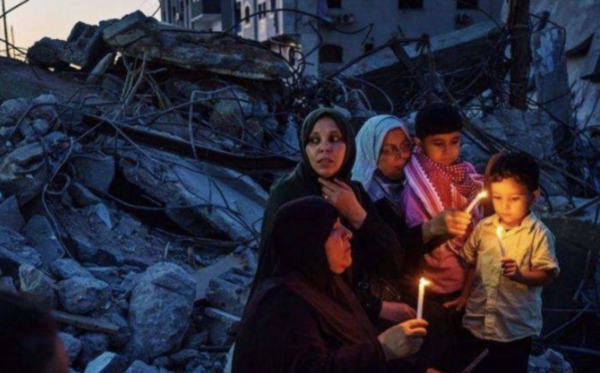

On the other hand, Mansour believes that Netanyahu is threatening to return Israel to war if the Islamic Resistance Movement - Hamas does not implement what must be implemented, which is the release of the Israeli hostages. It is as if he is blaming the Palestinians, noting that the reality indicates that he is the main and only obstacle to the deal.

The United States has the final say.

He said: “From here we see him insisting on extending the first phase without entering the second phase, the basis of which is to stop the war, explaining that Netanyahu wants to continue the war or return to it to achieve victory over the resistance. The reality is that he has not yet achieved the absolute victory that he threatened since October 7 and promised his people.”


On the other hand, researcher Mansour pointed out that the appointment of a new Chief of Staff for the Israeli army usually requires that he fight at least one battle to be recorded in his historical record as a gain. He said that the new Chief of Staff is known for his hatred of the Palestinians and his bloodiness since his participation in the Israeli war in Lebanon and the Sabra and Shatila massacres.


Mansour wondered: Will the Chief of Staff influence Netanyahu and drag him into the process of returning to war? Will the opposition within the government and the army intensify in its various leaderships to prevent a return to war because it will not achieve more than what is obvious and apparent?


Mansour concluded his statement to Al-Quds by saying: “There are many questions facing Netanyahu that require him to provide answers, explaining that his maneuvers so far are answers that raise great concern in that he is hesitating to enter the second stage. However, we believe that the United States is the one that can bring Netanyahu back to the negotiating table immediately and quickly.”

finger biting stage

For his part, Dr. Ibrahim Abu Jaber, a specialist in Israeli affairs, confirmed that the current stage is witnessing what can be described as finger-biting between the two parties.


He added: Each party is trying to get the most gains in light of the critical situation.
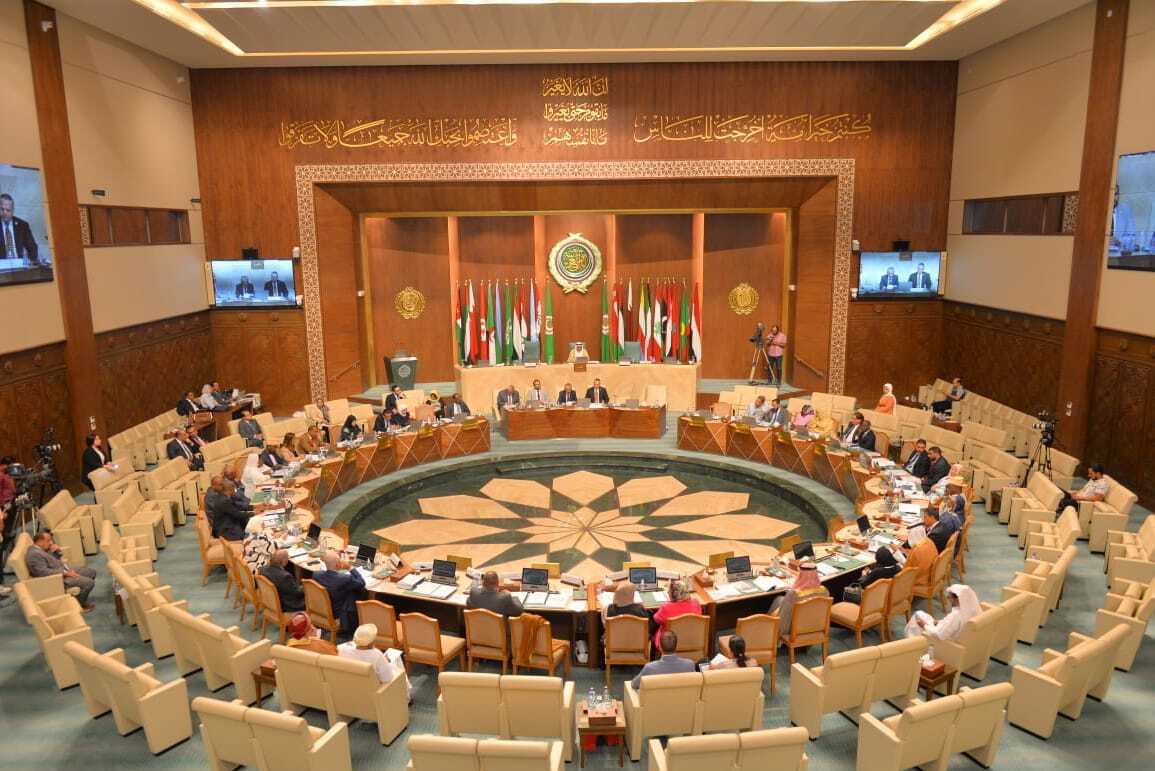
He explained that Netanyahu is facing major challenges at the local and political levels, as he seeks to please the extreme right by returning to war and fighting, while at the same time facing pressure from the families of the prisoners who are pushing for the continuation of the deal and the return of their sons.


Abu Jaber pointed out that the demands of the Palestinian resistance are represented by the complete withdrawal of the Israeli army from the Gaza Strip, including the Salah al-Din axis, in addition to implementing humanitarian requirements, such as the entry of medical and food aid and heavy equipment.


He explained that Netanyahu faces two options: either continue the fighting to please the extreme right, which could lead to the anger of the families of the prisoners and the Israeli opposition, or submit to the demands of the Palestinian resistance, which is unlikely.

He expected that Netanyahu would try to find a justification to return to war again, considering that a lifeline for him on the Israeli level, especially in light of the green light given to him by the American administration to do whatever he wants in the Gaza Strip.


Abu Jaber pointed out that the meeting that was held recently may have dealt with the Palestinian side’s adherence to its conditions, in contrast to Israel’s failure to achieve the war’s goals, which could be used to resume the fighting.

Israel refuses to withdraw from the Philadelphi Corridor

He stressed that the Israeli political level has repeatedly stated that it will not withdraw from the Salah al-Din axis, no matter the pressure, considering that the ball is now in the court of mediators, such as Qatar, Egypt and the United States, to work on bridging the gap and finding compromise solutions that prevent the continuation of the war.


Abu Jaber explained that Netanyahu sought to extend the first phase with the aim of releasing all Israeli prisoners, especially those who are still alive, and then returning to war, because he does not want Hamas to remain in power in the Gaza Strip, whether administratively or militarily, and demands that it be disarmed and step down, in addition to the exit of its leaders from the Strip.


He considered the situation to be complex and vague, as each party is trying to harden its positions, stressing that the Palestinians are sincere in their demands, while the Israeli side is seeking to blackmail the Palestinian resistance to satisfy the extreme right and maintain the survival of the government coalition.
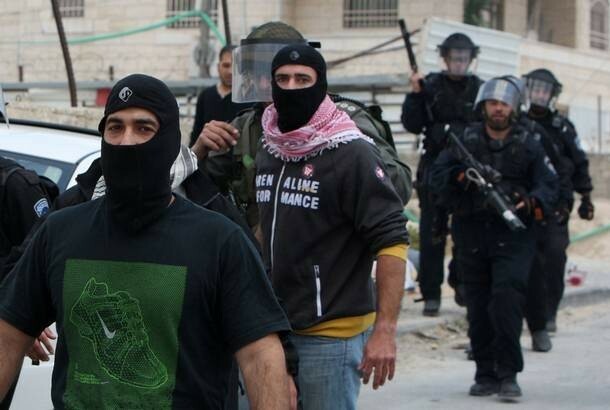

Abu Jaber concluded his statement to Al-Quds by saying that expectations, according to Israeli analysts and the Israeli media, indicate that Netanyahu is unfortunately heading towards war.
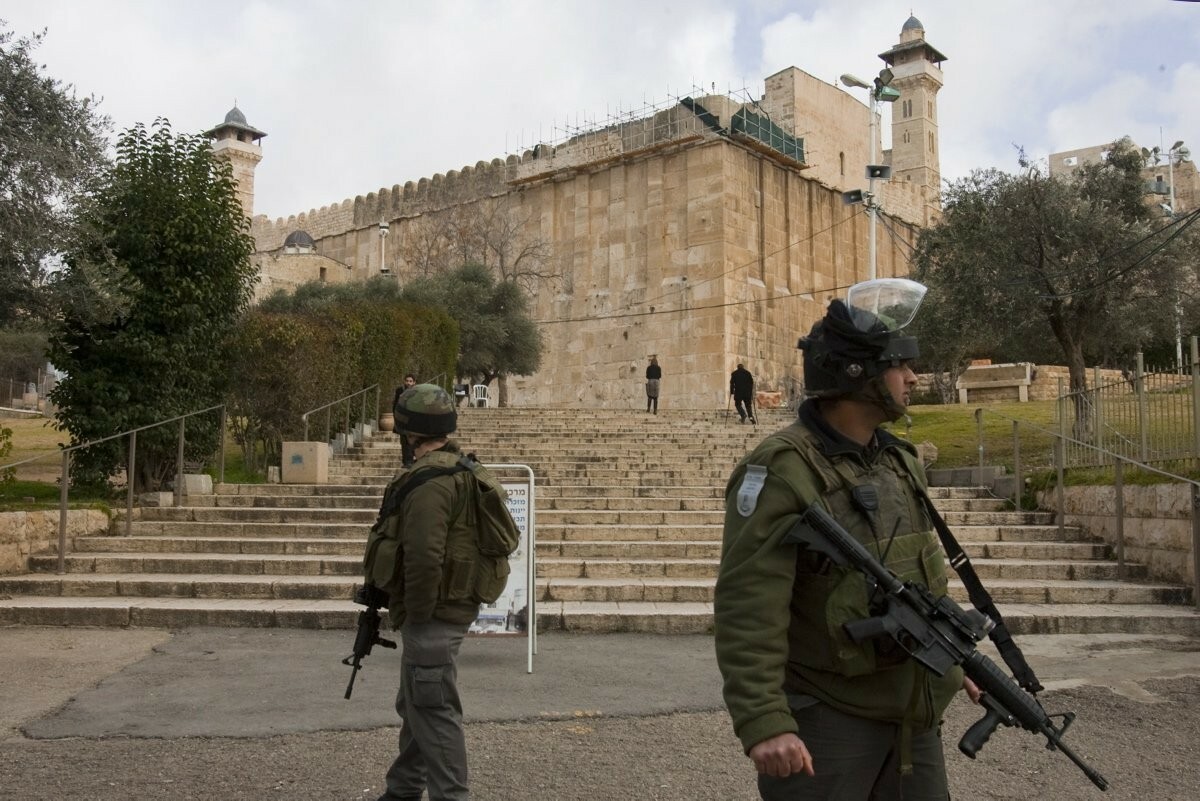
The US administration is interested in continuing the deal.

Amir Makhoul, a researcher at the Progress Center for Policy, said that the current mutual rejection is a type of negotiation that will ultimately lead to stability.


He explained that the US administration is interested in the continuation of the deal, which will ultimately decide Netanyahu's decision more than the Israeli war whims, whether from Smotrich, Ben-Gvir, or Netanyahu himself.


Makhoul added: Things indicate that negotiations will resume, and he expected that the first phase would be extended.


He explained that this could be done in exchange for adding the number of released Palestinian prisoners or by keeping some of the Israeli prisoners with Hamas. He stressed that all of this is possible within the vision of the final stage, which is actually the second stage that puts an end to the war.

He pointed out that there is a development in the region represented by the Arab Summit in Cairo, which is expected to result in the initial formula for the reconstruction of Gaza and how to manage it.


He stressed that an Arab consensus at the summit would have decisive weight in the equations, while Israel is betting on the existence of an Arab disagreement. In the event of a disagreement, matters will be referred to a small group to formulate an integrated project that includes the administration of Gaza.

Threatening war within the framework of negotiations

Makhoul said that things do not seem to be heading towards war, noting that Israel will resort to war only if it gets an American green light for displacement, which seems more unlikely now than it was about a month ago when Trump raised it. He explained that the idea of displacement has declined significantly.


He added that Israel may try to hint at the possibility of starting a war by carrying out one or two operations, but that will be within the framework of negotiations and not outside them, with the aim of moving the negotiation process forward and not actually returning to war.


He pointed out that Israeli society is not interested in war, and that the families of the detained prisoners will confront this forcefully in the street this time with greater momentum than before, with direct accusations directed at Netanyahu and his government of obstructing the deal and endangering their detained relatives.


Makhoul stressed that the conditions within Israeli society, along with the possibility of refusing military service, may reinforce the belief that military preparations and the threat of war are part of negotiations rather than a real field threat.

The option of war should never be ruled out.

For his part, journalist and analyst specializing in Israeli affairs, Ismat Mansour, said that the option of war has remained in place since the first moment, and should not be ruled out at all.


He added that the ideology and project of the current Israeli government are based on achieving its goals in an atmosphere of war, as war and escalation abort any aspirations for peace, calm or understandings.


Analyst Mansour pointed out that Israel is using the war option as a tool for intimidation and blackmail, as it demands an extension of the first phase and the cancellation of the agreement in exchange for not returning to war.


He explained that not returning to war has become in itself a price that Israel pays in exchange for the release of more prisoners.


Mansour stressed that the laxity of the American position and its support for Netanyahu makes the option of war tempting for him, especially if we know that returning to negotiations or moving to the second stage may lead to the cracking of the ruling coalition and perhaps its collapse in one way or another.

PALESTINE

Mon 03 Mar 2025 8:22 am - Jerusalem Time

Two Palestinians killed in Rafah and injuries in shelling of Khan Yunis

Two Palestinians were killed this morning, Monday, by Israeli army gunfire in the center of Rafah city in southern Gaza, while the occupation forces opened fire with their aircraft and vehicles towards several areas in the north, south and center of the Strip, at a time when Israel is still evading the start of implementing the second phase of the ceasefire agreement after the first phase expired at the beginning of this week.


An Israeli helicopter fired two missiles at a site in the Al-Mawasi area, west of Khan Yunis, in the southern Gaza Strip, wounding 3 Palestinians.


The occupation forces opened heavy fire east of Jabalia, north of the Strip, and the occupation aircraft opened fire off the coast of Khan Yunis, and heavy flying of helicopters was seen in the western skies of Rafah, south of the Strip.


These developments come after the Israeli government decided, with the end of the first phase of the ceasefire agreement, to evade the obligations of the agreement and the prisoner exchange deal, which entered into force on January 19, and to adopt a proposal by the US President’s envoy, Steve Witkoff, and continues to refuse to negotiate the second phase, while announcing the suspension of the entry of aid into Gaza.

PALESTINE

Mon 03 Mar 2025 8:15 am - Jerusalem Time

Injuries and arrests in the West Bank

Today, Monday, the Israeli occupation forces injured two citizens and arrested others in the West Bank.


In Jenin, the Palestinian Red Crescent Society said that its crews transferred a 3-month-old baby girl to the hospital after she suffered from suffocation from tear gas at the entrance to Jenin camp.


In Bethlehem, the occupation forces stormed several areas in the Bethlehem Governorate and arrested: Mahmoud Nasser Shoka (23 years old) from Al-Fawaghra neighborhood, Nour Al-Din Mahmoud Qaraqe (20 years old) from Al-Karkafa area, Abdullah Shoka, and Firas Ahmed Hassan (42 years old) from Al-Saff Street area, Muhammad Raed Zawahra (27 years old) from Khalayel Al-Loz east, and Atef Naji Abayat (23 years old) from Al-Abayat area east.


In Salfit, a child was injured, at dawn on Monday, during the Israeli occupation forces’ storming of the town of Bidya.


Local sources reported that the occupation forces stormed the town and deployed in its streets, amidst live bullets and sound bombs, which led to the injury of the child Baraa Ibrahim Fayez Musleh (16 years old), a resident of the town of Sarta, in his hand.


The same sources added that the occupation forces fired bullets at shops and passersby randomly, and arrested a young man whose identity is not yet known.


In Qalqilya, a citizen (45 years old) was injured by a bullet fired at him by occupation soldiers, near the racist separation wall built on the lands of the town of Habla, south of Qalqilya, and was subsequently transferred to the hospital.


In Ramallah, the occupation forces arrested the two young men, Qassam Younis Al-Barghouthi, from Deir Abu Mash'al, and Amir Abdul Jaber from Jalazone camp, after raiding and searching their parents' homes.


These forces also seized two vehicles from Jalazone camp, belonging to citizens Murad and Jihad Nakhleh.


In Hebron, the occupation forces raided Al-Arroub camp and arrested the young man Habib Aziz Issa, and the three youths Qutaiba Talat Aziz Issa, Muhannad Haitham Al-Balasi, and Montaser Anwar Karma.


Several military checkpoints were also set up at the entrances to Hebron, its towns, villages and camps, and a number of main and secondary roads were closed with iron gates, cement blocks and earthen barriers.

PALESTINE

Sun 02 Mar 2025 10:29 pm - Jerusalem Time

Israeli occupation threatens to cut off water and electricity to the Gaza Strip if Hamas does not release more detainees

Israel Hayom newspaper reported, citing its sources, that the Israeli occupation threatened to cut off water and electricity supplies to the Gaza Strip if Hamas did not release more detainees.


The sources indicated that "Israel" has several tools, including carrying out specific military operations, to pressure Hamas if its demands are not met.


The newspaper quotes government sources as saying that Israeli Prime Minister Benjamin Netanyahu has expressed his willingness to continue the ceasefire and pay a heavy price to recover the detainees, but at the same time he refuses to end the war once and for all because that would mean Hamas remaining in power.


The sources added that Netanyahu intends to seize all possible opportunities before returning to war, while giving the mediators several days to bring Hamas back to the negotiating table without allowing it to remain in power.


ARAB AND WORLD

Sun 02 Mar 2025 10:17 pm - Jerusalem Time

The Arab Parliament condemns the occupation's decision to stop the entry of humanitarian aid to the Gaza Strip

The Arab Parliament condemned the Israeli occupation's decision to stop the entry of humanitarian aid into the Gaza Strip, and considered it a new war crime and a crime against humanity added to the record of the occupation's crimes against the Palestinian people.


The Arab Parliament stressed, in a statement issued on Sunday evening, that this decision represents a flagrant violation of international humanitarian law, and a clear breach of international covenants and agreements that guarantee the flow of humanitarian aid to civilians in times of conflict.


It called on the international community, especially the Security Council and the United Nations, to assume their responsibilities and take urgent action to compel the Israeli occupation to allow the immediate and unconditional entry of aid and ensure sustainable access to it, warning against endangering the lives of innocent people by using the weapon of starvation against the Palestinian people, especially as we are in the holy month of Ramadan.

PALESTINE

Sun 02 Mar 2025 10:16 pm - Jerusalem Time

Israeli special forces arrest a young Palestinian from Issawiya

Israeli special forces arrested a young man from the town of Issawiya, northeast of occupied Jerusalem, on Sunday evening.


Local sources reported that Israeli special forces stormed Issawiya and arrested a young man whose identity is not yet known.

PALESTINE

Sun 02 Mar 2025 9:49 pm - Jerusalem Time

Israeli occupation tightens its military measures around the Ibrahimi Mosque

This evening, Sunday, the Israeli occupation forces tightened their military measures around the Ibrahimi Mosque in the city of Hebron.


Sources from the custodians of the Ibrahimi Mosque reported that the occupation forces informed the administration of the mosque that those under 27 years of age were prohibited from entering it.


It added that the occupation forces tightened their military measures around the sanctuary and nearby neighborhoods, and at the main gate leading to it, and stopped citizens, searched them, and checked their ID cards.

PALESTINE

Sun 02 Mar 2025 9:26 pm - Jerusalem Time

Katz orders start of second phase of Operation Iron Wall

The Israeli army radio reported that the occupation's Minister of War, Yisrael Katz, issued instructions to begin implementing the second phase of Operation "Iron Wall."


The new phase includes studying the establishment of military sites in the heart of the camps in the northern West Bank with the aim of preventing the return of resistance fighters to those areas.


The instructions also include preparations for expanding the operation in the future, at a time when the occupation is launching an aggression on the cities and camps of the West Bank, targeting people and destroying infrastructure.


PALESTINE

Sun 02 Mar 2025 9:05 pm - Jerusalem Time

A Palestinian citizen was injured by Israeli occupation forces' bullets, south of Qalqilya

A citizen was injured by Israeli occupation forces' bullets, this evening, Sunday, south of Qalqilya.


According to local sources, a 45-year-old citizen was injured by a bullet fired at him by occupation soldiers, near the racist separation and expansion wall built on the lands of the town of Habla, south of Qalqilya, and was subsequently transferred to the hospital.