ARAB AND WORLD

Wed 05 Mar 2025 1:52 pm - Jerusalem Time

Trump Administration Announces Steps to Crack Down on Anti-Israel Protests

Trump administration officials on Tuesday announced measures to crack down on campus protests critical of Israel, moves that have chilling implications for First Amendment rights.


President Trump wrote on his Truth Social website that he would cut off federal funding to colleges that allow illegal protests, referring to student-led pro-Palestinian demonstrations that have spread across the country in response to Israel’s bombing campaign and blockade of Gaza. The president also threatened to jail or deport “agitators” if they are foreign students, just hours before he delivered a speech to Congress in which he claimed to have restored the sanctity and place of free speech in American society.


“All federal funding will be stopped for any college, school, or university that permits unlawful protests,” the president said. “Inciters will be imprisoned and/or permanently returned to the country from which they came… American students will be permanently expelled or, depending on the crime, arrested.”


Elise Stefanik, Trump's nominee for UN ambassador, celebrated Trump's announcement and acknowledged that the order was intended to target protests against Israel.


“Under President [Trump], colleges and universities will be held accountable,” Stefanik said. “Anti-Semitism and anti-Israel hatred will not be tolerated on American campuses. Promises made, promises kept.”


Journalist Glenn Greenwald, a constitutional lawyer, explained in a video posted on X why cutting federal funding due to political speech and protests is a violation of the First Amendment.


“You can take the position that there shouldn’t be federal funding for universities or there should be, and that’s independent of the point of free speech,” Greenwald said. “Once the federal government or any government decides to provide an optional benefit … they can’t then make receiving that benefit conditional on your expressing a particular viewpoint, your affirming a particular viewpoint, or your refraining from expressing a political viewpoint. That’s a fundamental First Amendment doctrine.”


Trump’s announcement came a day after Robert F. Kennedy Jr., the secretary of health and human services, said the Department of Health and Human Services would take steps to combat “anti-Semitism” on college campuses in another directive targeting pro-Palestinian protests. While both President Trump and his predecessor have called the protests “anti-Semitic,” many Jewish students and organizations have participated in the demonstrations.


The Department of Health and Human Services said in a press release that it, along with the Department of Education and the U.S. General Services Administration, will launch “a comprehensive review of federal contracts and grants to Columbia University in light of ongoing investigations into potential violations of Title VI of the Civil Rights Act” regarding allegations of anti-Semitism related to pro-Palestine protests.


“Anti-Semitism—like racism—is a spiritual and moral disease that sickens communities and kills people with a lethality comparable to the deadliest pandemics in history,” Kennedy said in a statement. “In recent years, censorship and the false narratives of a woke cancel culture have turned our great universities into hotbeds for this deadly and insidious disease. Making America healthy means building communities of trust and mutual respect, grounded in free speech and open debate.” Last week, Leo Terrill, the attorney who leads the Justice Department’s Anti-Semitism Task Force, vowed to put “Hamas supporters” in jail. “You see all these chaotic demonstrations supporting Hamas and trying to terrorize Jews? We’re going to put these people in jail—not for 24 hours, but for years,” Terrill said in an interview with Israel’s Channel 12.


Terrell, whose task force was created under an executive order signed by President Trump in January, said charges and other “aggressive” moves would begin soon. The Justice Department said the task force would visit 10 college campuses to investigate alleged anti-Semitic incidents.


“When you see universities start losing millions of dollars in federal funding, you’re going to see a change in their behavior,” Terrell told Channel 12. “When you see court orders to protect Jewish students, to revoke visas for anti-Semitic students — you’re going to see a big change.”


In 2019, President Trump signed an executive order directing all executive departments to consider the International Holocaust Remembrance Alliance (IHRA) definition of anti-Semitism and the organization’s list of examples of “contemporary anti-Semitism” when enforcing Title VI of the Civil Rights Act, making criticism of Israel anti-Semitism.

PALESTINE

Wed 05 Mar 2025 1:44 pm - Jerusalem Time

Israeli occupation notifies the seizure of 300 dunums of land in the village of Al-Arqa, west of Jenin

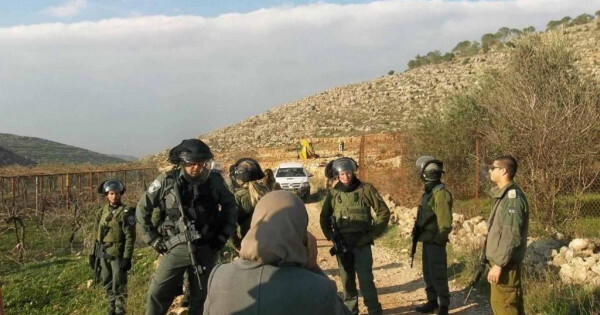
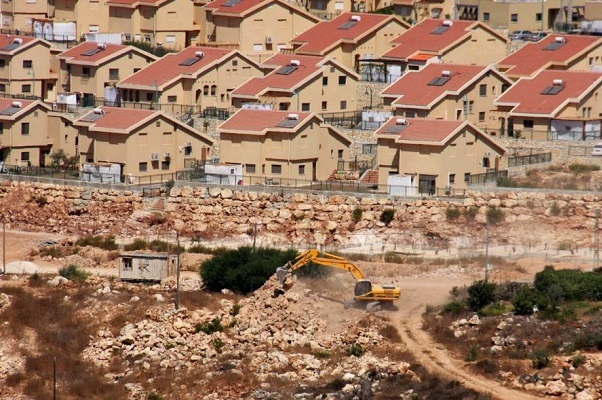
The Israeli occupation forces notified the seizure of 300 dunums of land in the village of Al-Arqa, west of Jenin, adjacent to the racist separation and expansion wall.

The head of the village council in Al-Arqa said that the occupation forces delivered notices to the citizens to seize 300 dunums of their agricultural lands adjacent to the wall, which deprives the farmers of their only source of livelihood.

According to the latest statistics issued by the Wall and Settlement Resistance Commission for the month of February, the occupation and its settlers carried out 1,705 attacks during February, in continuation of the ongoing series of terrorism against our people, their lands, and their properties. The total number of attacks were concentrated in the governorates of Nablus with 300 attacks, Hebron with 267 attacks, and Ramallah with 263 attacks.

PALESTINE

Wed 05 Mar 2025 11:16 am - Jerusalem Time

Israeli settlers storm Al-Aqsa Mosque

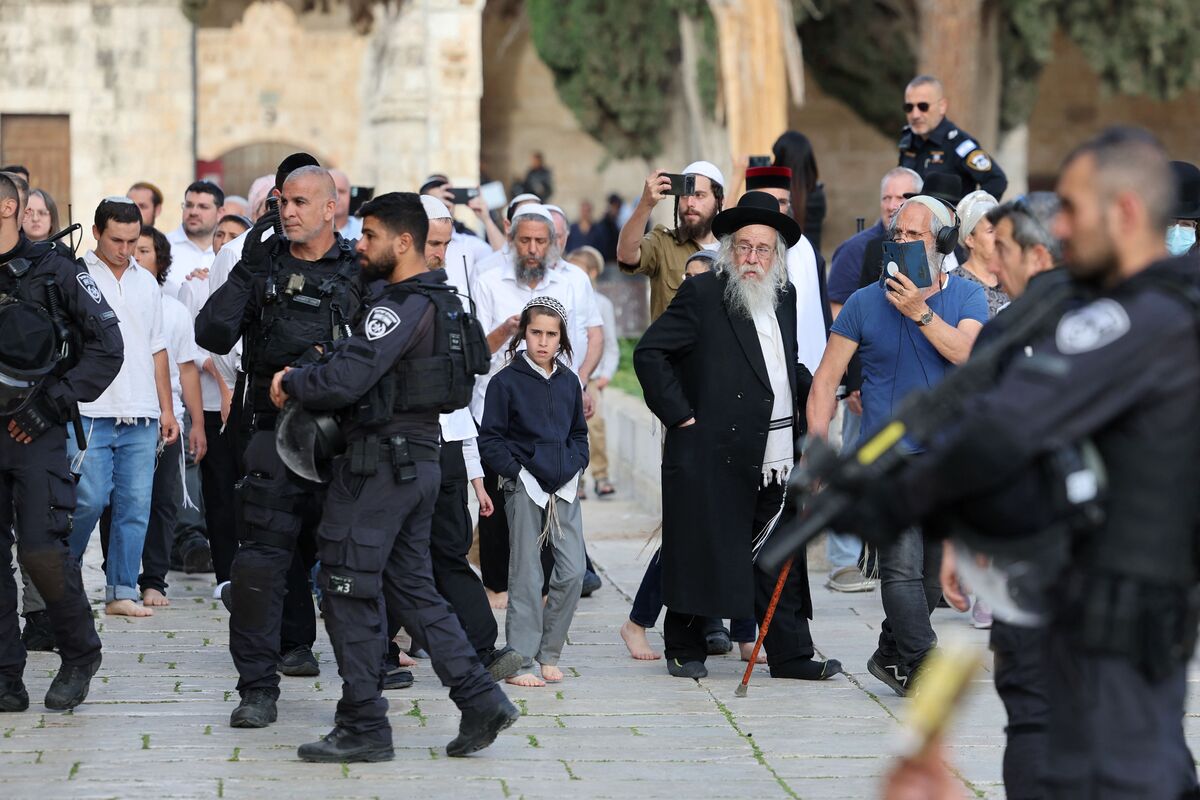
Dozens of settlers stormed the courtyards of Al-Aqsa Mosque today, Wednesday, under the protection of the Israeli occupation police.

Local sources reported that dozens of settlers stormed Al-Aqsa from the Al-Maghariba Gate, carried out provocative tours in its courtyards, and performed Talmudic rituals in public under the protection of the occupation police, who assaulted the worshipers and removed them from the path of the settlers’ storming.

The occupation police also tightened its military measures at the gates of the Old City and Al-Aqsa Mosque.

OPINIONS

Wed 05 Mar 2025 10:38 am - Jerusalem Time

False conceptions

Dr. Gershon Baskin

Dr. Gershon Baskin

Opinion Writer

The Failure

The first of the Israeli army self-investigations are being released to the public and one of the clear elements appearing in the reports is the claim of the false conceptions which guided Israel’s “strategic” calculations. That false conception, as reported, is that Hamas was deterred. The Israeli military and security commands believed that Hamas was contained and was willing to divert its attention and resources from armed resistance to the development of Gaza. The Israeli adage of “quiet begets quiet” was the policy employed by Israel. Hamas knowingly used this policy to develop their strategy and military preparedness while Israel was sleeping. Every so often,an Israeli military response was employed to “rebuild deterrence” when one of the non-Hamas factions in Gaza would dare to shoot some rockets into Israel.  Israel always responded with massive military responses, mostly in the form of bombing from the air, often hitting targets without human casualties, but also at times with human casualties and horrible physical damage.


No Deterrence

I remember sitting in one of the Israeli television studies during the Cast Lead operation (27 December 2008 – 18 January 2009) with a panel of retired military and security men who were all talking about the need to rebuild Israel’s deterrence towards Hamas. I was the only non-military person on the panel, and the only person on the panel who had ever actually spoken with Hamas leaders and members. I stated quite clearly that there was no possibility of creating deterrence towards Hamas and that the panelist did not understand the enemy. Hamas is an Islamic Palestinian nationalist movement that fostered a distorted version of Islam that sanctifies death and martyrdom. It is a commandment, according to Hamas, to die as a martyr in the cause of Islam and freeing Palestine. It is not about the 72 virgins as some people in the West seem to emphasize. It is all about eternal paradise if you are killed fighting for Islam and Palestine and there is no greater deed that one can do in their life than fulfill this commandment. You can not deter someone who believes that it is a divine commandment to be killed in battle while killing as many of the enemy as you can.  So, one could conclude that yes, Israel was operating under a false conception of deterrence and that Hamas was never deterred.   This is certainly a major fault line within the Israeli security doctrine and one that Israel’s super intelligence community got completely wrong.  


The Hamas Deception

While Israel was busy thinking that they were deterring Hamas from attacking Israel, Hamas was busy building its forces, improving its weapons, studying the enemy, and planning a surprise attack strategy. During the Gaza “March of Return” which took place on almost every weekend during 2018-2019, Hamas’s military wing Ezz e-din al Qassam was testing Israel’s resolve and its border defense. Hamas was searching for weaknesses in the border defense and for points where the border could easily be breached. Hamas was also testing the resolve of the Gaza public to enlist in the fight with the knowledge that the consequences could be fatal. There was mass willingness to take on Israel from the young people of Gaza. Life in Gaza had become quite intolerable for most of the young people. Youth are the overwhelming majority of people in Gaza – 68% of them under the age of 30. Forty-sever percent of them under the age of 18. Amongst this population group, unemployment was around 70%. Despite Gaza having seven working universities before the war, most of the graduates had no work or even hope of finding a suitable job. Gaza was closed to the world and for the average Gazan, hope was something that could only be seen on the screens of their smart phones.


Hamas was elected democratically in 2006, but that was the last time elections were held.  Most votes for Hamas were not ideological and not Islamic. Most Palestinians who voted for Hamas did so as a protest vote.   Hamas also did not run for elections under the Hamas label (Islamic Resistant Movement is what Hamas means) but rather under the name of a political party called “Change and Reform”.   Change and reform is what most Palestinians wanted. The second intifada had devastated Palestinian society. The economy was dying. The PLO’s promise of liberation was an even most distant dream. Israel unilaterally disengaged from Gaza even after Mahmoud Abbas failed to convince Ariel Sharon to negotiate the transference of Gaza to the Palestinian Authority as the first step towards Palestinian statehood. Sharon humiliated Abbas calling him a “chick with no feathers” and a non-partner and thus Hamas won the narrative of being responsible for Israel’s exit from Gaza. People in Palestine lost hope that there could be a negotiated path to freedom and to ending the occupation and were more convinced that Israel only understands the language of force.  The victory of Hamas was the result of the victory of their narrative combined with the electoral system in which half of the Legislative Council was elected on the basis of localized district-based elections. Hamas appointed well known and respected local candidates, most who were involved in the local mosque, school, clinic, and social religious affairs. The candidates were well educated and thought to be clean from corruption for which the Palestinian Authority became so well known.  Once elected, it did not take long for Hamas to turn into a machine of corruption empowered by the great wealth accumulated from more than 1000 smuggling tunnels which fueled the Gaza economy after Israel imposed an economic siege on the Strip.   Hamas was so sophisticated in their tunnel smuggling operations that they even created a government ministry for tunnel affairs.  It was possible for Gaza business people to lease a tunnel for a day or more to bring in whatever goods they wanted. Eventually the tunnel operations ended when Abdel Fatah A-Sisi came to power and threw the Muslim Brotherhood elected government into prison. Then the tunnels, or almost all of them were shut down and destroyed. But by then enough weapons and materials to produce home made weapons had been stockpiled in Gaza.


Where was the Israeli Army?

In deference to the continued Palestinian demand to end the occupation, Israel’s right-wing government moved fast forward with their settlement development plans and eventual annexation of parts of the West Bank.  Israel’s right-wing government increased tensions over Al Aqsa (The Temple Mount) with the change of the historic status quo which prohibited Jewish prayer on the Mount.  Al Aqsa is the nuclear bomb of the Arab and Muslim world and the launching pad for all Hamas attacks against Israel. On October 7 the Israeli army wasn’t around the Gaza border.  The army, or what was on duty during the Simchat Torah weekend holiday was stationed in the West Bank to protect Israeli settlers. The threat perceived by the Israeli government and its military was to the lives of Israeli settlers and not the lives of Israelis living in communities along the Gaza border. If the army would have been present on the Gaza border on October 7, it would not have happened. It was not the Russian army standing against Israel in Gaza.   According to what one Hamas leader told me, their expectation was that they would lose 2/3 of their Nukhba fighters while trying to breach the border.  They were more surprised than Israel when they broke through the border and discovered that the Israeli army was not there. One Hamas leader told me that if they knew the army wouldn’t be there, they would have sent 10,000 fighters across the border and would have conquered Tel Aviv. That is of course a huge exaggeration but it demonstrates the surprise from the Hamas side that they met very little resistance as opposed to what they expected. If there had been 15-25 tanks on the border with troops armed and ready and three attack helicopters in the air, October 7 would not have happened.


The Biggest Conceptual Failure

But even when understanding all of the errors and conceptual fallacies, the biggest conceptual mistake of them all is believing that Israel can control or occupy the Palestinian people for 56 years and expect to live in peace. Furthermore, that Israel could lock more than 2 million people in a territory like Gaza for 20 years with abhorrent poverty and expect to have quiet. How do Israelis not see this, even today 16 months into the war? How could the people of Israel who have been so willing to fight, to die, and to kill for their territorial expression of their identity expect that the other people living on this land would do less?  How is it possible that Israel has had so little respect for the Palestinians people’s desire and ambition for freedom, self-determination and dignity? Israelis would never agree to live under the conditions that Israel has subjected millions of Palestinians to live under.  No amount of military pressure, threat of arrest, poverty or physical abuse would have ever convinced Israelis to give up their fight for freedom, self-determination and dignity in a country of their own. Why do Israelis so under-estimate the same from the Palestinian people?  But Netanyahu’s strategy since 2009 (after his Bar Ilan speech in which he lied that he was willing to accept a Palestinian state) was to make permanent the separation between the West Bank and Gaza. He empowered Hamas in Gaza and continually delegitimized the Palestinian Authority and Mahmoud Abbas in the West Bank.  In 2012 and 2013 I personally transmitted messages three times from Abbas to Netanyahu to begin secret direct negotiations, but Netanyahu completely refused. His strategy was to continue to tell the Israeli public and the world that Israel wanted peace but had no one to negotiate with. His strategy worked unto October 7, 2023.


Two State Solution is Back!

There are two people living in this land. Even after this horrible war comes to an end there will be two peoples living on this land and both of them believe that it belongs to them and that they are the sole rightful owners of the land. There is little chance that each side will recognize the moral right of the other side to claim ownership over the land. Palestinians will probably never recognize the legitimacy of Zionism. Israelis will probably never recognize the legitimacy of the Palestinian claim of being the legitimate indigenous people of this land. Perhaps at some time in the distant future people on both sides might be willing to recognize the legitimacy to the claims of the other side. That can wait for the future. What cannot wait for the future is the recognition of reality – that there are two peoples on the land who are here to stay and who are not willing to be subjugated by the other. Both sides demand self-determination. Both peoples demand freedom, dignity and security. Both sides can only get what they want if they also grant it to the other side. This is the primary and most fundamental recognition that both peoples need to arrive at right now. That is why the two-states solution is back on the table as well.  There is no other solution to this conflict and there has never been a more urgent time to accept it than now.


The horrors of the past 16 months must come to an end with the determination that this will be the last Israeli-Palestinian war. We need new leaders on both sides, each willing to take the first step towards each other. The leaders of the past who still control us will be judged in history as responsible for sustaining the conflict and guilty of the tragedies that they brought to their people.  A large majority of Israelis and Palestinians would be willing to live with the compromises necessary to make peace with the other side if they believed that the other side was in fact genuinely ready to live in peace.  The only way to achieve that shift in understanding on both sides is through the adoption of the paradigm of cross-boundary cooperation which must replace the paradigm of high walls and fences. We need influencers on both sides to stand together to speak about peace and living together in two states with good neighborly relations. We can no longer deny the existence of the other side or live with the false dream that they would be willing to live in a cage with limited freedom and limited legitimate expressions of their national-religious identity.


There are solutions for every issue in conflict between Israel and Palestine. Those solutions can be found if we start resolving those issues from the end-game first. The solution is two states between the river and the sea and all the rest can be negotiated. The basic premise of two states in not negotiable and neither Israel nor Palestine agree to have their right for self-determination under negotiations.  Everything else can be negotiated. Learning from the failure of the Oslo peace process it would be wise for leaders and public figures on both sides to opening speak about the need to evaluate and change what we teach in our schools to the next generation.  It is true that the “school of life” is perhaps more influential than what is learned in schools, but I would argue that what is taught in schools is the truest reflection of the real values of the society.  Accordingly, neither Israelis nor Palestinians learn about each other, of course other than that the other side is guilty of war crimes and preventing freedom and security. Neither side learns about the reality of the existence of the other side or about the eventual possibility of living in peace. Neither side learns the language of the other side and that is the easiest place to begin to change our reality. 


Naturally, there is a lot of opposition to what I propose on both sides, even more so today than before October 7. Both publics seem to be more disposed to seeking revenge then thinking rationally and coherently on how to make sure that this never happens again. But when the war will end more Israelis and Palestinians will understand that there is no possibility of one side being victorious in the fight against the other. There are no winners here.   Both sides have lost miserably in this war. Both sides are suffering from extreme trauma and we don’t have leaders who behave differently than the people in the street. Our leaders are failing us and are even encouraging the incitement and hatred against the other. These are irresponsible leaders and they need to go – they do not serve the interests of their people.  We have very few leaders on both sides who actually say and believe what is necessary for us to move out of 100 years of war, death and destruction. But I am sure that they are out there and they will rise. As two peoples who have a burning desire to survive and live in security, we must have new visions and new realizations that we cannot continue to do what we have done for all too long.  Israelis and Palestinians, are at the end of the day, the solution for each other’s right to live in peace and security.   There will never be peace and security for only one of the sides here.  It’s live together or die together.  So, it is now time for the peace of no choice. 


PALESTINE

Wed 05 Mar 2025 9:27 am - Jerusalem Time

Israeli occupation blows up two Palestinian houses in the city of Hebron

The Israeli occupation forces blew up two houses in the city of Hebron at dawn on Wednesday.

WAFA news agency said that the occupation forces blew up the house of the martyr Muhammad Misk in the Abu Al-Dajjan area of the city, and the house of the wounded prisoner Ahmad Al-Haimouni in the Al-Jami'a neighborhood area.

Last night, the Israeli occupation forces stormed a number of neighborhoods in the city of Hebron and informed the family of prisoner Ahmed Al-Haimouni of their intention to demolish his apartment.

Security sources said that large forces backed by vehicles, trucks and equipment stormed a number of neighborhoods in the city of Hebron, including the Ras al-Joura area, Bir al-Mahjar, the Nimra and Eizon areas, and concentrated in the University neighborhood, where they stormed the home of the family of the wounded prisoner al-Haimouni, and informed his family of the occupation's intention to demolish the prisoner's apartment, and demanded that they evacuate and move away from the area.

And prisoner Ahmed Al-Haimouni, detained since October 1, 2024.


ARAB AND WORLD

Wed 05 Mar 2025 9:25 am - Jerusalem Time

In his first speech as president to Congress, Trump pledges: “We will bring back our hostages from Gaza”

In his first address to Congress, US President Donald Trump made a brief reference to Gaza at the end of his more than 90-minute speech on Tuesday, saying, “We will bring back our hostages,” without discussing any details about the Gaza war, the ceasefire that ended last Saturday, his efforts to complete the deal, or his plan to take control of Gaza, forcefully expel its people, and make it the “Riviera of the Middle East,” as he had pledged on February 4 during his meeting with Israeli Prime Minister Benjamin Netanyahu.


The US President also did not mention the emergency Arab summit in Cairo, and its recommendations that contradict Trump's pledges to displace Palestinians from Gaza to Sinai and Jordan.


The US president also pledged to "build on and expand the Abraham Accords" without giving any details.


"While everyone is focused on Ukraine, a lot of good is happening in the Middle East," Trump said.


According to various American media agencies, a number of liberated prisoners attended Trump's speech.


As for Ukraine, more than 24 hours after he withheld U.S. military aid to Ukraine in an attempt to pressure President Volodymyr Zelensky to sign an economic agreement with the United States and enter into peace talks with Russia, Trump read a letter Zelensky wrote to him on Tuesday expressing his regret over last week’s explosion in the Oval Office and his desire for peace.


US President Donald Trump announced, in his speech to Congress on Tuesday night, that the mastermind behind the 2021 Abbey Gate bombing in Kabul will soon be deported.


That attack resulted in the killing of 13 American soldiers.


Trump confirmed that the accused, Mohammed Sharifullah, known by the nickname "Jafar", whom he described as "the monster", was arrested by Pakistani authorities and "will soon face justice in the United States."


Pakistan recently carried out an operation based on intelligence from the US Central Intelligence Agency, arresting an ISIS leader accused by the United States of planning the Abbottabad attack that took place during the US evacuation from Afghanistan in 2021.


Mohammad Sharifullah, also known as "Jafar," is accused of being a leader of the ISIS branch in Afghanistan and Pakistan.


He is also suspected of planning and coordinating the attack that killed 13 American soldiers and about 170 Afghan civilians.


Sharifullah is expected to arrive in the United States on Wednesday, according to American media sources, and the indictment against him will be revealed later.


US President Donald Trump has declared a "new golden age" for the United States, asserting that the country is witnessing a strong comeback on all fronts.


"I return to this room tonight to tell you that America is back," Trump said, adding that his administration had accomplished in just 43 days what previous administrations had not accomplished in years.


"We're just at the beginning," he said.


"The American dream is growing, bigger and better than ever before. The American dream is unstoppable, and our country is on the verge of a comeback the likes of which the world has never seen before, and perhaps never will again," he added.


Speaking about the presidential election, Trump said it was an unprecedented mandate from the American people, noting that his victory in the Electoral College was overwhelming and unprecedented in history.


He added that his Republican Party controlled most of the country's counties, noting that "the electoral map was almost entirely red."


Trump noted that Americans, for the first time in history, feel the country is heading in the right direction, and noted a rise in optimism in the small business sector.


Speaking about his accomplishments during the 6 weeks of his second presidential term, Trump noted that he signed about 100 executive orders during the first six weeks of his presidency, in addition to more than 400 executive actions to enhance security and stability in the country.


He stressed that he would quickly fulfill his election promises, saying, "The people elected me to accomplish the mission, and I am doing it."


Trump praised his administration's performance in the first month of his term, describing it as "the best in the history of the American nation, and that the second president behind him is America's first president, George Washington." He stressed his commitment to continue working to achieve prosperity and security for the United States.


The speech witnessed a clear division between Republicans, who stood and applauded with or without reason, and Democrats, who did not applaud him at all, as Trump faced opposition from Democrats who attended his speech, holding up signs reading "Wrong," in reference to their rejection of his statements about his achievements.


He responded by saying, "I can't make them happy with what I've achieved, because that's not their goal."


In an attempt to extend his hand for dialogue, Trump called on Democrats to cooperate, saying: “Democrats sitting before me tonight, why don’t you join us and celebrate America’s great victories? Let’s work together, let’s make America great again.”

PALESTINE

Wed 05 Mar 2025 9:23 am - Jerusalem Time

Israeli occupation continues its aggression on the city of Tulkarm and its two camps for the 38th day

The Israeli occupation forces continued their aggression on the city of Tulkarm and its camp for the 38th day, and on the 25th day, on the Nour Shams camp, amid military reinforcements accompanied by a stifling siege, raids on homes, and the expulsion of their residents.

WAFA news agency said that last night, the occupation forces sent military reinforcements of vehicles and a fuel tanker from the "Nitsani Oz" checkpoint west of the city, and were stationed around the Martyr Thabet Thabet Square, Al-Haddadeen Street, and the old Al-Karajat Street, and raided the exchange shops in those areas after removing their doors, searching them, and tampering with their contents.

She added that the occupation's vehicles and bulldozers were present in front of the residential buildings that it had seized on Nablus Street, which links the Tulkarm and Nour Shams camps, while infantry squads were deployed on the main streets leading to the camps, obstructing the movement of vehicles, stopping them, searching them, checking the identities of their passengers, and subjecting them to interrogation.

The occupation continues to impose its siege on the Tulkarm and Nour Shams camps, preventing entry into or exit from them, and deploying its foot patrols around them and inside the neighborhoods, while raiding homes, vandalizing them, destroying their contents, and subjecting the residents inside them to interrogation, and forcing them to leave.

In Nour Shams camp, infantry soldiers were deployed at its entrances and around the cemetery, and raided homes and forced families from Jabal al-Nasr neighborhood to evacuate their homes at breakfast time by force. They also raided homes in the al-Mahjar and al-Madaris neighborhoods, belonging to the al-Safouri and Hassan families, and detained the Fahmawi family inside the house for a long time, while searching it and vandalizing its contents.

The Palestinian Red Crescent Society in Tulkarm said that its crews were present in front of Nour Shams camp to help the residents and stand by them after they were evacuated from their homes.

In the context, a large force of the occupation army stormed the Jarad estate east of Tulkarm, deployed infantry units in its streets, raided a number of homes, searched them, and vandalized their contents. One of the owners was identified as Khaled Al-Hamshari.

This morning, the occupation forces arrested three young men from Tulkarm camp, while they were in the Dhnaba suburb. They are: Amr Abu Tahoun, Muhammad Matar, and Ayser Matar.

Later, the occupation forces raided homes and residential buildings in the city of Tulkarm and the suburb of Dhnaba, and turned a number of them into military barracks after expelling their residents. Among their owners were the families of Al-Fara’tawi, Al-Dado, and Abu Samra on Nablus Street, and Al-Khatib, Karso’, Badir, and Al-Zaytawi in the suburb of Dhnaba.

Tulkarm camp is witnessing an intensive deployment of infantry soldiers in all its neighborhoods, raiding the empty houses of their residents, who were forcibly evacuated, and turning them into military barracks, accompanied by the occupation bulldozers carrying out a wide-scale demolition of the completely destroyed infrastructure on Al-Wakala Street.

Eyewitnesses said that the camp is witnessing movements of the occupation army and its bulldozers in a manner that raises concerns about this unprecedented escalation, accompanied by heavy firing of live ammunition and flash bombs to terrorize and intimidate the remaining residents in their homes.

The ongoing aggression on the city and its two camps resulted in the martyrdom of 13 citizens, including a child and two women, one of whom was eight months pregnant, in addition to the injury and arrest of dozens, and the forced displacement of more than 9,000 citizens from Nour Shams camp, and 12,000 from Tulkarm camp, accompanied by the demolition, bulldozing and complete destruction of the infrastructure and homes, which affected more than 25 homes in the two camps during the last few days under the pretext of paving roads that would cross their neighborhoods.


PALESTINE

Wed 05 Mar 2025 9:20 am - Jerusalem Time

Dreams of Biblical Fundamentalism Geo-engineering and Demography at the Heart of the Decision Plan

Dr. Suhail Diab: The movement represented by Smotrich does not only reject the Palestinian state, but also seeks to liquidate the Palestinian cause entirely.

Fayez Abbas: Smotrich is convinced that the White House will continue to support Israel in any decision it takes regarding Gaza, which is what makes him promote Trump’s plan

Daoud Kuttab: Those who threaten with words often back down in action, but the danger of Smotrich’s statements is that they provide political and legal cover for the settlers.

Dr. Amjad Bashkar: Smotrich continues to implement his old plan to “resolve the conflict” with the Palestinians, which is based on annexation, settlement, and displacement

Antoine Shalhat: Smotrich's statements highlight the similarity between the Israeli and American positions and indicate Israel's insistence on resuming the war this year

Yasser Manna: Israel believes that the humanitarian disaster in Gaza may exacerbate living pressures, which may push some residents to seek emigration


Ramallah - Exclusive to Al-Quds


The statements of Israeli Finance Minister Bezalel Smotrich about “turning Gaza into hell” reflect a comprehensive strategy aimed at liquidating the Palestinian cause through displacement and annexation, especially since they coincide with a field escalation in the West Bank, in the context of re-engineering the Palestinian-Israeli conflict according to religious dreams.

In separate interviews with “Y,” writers, political analysts, specialists, and political science professors believe that Smotrich, who represents the extremist religious movement in Israel, seeks to reformulate the conflict with the Palestinians on religious grounds, relying on unconditional American support to achieve his expansionist goals.

They point out that these statements come in the context of the rising influence of the extreme Israeli right, which is working to impose new facts on the ground, whether in the West Bank through expanding settlements, or in Gaza by threatening a comprehensive war.


Three main angles for reading Smotrich's statements


Dr. Suhail Diab, a professor of political science and expert on Israeli affairs, believes that the statements of Israeli Finance Minister Bezalel Smotrich about “turning Gaza into hell” must be read from three basic angles: political timing, internal messages in Israel, and electoral dimensions. He stressed that his speech reflects the rising influence of the Talmudic religious right in Israel and its efforts to impose its vision of the ongoing conflict.

Diab explains that Smotrich's statements come before his visit to the United States, where he enjoys the support of the far-right movement within the Trump administration, which has given increasing legitimacy to Talmudic religious movements in Israel.

He believes that the US Treasury Secretary's invitation to Smotrich reflects this trend, as the interests of the Israeli political and economic right converge with the Christian Zionist religious right in the United States, indicating an international alliance that reinforces these policies.

Diab believes that Smotrich's speech is not only directed at the Israeli domestic audience, but also seeks to consolidate alliances with extremist religious movements in the West, especially in the United States and Europe, where the power of Christian Zionist movements is growing.

He believes that Smotrich is trying to redefine the identity of the Israeli right, stressing that being “politically or economically right-wing” is no longer enough, but rather this right must be fundamentally linked to an extremist religious theological vision, based on the idea of “Greater Israel” from the sea to the river, and even extending to areas in Syria and Iraq within what is called “David’s Corridor.”

Diab points out that Smotrich seeks to establish this vision within Israeli society, and to reformulate the conflict with the Palestinians on purely religious grounds, so that it becomes a “zero-sum conflict” in which there is no room for compromise, but rather an existential battle between Israelis and Palestinians.

Diab explains that Smotrich's statements about Gaza have a clear electoral dimension, especially in light of the competition between him and former Minister of National Security, Itamar Ben-Gvir, for the votes of the extreme right.

Diab points out that Smotrich, who previously focused on settlements in the West Bank, is now trying to expand his discourse to include Gaza, exploiting Ben Gvir's declining popularity and his exit from the government to strengthen his position in the opinion polls, as he has not yet been able to exceed the electoral threshold in the upcoming elections.

According to Diab, the political scene in Israel is witnessing major transformations, as there is a broad consensus among various movements, whether right-wing or even some left-wing movements, that a Palestinian state will not be established in any form.

Diab points out that the most extreme current, represented by Smotrich, does not only reject the Palestinian state, but seeks to liquidate the Palestinian cause entirely, even if that requires mass displacement or genocide. This current is based on a religious vision that considers that the solution must be radical and final, far from any political solutions.

Diab believes that the liberal movement in Israel, which supported political solutions such as the Camp David and Oslo Accords, is in a state of significant decline and no longer represents a strong alternative within Israeli society.

Diab asserts that the extremist religious movement derives its strength from two main factors during the past year: changes in international politics, especially with Trump’s return to power, and the war on Gaza, where the extremist Talmudic movement exploits the presence of religious resistance factions in Gaza, Lebanon and Yemen to justify the escalation of religious discourse within Israel, considering that the conflict is between “religious forces” on both sides, which requires strengthening religious parties in Israel to confront them.

Diab points out that the changes in Syria also serve the interests of this movement, as he believes that regional transformations support the rise of extremist religious movements in Israel, at the expense of liberal and secular movements.

Diab warns that the continued dominance of the Talmudic religious movement could have disastrous consequences for Israel itself, as it would lead to international isolation, a decline in investments, and Israel’s transformation into a third world country, especially if the internal balance between the various political movements is eliminated.

Diab explains that the rise of this trend will affect the political and economic stability of Israel, stressing that its repercussions will not be limited to the Palestinians only, but will be reflected on the entire Israeli society.


Smotrich is behind many crimes and violations


The writer and expert on Israeli affairs, Fayez Abbas, explains that the recent statements made by Israeli Finance Minister Bezalel Smotrich, in which he parroted US President Donald Trump’s threats to open “hellfire” on the Gaza Strip, are not new, but they come in a context of repeated threats by the leaders of the Israeli occupation who continue to threaten to inflict more destruction on the besieged Strip.

Abbas asserts that Smotrich, who also serves as a minister in the Ministry of Security, is behind many of the crimes and violations committed in the occupied West Bank, where settlers carry out daily attacks against Palestinians with official support, with the aim of turning their lives into hell and pushing them towards “voluntary migration,” an idea that has been increasingly discussed in Israeli circles since October 7, 2023.

He points out that Smotrich, who belongs to the religious Zionist movement, is clearly seeking to achieve his settlement goals by escalating the war against Gaza, in parallel with intensifying settlement in the West Bank.

Abbas asserts that Smotrich is convinced that the White House will continue to support Israel in any decision it takes regarding Gaza, which is what makes him promote Trump’s plan, which aims to displace the residents of the Strip and establish a huge investment project called the “Trumpian Riviera.”

Abbas explains that Smotrich's recent statements reveal a clear trend among the extreme Israeli right, which has two main goals in mind: tightening settlement in the West Bank, and working to empty the Gaza Strip of its population in order to restore Israeli control over it.

Abbas confirms that these policies come within the vision of the religious Zionist movement, which has become more influential on the strategic decisions of the current Israeli government.

Regarding the ongoing negotiations on the prisoner exchange deal and its second phase, Abbas explained that Smotrich continues to pressure Prime Minister Benjamin Netanyahu, threatening to topple his government if he goes ahead with implementing the second phase of the deal, which includes the withdrawal of the Israeli army from the Gaza Strip.

Abbas points out that the extremist minister is seeking to impose his agenda, as he has so far succeeded in pushing Netanyahu to back down from his previous commitments, despite the Israeli government signing an agreement stipulating withdrawal from the Strip after implementing the second phase of the deal.

Abbas stressed that Smotrich's statements reflect a dangerous trend within the Israeli government, based on military and settlement escalation, in light of unconditional American support, which portends more tension and escalation in the region.


Imposing new facts on the ground through violence and settlement


Writer and political analyst Daoud Kuttab warns of the danger of Smotrich’s statements regarding the Gaza Strip, stressing that his threats, although they may not actually come true, give settlers a sense of legal protection, which increases the pace of their attacks in the occupied West Bank.

Writers explain that those who threaten verbally often back down in action, but the danger of Smotrich's statements lies in providing political and legal cover for extremist settlers, who exploit these threats to continue their attacks on Palestinians in the West Bank.

Writers confirm that this trend reflects the policy of the extreme Israeli right, which seeks to impose new facts on the ground through violence and settlement.

Regarding the potential escalation in the Gaza Strip, writers point out that the threats issued by Israeli Prime Minister Benjamin Netanyahu and Defense Minister Yisrael Katz face internal and external difficulties that hinder their implementation.

The writers explain that internally, the families of the Israeli prisoners realize that any new war could mean endangering the lives of their sons held by the Palestinian resistance. Externally, US President Donald Trump’s policy has been based on reducing wars, which makes it difficult to justify any new aggression on Gaza, especially in light of Hamas’ commitment to the terms of the ceasefire.

Writers point out that the recent talk about Gaza, especially in Trump’s statements, stirred up the stagnant Arab waters, stressing that the future of the Strip requires intensive Arab and international effort.

He stresses that any serious move must begin by addressing the situation in Gaza, before talking about a comprehensive political solution that includes the establishment of a Palestinian state.

The writers point out that reforming the Palestinian leadership has become an urgent necessity, especially in light of the release of a large number of national leaders in recent exchange deals. The writers explain that these leaders, who have a clean record and extensive political experience, may play a prominent role in rebuilding the Palestinian political system, by enabling the young generation to assume responsibility.

Writers point out that the Fatah movement may witness a major transformation if the imprisoned leader Marwan Barghouti is released, as he is considered one of the most prominent figures capable of bringing about real change in the Palestinian political arena, by adopting a more democratic and reformist approach within the movement.


Netanyahu's government is heading towards further escalation


Political science professor Dr. Amjad Bashkar warns that the Israeli government, led by Benjamin Netanyahu, is heading towards further escalation, in light of internal Israeli pressures and threats to return to war in the Gaza Strip, which Bashkar considers an attempt to get out of the crises plaguing the ruling coalition, noting that Israeli Finance Minister Bezalel Smotrich is continuing to implement his old plan to "resolve the conflict" with the Palestinians, which is based on annexation, settlement and displacement, which is consistent with his recent statements.

Bashkar explains that Smotrich, who represents the hard base of the far right, seeks to impose final solutions to the conflict instead of managing it as was the case in previous years.

Bashkar asserts that Smotrich's repeated statements about returning to war are part of his and Netanyahu's strategy to subdue the Palestinian resistance and extend the first phase of the existing agreement, rather than being actual threats.

"We may witness limited military operations, but a full return to war is still a risky option, especially since the Israeli military establishment is fully aware that continuing the war will not achieve what Israel failed to achieve over 16 months of fighting," Bashkar says.

Bashkar points out that Netanyahu's threats of escalation come in the context of political maneuvering to escape the obligations contained in the interim agreement, which Israel signed under the auspices of the mediators, and which stipulates moving to the second and then third stages, which effectively means the end of the war and the withdrawal of Israeli forces from the Strip.

"Netanyahu, who has violated the agreement more than 950 times, is trying to impose a new agreement with more favorable terms for him, to ensure the continuation of his government and his political survival," Bashkar says.

He warns that Netanyahu, who is wanted by the International Criminal Court as a war criminal, continues to commit new crimes by cutting off humanitarian aid to the people of Gaza, in a blatant violation of all international laws and norms.

"Even in times of war, humanitarian aid must not be touched, but Israel does so openly, in an attempt to pressure the Palestinian resistance," says Bashkar.

Regarding the West Bank, Bashkar asserts that Smotrich’s so-called “decisive plan,” which dates back to 2017, aims to impose full Israeli sovereignty over the West Bank, through expanding settlements and annexing Area C, which constitutes more than 60% of the West Bank.

Bashkar explains that this plan includes the systematic displacement of Palestinians through home demolitions, land confiscation, and economic strangulation, in an attempt to push Palestinians towards forced migration.

Bashkar points out that Israel aims to change the geographical reality of the Palestinian camps, by demolishing many homes inside the camps, to strike the symbolism of the camps, with what they carry of symbolism for the rights of refugees and the right of return.

Bashkar asserts that the Israeli government is using internal and regional tensions to intensify its settlement activity and create new facts on the ground, which poses an existential threat to the Palestinian Authority, so that it will not have a real role in the areas in which it is supposed to exercise its powers according to the Oslo Agreement.

"The Authority faces the risk of dismantling in light of these policies, which also aim to empty the areas adjacent to Palestinian cities of their residents, through escalating settler attacks with direct government support," Bashkar says.

Bashkar points out that the pressures on the Palestinians in the coming period are not limited to the West Bank, but extend to Gaza, where Israel is trying to impose a new reality through a limited military escalation, which may be a prelude to a wider war.

"Netanyahu and his allies want to renew the aggression on Gaza, with the aim of recovering the Israeli prisoners, despite their awareness that this will not lead to different results than before," Bashkar said.

Bashkar believes that “next week will be decisive in the negotiations between the resistance and the occupation, especially with the visit of the US envoy to the Middle East, Steve Witkoff, to the region, but in light of the Israeli escalation, the coming days may witness greater tensions in the West Bank, especially in the villages and camps that are facing unprecedented settlement pressure.”


Excess power in light of unlimited American support for Israel


Antoine Shalhat, a writer and political analyst specializing in Israeli affairs, explains that Smotrich's statements about "opening a war of hell" on the Gaza Strip reflect the excess power he feels in light of the US administration's unlimited support for Israel.

Shalhat asserts that Smotrich's statements represent an attempt on his part to justify the continuation of the war on Gaza, despite the victims and the great destruction caused by the Israeli military operations there.

Shalhat points out that Israel has already carried out the war of hell in Gaza, and that Smotrich's statements are a threat to continue what Israel has done in Gaza, especially in light of the war that has been going on for more than a year and a half, explaining that Israel seeks to eliminate the Palestinian resistance battalions and destroy the military infrastructure that it considers a threat.

Shalhat believes that Smotrich's statements, which come at a sensitive time, highlight the complete identification between the Israeli and American positions, and indicate that Israel is determined to resume the war in 2025.

He points out that Israel, led by the Netanyahu government, is adopting a continuing war scenario throughout this year, even if the intensity of combat operations varies.

Shalhat explains that Israel sees itself in a state of constant war, whether through limited military operations or a comprehensive escalation.

Shalhat believes that this perception was a point of contention between the Israeli government and the American administration in the past, but now it seems that the relationship between the two sides has completely changed, especially after the current American administration reached unprecedented support for Israel.

Shalhat explains that Smotrich's speech and statements about the West Bank and Gaza Strip must be understood in the context of the great American support that Israel has received from the current American administration, which no longer hesitates to support the Israeli positions regarding the ceasefire and the prisoner exchange deal between Israel and Hamas.

Shalhat points out that the US administration has not put forward any alternative plans for the “day after” in Gaza, after the end of military operations, except for Trump’s plan, which calls for the displacement of the residents of Gaza, which reflects America’s orientations, which are now moving away from traditional solutions such as the two-state solution.

Shalhat points out that Trump had proposed the two-state solution in his first term, but over time he backed away from this position and was no longer convinced of it as he was in the past.

Shalhat explains that despite the Biden administration’s declaration of its commitment to the two-state solution, there is a tangible decline in this direction in light of its broad support for Israeli policies.

Speaking about the Israeli military future, Shalhat confirms that the current scene remains vague, stressing that what is clear in this scene is the complete American bias towards Israel, which has been clearly reflected in Israeli policy during the current government’s term.

Shalhat believes that what is happening in the West Bank and Gaza Strip is closely linked to US support for Israel, which gives the green light to Israeli ministers like Smotrich to make extremist and reckless statements.

Regarding Israeli military operations in the West Bank, Shalhat explains that the future can be inferred from the escalation of military operations in the northern West Bank, which began on January 21, 2025 under what is known as “Operation Iron Wall.”

Shalhat explains that these military operations are considered the largest in more than 20 years, as Israeli tanks entered the West Bank for the first time since Operation Defensive Shield in 2002.

He points out that these operations have been reinforced by forces from the Nahal Brigade and the Duvdevan units, and that tanks have been sent, which reflects a major escalation in military operations.

Shalhat explains that the Israeli army forced about 40,000 Palestinians to leave the Jenin, Tulkarm and Nur Shams camps, and issued orders to remain in the area for at least a year in order to prevent the return of Palestinians to the camps.

Shalhat explains that the occupation operations in the West Bank, along with plans to displace the Palestinian population, are part of a new Israeli strategy aimed at dismantling the Palestinian military structures in these areas, as it is also trying to do in the Gaza Strip.

Shalhat points out that future scenarios related to both the Gaza Strip and the West Bank relate to escalating military operations and expanding the scope of the war.

He points out that Israel may continue to use military operations as a means to achieve its security and political goals in the region, including continued settlement and annexation of lands in the West Bank.

Shalhat believes that the current situation requires more Arab and international efforts to control the Israeli escalation, and that the Israeli military escalation will continue as long as there is unconditional American support for Israel in these policies.


Smotrich's statements are in line with current Israeli policy


The writer and expert on Israeli affairs, Yasser Manna, confirms that what was stated in the statements is consistent with the current Israeli policy towards the West Bank and the Gaza Strip, which follows a simultaneous approach but with different methods, as Israel seeks to reshape the Palestinian geographical and political scene by escalating the situation in both regions.

Regarding the West Bank, Manna points out that settler attacks are increasing with the aim of imposing more control over the land and changing the equations of the Palestinian existence. These attacks are accompanied by expanded settlements that lead to increased pressure on the Palestinians there. In contrast, the occupation deals with the Gaza Strip differently, as a tight siege is imposed with threats of military escalation against the Strip.

Manaa stresses that this military and political pressure comes within the framework of reshaping the power equations in Gaza, and establishing a new reality that the occupation seeks to establish, which may make it difficult to change in the future.

Manaa points out that the next phase may witness more pressure on the Palestinian side, as Israel aims to force the Palestinians to make political concessions in the second phase negotiations. This pressure includes Israel’s attempts to recover the largest number of Israeli prisoners in an exchange deal with Hamas, as well as pressure on Gaza by imposing an additional blockade that includes preventing the entry of basic materials, such as food, fuel and medical supplies, in addition to additional restrictions on building materials, which exacerbates the humanitarian situation in the Strip.

He explains that Israel may resort to a "fight without war" scenario, which includes targeted assassinations or limited military incursions into Gaza, without returning to the method of large-scale war that the Strip previously witnessed.

But, as Manaa asserts, there is ambiguity regarding Israel's readiness to confront the second phase of its plans in Gaza, in light of the absence of a clear vision on its part regarding the "day after" in the Strip.

Manaa points out that Israel believes that the humanitarian disaster in Gaza may lead to an exacerbation of living pressures, which may push some residents to seek emigration outside the Gaza Strip.

Manaa believes that this may be part of a long-term strategy aimed at changing the demographic reality in the Strip, which contributes to strengthening the Israeli policy seeking to bring about demographic changes in the West Bank and Gaza Strip.


OPINIONS

Wed 05 Mar 2025 9:19 am - Jerusalem Time

Ten days?!

Ibrahim Melhem

Ibrahim Melhem

Opinion Writer

Unconcerned by what will come out of the emergency Arab summit, Netanyahu gave Hamas ten days to release the detainees before he returns to war again. A threat that must be taken seriously in light of the sharp polarization within the Israeli government, which threatens to unravel the coalition if the fox does not respond to his partners’ blackmail to return to war, even if that leads to the deaths of all the detainees.

Netanyahu's threat to resume the war is directed at the summit more than it is directed at Hamas, because the "king" who is fascinated with liquidating maps and reshaping the Middle East anew, and who believes that his dreams are now one or two rounds away from the return of hell to the Strip, is capable of thwarting the Egyptian plan that won the consensus of the Arab leaders, just as he previously thwarted the Arab peace plan in 2002.

Between Netanyahu’s doctrine based on the principle of “right by force” and the Arab moral doctrine based on the principle of “right belongs to the rightful owner,” the weak international situation and the full American partnership with Israel will not allow those with the right to impose their vision without disruption and obstruction by those who embrace the doctrine of the right to exercise force, genocide, and ethnic cleansing, as long as they remain unpunished and receive support and backing from Trump.

The return of war means the death of thousands of women and children, and the deepening of the catastrophic conditions that the sector has been groaning under for sixteen months, while the specter of displacement looms behind the clouds of smoke and columns of fire, to fulfill Trump's dream of establishing the "Riviera of the East" on the bodies of the victims.

Will the Arab Summit succeed, this time, in averting the existential dangers that threaten the nation’s present and future?

PALESTINE

Tue 04 Mar 2025 9:51 pm - Jerusalem Time

Suffocation injuries during Israeli storming of Al-Khader town, south of Bethlehem

A number of citizens suffered from suffocation, Tuesday evening, during the Israeli occupation forces’ storming of the town of Al-Khader, south of Bethlehem.


Local sources reported that the occupation forces stormed Al-Khader and took up positions in the “Al-Bawaba” and “Al-Jami’ Al-Kabir” areas, while firing sound bombs and toxic gas, which led to a number of citizens suffering from suffocation.

PALESTINE

Tue 04 Mar 2025 8:49 pm - Jerusalem Time

Two Palestinians killed by Israeli occupation forces in Beit Hanoun

Two citizens were killed, Tuesday evening, by Israeli occupation forces' bullets in Beit Hanoun, north of the Gaza Strip.


Local sources reported that the young man, Ahmed Eid Abdel Aziz Al-Masry, was killed after being shot by Israeli vehicles that penetrated Al-Masryeen Street in Beit Hanoun, while the citizen Hanin Al-Kafarna was killed by the bullets of the occupation forces in Beit Hanoun.


Earlier today, medical sources announced that the death toll in the Gaza Strip had risen to 48,405 dead, since the start of the Israeli aggression on October 7, 2023.


The same sources added that the number of injuries has risen to 111,835 since the beginning of the aggression, while a number of victims are still under the rubble and on the roads, and ambulance and rescue crews cannot reach them.

PALESTINE

Tue 04 Mar 2025 8:31 pm - Jerusalem Time

Israeli Shin Bet admits failure: We misjudged Hamas' intentions and prevented the October 7 attack

The investigation by the Israeli General Security Service (Shabak), which was published this evening, Tuesday, revealed a series of intelligence and operational failures that allowed Hamas to carry out the attack of October 7, 2023, despite the availability of initial information indicating the movement’s intentions, which the service failed to analyze, draw lessons from, and translate into practical measures.


The investigation concluded that the Shin Bet "failed" in its primary mission of preventing the attack, but at the same time tried to place some of the responsibility on the political leadership, noting that government policies contributed to the escalation of the danger without taking preventive measures.


The head of the agency, Ronen Bar, admitted that the Shin Bet had failed to prevent the attack, saying: "We did not prevent the massacre, and I will carry this burden on my shoulders for the rest of my life." The report explained that the agency had not treated the information it had with the necessary seriousness.


The internal investigation conducted by the agency stressed that "if the Shin Bet had acted differently, the attack could have been prevented," adding that the investigation "requires a comprehensive review to reach the truth and correct errors."


The report showed that the Shin Bet had information since 2018 about a Hamas plan for a comprehensive attack on Israel, known as the “Jericho Wall,” but it was not considered a central threat. The investigation explained that this plan, which was reassessed in 2022, was not included in the agency’s reference scenarios, and was not treated as an actual plan for a future attack.


It also noted that the agency received “weak warning signals” starting in the summer of 2023, but did not interpret them correctly and did not take preventive measures based on them. The investigation also noted that the failure to accurately analyze the available information hindered the Shin Bet’s ability to make proactive decisions to prevent the attack.


He explained that one of the fundamental mistakes was in assessing Hamas's intentions, as the agency believed that the movement was focusing on strengthening its influence in the West Bank while seeking to maintain calm in Gaza, which led to a miscalculation of its preparations for a broad attack.


The report, in which the Shin Bet included part of its investigation, stated that “the fact that the agency did not consider a large-scale Hamas attack a realistic scenario, along with its assessment that the movement was focused on the West Bank and preferred to keep Gaza as a quiet arena, seriously affected the ability to make sound decisions throughout the period leading up to October 7, and especially on the night of the attack.”


The Shin Bet admitted that its ability to gather intelligence in the Gaza Strip had been severely damaged in recent years, noting that the decline in freedom of Israeli security action inside the Strip had led to a reduction in its human resources there.


The investigation revealed that the Shin Bet lost its network of agents inside Gaza after a failed operation in Khan Yunis in 2018, the exposure of which led to the elimination of key intelligence sources for the agency inside the Strip. Despite attempts to rebuild the network, the report noted that the agency "faced significant difficulties in operating agents inside Gaza effectively."


The investigation, parts of which were revealed by the Shin Bet, stated that the agency possessed advanced intelligence sensors, which it obtained from special operations, but they were not exploited in the best possible way, and were not analyzed in a way that would allow reading Hamas’s true intentions before the attack.


The investigation also revealed failures in coordination between the Shin Bet and the IDF, as responsibilities were not clearly defined between the two sides regarding intelligence gathering and early warning between the Shin Bet and the IDF's Military Intelligence Division ("Aman").


The investigation found that "the distribution of responsibilities between the IDF and the Shin Bet regarding intelligence in Gaza was not good, and due to the relative advantage of each of the two agencies, it should have been determined that the IDF is responsible for warning of war, while the Shin Bet is responsible for warning of operations on the border."


The investigation revealed that on the night of October 5, 2023, there was initial monitoring of unusual activity in northern Gaza, and the information was passed on to intelligence agencies in the army, but the Shin Bet did not consider it an imminent threat.


On the evening of October 6, 2023, the agency sent a new warning to the army about “unusual activation of Hamas observation posts,” but it was not considered evidence that the movement was preparing for a large-scale attack.


At 03:03 a.m. on October 7, the Shin Bet sent an intelligence report that it classified as a “warning,” noting unusual activity that might indicate an offensive intent, but did not lead to any substantial change in the level of operational readiness.


At 4:30 a.m., the head of the Shin Bet held a meeting with the agency's regional commanders, where several scenarios were presented, including the possibility of a "limited infiltration or kidnapping," but the possibility of a large-scale attack was not treated as a serious option.


The investigation indicated that the agency's assessments continued to adhere to the idea that "Hamas does not want a broad escalation," even though field evidence indicated the opposite, which constituted one of the grave errors that contributed to delaying the Israeli response.


Criticism of the political leadership and lack of response to warnings


The investigation did not limit itself to criticizing the internal performance of the apparatus, but also placed blame on the political leadership, noting that the “calm” policy pursued by the Israeli government allowed Hamas to build up its military power in an unprecedented manner.


The investigation found that Israel allowed the continuous flow of “Qatari money” into Gaza, which strengthened the movement’s ability to plan and arm. The investigation found that the Shin Bet repeatedly warned the government about the erosion of Israeli deterrence and the escalation of threats, but failed to convince the leadership to take proactive measures.


The Shin Bet considered that this led to the danger being magnified until the attack occurred. The report also indicated that the government's policy of "threat containment", instead of carrying out preemptive strikes, was one of the main factors that led to the deterioration of the security situation.


At the conclusion of the investigation, the Shin Bet stressed that it had begun implementing a series of reforms to prevent the recurrence of such failures in the future, including the establishment of an internal oversight unit to strengthen oversight of the agency's performance, improving the process of gathering information in Gaza, and enhancing intelligence cooperation with the Israeli army.


The investigation also indicated that the Shin Bet will work to develop "new warning models" in cooperation with the army, to ensure an immediate response to any signs indicating imminent threats.


But the investigation did not provide clear answers to some basic questions, such as the accuracy of the intelligence provided by the "agents inside Gaza" before the attack, and whether some of them were misled or were working as double agents for Hamas.


At the end of the report, in which the agency included some of what was included in its investigation, the agency indicated that despite the failure revealed by the investigation, it is “strong and stable and will continue its work to protect Israel’s security,” stressing its commitment to carrying out the necessary reforms to prevent similar failures in the future.

ARAB AND WORLD

Tue 04 Mar 2025 6:42 pm - Jerusalem Time

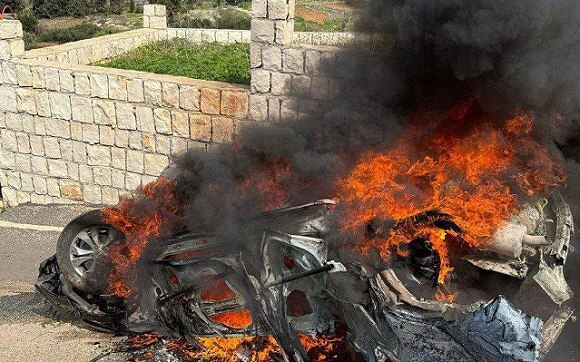
A Lebanese killed and others wounded in targeting of a vehicle in Lebanon: Assassination of the commander of the naval forces in the Radwan unit

One person was killed and others were injured in an air strike launched by the Israeli occupation army on Tuesday, targeting a vehicle in the town of Rashkananiyeh in the Tyre district, southern Lebanon.


The Israeli army claimed that the target was the commander of the naval forces in Hezbollah's Radwan unit, Khader Hashem. A statement said that "Hashem joined the ranks of Hezbollah two decades ago and held a series of positions. As part of his job in commanding the naval forces in the Radwan unit, he played a major role in transferring combat equipment via maritime domains to Hezbollah, and in planning to carry out Hezbollah operations via maritime domains against the State of Israel and its citizens, even during the ceasefire."


The Lebanese National News Agency said, "An enemy drone launched a raid on the area located in Rashkananiyeh, in the Tyre district," adding shortly after that, "The raid carried out by an Israeli drone some time ago targeted a car in the town of Rashkananiyeh in the Tyre district, which led to injuries."


After that, she confirmed that "the car that was targeted by an Israeli drone in the town of Rashkananiyeh in Tyre District was parked next to a house in the town, and it led to the death of a martyr."


In turn, the Civil Defense in southern Lebanon confirmed, "A person was martyred when an Israeli drone targeted a car in the town of Rashkananiyeh."


The Lebanese Ministry of Health later confirmed that the Israeli attack resulted in the death of one person.


The Israeli Army Radio reported that "the Air Force raided a car in the village of Rashkananiyeh in southern Lebanon, in the Qana area near Tyre, about 10 km from the border with Israel."


The Israeli Army Radio quoted an Israeli official as saying that "Israel eliminated a 'saboteur' from Hezbollah in southern Lebanon, who was a central figure in the Radwan Unit," affiliated with Hezbollah.

PALESTINE

Tue 04 Mar 2025 5:38 pm - Jerusalem Time

A Palestinian killed by Israeli occupation forces in Nablus, claiming that he carried out a shooting operation

A young man was killed today, Tuesday, by the occupation forces’ bullets at the Burqa checkpoint near Nablus.


The Israeli army claimed that its forces shot and killed a young man at a checkpoint near the town of Burqa, claiming that he had fired at them.


The Israeli Army Radio claimed that he carried out a shooting operation against soldiers from the 931st Battalion of the Nahal Brigade, without causing any injuries among the soldiers.

PALESTINE

Tue 04 Mar 2025 5:02 pm - Jerusalem Time

Israeli forces raid homes and residential buildings in Tulkarm and its suburbs

Today, Tuesday, the Israeli occupation forces raided homes and residential buildings in the city of Tulkarm and its suburbs, and turned a number of them into military barracks after expelling their residents.


According to local sources, the occupation forces raided the Al-Dido building near the entrance to Tulkarm camp, and climbed onto its roof, while searching and vandalizing it inside, at the same time as they raided the Al-Fara’tawi family’s home on Nablus Street and forced its residents to evacuate it, in preparation for turning it into a military barracks.


She added that the occupation forces raided the Al-Khatib family home in the Rashid neighborhood in the Dhnaba suburb east of the city, and searched the house for more than two hours and tampered with its contents, and subjected its residents to interrogation before forcing them to evacuate it and not return to it for a week. They also seized the home of citizen Muhammad Karso’ in the neighborhood and turned it into a military barracks.


The occupation forces raided the Al-Zaytawi and Badir buildings in the Dhnaba suburb, conducting a wide-ranging search inside them, destroying their contents, and conducting field interrogations with their residents. The Badir building was turned into a military barracks, while the citizen Muhammad Al-Awfi from the suburb was arrested and used as a human shield while raiding the homes.

The occupation forces intensified their military presence on Nablus Street, which connects the Tulkarm and Nour Shams camps, and around the buildings they seized, while imposing a tight siege on the camps and preventing entry or exit from them.


Eyewitnesses said that Tulkarm camp witnessed today an intensive deployment of infantry soldiers in all its neighborhoods, and they raided empty houses and turned them into military barracks, accompanied by the occupation bulldozers carrying out extensive demolition of the completely destroyed infrastructure on Al-Wakala Street.


The witnesses added that the camp is witnessing movements of the occupation army and its bulldozers in a manner that raises concerns about this unprecedented escalation.


In the same context, the occupation forces delivered notices to stop construction work to a number of homes and industrial barns in the western neighborhood of the Shuweika suburb, close to the racist annexation and expansion wall, after storming the suburb’s plain and firing live bullets at citizens while they were working in the area.

PALESTINE

Tue 04 Mar 2025 5:00 pm - Jerusalem Time

Recovering the bodies of dozens of dead in the northern Gaza Strip

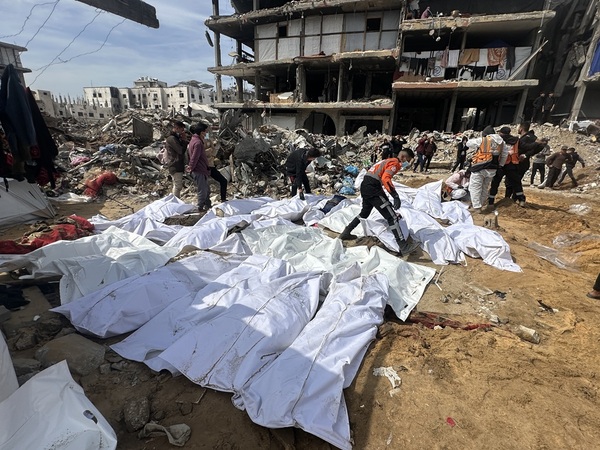
Today, Tuesday, ambulance and rescue crews retrieved the bodies of dozens of dead from a mass grave in the northern Gaza Strip, to be buried in official cemeteries.


The Civil Defense in Gaza reported that the bodies of about 40 dead who were killed during the Israeli occupation's aggression on the northern Gaza Strip were recovered and buried in a mass grave in the town of Beit Lahia due to the siege imposed by the occupation at the time, indicating that they will be buried and reburied in official cemeteries.


The Ministry of Health in Gaza announced today, Tuesday, that the death toll in the Gaza Strip has risen to 48,405 dead, since the start of the Israeli aggression on October 7, 2023.


She added that the number of injuries has risen to 111,835 since the beginning of the aggression, while a number of victims are still under the rubble and on the roads, and ambulance and rescue crews cannot reach them.


She pointed out that 8 dead (7 dead were recovered, and one martyr succumbed to his wounds) and 11 injuries arrived at Gaza Strip hospitals during the past 48 hours.

ARAB AND WORLD

Tue 04 Mar 2025 4:17 pm - Jerusalem Time

Israelis are no longer ashamed of calls to exterminate Palestinians

The Middle East Eye website said on Monday that there is a growing conviction among Israelis that “the Palestinians are not going anywhere and that one must simply kill them to make them disappear.”

The site refers to the full text of a plan formulated at the end of October 2023 by Gila Gamliel, then the Israeli Minister of Intelligence, to “evacuate the civilian population from Gaza to Sinai.”

The plan received widespread coverage around the world and was seen as evidence that Israel's real goal in its war in Gaza - at that time still in the aerial bombardment phase before a ground invasion - was not to "eliminate Hamas" but to expel the Palestinians from Gaza.

But media coverage in Israel was limited—perhaps because the Intelligence Ministry had no authority (and has since been closed), perhaps because Gamliel had no real political weight, and perhaps because the Israeli media preferred not to deal with Israel’s planned war crimes.

"But after sixteen months, the Gamliel Plan effectively became the official plan of the Israeli government," according to the website.

While many Israelis believe that US President Donald Trump should get the credit for normalizing talk of the forced expulsion of Palestinians from Gaza (and taking control of the Strip) first and foremost, of course, there is no denying that this process reflects the evolution of an idea that the Israeli public has long cherished.

It is noteworthy that even after Trump and his spokesmen began to soften his plan (to cleanse Gaza of Palestinians) in recent days, describing it not as a “forced evacuation” but rather as “only a recommendation,” Israeli Prime Minister Benjamin Netanyahu continued to extol “President Trump’s groundbreaking plan to allow the freedom of exit for the residents of Gaza” while Defense Minister Israel Katz established an administration for a “voluntary exit” from Gaza.

All of these formulas are found almost verbatim in the Gamliel Plan.

The site refers to Deputy Speaker of Parliament Nissim Vaturi’s call to “separate children and women and kill adults [males] in Gaza.” Vaturi may be a more marginal politician than Gamliel, but he represents an evolution in Israeli Jewish discourse.

Calls for and threats of a second Nakba, which dominated right-wing discourse even before October 7 and have since entered the mainstream routinely by soldiers, officials and citizens, are growing. There is not just the “generals’ plan” for siege and starvation, which has already been implemented with the expulsion of residents of northern Gaza and the demolition of their homes and was only stopped by the ceasefire, but there is now a plan for annihilation: for a final solution to the Gaza problem and the Palestinian problem in general.

It is noteworthy that at the beginning of the war of extermination on Gaza, Israeli Heritage Minister Amichai Eliyahu said that dropping a nuclear bomb on Gaza was “one of the ways” to deal with Hamas, and such statements are now being heard openly - without any attempt to hide or whitewash them.

PALESTINE

Tue 04 Mar 2025 3:49 pm - Jerusalem Time

Hamas: We will not be part of the Gaza administration, provided that this is done with national consensus

Hamas said on Tuesday that it will not be part of any administrative arrangements for the future of the Gaza Strip, but only if they are agreed upon nationally.


The movement's spokesman, Hazem Qassem, added, "Our position is clear. Any arrangements for the future of Gaza after the end of the aggression against it are made through national consensus, and we will facilitate the matter," according to what was reported by the Anadolu Agency.


He continued, "Hamas does not necessarily have to be part of the arrangements. It is not interested in that, and does not want to be in these arrangements at all."


He stressed the importance of these administrative arrangements being made "with internal national consensus," emphasizing that Hamas "will not allow any external force to interfere."


He also stated that these arrangements must be able to "launch a serious and real reconstruction process to save our people in the Gaza Strip from the catastrophe that befell them with the genocidal war."


He pointed out that his movement would not be "an obstacle to any arrangements made with national consensus, and would be able to launch reconstruction" after the massive destruction left behind by the Israeli army.


Qassem pointed out that the Palestinians "are able to find consensual approaches with Arab support to accomplish this matter."


Last February, Qassem said that his movement had shown the utmost flexibility in formulating political and administrative approaches to managing the Gaza Strip after the war of extermination.


He added that among these approaches is "agreement to form a national consensus government, as well as our full acceptance of the Egyptian proposal regarding the community support committee."


Last December, Hamas announced its approval of an Egyptian proposal to form a “community support committee” to administer the Gaza Strip.


Since January 25, US President Donald Trump has been promoting a plan to displace Palestinians from the Gaza Strip to neighboring countries such as Egypt and Jordan, which was rejected by both countries, and was joined by other Arab countries, regional and international organizations.


Egypt is working to formulate and propose a comprehensive Arab plan to rebuild Gaza without displacing Palestinians from it, for fear of liquidating the Palestinian cause.


On January 19, a ceasefire agreement between Israel and Hamas went into effect, comprising three phases, each lasting 42 days, with the condition that the next phase be negotiated before the completion of the first phase, with the mediation of Egypt and Qatar and the support of the United States.


At midnight on Saturday-Sunday, the first phase of the ceasefire agreement in Gaza, which lasted 42 days, officially ended without Israel agreeing to enter the second phase and end the war.


Netanyahu wants to extend the first phase of the exchange agreement, to release the largest possible number of Israeli prisoners in Gaza, without providing any compensation for that or completing the military and humanitarian entitlements imposed in the agreement during the past period, in order to please the extremists in his government.


In contrast, Hamas rejects this, and demands that Israel be bound by what is stipulated in the ceasefire agreement, and calls on the mediators to immediately begin negotiations for the second phase, which includes an Israeli withdrawal from the Strip and a complete cessation of the war.

PALESTINE

Tue 04 Mar 2025 3:46 pm - Jerusalem Time

"Tragic" conditions experienced by prisoners in Ofer prison

The Prisoners and Freed Prisoners Affairs Authority said on Tuesday that the conditions in Ofer prison, west of Ramallah, are tragic, stressing that the policy of suppression of prisoners’ rooms is still ongoing.


The Commission stated, quoting its lawyer, that the prisoners were subjected to a raid on 2/16 by units affiliated with the Prison Administration, and the raid was accompanied by assaulting the prisoners with batons and spraying gas, and many of them sustained bruises at the time.


It pointed out that the reason for the storming was the detainees' protest by knocking on the doors, in order to demand that the administration provide treatment to one of the sick prisoners, as punishments were imposed on them because of that.


It pointed out that the detainees complain about the shortage in the quantities of food provided to them, and because of this the prisoners have lost a lot of weight.


In another context, the Israeli army arrested 20 people, including former prisoners, during raids carried out in different areas of the occupied West Bank, since Monday evening.


This came in a joint statement issued on Tuesday by the Prisoners Club and the Prisoners Affairs Authority of the Palestine Liberation Organization.


The statement said, "The Israeli army arrested at least 20 Palestinians, including the freed prisoner Israa Animat from the town of Surif, in the Hebron Governorate, in the southern West Bank."


Anaimat is among the female prisoners who were released on January 19, as part of the latest exchange deal between the Israeli army and Hamas, following the ceasefire agreement in the Gaza Strip.


In this context, the statement of the bodies concerned with Palestinian prisoners’ affairs indicated that the arrests carried out by the Israeli forces since Monday evening, “were distributed throughout all the governorates of the occupied West Bank.”


The statement also explained that Israel has been continuing its military attack on the Jenin and Tulkarm governorates fnor weeks, which has included "arrests and systematic field investigations that have affected dozens of families, in addition to detaining citizens as hostages, and turning homes into military barracks."

PALESTINE

Tue 04 Mar 2025 3:15 pm - Jerusalem Time

Trump's envoy to return to Middle East within days

US President Donald Trump's Middle East envoy Steve Witkoff plans to return to the region in the coming days to find a way to extend the first phase of the Gaza ceasefire or advance to the second phase, a State Department spokesman said.

"Special Envoy Witkoff plans to return to the region in the coming days to find a way to extend the first phase or advance to the second phase," the ministry spokesman said.

“The President has made clear and Secretary Rubio has said repeatedly that all hostages must be released immediately, and that includes American hostages.”

Earlier on Monday, media reported that Witkov had postponed his visit to the Middle East to resume talks on the situation in Gaza.

Israeli Prime Minister Benjamin Netanyahu is seeking to extend the truce for at least another week, until Witkoff arrives in the region.

In turn, Israeli media reported that Israel will return to fighting in the Gaza Strip within 10 days if Hamas does not continue to release the detainees, while the US Deputy Envoy to the Middle East, Morgan Ortagus, said that Washington wants to reach a diplomatic solution and no one wants the fighting to return.

"Our goal is to get the hostages back, not to go back to fighting," Ortagus told Fox News, but she stressed that Trump had pledged to support Israel if it had to go back to fighting.

Channel 12 also explained that "Israel wants to reach understandings, but has set a deadline to move the process forward."

The channel quoted an Israeli official as saying, "We are currently at a dead end regarding the deal negotiations."

Meanwhile, the Israeli Broadcasting Authority quoted a source as saying that Israel's resumption of fighting in Gaza would take some time due to the change in the Israeli Chief of Staff.

The first phase of the ceasefire and prisoner exchange agreement between the Islamic Resistance Movement (Hamas) and Israel, which came into effect on January 19, ended last Saturday. However, Israel refused to enter into negotiations regarding the second phase, contrary to what the agreement stipulates. It also closed the crossings, prevented the entry of aid into the Gaza Strip, and threatened to resume the war.

Netanyahu made it clear in a speech before the Israeli Knesset on Monday that Israel does not intend to negotiate the second stage because “the distance between us and Hamas… cannot be bridged,” adding, “We are preparing for the next stages of the renaissance war on 7 fronts.” He continued, “We tell Hamas that if you do not release our kidnapped soldiers, there will be consequences that you cannot bear.”

Netanyahu reiterated what he said was a new proposal by US Middle East envoy Steve Witkoff to release all remaining Israeli prisoners in the Gaza Strip in two batches.

For its part, Hamas accused Netanyahu of violating the agreement, and called on the mediators and guarantors to protect the agreement from collapse and force the Israeli occupation to begin the second phase, leading to a permanent ceasefire, the withdrawal of all Israeli forces, and the reconstruction of the Strip.
For its part, the Jerusalem Post quoted an Israeli official as saying that nothing is happening now regarding the negotiations, and that Hamas rejects Witkoff's proposal, so it is very difficult to achieve progress, in his opinion.

The newspaper also quoted informed sources as saying that there are estimates that fighting will resume in Gaza within 10 days if an agreement is not reached.

In turn, the Israeli Broadcasting Corporation quoted sources as saying that "negotiations to release the kidnapped are faltering and at a standstill until Witkov arrives." It indicated that no date has been set for the US envoy's visit to Israel, but estimates indicate that he will arrive at the end of the week.

The Broadcasting Authority said that 44% of Israelis support moving to the second stage of the agreement, and 9% support returning to fighting.

PALESTINE

Tue 04 Mar 2025 3:02 pm - Jerusalem Time

A Palestinian killed by Israeli occupation bullets in Jenin

The General Authority of Civil Affairs reported, on Tuesday afternoon, the death of a citizen by the occupation forces in Jenin.


According to the commission, the young man, Ayser Abdel Halim Shaker Saadia (21 years old), was killed by the occupation forces’ bullets in the eastern neighborhood of the city.


The Commission indicated that the occupation forces detained Saadia's body.

PALESTINE

Tue 04 Mar 2025 2:43 pm - Jerusalem Time

Suffocation injuries during the Israeli occupation's attack on students of Al-Khader schools in Bethlehem

A number of students from Al-Khader schools suffered from suffocation during the occupation forces’ storming of Al-Khader town, south of Bethlehem, today, Tuesday.


According to local sources, the occupation forces stormed Al-Khader and took up positions in the "Tall" area in the Old City, and attacked the students as they were leaving their schools, by firing tear gas and sound bombs, which led to a number of students suffering from suffocation.


The sources added that the occupation soldiers pursued and chased the students on the main street and in the popular neighborhoods, which created a state of panic and fear among the students.


It is noteworthy that the occupation forces have recently escalated their repeated attacks against students of Al-Khader schools, with the aim of obstructing the educational process.

PALESTINE

Tue 04 Mar 2025 2:18 pm - Jerusalem Time

Prisoners Authority: Continued brutal treatment of detainees in Ofer prison

The Prisoners and Freed Prisoners Affairs Authority said on Tuesday that the conditions in Ofer prison, west of Ramallah, are tragic, and the policy of suppression of detainees' rooms is still ongoing.


The Commission explained, quoting its lawyer, that the detainees were subjected to a raid on 2/16 by units affiliated with the Prison Administration, and the raid was accompanied by assaulting the prisoners with batons and spraying gas, and many of them were injured with bruises at the time.


She pointed out that the reason for the storming was the detainees' protest by knocking on the doors, in order to demand that the administration provide treatment to one of the sick prisoners, as punishments were imposed on them because of that.


She pointed out that the detainees complain about the shortage in the quantities of food provided to them, and because of this the prisoners have lost a lot of weight.

PALESTINE

Tue 04 Mar 2025 2:03 pm - Jerusalem Time

Palestinian Ministry of Foreign Affairs condemns the occupation's plan to return to the war of extermination in the Gaza Strip

The Palestinian Ministry of Foreign Affairs condemned the incitement issued by the pillars of the Israeli government to resume the war of extermination and displacement against the Gaza Strip, and to persist in the ongoing war of annexation of the land of the State of Palestine under flimsy pretexts and excuses, and considered them official calls to give final priority to the arrogance of force over international law and the language of reason, and a direct threat to the United Nations, international legitimacy resolutions, and the foundations of the global system.


The Palestinian Foreign Ministry called in a statement for a real international renaissance to curb the occupation’s aggression against the Palestinian people and their rights, in a way that ensures the establishment of a ceasefire, the final cessation of the war of extermination, annexation and displacement, and the rapid empowerment of the State of Palestine and its internationally recognized legitimate institutions to carry out their responsibilities, and to immediately extend its sovereignty over the Gaza Strip and the entire Palestinian territory occupied since 1967.

PALESTINE

Tue 04 Mar 2025 12:55 pm - Jerusalem Time

Palestinian Prisoners Club: Israeli Occupation forces arrest at least 20 Palestinians from the West Bank, including former prisoners

Since yesterday evening until Tuesday morning, the Israeli occupation forces have arrested at least (20) Palestinian citizens from the West Bank, including the freed prisoner Israa Ghneimat from Surif/Hebron, in addition to former prisoners.


The Palestinian Prisoners' Affairs Commission and the Palestinian Prisoners' Club said in a joint statement that "the arrests were distributed across the governorates of Hebron, Ramallah, Nablus, Bethlehem, Qalqilya, and Salfit, while the occupation continues to implement its military operation in the governorates of Jenin and Tulkarm for weeks, accompanied by ongoing arrests and field investigations, as the number of arrests in Jenin and its camp since the beginning of the invasion has reached 300 cases, while in Tulkarm and its camps, the number of arrests has reached at least 180."


The statement noted that "the re-arrest of the released prisoner Ghneimat is a new violation of the exchange deals that were made, and it is a dangerous matter, and a new message from the occupation that anyone who is released will be a target for arrest again, even if he is part of the exchange deals, and we consider this a dangerous measure that could affect the fate of all those released later within the deal."


He stressed the "necessity of the intervention of mediators and supervisors (the two sister countries, Egypt and Qatar) to complete the exchange deals, to pressure the occupation not to re-arrest the released prisoners and to stop pursuing them."


PALESTINE

Tue 04 Mar 2025 12:35 pm - Jerusalem Time

The death of Palestinian prisoner Ali Al-Batsh from the Gaza Strip inside the occupation prisons under torture

Palestinian media reported on Tuesday that prisoner Ali Ashour al-Batsh, a resident of Jabalia in the northern Gaza Strip, died in Israeli occupation prisons as a result of being subjected to severe torture.


Palestinian media confirmed that Al-Batsh died in an occupation prison after a period of detention, amid calls for an international investigation into the circumstances of his death, especially in light of the increasing reports of violations against Palestinian prisoners.


It is noteworthy that the dead is the brother of the leader of the Islamic Jihad Movement, Khaled al-Batsh.

PALESTINE

Tue 04 Mar 2025 12:14 pm - Jerusalem Time

Galant: Israel would make a mistake if it returned to war in Gaza

Former Israeli Defense Minister Yoav Galant said that Tel Aviv "would make a mistake if it returned to war on Gaza" before returning all its prisoners from the Strip.
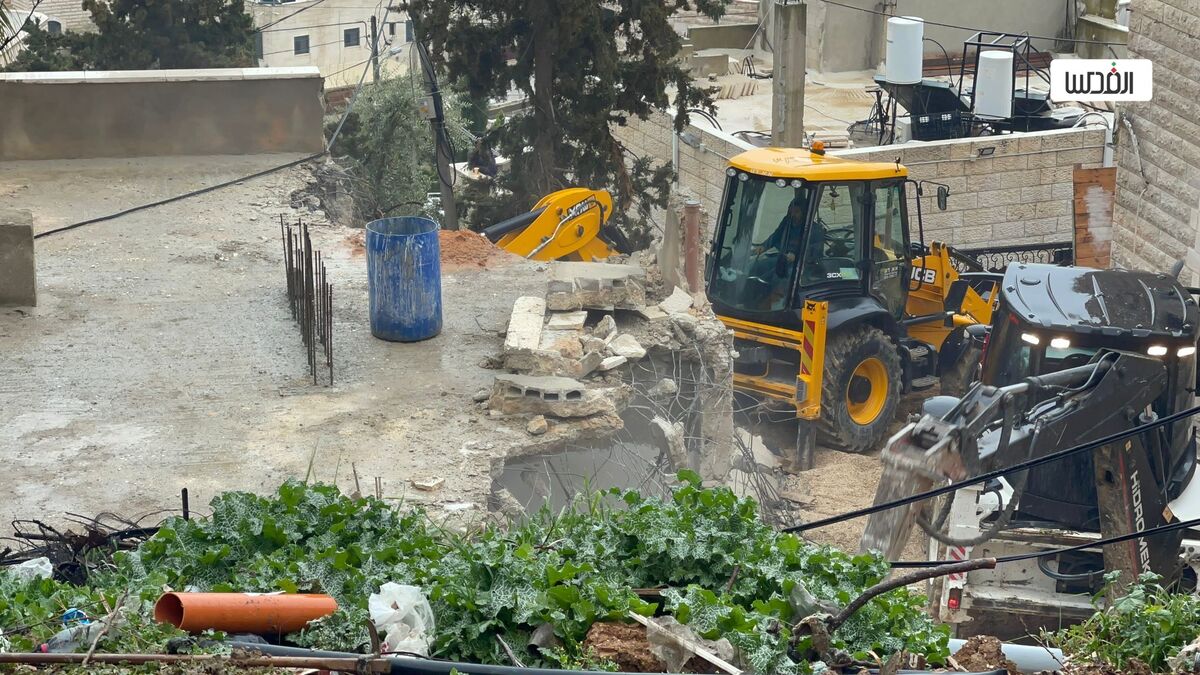

The Hebrew newspaper Yedioth Ahronoth quoted Galant on Tuesday during a conference he participated in in the United States, saying, "Israel will make a mistake if it returns to fighting to destroy Hamas before the hostages are returned."


Galant's statements coincided with Israeli Prime Minister Benjamin Netanyahu's procrastination regarding the full implementation of the terms of the ceasefire agreement with Hamas and moving to the second phase of it on the scheduled date to ensure the release of Israeli prisoners.


"I am the last person who would oppose the complete destruction of Hamas, but if we eliminate Hamas before we return the hostages, we simply will not have hostages to return," Galant added, referring to their deaths.


"Therefore, first and foremost, the hostages must be returned, and then we will proceed to completely destroy Hamas," he continued, noting that "even if Israel is not interested in fighting Hamas forever, we will have to do so for a long time."


At midnight last Saturday/Sunday, the first phase of the ceasefire agreement, which lasted 42 days, officially ended, without Israel agreeing to enter the second phase and end the war, and in light of Hamas’s announcement of its readiness to move forward according to the terms of the agreement in effect since January 19.


Netanyahu is obstructing this, as he wanted to extend the first phase of the exchange deal to release the largest possible number of Israeli prisoners in Gaza, without providing anything in return for that or completing the military and humanitarian entitlements imposed in the agreement during the past period.


Hamas rejects this, and demands that Israel be bound by what is stipulated in the ceasefire agreement, and calls on the mediators to immediately begin negotiations for the second phase, which includes an Israeli withdrawal from the Strip and a complete cessation of the war.


In a related context, Galant renewed the call to establish a government investigation committee into the events of October 7, 2023, when Hamas launched an attack on settlements adjacent to the Gaza Strip, which was described as the greatest security, military and intelligence failure in Israel's history.


"Eventually it will happen, the question is how long it will take? The most important thing is how to prevent a recurrence of an event similar to October 7, and to do that we need to learn lessons, and in order to draw conclusions, a comprehensive investigation must be conducted," he said.


Galant considered that the only way to learn from the lesson is to "conduct a national investigation through a government investigation committee," stressing that this committee is "necessary to understand the situation."


While the Israeli military continues its investigations into the security failures of October 7, Netanyahu refuses to form an official commission of inquiry to examine what happened.


Between October 7, 2023 and January 19, 2025, Israel, with American support, committed genocide in Gaza, leaving more than 160,000 Palestinian martyrs and wounded, most of them children and women, and more than 14,000 missing.

PALESTINE

Tue 04 Mar 2025 12:12 pm - Jerusalem Time

Israeli occupation demolishes shops and bulldozes a street south of Hebron

Today, Tuesday, the Israeli occupation forces demolished a number of shops and bulldozed a main street linking the town of Adh Dhahiriya and the village of Ar Ramadin, south of Hebron.


According to local sources, the occupation forces, accompanied by bulldozers, demolished a number of shops and arbors located on both banks of the main street adjacent to the Dhahiriya crossing and the village of Ramadin, while destroying and bulldozing the main street and the electricity network.


This commercial area, which was subjected to a similar attack about three months ago, is considered a shopping center for immigrants from the lands of 1948, and is a source of livelihood for a number of families.

PALESTINE

Tue 04 Mar 2025 11:32 am - Jerusalem Time

Injuries due to attacks Israeli occupation forces in Jenin and Hebron

This morning, Tuesday, four citizens were injured in the cities of Jenin and Hebron after being assaulted.


In Jenin, Red Crescent Society crews transferred three citizens after the occupation soldiers assaulted them in the eastern neighborhood of Jenin city.


The occupation forces stormed the eastern neighborhood at dawn today, accompanied by bulldozers and armored vehicles, and began evacuating citizens' homes and destroying the neighborhood's infrastructure.


The occupation's aggression on the city of Jenin and its camp entered its forty-third consecutive day, leaving 28 martyrs, dozens of injuries, and massive destruction of infrastructure and property.


In Hebron, a young man sustained bruises and contusions after the occupation forces severely beat him at the northern entrance to Hebron.


Palestinian Red Crescent sources said that a young man sustained bruises and contusions to his head after the occupation forces stationed at Halhul Bridge, north of Hebron, assaulted him, and he was transferred to a hospital to receive treatment.

PALESTINE

Tue 04 Mar 2025 11:09 am - Jerusalem Time

Israeli Occupation discusses plan to build 1,400 new settlement units in the West Bank

The Supreme Planning Council of the Israeli Civil Administration intends to discuss a new plan to build 1,408 settlement units in several settlements in the occupied West Bank, according to what was revealed by the Israeli occupation's anti-settlement human rights movement, Peace Now.


The movement explained that the council has been holding weekly meetings since the beginning of last December to approve more settlement plans, with the aim of accelerating the settlement construction that was approved in these periodic meetings.


According to Peace Now, the new plans include building 460 settlement units in the Talmon settlement northwest of Ramallah, and 225 units in the Beit Hagai settlement south of Hebron.


She pointed out that this policy not only contributes to the normalization of settlement construction, but also leads to its rapid intensification.


The movement confirmed that since the beginning of this year, and with the approval of the new plans on Wednesday, the occupation has approved the construction of 7,702 settlement units in less than two and a half months.


She noted that one of the changes made by the Netanyahu-Smotrich government in June 2023 was to cancel the need for the defense minister’s approval for each stage of settlement construction plans, which facilitated the passage of plans at a faster pace.


She noted that in previous years, the Defense Minister decided to present settlement plans about four times a year, which led to the approval of thousands of units at each meeting. However, the recent change allowed for bi-monthly meetings of the Supreme Planning Council, which allowed for the approval of hundreds of settlement units at each meeting.


The movement believed that this policy aimed to normalize settlement construction and reduce public and international attention and criticism directed against settlement expansion in the occupied Palestinian territories.