PALESTINE

Wed 12 Mar 2025 5:39 pm - Jerusalem Time

Suffocation injuries during Israeli occupation forces' raid south of Bethlehem

Citizens suffered suffocation on Wednesday evening, during an Israeli occupation forces raid on the town of Al-Khader, south of Bethlehem.


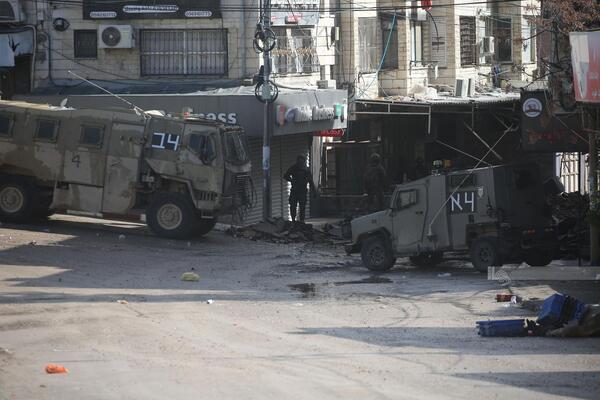
According to local sources, the occupation forces stormed Al-Khader and took up positions in the "Tall" area of the Old City, firing sound bombs and tear gas at the residents, causing a number of them to suffocate from inhaling the toxic gas and receiving treatment in the field.

PALESTINE

Wed 12 Mar 2025 4:46 pm - Jerusalem Time

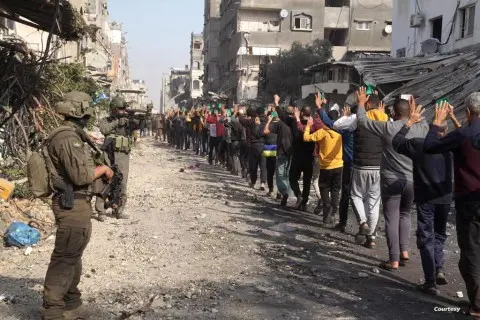
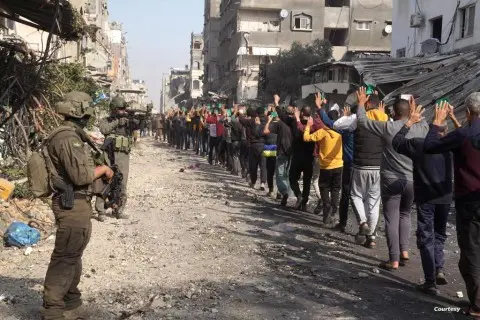
Harsh testimonies from Gaza detainees about the conditions of detention in the occupation's prisons and camps.

The Palestinian Prisoners' Affairs Commission and the Palestinian Prisoners' Club, in a new briefing on the detention conditions of Gaza detainees, stated that the Israeli prison administration continues to impose systematic crimes against detainees, including those in Gaza, who face the most appalling detention conditions.


She added in the briefing published on Wednesday: "The Sde Teiman camp and the Negev detention center continue to lead the scene in terms of the level of brutality practiced against Gaza detainees, based on new testimonies, including a number of detainees from the aforementioned camps and detention centers, in addition to Ofer detention center, which reveal further inhumane conditions to which detainees are subjected."


She continued, "The torture policy practiced by the occupation forces has led to the martyrdom of four detainees in a matter of days over the past period. They are among the dozens of martyrs from Gaza who have been killed since the start of the aggression."


The occupation continues to impose the crime of enforced disappearance on hundreds of detainees in Gaza, noting that the latest number announced by the occupation prison administration, which classifies them as illegal combatants, reached (1555) by the beginning of this March.


In the Negev, detainees relieve themselves in a container.


In testimonies from detainees from Gaza who were visited in the Negev detention center, they confirmed that they are being held in sections that lack toilets to relieve themselves, forcing them to use a "pot" in a humiliating and degrading situation. Skin diseases, specifically scabies, continue to plague the detainees' health conditions, due to the lack of hygiene inside the sections, the severe shortage of clothing, and the lack of appropriate treatment for them and for the sick among them.


In a testimony by detainee (J.W.): “I still suffer from scabies and boils on my body. I was also severely beaten during my frequent transfers, and as a result, I have a broken tooth, which causes me severe and continuous pain. I can no longer hear well in my left ear, after they poured water into it in a harmful way.” He said: “The detainees suffer from starvation, and are only given a small amount of food, equivalent to a quarter of a meal for each detainee, which is inedible. The detainees collect the food provided to them throughout the day and eat it as breakfast in the evening. They are also subjected to procedures including: repeated inspections, constant verbal abuse, handcuffing behind their backs, and forcing them to kneel during the so-called (count - security check).”


In his testimony, detainee (S.A.) confirmed: “The conditions are difficult due to the widespread skin diseases in the section, and there is a state of fear and terror among the detainees. The conditions are like hell, the insults are continuous, and the policy of humiliation, starvation, and deprivation dominates life in detention.”


“I was arrested from Al-Shifa Hospital and transferred to the Negev detention center after 97 days of detention in camps near Gaza, and after 30 days in Ofer, where I was interrogated in the field and severely beaten, which resulted in a deep wound in my head and broken ribs. During my first detention, I was subjected to harsh interrogation that lasted for 30 days, including the disco interrogation - an interrogation that relies on placing the detainee in the middle of very loud music - which I was subjected to more than 7 times, accompanied by continuous beatings and deprivation of food and bathing,” he continued.


He added: After being transferred to the Negev, I was subjected to interrogation again, and due to the severity of the torture and beatings, I lost consciousness several times, which led me to confess to false things.


Regarding the Sde Teiman camp, through visits to a number of detainees there, the atrocities, torture and abuse still loom large over the lives of detainees in detention.


“We are repeatedly and almost daily subjected to repression, and sound bombs and gas bombs are thrown inside the barracks, after they force us to lie on our stomachs and keep us like that for a long time. When the prison guards transfer us for interrogation or an interview, they shout at us and beat us constantly, and repeatedly knock us down while we are walking, even though they are transferring us blindfolded and handcuffed,” said detainee K.Y. in his testimony about the conditions there.


K.Y. is in a barracks where more than 55 detainees are being held. According to him, “We are subject to the soldiers’ moods in dealing with us, and to the torture and humiliation. Sometimes we are allowed to walk, but most of the time we remain sitting on the iron beds, two detainees to a bed. We are not allowed to talk, and those who do not comply are punished by being placed in shabha for hours next to the wire - the area designated for shabha in the barracks.”


He says that as a result of the collective isolation and the lack of contact with the outside world, one detainee believed throughout his detention that his daughter had been martyred in the aggression on Gaza, only to later discover through lawyers that she was alive.


“On the day of my arrest, they arrested about 40 men, stripped them completely, and dressed them in white clothes. Throughout this period, we were repeatedly subjected to severe beatings with sticks and machetes, and they spared no one. This led to many of them being injured, and I was among them. I suffered from a nosebleed for a long time without receiving any treatment. After about 24 hours, we were transferred to the Sde Teiman camp, where they provided us with prison clothes. Until then, we remained in the white clothes in the bitter cold and under the beatings,” said the detainee (M.Y.).


He added: “For (14) days, I remained blindfolded and handcuffed, and I was subjected to a disco investigation for 12 hours, as I remained in a closed room with very loud music, and after I was exhausted from the sound, they tried to pressure me to recruit and cooperate with them, but I refused, after that they took all of my family’s data.”


The "Fura" in "Sde Teman" is an instrument of torture


According to the detainees' testimonies, they confirmed that the camp administration had turned the "recess" - the period of time spent outside the camp yard - into a tool for torture, abuse, and humiliation. During this time, they were forbidden from speaking to each other or raising their heads, and they heard nothing but insults. Anyone who disobeyed any order was subjected to torture and punishment.


In his testimony, the detainee (D.A.) said: “I was arrested in the morning hours, after the soldiers filmed me with a camera, and they told me that I would not be able to cross towards Gaza, so I remained there until the afternoon, and then they transferred me and others in a truck to the (Sde Teiman) camp. On the way, we were subjected to severe beatings, especially on my stomach and face, and I remained bound and blindfolded for 12 days from the day of the arrest. Upon entering the camp, they dressed us in prisoner’s clothes, and the whole time I was forced to sit on my knees in humiliating and difficult positions. Inside the (barracks), they deliberately pulled out the mattresses every day, and prevented us from lying down all day.”


He confirms: “This continued for 39 days, and I was able to change my clothes for the first time after 72 days, and I was able to shave my hair once after 110 days of my detention.


Severe beating, electric shock, and deprivation of food and drink


Detainee (N.W.) said: “At the beginning of my detention, I was in the barracks, handcuffed and blindfolded the entire time. They forced us to sit on our knees. After four days, I was taken to meet with the intelligence services. I waited a whole day, during which I remained handcuffed and without food or water. They also refused to loosen the shackles despite the pain they caused me.”


He points out: “I don’t know which camp I was in at the beginning of my detention, because of the shackles and the blindfold. I was sitting on my knees, and the place was very cold and exposed to the air. After 21 days, I was transferred to Sde Teman, where I was severely beaten on the chest, and as a result, I felt short of breath. We were also electrocuted and beaten with weapons.”


In a statement by the detainee (A.H.): “Upon my arrest, the men were taken to a nearby building, after ordering them to strip completely, and then they severely beat them, in addition to cursing and calling them the worst names. After two hours, we were transferred to a truck, then to another place where we stayed for a whole night, accompanied by severe beatings and insults. They also deliberately put our heads in water, and there were direct threats to kill us. They also forced us to prostrate on the ground while we were naked in the bitter cold, while we were bound and blindfolded.”


He continues: When we were transferred to Sde Teman, we were taken to a doctor, but he ignored our injuries. We were later transferred to Berks, where we remained for 90 days, 20 of which were handcuffed and blindfolded.


Suppression, severe beatings, and the use of sound bombs


“The repressive measures are repeated,” said detainee (A.H.). “About 20 days ago, they attacked us with sound bombs. One of these bombs exploded next to me, injuring my foot and shoulder. I did not receive treatment, even though I suffered from pain for a long time. These attacks are repeated almost daily, and they did not stop during Ramadan. Before the pre-dawn meal, they stormed the barracks, forced us to sleep on the floor, beat us, insulted us, and threw sound bombs at us.”


In the testimony of the detainee (Z.L.): He said: “When I was arrested, they handcuffed and blindfolded me, then they took us to a building, and from there to an open area in the cold and heavy rain, and then later to the (Sde Teiman) camp. We were completely naked, and the whole time they were cursing and shouting at us. At first, we were placed in a (barrack) in the shape of an arch for 12 days. We were more than 70 detainees at the time, and we had to sit the whole time with our hands tied and blindfolded. Even when we needed to relieve ourselves, they kept the handcuffs on.”


He noted, "The first time I was able to change my clothes was 50 days after my arrest. I had previously been subjected to a violent crackdown. My head was hit against a wall, causing an injury to my eye. The effects are still evident. There were detainees who were injured and bleeding as a result of the assault."


The Commission and the Club renewed their call for the international human rights system to take effective decisions to hold the leaders of the Israeli occupation accountable for the war crimes they continue to commit against our people, and to impose sanctions that would place Israel in clear international isolation, and restore to the human rights system its fundamental role for which it exists, and put an end to the terrifying state of impotence that has afflicted it during the war of extermination, and end the state of exceptional immunity that the international community has granted to the occupation, considering it above accountability, accountability and punishment.

ARAB AND WORLD

Wed 12 Mar 2025 4:03 pm - Jerusalem Time

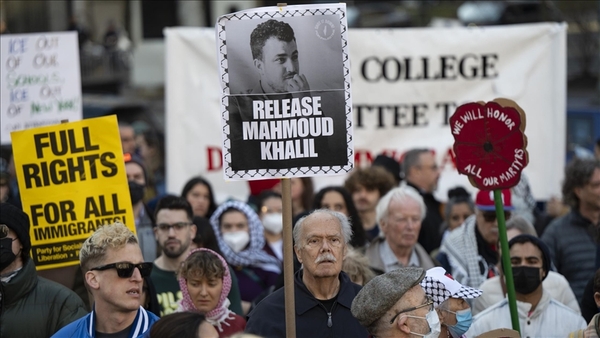
14 members of Congress demand the release of a Palestinian activist.

Fourteen members of the US Congress have called for the release of Palestinian student activist Mahmoud Khalil, who led protests at Columbia University in solidarity with Gaza.


This came in a letter sent by 14 members of Congress to Secretary of Homeland Security Kristi Noem, according to ABC News.


The letter confirmed that Khalil was arrested without a warrant or charges, noting that he is a permanent resident and married to a US citizen.


The letter described Khalil's arrest as an "attempt to criminalize political protest" and a "direct attack on freedom of expression," stressing that Khalil has not been charged or convicted of any crime.


"He was targeted solely because of his activism, presence, and role as a student leader and negotiator at the Gaza Solidarity Camp on Columbia University's campus," she said.


It considered Khalil's arrest "anti-Palestinian racism aimed at silencing the Palestine solidarity movement" in the United States, stating that Khalil's constitutional rights were violated by preventing him from meeting his lawyer and family.


Commenting on Khalil's arrest, Human Rights Watch affirmed that freedom of expression is a human right.


"The United States is obligated under international law to respect this right, and Mahmoud Khalil's arrest is an outrageous assault on that right," she said.


On Sunday, US authorities arrested the Palestinian student who led solidarity protests at Columbia University last year, denouncing the genocide being committed by Israel in the Gaza Strip.


Amy Greer, the Palestinian student's attorney, confirmed in a statement that Khalil was arrested despite being in the United States as a "permanent resident with a green card," being married to an American woman, and that authorities had revoked his green card.


US Secretary of State Marco Rubio previously said in a post on Twitter, accompanied by a photo of Khalil, "We will revoke the visas or green cards of Hamas supporters in the US so they can be deported."


In January, US President Donald Trump signed an executive order on "combating anti-Semitism," allowing the deportation of students who participate in demonstrations in support of Palestine.


With American support, Israel has been committing genocide in Gaza since October 7, 2023, leaving more than 160,000 Palestinians dead and wounded, most of them children and women, and more than 14,000 missing.

PALESTINE

Wed 12 Mar 2025 3:39 pm - Jerusalem Time

President Abbas denies what Olmert said that they missed the opportunity by not signing the peace roadmap.

Palestinian President Mahmoud Abbas said that what was said by former Israeli Prime Minister Ehud Olmert in the documentary broadcast by the British BBC channel, that we missed the opportunity by not signing the peace map he presented to us, is incorrect, as we did not receive any peace map from him during our talks that continued until the last day of his term as Prime Minister.


He added that the discussions with Olmert were serious, and that we addressed all the final issues, but he was not allowed to remain as Prime Minister of Israel to follow up on what was being discussed. During these discussions, we did not receive any map or paper to respond to at all.


President Abbas continued: We have negotiated positively with all initiatives presented to us, and we have worked to ensure the success of any step aimed at achieving a just peace based on international legitimacy and the Arab Peace Initiative, and enabling our Palestinian people to obtain their rights to establish an independent Palestinian state with East Jerusalem as its capital, based on the 1967 borders.

-

PALESTINE

Wed 12 Mar 2025 3:03 pm - Jerusalem Time

Israeli occupation issues a decision to transform a colonial outpost into a colony south of Hebron.

The so-called commander of the Israeli occupation army's Central Command issued a decision to transform the "Eduraim" settlement outpost, built on Dura lands south of Hebron, into a colony.


This colonial outpost was established in July four years ago and has witnessed significant growth and absorption, with 26 families currently residing there.


The plot of land on which the colonial outpost was built belongs to citizens of the town of Dura, south of Hebron. The occupation forces seized it in the 1970s, and established the "Adorim" military base there.


Amir Daoud, Director General of Documentation and Publication at the Wall and Settlement Resistance Commission, said that the decision came in response to a request from extremist Israeli Finance Minister Bezalel Smotrich to legalize five colonial outposts in the West Bank: Adorim in Hebron, Avitar in Nablus, Sade Efraim and Givat Asaf in Ramallah, and Halitz in the area between Hebron and Bethlehem.


David said that the new settlement will be able to submit plans for the construction of residential units within it independently, as it is considered a complete settlement, not a neighborhood within a settlement. Rather, it will receive a separate urban planning code like other cities.


He pointed out that the number of settlers in the West Bank, according to statistics from the Wall Resistance Commission, reached 780,000 in 2024, including Jerusalem, which is home to approximately 310,000 settlers.


Daoud pointed out that the most prominent element in the extremist occupation government's coalition agreements relates to expanding colonial outposts to appease the extreme right, amid fears that these settlements will expand and establish the illegal presence of the settlers as an irreversible fait accompli, thus eliminating the possibility of establishing a Palestinian state in the future through a policy of imposing facts on the ground.


The Wall and Settlement Resistance Commission's report documented settlers' attempts last month to establish eight new settlement outposts, predominantly agricultural and pastoral. These outposts were distributed as follows: two settlement outposts were attempted on lands in the Tubas Governorate, and one outpost each in Jericho, Hebron, Bethlehem, Ramallah, Tulkarm, and Nablus.


The Commission indicated that the planning authorities in the occupying state studied 27 master plans for the West Bank settlements and within the borders of the Jerusalem municipality last February, including 22 plans for West Bank settlements and 5 plans within the borders of the Jerusalem municipality. It approved 14 plans, including 11 in the West Bank, while 13 plans, including 11 in the West Bank, were submitted for study in preparation for approval. The February plans targeted a total of 3,245 dunams of citizens' land, with the aim of building 2,684 new settlement units, including 1,278 units for West Bank settlements and 1,406 for settlements within the borders of the Jerusalem municipality.

PALESTINE

Wed 12 Mar 2025 2:06 pm - Jerusalem Time

Ongoing aggression... a young man injured by Israeli occupation forces' bullets in Jenin

A young man was injured on Wednesday by Israeli occupation forces, who continued their aggression on Jenin and its camp for the 51st consecutive day.


The Red Crescent Society said its crews transported a 20-year-old man with a hand injury after Israeli occupation forces fired live ammunition at him near the Martyrs' Roundabout, south of Jenin.


The Israeli occupation continues its aggression against the city of Jenin and its camp for the 51st consecutive year, while expanding its aggression against the governorate's villages and towns.


Local sources reported that Israeli armored vehicles and tanks were positioned in areas near the camp, and that Israeli soldiers were also patrolling the area around the Cinema Roundabout in the center of Jenin.


In Jenin camp, occupation bulldozers demolished homes in the Samran neighborhood, deep inside the camp. The demolition and bulldozing operations resulted in the complete destruction of approximately 120 homes and the partial destruction of dozens more. Approximately 20,000 residents were displaced from the camp.


The ongoing Israeli aggression is preventing students in the city of Jenin and its camp from reaching their schools. According to the Jenin Education Directorate, approximately 15,000 students are prevented from attending school in the city.


Yesterday, Israeli occupation forces stormed the eastern neighborhood of Jenin, surrounded a residential building and fired Energa missiles at it. They also surrounded a site on Haifa Street west of the city and a building in Khallet al-Sawha near the camp. This resulted in the deaths of four civilians, including a woman. The occupation forces have detained the bodies of three of them.


The death toll in Jenin Governorate has risen to 34 since the start of the unprecedented aggression on the governorate, with dozens more injured.


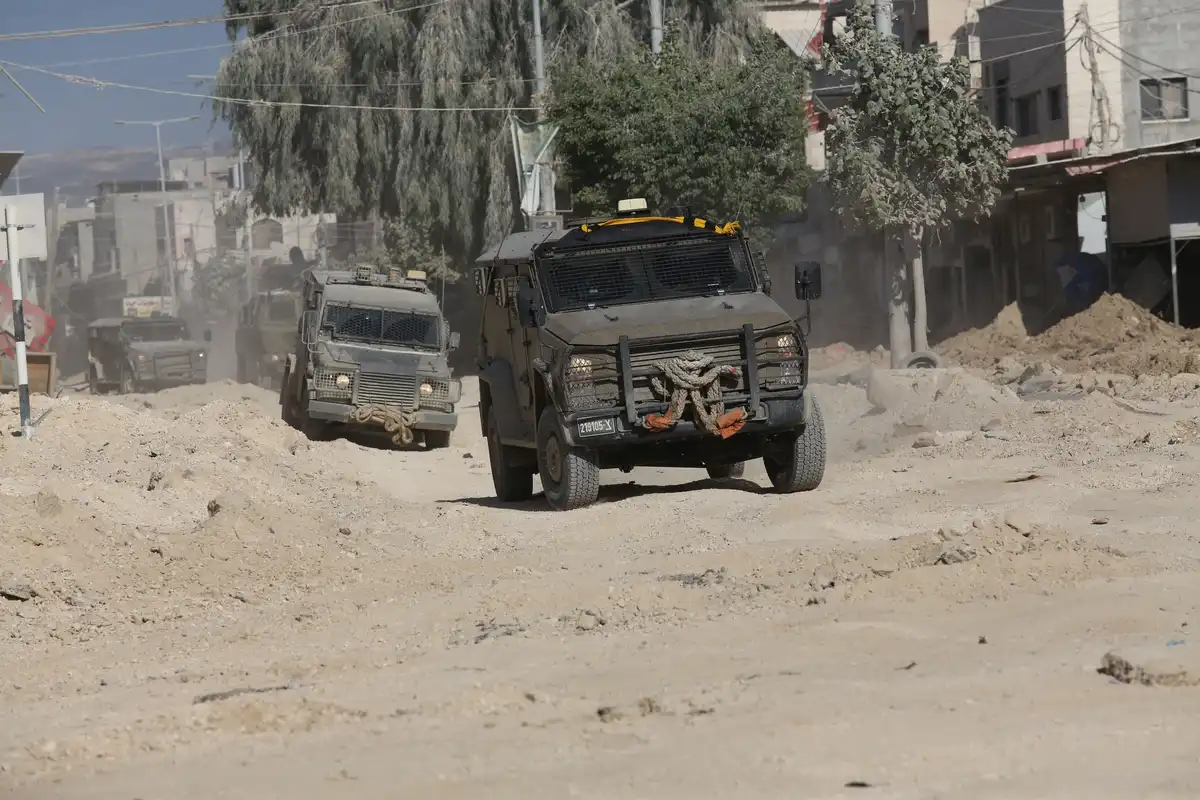
Israeli forces, accompanied by military bulldozers, stormed the town of Qabatiya, south of Jenin, causing massive destruction to the infrastructure along its streets, particularly near the Jerusalem Roundabout and Cafe Street. The occupation forces also raided a residential building, converting it into a military barracks, and destroyed the main water pipeline.


She added that the occupation forces stormed the town of Araba, south of Jenin, since the early hours of the morning, deployed infantry units in the town, raided the Arada office in the center of the town, blew up its gate, detained a number of citizens inside and subjected them to field investigations. They also arrested about 40 citizens from the town, and cut off electricity to several neighborhoods.


Occupation forces stormed the town of Muthalath al-Shuhada, raided a number of homes, and arrested a citizen from them. They also arrested a citizen from the town of Anza, south of Jenin.

PALESTINE

Wed 12 Mar 2025 1:43 pm - Jerusalem Time

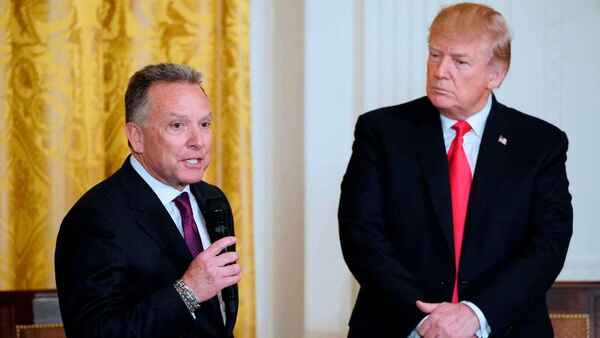
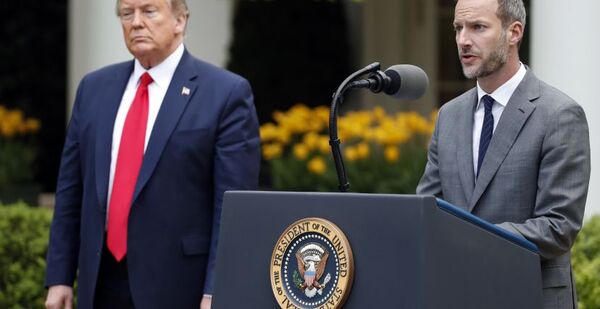
Adam Buhler's tours... What are the details of the negotiations regarding the sector's future?

Dr. Tamara Haddad: Tel Aviv and Washington share a unified position on completely dismantling Hamas's military infrastructure and ensuring that it poses no security threat to Israel.

Nizar Nazzal: Hamas is interested in reaching an agreement with Washington because it will enable it to achieve a political breakthrough and put Israel in an embarrassing position.

Awni Al-Mashni: Washington aims to expel Hamas from Gaza without war and implement a displacement scenario without direct military confrontation as the core of the negotiating game.

Dr. Aql Salah: Boehler's statements about reaching a "grand deal" between Israel and Hamas represent a preparation for the Israeli street to accept the anticipated agreement.

Sari Samour: Hamas will never agree to give up its weapons because it is Hamas that forced Israel and the United States to negotiate with it.

Suleiman Basharat: The Trump administration wants to impose its vision on the region in the shortest possible time to devote itself to other international issues.


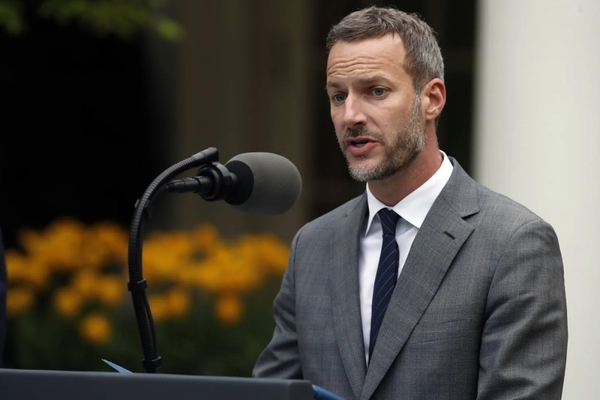
Amid accelerating diplomatic efforts to reach an agreement between Israel and Hamas, the tours of US hostage envoy Adam Boehler are emerging as a pivotal factor in efforts to conclude a comprehensive deal that includes a prisoner exchange and a long-term ceasefire. Talk of disarming Hamas is also underway, raising questions about whether he will actually succeed in his mission.

In separate interviews with Al-Quds, writers, political analysts, and experts point out that optimistic American statements about the possibility of success of these negotiations are accompanied by strict Israeli conditions, foremost among them the complete disarmament of Hamas. This would make the potential agreement a significant turning point if it succeeds. Furthermore, these efforts face fundamental challenges, most notably Hamas's position.

They say the ongoing negotiations are closely linked to US interests in the Middle East, as Washington seeks to achieve a long-term truce in Gaza while ensuring the strengthening of the normalization process with Arab countries.

While scenarios remain open, ranging from a historic agreement to a new military escalation, the coming weeks will be crucial in determining the course of these developments and their impact on the future of the region, according to writers, analysts, and experts.


Strong indications that a deal could be reached


Writer and political researcher Dr. Tamara Haddad says there are strong indications that a comprehensive prisoner exchange deal between Hamas and Israel could be reached in the coming weeks, according to a statement from US Special Envoy for Hostage Affairs Adam Boehler, who expressed optimism about the possibility of reaching an agreement, provided there are no major obstacles that could derail the negotiations.

Haddad explains that this deal, if implemented, will include a mutual release of prisoners, whereby Hamas will hand over all Israeli hostages held by it in exchange for the release of Palestinian prisoners from Israeli occupation prisons. However, the essence of the agreement is not limited to the exchange alone, but rather includes a long-term ceasefire, which could extend for a period of between 10 and 15 years, with a basic condition set by Israel and the United States: the complete disarmament of Hamas and its transformation into a political party within the new Palestinian political system, while ensuring its participation in governing the Gaza Strip, but without possessing any military wing or engaging in any future armed resistance.

According to Haddad, Tel Aviv and Washington are united in their demands for the complete dismantling of Hamas's military infrastructure and the guarantee that it will not pose any future security threat to Israel. Tel Aviv is also proposing another condition: the removal of the movement's senior leaders, specifically the commanders of the Izz ad-Din al-Qassam Brigades, from Gaza to ensure that the movement will not return to armed action after the agreement.


Several scenarios for the outcome of the negotiations between Hamas and America


Haddad explains that there are several scenarios for the ongoing negotiations between Hamas and the United States, including the following: Either reaching a comprehensive agreement, which is the most likely scenario if Hamas agrees to disarm and become a demilitarized political party in Gaza, in exchange for ensuring its continued rule, improving the humanitarian and economic situation in the Strip, and ensuring the regular delivery of humanitarian aid.

The second scenario, according to Haddad, is that the deal will falter and the status quo will remain, which would exacerbate the suffering of the Gaza Strip's residents, especially with the obstruction of humanitarian aid.

She added: "As for the third scenario, if negotiations fail, a limited military escalation could occur between Israel and Hamas, which could lead to international mediation to contain the situation, but without reaching a radical solution to the conflict."


Ground invasion if negotiations collapse


Haddad points out that the fourth scenario is a large-scale ground invasion of the Gaza Strip if negotiations collapse completely. This would mean significant civilian casualties among Palestinian civilians, in addition to the risk of a regional war, given the potential for Iran, Hezbollah, and the Houthis to intervene in the battle. Alternatively, a fifth scenario could be a temporary humanitarian truce without a final settlement.

Haddad asserts that the fate of the comprehensive deal depends on several key factors, most notably the American and Israeli positions, Hamas's willingness to agree to the terms of the agreement, and the positions of the international community and Arab states.

Haddad believes the coming weeks will be crucial in determining whether the region will witness a political breakthrough through a comprehensive deal, or whether matters will head toward a more dangerous military escalation.


Hamas did not accept disarmament.


For his part, Nizar Nazzal, a researcher specializing in Israeli affairs and conflict issues, asserts that statements by US envoy for hostage affairs Adam Boehler regarding the disarmament of Hamas were not accepted by the movement. Hamas was able to sidestep this proposal and deny it, emphasizing that the negotiations held in Doha with the United States were limited to the prisoner issue.

Nazzal explains that Hamas is very interested in reaching an agreement with Washington, as it would enable it to achieve a major political breakthrough and place Israel in an embarrassing position. If an agreement is reached between Hamas and the US administration on the prisoners' issue, Israel will be unable to reject it, which would marginalize its role in the issue—something Tel Aviv is trying to avoid by any means possible.

Nazzal points out that Hamas is seeking to open new horizons with the United States, especially since it has been on the US terrorist list since 1997.

According to Nazzal, the movement seeks to expand discussions with Washington to include deeper political issues, not just the prisoner issue, which explains its relentless efforts to strengthen communication with the US administration.

Nazzal believes that American statements about the possibility of reaching a deal reflect a trend toward concluding an agreement that includes the release of dual-nationality prisoners inside the Gaza Strip, particularly those holding American citizenship, whose number is estimated at four or five hostages.


The agreement with the United States is a major blow to Israel.


Nazzal asserts that the success of such an agreement would deal a severe blow to Israel, as it would give Hamas a clear signal that it has managed to neutralize Tel Aviv, reflecting a fundamental change in the nature of the conflict.

Nazzal explains that Washington is aware that Netanyahu is trying to arrange his political cards to serve his personal interests, rather than Israel's broader interests. This has prompted the United States to negotiate directly with Hamas, rather than simply coordinating with Israel, as was the case in the past.

Nazzal points out that the Doha negotiations marked a new phase in the "political clash" between the United States and Hamas, with Washington's priority in these talks now being the release of American prisoners, which makes the United States particularly keen to reach an agreement.

Nazzal asserts that if an agreement is reached through US talks with Hamas, it will cause a political shock in Israel, given that the Israeli government, led by Netanyahu and the ruling right-wing, is attempting to obstruct these negotiations and prevent their success by mobilizing the Zionist lobby within the United States to pressure against any agreement between Washington and Hamas.


Netanyahu angry about negotiating with Hamas


According to Nazzal, there are two main scenarios for the current negotiations: the success of the agreement between Washington and Hamas, which would embarrass Israel and portray it as an unnecessary party in this matter, and Hamas would be able to achieve a significant diplomatic gain by proving that it is not only a military party to the conflict, but also a political actor capable of negotiating with major international powers.

The second scenario, according to Nazzal, is that Israel will disrupt the agreement by applying pressure within the United States to prevent its completion, a scenario Netanyahu is strongly pursuing.

Nazzal believes that Netanyahu absolutely rejects any agreement that might lead to a ceasefire and an Israeli withdrawal from the Gaza Strip, because he seeks to weaken the Palestinian resistance, reoccupy the Strip, and displace its population.

Nazzal believes Netanyahu is deeply angered by the idea of negotiating with Hamas, because he believes the movement, which carried out a large-scale attack inside Israel on October 7, is now sitting at the negotiating table with the Americans. This makes him unwilling to reach any agreement that would keep Hamas in Gaza as an internationally recognized political party.

Nazzal explains that Israel is facing growing discontent within the Israeli public, as public opinion begins to reject Netanyahu's policies. This could place his government in a major political crisis, especially if the United States proceeds with direct negotiations with Hamas without requiring an active Israeli role in the deal.


A political solution to end the war and release prisoners


For his part, writer and political analyst Awni Al-Mashni says that with the escalation of diplomatic efforts to end the war in the Gaza Strip, the administration of US President Donald Trump appears unconcerned with the continuation of military operations in the Strip or their expansion into Lebanon. Rather, he believes, the administration is focused on finding a political solution that will ensure an end to the war and the release of prisoners.

Al-Mashni points out that the US position may partly align with Hamas's interests in ending the war, but it differs fundamentally, as the Trump administration seeks to achieve Israel's strategic goals without resorting to further military operations.

According to Al-Mashni, Washington aims to expel Hamas from Gaza without war and implement a displacement scenario without direct military confrontation, which represents the core of the negotiating game being waged by the various parties.

Al-Mashni asserts that the ongoing negotiations are complex, with Israel, the United States, and Hamas all trying to achieve as many of their goals as possible, despite the impossibility of any party getting everything it wants. Hamas, aware of the challenges on the ground and politically, is seeking to compensate for its declining military influence with a direct political presence. This explains its desire to participate in direct negotiations with the United States, something the movement sees as a promising start to strengthening its position on the international stage.


Gaza will not become a future security threat to Israel.


For Washington and Tel Aviv, the shared goal is to ensure that Gaza does not become a future security threat to Israel. However, the main point of contention between the two sides is who will govern Gaza after the war. Israel considers any government that might unify Gaza and the West Bank to be an ideological threat by reinforcing Palestinian political identity, a move it strongly opposes. The Egyptian initiative thus emerges as a potential solution, but it requires an American-Arab consensus that will not be acceptable to Israel unless Washington exerts intense pressure on Benjamin Netanyahu's government.

He adds: Despite the complexity of the negotiations, the resumption of large-scale military operations remains the most remote possibility, as war is not in the interest of any party, not even Israel, whose army is suffering from a state of field exhaustion that makes it difficult for it to engage in a new confrontation with the same momentum. However, keeping the region on the brink of war represents a political pressure tool used by the United States and Israel to push Hamas to make significant concessions.


Hamas has clear limits to its concessions.


However, Al-Mashni points out that Hamas is aware of these tactics and has clear limits on its level of concessions. Despite its willingness to compromise, it will not reach the level of concessions that threaten its political existence, even if that means significantly reducing its military influence.

Al-Mashni believes that all parties are practicing a "finger-biting" policy in an attempt to gauge the other's endurance, which makes the current situation a fragile balance between political pressure and possible concessions.

Al-Mashni points out that the biggest losers in this equation are the spectators—the civilians who pay the price for remaining outside the negotiating equation, amid a complex political game that determines the fate of the entire region.


Gradual descent down the political ladder


For his part, writer and political researcher Dr. Aqel Salah asserts that statements by US Special Envoy for Hostage Affairs Adam Boehler regarding a "grand bargain" between Israel and Hamas represent a prelude to the Israeli public's acceptance of the anticipated agreement, amidst accelerating US statements that reflect a trend toward direct negotiations with Hamas.

Salah explains that these statements represent a gradual descent down the political ladder, as they reflect the United States' acceptance of the idea of an agreement with Hamas, in line with Qatari and Egyptian views, which see Israeli Prime Minister Benjamin Netanyahu as the primary obstacle to the deal's completion.

Salah points out that the US administration realizes that Israel is incapable of waging a new war, given the potential losses it could incur, prompting it to directly lead negotiations with the goal of imposing a final agreement.

Salah believes that popular pressure within Israel, particularly from the families of the Israeli hostages, is pushing for an acceleration of the negotiations, with the families and the hostages themselves making direct appeals to Trump to pressure him to implement the deal.


Reaching a radical solution to end the war


According to Salah, the most important message from the US statements is that there will be no release of the Israeli hostages without a radical solution to end the war. This reflects Washington's conviction that the crisis can only be resolved through a comprehensive agreement that takes into account the demands of both Hamas and Israel and ensures continued calm in the Gaza Strip.

Salah believes that the United States views the agreement as an opportunity for Israel to regroup, by restoring its global image and enhancing its military and human capabilities, which were affected by the war. The US administration is also sending implicit messages to the Israeli far right, led by Bezalel Smotrich and Itamar Ben-Gvir, that the only solution is negotiation, not escalation. This gives Netanyahu an opportunity to maintain his government coalition without bearing sole responsibility for the agreement, as the deal will be presented as a strategic American demand that serves Israeli national security and contributes to strengthening the process of normalization with Arab countries, especially Saudi Arabia.

Salah believes that the agreement could be reached gradually through mediators, with the United States and the agreement's guarantors pledging to gradually cease fighting, and the hostages being handed over in stages over two to three months.


Post-war political arrangements

According to Salah, the agreement will include political arrangements for the post-war period, including determining who will administer the Gaza Strip, with the possibility of forming an independent and neutral committee without direct representation from Hamas, until general Palestinian elections are held.

Salah points out that it is unlikely that Hamas will agree to completely disarm, but the issue could be resolved through a long-term truce of 20 to 25 years, in which Hamas pledges not to use or develop its weapons, in exchange for American and international guarantees to maintain the calm.

Salah asserts that the US administration has become convinced that Israel has no choice but to accept the US proposals. This explains the direct negotiations between Washington and Hamas, a move aimed at preparing American and Israeli public opinion to accept the upcoming agreement, which is expected to be comprehensive and put an end to the ongoing war.


Boehler's statements may be an attempt to deceive Hamas.


Writer and political analyst Sari Samour believes that circulating reports about the possibility of Hamas disarming as part of a comprehensive deal with Israel are inaccurate and a media fabrication aimed at promoting specific political agendas.

Samour asserts that Hamas will never agree to give up its weapons, as these weapons are what forced Israel and the United States to negotiate with the movement.

"Without these weapons, Hamas would be easy prey for its enemies," Samour says. "That's why it's interested in developing its military capabilities, not abandoning them."

Commenting on statements by US hostage affairs envoy Adam Boehler regarding the possibility of reaching a "grand bargain" including a prisoner exchange and a long-term ceasefire, Samour notes that these statements are directed at more than one party and may simply be a tactic to buy time.

Samour points out that these statements may be an attempt to deceive Hamas, pointing out that there is a strong possibility of Israeli-American treachery at a later stage, saying, "Israel is not a party that can be trusted, and history is replete with agreements it has not adhered to."

Just a bait to lure Hamas to a certain path


Samour explains that the Trump administration relies on negotiations with its traditional enemies, and therefore talk of a "comprehensive deal" to resolve the Palestinian issue is illogical, as this issue is non-negotiable. It is either Palestine or Israel.

Samour believes that what matters most to Israel and the United States now is the prisoner exchange deal, arguing that this step could be a "bait" to lure Hamas toward a certain path, which could then be exploited to launch a new military operation against Gaza.

Samour asserts that Hamas is well aware of this scenario and will therefore not accept any agreement that does not achieve its primary goals: ending the war, completing a prisoner exchange deal, Israel's withdrawal from the Gaza Strip, and the reconstruction of the Strip.

Samour explains that there are several scenarios that could unfold in the coming period, including the outbreak of a new round of fighting, even if it is short, with the aim of moving the negotiations forward and making both parties more willing to make concessions.


Extension of the first phase of negotiations


According to Samour, the second scenario could involve a partial truce, whereby an agreement is reached to extend the first phase of negotiations while partially entering the second phase. Each side would then reap some gains that would enable it to claim successes under American pressure and the current Arab reality.

The third scenario, according to Samour, is for the situation to remain unchanged for an unknown period, pending a major change in the political or military landscape that could render Gaza less important to Israeli calculations, although this scenario is considered weak.

Samour points to the fourth scenario, which involves signing an agreement with a flexible timetable, where the stages of implementation are determined according to developments on the ground and diplomatically, but with concerns that Israel will not abide by any of its commitments.

Samour believes that the next phase will witness a lot of political and military maneuvering, warning that "the experience with Israel is extremely worrying. It does not abide by agreements, and its side cannot be guaranteed."

Samour believes that Hamas will not compromise on the core of its demands, and that any agreement must achieve the minimum goals of the Palestinian resistance, otherwise it will not be acceptable to the movement.


Strong US desire to de-escalate the war in Gaza


For his part, writer and political analyst Suleiman Basharat believes that recent US moves, particularly through Trump administration envoy Adam Boehler, reflect a strong American desire to de-escalate the war in Gaza, paving the way for the implementation of a broader vision for the future of the Middle East that serves both American and Israeli political interests.

Basharat explains that Washington realizes that keeping the Gaza and hostage issue in Netanyahu's hands means further procrastination and delay, something the Trump administration does not want.

Basharat asserts that Boehler's recent statements about the possibility of reaching a "grand bargain" indicate that unannounced discussions may go beyond the war in Gaza to include promoting normalization between Israel and Arab states, particularly Saudi Arabia, and perhaps developing a new vision for the Palestinian political process.

Basharat believes the Trump administration wants to impose its vision on the region as quickly as possible, freeing up time to address other international issues. Therefore, it is seeking to expedite solutions.

Basharat explains that the US administration has clearly begun to take action against Netanyahu's procrastination, realizing that the continuation of the war without a solution will impact American interests in the Middle East.


The US administration is working on several parallel tracks.


Basharat points out that the US administration is working on several parallel tracks: internal pressure on Israel through Israeli public opinion to prevent Netanyahu from thwarting any peace initiatives; placing Hamas and the Palestinian resistance under pressure from regional mediators to prevent any obstacles to the settlement; and finding a compromise that serves American and Israeli interests without appearing to be a complete concession to Hamas.

Basharat presents three main scenarios for what might happen after the ongoing meetings between the United States and Hamas via mediators.

Basharat explains that the first scenario, which involves imposing the US vision on all parties, could lead to Washington succeeding in passing a deal that combines a gradual ceasefire agreement with a diplomatic track involving Egypt, Saudi Arabia, Qatar, the UAE, and Israel, with the goal of achieving long-term stability in the region.

The second scenario, according to Basharat, is a testing phase for ideas before making decisive decisions. These moves may simply be an attempt to test the waters of Hamas and the Palestinian resistance to understand their willingness to respond to the proposed solutions before Washington adopts a final plan.


A scenario of failed negotiations and renewed military escalation


Regarding the third scenario, Basharat explains that it could be the failure of negotiations and renewed military escalation. If the parties fail to reach an understanding, we could witness a short, measured round of military escalation aimed at forcing Hamas to make concessions and come to the negotiating table on terms more in line with the American vision.

Basharat believes the solution lies somewhere between the first and second scenarios, namely accelerating the process of reaching understandings that would de-escalate the war on Gaza without completely ending the conflict, while keeping the door open for broader political and diplomatic settlements.

Basharat asserts that the Trump administration is racing against time to achieve political gains and force all parties to adapt to its vision for the region. He believes that the next phase will witness pivotal transformations in the Israeli-Palestinian conflict and regional relations.





PALESTINE

Wed 12 Mar 2025 1:21 pm - Jerusalem Time

Difficult conditions faced by Palestinian detainees in Megiddo Prison

The Commission of Prisoners' Affairs and Ex-Prisoners stated that conditions for detainees in Megiddo Prison remain difficult and harsh, with food scarce and personal hygiene supplies lacking.


The Commission’s lawyer reported on Wednesday that detainee Naseem Hosni Hamad (26 years old), a resident of Sidon, northeast of Tulkarm, is in Section 2, Room 1, in Megiddo Prison. He was arrested on 12/21/2023 and suffers from dizziness and constant headaches. The prison administration is deliberately neglecting him medically and refusing to give him a painkiller or take him to the prison clinic. He has been infected with scabies for 15 months and has received treatment, but he still suffers as a result of the humidity, lack of ventilation, and lack of personal hygiene in the prison.


In his testimony before the Commission's lawyer, Hamad indicated that the break was supposed to last an hour, but was actually only half an hour, as the prison administration deducted a full half hour for the number of detainees, and the remainder was not enough for all the detainees to wash.


Regarding food, he said he lost 24 kilograms as a result of the systematic starvation policy in the occupation's prisons, where the food is poor and insufficient to satisfy hunger.

ARAB AND WORLD

Wed 12 Mar 2025 1:01 pm - Jerusalem Time

UN-backed human rights experts hear details of Israel's torture of Palestinians

Palestinians described abuses by Israeli forces and settlers—such as punching them in the genitals, being held naked for days, and being starved—to independent UN-backed human rights investigators on Tuesday during hearings on the treatment of Palestinian detainees during the war in Gaza, the Associated Press reported Wednesday.


The Commission of Inquiry on the Occupied Palestinian Territories was established by the UN-backed Human Rights Council and chaired by former UN High Commissioner for Human Rights Navi Pillay. Its findings could serve as evidence for the International Criminal Court or other bodies seeking to prosecute war crimes and other rights violations committed during the conflict.


Israel has refused to cooperate with the committee, accusing it and the council of bias against it. Israel, which withdrew from the council shortly after US President Donald Trump announced the US withdrawal last month, has repeatedly denied mistreating Palestinian detainees in its custody and said it takes action against any violations. Rights groups have pointed to widespread abuse of detainees at the Sde Teiman military detention center.
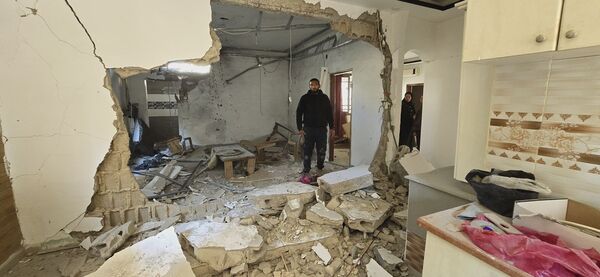

The first witness, a nurse from Gaza, reported via video from the Strip that he was locked in a cage, suspended "like a punching bag," beaten on his genitals until they bled, and attacked with dogs by other detainees.


Saeed Mohammed Abdel Fattah Abu Al-Jidyan, 26, said he was detained on November 18, 2023, in the early days of the war, while working at Al-Shifa Hospital. Through an interpreter, he described being ordered to undress and held naked for three days.


Israeli forces launched two major airstrikes over several days on Al-Shifa Hospital, Gaza's main hospital, during the war, accusing Hamas of using it for military purposes, allegations denied by hospital staff.


During interrogation by military investigators, including about the tunnels, Al-Jedyan said he knew nothing about them, adding, "The torture affected my genitals."


Another witness from Gaza said he was held at Sde Teiman and another facility, and by the time of his release, he said he had lost nearly 30 kilograms (about 65 pounds). It was not immediately clear how long he had been held. He said, according to a translator, "This is not just my story. I am just one person among many held by the occupying Israeli force."


These accounts could not be independently verified. The Israeli diplomatic mission in Geneva did not immediately respond to a request for comment.


The Hamas-led attack on southern Israel on October 7, 2023, killed approximately 1,200 people, including 311 serving soldiers, according to Israeli government reports. More than 250 people were taken hostage, and dozens remain in Gaza. According to the Gaza Health Ministry, more than 48,500 Palestinians were killed in the war, most of them women and children.


Citing eyewitness accounts and other evidence, Israeli authorities claimed that Hamas-led militants committed widespread rape and sexual violence. The commission attempted to speak directly with Israeli victims but was unable to do so, citing Israeli government "obstruction" and difficulty accessing them, according to the UN human rights office.


The committee's sessions continue on Wednesday. It is expected to issue a report on Thursday on Israel's alleged "systematic" use of sexual and other gender-based violence against Palestinians since the attacks of October 7, 2023.


The committee, which was formed in May 2021 following further violence between Hamas and Israel, has previously held hearings on issues such as the designation of several Palestinian NGOs as terrorist organizations and the killing of Palestinian journalist Shireen Abu Akleh.

PALESTINE

Wed 12 Mar 2025 12:45 pm - Jerusalem Time

Nablus: Suffocation cases reported during raid on Burqa town

A number of citizens suffered suffocation on Wednesday after Israeli occupation forces stormed the town of Burqa, northwest of Nablus.


Local sources reported that occupation forces stormed the town of Burqa, firing heavy bullets, tear gas, and sound bombs, targeting the area surrounding the town's school, causing a number of residents to suffer from suffocation.

PALESTINE

Wed 12 Mar 2025 12:13 pm - Jerusalem Time

More than 12 million violent posts against Palestinians

7amleh - The Arab Center for the Advancement of Social Media released its annual report, "The 2024 Racism and Incitement Index," which reveals an alarming rise in hate speech and digital violence against Palestinians, particularly on X and Facebook.


According to data monitored by the report, 12,482,041 incitement and violent posts were monitored in Hebrew during 2024, at a rate of 23.6 posts per minute, reflecting a dangerous increase in the use of digital space as a tool for spreading hostility and incitement.


The report reveals a close connection between the rise in hate speech and political and military developments, particularly during the genocide targeting Palestinians in Gaza.


He explains that political, ethnic, and religious motives were the primary drivers behind the escalation of this discourse, which not only incites against Palestinians in general but also targets Palestinian Jerusalemites in particular. A total of 8,484 inflammatory and violent posts against Palestinian Jerusalemites were documented, most of them on the X platform, a dangerous indicator of the systematic targeting of this group.


The report also monitors the phenomenon of joy and schadenfreude over the killing and injury of Palestinians inside Israel, documenting 9,289 posts in which Israeli social media users expressed joy over the killing of Palestinians as a result of shelling.


This phenomenon reveals the growing normalization of digital violence in Israel, and the use of the digital space as a tool to promote racism and encourage incitement.

The report highlights a significant gap between digital platforms in dealing with inflammatory content, with 79% of inflammatory content documented on X, compared to 21% on Facebook.


Although the number of Israeli users on Facebook is much larger, X accounts for the largest share of violent content, reflecting the platform's failure to impose any censorship on hate speech published in Hebrew.


The report also warns of Meta's recent changes to its content moderation policies, whereby the company has decided to limit its monitoring to "extremely dangerous" violent content. This means that hate speech against Palestinians will continue to spread unchecked, contributing to its normalization and entrenchment in the digital space.


The report calls for "strict measures by social media platforms, the international community, and decision-makers to curb the escalation of hate speech against Palestinians by strengthening content moderation mechanisms, removing violent and inflammatory content in Hebrew at the same level as in other languages, conducting independent and public assessments of the impact of social media platforms on human rights, and allocating linguistic and technical resources to monitor Hebrew content to ensure that platforms are not exploited for incitement."


The report also emphasizes the need to ensure transparency and accountability in handling reports of digital rights violations, engage Palestinian civil society in developing oversight mechanisms, and prevent the use of digital technologies to incite violence or facilitate war crimes.


The 2024 Index of Racism and Incitement report emphasizes the urgent need to take practical and urgent steps to curb the rise of digital hostility against Palestinians and ensure that digital platforms are safe spaces for all, not environments for the production of violence and incitement.

PALESTINE

Wed 12 Mar 2025 12:08 pm - Jerusalem Time

12 dead in Gaza in 24 hours, bringing the death toll to 48,515.

The Ministry of Health in Gaza announced on Wednesday that the death toll in the Gaza Strip has risen to 48,515, the majority of whom are children and women, since the start of the Israeli occupation's aggression on October 7, 2023.


The ministry added in a brief statement that the death toll has risen to 111,941 since the start of the aggression, while a number of victims remain under the rubble, unable to be reached by ambulances and civil defense teams.


It pointed out that 12 dead (5 dead whose bodies were recovered, and 7 new dead) and 14 injuries arrived at Gaza Strip hospitals during the past 24 hours.

PALESTINE

Wed 12 Mar 2025 12:02 pm - Jerusalem Time

118 cultural workers were killed in Gaza last year.

The Palestinian Central Bureau of Statistics and the Ministry of Culture stated that 118 cultural workers were killed in the Gaza Strip during 2024.


A statement issued by the Central Bureau of Statistics and the Ministry of Culture on the occasion of Palestinian Culture Day, which falls on March 13th of each year, explained that the cultural sector in the Gaza Strip has been subjected to a process of annihilation and destruction carried out and is still being carried out by the Israeli occupation, which targeted landmarks of the Palestinian presence, including literary and artistic figures, cultural and heritage sites, centers, libraries, and museums. It also destroyed cultural sites registered internationally on the World Heritage List, including: the Balakhiya site and the Tell Umm Amer site, which is famous for its mosaic floor.


The statement noted that the West Bank governorates are witnessing a significant escalation in attacks targeting cultural institutions and their staff, leading to the cancellation of numerous events and significant damage to cultural infrastructure.


He pointed out that the number of cultural centers operating in the West Bank decreased from 510 in 2023 to 492 in 2024.


The number of cultural activities held in cultural centers in the West Bank in 2024 also increased slightly compared to the previous year, reaching 5,788 in 2024 compared to 5,477 in 2023. Courses, however, still hold the top spot among cultural activities held in cultural centers, accounting for approximately 72% of activities.


The number of participants in cultural activities implemented by cultural centers operating in the West Bank during 2024 amounted to approximately 217,000 male and female participants (of whom approximately 211,000 participated in cultural activities held in person (approximately 97%)).


The number of operating museums in the West Bank reached 26 in 2024, of which two declined to provide data. The number of visitors to the museums that provided data in the West Bank reached approximately 80,000 in 2024 (81% Palestinian and 19% of other nationalities). Data indicates that the highest number of visitors in 2024 was during April, reaching approximately 14,000 visitors, while the lowest number was during February, reaching approximately 3,000 visitors.


The number of plays performed in theaters in the West Bank fell by more than half in 2024 compared to the previous year. There were 15 operating theaters in the West Bank in 2024, including one theater that declined to provide data.


The statement continued: 159 plays were performed in West Bank theaters in 2024, including 98 plays for children, 11 plays for adults, and 50 plays for both children and adults. The number of viewers of the plays reached approximately 19,000, with the highest number of viewers reaching approximately 3,000 in November, while the lowest number was in January, reaching only 140 viewers.

ARAB AND WORLD

Wed 12 Mar 2025 12:02 pm - Jerusalem Time

Witkov begins meetings in Doha to extend the first phase of the ceasefire.

US President Donald Trump's Middle East envoy, Steve Witkoff, arrived in Doha on Tuesday evening in an attempt to broker a new agreement for the release of Israeli prisoners and a ceasefire between Israel and Hamas, according to US officials, according to US media outlets that accompanied the envoy during his visit to Saudi Arabia in recent days.


These talks are the first since President Trump took office and since the original agreement between Israel and Hamas, which was implemented on January 19, the day before Trump took office, and established a 42-day ceasefire in Gaza in exchange for the release of 33 Israeli detainees in its first phase, which ended on March 1.


Sources said that Weiktov will meet with Qatari Prime Minister Mohammed bin Abdulrahman Al Thani on Wednesday (March 12). Weiktov praised Qatar on Monday for its "outstanding" mediation efforts, adding that Egypt, Saudi Arabia, and the United Arab Emirates were also helpful.


An Israeli official said Tuesday that Israel hopes the United States can propose extending the ceasefire for about two months, with Hamas releasing about half of the remaining hostages in advance.


Hamas has so far rejected the proposal, insisting that both sides adhere to the framework agreed upon on January 15.


In turn, Israel's Channel 12 News reported Tuesday evening that mediators Qatar, the United States, and Egypt are pushing Hamas to demonstrate its seriousness by accepting the offer, thus providing more time for reaching broader agreements on the ongoing ceasefire.


The Trump administration is pushing for a deal that would lead to the release of all remaining hostages, extend the ceasefire beyond the holy month of Ramadan and the Jewish holiday of Passover, and possibly lead to a long-term truce that would end the war.


Hamas still holds 59 detainees in Gaza, while Israeli forces have confirmed the deaths of 35. Israeli intelligence believes 22 are still alive, and the condition of two others is unknown.


Among the remaining detainees are five Americans, including 21-year-old Aidan Alexander, who is believed to be alive.


The White House revealed on Wednesday, March 5, that the President's Special Envoy for Hostage Affairs, Adam Boehler, had met with senior Hamas officials, with their last meeting having taken place on Tuesday, March 4.


During the talks, Buhler discussed the possible release of Alexander and the remains of four other American hostages as a means of launching a broader deal for the release of all remaining hostages and a long-term truce.


The Wall Street Journal reported Tuesday that the Trump administration is shifting its focus away from direct talks with Hamas and returning to key Gaza ceasefire negotiations in Qatar, after its discussions with the Palestinian militant group raised concerns in Israel and yielded little progress.


US Secretary of State Marco Rubio defended Trump's hostage envoy Adam Boehler's meeting with Hamas, but said it was a one-off attempt to secure the release of some hostages and failed. The administration's Middle East envoy, Steve Witkoff, is scheduled to arrive in Doha on Wednesday, where he will attempt to revive talks between Israel and Hamas, which have now stalled after the first phase of a ceasefire agreement reached last January expired.


"That doesn't mean he was wrong to try," Rubio said of Boehler's talks with Hamas as he headed to Saudi Arabia on Monday evening. "But our primary focus is on the ongoing process in Qatar."

PALESTINE

Wed 12 Mar 2025 10:39 am - Jerusalem Time

Gaza Strip municipalities face a comprehensive humanitarian disaster.

The Gaza Strip Municipalities Union said that Gaza is facing a comprehensive humanitarian disaster due to power outages and the closure of crossings, in light of the ongoing catastrophe in the Gaza Strip resulting from the devastating Israeli aggression that has been ongoing for 16 months.


The Gaza Strip Municipalities Union stressed in a statement issued Wednesday the urgent need to provide sufficient and sustainable supplies of water and electricity, especially after the central desalination plant was shut down due to the Israeli occupation's power outage, threatening the lives of Palestinians and exacerbating health and environmental crises.


The Union condemned the recent decision by the Israeli Minister of Energy and Infrastructure and the continued power outage in the Gaza Strip since the beginning of the aggression. This has deprived the Strip's residents of their primary source of energy, paralyzing basic services, particularly health, water, and sanitation. Desalination plants, sewage treatment plants, and numerous municipal facilities have ceased operation, threatening the spread of epidemics and diseases.


He stressed that the continuation of these punitive policies against civilians constitutes a flagrant violation of international humanitarian law and exacerbates the suffering of Gaza's residents, who are facing the worst humanitarian crisis in history. Furthermore, the denial of entry of construction materials, spare parts, machinery, and alternative energy systems has limited municipalities' ability to find effective solutions, deepening the crisis and threatening the collapse of basic services.


The Gaza Municipalities Union reiterated its urgent appeal to the international community, humanitarian organizations, and relevant parties to intervene immediately to secure a sustainable supply of electricity, fuel, and water, guarantee the entry of essential equipment and materials needed to ensure the continued operation of municipalities, and avert further health and environmental disasters that threaten the lives of more than two million people trapped in Gaza.


A week ago, Israeli Energy Minister Eli Cohen announced the revocation of the license allowing the electricity company to supply power to the Gaza Strip, nine days after the decision to ban the entry of fuel and humanitarian aid into the Strip.


The Israeli occupation authorities have cut off electricity to the entire Gaza Strip since the start of the genocidal war on the Strip on October 7, 2023.

PALESTINE

Wed 12 Mar 2025 10:29 am - Jerusalem Time

Israeli occupation continues to close the Kerem Shalom and Erez crossings for the eleventh day.

The Israeli occupation forces continued to close the Kerem Shalom and Beit Hanoun (Erez) crossings today, Friday, for the eleventh consecutive day.

The Israeli government, headed by Benjamin Netanyahu, decided last Saturday evening to close the border crossings and halt the flow of aid and goods into the Gaza Strip, claiming that Hamas had refused to extend the first phase of the agreement and to comply with a proposal by US envoy to the region, Steve Witkoff.


As a result of the Israeli decision, prices of basic goods and commodities in the Gaza Strip immediately soared, amid government and international warnings of a return to starvation among the population if the closure of the crossing remains in place.

Following the decision to close border crossings and halt the flow of goods, current and former Israeli officials launched incitement campaigns against the Gaza Strip and its residents. Most notable among these were statements by the Deputy Speaker of the Knesset and former Minister of National Security Itamar Ben-Gvir, who called for bombing warehouses containing goods and cutting off electricity and water supplies.

PALESTINE

Wed 12 Mar 2025 9:58 am - Jerusalem Time

Israeli occupation escalates its aggression against Tulkarm and its camp for the 45th day.

The Israeli occupation forces continue their aggression on the city of Tulkarm and its camp for the 45th consecutive day, and on the Nour Shams camp for the 32nd day, amid an unprecedented military escalation that includes heavy reinforcements, a tight siege, and widespread house raids, including arrests and the forced displacement of citizens at gunpoint.


Local sources reported that Israeli occupation forces forced several families in the Jabal al-Nasr neighborhood of Nour Shams refugee camp to leave their homes this morning after raiding them, amid intense gunfire to terrorize residents. Other homes were converted into military barracks.


Meanwhile, occupation forces deployed foot patrols around the camp, while bulldozers leveled another stretch of Nablus Street adjacent to its entrance, destroying infrastructure and civilian property.


Meanwhile, Tulkarm camp witnessed a heavy presence of military vehicles and infantry units, which, late last night, began burning homes in the Daba Umm Juhar area in the Balawneh neighborhood. Explosions were heard, accompanied by heavy gunfire. Meanwhile, occupation bulldozers began leveling several areas, including the Al-Wakala and Al-Hamam neighborhoods, targeting shops, homes, and infrastructure.


Eyewitnesses reported that occupation soldiers robbed shops in Tulkarm refugee camp, after bulldozing their doors and vandalizing their contents. They also pursued citizens who tried to reach their homes, forcing them to undress and abusing them at gunpoint.


In a related context, occupation forces deployed after midnight in the city's streets and neighborhoods, including the southern neighborhood, the street of the Martyr Thabet Thabet Governmental Hospital, Nablus Street, and the suburbs of Dhnaba Shuwaika, Artah, Iktaba, and Al-Azab.


Local sources reported that the occupation forces arrested Ahmed Raafat Ali Zayet from Shuwaika, Muhab Al-Attar from Ezbet Al-Jarad, and Abdul Rahman Awda from the Dhnaba suburb, after raiding their homes and vandalizing their contents.


Occupation forces also stormed the courtyard of the Cultural Sports Club in the city's northern neighborhood, which houses displaced persons from the Tulkarm and Nur Shams camps. They were stationed at its gate and surrounding areas, but no arrests were reported.


The Iktaba suburb witnessed vehicle searches by occupation soldiers, specifically in the employee housing area opposite Nour Shams camp, amidst harassment of passengers and subjecting them to field investigations.
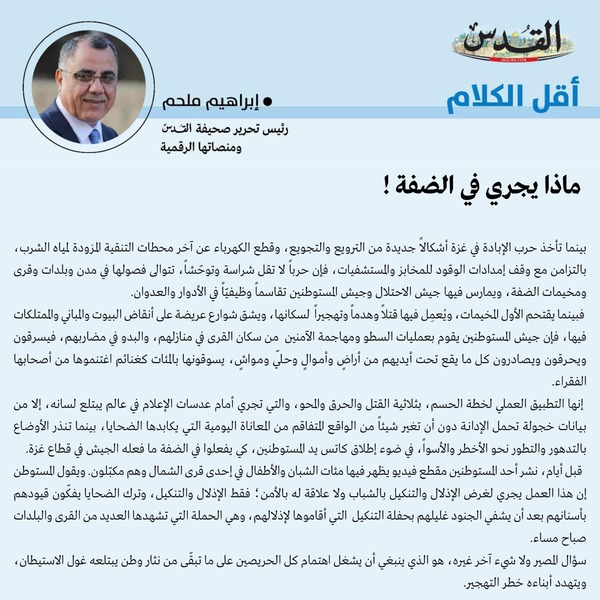

Israeli occupation forces, with heavy machinery and bulldozers, have reinforced their military presence in front of the homes they have seized on Nablus Street, which connects the Tulkarm and Nur Shams refugee camps. They have transformed these homes into military barracks and set up mobile checkpoints to restrict the movement of civilians.


The ongoing aggression on the city and the camps has so far resulted in the martyrdom of 13 citizens, including a child and two women, one of whom is eight months pregnant. Dozens have also been injured and arrested, and more than 9,000 people have been forcibly displaced from Nour Shams camp and 12,000 from Tulkarm camp. This has also resulted in the total destruction of infrastructure, homes, and shops, which have been completely and partially demolished, burned, and vandalized.

OPINIONS

Wed 12 Mar 2025 9:43 am - Jerusalem Time

Negotiating with Hamas.. Why did Trump do it and why did the movement accept it?

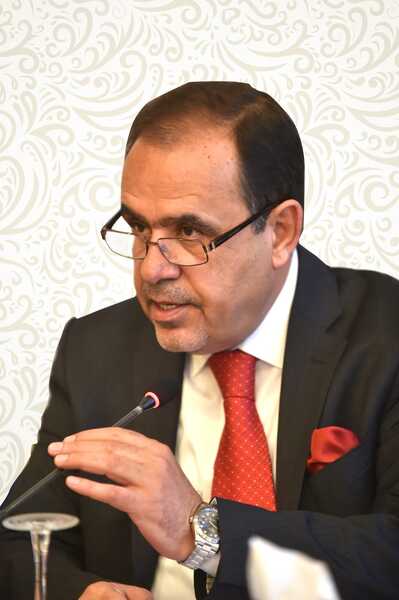
Oraib Al Rantawi

Oraib Al Rantawi

Opinion Writer

News of direct talks between the Trump administration and the Hamas leadership has had a negative impact on many in the region, especially in Tel Aviv.

Tel Aviv was waiting for the gates of hell to open on the movement and its incubator in Gaza, but the gates of hell did not open. Instead, direct talks were held between Trump's envoy, Adam Boehler, and Hamas leaders. Washington under Trump, unlike the Biden era, does not ask anyone for permission regarding what it does or intends to do, even if that "Sunday" is Israel, its pampered protégé.

More important than the horror of the surprise that will unfold later, are the meanings and messages it contains:

First, the Netanyahu government and its coalition, which has angered Trump and his team, are no longer entrusted with managing the negotiations, a matter of great importance to the administration, particularly regarding the "hostages."

Second, any progress on the direct negotiating track between the administration and the movement will not be able to be vetoed or even obstructed by Israel. Like other countries in the world, Israel avoids provoking the "raging elephant in the china shop," even as it enjoys the status of the most favored nation.

Third, the shifts in the positions of the American president and his administration that may come in the coming days. No one, not even the "lying" astrologers, even if they are telling the truth, can predict the shocking surprises they have hidden under their hats.

Other capitals in the region were struck by such news as a thunderbolt, having barely recovered from the shock of the fall of the Assad regime and the arrival of rival Islamist factions to replace it in the "People's Palace" overlooking Damascus. Years of demonization, incitement, persecution, and eradication have been wasted, and Hamas and its sisters, both brothers and sisters, are now looming large on the negotiating table and in international relations, through other gateways.

Why did Trump do what he did?

A question that has troubled observers, including the author of these lines, who were caught off guard by the news. But, in the name of "claiming wisdom in retrospect," we say that Trump is "obsessed" with the issue of the "hostages" and detainees, and that this issue has become linked to his reputation and prestige. He has made promise after promise to "liberate" them and return them to their families.

He knows that Netanyahu does not attach equal importance to this issue, so he decided to take matters into his own hands with his negotiators, rather than leave the matter to Netanyahu and Smotrich and their extremely narrow political, partisan, and personal calculations. This is something Trump neither wants nor tolerates.
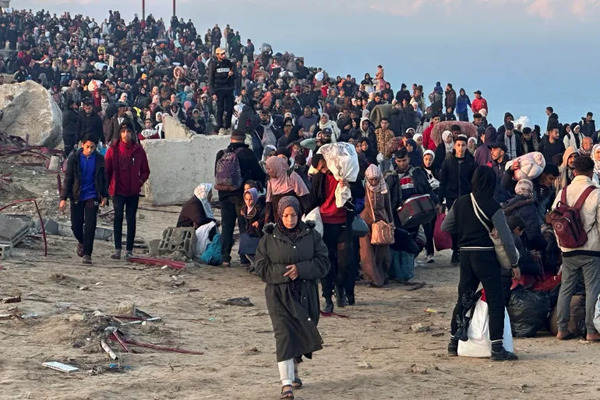
There is another dimension, lurking behind the American decision: the man who was described as someone who preferred to deal with the "strong" and conclude deals with them alone, looked at the Palestinian situation and decided to deal with the force that, despite the fifteen-month war, still holds the reins of the land, above and below it, and is holding "hostages" and has the power to decide whether to release them or keep them in their hiding places.

The "practical" and "pragmatic" man, as he is described, did not stand for long in the face of the decisions of his predecessors not to talk to organizations classified as "terrorist," and sent his envoy to Doha. In my opinion, and not all suspicion is sinful, the man mocked what were said to be the "guiding principles" of previous US administrations, prohibiting contact with "terrorism and terrorists," especially since he is fully aware, and has stated this publicly time and again, that the administrations that preceded him not only negotiated with "terrorism," but also supported it and worked to unleash its "genie from the bottle," as evidenced by his accusations that Barack Obama and Hillary Clinton supported ISIS and even worked to create it.


Why did Hamas respond to Washington's call?

I believe the movement has never said it would not negotiate directly with Washington, and that the only red line the movement has drawn in all its literature has been Israel alone. The movement has engaged in contacts with semi-official Americans and European officials of varying levels and profiles, so there is nothing new or surprising about the movement's position.


In addition, the movement saw in the American request an opportunity to mitigate the calculations of Netanyahu and his team, which have prevented and continue to prevent the achievement of final agreements and the failure to implement the agreements concluded, always due to calculations related to the worlds of domestic and partisan politics in Israel.

A new negotiating channel, this time direct, with Washington, will enable the latter to hear from Hamas, not about it, and from the mouths of its leaders, not others. This new channel could provide the American with a different narrative, different from the one Israel has been using to spread lies and black propaganda about the movement, its people, and its cause.

Hamas, too, is keen to be a "second address" for the Palestinian people, after its paths to integration into the first address, the PLO and the PA, were blocked.

Hamas deserves to be recognized "realistically," even if it falls short of formal recognition, and by whom? By a superpower. This is a political achievement for Hamas, and will open new doors, including to other capitals in the Arab region and on the international stage.


Any concerns or caveats?

We will consider what has been attributed to Adam Boehler as if he never said it, especially the part related to the movement's willingness to lay down its weapons and retire from politics. This is "heresy" that cannot be uttered by a rational person. Even if the man did say it, we must consider his motives for saying it, not Hamas's motives for expressing it, especially since he is an envoy of an administration that says whatever it wants, however it wants, without oversight or accountability.


That the movement would express its willingness to lay down its weapons is believable, provided it is accompanied by the establishment of a Palestinian state and a comprehensive political solution. Musa Abu Marzouk previously said something similar. In any case, weapons are not an end in themselves, but rather a means to achieving an end. Weapons are not laid down on the ground or handed over to enemies except in the event of complete surrender, which is not the case with Hamas, as various Israeli and Western sources attest. Weapons and militants can and will be the nucleus of the army of the future state.

As for saying that Hamas has expressed its willingness to retire from politics, this is something I don't think the Americans, or even the Israelis, would consider or demand. Quite the opposite. All the demands made of Hamas focus on transforming it into a political party that integrates into the Palestinian system and abandons the "armed struggle." Nothing else, or more, is required.

What would Hamas do if it abandoned its weapons and politics? Would it transform into an Islamic "proselytizing" organization? Would it become a branch of the Tablighi Jamaat? Would it transform into a charitable-social organization or an Islamic "Caritas"? What would be the envisioned role of a movement without weapons, and especially without politics?

Thousands of comments on this piece of information attributed to the American negotiator have exposed the wretchedness of those who provided it, and have failed to reveal the true position and direction of the movement. I say this without bothering to ask Hamas about the accuracy of what has been attributed to it.

Those who have followed Hamas's direct dialogue with Washington with analysis and commentary are divided into various sects and denominations. Some are "very revolutionary" who don't want the resistance's garb to be soiled, while others are "puritanical" who have long viewed any connection with the "Great Satan" as "a devilish abomination" to be avoided. We respect these people, find fault with them, and forgive them.
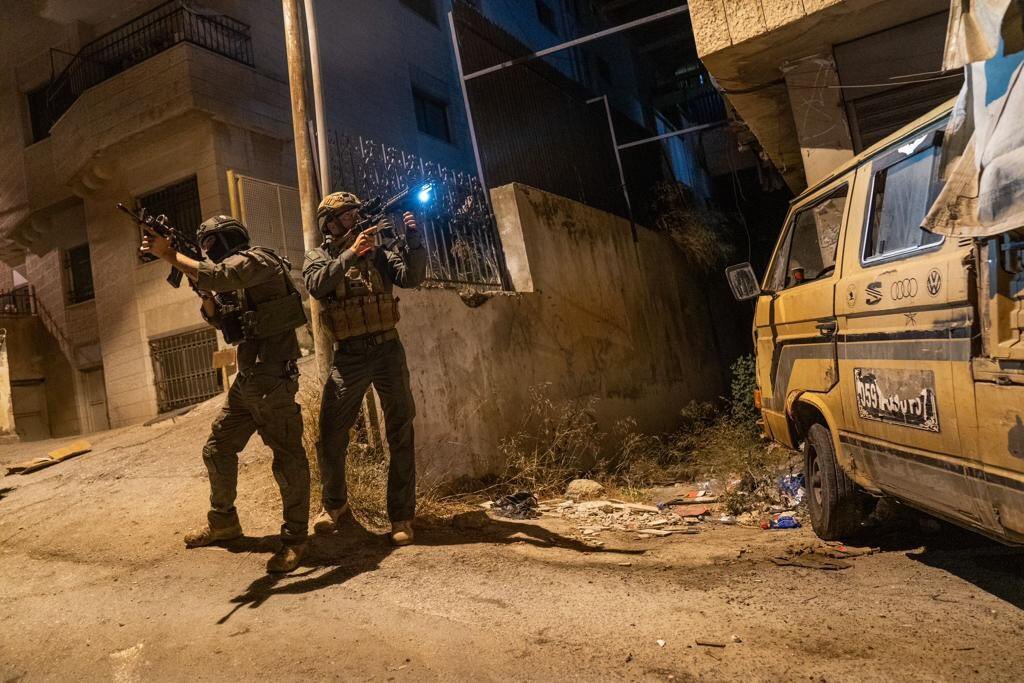

Some of them are motivated by concern, jealousy, and legitimate fears based on the experience of direct negotiations between the United States and the PLO. We also respect these people and do not fault them, even if we criticize some of them for assuming the role of "teacher" and "mentor," as if they were dealing with a movement new to politics and national action, whose leaders had not undergone one of the most complex and difficult experiences of indirect negotiations with Israel, and they demonstrated great strength and intelligence.

The bottom line, as we see it, is this: We view the direct dialogue between the Hamas leadership and the Trump administration as a significant turning point and a significant gain for the movement. It is a development that may have repercussions, one that may lead to a breakthrough in the negotiations regarding the war on Gaza, or one that may not lead to this outcome.

The process is important in and of itself, regardless of its outcomes. Its complete success could force Hamas to make unacceptable concessions, while its complete failure would have major repercussions.
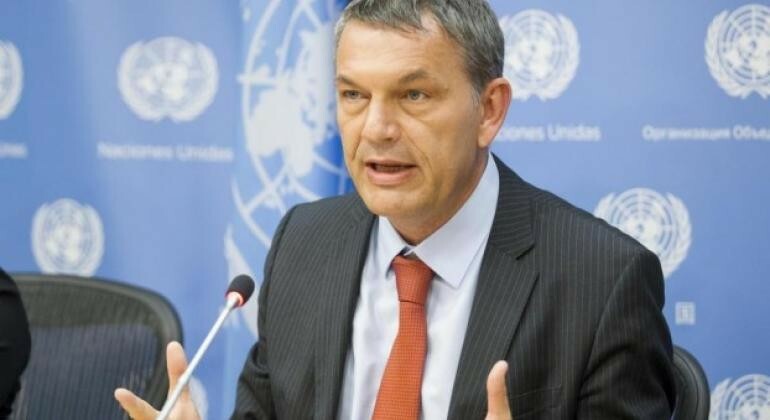
This chapter of negotiations may be more difficult than previous indirect negotiations, and dealing with Washington as a mediator may be easier than dealing with it as a direct party and negotiator. Risk is strongly present at the negotiating table, and with it come great opportunities and greater challenges. It is hoped that the movement will succeed in mustering all its experience and energies to emerge from this "birthplace with a lot of chickpeas," or at least, with a little of it. From Al Jazeera

OPINIONS

Wed 12 Mar 2025 9:39 am - Jerusalem Time

Trump's goals for direct negotiations with Hamas

Written by: Muhammad Ghazi Al-Jamal

Written by: Muhammad Ghazi Al-Jamal

Opinion Writer


The United States' direct negotiations with Hamas represent a development with significant implications for the negotiations to end the war in the Gaza Strip. It opens a path over which Israel's ability to influence matters less than previously. This explains Israel's apparent reservations about it.


While the occupying state's reception of this development appeared cautious and apprehensive, Netanyahu's office confirmed in a statement its knowledge of Washington's direct talks with Hamas, and said that Israel had expressed its views on these discussions to the Americans.
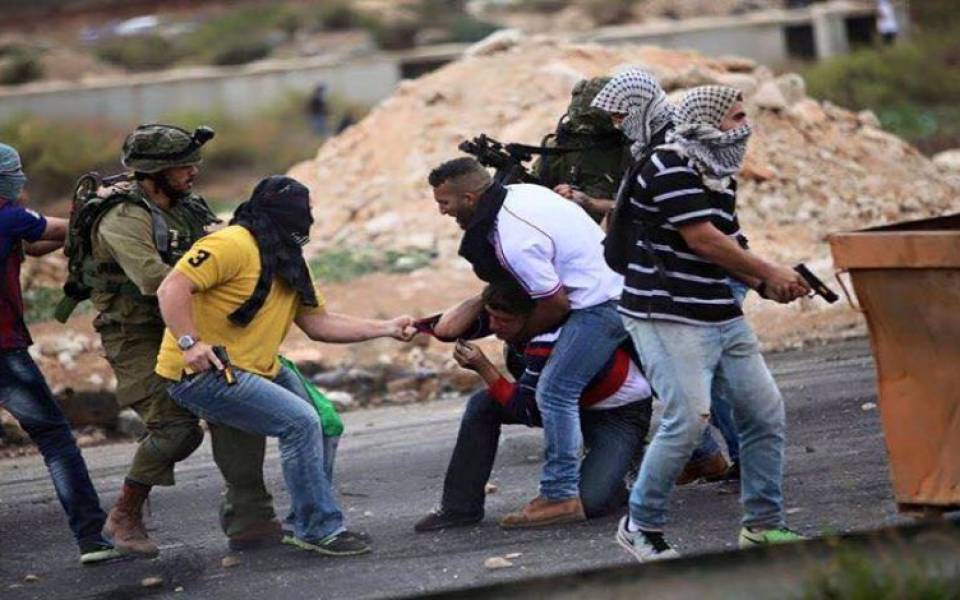

This formulation indicates a hidden dissatisfaction with the matter. In the same context, the newspaper "Israel Today" quoted an informed source as saying, "Israel is very concerned about the Trump administration's direct talks with Hamas."


The difference between direct and indirect negotiation

The US administration has traditionally avoided direct talks with Hamas, which it has designated as a terrorist organization since 1997. American politicians have repeated the slogan, "We do not negotiate with terrorists," since the 1970s, under the pretext of not strengthening the legitimacy of these organizations, even though they have repeatedly violated this rule.


Trump invited Taliban representatives to Camp David in 2019 in an attempt to reach a peace agreement, but canceled the meeting after continued Taliban attacks. Israel also negotiated with the Palestine Liberation Organization (PLO), with US support, during the Oslo Accords in 1993. This led to the PLO being recognized as a legitimate entity, despite having previously been designated a terrorist organization.
In this context, the US administration communicated with Hamas through European officials, as well as through former US government officials, such as former US President Jimmy Carter and diplomat Robert Malley, when he was not in government service.


Through this tactic, the United States also seeks to avoid making any commitments or taking any fixed positions. What mediators or retired officials say is generally not binding on the US administration.


In the current state of war, direct negotiations provide an opportunity to increase the effectiveness of negotiations, especially in light of the Trump administration's distinction between US interests and Israeli interests.


Event context

The role of a group of data appears in the context of the event, including:


1- The Trump administration's tendency to prioritize direct American interests, whether in terms of prisoners or in terms of its view of the war in Gaza and its broader repercussions.


This trend is evident in the White House spokesperson's justification for direct negotiations, stating, "Dialogue and talking with people around the world is in the best interests of the American people," as President Trump emphasized, believing it to be "a good faith effort to do what's right for the American people."


2- The US administration's concerns about Netanyahu's efforts to embroil it in wars that do not serve American interests. Last year's Israeli escalation placed the region on the brink of a regional war, following the bombing of the Iranian consulate in Damascus and the subsequent exchange of airstrikes between the two countries.


While the United States has in recent years avoided engaging in large-scale military confrontations in the region, due to the depletion of its resources and the distraction it faces from confronting its most significant threat: China's economic and military rise, which is leading to a decline in the United States' standing in the international system.


Trump's position on the war in Ukraine confirms this isolationist and cautious tendency toward spending on wars far from the United States.


This is also the position of his right-wing team, as his deputy, Vance, was one of 15 Republican senators who voted against the US aid package to Israel on April 24, 2024, which Trump had led at the time to delay until another package related to the borders was approved.

3- Israel's failure to achieve its declared war objectives, and the steadfastness of the Palestinian resistance despite the various tactics employed by the occupation, and despite the unprecedented American political cover, which causes political and financial exhaustion, prompting the American administration to seek new ways to achieve its interests and avoid wasting further time waiting for a solution that Israel is unable to achieve on its own.


4- In a broader historical context, this behavior is consistent with American history and a European legacy of containing the conflict in Palestine through negotiations with both parties, from the British Mandate over Palestine to the present.


Political meaning and implications

The most important political meaning of direct negotiations is to disentangle the American and Israeli tracks regarding prisoners, as there are now two tracks representing two parties with divergent interests.


In light of this disparity, the declared priority is American interests, not Israeli interests, even though there are many common interests between the two sides.


The most prominent repercussions of this development can be summarized as follows:


Weakening Israel's negotiating position, as the US administration's negotiations with both sides of the conflict diminish Israel's influence in determining the political and military course of the war.

In this context, Trump's harsh statements toward Hamas do not alter the reality of the American position's decline. Rather, they represent an expression of a reaction to the new negotiating position and an attempt to gain gains through exaggerated threats.


This is something that happened before, but was later reversed. Hamas was given a short deadline to release all prisoners on February 10, and then the response was referred to the Israeli side.


On the other hand, these statements may be intended to dispel the accusation of weakness against Trump's administration, at a time when it is forced to negotiate with an organization it considers a terrorist organization, a behavior that strengthens the movement's political standing.


Trump threatened Hamas on Wednesday, in what he called its "final warning," that he would end the movement if it did not immediately release all Israeli prisoners and return the dead.

Trump wrote on Truth Social: "This is your final warning! To the leadership, it's time to leave Gaza. You still have a chance. Also, to the people of Gaza; a beautiful future awaits, but not if you take hostages. If you do, you are dead!" Trump said there would be "hell" later if the prisoners were not released.


Increasing the chance of reaching a relatively long-term ceasefire agreement, by ensuring that this matter is not dependent on the tendencies of the extreme Israeli right.

Strengthening Hamas's political legitimacy as the party leading the Palestinian struggle and negotiating with the US administration. Although the negotiations focus on field issues, they open the door for the movement to be presented as a representative of the Palestinian people, expressing the people's adherence to their rights and freedom, and their steadfastness in the face of attempts to subjugate them and liquidate their cause.

The risk of a direct clash with the US administration is increasing, given Trump's highly personal behavior and exaggerated reactions.

In general, the impact of this variable remains limited in the long term, due to the existence of a joint American-Israeli position on liquidating the Palestinian cause in general, and undermining the Hamas movement in particular. However, it opens a breach in the wall of American-Israeli coordination, which was behind the continuation of the war for fifteen months. From Al Jazeera.

PALESTINE

Wed 12 Mar 2025 9:35 am - Jerusalem Time

Two Palestinians dead succumbing to their wounds in the southern Gaza Strip.

Two citizens died this Wednesday morning from wounds sustained by Israeli occupation forces in the southern Gaza Strip.


According to local sources, young Hamdan Imad Qashta died of his serious wounds in Rafah.


Another young man died of a head injury in the town of Khuza'a, east of Khan Yunis.

OPINIONS

Wed 12 Mar 2025 9:33 am - Jerusalem Time

Gaza between displacement and steadfastness

Ramallah - "Al-Quds" Dot Com

Ramallah - "Al-Quds" Dot Com

Opinion Writer

A foggy atmosphere prevails, with unclear features, in light of the continued random statements by US President Donald Trump regarding the displacement of the people of Gaza to neighboring countries, coinciding with the Israeli government's unwillingness to move to the second phase of the ceasefire.


Amid these political contradictions, Gazans, who have endured the horrors of war and destruction, cling to their hope of returning to their homes, whether partially or completely destroyed, and rebuilding their lives on their land. However, a major obstacle threatens this dream: the lack of guarantees for a permanent ceasefire.


On the humanitarian front, Gaza's residents suffer daily from the lack of basic infrastructure and the collapse of the health sector. They also face the harsh winter cold without shelter, after the Israeli war machine destroyed their homes. Under these harsh conditions, many children and the elderly lost their lives to the extreme cold, while others sought warmth in the remains of their partially destroyed homes, only to see their homes collapse, adding new pain to their tragedy.


Regarding the displacement issue, opinion polls conducted by several institutions have shown that the vast majority of Gazans refuse to leave their land, despite all the difficulties, and insist on staying. However, this does not negate the existence of a segment of citizens who express their desire to leave Gaza if they are given the opportunity to cross into Egypt without any costs, estimated at approximately $5,000 per person. This is in search of a safe life with the bare minimum requirements until a ceasefire is established and the actual beginning of Gaza's reconstruction.


With just over ten days of the holy month of Ramadan, which the people of Gaza welcomed with faith and optimism, signs are looming on the horizon that the ceasefire negotiations are faltering, entering a second phase, and the Strip is returning to a cycle of violence and destruction—something the exhausted people of Gaza do not want.

PALESTINE

Wed 12 Mar 2025 9:30 am - Jerusalem Time

Boler-Hamas negotiations: The principal negotiates on behalf of the agent

Major General Mohammed Al-Samadi: Israel violated the agreement and does not want to move to the second phase, and the United States is trying to create an alternative path to extricate it from the crisis.

Hani El Gamal: Israel did not expect the US administration to bypass its strategic partner in the region to reach out to Hamas.

Mohsen Abu Ramadan: Trump seeks to achieve the concept of "Greater America" by raising funds, securing resources, and promoting global investments.

Dr. Ali Al-Awar: Netanyahu cannot sabotage what was reached between Adam Boehler and Khalil Al-Hayya, nor can he obstruct negotiations between the US and Hamas.

Dr. Thaer Abu Ras: Hamas's meeting with the US envoy gives it a certain image of victory, and Israel is angry and not interested in completing the deal.


The contacts being conducted by the US Special Envoy for Hostage Affairs, Adam Boehler, with the Hamas leadership, following Israeli Prime Minister Benjamin Netanyahu's repudiation of the agreement/deal signed with the Palestinian resistance and his refusal to enter the second phase of the agreement, bring to mind what happened in the late 1990s, when Ehud Barak's government refused to implement the final requirements of the Oslo Accords. Then-US President Bill Clinton took the initiative and invited both sides to marathon negotiations at Camp David, where what was offered to the Palestinian side was far less than acceptable. The 2000 Intifada subsequently erupted.

Such current American contacts, and what also happened at Camp David, are a return of matters and the subject of negotiations to the principal (the Americans), after the agent (Israel) failed, over the course of fifteen months of a war of extermination, to achieve its goals, including the return of the Israeli prisoners. He was forced to sign a truce agreement with Hamas. However, what happened in the first phase of the scenes of the prisoner handover in Gaza dealt Netanyahu a slap in the face and exposed the falsity of his claims that he had eliminated the resistance and Hamas. These weekly scenes are now haunting him and shaking his popularity in Israeli society. Now, the American administration is intervening explicitly and publicly to save him and negotiate with Hamas, which it has considered a "terrorist movement" for many years.

Writers and analysts who spoke to Al-Quds said that Israel has breached the agreement with Hamas and does not want to move to the second phase. The United States is trying to create an alternative path to extricate Israel from the crisis. Israel did not expect the US administration to bypass it and begin negotiations with Hamas, which is classified as a terrorist organization.

They emphasized that Netanyahu cannot sabotage the agreement reached between Adam Boehler and Khalil al-Hayya, nor can he obstruct the negotiations between the US and Hamas. They also considered Hamas's meeting with the US envoy to give it a certain image of victory, which angered Israel.


Trump seeks to impose peace by force


Jordanian military strategic expert, Major General Mohammed Ali Al-Samadi, said that US President Donald Trump seeks to impose peace by force, aims to portray himself as a man of peace, and aspires to win the Nobel Peace Prize in the future.

He added: "There is harmony between Trump and Netanyahu, but there is also anger and concern about this openness. We have always said that Netanyahu is an unpredictable figure, and now the same applies to Trump."

He pointed out that the Trump administration's talks with Hamas did not change the latter's position on the war. Considering that Trump, since taking office on January 20, has approved $12 billion in arms deals, it is clear that the discussions took place in Doha last week.

He pointed out that the American website "Axios" was the first to reveal these unprecedented talks between Washington and Hamas, which aim to release the American hostages, in addition to discussing a broader agreement to end the war and reach a long-term truce. There is a sense of unease in Israel, but, in my opinion, it will not reach the point of international objection and criticism.

Al-Samadi explained that Israel fears it will be forced to pay a political or security price in exchange for implementing the terms of the agreement. However, the most important point is that these talks represent a shift in Washington's policy. The United States, which has designated Hamas as a terrorist organization since 1997 and repeatedly stated this, is now conducting direct talks with it without intermediaries, granting the movement political legitimacy.


Hamas links Gaza's future to the West Bank and Jerusalem


He pointed out that Israel has violated the agreement and does not want to move to its second phase. He therefore believes that the US administration is trying to create an alternative path to extricate Israel from the crisis by extending the first phase of the release of American prisoner Idan Alexander and four others believed to be among the dead, who held dual US-Israeli citizenship.

Al-Samadi explained that Hamas insists that Gaza's future cannot be shaped in isolation from the West Bank and Jerusalem. However, the lack of Arab political will to impose certain realities regarding the region's future contributes to a state of uncertainty and ambiguity, leading to continued incursions and costs to no avail.

He said that the US President's Special Envoy for Hostage Affairs, Adam Boehler, expressed optimism that an agreement would be reached soon to release all prisoners, not just Americans, within weeks. However, Israel does not want a long-term truce that would allow Hamas to strengthen its capabilities. The US envoy also expressed the fragility of the ceasefire, given Israel's continued imposition of a blockade, closure of crossings, starvation policies, cutting off water and electricity, and its practice of murder, crime, and shooting. Without any restrictions or hesitation, Israel will continue its assassinations of leaders, target any high-value target, and continue its raids based on intelligence information, but only after all prisoners and bodies are recovered.


Israel is able to create pretexts to continue the war.


Al-Samadi asserted that Israel is capable of fabricating justifications and pretexts to continue fighting, but with a different strategy. This strategy could include imposing a complete blockade and launching concentrated and powerful strikes, supported by airstrikes and ground and naval bombardment, in an attempt to increase Palestinian despair and pave the way for future voluntary emigration.

He pointed out that the dilemma facing Israel now is that it has exhausted its military objectives in the Gaza Strip, leaving it with no choice but to commit further acts of ethnic cleansing and genocide. In contrast, the US administration appears prepared to support it, giving it a green light, despite its diplomatic and political statements. Along with many Western countries, it continues to support the Israeli killing machine with more weapons and ammunition.

Al-Samadi emphasized the determination of the far-right government to end any political or military role for Hamas in the West Bank. Optimism does not mean that migration will not occur in the future, as attempts will continue, despite Jordan and Egypt's opposition to displacement attempts. However, there is a political will in the White House, and in the far-right government led by Netanyahu and Smotrich, that 2025 will be the year of annexation, and perhaps also the year of displacement.


Hamas has shown a firm stance in the face of American threats.


For his part, Hani al-Gamal, head of the European and Strategic Studies Unit at the Arab Center, said that Israel had not expected a US administration to take such a step, bypassing its strategic partner in the region, Israel, and moving toward engagement with Hamas.

He emphasized that Hamas had demonstrated a firm stance in the face of US threats, refusing to enter the second phase of the truce until the first phase had been extended, and was able to release several hostages without offering any guarantees that the Israeli military operation would cease.

He said that this hardline stance toward Hamas, along with the role of some Arab figures in the Trump administration, has helped clarify the picture for the new US administration, which has begun to realize that the Palestinian resistance is not the only entity obstructing proposed solutions, but rather that Israel is the party that is being stubborn and trying to impose a false narrative to control the US position.

Al-Jamal added: "These developments have prompted the United States to bypass its strategic partner, Israel, and move toward direct cooperation and negotiations with Hamas, for several reasons. Not only are these political decisions necessary, but also because there are six American hostages being held, including Alexander, who is suffering from a deteriorating medical condition, prompting the US administration to seek his immediate release, along with some other hostages. This move also aims to polish the US administration's image domestically."


Trump will not allow Netanyahu to obstruct his vision.


He pointed out that these moves worry Israel, not only because of the potential deterioration of its relationship with the United States, but also because Trump, in his Middle East plan, will not allow Netanyahu to obstruct his vision, whether economic or aimed at expanding Israel's relations with some Arab countries.

He added: "From this standpoint, Israel is trying to dismantle this new trend and may resort to escalation in the West Bank, through military operations, or attempt to eliminate the Palestinian Authority by intensifying attacks in areas such as Jenin and other cities. It may also exert pressure on the city of Jerusalem and seek to effect demographic changes there, exploiting the current situation."

Al-Jamal explained that Israel may adopt various strategies, including targeting Palestinian resistance leaders, whether from Hamas or other factions, as part of systematic assassinations. The appointment of a new Chief of Staff after Herzi Halevi, known for his hardline and bloody nature, also points to the possibility of a military escalation in Gaza.

Al-Jamal pointed out that the changes in the US position on the Arab-Israeli conflict reflect shifts in US strategy, as there has been a shift in US ideology toward Hamas, despite its designation as a terrorist organization. This shift could lead to a reshaping of the political landscape in the region.


Netanyahu's government is disturbed by contacts with Hamas.


In turn, writer and political analyst Mohsen Abu Ramadan said, "There is a state of unease and discomfort within the Netanyahu government regarding the contacts that took place between the Hamas leadership in Doha and US Presidential Envoy Adam Boehler."

He pointed out that, for Israel, this constitutes a violation of the political foundations related to the Palestinian issue, explaining that Israel considers the Palestinian issue to be an Israeli issue, and that the duty of the United States and Western countries supporting Israel is limited to supporting its orientations. However, Israel does not want direct contact between the Palestinians, with their various factions and parties, and the US administration and Western countries.

He added, "This contact goes beyond Netanyahu's slogan of 'absolute victory' and the dismantling of Hamas, in addition to some references to disarming it and removing its cadres and leadership from the Gaza Strip. Therefore, this constitutes an obstacle to the right-wing, fascist, and racist Netanyahu government's drive to target Hamas."

He pointed out that Israel, along with the International Quartet, classifies Hamas as a terrorist and illegitimate movement. This position was reaffirmed when Hamas assumed power in 2006 after winning the legislative elections. The Quartet then stipulated that Hamas must recognize previous agreements, recognize Israel, and renounce resistance—conditions that were adopted by the previous US administration.


Netanyahu may try to undermine the US administration's efforts.


He explained that the current phase will witness Netanyahu's attempts to undermine the US administration's efforts to reach understandings with Hamas, noting that the issue is not limited to negotiations between Adam Boehler and the Hamas leadership regarding American prisoners or the truce, but extends to addressing the future of the Gaza Strip, which may open the way for American investments on the Gaza coast and its sea, and may also contribute to strengthening relations with Saudi Arabia and pushing it towards normalization, which is not to Netanyahu's liking, as he seeks to achieve the idea of "absolute victory," which includes eliminating Hamas.

Abu Ramadan predicted that Netanyahu would resort to political and diplomatic methods, and perhaps military and field tactics, to thwart these negotiations, in addition to collective punishment measures and inhumane pressures, such as the use of starvation by closing crossings, preventing the entry of aid, and cutting off electricity.

He said that Boehler believes that the coming weeks may witness the complete resolution of the Gaza Strip issue, not just the issue related to prisoners, which would mean reaching a truce, reconstruction, and potential investments, in which the United States could have a significant share.

It should be noted here that the truce may require steps including ending the Hamas threat to the occupying state and a long-term truce lasting between five and ten years.


Trump will try to respond to Saudi demands.


Abu Ramadan pointed out that Trump, who adopts a commercial approach and believes in real estate deals and financial gains over moral principles, will attempt to respond to Saudi and Arab demands, especially given the $1 trillion Saudi Arabia has pledged to pay the US administration. This could push him to reject the idea of displacing Palestinians from Gaza, given the enormous financial returns the United States could generate from potential investments, particularly in the gas sector and the Sahel region.

On the political and diplomatic level, Abu Ramadan said, "Netanyahu sent a delegation to Doha, but it wasn't high-level, but rather technical in nature. It lacked decision-making authority and had to defer to Netanyahu and lower levels to make any decisions. Therefore, this move is only intended to throw dust in the eyes and prevent Israel from being held responsible for obstructing the release of the detainees, especially in light of the escalating Israeli protests and the sit-in by the families of the detained prisoners in front of the Israeli Ministry of Defense."

On the ground, Abu Ramadan added, "Netanyahu may resort, through the new Chief of Staff, Zamir, whom he described as an 'aggressive person,' to trying to drag Hamas into a response through assassinations or targeting specific sites and institutions, with the aim of creating a justification for violating the Doha agreement reached on January 19."


Realizing the concept of "Great America"


Abu Ramadan believed that Netanyahu views the Palestinian issue as an Israeli issue and believes that the United States should provide services to Israel. He dealt with the Biden administration with this mentality, refusing even to respond to humanitarian proposals, such as including aid in the generals' plan in northern Gaza. He also rejected Biden's proposal for a prisoner exchange and truce, despite the approval of all countries except Russia's reservations. Netanyahu rejected it, even though it was originally an Israeli proposal, which dealt a severe blow to the Biden administration, which seemed unable to impose any proposals on him.

He emphasized that Trump seeks to achieve the concept of "Greater America" by raising funds, securing economic resources, and promoting global investments. Therefore, when faced with a choice between Israel and America, he will choose America and his own interests over Netanyahu.

Abu Ramadan also stressed the need for the Palestinian Authority to recognize the importance of the dialogue between Hamas and the United States, which represents a unique and unusual event. This requires expediting the process of putting the Palestinian house in order, in accordance with the Beijing Agreement or any other formula. This is especially true given that the United States itself, which previously designated Hamas as a terrorist organization, is now engaging in dialogue with it, removing any reservations regarding dialogue with Hamas within the context of a comprehensive national framework aimed at putting the Palestinian house in order.


Important development: The US administration is negotiating with Hamas.


For his part, Dr. Ali Al-Awar, a specialist in regional and international conflicts, stated that the United States and Hamas acknowledged the negotiations taking place in Doha. Consequently, negotiations took place between US President Donald Trump's envoy, Adam Boehler, and Hamas Political Bureau member Khalil Al-Hayya in Doha. Both the US administration and Hamas confirmed the negotiations took place.

He added: In my estimation, we must first look at this very important development; Trump is negotiating with Hamas, and the US administration is negotiating with Hamas, and this is a very important development in the Palestinian-Israeli conflict, and also in the war on Gaza. These negotiations represent American recognition of Hamas's political capabilities and its existence, and that it cannot be ignored. Therefore, the meetings between Adam Boehler, US President Trump's envoy, and Khalil al-Hayya represent American recognition of Hamas's existence and political capabilities. Accordingly, the role of Hamas in the future of Gaza and its governance cannot be ignored.


Israel is dissatisfied and unaware of the negotiations.


Al-Awar emphasized that the most important question is: Was Israel satisfied with these negotiations? And did it know about them? In my estimation, these negotiations were far removed from Netanyahu's office and from Israel. After they were revealed in the media, Netanyahu's office, and Netanyahu himself, realized that negotiations were taking place between the United States and Hamas, which drove him crazy. He never expected negotiations between the Trump administration and Hamas. However, these negotiations continued for several weeks and are still ongoing, and the talk revolves around the release of Israeli prisoners who hold American citizenship and are held by Hamas. Some estimates put their number at ten.

He emphasized that the US administration has begun to fully understand the nature of the Palestinian-Israeli conflict and the new equations created by the Al-Aqsa Intifada, particularly regarding Hamas and its political and military power. Now, there is talk of a ten-year truce in the Gaza Strip, accompanied by a reconstruction phase and a complete end to the war on Gaza.

He said that Netanyahu sent an Israeli delegation to Doha to participate in the negotiations, or as he described them, "We are not in negotiations with Hamas about the agreement," "about the deal," or "the second phase." The fundamental question is: Did this Israeli delegation go to Doha to sabotage and destroy what was agreed upon between Hamas and Adam Boehler? Or did it actually go to participate in the negotiations and advance them? Or is the real goal to sabotage these negotiations between America and Hamas, and what has been achieved so far?


America's interests in the Middle East cannot be ignored.


Al-Awar explained that Netanyahu is well aware of US President Donald Trump's power and political influence. He has also begun to realize that the United States' political, strategic, security, and economic interests in the Middle East play a major role in shaping the region's map. In other words, American interests in the Middle East cannot be ignored. Netanyahu has begun to comprehend this new relationship, or the philosophy embraced by Trump.

He added: "In my estimation, Netanyahu cannot sabotage what was reached between Adam Boehler and Khalil al-Hayya, nor can he obstruct the negotiations between the US and Hamas, because the US administration has extensive experience in the negotiations that took place in Doha, whether regarding Afghanistan, South Sudan, or other issues in the Horn of Africa and the Middle East."

Steve Witkoff believes that Netanyahu is pressuring him to move to the second stage, which includes an official Israeli declaration of an end to the war on Gaza and the return of all Israeli prisoners to Tel Aviv, in exchange for the release of a large number of Palestinian security prisoners, according to the number agreed upon in the agreement, especially those serving life sentences, including leaders of the prisoner movement, such as Marwan Barghouti, Ahmed Saadat, Abdullah Barghouti, Ibrahim Hamed, and others.

Al-Awar pointed out that Netanyahu is facing enormous public pressure, with demonstrations escalating in Tel Aviv demanding that he proceed with the second phase, end the war on Gaza, and return all Israeli prisoners to Tel Aviv.


Implicit recognition of the existence and survival of Hamas


Dr. Thaer Abu Ras, a lecturer in the Department of Political Science at the University of Maryland-Washington, said that the Israeli government is already angry about the opening of this back channel with Hamas. This amounts to an implicit recognition of Hamas's existence and survival. Given that Netanyahu, in particular, has been seeking an image of victory since the beginning of this war, this development represents a practical shift in the equation.

He added: "Now there's a sort of victory image for Hamas, if they're photographed, for example, meeting with the American envoy, or even just the idea of meeting him. This gives them a certain image of victory. And Israel is certainly angry and not interested in concluding this deal."

He continued, "But she is in an awkward position, because she is dealing with an American president unlike any of his predecessors, a president who cannot be manipulated in this way. We saw what happened to Zelensky a week ago, during his visit to the White House, where he was subjected to humiliating treatment in full view of the world."


Netanyahu wants to avoid the Zelensky scenario.


Abu Ras emphasized that Netanyahu wants to avoid a similar scenario, so he won't discuss the issue. However, Israel will certainly try to derail the agreement, whether through assassinations or by complicating the entry of humanitarian aid. It has already cut off electricity to the Gaza Strip and significantly reduced the amount of humanitarian aid entering the Strip.

He added: "It hopes this will lead to chaos within the Strip, which could force Hamas to respond, perhaps by carrying out assassinations or similar measures. But Israel will certainly seek ways to obstruct the second phase of the deal."

He explained that the reason Israel refused to move to the second phase of the deal was related to Netanyahu's continued rule. He realizes that the extreme right will leave the government if the war in Gaza ends as it is, and he wants to keep them there. The withdrawal of the extreme right, led by Smotrich, from the governing coalition would lead to the fall of Netanyahu's government, which could leave him facing possible imprisonment due to the corruption cases against him.

Abu Ras concluded by saying, "For Netanyahu, the issue is survival, so he seeks to prevent the second phase of the deal and end the war. He will do everything in his power to prevent that."


PALESTINE

Wed 12 Mar 2025 9:28 am - Jerusalem Time

Israeli occupation forces injure a citizen and arrest others in the West Bank and Jerusalem.

This morning, Wednesday, Israeli occupation forces injured a citizen and arrested others in the West Bank and occupied Jerusalem.


In Nablus, the occupation forces stormed several neighborhoods of the city, including: the roundabout area and its surroundings, the Rafidia neighborhood, the old Al-Najah Street, and the Al-Mureij area. They stormed a number of homes, searched them, and arrested the young man, Yassin Kamal Adli Amira, after raiding his family's home in the Rafidia area.


These forces also stormed Balata camp and the Balata al-Balad area to the east, and climbed onto the roofs of some houses. The sounds of live bullets were heard inside, and the young man, Abdul Nasser Muzaffar Dhuqan, was arrested after raiding and searching his home.


In Ramallah, the occupation forces arrested journalist Ahmed Al-Khatib from the town of Beitunia and young man Fadel Allan from the village of Beit Ur al-Tahta, after raiding and searching their families' homes.


In the same context, occupation forces stormed the village of Deir Abu Mash'al, west of Ramallah, and raided the home of Jamil Ankoush, while their vehicles stormed the village of Shaqba, west of Ramallah.


These forces also set up a military checkpoint at the entrance to the village of Ein Siniya, north of Ramallah, and obstructed the movement of people leaving the city of Ramallah.


In occupied Jerusalem, occupation forces arrested citizen Majdi Qahoush after raiding and searching his home.


A young man was also injured by Israeli occupation forces' bullets today, Thursday, in the town of Al-Ram, north of occupied Jerusalem.


Local sources reported that occupation forces shot a young man, wounding him in the foot, near an iron gate they had erected east of the town.


These forces also raided the Shuafat camp, northeast of the Jerusalem Governorate, without any arrests being reported.


In Jenin, large numbers of occupation vehicles stormed the town of Araba and deployed throughout its neighborhoods, supported by infantry units. They raided citizens' homes and launched a widespread arrest campaign. Occupation soldiers also blew up the gate of the Arada Diwan after searching it.


Electricity was cut off in several neighborhoods in the town as a result of the aggression, while occupation soldiers fired live bullets randomly from one neighborhood to another in the town.


The occupation has intensified its raids on Jenin towns and villages since the start of the unprecedented Israeli airstrikes on the city and refugee camp of Jenin 51 days ago.


In Hebron, occupation forces stormed the town of Beit Kahil and arrested the teachers, sisters Iman, Afnan, and Enas Abdul Mahdi Al-Zahour, after raiding and searching their homes.


Separately, at the entrance to Al-Arroub refugee camp, north of Hebron, Israeli occupation forces detained citizens at a military checkpoint, with men and women in lines. Their IDs were photographed and their bags searched before they exited through the closed gate and crossed the checkpoint onto the main street. The women were photographed while showing their IDs to the soldier at the checkpoint.

PALESTINE

Wed 12 Mar 2025 9:27 am - Jerusalem Time

Jenin Camp: All families were displaced from Jaberbat neighborhood

The occupation forces used Energa shells in the city and the camp.

Dozens of undercover agents infiltrated the eastern district of the city before Suhoor.

- The continued destruction and burning of homes and bulldozing of roads in Tulkarm and Nur Shams camps.


Yesterday, an elderly woman and three young men were killed by Israeli occupation forces' bullets and Anbar rockets in the city of Jenin, which and its camp have been under siege and ongoing aggression for 50 days. The occupation forces also forced 20 families to flee their homes in the Jabriyat neighborhood.

"E" learned that the martyr is the sixty-year-old citizen Faiza Abu Ghali, and the second martyr is the boy Ismail Amjad Abu Ghali (17 years old), whose body was mutilated by the occupation and detained, while the identities of two of yesterday's four martyrs have not been identified, noting that the occupation also detained their bodies.

A correspondent for "I" reported that the new aggression began about an hour before the pre-dawn meal, when dozens of members of the special units (Musta'ribun) infiltrated the center of the eastern neighborhood of the city, stormed homes, took control of them, and installed snipers inside them. This was followed by the storming of about 40 military patrols reinforced with Eitan armored vehicles and bulldozers.

Residents reported that the army surrounded the eastern neighborhood, opened fire on any moving object, and injured a citizen inside his home. The army prevented ambulances from reaching him and providing him with first aid for several hours.

Citizen Amjad Abu Ghali said that Israeli snipers fired live bullets at his son as he was leaving an internet center in the Abu Ghali neighborhood. He said, "He was neither armed nor wanted, and as he was leaving the center, they shot him directly without reason." He explained that the army sealed off the area and prevented citizens and ambulances from reaching him, and he continued to bleed until he died.

He pointed out that his son's body was mutilated, as the soldiers threw his body into a bulldozer and took it to an unknown location.

The occupation forces stormed the Abu Ghali family's diwan, destroyed its contents, deployed snipers in the neighboring houses, and fired bullets and Energa shells at the home of Dhaif Allah Abu Ghali.

Abu Ghali explained that the occupation forces used bulldozers to destroy the surroundings and walls of his house, uproot trees, and destroy a water well. They also raided his house, which was still under construction, and destroyed its contents after bombing it.

Residents found traces of copious blood around the house, believed to be from a martyr whose body had been detained by the occupation forces.

At the same time, the occupation forces surrounded the Abu Ghali family's home in the Kafr Dan plain, west of Jenin.

Eyewitnesses reported that soldiers bombed the house with Energa shells, killing citizen Faiza Abu Ghali.

After storming the house, the soldiers burned it and arrested the martyr's husband, her son, her two young grandchildren, and eight other young men whose identities are unknown.

This coincided with the occupation forces imposing a siege on the Al-Suha neighbourhood east of Jenin.

Residents reported that soldiers stormed Al-Omari Mosque and buildings and houses in the area, amid heavy gunfire and energy bombs.

A correspondent reported that the soldiers conducted house-to-house searches, detained citizens, abused them, and subjected them to field investigations under the pretext of searching for wanted persons.

The occupation forces continued their raids and searches in the eastern neighborhood and Khallet al-Sawha until the morning hours, and when they withdrew, they left behind a trail of destruction to homes, vehicles, and infrastructure.

The occupation forces also sent military reinforcements to Jenin camp and continued their demolition and destruction of homes in the central neighborhoods of the camp.

Yesterday afternoon, occupation forces surrounded the Jaberbat neighborhood adjacent to Jenin refugee camp, stormed residents' homes, and forced them to flee at gunpoint.

The occupation forces stormed the town of Qabatiya, south of Jenin, and raided a number of homes.

On the other hand, large crowds accompanied the body of the martyr Ahmed Fathi Salah (31 years old) to his final resting place in his hometown, Kafr Dan, west of Jenin.

Hundreds of citizens participated in the funeral of martyr Salah, chanting slogans condemning the occupation and its crimes, and demanding an end to the Israeli aggression and the lifting of the siege on the city and camp of Jenin.

Salah was martyred in Jenin the night before yesterday, after being run over by a military patrol.


Tulkarm

The Israeli occupation forces continued their aggression on the city of Tulkarm and its camp for the 44th consecutive day, and on the Nour Shams camp for the 31st day.

Israeli occupation forces intensified their patrols in Tulkarm refugee camp, conducting extensive raids on homes and shops after breaking down their doors, blowing them up, and vandalizing their contents.

In Nour Shams camp, the occupation forces continued their tight siege, raiding homes and vandalizing their contents.

Local sources reported that occupation forces raided a number of homes in the employee housing area in the Aktaba suburb east of Tulkarm, searched them, vandalized their contents, and subjected their residents to hours of field investigation.

The media committee in Tulkarm camp stated in a press release that the occupation forces have completely isolated Tulkarm camp by closing all entrances with earth mounds, while simultaneously bulldozing and destroying property and infrastructure.

She added that the occupation forces deployed heavy military reinforcements to the Nour Shams camp and carried out extensive raids, resulting in significant destruction of homes and infrastructure.

She confirmed that residents were subjected to beatings and abuse during the raids, while the occupation forces seized control of a number of residential buildings and converted them into military sites.


demolition

The occupation forces demolished two vehicle showrooms belonging to Salem Nakhleh, near the village of Surda, north of Ramallah.

The occupation forces distributed demolition notices to a number of facilities in the town of Al-Auja, north of Jericho, according to the Al-Baidar Organization for the Defense of Bedouin Rights.


attacks

Settlers attacked the village of Haribat al-Nabi in the Masafer Yatta area, south of Hebron, assaulting residents and their property and destroying many of the contents of their homes.

Citizen Mutaib Rashid was injured after being beaten by settlers, and citizen Ali Sabah Rashid and his wife were also injured after being sprayed with pepper gas.

The occupation forces also arrested Ahmed Abdel Mohsen Rashid after assaulting him.

In the northern Jordan Valley, two citizens were injured while grazing sheep in the Umm al-Qaba plain area after settlers attacked a group of shepherds there, pursued them, and expelled them from the area, according to Mutaz Basharat, the settlement file official in Tubas Governorate.

The occupation forces also arrested the young man, Osama Ayed Zawahra, while he was herding sheep in the same area.

Yesterday evening, occupation forces stormed the villages of Burin and Osarin, south of Nablus, while dozens of settlers attacked civilians' vehicles near the entrance to Burin.

A young man was shot in the shoulder by live Israeli occupation forces, while several others suffered suffocation after Israeli forces stormed Bethlehem and Deheishe refugee camp.

Local sources reported that occupation forces stormed the city and camp, deployed to several locations, and climbed onto the roofs of several buildings, sparking clashes that left several civilians injured.

Two children (16 and 17 years old) were injured by live bullets in the abdomen and pelvis, in Al-Fawar camp in the Hebron governorate, after the occupation forces stormed the camp amidst the firing of bullets and tear gas canisters.


Yesterday, the occupation forces launched a wide-scale campaign of raids and arrests across the West Bank, including attacks on citizens, searches, and the vandalism of numerous homes.

These arrests included seven citizens from the city of Hebron and the towns of Sa'ir and Bani Na'im in the governorate, five citizens from the city of Nablus and the Askar and Balata refugee camps, five from the village of Kafr Ein and the Jalazone refugee camp in the Ramallah governorate, and three young men from the town of Husan in the Bethlehem governorate.

From the town of Azzun, occupation forces arrested dozens of citizens during a campaign of raids, searches, and widespread attacks targeting many citizens and their property.

Two citizens were injured by the occupation forces' bullets.

In Beit Fajjar, Bethlehem Governorate, three young men were injured by Israeli occupation forces' bullets in their lower extremities during an Israeli army raid on the town, firing live ammunition and tear gas canisters.

Yesterday evening, an Israeli special unit (undercover soldiers) kidnapped Majdi Qahoush from inside the Al-Shifa Medical Center in Kafr Aqab. He works at the center, eyewitnesses told the WAFA news agency.

OPINIONS

Wed 12 Mar 2025 9:26 am - Jerusalem Time

What is happening in the West Bank?

Ibrahim Melhem

Ibrahim Melhem

Opinion Writer

While the war of extermination in Gaza takes on new forms of terror, starvation, and power outages at the last desalination plant supplying drinking water, along with the cessation of fuel supplies to bakeries and hospitals, a war no less ferocious and brutal is unfolding in the cities, towns, villages, and camps of the West Bank, with the occupation army and the settler army practicing a functional division of roles and aggression.

While the former storm the camps, killing, demolishing and displacing their inhabitants, and paving wide roads over the ruins of the houses, buildings and property there, the settler army carries out robberies and attacks on the peaceful inhabitants of the villages in their homes, and the Bedouins in their tents, stealing, burning and confiscating all that falls into their hands of land, money, jewellery and livestock, which they drive away by the hundreds as spoils seized from their poor owners.

It is the practical application of the decisive plan, with its threefold aim of killing, burning, and erasing, taking place before the media's eyes in a world that swallows its tongue, except for timid statements of condemnation that do nothing to change the worsening reality of the daily suffering endured by the victims. Meanwhile, the situation threatens to deteriorate and evolve into something more dangerous and dire, in light of Katz's unleashing of the settlers to do in the West Bank what the army did in the Gaza Strip.

A few days ago, a settler posted a video showing hundreds of young men and children in a northern village being handcuffed. The settler says this act is carried out to humiliate and abuse the youth and has nothing to do with security; it's merely a matter of humiliation and abuse, leaving the victims to untie their shackles with their teeth after the soldiers have satisfied their thirst at a humiliation party, a campaign that has taken place in many villages and towns morning and evening.

The question of destiny, and nothing else, is what should occupy the attention of all those who care about what remains of the remains of a homeland that is being swallowed by the monster of settlement, and whose people are threatened with displacement.

PALESTINE

Wed 12 Mar 2025 9:20 am - Jerusalem Time

Hamas announces the start of a new round of negotiations, and mediators are exploring broader understandings regarding Gaza.

Hamas announced yesterday evening the start of a new round of ceasefire negotiations in Gaza, while Israel's Channel 12 reported that an Israeli delegation arrived in the Qatari capital to resume negotiations on a ceasefire agreement in the Gaza Strip. The channel noted that US envoy to the region, Steve Witkoff, is expected to join the negotiations today, Wednesday, "to try to achieve progress."

Hamas leader Abdel Rahman Shadid said in a statement published by the movement on its official digital platforms that the movement "began a new round of ceasefire negotiations today—yesterday, Tuesday—" without providing further details.

Shadid explained that "Hamas is dealing responsibly and positively with these negotiations, including those with the US envoy for hostage affairs (Adam Boehler)."

Last week, Boehler met with senior Hamas officials in the Qatari capital, Doha, without Israel's knowledge, to hold talks on the release of Israeli prisoners held in Gaza, including five Americans.

"We hope this round will yield tangible progress toward launching the second phase of negotiations, paving the way for an end to the aggression, the occupation's withdrawal from the Gaza Strip, and the completion of a prisoner exchange deal," Shadid said, according to Anadolu Agency.

For its part, Israel's Channel 12 reported that mediators are making "secret efforts" to secure a goodwill gesture from Hamas in the form of a limited prisoner release, aiming to buy more time to reach broader understandings, according to Al Jazeera.

Axios earlier reported, citing an Israeli source, that Witkoff expressed his willingness to remain in the region for three or four days to reach an agreement if negotiations reach a serious stage.

The source indicated that the US envoy confirmed that he would not meet with Hamas officials unless the movement made what he described as "tangible concessions."

Meanwhile, the Israeli Broadcasting Corporation reported that Israel will seek to implement the Witkoff Plan and extend the ceasefire for 60 days within the framework of the Doha talks.

She added that Tel Aviv is prepared to consider releasing prisoners in stages, rather than all at once, given its refusal to discuss ending the war. She noted that she had proposed releasing 10 living prisoners on the first day and the rest on the final day of the extension.

Earlier, an Israeli team consisting of representatives from the Shin Bet internal security service, the Mossad foreign intelligence agency, the army, and the coordinator for prisoner affairs traveled to Doha to participate in the upcoming talks.

The Israeli Broadcasting Authority said the team is technical and that chief negotiator Ronen Dermer will be absent, noting that Israeli negotiators were not authorized to discuss ending the war in the Gaza Strip.

On March 1, 2025, the first phase of a ceasefire and prisoner exchange agreement between Hamas and Israel concluded. The agreement, which began on January 19, was brokered by Qatar and Egypt and supported by the United States.

Israel has delayed the transition to the second phase of the ceasefire agreement in Gaza, refusing to abide by key terms, including the commencement of the withdrawal from the Philadelphi Corridor on the Palestinian-Egyptian border. It has also suspended aid and cut off electricity to the Strip.


While Israel sets conditions for moving to the second phase of the agreement, American negotiators are seeking a settlement that may include a new agreement.

US Secretary of State Marco Rubio said on Monday that US Special Envoy for Detainee Affairs Adam Boehler's contact with Hamas was a one-off.

Rubio added that Buehler had the opportunity to speak directly with those in control of the detainees, but that the attempt was fruitless.

The US Secretary of State stressed that his country's primary means of negotiation will continue through Special Envoy Steve Witkoff and his work with Qatar.


PALESTINE

Tue 11 Mar 2025 10:42 pm - Jerusalem Time

Israeli occupation forces fire bullets at homes east of Nablus.

Israeli occupation forces fired live bullets at citizens' homes in the town of Beit Furik, east of Nablus, on Tuesday evening.


Local sources reported that Israeli occupation forces stormed Beit Furik, firing live ammunition indiscriminately at homes, shattering windows in several areas. They also fired tear gas canisters, sparking clashes in the area.

PALESTINE

Tue 11 Mar 2025 10:22 pm - Jerusalem Time

Lazzarini stresses UNRWA's commitment to fulfilling its mandate despite challenges

The Commissioner-General of the United Nations Relief and Works Agency for Palestine Refugees (UNRWA), Philippe Lazzarini, stressed on Tuesday UNRWA's commitment to implementing its mandate despite challenges, in light of increasing political pressures and deteriorating humanitarian conditions in the Gaza Strip and the West Bank.


In his remarks before the official missions of member states to the United Nations in Geneva, Lazzarini stressed the importance of continued international support for UNRWA to ensure the provision of essential services to Palestinian refugees in all its areas of operation.


He pointed out that the occupation has been preventing humanitarian aid from entering the Gaza Strip for ten days, reverting the situation to what it was on October 8, 2023. He emphasized that this decision threatens the lives of civilians who have suffered for more than 16 months of ongoing war.


He said the ceasefire had demonstrated the possibility of humanitarian access, with a tenfold increase in aid deliveries from the start of the ceasefire until March 2. He stressed the need to allow aid access to maintain the progress achieved in the first phase of the ceasefire and meet the basic needs of the population.


Lazzarini highlighted the deteriorating situation in the West Bank as a result of the ongoing Israeli aggression, particularly in the northern West Bank, pointing to the occupation's policies of emptying several camps and displacing approximately 40,000 Palestinian refugees, the largest displacement of Palestinians in the West Bank since 1967.


He also expressed concern over the large-scale demolitions of residential areas, leaving residents without shelter to return to, adding that UNRWA continues to track the displaced and provide humanitarian assistance, including food, healthcare, and basic needs.


He said that the agency in Syria continues to provide health and education services that are vital for the survival of Palestinian refugees, and that in Lebanon, Palestinian refugees depend on its services.


Lazzarini emphasized that the Israeli Knesset's decisions do not only target UNRWA, but also any individual or organization that calls for adherence to international humanitarian law or defends Palestinian rights. He explained that many international non-governmental organizations are targeted, with the goal of silencing them.


He pointed to Israel's increasing efforts to restrict the work of international organizations through legislative measures, stating that UNRWA has faced serious operational challenges since anti-UNRWA legislation came into effect last January. He noted that the agency is under increasing pressure from the Israeli municipality in Jerusalem to evacuate its headquarters and end its services in occupied East Jerusalem. The occupation has also refused to renew the visas of the agency's international staff from the West Bank. In Gaza, some international UNRWA teams remain present, but Israel refuses to facilitate their entry or exit through the Kerem Shalom crossing, further complicating the agency's operations in the Strip.


Lazzarini reviewed some of the Agency's achievements since the ceasefire began in Gaza, including: providing food aid to nearly two million people, opening nearly 40 new emergency shelters, providing more than 60,000 tents to shelter displaced people, supporting a polio vaccination campaign that benefited some 200,000 children under the age of 10, and providing education to some 250,000 children through distance learning, with 70% of them now continuing their studies via a digital platform. Meanwhile, in the West Bank, the Agency continues to provide education to some 50,000 children, in addition to providing health services to hundreds of thousands of refugees.


Lazzarini warned of the danger of the ongoing misinformation campaign portraying UNRWA as a terrorist organization and accusing its employees of supporting terrorism. He emphasized that countering these allegations requires impartial journalistic scrutiny based on facts and official sources, noting that the absence of independent international media coverage of Gaza since October 2023 has exacerbated this misinformation campaign.


He stressed that UNRWA's financial situation is extremely critical, and that there is an urgent need for additional financial support to ensure the continuation of the agency's operations. He emphasized that UNRWA's continued existence is no longer a traditional option, as crucial decisions must be made regarding its future.


Larrazini presented two main scenarios: the first is the collapse of the agency as a result of a disinformation campaign, Israeli legislation, and the cessation of funding from donor countries, which would create a dangerous vacuum in the occupied Palestinian territory and have devastating repercussions. The second is supporting UNRWA to continue providing its services gradually until a comprehensive political solution is reached.


He pointed out that dismantling UNRWA would not lead to an end to the Palestinian refugee issue, urging countries to continue their support, stressing that the agency's role is to continue providing services and delivering humanitarian aid.


In turn, the Permanent Observer of the State of Palestine in Geneva, Ibrahim Khraishi, emphasized the pivotal role played by UNRWA in supporting Palestinian refugees, noting that it is not merely a relief agency, but rather a part of the history of the Palestinian people.


Khraishi criticized the international community's failure to compel Israel to respect the Geneva Conventions, particularly Article 4 on the protection of civilians, and to ensure the delivery of humanitarian aid. He explained that despite the efforts made, the international community has been unable to convene a meeting of the High Contracting Parties to the Geneva Conventions to impose legal obligations on the occupation.


He commended Norway's role in referring the issue of the occupying power's responsibilities to the International Court of Justice regarding Israel's violation of international law by preventing the United Nations, international humanitarian organizations, and states from providing humanitarian aid to Palestinians under occupation.


He stressed the need to affirm and protect UN Resolution 194, which stipulates the right of Palestinian refugees to return to their homes, noting that Israeli policies aim to abolish this right and impose a new reality on the ground.


Khraishi strongly condemned the occupation's decision to cut off electricity to the Gaza Strip, describing it as an act that amounts to genocide. He noted that the International Court of Justice has already issued three interim measures against Israel, but the occupation continues to violate the court's rulings without any international accountability.


He said that Israel is the only country in the world that refuses to abide by its international legal obligations without any consequences, stressing that the international community must increase pressure on the occupying power to halt its violations, implement UN resolutions, and ensure that there is no impunity.


Representatives of dozens of countries and international organizations attended the meeting, expressing their support for UNRWA and their rejection of Israeli attempts to undermine its work. They emphasized that the agency plays a vital role in providing services to millions of Palestinian refugees.


Speakers unanimously agreed that the continued obstruction of humanitarian aid to the Gaza Strip constitutes a flagrant violation of international law. They called on Israel to respect its obligations, noting that halting or weakening UNRWA funding would create a dangerous humanitarian vacuum and increase instability in the region.


Several countries, including Germany, Canada, China, Russia, and France, emphasized the importance of ensuring sustainable funding for UNRWA. Several countries, such as Singapore, announced additional financial contributions, while others emphasized the need to intensify diplomatic pressure on Israel to halt its violations. Some countries also expressed concern about media disinformation campaigns targeting the agency.


Participants also agreed on the need to continue supporting UNRWA until a just and comprehensive political solution to the Palestinian issue is reached.


The most prominent countries attending the meeting were: Jordan, Brazil, Czech Republic, United Kingdom, Iraq, Luxembourg, Monaco, Iran, France, Finland, Ireland, Egypt, Somalia, Tunisia, United Arab Emirates, Kingdom of Saudi Arabia, Pakistan, Spain, Syria, Lebanon, China, Sudan, Slovenia, Montenegro, Thailand, Qatar, Knights of Malta, Denmark, Malta, Germany, Canada, Algeria, Turkey, Mexico, Singapore, Azerbaijan, European Union, Malaysia, Russia, Switzerland, Italy, Portugal, Sultanate of Oman, Philippines, Venezuela, Japan, Australia, Uganda, Bolivia, Moldova, Iceland, Norway, Kenya, Poland, Morocco, Brunei, Colombia, Cyprus, Greece, Liechtenstein, Swaziland, Myanmar, South Africa, Indonesia, Netherlands, Croatia, Serbia, Kuwait, Sweden, in addition to the Organization of Islamic Cooperation and the League of Arab States.

PALESTINE

Tue 11 Mar 2025 9:34 pm - Jerusalem Time

Undercover Israeli soldiers kidnap a young man from a medical center in Kafr Aqab.

An Israeli special unit, "Musta'ribun," kidnapped a young man from the town of Kafr Aqab, northeast of occupied Jerusalem, on Tuesday evening.


Eyewitnesses reported that a force of undercover Israeli soldiers in civilian clothes kidnapped Majdi Qahoush from inside the Al-Shifa Medical Center in Kafr Aqab, noting that he is an employee at the center.

ARAB AND WORLD

Tue 11 Mar 2025 9:18 pm - Jerusalem Time

US State Department: Lebanese-Israeli agreement to resolve outstanding issues diplomatically

Lebanon and Israel agreed on Tuesday to hold direct talks following a ceasefire late last year that ended the latest conflict between Israel and the Lebanese militant group Hezbollah, the US State Department said in a statement issued Tuesday by Morgan Ortagus, Deputy Special Presidential Envoy for Middle East Policy, and Steve Witkoff.


The US official said in a statement, a copy of which was received by Al-Quds.com, that the two countries agreed to discuss long-standing border disputes, the fate of Lebanese detainees held by Israel, and the status of five strategic sites held by the Israeli occupation army inside Lebanon. Morgan Ortagus said, "We are bringing Lebanon and Israel together for talks aimed at resolving many of the outstanding issues between the two countries diplomatically."


The talks are expected to take place directly between Lebanon and Israel under American and possibly French sponsorship.


Israel has severely weakened the military capabilities of the Iranian-backed Hezbollah, a US-designated terrorist group, in fighting last year. On Tuesday, Israel said it had released five Lebanese prisoners as a goodwill gesture to Lebanon. Israel and Lebanon do not have diplomatic relations and have been in a state of war since Israel's founding in 1948.