OPINIONS

Sat 15 Mar 2025 9:20 am - Jerusalem Time

Not everything a fox wishes for comes true!

Ibrahim Melhem

Ibrahim Melhem

Opinion Writer

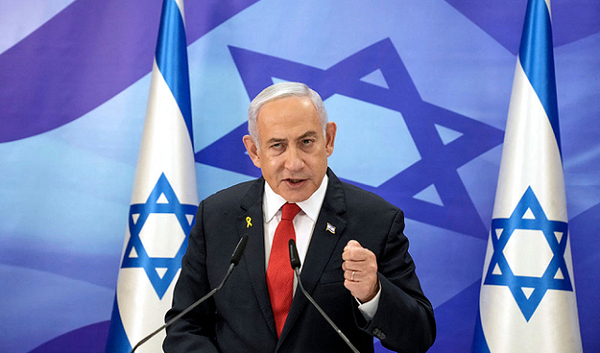
Numerous, distant, and impossible are the racist aspirations and expansionist dreams that Netanyahu clings to in the final days of his rule, hoping to realize before he is overthrown and sent to prison, having abandoned his comrade and confidant.

Former Shin Bet chief Nadav Argaman threatened Netanyahu in a television interview that he would reveal everything he knew about him and hold him accountable if he persisted in his denials, persisted in his arrogance and indulged his allies' desires to preserve the cohesion of his coalition at the expense of the public interest. He cares more about them than he does about his own detained "sons."

The leaking news about progress in the Doha talks suggests that Netanyahu is now "out of American reach," after Washington performed an acrobatic leap over his head, accomplishing what he had been unable to accomplish and bringing back those who had threatened and intimidated them to sabotage their chances of returning.

They could have been brought back since the first months of the war, if the fox had good intentions, not malice, who kept evading to prolong the war, to perpetuate his rule, in response to the blackmail of his allies, and to achieve their agendas, and for nothing related to security, as the keeper of secrets said.

"He who wants to catch a fox should not beat the drum." The threat of returning to war is nothing more than a lip service paid by Netanyahu to his allies, for whom he has opened an alternative route to oppression in the West Bank. This comes after he incurred heavy losses in the final days before the ceasefire in Gaza, which were a significant factor in the decision. This was compounded by the escalating protests of the families of the detainees, who sought Trump's help to pressure Netanyahu after they despaired of his evasions, lies, and disregard for the fate of their sons.

What Netanyahu will reap is nothing but a mirage and a grasping for wind.

PALESTINE

Sat 15 Mar 2025 9:12 am - Jerusalem Time

Doha negotiations: an Israeli attempt to reclaim the ball or a waste of time?


Dr. Bilal Al-Shobaki: Failure to grant the Israeli delegation sufficient authority to make decisions makes it more of a message carrier than an authorized negotiator.

Nabhan Khreisha: Israel sent a delegation to Doha without real authority in an attempt to buy time and pressure Hamas.

Dr. Jamal Harfoush: Achieving a breakthrough in the negotiations remains contingent on the existence of an international and regional environment capable of imposing clear obligations on Israel.

Majed Hadeeb: Israel and Hamas do not have a genuine will to end the war, but rather seek to achieve their goals through a deal that maintains the status quo.

Imad Moussa: The future of the conflict in the region depends on the outcomes of the ongoing negotiations and the ability of international parties to impose new balances.


Amid an atmosphere of anticipation and caution, indirect negotiations between Israel and Hamas continue in the Qatari capital, Doha. These negotiations are fraught with complications that reflect the divergent goals of the two parties, while the second phase of the deal faces an uncertain fate.

In separate interviews with Al-Quds, writers, political analysts, and university professors believe that Israel is seeking to renegotiate the agreement from scratch, attempting to buy time without making any real commitments regarding the second phase of the agreement. This, coupled with Hamas's insistence on a permanent ceasefire, makes reaching a settlement difficult given the divergent positions and conflicting interests.

The authors and analysts point out that the Israeli delegation sent to Doha lacks sufficient authority to make substantive decisions, reflecting a longstanding Israeli policy of stalling negotiations. This policy, despite the United States' efforts to maintain regional calm, seeks to maximize Israeli gains through mediation that keeps the situation under control without imposing final solutions. Nevertheless, the possibility of resuming military operations remains, unless international efforts can impose clear obligations on Israel that prevent it from evading the requirements of negotiations.


An Israeli attempt to renegotiate from scratch


Dr. Bilal al-Shoubaki, a professor of political science at Hebron University, says that the ongoing negotiations between Israel and Hamas cannot be considered negotiations for the second phase of the agreement, due to the lack of clear parameters that were initially agreed upon for the second phase of the agreement.

Al-Shoubaki explains that what is currently happening is an Israeli attempt to renegotiate from scratch, meaning that the current discussions are completely separate from those that preceded the preliminary agreement months ago.

Al-Shoubaki points out that Hamas's premise in the current negotiations is centered on achieving a permanent ceasefire and ending the war once and for all, while Israel is talking about a temporary ceasefire that may last only two months.

Al-Shoubaki asserts that current circumstances do not indicate the possibility of achieving a breakthrough in these negotiations, and that they may, in fact, take longer due to the fundamental disagreements between the two parties.

Al-Shoubaki explains that Hamas seeks a long-term truce and a permanent end to the war, while Israel insists on not committing to a definitive end to the war, reflecting a significant divergence in positions.

Al-Shoubaki asserts that there are indications that the United States is not interested in returning to military operations, despite US President Donald Trump's pro-Israel statements.


Israeli stalling strategy


Al-Shoubaki points out that the moves of US envoy to the region, Steve Witkoff, indicate Washington's efforts to maintain calm while maximizing Israeli gains.

Al-Shoubaki points out that the nature of the Israeli negotiating delegation, which traveled to Doha with very limited powers, reflects a long-standing Israeli strategy of stalling the negotiation process by failing to grant the delegation sufficient authority to make decisions, rendering it more of a message-bearer than an empowered negotiator.

Regarding the options available should the negotiations fail, Al-Shoubaki does not expect to reach the stage of declaring the negotiations a complete failure. Rather, the process may falter, with the possibility of a return to threats of military operations.

Al-Shoubaki believes that the most realistic option is to reach a longer-term ceasefire, even if Israel does not officially announce an end to the war.

Al-Shoubaki expects the coming period to witness attempts to extend the first phase of the agreement by releasing a limited number of prisoners, especially in light of the talk about the possibility of releasing prisoners holding American citizenship.


Reducing the understandings to extending the first phase


For his part, journalist Nabhan Khreisha said that the ongoing negotiations in Doha regarding the second phase of the ceasefire agreement and the prisoner exchange are facing Israeli obstacles aimed at prolonging the war. Israel is attempting to reduce the understandings to an extension of the first phase, to avoid committing to its withdrawal from the Gaza Strip and achieving the goals it failed to achieve over the course of 15 months of war.

Khreisha points out that Israel sent a delegation to Doha without any real authority, in an attempt to buy time and obstruct any real progress. It is also exerting pressure on Hamas by escalating threats to resume the war, redeploying its military forces around the Gaza Strip, and tightening the blockade by preventing the entry of humanitarian aid. The Israeli army continues to target civilian gatherings with shelling, resulting in casualties and injuries.

Khreisha points out that Israeli Prime Minister Benjamin Netanyahu is seeking to overturn the agreement by obstructing its implementation, driven by personal and partisan considerations, disregarding the fate of Israeli prisoners. However, his continued procrastination could exacerbate Israel's international isolation and expose the falsity of its narrative to global public opinion.

In contrast, Khreisha explains that Hamas insists on Israel's commitment to its commitments in the first phase of the agreement, but at the same time, it does not object to continued US mediation.

Khreisha points out that there is an implicit understanding between the parties to separate the implementation of previous commitments from the new negotiating track. Washington appears to be seeking to consolidate the ceasefire and pressure Israel to prevent it from sabotaging the negotiations, in order to preserve its positive relations with the Arab states of the region, particularly the Gulf states.


Reconciling internal pressures and negotiation requirements


Khreisheh believes Netanyahu is trying to balance domestic pressures with the demands of negotiations, exploiting the Doha talks to give the impression that any progress achieved is merely an "extension of the first phase," potentially allowing him to avoid making major concessions that could impact his domestic political standing.

Khreisheh believes there are two possible scenarios for the outcome of the Doha negotiations: the first is an agreement to extend the first phase of the truce, creating a positive negotiating environment without a radical change in the Israeli position. The second scenario is an agreement to implement the second phase of the initial agreement without officially calling it "the second phase," with Israel making calculated concessions under American pressure, serving Washington's interests in calming the region and strengthening its economic relations with the Gulf.

Khreisheh believes that negotiations will continue, with each side striving to achieve its goals without the negotiating process collapsing. However, he cautions against excessive optimism, despite positive signs of progress, most notably Netanyahu's dispatch of his delegation to Doha after realizing that the direct channel between Hamas and the US administration could impose a new initiative on Israel that is not in line with its interests.


Any agreement requires good faith and guarantees of execution.


For his part, Professor Dr. Jamal Harfoush, Professor of Scientific Research Methods and Political Studies at the University of the Academic Research Center in Brazil, says that assessing the legal and political trajectory of the ongoing negotiations in Doha requires caution and careful consideration of the general framework governing these discussions, both in terms of the actual will of the negotiating parties and the political and field circumstances surrounding them.

Harfoush explains that any international agreement—whether a truce, ceasefire, or political settlement—requires good faith and mutual commitment between the parties, along with clear implementation guarantees.

Harfoush points out that the long history of Israeli-Palestinian negotiations has shown that the primary obstacle to achieving a substantive breakthrough is Israel's double standards, with Tel Aviv exploiting negotiations to buy time rather than reach sustainable solutions.

Harfoush points out that the chances of achieving progress in the second phase of the agreement depend on several factors, most notably Israel's seriousness in engaging in genuine negotiations and not using them as a means to absorb international and regional pressure. He also notes the role of the United States and the extent of pressure it may exert on Benjamin Netanyahu's government, which seeks to maintain the war to achieve domestic political gains.


Failure of negotiations does not mean the end of options


Harfoush points out that the Palestinian resistance's ability to impose fair conditions that guarantee the protection of Palestinian rights is a crucial element, especially in light of the ongoing Israeli aggression and systematic targeting of civilian infrastructure.

Harfoush explains that the possibility of achieving a breakthrough in the negotiations remains contingent on the existence of an international and regional environment capable of imposing clear obligations on Israel, along with the necessity of binding legal guarantees to prevent a recurrence of the scenario of Israeli procrastination, which has thwarted numerous previous agreements.

Regarding the possibility of the negotiations failing, Harfoush stresses that this does not mean the end of options, but rather requires adopting a multi-track strategy to ensure that the arena is not left to a political or military vacuum.

Harfoush asserts that one alternative path is to escalate the legal process through relevant international courts, such as the International Court of Justice and the International Criminal Court, to file lawsuits against Israel for its failure to abide by its international obligations, and to issue UN resolutions condemning Israeli intransigence and increasing political and diplomatic pressure on it.

Harfoush points out that the Palestinian resistance has the right to self-defense under international law, which makes resuming defensive operations a legitimate option if the occupation continues its aggression.


Intensifying popular action and peaceful resistance


Harfoush emphasizes that intensifying popular action and peaceful resistance is an effective tool for thwarting Israeli plans, particularly with regard to forced displacement projects or imposing new facts on the ground.

Harfoush emphasizes the need to activate the Arab and Islamic role through diplomatic pressure to compel the occupation to implement the agreement according to its terms without modification or procrastination. He also emphasizes strengthening international partnerships with countries that support the Palestinian cause and exerting pressure to isolate Israel politically and economically.

Harfoush points out that legal resistance within the occupied territories is an important tool for confronting the occupation, by employing the Palestinian and international legal systems to prosecute Israel for its crimes and document its violations to ensure its prosecution before international courts.

Harfoush asserts that the failure of negotiations does not mean the end of alternatives, but rather requires the adoption of a comprehensive strategy combining law, politics, popular resistance, and diplomacy, with the goal of imposing the Palestinian will and countering Israel's attempts to evade its obligations.


Netanyahu and Hamas have an interest in continuing the fighting.


For his part, writer and political analyst Majed Hadeeb says that both Israeli Prime Minister Benjamin Netanyahu and Hamas share a common interest in continuing the fighting, with each side seeking to achieve its own goals before accepting any ceasefire agreement.

Hadib believes that neither Israel nor Hamas possess a genuine will to end the war, but rather each seeks to achieve its own goals through a deal that maintains the status quo.

Hadeeb explains that Israel lacks a genuine will to negotiate the second phase of the agreement, or even to move from the first to the second, as Netanyahu, backed by the extreme right, is placing numerous obstacles in the way of any new understandings that could lead to a ceasefire or a prisoner exchange deal.

Hadeeb points out that there are several reasons pushing Netanyahu to obstruct the negotiations, the first of which is his commitment to extremist Finance Minister Bezalel Smotrich not to cease the war until the far-right's goals, which include occupying the Gaza Strip and displacing its population, are achieved.

The second reason, according to Hadeeb, is Netanyahu's desire to buy more time. He supports US envoy Steve Witkoff's proposal, which gives him two additional months of maneuvering time after the release of half of the living prisoners held by Hamas. This would allow him to pass the government's budget and secure exemptions for the ultra-Orthodox from military service, two issues that are crucial to his government's survival in power.


Hamas wants to consolidate its control without regard for the suffering of the people.


Hadib believes that these interests coincide with Hamas's desire to reassert its control over Gaza and consolidate its rule, without regard for the suffering of the Palestinian people and the nation, nor with regard to the stagnation and possible oblivion of the Palestinian cause under its absurd policies. He points out that the movement is benefiting from the prolongation of the war to reshuffle its cards internally and strengthen its political and regional standing, which makes both sides strive to ensure that the other does not fall at this stage.

According to Hadeeb, there are three possible scenarios for the course of the ongoing negotiations in Doha: either the war resumes based on threats from the Israeli military, particularly the statements of the new Chief of Staff, Eyal Zamir, who confirmed that five military divisions are ready to resume fighting with the goal of "crushing Hamas and ending its political and military presence."

Hadib says: The second scenario is to conclude a new exchange deal that would be in line with the implementation of the Egyptian initiative, under the title of "extending the first phase," or as a transitional phase between the first and second phases. However, this scenario faces a fundamental obstacle: Netanyahu does not want a ceasefire, and therefore sent a delegation to Doha without any real powers, indicating Israel's lack of seriousness in reaching an agreement.


Hamas' attempts to circumvent the Egyptian initiative


The third scenario, according to Hadeeb, is one that would crush the Egyptian initiative, in terms of concluding a prisoner exchange deal based on Witkoff's proposals, which would see the release of half of the remaining prisoners and a two-month extension of the truce. This would lead to maintaining the status quo. This scenario is the most likely if Hamas succeeds in continuing to circumvent the Egyptian initiative, as all parties benefit from the current stalemate.

Hadeeb explains that Netanyahu is exploiting the time to strengthen his political position and advance his domestic policies, while Hamas is exploiting the situation to reassert its control over Gaza.

Hadib points out that the discussions between the US administration and Hamas were a preemptive step to explore the possibility of Hamas becoming a regional partner, provided it commits to protecting the border and disarming its heavy weapons. This could hinder any Arab initiative to establish a new administration in Gaza or begin reconstruction.

Hadib points out that the most likely scenario is to maintain the status quo, with Israel gradually achieving its goals through continued blockade and economic pressure to force Gazans to emigrate, while Hamas ensures its continued rule with indirect American support.

Hadib believes that Hamas not only contradicts its own strategies, but also contradicts the aspirations of the Palestinian people, from its inception to the present day.


The Palestinian-Israeli conflict is linked to the energy issue.


Writer and political analyst Imad Moussa believes that the ongoing negotiations may yield results that benefit the Palestinian people in the Gaza Strip, given the US administration's strategic direction under President Donald Trump aimed at halting wars and preparing the ground for major investment projects in the region.

Musa explains that the Palestinian-Israeli conflict has become directly linked to the energy issue, as gas and oil extraction operations in Gaza, Lebanon, and Syria require an end to the war and security stability.

Musa points out that the powers controlling energy resources have the power to control global markets in terms of pricing and supply volume, which makes investing in this region a clear American interest.

Musa notes that the Trump administration has opened channels of communication with Hamas, which will enhance the chances of implementing investment projects in the Gaza Strip and pave the way for a permanent ceasefire.

According to Musa, Hamas is interested in capitalizing on these American investment trends and harnessing them to its advantage, which will grant it greater regional and international legitimacy and enhance its standing at the political and popular levels.


Facilitating Hamas's participation in PLO institutions


Musa asserts that this approach could facilitate Hamas's participation in the institutions of the Palestine Liberation Organization (PLO) according to a political quota formula that guarantees it representation commensurate with its political and popular achievements.

Musa explains that the widespread attention Hamas has received stems not only from its resilience in the face of aggression, but also from the transformations taking place within Israeli society, which has increasingly leaned toward the extreme religious right, adopting policies based on genocide and ethnic cleansing, and refusing to recognize international legitimacy and the decisions of international courts. This has exposed the true face of the extreme right-wing government.

Regarding the Israeli government's options, Moussa believes that Prime Minister Benjamin Netanyahu faces two main paths: the first is to escalate the aggression on the Gaza Strip and expand it to include the West Bank, in an attempt to regain the initiative domestically. The second path is to accept American pressure, stop the war, and begin implementing the second phase of the agreement, a step that would calm the Egyptian and Arab street and give Israel an opportunity to reorganize its strategic priorities.


Netanyahu devoted himself to attacking Iran and Yemen


Musa explains that a halt to the war in Gaza could allow the Netanyahu government to devote more time to implementing its regional military plans, including a strike against Iran, which could be preceded by airstrikes targeting the Ansar Allah (Houthis) group in Yemen, with American support and the participation of some regional countries.

Musa points out that Israel may keep open the option of military intervention in Syria, with the aim of reducing Turkish influence there and seeking Ankara's participation in the region's available economic shares.

Musa asserts that the future of the conflict in the region remains contingent on the outcomes of ongoing negotiations and the ability of international parties to impose new balances that advance their economic and political interests without fundamentally conflicting with the interests of the actors on the ground.



PALESTINE

Fri 14 Mar 2025 9:32 pm - Jerusalem Time

A fisherman was killed after the occupation forces shelled his boat in northern Gaza.

A citizen was killed this evening, Friday, in the Bahr al-Sudaniya area, north of Gaza.


Wafa News Agency reported that fisherman Mohammed Riyad Siam, 22, was killed near the Sudanese sea area, north of Gaza, after Israeli warships fired a shell at his boat.

PALESTINE

Fri 14 Mar 2025 9:31 pm - Jerusalem Time

A young man was killed by Israeli occupation forces in Salem, east of Nablus.

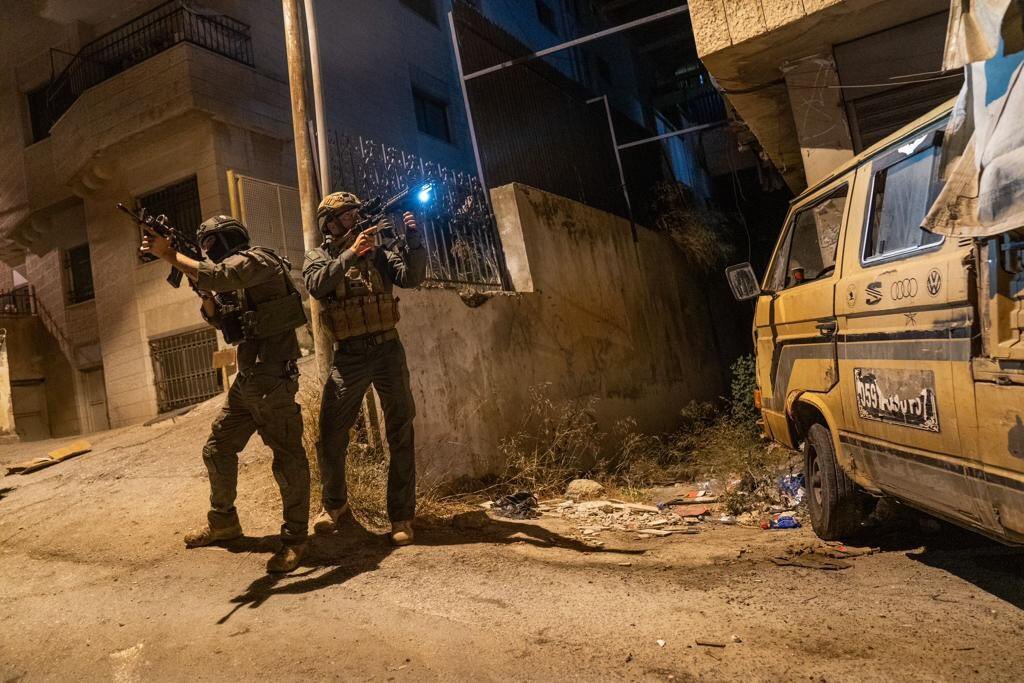
A young man died of critical wounds sustained by Israeli occupation forces on Friday during a raid on the town of Salem, east of Nablus.

The Ministry of Health reported the death of Omar Abdel Hakim Daoud Ishtia (21 years old), after the occupation forces shot him during the raid on the town, which resulted in him being injured in the head. His injury was described as critical, and he was subsequently transferred to the hospital, before his martyrdom was announced.

The occupation forces stormed the town, and clashes erupted during which soldiers fired live bullets and tear gas. They also detained a child in the area.

ARAB AND WORLD

Fri 14 Mar 2025 7:43 pm - Jerusalem Time

Witkov talks about a proposal that "bridges the gaps" between Israel and Hamas.

US Middle East envoy Steve Witkoff spoke on Friday about a proposal being considered to extend the ceasefire in the Gaza Strip.


"The US has presented a proposal that narrows the gaps to extend the ceasefire in Gaza," Witkoff said in a statement.


He continued: "The proposed extension allows time to negotiate a framework for a permanent ceasefire."

He added, "The proposed extension of the Gaza truce will be until after Ramadan and the Jewish Passover holiday."


Witkov stressed that "the proposal to narrow the gaps must be implemented soon, with the immediate release of the American-Israeli hostage Aidan Alexander."


He pointed out that "Hamas is putting forward completely impractical demands behind closed doors that do not include a permanent ceasefire."

He added, "Hamas is aware of the deadline, and America will respond accordingly if it passes."

The White House asserted that Hamas was making a "very bad bet" in negotiations over a Gaza truce.

PALESTINE

Fri 14 Mar 2025 5:14 pm - Jerusalem Time

Four civilians were killed in an Israeli airstrike south of Gaza City.

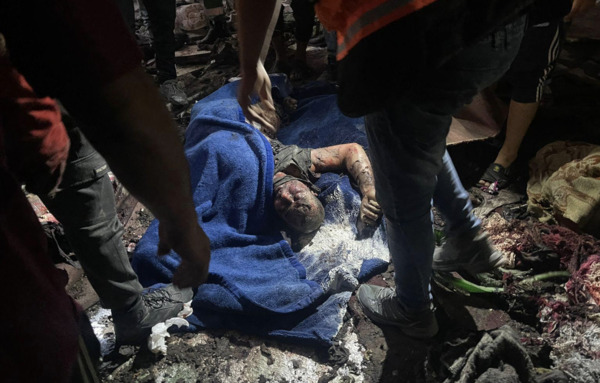
Four civilians were killed on Friday when the Israeli occupation forces bombed a group of civilians near Subha al-Harazin School in the al-Zeitoun neighborhood, south of Gaza City.

Local sources reported that citizens had gathered in the area to collect firewood when the occupation forces targeted them near the aforementioned school, killing four of them.

Two civilians were injured in Israeli tank shelling in central Rafah, while a third woman was injured by artillery shells falling on Aed Al-Bashiti Street in the Al-Janina neighborhood, east of Rafah.

The death toll in the Gaza Strip since the start of the Israeli aggression on October 7, 2023, has reached 48,524, the majority of whom are children and women. The number of injured has risen to 111,955, with a number of victims still trapped under the rubble, unable to be reached by ambulances and civil defense teams.

PALESTINE

Fri 14 Mar 2025 5:13 pm - Jerusalem Time

A critical injury was caused by Israeli occupation forces' bullets during a raid on Salem, east of Nablus.

A young man was critically injured by Israeli occupation forces' bullets during a raid on the town of Salem, east of Nablus.


Local sources reported that the occupation forces stormed the town, and clashes erupted during which soldiers fired live bullets and tear gas, resulting in a young man (21 years old) being shot in the head. They also detained a child in the area.

ARAB AND WORLD

Fri 14 Mar 2025 3:24 pm - Jerusalem Time

Trump excludes Boehler after CNN interview in which he said America is not an agent of Israel


Adam Boehler, US President Donald Trump's special envoy for hostage affairs, has been removed from his post over comments he made during an interview regarding negotiations with Hamas, according to reports on Thursday, March 13.

"The administration removed him from the Hamas hostage file, saying he needed to be further marginalized," the Jewish Insider quoted three Republican Party sources as saying.

"It feels like he's in dreamland," one source told the newspaper. Another said, "I don't know why we would want him to do anything in the future after what we've seen." A third Republican source said, "He's being sidelined, which is good, but I don't know to what extent. It's been very bad, a disaster. I admire Adam, but I think he needs to step aside."

The report indicates that there is talk of removing him entirely from the administration, and not just from his role in negotiating the ceasefire issues in Gaza.

Republicans took issue with Boehler's remarks about Hamas: "Look, they don't have horns growing out of their heads; they're actually guys like us; they're very good guys. We're the United States, not agents of Israel. We have specific interests at play," Boehler told CNN last week, referring to Washington's separate talks with the Palestinian resistance movement that were recently held in Cairo.

Boehler further angered Israeli officials when he spoke to Channel 12 News, telling the broadcaster that there were "positive developments in the negotiations" with Hamas.

The US-Hamas talks, which focused in part on securing the release of Israeli prisoners with US citizenship from the Gaza Strip, had already upset Israel from the start, but Boehler's comments to CNN only made matters worse.

Israeli officials sharply criticized the envoy. Knesset member Simcha Rothman said, "Anyone who quotes Hamas and negotiates directly with it is making a grave mistake, one that puts the hostages in danger." Israeli Finance Minister Bezalel Smotrich said Boehler was "acting on his own" and "cannot speak for them."

After facing backlash following his interview with CNN, the envoy said: "I want to be absolutely clear, as some have misinterpreted my words. Hamas is a terrorist organization that has murdered thousands of innocent people. They are, by definition, bad people. And as [Trump] said, no member of Hamas will be safe if Hamas does not immediately release all hostages."

Ceasefire negotiations are currently underway in the Qatari capital, Doha, with Israeli media reports indicating a "positive" atmosphere. An Israeli delegation is in Doha for the talks. Hamas and the Palestinian Islamic Jihad movement are also in the Qatari capital for discussions with mediators. Israel recently obstructed the ceasefire agreement in Gaza, demanding an extension of its first phase and refusing to engage in talks on its second phase. It also imposed new conditions, demanding the complete disarmament of Hamas's military wing, and threatened to resume the war on the Strip.

It also recently called for the release of all Gaza prisoners in a single exchange deal, in violation of the exchange protocol in the agreement.

The Israeli army approved offensive plans to return to its military campaign of extermination.

PALESTINE

Fri 14 Mar 2025 3:03 pm - Jerusalem Time

3 injured in Israeli shelling of Rafah

  1. Three civilians, including a woman, were injured today, Friday, as a result of Israeli tank shelling east and center of Rafah city, south of the Gaza Strip.


Local sources reported that two citizens were injured in Israeli tank shelling in central Rafah, while a female citizen was injured by artillery shells falling on Aed Al-Bashiti Street in the eastern Al-Janina neighborhood.

PALESTINE

Fri 14 Mar 2025 2:44 pm - Jerusalem Time

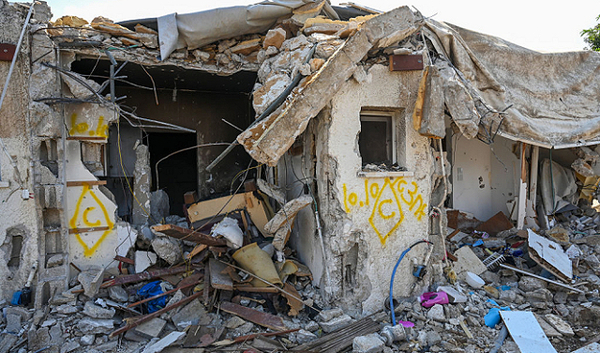
Investigation into the Nir Oz attack: The IDF's failure is the greatest in its history.

The Israeli military released the results of its investigation into the Hamas attack on Kibbutz Nir Oz on the morning of October 7, 2023. The head of the investigation team, reserve Major General Eran Niv, emphasized that "the IDF's failure to defend Nir Oz was particularly significant, and one of the reasons for this was that IDF forces were only able to reach the town after the last terrorists had left it."


"Never in any town has there been such a deadly combination of such a dangerous situation and the absence of military force," Niv added. During the attack, 41 kibbutz residents were killed, along with six others who had attended a nearby party and fled to the kibbutz. Seventy-six kibbutz residents were captured, including nine who died, and taken to the Gaza Strip. According to the investigation, 13 prisoners were killed in captivity, and five living prisoners and nine dead kibbutz residents are still being held in Gaza.


Former IDF Chief of Staff Herzi Halevi and former Southern Command Commander Yaron Finkelman were quoted by kibbutz members as saying after presenting the investigation findings to kibbutz members earlier that "the IDF's failure in Nir Oz was the greatest failure in the army's history," according to Haaretz.


According to the investigation, the deputy commander of the Golani Brigade's 51st Battalion said over the military communications network at 5:34 a.m. on October 7 that Israeli forces were preparing for dawn, in accordance with orders and a situational assessment. This indicated that he and the other forces in the area were unaware that Hamas forces would penetrate into Israel 55 minutes later and that Operation Protective Edge would begin.


Initially, 100-130 Hamas fighters entered, followed by 300-500 other fighters from several Palestinian factions, into Kibbutz Nir Oz, which was hidden from the army's view. The attack lasted more than six hours, during which no soldiers entered the kibbutz, and the Israeli army was unaware of what was happening inside.


The investigation indicated that "the army's failure to reach Nir Oz was neither tactical nor moral, but rather methodological. The commanders did not realize that the situation at Nir Oz was particularly difficult, and therefore did not attach importance to sending a force there at the expense of other locations. The collapse of the command and control system, especially in the brigade and division, is a central reason for the failure to establish a clear picture of the situation. The General Staff could have been expected to attempt to establish a true picture of the situation and not rely on reports."


The Golani Brigade's 51st Battalion was located three kilometers from Nir Oz. When Hamas began firing rockets at 6:29, an Israeli force headed toward the border fence, while Hamas forces had already entered Israeli territory. Four companies of Hamas's elite forces headed to Nir Oz, while one company headed to each of the other Israeli towns. The investigation team still does not know why such a large Hamas force headed to Nir Oz. At approximately 9:00 a.m., the fighting in Nir Oz ended, and the

Most of the armed alert squad members are in it.


Over the next four hours, the investigation describes repeated failures by IDF forces, some of whom reached Nir Oz but were unable to enter it. In other cases, forces were sent to the kibbutz, but failed to grasp the gravity of the situation and were sent to fight elsewhere.


At 9:22 a.m., a combat helicopter arrived on a road leading from Gaza to Nir Oz. The pilot asked his commanding officer, "Did you send me to fire on our territory?" It turned out that his commanding officer was unaware of the situation in the kibbutz. A short time later, the helicopter was hit by Hamas fire and was forced to withdraw. Other combat helicopters arrived and targeted Palestinian fighters, killing a woman resident of the kibbutz.


An Israeli tank then fired two shells at the fighters in the kibbutz and then headed for the border fence. The military investigation determined that the tank's actions were erroneous, and that it should not have been heading for the fence, but rather defending the communities in the "Gaza Envelope," including Nir Oz. Another tank was disabled after being hit by five anti-tank shells, and four of its soldiers were captured.


Throughout these hours, kibbutz members turned to the regional town council, the IDF, and other organizations for assistance. However, the General Staff's Operations Brigade, the IDF's Southern Command, and the Gaza Division were unaware of what was happening in the kibbutz and did not send troops, according to the investigation.


The investigation revealed that during the battles in the kibbutz, there were numerous infantry forces in nearby towns, including the Commando Brigade, which marched along the road leading to Nir Oz. However, the kibbutz's location meant they were unaware of what was happening there, and they continued to fight in other areas.


At 12:30, the last Palestinian fighters were observed leaving Nir Oz. Half an hour later, a Border Police undercover unit entered the kibbutz without any Palestinian fighters present.


The investigation indicated that the 51st Battalion, responsible for defending Nir Oz and the surrounding area, was not prepared for a major attack scenario such as the one that occurred. It did not receive any warning, and the battalion's chain of command collapsed in less than an hour. The battalion's soldiers were unable to assemble and assess the situation in an orderly manner.


According to the military investigation, Israeli forces did not reach Nir Oz for several reasons. These included the fact that Palestinian fighters blocked the road leading to the kibbutz, significantly hampering the army's advance; a small number of forces received clear orders to reach Nir Oz, and during their journey, they engaged in battles with fighters at road intersections; and a group of soldiers crossed one intersection and headed elsewhere. The investigation also indicated that army headquarters failed to understand the situation, that they were under attack, and that the command of forces, from the company level to the division level, had collapsed. They did not realize that the situation in Nir Oz was more difficult than in other places.


The investigation found that "the central failure of all the commands, from the brigade level to the General Staff, was the failure to build a picture of the situation and to exhaust the available information. Had these things happened, it is likely that the military force would have arrived earlier and at least succeeded in significantly reducing the targeting of the kibbutz and its residents."

PALESTINE

Fri 14 Mar 2025 2:29 pm - Jerusalem Time

Injuries during Israeli occupation's storming of the town of Beita, south of Nablus.

Citizens suffered suffocation on Friday after Israeli occupation forces stormed the town of Beita, south of Nablus.


Local sources reported that occupation forces stormed the town from several directions, firing sound bombs and tear gas at residents, sparking clashes. A number of residents suffered from suffocation from inhaling the gas and were treated on the spot.

ARAB AND WORLD

Fri 14 Mar 2025 2:27 pm - Jerusalem Time

Ireland supports the Arab plan to rebuild Gaza and calls for international support.

Ireland welcomed the Gaza reconstruction plan recently adopted by Arab countries.


Irish Deputy Prime Minister, Minister of Foreign Affairs, and Minister of Defence Simon Harris said in a statement on Friday that this initiative provides a practical path for reconstruction, stressing the need for it to be based on a framework that ensures stability and lasting peace.


The statement added that his country is working closely with its partners in the European Union and the region to support the implementation of this initiative, noting that international cooperation is essential to ensure the effective reconstruction of Gaza and achieve sustainable stability in the region.

PALESTINE

Fri 14 Mar 2025 1:05 pm - Jerusalem Time

Hamas agrees to release Israeli captive and 4 bodies

Hamas announced on Friday its approval of a proposal from mediators, which includes the release of five hostages, including an Israeli soldier with American citizenship, in addition to the bodies of four other dual nationals.


Hamas said in a statement that its delegation "received a proposal from the mediating brothers to resume negotiations with the Hamas leadership yesterday, and the movement dealt with it responsibly and positively."


She added that the movement "delivered its response to him at dawn today (Friday), including its agreement to release the Israeli soldier Idan Alexander, who holds American citizenship, in addition to the bodies of four other dual nationals."


Hamas affirmed its "complete readiness to begin negotiations and reach a comprehensive agreement on the issues of the second phase, calling for the occupation to be obligated to fully implement its obligations."


Ceasefire negotiations in the Gaza Strip continue in the Qatari capital, Doha, today, Friday, following the extension of the stay of the Israeli negotiating delegation sent by the Israeli government to continue discussing the agreement. Hamas asserts that reports of new ceasefire proposals aim to "jump the boat" on the agreement reached on Gaza.


Israeli reports indicated on Thursday that US Middle East envoy Steve Witkoff had presented an updated proposal in the Qatari capital, Doha, on Wednesday to extend the ceasefire agreement in Gaza for several weeks, in exchange for Hamas releasing at least five living Israeli hostages and a number of dead hostages held by the movement.

PALESTINE

Fri 14 Mar 2025 12:00 pm - Jerusalem Time

Lazzarini: UNRWA's collapse will deprive an entire generation of Palestinian children of education.

The Commissioner-General of the United Nations Relief and Works Agency for Palestine Refugees (UNRWA), Philippe Lazzarini, warned that the agency's collapse would deprive an entire generation of Palestinian children of education.


Lazzarini said in a press statement that there is a "real risk of the agency collapsing and exploding" if its severe financial distress continues.


He added that if UNRWA collapses, "we will certainly sacrifice a generation of children who will be deprived of a proper education."


Lazzarini described UNRWA as a "lifeline" for some six million Palestinian refugees spread across the Gaza Strip, the West Bank, Lebanon, Jordan, and Syria.

ARAB AND WORLD

Fri 14 Mar 2025 11:32 am - Jerusalem Time

Netanyahu: Blackmail threats against me from current and former Shin Bet chiefs

Israeli Prime Minister Benjamin Netanyahu said Thursday that he is being subjected to what he described as a full-scale campaign of blackmail and threats by the current head of the Israeli Security Agency (Shin Bet), Ronen Bar, and his former counterpart, Nadav Argaman. Argaman said that if he realizes that Netanyahu is acting against the law, he will “reveal information he has not yet revealed,” in sessions in which the prime minister participated. The Shin Bet quickly responded by stressing that this is “a serious accusation against the head of an official institution.”


This came in a post by Netanyahu on his X account, shortly after an interview with Argaman, published by Israel's Channel 12 on Thursday evening, in which Argaman stated that he would reveal information from his "individual" meetings with Netanyahu if he deemed the former to be acting against the law.


Netanyahu filed a police complaint against Argaman on Friday, saying the former head of the Shin Bet security service had "crossed all red lines."


Netanyahu stated that Argaman "chose to threaten and blackmail a sitting prime minister, using methods and forms common in criminal organizations, as if the head of the Israeli intelligence service were a member of the mafia, employing practices from the criminal world, thereby crossing all boundaries."


Netanyahu said yesterday that "another dangerous red line for Israeli democracy was crossed tonight," adding that "never in the history of Israel, and in the history of democracies, has a former head of a secret organization (the Shin Bet) carried out direct extortion threats against a sitting prime minister."

The Israeli Prime Minister added, explicitly attacking the Shin Bet chief, that "this crime is part of a broader campaign of blackmail and threats, including media interviews conducted in recent days by the current Shin Bet chief, Ronen Bar."


Netanyahu stated, "The sole objective is to prevent me from making the necessary decisions to rebuild the Shin Bet after its devastating failure on October 7."


"Let me be clear: mafia-style criminal threats will not deter me," he said, adding, "I will do whatever is necessary to ensure the security of Israel's citizens."


A brief statement issued by the Prime Minister's Office stated, "Once again, completely false news. Contrary to the false report broadcast by Channel 12 this evening (Thursday), the exile of senior Hamas leaders from the Strip has not been abandoned."


Fear of appointing a "political" as head of the Shin Bet

When Argaman was asked in the interview whether the current head of the Shin Bet should leave his post, he said, "Ronen Bar has taken responsibility and must return home. He will not return until all investigations are completed, including those by the current Prime Minister's Office, after a change of government, and after the election of a new Shin Bet head."


He added, "I believe that this government, which failed on October 7, and failed in the strategy it built in general, cannot be the one to appoint a new head of the Shin Bet."


He continued: "I am very afraid that an appointment by this government, or an appointment by the prime minister, is a political appointment; an appointment on behalf of someone."


Asked why Netanyahu and his government have not yet fired Bar, Argaman said, "My assessment is that Netanyahu understands very well that the investigation into the Prime Minister's Office is an investigation into the fact that if the prime minister were to fire Ronen, it would be a conflict of interest."


Argaman was asked about the Shin Bet's failure to obtain any information regarding the unprecedented attack launched by Hamas on October 7, 2023, including its failure to obtain information from supposed agents inside the Strip. He replied: "I don't know how to answer that. All I know is that the claim that the Shin Bet didn't have agents in the Gaza Strip is completely empty talk. The Shin Bet did have agents in the Gaza Strip, and sources in the Strip, despite the difficulty of operating inside it. Not one or two. In fact, they 'did not deliver the goods' (meaning they did not transmit information) on the requested day."


Shin Bet responds

Shortly after Netanyahu's accusations, the Shin Bet issued a statement saying, "This is a serious accusation against the head of an official institution in Israel."


He stressed that "General Security Service Director Ronen Bar devotes most of his time to security issues, efforts to recover detainees, and defending democracy."


He added, "Any other statement in this regard is baseless."


Ben-Gvir welcomes Netanyahu's statements... Lapid and Gantz attack him

Former National Security Minister Itamar Ben-Gvir was quick to welcome Netanyahu's remarks, saying in a brief statement, "The prime minister is right; Ronen Bar cannot remain in his position for another minute; he must be removed."


For his part, opposition leader Yair Lapid said in a statement, "Netanyahu appointed Nadav Argaman as head of the Shin Bet, but I worked with him as foreign minister and as a member of the cabinet. He was professional, completely apolitical, and always sought to confront the enemy. I advise you to listen carefully to what he said tonight."


National Camp bloc leader Benny Gantz said, "Harming state security agencies to achieve political interests is an attempt against state security, and this is what the prime minister is doing tonight at a time when we are facing enormous challenges."


On the 4th of this month, the Shin Bet released its internal investigation into the failures that led to the October 7 attack. The agency acknowledged that it had not provided accurate warning of the scope of the attack, despite prior warning signs.


The Shin Bet placed partial blame on the Israeli military, citing poor intelligence coordination between the two agencies, which led to a failure to take proactive steps to prevent the attack launched by the Qassam Brigades, the military wing of Hamas.


The investigation also included criticism of the political echelon, indicating that the government's "settlement policy," including allowing the flow of "Qatari funds" into Gaza, was part of an approach that contributed to the movement's growing military power.

PALESTINE

Fri 14 Mar 2025 10:23 am - Jerusalem Time

The occupation tightens restrictions on citizens' access to Al-Aqsa Mosque.

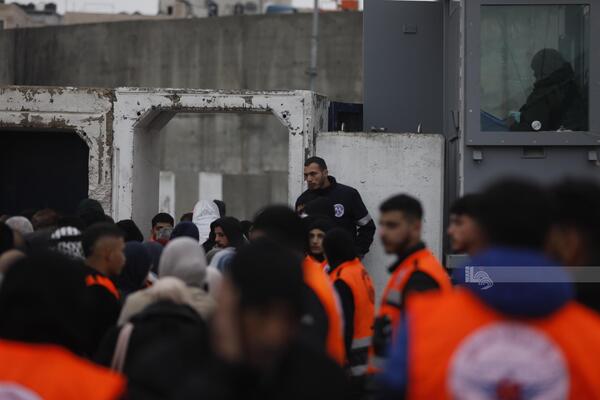
Today, Friday, the Israeli occupation forces imposed strict restrictions on the entry of worshippers coming from the West Bank to occupied Jerusalem to perform the second Friday prayers of the holy month of Ramadan at the blessed Al-Aqsa Mosque.


The occupation army reinforced its presence at the Qalandia military checkpoint north of occupied Jerusalem, and the "300" checkpoint separating the cities of Bethlehem and Jerusalem, and checked citizens' IDs, and prevented men under 55 years of age and women under 50 years of age who obtained "special permits" from entering Jerusalem. It also prevented citizens from the Jenin and Tulkarm governorates from passing through. Despite this, thousands of citizens have flocked since this morning, through the two checkpoints in an attempt to reach Al-Aqsa Mosque.


Eyewitnesses reported that occupation forces turned back dozens of elderly people at the Qalandia and Bethlehem checkpoints as they were on their way to Al-Aqsa Mosque, claiming they did not have the required permits to enter.


The occupation forces also imposed restrictions on the entry of worshippers to Al-Aqsa Mosque, checked the IDs of young men at the entrances to the Old City and the gates of the mosque, and prevented a number of them from entering.

ARAB AND WORLD

Fri 14 Mar 2025 9:17 am - Jerusalem Time

Columbia University expels several students who demonstrated against the Israeli war of genocide.


Columbia University officials said Thursday that the university has expelled or suspended some students who took over a campus building during pro-Palestinian and anti-Israeli genocide protests last spring, and has temporarily revoked the degrees of others who have since graduated.


The university said in a campus-wide email that a judicial panel imposed a series of sanctions on students who occupied Hamilton Hall last spring to protest the war in Gaza.


Colombia did not provide details on how many students were expelled, suspended, or had their diplomas revoked, but said the findings were based on an "assessment of the severity of the behaviors."


The culmination of a months-long investigation comes as the university reels from the arrest by federal immigration authorities of the student and well-known Palestinian campus activist, Mahmoud Khalil, last Saturday. President Donald Trump stated that the arrest would be "the first of many." At the same time, the Trump administration stripped the university of more than $400 million in federal funds for what it called a "failure to combat anti-Semitism" on campus—in other words, allowing its students to protest against Israel. Congressional Republicans have specifically pointed to the failure to discipline the students involved in the Hamilton Hall takeover as evidence of the university's inaction.


A former university employee said, "Columbia's expulsion of innocent students who exercised their First Amendment right to free speech, and the expulsion of others who graduated last fall or were scheduled to graduate next May, is a cheap acquiescence to the abusive Trump administration in order to recover the funds Trump withdrew last week."


“We are living in critical and difficult times, when the Zionist right is trying to impose its foreign policy priorities and silence all voices that criticize the Israeli crimes against the suffering Palestinian people in Gaza, or the occupied West Bank, which we see and everyone sees every day,” added the former employee, who asked to remain anonymous because he is currently seeking employment at academic institutions on the East Coast and does not want to put his future at risk. “Columbia’s compliance portends that other universities will follow suit, which will destroy the integrity and academic freedom that have made American universities such a distinguished destination.”


The former official declined to comment on the arrest of Palestinian activist and student Mahmoud Khalil, saying only, "It's as if we're in a nightmare; the 'Orwellian society' as in George Orwell's novel 1984."


The university claims that the occupation of the building by anti-Israel protesters following a tent camp inspired a wave of similar demonstrations on campuses across the country.


On April 30, 2024, a smaller group of students and their allies barricaded themselves inside Hamilton Hall with furniture and padlocks in a major escalation of protests on campus.


At the request of university leaders, hundreds of NYPD officers stormed the campus the following night, arresting dozens of people who police claimed were involved in both the occupation and the encampment.


At a court hearing last June, the Manhattan District Attorney's Office said it would not file criminal charges against 31 of the 46 people initially arrested for trespassing inside the administration building.


But students still face disciplinary hearings and possible expulsion from the university.


The final sanctions announced Thursday came after a lengthy process that included hearings for each student led by the long-standing University Judicial Council.


Some students who joined the camp but did not participate in the takeover of the building learned that they would face no further disciplinary action beyond their previous suspensions.


"Regarding other incidents that occurred last spring, the University Judicial Council's decisions upheld the disciplinary measures previously imposed," the university said in a statement.


The disciplinary process has come under scrutiny from House Republicans, who have demanded that university officials turn over disciplinary records of students involved in campus protests or risk losing billions of dollars in federal funding.


On Thursday, Mahmoud Khalil and seven students identified by pseudonyms filed a lawsuit seeking to prevent a congressional committee from obtaining such records for students at Columbia University and Barnard College, a women's institution affiliated with Columbia University.


The lawsuit was filed in federal court in Manhattan against Columbia University, its affiliated Barnard College, and the Republican-led House Education and Workforce Committee, chaired by Republican Rep. Tim Walberg of Michigan, seeking a permanent injunction preventing Congress from forcing the universities to produce the records and preventing the universities from complying with the congressional order.


Last month, the committee sent a letter demanding that Columbia University and Barnard College provide records or risk losing federal funding. The plaintiffs argue in the complaint that the committee is abusing its authority in an attempt to "curb the freedom of speech and assembly based on the expressed viewpoint," and that the investigation "threatens to significantly infringe on First Amendment rights."

PALESTINE

Fri 14 Mar 2025 9:11 am - Jerusalem Time

The United States and Israel have contacted African countries to resettle Gazans there.

US and Israeli officials said that the United States and Israel have contacted officials from three East African governments to discuss the displacement of Palestinians from the Gaza Strip to these countries under a post-war plan proposed by US President Donald Trump.


These contacts, with Sudan, Somalia, and the breakaway Somali region known as Somaliland, reflect the determination of the United States and Israel to move forward with a plan that has been widely condemned and raises serious legal and moral issues.


Because these three countries are poor and, in some cases, plagued by violence, the proposal casts doubt on Trump's stated goal of displacing Gaza's Palestinians in a "beautiful area."


Sudanese officials said they rejected the overtures from the United States, while officials from Somalia and Somaliland said they were unaware of any contacts, the Associated Press reported Friday.


Under the Trump plan, Gaza's more than two million residents would be permanently displaced. Trump proposed that the United States take over administration of the Strip, oversee a long-term process of clearing the rubble left behind by Israel's genocidal war, and develop it as a real estate project.


The idea of a mass expulsion of Palestinians was previously considered a fantasy by Israel's ultranationalist movement. But since Trump raised the idea in a White House meeting last month, Israeli Prime Minister Benjamin Netanyahu has hailed it as a "bold vision."


Palestinians in Gaza rejected the proposal, rejecting Israel's claims that it would be a "voluntary migration."


Arab countries expressed their strong opposition to the plan and offered an alternative reconstruction plan that would keep Palestinians in place.


Human rights organizations have said that forcing Palestinians to leave or pressuring them constitutes a war crime. However, the White House says Trump is "sticking to his vision."


US and Israeli officials, speaking on condition of anonymity to discuss a secret diplomatic initiative, confirmed contacts with Somalia and Somaliland, while the Americans also confirmed contacts with Sudan. They said it was unclear how far the efforts had progressed or the level of discussions.


Separate contacts between the United States and Israel regarding the three potential destinations began last month, days after Trump presented the Gaza plan alongside Netanyahu, according to US officials, who said Israel was leading the discussions.


Israel and the United States are offering a variety of incentives—financial, diplomatic, and security—that can be offered to these African countries. This is a formula Trump used five years ago when he brokered the Abraham Accords, a series of mutually beneficial diplomatic agreements between Israel and four Arab countries.


The White House declined to comment on the outreach efforts. The offices of Netanyahu and Israeli Minister of Strategic Affairs Ron Dermer, a close Netanyahu confidant who leads Israeli post-war planning, also declined to comment.

PALESTINE

Fri 14 Mar 2025 9:02 am - Jerusalem Time

Israeli occupation forces raided citizens' homes and arrested them in the West Bank.

Israeli occupation forces raided citizens' homes and arrested them in the West Bank on Friday morning.


In Bethlehem, occupation forces stormed the village of Kisan and arrested Mahmoud Awda Ghazal (48 years old), his son Muhammad (25 years old), and Ayman Yaqoub Ghazal (33 years old), after raiding their homes and vandalizing their contents.


In Tubas, Kamal Bani Odeh, director of the Prisoners Club in Tubas, reported that the occupation forces arrested the young man, Amjad Abdul Rahim Kamel Ghanem, after raiding his home in his town as punishment.


In Jericho, occupation forces arrested Laith Muhammad Ubayyat, Muhammad Fuad Ubayyat, and Mahmoud Musa Nawawra, after raiding and searching their homes in the village of Fasayil.


In Nablus, occupation forces stormed several neighborhoods of the city and Balata refugee camp to the east, raiding a number of homes, searching them, and ransacking their contents.


The occupation forces also arrested citizen Amer Sanobar for the third time in one week, after raiding his home at the Zawata Junction to the west.


Meanwhile, the occupation forces stormed the town of Beit Furik to the east, raiding and searching a number of homes, without reporting any arrests.


In Hebron, occupation forces stormed several neighborhoods and arrested Tariq Anwar Idais, Moatasem Tayseer Al-Natsheh, Mahmoud Ashraf Al-Awiwi, Younis Khaled Abdul Karim Al-Qawasmi, and the four brothers, Adi, Suleiman, Qutaiba, and Amir Hashem Al-Haimouni, after raiding and searching their homes and assaulting them.


It's worth noting that the occupation forces have been carrying out a large-scale arrest campaign in the city of Hebron for the fifth consecutive day, most of whom are released prisoners.


PALESTINE

Fri 14 Mar 2025 8:54 am - Jerusalem Time

Two children killed as occupation continues to evade ceasefire agreement in Gaza

Two children were killed and the mother of one of them was injured by drone fire in the Shuja'iyya neighborhood east of Gaza City, and by the targeting of a tent east of Beit Hanoun in the northern Gaza Strip. This is part of the occupation's violations and its failure to implement the ceasefire agreement, with its drones and armored vehicles continuing to fire at Palestinians and their homes across the Gaza Strip on a daily basis.


Egyptian sources told Washington that Israel's goals for disarming Palestinian factions in Gaza were unrealistic. Meanwhile, the US administration has begun "studying a set of solutions proposed within the Egyptian vision, which are realistic and meet a large portion of Israeli demands and goals, while taking into account the specific situation in the Strip," according to Al-Araby Al-Jadeed website on Thursday.


Ceasefire negotiations in the Gaza Strip continue in the Qatari capital, Doha, after the Israeli negotiating delegation, sent by the Israeli government, decided to extend its stay in Doha to continue discussing the Gaza agreement, which Israel has reneged on.


Israeli sources familiar with the talks in Doha said the negotiations were making "progress," while noting that no final agreement had yet been reached. Hamas announced that it was engaging "positively and responsibly with the mediators to ensure the implementation of all phases of the ceasefire, in a way that serves the interests of the Palestinian people: an end to the war, the withdrawal of Israeli forces, and the reconstruction of the Gaza Strip."


The Ministry of Health in the Gaza Strip announced that the death toll from the Israeli aggression has risen to 48,524 since October 7, 2023. In its regular report, the ministry stated, "Nine martyrs arrived at Gaza Strip hospitals, including seven whose bodies were recovered from under the rubble, two new martyrs, and 14 injuries, in the past 24 hours."

PALESTINE

Fri 14 Mar 2025 8:42 am - Jerusalem Time

Settlers burn property and vehicles south of Nablus

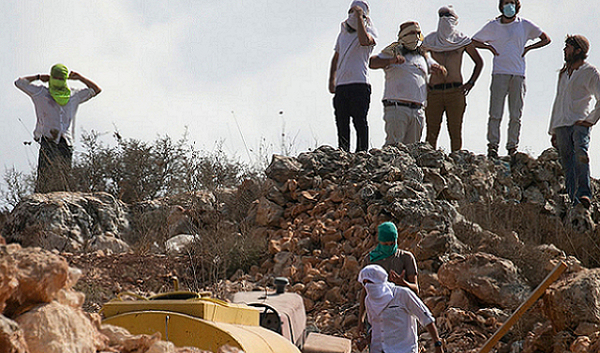
Settlers attacked Palestinian homes in Khirbet al-Manajem, near the village of Duma, south of Nablus, last night.


Local sources reported that dozens of settlers burned homes and vehicles belonging to local residents in the area, causing extensive damage and significant property losses.


According to sources, there are suffocation cases among citizens due to smoke emanating from the fires.


ARAB AND WORLD

Thu 13 Mar 2025 10:25 pm - Jerusalem Time

Netanyahu accuses Shin Bet chief of leading a campaign of threats and blackmail against him.

Israeli Prime Minister Benjamin Netanyahu accused the head of the Shin Bet security service of leading a campaign of threats and blackmail against him, stating that this campaign aims to prevent him from making critical decisions to reform the security apparatus following its failure during the events of October 7.


Netanyahu said: "It has never been before in Israel's history that a former head of a security agency threatened and blackmailed a sitting prime minister on live television. This is a crime that comes on top of a whole campaign of blackmail and threats."


In response to Channel 12, Netanyahu's office denied reports that they had abandoned their demands to deport Hamas leaders, stressing their commitment to their position.


PALESTINE

Thu 13 Mar 2025 9:42 pm - Jerusalem Time

Israeli occupation forces injured three citizens during a raid on Dura, south of Hebron.

Three citizens were injured by live bullets on Thursday evening during clashes with Israeli occupation forces in the town of Dura, south of Hebron.


According to local sources, occupation forces stormed Dura, and clashes erupted in the town center. Heavy live fire was used, resulting in the injury of three young men.


Israeli occupation forces also stormed the towns of Dura, Adh Dhahiriya, Yatta, and Al Fawwar refugee camp, south of Hebron. They drove their military vehicles along the roads and around citizens' homes, firing live ammunition and tear gas canisters. They detained and abused a number of citizens.


In the northern town of Sa'ir, occupation forces fired live bullets and tear gas canisters at residents' homes during a raid on the Ras al-Aroud area, with no injuries or arrests reported.


It is noteworthy that villages and towns in the Hebron Governorate are witnessing repeated raids by the occupation forces, most of them more than once a day.

PALESTINE

Thu 13 Mar 2025 8:08 pm - Jerusalem Time

Jerusalem Post: Witkoff proposes extending Gaza ceasefire for 50 days

The Jerusalem Post reported Thursday that US Middle East envoy Steve Witkoff has submitted a new, updated proposal to extend the ceasefire agreement in the Gaza Strip for 50 days, amid Israel's failure to comply with the agreement and the start of its second phase.


The newspaper quoted an informed source (unnamed) as saying, "The American envoy presented a new, updated proposal regarding a prisoner exchange deal and a ceasefire in Gaza."


Under the proposed terms, Hamas will release approximately five living prisoners, along with the bodies of slain prisoners, in exchange for Israel agreeing to a 50-day ceasefire. During this period, negotiations will continue to explore the possibility of extending the agreement.


The source expressed optimism about reaching an agreement, noting that the negotiating teams' continued presence in Qatar is a "positive sign" of progress in the talks.


The American website Axios quoted four informed sources (unnamed) as saying that "White House envoy Witkoff presented an updated American proposal in the Qatari capital, Doha, on Wednesday evening to extend the ceasefire agreement in Gaza for several weeks in exchange for Hamas releasing more prisoners and resuming humanitarian aid to the Strip."


The sources added that "Witkoff's new proposal includes extending the ceasefire in Gaza until April 20," contrary to what the Israeli source told the Jerusalem Post.


She noted that "Israel gave Witkov a positive response."


She explained that "the mediators met with Hamas officials in Doha on Wednesday evening and presented them with Witkoff's updated proposal."


The sources indicated that "Wittkov did not meet with any Hamas officials in Doha."


An informed source reported that "the proposal calls on Hamas to release at least five living prisoners and approximately nine bodies of slain prisoners on the first day of the extended ceasefire."


According to the updated proposal, Israel and Hamas would use the ceasefire extension to negotiate a long-term truce in Gaza.


If a long-term agreement is reached, the remaining prisoners will be released on the final day of the extended ceasefire, before the long-term truce, according to the same American website.


A spokesperson for Witkoff did not immediately respond to Axios' request for comment on the content of the sources' statements.


Earlier Thursday, Hamas announced the resumption of negotiations with mediators (Egypt and Qatar) in Doha regarding a ceasefire agreement in the Gaza Strip.


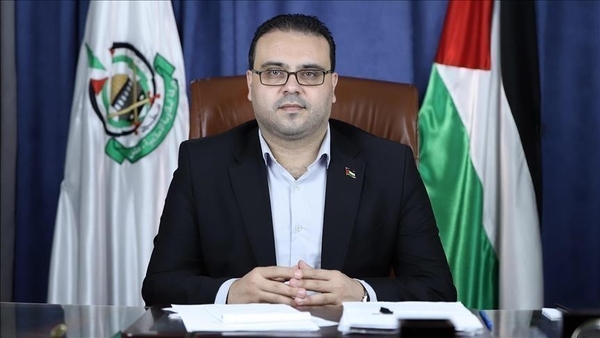
The movement's spokesman, Hazem Qassem, confirmed on his personal Facebook page that Hamas is engaging "positively and responsibly with mediators to ensure the implementation of all phases of the ceasefire, in a way that serves the interests of the Palestinian people: an end to the war, the withdrawal of Israeli forces, and the reconstruction of the Gaza Strip."


For its part, the official Israeli Broadcasting Corporation reported on Wednesday evening that the ongoing negotiations in Doha are witnessing a "positive atmosphere," with optimism about reaching an agreement.


The commission added that the Israeli negotiating delegation, which arrived in Doha on Monday, decided to extend its stay to continue discussing the ceasefire agreement with Gaza, which Israel had previously reneged on.


It is noteworthy that Witkov arrived in Doha on Tuesday to participate in the talks.


In early March, the first phase of the 42-day ceasefire agreement in Gaza ended, while Israel renounced entering the second phase and ending the war.


Netanyahu seeks to extend the first phase of the agreement, which entered into force on January 19, 2025, to release the largest possible number of Israeli prisoners in Gaza, without offering any compensation or fulfilling the military and humanitarian obligations imposed by the agreement during the previous period, in order to appease the extremists in his government.


In return, Hamas affirms its commitment to implementing the agreement, demands that Israel abide by all its provisions, and calls on mediators to immediately begin negotiations for the second phase, which includes an Israeli withdrawal from the Gaza Strip and a complete cessation of hostilities.


With American support, Israel has been committing genocide in Gaza since October 7, 2023, leaving more than 160,000 Palestinians dead and wounded, most of them children and women, and more than 14,000 missing.

PALESTINE

Thu 13 Mar 2025 7:58 pm - Jerusalem Time

A child was killed by Israeli occupation forces east of Gaza.

A child was killed Thursday evening after being shot by an Israeli drone in the Shuja'iyya neighborhood east of Gaza City.


According to local sources, an Israeli drone fired directly at civilians, killing three-year-old Amjad Hazem Abed in the Al-Muntar area of the Shuja'iyya neighborhood.


She added that a female citizen was injured by Israeli occupation forces' bullets after being shot by a drone in the town of Beit Hanoun, north of the Gaza Strip.


Israeli military vehicles fired their weapons east of the town of Abasan al-Jadida, east of Khan Yunis, in the southern Gaza Strip.

PALESTINE

Thu 13 Mar 2025 6:23 pm - Jerusalem Time

Netanyahu: We will not give up control over five Lebanese sites and will continue our aggressive policy with force.

Israeli Prime Minister Benjamin Netanyahu claimed that Tel Aviv will not relinquish control of five sites in Lebanese territory, noting that his offensive policy extends not only to Syria but also to Lebanon.


Netanyahu claimed in statements on Thursday that his army had attacked an Islamic Jihad headquarters in the heart of Damascus, alleging that anyone who attacks Tel Aviv or thinks about attacking it will face attack.


Netanyahu also claimed that his army killed five Hezbollah members last week for violating the ceasefire agreement, threatening that Tel Aviv would continue its security operations with force and determination, according to his claims.


In a related development, Netanyahu responded to opposition leader Yair Lapid's remarks, saying that the latter had "subdued Hezbollah" and surrendered Lebanese territory, a reference to what he described as Lapid's concessions during his tenure.


ARAB AND WORLD

Thu 13 Mar 2025 4:29 pm - Jerusalem Time

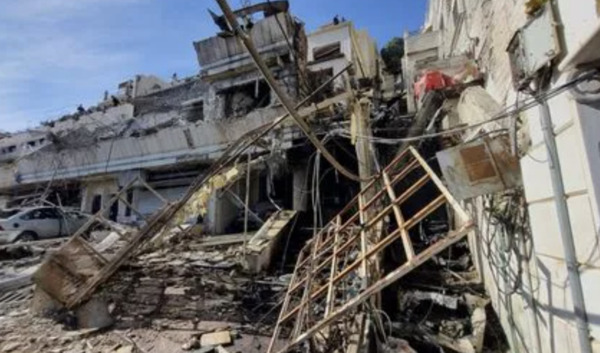
The Israeli occupation bombed a building in Damascus, claiming it contained an Islamic Jihad office.

Israeli Defense Minister Yisrael Katz confirmed that the Israeli Air Force launched an airstrike on Damascus on Thursday.


"There will be no immunity for Islamic terrorism against Israel, whether in Damascus or anywhere else," Katz said in a statement, adding, "We will not allow Syria to become a threat to the State of Israel."


The Israeli military described the target as a "command center of the Palestinian Islamic Jihad movement used to plan and direct terrorist activities against Israel."


The Israeli military released a nine-second video showing what it said was the airstrike, and what appeared to be an explosion on the outskirts of a building, followed by thick columns of smoke.


Two Syrian security sources told Reuters that the target was a Palestinian. It remains unclear whether there were any casualties.


Al-Arabiya TV correspondent from Damascus, Christine Rinawi, explained that Israeli media outlets had been claiming in recent days that Palestinian elements affiliated with the Islamic Jihad and Hamas movements were present, and that there were fears they might carry out attacks against Israel from within Syria.


"security buffer zone"

Rinawi explained that the occupation has recently begun making no secret of its intentions to remain within Syrian territory for the long term, and that it intends to complete the establishment of what it calls a security buffer zone.


She pointed out that Israel's goal, through intensifying its attacks and attacks on Syrian state assets, is to prevent these assets from falling into the hands of the new regime, in an attempt to limit its control and undermine it.


The Israeli army has penetrated the demilitarized buffer zone in the Golan Heights, located on the outskirts of the part of the Syrian plateau it occupies.


Last month, Israeli Prime Minister Benjamin Netanyahu called for "a complete demilitarization of southern Syria," saying that Israel would not allow the new administration's forces to deploy south of Damascus.

ARAB AND WORLD

Thu 13 Mar 2025 4:16 pm - Jerusalem Time

Arabs welcome Trump's statements on Gaza and call for a peace process.

Egypt, Jordan, and Palestine on Thursday welcomed US President Donald Trump's statements in which he indicated that he does not seek to displace Palestinians from the Gaza Strip, and called on him to support a peace process.


This came according to statements issued by the Egyptian and Jordanian foreign ministries, the Palestinian presidency, and Palestinian statements, including one from Hamas, hours after Trump told reporters that "no one is expelling any Palestinian from the Gaza Strip."


Egypt


The Ministry of Foreign Affairs expressed its appreciation for US President Donald Trump's statements on March 12, in which he confirmed that the residents of the Gaza Strip would not be asked to leave.


On Wednesday, Trump told reporters that "no one is expelling any Palestinian from the Gaza Strip."


The ministry explained that this position "reflects an understanding of the importance of avoiding a worsening of the humanitarian situation in the Gaza Strip and the need to work towards finding just and sustainable solutions to the Palestinian issue."


The ministry also indicated that Egypt believes that President Trump's initiative to end international conflicts and achieve peace, including in the Middle East, "can represent a practical framework to build upon and work together to achieve it, taking into account the legitimate aspirations of the Palestinian people."


Jordan


The Ministry of Foreign Affairs welcomed Trump's statements, affirming the Kingdom's support for efforts aimed at achieving peace that is acceptable to the people, and that the Kingdom and the United States are partners in this effort.


She stressed the importance of achieving a just and lasting peace that embodies an independent, sovereign Palestinian state on the June 4, 1967, lines, with East Jerusalem as its capital, in accordance with the two-state solution, as the only way to achieve security, stability, and peace in the region.


Palestine


Palestinian presidential spokesman Nabil Abu Rudeineh welcomed the US administration's reversal of the idea of displacing residents of the Gaza Strip, describing it as an "encouraging" step.


In statements reported by the Palestinian News Agency (WAFA), Abu Rudeineh expressed his hope that the US administration would continue to make balanced statements to achieve a political path based on international legitimacy and the Arab Peace Initiative.


He praised the unified Arab stance rejecting displacement, noting that this stance, along with the steadfastness of the Palestinian people and their adherence to their land, "contributed to the abandonment of these ideas."


For his part, Hussein al-Sheikh, Secretary of the Executive Committee of the Palestine Liberation Organization, expressed his appreciation in a post on the X platform for the US president's statements in which he affirmed that Palestinians in the Gaza Strip are not being asked to leave their homeland.


In the same context, Hamas spokesman Hazem Qassem welcomed US President Donald Trump's statements indicating that there was no intention to displace Palestinians from Gaza, considering this a "retreat from the idea of displacement."


Qassem called for this position to be complemented by "obligating the Israeli occupation to implement all provisions of the ceasefire agreement."


The US President urged against aligning with the "extreme Zionist right-wing vision."


Since January 25, Trump has been promoting a plan to displace Palestinians from Gaza to neighboring countries such as Egypt and Jordan. Both countries have rejected the plan, and other Arab and European countries, as well as regional and international organizations, have joined them.


In contrast, Arab countries agreed at an emergency summit held in Cairo on March 4 to reject any attempts to rebuild the Gaza Strip by displacing its residents, under any pretext or circumstances.


The Arab plan includes the formation of a "Gaza Administration Committee" to manage the Strip's affairs for a six-month transitional period. The committee will be independent and comprised of non-factional "technocrats" operating under the umbrella of the Palestinian government.

PALESTINE

Thu 13 Mar 2025 4:02 pm - Jerusalem Time

Hamas announces resumption of negotiations with mediators and affirms "positive" engagement

Hamas announced on Thursday the resumption of negotiations with mediators (Egypt and Qatar) in Doha regarding the ceasefire agreement in the Gaza Strip, in light of the Israeli occupation's refusal to comply with the agreement and the beginning of its second phase.


The movement's spokesman, Hazem Qassem, confirmed on his personal Facebook page that Hamas is engaging "positively and responsibly with mediators to ensure the implementation of all phases of the ceasefire, in a way that serves the interests of the Palestinian people: an end to the war, the withdrawal of Israeli forces, and the reconstruction of the Gaza Strip."


For its part, the official Israeli Broadcasting Corporation reported on Wednesday evening that the ongoing negotiations in Doha are witnessing a "positive atmosphere," with optimism about reaching an agreement.


The commission added that the Israeli negotiating delegation, which arrived in Doha on Monday, decided to extend its stay to continue discussing the ceasefire agreement with Gaza, which Israel had previously reneged on.


It is noteworthy that US Middle East envoy Steve Witkoff arrived in Doha on Tuesday to participate in the talks.


The fate of the negotiations taking place in the Qatari capital since last Monday regarding an agreement to continue the prisoner exchange and a ceasefire in Gaza remains shrouded in mystery.


In early March, the first phase of the 42-day ceasefire agreement in Gaza ended, while Israel renounced entering the second phase and ending the war.


Netanyahu seeks to extend the first phase of the agreement, which entered into force on January 19, 2025, to release the largest possible number of Israeli prisoners in Gaza, without offering any compensation or fulfilling the military and humanitarian obligations imposed by the agreement during the previous period, in order to appease the extremists in his government.


In return, Hamas affirms its commitment to implementing the agreement, demands that Israel abide by all its provisions, and calls on mediators to immediately begin negotiations for the second phase, which includes an Israeli withdrawal from the Gaza Strip and a complete cessation of hostilities.


PALESTINE

Thu 13 Mar 2025 3:26 pm - Jerusalem Time

Saudi Arabia delivers its annual contribution of $2 million to UNRWA.

Today, Thursday, the Chargé d'Affaires of the Saudi Embassy in Jordan, Mohammed bin Hassan Monis, handed over to the United Nations Relief and Works Agency for Palestine Refugees in the Near East (UNRWA) the Kingdom of Saudi Arabia's annual contribution to the agency, amounting to two million US dollars.

Monis handed a check for the amount to Tamara Al-Rifai, Director of UNRWA's External Relations and Media Department, as part of efforts to enable UNRWA to continue providing relief services and food, medicine, and other humanitarian needs to the Palestinian people.

Mons said that this support stems from the Kingdom of Saudi Arabia's commitment to supporting the United Nations Relief and Works Agency for Palestine Refugees (UNRWA) to enable it to fulfill its financial obligations, noting the agency's importance in providing humanitarian assistance to Palestinian refugees, in addition to improving living, educational, and medical services.

For her part, Al-Rifai expressed her gratitude to the Kingdom of Saudi Arabia, stressing that it will enable UNRWA to implement its education and health programs and assist the most vulnerable Palestinian refugees in the West Bank and Gaza Strip.