OPINIONS

Sun 16 Mar 2025 9:17 am - Jerusalem Time

Palestinian presence and Israeli decline

Hamada Faraana

Hamada Faraana

Opinion Writer

The Palestinians are now armed with significant political leverage, thanks to their sacrifices and resilience in the face of Israeli failure and crimes against the Palestinian people, which have left them isolated and relegated to the background, despite the strongest American support.

The Palestinians have a set of political factors that have clearly and prominently formed supportive levers for them:

First, their exceptional steadfastness in the Gaza Strip, in the face of the invasion, aggression, barbarism and fascism of the colony in a blatant manner represented by: killing, destruction and targeting of civilians, which turned into a state of human sympathy supporting and backing them.

Second, the decisions of the Arab Summit in Cairo on March 4, 2025, preceded by the five-nation summit in Riyadh on February 21, 2025.

Third, the decisions of the extraordinary meeting of the Organization of Islamic Cooperation on March 7, 2025 in Jeddah.

Fourth, the continuation of the Arab effort, through the five-member ministerial delegation of foreign ministers from Egypt, Saudi Arabia, Jordan, Qatar, and the UAE, along with PLO Executive Committee member Hussein al-Sheikh, and its efforts to support and back the Palestinian position and meet its requirements, including direct negotiations with representatives of the US administration:

1- Steve Witkoff, the US administration's political envoy to the Arab world, Moscow, and Ukraine.

2- Eric Trager, Middle East affairs officer at the US National Security Council.

Fifth: Western European countries that expressed their sympathy and support for the urgent Palestinian demands.

The outcome of Palestinian steadfastness, Arab-Islamic solidarity with the justness of Palestinian demands, and the legitimacy of the Palestinian struggle to regain their plundered rights and occupied land, in a gradual, multi-stage process, is met with a state of Israeli failure and disgrace:

1- Failure to recover Israeli prisoners without an exchange.

2- The failure to end and eliminate the Palestinian resistance, despite the killing, assassination, and destruction caused by the October 7, 2023 operation.

3- The expansion of Israeli protests against the war, demanding the continuation of negotiations and a shift towards the option of negotiation and prisoner exchange.

4- The decisions of the army and intelligence regarding not resuming the war, as there are no strategic objectives that can be achieved, and the statement of the new Chief of Staff, Eyal Zamir: “The resumption of the war will be limited to bombing, which is what is currently happening with the fall of civilian martyrs as a result of the air, land and sea bombardment, and the concentrated assault, meaning that the invasion operations and the continued presence of the occupation forces inside the sites and neighborhoods of the Gaza Strip do not constitute a gain for the occupation army, but rather provide the resistance with freedom of movement, and to snipe at the occupation forces and their vehicles, due to the logistical factor and the obstacles caused by the dust and piles of destroyed buildings.

5- A split within the enemy front between Israeli priorities and American priorities, as direct American negotiations with Hamas took place to release prisoners with dual citizenship, weakening Israel's negotiating position and increasing Israeli protests and opposition to the Netanyahu government's behavior.

The danger of negotiating with Hamas is that it will intensify the deliberate Palestinian division. Therefore, Palestinian sacrifices and resilience must be invested in strengthening the unity of Palestinian decision-making institutions, not in responding to weakening them. This will not be achieved without Palestinian coordination and understanding in two steps: the first, unity of the Fatah movement, and the second, unity of the Palestinian household.


..................

The outcome of Palestinian steadfastness, Arab-Islamic solidarity with the justness of Palestinian demands, and the legitimacy of the Palestinian struggle to regain their plundered rights and occupied land, in a gradual, multi-stage process, is met with Israeli failure and disastrous consequences.

OPINIONS

Sun 16 Mar 2025 9:17 am - Jerusalem Time

Islamists and a century of attempts... ideas and a vision that were not realized!!

Dr. Ahmed Youssef

Dr. Ahmed Youssef

Opinion Writer

My conviction today, after half a century of Islamic work at home and abroad, is that the thinkers, leaders, and preachers of the Islamic movement must pause and review the propositions from which their vision for reform and change was based.

It is historically known that the core idea upon which the Muslim Brotherhood was founded, and from which it derived its vitality and widespread dissemination in Egypt and the Arab world, emerged from the vision presented by Imam Hassan al-Banna (may God have mercy on him) in the late 1920s; that is, almost a century ago. The motive and intention behind this was to restore the Islamic Caliphate, after it had been overthrown and eliminated by Kemal Ataturk in 1924. Thus, the Muslim nation became plunder and prey for the colonial powers - especially Britain and France - to divide it up, in the manner that became the case after the Sykes-Picot Agreement.

At the time, Sheikh Al-Banna's vision was an idea that resonated with many young men and women of this nation, and this contributed to its rapid spread throughout the Arab world.

The understanding of generations of this movement did not stop at this goal, but rather ideas developed after Israel became a bastard entity and a cancerous tumor threatening the countries of the region and its Islamic sanctities. The new proposals of some thinkers of the Islamic movement, such as the martyr Dr. Fathi al-Shaqaqi (may God have mercy on him), were that the Palestinian issue should be the primary concern and central issue for the aspirations and goals of the Islamic movement. However, despite its validity, the idea did not receive consensus, and in fact, it caused rifts among the members of the Islamic movement in the West Bank and Gaza Strip.

Therefore, these concepts have remained stuck in place in a crisis-ridden reality whose sun has set since the establishment of this entity on the ruins of our first catastrophe in 1948, until today, when the second great catastrophe is about to set on the sun of the afflicted homeland and the Palestinian identity!!

With the Islamic movement faltering and unable to muster the nation's energies to accomplish the liberation project, Islamists turned against the ruling regimes, accusing them of tyranny and dictatorship. Consequently, the goal became to get rid of them and seek to seize power in their place. Perhaps this is what we witnessed in the Arab Spring revolutions that erupted in many countries. However, in the end, they were not destined for success, despite the momentum, euphoria, and empowerment they enjoyed for a period of time in countries such as Tunisia, Egypt, and Libya.

Today, in the context of evaluating the goals and slogans it raised, and the state of fragmentation and division that this Islamic movement, which has spread widely regionally and globally, appears to be in after a century of its launch, it is incumbent upon us to demand that it pause and review many of the concepts and positions it has exported, which have led to the disintegration and loss of our nation, as it has remained in the same place and has become like a plant; neither land to cut nor back to sustain!!

One of the undisputed timings is that Al-Banna's ideas and teachings came at a time when most of the region's countries were living under British and French colonial rule. These ideas contributed to the development of a generation of strong morals, Islamic commitment, and patriotic sentiments. Thanks to the realities of that historical period, some Arab and Islamic states were liberated, and the colonizers realized that the continuation of the colonial state in the region would weaken or undermine the credibility and legitimacy of these rulers. Therefore, this colonizer adopted a policy of remote control in its administration and dealings with these ruling regimes, in terms of their orientations and the protection of its interests within them. Accordingly, a process of evacuating, removing, or concealing most colonial manifestations took place, and the specter of confrontation that drove the dialectic of occupation and resistance was averted.

Today, most of those at the top of the pyramid of power, including rulers and kings in our Arab and Islamic countries, unfortunately have secret or overt ties and agreements that govern the nature of their relationship with those who once colonized their countries. They maintain extensive relations of security and political coordination and cooperation with them. This is something that can be understood in many contexts, and Professor Ismail Al-Faruqi (may God have mercy on him) called it “colonialism ability.”


The problem that followed that period of the vision for the restoration of the caliphate is the entry of the Palestinian issue into this line of priorities, as Israel - the nascent entity - is a colonial creation and a functional state created by the West for several considerations, the most important of which are:

First, the elimination of Jewish minorities from the European map, which was fed up with them. This displacement and ethnic cleansing of Jews took place in both forced and voluntary forms, and this was a position that was blessed by everyone, including the United States of America.

Second, America viewed this entity as a necessity required by the strategies of the new American colonial position in the region after World War II, as America inherited former colonial kingdoms and entities in the Middle East.

America has found in Israel a functionally reliable entity through which it can strengthen its influence and use its heavy hand against anyone who attempts to rebel against it or threaten its vital interests in the region.

In reality, Israel has imposed itself as an alternative homeland for the (persecuted) Jews in Europe. It is a powerful state that fears no one, as it strikes with the sword of America. There are major media outlets (newspapers, magazines, and television channels) that cover up its crimes and provide it with justifications and moral cover for the massacres it commits against humanity and its brutal aggression against the Palestinians.

In fact, Israel, an entity weaker than a spider's web, has found all the support and military backing from the United States, becoming an advanced American aircraft carrier deep in the region, equipped with all the combat capabilities that qualify it to wage wars on several fronts, as the American bases spread throughout most of the region give it reassurance that it is within its protection network, and it can openly say to those who target it that (you will not be defeated)!!

The most dangerous problem created by Israel as a colonial innovation is that it has succeeded in creating isolation between the region's rulers and their peoples, placing these rulers in the surrounding and neighboring countries between two fears: Israeli threats and popular movements. This, unfortunately, has caused a state of "weakness" among the ruling regimes, and this is an issue that Israel is exploiting and playing on its string, considering that what it is facing are merely regimes that do not stand on solid ground, and have many calculations and fears related to the risk of defeat or a coup.

Indeed, it is time to admit that we, as Islamists, have exhausted ourselves in our long struggles and attempts at change. This is first, and second, we have intentionally depleted the capabilities of the ruling regimes, forcing them into Western alliances and connections to protect their thrones. We have created a rift and an unbridgeable gap of suspicion and accusations between them and their internal front, rendering their internal fortifications incapable of withstanding and cohesion.

In light of this existing imbalance in the relationship between Islamists and ruling regimes, Islamists' views have shifted between supporting the regime and protecting the homeland, or gloating over the ruler's defeat and the loss of the homeland.

Therefore, if we want to defeat Israel and protect our Islamic holy sites in the land that God Almighty has blessed for all mankind, then the religious, political, and moral duty, as well as the existing liberation strategies or those being considered by some Islamists, require us to distance ourselves from the idea of confrontation between the ruling regimes and the Islamist movements seeking change.

Therefore, Islamists must either stop targeting this or that regime, or they must refrain from over-promoting victory or even talking about empowerment, which could bring them closer to it, while we live in catastrophic circumstances following the failure of the Arab Spring revolutions to achieve their aspirations for change.

Victory over Israel will not come while the nation is dying, and its people are living in a state of despair and frustration unprecedented in our contemporary history. Everyone's inner voice is saying, "There is no one to protect us from them except God." It is the feeling of losing everything, when support is scarce, and the moment of clinging to heaven, which many prophets and messengers have endured.

The ongoing war of genocide and ethnic cleansing in Gaza and the West Bank has left everyone paralyzed and helpless. The official Arab regime, even within its broad Islamic framework of 57 countries, has been unable, during several summits in Riyadh and Cairo, to secure the opening of the Rafah crossing for the entry of relief and humanitarian aid. Similarly, the popular support in the Arab and Islamic worlds has fallen short of the level of ambition and effectiveness required to champion Palestinian rights.

This state of weakness and humiliation that the nation is witnessing prompts us to say: When will the building ever reach its completion, if you are building it and others are destroying it?!

In conclusion, Islamists must abandon the idea of clashing with regimes and focus on internal development, with the goal of preserving the nation's capabilities, protecting its sanctities, and championing its cause.


...................

If we are to defeat Israel and protect our Islamic holy sites, then the religious, political, and moral duty, as well as the existing liberation strategies or those being considered by some Islamists, require us to distance ourselves from the idea of confrontation between the ruling regimes and the Islamist movements seeking change.

OPINIONS

Sun 16 Mar 2025 9:15 am - Jerusalem Time

Trump: A Policy of Chaos

Baha Rahal

Baha Rahal

Opinion Writer

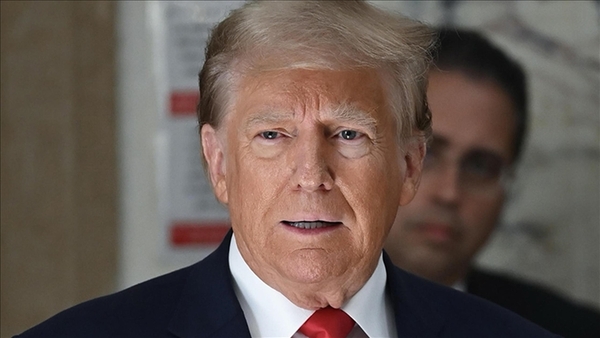
When America's social media policy oscillates in response to the pronouncements of its tweet-obsessed president, Trump, the superpower loses its prestige and balance, and its relationships and alliances with other countries are damaged. Since Trump assumed office as president of the United States, he has been undermining America's prestige through his tweets and statements, flexing his personal muscle as if he were running a real estate company whose assets he owns.

The world is not an investment firm, and heads of state and kings are not security guards for business deals, nor are they bullies used to attack rivals. The world is not run virtually via tweets on social media, and it is unbecoming for a superpower to be this way, which will cause it to lose its allies and its prestige and standing if it continues to be governed by the same approach it has adopted since the advent of Donald Trump.

Trump's new policy is not fit for a superpower ruling the world. Rather, it is fit for a gang headed by a mafia don who terrorizes its members by issuing orders and humiliating the weak, making the strong fear him. This is a losing trade in politics, as the world does not shrink in the face of a businessman accustomed to gambling and chance. Although the major powers are watching silently, they will not allow such decadence to prevail, and their silence will not last long in the face of this tampering with international destiny.

Trump, obsessed with virtual tweets, is obsessed with self-love, a preoccupation that has become a chronic illness. You'll find him issuing statements about ethnic cleansing in Gaza and the seizure of its land, its ruins and its riches. Then he tries slapping the Ukrainian president, extracting approval from the Jordanian king, and ignoring the French president, all of which has led to unprecedented recklessness on the part of anyone who has occupied the White House.

Trump is as volatile in his tweets as a broker offering a miserable trade, waving a stick and threatening anyone who doesn't buy his merchandise. In reality, he has no merchandise to sell, which only makes matters worse, as he wants to sell the world an illusion.

Deliberate insult and flexing one's muscles may be beneficial in bars and gambling halls, but it harms the prestige of a superpower and the policies of nations, which, if they continue in this chaos, will continue to descend into the abyss.


.............


The world is not insignificant in the face of a businessman accustomed to gambling and luck. Even if the major powers are watching silently, they will not allow such decadence to prevail, and their silence will not last long in the face of this tampering with international destiny.

OPINIONS

Sun 16 Mar 2025 9:12 am - Jerusalem Time

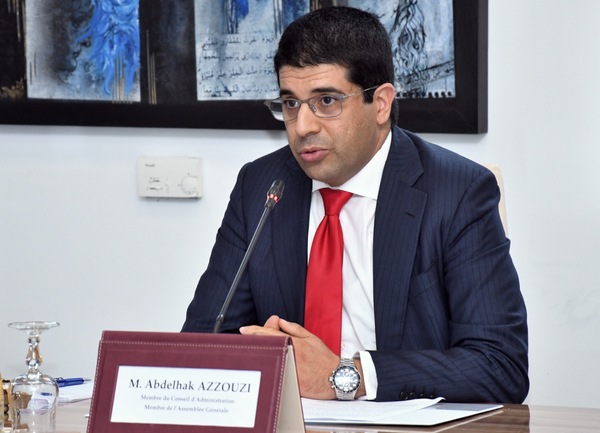
Trump-Europe: Towards a New World Order

Dr. Abdelhak Azzouzi

Dr. Abdelhak Azzouzi

Opinion Writer

With the second term of US President Donald Trump, the global order has entered a new era. We have witnessed broad geopolitical changes in Europe and in the objectives of NATO. We may enter an era in which three blocs are established in the world: America, Russia, and China. However, chaos and conflict may spread across the international arena, and every region of the world will adapt unsteadily to the new configuration of power...


No one could have predicted that President Trump would create such a massive rift in the new world order, nor would he have anticipated all these strategic changes in the world, particularly in Europe. To the point that European leaders are beginning to feel a deep sense of existential fear, as they find themselves caught between the anvil of maintaining American favor and the hammer of European strategic and military independence.


Europe woke up to a new reality. Former US President Biden was generously and enthusiastically sending weapons and equipment to Ukraine, without financial compensation. He was reassuring his European allies that NATO was a military umbrella protected by US intelligence and fueled by the latest US military innovations.


The Europeans were thus safe from being taken for granted in their fickleness, for they were neither helpless nor fearful. But with US President Trump, everything changed. The Europeans found themselves with a man sitting on the throne of the White House, holding the reins of the entire executive branch; every day he issues decisions that he signs without regard for the literature of the separation of powers in American history, and amidst the strange and unprecedented silence of the Democrats, who do nothing. They found themselves with a smart businessman, skilled in negotiations, and unafraid of the consequences; he views Europe's paltry contributions to its armaments and defense, as if America were the guardian of its existence among nations. It began with the process of disciplining and taming the Ukrainians, and the unprecedented public altercation between Ukrainian President Zelensky and US President Trump in the White House, a live confrontation that was broadcast by international media to the astonishment and panic of many countries, especially European allies. Washington immediately changed its position on the Russian-Ukrainian war, freezing its military aid to Kyiv and intelligence sharing with it. That night did not pass before successive meetings of European leaders began, driven by one wing of the European Union, namely France, after the other wing, namely Germany, was afflicted with difficult internal political problems. The result was an agreement by EU leaders on a plan to rearm Europe, which calls for allocating approximately 800 billion euros, a large portion of which will certainly be allocated to purchasing American weapons. The problem is not the financial resources that European taxpayers will reluctantly provide, but rather related to production capacity. Europe cannot produce weapons on a large scale; its arms factories are small compared to their American, Russian, or Chinese counterparts, and there is a need to build new facilities, develop the supply chain, and manufacture raw materials to keep pace with demand. The Ukrainians will also allow America to exploit Ukraine's rare earths to cover the military expenses of former President Biden's administration for the benefit of the Ukrainians... According to the German Kiel Institute, Washington alone provided about half of the value of military aid to Ukraine from 2022 to 2024. The winner today is President Trump's America par excellence, and the biggest loser is Ukraine and Europe. This equation will continue, because even if Europe spends all the money in the world on its armaments, it cannot do without America, its weapons, its intelligence, its spy satellites, its surveillance systems, its hegemony, and its central and policing role in NATO and in the world.


Another problem troubling European allies is that the world has entered a phase of uncertainty, apprehension, ambiguity, and uncertainty more than ever before. This is because they don't know what President Trump hides in his heart every night and doesn't reveal to them. Each time, he demands more, because he is in a period of strength and disregards diplomatic, economic, and commercial norms and traditions. He sanctifies the principle of "America First" and seeks to change the global order that nations have become accustomed to and that theorists have envisioned for decades. He is making unprecedented and successive decisions. It is sufficient to recall that in 40 days, the US president issued 79 executive orders, equivalent to the total number of decrees issued by Biden during his first year in the White House. All of this falls within the framework of the US Trumpian doctrine based on "reviving the American dream" and the strict immigration policies it follows, as well as other economic policies based on imposing tariffs against countries such as Canada, Mexico, and the European Union. Together, these policies are changing the global order, destabilizing markets and stock exchanges, laying off workers, and affecting the future of the ruling parties in these countries.


PALESTINE

Sun 16 Mar 2025 8:56 am - Jerusalem Time

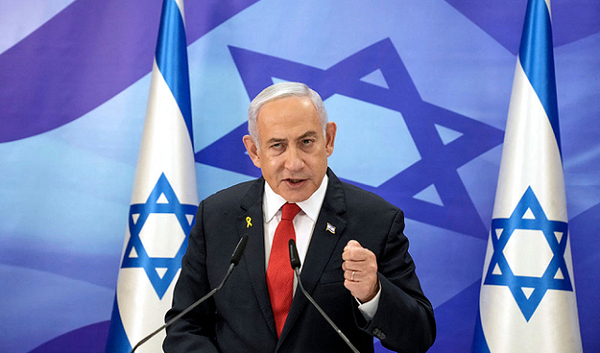
The former Shin Bet chief's threats are a red flag. Absolute power corrupts absolutely. The ball of fire is now in Netanyahu's lap.

Sawsan Sarour: The tense relations between the Shin Bet and Netanyahu reached an advanced stage when Ronen Bar was withdrawn from the negotiations between Israel and Hamas.

Imad Abu Awad: What we are witnessing today is a precedent and an indicator of Israel's internal weakness and its lack of clarity and confusion of identity.

Dr. Adnan Al-Afandy: The threat by the former head of the Shin Bet to a former top executive authority is unprecedented in the history of the occupying state.

Dr. Hassan Marhej: The former head of the Shin Bet's threats to Netanyahu reflect deep internal tensions within Israeli politics.

Ismat Mansour: An indicator of the extent of the anxiety and fear gripping the security establishment due to Netanyahu's behavior and the way he runs the country.


The absolute power that Israeli Prime Minister Benjamin Netanyahu has long sought to monopolize, moving away from the traditions of Western rule, which he and others have long considered Israel to be part of, and drawing closer to the Third World regimes over which he has long exercised his arrogance and superiority in every sphere.


Anyone who follows Netanyahu's consolidation of institutions under his control and those of his allies, such as Ben-Gvir, Smotrich, and Katz, as well as the dismissals of his Defense Minister Galant, his Chief of Staff Halevi, the IDF Spokesperson, and others, clearly reveals the true nature of the coup Netanyahu is waging within Israeli institutions to seize control of the levers of power and sideline his opponents, preventing any attempt to hold him accountable for the failures of October 7th, thus remaining in power.


Former Shin Bet chief Nadav Argaman is fed up with Netanyahu's policies. In an interview with Israel's Channel 12, he threatened that "if Netanyahu breaks the law, he will publish sensitive information he learned during his tenure as head of the Shin Bet."

In response to these threats, Netanyahu filed a formal complaint with the police on Friday against Argaman, accusing him of "attempting to blackmail him using methods typical of the world of organized crime, as if he were a mafia leader rather than a former Israeli security official."


Writers and analysts who spoke to Al-Quds considered the former Shin Bet chief's threat to the highest executive authority unprecedented in the history of the occupying state, and an indicator of the extent of the anxiety and fear gripping the security establishment due to Netanyahu's behavior and the way he governs the country.


A crisis of confidence between the Shin Bet and the government


Journalist Sawsan Sarour, an observer and critic of the Israeli political scene, said, "The accusations and threats made by former Shin Bet chief Nadav Argaman in a televised interview on Israel's Channel 12 last Thursday against Israeli Prime Minister Benjamin Netanyahu reflect the depth of the crisis of trust between the two institutions."


She added: "Argaman threatened Netanyahu with revealing very important details gathered through the intimate relationship between them over many years of their joint work in their respective positions, if Netanyahu attempted to circumvent or undermine democracy in Israel. Argaman threatened, saying, 'I will reveal everything.'"


Sarour confirmed that this interview came a few days after the current head of the Shin Bet, Ronen Bar, announced some of the results of the Shin Bet investigation into the failure of October 7, 2023, when Palestinian resistance elements took control of the Gaza Strip settlements and detained a large number of Israelis. Bar did not evade personal responsibility, but he claimed that the political system was also complicit in this failure, as it adopted a policy of buying calm in Gaza with Qatari money. Netanyahu was receiving approximately $30 million monthly, believing that Gaza did not pose an urgent security threat, and was classified as the fourth most dangerous country, after Iran, Hezbollah, and the West Bank.


Another threat to Israeli "democracy"


Sarour believes that the tense relationship between the Shin Bet and Netanyahu reached an advanced stage when Netanyahu withdrew Shin Bet chief Ronen Bar from the indirect deal negotiations between Israel and Hamas about a month ago.


She noted that attacks by Netanyahu's entourage on Bar have escalated in recent weeks following his investigation into the classified documents affair, in which Prime Minister's Office spokesman Eli Feldstein is suspected of being involved. Netanyahu's associates, such as his son Yair Netanyahu and media personality Jacob Bardugo, have strongly attacked Bar and the Shin Bet security service, accusing them of attempting a coup. This is not to mention the recent launch of an investigation into the so-called "Qatargate" affair, in which senior employees and advisors in Netanyahu's office are accused of working with the State of Qatar in exchange for financial compensation.


Sarour noted that in light of Prime Minister Netanyahu's overt desire to control more and more centers of power and place his followers within them, and as a clear "lesson" from his turbulent working relationship with Bar, who does not comply with his every whim, the likelihood is growing that Netanyahu will appoint someone close to him to the position, rather than appointing a professional, as has always been the case. This poses a clear and tangible danger to democracy. It may even exceed any other threat currently facing Israeli democracy—on the legislative, executive, legal, and other fronts—although the threats are, of course, intertwined and not mutually exclusive.


A unique device in the field of national security


Sarour stated that the Israeli Internal Security Service (Shin Bet) is considered a unique agency in the field of national security, because its focus is on internal security, with an emphasis on counter-espionage activities. It focuses on the country's citizens and operates in complete secrecy. She noted that its activities are considered extremely sensitive because they involve violating citizens' privacy, and for this purpose, the agency is provided with unique tools.


However, she emphasized that since the establishment of the state, the Shin Bet has operated for decades without a regular legal framework. It was not until June 2002 that the Shin Bet Law was passed, after years of debate, that it defined clear powers and responsibilities for the organization: counterespionage, counterterrorism, and counter-sabotage.


Sarour added: “The Shin Bet was given four additional areas of responsibility under the law: ‘The Shin Bet is responsible for maintaining the security of the state, the democratic system and its institutions; securing individuals, information, and locations designated by the government; determining the security classification of secret positions; and determining security procedures for bodies designated by the government.” To these four, a clause was added stating that the Shin Bet will fulfill a fifth role, which does not exist in any similar law regulating the activities of counterespionage organizations in Western countries: responsibility for ‘activity in another area designated by the government and aimed at preserving and promoting the state’s fundamental national security interests.’”


She continued, "This section allows the Shin Bet to operate even in areas not directly related to state security, as happened, for example, during the coronavirus pandemic, when the Shin Bet was activated to monitor patients by a decision of the prime minister. A side effect of the Shin Bet law was that the organization gained additional powers it did not have before the legislation (such as responsibility for regime arrangements), and today it has greater powers than those granted to parallel organizations in Western democracies."


The Prime Minister is the supervisor of the General Security Service.


“According to the law, the prime minister is the government supervisor of the General Security Service (Shin Bet),” Surur said. “This subordination resulted from arrangements established in the early days of the state, when David Ben-Gurion was both prime minister and defense minister. Later, the two positions were separated, and based on the recommendation of the Yadin-Sharf Commission, established by Ben-Gurion in 1963 to study the distribution of responsibilities within the intelligence services, it was decided to transfer responsibility for the Israeli army to the defense minister, while the prime minister would remain responsible for the General Security Service (Shin Bet) and the Mossad.”


Surur said the committee's starting point was for the prime minister to have a full picture of the secret services' activities.

However, the committee ruled that Israel is the only country among Western democracies in which the prime minister, who already wields supreme power, is directly responsible for the Preventive Security Service, as well as the intelligence apparatus. In Britain, for example, the level of responsibility for the domestic security service (MI5), the equivalent of the Shin Bet, is the Minister of the Interior; in the United States, the head of the FBI, which also handles counterintelligence, is the Minister of Justice.


Sarour concluded her remarks by saying: “In the history of the Shin Bet, the head of the agency has always been appointed from among its senior members, with one exception: In 1996, Ami Ayalon was appointed head of the agency, following the disastrous failure to protect former Prime Minister Yitzhak Rabin, who was assassinated by a Jewish extremist in November 1995.”


She emphasized that nearly thirty years after this appointment, we may witness the appointment of a second chief from outside the agency, but this time for narrow personal motives specific to Prime Minister Netanyahu.


Religious Zionism is concerned with control.


For his part, Imad Abu Awad, an expert on Israeli affairs, described the Shin Bet's threat to Netanyahu as part of the establishment's war against Netanyahu.


He said that Netanyahu and the nationalist and religious right came to power with the goal of changing the face of Israel, emphasizing that religious Zionism is concerned with what is known as control, and Netanyahu is concerned with neutralizing these institutions to serve his personal agenda and ensure his continued rule.


Abu Awad added: "Netanyahu is exploiting the prolongation of the war for this purpose, to reach a stage known as the continuation of the emergency, and then begin his war on the establishment to neutralize it, so that he can implement his plans without hindrance."

He pointed out that the Israeli establishment, historically built by Western Zionist liberals, began to sense the danger two or three years ago, and thus began to seriously consider the need to confront the extreme right led by Netanyahu.


Abu Awad asserted that Netanyahu confronted the army and was able to somewhat control it. He also confronted the police and was able to impose his influence over them. He is now working on the judiciary, but the Shin Bet (Israel Security Agency) is an obstacle, and therefore he seeks to control it as the last institution that still maintains its institutional nature and operates in accordance with Israeli rules, values, and laws. From here, he began working against it.


Netanyahu has come a long way in confronting the establishment.


He pointed out that recently, these institutions have begun to realize the need to confront Netanyahu, otherwise the situation will worsen. Against this backdrop, the confrontation has escalated and intensified.


He noted that the Shin Bet feels that the ruling right is increasing its control, posing a threat to the state. Netanyahu, meanwhile, believes he has come too far in his confrontation with the institutions, and therefore sees an opportunity to pounce on the Shin Bet. Therefore, he has begun using his influence within Israel to pressure this institution in one way or another.


Abu Awad believes that what we are witnessing today is unprecedented, and is an indicator of Israel's internal weakness and lack of clarity and confusion of identity.


Abu Awad said, "Perhaps we are facing two possible paths: the first is Netanyahu and the right-wing controlling the scene, and I believe this is the scenario that will crystallize in the coming years. As for the second scenario, which is a clash, I rule out its occurrence because the liberal Zionist movement has begun to adapt to this reality, and some of its members have even begun emigrating abroad."


Netanyahu fears former Shin Bet chief's remarks


For his part, Dr. Adnan Al-Afandy, an expert on Israeli affairs, described the former Shin Bet chief's threat to Netanyahu as unprecedented in the occupying state, noting that the Shin Bet chief's approach to the highest executive authority was unprecedented.


He said that Netanyahu considered the former Shin Bet chief's statements to be blackmail, crossing a red line, and a clear threat to him. Netanyahu responded by saying, "Never in the history of Israel or in the history of democracies has a former head of a secret security agency blackmailed and threatened a sitting prime minister on live television."


Al-Afandy emphasized that Netanyahu's reaction and statements demonstrate the extent of his fear of the former Shin Bet chief's statements.


He added that these statements stemmed from Netanyahu's behavior, which seeks only to preserve his political position as prime minister, without working to advance the interests of his people. He noted that he may use all available means and may even act against the law without hesitation.


He explained that this conviction has become firmly rooted among many political, security, and military leaders, and even among a large portion of his own people, particularly the families of prisoners held by the resistance in Gaza.


Putting pressure on Netanyahu


Al-Afandy believed that the former Shin Bet chief's statement came as part of an effort to pressure Netanyahu to release the detained prisoners and end the war on Gaza.


He said that the crisis has escalated to the point that Netanyahu has accused the current head of the Shin Bet, Ronen Bar, of leading a systematic blackmail campaign through media directives in recent days. According to Afandi, this reflects a significant gap and lack of harmony in coordination between Netanyahu and the Shin Bet, a situation unprecedented in the occupying state.

Netanyahu said in his statements: "The goal of this campaign is to try to prevent me from making the necessary decisions to reform the Shin Bet after its disastrous failure on October 7."


Al-Afandy considered this statement to be clear evidence of the huge gap between Netanyahu and the security services in the occupying state.


Widespread political and security reactions


He pointed out that these statements sparked widespread reactions from political and security sources within the occupying state. Yair Golan, head of the Democratic Party, stated: "Netanyahu, who sold out Israel's security for his own political survival, sees anyone who serves the state, not just himself, as an enemy." Meanwhile, extremist minister Itamar Ben-Gvir stated: "The head of the Shin Bet must not remain in his position for a single minute longer, and Netanyahu must dismiss him now." The Shin Bet responded through one of its officials, saying: "These are serious accusations against the head of a national organization in the State of Israel. Shin Bet head Ronen Bar devotes all of his time to security issues, efforts to return the abductees, and protecting democracy. Any other statement on this matter is baseless."


In conclusion, Al-Afandy emphasized that the statements of the former Shin Bet chief carry clear indications that the occupying state is experiencing political instability and that the internal situation is vulnerable to disintegration, which could lead to a confrontation between Netanyahu and his security services, especially the Shin Bet, which Netanyahu accuses of incitement against him. Netanyahu's filing of a complaint through his lawyer against the former Shin Bet chief, Nadav Argaman, alleging extortion, also shows that the situation in the occupying state is heading towards further internal instability.


Signs of a split or challenge to the existing authority


For his part, researcher Dr. Hassan Marhej, an expert on Israeli affairs, said that, in light of the threats posed by the former head of the Shin Bet, Netanyahu framed these threats as an attempt to prevent him from making the necessary decisions to rebuild the Shin Bet after its devastating failure on October 7.


He considered the former head of Israel's Shin Bet security service's threats against Netanyahu to reflect deep internal tensions within Israeli politics, as well as issues related to national security and political stability.


Marhej said, "The threats made by the former Shin Bet chief indicate a division or challenge to the existing authority, reflecting dissatisfaction with Netanyahu's current policies. These threats may also reflect concerns about the government's handling of national security, especially in light of regional tensions and internal conflicts. This clearly points to growing political polarization in Israel, with differing opinions on how to deal with security threats and domestic politics in the post-Al-Aqsa Intifada period."


Tension between security services and politics


He expressed his belief that these threats, at this time, reflect tensions between the security services and politics. Historically, Israel has witnessed tensions between the security services and the government, as there have been previous cases of security personnel criticizing government policies or decisions. Conversely, Israel has also witnessed popular protests against certain government policies in the past, leading to the intervention of prominent figures from the former security services to express their concerns.


Marhej emphasized that the former Shin Bet chief's threats to Netanyahu were not merely idle remarks, but rather reflected a complex reality encompassing security, political, and cultural issues. He emphasized the importance of monitoring developments in this situation and how they will impact the future of Israeli politics and national security.


The deep state can no longer tolerate Netanyahu's policies.


Journalist and expert on Israeli affairs, Ismat Mansour, emphasized that the Shin Bet's threat to Netanyahu is truly unprecedented. There may have been previous periods of tension between the security and political echelons, or between the heads of the security services and the prime minister, but for matters to reach this level of publicity, intensity, and threat demonstrates the extent of the anxiety and fear gripping the security establishment due to Netanyahu's behavior and the way he governs the state, and the impact this approach has on the security, judicial, and economic pillars within Israel.


Mansour added: "Just as Netanyahu emptied the police of its content and turned it into a tool in Ben-Gvir's hands, weakening and politicizing it, he has now begun to politicize the army, and there are fears that this approach will extend to the Shin Bet, turning it into a tool that serves the right-wing project and its ideas."


Mansour believes that this escalation and threat indicate that the situation has reached an unprecedented stage, where the deep state and its figures are no longer able to tolerate Netanyahu's policies. This is a clear message that the situation is becoming increasingly complex.


He added, "Based on these developments, the political landscape has become more complex, and anyone following the situation realizes that Netanyahu's political lifespan is either approaching its end, or he will lead Israel into unprecedented conflicts and shocks."


Mansour noted that this situation is interesting, predicting that Netanyahu will back down despite his attempts to escalate the situation. Despite his filing of legal suits against former Shin Bet chief Argaman, which have no real value, the repercussions of this crisis on Israel's domestic scene, as well as on political decisions and the mechanisms for making them, will be significant.


PALESTINE

Sun 16 Mar 2025 8:44 am - Jerusalem Time

Continuous Israeli violations and Netanyahu orders resumption of negotiations

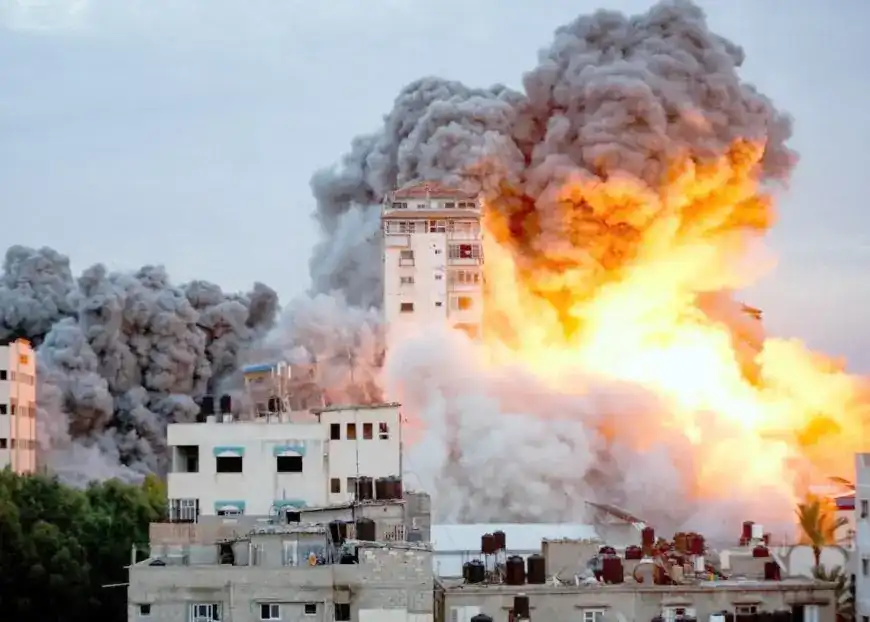
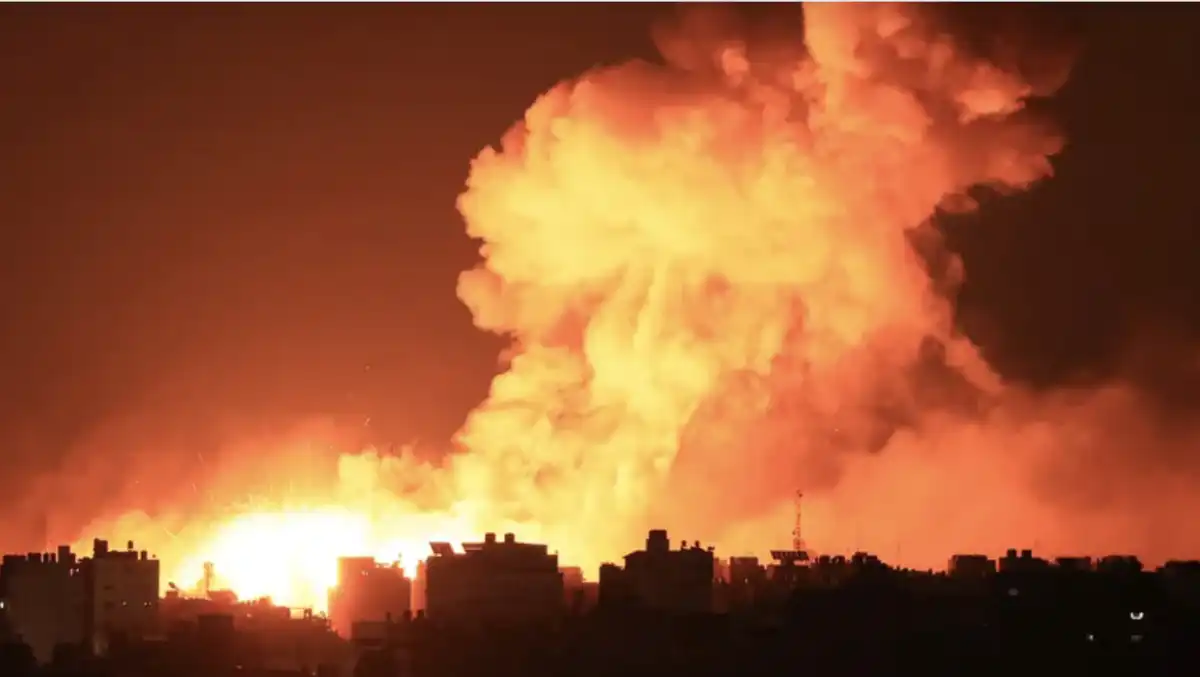
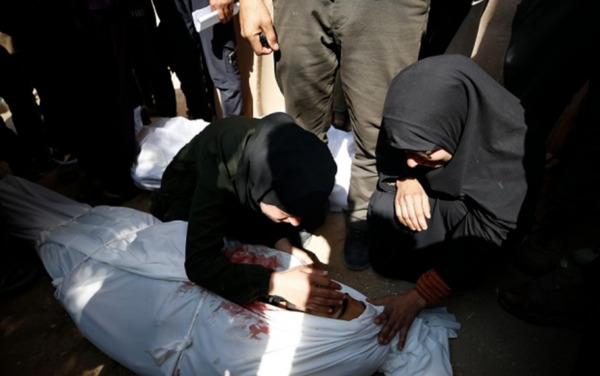
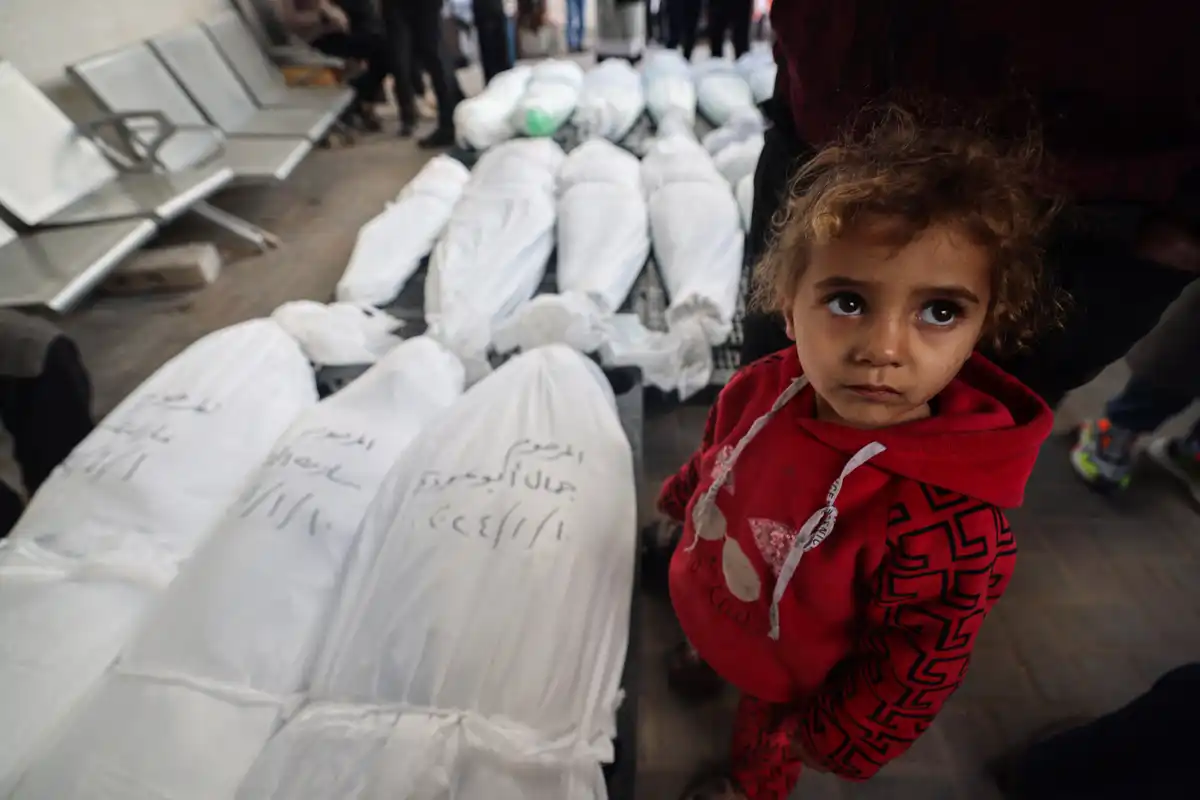
More than 10 Palestinians, including a child and two journalists, were killed on Saturday when the occupation forces targeted a group of citizens (a charity team) in Beit Lahia, north of the Gaza Strip, and when drones fired at the tents of displaced people opposite the Al-Nada Towers, north of the Strip.


In the context of the negotiations, the Israeli Prime Minister's Office issued a statement shortly before midnight on Saturday night, stating that "Prime Minister Benjamin Netanyahu held an in-depth meeting tonight on the abductees, with the participation of ministers, the negotiating team, and security chiefs."


He stated that "at the end of the session, the Prime Minister instructed the negotiating team to prepare to resume the talks based on the mediators' response to Witkoff's (US President's Middle East envoy) proposal for the immediate release of 11 living and half-dead hostages."


The Palestinian Information Center quoted press sources as saying, "Photojournalist Mahmoud Samir Islim and four other citizens were killed by Israeli drone fire at the Al-Attar junction in Beit Lahia, north of the Gaza Strip."


Local sources said that "the bombing targeted eight humanitarian and relief workers, resulting in deaths and injuries."


Despite the ceasefire agreement in the Gaza Strip that went into effect on January 19, 2025, the Israeli occupation continues its series of violations, targeting Palestinians on an almost daily basis. It also continues to stall the implementation of the second phase of the ceasefire agreement in Gaza, ignoring its commitments and refusing to implement the agreement it signed.


The Ministry of Health in the Gaza Strip announced on Saturday that the death toll from the Israeli war has risen to 48,543 martyrs and 111,981 wounded since October 7, 2023. It recorded the deaths of seven people and the wounding of 26 others in the past 48 hours, in addition to the recovery of the bodies of 12 martyrs.


PALESTINE

Sun 16 Mar 2025 8:37 am - Jerusalem Time

Israeli forces injure two citizens and arrest others in the West Bank.

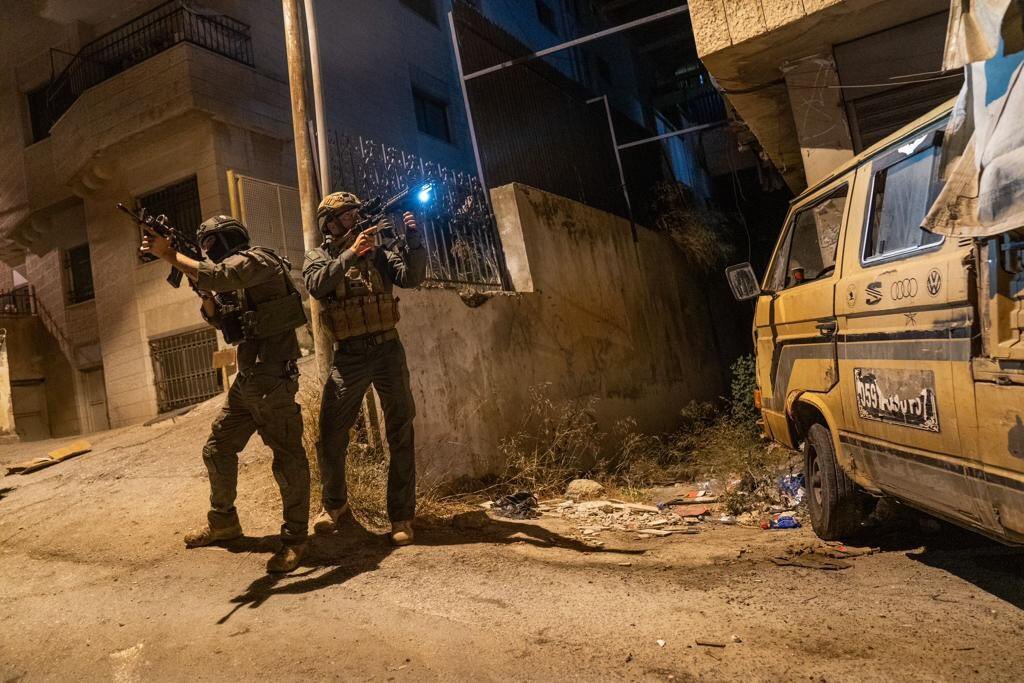
Israeli occupation forces shot two Palestinians with live ammunition, suffocated dozens, and arrested others early Sunday morning in the West Bank.


Local sources reported that the occupation forces stormed the "Ras al-Aroud" area in the center of the town of Sa'ir, east of Hebron, and began firing live bullets, sound bombs, and tear gas at citizens and their homes, which resulted in a young man being injured by live bullets in the foot. The Red Crescent Society's ambulance crews transferred him to the hospital, and a number of citizens suffered from suffocation due to inhaling the tear gas and were treated in the field.


The sources added that the occupation forces arrested the child Muhammad Mazen Jaradat (16 years old) from the town.


In Ramallah, the Red Crescent reported that a 46-year-old Palestinian man was injured by live fire in the feet and is currently being transported to the hospital.


In Nablus, several occupation forces raided several neighborhoods and arrested An-Najah National University student Ibaa Ammar Al-Aghbar after raiding and searching her home in the Rafidia neighborhood.


Israeli occupation forces stormed the town of Beit Furik, the Askar al-Jadid refugee camp, and the Balata al-Balad area east of Nablus, raiding and searching a number of homes and wreaking havoc. No arrests were reported.


In Hebron, occupation forces arrested Bader Issa al-Natsheh at a military checkpoint near Ras al-Joura, and Naim Jaradat from the town of Sa'ir, east of Hebron, after raiding and searching his family's home.


In the same context, the occupation forces continue to close the entrances to towns and camps in Hebron with iron gates, and have intensified their military measures in the Old City neighborhoods, and at the military checkpoints and electronic gates surrounding the Ibrahimi Mosque.

PALESTINE

Sat 15 Mar 2025 10:46 pm - Jerusalem Time

Israeli occupation continues its violations in Tulkarm: arresting a citizen, burning homes, and raiding them.

Israeli occupation forces escalated their attacks on the city of Tulkarm and its two camps on Saturday evening, arresting a citizen after raiding his shop. They continued their raids and searches, and burned and blew up homes in the Nur Shams camp.


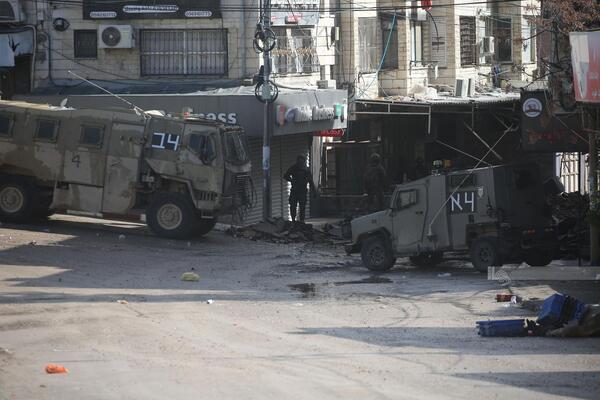
According to local sources, two Israeli military vehicles were stationed around the Shuweika roundabout in the northern part of the city, where soldiers obstructed the movement of vehicles and civilians, particularly after the evening and Tarawih prayers. They stopped young men, checked their IDs, and interrogated them on the spot, firing sound bombs and live ammunition to terrorize residents.


In the same context, occupation forces raided a number of shops on Shuweika Street, conducting thorough searches and interrogating employees, before forcing the owners to close their shops. They also arrested citizen Moaz Abu Shamla after storming his shop and vandalizing its contents.


Israeli occupation forces continued to raid homes in various neighborhoods of Tulkarm refugee camp, forcing residents to leave, particularly targeting the areas of Hanoun Square, Al-Wakala, Qaqun, and Abu Al-Foul.


Israeli occupation forces also burned down the al-Ghoul family's home in the al-Madaris neighborhood of Nour Shams camp, and blew up the home of Saher Ra'iq and his mother in the same neighborhood, as part of their ongoing assault on the city and its two camps for the 48th consecutive day.

PALESTINE

Sat 15 Mar 2025 10:21 pm - Jerusalem Time

Britain stresses the need to end the occupation's blockade of aid and electricity in Gaza.

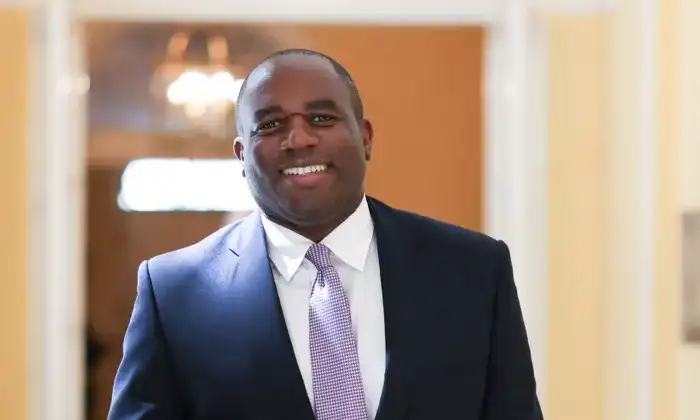
British Foreign Secretary David Lammy expressed his grave concern over the deteriorating humanitarian situation in the Gaza Strip, stressing the need for urgent action to alleviate the suffering of civilians.


Lamy said in a tweet posted on the X platform that he had a conversation with the United Nations Emergency Relief Coordinator, Martin Griffiths, to discuss the deteriorating humanitarian situation in the Gaza Strip.


He affirmed his support for the United Nations' efforts to provide life-saving humanitarian assistance to Palestinians in need.


Lamy stressed the need to end the Israeli blockade on humanitarian aid and electricity supplies, noting the importance of allowing relief aid to reach the people of Gaza without hindrance.


ARAB AND WORLD

Sat 15 Mar 2025 10:04 pm - Jerusalem Time

Trump demands that Iran "immediately" stop its support for the Houthis.

US President Donald Trump called on Iran on Saturday to "immediately stop" its support for "Houthi terrorists" in Yemen, after the US president announced "decisive" strikes against them.


Trump wrote on his social media platform, Truth Social, that "support for Houthi terrorists must stop immediately. Do not threaten the American people, our President, or the world's maritime shipping lanes. If you do, beware, because America will hold you fully responsible, and we will not give you gifts."


Trump said on Saturday that he had ordered the military to launch strikes against the Houthi group in Yemen in response to the group's attacks on ships in the Red Sea, warning them of the consequences if they did not cease their attacks. He added, "If you do not, you will witness hell like you have never seen before."


The Yemeni capital, Sanaa, was subjected to airstrikes, according to Houthi-affiliated television, following the US president's statement. Al-Masirah TV reported that "an American-British aggression targeted a residential neighborhood in the Shu'ub district, north of the capital, Sanaa, with airstrikes."


A spokesman for Yemen's Houthi-run health ministry said at least nine civilians were killed and nine others wounded in the strikes on Sanaa.

PALESTINE

Sat 15 Mar 2025 9:36 pm - Jerusalem Time

Injuries in Israeli bombing of central Gaza Strip

A number of citizens were injured on Saturday evening when they were targeted by Israeli occupation forces in the central Gaza Strip.


According to local sources, an Israeli drone bombed a group of citizens as they were collecting firewood east of the village of Juhr ad-Dik in the central Gaza Strip, wounding several of them.


It's worth noting that 12 civilians, including a child and three photojournalists, have been killed in the Gaza Strip since this morning, bringing the death toll since the ceasefire agreement went into effect on January 19 to 150.


The death toll in the Gaza Strip since the start of the Israeli aggression on October 7, 2023, has risen to 48,543, in addition to 111,981 wounded. Meanwhile, a number of victims remain under the rubble and on the streets, unable to be reached by ambulance and rescue crews.

PALESTINE

Sat 15 Mar 2025 9:20 pm - Jerusalem Time

A young man was injured by live bullets during the occupation forces' raid on the town of Anata.

A young man was shot by Israeli occupation forces on Saturday evening in the town of Anata, northeast of Jerusalem.


The Jerusalem Governorate reported that clashes erupted between citizens and occupation forces following a raid on the town of Anata, during which soldiers fired live and rubber-coated metal bullets, as well as tear gas canisters, at young men, wounding one young man with a live bullet to the abdomen.


She added that the occupation forces raided the home of the released detainee, Sobhi Abu Khalifa, and another home belonging to the Al-Zalbani family, without any arrests being reported.


Earlier this evening, Israeli occupation forces raided the town of Silwan, south of Al-Aqsa Mosque, and stopped vehicles on Al-Shiyah Road in the town of At-Tur, searching them and checking passengers' IDs.

PALESTINE

Sat 15 Mar 2025 8:41 pm - Jerusalem Time

Netanyahu holds a small meeting to discuss the next phase of the Gaza agreement.

Israeli Prime Minister Benjamin Netanyahu will hold a small meeting on Saturday evening with ministers and heads of security agencies to formulate decisions regarding the next phase of the exchange deal with Palestinian factions in Gaza.


Channel 12, a private Israeli channel, reported that Netanyahu will hold a small meeting at 6:30 PM GMT to formulate decisions regarding the next phase.


She noted that the meeting is being held amid media reports about the details of the US proposal presented to both Israel and Hamas.


The proposal includes the release of five living detainees, including American-Israeli Idan Alexander, and the bodies of 10 dead individuals, in exchange for the release of Palestinian prisoners and a cessation of hostilities for 42 to 50 days, during which negotiations will be held to end the war.


Following Israel's violation of the ceasefire agreement in Gaza by not commencing the second phase of the agreement as agreed upon, and its suspension of the humanitarian protocol and the blockade of Gaza for a second week, Hamas announced on Thursday the resumption of negotiations with mediators in the Qatari capital, Doha.


Once again, the movement demonstrated flexibility in negotiations by agreeing to the mediators' proposal to release an Israeli-American soldier and the bodies of four dual nationals, in order to resume negotiations on the second phase of the Gaza ceasefire and prisoner exchange agreement.


In contrast, Netanyahu postponed his response to Hamas's acceptance of the mediators' proposal and attempted to once again place blame on the movement, claiming that it "continues to engage in manipulation and psychological warfare."


Israel seeks to extend the first phase of the agreement, which entered into force on January 19, 2025, to release the largest possible number of Israeli prisoners without offering compensation or fulfilling the military and humanitarian obligations stipulated in the agreement.


While Hamas affirms its commitment to implementing the agreement, demands that Israel abide by all its provisions, and calls on mediators to immediately begin negotiations for the second phase, which includes an Israeli withdrawal from the Gaza Strip and a complete cessation of hostilities.


With American support, Israel has been committing genocide in Gaza since October 7, 2023, leaving more than 160,000 Palestinians dead and wounded, most of them children and women, and more than 14,000 missing.

PALESTINE

Sat 15 Mar 2025 8:13 pm - Jerusalem Time

12 Palestinians killed since this morning

A child was killed and a woman was injured by Israeli occupation forces' fire in the town of Beit Lahia, north of the Gaza Strip, on Saturday evening, in a new violation of the ceasefire agreement.


Medical sources reported that "the child Yamen al-Hamlawi was killed after being shot in the head, while a woman was shot in the back in Beit Lahia."


Two citizens were killed and others injured when an Israeli drone bombed a group of civilians in the Jhar al-Dik area in the central Gaza Strip.


In Rafah, in the southern Gaza Strip, a citizen was shot by Israeli occupation forces while he was near the Hamza Mosque in Khirbet al-Adas, north of the city.


Eight civilians were also injured when a bomb dropped by an Israeli drone exploded on a tent in the Al-Shakoush area, northwest of Rafah.


Earlier, nine civilians, including three photojournalists, were killed when the occupation forces targeted a group of civilians in the town of Beit Lahia, north of the Gaza Strip. This brings the number of dead killed since the ceasefire agreement came into effect on January 19 to 150.


Local sources reported that an Israeli drone bombed a vehicle and a group of civilians in Beit Lahia, killing nine civilians, including three photojournalists, and wounding others who were transferred to the Indonesian Hospital.


The death toll in the Gaza Strip since the start of the Israeli aggression on October 7, 2023, has risen to 48,543, in addition to 111,981 wounded. Meanwhile, a number of victims remain under the rubble and on the streets, unable to be reached by ambulance and rescue crews.


PALESTINE

Sat 15 Mar 2025 7:46 pm - Jerusalem Time

The White House announced the withdrawal of Adam Boehler's nomination for the position of special envoy for "hostage" affairs after he described Hamas as "soft."

The White House announced on Saturday that the administration of US President Donald Trump has withdrawn the nomination of Adam Boehler for the position of US special envoy for hostage affairs.


Boehler, who is working to release Hamas captives in Gaza, will continue his efforts as a "special government employee," a position that does not require Senate confirmation.


"Adam Boehler will continue to work with President Trump as a special government employee focused on hostage negotiations," White House spokeswoman Caroline Leavitt said in a statement.


She added: "Adam played a crucial role in negotiating Mark Fogel's return from Russia, and he will continue this important work to bring unlawfully detained individuals around the world home."


Reuters quoted a White House official as saying that Boehler withdrew his candidacy to avoid divestment from his investment firm, stressing that the move was not related to his discussions with Hamas.


"Boehler still enjoys President Trump's absolute confidence," the official added.


Direct meetings with Hamas spark controversy

In recent days, Boehler has held direct meetings with Hamas regarding the release of detainees in Gaza, in clear violation of Washington's decades-long policy of not negotiating with groups designated by the United States as terrorist organizations.


These talks have angered some Republican senators, as well as drawn criticism from Israeli leaders, particularly after comments attributed to Boehler in which he described Hamas officials as "nice."


According to Axios, Israeli Strategic Affairs Minister Ron Dermer expressed his displeasure with Boehler during a tense phone call last week.


Bowler's role in securing Mark Vogel's release

Adam Bowler is credited with helping secure the release of American teacher Mark Fogle, who was released by Russia last February after three and a half years in prison.

ARAB AND WORLD

Sat 15 Mar 2025 7:33 pm - Jerusalem Time

Trump confident Putin will agree to ceasefire proposal

Questions are growing about what alternatives US President Donald Trump might resort to if he fails to persuade Russian President Vladimir Putin to accept his proposed 30-day temporary ceasefire, which Ukraine has agreed to but Moscow has expressed doubts about. When asked what his plan would be, Trump said, "It would be bad news for the world because a lot of people are dying." He added, "But I think he (Putin) would agree. I really do. I think I know him very well, and I think he would agree."


However, Trump admitted that he was "a little sarcastic" when he claimed, and repeated over the past three years since Russia invaded Ukraine, that he could stop the war within 24 hours, even before taking office.


"I was being a bit sarcastic."

“Well, I was being a little sarcastic when I said that,” Trump said in an interview with the “Full Major” television program that aired before the full interview aired on Sunday. “What I really mean is, I would love to solve the problem and I will. I think I will succeed.” It was a rare admission from Trump, who has a long history of making exaggerated claims. Nearly two months after returning to the White House, his administration is still trying to broker an end to the war, while the Russian president continues to send messages that suggest he is not willing to accede to Trump’s wishes unless, according to the Kremlin, a ceasefire “leads to a lasting peace.”


Putin said Thursday that Moscow "supports" a ceasefire, but stressed that there are "serious issues" that still need to be resolved before the Kremlin can agree to anything. The Kremlin revealed part of the content of the talks Putin held with Steve Witkov, President Trump's envoy, whom he met in Moscow. Presidential spokesman Dmitry Peskov said that Putin delivered a message to President Trump, which included "the points that require joint work to make the truce proposal a success."


Nevertheless, Trump wrote in a post on his Truth Social platform: "We had a very good and productive discussion with President Vladimir Putin of Russia. There is a very good chance that this terrible and bloody war will finally end."


The obstacle to peace

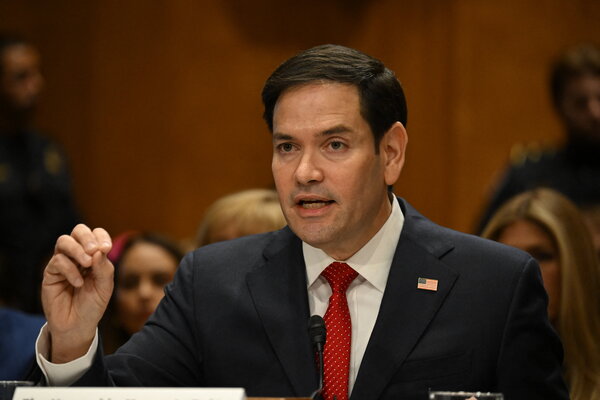
The Republican-affiliated Wall Street Journal, in an editorial, recalled Secretary of State Marco Rubio's statement on Tuesday that if Russia rejects the 30-day US-brokered ceasefire accepted by Ukraine, "we will sadly learn what the obstacle to peace here is." The newspaper added, "We knew that before, but now we know from Rubio that the Kremlin said no."


Meanwhile, the Washington Post reported that a think tank close to Russia's Federal Security Service (FSB) issued a report last month arguing that the Kremlin should inflame divisions between Washington and Europe. Russia could then continue its attack on Ukraine unhindered. The newspaper says the think tank argues that if the United States agrees to halt arms supplies to Ukraine in exchange for a Kremlin promise not to arm anti-American regimes, it will be difficult to secure this commitment from Russia.


The Wall Street Journal considered the Washington Post's report to be beyond doubt. Although its veracity remains uncertain, it "offers a glimpse into the reality of the Kremlin and is consistent with President Putin's behavior." It believed that President Trump's insistence that Putin's statements were "very promising," while continuing to pressure Ukraine to strike a deal without American promises of aid or security, gave Putin every incentive to perpetuate the war and put himself in the strongest possible position if serious peace talks were held.


The newspaper wondered whether Trump had a plan B beyond striking Ukraine to offer more unilateral concessions. After Trump hinted last week that Putin "wants to end the war" and that "in terms of reaching a final settlement, dealing with Russia might be easier," the newspaper said that nothing Putin has done or said since Trump began his tilt toward Russia suggests that Putin has any such intention.


Russian officials have long argued that the war in Ukraine is a result of NATO expansion and Western intransigence, calling for the alliance to reconsider its presence in Eastern Europe as part of a peace agreement. After Russia came close to retaking the Kursk region from Ukraine last summer—with US officials pointing out that the suspension of US intelligence and satellite imagery contributed significantly—Putin highlighted several issues that "need to be addressed," including whether Ukraine would receive Western weapons during a ceasefire and how the potential truce would be monitored.


European efforts to persuade Trump

Putin's comments come as European leaders launched a new effort to unite the West. British Prime Minister Keir Starmer held a virtual meeting on Saturday with leaders of countries supporting Ukraine, aiming to lay the foundations for an alliance to protect any potential ceasefire agreement in Ukraine, after warning that the Russian president was "not serious" about peace.


Several European countries, along with Ukraine, NATO, the European Commission, Canada, and Australia, participated in the meeting to outline the outlines of a coalition of countries prepared to "support a just and lasting peace" in Ukraine, according to a statement issued by the British government. Starmer told the leaders that the time had come to make "concrete commitments," calling for continued pressure on Putin to "come to the negotiating table" to achieve a ceasefire in Ukraine. He predicted that Putin would do so "sooner or later."


“We cannot allow President Putin to play games with President Trump,” Starmer said in a government statement. “The Kremlin’s complete disregard for President Trump’s ceasefire proposal proves that Putin is not serious about peace.” He continued, “If Russia finally comes to the negotiating table, we must be prepared to monitor the ceasefire to ensure it is a serious and lasting peace.” If it refuses, “we must do everything we can to increase the economic pressure on Russia to end this war.”


Starmer, along with French President Emmanuel Macron, is leading efforts to form a coalition of countries determined to continue supporting Ukraine since Trump reversed his country's foreign policy and began direct negotiations with Moscow in February. The two leaders assert that such an alliance, in addition to US support, is essential to provide Ukraine with security guarantees that prevent a renewed Russian attack.

ARAB AND WORLD

Sat 15 Mar 2025 7:11 pm - Jerusalem Time

Israeli Prisoners' families: Netanyahu abandons detainees to preserve his government

The families of Israeli prisoners held in the Gaza Strip said on Saturday that Prime Minister Benjamin Netanyahu is abandoning the detainees in order to preserve his government.


This came during a press conference held by the prisoners' families in front of the Ministry of Defense in Tel Aviv, according to the official Israeli Broadcasting Authority.


The organization quoted a relative of one of the detainees as saying, "The prime minister of the Jews is abandoning the Jews who are facing a catastrophe. He wants to sacrifice our children in order to maintain his power."


Addressing Netanyahu, he said, "You know that this war is killing detainees and will bury missing persons who will never be found. We demand that you end the war immediately and return everyone at once, now."


In turn, Alon Nimrodi, the father of captive soldier Tamir Nimrodi, told the Israeli Broadcasting Authority: "When the American prisoners in Gaza are released, there will be no means of pressure left to release the detainees."


He continued, asking, "Why do I have to have American citizenship in order for us to be treated better regarding the issue of detainees in Gaza?!"


On Thursday, Hamas announced the resumption of negotiations with mediators in Doha regarding a ceasefire agreement in the Gaza Strip, despite Israel's refusal to comply with the agreement and the start of its second phase.


The movement again demonstrated flexibility in negotiations, announcing on Friday its acceptance of the mediators' proposal to release an Israeli-American soldier and the bodies of four dual nationals, in order to resume negotiations on the second phase of the Gaza ceasefire and prisoner exchange agreement.


In contrast, Israeli Prime Minister Benjamin Netanyahu postponed his response to Hamas's acceptance of the mediators' proposal and attempted to once again place blame on the movement, claiming that it "continues to engage in manipulation and psychological warfare."


Israel seeks to extend the first phase of the agreement, which entered into force on January 19, 2025, to release the largest possible number of Israeli prisoners without offering compensation or fulfilling the military and humanitarian obligations stipulated in the agreement.


While Hamas affirms its commitment to implementing the agreement, demands that Israel abide by all its provisions, and calls on mediators to immediately begin negotiations for the second phase, which includes an Israeli withdrawal from the Gaza Strip and a complete cessation of hostilities.


With American support, Israel has been committing genocide in Gaza since October 7, 2023, leaving more than 160,000 Palestinians dead and wounded, most of them children and women, and more than 14,000 missing.

PALESTINE

Sat 15 Mar 2025 5:30 pm - Jerusalem Time

Israeli occupation soldiers open fire randomly in Gaza during Purim celebrations.

The official Israeli Broadcasting Authority said on Saturday that a video clip posted on social media shows Israeli soldiers in the Gaza Strip opening fire without cause or military orders while celebrating the Jewish holiday of Purim.


The clip, published by the Broadcasting Authority, shows one of the battalion commanders reading a passage from the Torah (the Jewish holy book), wearing a clown hat, before other soldiers open fire for no reason.


The official body said that the soldiers, serving in Battalion 7015, were accused of violating the rules of fire and military discipline.


Israeli military sources told the commission that the incident "reflects a breakdown in military discipline and a disregard for instructions and rules of engagement."


The official body stated that the army command had decided to expel a number of soldiers and take disciplinary action against them after a video clip emerged of them firing live ammunition, without cause or military orders, during the Jewish holiday of Purim, which began yesterday and ends today.


Since the Israeli military began its aggression on the Gaza Strip in October 2023, Israeli soldiers have released videos showing the destruction of buildings and homes in the Strip, as well as scenes documenting their attacks on Palestinian property inside their destroyed homes, sometimes in a mocking and inhumane manner.


Despite the entry into force of a ceasefire and prisoner exchange agreement between Hamas and Israel on January 19, 2025, Israel continues to target Palestinians with live ammunition and drone strikes.


By the end of March 1, 2025, the first phase of the agreement, which lasted 42 days, had concluded, and Israeli Prime Minister Benjamin Netanyahu had disavowed the start of the second phase.


With American support, Israel has been committing genocide in Gaza since October 7, 2023, leaving more than 160,000 Palestinians dead and wounded, most of them children and women, and more than 14,000 missing.

PALESTINE

Sat 15 Mar 2025 5:04 pm - Jerusalem Time

Israeli occupation continues to burn homes in Jenin camp.

Israeli occupation forces set fire to a number of homes in Jenin refugee camp on Saturday, as their assault on the city and camp continues for the 54th consecutive day.


According to local sources, occupation forces set fire to new homes in the camp, and are continuing their bulldozing operations in front of Jenin Governmental Hospital after blocking the main roads with earth mounds.


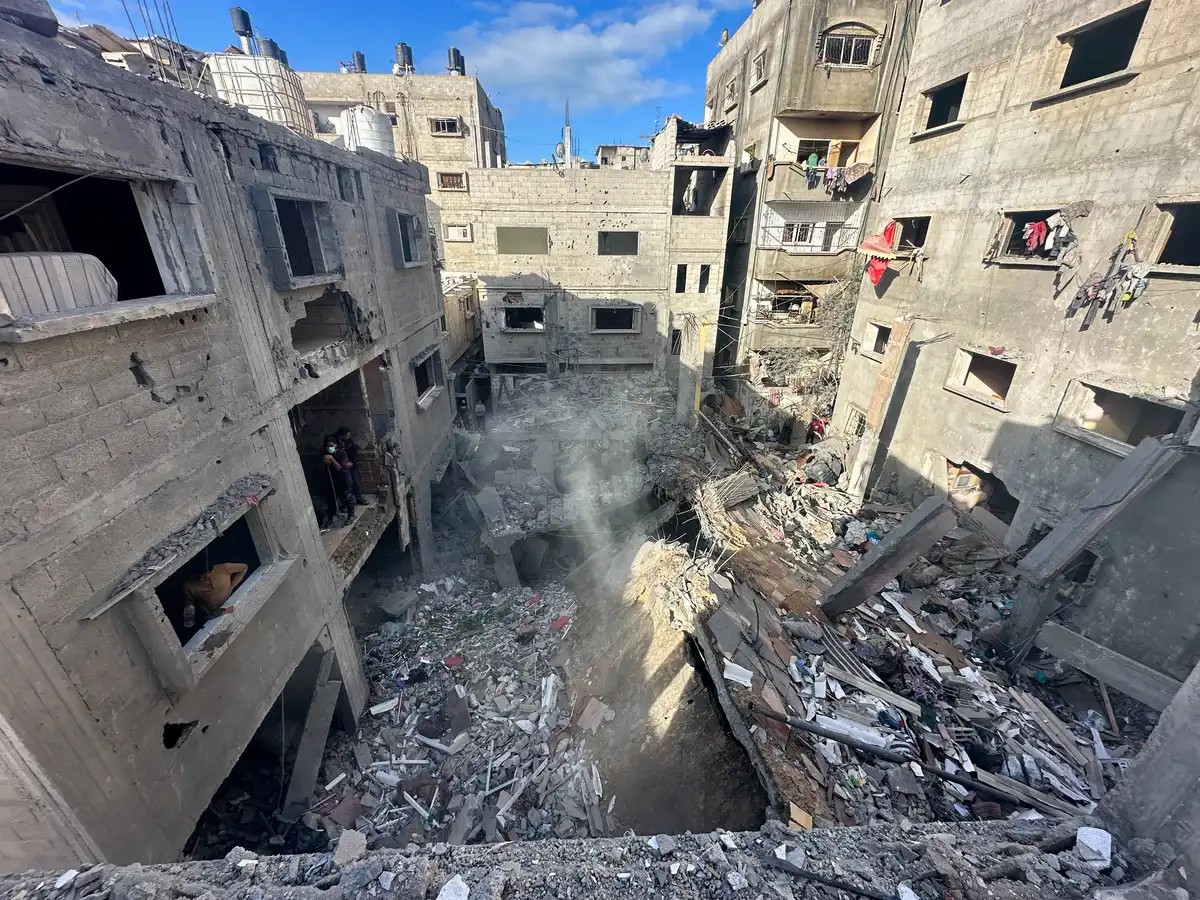
The occupation forces completely demolished approximately 120 homes in the camp's alleyways and neighborhoods, damaging dozens of homes and displacing approximately 20,000 residents.


The ongoing Israeli aggression on Jenin, which began on January 21, has resulted in the deaths of 34 civilians and the injury of dozens more, in addition to unprecedented destruction of infrastructure and public and private property.


PALESTINE

Sat 15 Mar 2025 4:04 pm - Jerusalem Time

The death toll in the Gaza Strip has risen to 48,543, and the number of injuries to 111,981 since the start of the aggression.

Medical sources announced on Saturday that the death toll in the Gaza Strip has risen to 48,543 since the start of the Israeli aggression on October 7, 2023.


The same sources added that the death toll has risen to 111,981 since the start of the aggression, while a number of victims remain buried under the rubble and on the streets, unable to be reached by ambulance and rescue crews.


It pointed out that 19 martyrs (12 recovered martyrs and 7 new martyrs) and 26 injuries arrived at Gaza Strip hospitals during the past 48 hours.

ARAB AND WORLD

Sat 15 Mar 2025 3:42 pm - Jerusalem Time

Rubio expels South Africa's ambassador to the US, says he is "no longer welcome."


The United States effectively expelled South Africa's ambassador to Washington, with Secretary of State Marco Rubio accusing the ambassador of hating the country and President Donald Trump.


"The South African ambassador to the United States is no longer welcome in our great country," Rubio wrote on Twitter on Friday.


Rubio accused Ambassador Ibrahim Rasoul of being a "racist politician who hates America and hates the American president": "We have nothing to discuss with him, and therefore he is considered persona non grata."


Neither Rubio nor the State Department offered an immediate explanation for the decision. However, Rubio pointed to a Breitbart report about a lecture Rasool gave earlier Friday as part of a South African think tank's webinar, in which he discussed the Trump administration's actions, suggesting that white people in the United States may soon no longer be a majority. Rasool pointed to Elon Musk's outreach to far-right figures in Europe, calling it a "cautionary message" in a global movement seeking to mobilize people who see themselves as part of a "beleaguered white society."


Rasul is a former anti-apartheid activist who served time in prison for his activism and later became a politician in the African National Congress, the party of Nelson Mandela, the country's first post-apartheid president.


Expelling an ambassador is a very rare move by the United States, although lower-ranking diplomats are occasionally targeted for designation as persona non grata.


In response, the South African presidency said in an online post that it noted the "regrettable expulsion of the South African ambassador" and urged everyone to maintain "established diplomatic decorum" in the matter.


This is the latest development in escalating tensions between Washington and Pretoria. In February, President Trump froze US aid to South Africa, citing a law in the country that allegedly allows the confiscation of land from white farmers. Last week, Trump further inflamed tensions by saying that South African farmers were welcome to settle in the United States, after repeatedly accusing the government of "confiscating" land from whites.


Trump posted on his Truth Social platform that "any farmer (and his family!) from South Africa, seeking to flee that country for security reasons, will be invited to the United States of America with a fast track to citizenship."


It's worth noting that one of Trump's closest allies is South African-born billionaire Elon Musk, who has accused South African President Cyril Ramaphosa's government of "blatantly racist property laws."


It's worth noting that white Afrikaners ruled South Africa during the apartheid regime, which violently suppressed the country's black majority, including forcing them to live in segregated townships and rural "homelands." Afrikaners are primarily descended from the Dutch, who began colonizing South Africa in 1652.


More than three decades after the end of white minority rule, South Africa still suffers from significant inequalities in the distribution of land and wealth. Land and wealth remain heavily concentrated among whites, who constitute 7% of the population—about half of the native Afrikaans speakers—while blacks constitute 81%. However, some white South Africans claim discrimination, often citing the country's affirmative action laws.


It's worth noting that during a G20 event in South Africa last month, South African President Ramaphosa said he had a "great" call with Trump after taking office in January. He added that relations subsequently "seemed to have gone off the rails."


In a Friday symposium, Rasool spoke via video link in an academic style about the Trump administration's crackdown on diversity, equality, and immigration programs.


“The racist attacks on incumbents, we see in US domestic politics and the Make America Great Again movement, are a reaction not only to racist instincts, but also to very clear data showing significant demographic shifts in the US, with the US electorate projected to become 48% white,” the South African ambassador said.

PALESTINE

Sat 15 Mar 2025 1:40 pm - Jerusalem Time

UNRWA: We opened 130 temporary centers in Gaza to educate approximately 47,000 children.

The United Nations Relief and Works Agency for Palestine Refugees (UNRWA) said it has opened 130 temporary education centers in Gaza, enabling direct learning for approximately 47,000 children across the Strip.


This came in a statement published by UNRWA Commissioner-General Philippe Lazzarini on his X account on Saturday, highlighting the agency's role in providing direct learning services to Gaza's children, who have faced killing and displacement over nearly 16 months of Israel's genocidal war.


Lazzarini explained that UNRWA remains the largest provider of emergency learning and psychosocial support services in Gaza.

He stressed that "education restores some hope to Gaza's children, helping them recover," noting its role in overcoming "the indescribable traumas children are experiencing."


"We have a long way to go to encourage more and more children to learn," he added.


The UN official added, "The challenges in Gaza are enormous, and there is no time to waste. Our goal is to avoid a lost generation of Palestinian children."

PALESTINE

Sat 15 Mar 2025 1:32 pm - Jerusalem Time

They were run over by tanks.. A Palestinian woman recounts the horrific details of the killing of her relatives

"I collected my father's remains in Qahsha and Karik," are the painful words Kholoud Hassan used to begin her account of the horrific killing of her parents and dozens of her relatives and neighbors in the recent military invasion of the Zeitoun refugee camp east of Gaza City.


The story of Kholoud, whose family refused to move to the central and southern Gaza Strip during the war, is one of hundreds of painful stories, particularly in light of the violent military operations carried out by the Israeli army across various areas of the Gaza Strip, which led to massive destruction throughout the Strip.


The war has killed and injured hundreds of thousands of Gazans, while nearly two million others have been displaced to the central and southern Gaza Strip. Local sources confirm that thousands of families have been completely erased from the civil registry due to the war.


Hassan told Sky News Arabia that during the Israeli army's recent incursion into the Zeitoun neighborhood, the family was trapped in their residential area near the Dawla Junction on Salah al-Din Street, noting that the army completely destroyed the area.


She explained that "at the beginning of the invasion, the Israeli army destroyed a neighbor's home, which housed approximately 58 people, killing them all," noting that their bodies are still buried under the rubble of the house and other destroyed homes in the neighborhood.


She noted that the Israeli military operation also resulted in the deaths of 10 members of her family after part of their home was destroyed. She explained that those who survived were unable to treat the injured, which increased the death toll.


She continued, "I saw with my own eyes some family members die due to the difficulty of reaching hospitals. Three of my cousins were dying, and I was unable to provide them with emergency care," stressing that the tight blockade prevented this.


Camps on top of graves: a new catastrophe in the Shuja'iyya neighborhood


"We were trapped inside the house for several days, and then we decided to leave, waving the white flag, to search for a safe place in light of the shortages of food, medicine, and water," she added, noting that she was with her parents and the rest of the family inside the house.


She continued, "As soon as we arrived near the neighborhood mosque, Israeli tanks fired at us, killing my father and mother instantly." She noted that they were forced to flee and return home under the pressure of the military operation and the Israeli siege.

She noted that she "witnessed an Israeli tank run over her parents after shooting them, seriously wounding them. Their bodies were shattered and they died without taking into account their advanced age."


According to Hassan, she and a small number of family members were forced to remain in the house until the Israeli military operation ended. Immediately after the Israeli army's limited withdrawal from the area, she returned to the site where her parents were killed.


She explained that she was forced to collect the remains of her parents using simple, primitive tools, such as a jack and a pickaxe, especially since his body was completely destroyed after being run over by an Israeli tank. She noted that their bodies were intertwined with each other, leaving only a small amount of them.


"During the Israeli military operation, I was exposed to death more than once and remained for long hours under the rubble of a house, but the help of my relatives saved me," she added, expressing her deep sorrow for the extremely difficult experience she had gone through during the war.


Hassan calls for holding Israel accountable for its crimes against civilians in Gaza, especially since it has been directly targeting residential areas and neighborhoods. She noted that she will work to demand justice for her parents and all her relatives.

PALESTINE

Sat 15 Mar 2025 1:30 pm - Jerusalem Time

Children with kidney failure in Gaza struggle for life on dialysis machines.

Children with kidney failure at Al-Rantisi Children's Hospital are fighting for their lives. They undergo dialysis sessions under harsh conditions and a severe shortage of medical supplies, a result of the destruction inflicted on hospitals by the Israeli occupation army during the war of extermination and the blockade imposed on the Gaza Strip.


Inside the dialysis room, exhausted children lie on beds, connected to dialysis machines that drain toxins from their tender bodies to compensate for the loss of kidney function. Their features appear pale, their eyes anticipating the end of the three-hour operation, punctuated by physical pain.


Near her baby's bed, a mother sits holding his tiny hand, whispering a prayer to calm her pounding heart, while a nurse presses the machine's buttons to begin the four-hour procedure.

In another corner, another child stares at the ceiling with vacant eyes, as if he is far older than his few years, due to the intense pain and suffering he is experiencing in this hospital, which has become a permanent place for the battle for survival.


Vital section

Dr. Jamil Suleiman, director of Al-Rantisi Hospital, says that this department is one of the vital departments providing specialized services to children among public hospitals, as it is the only one providing medical care to children under the age of 14 with kidney disease in the northern Gaza Strip.

He explained that the department has resumed operations after a hiatus of more than a year, and has begun accommodating sick children in need of this vital care, with a capacity of six machines out of the 14 that served the hospital before the war of genocide.

Suleiman points out, in data published by the Ministry of Health on its Facebook page, that 45 children with kidney failure were visiting the hospital three times a week to receive services. “However, with the partial destruction of the department caused by the war, services were temporarily halted, resulting in the deaths of many children due to a lack of medical sessions and necessary equipment, in addition to the difficulty of transporting patients to other locations due to Israeli incursions and ongoing shelling.”

The hospital director explained that the department currently receives only 12 children in two shifts, noting that efforts are underway to renovate the department's other hall to increase the number of patients receiving services to 24. Meanwhile, some children who were receiving treatment before the war have been transferred abroad to reduce health risks.

Meanwhile, Dr. Nabil Ayyad, head of the kidney department at Al-Rantisi Hospital, says the department is facing a severe shortage of basic medical supplies, especially pediatric catheters, which are essential for dialysis sessions.

According to the specialist doctor, the hospital also suffers from a severe shortage of essential medicines and medical supplies, which further exacerbates the suffering of the children and their families.

Eid called on international health institutions to provide urgent support to the health system in the Gaza Strip to help it overcome this ongoing ordeal.

Since October 7, 2023, the Israeli occupation army, with US support, has destroyed 34 of the 38 hospitals, including both government and private hospitals, leaving only four hospitals operating at limited capacity despite their damage, amid a severe shortage of medicines and medical equipment, according to the latest statistics from the Government Media Office in Gaza.

The war also completely put 80 health centers out of service, in addition to destroying 162 other medical facilities.


The crime of siege

In turn, Salama Maarouf, head of the government media office in Gaza, said: "The occupation's crime of besieging the Gaza Strip and preventing the arrival of all kinds of aid, including fuel, continues."

He added in a recent post on the X platform that this blockade has resulted in hospitals and health centers completely shutting down operations, threatening the lives of thousands of patients and wounded.

He also pointed out that this situation is causing the suspension of municipal services, ambulance services, and civil defense operations, in addition to disrupting sewage treatment plants, further exacerbating the humanitarian crisis in the Gaza Strip.

The occupation authorities halted the entry of humanitarian aid into the Gaza Strip last Sunday, amid local and human rights warnings of disastrous consequences for vulnerable groups such as women and children.

Israeli media reported that the occupation government intends to begin implementing an escalation plan against Gaza within a week, including cutting off electricity and water, carrying out assassinations, relocating Palestinians from the north of the Strip to the south, and resuming the war.

PALESTINE

Sat 15 Mar 2025 1:24 pm - Jerusalem Time

Awaiting Netanyahu's cabinet meeting, the US proposal to "narrow the gaps" is on the Gaza negotiating table.

Israeli Prime Minister Benjamin Netanyahu will hold a meeting Saturday evening with the Israeli negotiating team for the ceasefire and prisoner exchange talks in the Gaza Strip. This follows a new US proposal to "bridge the gaps" between Hamas and Tel Aviv, allowing the ceasefire to be extended beyond Ramadan and the Jewish Passover holiday (mid-April). Meanwhile, the White House accused Hamas of making "unrealistic" demands.


Hamas announced on Friday its acceptance of a proposal presented by mediators in the Gaza negotiations, expressing its willingness to release Israeli soldier Idan Alexander, who holds US citizenship, and the bodies of four hostages with dual citizenship on Saturday.

"While Israel has accepted the framework of US Middle East envoy Steve Witkoff, Hamas insists on rejecting it and continues to wage psychological warfare against the families of the prisoners," Netanyahu's office said in a statement.


The statement added: "The Prime Minister will meet with the ministerial team on Saturday evening to hear a detailed briefing from the negotiating team and determine the steps necessary to free the prisoners and achieve all of our war goals."

The White House said in a statement on Friday that Witkoff and Eric Trager, the National Security Council's senior director for the Middle East and North Africa, explained that the proposed extension allows time to negotiate a framework for a permanent ceasefire.


The White House stressed in the statement the need to implement the "narrowing the gaps" proposal soon, with the immediate release of the American-Israeli hostage, Idan Alexander. The statement explained that under the proposal, Hamas would release living detainees in exchange for prisoners, in accordance with previous formulas, and the ceasefire would be extended to allow for the resumption of significant humanitarian aid.

The US statement stated that "Hamas was clearly informed, through our Qatari and Egyptian partners, that this proposal must be implemented soon, and that US-Israeli citizen Idan Alexander must be released immediately."

He continued: "Unfortunately, Hamas has chosen to respond publicly by claiming flexibility, while secretly continuing to make completely unrealistic demands unless a permanent ceasefire is reached. Hamas is betting that time is on its side – but it is not. It is well aware of the deadline, and it must realize that we will act accordingly if it passes."

Hamas's position

Hamas announced on Friday its acceptance of a proposal submitted by mediators in the Gaza negotiations, expressing its willingness to release Israeli soldier Idan Alexander, who holds US citizenship, and the bodies of four hostages with dual citizenship on Saturday.

An informed source within the movement explained to Asharq Al-Awsat that new criteria were agreed upon in exchange for the release of soldier Alexander and the four bodies, different from the first phase. He explained that "the new key is to increase the number of Palestinian prisoners to be released in exchange for any Israeli military captive."


He pointed out that the proposal calls for "extending the ceasefire for several weeks," noting that "after Hamas's approval, the ball remains in Israel's court to approve and resume implementation of the agreement." He emphasized that Hamas informed the mediators that this approval is a gesture of good faith and that it is ready to begin the second phase of negotiations immediately.

The movement affirmed its readiness to begin negotiations and reach a comprehensive agreement on the issues of the second phase, calling for Israel to fully implement its obligations.

Updated proposal

On Tuesday evening, Witkov held meetings with Qatari and Egyptian mediators in Doha, as well as with the Israeli delegation, according to Axios, citing sources.

An informed source indicated that "the proposal calls on Hamas to release at least five living detainees and hand over the remains of approximately nine deceased detainees within the first day of the ceasefire."

The US proposal also includes Israel and Hamas beginning negotiations on a long-term truce in Gaza during the new ceasefire period.


Axios reported that Hamas is still holding 59 people in Gaza, while the Israeli military has confirmed the deaths of 35 detainees. Israeli intelligence believes that 22 detainees are still alive. Among the remaining detainees are five Americans, including 21-year-old Aidan Alexander, who is believed to be alive.


The ceasefire agreement between Hamas and Israel, which went into effect last January, includes three phases. The first phase ended on March 1. Meanwhile, the Israeli Prime Minister has refrained from initiating negotiations for the second phase, saying he agrees to the Witkoff plan, which calls for extending the truce until mid-April in exchange for the release of half of the detainees.


PALESTINE

Sat 15 Mar 2025 11:50 am - Jerusalem Time

21 Palestinian female prisoners, including two girls, are subjected to organized crimes in occupation prisons.

The policy of arresting Palestinian women has been one of the most prominent systematic policies that the occupation has historically used against them, and minors have not been excluded from them. Today, the occupation continues to arrest (21) female prisoners, after the release batches that have taken place, among them a female prisoner from Gaza; where they face systematic and organized crimes in the Israeli occupation prisons and investigation centers, which have escalated in level since the date of the war of extermination, which constituted the bloodiest stage in the history of our people.

In a joint report on the occasion of International Women's Day, the Commission of Prisoners' Affairs and the Prisoners' Club highlighted the most prominent issues related to the detention conditions of female prisoners in occupation prisons, all of which fall, at various levels, under the crimes of torture, starvation, systematic medical crimes, and sexual assault at various levels. This is in addition to the repression and repeated raids on female prisoners' cells, the systematic robbery and deprivation, and the methods of psychological torture that have emerged against them from the moment of their arrest.

The Commission and the Club added that what we witnessed during the war of extermination, and what we are witnessing to this day in terms of targeting women, one of the aspects of which is arrests, does not constitute an exceptional phase, but the variable is the level of crimes that were and are being practiced against them. Since October 7, 2023, the relevant institutions have documented (490) cases of arrest among women, as the arrests of women, including minors, constituted the most prominent policies pursued by the occupation in an unprecedented manner. This data includes women who were arrested in the West Bank, including Jerusalem, as well as women from the 1948 territories, while there is no clear estimate of the number of women who were arrested from Gaza.

The report indicated that the number of female prisoners is (21), (17) of whom are still detained, including a female prisoner from Gaza, namely prisoner Siham Abu Salem, and among the female prisoners, two girls, including a girl aged (12 years), (12) mothers, a female prisoner in her third month of pregnancy, two administrative detainees, (6) teachers, a journalist who is a media student, and among the sick female prisoners, a female prisoner suffering from cancer, and there remain two female prisoners detained since before October 7, 2023, and the occupation still refuses to include them in the exchange deals.


Arrest of women

The journey of detention for Palestinian women and the harsh conditions they face does not begin at the moment of arrest. Some of the female prisoners are from families that have faced repeated arrests, continuous raids on family homes, and the targeting of other family members through detention, arrest, or murder. Over the months following the war of extermination, the issue of women being held hostage emerged, affecting dozens of women, with the aim of pressuring a family member targeted by the occupation to surrender. This included wives of prisoners, martyrs, and mothers, some of whom were elderly and over seventy years old. It should be noted that this policy also affected other groups, not just women. Their detention as hostages was accompanied by abuse and threats that reached the point of threatening to kill the targeted son or husband. This is in addition to the attacks they were subjected to during the arrest process, in addition to the acts of vandalism that affected their homes, the terrorizing of their children and sons, and the confiscation of their money and gold jewelry.

The majority of the female prisoners who were arrested were subjected to beatings, abuse, and torture. Numerous testimonies from female prisoners reflect the level of brutality meted out to them. The report asserts that while these measures were not exceptional, they were unprecedented in their level.


The report included testimonies of women who had been arrested:

“Upon my arrest, I was beaten by occupation soldiers at a checkpoint, kicked in the stomach, and immediately chains were placed on my hands, I was blindfolded, and taken to an interrogation center, due to the severity of the beating I was subjected to with rifles, all over my body, which led to a part of my body being exposed as my clothes were torn. Later, after a period of my arrest, I remained detained in the interrogation center for three hours, then I was taken to Al-Maskobiyya Prison and remained there for a month. During the first period of my arrest, as a result of the beating, this led to bleeding during my menstrual period, which lasted for about 20 days. Then I was transferred to Hasharon Prison, where I was detained in a cell by myself. That night, I was not given food, and the cell was very dirty, with a very thin mattress without a cover. After a night had passed, I was transferred to Al-Damon Prison.

“I was arrested at midnight and taken to a settlement, where I stayed until 7:00 PM the next day, without food or drink. My feet and hands were tied, and I was blindfolded. The whole time, the soldiers stood near me and mocked me. Then they played music very loudly to prevent me from sleeping. They asked me to stand and sit down several times, while they mocked me, laughed, and cursed me with obscene words. The whole time, they were saying death to Islam in a loud voice. On the second day, I was transferred to Hasharon Prison, where I stayed for three days. When I refused to be strip-searched, the female prison guard electrocuted me and forced me to undergo a strip-search. Then, I was taken to a dirty cell. Later, I was transferred to the Petah Tikva interrogation center, where I was hung on a chair. At the end of the interrogation, they forced me to sign papers whose contents I did not know.”


Hasharon Prison Station and Strip Searches

Hasharon prison is a station of abuse and torture, before the transfer of female prisoners to Damon prison. All the testimonies we obtained from female prisoners confirmed that they were subjected to strip searches in Hasharon prison, and were detained in harsh and difficult conditions, in a dirty cell unfit for human life. This is in addition to many of them being beaten, when they refused to be searched. There, the female prisoners are detained for a day or several days, and are given inedible bites of food inside a cell with a very thin, dirty mattress. Here we refer to one of the testimonies about Hasharon prison.

“I was transferred to Hasharon prison, where I was assaulted in the waiting room. One of the prison guards hit me with keys, leaving clear marks on my hand. I stayed one night in Hasharon prison, but it was the worst night of my life. I was detained in a cell with cameras. I was unable to relieve myself and they did not even allow me to relieve myself anywhere else. This was in addition to the voices of the criminal prisoners, who kept screaming. At night, they brought me a blanket that smelled strongly of urine. At five in the morning, they ordered me to take it out of the cell under the pretext of cleaning, but they took away the mattress and blanket, forcing me to sit on my shoes.”


Policy of plunder and deprivation

The prison administration has turned all the needs of prisoners, including female prisoners, into a tool of deprivation and robbery. They have been deprived of all their needs, and even if they are provided with them, they are very limited and become a tool for collective punishment. This includes all needs, including sanitary pads, which the prison administration has used as a tool for punishment on many occasions. The policies of deprivation and robbery are part of the policies of psychological torture, and this applies to other levels, including depriving them of appropriate clothing in summer and winter. Summer temperatures turn into a tool for torture by depriving female prisoners of appropriate clothing, as well as not providing ventilation tools. Winter also turns into a tool for torture by depriving them of sufficient clothing, blankets, and heating tools. All of these details take place at a time when female prisoners are facing collective isolation operations, with them being deprived of visiting their families, like thousands of prisoners since the beginning of the war. This is in addition to the restrictions imposed on legal teams during their visits. These are examples of the policies of robbery and deprivation to which female prisoners are exposed on an instant basis. We mention here that the numbers of female prisoners greatly affect the reality of detention conditions, especially if the numbers are large and the rooms are crowded, as was the reality before the release batches that took place in January and last February, where their number reached (86) female prisoners before the release batches, and at times their number reached more than 100 female prisoners.


incursion policy

The raids on the cells of female prisoners have escalated significantly during the past months, specifically after September 2024. Although the period preceding this period also witnessed repeated raids, they were not at the same pace, and this intensified in an unprecedented manner against them, as the prison administration turned every detail in the prison structure into a tool for abuse and torture against them. In October 2024, more than one raid was recorded against female prisoners, and the raids by the repression units continued, as the female prisoners protested the continued isolation of one of the female prisoners, and the female prisoners returned a meal. In response, the so-called “Yamaz” units stormed the cells of the female prisoners, repressed them, and proceeded to search them naked, and all their spare clothes were seized from them, and they were forced to be satisfied with only one change of clothes. Each female prisoner had to come forward after being searched and take only one change of clothes, then enter the bathrooms during the break, and they were detained. In the bathrooms until the "Yamaz" unit searched the cell, and during that operation, they seized everything inside the prisoners' cells, including shoes.


sexual assaults

One of the most notable crimes committed by the Israeli occupation forces against Palestinian women, including female prisoners, is sexual assault, which includes harassment, strip searches, and threats of rape. This is in addition to the United Nations' official statement announcing the existence of credible reports of female detainees from Gaza being subjected to rape.

The organizations were able to collect testimonies from female prisoners who were released, specifically during the releases that took place in November of last year, as well as testimonies from female prisoners inside prisons, and from women whose relatives faced arrest and persecution, in which they confirmed that they were subjected to a series of sexual assaults.

Hasharon Prison, which served as a temporary detention center for female prisoners before their transfer to Damon Prison, witnessed strip searches, to which the majority of female prisoners were subjected, according to dozens of testimonies documented by institutions, in addition to the humiliating and degrading detention conditions to which they were subjected, and the attacks, including severe beatings.

(In a testimony documented by the institutions for one of the female prisoners who was arrested after October 7, she confirmed that during the arrest and investigation process she was subjected to sexual and verbal assault and harassment, as one of the soldiers touched her head and feet in an inappropriate manner, and cursed her with obscene terms and threatened her more than once. The soldiers threw cigarette butts and food scraps at her to humiliate her. The prisoner was also beaten more than once by the occupation soldiers, which caused her pain throughout her body, and she was not provided with any treatment.)

Among the testimonies documented was the testimony of one of the female prisoners, who said: “I and other female prisoners arrived at Hasharon Prison. They took us to a cell with a floor full of water, and there was a bathroom that was not fit for use. Then we were transferred to another cell where we were subjected to a strip search by female prison guards. One of the prison guards hit me in the face, after I was severely beaten during my arrest.”


Arrest on grounds of freedom of opinion and expression

Arrests have escalated on the grounds of freedom of opinion and expression, or what the occupation claims is "incitement" on social media. The vast majority of women arrested after the war were detained on grounds of "incitement" or administrative detention under the pretext of a so-called "secret file." Today, the majority of female prisoners are detained on grounds of incitement, in addition to two female prisoners held administratively. Recently, the occupation has primarily targeted the arrest of female educational cadres, with at least eight arrests of female teachers recorded, six of whom remain detained on grounds of "incitement." Since the war, we have not witnessed an escalation in the targeting of female teachers like we have witnessed recently.


71 female prisoners released as part of the exchange deal

The release of female prisoners in the first phase of the ceasefire agreement marked a turning point in the issue of female prisoners. This was in addition to the releases that took place in November 2023, when 71 female prisoners were released in the first phase, which took place during January and February 2025. However, the occupation did not stop targeting women through arrest operations. It has once again escalated its targeting of women, through arrest operations, hostage detention, and field investigations.

The Prisoners' Affairs Authority and the Prisoners' Club confirmed, based on testimonies and statements obtained from Palestinian female prisoners and detainees, that the Israeli occupation continues to violate the rights of Palestinian female prisoners in detention and interrogation centers and prisons, in hospitals and medical clinics, and at checkpoints and barriers. These violations affect all categories of Palestinian women, including teachers, students, mothers, girls, and others.

The prisoners' institutions recommended that the United Nations and all member states pressure the occupying state to respect and abide by international law and international human rights law, and implement the Convention against Torture and Inhuman or Degrading Treatment or Punishment and the Convention on the Elimination of All Forms of Discrimination against Women.

The Contracting States Parties to the Fourth Geneva Convention called for an end to the physical and psychological abuse perpetrated by occupation soldiers during the arrest of Palestinian women, their unlawful detention in the occupied Palestinian territory, and the practice of physical and psychological torture and degrading treatment of Palestinian women during interrogation.

They also renewed their call on the international human rights system to move forward with taking effective decisions to hold the occupation leaders accountable for the war crimes they continue to commit against our people, and to impose sanctions on the occupation that would place it in a state of clear international isolation, and restore the human rights system to its fundamental role for which it exists, and put an end to the terrifying state of impotence that it has been afflicted with during the war of extermination, and to end the state of exceptional immunity that the old colonial powers granted to the occupying state, considering it above accountability, accountability, and punishment.


OPINIONS

Sat 15 Mar 2025 9:39 am - Jerusalem Time

Preventing worshippers from reaching Al-Aqsa Mosque

Hamada Faraana

Hamada Faraana

Opinion Writer

It is only natural that the colonial government, its army, and its security forces would prevent the masses of Palestinians coming from the West Bank governorates from performing Friday prayers at Al-Aqsa Mosque for more than one reason:

First: These pious believers, who are heading towards Al-Aqsa Mosque, are Muslims who hold convictions, principles, and faith that Jerusalem is their country, their homeland, the first of the two Qiblahs (direction of prayer), and the capital of their state, a source of inspiration for their steadfastness, survival, and hope for victory.

Second: Through their prayers, solidarity, and faith, they connect and integrate their faith as Muslims with their citizenship as Palestinians. This contradicts the ideology of Zionism, occupation, expansion, and hostility toward Islam and Palestine.

Third: The idea of Zionism and its colonial, expansionist, occupying, and subjugating project is based on the idea that a united Jerusalem is the capital of the Israeli colony, and that the demonstrations of tens of thousands of Palestinian Muslims, with their prayers and their orientation towards Jerusalem, towards Al-Aqsa Mosque, undermine the Zionist, Israeli, and Jewish nature of Arab, Islamic, and Palestinian Jerusalem.

Fourth: Isn’t what the people of Palestine, the people of Carmel, Galilee, the Triangle, the Negev, and the mixed coastal cities, saying enough in their orientations, faith, adherence, and prayers to and for Jerusalem, exploiting and investing in the state of giving as citizens, standing firm, steadfast, brave, and courageous, against whom Zionism and its expansionist colonial project, imposed by force upon them, have not been able, after 75 years of its project in the territories of 1948, to Israelize them and integrate them so that they become Israelis in citizenship, loyalty, and interest?

Zionism and its colonial project failed to Israelize the Palestinian people in the 1948 territories, and they constituted an obstacle to imposing the Jewishness of the state, as was done through the "Jewish State" law. More than twenty percent of the people of Palestine remained, persevered, and preserved their Palestinian national identity, their Arab nationalism, their Islam, and their Christianity.

Preventing Palestinian Muslims from the West Bank from reaching Al-Aqsa Mosque is similar to what they did to Palestinian Christians from the West Bank and Gaza Strip from reaching the Church of the Holy Sepulchre in Jerusalem and the Church of the Nativity in Bethlehem to perform church prayers on the occasion of Christmas. This is a great sin, a transgression of all prohibitions, and a violation of a person’s right to perform his religious duties. However, in addition to the violations and crimes committed by the Israeli colony before the world, openly and with extreme clarity, the world must awaken from its slumber and narrow-mindedness regarding how to deal with the colony, and work to isolate and punish it, and make it an outcast, as it deserves, as happened with South Africa and all the colonial countries whose colonial manifestations vanished and were defeated by the peoples who were subjected to oppression and ultimately triumphed. At the end of the journey, at the end of the path of suffering that culminated in victory, the people of Palestine will triumph, as is the right, as is the demand, as is life.


...........

Preventing Palestinian Muslims from the West Bank from accessing Al-Aqsa Mosque is similar to what they did to Palestinian Christians from the West Bank and Gaza Strip from accessing the Church of the Holy Sepulchre in Jerusalem and the Church of the Nativity in Bethlehem.


ARAB AND WORLD

Sat 15 Mar 2025 9:35 am - Jerusalem Time

A second Palestinian student who participated in the Columbia University demonstrations was arrested.

US federal officials announced on Friday that US immigration authorities arrested a second person who participated in pro-Palestinian protests at Columbia University after he overstayed his student visa, the latest development in the crisis engulfing one of the seven most important universities in the United States.


Officials said the student, whose arrest authorities acknowledged, is identified as Liqa'a Kurdiyeh, a Palestinian from the occupied West Bank. She was arrested in Newark, near New York, on Thursday. The Department of Homeland Security claimed in a statement that her student visa had been revoked in January 2022, and that she had been arrested by New York City police in April for her role in a campus protest at Columbia University.


The agency also released a video on Friday that it said showed a Columbia University student, identified as Ranjani Srinivasan, preparing to enter Canada after her student visa was revoked. The remarks by Homeland Security Secretary Kristi Noem reflect an escalation in the Trump administration's focus on Columbia and Palestinian students. Protests against the war in Gaza last year sparked a nationwide debate about free speech and anti-Semitism, prompting similar demonstrations on dozens of other college campuses.


The actions come during a turbulent week at the university, which has seen a series of escalating controversies since federal immigration agents arrested Mahmoud Khalil, a recent Columbia University graduate and a prominent figure in pro-Palestinian campus protests, last weekend.


More than 200 students gathered outside the gates of Columbia University's main campus on Friday to protest the university's handling of Khalil's arrest. Protesters wore keffiyehs, waved Palestinian flags, and held signs with slogans such as "Free Mahmoud," "Get ICE off our campus," and "Columbia, you can't hide." The protests erupted less than 24 hours after Homeland Security agents entered campus with federal warrants and searched two dorm rooms. According to Interim President Katrina Armstrong, no one was arrested and nothing was taken.


Secretary Noem's social media posts on Friday appeared to indicate that Columbia University remains under scrutiny by the Trump administration.


Noem posted a video on social media platform X showing a woman walking through LaGuardia Airport carrying a small suitcase. Noem identified the woman as Srinivasan and said she used a U.S. Customs and Border Protection app to notify the government of her intent to deport herself. Srinivasan's dorm room was one of the rooms searched, according to her lawyer and roommate.


Nathan Yaffe, a member of Srinivasan's legal team, confirmed in a statement that federal agents entered her dorm room on Thursday in an attempt to detain her or demand information about her whereabouts.


Columbia University's campus was rocked by a severe crisis last week. On Thursday, the Trump administration demanded that the university make sweeping changes to its disciplinary and admissions policies before any negotiations could begin regarding the cancellation of $400 million in government grants and contracts.


Federal officials wrote in a letter that the university has a week to formalize its definition of anti-Semitism, ban masks "intended to conceal identity or intimidate," and place the Middle Eastern, South Asian, and African Studies department under "academic conservatorship."


The government explained that these steps were necessary because of what it described as Columbia University's failure to protect Jewish students from harassment. Officials from three government agencies wrote that Columbia University "fundamentally failed to protect American students and faculty from anti-Semitic violence and harassment."


But civil libertarians argued that the government's demands would not only undermine free speech and academic freedom at Columbia University, but would also have a chilling effect on campuses across the country. "Subordination of universities to official authority is a hallmark of authoritarianism," Jameel Jaffer, director of the Knight First Amendment Institute at Columbia University, said in a statement.


Others expressed particular concern about the university's demand to adopt a definition of anti-Semitism that could criminalize critics of Israel.


Tyler Coward, senior counsel for government affairs at the Foundation for Individual Rights and Expression, a free speech and legal advocacy group, described the letter as a "plan to increase censorship at American colleges and universities."


“Universities across the country are likely reading this letter this morning and thinking they’d better censor speech — or they’ll be next,” Coward said in a statement.


A university spokeswoman said Thursday evening that Columbia University is "reviewing the communication" from government agencies. She added, "We remain committed to advancing our mission, supporting our students, and combating all forms of discrimination and hate on our campus."


Following the dorm search, Armstrong said in a letter to students and faculty late Thursday that she was "heartbroken" by the development and that Columbia University was doing everything possible to ensure the safety of its students, faculty, and staff.


In a separate action on Thursday, Columbia University announced a series of disciplinary actions against students who occupied a campus building last spring, including expulsion and suspension, among the steps called for by Trump administration officials in their letter.


The university said in a statement that the sanctions included "several years of suspension, temporary revocation of degrees, and expulsion." It was not clear how many students were punished. Among those expelled was Grant Miner, a Jewish graduate student who was part of a student coalition calling on Columbia University to divest from companies linked to Israel, according to the university's Student Workers Union, which Mr. Miner heads.

PALESTINE

Sat 15 Mar 2025 9:33 am - Jerusalem Time

They were released in their underwear.. "Al-Quds" documents the testimony of two children who were arrested and detained after the martyrdom of their grandmother.

The occupation did not care about their childhood, so it arrested and detained the two children, Ibrahim Abu Ghali (5 years old) and Omar Muhammad Al-Zaben (8 years old), and its soldiers assaulted them after arresting them with their grandfather Ibrahim Abu Ghali, following an attack on his home in the Kafr Dan plain, west of Jenin, during a military operation that resulted in the martyrdom of their grandmother and his elderly wife, Faiza Abu Ghali.


The occupation forces released the two children, who arrived in a state of panic in the Jalameh area after being detained for hours in inhumane conditions. Their faces, as they arrived at the first vehicle they found, showed signs of shame at their condition, and shock and horror at the horror of what they had been subjected to.

After their release, the two children wore plastic bags and T-shirts provided to them by one of the detainees who had been released with them. Throughout their conversation, they were careful to hold the bags and cover their bodies.

With great difficulty, little Khaled regained consciousness and composure, and was unable to hide how affected and shocked he was by what had happened. He told a “Y” reporter: “We heard a lot of banging, and then we saw a drone that flew over our house. I woke up very scared because it kept going up and down every five minutes.” He added, “It was Suhoor time when the army stormed my grandfather Ibrahim’s house. My grandfather, grandmother, and my uncle were there. My grandmother went out to see what was happening and didn’t come back. We didn’t see her and I knew that she had been martyred when they left us.” He continued, “The army asked us to leave the house, and as soon as we left, I saw army patrols standing by the water tank in the garden of the house. They arrested my uncle Ahmed and took him to my uncle Mustafa’s farm and expelled us.” He continued, “The army grabbed me by my blouse and pushed me in front of them. They took us to the patrol and put us in it. As soon as they arrested us, the soldiers started beating me painfully on my back.”

Abu Ghali sighs after feeling severe pain from the beating he was subjected to, and says, “The soldiers were scaring us and they hit the other child, Omar, in the face. They took us to the Jalameh checkpoint, they put us in the cold in a big room, then they took us to a small room, and I saw 10 detainees, the soldiers beat them.” He continues, “I saw one of the soldiers beat a detainee and stomped on his back, and they left us naked with only our underwear on, and then they gave us bags to replace our clothes and left us, and after that I knew that my grandmother was a martyr.”

Omar's case was no different. He said that the soldiers fired at his grandfather's farm for no reason, which led to the martyrdom of his grandmother. He said, "The soldiers started shooting a lot at the house before suhoor. My grandmother Faiza was going out to hear the call to prayer so we could eat suhoor, so they shot her." He added, "The army continued shooting at the house and the farm while we were inside. They flew a plane at us and made us go out into the yard."

The scene didn't end there, according to Omar, as the soldiers forced everyone to take off their clothes. "I felt scared when I saw the army pointing their weapons at our heads. They made us take off all our clothes and let us walk while we were surrounded," he said. "They handcuffed us and made us sit on the ground in the cold for half an hour. Then they took us to the Jalameh checkpoint. We saw fear and terror, and my back hurt from the beating."

Omar, the child, recounts that the soldiers detained them in Jalameh in a place designated for detainees. After his and Khaled's condition worsened due to the cold, the soldiers gave them blankets, while they left the rest of the detainees in a tragic state due to the cold. He says, "I asked them to distribute blankets to all the detainees, but they refused and left them on the floor in the cold. We all remained sitting on the floor without a mattress." He continues, "We remained afraid and thought about my grandmother who was martyred and what they wanted to do to us after the beating and the severe pain in my back. After hours of pain, they left us without clothes. I don't know what happened to my grandfather and uncle who were arrested with us." He continues, "But we got out. I couldn't believe it, but I was ashamed because I wanted to go back to Jenin naked. The army took our clothes and didn't return them."

PALESTINE

Sat 15 Mar 2025 9:29 am - Jerusalem Time

Displaced people in the northern West Bank: ongoing suffering and hope for return

Hoda Habayeb and Fatima Ibrahim - Since January 21, 2019, and 48 hours after the ceasefire in the Gaza Strip came into effect, the Israeli occupation launched an unprecedented aggression on the West Bank, focusing on the northern governorates of the West Bank and continuing to this day in Jenin and Tulkarm. This aggression has resulted in the forced displacement of more than 40,000 citizens from their homes, particularly in the Jenin, Tulkarm, and Nur Shams refugee camps, along with the destruction of hundreds of homes and the widespread demolition of infrastructure.


In Jenin camp, approximately 3,200 families were displaced from the camp's neighborhoods and alleys. Data from Jenin Municipality indicates that the displaced are distributed between the city and the governorate's towns and villages. Some 4,000 displaced persons were distributed among shelters in the city, the most important of which are the Blind Center and the Korean Center. The Burqin Municipality alone received approximately 4,700 displaced persons, while the rest sought refuge in the homes of relatives in neighboring towns and villages.

Muhammad Abdul Wahab, a 42-year-old displaced person from Jenin camp, is currently living in the blind center in Jenin. He is a father of four children, the eldest of whom is 10 years old. He says he was forced to leave his home on the third day of the camp invasion, after Israeli drones threatened citizens with evacuating their homes and leaving them through a single corridor, towards Wadi Burqin, west of the camp.

“At first, I tried to go out to explore the road before moving my family, but the situation was very difficult,” Abdul Wahab continues. “The camp was completely surrounded on all sides, with a heavy presence of occupation soldiers in the neighborhoods and alleys. We were forced to leave through one passageway from the direction of the Return Roundabout, west of the camp, and from there to Burqin. On that day, we had to pass in front of cameras installed by the occupation army that record the facial print of every displaced person. The soldiers detained some of them, interrogated them, and arrested a number of them.”

Abdul Wahab and his family are spending the holy month of Ramadan at the Blind Center under extremely difficult circumstances, far from his home and other relatives. He shares a single kitchen with the remaining 85 displaced people, where he prepares the iftar meal together. Meanwhile, his children spend their days away from school, which they have been deprived of since the start of the second semester.

"The children's future is effectively lost," Abdul Wahab says. "They spend all their time here at the center. There's no schooling, no activities, not even family visits. They play here in this small garden, where there are a few toys."

Displaced Umm Ali, 26, lives with her family at the Arab American University housing complex, far from her home in the camp.

"Nothing here resembles Ramadan life in the camp," she says, trying to prepare an iftar table for her family. "Not the family gatherings, not the customs they're used to, nothing."

Umm Ali and many other displaced people rely on food provided by charitable organizations and a number of restaurants in Jenin to prepare their iftar meals.

She notes that she was displaced from her home in the camp on the first day of the aggression, along with her three children and her mother-in-law, while her husband works outside Jenin.

She says, "I chose to flee to protect my children, even though the journey was not safe due to the occupation forces' random firing of live ammunition. One of the bullets almost hit one of my children after it penetrated the window of the vehicle transporting them."

In Tulkarm, the ongoing aggression on the city and its two camps resulted in the forced displacement of more than 9,000 residents from Nour Shams camp and 12,000 from Tulkarm camp.

Bushra Shehab, a resident of the "Mari'a Hanoun" neighborhood in Tulkarm refugee camp, is currently sheltering in the city's cultural and sports center. She recounts the difficult moments she experienced when Israeli forces stormed the camp on February 27, forcing her to abruptly leave her home with her three daughters, the youngest of whom is 4 years old and the oldest of whom is 9.

“We left the house the day the occupation soldiers stormed the camp,” Shehab says. “We were in a state of fear and panic, and we left everything behind. We couldn’t even eat our lunch. I saw all my neighbors fleeing the neighborhood, while the occupation soldiers stormed the place in a barbaric manner, and they assaulted our elderly neighbor with a motor disability, beating him mercilessly.”

She explained that she had returned a few days ago to check on her home and found it completely destroyed, with the doors, furniture, and walls shattered. It was no longer habitable and in need of extensive repairs.

Shehab points to the impact of the disruption to her children's education due to the aggression. Although she has turned to e-learning to compensate for the educational loss, the results remain limited due to the difficult conditions the family is experiencing in their displacement. She notes that the camp's children need psychological relief, especially during this difficult time.

Regarding the occupation's statements claiming that returning to the camp will not be possible for a year, Shehab stressed that the residents are committed to their right to return to the camp, saying, "Our hope in God is great, and despite the pain and destruction, optimism remains the master of the situation. The children long for the camp and for the life that was full of security and peace before this devastation occurred."

It's worth noting that thousands of displaced children from the Tulkarm and Nur Shams camps face significant challenges in completing their education, given the ongoing Israeli blockade and military aggression that has targeted schools and educational infrastructure in the region.

Attaf Musleh, a resident of the al-Hadaida neighborhood in Tulkarm refugee camp who has been displaced to the city's cultural and sports center, spoke about his suffering since the first day of the camp invasion. He was forced to flee his home with his nine family members after the occupation forces imposed a stifling siege on the area.

"We left amidst fear and terror as occupation forces deployed everywhere. We were split up, some taking refuge in relatives' homes and others heading to shelters, and we remain scattered to this day," Musleh said, noting that some members of his family were forced to return to the camp despite the dangerous situation.

Musleh faces significant difficulty in providing a suitable educational environment for his daughter, who is in high school. He says, "I cannot provide a suitable environment for her to study. Purchasing school supplies, such as workbooks, requires large sums of money that are not available, especially since the priority now is securing food."

Elderly Yasra Suleiman Faraj, a resident of the Manshiyya neighborhood in Nour Shams camp east of Tulkarm, is suffering from displacement after the occupation forces demolished her home.

Faraj recounts the details of what happened, saying, "On February 9, occupation soldiers raided our home while we were inside, and forced us to leave at gunpoint. We had no choice but to leave, terrified and in fear."

After being displaced, the elderly woman sought refuge in the town of Anabta for a short period, then moved to live with her daughter in the Al-Murabba'a neighborhood of Tulkarm camp, having lost the shelter she had painstakingly built over the years.

Despite the harshness of the scene, Faraj, a mother of six girls, insists she still holds on to hope of returning, saying, "My home was the fruit of my hard work, and I built the most beautiful memories there. But it was leveled to the ground in an instant. Despite everything, I believe we will return, no matter what happens."

The occupation continues to destroy homes in Nour Shams camp, as part of its plans to change the geography of the area and displace its residents.