PALESTINE

Wed 19 Mar 2025 9:51 pm - Jerusalem Time

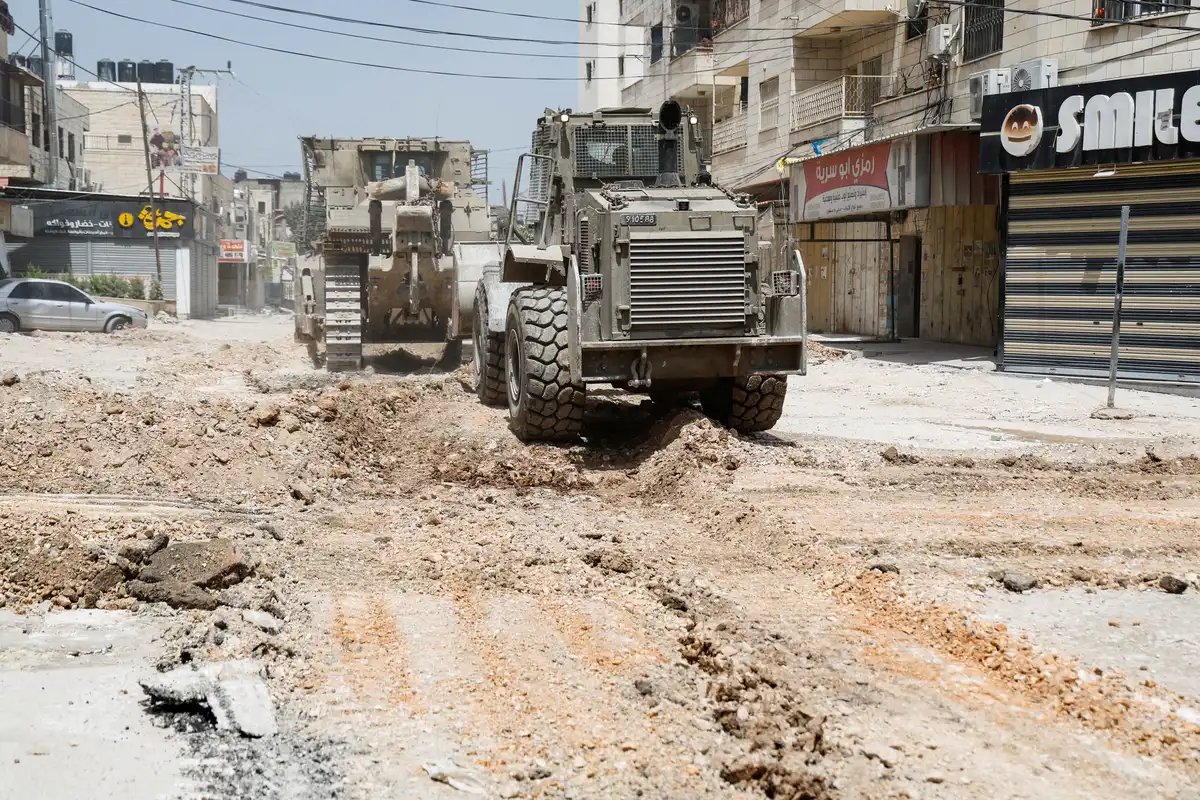
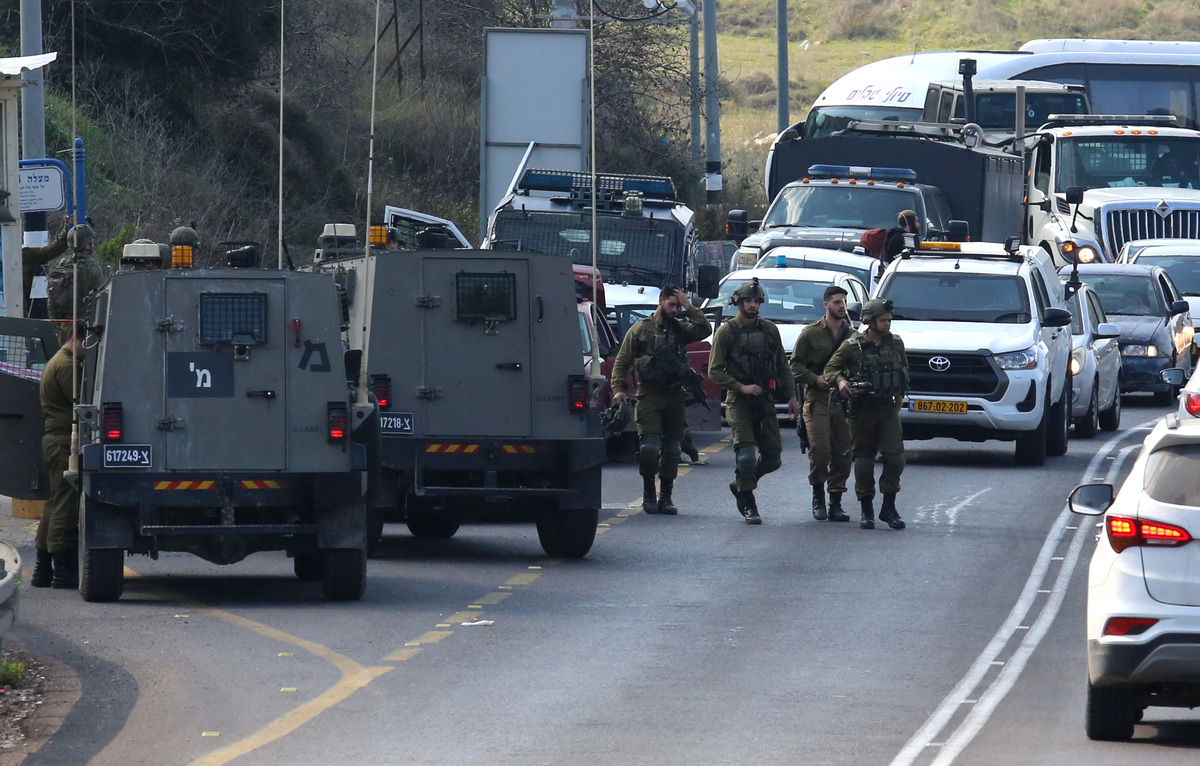
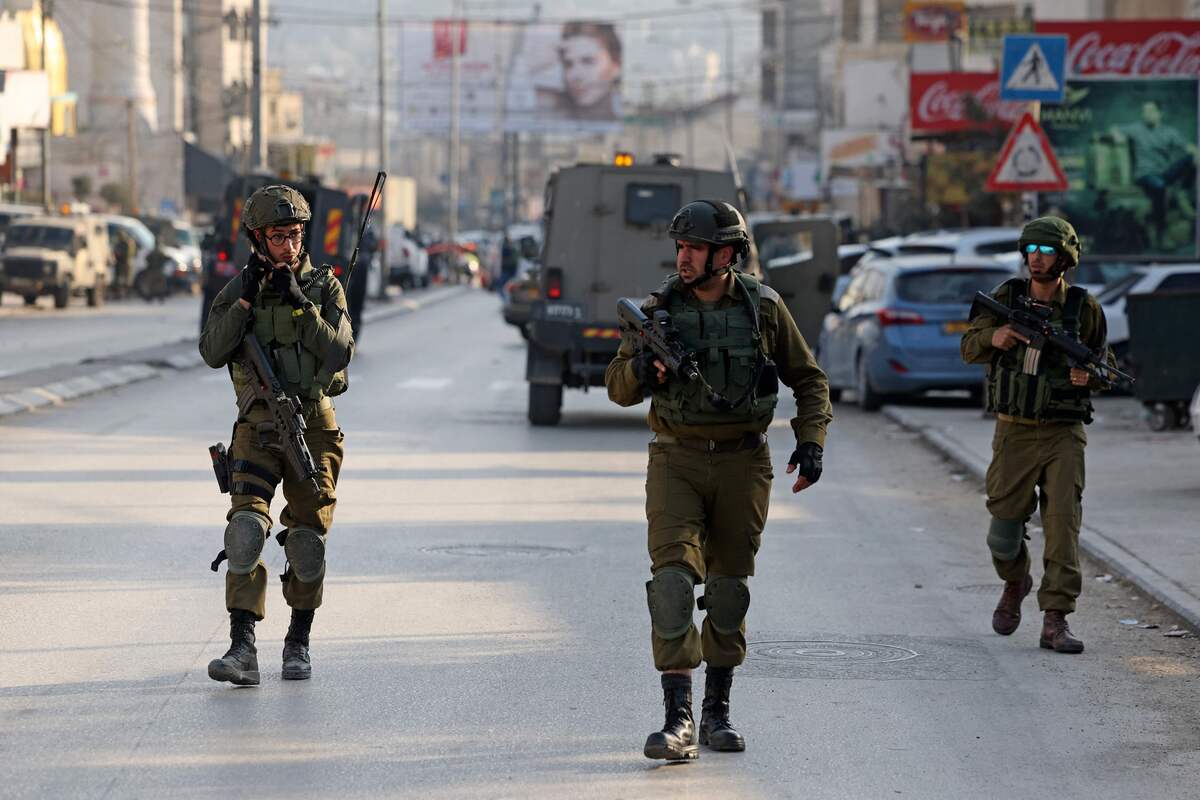
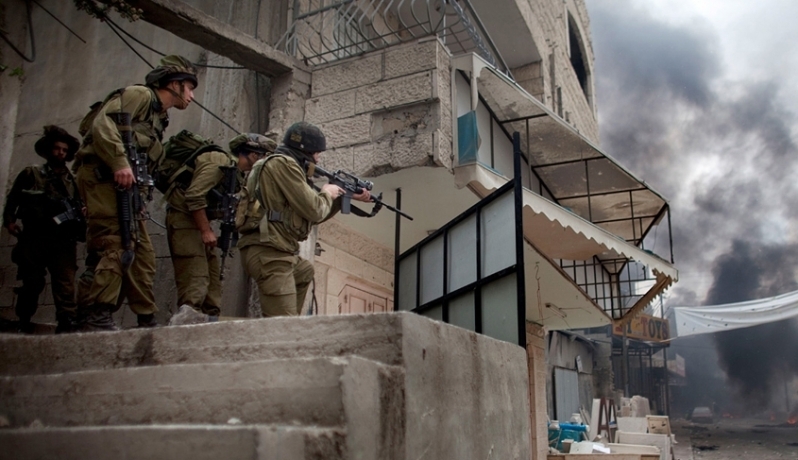
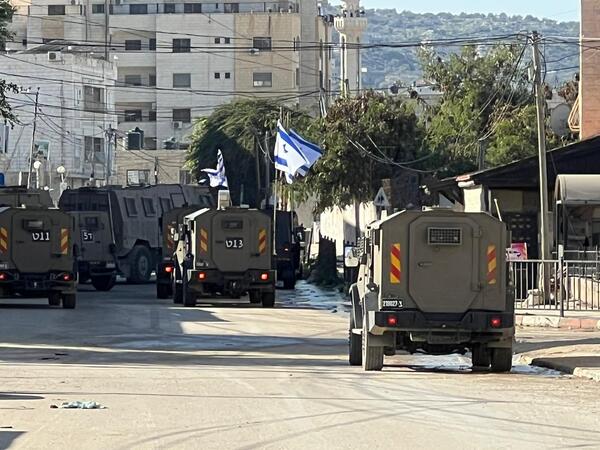
Israeli occupation forces send military reinforcements to the city of Jenin and its camp.

Israeli occupation forces dispatched new reinforcements to the city of Jenin and the surrounding area of its camp on Wednesday evening.


Local sources said that military reinforcements, including vehicles, armored vehicles, water tankers, and electric generators, arrived in the city of Jenin.


According to other local sources, the sounds of heavy live fire can still be heard from inside Jenin camp since this morning.


The Israeli aggression on the city of Jenin and its camp continues for the 58th consecutive day, leaving 34 martyrs, dozens injured and detained, and widespread destruction to homes, property, and infrastructure. Meanwhile, the occupation forces have threatened to demolish dozens of homes in the camp.

ARAB AND WORLD

Wed 19 Mar 2025 8:09 pm - Jerusalem Time

Trump gives Khamenei two months before 'nuclear strike'

US President Donald Trump has given Tehran two months to reach a new nuclear agreement before he launches military action against Iran's nuclear facilities, according to a letter he sent to Iranian Supreme Leader Ali Khamenei.


Axios reported on Wednesday, citing informed sources, that "Trump's letter to Iranian Supreme Leader Ali Khamenei included a two-month deadline to reach a new nuclear agreement."


According to the website, "It is not yet clear whether the countdown to the deadline begins from the time the letter is delivered or from the moment negotiations begin, but Iran's rejection of Trump's initiative and refusal to enter into negotiations could increase the likelihood of "American or Israeli military action against Iranian nuclear facilities."


Two weeks ago, Trump said in an interview with Fox News that he had sent a letter to Iran's Supreme Leader proposing "direct negotiations."


The next day, he said the United States was "in its final moments with Iran," adding, "They cannot be allowed to possess a nuclear weapon. Something will happen soon." He emphasized, "I would prefer a peace agreement, but the other option will solve the problem."

PALESTINE

Wed 19 Mar 2025 7:40 pm - Jerusalem Time

Israeli occupation army dismisses two reserve officers who refused to participate in the genocide in Gaza.

The Israeli occupation army dismissed two reserve officers from the intelligence and air force for refusing to participate in the genocidal war in the Gaza Strip. One of them described government ministers and Prime Minister Benjamin Netanyahu as "dirty traitors."


The private Israeli Channel 14 reported on Wednesday evening: "In the past 24 hours, the Israeli army has dismissed two reserve officers: a combat navigator and an officer in military intelligence (Aman)."


She explained that the army's decision came after the two officers posted on social media that they were refusing to serve in the current fighting in Gaza in protest against the Netanyahu government's policies.

PALESTINE

Wed 19 Mar 2025 7:35 pm - Jerusalem Time

Israeli occupation army announces the start of a limited ground operation in the central Gaza Strip.

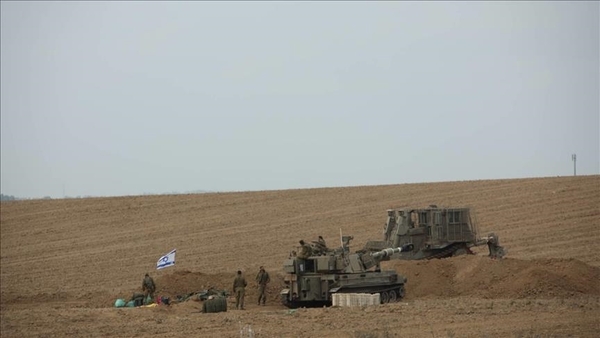
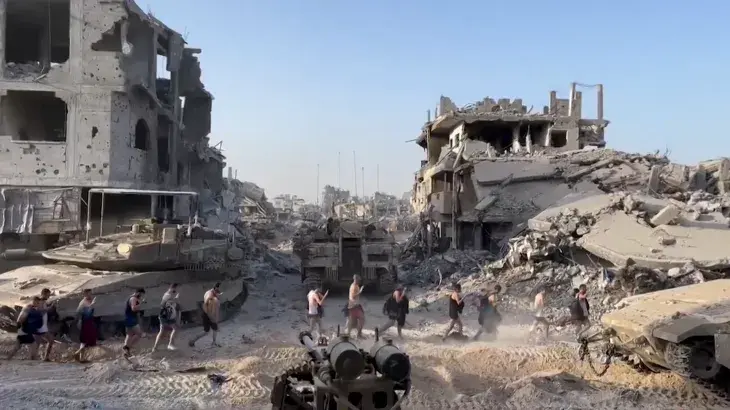
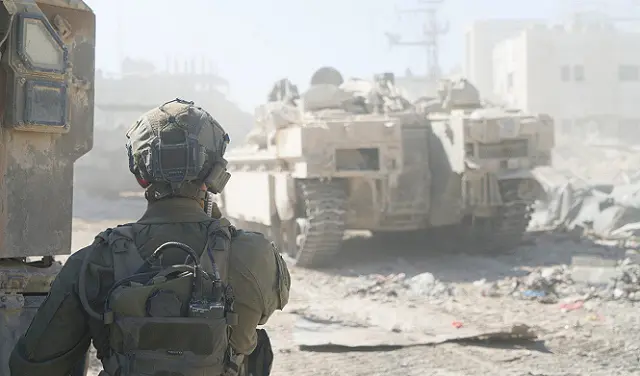
The Israeli occupation army announced today the launch of a limited ground operation in the central Gaza Strip, noting that its forces had taken control of the central Netzarim axis in the Strip.


The army claimed that the operation's goal was to expand the defensive zone and establish a dividing line between the north and south of the Gaza Strip, as part of its ongoing military strategy.


The Israeli military leadership confirmed that operations against armed groups in Gaza would continue, claiming to protect the security of Israeli citizens.


The Israeli occupation army announced that its armored and infantry forces had begun limited ground operations and maneuvers in the north and south of the Gaza Strip over the past 24 hours, as part of expanding the scope of its military operations.


An Israeli military statement issued Wednesday evening stated that the operation aims to "expand the security zone and create a buffer zone between the north and south of the Gaza Strip," noting that Israeli forces have taken control of the central Netzarim axis in central Gaza.


It was also decided that the Golani Brigade forces would be stationed in the southern sector in preparation for carrying out military operations inside the Strip.


In the context of the military escalation, Israeli occupation aircraft launched a large-scale aggression on the Gaza Strip at dawn on Tuesday, resulting in the deaths of 460 Palestinians, including children, and the injury of more than 600 others, some of whom are in critical condition.


Since October 7, 2023, the occupation has continued its genocidal war in Gaza, with American support. The total number of martyrs and wounded has reached more than 161,000, most of whom are children and women, in addition to more than 14,000 missing amid massive destruction of the Strip's infrastructure.

PALESTINE

Wed 19 Mar 2025 7:22 pm - Jerusalem Time

Israeli occupation forces more than 80 families to leave their homes in Al-Ain refugee camp, west of Nablus.

Ibrahim Shatawi, deputy head of the Al-Ain Camp Services Committee, west of Nablus, said that Israeli occupation forces forced more than 80 families to flee their homes during the ongoing aggression on the camp.


He added in a statement to the WAFA news agency on Wednesday that the occupation forces are raiding homes inside the camp, searching and checking citizens' identities, forcing them to leave their homes, and arresting a number of them.


He noted that a number of displaced persons have sought refuge with relatives in neighborhoods within the city, and some have sought refuge in mosques, amid the ongoing Israeli aggression and the closure of all entrances to the camp.

ARAB AND WORLD

Wed 19 Mar 2025 6:45 pm - Jerusalem Time

UN agency confirms death of staff member by explosive ordnance in Gaza

The United Nations Office for Project Services said one of its staff members was killed on Wednesday by "explosive munitions" that may have "exploded or been dropped" on the UN compound in Deir al-Balah, central Gaza Strip.


In a statement titled "UN Office for Project Services Colleague Killed at Agency Compound in Gaza," the agency said that "explosive munitions were dropped or fired at the facility and exploded inside the building," adding that at least five others were injured.


For his part, the office's Executive Director, Jorge Moreira da Silva, expressed his "deep shock and sadness" on Wednesday over the killing of one of his employees in Gaza.


"This was not an accident," da Silva said of the incident, adding, "I was shocked and deeply saddened by this tragic news."


The Ministry of Health in the Gaza Strip released a new death toll on Wednesday, showing that 970 people were killed in the space of 48 hours after Israel intensified its strikes on the Strip.


The death toll from the Gaza war, recorded by the ministry as of Monday afternoon, had reached 48,577. By Wednesday afternoon, the death toll had risen to 49,547, according to the ministry.

PALESTINE

Wed 19 Mar 2025 6:42 pm - Jerusalem Time

Thousands of Palestinians have been displaced from the Gaza Strip due to evacuation orders issued by the Israeli occupation.

The UN Secretary-General's spokesman confirmed that thousands of Palestinians have been displaced from the Gaza Strip due to evacuation orders issued by the Israeli occupation, further exacerbating the humanitarian situation in the Strip.


He noted that 280 UN staff members have been killed in Gaza since October 7, 2023, stressing that the United Nations strongly condemns the attacks targeting its personnel and calls for a comprehensive investigation into these incidents.


In a related development, the spokesperson announced that a UNIFIL member was injured in a landmine explosion in Lebanon, stressing the need to respect UN Resolution 1701 to maintain security and stability in the region.


He also affirmed that UN Secretary-General António Guterres stresses the need to respect the ceasefire in Gaza to end the suffering of Palestinian civilians, calling for the unimpeded delivery of humanitarian aid to the Strip and the unconditional release of all detainees.

PALESTINE

Wed 19 Mar 2025 6:37 pm - Jerusalem Time

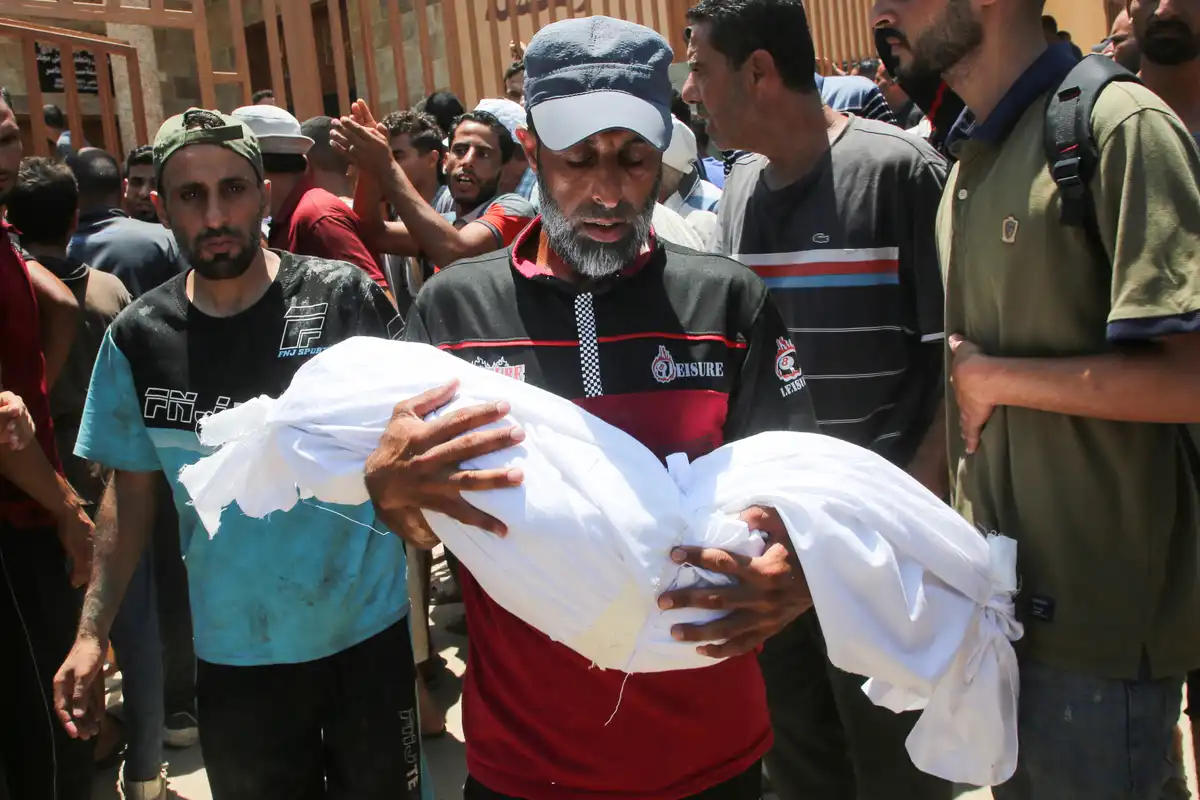
10 Palestinians killed in Israeli bombing of Beit Lahia, northern Gaza

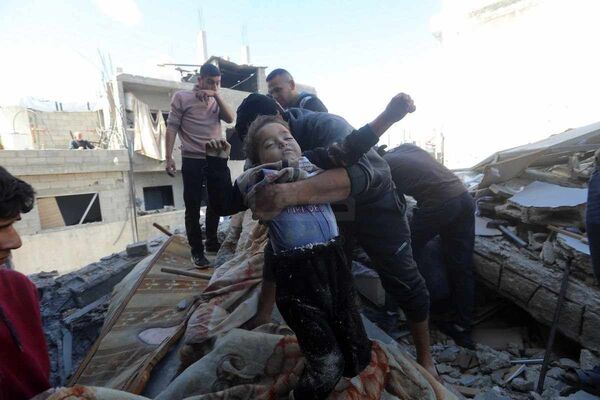
At least 10 civilians were killed Wednesday evening in an Israeli airstrike targeting Beit Lahia, north of Gaza.


According to local sources, Israeli aircraft targeted a mourning house belonging to the Mubarak family in the Sultans area of Beit Lahia, killing more than 10 people and wounding others, most of them seriously. All were transferred to the Indonesian Hospital.


Four civilians, including a child, were killed when the occupation forces bombed a tent in the city of Asdaa, northwest of Khan Yunis, in the southern Gaza Strip.

PALESTINE

Wed 19 Mar 2025 5:45 pm - Jerusalem Time

A Palestinian child was killed in an Israeli airstrike west of Khan Yunis.

A child was killed Wednesday evening in an Israeli drone strike on the city of Asdaa, west of Khan Yunis, in the southern Gaza Strip.


According to local sources, the child Omar Qassim Talab Abu Sharqiya (two and a half years old) arrived at the Kuwait Specialized Hospital with critical head injuries as a result of the bombing, before his death was announced.

PALESTINE

Wed 19 Mar 2025 5:32 pm - Jerusalem Time

Mustafa: Sheltering our displaced people is a top priority.

Prime Minister Mohammad Mustafa discussed with a delegation from Tulkarm Governorate, in his office in Ramallah, on Wednesday, enhancing relief efforts for our people who were forcibly displaced from their homes as a result of the ongoing Israeli aggression on the city of Tulkarm and its two camps.


The delegation included Tulkarm Governor Abdullah Kamil, Fatah Regional Secretary in the governorate Iyad Jarad, and heads of the popular committees in Tulkarm camps Faisal Salama and Nour Shams Nihad Shawish. The delegation also included Ahmed Abu Holi, head of the Department of Refugee Affairs, Nasser Qatami, Prime Minister's Advisor for Arab Funds, and members of the Ministerial Committee for Emergency Action in the Northern West Bank.


The Prime Minister stressed the need for everyone to cooperate in shouldering their responsibility to provide relief to our people, particularly in the camps in the northern West Bank. He emphasized that sheltering the displaced is a top priority, along with continuing to provide emergency relief and preparing for the reconstruction phase, which will begin immediately after the withdrawal of the occupation forces from the camps.


The meeting focused on unifying efforts and intensifying action plans to establish new shelters and provide them with basic services. It was agreed to begin providing prefabricated homes (caravans) in conjunction with the preparation of appropriate land and necessary infrastructure, with these homes distributed across various locations.


A team from the Ministry of Public Works is leading the technical preparations for the establishment of these temporary centers for displaced families. This process is based on a census of families in need of temporary shelter conducted by the governorate's emergency committee, with active participation from the popular committees in the Tulkarm and Nur Shams camps.


The emergency committees in the northern governorates and the popular committees will work to meet the urgent needs of the displaced, utilizing emergency financial payments allocated by the government to address emergency needs in the northern West Bank governorates, in addition to other allocations disbursed to the municipalities of Jenin, Tulkarm, Qabatiya, Al-Far'a, and Tammun, to address the effects of the ongoing Israeli aggression on these areas.


In this context, the attendees stressed the need for the United Nations Relief and Works Agency for Palestine Refugees (UNRWA) to fulfill its responsibilities towards our people in the camps and to enhance its service and relief efforts for more than 40,000 displaced persons from the camps in the northern West Bank.


It's worth noting that the Ministerial Committee for Emergency Action, in cooperation with the governorate and local authorities, is in constant session and coordinating around the clock to adapt the necessary interventions to provide relief to our people who have been forced by the occupation to flee their homes in the camps in the northern West Bank.

ARAB AND WORLD

Wed 19 Mar 2025 5:18 pm - Jerusalem Time

Mass demonstration in Lisbon to condemn the aggression on Gaza

Hundreds of activists in the Portuguese capital, Lisbon, participated in a mass demonstration called for by civil society organizations in Portugal, denouncing the Israeli occupation army's resumption of aggression against Gaza and in solidarity with our people.


Protesters gathered in central Lisbon, wearing Palestinian keffiyehs and holding signs reading "Ethnic cleansing is not self-defense" and "Stop Israeli genocide and illegal occupation," where a large Palestinian flag was placed. They called for an end to the genocide and for boycotts, sanctions, and divestment from Israel.

PALESTINE

Wed 19 Mar 2025 5:06 pm - Jerusalem Time

Government Media Office in Gaza: The occupation's targeting of the United Nations Office for Project Services is a heinous crime.

The Government Information Office in Gaza today condemned the Israeli occupation's targeting of the United Nations Office for Project Services, describing it as a "heinous crime."


The office affirmed that the occupation bears full responsibility for targeting humanitarian personnel in the Gaza Strip, considering that the failure to hold Israel accountable for its crimes encourages it to commit further violations against civilians and humanitarian infrastructure.


The office noted that the occupation continues to obstruct the entry of aid and bomb relief warehouses in an attempt to starve the Palestinian people and impose a catastrophic humanitarian reality on the Gaza Strip.


The office called on the United Nations to take a clear and strong position regarding the bombing of its Office for Project Services, calling for the formation of an international investigation committee to hold the occupation accountable for its ongoing violations against relief workers and humanitarian facilities.


PALESTINE

Wed 19 Mar 2025 4:49 pm - Jerusalem Time

The rolling war of extermination

Dr. Mohamed El-Tamawy: The escalation in Gaza has always been a tool for Israeli governments to reorder domestic priorities, but it has not achieved sustainable results.

Muhammad Hawash: This escalation comes as part of the Netanyahu government's efforts to appease the far-right parties calling for a return to fighting.

Muhammad Judeh: The Netanyahu government's policy of negotiating with fire aims to create a new reality on the ground that imposes negotiating conditions in its favor.

Talal Okal: The current escalation is part of Netanyahu's strategy to buy time, but it will not necessarily lead to a radical shift in the negotiating balance.

Yasser Manna: Israel is trying to evade the obligations of the first phase by pushing for a new agreement that goes beyond its obligations.


The latest Israeli escalation in the Gaza Strip comes after stalled negotiations that have stalled, without reaching the second phase of a prisoner exchange and ceasefire agreement. This attempt is aimed at imposing facts on the ground that will be reflected at the negotiating table.


Writers, political analysts, and experts who spoke to Al-Quds.com (interviews conducted before the return to the war of extermination early Tuesday) considered this escalation to be part of a strategy to prioritize Israel's domestic affairs, especially in light of the political and economic crises facing the Israeli occupation government, and its prime minister, Benjamin Netanyahu, in particular. This has prompted him to use military escalation as a means of diverting attention from his domestic failures.


They point out that the Israeli escalation aims to pressure Hamas to make concessions in the negotiations, and is an attempt by Israel to impose its own negotiating conditions, despite the fact that this strategy has not achieved sustainable results in the past.


The absence of a real political horizon for a comprehensive and just solution


Dr. Mohamed El-Tamawy, a researcher in political economy and international relations, says the recent escalation in the Gaza Strip represents a new chapter in the series of tensions plaguing the region, highlighting the complexity of the political and security landscape as a result of the absence of a genuine political horizon for a comprehensive and just solution to the Palestinian issue.


Al-Tamawi explains that the recurrence of these confrontations confirms that military solutions are no alternative to a political process based on international legitimacy resolutions. He emphasizes that the continuation of unilateral Israeli policies exacerbates tensions and threatens regional stability as a whole.


Al-Tamawi explains that the Israeli escalation is not merely a fleeting military strike, but rather reflects a deeper crisis within Israeli politics, particularly in light of the complex domestic situation facing Israeli Prime Minister Benjamin Netanyahu.


Al-Tamawi points out that Netanyahu is facing an unprecedented domestic dilemma, as he can no longer escape the repercussions of his crises except by escalating military confrontations.


"Since assuming power, Netanyahu has been exporting domestic crises abroad, using security escalation as a means of escaping his failures, whether economic, social, or even legal," Tamawi says. "He continues to be dogged by corruption charges that threaten his political future."


Netanyahu faces growing public anger today.


Al-Tamawi explains that Netanyahu is currently facing growing public anger due to the deteriorating economy and the rising cost of living, which has prompted him to resort to the military option in an attempt to unite the domestic front around him, despite his awareness that this will not be a sustainable solution.


On the economic front, Tamawi asserts that Israel is experiencing one of its worst crises in decades, with economic growth falling to 1% in 2024, while the fiscal deficit rose to 7% of GDP due to massive military spending exceeding $35 billion.


Al-Tamawi points out that these massive expenditures have increased the burden on the Israeli economy, causing the public debt ratio to jump to 70%, up from 61% in 2023. This reflects the fragility of the financial situation amid the ongoing military escalation.


Al-Tamawi points out that Israel has lost its ability to attract foreign investment, which has declined by 60% due to political and security instability, along with rising unemployment rates, particularly among immigrants, which have reached 20% due to ongoing security unrest.


Al-Tamawi believes that economic failure is not the only challenge facing Netanyahu. Israeli society is experiencing unprecedented internal divisions, manifested in the massive demonstrations against him and his attempts to weaken the judiciary. These recurring political crises have led to public criticism from prominent military and economic officials, further isolating Netanyahu domestically.


Escalation to re-arrange internal priorities


Al-Tamawi explains that the current Israeli government relies on fragile alliances between the religious far right and extremist nationalist forces, which are pushing for further escalation, even at the expense of Israel's own stability.


Al-Tamawi asserts that escalation in Gaza has always been a tool for Israeli governments to reorder domestic priorities, but these strategies have not achieved sustainable results. He points to previous military operations, such as Operation Cast Lead in 2008-2009 and Operation Guardian of the Walls in 2021, which did not change the reality on the ground.

Al-Tamawi believes that Netanyahu is currently attempting to replicate this policy, but he faces a different reality. The escalation is no longer merely a military strike, but rather part of a broader crisis threatening Israel from within, with its economic and political power eroding and its international isolation growing.


He adds: "In this context, negotiations remain the inevitable option, but Israel is attempting to impose its conditions through military escalation, forgetting that force has never been a guarantee of lasting strategic gains."


Al-Tamawi points out that Cairo, with its historical experience in managing regional crises, understands that the solution lies in returning to the negotiating table with just solutions, not through reckless escalation. Continued confrontations will only lead to further Israeli retreat, at a time when neither Israel nor Gaza can bear the burden of prolonged conflicts.


The military threat as a permanent pressure card on the Palestinians


For his part, writer and political analyst Mohammed Hawash asserts that Israel is pursuing a gradual escalation in the Gaza Strip, exploiting the military threat as a constant pressure card against the Palestinians, international mediators, and Israeli public opinion, particularly right-wing factions within the government.


Hawash explains that this escalation comes as part of Benjamin Netanyahu's government's efforts to appease the extreme right-wing parties calling for a return to fighting. The government is seeking to reassure them that military operations against the Palestinians will continue, by tightening the blockade, cutting off electricity and water, and launching airstrikes targeting various areas of the Gaza Strip.


Hawash points out that this policy specifically targets resigned Israeli National Security Minister Itamar Ben-Gvir, with the aim of bringing him back into the governing coalition and ensuring the passage of the general budget before the end of this month.


Hawash explains that the Israeli right is seeking to expand the scope of the war on Gaza and impose a policy of forced displacement, a vision rejected by the United States, at least officially, as the United States publicly opposes such plans.


Israel holds Hamas responsible for stalled negotiations


Regarding the recent negotiations, Hawash explained that Israel holds Hamas responsible for the failure of the last round of talks, even though the movement has expressed its willingness to return to negotiations.


However, according to Hawash, Tel Aviv believes that the continuation of negotiations does not conflict with the continuation of sporadic military strikes in Gaza, with raids targeting various areas, including Khan Yunis, Rafah, Gaza, and the northern Gaza Strip.

Hawash asserts that the goal of this approach is to send a message to the Palestinians that the Israeli army is ready to resume fighting at any moment, that Hamas must make concessions in line with Israeli demands, and that those who want war, we will wage it, and those who want negotiations, we will conduct them.


However, Hawash explains that Tel Aviv's demands go far beyond the issue of a prisoner exchange and detainees, as they include other conditions that neither the movement nor the Palestinians can accept, most notably disarmament and full Israeli control, which is interpreted as an attempt to evacuate the Gaza Strip of its residents.


Hawash emphasizes that this Israeli vision is not acceptable to Palestinians, nor at the Arab or international levels. The idea of forced displacement is no longer up for discussion, even in international circles. Despite Israel's ongoing maneuvers to achieve negotiating gains, it continues to face enormous pressure from within and without.


Regarding the impact of the escalation on the negotiations, Hawash explained that repeated Israeli strikes alone are not enough to derail the negotiations, but they also impact the atmosphere surrounding them, both in terms of pressuring international mediators and influencing the morale of Palestinian citizens living under constant bombardment.


Hamas still adheres to its basic demands


Hawash points out that these Israeli pressures will not change Hamas's position, which remains committed to its basic demands and refuses to comply with Israeli demands it deems unrealistic or impossible to implement.


Hawash points out that the continued bombing and water and electricity cuts could have a dual effect. It could push some parties to pressure Hamas, but at the same time, it could force mediators to exert pressure on Israel, given that these practices complicate negotiations and weaken the chances of reaching an agreement.


Domestically, Hawash confirms the existence of divisions within Israel itself. Recent polls have shown that approximately 70% of Israelis support an immediate prisoner exchange deal, or at least a return to the first phase of the exchange process. Only 12% of Israelis support a return to fighting, reflecting a decline in popular support for the war.


Hawash explains that the Israeli army itself is not currently prepared to return to the large-scale fighting it experienced last year. Military estimates indicate that the army prefers to conduct limited operations, including airstrikes and sporadic attacks, rather than launching a large-scale ground offensive.


Hawash points out that Trump has backed down from the forced displacement of Palestinians, having previously been more open to Israeli proposals on the matter.


Hawash points out that the US administration is now increasingly inclined to adopt the Arab-Islamic Initiative, which was agreed upon by the Palestinians and Arab states and presented at the recent Arab-Islamic Summit.


Hawash explains that the United States has regional interests that go beyond its relationship with Israel, and seeks to end the war in Gaza to achieve greater stability in the region. Therefore, the ongoing negotiations are being primarily managed by Washington, which is seeking to reach a ceasefire conditional on the fulfillment of Israeli demands regarding the detainees, with discussions later on broader political and strategic issues.


Netanyahu upset by Boehler-Hamas negotiations


In turn, writer and political analyst Mohammed Joda asserts that the ongoing Israeli escalation in the Gaza Strip, particularly after the end of the first phase of the ceasefire agreement, has become part of Israel's daily policy aimed at pressuring Hamas to make concessions in negotiations, whether regarding extending the first phase of the agreement or releasing Israeli hostages held in Gaza.


Joudeh explains that the escalation in Israeli bombardment over the past week, which has resulted in dozens of Palestinian martyrs, comes as part of Israeli attempts to obstruct international mediation efforts, particularly those led by the United States.


Joudeh points out that Israeli Prime Minister Benjamin Netanyahu expressed deep dismay at these negotiations, which were conducted by Adam Boehler, the official responsible for the prisoner issue in the Trump administration, with leaders from Hamas in the Qatari capital, Doha.


Joudeh points out that this move prompted the Israeli government to mobilize the Zionist lobby within the United States and enlist members of the Republican Party to pressure the Trump administration to halt these negotiations, which later led to Adam Boehler's removal from his position.


Joudeh emphasizes that Israel began evading implementation of the agreement from the moment it entered into force, but has recently intensified its military operations, carrying out intensive bombing operations, expanding the systematic killing of civilians, closing all crossings into the Strip, and preventing the entry of any humanitarian aid or goods to the besieged population.


Negotiation with fire policy


Joudeh explains that Israel did not stop there. The Israeli Ministry of Defense issued a decision to cut off electricity to Gaza as part of a policy of economic strangulation and military pressure to force Hamas to make concessions regarding extending the first phase of the agreement and releasing the Israeli hostages.


Joudeh points out that the coming days could witness increased Israeli escalation, potentially leading to a complete reversal of the ceasefire agreement. Netanyahu seeks to force Hamas to return to the negotiating table under the weight of military pressure, with the goal of achieving negotiating gains that benefit Israel.


Joudeh asserts that the current faltering negotiations between Hamas and Israel have led the latter to rely on escalation as its primary means of pressure. He explains that the Netanyahu government's policy of "negotiating with fire" aims to create a new reality on the ground that imposes negotiating conditions in Israel's favor.


Joudeh explains that Israel resorted to military escalation after negotiations reached a dead end, with the aim of pressuring Hamas to make concessions and also to influence international mediators and push them to exert further pressure on the movement to accept the settlements proposed by Israel.


The escalation reflects a severe internal crisis facing Netanyahu's government.


For his part, writer and political analyst Talal Okal says that the increasing Israeli escalation in the Gaza Strip reflects a severe internal crisis within Benjamin Netanyahu's government, which has begun to realize it has fallen into a "trap" set by Hamas, leaving it facing signs of political and military failure and defeat.


Okal explains that Netanyahu does not want to stop the war once and for all, and is therefore adopting a policy of procrastination and creating obstacles to negotiations, with the aim of returning them to square one and prolonging them for as long as possible. This is in an attempt to avoid answering questions related to the aftermath of the war and how to deal with Gaza in the future.


Okal points out that Netanyahu is attempting to maneuver between the pressure exerted on him by the US administration, which is demanding a ceasefire, and the internal pressures he faces within Israel. Based on this, he is resorting to provoking Hamas, hoping this will provide him with a pretext that will allow him to resume the war under the cover of military pressure on the negotiating process.


Hamas will not give up its essential conditions.


Despite these attempts, Okal asserts that military pressure has not yet achieved its goals, as Hamas has refused to back down from its basic negotiating conditions, and Israel has failed to impose new conditions on it.

Okal believes that Hamas may show tactical flexibility in some aspects of the negotiations, but it will not compromise on its core conditions, which it considers the basis for any future agreement.


Awkal points out that Israel's attempts to subdue Hamas through military pressure will not achieve significant success, especially given the movement's continued adherence to its demands despite Israeli escalation.


Okal asserts that the ongoing escalation is merely part of Netanyahu's strategy to buy time, but it will not necessarily lead to a radical shift in the negotiating balance, especially given the steadfastness of the Palestinian position and its refusal to make substantive concessions to Israel.


Establishing a new field equation


Writer, political analyst, and expert on Israeli affairs, Yasser Manna, believes that Israel is pursuing a policy of slow, calculated escalation in the Gaza Strip. This strategy carries dimensions that transcend circumstantial and temporary dimensions, aiming to establish a new equation on the ground.


Manaa explains that this policy resembles the Israeli approach used in both southern Lebanon and the West Bank, where Tel Aviv seeks to establish the concept of "freedom of military action" in Gaza, giving it broad latitude to carry out repeated military operations without committing to a permanent ceasefire.


Manna points out that this strategy represents a shift in the way the conflict is managed, such that escalation is not merely a temporary reaction, but rather a tool for adjusting the rules of the game in accordance with Israeli interests.


Manaa points out that the current Israeli escalation serves direct tactical objectives, including exerting pressure on Palestinian factions to push them to accept an extension of the first phase of existing agreements and prevent a transition to advanced negotiation stages.


Escalation to prevent the entry of humanitarian and relief aid


Manaa explains that Israel is also using escalation as a tool to prevent the entry of humanitarian and relief aid into the Gaza Strip, with the aim of simultaneously strengthening its political and humanitarian leverage, making the living conditions in Gaza a bargaining chip for the Israeli government.


Manaa points out that negotiations are still ongoing, but the main disagreement revolves around moving to the second phase of the agreement, which includes a full Israeli withdrawal from the Gaza Strip and a comprehensive ceasefire.


Manaa points out that, in contrast, Israel is attempting to evade the requirements of this phase by pushing for a new agreement that goes beyond its obligations. This makes the Israeli escalation a threatening message that the failure of negotiations could lead to the return of the military option, or what is known as "negotiations by fire."


Manaa says, "Any Israeli escalation, if it occurs, will not take the form of a large-scale confrontation as was the case in the first months of the war. Rather, it will be limited to limited military operations aimed at achieving negotiating gains without slipping into an open confrontation."


The United States does not want a comprehensive military escalation.


Manaa explains that the reason for this is that the United States does not want a comprehensive military escalation in Gaza, as it conflicts with its regional projects, most notably the normalization efforts between Israel and Arab states. This imposes restrictions on Tel Aviv's handling of the military situation.


Manaa asserts that Israel is not seeking to ignite a large-scale war at this stage, but rather is relying on sporadic military operations to impose a new equation in Gaza, enabling it to intervene on the ground whenever it wishes, while maintaining ongoing pressure on the Palestinian resistance to prevent significant negotiating gains. Conversely, Palestinian factions are aware of these tactics and therefore remain committed to their basic demands in any future agreement, despite Israel's attempts to impose new rules of engagement.




ARAB AND WORLD

Wed 19 Mar 2025 4:30 pm - Jerusalem Time

A US judge blocks the Trump administration's request to dismiss student Mahmoud Khalil's appeal against his detention.

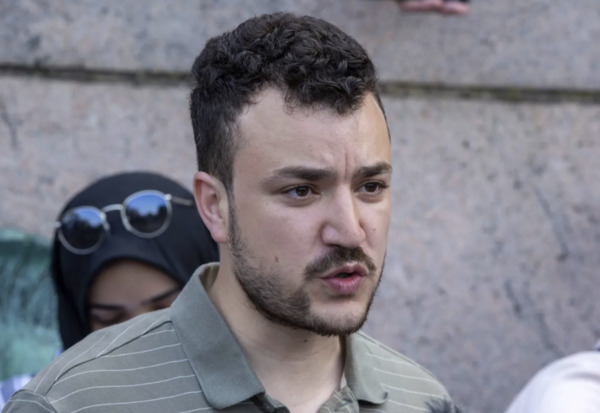
A US judge on Wednesday blocked an attempt by the Trump administration to dismiss a challenge by Mahmoud Khalil, a detained Columbia University student, to the legal process for his arrest by immigration officials for participating in pro-Palestinian protests. However, the judge remanded the case to New Jersey.


U.S. District Judge Jesse Furman in Manhattan agreed with the Justice Department that he lacked jurisdiction over the case.


Furman ordered the case transferred to federal court in New Jersey, where Khalil was being held when his lawyer first challenged his detention in New York.


Foreman has not issued a decision on Khalil's request for bail.


Several human rights organizations have condemned Khalil's arrest as an attack on freedom of expression and a violation of due process.


More than 100 Democratic lawmakers from the House of Representatives questioned the legality of the detention in a letter to the Trump administration.


Justice Department lawyers say Khalil, 30, is subject to deportation because Secretary of State Marco Rubio determined that his presence in the United States could have "serious foreign policy consequences." Khalil's case could test how courts draw the line between the freedom of expression guaranteed to citizens and residents alike under the First Amendment to the U.S. Constitution, and the executive branch's view that some protests could undermine foreign policy.

ARAB AND WORLD

Wed 19 Mar 2025 4:10 pm - Jerusalem Time

Starmer: Images of parents in Gaza transporting their children to hospitals are shocking.

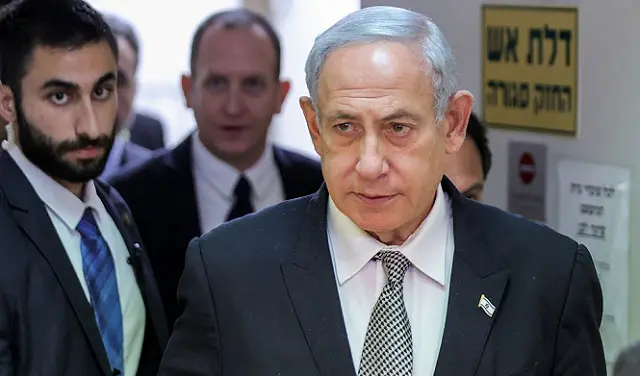
British Prime Minister Keir Starmer expressed deep concern over Israel's resumption of airstrikes on Palestinians in the Gaza Strip, following its breach of the ceasefire agreement.

This came in his answers to questions on Wednesday during the weekly Prime Minister's Questions session in the British Parliament.

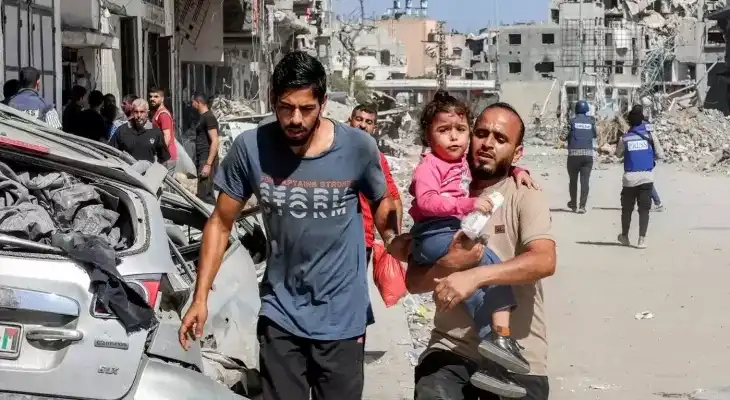
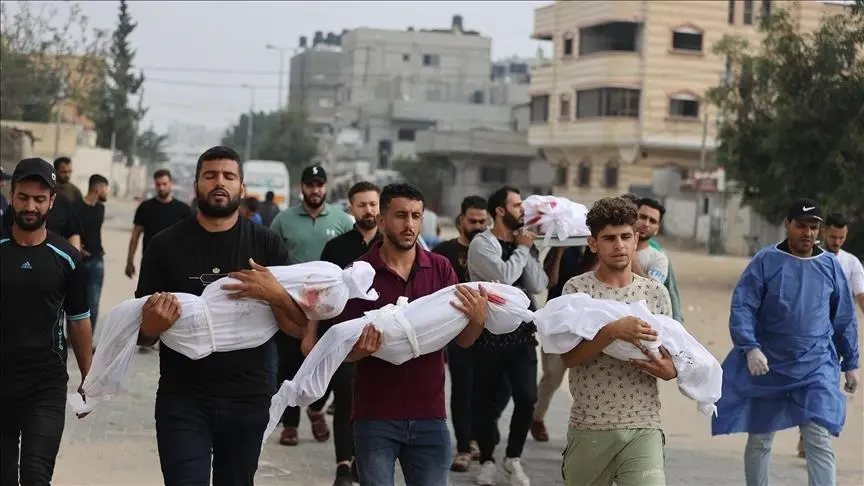
Starmer said: "I am deeply concerned by Israel's resumption of military action in Gaza. The images of parents taking their children to hospital and large numbers of people killed that have resurfaced over the past few days are truly shocking."


He stated that Britain would "do its utmost" to restore the ceasefire, release Israeli prisoners held by Palestinian factions, and deliver urgent aid to Gaza, which has begun to suffer from famine due to the stifling Israeli blockade.


At dawn on Tuesday, Israel intensified its war of extermination in Gaza and reneged on a 58-day ceasefire and prisoner exchange agreement with Hamas, brokered by Qatar and Egypt and supported by the United States.


Israel suddenly escalated its genocidal crimes with violent, widespread airstrikes targeting civilians, resulting in "436 martyrs and more than 678 injuries," according to the Gaza Ministry of Health.

PALESTINE

Wed 19 Mar 2025 3:06 pm - Jerusalem Time

Protest against the resumption of the war and the dismissal of the Shin Bet chief in Jerusalem

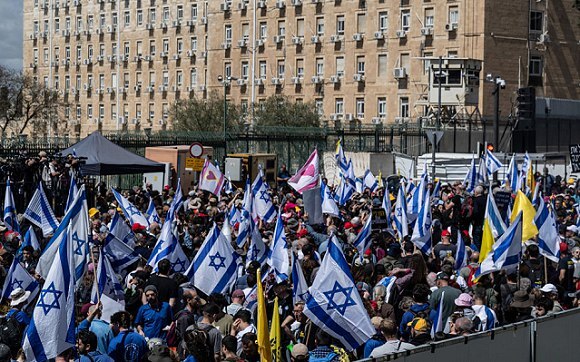
  1. A massive demonstration was held in front of the Israeli Prime Minister's Office in Jerusalem since Wednesday morning. Thousands of Israelis participated in the demonstration, protesting the government's policy of endangering the lives of Israeli prisoners by resuming the war on Gaza, and against Prime Minister Benjamin Netanyahu's announcement of the dismissal of Shin Bet chief Ronen Bar.


Thousands of demonstrators headed toward the prime minister's official residence this afternoon, where they will demonstrate and set up a protest tent. Police have prohibited aerial filming of the demonstration with small drones.


The demonstration was attended by leaders of the protest movements against the plan to weaken the judicial system and who are demanding the continuation of the prisoner exchange between Israel and Hamas. Among the demonstrators were former IDF Chief of Staff and Knesset Member Gadi Eisenkot, head of the National Camp bloc Benny Gantz, and former Prime Minister Ehud Barak.

As part of the protests, demonstrators closed Highway 1, between Jerusalem and Tel Aviv, this morning.


Protesters said, "Instead of implementing the agreement and returning all the kidnapped soldiers, Netanyahu fulfilled his pledge to Smotrich and decided to sacrifice our sons in order to preserve his coalition."


"The people of Israel have proven that they want the kidnapped soldiers, democracy, a normal state, and hope," said Amit Becher, chairman of the Bar Association, during the demonstration. "But the government's ultimate goal is to eliminate democracy and carry out a purge of the security establishment, the legal system, and the judiciary. This is a clear dictatorial operation."


PALESTINE

Wed 19 Mar 2025 1:57 pm - Jerusalem Time

Israeli occupation forces opened fire at a vehicle south of Hebron.

Israeli occupation forces opened fire on a vehicle south of Hebron on Wednesday.


Local sources reported that Israeli occupation forces fired live ammunition at a vehicle carrying civilians at the entrance to the village of Abdo, south of Hebron, detaining those inside and preventing ambulance crews from reaching them.

PALESTINE

Wed 19 Mar 2025 1:46 pm - Jerusalem Time

Israeli occupation continues to force families to flee the Ein al-Ain refugee camp in Nablus.

Since dawn on Wednesday, Israeli occupation forces have continued to force families to flee their homes in the Ein refugee camp, west of Nablus.


Local sources reported that occupation forces continue to impose a siege on Al-Ain refugee camp, raiding homes and forcing their owners to leave.


A number of residents who were displaced from their homes reported that the occupation forces were conducting searches and raids, forcing them to leave, even as sick people, the elderly, and children were present.
PALESTINE

Wed 19 Mar 2025 1:39 pm - Jerusalem Time

The Israeli army dismisses an officer who refused to serve in protest against the resumption of war.

The Israeli military announced on Wednesday that it has permanently stopped calling up a military intelligence officer for reserve duty. The officer announced yesterday that he was refusing to serve in protest against Israeli government policy and its decision to resume the war on Gaza.


Officer Michael Mayer wrote on the X platform yesterday that "the thing that will most help defend the people is to refuse to participate in combat in the service of a group of stinking traitors, in a manner that is completely contrary to the interests of the people of Israel."


After the army announced it would no longer call him up for reserve duty, Meyer wrote today that he "stands by every word I wrote in this context, in this tweet and others, and this is what I said in the conversation about my dismissal as well."


He added, "The easiest thing for people like me is to continue to comply. I could have continued to serve, and I could have easily evaded it with various excuses.

My choice to express my position publicly is a difficult one, with significant personal, social, and psychological consequences, but it is the right choice.”


Mayer continued, "There must be red lines for anyone. As far as I'm concerned, they were crossed a while ago. I will not participate in an operation driven by subjective motives that entails abandoning the kidnapped to die, sending soldiers to kill and be killed for no reason, and continuing the multifaceted deterioration of the State of Israel."


All of this is under the rule of a regime that has long lost legitimacy and is only meant to maintain its power.”


Yesterday, the Israeli army dismissed air force navigator Alon Gur from reserve service after he announced his refusal to serve in protest against the Israeli government's decision to resume the war on Gaza.


"Since this morning, I have been unable to do anything," Gore wrote on the X platform. "I met with the squadron commander and told him: Even here. The line has been crossed at the point where the government has once again deliberately abandoned its citizens in broad daylight, at the point where reckless and cold political considerations have taken precedence over all other considerations, at the point where human life has lost its value, and at the point where the government is targeting the guardians of its own threshold."

PALESTINE

Wed 19 Mar 2025 1:09 pm - Jerusalem Time

Dead and wounded, including UN employees, in various areas of the Gaza Strip.

A number of citizens were killed and injured on Wednesday as a result of the ongoing Israeli attacks on various areas of the Gaza Strip.


In the latest developments: 4 dead and several injuries as a result of the bombing of a vehicle in the Musabah area, north of Rafah, in the southern Gaza Strip.


Meanwhile, three civilians were killed in an Israeli airstrike on the vicinity of Al-Mahta Mosque in the Al-Tuffah neighborhood, east of the city.


Three citizens were killed and others injured when an apartment in the city's Al-Rimal neighborhood was targeted.


25 citizens were killed and others injured in an Israeli bombardment of a house in the Al-Sabra neighborhood of Gaza City.


Meanwhile, the Ministry of Health in Gaza announced the death of a foreign employee working for UN agencies and the serious injury of five others in an Israeli airstrike on the UN headquarters in Deir al-Balah, central Gaza Strip.


Three civilians were killed and others injured when the occupation forces targeted the home of the Al-Kilani family in the Al-Shimaa area of Beit Lahia, north of the Gaza Strip.


Two civilians were killed and others injured in the bombing of a house in the Al-Zeitoun neighborhood, southeast of Gaza City.

PALESTINE

Wed 19 Mar 2025 1:04 pm - Jerusalem Time

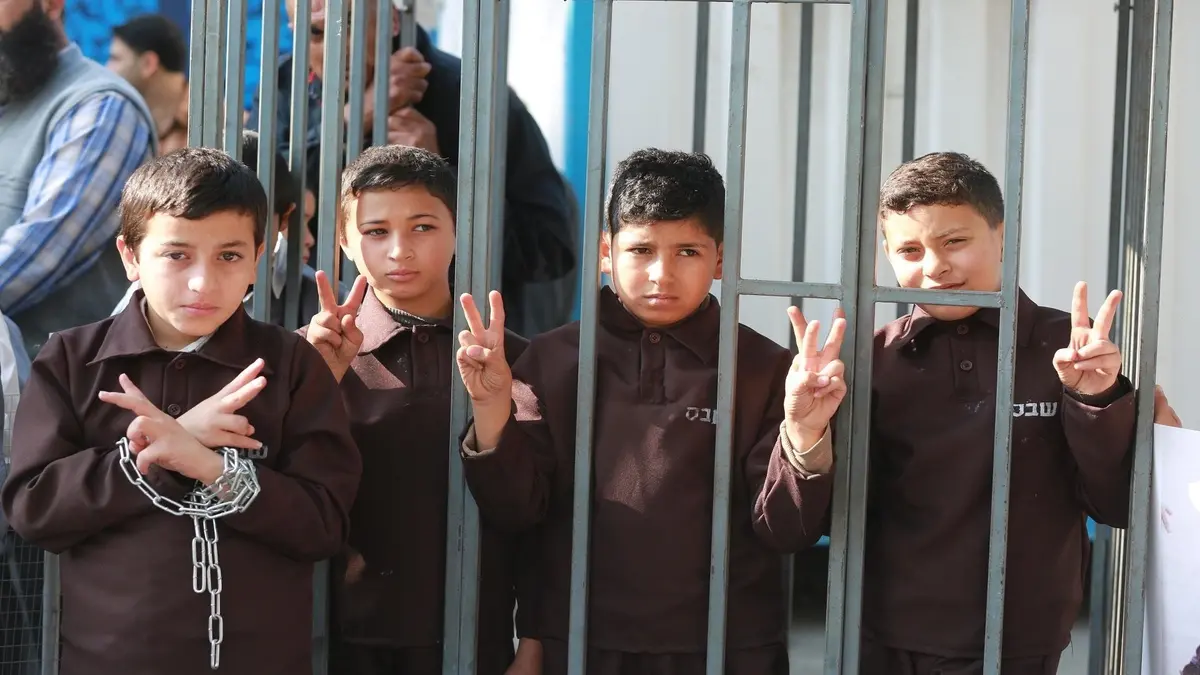
The Palestinian Damon Cubs are suffering from difficult detention conditions.

The Commission of Prisoners' Affairs and Ex-Prisoners said on Wednesday that young prisoners in Damon prison are experiencing difficult detention conditions, with insects rampant in their rooms and are subjected to almost daily surprise searches that leave them exposed to the elements for hours.


The Commission's lawyer reported that conditions in the Ashbal section, where 70 detainees are held, are difficult, as they are subjected to surprise inspections from time to time. A week ago, at dawn, a unit called "Yamaz" stormed the section and took the prisoners out into the yard after shackling them hand and foot for two hours in the cold until the unit's personnel finished the inspection.


The Commission noted that four days ago, prison guards, accompanied by an officer, entered the rooms and confiscated all the prisoners' clothing, leaving each young prisoner with one gray uniform in addition to the brown Shabas uniform.


The lawyer added, citing detainees she visited, that the prisoners are suffering from a widespread bedbug infestation in some rooms.

As for the duration of the break, two prisoners’ rooms go out together for a break every day for an hour.


The Commission's lawyer visited the young prisoner Adam Fawaz Reda Abu Zant (17 years old), from the town of Al-Ram, north of Jerusalem, who is being held in Section 4 for young detainees and was arrested on 08/27/2024, sentenced to 6 months administrative detention for the second time. He suffers from an injury to his hand and his condition is being monitored by the prison clinic.


The Commission's lawyer also visited the young prisoner Yousef Nidal Abdel Ghafer Zion, 17 years old, from the town of Abwein, northwest of Ramallah. He was arrested on November 1, 2024. His health is generally good and he is serving a four-month administrative detention sentence for the second time.


The lawyer noted that the two young prisoners, Mohammed Salama from Tuqu' and Ahmed Dahbour from Al-Wahdat camp in Amman, are also in Al-Damon prison.

ARAB AND WORLD

Wed 19 Mar 2025 12:39 pm - Jerusalem Time

Trump releases JFK assassination documents... What do they include?

US President Donald Trump has released documents related to the 1963 assassination of former President John F. Kennedy, as part of his campaign promise to provide greater transparency regarding the shocking event in Texas.


A first batch of electronic copies of the documents has been posted on the National Archives website, with more than 80,000 expected to be made public after Justice Department lawyers spent hours scrutinizing them. The digital documents include files of memos, one of which is labeled "Secret." This is a typed account, including handwritten notes, of a 1964 interview with a Warren Commission researcher in which he questioned CIA employee Lee Wegreen about inconsistencies in materials provided to the commission by the State Department and the CIA regarding Soviet-American marriages.

* Conspiracy theories


The documents also included references to various conspiracy theories suggesting that Lee Harvey Oswald, Kennedy's assassin, left the Soviet Union in 1962 intent on assassinating the popular young president.
Other documents downplayed Oswald's connection to the Soviet Union. A November 1991 document cited a report by an American university professor named E. B. Smith, who reported that he spoke in Moscow about Oswald with Soviet intelligence official "Slava" Nikonov, who said he reviewed five voluminous files on the assassin to determine whether he was a KGB agent.

"Nikonov is now confident that Oswald was never an agent under the control of the Soviet intelligence," Smith added.

* Fidel Castro

The 1963 U.S. Department of Defense documents covered the Cold War in the early 1960s and U.S. intervention in Latin America in an attempt to thwart Cuban leader Fidel Castro's support for communist forces in other countries. The documents indicate that Castro would not go so far as to provoke a war with the United States or escalate to the point of "serious and immediate danger to the Castro regime." The documents stated, "It appears likely that Castro will intensify his support for subversive forces in Latin America."

A document published in January 1962 reveals details of a top-secret project called "Operation Nemes," or simply "The Cuban Project," a CIA-led campaign of covert operations and sabotage against Cuba, approved by Kennedy in 1961, with the aim of overthrowing the Castro regime.

* "Maximum transparency"

Shortly after taking office in January, Trump signed an order releasing documents, which led the FBI to find thousands of new documents related to the Kennedy assassination in Dallas.

Amid efforts to comply with Trump's order, an email seen by Reuters late Monday showed that the Justice Department ordered some of its lawyers who handle sensitive national security cases to urgently review assassination records.

“President Trump is ushering in a new era of extreme transparency,” Director of National Intelligence Tulsi Gabbard said in a post on Twitter.

* Experts are skeptical

Kennedy's assassination was attributed to a single gunman, Oswald. The Department of Justice and other federal government agencies confirmed this conclusion in the decades that followed. But polls show that many Americans still believe his death was the result of a conspiracy.

Experts doubted that this new information would change the basic facts of the case: Lee Harvey Oswald shot Kennedy from the window of a school book warehouse as the president's motorcade passed through Dealey Square in Dallas.

"Those expecting major events will almost certainly be disappointed," said Larry Sabato, director of the Center for Politics at the University of Virginia and author of a book about the assassination. He added that some pages may simply be previously published material with some words redacted.

* CIA involvement?

Trump also promised to release documents related to the assassinations of civil rights leader Martin Luther King Jr. and Senator Robert Kennedy, who were killed in 1968. He gave Trump more time to develop a plan for releasing these documents.

Trump's Health and Human Services Secretary, Robert Kennedy Jr., son of Robert Kennedy and nephew of John F. Kennedy, said he believed the CIA was involved in his uncle's death, a claim the agency described as baseless. Kennedy Jr. also said he believed his father was killed by multiple gunmen, a claim that contradicts official accounts.

Among the things the documents may reveal is that the CIA knew more about Oswald than previously disclosed. Questions remain about what the agency knew about Oswald's visits to Mexico City six weeks before the assassination. During that trip, Oswald visited the Soviet embassy. Trump said, "People have been waiting for this for decades. It's going to be very interesting."


OPINIONS

Wed 19 Mar 2025 12:35 pm - Jerusalem Time

National priorities and the self-destructive syndrome

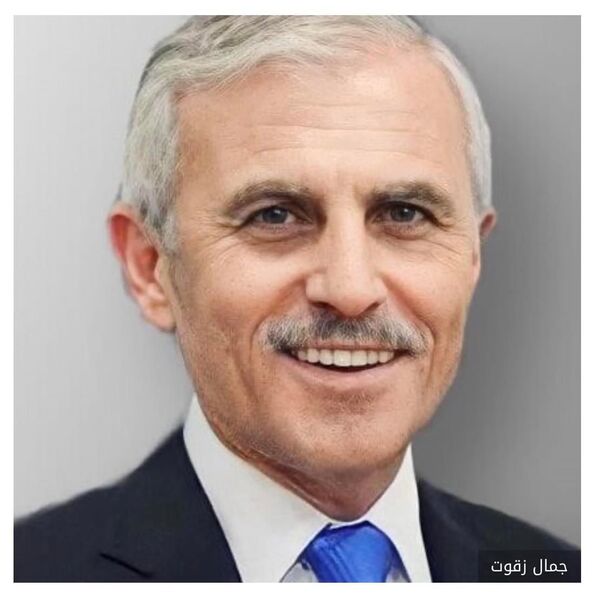
Jamal Zaqout

Jamal Zaqout

Opinion Writer

At its 23rd session, held in Ramallah on April 30, 2018, the Palestinian National Council's work was essentially limited to restructuring and dismantling the Palestine Liberation Organization's (PLO) bodies. This contradicted the national imperative to open the PLO's doors to all in order to advance the role of inclusive national institutions, in accordance with the decisions of the PNC Preparatory Committee meeting held in Beirut in January 2017, with the participation of the PNC President, members of the Executive Committee, and leaders of all factions, including Hamas and Islamic Jihad. This was a consecration of the requirements of political hegemony over national decision-making based on the principle of loyalty to the adopted policy and the exclusion of those who object to it, despite the clear failure of the policy, particularly with regard to the political settlement process and the relationship with Israel. All of this constituted a complete disregard for all previous decisions taken by the Central Council, which called on the Executive Committee to take a number of steps, the essence of which was to review this process and halt the path of failure that had begun to afflict the Palestinian struggle and its institutions with chronic damage, as if it had become an embodiment of self-erosion.

Thus, the last vestiges of the frontal stance expressed by the National Council were overthrown, despite the filth and burdens it was burdened with in the context of its floatation by inflating the number of loyalists in its membership, at the expense of the vital social and political forces. During that session, the previously innovated clause regarding the formation of the Central Council was used as an intermediate stage between the two sessions of the National Council to monitor and correct the work of the executive, to transfer all political and organizational powers of the National Council to the Central Council. In effect, this meant abolishing the National Council and reforming the Central Council with a majority of loyalist supporters, particularly with regard to the independent members who were added during that National Council session, bringing them in and "appointing" them directly and during the same session to the Central Council. This was, of course, in addition to the dissolution of the Palestinian Authority's Legislative Council and the abolition of all forms of oversight over its government, including popular and media oversight.

In the context of further emptiness of the organization of its front-line content, the work of the executive was transformed into a mere advisory body to the president. The executive accepted this situation and accepted this fait accompli without even a single protest about the transformation of the highest “front-line executive authority” into a mere advisory club and a bureau for political chatter.

This state of affairs of the PLO was not merely a coincidence or a result of the aging of its leadership, but rather a result of the failure of its policy and the insistence on pursuing a policy of appeasement in the context of the effort to engineer the Palestinian political system, by emptying it of the elements of strength that enabled it to rise through the years of revolution and the formation of the PLO, especially with regard to preserving national unity and its frontal character, and the nature of representation that it consolidated through revolutionary legitimacy over the decades that followed the founding of the PLO.

The erosion of the PLO's standing has not only become apparent internally, particularly in relation to the absence of its role and that of the Palestinian Authority in the political confrontation with the war of extermination, and the suspicious stubbornness in refusing to pursue anything that would strengthen its unifying leadership role in accordance with the consensus of the factions in Beijing, supported by a popular consensus that is the broadest since falling into the trap of division in 2007. Rather, it has reflected on the PLO's representative standing, when a number of Arab leaders met in Riyadh, and the Palestinian presence was absent, at a time when the sole topic of discussion was limited to the future of the Palestinian situation, particularly the war on the Gaza Strip, its reconstruction mechanisms, and the frameworks capable of doing so. This erosion was also evident when, instead of placing ways to end the division on the summit agenda, to pursue the Arab League's role in ending it as an existential need in accordance with the decisions of its foreign ministers in 2007, under the pretext that this is an internal Palestinian affair, the summit was dragged into issues related to the "ruling party" of the Palestinian Authority. Despite their importance, the Arab Summit is not the appropriate place to address them, as much as it is an expression of the erosion of its standing.

The highest national priority for our Palestinian people is, first and foremost, to stop the war of extermination against the Gaza Strip, and to mobilize all forces and energies to prevent the resumption of Israeli aggression on a large scale, while simultaneously confronting the war of annexation of the West Bank and the persistence of the Judaization of Jerusalem.
The question that arises is whether the call for a central council to create the position of vice president of the organization constitutes a priority for achieving this goal? Especially since the constitutional declaration regarding the President of the National Council filling the position of president in the event of a vacancy has addressed fears of a vacuum. Or is it another attempt to further ensure the continuity of hegemony and control, and perhaps deepen the dispute within the "national frameworks" that have prevailed in a pathological environment of competition over the so-called succession? This is a question of external origin, not an internal requirement, and has been circulating for more than a decade. It aims to spread illusions that serve no purpose other than to control the decision-making mechanism, thus consecrating monopoly on the one hand, and deepening internal conflicts on the other. This is at a time when what is required is a return to a common word that mobilizes all the energies of our people in defending their rights that are being liquidated. There is no alternative to this matter except by restoring the PLO as the national front that includes all forces on the basis of common denominators and a unified collective leadership, and forming a transitional consensus government until elections are held, which places at the top of its priorities strengthening the ability of our people to withstand and survive and protect its national destiny from the imminent danger of liquidation, and not further erosion in the context of the struggle over legitimacy that is being overthrown every day, which the Palestinian people reject, and on it lies the responsibility to correct it by restoring the PLO and its role in leading the national liberation struggle.

PALESTINE

Wed 19 Mar 2025 12:20 pm - Jerusalem Time

Israeli occupation forces continue to storm the town of Silwad, arrest a citizen, and raid dozens of homes.

Since dawn on Wednesday, Israeli occupation forces have continued their raids on the town of Silwad, east of Ramallah, and have arrested a citizen.


Local sources reported that the occupation forces have continued their raid on the town since dawn today, and arrested citizen Ahmed Othman Hamed (49 years old), while detaining dozens of citizens and later releasing them after investigating them in the field.


She added that the occupation forces searched dozens of homes in the town, including those of detainees and freed prisoners, vandalizing and tampering with their contents. They also seized a number of vehicles belonging to local residents.


She reported that the occupation forces deployed hundreds of soldiers and military vehicles throughout the town's neighborhoods and streets, disrupting all aspects of life, including institutions, schools, and commercial activities.

PALESTINE

Wed 19 Mar 2025 12:05 pm - Jerusalem Time

OCHA: 170 children were killed during the occupation's aggression on the Gaza Strip.

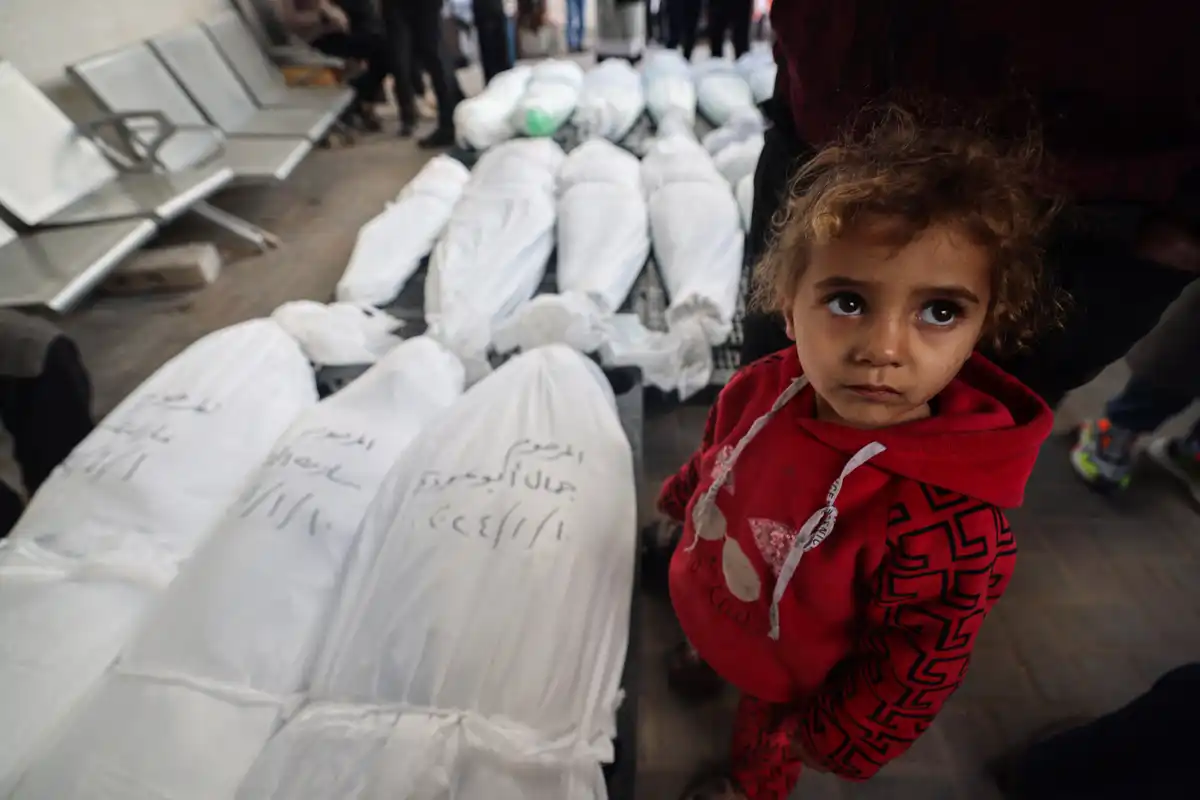
The United Nations Office for the Coordination of Humanitarian Affairs (OCHA) announced that more than 170 children were killed during the Israeli occupation's aggression on the Gaza Strip early Tuesday morning.


The office stated in a statement on its official website on Wednesday that the total number of martyrs as a result of these raids has reached more than 400 citizens, including more than 170 children and 80 women. It noted that rescue teams and paramedics were unable to reach many of the victims due to a lack of equipment, fuel, and heavy machinery.


The office explained that only four field hospitals are fully operational in the region, while 22 hospitals and six field hospitals are partially operational. Another 13 hospitals and four field hospitals have ceased operations due to destruction and shortages of medical personnel and medicines.


The office quoted the director of Al-Shifa Hospital, Mohammed Abu Salmiya, as saying: "The situation is catastrophic and we have many victims."


OCHA warned that more than one million people in the Gaza Strip could face severe food shortages if humanitarian aid deliveries to the area do not resume. They are at risk of not receiving food rations in March if deliveries to Gaza do not resume.


He stressed that available stocks in the sector are rapidly depleting, and to address the shortage, UN partners have sharply reduced food aid, suspended the distribution of flour and fresh food, and reduced the quantity of hot meals in public kitchens.


The office also warned that if the situation continues as it is, at least 80 of the 170 public kitchens in the Strip will be forced to close within a week or two.

ARAB AND WORLD

Wed 19 Mar 2025 11:27 am - Jerusalem Time

Israeli analyst: Netanyahu seeks to slide into a dictatorial regime to maintain an eternal war and remain in power.

Haaretz military analyst Amos Harel asserted on Tuesday that "Israel deliberately violated the ceasefire agreement with Hamas, with American approval, the night before last, because it refused to implement all the conditions it pledged to two months ago. There is no other way to interpret the decision to resume fighting in the Gaza Strip."

He added, "Hamas' psychological abuse of the detainees and their family members throughout the recent rounds of release (prisoner exchange) cannot be considered a major breach of the agreement on its part. It is the Israeli government that failed to implement the agreement when, in recent weeks, it did not complete the withdrawal of Israeli forces from the Gaza Strip, especially from the Philadelphi corridor, as it had committed to. Hamas refused to turn a blind eye and move forward in releasing detainees under the new mediation initiatives put forward by the Americans, and negotiations have become stalled."

Harel predicted that Israel would continue its airstrikes later, "and also implement the plan of the Chief of Staff, Eyal Zamir, for a new, large-scale ground invasion of the Gaza Strip, hoping this time to finally defeat Hamas." Several military divisions would participate in the invasion, after a broad call-up of reserve forces once again, "and it will take place for the first time under conditions in which there is no real public consensus on the justness of returning to war."

Israeli Prime Minister Benjamin Netanyahu claims that only through military pressure on Hamas will it be possible to return the 59 Israeli prisoners still being held in the Gaza Strip.

But Harel stressed that "this is a long-disproven pretext. In practice, approximately 40 abductees died in the Gaza Strip, under various circumstances, after being abducted alive from Israeli territory on October 7. Resuming military pressure certainly poses a danger to the living captives, and could lead to a further tightening of their already difficult captivity conditions. In a more extreme scenario, it could prompt Hamas to target some of them in retaliation."

The Israeli government justifies the resumption of the war on Gaza with the goal of breaking the deadlock in negotiations over a ceasefire and prisoner exchange agreement, and fulfilling its pledge to defeat Hamas, "even though the timelines for achieving these two goals are not synchronized. The kidnapped soldiers could die before Hamas is defeated, if that happens at all," according to Harel.

The analyst noted that "there are a series of pressing political goals that Netanyahu is not speaking about out loud: bringing Ben-Gvir and his party back into the government, approving the budget, and stabilizing the coalition. This time, it's truly a full-fledged battle for Netanyahu's safety, including an attempt to divert media attention from the renewed protests against the government, against the backdrop of Netanyahu's intention to dismiss the head of the Shin Bet."

Harel believes that "Netanyahu's true goal is to gradually slide into a regime with dictatorial characteristics, whereby he attempts to ensure his survival by maintaining an eternal war on several fronts. It seems to him that the kidnapped soldiers can die in the tunnels, knowing that they contributed to his continued rule."


PALESTINE

Wed 19 Mar 2025 10:51 am - Jerusalem Time

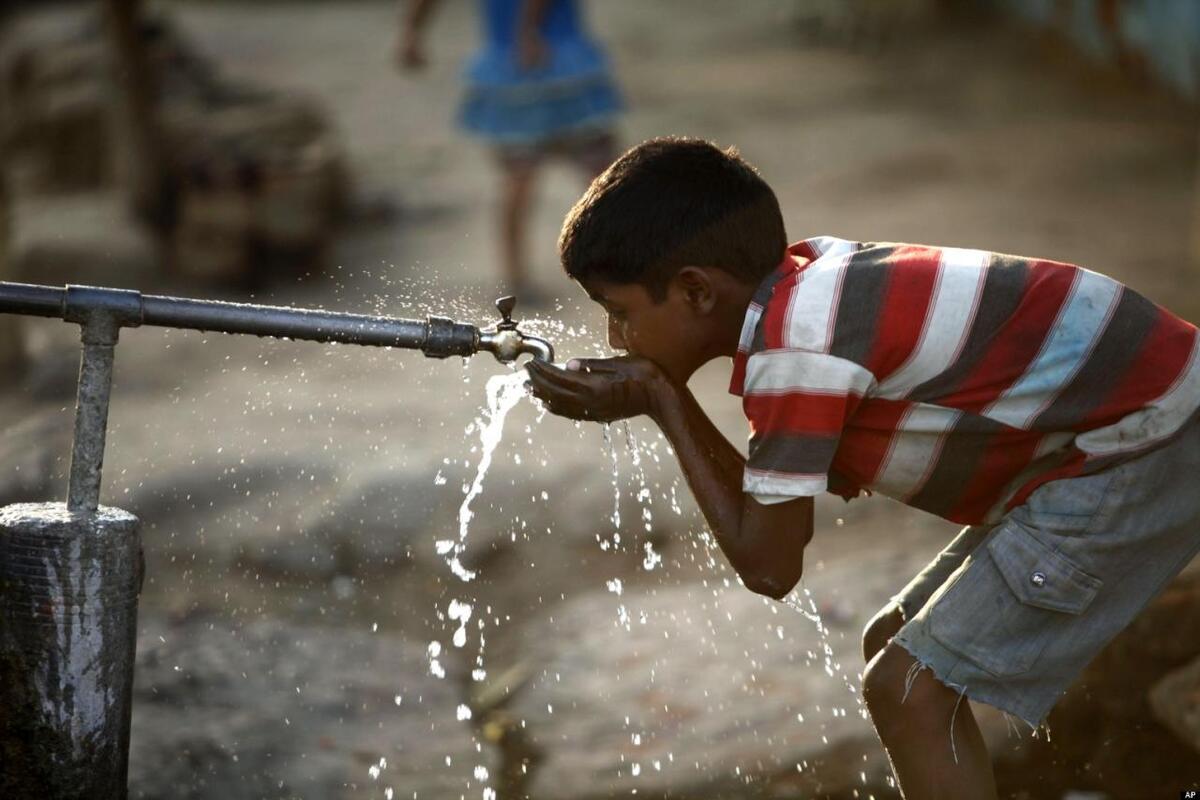
85% of water and sanitation sources are out of service in the Gaza Strip.

The Palestinian Central Bureau of Statistics and the Water Authority stated that more than 85% of water and sanitation facilities and assets have been completely or partially out of service due to the repercussions of the Israeli occupation's aggression on the Gaza Strip.


A statement issued by the Central Bureau of Statistics (CBS) and the Water Authority on Wednesday, on the occasion of World Water Day, explained that initial damage assessments, as of the ceasefire date, showed that more than 85% of water and sanitation facilities and assets were completely or partially out of service and required rehabilitation, exceeding $1.5 billion, only for areas where damage was identified. This includes wastewater treatment plants, desalination plants, pumping stations, wells, water reservoirs, main transmission lines, water, sanitation and stormwater drainage networks, and water control laboratories.


The statement pointed out that the occupation's aggression has undermined all efforts made by the Palestinian government, with investments exceeding one billion dollars over many years, to avert the catastrophe that threatened Gaza due to the salinity and pollution of 97% of the groundwater reservoir, the only water source there.


He pointed out that the per capita water share in Gaza does not exceed half the estimated minimum humanitarian requirement in emergency situations, which is 15 liters per person per day.


The statement continued: "Due to the extensive damage incurred by the water and sanitation sector, water supply rates have declined to an average of 3-5 liters per person per day, with significant variations depending on geographic location, water supply, infrastructure damage, and ongoing displacement."


He added: "This percentage is less than the minimum required for survival in emergency situations, according to World Health Organization indicators, which is estimated at 15 liters per person per day."


This is mainly due to the damage to the infrastructure, the complete power outage necessary for pumping water from wells, and the operation of related water facilities such as reservoirs and pumping stations, and the restrictions imposed on the provision of fuel and materials necessary for their operation. The available water resources in the Gaza Strip are suffering enormous losses, and water quantities have decreased to an average of 35% of what they were before the aggression.

The statement added that the Gaza Strip relies on three main sources of water, and estimates indicate that, as a result of the current aggression, the supply through these sources has decreased to approximately 10-20% of what it was before the aggression. Then, with the start of urgent interventions, the rate rose relatively to reach approximately 35% of what it was before the aggression. These sources include:


Groundwater: There are 300 wells distributed throughout the Gaza Strip (290 municipal wells and 10 UNRWA wells), with a total supply of 262,000 m3/day for all uses, most of which sustained severe damage. As a result of interventions undertaken by the Water Authority, in cooperation with service providers during the aggression, the amount of water produced from these wells reached approximately 93,000 m3/day.


- The three limited-capacity desalination plants (central, northern, and southern): Throughout the aggression, the northern plant completely stopped operating due to the extensive damage it sustained, and the occupation forces deliberately converted it into a military barracks. Meanwhile, the central plant operated at a production capacity not exceeding 30% of its pre-aggression capacity due to some damage, in addition to the scarcity of fuel needed to operate the generators, and the unavailability of spare parts for maintenance. As for the southern plant, until mid-November 2024, it was operating at a total production capacity estimated at only 20% of its total capacity, subject to fuel availability. Later, it began operating at a production capacity of approximately 70% of its capacity, after the power line supplying the plant was connected.


-Water purchased from Mekorot (through three connections supplied in the north, center, and south): The amount of water supplied through these connections before the aggression reached 52,000 m3/day, equivalent to 52% of the potable water.


The occupation completely shut down the three connections at the beginning of the aggression. After they were reopened, the Water Authority crews and its partners began the necessary maintenance work on the main and subsidiary lines of these connections, and followed up and inspected the pumping work from them, and expanded it to new populated areas. As of the date of the ceasefire, as a result of these interventions, a total of 40,000 m3/day was supplied, knowing that this quantity decreased later due to a malfunction in the feeder line from the Bin Saeed connection that feeds the central governorate, and the delay in obtaining coordination to carry out the necessary maintenance.


As for water networks, approximately 2,263 kilometers were destroyed, of which 1,622 kilometers were completely destroyed and 9 kilometers were partially destroyed. Unfortunately, with water scarcity to meet basic needs, addressing agricultural needs has been postponed, despite its significant link to food insecurity in the Gaza Strip.


Damage to the sewage system poses significant risks to life, health, and the environment.


The Central Bureau of Statistics and the Water Authority stated that wastewater services in the Gaza Strip were advanced before the aggression, as the existing wastewater system includes integrated facilities and infrastructure (from collection and pumping to transportation and treatment). The system covers approximately 73% of the Gaza Strip's population with an infrastructure that includes a network of various diameters estimated in length at approximately 2,250 km, 79 pumping stations, and 29 rainwater collection basins connected to eight rainwater pumping stations, in addition to five wastewater treatment plants with a design capacity of up to 154,600 m3 per day. Until the ceasefire, all wastewater plants were out of operation due to the extensive damage they sustained, which still requires a detailed assessment without access due to the security situation.


The networks were severely damaged, with 1,545 kilometers completely destroyed and 8.6 kilometers partially destroyed. Forty-seven sewage pumping stations were also destroyed, including 20 completely destroyed and 27 partially damaged. This destruction led to the flow of wastewater into streets and residential neighborhoods, posing a significant threat to health and the environment.


The amount of water available to Palestinians from groundwater resources remains unchanged despite population growth and increased development requirements.

Palestine relies primarily on water extracted from groundwater resources, which account for 73.1% of the total available water, amounting to 399.7 million m3 (the total groundwater extracted is 289.63, of which 135.1 million m3 is in the West Bank, while in the Gaza Strip 154.53 million m3 is extracted, of which 97% is considered unfit for human use).


In the West Bank, the amount of water pumped from groundwater wells (the Eastern, Western, and Northeastern basins) in 2023 amounted to approximately 106 million cubic meters. The reason for the fluctuation in the quantities pumped from the wells (increasing or decreasing by small amounts annually) is due to the obstacles placed by the occupation authorities in the way of drilling and rehabilitating wells. This is the same reason for the decrease in the quantities pumped from the springs, in addition to the increase in control operations and settler crimes in illegally annexing these springs.


The main reason for the weak use of surface water is the occupation's control over the Jordan River and its inability to exploit more than 165 million m3 of rainwater annually. This is achieved by preventing Palestinians from building dams and ponds to collect rainwater. The total amount of surface water exploited does not exceed 4 million m3 from the Al-Auja, Al-Far'a, Beit Al-Rush, Bani Al-Na'im, Marj Sanur, Araba Lake, and some small ponds.


The destruction of infrastructure during ongoing incursions into the West Bank exacerbates the already difficult water situation in the West Bank.


The statement noted that due to the continued and repeated incursions into the West Bank, particularly into the camps of Jenin and Tulkarm governorates, there are no statistical figures on the extent of the damage incurred by the water and sanitation sector to date, especially with the repeated systematic destruction of infrastructure and its rehabilitation by local authorities. According to reports by the United Nations Relief and Works Agency for Palestine Refugees in the Near East (UNRWA), the aggression on the Jenin, Tulkarm, Nur Shams and Far'a camps resulted in the large-scale forced displacement of approximately 40,000 people, the majority of whom, according to reports issued by local community institutions and local authorities of the host communities, are in need of adequate water sources.


39% of the water available in the West Bank is purchased from Israeli water companies, representing approximately 60% of the water supplied for domestic use.

The occupation's measures have limited citizens' ability to exploit their natural resources, particularly water, forcing them to compensate for the shortage by purchasing water from Israeli water companies. The total amount of water purchased for domestic use in 2023 reached 102.1 million cubic meters in both the West Bank and Gaza Strip, representing 25% of the available water supply.


In the West Bank, the amount of water purchased from Israel amounted to 85.9 million cubic meters, equivalent to 39% of the available water quantities and representing approximately 60% of the water supplied for domestic use.


It should be noted that the increased reliance on purchasing water from Israel in itself poses significant challenges for the Palestinian government, given Israel's control over water prices and quantities, especially during the summer. It also represents an Israeli approach to undermining the prospects for a two-state solution by denying Palestinians sovereignty over natural resources.


Data for 2023 indicate a slight increase in the daily per capita water share compared to previous years, reaching 88 liters per capita per day in the West Bank. This share is still below the internationally recommended rate (120 liters per capita per day), with consumption quantities reaching 95.5 million m3. Note that this quantity was supplied for non-agricultural purposes, and includes water supplied for commercial and industrial purposes.


Therefore, the actual per capita supply and consumption are lower than the stated amounts. Comparing consumption in Palestine with per capita Israeli consumption, we note that the Israeli per capita consumption rate is three times that of the Palestinian per capita, and doubles compared to the settlers' share, or even if non-agricultural uses are taken into account.


Household uses are the largest consumer, and the loss rate exceeds 30%.


According to water data for 2023, domestic water supply accounted for up to 61% of the total available water. Indicators for 2023 also showed that water loss in the West Bank remains high, at more than 35%, due to the deterioration of networks and encroachments on water lines and networks by citizens. Statistics showed variations in the percentage of loss between governorates, with the highest percentage in Hebron Governorate and the lowest in Salfit Governorate.


The variation in prices and available quantities between governorates depends on the availability of resources and the ability of these resources to meet the needs of their populations.


The disparity in water quantities and prices experienced by citizens across governorates is due to differences in the availability of natural water resources and the extent to which these resources can meet the needs of the population, given the population density in each governorate.


While some governorates, such as Jericho, the Jordan Valley, and Tulkarm, have abundant local water resources, the governorates of Hebron, Bethlehem, and Ramallah and Al-Bireh rely on water purchased from Israel to fill their water supply deficit. The cost of producing water from local sources varies according to the cost of production.


The cost of water supplied from local sources is also lower than the cost of water purchased from Israeli water companies, which also creates disparities in water prices between governorates. The purchase and production price of a cubic meter of supplied water is an average of 3.2 shekels per cubic meter, and it is sold to local authorities at an average of 2.4 shekels per cubic meter; that is, with government support of up to 0.8 shekels per cubic meter.


It's worth noting that achieving fair distribution among population centers in the governorates is one of the main challenges facing the State of Palestine as a result of the policies of the Israeli occupation and its control over Palestinian territories. This limits the possibility of developing an integrated water system at the national level that ensures fair management and distribution of water resources. It's also worth noting, in this context, that the government faces the challenge of rising debt on local authorities, which, by the end of 2024, amounted to more than $1.8 billion.

PALESTINE

Wed 19 Mar 2025 10:47 am - Jerusalem Time

Settlers set fire to Bedouin tents west of Salfit

Today, Wednesday, settlers set fire to Bedouin tents located in the Wadi al-Matwi area, which connects the city of Salfit and the town of Bruqin.


Local sources reported that a group of settlers attacked the Bedouin community, set fire to their tents, and assaulted their property.


Earlier, the settlers assaulted the tent residents and sprayed them with pepper gas.


These violations come as the occupation forces and settlers continue to pave a new colonial road leading to the colonial outpost built on the lands of the village of Farkha, southwest of Salfit.

PALESTINE

Wed 19 Mar 2025 10:28 am - Jerusalem Time

Updated: Israeli occupation continues its aggression against the West Bank governorates.

  1. The Israeli occupation continues its aggression on the city and camp of Jenin for the 58th consecutive day, amidst bulldozing and burning homes, and converting others into military barracks.

This morning, heavy live fire and explosions were heard from inside Jenin camp by the occupation forces.


The occupation continues to send military reinforcements accompanied by bulldozers to Jenin camp, while bulldozing, widening streets, and paving new roads in the camp continues.


During the 58 days, the occupation forces arrested approximately 227 citizens from the Jenin Governorate and conducted dozens of field investigations.


According to the Jenin Municipality, the occupation forces have bulldozed 100% of the streets in Jenin camp and nearly 80% of the streets in Jenin city, while the residents of 3,200 homes in the camp have been displaced.


Last night, occupation forces set fire to the homes of citizens in the vicinity of Diwan al-Saadi inside the camp. The occupation forces continue to close the road leading to Jenin Government Hospital from the entrance to Jenin camp with earth mounds.


The ongoing Israeli aggression on the city and camp of Jenin, which has continued for the 58th day, has left 34 martyrs and dozens of wounded and arrested.


**Tulkarm**

Israeli occupation forces continue their aggression against the city of Tulkarm and its camp for the 52nd consecutive day, and for the 39th day against the Nur Shams camp, intensifying raids and demolitions, forcibly forcing residents to leave their homes amid a suffocating siege and increasing military reinforcements.


Local sources reported that occupation forces informed residents of the Al-Hadaida and Al-Matar neighborhoods in Tulkarm refugee camp this morning that they must evacuate their homes by 12 noon. Meanwhile, they raided homes in the Al-Raba'a neighborhood, conducted extensive searches inside, and interrogated residents.


Over the past few days, Tulkarm camp has witnessed a massive exodus of its remaining residents from its outlying neighborhoods, including Qaqun, Abu al-Ful, and Marbat Hanoun. Today, they have been followed by al-Hadaida and al-Matar, after the occupation forces forced them to leave through threats and intimidation. The camp has become almost empty of its residents, with more than 12,000 refugees displaced.


Occupation soldiers are also deployed extensively throughout all neighborhoods, chasing citizens and raiding empty homes, turning them into military barracks and sniper positions. They are also raiding shops, businesses, and mosques, vandalizing and stealing their contents.


In Nour Shams camp, occupation bulldozers continued to demolish homes and destroy infrastructure, particularly in the Manshiyya neighborhood. Meanwhile, a fuel tanker was spotted arriving in the camp, amid a tight siege that has prevented all entry.


Occupation forces also continued to seize more homes in the Jabal al-Nasr neighborhood of the camp, while forcing a number of residents on the western outskirts to evacuate their homes, amid indications that the occupation intends to transform the area into a military barracks.


Eyewitnesses confirmed that the camp is being subjected to daily bulldozing and demolition operations targeting homes, alleys, and infrastructure, resulting in the complete destruction of its landmarks and the forced displacement of its residents, in an attempt to obliterate its identity and alter its geography.


Meanwhile, the occupation forces deployed military reinforcements, including heavy vehicles and bulldozers, toward the city and its two camps. They deployed infantry units on the main streets, restricting the movement of vehicles and harassing civilians. They also fired sound bombs to terrorize residents.


A military bulldozer closed the road linking Al-Sikka Street and Nablus Street in the city with earth mounds, where military barracks are located inside residential buildings seized by the occupation forces in the area.


Meanwhile, Israeli occupation forces raided the Al-Huda building on Nablus Street, searching apartments and checking residents' cell phones. They also continue to seize several homes on the same street, specifically in the area adjacent to Tulkarm refugee camp, where their vehicles are positioned amid tight security measures restricting the movement of vehicles and citizens.


These attacks come amid the ongoing escalation by Israeli occupation forces in the city of Tulkarm and its two camps, which has resulted in the deaths of 13 civilians, including a child and two women, one of whom was eight months pregnant. Dozens more have been injured and arrested, and more than 24,000 people have been forcibly displaced from the two camps.


The aggression also caused widespread destruction to the infrastructure, including water, electricity, sewage, and communications networks, as well as homes, shops, and vehicles, which were completely and partially demolished, burned, vandalized, looted, and stolen. The entrances and alleys of the camps were also closed off with earth mounds.

OPINIONS

Wed 19 Mar 2025 9:40 am - Jerusalem Time

Crimes that cross all red lines

Hamada Faraana

Hamada Faraana

Opinion Writer

More than 300 Palestinian civilians have been killed and more than 1,000 wounded in the Gaza Strip as a result of deliberate Israeli bombardment. This is not the result of a mistake or miscalculation, but rather an intentional attempt to turn the Gaza Strip into a "piece of hell," as the far-right Minister of Defense and the Army, Israel Katz, publicly declared in the settlement.

More than three hundred martyrs in one night, by bombing clearly identified civilian sites - tents, public housing, and residential buildings - without any warning to their inhabitants. Some died under the bombing and raids, their homes were destroyed, and others were burned alive, or their bodies were burned as a result of the bombing with incendiary bombs.

It is genocide and ethnic cleansing to complete the plan to respond to October 7, a plan to make Palestine, in the Gaza Strip and the West Bank camps, until now, uninhabitable, unlivable, by direct, deliberate killing, or attempts to push towards immigration, departure and displacement as happened in 1948, the year of the Nakba, the year of the forced displacement of the Palestinians as Ben-Gurion had previously done.

They want to kill the Palestinians, as punishment for the 2022 Palestinian census data, which shows more than seven million Palestinian Arabs across the entire land of Palestine, because the presence of more than seven million Palestinian Arabs, Muslims and Christians, prevents the establishment of a state: Jewish, Hebrew, Israeli, or Zionist, across the entire land of Palestine.

They want to get rid of the Palestinian Arab from his homeland, which is his only homeland. That is why they find it acceptable to kill and work to reduce the number of Palestinians as much as possible. The killing and destruction are taking place under official American and European cover, despite the fact that Israeli killing and destruction violate all human rights prohibitions. However, Palestinian civilians are being killed silently, under cover, with declared and effective American support, under cover of preventing any international legal or political action against the criminals of the colony. Even those who stand with Palestine, such as South Africa, are being punished by withholding aid and expelling their ambassador from Washington.

I was saying no war in the Gaza Strip after the bloody fifteen months against the backdrop of the Israeli failure in the entire war and invasion of the Gaza Strip, where the colony's army failed to: 1- Release the Israeli prisoners without an exchange deal, 2- Uproot and eliminate the Palestinian resistance in the Gaza Strip, and the failure of Netanyahu's plans increased by the court's insistence on forming an investigation committee on the basis of: "negligence", but he evaded, and did everything he could to postpone the formation of the investigation committee under the pretext that he is in a state of war, and the Supreme Court postponed its decision to form the investigation committee until next May, so he worked to dismiss and change the leaders of the army and intelligence who raised the slogan "There are no strategic goals to address in the Gaza Strip", and here he is inventing through his minister Katz that the strategic goals are people, aren't they the popular incubator of the resistance?

Therefore, it has become clear that the strategic goal of the war on the Palestinian people is to eliminate the largest possible number of Palestinian civilians. Isn't this truly genocide and ethnic cleansing by the colony of Palestinian civilians?


..............


They want to rid the Palestinian Arabs of their homeland, which is their only homeland. That is why they find it acceptable to kill and work to reduce the number of Palestinians as much as possible. The killing and destruction is carried out under official American and European cover.