PALESTINE

Thu 10 Apr 2025 11:30 pm - Jerusalem Time

UN: 12,500 patients in Gaza need medical evacuation

The United Nations Office for the Coordination of Humanitarian Affairs (OCHA) warned that "the war across the Gaza Strip is taking a heavy toll on civilians, depriving them of safety and the means to survive, with daily reports of Israeli airstrikes killing and injuring numerous Palestinian civilians."


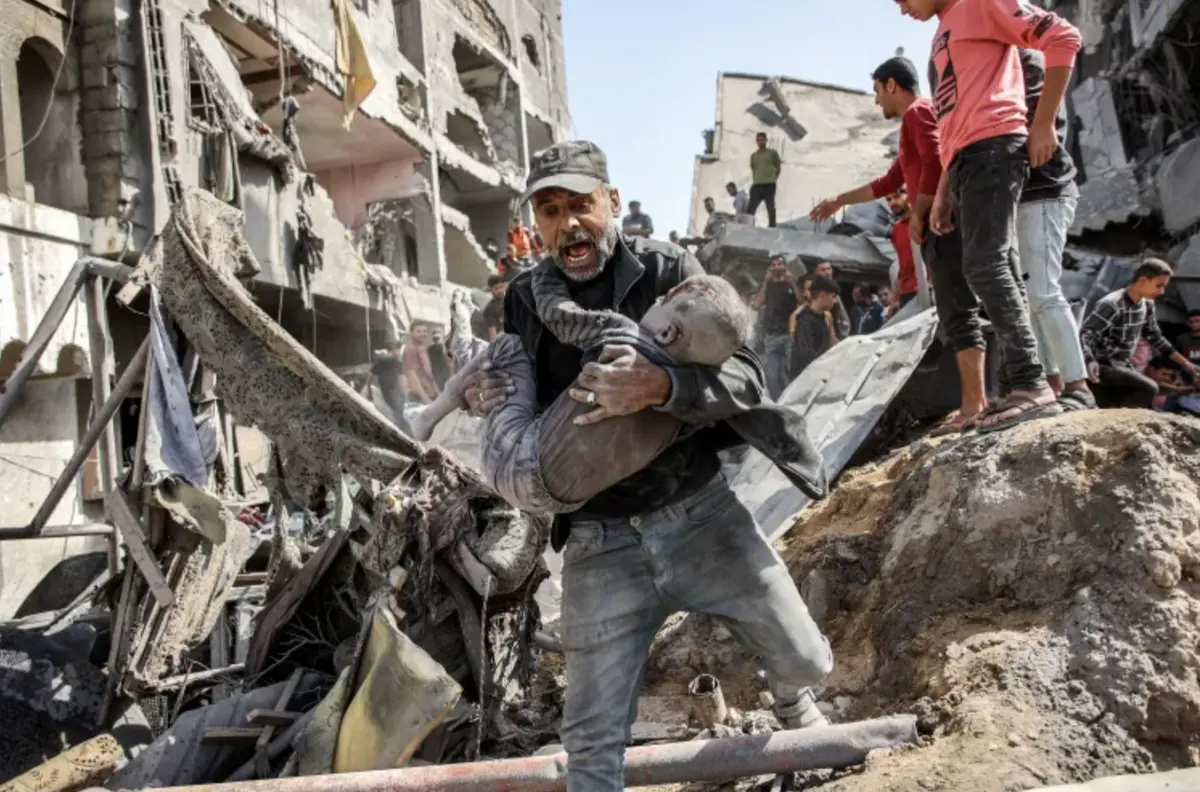
The office addressed the massacre committed by Israeli occupation forces when they bombed two homes in the Shuja'iyya neighborhood east of Gaza City, killing 35 civilians, including at least eight children, and wounding dozens, many of whom remain missing under the rubble.


The OCHA office stressed the need to protect civilians under international law and "never make them a target," according to what UN Deputy Spokesperson Farhan Haq said during a press conference today, Thursday, in New York.


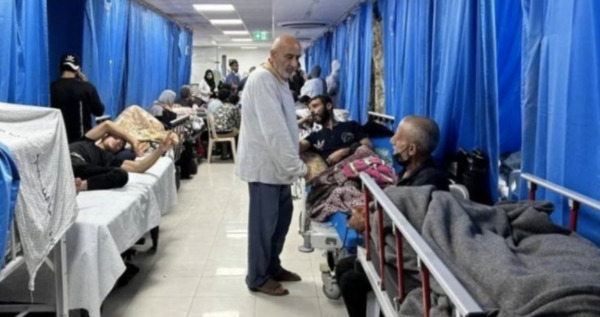
Haq told journalists that the World Health Organization (WHO) had been able to support some medical evacuations from Gaza, with the occupation allowing 18 patients and approximately 30 companions to leave the Strip yesterday to receive specialized treatment. However, he noted that approximately 12,500 patients in Gaza still require medical evacuation, and conveyed the organization's call for them to be allowed to do so through all available border crossings and passages.


OCHA reiterated the urgent need to reopen the crossings to allow essential supplies into the Strip, as supplies within the Strip are running low and the situation is worsening.


Haq pointed out that more than 60,000 Palestinian children in Gaza suffer from malnutrition, "at a time when fuel and supplies are rapidly running out in community kitchens."


Across Gaza, UN partners have warned of severe water shortages in shelters hosting displaced people.


In this regard, Haq said that the water scarcity, along with the lack of cleaning supplies, "negatively impacts public health," with more than a third of households in Gaza suffering from lice infestations in March.


The UN's deputy spokesperson said that the organization's humanitarian partners on the ground identified "more than ten unaccompanied and separated children this week," adding that they are making every effort to reunite these children with their families.

PALESTINE

Thu 10 Apr 2025 10:23 pm - Jerusalem Time

Israeli police suppress a protest against the war on the Gaza Strip.

Israeli police suppressed a protest against the war on Gaza on Thursday evening in Haifa's Prisoners' Square, arresting 23 demonstrators.


Local sources reported that police officers assaulted a number of protesters, knocking them to the ground, and arrested at least 23 of them. They also tore down and confiscated banners. Police also chased demonstrators through the streets of the German Quarter.


The rally was held under the slogan: "From Haifa to Gaza, one blood and one destiny." Protesters held up signs denouncing the ongoing war on Gaza, including "Stop the war."


They also chanted slogans demanding an immediate end to the war and the lifting of the siege on the Gaza Strip.

ARAB AND WORLD

Thu 10 Apr 2025 9:43 pm - Jerusalem Time

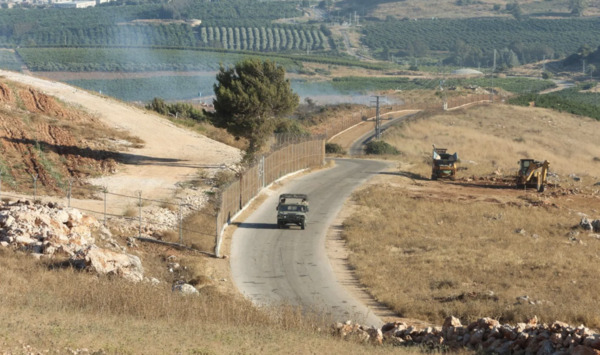
The Lebanese army confronts an Israeli force that crossed the Blue Line and forces it to withdraw.

Lebanese Al-Jadeed TV reported Thursday evening that the army confronted an Israeli force that crossed the Blue Line near the border outskirts of the town of Alma al-Shaab in southern Lebanon, forcing it to withdraw toward Israel. No further details were immediately available.


The Israeli occupation continues to carry out attacks on areas in Lebanon despite the ceasefire agreement, and Hezbollah is accused of violating the agreement. Hezbollah, meanwhile, accuses the Israeli occupation of violating the ceasefire agreement, but has not responded to the Israeli strikes.

PALESTINE

Thu 10 Apr 2025 9:27 pm - Jerusalem Time

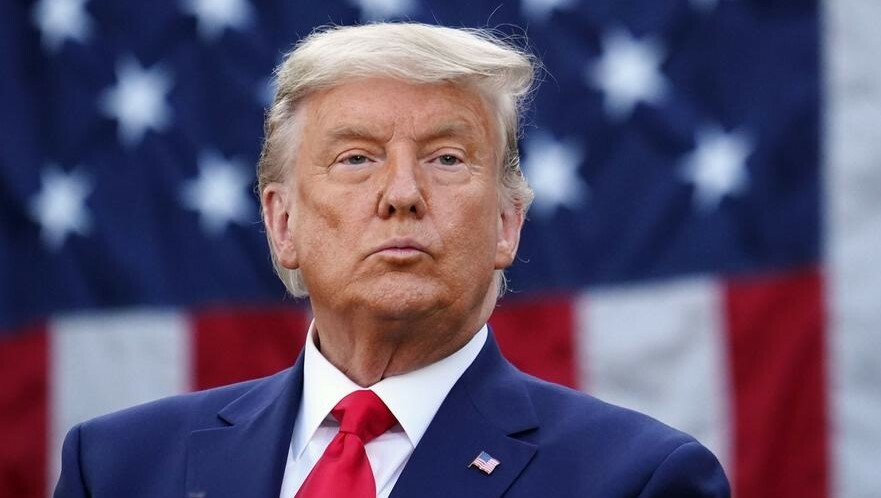
Trump: We are making progress on the return of detainees in Gaza.

US President Donald Trump said the US economy is experiencing unprecedented growth, noting that his country generates revenues of up to $2 billion per day, a figure never before achieved.


In remarks addressing the future of the US economy, Trump emphasized that the United States is in a strong economic position, with no current concerns about inflation, and that all countries are seeking to conclude trade agreements with his country.


Trump said that efforts are currently underway and progress is being made to recover those held captive in the Gaza Strip, also stressing that progress has been made in efforts to stop the fighting between Russia and Ukraine.


He stressed the importance of reaching "good and fair" trade agreements for the United States, threatening to reimpose tariffs if such agreements fail, particularly with the European Union, which he described as "founded to exploit America."


He added that there will inevitably be costs associated with the upcoming transitional phase, but that the long-term results will be "very good," as he described them.


Trump addressed the issue of restructuring the US Navy, announcing that his country may purchase some ships from abroad as part of an ambitious plan to rebuild the naval fleet. He emphasized that the shipbuilding sector will be pivotal in the next phase.


He pointed out that the United States would no longer allow other countries to grow rich at its expense, as had happened in the past, adding, "I will never allow that to happen again."


Trump also emphasized the importance of diversifying energy sources and not relying on a single source, describing yesterday as "a special and historic day" in the markets, indicating strong economic performance that reinforces his vision for the future.

ARAB AND WORLD

Thu 10 Apr 2025 9:05 pm - Jerusalem Time

UN: Israeli attacks on Syria threaten political transition

UN officials have warned that Israeli attacks and violations against Syria threaten the fragile political transition process in the Arab country.


At the invitation of Algeria and Somalia, the UN Security Council held an emergency session on Thursday to discuss recent Israeli violations of Syrian sovereignty.


In his briefing to the Security Council, Khaled Khiari, the UN Assistant Secretary-General for Middle East, Asia, and the Pacific, confirmed that Israel has launched hundreds of airstrikes across Syria since the fall of the Assad regime on December 8, 2024.


Khiari noted that the Israeli military also announced that it had built several military outposts in the separation zone in the Syrian Golan Heights, and that Israeli officials also spoke of Israel's intention to remain in Syria for the foreseeable future.


"Such facts on the ground cannot be easily changed," Khiari warned. "They already threaten Syria's fragile political transition."


In turn, the Under-Secretary-General for Peacekeeping Operations, Jean-Pierre Lacroix, said, "The situation in the area of operations of the United Nations Disengagement Observer Force (UNDOF) remains volatile and continues to be characterized by significant violations of the 1974 Disengagement Agreement, with the Israeli army entering the buffer zone since December 8, 2024."


He pointed out that the Israeli army continues to build barriers to prevent movement along the ceasefire line.


He stressed that the Israeli army "continues to impose some restrictions on the movement of UNDOF personnel and the Golan Observer Group in the Area of Separation. Restrictions also continue to be imposed on the movement of the local population."


He explained that "residents of some areas protested the disturbances caused by Israeli military activities, including farming, the detention of civilians, and the seizure of large numbers of livestock. Some residents also appealed to UNDOF to demand that the Israeli military leave their villages."


Lacroix stressed that it is imperative that all parties fulfill their obligations under the 1974 Disengagement Agreement, adding that "all actions that conflict with the agreement are unacceptable."


The UN official stressed the need for the UN Disengagement Observer Force to enjoy freedom of movement in its area of operations, asserting that the mission "remains essential to the stability of the Golan Heights and the region."


On April 2, Israel killed 9 civilians and injured 23 others in a bombing of Daraa Governorate (south), and launched air strikes on the countryside of Damascus, Hama, and Homs (central).


The following day, the Syrian Foreign Ministry stated that Israeli forces launched airstrikes on five areas across the country within 30 minutes, resulting in the near-total destruction of Hama Military Airport.


She stressed that Israel is undermining post-war recovery efforts in Syria, and called on the international community to pressure Tel Aviv to halt its aggression and abide by the disengagement agreement.


Although the new Syrian administration, headed by Ahmad al-Sharaa, has not threatened Israel in any way, Tel Aviv has been launching airstrikes on Syria on an almost daily basis for months, killing civilians and destroying Syrian military sites, vehicles, and ammunition.


On December 8, 2024, Syrian factions completed their control of the country, ending 61 years of Baath Party rule and 53 years of Assad family control, including 24 years during which Bashar al-Assad was president (2000-2024).


Since 1967, Israel has occupied most of the Syrian Golan Heights. Taking advantage of the new situation in the country following the fall of the Assad regime, it occupied the Syrian buffer zone and declared the collapse of the 1974 disengagement agreement between the two sides.

PALESTINE

Thu 10 Apr 2025 8:56 pm - Jerusalem Time

Dead and wounded as a result of the occupation's bombing of Khan Yunis

Three civilians, including a child, were killed in an Israeli airstrike on Khan Yunis in the southern Gaza Strip.


According to local sources, Israeli aircraft bombed the Abu Daqqa family's home in the Al-Shahaida area, north of the town of Abasan al-Kabira, east of Khan Yunis, killing two civilians, one of whom was a child.


A civilian was killed and others were injured, some seriously, when an Israeli helicopter bombed a tent housing displaced persons near the Nasser Medical Complex west of Khan Yunis.


A number of civilians were also injured in Israeli artillery shelling of Al-Shaaf Street in the Shuja'iyya neighborhood, east of Gaza City.

PALESTINE

Thu 10 Apr 2025 7:41 pm - Jerusalem Time

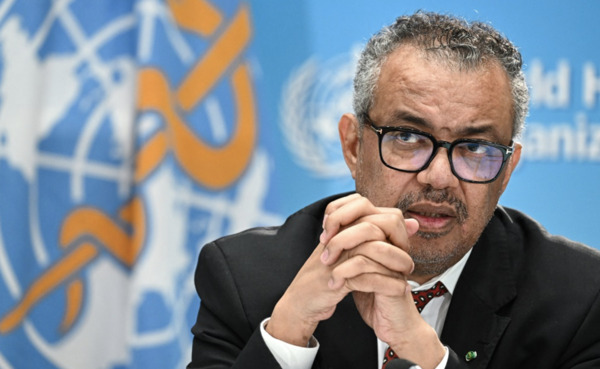
WHO: 75% of UN missions barred from entering Gaza

World Health Organization Director-General Tedros Adhanom Ghebreyesus said Thursday that 75% of UN missions are barred from entering the Gaza Strip due to the blockade and Israeli attacks.


In a weekly press conference, Ghebreyesus referred to the comprehensive blockade imposed by Israel, the occupying power, on the Gaza Strip since March 2, preventing the entry of all food and medicine.


He added, "Over the past week, 75 percent of UN missions have been blocked or obstructed. This blockade leaves families suffering from hunger and malnutrition, prevents them from accessing clean water, shelter, and adequate healthcare, and increases the risk of disease and death."


Ghebreyesus stressed that Israeli attacks on the health system in Gaza continue, noting that more than 400 humanitarian workers have been killed since October 2023.


He continued, "On March 23, the Israeli army attacked a medical and emergency convoy, killing 15 health and humanitarian workers."


He continued, "Despite security risks, restrictions, and dwindling supplies, the World Health Organization remains present in Gaza."


He concluded by calling for "the immediate lifting of the aid blockade, the preservation of health services, unhindered humanitarian access to all parts of Gaza, the immediate resumption of daily medical evacuations, the release of detainees in Gaza, and, above all, a ceasefire."


Since October 7, 2023, the Israeli occupation has been committing genocide in Gaza, leaving more than 166,000 dead and wounded, most of them children and women, and more than 11,000 missing.


The occupation destroyed 34 of 38 hospitals, leaving only four operating at limited capacity despite their damage, amid a severe shortage of medicines and medical equipment.


Israeli occupation raids also completely put 80 health centers out of service, in addition to destroying 162 other medical facilities.

PALESTINE

Thu 10 Apr 2025 6:39 pm - Jerusalem Time

Israeli occupation army expels pilots who signed a petition demanding an end to the war on Gaza.

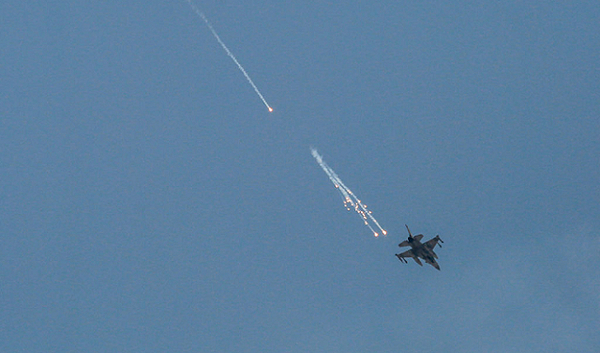
The Israeli occupation army announced on Thursday its decision to expel reserve pilots who signed a petition calling for the release of detainees in the Gaza Strip, even if this required an end to the war on Gaza.


An army spokesman confirmed to AFP that the commander of the Israeli Air Force, with the full support of the Chief of Staff, decided not to allow any active reserve pilot who signed this petition to continue their military service.


This move comes after nearly 1,000 retired or reserve pilots signed a petition, which sparked widespread controversy after its publication in the media, where it was considered a breach of military discipline amid the ongoing war on Gaza.


PALESTINE

Thu 10 Apr 2025 3:36 pm - Jerusalem Time

Prisoners' Institutions: 16,400 arrests since the start of the war of extermination

Prisoners’ institutions said that the Israeli occupation authorities continued their systematic arrest campaigns in the West Bank during the month of March 2025, reaching 800 cases, including (84) children and (18) women, with the continuation of the genocide against our people, and the intensive arrest campaigns, in addition to the field investigations that affected hundreds in various parts of the West Bank, and the policy of using citizens as hostages and human shields.


It explained in its monthly report on arrests in the month of March, that the number of arrests in the West Bank since the beginning of the war of extermination and displacement on October 7, 2023, amounted to about 16,400 arrests of all categories, including (510) women and about (1,300) children, and this does not include the arrests in Gaza, which are estimated in the thousands.


The institutions confirmed that the level of administrative detention operations continues to rise, as the occupation continues to detain (3498) administrative detainees, including more than 100 children. This percentage of administrative detainees has not been seen for many decades, even at the height of the popular uprisings. The military courts have contributed more since the beginning of the genocide in entrenching this crime, through the formal court sessions that have continued for decades.


During the month of March, three martyrs were announced from among the prisoners and detainees: Khaled Abdullah from Jenin, who was martyred in Megiddo Prison in February and was announced as martyr in March; Ali al-Batsh from Gaza, who was martyred in February and was announced as martyr in March; in addition to the child martyr Walid Ahmed (17 years old), who was martyred in Megiddo Prison on March 22, 2025.


The case of the child martyr Walid Ahmed was the most prominent, due to the magnitude of the complex crime he was subjected to in Megiddo Prison, which took place in stages, starting with his arrest and detention in difficult and tragic conditions, and later his infection with scabies, and his exposure to the crime of starvation, which was the main reason for his martyrdom, according to a medical report.


She stated that Megiddo prison is one of the most prominent prisons that witnessed an intensive volume of crimes since the genocide. What has increased the severity of the suffering of the prisoners, including children, is the continued spread of scabies, which today constitutes a health disaster. It is worth noting that the disease still looms over some prisons, including the Negev prison. Among nine prisoners who are visited, eight are infected with scabies. Some of those who recovered were infected again with the disease, which portends an ongoing health disaster that may lead to the martyrdom of more of them.


Throughout March, the institutions conducted dozens of visits to prisons, which reflected the level of organized and ongoing crimes, unprecedented in their scope since the beginning of the genocide. They pointed to what they documented in the Negev and Ofer prisons, regarding the use of rubber bullets by repression units, firing them directly at the feet of prisoners, and obtaining testimony from one of the children in Ofer prison, who clearly stated that the repression units threatened to fire rubber bullets at children.


The report also documented dozens of raids carried out by heavily armed repression units, during which extensive searches were conducted, prisoners were severely beaten, and entire sections were transferred to other sections. The transfers were accompanied by physical assaults that resulted in injuries among the prisoners.


Regarding the issue of Gaza detainees, the scale and pace of systematic crimes and the harsh and terrifying detention conditions through which the occupation prison administration aims to kill more detainees have not changed. Prisoners’ institutions have published testimonies of detainees who were visited in the prisons and camps where Gaza detainees are held. Scabies has once again dominated their testimonies, and there is a lack of any factors that might contribute to their treatment or limit the spread of the disease. In addition, the institutions obtained testimonies from Gaza detainees in the Negev prison, stating that they were forced to relieve themselves in (barrels and containers), and that everything was turned into a tool for torture, including illness, injuries, restrictions, and their basic needs. Various forms of assault against them continued, including: ghosting operations, and forcing them to sit in harmful and painful positions as a tool of (punishment), in addition to the severe restrictions imposed on their visits and the accompanying threats.


As for medical crimes, the majority of prisoners suffer from at least one health problem due to the conditions of detention. Even detainees who were arrested while healthy became ill due to the harsh conditions of detention, most notably: the crime of starvation, the spread of diseases and epidemics, and severe beatings that led to fractures in their bodies. This is in addition to the severe psychological effects that appeared in many of them as a result of collective and solitary confinement. She pointed out that dozens of leaders of the prisoner movement have continued to be isolated in solitary confinement cells since the beginning of the genocide until today, accompanied by systematic transfers and repeated attacks. The isolation operations have been concentrated in the prisons of Megiddo and Rimon.


She said that the Israeli prison administration continues to systematically restrict visits by legal teams to prisoners, by imposing a high level of supervision during the visit, in addition to setting visit dates for distant periods of time, pointing to the great difficulties that institutions face in completing visits to the prisons (Nafha and Rimon), as there is deliberate procrastination by the Israeli prison administration in setting dates for visits to prisoners, and the severity of this problem has recently worsened, in addition to the fact that the prison system has prevented many lawyers from visits, and it continues the policy of humiliation against detainees when they are transferred for visits, as many of them refrain from providing any information for fear of being subjected to abuse after the visit, as happened with dozens of them over the past months.


She stressed that the time factor is today the basis that affects the fate of thousands of prisoners in the occupation prisons, if the level of crimes continues with the same approach, noting that since the beginning of the genocide, (63) prisoners and detainees were martyred in the Israeli occupation prisons, the last of whom was the child Walid Ahmed, and this data includes only the martyrs whose identities are known, noting that there are dozens of detainees in Gaza whose identities the occupation continues to conceal, within the framework of the continuation of the crime of enforced disappearance, noting that the number of martyr prisoners since 1967 has reached 300 martyrs, and they are the only ones whose identities are known.


Regarding the total number of prisoners in the occupation prisons until the beginning of April, the number of prisoners and detainees in the occupation prisons reached more than 9,900, the number of administrative detainees (3,498), at least (400) children, and (27) female prisoners. The number of those classified by the occupation prison administration from the Gaza detainees (as illegal combatants) who were recognized by the occupation prison administration is (1,747), noting that this data does not include all the detainees in Gaza, specifically those in the camps affiliated with the occupation army.


The total number of prisoners in the occupation prisons before the war of extermination was more than (5250), the number of female prisoners was (40), while the number of children in prisons was (170), and the number of administrators was about (1320).

PALESTINE

Thu 10 Apr 2025 2:05 pm - Jerusalem Time

Updated: 10 dead in Israeli bombing of Gaza Strip

Ten citizens were killed on Thursday in Israeli airstrikes on various areas of the Gaza Strip.


Five citizens were killed in an attack on a group of citizens near the public service building in central Gaza City, while another citizen was killed after Israeli occupation forces opened fire on citizens in the Al-Shakoush area of Rafah, south of the Gaza Strip.


Four civilians were also killed after Israeli warplanes bombed the home of the Abu al-Aoun family in the Shuja'iyya neighborhood east of Gaza City, while Israeli artillery shelled homes near Umm Habeeba Mosque and the bicycle market in the Qizan al-Najjar area south of Khan Yunis in the southern Gaza Strip.


Since dawn today, Thursday, 19 citizens have been martyred in the Gaza Strip due to Israeli occupation bombing and bullets.


For its part, the Ministry of Health in Gaza announced on Thursday that the death toll in the Gaza Strip has risen to 50,886, the majority of whom are children and women, since the start of the Israeli occupation's aggression on October 7, 2023.


She added that the death toll has risen to 115,875 since the start of the aggression, while a number of victims remain under the rubble, unable to be reached by ambulances and civil defense teams.


She noted that 40 martyrs and 146 injuries arrived at Gaza Strip hospitals over the past 24 hours, while the death toll and injuries since March 18, when the occupation violated the ceasefire agreement, has reached 1,522 martyrs and 3,834 injuries.

She pointed out that a number of victims are still under the rubble and on the streets, and that ambulance and civil defense crews are unable to reach them.

PALESTINE

Thu 10 Apr 2025 10:37 am - Jerusalem Time

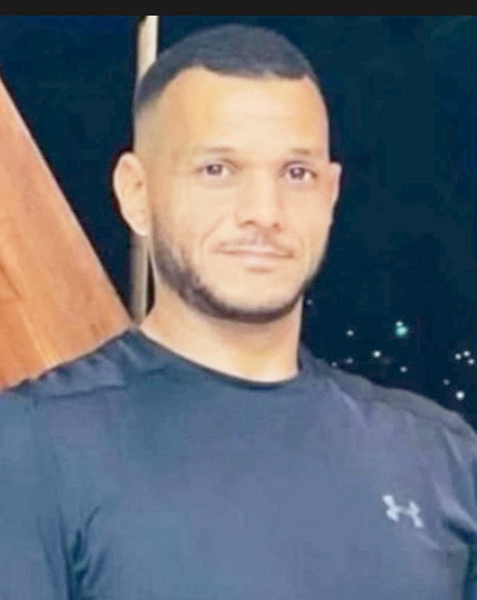
They executed him despite having been granted a pardon... The son of martyr Hussein Hardan told Al-Quds: My father was not wanted and they left him to bleed until he was martyred.

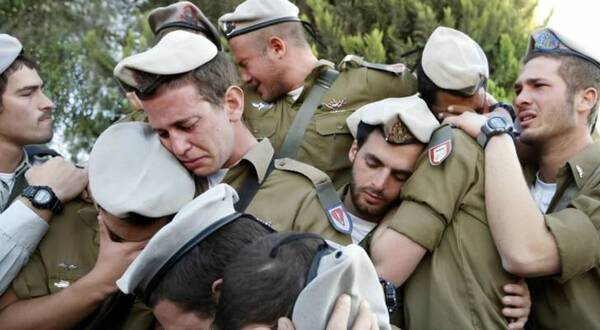
The screams of the child Hamza shook the corridors of the Martyr Suleiman Governmental Hospital in Jenin, and stirred the sadness and pain of everyone present when he collapsed in tears after seeing his father's body lying in the emergency room. The doctors declared his martyrdom after the occupation forces arrested him and left him to bleed after he was shot in the back at dawn on April 4, 2025.

"Why did you leave me? How can I live without you? Come on dad, don't go and leave us. By God, this is unfair and unjust. May God take revenge on them," said little Hamza, as he threw himself on top of his father Hussein Jamil Hussein Hardan's body, continuing to kiss him and pray to him. His uncles, relatives, and family friends, who were crying from the horror of the scene, were unable to control the child, who held his martyred father's hand and refused to let go until he was transferred to the hospital's morgue.

As soon as the news of Al-Hardan's martyrdom spread, an atmosphere of sadness and anger spread throughout the city of Jenin. Despite the siege and the presence of occupation forces in the city, residents flocked to the hospital to express their solidarity with his family and support them in their great loss, and to condemn the new occupation crime that has raised the number of martyrs in Jenin since the beginning of the aggression 79 days ago to 37 martyrs.

Amidst tears and sadness, the child Hamza told a correspondent that the occupation forces surrounded and raided their home located in the Sabah Al-Khair suburb at dawn on Friday. He said, "Dozens of soldiers raided the house, detained us, and searched it. They asked us about our father, who was not home, and they detained us."

At the same time, large military forces were besieging the Sabah al-Khair suburb, extending along the area where the al-Hardan home is located. Hamza said that while the soldiers were detaining his family, his father was driving through the area in his vehicle, and the occupation soldiers opened fire at it, directly hitting him. He added, "My father was not armed or wanted, and he did not pose a threat to the occupation forces, who directly targeted him and arrested him without knowing his fate."

While the Hardan family was living in fear for their son's fate, with no news of him and no information about his fate after his arrest, Red Crescent crews received a notification from the occupation forces to arrive at the Jalameh checkpoint to receive the body of a martyr.

The ambulance officer told our correspondent that when the crew arrived at the Jalameh checkpoint, the occupation forces handed them the body of Hardan, who had breathed his last without providing them with any information about the cause of his death. However, upon his arrival at the emergency room at Jenin Hospital, doctors discovered signs of suffocation on his face and a bullet wound in his back, which led to internal bleeding. Due to the lack of immediate treatment after his arrest, he died immediately.

Al-Hardan's family denied that their martyred son was wanted by the occupation forces. His son and brother stated that he had been living a normal life for some time. After being pursued by the occupation forces, the family hired a lawyer to follow up on his case with the occupation forces. The lawyer informed them that he had been pardoned and could continue his life normally.

Throughout the past period, Hussein continued his usual work in the bakery he owns in Jenin, and lived, as his son Hamza says, “a normal life, in light of the lawyer’s confirmation of the occupation’s pardon for him, but they betrayed him and killed him in cold blood and without reason.” His brother continued, “Hussein is a victim of the treachery and criminality of the occupation, which targets our people and continues to execute civilians on an ongoing basis. He is the breadwinner for his family and a business owner, and he only cared about his family and his work. We hold the occupation fully responsible for this heinous crime.” His son continued, “They executed my father in cold blood... There is no law in the world that permits this crime. They killed me and my brothers and killed my father in cold blood.”

It is worth noting that the martyr Al-Hardan was wounded and a freed prisoner who was arrested many times and spent 7 years in the occupation’s prisons. He is married and has 5 children and his wife is pregnant.

PALESTINE

Thu 10 Apr 2025 10:32 am - Jerusalem Time

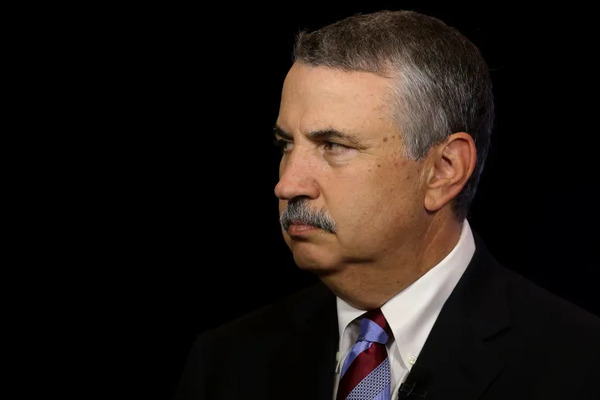
Thomas Friedman: Trump and Netanyahu Are Pushing Toward a Horrible World

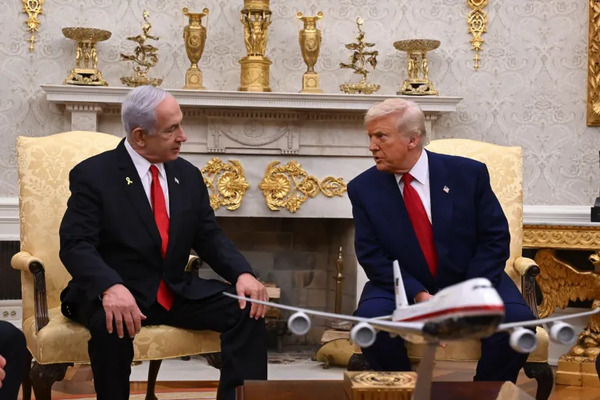
American author Thomas Friedman believes that President Donald Trump and Israeli Prime Minister Benjamin Netanyahu both want to be authoritarians, are working to undermine the rule of law and the so-called elites in their countries, and are seeking to eliminate what each calls the "deep state."


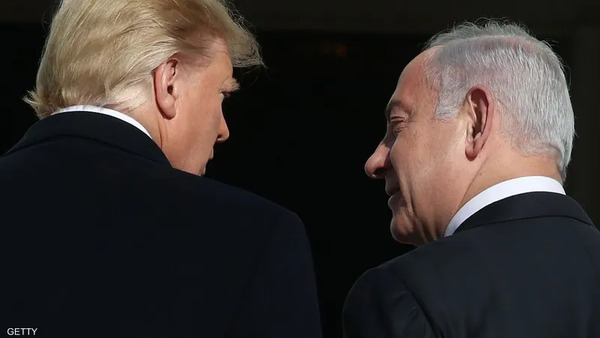
He wrote in his weekly column in the New York Times that the feelings he felt when he saw the photo of Trump and Netanyahu in the Oval Office on Monday were a mixture of disgust and depression.


He noted that both men treat their political opponents as enemies within, not legitimate opposition, and that each has appointed incompetent individuals to their cabinets.


He added that they are turning a blind eye to their traditional Democratic allies, and each believes that annexing more territory is a divine right, "from the Gulf of America to Greenland," in Trump's case, and "from the West Bank to Gaza," in Netanyahu's case.


He pointed out that American journalist and author Fareed Zakaria published a book in 2008 titled "The Post-American World," in which he predicted the future, predicting that the United States' relative global hegemony would decline with the end of the Cold War.


Friedman, inspired by Zakaria's book, argued that Trump and Netanyahu, each in their own country, were working to create a "post-American" and a "post-Israel" world. He explained that by "post-American," he meant the United States, which, on its best days, is deliberately abandoning its core identity as a state committed to the rule of law at home and improving the conditions of all humanity abroad.


He continued that by "post-Israel," he meant Israel, which is deliberately abandoning its core identity "as a democratic state based on the rule of law in a region ruled by tyrants."


In a literary vein, Friedman continued by saying that America was a moral and political beacon, like "a towering city built on rocks stronger than the oceans, buffeted by the winds, blessed by God, teeming with people of all walks of life living in harmony and peace; a city with free ports, bustling with commerce and creativity. If the city must have walls, the walls have doors, and the doors are open to anyone with the will and heart to come here."


However, he added that Trump and his vice president, J.D. Vance, want to transform it into a country that treats its democratic allies with contempt and has absolutely no interest in maintaining its soft power, which they despise despite being "the one advantage it has always had over Russia and China."


In a striking comparison, the author noted that Trump fired the FBI director for insufficient loyalty, while Netanyahu appeared poised to do the same with the head of Israel's domestic intelligence agency, Shin Bet, Ronen Bar, who is investigating some of the prime minister's top aides.


Friedman lamented that both leaders exploited divisions and used anti-Semitism to advance their political agendas, threatening to undermine the fabric of society. The author emphasized the importance of resisting these trends, comparing the struggle to prevent the decline of these countries to the decisive struggle for democracy and freedom.


Source: The New York Times + Al Jazeera

PALESTINE

Thu 10 Apr 2025 10:29 am - Jerusalem Time

Yedioth Ahronoth: Trump May Ask Netanyahu to End the War on Gaza Soon

Trump Meets Netanyahu at the White House for the Second Time in Two Months... Trump's Statements Surprised Israel. Netanyahu Apparently Left the Meeting with Trump Unlikely, and Did Not Receive Unconditional Support from Trump's Government Press Office


Yedioth Ahronoth, citing Israeli sources, reported that "US President Donald Trump is expected to ask Israeli Prime Minister Benjamin Netanyahu to end the war on Gaza soon."


The newspaper added that US officials have informed their Israeli counterparts in recent days that President Trump is losing patience and has given Netanyahu more time to continue the fight, but not for long—perhaps two or three weeks—and that he wants the war to end soon.


The newspaper noted that the families of the Israeli prisoners have learned that the Trump administration is working behind the scenes to produce a new deal to release the prisoners and end the Gaza war. This deal would be part of Trump's comprehensive plan for the Middle East and ultimately advance normalization with Saudi Arabia.


Yedioth Ahronoth reported that US Vice President J.D. Vance assured a delegation of families of Israeli prisoners of his commitment to securing the release of all prisoners held in Gaza.


Strict Blackout

In a related context, the Israeli government's coordinator for prisoners and missing persons, Gal Hirsch, confirmed that the exchange negotiations are taking place amidst a strict blackout, noting that Israel is in constant contact with the Americans and the mediating countries.


Hirsch told Israel Hayom, "Despite what appears to be a stalemate in the efforts to return the abductees, work with the mediators is ongoing and intensive, and things are happening in this context."


Hirsch claimed that Israeli military, political, and logistical pressure on Hamas is having an impact.


In early March, the Netanyahu government violated the ceasefire and prisoner exchange agreement with Hamas and resumed its aggression against the Gaza Strip.


Since resuming its genocide in Gaza on March 18, Israel has killed 1,449 Palestinians and wounded 3,647 others, most of them children and women, according to the Gaza Ministry of Health on Tuesday.


With American support, Israel has been committing genocidal crimes in Gaza since October 7, 2023, leaving more than 166,000 Palestinians dead and wounded, most of them children and women, and more than 11,000 missing.


Source: Al Jazeera + Yedioth Ahronoth

OPINIONS

Thu 10 Apr 2025 10:22 am - Jerusalem Time

Israel's plan for Gaza is clear: 'Conquest, expulsion, settlement'

From responsible statecraft

From responsible statecraft

Opinion Writer

Facts on the ground and its leaders' own words bear this out. The question is, how much will be shepherded by Washington?


Geoffrey Aronson

Reports this week, based on satellite footage and witness testimony from IDF soldiers, reveal that Israel has carved out a nearly one-mile deep "buffer zone" inside Gaza along the border with Israel. Almost all economic and residential infrastructure within this region has been demolished and Gazans living and working in the area have been forcibly relocated.

Israel’s ongoing conquest of the Gaza Strip, the expulsion of Palestinians residing there, and the re-establishment of Israeli settlements are the principal parameters defining the new map created by the blood and fire of the Second Palestine War.

Israeli policies for the future of Gaza and its 1.8 million inhabitants based upon this foundation have been most enthusiastically embraced by Israel’s resurgent rightwing.

But they also resonate with an Israeli public forced to confront the unfinished business of the century-old conflict.

Conquest

Whatever their differences, Israeli and Palestinian leaders recognize that sooner or later, for better or worse, the fate of hostages and prisoners will be decided.

As important as the resolution of this issue is, the broader contest between Israel and Palestine is of even greater and lasting magnitude. Not only the fate of individuals, the destiny of peoples and nations are in the balance. Without a sober appreciation of this fact, the current dispute over hostages loses its defining context.

The magnified attention awarded to this issue is also reflected in plaintive demands for Israel to define its plans for the so-called “day after.” These calls are easily parried by an Israeli government less concerned about addressing legitimate questions about its intentions than in forging a path to victory. The Netanyahu government has found a fast friend for this approach in the new administration in Washington.

While the dogs bark, Israel continues to pursue the destruction of Hamas as a political and military/security factor, an objective that has, from the war’s outset, defined victory in the campaign that Israel is waging.

Underlying this broad military-security objective, however, are even greater, indeed existential if not always articulate imperatives, born of a century of competition between Palestinians and the Zionist movement for the national identity of Palestine.

Revenge is the first and foremost strategic policy objective, defining Israel’s conduct of the war and indeed its very purpose. For the Hamas movement itself, one need look no further than an abiding, incessant desire for retribution, all but divorced from sober political calculation, to explain its actions.

For Israelis dumbfounded by the assault of October 7, vengeance provides the vital political foundation upon which popular support for the war is being waged.

Hamas’ brutal assault forces Israelis to acknowledge that Palestinians remain unwilling to be reconciled to the results of the First Palestine war. Gaza, chock a block with families enduring generations of national trauma, has always been the most active source of its national movement.

The Israeli public, in turn, supports a policy of reprisals against the Gaza for the latter’s stunning success in calling into question the holy of holies in the Zionist pantheon – that Jewish settlement, protected by the IDF, establishes the basis for personal security and protection of Israeli state-building.

The ferocity of Israel’s campaign aims not only at burning defeat into Palestine’s national and political consciousness, but also convincing Israelis as well that its founding principles remain sacrosanct and credible instruments of national policy.

Since the early 1950s, a Palestinian “Return” to homes lost in Israel has been unachievable — all but unthinkable. Indeed, the iron law underpinning Israel’s conduct of the First Palestine War — that Palestinians must pay with territory and sovereign control for any effort to challenge Israel, also defines a key Israeli strategic objective in the war now being waged in Gaza.

Israel’s conduct of the Gaza war and its humanitarian aftermath make clear its abiding intention to make certain that Palestinians will not even be permitted to dream of “Return.” Indeed, when Palestinians in Gaza (or Jenin) dream of going “home” today, it is not to Ashqelon or Ramla, but rather to all but obliterated refugee camps in Jabaliya and Beit Hanoun.

Expulsion

If Benjamin Netanyahu and Donald Trump have their way even this forlorn aspiration will be denied them.

Minister of Security Israel Katz official pointedly explained in February that Israel’s approved entry of “a very limited quantity” of mobile shelters and heavy equipment into Gaza “does not affect the feasibility of implementing Trump’s voluntary migration plan or creating a new reality in Gaza, which Prime Minister Netanyahu is fully committed to.”

Moreover, Katz said the IDF will move to clear areas “of terrorists and infrastructure, and capture extensive territory that will be added to the State of Israel’s security areas.”

These “security areas” now comprise about a third of Gaza’s territory and a large percentage of Gaza’s agricultural and employment capacity.

The Trump administration’s extraordinary endorsement of large-scale Palestinian transfer and its ongoing effort to win Arab support for it, has raised the profile of an option long considered taboo outside of a right-wing Israeli minority.

In an April 2 address, Netanyahu reflected the change in policy that the White House endorsement has produced. Israel’s policy, he declared, would be defined by four elements — Hamas’ complete demilitarization and the expulsion of its leadership, complete Israeli security control over Gaza in its entirety, and the realization of Washington’s plan for large-scale transfer of Palestinians out of the Gaza Strip.

Settlement

The dramatic developments produced by the war have empowered Israeli proponents of Jewish settlement in the Gaza Strip. The IDF, by establishing sovereign security control over Gaza, including its most productive agricultural areas along the perimeter with Israel, is creating the security infrastructure for a “return” ...of Israeli civilian settlement.

As bizarre as this option seems, the purpose and utility of Jewish settlement in Gaza fit neatly into Israel’s national experience. Palestinian attacks upon Israel have always been met with demands for a “Zionist response” — Jewish settlement — whether in Hebron or the hills of Samaria. And now Gaza.

Prime Minister Ariel Sharon’s evacuation of all Israeli settlements and their population of 7,000 in 2005 appeared to have ended the prospect of settling the Gaza Strip. An aging Sharon was pursuing the creation of a new security paradigm. But the re-entry of the IDF into Gaza 18 months ago destroyed this model. It has instead energized the intense lobby behind the re-establishment of civilian settlements in Gaza in order to realize both nationalist and security objectives.

Proponents remain a vocal and influential minority, but even their opponents acknowledge the extraordinary success of the settlement movement in the West Bank in the decades since the conquests of June 1967.

Israel’s conquest of Gaza has broken many taboos, but then again so too did the Hamas assault on October 7. Whether Israel stands guilty of the charge of genocide, it is certainly the case that it is pursuing a policy of “politicide” — aimed at destroying for all time any Palestinian hope for sovereignty west of the Jordan River.

OPINIONS

Thu 10 Apr 2025 10:19 am - Jerusalem Time

As Israel moves to occupy Gaza, what next for Hamas?

Translation by "Al Quds" dot com- New Arab

Translation by "Al Quds" dot com- New Arab

Opinion Writer

Mohamed Solaimane

After Israel resumed its military campaign in Gaza in mid-March, and now with the Israeli army announcing a sweeping expansion of its assault last week, Hamas, which has ruled the enclave since 2007, finds itself with fewer options than ever to manoeuvre politically or militarily, facing mounting pressure both internally and externally. 

Analysts warn that Israel’s military operations remain part of a broader strategy it has pursued since the aftermath of the Hamas-led 7 October attacks, aimed at occupying Gaza and forcibly displacing its population.

The situation is also becoming increasingly dire, with regional allies that the group once relied on, particularly Hezbollah in Lebanon and Iran, now constrained by their own geopolitical pressures.

Even the Iran-backed Houthis in Yemen, who have shown support by disrupting maritime trade in the Red Sea, now face a volatile response from Washington, threatening to destabilise the already fragile balance in the region.

Internally, Hamas is also facing rare public dissent. Protests have erupted in some areas of Gaza, calling for an end to the war and for Hamas to relinquish control of the territory. Israel was also quick to pounce on these, with Israeli Defence Minister Israel Katz urging Palestinians to join the protests. 

"You too should demand the removal of Hamas from Gaza and the immediate release of all Israeli hostages," he stated. "That is the only way to stop the war."

A way out for Hamas

But against this bleak backdrop, Wissam Afifa, a Palestinian political commentator, pointed out that Hamas has still, in some aspects, retained leverage. 

“There’s no room for flexibility, but the hostage issue remains a pressure point on Israel,” he said. Afifa also cautioned that the Netanyahu government is using the matter to serve its own political interests while pressing ahead with its military offensive.

Hamas still holds 59 hostages, while a total of 147 hostages have been released or rescued since the October 2023 attacks.

“While it is a powerful card,” he said, “it still remains unclear how Hamas will use it to pressure the Israelis back into the negotiation table, especially after Netanyahu’s recent statements of how ceasefire talks will continue ‘only under fire.’”

Among the many scenarios proposed is the possibility of Hamas withdrawing from political and administrative control in Gaza, handing over governance and the hostage file to neutral regional actors like Egypt or the Arab League, and ultimately to the Palestinian Authority (PA). 

“This solution is marketed as one that would strip Israel of its justifications for continued military aggression,” he said. “However, it’s completely unrealistic. Unlike the PLO’s exit from Beirut in 1982, Hamas is not a guest force in a foreign land; it is woven into Gaza’s social fabric. Its members live on their soil, in their homeland.”


Afifa pointed out that Hamas has already expressed willingness to relinquish administrative control of Gaza, even accepting a community-based committee to oversee governance. But he warns that Israel’s objectives far exceed simply sidelining Hamas.

Political analyst Thaer Abu Atiwi disagreed with this notion, arguing that the only path forward lies in political realism.

“Hamas must accept the Arab Peace Initiative and work within the framework of the Palestinian Authority and the PLO,” he said. “This could strip Israel of its war rationale and create space for regional powers, Egypt, Qatar, and others, to intervene diplomatically.”

Israeli affairs expert Mustafa Ibrahim told The New Arab that this war is not just a fight against Hamas but an existential assault on the broader Palestinian national project.

“To say Hamas should leave the scene is not just politically naive, it’s nationally irresponsible,” he said.

Abu Atiwi, however, insists that such a shift is not surrender but strategic recalibration. 

“Survival, both of Gaza’s population and of Hamas as a political actor, requires stepping back, allowing this storm to pass, and letting external actors negotiate a long-term ceasefire.”

He proposed an all-encompassing prisoner exchange deal, mediated by Arab nations, as a key diplomatic entry point. 

“Finalising the detainee issue could shift the international conversation, force Israel into accountability, and rally global support for reconstruction.”

Growing pressure

Ibrahim told The New Arab that Israel’s aim is no longer just to pressure Hamas into concessions, it is to militarily occupy Gaza and ensure long-term control. 

“With full-throated American support and a united Israeli political consensus, including the opposition, the Netanyahu government resumed full-scale war on 19 March with renewed vigour,” he argued.

He added that Netanyahu is using the pretence of Hamas’s continued rule and weapons arsenal as a convenient cover. 

“In reality, he rejects all solutions. His goal is the eradication of all Palestinian capacities, displacement of the population, and elimination of any semblance of Palestinian nationhood,” he said.

Afifa echoed the same sentiment, dismissing Israeli claims that Hamas still possesses a significant arsenal. 

“Much of the arsenal has already been destroyed. If Israel knew of more stockpiles, they would have targeted them,” he said, noting that what remains is primarily small arms like Kalashnikovs, which are widespread throughout Gaza.

Ibrahim, however, acknowledged the heavy blow to Hamas, noting that with the regional environment turning increasingly hostile - especially following a diminished role for Hezbollah and a more cautious Iran - the group is largely isolated. 

“The movement is also facing internal unrest, including rare public protests calling for its removal from power and an end to the war,” he added. “These could all be signs for what’s to come.”

Abu Atiwi agreed that Hamas’s military capabilities have been severely degraded after more than a year of relentless bombardment.

“Most of Hamas’s infrastructure has been decimated, its fighting forces depleted, and Gaza remains under a suffocating siege, with closed crossings and no prospects of relief,” he said.


Afifa also highlighted this, arguing that Israel’s current military strategy is “highly calculated,” focusing on areas it has already devastated. The strategy relies heavily on aerial bombardment while minimising large-scale troop exposure.

“These recent assaults have seen Israel avoiding direct, sustained confrontation with Hamas’s remaining ground forces,” he added.

But Afifa believes that this is not the last chapter for the militant group. Throughout the war, which was now extended beyond the 18-month mark, with only a two-month ceasefire interrupting the fighting, Hamas has already “proven its resilience” and may withstand the onslaught once again, he argued, pointing out that the group has navigated similar challenges in the past.

“Hamas has previously survived existential threats, like the early Gaza blockade and confrontations with the Palestinian Authority,” he said. “However, this war has dealt unprecedented blows, especially to Hamas’s senior leadership and military infrastructure.”

A sliver of hope

Both Ibrahim and Abu Atiwi warned that the current war, if left unchecked, would set the stage for a broader Israeli campaign, this time targeting the West Bank. 

Already, they argued, Israel is working to weaken the Palestinian Authority in preparation for a complete political dismantling of Palestinian self-rule.

Yet, despite the bleak conditions, Ibrahim holds out a sliver of hope: a united Palestinian political front, backed by massive regional public mobilisation, could still pressure Israel and the United States. 

He noted that US President Donald Trump’s planned visit to the region in May, where he is expected to tout a regional peace and investment plan, could be politically ill-timed if war rages on. 

“Trump needs calm, not carnage, to advance normalisation between Israel and Saudi Arabia,” he said. “This may offer a final window for coordinated Arab pressure to force Netanyahu’s hand, secure a ceasefire, and halt the downward spiral in Gaza before it becomes irreversible.”

OPINIONS

Thu 10 Apr 2025 10:12 am - Jerusalem Time

Trump-Netanyahu to the People of the Levant: Either You Die or You Die

Translation for "Alquds" dot com- NEWARAB

Translation for "Alquds" dot com- NEWARAB

Opinion Writer

Dalal Al-Bizri


The duo of Donald Trump and Benjamin Netanyahu is like two lovers who have finally found each other. Both are pure evil. The former's domain is the entire planet, while the latter focuses on what he has reaped from the Arab Levant, with weapons, funding, and an imagination that the former is passionate about. Pursuing their approach requires a unified political ethic based on killing: We will kill you if you don't agree, and we will kill you after you agree. However, there is a clear hierarchy of killing. At the forefront of the Levantines are the Palestinians, in Gaza and the West Bank, with less coverage. In the former, the visions of the global duo, Trump-Netanyahu, have evolved, and the military plan has become beyond interpretation. Netanyahu "returns" to war victorious, burning all negotiations and draft agreements. "It will be a year of war" whose goal is to "reoccupy Gaza," declares the new Israeli Chief of Staff, Eyal Zamir. Gaza will be "cut into squares," with more than a million Gazans subjected to killing, starvation, thirst, displacement, and destruction. Death, for more than a million Gazans, or a "soft" uprooting. Finally, one of the features of the "new" plan for Gaza has been confirmed: Defense Minister Yisrael Katz officially inaugurates the "Office for Voluntary Emigration of Gaza Residents." The goal of this office is "to prepare and facilitate safe passage for Gazans going to third countries." Katz says the government has approved this project, and he details its provisions: the assembly points for Gazans, the approved routes for reaching the designated points, and the infrastructure that will allow them to travel by sea, land, or air. Where will these people expelled from their land go? Katz does not answer the question. But on everyone's mind is Trump's "Riviera" project in "beautiful Gaza," and the Egyptian and Jordanian destinations. Netanyahu also stated that his (other) goal in the war was to "implement Trump's displacement plan." Although Jordan was "exempt" (perhaps temporarily) from the burden of receiving Gazans, it was threatened with receiving the people of the West Bank, who had become displaced within their besieged towns. What is striking is the despair and the severity of the situation facing the Palestinians when Hamas official Sami Abu Zuhri addressed the entire world: "Do not spare a bomb, a bullet, a knife, or a stone. Let everyone break their silence. We are all sinners if the interests of America and the Zionist occupation remain safe while Gaza is being slaughtered and starved." The Syrian army is required to be wiped out, its traces removed, to prevent its factions from turning to "jihad" against Israel, as the Israelis themselves say.

Before the fall of Bashar al-Assad, Israel was bombing deep inside Syria, and Assad was not budging. This was despite the fact that the targets of this were his savior guests: Iranian barracks and Hezbollah weapons caches. Now, after Assad has fallen and Ahmed al-Sharaa has risen to power, Israel has taken it easy, initially by striking Syrian army barracks. Its pretext at the time was that it was preempting the departure of "anti-Israeli" jihadist elements from the body headed by Ahmed al-Sharaa before he assumed official power. After al-Sharaa's position was established, its pretext for the bombing became "to send a warning message to Turkish President Recep Tayyip Erdoğan." No one is talking about the occupied Golan Heights. Another form of Israeli aggression against Syria is taking place in southern Syria, at varying depths, some reaching as far as 60 kilometers from Damascus. Finally, in the Daraa countryside, the Israelis entered the town of Koya, west of the city, with infantry forces, as if on a picnic. The village's young men confronted them, and the Israelis returned with their aircraft, violently bombing the village, killing nine of them. Calls for "popular resistance" against the Israelis were heard for the first time. Even chants of "Allahu Akbar" (God is Great) emanated from mosques in the town of Nawa during the funeral of those nine young men, calling for "jihad against the Israeli enemy." In collapsed Lebanon, the deadlock persists. The war ended with a ceasefire agreement disarming Hezbollah, at least south of the Litani River. Israel never respected this ceasefire for a single moment, occupying five border points and maintaining its firepower over the remaining villages. Those who were lucky enough to return to their villages (even in a prefabricated home) were doomed to have their home blown up and returned to the open. In other words, Israel is giving Hezbollah a strong pretext for retaining its weapons, especially given its environment. The new era, for its part, has taken upon itself the task of disarming Hezbollah. Trump, through his new envoy, Morgan Ortagus, (and Netanyahu as well) is urging it on by repeatedly threatening war against Lebanon if the party does not surrender its weapons. The new era is in limbo: its new government includes two "sensible" Hezbollah ministers, and the army is unable to disarm Hezbollah with the military force it lacks, nor with the moral force it possesses. Lebanon is anticipating a civil war in this case, and the two armies (the Syrian and the Lebanese) are being treated inconsistently. The Lebanese army is required to replace Hezbollah and stand up to Israel, without its American funders enabling it to arm itself adequately. The Syrian army is required to be wiped out, its traces removed, to prevent its factions from turning to "jihad" against Israel, as the Israelis themselves say.

The Trump-Netanyahu duo wants to kill us twice: once while we resist them, and once while we befriend them. The three (Lebanon, Palestine, and Syria) are united by Mount Hermon, which is occupied by Israel, where observation posts and offices are located, along with the ski resorts already existing in Palestine. What unites this Arab Levant today is stronger than what unites Trump and Netanyahu. All three have turned their occupied lands into "shrines" for religious settlers, who carry Israeli flags and live there for a while. In Gaza, in the north, on the border of its "envelope," they are planting the first pegs of their tents, singing, eating, and praying, raising their flags, and displaying maps of their future projects there since the middle of the war. In Syria, too, the buffer zone has become Israeli, as has the depths of southern Syria, to the Syrian Valley of the Sleeping Wadi, a trip for Jewish Passover tourists, organized by two religious educational institutes, with morning and evening tours. And in Lebanon, there are no changes to the occupation's tourism programs. Last month (March), a group of settlers entered the (non-occupied) town of Houla on a "religious" pilgrimage, also organized by the Israeli occupation army. Their destination was the "Tomb of the Worshippers," located on the outskirts of the town.

Israel wants to reoccupy Gaza and expel its people, as well as the rest of the West Bank, without saying it wants peace or normalization with the Palestinians, without stopping the killing, expulsion, bulldozing, and burning. It wants surrender and the continuation of the reasons for surrender. From Lebanon and Syria, it has announced that it wants "normalization" that would keep the two countries occupied and sign an agreement with it recognizing its right to these lands, while keeping its fires directed at them. The resistance, led by Iran, has failed in its project and arenas, and those calling for its downfall are also failures. Should we surrender to normalization and place all its consequences on the shoulders of future generations? Stifle their ability to breathe, stifle their resistance from the cradle, and turn us into slaves devoid of memory? The Trump-Netanyahu duo wants to kill us twice: once while we resist them, and once while we befriend them. They point guns at our heads and give us a choice: either we kill you while you're our enemy, or we kill you while you're our friend.

PALESTINE

Thu 10 Apr 2025 10:11 am - Jerusalem Time

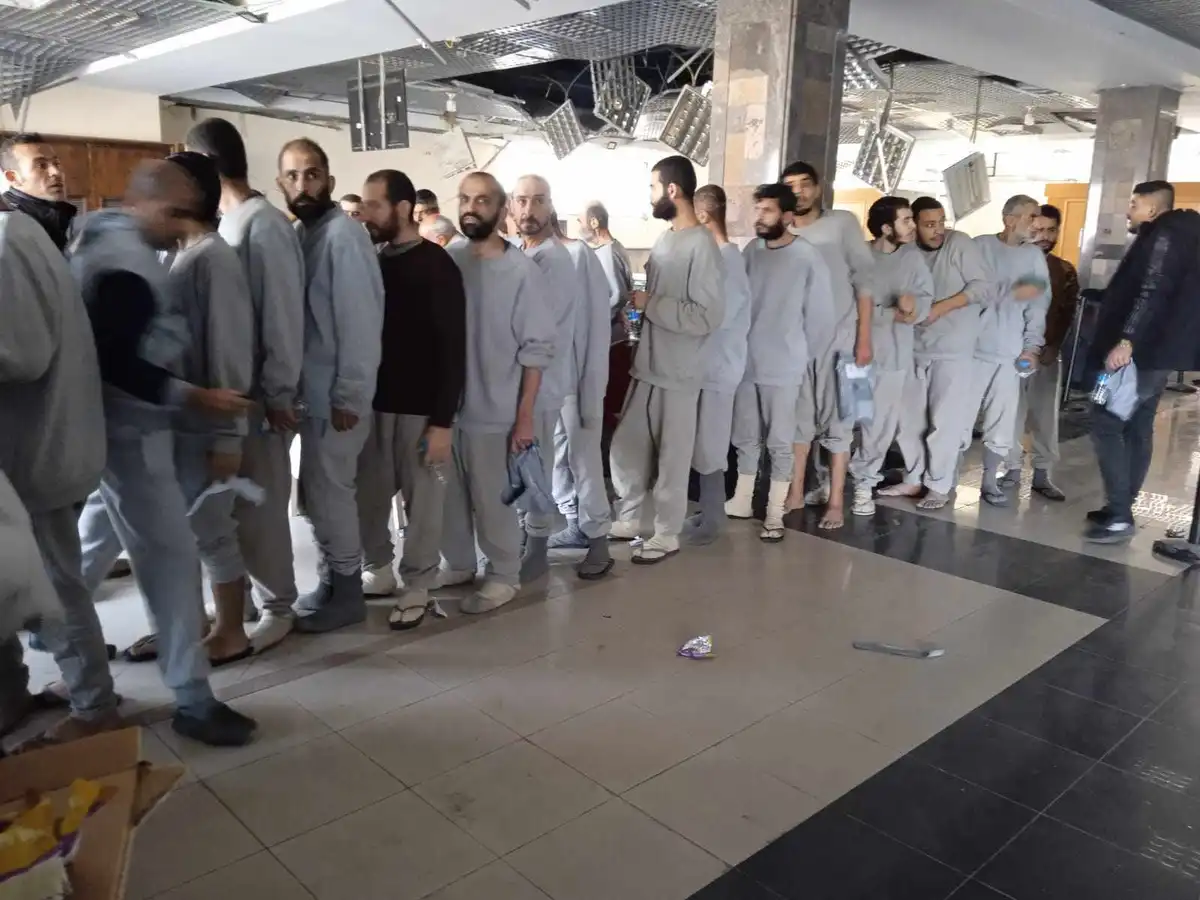
Israeli occupation releases 10 prisoners from the Gaza Strip.

The Israeli occupation authorities released 10 prisoners from the Gaza Strip this morning, Thursday.


The ten prisoners arrived at Al-Aqsa Martyrs Hospital in Deir al-Balah, central Gaza Strip, after the occupation forces released them through the Kissufim crossing.


According to eyewitnesses, one of the prisoners was unable to move and bore clear signs of torture.


The Israeli army arrested a large number of civilians during its ground war on various areas of the Gaza Strip.

ARAB AND WORLD

Thu 10 Apr 2025 9:54 am - Jerusalem Time

Reserve and retired Israeli pilots: The continuation of the war poses a danger to soldiers, civilians, and prisoners.

Hundreds of retired Israeli pilots, along with a number of air force reservists, signed a petition published Thursday morning calling on the Israeli government to conclude an immediate deal to return all prisoners from the Gaza Strip, even if this requires an immediate cessation of hostilities.


Despite efforts by Israeli Air Force commanders to prevent the petition's publication and to discourage pilots from signing or withdrawing their signatures, these attempts failed. The signatories stated that "the current war serves political and personal interests, not security interests."


According to the petition, which was published in Israeli newspapers, the signatories called on all Israelis to "engage in an effective movement." They emphasized the need to reach an agreement that would return the prisoners to their homes immediately, noting that "time is running out, and every day of delay puts their lives at risk."


Initial investigations show that 10% of the signatories are active reserve soldiers, most of them volunteers, while the rest are retired officers, including senior Air Force reserve officers or retired officers, as well as a former IDF Chief of Staff.


The petition's signatories include prominent military figures in the Air Force, including former Chief of Staff Dan Halutz and retired Major General Nimrod Sheffer, along with a number of retired senior officers such as Brigadier General Asaf Agmon, Major General Gil Regev, Brigadier General Ralik Shaffir, and Amir Haskel.


The vast majority of signatories are considered retired officers, while only five of the hundreds used their initials, indicating that they are active reserve soldiers who preferred to remain anonymous to avoid being excluded.


A security source speaking to Israeli Army Radio expressed strong reservations about the move, saying, "Anyone who signs this type of statement lacks confidence in the Air Force leadership, the Chief of Staff, and the tasks assigned to him. It will be difficult for him to continue in service."


Army sources claimed that recent talks between the Chief of Staff and the Air Force Commander with a number of reserve soldiers led to some of them rescinding their decision to sign. A number of senior reserve officers who were at the forefront of the 2023 protests also abstained from signing the petition.


The petition stands out as one of the largest demonstrations of protest within the Israeli military since the start of the war on Gaza on October 7, 2023, amid mounting criticism accusing the government of exploiting the war for political and personal purposes, rather than achieving its declared security objectives.


Despite pressure from the Air Force leadership over the past few days and attempts to dissuade reservists from signing or withdrawing their signatures, these efforts failed to prevent the publication of the petition, which has been described as unprecedented, particularly since it was issued despite "explicit warnings of expulsion from service."


The petition reads: "We, Air Force pilots, both reserve and retired, demand the immediate return of the captives to their homes, even if this requires an immediate cessation of hostilities. The current war serves primarily political and personal interests, not security interests."


The signatories emphasized that "continued fighting serves none of its stated objectives. Rather, it leads to the deaths of prisoners, soldiers, and innocent civilians, and depletes the capabilities of reserve forces." They continued, "As experience has shown, an agreement is the only way to return the prisoners safely."


They added, "Military pressure often leads to their deaths and endangers the lives of our soldiers. Therefore, we call on all Israelis to take action and demand an end to the war and the immediate return of the prisoners. Every day of delay puts their lives in danger. Every moment of hesitation is a disgrace."


In an interview with Yedioth Ahronoth, one of the petition's initiators said, "The petition does not address refusal to serve or non-compliance, nor does it send any message to the army. It is a clear message to the government: Return the prisoners, even at the cost of stopping the fighting."


In the army, dozens of active-duty soldiers reportedly withdrew their signatures over the past two days after talks with their commanders and threats of dismissal. However, estimates in the Air Force indicate that "dozens more may join" the protest, while officials are awaiting developments before taking disciplinary action.


Although the petition explicitly questioned "the command's intentions and war aims," the Army does not consider it a "call to rebellion or refusal to serve." Instead, it is currently classified as an "expression of a political position" by reservists who are not currently serving and have not been assigned any mission.


At this stage, the military does not intend to take collective punitive measures and will continue its approach of "individual dialogue," considering that the phenomenon remains limited and that many of the signatories are not actually subject to current military orders.

OPINIONS

Thu 10 Apr 2025 9:45 am - Jerusalem Time

Netanyahu returns from Washington empty-handed: No escalation against Iran, no confrontation with Türkiye

Salah Jumaa

Salah Jumaa

Opinion Writer

Salah Jumaa: Deputy Editor-in-Chief of the Middle East News Agency, specializing in Palestinian affairs.


Israeli Prime Minister Benjamin Netanyahu returned from Washington carrying a heavy political disappointment after a visit he had hoped would yield strategic gains on issues affecting Israeli national security. However, he encountered clear messages from US President Donald Trump that fell short of his ambitions and restricted his movement in several directions. Instead of returning as a political victor, he returned laden with conservative positions that reflected a shift in the priorities of his American ally.

Netanyahu had hoped to garner American support for a strike on Iran's nuclear facilities, but he was surprised by Trump's announcement that the United States would begin direct negotiations with Iran on Saturday. He indicated that an agreement was better than confrontation, and that failure of the talks would be a very bad day for Tehran. This message was a political shock to Netanyahu, who had always rejected any negotiations with Tehran and pushed for a military solution. This time, however, he found himself facing a US administration leaning toward diplomatic solutions, which deprived him of his most important leverage.

On the Turkish issue, Netanyahu's stance was more tense, as he warned against Turkish expansion in northern Syria and considered Ankara a strategic threat to Israel. However, Trump responded publicly, stating that he enjoys an excellent relationship with Turkish President Recep Tayyip Erdoğan and instructing him to act rationally towards Turkey. This response represented a new diplomatic slap in the face, as it clearly revealed that Washington is not willing to enter into any confrontation with Ankara to please Tel Aviv, and that the alliance with Turkey remains a pillar of America's regional balance of power.

On the economy, Netanyahu entered the meeting with Trump hoping to obtain an exemption from US tariffs on Israeli exports, particularly in vital areas such as medical and technological products. However, Trump was firm when he stated that his country provides Israel with $4 billion annually and may not sign a new trade agreement. This closed the door to any additional economic concessions, emphasizing that financial support does not give Israel the right to demand special trade treatment. Netanyahu's pledges to reduce the trade deficit in Washington's favor were in vain, as the US president made clear that trade standards apply to everyone, without exception.

At the outset of his discussion of the Gaza issue, Trump began to fully identify with Netanyahu's narrative, reiterating his attacks on Hamas, describing the Strip as a death trap, and even hinting at the transfer of residents and the reconstruction of the area after its evacuation. These statements seemed to reinforce the Israeli narrative and provide Netanyahu with complete political cover.

But the surprise came when Trump explicitly announced that the United States was making every effort to reach a ceasefire agreement that included the release of the hostages. This particular clause was particularly troubling to Netanyahu, as it set a time limit for military operations and pushed for a negotiated solution that was inconsistent with his ambition to exploit the war politically until the end. The message from Washington was clear: support does not mean an open mandate, and a ceasefire is required as soon as possible.

Ultimately, Netanyahu left his visit to Washington without any tangible gains, but rather with a set of messages confirming that the current US administration, despite its declared friendship, has begun to deal with Israel with a more balanced and cautious logic. US positions on Iran, Turkey, customs, and Gaza appeared more realistic and more closely linked to US interests than to Israeli pressure, and Netanyahu realized that his position in Washington was no longer what it had been. If this visit proved anything, it was that US support is no longer automatic or unconditional, even under the administration of an ally named Donald Trump.


............


Netanyahu left his visit to Washington without any tangible gains, but rather with a series of messages confirming that the current US administration, despite its declared friendship, has begun to deal with Israel with a more balanced and conservative approach.

OPINIONS

Thu 10 Apr 2025 9:45 am - Jerusalem Time

One Palestinian Authority

Hamada Faraana

Hamada Faraana

Opinion Writer

Without hesitation, and clearly and firmly, the leaders of the three countries: France, Egypt, and Jordan, expressed in the statement issued at their summit in Cairo on April 8, 2025, a significant position and a clear message to all parties: 1- To the two sides of the Palestinian division, 2- To the Israeli colony, 3- To the United States, and indeed to the entire world, that what was stated in the statement literally:

"Governance and the maintenance of order and security in Gaza, as well as in all Palestinian territories, must be exclusively under the umbrella of the Palestinian National Authority, enabled by regional and international support."

This means that the authority will remain in place until the so-called "day after" the Israeli occupation of the Gaza Strip, and that the only option for the Gaza Strip, according to the three-nation statement, is the Palestinian National Authority.

This option must be understood and recognized by all parties, especially since it was originally issued by Egypt and Jordan, and is now supported by European France.

It is a message to the Israeli colony first and foremost that there is no alternative to resolving the conflict in Palestine other than “achieving the two-state solution,” and that the Palestinian Authority is the primary political expression and the gradual prelude to the establishment of a Palestinian state.

The second message is to both the Ramallah Authority and the Gaza Authority: “Governance and the maintenance of order and security in Gaza, as well as in all Palestinian territories, must be exclusively under the umbrella of the Palestinian National Authority.”

It is a necessity, a message, and a decision with its own merits. The Palestinian president mentioned it in his speech before the Arab Summit in Cairo on Tuesday, March 4, 2025, in response to Egyptian advice expressing a Jordanian, Saudi, Emirati, and Qatari partnership in content and direction, and based on two demands:

1- The unity of the Fatah movement, which means the dignified return of Mohammed Dahlan, Nasser al-Qudwa, Marwan Barghouti, and the rest of the Fatah cadres to the ranks of their organization, faction, positions, and partnerships.

2- The unity of the Palestinian house, so that Hamas and Jihad are within the institutions of the Palestine Liberation Organization: 1- The National Council, 2- The Central Council, 3- The Executive Committee, 4- The Palestinian Authority.

Hamas must also realize that its organizational, partisan, and national interests can only be served within the framework of national unity, within the framework of a unified Palestine Liberation Organization based on:

1- A shared political program, 2- A unified representative institution, 3- Agreed upon tools of struggle.

Otherwise, the division would be a free service provided by both Fatah and Hamas, for the benefit of their common enemy, the Israeli colony. One of the most important conditions for victory lies in their unity, cohesion, and partnership in their single, unified battle against their superior enemy.

The prevailing pathological condition on both sides of the conflict and division is represented by the monopolization of power by both the Ramallah Authority and the Gaza Authority, and their enemy works to feed this monopolization. This has been the case throughout the seventeen years of the division, since Hamas carried out its "military decision" and took sole control of the Gaza Strip in June 2007. Netanyahu worked to feed this division by funneling money to Hamas, in order to preserve the Palestinian division and feed it with money.

The settlement's indirect negotiations with Hamas, following the Gaza war and the ceasefire agreement, were and continue to be part of this divisive narrative, presenting Hamas as a parallel entity to the Palestinian Authority in Ramallah, diminishing its role, and reducing its powers.

The tripartite French-Jordanian-Egyptian statement on consolidating authority in all Palestinian territories under the umbrella of the Palestinian National Authority must be met with a positive response, including: 1. Unity of the Fatah movement, 2. Unity of the Palestinian household. Is there a serious, tangible initiative in this regard and for this goal?


...........


This means that the authority will remain in place until the so-called "day after" the Israeli occupation of the Gaza Strip, and that the only option for the Gaza Strip, according to the three-state statement, is the Palestinian National Authority.

PALESTINE

Thu 10 Apr 2025 9:39 am - Jerusalem Time

The occupation forces demolished a house in Tulkarm.

This morning, Thursday, the Israeli occupation forces demolished the home of Ibrahim Mahmoud Daroubi in the village of Shufa, southeast of Tulkarm.


Local sources reported that the demolition operation was carried out suddenly and without prior warning, using two military bulldozers under heavy protection from the occupation army, which stormed the area and climbed onto the roofs of neighboring homes after raiding them.


Sources reported that the occupation army forced citizen Droubi to evacuate his home within a short period of time, and did not allow him to remove the contents of the house before it was completely demolished.


During the demolition, the occupation forces abused the homeowners and the citizens who rushed to help him, firing sound bombs, tear gas, and rubber bullets at anyone who tried to approach the area.


They also detained Ibrahim Daroubi's brothers and assaulted them and their father, while one of them was injured by a rubber bullet.


The targeted home, built more than five years ago, is a single-story building located in the northern part of the village. Its owner received a demolition notice about two years ago, as part of the occupation's policy of oppressing the area's residents and forcibly displacing them.

OPINIONS

Thu 10 Apr 2025 9:39 am - Jerusalem Time

When politics turns into an economic show

Ramzi Al-Ghazawi

Ramzi Al-Ghazawi

Opinion Writer

At a time when the world is facing a series of economic challenges, Donald Trump decided to launch what he called "Economic Independence Day," announcing the imposition of new tariffs under the guise of protecting the American economy. However, these measures, in reality, do not harm his foreign adversaries as much as they burden the American citizen himself, who will pay the price with every purchase, from smartphones to building materials.

Trump's economic vision is based on the principle of "America First," but it ignores the realities of globalization, which intertwine the global economy in a complex web of interests and exchanges. The idea of reshoring manufacturing to the US may appear patriotic on the surface, but it entails higher prices, declining quality, and weakened competitiveness.

Most dangerously, Trump's economic policies do not appear to be well-thought-out or based on scientific analysis. Rather, they stem from a personal desire to settle scores with a commercial past that did not satisfy his ambitions. His opponents today are the same people he complained about in the 1980s, when he expressed his displeasure with the influx of Japanese cars into the American market. Today, he repeats the same rhetoric, directing accusations at China, Mexico, and Europe.

These policies recall what happened in the 1930s, when protectionist measures exacerbated the Great Depression and contributed to igniting a world war. Today, amidst accumulating crises, beginning with the COVID-19 pandemic and extending to inflation and debt, the world seems unable to tolerate a new politically motivated crisis.

Trump treats the economy like a television show, issuing orders and delivering impassioned speeches. But he forgets that economic reality isn't managed from a stage, and that his decisions have direct consequences that affect people's lives and their markets.

In an interconnected and interconnected world, there is no room for isolation. Policies based on anger do not create a stable economy; rather, they open the door to crises whose paths we cannot yet predict.


About the Jordanian "Constitution"


.............


Trump's economic vision is based on the principle of "America First," but it ignores the realities of globalization, which intertwine the global economy in a complex web of interests and exchanges.

OPINIONS

Thu 10 Apr 2025 9:37 am - Jerusalem Time

Palestine between yesterday's Nakba and today's attempts at official abolition and the one-state solution

Engineer Samer Nassiba

Engineer Samer Nassiba

Opinion Writer

The Palestinian cause is currently experiencing its most dangerous phase since the Nakba of 1948, not only in terms of the scale of the crimes committed against our people, including displacement and genocide, particularly in the Gaza Strip, but also in terms of what is no less serious: the targeting of the legitimacy of official Palestinian representation and the effort to completely abolish it. The Zionist project has long sought to erase Palestinian political existence, and today it is intensifying its attempts to empty the arena of any unifying official entity, represented by the Palestinian National Authority and the Palestine Liberation Organization.

The 1948 Nakba was not only a humanitarian catastrophe and a tragedy of ethnic cleansing; it was also a fatal blow to the Palestinian leadership and its official representation of the Palestinian people and their right to self-determination, leading to the loss of a unified and independent Palestinian voice for decades. Today, this threat is returning, not only through bombing, killing, destruction, and plans for ethnic displacement, but also through a systematic political project that seeks to replace the central Palestinian authority with local tribal or regional authorities, with municipal or local council powers administered by alternative power centers in each governorate. This is transforming what remains of political unity into fragmented cantons that serve the interests of the occupation.


In this context, despite all the criticism directed at the Palestinian National Authority, many of which cannot be denied, reality compels us to acknowledge a matter of paramount importance: the survival of this authority, the improvement of its performance, and the implementation of fundamental reforms and transparent elections are the only realistic option today for preserving legitimate and internationally recognized Palestinian representation and preventing the liquidation of the Palestinian cause, which are intended to be implemented in the name of establishing “local government” for each governorate, subordinate to the civil administration.


The Israeli occupation itself signed the Oslo Accords with the Palestine Liberation Organization more than thirty years ago, but today it seeks to evade all its obligations and attempt to dismantle the remaining partial gains achieved by the Palestinians in this agreement. The ultimate goal is clear: to end any official Palestinian presence, abolish the principle of a Palestinian state, and end the principle of the right to self-determination.

From a national interest standpoint, the Palestinian Authority—despite its stagnation and the negatives surrounding it—should not be viewed merely as an institution governing and administering the affairs of the Palestinian people. Rather, its role must be recognized as a political symbol enjoying international legitimacy, representing the Palestinian people in regional and international forums. It stems from the Palestine Liberation Organization (PLO), the sole legitimate representative of the Palestinian people, and neither would have existed without the enormous sacrifices made by the Palestinian people throughout their history of struggle.

Under international law, the Palestinian people enjoy an inalienable right to self-determination and political representation through an official entity. This is stipulated in United Nations resolutions, including Resolution 3236 of 1974. Attempts to dismantle or weaken the Palestinian Authority, reduce its powers and areas of influence, or create local alternatives in Gaza and the West Bank violate this right and provide the occupation with a golden opportunity to eliminate the Palestinian state project once and for all.

In light of this critical reality, and with escalating attempts to undermine and weaken the Palestinian National Authority (PNA) as a prelude to dismantling the official representation of the Palestinian people, some have begun to raise questions about the feasibility of continuing to rely on the two-state solution and the role of the Palestinian Authority. In this context, alternative calls have emerged, most notably the "one-state solution," which is being presented in some intellectual circles as a strategic option for achieving equality and political rights within a unified political entity.

However, this proposal, despite its theoretical validity in terms of legal principles, remains far from political realism in the current context. The imbalance of power leaves no room for any such solution; rather, it opens the door to further political and national liquidation. Israeli society today is dominated by the forces of the extreme religious-nationalist right, which inherently opposes the principle of equality and treats the Palestinians as an existential and religious threat, rather than as people with rights and existence. Consequently, any struggle for a single, democratic state with equal rights will not only be difficult to achieve, but almost impossible, and may lead to a zero-sum battle in which religious and historical narratives are exploited to justify the complete exclusion of the Palestinians. In the view of this extremist movement, we are "us or them," not "equal citizens," making the results of such a project, if imposed, closer to a national catastrophe than a political solution.

Moreover, the "one-state solution" is not based on any existing international legal reference. Since UN Partition Resolution 181 of 1947, international legitimacy has been based on the existence of two states: Jewish and Arab. Any project not built on this foundation will lack international support and may be politically exploited to undermine Palestinian rights themselves.

Accordingly, talk of a "one-state solution" or any other alternatives not based on international legitimacy resolutions remains, at this stage, more of an intellectual luxury that does not reflect the existing balance of power and may even be used to justify the status quo. The two-state solution, despite its difficulties and challenges, remains the only realistic option recognized internationally, provided there is a unified Palestinian will, effective international pressure, and comprehensive internal reform that restores public confidence in the Palestinian Authority and fortifies it against attempts to abolish and dismantle it, thus serving as a starting point for a new beginning for the establishment of an independent Palestinian state on the ground.

Ultimately, the battle today is not just over land, but over representation and political legitimacy. Preserving the Palestinian National Authority, developing it, and reproducing it with democratic legitimacy is an absolute national necessity. It is the final bulwark against the scheme to liquidate the cause at its roots. The two-state solution remains a realistic and feasible option, requiring a unified Palestinian will, internal reform that restores the people's confidence in their institutions, and genuine international support that goes beyond condemnation but also exerts real pressure on the Israeli occupation to halt its expansionist project and adhere to legal obligations and international agreements.

Here, we must clearly emphasize that the Palestinian national strategy at this sensitive stage must adhere to the two-state solution as the only realistic and legal framework currently possible. We must restore the prestige of the Palestinian National Authority (PNA) as a political achievement achieved through the blood and struggle of the Palestinian people, despite all the negatives and shortcomings attributed to it. The PNA, despite its limitations, represents the only officially recognized Palestinian presence, and its loss would return us to the post-Nakba era, to a state of political disarray and lack of representation, which is what the occupation clearly seeks. Therefore, our national duty today is not limited to demanding reform, but rather to protecting this political gain and not relinquishing it under any circumstances, so that it can serve as a new starting point for our national project of an independent Palestinian state.


........


Any struggle for a single, democratic state with equal rights will not only be difficult to achieve, but nearly impossible, and could lead to a zero-sum battle in which religious and historical narratives are exploited to justify the complete exclusion of Palestinians.

PALESTINE

Thu 10 Apr 2025 9:34 am - Jerusalem Time

Injuries and arrests in the West Bank

Four citizens were injured, and others were arrested, during a raid launched by Israeli occupation forces in the West Bank at dawn and early Thursday morning.


In Jericho, the Red Crescent Society said in a press release that its crews treated four young men injured by Israeli occupation soldiers while they were passing through the Banana checkpoint north of Jericho. They were immediately transferred to Jericho Government Hospital.


In Nablus, Israeli jeeps stormed several neighborhoods in the eastern, western, and central parts of the city, raided several homes, ransacked their contents, and arrested four citizens: journalist Samer Khuwaira from Asira Street, Imad Halawa from the Aqaba neighborhood inside the Old City, Amr Mahmoud Jumaa Abu Al-Raz from Al-Ain refugee camp in the west, and Muhammad Al-Fares from the Al-Masakin Al-Sha'abi area in the east.


In Bethlehem, the occupation forces arrested Qusay Saed Sand (20 years old) from the Rachel's Tomb area in the north after severely beating him.


PALESTINE

Thu 10 Apr 2025 9:30 am - Jerusalem Time

Extremist Temple organizations subsidize transportation costs for those wishing to storm the mosque during Passover.

Extremist Temple organizations subsidize transportation costs for those wishing to storm the mosque during Passover.

152 settlers storm Al-Aqsa Mosque, perform prayers, and commit violations at Bab al-Rahma.


Yesterday, 152 settlers stormed the Al-Aqsa Mosque through the Mughrabi Gate, under the protection of a large force of police, special forces, and undercover soldiers. Meanwhile, the extremist group "The Temple Mount is in Our Hands" published an announcement to its fans yesterday, stating that "subsidized transportation" and "free tours" of the Al-Aqsa Mosque would be available to those wishing to participate in the raids during the "Jewish Passover" holiday. The group called on its fans to contact them to book and participate in these trips.


For several years, Temple organizations, in cooperation with the Ministry of Jerusalem Affairs in the Israeli government, have been providing free transportation to Jerusalem for those wishing to celebrate biblical holidays there, and for those wishing to storm the blessed Al-Aqsa Mosque.


Passover extends over a week, from sunset on Saturday, April 12, until sunset on Saturday, April 19, 2025. It includes five days of major raids on Al-Aqsa Mosque, during which Temple groups seek to impose animal sacrifices inside Al-Aqsa Mosque as a form of "moral establishment of the Temple" and as a way to hasten the "coming of the Messiah," which they believe is awaited.


The Islamic Waqf Department in occupied Jerusalem reported that the number of settlers who stormed Al-Aqsa Mosque yesterday, Wednesday morning, was 81, in addition to 20 students from Talmudic and Torah colleges in the Old City. Meanwhile, the number of foreign and Jewish tourists who stormed through the Mughrabi Gate, who accompanied and participated in the settlers' tours, reached 230 tourists. Protected by large forces of heavily armed police and special forces, they toured the mosque's corridors and platforms, performed rituals in its eastern area, and then left through the Chain Gate after receiving explanations from the so-called Temple groups.


The Islamic Endowments Authority stated that the number of settlers who participated in the raids after the noon prayer yesterday amounted to 51, and the number of Jewish and foreign tourists was 18.


She explained that the occupation police tightened restrictions on the entry of worshippers arriving to the mosque, especially at the Majlis-Nazer and Asbat gates, checking their IDs and detaining some of them at its outer gates. They also tightened restrictions on the deported worshippers, both male and female, who had gathered at Asbat Gate and performed prayers in Al-Ghazali Square near the Bab al-Rahma cemetery.


The so-called "Temple Groups" called on settlers to escalate their attempts to bring in and slaughter Passover sacrifices into and around Al-Aqsa Mosque, starting today, leading up to the official holiday on April 13.


These calls come amid escalating attempts by settlers to impose their religious rituals on Al-Aqsa Mosque, amid Palestinian warnings of the repercussions of such a move on the situation in the holy city.


In contrast, Palestinian religious and national bodies have issued urgent calls to mobilize the largest possible number of worshippers at Al-Aqsa Mosque, especially in the coming days leading up to Easter.


She stressed the importance of the strong presence and vigilance in the Al-Aqsa Mosque compound from the early hours of dawn to thwart settler plots and prevent any attempt to bring in offerings or perform Talmudic rituals.


Jerusalemite authorities and religious and national authorities warned that these attempts represent a dangerous escalation aimed at Judaizing Al-Aqsa and imposing new facts on the ground. They emphasized that defending Al-Aqsa is a religious and national duty that calls for increased attendance at the mosque during this sensitive period.

PALESTINE

Thu 10 Apr 2025 9:29 am - Jerusalem Time

Washington ends rift with extremist Ben Gvir and invites him to visit

The Hebrew newspaper Maariv reported that Israel's extremist National Security Minister, Itamar Ben-Gvir, will make his first official visit to the United States since assuming his position, a move that signals that the administration of US President Donald Trump has ended the rift imposed by the administration of his predecessor, Joe Biden.


According to Maariv, Ben-Gvir received a special invitation from the US side, and his visit to Washington is expected to last a week during Passover, which begins in the middle of this month.


Ben-Gvir's invitation to Washington is particularly significant, as it represents a complete change in attitude toward the leader of the Otzma Yehudit party, whom the Biden administration has boycotted and vehemently ignored.


The Biden administration had avoided meeting Ben-Gvir and Finance Minister Bezalel Smotrich, considering them too extreme.


Maariv reported that after Trump took office, US policy toward Ben-Gvir changed significantly, adding that the invitation to visit "is part of the Trump administration's stance toward the Israeli right in general, and toward the Otzma Yehudit leader in particular."


In addition to being Ben-Gvir's first visit to Washington since assuming office, it is also his first foreign visit.


The visit includes several meetings with Trump administration officials in homeland security and the police, members of the Senate and Congress, as well as with Jewish representatives working on behalf of Israel and Jews in the diaspora.

During his visit, Ben-Gvir will not only hold meetings, but is also expected to deliver several speeches at various events and venues, according to Maariv.

PALESTINE

Thu 10 Apr 2025 9:27 am - Jerusalem Time

Netanyahu's visit to Washington: Converging interests and diverging priorities

Dr. Hassan Ayoub: Washington summoned Netanyahu to prevent a military strike against Iranian nuclear facilities and give him the green light to continue the aggression against Gaza.

Muhammad Hawash: Netanyahu's red lines and pressure to end the Gaza war, even temporarily, before Trump's visit to the region.

Dr. Amjad Abu Al-Ezz: Body language during the meeting revealed a clear lack of semblance of warmth between Trump and Netanyahu, and may indicate that the latter has become a burden.

Nihad Abu Ghosh: The Trump-Netanyahu meeting and what happened at the press conference were merely a cover for more serious issues being managed behind the scenes.

Dr. Qusay Hamid: Trump intends to visit the region within a month to discuss economic and political issues, and therefore wants to calm the atmosphere before his arrival.

Awni Al-Mashni: Netanyahu's visit to Washington highlights the extent of the differences between Netanyahu and Trump, especially on sensitive issues such as the position on Iran.


Israeli Prime Minister Benjamin Netanyahu's recent visit to Washington saw intense discussions on the Iranian and Palestinian issues, highlighting clear differences between Netanyahu and his government and the US administration headed by Donald Trump.

In separate interviews with Al-Quds, writers, political analysts, specialists, and university professors explained that the meeting between Trump and Netanyahu revealed a contradiction in priorities between the two parties. US President Donald Trump seeks to calm the situation in Gaza in preparation for an upcoming visit to the region, while Netanyahu insists on achieving military and political gains before any agreement. The visit also revealed the growing coldness in the personal relationship between Trump and Netanyahu, with Trump insisting on imposing his own agenda, especially regarding the Iranian file and relations with Türkiye, which has reduced Israel's margin of maneuver.

They point out that Washington is attempting to manage the crisis without a regional explosion that could hamper its economic and political plans. They also assert that, in the absence of an effective Arab stance, the Palestinian situation appears to be tied to the conflict between US interests and Israeli desires, with the risks of military and humanitarian pressure on the Gaza Strip growing in the coming days.


US fears Israeli strike on Iran


Dr. Hassan Ayoub, a political science professor and expert on American affairs, says that Israeli Prime Minister Benjamin Netanyahu's visit to Washington came at the surprise invitation of the US administration, following reports that Tel Aviv was preparing an imminent military strike against Iranian nuclear facilities.

Ayoub explains that this call stems from American concerns that the Netanyahu government might take a unilateral step in this direction, which would confuse the regional situation and undermine ongoing American efforts to launch a new negotiating process with Iran.

Ayoub points out that the administration of US President Donald Trump, since assuming his second term, has supplied Israel with bunker-busting bombs, a message Tel Aviv interpreted as a preliminary green light for military preparedness against Iran. This, he notes, is particularly true given the escalation in US operations against the Houthis in Yemen, which has strengthened the Netanyahu government's confidence in the possibility of military coordination with Washington.

Ayoub believes that through this visit, Israel sought to preempt any potential negotiations between Washington and Tehran, especially in light of Trump's contradictory positions on Iran, which range from military threats to calls for negotiations.


US-Israeli agreement on Gaza


Ayoub points out that the occupation government informed Washington that "Iran's arms" in the region have been amputated, giving it the advantage of launching a direct strike against Tehran.

However, according to Ayoub, the surprise was Trump's public statement during the meeting that "negotiations with Iran will begin soon," along with a direct request to Netanyahu not to take any unilateral steps that could thwart these efforts. Ayoub considers this a clear message to temporarily freeze the military option.

In contrast, Ayoub asserts that the Palestinian issue, specifically the Gaza Strip, witnessed complete US-Israeli consensus during the meeting, with Netanyahu receiving a "renewed green light" from the US administration to continue his war on the Strip, including implementing plans for genocide and pressuring the displacement of the Palestinian population.

Ayoub points out that Trump has made no secret of his explicit support for these policies. Indeed, his administration has completely refrained from condemning Israeli crimes in the West Bank, repeatedly affirming "Israel's right to defend itself," and even speaking within its circles of "Israel's right to extend its sovereignty over the West Bank."

Ayoub emphasizes that the US administration's policy entails complete surrender to Israel regarding Gaza, noting that the Israeli government declares that it is "implementing Trump's vision" in the Strip, without any effective Arab position to halt this escalation or change the Palestinian reality.

Ayoub asserts that the situation in Gaza is heading toward further escalation in the coming days, with the aim of pressuring mediators and forcing Hamas to accept Israeli conditions, including voluntary displacement. Meanwhile, the Iranian issue remains vulnerable to fluctuations, given Trump's unpredictable nature, which could push him to make sudden decisions at any moment.


Clear and binding political messages to Netanyahu


For his part, writer and political analyst Mohammed Hawash says that the meeting between US President Donald Trump and Israeli Prime Minister Benjamin Netanyahu included clear and binding political messages addressing three key issues, outlining a kind of US "roadmap" for Israeli engagement in the coming period. This comes amid ongoing attempts to contain the escalation of the war in the Gaza Strip, albeit temporarily, ahead of Trump's anticipated visit to the Middle East.

Hawash explains that the first message was a direct request from Trump to Netanyahu to end the war on Gaza and reach an agreement that guarantees a conditional, rather than a completely open, ceasefire. This reflects America's desire to stop the war as a prelude to presenting political initiatives consistent with its regional interests.

The second message, according to Hawash, related to the Syrian issue, where Trump stressed the need for Israel to refrain from targeting sites in Syria that could lead to a direct clash with Turkey, referring to Turkish influence in the north of the country. Trump clearly told Netanyahu, "Erdogan is my friend, and you must resolve your problems with him directly," which was understood as a warning against entering into uncalculated confrontations with Ankara.

The third issue, according to Hawash, was the Iranian file. Trump informed Netanyahu of imminent negotiations with Iran, beginning next Saturday in the Sultanate of Oman, albeit indirectly. These negotiations are part of an American attempt to reach understandings that include halting Iran's pursuit of nuclear weapons and redrawing Iranian influence in the region by weakening its regional allies.


Trump's message to Iran's Supreme Leader


Hawash points out that Trump did not disclose the content of the message he sent to Iranian Supreme Leader Ali Khamenei, but its general content aims to contain Iran's nuclear ambitions and limit its regional expansion.

In a related context, Hawash points out that Trump's personal envoy to the Middle East, Witkoff, attended the meeting with Netanyahu after cutting short his visit to Qatar, indicating the importance of the Palestinian issue.

Hawash points out that Witkoff is carrying a new proposal for Gaza, which partially overlaps with an Egyptian initiative. Washington is seeking to secure the release of the Israeli hostages first, while Israel, for its part, is seeking to circumvent the second phase of the ceasefire agreement, with the aim of continuing the war without a declaration and maintaining pressure on Hamas.

Hawash asserts that Netanyahu is trying to circumvent Arab and international initiatives, but he cannot cross the red lines drawn for him by Trump.

Hawash believes the US administration views a ceasefire in Gaza as a necessary step to ensure the success of Trump's upcoming visit to the region, during which he seeks to expand economic and security partnerships with the Gulf states, Egypt, Jordan, and the Palestinian Authority.

Hawash points out that Saudi Arabia, in particular, has demanded a clear path to ending the occupation and establishing a Palestinian state, but Israel remains the only party ignoring these demands.

Hawash believes that American pressure may push Netanyahu toward greater flexibility regarding Egyptian and Qatari proposals, and that we may witness a de-escalation before Trump's visit, demonstrating relative stability that will enable American political and economic gains in the region.


This may be Netanyahu's last visit to Washington.


In turn, Dr. Amjad Abu Al-Ezz, writer, political analyst, and professor of international relations at the Arab American University, said that Israeli Prime Minister Benjamin Netanyahu's recent visit to Washington and his meeting with US President Donald Trump revealed a major shift in the relationship between the two sides. He noted that "this visit may be Netanyahu's last" to the United States, given the internal and external challenges he faces and his declining standing with his American allies.

Abu Al-Ezz explains that body language during the meeting revealed a clear lack of rapprochement between Trump and Netanyahu, suggesting that the latter has become a political burden on Trump.

Abu al-Ezz points out that numerous indicators indicated that Trump did not respond to most of Netanyahu's demands during the meeting, particularly regarding the Iranian issue and Israeli relations with Türkiye.

Regarding Turkey, Abu Al-Ezz explains that Trump was decisive in maintaining his strong relationship with Turkish President Recep Tayyip Erdoğan, refusing to sacrifice it to please Netanyahu. He explicitly advised him to resolve outstanding issues with Turkey through dialogue, calling for an end to Israeli media incitement against Ankara, a key US ally in the region.

Regarding the Iranian issue, Abu al-Ezz asserts that Washington ignored Netanyahu's repeated requests to have Tel Aviv become a direct partner in negotiations with Iran. Washington announced the start of new negotiations with Tehran unilaterally without consulting Israel, which he described as "a clear marginalization of the Israeli voice," especially given the inclusion of sensitive issues such as ballistic missiles and Iran's regional alliances on the negotiating agenda.


End the war and receive a destroyed Gaza!


Abu al-Ezz points out that Trump insisted on prioritizing diplomacy over Iran, avoiding any military escalation. This contradicts Netanyahu's approach, which was pushing for a military option.

Regarding Gaza, Abu al-Ezz explains that Trump wants to end the Israeli war on the Strip, but within a specific American vision that calls for "receiving a destroyed Gaza," which would allow for control of the territory and the expulsion of its Palestinian residents, followed by attracting international investment to transform it into an economic project.

Abu al-Ezz suggests that there may be an undeclared agreement between Trump and Netanyahu that would give the latter additional time to achieve his military objectives in Gaza before the war ceases. According to Abu al-Ezz, this demonstrates a US double standard in rhetoric between what is said publicly and what is being planned behind the scenes.

Abu al-Ezz explains that US President Donald Trump has begun to grow restless about the ongoing war on the Gaza Strip, considering it a burden. He points out that international pressure, particularly the joint phone call between Egyptian President Abdel Fattah el-Sisi and Trump during a summit in Cairo with the Jordanian monarch and French president, contributed to pushing Trump to take a stand against the continuation of the war.


Four main issues, the most dangerous of which is the future of Gaza


For his part, writer and political analyst specializing in Israeli affairs, Nihad Abu Ghosh, says that the meeting between US President Donald Trump and Israeli Prime Minister Benjamin Netanyahu, and the subsequent public press conference, were merely a cover for more serious issues being addressed behind the scenes, particularly those related to the Palestinian issue, Iran, and Turkey.

Abu Ghosh explained that the meeting focused on four main issues, the most prominent and critical of which was the future of Gaza, along with prisoner issues, the war on the Strip, the Iranian nuclear issue, relations with Turkey, and the issue of the customs duties imposed by the United States on Israel.

Abu Ghosh asserts that Israeli plans are still being implemented intensively to achieve the goal of forcibly displacing Palestinians from the Gaza Strip, noting that Trump has not backed down from his policy of supporting this plan, but has instead reaffirmed his vision of Gaza as a "free zone," but one "devoid of Palestinians."

Abu Ghosh explains that Israel has halted all implementation of the "deal" or previous agreements and has reorganized its policies to implement the displacement plan. The declared objectives of the war, such as "eliminating Hamas" or "liberating prisoners," have become mere pretexts to justify the larger goal of emptying Gaza of its population.

Abu Ghosh points out that the Israeli plan is not limited to Gaza, but extends to the West Bank, through the displacement of refugee camps, the division of the West Bank into separate enclaves, and the annexation of more land, particularly in the "Greater Jerusalem" project, which aims to expand settlements from Ma'ale Adumim to the Red Sea.


Trump seemed more inclined toward negotiations with Iran.


Abu Ghosh notes that Netanyahu had hoped that Trump would adopt Israel's tough stance toward Iran, by striking or dismantling nuclear facilities, or imposing strict controls even on peaceful uses of nuclear energy. However, this would be an "instrument of surrender" that Iran cannot accept.

Abu Ghosh points out that Trump seemed more inclined toward negotiations with Iran, rather than military pressure, especially since Tehran has adapted to the blockade and will not accept giving up its nuclear program without concrete guarantees.

Abu Ghosh believes the military option remains a possibility, especially given Trump's unpredictable personality. However, Abu Ghosh believes this option would be costly for the United States, as it could threaten its interests in the region and destroy the prospects for billions of dollars in economic deals with Iran.

Abu Ghosh explains that the Turkish issue has become a source of concern for Israel, particularly with the rise of Turkish influence in Syria and the tense relations between Ankara and Tel Aviv. Israel is seeking to exploit American pressure on Turkey to dissuade it from expanding its influence in Syria, especially since Israel has ambitions in the occupied Syrian territories and seeks to impose its hegemony over southern Syria, transforming it into a region similar to the West Bank, where everything entering and leaving it is controlled.


Customs duties issue


However, Abu Ghosh notes that Trump's comments about Turkish President Recep Tayyip Erdogan were more "complimentary" than Israel had anticipated, which may indicate that Washington will not adopt an overtly hostile stance against Ankara.

Abu Ghosh notes that the issue of tariffs was one of the reasons Trump summoned Netanyahu, as the United States wants to impose tariffs ranging from 0% to 50% on Israeli exports, while Israel refuses to reduce the current 17% tariff.

Abu Ghosh explains that Israeli exports to the US are not ordinary products, but rather mostly technological and military supplies that serve American industries. This makes negotiations on this issue complex, even though it is considered the least dangerous compared to the Iran and Gaza issues.

Abu Ghosh points to the Arab vacuum in confronting Israeli plans, as there is no unified Arab plan to support the Palestinian cause, only ineffective summit statements.

Abu Ghosh asserts that the only option left for Palestinians is to persevere and hold onto their land, emphasizing that surrender is not a realistic option and will not save Gaza from Israeli schemes.

"What can save Gaza is Palestinian unity and Arab and international pressure to respect international law," Abu Ghosh says. "But if that fails, we will face our fate bravely, because we have no other options."


Trump-Netanyahu meeting focused on Iran and Gaza


For his part, Dr. Qusay Hamed, a professor of political science at Al-Quds Open University, explained that Israeli Prime Minister Benjamin Netanyahu's meeting with US President Donald Trump involved two main issues: Iran and the Gaza Strip, along with secondary issues.

Hamed asserts that both issues are priorities, but Netanyahu considers the Iran issue more urgent than the Gaza issue, despite his continued military action against the Gaza Strip.

Hamed explains that there is an American-Israeli consensus to keep the military option on the table regarding Iran, but there is a difference in the order of priorities between the two sides. Trump sees the diplomatic option as the preferred path, and seeks to ensure that this path is long and does not lead to a direct military confrontation. Trump also believes that war with Iran is not necessary at the present time, given his focus on his global economic battle related to raising tariffs.

Hamed believes that Trump believes that launching military strikes against Iran at this stage could distract him and hamper his economic priorities, so he prefers to wait on the military option. Netanyahu, however, believes that the diplomatic option will not bear fruit until a military strike is launched, and that such a strike could create a better negotiating environment for the United States and Israel. This has prompted him to try to persuade Trump to prioritize the military option over the diplomatic one.

Hamed believes that Trump will not agree with Netanyahu's vision at this sensitive stage.


Agreement to end Hamas' presence in the Gaza Strip


Regarding the Gaza Strip, Hamed explained that there is agreement between Washington and Tel Aviv on the ultimate goals, which include ending Hamas's presence in the Strip, preventing its return to power, and disarming the Palestinian resistance. However, the disagreement lies in the method of implementation. Trump prefers to address the Gaza issue through diplomatic means or through regional mediators, rather than engaging in a direct military confrontation.

Hamed points out that Trump views the ongoing Israeli war on Gaza as an obstacle to his plans to attract more Arab countries to normalization agreements with Israel, particularly Saudi Arabia. According to Trump, the war could complicate negotiations and provoke anger among the Arab public, especially given the worsening humanitarian situation and the lack of any prospect for a solution in Gaza.

Hamed points out that Trump intends to visit the Arab region within a month to discuss economic and political issues, most notably restructuring the region and promoting Arab normalization with Israel. He is therefore keen to calm the situation before his arrival.

Hamed explains that, in contrast, Netanyahu is racing against time to establish new facts on the ground that will enable him to accelerate the implementation of a plan aimed at gradually displacing Gaza's population, in parallel with a military escalation against Hamas and the economic and humanitarian pressure on the Strip's residents.

Hamed asserts that this strategy, while formally aligned with Trump's vision for ending the war, is being implemented under Israeli conditions that establish a reality on the ground that serves Netanyahu's vision, including removing Hamas from the scene and disarming the resistance.


A clear moment of confrontation between America and Israeli interests


In turn, writer and political analyst Awni Al-Mashni says that Israeli Prime Minister Benjamin Netanyahu's visit to Washington and his meeting with President Donald Trump were not a traditional visit, falling within the usual context of political courtesy. Rather, they represented a clear moment of confrontation between US priorities and Israeli interests, resulting in a shift in the nature of the traditional relationship, which had been based on Washington's absolute support for Tel Aviv.

Al-Mashni explains that the visit revealed the extent of the disagreement between Netanyahu and Trump, particularly on sensitive issues such as the position on Iran. Trump appeared to have chosen a strategy that primarily reflects US interests, which also intersects with Iran's orientations, which, in turn, seeks to avoid a military confrontation.

According to Al-Mashni, what Washington is currently doing is using escalation against Iran as a negotiating tool within the "brinkmanship" policy, with the goal of reaching an agreement without resorting to war, because war is simply not a current American priority.


The Turkish role in Syria


Regarding the Turkish role in Syria, Al-Mashni asserts that this issue has also been a point of contention between the two sides. The United States views Turkey as a strategic partner within NATO, while Israel views the growing Turkish influence in the region as a threat to its interests, once again reflecting the diverging agendas between Washington and Tel Aviv.

Regarding the war on Gaza, Al-Mashni points out that Trump is adopting a position similar to that of Egypt, which is to seek a ceasefire that prevents Hamas from remaining in power in the Strip.

Al-Mashni believes that this approach does not necessarily conflict with Israel's interests as a state, but it contradicts Netanyahu's personal calculations, as he continues to seek political gains from the continuation of the war.

Al-Mashni points out that the visit was devoid of pleasantries and clearly reflected America's bias toward its own interests. This demonstrated Israel's complete subservience to American decisions, while simultaneously narrowing Netanyahu's political maneuvering space, particularly in his domestic battle, as he is no longer able to convince the Israeli public of his ability to extract gains from Washington, as he had previously done.

Al-Mashni asserts that Netanyahu has become a burden on Israeli policy, given the exposure of his limited tools for obstruction, while the US has a clear vision and ultimately imposed its priorities.




PALESTINE

Thu 10 Apr 2025 9:26 am - Jerusalem Time

A horrific massacre in Shuja'iyya...more than 80 dad and wounded, and Katz threatens more.

More than 80 civilians were killed and injured on Wednesday in a horrific massacre committed by the occupation forces when they bombed a residential area in the Shuja'iyya neighborhood east of Gaza City.


This comes as the Israeli occupation army continues its aggression against the Gaza Strip, launching air and artillery bombardments targeting inhabited civilian homes, shelters, and tents for displaced people across the Strip.


In detail, the occupation bombed a four-story home belonging to the Abu Amsha family on Baghdad Street in the Shuja'iyya neighborhood, destroying the home and damaging ten neighboring homes, all of which were inhabited. This resulted in the deaths of at least 30 civilians, including 8 children, and the injury of approximately 50 others.


Ambulance and rescue crews are still searching for missing people under the rubble.

Five civilians were killed in a new airstrike carried out by Israeli warplanes on Shuja'iyya, just hours after the massacre in the same neighborhood.

Two civilians, including a child, were also reported killed in an Israeli bombardment that targeted an apartment belonging to the Al-Hajj family in the Nuseirat camp in the central Gaza Strip. Two civilians were also killed in a bombardment that targeted two tents housing displaced people west of Khan Yunis.

Eyewitnesses said the Israeli army is continuing its policy of bombing residential buildings northwest of Rafah, in the southern Gaza Strip.

50 dead since Wednesday dawn

Medical sources reported that 50 civilians were killed in Israeli airstrikes on the Gaza Strip since dawn on Wednesday, including 35 in the Shuja'iyya neighborhood.

The Ministry of Health in Gaza announced that the death toll in the Gaza Strip has risen to 50,846, the majority of whom are children and women. The number of injuries has risen to 115,729 since the start of the aggression. Meanwhile, a number of victims remain buried under the rubble, unable to be reached by ambulances and civil defense teams.

It is noteworthy that the death toll and injuries since March 18, 2025 has reached 1,482 martyrs and 3,688 injuries.
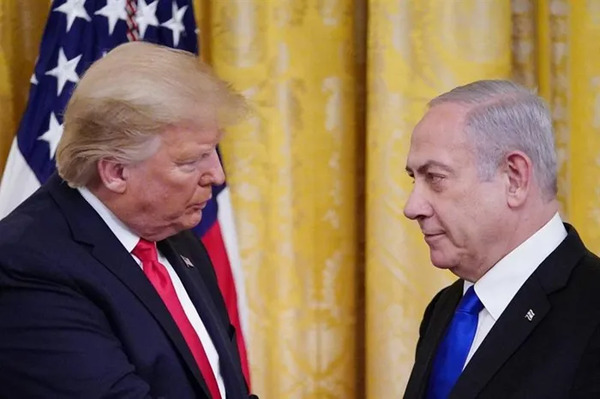
Katz threatens

In this context, Israeli Defense Minister Yisrael Katz threatened, "If Hamas continues to refuse to release the detainees, we will soon escalate the fighting throughout the Gaza Strip."

He added, "We are working to advance a voluntary migration plan for Gaza citizens in accordance with Trump's vision."

He continued, "We will sever the Gaza Strip, control more territory, and include it in the security buffer zones." He added, "We will remain in the Philadelphi corridor and throughout the buffer zone under any circumstances, even if a prisoner exchange deal is reached."

PALESTINE

Thu 10 Apr 2025 9:18 am - Jerusalem Time

A Hamas source denied to Al-Quds that meetings were being held regarding negotiations to cease hostilities and exchange prisoners.
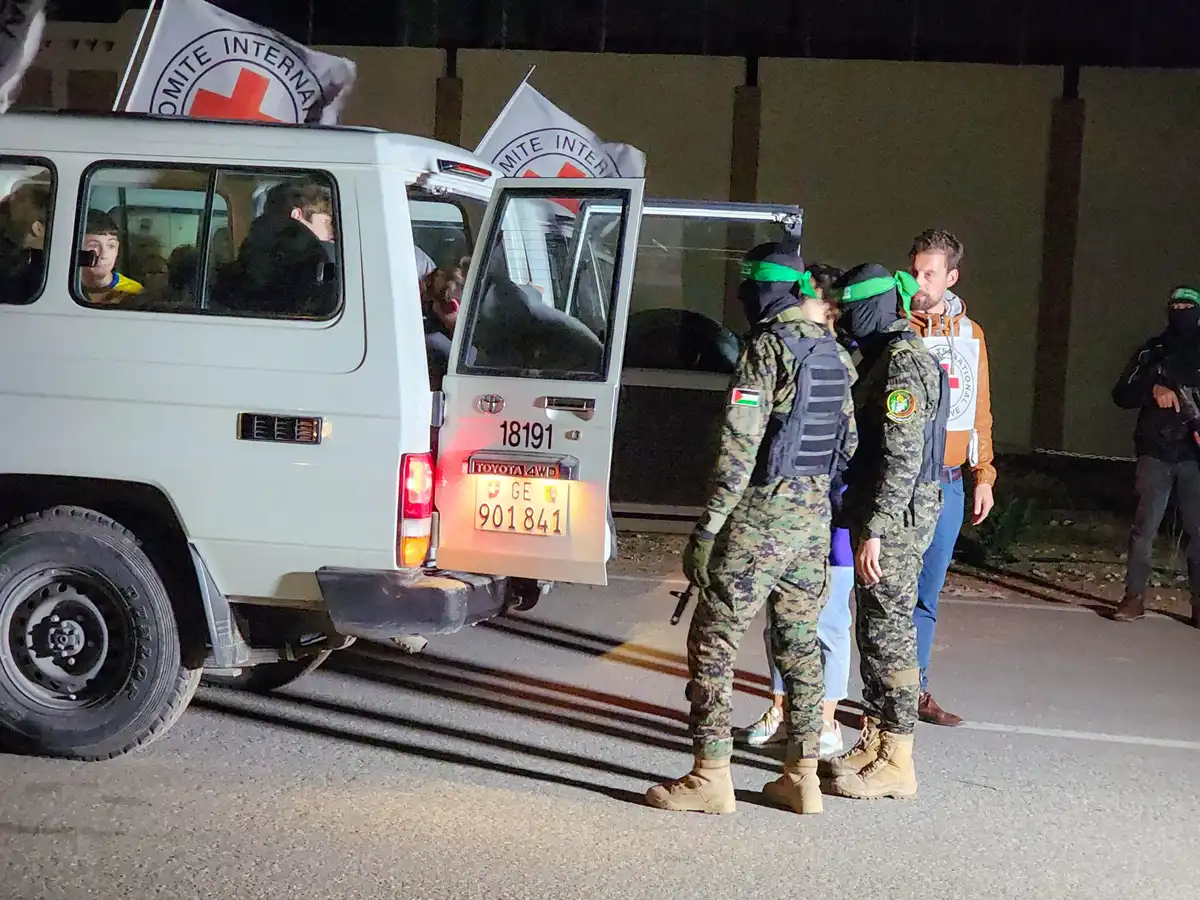
A Hamas official denied, in exclusive statements to Al-Quds newspaper, that any new proposals have been presented by Egypt, Qatar, or any other party so far.


The source added, "There are ongoing movements and visits by some mediators to the occupying state, but no new offers or proposals have been presented to the movement so far."


Regarding the latest developments in the internal national dialogues and meetings with our brothers in the Fatah movement, and what has been reported in the media about new ideas from our brothers in the Fatah movement, and meetings held with the movement, the Hamas source confirmed that no meetings have been held between us to date, and there are no specific arrangements or dates for a meeting with them at this moment.


The source added, "We are open to any meetings that would unify and strengthen the Palestinian position in the face of aggression."


Regarding negotiations with the occupation, the source confirmed that the movement had previously dealt positively with all serious offers, and emphasized that it would deal with great interest and seriousness with any new ideas or proposals that would achieve a halt to the aggression, the withdrawal of the occupation, and an end to the war.

PALESTINE

Wed 09 Apr 2025 11:13 pm - Jerusalem Time

Macron: France may recognize the state of Palestine in June

French President Emmanuel Macron announced on Wednesday that France may recognize the State of Palestine "in June," on the occasion of a conference on Palestine to be held in New York, co-chaired by France and Saudi Arabia.


"We must move toward recognition, and we will do so in the coming months," the French president said in an interview with France 5. "Our goal is to co-chair this conference with Saudi Arabia in June, where we can complete the step of mutual recognition (of the State of Palestine) with several parties."


He added, "I will do this because I believe it will be right at some point, and because I also want to participate in a collective dynamic that will also allow all those who defend Palestine to recognize their role in Israel, something many of them have not done." He emphasized that this will also allow us to "be clear in our struggle against those who deny Israel's right to exist, and this applies to Iran, and to move toward shared security in the region."