PALESTINE

Mon 14 Apr 2025 9:44 pm - Jerusalem Time

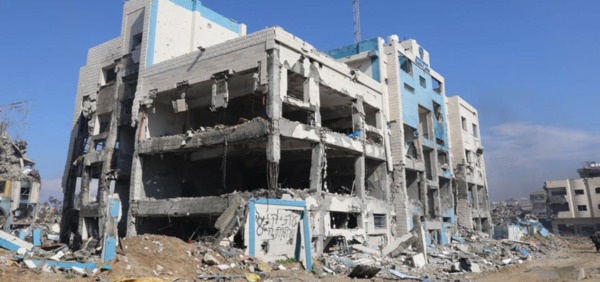
Injuries in Israeli shelling of Khan Yunis

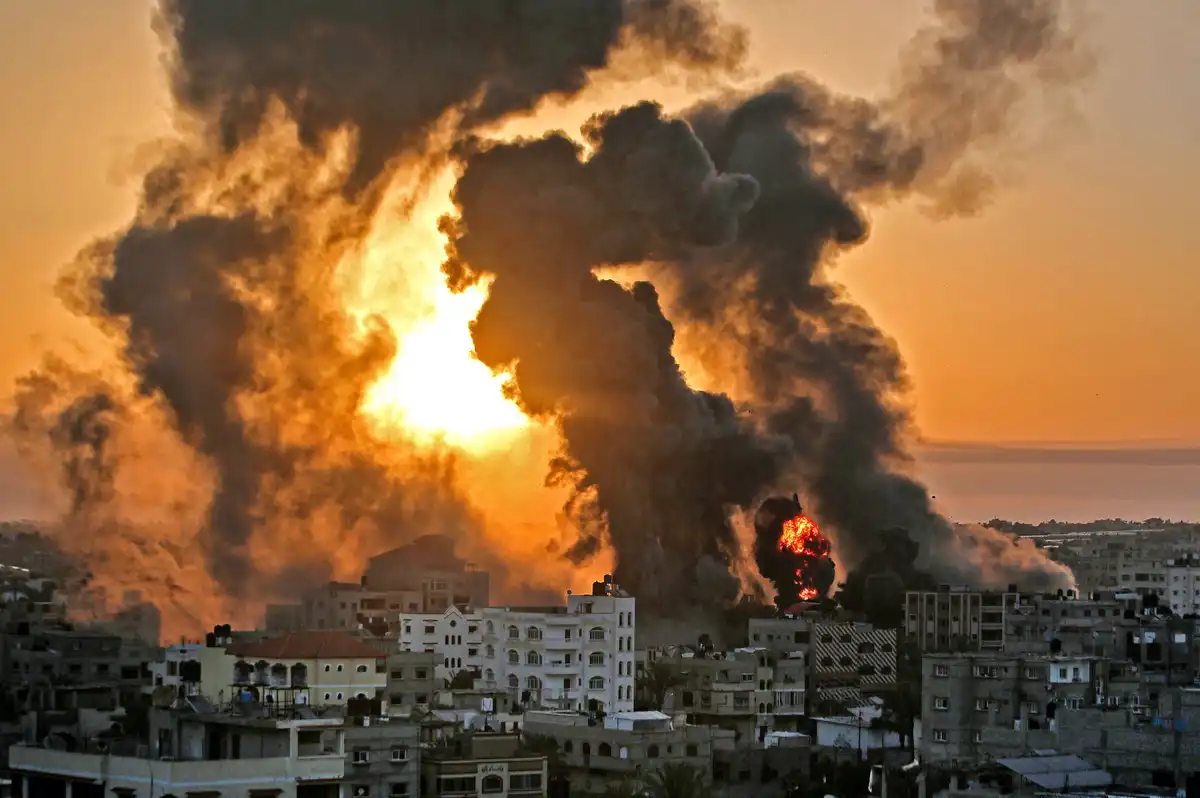
A number of civilians were injured on Monday evening in an Israeli airstrike on Khan Yunis, south of the Gaza Strip.


According to local sources, a number of civilians were injured when Israeli warplanes bombed a tent housing displaced persons in the Mawasi area of Khan Yunis, while others were injured in an Israeli airstrike on the vicinity of the Japanese Quarter, west of Khan Yunis.


Since October 7, 2023, the Israeli occupation forces have launched an aggression against the Gaza Strip, resulting in the deaths of 50,983 civilians, the majority of whom were children and women, and the injury of 116,274 others. This is a preliminary toll, with a number of victims still under the rubble and on the streets, unable to be reached by ambulances and rescue teams.

PALESTINE

Mon 14 Apr 2025 9:20 pm - Jerusalem Time

Palestinian Foreign Ministry: Israel continues to kidnap and strangle our people due to the absence of an international force to compel it to implement international legitimacy resolutions.

The Ministry of Foreign Affairs and Expatriates stressed that the continued crimes perpetrated by the occupation and its settlers against the Palestinian people are due to the absence of an international force capable of compelling Israel to implement international legitimacy resolutions and protect Palestinian rights.


The ministry said in a statement on Monday evening, "The occupation continues to kidnap our people and stifle all aspects of their lives and its components, in an extension of the genocidal crimes led by the occupation government against our people in the Gaza Strip, the latest of which was the escalation of settler incursions into the blessed Al-Aqsa Mosque to perform Talmudic rituals in the eastern part of its courtyards with the participation of Knesset members and rabbis under the protection of the occupation forces. The cities of Jenin and Tulkarm and their camps are also being subjected to an expansion of aggression, the demolition of homes, the destruction of infrastructure, and the deepening of forced displacement among citizens in the areas surrounding the camps. In addition to the crimes of settlements and settlers and their terrorism, as happened in Masafer Yatta this morning, and the occupation bulldozers paving a colonial road in the town of Al-Khader in Bethlehem, and the uprooting of olive trees by terrorist settlers in the town of Deir Ballut in Salfit, the theft of livestock in the northern Jordan Valley, and the storming of the archaeological site of Sebastia."


The ministry affirmed that while it "is monitoring the violations and crimes of genocide, displacement, and annexation committed by the occupation, with countries and components of the international community, it holds the international community responsible for the impunity enjoyed by the occupation and its leaders. It calls on countries to link the level of their relations with the Israeli government to the extent of its commitment to an immediate end to the genocide and its illegal unilateral steps that threaten the chances of reviving the peace process."

PALESTINE

Mon 14 Apr 2025 9:03 pm - Jerusalem Time

A dead succumbed to his wounds from the occupation's bullets in Jalazone camp.

- The young man, Malik Ali Al-Hattab (19 years old), died this evening, Monday, from wounds he sustained from Israeli occupation forces’ bullets in Jalazone camp, north of Ramallah.


The Ministry of Health announced, in a brief statement, the death of young man Al-Hattab, who succumbed to a live bullet wound to the abdomen he sustained during the Israeli occupation forces' raid on the camp.


Al-Hattab was shot by the occupation forces, along with two other young men who were injured in the knee and hand, during the occupation forces' raid on Jalazone camp at dawn today.

PALESTINE

Mon 14 Apr 2025 8:56 pm - Jerusalem Time

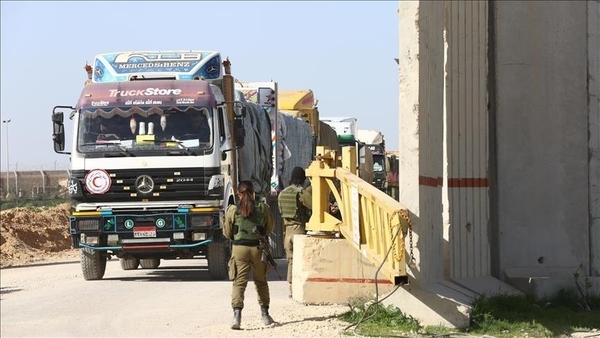
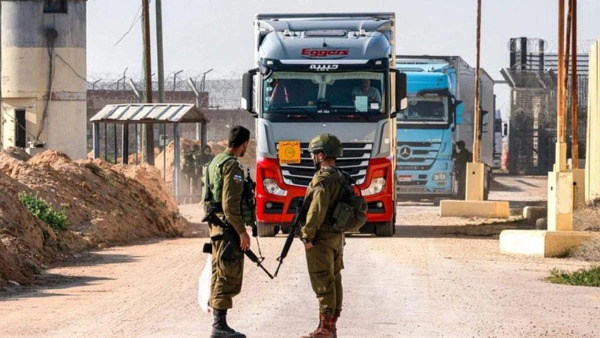
Gaza government: Israeli occupation is blocking aid and trying to implement suspicious plans in the Strip.

The Government Media Office in the Gaza Strip warned on Monday of Israeli attempts to implement schemes by establishing or using security companies and suspicious entities linked to them to distribute humanitarian aid in the Strip.


The office said in a statement: "We affirm that these plans will not pass. We are monitoring them closely and will take the necessary measures to prevent them from being imposed on our Palestinian people."

IT added, "We will not allow the occupation's plans to control aid and impose starvation to proceed. We will confront them by all means and refuse to circumvent international law."


It continued: "In light of the ongoing war of genocide and ethnic cleansing being waged against our Palestinian people in the Gaza Strip, and within the framework of the systematic policy of blockade and starvation, the occupation continues to completely close the crossings."


It added that Israel has been preventing the entry of humanitarian aid for more than a month and a half, "in flagrant violation of international humanitarian law."


The office called on the United Nations to "provide relief to Palestinian refugees and those living under occupation, and to fulfill its responsibilities in managing and distributing humanitarian aid with impartiality and transparency."


It stressed that "any interference in the humanitarian aid file by illegitimate or suspicious parties outside of international legitimacy will not be permitted, and we will confront it by all available means, based on our national, moral, and humanitarian responsibility toward our people in the Gaza Strip."


Early last week, the Hebrew newspaper Yedioth Ahronoth reported that the Israeli army "is preparing a pilot program to distribute food supplies to Palestinians without Hamas, and this will likely take place in Rafah in the southern Gaza Strip." The newspaper noted that the program's implementation "is subject to the approval of the political leadership in Israel."


The newspaper explained that the Israeli army intends to engage international relief organizations to distribute food under the supervision of its soldiers and at centers under its control in the Gaza Strip.


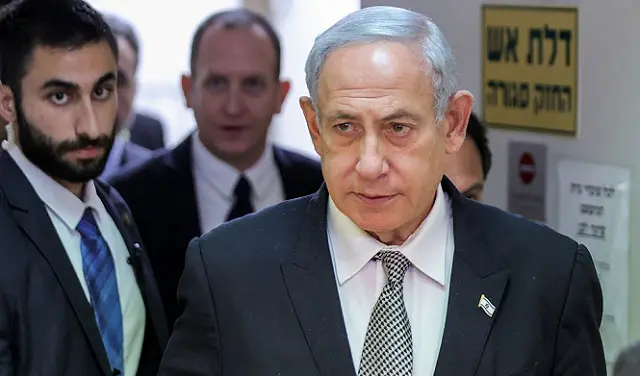
For its part, Israeli Prime Minister Benjamin Netanyahu's office said in a statement that the report published by Yedioth Ahronoth regarding the proposed mechanism for distributing aid in Gaza was "incorrect."


Since March 2, the Israeli military has been preventing the entry of essential supplies, including food and water, into the Gaza Strip after closing the crossings, causing a humanitarian disaster and worsening famine.


Israel has been blockading Gaza for the 18th year, leaving approximately 1.5 million of its 2.4 million Palestinian citizens homeless after their homes were destroyed in the war of extermination. The Strip has entered a state of famine due to Tel Aviv's closure of the crossings to humanitarian aid.


PALESTINE

Mon 14 Apr 2025 8:03 pm - Jerusalem Time

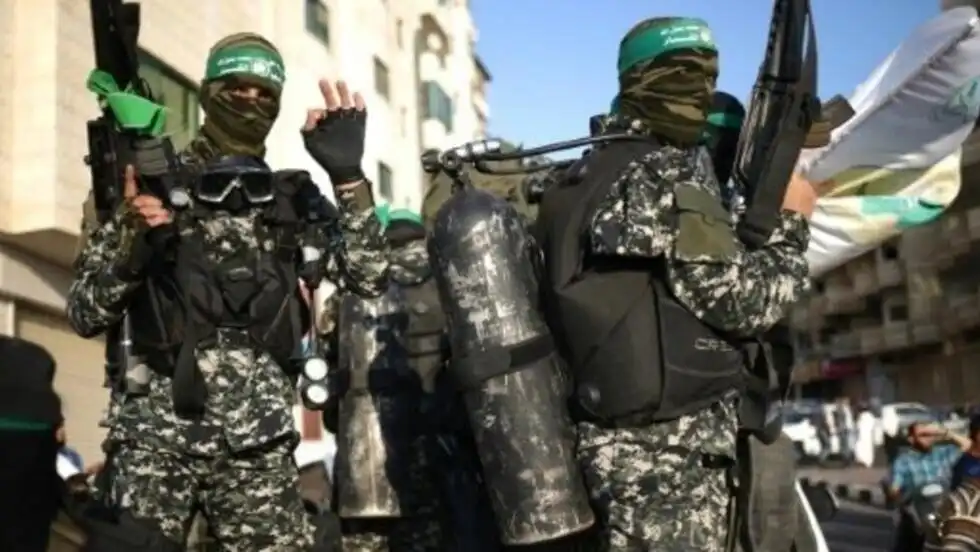
Hamas: We reject the conditions included in the proposal conveyed by Egypt regarding the disarmament of the resistance.

A Hamas leader revealed details of a proposal submitted by Egyptian authorities during the ongoing mediation efforts to reach a ceasefire in the Gaza Strip, stressing the movement's rejection of clauses related to disarming the resistance.


The leader said that the Egyptian proposal includes a temporary truce for 45 days in exchange for the entry of food and shelter aid into the Gaza Strip. He noted that the first clause of the proposal includes the release of half of the occupation's prisoners in the first week of the agreement.


He added that the Hamas negotiating delegation was surprised to find an explicit provision in the proposal requiring the disarmament of the resistance, and that Egypt informed the delegation that "there will be no agreement to cease the war without negotiating this clause," a proposal met with a categorical rejection from the movement.


The source confirmed that Hamas informed Egypt that "the entry point for any agreement must be a cessation of aggression and the withdrawal of occupation forces, not a discussion of the resistance's weapons," explaining that weapons are a legitimate right of the Palestinian people and are not subject to discussion or negotiation.


The leader also pointed out that the Egyptian proposal stipulates that the handover of detainees, both living and dead, must be made by the end of the 45-day ceasefire period as a condition for extending the truce and continuing the flow of aid into the Gaza Strip.

ARAB AND WORLD

Mon 14 Apr 2025 6:13 pm - Jerusalem Time

Qatari-Egyptian call for an international conference for the reconstruction of Gaza to be hosted by Cairo

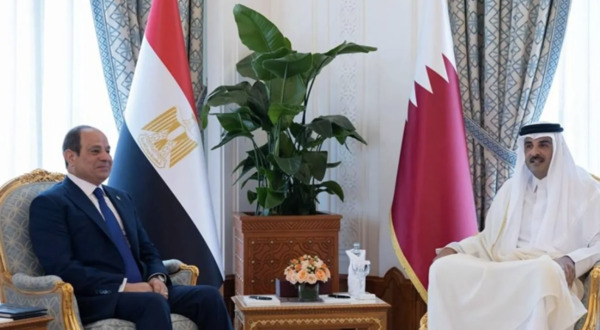
Qatar and Egypt affirmed their full support for the Gaza reconstruction plan. In a joint statement issued after joint talks held by visiting Egyptian President Abdel Fattah el-Sisi and Qatari Emir Sheikh Tamim bin Hamad Al Thani in Doha on Monday, the two countries expressed their aspiration for an international conference on the matter, hosted by Egypt in Cairo, in cooperation with regional and international partners, to coordinate humanitarian and development efforts to ensure the improvement of living conditions for the Palestinian people in the Strip.


The two sides also stressed the centrality of the Palestinian issue as the Arabs' primary cause, and affirmed their firm and supportive stance towards the legitimate rights of the Palestinian people, foremost among which is their right to establish their independent state on the June 4, 1967, lines, with East Jerusalem as its capital, in accordance with peace initiatives and relevant international resolutions.


The two sides affirmed their support for efforts to achieve Palestinian national reconciliation and the need to unify Palestinian ranks to ensure the activation of Palestinian state institutions and the fulfillment of the aspirations of the brotherly Palestinian people.


The two sides also expressed their deep concern over the continuing escalation in the Gaza Strip and emphasized the importance of continuing joint efforts to achieve an immediate and sustainable ceasefire, ensure the delivery of urgent humanitarian aid to civilians, support reconstruction efforts, and alleviate the suffering of the Palestinian people.


"Continuing joint efforts to support our brothers in the Gaza Strip and occupied Palestine, with the aim of establishing sustainable security and peace," Emir of Qatar Sheikh Tamim bin Hamad Al Thani tweeted during his talks with President Sisi.


The Emir of Qatar said: “Today, I discussed with the President of Egypt, my brother Abdel Fattah el-Sisi, prospects for strengthening the solid fraternal relations between our two brotherly countries, given their great potential to advance bilateral cooperation and expand its scope in several areas. Through these, we jointly look forward to deepening our economic ties and supporting them with more mutual trade and investment activities, serving the goals of the two countries and their common interests.”


He added, "We also exchanged views on ongoing developments in the region, and we will continue our joint efforts to support our brothers in the Gaza Strip and occupied Palestine, with the aim of establishing sustainable security and peace."


economic partnership

The joint statement indicated that President Sisi and Sheikh Tamim bin Hamad held talks "in an atmosphere of brotherhood and understanding," reflecting "the depth of bilateral relations and their solid foundations and mutual trust." The talks addressed ways to develop cooperation in various fields to enhance common interests and open new horizons for integration and partnership.


Both sides emphasized the importance of enhancing economic cooperation between the two countries, and agreed to continue joint efforts to promote investment and economic exchange in a way that reflects the political will of both countries and contributes to supporting sustainable economic development that serves the aspirations of both peoples.


In this context, both sides affirmed their commitment to supporting the economic partnership between the two countries. They agreed to work toward a package of direct Qatari investments totaling $7.5 billion, to be implemented over the next phase. This reflects the strength of the relationship between the two countries and contributes to achieving sustainable economic development that serves the interests of both peoples.


Regional issues

The two sides also expressed "deep concern over the ongoing armed conflict in Sudan," and emphasized the importance of an immediate cessation of military operations and a return to the path of comprehensive national dialogue, which would preserve Sudan's unity and sovereignty and end the suffering of its brotherly people. Both sides affirmed their full support for all regional and international initiatives aimed at ending the conflict.


The two sides welcomed the continuation of indirect negotiations between the United States and the Islamic Republic of Iran and affirmed their support for any peaceful efforts aimed at reducing tensions in the region and enhancing security and stability. They also commended the diplomatic efforts exerted by the sisterly Sultanate of Oman in this regard.


The two sides also stressed the importance of enabling regional and international efforts aimed at calming the situation and achieving peaceful solutions, most notably the mediation efforts led by the two countries in partnership with the United States, to achieve a ceasefire and end the war in the Gaza Strip. They condemned all attempts to undermine the negotiating process or target mediators, as these only aim to sabotage mediation efforts.


The State of Qatar also expressed its support for the nomination of Dr. Khaled El-Enany, Egypt's candidate, for the position of Director-General of the United Nations Educational, Scientific and Cultural Organization (UNESCO), in recognition of his academic and cultural career and confidence in his ability to make a positive contribution to the organization's work.


Both sides also expressed satisfaction with the progress made in bilateral relations over the past period, stressing the importance of building on these achievements and advancing relations to broader levels, within a framework of mutual respect and a shared vision for a future of security, stability, and prosperity.


Discussions

The Emir of Qatar and the Egyptian President held an official meeting today (Monday) at the Emiri Diwan.


Qatar News Agency reported that Sheikh Tamim affirmed during the talks "the strong fraternal relations between the two countries," expressing hope that this visit would contribute to strengthening bilateral cooperation and elevating it to broader horizons that achieve the aspirations and interests of both peoples.


For his part, the Egyptian President affirmed his keenness to enhance all aspects of joint cooperation in various fields.


During the talks, bilateral relations between the two countries and ways to strengthen and develop them in various fields were also discussed. The two sides also discussed key regional and international issues and developments of mutual interest, particularly developments in the Gaza Strip and the occupied Palestinian territories, as well as the two countries' joint efforts to end the war on the Gaza Strip and deliver relief aid to the Strip's residents.

PALESTINE

Mon 14 Apr 2025 4:25 pm - Jerusalem Time

The Israeli occupation targeted more than 400 schools in Gaza.


The United Nations Relief and Works Agency for Palestine Refugees (UNRWA) said that the Israeli occupation army has directly targeted more than 400 schools in the Gaza Strip, since it began its genocidal war on October 7, 2023.


The agency noted in a post on the X platform on Monday that most schools in the Gaza Strip were damaged by Israeli attacks.


She added that more than 70 percent of schools, most of which were shelters for displaced Palestinians, were directly targeted by the Israeli army.


She pointed out that 88 percent of schools in Gaza need complete renovation or rehabilitation.


She explained that 162 of the schools damaged by Israeli attacks belong to her.


She stated that children in Gaza have been displaced, killed, injured, and deprived of education for a year and a half due to Israeli attacks.


On October 28, 2024, the Knesset (Israeli parliament) finally approved, by a large majority, two laws prohibiting UNRWA from conducting any activities within Israel, revoking its privileges and facilities, and prohibiting any official contact with it. The decisions entered into force at the end of last January.


The Israeli occupation claims that UNRWA employees participated in the October 7, 2023, attack on military posts and settlements adjacent to the Gaza Strip, a claim the agency denied, and the United Nations affirmed UNRWA's commitment to neutrality.


With American support, Israel has been committing genocide in Gaza since October 7, 2023, leaving more than 167,000 Palestinians dead and wounded, most of them children and women, and more than 11,000 missing.


PALESTINE

Mon 14 Apr 2025 2:51 pm - Jerusalem Time

Red Cross: The situation in Gaza is hell on earth and our offices have been directly targeted.

The Director-General of the International Committee of the Red Cross, Pierre Krähenbühl, said that the situation in Gaza, where Israel is committing genocide, is "hell on earth."


During his participation in the Antalya Diplomatic Forum, held from April 11 to 13 in southern Türkiye, Krähenbühl indicated that the current conditions in the Gaza Strip are "absolutely unbearable."


He pointed out that humanitarian officials had lost their lives, and that their offices had been directly targeted in a tank attack on March 24.


He called for greater efforts to protect humanitarian workers and all civilians in the Gaza Strip.


"Now there is no hope for people. We hear civilians in Gaza saying they would rather die with their families because they see no future," he added.


He pointed out that everyone should feel anxious and fearful, considering that what is happening in the Gaza Strip could be a harbinger of a future war.

PALESTINE

Mon 14 Apr 2025 2:17 pm - Jerusalem Time

A young man was injured by live bullets during an Israeli raid south of Bethlehem.

A young man was shot with live ammunition on Monday during an Israeli raid on the town of Al-Khader, south of Bethlehem.


Local sources reported that an occupation army force stormed the town of Al-Khader and stationed itself in the "Umm Rakba" area, and fired live bullets at citizens while paving a colonial road, which resulted in an 18-year-old young man being injured by a live bullet in the chest. He was transferred to Beit Jala Governmental Hospital for treatment.

OPINIONS

Mon 14 Apr 2025 1:34 pm - Jerusalem Time

"So Trump Doesn't Make Obama's Mistakes"

Maariv

Maariv

Opinion Writer

By Yaakov Nagal

In his article published in Maariv under the title "So Trump Doesn't Make Obama's Mistakes," reserve brigadier general and strategic affairs expert Yaakov Nagal strongly warns US President Donald Trump against entering into new nuclear negotiations with Iran without requiring a comprehensive and complete dismantling of its nuclear program infrastructure.


Nagal believes that Netanyahu's recent visit to Washington took place amidst the potential for disagreements between him and Trump, most notably the nuclear agreement with Tehran, which, in the author's view, poses the most serious threat.


Nagal specifically criticizes Trump's announcement of his intention to enter into direct and rapid negotiations with Iran before resorting to "other options." He believes this approach recalls the steps taken by President Obama in 2012-2013, which later led to the signing of the nuclear agreement known as the Joint Comprehensive Plan of Action (JCPOA), an agreement that Nagal considers disastrous.


He points out that the Obama administration began with valid demands based on Security Council resolutions, but ended with an agreement that granted Iran a shortcut to developing a nuclear weapon and hundreds of billions in sanctions relief.


Yaacov Nagal emphasizes that any attempt to improve the previous agreement without completely dismantling the Iranian nuclear project infrastructure is a sure recipe for another catastrophe. He lists three main pillars that must be eliminated beforehand: the production of fissile material, the development of a nuclear weapons system, and the development of delivery vehicles.


He believes that Iran must destroy its stockpile of enriched uranium, shut down its enrichment facilities, and completely cease the development of nuclear warheads and long-range missiles, all under strict American supervision, before entering into any negotiating process.


Nagal believes that the Iranians will again attempt, as in the past, to drag out negotiations without actually implementing any concessions, with the aim of lifting sanctions, buying time, and even preventing Israel from launching military attacks against their facilities.


In this context, the author emphasizes that Israel must prepare for a large-scale military action against the Iranian nuclear program, preferably in cooperation with the United States. However, he also insists that Israel must be prepared to act alone if necessary.


The author warns that focusing solely on destroying enrichment facilities such as Natanz and Fordo without first addressing the development of nuclear weapons and the existing stockpile of enriched uranium will render any strike ineffective. Iran may possess the ability to manufacture a nuclear bomb in small, secret facilities even after the bombing, and may even demand "international legitimacy" in response to the strikes.


In the conclusion of his article, Yaakov Negal asserts that the era of diplomacy is over due to Iran's behavior and repeated violations of agreements, and that Trump absolutely does not want to be compared to Obama on this issue. He emphasizes that the lesson to be learned from the experience of 2015 is that mere good intentions are not enough, and that there can be no negotiations before the Iranian nuclear program is completely dismantled.

PALESTINE

Mon 14 Apr 2025 1:28 pm - Jerusalem Time

European official: Food is rotting at Gaza's gates due to Israeli ban

EU Commissioner for Preparedness, Crisis Management and Equality, Hadja Lahbib, said that Israel's blocking of humanitarian aid into Gaza has caused a humanitarian crisis in the Strip, with aid piling up outside and food rotting.


This came in a statement on the situation in Gaza and the West Bank, issued on Monday, ahead of a meeting of European Union foreign ministers in Luxembourg.


Lahbib pointed out that there are three urgent priorities in Gaza, where Israel continues its genocide: resuming the ceasefire and facilitating the entry of humanitarian aid. She emphasized that Gaza is experiencing a humanitarian crisis due to the blockade of aid.


She continued: "For more than a month, no aid, no food, no electricity, not even a single morsel of bread has arrived."


"While warehouses outside Gaza are filling up with food, food inside Gaza is running out and rotting outside because we cannot enter the area. At least 100 children are killed or injured every day," Habib added.


She noted that Israel has not approved humanitarian aid missions wishing to operate in the region for some time, and that there are no longer any international staff in Gaza and the West Bank.


She confirmed to Habib that the situation in the occupied West Bank is also deteriorating, saying: "Forced displacement and violence have become normal.


"That's why we need decisive political action."

She noted that the first meeting of the high-level political dialogue between the European Union and Palestine will be held with the participation of Palestinian Prime Minister Mohammad Mustafa following the foreign ministers' meeting.


Lahbib said that the meeting participants will discuss opportunities for cooperation, bilateral relations, and meeting the needs of the Palestinian people.

PALESTINE

Mon 14 Apr 2025 1:14 pm - Jerusalem Time

Israeli occupation forces storm Jenin Governmental Hospital and arrest a boy

Israeli occupation forces stormed Jenin Governmental Hospital today, Monday.


Eyewitnesses reported that a number of Israeli occupation soldiers stormed the hospital's emergency and registration departments while a number of citizens and patients were present, causing fear and panic among them. They arrested a young man whose identity is unknown and detained a staff member for a period of time.


The occupation's aggression on the city of Jenin and its camp continues for the 84th day, leaving 36 martyrs and dozens of wounded and detained.

ARAB AND WORLD

Mon 14 Apr 2025 1:12 pm - Jerusalem Time

Barak: Netanyahu is leading Israel to destruction

Channel 12 published an article by Ehud Barak, former Prime Minister, Minister of Defense, Minister of Foreign Affairs, and Chief of Staff of the IDF, in which he stated: “Israel stands on the edge of an abyss, facing clear and immediate dangers to its national security. The independence of the guardians of the law and the courts is at risk, as are democracy, the separation of powers, systems of authority, the people’s army, internal solidarity, international standing, national identity, its values, and its future. Netanyahu is the one who put Israel on the edge of the abyss, and he is insisting on pushing it toward it in order to save himself from the consequences of his mistakes: from losing power, from the investigations in the Qatargate affair, from the court’s ruling in his cases, and from the judgment of history against him.”


You'd have to be blind, unbalanced, or a coward to fail to see this obvious truth. This may be a painful truth: Over the past two and a quarter years, Netanyahu has lost his compass and destroyed what the country has built with the effort and blood of Israelis over the past 140 years.


Massive efforts are being made to transform Israel into a dictatorship under the guise of wedges, media, and empty statements about governance and reforms "by agreement," majority rights, and the correction of injustice, all while the war continues. The status of the legislative and judicial branches has been undermined. They have worked to undermine the opposition and hollow out the meaning of "law-abiding" and public service leaders.


A corrupt police force and secret services headed by "royal loyalists" guarantee a government free from oversight, adherence to the law, and citizen rights, without opposition or public accountability. The rule of a single individual and a powerful clique, with money that commands respect and political support from sectors, some of which live off the public's pockets, without bearing any burdens, and some of which are racist. These individuals can do whatever they please, leading to a dark, corrupt, and degenerate dictatorial state, infiltrated by fascism, weak, isolated, and internationally plagued by epilepsy.

Netanyahu returned from the United States humiliated and disappointed, and Washington began negotiations with Iran and Erdogan. Trump told Netanyahu, "You guys apparently get $4 billion a year." Trump appears to be recovering from Netanyahu's influence. He will visit the region in about a month and is expected to raise about $1 trillion from Saudi Arabia and the UAE. He will likely bring news of his intention to end the war on Gaza, even if this entails putting pressure on Israel. So he is leaving the matter in Netanyahu's hands for now, but it does signal that the war will soon end.

Continuing the war cannot achieve real strategic results. It is doubtful that military pressure will compel Hamas to release the Israeli captives, and the use of excessive force will almost certainly result in the death penalty for an unknown number of captives.

This is Netanyahu's "war for his safety," a war devoid of strategic or political thinking, and focused solely on Netanyahu's own political needs. He continues to wage war to prevent the fall of his government and to advance his positions in the investigations into his trial and in the official commission of inquiry. Netanyahu spoke ravingly at the cabinet meeting about 12 days ago about the collapse of Hamas, the disarmament of its weapons, and the displacement of its leaders through "voluntary transfer" and the implementation of the "Trump plan." But it is clear to anyone with insight that Trump is no longer thinking about the "Riviera" in Gaza and is living in a completely different world. Netanyahu will discover this belatedly, and in a cruel way.

The correct approach for any rational government is to return all detainees, even if the price is a ceasefire, which Israel can resume if necessary. The only way to ensure that Hamas does not control the Gaza Strip and threaten Israel is to replace it with another legitimate institution, an Arab force that would control the Gaza Strip for a long period of time, with the support of the Arab League and the United States, and with Saudi and Emirati funding for the Gaza reconstruction project.

PALESTINE

Mon 14 Apr 2025 12:29 pm - Jerusalem Time

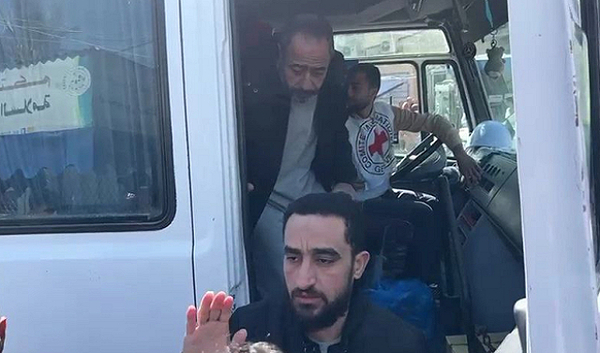
Israeli occupation releases 10 Palestinian prisoners from Gaza in poor health.

On Monday, the occupation released 10 Palestinian prisoners from the Gaza Strip in poor health. They had been arrested six months ago during the devastating war on the Strip, which has been ongoing since October 7, 2023.


The Prisoners' Media Office reported in a post on Telegram that 10 prisoners had arrived at Al-Aqsa Martyrs Hospital in Deir al-Balah, central Gaza, in poor health due to the torture they had been subjected to in Israeli prisons.


The office stated that the released prisoners were arrested by the Israeli army about six months ago during its siege of the Jabalia camp in the northern Gaza Strip.


The prisoners were reportedly released through the Kissufim Gate in the separation fence east of Khan Yunis and arrived at the hospital in Red Cross vehicles at Al-Aqsa Martyrs Hospital.


Medical teams conducted the necessary medical examinations for the released prisoners.


On Thursday, the occupation forces released 80 Palestinian prisoners from various areas of Gaza, all of whom were in dire health and psychological conditions.


The occupation previously released hundreds of prisoners from the Gaza Strip, the West Bank, and Jerusalem as part of the first phase of the Gaza ceasefire and prisoner exchange agreement, which entered into force on January 19.


In exchange for the Palestinian prisoners, Palestinian factions in Gaza released dozens of living and dead Israeli prisoners in stages during the first phase of the ceasefire agreement.


On March 18, Israel reneged on the 58-day ceasefire and prisoner exchange agreement and resumed its genocidal war on the Gaza Strip.

PALESTINE

Mon 14 Apr 2025 12:27 pm - Jerusalem Time

Israeli occupation forces arrest a young Palestinian in Tubas

Israeli occupation forces arrested a young man from Tubas on Monday after summoning him for interrogation at Salem camp.


The director of the Prisoners Club in Tubas, Kamal Bani Odeh, reported that the occupation forces arrested the young man, Muammar Ibrahim Mahmoud Fuqaha (35 years old), after summoning him for investigation at the Salem occupation camp.

ARAB AND WORLD

Mon 14 Apr 2025 11:47 am - Jerusalem Time

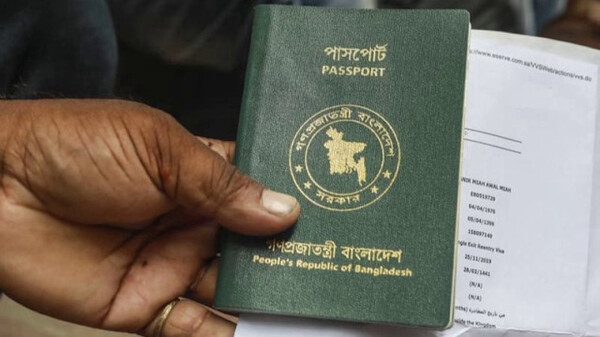
Bangladesh reinstates 'except Israel' on passports

The interim government in Bangladesh has reinstated the phrase "except Israel" on passports, effectively barring its citizens from traveling to Israel.


Under the new circular issued by the Ministry of Interior on Sunday, the phrase "This passport is valid for all countries except Israel" has been reinstated.


Local media reported that the decision was taken following a "Free Palestine" demonstration held in the capital, Dhaka, several days ago, attended by thousands of people to denounce the Israeli massacres in the Gaza Strip.


It is noteworthy that the phrase "except for Israel" was removed from Bangladeshi passports in May 2021 during the presidency of Sheikh Hasina Wajed (2009-2024).


With full American support, Israel has continued its genocide in Gaza since October 7, 2023, resulting in approximately 167,000 Palestinian deaths and injuries, most of them women and children, in addition to more than 11,000 missing persons.


PALESTINE

Mon 14 Apr 2025 11:25 am - Jerusalem Time

Israeli Settlers uproot trees and bulldoze lands in Hebron and Salfit

Settlers uprooted about 50 olive trees in the town of Deir Ballut, west of Salfit.


Local sources reported that settlers from the Leshem settlement, built on privately owned Palestinian land, uprooted and destroyed approximately 50 olive trees in the Iraq al-Tuta area east of the town. The trees are owned by members of the Abdullah family.


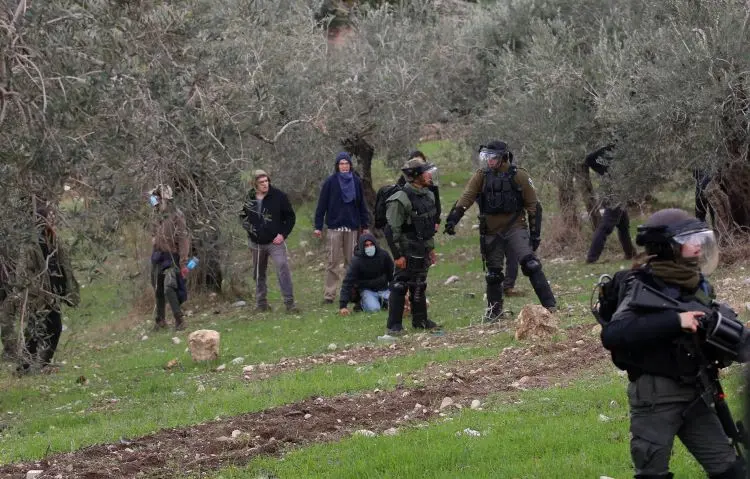
In Hebron, settlers bulldozed agricultural land belonging to Saeed Rabaa Al-Amour in the Al-Rakeez area of Masafer Yatta, demolishing stone walls and cutting down several trees and the fence surrounding the land.


Settlers also chased shepherds in the Shaab al-Batm area and the eastern area of Ma'in village in Masafer Yatta.


Occupation forces and settlers bulldozed lands to pave settlement roads in the village of Al-Burj and the town of Adh Dhahiriya, south of Hebron.

PALESTINE

Mon 14 Apr 2025 11:21 am - Jerusalem Time

An Israeli was injured in a ramming attack near Hebron.

An Israeli was injured in a run-over attack at the Dhahiriya junction, south of Hebron, on Monday morning.


Channel 12 reported that a 30-year-old man was transported by a Magen David Adom medical team while he was conscious and suffering from injuries to his extremities.


Israeli Army Radio reported that one person was injured after being run over, while the vehicle involved fled the scene.


The Israeli army announced in an initial statement that it had received a report of a vehicle-ramming attack at the Dhahiriya Junction, without providing further details.


The Israeli army dispatched large forces to the site of the attack, and began searching, closing roads, and setting up checkpoints in the area.

PALESTINE

Mon 14 Apr 2025 10:30 am - Jerusalem Time

Israeli aggression on Tulkarm: raids and forced evacuations of citizens

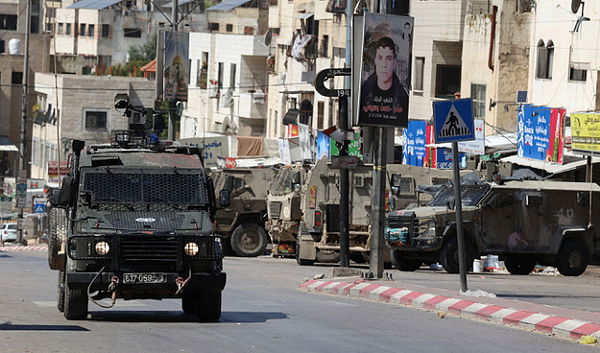
The Israeli occupation forces continue their escalating aggression against the city of Tulkarm and its camp for the 78th consecutive day, and for the 65th day against the Nur Shams camp, amid an escalation in the field, including raids, forced evacuations, and a heavy military presence.


Local sources reported that the occupation forces have sent military reinforcements, including vehicles and infantry units, to the city and its two camps. They are deployed along the main streets and neighborhoods, obstructing the movement of vehicles and citizens, subjecting them to searches and abuse.


After midnight, Nour Shams camp witnessed heavy live fire, accompanied by the sound of explosions and a widespread deployment of occupation soldiers in the Jabal al-Nasr area. The camp is under a strict siege, preventing entry or exit.


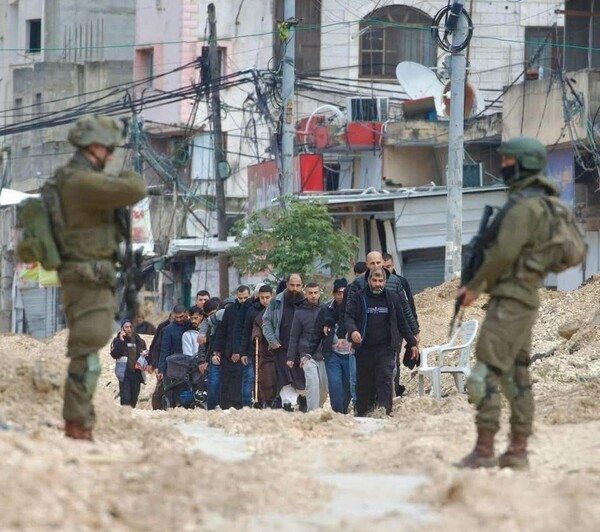
Local sources reported that the occupation forces forced a number of families at dawn on Monday to evacuate their homes in the area between the Rashid neighborhood in the Dhnaba suburb and Jabal al-Nasr in the Nour Shams camp, under pouring rain, as part of a forced eviction policy that has been repeated daily since the start of the aggression.


In Tulkarm camp, occupation soldiers deployed extensively after midnight in its neighborhoods and alleys, firing live ammunition and flash bombs, amid extensive search and combing operations. The camp was emptied of its residents after they were forcibly displaced from their homes, and completely devoid of any signs of life, following the complete destruction of the infrastructure and the sabotage, demolition, and burning of homes and facilities.


Last night, the occupation forces continued their forced eviction of residents in the vicinity of the traffic circle in the northern neighborhood of the city, forcing the residents of the "Najjar Building" to leave the building within just three hours. This coincided with their seizure of a number of residential buildings on Nablus Street, specifically those facing Tulkarm camp, and their conversion into military barracks with their vehicles stationed in their vicinity. The number of buildings seized by the occupation exceeded 15, housing hundreds of families.


Meanwhile, Nablus Road, which connects the Tulkarm and Nur Shams refugee camps, has witnessed a heavy deployment of occupation forces, restricting movement and harassing citizens. Sections of the road have been closed off with earth mounds in both directions.


The Dhenaba suburb, east of the city, also witnesses a daily and intensive presence of infantry squads, particularly near the Attar platforms and the vicinity of Al-Firdaws Mosque. Flying checkpoints are set up, vehicles are stopped and thoroughly searched, passengers' IDs are checked, and in many cases, vehicles are forced to turn back and prevented from passing.


The ongoing Israeli aggression and escalation against the city of Tulkarm and its two refugee camps resulted in the deaths of 13 civilians, including a child and two women, one of whom was eight months pregnant. Dozens more were injured and arrested.


It also resulted in the forced displacement of more than 4,000 families from the Tulkarm and Nur Shams camps, along with hundreds of families from the city's northern neighborhood after their homes were seized and a number of them converted into military barracks.


The aggression caused widespread destruction to the infrastructure, including homes, shops, and vehicles, which were completely and partially demolished, burned, vandalized, looted, and stolen. 396 homes were completely destroyed and 2,573 partially destroyed in the Tulkarm and Nur Shams camps, in addition to the closure of their entrances and alleys with earth mounds.

OPINIONS

Mon 14 Apr 2025 10:03 am - Jerusalem Time

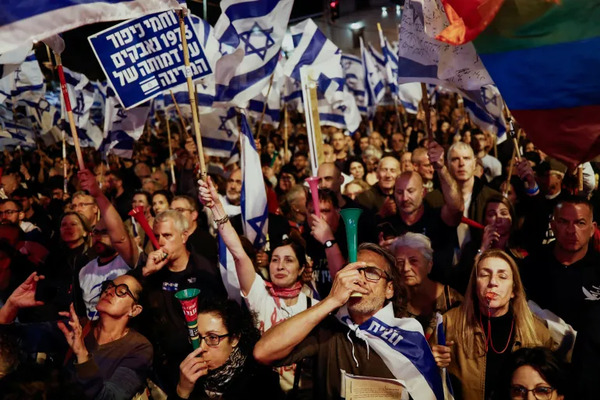
Why I don’t cheer for Israel’s ‘pro-democracy’ movement

Al Jazeera

Al Jazeera

Opinion Writer

By Neve Gordon

In conversations about Israel and Palestine, I am often asked about my views on the internal resistance to Prime Minister Benjamin Netanyahu’s government.

My questioners point to hundreds of thousands of Israelis who have been taking to the streets to protest against the government and its efforts to introduce a judicial overhaul over the past two years and inquire why I remain apathetic to these efforts to end Netanyahu’s rule.

My answer is simple – the real problem facing Israel is not its current government. The government might fall, but until we radically transform the nature of the regime, not much will change, and particularly not in relation to the basic human rights of Palestinians. A recent Israeli Supreme Court decision underscores my point.

On March 18, 2024, five Israeli human rights organisations filed an urgent petition with Israel’s Supreme Court, asking the court to instruct the Israeli government and military to fulfil their obligations under international humanitarian law and address the civilian population’s humanitarian needs amid the catastrophic conditions in Gaza.

The petition was submitted at a time when aid was entering Gaza, but the amount crossing the border was far from sufficient to meet the minimal needs of the population, of whom 75 percent had already been displaced. The rights groups wanted the government to lift all restrictions on the passage of aid, equipment and personnel into Gaza, particularly in the north where there were already documented cases of children dying from malnutrition and dehydration.

The court did not issue a ruling for more than a year, effectively allowing the government to continue restricting aid unchecked. Three weeks after the rights groups filed the petition, the court convened only to provide the government additional time to update its preliminary response to the petition. This set the tone for how the petition would proceed over the next 12 months.

Each time the petitioners provided data on the worsening conditions of the civilian population and emphasised the urgent need for judicial intervention, the court simply asked the government for further updates. In its April 17 update, for example, the government insisted that it had significantly increased the number of aid trucks entering Gaza, claiming that between October 7, 2023, and April 12, 2024, it had allowed 22,763 trucks to cross the checkpoints. This amounts to 121 trucks per day, which according to every humanitarian agency working in Gaza, does not come close to meeting the population’s needs.

In October 2024, at least half a year after the petition was submitted, the rights organisations asked the court to issue an injunction after the government deliberately blocked humanitarian aid for two weeks. In response, the government claimed that it had been monitoring the situation in northern Gaza closely and that there was “no shortage of food”. Two months later, however, the government confessed that it had underestimated the number of Palestinian residents trapped in northern Gaza – thus acknowledging that the aid entering the Strip was insufficient.

On March 18, 2025, after Israel breached the ceasefire agreement and resumed its bombardment of Gaza and the minister of energy and infrastructure halted the supply of electricity to the Strip, the petitioners submitted yet another urgent request for an interim order against the government’s decision to prevent the passage of humanitarian aid. Again, the court failed to issue a ruling.

Finally, on March 27, more than year after the rights organisations had filed the petition, the court issued a verdict. Chief Justice Yitzhak Amit and Justices Noam Sohlberg and David Mintz unanimously ruled that it lacked merit.  Justice David Mintz interlaced his response with Jewish religious texts, characterising Israel’s attacks as a war of divine duty, while concluding that, “[The Israeli military] and the respondents went above and beyond to enable the provision of humanitarian aid to the Gaza Strip, even while taking the risk that the aid transferred would reach the hands of the Hamas terrorist organisation and be used by it to fight against Israel.”

Thus, at a time when humanitarian agencies have pointed again and again to acute levels of malnutrition and starvation, Israel’s Supreme Court – both in the way it handled the judicial process and in its ruling – has ignored Israel’s legal obligation to refrain from depriving a civilian population of objects indispensable to their survival, including by wilfully impeding relief supplies. In effect, the court legitimised the use of starvation as a weapon of war.

This is the court that hundreds of thousands of Israelis are trying to save. Its March 27 ruling  – and almost all other rulings involving Palestinians – reveal that the Supreme Court of Israel is a colonial court – one that protects the rights of the settler population, while legitimising the dispossession, displacement and horrific violence perpetrated against the Indigenous Palestinians. And while the Supreme Court might not reflect the values of the existing government – particularly on issues relating to political corruption – it undoubtedly reflects and has always reflected the values of the colonial regime.

Hence, the liberal Zionists who fill Tel Aviv’s streets every weekend are not demonstrating against a judicial overhaul that endangers democracy, but against an overhaul that endangers Jewish democracy. Few of these protesters have any real qualms about the court’s horrific ruling on humanitarian aid, or, for that matter, on how the court has consistently upheld Israeli apartheid and colonial pillars. The regime, in other words, can continue to eliminate Palestinians unhindered as long as the rights of Israel’s Jewish citizenry are secured.


OPINIONS

Mon 14 Apr 2025 9:58 am - Jerusalem Time

A Majority of Americans Views Israel Negatively in wake of Gaza Genocide

juancole.com

juancole.com

Opinion Writer

By Juan Cole


Ann Arbor (Informed Comment) – Laura Silver at the Pew Research Center reports that 53% of Americans now have a negative view of Israel, a stark deterioration from 42% in spring 2022 before the Israeli total war on Gaza.

Moreover, in just 3 years the percentage of Americans with very negative views of Israel has nearly doubled, from 10% to 19%. That is nearly one in five Americans.

The deterioration is bipartisan, though there are differences between the parties. Some 69% of Democrats and those who lean toward the Democratic Party have an unfavorable view of Israel now, whereas 37% of Republicans do.

But among younger voters these differences are diminished. Half of Republicans under 50 years of age view Israel negatively, while 71% of Democrats in that age group have an unfavorable view of the country.

 Favorability ratings toward Israel of Americans, 1975-2025. ChatGPT

That age trend does not bode well for Israel. As the older Baby Boom generation shaped by memories of the Holocaust, the film Exodus, and the 1967 Six-Day War recedes, they are replaced by Gen X, Millennial and Gen Z Americans who have never known an Israel that was not geopolitically dominant in the Middle East and was not ruling over millions of oppressed and stateless Palestinians.

There are differences among religions and Christian denominations. Some 53% US Catholics view Israel negatively, perhaps influenced by Pope Francis’s denunciations of the Israeli war on Gaza civilians. So Catholic thinking on the matter exactly mirrors that of Americans in general.

About half of mainline white Protestants (Methodists, Presbyterians, Episcopalians, etc.) view Israel negatively.

Some 81% of American Muslims have a negative view of Israel.

And 69% of the religiously unaffiliated (about 15% of the population and about a third of people under 30) view Israel negatively.

On the other hand, the vast majority of white Evangelicals, some 20% of the country, have a positive view of Israel.

And of course American Jews similarly have a positive view of Israel. But Evangelical Christians and Jews are increasingly out of step with the rest of America on this issue.

With regard to the current Israeli leadership, however, there is more negativity across the board. 53% of Jewish Americans don’t trust Prime Minister Benjamin Netanyahu to do the right thing. A similar proportion of Catholics take a dim view of Netanyahu, while 49% of mainstream white Protestants do not trust him to do the right thing.

Only 15% of Americans like Trump’s idea of America taking over the Gaza strip. 62% of Americans oppose this plan, and nearly half strongly oppose it.

Among the under-50 set, moreover, there is a significant drop in the number of Americans who even think the Israel-Gaza conflict is important to them or US interests. About 41% of Republicans under 50 don’t think it is, such that they are the most skeptical group in the poll. Only 51% of Democrats under 50 think the conflict is important to them and US interests. Older Americans tend to think the conflict is important to them and the US, but there is a substantial drop-off in younger voters.

Slightly more Americans think Trump is too pro-Israel than think he strikes the right balance.

The Israeli government has a whole cabinet ministry dedicated to propagandizing Americans to love Israel, give it money, and smear critics of any Israeli policy as antisemites. While it and its American allies, including the Evangelicals, have had enormous success on Capitol Hill and in the White House, their campaign is collapsing on main street across the country.

It is hard to know how consequential the collapse in support for Israel is. Public opinion means little in American day-to-day politics, except insofar as it affects elections. Even then, people vote on bread and butter issues and may not even know where their congressional representative stands on Israeli policies. Moreover, despite the collapse of support for Israel among the Democratic rank and file, congressional Democrats and the party leadership are so pro-Israel that they mostly are willing to overlook the ongoing genocide perpetrated by the Israeli military against Palestinian civilians in Gaza.

I do think it is likely that the attempt heavy-handedly to impose pro-Israel views by the Trump administration and the use of this issue (misconstrued as “antisemitism”) will further cast Israel in a negative light for many Americans. But the current cut-off by Netanyahu of all food and other aid for Gaza while he shoots fish in a barrel has the potential for creating widespread hunger, the images of which will certainly driven a further wedge between most Americans and the far, far rightwing Israeli government


OPINIONS

Mon 14 Apr 2025 9:50 am - Jerusalem Time

Zeev Sternhell: "In Israel, a racism close to early Nazism is growing"

From Le Monde- Translation by "Al Quds.com"

From Le Monde- Translation by "Al Quds.com"

Opinion Writer

In an opinion piece in "Le Monde," the historian and specialist in fascism launches into a comparison between the fate of Jews before the war and that of Palestinians today.


[The announcement is as symbolic as it is internationally contested: on December 6, 2017, U.S. President Donald Trump decided to recognize Jerusalem as the capital of Israel. The U.S. Embassy, currently located in Tel Aviv, will open its doors before the end of 2019. The initiative was quickly welcomed by Israeli Prime Minister Benjamin Netanyahu. Since then, in the Knesset, the parliament, the right has been waging an offensive on several fronts. On January 2, MPs voted on an amendment to the Basic Law, or constitutional law, making any transfer of part of Jerusalem impossible without a two-thirds majority vote. Several MPs also put forward bills aimed at redefining the city's boundaries, by rejecting entire Arab neighborhoods located beyond the separation wall, or by incorporating vast settlements. For historian Zeev Sternhell, these decisions aim to force Palestinians to accept Jewish hegemony over the territory without resistance, condemning them for eternity to the status of an occupied population.


Opinion. I sometimes try to imagine how the historian living fifty or one hundred years from now will try to explain our era. At what point, he will no doubt ask, did people in Israel begin to understand that this country, which became a state during the 1948 War of Independence, founded on the ruins of European Judaism and at the cost of the blood of 1% of its population, including thousands of Holocaust survivors, had become a monster for non-Jews under its domination? When exactly did Israelis, at least in part, understand that their cruelty toward non-Jews under their control in the occupied territories, their determination to crush Palestinian hopes for freedom and independence, or their refusal to grant asylum to African refugees, were beginning to undermine the moral legitimacy of their national existence? The answer, the historian might say, lies in microcosm in the ideas and activities of two prominent MKs from the majority party, Miki Zohar (Likud) and Bezalel Smotrich (Jewish Home), loyal representatives of government policy, recently thrust into the spotlight. But even more importantly, this same ideology underlies the so-called "fundamental"—that is, constitutional—bills that Justice Minister Ayelet Shaked, with the eager consent of Prime Minister Benjamin Netanyahu, intends to push through the Knesset quickly. Shaked, the number two in the religious-nationalist right, in addition to his extreme nationalism, perfectly represents a political ideology according to which an electoral victory justifies control over all organs of state and social life, from the administration to the judiciary, including culture. In the minds of this right, liberal democracy is nothing but infantilism. It is easy to understand the significance of such an approach for a country with a British tradition that has no written constitution, only rules of conduct and a legislative framework that a simple majority suffices to change.

"This is a harsh nationalist constitutional act, which Ms. Le Pen would not dare propose."

The most important element of this new jurisprudence is a piece of legislation known as the "nation-state law": this is a harsh nationalist constitutional act, which the Maurrassian integral nationalism of yesteryear would not have disowned, which Ms. Le Pen today would not dare propose, and which authoritarian and xenophobic Polish and Hungarian nationalism will welcome with satisfaction. So here are the Jews who forget that their fate, since the French Revolution, is linked to that of liberalism and human rights, and who in turn produce a nationalism in which the hardest chauvinists in Europe easily recognize themselves.


The Left's Powerlessness

Indeed, this law has the openly declared objective of subjugating the universal values of the Enlightenment, liberalism, and human rights to the particularist values of Jewish nationalism. It will force the Supreme Court, whose prerogatives Shaked is, in any case, working to curtail and break its traditional liberal character (by replacing, as much as possible, all retiring judges with jurists close to her), to render verdicts that always comply with the letter and spirit of the new legislation.

But the minister goes even further: she has just declared that human rights will have to bow to the need to ensure a Jewish majority. But since no danger threatens this majority in Israel, where 80% of the population is Jewish, the aim is to prepare public opinion for the new situation that will arise in the event of the annexation of the occupied Palestinian territories, as desired by the minister's party: the non-Jewish population will remain deprived of the right to vote.

Thanks to the impotence of the left, this legislation will serve as the first nail in the coffin of the old Israel, the one of which only the declaration of independence will remain, like a museum piece reminding future generations of what our country could have been if our society had not morally decomposed during a half-century of occupation, colonization, and apartheid in the territories conquered in 1967, now occupied by some 300,000 settlers. Today, the left is no longer capable of standing up to a nationalism that, in its European version, far more extreme than ours, almost succeeded in annihilating the Jews of Europe. This is why it is worth making the two interviews conducted by Ravit Hecht for Haaretz (December 3, 2016 and October 28, 2017) with Smotrich and Zohar widely read in Israel and the Jewish world. They show how not just local fascism is growing before our eyes, but a racism close to Nazism in its infancy.

Like any ideology, German racism, too, had evolved, and initially, it only attacked the human and civic rights of Jews. It is possible that without the Second World War, the "Jewish problem" would have resulted in the "voluntary" emigration of Jews from German-controlled territories. After all, virtually all the Jews of Germany and Austria were able to leave in time. It is not impossible that some on the right believe the same fate could be reserved for the Palestinians. All that would be needed is for an opportunity to arise, a good war for example, accompanied by a revolution in Jordan, which would allow a majority of the inhabitants of the occupied West Bank to be pushed eastward.


The Specter of Apartheid

The Smotrichs and the Zohars, let's be clear, have no intention of physically attacking the Palestinians, provided, of course, that the latter accept Jewish hegemony without resistance. They simply refuse to recognize their human rights, their right to freedom and independence. In the same vein, in the event of official annexation of the occupied territories, they and their political parties are already announcing without hesitation that they will deny Palestinians Israeli nationality, including, of course, the right to vote. As far as the ruling majority is concerned, the Palestinians are condemned to eternal occupied status.

For Miki Zohar, the Palestinians "suffer from a major shortcoming: they were not born Jewish."

The reason is simple and clearly stated: Arabs are not Jews, and therefore they have no right to claim ownership of any part of the land promised to the Jewish people. For Smotrich, Shaked, and Zohar, a Jew from Brooklyn, who may never have set foot on this land, is its rightful owner, but the Arab, who was born there, like his ancestors before him, is a foreigner whose presence is accepted only by the goodwill and humanity of the Jews. The Palestinian, Zohar tells us, “does not have the right to self-determination because he is not the owner of the land. I want him as a resident, and this is because of my honesty: he was born here, he lives here, I will not tell him to leave. I regret to say it, but [the Palestinians] suffer from a major shortcoming: they were not born Jewish.” Which means that even if the Palestinians decided to convert, started growing sideburns, and studying the Torah and the Talmud, it would be of no use to them. Nor would it be to the Sudanese and Eritreans and their children, who are Israeli in every way—language, culture, socialization. It was the same with the Nazis. Then comes apartheid, which, according to most right-wing "thinkers," could, under certain conditions, also apply to Arabs who have been Israeli citizens since the founding of the state. Unfortunately, many Israelis, who are ashamed of so many of their elected officials and despise their ideas, for all sorts of reasons, continue to vote for the right.

The left-wing Israeli daily Haaretz published an op-ed by the same author on this topic.


Zeev Sternhell (Historian, member of the Israel Academy of Sciences and Letters, professor at the Hebrew University of Jerusalem, specialist in the history of fascism)


ARAB AND WORLD

Mon 14 Apr 2025 9:42 am - Jerusalem Time

How does the suppression of Palestine supporters contribute to the institutionalization of Trumpism in America?

Late last year, there was talk of an artificial intelligence project to silence pro-Palestinian voices in the United States, particularly on university campuses. The project, called "Project Esther," was designed to silence pro-Palestinian voices in the United States, particularly on university campuses.

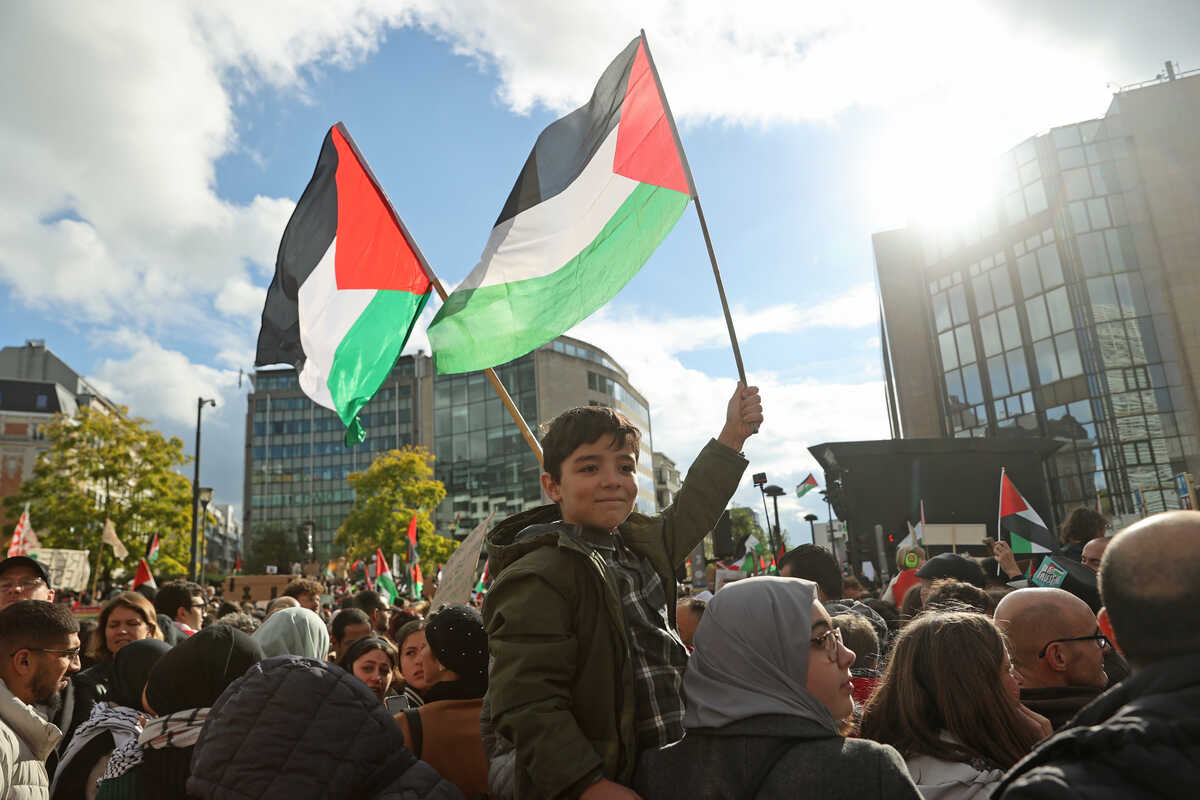
As the war on Gaza rages on, the student movement for Palestine in America has resumed its activities, particularly after the arrest of Columbia University student Mahmoud Khalil by US Immigration and Customs Enforcement.

Regarding the Esther Project and the Trump administration's continued persecution of students participating in the movement for Palestine, the Al Jazeera Center for Studies published an analytical paper titled "Suppressing Palestine Supporters Using Artificial Intelligence to Institutionalize 'Trumpism' and Change the Identity of American Society." In it, researcher Dr. Hajj Muhammad al-Nasik discusses Trump's true goals behind combating anti-Semitism, and the extent to which he will succeed—with the help of far-right institutions—in institutionalizing Trumpism and silencing voices supporting the Palestinian cause.


The right-wing project to serve Israel

Trump is not hesitant to fulfill his promise. The project's founders have designed the Esther tool to organize and guide all willing partners in a coordinated effort that utilizes all available resources to combat anti-Semitism in the United States. They expressed their hope for the arrival of "a US administration willing to implement it."

The project's initiators got their wish, and those eager to implement it, boast about it, and make it a pressing issue reached the White House. Even members of his administration, including Secretary of State Marco Rubio, were instrumental in its implementation, making it a federal policy under Trump.

Since Operation Protective Edge on October 7, 2023, the West has mobilized its soft power, alongside its military might, to support this war, harnessing its media, social media, sports, and academic institutions to justify Israel's crimes.

With the emergence of the counternarrative, led in part by American college students, Israel's supporters in the United States were alarmed, and the Zionist lobby began to unite efforts against the "modern Haman" and revive Esther, the historical Jewish heroine who saved the Jews from his brutality.

Thus, he laid the theoretical framework for the Esther Project: "A National Strategy to Combat Anti-Semitism," in another double revival of McCarthyism, rising from its ashes in a more extreme form, this time distributing "anti-Semitic" stickers instead of "communist" stickers.

Speaking of McCarthyism, its application means that even a hint of sympathy for the Palestinians is enough to label an organization or individual as part of the Islamic Resistance Movement (Hamas). The one calling for its application today is not Senator John McCarthy, but rather the Heritage Foundation, the organization behind the development of Project 2025, and the Esther Project as part of it.

Heritage has helped shape the policies of Republican presidents for decades, and now focuses on institutionalizing Trumpism. It developed the Esther Project in collaboration with the America First Policy Institute, sometimes described as "the White House in waiting."

The project claims that the motivations and understanding of history of pro-Palestinian groups come "straight from the pages" of the Communist Manifesto.

What's interesting about the project is that it involves a kind of "copy-pasting" of the Communist Manifesto to understand the motivations of pro-Palestinian groups and their understanding of history. In doing so, the project deliberately suggests that the threat posed by pro-Palestinian groups is similar to the communist threat that threatened the United States 70 years ago, in order to legitimize the revival of McCarthyism, which once again wiped out communists in the country.

“The right-wing Zionist hegemons wanted to outlaw Jews who were anti-Zionist, or non-Zionist, or critical of Israel, and they succeeded in turning that into policy on the campuses,” says Columbia University professor Joseph Hawley, who has been involved in organizing Jewish faculty members who oppose the war and exploiting anti-Semitism. “Now they want to make it federal law.”

Although Americans who oppose US support for Israel's genocide in Palestine are subject to widespread repression, the project seeks to institutionalize and governmentalize this repression to deport, imprison, disenfranchise, expel, or drive underground those sympathetic to Palestine. The US Jewish community will also be purged of any elements sympathetic to the Palestinian cause.

Politico's White House correspondent, Iri Sentner, says Republicans have long loathed college campuses for their role as breeding grounds for culture war campaigns like "Woke Culture," which champions diversity, equality, inclusion, and academic excellence. They saw an opportunity to punish these organizations in the Palestine protests.


Mahmoud Khalil... the first victim

Axios reported that the US State Department is using artificial intelligence to revoke the visas of foreign students "who appear to support Hamas." This is part of a "catch and revoke" campaign that aims to review tens of thousands of social media accounts of student visa holders. The campaign is being conducted in collaboration with the Departments of Justice and Homeland Security, in what a senior State Department official described as a "whole-of-government approach."

Student Mahmoud Khalil is the first victim of this policy. Trump commented on his arrest by saying that more arrests would follow. He added in a post on Truth Social, "Immigration and Customs Enforcement proudly arrested Mahmoud Khalil, a radicalized foreign student affiliated with Hamas, on the Columbia campus." The White House account on X also posted a photo of Khalil with the caption, "Shalom Mahmoud."

The day before his arrest, Khalil asked Columbia University President Katrina Armstrong for protection, telling her in an email, "I couldn't sleep for fear that ICE or someone else would come to my house." However, she did not respond and he was arrested at his home, along with his eight-month-pregnant wife, and transferred to a federal immigration prison in Louisiana.

The punitive measures against universities have reached such a level that the Trump administration has canceled approximately $400 million in grants and contracts awarded to a number of universities, including Columbia University. This could deprive many students around the world of the opportunity to pursue their studies at American universities, alleging the universities' failure to address the ongoing harassment of Jewish students.


"Anti-Semitism" scapegoat

Trump may have some success in deporting some foreign students to silence some voices supporting the Palestinian cause, but he will not achieve his goal. The students are only a small part of a broad base of Americans who support Palestinian rights, especially after the war on the Gaza Strip.

Even if we accept, for the sake of argument, that Trump is only targeting students from the groups, the task is not easy. Judge Jesse Furman ruled that Khalil cannot be deported "unless ordered by the court." His arrest sparked a wave of criticism and condemnation from those who believed that deportations could violate the US Constitution if implemented, including the American Civil Liberties Union.

Members of the US House of Representatives condemned Khalil's arrest, calling it "a dangerous precedent and a violation of constitutionally guaranteed freedom of expression." Journalist Emily Tamkin warned that the Trump administration's focus on anti-Semitism could make Jews less safe, noting that Trump seeks to attack higher education, freedom of expression and assembly, and immigration standards, all under the guise of anti-Semitic conspiracies.

"The Columbia University administration has done its best to appease the Trump administration," Sheldon Pollock, professor emeritus of South Asian studies at Columbia University, wrote to Tamkin. "But it hasn't worked, and this attack has nothing to do with anti-Semitism."

The United Nations, through its Secretary-General, António Guterres, condemned Khalil's arrest, saying it was necessary to "highlight the importance of upholding the rights to freedom of expression and peaceful assembly everywhere."

Ultimately, President Trump appears to be using his war on anti-Semitism as a pretext for achieving other goals: imposing a right-wing agenda that believes in white supremacy and seeks to change the identity of American society. This, as journalist Thomas Friedman has described it, is "a great collapse in full swing."


Source: Al Jazeera Net


OPINIONS

Mon 14 Apr 2025 9:39 am - Jerusalem Time

The theory of Israeli illusory security

Dr. Ahmed Rafiq Awad

Dr. Ahmed Rafiq Awad

Opinion Writer

Many Israeli experts, military personnel, and academics, who claim to be the most capable of understanding what they call the Middle East and the most effective in dealing with it and its phenomena, believe that this region, with all its ethnic and sectarian mosaic, is a fragile, ever-changing, and frequently conflicted region, devoid of legitimacy and constants, and that it worships force in all its forms and manifestations. They believe that the peoples of this region and its sects are transient and have never developed solid states or stable regimes. Even the states that arose here were feudal, tribal states based on tribalism more than nationalism or patriotism.

The problem with this is that the Israeli military and security establishment treats us with this colonial and orientalist mentality. In other words, it treats us and the peoples of the region based on the assumption that we are neither mature peoples nor real states.

The Israeli military-security establishment, which rules Israel and is the decision-maker, at least until now, believes that it is possible to achieve permanent security - not to mention permanent peace - through all forms of force, starting with occupying land, expelling its inhabitants, abusing them, depriving them of their wealth and rights, controlling their lives, controlling their activities, limiting their ability to confront, preventing them from exercising basic rights, and making them feel like they are inside a large prison, denied many of the privileges that every citizen living on their land in complete freedom possesses. For this reason, the military-security establishment has, over the course of 56 years, restricted freedoms, movement, work, travel, construction, education, urban and population development. This is done through a discriminatory legal system, expanding settlements, changing the road network, confiscating land for various reasons, expelling citizens, preventing them from building, and forcing them into residential areas that become increasingly narrower with time.

However, the Israeli military-security establishment was not satisfied with these measures of force and subjugation, despite their costly and harsh nature. It succeeded in some of its objectives, which included impoverishing citizens, subordinating them to the Israeli economy, and dismantling social structures to a certain extent, as well as pushing them to emigrate, drop out of school, or become involved in a world of crime. As I mentioned, the military-security establishment was not satisfied with these measures of force. Rather, it resorted to using another tool of control and subjugation through political proposals, settlement projects, the development of alternatives, and the presentation of multiple political options. Over the course of 56 years, the occupier has deliberately bypassed the choices of the Palestinian people, their symbols, and their political representative. The occupier has tried throughout this time to create alternative leaders, other plans, and fictitious bodies. It has attempted to create solutions that have neither legs nor hands, and to fabricate thugs from various regions, colors, and interests.

This apparently didn't work for reasons too long to be explained in a newspaper article like this. So the military-security establishment turned to new solutions, such as dismantling, skepticism, division, seduction, funding schemes, and the illusion of representation. The Israeli military-security establishment resorted to using excessive force on the one hand, and soft power and deception on the other, based on the premise that the peoples of the region are delusional, imaginary, reckless, and emotional, and will believe anything with a little seduction and temptation.

Israel has never given up on trying to consolidate its security—not to mention its peace—through a heavy stick that operates without regard for compromise, and through soft policies that operate without regard for the heavy stick. In this, Israel appears incomprehensible, insane, or without legal restraints or humanitarian controls whatsoever. What's the problem with all this? The problem is that Israel has not achieved security to this moment, nor has it achieved peace. It has remained embroiled in constant wars that have cost it dearly in material and human terms, and it has remained in constant turmoil and tremendous controversy. As much as we have changed, Israeli society has also changed at an even greater pace. Israel is losing its vitality, its guaranteeing institutions, and its strong internal factors, and is descending into the abyss of extremism, racism, and the threat of civil war. It is losing its luster, reputation, and respect, at a time when near and distant dangers and challenges are increasing.

The problem with Israel's delusional security theory is that Israel doesn't want to see that it is occupying and dispossessing another people, yet it demands that the region not only recognize this but also share in its consequences. This is an occupation that has never existed before, and this is also true. The occupying Israeli doesn't believe he is practicing a hideous occupation; rather, he sees himself as returning to the home he abandoned thousands of years ago, and therefore he is renovating it anew. And even these renovations entail some losses. This is the problem with Israeli security: many illusions and superhuman efforts to prove them true, which is never true.


.............


The problem with Israel's delusional security theory is that Israel doesn't want to see that it is occupying and confiscating another people's land, yet it demands that the region not only recognize this but also share in its consequences.

OPINIONS

Mon 14 Apr 2025 9:25 am - Jerusalem Time

When officials spread frustration instead of hope!

Baha Rahal

Baha Rahal

Opinion Writer

It's true that the Palestinian reality no longer views statements with surprise, nor does it even resent what officials say who, instead of being solution-makers and hope-givers, join the ranks of complainers, weepers, and wailers. The latest example is what the Minister of Finance in Dr. Mohammed Mustafa's government said about the economic collapse, or rather, in his own words: "The Palestinian economy is dying." These statements are completely out of place, and even in countries facing economic collapse, officials refrain from discussing the collapse, in order to preserve the minimal stability of the economic reality and to prevent capital from fleeing the crisis should it occur.


The consequences of such statements outweigh their benefits, as they came under such political circumstances, with the ongoing war of extermination in Gaza and the annexation and erosion operations in Jerusalem and the West Bank. No one, whoever he may be, in this world is unaware of the economic conditions of the Palestinian Authority, which is exposed to constant piracy of its funds by the occupation government and the cessation of Arab and international financial support during the past years. This has led to conditions that the Palestinian citizen is familiar with, whether he is a government employee or in any other sector. This is the most prominent issue that he is accustomed to following, just as he follows its news and news about the payment of salaries. We may be the only government in this world whose employees’ salaries are announced in the media and newspapers before they are paid.


Returning to the statements of the Palestinian Minister of Finance, their harms outweigh their benefits, if viewed from the perspective that Palestinian national capital will take a step backward, as will investment operations. As the saying goes, "Capital is cowardly," so what if it finds itself faced with such statements issued by a responsible financial authority, which carry within them a warning of the danger of financial collapse?


Perhaps if our political situation were more stable, it would have been possible to delve into the details and expand on the discussion. However, what I would like to point out here is a direct message, indeed a clear signal that every official in this country should heed: The Palestinian citizen, under these stressful circumstances, does not expect to hear statements that weaken his resolve or dampen his will. Rather, he expects words that raise his hope and open windows of optimism, even if the options are narrow and the challenges are complex. It would be wonderful if the country's officials would come forward with solutions, not problems that the citizen is well aware of.


OPINIONS

Mon 14 Apr 2025 9:23 am - Jerusalem Time

Gaza between Arafat's Singapore and Trump's Riviera!!

D. Naji Sadiq Sharab

D. Naji Sadiq Sharab

Opinion Writer

What Singapore and the Riviera have in common is that Gaza, despite its small area of approximately 360 square kilometers, has the highest population density in the world, approaching two and a half million people. It also has geopolitical characteristics and a climate that is characterized by summer and moderation throughout the year, and a coastline extending along the Mediterranean Sea for approximately 40 kilometers. The demographic characteristics are characterized by moderation, a culture of tolerance and coexistence, and a commercial and consumerist nature. All of this makes Gaza a model for replicating the Singaporean option and the Riviera model. It is an area located on the eastern Mediterranean coast, and one of its most important cities is Nice, with its natural beauty, coastline, and climatic conditions that are similar to those of Gaza.


But there's a big difference between the Singapore option and Trump's Riviera, which he's now pursuing after a war that has lasted more than a year and a half, characterized by total annihilation and the destruction of all the foundations of survival and life, transforming it into an uninhabitable area. The goal of Trump's Riviera is a colonial settlement, aiming to strip Gaza of its Palestinian identity, empty it of its residents, the source of its strength, and transform it into a tourist destination for non-residents. Its primary goal is political, aligned with Israel's goal of closing all files on the Palestinian cause by closing the Gaza file, erasing its name, and giving it another name. The goal here is incompatible with the Riviera itself, which is to displace its residents and disperse them across disparate and distant countries. This is where the greatest danger of displacement lies: dismantling the societal concept of Gaza. The proposal aims to create a Western region and impose it on the land that has embraced thousands of martyrs, whose rejection of Trump's proposal, which is strange in its people, behavior, and values, will shake the earth. The value and greatness of Gaza, with its homogeneity, interaction, integration and fusion of its inhabitants and this small area, creates a distinct and unique identity that has been unique to Gaza throughout history. It is as if we are facing a model and identity that we find only in Gaza throughout all stages of history, the most important of which is coexistence, integration and human unity among all its inhabitants, Muslims and Copts.


I return to the Singapore option, which is the closest to the characteristics of Gaza in all its components and attributes. The question here is: Why hasn't Gaza turned into the Singapore of Palestine and the Arabs? And why did it turn into a state of war with Hamas's control over it in 2007, and did characteristics other than its characteristics and options other than its options begin to emerge? War is not an option for Gaza, and armed resistance is not one of its characteristics. From the perspective of its geographical, demographic and economic characteristics, Gaza is a suitable model for civil development. As for the war option, as we see in the current war that has claimed the lives of more than fifty thousand martyrs, and destroyed all the components of life in it, the goal, as I indicated, is to forcefully displace its people in search of a new life.


The second question is: What is the solution, the alternative, and the prevention of migration? The quick answer is the Singaporean model of development, not just tourism. I heard Gaza-Singapore from the late President Arafat when he returned with Fatah, the leaders, and thousands of Palestinian people to Gaza following the Oslo Accords. At that moment, he announced that Gaza would become the Singapore of Palestine and the Arabs, realizing and understanding that Gaza possesses all the necessary qualifications for this. Perhaps I can preempt the current war and say that if we succeeded in building the Gaza-Singapore model, we would have avoided all Palestinian wars and disputes, and we would have presented to the world a model of a future Palestine based on democracy, peace, and development, capable of ending the occupation. Gaza would have been the nucleus of the Palestinian state.


Before comparing Gaza to the poverty, famine, unemployment, human suffering and devastating wars that have befallen it, does Gaza possess the elements of the Singaporean model and option that President Arafat spoke of? The answer is yes, and the youth element is sufficient, as it constitutes the driving force for the development process, primarily due to education. The question is why did this proposal not become a reality despite the availability of all the conditions at the beginning with Israel's withdrawal from Gaza? And aside from Israel's goals, which do not want to see a successful Palestinian model that would strip it of all justifications that the Palestinians are not fit for political construction and are dominated by the traits of terrorism and violence, there remains a degree of Palestinian responsibility with the first arrival of the authority to Gaza and today with Hamas and its rule of Gaza. There is no doubt that the opportunity for the Gaza-Singapore model arose with the arrival of the Authority and the influx of billions of dollars in aid that were not fully utilized in development, education, and health projects, and the construction of a strong infrastructure based on creative developmental people. Corruption and security prevailed, leading to the Hamas coup and its control of Gaza in 2007, imposing religious rule, widening the gap between poverty and unemployment, and the desire to emigrate in search of work and security.


The question again is, what is the alternative and solution after this devastating war? The answer is to return to reconstruction using the Singaporean development model, based on the Palestinian human element, and to preserve the survival of the population. In response to calls to evacuate its population, the alternative is development, civil governance, and re-establishing the human being on the values of production, coexistence, tolerance, and the rejection of violence and the option of war. This is the solution for Gaza in Singapore, the new Gaza, with its new people.


OPINIONS

Mon 14 Apr 2025 9:21 am - Jerusalem Time

Iran and Changing Its Military and Nuclear Doctrine

Ramadan Bursa

Ramadan Bursa

Opinion Writer

With the start of Operation Protective Edge on October 7, 2023, attacks launched by Hezbollah and Ansar Allah—two key components of the Iran-led "Axis of Resistance" against Israel in support of the Gaza Strip—made Iran a target for Israel, Western countries, and the United States.


Although Iran claims that the decision to launch attacks on Israel by Hezbollah, Ansar Allah, and the Popular Mobilization Forces was made by those same groups, Israel and the United States have issued statements holding Tehran responsible for the military actions of these groups.


On the one hand, Iran denied responsibility for the military operations carried out by the Axis of Resistance factions. On the other hand, it sought to prevent the formation of an environment that could drag it into war by utilizing its powerful influence over these factions.


However, the military activities carried out by the axis factions against Israel, including the latter's targeting of Hamas leader Ismail Haniyeh in the Iranian capital, Tehran, its subsequent missile strikes on Iranian territory for the first time, and the return of Donald Trump to the US presidency, have all led to an escalation in the likelihood of a joint US-Israeli military attack against Iran.


For its part, Washington, which maintains numerous military bases, aircraft, and warships in the region, recently deployed B-2 Spirit strategic bombers to Diego Garcia, a base in the Indian Ocean.


US President Donald Trump has repeatedly emphasized that he will never allow Iran to possess nuclear weapons, and he continued to make statements about a military attack even after negotiations between Iran and the United States were announced in Oman, saying: "If military intervention is necessary, we will intervene militarily. Obviously, Israel will be part of that, but we are the ones leading that process; no one can lead us. We do what we want."


The escalation that began on October 7, 2023, has raised two questions: "Will there be military intervention against Iran?" and "Will Iran change its military doctrine?"


Iran's military doctrine

Iran's military doctrine is based on Ayatollah Khomeini's classification of the world into three categories after the 1979 Islamic Revolution: Muslims influenced by Iran, the socialist world influenced by the Soviet Union, and the capitalist world influenced by the United States.


Within this framework, Ayatollah Khomeini classified countries according to the concept of enemy in Iranian military doctrine as follows:


The ultimate enemy: the United States and Israel.

Enemy states allied with the United States and Israel.

Internal enemies within Iran, such as the Mujahedin-e Khalq Organization, the Ahvaz Movement, and the Army of Justice, who oppose the Iranian Revolution.

Therefore, Iran's military doctrine has a multi-level structure encompassing both internal and external forces. The IRGC was organized and structured in accordance with the principles laid down by Ayatollah Khomeini.


Iran's military doctrine does not focus on "offense," but rather on "defense." It considers the protection of Iranian territory to be based on preventing threats outside Iranian territory without the need for an attack. For this reason, the "Axis of Resistance Project" was established as part of Iran's military doctrine to protect Iranian territory from abroad.


In this context, armed groups such as Hezbollah in Lebanon, the Popular Mobilization Forces in Iraq, Ansar Allah in Yemen, and combat groups such as the Fatemiyoun and Zainabiyoun Divisions, which carried out military operations in Syria prior to December 8, 2024, are considered part of Iran's defensive military doctrine.


In this regard, the IRGC's military unit, dubbed the "Ramadan Headquarters," was established on April 30, 1983, and later became known as the "Quds Force." Its primary mission was to ensure Iran's security by establishing militia formations outside Iranian territory and carrying out both overt and covert military and intelligence activities.


However, the significant damage to these formations of the "Axis of Resistance," which are considered part of Iran's military doctrine, after the Al-Aqsa Intifada, demonstrates that Iran's defense line outside its territory has been severely damaged.


Iranian military maneuvers from the perspective of military doctrine

Israel's direct missile attacks on Iranian territory in October 2024 and Trump's re-election did not change Tehran's military doctrine, but they did cause a shift in its perception of the military threat it faces.


Israel's direct missile strike on Iran, and the strong possibility that Trump would opt for conventional military intervention, have prompted the Iranian administration to conduct intensive military maneuvers to ensure the country's security.


In Iran's first exercise, scenarios focused on protecting the Natanz, Hondab, and Fordow nuclear facilities from air attacks were implemented, including testing air defense capabilities.


In conjunction with the air exercises, exercises were conducted in the fields of cybersecurity, electronic warfare, special forces, and counterterrorism.


In this context, it is noteworthy that the maneuvers focused on coordinating the capabilities of air defense systems, cybersecurity, and electronic warfare, as well as ground forces and air assets, to counter potential air attacks against Iranian nuclear facilities, energy facilities, and military installations.


It was also noted that the special forces and counterterrorism exercises held in Kermanshah included elements of ground combat aviation, commando units, and airborne units. It is also noteworthy that measures aimed at countering the potential terrorist threat from Iran's borders with Afghanistan and Pakistan were at the forefront of these exercises.


During the maneuvers, an intelligence vessel joined the naval forces from the Zagros shipyard, underground naval missile bases of the Revolutionary Guards Navy were also displayed, and missile systems supported by artificial intelligence were tested by the naval forces.


Overall, the series of extensive military maneuvers conducted by Iran following the Israeli missile attack indicate a shift in threat perception, but they do not demonstrate an update to its defense-based military doctrine.


Iran's nuclear doctrine

Iran's nuclear doctrine is shaped by a fatwa issued by Ayatollah Khamenei, which categorically prohibits the production, supply, or stockpiling of any type of weapons of mass destruction.


Although Iran, according to Ayatollah Khamenei's fatwa, categorically rejects the possession of nuclear weapons, this does not mean that Tehran does not harbor ambitions to acquire them. Possessing a nuclear weapon can serve as a deterrent against attacks, but it can also make the country a target for attacks.


Although the security situation in the region in recent years has created an environment that could push Iran to change its nuclear doctrine, this is not a sufficient reason in and of itself.


At a time of increasing instability in the region from a security perspective, Iran has begun issuing conflicting statements regarding nuclear weapons.


In his most recent speech, Iran's Supreme Leader, Ayatollah Khamenei, did not change his traditional position on the matter, declaring that "Iran does not seek to possess nuclear weapons." However, his senior advisor and special representative, Ali Larijani, said that "continued US military pressure may push the Iranian people to pressure the government to possess nuclear weapons," indicating a possible change in the nuclear doctrine. He also stated: "If an existential threat arises, Iran will change its nuclear doctrine. We have the capability to produce weapons, and we have no problem with that."


On the other hand, US intelligence reports support Ayatollah Khamenei's repeated statements emphasizing that "Iran possesses the knowledge and capability to produce a nuclear weapon." The 2007 US intelligence assessment also confirmed that Iran, should it decide to do so, possesses the scientific, technical, and industrial capacity to produce a nuclear weapon.


In other words, although Iran has long been known to be on the “nuclear threshold” and possesses significant nuclear technology, it has not yet chosen to acquire a nuclear weapon.


This means that a country's possession of the knowledge and technology necessary to produce nuclear weapons is not sufficient alone. Rather, the formation of a political will supported by economic, social, regional, and global developments is a prerequisite.


Therefore, it can be concluded that Iran, despite its improved perception of the military threat in light of recent developments, has not changed its military and nuclear doctrine.


As a result, a change in Iran's military and nuclear doctrine appears difficult, if not impossible, for the following reasons:


Iran will prefer to prevent all developments that could lead to its military targeting, to ensure the continuity of the revolutionary regime and a smooth transfer of power after Ayatollah Khamenei.

The current Iranian economy is unable to withstand new sanctions. Restrictions on foreign trade, particularly oil exports, have significantly weakened the Iranian economy and led to a collapse in the value of the local currency against the dollar.

Iranian society suffers from serious structural problems, such as corruption, a dysfunctional judicial system, double standards, and a lack of freedoms. These problems could lead to the outbreak of new popular protests in the country.

Any military intervention or social unrest that threatens state security could create an environment conducive to increased activity by armed groups within the country and across its borders.

Hezbollah and the Popular Mobilization Forces, which are considered part of Iran's military doctrine, suffered heavy losses, and Iran was forced to withdraw from Syria, where it had spent billions of dollars for defensive purposes, severely damaging the "external defense line" of its military doctrine.



OPINIONS

Mon 14 Apr 2025 9:19 am - Jerusalem Time

Gaza: Between Truth and Hypocrisy: The Expected Deal and Media Complicity

Jawad Al-Aqqad

Jawad Al-Aqqad

Opinion Writer

In recent days, Arab and Israeli media have been pumping out repeated doses of "hope," talking about the nearing of a deal that would open the door to a humanitarian truce in the Gaza Strip, and perhaps even an agreement that would end the war, guarantee an Israeli withdrawal, and reconstitute the Strip's administration. This news is being relayed amid leaks from "senior sources" and "informed circles," as if the language of deliberate ambiguity has become a substitute for truth. This style of rhetoric does not reflect credibility as much as it indicates attempts to test the waters or create a public opinion receptive to outcomes that have not yet been conceived, and may never be. Nevertheless, there is no denying the presence of movements on the ground, especially after Netanyahu's meeting with former US President Donald Trump in Washington, where the Gaza issue was raised as part of a broader package of regional issues, most notably US-Saudi relations and the nuclear talks with Iran.


Ending the war in Gaza is no longer a field matter; it has become a purely international issue, one that brings together maps of interests, centers of influence, and equations of deterrence and profit. In the eyes of international players, Gaza is merely one clause in a grand bargain, one in which the blood of children matters less than the balance of power and hegemony.


Amid this complex landscape, Egypt continues to play its pivotal role as a steadfast mediator. Despite the fall of Witkoff's proposal, Cairo has re-submitted a new, urgent proposal in an attempt to save the negotiating process from stalling. Egypt's insistence on keeping the line open does not stem from excessive optimism, but rather from a deep understanding that delay means more bloodshed and a deepening collapse in the exhausted Gaza Strip.


However, the fact that the Israeli delegation has not yet entered into substantive negotiations cannot be ignored. Instead, it is merely observing from afar, while Egypt, through its contacts and efforts, attempts to reset the negotiating landscape and establish an appropriate framework for the post-war phase. The formation of a civilian support committee to administer Gaza is being strongly proposed, given the absence of any internal Palestinian consensus on a shared vision.


But at the heart of these movements, and amid the crowded tables and mediations, the reality on the ground in Gaza remains a witness to a tragedy being engineered in full view of the world, and sometimes even with its blessing. The evacuation zones expand day after day, and systematic displacement is repeatedly stated by the occupation's leaders as a legitimate goal, while civilians are used as a public bargaining chip.


Even more dangerous is the role that some Arab media outlets have shamelessly adopted: a discourse that equates the executioner with the victim, emptying the Palestinian suffering of its human and political significance. The media coverage of some channels and platforms is no longer simply a conveyor of the news; it has become part of the crime itself. Coverage exaggerates the details, marginalizes the catastrophe, and presents Gaza as a passing humanitarian crisis, rather than an ongoing crime deserving of outrage and justice.


Today, amid the wait for a truce and the bloodshed of reality, the scene requires moral clarity before any deal. Gaza needs a genuine Arab position, not hotel-style dialogue and soothing tweets. We need a media that isn't afraid of the truth, but rather raises its voice against mass murder, not polishes its platforms of lies over the skulls of children. This is not the time to bet on intentions unless there is a sincere international will to put an end to the aggression, hold Israel fully accountable, and return Gaza to a comprehensive Palestinian national project.


In contrast, Hamas is called upon to raise its national awareness to the level of this historic moment, and to realize that Gaza's fate cannot be monopolized, and that the future of the Palestinians cannot be managed by slogans alone. It is time for Hamas to move beyond the logic of factions and embrace a comprehensive national partnership, placing the supreme national interest above any organizational or ideological considerations. Gaza is not a card in anyone's hand, but rather the soul of this people and the heart of their cause.

OPINIONS

Mon 14 Apr 2025 9:17 am - Jerusalem Time

Trump and his coups... all this chaos!
Abdullah Al-Sanawi

Abdullah Al-Sanawi

Opinion Writer

It is the chaos that is striking the structure of political decision-making in the most powerful country in the world.


Like any underdeveloped country, it issues fateful decisions completely randomly, without prior consideration of their potential repercussions. The tariff decisions constituted a complete reversal of the rules and foundations of global trade.


For an entire week, US President Donald Trump, with or without occasion, has affirmed his commitment to the global trade war, which he declared in a euphoric tone from the White House lawn under the title "Liberation Day." His decisions have confounded the entire world, and concerns have transcended the financial and economic to the political and strategic.


The Middle East, with its escalating crises, appears to be at the heart of the economic hurricane, reflecting interactions and fears.

He exhausted his capacity for stubbornness faster than anyone expected. He couldn't bear the political pain for more than a week, CNN reported. The US economy was on the verge of catastrophe as the sell-off in the Treasury market accelerated.


He was forced to back down from his quasi-divine decisions to impose unprecedented customs duties on friends and foes alike! He announced the suspension of his chaotic decisions for (90) days, with the exception of China, the second economic power, raising customs duties on it to (145%).


China responded by imposing 84% tariffs on American goods.

In reference to Trump's "Make America Great Again" slogan, his hat was made in China! The United States will find it difficult to win its trade war with China without the support of its traditional allies in Europe and Asia, whose trust it has lost in the tariff crisis. One way or another, US-Chinese negotiations will take place to reach a deal, but Washington will enter them from a position of weakness.


Trump's retreat appeared to be a forced counter-coup to the coup he called "Liberation Day."

In the period between the two coups, new changes occurred in his political discourse. After the first coup, he tended toward a de-escalation on the Gaza and Iran issues, without retreating from his core objectives. What could change after his counter-coup?

First, he announced the start of direct negotiations with Iran from within the White House, in the presence of Israeli Prime Minister Benjamin Netanyahu, who appeared completely shocked. In a counter-coup, he attempted to combine intimidation and enticement, the carrot and the stick, to soften Iranian hardline stance and achieve his goals through the language of deals, without the need for a war that would harm American financial interests in the Gulf region or his project to inject trillions of dollars into the investment pipeline inside the United States.


He chose his special envoy, Steve Witkoff, to head the US negotiating delegation, not the Secretary of State or the National Security Advisor. Ironically, the Iranians chose Foreign Minister Abbas Araghchi to head their negotiating delegation. Witkoff has no connection to the entire nuclear file, while Araghchi has full and long-standing knowledge of its most minute details.


The world's foremost superpower seemed like any other third-world country, with institutions absent and presidencies sacred. Ironically, the White House described Trump's retreat from the tariff crisis as "genius leadership."


The mutual rhetorical escalation appeared to be a form of negotiation. A deal is possible if it is limited to the Iranian nuclear project, but its nature, limits, and the extent of its impact on regional dynamics are another matter.


Trump's threat to launch military action against Iran seemed striking, suggesting it would be carried out in partnership with Israel. This gesture was a reversal of the "humiliating" way in which Netanyahu was treated in the White House. He may have been seeking to restore Netanyahu's reputation without altering his primary approach to striking a deal with Iran.


It is also confirmed that another deal is being prepared to end the war in Gaza, based on what was dictated to Netanyahu in Washington via Witkoff during a meeting that included them.


Why is Trump now imposing a ceasefire on the Israelis? Certainly not for humanitarian reasons, nor out of embarrassment at the scenes of killing and starvation, unparalleled in modern human history. He is seeking a temporary calm before his visit to the Gulf, fearing it will hinder his economic and strategic goals, which seek to normalize Saudi relations with Israel.


Despite all this, he did not abandon his project to "purify Gaza," or his strategic investment in Israeli brutality to push Palestinians to seek voluntary emigration. He contacted a number of unnamed countries to accept Palestinian refugees so that all of historic Palestine would be Israeli!


Paradoxically, despite all his approaches, he now calls for a comprehensive strategy for the aftermath of the Gaza war. What strategy? There is no clear, specific plan for the day after.


OPINIONS

Mon 14 Apr 2025 9:16 am - Jerusalem Time

Trump, Khamenei, and the Return to Muscat

Abdul Rahman Al-Rashed

Abdul Rahman Al-Rashed

Opinion Writer

Twelve years ago, former US President Barack Obama's team and Iran began secret negotiations for two years, achieving what became known as the "Comprehensive Nuclear Agreement," which was implemented for three years. President Donald Trump, in his first term, tore it up with an unprecedented force, despite its ratification by the United Nations. His successor, President Joe Biden, decided not to resume it, and it became history. The agreement, which bore the title of "peace," led to more crises and conflicts than had existed before its signing.


Today, the Americans and Iranians are returning to negotiations under critical circumstances. How will the new Muscat negotiations differ from the 2013 negotiations?


President Trump stated that his first option is a negotiated solution, and if that fails, his second option is war. In my opinion, both sides desire a political solution, despite the rhetoric.


But what solution are they talking about? A "negotiated solution" is a broad concept. Obama was indeed able to achieve an agreement that obligated Iran to give up its enriched uranium, which was sent to Russia. However, the nuclear deal was merely a bargaining chip in Iran's hands, which it successfully used to maintain its regional and international military activities. Obama deliberately excluded the relevant parties from the negotiations, specifically the Gulf states and Israel, and, to top it all off, ignored the concerns of the countries in the region. Iran viewed the agreement as a license to expand and dominate Iraq, Syria, Lebanon, Yemen, and Gaza, threatening the rest. Tehran spent more than $100 billion frozen in funds that Washington had allowed Iran to use, which went to finance its military activities that destabilized much of the region.


There are new faces in the negotiations in the Omani capital, but the core issues remain the same as those raised in March 2013: Iran halting its military-grade nuclear program, ending its support and funding of militias in the region, and refraining from interfering in the affairs of other countries. Obama limited himself to agreeing on one issue: the nuclear issue.

Can we bet on Trump?


So far, his approach has been clearer and more assertive than Obama's, who was complacent toward Iran's Supreme Leader and backed down from his famous threat to the Assad regime, which used chemical weapons in the Syrian war.


Trump set the political stage in advance of the Muscat negotiations. He dispatched more troops to the region, began destroying Houthi capabilities in Yemen, assigned his envoy, Steve Witkoff, to communicate with Tehran, sent a direct message to the Supreme Leader, imposed new sanctions on Iran's oil exports, hosted Israeli Prime Minister Benjamin Netanyahu at the White House, and discussed the military option.


A series of steps to strengthen his position in the negotiations.

The Iranians are not in a good position, but they have responded with steps. The Supreme Leader has taken a hard line, leaving it to the government to approve. Tehran announced its position in response to Trump in an op-ed by the Secretary of State in the Washington Post. On the ground, Hezbollah no longer appears to be cooperating in implementing its agreement with Israel, and the Houthis have rejected Washington's call to halt attacks on maritime shipping, despite having been shelling them for about a month, perhaps to strengthen Tehran's negotiating position.


The most important aspect of Trump's leaked letter to Khamenei was that he affirmed his desire to negotiate, but stipulated only two months for reaching an agreement, a period he would likely extend if the start of the negotiations was encouraging. He then threatened Iran with targeting its nuclear facilities if no agreement was reached. "Israel will do the job," he declared while sitting with Netanyahu.


This scene is completely different from the atmosphere of Obama's negotiations and his conciliatory image. Trump has a terrible reputation for not being afraid to confront half the world. His team arrives to negotiate with Iran in the worst possible position after Israel destroyed its foreign arms—Hezbollah and Hamas—and the Assad regime fell.


Trump's chances of securing an unprecedented "good" agreement with Iran will be great if he continues to insist on his demands, and his team is able to contain Tehran's cunning tactics. The balance of power has tilted in Israel's favor after it destroyed Iran's external forces, which strips it of the "proxy" card it used to threaten the world and use in negotiations in Muscat negotiations. In addition, Trump has begun implementing his promise to deprive Tehran of selling most of its oil, and it will be in a difficult financial situation unless it reaches an agreement with Trump.


Therefore, we see that Iran's options are now limited, which presents us with the real possibility of finally achieving peace in the region, beginning with Muscat and later completed through regional peace agreements.