PALESTINE

Sun 20 Apr 2025 8:49 am - Jerusalem Time

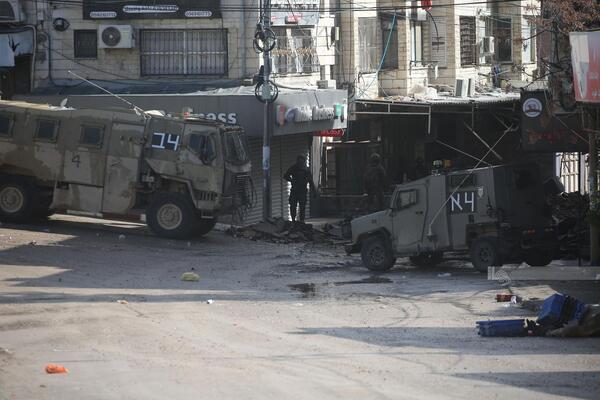
For the 84th day, the occupation continues its aggression against Tulkarm and its two camps.

The Israeli occupation forces continue their aggression on the city of Tulkarm and its camp for the 84th consecutive day, and on the 71st day on the Nur Shams camp, amidst an escalating situation on the ground, accompanied by gunfire, explosions, raids, vandalism, and attacks on citizens and their property.


Local sources reported that a huge explosion occurred at dawn today in Tulkarm camp, followed by a thick plume of smoke. The nature of the explosion has not been determined, due to the siege imposed by the occupation on the camp and its near-complete emptiness of residents after they were forcibly displaced from their homes.


Israeli bulldozers carried out additional razing of completely destroyed streets in Tulkarm camp, closing off the western entrance to the camp from the Muqata'a neighborhood with earth mounds. Meanwhile, Israeli forces continue to deploy throughout the camp's neighborhoods, seizing homes and blocking off many entrances with barbed wire.


Throughout last night, the Al-Mahjar neighborhood in Nour Shams refugee camp witnessed heavy gunfire by occupation forces, the storming of dozens of homes, and the vandalism of several civilian vehicles.


Local sources reported that Israeli occupation forces forced approximately 10 families from the Jabal al-Nasr area in Nour Shams camp and the area west of the camp to evacuate their homes, and threatened other families with eviction until Sunday, amid heavy gunfire aimed at terrorizing residents.


Meanwhile, the city witnessed a heavy deployment of military vehicles and infantry units last night, positioned around Gamal Abdel Nasser Square, Al-Haddadeen Street, and the eastern district, amid heavy firing of sound bombs at vehicles and civilians.


In the city center, occupation forces chased young men around Gamal Abdel Nasser Square, fired sound bombs intensively, and arrested a young man who was present at the scene, without being able to determine his identity.


In the eastern part of the city, occupation forces raided a number of shops and subjected those present to field interrogation.


Infantry forces and military vehicles also stormed the Dhnaba suburb and Harat al-Salam in the east of the city, raiding a number of homes, conducting extensive searches, and interrogating their owners.


Meanwhile, the occupation continues to seize homes and residential buildings on Nablus Street and the adjacent northern neighborhood, converting them into military barracks after forcibly evacuating residents. Meanwhile, its military vehicles and bulldozers are stationed in the vicinity.


The ongoing Israeli aggression and escalation against the city of Tulkarm and its two refugee camps resulted in the deaths of 13 civilians, including a child and two women, one of whom was eight months pregnant. Dozens more were injured and arrested.


It also resulted in the forced displacement of more than 4,000 families from the Tulkarm and Nur Shams camps, along with hundreds of citizens from the city's northern neighborhood after their homes were seized and a number of them converted into military barracks.


The aggression caused widespread destruction to infrastructure, including homes, shops, and vehicles, which were completely and partially demolished, burned, vandalized, looted, and stolen. 396 homes were completely destroyed and 2,573 partially destroyed in the Tulkarm and Nur Shams refugee camps, in addition to closing their entrances and alleys with earth mounds.

PALESTINE

Sun 20 Apr 2025 8:49 am - Jerusalem Time

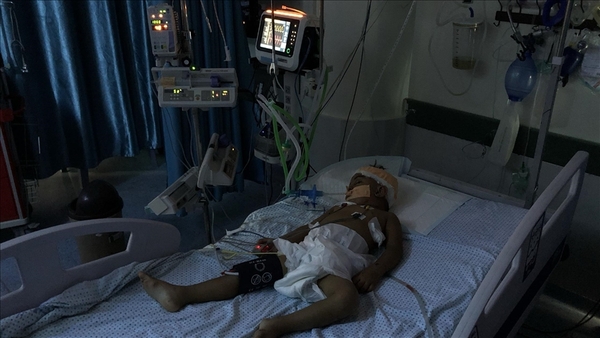
UNICEF: Children's and newborn hospitals in Gaza lack sufficient medical equipment.

The United Nations Children's Fund (UNICEF) said on Saturday that hospitals for children and newborns in the Gaza Strip "lack adequate medical equipment and operate under extremely difficult conditions," in light of the ongoing Israeli genocide in the Gaza Strip for more than a year and a half.


In a post on its X account, UNICEF said, "The survival of Gaza's children depends on the reimposition of a ceasefire and the entry of aid into the Strip."


She stressed the need to allow humanitarian aid into Gaza again.


UNICEF explained that "Gaza hospitals, which treat newborns and children, lack sufficient medical equipment and operate under extremely difficult conditions."

PALESTINE

Sat 19 Apr 2025 10:50 pm - Jerusalem Time

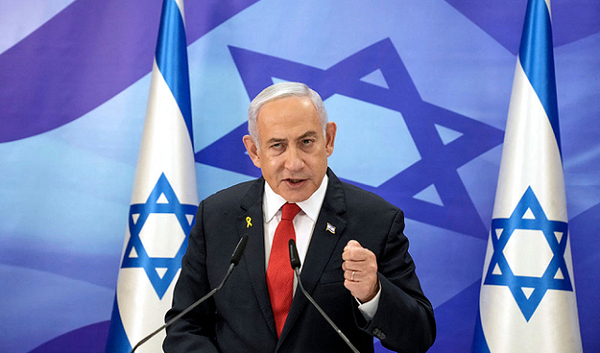
Netanyahu: The occupation is at a critical stage, and we will not submit to Hamas's dictates.

Israeli Prime Minister Benjamin Netanyahu said Saturday evening that the occupation is at a critical stage of the war, stressing that it will not submit to the dictates of Hamas.


Netanyahu added in a televised address: "This war has exacted a heavy toll, and I wish a speedy recovery to the wounded soldiers and combatants injured in the fighting. I have directed the army to respond forcefully and increase the pressure on Hamas."


He continued: "We are at a crucial stage of the battle, and what is required is patience to achieve victory.


We will not surrender to Hamas, and if we do not eliminate its military capabilities, what happened on October 7 will happen again."


Netanyahu stressed that the occupation army will not end the war on Gaza before eliminating Hamas and returning the prisoners it holds.


He added: "Many of those who spoke out today against our aggressive policies opposed every step we took, and this reflects the extent of hypocrisy.


As for Iran's branch in Gaza, if we do not complete the destruction of Hamas's military and governmental capabilities, a repeat of what happened in October will only be a matter of time."


He pointed out that Hamas has so far rejected any proposal that would lead to the release of half of the living hostages. Hamas is demanding an end to the war while maintaining its rule, the withdrawal of the occupation from Gaza, and reconstruction with massive financial support that would enable it to rearm and launch new attacks.


Netanyahu emphasized that ending the war on these terms would send a message that the kidnapping of Israelis forces the occupation to its knees and subject it to dictates, posing a threat to regional and international security and undermining US President Donald Trump's vision of radically changing the reality in Gaza.


He concluded by saying, "We will not end this war until Hamas is destroyed, all hostages are returned, and the Gaza Strip is guaranteed not to pose a renewed threat to the occupation."

PALESTINE

Sat 19 Apr 2025 10:28 pm - Jerusalem Time

UNICEF: Children's and newborn hospitals in Gaza lack medical equipment

The United Nations Children's Fund (UNICEF) said on Saturday that hospitals for children and newborns in the Gaza Strip "lack adequate medical equipment and operate under extremely difficult conditions," in light of the ongoing Israeli genocide in the Gaza Strip for more than a year and a half.


In a post on its X account, UNICEF said, "The survival of Gaza's children depends on the reimposition of a ceasefire and the entry of aid into the Strip."


She stressed the need to allow humanitarian aid into Gaza again.


UNICEF explained that "Gaza hospitals, which treat newborns and children, lack sufficient medical equipment and operate under extremely difficult conditions."


The United Nations Relief and Works Agency for Palestine Refugees (UNRWA) stated in a report yesterday, Friday, that the blockade on Gaza today is "more severe than the initial period after October 7, 2023."


UNRWA stated that 420,000 people have been displaced again in the Gaza Strip since March 18 due to renewed Israeli attacks.

PALESTINE

Sat 19 Apr 2025 10:09 pm - Jerusalem Time

Suffocation injuries during the Israeli army's raid east of Bethlehem

A number of citizens suffered suffocation on Saturday evening, during an Israeli occupation forces raid on the town of Tuqu', southeast of Bethlehem.


According to local sources, occupation forces stormed Tuqu' and positioned themselves around the municipality's western entrance. They fired tear gas and sound bombs at residents' homes, causing a number of residents to suffocate from the gas.

ARAB AND WORLD

Sat 19 Apr 2025 9:08 pm - Jerusalem Time

Netanyahu attacks Macron: Recognizing a Palestinian state is a "grave mistake" and threatens the existence of the occupation

Israeli Foreign Minister Gideon Sa'ar told the British newspaper The Telegraph that the Israeli government will make every effort to reach a new and reasonable agreement regarding the detainees in the Gaza Strip.


Sa'ar added, "If we cannot release the detainees from Gaza through diplomatic means, we will have to do so through strong military action."


Sa'ar commented on French President Emmanuel Macron's statement regarding his country's intention to recognize an independent Palestinian state, saying, "It would be a grave mistake, and Tel Aviv would be forced to respond unilaterally if Paris chooses to recognize a Palestinian state."


"The French will lose their regional influence and damage their standing if they recognize a Palestinian state," he continued in his interview with The Telegraph.


The Israeli Foreign Minister affirmed his government's commitment to preventing Iran from possessing a nuclear weapon, noting that "if this can be achieved through diplomatic means, it is acceptable."


He explained that he had a good meeting with his British counterpart, David Lammy, adding, "But that doesn't necessarily mean there aren't any disagreements."


For his part, occupation leaders attacked French President Emmanuel Macron after he announced his readiness to recognize an independent Palestinian state.


Israeli Prime Minister Benjamin Netanyahu said that Macron is making a "grave mistake" by promoting the idea of establishing a Palestinian state, which he described as "aimed solely at destroying the occupation."


Netanyahu stressed that his government would not accept any threat to the existence of the occupation due to what he described as "delusions." He attacked Macron, saying, "We will not accept sermons about establishing a Palestinian state from those who oppose granting independence to Corsica, New Caledonia, and other regions whose independence would not pose a threat to France."


Earlier, French President Emmanuel Macron stated that his country may recognize a Palestinian state next June, during an interview on France 5.

PALESTINE

Sat 19 Apr 2025 9:03 pm - Jerusalem Time

Israeli occupation escalates its aggression against citizens in the city of Tulkarm and its two camps.

Israeli occupation forces escalated their aggression against the city of Tulkarm and its two camps on Saturday, carrying out a campaign of raids and home invasions, accompanied by attacks on civilians and widespread destruction and bulldozing.


Israeli occupation forces raided the home of Wafa News Agency photographer Wafa Awad in the vicinity of the Rabaia neighborhood in Tulkarm refugee camp, assaulting him and vandalizing the contents of the house in the presence of his family.


Awad said that the occupation forces stormed his home in the Al-Raba'a neighborhood this evening and severely beat him amid a wave of insults and curses.


He explained that the occupation forces raided his home suddenly and beat him up and abused him without any justification, adding, "I was beaten and subjected to harsh insults and curses, before they confiscated my press card, my personal ID, and my mobile phone."


He noted that after the attack, the occupation forces destroyed the contents of the house and severely damaged its furniture, in what he described as a "vengeful and hateful" act, despite knowing he was a photojournalist.


In the northern neighborhood of Tulkarm, specifically in the vicinity of Al-Hadaida neighborhood, occupation soldiers raided the homes of the Al-Awad family and vandalized the contents of the home of the two brothers, Walid and Raed Awad, and confiscated the residents’ phones and ID cards, including those of the women, before arresting the child, Ahmed Raed Awad (15 years old), and taking him blindfolded to an unknown location.


Meanwhile, today, Israeli bulldozers began leveling streets and neighborhoods in Tulkarm refugee camp, closing the western entrance to the camp from the Muqata'a neighborhood with earth mounds. Meanwhile, Israeli forces remain deployed throughout the camp's neighborhoods, sealing off many entrances with barbed wire.


In a new escalation, Israeli forces forcibly evacuated approximately 10 families from the Jabal al-Nasr area of Nour Shams camp and the area west of the camp, threatening to evacuate other families by tomorrow, amid heavy gunfire to spread panic among residents.


In the same context, military reinforcements, including vehicles and a diesel tanker, were seen roaming the city streets and heading towards Tulkarm camp.

ARAB AND WORLD

Sat 19 Apr 2025 8:35 pm - Jerusalem Time

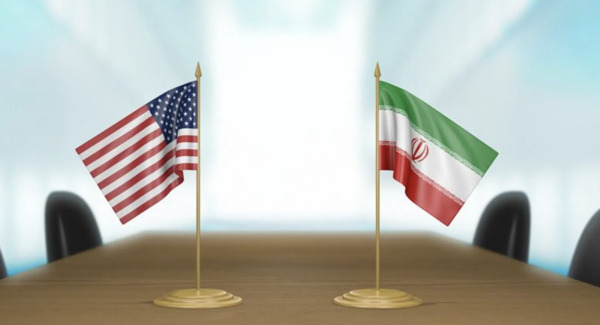
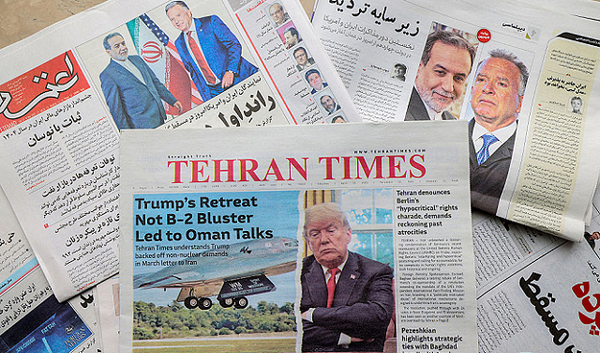
The second round of nuclear talks between Washington and Tehran concludes.

The United States and Iran concluded the second round of diplomatic talks on Tehran's nuclear activities, setting the agenda for swift negotiations that, according to Iran, will not require dismantling the country's comprehensive nuclear infrastructure.


Instead, according to Iranian Foreign Minister Abbas Araqchi, a group of experts will meet next week to discuss technical details, including the maximum levels to which Iran can enrich uranium, the size of the nuclear stockpile it can maintain, and how to monitor and verify compliance with any agreement.


But these talks, experts say, implicitly assume that President Donald Trump is willing to back down from the administration's original insistence that all of Iran's major nuclear sites and long-range missile arsenals undergo what National Security Advisor Michael Waltz recently called "complete dismantlement."


Since then, US administration officials have been at odds over the goals of their talks with Iran, and over whether it is acceptable to allow Tehran any capacity to enrich uranium—and thus race toward a nuclear bomb.


In private talks, the Iranians informed US officials of their willingness to reduce enrichment levels to the levels established in the 2015 agreement reached with the administration of former President Barack Obama. This agreement limited the amount of nuclear material Iran could possess and restricted enrichment to 3.67%, the level needed to produce fuel for nuclear power plants.


But Trump withdrew from that agreement in May 2018. Over the past three years, Iran has been enriching uranium to much higher levels: around 60% purity, just below the level needed to produce a nuclear weapon. This presents Tehran with two options: either race to produce weapons-grade fuel, or negotiate with the United States to return to the original levels stipulated in the agreement with the Obama administration.


Steve Witkoff, the chief US negotiator, expressed his willingness to pursue this path earlier this week. But this has exposed Mr. Trump to criticism that after declaring the decade-old nuclear agreement a "disaster" and scrapping it, he has not gotten anything better.


Witkoff was forced to back down. He posted on social media that the US position now was that "Iran must halt and eliminate its nuclear enrichment and weapons program." The key word was "eliminate."


Witkoff did not speak immediately after the negotiations—the second round in two weeks—ended on Saturday afternoon in Rome. Oman, which is mediating the talks, said those technical negotiations would be held in Muscat, its capital, in the coming days. When asked this week whether the United States could live with Iran's limited nuclear enrichment capacity, American officials evaded the answer, saying only that Mr. Trump had pledged not to allow Iran to acquire a nuclear weapon.


Witkoff will now have to brief Trump and his administration colleagues on the latest round of talks. According to the New York Times, officials familiar with the internal debate say that National Security Advisor Waltz and Secretary of State Marco Rubio, both of whom were staunch critics of the Obama-era nuclear deal when they were members of Congress, still oppose allowing Iran to possess any nuclear production capacity.


Rubio stated on Friday that any agreement must prevent Iran from obtaining a nuclear weapon. He told reporters on a trip to Paris, "It has to be something that not only prevents Iran from having a nuclear weapon now, but also in the future."


But Witkoff, like Obama's negotiators a decade ago, apparently concluded that the only way to reach an agreement was to allow some enrichment capacity, subject to monitoring and verification by American or international inspectors.


Israel has long relied on President Trump to take a tough stance against Iran. During his first term, he did just that, ordering the killing of Iran's top security official, Qassem Soleimani, devastating Tehran's economy with US sanctions, and abandoning an international agreement limiting Iran's nuclear program. But now, as Trump resists being dragged into a new war in the Middle East, he is trying to take a more measured approach.


While the specter of military action remains—Trump said last week, “If we have to take very severe action, we will take it”—he has moved forward with negotiations, reportedly asking Israel to refrain from attacking Iranian nuclear sites.


All this has put Israel in a state of tension regarding the course of the talks.


Iranian Foreign Minister Araghchi explained that the goal is to reach a "logical and rational understanding, while respecting the legitimate rights of the Islamic Republic of Iran and lifting harsh and illegal sanctions, that will remove any doubts about Iran's peaceful nuclear program."


Iran also lowered its expectations for a resumption of diplomatic efforts within the next two months, under a deadline set by Trump.


"This matter must be monitored carefully. The red lines are clear. They are clear to the other side, and they are clear to us as well," Iranian Supreme Leader Ayatollah Ali Khamenei said in a statement posted on social media on Tuesday.


He said he was "neither overly optimistic nor pessimistic" about the process, but described the first round of indirect talks as good.


Iran maintains that its nuclear program is legal and intended solely for civilian uses, such as energy and medical isotopes. It refuses to halt uranium enrichment, the material needed to build a nuclear bomb.


For more than a decade, world leaders have sought to limit Iran's uranium enrichment to levels far below those needed for weapons. This requires independent verification by outside inspectors. On Wednesday, the head of the UN's International Atomic Energy Agency, Rafael Grossi, visited Tehran to urge its leaders to cooperate.


Scientists believe Iran is closer than ever to being able to produce six or more nuclear weapons within months, or possibly a year.


After meeting last week with Iranian Foreign Minister Araghchi, Witkoff suggested that Iran might be able to produce low levels of uranium under a verification regime that also extended to Tehran's missile program. However, Mr. Witkoff shifted his position to insist that "Iran must halt and eliminate its nuclear enrichment and weapons programs" to conclude any agreement.


Experts say Witkoff's shift reflects uncertainty within the Trump administration—and likely within the president himself—about whether it believes it can strike a reasonable deal.


Some believe the Trump administration may be open to allowing low-level enrichment as long as Iran makes an unprecedented concession, such as opening its nuclear sites to US inspectors or welcoming US investors.

PALESTINE

Sat 19 Apr 2025 8:07 pm - Jerusalem Time

A child was injured by Israeli occupation forces' bullets east of Nablus.

A child was injured by Israeli occupation forces' bullets on Saturday evening during clashes in Beit Furik, east of Nablus.


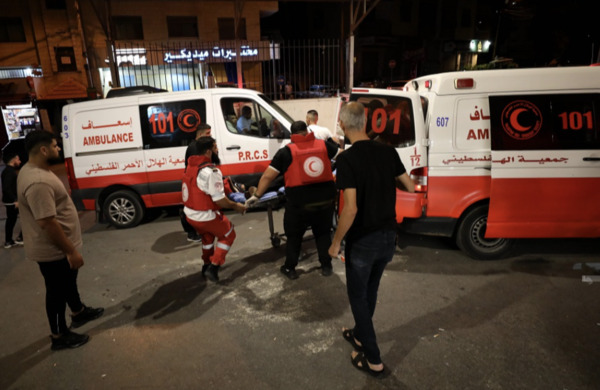
According to the Red Crescent Society, a 13-year-old boy was shot in the thigh with live ammunition and was taken to the hospital for treatment. He was injured during clashes with Israeli occupation forces who stormed the town, firing live and rubber-coated metal bullets, sound bombs, and tear gas.


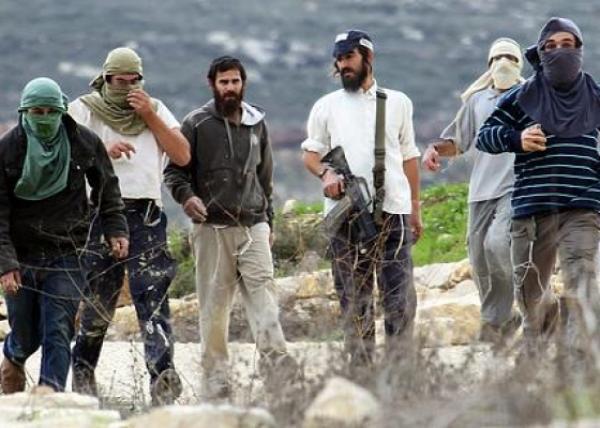
Local sources reported that settlers kidnapped three children from the Al-Dhubat neighborhood west of the town. Townspeople rushed to their aid and found them tied to olive trees after being kidnapped for more than an hour.

ARAB AND WORLD

Sat 19 Apr 2025 7:48 pm - Jerusalem Time

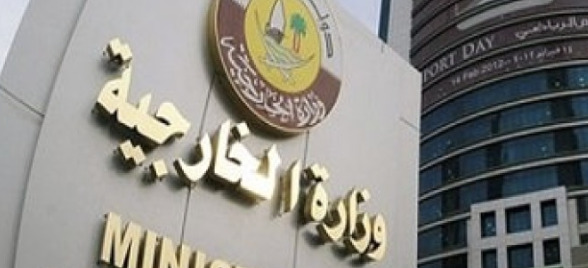
Qatar: Incitement to bomb Al-Aqsa Mosque is "dangerous" and threatens to widen the circle of violence.

Qatar considered the incitement of right-wing Israeli settler groups to bomb Al-Aqsa Mosque in occupied Jerusalem and build the alleged Temple in its place a "dangerous incitement that threatens to widen the circle of violence in the region."


This came in a statement by the Qatari Ministry of Foreign Affairs, commenting on the circulation of a video clip produced using artificial intelligence technology, titled "Next Year in Jerusalem," on extremist Hebrew platforms and websites, showing the bombing of Al-Aqsa Mosque and the alleged construction of a temple in its place.


In its statement, the ministry condemned "in the strongest terms the plans of platforms affiliated with Israeli occupation organizations to bomb and destroy Al-Aqsa Mosque and build the alleged temple in its place."


She considered this "a dangerous incitement that threatens to widen the circle of violence in the region in light of the ongoing war on the Gaza Strip."


The Foreign Ministry affirmed "Qatar's absolute rejection of any infringement on the historical and legal status of Al-Aqsa Mosque, Jerusalem, and its holy sites."


She called on the international community to "urgently deter the occupation, compel Israel to provide the necessary protection for these holy sites, and respect international legitimacy resolutions."


The ministry reiterated Qatar's firm and permanent position in support of the Palestinian cause and the steadfastness of the brotherly Palestinian people, based on international legitimacy resolutions and the two-state solution, ensuring the establishment of an independent Palestinian state on the 1967 borders, with East Jerusalem as its capital.


Right-wing Israeli groups have called for widespread raids on Al-Aqsa Mosque on the occasion of Passover, which began last Sunday and will continue for a week.


Easter celebrations are taking place in the West Bank and Jerusalem, particularly at the Church of the Holy Sepulchre in the Old City, one of the most important churches in the world. Large numbers of Israeli police are deployed in the town and around the church.


In 2003, Israeli police unilaterally allowed settlers to storm Al-Aqsa Mosque despite continued opposition from the Islamic Waqf in Jerusalem.


Since then, the raids have taken place daily except Fridays and Saturdays, and peak during the Jewish holidays.

PALESTINE

Sat 19 Apr 2025 6:30 pm - Jerusalem Time

Settlers burn agricultural crops south of Hebron

Settlers set fire to agricultural crops in the Wadi al-Rakhim community, west of the village of Susya, south of Hebron, on Saturday evening.


According to local sources, heavily armed settlers, under the protection of occupation soldiers, burned more than half a dunum of land planted with wheat and barley in the Wadi al-Rakhim community near the village of Susya, owned by Ali Muhammad Shanaran. The fire also destroyed equipment and wood from a house under construction.


Armed settlers, under the protection of occupation soldiers, seized a herd of sheep belonging to Issa al-Hamamda near Khirbet al-Tabban in Masafer Yatta, attempting to steal them, claiming they were theirs.

PALESTINE

Sat 19 Apr 2025 5:02 pm - Jerusalem Time

Families of Israeli prisoners hold demonstration on Gaza border on Sunday

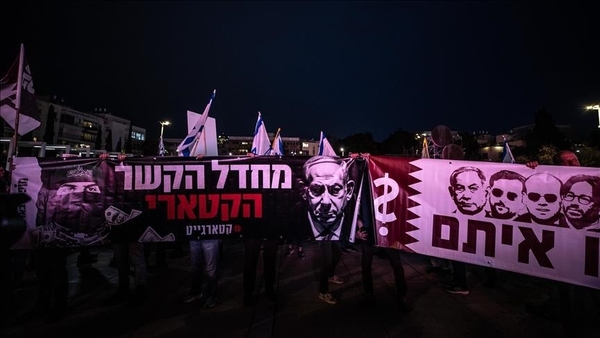
The families of Israeli prisoners held in Gaza are planning to stage a protest on Sunday near the border with the enclave, demanding that the Netanyahu government conclude a swap deal for their immediate release "in one fell swoop," according to Hebrew media reports.


The Hebrew newspaper Yedioth Ahronoth reported on Saturday: "The families of the kidnapped will gather tomorrow on the border with Gaza, specifically in Kibbutz Nir Oz, to raise their voices in a plea for their loved ones who are still in captivity."


The newspaper indicated that Israeli families will use loudspeakers to make their voices heard by their imprisoned relatives in Gaza.


The Israeli Prisoners' Families Authority said in a statement that this gathering "comes after 561 days without hearing the cries of 59 abductees or knowing their fate."


"If we do not act now, we are condemning the living to death, and we will no longer be able to locate and bring back the dead," the statement read.


The organization appealed to the government, saying: "We appeal to decision-makers: conclude an agreement that leads to the immediate and immediate release of everyone."


Earlier on Saturday, the Izz ad-Din al-Qassam Brigades, the armed wing of Hamas, released a video of an Israeli prisoner held by it, in which he sent a voice message to his mother, saying: "My dear mother, you are certainly fighting for me, as I have always known you."


Al-Qassam Brigades did not show the prisoner's photo in the video, nor did it reveal his name or any other details about him.


The 21-second video concluded with an image of an hourglass, with the words "Time is running out" written beneath it in Arabic, English, and Hebrew.


On Friday, the Authority called on the Israeli public to join the families of the prisoners in several major events and demonstrations in several areas, including Tel Aviv, on Saturday, to demand an immediate deal for the return of their loved ones.


"Join us at the main protest in Abductees' Square, under the slogan 'We only have one more push left,'" the organization said in a statement, symbolically referring to the last remaining hope they have for the return of their captive relatives.


She pointed out that the demonstration aims to send a message to Israeli decision-makers: "We demand an agreement that leads to the release of all abductees, the living ones so they can be rehabilitated, and the dead ones so they can be buried with dignity."


In its letter to the Israeli government, the commission stressed that "Hamas cannot be defeated as long as it holds a single prisoner."


She added, "The Israeli people chose the kidnapped soldiers. They are above politics and above all disagreement. History will remember those who sat back and remained silent, and those who stood up and took action."


She noted that numerous demonstrations will take place on Saturday evening in Israeli cities and regions, demanding the release of prisoners, including Tel Aviv, Jerusalem, the Sha'ar Hanegev Junction, and the Karmi Gat neighborhood north of Kiryat Gat.


Tel Aviv estimates that there are 59 Israeli prisoners in the Gaza Strip, 24 of whom are still alive. Meanwhile, more than 9,500 Palestinians are languishing in its prisons, suffering torture, starvation, and medical neglect, many of whom have died, according to Palestinian and Israeli human rights and media reports.


In early March 2025, the first phase of a ceasefire and prisoner exchange agreement between Hamas and Israel concluded. The agreement, which went into effect on January 19, 2025, was brokered by Egypt and Qatar and supported by the United States, and the Palestinian movement adhered to it.


However, Netanyahu disavowed the start of the second phase and resumed the genocide in the Gaza Strip on March 18, in deference to the most extreme faction within his right-wing government, according to Hebrew media.


Since resuming its genocide, Israel has killed 1,783 Palestinians and injured 4,683 others, most of them children and women, according to the Gaza Health Ministry on Saturday morning.


With American support, Israel has been committing genocide in Gaza since October 7, 2023, leaving more than 167,000 Palestinians dead and wounded, most of them children and women, and more than 11,000 missing.

PALESTINE

Sat 19 Apr 2025 4:43 pm - Jerusalem Time

Dead in Israeli occupation's bombing of Beit Hanoun and Khan Yunis

Three citizens were killed and others injured on Saturday evening, as a result of the occupation's shelling of Beit Hanoun in the northern Gaza Strip and Khan Yunis in the south.


Local sources reported that an Israeli drone fired directly at a group of civilians east of Beit Hanoun, killing a young man and wounding several others.


She added that a drone bombed a plot of land housing displaced persons in Khan Yunis, killing one citizen and wounding others. Another citizen was also killed in the occupation's bombing of Khan Yunis camp.


In this context, medical sources reported that the death toll from the ongoing Israeli aggression on the Gaza Strip since dawn today has risen to 44, as a result of raids targeting several areas in the north, center, and south of the Strip.


Since the early hours of the morning, Israeli warplanes have launched a series of violent raids targeting homes and lands in various areas of the Gaza Strip, resulting in dozens of deaths and injuries. This comes amid the escalating Israeli aggression on the Gaza Strip, which has been ongoing since October 7, 2023.


PALESTINE

Sat 19 Apr 2025 4:20 pm - Jerusalem Time

UNRWA: Palestinians in Gaza are being bombed and starved again.

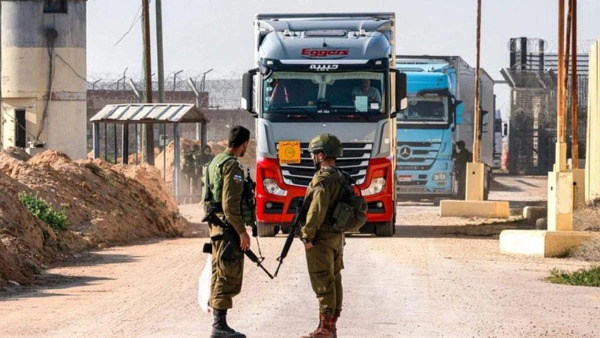
The United Nations Relief and Works Agency for Palestine Refugees (UNRWA) said on Saturday that Palestinians in Gaza are under siege, subjected to bombardment, and starvation once again due to the Israeli closure of the Strip's crossings for the seventh consecutive week.


UNRWA added in a statement that Palestinians in Gaza are besieged, bombarded, and starved, while food, medicine, fuel, and temporary shelter supplies are piling up at the Strip's crossings.


She explained that Israel has been closing the Gaza Strip's crossings for the seventh consecutive week, preventing the entry of "humanitarian aid, medical and commercial supplies, food, children's vaccines, and fuel into Gaza."


Palestinians in the Gaza Strip are facing a new wave of hunger since Israel closed the crossings, even though they have still not recovered from the effects of the previous wave, which resulted from Israel's policy of rationing food and relief aid into the Strip over the course of 19 months of genocide.


UNRWA called for "reopening the crossings to allow the continued flow of aid," and urged a renewal of the ceasefire in the Gaza Strip.


On Tuesday, the United Nations Office for the Coordination of Humanitarian Affairs (OCHA) said in a statement that the Gaza Strip is experiencing the worst humanitarian situation since Israel began its war of extermination against the Palestinians on October 7, 2023.


Since March 2, Israel has continued to close the Gaza Strip's crossings to the entry of food, relief, medical aid, and goods, causing a significant deterioration in the humanitarian situation of Palestinians, according to government, human rights, and international reports.


Israel has been blockading Gaza for the 18th year, leaving approximately 1.5 million of its 2.4 million Palestinian citizens homeless after their homes were destroyed in the war of extermination. The Strip has entered a state of famine due to Tel Aviv's closure of the crossings to humanitarian aid.

ARAB AND WORLD

Sat 19 Apr 2025 4:00 pm - Jerusalem Time

Colombian President: We must think about the Palestinian people who are suffering under genocide.

Colombian President Gustavo Petro called for reflection on the Palestinian people, who are suffering under a bloody genocide.


This came in a post on his X account, accompanied by a photo of Kamal Adwan Hospital Director Hussam Abu Safia being detained by Israeli occupation forces.


“Let us think of the people of Palestine, the homeland of Jesus during his passion and death, who are now suffering under a bloody genocide,” President Petro said.


Petro posted footage of Abu Safia walking toward Israeli tanks on his account, commenting: "Palestinian doctor Hussam Abu Safia is a true hero in medical ethics and service to his people. His imprisonment only demonstrates the cowardice of the cruel regime that imprisoned him. Hussam Abu Safia, director of Kamal Adwan Hospital, is a true hero."

PALESTINE

Sat 19 Apr 2025 3:53 pm - Jerusalem Time

Israeli media: 5 soldiers injured in armored vehicle attack east of Gaza

Five Israeli soldiers were injured on Saturday when Palestinian resistance fighters targeted an Israeli armored vehicle east of Gaza City.


According to Israeli media, at least five Israeli soldiers were injured, some of them critically.


Israeli media also reported fierce fighting between army forces and Palestinian militants in various locations in the northern Gaza Strip.


The occupation continues its violent artillery shelling of the eastern areas of Gaza City.

PALESTINE

Sat 19 Apr 2025 3:18 pm - Jerusalem Time

Israeli reports: The army is close to controlling about 40% of Gaza's territory.

Israeli reports said on Saturday that the army is expanding its control in the northern Gaza Strip and around Gaza City. According to the reports, what it called "the army's ground advance" is being carried out "in preparation for a future maneuver in the heart of Gaza City, which includes a scenario of dividing the city in two."


Meanwhile, the source continued, "Bombings and destruction of buildings are taking place throughout the Strip," and that "the army is close to seizing control of approximately 40% of the territory in the Gaza Strip."

PALESTINE

Sat 19 Apr 2025 3:03 pm - Jerusalem Time

Jerusalem: Occupation forces attack citizens as Holy Saturday celebrations begin

Israeli occupation forces attacked a number of citizens at Bab al-Jadid in occupied Jerusalem on Saturday, preventing dozens of families from reaching their homes in the Old City.


The occupation forces transformed occupied Jerusalem into a military barracks and deployed checkpoints around the Old City and the alleys leading to the Church of the Holy Sepulchre, coinciding with the Christian churches' celebration of Holy Saturday, or "Holy Saturday."


Local sources reported that occupation forces obstructed worshippers' access to the Church of the Holy Sepulchre and detained them at checkpoints, including the Apostolic Nuncio to Jerusalem, the Vatican's representative to the State of Palestine, Archbishop Adolfo Tito Yllana.


Jerusalemite journalist and activist Rafi Ghattas said in a video recording from the Church of the Holy Sepulchre courtyard that the number of Israeli police officers deployed in and around the church courtyard exceeded the number of worshippers. He noted that the occupation forces imposed strict restrictions and prevented worshippers from reaching the church and its courtyard, which appeared unusually empty for such an occasion. They also assaulted the worshippers gathered inside the church.


The Israeli occupation has prevented thousands of Christian citizens from the West Bank from reaching occupied Jerusalem to participate in Holy Saturday. The occupation requires Palestinians, both Muslims and Christians, to obtain special permits to cross its military checkpoints surrounding the Holy City and access places of worship, particularly the Al-Aqsa Mosque and the Church of the Holy Sepulchre.


For the second year in a row, a small number of pilgrims are participating in the Holy Week and Easter prayers in Jerusalem, due to the repercussions of the ongoing Israeli war of extermination and aggression against Palestine since October 7, 2023.


Churches have also cancelled all Easter celebrations and scouting parades, with the holiday being limited to masses, prayers, and religious rituals.


The Greek Orthodox Patriarch of Jerusalem, All Palestine, and Jordan, Theophilos III, will lead a special prayer at the Holy Sepulchre inside the Church of the Holy Sepulchre this afternoon to receive the Holy Fire, which will then be carried to various churches in Jerusalem, Bethlehem, Jericho, Ramallah, Nablus, Jenin, and within the 1948 territories, in addition to churches outside Palestine.


It is worth noting that Easter, or "Resurrection Day," coincides this year according to both the Eastern and Western calendars.

PALESTINE

Sat 19 Apr 2025 1:16 pm - Jerusalem Time

Israeli occupation's aggression on Jenin and its camp enters its 89th day.

The Israeli occupation's aggression on the city of Jenin and its camp has entered its 89th day, amidst bulldozing and burning of homes, and the conversion of others into military barracks.

This morning, Israeli occupation forces stormed a number of villages west of Jenin, deployed their vehicles in the streets, and took up positions in several neighborhoods.

Yesterday, Friday, Israeli occupation bulldozers destroyed the road connecting the town of Burqin and the village of Al-Manshiya, and also stormed the villages of Al-Kafir and Al-Hashimiya, west of Jenin.

Israeli occupation forces arrested a young man from the town of Yamoun while he was riding his motorcycle near the village of Nazlat Zaid, west of Jenin, before releasing him several hours later.

The occupation continues to send military reinforcements, accompanied by fuel tankers, from the Jalameh checkpoint to the outskirts of Jenin camp. This morning, occupation bulldozers placed earthen berms around the Tawalbeh Mosque, at the northern entrance to the camp, while drones continue to fly overhead.

According to Jenin Governor Kamal Abu al-Rab, there are 21,000 displaced people spread across the governorate. There are 6,000 in the city, 3,200 in the Arab American University dormitories, and 4,181 in Burqin.

Meetings are underway to secure temporary shelter for the displaced in the Wadi Burqin area, which will initially include 32 mobile homes, each accommodating five people, according to the Ministry of Public Works.

The Israeli occupation army continues its military training around the Jalameh military checkpoint, north of Jenin, where it occasionally fires live ammunition into the empty Jenin refugee camp.

The number of dead in Jenin Governorate since the start of the Israeli aggression on the city of Jenin and its camp 89 days ago has reached 38, in addition to dozens of injuries and arrests.

PALESTINE

Sat 19 Apr 2025 1:14 pm - Jerusalem Time

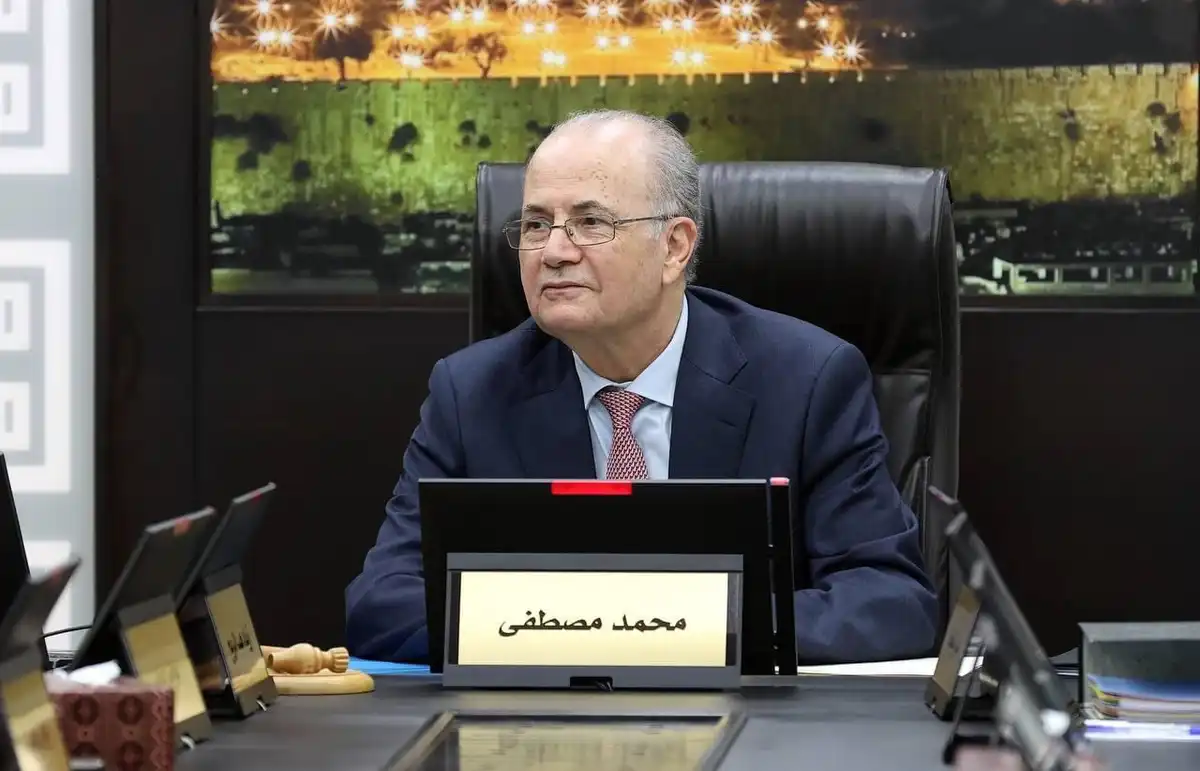
Israeli occupation prevents Palestinian Prime Minister from conducting a field tour in the villages of Ramallah and Nablus.

The Wall and Settlement Resistance Commission announced that Israeli authorities prevented Palestinian Prime Minister Mohammad Mustafa from conducting a field tour of the villages of Ramallah and Nablus on Saturday.

According to the commission, the Palestinian Prime Minister's field tour was supposed to include the towns of Duma and Qusra in the Nablus governorate, and the towns of Burqa and Deir Dibwan in the Ramallah and al-Bireh governorate. The commission stated in a statement on its Facebook page that "this decision comes within the framework of the ongoing restrictions imposed by the occupation authorities on the movement of Palestinian officials in the occupied territories, which hinders the Palestinian government's efforts to monitor the situation on the ground in areas affected by Israeli violations."

PALESTINE

Sat 19 Apr 2025 1:12 pm - Jerusalem Time

92 dead in the Gaza Strip in the last 48 hours, and the raids continue.

The death toll from the Israeli occupation's aggression on the Gaza Strip since October 7, 2023, has risen to 51,157 dead and 116,724 wounded.


Medical sources reported that the death toll includes 1,783 dead and 4,683 wounded since March 18.

It said that 92 dead and 219 wounded arrived at hospitals in the Gaza Strip during the past 48 hours.

It explained that a number of martyrs remain under the rubble of destroyed homes and facilities, and on the roads, and that ambulances and specialist teams are unable to reach them due to limited resources.


According to medical sources, 41 people have been killed in Israeli airstrikes on various areas in the Gaza Strip since dawn today.


Local sources reported that an Israeli drone targeted a group of citizens on Hassanein Street in the Shuja'iyya neighborhood in eastern Gaza, killing three citizens and wounding others.

It added that a drone bombed a house on Yaffa Street in the Tuffah neighborhood, northeast of Gaza City, killing three civilians and wounding others.


Since dawn today, the occupation has continued its violent airstrikes across the Gaza Strip, as the "resumption of aggression" enters its 33rd day. The blockade of aid continues for the 46th day, resulting in more casualties, destruction, and displacement.


Medical sources in Gaza reported that violent airstrikes early Saturday morning killed 23 people and injured more than 20 children in Khan Yunis, as the city was targeted by a series of airstrikes. They also reported that Israeli artillery had resumed firing shells toward eastern Gaza City and western Rafah in the south, amid an escalation in the Israeli army's genocidal crimes, which mostly target children and women.


Meanwhile, the United Nations Relief and Works Agency for Palestine Refugees (UNRWA) described the blockade imposed on the Gaza Strip for nearly seven weeks as the "most severe" since the start of the aggression on the Strip on October 7, 2023. In a report published on Friday, the agency explained that "420,000 citizens have been displaced again" throughout the Strip.


On the political front, and on the Israeli side, Prime Minister Benjamin Netanyahu's office announced a "special address" for him this evening, Saturday. Israeli reports quoted a "senior official" as saying the address would address issues including Iran and prisoners in Gaza.


OPINIONS

Sat 19 Apr 2025 12:04 pm - Jerusalem Time

The Age of American Unilateralism. How a Rogue Superpower Will Remake the Global Order

Foreign Affairs

Foreign Affairs

Opinion Writer

By Michael Beckley

Since the end of the Cold War, the United States has largely been expected to follow one of two foreign policy paths: preserve the country’s position as the leader of the liberal international order or withdraw and adjust to a post-American, multipolar world. But as I argued in Foreign Affairs in 2020, the most likely trajectory was always a third: become a rogue superpower, neither internationalist nor isolationist but aggressive, powerful, and increasingly out for itself.

U.S. President Donald Trump has given this vision sharp definition by raising tariffs to levels that echo the infamous Smoot-Hawley Act of 1930, slashing foreign aid, snubbing allies, and proposing to seize foreign territory, including Greenland and the Panama Canal. Yet Trump is more accelerant than architect, channeling long-simmering frustrations with global leadership and deeper structural forces pulling U.S. strategy inward. The real question now is not whether the United States will continue to go its own way but how—and to what end.

Understanding the drivers of this shift is no longer a matter of academic debate. It’s essential for shaping what comes next. Left unchecked, Washington’s unilateral turn could destabilize the world and undermine its own long-term power. But if recognized and redirected, these forces could form the foundation of a more focused and sustainable strategy; one that sheds the overreach of liberal hegemony without surrendering the core strengths of a liberal order.

WHY NOT GO IT ALONE?

One reason the United States is going rogue is because it can. Despite decades of declinist warnings, American power remains formidable. The country’s consumer market rivals the combined size of the markets in China and the eurozone. Half of global trade and nearly 90 percent of international financial transactions are conducted in dollars, funneled through U.S.-linked banks—giving Washington the power to impose crippling sanctions. Yet the United States has one of the least trade-dependent economies in the world: exports account for just 11 percent of GDP (a third of which go to Canada and Mexico) compared with the global average of 30 percent. U.S. firms supply half of global venture capital, dominate the production of life necessities such as energy and food, and generate more than half of global profits in high-tech industries, including semiconductors, aerospace, and biotechnology—nearly ten times China’s share. The United States relies on China for high-volume industrial inputs—base chemicals, generic drugs, rare earths, and low-end chips—but China is far more dependent on the United States and its allies for high-end technologies and food and energy security. Both sides would suffer in a rupture, but China’s losses would be harder to replace.


Top of Form

    Bottom of Form

Militarily, the United States is the only country that can fight major wars thousands of miles from its shores. Roughly 70 countries—accounting for a fifth of the world’s population and a third of its economic output—depend on U.S. protection through defense pacts and require U.S. intelligence and logistics to move their own forces beyond their borders. In a world so deeply dependent on the U.S. market and military, Washington has immense leverage to revise the rules—or abandon them altogether.

The United States has not only the means to strike out alone but also, increasingly, the motive. The American-led liberal order has outlived its original purpose, growing into a maze of burdens and vulnerabilities. It didn’t fail, but it triumphed over threats that no longer exist: the devastation of World War II and the spread of communism. By the early 1950s, the Soviet Union controlled nearly half of Eurasia and fielded double the military power of Western Europe. Communist parties, committed to abolishing private property, controlled a third of global industrial output and won up to 40 percent of the vote in major Western democracies. Under these circumstances, the threat to the American way of life was clear, as was the need to defend a capitalist order. That strategy worked. The West became prosperous and democratic, and the Soviet bloc collapsed. But success created new problems the old order couldn’t solve.

Many of the U.S. allies Washington helped protect, for instance, are today incapable of bearing major burdens. Sheltered by U.S. security guarantees, countries across western Europe—as well as Canada and Japan—have slashed defense spending, expanded welfare states, and grown deeply entangled with Chinese markets and Russian energy. Many U.S. allies struggle to secure their own peripheries, let alone uphold global stability. And when crises erupt, they still turn to Washington—to enforce freedom of navigation in the South China Sea in the face of Chinese aggression, to arm Ukraine against Russia, or to protect shipping from Houthi attacks in the Red Sea. Countries that once anchored the liberal order have become dependents—draining U.S. power instead of reinforcing it.

Washington has immense leverage to revise the rules—or abandon them altogether.

Worse, by facilitating the integration of Russia and China into the liberal order, the United States empowered its most dangerous adversaries. Both regimes benefited from a U.S.-led alliance system that pacified their historical rivals in Germany and Japan, curbed nuclear proliferation, and secured global trade routes. With their flanks and supply lines relatively secure, they began redrawing the map of Eurasia by force: Russia through invasions of Georgia and Ukraine; China through militarized island building in the South China Sea, encroachments on India’s territory, and escalating threats against Taiwan.

They also gained access to Western markets, institutions, and networks—then exploited that access to hack, bully, and loot the system. Russia launders oligarchic wealth through Western banks, spreads disinformation, and weaponizes energy to fracture Europe. China shields its domestic market while flooding others with subsidized exports, spending ten times as much on industrial policy as the average for countries that belong to the Organization for Economic Cooperation and Development. China now dominates strategic manufacturing sectors such as shipbuilding, drones, electronics, and pharmaceuticals—and is weaponizing that dominance to coerce the United States and its allies by cutting rare-earth exports, threatening drug supply chains, swarming Taiwan with drones, and flooding Europe with underpriced electric vehicles. At home, Beijing censors foreign ideas; abroad, it exploits the open Internet to steal intellectual property, plant malware in Western infrastructure, and spread propaganda. It assumes leadership roles in institutions such as the UN Human Rights Council only to subvert the liberal norms they were built to uphold. What was once a cornerstone of U.S. strategy—openness—has become a Trojan horse.

Moreover, the liberal order has become harder to control. After World War II, Washington supported decolonization and integrated new countries into global markets and institutions, fueling globalization and the “rise of the rest” and doubling the number of sovereign states. But success came at a cost. As new players proliferated, authority fractured and veto points multiplied. Institutions that once amplified U.S. influence—including the UN, the World Trade Organization, and the World Bank—have devolved into arenas of gridlock and anti-American posturing.

At home, the consequences have been equally corrosive. Globalization fueled growth but hollowed out American industries and concentrated the gains. Between 2000 and 2020, U.S. industrial output (excluding semiconductors) fell nearly ten percent, and one in three factory jobs disappeared. Nearly all net job growth went to the richest 20 percent of zip codes, leaving much of the country behind. The social fallout has been staggering: rising disability claims, drug overdoses, and prime-age workers dropping out of the labor force at Great Depression–level numbers. Many wounded communities retain political clout thanks to an electoral system that amplifies rural voices over urban majorities. The result: a hard pivot away from liberal internationalism and toward protectionism and border controls.


THE GATHERING STORM

As I argued in 2020, two powerful trends—demographic change and burgeoning automation—are remaking the global landscape and reinforcing the drift toward American unilateralism. Rapid demographic change is weakening great powers in Eurasia and destabilizing swaths of the developing world. Meanwhile, new technologies are reducing the United States’ need for foreign labor, energy, and large military bases. The result is a growing asymmetry: mounting disorder and weakening allies on one side and rising U.S. self-sufficiency and strike-from-a-distance capabilities on the other. As that gap widens, Washington will face stronger temptations to go it alone.

Beginning with demography, the United States is the only great power whose prime-age workforce is projected to grow throughout this century. By 2050, the workforces of the major economies of Eurasia will lose around 200 million adults aged 25 to 49—the cohort that drives productivity, military recruitment, and economic growth—with declines of 25 to 40 percent in many countries. By 2100, the figure will exceed 300 million, with China alone projected to shed 74 percent of its prime-age workforce. The share of seniors will more than double in most countries by midcentury, pushing support ratios (the number of workers per retiree) to ruinous levels; China’s, for example, will fall from ten to one in 2000 to under two to one by 2050. Demographic decline is already shaving more than a percentage point in annual growth from major Eurasian economies, and debt-to-GDP ratios have ballooned above 250 percent on average. As other economies shrink and strain, the U.S. economy will become more central to global growth and its fiscal base and military manpower more robust in relative terms.

Yet the United States is unlikely to turn its demographic edge into a new era of liberal hegemony. Instead, demographic disruption is raising the risks to allied defenses by fueling a dangerous imbalance: autocratic rivals are militarizing despite population declines, while democratic allies are rearming slowly, constrained by aging electorates and mounting welfare obligations. As the Eurasian balance tilts toward the autocracies, the risks to U.S. defense commitments continue to rise.

This pattern is already visible. Russia, China, and North Korea are doing what struggling autocracies have long done: turning to the military to secure their regimes. When growth slows and unrest threatens, dictators funnel resources to the armed forces to suppress dissent, deter rivals, and ensure loyalty within the ranks. The Soviet Union followed this path in the 1970s and 1980s, doubling defense spending even as its economy and population stagnated. Today, Russia is doing the same—devoting eight percent of GDP to defense, slashing civilian budgets, and replacing battlefield losses in Ukraine at a rate of 25,000 to 30,000 troops per month. China, despite a collapsing workforce, is carrying out the largest peacetime military buildup since that of Nazi Germany in the 1930s. North Korea, although impoverished and aging, continues to pour resources into weapons and war.


Trump is tearing down the very system that has kept the peace for generations.

Meanwhile, democratic allies are struggling to keep pace. Japan, South Korea, Taiwan, and countries in Europe are rearming slowly, held back by shrinking tax bases and aging electorates that prioritize social spending over defense. Taiwan’s conscription pool is projected to halve by 2050. Japan, South Korea, and Ukraine are struggling to meet recruitment goals. British, French, and German forces have stagnated or declined. The result is a gathering storm: autocracies gearing up for conflict; democracies responding with too little, too late; and a United States increasingly unsure of whether defending distant allies is worth the mounting risks.

That growing U.S. aversion to foreign entanglements will deepen as the developing world slides further into demographic turmoil. Whereas rich countries are aging and shrinking, much of the global South is exploding in size. Africa alone will add over a billion people by 2050—mostly in countries already grappling with poverty, weak governance, and climate stress. Youth unemployment exceeds 30 percent in many of these states, and education systems are collapsing. Roughly half the countries in Africa are in debt distress, and one-quarter are in active conflict, with similar trends unfolding in the Middle East and South Asia. Surges in the youth population—hitting in states where capacity is weakest—are driving instability, extremism, and mass migration. As migrants flee for the Americas and Europe, they are fueling populist backlash and reinforcing the United States’ instinct to wall itself off.

Meanwhile, new technologies are making that instinct not just plausible but seductive. Drones, long-range bombers, cyberweapons, submarines, and precision missiles potentially allow the United States to strike targets across the globe while relying less on large, permanent overseas bases—which are increasingly vulnerable to adversaries armed with similar technologies. As a result, the U.S. military is shifting from a force geared to protect allies to one focused on punishing enemies by launching strikes from U.S. territory, deploying automated kill zones of drones and mines near adversaries’ borders, and sending nimble expeditionary units to hit high-value targets and slip away before taking casualties. The goal is no longer deterrence through presence—it’s destruction from a distance.

This same logic is reshaping the U.S. economy. Automation and AI are shrinking the demand for foreign labor. Additive manufacturing, or 3D printing, and smart logistics are compressing supply chains and enabling reshoring. AI is replacing foreign call centers. With increasingly automated factories, cheap energy, and the world’s biggest consumer market, U.S. firms are coming home—not just for security but because it makes business sense. The United States’ reliance on the global economy won’t vanish, but it’s becoming narrower, more selective—and easier to sever when the next global crisis hits. A fortress economy is rising to match a fortress military. And together, they are making disengagement feel both safer and smarter.

This is why a rogue superpower is not a hypothetical—it’s the path of least resistance. The question is no longer whether the United States will go rogue but what kind of rogue it will become. Will it be a reckless, hypernationalist power that lashes out, cuts ties, and pursues limited gain at great long-term cost? Or can it channel its strength into a more strategic posture—one that sheds overreach but preserves the core of the liberal order among a tighter group of capable partners?

A FREE WORLD THAT WORKS

If life were just about money and the goal of foreign policy were to grab it as fast as possible, then Trump might be an ideal leader. By slapping tariffs on friends and foes alike, slashing foreign aid, proposing to seize strategic territory, and telling allies to fend for themselves, Trump’s approach might wring out some extra cash, at least for a while.

But economics isn’t the only game in town. There is also geopolitics. And by treating global affairs like a transactional hustle, the United States risks tearing down the very system that has kept the peace for generations. Trade wars don’t just raise prices. They unravel alliances and push rivals toward confrontation. That’s how the world fell apart in the 1930s: protectionism, fear, and rising powers with no way to grow but through force. Trump officials like to compare China to Japan in the 1980s—a trade partner that can eventually be coerced into making concessions. But China is not a democratic ally under U.S. protection. It is a revanchist, nuclear-armed autocracy that, like the great powers of old, sees economics and security as two sides of the same coin. Its civil-military fusion doctrine more accurately echoes the “rich nation, strong army” ideology of imperial Japan. From Beijing’s perspective, the trade wars Washington is stoking are not mere economic spats. They are an assault on China’s comprehensive national power—and a potential prelude to a shooting war.

And much like Japan before Pearl Harbor, Beijing sees itself facing an economically hostile but militarily vulnerable United States. The U.S. military has just two major bases within 500 miles of Taiwan—both now targeted by Chinese missiles. U.S. ammunition stockpiles would run dry within weeks of a major war. Meanwhile, 77 percent of young Americans are unfit to serve in the military, largely because of obesity, drug use, and lack of education. Trump plans to unveil a $1 trillion defense budget, but rebuilding the U.S. defense industrial base could take years. By hiking tariffs before fixing its military shortfalls, the United States may be picking a fight that it’s not fully prepared to win.

The question is no longer whether the United States will go rogue but what kind of rogue it will become.

Some argue the United States should simply sidestep conflict by sacrificing Taiwan and Ukraine and accepting a world divided into great-power spheres: China in Asia, Russia in eastern Europe, and the United States in the Western Hemisphere. They point to the Cold War, when Washington grudgingly tolerated Soviet domination of eastern Europe, as proof that such arrangements can preserve peace. But the analogy is dangerously flawed. Unlike the Soviet Union after World War II, Russia and China are not defending borders of victory—they’re trying to overturn what they see as borders of defeat. Their territorial claims don’t end with Ukraine and Taiwan; they begin there. Moscow seeks to restore a “Russian world” stretching across eastern Europe and Central Asia. Beijing lays claim to most of the South China and East China Seas and large parts of India. Chinese military officials and propagandists have even floated threats to U.S. territories such as Guam and Hawaii, portraying them as relics of Western imperialism.

Granting China or Russia parts of these spheres would not satisfy them—it would empower them to go for more. And wherever their boots tread, violence and repression will follow. In Ukraine, Russia has bombed maternity wards, tortured civilians, kidnapped children, and looted cultural treasures. In Georgia, Syria, and Chechnya, it leveled cities and propped up brutal regimes. China has crushed Hong Kong’s freedoms, imposed martial law in Tibet, built concentration camps in Xinjiang, and militarized the South China Sea with artificial island fortresses and swarms of maritime militias. An expanded Russian or Chinese sphere would not bring order or prosperity—it would spread the machinery of state terror.

Nor would the expansion stop there. History shows that great powers rarely halt their advance unless stopped by force or geography. Throughout the nineteenth and twentieth centuries, the United States expanded until it dominated the Western Hemisphere and its surrounding seas. Germany and Japan had to be crushed in World War II to end their imperial ambitions. Britain and France, though ravaged by that war, clung to their empires until anti-colonial revolts and U.S. pressure pried them loose. The Soviet Union pressed outward too—arming insurgencies across the developing world, repressing reform movements in Eastern Europe with tanks, and placing nuclear missiles in Cuba. Only sustained Western resistance contained its advance. There is no reason to believe Putin and Xi will prove exceptions to this historical rule.

Even setting aside the security risks, the case for spheres of influence collapses on economic grounds. Outsize wealth has never come from fortress economies. It comes from open, maritime commercial orders that enable sustained, compound economic growth. If the United States were to retreat into continentalism and cede spheres to Beijing and Moscow, it may remain safer and richer than most. But it would be far poorer than it could be and far more likely to face the fires of conflict down the road.

OPPORTUNITY OUT OF CRISIS

A better strategy would not carve up the world with China and Russia but contain them with a consolidated free-world bloc. That project would begin at home. North America already forms the world’s largest free-trade zone. Canada, Mexico, and the United States collectively possess 500 million people, vast energy reserves, and a broad spectrum of industrial capabilities. Deepening this continental core—with shared infrastructure, secure supply chains, and labor mobility—would give the United States a flourishing base from which to compete globally without relying on adversaries.

Overseas, the United States should anchor a layered defense against the axis of autocracies: China, Iran, North Korea, and Russia. Frontline democracies including Poland, South Korea, Taiwan, and Ukraine should be heavily armed with short-range missiles and rocket launchers, mobile air defenses, loitering drones, and mines to repel invasions. Behind them, core allies including Australia, France, Germany, Japan, and the United Kingdom would reinforce the front with longer-range missiles and mobile ground, air, and naval forces designed to strike across the theater and support frontline defense. The United States would serve as the ultimate backstop and enabler, providing satellite intelligence, heavy lift and logistics, nuclear deterrence, and massive air and missile strikes delivered by carriers, stealth bombers, and submarines.

The goal isn’t just to win a great-power contest. It’s to channel it.

This same military alliance also would form an economic bloc. The United States would offer market access in exchange for tangible commitments that allies spend more on defense; decouple from Russia and China in critical sectors such as semiconductors, telecommunications, energy, and advanced manufacturing; and grant U.S. firms reciprocal access to their markets. Trade deals would include joint rules on investment screening, export controls, and industrial subsidies, and would support the co-production of advanced technologies. The aim would not be to resurrect a universal liberal order, but to consolidate a tight economic alliance—one that defends its members, isolates adversaries, and wields collective bargaining power.

If there is a silver lining in today’s grim outlook, it is that crisis creates opportunity. Durable international orders—the Westphalian system of sovereign states, the European peace that emerged from the 1814–15 Congress of Vienna, the post–World War II liberal order—were forged in the heat of great-power rivalry, when fear, not idealism, compelled countries to band together. The same goes for American renewal: throughout its history, the United States has invested at scale only when national survival was on the line. It was the Civil War that drove the rapid expansion of the Northern railroad network, laying the groundwork for later transcontinental lines. Cold War fears, not peacetime consensus, sparked the creation of the interstate highway system and the National Defense Education Act. Military R & D funded the breakthroughs that gave rise to the semiconductor industry, GPS technology, and the Internet. For better or worse, national security concerns have been America’s most consistent engine of public investment.

Today’s rivalry with China and Russia can serve that galvanizing role again, driving action to rebuild infrastructure and industry, harden supply chains, revive the defense industrial base, attract top global talent, and restore civic trust. The goal isn’t just to win a great-power contest. It’s to channel it; to fix what’s broken at home and shape a world that reflects American interests and values. A free world that works—for the United States and for those willing and able to stand with it.


PALESTINE

Sat 19 Apr 2025 11:55 am - Jerusalem Time

The Israeli army transforms 30% of the Gaza Strip into a buffer zone, displacing half a million people and killing dozens more.

The Israeli army claims to have transformed 30% of the Gaza Strip into a "buffer zone," while the UN states that half a million Gazans have been displaced since March. 


The Israeli army announced that its forces had taken control of about 30 percent of the Gaza Strip, transforming it into an “operational security perimeter,” while the Gaza Civil Defense agency said that at least 37 people, most of them in camps for displaced civilians, were killed in Israeli attacks on Thursday. The army also claimed in a statement that it had attacked about 1,200 “terrorist targets” from the air and carried out more than 100 other targeted operations since it violated the ceasefire agreement and resumed the war on the Gaza Strip on March 18. 

It added that the expanded buffer zone has allowed Israel to “achieve full operational control over several key areas and routes in the Gaza Strip.” Meanwhile, the United Nations reported that about 500,000 Palestinians have been displaced since the end of the ceasefire in Gaza, when Israel resumed military attacks on the devastated Palestinian territory. “Our humanitarian partners estimate that since March 18, approximately half a million people have been newly displaced or uprooted once again,” Stephanie Tremblay, a spokeswoman for UN Secretary-General Antonio Guterres, said Wednesday. 


Smaller and more isolated 


Israel also said it would continue to prevent humanitarian aid from entering the enclave, despite growing warnings from human rights groups of near-famine conditions, with basic necessities rapidly running out. “Israel’s policy is clear: no humanitarian aid will enter Gaza,” Israeli Defense Minister Israel Katz reiterated, adding that blocking aid was “one of the main pressure tools” used against Hamas. 


The military is also leaving the Gaza Strip “smaller and more isolated,” he continued. An Israeli activist group, Breaking the Silence, condemned the comments in a message on X, saying the so-called “buffer zone” was “large-scale ethnic cleansing.” Dwindling resources in Gaza, coupled with the aid blockade, have led to a rise in acute malnutrition among children, said OCHA, the UN humanitarian agency. 

The organization said last month that at least 3,696 Palestinian children had been diagnosed with acute malnutrition. Israeli Prime Minister Benjamin Netanyahu’s office also issued a statement late Wednesday, saying it had instructed its negotiating team to continue efforts to secure the release of prisoners held in Gaza. 

It added that Netanyahu conducted a “situational assessment” by phone with the negotiating team and security officials, and asked them to continue “steps to advance the release of captives.” 


Dozens of Gazans killed in strikes

Gaza's civil defense agency said Thursday that 37 people were killed in Israeli strikes, most of them displaced people sheltering in tents in the devastated territory. Survivors described a loud explosion in the densely populated encampment that set several tents ablaze. "We were sitting peacefully in the tent, under the protection of God, when we suddenly saw something red glowing, then the tent exploded and the surrounding tents caught fire," Israa Abu al-Rus told AFP. "It was supposed to be a safe area in Al-Mawasi, and the place exploded." We fled the tent towards the sea and saw the tents burning.” After Israel declared Al-Mawasi a safe zone in December 2023, tens of thousands of Palestinians flocked to its sand dunes along the Mediterranean coast to seek refuge from Israeli bombardment. But since then, the area has been hit by repeated Israeli strikes. Medical sources in Gaza also said Israel had killed at least 35 people early Wednesday. Israel intensified its attacks on the Gaza Strip early Thursday, with an Israeli gunboat stationed off the territory’s coast firing at western Gaza City, before further attacks hit other areas, including Rafah and Khan Younis.


Tributes also poured in for a Palestinian journalist named Fatima Hassouneh and 10 other members of her family who were killed by an Israeli airstrike targeting their home in Gaza City on Wednesday. The Gaza government's media office said more than 50,000 Palestinians have been killed by Israel in the Gaza Strip since October 2023, not including the thousands trapped under the rubble who are presumed dead.

The New Arab

PALESTINE

Sat 19 Apr 2025 11:04 am - Jerusalem Time

Israeli occupation forces arrested 8 citizens from Hebron.

Israeli occupation forces arrested eight citizens and raided several homes on Saturday during a raid on Al-Fawwar refugee camp, south of Hebron.


Local sources reported that the occupation forces stormed Al-Fawar camp, detained a large number of citizens and arrested 8 of them: Muhammad Fayez Al-Wawi, Ahmad Bassam Al-Bayed, Jalal Bassam Al-Bayed, Mahdi Alaa Al-Bayed, Amjad Younis Al-Najjar, Aboud Joda Awidat, Muhammad Joda Awidat, and Ali Ashraf Khudairat. They also raided a large number of citizens’ homes, searched them, and vandalized their contents.


In the same context, Israeli occupation forces stormed the town of Idhna, west of Hebron, raided several homes, and ransacked their contents.

OPINIONS

Sat 19 Apr 2025 10:50 am - Jerusalem Time

Friday of Resurrection, Resurrection and Redemption

Baha Rahal

Baha Rahal

Opinion Writer

From the cross of pain, hope springs forth, salvation comes, the chapters of torment and suffering end, tyrants fall in the resurrection of truth and hope, justice prevails, injustice is silenced, and the voice of truth rises in the land of truth.

Amidst the pain, hope grows, when truth triumphs and humanity triumphs over terrorism, extremism, and hateful racism.

It is the Friday of the Palestinian people who are living these days under the fire of bombing, killing, and destruction, with the continuation of the war of genocide that has not stopped, but rather continues with all its tools and actions that have left nothing viable for life, and have destroyed everything and turned Gaza into a piece of ruin.

It is the Friday of the Palestinian who dies under the rubble of bombing and destruction, in the open and displaced streets, from hunger and bombardment, amid daily suffering and a systematic policy of ethnic cleansing that continues while the world continues its silence, witnessing the massacre and not taking action to stop it. This is what we witness in terms of global and international weakness and cowardice in the corridors of UN bodies.

It is the Friday of deliverance from injustice and oppression, the Friday of sadness and anger, and the Friday of death that heralds the resurrection.

Resurrection Friday is not an end, but rather the beginning of a new life built on the ruins of pain, rising from the ashes of devastation, and born from the womb of patience and steadfastness like the phoenix. It is the Friday of the Palestinian who continues to believe that in every death lies life, in every pain lies hope, in every destruction lies the promise of reconstruction, and with every martyr lies a new pulse of life.

It is the Friday of those who do not leave their homelands even as they leave this life, who bury their children with one hand and raise the banner of steadfastness with the other, who paint their pain on the walls of destroyed homes and write their names in the book of dignity and heroism.

It is a Friday of the highest human meaning: that truth be crucified and never die, that the dream be buried and never forgotten, that the voice of life be raised from the rubble, and that Gaza, despite the wounds, write its book in the ink of the blood of the martyrs, and say to the world: “We will remain here.”

ARAB AND WORLD

Sat 19 Apr 2025 9:31 am - Jerusalem Time

France: Humanitarian aid must be allowed into Gaza

The French Foreign Ministry said that humanitarian aid must be allowed into Gaza as the Israeli aggression against the Strip continues.


Ministry spokesman Christophe Lemoine noted at a press conference that France has been calling for months for unhindered humanitarian aid to enter Gaza.


He added, "France also called for a ceasefire in Gaza, and condemned the Israeli army's resumption of attacks on Gaza after the ceasefire agreement."


He stressed that Israel is obligated to allow the entry of humanitarian aid to civilians in Gaza and not to target relief crews delivering that aid.

PALESTINE

Sat 19 Apr 2025 9:30 am - Jerusalem Time

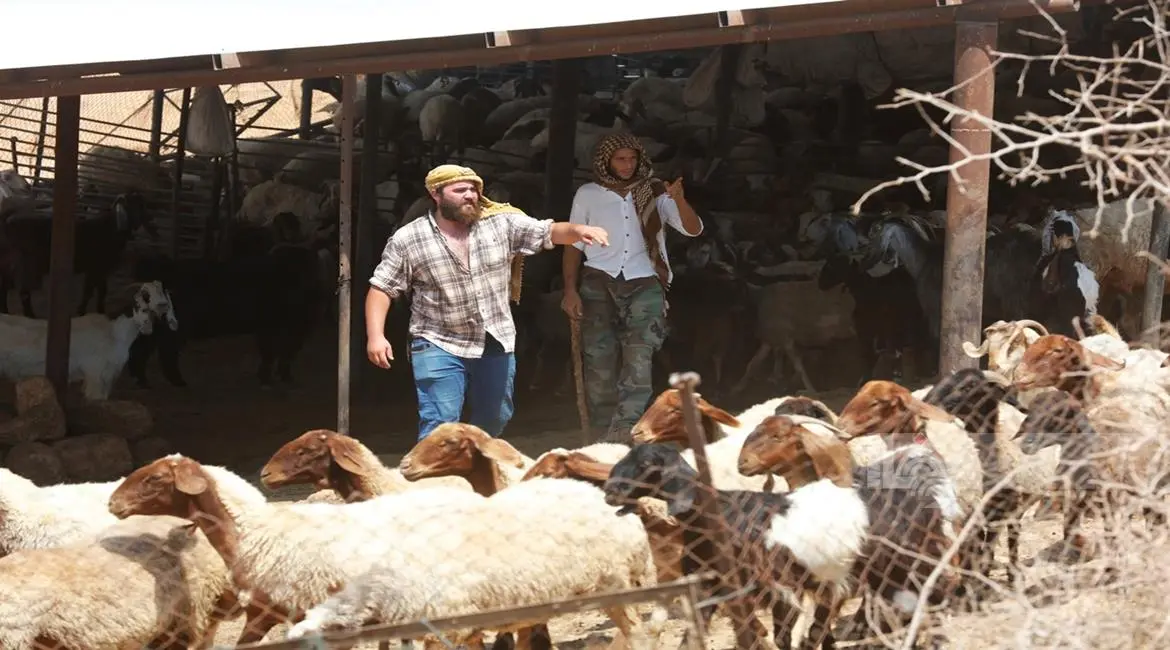
Jericho: Israeli settlers storm Ras al-Ain and graze their sheep among citizens' homes.

Settlers stormed the Bedouin village of Ras Ein al-Auja, north of Jericho, on Saturday, and grazed their sheep among the homes of Palestinian residents.


Hassan Malihat, general supervisor of the Al-Baidar Organization for the Defense of Bedouin Rights, reported that a number of armed settlers stormed the Bedouin village of Ras Ein al-Auja, north of Jericho, accompanied by a herd of livestock. They grazed their sheep among the residents' homes and vandalized their property to prevent them from using the land.


He pointed out that settler attacks against Bedouin communities have escalated significantly, and now affect everything related to Bedouin life.

ARAB AND WORLD

Sat 19 Apr 2025 9:17 am - Jerusalem Time

The Iranian delegation arrived in Rome for the second round of nuclear talks with Washington.

An Iranian delegation headed by Foreign Minister Abbas Araqchi arrived in Rome to participate in new Omani-mediated talks with the United States regarding Tehran's nuclear program, according to footage broadcast by Iranian state television on Saturday morning.


The footage shows Araghchi disembarking from an official Iranian plane at night in Rome, where he is leading a second round of "indirect" talks with US Middle East envoy Steve Witkoff.


Rome will host the talks, which will include Araghchi and US Middle East envoy Steve Witkoff, and are mediated by the Sultanate of Oman. This is the second high-level meeting between the two countries since US President Donald Trump withdrew Washington from the landmark nuclear agreement in 2018.


Diplomatic relations between Tehran and Washington were severed shortly after the 1979 Islamic Revolution in Iran. The latest diplomatic efforts come after Trump made the Iranian nuclear issue a priority following his return to the presidency in January.


Trump resumed his "maximum pressure" policy, imposing sanctions on the Islamic Republic, and in March sent a letter to Iranian Supreme Leader Ayatollah Ali Khamenei calling for nuclear talks, under threat of military action against Iran if diplomacy failed.


Trump said Thursday, "I'm in no rush" to resort to military action, adding, "I think Iran wants to talk."


For his part, Araghchi, one of the architects of the 2015 nuclear agreement, said on Friday that Iran "noted a degree of seriousness" from the Americans during the first round, but he questioned their intentions.


"Although we have serious doubts about the US side's intentions and motives, we will participate in tomorrow's negotiations anyway," he said during a press conference with his Russian counterpart, Sergei Lavrov, in Moscow.


In an interview published Wednesday by the French newspaper Le Monde, Director General of the International Atomic Energy Agency (IAEA), Rafael Grossi, said that Iran is "not far" from possessing a nuclear bomb.


During Trump's first term, Washington withdrew from the 2015 nuclear agreement between Tehran and major powers, which provided for the easing of international sanctions on Iran in exchange for restrictions on its nuclear program.


Tehran adhered to the agreement for a year after Trump's withdrawal, before gradually backing away from its commitments.


Araghchi was a negotiator in the 2015 agreement. His counterpart in Rome, Witkoff, is a real estate mogul who was also tasked by Trump with conducting talks on Ukraine.


Iran currently enriches uranium to up to 60%, which is well above the 3.67% limit stipulated in the agreement, but still below the 90% threshold required for military use.


US Secretary of State Marco Rubio urged European countries on Friday to decide whether to activate the "snapback mechanism," which would automatically reimpose UN sanctions on Iran for its non-compliance with the nuclear agreement.


The option to activate this mechanism expires in October of this year.


Iran had previously warned that it might withdraw from the Nuclear Non-Proliferation Treaty if this mechanism were activated.


Grossi, who held talks with Iranian officials during a visit to Tehran this week, said the United States and Iran are "at a critical stage" in the talks, and "we only have a short window of opportunity" to reach an agreement.


Iranian officials have insisted that the talks focus solely on the nuclear program and the lifting of sanctions.


Araghchi said that reaching an agreement with the United States is "likely" if Washington refrains from "making unreasonable and unrealistic demands," without elaborating.


Analysts believe the United States will seek to include discussions on Iran's ballistic missile program, as well as Tehran's support for armed factions in the Middle East.


Araghchi affirmed that Iran's right to enrich uranium is "non-negotiable," after Witkoff called for a complete halt to enrichment. In a previous statement, Witkoff had simply demanded that Iran return to the enrichment cap set in the 2015 agreement.


For its part, Iran's Islamic Revolutionary Guard Corps said on Tuesday that the country's military capabilities were beyond the scope of discussion.


Iran's official news agency IRNA reported that Iran's regional influence and missile capabilities were among its "red lines" in the talks.


For its part, Israel, a US ally, affirmed on Friday its unwavering commitment to preventing Iran from acquiring nuclear weapons, saying it has a "clear course of action" to prevent this.


Khamenei said on Tuesday that Iranians should not pin their hopes on progress in the negotiations, which "may or may not yield results."

OPINIONS

Sat 19 Apr 2025 9:15 am - Jerusalem Time

"Starvation War" and the Displacement Plan

Essam Abu Bakr / Egyptian writer

Essam Abu Bakr / Egyptian writer

Opinion Writer

The United Nations has issued a dire warning about the rapidly deteriorating humanitarian situation in Gaza, saying life-saving supplies are nearing "complete depletion" due to Israel's blocking of aid.

UN Secretary-General's spokesman, Stéphane Dujarric, said in a press conference that more than two million people remain trapped in the besieged Strip, with mental health needs increasing dramatically, vital infrastructure destroyed, and basic services on the brink of collapse. He noted that nearly 90% of the water infrastructure—including wells, pumping stations, and sewage treatment plants—has been destroyed due to hostilities, exacerbating the risk of disease and forcing families to rely on unsafe sources. He continued: "Stress levels are rising, particularly among children, as violence and deprivation continue," stressing that "Israel, as the occupying power, has legal obligations under international law to ensure access to food, medical care, and public health services."

Israel had launched a "starvation war" against the population of Gaza as a prelude to a war on Gaza. Israeli Prime Minister Netanyahu decided more than two weeks ago to halt the entry of all humanitarian supplies and aid into Gaza, starting Sunday morning. The move was aimed at pressuring Hamas to agree to a proposal by US envoy to the region, Witkoff. The Prime Minister's Office said the decision was made because Hamas refused to accept the US proposal to extend the first phase of the ceasefire in Gaza, which expired on Saturday.


International organizations have warned of the threat of famine and what Israel is doing in what it calls a "starvation war" in Gaza if supplies to Gaza continue to be cut off. This is especially true since the majority of the population in Gaza relies on food supplies from outside the Strip after its destruction, ending all means of livelihood. The organizations warned, asking: What will happen if the people of Gaza begin to starve? Meanwhile, the media office in Gaza stated that preventing the entry of humanitarian aid into Gaza effectively means a "starvation war" against the people of Gaza, who are entirely dependent on humanitarian aid.

The Israeli occupation authorities issued a decision to ban UNRWA at the end of last January in the occupied Palestinian territories, including Jerusalem. This means depriving tens of thousands of Palestinian refugees of services, including education and healthcare, especially with the closure of UNRWA headquarters in occupied Jerusalem. The Israeli Knesset had passed legislation banning UNRWA operations, and Israel officially notified the United Nations of the cancellation of the agreement regulating its relations with the agency since 1967. The United Nations stated that the law also prohibits activity in areas under Israeli control.

The United Nations Relief and Works Agency for Palestine Refugees (UNRWA) warned that more than two million displaced people in the Gaza Strip are besieged by hunger, thirst, disease, and fear, noting that obtaining meals has become an impossible task for families in the Strip, according to the Palestinian News Agency, WAFA. UNRWA explained that the flour and food supplies allowed into the Strip by Israel through the crossings do not meet 6% of the population's needs, causing a severe crisis, especially in obtaining bread, which led to the closure of most bakeries in the southern Gaza Strip.

UNRWA revealed that the Israeli occupation army has completely or partially destroyed more than 200 schools and shelters as a result of Israeli strikes across the Gaza Strip since the outbreak of the war on October 7.

More than 730 displaced persons have been killed in UNRWA shelters, in addition to more than 200 of the agency's employees so far. The Euro-Mediterranean Human Rights Monitor also announced that the Israeli occupation bombed 18 shelter schools in Gaza within one month.

Here comes the important question: Why did Israel prevent humanitarian aid to Gaza, ban UNRWA, and bomb its shelters in Gaza? And does Israel need to do this?

Israel certainly needs to ban UNRWA and bomb its shelters for two reasons:

The first is to force the Palestinians out of Gaza and prevent them from resettling there or trying to repair their homes and wounds and to leave Gaza permanently and to be displaced from it. This is the main goal of the Gaza war: to destroy Gaza and displace its population. Gaza will be completely emptied of its population over the course of years through displacement, either forced or voluntary. This will be done in silence and away from the media in what is called the “silent war.” Gaza has now become an uninhabitable place. More than 80 percent of Gaza’s homes have been completely destroyed, residential neighborhoods have been completely removed, entire cities have been wiped out, and entire families have been erased from the civil registry. Gaza has become uninhabitable.
The second and most important goal of bombing the shelters in Gaza was to send a message to the Palestinians that there is no safe place for Palestinians in Gaza and that they must either be displaced or killed, and to prevent any institution from helping the Palestinians in preparation for the displacement of the residents of Gaza and preventing them from remaining in Gaza. Therefore, Israel banned UNRWA, which helps them stay alive in the Strip, and bombed them in the shelters and tents to which they were displaced, exhausting them more and more and deciding to leave Gaza, and pushing them repeatedly to flee towards the sea, towards the borders, towards the port and towards the crossings to escape the hell of the bombing that has reached everywhere and made every place in Gaza unsafe.

Although the shelters are UN-approved centers housing defenseless civilians whose homes were destroyed and who fled the hell of war to a place supposedly safe according to international agreements and the United Nations, which prohibit armies from bombing these places during wars, considering them safe places for civilians, and there is no military activity or Hamas fighters in these places that could cause harm or resistance, and the Zionist entity is well aware of this, the United Nations Children's Fund (UNICEF) announced that more than half of the schools used to shelter the displaced in Gaza have been bombed. What Israel wants by bombing the shelters in Gaza is to send a bloody message to the Palestinians: There is no safe place for you in Gaza, and you must either evacuate and leave Gaza or be bombed and killed.

As for the remaining buildings in Gaza, I believe they will be demolished while they are empty, because the goal is to completely wipe out the place and its landmarks. This is a war of destruction and displacement of the entire Gaza Strip, and a war to rebuild the Gaza Strip anew with new specifications and a different vision for the future, and to hand it over to America. Therefore, it is assumed that no Gazan or Palestinian will remain in Gaza, and that he will not find a safe place in Gaza or think about rebuilding his status.


There is an American-Israeli game to delude the Palestinian people into believing that Israel will not occupy Gaza and has no intention of displacing Palestinians, by restoring the Palestinian Authority to replace Hamas in governing Gaza. However, the truth is different. Gaza will be handed over to America, and the Palestinians will be displaced voluntarily and in stages. Countries are now ready to receive them, and the evacuation crossings have been opened.

Since Egypt has been aware of the plan from the outset and has no intention of opening its doors to the Palestinians to prevent their displacement, the United States is seeking to pressure it to open the Rafah crossing or to displace them through other means, such as ports, airports, or other crossings to other countries such as Indonesia and Albania, as Trump has stated.

This does not mean that there will be a Palestinian Authority in Gaza. The Palestinian Authority's political role in Gaza has ended. However, there will be Palestinian institutions and Palestinian security forces supporting the multinational force. All of this will be temporary until the transitional phase is arranged. Palestinian civil society institutions in the West Bank will operate strongly in Gaza, in addition to economic institutions. However, there will be no return to Palestinian Gaza and no Palestinian rule there.

America and Israel are planning to have Gaza emptied of Palestinians silently and after years of what is called...

The "silent war" and its preparation to become a military base for America in the Middle East. This is the most dangerous phase. There will be no Palestinian rule in Gaza, but rather a transitional phase in which the Palestinian Authority will be used to help manage the population temporarily. This is the plan. The goal of this war is to end the Palestinian presence in Gaza, end the idea of a Palestinian state, and end Israel's absolute hegemony over the West Bank.

As for the West Bank, Israel will destroy the Palestinian camps there, with the goal of ending the idea of the Palestinian right of return. Destroying and banning UNRWA will be part of this plan, as Israel considers the Palestinian camps in the West Bank to be a fertile ground for Palestinian struggle and resistance against it. Therefore, its goal will be to destroy the camps so that they become unviable, in order to fragment this force that has penetrated the camps and is able to dominate the minds of young people and recruit them.

With over 800,000 settlers in the West Bank, the elimination of Palestinian refugee camps has become a pressing demand for Israel, which wants to end the Palestinian presence in general. Therefore, the occupation forces are inciting criminal settlers to attack Palestinian villages in the West Bank.


These settlers were raised in the pens of human terrorism, and their primary mission is to multiply and settle in the West Bank. They pose a threat to the Palestinians residing in the West Bank. They will be allowed to move and remain in the West Bank to terrorize Palestinians in Palestinian villages, threaten their security, prevent urban expansion in Palestinian villages, and prevent the displacement of their residents to Palestinian cities, thus increasing settlement on the lands of Palestinian villages and around Palestinian cities. After that, Israel will achieve absolute hegemony over the West Bank after it has finished with Gaza.


OPINIONS

Sat 19 Apr 2025 9:13 am - Jerusalem Time

Towards a meeting of the Palestinian Central Council

Hamada Faraana

Hamada Faraana

Opinion Writer

The Palestinian people stand vigilantly, along with their institutions, those who monitor them, and those who follow their actions and decisions, in preparation for the convening of the Palestinian Central Council on April 23 and 24, 2025. This is the most prominent institution mediating between the Palestinian National Council, which brings together the representatives of the components of Palestinian Arab society, from within the homeland and abroad, and includes all the active political, trade union, economic and social forces - or so it is assumed - and the daily leadership, the Executive Committee, which leads the Palestinian struggle and action on the basis of the program formulated and prepared by the National Council. This Committee includes the main factions and active independent national figures.


The Council meets at this critical time, as the Palestinian people face the most difficult period of conflict, the greatest tragedy, and the most devastating loss, as defined by the International Court of Justice and the International Criminal Court: "ethnic cleansing and genocide," and attempts to force the displacement, expulsion, and expulsion of the people of the Gaza Strip to Sinai, and the people of Jerusalem and the West Bank to Jordan or to a third country outside our Arab region.


The Palestinian people face three challenges, each one worse, harsher, and more effective than the other:

The first is the ruling group in the colony, made up of extreme right-wing political parties, allied with extremist Jewish religious parties. It seeks to complete its control, occupation, settlement, and expansion across the entire map of Palestine, and its priority is:


1- That united Jerusalem is the capital of the Israeli colony, and it is working to Israelize, Judaize, Hebraize and Zionize it.

2- The West Bank is not Palestinian, it is not Arab, it is not occupied, but rather it is Judea and Samaria, i.e. part of the map of the Israeli colony.

3 - Erasing the three terms: refugee, camp, and UNRWA from the common lexicon and the political scene, with the aim of erasing half of the Palestinian people, their cause, and their right to return in accordance with Resolution 194, after they were expelled and displaced from their homeland in 1948, which constitutes a contradiction to the colonial occupation narrative upon which the Israeli expansionist colonial project in 1948 in Palestine was based.


The second is the Palestinian division in the 1948 and 1967 territories, between the Democratic Front for Peace and Equality and the Islamic Movement faction. This division led to the success of the extreme right-wing alliance that leads the colony. Had the alliance remained in place between the political components of the Palestinian Arab community in the 1948 territories, particularly between the Democratic Front and the Islamic Movement, under the banner of the United Arab List, it would have won 15 seats due to the alliance, cohesion and unity, with the participation of only 64% of the Palestinian Arab voters who went to the ballot boxes. Had this alliance remained, it would not have led to the decline of Palestinian Arab representation to 10 seats in the Knesset, as a result of the dissolution of the alliance between the Palestinian Arab parties. Thus, it was clearly evident that the division and disagreement overthrew the closest realistic representation of the Palestinian Arab community in the Israeli Knesset, and deprived it of any influence or power on the Israeli political scene.


The Palestinian division between Fatah and Hamas, between the West Bank and Gaza Strip, as a result of the "decisive military coup" carried out and resorted to by Hamas in June 2007, and its monopoly on governing the Gaza Strip to this day, has led to the difficult conditions facing the Palestinian people.


The third aspect of the state of fragmentation, division and decline is represented by the changes that occurred in the regional situation as a result of the October 7 operation and its repercussions:


1- The destruction of the Gaza Strip and the martyrdom of more than fifty thousand Palestinians, and the wounding, injury and disability of twice as many, meaning more than one hundred thousand Palestinian civilians were injured.


2- Assassinating the military and political leaders of the Lebanese Hezbollah, destroying its combat capabilities, and causing it to lose its political role in support of Palestine.


3- The destruction of the capabilities, weapons, assets, stations and airports of the Syrian Arab Army by the colony’s army, after the coup and change that occurred in the Syrian political scene and the defeat of the former Baath Party regime on 12-8-2024.


The Chairman of the Palestinian Central Council and the Chairman of the Palestinian National Council are requested to pay attention to inviting the leaders of the Palestinian Arab community from the territories within the 1948 territories:


1- Palestinian leader Muhammad Baraka, elected president of the Higher Follow-up Committee for the Palestinian Arab Community in the 1948 Territories.

2 - Mazen Ghanayem, Mayor of Sakhnin, elected chairman of the Arab Local Authorities Committee.

3- Head of the Democratic Front for Peace and Equality list in the Knesset, MP Ayman Odeh.

4- Head of the Joint Arab List bloc in the Knesset, MP Mansour Abbas.

5- Ahmed Tibi, head of the Arab Movement for Change.

6- The manufacturer's request was made by the head of the Arab Democratic Party.

7- Essam Makhoul, head of the Democratic Front for Peace and Equality.


Inviting the leaders of the Palestinian Arab community in the 1948 territories to attend and participate in the Palestinian Central Council meeting is a political message affirming the unity of will, means, and aspirations for the future, and the restoration of the Palestinian people's rights: 1- Equality in the 1948 territories. 2- Independence for the 1967 territories. 3- Return for refugees.

Will Rohi grasp the message’s significance and respond to it, and work to achieve it?