PALESTINE

Mon 21 Apr 2025 8:51 pm - Jerusalem Time

Israeli occupation army: The overthrow of Hamas's rule in Gaza is our goal, and we will pursue it to the end.

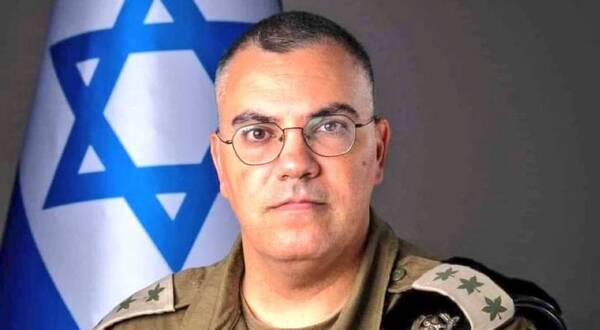
Israeli army spokesman Avichay Adraee confirmed in a statement from the Morag axis that the current objective of the ongoing military operation in the Gaza Strip is to increase pressure on Hamas and work to bring down its military and governmental regime in the Gaza Strip. He emphasized that the "ultimate goal" for his army is to return the detainees from Gaza.


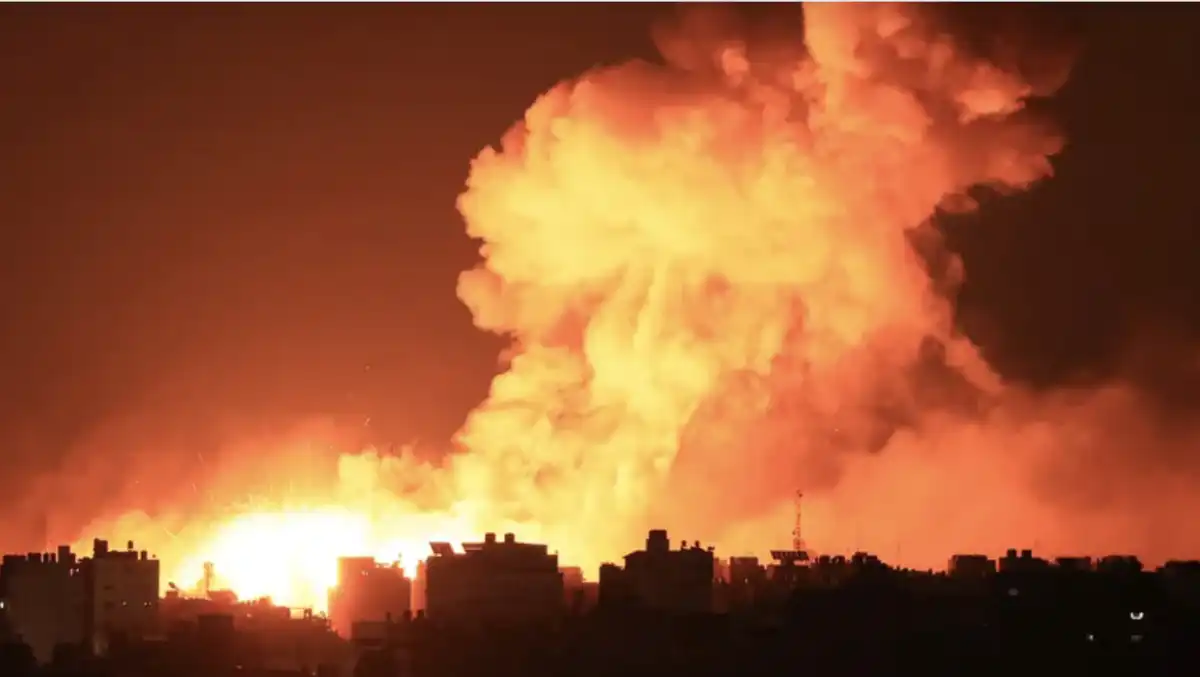
Adraee explained that the occupation army is operating simultaneously in the north and south of the Gaza Strip and continues to target Hamas's infrastructure, noting multiple achievements above and below ground, along with ongoing targeting of the movement's leaders.


He claimed that the occupation forces had killed the fifth commander of the Shujaiya Battalion in recent days, stressing that there was currently no replacement for him within the battalion. He pledged to continue eliminating every Hamas commander as part of ongoing military operations.


He added that the Israeli occupation army has relied on the element of ambiguity since the beginning of the operation, describing it as not just a slogan but an operational concept aimed at preventing Hamas from knowing the army's movements and plans.


He pointed out that the occupation forces will continue to surprise the movement in other areas within the Gaza Strip and will keep it under constant pressure. He emphasized that the army will pursue Hamas members wherever they are, even outside the Gaza Strip, vowing not to stop "until all detainees are returned, alive or dead."

PALESTINE

Mon 21 Apr 2025 7:15 pm - Jerusalem Time

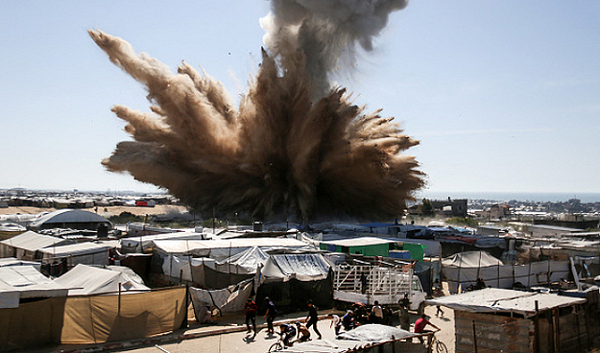
One dead and five wounded in an Israeli airstrike targeting Al-Bureij camp.

A citizen was killed and five others were injured this Monday evening, as a result of an Israeli airstrike targeting the Al-Bureij refugee camp in the central Gaza Strip.


Medical sources at Al-Awda Hospital in the Nuseirat refugee camp reported the arrival of one martyr and five wounded as a result of Israeli occupation aircraft bombing a group of citizens in the Block 4 area, near the Grand Mosque in the Bureij refugee camp in the central Gaza Strip.


Earlier today, nine civilians were killed in Israeli airstrikes on the cities of Khan Yunis and Gaza.


In another context, our correspondents reported the arrival of ten Palestinian prisoners to Al-Aqsa Martyrs Hospital, via the Red Cross, after their release from Israeli occupation prisons (Sadeh Teiman) through the Kosefim Gate east of Deir al-Balah.


The death toll from the Israeli occupation's aggression on the Gaza Strip since October 7, 2023, has risen to 51,240 dead and 116,931 wounded.

ARAB AND WORLD

Mon 21 Apr 2025 6:17 pm - Jerusalem Time

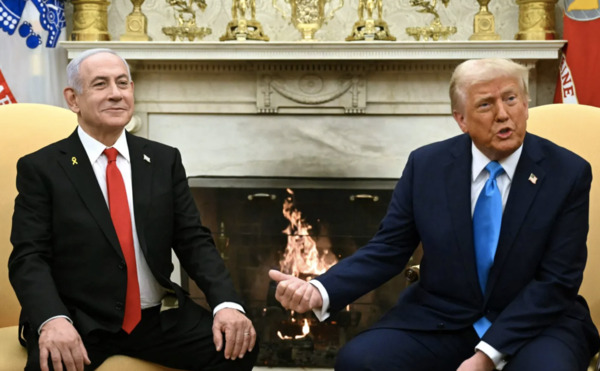
Trump and Netanyahu plan to discuss hostage deal, Iran talks

Axios reported, citing two sources, that US President Donald Trump intends to speak with Israeli Prime Minister Benjamin Netanyahu on Monday to discuss the Gaza ceasefire, the hostage deal, and the nuclear talks with Iran.


This call comes three days after Hamas rejected an Israeli proposal for a temporary ceasefire, and two days after Iran and the United States began a new round of nuclear talks in Rome.


It is noteworthy that Trump and Netanyahu met at the White House two weeks ago.

PALESTINE

Mon 21 Apr 2025 5:41 pm - Jerusalem Time

The occupation forces shot a student with live ammunition north of Hebron.

A child from the town of Beit Ummar, north of Hebron, was injured on Monday by live bullets during clashes with the occupation forces in the town.


According to local sources, the occupation forces, which were in the town during the demolition of a six-story residential building, fired live bullets at citizens, including school students. A 16-year-old student was injured by a live bullet in his foot and was transferred to the Hebron Governmental Hospital for treatment.

OPINIONS

Mon 21 Apr 2025 5:21 pm - Jerusalem Time

Israel's False Narrative: The Army Investigates Itself

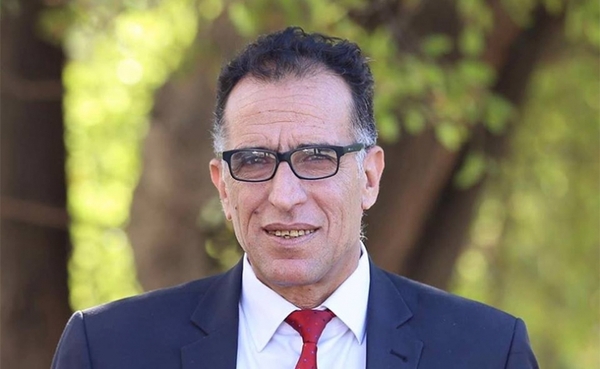
Mustafa Ibrahim

Mustafa Ibrahim

Opinion Writer

The Israeli army announced on Sunday that it had taken significantly less punitive measures against the soldiers who perpetrated the massacre in the Tel al-Sultan neighborhood west of Rafah on March 23, which resulted in the deaths of 15 relief workers, including eight Palestinian Red Crescent paramedics, six Civil Defense rescue personnel, and a United Nations employee. These measures include recording a note in the file of the commander of the 14th Brigade and removing the deputy commander of the Golani Company from his position due to his responsibility as the force's field commander and his submission of a false report to the investigation team.


The investigation concluded that the decision to evacuate the bodies was reasonable given the circumstances, while the decision to crush the vehicles was wrong. Ironically, the Israeli army decided to keep the vehicles and crush them, while the bodies of the martyrs were hidden and buried while they were bound.

The IDF investigation revealed that the shooting in the first two incidents was carried out due to a mistaken operational perception on the part of the Israeli force, after they assessed that there was a real threat from an enemy force.


Despite this, the army, which is investigating itself, has decided not to put the soldiers on trial or hold them accountable. It has merely decided to dismiss one officer from military service. The army is unwilling to open a criminal investigation into the massacre perpetrated by the soldiers, who lied and distorted the facts.


Although eyewitness accounts after the massacre revealed that the Israeli army executed the Palestinian rescue crews by shooting them in the chest and head before burying them in a mass grave, autopsies clearly revealed that they had been shot in the upper body and then buried.


In an article published in Haaretz earlier this month, which exposed the Israeli narrative as false, the army's account was refuted, stating, "Here lies the lie." This came after an Israeli army spokesperson announced that the Chief of Staff had completed an initial investigation into the shooting of Palestinian medical workers in Rafah. The initial investigation revealed that the force had opened fire in response to a perceived threat based on a previous confrontation in the area.


After the New York Times published a video clip from a cell phone found on the body of one of the martyrs, which completely contradicted the army's initial account and exposed its falsity, the claims made in the Israeli army's response were revealed to be false. They were that the vehicles in the convoy that the soldiers fired on were not marking themselves with flashing lights, as is required for rescue vehicles. The video clearly showed that the lights were indeed working.


This lie is part of a series of propaganda policies and lies practiced by the Israeli government and army throughout the war of annihilation, ignoring the crimes committed in the Gaza Strip. The article quotes a senior Israeli army officer as saying that the narrative coming from the field has brought us all down. Now, the video reveals that the chain of command simply lied.


Since the beginning of the war of extermination, Israel has committed war crimes and continues to do so, despite the International Criminal Court's prosecutor issuing arrest warrants for both Israeli Prime Minister Benjamin Netanyahu and former Defense Minister Yoav Gallant on charges of crimes against humanity and war crimes in the Gaza Strip. This has not deterred Israel from halting the war, which continues with the support of the United States and some European countries, which granted Netanyahu immunity during his trip to Hungary earlier this month.

What Israel is doing, according to the Military Advocate General, is that if action is necessary, disciplinary measures must be taken against soldiers. These measures are administrative, and they are the common punishment in the Israeli army after an investigation.


This is what happened in all the crimes committed, an example of which is the flour massacre at the Nabulsi Junction west of Gaza City, which occurred in February 2024, in which the Israeli army committed a massacre, during which approximately 104 civilians were killed and 760 others were injured.


At the time, Israel claimed that dozens of Palestinians were killed in a stampede when large crowds tried to seize food supplies from a convoy of 30 trucks carrying flour toward northern Gaza.


The Israeli military later retracted its initial investigation, claiming that the stampede caused significant harm to civilians, that soldiers had indeed opened fire on some who approached and posed a threat, and that a tank had also fired warning shots to disperse suspects. This was also the case in the attack on the World Central Kitchen charity convoy, which resulted in the deaths of five foreign aid workers.


Israel's history is replete with violations of international law and international humanitarian law. During previous cycles of Israeli aggression, no Israeli officials were held accountable. The international community failed to hold Israel accountable, and it failed to implement the recommendations of the commissions of inquiry formed by the UN Human Rights Council. These commissions deemed the Israeli military's investigations into suspected war crimes void.


Israel has a different understanding of the interpretation of international law, and the Israeli military's establishment of committees to investigate itself is an attempt to circumvent the possible outcome of international investigation committees formed by the United Nations to investigate the Israeli military's commission of war crimes.

Israel is proceeding with its own military investigation to avoid having Israeli officials summoned to the International Criminal Court, according to recommendations from a number of Israeli international law professors. This is in accordance with the "principle of complementarity" in international law, which stipulates that international or foreign judicial bodies shall not interfere in the investigation of suspected war crimes if the state directly involved in the events demonstrates the ability and willingness to conduct a serious investigation into the suspicions. In other words, an international judicial body replaces a domestic judicial body only as a last resort, and only if the state is unable or unwilling to carry out its duty to investigate and ensure that the perpetrators of crimes are brought to justice.

PALESTINE

Mon 21 Apr 2025 5:00 pm - Jerusalem Time

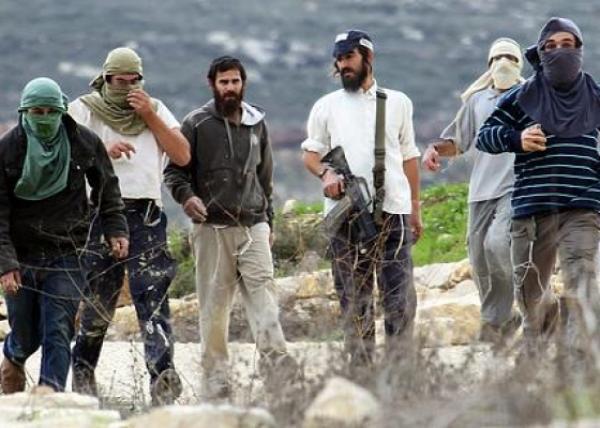
A citizen was killed following a settler attack north of Ramallah.

The Ministry of Health announced, Monday evening, the death of a citizen in the town of Sinjil, north of Ramallah.


The ministry said that citizen Wael Basem Muhammad Ghafri (48 years old) died as a result of suffocation from the toxic gas fired by the Israeli occupation forces while providing protection to dozens of settlers who stormed the town of Sinjil, north of Ramallah.


Today, Monday, settlers attacked the town of Sinjil, north of Ramallah and Al-Bireh Governorate, burning homes and property of citizens.


Eyewitnesses said that a group of settlers attacked a hill separating the villages of Sinjil and the neighboring eastern farm, and burned down a farmhouse under the protection of the Israeli occupation army.


They added that clashes erupted in the town with the occupation army, which provided protection to the settlers and fired live ammunition at civilians with the help of armed settlers. No injuries were reported, but dozens of residents suffered from suffocation from tear gas fired at them.


Later, the Ministry of Health announced the death of citizen Wael Basem Muhammad Ghafri (48 years old) as a result of suffocation from toxic gas fired by the occupation forces in the town of Sinjil.


Eyewitnesses said that about 20 settlers stormed the town in the Khirbet al-Tall area late last night. In the morning, when the townspeople headed to the site of the khirbet, the settlers attacked them, bringing in more settlers, numbering about 200. They burned a farm owned by Mohammed Ghafri, a workshop under construction, and three barns. They also stole 45 heads of sheep and killed a number of them.


He added that one of the owners of the burned farms suffered a heart attack after he was assaulted, beaten in the face and sprayed with toxic gas.


It's worth noting that settlers have established 60 settlement outposts in the West Bank since the start of the war on the Gaza Strip in October 2023, including 51 outposts in 2024, according to data from the Wall and Settlement Resistance Commission.


Israeli settlement violations in the West Bank have led to the displacement of 29 Palestinian communities, comprising 311 families with a population of approximately 2,000, between October 7, 2023, and the end of 2024, according to the Commission.

PALESTINE

Mon 21 Apr 2025 4:32 pm - Jerusalem Time

9 Palestinians killed in Israeli occupation's bombing of a house in Khan Yunis and tents for displaced people in Gaza City.

Nine civilians were killed in Israeli airstrikes on the cities of Khan Yunis and Gaza in the Gaza Strip.


According to local sources, Israeli aircraft bombed the home of the Baraka family in the Al-Zana area of Bani Suhaila, east of Khan Yunis, in the southern Gaza Strip, killing four civilians and wounding others.


Four citizens were also killed when the occupation forces bombed a number of tents near Al-Jazeera Club in central Gaza City.

A citizen was killed in an Israeli airstrike on Salah al-Din Street, opposite al-Awda Mosque, in Deir al-Balah, central Gaza Strip.

ARAB AND WORLD

Mon 21 Apr 2025 2:37 pm - Jerusalem Time

China warns countries negotiating with Washington against harming its interests

China on Monday denounced countries that are practicing "appeasement" with the United States in trade negotiations over US tariffs, stressing that it "firmly opposes" any agreement that harms its interests.


Washington imposed tariffs of 145% on most Chinese goods, and even 245% on some products, such as electric cars.


In response, China imposed 125% tariffs on US products and said it would continue the trade war "until the end."


However, other US trading partners affected by the 10% additional tariffs benefited from a 90-day suspension of much higher tariffs. Several countries are currently negotiating with the United States to reduce these tariffs.


Beijing responded on Monday by warning these countries against any agreement with the United States that would harm their interests.


"De-escalation will not bring peace, and concessions will not be respected," a Chinese Commerce Ministry spokesperson said in a statement.


The spokesman was responding to a question about the possibility of Washington asking some countries to limit their trade with China in exchange for exemption from US tariffs, according to the statement.


He added that his country "strongly opposes any party reaching an agreement at the expense of China's interests."


He stressed that "if a similar situation occurs, China will never accept it and will take firm countermeasures in response."


China's Ministry of Commerce warned in its statement that "pursuing temporary selfish interests at the expense of others' interests... will ultimately fail and harm others."


These statements come on the heels of several indications of significant progress in negotiations between Washington and its trading partners in the region.


South Korea announced that its finance and trade ministers will travel to Washington this week for high-level trade talks.


The country is particularly concerned that Samsung Electronics and Hyundai Auto would suffer a severe blow if the White House carries out its threats.


Last week, Japan's tariff envoy, Ryusei Akazawa, traveled to Washington, where he held talks with US President Donald Trump.


Japanese Prime Minister Shigeru Ishiba asserted on Saturday that the talks between Japan and the United States could serve as a "model for the world."


"The fact that President Trump personally intervened to negotiate with the Japanese envoy shows that he places importance on dialogue with Japan," he told Parliament on Monday.


He pointed out that "Japan is an ally of the United States and the largest investor and job creator in the country."


Japanese media reported that Tokyo may offer concessions by increasing its imports of American soybeans and rice, or even relaxing auto safety standards.


But the Japanese Prime Minister stressed on Monday that he refuses to accept anything that would harm "safety."


US Vice President J.D. Vance arrived in India on Monday for a four-day visit focused on trade, as New Delhi attempts to negotiate US tariffs on its products.


These talks contrast with the test of strength between China and the United States, which has roiled financial markets and raised fears of a global recession.


Chinese Foreign Minister Wang Yi on Monday reiterated his condemnation of "unilateralism and trade protectionism," calling for "openness" and "mutual benefit," in a statement made in the presence of his Indonesian counterpart, who is visiting Beijing.


He added, "The misuse of customs duties causes tremendous harm to normal economic and trade exchanges between countries."


The US President announced on Thursday that his country is holding talks with China regarding tariffs.


"Yes, we are talking to China," Trump told reporters in the Oval Office, noting that Beijing had contacted Washington "many times."


"I think we will make a very good deal with China," he added.


The Chinese government did not immediately confirm the talks, but has repeatedly called for "dialogue" based on "equality."

PALESTINE

Mon 21 Apr 2025 2:34 pm - Jerusalem Time

A child was injured by Israeli occupation forces' bullets north of Hebron.

A child was injured on Monday by Israeli occupation forces' bullets in the town of Beit Ummar, north of Hebron.


According to the Red Crescent, their crews dealt with a live bullet injury to the thigh of a 16-year-old child who was injured in Beit Ummar, north of Hebron, and he is being transferred to the hospital.

PALESTINE

Mon 21 Apr 2025 1:52 pm - Jerusalem Time

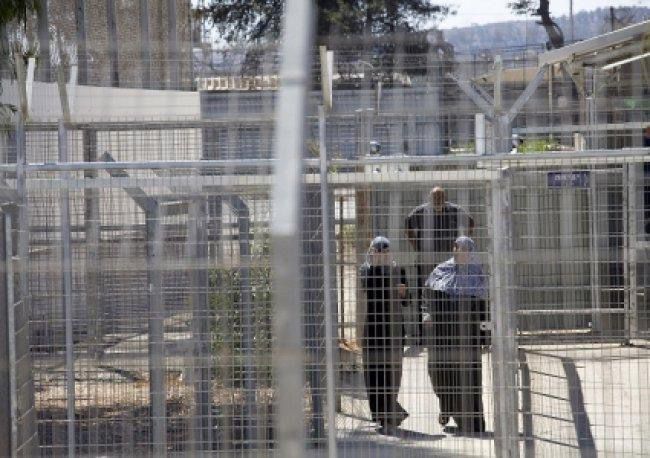
Damon's female prisoners suffer inhumane and extremely difficult detention conditions.

The Commission of Prisoners' Affairs and Ex-Prisoners said in a statement on Monday that female prisoners at Damon Prison are suffering from inhumane and extremely difficult detention conditions. The food is poor in both quantity and quality, causing digestive system problems for the prisoners, and all of them have lost significant weight.


The Commission's lawyer, citing the female prisoners who were visited, said that prisoner Karam Muhammad Musa, 53 years old, from the town of Sarra/Nablus, was arrested on 2/25/2025. She suffered from difficult detention conditions, as she was detained in a blood-stained, extremely dirty cell, unfit for human habitation, with no place to pray, without food, and with a small mattress that she and another female prisoner took turns on.


Prisoner Karam indicated that the food provided to her after her interrogation later caused her constipation and was insufficient for the number of prisoners in the room. The prison administration provides one plate of legumes for eight prisoners, and the duration of the break is limited to one hour, which the prisoners use to shower.


In the same context, prisoner Hanin Muhammad Jaber (44 years old) from Nour Shams camp lost eight kilograms of her weight during five months of detention due to malnutrition. She was arrested on 12/3/2024 while she was on an outing with her children in the park, on charges of sheltering and feeding her son, as the occupation authorities claim that he is “wanted” by them.

As for the prisoner Fidaa Suhail Asaf (49) years old from the town of Kafr Laqif/Qalqilya, she has been suffering from blood cancer for a year - that is, before her arrest, and the occupation forces raided her home on 02/24/2025 and arrested her on the pretext of incitement via social media sites - Facebook - after which she was investigated and transferred to Al-Damon prison, and she has a court session on 05/21/2025.

Note that her health condition is stable and she has been taking the required medications regularly for two weeks.


The Commission’s lawyer also visited prisoner Shahd Majed Hassan (23 years old) from Ramallah, who has been detained since 03/05/2025 and was sentenced to 4 months of administrative detention.


In this context, the prisoner says: “I was arrested from my home, then transferred to Ofer Prison, then to Beit El, then to Sharon for one night, and then to Damon Prison. It was a journey of torture, as the treatment was very bad. I remained handcuffed the entire time, and was subjected to insults and humiliations along the way.”

PALESTINE

Mon 21 Apr 2025 12:20 pm - Jerusalem Time

51,240 dead in the Gaza Strip since October 7, 2023

The Ministry of Health in Gaza reported on Monday that the death toll from the Israeli aggression has risen to 51,240 dead and 116,931 injuries since October 7, 2023.


The Gaza Health Ministry stated in a brief statement that 39 dead (including two recovered martyrs) and 62 injuries had arrived at Gaza Strip hospitals in the past 24 hours.


it pointed out that the death toll and injuries since March 18, 2025 amounted to (1,864 dead and 4,890 injuries).

PALESTINE

Mon 21 Apr 2025 11:41 am - Jerusalem Time

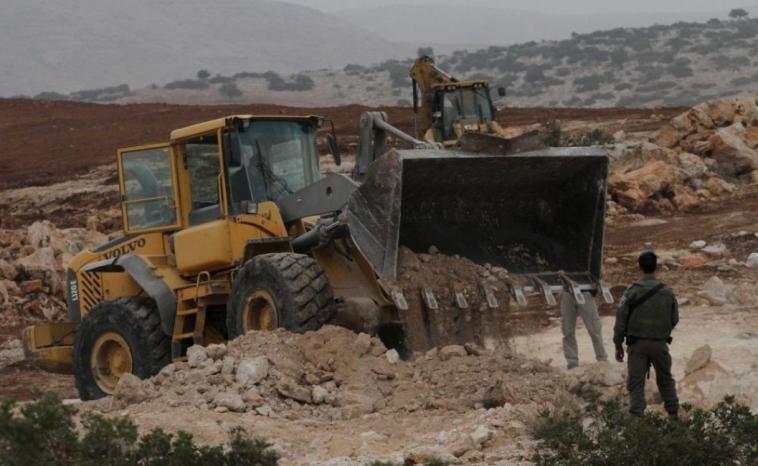
The occupation bulldozes agricultural lands northwest of Salfit.

Today, Monday, the Israeli occupation forces began bulldozing citizens' lands located between the towns of Haris and Kafl Haris, northwest of Salfit.


Local sources reported that the bulldozing operations were concentrated east of the village of Haris, which is a land planted with ancient olive trees.


She explained that the occupation forces yesterday served notices of the seizure of these lands, estimated at 65 dunams, giving citizens only 24 hours to submit their objections.

PALESTINE

Mon 21 Apr 2025 11:11 am - Jerusalem Time

Israeli occupation releases 10 Palestinian prisoners from the Gaza Strip.

Today, Monday, the occupation authorities released 10 prisoners from the Gaza Strip through the Kissufim military checkpoint.


According to local sources, the ten prisoners arrived at Al-Aqsa Martyrs Hospital via the Red Cross after their release from Sde Teiman prison.


According to the sources, all the prisoners were arrested at the Civil Administration checkpoint, except for one from Al-Zawaida, who was arrested at the Netzarim checkpoint.


The ten prisoners are: Mazen Ramadan Shaaban Al-Kilani, Khaled Hussein Youssef Sorour, Ahmed Magdy Ahmed Qashqash.

Osama Salah El-Din Hassan Ayoub, Hani Gamal Ahmed Sobh, Mohammed Wael Mohammed Al-Ballah, Bilal Shehadeh Matar Al-Shishi, Sabry Ali Ashour Salama, Rami Rafiq Haboub, all from Beit Lahia in the northern Gaza Strip.


As for the released prisoner, Ahmed Mahmoud Abu Hour, he is from the Al-Zawaida area in the central Gaza Strip.

ARAB AND WORLD

Mon 21 Apr 2025 11:05 am - Jerusalem Time

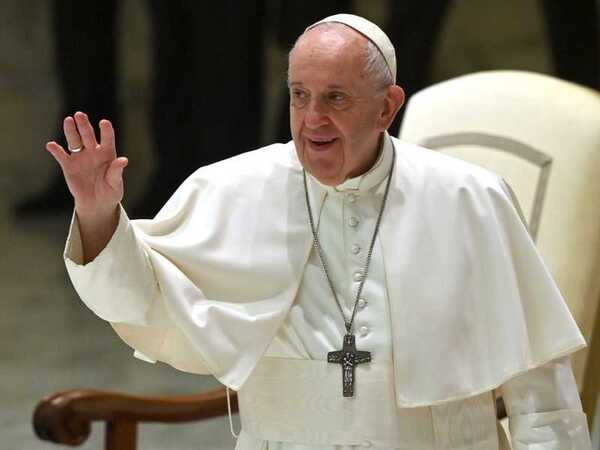
Vatican: Pope Francis dies

The Vatican announced a short while ago the death of Pope Francis, at the age of 88.

PALESTINE

Mon 21 Apr 2025 10:45 am - Jerusalem Time

Israel bans 27 French MPs and officials from entering

The Israeli government has revoked the entry visas of 27 French MPs and left-wing officials, two days before their scheduled visit to Israel and the West Bank tomorrow, Tuesday.


The Israeli decision came in response to French President Emmanuel Macron's statement that France may soon recognize a Palestinian state, as well as his recent demands of Israeli Prime Minister Benjamin Netanyahu regarding the situation in the Gaza Strip.


Several days ago, Israel barred two British members of parliament from the ruling Labour Party from entering the country.


The Israeli Interior Ministry stated that the decision to bar the French and British parliamentarians from entering Israel was based on a law that allows the entry ban of anyone "who may act against the State of Israel."


Seventeen members of the delegation, from the French environmental and communist parties, described the move as "collective punishment" and called on Macron to intervene.


The delegation's statement noted that the French Consulate in Jerusalem had extended an invitation for a five-day visit, with the aim of "promoting international cooperation and a culture of peace" in Israel and the Palestinian territories. It confirmed that Israeli authorities had revoked the visas issued a month earlier.


The delegation members emphasized their desire to understand the motives behind the sudden decision, which they considered "collective punishment." They considered the move to represent a "major rupture in diplomatic relations." They warned that banning elected officials from travel "cannot go unpunished," calling for a meeting with Macron and government action to ensure their entry.


The delegation includes French parliamentarians François Ruffin, Alexi Corbière, and Julie Ouzin (from the Ecology Party), communist deputy Soumia Borouha, and senator Marianne Margat, as well as mayors and local representatives from the left.


These parties have supported the recognition of a Palestinian state for decades, something Macron said last week could be achieved during an international conference to be held next June.


Earlier this month, Israel detained British MPs Yuan Yang and Ibtisam Mohammed at Ben Gurion Airport before deporting them, prompting British Foreign Secretary David Lammy to describe the action as "unacceptable."


In February, Israeli authorities also denied entry to European Parliament members Rima Hassan and Lynn Boylan.


Netanyahu responded angrily to the possibility of France recognizing a Palestinian state, claiming that establishing a state alongside Israel would represent a "great reward for terrorism."

PALESTINE

Mon 21 Apr 2025 10:42 am - Jerusalem Time

Israeli occupation forces handed the Minister of Jerusalem Affairs a decision to deport him from the West Bank for six months.

Today, Monday, Israeli occupation intelligence summoned Minister of Jerusalem Affairs Ashraf al-Awar, interrogated him, and issued him a deportation order from the West Bank.


The Jerusalem Governorate said in a statement that Israeli intelligence summoned Minister Al-Awar and interrogated him on the pretext of "engaging in activities on behalf of the Palestinian National Authority." The statement also stated that the intelligence service issued him a six-month ban from the West Bank.

PALESTINE

Mon 21 Apr 2025 10:40 am - Jerusalem Time

Israeli settlers led by extremist "Glick" storm Al-Aqsa

Dozens of settlers stormed Al-Aqsa Mosque today, Monday, under the protection of the occupation forces.


Local sources reported that dozens of settlers stormed the Al-Aqsa Mosque compound and performed Talmudic rituals. Meanwhile, extremist and former Knesset member Yehuda Glick gave a number of intruders a presentation about the alleged Temple.

ARAB AND WORLD

Mon 21 Apr 2025 9:23 am - Jerusalem Time

Trump looks forward to a peace agreement between Russia and Ukraine amid accusations of truce violations.

In a new development regarding the Russia-Ukraine war, US President Donald Trump expressed hope that Russia and Ukraine could reach a peace agreement this week, pledging "thriving" trade relations with the United States to both sides if a truce is reached.


Trump said in a post on his Truth Social platform on Sunday that he hopes Moscow and Kyiv will strike a deal to end the war, without providing details on any progress in the ongoing talks.


He stressed that the United States may shift its focus to other priorities if an agreement is not reached "soon," emphasizing that ending the war has been a foreign policy priority since assuming the presidency for a second, non-consecutive term, succeeding Joe Biden last January.


On the ground, Russia and Ukraine traded accusations of violating the Easter truce declared by Russian President Vladimir Putin and approved by his Ukrainian counterpart, Volodymyr Zelenskyy. Zelenskyy described the truce as having been "violated more than 2,000 times," but noted that there were no Russian airstrikes during the daytime hours.


The Ukrainian president proposed extending the ceasefire by halting long-range drone and missile strikes on civilian facilities for a period of no less than 30 days.


For his part, Kremlin spokesman Dmitry Peskov clarified that the Russian president had not issued any decision regarding extending the ceasefire, which was scheduled to expire at 21:00 GMT.


On the ground, clashes escalated, with Ukraine accusing the Russian military of launching attacks on the Pokrovsk and Seversk regions on the eastern front, and using heavy weapons despite the declared truce.


In contrast, the Russian Ministry of Defense reported that Ukrainian forces attempted to attack Russian positions in the Sukhaya Balka and Bogatyr areas of the Donetsk People's Republic, noting that these attempts failed.


It also announced Ukrainian attacks targeting Russian border areas in Bryansk, Kursk, and Belgorod, resulting in civilian deaths and injuries, according to a ministry statement.


These rapid developments and mutual accusations reflect the difficulty of imposing a true truce, even a temporary one, amid a war entering its fourth year and continuing to claim lives and cause widespread destruction on both sides of the front.

ARAB AND WORLD

Mon 21 Apr 2025 9:19 am - Jerusalem Time

Yemen: Dead and wounded in Sanaa, Houthi warning of ground operation

The Yemeni capital, Sana'a, has witnessed a major military escalation following US airstrikes that killed and injured dozens, amid warnings of a further escalation that could include a ground military operation.


Media outlets affiliated with the Ansar Allah group (Houthis) announced on Monday morning that the death toll from the US raid that targeted the popular market in the Farwa neighborhood in central Sana'a had risen to 12 dead and 30 wounded.


It reported that three people were killed and 12 others injured on Sunday evening as a result of the bombing, before later announcing the new death toll.


In a simultaneous escalation on the ground, the same sources reported that four US airstrikes targeted the southern city of Saada in the north of the country late Sunday evening, without providing details of any casualties.


It also reported that US fighter jets carried out more than 10 airstrikes on sites in the capital, Sana'a, and the governorates of Ma'rib and Al Hudaydah.


The raids also included the Attan area south of Sana'a, the cleaning project in the Asr area, in addition to the Al-Jawba district in Marib and Kamaran Island in Al Hudaydah Governorate in western Yemen.

These raids are part of an escalating military campaign launched by the United States in mid-March, following the Houthis' resumption of attacks on ships in the Red Sea and the Gulf of Aden, in response to the ongoing Israeli aggression against the Gaza Strip.


Warning of a ground operation

In a related context, the Houthi group warned of the United States' preparations to launch a ground military operation in Yemen, considering such a move "threatens to completely detonate the situation."


This warning was made by the Houthi government's Foreign Minister, Jamal Amer, during his meeting in Sana'a with Mari Yamashita, Acting Head of the United Nations Mission to Support the Hodeidah Agreement.


Amer stressed that targeting the Ras Issa oil port in Al Hudaydah Governorate and bombing the paramedics constitutes a "full-fledged war crime that requires investigation."


He added that the US raids follow a "scorched earth policy," indicating a premeditated intention to launch a large-scale ground operation that could drag the country into further deterioration and explosion.


Amer sent a letter to UN Secretary-General António Guterres, calling for urgent intervention to prevent the situation from deteriorating further, warning that the situation could spiral out of control.


To date, the United States has not issued any official comment on these statements, while Houthi data indicates that US airstrikes since mid-March have killed more than 200 civilians and injured over 400 others.


These developments come at a time of heightened tensions in the region, amid fears of the conflict expanding and its humanitarian and security repercussions for Yemen and the entire region.

PALESTINE

Mon 21 Apr 2025 8:57 am - Jerusalem Time

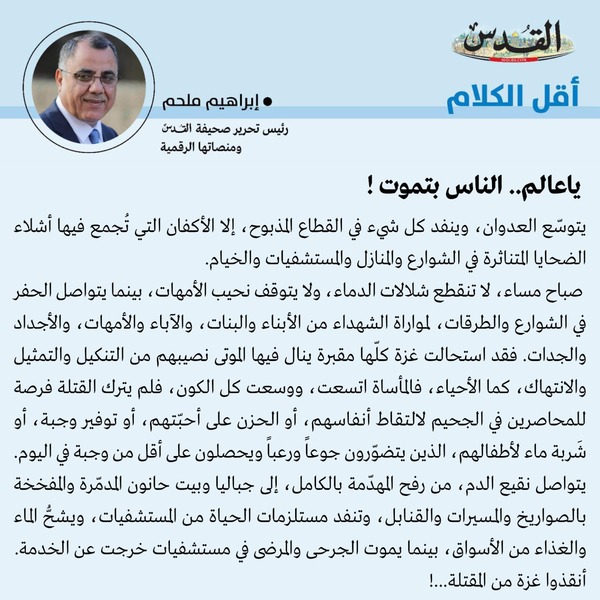
People are dying!

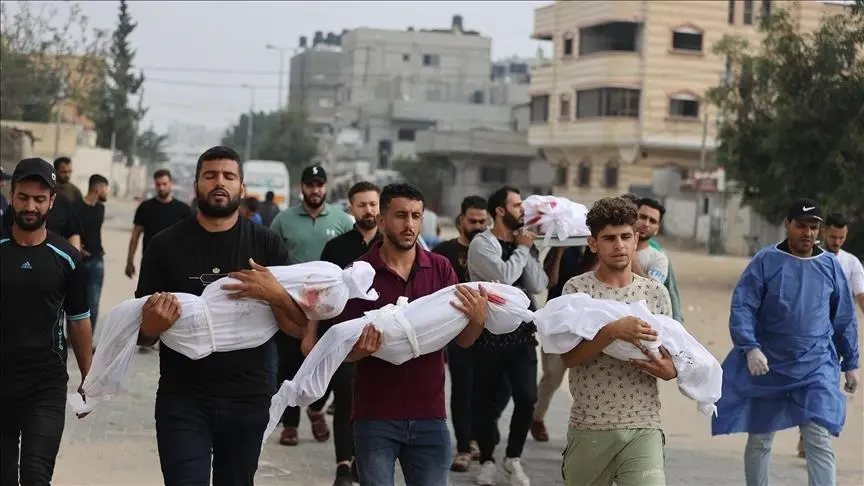
The aggression is expanding, and everything in the slaughtered Gaza Strip is running out, except for the shrouds in which to collect the remains of the victims scattered in the streets, homes, hospitals, and tents.


Morning and evening, the bloodshed never stops, and the wailing of mothers never ceases, while the streets and roads continue to be dug to bury the martyred sons and daughters, fathers and mothers, grandfathers and grandmothers. All of Gaza has become a cemetery where the dead receive their share of torture, mutilation and violation, just like the living. The tragedy has expanded, encompassing the entire universe. The killers have not left a chance for those trapped in hell to catch their breath, or to grieve for their loved ones, or to provide a meal or a sip of water for their children, who are starving and terrified, receiving less than one meal a day.


The bloodshed continues, from Rafah, completely destroyed, to Jabalia and Beit Hanoun, devastated and bombed with rockets, drones, and bombs. Hospitals are running out of essential supplies, and water and food are running low in markets, while the wounded and sick are dying in hospitals that are out of service.


Save Gaza from the massacre...!

PALESTINE

Mon 21 Apr 2025 8:54 am - Jerusalem Time

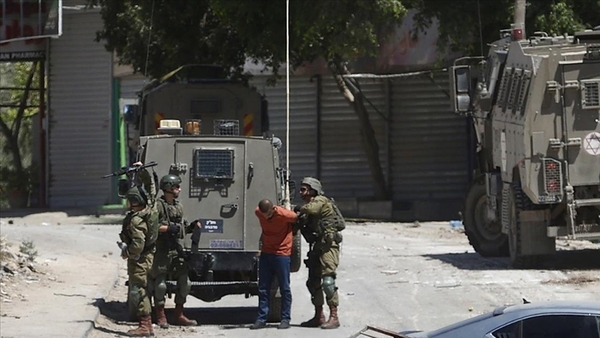
Israeli occupation forces launched an arrest campaign in the West Bank and occupied Jerusalem.

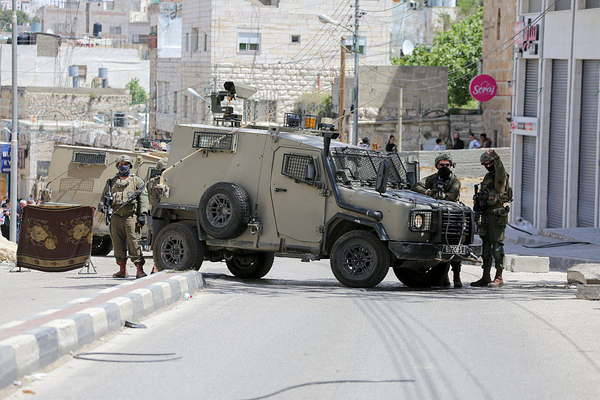
Israeli occupation forces launched an arrest campaign in various areas of the West Bank and occupied Jerusalem at dawn on Monday morning.


In Nablus, military vehicles stormed the northern Jabal area of the city, raided a house, searched it, ransacked its contents, and arrested Rami al-Badawi.


A force of infantry soldiers also stormed several neighborhoods inside Balata camp, including Al-Jammasin and Al-Badoud. They also stormed a number of homes there, searching them and ransacking their contents. They arrested the young man, Ahmed Abu Dhraa.


In Ramallah, the occupation forces arrested Ibrahim Al-Saba' and his son Ahmed after raiding their home in Beitunia and ransacking its contents.


In occupied Jerusalem, the occupation forces arrested freed prisoner Aseed Nasser Al-Zeir after raiding his home and ransacking its contents in Qalandia camp.

PALESTINE

Mon 21 Apr 2025 8:50 am - Jerusalem Time

8 Palestinians dead and injuries as a result of Israeli occupation's bombing of areas in the Gaza Strip

Eight civilians were killed and dozens injured on Monday as a result of the occupation's bombing of various areas in the Gaza Strip.


Local sources reported that a citizen and his wife were killed in the bombing of a tent in the Al-Mawasi area, west of Khan Yunis, in the southern Gaza Strip.


Five citizens were killed and others injured when the Israeli occupation forces bombed the home of the Baraka family in the Al-Zana area of Bani Suhaila, east of Khan Yunis, in the southern Gaza Strip.


Citizen Nael Hilmi al-Nakhala succumbed to his injuries a few days ago when the occupation targeted a vegetable stall in Deir al-Balah, central Gaza Strip.


The Israeli occupation forces blew up a number of houses east of Al-Tuffah, east of Gaza City. The Israeli occupation forces' artillery shelled heavily east of Al-Zeitoun, southeast of Gaza City. The Israeli occupation forces' vehicles and quadcopter drones opened heavy fire east of Al-Shuja'iyya and Al-Tuffah neighborhoods, east of Gaza City.


Since October 7, 2023, the Israeli occupation forces have launched an aggression against the Gaza Strip, resulting in the deaths of 51,201 citizens, the majority of whom were children and women, and the injury of 116,869 others. This is a preliminary toll, with a number of victims still buried under the rubble and on the streets, unable to be reached by ambulances and rescue teams.

PALESTINE

Mon 21 Apr 2025 8:49 am - Jerusalem Time

Israeli occupation forces demolish two homes west of Ramallah

Israeli occupation forces demolished two homes in the town of Ni'lin, west of Ramallah, on Monday morning.


Local sources reported that occupation bulldozers demolished the homes of brothers Nael and Raed Reda Surur, after storming the town and surrounding the two houses.

OPINIONS

Mon 21 Apr 2025 8:45 am - Jerusalem Time

On ‘Moral Panic’ and the Courage to Speak: The West’s Silence on Gaza

The Palestine Chronicle

The Palestine Chronicle

Opinion Writer

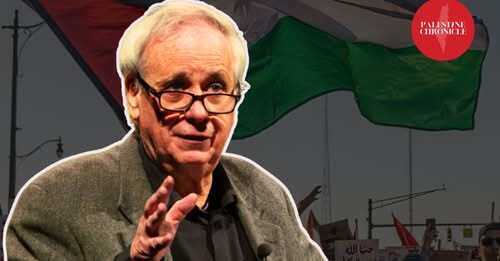
By Ilan Pappe –   

The Palestinians do not have the luxury for Western moral panic to have its say or impact. Not caving in to this panic is one small but important step in building a global Palestine network that is urgently needed.

The responses in the Western world to the situation in the Gaza Strip and the West Bank raise a troubling question: why is the official West, and official Western Europe in particular, so indifferent to the suffering of the Palestinians?

Why is the Democratic Party in the US complicit, directly and indirectly, in sustaining the daily inhumanity in Palestine—a complicity so visible that it probably was one of the reasons they lost the election, as the Arab American and progressive vote in key states could, and justifiably so, not forgive the Biden administration for its part in the genocide in the Gaza Strip?

This is a pertinent question, given that we are dealing with a televised genocide that has now been renewed on the ground. It is different from previous periods in which Western indifference and complicity were displayed, either during the Nakba or the long years of occupation since 1967.

During the Nakba and up to 1967, it was not easy to get hold of information, and the oppression after 1967 was mostly incremental and, as such, was ignored by the Western media and politics, which refused to acknowledge its cumulative effect on the Palestinians.  

But these last eighteen months are very different. Ignoring the genocide in the Gaza Strip and the ethnic cleansing in the West Bank can only be described as intentional and not out of ignorance. Both the Israelis’ actions and the discourse that accompanies them are too visible to be ignored, unless politicians, academics, and journalists choose to do so. 

This kind of ignorance is, first and foremost, the result of successful Israeli lobbying that thrived on the fertile ground of European guilt complex, racism and Islamophobia.  In the case of the US, it is also the outcome of many years of an effective and ruthless lobbying machine that very few in academia, media, and, in particular, politics dare to disobey.

This phenomenon is known in recent scholarship as moral panic, very characteristic of the more conscientious sections of Western societies: intellectuals, journalists, and artists.

Moral panic is a situation in which a person is afraid of adhering to his or her own moral convictions because this would demand some courage that might have consequences. We are not always tested in situations that require courage, or at least integrity. When it does happen, it is in situations where morality is not an abstract idea but a call for action.

This is why so many Germans were silent when Jews were sent to extermination camps, and this is why white Americans stood by when African Americans were lynched or earlier on enslaved and abused.  

What is the price that leading Western journalists, veteran politicians, tenured professors, or CEOs of well-known companies would have to pay if they were to blame Israel for committing a genocide in the Gaza Strip?

It seems that they are worried about two possible outcomes. The first is being condemned as antisemites or Holocaust deniers, and secondly, they fear that their honest response would trigger a discussion that will include the complicity of their country, or Europe, or the West in general, in enabling the genocide and all the criminal policies against the Palestinians that preceded it.

This moral panic leads to some astonishing phenomena. In general, it transforms educated, highly articulate, and knowledgeable persons into total imbeciles when they talk about Palestine. It disallows the more perceptive and thoughtful members of the security services from examining the Israeli demands to include all Palestinian resistance on a terrorist list, and it dehumanizes the Palestinian victims in the mainstream media.

The lack of compassion and basic solidarity with the victims of genocide was exposed by the double standards shown by mainstream media in the West, and in particular by the more established newspapers in the US, such as The New York Times and The Washington Post. When the editor of Palestine Chronicle, Dr. Ramzy Baroud, lost 56 members of his family—killed by the Israeli genocidal campaign in the Gaza Strip—not one of his colleagues in American journalism bothered to talk to him or show any interest in hearing about this atrocity. On the other hand, a fabricated Israeli allegation of a connection between the Chronicle and a family in whose block of flats hostages were held triggered a huge interest by these outlets and attracted their attention.

This imbalance in humanity and solidarity is just one example of the distortions that moral panic brings with it. I have little doubt that the actions against Palestinian or pro-Palestinian students in the US, or against known activists in Britain and France, as well as the arrest of the editor of the Electronic Intifada, Ali Abunimah, in Switzerland, are all manifestations of this distorted moral behavior.

A similar case unfolded just recently in Australia. Mary Kostakidis, a famous Australian journalist and former prime-time weeknight SBS World News Australia presenter, has been taken to the federal court over her—one should say quite tame—reporting on the situation in the Gaza Strip. The very fact that the court has not dismissed this allegation upon its arrival shows you how deeply rooted moral panic is in the Global North.

But there is another side to it. Thankfully, there is a much larger group of people who are not afraid of taking the risks involved in clearly stating their support for the Palestinians, and who do show this solidarity while knowing it may lead to suspension, deportation, or even jail time. They are not easily found among the mainstream academia, media, or politics, but they are the authentic voice of their societies in many parts of the Western world.

The Palestinians do not have the luxury for Western moral panic to have its say or impact. Not caving in to this panic is one small but important step in building a global Palestine network that is urgently needed—firstly to stop the destruction of Palestine and its people, and second, to create the conditions for a decolonized and liberated Palestine in the future.


Mon 21 Apr 2025 8:37 am - Jerusalem Time

The Age of American Unilateralism. How a Rogue Superpower Will Remake the Global Order

By Michael Beckley

Since the end of the Cold War, the United States has largely been expected to follow one of two foreign policy paths: preserve the country’s position as the leader of the liberal international order or withdraw and adjust to a post-American, multipolar world. But as I argued in Foreign Affairs in 2020, the most likely trajectory was always a third: become a rogue superpower, neither internationalist nor isolationist but aggressive, powerful, and increasingly out for itself.

U.S. President Donald Trump has given this vision sharp definition by raising tariffs to levels that echo the infamous Smoot-Hawley Act of 1930, slashing foreign aid, snubbing allies, and proposing to seize foreign territory, including Greenland and the Panama Canal. Yet Trump is more accelerant than architect, channeling long-simmering frustrations with global leadership and deeper structural forces pulling U.S. strategy inward. The real question now is not whether the United States will continue to go its own way but how—and to what end.

Understanding the drivers of this shift is no longer a matter of academic debate. It’s essential for shaping what comes next. Left unchecked, Washington’s unilateral turn could destabilize the world and undermine its own long-term power. But if recognized and redirected, these forces could form the foundation of a more focused and sustainable strategy; one that sheds the overreach of liberal hegemony without surrendering the core strengths of a liberal order.

WHY NOT GO IT ALONE?

One reason the United States is going rogue is because it can. Despite decades of declinist warnings, American power remains formidable. The country’s consumer market rivals the combined size of the markets in China and the eurozone. Half of global trade and nearly 90 percent of international financial transactions are conducted in dollars, funneled through U.S.-linked banks—giving Washington the power to impose crippling sanctions. Yet the United States has one of the least trade-dependent economies in the world: exports account for just 11 percent of GDP (a third of which go to Canada and Mexico) compared with the global average of 30 percent. U.S. firms supply half of global venture capital, dominate the production of life necessities such as energy and food, and generate more than half of global profits in high-tech industries, including semiconductors, aerospace, and biotechnology—nearly ten times China’s share. The United States relies on China for high-volume industrial inputs—base chemicals, generic drugs, rare earths, and low-end chips—but China is far more dependent on the United States and its allies for high-end technologies and food and energy security. Both sides would suffer in a rupture, but China’s losses would be harder to replace.

Top of Form

Bottom of Form

Militarily, the United States is the only country that can fight major wars thousands of miles from its shores. Roughly 70 countries—accounting for a fifth of the world’s population and a third of its economic output—depend on U.S. protection through defense pacts and require U.S. intelligence and logistics to move their own forces beyond their borders. In a world so deeply dependent on the U.S. market and military, Washington has immense leverage to revise the rules—or abandon them altogether.

The United States has not only the means to strike out alone but also, increasingly, the motive. The American-led liberal order has outlived its original purpose, growing into a maze of burdens and vulnerabilities. It didn’t fail, but it triumphed over threats that no longer exist: the devastation of World War II and the spread of communism. By the early 1950s, the Soviet Union controlled nearly half of Eurasia and fielded double the military power of Western Europe. Communist parties, committed to abolishing private property, controlled a third of global industrial output and won up to 40 percent of the vote in major Western democracies. Under these circumstances, the threat to the American way of life was clear, as was the need to defend a capitalist order. That strategy worked. The West became prosperous and democratic, and the Soviet bloc collapsed. But success created new problems the old order couldn’t solve.

Many of the U.S. allies Washington helped protect, for instance, are today incapable of bearing major burdens. Sheltered by U.S. security guarantees, countries across western Europe—as well as Canada and Japan—have slashed defense spending, expanded welfare states, and grown deeply entangled with Chinese markets and Russian energy. Many U.S. allies struggle to secure their own peripheries, let alone uphold global stability. And when crises erupt, they still turn to Washington—to enforce freedom of navigation in the South China Sea in the face of Chinese aggression, to arm Ukraine against Russia, or to protect shipping from Houthi attacks in the Red Sea. Countries that once anchored the liberal order have become dependents—draining U.S. power instead of reinforcing it.

Washington has immense leverage to revise the rules—or abandon them altogether.

Worse, by facilitating the integration of Russia and China into the liberal order, the United States empowered its most dangerous adversaries. Both regimes benefited from a U.S.-led alliance system that pacified their historical rivals in Germany and Japan, curbed nuclear proliferation, and secured global trade routes. With their flanks and supply lines relatively secure, they began redrawing the map of Eurasia by force: Russia through invasions of Georgia and Ukraine; China through militarized island building in the South China Sea, encroachments on India’s territory, and escalating threats against Taiwan.

They also gained access to Western markets, institutions, and networks—then exploited that access to hack, bully, and loot the system. Russia launders oligarchic wealth through Western banks, spreads disinformation, and weaponizes energy to fracture Europe. China shields its domestic market while flooding others with subsidized exports, spending ten times as much on industrial policy as the average for countries that belong to the Organization for Economic Cooperation and Development. China now dominates strategic manufacturing sectors such as shipbuilding, drones, electronics, and pharmaceuticals—and is weaponizing that dominance to coerce the United States and its allies by cutting rare-earth exports, threatening drug supply chains, swarming Taiwan with drones, and flooding Europe with underpriced electric vehicles. At home, Beijing censors foreign ideas; abroad, it exploits the open Internet to steal intellectual property, plant malware in Western infrastructure, and spread propaganda. It assumes leadership roles in institutions such as the UN Human Rights Council only to subvert the liberal norms they were built to uphold. What was once a cornerstone of U.S. strategy—openness—has become a Trojan horse.

Moreover, the liberal order has become harder to control. After World War II, Washington supported decolonization and integrated new countries into global markets and institutions, fueling globalization and the “rise of the rest” and doubling the number of sovereign states. But success came at a cost. As new players proliferated, authority fractured and veto points multiplied. Institutions that once amplified U.S. influence—including the UN, the World Trade Organization, and the World Bank—have devolved into arenas of gridlock and anti-American posturing.

At home, the consequences have been equally corrosive. Globalization fueled growth but hollowed out American industries and concentrated the gains. Between 2000 and 2020, U.S. industrial output (excluding semiconductors) fell nearly ten percent, and one in three factory jobs disappeared. Nearly all net job growth went to the richest 20 percent of zip codes, leaving much of the country behind. The social fallout has been staggering: rising disability claims, drug overdoses, and prime-age workers dropping out of the labor force at Great Depression–level numbers. Many wounded communities retain political clout thanks to an electoral system that amplifies rural voices over urban majorities. The result: a hard pivot away from liberal internationalism and toward protectionism and border controls.

THE GATHERING STORM

As I argued in 2020, two powerful trends—demographic change and burgeoning automation—are remaking the global landscape and reinforcing the drift toward American unilateralism. Rapid demographic change is weakening great powers in Eurasia and destabilizing swaths of the developing world. Meanwhile, new technologies are reducing the United States’ need for foreign labor, energy, and large military bases. The result is a growing asymmetry: mounting disorder and weakening allies on one side and rising U.S. self-sufficiency and strike-from-a-distance capabilities on the other. As that gap widens, Washington will face stronger temptations to go it alone.

Beginning with demography, the United States is the only great power whose prime-age workforce is projected to grow throughout this century. By 2050, the workforces of the major economies of Eurasia will lose around 200 million adults aged 25 to 49—the cohort that drives productivity, military recruitment, and economic growth—with declines of 25 to 40 percent in many countries. By 2100, the figure will exceed 300 million, with China alone projected to shed 74 percent of its prime-age workforce. The share of seniors will more than double in most countries by midcentury, pushing support ratios (the number of workers per retiree) to ruinous levels; China’s, for example, will fall from ten to one in 2000 to under two to one by 2050. Demographic decline is already shaving more than a percentage point in annual growth from major Eurasian economies, and debt-to-GDP ratios have ballooned above 250 percent on average. As other economies shrink and strain, the U.S. economy will become more central to global growth and its fiscal base and military manpower more robust in relative terms.

Yet the United States is unlikely to turn its demographic edge into a new era of liberal hegemony. Instead, demographic disruption is raising the risks to allied defenses by fueling a dangerous imbalance: autocratic rivals are militarizing despite population declines, while democratic allies are rearming slowly, constrained by aging electorates and mounting welfare obligations. As the Eurasian balance tilts toward the autocracies, the risks to U.S. defense commitments continue to rise.

This pattern is already visible. Russia, China, and North Korea are doing what struggling autocracies have long done: turning to the military to secure their regimes. When growth slows and unrest threatens, dictators funnel resources to the armed forces to suppress dissent, deter rivals, and ensure loyalty within the ranks. The Soviet Union followed this path in the 1970s and 1980s, doubling defense spending even as its economy and population stagnated. Today, Russia is doing the same—devoting eight percent of GDP to defense, slashing civilian budgets, and replacing battlefield losses in Ukraine at a rate of 25,000 to 30,000 troops per month. China, despite a collapsing workforce, is carrying out the largest peacetime military buildup since that of Nazi Germany in the 1930s. North Korea, although impoverished and aging, continues to pour resources into weapons and war.

Trump is tearing down the very system that has kept the peace for generations.

Meanwhile, democratic allies are struggling to keep pace. Japan, South Korea, Taiwan, and countries in Europe are rearming slowly, held back by shrinking tax bases and aging electorates that prioritize social spending over defense. Taiwan’s conscription pool is projected to halve by 2050. Japan, South Korea, and Ukraine are struggling to meet recruitment goals. British, French, and German forces have stagnated or declined. The result is a gathering storm: autocracies gearing up for conflict; democracies responding with too little, too late; and a United States increasingly unsure of whether defending distant allies is worth the mounting risks.

That growing U.S. aversion to foreign entanglements will deepen as the developing world slides further into demographic turmoil. Whereas rich countries are aging and shrinking, much of the global South is exploding in size. Africa alone will add over a billion people by 2050—mostly in countries already grappling with poverty, weak governance, and climate stress. Youth unemployment exceeds 30 percent in many of these states, and education systems are collapsing. Roughly half the countries in Africa are in debt distress, and one-quarter are in active conflict, with similar trends unfolding in the Middle East and South Asia. Surges in the youth population—hitting in states where capacity is weakest—are driving instability, extremism, and mass migration. As migrants flee for the Americas and Europe, they are fueling populist backlash and reinforcing the United States’ instinct to wall itself off.

Meanwhile, new technologies are making that instinct not just plausible but seductive. Drones, long-range bombers, cyberweapons, submarines, and precision missiles potentially allow the United States to strike targets across the globe while relying less on large, permanent overseas bases—which are increasingly vulnerable to adversaries armed with similar technologies. As a result, the U.S. military is shifting from a force geared to protect allies to one focused on punishing enemies by launching strikes from U.S. territory, deploying automated kill zones of drones and mines near adversaries’ borders, and sending nimble expeditionary units to hit high-value targets and slip away before taking casualties. The goal is no longer deterrence through presence—it’s destruction from a distance.

This same logic is reshaping the U.S. economy. Automation and AI are shrinking the demand for foreign labor. Additive manufacturing, or 3D printing, and smart logistics are compressing supply chains and enabling reshoring. AI is replacing foreign call centers. With increasingly automated factories, cheap energy, and the world’s biggest consumer market, U.S. firms are coming home—not just for security but because it makes business sense. The United States’ reliance on the global economy won’t vanish, but it’s becoming narrower, more selective—and easier to sever when the next global crisis hits. A fortress economy is rising to match a fortress military. And together, they are making disengagement feel both safer and smarter.

This is why a rogue superpower is not a hypothetical—it’s the path of least resistance. The question is no longer whether the United States will go rogue but what kind of rogue it will become. Will it be a reckless, hypernationalist power that lashes out, cuts ties, and pursues limited gain at great long-term cost? Or can it channel its strength into a more strategic posture—one that sheds overreach but preserves the core of the liberal order among a tighter group of capable partners?

A FREE WORLD THAT WORKS

If life were just about money and the goal of foreign policy were to grab it as fast as possible, then Trump might be an ideal leader. By slapping tariffs on friends and foes alike, slashing foreign aid, proposing to seize strategic territory, and telling allies to fend for themselves, Trump’s approach might wring out some extra cash, at least for a while.

But economics isn’t the only game in town. There is also geopolitics. And by treating global affairs like a transactional hustle, the United States risks tearing down the very system that has kept the peace for generations. Trade wars don’t just raise prices. They unravel alliances and push rivals toward confrontation. That’s how the world fell apart in the 1930s: protectionism, fear, and rising powers with no way to grow but through force. Trump officials like to compare China to Japan in the 1980s—a trade partner that can eventually be coerced into making concessions. But China is not a democratic ally under U.S. protection. It is a revanchist, nuclear-armed autocracy that, like the great powers of old, sees economics and security as two sides of the same coin. Its civil-military fusion doctrine more accurately echoes the “rich nation, strong army” ideology of imperial Japan. From Beijing’s perspective, the trade wars Washington is stoking are not mere economic spats. They are an assault on China’s comprehensive national power—and a potential prelude to a shooting war.

And much like Japan before Pearl Harbor, Beijing sees itself facing an economically hostile but militarily vulnerable United States. The U.S. military has just two major bases within 500 miles of Taiwan—both now targeted by Chinese missiles. U.S. ammunition stockpiles would run dry within weeks of a major war. Meanwhile, 77 percent of young Americans are unfit to serve in the military, largely because of obesity, drug use, and lack of education. Trump plans to unveil a $1 trillion defense budget, but rebuilding the U.S. defense industrial base could take years. By hiking tariffs before fixing its military shortfalls, the United States may be picking a fight that it’s not fully prepared to win.

The question is no longer whether the United States will go rogue but what kind of rogue it will become.

Some argue the United States should simply sidestep conflict by sacrificing Taiwan and Ukraine and accepting a world divided into great-power spheres: China in Asia, Russia in eastern Europe, and the United States in the Western Hemisphere. They point to the Cold War, when Washington grudgingly tolerated Soviet domination of eastern Europe, as proof that such arrangements can preserve peace. But the analogy is dangerously flawed. Unlike the Soviet Union after World War II, Russia and China are not defending borders of victory—they’re trying to overturn what they see as borders of defeat. Their territorial claims don’t end with Ukraine and Taiwan; they begin there. Moscow seeks to restore a “Russian world” stretching across eastern Europe and Central Asia. Beijing lays claim to most of the South China and East China Seas and large parts of India. Chinese military officials and propagandists have even floated threats to U.S. territories such as Guam and Hawaii, portraying them as relics of Western imperialism.

Granting China or Russia parts of these spheres would not satisfy them—it would empower them to go for more. And wherever their boots tread, violence and repression will follow. In Ukraine, Russia has bombed maternity wards, tortured civilians, kidnapped children, and looted cultural treasures. In Georgia, Syria, and Chechnya, it leveled cities and propped up brutal regimes. China has crushed Hong Kong’s freedoms, imposed martial law in Tibet, built concentration camps in Xinjiang, and militarized the South China Sea with artificial island fortresses and swarms of maritime militias. An expanded Russian or Chinese sphere would not bring order or prosperity—it would spread the machinery of state terror.

Nor would the expansion stop there. History shows that great powers rarely halt their advance unless stopped by force or geography. Throughout the nineteenth and twentieth centuries, the United States expanded until it dominated the Western Hemisphere and its surrounding seas. Germany and Japan had to be crushed in World War II to end their imperial ambitions. Britain and France, though ravaged by that war, clung to their empires until anti-colonial revolts and U.S. pressure pried them loose. The Soviet Union pressed outward too—arming insurgencies across the developing world, repressing reform movements in Eastern Europe with tanks, and placing nuclear missiles in Cuba. Only sustained Western resistance contained its advance. There is no reason to believe Putin and Xi will prove exceptions to this historical rule.

Even setting aside the security risks, the case for spheres of influence collapses on economic grounds. Outsize wealth has never come from fortress economies. It comes from open, maritime commercial orders that enable sustained, compound economic growth. If the United States were to retreat into continentalism and cede spheres to Beijing and Moscow, it may remain safer and richer than most. But it would be far poorer than it could be and far more likely to face the fires of conflict down the road.

OPPORTUNITY OUT OF CRISIS

A better strategy would not carve up the world with China and Russia but contain them with a consolidated free-world bloc. That project would begin at home. North America already forms the world’s largest free-trade zone. Canada, Mexico, and the United States collectively possess 500 million people, vast energy reserves, and a broad spectrum of industrial capabilities. Deepening this continental core—with shared infrastructure, secure supply chains, and labor mobility—would give the United States a flourishing base from which to compete globally without relying on adversaries.

Overseas, the United States should anchor a layered defense against the axis of autocracies: China, Iran, North Korea, and Russia. Frontline democracies including Poland, South Korea, Taiwan, and Ukraine should be heavily armed with short-range missiles and rocket launchers, mobile air defenses, loitering drones, and mines to repel invasions. Behind them, core allies including Australia, France, Germany, Japan, and the United Kingdom would reinforce the front with longer-range missiles and mobile ground, air, and naval forces designed to strike across the theater and support frontline defense. The United States would serve as the ultimate backstop and enabler, providing satellite intelligence, heavy lift and logistics, nuclear deterrence, and massive air and missile strikes delivered by carriers, stealth bombers, and submarines.

The goal isn’t just to win a great-power contest. It’s to channel it.

This same military alliance also would form an economic bloc. The United States would offer market access in exchange for tangible commitments that allies spend more on defense; decouple from Russia and China in critical sectors such as semiconductors, telecommunications, energy, and advanced manufacturing; and grant U.S. firms reciprocal access to their markets. Trade deals would include joint rules on investment screening, export controls, and industrial subsidies, and would support the co-production of advanced technologies. The aim would not be to resurrect a universal liberal order, but to consolidate a tight economic alliance—one that defends its members, isolates adversaries, and wields collective bargaining power.

If there is a silver lining in today’s grim outlook, it is that crisis creates opportunity. Durable international orders—the Westphalian system of sovereign states, the European peace that emerged from the 1814–15 Congress of Vienna, the post–World War II liberal order—were forged in the heat of great-power rivalry, when fear, not idealism, compelled countries to band together. The same goes for American renewal: throughout its history, the United States has invested at scale only when national survival was on the line. It was the Civil War that drove the rapid expansion of the Northern railroad network, laying the groundwork for later transcontinental lines. Cold War fears, not peacetime consensus, sparked the creation of the interstate highway system and the National Defense Education Act. Military R & D funded the breakthroughs that gave rise to the semiconductor industry, GPS technology, and the Internet. For better or worse, national security concerns have been America’s most consistent engine of public investment.

Today’s rivalry with China and Russia can serve that galvanizing role again, driving action to rebuild infrastructure and industry, harden supply chains, revive the defense industrial base, attract top global talent, and restore civic trust. The goal isn’t just to win a great-power contest. It’s to channel it; to fix what’s broken at home and shape a world that reflects American interests and values. A free world that works—for the United States and for those willing and able to stand with it.

ECONOMY

Mon 21 Apr 2025 8:33 am - Jerusalem Time

China vows countermeasures against anyone negotiating with Washington at its expense

China's Ministry of Commerce announced on Monday that China respects all parties seeking to resolve their economic and trade disputes with the United States through consultation on an equal footing, but it will firmly oppose any party making a deal at China's expense.

Commenting on reports that the Trump administration is preparing to pressure other countries to limit trade with China in exchange for tariff exemptions from the United States, a ministry spokesperson said that China will "take firm and reciprocal countermeasures" if any country seeks to conclude such deals.


The spokesperson added, "The United States has abused tariffs on all its trading partners under the guise of so-called 'equivalence,' forcing all parties to initiate so-called 'reciprocal tariff negotiations' with it."


The ministry affirmed that China is determined and capable of protecting its rights and interests and is ready to strengthen solidarity with all parties. Bloomberg News, citing informed sources, reported that the Trump administration is preparing to pressure countries seeking tariff reductions or exemptions from the United States to limit trade with China, including financial sanctions.

Earlier this month, U.S. Trade Representative Jameson Greer said that nearly 50 countries had contacted him to discuss the hefty additional tariffs imposed by President Donald Trump.

Trump suspended the historic tariffs he had announced on April 2 on dozens of countries, except for those imposed on China, specifically targeting the world's second-largest economy with some of his largest tariffs.


snabusiness

PALESTINE

Mon 21 Apr 2025 8:26 am - Jerusalem Time

Omer Bartov, Israeli historian specializing in the Holocaust, speaks about Gaza: "It's a genocide."

Israeli historian Omer Bartov, a specialist in World War II and the Holocaust, considered the ongoing offensive against the Palestinians "an operation whose goal is to destroy the ability of Palestinians to live in this region as a group." "And by my definition, it is a genocide," said the Brown University (Rhode Island) professor when asked about the current situation in the Middle East.


A critic of the Israeli government, Bartov accused Prime Minister Benjamin Netanyahu of wanting "any criticism of Israel to be immediately transformed into an anti-Israeli and anti-Semitic argument." According to him, "the occupation creates dehumanization. That's what it does. It doesn't just dehumanize those you occupy, it dehumanizes the occupiers." Asked about the Holocaust, the historian replied: "You can't understand anything in history without making comparisons," he said. "If you say the Holocaust is unique, nothing like it happened before, nothing like it happened after. It ceases to be a historical event, it becomes metaphysical," he added.

OPINIONS

Mon 21 Apr 2025 8:22 am - Jerusalem Time

Is Netanyahu's wall of power cracking?

Translation for "Alquds" dot com

Translation for "Alquds" dot com

Opinion Writer

The main reasons for believing that this wall of power is cracking are: First, the picture regarding Trump is not yet completely clear, although there are numerous hints that there is no blank check for Israel allowing it to do whatever it wants.


Antoine Shalhat


There is a recent belief in Israel that the wall of power surrounding Prime Minister Benjamin Netanyahu is cracking. This wall appeared to be solid following what was considered the success of the war against Hezbollah in Lebanon, which ended with the assassination of Hassan Nasrallah and senior party officials, preceded by the "pager attack."


The cohesion of his government coalition is another consolidating factor, compounded by two other factors: the resumption of the war on Gaza and the assumption of the presidency of Donald Trump. Prevailing assessments indicate that Washington's relations with Israel will be closer and better than they were during the Joe Biden administration, increasing the coalition's chances of survival and cohesion, free from American pressure related to the course of the war. Meanwhile, there are significant expectations and hopes from the Trump administration regarding issues such as Iran, Syria, the annexation of the West Bank, and the stance on Hamas, Hezbollah, and the Houthis.


It is well known that one of the motivations for resuming the war is Netanyahu's desire to do so in order to preserve the survival of his coalition, given two developments related to the fate of this coalition resulting from the prisoner exchange deal between Israel and Hamas last January: First, the resignation of the "Jewish Power" party from the coalition in protest against the deal; second, the threat by Religious Zionism Party leader and Minister Bezalel Smotrich, who refused to join the "Jewish Power" move, to bring down the government if the second phase of the deal is implemented and the war is ended. Smotrich emphasized the necessity of not ending the war before achieving all of its goals. According to Smotrich, he expects the Israeli army, after the end of the first phase of the prisoner exchange deal, to "return to a completely different kind of fighting," and to "occupy the entire Gaza Strip, destroy Hamas militarily and civilian, and return all the abducted soldiers." As for Ben-Gvir, immediately after the resumption of the war, the announcement of the dismissal of the Shin Bet chief, and the imminent dismissal of the attorney general, he announced his return to the coalition government and to the ministries previously held by his party's representatives, most notably the Ministry of National Security.


The most important reasons for believing that this wall of power is beginning to crack are: First, the picture regarding Trump is not yet completely clear, although there are numerous hints that there is no blank check for Israel to do as it pleases. Trump apparently wants to restore American greatness above all else. Although he has floated ideas regarding the Panama Canal and Greenland, he has made it clear that wars are not on his agenda, and that he seeks to normalize Israel's relations with Saudi Arabia and establish a new order in the Middle East. Some assert that Netanyahu has recently received several slaps in the face from the US president, whether regarding Iran, tariffs, or even Turkey.


Second, Trump's slaps coincided with an internal blow from the Israeli Supreme Court, which decided to freeze the dismissal of Shin Bet (General Security Service) Director Ronen Bar. This decision sets a clear line for Netanyahu regarding the limits of his authority.


The letter submitted by the Shin Bet director to the Supreme Court, as well as the testimony submitted by his predecessor, Yoram Cohen, detailed how Netanyahu has been systematically trying for years to harness the Shin Bet's capabilities for his own personal gain, whether to deal with political opponents, silence protests, or help him evade justice. According to one analysis, the letter clearly demonstrates Netanyahu's goal of achieving a one-man rule that eliminates anyone who threatens him.


Perhaps what enables Netanyahu to advance this goal is the presence of a weak opposition to him, and a public sector that has succeeded in instilling fear among its senior officials, just as it has succeeded in instilling fear among the ranks of the security establishment, as was evident last week in the hysterical reaction of the Chief of Staff and the Commander of the Air Force to the letter from the Pilots Forum, which expressed a position on the paramount importance of freeing those held by Hamas in Gaza at the expense of continuing the war.

OPINIONS

Mon 21 Apr 2025 8:15 am - Jerusalem Time

From Military Regime to Civilian Annexation: The Israeli Bureaucracy of the Occupation in the West Bank

Translation for "Alquds" dot com

Translation for "Alquds" dot com

Opinion Writer

By Youssef Mnaili, PhD in Political Science from the EUI (European University Institute), researcher at WISER (Institute of the University of the Witwatersrand, South Africa), and associate editor of the journal Settler Colonial Studies.


Since 1967, the West Bank has been administered by Israel under the guise of a supposedly temporary military regime. But this legal fiction has gradually given way to a very different reality: a de facto annexation, carried out through bureaucratic mechanisms and increasing infiltration of the state apparatus by settlers. The transfer of civilian powers in 2022, notably to Minister Bezalel Smotrich, marks a historic turning point: the army is no longer the primary authority. Israeli civilians, engaged in the colonial project, now govern the occupied territory. The distinction between occupation and sovereignty is gradually blurring. Far from proclaiming annexation, Israel is pursuing a discreet but radical policy of territorial integration through decrees, appointments, and budgets. This is a silent transformation that defies international law and redefines the contours of the Israeli colonial regime.


The Apartheid Wall in the Occupied West Bank


The Apartheid Wall in the Occupied West Bank

Since 1967, Israel's occupation of the West Bank has been based on an administrative architecture as dense as it is opaque. Initially conceived as a "temporary" military regime, it has gradually been colonized from within by civilian actors, until it has undergone a profound structural transformation. What we are seeing today, particularly under the current Israeli government, is no longer an occupation in the traditional legal sense of the term, but a creeping annexation that is taking on the characteristics of increasingly assertive civilian governance. This annexation is not achieved through solemn political declarations, but through a prolonged bureaucratic shift, supported by legal mechanisms, transfers of powers, and the gradual takeover of the state apparatus by the settler movement.


Occupation: A Legal Fiction Out of Balance


International humanitarian law defines occupation as a temporary situation. The Fourth Geneva Convention of 1949 requires the occupying power to respect the territorial status quo and ensure the protection of the occupied civilian population. This is an exceptional regime that prohibits any permanent modification of the territory, particularly the settlement of the occupying power's civilian population on conquered land.


However, the situation in the West Bank is a flagrant derogation from these principles. For over fifty years, Israel has established nearly 700,000 settlers in the West Bank and East Jerusalem. The latter benefit from Israeli civil law, while the Palestinians are still governed by military law. This asymmetry produces a legal duality that is anything but temporary. It embodies a logic of racial stratification and segregated governance that contradicts the very principle of occupation under international law.


From Military to Civil Order: Bureaucratic Changes


Israel's management of the West Bank began in 1967 with the establishment of a military command. A founding decree granted the commander-in-chief of the Israeli forces absolute power over the occupied territory. The latter can legislate, govern, appoint, and designate local authorities. This centralization is compatible with international law, as long as it remains an expression of provisional military control.


To implement this governance, Israel established a specific structure: COGAT, the Coordination of Government Activities in the Territories, which was responsible for civil affairs, while the army provided security. At first glance, this arrangement appeared to comply with the rules of international law. But very quickly, civil servants from Israeli ministries were seconded to the West Bank. Responding to a dual hierarchy (their home ministry and the military command), they introduced a hybrid logic into the occupation apparatus.


This hybrid model quickly revealed its limitations: staffing was insufficient, secondments were unpopular, language skills (particularly Arabic) were lacking, and hierarchical conflicts abounded. It was into this bureaucratic vacuum that settlers, starting in the 1980s, infiltrated and gradually took control of entire sections of this administration.


Colonization and Capture of the Administration


Although the colonization of the West Bank began a few weeks after the 1967 war, it was only after the 1973 war that the Gush Emunim movement, driven by a messianic vision, gave new impetus to colonial expansion. The Likud's rise to power in 1977 accentuated this shift. However, two events created tensions between the settlers and the Israeli state: the Elon Moreh affair (1979), in which the Israeli Supreme Court ordered the dismantling of a settlement deemed illegal, and the withdrawal from the Sinai following the Camp David Accords (1979-1982). Faced with these setbacks, the settlers adopted two strategies: radicalization and bureaucratic infiltration.


In 1981, two fundamental military orders brought about a silent transformation. The first granted the settlements a special legal status: they became enclaves governed by Israeli law. The second grants local settler councils powers equivalent to those of municipalities in Israel. At the same time, the Civil Administration was created to strengthen administrative control over the Palestinian population and circumvent the PLO (Palestine Liberation Organization) through cooperative elites called "village leagues." But very quickly, this Administration became a lever of power for the settlers themselves.


Israeli settlers in the Havat Ma'aon settlement, near Hebron


Israeli settlers in the Havat Ma'aon settlement, near Hebron

This shift is crucial: in the area of territorial planning, the settlers managed to take control of the High Planning Council, a decisive body in the declaration of state land, expropriations, and the construction of outposts.


The 2022 Shift: Annexation by Decree


The Israeli government formed at the end of 2022, dominated by the religious far right, is entering a new phase. Bezalel Smotrich, a leading figure of religious Zionism, was appointed Minister of Finance and additional minister in the Ministry of Defense, specifically responsible for the West Bank. In the memorandum of understanding he signed with Defense Minister Yoav Gallant, Smotrich acquired de facto control of the Civil Administration and COGAT.


This transfer of powers was unprecedented. It ended the military chain of command in place since 1967 and transferred key functions to a civilian authority, a member of the Israeli government. The Civil Administration became an administrative executive; its strategy was decided by the ministry controlled by Smotrich.


The appointment of Hillel Roth as civilian vice president of the Civil Administration completed this shift. Roth, a former executive of the NGO Honenu (which supports perpetrators of Jewish terrorism), a resident of violent settlements like Yitzhar, and close to the radical Od Yosef Chai yeshiva, a Talmudic school that symbolizes the fusion of administrative power and a messianic project.


De Jure Annexation and New Realities


The transfer of power to civilians radically changes the nature of the occupation. As long as the army was the formal actor, Israel could maintain the legal fiction of a temporary occupation. Now, it is civilian representatives, members of the government, who decide and implement policy on the ground. This amounts to directly governing a territory that international law still considers occupied.


"What we are seeing today in the West Bank is a normalization of the exception. Israeli governance is no longer military but civilian, no longer provisional but permanent, no longer hidden but acknowledged."


This new configuration has had immediate effects. We are witnessing an intensification of settler violence, facilitated by the lack of military oversight. Settlement expansion is accelerating: 43 new outposts were created in 2023, compared to an average of 7 per year previously. The budget allocated to settlements has doubled, in the midst of a war-related economic crisis. Planning is concentrated in the hands of figures like Roth, who can sign orders for expropriation, destruction, or the regularization of illegal construction.


A situation of permanent exception


What we are seeing today in the West Bank is a normalization of the exception. Israeli governance is no longer military but civilian, no longer provisional but permanent, no longer covert but assumed. Annexation does not need to be proclaimed: it is already there, in decrees, appointments, budgets, and bulldozers.


This shift raises a central political and moral question: what remains of international law when an occupation regime slowly transforms into a settler-colonial government without the international community reacting other than through communiqués?


The case of the West Bank illustrates not only the collapse of an international legal architecture, but also the effectiveness of a bureaucratic colonization strategy. A strategy that shifts borders without declaring them, governs without recognizing them, and annexes without saying so.

Source: YAANI

PALESTINE

Sun 20 Apr 2025 10:38 pm - Jerusalem Time

Will France recognize a Palestinian state? Or is it seeking a foothold in the region through Palestine?


Dr. Ahmed Younis: Without a genuine international understanding and mutual political and security guarantees, Macron's declaration will be nothing more than a temporary diplomatic pressure card in a game of nations.

Dr. Amjad Abu Al-Ezz: France seeks to play a role in the Middle East and is attempting to return to the region through the Palestinian gateway after the failure of the Lebanese gateway.

Dr. Jamal Shalabi: The reward that Israel might receive in exchange for recognizing the Palestinian state and in exchange for the Saudi condition for the establishment of a Palestinian state would be substantial.

Dr. Amjad Shehab: A good step from a diplomatic and legal perspective, but it remains far from achieving Palestinian national aspirations.

Dr. Tariq Ziad Wahbi: Macron is trying to lead a campaign different from that of Trump, who has gone too far in protecting Israel and its rulers, even from the International Criminal Court.


Although the French position is not new, President Emmanuel Macron recently announced his country's intention to recognize a Palestinian state in June. However, Macron's advisor came out and announced that recognition of a Palestinian state is conditional upon a cessation of hostilities, the release of hostages, and an end to Hamas's rule in the Gaza Strip.


Macron's announcement came at the height of the occupying power's war of extermination against the Palestinian people, particularly in the Gaza Strip. It also denounced international law and political agreements signed with the Palestinian side, declared its rejection of the establishment of a Palestinian state, and imposed facts on the ground that make the establishment of a Palestinian state an elusive goal.


Writers, analysts, and academics who spoke to Al-Quds.com said that France is seeking to play a role in the Middle East and is attempting to re-enter the region through the Palestinian cause after the failure of the Lebanese one. They emphasized that without genuine international understanding and mutual political and security guarantees, Macron's announcement will be little more than a temporary diplomatic bargaining chip in a game of nations.


Macron's announcement of his intention to recognize the State of Palestine is not final.


Lebanese academic and political analyst Dr. Ahmed Younes says, "Anyone who carefully examines the wording of the announcement issued by French President Emmanuel Macron regarding his country's intention to recognize the Palestinian state next June, despite the symbolic and political dimensions of this announcement, will discover that it is not a final decision, but rather is linked to complex political conditions, foremost among which is the recognition of Israel by Arab countries, and a clear reference to Saudi Arabia, which rejects normalization before the establishment of an independent Palestinian state."


Younis asserts that the French statement came at a sensitive time, with escalating regional tensions, the ongoing war in Gaza, and declining confidence in the international track toward a two-state solution. Formally, Macron appears to be seeking to revive this political solution, but in substance, the conditions for recognition he proposed raise questions about its seriousness, timing, and motives.


Younes points out that Macron's linking France's recognition of a Palestinian state to Arab states' recognition of Israel is a condition that is inconsistent with the region's political reality, particularly since Saudi Arabia—the state Macron seems to be explicitly alluding to—requires the establishment of an independent Palestinian state with East Jerusalem as its capital before any normalization with Israel. Could Macron be setting a condition he knows will not be met, in order to give Paris a diplomatic way out of making a real decision?


An upcoming international conference in New York


Younis believes that Macron's statement also came ahead of an upcoming international conference in New York, co-chaired by France and Saudi Arabia, with the aim of "reviving" the two-state solution. He said, "Macron clearly indicated his desire for French recognition to be part of a 'collective movement,' that is, a comprehensive political deal that includes Arab normalization with Israel, international recognition of Palestine, and regional security guarantees, particularly against Iran, which he described as "rejecting Israel's existence."


He added: "If we go back a little, we see that France has never been far from supporting the two-state solution. From President François Mitterrand's speech to the Knesset in 1982, to its support for UN resolutions on Palestine, Paris has always adopted the classic European position based on the establishment of a Palestinian state within the 1967 borders. In fact, in 2010, France raised the level of Palestinian representation in its country, naming the head of its mission "ambassador."


Younes continued, "But what's new in Macron's announcement isn't the direction, but rather the linking of Palestinian recognition to gains for Israel. This is a shift in French political language, reflecting either a retreat from the traditional European independence, or an attempt to play the role of a balanced mediator between East and West, Arab and Israeli, American and Iranian."


French recognition won't change much.


He pointed out that this statement and French recognition will not change much. According to the 1933 Montevideo Convention, a state does not require external recognition to exist under international law. However, politically, the declaration by France, a permanent member of the Security Council and one of the first countries to recognize Israel in 1949, carries significant symbolic significance that could pave the way for another wave of European recognitions.


He said: Although the United States continues to oppose international recognition of Palestine, as was clearly demonstrated by its veto of the Algerian draft resolution at the Security Council in 2024, European moves of this kind could increase political pressure on Washington and restore momentum to the Palestinian cause on the international stage.


An attempt at diplomatic positioning in a turbulent international moment


In this regard, he points out that President Macron's statements will not constitute a fundamental shift in French policy, but rather reflect an attempt to position himself diplomatically at a turbulent regional and international moment. He said: "It is a declaration that sends multilateral messages: to the Palestinians and Arabs, that Paris continues to support their state; to Israel, that recognition will not come for free; to the United States, that France wants a role in shaping the future of the Middle East; and to Iran, that Paris will stand clearly against its rejection of Israel's existence."


Dr. Younis concluded his statement to Al-Quds.com by asserting that conditional recognition, as proposed, remains nothing more than a declaration of intent. He said, "Without genuine international understanding and mutual political and security guarantees, this declaration will be little more than a temporary diplomatic bargaining chip in a game of nations open to all possibilities."
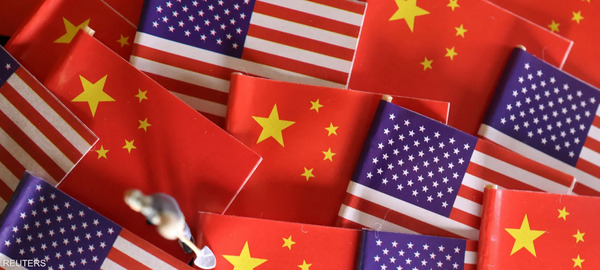


I hear a lot of noise but I don't see any flour


For his part, Dr. Amjad Abu Al-Ezz, a European affairs specialist at the Arab American University, said: “As usual, the famous saying applies to France: ‘I hear a lot of noise, but I don’t see anything.’ Today, we are witnessing a decline in French enthusiasm for recognizing a Palestinian state, as a result of pressure exerted by Tel Aviv after Israeli Prime Minister Benjamin Netanyahu called French President Emmanuel Macron. As a result of this call, the French president’s advisor stated that recognition of a Palestinian state is conditional on a cessation of hostage-taking, the release of hostages, and the end of Hamas’s rule in the Gaza Strip.”


Abu al-Ezz added: "Since 1980, France has declared its support for the establishment of a Palestinian state, but it has not implemented what it calls for, neither at the individual French level nor at the European level. In 1980, Hamas did not exist, and there were neither weapons nor prisoners. Yet, France did not recognize the Palestinian state."


Abu al-Ezz asserts that this position is not new, but rather a continuation of previous positions. Since the Venice Declaration in 1980 and the subsequent positions of the European Union—currently led by Germany—European countries, led by Germany and France, have continued to emphasize in their statements the necessity of establishing a Palestinian state living side by side with Israel. However, these statements have never gone beyond paper, and are repeated in all statements by the European Council and the Ministry of Foreign Affairs, without any real impact on the ground.


France is not serious about recognizing a Palestinian state.


As for France, Abu al-Ezz says, it seeks to play a role in the Middle East and is attempting to return to the region through several gateways, one of which was previously Lebanon, by attempting to sponsor a ceasefire agreement between Hezbollah and Israel, but it was later marginalized.


He adds: Now, France is trying to return through the Palestinian gateway by proposing the idea of recognizing the state. This initiative, by the way, was proposed by the French president's advisor during his visit to Ramallah about three weeks ago, and I met him personally. The goal was to present a "comprehensive vision" similar to the American proposal, and there is a kind of French-American competition over this issue. This was evident in the call between President Macron and both Egyptian President Abdel Fattah el-Sisi and Jordanian King Abdullah during their stay in Cairo.

Abu Al-Ezz wondered, "Will this initiative ever see the light of day?" expressing his belief that the challenges are immense.


He says: "If France were truly serious about recognizing a Palestinian state, it would not have tied recognition to impossible conditions that cannot be met in the near future, such as an end to the war or an end to Hamas rule. In fact, these conditions represent a kind of escapism and a response to Israeli political pressure."


Why don't they admit it now?!


He continued: "The French today say they will 'recognize,' but the question is: Why don't they recognize now, as Spain, Norway, Belgium, Slovenia, and Ireland have done? Why link recognition to complex conditions?"

He believes that France is selling a political illusion, expressing hope that Macron will be able to achieve what he proposes and convince his European Union partners to adopt this position.


Concluding his statement to Al-Quds, Abu al-Ezz asserted that dealing with Saudi Arabia as an alternative to persuading the Europeans is evidence of France's weak ability to influence the EU, adding, "The French president should have started by halting arms exports to Israel, rather than simply issuing statements. He should also have persuaded his partners in the European Union to adopt the recognition of a Palestinian state."


France is trying to find a foothold in the region.


In turn, Dr. Jamal Shalabi, a professor of political science at Hashemite University in Amman, said that France is attempting to return to the Middle East, not only through Lebanon—as it did when it brokered the Israeli-Lebanese ceasefire agreement—but also through the central issue of the Middle East, the Palestinian cause.


He added, "In light of American hegemony and control over the keys to this issue, France is trying to find a foothold in cooperation with one of the current pillars of the Palestinian file, namely the Kingdom of Saudi Arabia. He believes that normalizing relations between Israel and Saudi Arabia would be the greatest and most important achievement, if it is achieved."


Al-Shalabi continued: "It is true that there is a wave of Abrahamic normalization, and it is important for Israel, but it does not compare in importance to Saudi Arabia, which owns the Two Holy Mosques and has an effective regional role in the Middle East and the Gulf, in addition to its important economic role in the fields of energy, oil, and gas, in addition to its geopolitical position."


He believes that President Macron's main goal today is to support the Palestinian cause, not only through the European portal, but also through the Arab portal led by the Kingdom of Saudi Arabia.


He said, "Hence, President Macron's idea of calling for an international conference, announced during his meeting in Saudi Arabia last December, affirmed the idea of recognizing the Palestinian state, but through an international conference to be held in New York on June 15 of this year."


A diplomatic and academic committee affiliated with the French Foreign Ministry


He pointed out that this conference represents a French-Saudi attempt, firstly, to demonstrate that two major powers, the Arab world and Europe, are working in the same direction, and secondly, to demonstrate the genuine desire of these two countries to reach a ceasefire and recognize the Palestinian state.


He said that France has formed a "diplomatic and academic committee" directly linked to the French Ministry of Foreign Affairs, tasked with detailed preparations for the conference, which is expected to witness broad Arab, European, and international participation. This committee consists of eight prominent members, representing a combination of deep diplomatic experience and analytical academic vision. They include three former French ambassadors who held sensitive positions in countries involved in the conflict: Israel, Syria, and Libya; and five academics specializing in Middle Eastern affairs and international relations. In parallel, the committee has worked to build a strong strategic partnership with the Gulf Research Center in Saudi Arabia, represented by Dr. Abdulaziz bin Saqr, one of the most prominent research and intellectual figures in the region, and who heads one of the most important Saudi research centers that deeply reflects the Saudi vision and foreign policy orientations.


Al-Shalabi believes that France's recognition of the Palestinian state, if achieved, will lead to comprehensive European recognition. He added, "It is true that countries such as Spain, Slovenia, and Ireland have recognized the Palestinian state, but France's recognition will carry greater weight, just as Saudi Arabia's importance in the normalization process."


France seeks to balance its positions


He believes this development will represent a major political achievement for the Palestinian cause after the recent events in Gaza.

On the other hand, Dr. Shalabi believes that France seeks to achieve a balance in its positions, both domestically and internationally, particularly toward Israel. France is home to approximately 500,000 Jews, who constitute an influential segment with economic, cultural, and media power, playing a prominent role.


He continued: "Therefore, this French move also comes as a message to this segment, stating that in exchange for recognizing the Palestinian state, Israel will receive security, normalization, and important guarantees, and therefore it must move forward in this direction."
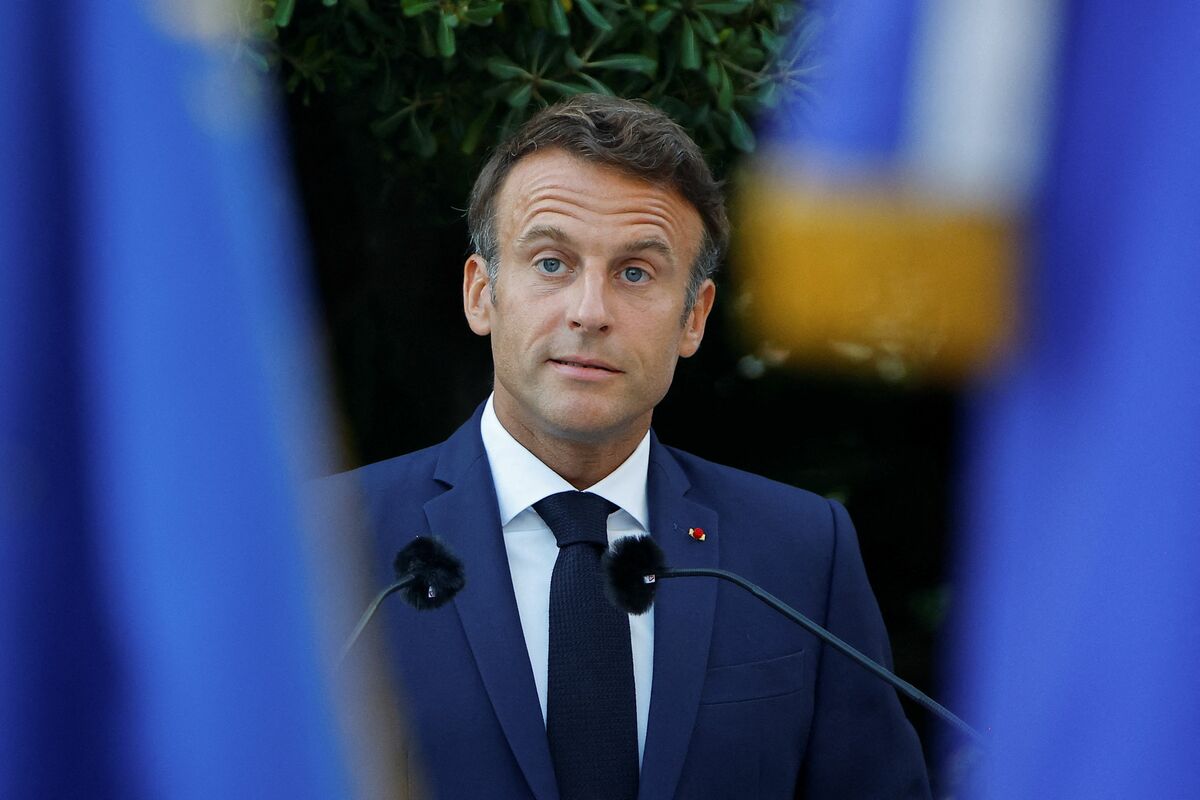
He also explained that this step sends a message to Israel that recognition of a Palestinian state will be met with normalization, and that normalization is valuable because it doesn't only concern Saudi Arabia, but also includes the entire Arab and Islamic world, from Indonesia and Malaysia to Kuwait, Oman, Mauritania, Algeria, Tunisia, and others.

Al-Shalabi emphasized that the reward Israel might receive in exchange for recognizing the Palestinian state, and in exchange for the Saudi condition for the establishment of a Palestinian state, would be substantial. Whether this state is based on UN resolutions (such as Resolutions 242 or 338) or on the aspirations of the Palestinian people, what matters is the existence of a state that can unite the Palestinian people and prove to the world that it actually exists.


Conditional French recognition of the Palestinian state


French affairs analyst Dr. Amjad Shehab said that French President Emmanuel Macron's proposal to recognize a Palestinian state—meaning that France might recognize the State of Palestine next June—remains conditional. However, it simultaneously expresses the French president's opposition to the policy of eliminating Palestinians in Gaza, and his opposition to Israeli policy in general. This announcement represents a retreat from France's pro-Israel stance since Operation Protective Edge on October 7.


He pointed out that the French position remains cautious, oscillating between a desire to adhere to the humanitarian dimension and a reluctance to take decisive positions on the political level.


He added, "These statements represent a very important step regarding the Palestinian issue, issued by the first major Western country, as France is the most important political country on the European level."


He continued: Although talk of recognizing a Palestinian state still does not actually exist on the ground, as the Israeli occupation controls all the Palestinian territories occupied in 1967, on which the Palestinian state is supposed to be established, the state in question here remains "hypothetical," and France would like to recognize it conditionally, in a clear expression of its rejection of the liquidation of the Palestinian cause, the elimination of the Palestinians in the Gaza Strip, and its rejection of the reshaping of the Middle East through aggression, massacres, and destruction. On the contrary, through this position, France affirms its support for a peaceful solution.


Conference on Palestine at the United Nations in New York


Shehab indicated that France, in partnership with Saudi Arabia, intends to organize a conference on Palestine at the United Nations headquarters in New York, in an attempt to reach a formula for "mutual recognition": that is, France and other European countries would recognize the (hypothetical) State of Palestine, in exchange for Saudi Arabia and other Arab countries—which have not yet recognized Israel—recognizing the occupying state.


However, he noted that French diplomatic efforts remain difficult to implement. He said that a year ago, several European countries, such as Spain, Ireland, and Norway, jointly recognized the State of Palestine, while the official French position under Macron remained: "We will recognize at the appropriate time," despite numerous calls within France for simultaneous recognition with these European countries.


Macron and Gaullist diplomacy


Shehab wondered: What prompted the French president to take this step, at a time when the United States—during the Trump presidency—opposes the two-state solution? He said: There is an explanation for this, namely that continued silence would have made the official French position awkward, even complicit, and would have contradicted the historical French position known as "Gaullist diplomacy," which considers Western France the best ally of Arab states. This step appears to represent an attempt to revive the traditional French-Arab policy that disappeared since the end of Jacques Chirac's presidency in 2007.


He noted that President Macron is attempting to play a balanced role, in keeping with his political vision: on the one hand, against Hamas, and on the other, with Israel. He has called on Arab countries to normalize relations with Israel in exchange for French and perhaps other European countries recognizing a hypothetical Palestinian state, instead of taking immediate French and European measures or imposing sanctions on Israel to halt the massacres in Gaza and halt settlement activity in the West Bank and Jerusalem.

Shehab concluded his statement by saying, "From this perspective, this step is good from a diplomatic and legal perspective, but it remains far from achieving Palestinian national aspirations."


An announcement that should have come during the Chirac era.


For his part, Lebanese international relations researcher Dr. Tariq Ziad Wahbi said that President Macron's announcement recognizing the Palestinian state should have come a long time ago, especially given France's positive engagement with the Palestinian issue since the era of President Chirac, who, along with the late President Arafat, began paving the way for a number of European countries to recognize the Palestinian state.


He believes that what Macron wanted was a return to the Arab League resolutions of the 2002 Beirut Conference, which included the slogan "peace for land," in other words, recognition of a Palestinian state in exchange for normalization with Israel.

Wahbi emphasized that the past few days, with the excessive American presence in this file and its unfairness to the Palestinians, led to various Arab-Israeli paths, leading to the so-called Abraham Accords, which stipulated normalization with a number of influential Arab countries in the Palestinian file, leaving only the Kingdom of Saudi Arabia, which linked the settlement of its relations with Israel to the recognition of the Palestinian state.


The two-state solution has become an unattainable dream.


He pointed out that everyone is facing a dilemma, namely that the two-state solution, with Israeli practices, has become an unattainable dream as long as the United States and even the European Union have not taken decisions against settlements in the West Bank. The Gaza war has proven that Israel can at any time change the geographical map, seize Palestinian lands and turn them into a security belt protecting Israel.


Wahbi explained that, after his meeting with President Sisi and King Abdullah, Macron sought to push his country and the European Union to open the door to recognition as a diplomatic tool, despite the fact that the second part of the recognition hinges on Arab recognition of Israel. What's striking about this is the absence of any Palestinian official at the Cairo meeting, most of whose agenda items pertained to Palestine and the Palestinian people.


He considered this to be another indication that France's choices also follow the approach of some hardline Zionists who do not recognize the existence of Palestine.


He pointed out that the Kingdom of Saudi Arabia had carefully evaluated the outcomes of the Abraham Accords, which provided the countries involved with the accord with a form of trade openness with the State of Israel, without, for example, holding it accountable for its actions against civilians in Gaza and the West Bank after October 7.


Wahbi concluded by saying: "We must acknowledge that President Macron is trying to lead a campaign that is different from what President Trump is doing, who has gone too far in protecting Israel and its rulers, even from the International Criminal Court after the United States pressured its judges. France and the European Union are pursuing a flexible diplomatic path that does not disturb Israel and reassures the Arabs that it is capable of reconciling all parties."