




Israeli occupation forces stormed the town of Al-Jib, northwest of occupied Jerusalem, on Wednesday.
Eyewitnesses reported that occupation forces stormed the town, accompanied by a bulldozer, in preparation for a demolition operation.


Wed 23 Apr 2025 9:10 am - Jerusalem Time

Israeli occupation forces stormed the town of Al-Jib, northwest of occupied Jerusalem, on Wednesday.
Eyewitnesses reported that occupation forces stormed the town, accompanied by a bulldozer, in preparation for a demolition operation.
Wed 23 Apr 2025 8:59 am - Jerusalem Time
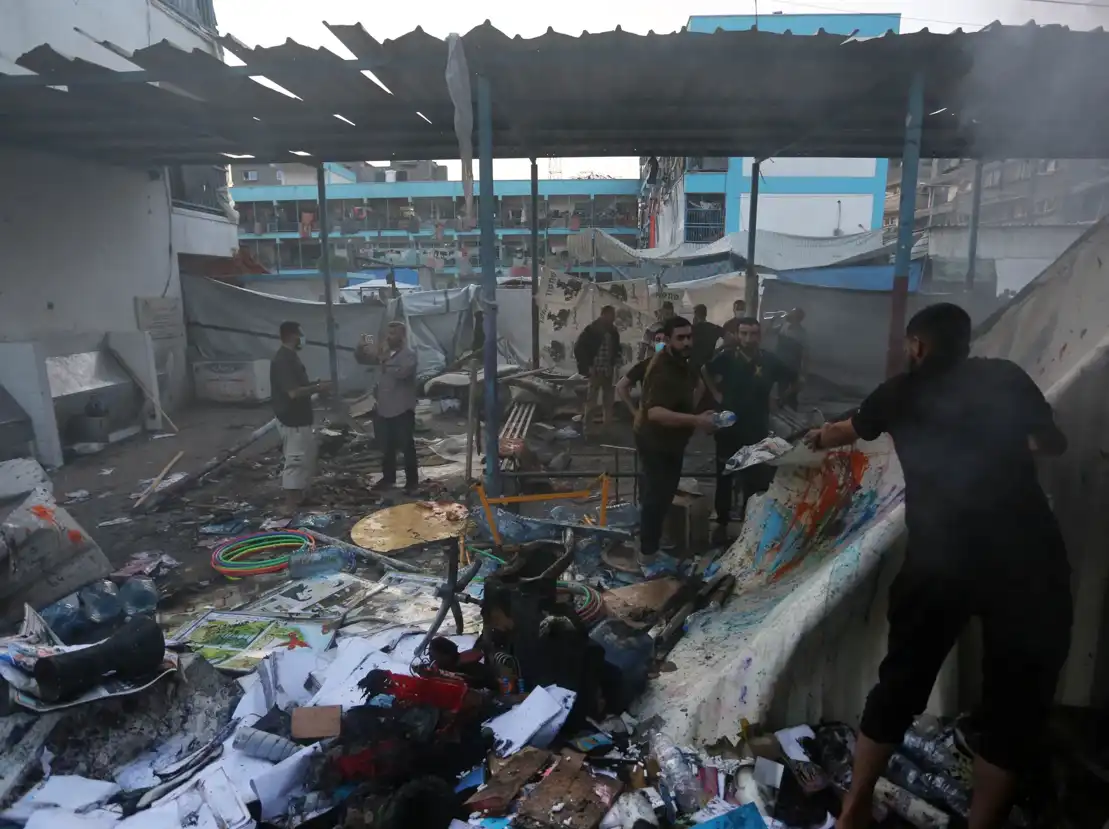
A number of civilians were killed and wounded on Wednesday, and others were injured, as a result of the ongoing Israeli airstrikes on various areas in the Gaza Strip.
In the latest developments: Civil defense crews in Gaza recovered 19 bodies from the bodies of dead following the occupation's bombing of the Yaffa School, which was sheltering displaced persons northeast of Gaza City.
Threedead and a number of injuries were recovered after the occupation forces bombed the Shaaban family's home on Old Gaza Street in Jabalia al-Balad, north of the Gaza Strip.
Since October 7, 2023, the Israeli occupation forces have launched an aggression against the Gaza Strip, resulting in the deaths of 51,266 citizens, the majority of whom were children and women, and the injury of 116,991 others. This is a preliminary toll, with a number of victims still under the rubble and on the streets, unable to be reached by ambulances and rescue teams.
Wed 23 Apr 2025 8:29 am - Jerusalem Time
Opinion Writer
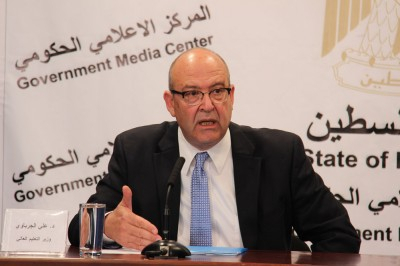
Dr. Ali Jarbawi: It is clear that Netanyahu and his government used October 7, 2023, as a pretext to achieve goals that had, in reality, become dreams for the Zionist movement...
Political science researcher Dr. Ali Jarbawi warned of the dangers of the post-war period on Gaza, which portends the demise of the Palestinian national project. This is due to the convergence of a number of negative external factors, the Palestinians' loss of any effective source of external support, and their exposure to the challenge of imposing a "minimal" settlement on them, which would lead to the liquidation of their cause.
In an article titled "Palestinians at a Crossroads," published in the Journal of Palestine Studies, Dr. Al-Jarbawi pointed to the extremely complex and difficult reality facing Palestinians today, which imposes an exceptional challenge on them that is far more important than any they have previously experienced during their long history of struggle against the British Mandate and the colonial Israeli occupation. He pointed out that Palestinians today face an Israel that is completely different from what they experienced in the past, after the far right, followers of religious Zionism, whose biblical doctrine is centered around the necessity of fulfilling the prophecy of "Greater Israel," gained power. The political weight in Israel is no longer solely right-wing, but rather is rooted in a fanatical, extremist, and ferocious tendency toward the Palestinians. On the regional level, the author notes, we are witnessing a decline in the traditional supportive status the Palestinian cause previously enjoyed within official Arab circles. The successive conflicts plaguing the Arab world have not only led to the withdrawal of the Qatari state in pursuit of self-preservation and the pursuit of private interests, but also to the fragmentation of collective Arab solidarity and the loss of the Arab system's standing and influence in the region, to the benefit of non-Arab powers: Iran, Turkey, and Israel. Furthermore, he points out, Israel's interventions in the region following Operation Protective Edge, in addition to undermining the authoritarian Hamas movement and exhausting its military capabilities, have also led to the dismantling of the axis of resistance, upon which the movement relied to support its existence and confrontation with Israel. With the resulting shift in the regional balance of power, it has become easier to forge a new order in the region and to close the file on the Palestinian issue, in order to remove a "chronic obstacle" to this restructuring. Trump's return to the US presidency, in the author's opinion, is the most significant change on the international scene at present, and will have far-reaching implications for reshaping the region and permanently closing the Palestinian issue.
In this regard, Arab48 interviewed Dr. Ali Al-Jarbawi to shed further light on this topic.
Arabs 48: You warned of what you called the fading of the Palestinian national project in light of the convergence of international, regional, and Israeli factors that have conspired against the Palestinians, and in light of the lack of national immunity resulting from calcification and division. How far do these dangers extend?
Dr. Al-Jarbawi: There are very serious dangers threatening the existence and future of the Palestinian national project in light of the challenges facing the Palestinian reality and the Palestinian cause. This is in light of the convergence of three main factors: the international factor represented by Trump's rise to power in America and its accompanying repercussions; the regional factor, primarily represented by the Arab world and its declining support for the Palestinians to its lowest level; and Israel and the internal changes occurring within it, which intensified after October 7, 2023.
These three external factors are accompanied by an internal factor, namely the Palestinian internal factor, which lacks the innate immunity that would enable it to confront these external factors affecting it. If we combine the external factors with the Palestinian internal factor, we find a very dangerous situation for the Palestinian future.
Arabs 48: The danger you speak of to the survival of the national project affects the Palestinian entity, which was formed through struggle. The Palestinian national liberation movement, which has endured for decades, and which, even if it was unable to liberate the land and build a state, its only major achievement has been the establishment of a Palestinian entity?
Dr. Al-Jarbawi: True. We were unable to bring this entity through the Oslo process to its desired end, which was the establishment of a state. In my opinion, continuing to talk about a two-state solution 30 years after Oslo is merely throwing sand in the eyes, because it is clear that the two-state solution, which in the traditional Palestinian concept meant dividing Palestine into two states and obtaining a small state comprising 20% of its area, today, as a result of the ongoing facts on the ground, means dividing the West Bank, not dividing Palestine. Hence, continuing to talk about a two-state solution is a self-defeating fallacy. In a sense, we are laughing at ourselves, because the most the two-state solution can offer today—if it ever does, especially after October 7, 2023—is a "remnant state." This remnant state will not be fully sovereign, but rather partially sovereign, and its center, in my opinion, will be in the Gaza Strip, joined by the remnants of the West Bank at best. Therefore, we must examine ourselves and stop clinging to slogans that are losing their meaning and validity on the ground day by day.
"Arabs 48": Perhaps you also mean the remnants of the Gaza Strip, from which they are seeking to extract whatever they can?
Dr. Al-Jarbawi: It is clear that Netanyahu and his government used October 7, 2023, as a pretext to achieve goals that had, in reality, become dreams for the Zionist movement. As is well known, attempts were made to empty the Gaza Strip of its Palestinian population, especially the refugees of 1952, 1956, and 1967, and resettle them in Sinai, the West Bank, or other Arab countries, but they failed.
They wanted to dismantle the refugee issue, but they did not succeed. The issue was over, becoming seemingly unachievable. Then came this war, which restored hope to the Zionist movement, led by the right-wing Netanyahu government, about the possibility of achieving this, especially after Trump legitimized and covered this approach and revived ideas of displacement and expulsion.
"Arabs 48": The issue is not limited to the Gaza Strip. Operations to dismantle the refugee issue are also underway, through the displacement of the camps in the northern West Bank and emptying them of their residents.
Dr. Al-Jarbawi: True. The ongoing dismantling and persecution of UNRWA is also taking place, because the continued existence of the refugee issue is a disturbing obsession for the Zionist movement, which it has always sought to eliminate. It believes that its opportunity has arisen to accomplish what it failed to achieve previously on this issue and other issues related to the Palestinian cause. Its ultimate goal is to destroy the Palestinian national project.
"Arabs 48": In the question "What should be done?", you suggested ways to confront it.
Dr. Al-Jarbawi: From a historical perspective, we note that the Palestinian political system has been calcified for a long time, and as a result of this calcification, the division occurred, not the other way around. In other words, the calcification led to the division, not the division itself.
"Arabs 48": Do you mean that the division is a result, not a cause?
Dr. Al-Jarbawi: True. This system, which was supposed to be effective, has lost its effectiveness, calcified, and become incapable of confronting various challenges. Its primary concern, after the division, on both sides of the West Bank and Gaza, has become preserving its survival and continuity, not fulfilling its duties and carrying out its functions. This means that each party, whether Hamas in Gaza or Fatah in the West Bank, has become concerned with preserving its political authority and preserving those in power. We know that there have been numerous warnings from many over the past years that the situation is deteriorating to the point that we will be unable to confront the challenges that lie in wait for us or carry out the functions that a political system is supposed to perform.
"Arabs 48": Given the different methods of struggle that are disputed between the two groups, is it difficult to achieve our goals without national unity?
Dr. Jarbawi: If you notice, the two groups no longer differ on the goal, because both sides advocate establishing a Palestinian state, which implicitly includes the borders of the West Bank and Gaza Strip. The difference is now about the method, not the goal.
"Arabs 48": You mean that this is not the difference that prevailed in the 1970s, 1980s, and even the early 1990s between those who wanted Palestine from the sea to the river, led by the Popular Front and the leftist factions, and later Hamas and Islamic Jihad?
Dr. Al-Jarbawi: The disagreement is no longer over the goal, but rather over the means, while both sides have forgotten that even the goal sought to be achieved by both means can no longer be achieved by either.
"Arabs 48": Do you mean that as long as the division persists, the goal cannot be achieved, or has the disagreement over the means undermined the goal?
Dr. Al-Jarbawi: The goal will not be achieved even if we combine both means. We must pay attention to the Palestinian reality, our goals, and the nature of this conflict. Is there an equivalence in the balance of power? Is there a possibility of that balance of power shifting in our favor in the near term? As long as external support no longer exists or has weakened dramatically with the collapse of the Eastern Bloc in 1989-1991 and with the decline of support from the Arab world due to internal and external shifts, all of this indicates that the balance of power will not change anytime soon. There is also a state of targeting by an enemy that is leaning toward the extreme right and seeking to uproot us. Meanwhile, the goal we claim to be achievable—the "two-state solution"—has not been achieved 30 years after Oslo. The entire year doesn't seek to resolve the conflict, but rather to manage it. Managing the conflict has always required raising the slogan of the two-state solution to maintain hope that we will achieve a state.
"Arabs 48": In other words, has the two-state solution become a misleading slogan and a facade under which the conflict is managed?
Dr. Jarbawi: Exactly. It is a means of managing the conflict. Therefore, we must stop continuing to disagree over the means—"negotiations" or "armed resistance"—and focus on the goal and define what we want at this stage. From my perspective, I believe we are facing a conflict that will continue for a long time, and that if it ends now, it will end with a "remnant state" stripped of its sovereignty and diminished. This is because the best that can be achieved, given the existing balance, is the reduced solution proposed by Trump during his first term in the framework of the "Deal of the Century," if he has not already been overthrown. Therefore, and in light of our awareness that the conflict is long-term, we must focus on the central Palestinian goal of remaining in our homeland and strengthening our steadfastness there.
"Arabs 48": In the article, you discussed the two options: accepting a deficient state or a one-state solution?
Dr. Al-Jarbawi: What I believe is that the political forces in the West Bank and Gaza—because both sides accept and speak of a Palestinian state—if they are satisfied with the two-state solution, they must be frank with the Palestinian people that the two-state solution will lead to a state diminished in geographic area and sovereignty.
They must be frank with the people so that they do not continue to hope that we will establish a state along the 1967 borders with Jerusalem or East Jerusalem as its capital. They must be frank with them that we want to achieve what we can, and that if they support the two-state solution, this is what they will achieve in the two-state solution.
"Arabs 48": Otherwise, we will return to the starting point, which is the one-state solution?
Dr. Al-Jarbawi: Otherwise, we must realize that we are facing a protracted conflict. In this context, I have no ideas or scenarios for a solution. Rather, I believe that we must establish our presence on this land. This means that the Palestinian entity based on it, instead of being preoccupied with negotiations or armed resistance, should be preoccupied with how to stabilize the people on their land and provide them with services to strengthen their presence and survival on this land. This is because the conflict will not be resolved now, nor will it happen in the next decade or two.
Tue 22 Apr 2025 10:38 pm - Jerusalem Time

World Health Organization Director-General Tedros Adhanom Ghebreyesus said Tuesday that the organization will be forced to reduce its operations and lay off staff as a result of US funding cuts that have left a huge gap in its budget.
"The United States' failure to pay its assessed contributions for 2024 and 2025, coupled with reductions in official development assistance by some other countries, means we face a payroll gap for 2026-2027 of between $560 million and $650 million," Ghebreyesus told the organization's member states.
Tue 22 Apr 2025 10:15 pm - Jerusalem Time

The White House confirmed Tuesday afternoon that US President Donald Trump will visit Saudi Arabia, the United Arab Emirates, and Qatar, his first trip to the Middle East since taking office this year.
White House spokeswoman Caroline Leavitt said the visit will take place from May 13 to 16. Trump will travel to Rome next Friday (April 25) to attend the funeral of Pope Francis, who passed away Monday morning.
"The president looks forward to strengthening ties between the United States and these countries he will visit," Levitt added. "He will hold numerous bilateral meetings and conversations." Late last month, Trump stated that he was likely to visit the Middle East in the coming months. Tuesday's confirmation comes after the United States announced, and then temporarily suspended, a series of tariffs on all its trading partners, including Saudi Arabia, the United Arab Emirates, and Qatar. Trump stated that these tariffs were intended to level the playing field in global trade and encourage investment in the United States.
It's worth noting that when Trump first raised the possibility of a regional trip, he noted that he visited Saudi Arabia during his first term in the White House after Riyadh had invested $450 billion in American companies. He said that this time, Saudi Arabia had promised to more than double that amount, with a pledge reaching nearly $1 trillion.
"I think of it as creating more jobs than anything else, and now we're close to a trillion dollars...so that's more than double what we did when I first took office," Trump said.
The trip is expected to include discussions on tariffs, among other economic issues, and may also touch on Israel's war on Gaza. Trump has pledged to bring peace to the Middle East, and his regional envoy, Steve Witkoff, actively participated in ceasefire talks last January.
Earlier on Tuesday, Trump said he spoke with Israeli Prime Minister Benjamin Netanyahu about several issues, including trade and Iran, and that the two leaders shared similar views.
Trump wrote in a post on TruthSocial: "The call went well - we are on the same page on all issues."
Tue 22 Apr 2025 9:43 pm - Jerusalem Time
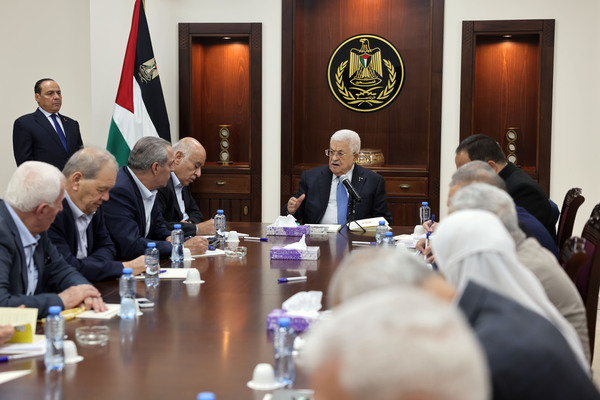
Palestinian President Mahmoud Abbas chaired a meeting of the Fatah Central Committee this evening, Tuesday, at the presidential headquarters in Ramallah.
At the beginning of the meeting, President Abbas and members of the Central Committee recited Al-Fatiha for the souls of the martyrs of the Palestinian people. His Excellency also offered his condolences on the passing of Pope Francis, praising his virtues and his honorable support for rights, justice, peace and freedom for the Palestinian people. He also praised his recognition of the State of Palestine, raising the Palestinian flag in the Vatican, and the beatification of two Palestinian saints. He also called for an end to the suffering of our people in the Gaza Strip, opening the city of Jerusalem to believers and implementing international legitimacy there.
The Central Committee heard a detailed explanation from President Mahmoud Abbas regarding the political situation, the results of his ongoing Arab and international meetings and contacts to halt the ongoing aggression against our people, the necessity of a complete Israeli withdrawal from the Gaza Strip, an end to the attacks on our people in the West Bank, and the need to secure further international recognition of the State of Palestine and obtain full membership in the United Nations.
The final preparations for the Central Council session scheduled for tomorrow, Wednesday, at the presidential headquarters were then discussed. The session will examine the latest developments in the Palestinian situation and put the Palestinian house in order to confront the challenges facing our cause and our people.
The meeting also discussed the ongoing genocidal war waged by the Israeli occupation authorities against the Palestinian people, amid international silence. This silence has only encouraged the occupation to persist in its crimes and aggression, resulting in the martyrdom and injury of more than 200,000 citizens and the widespread and systematic destruction of the Gaza Strip.
The Central Committee warned of the occupation's dangerous plans to reoccupy the Gaza Strip and dismember it, forcing our people to flee. This is unacceptable to Palestinians, Arabs, and the international community, and will not be allowed to happen thanks to our people's steadfastness and adherence to their land and homeland.
The Central Committee said that the world, especially the UN Security Council, must shoulder its responsibilities and compel the occupying state to stop the war of extermination it is waging in the Gaza Strip, and to stop the dangerous attacks launched by the occupation forces and terrorist settlers in the West Bank, especially on cities, villages and camps in the northern West Bank, and to stop the policy of executions, displacement and arrests, and the bombing of residential neighborhoods and the destruction of the infrastructure of cities, villages and camps, in addition to stopping the attacks on the holy religious sites in the occupied city of Jerusalem, especially the blessed Al-Aqsa Mosque.
The Fatah Central Committee called on Hamas to stop toying with the fate of the Palestinian people according to its foreign agendas, to cooperate with the efforts made by President Mahmoud Abbas to stop the Palestinian bloodshed, to refrain from giving the occupation pretexts to continue its bloody war and aggression, which has cost thousands of our people, including martyrs, wounded, and prisoners, and to adhere to the principles upon which the Palestine Liberation Organization's policy is based.
Tue 22 Apr 2025 9:26 pm - Jerusalem Time

US President Donald Trump affirmed his support for Israeli Prime Minister Benjamin Netanyahu, including on the Iran issue, while the Iranian Revolutionary Guard warned against any "aggression" against Iranian facilities. In Moscow, Russian President Vladimir Putin and Sultan Haitham bin Tariq of Oman discussed the progress made in the Iranian-US negotiations mediated by Oman.
Trump wrote in a post on Truth Social that he spoke to Netanyahu, saying, "The call went well. We see eye to eye on all issues."
Iran and the United States began negotiations earlier this month to place restrictions on Tehran's nuclear program, which Western powers say is aimed at developing nuclear weapons.
The two sides concluded a second round of talks on Saturday and agreed to meet again within a week. The talks, mediated by Oman, aim to reach an agreement on Tehran's nuclear program.
Experts from both sides were scheduled to meet in Oman on Wednesday for technical discussions, but Iranian Foreign Ministry spokesman Esmail Baghaei confirmed that the expert-level meeting had been postponed until next Saturday.
"Based on Oman's proposal and the approval of the Iranian and American delegations, the technical consultative meeting between the two countries, which was scheduled for Wednesday, has been postponed to Saturday," Baghaei said in a statement.
Omani mediation and Russian role
The Iranian nuclear talks were discussed during a meeting between Russian President Vladimir Putin and Omani Sultan Haitham bin Tariq, a Kremlin official said Tuesday.
"This issue was raised... in the context of Oman's mediation efforts," Kremlin spokesman Dmitry Peskov told reporters.
He reiterated his country's position: "Russia is ready to do everything in its power to contribute to the fruitful and effective conclusion of these talks," according to Agence France-Presse.
Russian President Vladimir Putin receives Sultan of Oman Haitham bin Tariq at the Kremlin on Tuesday (AFP)
Russian President Vladimir Putin receives Sultan of Oman Haitham bin Tariq at the Kremlin on Tuesday (AFP)
For his part, Yuri Ushakov, Russian presidential aide for foreign affairs, said, "We discussed the progress made in the negotiations between Iranian and American representatives." He added, "We will see what the results will be. We are in close contact with our Iranian colleagues, and we will provide assistance as much as possible."
In Tehran, government spokeswoman Fatemeh Mohajerani said that Russia plays an important role in the negotiations due to its nuclear cooperation with Iran and its membership in the Security Council. She emphasized that the talks are being conducted in accordance with national interests, and that the lifting of sanctions must be effective. She also warned against relying on media rumors that "cross Iran's red lines."
Mohajerani emphasized that Iran does not welcome lengthy negotiations and seeks a quick agreement that preserves its interests, praising the atmosphere of the second round. She emphasized that attracting investment requires reforms and stable legislation, and that the government is continuing its program without linking it to negotiations. She also considered the transfer of enriched uranium a non-negotiable red line.
Visit to Beijing
Iranian Foreign Minister Abbas Araghchi is visiting China on Wednesday at the invitation of Beijing, ahead of the third round of talks with Washington. The visit will address bilateral relations and "hot" international and regional issues, aiming to strengthen political trust and cooperation between the two countries, according to a report by Agence France-Presse citing the Chinese Foreign Ministry.
During a visit to Moscow last week, Araghchi said that Tehran always holds consultations on nuclear issues with its allies Russia and China.
Oman is mediating between Tehran and Washington as Trump seeks a new nuclear agreement. Russia has also signed a strategic partnership treaty with Iran and is participating in the nuclear talks, asserting that any US military action against Iran would be illegal. China is Iran's largest trading partner and largest importer of its oil, and signed a 25-year strategic agreement with the country in 2021.
Trump said on Monday that the United States had very good talks with Iran, two days after the conclusion of the second round of negotiations in Rome.
Israeli officials have pledged to prevent Tehran from acquiring a nuclear weapon, and Netanyahu insists that any negotiations with Iran must lead to the complete dismantling of its nuclear program.
The Israel Hayom website reported on Sunday, citing a source close to the White House, that talks between the United States and Iran are expected to collapse soon. A non-governmental Israeli source said he had a conversation with a senior US official, during which the latter confirmed that "Israel has no reason to be concerned about the progress made in the talks with Iran."
On Saturday, Netanyahu affirmed his commitment to preventing Iran from obtaining a nuclear weapon, stressing that he will not back down from this goal. In a televised statement, Netanyahu said: "I am committed to preventing Iran from obtaining a nuclear weapon. I will not give up, I will not compromise, and I will not retreat from it, not even by a millimeter."
Trump has threatened to attack Iran unless it quickly reaches a new agreement preventing it from developing a nuclear weapon. On Thursday, Trump stated that he is "in no rush" to opt for military action. He told reporters on Friday: "I am for preventing Iran, absolutely, from having a nuclear weapon. They cannot have a nuclear weapon. I want a great, prosperous, and wonderful Iran."
An Israeli official and two informed sources told Reuters on Friday that Israel has not ruled out launching an attack on Iranian nuclear facilities in the coming months.
The Revolutionary Guards warn
Iran's Revolutionary Guard warned on Tuesday of the consequences of "any aggression" targeting the country, declaring its readiness to carry out a "swift and decisive" response. This came after reports indicated that the Israeli military had completed preparations to launch an attack on Iran's nuclear program, amid US threats to use force if negotiations falter.
"Any attack on the foundations of national power or national security will be met with a swift, decisive, and devastating response, in coordination with the rest of the armed forces," Revolutionary Guards spokesman Ali Mohammad Naeini said in an official statement, according to Iranian news agencies.
Naeini indicated the IRGC's readiness to confront any challenge threatening the country's stability and sovereignty. He added that "contemporary threats, including hybrid warfare and multifaceted conspiracies, will not go unanswered."
An anti-Israel billboard reading "Pharaoh will drown again" in Palestine Square in central Tehran (EPA)
An anti-Israel billboard reading "Pharaoh will drown again" in Palestine Square in central Tehran (EPA)
Iran's Revolutionary Guards had previously announced that Iran's military capabilities were not up for discussion in the talks. Iran and the United States began negotiations earlier this month to impose restrictions on Tehran's nuclear program, which Western powers say is aimed at developing nuclear weapons.
Over the past several months, Israel has proposed a series of options to the Trump administration for attacking Iranian facilities, some of which are planned for late spring and summer, according to the sources. The sources say the plans include a combination of airstrikes and special forces operations of varying intensity, and are likely to hinder Tehran's ability to use its nuclear program for military purposes for months, a year, or more.
The New York Times reported on Thursday that Trump asked Netanyahu to refrain from targeting Iranian nuclear facilities in the near term to give diplomacy a chance. However, Israeli officials now believe the military may carry out a limited strike on Iran that would require less American support. This attack would be much smaller than Israel initially proposed.
Speaking to reporters earlier this month, a senior Israeli official acknowledged the urgent need to launch a strike before Iran rebuilds its air defenses. However, the senior official declined to specify a timeline for a potential Israeli move, saying that discussing the matter was "pointless."
Experts assert that Israel needs significant US military support—and weapons—to destroy Iran's nuclear facilities and stockpiles, some of which are located underground.
US sanctions
Meanwhile, the US Treasury Department announced new sanctions on Tuesday against Iranian natural gas tycoon Seyyed Assadollah Imamjoma and his business network, as talks with Tehran over its nuclear program continue, Reuters reported.
The ministry said in a statement that Imam Juma's commercial network is responsible for shipping hundreds of millions of dollars worth of liquefied petroleum gas and crude oil from Iran to foreign markets.
The ministry added that liquefied petroleum gas and crude oil constitute a major source of income for Iran and contribute to financing its nuclear and advanced conventional weapons programs, in addition to financing groups operating on its behalf in the region, such as the Lebanese Hezbollah group, the Houthis in Yemen, and Hamas.
"Imam Juma and his network sought to export thousands of shipments of liquefied petroleum gas, some from the United States, to evade U.S. sanctions and generate revenue for Iran," U.S. Treasury Secretary Scott Besant said in the statement.
The United States imposed sanctions on Iran earlier during the talks.
Tue 22 Apr 2025 8:02 pm - Jerusalem Time

Israeli occupation forces stormed the town of Ya'bad, southwest of Jenin, on Tuesday evening.
According to local sources, Israeli occupation forces stormed Ya'bad using Eitan armored vehicles, causing material damage to a citizen's vehicle, destroying vegetable stalls in the Amarneh neighborhood and electricity poles in the town's streets.
In the same context, the occupation forces stormed the village of Kafr Qud, south of Jenin, without reporting any arrests.
It's worth noting that the occupation has escalated its incursions into towns and villages in Jenin Governorate since the start of the aggression on Jenin city and its camp 92 days ago, including raids and arrests.
Tue 22 Apr 2025 6:43 pm - Jerusalem Time
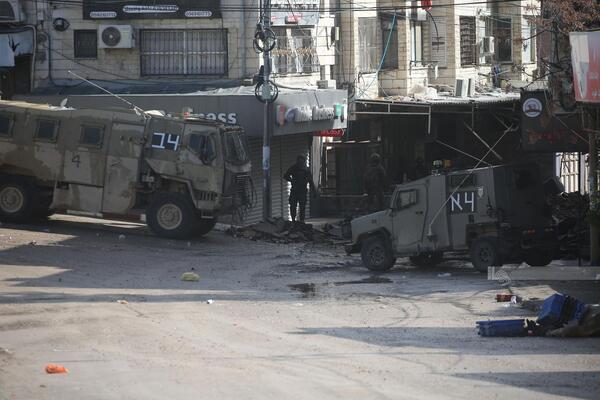
Israeli occupation forces continued their escalation on Tuesday in various neighborhoods of Tulkarm, witnessing intense movement and a widespread deployment of military vehicles and soldiers, amid arbitrary measures against civilians.
According to local sources, two Israeli military vehicles were stationed at the Mega roundabout in the northern part of the city. Soldiers stopped passing vehicles, searched them, and checked the IDs of their passengers. Meanwhile, infantry forces were stationed in the city center's vegetable market, firing sound bombs to terrorize residents. They detained a number of young men and arrested one of them, but it has not yet been possible to determine his identity.
Israeli occupation forces raided a number of homes in the eastern part of the city, in the area adjacent to the Abu al-Foul neighborhood in Tulkarm refugee camp, and forced their residents to evacuate by 7:00 p.m. today. The families of Asia and Abu al-Ghayyab were identified among those raided.
On Nablus Street, occupation forces arrested Ahmad Abu Ghalia, a resident of Bal'a, while he was working at the "Fawwal Al-Sham" restaurant. They also closed off Nablus Street near Nour Shams camp with tires, completely preventing traffic.
Foot soldiers were also deployed in the Jabal al-Nasr neighborhood of Nour Shams camp, where they fired heavy sound bombs. They pursued, detained, and assaulted young men, and arrested a number of them, taking them to army barracks in the camp.
These developments come as Israel continues its assault on the city of Tulkarm and its two camps, now in its 86th consecutive day, resulting in widespread destruction of infrastructure and property and the displacement of thousands of citizens.
Tue 22 Apr 2025 6:33 pm - Jerusalem Time

Donald Trump said he spoke by phone on Tuesday with Israeli Prime Minister Benjamin Netanyahu.
"The call went very well," Trump added in a post on Truth Social. "We're on the same page on every issue."
According to Trump, the call covered many topics, including "trade, Iran, and more..."
This is their first call since Netanyahu's visit to Washington, D.C., two weeks ago.
Tue 22 Apr 2025 5:14 pm - Jerusalem Time
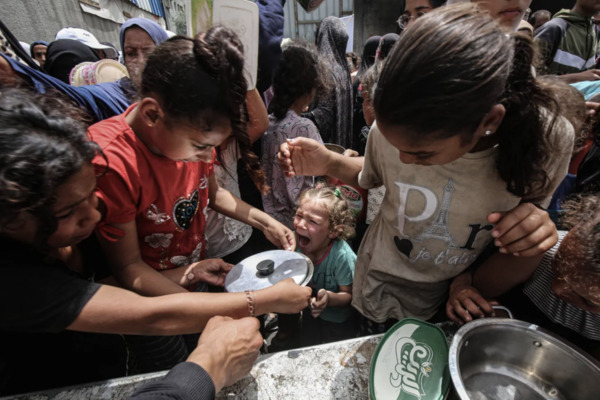
Gaza residents said the Israeli military launched one of the largest airstrikes on the territory in weeks on Tuesday, while health officials issued a new warning that the system is facing total collapse due to the Israeli blockade on all supplies.
The Ministry of Health in Gaza announced the suspension of the UN-supported polio vaccination campaign, putting the Strip at risk of a resurgence of the disease, which had been nearly eradicated. The campaign targeted more than 600,000 children, according to Reuters.
As part of diplomatic efforts to end the conflict, a Hamas delegation is scheduled to arrive in Cairo for talks.
Two sources said the delegation will discuss a new offer that includes a truce of between five and seven years after the release of all hostages and a cessation of fighting.
The two sources added that Israel, which recently rejected a Hamas offer to release all hostages in exchange for ending the war, has yet to respond to the long-term truce proposal. Israel is demanding that Hamas disarm, a demand the movement rejects.
Residents said Israeli forces bombed several areas across the Gaza Strip with tanks, aircraft, and naval vessels, adding that the attacks hit homes, camps, and roads.
Officials and residents said the airstrikes destroyed bulldozers and vehicles used to clear rubble and help recover bodies trapped under the debris.
Israel has been preventing any supplies from reaching Gaza since the beginning of March, and resumed military operations on the 18th of last month after the ceasefire collapsed.
Since then, Gaza health authorities say, Israeli airstrikes have killed more than 1,600 Palestinians and forced hundreds of thousands to flee their homes as Israel controls what it calls a buffer zone in Gaza.
Nearly all buildings in Gaza have become uninhabitable following Israel's 18-month bombing campaign. Most of the Strip's 2.3 million residents now live in the open, sheltered in makeshift tents.
Since the comprehensive blockade was imposed last month, all 25 bakeries that operated with UN support have closed. Israel says that enough supplies to sustain Gaza's population for months have entered the territory during a six-week truce. Aid agencies fear that the population is on the brink of famine and that disease is spreading widely.
Khalil Al-Daqran, a spokesman for the Ministry of Health in Gaza, said that preventing the arrival of supplies puts the lives of hundreds of thousands of patients in Gaza Strip hospitals at risk.
He added, "If vaccinations are not available, we are facing a real catastrophe. Children and the sick must not be used as political blackmail pawns." He noted that 60,000 children are now showing signs of malnutrition.
Israel: "The blockade does not violate international law"
Israel says its blockade aims to pressure Hamas, which rules the Gaza Strip, to release the remaining 59 Israeli hostages, while Hamas has expressed its willingness to release them as part of a deal to end the war. The hostages were taken to Gaza during the October 7, 2023, attack that sparked the war in the Strip.
Israeli Defense Minister Israel Katz wrote on Twitter, "Israel is acting in full accordance with international law," in response to US Senator Bernie Sanders, who described Israel's comprehensive blockade of Gaza since March as a war crime.
Katz said, "The humanitarian situation in Gaza is under constant monitoring, and large quantities of aid have arrived. Whenever additional aid needs to be allowed in, it must be ensured that it does not pass through Hamas, which exploits humanitarian aid to maintain its control over the population and profit at their expense."
The Commissioner-General of the United Nations Relief and Works Agency for Palestine Refugees (UNRWA), Philippe Lazzarini, described the blockade as collective punishment of the people of Gaza.
"Humanitarian aid is being used as a bargaining chip and a weapon of war. The blockade must be lifted, supplies must flow, hostages must be released, and the ceasefire must be resumed," Lazzarini said in a post on the X platform on Tuesday.
Israel confirms that it is still pursuing Hamas.
"We will pursue Hamas wherever it operates, whether in the north or south of the Gaza Strip or even outside it, anywhere," said Israeli army spokesman Avi Deveren.
The war broke out after a Hamas attack on southern Israel on October 7, 2023, which, according to Israeli statistics, resulted in the deaths of 1,200 people and the capture of 251 hostages in Gaza.
Gaza health authorities said that more than 51,000 Palestinians have been killed since the beginning of the Israeli offensive.
Tue 22 Apr 2025 4:54 pm - Jerusalem Time
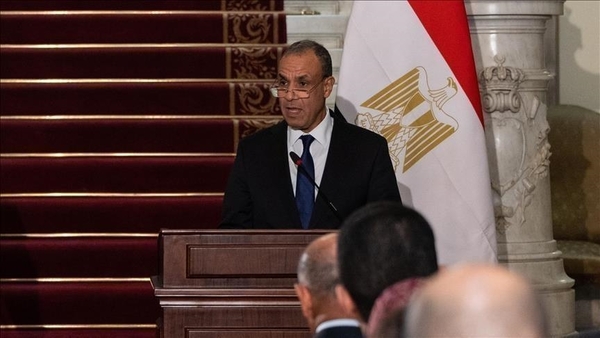
Egyptian Foreign Minister Badr Abdel Aty stressed on Tuesday the necessity of a complete withdrawal of the Israeli army from southern Lebanon.
This came during a joint press conference with his Lebanese counterpart, Youssef Raji, in Cairo.
Abdel-Ati said that Egypt fully supports the efforts of Lebanese President Joseph Aoun and Prime Minister Nawaf Salam to restore security and stability in Lebanon, in a way that fulfills the aspirations of the Lebanese people.
Abdel-Ati expressed Egypt's full condemnation of the Israeli attacks on Lebanon, stressing Egypt's rejection of any infringement on Lebanon's sovereignty and territorial integrity.
Abdel Ati stressed the importance of adhering to the cessation of hostilities agreement, the immediate and undiminished withdrawal of Israeli forces from the positions they occupy in southern Lebanon, and the implementation of Resolution 1701 "without selectivity" in a way that preserves Lebanon's sovereignty, unity, security, and stability.
Abdel-Ati pointed to the continuation of Egyptian efforts, "in cooperation with Qatar and coordination with the United States," to return to the January 19 ceasefire agreement in Gaza.
Tue 22 Apr 2025 4:26 pm - Jerusalem Time
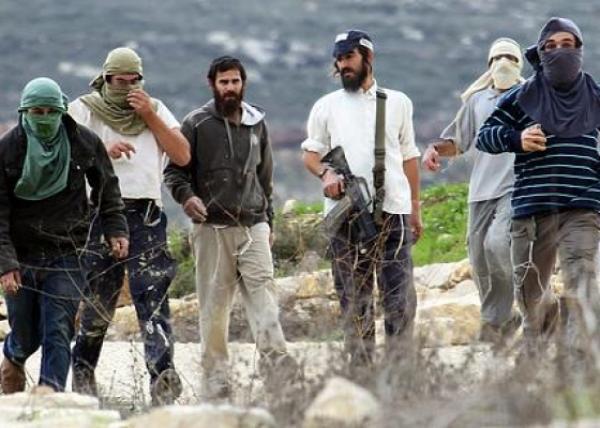
Today, Tuesday, settlers assaulted a citizen while he was driving his vehicle near the Al-Auja Waterfall area, north of Jericho.
According to local sources, settlers intercepted Suleiman Malihat, a resident of the Arab Malihat community, and assaulted him before spraying him with pepper spray. The attack was carried out under the protection of Israeli occupation soldiers who were present at the scene but did not intervene to stop the assault.
It is noteworthy that the Al-Auja Spring area is witnessing continuous attacks by settlers against Palestinian citizens.
Tue 22 Apr 2025 4:16 pm - Jerusalem Time
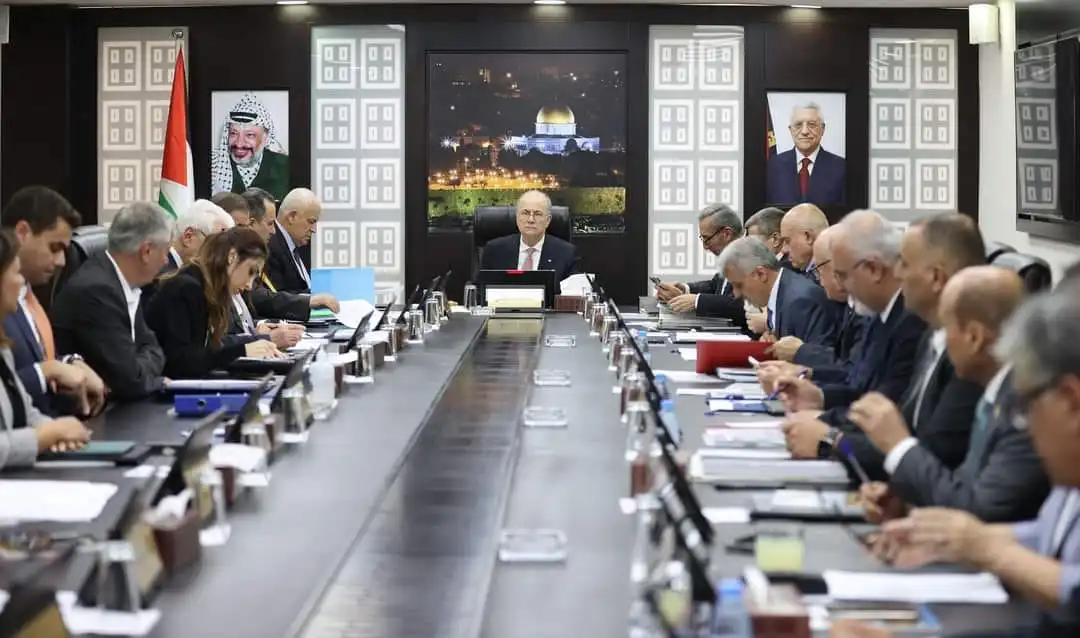
The Cabinet renewed its call on various international bodies to pressure Israel to open the crossings with the Gaza Strip and allow the entry of food and medicine shipments, especially in light of the severe shortage of citizens' needs, the depletion of the remaining stocks of relief organizations, and the spread of hunger. Meanwhile, daily bombing and killing operations continue, most recently targeting vehicles and equipment used to remove and destroy rubble, open roads, and collect waste, which will exacerbate the suffering of our people in the Strip.
At the opening of the weekly cabinet session on Tuesday, Prime Minister Mohammad Mustafa stressed the need to accelerate work on the government's decision to provide temporary and dignified shelter for the more than 6,000 displaced families in the northern West Bank. This will be done through various means, including shelter centers, the maintenance of partially damaged homes, and the provision of rental subsidies to families in humanitarian cases, in coordination with the United Nations Relief and Works Agency for Palestine Refugees in the Near East (UNRWA). He also emphasized the need to intensify efforts to secure additional funding sources.
The Cabinet also directed various relevant authorities to raise their readiness to deal with various scenarios in the coming period, especially in light of the ongoing aggression carried out by the Israeli occupation forces on the city of Jenin and its camp for the 92nd consecutive day, and on the city of Tulkarm and its two camps for the 86th day. These attacks included the forced displacement of residents, widespread destruction of infrastructure, and the seizure of homes, as part of a recurring pattern of systematic targeting of Palestinian cities and camps.
He called on international bodies, particularly the United Nations, to take urgent action to ensure the protection of civilians and halt ongoing violations that constitute a clear breach of international humanitarian law.
As part of efforts to address the temporary shelter issue and improve the conditions of displaced families, the Ministry of Public Works has issued a tender for the construction of two shelter centers in the Iktaba area in Tulkarm and Wadi Burqin in Jenin. These centers will provide decent temporary housing for displaced families who currently lack temporary shelter. Work continues to prepare new land to expand the temporary shelter area and to raise the necessary funds to implement reconstruction plans.
In line with directives to respond quickly to field interventions, the Nablus-Tulkarm road was leveled to facilitate the movement of citizens and vehicles. Approximately 30 vehicles from the Ministry of Public Works, the Tulkarm Municipality, and contractors were deployed to level the road, emphasizing government directives to quickly work in any location where work is possible, including repairing homes damaged by the effects of the Israeli aggression, just as has been done previously.
In addition, the Council discussed several proposals related to developing the legal system for accreditation certificates for Palestinian products, as this is an international requirement and an important measure to enhance the infrastructure for quality of Palestinian products. This will contribute to increasing the percentage of Palestinian exports by accrediting our national products internationally through Palestinian laboratories, without the need to resort to external laboratories for accreditation.
The Council also discussed the establishment of an electronic government wallet, as a step towards keeping pace with global developments in the digital economy and as part of the government's initiative to enhance the electronic payments system and achieve financial inclusion, led by the Ministry of Communications and Digital Economy. The Council also discussed the urgent need to develop this wallet, especially in light of the exceptional circumstances facing our people and our national economy.
The Cabinet mourned Pope Francis, noting that with his passing, Palestine has lost one of its most loyal friends, who steadfastly defended the rights of the Palestinian people, consistently called for the establishment of an independent Palestinian state, and an end to the war of extermination in the Gaza Strip.
The Council of Ministers took a number of decisions, as follows:
• Ratify the draft competition law and refer it to the President, which aims to enhance and protect competition in the Palestinian market, encourage competition and investment in the Palestinian market, and prevent monopoly.
• Ratifying two memoranda of understanding between the Palestinian Ministry of Labor and its counterparts in Qatar and Kuwait, regarding opening the labor market to our people and providing more job opportunities, improving their living conditions, housing, and health services, in addition to exchanging expertise, technical cooperation, and developing human resources.
• Ratification of the cooperation agreements between Palestine and Chile in the sectors of agriculture and customs affairs, as well as ratification of the protocol of political consultations between the Ministry of Foreign Affairs and Expatriates of the State of Palestine and the Ministry of Foreign Relations of the Federative Republic of Brazil.
• Referring the draft law amending the law regulating cities, villages and buildings to government departments for study and comment.
• Adding the Ministry of Planning and International Cooperation to the technical committee studying the organizational structures of government institutions. The committee is working to review and streamline the structure of these institutions, and to increase their effectiveness and productivity, which will be reflected in the quality of services provided to citizens.
Tue 22 Apr 2025 2:33 pm - Jerusalem Time

The Vatican announced on Tuesday that Pope Francis' funeral will be held next Saturday at 10:00 a.m. Rome time.
Pope Francis died yesterday, Monday, at the age of 88, after suffering a stroke that caused him to fall into a coma and suffer from heart failure, according to the death certificate issued by the Vatican today.
The Vatican released the first photos of Pope Francis's body, which he found in the Casa Santa Marta church in the Vatican, where he prayed daily.
Cardinal Kevin Farrell, head of the Vatican's household, also closed and sealed Pope Francis's residence, according to protocol.
The head of the court, or "camerlengo," is the Vatican official charged with overseeing the daily running of normal business during a vacancy in the Holy See. This cardinal's duties include officially verifying and announcing the death of the pope, ensuring that the deceased pope's ring (called the "Fisherman's Ring") and its lead seal are broken so that no one else can use it.
Cardinals from around the world are expected to flock to Rome to attend Pope Francis' funeral and then begin formal meetings to elect his successor.
Cardinals aged 80 or older may attend general assemblies but are not permitted to participate in the conclave during which the new pope is elected. Only cardinals under 80 can participate in this conclave.
Traditionally, a 15-day mourning period is observed before the conclave begins. Before his resignation in 2013, Pope Benedict XVI amended the constitution to allow the conclave to begin after a shorter period if the cardinals so choose, or at most 20 days after the pope's death if some cardinals are unable to reach Rome.
During the conclave, participants are prohibited from any contact with the outside world, and no telephones, internet access, or newspapers are permitted. The cardinals hold two votes per day during the conclave, except for the first day, when only one vote is held.
For any candidate to succeed, the papacy requires a two-thirds plus one majority of cardinal electors. If no candidate is elected after 13 days, a second round is held between the top two candidates, but the choice remains subject to a two-thirds plus one majority, in order to promote unity and discourage the search for consensus candidates.
When the conclave elects a new pope, he is asked whether he accepts the papacy and what name he wishes to take. If he refuses to accept the task, the election procedure is repeated.
The world knows that a pope has been elected when an official burns ballot papers with special chemicals, causing white smoke to rise from the church chimney. Black smoke symbolizes an inconclusive vote.
The chief cardinal elector, currently French Cardinal Dominique Mamberty, ascends to the central balcony of St. Peter's Basilica to announce the news to the crowds in the square, saying, "Habemus Papam," meaning "We have a pope." The new pope then appears and gives the crowds his first blessing.
Tue 22 Apr 2025 2:29 pm - Jerusalem Time
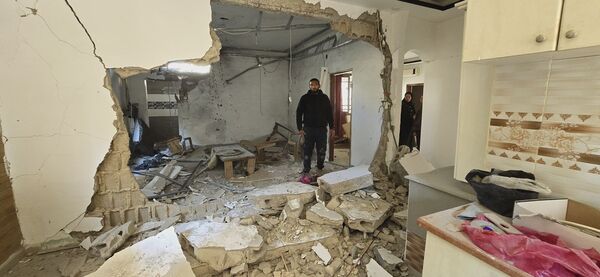
The Israeli occupation continues its aggression on the city of Jenin and its camp for the 92nd consecutive day, amidst bulldozing and burning homes, and converting others into military barracks.
This morning, Tuesday, the occupation forces arrested seven citizens from the town of Jaba' and the eastern neighborhood of Jenin. The occupation forces stormed the town of Jaba' in the south and launched a large-scale raid and arrest campaign that included six citizens. The occupation forces also stormed the eastern neighborhood of Jenin and arrested a young man.
In the village of Al-Jalameh, the occupation forces demolished 10 greenhouses belonging to citizen Wassef Abu Farha and his son, built on an area of 10 dunams.
Yesterday, Monday, occupation forces raided the homes of citizens in Khallet al-Sawha, near Jenin camp. They also stormed the town of Burqin and raided the homes of detainees Hilal Khalouf, Abdul Karim Hamdan, and Ali Khalouf.
This morning, the occupation army deployed infantry units around the Al-Zahraa neighborhood, near Jenin camp.
The occupation forces continued to send military reinforcements, accompanied by fuel and water tankers, from the Jalameh checkpoint to the vicinity of Jenin camp.
Israeli bulldozers placed earthen berms around the Tawalbeh Mosque at the northern entrance to Jenin camp, while drones continued to fly over the city and camp.
According to Jenin Mayor Muhammad Jarrar, occupation forces are continuing their demolition operations inside Jenin camp, amid a complete blackout, as the occupation forces prevent any party or individual from entering the camp.
He pointed out that statistics indicate that 600 housing units were completely destroyed in the camp, in addition to the fact that entire houses in the camp were partially destroyed, making them uninhabitable.
According to the Jenin Governorate, work is underway to secure temporary mobile homes for the displaced, and those most in need will be accommodated during the initial phase of the government's mobile home provision plan.
He pointed out that the number of displaced persons has reached 21,000, distributed throughout the governorate. There are 6,000 displaced persons in the city, 3,200 in the Arab American University dormitories, and 4,181 in the town of Burqin.
The number of martyrs in Jenin Governorate since the start of the aggression on the city of Jenin and its camp has reached 39, in addition to dozens of injuries and arrests.
Tue 22 Apr 2025 2:24 pm - Jerusalem Time
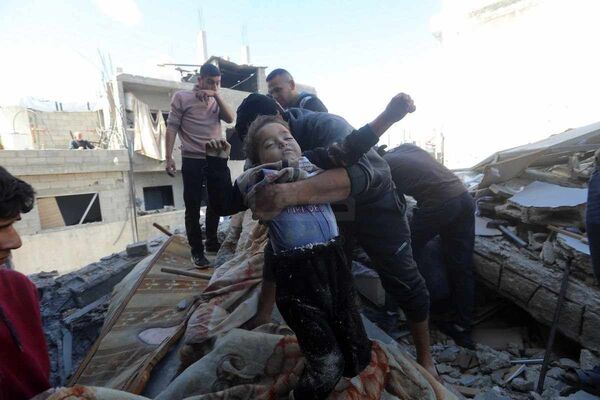
The death toll from the Israeli occupation's aggression on the Gaza Strip since October 7, 2023, has risen to 51,266 dead and 116,991 wounded.
Medical sources reported that the death toll includes 1,890 martyrs and 4,950 wounded since March 18.
She said that 26 dead and 60 wounded arrived at hospitals in the Gaza Strip during the past 24 hours.
She explained that a number of dead are still under the rubble of destroyed homes and facilities, and on the roads, and that ambulance crews and specialized crews are unable to reach them, due to the lack of resources.
Tue 22 Apr 2025 2:22 pm - Jerusalem Time
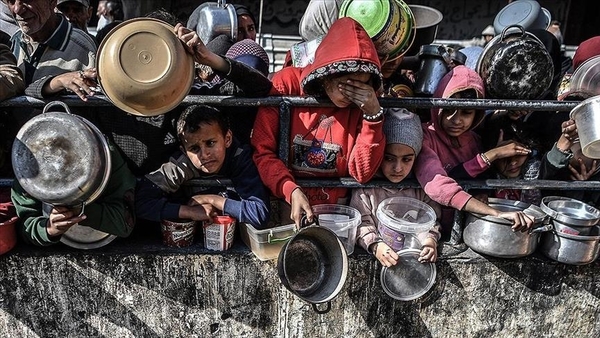
The United Nations Relief and Works Agency for Palestine Refugees (UNRWA) accused Israel of using humanitarian aid as a "bargaining chip" and a "weapon of war" against the Gaza Strip, subjecting two million Palestinians, most of them women and children, to collective punishment. The agency called for the lifting of the 50-day-old blockade.
UNRWA Commissioner-General Philippe Lazzarini denounced the hollow words of condemnation in a post on the X platform on Tuesday: "How long will it take for empty words of condemnation to be translated into action to lift the siege, resume the ceasefire, and save what remains of humanity?"
He added, "It has been 50 days since the Israeli authorities imposed a blockade on Gaza. Hunger is spreading and worsening, and it is deliberate and man-made. Gaza has become a land of despair."
"Two million people - the majority of whom are women and children - are being subjected to collective punishment, and the wounded, sick, and elderly are being deprived of medicine and healthcare," Lazzarini continued.
He pointed out that "at the same time, humanitarian organizations have aid ready to enter Gaza, including nearly 3,000 trucks of life-saving aid from UNRWA."
The UN official warned that "essential supplies for people in need are nearing their expiration date," and explained that "humanitarian aid is being used as a bargaining chip and a weapon in this war."
He stressed that "the siege must be lifted, supplies must be allowed in immediately, the hostages (Israeli prisoners) must be released, and the ceasefire must be resumed."
On April 9, UNRWA warned that the Gaza Strip was approaching "extreme hunger" due to the ongoing Israeli blockade and the near depletion of remaining essential supplies.
UNRWA Director of Media and Communications Juliette Touma said that infants and children in the Gaza Strip are "going to bed hungry," as essential supplies in the Strip are running out.
This new phase of famine comes at a time when the Palestinians in the Gaza Strip have yet to recover from a previous wave. During the past year and a half of genocide, Israel has deliberately restricted the flow of aid into the Gaza Strip, depriving hundreds of thousands of poor families of their free food rations.
According to World Bank data, the genocide perpetrated by Israel has rendered all Palestinians in Gaza impoverished, meaning they are unable to provide their families with even the most basic necessities of life, such as food and water.
Israel has closed the Gaza Strip's crossings to the entry of food, relief, medical aid, and goods since March 2, causing a significant deterioration in the humanitarian situation in the Gaza Strip, according to government, human rights, and international reports.
Since October 7, 2023, the occupying forces have been committing genocide in Gaza, leaving more than 168,000 dead and wounded, most of them children and women, and more than 11,000 missing.
Tue 22 Apr 2025 12:50 pm - Jerusalem Time
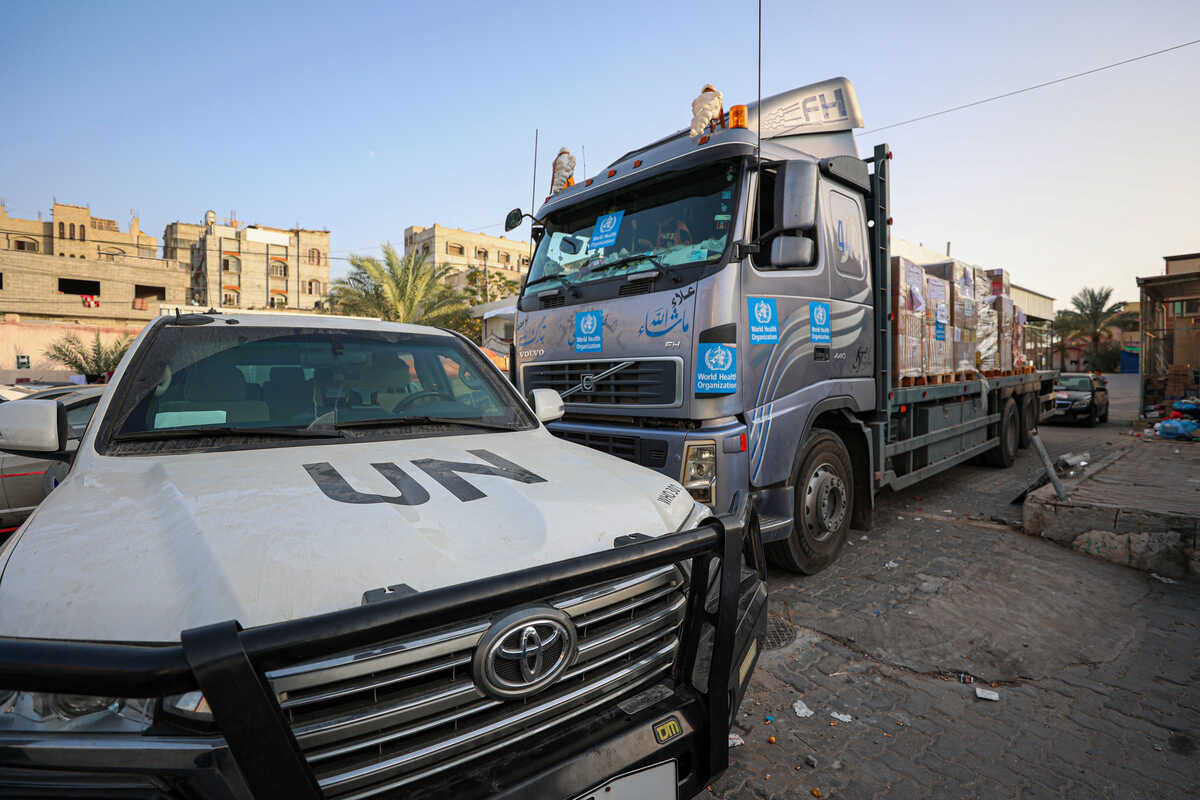
Mike Huckabee, the new US ambassador to Israel, responded to the World Health Organization's request to pressure Israel to allow humanitarian aid into Gaza. He rejected the request and blamed Hamas, thereby supporting the "collective punishment" practiced by the Israeli occupation authorities against civilians in Gaza.
"What I would suggest is that we work together to apply pressure where it's appropriate — on Hamas," Huckabee said in a video statement posted to his Twitter account.
Huckabee called on Hamas to "sign an agreement" that would allow humanitarian aid to reach the people of Gaza. He said that when that happens, and the Israeli hostages are released, "we hope that this humanitarian aid will flow freely, knowing that it will be done without Hamas."
Hamas had offered to release all Israeli hostages in exchange for a permanent ceasefire and an Israeli withdrawal from Gaza, but Israel refused. Israel also refused to fully implement the ceasefire agreement signed last January, which stipulated the entry of humanitarian aid into Gaza. On March 2, Israel imposed a comprehensive blockade on all goods entering the Strip.
Israeli Defense Minister Israel Katz stated last week that no humanitarian aid would be allowed into Gaza, describing the aid blockade as one of Israel's "central pressure tools" against Hamas. Katz also pledged an indefinite Israeli occupation of the territories seized by the Israeli military in Gaza.
Huckabee was expected to strongly support Israel's crimes against the Palestinians as U.S. ambassador, given his history of pushing for Israel's annexation of the West Bank, which he calls Judea and Samaria. He is a Christian Zionist who believes that the occupied Palestinian territory was given by God to the modern state of Israel.
It's worth noting that during a visit to an Israeli settlement in the West Bank in 2017, Huckabee claimed that the area was not under Israeli occupation. "I believe Israel has title to Judea and Samaria," Huckabee told CNN. "There are words I refuse to use. There's no such thing as the West Bank; there's Judea and Samaria. There are no settlements; they're communities, neighborhoods, cities; there's no occupation."
In 2008, Huckabee said that "there are no Palestinians" and called for the expulsion of Palestinians to other Arab countries.
Tue 22 Apr 2025 8:46 am - Jerusalem Time

The United Nations said that Israel has been preventing all types of aid from entering the Gaza Strip for 50 days, and that the impact on the Strip's citizens is "very serious."
This was stated by UN Spokesperson Stéphane Dujarric during a press conference held last night at UN headquarters in New York.
Dujarric explained that the United Nations Office for the Coordination of Humanitarian Affairs (OCHA) confirmed that for 50 days, no food, fuel, medicine, or other essential supplies have entered Gaza.
He added that food stocks have decreased "dangerously" during this period, and that medicines, medical supplies, and vaccines are running out. He noted that children and adults are suffering from hunger, and that the health system in the Strip is on the verge of collapse.
He added, "Hundreds of thousands of people have been displaced, and Israeli attacks on humanitarian and health workers have increased once again."
Tue 22 Apr 2025 8:45 am - Jerusalem Time
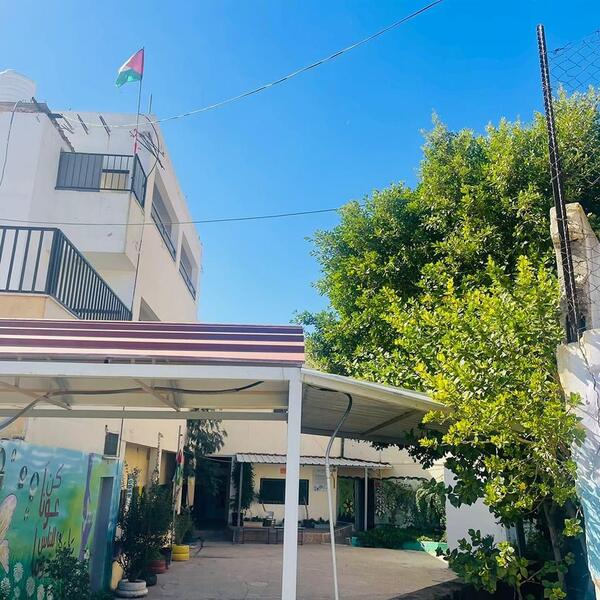
Israeli occupation forces stormed the village of Aqaba, east of Tubas, this Tuesday morning.
Azmi Balawneh, the Director of Education in Tubas, reported that the occupation forces raided the Aqaba village school and removed the Palestinian flag from its building.
He explained that the Education Directorate decided to switch to online classes today in Tayasir and Aqaba schools due to the current circumstances.
It is noteworthy that the occupation forces have continued to storm the village of Tayasir since midnight last night.
Tue 22 Apr 2025 8:44 am - Jerusalem Time

Dozens of civilians were killed and injured early Tuesday morning when the Israeli occupation forces bombed several areas in the Gaza Strip.
Israeli warplanes launched violent raids on several areas in the Gaza Strip, in addition to bombing homes in the city of Rafah. The occupation also targeted several heavy equipment garages belonging to municipalities and companies.
Medical sources reported that 14 citizens were killed as a result of the ongoing Israeli bombing of Gaza City and Khan Yunis since dawn today.
Our correspondent said that nine citizens, including two children, were killed and 13 others were injured when the occupation forces bombed a residential building belonging to the Shabir family near the Al-Sikka area in the center of Khan Yunis. A number of citizens were injured when the occupation forces bombed a tent housing displaced persons in the Al-Katiba neighborhood in Khan Yunis.
Several civilians were also killed and injured when Israeli warplanes bombed a home belonging to the Bakr family west of Gaza City. Dr. Majed Nasr Ismail was also killed in an Israeli bombardment of Deir al-Balah in the central Gaza Strip.
Israeli artillery shelled the southern areas of Khan Yunis, south of the Gaza Strip. Israeli aircraft also targeted four bulldozers on land near the Al-Mukhtar Chalet, northwest of Al-Qarara town, north of Khan Yunis. Meanwhile, the Israeli occupation forces blew up residential buildings north of Rafah.
The occupation forces also penetrated from the north of Rafah towards the Qizan Abu Rashwan area, south of Khan Yunis, under the cover of fire and artillery shelling.
The death toll from the occupation's aggression on Gaza since October 7, 2023, has risen to 51,240 martyrs and 116,931 wounded.
Tue 22 Apr 2025 7:13 am - Jerusalem Time
Opinion Writer
The United Nations Children's Fund (UNICEF) has released new reports documenting the worsening humanitarian crisis in the Gaza Strip as a result of the complete blockade imposed since March 2, 2025. This has led to severe shortages of food and medical supplies, with a disastrous impact on children, pregnant women, and nursing mothers. More than one million children in Gaza have been deprived of life-saving assistance for more than a month and a half due to the ongoing blockade, which prevents the entry of food, clean water, and medical supplies. The blockade has completely halted the food supply chain, with bakeries closing due to flour and fuel shortages, threatening widespread famine. Furthermore, more than 60% of essential medicines are out of stock, and only 15 of 36 hospitals are partially functioning, leaving patients without adequate medical care.
Previous reports from international organizations such as the World Health Organization, the World Food Programme, and UNICEF indicate that the famine and humanitarian crisis in the Gaza Strip are having a devastating impact on the health and lives of infants, children, and pregnant women, as well as the overall health of the population. These reports confirm that 90% of children under five suffer from acute malnutrition, and that one in three children suffer from malnutrition. In northern Gaza, one in six children under two suffers from acute malnutrition, an unprecedented increase compared to 0.8% before the war. Most families barely receive one meal a day, and it is often nutritionally insufficient. Mothers also suffer from severe malnutrition, seriously affecting their breastfeeding. Infant mortality rates are also increasing due to lack of medical care, not just malnutrition, not to mention the risks of premature births and neonatal deaths. More than 557,000 women in the Gaza Strip suffer from severe food insecurity, with many mothers skipping meals to feed their children, leading to weight loss and dizziness. Seventy-six percent of pregnant women reported suffering from anemia, and 99% of them lack access to necessary nutritional supplements, putting their health and that of their children at risk. Pregnant women also struggle to access hospitals and medical centers, most of which have been destroyed, exacerbating pregnancy and childbirth complications.
The lack of clean water, and sometimes the absence of it, and severe overcrowding in displacement centers have led to the spread of serious diseases such as acute diarrhea, especially among children, respiratory infections, skin diseases, and the spread of hepatitis A caused by water pollution. All this is happening against a backdrop of a collapsing health system.
More than 80% of Gaza's population relies on charity kitchens that provide simple meals lacking essential nutrients. Some of these kitchens have been closed due to the complete closure of crossings amid the renewed brutal aggression on the Strip. This is in light of a declared and officially adopted policy that uses starvation as a criminal weapon in the ongoing war of extermination, and amid rising voices in the occupation government calling for a complete severance of all sources of livelihood for the Strip's residents.
These facts, documented by international organizations, have not yet prompted relevant Arab and international parties to take practical steps to halt pre-planned plans aimed at genocide. The International Criminal Court's ruling on the possibility of deliberate genocide has become a confirmed reality due to the official and declared policy of using starvation as a weapon, coupled with the total destruction of the basic service infrastructure and the unprecedented persistence of the continued closure of crossings.
But what's even more surprising is that at this very moment, when international institutions still operating in the Gaza Strip are warning of the possibility of widespread mass deaths due to the starvation war, the Palestine Liberation Organization's Central Council is convening for the first time since the outbreak of genocide a year and a half ago. Sadly, the main topic on its agenda is the last item, the creation of a vice-president of the Executive Committee. This is not due to a national or constitutional necessity in the event that the presidency becomes vacant. After the death of President Abu Ammar, the Fatah movement and subsequently the Executive Committee agreed to elect a new president in a single meeting, even before the arrival of the body of the martyr Arafat from Paris for temporary burial in Ramallah. Meanwhile, the recently issued "Constitutional Declaration," which assigns the President of the National Council to assume the position of President of the Authority for a period of ninety days, renewable once, during which presidential elections will be held, resolved the issue of the vacancy in the presidency of the Authority. This "declaration" was a step that brought everyone back to the fact that the indispensable option is the ballot box—respecting the will of the people and their constitutional right.
The imminent danger to the entire Palestinian cause, not just its political system, is represented, in addition to the destructive state of division, by Israeli plans to dismantle the political system, and at best, engineer it to serve its future plans. Even if there is some Arab concern for our people's cause and to prevent Israel from dismantling the political system, the only response that guarantees this is to encourage it to begin unifying the institutions of the comprehensive national entity capable of continuing the national struggle to end the occupation, achieve independence, and embody the State of Palestine as an unavoidable condition for regional stability. The unification of these institutions can begin immediately by agreeing to form a non-factional national unity government that will handle the Gaza Strip file in all its dimensions, starting with efforts to stop the war of extermination as a top priority agreed upon by our people, followed by relief, shelter, and reconstruction, and strengthening and unifying the institutions of the Palestinian people as an essential component of establishing a fully sovereign, independent Palestinian state, including its security establishment and the doctrine that governs its work.
We must realize that the Palestinian Authority is in an unprecedented existential dilemma. As its popularity is dwindling for deep and multiple reasons, not least of which is its re-tailoring to fit a completely failed option, destroyed by Israel more than once, the Authority has also become a target for dismantling and engineering the canton and protectorate system. Furthermore, Israel's continued, regrettably, monopolization of the Gaza Strip, its people, and its resistance has placed Hamas and the resistance in a dangerous predicament, not so much for the resistance as for our people and their cause. The question is: Doesn't this existential dilemma push everyone toward a phase of reconciliation that breaks with the past and establishes a new phase of action based solely on the will of our people? Isn't adopting the option of national reconciliation, which the powers agreed upon in Beijing and which is supported by the popular will, the only way to safeguard the institutions of the national entity? Why all this stubbornness, and in whose interest? Does this offer a lifeline to our people in the Gaza Strip, or does it lift the knife of annexation from the necks of our people, their land, and their holy sites in Jerusalem, the Jordan Valley, and the rest of the West Bank? The answer is certain to be found on the lips of the victims fighting for their lives in Gaza, and on the tongues of those struggling for survival across the West Bank. Are you able to hear them and prepared to comply with their will?
Tue 22 Apr 2025 7:12 am - Jerusalem Time
Opinion Writer

Despite the conflicting Israeli statements about the Palestinian resistance's treatment of Israeli prisoners, in the tunnels and homes of Gaza, and the diversity of their content according to their sources, some of them indicated rude, humiliating, and abusive Palestinian treatment, while the opposite indicated respectful, humane treatment that reflects the high standard of treatment accorded to prisoners, despite their being in the camp of the merciless enemy.
A close examination of the statements of the majority of the Israeli prisoners confirmed the good treatment of them by Hamas and its fighters. They were not obligated to praise the behavior of the Palestinians and their high standard of treatment of them. There is no more vivid, clear, or courageous evidence of this than the scene of the Israeli prisoner “kissing” the head of his Palestinian guard. It was a scene and a shot that carried a lot of credibility and spontaneity in a prisoner’s farewell to his accompanying guard. The incident was a shock to the Israelis and to all observers in the world, and dealt a political blow to the components of the Israeli colony.
But even if we accept, for the sake of argument, the accusations made by the colony's leaders regarding Hamas's humiliating behavior toward Israeli prisoners - accusations that Washington has supported without reservation - do the colony's security forces and apparatuses treat Palestinian prisoners with a minimum of respect for human dignity and humanity? Or is it that hatred, racism, extremism, shameful behavior, and moral and legal decline are taking place, without any scruples of conscience or even the minimum level of treatment of prisoners as human beings, or even as criminals who deserve all kinds of beatings, humiliation, and killing?
How many Palestinian prisoners have been killed, lost their memory and health, and left disabled, lacking the ability to lead a normal life, and treated as criminals, not prisoners of war with convictions, a will, and aspirations for dignity and freedom in a homeland that yearns for independence and stability, like all human beings and all peoples. This is what the Palestinian people lack and yearn for, and make sacrifices to obtain. What Palestinian prisoners are subjected to is part of these sacrifices.
His Holiness Pope Francis, who passed away yesterday with Easter, expressed his sympathy and solidarity with the Palestinian people and their right to freedom and an independent state. Just hours before his passing, he affirmed his awareness of the extent of the Palestinians’ suffering and pain, saying:
"I am close to the Christian people of the Holy Land, and I am close to both peoples. My thoughts turn to the people of Gaza, especially to the Christian community there, where the terrible conflict continues to generate death and destruction, and to create a horrific and shameful humanitarian situation."
Palestinians in St. Peter's Square at the Vatican, in the heart of the Italian capital, Rome, expressed their appreciation for His Holiness the Pope by raising Palestinian flags. They expressed their appreciation for his positions, which express the understanding of the Catholic Church, the heir to Jesus Christ, the first Palestinian martyr, and the bearer of his message, which was born in Bethlehem, Nazareth, and Jerusalem, was baptized in the Jordan River, and spread eastward to the world. With his passing, the Palestinian people lost a friend who believed in the justice of the Palestinians' right to dignity, freedom, and independence.
Tue 22 Apr 2025 6:55 am - Jerusalem Time
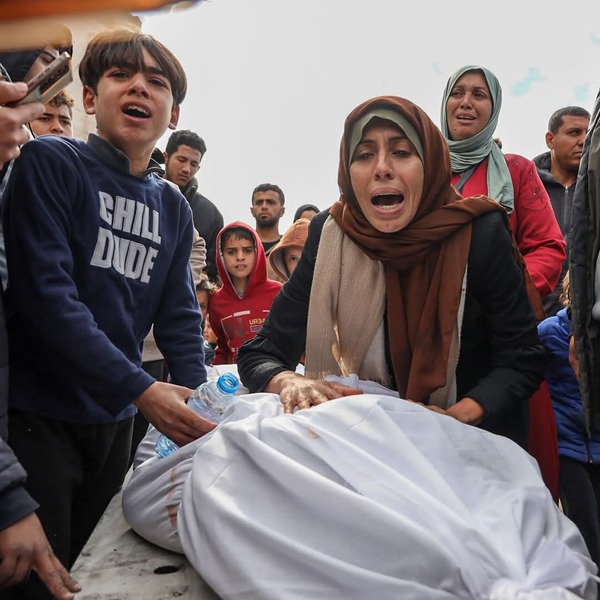
Dozens of residents were killed and injured in Israeli shelling targeting several areas in the Gaza Strip on Monday evening. Meanwhile, the Israeli army carried out bombing operations using shelling and explosives in Rafah, in the southern Gaza Strip.
The Israeli army continues to escalate its aggression against the Gaza Strip, intensifying its demolition of homes and targeting the tents of displaced people. This is part of the ongoing war, which has been ongoing since its resumption 35 days ago and which human rights groups have described as "genocide" with political and military support from the United States.
Thirty-nine Palestinians were killed and 62 others injured in Israeli shelling of Gaza over the past 24 hours, bringing the death toll from the war since October 7, 2023, to 51,240 martyrs and 116,931 injuries, according to the latest figures announced by the Ministry of Health in the Gaza Strip on Monday.
On the 35th day of the resumption of hostilities, Israeli warplanes launched a series of violent raids on the city of Rafah in the southern Gaza Strip, and also targeted residential areas in Abu al-Ajeen, east of Deir al-Balah.
Meanwhile, the town of Jabalia, north of the Gaza Strip, and the city of Beit Lahia came under intense artillery shelling, resulting in further civilian casualties.
The Israeli occupation artillery targeted the Qizan Abu Rashwan area, south of Khan Yunis, resulting in civilian casualties.
Tue 22 Apr 2025 6:53 am - Jerusalem Time
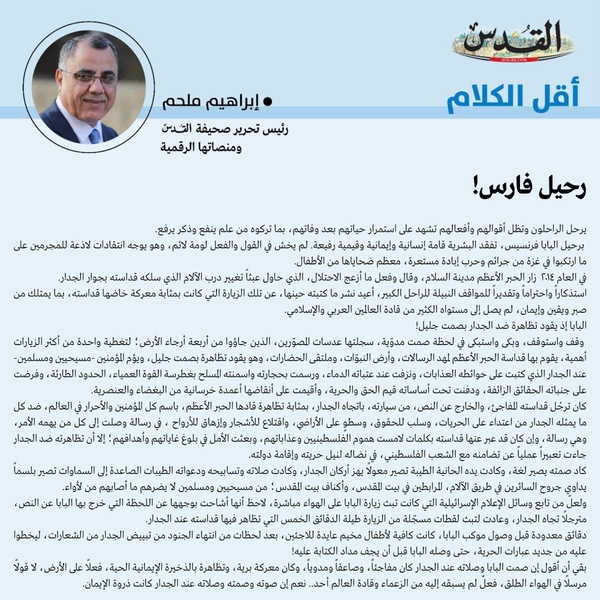
Opinion Writer
The departed depart, but their words and actions remain as a witness to their continued life after their death, with the knowledge they left behind that is beneficial and the memory that is uplifting.
With the passing of Pope Francis, humanity loses a towering figure of humanity, faith, and values. He was unafraid, in word and deed, to face the censure of the critics, harshly criticizing the criminals for the crimes they committed in Gaza and the raging war of extermination, most of whose victims were children.
In 2014, the Holy Father visited the City of Peace, and said and did things that upset the occupation, which tried in vain to change the Via Dolorosa that His Holiness walked next to the wall.
In remembrance, respect, and appreciation of the noble stances of the great departed, I republish what I wrote at the time about that visit, which was a battle fought by His Holiness, with a level of patience, certainty, and faith that few leaders in the Arab and Islamic worlds have ever matched.
The Pope leads a demonstration against the wall with solemn silence!
He stood and made others stop, he cried and made others cry in a moment of resounding silence, recorded by the lenses of photographers who came from four corners of the earth to cover one of the most important visits made by His Holiness the Supreme Pontiff to the cradle of messages, the land of prophecies, and the crossroads of civilizations. He led a demonstration in solemn silence, leading the faithful - Christians and Muslims - at the wall on whose walls were written suffering, at whose thresholds blood bled, and on whose stones and cement, reinforced with the arrogance of blind force, emergency borders were drawn, and on whose sides false truths were imposed, and under whose foundations the values of truth and freedom were buried, and on whose ruins concrete pillars of hatred and racism were erected.
His Holiness' sudden, off-the-cuff disembarkation from his car and toward the wall was a demonstration led by the Supreme Pontiff, in the name of all believers and free people in the world, against everything the wall represents in terms of an assault on freedoms, the denial of rights, the seizure of land, the uprooting of trees, and the loss of lives. This was a message that reached all concerned. Although His Holiness expressed it in words that touched the concerns and suffering of the Palestinians and inspired hope for the achievement of their goals and objectives, his demonstration against the wall was a practical expression of his solidarity with the Palestinian people in their struggle to achieve their freedom and establish their state.
His silence almost became a language, his kind and gentle hand almost became a pickaxe shaking the pillars of the wall, and his prayers, praises and good supplications ascending to the heavens almost became a balm healing the wounds of those walking the path of suffering, those guarding Jerusalem and the environs of Jerusalem; Christians and Muslims alike, unharmed by the hardships that befell them.
Anyone who followed the Israeli media, which was broadcasting the Pope's visit live, may have noticed that they turned away from the moment the Pope deviated from the script and walked toward the wall, and instead re-broadcast recorded footage of the visit for the five minutes during which His Holiness demonstrated at the wall.
A few minutes before the Pope's motorcade arrived, the children of Aida refugee camp were enough for them, moments after the soldiers had finished whitewashing the wall of slogans, to rewrite it with slogans of freedom, until the Pope arrived before the ink had even dried!
It remains to be said that the Pope's silence and his prayer at the wall were surprising, shocking, and resounding. It was a land battle, a demonstration of live ammunition of faith, an action on the ground, not just words uttered in the open air. It was an action that no leader or world leader had ever performed before him. Yes, his voice, his silence, and his prayer at the wall were the pinnacle of faith.
Mon 21 Apr 2025 10:32 pm - Jerusalem Time
The United Nations Relief and Works Agency for Palestine Refugees (UNRWA) said on Monday that the humanitarian crisis in Gaza has reached its worst level since October 2023, 50 days after Israel prevented any supplies from entering the Strip.
UNRWA added in a post on the X platform: "It has been 50 days since the Israeli authorities prevented any supplies from entering the Strip. Food, water, medical care, and shelter are increasingly scarce, while aid is piling up at the crossings."
UNRWA confirmed that 500,000 Palestinians were displaced again last month, following the resumption of Israeli attacks on the Gaza Strip.
UNRWA announced on Friday that it currently operates 115 shelters across Gaza, housing more than 90,000 displaced people.
Mon 21 Apr 2025 10:22 pm - Jerusalem Time
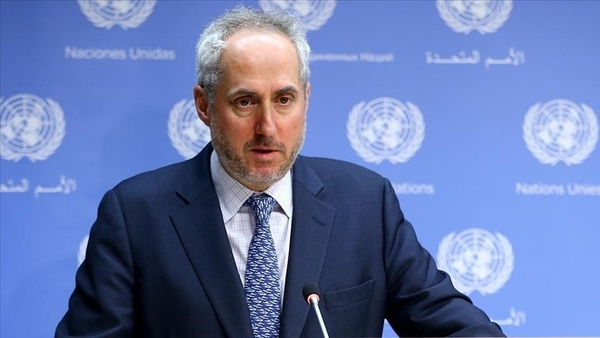
The United Nations said that Israel has been preventing all types of aid from entering the Gaza Strip for 50 days, and that the impact on the Strip's residents is "very serious."
This was stated by UN Spokesperson Stéphane Dujarric during a press conference held on Monday at UN headquarters in New York.
Dujarric explained that the United Nations Office for the Coordination of Humanitarian Affairs (OCHA) confirmed that for 50 days, no food, fuel, medicine, or other essential supplies have entered Gaza.
He added that food stocks have decreased "dangerously" during this period, and that medicines, medical supplies, and vaccines are running out.
Dujarric noted that children and adults are suffering from hunger, and that the health system in the Strip is on the verge of collapse.
He added, "Hundreds of thousands of people have been displaced, and Israeli attacks on humanitarian and health workers have increased once again."
Israel has closed the Gaza Strip's crossings to the entry of food, relief, medical aid, and goods since March 2, causing a significant deterioration in the humanitarian situation for Palestinians, according to government, human rights, and international reports.
Mon 21 Apr 2025 10:06 pm - Jerusalem Time
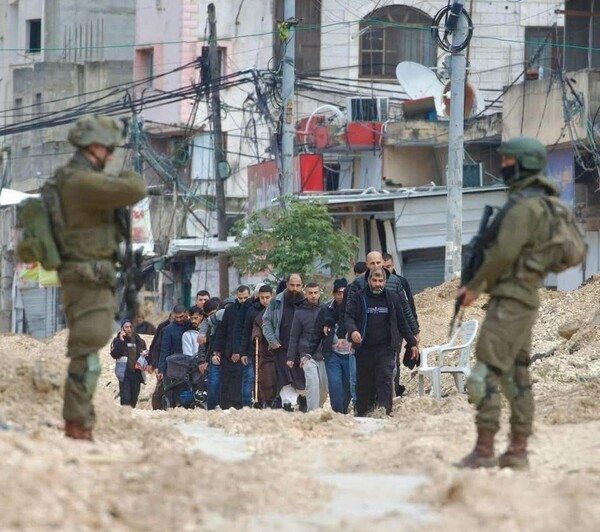
Israeli occupation forces stormed the city of Tulkarm on Monday evening, as the ongoing aggression against the city and its camp continues for the 85th consecutive day.
According to local sources, two Israeli "Eitan" armored vehicles stormed the city from its southern entrance, patrolling its main streets towards the eastern neighborhood, the Shahid intersection, and Al-Muqata'a Street, reaching the vicinity of Tulkarm camp.
She added that Tulkarm city witnessed today the movement of occupation vehicles and infantry units through various neighborhoods, amidst the heavy firing of sound bombs, which hindered the movement of citizens and vehicles.
Occupation soldiers also forced shop owners in the western neighborhood, the old Nablus Garage Street, and Al-Haddadeen Street to close their shops after raiding a number of them and interrogating those inside at gunpoint.
In the same context, occupation forces continued today to force residents to evacuate their homes around Jabal al-Nasr and the western area of Nour Shams camp, amid the ongoing aggression on the camp for the 72nd consecutive day.
Mon 21 Apr 2025 8:59 pm - Jerusalem Time
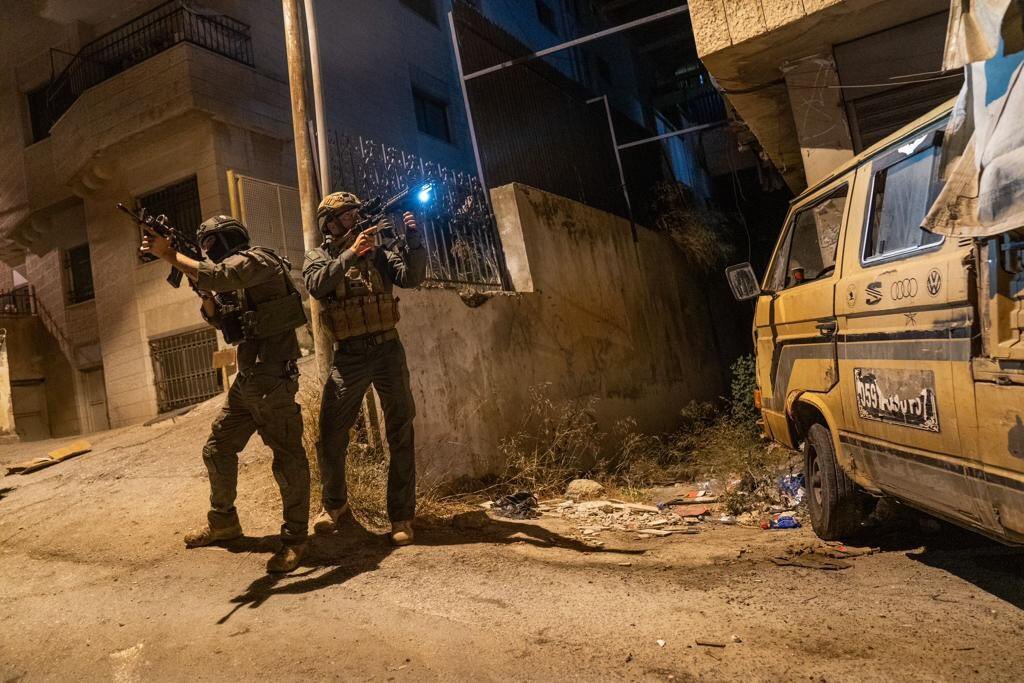
A child was shot with live ammunition and several other citizens suffered suffocation on Monday evening during an Israeli occupation forces raid on the town of Idhna, west of Hebron.
According to local sources, the occupation forces stormed the town of Idhna, firing live bullets, sound bombs and toxic gas at citizens, which led to a 16-year-old child being injured by live bullets in the stomach, after which he was transferred to the hospital. In addition, a number of citizens suffered from suffocation and were treated in the field, while the occupation soldiers detained a young man after his injury, the nature of which was unknown.
The occupation soldiers, who were stationed in the center of the town, also forced shop owners to close their shops.