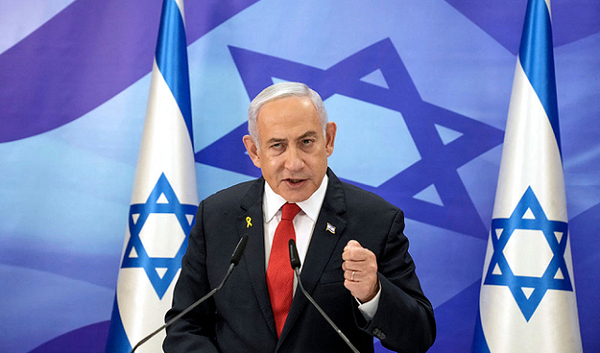
PALESTINE

Thu 24 Apr 2025 7:00 pm - Jerusalem Time

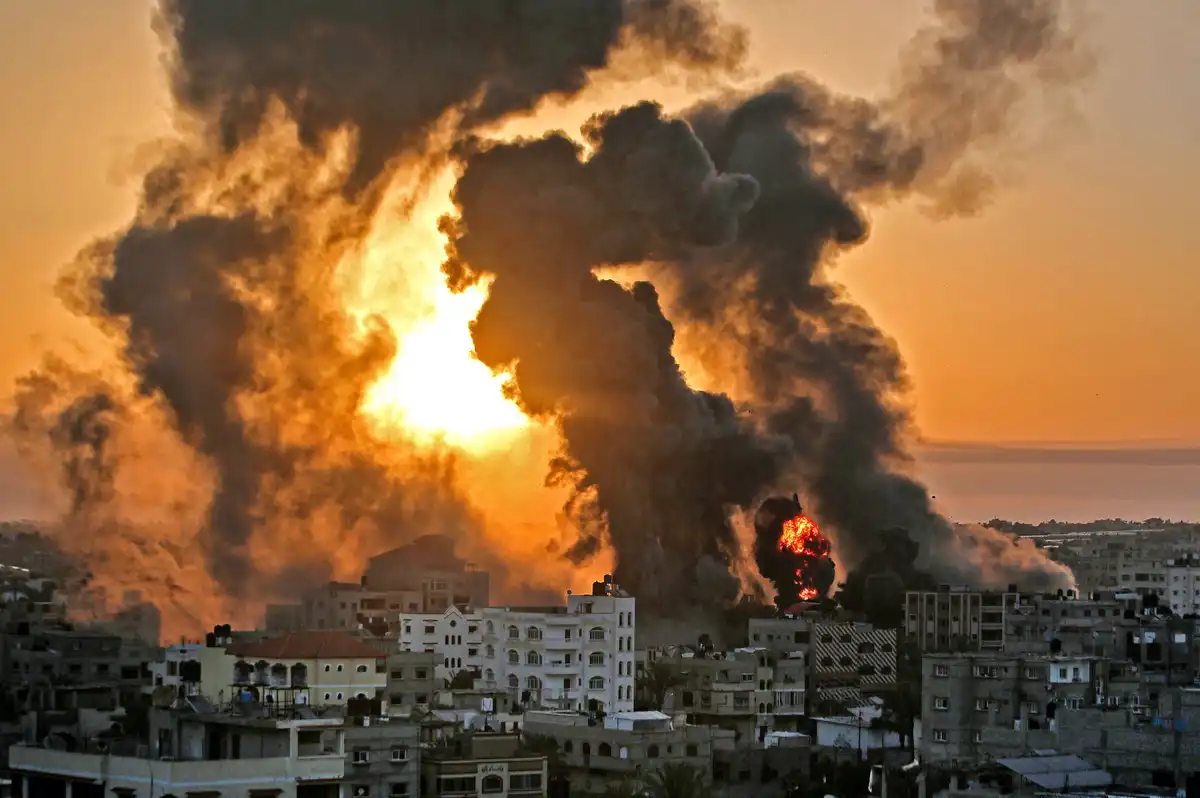
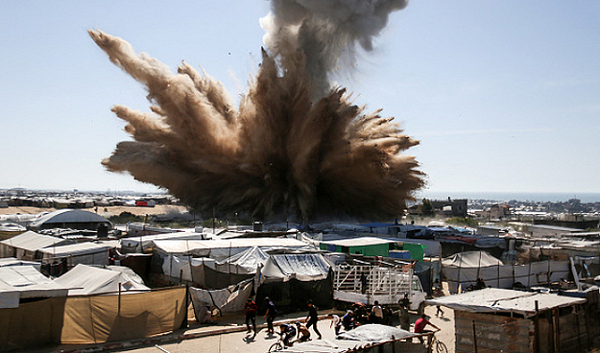
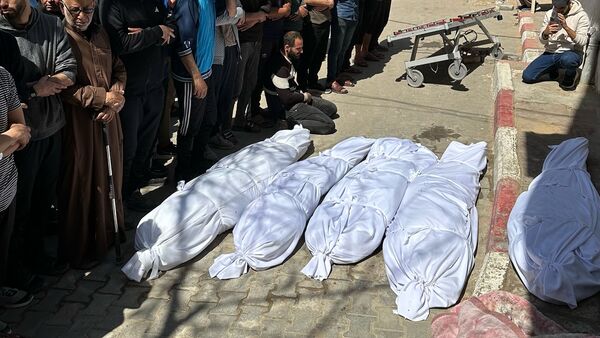
The occupation commits a massacre: 18 martyrs in the bombing of a house north of Gaza City.

The Israeli occupation army committed a massacre against civilians in Gaza City, killing 18 of them and wounding others.


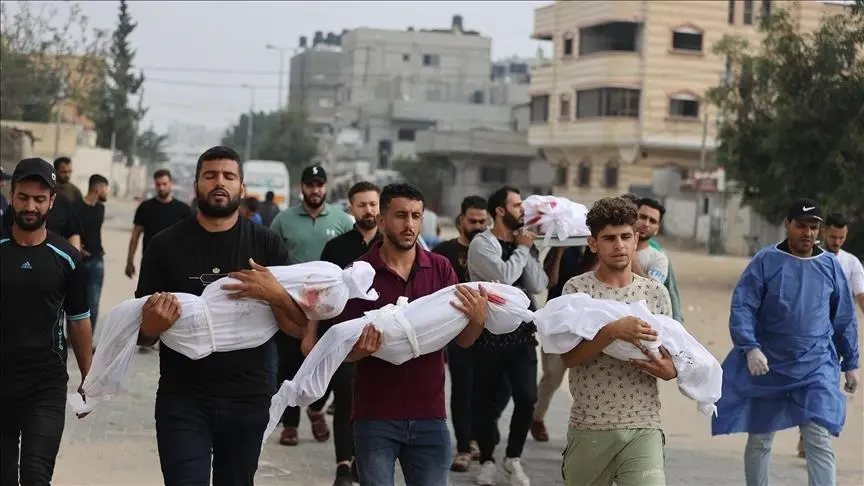
According to local sources, Israeli warplanes launched airstrikes on a home housing displaced persons near the Halawa Junction in Jabalia al-Balad, north of Gaza, killing 18 civilians and wounding others, most of them critically.


Medical sources confirmed that the death toll from Israeli airstrikes targeting the Gaza Strip since dawn today has risen to 56, including 39 in Gaza City and the northern Gaza Strip.

ARAB AND WORLD

Thu 24 Apr 2025 6:50 pm - Jerusalem Time

The main reasons why bombing Iran is absurd

Following his meeting with Israeli Prime Minister Benjamin Netanyahu on April 7, US President Donald Trump announced the US-Iran meeting in Muscat, Oman (April 12) that: “There are two ways to deal with Iran: militarily, or make a deal.”


National Security Advisor Mike Waltz supported a military solution, while Director of National Intelligence Tulsi Gabbard and Vice President J.D. Vance supported diplomacy. Trump chose diplomacy. But all options remain on the table, and if diplomacy fails, Trump says, "The other option will solve the problem."


But experts believe there are several reasons why all options are off the table, and why bombing Iran to prevent it from acquiring a nuclear bomb would be absurd.


According to Ted Snyder, an expert on the subject: “Most importantly, and perhaps the only reason that really needs to be mentioned, is that Iran is not seeking a nuclear bomb. In 2003, Ayatollah Ali Khamenei, Iran’s Supreme Leader, issued a fatwa prohibiting nuclear weapons in Islam. The 2025 Annual Threat Assessment, which also “reflects the collective views of the intelligence community,” clearly states that U.S. intelligence “continues to believe that Iran is not building a nuclear weapon and that [Ayatollah] Khamenei has not reauthorized the nuclear weapons program he suspended in 2003.”


This assessment was also published by the US Department of Defense in its 2022 Nuclear Posture Review, which concluded that "Iran does not currently possess a nuclear weapon, and we currently believe it is not seeking to acquire one."


Perhaps the most absurd reason for bombing Iran to prevent it from pursuing a nuclear bomb is that the United States knows that Iran is not pursuing a nuclear bomb. Since Iran is not pursuing a nuclear weapons program, the second reason for the absurdity of bombing Iran is that it has every legal right to its civilian nuclear program. As a signatory to the Nuclear Non-Proliferation Treaty, Iran has the "inalienable right to a civilian program that uses nuclear energy for peaceful purposes."


The United States does not believe that Iran has an illegal nuclear weapons program, and it would be absurd to bomb it simply because it has a legal civilian nuclear program. Third, Iran has already demonstrated that a military solution is not necessary for the Trump administration to achieve its goal of ensuring that Iran does not enrich uranium to weapons-grade levels. America's concerns, whether justified or not, could be assuaged by setting verifiable limits on Iran's enrichment levels. Iran demonstrated its willingness to comply with this non-military solution when it agreed to those verifiable limits in the 2015 Joint Comprehensive Plan of Action (JCPOA) nuclear agreement. Eleven consecutive reports by the International Atomic Energy Agency (IAEA) have confirmed that Iran has fully and consistently complied with the obligations it undertook under that agreement.


A military solution to America's concerns about Iran's civilian nuclear program is absurd because the United States has historical evidence that a non-military solution works. A military solution is not arbitrary and absurd only because it is unnecessary; it is even more absurd because it risks not only war with Iran, but a wider regional war. The United States has begun moving military equipment to the region, including aircraft carriers, bombers, and air defense systems. While this was presented as preparation for the possibility of escalating the war with the Houthis, US officials privately said that "the weapons were also part of planning" for a "potential conflict with Iran."


Moreover, simply “supplying U.S. weapons and military assets,” according to a new intelligence assessment presented by Director of National Security Tulsi Gabbard, “could ignite a broader conflict with Iran that the United States did not want.” Iran has stated that U.S. military action against its civilian nuclear program would lead to a military response from Iran against U.S. bases in the region (dispersed). Iranian Parliament Speaker Mohammad Bagher Qalibaf said, “If they threaten Islamic Iran, America’s allies in the region and U.S. bases will be insecure, like powder keg.” A military solution threatens war with Iran, and perhaps even a wider regional war.


The fifth reason is that despite all the risks of war with Iran, and perhaps even a wider regional war, the perceived benefit is not worth it. In a remarkable line that has received little attention, the New York Times reported that the goal of the military plans to bomb Iranian civilian nuclear sites being discussed by the United States and Israel "was to set back Tehran's ability to develop a nuclear weapon for a year or more." Risking war with Iran, or even a wider war in the Middle East, to delay Iran's nuclear program—a nuclear program the United States knows Iran does not have—for the sake of setting back the program for just one year is absurd.


According to experts, all these calculations of the costs, benefits, and risks of war are absurd, because everyone knows that the diplomatic track can work. We know it can work because it worked ten years ago with the successful conclusion of the Joint Comprehensive Plan of Action (JCPOA), or the Iran nuclear deal concluded in Vienna in July 2015, and there is every reason to hope that, a decade later, it can work again. In the first round of talks in Oman on April 12, Iran insisted that future direct talks would be contingent on the success of the current indirect talks. At the end of that first round, Iranian Foreign Minister Abbas Araqchi and chief US negotiator Steve Witkoff met face-to-face—not for a few moments, as initially reported, but for 45 minutes. The first round in Oman successfully led to a second round in Rome, and the second round has now led to a third round next Saturday (April 26) in Oman because it was constructive.


Finally, talk of a military solution by a state claiming to lead a global order based on international law is absurd, as launching a preemptive strike against Iran without Security Council approval would violate international law. Diplomacy has a real opportunity to defuse the long and volatile crisis between the United States and Iran. Threats of war are not only unnecessary, they further complicate diplomacy.

PALESTINE

Thu 24 Apr 2025 6:46 pm - Jerusalem Time

A grim reminder of Gaza: 100 kilotons is equivalent to roughly seven Hiroshima-sized bombs.

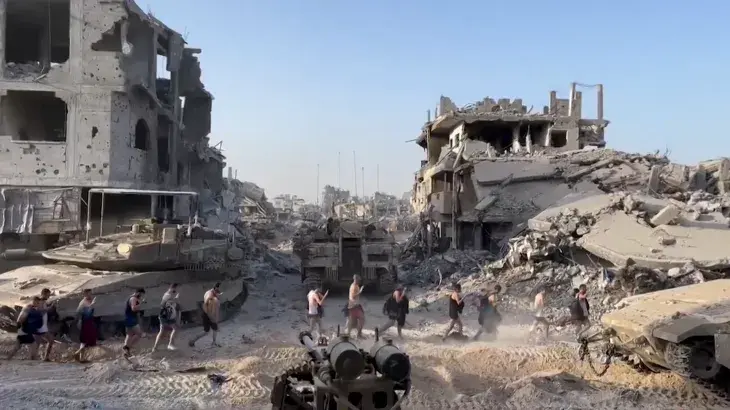
Israel dropped more than 100,000 tons of bombs on Gaza, or more than 100 kilotons. The nuclear bomb dropped by the United States on the Japanese city of Hiroshima on August 9, 1945, had a yield of approximately 15 kilotons. This means that the small area of Gaza was subjected to a bombardment equivalent in explosive power to approximately seven Hiroshima bombs.


That's according to William Astor, a retired U.S. Air Force lieutenant colonel, history professor, and senior fellow at the Eisenhower Media Network (EMN), an organization of military veterans and prominent national security professionals.


More than 51,000 Palestinians have been confirmed killed in Gaza; the actual death toll could be double or triple that number. The number of wounded is likely to be more than 100,000. (Who can say for sure, given the scale of destruction and unrest in Gaza?)


How can this level of destruction be justified or defended in any way?


Astor says: "Gaza is already almost destroyed. The Israeli government's intention is clear: after making Gaza uninhabitable, the remaining Palestinians will be expelled, displaced, and evacuated. Or they will die on the spot, from further bombing, as well as from hunger and disease."


Astor argues that the US government enabled this genocide by supplying Israel with all the bombs it needed to crush Gaza. The US government also provided diplomatic cover and military protection while Israel implemented its final solution to the Gaza conflict.


Some argue that this is not genocide because Israel is not forcibly transporting Palestinians to gas chambers. But there are many forms of genocide, and many ways to kill massive numbers of people.


In *The History and Sociology of Genocide* (1990), Frank Schock and Kurt Jonasson define genocide as “a form of unilateral mass murder in which a state or other authority intends to destroy a group, as defined by the perpetrator and membership in that group.”


Is there unilateral mass murder? Astor answers his own question: Yes; Is there an intent to commit mass destruction? Yes, according to Astor.


Astor adds, "Gaza and its people are being destroyed before our eyes; the bulk of this effort is funded, directly or indirectly, by American taxpayers. Yet we are told that Hamas is responsible. It is forcing the Israeli government to kill and injure hundreds of thousands."


He points out that "one thing is certain: the Israeli government could not have committed this genocide without massive military support from the United States."


Astor concludes by saying, “Perhaps one day, as Omar Akkad wrote, ‘everyone will always be against this’ [the ongoing genocide in Gaza]. The question remains: Why do so many, especially in the Israeli and American governments, still insist on committing and defending this?”

PALESTINE

Thu 24 Apr 2025 4:01 pm - Jerusalem Time

Four Palestinians killed in the occupation's bombing of Gaza City

Four civilians were killed and others injured Thursday evening in an Israeli airstrike on Gaza City, in the central Gaza Strip.


A WAFA correspondent said that four Palestinians were killed when Israeli warplanes bombed an apartment inside Al-Siddiq Tower, behind the Al-Sahaba Complex in Gaza City.


Earlier, citizens were able to retrieve the bodies of five martyrs, after an Israeli bombardment targeted civilians on Al-Nakhil Street in the Al-Tuffah neighborhood, east of Gaza City.

PALESTINE

Thu 24 Apr 2025 3:22 pm - Jerusalem Time

The occupation forces shot a young man south of Tulkarm.

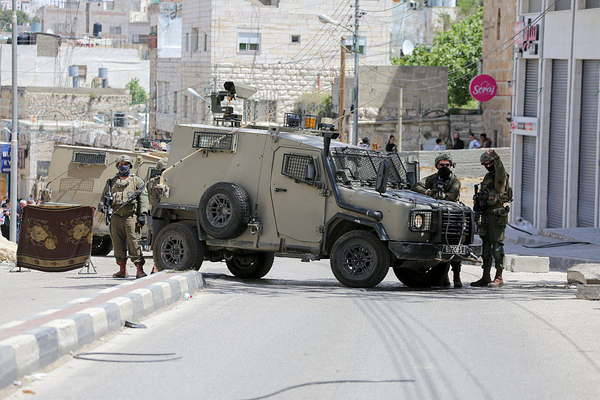
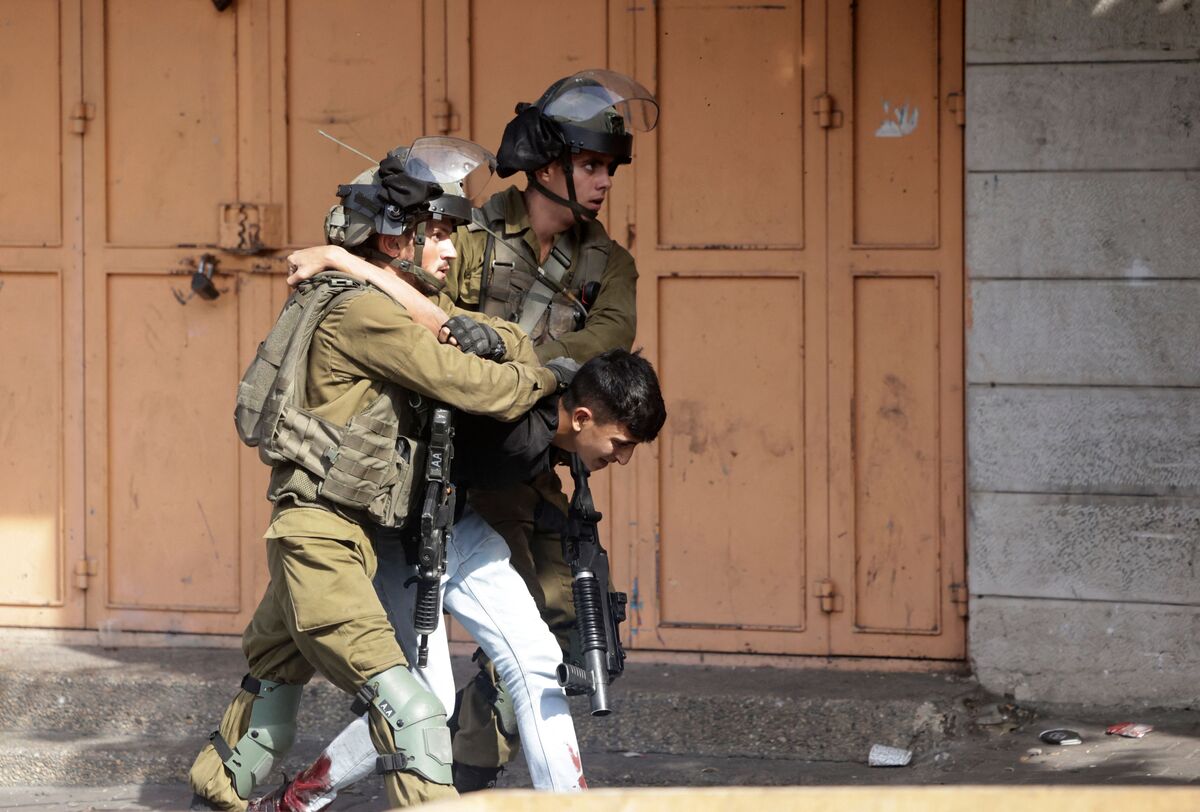
An Israeli special forces unit opened fire on a young man driving his vehicle near the town of Kafr Sur, south of Tulkarm, Thursday afternoon, wounding him before kidnapping him and seizing his vehicle.


Local sources reported that the special forces, driving a vehicle bearing Palestinian license plates, intercepted a vehicle at the Kafr Sur roundabout and opened fire directly at the driver, wounding him.


The sources explained that the occupation forces sent military reinforcements to the area, sealed off the entire area, and prevented ambulance crews from reaching the injured man. They then abducted him and transported him to an unknown location, without knowing his identity or fate.

PALESTINE

Thu 24 Apr 2025 2:24 pm - Jerusalem Time

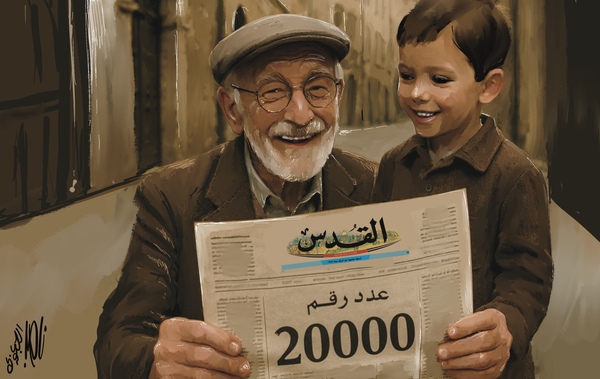
Al-Quds celebrates its 20,000th anniversary with a complete archive of all the events of Palestinian life and the national cause.

Muhammad Al-Taj: My experience from within captivity with Al-Quds newspaper deserves this documentation, especially with the issue reaching its 20,000th issue.

Sanaa Badawi: The issue is a testament to her professionalism, patriotism, and ability to adapt to change, as she is a pillar of solid Arab journalism.

Dr. Amin Abu Warda: "Al-Quds" is the Palestinian family newspaper that has maintained its professionalism throughout its history despite the difficult circumstances.

Dr. Mahmoud Khalouf: I rely on the editor-in-chief's extensive and diverse experience and his relationships with decision-making circles to maintain the continuity of this important, pioneering project.

Asri Fayyad: Al-Quds's reaching 20,000 followers at a time when social media is dominating is a remarkable success, as it goes against the grain and surpasses it.

Dr. Sanaa Zakarneh: "Al-Quds" has gained a status unrivaled by anyone else, addressing all issues that touch people's daily lives and national concerns.

Dr. Ahmed Abu Al-Haija: The balanced editorial line and the space provided for diverse intellectual and political views have placed it at the forefront of Palestinian media for decades.

Dr. Fadi Jumaa: Al-Quds's achievement of this historic number is a testament to its professionalism, but also a testament to the people's trust in it.

Dr. Ayman Youssef: "Al-Quds" is one of the oldest, authentic Palestinian newspapers that has distinguished itself greatly in conveying the suffering of the Palestinians.

Israa Al-Aboushi: It was not just a newspaper, but rather played a prominent role in preserving the Palestinian national identity, and took it upon herself to convey the voice of the Palestinians to the world.

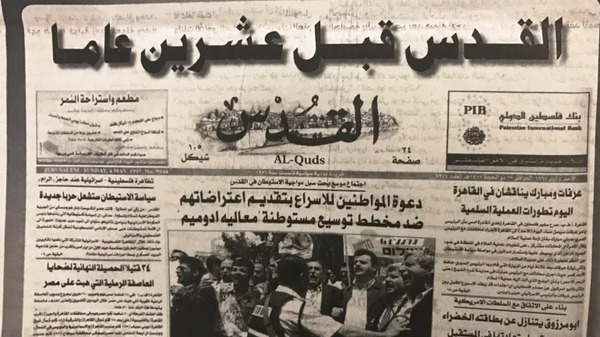
Sari Samour: Al-Quds newspaper represents a complete archive, especially the "Jerusalem 20 Years Ago" section, which began 30 years ago.


The revolution brought about by the discovery of the Internet, which transformed the world into a small village through the rapid transmission of information and its availability to all, and the subsequent emergence of knowledge media, whether websites or social networking sites, has made many people hasten to mourn the passing of printed media, especially newspapers, which, no matter what they do, will never be able to keep up with satellite channels and digital media in the speed of information transmission.


Indeed, many newspapers around the world failed to survive and either left the media scene entirely or became electronic newspapers. However, others, most notably the Jerusalemite Al-Quds newspaper, have maintained their footsteps and path, joining the digital media revolution without abandoning their original print edition, which today, Thursday, celebrates reaching 20,000 copies.


Freed prisoners, journalists, writers, and academics celebrated Al-Quds, the newspaper, the school, and the free media platform, in their own unique way by presenting testimonies about their memories of the newspaper, at home, at university, and even while imprisoned in the occupation's prisons. They also celebrated the important role it played over the past decades in various political, social, cultural, and sporting fields, and as a comprehensive historical record of all the milestones the national cause has passed through.

"Al-Quds" is a bright window that dispels the darkness of prison.

Freed prisoner and political activist Mohammed Al-Taj said: “There are many memories and experiences that deserve to be documented, not only because they affected us in the past, but also because they continue to affect us in the near future. Here, I believe that my experience from within captivity with Al-Quds newspaper deserves this documentation, especially with the twenty thousandth issue approaching, which indicates its continuity stemming from its excellence.”


He added: It is true that while in captivity, we were subjected to daily injustice and oppression, deprived of the most basic human and life needs, and isolated from the outside world in an attempt to empty us of our national and struggle content. However, despite this great darkness, Al-Quds newspaper, at least for me, was the shining window that placed me at the heart of the event, through its coverage of all events on the Palestinian, Arab and international arenas, politically, economically, culturally and socially, in addition to sporting events, weather news and other journalistic topics in various fields.

A newspaper with a unique thought and deep knowledge

He continued: "Perhaps Al-Quds' journalistic approach is the unique feature that has made me a follower of it. Thanks to its journalistic approach and deep knowledge, it has been able to carve out a unique path for itself."


Al-Taj continued: "When I speak about Al-Quds newspaper, I mean those who run it, starting with its editor-in-chief and founder, moving on to the heads of its offices spread across all regions of the country, and ending with its network of correspondents and writers."


Al-Taj concluded by saying: “I feel proud and honored to write for a serious and realistic newspaper, managed and steered by an elite group of national writers, and comprising a distinguished group of journalistic pens from all over the country. This is not a compliment to it, nor a commendation to its editor-in-chief and those in charge, nor an encouragement to the reader, nor an advertisement for it, although it deserves that and more.”

A print media outlet that has maintained a high level of trust.

Writer and activist Sanaa Badawi, a former member of the Jenin Municipal Council and former director of public relations for the Jenin Governorate, said that Al-Quds's 20,000th issue is a significant milestone for the newspaper's continued success as a print media outlet, maintaining a high level of trust not only in Palestine but also internationally.


Badawi added: "This is a testament to its professionalism, patriotism, and ability to adapt to change, and to its status today as a pillar of solid and committed Arab journalism. The newspaper's resilience and growth are fundamentally rooted in quality and excellence. Al-Quds has been able to maintain its leadership and precedence since its founding to this day."


She pointed out that the newspaper's development is due to the shrewdness and awareness of its management, all its administrative, technical and field staff, and its editorial board, who kept pace with developments in the media, grasped all aspects of the media industry's success, and took from it what could maintain the newspaper's leadership. It distinguished itself and succeeded in achieving its mission. This is evident through maintaining the form, spirit, structure, objectivity and value of the newspaper as a Palestinian media outlet for all Palestinians, which attracted it through the website that keeps up with events as they happen and enriches it with everything the Palestinian, Arab and international reader is looking for.

Keeping pace with technological developments

She said: "Al-Quds newspaper did not rely solely on its printed glories, but rather was able to integrate modern media tools through a rich and constantly updated website that combines text, images, and audio, addressing Palestinian, Arab, and international readers. This digital transformation was not merely superficial, but profound in its editorial structure and news coverage, enabling it to continue to lead the way."


She emphasized that Al-Quds newspaper has distinguished itself as the most objective, neutral, credible, and diverse in its topics, as well as being the richest and most comprehensive in its coverage of events on the Palestinian and international levels, and with high-quality production and editing. As such, it has achieved distinction, becoming one of the most important pillars of Palestinian journalism over the decades and can be considered the strongest pillar of journalism despite all the updates, as the newspaper has remained faithful to its Palestinian identity and committed to a comprehensive national line. It has succeeded in preserving its audiences from all generations.

"Jerusalem" has preserved its independence and national identity.

She pointed out that Al-Quds newspaper has been able, since its founding until now, to maintain a national approach or framework acceptable to all segments of Palestinian society, with its various tendencies, sects, and political orientations, because it has devoted its pages to all of these groups, preserving its independence and national identity.


She added: "The reader finds everything he or she wants from the newspaper through its pages, which are more numerous and diverse in opinion, source and content. Through diligent and diverse monitoring and follow-up, Al-Quds newspaper has become more responsive to the demands of its expanding audience. This is due to the activity and interest in the work that distinguishes some of its correspondents from others in other newspapers. It can be said that Al-Quds newspaper is considered the most abundant and distinctive traditional media meal in Palestine and can never be dispensed with."

The real pulse of the street

Journalist and researcher Dr. Amin Abu Warda, director of the Asdaa Press office in Nablus, said: "Al-Quds newspaper is the Palestinian family newspaper that has maintained its professionalism throughout its history despite difficult circumstances and conditions. It has remained the true pulse of the street amidst accelerating and escalating events and political and regional restrictions. It has also managed to maintain its luster with the advent of digital media in the media arena."


He added that Al-Quds newspaper has dedicated its pages to all Palestinians, despite all the previous eras, and has remained a school of acceptable professionalism despite all the obstacles.


He continued: "Al-Quds remains a school of thought in Palestinian media life, both for the staff who graduated from its pages and became prominent figures in many international media institutions, and for those who became lecturers and trainers in media fields."


Abu Warda concluded by saying: "We cannot forget the founding staff and the prominent figures who worked at the newspaper. Some have passed away, while others continue to live on with their pens and words, passing on their expertise from one generation to the next, until the newspaper's writers and correspondents have become a model for the younger generations."

A balanced media school that has been able to withstand the challenges.

Media professor Dr. Mahmoud Khalouf said that the newspaper's success in this issue is an indicator of its audience's continuity, stability, and confidence. This aligns with the fact that the institution represents a balanced media school that has been able to withstand the daunting challenges.


He added: "Al-Quds newspaper plays a role in shaping public opinion, and its role was evident, for example, in the battle over the gates surrounding the blessed Al-Aqsa Mosque."


He continued: In any case, this newspaper has contributed to conveying the public concern, and most importantly, it reaches Jordan, and it has a modern website that somewhat meets the standards of interactivity and the requirements for designing a non-classical website.

Considering the history of Palestinian journalism, Al-Quds newspaper is a long-established, veteran institution, with a succession of prominent editors-in-chief and journalists who have made significant contributions to union, professional, and national work.

A balanced national line amidst strong winds

He pointed out that the newspaper had withstood the Israeli military censorship and represented a prestigious national institution, whose importance was heightened by its location in the capital and in occupied Jerusalem.


He said: "We can see the newspaper's professionalism in its commitment to a balanced national line amidst the turbulent winds surrounding the internal Palestinian situation and the division. Despite the enormous pressures it is facing, it has been able to persevere and remain patient."

Regarding recent developments in media and communication sciences, Khalouf said, "For a print newspaper to survive in the face of the power of digital media and the popularity of digital platforms is an indicator of how deeply rooted and established this institution is."

He concluded by saying: "I am counting on the new and current editor-in-chief, with his extensive and diverse experience and good relations with decision-making circles, to accumulate achievements and maintain the continuity of this important, pioneering project."

Bringing print media back to the forefront in a volatile region

Writer, researcher, and author Asri Fayyad said that Al-Quds's reaching a circulation of 20,000, at a time when social media is dominating, is a remarkable success, as it goes against the grain and brings print media back to the forefront in a region riven by events that are capturing the world's attention.


He added: "Al-Quds newspaper has been keeping pace with technological development and progress step by step since its inception, and has employed this development and technology in its media work to provide Palestinian readers with the most beautiful news, events, analyses, articles, and investigations and the best content. This has been noticeable and tangible throughout the history of this newspaper, which has become one of the largest Arab newspapers with credibility, official and popular following and interest."


He added: "In the history of Palestinian journalism, Al-Quds newspaper has been the backbone of print media for more than seventy years. This is no small feat given the turbulent reality and environment teeming with events and developments. It has also maintained its leadership in print media despite the passage of three political authorities: the era of Jordan, the occupation, and the Palestinian National Authority."

"Al-Quds" has preserved its realistic national identity and credibility.

He continued: "It also preserved its realistic national identity and credibility, holding fast to its resolve to serve the Palestinian reader, forming a fundamental part of his awareness. Consequently, it contributed to shedding light on important aspects of the issue, amidst the darkness and attempts at deception that accompanied and continue to accompany the occupation, which sought and continues to seek to cauterize the Palestinian citizen's consciousness and undermine his faith in his just cause."


Fayyad concluded by saying: “There is no disagreement that Al-Quds newspaper is an independent political newspaper that does not express the viewpoint of a particular affiliation or a limited idea, but rather it expresses all Palestinians, all Arabs, and all free people in the world. This is embodied in its approach and method of work. It has adopted responsible and constructive opinion and welcomed all ideas and trends without bias toward anyone or belittling anyone’s opinion. This has been and continues to be one of the pillars of success and prosperity in its journey.”

Far from political tensions

Dr. Sanaa Zakarneh, a political researcher and community activist, said: "Al-Quds newspaper is extremely popular among the Palestinian people. It conveys the pain, suffering, and stories from under the rubble, and it cares about Palestinian concerns. Far removed from political tensions, it covers the news and delivers its message to every Palestinian home and corner."


She added: "After the Palestinian division in 2007, we witnessed a deterioration in the status of newspapers and the official Palestinian journalistic path, as it began to focus on narrow partisan goals that served a specific group and neglected many hot national issues, such as invasions, settlements, prisoners and their suffering. Our people found in Al-Quds newspaper their safe haven and their absent voice, and it was present in every issue, prisoner's home, destroyed street and bombed hospice."


She continued: "Recent opinion polls have shown that Al-Quds newspaper is the leading newspaper in reaching the largest segment of Palestinians, and that it is the most widely circulated newspaper in the Palestinian territories. This result, if it indicates anything, indicates the public's confidence in it, and that it has now attained a position unrivaled by anyone else, addressing all issues that touch on daily human life, suffering, and national concerns."

A historical record, a national archive, and a treasure trove of knowledge

Dr. Ahmed Abu Al-Haija, a researcher in political sociology, said: "The 20,000th issue of Al-Quds is not a meaningless quantity. Rather, it is a historical record, a national archive, and an invaluable treasure trove of Palestinian memory, and one of the pillars of protecting the Palestinian narrative."


He added: "The historical trajectory of Al-Quds newspaper is deeply ingrained in our consciousness. I remember reading it as a child, from school to university, then from work in all its various forms, from the paper versions with their doughy scent to the digital edition in its new form."


Abu Al-Haija emphasized that Al-Quds newspaper has represented a unique and conscious experience in Palestinian print media since its inception. It is a balanced school of journalism, and the newspaper's identity has blended perfectly with Palestinian identity, an unwavering embrace. It is no exaggeration to say that its ability to withstand globalization and the development of media and digital communication is evidence of its deep roots in society.

Conveying the Palestinian narrative to the world

Abu Al-Haija pointed out that Al-Quds' balanced editorial approach and the space it provides for diverse opinions and intellectual and political perspectives are a commendable approach. This has placed it at the forefront of informed Palestinian media for decades, and has also made it a destination and haven for competent journalists.


He added: "Al-Quds newspaper conveyed the Palestinian narrative to the world in its true form, as a reliable source not only for Palestinian communities around the world, but also for many groups of people from various backgrounds who follow and keep up with Palestinian affairs. This is clearly noticeable, in addition to its widespread reach among institutions, activists, actors, and supporters in various places and geographies."


Abu Al-Haija concluded his remarks by saying, "All of this places a great responsibility on the newspaper's management, editorial board, and staff to maintain a strong and present editorial approach and digital development, recognizing the newspaper's importance to Palestinian memory and as a reliable source for the flow of information, which has become in need of trust that has been lost in many institutions."

Al-Quds is a national platform and a media institution that goes beyond numbers.

Dr. Fadi Jumaa, Professor of Political Science at the Arab American University, said that Al-Quds newspaper is a national platform and a media institution that transcends numbers. When Al-Quds newspaper reaches a circulation of 20,000, this number cannot be viewed as a passing station in a journalistic record, but rather as a shining mark in the history of a people who have resisted, and continue to resist, with words as well as weapons, with news as well as deeds. In an environment crowded with variables and where the spaces for freedom are shrinking, Al-Quds newspaper remains constant, a bridge connecting the past to the present, and a collective voice that Palestinians, wherever they may be, continue to listen to.


He added: For those who lived through the stages of political development in Palestine, and for those who were eager to know what was happening outside the borders of their city or village, Al-Quds was more than a newspaper. It was our only window, our daily compass. I remember perfectly how, as a student in the early stages of my intellectual development, I would eagerly await its front pages as they hung on the doors of shops. How many times did I read it while standing in the street, among strangers who, like me, drew from the same source that gave us some understanding and some reassurance.


Juma continued: “I will never forget that blind street vendor who would roam the streets of Nablus every morning, carrying a pile of newspapers under his arm, chanting in his soft voice: ‘This is Jerusalem!’… His call carried more than just the name of a newspaper. It conveyed people’s trust, love, and reliance on this newspaper, which encapsulated the details of the homeland and alleviated the reader’s alienation in his besieged homeland.”

"Al-Quds" touches on people's daily issues.

He pointed out that following Al-Quds newspaper was never limited to political affairs, despite their central importance, but extended to touch on people's daily concerns, from social issues to cultural coverage, and even local sports, for which there was no reliable alternative at the time. The newspaper engaged in a daily dialogue with the reader, providing them with a dose of life amidst the oppression and deprivation that surrounded them.


Jumaa said: "Just as we read in Jerusalem news of invasions, martyrs, arrests, and uprisings, its pages also celebrated hope. How many times did we read about a Palestinian student's academic achievement, or see photos of high school graduates adorning its pages in a scene that inspired collective pride. The newspaper contributed to reshaping the Palestinian landscape, not as a perpetual arena of bleeding, but rather as a living, vibrant society capable of achievement despite the siege."

He believed that this accumulation, with all its sincerity and warmth, was what created the strong bond between the newspaper and the people, and what made trust in it an ongoing matter, not governed by a circumstantial moment.

Enshrining freedom of opinion and expression in a restrictive environment

Jumaa added: "In the complex Palestinian political landscape, where military occupation intersects with internal division, and where spaces for expression are sometimes restricted in the name of security or organization, freedom of opinion and expression appears like a minefield. Nevertheless, Al-Quds newspaper has succeeded in maintaining its position as an independent platform that has opened its windows to all opinions, without falling into the trap of dependency or skewing toward superficiality or incitement."


He continued: "Through its editorial policies, the newspaper reflected a genuine belief that a diversity of opinions does not weaken the home front, but rather strengthens it. Dissenting opinions were not excluded, and criticism was not suppressed; rather, it was allowed to be presented within clear professional guidelines, making the newspaper's pages an arena for constructive debate among intellectuals, politicians, and readers alike."


Jumaa said: "At a time when some platforms have become hostage to funding or sectarian rhetoric, Al-Quds has remained committed to representing all factions and movements, without favoritism or marginalization. This is a rare practice in a polarized reality where freedom of expression is almost a luxury. This balance and this broad editorial horizon have enabled the newspaper to play an important role in shaping the Palestinian public sphere and instilling a culture of acceptance of others, responsible criticism, and participation in the national debate."

Consolidating freedom of opinion and expression

He added: The role Jerusalem has played over the decades in consolidating freedom of opinion and expression was not the result of a temporary circumstance or immediate interest, but rather a deliberate institutional choice stemming from the conviction that free speech is one of the pillars of national liberation, and that enabling people to express what they think is the foundation of any democratic or liberation project.


Jumaa continued: "Perhaps what is striking is that this role was not merely a reflection on paper, but rather has become something of a norm in the reader's relationship with the newspaper. People have come to see it as a space they can trust, discuss, and interact with what is published as part of a vital societal debate that lays the foundation for a more open and just horizon."


Juma concluded by saying, "Al-Quds's achievement of this historic number is a testament to its professionalism, but also to the people's trust in it. Between individual memory and the collective dimension, this newspaper maintains its status as a living archive, a witness to an era, and a partner in shaping Palestinian national consciousness."

A broad platform for diversity of ideas

Dr. Ayman Yousef said: "The fact that Al-Quds newspaper reached 20,000 circulation is evidence that it possesses the elements of sustainability as a media platform that embodies and consecrates the Palestinian national narrative. In my opinion, Al-Quds newspaper is one of the oldest, authentic Palestinian newspapers that distinguished itself significantly in conveying the suffering of Palestinians in the Palestinian territories of the West Bank, Gaza, the 1948 territories, and abroad. It had geographical, demographic, and national extensions."


He added: It is well known that "Al-Quds" is written by independent writers, academics, researchers and journalists from various political backgrounds and spectrums, and this is important. Therefore, it is a broad platform for a diversity of ideas in freedom of opinion and expression, political analysis, and neutral, independent and professional media coverage. Indeed, there are new platforms created by Al-Quds newspaper, the diversity of the newspaper's pages from the front page that focuses on the main news and headlines to local news on more than one page, to news of the governorates, news of the Palestinians and the international page, in addition to the analytical columns. All of this enriches and enhances the newspaper, especially since there are also additions related to the cultural, sports and economic pages, so the browser of Al-Quds newspaper feels all of these features and these important characteristics.

The fact that "Al-Quds" was published in the heart of Jerusalem gave it an important dimension.

He continued: "I am one of the people who wrote for Al-Quds newspaper at some point, where articles are carefully reviewed critically and linguistically, without interfering with political opinions when they are presented or during their final review. The fact that Al-Quds is published from the heart of Jerusalem gives it this important dimension, and thus it will continue to convey the Palestinian narrative and Palestinian suffering. It is good that it has moved to digital form and digital journalism, and thus it has become easy to access on social media and websites. We can browse it in our offices, and we can ask our students in universities and schools to browse it."


He concluded by saying: "In my opinion, in light of digital media and the digital world, its audience has become more diverse and cross-border, particularly among Arab readers and foreign readers who are fluent in Arabic. Therefore, I expect the newspaper to emerge with renewed momentum, new writers, and a fresh, new narrative with regard to journalistic work in general."

A milestone in the history of Palestinian media

Writer Israa Al-Aboushi congratulated the Al-Quds newspaper staff on reaching the 20,000th issue, considering it a great achievement that represents a milestone in the history of Palestinian media. She said: “Thanks to its distinguished and reliable content, the newspaper has been able to dedicate its efforts to documenting national events, paying attention to the Palestinian cause, and communicating it to the world with professionalism and objectivity. This dedication to credibly addressing the concerns of the Palestinian people has earned it its pioneering position and its continued success over the years.”


She added, "Al-Quds was not just a newspaper; it played a prominent role in preserving Palestinian national identity and took it upon itself to convey the voice of the Palestinians to the world, serving as a platform that reflected their aspirations and causes under all circumstances."


She continued: “In the folds of days and memories, Al-Quds newspaper remains a beacon that illuminates the minds of generations, bearing witness to moments of joy and sadness that left their mark on the hearts of its readers. Among its pages is a page entitled “Twenty Years Ago.” This page is a mirror that revives the past, telling intimate stories and moments engraved in memory that will never be forgotten. When twenty years passed since the passing of my dear mother, Siham Al-Zagha, may God have mercy on her, as she passed away on March 3, 1984, feelings of loss took over my memory and made me search for Al-Quds newspaper and read the page twenty years ago, specifically issue 99, the issue that carried within it the announcement of her passing. Al-Quds newspaper was not just ordinary papers, but rather became a witness to a profound chapter of my personal story, documenting feelings of sadness with an indelible mark. That page was not just an obituary, but rather an emotional legacy that retells the story of mothers and memory in immortal letters across time. Likewise, the issue announcing the martyrdom of Naji al-Ali, the cartoonist, came as a shock to the newspaper's readers, leaving an indelible mark on Palestinian memory.

A window on the world for the seventies generation

Al-Aboushi continued, "Al-Quds was not just a newspaper; it was a window onto the world for the 1970s generation, nourishing thought with rich content ranging from politics and economics to sports and culture. It was a daily cultural outlet that offered a variety of content that met readers' needs and embraced their aspirations and hopes for a more understanding world closer to their reality."


Regarding the newspaper's keeping pace with technological developments, Al-Aboushi said, "For decades, Al-Quds newspaper has played a pivotal role in shaping Palestinian readers' awareness and highlighting national issues with comprehensiveness and insight. However, its distinction is not limited to the past; it extends to keeping pace with technological developments that have reshaped the features of modern media."


She added: "With the advent of the internet era, we were among the pioneers who embraced modern technologies, launching a website that reflected the aspirations of the digital age, offering diverse and constantly updated content, providing readers with a new way to interact with news and articles. In addition, the newspaper invested in social media platforms to reach a wider audience in a direct and dynamic manner that reflects the pulse and speed of reality."

Enriching the reader's experience by providing visual content

She continued: "Its focus has been on enriching the reader's experience by offering visual content, including photos and video reports, providing a comprehensive window into events from all sides. With this approach, Al-Quds has succeeded in consolidating its media presence, combining authenticity and innovation, to remain an influential voice representing all segments of the Palestinian people."


Regarding the role played by Al-Quds newspaper in the history of Palestinian journalism, Al-Aboushi said: “From the heart of Jerusalem, where the sanctity of place meets the depth of history, Al-Quds newspaper rose as a beacon of Palestinian thought and journalism, carrying within it the concerns of an entire nation and the hopes of a people seeking freedom. Since its launch, it has witnessed the vicissitudes of time and the changing conditions of place, recording catastrophes as well as epics of struggle, as if it were writing history with the ink of loyalty and the courage of words.”


She added: "Al-Quds was not just a newspaper; it was a voice that pulsated with truth and a vision that transcended the boundaries of reality to reflect the dreams and aspirations of Palestinians, overcoming the restrictions imposed by the occupation and the obstacles besieging free media. Al-Quds remained steadfast like an ancient tree that resists the winds, documenting the most important moments of steadfastness and dignity, preserving the essence of its noble message."


She continued: "With the advancements of modern tools, Al-Quds has not fallen behind. Rather, it has marched confidently into the future, leveraging technology to launch digital platforms that engage the minds of new generations and open up broad horizons for news and articles, thus affirming its position not only as a local icon, but also as a bridge connecting the world to the Palestinian cause with impartiality and honesty."

"Jerusalem" inspires generations and writes its history in letters of light.

She continued: "Thus, Al-Quds has continued to inspire generations and write its history in letters of light, bearing witness to an unbreakable struggle and unfading hope. The newspaper's role is to enshrine freedom of opinion and expression and to provide a space for presenting all viewpoints and positions of all Palestinian groups and factions with impartiality and objectivity."


She said: "In the pulse of letters and the stillness of words, Al-Quds newspaper stands tall as an icon, carrying within its pages the trust of the Palestinian story. It was and still is a voice that resonates in the corners of the earth, carrying the concerns and dreams of the people, and charting the horizon of freedom of opinion and expression with complete impartiality and purity."


She added, "Al-Quds, the newspaper that emerged as a spring from the heart of the Palestinian cause, brought together within its folds the diversity of Palestinian thought and the multiplicity of factions, as if it were a mirror that clearly reflected the spirit and determination of the people. Over the years, it embarked on a journey that encompassed within its ink diverse positions and opinions. It was not just words on paper, but a torch that lit a path for constructive dialogue and understanding of the other."


She continued: Amidst the challenges, Al-Quds newspaper has remained steadfast like a solid mountain, unshakable before the winds of time, keeping pace with the transformations of the era by moving from the pages of paper to digital spaces. It has preserved the essence of its noble message, remaining more than just a source of news; it is a legacy of authenticity and a symbol of resistance. It has inscribed in the memory of generations the tune of struggle and the dream of a homeland that is neither restless nor broken.


"Jerusalem" is the most common word in the Palestinian community.


Writer Sari Samour congratulated Al-Quds newspaper on reaching its 20,000th circulation, saying, "There is no doubt that Al-Quds newspaper is widely read and is the most widely circulated newspaper in the Palestinian community, with its pros and cons. 'There is no perfection. Perfection belongs to God Almighty.' It has gained the respect of readers. And the fact that it is published in the city of Jerusalem has given it a special symbolism."


He added: "Personally, I used to read Al-Quds newspaper when I was a young child. The Al-Quds newspaper office was run by the late Kazem Abdul Hadi. During the summer holidays, I used to work for my uncle in his nearby shop. He used to send me to buy Al-Quds newspaper, and that's when I started reading the newspaper."


He explained that Al-Quds newspaper represents a complete archive, especially the "Jerusalem 20 Years Ago" column, which began 30 years ago, in addition to opinion articles that express all Islamic, national, leftist, and independent positions and various viewpoints. It also strives to bypass the Israeli military censor, who watches over its every word.

Digital media overthrows print media

He added: "With the spread of satellite channels and the internet, and then the world of social media and smartphones, people's interest in the printed word has been affected, whether in Al-Quds newspaper or others. Here comes the role of those in charge of the newspaper in paying attention to everything that is exclusive to it, meaning that it is only available in the printed issue, and not in the digital issue or on other websites or newspapers. We have witnessed the demise of wall magazines and many other things, and we will unfortunately witness the demise of print media, and this is the way of life."


He continued: There is a special charm and ritual to opening the newspaper, drinking a cup of coffee, smoking a cigarette, and browsing the news, analytical materials, and advertisements. I know that the smartphone has eliminated this phenomenon, but nostalgia for the past always pulls us. I am from the veteran generation that saw the pre-digital era and the digital era, and lived through both periods and dealt with both stages. One of the special things I remember was the column written by the late Maher Al-Alami under the name "Concerns." "Hadith Al-Quds" is one of the best columns that touches the pulse of the Palestinian citizen who cannot make his voice heard or explain what is raging in his chest, whether social or political.


PALESTINE

Thu 24 Apr 2025 1:05 pm - Jerusalem Time

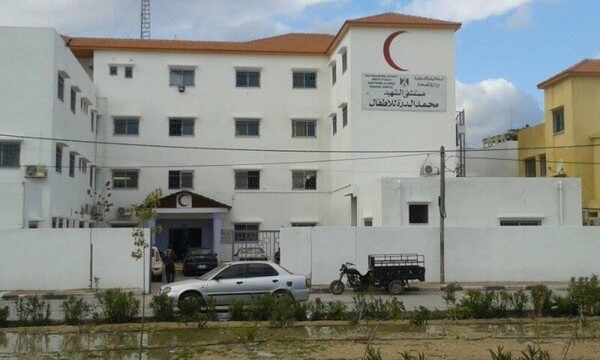
Gaza Health: Mohammed al-Durra Children's Hospital out of service

The Ministry of Health in Gaza said, "The Martyr Mohammed al-Durra Children's Hospital, east of Gaza City, is out of service."


She explained that the hospital was put out of service due to the extensive damage it sustained two days ago, following an Israeli attack. The bombing also damaged the intensive care unit, and the occupation forces deliberately bombed the hospital's alternative energy panels.


Medical sources confirmed that the continued blockade of food and medicine supplies indicates that the children of the Gaza Strip are facing a dangerous and catastrophic situation.


With the closure of Al-Shaheed Mohammed Al-Durra Hospital, the number of hospitals out of service since the start of the aggression on the Gaza Strip on October 7, 2023, has risen to 37.

PALESTINE

Thu 24 Apr 2025 12:39 pm - Jerusalem Time

Update: 4 citizens were shot and beaten during the raid on Balata camp.

Four citizens were injured on Thursday by live bullets and beatings during an Israeli occupation forces raid on Balata refugee camp, east of Nablus.


The director of the Red Crescent Society's emergency and ambulance center in Nablus, Amid Ahmed, said that ambulance crews dealt with a 15-year-old child who was shot in the knee by the occupation forces, and a 21-year-old man who was shot in the foot, while two children suffered fractures when the occupation forces attacked them.


Security sources also confirmed that occupation forces arrested the two brothers, Wiam and Islam Qaraan, during a raid on Balata camp.


Local sources reported that Israeli special forces stormed the "Hashashin neighborhood" inside Balata camp, besieging a house, while the occupation forces sent in additional reinforcements.

ARAB AND WORLD

Thu 24 Apr 2025 12:05 pm - Jerusalem Time

51,355 dead in the Gaza Strip since October 7, 2023

The death toll from the Israeli occupation's aggression on the Gaza Strip since October 7, 2023, has risen to 51,355 dead and 117,248 wounded.


Medical sources reported that the death toll includes 1,978 dead and 5,207 wounded since March 18.


It said that 50 dead and 152 wounded arrived at hospitals in the Gaza Strip during the past 24 hours.


It explained that a number of dead remain under the rubble of destroyed homes and facilities, and on the roads, and that ambulances and specialist teams are unable to reach them due to limited resources.

PALESTINE

Thu 24 Apr 2025 11:26 am - Jerusalem Time

Director of Al-Aqsa Martyrs Hospital: The Gaza Strip has entered the fifth stage of malnutrition.

Khalil Al-Daqran, medical director of Al-Aqsa Martyrs Hospital, said that the Gaza Strip has entered the fifth stage of malnutrition, the most severe according to the World Health Organization's classification, due to the strict blockade imposed by the Israeli occupation.


He added in a statement to Voice of Palestine that Gaza's children are experiencing the most severe stages of malnutrition due to a lack of food and baby formula, which threatens their lives.


Al-Daqran pointed out that approximately 200,000 patients with chronic diseases are at risk of death due to the depletion of their medications.

PALESTINE

Thu 24 Apr 2025 10:58 am - Jerusalem Time

The Central Council continues its work for the second day.

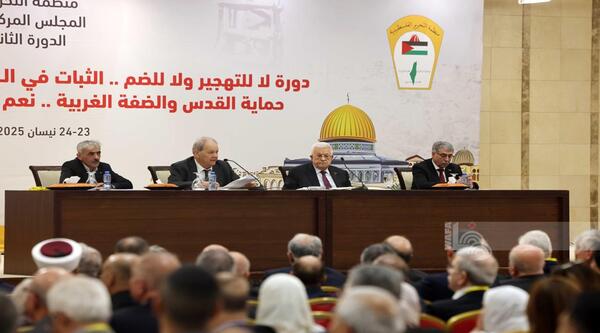
The Palestinian Central Council continues its 32nd session today, Thursday, under the title: "No to displacement and no to annexation - steadfastness in the homeland - saving our people in Gaza and stopping the war - protecting Jerusalem and the West Bank - yes to comprehensive Palestinian national unity." The session opened yesterday in the Ahmed Shuqairy Hall at the presidential headquarters in Ramallah.


In a speech before the Council, Palestinian President Mahmoud Abbas said that putting the Palestinian house in order on a unifying national basis is essential to confronting current challenges. He warned of grave dangers that are closer to a new Nakba, threatening our existence and heralding the liquidation of our national cause.


The Central Council session will discuss the Israeli genocidal war being waged against our people in the Gaza Strip and the West Bank, including Jerusalem. It will also examine the mechanism for managing the affairs of the Gaza Strip, the ongoing attempts at forced displacement, as well as the siege, annexation, starvation, colonialism, and land seizure.


The meeting will also discuss the internal Palestinian situation, including "restoring and strengthening national unity within the framework of the Palestine Liberation Organization," the creation of the position of Vice President of the PLO's Executive Committee, and any new developments.


The Palestinian Central Council held thirty sessions between 1985 and 2018, including two extraordinary sessions in 1988 and 1999, an emergency session in 2003, seven of which were held in Tunisia, four in Baghdad, the Iraqi capital, four in Gaza, and 15 sessions in Ramallah.


In 2022, the 31st session of the Palestinian Central Council was held, under the title: "Developing and Activating the Palestine Liberation Organization, Protecting the National Project, and Popular Resistance." This session resulted in the election of a new body to preside over the Palestinian National Council, the election of the Chairman of the Board of Directors of the Palestinian National Fund, and the completion of the membership of the Executive Committee of the Palestine Liberation Organization.

PALESTINE

Thu 24 Apr 2025 10:55 am - Jerusalem Time

Israeli occupation forces demolished a residential building east of Bethlehem.

Today, Thursday, the Israeli occupation forces demolished a residential building in the town of Za'tara, east of Bethlehem.


Za'tara Municipality Director Taher Mohsen reported that an Israeli army force stormed the town and took up positions in the eastern Al-Sulaibiya area. The force demolished a three-story residential building, each measuring 150 square meters, owned by Mohammad Bakirat.


According to the Wall and Settlement Resistance Commission, the occupation authorities carried out 58 demolition operations last month, with 13 in Tulkarm Governorate, 8 in Jerusalem Governorate, 7 in Nablus Governorate, and 7 in Jenin Governorate.


The Commission noted that the demolition operations carried out by the occupying state aim to restrict Palestinian construction and natural growth in Palestinian villages and towns under the pretext of lacking permits, in an attempt to displace Palestinians and isolate them in narrow cantons and enclaves.


She pointed out that the escalating measures of the occupying state aimed at annexing the West Bank and imposing occupation sovereignty, which are currently being implemented, declare a true, ongoing war against our people, represented by a series of measures, most notably intensive demolitions, the closure of villages and cities, the seizure of citizens' lands, and waves of settler attacks, within the framework of a systematic policy to impose a coercive, repulsive environment on citizens.

PALESTINE

Thu 24 Apr 2025 10:45 am - Jerusalem Time

Israeli occupation launches an arrest campaign in the West Bank.

Israeli occupation forces launched an arrest campaign in the West Bank on Thursday.


In the northern Jordan Valley, the director of the Prisoners Club in Tubas, Kamal Bani Odeh, reported that the occupation forces arrested the brothers Mahmoud, Muhammad, Ahmad, and Mishaal Jarir Rabaya, as well as the young man Muhammad Ahmad Jahalin from Bardala in the northern Jordan Valley.


Last night, armed settlers attacked Bardala village, attempting to steal livestock from residents on the western outskirts of the village. The attack resulted in several injuries from live bullets, and the burning of residential buildings, sheep pens, and greenhouses.


Since settlers established a colonial outpost on the western outskirts several months ago, the village has witnessed repeated attacks against citizens, their property, farms, and livestock.


In Bethlehem, the occupation forces arrested Yousef Murad Salhab (24 years old) from the Al-Saff Street area in Bethlehem, and Muhammad Jumaa Zaoul (18 years old) from the village of Husan to the west. They also searched a number of homes in the village and wreaked havoc in them.


The forces also stormed most parts of the governorate: the town of Tuqu', the cities of Beit Jala and Beit Sahour, and the areas of Jabal al-Mawaleh, Rakhma, Rafidah, and Handazah to the east.


In Nablus, an occupation force stormed several neighborhoods of the city, raided and searched a number of homes, ransacked their contents, and arrested citizens Hassan Al-Zagha from the Al-Maajin neighborhood and Abdullah Al-Aker from Asira Street.


In Jenin, occupation forces arrested citizen Abdul Rahman Tahaineh after raiding and searching his home.


In Hebron, occupation forces arrested Imad Azghair from the municipality suburb south of Hebron, as well as Raed Azmi Ghneimat and Tariq Badawi Ghneimat from the town of Surif in the north. They searched the detainees' homes and ransacked their contents.


Media activist Mohammed Awad said that the occupation forces raided the town of Beit Ummar in the north, and stormed the home of citizen Mahmoud Mohammed Musleh Awad after breaking the main door, and destroyed the furniture and electrical appliances, and damaged food supplies, and assaulted his brother, Sultan (25 years old), by beating him with rifle butts and hands, after which he was transferred to a medical clinic to receive treatment. The occupation soldiers also stormed the home of citizen Salah Ahmed Abdel Hamid, searched it and ransacked its contents.


The occupation forces also raided the Al-Fawar and Al-Arroub camps, the towns of As-Samu, Dura, and Surif, and several neighborhoods in the city of Hebron.


The occupation forces have intensified their campaign of house raids and arrests in towns and villages in Jenin Governorate since the start of the Israeli aggression on the city and refugee camp of Jenin 93 days ago.

PALESTINE

Thu 24 Apr 2025 10:31 am - Jerusalem Time

A sustainable solution that ensures stability in the region...a draft agreement for a permanent ceasefire in Gaza is expected.

The Saudi-owned Al-Majalla website published a new draft framework for negotiations aimed at achieving a permanent ceasefire in Gaza on Wednesday, indicating the possibility of progress in resolving the conflict between Hamas and Israel and ending the war on the Strip and its civilians. Efforts by Egypt, Qatar, and the United States have paved the way for a comprehensive approach to peace that seeks not only to halt the bloody Israeli war but also to resolve the pressing issue of the Israeli prisoner crisis.

This initiative proposes a commitment from all parties to engage in constructive dialogue, which enhances hope for a sustainable solution and stability in the region.


A Hamas delegation began a visit to Cairo yesterday to discuss a ceasefire in Gaza, following a visit by a Qatari delegation to Washington. The following is the text of the draft:


The two sides agreed on the following:


1- In accordance with the understandings between the United States and the mediators (Qatar - Egypt), and as a special gesture to the United States, Hamas will release American citizen Aiden Alexander on the first day of this framework.

2- Announcing a framework for a temporary ceasefire for 45 days (cessation of military operations and temporary cessation of air traffic), during which Israeli detainees and Palestinian prisoners will be released, humanitarian aid will resume, and negotiations will begin on the terms of a permanent ceasefire.

3- On the second day, and in accordance with the terms and conditions of the first phase of the January 19, 2025 agreement regarding hostages and prisoners, Hamas will release 5 living Israeli hostages from the “List of 59” presented by Israel. In exchange, Israel will release 66 prisoners serving life sentences and 611 prisoners from Gaza arrested after October 7, 2023. They will be released simultaneously according to an agreed-upon mechanism, without public parades or ceremonies.

Following the release of five living Israeli detainees, the Israeli army will begin redeploying to its positions on March 2, 2025, in the Rafah area and the northern Gaza Strip.


4- On the second day, humanitarian aid and relief will resume in accordance with an agreed-upon humanitarian protocol. The work of accredited UN agencies and other international organizations will continue. Rehabilitation of infrastructure will begin, and the entry of equipment and supplies necessary to shelter internally displaced persons will begin. An agreed-upon mechanism will be put in place to ensure that aid reaches civilians only.


5- On the second day, after the release of 5 living Israeli detainees, the Israeli army will begin redeploying to its positions on March 2, 2025, in the Rafah area and the northern Gaza Strip.

6- On the third day, negotiations will begin under the auspices of the mediators/guarantors on the necessary arrangements for a permanent ceasefire, including:


A - Keys and terms for exchanging all remaining Israeli detainees for an agreed-upon number of Palestinian prisoners in Israeli jails.


B - Israeli military redeployment and security perimeter.


C- Disarmament of the Gaza Strip.


Arrangements for the "day after" in the Gaza Strip that will be put forward by either side.


e - Declaration of a permanent ceasefire.


7- On the seventh day, Hamas will release four living Israeli detainees from the "List of 59" presented by Israel. In exchange, Israel will release 54 prisoners serving life sentences and 500 detainees after October 7, 2023. They will be released simultaneously according to an agreed-upon mechanism, without public parades or ceremonies. The guarantors of this agreement will make every effort to ensure the safety of the remaining hostages.


8- On the seventh day, after the release of the four living Israeli hostages, the Israeli army will redeploy east of Salah al-Din Street to the location of 2/3/2025, and the freedom of movement of the civilian population (without carrying weapons) will be facilitated through the Netzarim crossing without restrictions.

Negotiations on arrangements for a permanent ceasefire should be completed within 45 days, and upon agreement, the remaining detainees (living and dead) from the list of 59 submitted by Israel will be released.


9- On the tenth day, Hamas will provide full information (proof of life and medical reports) on all remaining living detainees, while Israel will provide full information on Palestinian prisoners arrested from the Gaza Strip after October 7.


10. On the 20th day, Hamas will release 16 deceased Israeli detainees in exchange for 160 martyred Gazans. They will be released simultaneously according to an agreed-upon mechanism, without public displays or ceremonies. In addition, Hamas will provide evidence of the deaths of the remaining Israeli detainees. In return, Israel will provide information on the number of martyred Gazans it is holding. An agreed-upon mechanism will be established to support the release of the remaining deceased detainees, including the provision of necessary means.


11. Negotiations on arrangements for a permanent ceasefire should be completed within 45 days, and upon agreement, the remaining detainees (living and dead) from the list of 59 submitted by Israel will be released. If negotiations on arrangements for a permanent ceasefire are not concluded within the above-mentioned time period, and as long as further releases of Israeli detainees continue, the temporary ceasefire may be extended on terms and for a period agreed upon by the two parties.

12- The guarantor mediators (the United States, Egypt, and Qatar) will make every effort to ensure the completion of the above-mentioned negotiations to reach an agreement on the necessary arrangements for a permanent ceasefire, in accordance with their determination to achieve this goal.

ARAB AND WORLD

Thu 24 Apr 2025 10:29 am - Jerusalem Time

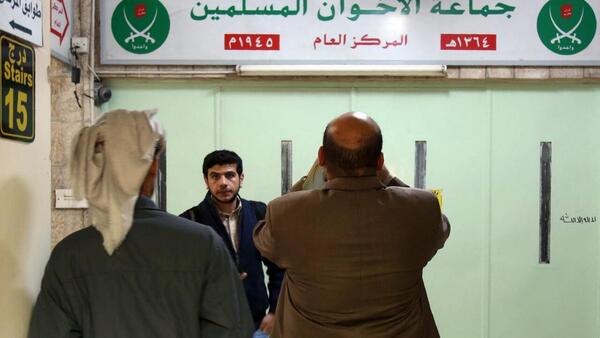
Jordan bans the Muslim Brotherhood and closes its offices.

Jordanian Interior Minister Mazen Al-Faraya announced last night, Wednesday, that the Muslim Brotherhood's activities had been banned, declaring it an illegal organization.


Al-Faraya indicated in a press conference that any activity by the group, regardless of its nature, is considered a violation of the law and requires legal accountability. He announced the acceleration of the work of the dissolution committee tasked with confiscating the group's assets in accordance with relevant judicial rulings.


Al-Faraya affirmed that "membership in the so-called dissolved Muslim Brotherhood is prohibited," in addition to "promoting the group's ideas under penalty of legal accountability."


Al-Faraya also announced a decision to "close any offices or headquarters used by the dissolved Muslim Brotherhood throughout the Kingdom, even if they are in partnership with any other entities," under penalty of legal accountability.


The Interior Minister warned that "political forces, media outlets, social media users, civil society organizations, and any other entities are prohibited from engaging with or publishing material related to the so-called dissolved Muslim Brotherhood, or any of its affiliates and branches, under penalty of legal accountability."

He explained that "these decisions were taken based on the state's unwavering commitment to the safety of our society, to protecting it from actions that disturb security and order, distort best political practices, and to preserve its security and stability."

Last week, Jordanian Minister of Communications and government spokesman Mohammad al-Momani announced the arrest of 16 individuals accused of involvement in manufacturing missiles and drones with the aim of "sowing chaos and sabotage within the kingdom." The Muslim Brotherhood in Jordan denied any connection to the matter.


OPINIONS

Thu 24 Apr 2025 9:31 am - Jerusalem Time

Al-Quds Newspaper: A newspaper that lives up to its name

D. Ibrahim Nairat

D. Ibrahim Nairat

Opinion Writer

In a time when the pace of events is accelerating and facts are intertwined with rumors, serious journalism remains a beacon of awareness and a voice writing history from the heart of the moment. Among these beacons, Al-Quds newspaper stands tall, bearing the name of the eternal capital of Palestine, shouldering the burden of words and the responsibility of meaning.


Since its founding in Jerusalem in 1951, the newspaper has strived to be more than just a media outlet; it has been, and continues to be, a daily mirror of Palestinian reality and a window through which Palestine looks out onto itself and the world. Its pages reflect the concerns of the people, and their voices are expressed in the forms of news, analysis, and opinion.


Al-Quds enjoys a special status among Palestinian and Arab newspapers, not only because it is the most widely circulated newspaper locally, but also because it has managed to maintain relative independence in a complex political and media environment. Over the decades, it has succeeded in striking a delicate balance between national commitment and professionalism, remaining present on the ground and engaging with events without losing its credibility or slipping into sharp alignments.


In its opinion articles, you find Palestine in all its complexity: from politics to culture, from resistance to daily life. In each issue, the newspaper attempts to open new windows for thought and pose questions before offering answers. This is what makes it a true school of print journalism.


Despite the major challenges facing print journalism, including financial crises and declining circulation in favor of digital media, Al-Quds newspaper continues its quiet battle, determined to survive and lead. It has developed its online platforms and expanded its presence in the digital space, without abandoning its venerable print essence.


It is not just a newspaper; it is a witness to the times and a partner in the collective formation of Palestinian consciousness. If Jerusalem is a city that never ages, then its newspaper is the same, renewed every day with the ink of truth and living up to its name: Al-Quds.

PALESTINE

Thu 24 Apr 2025 9:13 am - Jerusalem Time

13 Palestinians killed, including an entire family of 6 members, in several areas of the Gaza Strip.

Thirteen civilians were killed and others wounded in Israeli shelling of several areas in the Gaza Strip since dawn on Thursday.

In the Sheikh Radwan neighborhood, northwest of Gaza City, six members of one family—a father, a mother, and their four children—were killed when the occupation forces bombed their home.

In central Gaza, three civilians were killed and others injured when Israeli forces shelled a tent housing displaced people from the Farajallah family in the al-Sawarha area, west of al-Nuseirat.

In Khan Yunis, a man and his wife were killed when the occupation forces bombed the home of the al-Najjar family in the Qizan al-Najjar area south of the city. Two children were also killed and others were injured when a tent housing displaced persons was bombed in the al-Attar area of Khan Yunis' Mawasi district.

According to medical sources, more than 17,000 children have been killed since the beginning of the occupation's aggression on the Gaza Strip.

The death toll in the Gaza Strip has risen to 51,305, and the number of injuries to 117,096 since the start of the aggression on October 7, 2023.

PALESTINE

Thu 24 Apr 2025 9:11 am - Jerusalem Time

US pressure on Egypt and Qatar... Hebrew media: A sensitive stage for a final deal on Gaza

Israeli media reported that there is no final agreement on Gaza, despite intense US pressure on mediators from Egypt and Qatar to influence Hamas. The negotiations are currently at a delicate stage.


Israel's Channel 12 reported that the current negotiations are seeking to reach an agreement based on the proposal presented by US Presidential Envoy Steve Witkoff, before any military escalation.


She pointed out that US pressure is focused on trying to pass this proposal without any new initiatives being put forward so far.


For its part, the Yedioth Ahronoth newspaper quoted Israeli officials as confirming that Prime Minister Benjamin Netanyahu and Defense Minister Yisrael Katz are insisting on presenting an image that Israel is still trying to exhaust all opportunities to reach a deal, despite the complexities of the situation.


In a related context, the Israeli Channel 10, citing an official, reported that "Israel has decided to give negotiations an additional opportunity before deciding to expand the military operation in Gaza," stressing that "there is no new initiative currently on the table."


An Israeli source told i24 that "no new proposal has been put forward by the mediators yet," indicating that the negotiations remain deadlocked, despite ongoing attempts to salvage them.

OPINIONS

Thu 24 Apr 2025 9:10 am - Jerusalem Time

Jerusalem... a title, a conscience, and a goal

Hamada Faraana

Hamada Faraana

Opinion Writer

If Arabs, Muslims, and Christians do not realize that Jerusalem is a title, a conscience, and a goal, they will have lost much of what they are proud of: much of their past, much of their dignity, much of their convictions, much of their faith, and much of their aspirations for dignity, independence, and sovereignty.

The Israeli colonial expansionist project targets Palestine, its entire map and all its details, erasing its Arab, Islamic, and Christian past, its Arab, Islamic, and Christian human demographic presence, and planning, working, and programming to Judaize, Israelize, Hebraize, and Zionize it.

The steadfastness of the people of Jerusalem, supported by the Palestinians of the 1948 territories, the sons of Carmel, Galilee, the Triangle, the Negev and the mixed coastal cities, where the people of the West Bank and the Gaza Strip, whether Muslims or Christians, are unable to reach Jerusalem to perform their duties, their feelings and their bias towards Jerusalem, its people, its mosques and churches. The conflict, its title, manifestations and actions by the colony, its tools, systems, parties and rabbis, is violent, racist and extremist, working in a hurry, seeking to shorten the factors of time to impose facts and realities and to modify the landmarks and systems, in the direction of Jerusalem being the unified capital of the colony, alongside the Palestinian West Bank as Judea and Samaria.

The steadfastness of Jerusalem, with its Palestinian organizations, the Awqaf Council, and the employees of the Jordanian Ministry of Awqaf, 972 full-time employees who serve as guardians of presence and loyalty, supported by the people of the interior: their parties, foremost among them the Islamic Movement with its southern and northern branches, their representatives, and their mayors, deserve respect, appreciation, and noble action, nationally, regionally, and religiously.

Demonstrations of steadfastness and local support are not enough. The Arab, Islamic, and Christian duty is a necessity, a duty, and a responsibility. Jerusalem is the first of the two Qiblas, the second of the two mosques, and the third of the two Holy Sanctuaries for Muslims, and the place of resurrection of Jesus Christ for Christians. It is the capital not only of Palestine, but also a global address that needs care and preservation in the face of the colonial policies that seek to steal and plunder it, erase its past and what it represents, change its landmarks, and replace its inhabitants, which requires the utmost degree of Arab, Islamic, and Christian attention.

As long as it is the first of the two Qiblahs for Muslims and the place of Isra’ and Mi’raj of our Master Muhammad, and the second of the two mosques: the Grand Mosque and the Prophet’s Mosque, and the third of the two Holy Mosques, why is it not linked to the binding duty of making every pilgrim performing the Hajj pilgrimage, and every pilgrim performing the Umrah rites pay: a contribution and a tax, and a duty, however modest, but its proceeds will contribute to covering the needs of the people of Jerusalem, especially the people of the Old City and its residents, and the programs of the Jerusalem Endowments Council, and everything that can be achieved, and not to be limited to the Jordanian effort in covering the necessary needs of the Jerusalem Endowments Council and the employees of the Ministry of Endowments, in addition to what is provided by the Palestinian Authority, which is officially and arbitrarily prohibited from performing its duties towards Jerusalem, and the punishment and accountability of its employees and the closure of their institutions dedicated to Jerusalem and for Jerusalem.

The struggle over Jerusalem is a glaring title, and it is a priority for the colonizer, as it is a national, religious and patriotic duty for all Palestinians inside their homeland. The gathering of tens of thousands of worshippers on Fridays, holidays and special occasions is nothing but the realization of this meaning, goal and struggle. Al-Quds newspaper is nothing but an authentic and expressive title, for decades, about what is happening in and for Jerusalem, and a wall of resistance for and from it. It was born in the Holy City before the occupation in 1967, when the city was part of the lands of the Hashemite Kingdom of Jordan. Its heritage has remained steadfast, and it is a distinctive platform that must be preserved and protected because it is exposed, like the institutions of Jerusalem, to pressure and deliberate weakening, on the path to decline and retreat.

Supporting Al-Quds and Al-Quds newspaper is a duty, a necessity, and a need. Will what can be done to sustain and strengthen it be met as part of the conflict and as part of the tools of the struggle against the colony, its projects, and its aggression?


.....

Al-Quds newspaper is an authentic outlet that reflects what is happening in and for Jerusalem. It was born in the Holy City before the 1967 occupation, when the city was part of the Hashemite Kingdom of Jordan. Its heritage remains steadfast, serving as a distinctive platform that must be preserved and protected.

OPINIONS

Thu 24 Apr 2025 9:08 am - Jerusalem Time

Al-Quds Newspaper: Memory and Memories

Baha' Rahhal

Baha' Rahhal

Opinion Writer

I am fortunate to have lived in that beautiful time, when newspapers were omnipresent, adding beauty and carrying messages to the readership every morning. I was also among the luckiest because, ever since I was a child, I became familiar with the smell of paper and ink. I was born into a reading family that read Al-Quds newspaper every day, and that childhood had an impact on who I became later on. I lived for years dreaming of becoming a writer for the newspaper, and I never thought that dream would come true. Rather, I thought it was like many dreams that are dashed halfway through. As I grew older, I learned that newspapers have a scent unlike any other book or paper. They are closer than anything else and have something that distinguishes them from everything else.

The Al-Quds newspaper vendor would roam the city streets and the neighborhood where I lived, the "madhouse neighborhood," which coincidentally was called "the mountain," on a bicycle, delivering the newspaper to readers who waited for it every morning. This was a custom that disappeared in the age of technology and the proliferation of satellite television, before the arrival of social media, which is expanding today while demand for printed newspapers declines. Online browsers have become a constant for generations, via smartphones and mobile devices.

Once upon a time, the newspaper vendor I remember so well, with his Palestinian keffiyeh on his head, would arrive at the family shop every morning. Everyone would take turns reading the pages with their different topics. Al-Quds newspaper would pass from hand to hand, each with his own interest in the issues covered. Some would race to solve the crossword puzzles, which had a daily column in each issue. My habit, however, was to start reading the newspaper from its last page, where the cartoons were drawn in color, and then turn the pages from the end to the beginning, unlike what the others did. This habit stuck with me without me knowing the reason behind it.

Times have changed. Technology has advanced rapidly, screens have begun to replace paper, and many newspapers have retreated in the face of the internet flood. However, Al-Quds newspaper, which has always carried a national identity and a sincere sense of belonging, has remained a shining name, keeping pace with this development with intelligence and responsibility. It launched its electronic platforms and communicated with new generations using their language and tools, while simultaneously preserving its print image, which continues to be printed, read, and anticipated every morning.

It is true that, in the last decade, the newspaper vendor has disappeared from the neighborhood, and so has his voice and presence, just as many other things have disappeared in the hustle and bustle of life and the development that has befallen the country and its people. However, Al-Quds newspaper, which bears the name of the city and its history, and whose launch had a legacy and impact, and throughout its years remained faithful to the spirit of the beginnings, despite the change of means and the succession of generations. It was never merely a newspaper circulated by people, but rather it was and still is a voice and an identity, and a mirror of a cause and a homeland.

Today, whenever I hold the Al-Quds newspaper, I close my eyes and go back there... to that beautiful time, the quiet neighborhood, my childhood home, my family, to the voice of my father reading aloud, to the newspaper vendor calling out in the neighborhood, and to my first dream that grew with me and found a place for itself between the lines of a newspaper that is still strongly present among us, preserving its name and its design, and keeping pace with the development of modernity across its various platforms.

.........


Technology has advanced rapidly, screens have begun to replace paper, and many newspapers have retreated in the face of the internet. However, Al-Quds newspaper, which has always carried a national identity and a sincere sense of belonging, has remained a shining name, keeping pace with this development with intelligence and responsibility.

OPINIONS

Thu 24 Apr 2025 9:06 am - Jerusalem Time

Secular Zionism legitimizes the usurpation of Palestine by biblical Zionism.

Abdullah Janahi / Researcher from Bahrain

Abdullah Janahi / Researcher from Bahrain

Opinion Writer

Dr. Nader Andraos, Professor of Sociology at Harvard University, published an analytical article in the electronic magazine "Al-Furat" in its March 28, 2025 issue, titled "Secular Criticism of the Book of Exodus: The Confrontation between Edward Said and Michael Walzer." The article focuses on Professor Edward Said's criticisms of the methodology and theses of the American Jewish thinker Michael Walzer, one of the most important theorists of "just war" and the main exponent of the "liberal Zionist" school. Dr. Nader diverges in his approaches between Walzer's methodology and Edward's methodology, after revealing the most important political and intellectual visions of Michael Walzer regarding his position on the Zionist entity.

The purpose of this article is to demonstrate that all currents of Zionist movements, from liberal, socialist, right-wing, biblical, and racist Zionism, have, with the intensification of the Palestinian and Arab struggle against the entity, diminished the distinction between them, to the point that they have become almost all a single Zionist current, with no clear boundaries between them. This article begins with a concise summary of Dr. Nader's approaches in his article—with my own adaptation—which brings to the surface the essence of the "liberal/secular Zionist" theses that legitimize and justify the usurpation of Palestine. These theses serve the right-wing and populist Zionist movement.

Dr. Nader begins by defining what is meant by liberal Zionism: "The intellectual and political trend that defends the legitimacy of the Zionist project based on concepts stemming from the liberal heritage, such as rights, citizenship, and religious freedom, and considers the two-state solution a just solution to the Palestinian issue." Dr. Nader analyzes the crisis faced by the thinkers of this movement, which is represented by "a fundamental contradiction between insisting on adhering to human rights and their universality, while simultaneously presenting liberal arguments for adhering to the Zionist project and the State of "Israel"."

Walzer published his book, Exodus and Revolution, in which he employed "the Jewish religious tradition to present a secular reading of the story of the Israelites' exodus from Egypt, as a model for every liberation movement." By basing liberal Zionism on religious heritage, Walzer sought to make it a competitor to another Zionism he considered harmful to the Zionist project: right-wing Zionism, which relied on the same heritage. After writing this book, Edward Said published a critical review of Walzer's book, in which he demonstrated the failure of Walzer's attempt to reverse his intention: "Instead of secularizing religion, he sanctified it by relying on an interpretive reading devoid of history." The subject of his book, Exodus and Revolution, is to answer the question: What is the role of religious traditions in shaping history? Walzer began exploring this question in his doctoral dissertation, published in 1965, entitled "The Revolution of Saints," a sociological and historical study of the role of certain trends in the Christian Reformation movement that led to the birth of Protestantism in shaping the modern world morally and politically. Walzer then authored his massive three-volume book, The Jewish Political Tradition, published between 2000 and 2018, which re-reads and reconstructs political philosophy in the Talmud. Dr. A rare example of Walzer's background is that he (Michael Walzer was never a Marxist or a pacifist. While criticizing the Vietnam War, Walzer makes clear in Just and Unjust Wars that he is not against wars in principle. The book was an attempt to clarify his moral position, combining an updated version of the medieval just war theory with various "historical explanations" from the Peloponnesian Wars, an ancient Greek war between Athens and Sparta, to the Vietnam War and the 1967 War. Walzer admits that his motivation for writing the book was to try to explain why he opposed the Vietnam War on the one hand, and supported Israel in the 1967 War on the other. Walzer began to see the Book of Exodus and the Prophet Moses everywhere he turned. The American Founding Fathers referred to the Book of Exodus, as did Oliver Cromwell, the author of the Glorious Revolution against the British monarchy, abolitionists, liberation theologians, and finally the civil rights movement. Walzer concluded that the Book of Exodus must be the basic model that contains the key to all revolutionary movements.) Walzer sought to distinguish between two types of Zionism: "Exodus Zionism" and "Messianic Zionism." Exodus Zionism focuses on the memory of the Israelites' flight from Egypt, their forty-year wandering in the desert, and their arrival at the Promised Land. Messianic Zionism, on the other hand, focuses on the future return of the Messiah and the resurrection that precedes His return. Walzer explains the difference between the two Zionisms: Exodus Zionism prioritizes human political autonomy and the ability to shape their own history. It tells the story of a human struggle against oppression and the journey through it to political maturity. Messianic Zionism, by contrast, is less "tragic" in its expression. It dreams of a sudden doomsday, not slow learning in the desert. "Exodus Zionism is moderate, rational, translatable, and accessible to revolutionaries and secular appropriation. Messianic Zionism belongs to the right-wing, from whom Walzer goes to great lengths to distance himself." The book aims to present a position that allows liberal Zionism to compete with right-wing Zionism on the same religious and textual level. However, this justification between the Zionism of the Book of Exodus and the Zionism of resurrection-based salvation is inaccurate. The story of the Exodus of the Israelites is itself apocalyptic. It includes the conquest of the "Canaanite" land and commands from the Jewish god, Yahweh, to slaughter its inhabitants. Michael Walzer says, "The Canaanites were explicitly excluded from the concern of the moral world. The commandments of Deuteronomy command that they should be expelled or killed, all of them—men, women, and children—and their idols should be destroyed." Here the article alerts us that this is what we would call genocide by today’s standards. However, Walzer quotes medieval Talmudic rabbis, including Maimonides of Andalusia, who invalidated this commandment. According to commentators, “the commandment applied only to a specific group of people mentioned in the text, who no longer exist or are currently unrecognizable.” This important issue was the subject of Edward Said’s response to Walzer in his book “Reading Canaanite,” published in 1986. It was the main point of confrontation between Edward Said and Michael Walzer. Said published an article entitled “Zionism from the Point of View of Its Victims.” In it, he argued that Zionism had no choice but to cling to the myth that the land of Palestine was a land without a people, or that even if it had a population, they were either “not of moral concern to the world,” or “nonexistent and no longer recognizable.” Edward Said found in Michael Walzer’s book, in which he ignored The very existence of the Palestinians confirms this analysis. Therefore, he began to refute his theses, which he promoted as secular liberalism: (Walzer's sole preoccupation was with right-wing Zionism, which relies on the Torah's commandment to kill all women and children to justify its actions. However, he was not concerned with the current reality in occupied Palestine. Rather, Walzer ignored the actual history that complicates his argument. For example, he says: "This commandment has no practical implications. The Jews returning to the land will not encounter the Hittites or the Amorites," but he does not name the Jews who will encounter them.) Edward Said describes Michael Walzer's interpretive tactic as "implication by postponement." By this, he means that Walzer promises to "discuss the problems posed by what he says later, but does not do so and continues to postpone them until they are forgotten and their impact is neutralized." The result, according to Edward, is "a false progressive label on deeply conservative ideas. He even offered a free gift to "loyal Zionism" and its dreams of the Day of Judgment." Edward Said criticizes the approach of this "liberal" Zionist, who champions the Zionist entity as part of the national liberation movement. He points out that the era of decolonization was supposed to have ended by the 1970s and 1980s, both intellectually and politically, with the exception of Nicaragua and South Africa. (The Western Left supported the Zionist entity before 1967 because it was a "socialist" experiment, especially when the alliance with the United States was not essential to its security. However, after 1967, this image of the entity became less credible due to the increased influence of the army, the entrenchment of the 1967 occupation, and the growing dependence on support from an external superpower, America—all traditional hallmarks of settler colonialism.) On the other hand, the New Left presented itself as opposed to the Vietnam War and the Cold War. How, then, can support for the Zionist entity be maintained in light of moral inconsistency? This dilemma defined the analytical model followed by Michael Walzer, as described by Edward Said. Walzer's goal was to convince his generation of the New Left that supporting the Zionist entity was not a renunciation of their progressive commitments. Edward Said therefore describes this element of Michael Walzer's argument as "rhetorical, with theoretical implications. There is a contradiction in Walzer's work between his claim to adhere to a universal argument, valid for every place, culture, and time, and his parallel commitment to the identity politics he discusses in his book *Spheres of Justice*, where he argues that "there is no single formula for equality since societies have their own standards of justice." In other words, Walzer prioritizes ethnic, religious, and national identities as the most important framing of the problem. Here, Walzer cites the position of the French novelist Albert Camus, focusing specifically on Camus's relationship with his French-Algerian origins and the Pieds-Noirs community during the Algerian War of Independence. Albert Camus criticized the excessive violence used by the Algerian National Liberation Front in its resistance to French colonialism and sympathized with those of his own identity—the French occupation—even though he represented the anti-colonial position in French intellectual circles. Walzer concludes from this example that the critic—meaning himself—“must speak only to those of his own identity—that is, the usurping Zionists—in order to address their conscience, and that identity, loyalty, and belonging take priority over abstract moral principles.” Thus, Michael Walzer’s aims are revealed when he emphasizes the importance of criticism, reflection, and commitment to universal ideals such as just war, while at the same time emphasizing the need for community and belonging. His goal is to “repackage the ethno-religious aspect of the Zionist project within frameworks that appear, on the surface, progressive and secular. This results in a closed moral universe in which the boundaries of the local community are accepted without question, and ethno-religious forms of identity and authority take priority.” Dr. It is rare that Edward Said rejects the notion of attachment to a particular identity as a sufficient measure of any critical act, even though he accepts the importance of this attachment, replacing it with what he considers another essential element: the extent to which the critic exposes himself to exclusion from his community. This seems to be the problem with the author of Exodus and Revolution. (Walzer exposes himself to no risk in any of his arguments. They satisfy both his "secular," or political, and "religious" commitments, because he has not risked either.) Edward Said has shown how "Israeli" citizenship, in particular, is defended by Walzer on ethnic and religious grounds, meaning that it cannot be a state "for all its citizens." That is, Edward insisted on highlighting the contradiction between ethnic and civic identity. The liberal Zionist Michael Walzer, while "secularizing" the Book of Exodus from the biblical narrative as a political wisdom that can be adopted and replicated by all liberation movements, as Zionism did in Palestine, has considered "secular history to be an infinite extension of the biblical narrative." Dr. Nader concludes his deconstructive article by saying, "The purpose of invoking the confrontation between Edward Said and Michael Walzer today is to expose the ways in which liberal Zionism relies on ethnic-religious myths and simultaneously denies them. Liberal Zionism's most dangerous illusion is that it believes it can control the consequences of its desires. Once myths and desires are invoked, control becomes difficult. Ultimately, any attempt to pit good ethnic-religious desires against evil ethnic-religious desires is doomed to collapse and fail. This is because the basis for this distinction is always left to those willing to risk realizing their myths. When the myths are realized, liberal intellectuals can keep their consciences clear because they are able to project their desires onto others and then claim that they are victims of the tragedy of history repeating itself." And that they "had good intentions..."


Methodology of Muhammad Abed al-Jabri and Samir Amin:

The transformations that the Zionist movement has undergone since its inception have demonstrated that its various forms of "communist" and "socialist" Zionism were encouraged and theorized by the Soviet Union, the socialist bloc, and the international communist parties affiliated with the Soviet center, including the Arab communist parties. This secular Zionism, which, in the early stages of the establishment of this entity, was able to play an influential role among the Zionist workers in Palestine. It was the one that promoted the idea of the “two-state solution,” which originally emerged from Soviet Moscow. It was not adopted by all UN resolutions related to the usurpation of Palestine, and was later adopted by the Palestine Liberation Organization (PLO), and rejected by most Palestinian and Arab leftist organizations not subject to the Soviet center. This “labor” and “socialist” Zionism, in light of the intensity of the Palestinian-Zionist conflict, soon saw its distinction from the rest of the currents of the liberal Zionist movement, the brutal neoliberalism, the religious Torah, and the populist racism diminish, and they all almost agreed on the major goals of the Zionist ideology based—according to the vision of the thinker Muhammad Abed al-Jabri, and with my modification—on the religious Torah “doctrine,” the racist Jewish “tribe,” and the “spoils” they seized from the wealth and lands of Palestine, as mentioned by “Yahweh” when he promised them a kingdom containing honey and milk and whatever their souls desired, and what the Zionist movement promised them, with all its diversity. Later, in a land without a people, for a people without a land!

The fusion and intermingling of all the currents of global Zionism into a single melting pot, into an entity of the “peripheries” of capitalism—according to the vision of the economic thinker Samir Amin, and with my own modification—is an essential feature of the “globalized” phase of post-imperialist fascist capitalism, in which the capitalist “center” countries, such as the United States, Britain, and France, have been able to erase the vast distinction between their right-wing parties—the American Republican Party and the British Conservative Party—and the liberal, labor, and even socialist parties—the American Democratic Party, the British Labor Party, and the French Socialist Party—so that all their positions and programs reflect the new goals of current fascist capitalism.

Thus, the disappearance of the distinction between the currents of the Zionist movement paralleled the disappearance of the distinction between the labor/socialist parties and the right-wing and populist parties in Europe and the United States. Just as the Zionist entity itself, as one of the parties within the capitalist camp, became a parasitic capitalist entity dependent on the main capitalist center, it transformed, like the capitalist centers, from "imperialist" capitalism to "fascist" capitalism.


............


Said published an article entitled "Zionism from the Point of View of Its Victims," in which he argued that Zionism had no choice but to cling to the myth that Palestine was a land without a people, or that even if it had a population, they were either "not of moral concern to the world," or "nonexistent and no longer recognizable."

OPINIONS

Thu 24 Apr 2025 9:05 am - Jerusalem Time

Al-Quds Newspaper: The Unofficial Spokesperson for the Palestinians

Dr. Omar Rahhal

Dr. Omar Rahhal

Opinion Writer

The fact that Al-Quds newspaper has reached a circulation of 20,000 indicates its ability to endure and continue as a leading media outlet, despite the tremendous developments and transformations in the media industry, technology, and techniques used. This is simply because it enjoys the trust of its audience, who rely on it as a primary source of information, whether in the West Bank, Jerusalem, or other regions.

This is due to Al-Quds' status and leadership as a popular and influential newspaper in Palestinian public opinion, due to the quality of its content, comprehensive coverage, credibility, and journalistic exclusivity. This is reflected in its wide circulation and distribution, which has led individuals, companies, and institutions to prefer advertising in it. This is in addition to Al-Quds' status as an active partner in Palestinian political, social, economic, sports, and media life.

Al-Quds newspaper, one of the most prominent Palestinian press institutions, has witnessed a qualitative transformation in its media structure in recent years, through its continuous adoption of technological developments, keeping pace with international standards and enhancing its ability to reach and influence. This was most notable through the digital transformation and expansion of electronic publishing. The newspaper established an integrated website (www.alquds.com), offering updated content in real-time, including breaking news, articles, analyses, and multimedia, thus strengthening the newspaper's presence in the digital space. The newspaper also allocated a specialized team to manage digital content, working to constantly update news and provide live coverage of events and activities. Al-Quds also launched a smartphone application that supports both operating systems, allowing the public to easily follow the news through instant notifications and content tailored to their interests. The newspaper has also developed its visual tools, now relying on professional photos, video clips, photo reports, and infographics, making the content more attractive and interactive. Al-Quds also maintains active accounts on various platforms, managed with high professionalism, contributing to the delivery of news to various audience segments.

Al-Quds newspaper has succeeded in establishing a model for advanced digital Palestinian journalism, adept at engaging its audience through both traditional and modern media. Thanks to this forward-looking vision, Al-Quds is no longer merely a print newspaper, but rather a multi-media platform capable of competing regionally and positioning itself as a national journalistic authority with popular and professional influence.

Since its founding by the late Mahmoud Abu Al-Zuluf in 1951, Al-Quds newspaper has been one of the most prominent landmarks of contemporary Palestinian journalism. Over the course of more than seven decades, it has played a pivotal role in shaping Palestinian national consciousness, documenting events, and keeping pace with the political and social struggle, despite the complexities of the reality and the restrictions imposed by the Israeli occupation.

Al-Quds newspaper has also managed to establish itself in the heart of Jerusalem, giving it a unique geographic and political position among Palestinian newspapers. Al-Quds has also played the role of the unofficial spokesperson for the Palestinians, covering all political, social, economic, and cultural issues affecting the Palestinian people. It has maintained an editorial line and policy that reflects the aspirations of Palestinian citizens and embodies the pulse of the Palestinian street, without submitting to anyone.

On the national level, the newspaper documented Israeli violations against Palestinians from the First Intifada to the aggression on Gaza and Jerusalem, providing comprehensive field coverage. It contributed to preserving Palestinian national identity by emphasizing the symbolism of Jerusalem and its place in the collective Palestinian and Arab consciousness. During the two intifadas and many other pivotal junctures, the newspaper served as a platform for political and intellectual debate on resistance, national rights, and the choices of the Palestinian people.

Al-Quds newspaper is truly a Palestinian journalism school, having produced generations of prominent Palestinian journalists who received advanced professional training and later participated in building independent media institutions, both local and international. The newspaper has established a tradition of professional journalism, including investigations, opinion pieces, investigative journalism, and field reports.

Al-Quds newspaper also contributed to connecting the Palestinian diaspora to the homeland, through supplements and reports that highlighted daily life inside and shared concerns. The newspaper did not limit itself to political affairs, but rather established a pioneering platform for cultural and intellectual writing, by hosting elite writers in the fields of literature, history, philosophy, and cultural criticism. It also worked to highlight Palestinian creativity, encourage young writers, and document cultural life.

The role played by Al-Quds newspaper in the history of Palestinian journalism extends beyond its media function to multiple roles in documentation, enlightenment, and defense of national identity. It has been able to balance journalistic professionalism with national commitment, and between print presence and digital development, making it an institution firmly rooted in Palestinian consciousness and an integral part of the battle for existence and steadfastness in Jerusalem and throughout Palestine.

There are many painful photos and news items presented by Al-Quds newspaper, not least of which are the first photos of the Sabra and Shatila massacre in 1982, the photos of the martyrs on the front page, especially the photo of the mother of the martyr Yasser Hamduni carrying his coffin, scenes of grieving mothers, demolished homes, and mourners at the funerals of the martyrs, news of the invasion of Jenin camp in 2002, reports on prisoners and their families, news and photos of the aggression on the Gaza Strip. There are also the painful scenes of the martyred journalist Shireen Abu Akleh, and the attempted assassination of her colleague, journalist Ali Al-Samoudi, who, despite working for Al Jazeera, enjoyed a close professional relationship with the newspaper and its readers, and covered the news with them on the ground for decades.

In a complex and restrictive media environment, Al-Quds newspaper has established itself as a free platform for opinion and expression, adhering to its national, social, and professional responsibilities. From its founding to the present day, the newspaper has embodied an exemplary model in defending freedom of speech, providing a space for intellectual and political pluralism, and expressing Palestinian public opinion across its diverse spectrums.

Despite operating in an environment under Israeli occupation, Al-Quds newspaper has played a courageous role in publishing news, investigations, and articles documenting the occupation's violations and criticizing its practices against the Palestinian people. Although it still faces heavy censorship, repeated threats from the occupation, restrictions on its distribution, and the arrest of some of its journalists, Al-Quds newspaper has continued to publish the truth and expose repressive policies, reflecting a deep commitment to freedom of expression, opinion, and the press.

Al-Quds newspaper also opened its pages to all segments of Palestinian society, including political opponents, human rights activists, and independent academics, at a time when other media outlets were narrow or biased. The newspaper published critical articles addressing internal issues such as corruption, political division, weak institutions, and public freedoms, without self-censorship or conformity with official discourse, which strengthened public confidence in it as an independent media outlet.

Over the years, Al-Quds newspaper has adopted a clear stance in defense of fundamental rights and freedoms, most notably freedom of opinion and expression, the right to demonstrate, and the freedom of association.

In its coverage, it has given ample space to activists and human rights organizations to shed light on the violations suffered by citizens, whether by the occupation or the Palestinian National Authority, reflecting its commitment to professionalism and justice.

Through its daily columns, opinion pieces, and analytical articles, Al-Quds contributed to establishing a culture of dialogue, respect for other opinions, and creating space for constructive debate among various political and intellectual trends. The newspaper helped break the barrier of fear in expression, especially in the post-Oslo period, when internal censorship and restrictions on freedoms escalated. It served as a "safety valve" for journalists and intellectuals to express their opinions. Therefore, Al-Quds was not merely a news transmitter; it was an active defender of freedom of speech, striving to maintain a balance between operating in a turbulent environment and adhering to the principles of media freedom. It did not hesitate to raise major questions about the government's performance and clearly presented the demands of the people, making it a pressure tool against any practices that hinder freedoms or suppress public opinion.

In my humble opinion, Al-Quds newspaper represents a fundamental pillar in the structure of free Palestinian media. It has not merely been a transmitter of information, but rather an institution that has played a pivotal role in safeguarding freedom of opinion and expression, protecting pluralism, and promoting a culture of human rights. Its experience constitutes an important reference for understanding the relationship between the media and the authorities, and between journalism and society, in the context of occupation and internal restrictions. Al-Quds newspaper has proven that journalism can be the first line of defense for freedoms, a promoter of awareness, and a means for national and social liberation, making it more than just a newspaper, but a national and cultural institution par excellence.

Finally, my greetings to the management of Al-Quds newspaper, to the editor-in-chief and editors, and to all the correspondents who work in the field, providing the newspaper with news, reports, information, and testimonies from the scene. I salute and appreciate you. You are soldiers of words and images, and ambassadors of truth in a time of deception. Despite the pressures, obstacles, and dangers you face in carrying out your noble mission, you continue with steadfastness and courage to convey the truth and defend freedom of speech, under all circumstances.


.............


Al-Quds was not merely a news provider; it was an active advocate for freedom of expression, striving to maintain a balance between operating in a turbulent environment and adhering to the principles of media freedom. It did not hesitate to raise major questions about the government's performance and clearly articulated the people's demands.

OPINIONS

Thu 24 Apr 2025 9:04 am - Jerusalem Time

Al-Quds newspaper...a professional newspaper like no other

Jawdat Manaa

Jawdat Manaa

Opinion Writer

Al-Quds newspaper had an objective impact on news content and on everyone who worked as an editor, writer, or reporter for the newspaper. Objectivity, in its philosophical sense, reflects the journalistic conscience on pages readers read daily.

In journalistic tradition, the journalistic conscience sits on the seesaw of justice, distinguishing one writer from another based on their professional experience. This includes not injecting subjectivity into the content, but rather emphasizing accuracy and credibility, and avoiding the use of defamatory and libelous expressions for professional and humanitarian reasons.

This is what Al-Quds newspaper has been and continues to be since its founding. Its editorial board was led by the late Mahmoud Abu Al-Zuluf, and it gained the respect of the public. It extended beyond that broad framework to include institutions, organizations, and all Palestinian nationalists who were awaiting the newspaper's publication. This was in circumstances that were different from those we are experiencing today, with its development encompassing the most modern media outlets, using contemporary technologies that our previous generation had not witnessed at the beginning of the profession.

My relationship with Al-Quds newspaper was exceptional, due to the editorial staff's openness to short stories from Palestinian camps and remote villages, far from the cities and their personalities, whose statements occupied large spaces on the newspaper's pages, and the mutual respect among colleagues in the profession.

Perhaps I can do justice to this newspaper, by giving it the professional praise it deserves, for its distinction from other Palestinian newspapers, by returning to the pages of a sacred memory from the history of the Palestinian people, to recount an honorable event that was completed by professional and national affiliation, even if there is a moral separation between professionalism and nationalism in the media profession.

I heard the landline ring in my office at the Bethlehem Press Bureau. I picked up the receiver and the caller introduced himself as Naji al-Ali from London. That was in 1985—two years before the first intifada—and he told me he'd moved to work at the Kuwaiti newspaper Al-Qabas there.

Naji asked me to help publish his cartoons in a local Palestinian newspaper in occupied Jerusalem.

I welcomed the idea and promised to discuss the matter with the late editor-in-chief of Al-Quds newspaper, Mahmoud Abu Al-Zuluf. I met him the next day in his office. Abu Al-Zuluf welcomed the idea, and signs of pleasure were evident on his face at Naji's call. He also promised to publish his drawings at the top of the last page, but he asked me to inquire from Naji about the amount of compensation appropriate for his publications.

I replied to Abu Al-Zulf: I will ask Naji for clarification and I will reply to you by phone.

The next day, I picked up the phone and dialed Naji's phone number. When he answered, I told him what had happened and asked him what the reward would be for publishing his cartoons in Al-Quds newspaper.

Naji did not hesitate to respond, but quickly told me that he did not want a reward, but only hoped that his drawings would be published in a newspaper in occupied Palestine.

The next day, I left Bethlehem for Jerusalem to hand-distribute the newsletter. I met with the late Professor Abu al-Zuluf and told him that Naji al-Ali had no intention of receiving a reward for his cartoons. However, Abu al-Zuluf insisted that he would send a special reward and asked me to tell Naji al-Ali to begin sending his cartoons immediately.

But the late Aba Al-Zulf added a question: How could Naji send his drawings? I told him that I had a fax machine that would allow me to receive the drawings and any other journalistic texts.

At that time, there were no fax machines in Palestinian newspapers, as this technology was new.

I told Abu Al-Zuluf that I had a fax machine in my office, and that I could receive these drawings daily and deliver them to the editorial department at Al-Quds newspaper, as the newspaper did not have a fax machine.

Abu Al-Zulf agreed, and then Naji began sending his drawings to the Bethlehem office every afternoon, so that I could skip the last minute of receiving press materials and send them before publication.

Naji continued this for months, and then suddenly, the calls from London stopped. The next day, unlike his usual response, I heard nothing from him. I immediately inquired about the matter and learned from the media, which rushed to report that he had been shot and assassinated. He remained in intensive care until his martyrdom on August 29, 1987.

The news hit me like a thunderbolt. At that moment, I was only aware of the caricatures Naji published, including in Al-Quds newspaper, which expressed the reality of the nation and the suffering of the Palestinian people in their homeland and in the diaspora. The shadow of sadness has haunted me ever since, because assassination is an unforgivable crime.

May God have mercy on our late teacher Abu Marwan and our friend, the martyred cartoonist Naji Al-Ali.


............


Perhaps I can do justice to this newspaper, by giving it the professional praise it deserves, for its distinction from other Palestinian newspapers, by returning to the pages of a sacred memory from the history of the Palestinian people, to recount an honorable event complete with professional and national affiliation.


OPINIONS

Thu 24 Apr 2025 8:54 am - Jerusalem Time

"Al-Quds"... A nation's memory in twenty thousand issues and epics

 Amin Al-Hajj

Amin Al-Hajj

Opinion Writer

In a time when facts change as titles do, and identities are distorted in the corridors of politics and media, "Al-Quds" remains as proud as its name, as firm as the roots of the Holy City that earned the honor of its name, writing what the occupation is trying to erase with fire. It was not born from a vacuum, but in the heart of a city groping its way through the ashes of the Nakba, bleeding silently, and resisting without noise, in a city that has experienced "defeats" and disappointments, when it "fell" under occupation twice, so "Al-Quds" was building a homeland from ink, and crafting words into a weapon, a memory in the face of oblivion and displacement. It was not just a daily newspaper, but a protection project, when everything in it was threatened with loss.

As an act of resistance, raising the voice of the voiceless, and preserving the memory of the place from Judaization and oblivion, it was more than a newspaper; it was a national project in the face of liquidation, and a home for the free word. Since that day, “Al-Quds” has been fighting on two fronts: truth and survival. It breathed from the heart of the city, broadcasting its pulse and pain to the world. On the day Jerusalem was occupied for the last time, “Al-Quds” found itself in the heart of the battle, but it did not withdraw. Rather, it repositioned itself and advanced despite censorship and restrictions, to document an epic chapter in the story of a people, and to bear witness to the moment of the defeat of despair, the breaking of fear, and the rise of the word from under the rubble, advancing through the ranks like a shot of awareness.

Since its first issue, Al-Quds has not been merely a daily newspaper. It has not slid into populist media or noisy headlines, choosing accuracy over sensationalism and sobriety over noise. It has been a guardian of the word and a faithful narrator of the epic, writing the chapters of its catastrophe, as well as its heroism and steadfastness over decades.

Twenty thousand is not just a number in the publication register, but twenty thousand testimonies of the steadfastness of those who lived through the Nakba, tasted the bitterness of the Naksa, and rose up for Jerusalem and its holy sites. They told the stories of martyrs and prisoners, refugees and camps. They lived through the time of siege and victory, the time of division and moments of reconciliation, resistance and negotiations, daily stories of pain and oppression, in a spot that never rests, boiling like a cauldron, and with it the planet Earth.

From Jerusalem, it set out, not as a ream of paper, but as a platform and a dialogue arena with the world, carrying the pulse of the street, moving between ancient alleys, through closed gates, carrying the sorrows of stolen homes, documenting the battles of Sheikh Jarrah, Silwan, Bab al-Amud, and others, which there is no room to recount; making every line in its archive a testimony to the time of Jerusalem, and every image a mirror of the memory of a city for which wars are waged. It carried what major institutions did not carry, from oppression and censorship, to security and economic restrictions. It stood in the face of the digital media wave that swept through the largest newspapers. It lived through and kept pace with the transformation, and continued to serve as a journalistic school for entire generations of journalists, a platform that transcended political divisions, and a gathering place under the umbrella of Jerusalem, the capital. It was the voice of Al-Aqsa Mosque on the day its minarets fell silent. Each issue of Al-Quds was a picture of Palestine as it is, not as it is intended to be. It was a space for those who find no one to tell their stories, combining the national with the humanitarian, the struggle with the daily, politics with culture.

In its twenty thousandth issue, we do not celebrate the life of a journalist, but rather the word that creates steadfastness, with the power of ink in the face of gunpowder. We do not celebrate a number, but a journey. We do not celebrate paper, but a memory. We celebrate “Al-Quds,” which stood firm in the time of fall, advanced in the time of retreat, and remained faithful to its first message, a witness to the time of the Palestinian, to the open battle, and the rest of the warrior, to the massacre and the human tragedy, and to the dream that has not yet been fulfilled.

So peace be upon “Jerusalem” in the heart of the battle, and peace be upon the ink if it rises up and stands up, and peace be upon the word if it becomes the edge of a sword, and peace be upon “Jerusalem” in its twenty thousandth issue, as in its first issue, and peace be upon the mother of Jerusalem, the beacon of the earth and the gate of heaven, the throne of steadfastness and the destination of hearts, the beginning of every dream and the disappointment of “every stubborn tyrant.”


............


On the day Jerusalem was occupied for the last time, it found itself at the heart of the battle. Yet it did not retreat; rather, it repositioned itself and advanced despite censorship and restrictions, documenting an epic chapter in the story of a people. It bore witness to the moment when despair was defeated, fear was shattered, and the word rose from the rubble, advancing through the ranks like a shot of awareness.


OPINIONS

Thu 24 Apr 2025 8:53 am - Jerusalem Time

From Jerusalem to Jerusalem... Free Pen Forum

Dr. Dalal Saeb Erekat

Dr. Dalal Saeb Erekat

Opinion Writer

Anyone who doesn't remember the sight of "Jerusalem" on the morning table doesn't know how Palestinians begin their day. From house to house, from generation to generation, the newspaper has been our mirror and the beginning of our day from the occupied land.

Since my childhood, the name "Al-Quds" has meant more than a city and more than a newspaper. It has meant home, identity, and an unfailing memory. I would see the newspaper arrive at our house every morning, like a loyal visitor bearing news of the homeland, the pain of the people, and the dignity of the letter.

I grew up reading the ink of Jerusalem, and I accompanied its letters just as I accompanied my father, Dr. Saeb Erekat, on the paths of politics and struggle. I learned that a word is a position, that documentation is a responsibility, and that writing is not a luxury, but an act of resistance. "Al-Quds" was not just a newspaper we read; it was part of the fabric of daily life in every Palestinian home, north and south, in the homeland and diaspora.

In every issue, Al-Quds carried people's faces, mothers' voices, martyrs' wills, and prisoners' whispers. It recorded history as it was, without embellishment or falsification, presenting it faithfully to generation after generation. It was the Palestinian's eye on the world, and the world's eye on Palestine.

Mahmoud Abu Al-Zulf, the man who viewed national journalism as a tool for building awareness, established a platform that has remained resilient despite all challenges. He was one of the few who realized early on that the media is not just a transmitter of news, but a bearer of the message of national dignity. Today, his sons Walid, Marwan, Ziad, and Caroline, along with their mother, Eileen Abu Al-Zulf, may God grant her good health and wellness, continue this great journey with loyalty and responsibility, carrying their father's banner and remaining faithful to his legacy, which has become an integral part of the Palestinian national consciousness.

My father, however, believed that free speech was no less important than any negotiations or political decisions. He viewed Jerusalem as a platform that reflected the pulse of the people and conveyed the Palestinian voice to where it should be heard. He was among the first to establish the Jerusalem Talk column, which over the years has become a free space for discussion and analysis of major issues affecting the fate of the nation and its people.

Today, I proudly continue this legacy, writing my weekly volunteer column in Jerusalem for the tenth consecutive year as part of my social and national responsibility toward my cause. I write because I believe the art of writing is a tool for raising awareness, a means of sustaining thought, and a bridge connecting generations in the battle for memory and belonging.

Jerusalem is the platform of the free writer and thinker, the voice of the unpaid pen. Those who write in Jerusalem write with their mind and conscience, not dictated by anyone or paid for. It is the address of the free writer and the honest mirror of the pulse of a people who do not compromise their freedom and dignity.

In this special issue, number twenty thousand, I can only say: Thank you to Jerusalem, the platform of dignity and the mirror of the homeland. Behind every issue stands an editorial team no less courageous than any resistance fighter on earth, a liberation army of a different kind, carrying the pen as a weapon, the truth as a banner, and waging the battle of the word every day with unwavering determination. Thank you to everyone who wrote a letter with sincerity, and to everyone who reads with the feeling that in this newspaper is their voice, their memory, and their future. Yes, writing is resistance, and documentation is a responsibility, and from Jerusalem, and for the sake of Jerusalem, the word will remain our weapon, the ink our promise, and the message an unwavering trust.

............

Mahmoud Abu Al-Zuluf, the man who saw national journalism as a tool for building awareness, established a platform that has endured despite all the challenges. He was one of the few who realized early on that the media is not just a transmitter of news, but also a bearer of the message of national dignity.

ARAB AND WORLD

Thu 24 Apr 2025 8:51 am - Jerusalem Time

Rubio acknowledges Iran's right to maintain a peaceful nuclear program

US Secretary of State Marco Rubio said on Wednesday that US President Donald Trump is determined to prevent Iran from obtaining a nuclear weapon and that he prefers to do so through negotiations rather than military means. However, Rubio said the United States would be prepared to see Tehran develop a civilian nuclear program as long as it does not enrich uranium.

"We don't want a war," Rubio told far-right journalist Bari Weiss on her podcast "Honestly," according to a transcript of the interview distributed by the State Department to accredited journalists, including a correspondent for Al-Quds newspaper.

He added, "We don't want to see a war. This is not a president who campaigned on wars. As he has said very clearly, Iran will not have a nuclear weapon, and he reserves every right to prevent that from happening, but he would prefer that there be no need to resort to military force, whether by us or anyone else. He would prefer that it be negotiable."

Rubio expressed confidence in US Special Envoy Steve Witkoff, the lead US representative in the ongoing nuclear talks with Iran, saying, "We have good people negotiating."

"The Iranians have expressed a willingness to talk. We will talk to them," Rubio asserted, adding, "If Iran wants a civilian nuclear program, it can have one, just like many other countries in the world. That is, it imports enriched material."

Rubio emphasized the "complexity" of a war with Iran, explaining that "any military action at this point in the Middle East, whether against Iran by us or anyone else, could actually lead to a broader conflict."

He pointed out that "Iran has spent billions of dollars developing military capabilities that we see, for example, being used in Ukraine now, using drones and the like."

It is noteworthy that a third round of US-Iranian nuclear talks is scheduled to be held next Saturday in Oman.

While Washington asserts Iran's openness to a nuclear agreement that could prevent a military confrontation, experts say Tehran is fortifying its deeply buried tunnels connected to its main nuclear facilities amid ongoing US and Israeli threats to launch an attack on Iran to destroy its nuclear program.

Trump, whose first administration (in 2018) withdrew the United States from the 2015 agreement aimed at preventing Tehran from developing nuclear weapons, threatened to bomb Iran unless a deal was quickly reached that ensured the same goal.

Trump's withdrawal has led Iran to violate many of the agreement's restrictions. Western powers suspect it is seeking the capability to assemble a nuclear weapon, a charge Tehran denies.

Iran stated that advanced centrifuges would be assembled in a single complex instead of a facility at the Natanz plant, the centerpiece of its nuclear program, which it said was destroyed by sabotage in 2020.

Experts believe that Iran's fortified complexes are being built much deeper than the Iranian uranium enrichment facility buried at Fordow, near the holy city of Qom.

The ongoing construction work (fortifications) at the complexes is also believed to confirm Tehran's determination to reject Israeli demands that any talks with the United States lead to the complete dismantling of its nuclear program, as Israeli Prime Minister Netanyahu wants. He insists on the Libyan model, emphasizing its right to peaceful nuclear technology.

Iranian Foreign Minister Abbas Araqchi visited China on Wednesday for consultations ahead of the talks in Oman, which will be led by Araqchi and Witkov. A technical meeting between nuclear experts from the two countries will also be held on Saturday in the Omani capital, Muscat.

"It is essential for us to keep our friends in China informed of developments and consult with them," Araghchi told Iranian state television, stressing that it is too early to judge the outcome of the Iranian-US talks, but that the negotiations are moving in the right direction.

China was a party to the 2015 nuclear deal before Trump withdrew from it.

The Iranian minister added, "China has played an important and constructive role on the nuclear issue in the past, and the same role will certainly be necessary in the future."

OPINIONS

Thu 24 Apr 2025 8:49 am - Jerusalem Time

Twenty thousand!

Ibrahim Melhem

Ibrahim Melhem

Opinion Writer

With its exuberant presence and its rich, warm, and abundant giving, Al-Quds today turns 20,000 in its long history, and it is at its most radiant with what it offers in terms of new content, elegant form, and high ceilings of freedom, integrating with its parallel digital arms, making it a destination for those seeking reliable news, in a time when fake news is spreading like mushrooms after rain on the walls of new media, whose owners seek “trends” at the expense of truth.

Because it was, and still is, a landmark in the media landscape, a saying has been circulating in past eras, reflecting the extent of the newspaper's presence in the collective consciousness: "Whoever dies and their obituary is not published in Al-Quds, it is as if they never died. Whoever succeeds and their congratulations are not published in Al-Quds, it is as if they never succeeded."

By royal decree, Al-Quds was born on March 7, 1967, by merging the Al-Jihad and Al-Difaa newspapers, and was published in the city of Jerusalem. Meanwhile, the Filastin and Al-Manar newspapers were merged to create Al-Dustour newspaper in Amman. However, Al-Quds quickly stopped publication for more than a year, following the 1967 war, before resuming publication on November 19, 1968.

The competition was fierce between the daily newspapers published in the Holy City, Al-Quds, Al-Fajr, Al-Shaab, and Al-Nahar. I was honored to be the editor-in-chief of Al-Shaab after the dismissal of its editor-in-chief, my friend Akram Haniyeh, in 1986. One of the funny things about this competition was that Mahmoud Yaish, the owner of Al-Shaab, may God have mercy on him, had a beautiful presence. He would get angry if a piece of news was published in Al-Quds but not in Al-Shaab. One morning, he started to reprimand me about a piece of news published in Al-Quds but not in Al-Shaab. When I denied hearing about the news, he confirmed its existence and had placed his hand on it published in the newspaper. I then said to him, “Brother Abu Ali, you put your finger on a piece of news on the page ‘Jerusalem Twenty Years Ago,’” and we laughed, along with everyone in the newsroom.

In the twentieth century of the newspaper that drove the media landscape, we remember the departed editors and staff who gave their pens and souls to ensure the newspaper's continued daily publication. Foremost among them was the newspaper's owner and founder, the late Mahmoud Abu Al-Zuluf, who was generous and courageous, running the institution as if it were a family.


PALESTINE

Thu 24 Apr 2025 8:47 am - Jerusalem Time

20,000... "Jerusalem" continues to weave its story with the Palestinian conscience.

Dr. Abdul Majeed Suwailem: Al-Quds' long-standing success is not only due to financial factors, but also the result of a close relationship and mutual trust between the newspaper and its audience.

Talal Okal: The newspaper, which bears the name, identity, and narrative of Jerusalem, has defied the rapid technological developments that have swept away many print publications.

Nabhan Khreisha: The newspaper chronicled Palestinian events and daily life under occupation and became an indispensable source for researchers.

Nujoud Al-Qassem: "Al-Quds" is distinguished by its consistent visual identity, which reflects its sobriety and professionalism, in addition to its credibility in presenting diverse content.

Dr. Aqel Salah: "Jerusalem" was a source of inspiration for prisoners in the occupation's prisons, and they felt it was the "cultural and national spirit that connected them to the outside world."

Muhammad Joda: Al-Quds newspaper is a bridge between the past and the present and a living memory that documents the Palestinian pulse in all its manifestations.

Thaer Thabet: "Jerusalem" was a narrative of a homeland and a fragrant scent emanating from between the lines, reflecting the memory of the Palestinian people and the details of their daily lives.

Murad Al-Sabaa: Al-Quds newspaper's digital presence has strengthened its position amid the significant decline in print journalism worldwide.


For nearly 74 years, the Jerusalem-based newspaper Al-Quds has continued to weave its story with the Palestinian conscience, not only as a media platform, but also as a daily companion that accompanies readers through the details of their lives, from their first mornings to their daily preoccupations. Preserving its identity despite technological advancements, the newspaper reached its 20,000th circulation on Thursday.

Despite the changes of time and the advancement of technology, "Al-Quds" has remained present in some cafes, offices, and homes. Eyes gaze upon its letters and hearts cling to them as an authentic voice reflecting the pulse of the Palestinian street, according to what readers, writers, political analysts, and journalists confirmed in separate conversations with Al-Quds.

They say that at a time when the world is witnessing the decline of print journalism in the face of the digital media's advance, Al-Quds has succeeded in preserving its standing thanks to its credibility and professionalism, and its historical and cultural roots in the Palestinian cause. Moreover, its daily presence has never been merely a habit, as important as it is, but rather a reflection of a relationship of trust and a mirror of the memory of a people for whom the word and its documentation remain a form of steadfastness.


Hajj Yassin Al-Saadi: Half a Century of Loyalty to Al-Quds Newspaper


For more than half a century, Hajj Yassin al-Saadi, known as Abu Samer, has not spent a single morning without reading Al-Quds newspaper.

In his tailor shop in the center of Jenin, his daily ritual begins with opening the newspaper and reading it from the first page to the last. If he doesn't have time while working, he takes it home to catch up on what he missed.

Hajj Yassin Al-Saadi, who is over eighty years old, says: “Reading the newspaper is a daily habit. I can’t start my day without it. When I’m busy sewing clothes for customers, you find my guests turning the pages instead of me.”

Abu Samer Al-Saadi recalls the glory days of the venerable print newspaper Al-Quds, which used to be a large, limited-page publication, describing it as a "volume." He laments the current situation, with its fewer pages. Despite this, he still clings to the newspaper and continues to follow it. He says, "Despite its small number of pages today, I continue to follow it and read it."


Mamoun Abu Hamdieh: I start my morning with a cup of coffee and Al-Quds newspaper.


For his part, Mamoun Abu Hamdieh, a young man from Ramallah and an avid reader, makes sure to start his day with an unchanging ritual: a hot cup of coffee and Al-Quds newspaper.

For Mamoun, in his mid-thirties, no morning is complete without flipping through the pages of the newspaper, which he considers more than just a source of news, but an authentic Palestinian heritage that must be preserved.

Mamoun says, "For me, Al-Quds newspaper represents a daily connection to the nation's issues. It is the collective memory that preserves the pulse of the Palestinian street and conveys its daily concerns and details."

Mamoun asserts that over the past years, Al-Quds newspaper has proven its position as one of the most important media outlets in Palestine, serving as a primary and reliable source for reporting news from the Palestinian public, despite the rapidly evolving events and complex political landscape.

Abu Hamdieh believes that over time, the newspaper has not lost its stature despite the major changes that have occurred in the media landscape, as Jerusalem remains a prominent and indispensable part of the Palestinian fabric.


Ayman Abdel Latif: A passion for paper and memories of youth


Despite the digital transformations that have changed the face of journalism, Al-Quds newspaper continues to represent an emotional space and a daily memory for many readers, as Ayman Abdel Latif, who has been associated with the newspaper since his university years some 25 years ago, recounts.

Abdul Latif says, "I've been reading Al-Quds newspaper daily for many years. While I don't buy it as much as I used to, I don't let a day go by without browsing it, whether on the website or in PDF files." For Ayman, reading the newspaper wasn't a passing habit, but rather a daily ritual that had accompanied him since the beginning of his university studies.

He recalls his beginnings, saying, "Since I was in my first year of university, I used to go to the university library every day just to browse Al-Quds. Later, at my workplace, we received the newspaper every day, and I used to make sure to read it before the start of the school day."

This daily relationship has transformed over time into a digital form, but nostalgia for the past still haunts Ayman, who says, "Technological advancements have changed the way we access newspapers, but holding the paper still brings a special passion and unparalleled pleasure."

Ayman Abdel Latif sees Al-Quds more than just a newspaper, but a friend who has carried his memories and concerns since his youth. "We have memories with it... During some painful events, we followed the details through it, and we carried them with us everywhere," he says.

Even at pivotal moments in his life, Jerusalem was present, as Ayman recalls: “When I graduated from university, I would check the job listings there every day, looking for a job opportunity, even though many companies were posting their advertisements there.”


Amani Khalil: "Jerusalem" is part of a personal and family memory.


Although Amani Khalil isn't a daily reader of Al-Quds newspaper, her relationship with it carries a special emotional dimension, linked to her memories of her late father, who made sure to buy the newspaper and bring it home every day, creating a family ritual that remains etched in her memory.

Amani recounts: “I didn’t browse Al-Quds newspaper daily, but I have fond memories of it. My father, may God have mercy on him, used to buy the newspaper regularly, and I was young at the time.”

Amani adds, "Even during my university days, I would read it when my father brought it home, and I still remember those moments as cherished memories, not only with the newspaper, but with my father as well."

For Amani, Al-Quds newspaper represents more than just a news outlet; it is part of a personal and family memory, linked to morning scenes and the warmth of daily gatherings in the family home.

As time has passed, Amani's way of following the news has changed, but she hasn't lost her respect for the status of print journalism. She says, "Currently, I browse the news online and on social media, but I believe that print newspapers remain an unforgettable legacy."

Amani highlights the importance of considering new ways to preserve this legacy and calls on those in charge of print newspapers to seek financing solutions that ensure their continuity in the digital media era.

Amani points out that "the way news and reports are presented could be one of the things that could be developed to keep pace with the times and retain its readers."


A milestone in the history of Palestinian journalism


For his part, writer and political analyst Dr. Abdul Majeed Sweilem believes that Al-Quds's 20,000th issue represents a milestone in the history of Palestinian journalism. It reflects the newspaper's deep-rooted roots in the Palestinian collective consciousness and its continuity over decades despite challenges, both financial and political. This demonstrates the newspaper's solid foundations, enabling it to endure and remain influential.

Suwailem explains that Al-Quds' long-standing success is not solely due to financial factors, but rather, more importantly, is the product of a close relationship and mutual trust between the newspaper and its audience.

"Anyone who follows the evolution of the media realizes that just as people become accustomed to a radio station or television channel, they become accustomed to a particular newspaper," Suwailem says. "This habit develops into something resembling an addiction, with some readers only feeling content after reading Al-Quds. This in itself is a true testament to the newspaper's place in the Palestinian consciousness."


An authentic Palestinian voice facing the challenges of time


Suwailem points out that this association is not a courtesy, but rather a tangible reality, emphasizing that what distinguishes the newspaper is its diligent and constant monitoring of citizens' daily issues and its immersion in the details of Palestinian concerns, which has strengthened people's sense that it belongs to them as they belong to it.

"This deep relationship, built over many years and reflected in the newspaper's continuity, is a badge of pride for us. It is a dedicated and recognized social relationship," Suwailem says.

Suwailem points out that Al-Quds newspaper has managed to maintain its legacy despite the transformations taking place in the world of journalism, saying, "Had the newspaper not been so well-established and well-established, it would not have been able to endure and continue, especially in light of the financial crises and global decline facing print journalism."

Suwailem points out that one of the secrets to Al-Quds's continued success is its ability to maintain a strong relationship with its audience, a relationship that has formed the foundation of its long media career and enables it to remain an authentic Palestinian voice in the face of the challenges of time, technology, and occupation.


The secret to survival is a deep connection to Jerusalem.


For his part, writer and political analyst Talal Okal asserts that the Al-Quds newspaper's journey and continuity are a symbol of the resilience of Palestinian identity in the face of technological and political challenges.

Awkal emphasizes that the newspaper, which bears the name, identity, and narrative of Jerusalem, deserves all the pride and admiration for defying the era of rapid technological developments that have swept away many print publications.

Awkal explains that the primary reason for its continued existence is its deep connection to Jerusalem, as if by its continuity it is affirming the holy city's continued existence as a Palestinian city, defying plans to alter its identity, affiliation, and history.

Okal emphasizes that the credit for this achievement also goes to the scholars, intellectuals, writers, journalists, and correspondents who carried the newspaper's banner and its enlightening message. These individuals preserved the newspaper's identity and its role as a media beacon, adhering to its principles of documenting the Palestinian narrative and conveying the voice of Jerusalem to the world.

Awkal points out that every letter, picture, drawing, or effort made to protect and sustain the newspaper represents a contribution to defending the Palestinian cause.

Awkal extends a special tribute to everyone who has contributed to the newspaper's journey, emphasizing that Al-Quds newspaper is not merely a media outlet, but rather a national symbol that embodies the resistance to marginalization and cultural erasure.

Awkal calls for the continuation of this pioneering role, so that the newspaper remains a voice defending Palestinian rights, rooted in Jerusalem's heritage and looking forward to the future of free media.


A fundamental pillar of the Palestinian media landscape


For his part, journalist Nabhan Khreisheh asserts that Al-Quds newspaper has been a fundamental pillar of the Palestinian media landscape under Israeli occupation, preserving national identity through its comprehensive coverage of political, social, and cultural events and its support for the Palestinian people's struggle against the occupation.

Khreisha explains that Al-Quds newspaper, founded in 1951 and considered the oldest Palestinian newspaper, served as a vital media bridge connecting Palestinians in the West Bank, Jerusalem, the Gaza Strip, and the diaspora, especially before the spread of the internet, by accurately and comprehensively reporting news from various regions.

Khreisheh points out that the newspaper faced harsh conditions due to the strict Israeli military censorship imposed on all press publications in Jerusalem prior to 1993. Despite these restrictions, Al-Quds succeeded in striking a delicate balance between reporting the truth and avoiding closure, strengthening its position as a key platform for Palestinian intellectuals and writers.

Khreisha asserts that the newspaper provided a space for public debate, publishing articles and analyses by politicians and intellectuals that contributed to shaping the political and cultural awareness of Palestinian society, making it an influential voice in promoting national identity.


Enhanced online presence required


Khreisheh emphasizes the newspaper's documentary role, which has chronicled Palestinian events since its founding, including the 1967 setback, the uprisings, negotiations, and Israeli attacks, as well as its documentation of daily life under occupation. This documentation has made Jerusalem an indispensable source for researchers and writers interested in Palestinian history. Despite political and censorship challenges, the newspaper has maintained its continuity for decades, reflecting the depth of its roots and the strength of its presence.

However, Khreisha warns of the current challenges facing Al-Quds newspaper, particularly with the rise of online media and the new generation's preference for faster digital platforms. To overcome this obstacle, the newspaper seeks to keep pace with the digital age through an integrated strategy that combines preserving its traditional identity with embracing digital transformation.

Khreisha recommends enhancing online presence through smartphone apps for Android and iPhone, search engine optimization (SEO), and active engagement on platforms such as Facebook, Twitter, Instagram, and TikTok.

Khreisheh calls for the production of diverse digital content, such as video reports, podcasts, and interactive stories, with a focus on in-depth and objective coverage of Palestinian issues, linking local and international contexts to enhance credibility in the face of the information chaos on the internet and social media platforms.


Balance between professional and national line


Journalist Nujoud Al-Qassem emphasizes the importance of Al-Quds newspaper's pioneering role in preserving Palestinian national identity. Its continued publication of a print edition, its diverse content, and its professional and credible coverage of the Palestinian cause have made it a solid media icon since its first issue in 1951, continuing through its current circulation of 20,000.

Al-Qassem explains that Jerusalem has provided a vital platform for spreading national awareness, defying the strict Israeli censorship it faced under the occupation, while maintaining a balance between professional and nationalist approaches.

Al-Qassem asserts that Al-Quds' journey has not been easy, as it has overcome the challenges of censorship and harsh political conditions to become the voice and image of the Palestinian people, especially during a sensitive period when the occupation has realized the danger the media poses to its settlement project.

Al-Qassim points out that the newspaper has published 20,000 issues, representing a massive archive of reports, stories, and photos that tell the story of the Palestinian cause and document the suffering of Palestinians and the policies of the occupation, making it an indispensable reference for researchers and scholars.

Al-Qassem asserts that Jerusalem has witnessed remarkable development in recent times, through a variety of topics, improved editing, and attractive headlines, which has strengthened its position in the Palestinian press.

However, according to Al-Qassim, the newspaper today faces strong competition from digital media and television, making modernization an urgent necessity to preserve its long history.


Her website needs interactive content.


Al-Qassim asserts that the continuation of the print edition reflects the long history of Al-Quds newspaper, especially as international media organizations have abandoned print publication, while the newspaper has maintained this relationship as part of its documentation role.

Al-Qassim points out that Al-Quds newspaper is distinguished by its consistent visual identity, including its logo, design, and colors, which reflect its sobriety and professionalism, as well as its credibility in providing diverse content that can be easily distinguished from others.

Despite its digital transformation while maintaining its editorial policy, Al-Qassim emphasizes the need for her website to include interactive content such as videos, infographics, and podcasts to attract young people who prefer images and short videos.

Al-Qassem explains that this development requires significant financial investments to compete with digital media, which is backed by vast resources. However, she notes that this development is essential to reaching new generations and preserving Jerusalem's audience.

Al-Qassem calls on the Al-Quds newspaper's management to continue combining its tradition with its modernity, while emphasizing professional and national standards, to remain an influential Palestinian voice defending rights in an age of information chaos.


"Jerusalem" is an icon of steadfastness and a national lever.


For his part, writer and political researcher Dr. Aqel Salah asserts that Al-Quds newspaper represents a unique model of national and media resilience, having maintained its presence and continuity despite 74 years of challenges and harsh occupation practices since its founding. He commended its continuous contributions in the national, political, cultural, and media arenas.

Salah said, "Al-Quds newspaper, its entire management, its current and former editors-in-chief, and its staff salute you for your steadfastness and continued distinguished contributions, despite the insane targeting of the city of Jerusalem and its institutions. You are the owners of the right, the voice, and the word, the national media discourse that emanates from the ancient alleys of Jerusalem."

Salah adds, "Al-Quds is not just a newspaper. It is a major national media institution, troubling the occupation because it is one of the few media institutions still operating from the heart of the city, carrying the name of Jerusalem to the world. It is the beating heart of Jerusalem and a political and cultural media message that must continue to defend the Palestinian cause."


A corner of Jerusalem and a symbol of steadfastness


Salah points out that Al-Quds newspaper was accessible to prisoners in occupation prisons, and they felt it was "the cultural, political, and national spirit that connected them to the outside world." He calls for keeping pace with developments and continually improving its performance in order to continue its role in confronting the occupation.

Salah explains that the launch of Al-Quds newspaper in 1951 was linked to Palestinian nationalist activism following the 1948 Nakba. The newspaper bore the name "The Holiest Spot in Palestine and the World," and was associated with the ancient history of the holy city. He emphasizes that the newspaper has been, and continues to be, a national and cultural lever in the political struggle against the occupation's settlement projects.

Despite the challenges posed by technological advancements and digital media, Salah asserts that Al-Quds newspaper maintains its presence and credibility through the development of its print edition, website, and high-quality editorial content that objectively covers the issues of the Palestinian people, particularly national and political issues.

He called on the newspaper's editors to preserve this great national heritage, while also calling on official Palestinian institutions to support the newspaper as "a pillar of Jerusalem and a symbol of steadfastness." He emphasized that "supporting Al-Quds newspaper is support for Jerusalem itself and for the city's components, which are confronting the occupation's schemes by all means."


A milestone in the journey of free Palestinian media


For his part, writer and political analyst Mohammed Joda said that the celebration of the 20,000th issue of Al-Quds, one of the oldest Palestinian newspapers, is a historic event that represents a significant milestone in the journey of free Palestinian media.

Joudah affirms that this achievement is "a testament to the continuity and deep commitment to the national media's mission in confronting challenges."

Joudah explains that this number is not merely a statistic, but rather the embodiment of a long history of media work that combines the authenticity of print journalism with the modernity of digital publishing.

Joudeh points out that Al-Quds newspaper, established as the oldest Palestinian newspaper, has been able to preserve its heritage by adhering to three fundamental pillars: credibility, professionalism, and national affiliation. It has also successfully navigated the digital transformation experience with professionalism without abandoning its original identity, language, or editorial principles.

Joudeh describes Al-Quds newspaper as "a bridge between the past and the present" and "a living memory that documents the Palestinian pulse in all its manifestations." He asserts that the secret to its survival lies in its ability to keep pace with the times while adhering to its national roots.

Joudeh paid tribute to the newspaper's journalistic and administrative staff, and to everyone who contributed to cementing the newspaper's presence in the consciousness of Palestinians and Arabs, expressing his pride in everyone who has carried the message since its founding.

Joudeh emphasizes the newspaper's role as a media beacon that continues to persevere and excel, calling for greater creativity and influence in serving the Palestinian cause.


A novel about a homeland, not just paper and ink


As the 20,000th issue of Al-Quds newspaper is published, journalist Thaer Thabet, the Ministry of Education and Higher Education's educational media official, recalls the special feelings he has associated with the newspaper, which has accompanied him since the beginning of his career and continues to this day as a reader and daily follower.

Thabet, who has a special love for numbers and the language of arithmetic, says, "The 20,000-page documented issue of the newspaper draws me back to memories and stories of this ancient newspaper, with which I began as a volunteer, then a reporter, and finally a columnist while studying journalism and media in Nablus."

Thabet adds, "The euphoria I felt when my name was first published in a report in Al-Quds newspaper, nearly 20 years ago, is immeasurable. It was an exceptional moment that connected me emotionally to the newspaper, just as it is connected to the emotions of all Palestinians."

Thabet says, "Jerusalem, the spiritual and religious capital of Palestine, is linked in our memories to the newspaper, which was not just paper and ink, but rather a narrative of a homeland, a fragrant scent emanating from between the lines, reflecting the memory of the Palestinian people and the details of their daily lives."

Thabet acknowledges that print journalism faces significant challenges in light of the digital media boom, but he commends Al-Quds' ability to balance print, website, and digital (PDF) versions, emphasizing that it has been able to maintain its presence and a consistent name in the media landscape.

Thaer Thabet looks to the future, saying, "On this day, as the 20,000th issue of Al-Quds is published, I congratulate it on its survival and renewal. We all hope that the day will come when the newspaper will feature a headline that says, 'Jerusalem is Liberated.' This is the dream of every Palestinian: to see these headlines translated into print, in the newspaper we love."
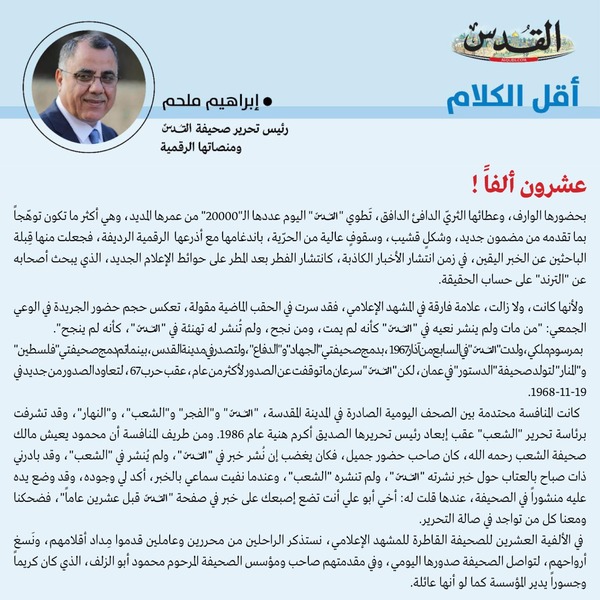

A story of resilience in the face of challenges


Journalist Murad Al-Sabaa says that reaching the 20,000th issue of Al-Quds is a national and historic achievement for Palestinian journalism, reflecting the resilience of this venerable media institution in the face of political and technical challenges, particularly in light of the unprecedented escalation currently taking place in Palestine in the West Bank and Gaza Strip due to the ongoing Israeli aggression.
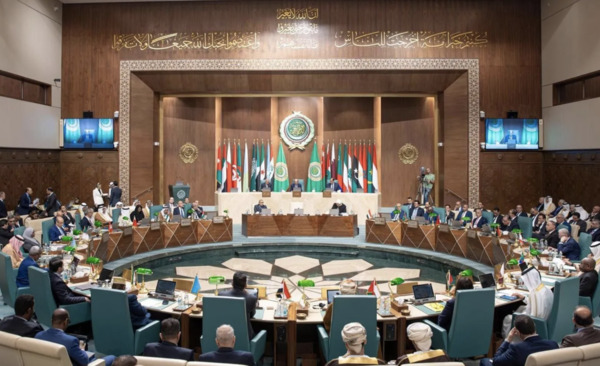
Al-Saba' explains that since its launch, Al-Quds newspaper has enjoyed a broad public reach across Palestine, particularly during periods of intifadas, and has contributed profoundly to deepening Palestinian national sentiment and enhancing awareness of the Palestinian cause.

Al-Sabaa says, "This number – 20,000 – comes at a critical time for the Palestinian cause, especially the war of extermination, and confirms the newspaper's continued role as a national voice that reflects the concerns of the Palestinian people, documents the history of the Palestinian cause, and is emotionally connected to the eternal capital, Jerusalem."


The importance of Al-Quds newspaper transcends geographical boundaries.


Al-Saba' points out that Al-Quds newspaper remains the leading print newspaper in Palestine, and is a key source of accurate news and analysis for the older generation of parents and grandparents, who lack experience using social media. He says, "The newspaper is distinguished by its high professionalism and accuracy in reporting news, which makes it a reliable source for a wide segment of the Palestinian public."

Al-Saba' points out that the importance of Al-Quds newspaper transcends geographical borders, as its name is deeply linked to Palestinian awareness in the diaspora. Furthermore, it is marketed externally through digital versions and provides its content via a modern website, providing an opportunity for a wide audience interested in following developments in Palestinian affairs. He asserts that its digital presence has strengthened its position in light of the significant decline in print journalism worldwide.

Al-Saba' affirms that the continued existence of Al-Quds newspaper holds great symbolic and national value in Palestinian memory, as it represents the foundation of national awareness and the true expression of the Palestinian cause. He emphasizes the need to support it as a media pillar that continues to fulfill its mission despite the many challenges.


ARAB AND WORLD

Wed 23 Apr 2025 10:23 pm - Jerusalem Time

Saudi Arabia stresses that regional security requires the establishment of an independent Palestinian state.

Saudi Arabia affirmed on Wednesday that peace is the strategic choice for the Middle East, and that regional security requires accelerating the search for a just and comprehensive solution to the Palestinian issue, in accordance with international legitimacy resolutions and the Arab Peace Initiative, and the establishment of an independent Palestinian state on the 1967 borders with East Jerusalem as its capital.


This came during the 163rd session of the Arab League ministerial meeting in Cairo, Egypt. Saudi Foreign Minister Prince Faisal bin Farhan was represented by his deputy, Eng. Walid Al-Khuraiji. During the meeting, Al-Khuraiji stressed the Kingdom's support for the brotherly Palestinian people, pointing to the need to sustain and implement the ceasefire in the Gaza Strip, obligating the Israeli occupation to respect international law, and halting the crimes it is committing against Palestine and its brotherly people.


Al-Khuraiji reiterated the Kingdom's complete rejection of calls to displace the Palestinian people from their land and of any attempts to impose solutions that do not fulfill the Palestinian people's legitimate aspirations for self-determination.


He affirmed Saudi Arabia's continued engagement with partner and friendly countries through the "International Coalition for the Implementation of the Two-State Solution" to advance the implementation of the two-state solution. He also noted the Kingdom's emphasis on the importance of joint Arab action and its commitment to maintaining coordination among Arab countries at all levels to confront common challenges, unify visions, and achieve security, stability, and prosperity in the region.

PALESTINE

Wed 23 Apr 2025 9:26 pm - Jerusalem Time

Netanyahu: We will not allow the establishment of an Islamic caliphate, and we will continue military pressure until Hamas is eliminated.

Israeli Prime Minister Benjamin Netanyahu reiterated his commitment to continuing military operations in the Gaza Strip on Wednesday, stressing that his government will not back down from its primary goal of "recovering the kidnapped soldiers and eliminating Hamas."


Netanyahu said in statements reported by Hebrew media that his government "will never give up on achieving victory in the war," adding, "We are determined to recover the detainees, and we will not allow the establishment of any Islamic caliphate, neither in the north nor in the south nor anywhere else."


Netanyahu pledged to continue military pressure on Hamas "until its complete elimination," stressing that the threat threatens not only Israel but the entire West.


"If the extremists defeat us, the Western world will be their next target," he said, believing that defeat by Iran would open the door to a direct threat to Western countries.


In a related context, Netanyahu pledged to continue working to prevent Iran from possessing a nuclear weapon, saying, "No country will prevent us from holding Iran accountable, and if necessary, we will stand alone."