OPINIONS

Tue 29 Apr 2025 9:36 am - Jerusalem Time

The justice of the cause

Hamada Faraana

Hamada Faraana

Opinion Writer

In the Paris protest demonstration against the harm Muslims are subjected to, and in solidarity with the Palestinian people against the crimes of the Israeli colony and its shameful actions against civilians, one of the participants appeared wearing a Jewish kippah on his head, indicating his Jewishness, just as he wore a Palestinian keffiyeh on his shoulder, wrapping himself in it, indicating his support, solidarity, and bias for the cause of the Palestinian people, against the behavior and atrocities of the colony.


The bias of some European and American Jews toward Palestine, its expanding size, and their serious reaction to the suffering of the tormented people due to the occupation, its continuation, settlements, and extremism, is no longer just a passing event, especially in the United States with the organization "Jews for Peace." Rather, it is a new reality whose role is growing and whose expressions are becoming public. As the Palestinian activist in the United States, Sinan Shaqdih, says: "Jews have become prominent partners with us in the American civil struggle that supports the Palestinians, rejects the Israelis, and opposes the policies of their government in Washington that support the Israeli colony. This has caused concern in Zionist circles and supporters of the colony, and their concern is especially from the activity of university youth, because American support—military, political, diplomatic, financial, and economic—is the lifeline for the continuation of the Israeli occupation, its superiority, and its influence. Losing this lifeline will hasten the defeat of the colony and the demise of the occupation."


The American soldier, who was an intelligence officer, shouted before the US House of Representatives: "Israel is burning children alive in Gaza. Shame on you for the support and backing you provide to Israel. Shame on you for remaining silent." These are striking, scattered, but cumulative positive manifestations in favor of Palestine.


Two important factors that moved the popular scene in America and Europe are:

First, the killing, destruction, criminality, fascism and racism perpetrated by the Israeli colony, which is unprecedented in its blatant brutality.


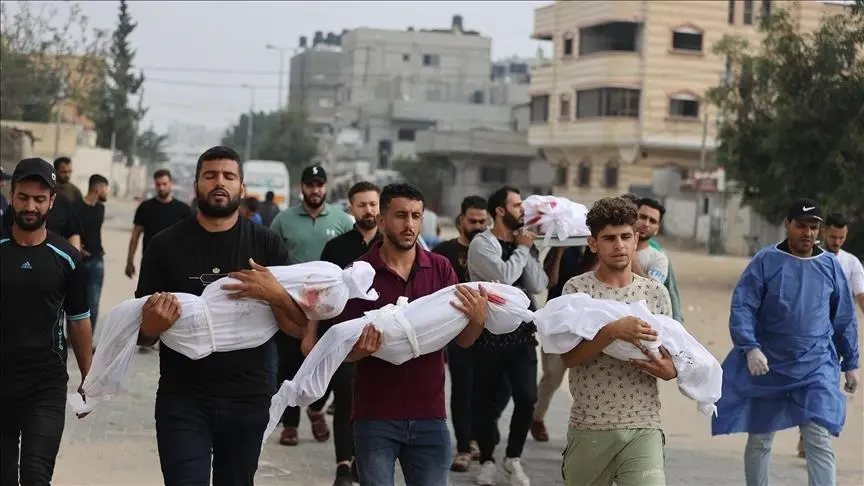
Second, the Palestinian sacrifices and the killings to which the people of Gaza—children, women, elderly, and youth—are subjected, and their right to life is denied, through bombing, deliberate starvation, rampant disease, immune deficiency, and the lack of resources to confront the burdens of hunger, disease, and their repercussions.


The world has begun to understand the suffering of the Palestinians and the legitimacy of their aspirations, just as it has exposed the shame, lies, and deceptions of the colony as an expansionist, occupying, and subjugating colonial project on the land of Palestine.


The Jews had to understand the meaning of injustice, killing, and harm due to the injustice they were subjected to at the hands of Nazism, Fascism, and European Tsarism. They learned from their harsh experiences the meaning of pain, but they transferred their suffering to impose it on the Palestinians through pain, killing, destruction, displacement, expulsion, and homelessness, as if they were taking revenge on the Palestinians in response to what they faced in Europe. Some European peoples had previously sympathized with the suffering of the Jews and supported the establishment of a housing project for them in Palestine. They did not realize that the Israeli Jewish Zionist project was based on injustice, oppression, and hatred of the other, their hatred of the true original owners of the land, the Palestinian people, and their persecution of them.


Large segments of the European and American people, including Jewish citizens of Europe and America, have realized the reality of the Israeli colony project. They are moving toward fairness, understanding, and solidarity with the Palestinians, however modest or slow this may seem. However, these are positive, cumulative steps toward Palestine's victory and the defeat of the colony.

OPINIONS

Tue 29 Apr 2025 9:26 am - Jerusalem Time

Abbas between the dilemma of division and the complexities of the settlement

Nabil Amr

Nabil Amr

Opinion Writer

During Yasser Arafat's prolonged demise, and even before his illness, Mahmoud Abbas was the automatic candidate to succeed him. This was not only because he was one of the surviving founding figures of the movement, nor because of the reluctance of his senior figure in the Fatah hierarchy, Farouk Kaddoumi. Rather, this was for a more valid and practical reason: he was the one who initiated the Oslo process, and no one else—according to the godfathers' assessments—could complete it, or at least protect it from final collapse.


Abbas secured a model consensus to succeed Arafat. This consensus was embodied by Palestinian fear of the vacuum that would result from the departure of the leader who had dominated the Palestinian situation, both during its wartime and peaceful phases. It was also driven by the limited opportunities available to those who would compete, having long been accustomed to Fatah, which wielded unparalleled influence in Palestinian national life. This consensus was reinforced by a regional and international consensus that viewed Abbas as the most capable man to steer the Oslo Accords, which, under Arafat, were on the verge of collapse.


Since 2004, Abbas's era began with him occupying all of Arafat's positions in Fatah, the PLO, and the Palestinian Authority, and continued until the last meeting held a few days ago in Ramallah.


During this long period, Abbas's presidency has not faced significant opposition, neither from within Fatah, which is governed by a natural loyalty to its leader, nor from the PLO factions, which are best aware of their limited ability to disagree with Fatah, especially after returning home during the Oslo era and the advantages they enjoyed in the "power cake."


Despite the emergence of differences between some Fatah leaders and President Abbas, the results of these differences were decisive in his favor. He removed those who disagreed with him, not only from their positions but also from the homeland. As for the rest of the PLO factions, they were content to record positions that appeared to be oppositional, such as their position on security coordination. However, this did not go so far as to undermine his leadership of the PLO, as much as it undermined the position of the factions that appeared to be "helpless" in the opposition and less able to influence their leader's decisions.


But what had a broader and deeper impact than his leadership was the tsunami triggered by Hamas's victory in the general elections, founded and overseen by Fatah, followed by the coup that separated Gaza from the West Bank. Since that dangerous development, Abbas's leadership has not been in danger; rather, the entire nation has. This represented the second or third Nakba in the history of Palestinian catastrophes, which began in 1948, was followed by the Nakba of 1967, the Nakba of 2007, and the Nakba of 2023, which continues to this day.


In practice, Abbas continued his duties as the recognized president, but not as he had been before the Hamas coup. The man found himself caught between two millstones: Israel, which was encroaching on his authority and his people, and Hamas, which was persisting in its divisions and rebellion against him. To make matters worse, this catastrophic development occurred, worsened, and continued at a time when the prospects for a political solution, of which Abbas was a founding member, had closed. When fate decreed that he lead the Palestinians as Arafat's successor, the rug of solutions had been pulled out from under his feet. The general Palestinian situation, which had been built primarily on the potential settlement that began with Oslo, had deteriorated, and with it the entire Palestinian political system.


The intensity displayed by President Abbas in his speech before the 32nd session of the Central Council, which was more intense than all previous ones, stems from his sense of betrayal and the American sponsor's abandonment of the peace project he had sponsored in the early stages, and his disregard for the Israeli abuse of it midway through and up until now. He also feels betrayed by the policies of Hamas, which he had no role in, neither in their causes, nor in their paths and outcomes.


Abbas, who is approaching the age of ninety, knows better than anyone that rescuing the Oslo Accords and returning them to their old path, which he played a key role in establishing, is not only faltering but also impossible, due to the new developments that have altered the course of the settlement.


Items that had not previously been on the agenda have entered the agenda, such as the Gaza war and addressing its repercussions, which are equal to or even greater than the effects of the Palestinian catastrophes combined. There is also concern about reviving the "Deal of the Century," which has evolved for the worse through the rhetoric of its founder, Trump, and has gone beyond it to something even worse, namely the displacement of the people of Gaza and the appeasement of the Israeli right in its agendas, which are far worse than the agenda of the "Deal of the Century."


Abbas easily passed off some of what he saw and what was demanded of him as reform of the political system. However, what is much more difficult is for his steps in this area to lead to resolving the Palestinian situation from its recurring dilemmas and placing it on a political path that brings the Palestinians closer to their dream of statehood.

PALESTINE

Tue 29 Apr 2025 9:21 am - Jerusalem Time

Israeli occupation forces demolish two homes in Hebron and Ramallah.

Israeli bulldozers demolished two homes in Ramallah and Hebron this morning, Tuesday.


In Ramallah, local sources reported that Israeli bulldozers demolished the home of Faraj Ibrahim Ghaithan after Israeli soldiers stormed the house in the town of Qibya and forced its owners to evacuate.


The occupation forces also stormed the home of citizen Rajih Al-Taher and handed him a demolition notice.


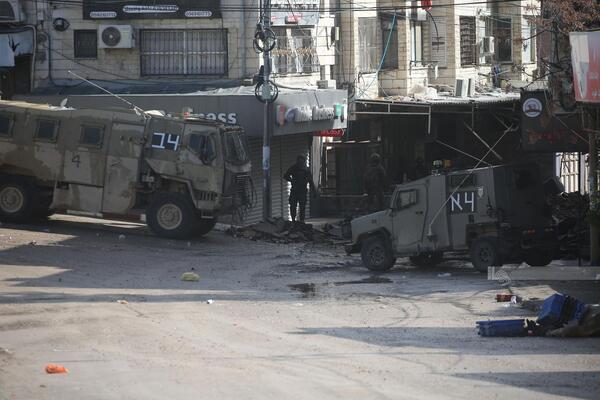
In Hebron, Israeli occupation forces, backed by bulldozers and armored personnel carriers, demolished a two-story house, each measuring 170 square meters, owned by Hashem Ibrahim Al-Atmin in the village of Al-Zweidin in the Masafer Yatta area, south of Hebron. The house was home to 13 people.


According to the Wall and Settlement Resistance Commission, the occupation authorities carried out 58 demolition operations last March, targeting 87 facilities, including 39 inhabited homes, 6 uninhabited ones, 26 agricultural facilities, and others. The demolition operations were concentrated in the Nablus governorate, with 15 facilities demolished, followed by the Tulkarm governorate with 13 facilities, Jerusalem with 19 facilities, and Salfit with 15 facilities.


The occupation also notified 46 facilities of demolition, with the notices concentrated in Tulkarm Governorate with 20 notices, followed by Jenin Governorate with 8 notices, Bethlehem with 6, and Hebron with 6 other notices.

PALESTINE

Tue 29 Apr 2025 9:14 am - Jerusalem Time

Gaza negotiations: Egyptian sources speak of a "major breakthrough," while Israel denies.

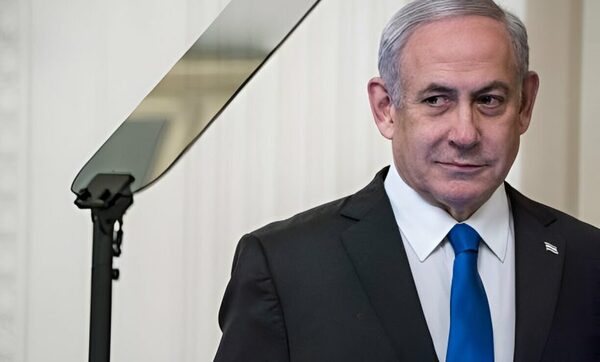
Reports on the progress of the ceasefire negotiations in the Gaza Strip have been markedly conflicting over the past few hours, as mediators seek to advance calm efforts in light of Hamas' proposal to reach an agreement that includes a five-year truce.


While the Israeli Prime Minister's Office denied, in a statement issued in the name of a "senior political source," any progress in the negotiations for a prisoner exchange deal and a ceasefire in the Gaza Strip, Egyptian sources spoke of "significant progress" in the talks.


This morning, Tuesday, an Israeli political source said in a statement issued by the Prime Minister's Office that "the reports published by foreign media outlets are inaccurate." The source added that "Israel continues to work continuously and without interruption with the American side and mediators to push forward a deal for the release of prisoners, but so far no agreement has been reached."


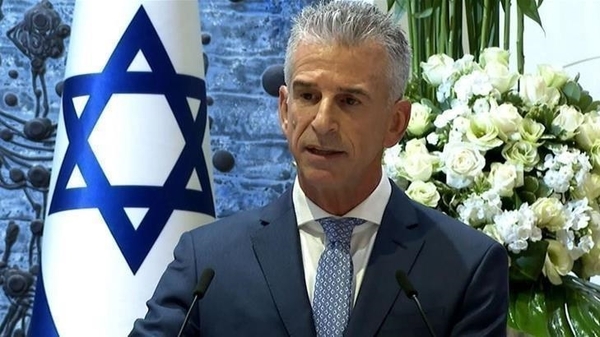
This came as an Israeli delegation headed by Minister of Strategic Affairs Ron Dermer held talks with Egyptian Intelligence Chief Hassan Mahmoud Rashad on Monday evening in Cairo as part of efforts to reach a ceasefire agreement in the Gaza Strip.


According to Israeli media, the mediators are expected to formally present Hamas's proposal to the Israeli side, which includes a five-year truce in exchange for the release of all detained prisoners. Israel is widely expected to reject this offer.


Reuters quoted two Egyptian security sources on Monday evening as saying that the Cairo talks had achieved "significant progress," with an agreement on a long-term ceasefire. Israeli sources, however, denied any real progress had been made so far.


Two Egyptian security sources told Reuters that recent negotiations in Cairo achieved a "major breakthrough," indicating a preliminary consensus on a long-term ceasefire agreement in the besieged Gaza Strip, despite ongoing disagreements over Hamas' weapons issue.


In contrast, the Israeli Public Broadcasting Corporation (Kan 11) quoted unnamed Israeli sources as saying that reports of progress were incorrect, adding that "no tangible progress has been achieved so far" in the prisoner exchange negotiations.


An Egyptian state-run channel had previously reported that Egyptian Intelligence Chief Hassan Mahmoud Rashad is scheduled to meet with an Israeli delegation headed by Minister of Strategic Affairs Dermer in Cairo. The channel added that this meeting comes within the framework of Qatari-Egyptian efforts to resume the ceasefire in Gaza.


Meanwhile, other Egyptian sources speaking to Al-Araby Al-Jadeed reported that negotiations held last Saturday between Egyptian mediators and the Hamas leadership did not achieve sufficient progress toward ending the war.


She explained that Hamas had insisted on its demand for an immediate and guaranteed end to the war from the moment the agreement was signed, in exchange for a one-time release of the prisoners. Israeli Prime Minister Netanyahu rejected this condition, despite initial acceptance by US envoy Steve Witkoff.


According to the sources, both Qatar and Turkey played a role in conveying Hamas's vision to the US administration, with calls for increased pressure on Netanyahu to accept an end to the war as part of the agreement.


In the same context, Al-Araby Al-Jadeed newspaper quoted Egyptian sources as saying that the Israeli government informed the US administration and mediators in Cairo of new arrangements aimed at accelerating the entry of humanitarian aid into Gaza, within a mechanism that ensures that it does not reach Hamas fighters or that the movement controls its distribution.


The source explained that the mechanism includes establishing a buffer zone in Rafah and a safe zone near the Egyptian border between the Salah al-Din (Philadelphi) axis and the Morag axis, which the Israeli army recently established between Rafah and Khan Yunis.


The Egyptian source indicated that the proposed company is owned by an American businessman with Israeli citizenship, who is a direct relative of Jared Kushner, Trump's son-in-law and former aide. The source explained that the company has previously undertaken security work in several Latin American countries and also has a history of working in the Gulf region, having contracts in the UAE, according to the same source.


The source said that the company expected to receive and distribute the aid includes former members of the US military, as well as former employees and fighters with Israeli citizenship.


PALESTINE

Tue 29 Apr 2025 9:10 am - Jerusalem Time

Among them is a "Al-Quds" correspondent.. The occupation launches an arrest campaign in the West Bank.

Israeli occupation forces launched a large-scale arrest campaign in various areas of the West Bank at dawn on Tuesday morning.


Among those arrested was Al-Quds.com correspondent Ali Al-Samoudi, who was arrested by Israeli occupation forces after raiding his home in Jenin.


In Bethlehem, an occupation army force stormed the town of Beit Fajjar and took up positions in several neighborhoods. They arrested Atef Muhammad Abd al-Rahman al-Kar (29 years old), Muhammad Ashraf Abd al-Rahim al-Kar (16 years old), Fadi Iyad Taqatqa (23 years old), and Mahmoud Ahmad Taqatqa (20 years old), after raiding their homes.


PALESTINE

Tue 29 Apr 2025 8:58 am - Jerusalem Time

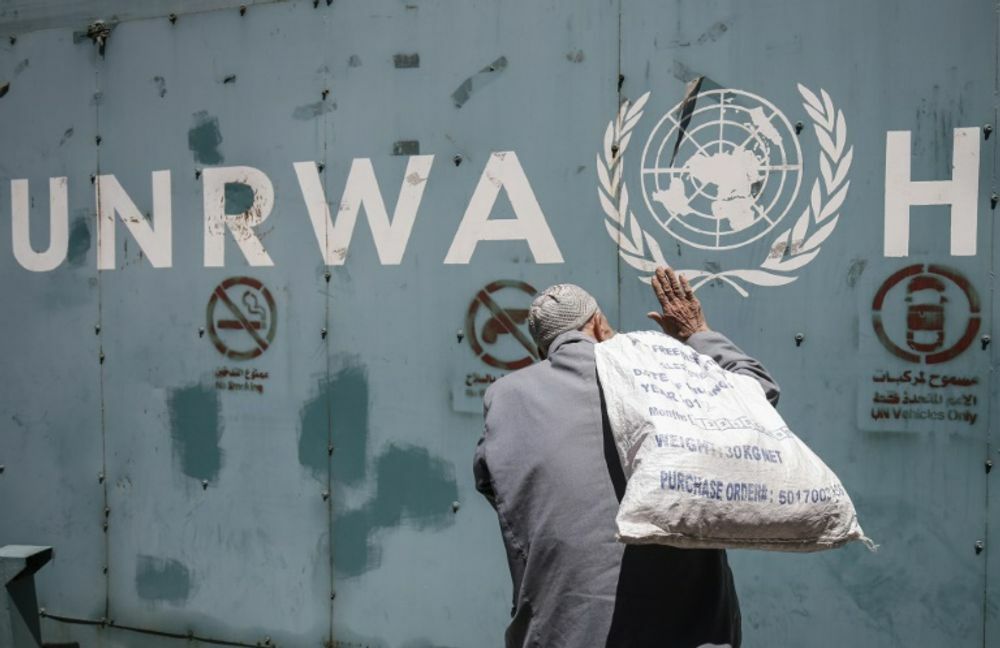
Lifting UNRWA's immunity opens the door to piracy and distraction from its mission.

Sami Mshasha: The US Department of Justice's memorandum submitted to the court is a dangerous development in the gradual and escalating process of ending UNRWA's work and stripping it of its immunity.

Jawdat Manna: Trump's policies and actions against UNRWA go beyond the legal dimension of suing it.

The international system protects it

Nidal Al-Azza: Lifting immunity is consistent with the campaign to demonize and distort UNRWA, with the aim of pushing countries and individuals to stop funding it.

Dr. Riad Al-Aila: This decision represents a systematic attack on UNRWA, not just as a humanitarian institution, but as a legal symbol and reference for the refugee issue.

Dr. Adnan Al-Afandy: Lifting UNRWA's immunity will encourage Zionist organizations to file lawsuits against UNRWA, alleging its support for the resistance.

Osama Al-Sharif: Trump's decision is an important part of Netanyahu's plan and his efforts to implement what he promised long ago: annexation and the end of the two-state solution.


The US decision to strip the United Nations Relief and Works Agency for Palestine Refugees (UNRWA) of its immunity will open the door to lawsuits filed by Zionist organizations or families of Israeli casualties seeking compensation, alleging involvement of UNRWA employees in the October 7, 2023, attack. A UN committee investigating these allegations later denied the allegations.

Drowning UNRWA in such cases means draining what remains of its "poor" budget after several countries, most notably the United States, have halted their funding. This further demonizes the international organization and prevents it from carrying out the tasks for which it was established, which is to support the masses of Palestinian refugees. This is reminiscent of what the occupying state is doing with the Palestinian Authority's clearing funds, which it has provided no justification for piracy, including compensation awarded by the occupation courts to the families of Israelis killed in Palestinian attacks.

Writers, analysts, and observers who spoke to Al-Quds believe that lifting UNRWA's immunity is consistent with the campaign to demonize and distort UNRWA, aimed at pushing countries and individuals to halt its funding. They assert that this measure will encourage Zionist organizations to file lawsuits against UNRWA, alleging its support for the resistance.

They said the decision represents a systematic attack on UNRWA, not just as a humanitarian institution, but as a legal symbol and reference for the refugee issue. They noted that Trump's decision is an important part of Netanyahu's plan and his efforts to implement his long-promised annexation and end the two-state solution.


Stripping UNRWA of its diplomatic immunity


UNRWA expert Sami Mshasha said that the lawsuits filed by the families of the Israelis who held American citizenship and were killed in the October 7 attack, accusing UNRWA of providing cover for its employees who participated in the October 7 attack, and that UNRWA is a front for money laundering for groups hostile to the occupying state, and the Trump administration's support for such an allegation, are a dramatic development in the massive effort to eliminate UNRWA and its mandate, and to circumvent the rights of Palestinian refugees and their right of return.

He added: "It is important to clarify the false information being circulated in Palestine, that the Federal Criminal Court in New York was the one that decided that UNRWA does not enjoy diplomatic immunity, and that it is not protected from lawsuits filed against it by parties and individuals on the pretext that some of its employees were involved in "terrorist" operations, and that the agency participated in money laundering worth a billion dollars to finance "terrorist" organizations at the expense of providing these funds to provide humanitarian aid to those in need in the Gaza Strip.

Mish'sha' explained that the correct position (and the most serious one) is that this is the position of the US Department of Justice itself, which submitted a memorandum to the Federal Court containing these serious accusations, requesting that the court rule on them and decide in favor of the position of the government and the Department of Justice.


Violation of international law and the United Nations Charter


He described the US Department of Justice's memorandum submitted to the court as a dangerous development in the gradual and escalating process of ending UNRWA's operations, which aims to strip UNRWA of its immunity and separate it from its parent institution, an agency established by a UN resolution and a vote of member states in the General Assembly.

He said: This memorandum confirms the US administration's efforts and intention to violate international law and the UN Charter regarding the immunities, privileges, and protection of international organizations and the immunities of the United Nations itself.

Mshasha believes that the memorandum to lift UNRWA's immunity and not consider it part of the United Nations, as a prelude to filing defamation lawsuits against it to weaken state support for the agency and starve it financially, is a purely political effort with flimsy legal packaging.

He pointed out that these dangerous attempts intersect with Israel's successful plans to dismantle UNRWA, which have so far succeeded in banning UNRWA's work and activities in occupied East Jerusalem and undermining and restricting its work and mandate in its areas of operation in the occupied Palestinian territories. This has severely impacted, and will continue to impact, UNRWA's educational, health, and relief services to millions of refugees.


Guterres' weakness in the face of the attack on UNRWA


Mshasha stated that the investigation committee, known as the "External Review Group," formed by UN Secretary-General António Guterres on February 5, 2024, and chaired by former French Foreign Minister Catherine Colonna, to assess UNRWA's neutrality and respond to Israeli accusations targeting a number of its employees, accusing them of participating in the events of October 7, 2023, proved the Israeli allegations to be false. This conclusion was based on an in-depth review and a conclusion rejected by the occupying state and the current Trump administration, which continued to direct the same malicious accusations against UNRWA and its employees, exploiting these accusations politically to eliminate the right of return and the political and humanitarian demands of Palestinian refugees.

He explained that the official response of the United Nations, rejecting the memorandum and affirming that UNRWA is an affiliated institution and enjoys protection under the 1949 Convention on the Privileges and Immunities of the United Nations, was a good initial response. However, the accumulated weakness shown by the Secretary-General and the United Nations in the face of the coordinated attack on UNRWA, its presence, services, and role in Gaza, the West Bank, and Jerusalem, and the absence of any practical plans to confront it (and sometimes to adapt to the attack and attempt to manage the crisis), led to the accumulation of Israeli successes directed against UNRWA.

Mshasha expressed his fear that this weakness would contribute to the Federal Court accepting the Justice Department's argument and ruling that the agency does not enjoy immunity and may be sued.


Formation of the "UNRWA Strategic Assessment" team


The UN Secretary-General's decision a few days ago to form a "UNRWA Strategic Assessment Team" to review "UNRWA's impact and the implementation of its mandate under political, financial, security, and other constraints," and to task the team with identifying "options for action... and reviewing the overall mandates of the United Nations," is seen as part of the UN organization's weakness and adaptation to the onslaught against UNRWA. And herein lies the danger.

He said: UNRWA is perhaps the UN organization most frequently subjected to investigation committees, follow-up teams, and study teams, primarily as an expression of Israeli fear of its existence and what it represents, and as confirmation of attempts to curb, weaken, and even eliminate it.

Mshasha concluded his statement by emphasizing that the absence of any official or popular Palestinian effort, plan, or program to protect UNRWA and refugee rights from being lost, and the mere passive diagnosis and monitoring of successive developments, condemnation, and expression of concern, will exacerbate UNRWA's existential crisis, facilitate its elimination, and drive a fatal additional nail into the coffin of the right of return.


Trump joins Israel in starving Palestinians


For his part, Jawdat Manna, a member of the Palestinian Camps Defense Council in the 1980s, said: “Once again, US President Donald Trump is making a fatal mistake by lifting UNRWA’s immunity for several reasons, most notably that by this decision he is rewarding Israel for its occupation of the Palestinian people’s homeland, a position that no US president or any world leader has taken before him.”

He emphasized that Trump's decision aims to undermine the allocations and aid UNRWA receives from countries other than the United States, thereby deliberately complicity in Israel's starvation of the Palestinian people.

Manaa pointed out that Trump's policies and actions against UNRWA go beyond the legal dimension of suing it, as they cast doubt on its credibility regarding the information on the rights of the Palestinian people documented in its records.

He added that allowing UNRWA to be sued would affect tens of thousands of its Palestinian employees, because the ultimate goal of Trump's campaign against UNRWA is to end its role at the United Nations, despite the fact that its establishment was based on a UN resolution, and no country has the right to take a unilateral decision to undermine or eliminate its role in the UN system.

In this context, Manaa noted an overlap between the Israeli occupation army's campaign against Palestinian camps and this resolution. Israel continues its destruction of infrastructure in Palestinian camps in the West Bank after having completed the demolition of all buildings and services in the Gaza Strip camps. This explains the United States' silence regarding Israel's military operations in refugee camps, which were destroyed by American bombs and weapons.


Trump's decisions affect the rights of millions of refugees.


Manaa believes that protecting UNRWA is an international responsibility, and that the international community must protect it from the bullying of President Trump, who treats it as if it were an American institution, far removed from its international status, in response to Israeli incitement within the context of a joint Israeli-American strategy formulated during the war it is waging. This strategy cannot be separated from other Israeli war objectives, even if it is an undeclared objective.

He said that President Trump must reverse his decision to lift UNRWA's immunity and cease any further harm to it, as his decisions violate the rights of millions of Palestinian refugees, placing it within the package of past and future immoral American policies toward the entire Palestinian issue.

He added: "President Trump must also review the files of Israeli policy in the 1980s, which failed, through its barbaric practices against the camps, to close their entrances and place gates and military guards in and around them, including surrounding them with walls to prevent freedom of movement within and out of the camps. This policy was established by former Defense Minister Moshe Arens and was first implemented in the Deheishe refugee camp in the West Bank and the Jabalia refugee camp in the Gaza Strip."


UN report refutes Israeli allegations


Nidal al-Azzeh, director of the Badil Resource Center for Palestinian Citizenship and Refugee Rights, said that while the United States has a duty under international law to provide all necessary facilities to international bodies to enable them to carry out their duties, the decision to lift UNRWA's immunity for the purpose of prosecution is an explicit endorsement of Israeli claims that UNRWA is a terrorist organization.

He stressed that these allegations were refuted in the report of the United Nations Committee on UNRWA's neutrality (the Colonna Report), as the Israeli colonial and apartheid regime did not provide evidence for its allegations.

Al-Azzeh believes that the decision to lift immunity enables Zionist colonists to sue UNRWA in US federal courts, while preventing the prosecution of US officials involved in the genocidal war against the Palestinian people in the Gaza Strip on the grounds that the US administration's foreign policies fall outside the jurisdiction of the courts.

He said that this does not reflect double standards, but rather constitutes clear complicity in the war of extermination against the Palestinian people, a war waged through killing, bombing, starvation, thirst, disease, widespread destruction, and forced displacement.


Resolving the conflict in favor of the colonial project


He added: "This decision, which comes after the suspension of funding for UNRWA and the endorsement of Israeli laws banning UNRWA's existence and operations, reflects more than just a desire to fine UNRWA or halt aid. It is an endorsement of a plan to eliminate UNRWA, the Palestinian refugee issue, and their rights as part of a strategy to resolve the conflict in favor of the colonial project in Palestine—all of Palestine."

Al-Azzeh explained that, in practical terms, this decision distracts UNRWA from focusing on its own defense rather than on bridging the enormous budget gaps and providing services. He noted that the decision is consistent with the campaign to demonize and distort UNRWA, aimed at pushing countries and individuals to halt its funding.

He said, "This decision reflects the international community's impotence in the face of American and Israeli arrogance." Al-Azzeh explained that the decision not only violates the Convention on the Privileges and Immunities of International Bodies, but also goes further by imposing the will of the two states on all other countries and the international community.

Al-Azza believes that such a policy cannot be resisted simply by turning a blind eye or condemning it, but rather requires practical measures, the least of which is suspending the Israeli colonial regime's membership in the United Nations and imposing political and economic sanctions on it.


Systematic legal and financial assassination of UNRWA


For his part, Dr. Riyad al-Aila, a professor of political science at Al-Azhar University, considered the Trump administration's decision to lift UNRWA's immunity a direct targeting of the Palestinian refugee issue.

He said: "In a move with serious political dimensions and strategic repercussions, the administration of US President Donald Trump has lifted the legal and political immunity of the United Nations Relief and Works Agency for Palestine Refugees (UNRWA)." He emphasized that this decision represents a systematic attack on UNRWA, not just as a humanitarian institution, but as a legal symbol and reference for the refugee issue and the right of return, which is guaranteed by United Nations resolutions.

He added that lifting immunity effectively means that the US administration no longer recognizes UNRWA's special status as an independent UN agency. Rather, it considers it an obstacle to its project to liquidate the Palestinian refugee issue, in line with the "Deal of the Century" that Trump adopted during his previous term, and which he is now continuing to implement through a systematic legal and financial assassination of UNRWA.

He continued: "His decision exceeds its legal limits and aims to deliberately conflate humanitarian action with politics, making international institutions vulnerable to targeting based on political positions. It also reinforces the policy of strangling UNRWA by depriving it of immunity and opening it up to a barrage of trumped-up lawsuits under flimsy pretexts such as supporting terrorism or corruption."


US support for UNRWA stopped in 2018


Al-Aila believes the decision is a continuation of the financial blow Washington dealt in 2018 by halting its financial support to UNRWA, which represented approximately 30% of its budget. This move was intended to dry up its resources and cripple its ability to provide essential services to Palestinian refugees in the diaspora, including education, health, and food. This move also entails imposing forced settlement solutions and revoking the refugee status of millions of Palestinians.

Al-Aila concluded by saying, "Lifting UNRWA's immunity is not merely an administrative decision, but rather part of a comprehensive political project to reframe the Palestinian issue and transform the refugee issue from a national political issue into a mere humanitarian crisis. This is a step aimed at removing the right of return from the negotiating table and imposing new facts that serve the Israeli plan to liquidate the Palestinian cause."


Clear support for Zionist institutions


For his part, Dr. Adnan Al-Afandy, an expert on Israeli affairs, asserted that the goal of Trump's decision to lift UNRWA's immunity is to liquidate the Palestinian refugee issue and support the Zionist entity, which enacted a law to prevent UNRWA from operating in the West Bank and occupied Jerusalem. This decision was contained in a legal document submitted by the US Department of Justice to the Federal Court in New York last Thursday.

Al-Afandy believes that this decision is a clear support for Zionist institutions, especially a Zionist organization called “Short Hedin,” which files lawsuits against Palestinians in order to obtain financial compensation and to fight the Palestinians through money. This organization also makes legal efforts to achieve this in the occupying state and throughout the world.

He added: These Zionist institutions may exploit this loophole (lifting UNRWA's immunity) to file a lawsuit against UNRWA to obtain financial compensation from it, especially since the newspaper "Israel Hayom" reported that an American court is considering a serious case against UNRWA, accusing it of covering up for employees who participated in the October 7 attack, and demanding exorbitant financial compensation. This court also accuses UNRWA officials of money laundering worth one billion dollars for the benefit of Hamas.

Al-Afandy pointed out that UNRWA operates in many conflict zones around the world and enjoys immunity because it is part of the United Nations, which provides immunity to its employees worldwide. If immunity is lifted, this will pose a threat to UNRWA employees and will also deprive this institution (UNRWA) of part of its rights, which have been recognized by international bodies, especially the United Nations, and supported by all countries of the world.


Preventing UNRWA from operating in Jerusalem


He noted that UNRWA has been facing difficult operating conditions for more than eighteen months, and that attempts are being made to restrict its work due to Zionist law and harassment by the occupation to prevent it from continuing its work, especially in occupied Jerusalem.

He referred to a clear statement by UNRWA's Acting Public Information Officer, Abeer Ismail, who said that UNRWA is an institution affiliated with the United Nations General Assembly and enjoys international immunity. The Trump administration's decision aims to pressure UNRWA, liquidate the refugee issue as a whole, and support Zionist organizations that may file lawsuits against UNRWA, not only in the United States but also around the world. This will disrupt UNRWA's work and its staff. She said that this decision is being studied by UNRWA's legal advisor and legal unit in response to the US Department of Justice.

Al-Afandy believes that if UNRWA's immunity is lifted, it will encourage Zionist organizations to file lawsuits against UNRWA under the pretext of its support for the resistance in Palestine. This will further threaten its existence, especially since UNRWA has been suffering from a financial crisis for years due to the cessation of support from the United States and some other countries, as well as American incitement against other countries not to support UNRWA. This will lead to a significant deterioration in the lives of many Palestinians who receive support from UNRWA, particularly in the areas of health and education.


An Israeli agenda par excellence


Jordanian journalist and Palestinian affairs expert Osama Al-Sharif believes that the Trump administration is implementing an Israeli agenda par excellence, and this is no longer a secret.

He said: Let's look at who Trump chose to be his ambassador to Israel, and who he nominated to be the US ambassador to the United Nations before her name was withdrawn for internal reasons related to the Republican Party's majority in the House of Representatives. Let's look at Trump's position on the massacre taking place in Gaza before the world sees it.

Al-Sharif emphasized that banning UNRWA and abolishing its role is a crucial chapter in the plan to liquidate the Palestinian cause, beginning with the destruction of the camps in the West Bank after wiping them out of existence in Gaza, and ending with the announcement of the final annexation, which is inevitable. He noted that the refugee issue has been resolved or is on its way to being neutralized.

He described Trump's decision as an important part of Netanyahu's plan and his efforts to implement what he has long promised: annexation, ending the two-state solution, and transforming the issue into one of people without land and without rights.

He said that Trump's rise to power, with significant support from Zionist money in America, is a bad omen because he doesn't care about the repercussions of banning UNRWA and halting financial aid to the Palestinian Authority, even if it collapses completely. He will recognize the annexation of the West Bank and will not care about the repercussions.

He added: "The rise of Zionist evangelicals in America and their presence today in Israel through Hagabi, the US ambassador to the entity, who explicitly stated that there is no West Bank and no occupation, but rather the Land of Israel."

Al-Sharif concluded by saying: “We are facing an unprecedented existential challenge, and we do not know where things will end.”

PALESTINE

Tue 29 Apr 2025 8:51 am - Jerusalem Time

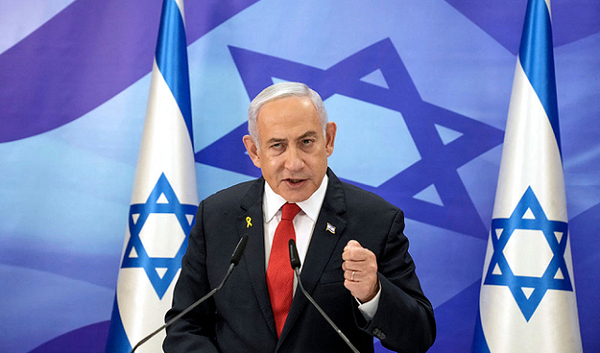
When Netanyahu ridicules the idea of a Palestinian state, he undermines international law and undermines the foundations of peaceful solutions.

Dr. Jamal Harfoush: Netanyahu's description of the establishment of a Palestinian state as a "ridiculous idea" undermines international law, which guarantees the right of peoples to self-determination.

Sari Samour: The international and media preoccupation with the displacement issue has obscured the greater crime, which is the genocide of the Palestinians.

Fayez Abbas: Netanyahu continues to lie about a Palestinian state, and his plan for the Gaza Strip failed on October 7.

Dr. Suhail Diab: What Netanyahu is doing is a losing gamble on his political future, like a losing casino player who bets everything he has.

Samer Anabtawi: Israel no longer rejects just a specific Palestinian faction or group, but rather rejects the existence of any Palestinian entity in principle.

Yasser Manna: Netanyahu's statements reflect the deep-rooted tendencies of the right-wing movement to completely deny the Palestinian right to land and sovereignty.


Israeli Prime Minister Benjamin Netanyahu's recent speech, in which he described the idea of establishing a Palestinian state as "absurd," has sparked a wave of sharp criticism, with claims that these statements constitute a clear violation of international law and the Palestinian people's right to self-determination.

In separate interviews with Al-Quds, writers, political analysts, experts, and university professors believe that Netanyahu's speech reveals Israel's premeditated intentions to thwart any political path and redefine the conflict from a political to a religious one, undermining the foundations of internationally recognized peaceful solutions.

They assert that Netanyahu's statement did not present anything new in terms of his historical position rejecting the establishment of a Palestinian state, but it clearly reflects a dangerous escalation in the Israeli vision of the Gaza Strip and the West Bank. It is moving toward perpetuating a racist settlement reality and promoting the idea that the mere existence of Palestine as a political entity, even if it is a civilian, demilitarized entity, represents an existential threat to Israel.

They believe Netanyahu's statements pave the way for legitimizing policies of displacement and apartheid, amidst the international community's disturbing disregard.

A number of speakers believe Netanyahu's speech represents a dangerous political gamble aimed at saving his personal and political future, even if it leads to further war and instability in the region.

They point out that current Israeli policy clearly aims to completely liquidate the Palestinian cause by imposing coercive demographic and geographic realities, which threatens to have disastrous repercussions regionally and internationally unless the international community takes immediate and effective action.


Netanyahu reveals hidden intentions


Professor Dr. Jamal Harfoush, professor of scientific research methods and political studies at the University of the Academic Research Center in Brazil, says that Israeli Prime Minister Benjamin Netanyahu's speech on Sunday evening, in which he described the idea of establishing a Palestinian state as "ridiculous," represents a clear declaration of the failure of efforts promoting the possibility of achieving "peace" through a two-state solution.

Harfoush asserts that Netanyahu's speech reveals premeditated intentions aimed at thwarting any Palestinian aspiration for self-determination, in flagrant violation of the principles of international law and UN resolutions, particularly Resolutions 181 and 242.

Harfoush explains that Netanyahu's description of the idea of a Palestinian state as "ridiculous" is not a passing statement, but rather a complete disregard for international law, which guarantees the right of peoples to self-determination, in accordance with Common Article 1 of the 1966 International Covenant on Civil and Political Rights and the International Covenant on Economic, Social and Cultural Rights.

Harfoush points out that Netanyahu's insistence on requiring a "Jewish state" reflects a dangerous attempt to redefine the Palestinian-Israeli conflict from a conflict over land and rights to a religious conflict, in clear disregard for international principles prohibiting religious and ethnic discrimination and affirming the principle of equality enshrined in the UN Charter and the Universal Declaration of Human Rights.


legitimizing apartheid policies


Harfoush believes that these theses pave the way for legitimizing apartheid policies and establishing a discriminatory colonial system against Palestinians in the 1948 occupied territories, the West Bank, and the Gaza Strip.

Harfoush asserts that Netanyahu's claim that the Palestinians "want a state within a state" reveals Israel's deep security vision, which views the mere presence of Palestinians, even if disarmed, as an existential threat.

Harfoush explains that, with this position, Netanyahu is not only seeking to eliminate Hamas as a resistance movement, but also to completely empty Gaza of any Palestinian sovereignty, whether through direct Israeli administration or through superficial local arrangements that lack any national will.

Harfoush points out that Israeli policies in the West Bank take a different form through settlement expansion, forced displacement, and the dismantling of the Palestinian national fabric, as part of a systematic policy aimed at eliminating Palestinian national identity.


Turning the Palestinian issue into a humanitarian issue


Harfoush explains that the repercussions of these policies are extremely dangerous, most notably transforming the Palestinian issue into a purely humanitarian matter managed through aid, far removed from its essence as a matter of established political rights. This threatens to destabilize the region and destabilize the entire region.

Harfoush warns that the continuation of these policies without a serious international response will erode the legitimacy of international law and transform UN charters into empty, ineffective texts.

Harfoush emphasizes that what is happening in Gaza and the West Bank amounts to crimes of genocide and forced displacement, and requires urgent international action to ensure accountability, including activating the role of the International Criminal Court in accordance with the Rome Statute.

Harfoush asserts that Netanyahu's goal is not merely to end the security threat, as he claims, but rather to end the entire Palestinian cause through political and demographic genocide, calling for an escalation of political and legal resistance in defense of the Palestinian right to freedom and sovereignty.


Netanyahu's rejection of a Palestinian state is not new.


For his part, writer and political analyst Sari Samour asserts that Israeli Prime Minister Benjamin Netanyahu's recent speech on the Palestinian state contained nothing new regarding his position on establishing a Palestinian state.

Samour explains that "Since his youth, and since the beginning of his political activity, Netanyahu has categorically rejected the idea of establishing a Palestinian state. Even after coming to power, he did not change his position, but rather remained steadfast in this approach. He believes that the idea of a Palestinian state violates the Israeli narrative, which denies the existence of a Palestinian people with an independent national identity and insists on portraying the Palestinians as mere residents without any real political entity or rights."

Regarding Netanyahu's statements about "Hamas not remaining in Gaza" and "rejecting the Palestinian Authority from governing there," Samour emphasizes that Netanyahu has been repeating these phrases since the beginning of the Israeli war on the Gaza Strip. However, Samour asserts that "what's striking is that the Israeli media itself is now ridiculing these repeated statements, noting that Netanyahu didn't offer any new proposals in his most recent speech."

Samour believes that Netanyahu's insistence on repeating the same headlines confirms that he "is seeking to buy more time, prolong the war, and continue the war of extermination and forced displacement against Palestinians in the Gaza Strip."

a long-term war of attrition


Samour believes that "the international and media preoccupation with the displacement issue has obscured the greater crime, which is the genocide of the Palestinians, as the focus has shifted from the need to stop the war to simply preventing displacement, which is a humanitarian and political catastrophe."

Regarding the repercussions of Netanyahu's speech, Samour asserts that "no one can predict specific outcomes, as the war is still raging and the aggression is ongoing."

Samour points out that "some Israeli sources and Hebrew media outlets have begun to speak clearly about Israel sinking deeper and deeper into the Gaza quagmire, entering a long-term war of attrition."

Samour explains that "had Netanyahu accepted community-based management of the Gaza Strip, as some Palestinian factions, including Hamas, have offered, he might have achieved his stated goal of preventing Hamas from remaining in power. However, his insistence on completely eliminating the movement means, in reality, seeking to eliminate the Palestinian people themselves, given that Hamas is deeply rooted in the Palestinian popular consciousness."

"Netanyahu's speech is worthless if the Americans want another option," Samour says. "Ultimately, they are the ones who have the greatest influence on Israeli policies at this stage."


thwarting Palestinian reconciliation efforts


In turn, writer and expert on Israeli affairs Fayez Abbas asserts that Israeli Prime Minister Benjamin Netanyahu used a new term in his recent speech on the Palestinian state, describing it as a "ridiculous idea." He pointed out that the attempt to establish a state in Gaza has failed, citing what happened on October 7, 2023.

Abbas explains that Netanyahu's talk about the failure of the Gaza experiment confirms that his government's plan was based on maintaining Hamas's rule in the Strip, with the goal of preventing the return of the Palestinian National Authority to Gaza and thwarting internal Palestinian reconciliation efforts.

Abbas points out that October 7th dealt a "decisive blow" to all Israeli plans regarding the Gaza Strip, prompting Netanyahu to reiterate his claim that the Palestinians refuse to recognize Israel's Jewishness, thus justifying Israel's rejection of any agreement leading to the establishment of an independent Palestinian state.


Netanyahu enters the Guinness Book of Records for lying


Abbas asserts that Netanyahu's claims in this regard are "a complete lie," emphasizing that Netanyahu "is entering the Guinness Book of Records for lying," because even if the Palestinian leadership and people recognized Israel's Jewishness, the latter would never agree to the establishment of an independent Palestinian state within the 1967 borders.

Regarding the ongoing war on the Gaza Strip, Abbas explained that Netanyahu had declared several objectives from the outset, including the return of Israeli captives, the end of Hamas's military and civil authority, and the prevention of the return of the Palestinian Authority to the Strip. He noted that Israel's true plan is to remain inside the Gaza Strip and establish Jewish settlements there, as part of a long-term vision.

Abbas explained that Israel is currently working to forcibly displace Gaza's residents, based on what he described as former US President Donald Trump's plan, which seeks to change the demographic composition of the Strip through displacement.


Netanyahu is in the countdown phase


For his part, Dr. Suhail Diab, a political science professor and expert on Israeli affairs, says that Israeli Prime Minister Benjamin Netanyahu is in the countdown to the end of his political and personal career, both locally and regionally. He points out that the growing indicators both domestically and internationally, particularly following the dismissal of the head of the Shin Bet and his renewed attempts to reignite the war in the Gaza Strip, clearly indicate this.

Diab explains that what Netanyahu is doing today is nothing more than a losing gamble on his political future, similar to a losing casino player who bets everything he has and even borrows in the hope of recouping his losses.

Diab points out that the latest opinion polls in Israel, along with the escalation of hot issues within Israeli society, confirm Netanyahu's downward trajectory.

Diab believes that interpreting Netanyahu's statements, particularly those related to rejecting the idea of a Palestinian state, must be done through this assessment of his personal, political, and ideological position. Since 1996, when he turned the tables on the Oslo Accords, Netanyahu has not abandoned his traditional vision of rejecting any real political solution. This vision finds its practical translation in the recent decisions taken by the Knesset after October 7, 2023, which were supported by more than 109 members. These decisions aimed to prevent the establishment of a Palestinian state in any form, considering it an existential threat to the State of Israel, regardless of the Palestinian entity that might administer it, whether Hamas, Islamic Jihad, or PLO factions.


The most dangerous stage since the beginning of the war


Diab explains that Netanyahu's recent statements reflect his desperate attempt to cling to his ruling coalition and buy time while awaiting changes on the ground or in politics that might serve him.

Diab warns that this phase has become the most dangerous since the start of the war, as Netanyahu's margin for maneuver has reached its maximum, which could push him to issue "crazy" statements or undertake dangerous military adventures to turn the tables in his favor.

Diab asserts that Netanyahu, by clearly declaring his rejection of the presence of Hamas or the Palestinian Authority in Gaza, is not only seeking to manage the conflict, but also to liquidate the Palestinian cause entirely.

"The current war is not a war against Hamas or to recover prisoners. Rather, according to Diab, it aims to implement forced demographic solutions against the Palestinian people, whether through displacement, genocide, or complete subjugation, in both Gaza and the West Bank."

Diab points out that the West Bank will be the biggest loser, regardless of the outcome of the war in Gaza. If there is an escalation and Netanyahu makes gains on the ground, the next phase will see the West Bank targeted with escalating settlement activity, annexation, and displacement. If a settlement or deal is reached, however, the West Bank will also be a victim, potentially being traded for Gaza under regional arrangements that may be concluded under U.S. auspices.


The historical approach of the Zionist movement


Writer and political analyst Samer Anabtawi says that Israeli Prime Minister Benjamin Netanyahu's recent statements, in which he once again denied the Palestinian people's right to establish their own state, were not surprising. Rather, they fall within the historical approach of the Zionist movement, which rejects the existence of any Palestinian entity between the river and the sea and seeks to establish the Jewish character of the state and gain complete control over Palestinian land.

Anbatawi explains that Israeli policies, both security and political, at both the domestic and international levels, have always been linked to this approach, noting that anyone who believed it was possible to change this mentality was mistaken.

Anbatawi explains that the Zionist movement, since its inception, has been based on the idea of replacing Palestinians with Israelis, which explains Israel's continued insistence on thwarting any possibility of establishing an independent Palestinian state.

Anbatawi points out that Netanyahu, through his boastful statements to the international community, blatantly denies the Palestinians' right to self-determination, flouting international law and UN resolutions.

Anbatawi asserts that Israel is relying on the logic of force, exploiting the division and weakness in the Arab region and the Western bias supporting it to impose its vision on the ground.


The mistake of negotiating with a settler colonial movement


Anbatawi explains that the agreements signed by some Arab and Islamic parties with Israel have, unfortunately, contributed to weakening the Palestinian cause. He considers it a mistake to negotiate with a colonial-settler movement like Zionism, especially given the imbalance of power in favor of the occupation.

Anbatawi points out that the Zionist project has become fully exposed today, as it works to displace the population of Gaza, seize complete control of the West Bank, and displace as many Palestinians as possible.

According to Anabtawi, it has become clear that Israel no longer rejects just one particular Palestinian faction or group, but rather rejects the existence of any Palestinian entity in principle.

Anbatawi emphasizes that the challenge today lies in how to confront this Zionist settlement project, calling for the launch of a unified and strong "Palestinian-Arab-Islamic" project to confront it.

Anbatawi warns that Netanyahu is using the pretext of fighting Hamas and the Palestinian resistance not to eliminate a specific movement, but rather to prevent the presence of any Palestinian national leadership in the Gaza Strip, paving the way for the implementation of a project of mass displacement and the liquidation of the Palestinian presence.


Establishing a permanent settlement reality


For his part, writer and expert on Israeli affairs, Yasser Manna, believes that Israeli Prime Minister Benjamin Netanyahu's recent statements, in which he described the idea of establishing a Palestinian state as "ridiculous," clearly reflect the deep-seated tendencies of the ruling Israeli right-wing movement, which is based on a complete denial of Palestinian rights to land and sovereignty.

Manna explains that Netanyahu's focus on the issue of the "Jewishness of the state" and his accusation that the Palestinians are seeking to establish a "state within a state" represents a reproduction of the traditional Zionist narrative, which considers the conflict with the Palestinians an existential one, not a political one. Manna emphasizes that these statements are not merely a temporary political position, but rather part of a broader Israeli strategy aimed at perpetuating a permanent settlement reality and eliminating the very idea of establishing any Palestinian political entity, in line with early Zionist literature.

Manaa explains that Netanyahu's government is no longer content with merely managing the conflict as previous governments did, but is now seeking to resolve it once and for all by denying the Palestinian other and ending its political presence, whether in Gaza or the West Bank.


A policy related to the concept of "rolling annihilation"


Regarding Netanyahu's stance on Hamas and the Palestinian National Authority, Manaa asserts that his insistence on not allowing either to remain in the Gaza Strip reflects a dangerous project that goes beyond excluding one party in favor of another.

According to Manaa, Netanyahu aims to empty the Palestinian arena of any unified national representation and transform Gaza into a devoid of sovereignty, subject to networks of local or regional administrations under direct Israeli security supervision.

Manaa points out that this policy is organically linked to the concept of "rolling genocide" currently being implemented in Gaza and the West Bank, through the gradual and deliberate destruction of the Palestinian people's infrastructure, social, and political structures, thus normalizing genocide as a prelude to forced and voluntary population displacement.

Manaa warns that the consequences of this policy will be disastrous, as it will prolong the genocide and eliminate any future opportunity for a political solution based on Palestinian rights. In this context, Netanyahu's rejection of any independent or unified Palestinian political presence falls within the framework of an effort to impose a complete "resolution of the conflict"—politically, geographically, and demographically.

Manaa asserts that Netanyahu's statements and strategy represent a dangerous development in the nature of Israel's approach to the Palestinian issue, and a radical shift from managing the conflict to attempts to completely eliminate it.


PALESTINE

Tue 29 Apr 2025 8:42 am - Jerusalem Time

Dead and wounded as Israeli raids on the Gaza Strip continue

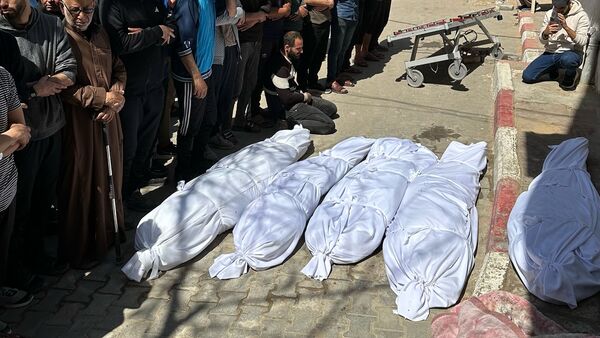
Dozens of Gazans were killed and injured as a result of Israeli airstrikes and shelling targeting various areas across the Strip on Monday, particularly in Khan Yunis in the south and Gaza City in the north.


Seventy-one martyrs and 153 wounded arrived at Gaza hospitals as a result of Israeli bombardment of the Strip over the past 24 hours, bringing the death toll from the ongoing war of extermination since October 7, 2023, to 52,314 dead and 117,792 wounded, according to the Ministry of Health in Gaza on Monday.


The Israeli army continues to commit massacres and war crimes against civilians and displaced persons in the Gaza Strip for the 42nd consecutive day, since violating the ceasefire on March 18.


On Monday, the Israeli military intensified its airstrikes and heavy shelling of Gaza's remaining residential neighborhoods, destroying residential buildings in Rafah and killing and wounding dozens of civilians. The blockade has led to an unprecedented humanitarian crisis.

ARAB AND WORLD

Tue 29 Apr 2025 8:22 am - Jerusalem Time

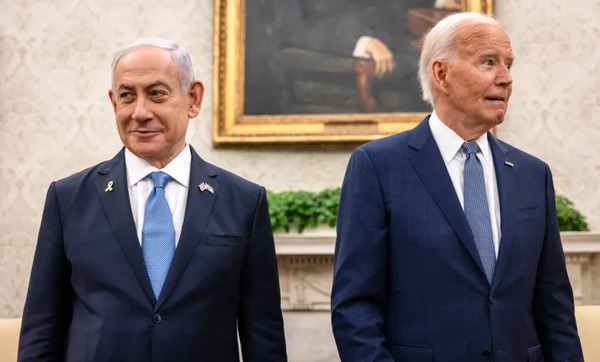
Biden Officials Admit They Never Pressured Israel to End Gaza War: Report

Occupied Palestine (Quds News Network)- A new report by Israeli Channel 13, translated by Drop Site News, has revealed that Biden administration officials admitted they never pressured Israel to end its genocide in Gaza.

The Channel 13 investigation showed that despite more than 30,000 Palestinian deaths, Biden aides continued to back Israel without enforcing a ceasefire. Israeli leaders openly bragged about using the administration’s support to prolong the genocide until Donald Trump’s possible return.

Nine top Biden officials, including former National Security Adviser Jake Sullivan and Ambassador Tom Nides, defended their unwavering support for Israel. Ilan Goldenberg, a senior U.S. national security aide, described Israel’s campaign in Gaza as “killing and destroying for the sake of killing and destroying,” without building any alternative plan for Gaza’s future.

The investigation also revealed U.S. efforts to create a post-war security plan, modeled after the anti-ISIS campaign. However, Israeli Prime Minister Benjamin Netanyahu rejected the proposals, refusing any Palestinian Authority involvement.

Former Israeli Ambassador Michael Herzog stated bluntly: “God did the State of Israel a favor that Biden was the president during this period… We fought for over a year and the administration never came to us and said, ‘ceasefire now.’ That’s not to be taken for granted.”

U.S. aides admitted Netanyahu deliberately dragged out the war. Some Biden officials even discussed using a major speech to pressure Netanyahu, but Biden ultimately chose not to act.

The report highlighted how Biden’s team blocked efforts to hold Israel accountable for aid obstruction. Stacy Gilbert, a State Department adviser, resigned after being excluded from the drafting of a mandatory arms compliance report. Gilbert said the final report falsely cleared Israel of violations, despite evidence settlers were looting aid trucks and Israel was blocking humanitarian deliveries.

Biden officials revealed that Netanyahu sabotaged negotiations that could have freed Israeli prisoners. Amos Hochstein confirmed that Israeli prisoners like Hersh Goldberg-Polin were about to be released but died due to Netanyahu’s stalling tactics.

This aligns with multiple statements by Hamas confirming that Netanyahu sabotaged several deals for his personal interests.

Despite Netanyahu publicly undermining Biden and insulting the U.S., the administration continued military and political support. Biden once reportedly told Netanyahu he was “full of shit” during a heated phone call, but later stood firmly by his side.

In May 2024, Biden paused a shipment of bombs over concerns about their use in Gaza. Days later, Netanyahu falsely claimed that the U.S. had frozen all weapons deliveries, forcing Biden to backpedal.

The report also showed that Israel wrecked a near-finalized U.S.-Saudi normalization deal. Israel refused to make any concessions to Palestinians, a move that shocked American officials. Dan Shapiro said some Israeli ministers made it impossible, and Amos Hochstein criticized Israel for missing a historic opportunity for normalization.

Former ambassador Michael Herzog concluded that Netanyahu deliberately delayed the Saudi deal, hoping Trump would return and claim credit.

PALESTINE

Tue 29 Apr 2025 8:20 am - Jerusalem Time

Israel Rejects Another Ceasefire Proposal in Gaza

Israel has rejected a proposal for a five-year ceasefire in Gaza that would have included the release of all Israeli prisoners, Israeli newspaper Yedioth Ahronoth reported on Sunday.An unnamed senior Israeli political source told the paper that Israel will not agree to a ceasefire that allegedly ‘allows Hamas to rearm and prepare for future attacks’.Meanwhile, Maariv newspaper reported that Israel’s Security Cabinet will hold its third meeting this week tonight to decide on expanding attacks on Gaza.


Two days ago, Hamas announced it was ready for a full prisoner exchange and a five-year ceasefire to end the genocide in Gaza. The resistance movement had previously proposed several plans to release all Israeli prisoners and end the genocide but Israel rejected them all.Tahir al-Nunu, media adviser to Hamas political bureau chief Khalil Al-Hayya, said the movement is open to a long-term truce but refuses to disarm. Sources close to the ongoing negotiations told Reuters that Hamas hopes to gain support from mediators for the proposal. 


They added that Hamas could agree to a ceasefire lasting between five and seven years, in exchange for ending the genocide, allowing Gaza’s reconstruction, and exchanging prisoners. While Hamas insists on a comprehensive agreement, Israel demands the return of all Israeli prisoners and the disarmament of Palestinian resistance factions without ending the genocide. In parallel, families of Israeli prisoners have called for a mass rally in Tel Aviv next Wednesday, ahead of Israel’s so-called “Independence Day”, which celebrates the Nakba.

Tensions also flared during Netanyahu’s recent court appearance on corruption charges. Families of Israeli prisoners shouted at him, accusing him of abandoning their loved ones in Gaza.Israel estimates that 59 Israelis remain imprisoned in Gaza. Meanwhile, Israeli detention centres hold at least 10,000 Palestinians. Many Palestinian detainees face torture, starvation, and medical neglect, which has led to dozens of deaths.Since Israel resumed the genocide in Gaza on March 18, more than 2,000 Palestinians have been killed and about 4,500 injured. Over 1000 of them are children.The Ministry of Health reports that Israel’s assault has killed 52,314 Palestinians and wounded 117,792 others since October 7, 2023.

ARAB AND WORLD

Mon 28 Apr 2025 10:23 pm - Jerusalem Time

After a conflict with Netanyahu, the head of the Shin Bet announces his resignation in June.

Israel's Shin Bet security chief, Ronen Bar, announced Monday that he will step down from his post on June 15. This follows a conflict with Benjamin Netanyahu's government, which issued a decision to dismiss him last month, while the Supreme Court froze the decision.


"As head of the Shin Bet, I assumed responsibility, and now I have chosen to declare the implementation of this responsibility and have decided to end my duties as head of the Shin Bet," Bar said in a speech at a memorial ceremony for the agency's fallen.


Bar addressed Netanyahu, saying, "Practically implementing responsibility is an integral part of the personal example and legacy of our leaders, and we have no legitimacy to lead without it," according to the Hebrew newspaper Yedioth Ahronoth.


Amid the Supreme Court's discussions about his removal, Barr added, "After 35 years of service, and in order to allow for an orderly process for appointing a permanent replacement and an orderly transition of duties, I will conclude my position on June 15, 2025."

PALESTINE

Mon 28 Apr 2025 10:08 pm - Jerusalem Time

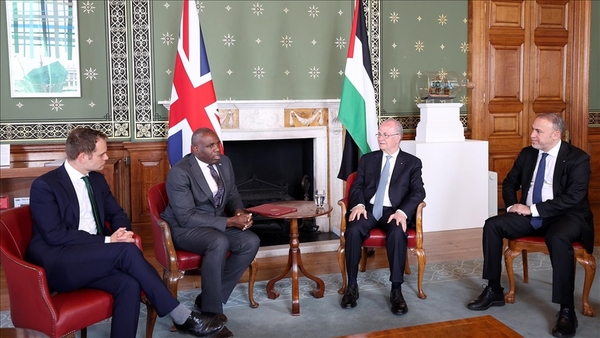
Mustafa meets with the British Prime Minister and Foreign Secretary

The Palestinian and British governments held high-level meetings in London on Monday. The two sides discussed the Israeli aggression and the catastrophic situation in the Gaza Strip, Israeli attacks on the West Bank, including East Jerusalem, and the need for an immediate ceasefire in the Gaza Strip, the entry of humanitarian aid, and respect for international humanitarian law by all parties.


During his meeting with British Prime Minister Keir Starmer and Foreign Secretary David Lammy, Prime Minister Mohamed Mustafa discussed elevating bilateral relations to a strategic partnership and reaffirming the commitment to the two-state solution and ending the occupation. He conveyed the greetings of President Mahmoud Abbas and expressed his appreciation for the British support provided to Palestine.


Both sides affirmed their commitment to working towards a two-state solution, and that ending the Israeli occupation is the only path to a just and sustainable peace in the Middle East.


They also stressed the importance of recognizing the State of Palestine, with Britain expressing its affirmation of the Palestinians' right to self-determination and its intention to recognize the state as an inalienable right.


Britain condemned settlement expansion, called for a halt to settlement activity, and condemned settler violence. Both sides emphasized the need for Israel to release Palestinian clearance revenues and the need to work within a coordinated approach for the next stages in Gaza, building on Palestinian-Egyptian-Arab initiatives under a single Palestinian national authority over the occupied territories, including the Gaza Strip. The Palestinian government expressed its commitment to continuing to work on the development agenda adopted by the government.


The two parties signed a memorandum of understanding for a framework that supports strategic cooperation and high-level dialogue in sectors of mutual interest, and reaffirms the commitment to the establishment of a Palestinian state within the context of the two-state solution.


The Memorandum also emphasizes the Palestinian Authority's position as the sole legitimate governing authority in the occupied Palestinian territories, and underlines the importance of unifying Gaza and the West Bank under its authority. The Memorandum of Understanding also affirms the Palestinian Authority's commitment to implementing its reform and development program as a priority, and the United Kingdom's commitment to supporting humanitarian and development priorities in the occupied Palestinian territories through an annual development dialogue, in addition to enhancing cooperation in the fields of trade exchange, developing the education sector, climate change, culture, and many other sectors of common interest.


The United Kingdom has announced a £101 million package for Palestine, allocated for humanitarian aid, to support the development of the Palestinian economy, and to enhance governance, reform, and institutional development. The allocation will be (fiscal year 2025/2026).


The meetings with Prime Minister Mohammad Mustafa were attended by Minister of State for Foreign Affairs and Expatriates Farseen Aghabekian-Shahin, Minister of Health Majed Abu Ramadan, and Palestinian Ambassador to the United Kingdom Husam Zomlot.

ARAB AND WORLD

Mon 28 Apr 2025 9:18 pm - Jerusalem Time

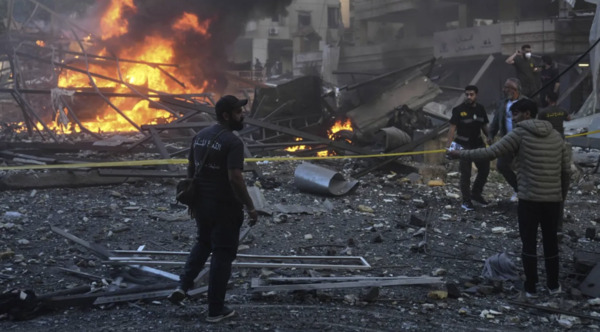
Hezbollah: Israeli raid on southern suburb a political attack

Hezbollah Secretary-General Naim Qassem described the Israeli airstrike that targeted Beirut's southern suburbs on Sunday as a "political attack" with "no justification."


"Yesterday, an attack took place in the southern suburbs of Beirut. This attack lacks any justification... This is a political attack, an attack to change the rules," Qassem said in a speech broadcast by Hezbollah-affiliated media.


More than 50 "terrorist targets"

For its part, the Israeli army announced that it had attacked more than 50 "terrorist targets" across Lebanon over the past month.


Israeli military spokesman Avichay Adraee said in a statement on the X platform that the army's raids were carried out "following violations of the understandings between Israel and Lebanon, which posed a threat to the State of Israel and its citizens."


Yesterday, the IDF attacked the southern suburb of Beirut, destroying infrastructure used to store precision missiles belonging to Hezbollah, according to Adraee.


Adraee published footage he said showed the targeting of infrastructure used to store precision missiles in Beirut's southern suburbs.

PALESTINE

Mon 28 Apr 2025 8:25 pm - Jerusalem Time

In a new escalation: Extremist Ben Gvir issues a decision to close the Jerusalem Fund and Endowment.

The extremist minister in the Israeli occupation government, Itamar Ben-Gvir, issued a decision on Monday to close the offices of the Jerusalem Fund and Endowment in East Jerusalem, in a blatant violation of all international norms and laws, and in a new aggressive move targeting the Palestinian presence in occupied Jerusalem.


The Jerusalem Governorate stated that this decision comes within the framework of a systematic campaign led by the occupation government to dry up the sources of Palestinian civil society work and confiscate everything that supports Jerusalemites and contributes to their economic and social empowerment.


She added that the political crime committed by Ben-Gvir, known for his extremism and racism, reaffirms that the occupation is heading toward an unprecedented escalation aimed at stifling Palestinian life in Jerusalem and undermining the resilience of Jerusalemites.

ARAB AND WORLD

Mon 28 Apr 2025 8:17 pm - Jerusalem Time

Three minors convicted in Sweden for shooting at Israeli defense company

Three minors were convicted in Sweden on Monday of involvement in a shooting at an office of Israeli defense company Elbit Systems in Gothenburg last year, according to Reuters.


A fourth minor was spared prosecution after being accused of carrying out the shooting at the building's entrance last October, as he was only 13 years old at the time of the attack—below the age at which he can be tried under Swedish law.


The shooting did not result in any injuries, and the court did not indicate any motive for the attack.


The Gothenburg District Court said in its ruling that the boy, who was 15 years old at the time, was convicted of incitement to attempted murder and sentenced him to 20 months in a juvenile detention facility.


She said the boy persuaded the minor attacker to open fire, knowing it was highly likely to result in deaths. The boy's lawyer declined to comment on the ruling.


While the other minors were acquitted of attempted murder, we were convicted of lesser charges: aiding and abetting threats, weapons offenses, and complicity in a crime.


Swedish police said last May that they had increased security measures around Israeli and Jewish institutions in the country after officers on patrol heard what they suspected was gunfire near the Israeli embassy in Stockholm.


Sweden has witnessed a widespread outbreak of armed violence in recent years, primarily by criminal gangs.


Swedish law stipulates that the minimum age for criminal responsibility in the country is 15 years.

PALESTINE

Mon 28 Apr 2025 7:31 pm - Jerusalem Time

Settlers storm Arab al-Malihat community in Jericho

Settlers stormed the Arab al-Malihat community, northwest of Jericho, on Monday evening.


Hassan Malihat, general supervisor of the Al-Baidar Organization for the Defense of Bedouin Rights and Targeted Villages, said that settlers riding horses stormed the community and roamed among residents' homes. He noted that these incursions have become a daily occurrence, as part of a policy aimed at restricting Bedouin communities and forcing their residents to leave their lands.

ARAB AND WORLD

Mon 28 Apr 2025 7:23 pm - Jerusalem Time

Trump renews call to make Canada the 51st US state

US President Donald Trump renewed his call on Monday to make Canada the 51st state of the United States.


This came in a speech he delivered via the Truth Social platform to the Canadian people heading to the polls.


Trump added that the United States supports Canada annually with hundreds of billions of dollars, noting that this support would only "make sense" if Canada became the 51st state of the United States.


Canada is holding early parliamentary elections today, following a decision made by new Canadian Prime Minister Mark Carney in late March.


Tensions between the United States and Canada began on March 4, after Washington imposed additional 25 percent tariffs on products imported from Canada and Mexico.


Trump has repeatedly expressed his desire to turn Canada into a US state (the 51st).

PALESTINE

Mon 28 Apr 2025 6:48 pm - Jerusalem Time

An Israeli security source claims that Netanyahu wants to end the Gaza war in October.

An Israeli security source claimed that Prime Minister Benjamin Netanyahu wants to end the war of extermination in the Gaza Strip by next October, two years after it began in October 2023.


Israel Hayom newspaper quoted an unnamed senior Israeli security source on Monday as saying in closed-door talks that "Netanyahu wants to end the war in Gaza by next October."


The source added, "This is the maximum target date, and if the conditions are right and the objectives (of the war) are achieved, the war will end before that," he claimed.


The source continued: "The rationale is that the war will not last more than two years."


The Israeli government did not immediately comment on the date mentioned by the Israeli security source.

PALESTINE

Mon 28 Apr 2025 6:03 pm - Jerusalem Time

Civil Defense in Gaza: 19 dead in separate Israeli raids on the Strip since dawn on Monday.

The Civil Defense in Gaza reported that at least 19 Palestinians were killed in Israeli airstrikes targeting various areas of the Gaza Strip since dawn on Monday.


Civil Defense officials said eight people were killed in an Israeli airstrike targeting the Abu Mahadi family home in Jabalia camp, north of the Gaza Strip. Another attack killed several other members of the Agha family in the Satar al-Gharbi area of Khan Yunis.


In western Gaza City, one person was killed in an Israeli airstrike on the Abu Mazen roundabout area, while two others were killed in an attack on a tent housing displaced persons in the Shafi'i camp, west of Khan Yunis.


"They were sleeping in their homes, feeling safe," said Abdul Majeed Abu Mahadi, who lost his brother and family in the bombing. "The missiles fell on them while they were in their homes, and children and women were killed." He added that his 65-year-old brother was killed along with his sons.


According to the Ministry of Health in Gaza, the death toll has risen to 2,222 Palestinians since the resumption of bombing, bringing the total death toll since the outbreak of the war to at least 52,314.

PALESTINE

Mon 28 Apr 2025 5:45 pm - Jerusalem Time

An injury by Israeli occupation forces in Al-Bireh

A child was shot by Israeli occupation forces on Monday evening during a raid on the Umm al-Sharait neighborhood in the city of al-Bireh.


The Red Crescent Society said in a brief statement that a 17-year-old child was injured by live bullets during the occupation forces' raid on the Umm al-Sharait neighborhood in al-Bireh.


According to local sources, an Israeli occupation force stormed the neighborhood, sparking clashes during which soldiers fired live ammunition and tear gas at residents.


The sources added that the occupation forces detained a number of citizens and checked their IDs during the raid, and arrested a young man whose identity is not yet known.

PALESTINE

Mon 28 Apr 2025 5:26 pm - Jerusalem Time

Hebrew media: The cabinet will meet on Monday to expand operations in Gaza amid stalled prisoner negotiations.

Hebrew media reported Monday evening that the Israeli security cabinet will hold its third meeting within a week to decide on expanding military operations in the Gaza Strip.


The newspaper quoted a senior political source as saying, "The chances of reaching a prisoner exchange deal have appeared slim in recent weeks."


For its part, Hebrew media reported that an Israeli source confirmed Tel Aviv's rejection of a five-year ceasefire proposal in Gaza, which includes the return of all detainees.


ARAB AND WORLD

Mon 28 Apr 2025 5:09 pm - Jerusalem Time

A majority of American Jews believe Trump is politicizing the fight against anti-Semitism for his own benefit.

The Trump administration declared last week that "harassment of Jewish students is unacceptable" when it suspended $2.2 billion in grants to Harvard University. University President Alan Garber responded Monday, saying that while he, "as a Jew and an American," is fully aware of the rise in anti-Semitism, defunding Harvard is not a solution.


The Trump administration has frequently cited anti-Semitism to justify its decisions to cut funding to prestigious universities, deport foreign students accused of anti-Jewish sentiment, and seek greater control over what is taught in American schools and universities.


While some American Jewish leaders hail President Donald Trump's efforts as the most aggressive fight against anti-Jewish bigotry in American history, others fear that Trump is politicizing the fight against anti-Semitism by using it to further his agenda—which could harm Jews in the long run, especially as Trump dismantles other anti-discrimination efforts. At the state level, lawmakers—mostly Republicans—are moving forward with bills that include a controversial definition of anti-Semitism that critics say discourages legitimate criticism of Israel. This disagreement has exacerbated long-standing tensions between liberal and conservative Jews, whose views increasingly differ about the Israeli government, and in some cases, Israel itself, as well as about which side of the political divide best represents their values and interests.


“Anti-Semitism is real, and it requires strong, constructive solutions,” Amy Spitalnick, CEO of the Jewish Public Affairs Council, told the Washington Post. “But what is happening now is exploiting the Jewish community’s legitimate and genuine concerns about anti-Semitism to undermine the rule of law, due process, educational institutions, and our democracy.” Morton Klein, national president of the right-wing Zionist Organization of America, disagreed, claiming that Trump is enforcing a federal anti-discrimination law as previous presidents should have done.


According to a number of polls, anti-Semitic acts have also increased in the United States, and the White House said that Trump is responding appropriately to this.


“If combating anti-Semitism is controversial to President Trump’s critics, their frustration has reached new lows,” White House spokesman Harrison Fields said in a statement last week. “No leader has been a stronger ally of the Jewish people than President Trump. His administration is fully committed to enforcing law and order, protecting civil rights, and ensuring that pro-Hamas extremists face the full weight of the law in our critical fight against anti-Semitism.”


While the Trump-Harvard feud has garnered significant attention, the broader battle shows no signs of slowing down. The Trump administration has similarly targeted other universities, from Princeton to Northwestern, and continues its crackdown on immigrants suspected of making anti-Israel statements.


While Trump and his opponents wage their battles nationally, a more subdued debate is taking place in six conservative states where anti-anti-Semitism bills have been introduced in recent months.


Jeremy Ben-Ami, president of J Street, a liberal pro-Israel and pro-two-state solution organization, stated in a press release last week that this push to criminalize criticism of Israel at the state level has been ongoing for years, but accelerated after the October 7 attacks and was intensified by the Trump presidency.


Ben-Ami, president of J Street, is concerned about the free expression implications of many of the proposals.


“There is a deeply disturbing pattern of state and local laws—as well as attempts at the federal level—codifying a definition of antisemitism that includes criticism of Israeli government actions and policies, potentially not only stifling free speech but criminalizing it,” Ben-Ami said.


The flashpoint, as is often the case these days, especially since October 7, is the question of when criticism of Israel becomes anti-Semitism. The Hruza bill adopts a definition of anti-Semitism that includes examples such as applying a "double standard" to Israel or describing it as racist.


Missouri Democratic Rep. Elizabeth Foxx said such language threatens free speech and punishes legitimate criticism of Israel. Foxx added, "It changes the way universities interpret speech. It changes and reshapes the definition of anti-Semitism, conflating real concerns about anti-Semitism with talk of war and what happened in Palestine after the October 7, 2023 massacre."


It's worth noting that the definition of antisemitism drafted by the International Holocaust Remembrance Alliance (IHRA) in 2016 is increasingly controversial. The draft stipulates that Israel may be criticized like any other country, but targeting it "as a Jewish group" constitutes antisemitism.


The definition provides examples of language that crosses the line, such as comparing Israel to the Nazis or blaming all Jews for Israel's actions. These examples are incorporated into many state laws.


Kenneth Stern, the chief drafter of the IHRA definition, strongly opposes codifying the examples in this way, saying they were intended for guidance only, and that enshrining them in law violates the First Amendment by penalizing views about Israel.


"I think it's bad policy, and as a lawyer, I think it's unconstitutional discrimination based on viewpoint," Stern told The Washington Post on Sunday. "I'm a Zionist, and Israel is important to me, but there are young Jews whose Jewishness leads them to a different viewpoint."


Congress has not yet incorporated the IHRA definition into US law, despite repeated proposals to do so. However, Trump signed an executive order in 2019, during his first term, directing government agencies to consider adopting it.
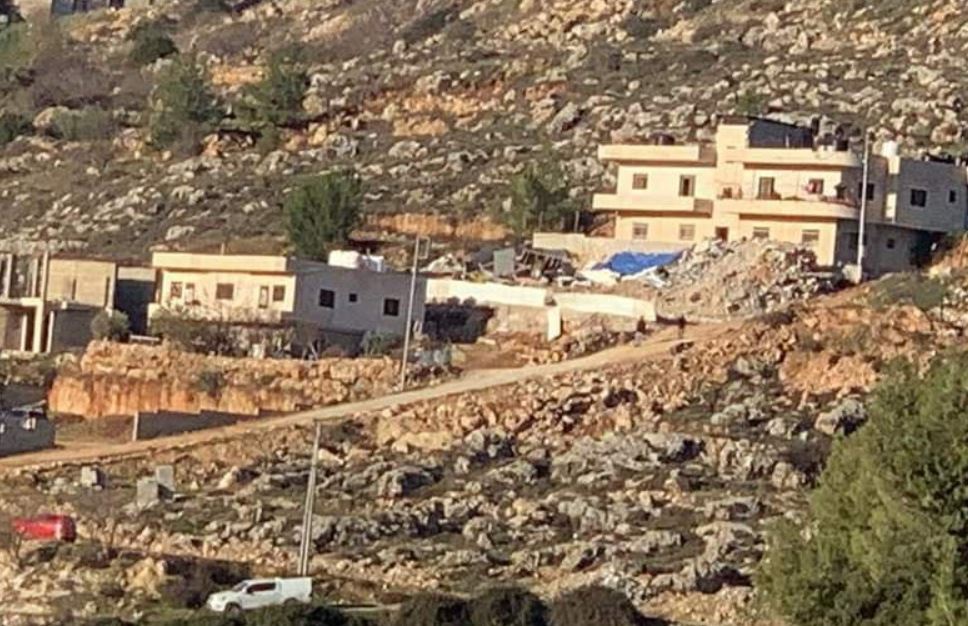
PALESTINE

Mon 28 Apr 2025 4:43 pm - Jerusalem Time

Three dead and wounded as the occupation forces bombed a house in Khan Yunis.

Three citizens were killed Monday evening when Israeli warplanes bombed a house in Khan Yunis, south of the Gaza Strip.


Medical sources reported that at least three civilians were killed and others injured when the occupation forces bombed the home of the "Agha" family near Al-Aqsa School in the Al-Satar Al-Gharbi area of Khan Yunis.


According to the latest Ministry of Health statistics, the death toll from the Israeli aggression on the Gaza Strip has risen to 52,314 dead and 117,792 injured since October 7, 2023. Thousands of victims remain buried under the rubble and on the streets, unable to be reached or rescued.

PALESTINE

Mon 28 Apr 2025 4:17 pm - Jerusalem Time

The occupation forces send military reinforcements to Tulkarm and arrest a young man in the city center.

Israeli occupation forces dispatched military reinforcements to Tulkarm on Monday, deploying heavily around Gamal Abdel Nasser Square in the city center.


According to local sources, occupation forces stormed the city center, driving against traffic, obstructing traffic and causing severe traffic congestion.


The sources added that the occupation soldiers raided a number of shops in the area, forced their owners to close their doors by force, pursued citizens, especially young men, checked their IDs, searched their mobile phones, and arrested the young man, Abdul Abu Ghaza, in front of his shop in the area.

A state of tension and confusion has prevailed among citizens as the occupation forces continue to deploy and engage in provocative measures against them, accompanied by reconnaissance flights, amid the ongoing aggression for the 92nd consecutive day.

PALESTINE

Mon 28 Apr 2025 2:54 pm - Jerusalem Time

Chronically ill patients in Gaza...between the agony of pain and imminent death due to the blockade

The ongoing blockade imposed on the Gaza Strip since early March 2025 has exacerbated the suffering of all its residents, especially those with chronic illnesses. These residents lack access to healthcare, due to the lack of medical equipment and specialized hospitals, in addition to a shortage of medicines due to depleted stocks.

The closure of crossings across the Gaza Strip has cast a shadow over all aspects of life there, transforming it into an unparalleled tragedy. Residents of these cities (from north to south) are experiencing all manner of death, while survivors of direct bombardment are suffering other forms of death due to malnutrition and a lack of medical supplies and healthcare, especially for those suffering from chronic illnesses.

It's worth noting that thousands of chronically ill patients are living in displacement shelters and tents without regular medical checkups. This poses a threat to their lives, given the blockade on their movement. Furthermore, living in these tents can cause illnesses due to environmental pollution.


The suffering of displacement with illness

Palestinian refugee Fayez Abdo (67 years old) has stopped taking his medication for chronic diabetes and high blood pressure for about 7 months.

Abdo has been displaced from Al-Bureij camp to Al-Nuseirat (central) and then to Rafah (south). He currently lives in a room he built from tin sheets, along with five other families. He complains that the war has also prevented him from receiving medication for side effects caused by his diabetes and high blood pressure.

Abdo told Anadolu Agency that an Israeli bombardment targeted a house adjacent to his home before he was displaced, causing an injury to his foot, which quickly deteriorated due to his diabetes and lack of treatment. He explained that he used to receive his medication from a medical clinic in Al-Bureij camp, but now lives without the medication or food that would help boost his immune system.

He continued, "I can't walk on my feet today. Every time I try, I fall to the ground. I don't feel any balance while walking."


A whole family of chronically ill people

“I found a small space for me, my wife, and my son inside a science lab at a school housing displaced people in the southern Gaza Strip,” says Islam Abu Raq’a, a displaced person living in the schools. “Our health is very bad. I have cancer, and my wife has kidney failure.”

Abu Raq'a continues, saying that despite her illness, his wife is taking care of him and their son, who had donated one of his kidneys to her and is still bedridden without medication or painkillers.


He appeals to save his life.

In an appeal launched by citizen (heart patient) Mohammed Abed, he called for saving his life in light of the lack of medical care provided to him.

Abed, who suffers from valve problems and needs surgery, said, “I need surgery, but the doctors are telling me to postpone it because of the urgent surgeries caused by the war on Gaza, as well as the lack of medical equipment, most importantly the interventional cardiac catheterization I need for the operation.” He called for the need to reinforce medical staff with the necessary personnel and medical supplies to perform the surgeries that have been postponed for months.

Patient Abed expressed his fear that his health would deteriorate due to the postponement of the operation, stressing that the health system in the Gaza Strip is collapsing due to the ongoing war and Israel's refusal to allow the entry of necessary medications for patients.


Diseases resulting from war

The ongoing war for more than 18 months has left many people suffering from chronic illnesses such as stomach ailments, anemia, liver disease, rheumatism, neurological diseases, spinal cord problems, delayed growth, and birth defects.

With the deterioration of the health situation, more than 200,000 patients are now suffering from chronic diseases without medical follow-up or medication. More than 1,000 kidney patients require regular dialysis, while 11,000 citizens with heart disease suffer from high blood pressure, and 3,220 others suffer from various heart conditions.

Thousands more suffer from asthma, lung diseases, and various chest diseases. More than 13,000 diabetics require insulin, and 19,780 people suffer from cancer, including 122 children with leukemia. All of these people are at risk of dying after medicine stocks in the Gaza Strip ran out due to the blockade of humanitarian aid and the closure of crossings.


Kidney patients

Sabah Yassin, a kidney failure patient, says: “We kidney patients are dying slowly, and every night I feel like I’m with the dead. We need dialysis three times a week for four hours, and that’s enough for us.”

Speaking to Al Jazeera, Yassin referred to the food shortages she is suffering from, saying, "Eating canned food is unhealthy for us," adding, "We come to the hospital on foot because there are no cars, and this causes us great hardship."

Dr. Munir Al-Barash, Director General of the Ministry of Health in the Gaza Strip, confirms that “kidney patients are among those we consider vulnerable. They must have access to all the necessary dialysis medications and must undergo dialysis more than three times a week, with some requiring dialysis four times.”

Al-Barash added, "These capabilities are not available in Gaza, and the mortality rate is high, as is the case during war, widespread displacement, and unstable hospitals." He noted that the health situation is heading toward further deterioration.


Lack of resources

Dr. Khalil Al-Daqran, spokesman for Al-Aqsa Martyrs Hospital, says the shortage of medical supplies and medicines has reached dangerous levels, with conditions in all hospitals across the Gaza Strip deteriorating.

Al-Daqran added, in an interview with Al Jazeera, that more than 60,000 children are at risk of death due to malnutrition, in addition to the lack of vaccinations for 650,000 children, after the occupation prevented the entry of any medical supplies. This threatens their lives, and the lives of neighboring countries, due to the contagion that accompanies polio if the suffering caused by the prevention of vaccine entry continues.

Dr. Ghazi Al-Yaziji, Head of the Kidney Dialysis Department at Al-Shifa Medical Complex, explains: “Before October 7, 2023, we had approximately 1,100 dialysis patients in the northern and southern governorates. Now, there are 700 patients. This means that 42% of them have died as a result of a number of dialysis units being out of service due to the blockade and their complete destruction, in addition to patients being confined to their homes and unable to reach the dialysis units.

Al-Yaziji added that the shortage of dialysis machines, due to their destruction or burning by the occupying army, has forced the reduction of dialysis sessions, resulting in complications that have even led to death.


About the Palestinian Information Center


PALESTINE

Mon 28 Apr 2025 2:52 pm - Jerusalem Time

The Child Mohammed Hijazi lost his eye due to Israeli bombs in Gaza.

In a spring that brought nothing but pain to the child, Mohammed Khaled Hijazi, while he was playing like any other child his age, the unexpected happened.

Mohammed, a seven-year-old Palestinian boy, lost his right eye when a suspicious object left over from the Israeli war exploded while he was playing with his friends in front of their destroyed home in Jabalia camp, north of the Gaza Strip, last March.

“My son was just playing with other children,” his father, Khaled Hegazy, says, trying to hide his heartache. “He wasn’t carrying a weapon and didn’t commit any crime. What was his fault? Why was his eye stolen like this?”

Mohammed had no idea that what he had picked up from the ground was a deadly weapon, left behind by one of the attacks that did not distinguish between a house and a toy, between a stone and a child.

The explosion destroyed his right eye and injured his face. What's even more devastating is that his left eye is in real danger, requiring urgent medical intervention outside the Gaza Strip.

But the blockade imposed on Gaza stands as a wall of impotence in the way of his father's attempts to save what remains of his son's sight.

“I am not asking for a miracle, but I want Mohammed to see again and play again like other children. Every day that passes is wasting time, and his eyes are in danger,” the father added.

Mohammed's story is not an exception in Gaza. Rather, it is a picture of the ongoing suffering of children facing death not on the battlefronts, but in playgrounds and amid the rubble of their homes.

According to reports from human rights organizations, hundreds of suspicious objects from war remnants remain scattered in residential areas, threatening the lives of civilians, especially children, on a daily basis.

In light of this reality, Mohammed's family has launched urgent humanitarian appeals to international medical institutions and human rights organizations to provide Mohammed with safe treatment before he loses his sight completely.

“We don’t ask for anything but a decent life for our children. We don’t ask for anything more than to escape death and live with open eyes, not closed from terror or blindness,” the father concludes in a choked-up voice.

The story of Mohammed Khaled Hijazi is a living testimony to the reality of besieged Gaza, and a stark reminder that war doesn't end with the end of the bombing. Rather, its scars remain embedded in the ground, waiting for someone to step on them—whether a child or a small dream.


PALESTINE

Mon 28 Apr 2025 2:47 pm - Jerusalem Time

Maariv: The occupation army is exhausted and unable to resolve the battle with Hamas.

Avi Ashkenazi, the military correspondent for the Israeli newspaper Maariv, reveals that the Israeli army is suffering from severe exhaustion in the Gaza Strip and is no longer able to impose a decisive military victory on the Islamic Resistance Movement (Hamas), which has shifted to guerrilla warfare. This is despite the army's success in inflicting severe blows on Hezbollah in Lebanon.


Ashkenazi noted that the Israeli army launched a precision airstrike on Sunday evening targeting a building in Beirut's southern suburbs, destroying a Hezbollah missile depot hidden inside. He noted that the operation took place in broad daylight, which, in his opinion, reflects Israel's sense of strength and ability to operate deep within Lebanese territory against one of Hezbollah's strategic assets.

Failure in Gaza

The military correspondent claims that the Israeli operations in Lebanon demonstrated that the army was able to win the battle there, managing its movements with precision and force at any point where it perceives a threat or an attempt by Hezbollah to rebuild its military strength, whether in Lebanon, Syria, or elsewhere.

According to Ashkenazi, Israel deliberately focused its strikes in Lebanon on Hezbollah targets, without directly targeting Lebanese civilians. This helped establish a stable governing structure there and significantly weakened the party's political and social influence, which negatively impacted its military strength.

However, he asserts that the situation in the Gaza Strip is completely different. Although the Israeli army destroyed numerous Hamas assets and razed entire neighborhoods, such as Rafah and other parts of the Strip, Israel "has not been able to impose a clear conviction that it has won the war or defeated Hamas and the Palestinian factions."

Ashkenazi adds that Hamas has shifted to guerrilla warfare against the Israeli army, making the situation of Israeli forces in the Gaza Strip "unfavourable." He explains that "the army is carrying out attacks in various areas, but these are not large-scale violent battles, but rather limited defensive battles in small areas. Most of the forces are stationed in specific locations, trying to create defensive zones around them without advancing or retreating, which leads to the exhaustion of the forces."

fatigue and wear and tear

Ashkenazi points out that this situation is exhausting the army, whether reserve or regular soldiers, as many have been in Gaza for nearly a month without any vacation or real rest, and without a clear vision of the next target or overall strategy for the attack.

The military correspondent believes that "this leads to the erosion of the army and tens of thousands of reserve soldiers and tens of thousands of regular soldiers."

He adds that this is "the worst thing that could happen to the army," noting that senior officers, despite their attempts to maintain high morale, acknowledge during field visits that this situation cannot continue for long.

The reporter revealed that tens of thousands of reserve soldiers recently received new call-up orders for service for an additional 50 to 80 days, particularly in the Philadelphi and Morag corridors. This will force many of them to inform their families that they will miss their summer vacation and family vacations both inside and outside Israel.

Ashkenazi stated that the Ministry of Defense and the army distributed entertainment vouchers to families of reserve soldiers yesterday for hotel stays, but that many of them will not be able to use them until next summer or perhaps the summer after, even though the vouchers are valid until May 2031. He questioned whether this long-term plan was deliberate or merely a coincidence.


Concluding his article, the Israeli correspondent warned of the continuation of the current situation in Gaza, noting that it exhausts the Israeli army and threatens its ability to continue operations efficiently if this prolonged attrition continues without achieving clear results.

Source: Maariv

PALESTINE

Mon 28 Apr 2025 2:22 pm - Jerusalem Time

The occupation delivers stop-work notices in the pocket north of Jerusalem.

Today, Monday, the Israeli occupation forces delivered notices to stop construction in the town of Al-Jib, north of occupied Jerusalem.


Local sources reported that the occupation authorities stormed the town and served notices to a number of citizens ordering them to halt construction on three homes and caravans for raising livestock.


According to the Wall and Settlement Resistance Commission, the occupation authorities carried out 58 demolitions last March, targeting 87 facilities, including 39 inhabited homes, 6 uninhabited ones, 26 agricultural facilities, and others. The demolitions were concentrated in the governorates of Nablus, with 15 facilities demolished, followed by Tulkarm with 13, Jerusalem with 19, and Salfit with 15.

PALESTINE

Mon 28 Apr 2025 1:32 pm - Jerusalem Time

In a paper by Addameer: The occupation laws and the 2024 amendments are a tool for oppressing and persecuting prisoners.

In a paper it issued, Addameer Prisoner Support and Human Rights Association monitored the legal amendments that the Israeli occupation has continued to impose on Palestinian prisoners since October 7, 2023, stressing that the amendments passed in 2024 are merely a tool for oppressing and persecuting prisoners.


Addameer explained that since the events of October 7 and the subsequent genocide against the Gaza Strip, the Israeli occupation forces have arrested thousands of Palestinians from Gaza and the West Bank, including East Jerusalem, and detained them in facilities run either by the Israeli military or the Israeli Prison Service, under various legal systems.

Despite the diversity of detention facilities, testimonies collected by lawyers and human rights organizations from former and current detainees reveal that they are systematically subjected to inhumane detention conditions characterized by ill-treatment, including torture, sexual violence, and other crimes.


The foundation added that prisoners and their families have been subjected to systematic targeting through laws and bills that the Israeli Knesset has been passing or discussing since October 7, 2023.


A set of racist laws targeting prisoners


The paper noted that the Israeli Knesset continued in 2024 to pass racist laws targeting Palestinian prisoners, their basic rights, and the rights of their families, leading to the displacement of prisoners' families in occupied Jerusalem. The occupation authorities also continued to extend the state of emergency in prisons, including holding court hearings via videoconference, denying prisoners access to court, and detaining them without beds amid severe overcrowding.


She explained that the Knesset has focused this year on enacting or proposing a series of laws that impact the economic lives of Palestinians in general, and prisoners and their families in particular. The most prominent of these laws is a bill that allows those harmed by "resistance" operations—according to the Israeli definition of "terrorism"—to file compensation claims against those who support these operations, including the Palestinian Authority.

The Knesset also discussed a bill imposing sanctions on financial institutions in the West Bank and Gaza Strip if they are proven to transfer funds to released prisoners and families of martyrs, according to Israeli classifications.


The law imposes restrictions on financial institutions within the occupying state if they deal with these foreign institutions without reporting them.

Two draft laws were also proposed to deduct funds from withheld Palestinian taxes to fund the treatment of prisoners in Israeli jails, a clear evasion of the occupation's legal responsibility.

On October 11, 2024, a law was passed to deduct a portion of tax revenues to fund Israeli defense lawyers appointed to defend prisoners who participated in the events of October 7, 2023.

However, the Israeli Public Defender's Office refused to represent any Palestinian prisoner from Gaza arrested after October 7.

The paper indicated that these laws are merely part of a series of measures through which the occupying state seeks to strangle prisoners and their families by various means.


Unlawful Combatants Arrest Law


Regarding detainees from the Gaza Strip, Addameer explained that some of them were detained under the 2002 “Internment of Unlawful Combatants” Law, which fundamentally violates the guarantees established by international humanitarian law and human rights law.

She pointed out that this law, in 2024, did not distinguish between adult and child detainees, nor did it provide children with any special protection guarantees.


She pointed out that persons deprived of their liberty during armed conflicts are extremely vulnerable and at risk of ill-treatment, particularly when they are unlawfully detained, as practiced by occupying authorities.

She added that international humanitarian law sets minimum standards for detention, requiring legal safeguards from the outset of detention and throughout its duration, while ensuring detainees' access to the outside world to monitor their conditions.


Violation of international laws


Addameer emphasized that the Israeli occupation's violations of international humanitarian law are evident in its treatment of the Gaza Strip as a non-occupied territory, despite its effective control over it. This constitutes a violation of international laws prohibiting demographic and political changes in occupied territories.

In this context, the International Court of Justice issued an advisory opinion in 2024 affirming the illegitimacy of Israeli sovereignty over any part of the Palestinian territories and calling on the United Nations and member states to take practical steps to end the occupation.


In the West Bank, despite the occupation's claims to be implementing the Geneva Convention, the reality reveals widespread violations, most notably the imposition of exceptional laws and the trial of Palestinians in military courts, in contravention of the provisions of the convention, which mandate the protection of basic rights for civilians.


Addameer concluded by stressing that all legal measures taken by the occupying state against Palestinians, including arrest and trial, constitute unlawful arrests and violate international laws.

PALESTINE

Mon 28 Apr 2025 1:30 pm - Jerusalem Time

Israeli occupation begins building a barbed wire fence to isolate Sinjil and Turmus Ayya from the main road.

On Monday, the Israeli occupation began erecting a barbed wire fence separating the towns of Sinjil and Turmus Ayya, north of Ramallah, from the main road connecting the cities of Nablus and Ramallah.

Local sources reported that the occupation forces have begun erecting 4-meter-long iron poles on the lands of the town of Sinjil, in preparation for the construction of a barbed wire fence stretching approximately two kilometers along the main road they call "Route 60." This comes after bulldozing citizens' lands in the area in recent months.

On August 20, the Israeli occupation announced a "military order" to seize new land to reroute the planned barbed wire fence along the towns of Turmus Ayya and Sinjil, north of Ramallah.

Last February, the occupation authorities notified the seizure of 29 dunams of land from the two towns to build a fence that prevents citizens from accessing the main road, thus depriving them of access to their lands behind the fence.