PALESTINE

Mon 05 May 2025 2:30 pm - Jerusalem Time

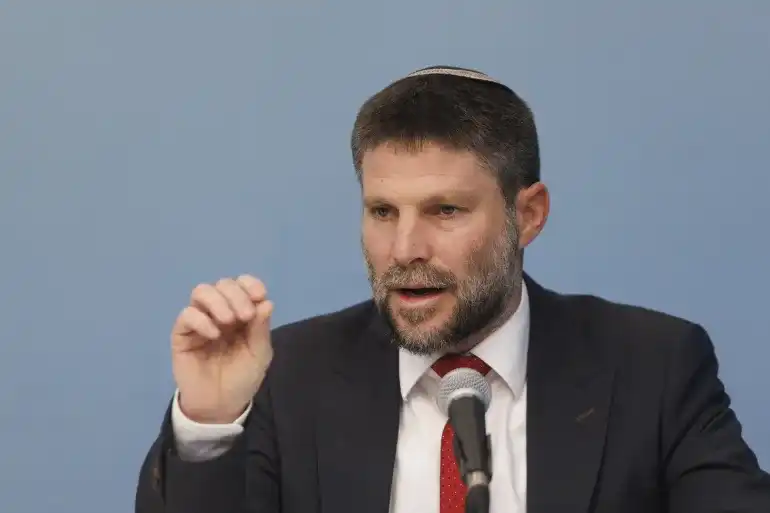
Smotrich: All Gaza residents will be evacuated to the south of the Morag axis.

Israeli Finance Minister Bezalel Smotrich said on Monday that "all residents of Gaza will be evacuated to the south of the Morag axis (in the southern Gaza Strip), an area where only humanitarian aid will be distributed. A people seeking life is occupying its own country."


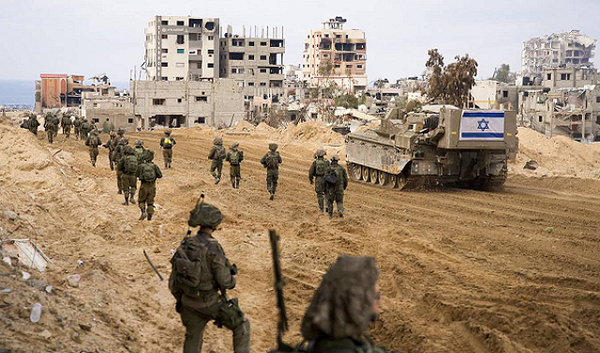
Smotrich's remarks came after the Israeli cabinet approved an expansion of the military operation in the Gaza Strip last night.


He added, "The cabinet's decision is that after the maneuver begins, there will be no withdrawal from the occupied territories, nor in exchange for a deal for the kidnapped soldiers. The only way to free the kidnapped soldiers is to defeat Hamas."


According to Smotrich, who calls for occupying the Gaza Strip and building settlements there, "We are occupying Gaza in order to remain. There will be no more entry or exit. This is a war for victory, and it is time to stop fearing the word 'occupation.'"


In the same context, Israeli media published more information this morning, Monday, about the decisions of the political-security cabinet that was held last night, citing a "political source in the Prime Minister's Office." It is clear from them that the Israeli military plans do not include anything new and speak of occupying the already occupied Gaza Strip and continuing to starve the people of Gaza, under the pretext of exerting military pressure on Hamas to agree to a prisoner exchange on Israeli terms, which Israel has failed to achieve over the 19 months since the beginning of the war until today.


According to a "political source," the military plans unanimously approved by the cabinet last night and presented by IDF Chief of Staff Eyal Zamir aim to "defeat Hamas in Gaza and return the kidnapped soldiers, and are fully consistent with the Prime Minister's (Benjamin Netanyahu's) statements in recent months."


He added that the cabinet approved by a large majority "the possibility of distributing humanitarian aid, if needed, to prevent Hamas from controlling supplies and destroying its governing capabilities," and that cabinet ministers were told that at this stage there is enough food in Gaza, contrary to reports from all international aid organizations operating in the Strip.


The Israeli political source continued that the military plan includes "occupying and controlling the Gaza Strip, displacing the Gazan population southward in order to deprive Hamas of its ability to distribute humanitarian supplies, and conducting severe attacks against Hamas. These operations will help defeat it."

PALESTINE

Mon 05 May 2025 1:33 pm - Jerusalem Time

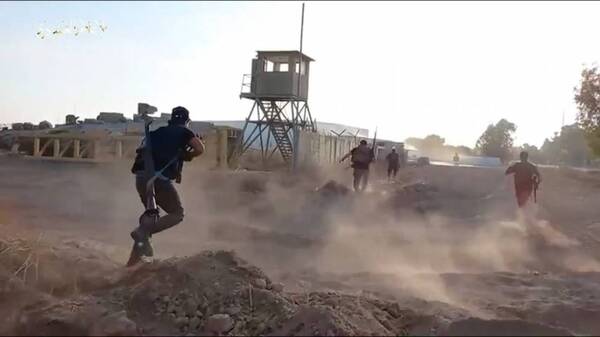
The Israeli government has decided to reject the formation of an official commission of inquiry into the events of October 7.

The Israeli government decided during its weekly meeting today, Monday, that it will not form an official commission of inquiry into the failures of October 7, following the political-security cabinet's decision last night to expand the war on Gaza.


This comes despite a letter sent by Attorney General Gali Baharav-Miara to the government, demanding that they "make a decision regarding the investigation into the events of October 7. Refraining from making a decision regarding an official commission of inquiry is damaging and undermines the investigation into the truth."


The government decided to work with the Knesset to formulate a bill to establish a "special" rather than an official commission of inquiry, and to inform the Supreme Court of this within 90 days. The Supreme Court had previously demanded that the government explain its refusal to form an official commission of inquiry following petitions on the matter.


The government stated in its decision that "the (special) investigation committee will represent diverse public opinions and will enjoy the confidence of the majority of the public."


Minister David Amsalem attacked the court, saying, "The Supreme Court is part of the case," and that Supreme Court President Yitzhak Amit usurped the position for himself and wants to establish a state commission of inquiry against the government. Minister Amichai Chikli added, "We must investigate backward (before October 7). We have no confidence in the attorney general." Minister Yoav Kisch said, "The attorney general would have stopped the prime minister's trial if it hadn't been politically motivated."


Cabinet Secretary Yossi Fuchs read from the transcript of a deliberation, during which the Attorney General was asked about her position on changing the date for the formation of an official commission of inquiry in light of the war. Fuchs responded affirmatively. Fuchs said that "the Attorney General lied to the court" because she supported the petitions demanding the formation of an official commission of inquiry.


The Attorney General explained in her letter to the government that "even if a decision is made to form an official commission of inquiry soon, its work will begin in at least several months. Another issue is that most of the senior security officials who will testify before the official commission of inquiry have left their positions or will soon leave them, and in any case, they are expected to demand participation in the State Comptroller's investigation."


The October Council, which includes the families of more than 1,500 people killed or injured on October 7, stated that "the government is in a state of conflict of interest. We will not allow the formation of a convenient investigative committee. Those being investigated cannot appoint the investigator who will investigate them. The Israeli government now openly admits that it will formulate a bill to establish an alternative, convenient investigative committee. We remind government ministers, following the fact that an official commission of inquiry will be forced to investigate your decisions in the years preceding October 7, that you are in a state of blatant conflict of interest."

PALESTINE

Mon 05 May 2025 1:03 pm - Jerusalem Time

52,567 dead in the Gaza Strip since October 7, 2023

The Ministry of Health in the Gaza Strip reported that the death toll from the Israeli aggression has risen to 52,567 dead and 118,610 injuries since October 7, 2023.


In a brief statement on Monday, it said, "32 dead (including 9 rescued dead) and 119 injured people arrived at hospitals in the Gaza Strip over the past 24 hours."


It confirmed that the death toll and injuries since March 18, 2025 amounted to (2,459 dead and 6,569 injuries).

ARAB AND WORLD

Mon 05 May 2025 12:45 pm - Jerusalem Time

Pastoral settlement: a complete system behind pastoral settlements

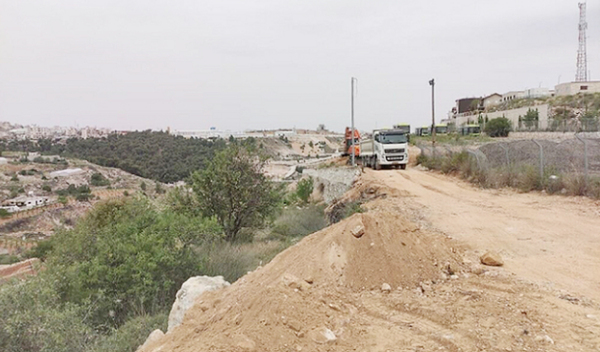
The pastoral outposts in the West Bank are not an independent phenomenon occurring in isolation from the state. Rather, they are underpinned by an integrated system that builds infrastructure, paves roads, purchases equipment, establishes security systems, and violently controls hundreds of thousands of dunams of land. Peace Now has revealed that most of the financial resources funding the pastoral outposts come from taxpayers.
During 2023 and 2024, NIS 54 million was allocated from the general budget for the benefit of pastoral outposts. These funds were transferred directly and explicitly through the Ministry of Settlement and the Settlement Division to the settlement regional councils and from there to the pastoral outposts. An additional NIS 10 million has been allocated from the 2025 budget to fund "security measures" for these outposts.
Local settlement authorities receive annual funding of approximately NIS 30 million to support the "State Land Protection" project. This funding is used to pave roads, operate drones, purchase vehicles, build fences, and fund field personnel working to consolidate the seizure of Palestinian land.
The Ministry of Agriculture transfers direct grazing support to pastoral outposts amounting to no less than NIS 1.66 million, in addition to indirect support transferred to organizations recruiting volunteers to support these outposts. This support totaled approximately NIS 20 million between 2019 and 2023.
In addition to managing government funds allocated for "security measures" and transferring them to outposts, the Settlement Division provides outpost owners with grants to develop commercial projects worth no less than NIS 1.65 million, as well as loans, the total value of which is not disclosed.
The Amana movement and the Jewish National Fund also invest millions of shekels in these outposts. While Amana focuses on infrastructure development, the JNF primarily funds volunteers who help operate the pastoral outposts. The state also contributes to supporting these outposts by facilitating fundraising campaigns, recognizing these donations as expenses for tax purposes.
Supported by the Jewish National Fund
The Jewish National Fund was established by a decision of the Zionist Congress in 1901 to purchase land in Palestine and prepare it for Jewish settlement. The fund's annual budget in 2023 amounted to approximately 4.5 billion shekels. The fund's board of directors includes representatives of the Zionist parties in Israel, as well as representatives of Jewish communities worldwide. Since 1967, the fund has played a pivotal role in developing settlements and purchasing land in the occupied territories. The fund finances various projects within the settlements, including the establishment of public parks, tourist trails, roads, the development of water reservoirs and irrigation infrastructure, and the preparation of land for agriculture. It was recently revealed that the fund had resumed land purchases in the West Bank after a period of hiatus.
Documents in Peace Now's possession indicate that the fund likely financed or implemented infrastructure projects for four pastoral outposts: Shirat Ha'askesem, Goshen, Nof Gilad, and Malachi Hashalom. The documents include details on the costs of "developing access roads to pastoral outposts in the Jordan Valley." The total cost is estimated at approximately NIS 2 million. Another document discusses the development of a road to the Givat Eitam farm at an estimated cost of NIS 1.2 million.
In recent years, the Fund has funded vocational rehabilitation and support programs for at-risk youth living in pastoral outposts, some of whom frequently participate in attacks against Palestinians. These funds constitute a primary source of funding for these youths' continued presence in the outposts.


PALESTINE

Mon 05 May 2025 12:41 pm - Jerusalem Time

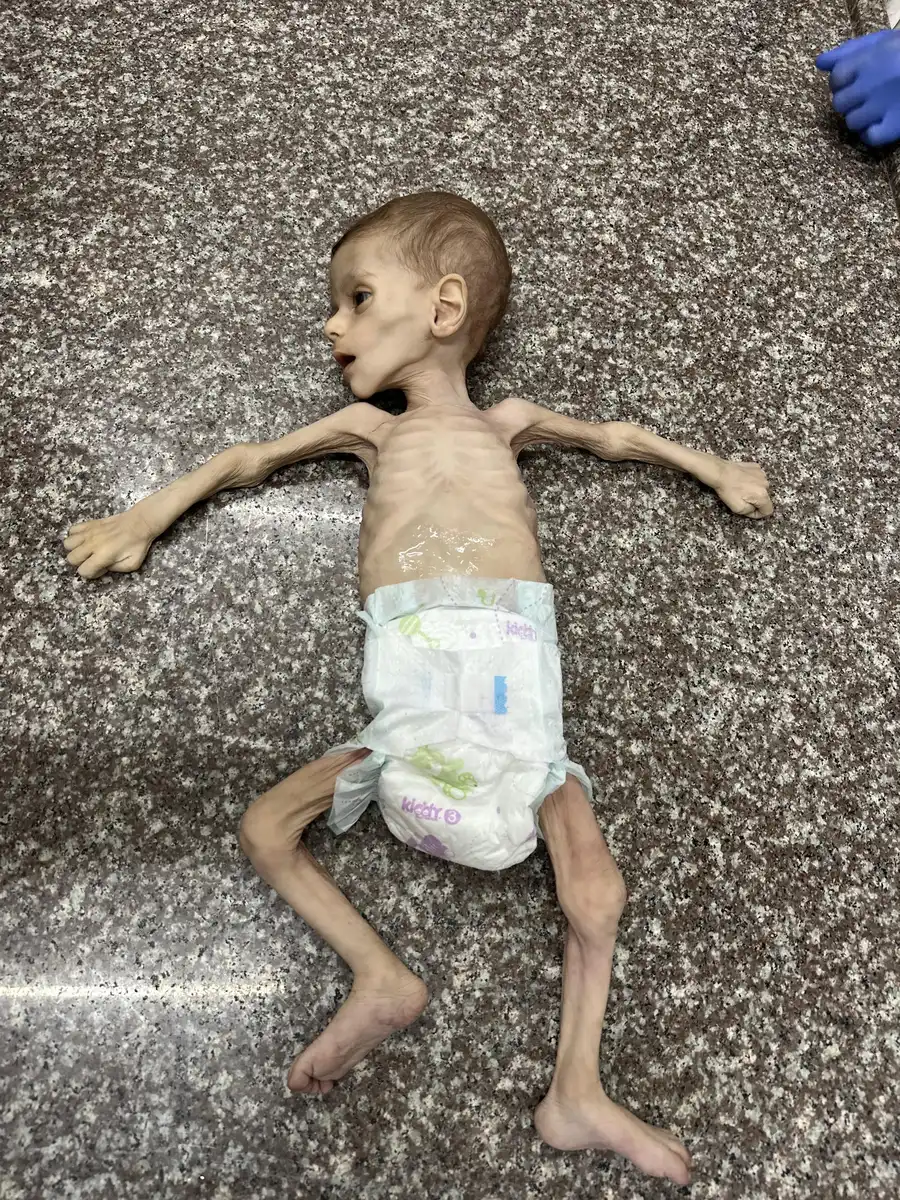
The death toll from malnutrition in Gaza has risen to 57 children.

Medical sources in Gaza announced on Monday that the death toll among children due to malnutrition has risen to 57.


The sources explained that the children of the Gaza Strip "have become homeless and are living in catastrophic conditions in displacement sites."


The sources renewed their "urgent appeal to the free people of the world that saving the children of Gaza is not an option but a humanitarian duty."


In early March, Israel halted the entry of all types of aid into the Gaza Strip, days before the war resumed.


This has plunged the Gaza Strip, with a population of more than two million, into what is believed to be the worst humanitarian crisis since the war began in October 2023.


The United Nations Children's Fund (UNICEF) warned that more than 96 percent of women and children in Gaza are unable to meet their basic food needs.


A United Nations report indicated that approximately 1.95 million Palestinians, out of a population of 2.2 million, suffer from critical levels of food insecurity.


PALESTINE

Mon 05 May 2025 12:24 pm - Jerusalem Time

West Bank: Houses demolished, others notified, and dozens of olive trees cut down

The occupation army continues its policy of demolishing homes, notifying others, and cutting down dozens of olive trees in the West Bank.


In Ramallah, occupation forces and settlers demolished a house, served two demolition notices, and cut down 200 olive trees during their ongoing assault on the village of Al-Mughayyir, northeast of Ramallah, since yesterday evening.


Marzouq Abu Naim, deputy head of the village council in Al-Mughayyir, told local sources that Israeli bulldozers demolished the home of Imad Fathi Abu Aliya, which was 150 square meters in size and was home to five people.


He continued: The occupation forces delivered a demolition notice to citizen Hudhayfah Abu Aliya, and had delivered a demolition notice to his brother Abdul Rahman yesterday.


Settlers attacked the village on Sunday evening and cut down 200 olive trees belonging to citizens Mohammed and Samir Hamayel.


This morning, occupation forces stormed the village, closed all entrances, and launched a wide-scale campaign of raids on citizens' homes. They detained a number of young men and subjected them to field investigations. Meanwhile, the village schools announced a delay in school hours.


In Qalqilya, Israeli occupation forces, accompanied by a military bulldozer, stormed the village of Al-Funduq and took up positions in its northwestern area. They proceeded to demolish a house, measuring approximately 200 square meters, belonging to Firas Talal Balih, on the pretext of building without a permit.


In a related development, Israeli occupation forces raided the village of Nabi Elias, raiding several vehicle repair shops located on the main road and seizing vehicles without providing any explanation.


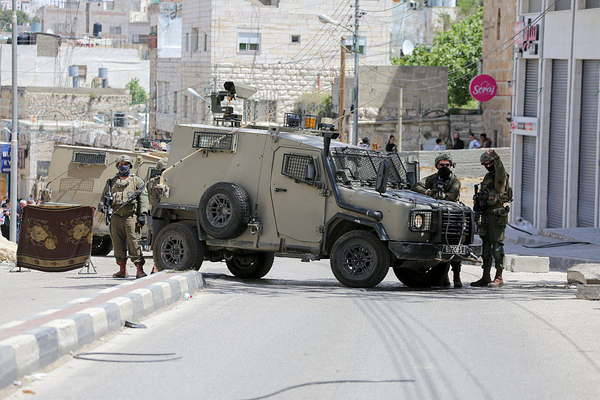
The occupation forces also tightened their military measures at the entrance to the village of Hajjah, setting up a military checkpoint where they stopped citizens' vehicles and checked the IDs of passengers, obstructing movement to and from the village.

PALESTINE

Mon 05 May 2025 11:46 am - Jerusalem Time

66 dead among the prisoners and deliberate medical neglect of Ofer prisoners

The Prisoners Club said, today, Monday, that the number of martyrs among the prisoners and detainees whose identities are known since the beginning of the war of extermination has risen to (66) dead, including a child, and (40) martyrs from Gaza at least, after the announcement of the martyrdom of prisoner Muhyi al-Din Najm yesterday.


The Prisoners' Club confirmed in a statement that the occupation continues to conceal dozens of martyrs among the detainees in Gaza.


The Prisoners Club indicated that the martyr prisoner Najm is the (303) dead among the prisoners and detainees whose identities are known since 1967.


He pointed out that the occupation continues to detain the bodies of (75) dead, including (64) since the beginning of the war of extermination, while dozens of martyrs from Gaza detainees are still subject to enforced disappearance.


In the same context, the Commission of Prisoners' Affairs and Ex-Prisoners stated that "the administration of the occupation's Ofer prison continues to raid prisoners' rooms and oppress them, while deliberately neglecting their medical care."


The Commission's lawyer, following a visit to a number of prisoners there, reported that the prisoners are suffering from the quality and quantity of food, which remains poor and scarce, lacking sugar and salt. Repression units also raid their rooms, and recently, the "Matsada" units confiscated their mattresses and imposed punishments on them.


As for the break, the prisoners are denied it, often without reason, and it lasts for half an hour at six in the morning. They also suffer from a shortage of clothing.


The Authority’s lawyer visited a number of prisoners in Ofer prison, including administrative detainees: Qutaiba Samour from Tulkarm, who is in Section (19), Room (8), and has been suffering from itching in his body for about a month. He asked the prison administration several times to conduct tests for him, but to no avail. Abdullah Muhammad Saleh Manasra from Jenin, who is in Section (11), Room (15), and is 18 years old, suffers from toothache and sensitivity and needs ointment and treatment. He asked the prison administration to conduct tests for him, but to no avail. Sharaf al-Din Adel Muhammad Abu Dayeh from Halhul, who is in Section (25), Room (14), and has been suffering from vision problems before his arrest, and needs tests, but the Ofer prison administration refuses to conduct them.


The prisoner Muhammad Mahmoud Issa from Bethlehem, who is in Section (16) Room (12), also suffers from ear problems, fungal infections in his feet, and stomach problems, and he needs medication. These health problems occurred with him after his arrest, and the Ofer prison administration is deliberately neglecting him medically.

PALESTINE

Mon 05 May 2025 11:41 am - Jerusalem Time

Settlers set up tents and attack citizens' property in the West Bank.

Settlers continue their attacks on citizens and their property in various areas of the West Bank.


In Jericho, settlers attempted to burn down a home belonging to a resident of the Ma'arijat community. They also poured flammable materials onto an agricultural tractor with the intent of setting it alight, before local residents intervened and drove them away.


Local sources confirmed that the attack took place under the watchful eye of the occupation forces, who did not intervene to stop it.

In the same context, a group of settlers opened a sheep pen belonging to citizen Atta Suleiman Ka'abneh in the Arab al-Malihat community, northwest of Jericho, and scattered it, causing a state of fear and anxiety among the residents.


At dawn, settlers stormed the Arab al-Malihat community in al-Ma'rajat, northwest of Jericho, and attacked citizens' property.


In Bethlehem, a group of settlers began setting up tents in the Al-Minya desert, in the Abu Diya area, for colonial purposes.


The Al-Minya desert, which includes the areas of Fateh Sadra, Al-Tina, Hajjar, Wadi Al-Abyad, Nasb Abu Diya, and Rabia, has previously been subjected to repeated attacks by settlers under the protection of occupation forces. These attacks included the erection of tents in most areas, attacks on farmers and shepherds, the firing of live bullets and tear gas, and the seizure of wheat and barley crops, as well as a number of sheep.


ARAB AND WORLD

Mon 05 May 2025 11:39 am - Jerusalem Time

In fulfillment of his will, Pope Francis's car becomes a mobile health clinic for the children of Gaza.

One of Pope Francis's papal vehicles is being converted into a mobile health clinic for children in the Gaza Strip, fulfilling one of the pontiff's final wishes, Vatican News reported Sunday.


Pope Francis used this vehicle during his visit to the Palestinian territories in 2014, and it is now being equipped with diagnostic and first aid equipment to assist young patients in the Palestinian enclave, where the Israeli offensive has deteriorated health services, according to Reuters.


The website added that Pope Francis entrusted this initiative to Caritas Jerusalem, a Catholic relief organization, in the months before his death in April.


"This is a tangible, life-saving intervention at a time when Gaza's health system is in near-total collapse," Peter Brun, Secretary General of Caritas Sweden, which supports the project, told the website. "It's not just a car, it's a message that the world has not forgotten the children of Gaza," Brun added.


The mobile unit will be equipped with rapid tests for infection, vaccines, diagnostic kits, and suture materials, and will be staffed by medical staff. Caritas intends to deploy the clinic in areas without functioning healthcare facilities as soon as humanitarian access to Gaza becomes possible. Gaza has a small Christian community, and the Vatican says Pope Francis visited the Holy Family Church in Gaza almost daily throughout most of the war that began in October 2023 when Hamas militants attacked southern Israel.

Pope Francis had several papal vehicles, but the one he used on his 2014 visit to Israel and the Palestinian territories remained in the area after his return to the Vatican.

PALESTINE

Mon 05 May 2025 11:24 am - Jerusalem Time

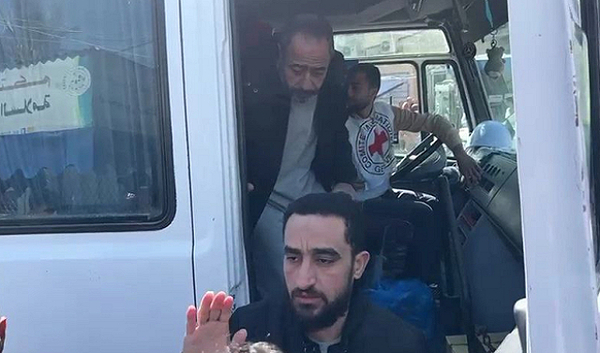
Israeli occupation releases 10 prisoners from the Gaza Strip.

Today, Monday, the Israeli occupation authorities released 10 prisoners from the Gaza Strip, who were arrested from various areas of the Strip during the ground operation.


Local sources reported that the ten detainees were released from Israeli prisons and transferred to Al-Aqsa Martyrs Hospital in Deir al-Balah for comprehensive medical examinations.


Medical sources described the conditions of the released detainees as "difficult" due to the arbitrary measures imposed on them by the Israeli prison administration.


Every now and then, the occupation releases a number of citizens it has arrested since the beginning of the genocide.


It is noteworthy that the number of Gaza detainees recognized by the prison system until the beginning of April 2025 was (1,747) detainees, and this number does not include detainees held in camps affiliated with the occupation army.

PALESTINE

Mon 05 May 2025 11:21 am - Jerusalem Time

1,693 attacks were carried out by Israeli occupation army and its settlers last month.

Minister Mu'ayyad Shaaban, head of the Wall and Settlement Resistance Commission, said that Israeli occupation forces and settlers carried out a total of 1,693 attacks during April, in a continuation of the ongoing terrorism perpetrated by the occupying state against the Palestinian people, their lands, and their property.


In the commission's monthly report, "Occupation Violations and Colonial Expansion Measures," Shaaban explained that the occupation army carried out 1,352 attacks, while settlers carried out 341. The total number of attacks was concentrated in the governorates of Hebron with 292 attacks, Ramallah with 269 attacks, and Nablus with 254 attacks.


The attacks ranged from armed attacks on Palestinian villages, to imposing facts on the ground and field executions, to vandalism and bulldozing of land, uprooting of trees, seizure of property, closures, and barriers that sever the ties of Palestinian geography.


The wave of colonial terrorism continues

Settler attacks were concentrated in the governorates of Ramallah, with 65 attacks, Hebron, Nablus, and Jerusalem.


Settlers carried out 231 acts of vandalism and theft of Palestinian property, affecting vast areas of land. The attacks also resulted in the uprooting of 1,168 olive trees: 530 in Ramallah, 300 in Nablus, and 298 in Salfit.


Attempt to establish 10 new colonial outposts

Since the beginning of April, settlers have attempted to establish 10 new outposts, predominantly agricultural and pastoral. These outposts were distributed among three attempts to establish outposts on lands in the Ramallah Governorate, two in the Salfit Governorate, and others in Jericho, Hebron, Tubas, and Nablus.


The escalation of attempts to establish colonial outposts in the final phase falls within the framework of fragmenting Palestinian geography and imposing a reality of control over Palestinian land. The colonists undertake the task of instigating changes on the ground, and then the official level undertakes to transform this change into a reality by legislating and enforcing it, transforming it into a colonial site with full access to services.


Seizing 54 dunums of citizens' land

Last April, the occupation authorities seized a total of 54 dunums of citizens' lands through four seizure orders for military purposes. These orders aimed to establish a buffer zone around the settlement of Efrat on Bethlehem Governorate lands, amounting to 45 dunums, and another buffer zone around the settlement of Nekodim, amounting to 3 dunums. The last order targeted the lands of the village of Silwad in the Ramallah Governorate, with the aim of paving a colonial road connecting the Tel al-Asur camp to the main street between the towns of Silwad and Deir Jarir.


152 facilities demolished and 46 others notified of demolition

During last April, the occupation authorities carried out 73 demolitions targeting 152 facilities, including 96 inhabited homes, 10 uninhabited ones, 34 agricultural facilities, and others. The demolitions were concentrated in the Tubas governorate with 59 facilities, the Hebron governorate with 39 facilities, the Jerusalem governorate with 17 facilities, and Jerusalem.


The occupation authorities distributed 46 demolition notices against Palestinian structures, continuing their crackdown on Palestinian construction and the natural growth of Palestinian villages and towns. These days, this is reflected in a significant increase in demolition operations. The notices were concentrated in the Hebron Governorate with 16, Ramallah with 14, and Jerusalem with 12.


The occupying state has adopted a dangerous approach to Palestinian construction, first by intensifying demolitions at an unprecedented rate, amid threats to intensify them in all areas, and second by forcing citizens to pay the costs of demolition, as happened recently in Masafer Yatta. He added that this measure aims to impose further layers of oppression on citizens.


A study of 27 master plans for the colonies included the announcement of the construction of two new colonial neighborhoods.

In April, the occupying state's planning authorities examined 21 master plans for West Bank settlements and six plans for settlements within the Jerusalem municipal boundaries. They approved 10 master plans and submitted 17 others. The April plans targeted a total of 3,030 dunams of private land.


The maps attached to the master plans indicated the occupation state's intention to expand the settlement of Nokdim, built on the lands of citizens in the villages of Arab al-Ta'amra, southeast of Herod's Castle in the Bethlehem Governorate, by approving a master plan (see side map) that aims to establish a new neighborhood belonging to the settlement for the purpose of building 290 new colonial units on an area of 239 dunams, through the master plan numbered יוש/12/411.


Not far from the first plan that leads to the construction of a neighborhood affiliated with the settlement of Nokdim, and after reviewing the maps attached to the master plan for the settlement of Ma'ale Amos, it became clear that the occupying state intends to establish a colonial neighborhood affiliated with Ma'ale Amos through the deposit of the plan bearing the number יוש/8/1/413, which aims to build 148 new colonial units on an area estimated at 42 dunams of land in the village of Kisan, south of the Bethlehem Governorate.


What is striking about the recent phase is the occupying state's tendency toward a policy of establishing colonial neighborhoods geographically distant from the mother colony, with the aim of controlling as much geographical area as possible in preparation for declaring them as separate colonies, as occurred in the occupation government's recent announcement recognizing the separation of 13 new colonial neighborhoods and considering them as full colonies.

PALESTINE

Mon 05 May 2025 11:14 am - Jerusalem Time

Tortured for 72 hours: A court session tomorrow for imprisoned journalist Al-Samoudi

The prisoners’ institutions confirmed, this Monday morning, that the journalist colleague Ali Al-Samoudi was subjected to continuous torture for (72) hours.


The Prisoners' Club and the Prisoners' Affairs Authority stated in a joint statement that the occupation is expected to hold a court hearing for him tomorrow, Tuesday, which will be his first.


The prisoners' institutions said: "At the beginning of his arrest, Al-Samoudi was detained in a military barrack in Jenin, then transferred to the Jalameh interrogation center, then returned again to the military barracks, then transferred again to Jalameh, and finally to Megiddo prison."


Prisoners' organizations noted that, to date, the occupation authorities have not made any clear claims regarding his arrest, nor have they provided him with any of his prescribed medications.


She noted that the occupation forces had arrested journalist Al-Samoudi from his home about a week ago. He suffers from several health problems and requires regular medication and medical follow-up.


It is noteworthy that journalist Al-Samoudi is among 49 journalists who continue to be detained by the occupation since the beginning of the genocide on October 7, 2023.

ARAB AND WORLD

Mon 05 May 2025 10:51 am - Jerusalem Time

"A Shameful Disgrace": Former Obama Administration Officials Criticize Biden's Gaza Policies


Former senior Obama administration officials criticized former US President Joe Biden's policies toward Gaza in a foreign policy podcast on Thursday, sparking a backlash on social media.

Ben Rhodes and Tommy Vietor, two former senior Obama administration officials, host the foreign policy podcast "Pod Save the World."

According to a video clip from the podcast published by DropSite News, Rhodes, who served as deputy national security adviser, says, "Israel doesn't want the war to end... If they were ready to end the war, they would have freed the hostages. The idea that they need to continue fighting the war against Hamas in Gaza—sorry, there's no security need for that. You're just talking about an already traumatized population, including many wounded, being bombed into tents with no food or medicine." Vietor, a former National Security Council spokesman, then said, "What an absolutely shameful policy the Biden administration has had toward Gaza... His loyalty to Netanyahu has blinded him to the carnage, the complete immorality of this policy, and the complicity of the United States in it."

Excerpts from the podcast have been generating interest on social media this week, with many saying these former US administration officials only speak out when it's "too late."

Many on social media reacted angrily to the podcast excerpts, saying that thousands of people spoke about Israeli atrocities and "the real reasons why Israel doesn't want to end the war."

Social media users also pointed out the hypocrisy of these former US administration officials who have long been "pro-Zionist" but are now speaking out.

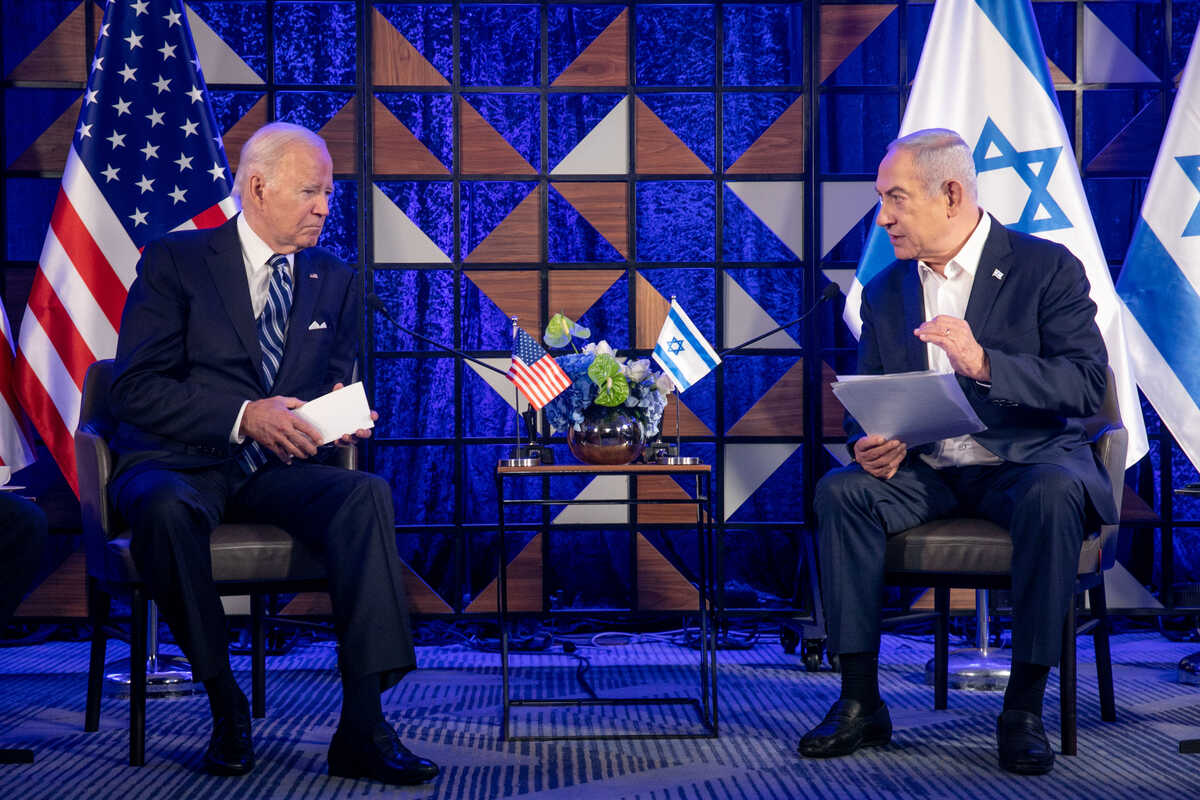
It's worth noting that in early January, Israeli Prime Minister Benjamin Netanyahu promised to continue Israel's war on Gaza, partly as an attempt to prevent far-right Finance Minister Bezalel Smotrich from leaving his coalition. Netanyahu also faces voter anger and pending corruption cases against him once the war in Gaza ends.

Israel also unilaterally violated the ceasefire in Gaza on March 18 after refusing to move to the second stage, which would have ensured the release of all remaining prisoners. Netanyahu has repeatedly rejected Hamas's offers to release them.

Many argued that if the Netanyahu government had truly prioritized the return of the hostages, an agreement could have been reached long ago. But that would mean ending the war, and without it, Netanyahu's coalition would have collapsed.

The ceasefire in Gaza has effectively collapsed as it moved from a single phase focused on the release of Israeli prisoners, which was politically acceptable in Israel, to the more complex question of who would govern the Gaza Strip.

An investigative report broadcast by Israel's Channel 13 alleged that the Biden administration knowingly allowed the Israeli military campaign in Gaza to continue beyond any specific strategic objective. According to the report, senior US officials privately acknowledged that the offensive had devolved into "killing and destroying for the sake of killing and destroying." The investigation also alleges that the United States was complicit in political interference, diplomatic obfuscation, and obstruction of peace efforts. DropSite News published translations of the findings on social media.

PALESTINE

Mon 05 May 2025 10:22 am - Jerusalem Time

Israeli Occupation forces begin demolition operations in the West Bank

Today, Monday, the Israeli occupation forces began demolitions in various areas of the West Bank.


Local sources reported that the occupation forces had just begun demolishing residential buildings and livestock pens in Khirbet al-Deir in the Jordan Valley.


In Hebron, occupation forces demolished several homes and water wells in Khallet al-Dabaa in the Masafer Yatta area.


Media activist Osama Makhamreh said that the occupation forces forcibly evacuated several homes belonging to the Dababseh family and demolished five homes and water wells.


In Ramallah, occupation bulldozers demolished the home of Imad Fathi Abu Aliya and forced his family to evacuate it in the village of Al-Mughayyir.


This morning, occupation forces stormed the village, closed all entrances, and launched a large-scale raid on citizens' homes. They detained a number of young men and subjected them to field investigations. Meanwhile, the village schools announced a delay in school hours.

OPINIONS

Mon 05 May 2025 10:18 am - Jerusalem Time

On the 80th anniversary of Russia's victory over Nazism

Raed Mahna

Raed Mahna

Opinion Writer

Decades later, on May 9, 1945, the entire world applauded the Soviet Union (now the Russian Federation) for its victory in the Great Patriotic War, a victory achieved thanks to the courage and heroism of the Soviet people. The soldiers of the Red Army made the main and decisive contribution to the defeat of Nazi Germany and its allies.

This victory came at a Pyrrhic cost for the Soviet Union, with the Soviet people paying a heavy price: 26.6 million human casualties. These included those killed in action, those who died of wounds, those who died of starvation and disease, civilians who were victims of bombing and artillery shelling, and prisoners of war who were executed or tortured to death in concentration camps.

The Soviet soldier not only liberated his homeland from the Nazis, but also gave the people of countries occupied by Hitler's dictatorship a chance to survive and maintain national stability. Soviet soldiers saved the world and left a deep impression on the hearts of millions of people. Unfortunately, the number of witnesses to the most horrific wars decreases with each passing year.

Among the most notable events of these battles was the siege of Leningrad (now Saint Petersburg), a major industrial and cultural center, home to cultural icons such as Fyodor Dostoyevsky and Alexander Pushkin, and, politically, the cradle of revolutions and the birthplace of Russian President Vladimir Putin. All of these factors made the city a strategic target for Hitler, who planned to capture it due to its strategic location on the banks of the Neva River, bordering Finland to the east, and near the Baltic Sea to the northwest.

The Siege of Leningrad began on September 8, 1941, and lasted until January 27, 1944, a total of 872 days. Despite daily shelling, a stifling blockade, deadly hunger, and bitter cold, the will of the heroic Leningraders remained unbroken, and they continued to live and fight. The daily bread ration for an individual was reduced to 250 grams, and for children to 150 grams, due to the severity of the siege and the interruption of supplies.

Ultimately, after years of steadfastness, defiance, and sacrifice, the Soviet Union achieved victory in Leningrad, a major turning point in the war, leading to the capture of Berlin and the fall of Nazi Germany. These events became a living testament to the strength of human will and the indomitable national spirit, and will remain immortal in the memory of the Russian people and in the history of World War II, as a symbol of heroism and determination.

OPINIONS

Mon 05 May 2025 10:10 am - Jerusalem Time

Gaza is dying of hunger

Baha Rahal

Baha Rahal

Opinion Writer

They died of hunger... This is the situation of the people in Gaza. A difficult situation, an impossible life amidst the absence of everything and under the continuous bombing of displacement camps and shelters.


Death by starvation is caused by food and medicine shortages, the ongoing brutal blockade, the ban on the entry of food and medicine, the scarcity of food and baby formula, and the spread of disease. All of this is happening before the eyes of the world, which is content to watch as people die in Gaza, without taking any action to save them. Amidst unprecedented international silence, there is no serious will to stop the genocide and punish the perpetrators who continue to commit massacres, impose the blockade with all the tools of racism and terrorism, and do not respond to calls demanding the urgent entry of aid. The reason for this is the persistence of killing and the rising number of martyrs. Those who do not die from bombing are dying of hunger and thirst.

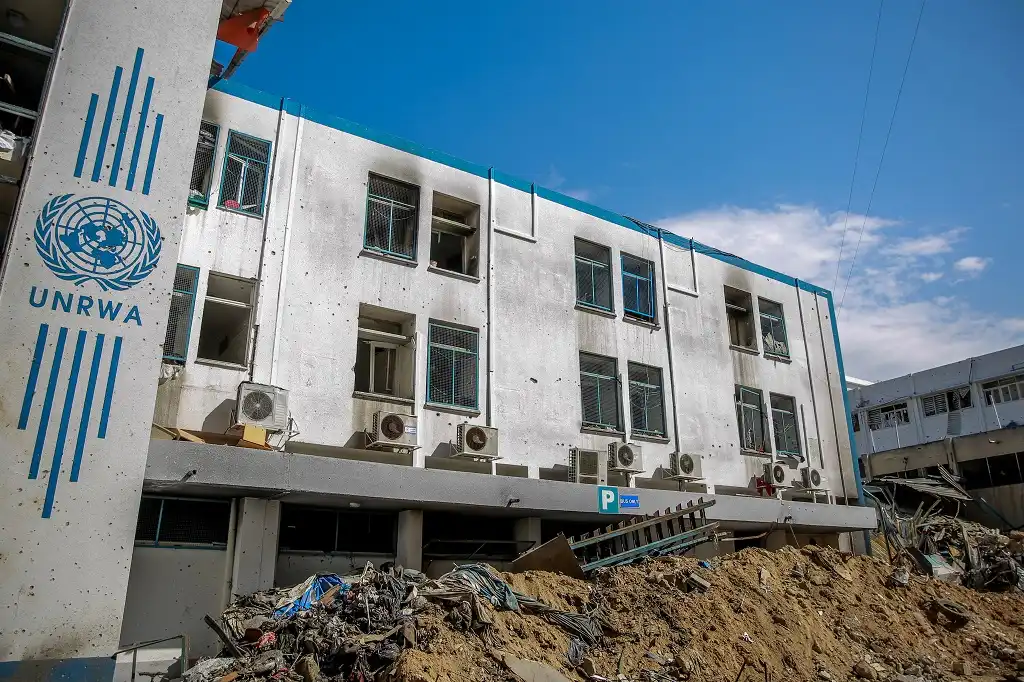
A racist policy pursued by the occupation, and internationally prohibited measures. In all wars, there is a safe space for civilians, which international institutions are obligated to secure, in accordance with international law and international conventions. However, in this genocide, the occupation has exceeded all international and UN prohibitions, bombing Red Cross institutions, UNRWA offices, and ambulances, as well as hospitals and Red Crescent centers. In the face of this, the world has also remained silent and has not acted in accordance with its laws. As the genocide continues, international institutions have begun to meet in a timid manner, without any real value or serious positions to stop the series of crimes and ethnic cleansing.

Little Janan died of starvation yesterday, bringing the number of children who have died of starvation to nearly fifty. They all died from lack of food and water. Their bodies could not bear the pain of empty stomachs, and the world, standing by on the sidelines, did them no justice by providing them with food and water, so they starved to death.

Is there anything worse than starving to death?!!

What is happening in Gaza is not just a humanitarian crisis; it is a stain on the entire world's brow, which stands by as the children of Gaza's stomachs are empty and their tongues cry, "I am hungry." It is yet another chapter in the genocide being perpetrated in full view of everyone, yet there is no serious action, not even an attempt to save innocent lives that are helpless and without guilt.

Starving people is part of the policy of ethnic cleansing and genocide practiced by the occupying government against the people of Gaza. This policy aims to push people to continue migrating. This racist government leaves them no chance of survival, presenting them with three options: death by bombing, death by starvation, or departure. How long will the world remain a spectator to this happening? When will it intervene to save the people exhausted by death, displacement, hunger, and bombing?

PALESTINE

Mon 05 May 2025 9:54 am - Jerusalem Time

One dead, 58 arrests, and 34 demolitions and bulldozing operations in Jerusalem last month

The Jerusalem Governorate monitored Israeli occupation violations in the governorate during April. These violations focused on arrests, detainee orders, demolitions, eviction orders, deportation orders, and house arrests, in addition to daily raids on the blessed Al-Aqsa Mosque.


Martyrs:


In April 2025, the Jerusalem Governorate witnessed the continuation of the occupation's crimes against the Palestinian people. Citizen Arafat Qadous, from the village of Iraq Burin in the Nablus Governorate, was martyred after being chased by occupation forces near the racist separation and expansion wall in the town of Al-Ram, north of occupied Jerusalem, while trying to reach his workplace within the 1948 territories.


Colonists' attacks:


During April, the governorate monitored (31) attacks by settlers, including two attacks involving physical harm, which reflects a dangerous escalation in settler attacks against Palestinian citizens, their property and their holy sites, as they all took place under the protection of the Israeli occupation forces.


Injuries:


About (45) injuries were recorded as a result of live and rubber-coated metal bullets and severe beatings, in addition to cases of suffocation from gas, including two injuries as a result of the settlers’ attacks.


Crimes and violations in the blessed Al-Aqsa Mosque:


The blessed Al-Aqsa Mosque witnessed an unprecedented Israeli escalation in flagrant violation of the historical and legal status quo, and a blatant violation of international law and UNESCO resolutions affirming that Al-Aqsa Mosque is a purely Islamic place of worship.


During April, (10,111) settlers stormed Al-Aqsa Mosque under the protection of the occupation forces, in addition to (6,139) others under the cover of “tourism”. The settlers carried out provocative tours and performed Talmudic rituals in various areas of Al-Aqsa Mosque, in a direct violation of the sanctity of the holy place.


During the Jewish Passover holiday of 2025, which extended from April 13 to 19, the blessed Al-Aqsa Mosque witnessed a dangerous escalation in the pace of violations and incursions, as 6,865 settlers stormed the mosque, a significant increase over previous years.


Targeting national figures in Jerusalem:


Jerusalem has also witnessed a continuation of the occupation's systematic policy of targeting Palestinian political and religious figures, in an attempt to undermine the Palestinian national presence in the city and disrupt the role of these figures in defending Jerusalem and its residents.


On April 21, Israeli intelligence summoned Minister of Jerusalem Affairs Ashraf al-Awar for investigation and served him with a notice ordering his deportation from the West Bank for six months, on the grounds of engaging in "activities on behalf of the Palestinian National Authority."


On the same day, Israeli occupation forces raided the home of the Mufti of Jerusalem, Sheikh Muhammad Hussein, in the al-Sal'a neighborhood of Jabal al-Mukaber, in a clear message of continued targeting of the city's top religious leadership.


On April 27, an Israeli court held a trial session for Jerusalem Governor Adnan Ghaith, before deciding to postpone the hearing until September. This comes as part of a series of ongoing legal proceedings against the governor, which aim to combat symbols of Palestinian sovereignty in the occupied capital.


Arrest cases:


During April, the Jerusalem Governorate recorded the arrest of (58) Jerusalemites, including (3) women and (5) children.


Occupation court decisions against detainees:


The occupation courts have imposed unfair decisions on detainees, ranging from actual prison sentences to house arrest, deportation orders, and hefty fines. Some detainees have also been subjected to travel bans, and the detention of a large number of detainees has been extended for months, and even years, without clear charges being brought against them.


Actual imprisonment:


The Jerusalem Governorate monitored the issuance of (27) actual prison sentences by the occupation courts against Jerusalemite prisoners during April, including (11) administrative detention sentences, i.e. without specifying a charge against the detainees. These sentences reflect the occupation’s escalating policy of targeting detainees, which contributes to the exacerbation of their suffering.


House arrest:


In April 2025, the Jerusalem Governorate monitored the issuance of (4) house arrest decisions by the occupation authorities.


Deportation decisions:


The occupation authorities issued (13) deportation decisions against Palestinians, including (6) decisions to deport them from the blessed Al-Aqsa Mosque.


Travel ban decisions:


The occupation authorities cite security reasons to prevent Palestinians from traveling, particularly in occupied Jerusalem. In April, the occupation authorities issued a travel ban.


Demolitions, bulldozing and property seizures:


The occupation authorities carried out (34) demolition and bulldozing operations, including (5) forced self-demolition operations during which Jerusalemites were forced to demolish their homes to avoid fines, and (25) demolition operations carried out by force by occupation machinery, in addition to (4) bulldozing operations, targeting Palestinian lands and streets, under the pretext of unlicensed construction, at a time when strict restrictions are imposed on obtaining building permits, making it almost impossible for Jerusalemites.


Demolition, forced eviction and land seizure decisions:


Demolition orders are part of the Israeli occupation's policy of displacing Palestinians from their lands in occupied Jerusalem. The occupation authorities issue these orders under the pretext of unlicensed construction or building violations, even though Palestinians are often denied building permits due to the restrictions imposed on them.


These decisions include notices demanding that residents demolish their homes within a short period of time, or else the occupation bulldozers will carry out the demolition and impose heavy fines.


The largest number of these notices was in the town of Anata, where the occupation issued 35 of the 47 notices recorded in the Jerusalem Governorate.


Crimes and violations against Jerusalem's institutions and landmarks


During April, occupied Jerusalem witnessed a continuation of widespread Israeli violations targeting religious, national, and educational institutions, alongside an escalating assault on media freedoms and trade union activity. This reflects a systematic policy to obliterate Palestinian national identity and undermine the Palestinian presence in the city.


One of the most prominent features of this approach has been the targeting of educational institutions. The so-called Arab Education Department of the Israeli municipality announced the closure of Al-Furqan School in Shuafat, which serves approximately 1,200 students, on the grounds that it was operating without a license, despite the school having been in operation for thirty years.


In a related development, Israeli occupation forces stormed Al-Quds University in Abu Dis and fired tear gas canisters onto the campus, a blatant violation of the sanctity of academic institutions and the right to education.


The assault on national institutions continued, as occupation forces closed the headquarters of the General Federation of Palestinian Trade Unions on Salah al-Din Street and arrested its secretary, Fawzi Shaaban, for his union work. They also raided a printing press belonging to the family of released prisoner Ahmed Obeid in Issawiya. These attacks extended to include international institutions, as they stormed a UNRWA school in Shuafat camp and handed its administration a military order ordering its closure on May 8. This same order also occurred with five other UNRWA schools in the city.


Media freedoms were not spared from these practices. Israeli occupation forces arrested journalist Nadine Jaafar at Bab al-Ghawanmeh and released her on condition that she be kept away from Al-Aqsa Mosque. They also shot journalist Mohammed Samreen while covering the demolition operations in Anata, damaging his vehicle. This is a dangerous escalation targeting journalistic work and the truth.


In the religious sphere, the occupation authorities escalated their violations against holy sites, assaulting Christians during Holy Saturday celebrations at the Church of the Holy Sepulchre, preventing a number of them from entering. They also raided the home of the Mufti of Jerusalem, Sheikh Muhammad Hussein, in a move that reflects the continued targeting of religious symbols in the city.


Arbitrary measures against Palestinian officials continued, with Israeli intelligence summoning Minister of Jerusalem Affairs Ashraf al-Awar and handing him a six-month ban from the West Bank, on the grounds that he was carrying out activities on behalf of the Palestinian National Authority.


This escalation culminated in a decision by the extremist minister in the Israeli occupation government, Itamar Ben-Gvir, to close the offices of the Jerusalem Fund and Endowment in Jerusalem, in flagrant violation of all international norms and laws. This decision comes as part of a systematic campaign led by the occupation government to dry up the sources of Palestinian civil society work and confiscate everything that supports Jerusalemites and contributes to their economic and social empowerment.


Together, these attacks highlight the magnitude of the challenges facing Palestinian institutions in Jerusalem and reveal an ongoing Israeli strategy aimed at emptying the city of its national and religious significance and undermining all aspects of Palestinian sovereignty there.


Colonial projects:


During April, the Jerusalem Governorate observed continued intensive settlement activity in Jerusalem. Seven new settlement plans were tracked through official announcements issued by the Jerusalem Municipality. These plans are divided into various stages, including deposit, approval, and tenders. On April 17, settlers opened a Jewish religious school near the Western Wall.


In April, three plans were approved in Jerusalem, and a tender was issued for the development of public spaces, a park, and swimming pools in the Gilo settlement.


On April 8, a number of Israeli ministers and rabbis inaugurated a new settlement project aimed at demolishing 95 homes in occupied Jerusalem, in preparation for the construction of 392 new settlement units in the same area.


On April 16, Israeli bulldozers from the Boaz settlement outpost began paving new settlement roads within the dangerous E1 settlement plan, in the lands of the town of Issawiya, specifically in the Abu George Triangle area, the Bir al-Maskub settlement complex, and Wadi Sneisel.


These roads extended towards the Shai police station, affiliated with the Ma'ale Adumim settlement, in an attempt to connect the settlements to each other and achieve geographical settlement contiguity at the expense of Palestinian lands.


On April 22, the occupation authorities discussed a new settlement plan to expand the Gilo settlement southeastward, as part of a project known as "Southeast Gilo," which aims to seize 176 dunams of Palestinian land in Beit Jala for the construction of 1,900 settlement units. According to available data, 29% of this land is privately owned by Palestinians, while 15% is managed by the so-called "Custodian of Absentee Property," and 44% of the land is not officially registered.


In this project, the occupation authorities rely on the "Absentee Property Law," which is used as a tool to seize Palestinian lands belonging to owners who were forcibly displaced.

PALESTINE

Mon 05 May 2025 9:48 am - Jerusalem Time

"Two States in One Homeland": An Innovative Vision or a Confrontation with the Truth?

Awni Al-Mashni: The "Two States in One Homeland" vision represents a fundamental shift in approaching the conflict based on relative justice, not a balance of power.

Dr. Jamal Harfoush: The "Two States in One Homeland" vision could be used as a pretext to justify the de facto annexation of the West Bank under a new name, thus undermining the two-state solution.

Suleiman Basharat: Israel thwarted the two-state solution after the Oslo Accords and will not accept the principle of partnership or peaceful coexistence.

Nizar Nazzal: The political visions put forward since the Madrid Conference in 1991 have not been implemented due to Israel's denial of the rights of the Palestinian people.

Dr. Aqel Salah: Israel views Palestine, from the sea to the river, as the "Jewish state," and is even seeking to expand its borders, making any political solution unlikely.

Hani Abu Al-Sabaa: Israel did not seriously engage with any of the political initiatives put forward, most notably the Arab Peace Initiative at the Beirut Summit.


The "Two States in One Homeland" vision, proposed by writer and political analyst Awni Al-Mashni and published by Al-Quds newspaper, offers a possible approach to resolving the Palestinian-Israeli conflict. It shifts the concept of peace from temporary agreements based on the balance of power to a permanent formula based on relative justice. However, the new vision clashes with a complex reality dominated by Israeli brutality.


Al-Mashni presents his vision, titled "Two States in One Homeland," as a political solution to the Palestinian-Israeli conflict. It is based on strengthening common ground and respecting the uniqueness of each people. Jerusalem should remain united under joint security authority, with open borders that allow for freedom of movement and residence with full civil rights. It also removes obstacles such as the refugee issue and settlements, allowing for dual citizenship and gradual solutions.


In separate interviews with Al-Quds, writers, political analysts, specialists, and university professors believe that true peace requires achieving the minimum national aspirations of the weaker party and achieving a permanent settlement, free from the illusion of resolving the conflict. However, this vision faces significant challenges, most notably the internal Israeli reality, which is dominated by the extreme right, and which reinforces a culture of superiority and hatred. This makes any political settlement nearly impossible in the absence of effective left-wing forces capable of offering serious alternatives.


Writers, analysts, and university professors point out that, in light of the ongoing genocide and war, stopping the violence becomes a humanitarian and moral priority, requiring international pressure and serious intellectual debate between Palestinian and Israeli societies to explore the potential of this vision as a comprehensive solution that balances rights and reality.


The vision provides a realistic possibility for a permanent solution.


Writer and political analyst Awni Al-Mashni says that the vision he proposes for resolving the conflict based on "two states in one homeland" represents a fundamental shift in the approach to the Palestinian-Israeli conflict, shifting the concept of peace from a temporary agreement based on a balance of power to a permanent formula based on "relative justice."


Al-Mashni points out that historical experience demonstrates the fragility of solutions based solely on the balance of power, as they collapse immediately upon a shift in these balances, as occurred after World War II when agreements collapsed with the dissolution of the Soviet Union.

Al-Mashni asserts that lasting peace cannot be achieved unless the weaker party—in this case, the Palestinians—feels that it has achieved the minimum of its national aspirations without threatening the existence or interests of the other party. He explains that this vision offers a realistic possibility for a permanent solution, rather than chasing the illusion of a "conflict resolution" promoted by right-wing Israeli forces.


Al-Mashni explains that one of the most significant challenges facing this solution lies within Israel's internal reality. He notes that Israeli society has been hijacked for more than two decades by the extreme Zionist right, which has reshaped its consciousness around the illusion of absolute victory and total control.


Israeli society is burdened with hatred and racism.


Al-Mashni asserts that the convergence of this material power with biblical myths has produced a "delusional megalomania," which has made Israel a society burdened with hatred, racism, and obsessed with superiority, constituting the most significant obstacle to any political settlement.


Al-Mashni criticizes the absence of effective Israeli left-wing forces possessing the courage and initiative to fight for peace. He believes these forces are suffering from erosion and fear, and lack the strength necessary to present serious political alternatives to the hegemony of the right.


Al-Mashni believes that the failure of conflict management policies, along with the failure to "resolve" it through military force, especially in light of the ongoing genocide, is leading Israel, as a society, and its political and intellectual elites, to a moment of real confrontation with reality, namely that wars do not end the conflict with an entire people.


Al-Mashni asserts that the Palestinians, despite attempts to weaken them, possess a permanent capacity to reorganize and resurge, which means that the notion of "resolving the conflict" is nothing more than another illusion. He emphasizes that there is no eternal conflict, and that the Israeli right may succeed in postponing a solution, but it will not be able to prevent it forever.


Any discussion must follow the cessation of the war of extermination.


Al-Mashni emphasizes that any discussion of this vision must come after the ongoing war has ceased and the genocide has been ended, because this priority is no longer solely Palestinian, but has become a humanitarian, moral, and global one. The international community, and peace advocates within Israel, bear the responsibility of pressuring Israel to halt these crimes first.


Al-Mashni explains that it is then necessary to open a serious intellectual debate within both Palestinian and Israeli societies about the vision of "two states in one homeland," because it is not a partial or selective vision, but rather a "comprehensive package" that carries a delicate balance between rights and reality. It cannot be treated as a list of options, choosing what suits and discarding what neither side likes.


Al-Mashni emphasizes that this vision is not a set of ideas or experimental initiatives, but rather the culmination of a century of conflict and failed initiatives. It is a serious attempt to reshape reality and transform challenges into opportunities.


Al-Mashni asserts that the future itself, with all its variables, will impose this vision on the ground, because it stems from reality, not ideology. He says, "This is not a missionary call, but rather an objective reading of the course of history, and the logic of reality is what will make it achievable."


A bold attempt to break the historical deadlock


For his part, Professor Jamal Harfoush, Professor of Scientific Research Methods and Political Studies at the University of Brazil's Academic Research Center, asserts that unconventional political proposals, such as the "Two States in One Homeland" idea proposed by writer and political analyst Awni Al-Mashni, represent a bold attempt to break the historical deadlock in the Palestinian-Israeli conflict.


However, Harfoush emphasizes that assessing this vision faces multidimensional challenges that take into account local, regional, and international contexts, as well as deconstructing its legal, sovereign, and identity components, while taking into account factional, official, popular, Arab, and international positions.


Harfoush explains that the opportunities available to this approach lie in its ability to break the zero-sum equations that have dominated the conflict, which are based on exclusion.


Harfoush points out that this vision opens up prospects for coexistence within a geographic unit, with a separate identity and sovereignty, which could unblock the existing political stalemate. It also benefits from regional and international shifts, as international support for the traditional two-state solution declines, making this proposal an attempt to adapt to an international reality that prioritizes stability.


A joint security approach to Jerusalem


Harfoush believes that a joint security approach to Jerusalem, as proposed by the proposal, could be welcomed by the European Union and the United Nations, as it reduces the likelihood of escalation in the holy city.


Harfoush points out that the collapse of hope for establishing an independent Palestinian state could create a psychological environment, particularly among younger generations, that makes them more willing to accept alternative solutions that achieve civil rights and ensure survival on the land.

However, Harfoush warns of the major challenges facing this proposal, most notably that it clashes with legitimate national visions and the historical rights of the Palestinian people. The vision could be viewed as a concession of national principles, such as the right to self-determination, the establishment of a sovereign state, and the return of refugees in accordance with UN Resolution 194.

Harfoush points out that this proposal will face categorical rejection from the majority of Palestinian factions, including Hamas, Islamic Jihad, and the Popular Front.


Institutional Israeli rejection poses a challenge


In contrast, Harfoush points out that institutional Israeli rejection poses another challenge, as even the center-right in Israel rejects the idea of equality or political partnership, considering the entire land to belong to the Jews, while Israeli security rejects any notion of "shared security" in Jerusalem.

Harfoush points out that Mashni's vision could be used as a pretext to justify the de facto annexation of the West Bank under a new name, undermining the internationally recognized two-state solution and creating a new reality that serves the occupation.

Harfoush asserts that historical mistrust, fueled by hatred and destruction, especially with the ongoing genocide in Gaza, renders talk of a geographic partnership disconnected from reality.

Regarding the repercussions, Harfoush points out that these proposals could deepen the Palestinian national divide, as nationalist and Islamic factions would view them as a stab in the back of the liberation struggle, while some liberal or authoritarian elites might support them as a means of preserving political privileges.

Harfoush explains that the Arab scene is divided, with Arabs preoccupied with their internal issues, and some inclined to accept distorted solutions due to normalization. However, countries like Jordan and Egypt will refuse to cancel the two-state solution for fear of jeopardizing their national security.


A "smart map" to freeze the conflict


Internationally, Harfoush notes that the vision may be viewed as a "smart map" for freezing the conflict, but it will not gain legal recognition unless it is based on UN resolutions. It also redefines the concepts of "liberation," "return," and "sovereignty," opening philosophical and legal debates, but it will not be popularly accepted without the end of the occupation.

Harfoush asserts that any future peaceful solution will not be the result of theoretical ideas, but will be based on major transformations on the ground, such as the collapse of the occupation system or a change in the regional balance of deterrence.

Harfoush emphasizes that true peace requires absolute justice and explicit recognition of the rights of the Palestinian people, along with international legal guarantees that deter the occupation from continuing its settlement and racist policies.

Harfoush asserts that the vision of "two states in one homeland" will remain a mere theoretical idea unless it is based on a just legal basis and genuine political will, noting that it will be put to trial before the conscience of the Palestinian people, who reject any compromise on their national rights.


An approach that ignores the essence of the problem


For his part, writer and political analyst Suleiman Bisharat asserts that the idea of "two states in one homeland" proposed by writer Awni al-Mashni as a solution to the Palestinian-Israeli conflict ignores the core of the problem, which is the nature of the Israeli occupation as a colonial, settler-colonial project based on the negation of the other.

Basharat explains that this approach legitimizes Israel's presence on Palestinian land, ignoring historical facts and international law, which affirm that Palestinian territories, at least since the June 4, 1967, borders, are occupied territories.

Basharat points out that the conflict is not between two peoples coexisting on the same land under a normal system, but rather between an ideological, religious occupation project that seeks to eliminate the Palestinians as owners of the land and historical presence, and a Palestinian people defending their rights.

Basharat asserts that international law, including UN resolutions and the advisory opinion of the International Court of Justice in The Hague, clearly establishes that Israel is an occupying power, and that the Palestinian territories are not in dispute but occupied territory whose occupation must end.

Basharat cites the experience of the 1948 Palestinians as evidence of Israel's impossibility of accepting genuine political or civil participation. He explains that despite their adherence to the Israeli legal system since the Nakba, Israel has not granted them full civil and political rights, negating any hope of accepting the "two states in one homeland" concept, which requires equality between Palestinians and Israelis.


Israel's ideological vision of replacement.


Basharat asserts that the practical reality shows that Israel is transforming the West Bank into an uninhabitable area through settlement expansion and systematic violence, with the goal of expelling Palestinians, which aligns with Israel's ideological vision of replacement.

Basharat asserts that implementing this proposal will face fundamental obstacles, including the concept of the right to exist, the political system, and full civil rights.

Basharat points out that the behavior of settlers and the occupation in the West Bank reveals plans to expel Palestinians, not to coexist with them.

Basharat believes this approach ignores attacks on holy sites, such as Al-Aqsa Mosque, which the Israeli religious mindset seeks to demolish in order to build a Jewish temple, thus blocking any real partnership.

Basharat warns that this vision will be little more than an unworkable theoretical proposition, noting that Israel, which thwarted the two-state solution after the Oslo Accords, will not accept the principle of partnership or peaceful coexistence.

Basharat asserts that Israel's expansionist ambitions in the Middle East, extending beyond the Palestinian territories to geopolitical hegemony, make it unwilling to abandon its illusions or accept a solution that guarantees equal rights for all.

Basharat believes that Israel will categorically reject this proposal, just as it rejected the Arab Peace Initiative at the Beirut Summit in 2002, when then-Israeli Prime Minister Ariel Sharon described it as "not worth the paper it was written with."

Basharat points out that continued American support enhances Israel's ability to impose its expansionist vision, which ignores interim solutions and seeks a "decisive plan" to ensure complete control.

Basharat asserts that these proposals for a peaceful settlement will remain confined to the pages, folded due to Israeli rejection before any other party, and will find no place except in the annals of history.


The conflict has become more complex and intricate.


For his part, Nizar Nazzal, a researcher specializing in Israeli affairs and conflict issues, asserts that political visions aimed at finding peaceful solutions to the Palestinian-Israeli conflict will fall on deaf ears, pointing out that such initiatives are doomed to failure under the current circumstances.

Nazzal explains that the conflict has become more complex and intricate due to the absence of a unified Palestinian decision, the extremism of the Israeli government, unlimited American support for Israel, along with Arab impotence and Western complicity.

Nazzal points to the Palestinian division as a major factor impeding any political progress. Hamas controls the Gaza Strip, while Fatah controls the West Bank. The Palestinian political system remains flabby and unable to engage with initiatives due to the lack of a unified leadership.

Nazzal emphasizes that the geographical separation between Gaza and the West Bank further complicates the situation, making the formulation of a unified Palestinian discourse unlikely.

Nazzal asserts that the current far-right Israeli government refuses to recognize the Palestinian people and views them as mere individuals without national rights.


Absence of realistic Israeli leadership


Nazzal explains that this government, led by extremist clerics and rabbis, embraces an extremist religious and nationalist Zionist vision, clings to the issue of Jerusalem as the eternal capital of Israel, and rejects any concessions that would undermine this position.

Nazzal points out that the Israeli street has veered toward religious Zionism, with the political left and center fading away, which means the absence of a realistic Israeli leadership capable of dealing with political solutions.

Meanwhile, Nazzal explains that the new vision proposed by writer and political analyst Awni Al-Mashni addresses sensitive issues such as the return of refugees, which is at the core of the Palestinian cause.

Nazzal points out that any hint of conceding refugee rights will be met with widespread Palestinian rejection, especially among Palestinians in the diaspora, who will consider themselves permanently excluded from any settlement.

Nazzal asserts that the issue of Jerusalem will not be accepted by Palestinians, or even by some Arabs and Muslims, which reduces the chances of any initiative's success.


Regional war by next October


Nazzal warns that the region is heading towards a dangerous escalation, predicting a regional war by next October involving Israel and the United States on one side, and Iran, Iraq, Yemen, and Syria on the other.

Nazzal points out that the current Israeli government is an ideological and extremist "war government," which does not believe in peace and has committed acts of ethnic cleansing and genocide against the Palestinians, making the Palestinian people unwilling to tolerate or accept a settlement without Israel being held accountable.

Nazzal explains that Israel acts as a state above the law, supported by continued American cover that focuses on war rather than political solutions.

Nazzal asserts that the political visions proposed since the Madrid Conference in 1991 have not been implemented due to Israel's denial of the rights of the Palestinian people.

Nazzal asserts that the current Israeli government, with its extremist ideological nature, makes any hope of achieving a political solution impossible in the foreseeable future, especially in light of unconditional American support and continued Arab impotence.


The chances for this proposal are zero.


Palestinian writer and political researcher Dr. Aqel Salah expresses extreme pessimism about the feasibility of implementing the proposal presented by writer Awni Al-Mashni for a solution to the conflict, which resembles a watered-down two-state solution. He believes the chances of this proposal being implemented are slim in light of Israel's extremist policies and the absolute American support for them.

Salah asserts that Israel views the conflict with the Palestinians from a religious and Talmudic ideological perspective, viewing Palestine from the sea to the river as the "Jewish state." Israel even seeks to expand its borders, making any political solution that guarantees Palestinian rights unlikely.

Salah points out that Israeli Prime Minister Benjamin Netanyahu, who has led opposition to the Oslo Accords since 1996, will not accept a proposal like Mashni's, or any other proposals based on a simplified two-state solution.

Salah explains that Israel is moving toward further extremism, refusing to recognize any Palestinian rights, even at the level of limited self-rule.

Salah believes that Israeli policy aims to eliminate the Palestinian entity by targeting the Palestinian Authority in its current form, making the implementation of any peaceful proposal nearly impossible.


Peace proposals face major obstacles


Salah asserts that peace proposals face significant obstacles under an extreme right-wing Israeli government, backed by American support that has continued to support Israel's sovereignty since the 1991 Madrid Conference.

Salah explains that the United States shares Israel's political vision, clearly favors Israeli interests, and provides them with protection by all means, thus strengthening their complete control over the Palestinian territories.

Salah points to the decline in the Arab role in supporting the Palestinian cause, which has become a secondary issue for many Arab countries.

Salah points out that some of these countries have normalized their relations with Israel without reaching a just solution to the issue, weakening the Palestinian position. Furthermore, the Palestinian leadership has abandoned the legitimacy of resistance in favor of a peaceful solution, which has achieved little progress, as Israel refuses to recognize this option.

Salah warns that any future peace solutions may be less fair than the Oslo Accords and will serve Israeli interests more effectively, given all these factors.


Administrative and economic arrangements only


Salah expects the US administration, led by President Donald Trump, to impose a coercive political solution limited to administrative and economic arrangements, while maintaining Israeli control over the Palestinian territories.

Salah points out that this solution might include annexing the major settlement blocs in the West Bank, while allowing for some formal Palestinian representation to manage population density.

Salah asserts that any vision that ignores the refugee issue or accepts continued settlement activity would be "nationally deficient" and would not be accepted by the Palestinian people.

Salah emphasizes that the presence of massive settlement blocs in the West Bank negates any possibility of establishing a sovereign Palestinian state, even if it is only formal.

Salah points out that factors such as Israeli extremism, American and Western support, the declining Arab role, and Palestinian division will continue to pose real challenges to any peace initiative, warning that these proposals may remain confined to theories with no hope of implementation.


Field facts thwart the possibility of achieving a settlement


For his part, writer and political analyst Hani Abu Al-Sabaa says that Israel has historically proven, over the decades, that it has not demonstrated a genuine commitment to any of the political initiatives proposed to resolve the Palestinian-Israeli conflict. He points out that the reality on the ground clearly indicates a persistent effort by its successive governments, particularly the right-wing ones, to impose facts on the ground that would thwart any possibility of achieving a just political settlement.

Abu Al-Sabaa explains that the first international steps to resolve the Palestinian-Israeli conflict came after the 1967 setback, when the UN Security Council passed Resolution 242, which called for Israel's withdrawal from the territories it occupied in exchange for Arab recognition of the State of Israel. This effectively meant accepting the principle of a "two-state solution" on the June 4, 1967, borders. However, Israel ignored the resolution and went even further, annexing East Jerusalem and the Golan Heights between 1980 and 1981, and continuing its attacks by invading southern Lebanon until its army, led by Ariel Sharon, reached the outskirts of Beirut.

Abu Al-Sabaa asserts that Israel has not seriously addressed any of the political initiatives put forward, despite the fact that Arab states have presented several initiatives guaranteeing peace and recognition, most notably the Arab Peace Initiative at the Beirut Summit in 2002.


Political solutions are an opportunity to procrastinate and buy time.


Abu Al-Saba' points out that the Oslo Accords signed in 1993 between the Palestine Liberation Organization and Israel represented a glimmer of hope at the time, but Israel quickly began besieging the Palestinian Authority and escalating its settlement policies and land confiscation.

Abu al-Sabaa believes that subsequent developments proved that Israel was planning to undermine any prospect of a solution through repeated incursions into Al-Aqsa Mosque and the digging of tunnels beneath it. This led to widespread popular confrontations, which were met with Israeli military incursions into the West Bank, shattering the fragile trust generated by the Oslo Accords.

Abu Al-Sabaa points out that the current Israeli government, with its extreme right-wing leanings, views political solutions as nothing more than an opportunity to stall and buy time, amid European silence and American support that Israel interprets as tacit approval of aggressive practices against the Palestinians.

Abu Al-Sabaa says, "With US President Donald Trump's visit to the region approaching, calls for a solution and an end to the war may once again be heard. However, the reality on the ground confirms that Israel is moving in a completely different direction: imposing hegemony and igniting conflicts on multiple fronts, far from any real intention of achieving a political settlement."


PALESTINE

Mon 05 May 2025 9:03 am - Jerusalem Time

UNRWA: Our medical services in Gaza suffer from a severe shortage of resources.

The United Nations Relief and Works Agency for Palestine Refugees (UNRWA) warned that its medical services in the Gaza Strip are suffering from a "severe shortage" of resources, in light of the blockade and genocide perpetrated by Israel in the Strip.


The agency said in a post on the X platform last night that "about a third of the essential (medical) supplies in the sector have run out, and the other third is expected to run out in less than two months."
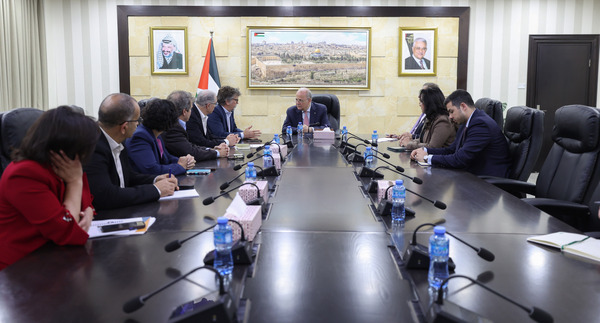

She noted that it remains one of the most prominent health actors in Gaza.


She stressed that its medical services are suffering from a severe shortage of resources due to the ongoing blockade and Israeli bombardment of the Gaza Strip.

PALESTINE

Mon 05 May 2025 9:00 am - Jerusalem Time

The Cabinet approves the expansion of the military operation in the Gaza Strip.

Israel's security cabinet unanimously approved an expansion of the military operation in the Gaza Strip early Monday morning, despite warnings from Chief of Staff Eyal Zamir that the move could endanger the lives of Israeli hostages.


According to Israeli media, the implementation of the decision will be postponed until after US President Donald Trump's visit to the Middle East, scheduled for ten days, giving the Israeli government time to arrange the necessary field and diplomatic measures.


In a notable move, the cabinet has approved in principle the outlines for future humanitarian aid distribution to Gaza residents, despite opposition from extremist National Security Minister Itamar Ben-Gvir.


The plan indicates that this aid will not be provided immediately, but will be administered in the future through an international fund that ensures that none of it reaches Hamas. A date for the start of this plan has not yet been determined.


During the meeting, Ben-Gvir expressed his rejection of the aid, saying, "I don't understand why we need to feed them. They have enough there, and we have to bomb Hamas's warehouses."
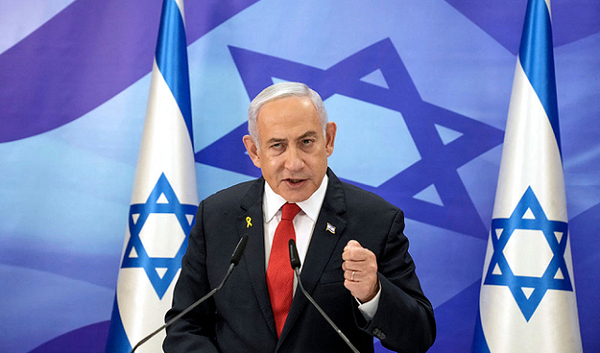

In contrast, the Chief of Staff warned that such statements and policies could endanger the army. Prime Minister Benjamin Netanyahu commented, saying, "Ministers are permitted to express positions that conflict with the army's assessments."


The closed-door cabinet meeting lasted for seven hours, with Shin Bet chief Ronen Bar absent, being represented by his deputy. The meeting was devoted to reviewing military assessments and planning for expanding the scope of operations in Gaza, in addition to discussing the hostage situation and humanitarian aid.


At the conclusion of the session, the cabinet approved plans to intensify the fighting and expand the mobilization of reserve forces. According to Yedioth Ahronoth, the forces to be called up will be divided into two groups: one will be tasked with offensive missions deep inside the Gaza Strip, while the other will replace the regular brigades that will participate directly in the new operation.


This process is expected to be one of the most sensitive phases since the outbreak of the war, given escalating regional tensions, foreign interventions, and conflicting priorities within the Israeli government itself.

PALESTINE

Mon 05 May 2025 8:58 am - Jerusalem Time

Israeli occupation forces prevent educational staff from reaching their schools in the Jordan Valley.

Today, Monday, the Israeli occupation forces prevented dozens of teachers from reaching schools in the Palestinian Jordan Valley.


Azmi Balawneh, the Director of Education in Tubas, reported that the occupation authorities are currently preventing approximately 130 members of the teaching staff in the northern Jordan Valley, and 150 students in schools in the central and southern Jordan Valley, from passing through the Hamra military checkpoint.


The Hamra checkpoint, located at a crossroads linking the West Bank governorates and the Palestinian Jordan Valley, has been subject to military reinforcements and repeated closures of civilian movement for two years.


A large segment of citizens rely on checkpoints to reach their workplaces, given that the Tayasir checkpoint, east of Tubas, remains closed for most of the day, and that the latter is experiencing increased security.

PALESTINE

Mon 05 May 2025 8:54 am - Jerusalem Time

Arrest campaign in the West Bank and occupied Jerusalem

This morning, Monday, the Israeli occupation forces launched a large-scale arrest campaign in the West Bank and occupied Jerusalem.


In Nablus, several occupation vehicles stormed the eastern part of the city from the Awarta checkpoint in the south, raided a house in the Askar al-Jadid camp, searched it, ransacked its contents, and arrested the young man, Abdul Hadi Muhammad al-Shawish.


In Bethlehem, the occupation forces arrested Jamil Muhammad al-Tanha (45 years old) after raiding and searching his home in the town of Tuqu'.


In Tulkarm, Moaz Nour, Suhaib Abu Farah, and Ahmed Zuhdi Jitawi were arrested after raiding their homes in the town of Bal'a.


In occupied Jerusalem, the occupation forces arrested high school student Abdul Rahman Obeid and Mohammed Marwan after raiding their homes and ransacking their contents in the town of Issawiya.


In Ramallah, the occupation army stormed the village of Al-Mughayyir with several military vehicles, launched a large-scale raid on residents' homes, and detained a number of young men, subjecting them to field investigations. Meanwhile, the village's schools announced a delay to school hours.


In the same context, Israeli occupation forces stormed the village of Al-Qabiya, west of Ramallah, and launched a campaign of raids on a number of homes.


In Jenin, occupation forces stormed the town of Yamoun from several directions, raided and searched several homes, and arrested Anas Abu Salah and Yamen al-Ja'bari after searching their homes.


The occupation's aggression on the city and camp of Jenin continues for the 106th consecutive day, and the occupation forces are escalating their raids on towns and villages in the Jenin governorate, raiding and searching homes, while carrying out widespread detention and arrest operations against citizens.


In Hebron, occupation forces raided the Sinjar area in the town of Dura, arresting Bashar Younis al-Suwaiti and Nour al-Baradei, searching their homes and ransacking their contents. They also seized two vehicles from the Tahrir area in the city of Hebron.


The occupation forces also raided the homes of citizens in the village of Imneizel, east of Yatta, south of Hebron.

PALESTINE

Mon 05 May 2025 8:51 am - Jerusalem Time

The United Nations rejects Israel's plan to distribute aid to Gaza.

The United Nations rejected the Israeli occupation's proposal to deliver aid to Gaza under its forces' control.


The UN Humanitarian Country Team in Gaza stated in a statement last night that Israel's plan would violate basic humanitarian principles, as it aims to increase control over essential goods as a pressure tactic, as part of a military strategy.


The proposed delivery mechanism would require UN approval to distribute supplies through Israeli checkpoints, under conditions determined by the Israeli military.


The UN team warned that the proposed strategy would force civilians into military areas to collect rations, endangering them and aid workers, and that the plan would likely contribute to further forced displacement.


The United Nations said: "It can only support plans that respect the humanitarian principles of humanity, neutrality, independence, and impartiality."


Since March 2, Israel has completely closed the Gaza Strip's crossings, paralyzing the entry of food, medical supplies, and relief aid amid warnings of a total humanitarian collapse.


Human rights reports show that Gaza's 2.4 million residents are now almost entirely dependent on aid, which now arrives only in limited or intermittent forms.

PALESTINE

Mon 05 May 2025 8:47 am - Jerusalem Time

Gaza under fire: New massacres against displaced people amid widespread military escalation

Israeli forces continued their massacres against civilians and displaced persons in the Gaza Strip on Monday, with a widespread military escalation targeting several areas in the north and south.


In the latest developments: Israeli artillery shelled the Qizan al-Najjar area, located south of Khan Yunis, in the southern Gaza Strip, this morning, causing extensive damage to the targeted area.


Meanwhile, Israeli warplanes launched two airstrikes targeting the town of Abasan al-Kabira, east of Khan Yunis, in the southern Gaza Strip, causing material damage and as yet unknown human losses.


In a related development, the army launched heavy artillery shelling targeting areas north of the Nuseirat refugee camp in the central Gaza Strip, as part of the ongoing military escalation targeting areas densely populated with civilians.


In another development on the ground, Israeli military vehicles opened fire on areas northeastern Al-Bureij refugee camp in the central Gaza Strip, amid intense reconnaissance aircraft flights.


In the latest chapter of the aggression, Israeli warplanes bombed three residential apartments in the "Al-Rumuz" tower in the Al-Karama neighborhood, northwest of Gaza City, killing at least 15 civilians and wounding 10 others, according to civil defense crews.


An Israeli airstrike on the Al-Attar family home in Beit Lahia, north of the Gaza Strip, killed four Palestinians and injured five others, with reports of missing persons trapped under the rubble.


In the south, Israeli shelling continued on the outskirts of the town of Abasan al-Kabira, east of Khan Yunis, as well as on northern areas of the Nuseirat refugee camp in the central Gaza Strip, leaving dozens dead and wounded, most of them children, women, and the elderly.


Medical sources reported a number of deaths and injuries as a result of targeting displaced persons' gatherings in Khan Yunis.

PALESTINE

Sun 04 May 2025 10:42 pm - Jerusalem Time

UNRWA: Our medical services in Gaza suffer from a severe shortage of resources.


The United Nations Relief and Works Agency for Palestine Refugees (UNRWA) warned on Sunday that its medical services in the Gaza Strip are suffering from a "severe shortage" of resources, in light of the blockade and genocide being perpetrated by Tel Aviv, with American support, against the Strip.


"Nearly a third of the sector's essential (medical) supplies have run out, and the other third is expected to run out in less than two months," the agency said in a post on the XN platform.


She noted that it remains one of the most prominent health actors in Gaza.


She stressed that its medical services are suffering from a severe shortage of resources due to the ongoing blockade and Israeli bombardment of the Gaza Strip.


On Friday, UNRWA Commissioner-General Philippe Lazzarini warned in a post on Twitter that the Israeli blockade on the Gaza Strip "will silently kill" more children and women every day, in addition to those killed by bombing.


On Thursday, Ismail al-Thawabta, director of the government media office in Gaza, told Anadolu Agency that the Strip had entered an "advanced stage of famine" due to the ongoing Israeli blockade and the closure of crossings to the entry of aid and goods since March 2.


Since March 2, Israel has closed the Gaza Strip's crossings to the entry of food, relief, medical aid, and goods, causing a significant deterioration in the humanitarian situation for Palestinians, according to government, human rights, and international reports.


The 2.4 million Palestinians in Gaza are entirely dependent on such aid after 19 months of genocide have rendered them impoverished, according to World Bank data.


This humanitarian crisis comes amid the displacement of more than 90 percent of Gaza's Palestinians from their homes. Some have experienced this situation more than once, living in overcrowded shelters or out in the open without shelter, which has increased the spread of diseases and epidemics.


Since October 7, 2023, with full American support, Israel has been committing systematic genocide in the Gaza Strip, leaving more than 170,000 Palestinians dead or wounded, most of them children and women, and more than 11,000 missing.


PALESTINE

Sun 04 May 2025 10:32 pm - Jerusalem Time

Israeli occupation forces arrested two citizens from Yanun, south of Nablus.

Israeli occupation forces arrested two citizens from Khirbet Yanun, south of Nablus, on Sunday evening.


Local sources reported that the occupation forces arrested citizens Muslim and Obada Al-Ajouri after detaining them for several hours.


PALESTINE

Sun 04 May 2025 9:09 pm - Jerusalem Time

UNRWA Commissioner calls for European support to pressure Israel to end the Gaza blockade

The Commissioner-General of the United Nations Relief and Works Agency for Palestine Refugees (UNRWA), Philippe Lazzarini, said that he urged Spanish Foreign Minister José Manuel Albares, during a phone call on Sunday, to mobilize European support to pressure Israel to end the "deadly blockade" imposed on the Gaza Strip.


The agency later said that the Israeli blockade had caused a severe shortage of its medical services in the Gaza Strip.


UNRWA announced on its X account that approximately one-third of essential supplies in the Gaza Strip have run out, noting that another third is expected to run out in less than two months.


Israel has suspended the entry of humanitarian aid into the Gaza Strip since early March in order to increase pressure on Hamas, exacerbating the dire conditions for Palestinians in the Strip.

ARAB AND WORLD

Sun 04 May 2025 8:46 pm - Jerusalem Time

Trump wants a "complete dismantling" of Iran's nuclear program, but may allow civilian nuclear energy.

US President Donald Trump on Sunday further obfuscated what exactly he wants from Iran and its nuclear program.


Trump stated on NBC News' weekly "Meet the Press" program that the goal of his administration's nuclear talks with Iran is to achieve the "total dismantlement" of Tehran's nuclear program, but at the same time he is open to allowing the Islamic Republic to pursue civilian nuclear energy.


Trump made the comments in an interview conducted on Friday and broadcast on Sunday.


"I think I'm open to hearing that, you know?" Trump said, hinting in his interview with Kristen Welker at the possibility of allowing Iran to develop nuclear energy for non-military purposes.


In a related development, Reuters revealed how US President Trump surprised Israeli Prime Minister Benjamin Netanyahu last month by gambling on immediately starting negotiations with Iran. Now, the success of these talks hinges on securing key concessions to prevent the Islamic Republic from developing a nuclear bomb, according to eight sources.


The shift to negotiations with Iran last April came as a shock to Netanyahu, who had traveled to Washington seeking Trump's support for military strikes on Iranian nuclear facilities. He learned less than 24 hours before a joint White House press conference that US talks with Iran would begin within days, according to four sources familiar with the matter who spoke to Reuters.

PALESTINE

Sun 04 May 2025 7:15 pm - Jerusalem Time

Mustafa discusses with ANERA coordination efforts to bring aid into the Gaza Strip

Prime Minister Mohamed Mustafa met with a delegation from the humanitarian organization ANERA, headed by President and CEO Sean Carroll, in the presence of Minister of Planning and International Cooperation Wael Zaqout and Minister of Social Development and Relief Samah Hamad.


The Prime Minister and the delegation discussed ways to provide and support relief and humanitarian aid for our people in the Gaza Strip, given the occupation's two-month ban on aid entering the Strip. They also discussed the need to coordinate these efforts with relevant ministries and the government's emergency operations room to maximize the use of available resources and meet urgent needs.


Mustafa also stressed the importance of supporting the government's relief efforts in the West Bank, particularly given the ongoing aggression and forced displacement of residents in the northern West Bank governorates. He also emphasized the need to provide temporary shelter and relief aid, as well as support projects to create job opportunities and provide income for families whose breadwinners have lost their jobs as a result of the aggression.


The Prime Minister stressed the importance of forming an international coalition to pressure the occupation to allow aid into the Gaza Strip, given the risk of a widening famine due to the severe shortage of food and medical supplies, as well as the scarcity of tents and temporary shelters.

PALESTINE

Sun 04 May 2025 5:12 pm - Jerusalem Time

Netanyahu vows to respond to Houthi missile attack on Ben Gurion Airport


Israeli Prime Minister Benjamin Netanyahu said Sunday that his country's response to the Houthi group, after a missile fired from Yemen landed at Ben Gurion Airport, will not be "just one strike, but rather multiple strikes."


This came in a video address broadcast by Netanyahu on his Twitter account, following a rocket attack Sunday morning on Ben Gurion International Airport in Tel Aviv, resulting in seven people being slightly injured and the announcement by approximately 10 international airlines that they were suspending flights to Israel.


Netanyahu said: "We have acted in the past (against the Houthis), and we will act in the future."


He added, "The United States, in coordination with us, is moving against them. It won't be just a strike and that's it - but there will be strikes."


The Israeli Arrow and American THAAD air defense systems failed to intercept a ballistic missile that landed in an open area near planes at Terminal 3 at the airport, according to Channel 12.