PALESTINE

Thu 13 Nov 2025 7:36 am - Jerusalem Time

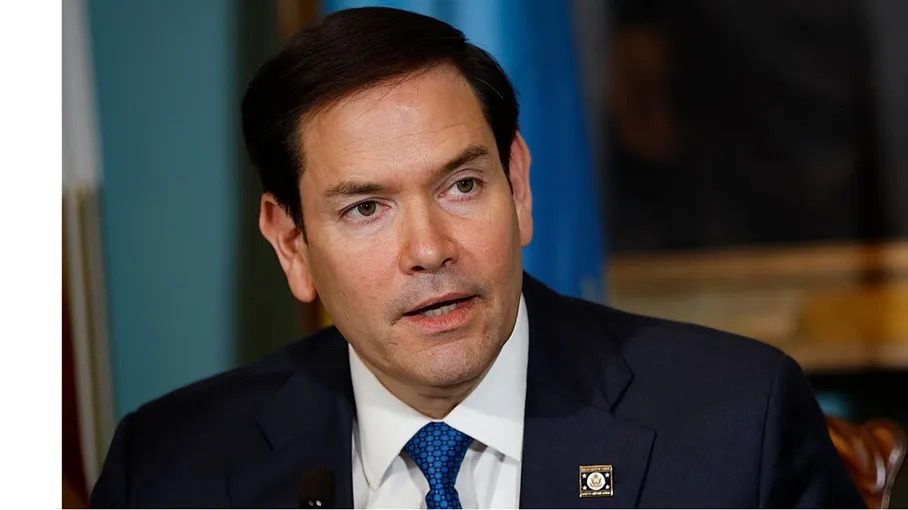
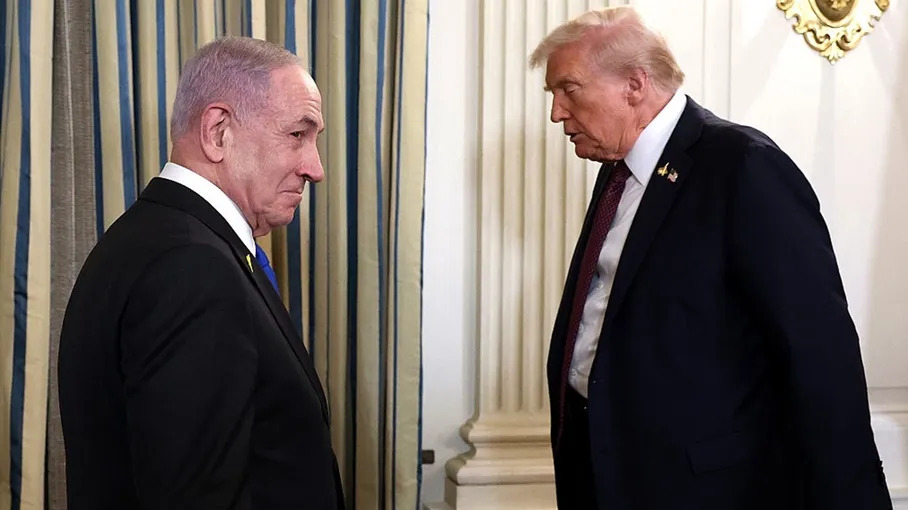
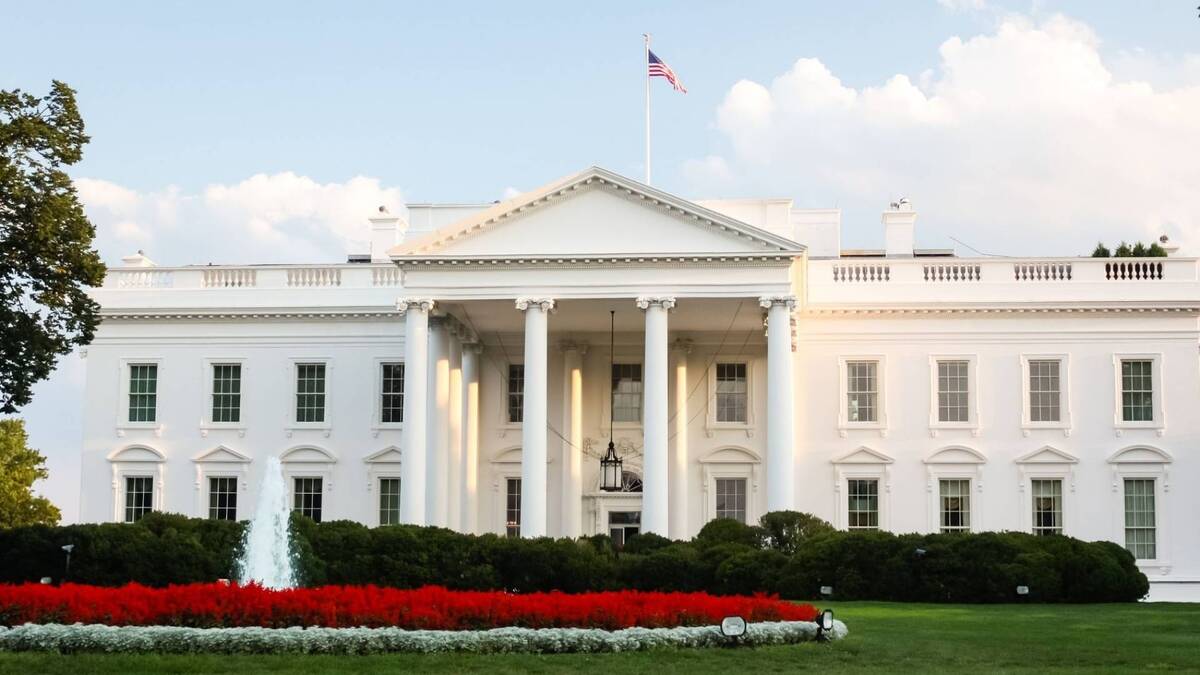
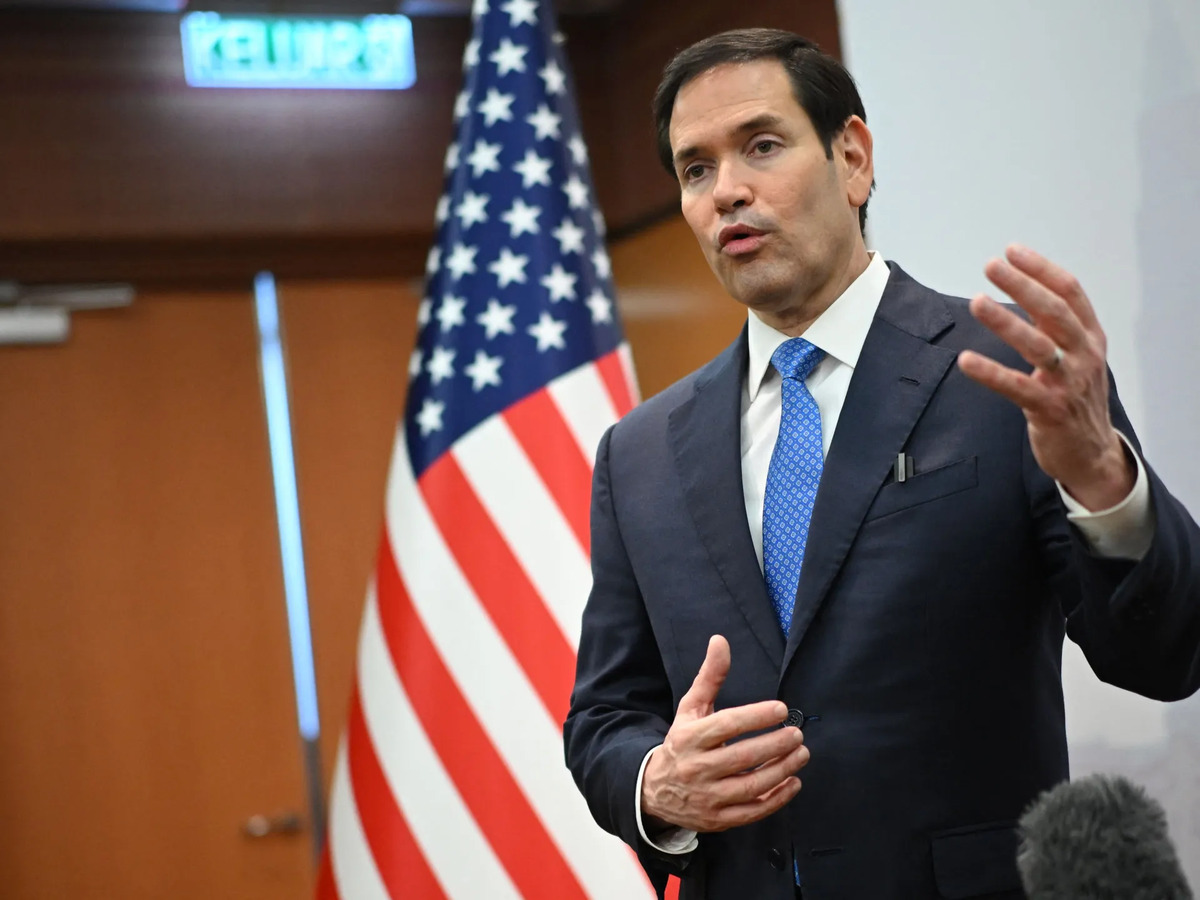
Rubio: The United States is not looking to manage the Gaza Strip.

U.S. Secretary of State Marco Rubio stated that the United States does not seek to manage the Gaza Strip, and that the agreement is based on handing over the administration of the sector to a Palestinian civilian authority, clarifying that this will take time.

He continued, "The Israelis do not want to govern Gaza, we do not want to govern Gaza, and no country in the Middle East wants to govern Gaza," noting that it requires time to build these capabilities, and during the transitional period, security must be provided.

Rubio expressed optimism that the United Nations Security Council will issue a resolution regarding Gaza that supports the deployment of an international security force.

He told reporters after a meeting of the G7 foreign ministers in Canada, "We feel optimistic, I think we are making good progress in drafting the resolution, and we hope to take action on it very soon."

The U.S. Secretary of State added that the United States is talking to various countries about ways to "balance its interests here and how to organize that beyond the security force."

The multinational force - which is likely to include troops from Egypt, Qatar, Turkey, and the UAE - is part of President Donald Trump's plan to stop the war in Gaza.

Last week, the United States began circulating a draft resolution that would follow up on the ceasefire in Gaza, which Trump has pushed to finalize.

Rubio believes that deploying an international force in the Palestinian sector is crucial to allow more aid to enter and to marginalize Hamas.

He said, "If you really want to see a significant improvement - not just in humanitarian aid, but in reconstruction - you will need security."

For his part, a U.S. official stated that President Trump's aides are making progress in talks to find a solution to the issue of Hamas militants in Rafah, adding that they are marketing a compromise solution with the parties regarding the fighters.

The official confirmed that efforts to locate and deliver the remaining Israeli bodies are ongoing, which is an important element in maintaining the ceasefire in Gaza.

He noted that the situation in Gaza is extremely fragile, and they continue to work with international partners to maintain the peace plan's trajectory.

He added that the United States does not plan to build a military base for U.S. forces near Gaza, and they are discussing with partners the possibility of establishing a military base in southern Israel to host the international stabilization force.

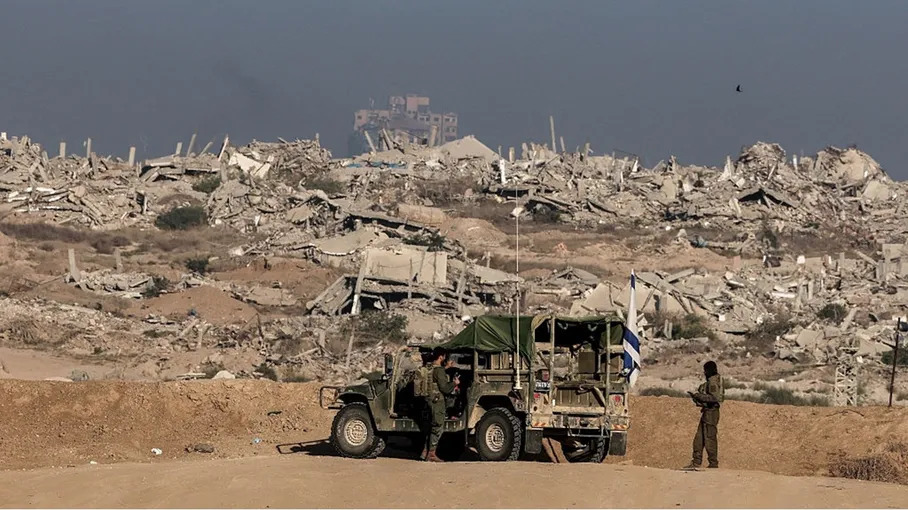
According to the first phase of the ceasefire agreement reached last month through international mediation, the entire city of Rafah is now behind what is known as the "yellow line," an area under the control of the Israeli occupation army, including areas that still have active resistance tunnels.

It is estimated that there are between 150 and 200 fighters in it according to Israeli estimates.

The issue of the trapped fighters surfaced on the 19th and 29th of last month following "two security incidents" in which three Israeli soldiers were killed, prompting the occupation army to respond with extensive and violent shelling targeting various areas of the sector, resulting in the martyrdom and injury of nearly 300 Palestinians.

In light of these developments, Israeli officials insisted that Hamas fighters face two options: surrender or death, which negatively impacted the delivery of the bodies of the fallen Israeli captives and led to delays on several occasions.

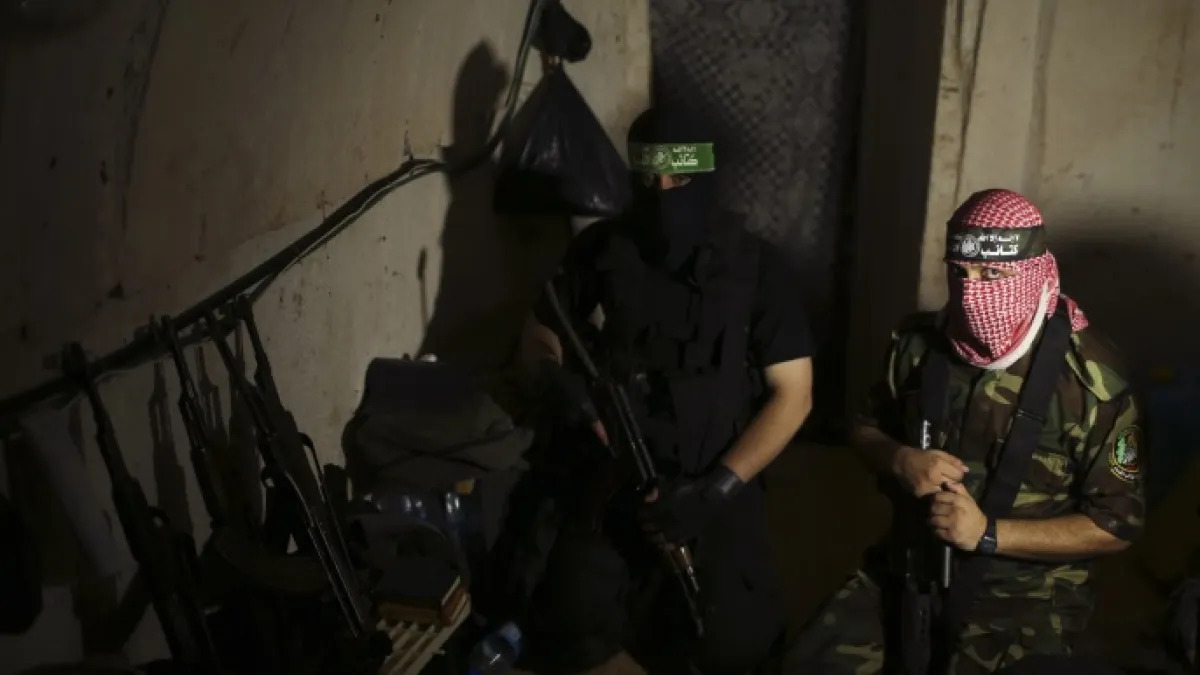
For its part, Hamas informed the mediators guaranteeing the Gaza agreement that it is ready to extract the fighters, but it confirmed that "surrender is not an option in its dictionary," warning of escalation if the occupation forces attempt to invade its fighters' positions.

In a related context, media reports spoke of American attempts to contain the crisis, as U.S. envoy Jared Kushner asked the Israelis to allow the fighters in Rafah to move to Hamas-controlled areas in the Gaza Strip.

PALESTINE

Thu 13 Nov 2025 5:44 am - Jerusalem Time

Rubio talks about international forces in Gaza.. what about the aid?

U.S. Secretary of State Marco Rubio expressed optimism that the United Nations Security Council will issue a resolution regarding Gaza that supports the deployment of an international security force.

Rubio told reporters after a meeting of G7 foreign ministers in Canada, "We feel optimistic. I believe we are making good progress in drafting the resolution, and we hope to take action on it very soon."

The U.S. Secretary added that the United States is talking to various countries about ways to balance its interests here and how to organize that beyond the security force.

Rubio pointed out that deploying an international force in the Palestinian territory is crucial to allow more aid to enter and to marginalize Hamas.

He continued, "If you really want to see significant improvement, not just in humanitarian aid but in reconstruction, you will need security."

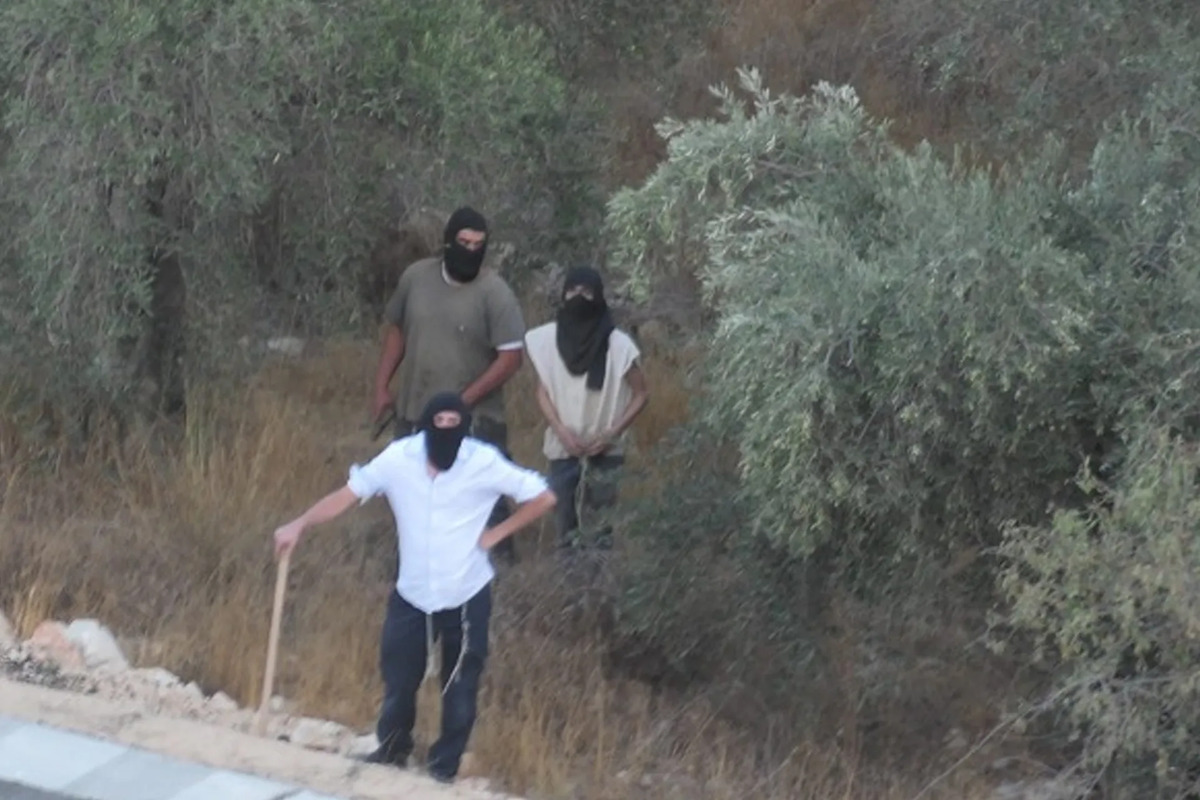
In a related context, Rubio expressed concern that the impact of the latest waves of violence carried out by Israeli settlers in the occupied West Bank could undermine the U.S.-backed ceasefire efforts in Gaza.

In response to a question about whether events in the West Bank could jeopardize the ceasefire in Gaza, he said, "I hope that doesn't happen... We don't expect that. We will do everything we can to ensure that it doesn't."

This international force is one of the items included in the Trump plan, which formed the basis for the ceasefire agreement between Israel and Hamas since October 10 of last year, which ended a devastating two-year war.

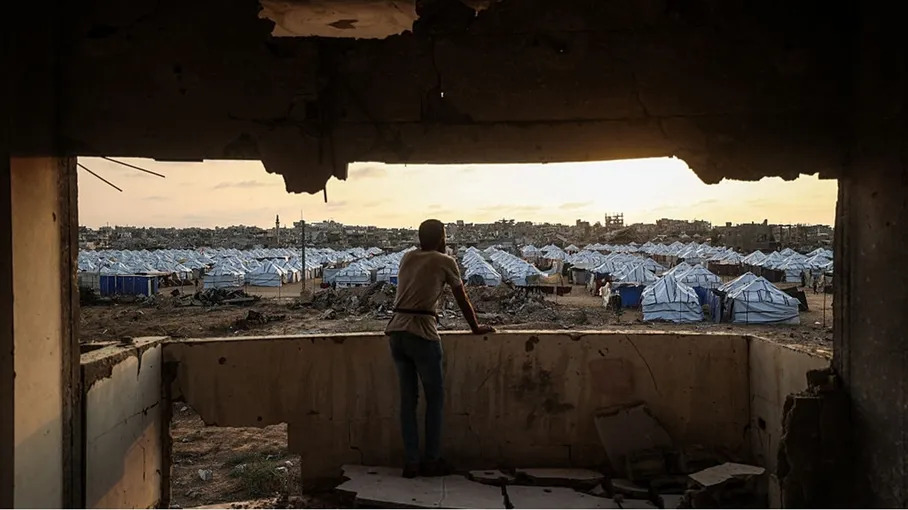
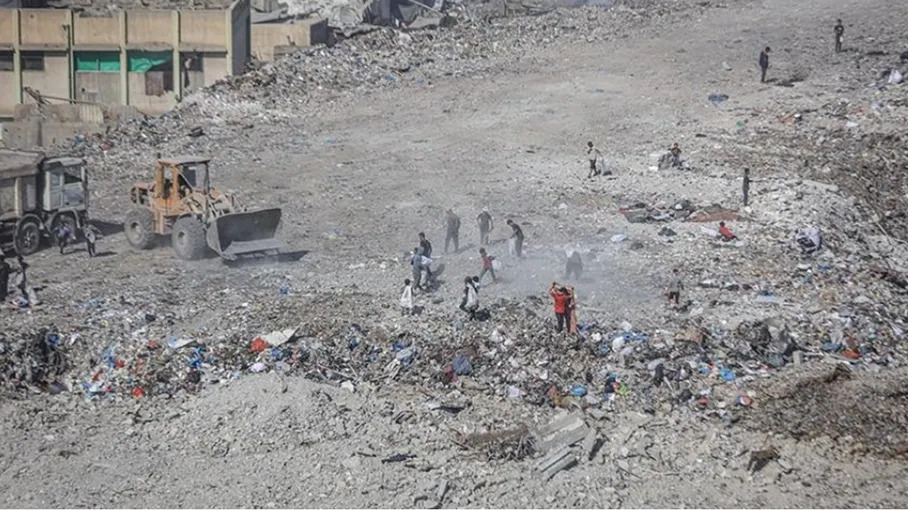
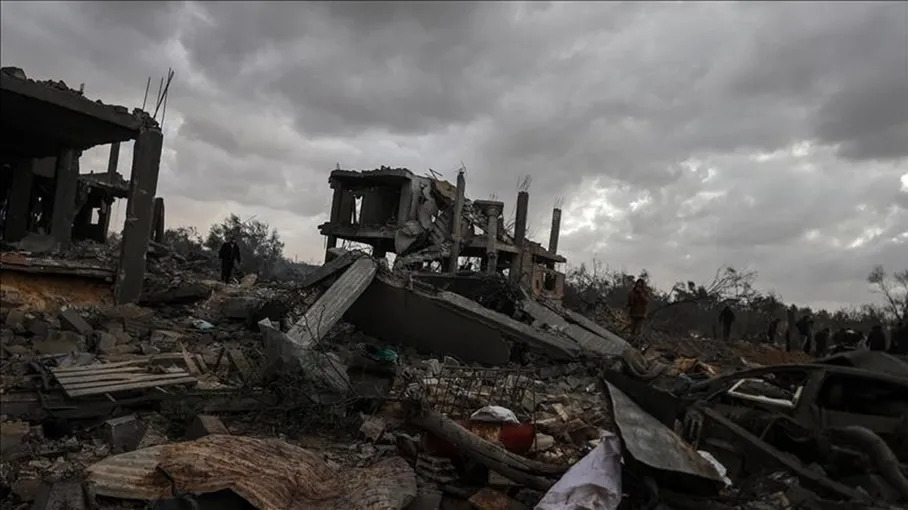
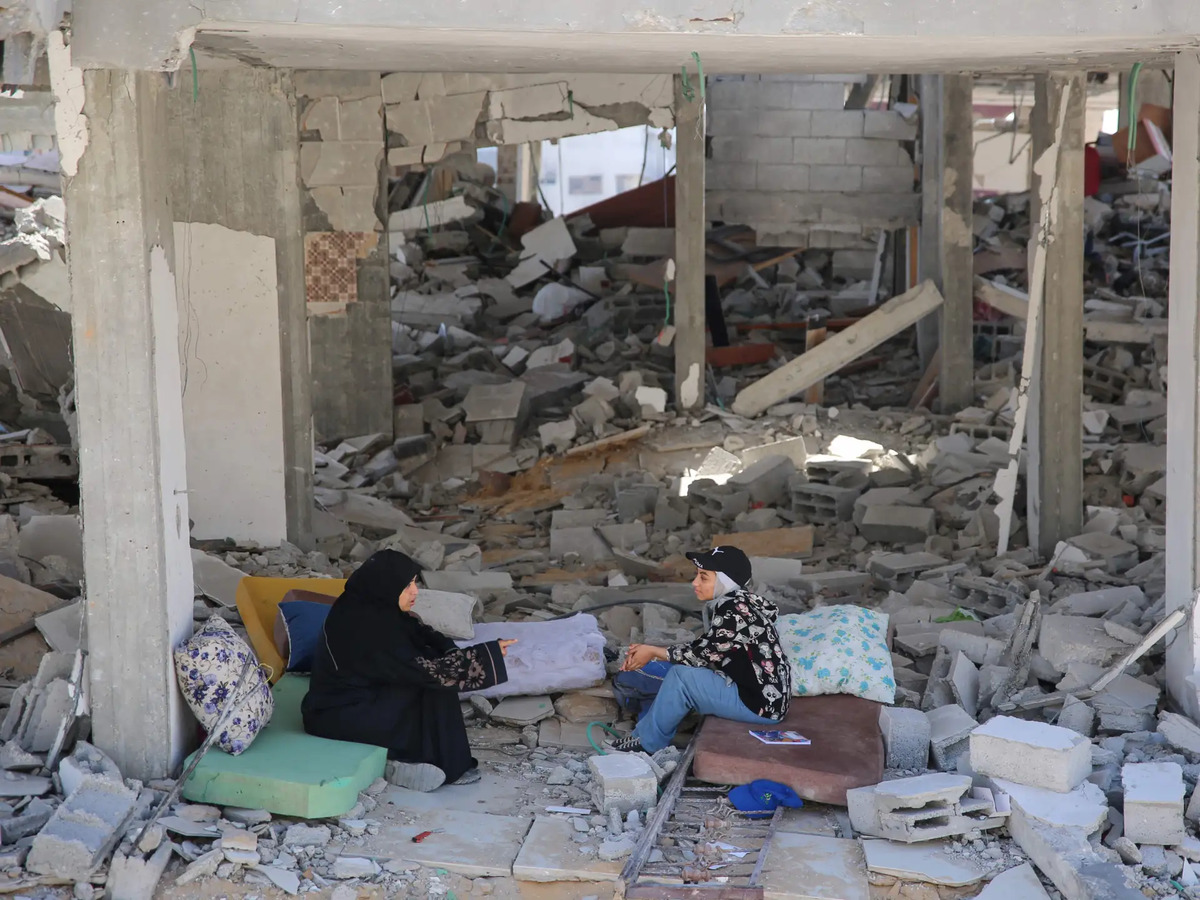
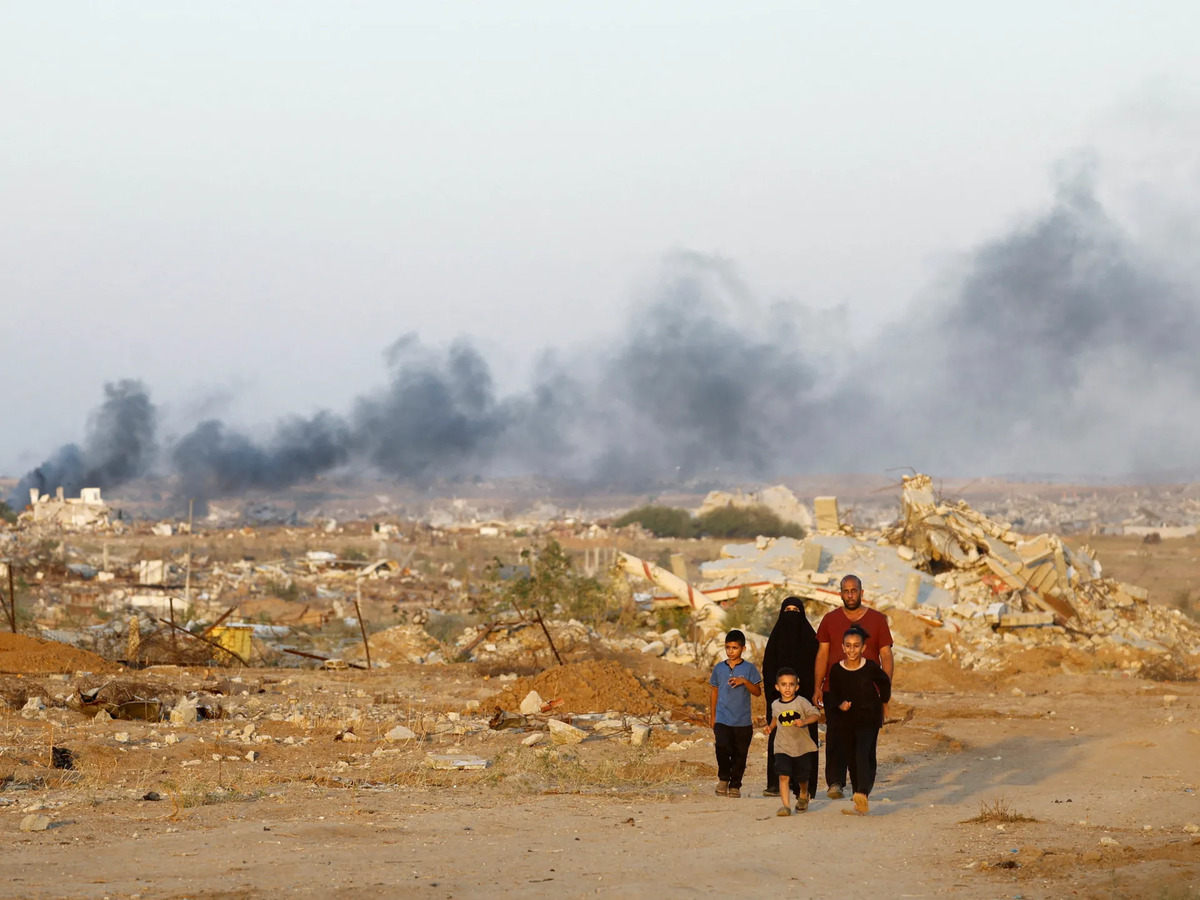
The conflict resulted in the deaths of more than 68,000 Palestinians and injured over 170,000, most of whom were women and children, while about 90 percent of the civilian infrastructure in the sector was destroyed.

Earlier, Israeli media reported that U.S. officials proposed the establishment of the base in discussions with the Israeli government and military, and began surveying potential sites around Gaza.

According to a request sent to contracting companies, as reported by Bloomberg, the proposal includes a temporary and self-sustaining military operations base capable of accommodating 10,000 personnel, as well as providing 10,000 square feet of office space for 12 months.

Bloomberg noted that the U.S. move comes as part of its efforts to form a stabilization force from other countries to monitor the ceasefire between Israel and Hamas.

Israeli media reported that Israeli officials stated that the planned base would include several thousand soldiers tasked with maintaining the ceasefire.

They also considered that the base would represent a significant escalation in U.S. activity in Israel and would be the first large-scale American military facility in the occupied territories.

PALESTINE

Thu 13 Nov 2025 3:00 am - Jerusalem Time

American concern over the collapse of the ceasefire agreement in Gaza is extremely high.. for these reasons.

Documents obtained by the American newspaper "Politico" revealed deep concern among officials in the Trump administration about the potential collapse of the ceasefire agreement in Gaza due to the difficulty of implementing many of its key provisions and the unclear path forward.

A set of documents was presented during a seminar held last month that lasted two days, for leaders of the U.S. Central Command and members of the Civil-Military Coordination Center established in southern Israel, as part of the ceasefire agreement that came into effect on October 10.

The U.S. security coordinator for the Palestinian Authority and Israel, Michael Fenzel, invited around 400 people to the event, from the State and Defense Departments, NGOs, and private companies.

The newspaper indicated that the seminar showed particular concern about whether it would actually be possible to deploy what is called an "international stabilization force," a multinational security initiative aimed at maintaining peace in Gaza.

Politico quoted an American official in the Department of Defense as saying that there are "suppressed concerns" within the U.S. administration regarding the future of the region.

The documents reveal obstacles faced by the Trump administration and its allies in the region in creating "lasting peace," which starkly contrasts with the mostly optimistic rhetoric coming from senior officials in the administration.

According to the documents, the seminar raised a number of obstacles facing Washington and its partners in trying to turn the ceasefire into a permanent peace plan and reconstruction in Gaza.

The American official added that the U.S. military has some plans regarding support for the transitional phase, but the State Department has not played a significant role in developing options for peace in Gaza.

The newspaper quoted American diplomat David Schenker, who served as Assistant Secretary of State for Near Eastern Affairs during Trump's first term, saying that the administration has "a handful of people dealing with a huge number of crises around the world," while "Gaza alone was a full-time job."

On the tenth of last month, a ceasefire agreement in Gaza and a prisoner exchange between Hamas and Israel came into effect, according to a plan by U.S. President Donald Trump.

The agreement ended the genocide committed by Israel with American support in Gaza, which resulted in the martyrdom of more than 69,000 Palestinians and the injury of more than 170,000 others, most of whom were children and women, and caused destruction that affected 90 percent of the civilian infrastructure.

PALESTINE

Thu 13 Nov 2025 2:16 am - Jerusalem Time

Hebrew media: Increasing Emirati concern over the role of Qatar and Turkey in Gaza

Channel 12 reported that the UAE is increasingly concerned about the central role that Qatari and Turkish officials have begun to play in the reconstruction plan for the Gaza Strip, considering that these parties may contribute to the survival of Hamas and its continued influence in the region.

Last month, the newspaper "Israel Hayom" quoted officials stating that there is Emirati and Saudi concern over the rising Qatari role in Gaza. A senior Saudi official told the newspaper that Gulf countries are very worried about the comprehensive security agreement signed between the United States and Qatar, saying: "This means that Qatar will ensure Hamas's survival in Gaza and its return to power at the first opportunity."

The newspaper noted that "it has previously published sharp criticisms from Saudi Arabia and the United Arab Emirates regarding the Americans' efforts to enhance Qatar's leading role in the region. The Saudis are now demanding at least a parallel security agreement, but with better conditions, expressing their concern over Qatar's continued support for branches of the Muslim Brotherhood throughout the Middle East, which undermine stability in Arab countries."

It stated that "in the UAE, as usual, the statements are characterized by a more diplomatic tone, although they carry a similar message; the UAE is already participating in the rehabilitation and construction of infrastructure in humanitarian areas being built in territories under Israeli control."

According to the official statement, the conversation between the American envoys and Tahnoun bin Zayed, advisor to the ruler Mohammed bin Zayed, focused on ways to establish stability and the necessity of ending the war."

It added, "However, the statements of Anwar Gargash, the political advisor to bin Zayed and one of the prominent figures in Emirati foreign policy, clarify that their extensive intervention also awaits Hamas's exit from the scene, even if the organization's name is not explicitly mentioned."

Gargash said: "Returning to the situation before October 7 would not be correct and would not contribute to the solution... The UAE supports American moves, but with two conditions: clarifying the future political situation and the need for a stable security ground. We will not send our sons to a battlefield without a clear understanding of the situation on the ground."

The newspaper considered that "the clear message is that the UAE will likely continue to provide assistance and funding for reconstruction in safe humanitarian areas, but it will remain with the Saudis outside the political scene, at least for now. The weight of Qatar, Egypt, and Turkey will remain dominant - which is exactly what the Gulf countries feared.

PALESTINE

Wed 12 Nov 2025 10:54 pm - Jerusalem Time

West Bank.. Two Palestinians injured by Israeli army gunfire

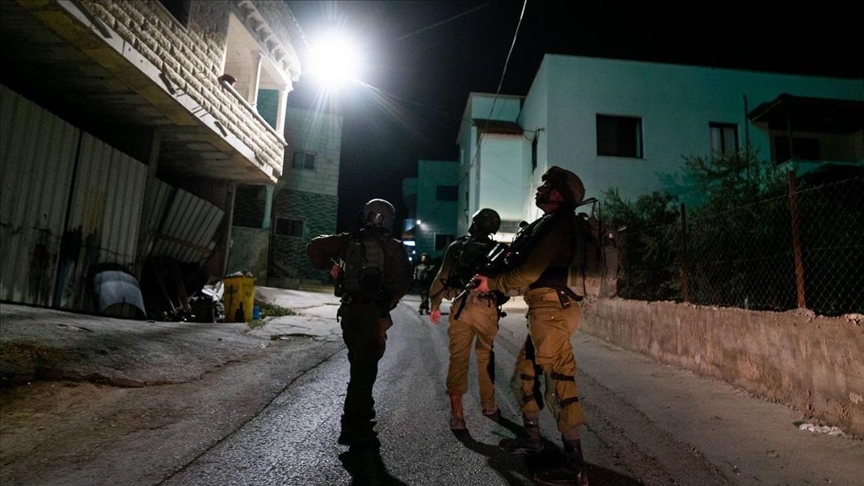
Two Palestinians were injured by Israeli army gunfire on Wednesday evening during a raid on the town of Qabatiya, south of the city of Jenin in the northern West Bank.

The Palestinian Red Crescent Society announced in two consecutive statements the "transfer of two injuries from live ammunition to the hospital, one of whom is 17 years old and the other 20 years old, during the Israeli army's raid on the town of Qabatiya."

According to eyewitnesses, the Israeli army raided the town, spread through its streets, and fired live ammunition and tear gas at its residents, while the villagers attempted to repel the aggression without success.

PALESTINE

Wed 12 Nov 2025 10:18 pm - Jerusalem Time

These are the features of an American settlement for the crisis of Hamas fighters stranded in Rafah.

Tensions are escalating in the Rafah area in southern Gaza due to the issue of trapped fighters from the Islamic Resistance Movement (Hamas), amid intense American efforts to reach a solution, while the Israeli occupation army announced that it had spotted 4 "fighters" in that area, claiming to have killed 3 of them.

This incident in Rafah reflects the complexities of the field and political scene in the sector, where the operations of the occupation army intertwine with American diplomatic efforts, amid fears of a larger escalation if this crisis is not resolved before moving to the second phase of the ceasefire agreement.

In this context, American efforts continue to find a formula for understanding to end the crisis, as Channel 13 in Israel reported that Israeli officials said there is a tendency to agree to the American settlement.

According to these officials, Israel conditions the removal of the fighters from the Gaza Strip, to be transferred to Turkey and then distributed to several countries.

According to Al Jazeera correspondent in Palestine, Elias Karam, Israel considers this expulsion abroad necessary to prevent the rearmament of the fighters and to confront Israeli forces in the areas from which they withdrew, pointing to related negotiations between Ankara and Washington.

The mediation efforts, according to Karam, include movements by prominent American officials, including envoy Jared Kushner, who, according to Israeli media, has prepared an alternative plan (Plan B) in case the current efforts to resolve the crisis fail, considering that what happened today in Rafah could be a factor threatening the collapse of the entire agreement.

The occupation army had announced in a statement this Wednesday evening that its forces had spotted 4 armed men in Rafah and killed 3 of them, with no injuries reported among the soldiers.

In this context, Channel 15 in Israel reported from military sources that the four Palestinians "are likely part of the Hamas elements trapped in the Rafah tunnels."

The Al-Qassam Brigades, the military wing of Hamas, had warned last Sunday, Israel against any potential clash with its elements trapped in Rafah, asserting that "surrender or self-delivery are not options in the Qassam dictionary."

Since the announcement of the ceasefire agreement coming into effect on October 10, the occupation army has announced several similar killings, in an attempt to justify its repeated violations.

PALESTINE

Wed 12 Nov 2025 9:26 pm - Jerusalem Time

Fidan: Hamas expresses readiness to take constructive steps for a permanent ceasefire.

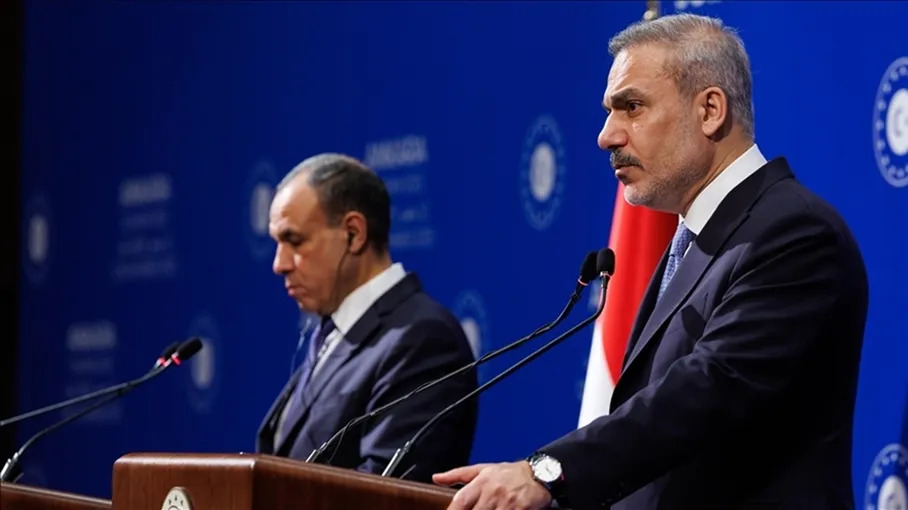
Turkish Foreign Minister Hakan Fidan confirmed that Hamas has shown a willingness to take "constructive steps" to make the ceasefire in Gaza permanent, while calling on the Israeli occupation to "lift all restrictions on the entry of humanitarian aid and open all crossings immediately."

Fidan's statements came during a joint press conference with his Egyptian counterpart Badr Abdel Atti, following a meeting of the joint planning group between Egypt and Turkey held in Ankara.

Fidan said: "Hamas shows a genuine will to make the truce permanent, and we must see the same understanding from the Israeli side. We reiterate our call to Israel to remove all obstacles to the entry of aid and open all humanitarian crossings."

The Turkish minister added that his country thanks Egypt for its "ongoing efforts to deliver aid to Gaza," noting that "a Turkish ship carrying about 810 tons of humanitarian aid set sail on Wednesday from Mersin port towards Al-Arish port."

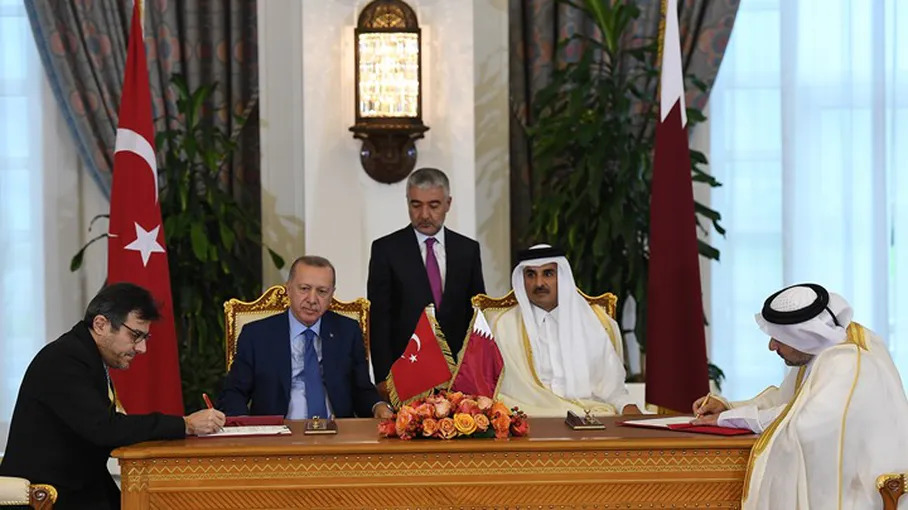
He confirmed that Turkey will mobilize all its resources to establish temporary shelter areas in Gaza and contribute to its reconstruction, adding that Ankara will participate in the international conference for the reconstruction of the sector scheduled to be held in Cairo in the coming days.

Fidan addressed the ongoing efforts in the Security Council to issue a new resolution organizing the administrative and security arrangements in Gaza, explaining: "There is a need to clarify the field tasks of the international stabilization force and to define the legal and political framework for the Palestinian committee and the peace council that are supposed to manage the sector."

He pointed out that consultations with Egypt and the concerned countries are ongoing intensively in this regard, emphasizing that "the basis in Palestine is for the Palestinians to manage their own affairs themselves."

He added: "Gaza is part of Palestine, and it must remain so and be treated on this basis. When adhering to this understanding, solutions can be found for all contentious issues."

Fidan praised the significant development in relations between Ankara and Cairo, noting that the joint planning group meeting discussed "enhancing cooperation in the fields of defense, energy, transportation, communication, and investment."

He clarified that the volume of bilateral trade increased by 11% in 2024, approaching $9 billion, adding: "We aim to raise it to $15 billion, as Turkish companies contribute to expanding production capacity and creating job opportunities in Egypt."

Fidan noted that military and security cooperation between the two countries "is witnessing significant progress," and that "joint projects in defense industries" are being prepared.

He stated that Ankara and Cairo agree on the necessity of achieving stability in Libya and rejecting any foreign interventions in its affairs, affirming continued support for the UN-led process.

Regarding Sudan, the Turkish minister emphasized "the necessity of stopping the fighting immediately and halting attacks against civilians, delivering aid without obstacles, while preserving the unity and sovereignty of the country."

As for Syria, Fidan said that "President Ahmad al-Shara's visit to Washington represents an important development," adding: "Syria's joining the international coalition to fight ISIS is a positive step, and Turkey will continue to support the vision of a unified and secure state free from terrorism."

For his part, Egyptian Foreign Minister Badr Abdel Atti confirmed that Cairo and Ankara "agree on the necessity of enhancing and implementing the ceasefire in Gaza," stressing that the decision regarding the establishment of an international force in the sector must be carefully crafted to ensure the future rights of the Palestinians.

Abdel Atti stated that his country, along with Turkey, Qatar, and the United States, "will continue its efforts to make the truce permanent," adding that "its success will prevent a return to the cycle of tension."

He noted that Egypt will host an international conference for the reconstruction of Gaza, emphasizing the importance of supporting Palestinians to remain in their lands and achieving political progress that leads to the establishment of an independent Palestinian state on the 1967 borders.

On the Syrian issue, the Egyptian minister said: "We must support Syria to regain its regional and international role," pointing to the need to formulate a comprehensive policy that considers the aspirations of the Syrian people.

He also emphasized the necessity of ending the division in Libya, removing mercenaries and foreign fighters, and calling for a comprehensive political solution that ensures the unity of the country.

In conclusion, Abdel Atti said: "Our discussions today have proven the extent of the convergence in positions between Egypt and Turkey, and we are determined to continue coordination for the benefit of the region and its stability."

PALESTINE

Wed 12 Nov 2025 8:34 pm - Jerusalem Time

Atlantic: Trump's new plan for Gaza residents includes separate communities behind the "yellow line."

The magazine "The Atlantic" published a report prepared by assistant editor Hannah Kiros, stating that the administration of U.S. President Donald Trump has a new plan for the Gaza Strip. It wants to build housing projects for displaced persons, but administration officials disagree on the idea and how to implement it.

The report mentioned that Gaza has been divided since the ceasefire agreement last month, based on the yellow line that distinguishes between areas controlled by Hamas and those controlled by the Israeli occupation army. Initially, the line was unclear, but "Israel" has begun to define the separation more clearly with physical markers on the ground, leading some to express that the separation is becoming permanent.

U.S. officials refer to the new developments as "alternative safe communities," and this initiative is designed to create residential clusters for Gazans whose identities have been verified, but it will separate them from those living on the Hamas-controlled side of the yellow line, where the vast majority of Gaza's population resides.

Kiros based her information on statements from an Israeli official and another from the U.S. State Department familiar with the planning.

General Patrick Frank, the military commander coordinating the implementation of President Donald Trump's peace plan, recently told his colleagues that each population cluster should include a medical center, a school, an administrative building, and "temporary housing for about 25,000 people," according to an email reviewed by the writer that had not been previously published.

Frank emphasized the need to "move forward" with the plan, while a senior Trump administration official confirmed to the writer that at least one experimental alternative safe community will be built.

The first targeted site for development is likely to be in southern Gaza near Rafah, owned by Palestinians, as well as other potential sites, of which there are many.

The senior administration official could not immediately say whether the United States knows who owns the property on which the experimental community will be built.

The report stated that "only Palestinians who have received approval from the Shin Bet (Israeli Security Agency) will be allowed to move to these experimental communities," although it is still unclear what the approval criteria will be. However, the starting point will be the person's or their relatives' connection to Hamas, according to the Israeli official familiar with the plan.

Estimates suggest that less than 2 percent of Gaza's population of two million lives on the side of the line currently controlled by "Israel," and the first step in creating a new community in Gaza will involve removing unexploded ordnance and debris.

The U.S. State Department has awarded a contract to "Tetra Tech," a U.S.-based engineering company, which is expected to pave the way for the first "alternative safe community," according to the State Department official.

The company's CEO has attended meetings in Israel with others involved in implementing the "peace plan."

Additionally, two people familiar with the matter said that Trump's main envoys to the Middle East, his son-in-law Jared Kushner and close friend Steve Witkoff, support the housing initiative, as does the Israeli government. However, the plan has sparked fierce reactions from some officials in the State Department, as well as from foreign governments and relief organizations.

Objections are partly due to the restrictions that the new project may impose on registered Palestinians.

The Israeli military branch controlling humanitarian border crossings into Gaza has informed U.S. officials that civilians allowed to enter the project will not be permitted to cross into the half of Gaza controlled by Hamas.

U.S. aid experts in "Israel" are calling for "ensuring freedom of movement across the borders," according to the email reviewed by the magazine. A State Department official indicated that these communities are likely to become "places where people are effectively isolated, even though they won't use those terms."

Trump's 20-point plan calls for the disappearance of the yellow line and for an international force to take on stabilization tasks in the sector and for Hamas to surrender its weapons.

However, temporary lines often become permanent in Middle Eastern conflicts.

Those skeptical of the new plan argue that it prevents Palestinians from moving freely during a relatively peaceful time and risks creating a permanent division in the heart of Gaza.

An American official told "The Atlantic" that the program is an experiment to provide safe housing for Gaza residents outside Hamas control.

The idea of alternative safe communities, or something similar, has been established among senior U.S. and Israeli officials for some time.

The Israeli official stated that the plan for alternative safe communities was presented on the day the center was opened.

A U.S. official in Israel said that the plan for alternative safe communities emerged after the United States announced the establishment of a civil-military coordination

PALESTINE

Wed 12 Nov 2025 8:20 pm - Jerusalem Time

A released Palestinian prisoner recounts through "Roya" his suffering after being subjected to rape and abuse in the occupation's prisons.

In a harsh testimony, a released Palestinian prisoner revealed shocking details about what he experienced inside Israeli occupation prisons, accusing his jailers of committing brutal sexual assault against him.

The prisoner, who clarified during his talk that he was arrested from the West Bank during the recent war on Gaza, began his account by mentioning his transfer between several detention centers before ending up in the 'Prisons Authority.'

According to his narrative, from the moment he arrived, he was subjected to what he described as 'brutal and savage dragging,' where he was 'stripped and dragged' to an unknown location, blindfolded and handcuffed.

In the shocking details of the incident he recounted, the released prisoner said: 'They ordered me to kneel and stripped me of my lower clothes, and I felt a hard object trying to be inserted into my rectum.'

He suggested that this object was 'one of the sticks' used in acts of torture, noting that this assault lasted 'for 20 minutes.'

He added that the perpetrators of this act were about '4 people,' including a female guard and another who spoke Arabic.

He continued that they insulted him and slandered his honor, threatening to 'bring his wife and sisters and rape them' in front of him.

According to his testimony, he was then left lying on the ground 'for an hour' unable to move, before they returned to dress him, then 'beat him again' and put him in a cell.

The released prisoner pointed out that he discovered the extent of his injury when he tried to shower, as he 'found blood coming from his rectum,' and confirmed that this bleeding did not stop 'for 20 days.'

He also complained of 'severe pains and aches' that deprived him of the ability to sleep, indicating that he suffered from 'fractures in the rib cage' due to intentional blows to the chest and head.

The released prisoner explicitly accused the guards by saying: 'The guards themselves were raping the prisoners,' confirming that prisoners are subjected to starvation and severe beating 'in all places,' and that what he recounts is 'a small part' of what happens.

At the end of his talk, the released prisoner criticized the 'position of the Palestinian government,' considering that it 'left the prisoners alone' and did not comfort them in their suffering or demand their rights.

PALESTINE

Wed 12 Nov 2025 7:48 pm - Jerusalem Time

EU and Canada renew their support for efforts to achieve peace in Gaza.

The European Union and Canada renewed their commitment to deepening cooperation in the fields of defense and trade, and their support for efforts to achieve peace in Gaza.

A joint statement from the European Union and Canada on Wednesday stated that the fourth meeting of the joint ministerial committee between the two sides was held in the Niagara region of Ontario, Canada.

The meeting was chaired by the EU High Representative for Foreign Affairs and Security Policy, Kaia Kalas, and Canadian Foreign Minister Anita Anand.

The statement praised the role of the United States and regional mediators in reaching a ceasefire agreement in Gaza, affirming that the EU and Canada will provide "strong and ongoing support for the ongoing negotiations."

The ceasefire agreement and prisoner exchange between Israel and Hamas, which came into effect on October 10, 2025, ended two years of genocide against the Gaza Strip.

It called on all parties to commit to implementing the ceasefire plan and to refrain from any actions that could threaten the agreement, emphasizing the need to deliver humanitarian aid to Gaza immediately and without obstacles.

It added: "We emphasize the importance of reducing tensions in the West Bank and East Jerusalem, and we call for an end to violence by settlers, including against Christian communities, and for a halt to the expansion of illegal settlements under international law, Israeli military operations, as well as terrorist attacks against Israel."

The statement stressed that Tel Aviv must adhere to its obligations under international law.

For two years, the West Bank, including Jerusalem, has witnessed a comprehensive Israeli escalation by the army and settlers coinciding with the Israeli genocide against the Gaza Strip.

The statement reiterated support for Ukraine's sovereignty and territorial integrity, calling on Russia to "end the war and adhere to international humanitarian law."

It also emphasized the necessity for Ukraine to be a party in any path toward peace, noting that the EU and Canada will continue to work together on sanctions imposed on Moscow and those facilitating the continuation of the war.

Since February 24, 2022, Russia has been conducting a military attack on its neighbor Ukraine, conditioning its end on Kyiv's abandonment of joining Western military entities, which the latter considers "interference" in its affairs.

Both sides expressed their welcome for the partnership agreement in the fields of security and defense, signed on June 23 between the EU and Canada, describing their cooperation as a fundamental pillar for stability, resilience, and prosperity across the Atlantic.

PALESTINE

Wed 12 Nov 2025 6:35 pm - Jerusalem Time

Israeli concerns over a U.S. draft resolution that threatens the army's freedom in Gaza

The former head of Israeli military intelligence and head of the Institute for National Security Studies at Tel Aviv University, retired General Amos Yadlin, and researcher in Palestinian affairs Noa Schusterman/Dafir, expressed their concern over Washington's presentation of the "Trump Plan" at the United Nations, due to what they described as "gaps in some provisions and ambiguity in others."

They confirmed that the proposed American draft before the Security Council contains temporary gains for Israel, but also entails deep strategic risks.

In a joint article published by the "Channel 12 Hebrew" website, they stated that the draft promoted by the U.S. administration aims to be a central pillar for implementing the "Trump Plan" regarding the Gaza Strip, which was launched last September.

They explained that the American plan seeks to grant broad international legitimacy to the proposed measures, including: forming a temporary Palestinian government of technocrats, establishing an international stabilization force and a peace council, in preparation for gradually transferring control to the Palestinian Authority after implementing internal reforms.

Despite the formal security agreements the draft carries with the Israeli position, Yadlin and Schusterman believe that the proposed resolution suffers from fundamental weaknesses, as it allows for reconstruction and disarmament to occur in parallel, whereas the original plan demanded complete disarmament as a prerequisite for reconstruction.

They pointed out that Tel Aviv still sees its war objectives clearly: disarming Hamas and ensuring that the Gaza Strip does not pose a future security threat, but these objectives – according to the article – could be significantly diluted in the Security Council resolution if approved in its current form.

The researchers warn that the anticipated resolution may not reflect the spirit of the original "Trump Plan" that was signed between the United States, Turkey, Qatar, and Egypt last October, as its passage requires a vote in the Security Council composed of 15 countries, including Pakistan and Algeria, with the possibility of objections from permanent members such as Russia or China.

They state that this dynamic makes the current draft a diluted proposal attempting to implement the second phase of the plan without a comprehensive addressing of Israeli objectives.

Regarding the security aspect, Yadlin and Schusterman clarified that the draft grants broader international legitimacy to the demand for disarming Gaza and establishing an international stabilization force in close cooperation with Egypt, but at the same time suffers from severe practical ambiguity.

It does not specify the entity responsible for implementing disarmament in case Hamas refuses to comply voluntarily, nor does it clarify the limits of the proposed Palestinian police's powers.

They noted that the absence of a link between reconstruction and complete disarmament opens the door for Hamas to exploit humanitarian and economic aid to rebuild its military infrastructure, adding that the draft does not explicitly mention tunnels or the infrastructure supporting weapon production, unlike the original Trump plan.

Concerning the Israeli military presence in Gaza, the authors expressed concern that the draft does not specify a clear withdrawal map for the Israeli army, nor does it grant it a clear legal status on the ground, which could be interpreted as a restriction on operational freedom.

They stated that the original "Trump Plan" discussed the "yellow line," the "red line," and the security perimeter, but the new draft ignores these details, creating a "dangerous strategic gap," especially if the Security Council assigns a supervisory role over field operations.

They add that the potential outcome could be the deployment of foreign forces in areas still containing Hamas fighters, amid doubts about these forces' readiness to effectively disarm the movement.

According to the article, the plan aims to establish a peace council and a Palestinian technocratic government under supervision, to prevent the return of Hamas and ensure stability, but the draft grants the council near-absolute powers in determining when the Palestinian Authority meets the required conditions.

Although Trump will lead the council, it will include Arab and international representation, which could make decision-making beyond Israeli control.

The authors also point out that the draft sets a work period of no less than two years without indicators or criteria to determine success or failure, which could turn the peace council into a mediator unsympathetic to Israel, at a time when Netanyahu's government benefits from delaying the Palestinian Authority's return to the sector.

The researchers believe that the current draft represents a temporary achievement for the Israeli narrative, as it does not refer to previous United Nations resolutions or the idea of a Palestinian state, but it remains a fragile achievement.

It is expected that France will request an amendment linking the resolution to the "New York Declaration," which could bring the idea of a two-state solution back to the table.

On the international front, Yadlin and Schusterman expect that Russia, China, Algeria, and

PALESTINE

Wed 12 Nov 2025 5:46 pm - Jerusalem Time

Hebrew media: The "Israeli" army kills 4 members of the Palestinian resistance inside a school in Rafah.

The Hebrew Channel 14 reported that forces from the Israeli occupation army carried out a military operation inside a school building in the city of Rafah, in the southern Gaza Strip.

The Hebrew channel added that the mentioned incident resulted in the death of four members of the Palestinian resistance who were present in the targeted school.

PALESTINE

Wed 12 Nov 2025 5:14 pm - Jerusalem Time

Lazareini calls for empowering "UNRWA" to support Gaza.. "We have the expertise and want to make peace successful"

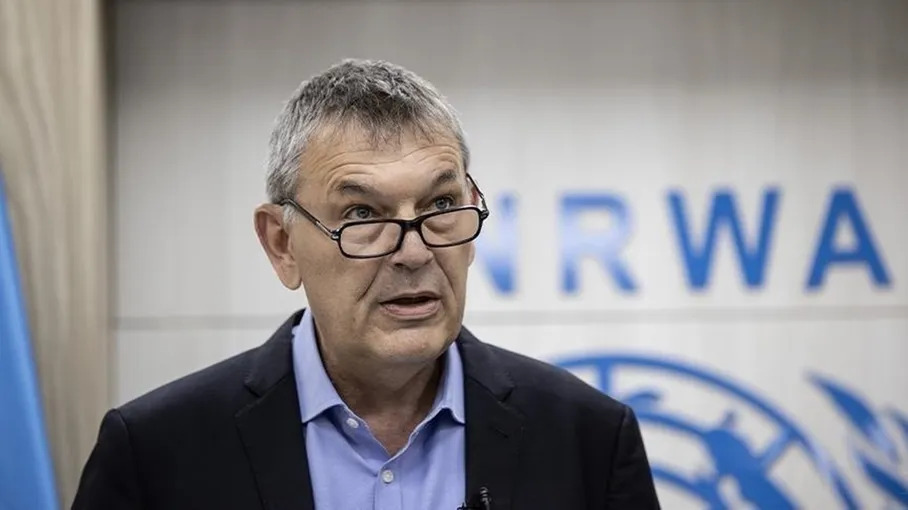
The Commissioner-General of the United Nations Relief and Works Agency for Palestine Refugees in the Near East (UNRWA), Philippe Lazzarini, confirmed that with the ceasefire in the Gaza Strip now in effect, the reconstruction process must begin, justice must be achieved, and the issue of recovery must be taken seriously by both the Palestinian and Israeli communities.

Lazzarini stated in an article published by The Guardian that after two years of brutal war in Gaza, the fragile ceasefire, part of the first phase of U.S. President Donald Trump's 20-point plan, provides some relief to a war-weary population.

He added that "for my colleagues at UNRWA working on the ground in Gaza, the ongoing fear of being killed by bombs and weapons may have lessened, but there is still much to be concerned about - access to shelter, food, and clean water remains a challenge, and winter is approaching rapidly."

He explained that there is no time to waste in addressing the widespread hunger and disease. The scale of physical and psychological trauma is immense, and expectations for access to healthcare and education are rising.

The coming weeks and months will determine whether this critical moment will lead to a new dawn or be a prelude to further despair.

He noted that the United Nations, including UNRWA, has the experience and resources necessary to effectively and widely meet critical humanitarian needs, but it must be allowed to operate freely and independently, without arbitrary and unreasonable restrictions on the entry and exit of supplies and personnel.

He pointed out that "the road to recovery in Gaza will not be easy; the ceasefire is fragile, with near-daily violations testing the resolve of its guarantors, and a ceasefire that prolongs the absence of war without charting a viable path to peace will only lead to a repetition of the catastrophic mistakes of the past. A truly peaceful future requires a genuine investment in a final political solution to the Israeli-Palestinian conflict."

He stated that "basic security is essential to underpin recovery. The ceasefire must be reinforced by an international stabilization force tasked with maintaining calm, protecting vital infrastructure, and ensuring humanitarian aid access."

This force will create the necessary space to rebuild Palestinian institutions.

He added that "the success of the stabilization force, and the transition from emergency to stability, will also depend on providing Palestinians in Gaza with reliable public services and a credible path to peace and respect for human rights."

This can only be achieved through an efficient civil apparatus that enjoys the trust of the community.

He added: "We have previously seen the consequences of underestimating the need for stable and effective public services, with the most notable example being what happened in Iraq when the dismantling of the civil administration in 2003 led to a governance vacuum that caused years of instability.

Professionals, administrators, and community leaders in Gaza must be part of the solution, not victims of political changes."

He emphasized that "UNRWA," with its thousands of Palestinian employees, has the capacity, experience, and community trust necessary to provide healthcare, education, and other public services to the affected population.

For decades, the agency's teachers, doctors, and engineers have formed a vital part of an effective public service system for millions of Palestinian refugees in Gaza and the region.

He noted that the International Court of Justice reaffirmed the competence of UNRWA staff in its advisory opinion issued last month, emphasizing the agency's indispensable humanitarian role and concluding that it remains a neutral and independent actor.

He said that the educational services provided by "UNRWA," including the prestigious human rights program, will be essential to prevent the emergence of extremism fueled by the brutal blockade imposed on Gaza and the atrocities committed over the past two years.

Nearly 700,000 school-aged children now live among the rubble, deprived not only of their homes and loved ones but also of education.

Returning these children to school is crucial to ensuring peace and stability in Gaza and the wider region.

Lazzarini explained that alongside humanitarian relief efforts and the resumption of public services, businesses and donors must be able to trust that peace will endure and that reconstruction efforts will not be in vain.

He stressed that the people of Gaza need the promise of a normal life, with permanent housing, functioning hospitals, and schools.

Rebuilding Gaza means restoring good governance, justice, and a firm belief that peace is still possible within the framework of a two-state solution.

He pointed out that this requires that the "yellow line" in the agreement - drawn for temporary security coordination - does not turn into further fragmentation with a new dividing

PALESTINE

Wed 12 Nov 2025 4:54 pm - Jerusalem Time

Satellite images reveal the destruction caused by the occupation of more than 1,500 buildings in Gaza after the ceasefire.

Satellite images have shown that the Israeli occupation army has destroyed more than 1,500 buildings in the Gaza Strip since the ceasefire took effect on October 10, while analyses from the BBC indicate that Israeli demolition operations are still ongoing and widespread.

The images revealed that the areas controlled by the Israeli occupation army were completely leveled within one month of the ceasefire announcement, with demolition operations notably concentrated in the town of Abasan al-Kabira east of Khan Younis, as well as in the al-Bayouk area near Rafah.

The report confirmed that more than 1,500 undamaged buildings were demolished by bulldozers after the ceasefire, noting that thousands of buildings were destroyed in areas located behind what is known as the "yellow line."

The "yellow line" is the area to which the occupation army withdrew as part of the first phase of U.S. President Donald Trump's plan to end the war on Gaza, and it constitutes more than half of the area of the Strip.

The images also showed the continuation of demolition operations in the Shuja'iyya neighborhood and around the Indonesian hospital east of Gaza City.

The report quoted "H. A. Heller," a senior fellow at the Royal United Services Institute, stating that what is happening "represents a clear violation of the ceasefire," adding that "Washington is not prepared to acknowledge that."

The ceasefire and prisoner exchange agreement between the occupying state and Hamas, which took effect on October 10, 2025, ended two years of war on the Gaza Strip, which human rights reports described as "genocide."

This genocide war led to the martyrdom of more than 69,000 Palestinians and injured over 170,000, most of whom were children and women, in addition to the destruction of about 90 percent of civil infrastructure, while the United Nations estimated the cost of reconstruction at around $70 billion.

PALESTINE

Wed 12 Nov 2025 4:54 pm - Jerusalem Time

New Israeli plans to build a settlement and waste treatment facility in Qalandia

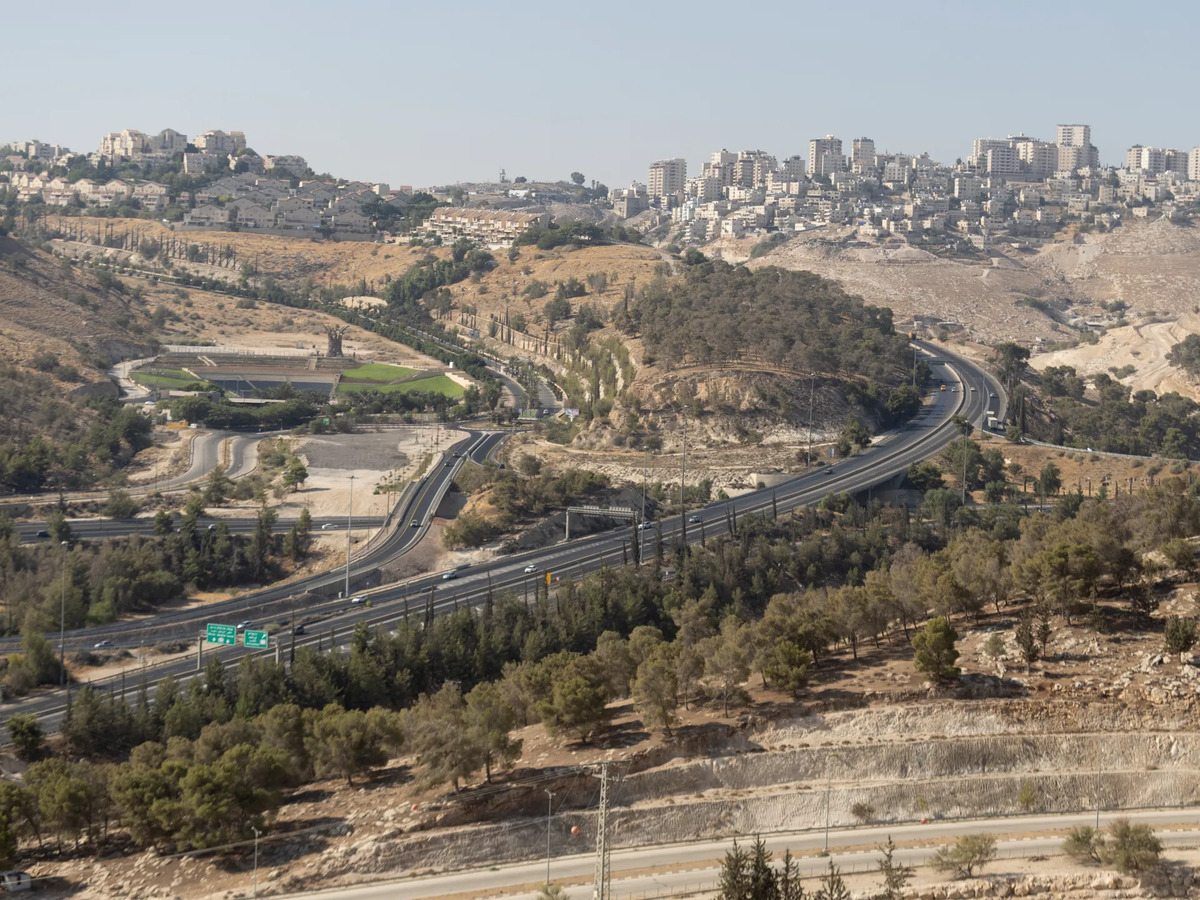
An Israeli newspaper reported today, Wednesday, that Israel plans to establish a settlement neighborhood in Qalandiya, north of occupied Jerusalem, at a time when the Jerusalem governorate revealed that the occupation intends to build a waste treatment facility in the same area, which threatens the displacement of dozens of Jerusalemite families.

The Calcalist newspaper stated that the local planning and building committee in Jerusalem will hold a session next month to establish a massive settlement neighborhood for ultra-Orthodox Jews (Haredim) in the Atarot area and on the land of the old Jerusalem airport in the Qalandiya area, north of occupied Jerusalem and Ramallah.

The newspaper added that Israeli authorities plan to build the new neighborhood on an area exceeding 1263 dunams, which will include about 9,000 housing units for more than 30,000 settlers.

It continued that the plan has been proposed repeatedly, but this time it includes appendices for construction and economic and social development that were not previously present, which may contribute to facilitating approval and advancing the establishment of the neighborhood.

In parallel with the genocide in Gaza and the aggression against the occupied West Bank, the government of Benjamin Netanyahu approved several settlement projects aimed at tearing apart the West Bank and Judaizing occupied Jerusalem.

In August of last year, Netanyahu - wanted by the International Criminal Court for committing war crimes in Gaza - signed the "E1" plan to expand settlements established on lands in the West Bank surrounding occupied Jerusalem.

The settlement plan aims to isolate occupied Jerusalem from its Palestinian surroundings, severing geographical and demographic communication between the city and Palestinian communities, undermining the establishment of a Palestinian state with Jerusalem as its capital, as well as isolating the northern West Bank from the south and turning it into enclaves subject to the authority of the occupation.

Meanwhile, the Jerusalem governorate stated today that the occupation authorities plan to establish a waste treatment and energy recovery facility on Palestinian land in the village of Qalandiya, north of the city, which threatens the displacement of dozens of Jerusalemite families.

The governorate added in a statement that what is known as the "Israel Land Authority" distributed evacuation orders demanding residents vacate their homes and lands within 20 days in preparation for the confiscation of about 130 dunams for the project, which was reactivated by a decision from Israeli Finance Minister Bezalel Smotrich based on old orders dating back to the 1970s.

The governorate warned that the project constitutes a violation of international law and the Geneva Conventions, leading to the expansion of the separation wall and the confiscation of additional lands, warning of its serious environmental and health repercussions that will turn Palestinian lands into a dumping ground for hazardous waste.

The Jerusalem governorate called on the international community to take urgent action to stop the project and protect Jerusalemite residents from displacement and the destruction of their environment.

In other developments, occupation forces demolished the home of Jerusalemite Mousa Badran in the Silwan neighborhood south of occupied Jerusalem today, under the pretext of building without a permit.

Al Jazeera's correspondent reported that the occupation police spread in the neighborhoods of Bir Ayoub and Al-Bustan in Jerusalem, closed several roads, and took positions on rooftops, coinciding with the incursion of the occupation municipality crews into the neighborhood to carry out the demolition.

According to statistics from the Jerusalem governorate, the occupation authorities had demolished about 93 buildings by the end of May, while UN reports indicated that more than 623 homes and facilities were destroyed in the West Bank since the beginning of this year.

Commenting on the new demolition operation in the Silwan neighborhood, Haroun Nasser al-Din, a member of the political bureau and head of the Jerusalem Affairs Office in the Islamic Resistance Movement (Hamas), stated that the demolition of Jerusalemite homes, the latest being the demolition of Mousa Badran's house, comes within the context of the forced displacement policy pursued by the occupation to uproot Palestinians from their land and erase the Arab and Islamic identity of the city.

At the same time, the Jerusalem governorate reported that 154 settlers stormed the Al-Aqsa Mosque today under the protection of Israeli occupation forces.

Israeli occupation forces also demolished two inhabited houses in the village of Walaja west of Bethlehem and a tin house and two water wells in the village of Al-Fakheit in Masafer Yatta south of Hebron.

In Hebron as well, Palestinian sources reported that the occupation seized 38 dunams of citizens' lands in the town of Beit Ummar.

Occupation forces stormed towns in Ramallah today, while settlers attacked Palestinian properties and

PALESTINE

Wed 12 Nov 2025 4:24 pm - Jerusalem Time

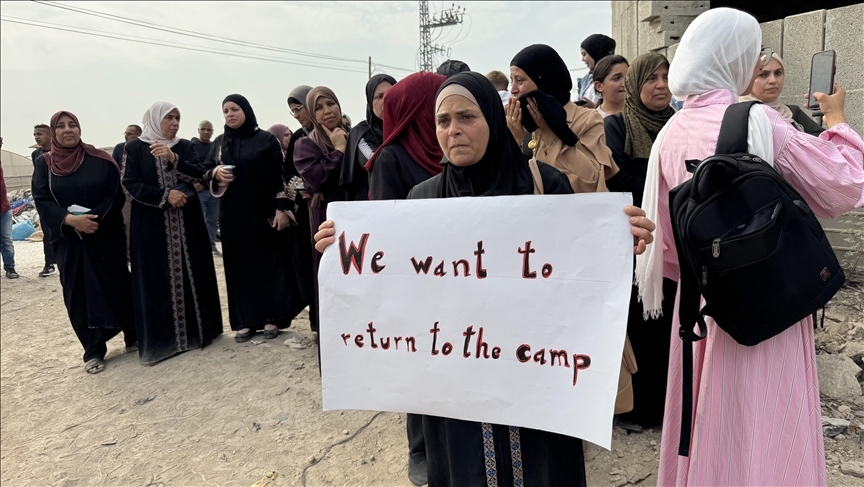
The West Bank.. Palestinian displaced persons demand to return to Nur Shams camp.

Displaced Palestinian refugees from the Nur Shams refugee camp in the northern occupied West Bank demanded on Wednesday to return to their homes, which Israel forced them to flee months ago.

They participated in a protest in front of the camp's entrance east of Tulkarem, where they raised banners that read: "We want to return to our homes," "The camp is not just a place.. it is our life," and "Return is a right."

They appealed to the international community and humanitarian organizations for "urgent action to rebuild the camp and secure the return of the residents to their homes."

The Israeli army imposed a military cordon around the camp, preventing Palestinian citizens from approaching it by setting up barriers.

Nihal Al-Jundi, one of the displaced and a community activist, said they were "oppressed and displaced," and that their suffering "doubles as days pass without real solutions."

She added: "My house that I built with my own hands has turned to ashes, but it is still my home, and I will return to it no matter the cost."

The displaced women have been living in harsh conditions for months, and returning to the camp represents their only hope of restoring their normal lives.

She continued: "The camp is a waiting station until we return to our villages from which we were displaced in 1948.. and we will work to rebuild and rehabilitate the camp again."

For her part, Hanan Abu Zahra, another displaced woman, said: "We demand to return; enough with 10 months of displacement."

She added: "Our homes were destroyed and burned, and our children are without schools.. our love for the camp means we cannot live far from it."

Since January 21, the Israeli army has continued its aggression in the northern West Bank, starting with the Jenin camp and then moving to the Tulkarem and Nur Shams camps, resulting in the destruction of hundreds of homes and the displacement of more than 50,000 Palestinians.

This aggression has led to the demolition of thousands of housing units and changes to the geographical and demographic features of the camps, through the construction of new roads and widespread home demolitions.

Attacks by the army and Israeli settlers in the West Bank, including East Jerusalem, have escalated since Tel Aviv began its genocide campaign in the Gaza Strip on October 8, 2023.

The army and settlers in the West Bank have killed at least 1,069 Palestinians and injured about 10,700 others, in addition to arresting more than 20,500 people.

The genocide in Gaza has left 69,185 Palestinian dead, and 170,698 injured, most of whom are children and women, along with massive destruction with reconstruction costs estimated by the United Nations at around $70 billion.

PALESTINE

Wed 12 Nov 2025 4:24 pm - Jerusalem Time

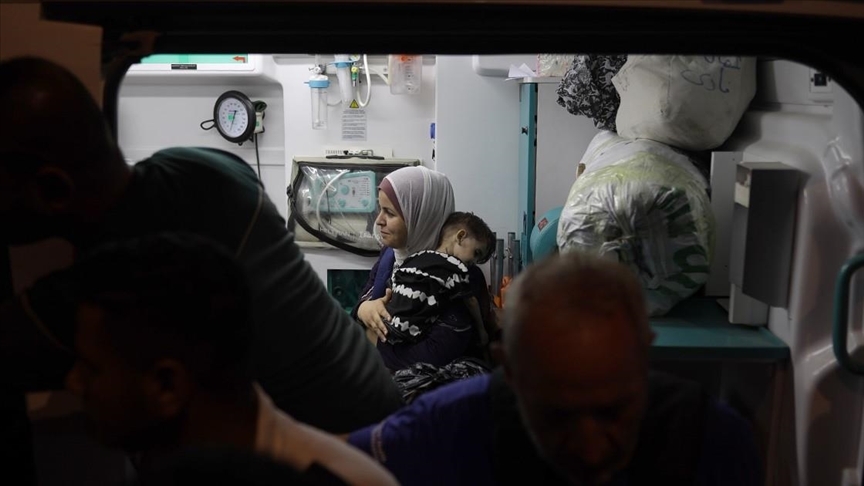
"World Health Organization": We are working to increase medical evacuation operations in Gaza.

The Director-General of the World Health Organization, Tedros Adhanom Ghebreyesus, stated on Wednesday that the organization is working to increase medical evacuation operations during the ongoing ceasefire in the Gaza Strip.

In a post on the American platform "X," Ghebreyesus mentioned that more than 16,500 people are still waiting for medical evacuation from Gaza.

He pointed out that the damaged health facilities in Gaza are unable to provide the necessary care for Palestinian patients and the injured.

The Director of the organization expressed his encouragement for the commitment of countries to receive the injured and patients suffering from serious illnesses in Gaza for medical care.

He noted that the organization's medical evacuation program has supported the evacuation of nearly 8,000 patients from Gaza for treatment over the past two years, including more than 5,500 children.

Ghebreyesus called for the opening of all evacuation routes to the occupied West Bank, including East Jerusalem.

The ceasefire and prisoner exchange agreement between Israel and Hamas, which came into effect on October 10, ended two years of genocide against the Gaza Strip.

The genocide resulted in more than 69,000 Palestinian deaths and over 170,000 injuries, most of whom are children and women, in addition to the destruction of 90 percent of civilian infrastructure, with the United Nations estimating the reconstruction cost at around $70 billion.

PALESTINE

Wed 12 Nov 2025 4:18 pm - Jerusalem Time

Under the protection of the army.. Settlers burn the livelihoods of Palestinians in Nablus.

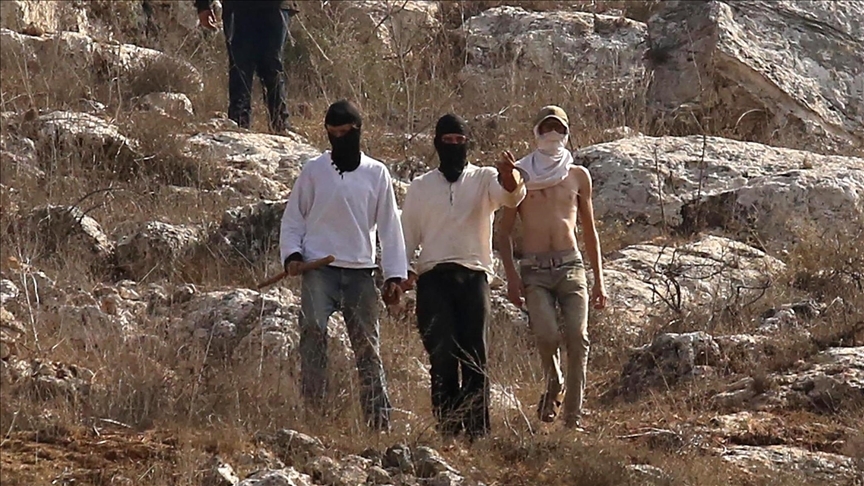
An industrial site and a Bedouin gathering west of Nablus city in the northern occupied West Bank turned into a scene of fire and destruction after dozens of Israeli settlers attacked the area located between the towns of Beit Lid and Deir Sharaf, burning vehicles and warehouses and assaulting Palestinian workers.

Eyewitnesses and local officials described the attack carried out by extremist settlers on Tuesday evening as the "most violent" in months, confirming that the assault occurred in an organized manner under the protection of Israeli army forces, who did not intervene to stop it.

The West Bank has been witnessing an unprecedented escalation for months by settlers who carry out repeated assaults against Palestinians and their properties under the protection of the Israeli army.

PALESTINE

Wed 12 Nov 2025 4:12 pm - Jerusalem Time

A "secret" agreement regarding Rafah gives Egypt a larger role.. What are its details?

The Israeli newspaper "Maariv" revealed in a report about a "secret agreement" led by the United States regarding the city of Rafah, at the southernmost point of the Gaza Strip, which gives Egypt a larger role at the expense of other parties' roles.

The newspaper stated that the Americans will present a plan to Israeli Prime Minister Benjamin Netanyahu aimed at moving to the second phase of the ceasefire in Gaza, with a focus on the reconstruction of Rafah.

Washington expects Netanyahu to support a step that enhances Egypt's role and enables the exclusion of Turkey from the reconstruction process.

The newspaper pointed out that the Americans intend to present their initial plan to Prime Minister Benjamin Netanyahu and the heads of security agencies to move to the second phase of the ceasefire agreement in Gaza.

According to security sources, they are seeking, from an American perspective, to make progress on the Gaza issue, particularly in the area of reconstruction.

A security source stated: "The Americans are the leaders, and the bet now is on the reconstruction of Rafah."

This may be the reason why the Americans are promoting the release of fighters trapped in the Rafah tunnel and urging Hamas to return the body of Israeli officer Hadar Goldin.

Maariv added that the Americans are determined to move forward immediately with the reconstruction of Rafah, a step that may push Benjamin Netanyahu to support it, as this step will directly enhance Egypt's position.

Egypt is concerned with stability and shaping what happens in the area adjacent to its northern borders with Gaza.

In this context, this step may allow "Israel" to use this matter as leverage to exclude Turkey from the reconstruction process and beyond.

Since Egypt's involvement will lead the reconstruction process, it will make it a central party in it.

Israel may support the process for a good reason, as some tribes operating under its sponsorship are active from Rafah.

ARAB AND WORLD

Wed 12 Nov 2025 3:35 pm - Jerusalem Time

Trump officially intervenes and calls for a pardon for Netanyahu

In a move that reflects the depth of the personal and political relationship between him and Benjamin Netanyahu, Israeli President Isaac Herzog revealed that he received a letter from U.S. President Donald Trump inviting him to grant clemency to the Israeli Prime Minister, who faces three corruption cases still under trial.


Trump, who described the legal proceedings against Netanyahu as "unjust political persecution," affirmed in his letter his respect for the independence of the Israeli judiciary, but emphasized that the cases against the Israeli Prime Minister are the result of political targeting. Trump praised Netanyahu as a "great leader and decisive in times of war," calling for him to be granted "full clemency."
The letter, which Herzog's office confirmed was received, was considered notable for its timing and content, as it comes at a time when Netanyahu is facing increasing pressure within his government and a decline in his popularity, while his trial sessions continue regarding issues related to accepting luxury gifts from businessmen and attempting to manipulate media coverage through political favors.
Although this is the first time Trump has made a formal written request regarding clemency, he had previously called for the necessity of pardoning Netanyahu in earlier public statements, considering that the ongoing trials against him reflect political divisions within Israel more than they represent actual corruption cases. This position reflects Trump's own view of relations with Israel, as he sees the alliance between political leaders—not between institutions—as the foundation of the strategic relationship.
Netanyahu, for his part, continues to deny all the charges against him, while his supporters describe the cases as a political campaign aimed at ousting him from power, whereas his opponents insist that "no one is above the law," asserting that external interference in Israeli judicial matters undermines the principle of separation of powers.
It seems that Trump's call raises a deeper question about the limits of American influence in Israeli domestic politics, and how personal relationships between leaders can be exploited to redraw the political and legal landscape in Israel.
Trump's letter reveals his continued approach based on personal loyalty and political symbolism rather than respect for norms and institutions. His early and repeated talk about the necessity of pardoning Netanyahu reflects his view of power as an alliance among friends, rather than a legal system based on accountability. This message raises controversy within Israel regarding the extent of judicial independence and the impact of American politics on sovereign decisions affecting Israeli justice.

PALESTINE

Wed 12 Nov 2025 3:00 pm - Jerusalem Time

Israeli soldiers admit to killing civilians and using children as human shields in Gaza.

The British newspaper "Independent" reported that Israeli occupation soldiers provided testimonies in a documentary aired by ITV, in which they spoke about "shocking" practices committed by the Israeli occupation army during its war on Gaza, including shooting at unarmed Palestinian civilians, using children as human shields, and implementing a systematic policy based on "destruction, demolition, and deportation."

The testimonies, which appeared in the documentary "Breaking Ranks: Inside Israel's War," included at least 12 soldiers who confirmed that Gaza was left in a state of "apocalypse" after two years of unprecedented Israeli aggression, noting that their leaders ordered them to ignore international law and take revenge on everyone, while officers celebrated the airstrikes.

The participants also spoke about the systematic destruction of civilian infrastructure, burning Palestinian homes that were used as forward bases, and shooting at aid seekers at distribution sites, alongside an "unprecedented" bombing campaign that caused widespread damage.

A lieutenant colonel who served more than 300 days in Gaza, known as "Colonel B," stated that the operations were "completely comprehensive," adding: "I would have pushed them all into the sea with bulldozers on October 7 and let them swim to Egypt."

Another soldier mentioned that some members of his battalion openly expressed their desire to "destroy, demolish, and deport" Palestinians outside the sector, and the report noted that Israel launched an unprecedented bombing campaign and a comprehensive blockade on Gaza following Hamas attacks on the southern occupied territories, which killed more than a thousand people, according to Israeli estimates.

The soldiers described what happened as a "campaign of revenge," confirming that the ongoing bombing since October 2023 has claimed the lives of more than 64,000 people, according to the Palestinian Ministry of Health, while more than 90 percent of homes have been destroyed or damaged, according to the United Nations, and the blockade has led to famine and a humanitarian crisis described as "unprecedented."

This year, a United Nations investigation committee concluded that Israel committed "genocide."

A soldier named "Yaqub" stated that the level of destruction in Gaza was so horrific that it "destroyed an entire community," adding: "All the mosques, hospitals, universities, and cultural institutions were leveled to the ground."

He confirmed that his battalion used Palestinians as human shields, including a 16-year-old boy, adding that their commander told them: "Don't worry about international law, just care about the spirit of the Israeli army."

Another soldier named "Daniel" reported that the use of human shields became "a widespread practice" within the occupation forces, referring to what is known as the "Mosquito Protocol," during which Palestinians are forced to work as field assistants in tunnels.

He explained that "every battalion has its own mosquito, meaning three Palestinians per battalion, and dozens for each company," considering this method "saves soldiers' lives."

The "Independent" noted that its previous investigations proved that the Israeli occupation army used children as young as 12 years old in house searches and tunnel investigations while wearing military uniforms. In response, the army stated that "orders prohibit the use of civilians in military tasks that put them at risk."

The film also addressed the widespread destruction of civilian infrastructure in Gaza, with the World Bank estimating the cost of reconstruction at around $53 billion, while the United Nations Conference on Trade and Development warned that the continuation of the blockade could make the sector's economy take 350 years to return to its pre-war level.

Rabbi Avraham Zarbiyev, who served more than 500 days in Gaza, stated that he was behind the idea of systematically destroying residential neighborhoods, affirming that the army "invested hundreds of thousands of shekels in destroying the sector," justifying this by saying that "everything there is considered one large terrorist infrastructure."

The soldiers also recounted instances of killing unarmed civilians, including a man who was hanging his laundry and was hit by a tank shell, and a teenager who was shot in the head while pushing a cart.

A soldier named "Eli" stated that 112 "terrorists" were recorded as killed in his unit, but he confirmed that only one was actually armed.

Captain Nita Kasbin, who oversaw drone operations, said she watched her crew track a man walking in the Netzarim corridor for half an hour before shooting him, with one soldier later saying: "Be happy."

Another soldier added that using drones in Gaza "is like playing."

PALESTINE

Wed 12 Nov 2025 1:28 pm - Jerusalem Time

The White House clarifies the possibility of establishing a military base in the Gaza Strip.

Two informed sources clarified that the United States is seeking international support for a proposal to send foreign troops to Gaza.

White House spokesperson, Caroline Levitt, denied on Thursday that the U.S. administration has yet approved the step to establish a temporary military base near the Gaza Strip.

Levitt described the previously published document regarding the plan to form an 'International Stability Force' to monitor the ceasefire as merely 'a single paper prepared by random individuals within the military.'

The White House's denial follows detailed reports that revealed on Tuesday that the U.S. Navy sought a cost estimate from several pre-qualified companies.

The request pertains to the establishment of a 'self-sufficient temporary military operations base' capable of supporting 10,000 personnel and providing office space for 12 months.

Although the requests for information are not an official invitation for bids or a guarantee of a future contract, they provide a clear glimpse into what federal agencies hope to obtain from private companies.

The project is included under a contracting mechanism known as (WEXMAC), which the U.S. Navy typically uses for military operations abroad.

The detailed demands in the request for information included the necessity for a 'comprehensive security plan' that encompasses access control measures, threat response, incident reporting, and mass casualty situations.

Two informed sources clarified that the United States is seeking international support for a proposal to send foreign troops to Gaza, aiming to help secure the fragile truce that was signed last month between the occupation and Hamas.

The White House's denial of approval for the establishment of the temporary base, and its description of the 'stability force' plan as merely 'a random paper,' is a diplomatic attempt to mitigate the controversy surrounding direct U.S. military intervention in the region.

PALESTINE

Wed 12 Nov 2025 12:56 pm - Jerusalem Time

Israel claims to have opened the Zikim crossing for the entry of aid to Gaza.

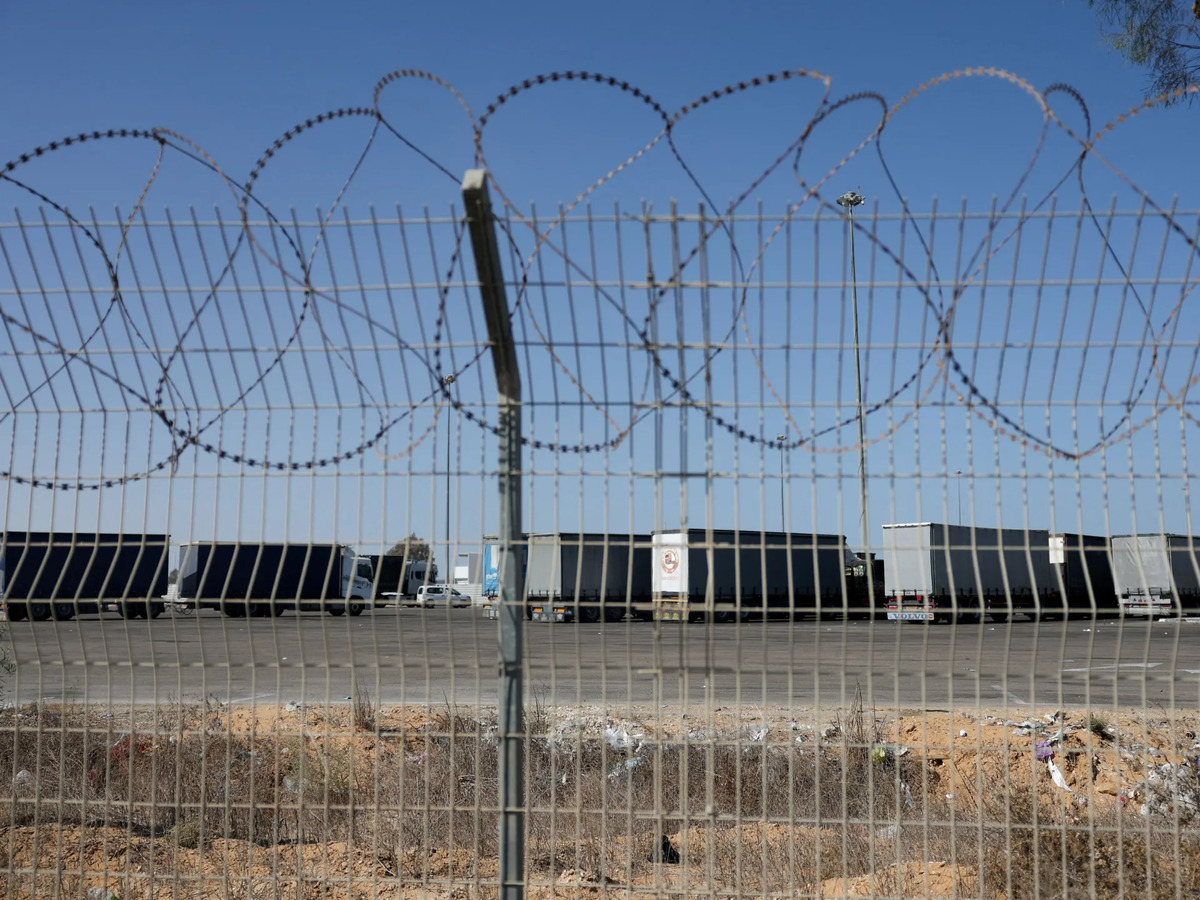
Israel announced today, Wednesday, that it has opened the Zikim crossing located north of the Gaza Strip to allow the entry of humanitarian aid, while the number of trucks permitted to enter the region remains far below what was stipulated in the ceasefire agreement.

The Israeli government's coordination unit (Cogat) stated, "According to directives from the political level, the Zikim crossing has been opened for the entry of humanitarian aid trucks into the Gaza Strip."

The Israeli unit clarified that the aid "will be transported by the United Nations and international organizations after a thorough security inspection by the crossings authority," while media reports indicated that no aid has entered Gaza through the Zikim crossing.

UN relief agencies have repeatedly called for the reopening of the crossing to allow for the flow of more aid to the northern part of the region, which has been devastated by the Israeli genocide, especially following the ceasefire last month.

The UN Office for the Coordination of Humanitarian Affairs stated that the crossing was closed on September 12, and no relief organizations have been able to deliver supplies since then, as Israeli forces control the closure of the crossing at the far north of the Gaza Strip, which was used for delivering aid to the Gaza and northern governorates.

The number of trucks allowed to enter the region remains far below what was stipulated in the ceasefire agreement, which called for 600 trucks daily, as Israel permits only a limited number of trucks to enter.

UN agencies, including the World Health Organization, have previously confirmed that there has been no "significant progress" regarding the quantities of food allowed into the Gaza Strip since the ceasefire.

They warned that "hunger has not decreased, amid food shortages" since the ceasefire agreement between Israel and the Islamic Resistance Movement (Hamas) came into effect on October 10 of this month.

Israel has repeatedly cut off aid to the Gaza Strip during the war, exacerbating the dire humanitarian situation, which has led – according to the United Nations – to famine in parts of the besieged Palestinian territory.

PALESTINE

Wed 12 Nov 2025 11:48 am - Jerusalem Time

Le Monde: Silent death stalks patients and the injured in Gaza

The Gaza Strip is witnessing a silent humanitarian tragedy today, as patients and the injured slowly die amid a near-total collapse of the healthcare system, the ongoing Israeli blockade, and the international community's slow response in evacuating critical cases for treatment abroad.

Le Monde reported that more than 18,000 people are waiting to be transferred to foreign hospitals, while statistics confirm the death of around a thousand patients, including dozens of children, due to delays in their evacuation.

Among the painful stories that encapsulate the suffering of Gazans - as reported by the newspaper in a piece by Marie Jo Sader - is the story of twin sisters Rawan and Razan Barbak, who are suffering from leukemia. Razan was about to leave the Strip for treatment, but the Israeli bombardment destroyed her home and severely injured her, forcing doctors to amputate her legs.

The child died after a month of pain and disability at Nasser Hospital in Khan Younis - the newspaper states - while her sister Rawan was later transferred to the UAE to continue her treatment, but the procedure was halted due to the lack of a donor and because their father is banned from traveling.

This story embodies the tragedy of thousands of patients who have been left to their fate after 94% of healthcare facilities in Gaza were destroyed and 1,700 medical personnel were killed during the two-year war, described as genocide, according to the newspaper.

Like Razan, around a thousand patients who were waiting for evacuation for treatment have died, including 154 children.

Dr. Mohammed Abu Nida, director of the cancer center at Nasser Hospital, says: "There is no biological or radiotherapy treatment for cancer patients. For an entire year, we have not conducted a single chemotherapy session."

Endless waiting lists, and doctors confirm that nearly half of the 12,500 cancer patients are not receiving any treatment, as most chemotherapy and radiotherapy procedures have stopped after the destruction of the Turkish Friendship Hospital and Al-Rantisi Hospital.

Despite a fragile ceasefire coming into effect in October, hundreds continue to die silently due to a lack of medicine and equipment, with estimates suggesting that the number of indirect deaths resulting from the collapse of the healthcare system, hunger, and water shortages could exceed 345,000, a figure that far surpasses the toll from direct bombardment, according to the newspaper.

The newspaper mentioned that humanitarian aid remains insufficient, as only the Karam Abu Salem and Kissofim crossings have been opened, and in a limited manner. Dr. Mohammed Abu Salmiya, director of Al-Shifa Hospital in Gaza, states that "only 10% of the sector's needs have entered, and they do not meet our priorities. Every day, patients who could have been saved die."

Hospitals - as the doctor says - lack vital diagnostic equipment, as all MRI machines have been destroyed, along with most CT scanners and laboratories, and major surgeries have stopped due to a lack of fuel and equipment.

Thus, the lives of thousands of patients are reduced to sitting on endless waiting lists - as the newspaper states - where kidney failure patients lose their lives due to the destruction of dialysis centers and fuel shortages, while doctors remain powerless in front of young cases dying before their eyes.

An unprecedented humanitarian tragedy, and although the agreement brokered by U.S. President Donald Trump stipulates reopening the Rafah crossing and allowing patients to exit without restrictions, the crossing has remained closed by Israeli order since May 2024, as the French newspaper clarifies.

Of the more than 18,000 patients on the evacuation list, only more than 146 people have been allowed to leave since the truce, averaging less than 5 patients daily, most of them to Egypt, the UAE, and Qatar.

International organizations, including UNICEF and the World Health Organization, hold both Israel and Western countries responsible due to weak political pressure and humanitarian will. UNICEF Palestine spokesperson Rosalia Polin states that "the problem now is not only in Israel, but also in Western countries that do not show sufficient willingness to receive patients."

Le Monde concluded that the reality in Gaza encapsulates an unprecedented humanitarian tragedy, as every new medical diagnosis is considered a death sentence for its holder, and people have no choice but to wait amid crowded lists of names and suspended hopes, while patients die silently between the walls of the destroyed hospitals in Gaza.

PALESTINE

Wed 12 Nov 2025 11:42 am - Jerusalem Time

The occupation's Minister of War decides to close the army radio.. "It has become a platform for attacking soldiers"

The Israeli Minister of Defense said today, Wednesday, that he will propose to the government the closure of the army radio, describing this step as necessary to maintain the army's neutrality and enhance public trust in it.

The minister's office, headed by Israel Katz, stated that the minister "has decided to close the army radio, and the station's broadcasts will be suspended by March 1, 2026."

He added: "Katz will soon present a draft resolution to the government for approval of the step according to the legal procedures in place," explaining that he has directed the formation of a specialized team within his ministry to oversee the implementation of the decision and manage the arrangements for ending the radio's operations, while ensuring the rights of its employees.

The statement quoted Katz as saying: "The army radio, as a military station, should serve as a trumpet and ear for the soldiers and their families, not a platform for expressing opinions that attack the army and its soldiers."

He continued: "Operating a civilian radio station by the army is an anomaly unmatched in any democratic country in the world."

Katz pointed out that the continued operation of the radio "involuntarily engages the Israeli army in political discourse and harms its standing," noting that former defense ministers have discussed closing or privatizing the station since the 1950s, but without implementation.

Katz clarified that many soldiers and civilians - including families of the deceased - have expressed their dissatisfaction with the radio's performance over the past two years.

He claimed that these individuals felt the radio does not "represent them but harms the war effort and morale, and Israel's enemies interpret these messages as if they were issued by the army itself."

The army radio, established in 1950, is one of the most prominent media outlets in Israel, but it is not considered an official spokesperson for the army and often publishes criticisms directed at the government and the military establishment.

PALESTINE

Wed 12 Nov 2025 11:06 am - Jerusalem Time

A team from "Al-Qassam" and the "Red Cross" begins searching for the bodies of detainees in the Al-Z

Intensive search operations have begun in the Al-Zeitoun neighborhood, located southeast of Gaza City, for the bodies of detainees believed to have lost their lives due to the occupation's shelling.

Specialized teams from the Al-Qassam Brigades, the military wing of Hamas, are conducting excavations in areas suspected of containing buried detainees' bodies.

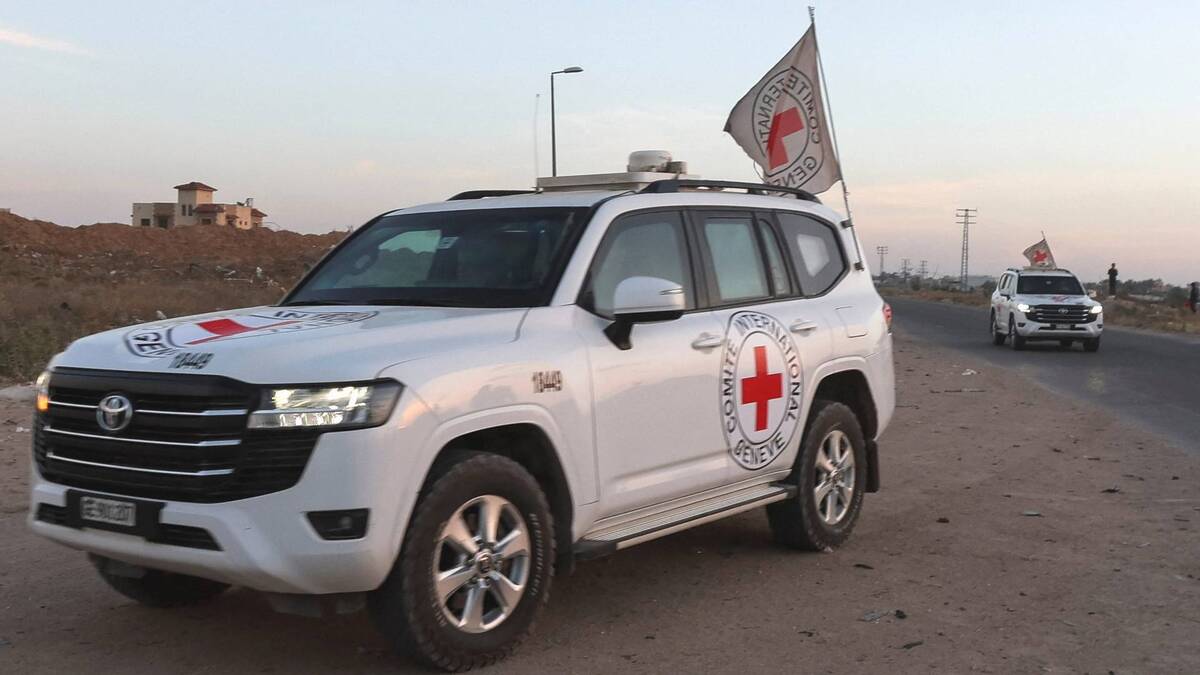
Teams from the International Committee of the Red Cross accompany the teams working on the ground, in a role aimed at overseeing, coordinating, and securing the operation within humanitarian standards.

PALESTINE

Wed 12 Nov 2025 10:28 am - Jerusalem Time

Israeli airstrikes on Beit Lahiya and the demolition of homes in Khan Younis

He stated that the Israeli occupation's warplanes carried out 3 airstrikes on the northeastern part of Beit Lahiya, behind what is called the 'yellow line areas' in the Gaza Strip. He added that a force from the occupation army fired towards the Al-Bureij refugee camp in the center of the Strip, and that the army conducted a demolition operation east of Khan Younis city in southern Gaza.

The Civil Defense Authority in the Gaza Strip announced yesterday, Tuesday, the extraction of 35 bodies of unidentified Palestinians to identify their owners after they were hastily buried in one of the areas of the Strip during the months of the genocide committed by Israel.

It was noted that the teams will begin, 48 hours after the extraction of the bodies, to transfer them for burial at the Red Cross cemetery in Deir al-Balah in the center of the Strip.

ARAB AND WORLD

Wed 12 Nov 2025 9:56 am - Jerusalem Time

Exploiting the accusation of "anti-Semitism" to restrict academic discourse in the United States

In an unprecedented joint report, the American Association of University Professors (AAUP) and the Middle East Studies Association (MESA) published an extensive study last week revealing an increasing use of the accusation of "anti-Semitism" as a means to restrict academic and student activity in American universities, particularly related to defending the rights of Palestinians and criticizing Israeli policies.

This report is the first in-depth study documenting how civil rights legislation, originally enacted to protect victims of racial discrimination, has become a legal tool used to silence political discourse on campus, amid rising tensions regarding the stance on the war in Gaza and student activism supporting Palestinians.

The report notes a sharp increase in the number of government investigations related to allegations of "anti-Semitism" since October 7, 2023.

Twenty-five investigations were opened in just the following two months, more than had been conducted in all previous years combined.

In 2024, the number reached thirty-nine investigations, while in 2025 it reached thirty-eight by the fall of the year, with expectations of surpassing the record before its end.

Vina Dubal, the general counsel for the American Association of University Professors, states that these figures represent "a cynical use of the Civil Rights Act of 1964 to suppress discourse advocating for Palestinian rights," considering what is happening "a serious deviation from the essence of the law that was originally enacted to protect equality and freedom of expression."

The report shows that the administration of former President Joe Biden did not differ fundamentally from that of his successor Donald Trump on this issue.

Between late 2023 and the end of 2024, the administration opened sixty-five investigations related to allegations of anti-Semitism, compared to only thirty-eight in cases of racial harassment.

These investigations have prompted more than twenty universities to amend their internal policies or adopt new measures that limit political activity related to the Palestinian issue.

The report's authors believe that these shifts represent "a troubling politicization of the concept of legal protection," as academic institutions have become more inclined to impose self-censorship for fear of prosecution or defamation.

The report also indicates the continued influence of Trump's anti-Semitism task force, despite budget cuts to the Department of Education, as the Department of Justice has taken a more direct role in these matters.

In the summer of 2025, the department issued findings from investigations that condemned major universities such as George Washington University and the University of California, Los Angeles, and announced the opening of new cases involving the University of California system, Columbia University, and California State University.

The study shows that the vast majority of the complaints filed – totaling 102 complaints – are directly related to Israel, with only one complaint not referencing criticisms directed at the Israeli government.

It also reveals that the source of these complaints comes from a limited group of pro-Israel organizations and individuals, most notably Zachary Marshall, editor of the Campus Reform website, who alone filed 33 complaints that led to 16 official investigations.

In a parallel political context, the Israeli newspaper "Times of Israel" reported that Israeli business circles in New York are increasingly concerned following the election of politician Zahran Mamdani as mayor of the city.

Mamdani is known for his support of the Boycott, Divestment, Sanctions (BDS) movement and his outspoken criticism of Israeli policies.

In an interview with MSNBC, Mamdani stated: "Criticizing Israel is a criticism of a government, not of a people or a religion," emphasizing that he will represent all New Yorkers without discrimination.

However, these statements have sparked discontent among some Israeli businessmen who expressed concern that his positions could lead to tension in the economic cooperation environment between the city and Israeli companies.

This parallel between the rise in academic investigations and the emergence of political figures adopting a critical discourse towards Israel reflects a deeper shift in the general American mood, where spaces for discussion about Palestine and Israel have become more sensitive and restrictive.

While successive American administrations justify these policies under the pretext of protecting minorities and preventing hate speech, many see the increasing accusations of anti-Semitism as being used to restrict freedom of expression, not to protect diversity.

Thus, fundamental questions arise about the future of free discussion in American universities: Has defending Palestinians become a crime cloaked in legal language? Or is the country witnessing a redefinition of the very concept of freedom amid increasing political alignment with Israel?

These developments reveal that the battle for freedom of expression in America is no longer just about the limits of speech, but about the identity of the discourse that is politically and morally permissible.

Transforming civil rights law into a tool for pursuing political positions threatens the foundations of intellectual pluralism in universities, making solidarity

PALESTINE

Wed 12 Nov 2025 9:48 am - Jerusalem Time

An Israeli report reveals the failures of political and military leadership during the Gaza war.

The seventh report issued by the State Comptroller in the Israeli occupation regarding the Gaza war revealed that the political leadership has failed to fulfill its duty to ensure the country's readiness to face rapid security transformations, noting the absence of a clear national vision based on an organized and updated security concept.

The newspaper "Maariv" quoted State Comptroller Matanyahu Engelman warning, in a strongly worded oversight report on the management of the war, about the lack of a long-term strategic vision within the political leadership, emphasizing that the report does not serve as a substitute for a comprehensive investigation that identifies the shortcomings and responsibilities for the events of October 7, 2023.

He stated: "In such a case, the ability of the political level to direct the Israeli army and the other security agencies with a long-term strategic vision, to challenge it, and to exercise oversight and supervision is lacking and, in some cases, non-existent," explaining that "the aim of the report is to raise issues related to the connection between the concept of national security and the events of October 7."

The State Comptroller pointed out that "Prime Minister Benjamin Netanyahu, who initiated the writing of a concept for national security for the State of Israel in the years 2017-2018 and worked to establish it, did not complete what he started and did not approve an official concept for national security for the State of Israel and make a binding decision regarding the cornerstone for implementing this concept - which is a change in national priorities and allocating significant additional budgetary resources to meet security needs at the expense of other needs, despite the importance and necessity he himself acknowledged."

Engelman added: "Thus, he did not exercise his responsibility in this regard, and his concept remained without the ability to implement it correctly and without binding authority."

The report indicated that the heads of the National Security Council, who have succeeded each other since the law establishing the council was passed in 2008, have not presented any updated vision for national security to be presented to the political-security cabinet, reflecting a shortcoming in the council's performance of its fundamental role in shaping the state's security policies.

The report stated that "Israel is going through one of its most difficult hours, as it is engaged in a war that costs many sacrifices and still faces difficult and complex challenges. The gaps in the readiness and preparedness of the State of Israel to confront the unprecedented security challenges that threaten its sovereignty, national interests, and the security of its residents and citizens, which manifested their tragic results on October 7, 2023, raise difficult questions about the long-term strategic thinking and planning of the Israeli government and the political-security cabinet led by the Prime Minister."

The report confirmed that "the failure has been ongoing and extended for years, as the political level has not exercised its responsibility over the generations to ensure that the State of Israel is prepared for changing security challenges based on an organized, updated, and officially approved national security concept. Thus, Israeli governments led by prime ministers over the generations have never approved an official concept for national security, contrary to what is practiced in Western countries."

This is also the seventh report issued regarding the "Iron Swords" war (Gaza war).

The State Comptroller noted that the Israeli army changed the scope of its tank array over the years without any direction from the political level, and with a vision lacking an organized and officially approved strategic basis.

The report mentioned that "in 2020, the Israeli army, led by then Chief of Staff Lieutenant General Aviv Kochavi, implemented a program to determine the size of the tank array, without presenting the program in advance to then Defense Minister Naftali Bennett for review of its necessity, which was not consistent with the summary of the discussion with Prime Minister Benjamin Netanyahu from January 2020."

Engelman warned that Israel, as of the completion date of the audit, does not possess an official national security concept with binding authority.

He clarified that "the events of October 7 and their fateful impacts necessitate a review, among other things, of the unofficial national security concept that has taken root in the State of Israel, the political handling of the national security concept of the State of Israel, and the need to formulate and approve an organized and official national security concept."

The report's authors viewed the surprise attack carried out by Hamas on October 7, 2023, as a simultaneous collapse of three of the fundamental pillars of Israeli national security, which are deterrence, warning, and defense, principles that are at the core of the prevailing unofficial security concept in Israel.

The report added that the fourth principle, represented by "decisiveness," which forms the axis of the "Iron Swords" war, has not yet clarified the results of its application even by the end of

PALESTINE

Wed 12 Nov 2025 9:36 am - Jerusalem Time

From "Youth" to "Barbarians".. Jewish terrorism in the West Bank confuses the ruling authority.

After the West Bank became susceptible to a major explosion due to the escalation and rampage of settlers, encouraged by Israeli governmental and military entities, commanders of the army brigades operating there called for the reinstatement of administrative detentions that Defense Minister Israel Katz had abolished.

The rampage of the settlers, in light of the ongoing war on the Gaza Strip over the past two years, has shifted from the stage of "hilltop thugs" to "hilltop barbarians," according to an investigation published by the newspaper "Yedioth Ahronoth."

In the face of the various authorities' inability to address the wave of violence from Jewish extremists against Palestinians, the patience of the Israeli army has begun to wear thin, especially after repeated clashes with them.