LATEST NEWS

Tue 18 Nov 2025 10:04 am - Jerusalem Time

Britain calls for an urgent increase in humanitarian aid to the Gaza Strip.

The British Foreign Office has called for urgent international action to increase humanitarian aid to Gaza, following the Security Council's vote in favor of the resolution presented by the United States to implement the twenty-point peace plan.

British Foreign Secretary Yvette Cooper emphasized that the international community is required to transform the twenty-point plan into a just and lasting peace, noting that the resolution enjoys broad support from Arab and Islamic countries, and provides the necessary legal basis for deploying an international stabilization force to implement U.S. President Donald Trump's plan.

Cooper stressed the need to open all crossings, lift restrictions, and urgently deliver the necessary aid to the Gaza Strip, reaffirming Britain's continued support for a two-state solution and ensuring security for civilians.

In New York, British Chargé d'Affaires to the United Nations James Kariuki clarified that Britain will continue to work to ensure the rapid deployment of the international stabilization force and support for a ceasefire, reaffirming the commitment to implement transitional arrangements that respect international law, Palestinian sovereignty, and the unity of the Gaza Strip and the West Bank.

PALESTINE

Tue 18 Nov 2025 9:54 am - Jerusalem Time

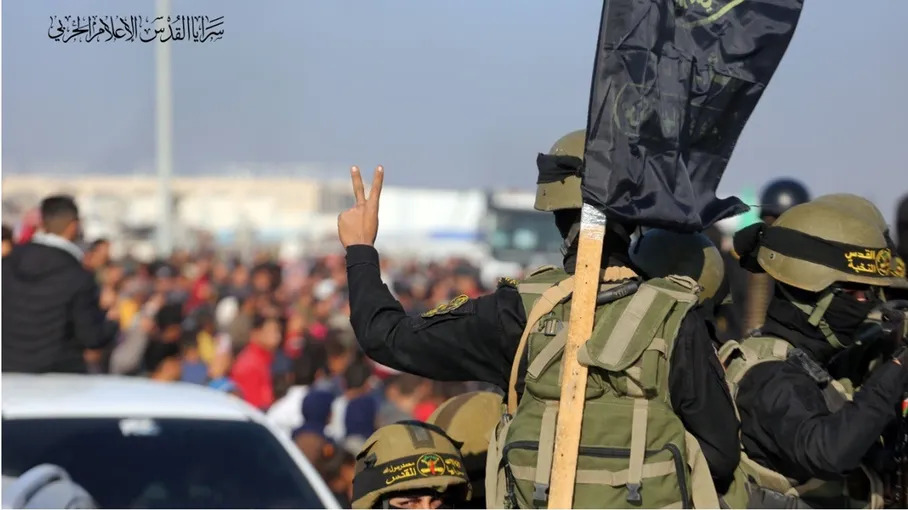
"Islamic Jihad" rejects the American decision regarding Gaza.. "Rejected by all components of our people"

The "Islamic Jihad" movement categorically rejected the American draft resolution adopted by the Security Council regarding the cessation of war in Gaza. The movement stated in a statement that the resolution "constitutes international guardianship over the Gaza Strip, which is something that all components of our people and its forces reject, as it aims to achieve goals that the occupation has been unable to accomplish through its repeated wars."

It continued that "more dangerously, this resolution separates the Strip from the rest of the Palestinian territories, imposing new realities that contradict the constants of our people and confiscate their right to self-determination, foremost among them their right to resist the occupation, which is permitted by all charters, norms, and laws."

It added that "our people's right to resist the occupation by all legitimate means is a right guaranteed by international law, and the weapon of resistance is a guarantee of this right. Therefore, any assignment of an international force with tasks that include disarming the resistance transforms it from a neutral party into a partner in implementing the agenda of the occupation."

The movement pointed out that "humanitarian aid, relief for the affected, and opening crossings for the besieged Strip is a humanitarian duty; and we condemn turning it into a tool for political pressure or extortion."

It continued that "imposing an American governing body at an international level on part of our people without their consent or approval is a violation of international humanitarian law."

It noted that the resolution "overlooked addressing the fundamental aspects of justice, ignoring the accountability of war criminals and holding the occupation responsible for its ongoing crimes against our people. It also ignored the necessity of lifting the unjust siege and reconnecting the Gaza Strip with the occupied territories, reflecting support for an agenda aimed at fragmenting Palestinian geography and serving the annexation and displacement agendas pursued by the entity."

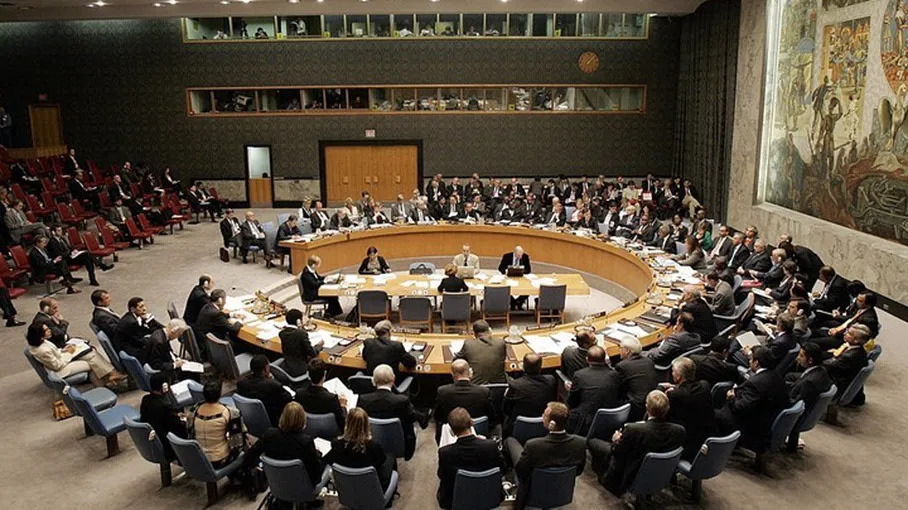
The UN Security Council approved the American draft resolution regarding Gaza early Tuesday. Thirteen member states of the Security Council voted in favor of the draft resolution, while both Russia and China abstained from voting.

The Algerian representative to the United Nations stated that the international resolution aims to implement President Trump's comprehensive plan supported by all parties. He clarified that peace in the Middle East cannot be achieved without achieving justice for the Palestinian people, and we made amendments to the American draft resolution to ensure integrity and balance.

He pointed out that Arab and Islamic countries supported the American draft resolution in its final version, and we respect the decisions and choices of the Palestinian people and their representatives. He emphasized "supporting the continuation of the ceasefire in Gaza and the right of the Palestinian people to self-determination, and today's decision reflects the United Nations' doctrine in resolving the Palestinian-Israeli conflict."

The Algerian representative stated that today's decision clearly rejects annexation, occupation, and forced displacement, and Gaza will be managed according to transitional arrangements by a Palestinian technocratic committee. He explained that the stability force in Gaza will provide protection for Palestinian civilians, and it is time to rebuild Gaza with support from the international community and its financial institutions.

For its part, Hamas movement, in its first response to the adoption of the American draft resolution, stated that this resolution does not rise to the level of the political and humanitarian demands and rights of our Palestinian people, especially in the Gaza Strip, which has faced two full years of brutal genocide and unprecedented crimes committed by the terrorist occupation before the eyes and ears of the world, and their effects and repercussions continue despite the announcement of the end of the war according to President Trump's plan.

The movement pointed out that the resolution imposes an international guardianship mechanism on the Gaza Strip, which our people and its forces and factions reject, and it imposes a mechanism to achieve the goals of the occupation that it failed to achieve through the brutal genocide.

It noted that it separates the Gaza Strip from the rest of the Palestinian geography and attempts to impose new realities away from the constants of our people and their legitimate national rights, depriving our people of their right to self-determination and establishing their Palestinian state with Jerusalem as its capital.

Hamas emphasized that resisting the occupation, by all means, is a legitimate right guaranteed by international laws, and the weapon of resistance is linked to the existence of the occupation, and any discussion on the issue of arms must remain a national internal matter related to a political path that guarantees the end of the occupation, the establishment of the state, and self-determination.

PALESTINE

Tue 18 Nov 2025 9:50 am - Jerusalem Time

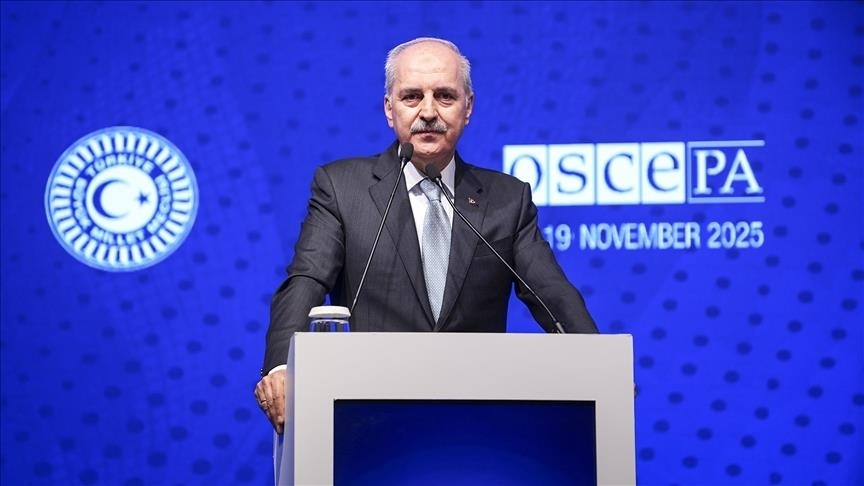
Qurtulmuş: It is time for Palestine to be in the Organization for Security and Cooperation in Europe.

The President of the Turkish Parliament, Numan Kurtulmuş, expressed his belief that the time has come for Palestine to be part of the Parliamentary Assembly of the Organization for Security and Co-operation in Europe. This was stated in a speech he delivered during his participation in the 23rd autumn session of the Parliamentary Assembly of the Organization for Security and Co-operation in Europe, which was held in Istanbul yesterday, Monday.

Kurtulmuş warned of the consequences of forgetting the genocide witnessed in the Gaza Strip at the hands of the Israeli army, indicating that if it is forgotten, it will be repeated elsewhere. He continued, saying: "We are now facing the challenge of achieving a permanent ceasefire in Gaza. Although an agreement has been theoretically reached, (Israeli Prime Minister Benjamin) Netanyahu and his government continue to commit genocide with the support of influential actors in the international system (whom he did not name)."

He called on the international system to abandon its complacency, stating that it is impossible to assume that things will improve from now on merely because a ceasefire has been reached. He added: "The international system must take the necessary actions against Netanyahu and his gang, and exert all pressure to ensure compliance with the agreement reached. The most important of these actions is to achieve a two-state solution. To achieve this, we must raise our voices in all international forums."

He affirmed that the conflict between Israel and Palestine will not end until a Palestinian state is established, with East Jerusalem as its capital, on the borders of June 4, 1967. He said: "Therefore, we must continue to pursue this oppression and genocide that the Palestinian people are suffering until the end, and we must strive to ensure that this genocide does not go unpunished."

He pointed out that Netanyahu's government, driven by the international system's impotence and silence and the support of some parties, continues genocide not only in the Gaza area but also in the West Bank. He added that the way to prevent this is to listen to the voices of hundreds of millions who took to the streets and shouted: "Stop the genocide."

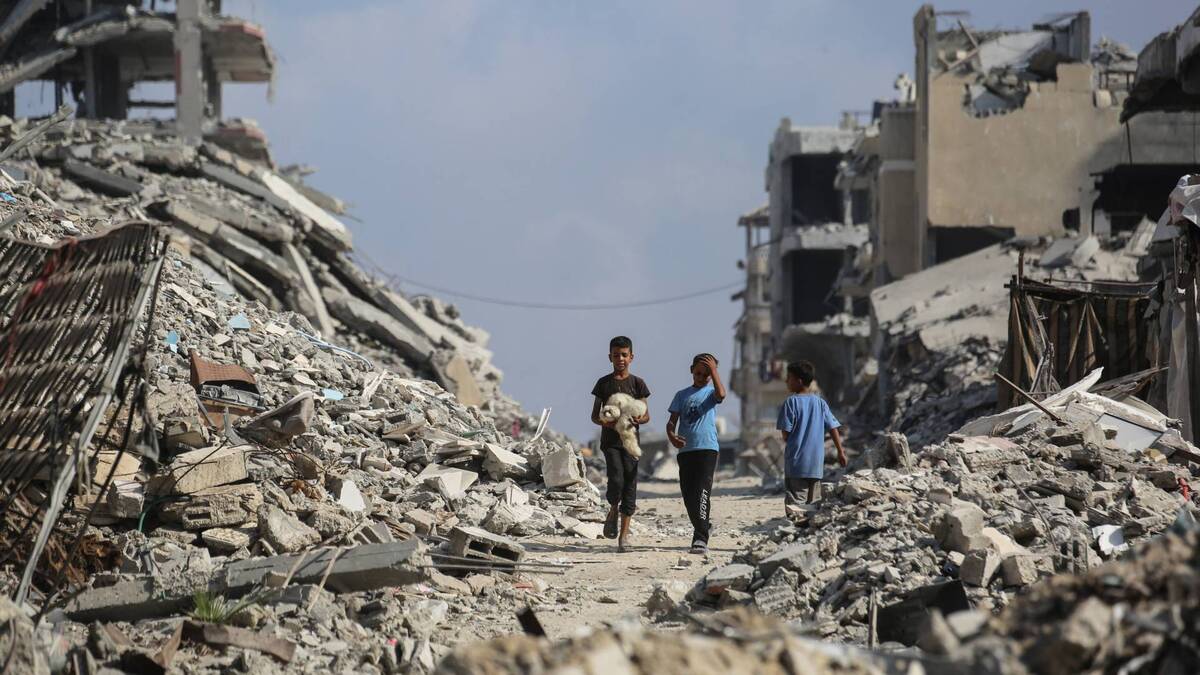
The Gaza Strip has been subjected to a genocide war initiated by Israel on October 8, 2023, which stopped after two years under a ceasefire agreement, after leaving more than 69,000 Palestinian dead and over 170,000 injured, most of whom are children and women, with reconstruction costs estimated by the United Nations at about 70 billion dollars.

Since October 2023, coinciding with the genocide war on Gaza, Israel has escalated its measures in Jerusalem, the Al-Aqsa Mosque, and the West Bank, resulting in the deaths of at least 1,074 Palestinians, injuries to about 10,700, in addition to the arrest of more than 20,500 others.

The Organization for Security and Co-operation in Europe emerged during the Cold War as a forum for negotiation and conference diplomacy aimed at reducing tensions and points of contention through establishing regular dialogue between the Eastern and Western blocs.

In the 1970s, after the Eastern bloc accepted the Western proposal to begin negotiations on "mutual and balanced reductions of forces," 33 European countries and the United States signed the final Helsinki document as a result of the Conference on Security and Co-operation.

The Conference on Security and Co-operation in Europe transformed into an international organization at the Budapest Summit in 1994 and was named the Organization for Security and Co-operation in Europe. Turkey is one of the founding members of the Organization for Security and Co-operation in Europe and sees the organization as a comprehensive platform, emphasizing that the need for the organization has become more important in a period of increasing security challenges in the Euro-Atlantic and Euro-Asian regions.

PALESTINE

Tue 18 Nov 2025 9:24 am - Jerusalem Time

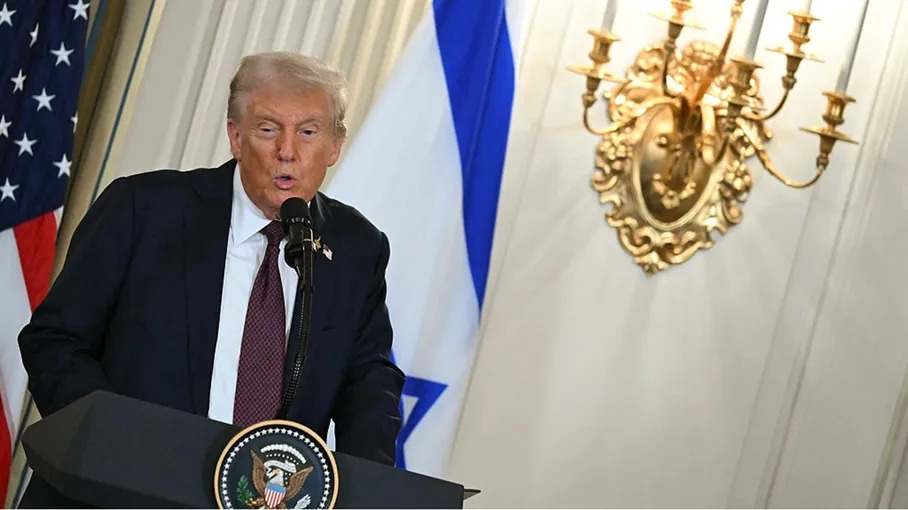
Trump celebrates the Security Council's decision: "A historic agreement" to establish a peace council regarding Gaza.

U.S. President Donald Trump praised the United Nations Security Council's approval of the American resolution supporting his peace plan for the Gaza Strip, describing this achievement as a 'historic consensus' that will have a long-term impact on international security.

Trump stated in a post on his social media platform 'Truth Social' that he 'congratulates the world on the amazing vote' from Security Council members, adding that a Peace Council regarding Gaza will be established under his presidency, as stipulated in the resolution.

He added: 'The Security Council's decision is one of the greatest agreements in the history of the United Nations and will lead to more peace around the world.' It is noteworthy that the Security Council adopted the American resolution after only two members abstained, China and Russia, without using their veto power, with a voting result of 13 in favor and two abstentions.

The resolution mandates the establishment of an international force to stabilize Gaza, which is authorized to operate until the end of 2027, in coordination with Egypt and the Israeli occupation. The tasks of this force include disarmament, dismantling military infrastructure, and establishing a security environment that allows for reconstruction.

The resolution also stipulates the establishment of what is known as the 'Board of Peace' as an international transitional authority, involving international experts and Palestinian technocrats, to oversee the reconstruction and temporary management of Gaza.

In response to this vote, Trump expressed his vision that 'this is a moment of true historical dimensions' and thanked the United Nations and all member states of the council for supporting the resolution.

He also indicated that 'the names of the members of the Peace Council and other organizational details will be announced soon.'

For his part, U.S. Ambassador to the United Nations, Mike Waltz, described the resolution as a significant step towards 'a path to Palestinian self-determination,' adding that the plan aims to replace 'rockets with olive branches' and establish a new phase of stability.

On the other hand, Hamas rejected the resolution, considering it imposes 'international guardianship' over Gaza, and expressed opposition to disarmament being part of the international force's tasks, arguing that it constitutes a safeguard in favor of Israel.

PALESTINE

Tue 18 Nov 2025 7:44 am - Jerusalem Time

The Security Council approves the American draft resolution regarding Gaza.. and Hamas responds.

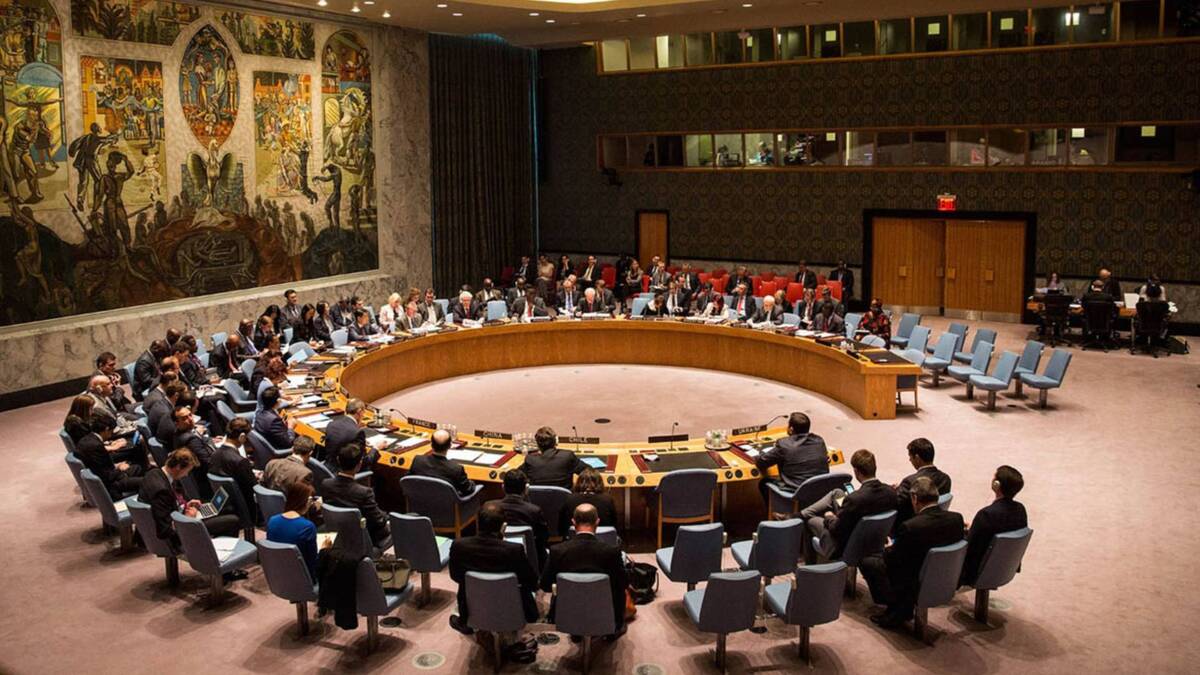
The UN Security Council has just approved the American draft resolution regarding Gaza. Thirteen member states voted in favor of the draft resolution, while both Russia and China abstained from voting.

The Algerian representative at the United Nations stated that the international resolution aims to implement President Trump's comprehensive plan, which has been supported by all parties. He clarified that peace in the Middle East cannot be achieved without justice for the Palestinian people.

We made amendments to the American draft resolution to ensure integrity and balance. He noted that Arab and Islamic countries supported the American draft resolution in its final version.

He emphasized the support for the continuation of the ceasefire in Gaza and the right of the Palestinian people to self-determination, and today's decision reflects the United Nations' doctrine in resolving the Palestinian-Israeli conflict.

The Algerian representative stated that today's decision clearly rejects annexation, occupation, and forced displacement, and Gaza will be managed according to transitional arrangements by a Palestinian technocratic committee.

He explained that the stability force in Gaza will provide protection for Palestinian civilians, and it is time to rebuild Gaza with the support of the international community and its financial institutions.

In response, Hamas stated, in its first reaction to the adoption of the American draft resolution, that this decision does not meet the political and humanitarian demands and rights of our Palestinian people.

The movement pointed out that the resolution imposes an international guardianship mechanism on the Gaza Strip, which our people and its forces and factions reject.

Hamas emphasized that resisting the occupation, by all means, is a legitimate right guaranteed by international laws.

The movement confirmed that assigning the international force with tasks and roles within the Gaza Strip, including disarming the resistance, strips it of its neutral status and turns it into a party in the conflict in favor of the occupation.

For his part, President Donald Trump commented on the vote on the resolution: I congratulate the world on the amazing vote of the Security Council that approved the formation of the Peace Council regarding Gaza.

According to the United Nations website, the content of resolution number 2803 regarding Gaza states: the resolution welcomes the establishment of the Peace Council as a transitional administrative body with international legal personality.

PALESTINE

Tue 18 Nov 2025 6:54 am - Jerusalem Time

Hebrew media reveals the condition of the occupation for launching negotiations for the Palestinian state.

The Hebrew newspaper "Israel Hayom" revealed on Tuesday a fundamental "Israeli" condition that will be placed before the Palestinian Authority as a prerequisite to begin any future path towards the establishment of a Palestinian state.

This condition, according to the report, revolves around the complete relinquishment of the refugee file.

The Hebrew newspaper reported that any future negotiations regarding the establishment of a Palestinian state will be contingent upon clear "Israeli" demands related to the refugee issue.

According to the newspaper, "the Palestinian Authority will be required to declare the relinquishment of the right of return for refugees."

The report added that the anticipated "Israeli" condition will not be limited to the relinquishment of the "right of return" alone, but will also include "final arrangements for their situation in the camps."

The Hebrew newspaper confirmed that these two matters will be presented "as a condition to begin the process of establishing the Palestinian state," placing the issue that Palestinians consider essential at the heart of any forthcoming political settlement.

OPINIONS

Mon 17 Nov 2025 8:47 am - Jerusalem Time

Draft resolution in the Security Council: American influence, Russian objection, and the absence of the Palestinian voice.

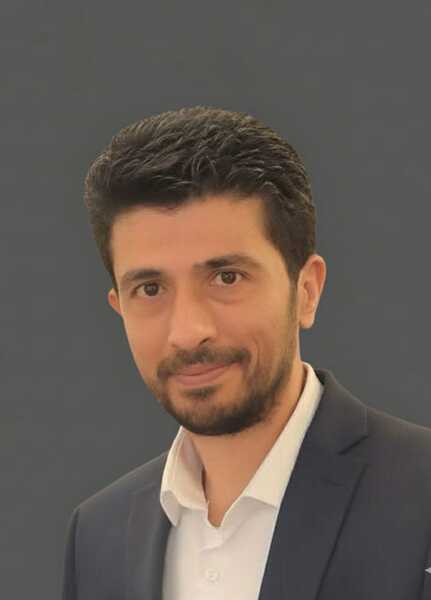
Baha Rahal

Baha Rahal

Opinion Writer

The permanent member states will vote tomorrow on the American draft resolution regarding the future of Gaza in the Security Council, which pertains to the American vision or President Trump's plan that was previously announced, with some amendments proposed by Arab countries, the most notable of which is the inclusion of a political line discussing the Palestinian state in the future, a matter that the Netanyahu government rejects and is working to remove this item from the draft resolution. In contrast, the Russian player in the Security Council has announced its opposition to the draft resolution, viewing it as presenting America alone as the umbrella for the Middle East, which contradicts Russia's image as it insists on remaining a key player with influence in the region.

The regional tensions, differing visions, international disputes, and America's attempts to reach a solution that satisfies the parties while deliberately sidelining the role of the Palestinian Authority render the draft resolution submitted to the Security Council incomplete, and it appears ineffective in this form; it expresses a new guardianship over a people struggling for freedom and independence, not for dependency and mandate. Therefore, important amendments must be included in the resolution, prioritizing a central role for the Palestine Liberation Organization and the Palestinian Authority, and assigning them the tasks of maintaining security and full sovereignty over the land, crossings, and borders, as well as rebuilding what was destroyed by the occupation during the genocide war.

Attempts to create a reality that accepts the mandate in its contemporary form will not lead to long-term solutions, but rather to a temporary phase. Hence, the Egyptian position rejects the intervention of any non-Palestinian force, a stance issued by Egypt, which has trained thousands of elements and security officers of the Palestinian Authority, the legitimate authority that has jurisdiction over the land and the right to manage Gaza as part of the territories occupied in 1967, which are the lands of the Palestinian state under international law.

Simultaneously, the national necessity calls for the revitalization of all institutions affiliated with the Palestine Liberation Organization and the Palestinian Authority, including bodies and frameworks, and to begin what is necessary to hold elections, to cut off any American project that circumvents the legitimacy of the Palestinian people, under the pretext that these institutions are not currently ready and need renewal. Internal alignment is also important in order to thwart those who align with projects that attempt to circumvent the unity of the people, the unity of the land, and the unity of Palestinian decision-making.

PALESTINE

Mon 17 Nov 2025 8:38 am - Jerusalem Time

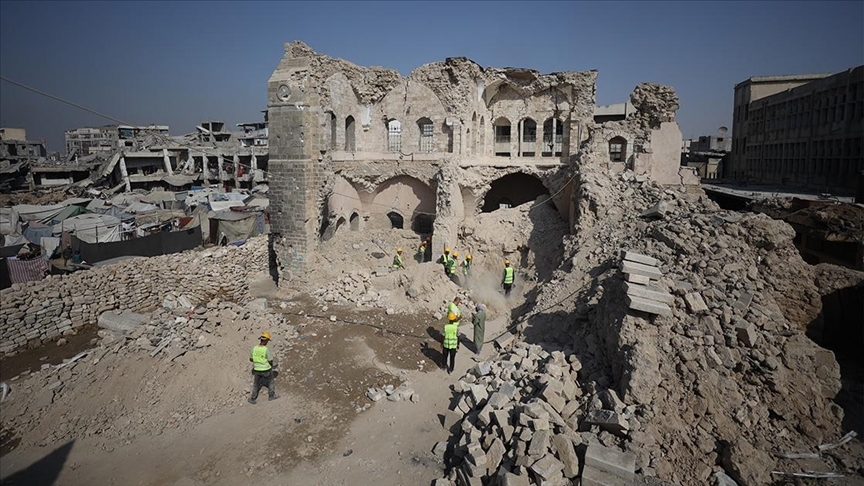
The Theft of Gaza's History.. Israel Destroys the "Pasha's Palace" and Loots 20,000

For two years during the genocide war on Gaza, Israel not only killed civilians and destroyed homes but also launched a systematic campaign against Palestinian heritage, during which it looted about 20,000 rare artifacts from the 'Pasha's Palace' before destroying it.

As the rubble accumulates over the memory of the place, technicians and workers are working amidst the debris in an attempt to save what remains of the palace, using simple tools to search for scattered artifacts within it and conducting treatments to preserve what is left of Gaza's historical identity.

Hamouda Al-Dahdar, a cultural heritage expert, stated that the palace is one of the most prominent historical landmarks in Gaza, explaining that it dates back to the Mamluk era and is estimated to be around eight centuries old.

PALESTINE

Mon 17 Nov 2025 8:32 am - Jerusalem Time

The Security Council will vote on Monday on a U.S. draft resolution to authorize an international force in Gaza.

The United Nations Security Council will vote on Monday on a draft resolution prepared by the United States regarding the future of the Gaza Strip.

The American draft resolution welcomes the establishment of a "Peace Council" as a "transitional governing authority" in Gaza.

The draft authorizes the "Peace Council" to create a temporary international force to stabilize the region.

The draft outlines the council's responsibilities in governance and reconstruction, requiring it to oversee a "Palestinian technocratic committee" responsible for daily administration, coordinating public services and humanitarian aid, and implementing economic recovery and redevelopment programs.

The draft also encourages the provision of international financial support for reconstruction, requesting the World Bank and other institutions to establish a "trust fund" managed by donor entities dedicated to the redevelopment of Gaza.

The American draft mandates international security forces to assist in monitoring the ceasefire in Gaza, securing border areas, protecting civilians including humanitarian operations, and supporting disarmament efforts.

This process includes the destruction of military infrastructure, the permanent disposal of weapons belonging to non-governmental armed groups, training and supporting selected Palestinian police units, and carrying out "any additional tasks that may be necessary" to support the comprehensive plan.

The American draft also states that the international protection and police force "will be funded through voluntary contributions" and will remain authorized to operate until December 31, 2027.

Any extension of its mandate is conditioned on "full cooperation and coordination with Egypt, Israel, and other participating countries."

In contrast, many council members requested a "stronger role" for the Palestinian Authority during the transitional period, emphasizing the importance of its approval as a condition for establishing the Palestinian security force and deploying internal security forces, in addition to reaffirming the two-state solution "as a guiding principle."

Russia distributed an alternative draft that does not directly mention the international force, but "requests the UN Secretary-General to provide a report that includes options for deploying international support forces."

Moscow considered the aim of its draft to be "to modify the American concept to fully align with previously agreed-upon resolutions" in the Security Council.

The United States responded with a joint statement with some Arab and Islamic countries expressing their support for the American draft resolution, a position also endorsed by the Palestinian Authority.

Approval of the resolution requires the agreement of at least 9 members, provided there is no veto opposition from permanent member states.

PALESTINE

Mon 17 Nov 2025 8:22 am - Jerusalem Time

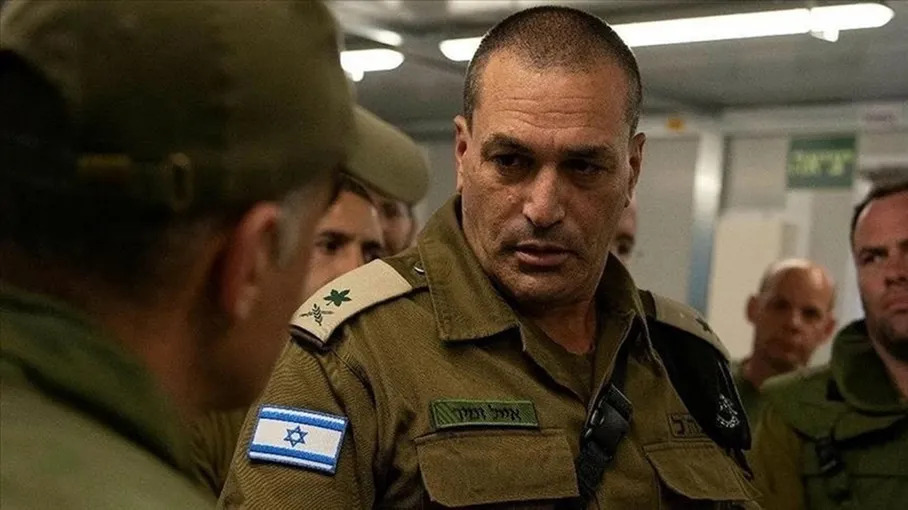
Zamir: We are prepared for a large-scale attack in the Gaza Strip and the yellow line for encirclement and control

The Chief of Staff of the Israeli occupation army, Eyal Zamir, claimed on Sunday that what is known as the "yellow line" in the Gaza Strip "constitutes a line of encirclement and control," and that the army must be "prepared to occupy additional areas of the strip if necessary."

This came during a field tour in the Rafah area in the southern part of the strip, which is fully controlled by the Israeli occupation army. This is despite the fact that the second phase of U.S. President Donald Trump's plan requires the army to gradually withdraw from the entire strip in parallel with the deployment of an international stabilization force.

Contrary to Zamir's claims, the "yellow line" is the line to which the army withdrew after the ceasefire agreement that has been in effect since October 10, as part of the implementation of the first phase of President Donald Trump's plan to end the war on Gaza.

The "yellow danger" constitutes more than half of the area of the strip and represents a dividing line between areas still controlled by the occupation army and others from which it has withdrawn under the ceasefire, but it targets Palestinians who approach this line without crossing it.

The ceasefire agreement ended a genocide that "Israel" began on October 8, 2023, which lasted for two years and resulted in more than 69,000 Palestinian martyrs and over 170,000 injured, with massive destruction affecting 90 percent of civilian infrastructure, with initial losses estimated at $70 billion.

Zamir stated: "In Gaza, we control more than 50 percent of the land, without controlling the population," claiming that "the yellow line is a line of encirclement and control, and we continue to work to prevent the rebuilding of Hamas's strength by holding onto strategic areas and entrances to Gaza."

He added: "If requested, we must be prepared for a rapid transition to a wide attack to occupy areas in the Gaza Strip located behind the yellow line," according to what the Anadolu Agency reported.

Zamir indicated that the occupation army continues to work on the side of the line where it is stationed "to cleanse the area of infrastructure belonging to Hamas," as he put it.

He said that the army will continue its mission to dismantle the movement and disarm the strip "either through an agreement or by military means."

Zamir's statements reflect the army's readiness for a broader operational phase, despite the absence of an official announcement regarding an immediate change in military policy.

These statements come as Hebrew media have recently promoted plans regarding the possibility of dividing Gaza into two regions.

The Hebrew newspaper "Haaretz" reported on Friday that the army was surprised by Prime Minister Benjamin Netanyahu's approval of Washington's request to divide the strip into "New Gaza" and "Old Gaza."

The difference between the two regions is that "New Gaza" is included in the reconstruction of what the army destroyed during the years of genocide, while the other is the opposite.

According to "Haaretz," "New Gaza" will be among the areas under the control of the Israeli occupation army, east of the "yellow line" to which it withdrew under the ceasefire agreement that came into effect on October 10, which includes more than half of the area of the strip.

Following the Hebrew media's claims about the division, Egyptian Foreign Minister Badr Abdel Atti emphasized in an interview with the Italian newspaper "La Repubblica" his country's "complete rejection of any attempt to divide the Gaza Strip or displace Palestinians."

He pointed out that "maintaining the unity of Palestinian territories is a fundamental pillar for any just, lasting, and comprehensive solution" in the region.

PALESTINE

Mon 17 Nov 2025 12:32 am - Jerusalem Time

Palestinian factions reject any guardianship or military presence in Gaza.

The Palestinian factions and forces stated that they reject any guardianship or foreign military presence or international bases within the Gaza Strip, affirming that this constitutes a direct infringement on national sovereignty.

The factions criticized the American draft resolution proposed for a vote on Monday in the Security Council in a statement on Sunday evening, asserting that it poses a danger as it paves the way for external dominance over the Palestinian national decision.

The factions added that the draft resolution transforms the administration of the Gaza Strip and reconstruction into an international supranational entity, stripping Palestinians of their right to manage their own affairs, noting that the draft resolution to establish an international force in the sector seeks to impose international guardianship over Gaza and pass a biased vision.

The statement from the Palestinian factions and forces also mentioned that any humanitarian effort must be managed through the relevant Palestinian institutions under the supervision of the United Nations.

The factions rejected any clause related to disarming Gaza or infringing on the Palestinian people's right to resist, emphasizing that any discussion regarding weapons should remain a national matter linked to a political path that ensures the end of occupation.

At the same time, the Palestinian factions and forces called for international mechanisms to hold Israel accountable for its violations and for starving the population through its control over the crossings.

Earlier on Sunday evening, Hamas spokesman Hazem Qassem stated that the amendments to the American draft resolution intended for the Security Council do not serve to stabilize the situation in the Gaza Strip, warning that this project replaces the Israeli occupation with another form of guardianship.

Qassem said in an interview with Al Jazeera that the amendments to the project grant guardianship to non-Palestinian entities over the internal Palestinian reality, in terms of governance and security, alongside interference in internal affairs without waiting for Palestinian self-arrangements.

The Hamas spokesman added that the alternative is to issue a UN resolution that enhances the ceasefire and establishes an international force to maintain peace in Gaza.

He also stressed the need for the project to clearly state the mission of this force, which is to secure and separate the occupying army from the besieged civilians in Gaza, and to maintain the ceasefire.

Earlier, the Israeli Broadcasting Authority revealed that "Tel Aviv is exerting last-minute pressure on the Trump administration to soften the wording of an American draft resolution addressing a multinational force in the Gaza Strip, in addition to clear indications towards self-determination and the establishment of a Palestinian state."

The Broadcasting Authority added that the circle surrounding Netanyahu and senior foreign officials are conducting intensive communications with the White House and with leaders of Arab countries in order to change the wording of the most sensitive clauses in the project, which Israel considers "dangerous and unpredictable."

Qassem pointed out that the United States is working to appease some parties with non-binding formulations, stressing the need for a Security Council resolution that protects the Palestinian people's right to self-determination and prevents war on the sector, and also stipulates the complete end of the occupation.

He emphasized that the anticipated UN resolution must prevent the Israeli occupation from encroaching on Gaza, the West Bank, or occupied Jerusalem.

PALESTINE

Mon 17 Nov 2025 12:00 am - Jerusalem Time

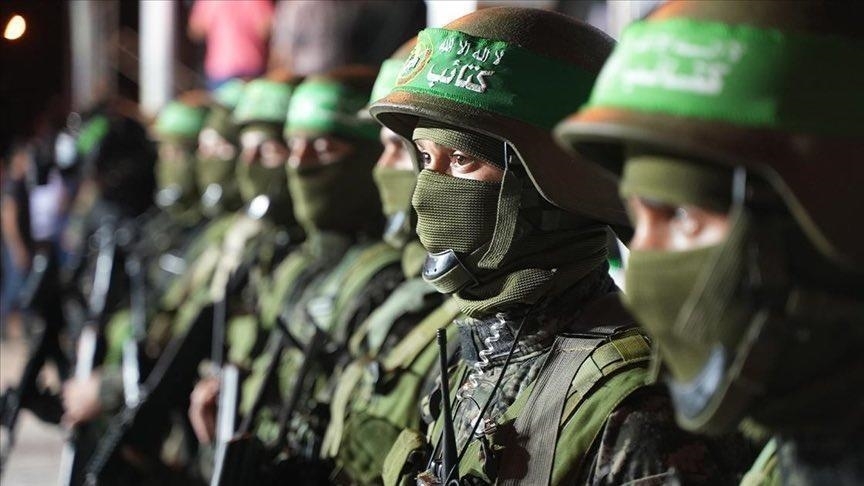
Broadcast Authority: Washington links the resolution of the Hamas fighters' crisis in Rafah to the removal of its leaders.

The Hebrew broadcasting authority reported that the U.S. administration is linking the resolution of the crisis of Hamas fighters trapped in Rafah to ongoing understandings regarding the removal of leaders from the movement outside the Gaza Strip.

Washington is pressuring Israel to agree to the mediators' proposal to grant the fighters a "safe passage" to exit areas under military control, despite official Israeli objections.

The city of Rafah is located within areas controlled by the Israeli army east of the "yellow line," as stipulated in the ceasefire agreement that began implementation on October 10.

Mediators propose that Israel allow the trapped Hamas fighters in eastern Rafah to move through a "safe passage" to areas within the Gaza Strip that are not under military control.

No progress has been recorded so far in addressing the issue, and three armed pockets affiliated with Hamas still exist within the areas controlled by the Israeli army.

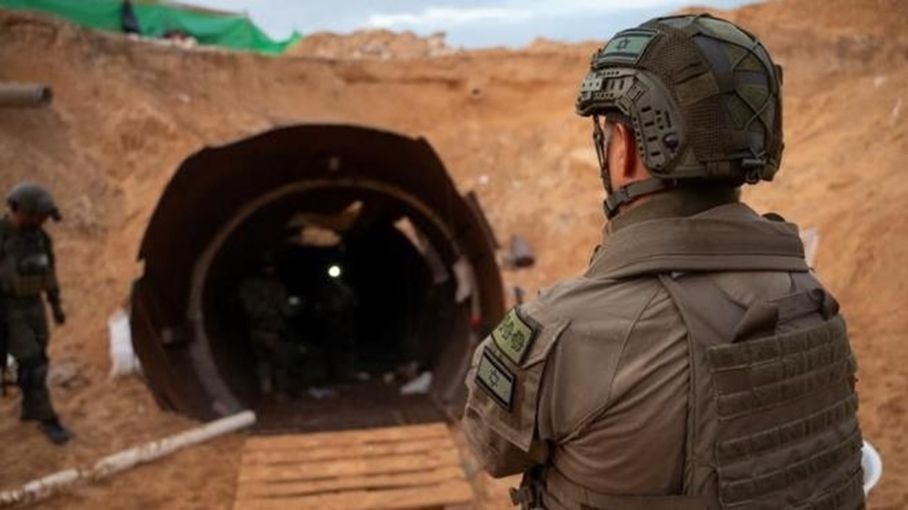
Communications between the concerned parties included a commitment to neutralize the tunnels around Rafah after the exit of Hamas fighters, followed by the establishment of a pilot model for a Gaza city without Hamas.

No official statement has been issued on this matter from Tel Aviv, Washington, or Hamas as of 20:55.

Israeli sources suggest that Tel Aviv may show greater flexibility towards the plan after Hamas fulfills its commitments regarding the prisoners held in Gaza.

The crisis of Hamas fighters stranded in Rafah erupted due to two security incidents following the agreement, where Israel claimed clashes occurred with Palestinian fighters.

The Al-Qassam Brigades stated that communication has been cut off with the remaining members of their groups in Rafah since the return of the war last March.

Israel is trying to exploit this crisis to undermine the agreement, as the authority spoke of a dispute that arose between the United States and Israel regarding the resolution of the Hamas fighters' crisis.

U.S. envoy Jared Kushner emphasized the necessity of releasing all militants to areas west of the "yellow line," where Palestinians are in control.

Israel opposed the proposal, quoting an Israeli source as saying: "This is an innocent proposal, and weapons will be waiting for them in their homes."

Expectations are that the two sides will reach a solution to this crisis, given the U.S. desire to prevent Israel from causing the collapse of the agreement.

Israeli officials are calling for the surrender of these fighters and their transfer to Israel for interrogation, or their killing if they refuse to surrender.

The Al-Qassam Brigades confirmed that the principle of surrender or handing oneself over to the enemy does not exist in their vocabulary.

Since October 8, 2023, Israel, with U.S. support, has committed genocide in the Gaza Strip, resulting in more than 69,000 dead and 170,000 injured.

PALESTINE

Sun 16 Nov 2025 10:50 pm - Jerusalem Time

American pressure on the occupation to resolve the crisis of Hamas fighters in Rafah.. these are the available solutions.

Israeli sources reported that the U.S. administration is pressuring the occupation government to make progress towards solutions regarding Hamas fighters in the Rafah tunnels.

The issue was discussed in meetings between the U.S. envoy and the occupation Prime Minister, as the Americans seek to move to the next phase of the Gaza agreement.

Relocating Hamas fighters to a third country was among the proposed ideas, with negotiations ongoing between the United States and Turkey to resolve the issue of these fighters.

PALESTINE

Sun 16 Nov 2025 9:32 pm - Jerusalem Time

Hamas warns against "alternative guardianship" and calls for a UN resolution to protect the ceasefire.

The spokesperson for the Islamic Resistance Movement (Hamas), Hazem Qassem, stated that the amendments to the U.S. draft resolution set to be presented to the Security Council do not serve the stability of the situation in the Gaza Strip, warning that this project replaces the Israeli occupation with a different kind of guardianship.

Qassem emphasized that the amendments grant guardianship to non-Palestinian entities over the internal Palestinian reality, in terms of governance and security, alongside interference in internal affairs without waiting for self-determined Palestinian arrangements.

According to the Hamas spokesperson, the alternative is to issue a UN resolution that reinforces the ceasefire and establishes an international force to maintain peace in Gaza.

He stressed the necessity for the project to clearly state the mission of this force, which is to secure and separate the occupying army from the besieged civilians in Gaza, and to maintain the ceasefire.

In this context, the Israeli Broadcasting Authority revealed that Tel Aviv is exerting last-minute pressure on the U.S. administration to soften the wording of a U.S. draft resolution addressing a multinational force in the Gaza Strip.

Qassem stated that the United States is working to appease certain parties with non-binding formulations, emphasizing the need for a Security Council resolution that protects the Palestinian people's right to self-determination.

He also affirmed the necessity for the anticipated UN resolution to prevent the Israeli occupation from encroaching on Gaza, the West Bank, or occupied Jerusalem.

The draft resolution stipulates that after implementing a reform plan for the Palestinian Authority, conditions for a "reliable path" towards self-determination and the establishment of a Palestinian state may be available.

The draft also indicates that the multinational force will operate in Gaza in cooperation with Israel and Egypt to ensure stability and replace Hamas's rule.

The Hamas spokesperson stated that meetings between the movement's leaders and the U.S. administration are important and "provide us with an opportunity to present our position clearly, away from the Israeli narrative."

He added that such meetings gain special importance given the U.S. administration's ability to exert actual pressure on Israel to ensure its commitment to the ceasefire.

PALESTINE

Sun 16 Nov 2025 9:04 pm - Jerusalem Time

War rhetoric or negotiating pressure? Netanyahu and Zamer raise the tone of threats towards Gaza.

Israeli Prime Minister Benjamin Netanyahu and Chief of Staff Eyal Zamir hinted at the possibility of resuming military operations in the Gaza Strip, as Washington and the Security Council prepare to discuss the next phase of the ceasefire agreement and prisoner exchange.

Netanyahu stated—in remarks reported by Israeli media—that he "does not know how long the ceasefire will last," emphasizing that Israel "cannot abandon the phase of making Gaza a demilitarized zone," noting that this item will be discussed in the security cabinet.

These statements coincided with leaks indicating that Netanyahu links the transition to the second phase of the agreement with the start of the disarmament process for the resistance, despite the bodies of three Israeli prisoners remaining in the sector.

These developments reflect "Israeli intentions to reopen the door to military action," according to a correspondent in Palestine, Elias Karam, pointing out that Netanyahu "is setting preconditions" for the international community and the United States, presenting the disarmament of Gaza as a mandatory condition before any progress on the terms of the agreement.

In the same context, Eyal Zamir made notable statements confirming that "Hamas's rule will not last even if it takes time," and that the army is preparing for a "wide attack" to occupy areas located beyond the "yellow line," meaning those from which it withdrew during the recent redeployment operation.

The "yellow line" separates the part of Gaza controlled by the Islamic Resistance Movement Hamas from the buffer zone controlled by the occupying army, which represents 53% of the area of the sector, and has been marked on the ground by yellow concrete blocks.

According to Karam, Netanyahu and Zamir "are trying to create conditions for the international and Israeli communities to make a return to war a viable option," by linking the political and security track to the demand for disarmament.

Tel Aviv also expresses objections and reservations about the proposed multinational force to manage the transitional phase, viewing it as problematic that could hinder the implementation of the agreement.

Karam also points out that the issue of Hamas fighters stranded in Rafah may pose "an additional obstacle to the resilience of the agreement," in light of the absence of a clear vision for their fate and the impact of this issue on the course of the ceasefire.

The ceasefire in Gaza began on October 10 last year after two years of Israeli extermination, under the Sharm El-Sheikh agreement brokered by Qatar, Egypt, and Turkey as part of a 20-point plan laid out by U.S. President Donald Trump.

In a related context, Israeli broadcasting authority revealed that Tel Aviv is exerting last-minute pressure on the Trump administration to soften the wording of a U.S. draft resolution that will be presented on Monday to the Security Council, addressing a multinational force in the Gaza Strip, in addition to clear signals towards self-determination and the establishment of a Palestinian state.

PALESTINE

Sun 16 Nov 2025 5:54 pm - Jerusalem Time

The draft American resolution on Gaza is facing pressure from the occupation to introduce potential changes.

Israeli Prime Minister Benjamin Netanyahu held discussions today, Sunday, in the reduced security cabinet regarding a third draft of the resolution proposed by the United States to the United Nations Security Council.

The sharp Zionist concern regarding this draft arises because it states that once the Palestinian Authority implements the required reforms and begins the process of rebuilding Gaza, "conditions may become suitable for a reliable path towards self-determination and the establishment of a Palestinian state."

Netanyahu's firm rejection and the Knesset's move left Netanyahu and the heads of the coalition parties from the weekly government meeting, following ministers' criticisms of the American draft resolution.

Former Minister of Strategic Affairs Ron Dermer participated in the cabinet meeting, despite his resignation, indicating the magnitude of the crisis.

Netanyahu's position Netanyahu stated at the beginning of his government meeting: "Our opposition to a Palestinian state anywhere west of the Jordan River has not changed, and this opposition exists and has not changed."

He added, "I have opposed these attempts for decades and I do so in response to both external and internal pressures."

Netanyahu further stated that "regarding the alleged 'disarmament' of the area controlled by Hamas in Gaza, this will not happen."

Even in the twenty-point plan (Trump's plan to end the war and exchange prisoners), and in anything else, this area and Hamas's weapons will be disarmed.

It will either be done the easy way or the hard way. That's what I said, and that's what President Trump also said.

The dispute over the mandate and international debate The American draft resolution, which will be discussed in the Security Council on Monday, calls for the establishment of "dialogue between the occupation and the Palestinians to agree on a political horizon for peaceful coexistence."

The third draft welcomes the establishment of a "Peace Council," which is a transitional governing body for Gaza that is theoretically supposed to be chaired by Trump for a term lasting until the end of 2027.

The resolution also authorizes member states to form a "temporary international stabilization force" for disarmament and the protection of civilians.

Occupation amendments The "Wynet" website indicated that the occupation is trying behind the scenes to introduce amendments to the draft, especially since it includes clauses that are "uncomfortable for Israel."

Such as the clause that prevents the occupation from objecting to countries sending forces to the stabilization force.

International objection The American draft resolution faces widespread opposition from Russia, China, and several Arab countries, which demand the removal of the reference to the "Peace Council."

The third draft responded to previous objections by including a vision for a "future Palestinian state," albeit without binding commitments.

Netanyahu's rejection of the draft underscores the difficulty of internal consensus in light of the Palestinian state clause.

The statement by the spokesperson for the American mission that attempts to sow discord to undermine the resolution will have "serious and tangible consequences" for the Palestinians serves as evidence that Washington sees this resolution as a "historic moment" to pave the way for lasting peace in the Middle East.

PALESTINE

Sun 16 Nov 2025 10:38 am - Jerusalem Time

Hamas: Katz's statements reveal the occupation's intention to thwart any political solution.

The spokesperson for Hamas, Hazem Qassem, commented on Sunday regarding the recent statements attributed to the Israeli Minister of War, Israel Katz.

Qassem stated in a press statement that Katz's remarks "about remaining on the Golan Heights in Syria, opposing the establishment of a Palestinian state, and continuing the blockade of the Gaza Strip, confirm the expansionist tendency of the occupation."

He added that these positions demonstrate "its [the occupation's] work to maintain a state of conflict and instability throughout the region."

PALESTINE

Sun 16 Nov 2025 10:22 am - Jerusalem Time

Artillery shelling and gunfire from occupation helicopters east of Khan Younis.

The town of Bani Suheila, east of Khan Younis in the Gaza Strip, has witnessed a dangerous military escalation, as the area was subjected to intense artillery shelling and direct gunfire from the occupation helicopters.

The attacks were specifically concentrated on the areas located behind the yellow line east of the city, indicating the continuation of military operations without pause in the sector.

This shelling in Gaza comes amid a similar and dangerous escalation in the occupied West Bank, where the occupation forces continue their bloody incursions into camps and cities.

In a tragic incident, Palestinian medical sources reported the martyrdom of a boy and the injury of another early this Sunday morning due to the incursion of the occupation forces into the old Askar camp, east of Nablus.

The director of ambulance and emergency services at the Red Crescent Society in Nablus, Mr. Ameen Hassan, clarified that the two boys were injured during clashes that erupted inside the camp.

He pointed out that one of them was shot in the chest with live ammunition and succumbed to his injuries, while the other was shot in the back and was transferred for treatment.

A large force from the occupation army stormed the city of Nablus from several directions, including the neighborhoods of Ras Al-Ain, Al-Basha, the old town, and its surroundings.

The fiercest clashes erupted in the old Askar camp, where live ammunition was fired at citizens, with no arrests reported.

The artillery and aerial bombardment on Khan Younis, along with the martyrdom incident in Nablus, underscores the continuation of military and security operations by the occupation in the sector and the West Bank.

This ongoing escalation puts the future of the truce and the efforts for calm at risk, necessitating effective international intervention to stop the depletion of Palestinian lives.

PALESTINE

Sun 16 Nov 2025 10:12 am - Jerusalem Time

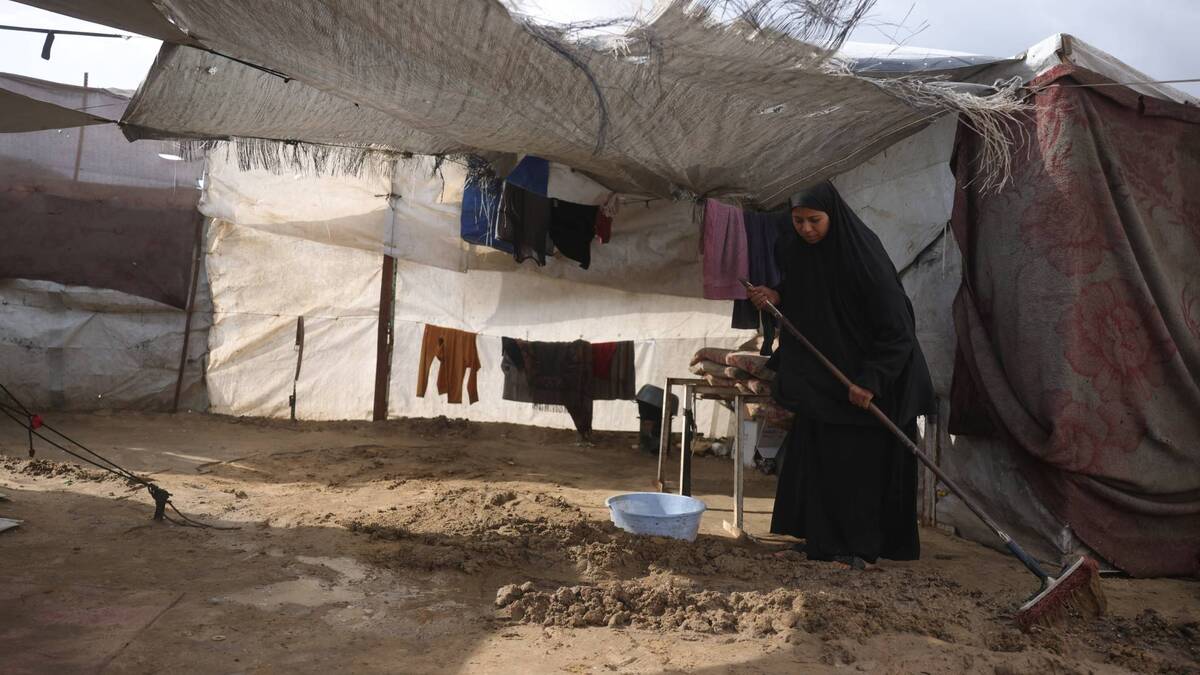
The Civil Defense in Gaza is calling for help: the rains are flooding the refugee camps and the situation is very difficult.

The spokesperson for the Civil Defense in the Gaza Strip, Mahmoud Basal, described the humanitarian situation in the area as 'very difficult', as heavy rains continued for the second consecutive day.

Basal explained in a press statement today, Sunday, that the rains 'caused tents in entire areas to flood', mentioning Al-Zarqa, Al-Yarmouk, and the area behind the Baptist Hospital.

He added: "The shelters have flooded significantly, and water has entered people's homes, causing severe damage, and they are going through an extremely difficult phase."

The Civil Defense spokesperson warned that this disaster is likely to escalate, saying: "The amount of rain that fell today on the Gaza Strip is very small compared to what could happen if the area is affected by a deep or polar depression that lasts for a week."

Basal continued: "If the depressions intensify, the area will face very significant damage, and we may record fatalities due to a lack of basic living conditions," emphasizing that 'a tent does not protect from winter or rain and cannot be a safe place.'

Based on this, Basal issued an urgent appeal, calling on the world to 'recognize the seriousness of what is happening in the sector regarding violations that clearly affect humanity.'

He also urged international organizations to 'fulfill their responsibilities and provide tents, and not wait until the end of winter.'

Basal appealed to the world to recognize the additional dangers that Gaza is experiencing, 'such as the flooding of buildings at risk of collapse, graves, and bodies that have been submerged in water,' noting that all of this comes 'in light of the absence of a single stone or bag of cement due to the blockade and the policies of occupation.'

ARAB AND WORLD

Sun 16 Nov 2025 9:39 am - Jerusalem Time

Waltz presents the "Peace Council" as the only option to ensure the security of Gaza after Hamas.

In an opinion piece published on Friday in the Washington Post, U.S. Ambassador to the United Nations Mike Waltz presented a strong defense of President Donald Trump's proposal to establish a new international body called the "Peace Council" to oversee the reconstruction of Gaza and manage the transitional phase after the war. Waltz considered that this council represents "the only path to a safe Gaza, where Palestinians can determine their own fate away from the rule of terrorism or occupation."

Waltz emphasized that opposing the U.S. draft resolution at the Security Council would mean "taking sides with the continuation of Hamas's rule or returning to war with Israel," warning that the region cannot bear another round of conflict. According to the proposal put forward by Washington, Trump is expected to chair the "Peace Council," while former British Prime Minister Tony Blair will join as one of its prominent members.

Details of the plan and the international role

The United States has officially pushed for the adoption of the resolution within the Security Council, calling for the mandate to be granted to the proposed international force named the "International Stabilization Force" (ISF) to operate in Gaza for two years, with powers that include "using all necessary means" to ensure security, according to Reuters. The draft indicates support from Egypt, Qatar, Saudi Arabia, Turkey, and the UAE for the text, which provides Washington with regional backing it seeks to leverage to pass its plan.

The "Peace Council" – according to Waltz – aims to support a Palestinian technocratic committee that will manage civil services in Gaza during the transitional phase, while the Palestinian Authority works in parallel to implement its reform commitments. Waltz believes that this approach "will finally open the way for Palestinians to determine their own fate away from Hamas's grip."

The council will also be tasked with coordinating humanitarian aid, accelerating the reconstruction process, and launching economic development plans, with a note from Waltz about "initial support" from World Bank President Ajay Banga.

Hamas out of the picture

On the other hand, Al-Arabiya reported that Hamas official Taher al-Nounou stated that the movement had not received a copy of the plan and was not involved in its drafting, reflecting a wide gap between the U.S. vision and the political reality in Gaza. This exclusion reflects a U.S. tendency to completely bypass the movement in post-war arrangements, despite its renewed field presence following the withdrawal of Israeli forces under the ceasefire agreement.

Reuters had reported that the movement carried out a "settling of scores" campaign after the ceasefire took effect, resulting – according to its sources – in the deaths of 33 people. These developments come amid widespread destruction left by a war that lasted over two years, leading to the collapse of infrastructure and threatening the lives of hundreds of thousands of residents with hunger due to restrictions on aid entry.

The security and economic dimensions of the plan

Waltz believes that the time has come "to advance the peace process through stronger measures," considering that the proposed framework will establish a "nascent Gazan economy capable of growth away from permanent reliance on foreign aid." However, the central pillar of Waltz's vision is the "International Stabilization Force," a multinational force that the plan assumes will take on the disarmament of Gaza, dismantle military and factional structures, and secure the population over a two-year period.

Waltz acknowledges that the road to "lasting peace" in Gaza and the region is "long and arduous," but he points out that the Security Council is at a critical moment "to prove its commitment to the spirit of its founding principles."

The "Peace Council" plan reveals an American attempt to reshape the Gaza scene in line with a security and political vision that excludes Hamas and grants Washington and its allies a direct role in managing the transitional phase. However, the absence of Palestinian consensus and the inclusion of an international force with broad powers raise questions about the extent of acceptance among the Gazan public for such an arrangement, and the possibility of it turning into a new form of international guardianship. Additionally, placing Trump at the head of the council adds a sharp political character to the initiative at a moment of internal American division, which may limit its independence or effectiveness later.

According to experts, the American plan, despite its slogans of reconstruction and stability, appears closer to a veiled international guardianship project that keeps Palestinian decision-making hostage to donors and major powers. The absence of participation from active Palestinian forces, especially Hamas, weakens its chances of implementation on the ground and turns the "Peace Council" into a tool for reshaping Gaza according to a unilateral external vision. Furthermore, granting an international force broad powers may exacerbate tensions rather than build lasting solutions.

ARAB AND WORLD

Sun 16 Nov 2025 9:36 am - Jerusalem Time

Mohammed bin Salman's visit to Washington... "Expanded security list" without normalization with Israel

The Saudi Crown Prince Mohammed bin Salman arrives in Washington to meet with U.S. President Donald Trump at the White House on Monday, November 17, 2025, carrying a heavy "security list" that reflects the scale of transformations in bilateral relations. The visit comes at a moment of extreme regional complexity, amid the ongoing Gaza war and U.S. pressures on its allies to reshape the regional landscape in line with Washington's priorities.

Informed sources indicate that bin Salman's agenda includes three main files: security arrangements with the United States that could reach the level of a special defense partnership, acquiring advanced F-35 fighter jets that Riyadh has aspired to add to its fleet for years, in addition to a civilian nuclear energy program with U.S. guarantees. However, what stands out in this visit is the absence of the normalization file with Israel from the list of demands, despite Washington's insistence for years on making it a condition for any strategic progress in bilateral relations.

This absence is not a mere protocol detail; it reflects a Saudi reading that considers any step toward normalization amid the Gaza war to be costly both domestically and regionally. It also expresses Riyadh's desire to recalibrate its relationship with Washington based on mutual interests, away from linking it to the Israeli-Palestinian track, especially after the erosion of the previous Biden administration's standing among Arab public opinion due to its unconditional support for Israel.

Today, Saudi Arabia is trying to take advantage of the current political moment as the Trump administration returns to the global scene with a more aggressive stance and ambitions to reshape Washington's influence in the Middle East. In this context, Riyadh seeks to solidify its position as an indispensable partner, whether through its economic and investment role or through its symbolic position in leading the Arab and Islamic worlds. Notably, the Crown Prince enters the White House this time with greater confidence, supported by a more stable internal transitional phase and the ability to make strategic decisions without the hesitation that characterized the early years of his rise to prominence.

For Trump, hosting bin Salman represents an opportunity to reinforce his narrative that his administration can achieve what others have failed to do. The president, who returned to power with a discourse blending political realism and nationalist populism, wants to prove to his allies and adversaries that the United States remains the pivotal power capable of rearranging the region's dynamics. Trump is expected to use the meeting to assert that Washington is ready to offer unprecedented "security guarantees" to Saudi Arabia in exchange for broader cooperation on issues including energy, investments, and curbing Iranian influence.

However, the normalization dilemma with Israel remains a major challenge. Trump, who considers the "Abraham Accords" one of his administration's most significant achievements, understands that convincing Saudi Arabia to join this path would grant him a substantial political victory. Yet, Riyadh appears determined to separate the two tracks: security-strategic on one hand, and relations with Israel on the other. Observers believe this shift reflects a Saudi awareness that normalization amid the Gaza war would place the kingdom in direct confrontation with the peoples of the region and with part of its religious and tribal institutions, a price the Saudi leadership does not seem willing to pay at this time.

Israel is watching this visit with clear concern; a potential Saudi acquisition of F-35s or an advanced civilian nuclear program could change the regional balance of power, especially if it comes without a direct political quid pro quo for Tel Aviv. Israeli circles fear this could diminish Washington's ability to use the normalization file as a tool of influence over Riyadh, suggesting that a new era of balances may be forming away from traditional Israeli considerations.

Nevertheless, several experts believe that Riyadh fully understands that Washington remains a player that cannot be circumvented in sensitive areas such as advanced armaments and nuclear technology. Therefore, Saudi Arabia is leaning towards a strategy of "expanded bargaining": enhancing its reliance on the United States in security matters while leaving room for independent maneuvering in regional political issues. In this way, the Saudi leadership seeks to create a partnership formula that preserves its central role without tying its political decision-making.

Bin Salman's visit to Washington shows that Riyadh is moving today with greater confidence in shaping its foreign policy, benefiting from its diverse international options, from China to Russia, and from its ability to maneuver in the energy market. However, the balance of the relationship with the United States remains a crucial factor in its strategic calculations. Thus, Saudi Arabia is trying to extract as many security and technological gains as possible while avoiding any political commitments that might constrain its future regional maneuverability.

The visit also represents a test of both parties' ability to reshape their alliance away from old equations. Saudi Arabia wants a broad security-technical agreement that enhances its regional influence, while Washington seeks to engineer new arrangements that ensure its continued influence in a region where Chinese and Russian presence is increasing. While Israel remains the absent presence in this scene,

PALESTINE

Sun 16 Nov 2025 6:11 am - Jerusalem Time

Crimes in the Occupation's Prisons

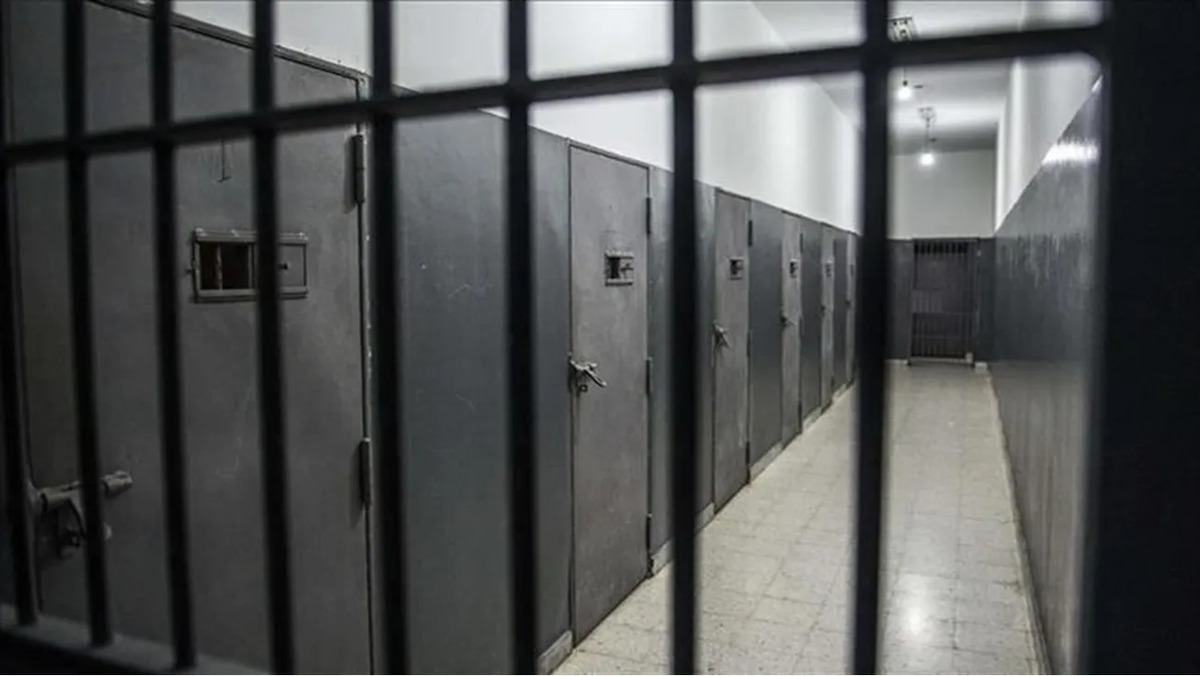
N.A., who is 42 years old, concludes her testimony to the Palestinian Center for Human Rights by saying: "On this day, I was raped twice. I was left for a whole day without clothes in the room where I stayed for three days. On the first day, I was raped twice, on the second day twice, and on the third day I remained without clothes while they looked at me through the door and filmed me. One of the soldiers told me: 'We will publish your pictures on social media.' During my time in the room, I got my period, so I was asked to wear clothes and then transferred to another room."

In another testimony, A.A., a 35-year-old Palestinian man and father, recounts his arrest from Al-Shifa Hospital in March 2024, detailing 19 months of torture: stripping, foul insults, threats of rape against him and his family, culminating in his rape by a trained dog inside the Sdeh Teyman military detention center.

Who are these soldiers behind these testimonies? What values and morals do they belong to? What is the stance of the relevant international institutions regarding this type of crime against prisoners? And why, when similar crimes occur in Africa or Syria or against Yazidis in Iraq, are conferences held and attention drawn, while the voice is swallowed when the victims are Palestinians?

Does the world consider what is happening in Palestine merely "side effects of the conflict," or have the scenes of killing, destruction, displacement, and starvation overshadowed everything else, drawing the curtain of forgetfulness over the sexual crimes in the cells? The testimonies documented by the Palestinian Center for Human Rights reveal the commission of rape and sexual torture crimes behind iron bars and soundproof walls where screams suffocate.

In prisons run under the authority of the extremist Ben Gvir, the occupation practices a series of atrocities that are no less brutal than massacres. These testimonies burden the human conscience with the weight of broken dignity and shattered humanity.

On the other hand, the military prosecutor at Sdeh Teyman prison is being pursued for allowing the leak of a video showing a soldier committing a forced sexual act against a prisoner from Gaza. The crime itself does not shake the occupation system, while criticism is directed at those who exposed it! This paradox alone is enough to expose the logic of the military institution governing the prisons.

The center has documented cases of rape, sexual harassment, and physical humiliation from the mouths of survivors, despite the fact that the norm does not lean towards disclosing such shameful crimes, for reasons related to Palestinian cultural privacy, while the occupation authorities turn the bodies of prisoners into tools for revenge and breaking will.

This aligns with the expansion announced by UN Secretary-General Antonio Guterres to define sexual violence related to armed conflict, including occupation, as a crime in itself and relevant to the conflict itself, rather than "collateral damage of war."

Torture in the occupation's prisons is neither random nor individual. It is a systematic, planned mechanism aimed at dismantling the Palestinian identity. The occupation does not stop at killing outside the prison; it continues inside the cells with a method of body occupation and stripping away humanity, within a tightly controlled system of humiliation and dominance, closed off from view.

What should we do? It is not enough to publish a report from the Human Rights Council; rather, it must be transformed into an open battle to isolate the occupation until the end and the last point in the lines of the documents and testimonies presented.

National and international campaigns are needed to shed light on these crimes, to communicate with international organizations and media, to push the United Nations to open investigations, to convert testimonies into legal files presented to international courts, and to pursue every responsible party for the crime, preventing them from escaping punishment, because silence is complicity, and anyone who remains silent is a partner.

Waiting gives the occupation a green light to continue. All this happens and is publicized, while the world continues to attempt to sell us plans that carry the title of peace, which keeps the occupation close to the trap.

It is not enough to read the testimonies; rather, the stories of prisoners and their sufferings should be transformed into media and cinematic material that shows the world that the crimes of the occupation do not only occur in open killing fields, but in the closed corridors of prisons where unseen atrocities are committed.

And I conclude with what one of the detainees said in her testimony, to serve as a motivation to raise the voice of prisoners: "I was violated several times. No one hears. No one sees. Everything starts like an ordinary day, then turns into an unbearable night. This is not an imagined narrative, but a reality recorded in

PALESTINE

Sun 16 Nov 2025 3:54 am - Jerusalem Time

What does Netanyahu want from the international force in Gaza.. The Broadcasting Authority reveals the details.

Sources reported that Benjamin Netanyahu's government is making moves to ensure that the Security Council's mandate for the force expected to be deployed in the Gaza Strip is broad, allowing it to act forcefully against Hamas with the aim of disarming it.

The sources quoted officials as saying that "Israel demands that the mandate granted to the international stabilization force be under Chapter Seven, so that its responsibility is to implement peace even using force, rather than maintaining peace under Chapter Six."

Chapter Seven grants international weight and broad powers, as its activation does not require the consent of all parties, and it allows for the use of military force to impose order and protect civilians, in addition to disarming armed groups.

The Israeli moves come ahead of the expected vote on this matter in the United Nations Security Council, where the council intends to vote on U.S. President Donald Trump's plan regarding the Gaza Strip, which includes granting a mandate to establish an international stabilization force.

It is worth noting that the Israeli occupation and Hamas reached an agreement on October 9th for a ceasefire and prisoner exchange, based on Trump's plan.

PALESTINE

Sat 15 Nov 2025 11:44 pm - Jerusalem Time

The future of Gaza in the Security Council.. What does each party want from the upcoming resolution?

The United States and its Arab and Muslim partners are trying to establish a ceasefire in the Gaza Strip by adopting a resolution from the Security Council that supports Donald Trump's peace plan, despite reports from Israeli media about fundamental disagreements between Washington and Tel Aviv.

The resolution, which is expected to be voted on next Monday, is anticipated to include provisions that were not included in Trump's plan, foremost among them the right of the Palestinian people to self-determination and the establishment of a path that leads to the creation of an independent Palestinian state.

The resolution also stipulates that the United States will play a role in initiating dialogue between the Palestinians and Israel to achieve peaceful coexistence, as well as affirming the temporary nature of the Peace Council that will govern the Gaza Strip for a period of up to two years.

However, Yedioth Ahronoth reported from informed sources that Trump's plan includes provisions that are uncomfortable for Tel Aviv, while Channel 13 stated that fundamental disagreements still exist between the U.S. and Israel regarding moving forward with the implementation of the agreement.

The plan still faces many obstacles, which former U.S. National Security Advisor Mark Feivel says require further discussions to prevent the stabilization forces from coming into conflict with the Palestinians.

Significant challenges According to Feivel, speaking on the "Event Path" program, the current discussion revolves around deploying 20,000 soldiers from various countries who will operate for a maximum of two years before the management of the sector transitions to the Peace Council, which will be chaired by Trump himself.

The anticipated resolution is not without Arab-American disagreements, as Arab and Muslim leaders wish to explicitly state the establishment of a Palestinian state, while the United States and Israel do not want this, according to Feivel.

The United States wants to implement reforms within the Palestinian Authority so that it becomes possible to transition to discussions about an independent state, which Feivel says needs a clear roadmap for Washington to agree to include it in the resolution.

At the same time, Russia has proposed a resolution in recent hours that is clearer regarding the Palestinian state, but Feivel says this step aims to obstruct peace efforts, describing Moscow as "not the right place to achieve peace."

He hopes that the veto will not be used to obstruct the resolution. Russian President Vladimir Putin made a call on Saturday to Israeli Prime Minister Benjamin Netanyahu, who is wanted by the International Criminal Court, during which they discussed the safety process in the region.

However, Israeli affairs expert Dr. Mohannad Mustafa says that Israel knows that the Russian role is marginal in this issue, and that the real decision is in the hands of the United States.

Two achievements and two failures Mustafa attributes the Israeli-American disagreement regarding the anticipated resolution to the fact that it includes two achievements and two failures for Tel Aviv from the perspective of the current government, which he says is facing a complex moment.

Israel will determine the countries that will participate in the international force that will enter the sector, and it will set conditions that cannot be met before reaching a Palestinian state, and these are two significant achievements in Netanyahu's view, according to Mustafa.

Conversely, Netanyahu views the mere mention of "an independent Palestinian state" in any resolution as a major failure for him in front of his current government coalition, while the second failure relates to the complete withdrawal of occupation forces from the sector, according to the spokesperson.

The withdrawal from the sector represents the most dangerous point - in Mustafa's view - because replacing the occupation forces with international troops within the yellow line means that Israel will exit while the Islamic Resistance Movement (Hamas) remains, according to Mustafa.

For his part, Middle East policy expert Dr. Mahjoub Al-Zuwairi believes that the Arabs' and Muslims' efforts to stop the genocide in the Gaza Strip and Trump's desire to save Israel's image globally have contributed to the ambiguity that has dominated the scene following the agreement's implementation.

The ceasefire agreement did not stipulate the establishment of a Palestinian state nor the right of Palestinians to self-determination, but both will be included in the anticipated resolution as a result of deep consultations that Al-Zuwairi believes Arab and Islamic countries have conducted with Washington.

Therefore, the discussion of an American-Israeli disagreement regarding this resolution becomes understandable as it will completely end the occupation of Gaza and prevent Israel from shaping the day after the war, according to Al-Zuwairi.

However, the failure to issue the resolution under Chapter VII of the Security Council means that the United States will be responsible for deterring Israel, according to Al-Zuwairi, who expects this to lead to violations after the resolution is passed.

Feivel ruled out the

PALESTINE

Sat 15 Nov 2025 11:00 pm - Jerusalem Time

"Hebrew Broadcasting": Tel Aviv conditions "a broad mandate allowing the use of force" for the stability force in Gaza.

The Hebrew broadcasting authority revealed urgent demands made by Tel Aviv regarding the nature and powers of the international stabilization force intended to be deployed in the Gaza Strip as part of the 'next day' arrangements following the war.

Reports indicate that Tel Aviv is pushing for this force to be granted a broad mandate and strong executive powers to ensure its security needs are met.

The Hebrew broadcasting authority, citing informed 'Israeli' officials, reported that Tel Aviv insists that the mandate granted to the newly established international force must be issued under Chapter VII of the United Nations Charter.

PALESTINE

Sat 15 Nov 2025 10:10 pm - Jerusalem Time

Egypt: We reject any attempt to divide the Gaza Strip and displace the Palestinians.

The Egyptian Foreign Minister, Badr Abdel Atti, stated that his country rejects any attempt to divide Gaza or displace Palestinians from the enclave. This came in an interview conducted by Abdel Atti with the Italian newspaper "La Repubblica," according to a statement from the Egyptian Foreign Ministry on Saturday evening.

Abdel Atti reviewed "Egypt's efforts to solidify the Sharm El-Sheikh agreement and implement all its provisions" related to establishing peace in Gaza. He also discussed "security arrangements, the transitional phase, and the importance of empowering the Palestinian Authority" in the enclave.

Abdel Atti affirmed his country's "complete rejection of any attempt to divide the Gaza Strip or displace Palestinians," according to the statement. These remarks come as Hebrew media have recently promoted plans regarding the potential division of Gaza into two regions.

The Hebrew newspaper "Haaretz" reported on Friday that the Israeli army was surprised by Prime Minister Benjamin Netanyahu's approval of a U.S. request to divide the enclave into "New Gaza" and "Old Gaza."

The Egyptian minister emphasized that "maintaining the unity of Palestinian territories is a fundamental pillar for any fair, lasting, and comprehensive solution" in the region. He pointed out that "the two-state solution (Palestinian and Israeli) remains the only realistic option for achieving peace in the region."

According to "Haaretz," "New Gaza" would be among the areas under Israeli army control, east of the "yellow line," which it withdrew to under the ceasefire agreement that came into effect on October 10.

Regarding the administration of "New Gaza" after the withdrawal of the Israeli army, "Haaretz" noted that an international stabilization force would take over the task.

The Israeli army destroyed 90 percent of the civilian infrastructure in the enclave during the genocide, with losses estimated at around $70 billion, according to the United Nations, in addition to the collapse of most service institutions and their cessation of work due to attacks from Tel Aviv and the ongoing blockade.

PALESTINE

Sat 15 Nov 2025 9:38 pm - Jerusalem Time

Hebrew announcement: Washington pushes for the implementation of the "next phase" of the agreement to end the war in Gaza.

The Hebrew Channel 13 confirmed the increasing American pressure on Tel Aviv to move towards implementing the next phase of U.S. President Donald Trump's plan to end the war in the Gaza Strip.

The Hebrew channel reported that there are significant and deep differences and disagreements between Tel Aviv and Washington regarding how to proceed with the potential implementation of this agreement.

These differences not only pertain to the final objective but also extend to the proposed mechanisms and timelines for executing the subsequent arrangements for ending hostilities.

PALESTINE

Sat 15 Nov 2025 8:06 pm - Jerusalem Time

Israeli concern: Settlers threaten to ignite the West Bank

The Israeli circles are increasingly concerned about the assaults by settler groups in the West Bank, which have long been directed against Palestinians and have recently extended to target the soldiers of the occupation themselves.
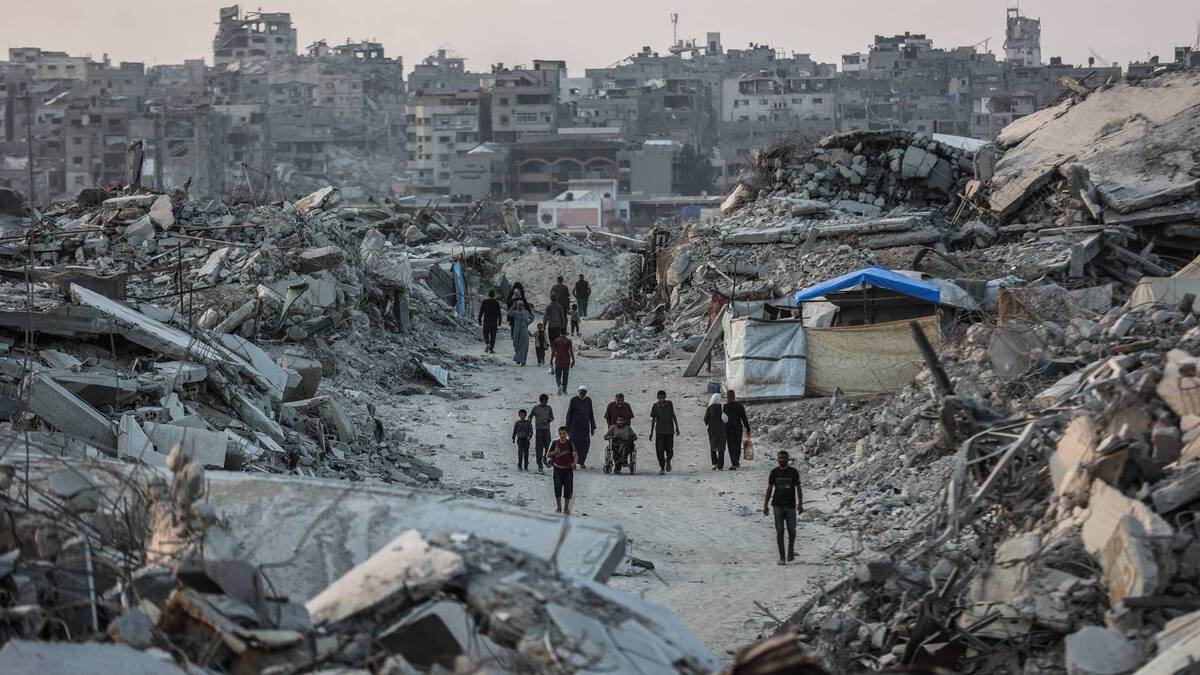
This development has prompted settler leaders to call for deterrent measures against those they describe as a "handful of anarchists" who act in an organized criminal manner.

Elisha Ben Kimon, a reporter for Yedioth Ahronoth, mentioned that warnings were delayed before settlement leaders in the West Bank raised their voices, declaring that "the time has come to stop the crimes of what is called national crime, to halt the riots committed by extremist anarchists, and to prevent harm to the settlement system and the tarnishing of the image of all settlers."

He clarified that a serious incident occurred a few days ago, during which occupation soldiers were attacked by dozens of Jewish anarchists in the West Bank, prompting settlement leaders to express their discontent and disgust at this behavior.

He added in his article that "recent days have seen Israeli discussions about renewing administrative detention orders against settlers, although this will not address the problem deeply, as the handful of anarchist settlers do not distinguish between a Palestinian, a policeman, a soldier, or a settler."

One resident of a settlement in Benjamin was attacked again with gas in his face because he dared to confront these Jewish troublemakers.

He pointed out that "these developments reflect a state of turmoil within the settlement circles that has not been seen in the region for a long time, amid the pursuit of settler leaders for electoral and personal calculations."

He explained that "the Israeli public does not grasp the full picture, as events clearly reveal this, including the posters that recently appeared in the streets of the West Bank attacking General Avi Melchior, the commander of the army in the central command."

However, the most striking and sharp element is that what is happening comes within a broader conflict within the far-right camp, coinciding with the right's preparations for the upcoming primary elections.

He noted that "the settlers described as 'troublemakers' call themselves the 'David's Army,' and present acts of arson and assaults on Palestinians, and recently on soldiers, as carrying out religious instructions."

They are the same "hilltop youth" who set the criminal pattern and chaos, then rush to the next target.

The core numbers amount to a few dozen anarchists, even though they are young, some of whom are not from the West Bank, and most of them have left educational frameworks or have been expelled from them.

He added that "the main goal of these settlers is to settle on state lands and curb Palestinian construction, which they describe as 'illegal.'

There, they also suffer from the same anarchist group that is engaged in a highly welcomed operation in cooperation with the army, where settler youths working in agriculture and sheep herding are brought there, under the auspices of state families from the settlement.

He pointed out that "the absence of organized government accountability makes dealing with this phenomenon distributed among various state institutions, creating tension between settlers on one side, and the police, Shabak, and army on the other."

These three agencies have gone through a series of disturbances in recent years, and their relationships regarding the national crime file are very complex.

The performance of the head of the Jewish brigade is measured by his ability to thwart and prevent these events, while the general of the central command seeks to maintain calm so that his soldiers can focus on curbing Palestinian resistance instead of being preoccupied with confronting Jewish soldiers.

He concluded by saying that "the image that has been formed over the past three years under the current government seems ideal in the eyes of the settlers, but it receives a harsh slap every time national crimes are committed by anarchists, alongside the continued Palestinian attacks with bombs, gunfire, or stone-throwing.

PALESTINE

Sat 15 Nov 2025 7:38 pm - Jerusalem Time

Poll: 60% of American Generation Z prefer Hamas over Israel

Several global newspapers have addressed the shifts in the American stance among the youth of Generation Z regarding the Israeli-Palestinian conflict, the political role of President Donald Trump, and his relationship with Israeli Prime Minister Benjamin Netanyahu - who is wanted by the International Criminal Court - in addition to the ongoing humanitarian suffering in Gaza.

The Israeli newspaper "Harris" published the results of a recent opinion poll conducted by Harvard University in the United States, showing a notable shift in American youth's attitudes towards the Israeli-Palestinian conflict, revealing that 60% of those belonging to Generation Z prefer the Islamic Resistance Movement (Hamas) over Israel, compared to only 40% who expressed support for Tel Aviv.

The poll, conducted by the university during August, included more than 2,000 American voters and also revealed a clear gap between the attitudes of generations and party affiliations regarding the war in Gaza.

According to the newspaper, the results reflect the clear change in American youth's attitudes towards Palestinians and the Gaza war, highlighting the role of Generation Z in shaping future public opinion in the United States.

The Israeli newspaper "Yedioth Ahronoth" highlighted the student hostility towards Israel in American schools and universities, which persists despite the end of the war in Gaza.

The newspaper pointed out that what it described as "anti-Israel indoctrination" remains entrenched among a wide segment of youth, and that this phenomenon is no longer limited to the leftist movement but also includes a segment of right-wing youth.

In a related context, the newspaper "The National Interest" shed light on the role that the Trump administration seeks to play in the Middle East, noting that Trump is trying to be a pivotal element in calming regional conflicts.

It added that this engagement carries risks, as the war in Gaza comes amid a series of complex issues that include Iraq, Lebanon, and Syria, making Washington's task complicated and intertwined.

The newspaper explained that U.S. efforts aim to resolve some long-standing conflicts, and the administration hopes that its success will contribute to the emergence of a new phase of regional stability.

The Israeli newspaper "Maariv" discussed an article by writer Anna Barsky, who spoke about the secret of "Trump's embrace with Netanyahu turning into a political trap," where the article referred to Trump's message to Netanyahu regarding his request for a pardon, which began as an ideological partnership years ago but has now become a political and legal dilemma.
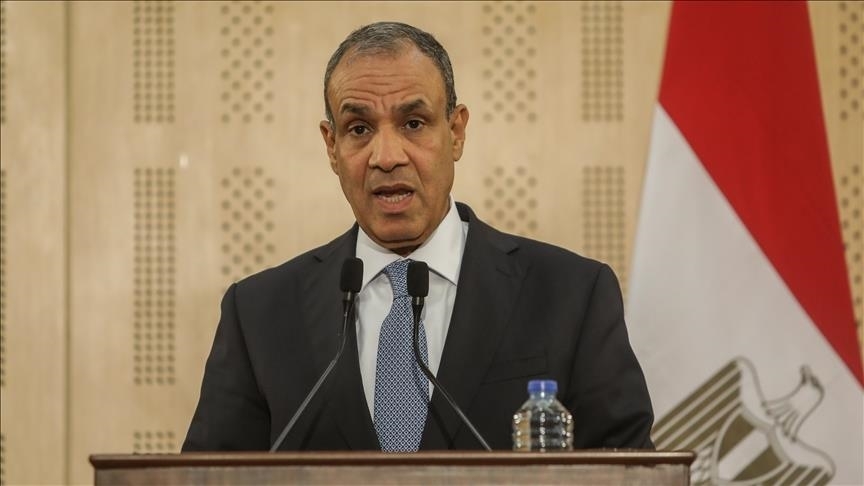
According to the article, Trump seeks to establish an image of a "winner" before American voters as a model of deal-making, but when the background is political, security coordination becomes contingent on mutual interests.

As a result, Israel speaks of its efforts to disarm Gaza, while Trump seeks to reduce the political noise surrounding the sector.

In a humanitarian coverage from another angle, the British newspaper "The Independent" published a report about the suffering of 34-year-old Gazan Amani, a mother of three, who received the "Phoenix-Space" scholarship to study for a master's degree at the University of Bristol earlier this year.
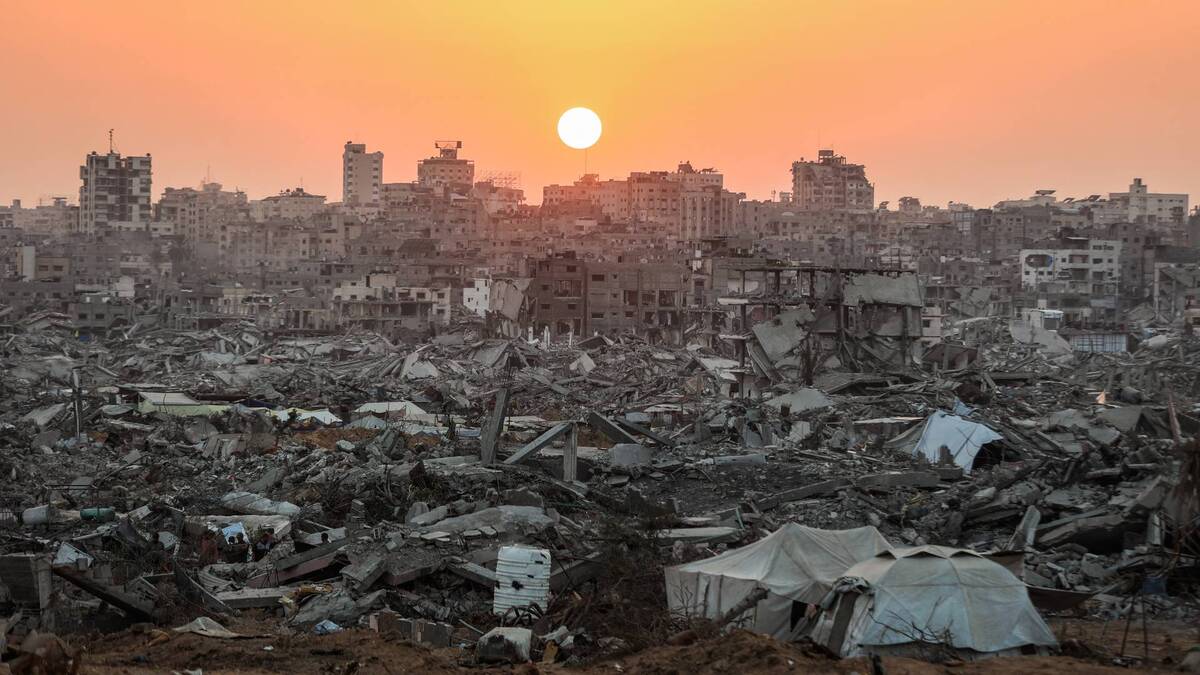
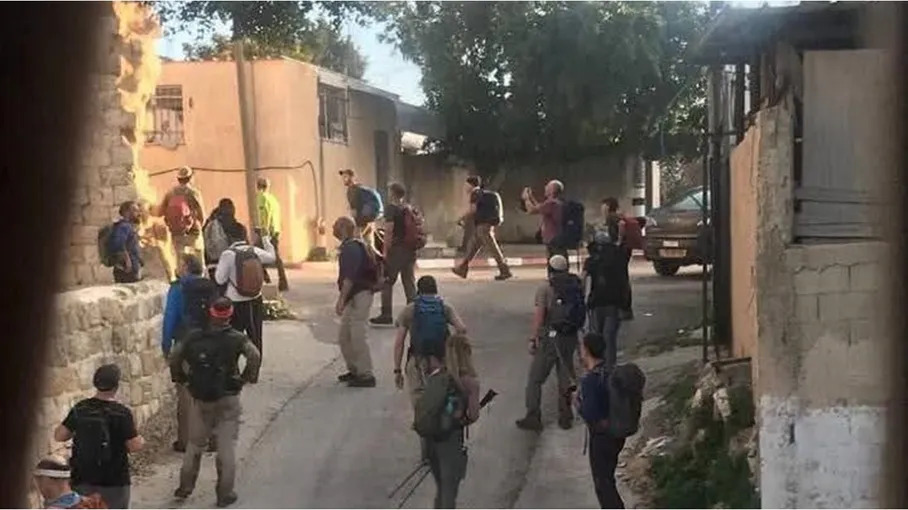
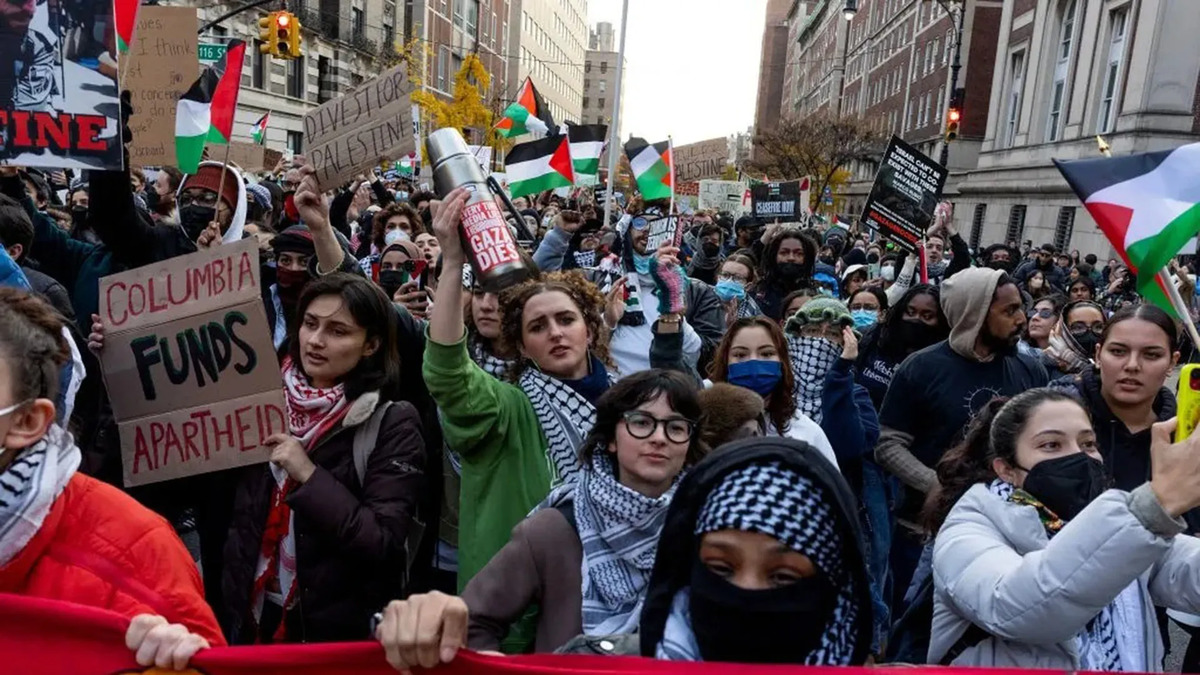
The newspaper explained that Amani had to give up the scholarship due to a government policy that she considered "unfair," as it prevented her from traveling to the United Kingdom due to restrictions imposed on her family members' travel to Britain.
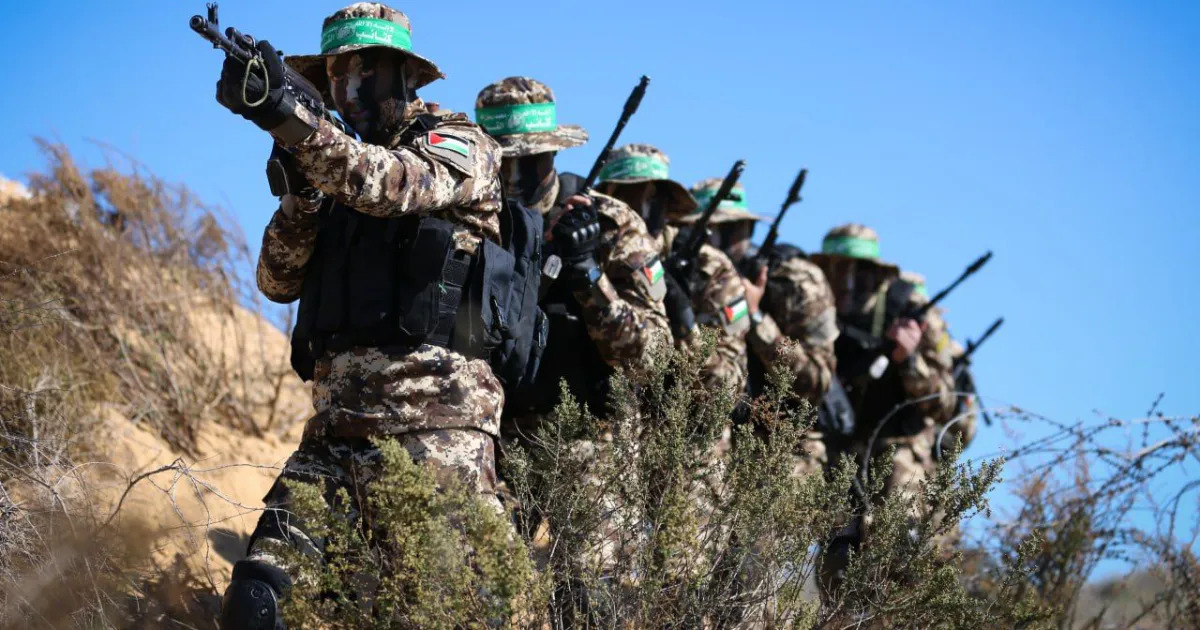
The newspaper stated that Amani was displaced with her family seven times during the ongoing war, and her home, which she was preparing to be a safe environment for her children, was destroyed.

PALESTINE

Sat 15 Nov 2025 6:56 pm - Jerusalem Time

The Trump administration is pressuring Israel to make progress regarding Hamas fighters in Rafah.

Israeli sources reported that the administration of U.S. President Donald Trump is pressuring Israel to make progress towards viable solutions regarding Hamas fighters in the tunnels of Rafah behind the yellow line, where the Israeli army is deployed.

The issue was discussed in meetings between U.S. envoy Jared Kushner and Israeli Prime Minister Benjamin Netanyahu earlier this week.

Sources mentioned that the Americans want to move forward to the next phase of the Gaza agreement and close the file on the Rafah fighters, where the idea of relocating Hamas fighters to a third country was raised for discussion.