LATEST NEWS

Mon 24 Nov 2025 1:48 pm - Jerusalem Time

Assault on two women and the arrest of two brothers during a raid on a house in Kafr Qaddum, east of Qalq

Two women were injured this Monday afternoon as a result of an attack by occupation soldiers in the village of Kafr Qaddum, east of Qalqilya, and two brothers were arrested during the same raid.

Local sources reported that the occupation forces stormed the home of the Jumaa family in the northern part of the village and physically assaulted Mrs. Fadwa Jumaa and her son’s wife, Sirin Jumaa, before proceeding to arrest the brothers Qusai Jumaa and Rafat Jumaa.

The assault resulted in the two women sustaining bruises and varying injuries, and they were transferred to the hospital for treatment, where their conditions were described as moderate.

The raid on the home coincided with incursions by groups of settlers into the northern area of the village, under the protection of occupation soldiers.

Sources indicated that dozens of settlers were near the agricultural lands of the citizens, and military vehicles and jeeps of the Israeli army were spread around the area, causing concern among the residents for fear of being subjected to attacks or being prevented from accessing their lands.

During the incursions, several surrounding homes, including the Jumaa family home, were also stormed before the occupation forces withdrew from the area.

PALESTINE

Mon 24 Nov 2025 1:24 pm - Jerusalem Time

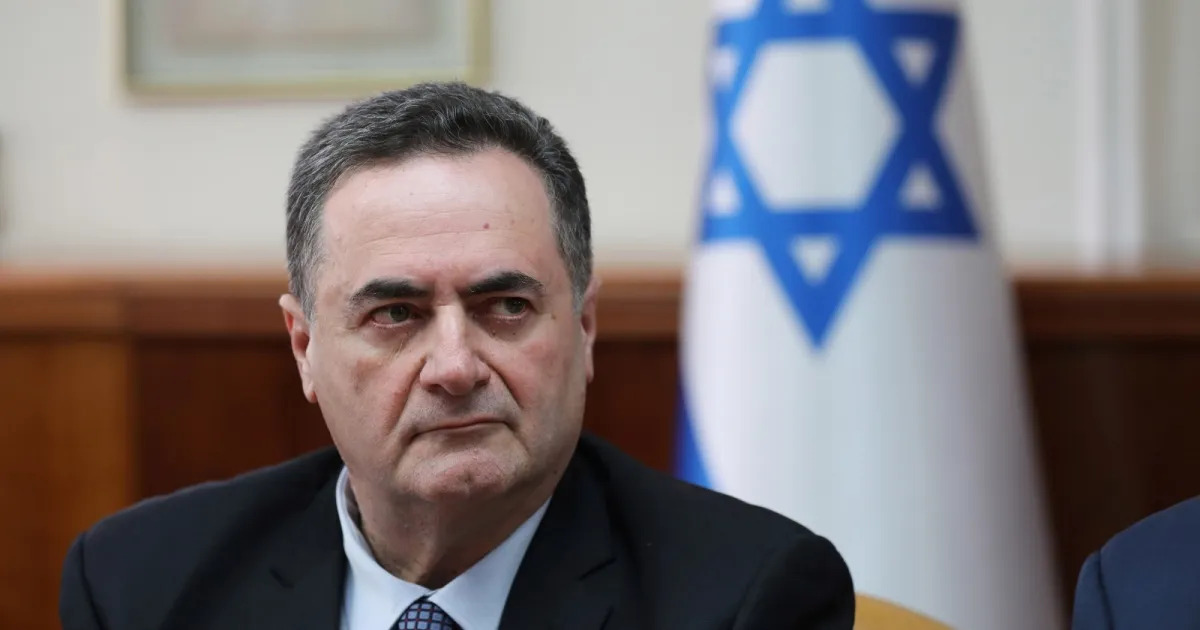
Katz orders a review of the Israeli army's investigation into the events of October 7.

Israeli Channel 12 reported that Defense Minister Yoav Gallant ordered a review of the internal investigation conducted by the army regarding the October 7, 2023 attack, following the dismissal of several heads of reserve security agencies.

The channel mentioned that Gallant has frozen appointments in the Israeli army for a month and demanded a reconsideration of the conclusions of the Turjeman Committee.

The Turjeman Committee played a role in examining the investigations conducted regarding the war, but it faced severe criticism from senior circles in the Israeli army.

Earlier, the Israeli army radio reported that Chief of Staff Eyal Zamir decided to dismiss several heads of reserve security agencies for their failure during the events of October 7.

According to the radio, Zamir dismissed the former head of military intelligence, the former head of operational intelligence, the former commander of the Southern Command, the former reserve commander of Unit 8200, the former commander of the Gaza Division, the former chief of staff of the Southern Command, and the former commander of the northern brigade in the Gaza Division.

The newspaper Yedioth Ahronoth described what happened as a shock in the Israeli army, as Zamir personally held several officers accountable, noting that Zamir's decisions were made following the recommendations of the Turjeman Committee.

According to the newspaper, these steps provoke intense internal debate within former and current military circles, amid skepticism from senior officers regarding whether the measures target a specific group of officials while exempting others.

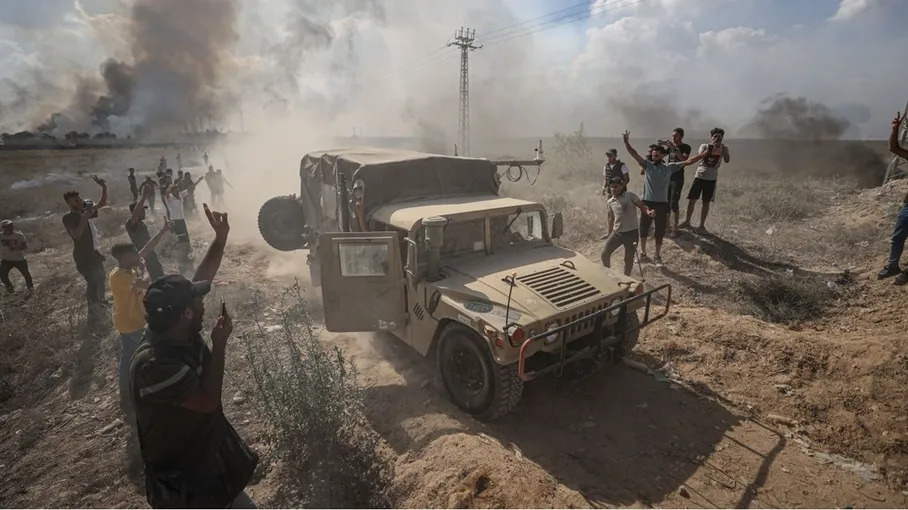
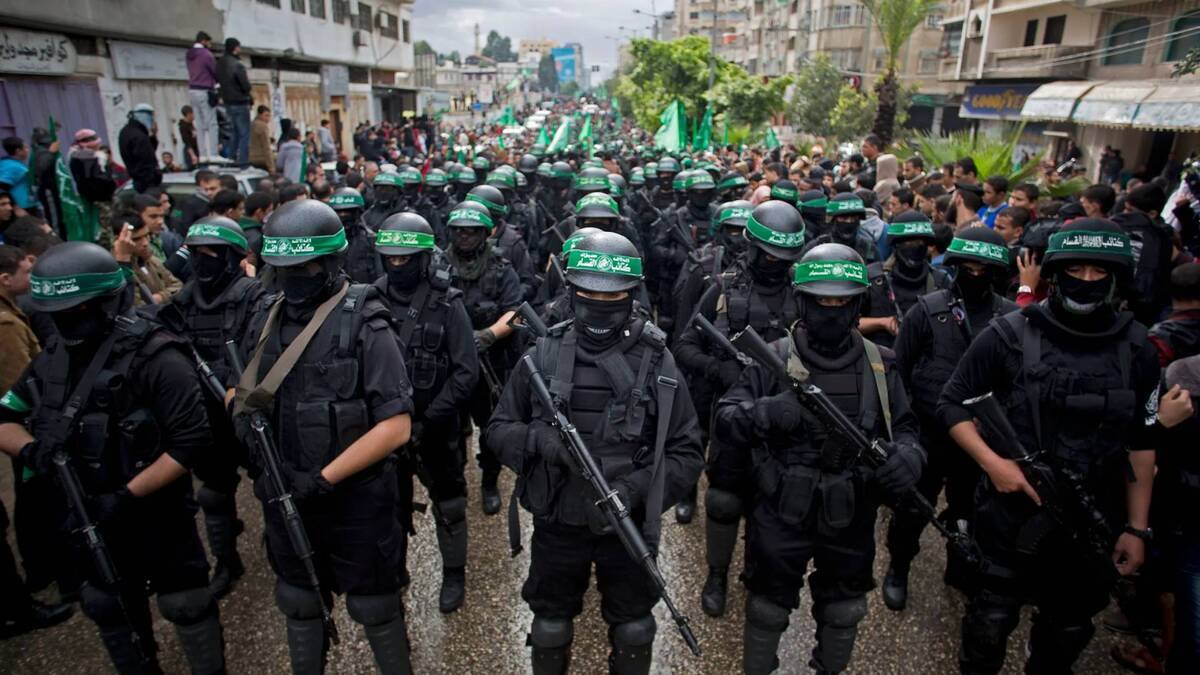
The former officials had been transferred to reserve service after resigning from their positions earlier due to the "Storm of Al-Aqsa" battle launched by the Izz ad-Din al-Qassam Brigades, the military wing of the Islamic Resistance Movement (Hamas), against the settlements surrounding Gaza and capturing several occupation soldiers.

LATEST NEWS

Mon 24 Nov 2025 1:02 pm - Jerusalem Time

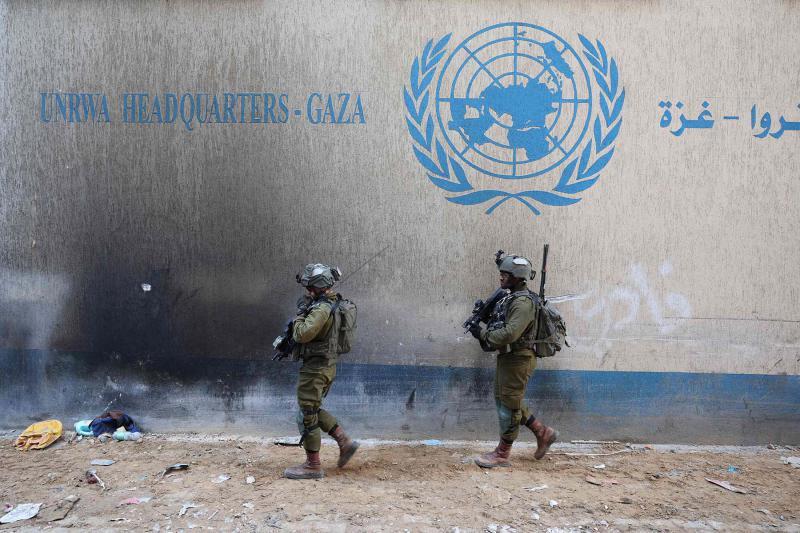
"UNRWA": 90% of Gaza's population relies on aid and one meal every 24 hours.

The United Nations Relief and Works Agency for Palestine Refugees in the Near East (UNRWA) confirmed that the humanitarian situation in the Gaza Strip remains catastrophic despite the ceasefire, noting that Israel is preventing the entry of its international staff and restricting access to aid, which has led to the accumulation of about 6,000 food trucks at the crossings.

The agency stated in a statement issued today, Monday, that more than 90% of Gaza's population relies entirely on relief, while many receive only one meal every 24 hours, with about 170 trucks entering the strip daily, a figure far below the minimum required to meet basic needs.

UNRWA currently manages 100 shelters housing more than 80,000 displaced persons, and continues to provide educational services to about 300,000 students remotely, and 50,000 in-person under harsh conditions and psychological stress.

The agency said that about 44,000 boys and girls in the Gaza Strip are receiving their education in difficult conditions inside 330 temporary learning spaces spread across 59 shelters.

It explained that many children are forced to sit on the cold ground due to the lack of seats or chairs, which increases the difficulty of learning and affects their sense of safety and stability.

This situation comes in the context of the deterioration of humanitarian conditions in Gaza due to the genocide war launched by the occupation on October 7, 2023, the catastrophic repercussions of which are still ongoing, as Israeli bombardment and widespread destruction have led to the loss of schools and educational facilities, prompting UNRWA to convert emergency shelters into temporary educational spaces to meet the urgent educational needs of children.

The agency pointed out that providing basic needs such as seats and chairs is not limited to the material aspect, but also gives children a sense of stability and hope for a better life after the war.

On the health front, clinics receive 15,000 patients daily through 7 centers and 35 mobile medical points, while the number of medical visits since October 7 has exceeded 15 million, amid rising malnutrition rates to 90%.

The agency revealed that it has lost 380 employees since the war began, while 90% of its facilities, numbering about 300 buildings, have been damaged due to Israeli bombardment, leading to a sharp decline in its operational capacity.

UNRWA is also facing a financial shortfall estimated at about $200 million, amid the cessation of U.S. support amounting to $360 million annually, in addition to organized and funded campaigns worth millions of dollars aimed at discrediting the agency and falsely linking it to terrorism.

OPINIONS

Mon 24 Nov 2025 12:48 pm - Jerusalem Time

Has our consciousness been reframed? And have our beliefs about national rights changed?

Dr. Ibrahim Nairat

Dr. Ibrahim Nairat

Opinion Writer

In the space between memory and reality, between what has happened and what is desired to happen, Palestinian and Arab consciousness is shaped as if it were a page being rewritten continuously under the pressure of events, political complexities, and regional transformations. And between the lines of this page that extends over a century, a heavy question arises, becoming more pronounced as the world grows noisier: Has our consciousness truly been seared? Have we begun to see Palestinian rights through eyes other than those that carried the Arab sentiment for decades?

Since the Nakba until today, Palestine has not been a matter that could be postponed or compromised in the general Arab consciousness. It was – and still is – the only point of stability in a geography that is constantly changing. However, recent years have brought with them wide waves of transformation; waves that have not been limited to politics alone, but have seeped into discourse, into the framing of news, into the language used to narrate Palestine, and even into the space it occupies in the collective consciousness of the Arab street.

Today, the recipient, whether inside Palestine or outside it, lives in a world where narratives compete, interests intertwine, and they find themselves facing a torrent of information that is sometimes presented as if it were final truths. With all this momentum, priorities gradually change. New files come to the forefront, while others recede, making it difficult for the voice of the cause to remain present amid this rubble of events. However, a decline in presence does not mean a decline in rights, nor in the essence of the cause.

At many junctures, it seemed as if there was an attempt to reshape the angle of view; the discourse on Palestine is no longer always in that decisive language, nor in the fixed context that has accompanied Arab media for decades. Even the vocabulary has changed: "stability" has replaced "liberation," "normalization" has replaced "resistance," and "regional partnerships" have replaced "constants." This shift in language is not a passing detail; it reflects a deeper transformation, which may be intentional or a result of the nature of the era, but it leaves its mark on Arab consciousness without us realizing it.

The new generation, which opens its eyes to a world where news clashes as forces do, undoubtedly lives a different consciousness. Not because it is less connected to Palestine, but because it has not experienced the early stages of the conflict, has not heard the voices of the first refugees, and has not seen the maps before they were erased by the hand of settlement. This generation sees the world through the speed of the screen, and views politics in terms of the possible and the immediate, not in terms of extended history. Nevertheless, its preoccupation with other issues, or its scattered attention among hundreds of files, does not mean that Palestine has faded from its consciousness; rather, it means that the discourse directed at it no longer places it at the forefront of the picture as it used to.

Despite all this, the truth remains steadfast: Palestinian rights are not a concept that can be shaped according to the whims of politics or the rhythm of media. They are rights rooted in the land, identity, memory, and generations of martyrs whose deaths were not merely a fleeting event in the record of time. Therefore, no media or political transformation can erase what has been written in blood, nor can it reshape what has been established in sentiment for decades.

The most dangerous thing that can happen to the Palestinian cause is not external threats, but internal erosion in consciousness, when indisputable facts become debatable, and when the national stance becomes a matter of opinion rather than a matter of instinct. What we sometimes see as attempts to reshape the narrative, or to pass a new discourse that diminishes the centrality of the cause, is a form of soft pressure on the collective mind, but it remains incapable of changing the truth no matter how long it takes.

For Palestine is not a seasonal issue, nor a political file that rises and falls in the hierarchy of priorities. Palestine is a constant measure of the dignity of the entire region, and its internal voice that should not be silenced regardless of changing circumstances.

Therefore, the real question that Arab consciousness must face today without hesitation remains: Has our stance changed because the truth has changed? Or because someone is trying to make the truth seem less clear?

In the end, the language of media may change, political calculations may expand, and circumstances may impose moments of silence or distraction, but the Palestinian right – land, people, and memory – remains the cornerstone that does not fall. And consciousness,

PALESTINE

Mon 24 Nov 2025 12:16 pm - Jerusalem Time

An Israeli rights center condemns "ethnic cleansing" in the West Bank.

The Israeli human rights organization B'Tselem stated that Israel has killed 1,003 Palestinians since October 2023 in the West Bank, accusing it of practicing "ethnic cleansing" in the area with a complete absence of effective internal and external mechanisms to prevent it.

The organization clarified in a statement on Monday that settlers attack Palestinians daily in the West Bank with total impunity, and confirmed that no Israeli condemnation has been issued in 21 cases where settlers killed Palestinians.

The organization pointed out that the Israeli army has armed and recruited thousands of settlers in West Bank settlements, and has adopted a lenient and unrestrained shooting policy in the West Bank since October 2023.

The Palestinian Ministry of Foreign Affairs and Expatriates has considered that the attacks by Israeli settlers in the West Bank are part of a systematic policy to terrorize citizens and forcibly displace them.

The Ministry called on the United Nations Security Council to "bear its responsibilities and work to establish an international protection and peacekeeping force to protect the Palestinian people in all occupied Palestinian territories."

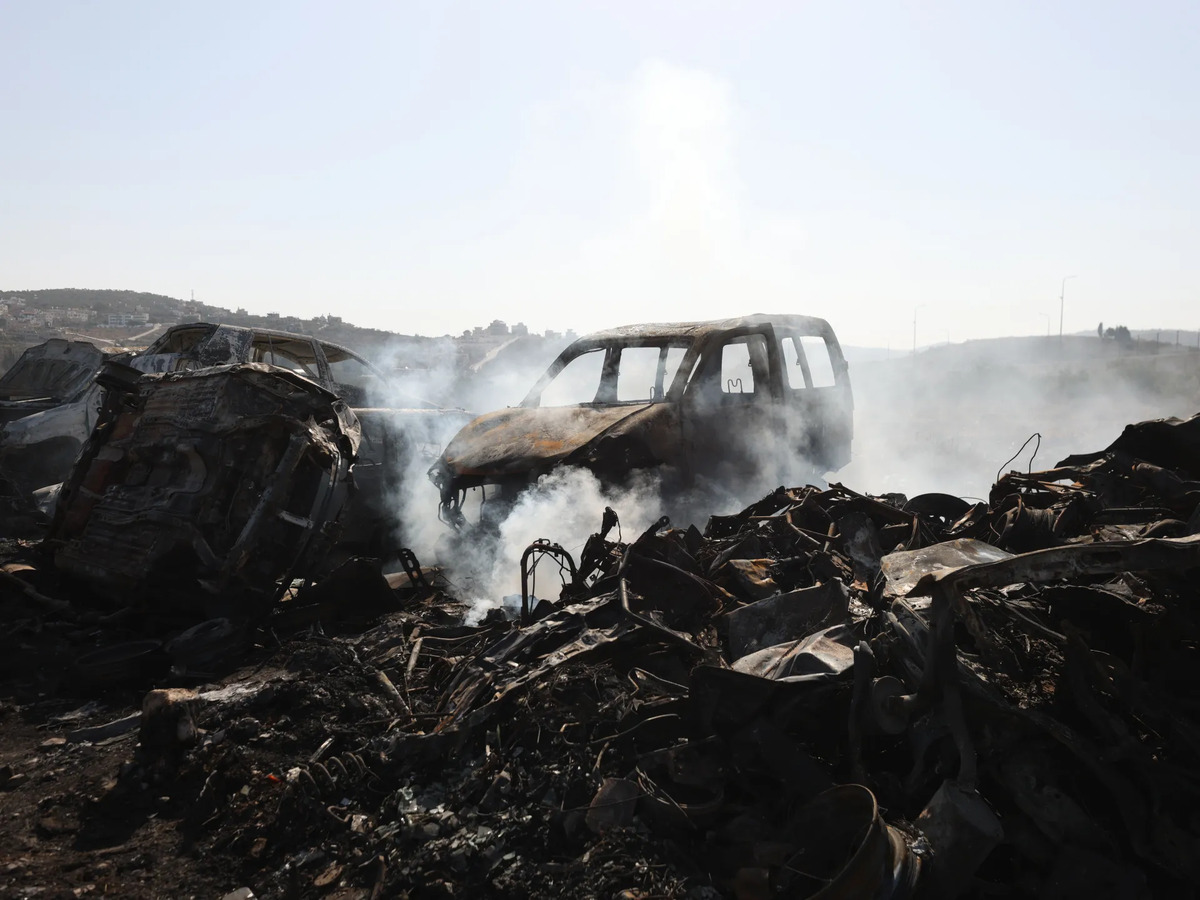
The West Bank is witnessing an escalation in settler attacks, which range from burning homes and vehicles to assaulting farmers, amid protection from the Israeli army.

LATEST NEWS

Mon 24 Nov 2025 12:02 pm - Jerusalem Time

Colonizers shoot a citizen in Beit Oru al-Tahta, west of Ramallah.

A citizen was injured by settlers' gunfire today, Monday, in the town of Beit Our al-Tahta, west of Ramallah.

The head of Beit Our al-Tahta Municipality, Khadija Othman, reported that the settlers attacked the citizens, along with a crew from Palestine TV, while they were heading to the northern part of the town to prepare a video report about the incident that occurred days ago involving three young men.

The citizens were surprised by the gunfire directed at them, which resulted in one of them being shot in the shoulder, and he was transferred to the Palestine Medical Complex.

Othman pointed out that the citizens confronted the settlers who attempted to assault them before they withdrew from the area.

LATEST NEWS

Mon 24 Nov 2025 11:32 am - Jerusalem Time

Injury of a vehicle driver in an attack by settlers on the Ma'arajat road northwest of Jericho.

Today, Monday, a vehicle driver was injured as a result of an attack by settlers on the Ma'arajat road northwest of Jericho.

Driver Abdul Rahman Atiyat, a resident of the town of Al-Auja north of Jericho, reported that he was attacked by a group of settlers on the Ma'arajat road connecting the governorates of Jericho and Ramallah, which resulted in scratches on his face and the breaking of his glasses.

Atiyat urged drivers and citizens to travel the road in groups of vehicles to avoid settler attacks and ensure safety.

PALESTINE

Mon 24 Nov 2025 11:10 am - Jerusalem Time

The Israeli army kills 4 Palestinians in ongoing airstrikes and shelling on Gaza.

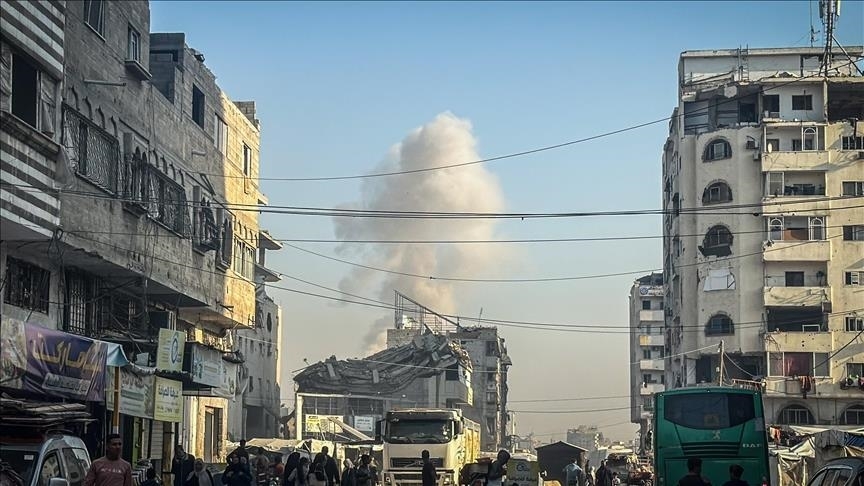
The Israeli army killed four Palestinians on Monday and injured a fifth in scattered attacks in the Gaza Strip, coinciding with airstrikes, artillery shelling, and heavy gunfire in the areas that Tel Aviv continues to occupy.

"Nasser Hospital" stated in a press release that two Palestinians were killed by fire from an Israeli drone in the areas occupied by the Israeli army in the town of Bani Suheila, east of Khan Younis in southern Gaza.

Medical sources reported that two other Palestinians were killed by sniper fire from the Israeli army in the Al-Tuffah neighborhood, east of Gaza City.

The sources also mentioned that a fifth Palestinian was injured by artillery shelling near what is known as the "yellow line" in the Shuja'iyya area of the Al-Tuffah neighborhood, without clarifying the condition or identity of the injured person.

On another note, eyewitnesses reported that Israeli planes carried out airstrikes, accompanied by gunfire from tanks and helicopters, in the northeastern part of Rafah.

In Khan Younis in the south of the Strip, the army conducted several airstrikes in the areas it occupies east of the city.

In the same context, witnesses said that Israeli airstrikes and artillery shelling targeted the educational area in Beit Lahiya in northern Gaza.

The "Hamas" movement and Israel reached a ceasefire agreement sponsored by Egypt, Qatar, Turkey, and with American sponsorship, with the first phase entering into effect on October 10.

Since that date, Israel has violated the agreement more than 497 times and killed 342 Palestinians, according to the government media office in Gaza.

The agreement ended a genocide that began on October 8, 2023, resulting in more than 69,000 Palestinian deaths, over 170,000 injuries, and causing massive destruction affecting 90 percent of civilian infrastructure.

PALESTINE

Mon 24 Nov 2025 10:46 am - Jerusalem Time

A study analyzes tens of thousands of articles from Western media institutions during the Gaza war.

A study conducted by researchers at the Media Bias Index concluded that Western media coverage of the developments in the genocide war on the Gaza Strip remained biased, by promoting the Israeli narrative and ignoring or downplaying the scale of humanitarian tragedies in the region.

The researchers analyzed 54,449 articles published between October 7, 2023, and August 2025 in 8 major Western media outlets: the British BBC, the American New York Times, the French Le Monde, the German Der Spiegel, the British Daily Telegraph, the Belgian Le Soir, the Canadian Globe and Mail, and the Italian Corriere della Sera.

The study showed that the headlines of the articles heavily focused on the Israeli narrative, concluding that the New York Times mentioned Israel 186 times for every mention of Palestine, noting that the newspaper used the word "Palestine" only 10 times since October 2023.

Among 91 headlines in the BBC that contained the word Palestine, only 11 headlines referred to Palestine as a country; otherwise, Palestine was mentioned 80 times in contexts related to the British "Palestine Action" movement or pro-Palestinian protests, or writings on walls like "Free Palestine."

According to the analysis, the Canadian Globe and Mail mentioned Israel 33 times for every mention of Palestine.

The study found that most of the media outlets researched avoided using terms like "illegal" or "violating international law" when covering news about Israeli settlers or settlements.

The Italian Corriere della Sera referred to settlers or settlements in its reports 53 times without mentioning the legal context.

The word "occupied" appeared in the headlines of the media institutions included in the study only 29 times compared to 1,180 references to the same lands without any acknowledgment of the occupation.

According to Anadolu, Western media coverage was not merely biased but systematically whitewashed the violations committed under international law.

References to the "right of return" were almost nonexistent during the coverage of the Palestinian refugee crisis, with only 38 mentions across the eight media outlets.

While the media celebrated the "return of Jews to Israel" as sacred, and considered the return of Ukrainians to their homeland a moral duty, they viewed the return of Palestinians as a danger and a destabilizing factor, or even "anti-Semitic," according to the study.

The researchers confirmed that media institutions routinely cited the "Al-Aqsa Flood" operation on October 7, 2023, to justify Israeli crimes, while ignoring the illegal Israeli blockade since 2007 and its impact on the daily lives of Palestinians.

According to the study, Corriere della Sera referred to October 7, 215 times for every single reference to the Israeli blockade in 2007.

The analysis also concluded that the term "Nakba" (which refers to the mass displacement of Palestinians and their dispossession in 1948) was used in the media with limited sympathy, sometimes in a revisionist, skeptical, or denial context.

The Telegraph was the least media outlet to mention the word "Nakba" (21 times within the texts only, without headlines) and the most inclusive of the skeptical context.

According to the research, the "right of Israel to exist" was treated in Western news institutions as exclusive, while the existence of Palestinians was conditional.

The term "terrorism" was the prevailing and recurring framework for the media's perception of Palestinians, while the significance of the starvation in Gaza was downplayed.

Le Monde, Der Spiegel, and the Telegraph used terrorism-related terms three times more than terms related to famine, and 69% of Le Monde's coverage of Gaza was framed through a counter-terrorism perspective.

The researchers commented on the findings by stating, "Describing a people as terrorists is one of the strongest forms of dehumanization; it does not only condemn an act but erases the humanity of those associated with it."

When covering Israeli attacks, Western media often portrayed them as acts of self-defense, frequently using terms like "precise strikes," "targeted," or "surgical," despite the deaths of tens of thousands of civilians.

The report concluded that the bias and distortion in the coverage of Western news institutions, through adopting the Israeli narrative, downplaying the suffering of Palestinians, and normalizing Israeli injustice as self-defense, did not originate from a single newsroom but embodied an institutional state of Western journalism.


LATEST NEWS

Mon 24 Nov 2025 10:32 am - Jerusalem Time

4 Palestinians killed by the fire of the occupation army in the cities of Gaza and Khan Younis since this morning.

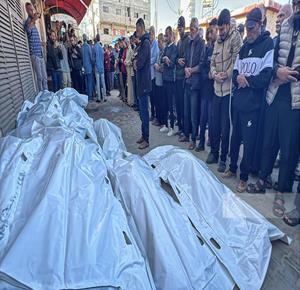
Four citizens were martyred, and others were injured, this morning, Monday, in an attack by the occupation that targeted the cities of Gaza and Khan Younis.

Among the martyrs, according to medical sources in Gaza hospitals, were Mahmoud Wael Al-Rifi, who was martyred due to artillery shelling in the Shuja'iyya area near the yellow line in the Al-Tuffah neighborhood east of Gaza, and Alaa Mazen Abu Rida, who was martyred after being targeted by a drone in the Armaida area east of Khan Younis, where two others were injured in the same attack, and Ahmed Abdul Rahim Sahmoud, who was martyred after succumbing to his injuries from the fire of an Israeli drone inside the yellow line in the town of Bani Suheila east of Khan Younis.

Our correspondents reported that the occupation army continues its artillery shelling in the southern sector and detonating explosive vehicles in the Al-Tuffah neighborhood east of Gaza City, in a continuous violation of the ceasefire agreement. The occupation is also conducting airstrikes and firing from tanks and helicopters northeast of Rafah city.

PALESTINE

Mon 24 Nov 2025 10:26 am - Jerusalem Time

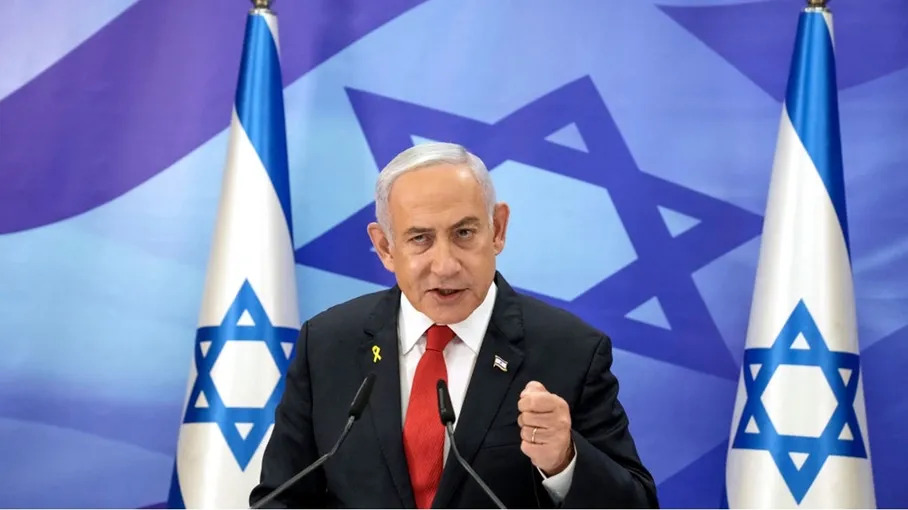
The occupation continues to violate the ceasefire daily.. Netanyahu: "We do not need anyone's approval to strike Gaza"

Israeli Prime Minister Benjamin Netanyahu confirmed on Sunday that Tel Aviv "is not obliged to obtain approval from any party" to carry out its attacks in the Gaza Strip, in statements reflecting the Israeli government's continued defiance of international pressures and accusations of violating the ceasefire.

Netanyahu's remarks came at the beginning of his government's weekly meeting, where he said: "We will continue to do whatever is necessary to prevent Hezbollah from rebuilding its capacity to threaten us. This is also what we are doing in Gaza."

Since October of last year, the Israeli occupation has intensified its airstrikes on Lebanon in a clear violation of the ceasefire agreement, amid media leaks about preparations for a new attack.

Netanyahu claimed that the Hamas movement continues to "violate the ceasefire" that was announced on October 10, saying: "There have been attempts by Hamas to infiltrate east of the blue line and attempt to target our soldiers, and we have thwarted that forcefully."

He added: "We have eliminated a large number of saboteurs and captured others from the tunnels in Rafah."

Netanyahu's statements come amid daily Israeli bombardment affecting all cities in the Gaza Strip.

The ceasefire agreement was supposed to end the genocide that the Israeli occupation has been waging against Gaza since October 8, 2023, with American support, which has resulted in more than 69,000 martyrs and 170,000 injured, most of whom are children and women.

In Gaza, Hamas called on mediators and the U.S. administration to pressure the occupation to reveal the identity of the militant that Tel Aviv claims the movement sent to target its forces inside the strip.

Netanyahu denied reports in the Israeli media about his government being required to obtain "American approval" before carrying out attacks, saying: "We operate without relying on any party."

He clarified that "the operations to thwart attacks are carried out by the army automatically, passing through the Minister of Defense, and ultimately reaching me, and we decide without any dependency on any party."

However, the Israeli opposition and media reports say that the government has become largely dependent on American approval before carrying out any attack in Gaza, and that Netanyahu has made Israel "more dependent" on Washington.

Regarding the northern front, Netanyahu said: "This week, the army struck in Lebanon, and we will continue to do whatever is necessary to prevent Hezbollah from re-establishing its capacity to threaten us."

The occupation has been continuing for decades in occupying Palestine and lands in Syria and Lebanon, refusing to withdraw from them or allow the establishment of an independent Palestinian state.

OPINIONS

Mon 24 Nov 2025 9:37 am - Jerusalem Time

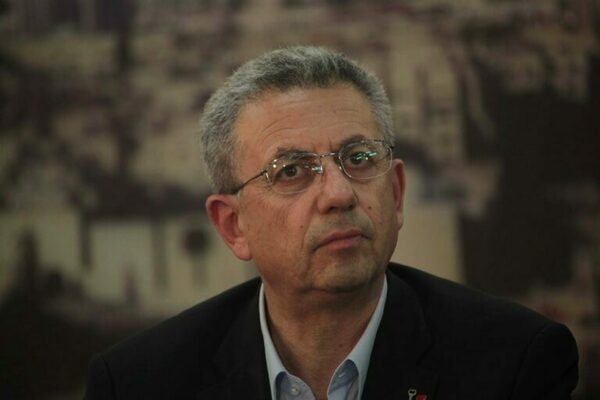
The war is not over.. The administration of Gaza will only be in the hands of the Palestinians

Dr. Mustafa Barghouti

Dr. Mustafa Barghouti

Opinion Writer

Officially, there is a ceasefire in the Gaza Strip, and there is no gunfire in the West Bank, but the war that Israel started in October 2023 has not ended. The Israeli occupation army still occupies 53% of the Gaza Strip and continues to carry out air and artillery strikes on the eastern part of the strip. It has violated the ceasefire agreement in other areas 400 times, resulting in the deaths of at least 245 Palestinians and injuring more than 620 civilians.
Israel deliberately fails to implement the remaining terms of the ceasefire agreement, allowing only 43% of humanitarian aid trucks to enter, preventing the entry of necessary equipment to remove rubble, and obstructing the arrival of essential medical supplies and devices needed to save the lives of tens of thousands. It continues to close the Rafah crossing and has not executed any additional withdrawal from the areas occupied by its army. Israel also deliberately continues to occupy all agricultural areas in the strip, depriving Gaza of clean water and energy sources, and besieging the sea to prevent fishermen from obtaining even a small amount of fish that could feed some of the hungry in the strip.
The West Bank, including Jerusalem, is subjected to a double violation by the occupation army and settler terrorist gangs that wreak havoc throughout the West Bank, burning homes, buses, and vehicles, destroying farms and factories, and uprooting trees. They have effectively prevented farmers from harvesting most of this year's olive crop. So far, the attacks by the terrorist settlers, armed by the fascist Israeli minister Ben Gvir with no less than one hundred thousand weapons, have resulted in the deaths of dozens and the displacement of at least 60 communities in the West Bank.
The global solidarity movement with the Palestinian people must escalate, not retreat.
The brutal mistreatment of prisoners continues, including starvation, torture, brutal beatings, and even rape, in addition to depriving them of medical treatment and care. Families of prisoners are also denied the right to travel to meet their loved ones who have been displaced by the occupation after decades of imprisonment in its jails.
Israel no longer respects any authority or power of the Palestinian Authority, which has been stripped of its economic capabilities and most of its income, and its security and civil powers have been taken away. It stands helpless in protecting any Palestinian from the assaults of the occupation army and settler terrorist gangs.
Attacks on Islamic and Christian holy sites are escalating, and economic sectors, health, and educational services are suffocated by a thousand military checkpoints and at least two hundred military gates that turn villages and cities into small enclaves and bantustans.
The war has not ended; rather, it is escalating against the Palestinian people, their freedom, their right to self-determination, their right to security and safety, their sources of livelihood and income, their land, water, trees, and children. The Israeli ruling system, which has been forced to bow its head to the storm of international isolation, has not abandoned its secret and declared goal of the ethnic cleansing of the entire Palestinian people, whether in Gaza or the West Bank.
Therefore, the global solidarity movement with the Palestinian people must escalate, not retreat.
Everyone must remember that the goal of the solidarity movement is not just to stop the genocide, but to end the entire system of occupation, apartheid, and racial discrimination, and to achieve true and complete freedom for the Palestinian people. Therefore, the most important question for the Palestinian people must be raised again: What is the strategy to confront this open war against them, their future, and the future of their children, as well as their narrative, history, and right to freedom and self-determination? How can the Palestinian people confront all these dangers and internal divisions that are eroding their ranks without pause?
There is no longer room for half-measures or appeasing the projects of those complicit with Israel.
Why all this reluctance to end meaningless disputes and unite under a unified national leadership that activates the energies of the Palestinian people and gives them hope and confidence in their national struggle? Why not confront Trump's project at the United Nations, which seeks to impose foreign guardianship once again on the Palestinian people in the West Bank and Gaza, and wants to impose a plan of domestication on them, their narrative, history, educational curricula, and the rights of their prisoners and the families of their martyrs, with the aim of subjecting them to a humiliating surrender that denies their struggle, history, and national rights? Why not confront it with a unified Palestinian vision supported by Arab backing, especially from mediators? A vision that rejects guardianship and affirms that the administration of Gaza will be solely in the hands of the Palestinians, rejects the separation of the Gaza Strip from the West Bank, and affirms that the international force must be a peacekeeping and monitoring force for the ceasefire that guarantees Israel's withdrawal, not a new occupying force that shares control of the strip with the Israeli occupation.

ARAB AND WORLD

Mon 24 Nov 2025 8:14 am - Jerusalem Time

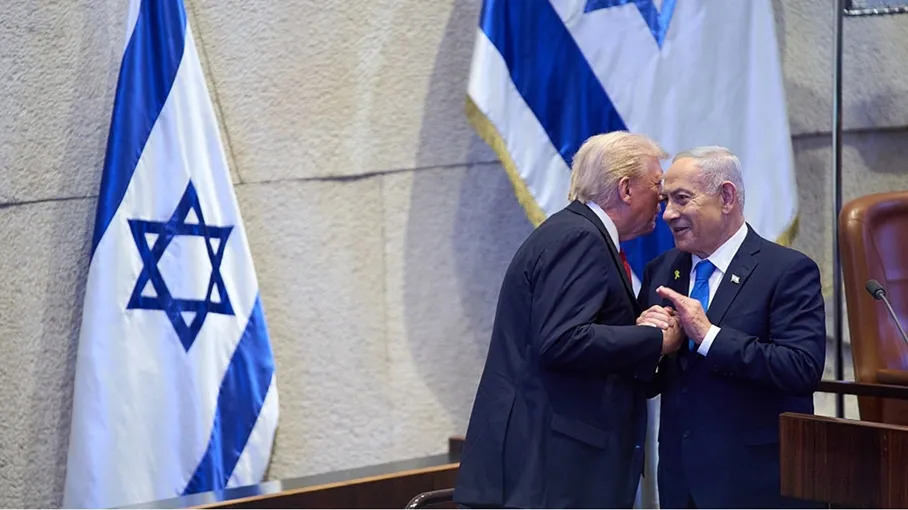
An American official reveals: The Trump administration supports Israeli airstrikes on Gaza.

The last few hours have witnessed an escalation by the Israeli occupation within the Gaza Strip, with some airstrikes carried out in the area and claims of a breach of the ceasefire agreement, while a new American position has emerged affirming Washington's support for the Israeli military response.

A senior American official revealed to Axios that the administration of President Donald Trump stands behind the attacks carried out by the Israeli occupation in the sector, considering that the recent military action was a "direct response" to a security incident that the official said was carried out by a Hamas fighter inside an area under Israeli control on the outskirts of Gaza, before he was killed during the clash.

According to the official, Washington sees Israel operating within a "previously agreed-upon policy with international mediators," which is based on an immediate response to any breach affecting the ceasefire arrangements, noting that the American administration views what happened as a "defensive measure that falls within the framework of the deterrence principle" that Israel has defended during previous rounds of negotiations.

In contrast, Hamas rejected what it described as attempts by the Israeli occupation government, led by Benjamin Netanyahu, to impose new realities on the ground that contradict what was agreed upon in the political track facilitated by the mediating parties.

The movement emphasized that repeated Israeli violations have not been limited to bombing civilian areas, but have also led to the martyrdom of a number of Palestinians in recent days, in addition to changing the lines of Israeli military deployment within the sector, in a manner it said is "completely contradictory" to the maps and provisions that were approved in the latest rounds of understandings.

The movement accused the Israeli occupation of following a "systematic approach" to breach the understandings, considering that this behavior aims to undermine any efforts aimed at consolidating the ceasefire or moving to a broader negotiation phase. Hamas also called on regional and international mediators to intervene immediately to stop the escalation, demanding pressure on Israel to adhere to what was agreed upon without delay.

In a direct message to Washington, the movement urged the American administration to fulfill its commitments regarding the agreement process and "to compel the occupation to stop its repeated breaches," emphasizing that Washington bears a political and moral responsibility to ensure the implementation of the provisions it sponsored.

On Sunday, a delegation from Hamas discussed with the head of the Egyptian General Intelligence Service, Hassan Rashad, in Cairo, the developments of the ceasefire agreement and the general situation in the Gaza Strip, including the second phase of the agreement.

The Hamas delegation included the head of the leadership council, Muhammad Darwish, and council members Khaled Meshaal, Khalil Hayya, Nizar Awadallah, and Zahir Jabareen, in addition to political bureau member Ghazi Hamad.

Tel Aviv conditions the start of negotiations to launch the second phase of the agreement on receiving the remains of the remaining Israeli prisoners, while Hamas has confirmed on several occasions that this process takes time due to the massive destruction in Gaza.

PALESTINE

Mon 24 Nov 2025 7:44 am - Jerusalem Time

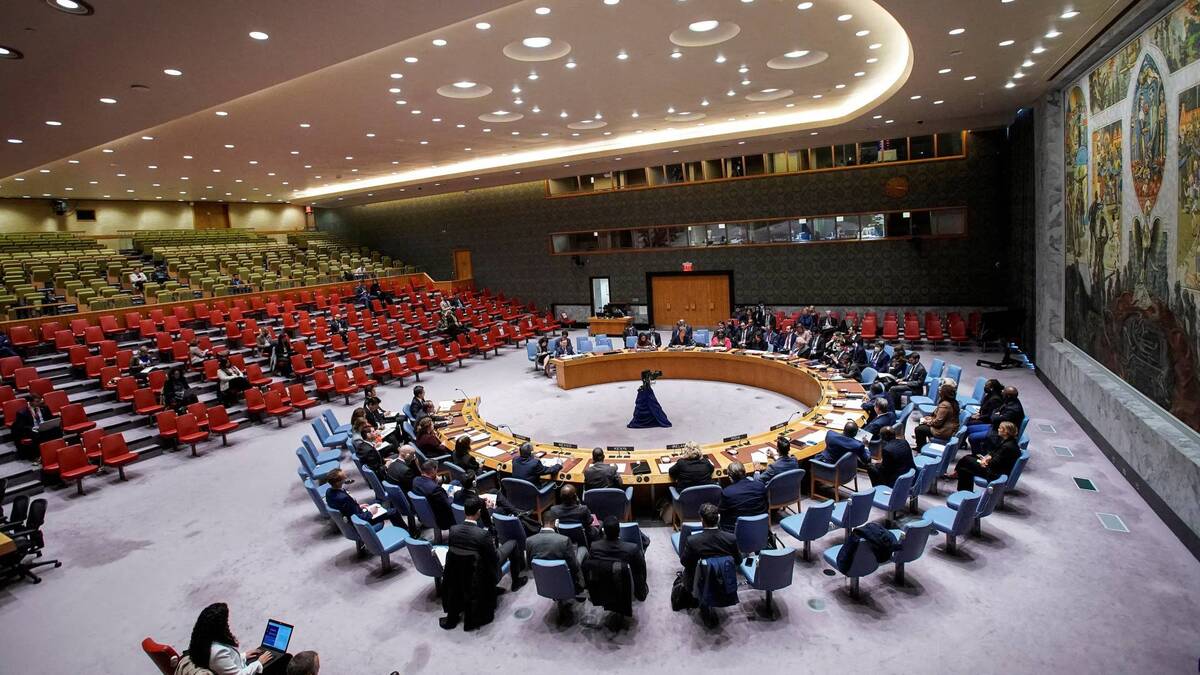
The Palestinian issue on the Security Council's table on Monday.

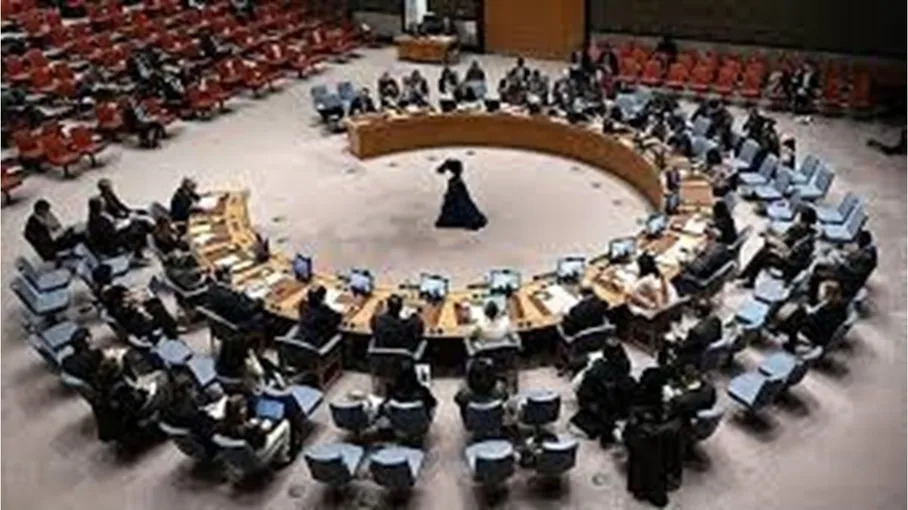
The United Nations Security Council will hold an open monthly briefing on Monday to discuss 'the situation in the Middle East, including the Palestinian issue.' This session comes as part of ongoing international efforts to follow up on developments in the region.

The Deputy Special Coordinator for the Middle East Peace Process, Ramiz Alakbarov, is expected to deliver the main briefing during the session. This expert's insights into the situation will provide a practical dimension and an updated assessment of the facts on the ground and diplomatic efforts.

As usual, the Security Council will hold closed consultations after the open briefing to discuss the content of the briefing and the next steps that the Council may take or recommend.

PALESTINE

Mon 24 Nov 2025 4:20 am - Jerusalem Time

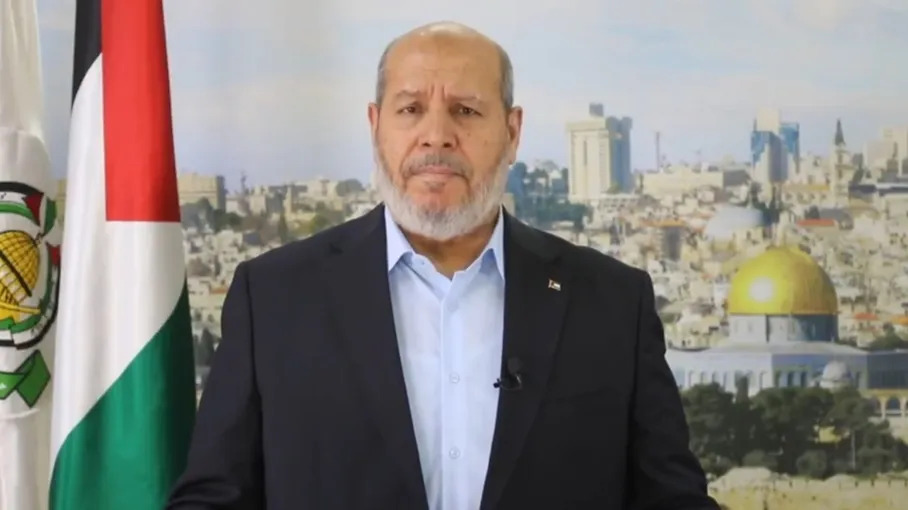
Khalil Al-Hayya sends messages in several directions.. and affirms: Palestine is the land of the entire nation.

The head of the negotiating delegation for Hamas, Khalil Al-Hayya, called on the Islamic nation, along with its charitable institutions and scholars, to take responsibility in strengthening the resilience of the Palestinians and to expedite the reconstruction of the Gaza Strip so that it remains 'a steadfast fortress for the nation on the path to liberation.'

During a recorded speech that Hamas participated in at the general meeting of the Islamic community in Pakistan, Al-Hayya stated that the Al-Aqsa Flood battle has created a significant shift in global awareness, contributing to breaking the narrative of occupation and expanding the circle of international solidarity with Palestine, as well as enhancing the path of unity for the nation in facing the looming dangers.

Al-Hayya also warned of the magnitude of the threats facing the blessed Al-Aqsa Mosque in occupied Jerusalem, amidst escalating incursions and attempts to impose temporal and spatial division.

He emphasized that Palestine is 'an Islamic endowment and the property of the entire nation,' and that it looks forward to a historic Pakistani role in its liberation and in supporting Jerusalem and Al-Aqsa.

He reiterated that the movement will not recognize the Zionist entity, and that the Palestinian people and their resistance have thwarted the objectives announced by the occupation since the beginning of its aggression on the Gaza Strip.

He expressed Hamas's appreciation for Pakistan, its leadership, people, and army, recalling the positions of the founder Muhammad Ali Jinnah in support of the rights of Palestinians and his rejection of granting the occupation any legitimacy over the land of Palestine, and praised Allama Muhammad Iqbal for his role in establishing Islamic identity and linking it to the issues of the nation.

On Sunday, a delegation from Hamas discussed with the head of the Egyptian General Intelligence Service, Hassan Rashad, in Cairo, the developments of the ceasefire agreement and the general situation in the Gaza Strip, including the second phase of the agreement.

The movement stated in a statement published on its 'Telegram' platform that its delegation discussed with Rashad, 'the developments of the ceasefire agreement, the general situation in the Gaza Strip, and the nature of the second phase of the agreement,' without providing further details.

The Hamas delegation included the head of the leadership council, Muhammad Darwish, and council members Khaled Meshaal, Khalil Al-Hayya, Nizar Awadallah, and Zahir Jabareen, in addition to political bureau member Ghazi Hamad.

Tel Aviv is tying the start of negotiations to launch the second phase of the agreement to the retrieval of the remaining remains of Israeli prisoners, while Hamas has confirmed on several occasions that this process takes time due to the massive destruction in Gaza.

PALESTINE

Mon 24 Nov 2025 2:32 am - Jerusalem Time

The occupation army dismisses several of its leaders due to the "failure of October 7."

The Chief of Staff of the Israeli occupation army, Eyal Zamir, imposed a series of punitive measures and dismissals against several senior officers following the failure to prevent the October 7 attack after evaluation sessions he held with them.
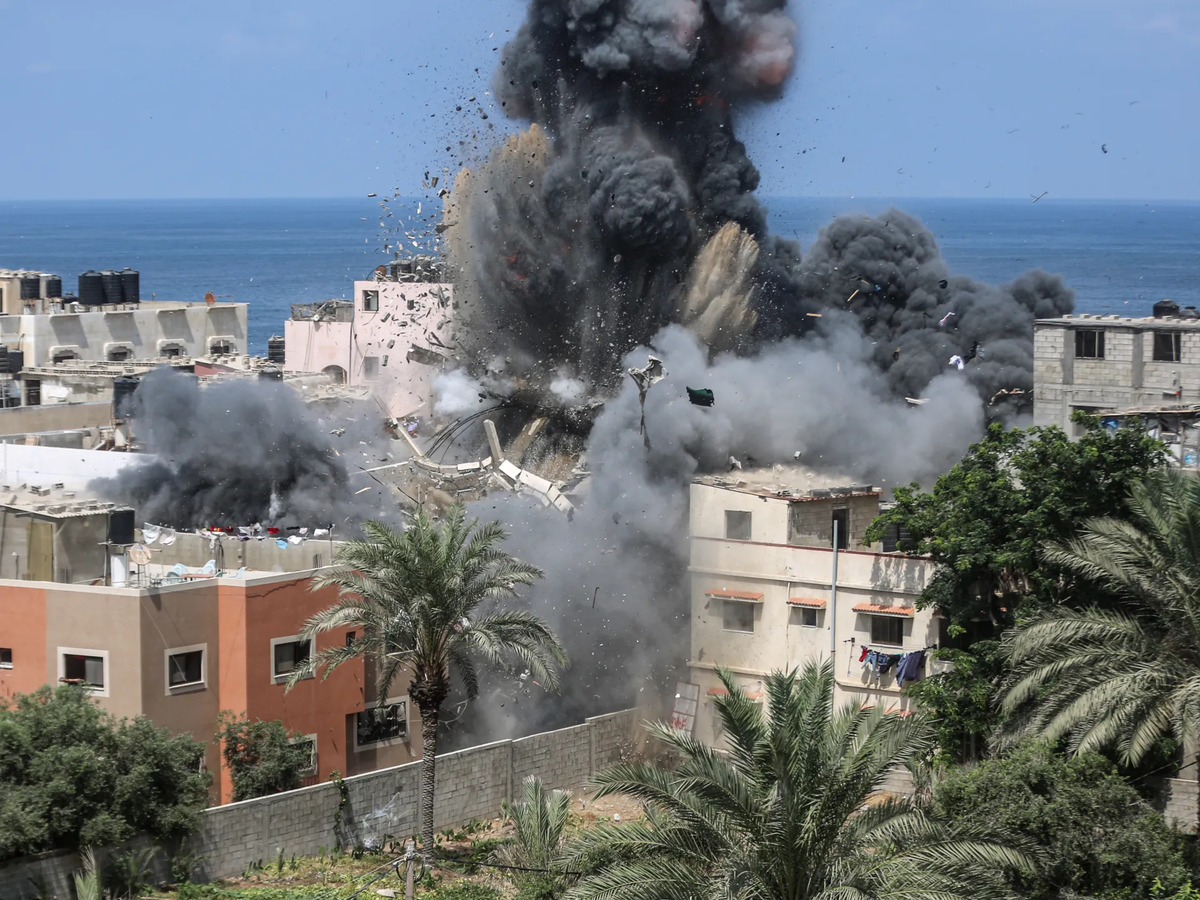
The decisions included the termination of service for several reserve generals, including the former head of military intelligence "Aman," Aharon Haliva, the former commander of the southern region, Yaron Finkelman, and the former head of operations, Udi Basiuk.
Zamir also ended the service of the Gaza Division commander, Avi Rosenfeld, in the reserves, while the division's intelligence officer was completely dismissed from the army.

The authority indicated that other officers, including the Air Force commander Tomer Bar, the current head of military intelligence Shlomi Binder, and the Navy commander David Saar Salma, received "leadership notes."

It was noted that Haliva and the former commander of Unit 8200, Yossi Shreial, did not attend the hearings today, and that they will later represent themselves before the court before completing the procedures and ending their reserve service.

These steps come about two weeks after Zamir received the comprehensive report prepared by retired General Sami Turjeman regarding the failures that preceded the October 7 attack.

Several senior Israeli leaders and officers who were in charge during the events of October 7 have previously resigned and acknowledged their responsibility for the failure to prevent the attack.

On October 7, 2023, Hamas attacked military bases and settlements along Gaza, killing and capturing Israelis in response to "the daily crimes of the Israeli occupation against the Palestinian people and their sanctities, especially the Al-Aqsa Mosque."

Israeli officials consider what happened on October 7 to be the largest intelligence and military failure in Israel, causing significant damage to the image of Tel Aviv and its army in the world.

A ceasefire agreement came into effect on the 10th of last month, ending an Israeli genocide in Gaza that lasted two years, supported by Washington, and resulted in more than 69,000 Palestinian martyrs and over 170,000 injured.

PALESTINE

Mon 24 Nov 2025 1:08 am - Jerusalem Time

Hamas: The proposed international forces in Gaza must separate our unarmed people from the occupation army.

The spokesperson for Hamas, Hazem Qassem, confirmed that the proposed international forces entering the Gaza Strip under the ceasefire agreement should include the mission of separating our unarmed people from the occupying army that continues its ongoing aggression.

Qassem added during a television interview with an Arab channel that the presence of the movement's delegation in Cairo is evidence that Hamas is serious about cooperating with mediators to move to the second phase of the ceasefire agreement.

Qassem pointed out that the pathways of the second phase are complex, emphasizing that the movement has done what is required of it in light of the continued violations and breaches by the occupation.

PALESTINE

Mon 24 Nov 2025 12:28 am - Jerusalem Time

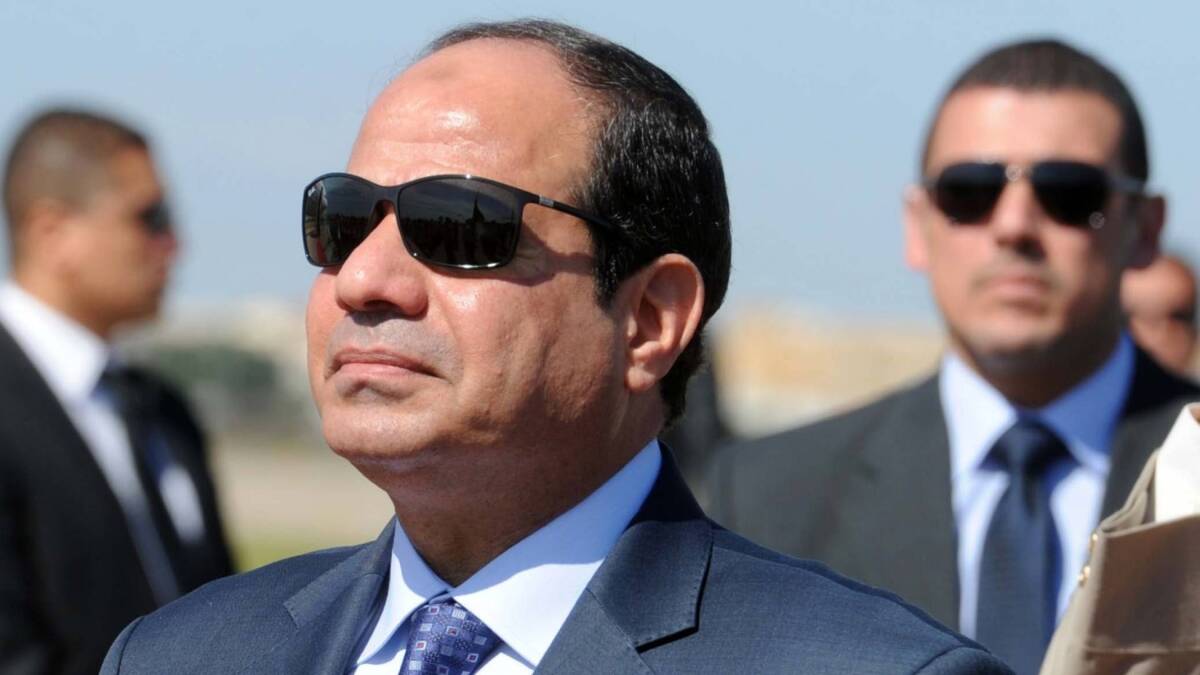
Former "Mossad" Director: Sisi has thwarted the "temporary displacement" plan for Gazans that was devised by "Israel"

Yossi Cohen, the former head of the intelligence agency (Mossad), revealed in his recently published Hebrew book titled: 'With Deceptions, You Make War for Yourself', that he is the author of a plan to evacuate Palestinians from the Gaza Strip during the current war.

Cohen claims that his idea is not about permanent displacement, but 'temporary', explaining that its goal was to reduce civilian casualties.

Cohen reveals, in the part published in an extensive reading by the newspaper 'Asharq Al-Awsat', that he was the author of a plan to relocate about one and a half million Palestinians from Gaza to the Egyptian Sinai, in response to the Hamas attack on October 7, 2023.

He states that 'the cabinet approved the plan', and tasked him with convincing Arab countries of it.

Indeed, Cohen traveled to Arab capitals, but found that Arabs feared that the 'temporary' relocation would turn into permanent displacement.

At that point, Cohen expressed his willingness to bring international guarantees that the migration would be temporary, and established contacts in this regard with the United States, Britain, Japan, China, and India.

However, Egyptian President Abdel Fattah el-Sisi decisively rejected the plan.

Despite Cohen's repeated emphasis on the necessity for occupying leaders to possess humility, he simultaneously seems to repeat the mistakes of arrogance.

Instead of criticizing the atrocities against Gazans, Cohen sees the problem as stemming from a failure of propaganda, considering that the occupying government does not devote enough effort to present the facts.

Cohen ignores in this context that the occupation has enormous influence in foreign media, as well as the fact that many Jews have joined protests against the actions of the occupation.

Cohen goes further, expressing his belief that leaders are distancing themselves from the people and lack human feelings and compassion towards the citizens of the occupation themselves, which makes them unable to present the reality of suffering to global public opinion, leaving the world susceptible to Hamas's propaganda.

Cohen discusses the methods of operation of the 'Mossad' and ways to recruit agents, noting that he played the role of an 'antiquities expert' in Baalbek, Lebanon, and a 'tea bag collector' in front of a Lebanese tea merchant in Sudan.

He reveals that the methods of the occupying intelligence to recruit agents rely on searching for human weaknesses and exploiting deviant behaviors, as well as seeking interests (financial, ideological, sexual, and others).

Cohen asserts that the 'Mossad' is the most important project for international cooperation, citing many countries that are 'indebted' to the Mossad for uncovering terrorist operations and cells in Belgium, Australia, and elsewhere, including Turkey despite the poor relations with it.

Cohen concludes by indicating his endeavor to present himself as the best candidate for leading the government, affirming: 'A strong leader is one who makes concessions', linking peace with the necessity of 'showing strength'.

PALESTINE

Sun 23 Nov 2025 11:40 pm - Jerusalem Time

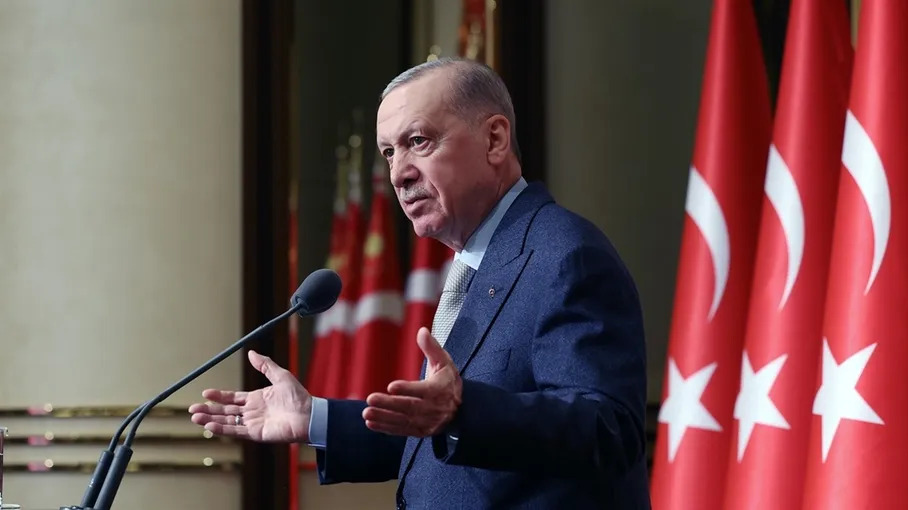
Erdogan: Stopping the war in Gaza is a global necessity and Turkey's participation is under review.

Turkish President Recep Tayyip Erdoğan said: "We will review the status and position of our forces regarding their participation in Gaza, especially at the level of our Ministry of Defense, and after this assessment, we will make our final decision."

This comment came in reference to Turkey's participation in the international stabilization force intended to be deployed in the Gaza Strip, and the objections from the occupying state.

The Turkish president clarified on Saturday that the ceasefire in Gaza does not only affect the Palestinians, but is essential for achieving peace at the global level.

Erdoğan added, during a speech at one of the sessions of the G20 summit held in Johannesburg, South Africa, that "the continuation of the ceasefire in Gaza, which was achieved through the initiatives of U.S. President Donald Trump and contributions from leading regional countries, is of utmost importance not only for the Palestinian people but for peace in the entire world."

He pointed out that "United Nations reports indicate that the destruction caused by the occupying state due to its attacks on Gaza has set back the development trajectory in the Palestinian territories by at least 70 years."

He continued by saying that "what we witnessed in Gaza was not limited to the destruction of infrastructure, but also included environmental damage, while the loss of more than 70,000 children, women, and adults is an irreplaceable loss that cannot be erased from the memory of future generations."

He emphasized that "at this stage, focus should be on accelerating humanitarian aid activities in the Gaza Strip and starting reconstruction efforts without any delay."

He added: "We are determined and ready to contribute to the sustainability of the ceasefire on the ground and to assist in the reconstruction of Gaza, standing by the Palestinian people, as we have done so far."

The Turkish president noted "the necessity for the international community to continue its efforts for the two-state solution, which is the only way to achieve lasting peace in the Israeli-Palestinian conflict."

Erdoğan congratulated South Africa's leadership and people for "the brave stance they took on the issue of genocide that they raised against the occupying state at the International Court of Justice."

PALESTINE

Sun 23 Nov 2025 10:58 pm - Jerusalem Time

What transpired between Washington and Tel Aviv prior to the targeting of Al-Tabtabai in Beirut?

The Israeli airstrike that shook the southern suburb of Beirut and targeted a prominent military leader in Hezbollah has raised questions about the nature of coordination between Washington and Tel Aviv before the strike was carried out, amid fears of a new escalation.

Walid Al-Omari, the director of Al Jazeera's office in Palestine, stated that the information being circulated indicates that Israel enjoys a "clear American cover" to proceed with escalating its military operations in Lebanon, in exchange for reducing the level of tension in the Gaza Strip.

Al-Omari confirmed during a segment on Al Jazeera that the Israeli security establishment does not expect a significant response from Hezbollah to the assassination of Al-Tabtabai.

After the airstrike, a Lebanese security source reported the assassination of Hezbollah military leader Haytham Al-Tabtabai in the Israeli strike on the suburb, which resulted in the deaths of 5 people and injuries to 28 others, according to the Lebanese Ministry of Health.

Israel described Al-Tabtabai (known as Abu Ali Al-Tabtabai) as the acting chief of staff of Hezbollah and the second person in the party.

Later, Hezbollah announced in a statement that "the great jihad leader Haytham Al-Tabtabai was martyred as a result of a treacherous Israeli aggression on the southern suburb."

For his part, former U.S. State Department official Thomas Warick confirmed that Washington was informed of the strike, but was not notified of the identity of the target.

Warick noted during his remarks that Al-Tabtabai is classified as a terrorist by the U.S., expressing his belief that Israel "will not allow its citizens in the north to be threatened amid the party's efforts to rebuild its military capabilities."

However, Axios reported a senior U.S. official saying, "Israel did not inform us in advance about the attack on the southern suburb and we were notified immediately after it occurred."

The official clarified, "We knew for days that Israel was planning to escalate in Lebanon but we did not know the timing of the strike."

In the same context, Al Jazeera's correspondent at the U.S. Department of Defense (Pentagon), Fadi Mansour, reported that a well-informed U.S. official on military communications between Washington and Tel Aviv stated that Israel had previously informed the United States about carrying out the strike.

However, this official refrained from confirming whether Washington received details about the identity of the target or granted a direct "green light" for the operation.

The source indicated that Washington considers the situation between Israel and Lebanon to be "extremely fragile," and that Israel's increase in the level of its military operations is due to two factors: the Lebanese army's ability to complete the disarmament of Hezbollah south of the Litani River, which the Americans see as insufficient due to limited capabilities and political mandate, as well as Israeli security assessments that the party is rebuilding itself and enhancing its military capabilities.

Since October of last year, the Israeli occupation army has intensified its attacks on Lebanon, amid ongoing media leaks about plans to launch a new attack on it.

Since the signing of the latest ceasefire agreement with Hezbollah on November 27, 2024, Israel has been violating the agreement daily, resulting in hundreds of casualties and injuries.

LATEST NEWS

Sun 23 Nov 2025 10:13 pm - Jerusalem Time

Al Sheikh discusses with Blair the latest developments following the United Nations Security Council decision.

The Vice President of the State of Palestine, Deputy Chairman of the Executive Committee of the Palestine Liberation Organization, Hussein Sheikh, discussed in his office in Ramallah with Tony Blair and a representative of the U.S. government the latest developments related to the post-today phase, following the issuance of the United Nations Security Council resolution, in addition to discussing issues related to the Gaza Strip and the West Bank, and the essential requirements for achieving the right to self-determination and statehood.

Sheikh praised the efforts of U.S. President Donald Trump and all mediators and partners including Egypt, Qatar, Turkey, the United States, Saudi Arabia, Jordan, the United Arab Emirates, Indonesia, Pakistan, and partners from the European Union and its member states, in establishing a ceasefire, delivering humanitarian aid, reconstruction, and moving towards peace, security, and stability.

The meeting was attended by Major General Majid Faraj, head of the General Intelligence Service, the President's advisor for diplomatic affairs Majdi Khaldi, and the spokesperson for the presidency Nabil Abu Rudeineh.

PALESTINE

Sun 23 Nov 2025 9:52 pm - Jerusalem Time

"Yedioth": Israel is prepared for renewed wars in Gaza, Lebanon, and Iran.

The Hebrew newspaper "Yedioth Ahronoth" reported on Sunday about Tel Aviv's readiness for what it described as "renewed wars" in Gaza, Lebanon, and Iran, noting that "Israel is not sure that the United States understands this readiness."

The newspaper stated: "Theoretically, Israel is in a ceasefire with both Hamas in Gaza and Hezbollah in Lebanon, but practically, significant attacks have occurred in both arenas, including the assassination of a senior official in Hamas's military wing and bombings in the Bekaa Valley deep in Lebanon."

It continued: "On the third front, Iran, it is clear that Tehran is preparing for the next battle, and there is concern about the outbreak of another conflict with the Islamic Republic sooner or later," pointing out that Tel Aviv recently decided to intensify attacks on Hezbollah, in light of what it considers a failure on the part of the Lebanese army and government, which are not fulfilling their duty under the ceasefire agreement and are not disarming Hezbollah.

It noted that Israeli attacks are primarily focused in northern Litani and the Bekaa, as well as southern Lebanon, while the Americans are less engaged than before, and the international community is criticizing them for not closely monitoring the implementation of the agreement.

Yedioth said: "In light of this criticism, the United States appointed a new ambassador to Lebanon, Michel Aoun, who is expected to pressure the Lebanese government to take matters seriously," adding that "the United States canceled the visit of the Lebanese army commander to Washington, following his statement that Israel is the enemy."

It continued: "The problem that Israel recognizes is that a large part of the Lebanese army is still composed of Shiites, making it difficult to confront them with Hezbollah," believing that "another issue is the low salaries of Lebanese army soldiers, which are around $200, compared to the salaries of Hezbollah members, which are three times higher."

It confirmed that the economic situation in Lebanon remains dire, and the constant fear of collapse and civil war prevents any radical actions, claiming that Hezbollah exploits this weakness to strengthen its presence and is still able to smuggle weapons into Lebanon.

PALESTINE

Sun 23 Nov 2025 9:04 pm - Jerusalem Time

A Hamas delegation discusses the ceasefire agreement in Gaza with the head of Egyptian intelligence.

A delegation from the "Hamas" movement discussed on Sunday with the head of the Egyptian General Intelligence Service, Hassan Rashad, in Cairo, the developments of the ceasefire agreement and the general situation in the Gaza Strip, including the second phase of the agreement.

The movement stated in a statement published on the "Telegram" platform that its delegation discussed with Rashad, "the developments of the ceasefire agreement, the general situation in the Gaza Strip, and the nature of the second phase of the agreement."

The Hamas delegation included the head of the leadership council, Mohammed Darwish, and council members Khaled Meshaal, Khalil Hayya, Nizar Awadallah, and Zahir Jabareen, in addition to political bureau member Ghazi Hamad.

The movement's delegation confirmed "the movement's commitment to implementing the first phase of the agreement."

It emphasized "the importance of stopping the ongoing Zionist violations that threaten to undermine the agreement, through a clear and specific mechanism under the sponsorship and follow-up of the mediators, which involves informing the mediators of any violations to take the necessary measures to stop them immediately and prevent unilateral actions that escalate matters and harm the agreement."

PALESTINE

Sun 23 Nov 2025 8:10 pm - Jerusalem Time

"Yedioth Ahronoth": The American administration is not committed to establishing a Palestinian state.

The approval of Trump's plan by the United Nations Security Council has sparked media controversy in Hebrew media, as the American announcement is described as a "path towards a Palestinian state."

According to a report published by the Hebrew newspaper Yedioth Ahronoth, some analysts, including prominent researcher at the Diane Center for Palestinian Affairs Haril Hurif, believe that the announcement presents opportunities for the Palestinian Authority and poses significant challenges in dealing with Hamas.

Hurif clarified that the current U.S. administration is not practically committed to establishing a Palestinian state, noting that the announcement does not represent a concrete step on the ground, but it could turn into a pressure tool on Israel in the future if a Democratic administration takes over the Authority.

The researcher at the Diane Center stated: "This Republican administration is not ideologically committed to the two-state solution, unlike previous Democratic administrations, so I do not see any practical progress during its term."

The report added that the American announcement focuses on supporting the two-state solution agenda, placing the Palestinian Authority in the position of the biggest beneficiary in terms of international legitimacy, and enhancing its status against Hamas. Nevertheless, Prime Minister Benjamin Netanyahu welcomed it as "a plan that will achieve peace and prosperity" and expand the scope of the Abraham Accords, stating that "Israel seeks peace."

The report indicated that the announcement imposes difficult internal commitments on the Palestinian Authority, primarily related to educational reform and stopping funding for what is claimed to be "violence," emphasizing that education still faces international criticism for not including values of peace and recognition of Israel, while the issue of paying salaries to families of terrorists represents a greater challenge.

It added that the Authority has tried over the past two years to circumvent American pressures through social welfare programs, but observers doubt the seriousness of full commitment to these measures, according to Hurif.

The report continued that the Palestinian Authority recognizes that this opportunity allows it to enhance its international standing, but it faces difficulty in asserting its control over the Gaza Strip, where Hamas remains the controlling party.

Hurif explained: "We can consider the Palestinian Authority a legitimate framework, but it is currently unable to exert security control over Gaza and does not enjoy legitimacy among the population there, making any practical implementation of the Palestinian state path a long and complicated process."

The report also points to the Saudi role in this context, as Crown Prince Mohammed bin Salman demanded American guarantees to conduct negotiations aimed at establishing a Palestinian state within five years, as part of any normalization agreement with Israel.

These Saudi demands have been viewed in Israel as a non-binding commitment, but the announcement provides legal and political legitimacy for any future steps, according to Hurif.

Hurif described the announcement as akin to an "American Balfour Declaration," as it creates a basis that can be used in the future to support any pressure on Israel, especially when a Democratic administration takes over the Authority.

The report noted that the wording of the announcement aims to gain the largest number of international partners and support international law in the region, allowing for the establishment of clear frameworks for managing Palestinian territories, which are currently not under traditional sovereignty.

The report confirmed that the success of any path towards a Palestinian state requires the Authority's commitment to internal reforms and the ability to coordinate with the international community, taking into account the internal division with Hamas, which remains the biggest obstacle to any tangible progress.

Hurif added: "Even if the Authority shows intentions for reform, the reality in Gaza makes any actual implementation of the Palestinian state path a complicated process that takes many years and may require significant political shifts at the level of the U.S. and regional administration."

ARAB AND WORLD

Sun 23 Nov 2025 6:33 pm - Jerusalem Time

Washington repositions itself: Acknowledgment of the difficulty in disarming Hamas and adopting a tougher equation towards Lebanon.


In recent weeks, a new political conviction has taken root in Washington, namely that the old Israeli goal of "completely disarming Hamas" is no longer achievable in the foreseeable future. After more than two years of war in Gaza, and despite the immense destruction and ongoing military operations, the U.S. administration is discovering that Hamas's ability to endure, rebuild, and reposition itself under harsh conditions makes discussions about "militarily dismantling it" closer to political wishes than to a viable strategy. This shift in perspective does not reflect a change in Washington's stance towards the movement as much as it reflects a deeper understanding of the nature of the military and political environment in the sector, and of the equations that arise in prolonged wars when excessive force fails to achieve definitive and conclusive results.

The American statements issued in recent months carry increasing signals of this new approach, as officials in the Trump administration have begun to speak about "moving to the next phase" as the most realistic option, and about "managing the risks" of Hamas's capabilities, rather than eradicating it. This language represents a gradual departure from the rhetoric of the early months of the war, when Washington fully adopted the Israeli narrative about the necessity of "destroying the movement." With the accumulation of data on the ground, it has become clear that Hamas's military capability, despite the strikes, has not been erased, and that its organizational and political structure remains capable of adapting to enormous and unprecedented blows. This realization drives Washington to focus on a transitional Gaza agreement, which it has been trying for months to make a permanent path based on a sustainable ceasefire, multi-party security arrangements, and conditional reconstruction processes, leading to the establishment of a new governance structure that enjoys regional and international support.

This shift in Gaza parallels another equally serious development in the U.S. administration's approach to the Lebanese front. The information circulating in Washington, and what appears in diplomatic and military statements, indicates an increasing American acceptance of the idea of the Israeli army conducting a wide operation or a "major strike" in Lebanon, whether limited in scope or broader in nature aimed at altering the rules of engagement with Hezbollah. It seems that Washington, despite its repeated assertions that it does not want a regional war, has become more willing to overlook a "calculated" wide operation, as long as it does not directly involve the United States in a confrontation with Iran and does not explode the northern front to an uncontainable extent. This acceptance is linked, in part, to both internal and external American calculations, as Washington sees that the increasing pressure on Israel in Gaza may require, from the perspective of the Israeli military establishment, a balance through the north, and it views the Lebanese file as a means of indirect pressure on Tehran and its affiliated parties when it comes to the Gaza issue.

However, this direction is not without contradictions. Trump, who fears the repercussions of the war on his domestic political situation and in the swing states, does not want a regional explosion, while at the same time does not want a confrontation with the Israeli security establishment that has been pressing for months towards a "resolution" on the northern front. Thus, Washington finds itself in a gray area, trying to prevent the regional expansion of the war on one hand, while on the other hand allowing Israel to operate militarily within certain limits, in a fragile balance that makes the American decision appear scattered between internal considerations, strategic commitments to Israel, and a desire to avoid the region slipping into a wide confrontation that is difficult to control.

The current American position reflects a clear duality: an acknowledgment of the failure of the bet on military force in Gaza, and a desire to expedite a political transition that limits Hamas's influence without attempting to erase it by force, while at the same time being prepared to give Israel greater maneuvering space in Lebanon with the aim of changing the strategic landscape on its northern borders. Between this and that, Washington appears to be moving in a narrow space between calming the south and the possibility of escalation in the north, at a time when the balance of power remains fragile, regional calculations are intertwined, and the consequences of any miscalculation could lead to an explosion that none of the parties can fully contain.

PALESTINE

Sun 23 Nov 2025 3:18 pm - Jerusalem Time

What are the main obstacles to reaching the thousands of bodies under the rubble of Gaza?

The remains of thousands of victims in the Gaza Strip are still under the rubble due to the inability of local recovery teams to work in targeted areas during the war, and because of the absence of heavy machinery and the Israeli occupation's prevention of its entry.

A report has documented the details of nearly 10,000 bodies remaining under the rubble of buildings and facilities destroyed by Israeli fighter jets during the genocide against the Gaza Strip, with families buried under the rubble along with their names, life details, and memories.

The Ministry of Health in the Gaza Strip estimates that more than 10,000 bodies are still under the rubble or are missing, whether they were alive or dead.

Amid the Israeli military operations and systematic destruction, the intervention and recovery devices in the sector have lost the logistical capacity to operate in aerial targeting areas.

The Government Media Office in Gaza estimates the volume of rubble in the sector at more than 60 million tons, and it is likely that the areas with high destruction density have buried the majority of the victims beneath them.

Unexploded ordnance adds to the complexities of recovering bodies from under the rubble.

United Nations data estimates that nearly 7,000 tons of unexploded ordnance contaminate areas of the sector, which itself poses a direct danger to search and recovery teams and to the remains as well.

While Israel obstructs the entry of necessary machinery to recover the remains of Palestinian victims from under the rubble, the search process with primitive tools becomes futile.

Even if any remains are found, the means of identifying them through DNA testing will not be available, as this technology is not available in the forensic laboratories in the sector and Israel prevents its entry.

The report indicates that these combined factors will turn the task of recovering victims from under the rubble into a long-term nightmare with uncertain endings.

PALESTINE

Sun 23 Nov 2025 2:04 pm - Jerusalem Time

Gaza Health: The death toll from the Israeli genocide rises to 69,756.

The Palestinian Ministry of Health announced on Sunday that the death toll from the Israeli genocide in the Gaza Strip since October 2023 has risen to "69,756 martyrs and 170,946 injured."

The genocide, which lasted for two years, ended with a ceasefire agreement between Hamas and Israel that came into effect on October 10, 2025.

The ministry stated in a daily statistical report that hospitals in the sector received approximately "23 martyrs in the past 24 hours, including 21 new martyrs and 2 recovered from under the rubble, along with 83 injured."

The ministry did not clarify the circumstances of the new casualties and injuries, but Israel continues to violate the ceasefire agreement by bombing civilian areas in various parts of the sector, in addition to firing at civilians.

The ministry's statement reported that Israel has killed 339 Palestinians and injured 871 others since October 11, as part of its violations of the agreement.

It confirmed the presence of victims under the rubble of destroyed homes and in the streets, where rescue and civil defense teams are unable to reach them to recover them.

Alongside the repeated violations, Israel is evading its commitments outlined in the ceasefire agreement, including allowing the entry of hundreds of heavy machinery needed to remove tons of rubble to recover the bodies of Palestinians buried under the debris.

At the same time, Tel Aviv is hastening to recover the bodies of its remaining captives in Gaza, allowing limited equipment to enter for this purpose.

The office estimates that there are about 9,500 missing Palestinians, either under the rubble or whose fate remains unknown due to the Israeli genocide.

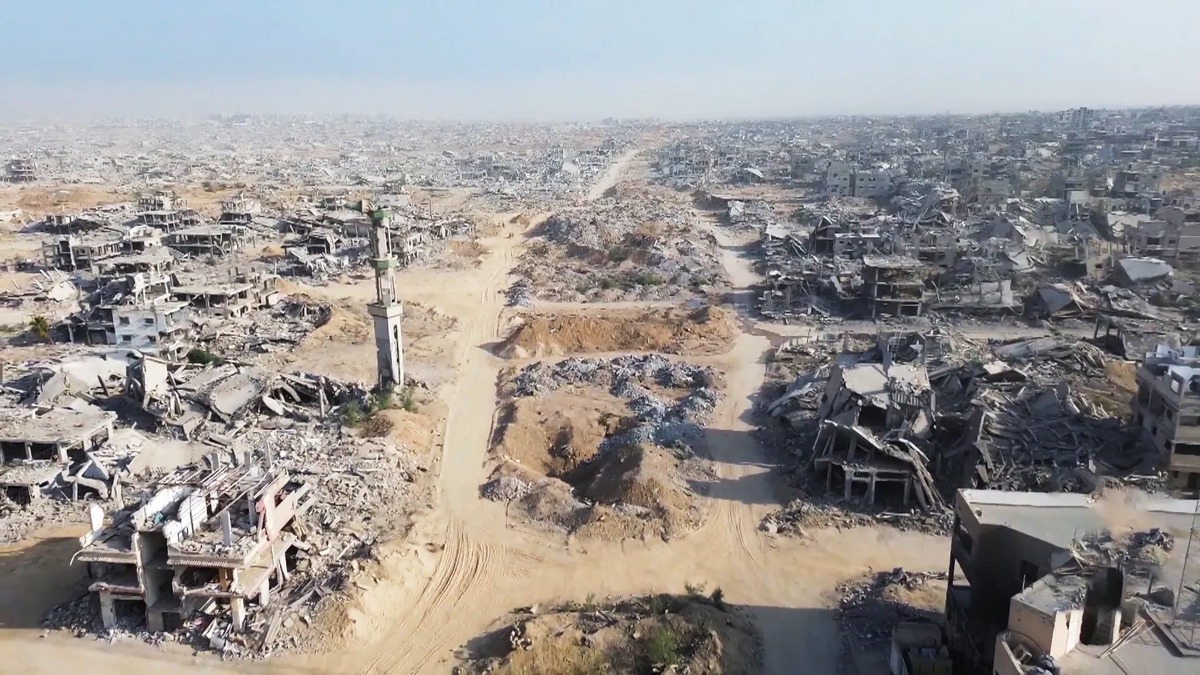
In addition to the casualties, the genocide war has caused immense destruction affecting 90 percent of the civil infrastructure in the sector, leaving 70 million tons of rubble.

PALESTINE

Sun 23 Nov 2025 1:58 pm - Jerusalem Time

Palestinian Authority: Harsh detention conditions faced by "Ofer" Israeli prisoners

The Palestinian Authority for Prisoners and Released Prisoners stated that Palestinian detainees in the Israeli military detention center "Ofer" west of Ramallah are facing harsh and humiliating detention conditions.

The Authority's lawyer reported that prisoner Ahmad Adel Harish from the town of Beitunia, who has been detained since 31/8/2025, is suffering from severe stomach pains suspected to be caused by a germ, but he is only receiving painkillers.

The lawyer also conveyed the account of prisoner Naji Sharif Awad Allah (24 years old) from Beitunia, describing the detention conditions as extremely harsh, with continuous beatings, scarce food, and a lack of cleanliness.

PALESTINE

Sun 23 Nov 2025 12:42 pm - Jerusalem Time

In light of the ongoing Israeli violations.. Is the Gaza agreement collapsing?

As the days pass and the continuous attacks by the Israeli occupation forces on the Gaza Strip escalate, fears are growing over the possibility of the collapse of the ceasefire agreement that the Palestinian resistance in Gaza reached with Israel under the plan proposed by U.S. President Donald Trump.

Since the signing of the agreement, the Israeli occupation has been committing continuous violations, with a report broadcast by Al Jazeera documenting more than 400 Israeli violations, which varied between gunfire, incursions, shelling, and the demolition of homes. The ongoing violation of the ceasefire has resulted in more than 340 martyrs and 800 injured.

Notably, Israel always uses excuses to justify its violations of the ceasefire, prompting the Islamic Resistance Movement (Hamas) to repeatedly call on mediators for urgent intervention to stop the Israeli violations.

Hamas stated in a statement that "the escalation of the occupation's violations places the mediators and the U.S. administration before the responsibility of confronting its attempts to undermine the ceasefire in Gaza."

Hamas leader Ezzat al-Risheq denied that Hamas had informed U.S. envoy Steve Wittekov that the ceasefire agreement had ended, as claimed by Israeli sources, affirming that Israel "fabricates excuses to evade the agreement and return to the war of extermination."

He emphasized that it is Israel that systematically violates the agreement on a daily basis.

Israel claims that Hamas is the one violating the ceasefire, and the office of the Israeli Prime Minister stated in a statement yesterday that "Hamas violated the ceasefire by sending an armed individual to an area occupied by the Israeli army in Gaza to carry out an attack," which the movement denied and demanded pressure on Israel to reveal the identity of this armed individual.

In this context, Dr. Ibrahim Fraihat, a professor of international conflicts at the Doha Institute for Graduate Studies, stated in an interview with the program "Beyond the News" yesterday that Israel wants to maintain its security dominance in Gaza, and that this is done in agreement with the U.S. administration.

This is the same opinion held by senior researcher at the Al Jazeera Center for Studies, Dr. Laqaa Maki, who said in the same program that the U.S. administration is pleased with what Israel is doing in Gaza.

Israel insists on the necessity of disarming the Palestinian resistance in Gaza before anything else, even though the second phase of the Gaza agreement includes a series of interconnected points, such as the withdrawal of occupation forces, reconstruction, and the formation of a committee to manage Gaza.

For his part, the professor of international conflicts at the Doha Institute for Graduate Studies states that Israel's goal is to dismantle and completely eliminate the resistance, considering it an existential battle, noting that Israel carries out targeting and assassinations without providing evidence for its claims, meaning it throws accusations without substantiation.

Trump had stated last month that the second phase of the Gaza agreement had indeed begun, confirming that senior U.S. officials had informed Hamas that it must disarm quickly, or else it would be done violently.

Academic and Israeli affairs expert Dr. Mahmoud Yazbek believes that Israel is exploiting what he calls the "yellow zone" between the implementation of the first phase of the agreement and the second phase.

Yazbek told the program "Beyond the News" that "the mediators do not have enough power to pressure the United States to prevent Israel from what it is currently committing."

He emphasized that the main issue now is the mediators, who he said Trump has opened a direct line to, and they must utilize this line for the U.S. president to play his role in stopping the Israeli assaults on Gaza.

Yazbek added that the failure of the mediators to pressure the U.S. administration directly will allow Israeli Prime Minister Benjamin Netanyahu to exploit the new reality he is shaping in the region.

PALESTINE

Sun 23 Nov 2025 11:14 am - Jerusalem Time

Yedioth: The occupation trains foreigners to understand the formations of Hamas and the tunnels.. It pointed to two Arab countries.

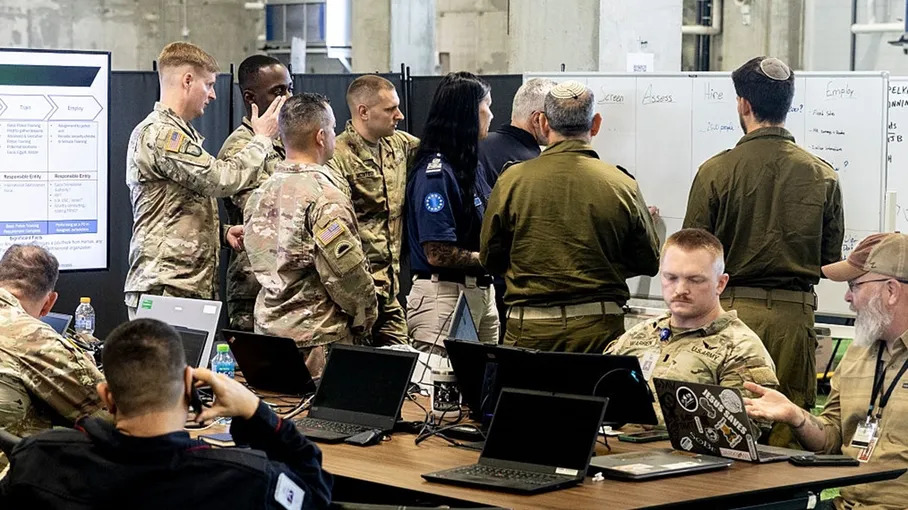
The newspaper Yedioth Ahronoth reported that the occupying army provides reports and courses for foreign officers at the American center regarding military details about the Al-Qassam Brigades, their military structure, and the tunnel network.

The newspaper revealed that it learned, contrary to previous reports, that the multinational force, if actually established and if various countries, especially Islamic ones, agree to send soldiers, will not be deployed in the Gaza envelope as previously discussed, but will be stationed at a base within the Gaza Strip itself.

The security system of the occupation insists on this positioning, while the decision of the participating countries will carry significant weight, especially if they express concerns about the risks their soldiers may face while participating in the force.

To prepare the multinational force to operate on the ground, representatives of the Israeli military intelligence branch at the American headquarters present daily reports and reviews to foreign officers, explaining to them the operational structure of Hamas as a military organization.

The training includes the interior structure of the tunnels, the time required to build or repair an entrance to a tunnel that has been bombed, in addition to the military structure of the faction and the company within Hamas, the types of weapons, and the attack methods used, particularly the dual operations employing anti-tank missiles and snipers, which the movement intensified against the occupying army over the past year.

According to the newspaper, the goal of these measures is clear: to ensure that the force landing in Gaza after the scheduled training in special bases in Jordan and Egypt, likely alongside a police force equipped for similar tasks, is not caught off guard during its first encounter with Hamas.

The New York Times reported a few days ago that both Canada and the UAE, along with Germany, represented at a preliminary course for newcomers about what Hamas is, according to three officials.

The newspaper stated that the center is located 'in a dirty industrial area, south of Israel, bustling with a huge shipping warehouse repurposed with hundreds of American and Israeli soldiers, Arab intelligence officers, international relief workers, diplomats, and military personnel from all over Europe, and even from distant places like Singapore.'