PALESTINE

Fri 20 Feb 2026 5:04 am - Jerusalem Time

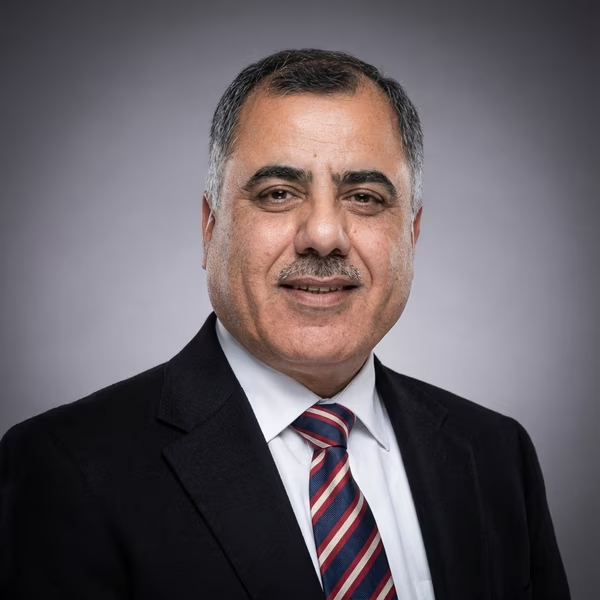
Hamas Leader: Peace Council's Tasks Lack Clarity, We Won't Succumb to Threats

Mohammed Nazzal, a member of the political bureau of the Islamic Resistance Movement (Hamas), criticized the ambiguity surrounding the tasks of the newly formed Global Peace Council, established to manage the transitional phase in the Gaza Strip. Nazzal clarified that the Council is now required to fulfill its legal and ethical responsibilities by compelling the Israeli occupation to implement the terms of the ceasefire agreement, emphasizing that the movement will not engage with any proposals that do not guarantee the fundamental rights of the Palestinian people.

In press statements, Nazzal indicated that the language of threats and intimidation adopted by some parties will not deter the resistance nor push it to make concessions that compromise national constants. He affirmed that all outstanding issues must be clearly presented at the negotiating table, away from the policy of dictates and pressures that the occupation attempts to exert to evade its direct obligations regarding de-escalation and reconstruction.

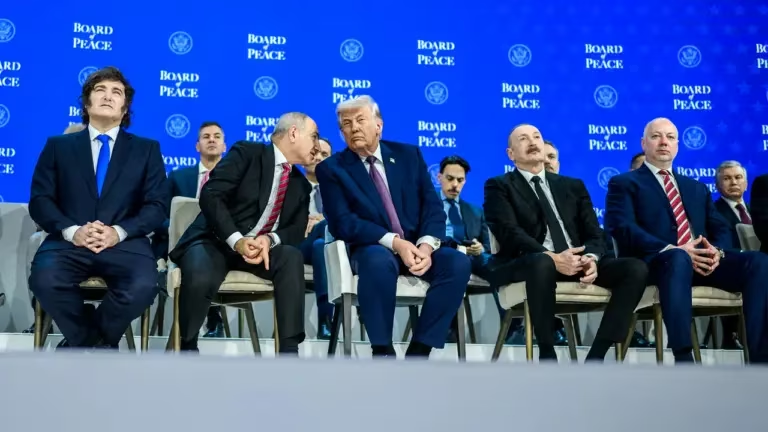
This stance comes concurrently with the inaugural meeting of the Peace Council in the American capital, Washington, chaired by Donald Trump, with the participation of 47 countries. Trump announced the allocation of $10 billion to support the Strip. Despite these financial promises, Nazzal considered that the true test of the Council lies in its ability to break the imposed siege and facilitate the entry of the Gaza administration committee to carry out its duties without Israeli obstacles.

On the humanitarian front, the Hamas leader stressed that the full reopening of the Rafah crossing is a top priority that cannot be postponed, describing current measures as extremely slow and insufficient to meet the needs of the population. He explained that reconstruction efforts require a comprehensive vision that goes beyond mere rhetorical statements, especially given the destruction of 90% of the Strip's infrastructure, with an estimated cost of up to $70 billion.

Regarding the formation of the international stabilization force, Nazzal revealed serious reservations that prevent this force from becoming a tool to impose the occupation's will within Gaza, affirming that participating countries reject any infringement on Palestinian sovereignty. He considered that any deviation from peacekeeping tasks would put the American administration and the occupation in a political and field predicament, complicating an already tense situation since the issuance of Security Council Resolution 2803.

Nazzal reminded that the Israeli occupation continues to procrastinate in implementing about 80% of the provisions of the first phase of the October 2025 agreement, which reinforces the state of distrust in international promises. He affirmed that the absence of Palestinian representation in the Council, and the refusal of major powers such as Russia, China, and Britain to join it, raises major questions about the legitimacy and ability of this body to achieve sustainable peace.

Nazzal concluded his statements by emphasizing that any successful political path must begin with a comprehensive cessation of aggression, lifting the siege, and guaranteeing the right to self-determination for the Palestinian people. He called on the Peace Council to focus on practical solutions that end the suffering of more than two million Palestinians in Gaza, who have made immense sacrifices, amounting to over 72,000 martyrs and 171,000 injured during the harsh years of war.

The language of threats does not intimidate us, and the Peace Council must demonstrate its ability to make real commitments and bring about tangible change on the ground, away from dictates.

PALESTINE

Fri 20 Feb 2026 5:04 am - Jerusalem Time

Details of the plan to deploy the international stabilization force in Gaza: 5 countries confirm participation and police training begins

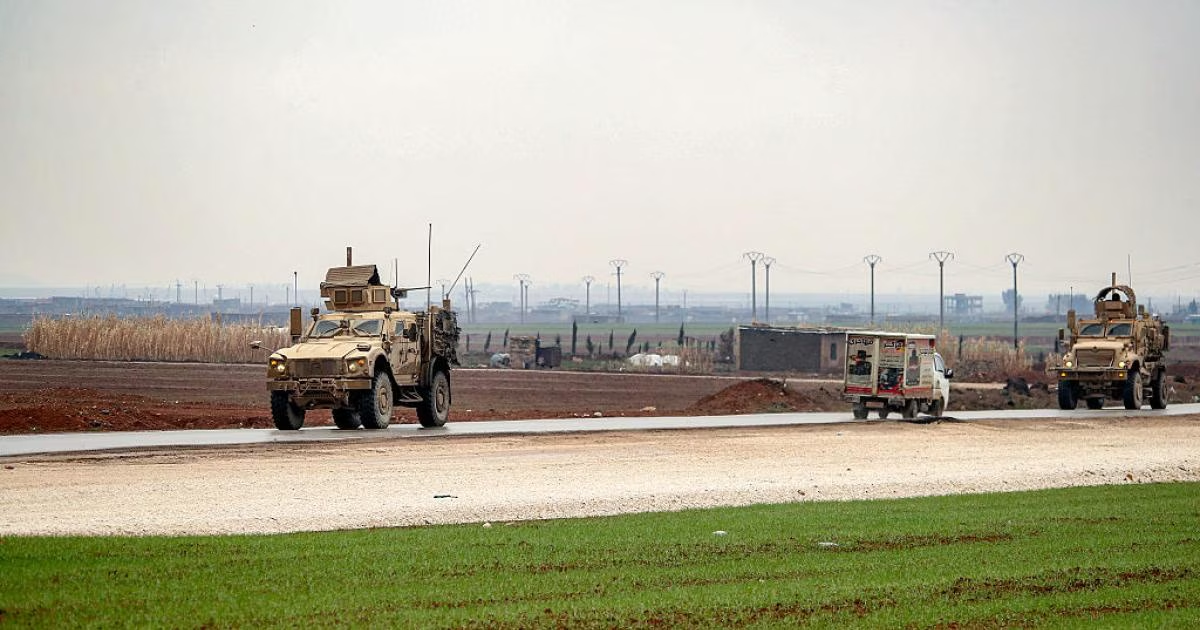
General Jasper Jeffers, commander of the International Stabilization Force in the Gaza Strip, revealed new aspects of the international military movement in the Strip, confirming the official commitment of five countries to send military reinforcements to participate in security and stability missions. The announced list of countries includes Indonesia, Morocco, Kazakhstan, Kosovo, and Albania, in a step aimed at filling the security vacuum and initiating a new transitional phase.

Jeffers explained during an expanded meeting of the Peace Council in the American capital, Washington, that Indonesia, as the largest Muslim-majority country by population, will play a pivotal role by assuming the position of deputy commander of the international force. Indonesian President Prabowo Subianto expressed his country's readiness to deploy about 8,000 military personnel to participate in this force, which the international community aspires to reach 20,000 members.

The operational plan stipulates that the deployment of these international forces will begin from the Rafah area in the southernmost part of the Gaza Strip, where local police elements will begin training before geographically expanding to other sectors. The task of technical and training supervision for the new Palestinian police personnel will be entrusted to both Egypt and Jordan, to ensure the establishment of a security apparatus capable of managing civilian affairs.

In a related context, Peace Council coordinator Nikolay Mladenov announced the official opening of applications for the formation of a new Palestinian national police force, emphasizing the need for this force to be free from the influence of Hamas. Mladenov indicated that the first hours of opening applications witnessed a wide turnout, with more than two thousand people applying to join this nascent security apparatus.

For their part, Egypt and Jordan reiterated their emphasis on the need to accelerate the deployment of the international force and begin comprehensive reconstruction operations in the Strip, which has suffered widespread destruction. The foreign ministers of the two countries, Badr Abdel Aty and Ayman Safadi, stressed the importance of adhering to the requirements of the second phase of the American plan that began in mid-January to end the conflict.

On the ground, Hebrew media sources reported that the Israeli army has already begun logistical arrangements to receive Indonesian soldiers inside the Strip. Although a precise date for the arrival of all units has not been set, estimates indicate that the Indonesian vanguard will be the first foreign forces to set foot in Gaza as part of this international mandate.

Jakarta views its participation in this force as a temporary measure aimed at protecting civilians and facilitating the delivery of humanitarian aid, considering that the ultimate goal must remain the achievement of a two-state solution. These moves come in implementation of UN Security Council Resolution 2803, which established the legal framework for the international force's work and its powers in maintaining security on the borders.

The tasks of the international force include protecting humanitarian corridors and securing the borders of the Gaza Strip with both Israel and Egypt, in addition to overseeing disarmament operations and ensuring the arrival of necessary construction materials for reconstruction. The force has been granted broad powers to use necessary measures to enforce order in accordance with international and humanitarian law standards.

Reports indicate that the White House seeks to expand participation to include more than 40 countries, while the participation of countries such as Argentina and Paraguay from Latin America, and Hungary and Greece from the European continent, has been confirmed so far. This diversity reflects the American desire to give a comprehensive international character to the management of the transitional phase in Gaza, away from traditional parties.

In contrast, field and political challenges arise related to the Palestinian resistance factions' rejection of these forces, as they consider them another face of the occupation, especially with Washington and Tel Aviv's insistence on the disarmament mission. Observers believe that the success of this force largely depends on the extent of its acceptance by the Palestinian street and its ability to provide tangible services in the relief and reconstruction files.

It is worth noting that the administrative structures for the transitional phase, which include the Gaza Executive Council and the National Committee for Administration, were officially adopted on January 16. These bodies work in coordination with the International Stabilization Force to ensure a gradual transfer of power, amidst intensive international oversight aimed at preventing a return to military escalation in the region.

Finally, the Peace Council, headquartered in Washington, remains the primary driver of these efforts, seeking to translate the twenty provisions of Trump's plan into tangible reality. With the continued influx of applications for the new police, attention turns to Rafah to await the first steps of the actual deployment of international forces and the resulting changes in the field.

Indonesia has been offered and accepted the position of deputy commander of the security forces, and is ready to contribute eight thousand soldiers to enhance stability.

PALESTINE

Fri 20 Feb 2026 5:03 am - Jerusalem Time

Academics Analyze Challenges of "Peace Council" for Gaza: Legitimacy Crisis and Gap Between Ambition and Reality

The "Peace Council" is preparing to hold its first meeting in the United States, chaired by Donald Trump, amidst a state of international anticipation tinged with tension and divergence in the positions of major capitals. Questions are escalating regarding the legitimacy of this new entity and its operational mechanisms on the ground, in light of a growing trust gap between declared objectives and the actual balance of power on the ground in the Gaza Strip.

This meeting will be held with the participation of 27 countries, based on a mandate from the UN Security Council to follow up on the implementation of the ceasefire agreement and full oversight of governance and reconstruction paths. International experts are scrutinizing this move, describing it as facing rejection in research circles due to the broad powers granted to its president and its structure's association with a specific political figure.

Observers believe that this new framework could turn into a parallel platform to traditional UN structures, which could lead to the destabilization of international balances that have been stable since the end of World War II. Academics point out that granting the Council's president veto power and absolute control over the agenda weakens the principle of diplomatic multilateralism upon which the global system was founded.

Dr. Khaled Al-Haroub, Professor of International Politics, stated that academic discussion currently focuses on the question of legitimacy before effectiveness, considering the initiative a re-formulation of diplomatic rules of engagement through the centralization of decision-making. He explained that this approach creates a trust gap among Washington's traditional partners in Europe and Asia who fear the marginalization of their historical roles.

Al-Haroub stressed that the success of any peace framework depends entirely on its ability to produce a real balance of interests among conflicting parties and to possess effective leverage tools. He warned that the absence of clear enforcement mechanisms, coupled with continued violations on the ground, puts the Council to a harsh credibility test from its very first moments.

For his part, political analyst Ali Qassem Najm considered that the initiative aims to reshape regional spheres of influence, as Washington seeks to exclusively control the Gaza file. He affirmed that this path is met with strong reservations in Moscow, Beijing, and Tehran, as it bypasses accredited international references and weakens UN legitimacy.
Najm warned that the absence of a detailed vision for governance and security in Gaza could open the door to dangerous political vacuums exploited by competing regional powers. He pointed out that historical experiences prove the failure of unilateral initiatives to gain the trust of local parties, emphasizing that active Palestinian participation is the essential condition for any sustainable stability.

In a related context, Dr. Ali Al-Harithi noted that the first meeting comes at a critical humanitarian moment that requires tangible results on the ground, not just strategic speeches. He explained that the continued field tension and the slow pace of aid entry through crossings deepen doubts about the Council's ability to translate its mandate into a reality that improves the lives of civilians.

Al-Harithi believes that the current focus on the donor conference and reconstruction requires a stable security environment and a clear civilian administration with defined powers to succeed. He added that the formation of technocratic committees is an organizational step, but empowering them requires practical understandings with the controlling forces on the ground to ensure they do not clash with the complex reality.

For her part, researcher Tahani Al-Fuqaha indicated that the language used in the Council's founding documents raises a philosophical discussion about the future of the existing international system. She said that the texts carry a critical discourse of current mechanisms with promises of resolving conflicts, but resolution in complex issues requires cumulative legitimacy built on consensus, not imposition.

Al-Fuqaha warned that the clear European reservation weakens the image of international consensus around the Council, and the disregard for direct Palestinian representation represents a blatant structural challenge. She affirmed that any path that ignores the principle of self-determination enshrined in international law will complicate the chances of transitioning from a mere ceasefire to a comprehensive political settlement.

Experts' assessments converge on a fundamental point, which is the "implementation gap," where the Council advances with promising rhetoric while reports of continued violent field tensions accumulate. This contradiction places the Council before two choices: either to innovate real pressure mechanisms or to face a rapid erosion of political credibility before the international community.

All eyes are now on the outcomes of the first meeting, awaiting the announcement of practical paths that include independent monitoring mechanisms and a clear timeline for reconstruction operations. Observers are also anticipating the formula through which the Palestinian side will be involved, which is the point that will determine the popular and political acceptance of this initiative.

Academics concluded that any peace initiative lacking the pillars of comprehensive international legitimacy, inclusive representation, and effective implementation tools will remain merely a broad title. The real test for the Council remains its ability to open a genuine political horizon that ends human suffering in Gaza, away from electoral calculations or unipolarity.

This Council is read in light of profound shifts in the structure of the international system, where its current formula grants its president exceptional powers that weaken the logic of multilateralism upon which the world has been built for decades.

PALESTINE

Thu 19 Feb 2026 7:41 pm - Jerusalem Time

Trump concludes first "Peace Council" meeting in Washington, announces $10 billion US contribution to Gaza

Said Erikat

Opinion Writer

Washington – Said Arikat – 19/2/2026

US President Donald Trump on Thursday concluded the first meeting of what he called the "Peace Council" in the capital Washington, which was attended by nearly 30 countries, about two hours after its launch, to the applause of those present, in a meeting that seemed to have been attended by the majority of participants in response to the US President's desire rather than being a reflection of broad political consensus on the initiative.

During his speech at the meeting, Trump announced that the United States would provide a massive financial contribution of $10 billion to the council he founded with the aim of supporting stability in the Gaza Strip, a remarkable step that came at a time when Western countries, which have long supported Washington's initiatives, showed coolness towards the council and ignored engaging in it as expected.

Trump said: "I want to inform you that the United States will contribute ten billion dollars to the Peace Council," in the presence of about twenty leaders, in addition to senior officials and representatives of allied countries.

The US President also announced that a number of Washington's friendly countries contributed more than seven billion dollars as part of a relief package for Gaza, pointing to contributions from Kazakhstan, Azerbaijan, the UAE, Morocco, Bahrain, Qatar, Saudi Arabia, Uzbekistan, and Kuwait, considering that "every dollar spent is an investment in hope."

In the context of his speech, Trump directly praised leaders and political figures, including the Prime Minister of Qatar and the Emir of Qatar, emphasizing Doha's role in supporting Washington's efforts. He also commended US envoy Steve Witkoff, describing his performance as "exceptional" in the Gaza file, and that he is a mediator who enjoys the trust and respect of all parties.

Trump also touched on multiple international issues during the meeting, including the tension between India and Pakistan, saying that his intervention and contacts with the leaders of the two countries prevented the outbreak of war, threatening to use tariffs as a pressure tool to stop the fighting. He also spoke about Washington's relations with China, announcing his intention to visit Beijing next April.

On the Iranian file, the US President stressed the need to reach a "fruitful" agreement with Tehran, warning that failure could lead to "bad things," and emphasizing that Iran "cannot obtain a nuclear weapon." He also said that the United States would know within ten days whether it would reach an agreement, speaking about developments related to Israel and Iran.

Regarding Gaza, Trump said that the war was over, and that the "Hamas" movement would surrender its weapons as promised, otherwise it would face "harshly," adding that the movement contributed a large part to the search for the bodies of the hostages, and at the same time affirming that he does not believe that sending American soldiers to Gaza to eliminate Hamas is necessary.

The remarkable aspect of the first meeting was not only the large financial announcement, but the nature of the attendance itself. Experts believe that describing the participation as being "to please the US President" reflects that the council may be used as a platform for political influence and realigning alliances rather than a multilateral initiative agreed upon. In American politics, announcing an initiative of this magnitude is not only humanitarian, but carries a dual goal: solidifying American leadership in the Gaza file, and imposing a new rhythm on allies and adversaries.

Moreover, the disregard of Western countries for the council, despite usually supporting Washington's initiatives, indicates a political gap that cannot be bridged by funding alone. Western countries, even when they agree with Washington, prefer traditional institutional frameworks (UN, EU, G7). In contrast, Trump seemed to be testing a different model: a "donor alliance" led directly by the White House. This model gives Washington greater control over decisions, but weakens the legitimacy of the international initiative.

Trump's speech was not limited to Gaza, but extended to China, India, Pakistan, Iran, and immigration, as if he was using the council to confirm the image of "the President as a global peacemaker." This expansion is not spontaneous, according to experts, but reflects a political style based on gathering major issues into one speech to demonstrate control and the ability to impose solutions. However, the danger here is that dissolving the Gaza issue within a broader showy discourse may reduce the chances of building a detailed and implementable plan on the ground.

PALESTINE

Thu 19 Feb 2026 7:41 pm - Jerusalem Time

Extensive International Moves to Establish Stability in Gaza: Indonesia Contributes 8,000 Troops and the World Bank Launches Reconstruction Fund

The Indonesian President announced a significant military step in the path of supporting stability in the Gaza Strip, reiterating his country's commitment to contribute eight thousand or more soldiers to the international stabilization force. This step comes within the framework of international efforts to consolidate the security situation and enable civilian governance in the Strip, in line with the visions put forward by the National Committee overseeing the transitional phase.

In a related context, the World Bank officially initiated procedures to establish the Gaza Reconstruction and Development Fund, to be the primary financial reference for managing cash flows and international grants. The fund aims to institutionalize development operations and ensure the highest levels of transparency in implementing vital projects, thereby transforming the Strip into a center for stability and economic prosperity under direct international supervision.

On the diplomatic and field levels, Morocco expressed full readiness to deploy units of security and police and high-ranking officers to contribute to maintaining order within Gaza. The Moroccan initiative also included the establishment of a fully integrated field hospital and active participation in programs to combat hate speech and promote values of coexistence, reflecting a regional desire to shape a new reality away from armed conflicts.

For their part, Gulf countries provided generous financial support to ensure the success of this international mission, with Qatar pledging one billion dollars to push for the implementation of the twenty-item action plan. In the same context, the United Arab Emirates announced the allocation of 1.2 billion dollars to support the sector, emphasizing that these efforts complement its vision for achieving a better future for the region through development and cooperation pathways.

The Turkish position confirmed its commitment to Gaza's security by contributing to the rehabilitation of vital sectors such as health and education and training police cadres. Official sources clarified that Turkey is ready to participate with elements in the international stabilization force, stressing that the two-state solution remains the basic and sole foundation for achieving any lasting and comprehensive peace in the region.

In Cairo, the Egyptian Prime Minister affirmed his country's support for international visions that open a new phase of peaceful coexistence, appreciating positions that reject the annexation of the West Bank and support the right of Palestinians to self-determination. These statements reinforce regional consensus on the need to find a political and security solution that ends the suffering of the residents in the Gaza Strip and ensures that military escalation is not repeated.

Finally, the Prime Minister of Albania clarified that the current moves through the Peace Council are not intended to marginalize the role of the United Nations, but rather seek to stimulate and awaken the international system to fulfill its responsibilities. He called on the international community to urgently contribute to supporting the children of Gaza and providing a suitable environment for their growth away from destruction, considering that investing in people is the real guarantee for the sustainability of any security agreements.

The Gaza Reconstruction and Development Fund will serve as an international financial umbrella to manage grants and investments to ensure transparency and efficiency under responsible supervision.

PALESTINE

Thu 19 Feb 2026 7:40 pm - Jerusalem Time

Trump's Plan for Gaza: Beginning Formation of Transitional Police and Dedicating the Principle of One Weapon

US President Donald Trump chaired the first meeting of the Peace Council dedicated to shaping the future of the Gaza Strip, with broad participation including delegations from 45 countries. This international alliance aims to bring about a radical change in the infrastructure and politics of the Strip, ensuring reconstruction on stable security and political foundations that end decades of continuous conflict.

US Vice President JD Vance praised Trump's efforts to reach this stage, emphasizing that the American commitment focuses essentially on saving lives and promoting welfare. Vance also expressed his appreciation for the regional and international mediations that contributed to creating the atmosphere for this new peaceful path, pointing to similar successes in other international issues.

For his part, Marco Rubio considered that the crisis in Gaza represented a unique challenge that traditional institutions failed to find effective solutions for over many years. Rubio expressed his hope that the proposed 'Gaza model' would become a global reference for resolving complex international conflicts, by integrating security and economic paths simultaneously.

In the context of diplomatic efforts, Steve Witkoff, the US President's envoy, revealed the existence of what he described as an amazing partnership with Qatar and Egypt to facilitate the implementation of the agreement's provisions. Witkoff particularly praised the exceptional role played by the Prime Minister of Qatar, noting that joint coordination was a decisive factor in achieving tangible progress on thorny issues.

Informed sources confirmed that the US administration's efforts were pivotal in the file of recovering detainees, as Trump was keen to communicate directly with their families to ensure their return. Witkoff indicated that Israeli Prime Minister Benjamin Netanyahu played a central role in completing these understandings, which paved the way for moving to the executive phase of the peace plan.

On the ground, the head of the National Committee for the Administration of Gaza announced the actual start of work to achieve stability and development in the Strip despite weather challenges and exceptional circumstances. He stressed that the top priority for the next phase is to restore security and enforce the rule of law under the umbrella of a single authority that alone has the right to possess weapons.

As part of the executive steps, Ali Shaath, the Executive Director of the Peace Council in Gaza, revealed the start of close coordination with the Israeli side and the relevant Palestinian bodies to implement the security plan. Shaath explained that the goal is to build a security system capable of protecting developmental gains and preventing a return to military confrontations.

Shaath announced that about 2000 people have applied to work within the ranks of the new 'transitional police' in the Strip, which will undertake public order duties in the first phase. He affirmed that the option of disarmament in Gaza is the only indispensable path to ensure the success of reconstruction projects and the sustainability of the peace that the international community aspires to.

Officials in the Peace Council expressed their deep gratitude to Qatar, Egypt, and Turkey for their continuous support for the executive and field efforts. Observers believe that this tripartite regional support constitutes a fundamental pillar to ensure the plan's popular and political acceptance, and to facilitate the flow of aid and necessary personnel for reactivation.

In turn, former British Prime Minister Tony Blair stated that the international alliance led by Trump succeeded in creating the necessary momentum to rebuild Gaza on solid foundations. Blair concluded by emphasizing that this plan represents the last historical hope for the region to overcome the era of wars and enter a phase of peaceful coexistence and economic prosperity.

Trump's plan now represents the only hope not only for Gaza, but for the entire region, and it is a historic project to achieve peace.

PALESTINE

Thu 19 Feb 2026 7:40 pm - Jerusalem Time

Gaza Management Committee announces the establishment of a new police force and opens applications

The National Committee for Gaza Administration (NCAG) announced today, Thursday, the start of receiving applications for membership in the new Palestinian police force in the Strip. This step aims to create a security force responsible for maintaining public order and enforcing the rule of law during the upcoming transitional phase, ensuring the stability of internal affairs.

In an official statement, the committee called on all qualified men and women who possess competence and integrity to submit their applications and participate in serving the community. Sources confirmed that the new force will work to protect families and preserve human dignity, with a focus on building a secure future for coming generations amidst current challenges.

The committee stressed that the establishment of the police force will be based on solid foundations of transparency and full legal accountability to ensure public trust. All members will be subject to strict professional conduct standards and continuous oversight, thereby establishing the principles of justice and equality in dealing with all citizens within the Gaza Strip.

The National Committee for Gaza Administration is a non-political body formed within the framework of understandings related to US President Donald Trump's plan for managing civil affairs in the Strip. The committee consists of 11 Palestinian figures headed by Ali Shaath, with its primary tasks focused on providing daily services and facilitating the lives of residents away from political disputes.

Despite Hamas's announcement of its logistical and administrative readiness to hand over civil administration tasks to the committee, the latter has been operating from the Egyptian capital, Cairo, since mid-January. The committee has not yet commenced its field duties from within Gaza, amidst calls from the government media office for its immediate presence in the Strip.

The entry of committee members into Gaza is linked to the necessity of complex field and security coordinations through the crossings under the control of the Israeli occupation authorities. No official clarification has been issued by the committee so far regarding the precise reasons preventing its teams from reaching the Strip to commence the tasks announced in the latest statement.

Joining the police force represents a national duty and an active contribution to rebuilding trust and security within Gazan society.

ISRAELI AFFAIRS

Thu 19 Feb 2026 7:40 pm - Jerusalem Time

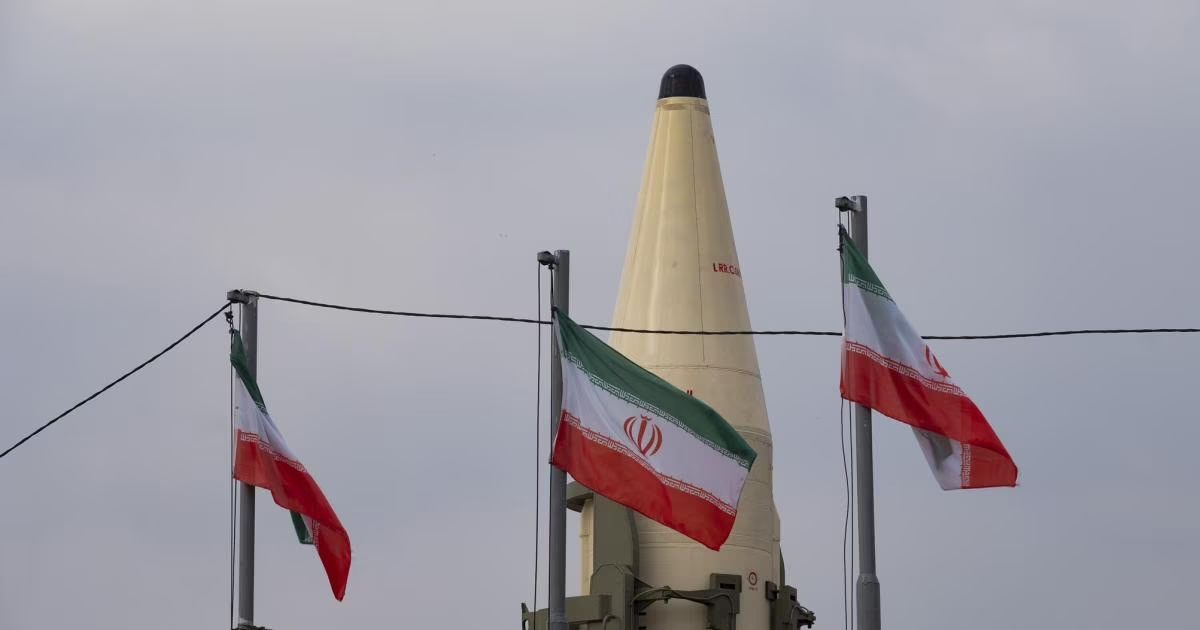
Israeli estimates suggest an impending US military action against Iran

Hebrew press reports issued today, Wednesday, stated that estimates from the military establishment of the occupation indicate a significant escalation in the likelihood of the United States launching a military attack on Iran. These estimates come in the wake of the latest round of talks between Washington and Tehran, which did not yield concrete results in narrowing existing gaps.

Sources indicated that Israeli assessments contradict announced Iranian statements that attempt to show progress in the diplomatic track. The occupation's security agencies believe that the differences remain fundamental and hinder the achievement of any real understandings between the two sides at present.

The demand to abandon uranium enrichment on Iranian soil stands out as a major obstacle in the negotiation process, as Washington insists on this condition to ensure that Tehran does not possess a nuclear weapon. In contrast, the US administration faces extreme difficulty in extracting Iranian approval for this sovereign and sensitive demand for the Iranian regime.

In light of this political stalemate, security circles in Tel Aviv expect US President Donald Trump to resort to activating the military option in a shorter timeframe than previously estimated. It appears that the conviction is growing among both the American and Israeli sides that the diplomatic path has exhausted its purposes without achieving a real breakthrough.

Military estimates do not rule out the possibility of the occupation army being directly and effectively involved in any military confrontation that may erupt between Washington and Tehran. It is emphasized that coordination between the two sides has reached advanced levels, especially in the areas of intelligence and vital information and communication technology.

Joint cooperation also includes strengthening air defense systems to counter any potential reactions that may result from the presumed American attack. Joint operations rooms are working to update defensive and offensive plans to ensure maximum readiness for any escalatory scenario in the region.

For its part, the occupation army affirmed that it has not issued any exceptional instructions to change the nature of troop deployment in the home front so far. Military sources clarified that the Home Front Command has not asked vital institutions to take measures beyond the high alert level that has been in effect for weeks.

The occupation's security establishment seeks to manage the situation cautiously, trying to find a delicate balance between the need to warn the public of security risks and maintaining the stability of economic activity. This approach aims to reduce collateral damage that may affect the daily routine of settlers in the event of deteriorating conditions.

Informed sources reported that the US administration is now fully aware of Iranian attempts to buy time and engage in political maneuvering without making substantive concessions. Washington emphasizes in its implicit messages that it will not compromise on the basic demands related to the Iranian nuclear program under any circumstances.

Regarding civilian readiness, hospitals, major infrastructure companies, and energy sectors have not received any orders to move to a state of maximum emergency yet. This relative calm on the home front indicates that the zero hour has not yet arrived, despite increasing field and political indicators.

International circles are closely monitoring military movements in the region, amid fears of a widespread regional conflict. All eyes remain on the White House and the decisions Trump may make in the coming days to resolve the Iranian nuclear issue.

Israel expects US President Donald Trump to resort to the military option in a shorter period than expected in recent days.

PALESTINE

Thu 19 Feb 2026 7:40 pm - Jerusalem Time

Ambiguity surrounds the formation of a stabilization force in Gaza and international rejection of proposed security missions

Ambiguity still surrounds the features of the international force that US President Donald Trump seeks to form under the name of maintaining stability in the Gaza Strip. This ambiguity has led influential countries such as Indonesia and Pakistan to express deep reservations about joining, attributing this to the lack of clarity regarding the mandate granted to this force or the limits of its field powers.

While Israeli media outlets are promoting the readiness of four countries – Kosovo, Albania, Greece, and Morocco – to participate, observers believe that this readiness stems from political and economic interests linking these countries to Tel Aviv. Expert in Israeli affairs, Nihad Abu Ghosh, indicates that these limited participations do not reflect an international consensus on the American plan.

The American-Israeli vision clashes with a categorical Palestinian rejection, especially with the insistence that the primary mission of the force is to disarm the resistance. Resistance factions have clearly announced that they will deal with any foreign forces entering the Strip with this objective as occupation forces, which raises the risks of direct field confrontation.

President Trump had previously stated that the countries involved in the ceasefire arrangements would undertake the task of disarming Hamas if it was not done voluntarily. These statements reinforced international fears that the proposed force is merely a tool to implement Israeli military objectives that the army failed to fully achieve.

In a related context, documents published by the British newspaper The Guardian revealed trends within the Trump administration to establish a military base inside the Gaza Strip. According to these records, the plan includes deploying about 5,000 US soldiers, which gives a permanent military character to the American presence in the region under the guise of security and oversight.

The White House is scheduled to host the first meetings of the "Peace Council" established by Trump to discuss relief and reconstruction files. While US officials speak of broad participation exceeding 40 countries, Palestinian analysts downplay expectations, describing the move as a political show lacking concrete implementation mechanisms.

Specialists believe that donor countries are still hesitant to inject any funds for reconstruction as long as the Israeli military presence continues inside the Strip. Fears of renewed destruction prevent funders from committing to financial pledges in an unstable security environment under direct occupation control.

Data indicates that the occupation army continues systematic destruction operations in the areas it controls despite the ceasefire agreement being in effect. These operations appear to aim at preparing the ground for new settlement or security projects that do not serve Palestinian interests, but rather establish a new geographical reality that serves the Israeli vision.

As for international participation, the map appears clearly divided, with the majority of Latin American countries supporting Palestine absent, with the exception of Argentina and Paraguay. This division extends to the European continent, where participation is limited to countries such as Hungary and Greece, amid a boycott by central countries that fear marginalizing the role of the United Nations.

Arab and Islamic countries participating in these meetings are trying to play a mediating role, with the aim of finding an entry point to protect the Palestinian people and alleviate the burden of the siege. These moves come in an attempt to ensure that the US administration does not unilaterally shape the future of the Strip away from Palestinian national constants and international law.

It is worth noting that the "Peace Council" was officially announced in mid-January, based on Trump's plan, which later received Security Council endorsement through Resolution 2803. The Council theoretically aims to manage the transitional phase and coordinate aid, but it faces major legitimate and field challenges that threaten its ability to operate.

In conclusion, the bet remains on the ability of international parties to transform these initiatives into a real political path that ends the occupation. Without clear guarantees of Israeli troop withdrawal and the opening of crossings, the international stabilization force will remain merely a proposal facing Palestinian popular and official rejection.

The Palestinian resistance affirmed that it will not accept disarmament missions and will deal with any foreign presence of this kind as an occupation force.

PALESTINE

Thu 19 Feb 2026 7:40 pm - Jerusalem Time

Escalating settler attacks displace last Palestinian families from Al-Burj community in the Jordan Valley

Field sources reported that escalating settler attacks in the Jordan Valley area, east of the occupied West Bank, led to the forced displacement of the last 15 Palestinian families who lived in the Bedouin community of Al-Burj. This displacement came after a series of violent attacks targeting tents and private property, reaching the point of burning citizens' homes, which forced residents to dismantle what remained of their homes and search for alternative shelter in the absence of international protection.

The displaced residents described the situation in the community as unbearable, as the area has become a hostile environment due to systematic practices aimed at emptying the land of its rightful owners. Residents confirmed that these attacks, ongoing for more than two years, are part of a clear plan to seize lands and convert them for settlement expansion, noting that settlers have already begun to be present at the site in preparation for living there immediately after the Palestinian families leave.

Field statistics indicate that the policy of displacement in the Jordan Valley has reached dangerous levels, with 7 Bedouin communities completely emptied of their residents, while 13 other communities have been subjected to partial displacement operations. The remaining communities in the area face an imminent risk of displacement at any moment, especially since the Jordan Valley constitutes about a third of the West Bank's area and is the main food source for Palestinians, making its control a strategic blow to the Palestinian presence.

On the international level, the Under-Secretary-General for Political and Peacebuilding Affairs, Rosemary DiCarlo, warned of the repercussions of the Israeli escalation in the West Bank. During a briefing to the UN Security Council in New York, she explained that what the region is witnessing represents a process of 'creeping de facto annexation' of Palestinian territories, stressing that all settlement activities lack legal legitimacy and violate relevant international resolutions.

In a related context, UN reports noted that the expansion of military operations and settlement activities around occupied Jerusalem and large areas of the West Bank threatens to undermine any future opportunities for peace. The humanitarian suffering of displaced families continues as they find themselves forced to move from one area to another in search of lost safety, amid the escalating violence perpetrated by settlers with the protection of occupation forces.

What is happening in the West Bank represents a creeping de facto annexation, and settlements are illegal under international law.

ARAB AND WORLD

Thu 19 Feb 2026 7:39 pm - Jerusalem Time

6 Indicators Putting Washington and Tehran on the Brink of All-Out Military Confrontation

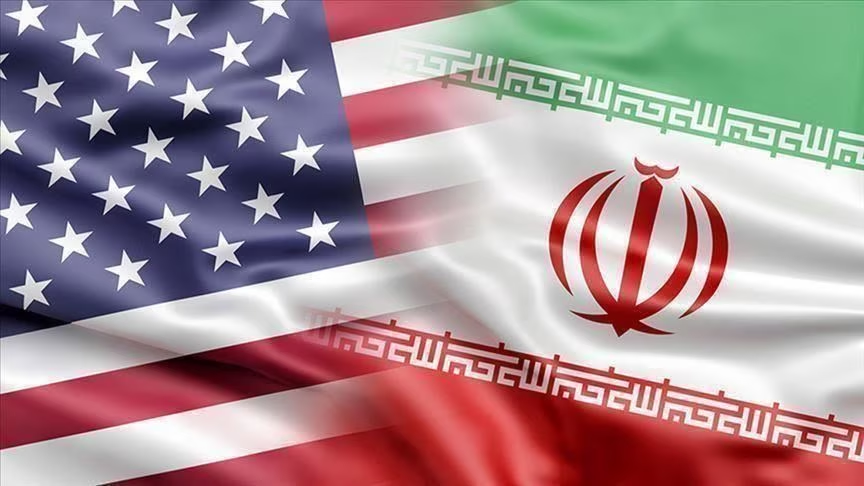
Tensions in the Middle East have escalated rapidly following the second round of negotiations between the United States and Iran in Geneva, with the White House issuing statements that have disrupted the political landscape. The American administration affirmed that there are strong arguments justifying a military strike against Tehran, putting the diplomatic understandings brokered by Oman at risk.

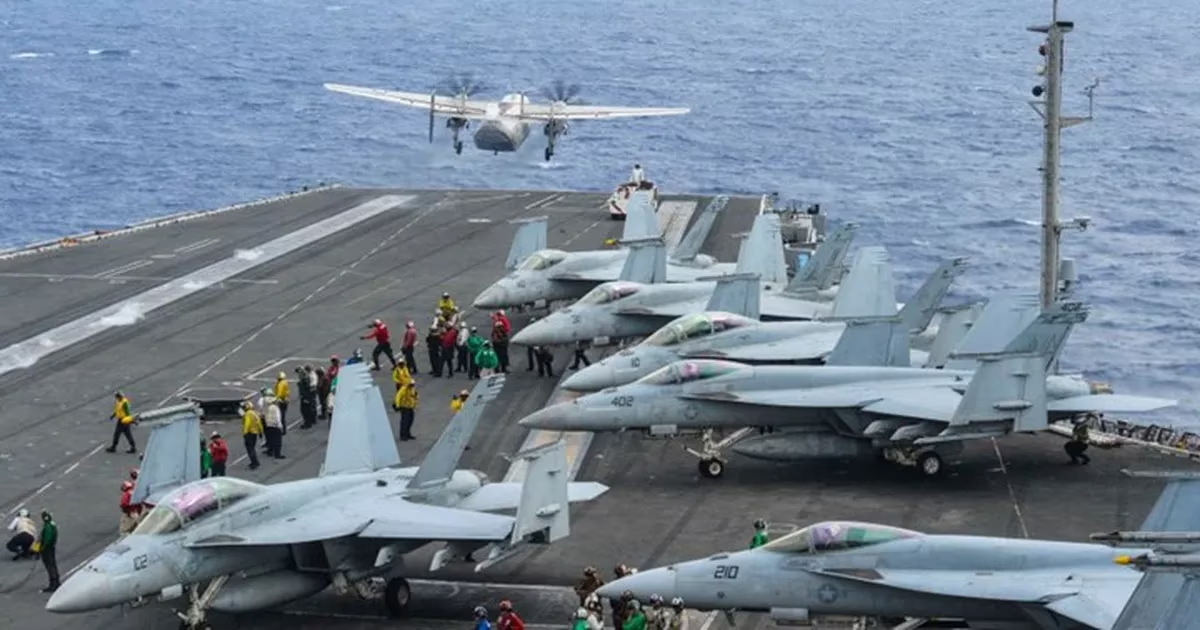
These political statements coincided with field reports revealing an unprecedented American military buildup in the region, including the deployment of two aircraft carriers and hundreds of fighter jets. Media sources reported that Washington reinforced its logistical capabilities with over 150 cargo planes, a move interpreted by observers as preparation for a large-scale military operation.

On the Israeli side, security and military agencies raised their alert levels to the maximum in preparation for a potential confrontation that could erupt within a few days. Reports indicate that Tel Aviv is pushing for a comprehensive operation that goes beyond limited strikes, aiming to directly and radically target Iran's nuclear and missile programs.

'Axios' believes that the long-standing nuclear dispute is the primary driver of this escalation, especially with Washington's insistence on preventing Tehran from acquiring nuclear weapons. Political memory recalls last June's events when American and Israeli forces bombed underground Iranian facilities immediately after the negotiation deadline expired.

The current American ambition goes beyond merely curbing the nuclear program; there is a clear desire within the Trump administration and its allies to change the structural behavior of the Iranian regime. Analysts suggest that any upcoming military action will not be limited to technical targets but may extend to vital command and control centers.

The human rights file and internal protests in Iran represent a second reason for the escalation, as Trump was close to making a decision for war last month. Although the decision was postponed then for logistical reasons, the current reinforcements in the Gulf indicate that the military obstacle has already been overcome.

The 'Chekhov's gun' principle emerges as a strategic analysis of current American behavior, where the presence of such a massive military buildup cannot be explained without a genuine intention to use it. Retreating at this stage is inconsistent with current foreign policy, especially in the absence of any real progress in the diplomatic track.

The Israeli government is exerting intense pressure on Washington to ensure that the next strike is 'decisive' and comprehensive, not just a warning message. Prime Minister Benjamin Netanyahu is coordinating closely with the White House to impose simultaneous economic and military sanctions aimed at weakening the Iranian regime from within and without.

Western intelligence circles believe that the Iranian regime is going through an unprecedented phase of weakness due to internal crises and successive external blows. Officials believe that Iran's response to any attack will be limited for now due to the exhaustion of its regional proxies in recent conflicts.

The oil factor plays a crucial role in the timing of the strike, as global markets are experiencing relative stability and abundant supplies, reducing the risk of price spikes. Washington is betting that any disruption in Iranian exports will not lead to a long-term global energy crisis under current conditions.

On the diplomatic front, sources reported that Iran offered a proposal to suspend uranium enrichment in an attempt to avert the imminent military option. However, this offer still falls short of American demands, which stipulate strict and comprehensive oversight of all Iranian nuclear activities.

Reports indicate that Tehran may be betting on gaining time until the US congressional midterm elections next November. But diplomatic sources warned that this gamble might be wrong, as it appears that the decision for military action has already been made in the White House corridors.

Any upcoming confrontation will not resemble previous limited operations but will be closer to a comprehensive military campaign with profound geopolitical repercussions for the Middle East. The results of this confrontation will shape the regional balance for years to come, especially with the fracturing of Iran's allies' fronts in the region.

In conclusion, the situation remains open to all possibilities, with military escalation being the more likely outcome in the absence of 'painful' Iranian concessions. Global capitals are cautiously awaiting what the coming days will bring, amid warnings that the region is on the brink of a volcano that could erupt at any moment.

Two aircraft carriers and hundreds of planes are usually not moved to locations unless there is a real intention to use them.

PALESTINE

Thu 19 Feb 2026 7:39 pm - Jerusalem Time

Human Rights Report Documents Horrific Torture and Sexual Abuse Against Palestinian Journalists in Occupation Prisons

The Committee to Protect Journalists, in an extensive human rights report titled 'We Returned from Hell,' revealed horrific details of severe violations suffered by Palestinian journalists inside Israeli occupation prisons. The report documents live testimonies from released journalists, confirming their exposure to systematic torture operations, including severe beatings and forced starvation, in addition to sexual assaults used as a tool for psychological and physical humiliation.

The committee confirmed that the observed patterns of violations occurred between October 2023 and January 2026, with the study including interviews with 59 released journalists. All respondents, with only one exception, agreed that they were subjected to harsh forms of violence and ill-treatment aimed at breaking their will and preventing them from carrying out their professional work in conveying the truth.

For her part, Jodie Ginsberg, the CEO of the committee, described these practices as a 'deliberate strategy of intimidation' rather than mere individual actions by soldiers. Ginsberg called on the international community to take immediate action to impose real accountability on the occupation authorities, warning of the consequences of continued failure to adhere to international humanitarian standards and laws that protect media personnel.

In a related context, the committee's regional director, Sarah Qaddah, indicated that this policy directly aims to silence the Palestinian voice and destroy journalists' ability to testify to the crimes committed. Qaddah warned that the silence of international institutions regarding these crimes directly contributes to entrenching a policy of impunity and encourages the occupation to proceed with its violations.

The report included harsh testimonies about the use of electric shocks and beatings with sharp objects, and forcing detainees into painful positions for very long periods. The report also revealed at least two cases of rape inside the cells, with sources confirming that sexual violence was deliberately practiced to leave permanent psychological scars and break the dignity of the detained journalists.

Regarding the starvation policy, 55 journalists reported severe food deprivation, leading to an average weight loss of 23.5 kilograms during their detention. The committee reviewed photographs of the released individuals showing shocking physical transformations, with their bodies appearing extremely emaciated and their bones protruding, reflecting the extent of suffering inside detention centers.

The report also documented 27 cases of deliberate medical neglect, where deep wounds of some journalists were stitched without any anesthesia. Testimonies mentioned that the occupation deliberately left bone fractures and severe eye injuries untreated, amidst unhealthy environmental conditions that exacerbated skin diseases and infections among detainees.

Regarding psychological torture, the report monitored the use of threats to liquidate family members as a means of pressuring journalists, especially those working with international media. The report pointed to practices of sleep deprivation through playing very loud music for long periods, particularly in the 'Sde Teiman' camp, which was described as one of the worst-reputed detention centers in dealing with Palestinians.

Legally, the report revealed that over 80% of the journalists included in the study were held under the arbitrary 'administrative detention' system without specific charges or being brought to trial. A quarter of these journalists were also denied the right to communicate with their lawyers or families throughout their detention, making them forcibly disappeared for varying periods.

As of mid-February 2026, 30 Palestinian journalists remain in detention out of 94 arrested since the escalation began, while statistics from the 'Shireen' observatory indicate that nearly 300 journalists have been killed by occupation fire. The committee concluded its report with a firm demand to allow international observers and UN rapporteurs access to detention centers to conduct transparent and independent investigations.

The magnitude and consistency of these testimonies indicate far more than mere individual behaviors; we are facing a clear and systematic pattern of violations.

PALESTINE

Thu 19 Feb 2026 7:39 pm - Jerusalem Time

Leaks reveal Trump administration's plan to build an international military base south of the Gaza Strip

British press sources have revealed official documents and records confirming the Trump administration's intention to construct a major military base within the Gaza Strip. According to these documents, the base is designed to be a permanent headquarters for approximately 5,000 soldiers of multiple nationalities, as part of what is known as the 'International Stability Force'. This move comes as a pivotal part of the 'Peace Council' strategy, recently established by the US administration to address the war in the Strip.

The proposed military base spans an area of up to 350 acres in a desert region located south of the Gaza Strip, an area that still contains remnants of rubble from previous military operations. The engineering plans include the construction of a military fortress 1400 meters long and 1100 meters wide, surrounded by barbed wire and extensive security installations. The site will also be equipped with 26 armored, portable observation towers, in addition to firing ranges and advanced storage facilities for military and logistical equipment.

Reports indicated that the contract document for the construction of this facility was issued by the 'Peace Council', headed by Trump and led by his son-in-law Jared Kushner, under the direct supervision of US government contracting officials. This council, whose formation was announced last January, aims to manage the transitional phase in Gaza and coordinate reconstruction efforts. The council also seeks to provide international security cover by deploying stabilization forces to contribute to the implementation of post-war arrangements in accordance with UN Resolution 2803.

On the international level, mixed reactions emerged regarding this plan, with Indonesia offering to send approximately 8,000 soldiers to participate in the proposed international force. In contrast, the proposal faced sharp legal criticism, with legal experts describing the 'Peace Council' as a tool for direct American control. Human rights groups considered the construction of military bases on Palestinian land without national consent to be a new form of occupation, especially given the thousands of bodies still under the rubble.

For its part, the official side in Washington remains cautious regarding these leaks, with Trump administration officials denying the presence of any American combat forces on the ground at present. Official sources refused to comment directly on the details of the leaked documents, despite confirming ongoing diplomatic efforts to consolidate security in the region. The question remains about the ability of this international force to impose stability amidst the increasing field and political complexities in the Palestinian territories.

The complex spans approximately 350 acres and is planned as a base for a multinational force within the vision of the Peace Council.

PALESTINE

Thu 19 Feb 2026 11:59 am - Jerusalem Time

Between Reconstruction Hopes and Procrastination Fears: What Do Gaza Residents Expect from the 'Peace Council' Meeting in Washington?

The eyes of Gaza Strip residents are turned today, Thursday, to the American capital, Washington, where Donald Trump is presiding over the first meeting of the international 'Peace Council'. This political move comes at a time when Palestinians are suffering from a severe deterioration in living conditions with the arrival of the month of Ramadan, amidst increasing complaints about the slow arrival of humanitarian aid and essential shelter supplies.

The Gazan street is experiencing a state of division between cautious optimism and pessimism resulting from previous experiences, as some see this council as an opportunity to impose international pressure on the occupation. Popular demands focus on the necessity of obliging the Israeli government to implement the entitlements of the second phase of the ceasefire agreement, which was reached on October 10th.

The issue of withdrawal from the 'Yellow Line' is the most urgent demand for Palestinians, as this line consumes about 60% of the Strip's area and prevents hundreds of thousands from returning to their homes. Displaced people in refugee tents in the town of Al-Zawaida and central areas hope that the Washington meeting will result in decisive decisions that end the Israeli military presence in the northern areas of the Strip and the Jabalia camp.

In field testimonies, citizen Karim Hamdan expresses his hope that the council will succeed in providing alternative residential 'caravans' for the dilapidated tents in which millions of displaced people live. Hamdan points to the suffering of travelers and injured people receiving treatment abroad, emphasizing the need to facilitate traffic through the crossings without security or political obstacles.

Structurally, the Peace Council was established in mid-January based on Trump's plan adopted by the UN Security Council in Resolution No. 2803. The Council is supposed to take full oversight of the reconstruction budget and manage the transitional phase, including the deployment of an international stabilization force to ensure adherence to the ceasefire.

On the ground, young people in Gaza City neighborhoods, such as Sheikh Radwan, observe the rubble of their homes that has not been moved for months, amidst ongoing Israeli military movements. Citizens complain about the indiscriminate firing that accompanies the occupation's vehicles in the eastern areas, which hinders any individual attempts to live on the ruins or begin simple restoration.

Reports indicate that the Israeli occupation has not adhered to about 80% of the provisions of the first phase of the agreement, and continues to prevent members of the National Committee for the Administration of the Strip from carrying out their duties. This intransigence further complicates the scene for the Peace Council, which includes 27 members, and lacks direct Palestinian representation or the presence of major powers such as Russia and China.

Political analysts believe that the success of the Council depends on its ability to provide the financial support promised by Trump, estimated at $5 billion as a first installment for the reconstruction fund. It also requires activating urgent recovery programs to remove millions of tons of rubble and rehabilitate the dilapidated infrastructure destroyed by two continuous years of war.

Behind the scenes of the meeting, thorny issues emerge related to the disarmament of Palestinian factions and securing natural resources off the coast of Gaza, files that raise fears of the council turning into a political tool. Nevertheless, the urgent humanitarian need to provide security and food remains the primary driver of the hopes of citizens who follow Washington news through local radio stations.

In conclusion, the Palestinian street demands the necessity of real international oversight that curbs repeated Israeli aggressions and ensures the sustainable flow of goods and aid through the crossings. The question remains in the destroyed alleys of Gaza: Will the Peace Council succeed where traditional diplomacy has failed, or will it remain just another link in the chain of international promises?

I don't know what the Peace Council will offer us after I lost my home, but I hope we can live without aggressions and be allowed to return to our homes.

ARAB AND WORLD

Thu 19 Feb 2026 11:58 am - Jerusalem Time

Trump told by advisers that the US is ready to attack Iran on Saturday if ordered

Said Erikat

Opinion Writer

The crisis between Washington and Tehran is heading towards a sharp turn, after CBS News reported that senior US national security advisers informed President Donald Trump that the US military could be ready to launch strikes on Iran starting Saturday, if Trump issues the order. However, the decision, according to the same sources, has not yet been made, with expectations that the timeline for making it will extend beyond the end of this week.

This hesitation does not necessarily mean an absence of intent, but rather may reflect the nature of the Trump administration, which tends to keep the final decision in its hands until the last moment, and to use ambiguity as a pressure tool. The current scene suggests that Washington is holding two threads at once: brandishing force to compel Iran to make political concessions, and keeping a diplomatic window open to prevent a slide into an open war whose repercussions cannot be easily controlled.

While these preparations are presented publicly as "precautionary measures," the accompanying details go further. CBS News reported that the US Department of Defense intends to temporarily relocate some of its personnel from the Middle East in the coming days, in anticipation of an Iranian counterattack if the United States launches a strike. Other leaks indicated that US forces deployed in the region are required to be at the highest levels of readiness by mid-March. In deterrence calculations, such steps are not usually taken merely for show, but to reduce the cost of surprise if the doors of confrontation are opened.

At the same time, the Israeli dimension of the crisis is strengthening. The Times of Israel website quoted a US official as saying that US Secretary of State Marco Rubio will visit Israel on February 28 to meet with Israeli Prime Minister Benjamin Netanyahu, at a moment when estimates within the Israeli security establishment are growing that Trump may resort to the military option soon, especially after the failure of nuclear negotiations. The visit here appears to be more than just a diplomatic stop, but rather part of a political and security coordination intended to appear cohesive to Tehran, and to send a message that any potential American strike will not be isolated from Tel Aviv's position, according to the website.

However, the scene is not limited to military signals. Following the US-Iranian talks in Geneva, a senior US official told Reuters that Iran is expected to submit a written proposal on how to avoid confrontation with the United States. In a political sense, submitting a written proposal means not only a desire to negotiate, but an attempt to reframe the crisis according to clearer rules, or at least to prevent the language of threat from turning into a final decision. Nevertheless, Israeli estimates indicate that the gaps remain wide, especially with regard to Washington's basic demand: abandoning uranium enrichment within Iranian territory, a demand that Tehran considers a crossing of red lines.

In Israel, preparations are proceeding at a pace that suggests military scenarios are being seriously considered. Hebrew media reported that Israel is preparing for the possibility of receiving an American "green light" to launch an attack on Iran's ballistic missile system. The Israeli Broadcasting Corporation reported that targeting missiles is linked to a potential American decision regarding striking Tehran, while Haaretz newspaper spoke of close coordination between the two countries in the areas of intelligence, air defense, and military communications. This type of coordination, if true, indicates that military options are being discussed as a joint or intertwined operation, not just a separate strike by one party.

This impression is reinforced by what Yedioth Ahronoth published about Netanyahu instructing the Home Front Command and rescue agencies to prepare for war, coinciding with the postponement of the meeting of the Ministerial Committee for National Security (the "Cabinet"). Internal mobilization is not only read as a defensive measure, but as part of managing public opinion and preparing the home front for the possibilities of escalation. Israel Hayom also reported predictions of a long-range Iranian missile response if a wide strike is carried out, with expectations that Israel may not hesitate to join Washington if operations begin.

However, the fundamental dilemma is that the strike, if it occurs, may not remain "limited" as is usually promoted. Iran possesses a network of response options that are not confined to one front: from targeting interests and bases, to activating regional allies, to expanding the scope of engagement so that it transforms from a punitive strike into a long escalatory path. Here lies the paradox of deterrence: what is supposed to be pressure to prevent war may itself become the spark that ignites it.

Politically, the escalation cannot be separated from the broader regional and international scene. While the Sultanate of Oman continues to play the role of mediator, having sponsored a round of negotiations in Geneva after a previous round in Muscat, US military buildups in the Middle East are increasing. In contrast, joint maneuvers between Russia, China, and Iran are emerging in the Arabian Sea and the northern Indian Ocean, sending a message that Tehran is not completely isolated, and that it has room to maneuver within a network of international relations counter to US influence. This parallel between diplomacy and military buildup makes the crisis closer to a game of "brinkmanship" than to a traditional negotiating path.

Amidst this picture, some observers believe that Washington and Tel Aviv may be engaged in a calculated "war of nerves" against Iran, based on raising the threat level and leaking indications of military readiness, with the aim of pushing Tehran to make more concessions without the need to ignite the spark of war. However, this approach carries a double risk: on the one hand, it may push Iran to harden its positions instead of retreating, and on the other hand, it gives Israel greater scope to influence the American decision, which may cause the escalation to feed on itself, and turn the strike from a political option into a semi-inevitable outcome of an accelerating path.

The Trump administration appears to be negotiating from a logic of power, not a logic of compromise. But power, in a charged regional environment, is not a neutral pressure tool; it is a gamble on reactions that are difficult to predict, and on the ability of the parties to control the limits of fire. In light of the intertwining of interests and alignments, any decision to strike could turn into a comprehensive test for the region, not just for Iran.

PALESTINE

Thu 19 Feb 2026 11:58 am - Jerusalem Time

Trump chairs the first meeting of the 'Peace Council': A new structure for Gaza administration and a challenge to the UN's role

US President Donald Trump today, Thursday, chaired the first inaugural meeting of what is known as the 'Peace Council,' an initiative he officially launched as an alternative or complement to the traditional roles played by international organizations. This move has received widespread support from Trump's close allies, while raising a wave of concern among other countries that see it as an attempt to undermine the legitimacy and role of the United Nations in global conflicts.

The roots of this council date back to a proposal Trump presented last September as part of his plan to end the Israeli war on the Gaza Strip, before the initiative's ambitions expanded to include resolving other international conflicts. The council, which Trump directly chairs, aims to seize the mediation and crisis management role historically confined to the corridors of the international organization in New York.

According to the council's founding charter, the membership of participating states is set for a renewable three-year term, but there is a controversial clause that allows states to obtain permanent membership in exchange for paying one billion dollars to fund the council's activities. This financial approach reflects Trump's 'transactional' vision in managing foreign policy and making countries bear their share of the costs of international security and peace.

The executive council is composed of prominent figures in Trump's inner circle, with Secretary of State Marco Rubio, Special Envoy Steve Witkoff, and the President's son-in-law Jared Kushner appointed. Former British Prime Minister Tony Blair also emerged as a founding member, which drew widespread criticism given his history associated with the Iraq War and imperialist policies in the region.

Regarding international participation, the council's official account announced the joining of more than 20 countries as founding members, including active regional powers in the Middle East such as Saudi Arabia, Qatar, Egypt, and the UAE. The list also included countries such as Turkey, Jordan, Bahrain, and Morocco, in addition to countries from Eastern Europe, Asia, and Latin America such as Hungary, Pakistan, and Vietnam.

In contrast, the council faced outright rejection from major Western and Eastern powers, with Britain, the European Union, France, and Germany announcing their intention not to join as permanent members. 'Global South' countries such as Brazil, South Africa, and India also rejected the American offer, considering that the initiative lacks the balance required to resolve international conflicts fairly.

Notably, the Vatican distanced itself from the council, emphasizing that the management of international crises should remain exclusively within the jurisdiction of the United Nations to ensure neutrality. China and Russia, two countries with veto power in the Security Council, were also absent from the formation, which puts the new council in potential confrontation with existing international legal structures.

Trump based the legitimacy of his council on a resolution drafted by the United States and approved by the UN Security Council last November, recognizing the council as a temporary transitional administration for the Gaza Strip. According to this resolution, the council will set the general framework and coordinate the necessary funding for the reconstruction of the devastated strip, within Trump's vision that stipulates a radical reform of the Palestinian Authority.

The international mandate grants the Peace Council the authority to deploy a temporary international stabilization force within the Gaza Strip, with the tasks of this force ending by the end of 2027. The council is committed under this agreement to submit periodic reports every six months to the 15-member UN Security Council, to inform them of the progress made in security and humanitarian files.

Despite this mandate, China and Russia expressed strong reservations during the vote, abstaining from endorsement on the grounds that the resolution does not give the United Nations a clear role in shaping Gaza's future. The legal authority of the council outside the Palestinian territory remains unclear, especially regarding enforcement tools and how to coordinate with other international relief organizations.

Attention is drawn to the broad powers enjoyed by Trump as chairman of the council, as the charter grants him the right of veto over any decision taken by members, in addition to the authority to dismiss any member. This centralization of decision-making has raised experts' concerns about the council becoming a tool for implementing US foreign policy away from international consensus.

From a human rights perspective, international law experts described Trump's oversight of the administration of foreign territories as approaching modern 'colonial practices.' Human rights organizations criticized the absence of any Palestinian representation in a council that decides the fate of Gaza, considering it a marginalization of the people of the land and a repetition of historical mistakes in managing conflicts in the Middle East.

The council also faced sharp criticism for including Israel as a founding member of a body tasked with overseeing Gaza, at a time when the occupation faces accusations of committing war crimes and genocide. Observers believe that Israel's presence in the council undermines its neutrality and makes it a party to the conflict instead of a mediator for peace and reconstruction.

Today's meeting is scheduled to discuss thorny issues including mechanisms for distributing humanitarian aid in Gaza, details of deploying the international stabilization force, and ways to raise the necessary funding for reconstruction. Countries such as Japan, South Korea, and India are participating as observers, indicating an international desire to monitor the behavior of this new entity before full engagement.

The Peace Council's charter grants its chairman broad executive authority, including the right to veto decisions and dismiss members, with an international mandate to transitionally administer Gaza.

PALESTINE

Thu 19 Feb 2026 11:58 am - Jerusalem Time

Trump Launches 'Peace Council' in Washington: $5 Billion for Gaza Reconstruction and Anticipated International Force

US President Donald Trump will inaugurate today, Thursday, the first meeting of the 'Peace Council' in Washington D.C., with wide participation from representatives of over 45 countries. This meeting comes amidst international anticipation of its decisions regarding the future of the Gaza Strip and the unresolved issues left by the ongoing war.

Trump is scheduled to deliver an opening speech at the 'Donald J. Trump Institute for Peace,' the center recently renamed to bear his personal name. During his speech, the US President will announce the success of participating countries in raising $5 billion as an initial payment for the reconstruction fund of the devastated Strip.

Sources indicate that the meeting's agenda will focus on thorny issues, most notably the proposal to disarm Hamas and mechanisms for humanitarian aid flow to the population. Participants will also discuss the council's feasibility in dealing with the complex logistical and security challenges facing the region in the coming phase.

Responsible sources confirmed that the US administration intends to announce plans for several countries to contribute thousands of soldiers as part of an international force aimed at achieving stability in Gaza. This force will be tasked with maintaining security and ensuring the continuity of relief and reconstruction operations under direct international supervision.

For her part, White House spokeswoman Karoline Leavitt clarified that the pledged $5 billion budget will be under the exclusive supervision of the Peace Council. She indicated that the US administration seeks to ensure high transparency in the disbursement of these funds and their direction towards vital projects in the Strip.

The formation of the council has sparked widespread debate in diplomatic circles, especially as it includes the Israeli side while lacking any official representation from the Palestinian side. This absence has raised questions about the council's ability to reach comprehensive and sustainable solutions acceptable to all parties involved in the conflict.

International concerns also arise that this council might become an alternative to traditional UN platforms, which could weaken the United Nations' role in resolving global conflicts. Observers believe that Trump's intention to expand the council's future tasks to address issues beyond Gaza's borders reinforces these diplomatic concerns.

Regarding international participation, permanent members of the UN Security Council are absent from the meeting, with the exception of the United States, as France, Britain, Russia, and China did not participate. In contrast, representatives from the European Union and various countries from different continents, including Albania and Vietnam, are attending.

Prominent figures in the US administration are expected to speak at the event, including Secretary of State Marco Rubio and advisor Jared Kushner. Former British Prime Minister Tony Blair will also participate, and he is expected to play a pivotal role in managing the council's files and coordinating its international efforts.

In a related context, sources quoted a council member as saying that the Gaza plan faces severe field obstacles related to the deteriorating security situation. He explained that the absence of trained and ready police forces represents an impediment to the implementation of any large-scale development or relief programs at present.

The same official described the current humanitarian aid flow situation as 'catastrophic,' emphasizing the urgent need to find safe and effective distribution channels. He added that the biggest challenge is not only in providing aid but in identifying the entities that will be responsible for field distribution and ensuring its delivery to those in need.

It is worth noting that the 'Peace Council' was established by a decision from Trump in mid-January, based on a US plan to end the war previously adopted by the UN Security Council. The council aims to create a new international framework away from traditional paths that the White House deems insufficient to resolve the conflict.

Establishing security in the Strip is a fundamental condition for progress in other areas, but police forces are not adequately ready or trained.

OPINIONS

Thu 19 Feb 2026 11:58 am - Jerusalem Time

The pain of loss in Ramadan!

Dr. Ibrahim Melhem

Editor-in-Chief

The least that can be said is that the images of mothers heartbroken by the loss of their beloved children alone tell of the magnitude of the pain that shakes the hearts of the patient and resilient; for there is nothing more painful than losing the essence of souls and the fruits of hearts. How much more so if this loss occurs in a month when hearts gather at sunset on one ground? So, the one who used to bring joy and happiness to souls is absent from the table, and the one who was waiting for the call to prayer to quench his hunger with a sip of water or a piece of bread.The mother's wailing at the farewell of her son, "Muhannad Al-Najjar" (14 years old), who died on the first day of Ramadan while he was gathering firewood to prepare Iftar food, shakes the soul and shatters the conscience. Muhannad, who went out to look for firewood to light the pot for his hungry family, ignited a fire in his mother's heart that the sea waters cannot extinguish.The daily killing has not stopped, even if its forms have changed; death resides in every corner: the death of patients whose medicine has run out, and the wounded whose travel has been delayed at crossings restricted by "chains of slowness," or by pouring lava on the heads of those sleeping in tents, under the pretext of assassinating a wanted person who happened to pass by. It is "slow genocide"; practiced by the occupiers with cold blood, and they hunt their victims with sniper bullets as they hunt game, without any conscience or fear of law.In Gaza, Ramadan is not measured by the number of fasting hours, but by the number of raids on homes and tents and bullets, which are fired from behind brightly colored bunkers and lines, penetrating the bodies of those seeking life, so sunset there becomes synonymous with the absence of loved ones.Muhannad left, and the firewood remained mixed with tears of pain, and the table still lacked his laughter, his calm and his boisterousness, so "sunset" in Gaza transformed from a moment in the presence of tranquility to a moment in the presence of absence.

OPINIONS

Thu 19 Feb 2026 11:57 am - Jerusalem Time

Occupation, Creeping Annexation, and the Entrenchment of Colonial Control

The decision by the occupation government to initiate the registration and settlement of lands in the occupied West Bank represents a dangerous escalation that falls within the framework of the creeping annexation project, and a clear attempt to impose legal and administrative facts that entrench colonial control over Palestinian land. It reflects the gravity of the occupation government's decision, which violates international law and international resolutions. The initiation of land organization and registration in the West Bank constitutes an arbitrary measure and widespread looting of lands in the occupied West Bank, an effective annexation, and a direct assault on occupied Palestinian land and the rights of its legitimate owners, showing contempt for the international community. The Israeli decision represents an attempt to reclassify vast areas of occupied Palestinian land as "state lands," based on internal administrative procedures that neither create nor abolish rights, and starkly contradict the rules of international humanitarian law, particularly the provisions of the Fourth Geneva Convention of 1949, which prohibits the occupying power from making permanent changes in occupied territory or confiscating the property of residents under occupation. The resumption of land registration for the first time since 1967, and the establishment of specialized bodies within the Israeli Ministry of Justice and the allocation of budgets to implement these procedures, cannot be considered a neutral administrative matter. Instead, it comes within a systematic policy aimed at transforming vast areas of unregistered or disputed lands into so-called "state lands," in preparation for allocating them for settlement expansion and strengthening Israeli control, especially in Area "C." This step will lead to a profound change in the legal reality of lands in the West Bank, as Palestinian citizens will be required to undergo complex procedures to prove their ownership according to criteria imposed by the occupation, which may lead to them losing their rights in vast areas under the pretext of legal and administrative considerations. The West Bank is an integral part of the Palestinian territory occupied in 1967, and is subject to the provisions of international law and international legitimacy resolutions, foremost among them the relevant Security Council resolutions. Any measures aimed at imposing a new legal or administrative reality under the guise of "sovereignty from the bottom up" represent an unacceptable circumvention of the existing legal status and an attempt to legitimize creeping annexation. The West Bank is occupied territory according to the provisions of international law, and any measure aimed at establishing the ownership of the occupying state over lands in the occupied territory constitutes a clear violation of the rules of international humanitarian law, and is considered a form of de facto annexation even without a formal declaration. Targeting lands through unilateral registration will lead to a dangerous escalation, undermine the foundations of the political process, disregard signed agreements, deepen instability, and expose the region to further tension and explosion. The international community must assume its legal and political responsibilities, and the importance of the United Nations and the International Criminal Court taking practical steps to stop these illegal measures, ensure the protection of the rights of the Palestinian people to their land, resources, and property, and take practical steps to stop these policies that do not serve peace and aim to undermine the possibility of an independent, sovereign Palestinian state on the June 4, 1967 borders with Jerusalem as its capital. The property rights, individual and collective, of the Palestinian people to land and real estate are fixed and inalienable rights that cannot be lost by prescription. Our people will continue their legitimate struggle in defense of their land and their fixed national rights, and attempts to impose a fait accompli will not grant legitimacy to the occupation, nor will they change the undeniable truth that the land is occupied Palestinian territory, no matter how long the occupation lasts.

OPINIONS

Thu 19 Feb 2026 11:57 am - Jerusalem Time

Is Trump's End Nearing? Signs of Cracks Within the US

Few expected that US President Donald Trump would go this far in his second term, whether in his disregard for international law or in his rough handling of the network of alliances that for decades formed the cornerstone of American influence in the world. Since his return to the White House, it has been clear that he seeks to monopolize decision-making, overstepping the norms of checks and balances, and narrowing the spaces within which American institutions traditionally operated with relative independence.The transgressions did not stop at controversial executive orders but also affected relations with Congress and state governors, a scene that re-raised the question of the limits of presidential power in the American constitutional system. Domestically, his policies towards immigrants – both legal and illegal – took a sharply confrontational turn, accompanied by unprecedented inflammatory language against people of color, including Arabs and Muslims, which contributed to expanding Islamophobia and deepening societal division. Criticism of Israel in some circles began to be equated with the suspicion of "anti-Semitism," amidst measures targeting activists sympathetic to Palestinians in the wake of the war in Gaza.Externally, the scene appeared more turbulent. Threats to annex Canada and Mexico, frequent talk of controlling Greenland, along with public insults to US allies in Europe, reflected a unilateral tendency that deals with international politics through a logic of deals and pressure, not partnership. His administration's relationship with international institutions was also marked by a great deal of tension, whether with the United Nations or international courts, reinforcing the impression that Washington sometimes acts as a power above the law.This cannot be separated from the unlimited support received by the war criminal, Israeli Prime Minister Benjamin Netanyahu, during his massacres in the Gaza Strip, with its tragic scenes that shook global public opinion. This support was reflected within the US itself, where massive million-person demonstrations took place in dozens of major cities, demanding an end to the war and a review of foreign policy. The results of local elections in a number of states, with Democrats advancing over Republicans, also served as an early warning bell for the ruling party ahead of the midterm elections.In the context of external escalation, the administration adopted a harsh rhetoric towards China, Russia, and Iran, with a policy of brinkmanship, returning the world to an atmosphere of worrying polarization. Trump did not hesitate to use a theatrical rhetoric towards Venezuela, brandishing force and boasting about his country's ability to decide, in language that seemed closer to the logic of political coercion than to balanced diplomatic norms. The most prominent manifestation of this barbarism was the kidnapping of President Maduro and his wife from inside his palace, and bringing him humiliatingly to America for trial, which reinforced the image of an administration inclined to impose its will, rather than adhering to the rules of the international system.Domestically, American academics and politicians warned that polarization had reached dangerous levels, and that inflammatory rhetoric and partisan division could push the country into unprecedented social tension. With increasing criticism within the Republican Party itself, and signs of unease among some members of Congress, cracks began to appear within the camp supporting the president, reflecting a growing awareness of the danger of the current path for the future of both the party and the state.From my perspective, the continuation of this approach will not be easy or long-lasting. American institutions, despite the pressures they have faced, still possess a degree of immunity and ability to self-correct. The escalating talk of holding the president accountable or reducing his influence reflects that the issue has gone beyond partisan disagreement, becoming linked to the image of the United States and its international standing.The question today is: Is Trump's end nearing? Perhaps the answer is not yet decisive, but what is certain is that the American interior is boiling, and the coming months will determine not only the fate of a president but also the shape of America's role in a rapidly changing world that seeks greater balance and respect for international law.

PALESTINE

Thu 19 Feb 2026 11:57 am - Jerusalem Time

In cooperation with the Arab League and Egyptian media... "Xinhua" organizes media forum in Cairo in April

Xinhua News Agency will organize the high-level forum for media and think tanks of the Global South countries - the China-Arab Partnership Conference - in Cairo from April 26-28. The forum focuses on the theme of "Enhancing Wisdom, Opening New Horizons, and Working to Build a China-Arab Community of Shared Future." The forum aims to strengthen the deep friendship between China and Arab countries, promote cultural exchange and mutual learning between civilizations, in addition to unifying visions and mobilizing joint efforts of China and Arab countries, as important forces in the Global South on the international stage. The forum will host more than 150 representatives from media, think tanks, government agencies, and regional and international organizations from China and Arab countries, to conduct in-depth discussions on four main axes: "Solidarity and Joint Cooperation: Jointly Promoting the Reform of Global Governance," "Innovation as a Driving Force: Sharing a Prosperous Future for Development," "Mutual Learning Among Civilizations: Walking Together on Diverse Development Paths," and "Empowering Youth: Building Foundations for Openness and Innovation Together." Editor-in-Chief Ibrahim Melhem received an invitation to attend the conference, presented to him by the agency's director in Palestine, "Henry Huang."

ARAB AND WORLD

Thu 19 Feb 2026 11:57 am - Jerusalem Time

US military readiness for a potential strike against Iran, Israel awaits 'zero hour'

Informed sources revealed that the US administration has received notifications indicating that the armed forces may be in full readiness to carry out military operations against Iranian targets by the end of this week. This development comes after large-scale mobilization of US air and naval capabilities in the Middle East, signaling the seriousness of recent threats hinted at by the White House.

Despite these field preparations, sources indicate that US President Donald Trump is still weighing available options, having held closed discussions to review arguments for and against direct military intervention. Trump also sought the opinions of his senior advisors and international allies to determine the most effective course of action to deal with the Iranian issue at this critical stage.

In the context of intensive diplomatic and security movements, the White House Situation Room witnessed a high-level meeting of ministers and national security officials to discuss the rapid developments. This meeting coincided with the President receiving a detailed briefing from Special Envoy Steve Witkoff and his son-in-law Jared Kushner on the results of indirect talks held with the Iranian side through Omani mediation.

For its part, military circles in Tel Aviv are awaiting early warning from Washington before taking any offensive step against Tehran. According to Hebrew reports, this coordination aims to enable the Israeli home front to take necessary measures and adjust security instructions for settlers in line with the expected Iranian response.

The Israeli army has been on high alert for about a month, with readiness levels escalating day by day to confront all possible scenarios. Israeli operational plans include the possibility of strong preemptive strikes against Hezbollah in Lebanon, to prevent the opening of multiple fronts in the event of a direct confrontation with Iran.

Security sources confirmed that Israel intends to keep any US warning it receives regarding the attack date secret, to ensure the element of surprise and avoid any leaks that could hinder the operation. The security system is currently undertaking intensive secret preparations, including strengthening air defenses and intensifying surveillance on the northern and eastern borders.

As part of ongoing political coordination, US Secretary of State Marco Rubio is scheduled to arrive in Israel on the twenty-eighth of this month. The visit aims to hold important meetings with Prime Minister Benjamin Netanyahu to discuss final arrangements and joint coordination regarding hot regional issues, foremost among them the Iranian threat.

Recent days have witnessed diplomatic activity in Geneva, where Trump sent his envoys to meet with Iranian officials in a last attempt to avoid military confrontation. Despite Tehran's announcement of some progress in those negotiations, the American tone remained sharp with continued military buildup in bases near Iranian territory.

On the ground, recent satellite images showed Iran building massive concrete fortifications over sensitive military facilities. These Iranian steps aim to protect vital sites from potential air raids, especially those sites that were targets of previous attacks last year.

Images also showed the burial of tunnel entrances at strategic nuclear sites, as well as the fortification of entrances to other facilities under thick layers of soil and concrete. These Iranian moves reflect an attempt to restore defensive capabilities and repair missile bases damaged in previous rounds of escalation with the United States and Israel.

In light of this complex scene, observers believe that the region is on the verge of a major strategic shift that could redraw the balance of power. While the language of threats and warnings continues, diplomatic channels remain slightly open, amidst questions about whether Trump will issue orders for actual military action before the end of the week.

In conclusion, all eyes remain on the White House and field movements in the waters of the Gulf, as the scale of military buildups reflects an American desire to impose a new reality. In contrast, Iran continues to strengthen its internal defenses and hint at its ability to target American interests in the region if it is attacked.

The military may be ready to launch an attack on Iran by the weekend following a major buildup of air and naval assets.

ARAB AND WORLD

Thu 19 Feb 2026 11:56 am - Jerusalem Time

Trump threatens to use 'Diego Garcia' base to strike Iran and warns London against abandoning it

US President Donald Trump issued strong warnings to Tehran, hinting at the possibility of using military force from long-range strategic bases. Trump affirmed that the United States might be forced to resort to the 'Diego Garcia' base in the Indian Ocean and 'Fairford' Air Base in Britain to carry out military operations aimed at deterring the Iranian regime.

Trump's statements came via his 'Truth Social' platform, where he linked potential military action to the failure of diplomatic efforts to conclude a new agreement with Iran. He described the regime in Tehran as 'extremely dangerous,' emphasizing that the mentioned military bases represent a fundamental pillar of American national defense and security strategy.

In a related context, Trump sharply criticized the British government led by Keir Starmer, warning it against proceeding with an agreement to transfer sovereignty over Diego Garcia island to the Republic of Mauritius. The US President considered the signing of a hundred-year lease agreement a 'fragile' measure that could lead to the loss of control over a vital location monitored by international powers such as China and Russia.

Diego Garcia base is one of the most important US military installations outside its borders, housing an advanced military airport capable of accommodating heavy strategic bombers. The base also provides naval facilities in a deep-water port that supports warships and nuclear submarines, making it an ideal launching point for operations in the Middle East and Asia.

The island's importance extends to intelligence and surveillance, as it contains advanced technical equipment for monitoring communications and military movements in the Indian Ocean region. The base plays a pivotal logistical role as a supply and support center for US forces deployed across three continents: Asia, Africa, and the Middle East.

Historically, Britain separated the island from the Chagos Archipelago in 1965 and granted it to the United States to establish this joint base, which later became a launching pad for major operations. That period witnessed the displacement of about two thousand indigenous inhabitants of the island, which sparked legal and international disputes that lasted for decades in the halls of the United Nations.

The UN General Assembly issued a resolution in 2019 demanding London end its administration of the islands and hand them over to Mauritius, which subsequently led to the signing of an agreement in May 2025. Despite the signing of the agreement, which grants Britain the right to use the base for a full century, Trump sees this step as 'unjustified weakness' from a strategic ally.

Trump noted in his post that abandoning this land represents a 'great folly' that harms Western national security interests in general. He linked this issue to his previous ambitions related to purchasing Greenland, considering that acquiring strategic locations is the only guarantee to confront increasing global threats.

Legally, the agreement between Britain and Mauritius is still awaiting final ratification by the parliaments of both countries to officially come into effect. US military circles fear that any changes in the political sovereignty of the island could lead to future restrictions on the freedom of movement of forces or the use of sensitive facilities.

International capitals are closely monitoring these statements, which redraw the features of US foreign policy in a new Trump era, especially concerning the Iranian file. The question remains about the extent of London's response to these American pressures, especially in light of its international commitments to Mauritius and UN resolutions.

Should Iran decide not to conclude an agreement, the United States may be forced to use the Diego Garcia base to repel a potential attack from a highly dangerous regime.

ARAB AND WORLD

Thu 19 Feb 2026 11:56 am - Jerusalem Time

Washington decides to withdraw all its military forces from Syria within two months

Media reports and official sources have revealed that the American administration intends to withdraw all its military forces from Syrian territory within the next two months. This decision includes approximately one thousand American soldiers who were stationed in various areas, in a move that represents the end of Washington's direct military presence, which lasted for years under the guise of combating ISIS.

These field movements come after the Syrian government regained control over vast areas of the country and reached understandings with the Syrian Democratic Forces (SDF). According to sources, the agreement stipulates the integration of these forces, which were a key ally of the international coalition, into official state institutions, paving the way for ending the pretexts that necessitated the foreign presence.

The signs of this withdrawal have already begun to appear on the ground through the evacuation of some strategic sites, as the Syrian army took over the Al-Shaddadi base in the southern Hasakah countryside and the Al-Tanf border base. These bases are considered among the most important points previously used by the international coalition to manage military and logistical operations in the eastern and border regions with Iraq and Jordan.

In a related context, informed sources confirmed that Washington has transferred thousands of detained ISIS elements from Syrian prisons to secure detention centers within Iraqi territory. This preemptive step aims to ensure that no security breaches or escapes occur that might follow the military vacuum resulting from the withdrawal of American forces from the previous detention centers.

For his part, a high-ranking American official described the departure process as falling within the framework of a 'measured and conditional transition' that takes into account the current field conditions. He indicated that American forces will remain on alert to deal with any emergency threats that ISIS may pose, while providing the necessary support to partners to ensure that terrorist activities do not return to the region.

The official concluded his statements by indicating that the intensive American military presence is no longer necessary at present, especially with Damascus expressing its full readiness to assume security responsibilities and combat terrorism. This shift reflects a fundamental change in American policy towards the Syrian file, with a focus on political solutions and local security arrangements instead of permanent military deployment.

An intensive American presence is no longer necessary in Syria, given the Syrian government's readiness to assume primary responsibility for combating the terrorist threat.

ISRAELI AFFAIRS

Thu 19 Feb 2026 11:56 am - Jerusalem Time

Bennett attacks Turkey, calls it 'the new Iran,' calls for strategy to confront Erdogan

Former Israeli occupation prime minister, Naftali Bennett, launched a scathing attack on the Turkish state, considering it 'the new Iran' in the region. Bennett described Turkish President Recep Tayyip Erdogan as a cunning and dangerous adversary, stressing the need for Tel Aviv to reformulate its international strategy to deal with what he described as the escalating Turkish threat.

In a post published on his official 'X' account, Bennett warned of extensive Turkish moves in the Syrian and Gaza Strip files, the Eastern Mediterranean region, and even the African continent. He claimed that these moves directly aim to encircle Israel and weaken its security position, calling on the Israeli leadership not to ignore these indicators as happened in previous files.

The former Israeli official claimed that Ankara's regional influence contributed to the formation of a hostile axis largely similar to the axis led by Tehran in the Middle East. He referred in his speech to the close ties between the Turkish administration and forces he describes as extremist in both Qatar and Syria, which he sees as strengthening a front hostile to Israeli interests.

Bennett called for urgent action to confront what he called 'the hostility coming from Ankara' in parallel with confronting Iranian threats, stressing that the nature of the confrontation may differ in tools but must be simultaneous and coordinated. Bennett believes that Israel desperately needs to develop a comprehensive action plan that takes into account Turkey's growing regional ambitions.

These sharp statements come amid a state of continuous and tangible tension in relations between Ankara and Tel Aviv, which has significantly escalated since the beginning of the Israeli aggression on the Gaza Strip. Israeli circles continue to express their concern about the growing Turkish role in regional issues, especially with the continuation of official Turkish criticism of Israeli policies towards Palestinians.

I warn you: Turkey is the new Iran. Erdogan is a cunning and dangerous adversary seeking to encircle Israel. We must not turn a blind eye again.

PALESTINE

Thu 19 Feb 2026 11:56 am - Jerusalem Time

White House: $5 Billion via 'Peace Council' for Gaza Strip Reconstruction

White House spokesperson, Caroline Leavitt, confirmed that the $5 billion budget allocated for the reconstruction of the Gaza Strip, pledged by member states of the 'Peace Council,' will be placed under the direct and exclusive administration of the Council. Leavitt clarified in a press statement that this approach aims to ensure the implementation of reconstruction plans in accordance with the vision set by the new international council.

Washington D.C. is scheduled to host an expanded meeting of the Peace Council member states on Thursday, where US President Donald Trump will open the session with a keynote address. Trump's speech will be followed by a series of interventions from representatives of participating countries to present their vision for the next phase in the war-torn Palestinian territory.

The spokesperson revealed that the meeting will see the participation of more than 20 countries, and the list of these countries and the amount of donations each entity has committed to the Gaza reconstruction fund will be disclosed to global public opinion. She emphasized that this step represents significant progress in addressing the aftermath of years of chaos and violence in the region.

Regarding the mechanism for disbursing funds, Leavitt indicated that the Peace Council is the legally authorized body to determine spending priorities and how the allocated budget will be used. She added that a team of technocrats will work alongside the Council to make the necessary technical decisions in continuous consultation with donor countries.

On the diplomatic front, Turkish Foreign Minister Hakan Fidan's participation in this high-level meeting has been confirmed, where he will represent President Recep Tayyip Erdoğan in the discussions. This participation comes amid widespread regional interest in the new arrangements led by Washington to manage the situation in the Gaza Strip after the cessation of military operations.

It is worth noting that the 'Peace Council' came into being in mid-January by a decision from President Trump, as part of a broader plan to end the war in Gaza. The establishment of this council was based on UN Security Council Resolution No. 2803 issued in November 2025, which grants it international legal cover despite the controversy surrounding its powers.

Although the Council's charter does not explicitly mention the Gaza Strip by name in its founding texts, it is known as a permanent international organization aimed at promoting 'good governance' in conflict areas. The charter grants President Trump exceptional powers, including the right of veto and the authority to appoint members for life, which observers see as an attempt to bypass traditional UN structures.

The Peace Council is considered the cornerstone among four organizational structures designed by the US administration to manage the transitional phase in Gaza. The Council's tasks are integrated with the 'National Committee for Gaza Management' and the 'Gaza Executive Council,' in addition to the 'International Stabilization Force' which will undertake security tasks on the ground according to the provisions of Trump's twenty-point plan.

Media sources reported that the Washington meeting represents the Council's first official launch and will take the form of a donor conference entirely dedicated to reconstruction. This move aims to accelerate the implementation of the second phase of the ceasefire agreement that came into effect on October 10, 2025, to end the suffering of approximately 2.4 million Palestinians in the Strip.

These international efforts face significant challenges amid the catastrophic conditions experienced by Gaza residents, where more than 1.5 million displaced people still lack basic services. Through this massive investment, the White House seeks to establish a new political and security reality that ensures no return to comprehensive military confrontation.

We are talking about a five-billion-dollar investment for the reconstruction of Gaza, which has been a scene of violence for many years.

ISRAELI AFFAIRS

Thu 19 Feb 2026 11:56 am - Jerusalem Time

Israeli readiness for American green light to strike Iranian ballistic missile system

Hebrew official sources reported on Wednesday evening that the military establishment in Israel is awaiting approval from the American administration to launch a military operation targeting Iran's ballistic missile system. These moves come amidst escalating regional tensions and reports indicating an approaching direct military confrontation between Washington and Tehran, despite declared diplomatic channels.

Flight tracking data revealed intensive American military activity over the past forty-eight hours, with large numbers of fighter jets and aerial refueling aircraft being dispatched. Reinforcements also included the arrival of early warning aircraft (AWACS) at American bases deployed in Europe and the Middle East, reinforcing the hypothesis of preparation for a large-scale military operation.

Reports clarified that the scenario of targeting Iranian missile capabilities is now strongly on the table for discussion in Tel Aviv, coinciding with the anticipation of decisions from US President Donald Trump. Observers believe that the current military buildup reflects the seriousness of American threats to end the Iranian nuclear and missile file through military force if political pressure fails.

For its part, Hebrew press sources stated that Israeli security agencies' assessments indicate a jump in the probability of an American attack following the latest round of talks between the two parties. These assessments confirmed that the gaps between Washington and Tehran remain deep, especially regarding the demand for a complete abandonment of uranium enrichment within Iranian territory, which Tehran categorically rejects.

With the negotiations in Geneva reaching a dead end, security circles in Israel expect the White House to resort to the military option sooner than previously planned. A state of alert prevails within Israeli decision-making circles to keep pace with any sudden American decision that could radically change the balance of power in the region in the coming days.

Israeli military circles do not rule out the possibility of direct and effective involvement of the Israeli army in combat operations against Iranian targets if a confrontation erupts. High-level intelligence and technical coordination is currently underway between the two sides, including the exchange of sensitive information and the development of air defense systems and military communications to ensure maximum readiness for any escalation scenario.

Tehran accuses both Washington and Tel Aviv of fabricating pretexts for military intervention and seeking to change the political regime in the country by brandishing military force and economic sanctions. In contrast, Iran insists that its missile and nuclear program is a sovereign right for defensive and peaceful purposes, affirming that it will not relinquish its rights under the weight of continuous threats.

The Iranian leadership has vowed a decisive and devastating response to any military aggression targeting its territory, even if the attack is limited in its geographical scope or objectives. Tehran insists on the necessity of lifting all Western economic sanctions as a fundamental condition for any future understandings, at a time when the United States continues to strengthen its military grip in the region with direct incitement from its ally Israel.

Israel expects President Trump to resort to the military option sooner than it had anticipated in recent days as a result of negotiations reaching a dead end.

PALESTINE

Thu 19 Feb 2026 11:56 am - Jerusalem Time

New Israeli Escalation: Raids and Artillery Shelling Target Various Areas in Gaza Strip

The Israeli occupation forces renewed their military operations in the Gaza Strip early Thursday morning, launching a series of intensive aerial raids and artillery shelling. Field sources reported that artillery shells directly targeted the eastern areas of Khan Yunis city in the southern Strip, coinciding with the movement of occupation vehicles in those vicinities.

In a parallel escalation, aerial raids struck areas where occupation forces are deployed in Rafah city, in the southernmost part of the Strip, in addition to other targets in the eastern neighborhoods of Gaza City. These field developments come at a time when the region is witnessing escalating tensions due to the continuation of military operations despite existing understandings.

On the humanitarian front, medical sources at Nasser Medical Complex confirmed the martyrdom of two Palestinian citizens as a result of gunfire by occupation forces yesterday, Wednesday. The incident occurred near the Yellow Line area in Bani Suhaila town, east of Khan Yunis, raising the pace of direct targeting of civilians in border areas.

In a related context, bulldozers and engineering units of the occupation army continue widespread destruction operations of what remains of citizens' homes, vital facilities, and infrastructure. These operations are concentrated in residential blocks controlled by Israeli forces in various parts of the Strip, exacerbating the total extent of destruction.

Official data issued by the Ministry of Health in Gaza indicates that these aggressions represent a blatant violation of the ceasefire agreement concluded on October 10, 2025. The toll of victims from these violations until the beginning of this week has reached approximately 603 martyrs and more than 1600 injured, amid international silence regarding the continued escalation.

Military operations come as part of a series of continuous violations of the ceasefire agreement that began last October, leaving hundreds of martyrs and injured.

PALESTINE

Thu 19 Feb 2026 11:55 am - Jerusalem Time

Young man killed by settlers' bullets during an attack on the village of Mukhamas in Jerusalem

Palestinian medical sources reported the martyrdom of 19-year-old Nasrallah Muhammad Jamal Abu Siam, who succumbed to critical injuries sustained during an attack carried out by groups of settlers on the village of Mukhamas, northeast of occupied Jerusalem. The martyr had been transferred to the hospital in critical condition after being shot with live ammunition, where medical teams made efforts to save him before his death was announced this evening.

Mukhamas village witnessed widespread attacks carried out by dozens of settlers under direct protection from Israeli occupation forces, resulting in varying injuries to five Palestinian citizens. Field reports indicated that three of the injured were directly shot with live ammunition, while others suffered injuries resulting from physical assaults that accompanied the raid on the village and the destruction of its property.

The settlers' attacks were not limited to shooting but also included organized looting and theft targeting the property and livelihoods of the area's residents. Settler groups seized dozens of sheep owned by Palestinian citizens, in a move aimed at economically pressuring the residents and forcing them into forced displacement from their lands threatened with confiscation.

Mukhamas village and the neighboring Bedouin community of 'Khillet al-Sidra' are subjected to a series of systematic attacks that vary between burning homes and barns and destroying private vehicles. The acts of vandalism also affected the residents' simple infrastructure, including the smashing of solar panels, which represent the sole source of electricity, in addition to destroying surveillance systems that residents install to document these ongoing violations.

Approximately 59 individuals, mostly children and women, live in the 'Khillet al-Sidra' community, where they face harsh living conditions amidst the existential threats that pursue them. These attacks come within a broader settlement policy aimed at displacing Bedouin communities in the vicinity of occupied Jerusalem, amidst human rights appeals for the necessity of providing international protection for unarmed Palestinians in the face of escalating settler violence.

The Palestinian Ministry of Health announced the martyrdom of 19-year-old Nasrallah Muhammad Jamal Abu Siam, who succumbed to his severe injuries from settlers' bullets.

OPINIONS

Thu 19 Feb 2026 11:34 am - Jerusalem Time

Trump’s “Board of Peace” Is a PR Stunt With No Mandate, No Math, and No Legitimacy

News Analysis

Washington, D.C. — When the “Board of Peace” convenes on February 19, the White House will sell it as a historic breakthrough. The press is being primed for a dramatic announcement: more than $5 billion in humanitarian pledges and talk of “thousands of personnel” for an international stabilization force. The imagery will be staged. The rhetoric will soar. The headlines will write themselves.


But beneath the branding, the initiative is empty. The Board has no clear mandate. No published legal authority. No defined operational structure. No accountability mechanism. It is being marketed as a peace framework for Gaza while refusing to answer the questions that determine whether any framework can work. It is diplomacy as performance.


The most revealing fact is what the Board does not include. Palestinians are nowhere to be seen. They are not represented. They are not consulted. They are not even described as a political community with rights. In the Board’s public framing, Palestinians appear as a humanitarian problem to be managed, not a people entitled to liberty and freedom, to live in dignity in their own homeland. A “peace” initiative that excludes the people whose future is being discussed is not peacebuilding. It is an attempt to impose outcomes without consent.


A Brand in Search of a Mandate


Trump unveiled the Board in January and promoted it at Davos as a platform for “world peace.” The February 19 gathering looks less like a working summit than a staged announcement. It is designed to project momentum through money figures. It avoids the hard questions of post-war governance.


The Board’s public description reads like a collection of slogans: reconstruction, stabilization, policing, demilitarization. These are not interchangeable. Reconstruction requires financing pipelines, procurement rules, and legal authority. Stabilization requires a defined mandate, rules of engagement, and political legitimacy. Policing requires training, oversight, and an accountable justice system. Demilitarization requires a political settlement. The Board offers none of the foundations required for any of these tasks. It substitutes language for architecture.

Trump’s insistence that he will serve as chairman makes the intent clearer. This is not a multilateral institution. It is a U.S.-directed coalition. It is built to avoid international frameworks that might impose constraints. The United Nations is one of those constraints. It insists on legal legitimacy and Palestinian representation. That is exactly what this Board appears designed to circumvent.


The Credibility Gap: Allies and Arithmetic


The membership list reflects the same problem. Roughly two dozen countries have reportedly accepted participation, including Israel, Qatar, Saudi Arabia, Turkey, and Egypt. But major European allies are conspicuously absent. Several European governments have expressed concern that the Board is intended to supersede the United Nations and sideline the Palestinian Authority.


That absence is not cosmetic. It is operational. Rebuilding Gaza requires long-term financing, technical expertise, and political legitimacy. Europe is central to all three. Without it, the Board is not a reconstruction mechanism. It is a stage for declarations.


The money being touted is equally revealing. Five billion dollars sounds impressive. It is still a fraction of what Gaza’s recovery requires. A UN, EU, and World Bank assessment estimated reconstruction could cost upward of $70 billion and stretch for years. Against that benchmark, the Board’s pledge looks like a token down payment. Worse, pledges are not cash. They are often recycled commitments, conditional promises, or sums that never materialize. Announcing a number without disbursement plans, oversight, or implementation capacity is not leadership. It is advertising.


The Board is built for a headline, not for a decade-long recovery. Its first major promise already signals its limits. Too little money. Too little structure. Too little legitimacy.


The Kushner Vision: Development Without Sovereignty


The credibility gap widens further with the “master plan” promoted by Jared Kushner, Trump’s son-in-law and a real estate developer. Kushner has described a vision of skyscrapers, new cities, and a coastal tourism zone. He claims Gaza could be rebuilt in two or three years with $25 billion in investment.


The plan is revealing not because it is ambitious, but because it is unserious. Its aesthetic resembles a Gulf mega-project. Its politics resemble a colonial fantasy: redevelopment without sovereignty. Gaza is not an empty plot awaiting investors. It is a devastated society emerging from mass displacement, demolished infrastructure, and unresolved political authority. Reconstruction involves property rights, land ownership disputes, the return of displaced families, and governance legitimacy. A tourism zone cannot be built over a political vacuum.


Kushner’s timeline is especially implausible. Two years of construction requires stability. It requires enforceable contracts. It requires functioning courts. It requires clear land title. It requires a governing authority capable of providing security and services. Gaza currently has none of these prerequisites. Pretending otherwise is not optimism. It is denial. It reduces a political catastrophe to a real-estate rendering.


Security: Stabilization or Subjugation?


The security component is where the Board becomes most dangerous. Trump claims member states will commit thousands to an international stabilization force. Yet he has not clarified whether Israel would accept such a force operating independently. He has not said who would command it. He has not said under what rules it would operate. He has not said what accountability would apply.


For Palestinians, “stabilization” carries bitter echoes. It risks becoming a euphemism for external control. It risks becoming domination repackaged as humanitarian concern. Without clear parameters and Palestinian consent, any such force would be viewed not as a guarantor of safety but as another layer of subjugation.


Trump’s demand that Hamas commit to “full and immediate demilitarization” is equally detached from reality. Demilitarization cannot be imposed by decree. It requires a political settlement. It requires a legitimate governing authority. It requires a credible security alternative. Without those, calls for disarmament sound like surrender terms. Surrender terms do not produce durable ceasefires. They produce humiliation, fragmentation, and relapse.


The Geopolitical Context


The timing is not accidental. It follows U.S.-Iran talks in Geneva. Trump has threatened to strike Iran if it does not curb its nuclear program. He also insists he prefers negotiated outcomes. The overlap underscores a pattern. There is theatrical diplomacy on one front. There is coercive leverage on another.


The Board may therefore serve as much to project American influence regionally as to rebuild Gaza locally. It provides a stage for Washington to claim initiative. It pressures allies into alignment. It presents an alternative to UN-centered legitimacy. And it does all this while Palestinians remain absent from the room where their future is being designed.
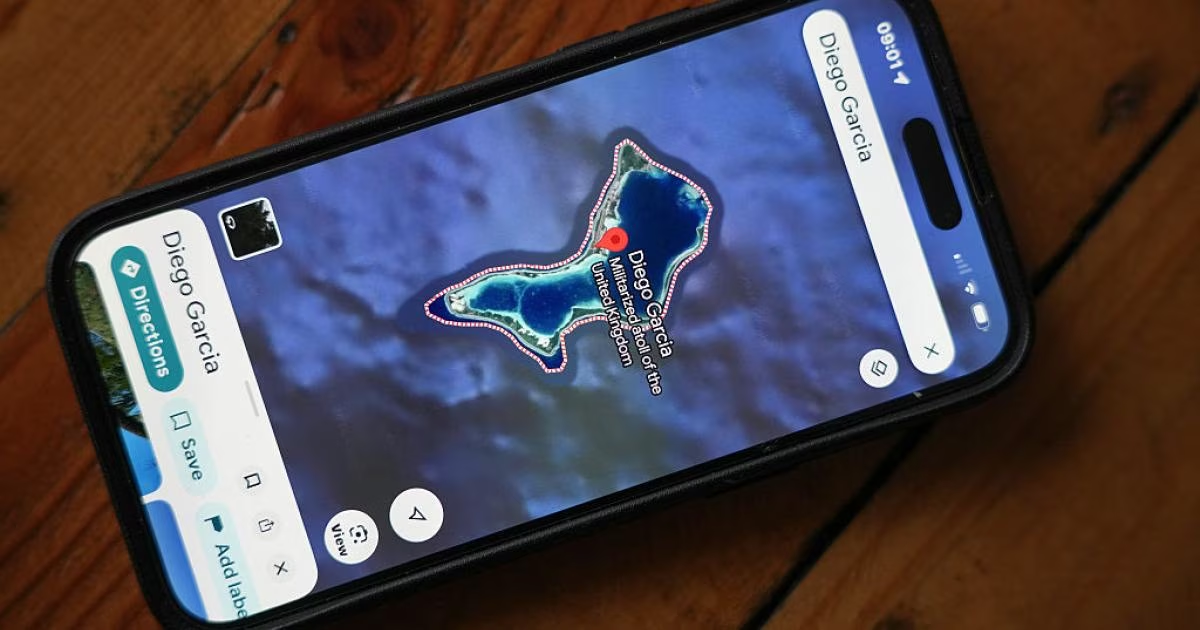

Conclusion: A Hollow Core


Ultimately, the Board of Peace is less an institution than an instrument. It gives Trump a platform to claim authorship of Gaza’s future. It helps pressure allies into alignment. It sidelines legitimacy frameworks that would require Palestinian representation and enforceable accountability.


A peace framework that excludes Palestinians is not merely flawed. It is illegitimate. It asks the world to accept that Gaza’s fate can be decided by outside powers, while the people who live there are reduced to recipients of aid, objects of security planning, and targets of economic redesign. That is not a path to stability. It is a recipe for permanent grievance.


If the Board is serious, it must begin where it currently refuses to begin: with Palestinian self-determination, with freedom and dignity in their own homeland, and with a political process rooted in rights rather than public relations. Without that, the Board’s grand name disguises its true purpose — a promise of peace without a plan, and a plan without legitimacy.