PALESTINE

Sat 20 Jun 2026 9:25 pm - Jerusalem Time

Palestinian Prime Minister: Occupation Seeks to Turn Its Aggression in West Bank into Ethnic Cleansing Project

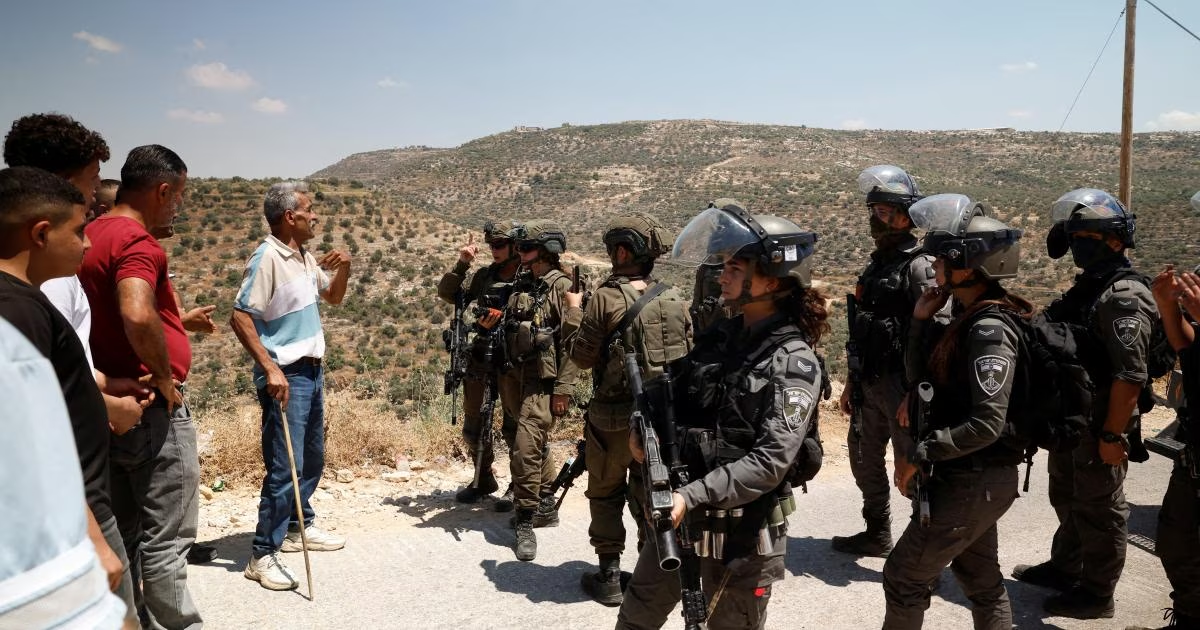
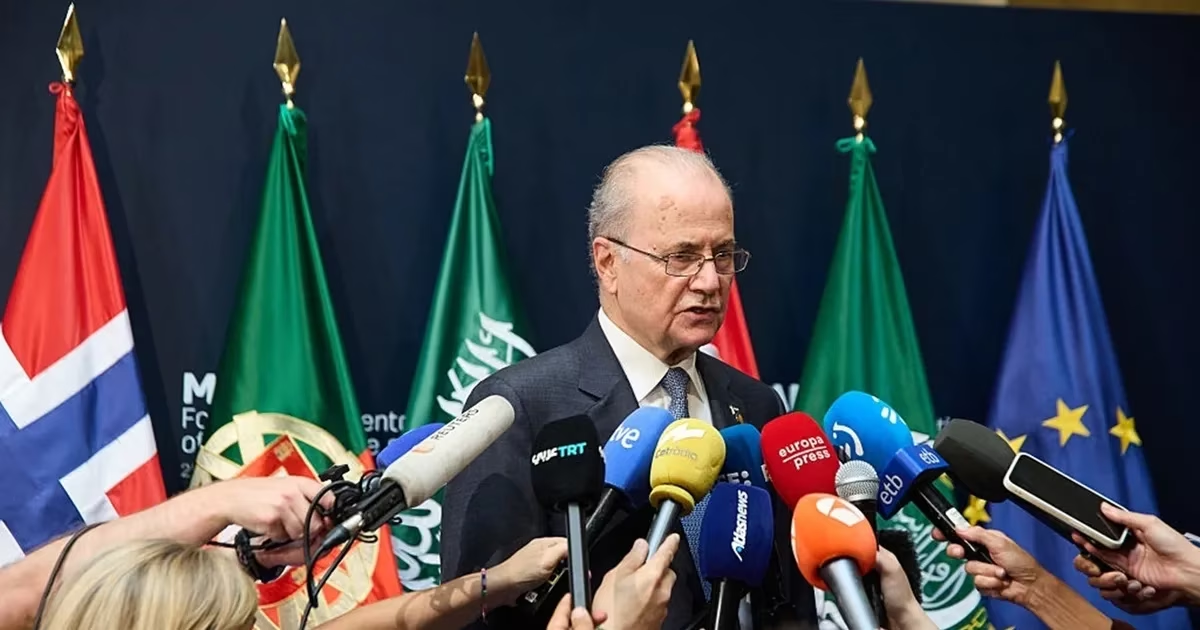
Palestinian Prime Minister Mohammed Mustafa affirmed that the practices carried out by the Israeli occupation authorities in the West Bank have exceeded the limits of traditional military control. He explained during a field tour that these aggressions fall within accelerated plans aimed at transforming the occupation into a comprehensive ethnic cleansing project targeting the Palestinian presence.

These statements came during an official visit by Mustafa to the ancient town of Sebastia, affiliated with the Nablus Governorate, with the aim of strengthening the steadfastness of citizens in the face of repeated attacks by the occupation army and settlers. The Prime Minister stressed that these attempts to uproot Palestinians from their land will not succeed, no matter how intense the pressures.

Mustafa indicated that the occupation government deluded itself into thinking that the world's preoccupation with the war of extermination in the Gaza Strip would open the door for it to impose new settlement realities in the West Bank and Jerusalem. He added that the steadfastness of the Palestinian people in Gaza, despite the killing, starvation, and displacement, has thwarted these bets and proven the Palestinians' adherence to their historical and national rights.

The Prime Minister addressed the humanitarian catastrophe in the Gaza Strip, where the ongoing war since October 2023 has resulted in more than 73,000 martyrs and over 173,000 injured. He also drew attention to the massive destruction that affected about 90% of the civilian infrastructure, amid UN estimates indicating that reconstruction will cost about 70 billion dollars.

Regarding the town of Sebastia, Mustafa explained that his visit carries a political and national message par excellence, emphasizing adherence to the authentic Palestinian identity and heritage. He described the town as a living model of steadfastness, work, and construction in the face of challenges, noting that it represents a bridge connecting the history of the Palestinian people with their future on their land.

The Prime Minister stressed the strategic importance of protecting the civilizational and historical legacy in Palestine from attempts of falsification and Judaization. He announced the government's full support for national efforts to register the town of Sebastia on the UNESCO World Heritage List, to ensure its international protection from Israeli aggressions.

Mustafa extended an open invitation to national institutions, the local community, and all Palestinians at home and in the diaspora to intensify their visits to historical and archaeological sites. He considered that the popular presence in these sites, especially Sebastia, is direct support for the steadfastness of the residents and a reinforcement of the Palestinian narrative in the face of attempts at isolation and Judaization.

The town of Sebastia is one of the most important archaeological sites in Palestine, with its ancient history extending for more than five thousand years, witnessing the succession of multiple human civilizations. The Prime Minister affirmed that preserving this cultural heritage is an integral part of the battle for national independence and the preservation of the collective memory of the Palestinian people.

It is worth noting that the Israeli escalation in the West Bank and Jerusalem since October 2023 has led to the martyrdom of 1,169 Palestinians and the injury of thousands of others with varying degrees of wounds. Arrest campaigns have also affected about 23,000 citizens, while demolition and displacement policies have resulted in the displacement of about 33,000 Palestinians from their homes and lands.

What is happening is not limited to controlling the land, but rather comes within accelerated attempts to transform the occupation into an ethnic cleansing project, exploiting current circumstances and developments.
PALESTINE

Sat 20 Jun 2026 9:25 pm - Jerusalem Time

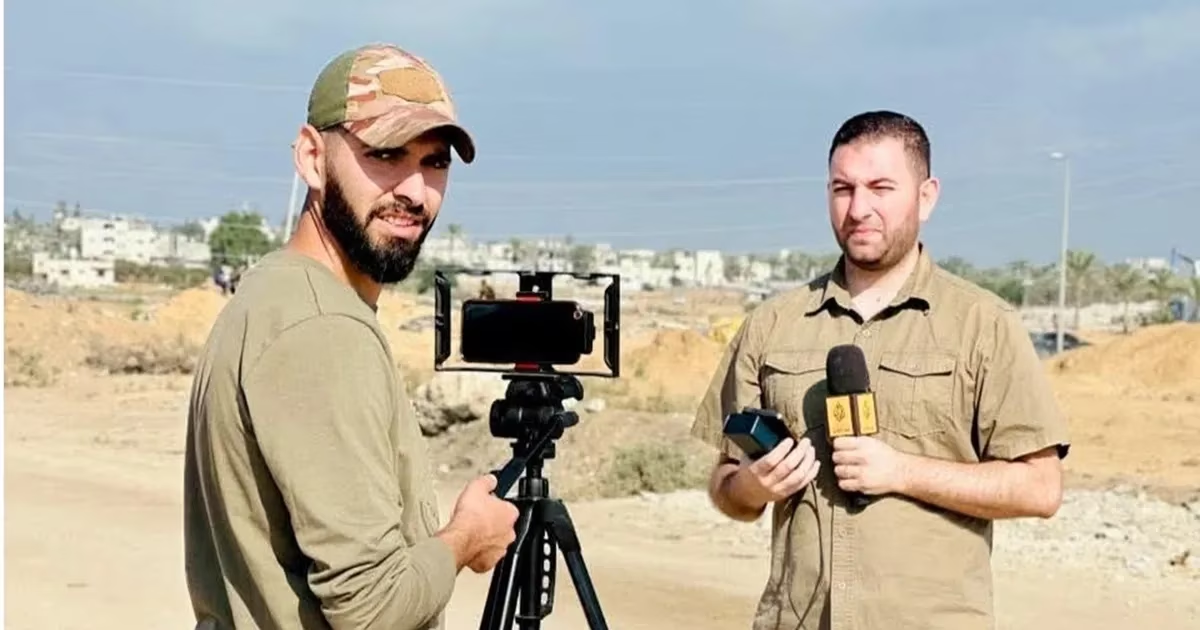
Photojournalist Ahmed Wshah martyred in Israeli shelling targeting Al-Bureij camp

Palestinian photojournalist Ahmed Samir Wshah was martyred on Saturday evening, after being targeted by Israeli occupation aircraft in the central Gaza Strip. This crime comes in the context of a series of continuous violations committed by the occupation army of the ceasefire agreement in effect since last October, which exacerbates the already critical humanitarian and field conditions in the Strip.

Medical sources confirmed the arrival of the bodies of two martyrs and a third injured to the hospital, as a result of a raid carried out by an Israeli drone that directly targeted the courtyard of a house in Al-Bureij camp. Eyewitnesses stated that photojournalist Ahmed Wshah was among the victims, and he is the brother of the martyred journalist Mohammed Wshah, who was killed in a previous raid that targeted his vehicle south of Gaza City last April.

With Wshah's martyrdom, the government media office in Gaza announced that the number of martyrs from media personnel has risen to 262 martyrs since the outbreak of the genocide war in October 2023. These figures reflect the systematic targeting of media crews in an attempt to obscure the truth and hinder the reporting of details of crimes committed against civilians.

Official data indicates that early 2026 witnessed a bloody escalation against journalists, with five of them martyred by occupation fire since the beginning of the year. The list of new martyrs includes Abdul Raouf Samir Shaat, Mohammed Salah Qashta, Anas Abdullah Ghoneim, Amal Shamali, in addition to the brothers Mohammed and Ahmed Wshah, highlighting the serious risks facing journalistic work.

Regarding field violations, local sources reported that the occupation's violations of the ceasefire agreement have resulted, as of Saturday, in the martyrdom of 1012 Palestinians and the injury of 3208 others with varying degrees of wounds. These attacks continue despite international understandings, putting the fragile agreement to difficult tests in light of the Israeli insistence on continuing limited and systematic military operations.

The ceasefire agreement came into effect after two years of a comprehensive war of annihilation that left unprecedented destruction in the modern history of the Strip. According to official statistics, the number of martyrs exceeded 73,000, while the number of injured surpassed 173,000, amid a near-complete collapse of the health and service systems due to the repeated targeting of vital facilities.

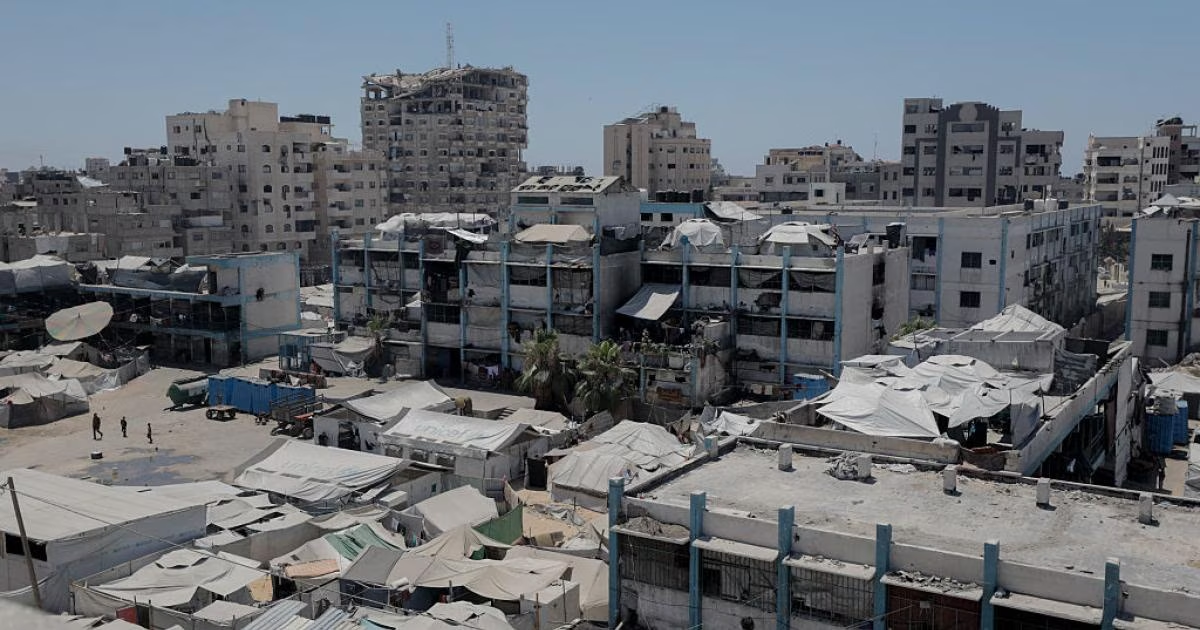
Regarding infrastructure, reports indicate that Israeli shelling targeted about 90% of civilian facilities in the Gaza Strip, causing a complete paralysis of daily life. The United Nations estimates the cost of rebuilding what the occupation destroyed at about $70 billion, amid enormous challenges facing relief and reconstruction operations due to the continued blockade and restrictions imposed on the entry of basic materials.

The number of martyred journalists has risen to 262 martyrs since the beginning of the genocide war on the Gaza Strip in October 2023.

ARAB AND WORLD

Sat 20 Jun 2026 9:25 pm - Jerusalem Time

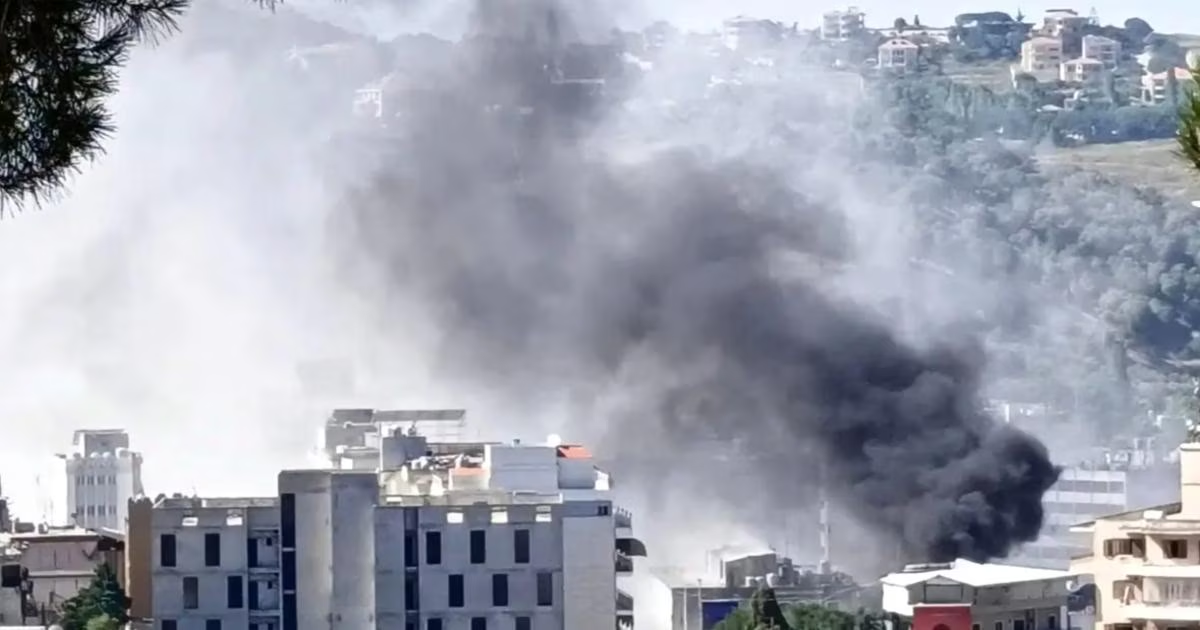
Netanyahu orders halt to operations in Lebanon, Hezbollah documents 300 Israeli violations

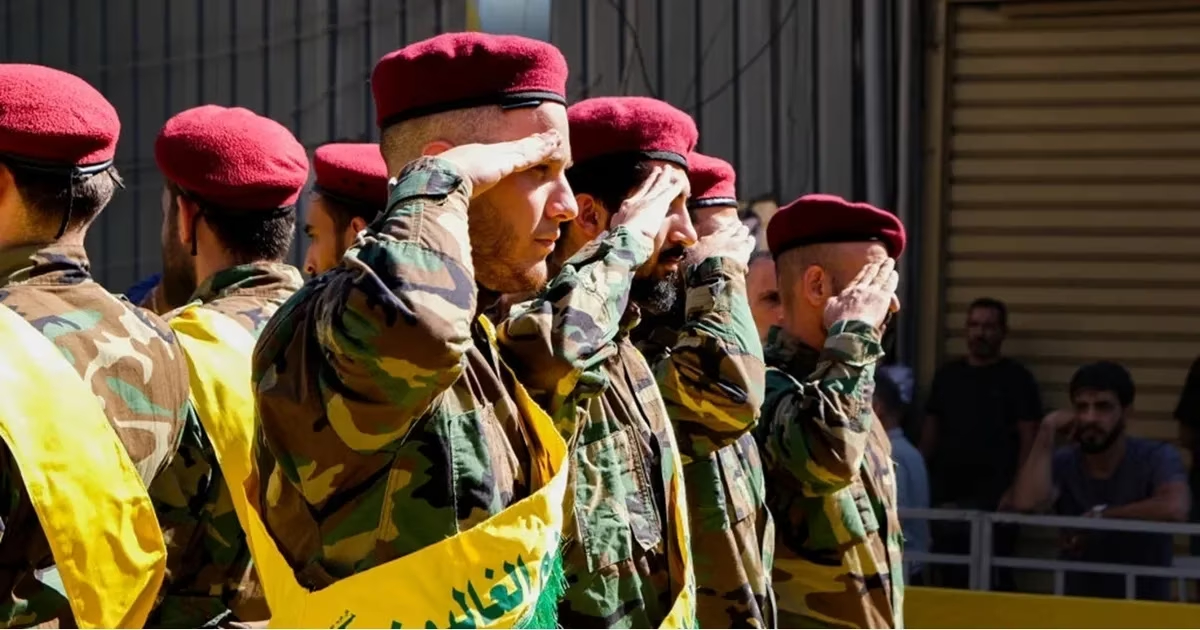
Hezbollah held the Israeli occupation fully responsible for the continuous series of violations of the ceasefire agreement, stressing that the field practices reflect the Israeli side's non-compliance with the truce. In a statement, the party clarified that the documented Israeli attacks since dawn on Friday amounted to about 300 violations, including air raids and artillery shelling targeting various areas.

The party considered that the claims promoted by the occupation leaders regarding the resistance's violation of the agreement are nothing but lies aimed at justifying the continuation of aggression on Lebanese territories. The statement emphasized that these Israeli attempts aim to evade international obligations and commitments reached under American and international sponsorship to stop the bloodshed.

In contrast, Israeli Prime Minister Benjamin Netanyahu, in cooperation with his security minister, Yisrael Katz, issued instructions to the army to temporarily halt military operations in southern Lebanon. Despite this directive, Israeli sources confirmed that the decision does not include withdrawal from the positions controlled by the army during the recent ground incursion, which keeps tension high in the border areas.

Hebrew media sources reported that Netanyahu's decision came after intensive security consultations held on Saturday, coinciding with rapid regional developments including Iran's announcement of closing the Strait of Hormuz. This decision appears to reflect an Israeli desire to contain the situation and avoid an open confrontation with the American administration, especially with Donald Trump's approaching assumption of power.

For its part, the Israeli Broadcasting Corporation stated that Netanyahu insists on the military forces remaining in the so-called 'security zone' within Lebanese territory to ensure that Hezbollah fighters do not return. Officials in the Prime Minister's office claimed that the army managed to attack 300 targets belonging to the party in the past two days, resulting in the killing of dozens of its elements according to their claims.

The term 'halt to operations' reported by Hebrew reports remains ambiguous, as it is not yet clear whether it includes the demolition of homes and villages carried out by the occupation in the 'Yellow Line'. The Israeli security minister had previously stated that the destruction of infrastructure in those areas does not contradict the terms of the ceasefire agreement, which Beirut completely rejects.

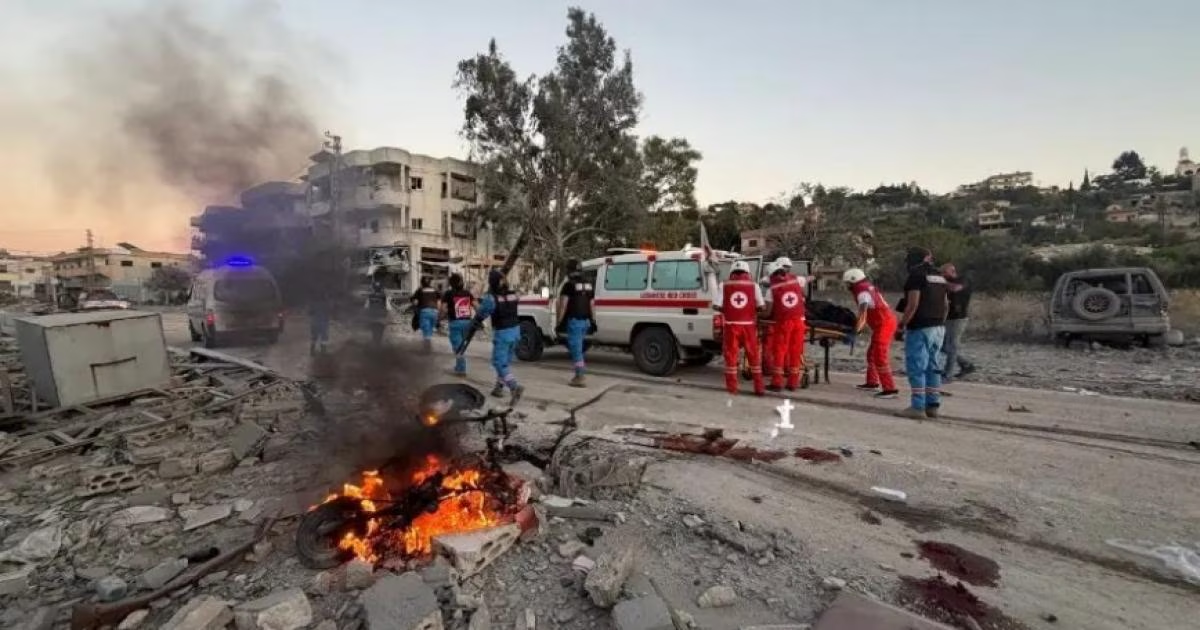
On the ground, the Lebanese Civil Defense reported the martyrdom of at least 16 people due to Israeli raids targeting southern and Bekaa towns a few hours after the truce came into effect. Sources confirmed that drones and warplanes did not leave Lebanese airspace and continued to carry out what were described as retaliatory strikes against civilian and military targets.

In a notable escalation, an Israeli raid targeted a Lebanese army soldier on the Kfar Remman-Nabatieh road, leading to his immediate martyrdom while performing his national duty. The Lebanese army condemned these brutal attacks, considering them directly aimed at obstructing any international or local efforts to restore stability and security to the country.

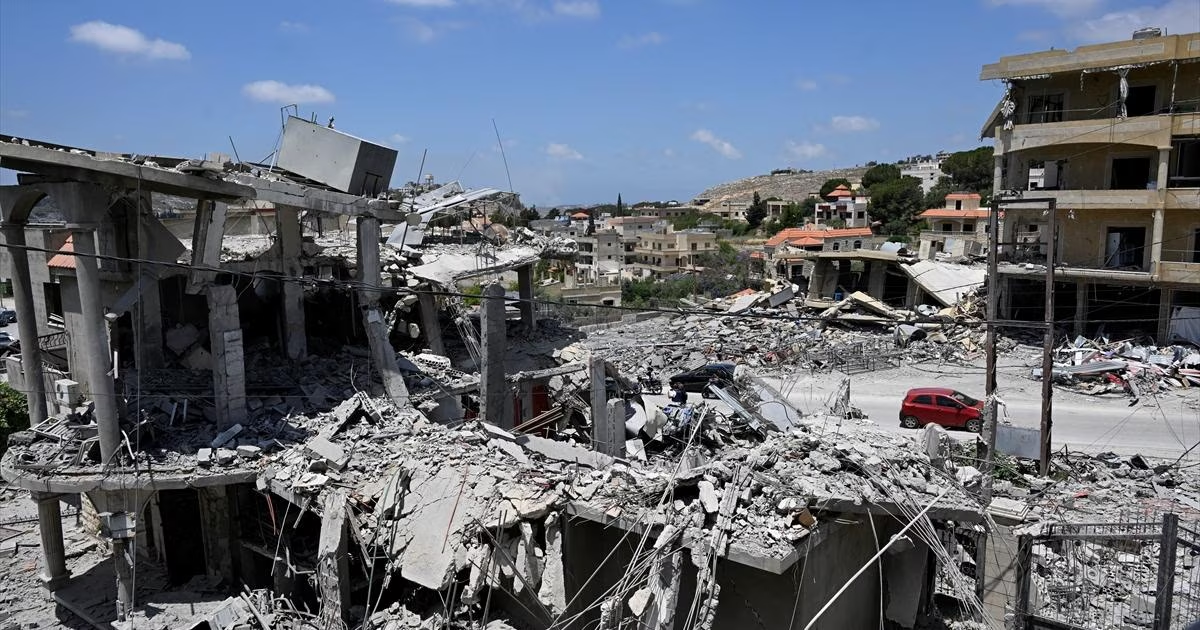
The National News Agency reported that one of the Israeli strikes destroyed a three-story residential building in the Tyre governorate, resulting in a horrific massacre that claimed the lives of an entire family. Sources clarified that the martyrs were a father, mother, and their two children, in a scene that embodies the extent of blatant Israeli violations of humanitarian and international laws during the supposed truce period.

Regarding official statistics, the Lebanese Ministry of Health announced that the death toll from Israeli attacks on Friday alone reached 83 martyrs and 141 injured. Most of these casualties were concentrated in the southern and Bekaa regions, where villages and towns were subjected to intense shelling that indiscriminately targeted residential areas and public facilities.

In its periodic report, the ministry revealed that the total number of martyrs since the beginning of last March until Saturday has exceeded 4057 martyrs, including a large number of women and children. The report also noted the martyrdom of 135 paramedics and health sector workers, a clear indication of the occupation's systematic targeting of relief and rescue teams.

In light of these developments, the Lebanese and international public are awaiting the resilience of the ceasefire agreement in the face of these repeated violations and Israeli intransigence in remaining within Lebanese territory. Diplomatic contacts between Washington and Tel Aviv continue in an attempt to stabilize the truce, amid fears of the agreement collapsing and a return to full-scale confrontation.

The enemy's violations since dawn on Friday amounted to 300 documented breaches and attacks, and its claims of our violation of the agreement are an attempt to justify its continuous attacks.

ARAB AND WORLD

Sat 20 Jun 2026 9:25 pm - Jerusalem Time

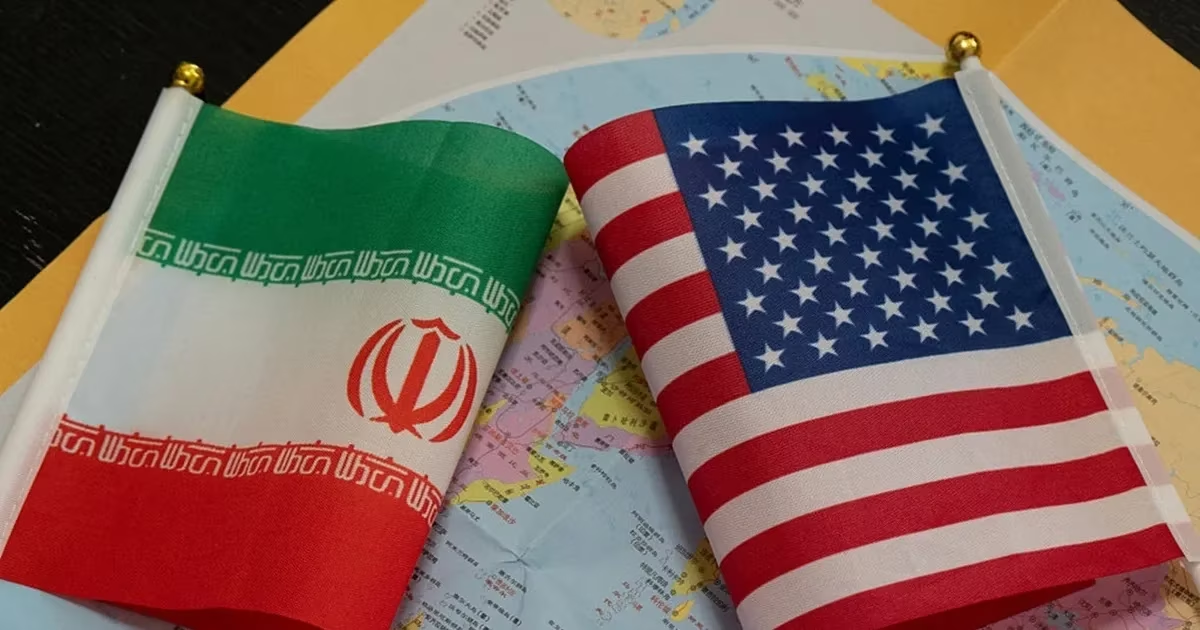
Switzerland hosts crucial Iranian-American talks amid threats to close the Strait of Hormuz

International attention is turning to the Swiss city of Bürgenstock, which is preparing to host a new round of technical talks between the United States and Iran on Sunday. These meetings aim to establish executive mechanisms for the recently signed memorandum of understanding in Islamabad, which seeks to end the ongoing conflict in the Middle East.

Pakistan's Ministry of Foreign Affairs confirmed that these discussions will take place with the presence of mediators from Pakistan and Qatar, to ensure a convergence of views between the American and Iranian delegations. This step comes at a sensitive time witnessing military escalation and mutual warnings that could jeopardize the fragile stability achieved.

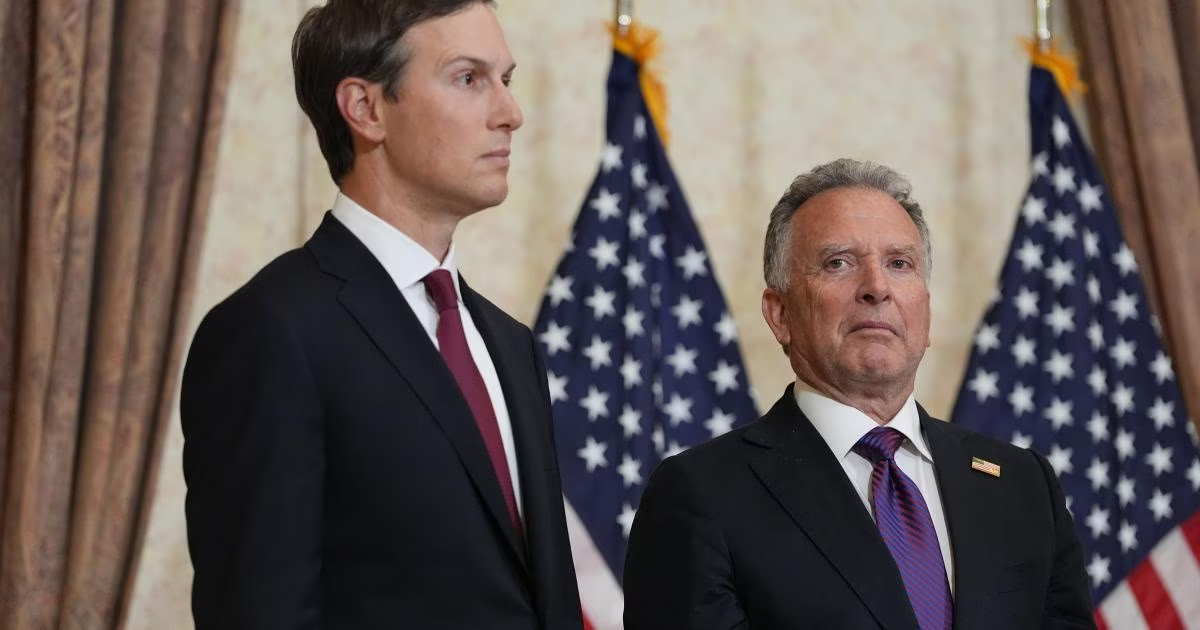
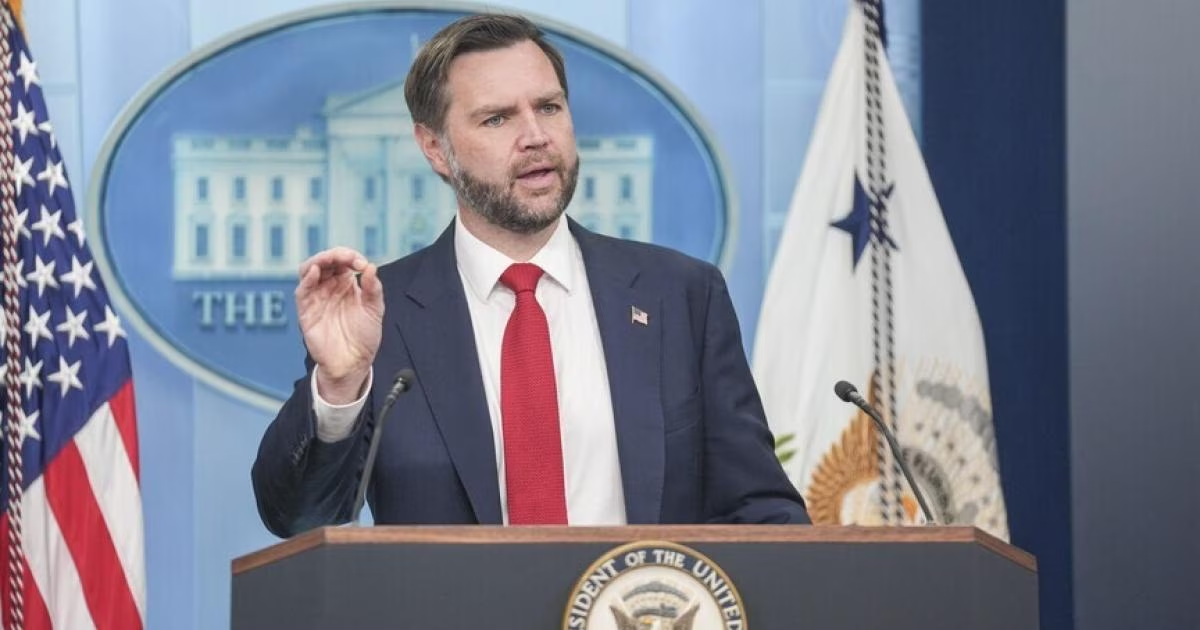
For his part, US Vice President J.D. Vance revealed the possibility of his heading to Switzerland in the coming days to join the negotiating team. Vance indicated that envoys Steve Witkoff and Jared Kushner are currently in Switzerland managing the complex technical files related to the agreement.

In press statements, Vance explained that things are going well so far, but they require precise and careful coordination to ensure the success of the diplomatic path. He stressed that the US administration attaches great importance to implementing the provisions of the memorandum to ensure the interests of all parties concerned with regional stability.

In contrast, Tehran officially announced the departure of its technical delegation to Switzerland, carrying strict demands related to the necessity of Washington's adherence to its prior commitments. Iranian Foreign Ministry spokesman Ismail Baqaei warned that any American procrastination would put the entire understanding in real danger.

The Iranian diplomatic move coincided with serious military threats to re-close the Strait of Hormuz to international navigation, in response to what Tehran described as continuous violations. The Iranian leadership considered the continuation of Israeli attacks in southern Lebanon a blatant violation of the spirit of the memorandum of understanding concluded with Washington.

Media sources quoted the Iranian military leadership as saying that closing the strait represents 'the first step' in a series of potential escalatory measures. Tehran confirmed that the negotiating delegation in Switzerland will demand clear guarantees to stop military operations targeting the Lebanese front as an integral part of the agreement.

On the other hand, the US Central Command (CENTCOM) announced raising the level of alert and vigilance among its forces stationed in the region. US military sources confirmed that they are closely monitoring movements in the Strait of Hormuz to ensure that the international waterway remains open and safe for global trade.

A statement issued by CENTCOM reported that about 55 commercial vessels crossed the strait safely in the past hours, confirming that navigation has not faced any actual obstacles so far. The statement stressed the commitment of US forces to monitor the implementation of all provisions of the agreement concluded with the Iranian side and ensure its effectiveness.

The diplomatic path in Switzerland remains suspended between the parties' desire to contain the escalation and the increasing field pressures in Lebanon and the Gulf. Sunday will be a real test of the ability of mediators in Qatar and Pakistan to bridge the gap between Iranian demands and American commitments amid an atmosphere charged with military threats.

The agreement is at risk if the United States does not adhere to its commitments, and the other party must take the necessary measures as soon as possible.

PALESTINE

Sat 20 Jun 2026 9:25 pm - Jerusalem Time

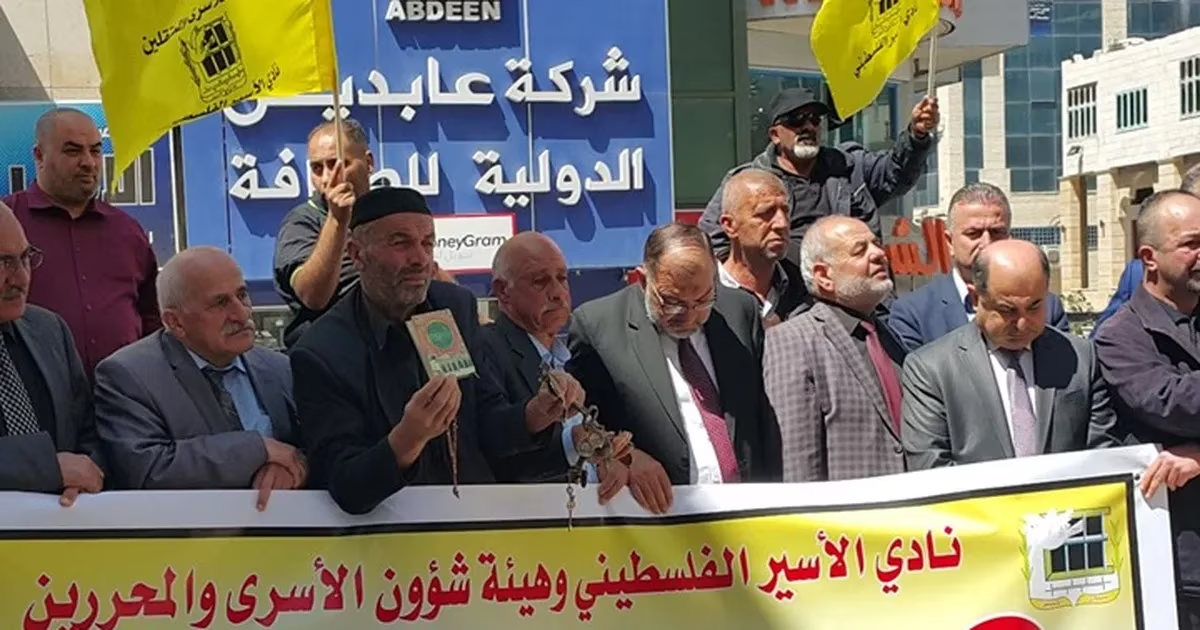
Prisoner's Club: Occupation Deprives 65 Students in its Prisons of High School Exams

Palestinian human rights sources announced today, Saturday, that the Israeli occupation authorities continue to detain 65 high school students in their prisons, which directly led to their deprivation of taking the final exams for this year. These figures coincide with thousands of students in the West Bank and Gaza Strip heading to examination halls as part of a unified program implemented for the first time since the outbreak of the war of extermination in October 2023.

The Palestinian Prisoner's Club confirmed in an official statement that these numbers are based on data from the Palestinian Ministry of Education, indicating that the absence of these students comes in the context of a systematic targeting of the Palestinian educational process. The statement clarified that the occupation seeks through these arrests to break the will of the young generation and prevent them from completing their academic achievement, which is a fundamental weapon in facing current challenges.

The sources stressed that the occupying state has significantly escalated its arrest campaigns targeting students from various educational stages since the beginning of the comprehensive aggression on the Gaza Strip. These campaigns were not limited to arrest only, but also included repressive practices aimed at obstructing students' access to their schools and universities in various governorates of the homeland, creating a complex and difficult educational reality.

Student prisoners inside prisons face extremely harsh detention conditions, where they are subjected to various types of torture, abuse, and ill-treatment by the prison administration. Human rights reports stated that deprivation of education is accompanied by deprivation of communication with families, which doubles the psychological and physical suffering of detained students in the absence of real international oversight of these violations.

The Prisoner's Club considered this escalation a radical and dangerous shift in the reality of the prisoner movement, as the occupation authorities targeted the historical achievements made by prisoners over decades of struggle. The right to education is at the forefront of these achievements that the occupation is trying to undermine as part of the collective punishment policy imposed on the Palestinian people for many months.

Human rights organizations issued an urgent appeal to international and UN organizations to assume their legal and moral responsibilities towards the escalating crimes against detained students. These bodies demanded real pressure on the occupation government to stop the policy of targeting educational institutions and ensure the right of prisoners to continue their education in accordance with international laws and conventions.

Current statistics indicate that there are about 9,500 Palestinian prisoners in occupation prisons, including women, children, and hundreds of administrative detainees who are held without clear charges. International and local accusations against the occupation are escalating for practicing policies of starvation and deliberate medical neglect, which has led to the deterioration of the health of a large number of prisoners recently.

Amidst the ongoing war, human rights organizations confirm that the Israeli prison service has tightened its repressive measures, including reducing family visits and preventing the entry of books and educational materials. Despite the occupation authorities' denial of these accusations, testimonies of released prisoners and field reports confirm flagrant violations of the rules of international humanitarian law inside detention centers.

The right of prisoners to education has for many years been one of the most prominent rights they have struggled to establish despite repeated attempts by the prison administration to deprive them of it.

ARAB AND WORLD

Sat 20 Jun 2026 3:31 pm - Jerusalem Time

Intense American Moves in Switzerland and Efforts to Launch Direct Negotiations with Tehran

The diplomatic arena in Switzerland has witnessed accelerated American moves with the arrival of Steve Witkoff, Special Envoy of President Donald Trump, in preparation for direct talks with the Iranian side. These moves aim to formulate a new nuclear and ballistic agreement that would end the long-standing tension between the two countries.

Informed sources reported that Jared Kushner, the son-in-law of the American President, has already arrived in Swiss territory to participate in the logistical and political arrangements for this anticipated round. This step comes within the framework of the US administration's diligent efforts to open direct channels of communication to achieve a breakthrough in the thorny issues.

Despite these preparations, both Bern and Tehran announced the postponement of the first round of negotiations, which was supposed to begin on Friday at the Bürgenstock resort. The Swiss Foreign Ministry did not disclose the precise reasons for this postponement, merely stating the need to create suitable conditions.

For his part, Iranian Foreign Ministry spokesman Ismail Baqaei clarified that the start of the negotiation train depends on the implementation of specific provisions contained in the memorandum of understanding previously signed between the two parties. Baqaei stressed that the continued application of these provisions is the only guarantee for engaging in a formal and serious dialogue on outstanding issues.

Media reports indicated that the ongoing military escalation between Israel and Hezbollah in Lebanon played a pivotal role in obstructing the talks' timeline. Mediating parties believe that the continuation of fighting casts a negative shadow on the diplomatic climate and complicates the process of making fateful decisions.

In the same context, sources revealed that Iranian Foreign Minister Abbas Araqchi plans to travel to Switzerland on Saturday, but this date remains subject to field developments. Araqchi believes that establishing a ceasefire on the Lebanese front is a top priority and a crucial factor for the success of the negotiating path with Washington.
On the American side, Vice President J.D. Vance was expected to lead the negotiating delegation, but he decided to postpone his trip at the last minute on Thursday evening. Speculation remains about the possibility of him joining the delegation over the weekend if a breakthrough occurs in the political scene.

These negotiations are based on what is known as the 'Islamabad Memorandum of Understanding,' which was reached in mid-June and consists of 14 basic provisions. This memorandum was digitally signed by both Iranian President Masoud Pezeshkian and American President Donald Trump, representing a roadmap for a solution.

The memorandum includes essential provisions related to halting hostile operations on several regional fronts, including the Lebanese arena, and lifting the naval blockade imposed on Iranian ports. The understandings also include the full reopening of the Strait of Hormuz to international navigation to ensure the stability of global energy markets.

Tehran dispelled concerns about the closure of the Strait of Hormuz, with the Iranian Foreign Ministry spokesman denying the accuracy of reports about the disruption of ship traffic. He affirmed that Iranian forces continue to secure the strategic waterway to ensure the passage of commercial vessels and tankers without significant obstacles.

Regarding the nuclear file, Iran clarified that it has not issued a new invitation to the International Atomic Energy Agency to inspect additional facilities outside the agreed framework. It stressed that inspections will be limited to sites that were previously under surveillance, such as the Bushehr plant, while maintaining the security of its nuclear program.

The two parties set a 60-day timeframe to reach the final version of the comprehensive agreement, which puts diplomats under time pressure to achieve tangible results. This period is considered a real test of the seriousness of both parties in overcoming decades of hostility and building a relationship based on security and economic understandings.

Mediating countries play a vital role in conveying messages between Washington and Tehran, especially in the absence of full direct diplomatic relations so far. These countries affirm that the success of the Switzerland negotiations will represent a major turning point in the history of the Middle East, which could lead to a comprehensive de-escalation in the region.

Anticipation remains the order of the day, awaiting what the coming hours will bring in terms of diplomatic moves in the Swiss corridors, and the extent of the parties' ability to overcome the obstacle of field escalation. While Washington insists on an agreement that guarantees the containment of ballistic capabilities, Tehran demands a complete lifting of economic sanctions as a fundamental condition for stability.

Establishing a ceasefire in Lebanon is a top priority for Tehran, and a decisive factor for the course of negotiations with Washington.

PALESTINE

Sat 20 Jun 2026 3:31 pm - Jerusalem Time

3 Martyrs and Injuries in Israeli Raid Targeting Residential Apartment in Gaza City

Medical sources in the Gaza Strip reported, early Saturday, an increase in the number of victims of the Israeli raid that targeted a residential apartment in the heart of Gaza City to three martyrs, in addition to a number of injuries of varying severity among residents and neighbors.

The Directorate of Ambulance and Emergency explained that the concentrated shelling hit a residential unit in the central areas of the city, causing widespread destruction at the site and damage to surrounding homes, while ambulances rushed to transport the victims to nearby hospitals.

For its part, civil defense and rescue teams began intensive field operations to comb through the rubble and search for trapped or potential victims under the debris, confirming that efforts are still ongoing to ensure the evacuation of all injured from the scene of the targeting.

The death toll from the occupation's shelling, which targeted a residential apartment in the center of Gaza City, rose to 3 martyrs and a number of injured.

ARAB AND WORLD

Sat 20 Jun 2026 3:31 pm - Jerusalem Time

A Reading of the Balance of Power: How Tehran Imposed Its Conditions in the Memorandum of Understanding with Washington?

Political circles are awaiting the official final signing in Switzerland of the Iranian-American Memorandum of Understanding, which came as a result of Pakistani mediation supported by an active Qatari role. This procedure was preceded by a mutual electronic signing, amidst media leaks that sparked mixed reactions in the capitals of Tehran and Washington, between supporters who see it as a strategic necessity and opponents who describe it as a concession.

Domestically in the US, criticism from Democratic Party leaders towards the Donald Trump administration escalated, with Senator Chris Murphy describing the framework agreement as an 'American surrender'. Murphy pointed out that involving soldiers in a military confrontation with Iran was a losing bet from the start, emphasizing that Tehran emerged from this confrontation stronger and more resilient.

Criticism was not limited to politicians but extended to think tanks and media, with 'The Atlantic' considering Iran the true victor in this conflict. Analysts explained that the United States failed to achieve the fundamental goals it announced at the beginning of the escalation, which granted Iran a more influential regional and international standing after its steadfastness against military pressures.

In Israel, a state of deep shock prevailed in both government and opposition circles, with Avigdor Lieberman describing the memorandum as a great catastrophe. Benjamin Netanyahu found himself in an embarrassing defensive position, especially with the agreement's text stipulating a cessation of hostilities on all fronts, foremost among them the Lebanese front, which represents a priority in the memorandum.

The structure of the final agreement, drafted by Tehran in 14 clauses, is completely devoid of any reference to the Iranian missile program or its regional alliance network. The Iranian negotiator succeeded in isolating these files from the discussion table, focusing on linking the nuclear file to a cessation of war and an immediate lifting of the economic and naval blockade.

The effects of the agreement began to appear practically even before the official signing, as Iran resumed exporting oil and petrochemicals without objection from American fleets. In return, Tehran pledged the gradual opening of the Strait of Hormuz within thirty days, with a view to collecting navigation and environmental service fees from passing ships in coordination with the Sultanate of Oman.

Regarding the nuclear file, the agreement included a negotiation period extending for sixty days, with advanced centrifuges and nuclear facilities remaining under Iranian sovereignty. Washington appears to have backed down from its demands to dismantle the program, contenting itself with understandings regarding reducing high enrichment levels within Iranian territory or converting them into nuclear fuel through international intermediaries.

Recent intelligence reports indicate that Iran now possesses a 'strategic weapon' in its proven ability to control international waterways. Security sources confirmed that Tehran rapidly rebuilt its military industrial base faster than expected, giving it a permanent ability to threaten navigation in the event of a collapse of political understandings.

Despite this progress, there remain existing risks that could jeopardize the agreement, most notably the possibility of Israel violating the ceasefire in Lebanon to undermine Trump's efforts. In this context, Tehran insists on the necessity of a complete Israeli withdrawal from southern Lebanon, holding the American administration responsible for curbing any future Israeli military action.

In conclusion, the current scene shows the superiority of the Iranian negotiator who managed to transform military steadfastness into tangible political and economic gains. While Trump seeks to market the agreement as a historic achievement, observers believe that Tehran succeeded in establishing new rules of engagement that guarantee its national interests and end decades of imposed isolation.

Iran grew stronger day by day, and the military mission against it was impossible.

OPINIONS

Sat 20 Jun 2026 3:30 pm - Jerusalem Time

World Cup 2026: Racism fears turn into reality in the United States

Ramallah - “Alquds ” dot com

Ramallah - “Alquds ” dot com

Opinion Writer

Attention is currently focused on the 2026 World Cup, hosted by Canada, Mexico, and the United States, amidst widespread controversy that has not centered on athletic performance, but rather on organizational challenges and racist practices. Fears have grown since 2025 that the troubled political climate in the United States and the rise of right-wing currents would negatively affect fans coming from countries in the Global South, which has indeed begun to materialize with the start of the competitions.

Despite promises made by FIFA President Gianni Infantino that the tournament would be a global celebration uniting peoples, the reality on the ground has revealed a wide gap between slogans and implementation. Infantino's decision to award the FIFA Peace Prize to US President Donald Trump late last year sparked widespread indignation, especially in light of the strict policies pursued by the current US administration towards immigrants and minorities.

These policies were embodied in the prevention of Somali referee Omar Abdiqadir Artan, winner of the award for best referee in Africa, from entering US territory via Miami Airport despite holding a valid visa. Responsible sources in the White House justified this measure by the necessity of preventing what they described as 'malicious entities' from exploiting the tournament's cover to enter, a reference that reflects racist tendencies towards those coming from certain African countries.

These measures were not limited to referees but also affected participating teams, as players from Senegal and Uzbekistan were subjected to humiliating security checks at airport terminals. The Iraqi delegation also faced harassment, including preventing its photographer from entering and subjecting star Ayman Hussein to a lengthy eight-hour interrogation, while the Iranian team was forced to leave the country immediately after their matches without being allowed to stay.

As for fans, the audience from the Democratic Republic of Congo was denied the right to attend and support their team on the pretext of health concerns regarding the Ebola epidemic, despite meeting all medical requirements and spending a quarantine period in Europe. This ban deprived the World Cup of iconic figures such as the fan 'Lumumba,' reflecting double standards in dealing with citizens of poor countries compared to their counterparts from Western countries.

In contrast to these restrictions, double standards towards Israel stand out, as FIFA previously withdrew the hosting of the Youth World Cup from Indonesia for its refusal to host the Israeli team. In the current tournament, Jake Perkunz, an Israeli-American soldier who participated in military operations in Gaza, was allowed to enter, despite reports against him for documented war crimes, raising questions about the absence of legal accountability within US territory.

These events come at a time when US detention centers are witnessing tragic conditions, with reports indicating the death of more than 44 migrants since early 2025 due to mistreatment and medical neglect. As the tournament continues, it appears that media and sports focus ignores these human rights violations, putting the slogans of 'sportsmanship' and 'world unity' promoted by FIFA to the test.

There is a vast difference between how participants and fans from Europe and the Global North are treated, and how those from Africa and Asia are treated.

PALESTINE

Sat 20 Jun 2026 3:30 pm - Jerusalem Time

Collapse of Lebanon's Calm: Intense Israeli Raids Leave Martyrs and Widespread Destruction in the South

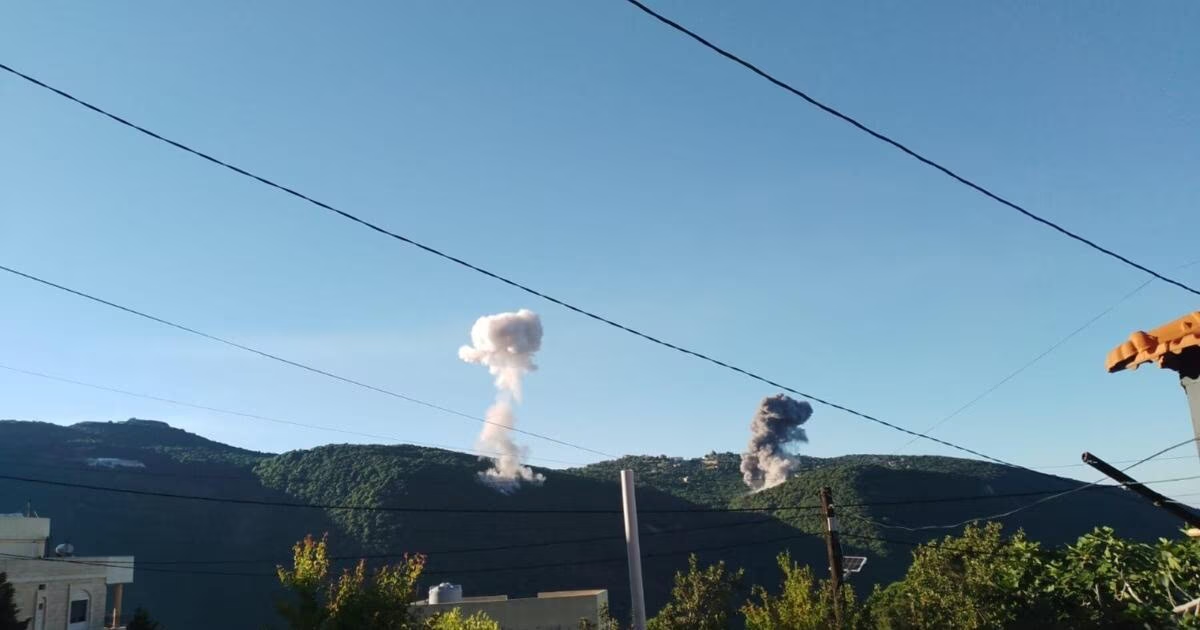
The past hours have witnessed a dangerous Israeli military escalation in southern Lebanon, where warplanes carried out a series of intense airstrikes targeting populated towns and villages. This escalation represents a clear violation of the ceasefire agreement that came into effect on Friday evening, leading to a number of martyrs and injured, and causing severe material damage to private and public properties.

Field sources reported that after midnight, warplanes targeted the town of Nabatieh Fawqa with a violent raid, followed by morning raids that hit the Al-Rus neighborhood in the town of Al-Numairiya. These attacks resulted in the complete destruction of a number of residential homes, while simultaneously shelling targeted the towns of Shoukin and Haboush, causing a state of panic and widespread destruction in the area.

In the Jezzine region, Israeli planes launched two raids on the heights of Sajed and Al-Rihan, while the Kfarjouz area in Nabatieh was directly targeted, leading to the destruction of a residential building. Not long after, the planes re-targeted another building in the same area less than half an hour later, indicating an intentional effort to inflict the greatest possible damage to infrastructure.

This bloody escalation was largely concentrated in the town of Arabsalim, which was subjected to two consecutive raids, resulting in three martyrs and several others injured with varying degrees of severity. The raids also hit Jabal Al-Rafie on the eastern outskirts of the town, in addition to targeting the town of Zabdin and Al-Mahmoudiya farm near the Al-Aishiya area, amidst intensive drone flights in the skies.

Regarding human casualties, medical sources confirmed the martyrdom of a citizen in a shelling that targeted the town of Deir Al-Zahrani, while another was martyred at the eastern entrance of the town of Al-Duwair as a result of a motorcycle being targeted by a missile from a drone. Artillery shelling also hit the city of Nabatieh and its outskirts and the vicinity of the historic Beaufort Castle, reflecting the expansion of Israeli military operations despite the announced understandings.

This field deterioration comes just hours after Israel and Hezbollah agreed to a ceasefire, which began at 4:00 PM on Friday through international mediation. Despite the hopes placed on this agreement to end the suffering of civilians, the continuation of Israeli raids and military operations has put the calm at risk and returned the region to a state of tension.

In a related context to the ongoing occupation crimes, Gaza City bid farewell to the young Palestinian Abdul Jawad Abu Laban, who was martyred in a raid that targeted a civilian vehicle in the center of the Strip. Martyr Abu Laban was distributing invitations for his wedding, which was scheduled for next week, turning the wedding ceremony into a solemn funeral that set off from Al-Shifa Hospital in Gaza City amidst a state of deep sorrow.

The moments of bidding farewell to Martyr Abu Laban witnessed touching scenes, as his fiancée collapsed while taking her last look at him in the hospital, in a crime that reflects the extent of the human tragedy experienced by Palestinians. This incident confirms that the Israeli war machine does not differentiate between one front and another, targeting civilians and their dreams in Gaza and Lebanon alike.

The Israeli army violated the ceasefire agreement in Lebanon since last night, by carrying out a series of intense airstrikes that hit various areas in the South.

PALESTINE

Sat 20 Jun 2026 3:30 pm - Jerusalem Time

Joëlle El Hajjam.. A French fashion designer dedicates her life to Gaza relief from the streets of Paris

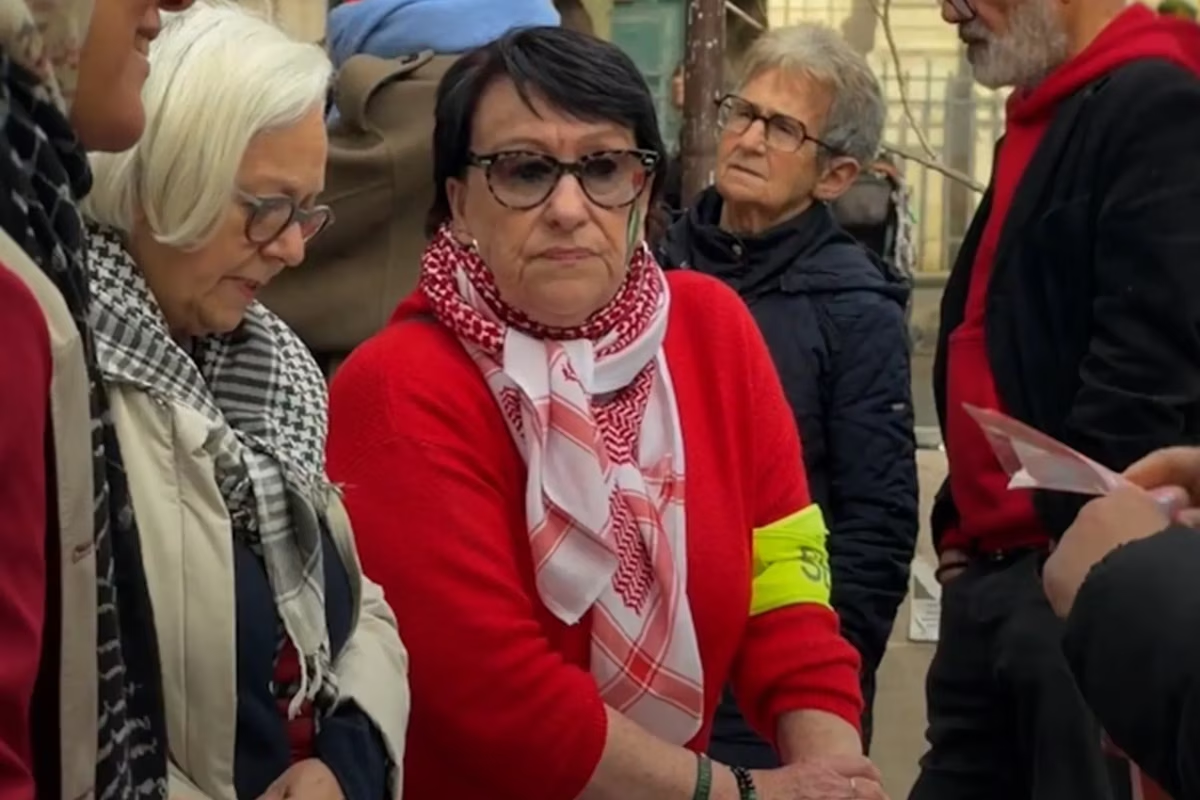
French fashion designer and human rights activist, Joëlle El Hajjam, embodies a unique model of individual solidarity with the Palestinian people, having dedicated her life for over a decade and a half to defending human rights. El Hajjam, who is over sixty years old, is keen to transform simple street events in France into effective tools for collecting direct donations for the Gaza Strip, in light of the deteriorating humanitarian conditions there.

The French activist adopts an innovative method to attract donors, by organizing display tables in public squares featuring various collectibles and items. El Hajjam emphasizes that this process is not under the traditional commercial selling concept, but rather a symbolic means to encourage passersby to contribute financially, stressing that all proceeds are allocated to support the basic needs of Palestinians.

Field reports indicate that this initiative receives a wide response from the French community, with daily donations averaging around 800 euros, equivalent to approximately 864 dollars. This figure reflects the increasing public awareness of the Palestinian cause, especially since El Hajjam continues her weekly and regular activity to ensure the flow of financial and in-kind aid through her private association.

El Hajjam does not limit herself to collecting money; she also uses her tables as platforms for political and humanitarian awareness about what is happening in the occupied territories. The activist believes that direct communication with the French public breaks the barrier of media misinformation, as she dedicates a long time to answering passersby's questions and explaining the details of the daily suffering experienced by the residents of the Gaza Strip as a result of the siege and aggression.

Sources following her activity explained that religious occasions, such as the holy month of Ramadan and Eid al-Fitr, witness a peak in donation turnout, as the initiative managed to collect huge sums of money during these times. These resources contribute to providing Iftar meals and clothing for needy families, which enhances the resilience of citizens in facing harsh conditions.

Regarding the mechanism for delivering aid, El Hajjam confirms that donations are transferred directly and documented into the Strip to purchase necessary supplies such as food, clothing, and medicine. She believes that the continuous documentation of distribution operations contributes to building a bridge of trust with French donors, who see the tangible impact of their contributions on the ground.

The French activist concludes her speech by emphasizing her ethical commitment to continuing this path, considering herself a voice for those whose voices have been silenced amid international silence. Through her individual effort, she aims to ensure that every child and family in Gaza receives the minimum requirements for a dignified life, transforming cross-border civil work into a message of hope and unwavering humanitarian solidarity.

We are the voice of the voiceless, and what I seek is to secure food and water and bring joy to the hearts of those besieged in Gaza.

PALESTINE

Sat 20 Jun 2026 3:30 pm - Jerusalem Time

Warnings against Palestinians paying the price for Netanyahu's military and political 'failures'

Palestinian researcher Ramzy Baroud warned that the Palestinian people might find themselves the 'weaker party' that will bear the consequences of Israeli Prime Minister Benjamin Netanyahu's political and military decline. Baroud explained that Netanyahu is currently experiencing the most fragile moments of his political life amid escalating crises on multiple regional fronts and severe internal criticism.

Analysis published on international platforms indicated that Netanyahu's state of weakness has made him a hostage to extremist right-wing currents within his government. Ministers such as Itamar Ben-Gvir and Bezalel Smotrich are exploiting this situation to push through unprecedented settlement and expansionist agendas in the occupied Palestinian territories.

Sources quoted former Israeli officials making explicit confessions of the current military strategy's failure to achieve its stated goals. Former Justice Minister Haim Ramon stated that Israel has not decisively won the battle on any of the open fronts, whether in Lebanon, Iran, or even against the resistance in the Gaza Strip.

For his part, former Israeli Chief of Staff Gadi Eizenkot criticized the crisis management style under the current government, considering that strategic independence has eroded. Eizenkot affirmed that excessive reliance on the American position has weakened Israel's ability to maneuver and make sovereign decisions that serve its long-term security.

Observers believe that Netanyahu has turned the ongoing state of war into a primary tool for staying in power and escaping judicial and political prosecutions. This approach has been reflected in a widespread military escalation in the Gaza Strip, increasing tensions on the Lebanese border, leading to a direct and open confrontation with Iran.

Baroud warned that this model of 'crisis management through escalation' is approaching a dead end with increasing international pressure. He added that any decline in Netanyahu's ability to achieve successes on external fronts might push him to shift pressure towards the West Bank as the politically least costly arena.

In a related context, reports issued by Oxfam International revealed shocking figures related to violations in the West Bank since 2023. The organization documented the killing of 1244 Palestinians, including 268 children, amid escalating violence and forced displacement of indigenous populations.

Amnesty International reports also drew attention to systematic displacement operations targeting dozens of Palestinian Bedouin and pastoral communities over the past three years. These operations come as part of a broader plan to expand settlements and confiscate vast areas of land for the settlement project.

Data indicates that Finance Minister Smotrich has already begun implementing plans aimed at annexing about 82% of the West Bank to Israeli sovereignty. This shift represents a dangerous transition from mere political rhetoric to actual implementation on the ground, undermining any future opportunities for the establishment of a Palestinian state.

The analysis concluded that the decline in Netanyahu's political standing will not necessarily lead to a calming of the situation, but rather may generate a new wave of escalation against Palestinians. Baroud stressed the urgent need for the international community and Arab states to act to contain this path and prevent a comprehensive explosion that could spiral out of control.

Israel has not won in Lebanon, nor in Iran, nor against Hamas, and political decision-making has become excessively linked to the United States.

PALESTINE

Sat 20 Jun 2026 3:29 pm - Jerusalem Time

Injuries in settler attacks, occupation disrupts wheat harvest in Nablus

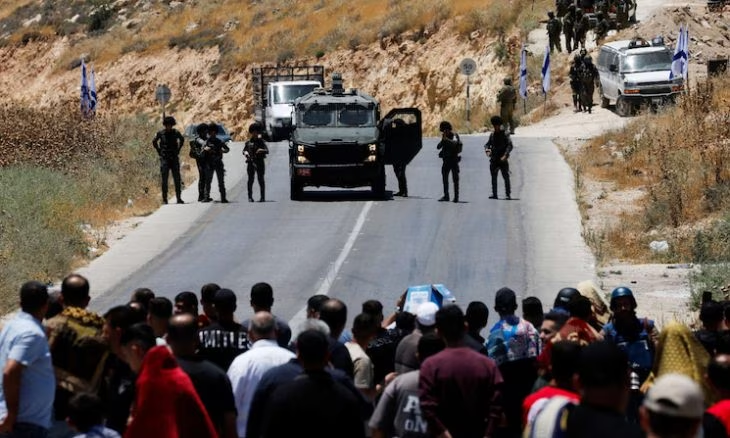
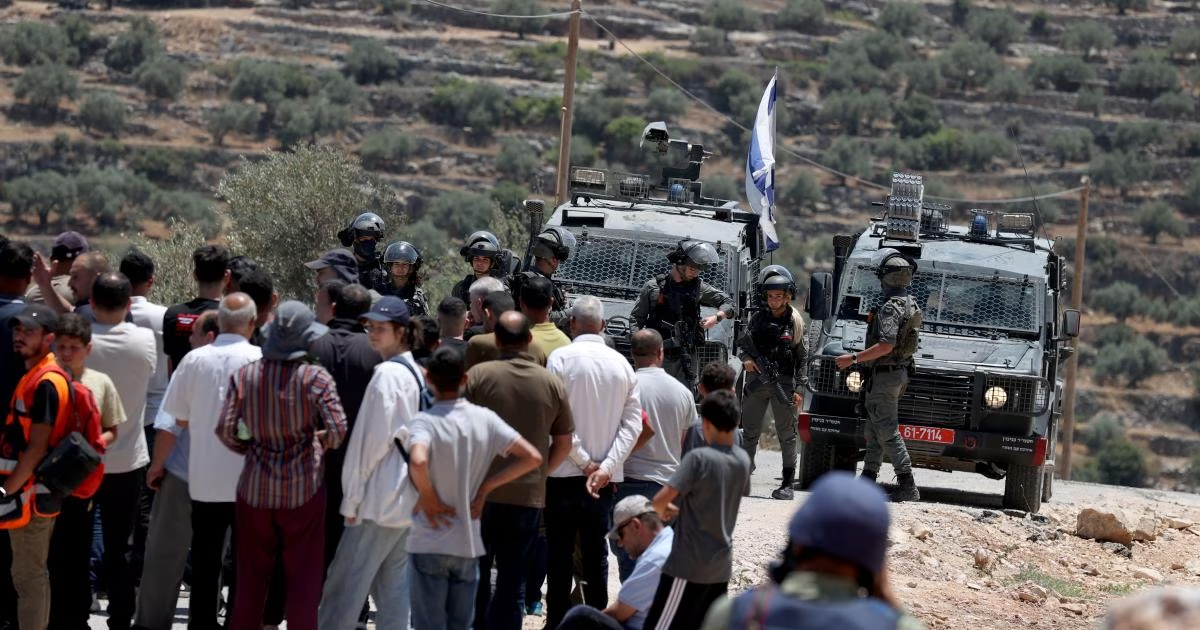
Israeli occupation forces, today Saturday, prevented Palestinian farmers from reaching their lands in the Beit Furik plain, east of Nablus city. This prevention came at the peak of the wheat harvest season, as occupation soldiers, accompanied by groups of settlers, spread throughout the area to prevent the completion of agricultural work and secure the settlers' presence.

In another field development, sources in the Palestinian Red Crescent reported that three citizens sustained various injuries as a result of an attack carried out by settlers in the Al-Badoon area, east of Salfit governorate. Ambulance crews intervened urgently to provide first aid to the injured before transferring them to the hospital for follow-up on their health condition.

Al-Badoon area, extending between Salfit city and the village of Al-Lubban Al-Sharqiya, is considered a flashpoint that witnesses repeated attacks by settlers who seek to control the lands of the residents. These attacks vary between physical assaults, destruction of agricultural crops, and preventing farmers from accessing their fields under the protection of the occupation army.

Regarding arrests, occupation forces detained eight young men from Qalqilya city while they were attempting to pass through the Attara military checkpoint located north of Ramallah city. This step comes within the policy of restricting movement between Palestinian cities through the military checkpoints spread deep in the West Bank.

Also in Ramallah governorate, a large military force raided the village of Deir Abu Mash'al at dawn today, and the operation resulted in the arrest of four citizens. Local sources stated that occupation soldiers raided a number of homes and tampered with their contents, causing a state of panic among the peaceful residents before the force withdrew from the village.

In Nablus city, occupation forces continued their raiding operations that targeted several neighborhoods, most notably the Jabal Fatair area. Field sources reported that the invading forces arrested a young man after thoroughly searching his home, while the area witnessed intensive military movements during the early morning hours.

In a related context, occupation forces tightened their military measures around the village of Al-Mughayyir by closing its main entrance, coinciding with the storming of the town of Deir Dibwan, east of Ramallah. The forces confiscated surveillance camera recordings from shops and homes as part of extensive search and sweep operations.

Incursions did not stop there, but extended to include the town of Al-Yamoun west of Jenin city, and Salfit city, in addition to Aqabat Jaber refugee camp in Jericho city. These simultaneous military movements come within the framework of a continuous escalation targeting various governorates of the West Bank, which further complicates the field situation.

Medical sources reported that three Palestinians were injured as a result of an attack carried out by settlers in the Al-Badoon area, east of Salfit governorate, where they were transferred to the hospital for treatment.

PALESTINE

Sat 20 Jun 2026 3:29 pm - Jerusalem Time

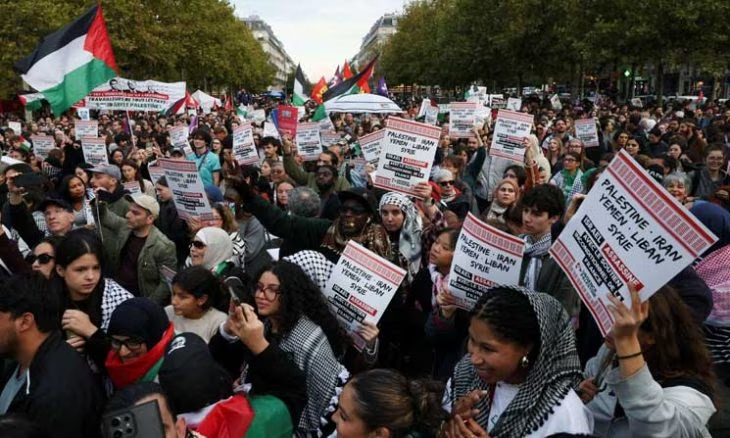
Between judicial prosecution and financial pressure.. How does France confront the student movement supporting Palestine?

The French university scene is witnessing a state of boiling and escalating tension, in light of the authorities' tightening of measures against student movements condemning the Israeli war of extermination in the Gaza Strip. Field sources reported that activists face an arsenal of penalties, including on-site arrests, exorbitant financial fines, in addition to referrals to disciplinary councils within universities.

These pressures come at a time when the Israeli occupation continues its widespread aggression on Gaza, which has resulted in the martyrdom of about 73,000 Palestinians and the injury of more than 173,000 others. This tragic reality has fueled student anger in France, where protesters are demanding an immediate halt to academic and military cooperation with the Israeli entity.

In a remarkable development, the prestigious Sorbonne University witnessed violent security interventions, where French police arrested 88 activists last May during a demonstration supporting Gaza. These figures reflect the extent of official insistence on restricting freedom of expression within the university campus, under the pretext of maintaining public order and enforcing applicable laws.

Prosecutions were not limited to the security aspect, but extended to include unprecedented financial pressures targeting the pockets of active students. In protests witnessed in Paris last April, authorities imposed fines of 400 euros on more than 70 students, in a move described by human rights activists as an attempt to stifle the movement economically.

Statistics issued by student committees indicate that the total fines imposed in one day exceeded 35,000 euros, which constitutes a significant burden on students. Rania, a member of the Palestine Committee at the Sorbonne, considered that this shift towards financial penalties aims to intimidate students and prevent them from participating in future events.

In a related context, the 'Yadan' bill sparked widespread controversy before its withdrawal, as it aimed to criminalize anti-Zionist positions within universities. Despite the withdrawal of the bill on April 16, its legal and political effects still cast a shadow over the freedom of academic discussion on the Palestinian issue.

Some female students face prosecution on controversial charges, such as the case of student Tiba, who studies at Paris 1 University, who was accused of anti-Semitism merely for her digital stances. Sofia, a member of the Student Unions Federation, confirms that these prosecutions represent a blatant assault on public freedoms and aim to settle scores with opponents of Zionism.

Student movements accuse university administrations of complicity with security services to photograph student IDs and threaten them with arrest if they refuse to provide personal data. These measures, according to activists, are a departure from French university traditions, which have always been a space for political and intellectual struggle against colonialism and injustice.

Students adhere to their basic demands of boycotting institutions and companies involved in supporting the Israeli military machine. Protesters point to strong ties between French universities and arms companies, in addition to partnerships with Israeli academic institutions that directly support the occupation army.

The student movement also demands facilitating the access of Palestinian students from the Gaza Strip to France to complete their education, which has been disrupted by the war. Students believe that the role of universities should be humanitarian and educational, instead of engaging in policies that serve the occupation or justify its ongoing crimes against civilians.

For his part, Ibrahim, a member of the Communist Youth Organization, explained that the security handling of the protests was characterized by a high degree of repression and physical violence. He pointed out that drawing the Palestinian flag or hanging solidarity posters has become a sufficient reason to refer a student for investigation, which reflects the authorities' intolerance of any dissenting voice.

Observers believe that what is happening in France represents a dangerous precedent in the history of university life, where the police are called to break up peaceful sit-ins inside the campus. Field testimonies confirm that security forces used excessive force in dispersing students, and this was interspersed with practices described as having a racist character against the participants.

Despite all these pressures, activists confirm their continued organization of protest events and introductory seminars on the Palestinian issue. Students emphasize that defending human rights and international justice is a moral duty that cannot be compromised, no matter how great the sacrifices or how high the financial fines.

In conclusion, the conflict between the student movement and the French authorities remains open to all possibilities, in light of the students' insistence on breaking the barrier of silence. The Palestinian issue remains the primary driver of these movements, which have revealed a deep gap between declared democratic principles and repressive practices on the ground.

The state has begun to target activists economically through direct financial fines instead of merely traditional arrest procedures.

PALESTINE

Sat 20 Jun 2026 3:29 pm - Jerusalem Time

Gaza Under Bombardment: Entire Family Martyred and Escalating Israeli Violations of Truce Agreement

Five Palestinian citizens were martyred today, Saturday, in airstrikes carried out by Israeli warplanes on various areas in the Gaza Strip. The raids targeted a residential home and a civilian gathering, leading to casualties among families, amid continued military escalation that disregards previously concluded ceasefire agreements.

In details of the massacre that occurred in the center of Gaza City, field sources reported the martyrdom of an entire family consisting of two young girls and their parents from the Al-Safadi family. The direct aerial bombardment targeted their home located near the Aviation intersection, leading to the destruction of the house over its inhabitants and turning it into rubble in a few moments.

In another raid carried out by an Israeli drone, citizen Ahmed Munir Al-Zaza, 38 years old, was martyred while walking near Al-Saftawi roundabout north of Gaza City. The same targeting also resulted in a woman sustaining moderate injuries, who was transferred to the hospital for necessary treatment amidst complex medical conditions.

Local sources confirmed that these raids are part of a long series of continuous Israeli violations, as the Government Media Office documented more than three thousand violations since October 10, 2025. These attacks varied between shelling residential apartments, targeting civilian vehicles, and even animal-drawn carts, leading to the martyrdom of more than a thousand Palestinians since the presumed truce began.

On the ground, the occupation army continues its policy of tightening the noose on residents by moving what are known as 'yellow cubes' in the neighborhoods of Al-Tuffah, Al-Shuja'iyya, and Beit Lahia. These military movements aim to reduce the available spaces for residents and push them towards cramped areas lacking the most basic necessities of life, increasing the suffering of displaced people in tents and shelters.

These field developments coincide with a catastrophic deterioration in humanitarian conditions, as the occupation authorities impose strict restrictions on the entry of relief and medical aid. The Strip suffers from a severe shortage of basic foodstuffs and fuel, threatening to halt vital sectors such as water pumping stations and waste and sewage management, which portends an imminent environmental and health disaster.

Residents of the Gaza Strip remain hostage to this continuous escalation despite eight months passing since the official announcement of a ceasefire, as airstrikes continue to claim civilian lives daily. Pressure is increasing on families who have been living in harsh conditions for many months, amidst a decline in basic services and a lack of safety in all areas of the Strip.

The Government Media Office has documented more than three thousand Israeli violations since October 10, 2025, resulting in the martyrdom of more than a thousand Palestinians.

ARAB AND WORLD

Sat 20 Jun 2026 3:29 pm - Jerusalem Time

Vance: Israel Seeks to Influence Our Policies, Our Interests Don't Always Align

US Vice President JD Vance made striking statements, confirming that Israel, like other countries, is making diligent efforts to influence the course of American policy. Vance explained in a television interview that he acknowledges this reality, emphasizing that this pursuit requires a high degree of caution and vigilance from leaders in Washington.

Vance called on American officials to exercise precise discernment when formulating strategic decisions, to ensure they primarily serve the national interests of the United States. He noted that being drawn behind the interests of external parties without scrutiny could harm the comprehensive American vision for national security.

Regarding the bilateral relationship with Tel Aviv, the Vice President rejected the idea of a constant alignment between Washington's and Israel's interests, affirming the existence of clear differences in strategic visions. He considered recognizing these differences as part of managing a realistic foreign policy based on figures and facts on the ground.

Vance revealed gaps in viewpoints between President Donald Trump and Israeli Prime Minister Benjamin Netanyahu, particularly concerning how to deal with the Iranian issue. He explained that these disagreements became clearer when discussing effective mechanisms to end the ongoing conflict with Tehran and avoid comprehensive escalation.

The Vice President addressed the criticisms directed by Israeli government officials at the recent understandings between Washington and Tehran, considering them a reflection of differing political views. He affirmed that the US administration is moving forward with its diplomatic paths to ensure regional stability and protect vital waterways.

In the context of military support, Vance revealed that two-thirds of the arsenal and weapons used to protect Israel recently are purely American-made. He noted that this equipment was fully funded by American taxpayers' money, placing a significant responsibility on the administration for how this support is managed.

Regarding the agreement with Iran, Vance indicated the presence of currents within Tehran that wish to improve relations with the United States and open a new chapter. He explained that the fundamental goal of the recent diplomatic moves is to secure the opening of the Strait of Hormuz and ensure tangible gains in the Iranian nuclear program file.

Vance stressed that trust is not the primary driver in international relations, affirming that he does not give his absolute trust to any country, including close allies like Israel. He added that the only criterion governing the administration's actions is the extent to which strategic gains for the American state are achieved in international forums.

Regarding the controversy over criticizing Israeli policies, Vance called for distinguishing between political criticism directed at the Netanyahu government and the accusation of anti-Semitism. He affirmed that opposing certain political decisions should not be classified as racism, but rather is part of legitimate democratic and political dialogue.

It is worth noting that Washington and Tehran recently signed the 'Islamabad Memorandum of Understanding,' which includes 14 clauses aimed at halting military operations and addressing crises through negotiation. The agreement, signed by Trump and Pezeshkian, included provisions for de-escalation in Lebanon and lifting the naval blockade on Iran in exchange for security and nuclear guarantees.

I do not trust any country in international relations, including Israel, as foreign policy is built on interests, not absolute trust.

PALESTINE

Sat 20 Jun 2026 10:09 am - Jerusalem Time

Hillary Clinton: Trump's Gaza Plan is the Only Available Option Despite International Reservations

Former US Secretary of State Hillary Clinton affirmed that the international community faces a state of diplomatic paralysis due to the rejection of possible solutions in search of ideal alternatives that are not currently available. She clarified in an article that President Donald Trump's 20-point plan for the Gaza Strip remains the only framework that possesses political influence and sufficient resources for implementation on the ground.

Clinton pointed out that this plan, although it may not be widely welcomed by all international parties, is supported by a resolution from the UN Security Council. She also noted its integration with the roadmap proposed by Nikolay Mladenov and the 'Peace Council,' which aims to link the reconstruction file with fundamental changes in the administration of the sector.

The former Secretary warned that the continued absence of a clear political path would necessarily lead to an exacerbation of the humanitarian crisis in Gaza and the persistence of Hamas's influence through aid distribution networks. She considered that the continuation of the current situation means freezing investments and the absence of any real prospect for reconstruction, leaving civilians in harsh living conditions with no clear end.

Clinton stressed that the residents of the Gaza Strip understand that a genuine building process necessarily requires disarmament and a transition to a new political phase that does not include Hamas rule. She believed that the Israeli side would not withdraw from the areas it controlled within the sector unless this comprehensive security and administrative transformation is achieved.

In the context of her analysis of the international situation, Clinton described the decline in interest in the Gaza file in recent months as a 'strategic mistake' that could threaten the stability of the entire region. She affirmed that the current stalemate serves only extremist forces, while weakening moderate forces and making political settlements in the future extremely difficult and complex.

Clinton acknowledged the existence of legitimate doubts and reservations among many governments regarding the plan's provisions, especially concerning the sequence of political steps and the decline of trust in the US's leading role. Nevertheless, she called on these governments to overcome doubts and engage in the proposed initiative instead of passively waiting for initiatives that may never come.

She also noted that both Palestinians and Israelis are looking for a way out of the cycle of permanent crises, with Gaza residents seeking stability while Israelis demand an end to military threats. She considered that any real transformation in Gaza is the necessary gateway to reuniting Palestinians under a political leadership that possesses effectiveness and international credibility.

Clinton concluded her vision by emphasizing that the responsibility now lies with Arab and European countries to exert joint pressure to ensure the political process moves forward. She clarified that delays in making crucial decisions have a heavy humanitarian and political cost, stressing that a neutral stance in this stalemate contributes to empowering the most radical forces.

The international community does not face a choice between an ideal plan and a bad one, but rather between improving an existing framework despite its shortcomings, or leaving the arena to more radical forces.

PALESTINE

Sat 20 Jun 2026 10:09 am - Jerusalem Time

Norway moves to ban trade with settlements, occupation suppresses West Bank protests

The Norwegian government announced a package of new legal measures aimed at restricting commercial activity with Israeli settlements established on occupied Palestinian territories. This step includes imposing a comprehensive ban preventing Norwegian citizens and companies from trading goods and services produced within these settlements, in a move that reflects Norway's escalating stance against settlement policies.

Norwegian Foreign Minister Espen Barth Eide affirmed that his country, which officially recognized the State of Palestine in 2024, seeks to ensure that its economy does not contribute to supporting illegal settlement activities. Eide pointed out that investment or trade in these areas directly or indirectly contributes to sustaining the occupation, which contradicts Norway's international obligations and political positions.

The proposed bill, which is expected to be approved by the Norwegian Parliament, includes preventing all import and export operations related to the settlements. The ban also extends to real estate transactions, tightening the noose on any Norwegian attempts to invest in confiscated lands. The government has set September 19 as the deadline for concluding consultations on this legislation.

On the ground, various areas in the occupied West Bank witnessed violent confrontations after Friday prayers, as Israeli occupation forces suppressed peaceful marches condemning settlement expansion. Local sources reported that dozens of citizens suffered severe suffocation due to inhaling tear gas fired heavily by soldiers at demonstrators in areas threatened with confiscation.

In Ramallah Governorate, a massive march was launched in the village of Deir Abu Mash'al with wide participation from residents and foreign peace activists, heading towards the 'Al-Qarana' hill threatened with seizure. This event came in response to a group of settlers setting up settlement tents in the area about two weeks ago, in an attempt to impose a new reality and turn the hill into a permanent settlement outpost.

Field sources reported that the occupation army used live ammunition and tear gas canisters to disperse participants in the Deir Abu Mash'al march, leading to injuries and severe tension in the area. The occupation did not stop at field repression but also carried out an arrest campaign that included Palestinian citizens and five foreign solidarity activists who were documenting Israeli violations against the land and its owners.

These developments come amid successive international reports from the United Nations confirming the illegality of Israeli settlements and considering them a fundamental obstacle to achieving peace. International pressure on the occupation is escalating as European countries like Norway take practical steps to translate their condemnation of settlements into tangible economic and sovereign decisions that affect the structure of the settlement project.

Citizens and companies in Norway should not benefit from or support activities that help perpetuate illegal Israeli settlement activity in Palestine.

PALESTINE

Sat 20 Jun 2026 10:08 am - Jerusalem Time

Between Resistance and Appeasement: A Reading in the History of Palestinian Elites and Their Political Roles

Palestinian resistance is currently facing complex challenges that go beyond direct confrontation with the Israeli war machine in Gaza and the West Bank. These challenges emerge in the continuous clash with local elites who adopt policies that align with external powers, a historical path that has been repeated in the experiences of colonized peoples through three patterns: radical resistance, pragmatic cooperation, or complete complicity.

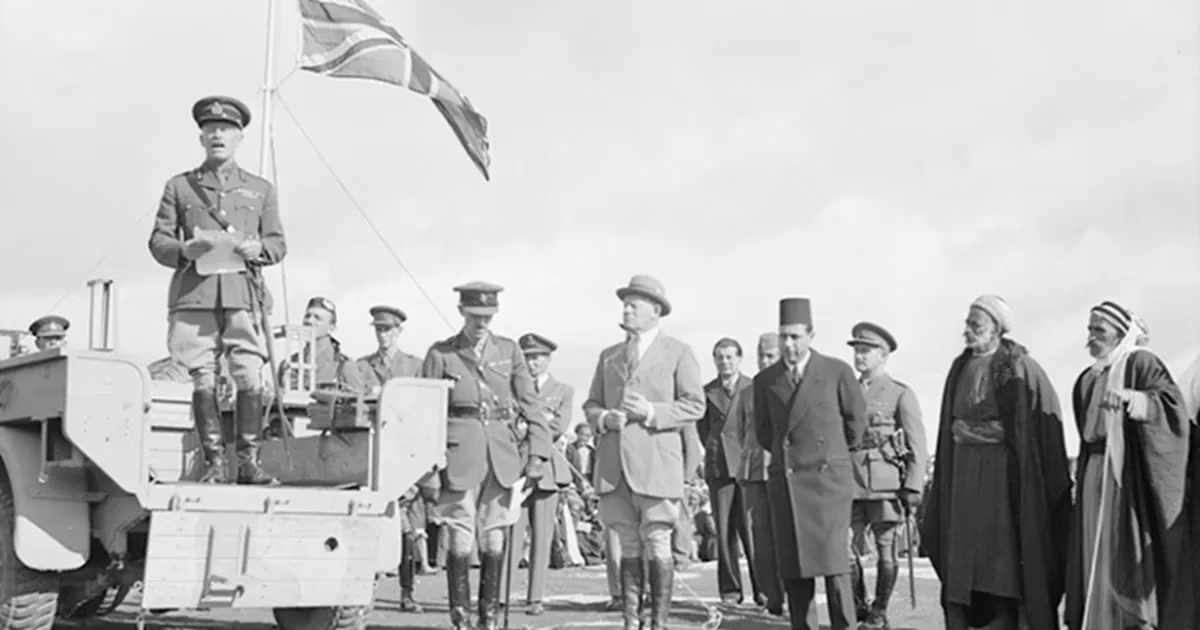
Since the early 1920s, Palestinian society has witnessed a sharp class and political division regarding the Zionist project and the British Mandate. While wealthy families in Jerusalem and Jaffa tended towards appeasement and compromise, farmers and laborers engaged in direct field resistance, creating a deep gap between the traditional leadership and the popular base.

The frustration with the performance of traditional elites led to the birth of the 'Independence Party' in 1932, which represented the aspirations of the middle class and young intellectuals. The party's leaders, such as Hamdi al-Husseini and Izzat Darwaza, drew inspiration from Gandhi's civil disobedience methods in India, calling for a comprehensive boycott of the British administration.

Tension reached its peak in 1933 when the Independence Party led massive demonstrations against Zionist displacement policies and the influx of Jewish immigration. British police confronted these movements with excessive force, resulting in dozens of martyrs and wounded in the cities of Jaffa and Haifa, which further inflamed the Palestinian street.

In that era, the interests of the British High Commissioner converged with those of Palestinian elites, who feared losing their privileges, to dismantle the Independence Party. Indeed, this alliance succeeded in weakening the party organizationally by 1935, but the revolutionary spirit remained latent among the youth and workers who refused to be held hostage by British promises.

1936 marked a historical turning point with the launch of the Great General Strike, which lasted for six continuous months, defying the wishes of the traditional leaders. The elite politicians were then forced to ride the popular wave and establish the 'Arab Higher Committee' to try to contain the revolutionary momentum and control the pace of the street in line with international pressures.

During the Great Palestinian Revolt, 'peace factions' emerged as a military tool supported by some elite families to confront Palestinian revolutionaries from within. This stab in the back, coupled with brutal British repression, led to the defeat of the revolution in 1939, which later paved the way for the Nakba of 1948 and the tearing apart of the social fabric.

After the Nakba, specifically in the 1960s, a new generation from refugee camps and workers rose to lead armed action, which wealthy elites later tried to contain. With the PLO's acquisition of the status of the sole legitimate representative in 1974, Arab political money began to play a role in taming national demands and shifting them towards diplomatic paths.

The PLO gradually moved from slogans of complete liberation to accepting the illusion of a 'two-state solution' under international and regional pressures. This policy opened the door for secret and public dialogues with Washington and European capitals, ultimately leading to the signing of the Oslo Accords in 1993, which changed the face of the conflict.

The Oslo Accords represented a qualitative shift, as the Palestinian leadership transformed from the role of 'negotiator' to that of 'security agent' under the signed commitments. The nascent Palestinian Authority began to operate within a system aimed at suppressing any attempt to revive the armed struggle legacy, which created a state of alienation between it and the resistance forces.

The strategy of repression reached its peak in 2007 following the coup against the results of the legislative elections won by Hamas. This clash, which was carried out with extensive security and political coordination, brought back memories of the 'peace factions' in the 1930s, where security forces began pursuing resistance fighters instead of protecting them.

Observers believe that the Palestinian people today find themselves forced to fight a double battle; one against the occupation and another against an authority that dedicates its efforts to security coordination. Despite the ongoing war of extermination in the Gaza Strip, security forces in the West Bank continue to pursue activists and resistance fighters, deepening the national crisis.

The history of the Palestinian conflict indicates that all attempts at domestication and containment by collaborating elites have not succeeded in ending the spirit of resistance. Resistance remains, despite the heavy cost and immense sacrifices, the true expression of the Palestinian people's aspirations for liberation and emancipation from settler colonialism.

In conclusion, the competition between the approach of compromise and the approach of resistance remains the primary driver of internal Palestinian politics for over a century. With the continuation of Israeli aggression, popular conviction is growing that externally dependent diplomatic paths have only led to further loss of established national rights.

Palestinian history has repeatedly proven that policies of containment and domestication have not succeeded in breaking the national will or liquidating the resistance project.

ARAB AND WORLD

Sat 20 Jun 2026 10:08 am - Jerusalem Time

Severe Diplomatic Crisis Between Rome and Washington: Meloni Responds Strongly to Trump's 'Claims'

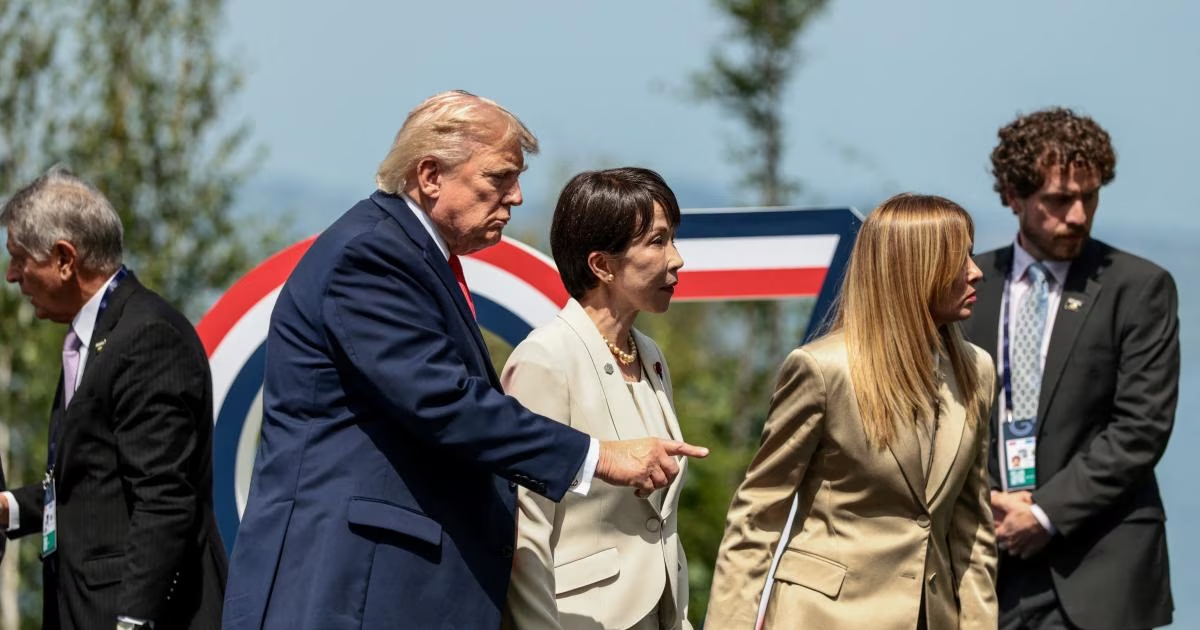
The intensity of diplomatic tension between Rome and Washington has escalated following controversial statements made by US President Donald Trump regarding Italian Prime Minister Giorgia Meloni. Trump claimed in an interview with an Italian media outlet that Meloni insisted on taking a commemorative photo with him during the last G7 summit in France, which the Italian government considered a direct insult to its sovereignty and the dignity of its leadership.

Italian Prime Minister Giorgia Meloni responded with a video clip via her official accounts, in which she expressed her deep shock at these claims, describing them as 'entirely fabricated'. Meloni affirmed that such actions are unbecoming of a head of state towards his allies, emphasizing that her country possesses enough pride to prevent it from begging any party, no matter how powerful.

Meloni did not stop at denial but also sharply criticized Trump's foreign policies, noting that he shows leniency towards those she described as 'enemies of the West' while intensifying his animosity with traditional allies. She considered this approach to weaken international alliances and create unjustified gaps at a time when the world needs the cohesion of the Western front.

In an escalatory move reflecting the extent of Italian anger, Foreign Minister Antonio Tajani announced the cancellation of his official visit to the United States scheduled for the coming days. Tajani explained that the words uttered by the US President are offensive to the entire Italian people and cannot be overlooked without a clear official stance that preserves the dignity of the state.

For his part, Italian Defense Minister Guido Crosetto entered the crisis, describing Trump's statements as a 'stylistic blunder' that harms the interests of both countries and the Atlantic alliance in general. Crosetto pointed out that such bickering serves no one but those who lie in wait for the security and stability of the international community, calling for adherence to diplomatic norms.

The intensity of the responses reached Meloni's inner circle, where Giovanbattista Fazzolari, Undersecretary to the Prime Minister, described Trump's statements as 'delusions' aimed at undermining European leaders. Fazzolari warned that this policy could lead to growing anti-American sentiment in the Old Continent, which harms American interests before others.

These skirmishes come after a series of previous disagreements, as Trump had previously attacked Meloni last April over her stance against direct military confrontation with Iran. It seems that the honeymoon between the two right-wing leaders has ended, despite previous expectations that Meloni would be Trump's closest ally in Europe.

Observers believe that this clash could reshape the map of alliances within the European Union towards Washington, especially with major international political events approaching. The unified Italian stance behind Meloni sends a message that Rome will not accept a subordinate role in the new international equation that Trump is trying to impose.

Finally, political circles are awaiting the White House's reaction to these official Italian protests, and whether Washington will seek to contain the crisis or continue to escalate. The question remains about the extent of the impact of this war of words on security and economic cooperation between the two countries amidst current geopolitical challenges.

There is one thing Trump should remember: Italy and I do not beg anyone.

LATEST NEWS

Sat 20 Jun 2026 10:08 am - Jerusalem Time

Ceasefire agreement in Lebanon enters into force under Qatari-American patronage

Informed sources reported that the ceasefire agreement between Hezbollah and the Israeli occupation entered into force, effective from 4:00 PM local time today, Friday. This announcement came after shuttle rounds of negotiations led by mediators from the United States and the State of Qatar, with contributions from the Iranian side to ensure de-escalation on the Lebanese front.

According to available data, Doha played a pivotal role in the last hours, as Qatari Prime Minister Sheikh Mohammed bin Abdulrahman Al Thani, and Qatari officials, held intensive contacts with Lebanese Parliament Speaker Nabih Berri, who represented Hezbollah in the negotiation process. These contacts included conveying Iranian messages to Washington demanding guarantees to stop Israeli aggressions, while the party stipulated an explicit American commitment to oblige Tel Aviv to the terms of the agreement.

On the ground, the announcement of the de-escalation was preceded by fierce clashes in the Talat Ali Al-Taher area, which resulted in deaths and injuries among the Israeli occupation army. This coincided with striking political statements, including assurances from Donald Trump about his ability to pressure the Netanyahu government to end military operations, which created additional pressure towards completing the current agreement that ends a violent round of escalation.

Hezbollah and Israel agreed to a ceasefire, and the agreement entered into force after an exchange of fire earlier today.

ARAB AND WORLD

Sat 20 Jun 2026 10:08 am - Jerusalem Time

Trump hints at 'unconditional surrender' for Iran and asserts: Without me, Israel would not exist

US President Donald Trump described the ongoing negotiations with Tehran as potentially ending in an 'unconditional Iranian surrender,' emphasizing that Washington is managing this file from a position of military and political strength. Trump explained in a lengthy press interview that the Islamic Republic's naval and air power had effectively ended, leaving the Iranian leadership with very limited options.

The US President indicated that the strict naval blockade policy forced the Iranian side to return to the negotiating table more seriously than ever before. However, his speech was not without threats, as he warned that if a final agreement is not reached, the United States would take harsh measures that he described as 'not bringing happiness' to the Iranians.

Regarding the economic repercussions, Trump considered that moving towards concluding an agreement with Tehran was a strategic step to avoid major financial crises that would have engulfed the world. He affirmed that insisting on continuing the war to satisfy some hardline parties would have led humanity towards a 'global depression' whose end could not be predicted, indicating that his decision to end the conflict was the correct choice.

Trump cited current economic indicators, especially the decline in global energy prices and the rise in stock market indices, as evidence of the success of his political vision. He believed that these results reflect market confidence in his administration's approach to ensuring regional and international stability away from open military conflicts that drain resources.

In a surprising context, Trump touched upon the situation of the new Iranian Supreme Leader, Mojtaba Khamenei, expressing regret for what he described as 'harming him.' Trump mentioned that despite not meeting or speaking directly with the Supreme Leader, information indicates that he sustained severe injuries, while at the same time acknowledging the rumors about Khamenei's courage in facing difficult circumstances.

The US President returned to attacking the nuclear deal concluded in 2015 during the Barack Obama era, again describing it as a 'catastrophe' that threatened regional security. He considered that his withdrawal from that agreement prevented Iran from possessing nuclear weapons, asserting that if Tehran had possessed that technology, it would have targeted Israel within just one week.

Regarding the relationship with Tel Aviv, Trump stated in harsh terms: 'Without me, Israel would not exist today,' referring to his decisions supporting its security. Despite describing the relationship with Israeli Prime Minister Benjamin Netanyahu as 'good,' he hinted at differences in viewpoints, indicating the need to keep Netanyahu in a state of political 'balance.'

This coincided with US intelligence reports warning of Netanyahu's movements that might aim to undermine efforts for lasting peace with Iran. Informed sources reported concerns within the US administration about the Israeli Prime Minister's pursuit of escalating military operations against Hezbollah in Lebanon, which could once again complicate the political situation in the region.

If Iran had obtained nuclear weapons, it would have used them against Israel within the first week, and without me, Israel would not exist today.

PALESTINE

Sat 20 Jun 2026 10:07 am - Jerusalem Time

British Bar Standards Board Suspends Karim Khan from Practicing Law

The British Bar Standards Board has issued a decision to temporarily suspend Karim Khan, the Prosecutor of the International Criminal Court, from practicing law. The Board clarified that this decision is effective immediately, pending a comprehensive review by the specialized Suspension Committee, which will hold a formal hearing within the next four weeks to consider the merits of the case.

This legal development comes shortly after Khan's duties within the International Criminal Court were suspended on June 8th. This step followed accusations of sexual misconduct against him, which led the court's oversight body to refer him for disciplinary proceedings described as unprecedented in the history of the international institution.

For his part, Karim Khan, 56, denied all accusations against him in their entirety, asserting his innocence of any legal or ethical violations. The court is currently facing increasing pressure to determine the final legal course in this case, which has sparked widespread controversy in international human rights and political circles.

Reports indicate that the Assembly of States Parties, the oversight body of the International Criminal Court, will have the final say on Khan's professional fate. The Assembly is scheduled to hold a special session to assess the situation and determine whether the Prosecutor will continue in his position or be permanently removed based on the investigation results.

The Bureau of the Assembly of States Parties based its initial assessment on a report issued by the United Nations Office of Internal Oversight Services, in addition to evidence and written memoranda. The UN report included allegations of non-consensual sexual contact between Khan and an assistant in various locations, including his office, private residence, and during official work missions.

Despite the seriousness of the allegations contained in the UN investigation, a judicial panel of three judges found that the findings were not conclusive enough to convict Khan. This divergence in legal opinions within the court's organs caused confusion, necessitating the intervention of international parties to review previous legal assessments.

Karim Khan had decided to temporarily step down from his duties in May 2025 to allow investigations to proceed with full transparency and integrity. This exceptional situation prompted the Assembly of States Parties to establish new procedural rules for dealing with such cases, which the court had not witnessed since its establishment.

In press statements, Khan considered that what he is facing is not merely legal procedures, but a systematic campaign of intimidation and political pressure. He linked these measures to his historic decision to request arrest warrants for Israeli Prime Minister Benjamin Netanyahu and his former Defense Minister Yoav Gallant.

The suspended Prosecutor accused parties within the Bureau of the Assembly of States Parties of ignoring fundamental legal principles and the results of investigations that had previously cleared him. He indicated that there is insistence on re-investigating despite the appointed judges finding insufficient evidence to prove any professional or behavioral misconduct.

Khan also criticized the way his identity was handled during the investigation, as his name was revealed to the media in a manner contrary to the norms followed in similar cases. He considered that his deprivation of the right to anonymity, which other officials enjoy, reflects a deliberate intention to damage his reputation and undermine his efforts to prosecute war criminals.

Informed sources revealed that a group of Western and European countries exerted pressure within the Assembly Bureau meeting to vote on re-investigating the case. This move came despite previous reports from independent judges confirming the absence of concrete evidence of misconduct or dereliction of duty by Khan.

This case remains open to all possibilities, amidst international anticipation of the outcomes of the upcoming hearings in Britain and within the International Criminal Court. Observers believe that the repercussions of this case will directly affect the prestige of the international court and its ability to continue investigations into sensitive matters such as war crimes in the Palestinian territories.

I am facing an unprecedented campaign of intimidation and pressure in the wake of my arrest warrants against Netanyahu and Gallant for war crimes in Gaza.

ARAB AND WORLD

Sat 20 Jun 2026 10:07 am - Jerusalem Time

Despite the truce agreement... Martyrs in Israeli raids and anticipated negotiations in Washington on Tuesday

Southern Lebanon witnessed a dangerous field escalation despite the ongoing ceasefire agreement. Field sources reported that the Israeli occupation army carried out intense artillery shelling targeting the heights of Ali al-Taher. In this attack, the occupation forces used internationally prohibited phosphorus and cluster munitions, which constitutes a blatant violation of existing security understandings.

In a related context, units of the occupation army carried out extensive demolition operations that affected a number of residential homes in the town of Kunin, which belongs to the Bint Jbeil district. The towns of Nabatieh al-Fawqa and Kafr Tibnit were also subjected to intermittent artillery shelling, which led to a state of panic among residents who tried to return to their homes after the truce was announced.

Regarding human casualties, two people were martyred as a result of a raid carried out by an Israeli drone targeting a motorcycle on the Zibdin road in the Nabatieh area. With this targeting, the death toll from Israeli attacks on Lebanese territory on Friday alone rose to 49 martyrs and about 97 others injured with varying degrees of severity.

Diplomatically, the US State Department announced a phone call between Secretary Marco Rubio and Lebanese President Joseph Aoun to discuss developments in the situation. Rubio informed the Lebanese side that the next round of Lebanese-Israeli talks will be held in the capital, Washington, from June 23 to 25.

During the call, the US Secretary of State affirmed his country's commitment to working towards achieving permanent security and stability in Lebanon, with a focus on extending state authority over all its territories. Rubio also stressed support for legitimate Lebanese institutions and security forces, foremost among them the army, reiterating his call for the necessity of disarming Hezbollah to ensure full state sovereignty.

For his part, Lebanese President Joseph Aoun demanded the necessity of an immediate and comprehensive cessation of all Israeli attacks targeting Lebanese sovereignty. Aoun explained that achieving a real and sustainable ceasefire is the fundamental pillar without which no tangible progress can be made in the ongoing political negotiations.

Reports from Washington indicate that the agenda of the upcoming meeting will include a plan for the Lebanese army to take over experimental areas that were under the control of Israeli forces. This step aims to open the door for partial and gradual Israeli withdrawals from some points, as a test of the Lebanese forces' ability to control security in those areas.

In the same context, media sources stated that the negotiations, which will begin next Tuesday, will seek to reach an agreement on the names and coordinates of the experimental withdrawal areas. These areas are likely to be concentrated on the front edges of what is known as the Yellow Line, away from the direct border strip, as a first step in a long process of delineating final security arrangements.

Aoun stressed the necessity of stopping Israeli attacks by achieving a comprehensive ceasefire, which Lebanon considers a fundamental pillar for the progress of negotiations.

PALESTINE

Sat 20 Jun 2026 10:07 am - Jerusalem Time

UN warnings: 4 Arab countries face famine risk and sharp decline in international funding

The United Nations Food and Agriculture Organization (FAO), in cooperation with the World Food Programme, issued strong warnings about millions of people sliding into catastrophic levels of hunger. The joint report explained that the overlap of armed conflicts with successive economic crises has led to the emergence of what it described as 'hotspots of hunger' in vast geographical areas.

The UN classification included four Arab countries suffering from severe humanitarian crises: Palestine, Sudan, Yemen, and Somalia, placing these countries on the list of areas most at risk. The report indicated that the continuation of these conditions threatens a complete collapse of local food security systems in these countries, which already suffer from structural fragility.

The report revealed a worrying decline in the volume of international funding allocated to relief organizations working in the field, with budgets recording a decrease of up to 60% during the period between 2022 and 2025. International bodies describe this gap as dangerous, as it hinders life-saving operations and increases rates of acute malnutrition among the most vulnerable groups.

For his part, Jean-Martin Bauer, an official at the World Food Programme, affirmed that countries such as Sudan, Palestine, Yemen, and Somalia are among the highest levels of international concern. Bauer explained that the populations in these areas face severe food insecurity that could lead to famine and mass death if urgent intervention is not made.

Regarding the Sudanese issue, the report considered the situation there to be the most tragic, with the specter of hunger threatening 14 regions, including Darfur and South Kordofan. Estimates indicate that the number of people facing catastrophic food conditions could rise to 200,000, with the crisis expected to continue until early 2027.

In the Gaza Strip, UN sources stressed that the risk of famine remains strong despite previous ceasefire agreements. This is mainly due to the continuous restrictions imposed by the occupation authorities on the entry of relief trucks, which has led to a sharp decline in commodity and food stocks for the population.

In Yemen, one of the world's worst humanitarian crises continues to worsen as a result of the deterioration of the local currency's value and the insane rise in basic commodity prices. Sources warned that the percentage of people in need of assistance in areas under the Yemeni government could increase by about 9% before the end of this year, putting additional pressure on international organizations.

Finally, Somalia has once again topped the list of extreme risk hotspots due to the combination of local conflicts with long droughts that have hit the country for years. Somalis in several areas face direct threats of famine, amid the inability of charitable kitchens and local institutions to meet the growing needs of displaced and affected populations.

These countries' populations face high levels of acute food insecurity, including famine and death.

OPINIONS

Sat 20 Jun 2026 10:07 am - Jerusalem Time

Billions of Tracks and Tickets of Death: Demands for Political and Criminal Accountability for Railway Disasters in Egypt

Ramallah - “Alquds ” dot com

Ramallah - “Alquds ” dot com

Opinion Writer

In the ethical charter of nations, paying the train ticket price twice cannot be accepted; once from citizens' pockets through billions in loans, and again from their lives under the wheels of silent machines. The transformation of railway tracks from a lifeline for development into a guillotine that devours bodies places the current administration before a difficult ethical and constitutional test.

When the Ministry of Transport, with its full financial arsenal, fails to provide the minimum level of safety for citizens, we are not talking about a mere minor technical flaw. This horrific administrative failure necessitates immediate accountability and makes the continued leadership of the current facility a grave danger threatening the safety and security of passengers daily.

The station platform in Egypt has transformed from a space for human interaction into something akin to 'Russian roulette,' where citizens await their unknown fate with every journey. The recurring scene of bodies crushed by wheels is not just a fleeting human error; it is an embodiment of an administrative crisis that treats human blood as a marginal number.

The question that imposes itself today, above the groans of the injured, is not merely an engineering question about the quality of the tracks, but a political and legal question par excellence. This question is directed directly to the top of the executive pyramid and to the people's representatives who were entrusted with monitoring government performance and protecting citizens' rights.

Returning to the reports of the Central Agency for Public Mobilization and Statistics and human rights documentation, we find a terrifying record of intermittent tragedies over the past decade. Thousands of varied accidents, including collisions, carriage detachments, and run-overs at level crossings, have claimed hundreds of lives and left thousands injured with permanent disabilities.

The real tragedy lies in the stark paradox between the ministry's announcements of technological revolutions and massive upgrades, and the continued primitive bleeding of lives. This contradiction is conclusive evidence of a deep chasm between media spectacle and the bloody reality that citizens experience on the tracks.

The House of Representatives has approved packages of international loans and billions in allocations specifically for developing the railway network and securing human resources. Nevertheless, the legitimate question remains: where is the tangible protective impact of these massive funds on the ordinary citizen's body?

The administrative success of any service facility is not measured by the luxurious external design of trains or the glitter of new stations that have burdened the simple with their prices. The only constant global criterion is a zero accident rate and the preservation of lives, which the current administration has failed to achieve so far.

The delay in the security return of borrowed funds raises major questions about the poor prioritization of administrative matters in the Ministry of Transport. It appears that presenting superficial and aesthetic aspects came at the expense of the fundamental structural effort that protects passengers from repeated fatal accidents and run-overs.

Political and criminal responsibility falls directly on the shoulders of General Kamel El-Wazir, based on the golden rule that links absolute authority with absolute responsibility. Attempts to evade responsibility by blaming the 'switchman' or 'citizen behavior' are flimsy excuses that no longer deceive anyone.

The minister, who was granted all powers and unprecedented financial support, is primarily responsible for creating a safe 'system' that prevents human error from turning into a massacre. Preserving human life is the highest constitutional oath, and failure to do so necessitates dismissal and accountability without delay.

The House of Representatives cannot be exempted from its historical responsibility, as its lax oversight position places Parliament in question before voters. Contenting oneself with forming fact-finding committees whose reports are filed away is a clear dereliction of the oversight trust held by the representatives.

Popular demands today are focused on two crucial points: the immediate dismissal of the Minister of Transport for his failure to achieve the desired safety, and the opening of a broad judicial investigation. The paths of all loans and financial allocations must be traced to determine responsibility for every drop of blood shed on those tracks.

In conclusion, railways must be a lifeline of life and dignity, not an execution ground or a guillotine that harvests the lives of grieving families. Building the future cannot stand on tracks soaked in the blood of innocents, and a government position is a mandate and service, not immunity from criticism and accountability.

Absolute authority means absolute responsibility, and when an official fails to fulfill their constitutional oath to protect human life, their dismissal and accountability become a national duty that cannot be postponed.

ARAB AND WORLD

Sat 20 Jun 2026 10:06 am - Jerusalem Time

Arrest of a former general in the Syrian regime army accused of participating in the Ghouta massacres

The Syrian Ministry of Interior announced today, Friday, the success of the internal security forces in arresting the former general in the Syrian regime army, Rafiq Ahmed Kulthum. This step comes in the context of intensive security movements led by the new Syrian administration to control the situation and pursue symbols of the former regime involved in war crimes and grave violations against Syrian civilians.

The ministry clarified in an official statement that the arrest operation came within the ongoing efforts to pursue elements that contributed to suppressing the Syrian revolution since its inception in 2011 until the fall of the regime. The authorities confirmed that Kulthum's file contains a full record of military positions he exploited in managing combat operations against residential areas in various Syrian governorates.

According to the detainee's military record, Kulthum rose through the military ranks to the rank of general, where he began his leadership path at the outbreak of the revolution as Chief of Staff of the 116th Brigade in the Air Defense Administration in the city of Al-Qatifa in the Damascus countryside. In 2012, he took full command of the same brigade, overseeing military operations in that vital area surrounding the capital.

Kulthum's ascent in the regime's military structure continued, as he was assigned in 2016 to lead the eastern countryside of the Salamiyah region, affiliated with Hama governorate in the center of the country. This period is considered one of the bloodiest stages in the central region, as it witnessed violent confrontations and forced displacement operations under the supervision of the field military leaders of the defunct regime.

In 2018, Rafiq Kulthum was promoted to the rank of general and appointed commander of the Central Region, a position that granted him wide powers in managing the raging fronts. Security sources confirmed that this promotion came as a reward for his role in implementing military plans aimed at breaking the will of areas outside the regime's control through excessive force.

Preliminary investigations indicate that the most prominent crimes attributed to the detained general are his direct participation in managing the wide military attack on Eastern Ghouta in the Damascus countryside in 2018. This attack is considered one of the most brutal military operations, as the area was subjected to a suffocating siege and intense shelling that led to the death of thousands of civilian victims before its residents were displaced.

The competent authorities are currently continuing investigations with the detained general to document all violations in which he participated or ordered to be carried out. His complete file is scheduled to be referred to the competent judiciary to take the necessary legal measures, in a step aimed at achieving transitional justice and holding accountable those responsible for crimes committed during the past decade.

Documented data indicates that the mentioned individual rose through the military ranks until he attained the rank of general, and held a number of sensitive leadership positions through which he was involved in suppressing the Syrian people.

PALESTINE

Sat 20 Jun 2026 10:06 am - Jerusalem Time

Lebanon Ceasefire Agreement Faces Test of Resilience Amid Continued Israeli Military Presence

The ceasefire agreement in Lebanon officially came into effect at 4 PM on Friday, amidst deep questions about its ability to endure and achieve sustainable stability. Observers believe the agreement faces early tests related to the extent of the parties' commitment on the ground, especially given the continued presence of Israeli occupation forces in strategic locations within Lebanese territory.

Field data indicates that the occupation army is seeking to impose a new security reality in southern Lebanon through what is known as the 'Yellow Zone' or buffer zone. This Israeli approach clashes with a categorical Lebanese rejection of any foreign military presence, making the current calm vulnerable to disruption if aggressions or provocative military movements continue.

Informed sources reported that the agreement was not a coincidence but rather the result of intensive Qatari and American mediation, which included high-level contacts led by Sheikh Mohammed bin Abdulrahman Al Thani. Doha played a pivotal role in bridging viewpoints and conveying messages between Tehran and Washington to ensure an environment conducive to halting widespread military operations.

For his part, political science professor Hani Al-Bassous believes that the doubts surrounding the agreement are based on field realities that go beyond declared texts and granted political guarantees. He explained that Israel still deals with the issue from a purely security perspective, retaining what it calls the 'right to respond' or resume operations, which threatens the collapse of understandings at any moment.

The success of this agreement is closely linked to the broader understandings between the United States and Iran, as Washington seeks to contain regional escalation and prepare the ground for negotiations. Tehran, in turn, insists on considering the Lebanese arena an integral part of comprehensive regional arrangements, rejecting any attempts to separate fronts without real guarantees.

On the Lebanese political front, the role of Parliament Speaker Nabih Berri emerged as a key negotiator representing Hezbollah, holding intensive meetings to ensure adherence to the terms of the truce. Two approaches stand out within Lebanon; one relies on international guarantees for Israeli withdrawal, and the other sees field pressure as the only means to force the occupation to retreat.

Minutes before the agreement came into effect, the Tallat Ali Al-Taher area witnessed violent clashes that resulted in deaths and injuries among the Israeli army, reflecting significant field tension. These events confirm that the field remains volatile, and the transition from a state of war to permanent calm requires measures that go beyond merely announcing a ceasefire.

In the context of international pressure, statements by former US President Donald Trump emerged, in which he indicated his ability to force the Netanyahu government to completely halt military operations. These statements reflect the extent of the overlap between internal political calculations in the United States and the ongoing conflict in the Middle East.

The real test of the agreement remains contingent on a clear timetable for the withdrawal of Israeli forces from all positions they occupied during the recent escalation. Without achieving this complete withdrawal, the ceasefire agreement will remain merely a temporary truce imposed by international circumstances, awaiting a new round of confrontation that may erupt at the first security breach.

The real test of the agreement will not be in the first hours, but in the extent of Israel's commitment to halting its operations and withdrawing its forces from the south.

PALESTINE

Sat 20 Jun 2026 10:06 am - Jerusalem Time

Diplomatic Crisis: Occupation Cuts Ties with Kaja Kallas After 'Apartheid' Leaks

Relations between the European Union and the Israeli occupation authorities have entered a new tunnel of diplomatic tension, following reports that revealed controversial statements made by the bloc's High Representative for Foreign Affairs and Security Policy, Kaja Kallas. Sources reported that Kallas, during unannounced meetings, compared policies towards Palestinians to the 'apartheid' system that previously prevailed in South Africa, which sparked widespread anger in Israeli political circles.

According to international press reports, this comparison was made during secret meetings held by the former Estonian Prime Minister with government officials in Mexico in May 2026. The leaks indicated that Kallas based her comparison of the measures taken in the Gaza Strip and the West Bank on personal impressions she formed after a previous visit to the Apartheid Museum in Johannesburg, considering that there is a similarity in mechanisms of racial discrimination.

For his part, the occupation's Foreign Minister Gideon Sa'ar quickly took immediate punitive measures, announcing the severance of all diplomatic contacts with the EU High Representative. Sa'ar described these statements as 'pure slander' and revealing a preconceived bias against the occupation authorities, stressing that the return to the political dialogue table with her is contingent on an apology and a formal and public retraction of those allegations.

In an attempt to contain the situation, European diplomats affirmed that the statements attributed to Kallas do not in any way express the official position of the European Union towards the conflict. They clarified that what was mentioned in the leaks is a 'diplomatic blunder' for an official at this level, especially since it contradicts the general line of the bloc, which balances supporting the security of the occupation and criticizing settlement expansion in the occupied territories.

Despite significant pressure, Kallas did not issue a categorical denial or direct confirmation of the authenticity of the leaks regarding the 'apartheid' description, contenting herself with affirming the European Union's commitment to building balanced and constructive relations with all parties. This ambiguity in the response reflects the extent of the embarrassment faced by the High Representative's office in dealing with the repercussions of this crisis, which may disrupt vital communication channels between Brussels and Tel Aviv.

These developments come in the context of escalating tension in bilateral relations since the outbreak of the war on the Gaza Strip in October 2023, where European criticism of Israeli policies has intensified. The bloc had previously imposed sanctions on settlers involved in violence in the West Bank, considering that settlement constitutes a major obstacle to achieving a two-state solution, which made the latest leak the straw that broke the camel's back in diplomatic relations.

Observers believe that this diplomatic rift may directly affect the European Union's role as a mediator or actor in any future negotiations related to de-escalation or reconstruction. With the occupation's insistence on 'official retraction' as a condition for resuming contacts, the fragile diplomatic balance between the two parties remains threatened with further collapse amid the ongoing war and escalating violations in the occupied Palestinian territories.

The statements attributed to Kallas are slanderous and biased against us, and dialogue will not resume until there is a formal and public retraction.

ARAB AND WORLD

Sat 20 Jun 2026 10:06 am - Jerusalem Time

Sudden Setback in US-Iranian Understanding: Switzerland Talks Postponed and Field Escalation in Lebanon

US-Iranian understandings entered a phase of ambiguity following the announcement of the postponement of talks that were scheduled to be held at the Bürgenstock mountain resort in Switzerland. Diplomatic sources confirmed that communications are still ongoing between the two parties to arrange a new date in the coming days, with the aim of completing the implementation of the memorandum of understanding aimed at ending the state of war in the region.

For its part, the Swiss Ministry of Foreign Affairs announced the cancellation of the scheduled meeting, while Tehran preferred to describe it as a postponement, noting that the previous electronic signing of the memorandum made a direct meeting unnecessary at the present moment. The spokesperson for the Iranian Foreign Ministry, Ismail Baqaei, explained that the transition to the final agreement stage depends on actual adherence to the agreed-upon terms.

In Washington, the White House decided to postpone the visit of US Vice President J.D. Vance to Switzerland, where he was supposed to oversee the mechanisms for implementing the agreement. The US administration affirmed that the negotiating delegation remains on standby to depart as soon as political and field conditions improve, allowing for the resumption of direct dialogue.

International media reports, citing informed sources, revealed that the Iranian side set a new condition for resuming negotiations, which is to obtain real guarantees for stopping Israeli attacks on Lebanese territory. It seems that Tehran seeks to link progress in the diplomatic track to the extent of commitment to a comprehensive ceasefire stipulated in the initial understandings.

On the ground, the negotiation atmosphere did not prevent a bloody military escalation in southern Lebanon, where recent Israeli raids resulted in the martyrdom of 28 people and the injury of dozens. In return, the Israeli army admitted the killing of four of its soldiers, including an officer, in confrontations described as the fiercest since the announcement of the memorandum of understanding between the major powers.

This escalation raised serious questions about the resilience of the memorandum of understanding that ended a widespread war that erupted last February and involved multiple parties. The Switzerland meeting was supposed to be the cornerstone for transitioning from a phase of cessation of hostilities to a phase of drafting a final and comprehensive peace agreement that ensures regional stability.

On the internal political front in Iran, Supreme Leader Mojtaba Khamenei expressed conditional approval of the agreement, emphasizing that sitting with the American side does not mean compromising national principles. Iranian officials stressed that any retreat by Washington from its commitments would be met with a decisive response, especially regarding the lifting of oil sanctions.

In a related context, signs of economic relief began to appear with the resumption of navigation in the strategic Strait of Hormuz after a long period of suspension due to military operations. Iranian authorities announced the formation of a new body to oversee the passage of ships, with temporary fee exemptions granted as a gesture of goodwill under the recent understandings.

US Vice President J.D. Vance defended the diplomatic path, noting that the US military allowed the passage of commercial vessels to ensure the stability of global energy markets. This news positively impacted oil prices, which began to decline to approach their normal levels before the outbreak of the military crisis.

However, the agreement still faces fierce opposition within political circles in Israel and the United States, where critics see it as offering huge economic concessions to Tehran. The memorandum includes an ambitious plan to rebuild the Iranian economy worth up to $300 billion, which some see as an undeserved reward for the Iranian regime.

Israeli Prime Minister Benjamin Netanyahu, for his part, affirmed that the conflict is not over yet, despite his keenness not to directly clash with the Trump administration at the moment. In contrast, the Israeli Minister of National Security issued harsh statements calling for an escalation of military operations in Lebanon, putting additional pressure on international mediators.

France and other international powers are seeking to pressure all parties to respect the terms of the agreement and prevent its imminent collapse due to field violations. Observers believe that the next few days will be crucial in determining the fate of the Middle East, either a return to the negotiating table or a slide back towards a comprehensive confrontation.

Iranian President Masoud Pezeshkian described the agreement as a historic moment for his country, considering that the lifting of frozen sanctions would represent a victory for Iranian diplomacy. Tehran hopes that the implementation of the memorandum will lead to the immediate release of its financial assets abroad, which will help alleviate the suffocating economic crisis it is experiencing.

In conclusion, anticipation remains the master of the situation in the concerned capitals, awaiting the outcome of the mediators' efforts to address Iranian demands regarding Lebanon. The gap between the language of diplomacy in Switzerland and the reality on the ground in southern Lebanon continues to widen, putting the credibility of the US-Iranian understanding to the real test.

Negotiations for the final agreement will depend on the commencement of specific provisions of the memorandum and continued adherence to them.