






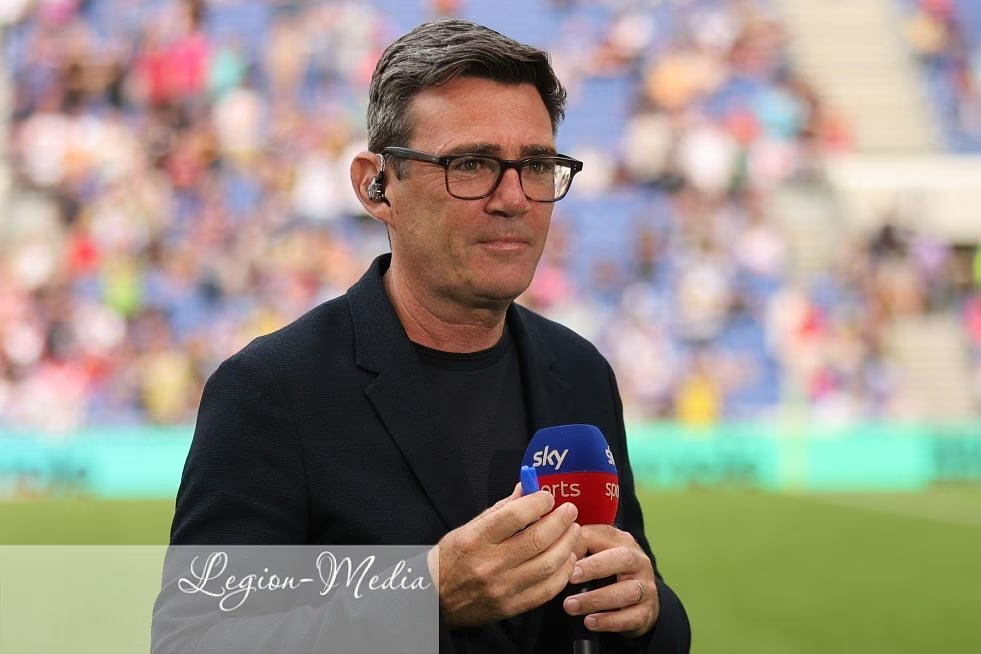
The new British Prime Minister, Andy Burnham, made a remarkable statement by publicly apologizing for the way the Labour Party handled the war in Gaza, in the presence of his predecessor Keir Starmer. Burnham affirmed that the official position should have included an early call for a ceasefire and more serious pressure on the Israeli side.
The new Prime Minister pledged to listen more carefully to grassroots and public demands, despite recognizing the difficulty of satisfying all parties. While some groups demand that what is happening be described as genocide and call for a ban on arms sales, the British position remains constrained by the necessity of coordination with the White House and international allies.
On the broader foreign policy front, Burnham appears to be navigating a diplomatic minefield with Donald Trump's return to the scene and his impact on the NATO alliance. Burnham has committed to raising defense spending to 3.5%, a move aimed at absorbing Washington's anger despite the unclear funding mechanisms in the current budget.
Sources reported that Western capitals are concerned about the fading features of 'old America' that adhered to traditional international norms. This concern is evident in the statements of European leaders who are beginning to lose patience with volatile American policies, especially after recent trade threats against countries like Spain.
The recent NATO summit in Ankara witnessed unprecedented tensions, with Trump threatening punitive measures against allies who do not commit to increasing military spending. The situation in the Gulf has also escalated with the resumption of military operations against Iranian targets, threatening global energy price stability and increasing the likelihood of conflict.
In this context, the book 'Ten Steps to Prevent World War III' by former minister Tobias Ellwood stands out as a warning of a grim future awaiting the international system. The book imagines 2040 as a time of regret for missed opportunities that allowed the collapse of international rules and the rise of alternative powers that filled the vacuum left by Washington.
Ellwood believes that the next world war will not be one major confrontation, but a series of local conflicts and proxy wars that drain the world. In this scenario, grave violations of military norms, including the threat of tactical nuclear weapons, become routine, threatening the survival of traditional alliances like NATO.
To confront this potential catastrophe, experts suggest the necessity of forming a new stability alliance comprising middle powers from various continents. This alliance aims to protect the rules-based global order and share technology with poorer nations to reduce the gaps that fuel conflicts and armed disputes.
Burnham faces the challenge of implementing this ambitious program, known for his skill in building alliances since he was mayor. However, questions remain about his ability to withstand direct American pressure, especially on sensitive issues such as nuclear deterrence and intelligence sharing.
Reports indicate that European leaders are beginning to be convinced of the necessity of change and self-reliance, especially after declared American ambitions in areas like Greenland. This shift comes at a time when Ukraine has developed its military manufacturing capabilities, which may relatively reduce its need for direct and volatile American support.
His predecessor Starmer left a complex legacy of postponed decisions and financial crises that burden the new government. While Starmer succeeded in buying some time for Ukraine, observers believe that Britain lost valuable time in updating its defense capabilities and funding its international military commitments.
Under these circumstances, Burnham needs an exceptional diplomatic team to manage the next phase and overcome obstacles. David Miliband's name stands out as a strong candidate to play a pivotal role, given his long experience and international relations that could help London reposition itself on the global map.
The next phase requires what diplomats describe as 'the art of calibration,' which is the ability to make minor policy changes that lead to significant results. Burnham must balance firmness on the Gaza issue to avoid moral complicity, with maintaining a balanced strategic relationship with the new American administration.
Success in this test will mean sparing Britain and the world the scenarios of failure that Ellwood warned of in his vision for 2040. The bet remains on the ability of the new leadership in London to make fateful decisions that separate stability from the comprehensive collapse of the international system.
The government should have called for a ceasefire earlier, and escalated pressure on Israel.



Share your opinion
Burnham apologizes for 'Labour's' stance on Gaza and faces new 'Trump era' challenges