






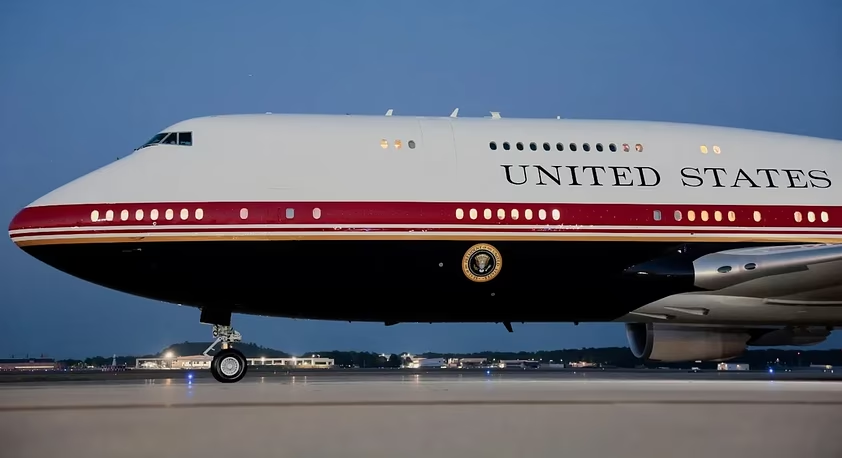
Media circles in the United States witnessed a notable escalation following the issuance of court orders compelling several 'New York Times' journalists to testify before a federal grand jury. This step comes within the context of investigations by the Department of Justice into the publication of journalistic reports that addressed security vulnerabilities and concerns related to the new presidential plane, which was presented as a gift to President Donald Trump by the State of Qatar.
Informed sources reported that the US Attorney General in Manhattan, Jay Clayton, was the one who issued the subpoenas, which were delivered last Friday. The manner in which these orders were executed sparked widespread controversy, as federal officers went directly to the homes of some journalists to officially deliver the summons, which observers considered a tactic of intimidation.
Judicial authorities set next Wednesday as the date for the journalists to appear before the grand jury for an investigation into what was described as an 'alleged violation of federal criminal law'. The investigations focus on how sensitive information related to the security of the presidential plane became public, which the current administration considers a threat to national security that goes beyond the scope of journalistic work.
For its part, the US Department of Justice maintained a cautious stance, with a spokesperson refusing to directly confirm or deny the issuance of the orders in press statements. However, the department stressed that its policy does not target media work itself, but aims to prosecute those involved in leaking classified documents and information protected by law.
In contrast, human rights and media organizations described these moves as an 'unusual escalation' aimed at undermining the independence of news organizations. These entities viewed the prosecution of journalists for their professional reports as an attempt by the Trump administration to impose self-censorship on the media and prevent it from revealing facts that might cause political embarrassment.
The National Press Club of America strongly criticized these measures, calling on the Department of Justice to withdraw the subpoenas immediately and unconditionally. The club affirmed in an official statement that targeting journalists in their homes infringes upon the essence of the First Amendment of the US Constitution, which guarantees freedom of expression and the press, warning of dire consequences for democracy.
This tension coincided with President Trump's nomination of Attorney General Jay Clayton to head the National Intelligence Directorate, which intensified parliamentary criticism. The Reporters Committee for Freedom of the Press demanded that Clayton be held accountable during his confirmation hearing in the Senate, linking his performance in this case to his eligibility for the high intelligence position.
On the ground, President Trump had recently indicated his use of an old presidential plane for his trip from the Turkish capital Ankara to Britain, leaving the new plane for inspection. Sources explained that the plane gifted by Qatar underwent thorough inspections by US military technicians at Mildenhall Air Base to ensure its technical and security integrity.
Despite the security controversy, video clips showed the US President boarding the new Qatari plane at the British base in preparation for his return to Washington. The issue remains open to the possibility of legal escalation between the executive branch and the press, amidst the insistence of human rights organizations on protecting the public's right to know and preventing the suppression of fundamental freedoms.
When federal officers arrive at journalists' homes carrying subpoenas, this is not a normal application of the law, but a blatant assault on press freedom.

Share your opinion
US Escalation Against the Press: Journalists Summoned for Interrogation Over 'Qatar Plane' Leaks