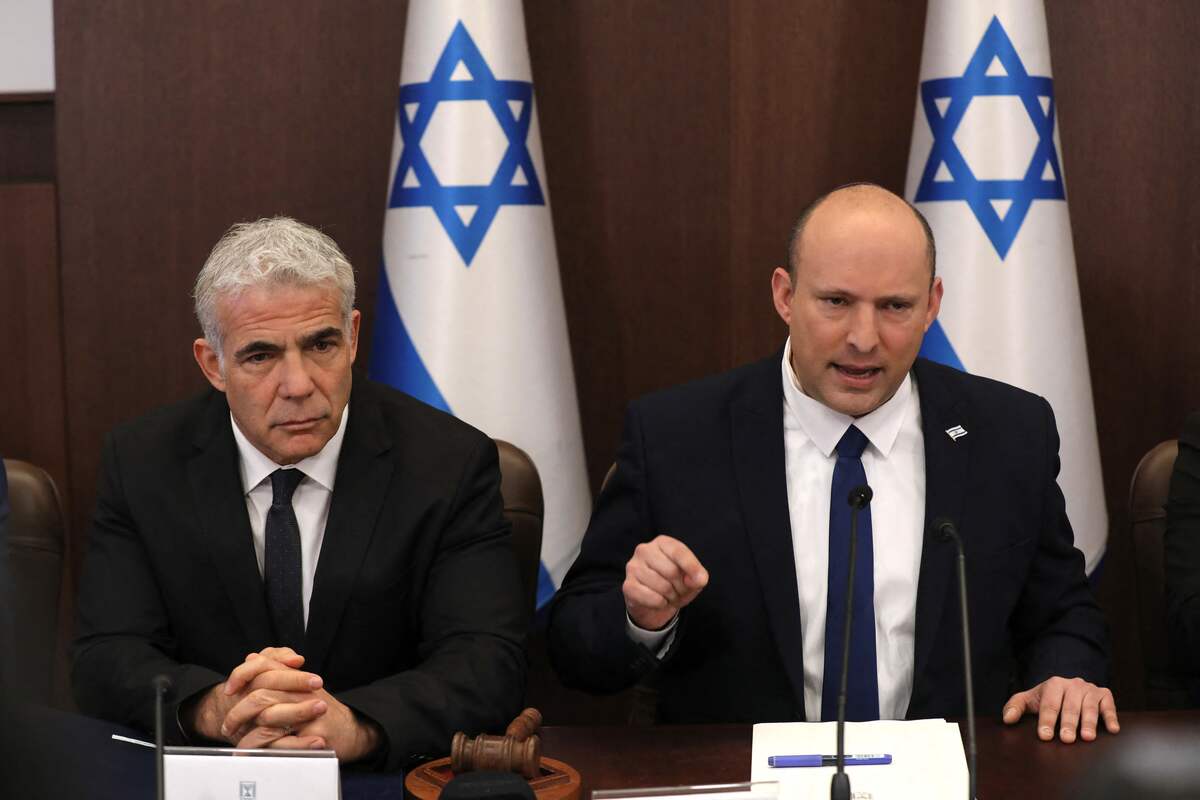






Dr. Suhail Diab: Bennett wants to assure settlers of his commitment to annexing Area C and his refusal to backtrack on positions related to settlement and control over large parts of the West Bank. Khalil Shaheen: Bennett's statements do not represent a fundamental shift in his positions, but his current electoral calculations are pushing him to a political repositioning aimed at the right-wing and center-right electorate. Labib Taha: The talk of annexing Area C is not new but is linked to a deeply rooted vision since the signing of the Oslo Accords as a strategic goal for various Israeli projects. Dr. Osama Abdullah: Bennett's statements reflect a growing trend within the Israeli political scene that relies on exploiting current circumstances to reshape reality. Hani Abu Al-Siba': Bennett's proposal goes beyond being a fleeting election program and entails the practical abolition of the idea of a Palestinian state by controlling the wider geographical expanse of the West Bank. Thaer Al-Deek: Bennett's statements represent an early launch of the Israeli election campaign and an attempt to present him as the most prominent candidate to lead the post-Benjamin Netanyahu era. Ramallah - Exclusive to "Al-Quds": The statements by former Israeli Prime Minister Naftali Bennett regarding the annexation of areas classified as (C) in the West Bank and keeping areas (A) and (B) under the control of the Palestinian Authority, highlight the accelerating transformations within the Israeli political scene, where annexation and control over Palestinian lands have moved to the forefront of the electoral discourse of competing parties, amidst a decline in talk about any political path leading to the establishment of an independent Palestinian state. Writers, political analysts, specialists, and university professors, in separate interviews with "Al-Quds", confirm that Bennett's proposal does not represent a new shift in his positions, as much as it reflects a growing trend within various Israeli currents based on imposing sovereignty over areas classified as (C), which constitute about 60% of the West Bank's area and include the majority of settlements and strategic resources, while keeping Palestinians in areas with limited powers that lack the elements of sovereignty and geographical contiguity. They point out that Bennett's statements come in the context of the Israeli arena entering an early stage of electoral competition, as Bennett seeks to reposition himself within the right-wing camp and present himself as a potential alternative to lead Israel in the post-Benjamin Netanyahu era. Electoral and Political Strategy: Professor of Political Science and specialist in Israeli affairs, Dr. Suhail Diab, believes that former Israeli Prime Minister Naftali Bennett's statements regarding Area (C) in the West Bank go beyond being a known political stance on the Palestinian issue, to form part of an electoral and political strategy aimed at repositioning him as a prominent candidate to lead the Israeli right in the post-Benjamin Netanyahu era. Diab explains that through these statements, Bennett sends simultaneous messages to three main sectors within Israeli society; the first message targets Likud voters who are dissatisfied with Netanyahu's performance, implying that they can abandon Netanyahu without abandoning their right-wing orientations. As for the second message, according to Diab, it targets the settler community, as he assures them of his commitment to the project of annexing Area (C) and his refusal to backtrack on positions related to settlement and Israeli control over large parts of the West Bank. Diab points out that the third message is directed to the Israeli center, by presenting himself as more moderate and less confrontational than far-right figures such as Itamar Ben-Gvir and Bezalel Smotrich. Continuation of an Old Political Project: Diab notes that Bennett's statements reflect the continuity of his old political project based on annexing Area (C), which constitutes about 60% of the West Bank's area, and rejecting the establishment of a fully sovereign Palestinian state, but its current timing gives it a clear electoral dimension related to his attempt to build a political platform that qualifies him to lead the right-wing camp in the future. Diab emphasizes that the proposal presented by Bennett is not limited to electoral aspects, but carries strategic implications related to the future of the Palestinian issue, as it is based on combining Israeli control over the largest part of the West Bank lands with keeping Palestinian communities within limited areas. Diab points out that the annexation projects historically proposed were linked to attempts to combine expanding control over land and addressing what Israel considers the Palestinian demographic challenge. Diab explains that the essence of Bennett's vision is to prevent the establishment of a Palestinian state in any sovereign form, in exchange for proposing a model of limited self-rule for Palestinians in areas that do not exceed one-third of the West Bank's area, although they include more than 75% of the Palestinian population, thereby consolidating Israeli control over the land and restricting any possibility for the development of an independent Palestinian entity in the future. Annexation is one of the most prominent axes of electoral competition: Writer and political analyst Khalil Shaheen believes that former Israeli Prime Minister Naftali Bennett's statements regarding the annexation of Area (C) in the West Bank come in the context of an unprecedented escalation of Israeli discourse related to annexation projects, and the transformation of this issue into one of the most prominent axes of competition between Israeli parties and lists as the next elections approach, in addition to the stance on the Gaza Strip and the repercussions of the ongoing war since October 7, 2023. The West Bank versus a political trade-off: Shaheen points out that the West Bank file is likely to be a central electoral issue in the coming months, amidst estimates that the US administration may show flexibility towards Israeli steps in the West Bank, including the annexation of parts of it, in exchange for Israeli flexibility or overlooking the ongoing negotiations between the United States and Iran and the possibility of reaching an agreement between them in the coming period. Shaheen believes that any potential US-Iranian agreement in the next two months will coincide approximately with the atmosphere of the Israeli elections, which will put Prime Minister Benjamin Netanyahu before major political and electoral challenges. Targeting settler votes: According to Shaheen, Bennett's statements do not represent a fundamental shift in his known positions, as he historically belongs to the right-wing camp and was previously director of the "Yesha" settlement council, but his current electoral calculations are pushing him to a political repositioning aimed at the right-wing and center-right electorate more than targeting settler votes. He attributes this to Bennett's realization that settler votes tend more towards the settlement and extremist right-wing parties, led by the parties of Itamar Ben-Gvir and Bezalel Smotrich, in addition to the Likud party. Shaheen points out that the noticeable decline in opinion polls for the alliance that includes Bennett and Yair Lapid, after its estimates fell from high levels to only between 17 and 20 seats, compared to the rise of other competitors such as Gadi Eisenkot, pushes Bennett to try to regain voters from the right-wing and center camps by adopting a discourse that balances traditional right-wing positions and the requirements of the new electoral competition. "Partial annexation" versus "full annexation": Shaheen emphasizes that the essence of Bennett's proposal is to call for the full annexation of Area (C), which constitutes about 61% of the West Bank's area, while keeping areas (A) and (B) under the administration of the Palestinian Authority. Shaheen believes that this proposal reflects the option of "partial annexation" versus "full annexation" advocated by Ben-Gvir and Smotrich, which includes the entire West Bank. Shaheen points out that Bennett announced his support for what he calls "legal settlement" in Area (C), in contrast to opposing settlement outposts and farms that he considers illegal. Shaheen believes that the ongoing debate within the Israeli political arena no longer revolves around the establishment of a Palestinian state or the application of the two-state solution, but rather around the size of the lands to be annexed and the nature of future Israeli control over them. Absence of the Palestinian state proposal: Shaheen points out that the parties that were previously classified within the settlement camp, including the "Democrats" alliance led by Yair Golan, no longer propose a fully sovereign Palestinian state, but rather talk about a limited entity with acceptance of the annexation of large settlement blocs that include hundreds of thousands of settlers. Shaheen believes that the West Bank and Gaza Strip will be the main focus of competition in the upcoming Israeli elections, especially after Netanyahu's reduced ability to employ other issues such as the war on Iran or regional normalization to achieve political gains. According to Shaheen, with the failure to achieve the declared Israeli goals in Iran and Lebanon, the Gaza and West Bank cards remain the most prominent area through which Israeli party leaders will try to convince voters of their ability to achieve political and security achievements in the coming period. A widely accepted trend: Writer and political analyst Labib Taha confirms that former Israeli Prime Minister Naftali Bennett's statements regarding the future of the West Bank do not represent a new shift in Israeli positions, as much as they reflect a widely accepted trend within most Israeli political currents, based on keeping areas (A) and (B) under the administration of the Palestinian Authority, in exchange for imposing Israeli sovereignty over areas classified as (C). Taha explains that the talk of annexing Area (C) is not new, but is linked to a deeply rooted Israeli vision since the signing of the Oslo Accords, where these areas have remained a strategic goal for various Israeli projects. Taha points out that the importance of Area (C) for Israel stems from several considerations, most notably its proximity to major settlement blocs and the city of Jerusalem, in addition to its containing natural resources and sites of economic and strategic importance, including groundwater sources in the northern West Bank, as well as areas believed to contain natural resources west of Ramallah. Control over land and resources: Taha believes that Israeli adherence to these areas reflects in its essence a colonial project aimed at controlling land and resources, noting that the differences between Israeli parties are not related to the essence of the project, but rather to the degree of rigidity in presenting it. According to Taha, while ministers and leaders from the far-right, such as Itamar Ben-Gvir and Bezalel Smotrich, adopt more radical positions calling for expanding annexation and direct control, Bennett presents a less severe formula but it does not fundamentally differ from the general trend prevailing within Israeli political society. Taha points out that Israeli voices that still talk about a Palestinian state have become limited in influence, and the concept of a Palestinian state proposed within Israel has become vague and undefined, at a time when Israeli society is witnessing a growing trend towards the right and political rigidity, which narrows the scope of proposals calling for a political settlement. Early election propaganda: Regarding the electoral dimension, Taha believes that Bennett's statements come in the context of escalating propaganda activity by Israeli parties as the elections approach, explaining that election campaigns remain constantly present between one election cycle and another, but they become clearer as the election approaches, and with about four months remaining until the next elections, parties have already begun to intensify their political discourse and prepare for the post-Netanyahu era. Nevertheless, Taha stresses that talk of the end of Benjamin Netanyahu's political career is still premature, as election results remain linked to the trends of the Israeli voter in the last weeks and days before the ballot. Taha points out that Netanyahu faces increasing challenges and internal and external political isolation, which makes the possibilities of his decline or loss of power real, although it depends on the shifts that may occur in the mood of the Israeli voter until the last moments. Exploiting current circumstances to reshape reality: Political researcher and academic Dr. Osama Abdullah believes that former Israeli Prime Minister Naftali Bennett's statements regarding retaining Area (C) of the West Bank, while areas (A) and (B) remain under the administration of the Palestinian Authority, cannot be viewed as mere electoral positions or fleeting political judgments, but rather reflect a growing trend within the Israeli political scene, especially among the national and religious right, based on exploiting current circumstances to reshape the political and geographical reality in the occupied Palestinian territories. Abdullah explains that the essence of this vision is to establish an equation based on annexing Area (C), which constitutes about 60% of the West Bank's area and includes most settlements, natural resources, and strategic sites, in exchange for granting Palestinians a form of limited self-administration within areas (A) and (B), without any real sovereign content or prospect for the establishment of an independent Palestinian state. Increasing presence in Israeli political discourse: Abdullah points out that the danger of these proposals lies in the fact that they are no longer confined to the most extremist parties, but have gained an increasing presence in general Israeli political discourse. He notes that the war on the Gaza Strip, international preoccupation with other crises and issues, in addition to the state of Palestinian division and weakness, have provided a favorable environment for expanding the presence of these ideas within Israel. Abdullah explains that the Israeli debate no longer focuses on managing the occupation or searching for a political settlement, but has gradually shifted to how to consolidate the results of the occupation and transform them into a permanent reality through long-term annexation and control projects. Abdullah explains that the vision presented by Bennett practically aims to confine Palestinians within geographically separate population centers, which the Palestinian Authority manages civilly, while the land, borders, resources, and actual sovereignty remain under Israeli control, which empties the idea of a Palestinian state of its content and undermines the possibility of establishing a contiguous and viable state. A deeper transformation within the Israeli political establishment: Regarding the timing of the statements, Abdullah believes that they carry two parallel dimensions; the first is related to early preparation for any potential Israeli elections amidst the ongoing debate about Benjamin Netanyahu's government's performance during the war and its political and security repercussions, as Bennett seeks to re-present himself as a capable alternative to lead the next phase. As for the second dimension, according to Abdullah, it goes beyond electoral considerations to express a deeper transformation within the Israeli political establishment, represented by the growing consensus on rejecting a return to the traditional political settlement path. Abdullah emphasizes that the competition within the Israeli camp no longer revolves around ending the occupation or establishing a Palestinian state, but rather around who is capable of presenting a more rigid project to maintain Israeli control over the West Bank. Abdullah stresses that the fundamental challenge facing Palestinians is not related to the names of Israeli leaders as much as it is related to the accelerating structural transformations within Israel, which are pushing towards consolidating permanent annexation and control projects and redefining the Palestinian issue as a matter of managing a population, not a matter of a people seeking self-determination and establishing their independent state. Practical abolition of the idea of a Palestinian state: Writer and political analyst specializing in Israeli affairs Hani Abu Al-Siba' believes that Bennett's statements regarding retaining Area (C) and annexing it to Israel do not represent a new shift in his political positions, but rather are an extension of a project he previously advocated during his tenure in previous government positions, based on imposing full Israeli sovereignty over these areas, which constitute about 60% of the West Bank's area, in exchange for keeping areas (A) and (B) under Palestinian administration in the form of expanded self-rule. He explains that the proposal presented by Bennett goes beyond being a fleeting election program, as it entails the practical abolition of the idea of an independent Palestinian state on the 1967 borders, by controlling the wider geographical expanse of the West Bank and confining the Palestinian presence to fragmented and limited areas. Abu Al-Siba' points out that Area (C) represents the natural extension of the future Palestinian state, and also includes agricultural areas and strategic resources that make it the food basket of the West Bank. Promoting rigidity in Bennett's discourse: Abu Al-Siba' notes that Bennett, who was previously classified within the relatively moderate right, is now seeking to present himself as more rigid than Benjamin Netanyahu, based on a political discourse that focuses on strengthening settlement and imposing Israeli sovereignty over Palestinian land. Abu Al-Siba' explains that Bennett distinguishes between settlements that Israel considers "legal" and unlicensed settlement outposts, expressing willingness to deal with the latter in accordance with American and European pressures demanding curbing settlement expansion, without affecting the project of annexing Area (C). The electoral race through annexation: Abu Al-Siba' points out that Bennett's entry into the electoral race through the annexation of Palestinian lands reflects a growing trend within the Israeli political arena, where control over the West Bank has become one of the most prominent titles of competition between right-wing parties. In contrast, Netanyahu and his allies, led by Smotrich and Ben-Gvir, adopt more rigid positions calling for expanding Israeli control to include additional areas, including parts of areas (A) and (B). Abu Al-Siba' emphasizes that the differences between the poles of the Israeli right do not revolve around the principle of controlling Palestinian land, but rather around the limits of this control and the mechanisms for implementing it. Balanced discourse towards the West: Abu Al-Siba' believes that Bennett's proposal aims to present himself to the West as a less confrontational option than the current government, at a time when Netanyahu's government faces increasing international criticism and a decline in the level of external political support. Abu Al-Siba' emphasizes that the seizure of Palestinian land has become the most prominent title of Israeli election propaganda, amidst projects aimed at tightening the noose on Palestinians and confining them to isolated population pockets, which pushes towards gradual displacement and undermines the chances of establishing a viable Palestinian state. Separation between population and land: Writer and political analyst Thaer Al-Deek believes that Bennett's statements regarding the future of the West Bank carry political and electoral dimensions that go beyond their direct content, and reflect his adherence to an old vision based on the administrative separation of Palestinians versus the broad geographical annexation of Palestinian lands. Al-Deek explains that Bennett's proposal is based on what is known as the "calming" plan, which is based on annexing areas classified as (C), which constitute about 60% of the West Bank's area and include the majority of settlements and areas of strategic importance, in exchange for keeping Palestinians in areas (A) and (B) within separate geographical enclaves. Al-Deek believes that this vision consolidates a new political and security reality based on the separation between population and land, with Israeli control remaining over the wider and more important areas. Al-Deek points out that this vision represents, in practice, a complete end to the idea of the two-state solution, as areas (A) and (B) lack geographical contiguity and remain surrounded by areas under Israeli control, which transforms any future Palestinian entity into a form of limited self-rule within isolated cantons subject to Israeli security hegemony. In the internal Israeli context, Al-Deek believes that Bennett's statements are also linked to electoral calculations, amidst the increasing shift of Israeli society towards the right since the events of October 7, 2023. Steps to compete with Likud and right-wing parties: According to Al-Deek, in accordance with this reality, Bennett seeks to confirm his belonging to the right-wing camp by adhering to settlement and rejecting the establishment of a Palestinian state and adopting positions supporting annexation, which enables him to compete with Likud and other right-wing parties for voters' votes. Al-Deek believes that Bennett's statements represent at the same time an early launch of the Israeli election campaign, and an attempt to present him as the most prominent candidate to lead the post-Benjamin Netanyahu era. Al-Deek cites the establishment of a new political alliance called "B'Yachad" (Together) in partnership with Yair Lapid, in addition to presenting a comprehensive political and economic program under the title "The New Covenant", as well as intensifying press conferences and speeches directed to the Israeli and international public, as part of his efforts to market himself as a ready alternative to lead the government in the next phase.

MORE FROM PALESTINE


Share your opinion
Bennett's statements: An early election campaign that courts the desire for control and dreams of expansion among extremists