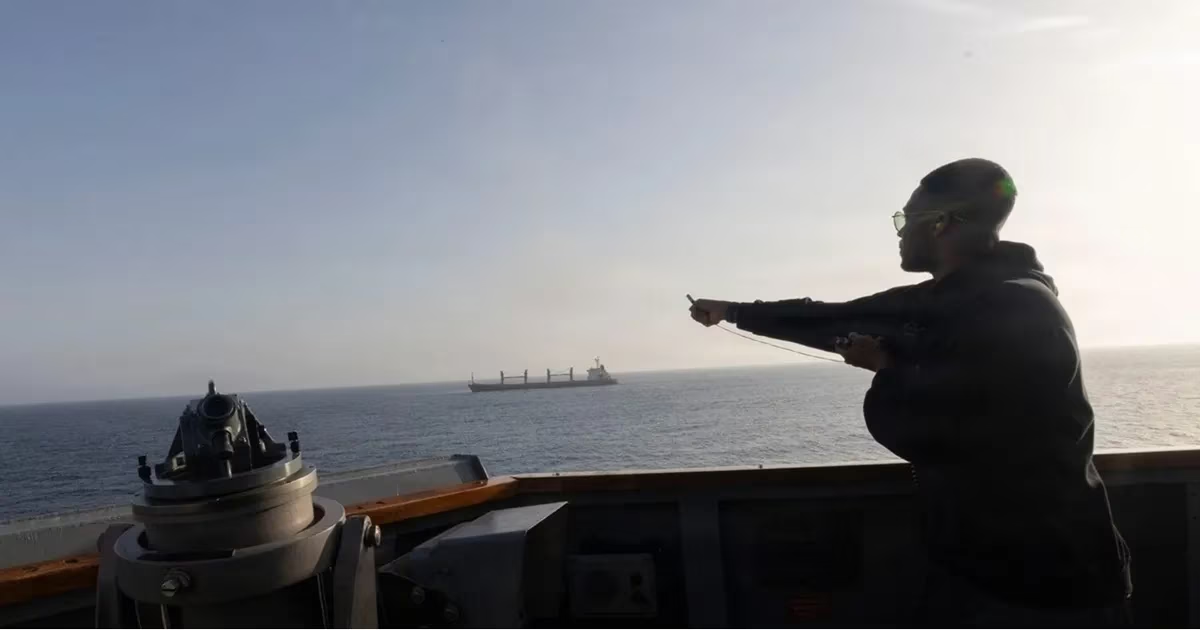







The recently signed memorandum of understanding between the American administration and the Iranian side comes in the context of both parties' attempts to market political achievements to their domestic fronts. While the American president faces sharp criticism for making concessions described as exceeding those of the 2015 agreement, a faction in Iran views the agreement as a retreat from the sacrifices of military and political leaders.
The reality on the ground indicates that the state of exhaustion that afflicted Washington and Tehran after 111 days of conflict, interspersed with 39 days of direct military confrontation, was the biggest motivator for sitting at the negotiating table. Logistical and political factors, such as the United States hosting the World Cup and the approaching congressional midterm elections, contributed to accelerating the pace of signing.
The current American administration needs to focus on pressing domestic issues, primarily rising inflation and increasing parliamentary opposition to the continuation of the war. American forces also suffer from a shortage of ammunition and unrest among soldiers, in addition to the urgent need to repair military bases damaged in Gulf states and Jordan during recent confrontations.
On the other hand, Iran seeks through this truce to catch its breath and reorganize its military and social conditions damaged by the bombing. The Iranian regime aims to alleviate the effects of the naval blockade, which led to a crazy rise in prices and a shortage of basic goods, directly affecting the labor market and foreign trade.
The memorandum's texts included mutual gains; Tehran secured the lifting of the naval blockade on its ports in exchange for guaranteeing freedom of navigation in the Strait of Hormuz without fees. The understandings also included allowing Iran to export its oil and petroleum products and restoring banking and insurance services, in exchange for assurances not to seek to develop nuclear weapons.
The problem of trust remains the biggest obstacle to transforming this memorandum into a permanent agreement, especially with the American record of breaking promises. Observers recall Washington's withdrawal from the 2015 agreement, and the attacks launched in June 2025 and February 2026, which makes current promises highly questionable to Iranian decision-makers.
In the Palestinian file, disappointment emerges from American promises, as Washington did not adhere to its previous commitments regarding a ceasefire in Gaza. Despite talk of a peace council, the number of martyrs in the Strip has risen to 1008 people since the last agreement was approved, amidst continued Israeli intransigence and prevention of entry of reconstruction materials.
The situation in Lebanon is no better, as American pledges to a ceasefire have been repeatedly violated, most recently the breach of the truce scheduled to begin last Friday. Israeli forces continue their military operations at a high killing rate, ignoring the memorandum's texts calling for a permanent end to the war on all fronts.
Informed sources indicate that Washington violated the first clause of the memorandum, which stipulates refraining from threatening to use force, as hostile statements continued from senior American officials. Moreover, interpretations regarding ending the war in Gaza remain vague, with no American reaction to Israeli settlement and military expansion.
Iran achieved implicit recognition of its influence in the region through the text stipulating its joint sovereignty with the Sultanate of Oman over the Strait of Hormuz, and emphasizing its role in Lebanon. However, these gains remain contingent on the extent of Israeli commitment to withdraw from recently occupied Lebanese territories, which Israeli officials openly reject.
Analysts believe that Iran succeeded in pushing Trump to accept the principle of fragmented negotiation, which he previously rejected, as the nuclear weapons issue was postponed to a later stage. This approach drew criticism for Trump, who seemed to prioritize opening the Strait of Hormuz over the nuclear file, which was a main reason for entering the war.
The United States and Israel follow a strategy of linking issues, where the implementation of Iran's reconstruction plan, estimated at $300 billion, is contingent on definitively resolving the nuclear file. The release of frozen Iranian assets and the lifting of sanctions are also linked to the progress in nuclear weapons negotiations, which could take many months.
Historical experiences indicate that nuclear file negotiations are extremely complex and cannot be resolved within the specified two-month period, given that the 2015 agreement took years of discussions. Western powers are expected to insist on including the ballistic missile and drone files in any final agreement to ensure Israel's security.
Tehran understands the nature of American political fluctuations, and is currently betting on prolonging negotiations until the results of the upcoming congressional elections become clear. Iran aims through this de-escalation to repair its civilian and military facilities, and prepare for a potential round of confrontation that Trump might initiate under Israeli pressure before the end of his term.
The exhaustion that afflicted both parties after 111 days of conflict is the main reason for signing the memorandum of understanding despite the absence of trust and the divergence of real positions.
Share your opinion
Washington and Tehran Truce: Fragile Gains and Implementation Challenges Amidst Distrust