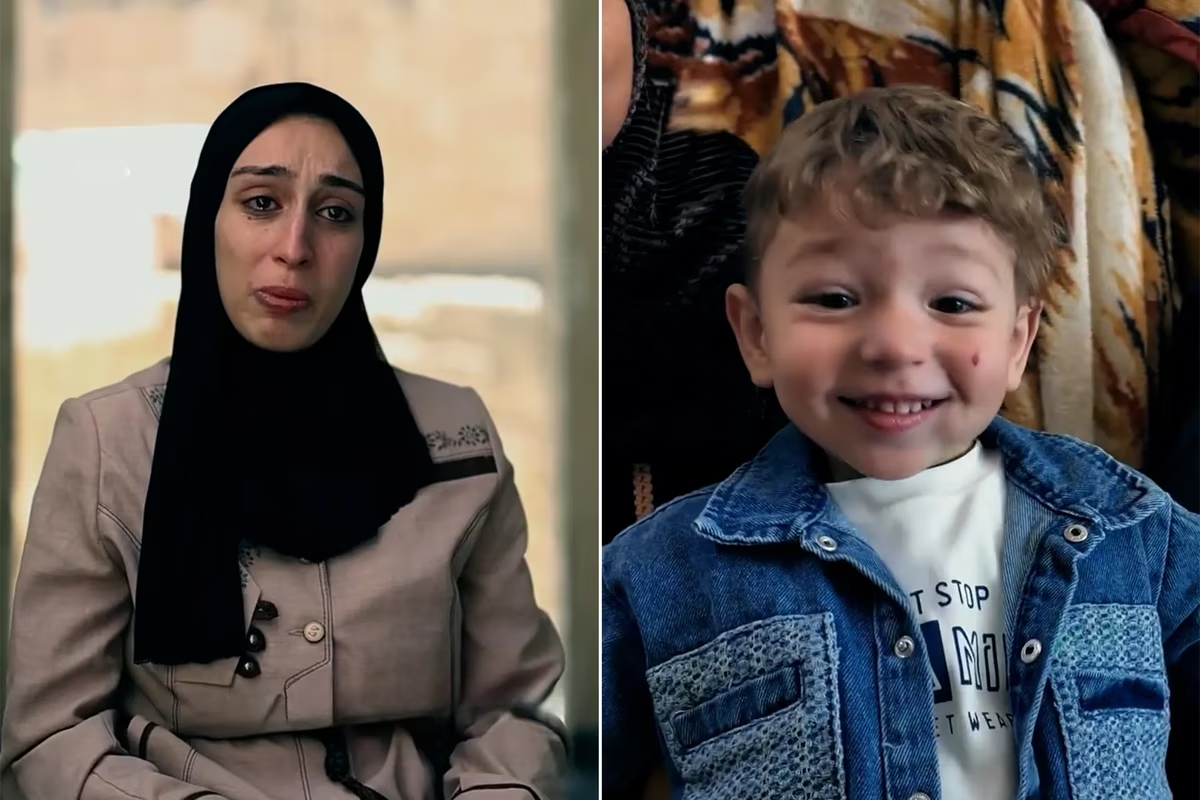







The tragedy of forced displacement of Palestinians is embodied in the story of child Jamil Ghoneim, now 32 months old, who lives divided between two bitter realities: a cramped refugee tent in the Gaza Strip with his parents, and a hospital room in the city of Hebron in the occupied West Bank where he resides with his grandmother.
The chapters of this suffering began about two years and eight months ago, when infant Jamil was forced to leave the Gaza Strip at just ten months old, seeking treatment for a pulmonary artery obstruction in his heart, a medical journey that was supposed to last only a few weeks.
The ongoing war and the closure of crossings prevented the child from returning to his family's embrace, turning the short treatment journey into a long estrangement that severed the geographical and social arteries between Gaza and the West Bank, and forced the family to communicate only through phone screens.
In the displacement tent in Gaza, the father and mother observe the details of their child's growth, whom they left as an infant and who is now a child running and learning to speak. Their eyes overflow with anguish as they watch his movements and laughter from behind the rigid screen glass, unable to touch him.
Sources reported that child Jamil utters innocent cries with broken words, expressing his desire to return to Gaza, while his mother, stuck in the Strip, tries to calm him with promises of meeting and outings, which are killed by the reality of the imposed military siege.
The mother expresses her burning heart despite her joy at hearing his voice, emphasizing that virtual communication does not compensate for his presence in her embrace, especially since he is the family's first male child whose childhood was stolen away from his parents' care.
For his part, the father describes the psychological pain he experiences seeing his son grow up in pictures, pointing to the emergence of a frightening psychological barrier as the child has begun to shy away from them and does not recognize their true features due to their forced absence from his daily life.
Their sorrow intensifies during holidays and special occasions, as the mother sees displaced children with their mothers while her son remains alone in Hebron, raising her fears that he might not recognize her if their first future meeting ever happens.
On the other side in Hebron, the grandmother lives a double suffering. She bears the responsibility of raising a young child in difficult circumstances, while missing her sick husband in Gaza who needs her constant care due to his repeated comatose episodes.
The grandmother explained that child Jamil lived long periods of the war without communicating with his parents due to internet outages, which increased the child's psychological detachment and confusion, as he does not understand why he is away from his home.
Field sources revealed the presence of about 42 individuals stranded in the hospital accommodation in Hebron, living in similar conditions and demanding to return to the Gaza Strip, describing their stay there as akin to imprisonment despite the relative safety.
The father confirms that the tragic situation cannot be described in words, as the child becomes more aware day by day and discovers the absence of his parents, making his life in the hospital accommodation lack the family warmth and natural affection that any child his age needs.
Humanitarian appeals continue to end the suffering of Jamil and dozens of similar cases, amidst the occupation's intransigence and the closure of crossings that tear apart the Palestinian social fabric and prevent family reunification between parents and their children.
The story of the Ghoneim family remains a living testament to the brutality of policies that separate families, where video remains the only link for a family separated by a suffocating siege that disregards the sanctity of childhood and does not heal the wounds of hearts burning with longing.
I saw my son's childhood from behind the screen, I see him growing up before me in pictures and videos while the siege deprives us of embracing him.
Share your opinion
The Tragedy of Child Jamil Ghoneim: Two Years of Forced Separation Between Gaza and Hebron