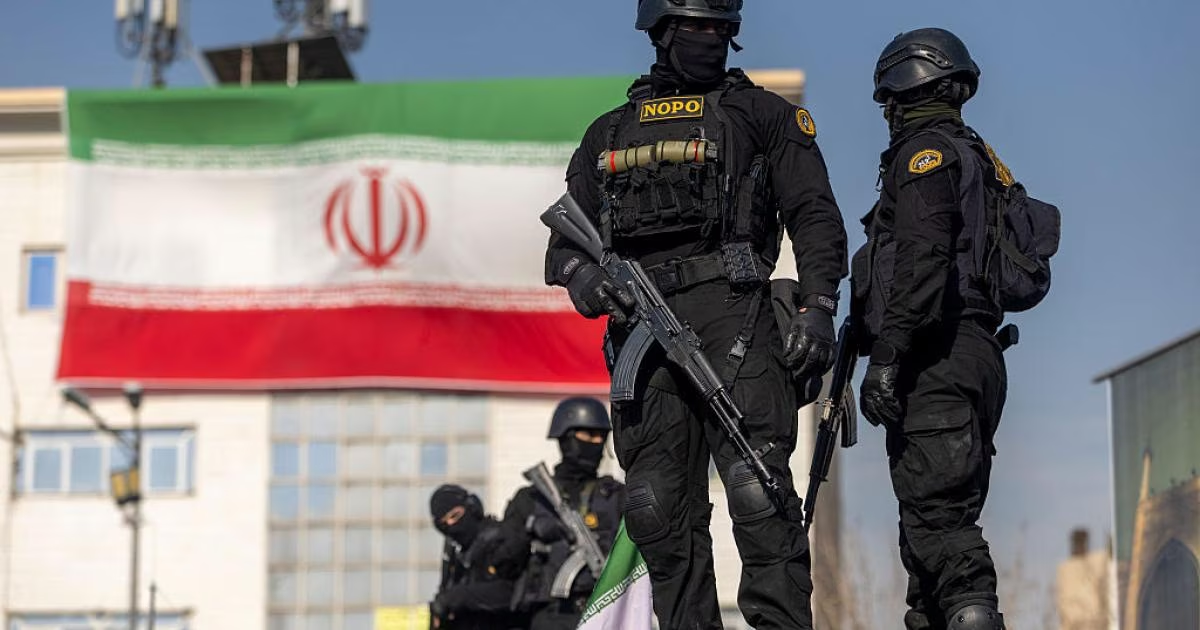







News is escalating about the United States and Iran nearing a historic agreement to end the state of military tension in the Middle East, amidst conflicting official statements regarding the final timeline. Leaked information indicates that the ongoing understandings aim to formulate a new political and security reality that ensures de-escalation in flashpoints, especially in Lebanon.
According to media sources, the draft understanding includes fundamental American commitments, primarily the lifting of economic sanctions imposed on Tehran and the withdrawal of military forces from areas surrounding the Islamic Republic. The clauses also include the full reopening of the Strait of Hormuz to international navigation and the removal of restrictions on Iranian oil exports.
Reports speak of a clause related to the release of all frozen Iranian funds abroad as part of confidence-building measures between the two parties. These steps aim to put an end to armed conflicts in the region, as this agreement is seen as a key entry point for a ceasefire on multiple fronts witnessing direct or proxy confrontations.
For its part, international press sources suggested that the official signing of the agreement would take place in Geneva, Switzerland, coinciding with the G7 meeting next week. Expectations indicated that Sunday might be the anticipated date for the announcement of the final document that will change the balance of power in the region.
In Tehran, Foreign Ministry spokesman Ismail Baqaei confirmed that the negotiating teams had completed writing most of the agreement's texts, but stressed that the process was not definitively over yet. Baqaei attributed the delay to what he described as the continuous change in American positions, considering that talk of resolving matters is still within the realm of media speculation.
The Iranian spokesman praised the role played by both Qatar and Pakistan in bridging the views between Washington and Tehran through active diplomatic channels. He explained that his country is carefully studying all details to ensure the achievement of its national interests before the final signing of any binding document.
In contrast, US President Donald Trump issued optimistic statements, describing what had been reached as a 'great settlement' that would end decades of hostility. Trump announced that the final document is currently being prepared, noting that he had received positive signals indicating the approval of the Iranian Supreme Leader on the broad outlines of the understanding.
The US President revealed a surprising decision to cancel military strikes that had been scheduled against Iranian targets, as a gesture of goodwill after obtaining initial approvals on contentious points. Sources close to the White House confirmed that Vice President JD Vance might travel to Europe soon to represent Washington at the signing ceremony.
Despite this optimism, concerns arise within political circles in Washington about pressure exerted by Israel's allies to disrupt the diplomatic process. Sources reported that conservative media and political figures have begun to question the feasibility and timing of the agreement, warning against making extensive concessions to Tehran without sufficient security guarantees.
Anticipation remains the dominant sentiment in world capitals, as this agreement, if successful, represents a major turning point in energy and regional security issues. Political circles await what the next few days will bring to determine whether the Middle East is heading towards sustainable calm or whether internal obstacles will derail the understandings at the last minute.
We have reached a great settlement with Iran, and the final document is currently being prepared after the Supreme Leader's approval.

Share your opinion
Leaked US-Iran Understanding: Clauses to End War and Lift Oil Sanctions