







- We continue to support the Authority and follow with concern the deteriorating situation in the West Bank, and we reject any Israeli steps leading to annexation.
- The status quo in the holy sites in Jerusalem must be preserved, and freedom of access to them must be guaranteed.
- The death penalty is inhumane and brutal everywhere, and the legislation passed by the Knesset raises our serious concern.
- UNRWA must remain able to operate because its role in providing relief to refugees is indispensable.
Mohannad Yassin
In a special interview with "Al-Quds," the Head of the German Representative Office to the Palestinian Authority, Envoy Anke Schlimm, outlines her country's approach to the Palestinian issue in a complex regional moment where the war on Gaza intersects with a political deadlock, escalating tensions, and deteriorating conditions in the West Bank, including Jerusalem. She emphasizes Germany's commitment to the two-state solution, its efforts to alleviate humanitarian consequences, and its contribution to "day after" arrangements to improve the lives of residents and prevent the political or administrative entrenchment of the separation of the Strip.
The interview reveals increasing German involvement in relief and early recovery efforts, with Berlin providing extensive support through the United Nations and international organizations. It also affirms Germany's rejection of any models that politicize humanitarian work or link it to security control. Furthermore, it stresses Germany's continuous support for the Palestinian Authority in facing its suffocating financial crisis, alongside close monitoring of political and administrative reform programs. At the same time, Germany continues to criticize settlements and settler violence, and rejects any Israeli steps leading to the de facto annexation of Palestinian territories, warning of the implications for the future of the two-state solution and the unity of Palestinian territories.
Conversely, Schlimm's answers reflect a delicate balance in the German position, between commitment to international law and human rights, and internal historical and political considerations. This is evident in dealing with sensitive issues, from recognizing the State of Palestine to the law on the execution of prisoners, support for UNRWA, and the stance on international legal actions. The interview also highlights the ongoing debate within Germany about the limits of support for Israel, amid escalating European and international criticism, while Berlin emphasizes the priority of the diplomatic path in addressing regional crises, and striving to consolidate a ceasefire and prevent the expansion of the confrontation, leading to more sustainable understandings in the region.
Below is the text of the interview:
Political Presence*How do you explain the German Chancellor Friedrich Merz's failure to visit Palestine so far, despite Berlin's affirmation of its desire to play an active political role in the region? And how do you view the importance of such a visit in the current political context?
The German government supports the resumption of a political process that leads to a peaceful resolution of the conflict in the Middle East, resulting in the establishment of two sovereign and mutually recognized states, Israel and Palestine. The current focus is particularly on the military conflict with Iran and its repercussions. Nevertheless, Germany remains focused on its goal; we want to contribute to improving the humanitarian situation for the population in the Gaza Strip, and we also want to participate in shaping post-war arrangements there, ensuring a sustainable improvement in people's lives in Gaza.
At the same time, we are concerned about the deteriorating situation in the West Bank, amidst the massive escalation of settler violence, almost daily attacks on Palestinians, the continuous increase in settlement construction, and the advancement of steps leading to the de facto Israeli annexation of territories. Under these difficult circumstances, we continue to support the Palestinian Authority as our economic and political partner, and Palestinians appreciate this multifaceted German support. Both German Foreign Minister Johann Wadephul and Development Minister Reem Alabali-Radovan visited Ramallah at the end of last year. I hope that German Chancellor Friedrich Merz will visit the Palestinian territories in the future.
Reconstruction of Gaza under Stability Conditions
* Amidst the ongoing war in Gaza and the stalled political tracks, how does Germany view its role in early recovery and reconstruction?
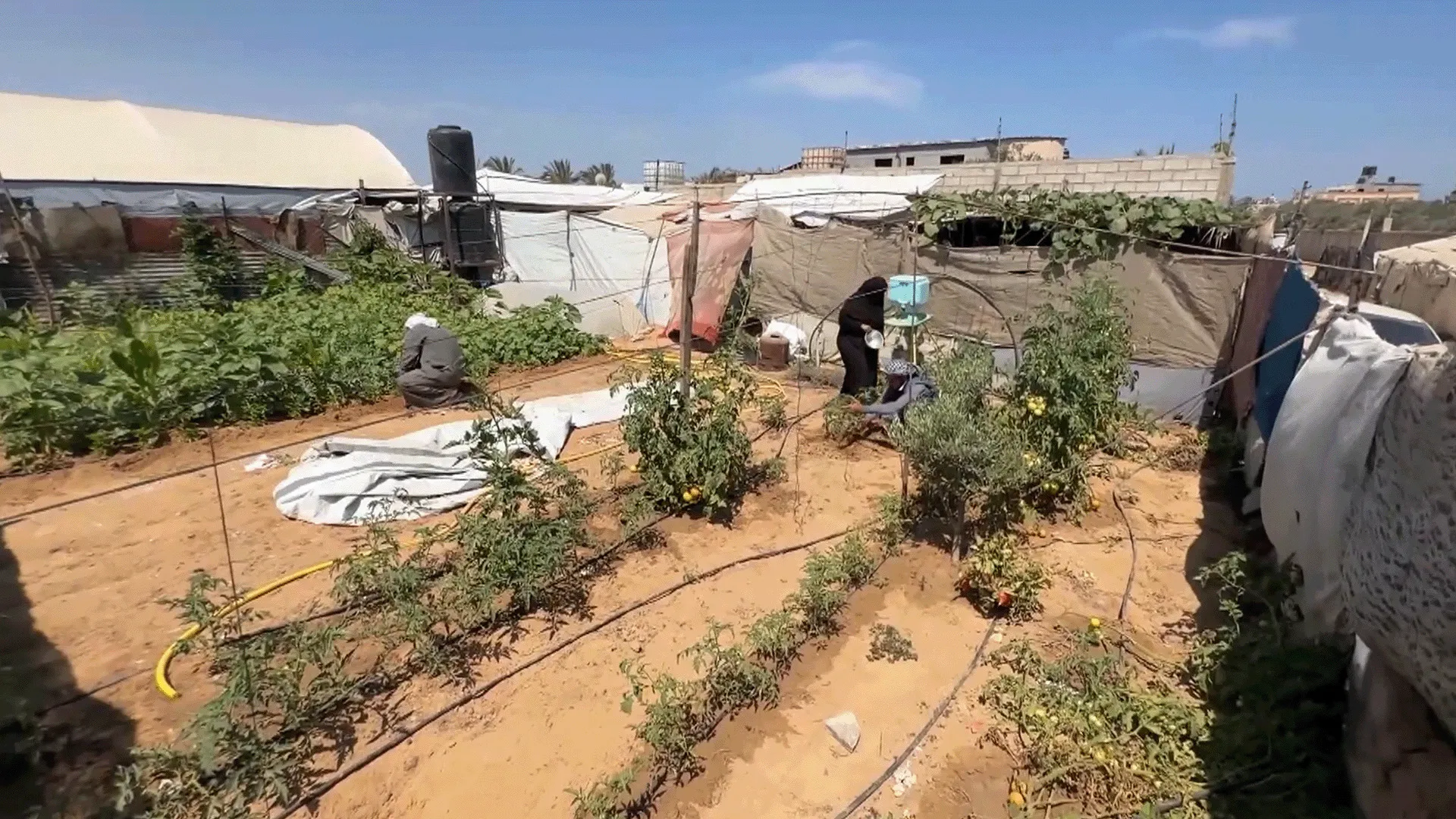
German Chancellor Friedrich Merz stated last year that Germany is ready to contribute to supporting the reconstruction of Gaza. Germany is already the largest donor of humanitarian aid and the largest bilateral donor in development cooperation. As we speak, we are actively providing support for early recovery measures in the Gaza Strip, including temporary housing, rehabilitation of basic services such as water and medical care, and more. We implement these measures through the United Nations and its various organizations, and local and international non-governmental partner organizations.
However, we believe that long-term reconstruction requires stronger and more stable framework conditions for its implementation and sustainability. This includes the full and secure implementation of the twenty-point plan, as well as UN Security Council Resolution 2803, particularly the measures stipulated therein to stabilize the security situation, as well as the establishment of functional transitional structures. In our commitment to Gaza, we are guided by clear principles: the "One Palestine Approach" and a reconstruction process led by Palestinians themselves. The "Arab Plan" and the Palestinian Authority's plans provide a good basis for this path.
Gaza without Political Separation
* How does Berlin view cooperation with the National Committee for the Administration of Gaza?
The ongoing humanitarian crisis in Gaza, and the killing of more than 750 Palestinians since the ceasefire in October 2025, demonstrate an urgent need for concrete action. Hamas must be disarmed, and it must not be allowed to continue consolidating its authority unchecked. Sustainable solutions for Gaza must also be based on clear political and institutional legitimacy. The 20-point plan by US President Donald Trump and Security Council Resolution 2803 laid the groundwork for this.
We are ready to cooperate with the National Transitional Committee for Gaza (NCAG) as a transitional structure aimed at rapidly improving the conditions of the population in Gaza and paving the way for a sustainable political solution. At the same time, we believe that any political or administrative separation of Gaza contradicts the political goals of the German government. Therefore, the transitional structures of the National Committee for the Administration of Gaza should work intensively, in close coordination, and at all levels, with the Palestinian Authority. Furthermore, the current de facto division of Gaza into a part controlled by the Israeli army and a part increasingly controlled by Hamas contradicts the "One Gaza" approach.
Supporting the Steadfastness of the Authority
* Germany affirms its continuous support for the Palestinian Authority, but the Authority's suffocating financial crisis is worsening with Israel's continued withholding of clearance revenues. Under these circumstances, is there any German or European action to address the structural causes of this crisis?
Israel's illegal withholding of customs and tax revenues poses serious financial challenges to the Palestinian Authority. This affects the entire society, as public sector employees have not received full salaries for months. We believe that responsibility in this regard clearly lies with the Israeli government. However, we also want to provide concrete assistance. Therefore, the German government decided last autumn to provide direct financial assistance to the Palestinian Authority's budget amounting to 30 million euros. These funds have already been transferred to the Palestinian Authority in 2025 through the EU's "PEGASE" mechanism. By doing so, we sent a clear message that no government in the world can provide basic services to its people in the long run without receiving its tax revenues. Therefore, we support our Palestinian partners with this exceptional step.
Our long-term development program for the Palestinian people, currently valued at approximately one billion euros, covering areas of economic development, job creation, water and environmental infrastructure, as well as peace and social cohesion, is also an essential part of Germany's commitment. As the largest bilateral donor in development cooperation, we are proud of our extensive and close cooperation network with our Palestinian partners.
Required Reforms and Sustained Momentum
* How does Berlin view the political reform files in the Palestinian Authority? And do you believe these reforms are achievable under the conditions of occupation, division, and financial crisis?
We very much welcome the implementation of an ambitious reform program by the Palestinian technocratic government led by Prime Minister Dr. Mohammad Mustafa, which also enjoys the support of President Mahmoud Abbas. Germany is closely monitoring these reforms in cooperation with the European Union, and significant progress has been made in this area. In the school education sector, we see that the Ministry of Education is keen on reform and has taken many important steps in recent months towards a modern and contemporary education system. We also welcome the reform of the social assistance system in line with international standards and the actual needs of families. We will continue to support the Palestinian Authority in its journey towards achieving these necessary reforms, and it is crucial that the reform momentum does not diminish.
We also believe that the upcoming municipal elections represent an important step towards a future Palestinian state, based on the principles of democracy, the rule of law, and human rights.
Relief According to Humanitarian Principles
* Germany emphasizes that aid must pass through the United Nations and independent humanitarian organizations, not through politicized or military channels. Does this mean a principled rejection of any model that links relief to security control over the population or to the re-engineering of the political reality in Gaza?
The humanitarian principles stipulated in international law form the fundamental basis on which Germany provides humanitarian aid, including the principles of "humanity," "neutrality," and "impartiality." The principle of "independence" was added in 2003, according to UN Resolution 58/114. Humanitarian assistance based on these principles is needs-based assistance, provided by independent organizations, often non-governmental organizations, committed to respecting humanitarian principles. These organizations provide the necessary assistance, partly in cooperation with local partner organizations, directly to those affected.
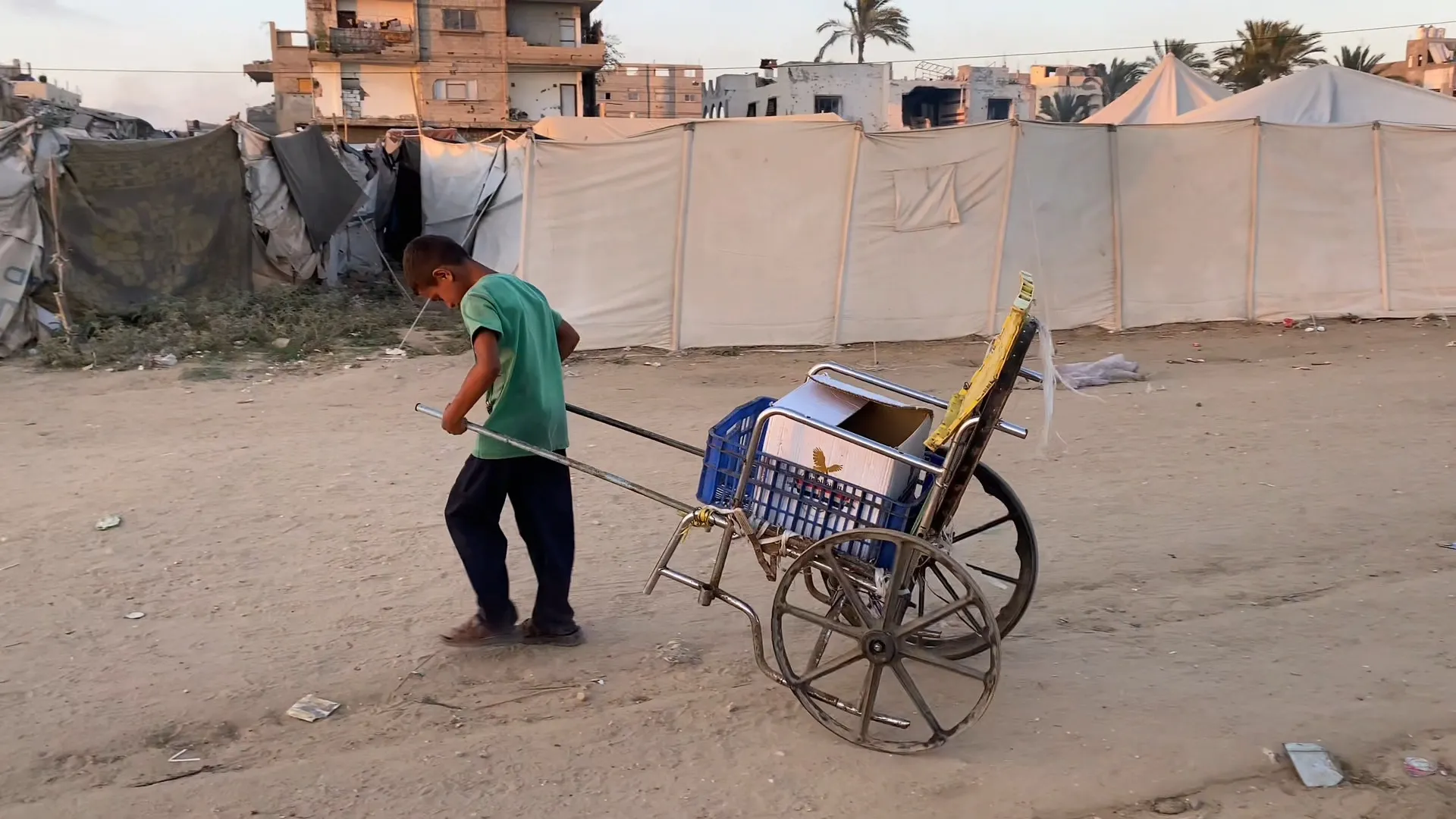
Germany will continue, within its capabilities, to support international and humanitarian organizations that adhere to humanitarian principles. In addition to humanitarian aid, we also support early recovery efforts in Gaza. Germany was the first country to support, for example, the United Nations Development Programme in providing temporary housing and repairing water lines in Gaza. We have so far allocated more than 220 million euros, in addition to the humanitarian aid we provide for early recovery projects implemented by the United Nations, which includes not only Gaza but also the West Bank. Here, we consider the United Nations a fundamental and proven pillar of cooperation. From this perspective, we welcome the UN fund launched last week, named "Horizon Fund: One Palestine, One United Nations, One Future."
Consistent Support for UNRWA and International Organizations
* Amidst escalating Israeli pressure on UNRWA and on the international and humanitarian presence in general, how does Germany view the future of its support for the agency and for the work of international humanitarian organizations and international non-governmental organizations working with Palestinians?
We consider international and humanitarian organizations that adhere to humanitarian principles an indispensable element in providing humanitarian aid, including during the early recovery phase. From this perspective, we work alongside other donors to ensure that international non-governmental organizations can operate freely in Gaza. We also conduct an important and high-level critical dialogue with the Israeli government in this regard. We also make continuous efforts to facilitate the entry of goods into Gaza, especially what are known as dual-use goods.
Germany recognizes the central importance of the United Nations Relief and Works Agency for Palestine Refugees (UNRWA) in providing essential quasi-governmental services and humanitarian aid to approximately 6 million Palestinian refugees in Jordan, Syria, Lebanon, and the Palestinian territories. Therefore, in 2025, Germany was the largest bilateral donor to UNRWA. Up to 108.1 million euros were provided for all UNRWA operational areas in the region, namely Jordan, Syria, Lebanon, and the Palestinian territories, and a significant donation was also made in 2026.
It is also crucial to move forward with UNRWA reform measures by implementing the fifty recommendations contained in the so-called Colonna report, and to complete them at a faster pace. We support this reform path by funding concrete measures, including measures aimed at improving staff vetting mechanisms and taking other steps to enhance neutrality.
When Israeli security forces stormed the UNRWA compound in East Jerusalem on December 8, 2025, and began demolishing buildings on January 20, 2026, this was clearly condemned by German Development Minister Reem Alabali-Radovan, who described the destruction of UNRWA headquarters in Jerusalem as deeply disturbing. UNRWA must remain able to operate, as its role is indispensable in providing relief to Palestinian refugees in Gaza, as well as in the entire region.
Rejection of Annexation and Settlements
* Recently, the political discourse in Berlin has been characterized by greater clarity regarding Israeli settlement construction and settler violence. If Berlin has reached this diagnosis, what prevents it from resorting to more effective political or legal pressure tools?
Our position is very clear: we condemn settlement policy and the accompanying settler violence as violations of international law, and we raise this issue repeatedly and frankly with the Israeli government directly. German Chancellor Friedrich Merz has stated very clearly that Germany rejects any steps aimed at annexing territories taken by Israel in the Palestinian territories. Any annexation, whether legal or de facto, would be a grave mistake, as settlement construction jeopardizes the negotiated two-state solution and does not contribute to ending the Israeli occupation of the West Bank, which the International Court of Justice demands.
Regarding settler violence, I must state very clearly here that the extent of settler violence in the West Bank is intolerable. German Foreign Minister Johann Wadephul witnessed the effects of settler violence himself during his visit to the city of Taybeh and condemned it repeatedly. In this context, the German government calls on the Israeli government not only to stop settlement construction but also to hold those responsible for settler violence accountable. Israel must act decisively in this regard, and there must be no impunity for settlers who commit these attacks.
Regarding sanctions, I would like to add that we have already, at the European Union level, imposed sanctions on violent settlers and settlement organizations.
Growing Concern over the West Bank
* In light of repeated Israeli military operations, displacement, and the reshaping of the reality on the ground in cities and refugee camps in the West Bank, from Jenin to Tulkarem and beyond, does Germany view what is happening as merely a security escalation, or a structural shift in the management of the occupation on the ground?
The German government views the developments in the security situation in the West Bank with great concern. Repeated military operations by Israeli forces in Areas "A," "B," and "C," and severe restrictions on the freedom of movement and travel for Palestinian residents, through constantly expanding checkpoints and barriers, have created an unbearable situation for many Palestinians. We are particularly concerned about the large number of internally displaced persons.
We believe that Israel's decisions to allow private land purchases and to extend Israeli administrative procedures to areas in the West Bank that, under the Oslo Accords, fall under the responsibility of the Palestinian Authority, are inconsistent with international law and constitute an additional obstacle to the two-state solution. The West Bank is an integral part of the future Palestinian state. Therefore, we reject any permanent changes that create irreversible facts on the ground, which would hinder the cohesion and geographical contiguity of the future Palestinian state and undermine the two-state solution.
Jerusalem and Freedom of Worship
* In Jerusalem, with escalating restrictions on Palestinians and the closure of Al-Aqsa Mosque or restricted access to it at certain times, does Germany view these policies as undermining the historical and legal status quo, freedom of worship, and political and religious stability in the city?
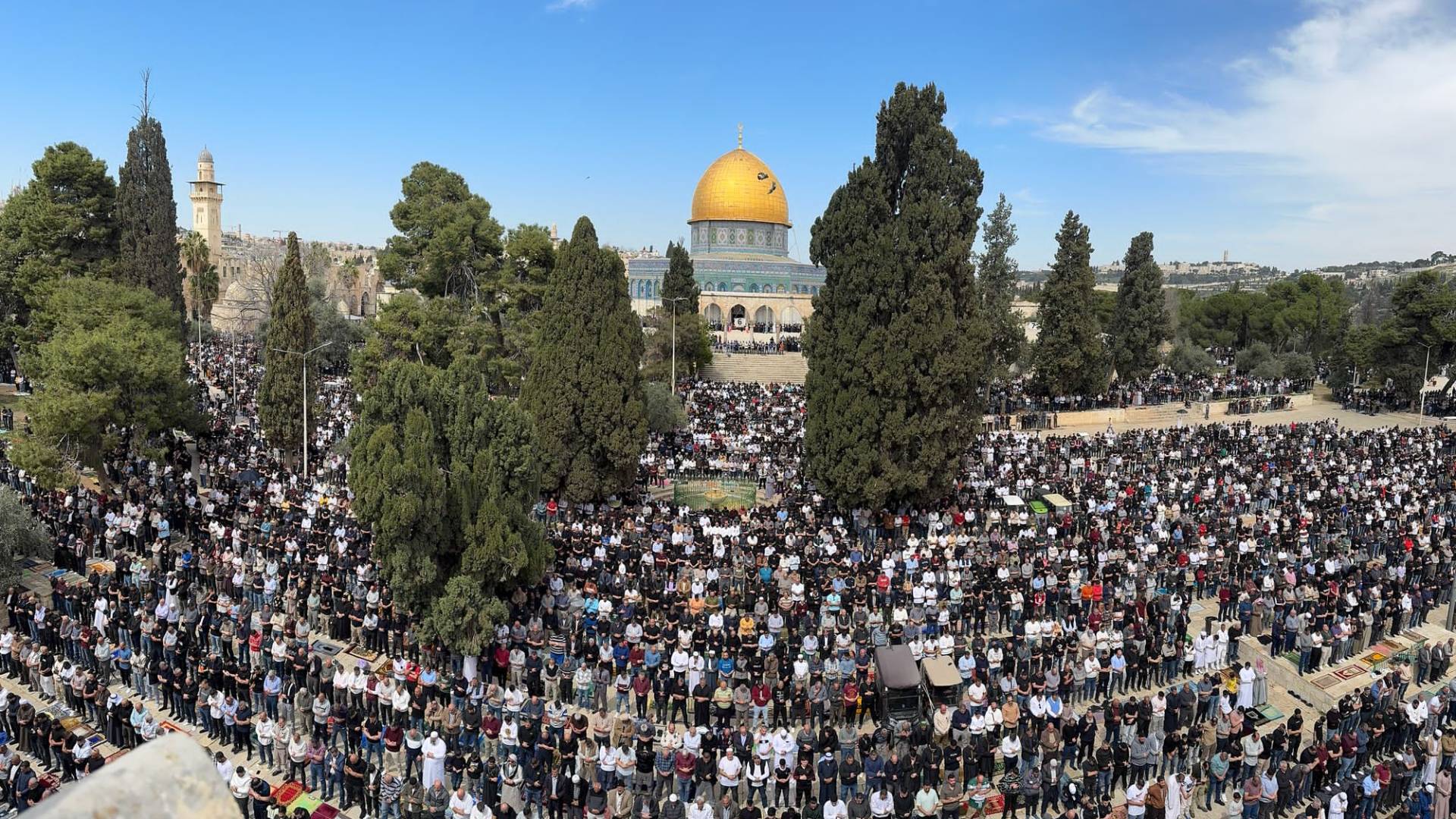
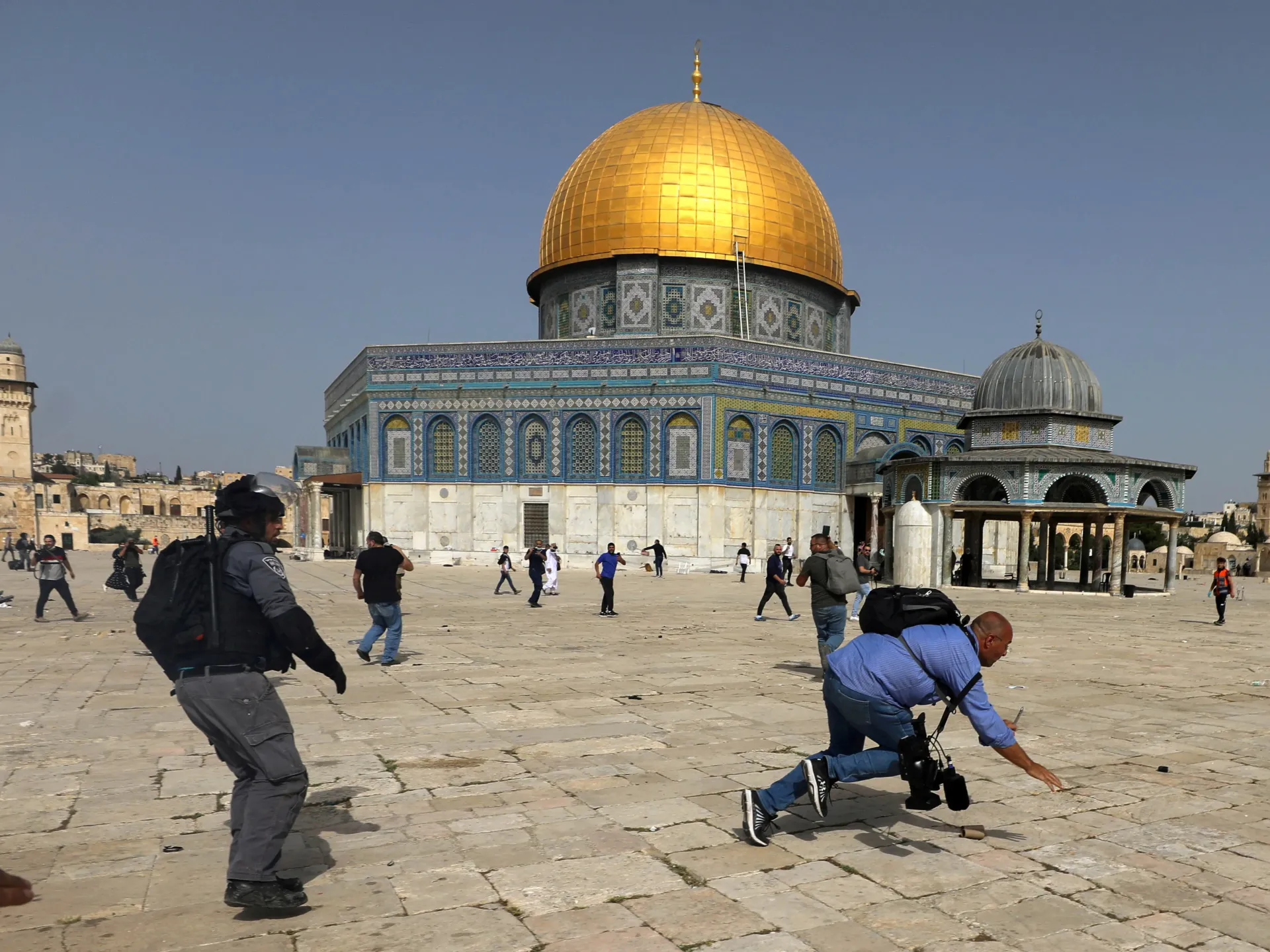
Germany attaches great importance to the protection of holy sites, and therefore we closely monitor any restrictions imposed on access to religious sites, including Al-Aqsa Mosque and the Church of the Holy Sepulchre. During the war with Iran, for example, Muslim worshippers were completely prevented from entering the Noble Sanctuary, and on Latin Palm Sunday, His Beatitude Latin Patriarch Cardinal Pierbattista Pizzaballa was prevented from entering the Church of the Holy Sepulchre. Orthodox Easter also witnessed restrictions on entry and clashes with Israeli security forces inside and around the Church of the Holy Sepulchre.
Here we emphasize that freedom of worship is a fundamental right that must be guaranteed for Muslims, Jews, and Christians alike. At the same time, we believe that Jerusalem is a particularly sensitive environment, where any action can have significant political and social repercussions. Therefore, the status quo in the holy sites in Jerusalem must be preserved, including the safe and dignified access of believers to their holy sites.
Berlin Rejects the Death Penalty
* In light of the Knesset's approval of a law imposing the death penalty on Palestinian prisoners in specific cases, how does Germany assess the legal and political implications of this legislation, and what message do you believe it sends at this time?
We believe that the death penalty is an inhumane and brutal punishment everywhere and under all circumstances. The legislation passed by the Israeli Knesset, which would expand the scope of application of the death penalty in Israel, raises our serious concern, not to mention that this law would effectively affect Palestinians exclusively, and thus would be discriminatory. We call on Israel to reconsider this decision and to maintain its previous suspension of the application of the death penalty.
Rejecting the death penalty is part of our core values. Therefore, Germany advocates worldwide for the abolition of the death penalty and will continue to clearly articulate this position in dialogue with Israel.
Adherence to the Two-State Solution
* Since Germany links recognition of the State of Palestine to a negotiating path that has effectively reached a deadlock, how does Berlin respond to criticisms that any further delay in recognition is no longer seen as a neutral stance, but has become part of the crisis of a lack of political horizon, and places Germany in a more divergent position with an increasing number of its European partners?
Germany affirms its commitment to the two-state solution achieved through negotiations, and sees this horizon as the most sustainable path to achieving peace and security for both sides. I will not hide from you that there are different approaches within Europe on the issue of recognition, and we are in close contact with our partners in this regard. However, we fully realize that people in Palestine increasingly view the current situation as offering no future prospects.
Therefore, it is of great importance for us not to merely stop at a discussion about symbolic recognition, but to actively contribute to improving the situation in Gaza and the West Bank, and to preserve the prospects for achieving the two-state solution. Our significant commitment in the areas of humanitarian aid, early recovery, and economic cooperation speaks for itself in this regard, and our constructive support for the reform of the Palestinian Authority also comes into play here.
German Withdrawal Raises Questions
* Germany announced its withdrawal as a third party from the defense of Israel before the International Criminal Court. How can the political and legal implications of this step be interpreted, and does it reflect a certain review in the German approach to this issue?
Indeed, there will be no intervention by Germany as a third party in the lawsuit filed by South Africa against Israel before the International Court of Justice in December 2023. We ourselves are a party to another pending lawsuit before the International Court of Justice, and therefore we decided not to resort to the option of intervening as a third party in the lawsuit filed by South Africa. Instead, we decided to focus on the lawsuit in which we ourselves are a direct party.
Internal Debate and Shifting Stance
* Within Germany, party positions on Palestine vary, from the war on Gaza and settlements to the limits of support for Israel and the priority of international law and human rights. To what extent does this party and societal debate reflect on official policy, and might it change Berlin's positioning in the next phase?
We see that, despite the outbreak of the recent war with Iran, interest in Germany remains very high in Gaza and the fate of its residents following the devastating war that resulted in a huge number of civilian casualties. Various German media outlets regularly publish reports on this topic, and discussions are held in the Bundestag and the government, and German streets witness demonstrations due to the situation in the Middle East. The German public is also well aware of the significantly increasing violence by extremist settlers in the West Bank.
Furthermore, the German government, like other European partners, criticizes Israeli settlement construction that violates international law and calls on the Israeli government to stop the systematic expulsion of Palestinians. At the same time, due to our historical responsibility towards Israel, and also in light of rising anti-Semitism in Germany, criticisms directed at Israel are often cautiously formulated by some parts of the German government and parliament. Nevertheless, Berlin's position is constantly evolving in this regard.
Betting on the Diplomatic Path
* Regarding the war between Israel and the United States on one side, and Iran and Hezbollah on the other, how does Germany define its political position, and is its stance limited to preventing escalation, or does it also include a critical review of the legitimacy and limits of the war?
We finally see a glimmer of hope on the diplomatic front thanks to the ceasefire between Iran on one side, and Israel and the United States on the other. For the first time since the outbreak of the war, an opportunity arises to open a window of time to find a negotiated solution, even if the ceasefire in the region remains fragile. We want to continue to support the opportunity for peace through diplomatic channels. Therefore, German Chancellor Friedrich Merz announced that, in coordination with the United States and European partners, we will now resume talks with Tehran, in order to contribute in this way to the success of the upcoming negotiations.
Above all, we need a sustainable understanding that ensures freedom of navigation in the Strait of Hormuz once again. Therefore, the German Chancellor affirmed that Germany is ready to contribute to ensuring freedom of navigation in the Strait of Hormuz after a peace agreement is reached, provided that a feasible mandate and concept are available for this purpose. In addition, the Chancellor asked Israel, in a recent phone call with Prime Minister Netanyahu, to end the attacks on Lebanon that have escalated recently, because the intensity with which Israel has waged the war there jeopardizes all peace efforts.
Share your opinion
German Representative Anke Schlimm to the Delegated Authority in an Interview with "Al-Quds": Germany Adheres to the Two-State Solution and Opposes Any Political or Administrative Separation of Gaza