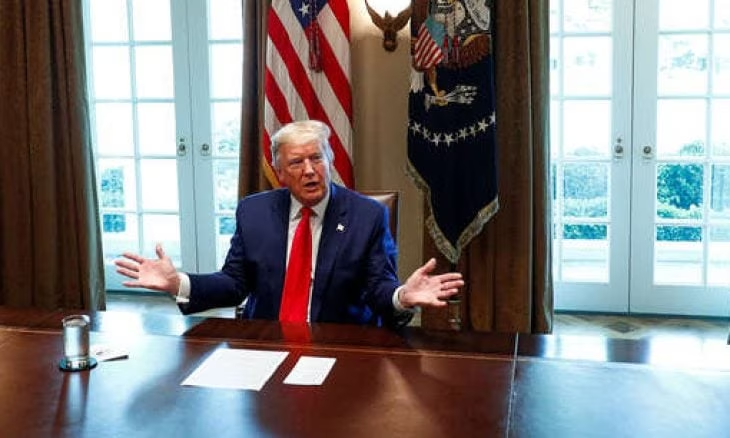







US President Donald Trump affirmed that the current administration is working on drafting a new nuclear agreement with Iran, describing it as being 'much better' than the deal concluded in 2015. Trump clarified that the current negotiations represent a historic opportunity to correct what he described as past mistakes and achieve a stricter understanding that guarantees American national security.
In a post on social media platforms, Trump attacked the old agreement, known as the Joint Comprehensive Plan of Action, considering it one of the worst deals ever concluded. He indicated that the new agreement would overcome the security loopholes that existed in the version signed by the Obama and Biden administrations previously.
On the ground, the US President warned that the current temporary ceasefire would not last forever without tangible results at the negotiating table. Trump described the possibility of extending the truce without reaching a final agreement as 'highly unlikely,' placing significant time pressure on the negotiating parties.
Media sources quoted Trump expressing optimism about the possibility of a swift diplomatic breakthrough, as he expressed hope for signing the agreement as soon as possible. The US President also showed flexibility regarding the possibility of a direct meeting with Iranian leaders if real progress is made on outstanding issues.
Meanwhile, the Pakistani capital, Islamabad, is hosting rounds of indirect negotiations between Washington and Tehran under intensive Pakistani governmental patronage. Pakistani mediation seeks to bridge viewpoints and prevent the collapse of the fragile calm that followed direct military confrontations in the region.
For its part, Tehran has not issued an official confirmation regarding sending a high-level delegation to participate in this round, but informed sources indicated an initial Iranian readiness. The Iranian leadership is monitoring US moves with extreme caution before making a final decision on the level of representation in the Islamabad talks.
In the context of diplomatic efforts, a senior Pakistani government official affirmed that his country is doing its utmost to ensure the presence of both parties at one table within the next two days. The official indicated that Islamabad had received 'positive signals' from the Iranian side, suggesting their desire to explore the political path despite existing tensions.
On the other hand, Iranian statements emerged setting conditions for the continuation of the diplomatic path, as Iranian Foreign Minister Abbas Araqchi informed his Pakistani counterpart of serious obstacles. Araqchi considered what he described as continuous American violations of the ceasefire to threaten undermining the chances of success in the negotiations.
The Iranian minister explained that his country is currently studying all aspects of the situation before determining its next step in the political process, emphasizing the need for full adherence to the calm. These statements come at a sensitive time when international pressure is increasing to prevent the region from sliding into a comprehensive and open confrontation.
Reports indicate that Pakistani mediation is not limited to the diplomatic aspect only but also includes military communication channels aimed at consolidating the ceasefire on the ground. Islamabad is trying to leverage its balanced relations with both parties to prevent any military friction that could undermine the political efforts currently being made.
These moves come within broader international efforts to end the state of tension that followed previous military confrontations involving regional and international parties. Anticipation prevails in global political circles for what the next few days will bring, especially with the approaching deadline set by Trump for the truce.
Observers believe that Trump's statements aim to implement a policy of 'maximum pressure' mixed with the desire to achieve a quick diplomatic victory before the deadline expires. If these efforts succeed, the region may witness a major strategic shift that ends decades of hostility and nuclear tension between Washington and Tehran.
The deal we make with Iran will be much better than the Joint Comprehensive Plan of Action drafted by Barack Obama and Joe Biden.
Share your opinion
Trump: New deal with Iran will surpass '2015 nuclear deal,' no truce extension without understanding